Welcome to the Climate and Sustainable Finance Hub Newsletter, First Edition!
Building partnerships. Mobilizing finance. Accelerating resilience.
Welcome to the first edition of the Climate and Sustainable Finance Hub Newsletter: your window into Lao PDR's growing efforts to mobilise finance for a resilient and Department (EFPD) of the Ministry of Finance of the Government of Lao PDR. Launched in September 2025, the Hub serves as a platform to strengthen coordination, mobilisation, and effective deployment of climate and sustainable finance in alignment with national development priorities, including the Tenth National Socio-Economic Development Plan (NSEDP), Nationally Determined Contributions (NDC), and National Adaptation Plan (NAP). sustainable future. The Climate and Sustainable Finance Hub (the ‘Hub’) is a national coordination mechanism established within the Economic and Fiscal Policy Guided by the “3Cs + E” Framework (Coordinate-Collaborate-Convene & Enable), the Hub is strategically positioned as a national enabler, bridging policy, finance, and implementation to accelerate the scale and effectiveness of climate and sustainable development solutions.

KEY HIGHLIGHTS
01
OPERATIONALISATION OF THE HUB
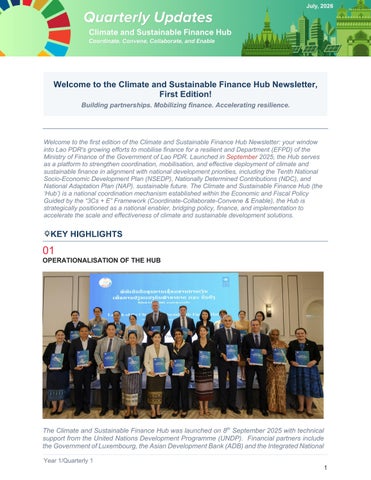
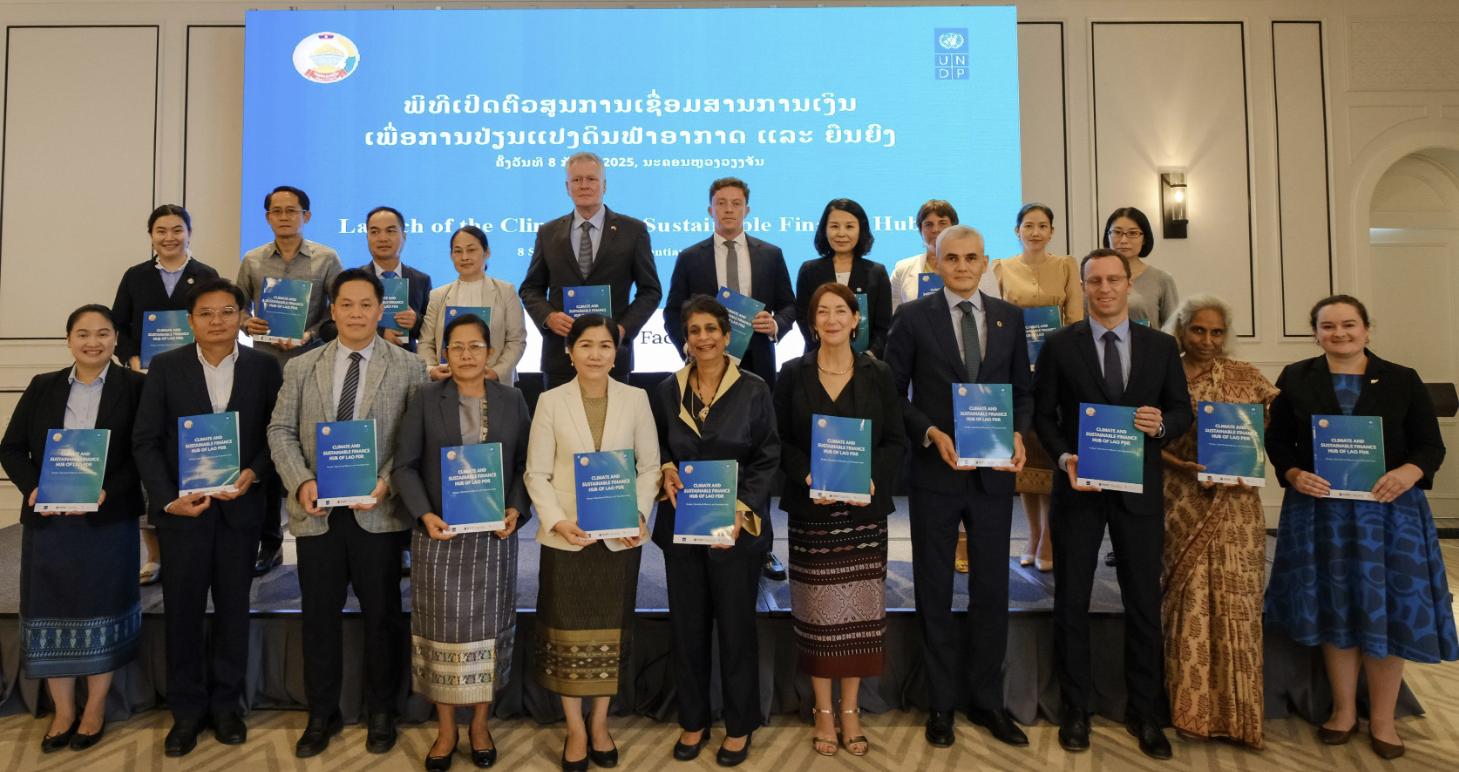
The Climate and Sustainable Finance Hub was launched on 8th September 2025 with technical support from the United Nations Development Programme (UNDP) Financial partners include the Government of Luxembourg, the Asian Development Bank (ADB) and the Integrated National
Financing Frameworks (INFF) Facility. Anchored within the Economic and Fiscal Department (EFPD) of the Ministry of Finance, the Hub’s functions include (i) addressing information asymmetry on emerging climate and sustainable finance related policy developments, project pipelines and implementation, (ii) promoting institutional coordination to strengthen the climate and sustainable finance architecture, (iii) support to mobilise finance from diversified sources and through innovative financing instruments and (iv) broker knowledge exchange, address evidence gaps and promote capacity building For more details.
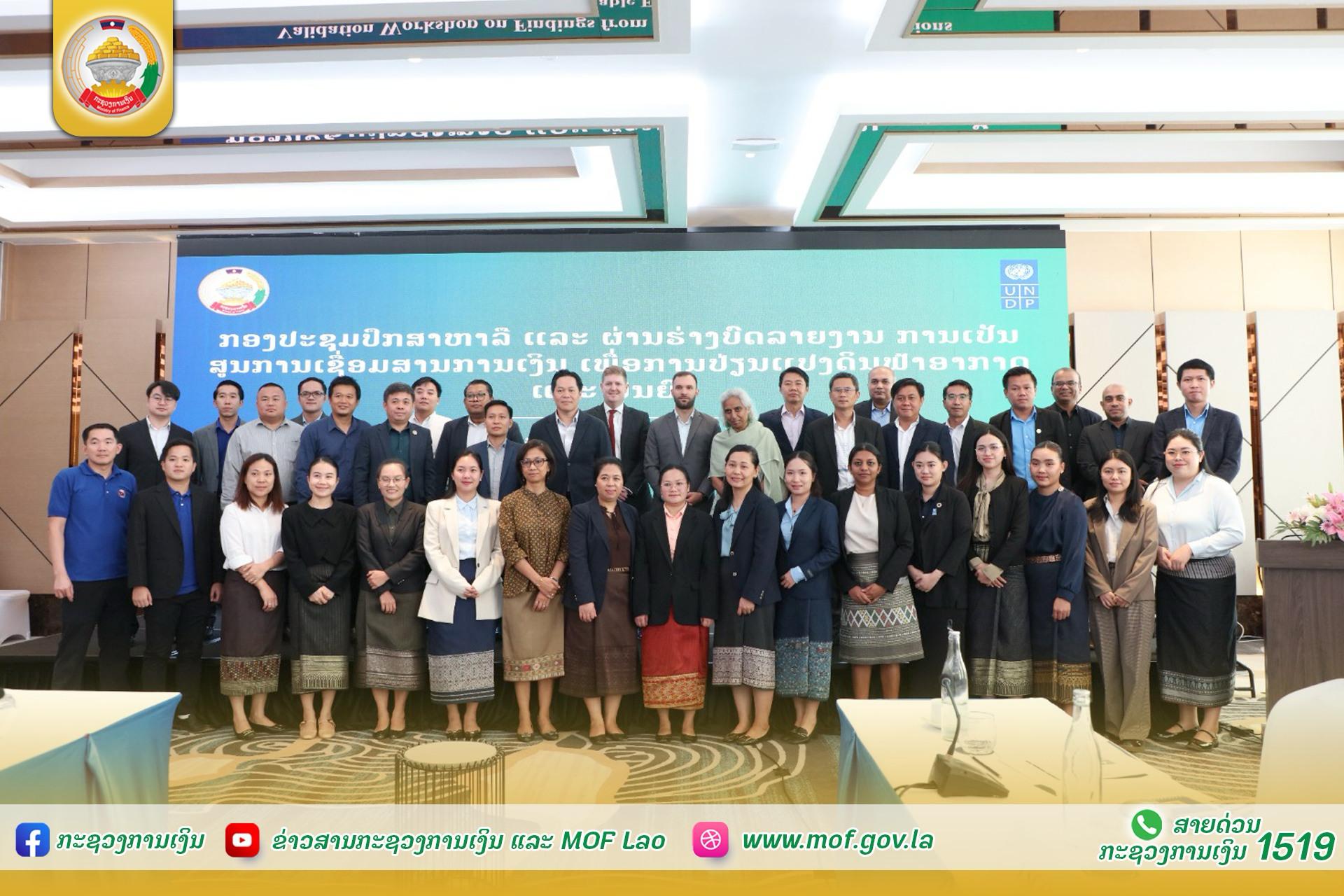
On April 1, 2026, the Ministry of Finance of Lao PDR convened a Validation Workshop in Vientiane to review the findings from the inter ministerial consultations on establishing a Climate and Sustainable Finance Hub. Organised by the Economic and Fiscal Policy Department, the workshop brought together government stakeholders to identify priorities for technical assistance, capacity development, and data management. Participants reviewed the consolidated findings and provided recommendations to strengthen coordination and mobilise sustainable finance for climate action. They recognised the Hub as a critical national mechanism to strengthen inter-institutional collaboration and improve Lao PDR's capacity to access and manage climate and sustainable finance effectively.
KEY UPDATE: MAPPING CLIMATE AND SUSTAINABLE FINANCE FLOWS IN LAO PDR
As part of the inter-ministerial consultations on the operationalisation of the Climate and Sustainable Finance Hub, the Ministry of Finance (MOF), through the Economic and Fiscal
Policy Department (EFPD), completed an institutional mapping of climate and sustainable finance flows in Lao PDR. The mapping identified key government actors, financing channels, and development partner support mechanisms shaping the country's climate finance ecosystem.
The exercise highlighted the interconnected roles of ministries and institutions across climate policy, infrastructure investment, financial regulation, investment readiness, resilience financing, and health and education service delivery. At the national level, the Ministry of Agriculture and Environment (MAE) leads climate policy coordination, and acts as the National Designated Agency (NDA) for the vertical funds (such as the Green Climate Fund, Global Environment Facility, and Adaptation Fund), covering payments for ecosystem services, ecotourism investment, and conservation management alongside its policy and carbon market work.. The Ministry of Finance (MOF) plays a central role in financing policy, public finance management, and implementation of the national socio economic development plan (NSEDP).
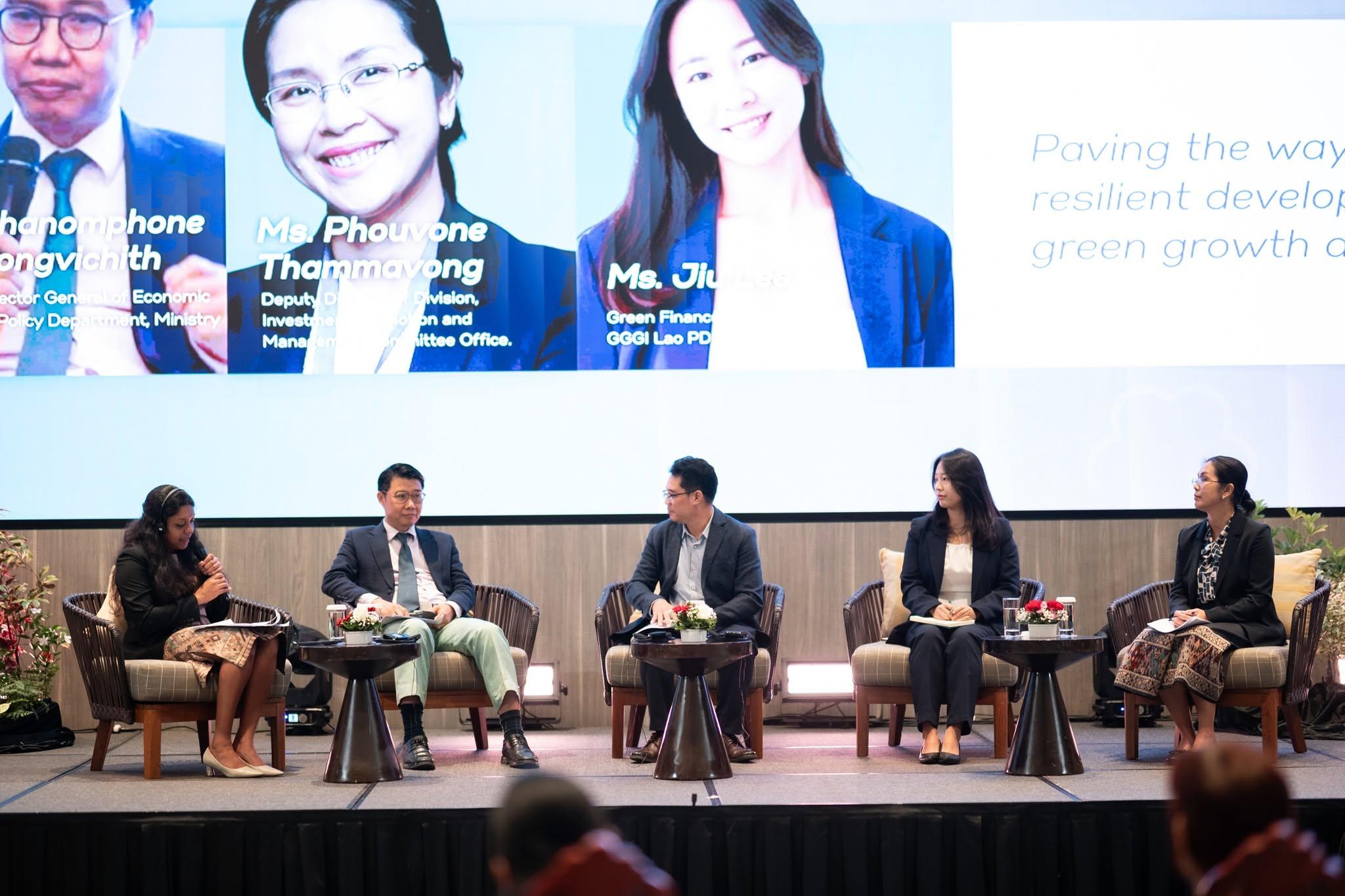
The Ministry of Agriculture and Environment and UNDP convened the National Environment Forum in Vientiane on 11 June 2026 to mark World Environment Day, under the theme "Sustainable Pathways for the Lao PDR: Driving Economic Growth, Environmental Sustainability." Discussions converged on a central message: fulfilling Lao PDR's environmental commitments while sustaining economic growth will require green finance and private investment at a scale beyond what public funds can provide. This entails not only mobilising new capital but also redirecting existing public and private investment toward climate and environmental outcomes.

Key enabling instruments identified included the Climate and Sustainable Finance Hub, a pipeline of investment-ready projects, the Carbon Finance Decree, and a national green taxonomy framework. These featured in a dedicated panel on financing green growth and the climate transition, with participation from the Ministry of Finance's Economic and Fiscal Policy Department, the Ministry of Agriculture and Environment, the Investment Promotion and Management Committee, and the Global Green Growth Institute. Panelists underscored the importance of green and innovative finance to implementing the 10th National Socio-Economic Development Plan (NSEDP) and called for stronger coordination to mobilise domestic public and private funds alongside international vertical funds.
KEY UPDATES
Mobilising Green Capital: GGGI's Investment Pipeline in Lao PDR
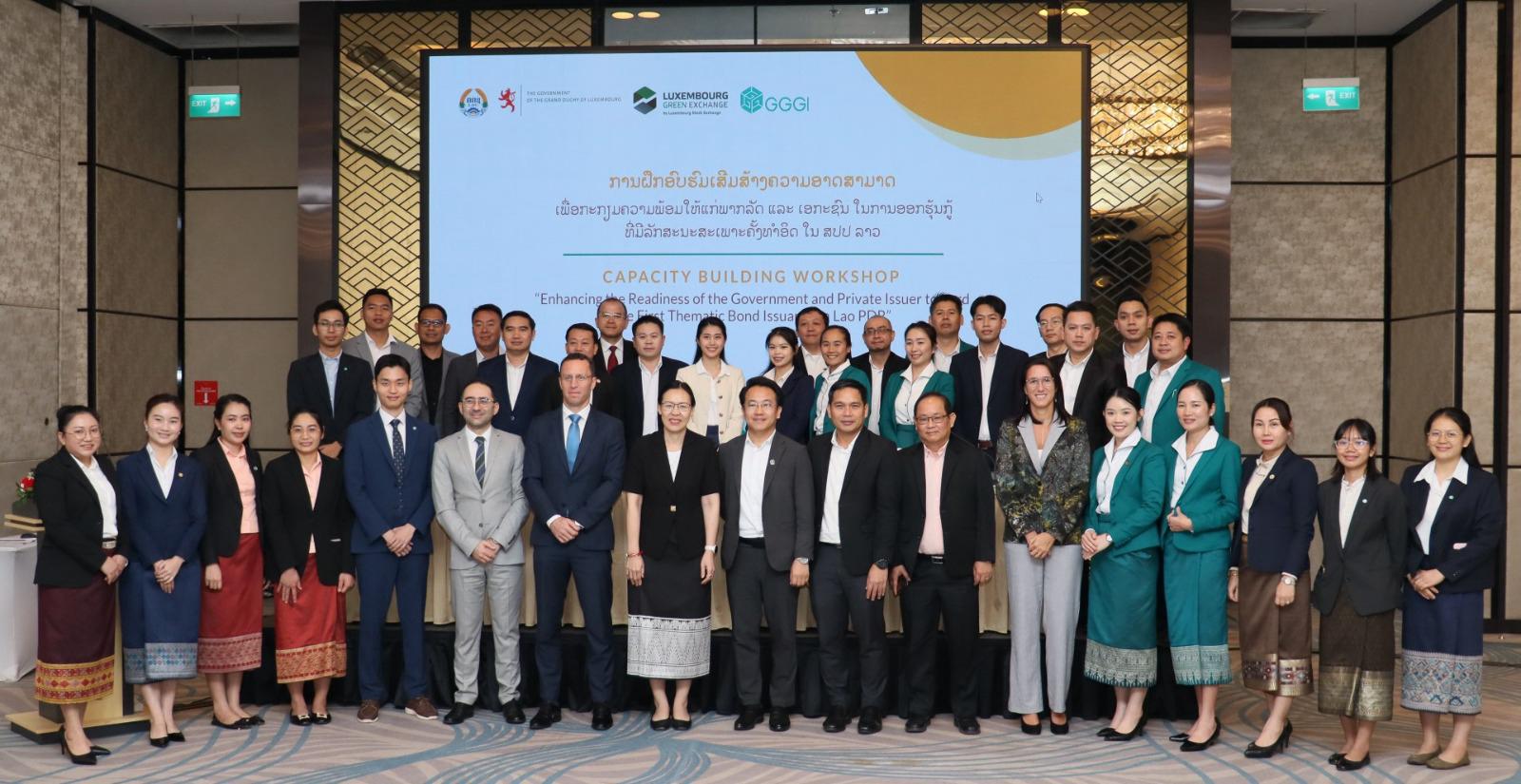
GGGI is supporting the Agricultural Promotion Bank (APB) in preparing its maiden corporate green bond issuance, with backing from the Government of the Grand Duchy of Luxembourg and the Lao Securities Commission Office (LSCO). Proceeds will finance renewable energy (solar, small-scale hydropower) and clean transportation initiatives, including EV charging infrastructure. APB is finalising the bond structure with a guarantor, underwriters, and investors, with a first tranche of USD 30-50 million expected within 2026.
The country team is also preparing to launch a GCF-funded Climate Technopreneurship project, accredited through the Korea Development Bank (KDB), in partnership with the Ministry of Agriculture and Environment and the Ministry of Industry and Commerce. The project aims to strengthen Lao PDR's climate innovation ecosystem through technology transfer and climate finance mobilisation in agriculture, renewable energy, and solid waste management, with a focus on business acceleration, policy advisory, and institutional capacity building to convert locally led climate solutions into bankable investments.
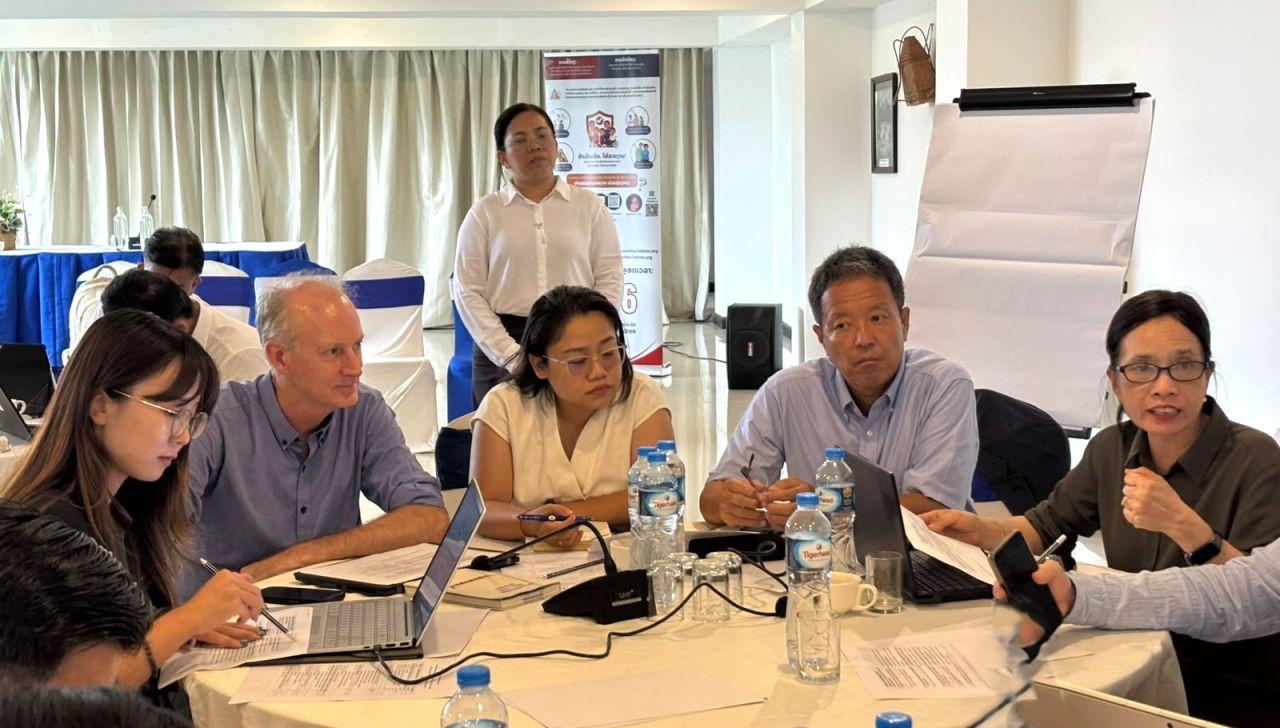
05 June 2026, the Ministry of Education and Sports (MoES), in cooperation with Save the Children, convened a consultation workshop to develop a climate finance roadmap aimed at supporting MoES in accessing climate finance opportunities aligned with the country's education priorities. The activity was implemented under the Climate Smart Education Systems Initiative (CSESI). Hosted by the Permanent Secretariat Office, MoES's focal point for disaster risk reduction and climate-smart education programs, the workshop brought together representatives from MoES line departments, including sub-national levels, and relevant ministries.
The workshop sought to build government staff capacity on climate finance, identify and prioritise key climate resilience interventions in the education sector, and map potential financing instruments and access routes. Participants also identified priority actions to strengthen access to finance, along with potential donors and other actors best positioned to support these efforts. CSESI is funded by the Global Partnership for Education (GPE) in collaboration with Save the Children, UNESCO, and IIEP-UNESCO. The Initiative supports governments in strengthening the resilience of education systems to climate change, with a focus on safeguarding access to quality learning for the most vulnerable children.
GCF Approves JICA REDD+ Project for Southern Laos
The Green Climate Fund (GCF) has approved a major climate finance proposal submitted by the Japan International Cooperation Agency, in partnership with the Government of the Lao PDR, to strengthen forest conservation and sustainable livelihoods in southern Laos. The seven-year "Governance, Forest Landscapes and Livelihoods: Southern Laos Project" will provide over USD 61 million through REDD+ results-based payments for greenhouse gas emissions reductions achieved between 2015 and 2018. The initiative aims to improve forest governance, enhance climate resilience, conserve ecosystems, and support rural communities across southern provinces, while contributing to global climate action and biodiversity goals under the Paris Agreement and the Sustainable Development Goals. For More details.
Lao PDR Strengthens Disaster Resilience Through Innovative Risk Insurance Initiative
Lao PDR is strengthening its disaster preparedness and climate resilience through innovative financial protection measures supported by the World Bank and the Southeast Asia Disaster Risk Insurance Facility (SEADRIF). In 2025, the Lao PDR became one of the first countries globally to adopt a sovereign disaster risk insurance policy with a people-affected impact trigger, enabling rapid financial support after disasters. The policy provides up to USD 16 million in coverage for floods, cyclones, earthquakes, and landslides, with payouts delivered within 10 business days once agreed thresholds are met. The initiative aims to protect vulnerable communities, strengthen financial resilience, and support rapid recovery from climate-related shocks nationwide. For More details.
Action Plan to Transform Food Systems and Strengthen Climate Resilience Launched
On 2nd March 2026, Lao PDR launched its National Action Plan on Transition toward Sustainable Food Systems Transformation (2025–2030), marking a major step toward building inclusive, resilient, and climate-smart food systems. Developed with support from the Food and Agriculture Organisation of the United Nations, the United Nations Resident Coordinator's Office, and the Asian Development Bank, the Plan outlines 20 strategic action areas and 62 priority milestones to address food security, nutrition, environmental sustainability, and rural livelihoods. By integrating agriculture, climate resilience, and economic development, the initiative provides a bold roadmap to strengthen national resilience and advance the Lao PDR's sustainable development ambitions. Implementation of the national action plan is being advanced through a UN Joint Programme, supported by the Joint SDG Fund and core contributions from seven UN agencies, Food and Agriculture Organization of the United Nations (FAO), United Nations Development Programme (UNDP), United Nations International Children's Emergency Fund (UNICEF), World Food Programme (WFP), International Fund for Agricultural Development (IFAD), United Nations Human Settlements Programme (UN-Habitat), and United Nations Environment Programme (UNEP, delivering activities in priority provinces of Luang Prabang and Oudomxay. This is complemented by USD 33 million in co -financing from ADB, aligned with its wider agrifood systems and resilient rural infrastructure portfolio. For More details.
New Report: Child-responsive Loss and Damage policies, finance and action
A new report by UNICEF Lao PDR highlights the urgent need for child-responsive climate policies and financing amid growing climate disasters. Drawing from 13 global case studies, including Lao PDR's recovery efforts in Attapeu Province after the 2018 floods and dam collapse, the report shows how climate-related loss and damage disproportionately affect children through disrupted education, trauma, child labour, and heightened protection risks. The study calls for sustained, flexible financing and stronger social protection systems to ensure children's rights, well-being, and resilience remain central to climate action and disaster recovery efforts.