





EDITOR
Peter Adams
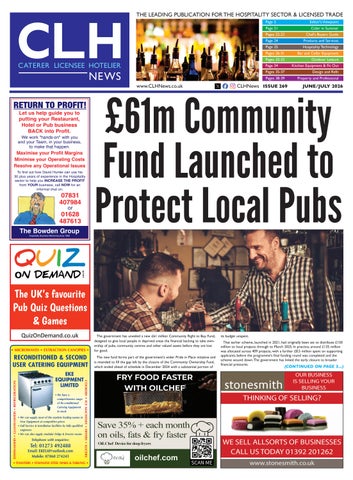
Like many industry observers, I welcome any initiative designed to help pubs and the wider hospitality sector, and this week's news that the government is putting £61 million behind a new Community Right to Buy Fund is a genuinely encouraging development.
As we report in our lead story, the funding – announced by Communities Secretary Steve Reed as part of a wider £301 million package to support high streets and community spaces – will give people in deprived areas the means to step in and save pubs, shops and other treasured local assets before they're lost for good.
Interest in community-owned pubs has grown considerably in recent years, and community ownership continues to gain real momentum across the UK. In 2025 alone, 34 new community-owned businesses opened their doors, and despite ongoing economic pressures and the continued erosion of rural services, there are now 869 community-owned businesses trading across the country – a 67% increase over the past decade – with a further 1,000 currently in development.
More than 200 of these venues now operate as community hubs, and they boast near100% survival rates, which speaks volumes about the resilience of the model when it's properly supported.
These cooperative businesses do far more than keep the lights on in their local high street. They keep local economies alive, they often unlock vital regeneration funding, and crucially, they keep people employed and pubs trading rather than boarded up.
Any funding that helps keep pubs open, retains jobs and continues to generate revenue for the Treasury has to be seen as an investment by any sensible measure – not a cost.
CAMRA's National Planning Policy Adviser Paul Ainsworth made a fair point when he
noted that the slowdown in community pub openings over the past year has been closely tied to the demise of the previous Community Ownership Fund, which left many local groups simply priced out of saving their local. If this new fund can fill that gap, it deserves the sector's full support.
It's not the only good news this month. Hospitality insolvencies have continued to fall, with accommodation and food services insolvencies down 9% month-on-month, from 301 in April to 274 in May, and also down compared with the same month last year (296).
I suspect this reflects a sector that has, painfully, already shed many of its more vulnerable operators, leaving a leaner, more seasoned core of businesses better equipped to navigate the challenges still ahead.
It's not a cause for complacency, but it is a sign of genuine resilience.
And then there's the football. England and Scotland's opening games proved a real boon for the trade, which won't surprise anyone in our industry – short of being at the match itself, there's simply no better place to watch the game than the pub.
According to Oxford Market Watch, pubs sold 5.7 million pints of draught beer and cider on the day, with the average rate of sale up 55.5% compared with a typical June Wednesday in 2025 – equivalent to an extra 64 pints per outlet.
The uplift was particularly strong in England, where pubs sold an additional 68 pints per outlet against benchmark trading levels, while Scotland recorded a rise of 13 pints per pub. The tournament is still in its early stages as I write this, and for what it's worth, I thought Scotland were harshly treated by two penalty decisions in their defeat to Morocco – but there's plenty of football, and plenty of trade, still to come.
Finally, if you haven't already done so, please do lend your support to the campaign to cut VAT for hospitality, which at the time of writing has gathered 230,000 signatures.
A cut to 10.5% – something this title has campaigned for over many years – would bring the UK into line with most of our European neighbours and would prove a genuine lifeline for the sector. Lowering this tax burden would protect jobs on local high streets, stimulate consumer demand and help prevent further business closures.
The more support the campaign receives, the more likely it is that government will finally sit up and take notice. Please add your name if you can.
Visit our website at www.catererlicensee.com to sign up for our weekly digital issues and e-newsletter to ensure you get all the latest news and developments delivered straight to your in-box.
I can always be contacted at edit@catererlicensee.com
The Caterer, Licensee & Hotelier News Group is published by RBC Publishing Ltd, 3 Carlton Mount, 2 Cranborne Road, Bournemouth, Dorset, BH2 5BR.
tion, however, no responsibility will be accepted for loss or damage. Views expressed within this publication are not necessarily those of the publisher or the
when compiling this publication to ensure accuracy, the publisher will assume no responsibility for any effects, errors or omissions therefrom. All rights
ten permission is obtained. All material is assumed copyright free unless otherwise advised.



The Community Right to Buy Fund is being positioned as a more accessible route for communities to step in where commercial operators are pulling out, particularly in areas experiencing economic deprivation.
Communities Secretary Steve Reed announced the new fund during a speech in London, presenting it alongside a broader £301 million package aimed at supporting high streets and community spaces.
The announcement builds on provisions in the English Devolution and Community Empowerment Act and sits within the government's much larger £5.8 billion Pride in Place programme.
Reed framed the move as part of a wider effort to devolve decisionmaking away from central government, telling the audience that power was being shifted "into the hands of the people who actually use these high streets."
Alongside the Right to Buy Fund, the Communities Secretary set out several related measures:
• Test, Learn and Grow Capability Fund – A £10 million fund to help up to 20 areas build on lessons from the existing Test, Learn and Grow programme, with an initial focus on regions already involved before expanding further this autumn.
• Community Power Pilots – £15 million to support community groups and local authorities across up to 25 areas in reshaping local services around resident input.
• Improved data sharing – New standardised data-sharing agreements between central and local government, intended to cut administrative burden and speed up service delivery.
The funding announcement comes shortly after MPs debated the financial pressures facing rural pubs in Parliament on 17 June. Conservative MP Saqib Bhatti, who led the debate, highlighted the scale of the sector's contribution to local economies, citing British Beer and Pub Association figures showing the pub and brewing sector supports more than 300,000 jobs in rural constituencies and contributes close to £11 billion to the economy, generating £7 billion in tax.
Bhatti pointed to his own constituency of Meriden and Solihull East, where around 40 local pubs support 1,740 jobs, including 500 roles held by 16 to 24-year-olds, and contribute £61 million to the local economy. Across the wider West Midlands, he noted, more than 4,000 rural pubs employ 88,000 people and generate £2.9 billion in economic activity. He pressed ministers to move further and faster on relief for the sector, warning that inaction would itself have consequences for jobs.



The hospitality and licensed trade broadly welcomed the funding, while flagging that it addresses only part of the pressure facing pubs.
Paul Ainsworth, CAMRA’s National Planning Policy Adviser said: “The number of community-owned pubs opening has noticeably slowed down over the last year. This is undoubtedly connected to the demise of the Community Ownership Fund which made it much harder for locals to raise cash to save their pub.
“Without suitable and accessible funding, many community groups were simply priced out of trying to save their local from oblivion. We are awaiting the full details, but the news of this new funding looks set to be a vital lifeline for many pubs which are under threat of closure or conversion.
“Vibrant communities and flourishing local economies depend on pubs not only surviving but thriving. Community ownership is a fantastic pathway to securing a pub at the heart of community life for decades to come – a pub run by the people, for the people.”
Kate Nicholls, Chair of UKHospitality, said: “Any initiative that helps keep pubs at the heart of their communities is to be welcomed, and this fund has the potential to make a difference for sites at immediate risk by giving local people the power and resource to step in and save them.
“However, while targeted funding like this is positive, it addresses only part of the challenge. If we are to meaningfully stem the tide of pub closures, the underlying cost pressures facing the sector must also be tackled.
“That starts with reducing the tax burden on hospitality businesses, particularly through a cut to hospitality VAT to 10%.”
Conservative MP for South Shropshire Stuart Anderson said: "Cherished assets like our pubs, clubs, and sports halls are at the beating heart of communities like South Shropshire. They are proven spaces for fostering social connection and tackling loneliness. With hundreds of pubs having closed under this Labour government, dedicated funding for community ownership is essential to save these assets from being converted or demolished.
“I am delighted to have helped secure this change in policy after Labour axed the Community Ownership Fund in December 2024. I hope the Community Right to Buy Fund will put local communities back in charge of their future. This is a vital part of my plan to unlock rural prosperity and champion our cultural heritage. I am now pushing to ensure rural areas like ours benefit from the £61 million funding announced."







The announcement follows growing interest in community pub ownership, particularly in rural areas where commercial operators have continued to retreat from some sites.
The announcement comes amid a backdrop of accelerating closures across the pub and hospitality sector, as rising costs continue to take their toll on operators nationwide.
UKHospitality has identified 2,077 venues currently at risk of closure due to escalating cost pressures, including 963 restaurants, 574 hotels and 540 pubs. The trade body warns that higher operating costs are placing increasing strain on businesses across the industry, with hotels expected to bear some of the heaviest additional burdens.
According to UKHospitality estimates, the average hotel could face an additional £28,900 in business rates next year alone, with cumulative increases reaching £205,200 by 2029.
Figures from the British Beer and Pub Association (BBPA) paint a similarly stark picture, with 161 pubs closing in the first three months of 2026 — equivalent to nearly two closures a day. These closures resulted in the loss of more than 2,400 jobs, with the BBPA reporting a 26% yearon-year increase, driven by sustained pressure from taxation, business rates and rising operational costs.
However, the latest company insolvency statistics offer a more encouraging signal.
Insolvencies in the accommodation and food services sector fell by 9% month-on-month, from 301 in April 2026 to 274 in May 2026, and were also down on the same period last year (296).
Commenting on the figures, Saxon Moseley, Partner and Head of Leisure and Hospitality at RSM UK, said: “The latest insolvency figures suggest the industry may be reaching a period of relative stability following several years of heavy losses. Operators are managing to hold on, aided by favourable weather and the May bank holiday, which gave pubs a welcome uplift. The upcoming World Cup is also expected to stimulate further demand, as fans come together to support their teams.
“Should the US-Iran agreement hold, alongside recent political developments, this could pave the way for a gradual recovery across the sector — particularly if the proposed VAT reduction for hospitality businesses is prioritised. Furthermore, should oil and fuel prices continue to ease, reducing the likelihood of further interest rate rises, this would offer a somewhat brighter outlook for consumer spending over the remainder of the year.”

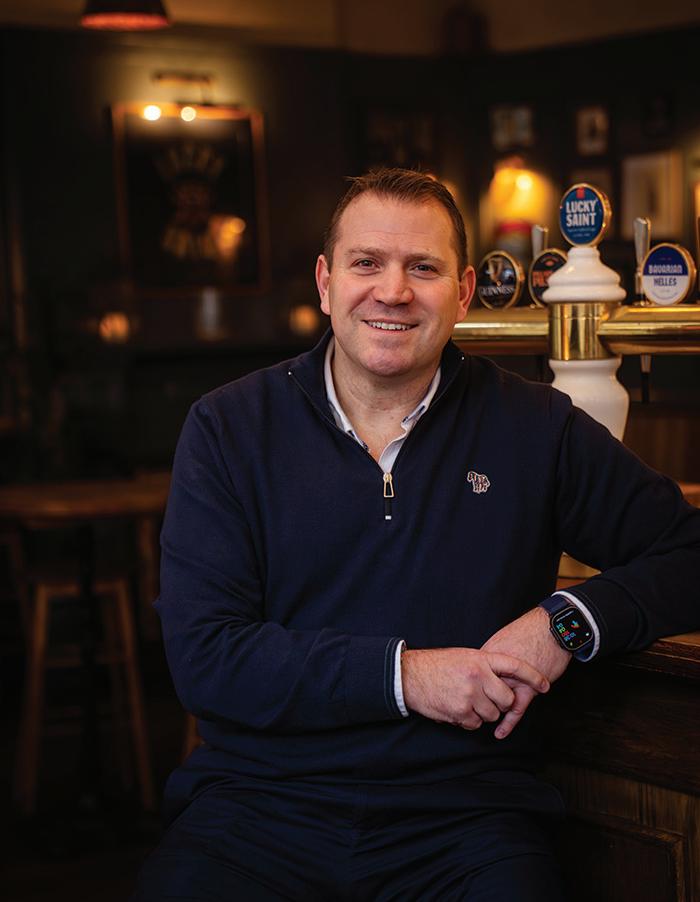
Joby Mortimer, Director of Charity Operations of LTC, explores the current industry landscape and the importance of supporting mental wellbeing in the workplace to futureproof the hospitality sector.
The UK’s hospitality sector has always been resilient. Operators are no stranger to a challenge, from regulatory changes to ever-shifting consumer habits. That being said, the current operating climate is pushing the industry to a breaking point. In 2025 alone, we supported 45,000 people across the sector; that’s a 12.5% increase from the year before.
More are reaching out for support, more are struggling with their mental health, and more are at risk of leaving the industry - and more needs to be done. Hospitality sits at the heart of the community, bringing people together and it is time to prioritise those shouldering the weight of keeping the doors open.
Supporting mental health isn’t just a nice to have, it’s becoming a commercial necessity and failing to do so has
a steep price tag. Absenteeism linked to mental wellbeing is costing the sector around £306m annually, with around a third of all sick days tied to poor mental health . Meanwhile, retention is vital: almost 9,000 hospitality jobs have been lost at the end of last year . This is then causing a vicious cycle of remaining teams being overstretched, impacting mental wellbeing.
With rising costs, ongoing labour shortages, growing regulatory demands, and changing consumer habits, it is no surprise this cumulation of issues is having an impact. This cocktail of unpredictable pressures can be overwhelming and, when matched with financial uncertainty, it is taking its toll.
A quarter of hospitality employees regularly feel overwhelmed at work . This is a concerning statistic. It is crucial to know the common signs of stress to recognise them in yourself or your teams to stop it in its tracks.
One of the early warning signs is the impact of stress on sleep and being able to separate work and home. Almost half of hospitality employees say work-related stress has affected their sleep, whilst a quarter say sleep disruption affects their ability to function at work . This means many are not at their best when at work and points to risk of burnout.
Our research shows that 72% of people working in pubs, bars and breweries have experienced personal challenges in the past year, with mental health and financial pressures at the top of the list . Whilst these challenges won’t disappear overnight, there are ways in which individuals and businesses can protect wellbeing.
Some of these steps include:
1.Recognise the signs – early action makes a difference
2.Talk to someone
3.Set boundaries
4.Seek professional support
5.Remember you are not alone
Many are often reluctant to ask for support, but reaching out is a sign of strength.
As an industry, we must continue to shift the conversation around mental health. Supporting wellbeing is a necessity for the long-term sustainability of the sector – and its people. As employers, suppliers, trade bodies and customers, we all have a role to play in uplifting the hospitality community and easing the pressures faced by those keeping the doors to our favourite local open.
Behind every pint poured or meal served is someone who needs support. As a sector built on community, it has never been more important to look after our own.
The weight of stress can be isolating – but this doesn’t need to be faced alone. The Licensed Trade Charity offers free, confidential support to people working across hospitality in the UK.
This includes:
• 24/7 wellbeing helpline for immediate emotional support
• Practical advice on financial, legal and employment concerns
• Counselling services to help manage stress, anxiety and burnout
• Guidance on work-life balance and resilience
Our aim is simple: to help people feel more in control, better supported, and able to the thrive in the industry they love.
If you or someone on your team is struggling, the Licensed Trade Charity is here to help: https://www.licensedtradecharity.org.uk/get-help/
LTC has been helping licensed trade people and their families for over two hundred years, providing practical advice, mental and physical wellbeing support, and financial assistance. Support is available via the website, Wellbeing Platform, 24-hour helpline, and Employee Assistance Programme, empowering people to build confidence, resilience, and take action to live well.
LTC’s free, confidential 24/7 helpline is available on 0808 801 0550
Legendary musician Sir Mick Jagger made an unexpected appearance at a popular Oxford pub, joining local performers during a Sunday evening folk music session.
The Rolling Stones singer was seen at The Half Moon in St Clements, where he took part in the venue’s long-running weekly gathering of folk musicians. Speaking to BBC News about the surprise appearance, an employee at the Half Moon said that they were “delighted” by Jagger taking to the stage.
Jagger was visiting Oxford with his partner, former ballet dancer Melanie Hamrick, as guests of Oriel College. During their stay, they attended Evensong at the college chapel and later dined with students and fellows at the college’s high table.
According to the college, a small group continued the evening at a nearby pub after dinner and drinks in the Senior Common Room. There, Jagger joined Rolling Stones keyboardist Matt Clifford and Oriel College politics academic Robert Cheah

for an impromptu musical performance.
The 82-year-old singer performed the traditional folk song Handsome Molly, a track he had previously recorded for his 1993 solo album Wandering Spirit.
Johnnie at the pub told the BBC: "Our Sunday folk session has been going for many years and is open to everyone - whether you're a beginner player or an international rock star.
"You never know what to expect at the Half Moon."
Jagger's most recent tour performances with the Rolling Stones took place in 2024 during the Hackney Diamonds Tour. The band is also preparing to release its 25th studio album, Foreign Tongues, in July.

National Pubwatch has called for continued vigilance and closer collaboration across the licensed trade, enforcement agencies and cybercrime bodies in tackling the persistent issue of fake identification being used to gain access to pubs and bars.
The organisation acknowledged the ongoing concern fake IDs present for the pub trade and the wider night-time economy, noting that many Pubwatch schemes and individual venues already operate robust best-practice measures, including Challenge 21 and Challenge 25 policies, to help prevent underage sales.
It has been suggested that the production, possession or use of false identification may in some circumstances fall within the scope of the Fraud Act 2006, particularly where there is intent to deceive. In addition, the Identity Documents Act 2010 may apply to offences involving the manufacture, possession or supply of fraudulent identity documents.
However, National Pubwatch highlighted the practical challenges faced by frontline policing, suggesting that in many cases it is unlikely that local forces will pursue prosecutions against young people for such offences or provide formal handling processes for seized documents.
While expressing understanding of operational pressures on the police, the organisation noted that the continued perception among some young people that gaining entry to licensed premises or purchasing alcohol is a “rite of passage” remains a concern for operators, particularly given the potential licensing implications for
venues found to have failed age verification checks.
National Pubwatch also warned that the issue is being exacerbated by a growing number of online scam websites offering fake identification, often masked under claims that documents are intended for “novelty use”.
In response, the organisation is urging licensed premises to remain alert, continue seizing suspected fake IDs where appropriate, and work with local police forces to support coordinated action against their use. It also suggested that Pubwatch schemes may wish to consider proactive steps in challenging the online operators supplying fraudulent documentation.
Operators are strongly encouraged to report suspected scam websites to the National Cyber Security Centre (NCSC), which operates an Active Cyber Defence programme that removes large volumes of malicious and fraudulent sites each year. Reports can be submitted via the NCSC reporting channels to help disrupt the online supply of fake identification.
For physical documents such as fraudulent driving licences, venues are advised to report incidents directly to the Driver and Vehicle Licensing Agency (DVLA), via its fraud reporting service, by telephone on 0800 096 0825, by email at fraud@dvla.gov.uk, or in writing to the DVLA Intelligence Unit in Swansea.
In addition, instances of fake ID use should be reported to Action Fraud, which records intelligence to help build a national picture of fraudulent activity and support enforcement efforts.
National Pubwatch concluded by reiterating its message that tackling fake ID requires a coordinated approach between the licensed trade, enforcement bodies and cybercrime agencies to protect operators, staff and the wider public.
The #VATsTheProblem campaign, fronted by celebrated chef and publican Tom Kerridge, gathered more than 100,000 signatures within its first three days and now stands at over 230,000l, a show of momentum that organisers say underlines just how urgently operators feel the issue needs to be addressed.
The initiative has drawn backing from several of the sector's leading trade bodies, including UKHospitality, the British Beer and Pub Association, the British Institute of Innkeeping, and CODE Hospitality. A full public-facing launch is planned for 1 July, at which point businesses across the country will be encouraged to enlist their customers in signing the petition, which can be found at VATsTheProblem.co.uk
Operators are urged to:
• Visit VATsTheProblem.co.uk and sign the petition.
• Share the petition with all of your venues and their teams, asking them to sign ahead of 1 July.
• Put the link to the website and the QR code on your emails, socials and website.
• Use our campaign toolkit to spread the word across hospitality. The campaign arrives at a moment of acute financial pressure for hospitality businesses throughout the UK.
Operators are contending with a confluence of cost increases — rising minimum wage obligations, higher National Insurance contributions following recent legislative changes, elevated energy bills, increased food and beverage costs, and persistent business rates burdens.
At the same time, consumer spending across the sector remains subdued, leaving many venues unable to turn a profit.
Urging the sector to back the campaign Kerridge said, “Our sector is under huge pressure. We know it. We live and breathe it every day.
“We know that the key to unleashing hospitality’s potential to grow and thrive into the future comes through a VAT cut. We’re making sure Government knows that too, and we need your help.
“We’ve launched a petition, and we’re aiming to get a million signatures supporting a VAT cut to 10% for hospitality.
“Now is the time for hospitality to galvanise behind this campaign.
“Be part of a movement that aims to get hospitality recognised and
taxed in a much fairer way. I know that the Government is listening, but we do need to push hard.
“Ask every single member of your team to sign the petition, and ask them to rally their friends and family, too.
“The next step is that on the 1 July, with hopefully tens of thousands of signatures already, we will launch the campaign to the consumer, with every hospitality business asking their guests to do the same. Sign the petition.
“This is a nationwide campaign with ambassadors big and small spreading the word to everyone that will listen, all asking for the same thing; a cut to hospitality’s VAT to 10%.
“Let’s all get behind the campaign, make our voices heard and bang the drum for hospitality.”
Campaign supporters argue that cutting VAT on hospitality to 10% would provide meaningful and immediate relief to venues across the country and would bring the UK in line with prevailing rates across much of Europe.
Currently, the UK levies a standard 20% VAT rate on hospitality — the second highest in Europe, behind only Denmark.
By contrast, Germany applies a 7% rate to the sector, while France, Spain and Italy all charge 10%, and Ireland operates at 9%.
Cambridge pub The Portland Arms was among those to publicly
declare their support, pointing out that a lower rate would ease pressure on pubs, cafés, restaurants, hotels and nightclubs, enabling more to remain trading rather than face permanent closure. The pub added that when hospitality venues disappear, communities lose something of far greater value than simply a place to eat and drink.
Operators wishing to support the #VATsTheProblem campaign are encouraged to visit VATsTheProblem.co.uk to sign the petition, share the link with their teams and venues, and use the campaign's digital toolkit to spread the word across their social media channels and customer communications.
The campaign has also launched an online shop, with campaign assets available for operators to download, print and use in venue to encourage consumers to sign the petition to back 10% hospitality VAT.
Currently available in the shop are:
• Tent cards
• Beer mats
• Cards to put down with receipts, place on reception areas or in rooms.
• Posters, for both front of house and for staff rooms.
The shop includes free-to-download files that operators can print themselves, as well as versions with print bleeds that be sent by a venue to their normal print provider.
The selection of campaign assets will continue to expand over the coming weeks, including the ability to purchase already printed materials at cost price to be posted to your venue ready-to-use.
Tom Kerridge said: “It’s fantastic to see such enthusiasm for the campaign, with numbers on the petition continuing to climb and social media flooded with support backing 10% hospitality VAT.
“With our target of a million signatures, we need the might of hospitality to get venues, staff and customers all behind the campaign.
“Let’s take the incredible momentum we’ve already built and get our pubs, restaurants, cafes, hotels and many more decked out in #VATsTheProblem branding, to make sure consumers understand and are fully behind us.”

By Stuart Brodie, Partner at Claritas Tax (www.claritastax.co.uk)

Walk into any pub or restaurant right now and you will hear plenty about rising costs, staffing pressures and energy bills that would be enough to make your eyes water. What you will not always hear, at least not from customers, is the quiet but constant influence of VAT sitting behind every price on the menu. Yet if you were to ask any operator, they will tell you it is one of the biggest constraints they deal with. So it is no surprise that the push for a lower rate of VAT on hospitality is back on the table, and gaining real momentum.
At the moment, things are fairly clear from a technical perspective. Most food and drink consumed on the premises is subject to VAT at the standard rate. HMRC’s guidance is nice and straightforward and explains that catering, meaning the supply of prepared food and drink for immediate consumption, is standard rated. That sounds tidy enough until you try to run a business on that basis.
Because while VAT may be designed as a tax on consumption, in hospitality it starts to feel a bit more personal. Prices are front and centre. Customers notice every pound. A small increase is not just a rounding error, it is the difference between “shall we go out?” and “maybe we will stay in tonight”. Operators know this, which is why they often end up absorbing part of the VAT cost themselves, quietly squeezing their own margins to avoid putting people off.
That is where the argument for a reduced VAT rate comes in, and why it resonates so strongly across the sector. Lower VAT creates breathing
room. It gives businesses the option to sharpen prices, run offers or simply avoid yet another price rise that makes them look expensive next to the place down the road. It also helps rebuild margins that have been steadily chipped away over the past few years. In hospitality, where profitability can be measured in single digits, that really matters.
There is also a broader point about how people behave. Eating and drinking out is one of the easiest things to cut back on when money feels tight. It is not a necessity in the way that groceries are. That means demand can move quite quickly in response to price. Even a modest reduction can tip the balance. One extra meal out a month does not sound like much, but multiplied across thousands of customers it adds up to something meaningful.
And this is why comparisons with Europe come up so often in this debate. Many countries have long recognised that hospitality is not just another retail sector. It is labour intensive, it brings people together and it supports tourism in a very visible way. Lower VAT rates are used as a tool to encourage activity and investment. The logic is not especially complicated. If you make it slightly cheaper to go out, more people will do it. When more people do it, businesses take more money, employ more staff and pay more tax in other ways.
The UK has had a taste of that thinking before. During the pandemic, temporary VAT reductions were introduced for parts of the sector. It would be a stretch to say they transformed everything overnight, but they certainly helped. Operators had a bit more flexibility, and customers saw deals that felt genuinely attractive. For a while, at least, it felt as though the numbers were working with the industry rather than against it.
Of course, not everyone is convinced. The biggest concern is cost, as cutting VAT in a sector as large as hospitality looks expensive to the Treasury when you first do the maths. There is also the small matter of complexity. VAT already has a habit of drawing odd distinctions that keep tax advisers like me gainfully employed. Anyone who has wrestled with the difference between hot and cold food will know exactly what that means. Introducing another rate risks adding another layer of debate
that many people could happily live without.
But let’s be honest, the system is already complicated. The UK has multiple VAT rates and a long list of exceptions. The real question is whether using that flexibility in hospitality is worth it. From the sector’s point of view, the answer has to be yes. This is an industry that employs large numbers of people, often in local communities where jobs are badly needed. It is also one of the first places tourists spend their money when they arrive in the UK. Supporting it has knock on effects well beyond the individual business.
There is also a slightly philosophical point lurking in the background. The tax system treats food eaten at home very differently from food eaten out. One is largely free of VAT, the other firmly sits at the standard rate. On paper that distinction is neat. In real life, it can feel a bit arbitrary. A sandwich from a supermarket and a sandwich from a small independent café meet much the same need, yet they are taxed very differently.
If a reduced rate were introduced, there would be practical issues to work through. Defining exactly what qualifies would be important. Mixed businesses would need clear rules. Systems and pricing would need to be updated. There would be a flurry of calls to advisers asking, “how does this work again?” But these are solvable problems. The sector has adapted to VAT changes before and would do so again.
In the end, the case for reducing VAT in hospitality is less about technical purity and more about pragmatic support. This is a sector that is exposed to every shift in consumer confidence and every increase in cost. It operates on tight margins and relies on people choosing to spend their money on something that, strictly speaking, they do not have to do.
A lower rate of VAT would not be a silver bullet. It would not fix staffing shortages or make energy costs magically disappear. What it would do is give businesses a bit more control over their pricing and a bit more resilience when things get tough. And, if it also makes a night out feel just that little bit more affordable for the rest of us, that is no bad thing either.
The Pubs Code Adjudicator has published the findings of the 2026 Tied Tenant Survey, providing an overview of the experiences and views of tied pub tenants across the six regulated pub companies in England and Wales: Admiral, Greene King, Marston’s, Punch Pubs, Star Pubs and Stonegate.
Since 2022, the PCA has commissioned a survey of around 1,200 tied tenants to gather feedback on those operating under the Pubs Code and to track changes in tenant views & experiences over time. The research, carried out by Ipsos as the PCA’s independent research agency, examines key aspects of the tied tenancy relationship including rent, repairs, Business Development Managers (BDMs), and awareness of statutory rights.
The 2026 results show that although tied tenants are more than twice as likely to be satisfied than dissatisfied with their pub-owning business (POB), overall tied tenant satisfaction across all pub companies declined from 61% in 2025 to 56%, while dissatisfaction increased from 23% to 26%.
Admiral and Greene King tied tenants recorded the highest levels of satisfaction in 2026 at 72% and 71% respectively. Star Pubs has entered the top three most highly rated companies with 67% of their tied tenants satisfied in the relationship, replacing Marston’s which recorded 63% this year. Punch Pubs achieved a satisfaction score of 55%, while
Stonegate continued to record the lowest level of satisfaction at 39%.
Responding to the headline findings, Fiona Dickie, Pubs Code Adjudicator said: “The general decline in overall tied tenant satisfaction this year is a matter of concern. While these results may reflect some of the wider pressures facing the sector, pub-owning businesses must be supporting their tied pub tenants now more than ever.
“The survey provides valuable insight into how relationships between tied tenants and pub companies are evolving and where improvements are needed. It is also an important tool for tied tenants, including those thinking of taking on a tied pub, enabling them to compare experiences of existing tenants and feel empowered to raise concerns with their pub company.”
This year, new survey questions explored whether tenants seek professional advice before entering into a tenancy and the importance they place on such advice. Almost all tenants (95%) considered it important to seek professional advice, with views broadly consistent across pub companies. The most commonly sought advice was from accountants with pub trade experience (66%) and solicitors (49%). However, the number seeking advice from a qualified surveyor was only 12%.
These findings reinforce the importance of specialist independent professional advice in helping tied tenants better understand their rights, identify potential financial and legal risks at an early stage, and make informed business decisions before entering into an agreement.
More broadly, the survey findings show that awareness of some of the core rights under the Pubs Code remains strong. 70% of tied tenants are aware of their right to request a Market Rent Only (MRO) option and 85% are aware that a BDM, or pub company representative, must provide them with the copies of meeting minutes within 14 days of a meeting taking place. Positively, awareness of BDMs remains almost uni-
versal at 99%, and overall awareness of the Pubs Code remains at 82%, demonstrating stability over time.
However, the survey also highlights areas where POBs need to improve. Awareness of the pub company’s Code Compliance Officer (CCO) has fallen from 46% in 2025 to 36% in 2026. The CCO plays a vital role in ensuring tenants’ rights, even before agreements are signed, so it is important that tenants are informed that they can contact them with Code-related concerns. The results suggest that, while relationships with BDMs are generally well established, there remains a need for POBs to ensure tied tenants are fully aware of the support and protections available to them under the Pubs Code. This includes promoting understanding of the role of the CCO, how repairs are managed, and encouraging tenants to seek independent professional advice.
Fiona Dickie, continues: “These results mirror our experience as shown by an increase in enquiries the PCA is receiving from concerned tied tenants and in the issues being raised with us. We will continue to engage with the regulated pub companies, hold them to account, and have asked each of the six pub companies to outline proposed improvements.
“We ask tied tenants to contact us and share any Code compliance concerns so we can build a clearer understanding of the support they are getting from their POB. We also continue to strongly encourage tenants to seek independent professional advice. This is particularly important in areas such as property condition, where advice from a qualified surveyor can help tenants understand potential repair obligations before entering into an agreement.”
For the full information on all of the 2026 survey findings visit: www.pubscodeadjudicator.org.uk/tied-tenant-survey/ pca-annual-tied-tenant-survey-2026
Barclays’ new Hospitality & Leisure (H&L) report has revealed that businesses are continuing to invest and expand, particularly in providing experience-led offerings, even as rising costs and geopolitical uncertainty impacts confidence and consumer spending.
Anonymised Barclays’ client data from 73,000 UK Hospitality & Leisure (H&L) businesses, combined with Business Prosperity research from 500 industry leaders and 2000 consumers shows how the sector is adapting quickly to harness customer demand amid a challenging operating environment.
Key findings include:
• 51 per cent of H&L businesses are planning to expand in the next three years
• 65 per cent are increasing investment in experience-led offerings
• 60 per cent say demand for memorable experiences is growing faster than demand for physical products
• 60 per cent expect the summer’s sporting, cultural and entertainment events to have a positive impact on their business
• 56 per cent of consumers plan to spend the same or more on experiences and events this summer
• Across all H&L businesses – 88 per cent are confident in their prospects over the next year (in comparison to 83 per cent of businesses across all sec-
Two in five (39 per cent) H&L businesses are focusing on improving the overall quality of the customer experience and are also investing in initiatives such as loyalty schemes or subscriptions (38 per cent). This reflects a broader shift in consumer preferences, as businesses look to capitalise on a packed summer of public events and sporting fixtures.
However, this proactive approach sits alongside a more cautious consumer and cost environment. Seven in 10 (72 per cent) consumers expect tensions in the Middle East to impact the cost of living throughout 2026, and 57 per cent are concerned the cost of experiences and events will climb this summer as a result.
While 45 per cent are responding by cutting discretionary spending or delaying major financial decisions (26 per cent), demand remains resilient. Many still plan to prioritise spending on experiences, with two thirds (66 per cent) reporting that events and experiences boost their mental wellbeing and happiness.
Customer demand for experiences is also reflected in business performance. Although the sector experienced an overall decline in cash
inflows (-5.6 per cent), activity-led businesses such as golf courses (2.5 per cent) and botanical and zoological gardens (6.1 per cent) saw cash flows rise last quarter, pointing to sustained demand for outdoor and fitness-focused activities.
COST PRESSURES DRIVE DIVERGENCE IN BUSINESS STRATEGY
Close to six in 10 (57 per cent) H&L leaders have changed their business outlook for 2026 in light of current geopolitical instability. Against this backdrop, a clear divergence is emerging in how businesses respond to cost pressures.
• 33 per cent report rising staff costs following increases in the National Living Wage and National Insurance contributions
• 31 per cent feel pressure to increase prices for customers or to accept reduced profit margins as a result (30 per cent)
• SMEs are taking a more cautious stance, with borrowing down 12.7 per cent; while savings increased 1.9 per cent year-on-year in Q1 (rising to 4.3 per cent for travel agencies and 4.6 per cent for tour operators)
• Conversely, larger firms have increased borrowing by 3.2 per cent and drawn down savings -8.7 per cent, potentially signalling they are operationalising capital, while a 9.1 per cent growth in loan volumes suggests confidence to invest
HEINEKEN UK has released its comprehensive 2026 Beer Report: Elevating Experiences to Unlock Growth, revealing that despite a challenging economic landscape, the UK beer category in the on-trade has grown to a record £14bn value, now accounting for nearly half (45%) of total wet sales in pubs, bars and restaurants.
The report highlights a fundamental shift in consumer behaviour, moving from traditional higher-volume sessions to a more "intentional" style of drinking. This means consumers are not simply going out to drink; they are going out to connect, to be entertained and to enjoy an environment that feels distinct from home. While average serves per visit have declined by nearly 9%, the average price per pint has risen by 8% to £5.02 as consumers trade up for premium quality and unique experiences.
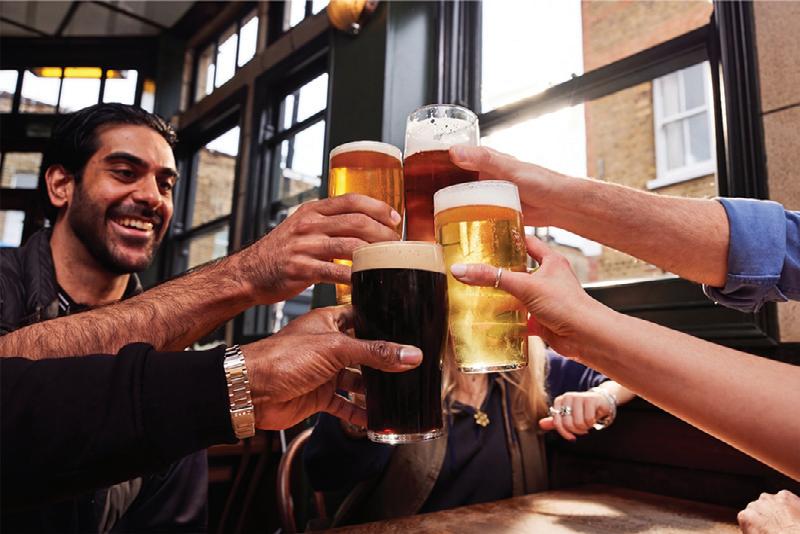
Will Rice, On-trade Director said, “Beer remains one of the great constants of the British on-trade but the way it creates value is changing. For licensees, the opportunity in 2026 is not simply to sell more beer, but to sell beer better. That means understanding what different customers want from different occasions, building a range that earns its place on the bar, and delivering the kind of experience that gives people a reason to come back.
This report brings together the trends, behaviours and commercial levers shaping beer in the on-trade, and shows how licensees can respond in a way that drives both customer experience and business performance. Beer is a magnificent category. Managed well, served well and ranged well, it will remain one of the most powerful tools licensees have to grow.”

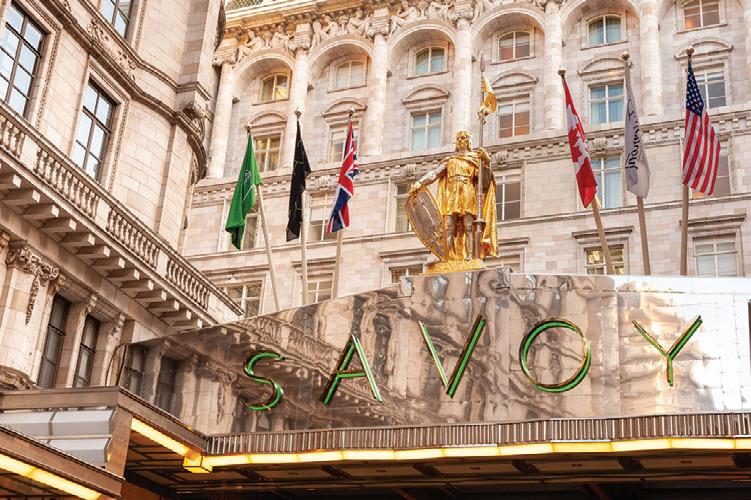
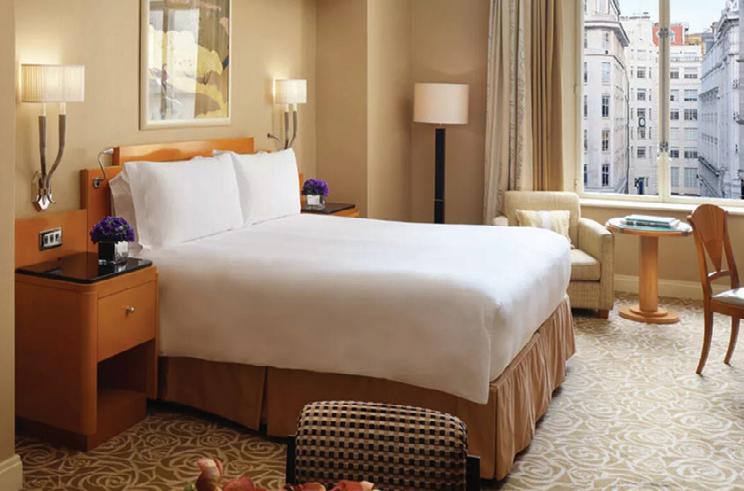
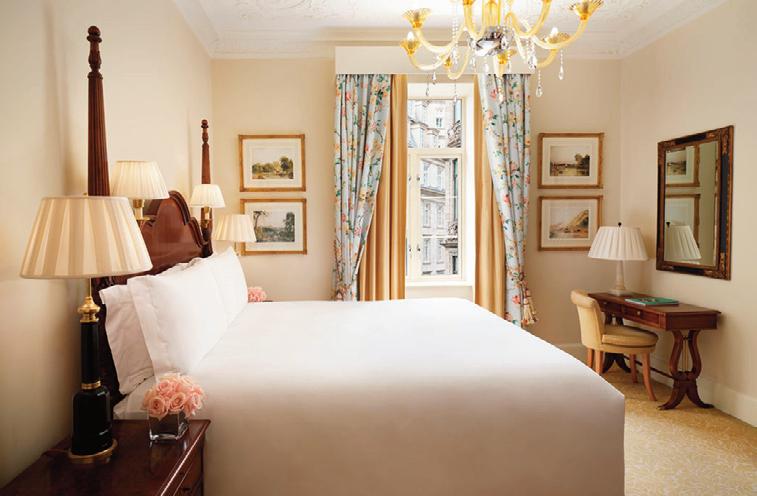
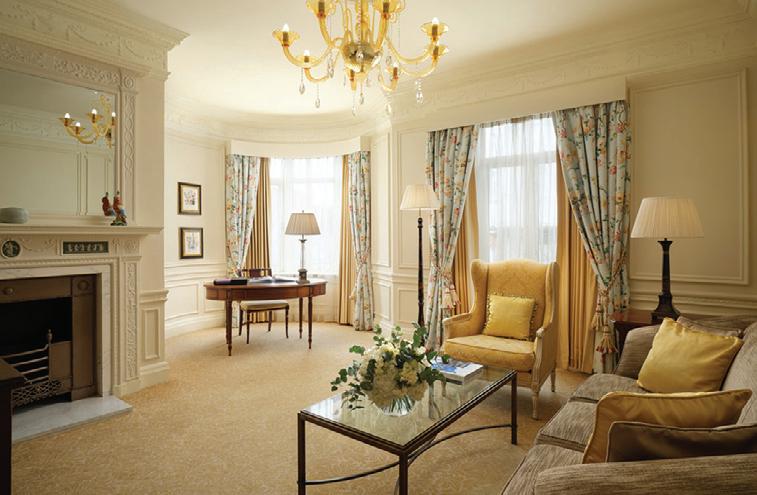
In a major moment for London history lovers, design enthusiasts, and independent hospitality operators alike, Pro Auction Limited has announced that its doors are fully open to the public to bid live and in-person for the highly anticipated next phase of the hotel’s historic interior refurbishment.
Breaking away from exclusive, closed-door industry events, this public-first auction invites private individuals, hotel operators, and everyday design fans to step right inside The Savoy Hotel London to raise a physical paddle. Running simultaneously with an interactive worldwide digital webcast, the live bidding floor welcomes attendees from across the street and around the globe.
As The Savoy systematically delivers its landmark £45 million phased room-by-room redesign through 2027, this rolling format unlocks a massive cache of over 2,000 exceptional lots. It offers an unprecedented opportunity to acquire custom-built luxury furnishings at a mere fraction of their original procurement cost—with select pieces originating directly from the hotel's legendary Personality Suites, once home to Marilyn Monroe, Frank Sinatra, and Sir Winston Churchill.
For boutique hoteliers, upscale guesthouse owners, and private buyers, this phase presents an unmatched commercial opportunity. Rather than
waiting on lengthy lead times and skyrocketing manufacturing costs for bespoke corporate fitouts, successful buyers can bypass the traditional supply chain entirely. Whether it’s a bespoke boutique hotel transformation or a private home redesign, this landmark sale permits buyers of all levels to instantly inject authentic five-star DNA and world-class Savoy prestige into their own spaces overnight.
Free from the barriers of trade-only showrooms, the event levels the playing field for everyday interior lovers, vintage hunters, and commercial developers. On this level playing field, buyers can unlock extraordinary value and massive cost-savings across:
• The Francesco Molon Collection: Exquisite Georgian-style mahogany cabinets, stately Regency writing tables, and masterfully inlaid side tables.
• Five-Star Bedding & Textile Assets: Highly coveted, pristine hospitality-grade beds paired with opulent silk drapery sets.
• Architectural Lighting & Mirror Archives: Sculptural designer wall sconces, Murano-style glass fixtures, and grand-scale bevelled wall mirrors.
• Fine Art Portfolio: A sprawling collection of framed original prints, decorative sculptures, and bespoke hotel artwork that has lined the famous suites.
To accommodate both local attendees and a global digital audience, registration is free and open to all. Due to seating limits within the hotel, in-person floor bidders are required to reserve their spaces in advance.
Three-Day Bidding
By Rebecca Hughes, Associate Solicitor, employment team, Birketts LLP

The hospitality and leisure sector continues to experience a high level of employment disputes, with a significant number of matters progressing to employment tribunal claims.
Birketts’ Employment Tribunals in the Hospitality and Leisure Sector Impact Report 2025 highlights that HAL businesses face a higher volume of tribunal claims than many other sectors, reflecting both operational pressures and workforce demographics specific to the sector.
Businesses such as hotels, restaurants, pubs, bars, gyms and leisure venues are inherently people-intensive and fast-paced. They operate extended hours, including evenings, weekends and public holidays, and often experience sharp peaks in demand. Employees frequently work in customer-facing roles under pressure, managing high workloads, timesensitive service expectations and, at times, challenging or confrontational behaviour from customers. These factors can increase the likelihood of workplace conflict, grievances, and disciplinary issues, ultimately leading to tribunal claims.
Birketts’ research shows that HAL businesses receive an above average number of employment tribunal claims when compared with other sectors. While the overall volume of grievances within the sector is relatively low, a notably high proportion of those grievances ultimately become tribunal claims. This suggests that grievances in the hospitality and leisure sector carry a particular litigation risk if not handled clearly, consistently and effectively at an early stage.
Disciplinary issues arise frequently in hospitality and leisure settings. Allegations often relate to behaviour towards colleagues or customers,
discrimination, breaches of workplace policies, health and safety concerns or performance-related matters. Many employees are entrusted with representing the business directly to customers and, in some cases, handling cash, alcohol and food hygiene obligations.
Although it currently appears that unfair dismissal claims feature less prominently within the sector, largely due to high staff turnover and shorter lengths of service, this is likely to change. The Employment Rights Bill is expected to introduce ‘day one’ unfair dismissal rights, removing the current two-year qualifying period. Hospitality and leisure employers should therefore review their disciplinary procedures now to mitigate the risk of a future increase in claims.
Grievances and escalation to tribunal claims
Birketts’ research indicates that a significant majority of tribunal claims in the hospitality and leisure sector are preceded by a grievance process. Common grievance themes include discrimination, workload, stress, relationships with managers, ill health and health and safety concerns.
In practice, grievances are often raised following management action, such as disciplinary processes, performance management or changes to working arrangements. Where employees disagree with decisions, grievances may be used to challenge outcomes or delay ongoing processes. If grievances are not addressed thoroughly and transparently, there is a heightened risk of escalation into formal litigation.
High staff turnover within the sector can further complicate matters. Managers or witnesses may leave the business before grievances or claims are concluded, and records may not always be as detailed as required. This can weaken an employer’s position when disputes progress to a tribunal. This is why, in the hospitality and leisure sector, it is particularly important to take early skeleton witness statements.
Many hospitality and leisure businesses rely on casual, seasonal or agency workers to meet fluctuating demand. This can create additional complexity when issues arise, particularly around responsibility for managing conduct, handling complaints, and determining which procedures apply.
Disputes involving agency or casual staff can raise difficult questions about control, responsibility and consistency, especially where grievances
or disciplinary concerns overlap between the business and the agency supplying labour.
Employers in the hospitality and leisure sector have statutory duties under the Health and Safety at Work etc. Act 1974 to protect both the physical and mental health of their workforce. Long hours, customer related stress and fatigue can all contribute to wellbeing concerns.
A failure to address workplace stress, excessive workloads or wellbeing issues can itself lead to grievances or claims, particularly where employees feel unsupported or exposed to unreasonable pressure. Looking ahead
Changes introduced under the Employment Rights Act 2025 are likely to further increase dispute risk across hospitality and leisure.
Hospitality and leisure employers operate within a high-risk employment relations environment. Legislative change, increased tribunal backlogs and strengthened employee protections are likely to intensify this risk, particularly for businesses with large, dispersed or transient workforces.
Against this backdrop, hospitality and leisure employers should consider:
• Maintaining clear, consistent and well-understood disciplinary and grievance procedures.
• Ensuring managers are trained to handle complaints, discrimination and harassment issues confidently and lawfully.
• Keeping detailed and contemporaneous records of decisions and investigations.
• Taking an early, strategic view on dispute resolution and settlement where appropriate
• Supporting managers to understand that they may be required to justify decisions at tribunal.
Resolving issues informally and effectively at an early stage remains one of the most important steps employers can take to reduce escalation, protect staff wellbeing and limit the risk of costly employment tribunal proceedings.
The Royal Exchange, Lindford, has successfully completed its second annual 24-hour charity cycle ride, raising an impressive £6,200 for The Rosemary Foundation – Hospice at Home.
The community fundraising event saw participants keep the pedals turning continuously for 24 hours, with local residents, customers, pub team members and supporters coming together to take cycling slots throughout the day and night.
Thanks to generous donations from the local community and the success of a charity auction held alongside the event, The Royal Exchange initially raised £3,700. The total was then boosted by donations of £1,000 each from Brakspear Giving Back and Melody Care, together with an additional £500 in Gift Aid, bringing the final fundraising total to an outstanding £6,200.
Whitehill & Bordon Mayor Cllr Leeroy Scott officially started the challenge at midday on Friday (June 5), joined by Melody Care’s Andrew Tippins and Post & Herald chief reporter Paul Ferguson as the first riders set the fundraising

effort in motion.
The funds will go directly to The Rosemary Foundation, helping the charity continue its vital work providing hospice-at-home care and support to local families facing life-limiting illness.
Reflecting on the success of the event, The Royal Exchange said on social media: “A massive THANK YOU to everyone who donated, took part, completed a cycling slot, cheered us on, and helped make this event such a success for the second year running. Your support means the world, and every pound raised will help The Rosemary Foundation continue its vital work supporting local families when they need it most.”
The event marks another successful year for the fundraising challenge, which has become an important fixture in the pub’s community calendar. Organisers have thanked everyone who contributed to the event’s success, from cyclists and volunteers to sponsors and supporters.
More than 1,000 Marston’s pubs across the country are encouraging men to ‘Know The Score’ by teaming up with Prostate Cancer UK to spark life-saving conversations about men’s health – because there’s no better place to get men talking than the local pub.
Launching earlier this month at the start of Men’s Health Week and running throughout the summer, the campaign will see Marston’s pubs rally their local communities to help fundraise and raise awareness of the most common cancer in men in the UK.
The pubs will be raising vital funds for Prostate Cancer UK, with the aim of raising £100,000 nationally to support the charity’s life-saving work and reach even more men across the country.
Although 1 in 8 men are affected by prostate cancer during their lifetime, many still don’t know their risk or feel comfortable talking about it. Marston’s research shows that 44% of men visit a pub every week, while 58% of families head to their local to celebrate Father’s Day – making the pub the ideal place to reach men where they already feel at home.
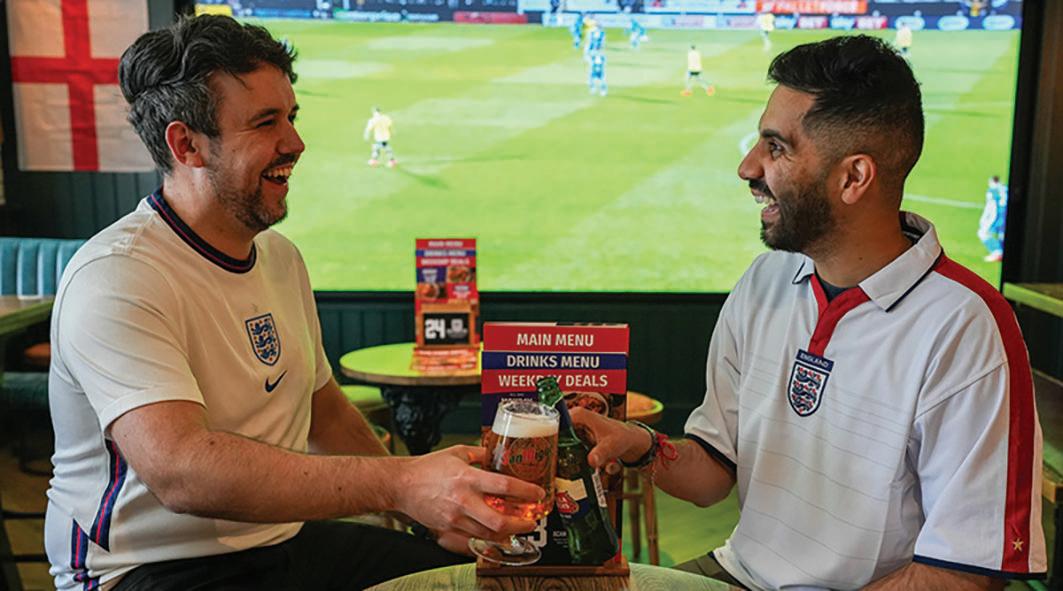
Using beer mats, pub team prompts and subtle signage, the campaign will encourage guests to check their risk in just 30 seconds via Prostate Cancer UK’s online tool.
The latest research underlines the urgency: in England, 56,000 men are diagnosed with prostate cancer each year, while more than 1 in 5 men diagnosed with prostate cancer are told their disease has spread and can’t be cured.
Neil Campbell, Chief Operating Officer at Marston’s, said: “There’s something about the pub environment
that makes it easier for men to let their guard down, to talk honestly and to listen to each other. That’s something we’ve always known, and it’s something we’re proud to put to work for a cause as important as this.
“This summer, with all those everyday occasions that our guests love – a Sunday lunch, a Friday catch-up, a quick round after the match – we want to use those moments in our local pubs to help get men talking more openly about their health.
“Alongside this, more than 1,000 of our pubs will be raising vital funds for Prostate Cancer UK, with the aim of raising £100,000 nationally to support the charity’s life-saving work and reach even more men across the country. If a conversation over a pint encourages someone to check their risk, that’s the power of the pub doing what it’s always done best – bringing people together when it matters most.”
James Steven, Head of Partnerships at Prostate Cancer UK, said: “We’re delighted to be teaming up with Marston’s to bring lifesaving conversations into a place a lot of men know, love and trust – the pub.
“Prostate cancer is the most commonly diagnosed cancer in the UK. But far too many men don’t know their risk, aren’t aware that early-stage prostate cancer often has no symptoms and don’t realise finding it early can be a lifesaver. So, by using the relaxed setting of their local, Marston’s are helping to kickstart conversations about prostate cancer, from checking their risk online with Prostate Cancer UK to speaking to their GP, and the support they can get at every step of their journey.
“A big thank you to Marston’s for their support and we’re excited to see the partnership kick off this summer.”
The hospitality industry is facing a significant brain drain after Skilled Worker Visa applications dropped by 94 percent this year, following the government’s crackdown on immigration.
Home Office data analysed by law firm Reiss Edwards shows multiple industries, including construction, manufacturing and the arts, could also be facing a substantial talent shortage, as applications dropped across sectors during January – March 2026 compared to the first quarter of 2025.
The fall in applications is yet another blow to industries already facing severe talent shortages and significant hiring costs, after the government significantly tightened visa rules by raising salaries and increasing skill levels in a bid to reduce net migration.
The data also revealed the construction industry has seen a 54 percent decline, with applications in the manufacturing sector down 41 percent and the arts down 50 percent during the first quarter of 2026.
The drop in overseas talent applying to work in the UK comes after lawyers say the skilled worker salary increase, implemented in July 2025, is cited as the main reason clients are seeking legal help following a visa refusal in the last six months.
Amar Ali, director of Reiss Edwards, said: “Industries were already suffering with a talent drain at the start of this year, as they grapple with the complex restrictions and a hike in costs, including last year’s salary increase to £41,700. We are hearing from companies that feel the sponsorship process is stacked against them, almost making it impossible to sponsor someone they genuinely and desperately need.
“We fear we are now seeing the knock-on effect of the government’s crackdown play out in full force. Those who have gone down this visa route have also encountered significant problems. We are hearing weekly from individuals and businesses who are facing visa refusals due to the new salary increase imposed last year. The
system is becoming impenetrable.”
The data also reveals that the decline has nearly doubled in the hospitality sector, compared to the last quarter of 2025, when applications decreased by 50 percent from October to December.
Amar Ali added: “The situation is getting worse, year on year, with no indication from the government on how they plan to fill critical roles in vital industries in the short-to-medium term. Our clients are having to jump through hoops and pay ever-increasing fees to stay, in this short-sighted attempt to focus on domestic hiring.
“Trying to ascertain if a company can sponsor someone can be difficult. For example, if an organisation wants to sponsor a chef, there are multiple answers to the basic question.
“For example, if a worker was granted before April 2024, they can be sponsored with a salary of £31,300, but if they were granted after April 2024 but before July 2025, they can be sponsored with a salary of £41,700. If a worker has never been granted a work visa, they cannot be sponsored as of July 22, 2025.”
The Migration Advisory Committee (MAC), the public body that advises the government on migration issues, also published a technical note this month proposing changes to the way salary thresholds are calculated. As an illustrative figure, they proposed that salary thresholds for the Skilled Worker Visa could climb to £44,000.
Amar Ali adds: “Our clients across multiple sectors are finding it increasingly difficult to justify seeking talent abroad as the costs continue to rise and the system feels as if it is stacked against them.
“If this trend continues, the UK could no longer be viewed as a desirable place to live and work, having a detrimental impact on the future of our economy.”
The UK eating-out market is entering a new phase of “selective growth”, valued at £102.8bn in 2026 (+1.8%), according to new findings from Lumina Intelligence’s UK Eating Out Market Report 2026. While the market continues to grow, this expansion is increasingly inflation-led rather than demand-led, with weakening participation and a more cautious consumer backdrop.
A clear structural divide is emerging across the market. Quick service, coffee, bakery and travel channels are gaining share, while restaurants and pubs continue to lose ground.
This shift reflects growing demand for convenience, speed and accessibility, with high-frequency, value-led formats outperforming more traditional dine-in experiences.

Eating-out participation has declined to 56.8% (-1.3ppts), but those remaining in the market are visiting
more often, with frequency up +3.9%.
Growth is now heavily concentrated among affluent consumers, particularly 25–34s and higher-income households, while lower-income groups continue to disengage.
The market is increasingly split between two consumer mindsets:
• “Emotional investors” seeking quality-led, meaningful experiences
• “Strategic spenders” prioritising promotions, value and planned visits
Operators are relying on bundles, loyalty schemes and targeted offers to maintain frequency, while still delivering on quality expectations.
Head of Insight Andy Crossan commented: “As the sector adjusts, success will depend on the ability to balance value, convenience and quality, while leveraging technology and format innovation to meet increasingly selective consumer demand.”

John Webber Head of Business Rates at Colliers (www.colliers.com) says short term populist slogans are not the answer

With the former mayor of Manchester, Andy Burnham winning the Makerfield by-election and set to parachute himself into Parliament for a leadership contest against Kier Starmer, commentators are asking what the impact on the economy could be should he succeed in his plan and become Prime Minister.
John Webber, Head of Business Rates at Colliers is particularly concerned about Burnham’s policy towards business rates, which he brands as “populist” but without a “fundamental economic understanding” of the tax and its impact on business. As Webber points out, “Saying you are going to reduce business rates is as predictable as kissing babies at a byelection and about as effective for the economy!”
So what is Burnham saying? So far it appears he has two main strands to his policy: Shops and Pubs and instituting a Land Value Tax. SHOPS AND PUBS
The Greater Manchester Mayor backed the “Save our Pubs campaign” and should he become PM has pledged to cut business rates for pubs and music venues by 20 per cent, building on the extra reliefs granted by Rachel Reeves earlier this year, when she was forced to backtrack following the backlash from the fall out of the 2026 Revaluation. Despite introducing caps, many pubs were set to see their bills rise astronomically. Our analysis showed that even with transitional caps, a typical independent pub could see its annual rates bill rise by 75% during the 3 years of the list. Against a backdrop of higher energy costs, increased employer National Insurance and rising minimum wages, such rises simply were not sustainable- and the industry yelled.
Burnham wants to do more for pubs and has said his extra support would cost £100 million.
Burnham has also said he would abolish business rates for shops, cafes and restaurants limiting this to single site venues to protect familyowned businesses.
And he would also increase the threshold at which businesses pay business rates from £12,000 to £18,000 whilst also extending the threshold under which businesses enjoy tapered relief on rates, from £15,000 to £21,000.
Burnham said these moves would be funded by increasing taxes on
online tech giants and their warehouses to ensure they pay their “fair share”. He said he would raise a further £500 million by tackling tax evasion that is harming high streets.
John Webber commented, “Providing reliefs for pubs and music venues sounds all well and good, but it is short term and does little to address the fundamental flaws in a system that has left large parts of the hospitality sector — and other businesses — facing unsustainable business rates increases. Burnham’s announcement is best described as providing a further sticking plaster on an outdated and deeply flawed business rates regime that needs proper reform. He does not say how long he will provide this relief nor that we should be re-looking at the way pubs are valued.
Moreover, while pubs could be granted a reprieve, other parts of the RHL sector will be left “hanging out to dry”. Hotels are a good example, where according to UK Hospitality the average hotel’s business rates bill will increase by 115% by April 2029.
Burnham’s promise to abolishing business rates for shops, cafes and restaurants is also a good soundbite, but if the government is determined to increase its tax take from business rates every year (with forecast to take £40 billion by 2030) extra tax will need to be levied on other businesses to pay for this relief.
Moreover, limiting the relief to single site venues will do nothing to encourage business expansion. Why would you open another venue if you are hit with full business rates on both? We need our taxation policy to be stimulating growth not putting another nail in its coffin!
Increasing the thresholds at which businesses pay business rates from £12,000 to £18,000 would also just take properties out of the system from paying business rates at all- again putting the burden further on those businesses that do. We have estimated the cost of increasing the threshold in this way would be around £900m.
Burnham says he will fund his moves by “increasing taxes on online tech giants and their warehouses” - a naïve dream given current geopolitics and the relationship with Trump. This was also the theory behind the current government’s super higher multiplier, which has just resulted in all bigger businesses being hit by higher rate bills, again undermining business investment, jobs and growth.
Burnham is also reported to be in favour of increased property taxes. “I think land is under-taxed,” he said last month as he launched his campaign to return to Westminster. “I have long been persuaded of the argument for a land value tax,” he added.
Again “misguided and disastrous” says Webber. “ There is no country in the world that has been able to successfully implement a land value tax. Most countries that claim to have land value taxes like Australia and Taiwan exempt the two biggest uses of land, agriculture and owner-occu-
pied housing. Even in the UK when it was tried by the Liberal Government in the early 1900s it spectacularly failed and cost more to administer than it collected, nearly bringing down the Government.” Webber continues, “ Every few years a left wing think tank proposes a land value tax targetted at landlords and usually gets shouted down. Given business rates were set up to pay for the amenities and services that businesses use in the community, surely there should be no dispute that such businesses should pay something for these services?”
The additional tax could also backfire. If charged, landlords would most probably recuperate the money by hiking up rents charged to occupiers. “We would therefore have a system whereby businesses would end up paying more to the landlord but unlike the present system would be unable to appeal against their combined rent and rate bills that the landlord would introduce. So how would they benefit?”
“Labour’s plans would just complicate the system, be expensive to implement and lead to more appeals. We already have a broken appeal system and an under resourced VO. How would a land tax help with that?”
Webber believes that Burham would be much better looking at proper business rates reform, something the current government has failed to implement despite its promises. "What we need is a grown-up debate that will allow a clear strategy to be set out so businesses can see a road map for change. No one expects 30 years of mismanagement to be changed overnight but it should be in the 5-year life of a parliament.
The plan should encompass reducing the multiplier to make it a palatable 35% not a 50% tax, one that businesses can afford. We could pay for this by rebalancing who pays, taking the pressure off retailers and making small businesses all pay something -say 10 per cent. The new labyrinthine multiplier system must also be simplified; there are currently 13 different multipliers in England and Wales alone, and three in Scotland. It is a bureaucratic nightmare.
Then we should look at the quantum taken from the system - £40 Billion by 2030 is excessive. We need to reduce it and create a a plan to show how much it will be reduced by and where that shortfall is coming from so that we prevent financial markets from being spooked and give credibility to the plan.
And finally, the appeal process needs to be clearer and easier to navigate. Currently it strangles anyone trying to get their rate bills properly assessed. The default is so often the computer says no but the greater transparency should lead to lower appeals ideally allowing the VO to deal with those that are lodged in a quicker timescale. That’s the aim! Webber adds, “ What we don’t want are polished sound bites that sound good and are what people want to hear, but are unable to face close scrutiny. Such slogans may very well help Andy Burnham get into Parliament, but if he is serious about becoming PM and running the country he certainly needs a more credible plan going forward.”
In today’s competitive hospitality market, standing out has never been more important. Whether it’s a bustling pub garden, a newly launched restaurant, a local event, or a hotel promotion, businesses need marketing solutions that are eye-catching, versatile, and costeffective. While digital advertising continues to grow, one of the most reliable and impactful publicity tools remains firmly rooted in traditional print — the printed banner.
At HFE Signs, we’ve seen first-hand how professionally designed banners continue to drive footfall, increase visibility, and strengthen brand presence for hospitality venues across the UK.
VISIBILITY THAT WORKS
Hospitality businesses rely heavily on attracting passing trade. A wellpositioned printed banner can instantly communicate promotions, events, seasonal offers, or simply reinforce brand identity to potential customers.
Unlike digital adverts that disappear with a scroll, banners offer constant visibility 24 hours a day. Whether mounted outside a venue, displayed at an event, or positioned roadside, they create immediate awareness and deliver clear messaging where it matters most — directly in front of customers.
For pubs and restaurants, banners are especially effective for promoting:
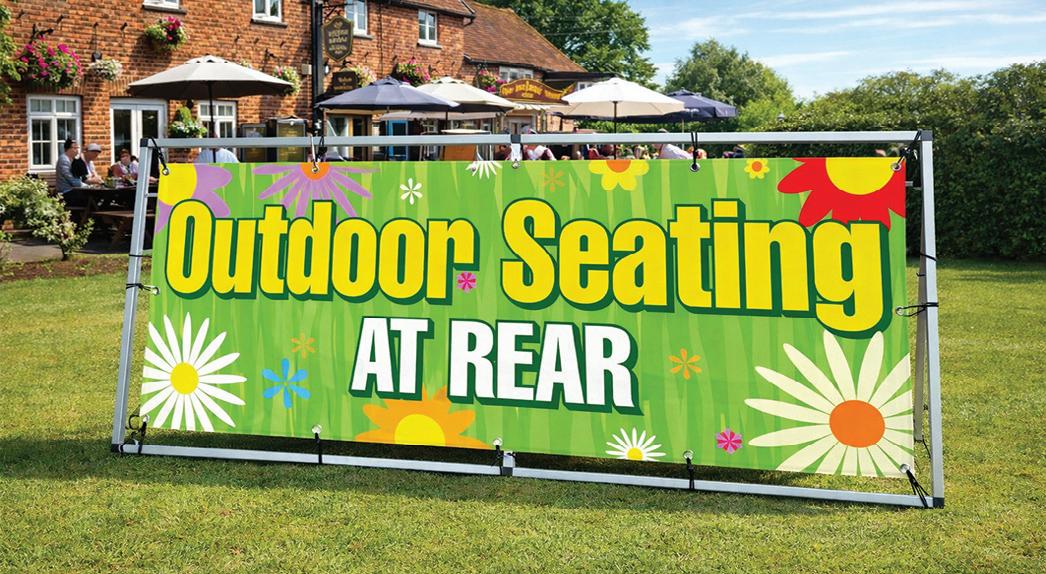
• Beer gardens and outdoor spaces
• Live entertainment and sporting events
• Seasonal menus and special offers
• Grand openings and refurbishments
• Weddings and private hire facilities
• Community events and sponsorships
COST-EFFECTIVE PUBLICITY
Marketing budgets are under pressure for many operators, making value for money essential. Printed banners provide one of the lowest
cost-per-impression advertising solutions available.
A professionally produced PVC banner can last for years, withstand the British weather, and be reused time and time again. Compared with recurring online advertising costs, banners offer long-term visibility without ongoing spend.
For temporary promotions or events, they also provide flexibility. Need to advertise a bank holiday event, summer drinks promotion, or Christmas party booking campaign? A banner can be designed, printed, and installed quickly with minimal disruption.
A banner’s success depends not just on size, but on effective design. Clear messaging, bold branding, and readable typography are essential.
At HFE Signs, we always advise clients to keep messaging concise and impactful. A banner has only a few seconds to capture attention, so strong visual hierarchy is critical. Large headlines, high-contrast colours, and quality imagery all help ensure the message is seen and remembered.
Professional print quality also plays a major role. High-resolution
graphics and durable materials reflect positively on the venue itself. Poorly printed or faded signage can unintentionally damage brand perception.
VERSATILITY ACROSS THE HOSPITALITY SECTOR
One of the biggest advantages of printed banners is their adaptability. They can be used indoors or outdoors, mounted permanently or temporarily, and produced in virtually any size.
Mesh banners are ideal for fencing and windy outdoor areas, while premium PVC banners deliver vibrant graphics for storefronts and event spaces. Roller banners continue to be popular for receptions, conferences, and indoor promotions.
For businesses operating multiple sites, banners also provide consistency in branding across locations while remaining affordable to roll out nationally.
PRINT STILL HAS PRESENCE
Despite the growth of digital marketing, physical print continues to hold a unique advantage — it occupies real space in the customer’s environment. It cannot be skipped, blocked, or ignored as easily as online advertising.
For hospitality businesses looking to maximise local visibility and create immediate impact, printed banners remain one of the smartest investments available.
At HFE Signs, we believe great print design is about more than aesthetics — it’s about helping businesses communicate clearly, attract attention, and ultimately bring more customers through the door. Because sometimes, the biggest marketing impact comes from the simplest solutions.
www.hfe-signs.co.uk
See the advert on page 3.
The Government has taken the next step towards reforming zerohours contracts, launching a consultation on measures designed to provide workers with greater certainty over their hours and earnings. However, hospitality leaders have warned that the proposals must recognise the sector’s unique operational challenges and reliance on flexible working arrangements.
The consultation forms part of the Government’s wider employment rights agenda and aims to address what ministers describe as “exploitative” working practices. More than 18 million workers are expected to be affected by the proposed reforms, which are intended to improve income security and predictability for employees with variable working hours.
According to the Living Wage Foundation, nearly six in ten workers on variable-hour contracts currently receive less than one week’s notice of their shifts. The Government argues that this lack of certainty can make it difficult for workers to manage household budgets, arrange childcare, and plan their personal lives.
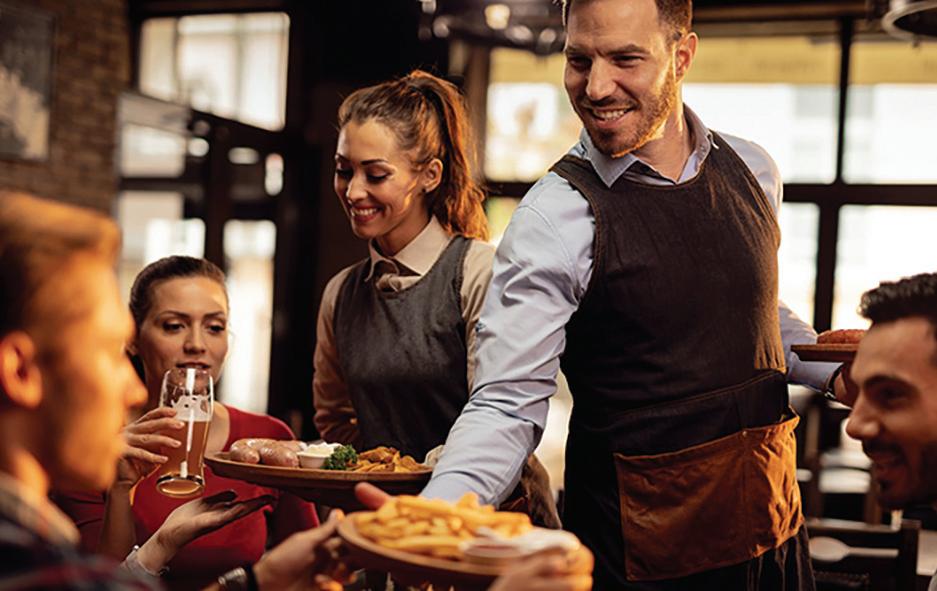
Under the proposals, eligible workers would be offered contracts reflecting their regular working patterns, while retaining the option for individuals who prefer the flexibility of zero-hours arrangements to continue working under such agreements. Employees would also gain rights to reasonable notice of shifts and compensation where shifts are cancelled, shortened, or changed at short notice.
The consultation, which runs until the end of August, seeks views from employers, workers and industry organisations on key details, including the threshold for guaranteed hours and the reference period used to assess regular working patterns.
Business Secretary Peter Kyle said the reforms would provide greater certainty for workers while helping to tackle insecure employment practices.
“It’s not right that people can work regular hours but still have no certainty about their pay from week to week,” he said. “These changes will mean more certainty for millions of people and help protect the lowestpaid workers from the costs associated with insecure work.”
Employment Rights Minister Kate Dearden added that improving job security could help raise living standards while also benefiting businesses through improved staff retention, skills development and productivity.
For the hospitality sector, however, the consultation raises important questions about how new rules will
operate in businesses where demand can fluctuate significantly from week to week.
Responding to the announcement, UKHospitality Chair Kate Nicholls emphasised the importance of maintaining genuine flexibility for both employers and employees.
“Jobs in hospitality are critical for supporting people who need flexible hours and jobs, from working parents to those with caring responsibilities,” she said.
“Retaining access to zero-hours contracts was crucial and it was important the Government recognised that in the Employment Rights Act.”
Nicholls stressed that while the sector supports efforts to eliminate exploitative employment practices, the details of the reforms will be critical.
She argued that the proposed 12-week reference period for calculating guaranteed hours may not adequately reflect hospitality working patterns and suggested a 26-week period would provide a more accurate representation of employee hours while accommodating the industry’s seasonal nature.
UKHospitality has also called for flexibility within the proposed shift notice and cancellation rules, highlighting the unpredictable factors that regularly impact trading conditions.
“Hot weather or a major sporting event, for example, can fundamentally change how a business runs on any particular day,” Nicholls said.
The organisation warned that overly restrictive regulations could inadvertently reduce employment opportunities and undermine the flexibility valued by many hospitality workers.
“There is a danger that over-regulating flexible work actually increases work instability, rather than decreasing it, which would undermine the Government’s agenda to get people back into work,” she added.
The consultation is expected to be closely watched across the hospitality and licensed on-trade sectors, where flexible staffing arrangements play a significant role in managing seasonal demand, major events and changing consumer patterns. Industry leaders are urging the Government to ensure the final legislation strikes a workable balance between improving worker protections and preserving the operational flexibility many hospitality businesses depend upon.
The BII Licensee of the Year competition is widely regarded as the most rigorous and hard-fought award for individual licensee operators in the UK. Since January 2026, operators from across the UK have been whittled down from a field of over 800 nominations, all vying to become the next BII Licensee of the Year winner.
Following a final judging day at Sky Head Quarters on Monday 15th June, where each of the six finalists faced three panels of industry experts and operators, Eamonn and Arina were named as the champions!
Excelling across all areas of the competition, they faced incredibly tough competition from the five other finalists, all incredibly passionate and talented licensees, but took the top spot, with the judges loving their collaboration, approach to their team and community, and forward thinking to secure their business for the future.
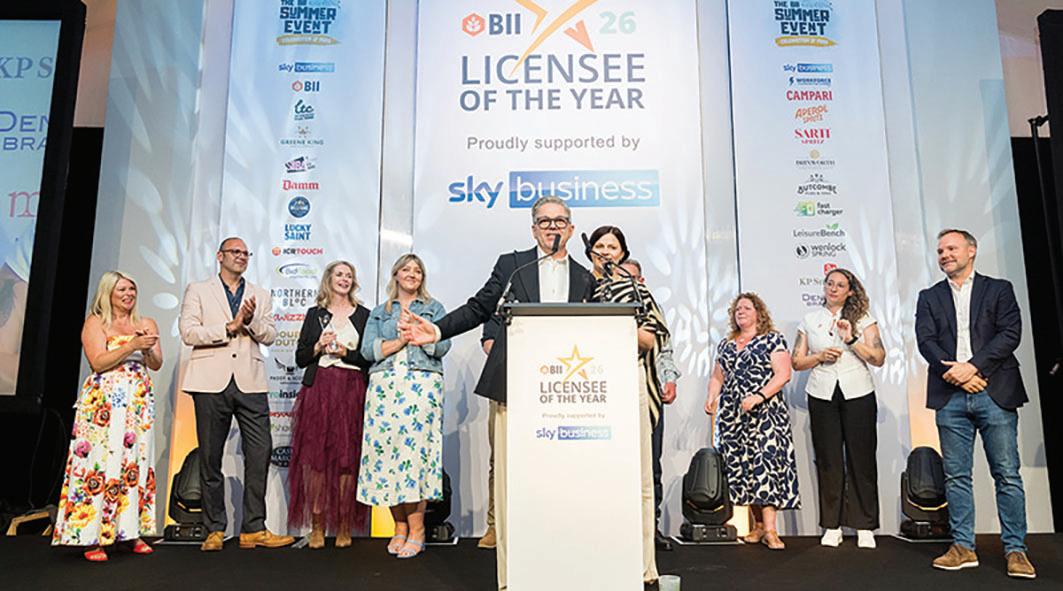
Eamonn and Arina were crowned winner in front of a packed room of almost 900 colleagues and industry
friends at this year’s BII Summer Event, hosted on Tuesday 16th June, at the The HAC, City Central, London.
Steve Alton, Chief Executive of the BII commented: “I’d like to offer a massive congratulations to the brilliant Eamonn and Arina, on behalf of myself and the whole team here at the BII, including our fantastic judges. This is the most rigorous and intense competition in our industry, so I would also like to congratulate our other wonderful finalists on this incredible achievement. Despite the challenges our sector continually faces, we saw incredible commitment, talent and attitude from all our finalists, proving once again how much the great British pub has to offer in every community across the UK.
“Eamonn and Arina’s leadership, innovation and dedication as relatively new operators in the pub sector are simply inspirational. They represent everything that is uniquely brilliant about our industry, and we can’t wait to share the excellence and experience from them, and all our finalists, over the coming year.”
revenue growth despite declining outlet numbers, highlighting increasing sales concentration among stronger operators.
Across all channels, Lumina Intelligence’s Operator Data Index notes a clear shift towards selective, format led expansion, with operators prioritising operational efficiency, value perception and clear customer propositions.
Despite the challenging backdrop, consumer demand for convenience, affordability and quality continues to shape investment decisions across the sector. Operators that are able to balance competitive pricing with strong brand identity are expected to capture a greater share of spending, particularly as households remain cautious about non essential expenditure. Digital ordering, loyalty schemes and delivery partnerships are also playing an increasingly important role in driving frequency and customer retention, especially within quick service and grab and go formats.
Written by Amanda Riley - Barrister for Barrister Connect

As an employment barrister advising businesses across a range of sectors, I frequently see the challenges that hospitality operators face when balancing rising employment costs against the need to recruit and retain staff. In the current climate, those pressures are particularly acute. Increased wage costs, higher employer National Insurance contributions and a steadily expanding employment law framework have forced many businesses to review their staffing models and recruitment strategies.
Against this backdrop, it is understandable that some employers may be cautious about recruiting younger and less experienced workers. However, from both a legal and commercial perspective, reducing opportunities for young people would be a mistake. The hospitality sector has long served as one of the most important gateways into employment, and its continued willingness to invest in young talent will play a significant role in determining the industry's future success.
Few industries offer the same level of accessibility as hospitality. Entry-level positions in pubs, restaurants, hotels and bars provide young people with the opportunity to gain practical workplace experience, often without requiring extensive qualifications or previous employment history. For many, these roles represent not simply a first job but the beginning of a career.
The benefits extend well beyond immediate employment. Young workers entering the hospitality sector develop a range of highly transferable skills, including communication, customer service, teamwork, problemsolving, time management and personal responsibility. They also learn how to work effectively under pressure, manage competing demands and interact professionally with colleagues and customers. These are skills that remain valuable throughout an individual's working life, regardless of the career path they ultimately pursue. Hospitality is sometimes unfairly characterised as a temporary employment option. In reality, it offers genuine opportunities for progression. Many successful operators, senior managers and business leaders began their careers in entry-level hospitality roles before progressing through the ranks. The sector has traditionally rewarded commitment, hard work and practical ability, often providing advancement opportunities that may be less accessible elsewhere.
This progression does not occur by accident. Employers who invest in training, mentoring and professional development are more likely to attract and retain talented individuals. In my experience, businesses that provide clear pathways for progression tend to experience higher levels of employee engagement and stronger
staff retention than those that treat recruitment as a short-term solution to immediate staffing needs. Training should therefore be viewed as an investment rather than a cost. Effective induction programmes, regular feedback and opportunities to develop new skills not only improve performance but also help create a more committed and capable workforce. Mentoring arrangements can be particularly effective in supporting younger employees, building confidence and encouraging long-term career development.
Of course, employers' concerns are not without foundation. The hospitality sector continues to face significant financial pressures. Recruiting and training inexperienced staff requires time, resources and management commitment. Staff turnover can be high, and many operators are understandably cautious about investing heavily in employees who may not remain with the business indefinitely.
However, the alternative carries its own risks. Businesses that fail to recruit and develop younger workers may find themselves facing skills shortages, succession planning difficulties and increased recruitment costs in the years ahead. A sustainable workforce cannot be built solely through experienced hires; it requires a continuous pipeline of new talent entering the sector and developing over time.
There is also a broader public policy consideration. Successive governments have recognised the importance of supporting young people into employment, particularly during periods of economic uncertainty. Apprenticeships, vocational training and employer-led development programmes all have an important role to play in helping young people gain experience and establish careers. Further efforts to simplify access to such schemes and reduce administrative burdens on employers would undoubtedly be welcomed by many hospitality businesses.
Looking ahead, employers must also prepare for a changing employment law landscape. Proposed reforms to workplace rights and increasing expectations around employee wellbeing, training and workplace culture are likely to place additional responsibilities on businesses. Organisations that invest in their people now, particularly younger workers, are likely to be better positioned to adapt to these changes and maintain a stable and productive workforce.
Ultimately, young employees bring energy, enthusiasm and fresh perspectives to hospitality businesses. More importantly, they represent the future of the industry. Today's bar staff, waiting teams and front-of-house employees are tomorrow's supervisors, managers and business owners.
Whilst economic pressures understandably dominate many boardroom discussions, hospitality businesses should be cautious about making decisions based solely on short-term cost considerations. Investing in young people remains one of the most effective ways of securing future talent, strengthening workforce resilience and supporting the long-term success of the sector.
From both an employment law and business perspective, supporting young people into work is not simply the right thing to do. It is an investment in the future of hospitality itself.
A much-loved local licensee, Malcolm Aspinall is being recog nised after celebrating an extraordinary milestone — 50 years behind the bar of his family-run pub, which is owned by Admiral Taverns.
The Swan in Garston, which he celebrated with friends and family who came down to the pub to congratulate him.
Malcolm, alongside his late wife Betty, has spent decades help ing make the pub far more than just a place for a drink. Since taking over the lease, the couple built a welcoming, open-plan venue known for its strong community spirit, friendly atmosphere, and simple, traditional charm. With football and racing regularly on the screens and a dart board in place, the pub has long served as a social hub for the local community.
Over the years, the pub has also supported charities including Claire House Children’s Hospice and the RNLI, with collection boxes in place to help raise funds for both causes.
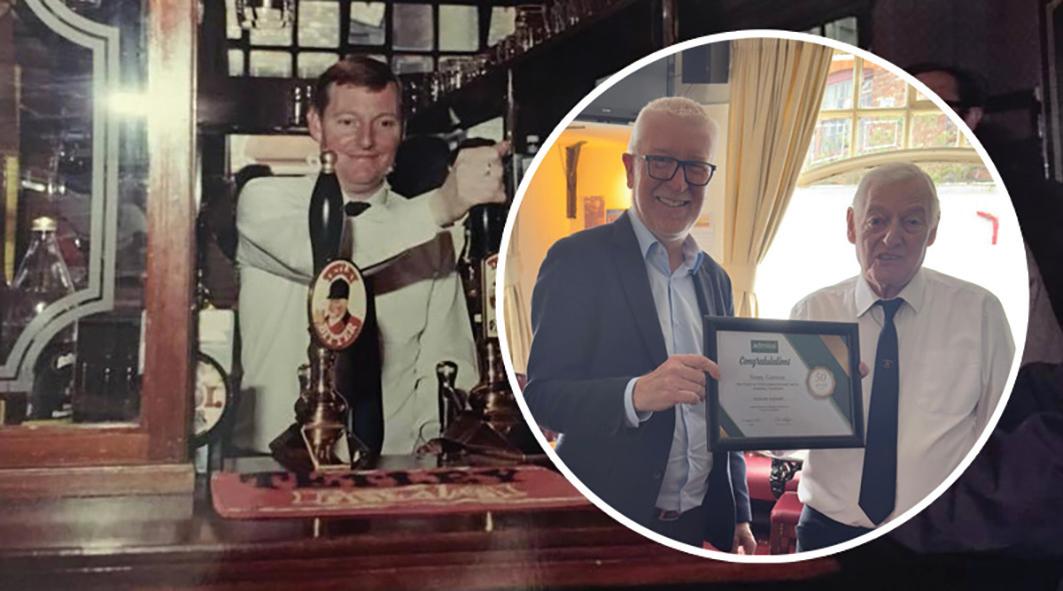
Aspinall, Licensee of The Swan, Garston: “Reaching 50 years behind the bar is something I never really imagined when Betty and I first took on the pub. It’s always been about more than just serving drinks — it’s about the people, the friendships, and being part of the community. We’ve been lucky to share so many memories with so many wonderful customers over the years, and I’d like to thank everyone for their support, kindness and loyalty.”
“I’d also like to thank the Admiral Taverns team for all their support throughout this journey, and I look forward to making the community proud!”
Malcolm enjoys the social side of pub life the most— getting to know generations of customers and creating a place where people feel at home. Thanks to Malcolm’s long-standing commitment, the pub has remained at the heart of the community for nearly six decades.
The Queens pub in Crouch End has reopened following a £150,000 refurbishment that places its Victorian architecture and ambitious gastropub offering centre stage.
The Grade II-listed landmark has undergone a careful restoration programme designed to preserve and enhance the unique character that has made it a focal point of the community for generations, while strengthening its position as one of London’s premier neighbourhood dining destinations.
Long admired for its grand Victorian interiors, The Queens is renowned for its striking Art Nouveau stained-glass windows, intricate plasterwork, ornate moulded ceilings and rich dark wood panelling.
The latest investment by owners Urban Pubs & Bars has focused on protecting these historic features while creating a setting that reflects the quality of the food and drink experience on offer.
The next chapter for The Queens is being guided by General Manager David
Campbell, whose extensive background in London’s premium pub dining scene is helping shape the venue’s reputation as a destination where outstanding food sits naturally alongside an exceptional heritage setting.
David said: “The Queens has always been one of North London’s great historic pubs and this refurbishment has been about respecting that legacy. We’ve carefully preserved the beautiful Victorian features that make the building so special while continuing to develop a food offering that gives people another reason to visit. Whether guests come for the architecture, a pint, a Sunday roast or a special meal, we want The Queens to remain at the heart of the Crouch End community for many years to come.”
The pub reopened on 17th June, with guests also able to enjoy the atmosphere around England’s opening World Cup fixture, combining a landmark setting with one of North London’s most exciting emerging gastropub offers.

By Hilary Chadwick, Founder and Co-Partner of Chadwick Design

A small outdoor area can be a profit leak or one of the hardest-working parts of a hospitality venue. The difference is rarely the footprint. It is the planning.
Many operators look at a narrow pavement, compact courtyard or small terrace and ask one question first: how many tables can we fit? That is where the problem starts.
Outdoor dining designs for operators with limited space cannot be treated like indoor furniture moved outside. When every square metre is under pressure, poor planning becomes obvious quickly. Staff squeeze between chairs, customers feel exposed, heaters block movement, and a space that looked good before service becomes frustrating once it is full.
The cost is commercial. A badly planned outdoor area can slow table turnover, create accessibility issues, weaken the guest experience and waste valuable trading space. That matters in a hospitality market still facing high operating costs and more cautious customer spending.
The smarter approach is to design compact outdoor dining as a fully functioning part of the venue. Clear movement, adaptable furniture, weather planning, compliance and atmosphere all need to work together. When they do, even a narrow frontage can create valuable extra covers while making the venue feel more welcoming from the street.
DESIGN FOR MOVEMENT BEFORE ADDING COVERS
The main risk with a small outdoor dining area is trying to maximise seats before understanding how people will move through the space. A layout can look tidy on a floor plan, but service is more demanding in practice. Staff need room to carry food, drinks, menus, payment devices and cleared plates without constantly weaving around chairs or interrupting guests.
Before choosing furniture, measure the actual usable space. That means the area left after door swings, steps, licence boundaries, planters, bins, columns and pedestrian routes are accounted for. If the space is on a public highway, operators may need a pavement licence for removable furniture such as tables and chairs. Access and safe movement should shape the layout from the start, not be corrected later. Once you know how much space you truly have, focus on the route
staff will use repeatedly during service. A clear path between the venue and the outdoor tables can be more valuable than adding a couple of cramped seats, particularly if those seats make every order, payment and table clear-down slower.
Perimeter seating can help. Benches, wall seating and banquettes reduce the unpredictable spread of chair legs, bags and coats. Small square two-person tables are also useful because they can stand alone or be joined for larger groups.
The aim is profitable density, not maximum density. Diners notice when an outdoor space has been packed rather than designed.
CHOOSE FURNITURE THAT EARNS ITS FOOTPRINT
In a compact outdoor dining area, furniture is operational equipment. A chair that cannot be stacked, cleaned quickly or moved by one person becomes a burden. A table with a wide base may look stable, but if it stops chairs from tucking in neatly, it wastes space throughout service. The best commercial outdoor furniture supports staff as much as guests.
For restaurants, cafés and pubs with limited outdoor seating, two-person tables often form the most efficient base layout. They suit solo diners, couples, quick lunches and drinks-led visits, while still allowing staff to combine tables when needed.
Stackable chairs remain one of the strongest choices for operators who need to reset quickly, respond to weather or clear the area at closing. Lightweight does not mean flimsy. Contract-grade aluminium, powder-coated steel, treated timber and high-quality synthetic rattan can all perform well if specified for commercial use.
One simple test helps: Does this furniture help staff serve faster or help guests sit more comfortably? If not, it may be clutter.
WITHOUT OVERCOMPLICATING THE SPACE
Outdoor dining in the UK cannot be designed only for warm afternoons. A commercially useful area needs to work across changing conditions without becoming cramped or unsafe.
Shade is the first layer. Parasols suit some layouts, but central poles can obstruct movement in tight areas. Wall-mounted awnings, slim canopies, cantilever parasols or shade sails may protect more of the trading space without taking up as much floor area.
Shelter needs restraint. Side screens, planting and barriers can soften wind and define the boundary, but too much enclosure can make a small area feel boxed in. A compact dining space should feel protected, not trapped.
Heating also needs careful thought. Patio heaters can extend trading hours, but they take up space, require safe placement and add running costs. Poorly positioned heaters, trailing cables and heavy bases create avoidable service problems.
Lighting should do more than create atmosphere. Staff need enough light to work safely, customers need to read menus, and the space should look open and inviting from the street.
CREATE ATMOSPHERE WITHOUT LOSING SPACE
A small outdoor dining space is also a live advertisement. People walking past make quick judgments. Does it look comfortable? Is it clean? Does it feel part of the venue or like a temporary overspill?
Smaller spaces often work best when the design is controlled. Planters can define the boundary while adding softness. Menu boards can draw attention without blocking entrances. Branded barriers may be useful, but if they dominate the view, the space can feel more like a holding area rather than a dining experience.
Vertical design is valuable because it adds character without stealing floor space. Wall-mounted planting, façade lighting and overhead details can create atmosphere while keeping the ground clear.
Restraint matters. If an object does not improve comfort, service, visibility or atmosphere, it probably does not belong in a limited outdoor footprint.
Outdoor dining is not only a design decision. It is an operational and regulatory one.
Operators should check local authority requirements before investing in furniture, barriers, awnings or semi-permanent fixtures. In England, the pavement licensing regime became permanent from 31 March 2024, but local rules, fees, consultation processes and conditions still matter. Alcohol permissions, planning rules, fire safety, smoking policies, noise limits and accessibility may also affect how the area can be used. Accessibility should not be left until the end. Clear routes, stable surfaces, suitable table heights and space for wheelchair users should shape the layout from the start.
Cleaning and closing routines matter too. Outdoor tables collect dust, leaves and street debris faster than indoor furniture. Staff need simple processes for wiping, sweeping, securing furniture, storing cushions and dealing with bad weather.
Limited space does not have to limit outdoor dining. The best outdoor dining designs for operators with limited space begin with movement, not decoration. They protect staff routes, use flexible furniture, manage weather, support accessibility and make the venue more visible from the street.
A narrow pavement, compact courtyard or small terrace will never behave like a large beer garden. It should not try to. Its value lies in being precise, adaptable and easy to operate. When every square metre has a clear role, a limited outdoor area can become a genuinely useful extension of the venue.
New polling from UKHospitality reveals the scale of public opposition to the Government’s proposed holiday tax, with voters warning they will punish MPs at the ballot box if the tax is introduced.
The polling of over 10,000 adults across Great Britain finds that more than twice as many people oppose the Government’s proposed holiday tax (56%) as those who support it (24%).
The Government is proposing allowing mayoral authorities in England to impose a holiday tax on the cost of an overnight stay. Such a tax would hit families hardest and is expected to add more than £100 to the cost of a twoweek break.
Voters are nearly 10 times more likely to reject an MP who supports the holiday tax than back them. Nearly half (47%) said they would be less likely to vote for their existing MP if they supported the tax, compared with just 5% who said it would make them more likely to back them.
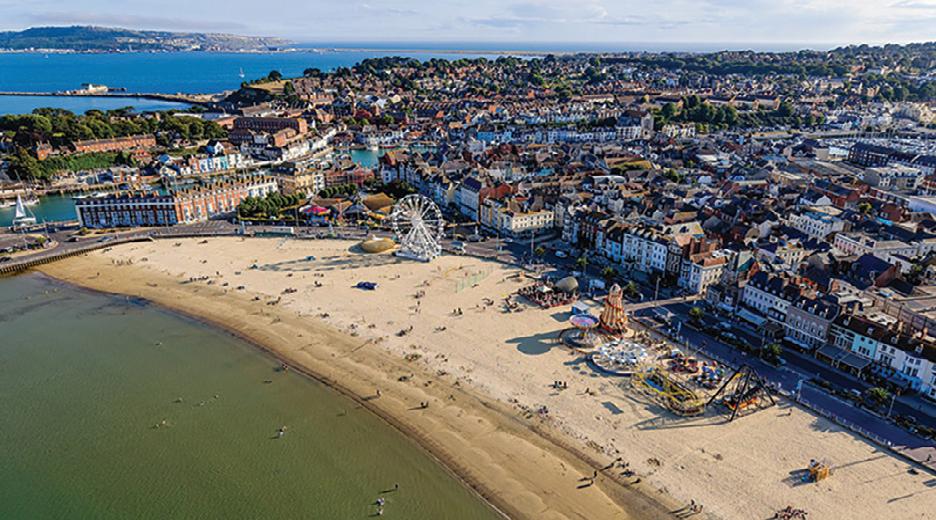
The polling, which includes multi-level regression and poststratification (MRP) modelling, reveals that in 200 of the 411 seats that Labour won in 2024, the number of previous Labour supporters who would be less likely to vote for their MP over their support for the tax exceeds the MP’s 2024 majority. 40% of Labour voters in 2024 said they would be less likely to re-elect an MP who supported the tax.
The warning also cuts across the political spectrum: 45% of Conservative 2024 voters said they would be less likely to re-elect an MP who supported the tax, alongside 40% of Liberal Democrats, 47% of Greens, and 53% of Reform UK voters.
Opposition to the tax is sharpest among people already feeling affected by the rising cost of living. Nearly two-thirds (62%) of people who “struggle to make ends meet” oppose the holiday tax. 18% of Brits would be stopped from booking a holiday in England by any increase in cost from the new tax. That rises to a
majority (57%) if the tax increased the cost of a holiday by £50 and to 85% if the tax added up to £100 to the cost of a trip.
This impact on holidaymakers would be stark, with almost three-quarters (73%) saying a holiday tax would stop them holidaying in England, reduce the number of trips they take, or reduce how much they can spend while on trips. 39% said they would be more likely to holiday abroad instead, rising to 48% among the highest-income households.
Allen Simpson, Chief Executive of UKHospitality, said: “This polling should be a wake-up call for every MP tempted to back the holiday tax. It is opposed by a majority of their constituents, it would deter millions from holidaying in England, and it would hit hardest the very families the Government says it wants to help.
“In her Spring Statement, the Chancellor said being able to pay for a holiday should never be too much to ask, but this tax puts a holiday out of reach for many.
“Voters are nearly 10 times more likely to punish their MP for backing this tax than to thank them for it. That is a political signal no MP should ignore. The public’s verdict is clear and decisive: stop the holiday tax. Let’s keep holidays relaxing, not taxing.”
The polling follows economic modelling by Oxford Economics, commissioned by UKHospitality, which found that a 5% holiday tax – the model being introduced in Edinburgh in July 2026 – would hit holidaymakers in England with a £1.6 billion tax rise, shrink GDP by £2.2 billion, cost 33,000 jobs, and leave the Treasury £688 million worse off in lost tax receipts by 2030.
UKHospitality is calling on the Government to stop the holiday tax and protect the great British holiday. It is encouraging consumers and holidaymakers to visit https://stoptheholidaytax.uk/ and write to their MP, urging them to oppose the tax
UKHospitality and its members have driven forward a proactive programme of further work to promote the safety and security of women and girls, including enhancing guidance on guest safety.
Government and industry agreed to work together to build on existing partnership work at both national and local level to protect guests and teams, as well as share best practice to prevent any opportunities for perpetrators in or outside of venues.
The programme follows a case where a man who lied to staff to get a key card to get into guests room and was subsequently jailed for sexual assault.
An updated guest safety protocol, developed by UKHospitality, is currently out for consultation with the sector and will set out guidance covering room access procedures, protection of guest privacy and the responsibilities of staff.

The framework will also highlight additional vulnerability training and safety protocols available, in order to complement other safety procedures and support teams on the frontline.
Businesses will be supported by third-sector organisations including Rape Crisis and the Suzy Lamplugh Trust in how to identify and report abuse.
The roundtable, held at 11 Downing Street, was attended by representatives from across accommodation, short-term lets, bars, nightclubs, and charities dedicated to tackling violence against women and girls.
It was chaired by Stephanie Peacock, Minister for Sport, Tourism, Civil Society and Youth, and co-hosted by Kate Dearden, Minister for Employment Rights and Consumer Protection; Catherine Atkinson, Minister for Victims and Tackling Violence Against Women and Girls; and Natalie Fleet, Minister for Safeguarding and Violence Against Women and Girls.
Tourism Minister Stephanie Peacock said: “It is vital that everyone, whether a visitor, a guest or a member of staff, feels safe and secure.
“I am encouraged by the ambition shown by businesses building on the work the sector is already doing to protect guests and visitors and look forward to seeing these further commitments translate into meaningful, measurable change.
Minister for Safeguarding and Violence against Women and Girls, Natalie Fleet, said: “Women should be able to sleep at night knowing they are safe.
“As Minister for Safeguarding – and as a Mum and Nana – I am excited about the work we are doing to halve violence against women and girls in a decade. We’re working cross-government to deliver our ambitious strategy, but we cannot keep women safe alone, that’s why this meeting was so important.
“It was great to talk to representatives from across the hospitality sector to reflect on how we had got here, and what we can do to avoid this happening again.
I really did leave the meeting feeling optimistic about next steps. Violence against women and girls is a national emergency that every one of us has a responsibility to tackle.
Kate Nicholls, Chair of UKHospitality, said: “The safety of our guests is our utmost priority, and it’s a responsibility that the entire hospitality sector takes incredibly seriously.
Together with our members, we have been enhancing existing guidance on guest safety and we’ve been pleased to share our plans with Ministers.
“It’s positive to hear recognition of the sector’s ongoing work in this area and it’s critical we work together to support our teams on the frontline, including the need to expand protections for retail staff to hospitality.
“Currently out for consultation with the sector, we look forward to finalising this in the coming weeks and continuing our dialogue with the Government on this issue.”
Businesses also agreed to continue to promote the government’s Enough campaign and to deepen existing co-operation with specialist third sector organisations.
In the year ending March 2025, around 5.1 million people experienced domestic abuse, sexual assault or stalking – approximately 10.6% of adults aged 16 and over.
The Government is treating tackling VAWG as a top priority, committing £550 million into victim support over the next three years and setting out its ambition to halve VAWG within a decade through its strategy published in December 2025.
The hospitality and tourism sector – which contributed £64.3 billion to the UK economy in 2024 and employs 1.3 million people, over half of whom are women – has a critical role to play in meeting that ambition.
The roundtable marks the beginning of an ongoing dialogue between government and the sector.
Bristol’s hoteliers say this summer is looking a bit brighter for their businesses but a cut in VAT for the hospitality sector will provide a firmer foundation on which to build.
The Bristol Hoteliers Association (BHA) is backing a campaign spearheaded by celebrity chef Tom Kerridge for a 10% VAT rate to be applied to hospitality businesses.
The campaign, supported by leading trade body UKHospitality, the British Beer and Pub Association, the British Institute of Innkeeping and CODE Hospitality, saw more than 100,000 signatures added to a petition in less than 72 hours.
BHA Chair Adam Flint occupancy has been quite strong in the city’s hotels so far this year, growing by three percent compared to last year but warned this is at the cost of ADR (Average Daily Rate), which has only seen a marginal growth.
And with costs continuing to rise, he warned that while occupancy has grown, profits are, at best, the same if not down, year-on-year.
He said: “The diluted ADR, added costs and tariffs from suppliers as a knock-on effect of the war in the Middle East, minimum wage, and food & beverage inflation have all had an impact.
“While total revenue growth across the city is between three and six percent, the additional costs of operating are between three and 13%, which is putting a strain on hotels.
“Trading is sluggish in terms of meetings and events, with a notable decline in larger conference business
and while there seems to be an upward shift towards smaller meetings, it’s not enough to mitigate the loss of the smaller ones.
“General food & beverage revenues are flat or, in some cases, slightly back as consumers tighten their belts and the price of goods continue to climb, which is why the need for a reduction in VAT is widely supported among the BHA group.
“While we cannot control rising costs in a lot of areas, one thing for sure is a reduction in VAT will encourage consumer sales and bring prices down to a more reasonable level, as many other countries in Europe operate with right now.
“The hospitality sector relies on sales growth to maintain job numbers and profit margins, so for the BHA, it’s a no-brainer to support the #VATsTheProblem campaign.”
However, while hotels are still facing challenging times, he said there are lots of reasons to believe the summer could be just a bit brighter for their businesses.
Adam added: “June has started well, and we welcome international cricket to the city which will certainly help boost the local economy, as we saw with the rugby last September.
“Looking towards July and the run up to summer, general occupancy is looking quite healthy, albeit at the loss of ADR once again.
“We’ve got Bristol Pride, the Harbour Festival, graduation ceremonies and the Balloon Fiesta, as well as many more smaller music events, all of which will hopefully provide a decent base for local hotels and the economy, so there is still cause for optimism – but it would be a lot better if we can get that helping hand from a reduction in VAT.”
Bookings to watch England’s first game in the pub were up 293%, as hospitality set for 42% sales boost across the group stage.
New data from hospitality technology provider Zonal reveals the enormous demand from consumers to watch England kick off their World Cup campaign against Croatia in their local.
The bookings, which are measured as those whose arrival time is up to two hours before kick-off, reinforces the pub as the best place to watch the tournament.
Hospitality benefits enormously from major football tournaments like the World Cup. Analysis of transaction insight by Reward shows England group games at Euro 2024 delivered a 42% sales increase, with UKHospitality predicting a similar boost during this World Cup.
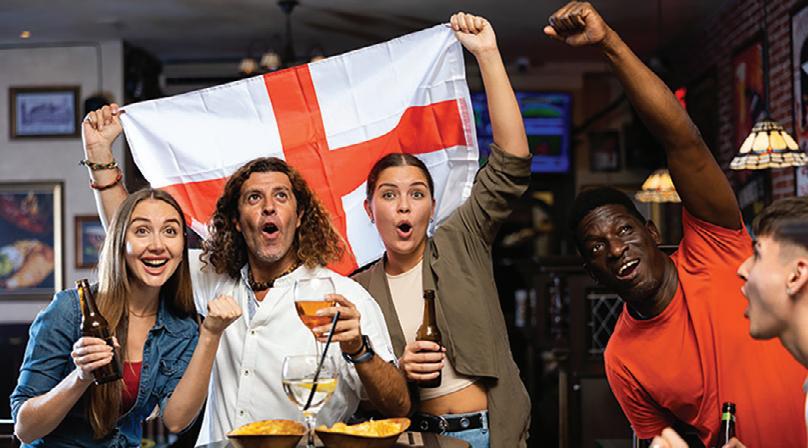
Kate Nicholls, Chair of UKHospitality, said: “The pub is categorically the best place to watch England at the World Cup, both tonight and for the rest of the tournament.
“Bookings up almost 300% for England's game shows that, despite the later than usual kick-off times, England fans want to get together to watch the game, cheer on the team and support their local.
“The World Cup will be a massive boost for our pubs and bars, with sales set to be up more than 40%
across the group stage as fans gather for the games.
“Fingers crossed the game was the start of a long World Cup campaign for the Three Lions, in what would be a huge boost for both football fans and hospitality.”
According to pollster Opinium 29 per cent of UK adults plan to watch World Cup matches in pubs, contributing an estimated extra £600 million to the economy during the tournament.
James Nicandrou, an associate director at Opinium, commented: “With millions of young adults planning to watch World Cup matches in pubs, the tournament looks likely to provide a welcome spending boost to the economy.
“More widely, our research suggests pubs continue to occupy an important place in community life, particularly for the young and those in rural areas, as spaces where people can come together to share moments – big and small.”
Emma McClarkin, chief executive of the British Beer and Pub Association (BBPA), also expects to see a surge in sales a significant increase in beverage sales.
She said: “We’re expecting England’s first match to draw fans to the pub and anticipate an extra five million pints will be pulled as we all cheer on the team, which will be a massive boost for the sector.
“The best way to enjoy the match is, and always has been, down the pub with friends and fellow fans.”
By Charlie Terry, Founder and CEO of CEEK

UK hospitality contributes £93 billion to the economy, supports 2.7 million jobs, and remains one of the most culturally vital sectors in the country. Yet right now, the industry is under pressure. Sales fell by 2.4% in 2025, the steepest decline of any sector, while food inflation hit 5.1% and labour costs continue to climb. The margin for error has never been smaller.
In that context, marketing isn't a nice-to-have. It's the difference between full covers and empty tables - a commercial necessity. When margins are under pressure, marketing is often one of the first budgets businesses look to cut. Yet this can be a deathblow for restaurants. Visibility drives viability. Fewer people discovering your restaurant means fewer bookings, fewer returning customers and ultimately less revenue. Marketing isn't just about attracting new diners; it's about staying front of mind with existing customers and building the loyalty that sustains restaurants through tougher trading periods.
Today, marketing a restaurant means reaching two audiences simultaneously: the diner and the algorithm.
When someone asks ChatGPT or Google's AI overview for a restaurant recommendation, those tools aren't browsing Instagram. They're reading your website, scraping review platforms, and analysing third-party coverage to form a view of your brand. If those sources don't tell a clear, consistent story, you're invisible. And invisible restaurants don't get bookings.
The most successful brands treat data as a strategic asset. Email signups, booking behaviour, loyalty interactions and website traffic all build a picture of who your diners are and what brings them back. AI tools can take this further, identifying high-value customers, forecasting peak periods and targeting promotions with precision. We've seen US operators use AI-driven segmentation to tailor offers by neighbourhood, increasing mid-week covers by double-digit percentages.
Without owned data, marketing is guesswork. With it, every decision becomes sharper.
74% of people use social media to decide where to eat, and for most, discovery starts with a scroll. Your feed is your storefront. High-quality visuals, behind-the-scenes storytelling, chef profiles and seasonal content are what stop the scroll and convert interest into reservations.
AI can accelerate content production, adjusting images, creating mood variations, cleaning up photography, but authenticity still wins. Platforms detect AI-generated imagery and reduce its reach. Use AI to enhance your content, not replace it.
Instagram, TikTok, and YouTube are the new search engines. 67% of Gen Z and 57% of Millennials rely on social to decide where to eat. Optimise your profiles with keywords, locations, and menu highlights. That said, around one in three diners still use Google, so your website and Google profile need to work just as hard.
Repeat customers are the engine of a profitable restaurant. Personalised newsletters, loyalty programmes, and local brand collaborations turn one-off visitors into advocates. Platforms like SevenRooms allow you to analyse spend patterns and tailor outreach, a targeted offer for someone who hasn't visited in months, or a reward for a regular. Restaurants that respond to every review see 88% higher consumer trust. Those that don't: 73% of diners say they'll choose a competitor if a restaurant ignores them online.
Right now, AI tools are building a picture of your restaurant from sources you've probably never considered. That picture directly shapes what gets recommended to users — and if your website, reviews, and press coverage don't tell a consistent story, AI will either misrepresent you or overlook you entirely. PR matters more than ever: third-party coverage feeds directly into AI recommendations.
The most effective operators are reverse-engineering their AI presence, identifying which sources are being cited and targeting those channels with updated content, reviews, or press. Your website, social, PR, and reviews all need to tell the same story.
GET THIS RIGHT AND EVERYTHING ELSE FOL-
Restaurants approaching marketing strategically, with strong data foundations, consistent content, and a clear AI visibility strategy, are already seeing a 9.9% average uplift in revenue attributed to social media alone. In a sector where margins are tight, that is not a marginal gain. It's a competitive advantage.
The restaurants winning combine human storytelling with AI-powered insight, building brands that are discoverable, memorable, and resilient.
The latest Lumina Intelligence Menu Tracker data reveals a hospitality sector operating with increased caution, as operators across restaurants, pubs and coffee shops adapt menu strategies to protect margins in an uncertain demand environment.
Across restaurants and pubs, operators are prioritising cost control and margin protection over expansion. Menus are being actively streamlined, with growth deliberately constrained as brands focus on simplifying operations and navigating an uncertain demand environment.
Rather than increasing core menu prices, operators are quietly driving incremental spend through sides, desserts and extras. These categories offer higher margins and are perceived as discretionary, allowing consumers to trade up without feeling penalised.
New product development is doing much of the heavy lifting on profitability. By introducing premium priced new dishes, operators are refreshing menus and improving margins while keeping same line inflation low on core items and maintaining value perceptions.
Pubs are evolving food ranges towards indulgent mains, premium sides and desserts to support all day and treat led visits, including afternoon and non alcoholic occasions. At the same time, drinks menus continue to narrow, reinforcing a shift towards food led, all day relevance.
Coffee shops remain the clear outlier
In contrast to the wider market, coffee and sandwich shops continue to expand menus and push price more assertively.
Indulgence led bakery items, comfort mains and dessert style drinks are driving growth, underpinned by stronger pricing power and competitive pressure.
“Overall, the latest Lumina Intelligence Menu Tracker data highlights a sector focused on resilience rather than expansion.” commented Insight Lead Linda Haden. “With demand unpredictable and cost pressures ongoing, operators are taking a more surgical approach, protecting core prices while using innovation, sides and treats to unlock incremental value.”
Brother UK’s trusted labelling solutions have long helped restaurants, hotels, and caterers take control of stock rotation — delivering consistency, compliance, and cost-savings through intuitive technology that’s quick to learn and makes a measurable impact.
At the heart of this is Brother’s TD-2D range of professional label printers — compact, versatile, and designed to fit seamlessly into busy kitchen environments. Ideal for everything from crowded prep benches to mobile trolleys. Optional battery packs and carry handles for added flexibility, and selected models support linerless label printing, helping to reduce waste and eliminate non-recyclable backing paper. Built for real-world conditions, the TD-2D range performs reliably even when used with wet hands.
Combined with Brother’s partnerships with leading food independent software vendors (ISVs), the solution automates expiry tracking, reduces food waste, and eliminates handwritten errors — all while saving valuable time and improving consistency during peak service periods.
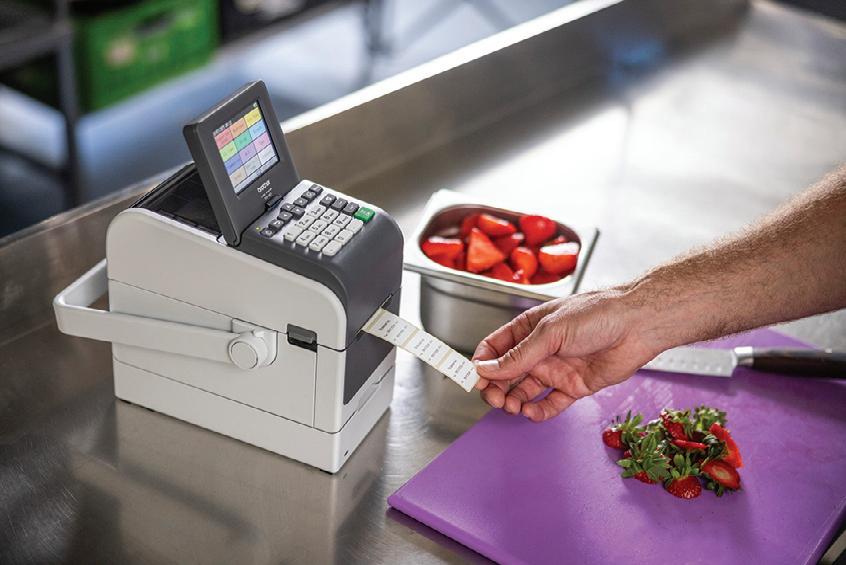
In fast-paced hospitality settings with short shelf lives and shifting teams, reliable labelling is essential. Stock rotation solutions help maintain food safety, quality, and compliance, while other labelling solutions — including ingredient and allergen labelling for food pre-packed for direct sale (PPDS) — ensure allergens and ingredients
are clearly identified, helping operators meet legal labelling obligations such as Natasha’s Law and protect customers with allergies.
Simon Brennan, senior business manager for Specialist Print Solutions at Brother UK, said: “Kitchen teams work fast, under pressure and can’t afford mistakes – especially when it comes to food safety. That’s where our labelling solution comes in.
“By replacing handwritten day-dot stickers with a Brother TD-2D device, kitchens can print clear, consistent labels in seconds. It’s a faster, safer way to manage stock rotation, reduce food waste, and stay compliant with Food Standards Agency guidelines — ensuring food safety and quality even when shifts change or service peaks.
“And because our devices are compact, portable and support linerless printing, they’re built for real kitchen conditions – reducing clutter, cutting waste and keeping staff moving. It’s labelling that chefs can trust, helping them focus on food, not faults.”
To find out how your kitchen can save time, reduce waste and improve compliance, visit brother.co.uk/stock-rotation
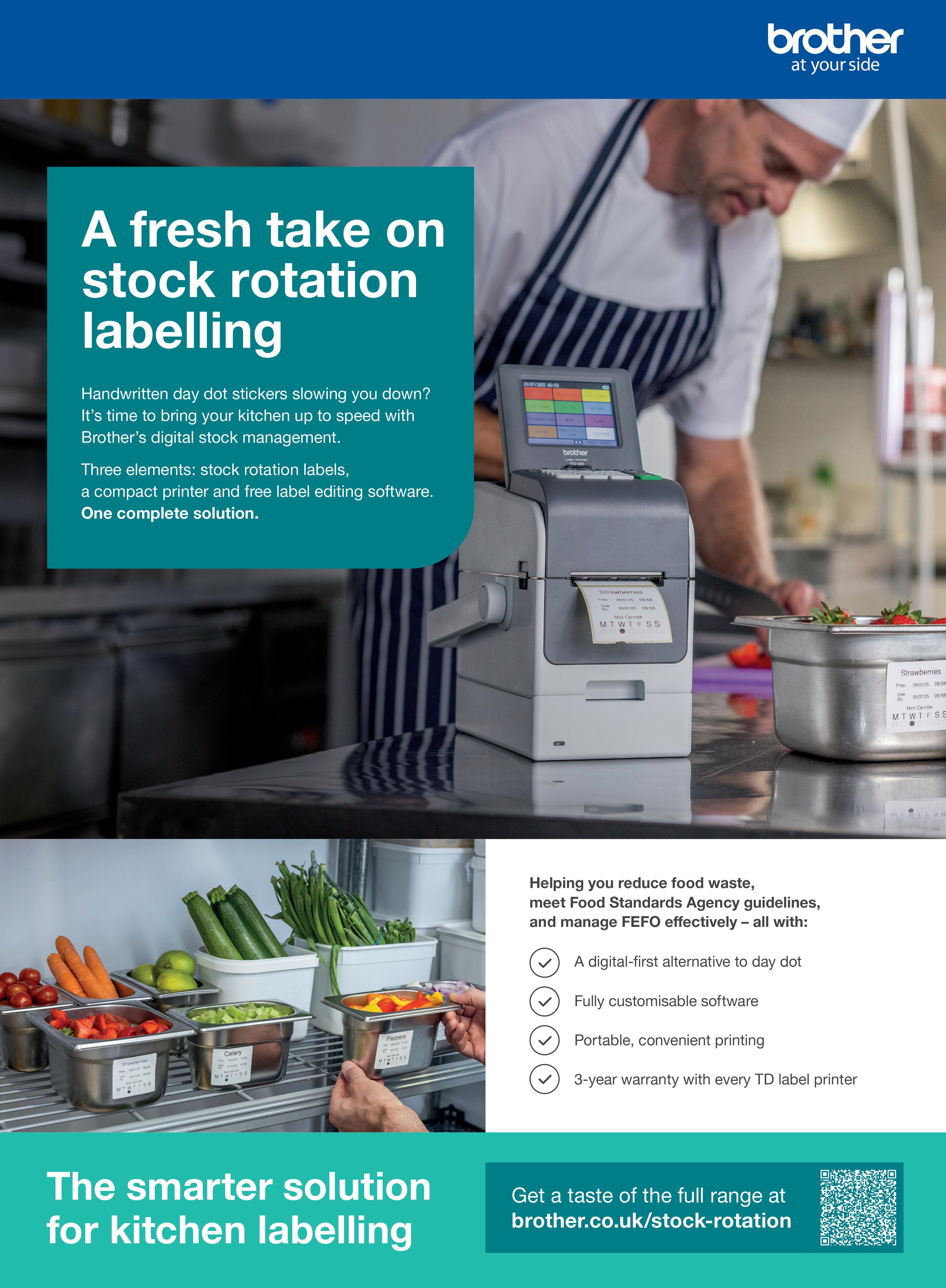
People enjoy restaurant visits more when it’s raining, according to new international research which found diners are more likely to leave positive reviews after eating out during wet weather.
Researchers say coming in from the cold into a warm and welcoming restaurant can trigger heightened psychological and emotional comfort, which boosts overall customer satisfaction and post-visit reviews.
The study, led by academics from Nottingham Business School, part of Nottingham Trent University in the UK, Harbin Institute of Technology, China, and University of New Brunswick, Canada, analysed almost 150,000 reviews from more than 1,100 restaurants on Chinese website, Xiaomishu.
They investigated the relationship between ratings and restaurant and weather variables, drawing on hourly data for rainfall, cloud cover, temperature, and wind speed.
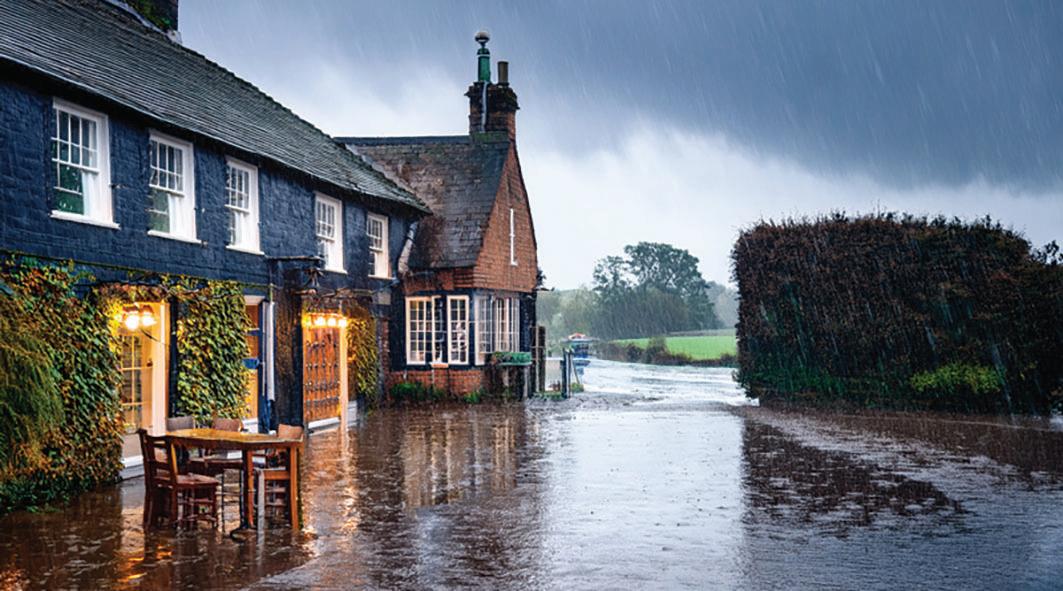
The team also carried out an experiment involving more than 600 people in the United States. Participants imagined travelling to a restaurant booking either in rainy, sunny, or neutral weather conditions before rating how the experience affected their mood and impression of the restaurant.
Across both studies, findings showed that rainy weather was consistently linked to more positive restaurant evaluations.
The research suggests that the transition from the cold and wet into an ambient and comfortable restaurant with food aromas triggers a significant positive shift in psychological state, leading to a boost in satisfaction.
However, the study also found that cloudy weather does not produce the same positive outcome as the intensity of rain, and the effect was particularly present during spring and winter but diminished in the summer warmth.
Dr Feray Adigüzel, senior lecturer in Marketing at Nottingham Business School, said: “Our findings show how external environmental factors beyond a business’s control can significantly shape consumer satisfaction. But rather than seeing this as an issue, the hospitality industry should think differently about rainy days, which are often seen as negative for trade.
“They can make the most of our need for comfort in bad weather through simple touches like introducing non-slip mats, umbrella stands, complimentary hot towels or hot drinks on arrival, and even blankets or coat-drying services.
“Warmer lighting and slightly higher temperatures can also strengthen the contrast with the outdoors, deepening a sense of warmth and refuge.”
The study also suggests that, in colder seasons, cafés and restaurants can market themselves as welcoming sanctuaries from the weather, tapping into customers’ desire for comfort and warmth.
Unlocking wider AI adoption among small firms could add more than £42 billion to the UK economy each year – but fears around data, liability and copyright are holding many back, the Federation of Small Businesses (FSB) has said.
New research by the UK’s largest small business group shows that AI among small firms has nearly tripled in two years, with 55 per cent now using the technology, up from 20 per cent in 2023. But concerns have surged too, with 92 per cent now worried about AI risks, compared to 2023’s 73 per cent.
These concerns include:
• AI producing inaccurate responses (54%)
• Security (39%)
• Abuse of their Intellectual Property (IP) rights (39%)
• Lack of transparency around how models are trained (38%)
• Exposure to legal liability or risk (30%)
• Uncertainty around using AI legally, ethically and responsibly (27%). However, although fewer than one in ten (8%) said the technology helped reduce staff levels, 59 per cent reported productivity gains, 22 per cent said it helped them grow their business and 24 per cent reported higher revenues.
The average small business adopting AI also reported a three per cent increase in revenue – and increasing the depth of use could add

more than £42 billion to the UK economy each year. FSB is now calling on the government to:
• Mandate standardised AI “model cards” so businesses can easily see what happens to their data, where it is stored, whether it is used to train AI models, who owns the outputs and who is responsible when things go wrong. Some providers already publish this information, but not always in a consistent or easily accessible format.
• Give small businesses greater protection over their data and intellectual
property, including stronger enforcement against AI companies that use copyrighted content without permission when training AI models.
• Introduce rules on who is liable when AI tools make mistakes, giving businesses the confidence to adopt the technology.
• Help small firms adopt AI safely and securely through practical support and certification from the Department for Science, Innovation and Technology (DSIT).
• Introduce tax incentives to help small businesses invest in AI and other productivity enhancing technologies.
Tina McKenzie, Policy Chair of the Federation of Small Businesses, said: “There is a healthy realism among small businesses when it comes to AI, and it’s encouraging to see so many already finding practical ways to use it to save time, improve productivity and grow. Business owners can see the potential, but they are also asking sensible questions about how their data is used, who is responsible when things go wrong, and how they can adopt the technology safely.
“It’s only natural that people want to know the rules of the road before they take the leap and begin using AI. Small firms are looking for the confidence and certainty to use it well.
“If we can provide that, the prize is enormous. AI has the potential to help small businesses work smarter, reach new customers, develop new products and compete more effectively, unlocking benefits not just for individual firms but for the wider economy too.”
In hospitality, every second counts. With ongoing labour shortages and increasing pressure to maximise productivity, operators are looking for practical ways to streamline routine tasks without compromising hygiene standards. Industry research continues to show that staffing and productivity remain major challenges across hospitality, making operational efficiency more important than ever.
One area often overlooked is table sanitising. Traditional spray disinfectant and blue roll processes require multiple steps: preparation, application, a 30-second contact time, wiping, and disposal. Based on comparative cleaning assessments, this means a table is ready for use again in approximately 42 seconds.
By comparison, ready-to-use sanitising wipes simplify the process. With no contact time waiting period and no secondary wipe-off step, tables are ready in just 11 seconds.

The impact is significant. Across 100 tables, the traditional method requires around 70 minutes, while ready-to-use wipes take only 18 minutes, a saving of 52 minutes. For busy restaurants, cafés and quick-service operators, that’s nearly an hour of staff time reclaimed for serving customers, maintaining standards and enhancing the guest experience. In an industry where efficiency drives profitability, smarter cleaning processes can deliver measurable operational gains.
At Sani Professional®, we've developed Protect 360° plastic-free sanitising wipes to help hospitality operators reduce cleaning time and improve table turnaround without adding complexity to daily routines. By simplifying the sanitising process, teams can spend less time waiting and more time focusing on customers, service and operational efficiency.
Request your FREE Protect 360° samples by emailing samples@sanipro-intl.com.
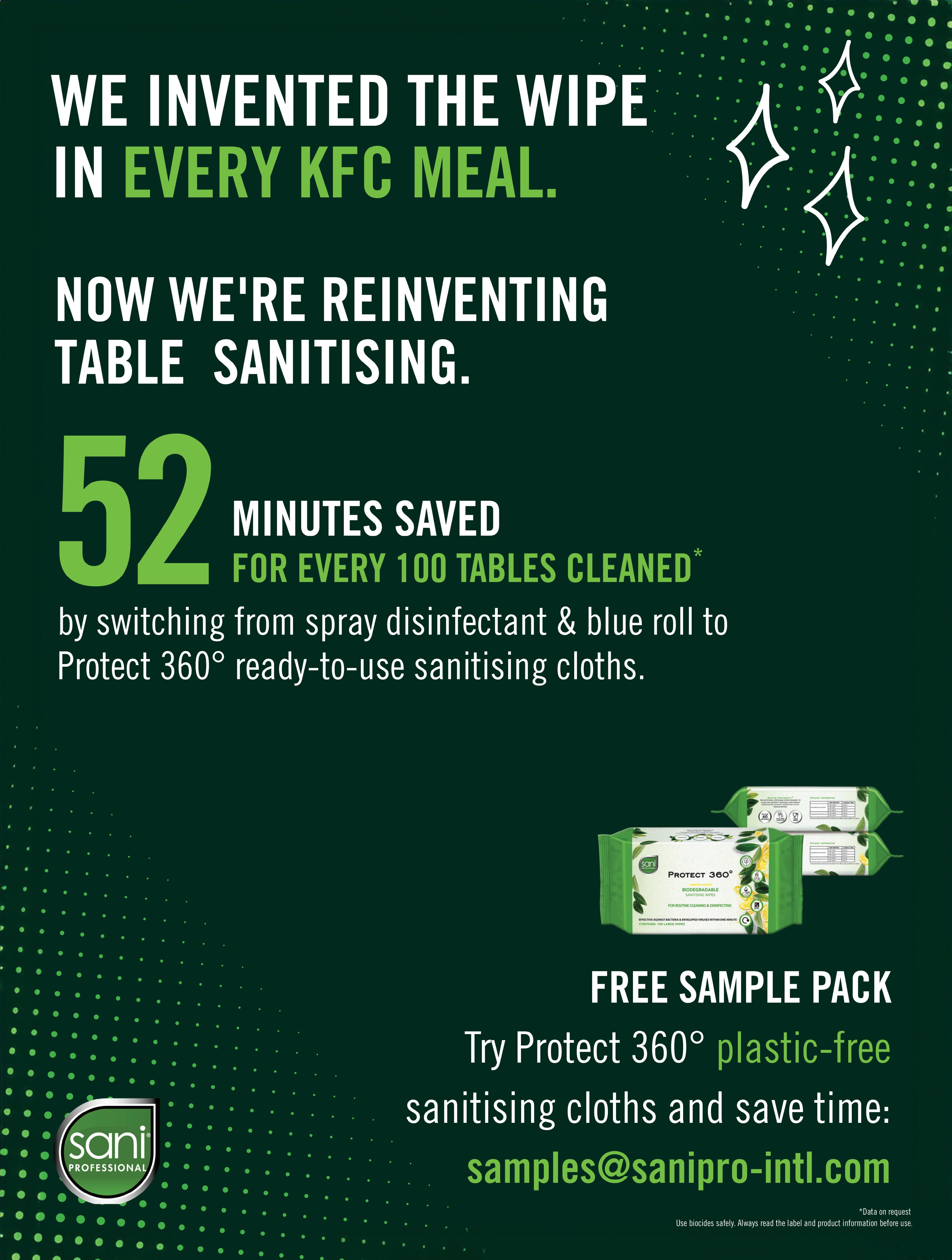
The UK’s licensed hospitality and pub trade is facing a deepening recruitment and retention challenge after new labour market data revealed that lower-paying sectors — including hospitality and retail — have suffered some of the steepest declines in both job openings and workforce numbers in recent months.
Official figures released by the Office for National Statistics (ONS) show that the total number of UK job vacancies dropped by 28,000, or approximately 3.9%, between February and April this year, settling at 705,000 — the lowest level recorded since April 2021. At the same time, the national unemployment rate nudged upward to 5% during the three months to March, compared with 4.9% in the preceding threemonth period to February.
The ONS also reported that the number of workers on company payrolls fell by 100,000 in April alone, adding further evidence of a labour market that is cooling at pace. Economic analysts have attributed at least part of the deterioration to the early commercial impact of the ongoing conflict in the Middle East, with business confidence and hiring intentions both softening as the situation abroad continues to develop.
“Lower-paying sectors such as hospitality and retail have seen some of the largest falls in vacancies and payroll numbers, both in recent months and over the last year,” ONS director of economic statistics Liz McKeown said.
Economists noted that the combination of rising unemployment and moderating wage growth could provide the Bank of England with additional breathing room as it weighs whether further adjustments to interest rates are needed to bring inflation under control. With borrowing costs a persistent concern for pub and hospitality businesses carrying debt or pursuing investment, any pause in rate rises would be welcomed by the sector.
The ONS cautioned that some of the April payroll figures coincide with the start of the new tax year and may carry a greater degree of statistical uncertainty than in other months, with historical data suggesting such figures have sometimes been subject to above-average upward revisions in subsequent releases.
Kate Nicholls, Chair of UKHospitality, said: “The Government’s approach to balance the books on the backs of high street businesses is resulting in rising unemployment and fewer job opportunities, particularly for young people.
“The past two Budgets have inflicted more than £5 billion of additional costs onto hospitality businesses, forcing them to cut jobs, slash hours and scrap plans for new roles.
“Today’s figures are clear evidence that hospitality has been disproportionately affected, as the ONS itself calls out and we warned would be the case.
“There are dark clouds on the horizon still, as provisional data for April projects a further 100,000 job losses across the economy. This is clearly reflective of businesses responding to mammoth April cost increases, across wages and business rates.
“If the Government wants to grow the economy and get people back into work, it needs hospitality’s help. Rather than taxing jobs out of the sector, it should reduce our weighty cost burden to allow businesses to create jobs.
“That should start with a cut to VAT for hospitality and a meaningful reduction in business rates for the entire sector.”
An alcohol duty regime change has led to a boom in lower-strength pint sales and 200 million units removed per year since 2023, latest research shows.
The results are proof that when Government supports business, business can boost the economy and help people choose lower strength options, the British Beer and Pub Association said.
In the Alcohol Duty Review in August 2023, drinks of 3.4% ABV and lower were granted a lower tax rate, along with a new draught duty relief to support pubs.
Since this came into effect, 200 million fewer units of alcohol have been removed every year up until 2025, research from Oxford Economics, British Beer and Pub Association and The Brewers of Europe.
Sales of lower strength beers – classed as between 1.3% and 3.4% – have boomed since the ADR, with brewers investing in a new range of lower strength beers, the BBPA said.
The subsector was only 0.4% of the market – the equivalent of 35m pints – in 2022 but, since the tax changes this has grown rapidly to over 12% of the market – equating to 912m pints, the leading trade body said.
Emma McClarkin, CEO of the British Beer and Pub Association, said: “It is clear that a progressive alcohol duty regime that incentivises lower strength products can help grow the economy, give people more options, and support public health goals.
“Beer is already a low strength alcohol beverage, but brewers have come up with an incredible choice of lower strength products, which means more people than ever before can moderate and pubs can give peo-
ple a great choice.
“However, UK beer drinkers continue to pay amongst the highest duty rates in Europe and brewers and pubs face eye-watering increases in the cost of doing business.
“This is why we need to go further and cut beer duty to support our brewers and pubs, ensure a pint remains affordable for all, and help give consumers more choice.”
The analysis, produced by Oxford Economics and commissioned by the British Beer and Pub Association and The Brewers of Europe, said that the changes to the duty regime have helped businesses make firm progress towards meeting the key objectives the government set out.
It pointed to significant innovation through the reformulation of products to below 3.5% and increased consumption volumes of lower strength alcohol drinks.
The research, which looked at sales up until the end of 2025, said academic literature suggests that a reduction in alcohol units consumed of this scale would result in health benefits at a population level.
Pubs across the country now serve a huge range of beers, including lower strength alcohol beer and great alcohol-free beers, the British Beer and Pub Association said, which means that customers have a greater choice than ever.
The UK pays the third highest duty rate in European Union. The UK pays 12 times more than Spain and Germany and three times more than the European average.
Chancellor Rachel Reeves has sought to reassure hospitality operators that the sector remains central to the Government’s economic growth agenda, telling industry leaders that she believes the industry’s future prospects are positive despite ongoing challenges.
Addressing delegates at a UKHospitality event via video link, the Chancellor praised the contribution made by pubs, restaurants, hotels and other hospitality businesses, describing them as vital to communities and the wider economy.
Reeves said hospitality businesses are often among the first to benefit when consumer confidence improves and stressed that boosting economic confidence remains a key priority for the Government.
The Chancellor pointed to a number of measures she said had been introduced in response to long-standing industry concerns, including business rates support worth an estimated £900 million, changes to draught duty arrangements designed to benefit pubs, and forthcoming reforms to apprenticeship funding.
She also highlighted the Government’s recently

UK more closely into line with those applied in several European countries.
The campaign has gained significant traction since its launch, attracting over 206,000 signatures in support of lower VAT rates for hospitality businesses.
Responding to the summer VAT initiative, UKHospitality Chair Kate Nicholls welcomed the move, describing it as a positive development while maintaining that
the
long-term
The industry continues to face significant cost pressures.
estimates that measures introduced across the
Budgets have
around £7
in
two most
costs to hospitality businesses. The organisation has also argued that increases in employer National Insurance contributions have contributed to substantial job losses across the sector.
She called on the industry to continue working closely with Government to support economic growth, adding that a thriving hospitality sector would play an important role in strengthening the wider UK economy in the years ahead.
Brand new consumer and industry insight from the National Association of Cider Makers (NACM), aims to highlight the deep roots that cider has in British culture and the scope of the opportunity ahead of it.
The study lays out the national success story that is UK cider, showing that cider contributes £2.7bn to UK GDP; supports 65,000 jobs and £1.4Bn in wages.
It also uncovers the love British consumers have for cider and the scale of the opportunity to grow the category even further. From a survey of over 1,250 UK adults and four consumer focus groups, NACM found that:
• Of those that drink alcohol, four in 10 drink cider at least monthly
• Among all drinkers, just under six in 10 consider cider when choosing an alcoholic beverage
• 70% of those surveyed said what they liked about cider most, is that it is refreshing
• 35% of consumers say they mainly drink it “at the pub”, with a quarter saying they mainly drink it “at bars or clubs” or “at barbecues” (both 25%) When asked “compared to other alcoholic drinks you usually drink,” cider came out higher than other drinks in all categories, including taste, quality and value for money.
Significantly, one-third of non-cider drinkers say they would consider trying cider in the future; almost a fifth of people (18%) like that cider is easy to share with others, and nearly three in five (59%) consumers say they’d prefer cider to come from a British producer.
Excitingly, over half (54%) of those surveyed said they would consider trying Low and No cider in the future. In addition, Low and No cider emerged
as the most appealing option for non-drinkers considering such drinks, ahead of beer, wine, and cocktails. With over half (58%) of respondents to the survey confirming that they have reduced their alcohol consumption over the last year, this could be another key area to drive category growth.
Fenella Tyler, CEO of the NACM, said: “Cider is a truly great British story, one of success, innovation, craft, community, and deep-rooted tradition. It is written in our landscapes, sustained by apple growers and makers, and savoured by millions – the UK remains both the world’s biggest producer and consumer of cider, something us Brits should be very proud of.
“This latest study shows the scope and scale of cider and the opportunity in front of us. It is clear that increasing trial presents a road to grow significant sales for cider makers of all sizes across the UK. Our focus is to now bring together people from across the trade to help consumers to discover the great quality and breadth of styles British cider has to offer, and British Cider Week will be our first opportunity to do this.”
STRATEGIC RECOMMENDATIONS: MAXIMIS-
The following framework offers practical, actionable guidance for operators seeking to maximise cider revenue across the peak spring and summer trading window.
Operate simultaneously with a strong draught offer — at minimum a premium apple and a dark fruit variant — and a chilled, well-stocked bottle range. The draught line drives volume; the bottle range drives variety and occasions. Neither should come at the expense of the other.
RANGE ARCHITECTURE
Sheppy’s Cider is one of the UK’s oldest independent cider producers and a respected name in traditional cider making. Based in Taunton, Somerset, a county renowned for its rich cider heritage, the company has been crafting award-winning ciders for more than 200 years. Across six generations, the Sheppy family has combined time-honoured techniques with modern innovation to create high-quality ciders enjoyed throughout the UK and beyond.
At the heart of the business is Three Bridges Farm near Taunton, where apples are grown, pressed, fermented and bottled or kegged on site. Sheppy’s remains committed to using quality cider apples and traditional production methods, helping to preserve the authentic character and flavour of Somerset cider. This dedication to craftsmanship has earned the company numerous awards and a loyal following among cider enthusiasts.
Among its standout products is the award-winning Sheppy’s 200 Range, created to celebrate more than two centuries of cider-making expertise. A medium, lightly sparkling cider, Sheppy’s 200 offers a refreshing balance of
Build your cider range across three tiers: a high-volume standard draught option, one or two premium draught lines, and a refrigerated packaged range that spans apple, fruit, and alcohol-free variants. This tiered structure allows consumers to trade up and gives your team clear upselling opportunities.
Cold, visible ciders sell. Ensure refrigerated displays are prominently positioned, well-lit, and clearly labelled. Use chalkboards to highlight premium options, seasonal specials, or no-alcohol alternatives. Impulse purchase decisions are made at the bar — make the right choice obvious.
A front-of-house team that can describe the difference between cider variants — their flavour profiles, ideal serves, and food pairings — is a commercial asset. Brief bar staff at the start of each shift on featured products and provide the language for confident upselling.
Cider is a preferred accompaniment during major sporting occasions. The spring and summer calendar — incorporating key football, cricket, tennis, and racing events — provides a series of high-footfall trading occasions. Promote your cider range actively around these events through social media, signage, and tailored promotions.
Train staff to suggest cider pairings with food orders. Mention it on menus. The statistic that nearly half of on-trade cider serves accompany a food order is an opportunity to increase average covers. A suggested pairing costs nothing to implement and directly lifts both food and drink revenue.
sweetness and crisp apple character. Its smooth, approachable style has made it a popular choice for both seasoned cider drinkers and those discovering traditional cider for the first time.
The 200 Range is available in a variety of formats to suit every occasion, including keg, 500ml bottles and the recently launched 440ml can. The introduction of cans provides added convenience while delivering the same quality and flavour that have made the cider a success. Combining heritage with practicality, the new format is ideal for festivals, picnics, barbecues and social gatherings.
Beyond cider production, Sheppy’s welcomes visitors to its farm, offering the opportunity to explore the orchards, learn about the cider-making process and experience Somerset’s rich cider culture first-hand. By blending centuries of expertise with innovative products such as the 200 Range, Sheppy’s continues to honour its heritage while meeting the evolving tastes and expectations of today’s consumers.
Visit www.sheppyscider.com/trade for further information.
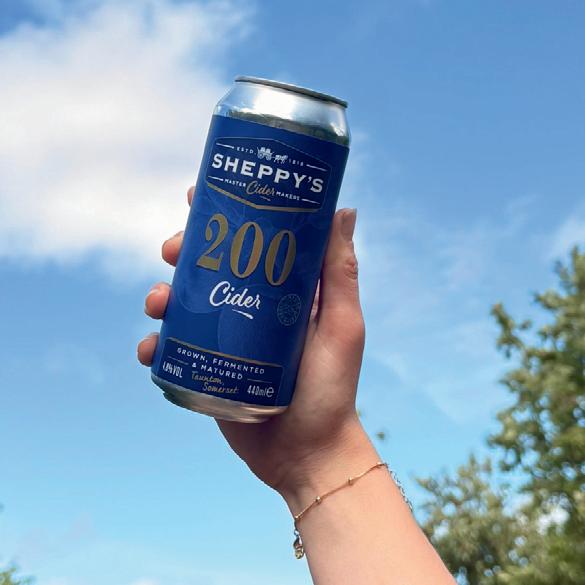

The implementation of Martyn's Law is a significant milestone for the UK’s hospitality sector, with legislation expected to come fully into force in 2027.
For those less familiar with the update, Martyn’s Law (also known as the Terrorism Protection of Premises Act 2025) seeks to improve public safety by requiring hospitality, leisure, entertainment, retail, and other venues to plan for and respond to terrorist threats. The law comes as a result of the 2017 Manchester Arena bombing and seeks to better protect staff and visitors through improving security measures, evacuation plans, and organisation preparedness. Venue and event organisations are encouraged to use this time to understand and prepare for their new legal obligations.
The legislation is built upon a tiered system based on capacity size of a venue. Pubs, restaurants, bars, and smaller events venues with capacity between 200-799 people come under the “standard tier”. Larger venues and events with capacity above 800 fall into the enhanced tier, where additional safety measures will apply.
The most recently published guidance contains advice on which operators can begin to make their plans. Positive news for many operators: the much-needed updated information focuses more on the pragmatic steps standard tier venues should take rather than costly infrastructure upgrades.
Operators will be expected to have:
• Clear evacuation procedures
• The ability to implement a rapid lockdown
• Effective methods to communicate quickly with customers and staff during an incident.
These measures were designed to be achievable for hospitality venues of all sizes without placing additional financial burden on businesses already managing tight margins.
Although enforcement won’t be until 2027 earliest, it is in all venues’ interests to ensure they are fully prepared. Martyn’s Law has been created to encourage a culture of preparedness across all public facing venues
By Karl Pardoe, Account Executive, Genetec (www.genetec.com)
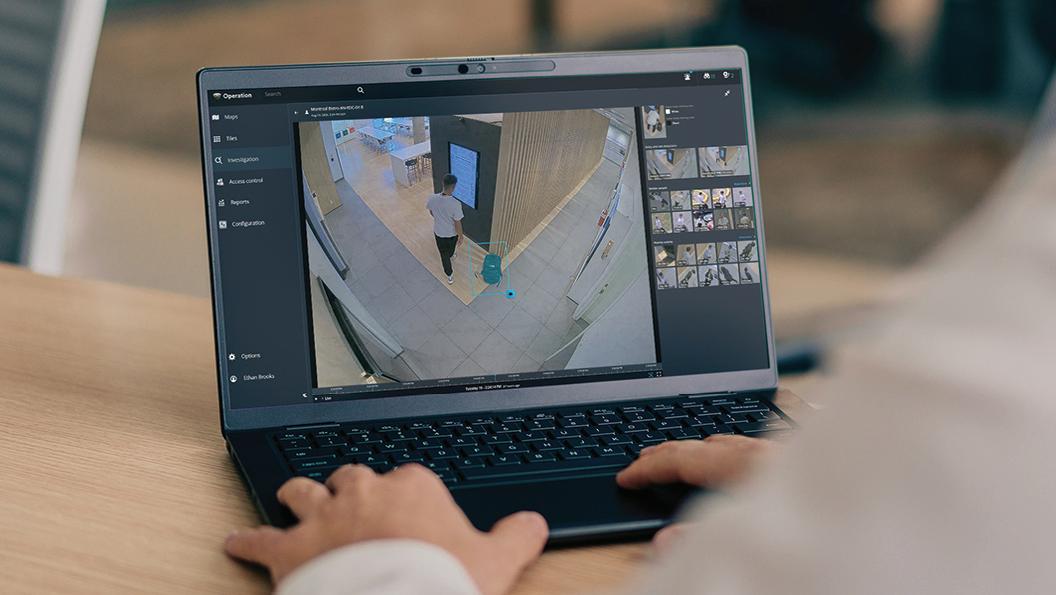
and rethink the way we collectively plan for the worst-case scenario; over-preparedness is always best.
For hospitality operators, these changes should be similarly aligned with existing responsibilities surrounding fire safety and health and safety. Martyn’s Law simply aims to bring a more structured approach to managing the risks associated with deliberate acts of harm.
Operators should be considering these key questions:
• Are staff sufficiently trained to deal with emergencies? Are evacuation routes clearly identified?
• Is surveillance and building technology updated and fully functioning? By implementing these steps now, venues can ensure they are fully prepared for next year and can also spread any associated costs over time.
One of the central themes of the new guidance is the importance of people; comprehensive emergency plans are only as effective as the people implementing them. Staff awareness and training is crucial – teams should be familiar with emergency procedures and confident in their roles. Regular briefings and scenario-based exercises can help with this.
It is imperative to create a culture where security is part of regular operations whilst not compromising the customer experience. The best designed processes should ideally be invisible to guests whilst providing
reassurance that safety is paramount.
While standard tier venues are not required to introduce extensive new security equipment, many operators are taking this opportunity to review their existing systems. Security technologies such as CCTV, access control, and communication tools can play an important supporting role when integrated effectively. Combining these elements into a single, unified system can significantly improve situational awareness and response times.
During a rare occasion where an incident may be evolving, the ability to access real-time information in an efficient, single interface can help operators make better decisions under intense conditions. Unified security systems also reduce the complexity of manging multiple systems under high pressure.
Operators may also want to consider how information from security systems would be shared with emergency services during an emergency. Traditionally, this has relied on manual processes, however, modern cloud-based solutions can enable faster, more secure and accountable sharing of important digital evidence.
As more information continues to be released in the lead-up to the official implementation deadline, it is likely that plans and requirements will continue to evolve. However, the core principles of Martyn’s Law are unlike to change: improved planning, better communication, and a clear focus on protecting people.
For hospitality, leisure, and entertainment, it is clear that preparation should begin now and the earlier the better. Early action will not only reduce future pressure but also help operators to build confidence among staff and customers alike.
Ultimately, Maryn’s Law represents a positive shift in how public safety is approached and offers the chance to strengthen resilience and enhance operational readiness to ensure venues play a proactive role in protecting the communities they serve.
OiLChef is a true industry disruptor, shaking up the oil and fat industry to the benefit of the food service industry, food processing and food manufacturing industry and their clients!
The award winning OiLChef device is simply self-installed inside your fryer and only takes 3 seconds to insert and only needs replacing every 3 years. This device can increase the life of your oils and fats by as much as three-fold. The technology works at a molecular level to keep the cooking fluid thinner, allowing more efficient heat transfer and acts as a preservative, slowing down the ageing process.
This enables operators to fry food faster at a lower temperature and save money on energy.
Many pubs, hotels, fat food chains and takeaways enjoy these significant
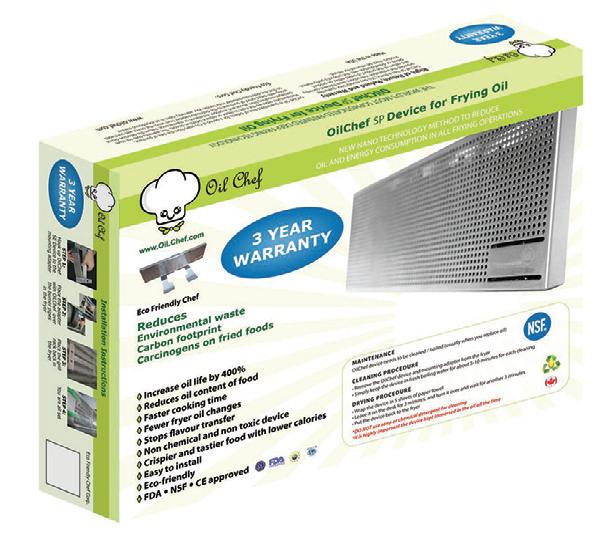
savings across the UK and as the one of the most famous golf clubs in the world say ”seeing is believing – and we are believing!”
Your customers will enjoy a better flavor profile as the food quality is enhanced because the product remains lighter in colour, crispier, less oily and this increases the hold time of all foods.
Virtually maintenance free, with no breakable parts, OiLChef is a must have for your deep-frying operation.
With a money back guarantee and 3-year warranty, contact OiLChef today and try for yourself and take advantage of free telephone support, and a variety of payment options to suit all budgets.
Visit www.oilchef.com or see the advert on the front page for details.
In the heat of a professional kitchen, oil does a lot of heavy lifting. From deep-frying to dressings, it’s the invisible backbone of flavour, texture, and consistency. But not all oils are created equal — and many chefs are now quietly making a change that’s transforming both their food and their bottom line.
High Oleic Sunflower Oil (HOSO) is emerging as the smarter choice for busy kitchens. Its unique composition means it stays liquid at room temperature — so it’s easy to work with, whether you’re portioning for prep or blending for sauces. It’s also naturally high in monounsaturated fats, supporting a healthier approach to frying and cooking without compromising on flavour.
Where HOSO truly shines, however, is in efficiency and longevity. Thanks to its exceptional resistance to oxidation, it can withstand high temperatures and prolonged use without breaking down. The result? Less frequent oil changes, consistent food quality, and measurable savings

on kitchen costs — all while reducing waste.

Sustainability-minded caterers are also taking note. Sourced from crops grown with lower environmental impact and processed without the need for tropical cultivation, HOSO offers a cleaner, more responsible alternative for modern operations that value traceability and stewardship.
For professional kitchens striving for better performance, better food, and better value — it’s time to think high oleic.
To learn more or find your nearest distributor, contact FlavOil today.
Visit https://flavoil.co.uk/
See the advert on page 2 for further information.
The team at LittlePod have spent the last 16 years focusing on the importance of vanilla to the environment.
Having established a thriving forest orchard in Indonesia, where the LittlePod farmers’ pioneering polyculture system is bearing fruit in more ways than one, the natural ingredients company’s emphasis has switched from planet to people.
Introducing Wellbeing and Happiness with LittlePod!
“It’s time for the next chapter in the LittlePod story,” said Janet Sawyer MBE BEM, LittlePod’s managing director and founder. “In 2025, I wrote my second book – Real Vanilla, Nature’s Unsung Hero – and with our forest orchard in Bali having proved so successful, we are excited to be focusing our efforts elsewhere this year.
“LittlePod continues to care for the environment – of course – and the team will still work closely with our farmers to protect, preserve and regenerate the rainforest.
“But closer to home, we are set to embark on a number of exciting projects and initia-

tives – all with wellbeing and happiness at their heart.
“The team will be working on recipe development with Master Chef Peter Gorton, launching a LittlePod podcast, and, perhaps most excitingly, embracing our sporting side with a top-secret project that is in the pipeline here.
“I can’t say anything further about this last one, but all will be revealed in due course. Please do be sure to keep following LittlePod to find out more!”
Winners of the King’s Award for Enterprise (Sustainable Development), LittlePod’s longrunning Campaign for Real Vanilla continues to go from strength to strength both at home and abroad.
Having long exported their responsibly-sourced ingredients to countries all over the world, further international expansion in planned for 2026, with the appointment of the company’s first European Sales Manager, Jakub Miniewski.
littlepod.co.uk / sales@littlepod.co.uk / 01395 232022
In today’s high-pressure foodservice landscape, balancing speed, consistency, and margin control is the ultimate challenge. As labour pressures mount and the demand for premium, high-volume menu items, such as gourmet burgers, toasties, and food-to-go, continues to climb, kitchen efficiency is no longer optional; it is a competitive necessity.
Heler Foods now offers a pragmatic, high-performance solution designed specifically for the rigours of commercial kitchens: a versatile range of preportioned cheese slices. Supplied in precise 20g portions in 1kg punnets, these Red Tractor approved natural cheese slices are engineered to streamline operations, while eliminating the inconsistencies of manual prep.
OPERATIONAL EXCELLENCE IN EVERY SLICE
By removing the need for slicing and weighing, our ready-to-use format significantly reduces handling time and minimises food waste. This allows your team to maintain strict portion control across every serve, ensuring that costs are managed without compromising on the quality or the premium melt that your customer’s demand.
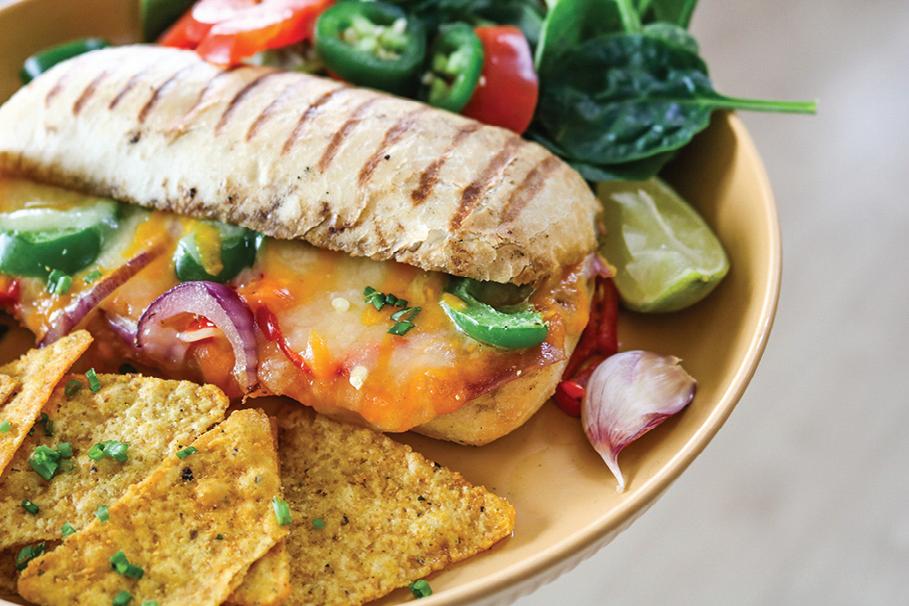
Whether enhancing a signature smash burger, a breakfast bap, or a cold deli sandwich, Heler Foods provides the reliability required for fast-paced service. The range includes White Mild Cheddar, White Mature Cheddar, Coloured Cheddar, and Red Leicester, offering flexibility across diverse hot and cold applications.
Packed in convenient 1kg punnets (50 x 20g slices), our packaging is designed for ease of use in busy environments. By integrating these pre-cut solutions into your workflow, you can boost throughput and support laboursaving initiatives, ensuring your kitchen remains productive during peak periods.
Choose Heler Foods for dependable, versatile ingredients that deliver strong on-plate appeal, provenance and consistent results, every time.
www.helerfoods.com/foodservice
E; KatelynR@helerfoods.com


CLEAN Linen & Workwear are one of the UK's most trusted laundry companies. They supply tailored workwear solutions provided by real people. Their comprehensive laundry network means they can service customers throughout England and Wales, providing chefswear, workwear and linen rental services. Whether you operate from a single-site hotel, pub or restaurant or have multiple locations, CLEAN can tailor a workwear rental solution to suit your business requirements. They offer various uniform options to support the entire kitchen brigade, from Executive Chefs to Kitchen Porters. With their workwear rental service, you can say goodbye to the hassle of purchasing, storing, and maintaining chef and kitchen uniforms. Instead, enjoy the convenience of a hassle-free rental system that provides freshly laundered garments whenever your team need them. By renting with CLEAN, you can avoid upfront purchase costs, spread the payments over your contract, and ensure quality and care with every wash. Delivery is free, and there are no

hidden charges; contracts even include repairs. Each item of clothing can be branded and tailored to the wearer with logos and embroidery. Their managed service prevents issues compiling when supplying your team with work clothes; a convenient locker valet service helps distribute and store uniforms, and they tackle minor repairs early to extend the service life of a uniform. Ultimately, this avoids costly replacements wherever possible as it reduces uniform losses, and uniforms only need replacing when a repair is not safe or cost-effective.
With CLEAN's workwear rental and laundry service, business owners can focus on what matters most — running their business — while CLEAN takes care of the rest.
To find out more: www.cleanservices.co.uk or see the advert on page 3.
Having worked with hospitality businesses for over two decades, from hotels to pub chains, sports venues, bars and restaurants, we’re often engaged in the conversation – how do operators best protect themselves from dine and dash?
Technology can be a valuable ally in the fight against such opportunism. CardsSafe is designed to securely store a customer's bank cards while they run a tab. It’s the ideal deterrent for anyone contemplating walking out without paying because their card is safely tucked behind the bar in a CardsSafe unit. The system securely stores bank cards and facilitates easy tab-keeping. Rather than insisting on advance payment, businesses can keep tabs and upsell.
CardsSafe has been a trusted partner in the hospitality and leisure industries, assisting with bar tabs and significantly boosting profits. Renowned establishments, including Young’s Pubs, Hilton Hotels, and numerous golf courses, have been reaping the benefits of CardsSafe for years.
Deers Hut pub in Liphook, Hampshire, first came to CardsSafe in 2013 to seek help with a large volume of bar tabs for both indoor and outdoor customers. One of the primary motivations for using CardsSafe was to stay on top of where their customers were located outside. Deborah Steel, the Director, told us, "The CardsSafe system is great for servicing customers who enjoy our outdoor areas."
CardsSafe is affordable, too. Each unit, containing ten card drawers, costs just £9.95 per month. So, just one £120 walkout is the cost of a 10-card CardsSafe unit for an entire year. Additionally, each hire includes customer service troubleshooting and free replacement keys, with the option to add additional units at any time.
The question is, can you afford not to have CardsSafe as a part of your business?
For more information, please visit www.cardssafe.com or contact the sales team on 0845 500 1040. See the advert on page 25.
The UK hospitality sector faces a monumental retrofit challenge. The UK Green Building Council estimates that 80% of current non-domestic buildings will still be operational in 2050. With many of these structures relying on aging gas systems, facility managers face a dilemma: undergo a punishingly expensive electric conversion or stick with inefficient, endof-life hardware.
While full decarbonisation is the end goal, the capital and operational costs of low-carbon electric systems, such as those implementing high temperature heat pumps, can still be prohibitive. Modern, high-efficiency gas water heaters offer a pragmatic middle ground. They allow for a staggered transition, which begins by improving energy efficiencies, reducing energy demands and costs without requiring drastic changes to a building’s fabric or footprint.
Modern gas solutions, such as Adveco’s Astute® range, solve traditional retrofit hurdles through specific design choices including universal connectivity to align with existing pipework and versatile flueing options and condensing technology. With double porcelain coatings and advanced power anodes Astute resists corrosive soft water so can be installed

throughout the UK. And it delivers high thermal efficiency, up to 98%, for cost-effective operation. And, because it can run on natural gas/hydrogen blends ‘out of the box’ the purchase is future proofed, opening other options for energy transition in years to come.
But the next generation of water heating isn't just about hardware; it’s about data. Onboard monitoring and Wi-Fi connectivity allow for proactive maintenance through Building Management Systems (BMS). Features like LeakSense® detection can identify when an appliance is nearing its end-of-life, preventing costly downtime in business-critical environments like hotels, restaurants, bars, gyms and spas.
By leveraging these advanced systems, hospitality organisations can navigate toward sustainability at a manageable pace. High-temperature, lower-cost gas heating remains a viable pathway through the 2030s and 2040s, providing the bridge needed until zero-carbon alternatives become more cost-effective and widely understood.
See the advert on page 5 for further information or visit: www.adveco.co
Showroom & Academy in central Exeter, offering you the
lee@swcoffeeco.com www.swcoffeeco.com See the advert on page 2

In an industry where margins are under constant pressure and guest expectations are higher than ever, the right operational foundation isn't just a luxury - it’s a lifeline. For modern hospitality operators, the goal is simple: reduce administrative friction to focus entirely on the guest experience.
Built on over 60 years of combined industry experience, 3R EPOS offers a bespoke approach to point-of-sale and payment processing. Powered by CES Touch, a marketleading software designed specifically for the daily realities of the hospitality floor. 3R EPOS provides systems that arrive ready to go, pre-configured to minimise setup time and allow businesses to hit the ground running from day one.
Beyond processing transactions, CES Touch provides a comprehensive management suite. Real-time stock control and detailed financial reporting allow managers to move away from guesswork, offering the clarity needed to identify high-margin items and minimise waste. Integrated loyalty features and modules for tableside ordering further empower businesses to cultivate a database of regulars while driving operational effi-
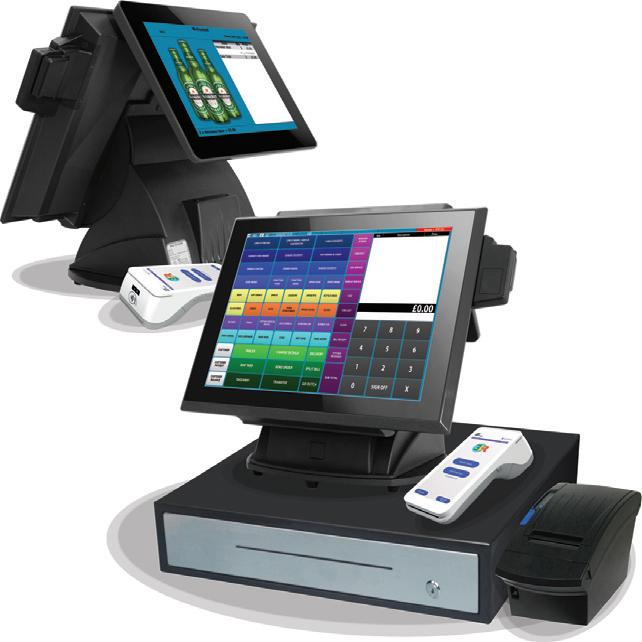
ciency.
In today’s economic climate, transaction costs are a critical consideration. By offering competitive merchant rates and a variety of hardware - from fixed terminals to portable units for tableside service - the focus remains on speed and security. What truly sets 3R EPOS apart is their commitment to partnership. With UK-based support, free on-site installation, and a rapid hardware replacement guarantee, they ensure that the "open" sign stays in the window. In a trade where downtime equals lost revenue, having a reliable, human-centric support network paired with the robust capabilities of CES Touch is the ultimate competitive advantage for any venue, from boutique hotels to bustling restaurants.
To discover a solution tailored to your venue, visit www.3repos.com or call 01992 574 650. See the advert on page 9.
What was once a place for creative, hardworking youth to flourish, could now be falling to the same exclusionary stagnance as so many other once thriving industries. Unlike many professions, hospitality takes in new workers from as young as schooling age, offering individuals the opportunity to develop their careers and excel regardless of academic credentials. Where the schooling system may fail neurodiverse individuals, hospitality has historically gained some of its brightest stars, from Heston Blumenthal to MasterChef UK semi-finalist Vanessa D’Souza. Indeed, Dyslexia, ADHD and Autism are reportedly prevalent in the hospitality workforce, with an estimated 1 in 2 workers being neurodiverse (1). As standards for hospitality businesses rise, it's no wonder more and more are leaving the profession, overwhelmed by complicated admin and excessive paperwork (2).

Leafe provides a solution. The hygiene compliance app, Leafe, is designed specifically to streamline user experience, gamifying necessary but often overwhelming, temperature records, delivery checks and cleaning checklists, amongst other features. Virtually type-free, Leafe simplifies operational management at every tier;

managers can set up clear, concise routines for both Front and Back of House, monitor team progress and ensure compliance.
The mounting burden of paperwork is a bottleneck for both business growth and professional development. For a business to scale, consistency is key; however, when admin demand leads to inconsistent record-keeping, the entire organisation’s reputation and legal standing are put at risk. Leafe bridges this gap by transforming complex compliance into an intuitive, digital process, ensuring administrative friction never stalls operational excellence. Leafe Pro even offers personalised HACCP and safety document creation, ensuring literacy levels never damage your chances of a 5 hygiene rating.
See the advert below or visit www.leafeapp.com/lpclh
1. (Burnt Chef, 2022)
2. (RSPH, 2019)

In an industry where margins are tight and customers are quicker than ever to vote with their feet, the humble cellar remains one of the most underrated rooms in any pub. Front of house gets the design budget, the social media attention and the management focus. But ask any experienced licensee where the real difference between an average pub and a great one is made, and many will point you straight back downstairs. Good cellar and bar management isn't a back-office chore. It's a discipline that touches everything from profitability and compliance to brand reputation and customer loyalty — and in a market still recovering from years of cost pressure, energy bills and recruitment headaches, it's an area operators can no longer afford to treat as an afterthought.
For many pubgoers, draught beer and cider remain the product that defines whether they come back. A pint that's hazy, flat, too warm, or tainted by an off-flavour doesn't just lose that sale — it can lose a regular customer for good, and in the age of online reviews, it can lose dozens more who never set foot through the door.
Industry figures have long suggested that poor-quality draught dispense costs the sector significantly in wasted product and lost repeat custom each year. Whatever the precise number, the principle holds: cellar management isn't a cost centre, it's a revenue protection strategy. Every pint poured down the drain because a line wasn't cleaned, or every keg that goes off because the cellar ran too warm, is money the business will never get back.
The fundamentals of cellar management are well established, yet they're still where most problems originate. Temperature control sits at the top of the list. Most cask ales should be cellared at around 11–13°C, while keg beers and lagers typically need to be served colder, often in the 3–6°C range depending on the brand. A cellar that drifts outside these ranges — particularly during summer heatwaves or as a result of an ageing cooling unit — will produce inconsistent pints regardless of how well the rest of the operation is run. Daily temperature checks, properly maintained cellar cooling equipment, and prompt servicing when units start to underperform should be non-negotiable.
Gas pressure is the second pillar. Incorrect CO2 or mixed-gas pressure leads to flat or over-gassed beer, wasted product through excessive foaming, and inconsistent pour times that frustrate both staff and customers during busy sessions. Pressure should be checked against brewery specifications for each individual product, not set once and forgotten.
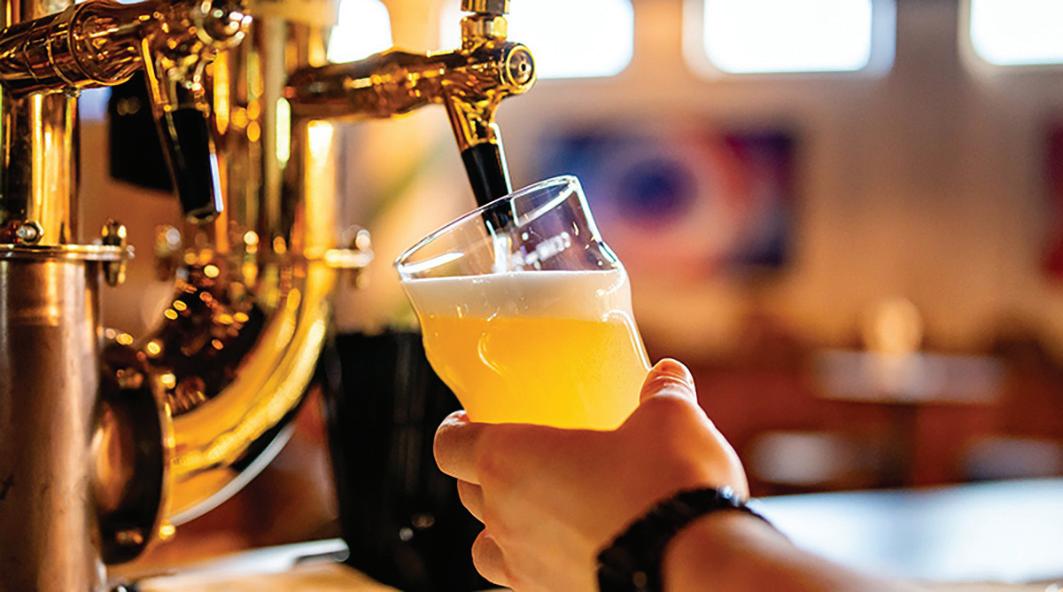
Line cleaning is arguably the area most prone to corner-cutting, despite being a legal and contractual requirement in most supply agreements. The standard recommendation across the trade is that beer lines should be cleaned every seven days using an approved cleaning fluid, with full line strips and inspections carried out periodically to check for damage, kinks or python issues. Dirty lines are the single biggest cause of off-flavours, and they're also a food safety and hygiene risk that environmental health officers will scrutinise closely.
Cellar management is also inventory management. First-in, first-out stock rotation sounds obvious, but it's easy to lose discipline during busy trading periods or when deliveries are crammed into limited storage space. Wasted or out-of-date stock erodes margin just as effectively as theft or breakage, and in a sector where gross profit on drinks is often the cushion that makes the rest of the business viable, every barrel matters. Operators should also keep a close eye on delivery handling. Kegs and casks that are dropped, rolled incor-
rectly, or left out in direct sunlight before being cellared can be damaged or destabilised before they're even tapped — meaning quality issues can begin well before the product reaches the bar.
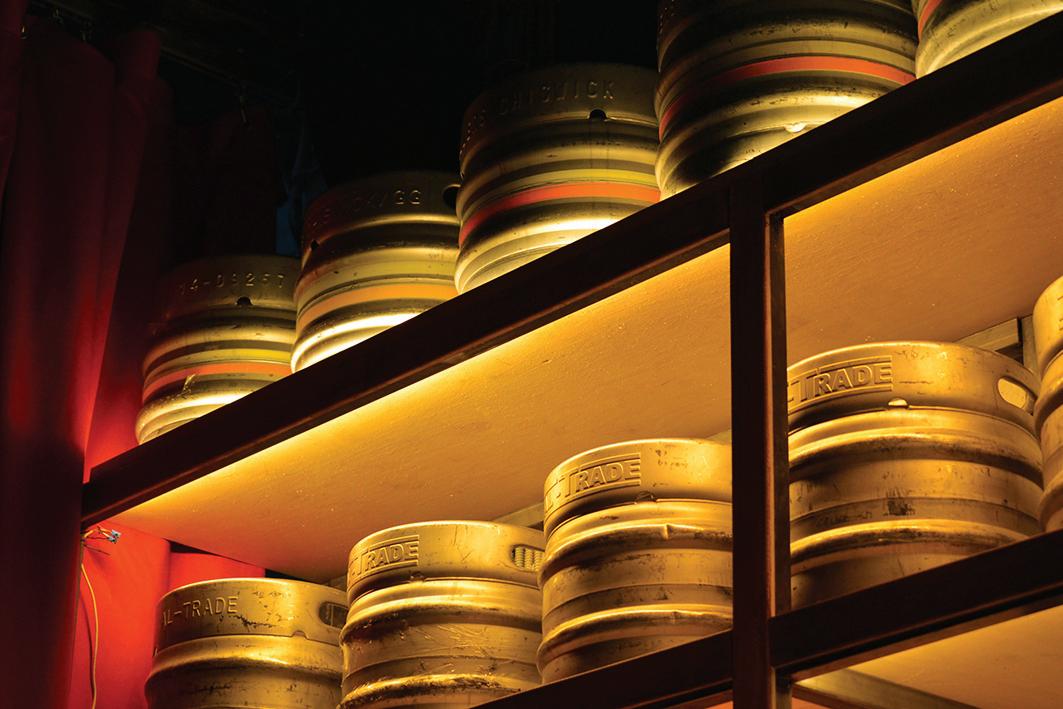
Beyond quality and profit, there's a regulatory dimension that licensees cannot ignore. Cellars fall under food hygiene and health and safety legislation, covering everything from manual handling of heavy kegs to gas safety, given that CO2 systems present a genuine asphyxiation risk in poorly ventilated spaces. Gas alarms, proper ventilation, and staff training on safe cellar practice aren't bureaucratic box-ticking — they are there because cellar accidents, while relatively rare, can be serious.
Pest control, cleanliness standards, and accurate cleaning records also feed directly into food hygiene ratings, which increasingly influence customer choice as diners and drinkers check scores before booking a table or choosing a venue.
Much of this is well documented in trade literature and supplier guidance, yet the gap between knowing best practice and consistently applying it often comes down to staff training and accountability. High turnover in bar staff means cellar knowledge can walk out the door with an experienced team member, leaving newer staff to muddle through without proper understanding of why these processes matter.
Operators who invest in structured training — whether through brewery-provided courses, accredited cellar management qualifications, or simply clear, written standard operating procedures — tend to see the benefit reflected in consistency of product and reduced wastage. Assigning clear ownership of cellar duties, rather than leaving it as a vague shared responsibility, also tends to improve standards significantly.
A few practical habits can make a measurable difference:
• Keep a daily cellar log. Recording temperature, pressure checks and any issues creates accountability and gives an early warning system for equipment problems before they affect product quality.
• Stick to a strict seven-day line cleaning schedule, and don't skip it during quiet periods — residue builds up regardless of throughput.
• Train more than one person on cellar duties so standards don't collapse when a key staff member is off or leaves. Check delivery condition on arrival, rejecting damaged kegs or casks rather than risking later quality complaints.
• Service cooling and gas equipment regularly, rather than waiting for a breakdown during a busy weekend service.
• Talk to your supplier or brewery. Most offer free cellar audits, training resources and troubleshooting support — an underused resource for many smaller operators.
• Treat the cellar as part of front-of-house standards, not a separate world. A pub's reputation for a great pint is built downstairs as much as it's served at the bar.
In a trading environment where every penny of margin counts and customer expectations around quality remain high, cellar and bar management deserves the same strategic attention as menu development, marketing or refurbishment. It's not the most visible part of the business, but it's often the most decisive. Get it right, and it becomes a quiet, consistent driver of repeat custom. Get it wrong, and no amount of front-of-house polish will compensate for a pint that simply isn't good enough.
For licensees looking to sharpen their operation in the months ahead, the cellar is a sensible place to start.
i-Keg and Clear Brew are proud to announce an exciting new partnership bringing together two industry specialists to accelerate the rollout of the i-Keg FlowBridge beer management platform across the UK hospitality sector.
Following the early success of FlowBridge, and overwhelmingly positive feedback from venues already using the system, this collaboration marks a significant step forward in delivering smarter, data-driven beer management at scale.
Clear Brew has been a trusted name in professional beer line cleaning since 2006, delivering a fully managed, labour-inclusive service to venues across the UK. Their experienced technicians help operators maintain consistently high beer quality while reducing waste, cutting costs, and protecting profitability.
By combining Clear Brew’s nationwide service expertise with i-Keg’s innovative FlowBridge technology, this partnership creates a powerful, end-to-end solution for opera tors.
Through this collaboration, FlowBridge will now be introduced to over 4,000 venues, covering more than 50,000 beer lines a major milestone in transforming how operators monitor performance, maintain quality, and maximise profitability behind the bar.

FlowBridge provides real-time insight into beer flow, line performance, and temperature control, alongside
The
powerful reporting tools and revenue indicators via the Brew OverWatch portal. When paired with Clear Brew’s professional beer line cleaning service, operators gain complete visibility and control from line hygiene to sales performance.
“This partnership is about more than scaling a product, it’s about raising the bar for the entire industry. By combining real-time data with on-the-ground expertise, we’re giving operators the tools they need to improve quality, reduce waste, and drive profitability in a way that simply hasn’t been possible before.” – Greg Whitehorne, i-Keg Ltd.
“We’ve spent nearly two decades helping venues maintain beer quality through professional line cleaning. Partnering with i-Keg allows us to go even further pairing our service with live performance data to give customers complete confidence in every pint they serve.” – Stephen Trezona, Clear Brew Ltd.
This is more than just growth—it’s about raising standards across the industry, improving quality, and helping venues make better, more informed decisions every day.
Though it may be early days, a sense of hope and optimism is gradually returning to the hospitality industry. Venues are busy again, sales are up and as demand increases, so does the need for efficiency behind the bar.
As landlords, bar owners, and venue managers are shifting gears to manage higher volumes of turnover, there is a need for tangible support and practical solutions across the sector to sustain momentum and fuel a trajectory of growth.
When we launched SmartDispense® in 2014, our primary purpose was to add a touch of quality to an already thriving sector. That extra touch of operational excellence to ensure the quality and consistency of a draft pour was second to none.
As the landscape has changed, it’s become clear that our system offers much more to those that use it. By its very nature, our cellar management and drinks dispense technologies reduce the burden that everyday tasks place on outlet management teams.
By James Woodman, Director of Heineken SmartDispense®

After 12 years of working closely with our partner venues and operators, we’ve learnt that pouring the perfect pint starts long before a tap is opened. Be it changing a keg, cleaning the lines, or optimising the cooling system, meticulous preparation behind the bar makes a difference that consumers can taste.
We’ve seen the real-world impact in action - our customers regularly report increased sales and anecdotal evidence that the punters love the change SmartDispense® creates for their draught ciders and beers. But, it’s not just the product where our technology makes a difference and the benefi ts are felt not just by consumers, but by our customers themselves as well.
Our bespoke draft solutions create a dramatic reduction in wastage - up to 18,000 pints a year for a 10-tap outlet with a three-pint pull. Figures on that scale show why our technology is invaluable to our partners. A more efficient system yields higher volumes and leads to greater sales.
We also save invaluable time for strained hospitality staff - 156 hours per year to be exact. Our specialists go above and beyond -not only taking care of cleaning and maintenance tasks, but delivering a 52-point full-
system MOT that keeps bars running smoothly. At a time when the industry is under so much strain, we shouldn’t underestimate the value of giving back capacity for staff to focus on what matters most - customer service.
Naturally, our technology has evolved over the last decade, alongside the trade outlets we’ve supported through that time. We’re constantly developing in consultation with our customers - gathering insights from their daily operations to understand how we can better meet their needs. Their feedback and collaboration is critical to the development process.
We’ve elevated all aspects of our system to become far slicker and more adaptable, allowing us the flexibility to offer a bespoke setup that can be tailored to the specifi c needs of the customer and venue. Our partners also told us they were struggling with rising energy costs, so we adapted our technology further.
Our Cellar Manager and Remote Manager offerings deliver more than a 30% reduction in cellar electricity usage. The new intelligent cooling monitoring systems are designed to maintain consistent operating temperatures, all whilst reducing energy bills for venues.
We’re proud of the impact our SmartDispense® draught dispense technology has on the day-to-day operations of our partner pubs, bars, and venues - by driving efficiencies and reducing wastage, it offers a long-term, reliable solution for operators.
As the buzz of activity returns to venues, we have an important role to play to ensure that hospitality staff continue to see higher demands as a positive opportunity. By minimising the operational burden we can allow our customers the breathing room to serve their clientele with quality and efficiency. Our sector is nothing without its people and we’re right behind them in preserving the excellent service British hospitality is famous for.
We take care of what happens behind the bar to allow teams the chance to show-up, front-of-house, when it counts.

For more than a decade, Cellartech Solutions has built its reputation as a trusted technical partner to pubs, bars, restaurants, hotels and hospitality venues across the UK. Known for delivering expert cellar cooling, drinks dispense installation, maintenance and technical support services, the company is now expanding its offering with the launch of Cellartech Water – a fully managed still and sparkling water solution designed specifically for the hospitality industry.
As venues continue to face rising operating costs, increasing sustainability pressures and changing customer expectations, premium filtered water has become an important part of the modern hospitality experience. Cellartech Water has been developed to help operators provide exceptional still and sparkling water on tap while reducing their reliance on bottled water.
The service combines stylish dispense fonts, advanced filtration technology and professional installation with ongoing maintenance and support from Cellartech’s nationwide team of experienced engineers. Unlike many providers who focus solely on equipment supply, Cellartech Water is built around a managed service model, giving venues complete peace of mind.

“Hospitality operators want solutions that are reliable, cost-effective and professionally supported,” says the Cellartech team. “We recognised that many venues were looking for a premium water offering but wanted the reassurance of dealing with a company that already understands hospitality operations.”
The benefits extend beyond presentation. By switching from bottled water to a professionally managed still and sparkling water system, venues can significantly reduce storage requirements, lower delivery costs and decrease single-use plastic consumption. At the same time, guests receive high-quality chilled water presented in a way that reflects the standards of the venue.
The launch represents a natural progression for Cellartech Solutions, a company already trusted by hospitality operators for technical services that keep businesses running smoothly. The business has established itself as a specialist provider of drinks dispense systems, cellar cooling solutions, preventative maintenance programmes
Adams Gas are specialist bottled gas distributors and suppliers based in Kent. We have been distributing bottled gas throughout the UK via our large stockist network, for over 25 years.
We offer a local delivery service for bottled gas in Kent, East Sussex and South London.
Adams Gas can offer a cost-effective beer and cellar gas solutions for all small, medium and large businesses looking for a better bottled beer, pub and cellar gas services.
With our own cylinders filled at our own filling depot, you can count on us as gas suppliers to offer the right service, at the right price, when you need it. We can also offer this product on a re-seller basis to breweries, beer wholesalers and shipping companies throughout the UK.
We also Supply:
and reactive technical support.
With a team of skilled engineers and years of experience working in demanding hospitality environments, Cellartech Solutions understands that reliability is essential. Whether maintaining beer dispense systems, servicing cellar cooling equipment or supporting a venue’s water system, the company’s focus remains the same – delivering dependable technical expertise backed by responsive customer service.
Cellartech Water has been designed to complement this approach. Customers benefit from a complete package that includes system design, installation, filtration management, sanitisation, maintenance and technical support. This allows operators to focus on delivering great customer experiences while Cellartech manages the technical requirements behind the scenes.
The company believes the future of hospitality water lies in combining sustainability, profitability and premium presentation. Stylish chrome and gold dispense fonts, bespoke branding options and fully managed service agreements allow venues to create a premium guest experience while improving operational efficiency.
As the hospitality sector continues to evolve, Cellartech Solutions remains committed to investing in services that help operators improve quality, reduce costs and meet changing consumer expectations.
With the launch of Cellartech Water, the company is bringing the same technical expertise, service standards and hospitality-focused approach that have made it a trusted name in drinks dispense and cellar services to an exciting new category.
For hospitality operators looking to enhance their water offering, reduce bottled water costs and work with a trusted technical partner, Cellartech Water represents a refreshing new solution.
To learn more, visit www.cellartechsolutions.com or contact the team on 01572 729364.
• Food Grade Co2 gas cylinders for Coca-Cola Frozen, Fanta Frozen, Tango Ice Blast, and Slushy Jack’s frozen drinks machines
• CO2 for Glass Frosting. Food grade liquid Co2 for instantly cooling glasses Simply attach your machine to our cylinder for fast effective delivery of food grade Co2 strait into your glass! Adams Gas have been proud bottled gas suppliers to the UK for over two decades. We endeavour to provide our customers with premium quality gas to best suit their requirements.
You can discuss your queries with us by phone on 01843
or
Alternatively, you can send an email to sales@adamsgas.co.uk or simply fill out and submit our online contact form and a member of our team will be in touch as soon as possible. We look forward to hearing from you.


Reliable and affordable are two words that don't often go hand in hand. At Blizzard, however, we pride ourselves on delivering high-quality products at accessible price points, bringing professional refrigeration solutions to a wider market without compromising on performance. It's a commitment we stand behind with a comprehensive 3-year warranty across our entire refrigeration range as standard.
In recent years, expanding our ice production portfolio has been a major focus for the brand. Following the successful launch of our first ice cubers in 2024, the collection has continued to grow, now including modular cubers, integral and modular flakers, and our brand-new ice and water dispenser – providing a complete ice solution for a wide variety of hospitality and catering environments.
Better still, every Blizzard ice machine is designed with practicality in mind, featuring hygienic ABS interiors with rounded corners to make cleaning quick and straightforward. Combined with low water consumption designed to align with WRAS guidelines, the range delivers efficiency alongside performance.
Whether you're looking for the perfect cube to complement a refreshing soft drink or ice that confidently says, "Trust me, I'm cold!" on a hot summer's day, the Blizzard BIM range has you covered.
Available in a variety of sizes and production capacities, the BIM range includes compact 25kg integral units that fit neatly beneath a counter, right
through to powerful 230kg modular models designed for high-demand environments. Whatever your requirements, there's a BIM ice cuber to suit your operation.
And while our higher-capacity machines are classed as modular units, we make life easier by supplying both the ice machine and storage bin as standard, helping you get up and running with minimal hassle.
A recent addition to the Blizzard portfolio, the BFI ice flaker range fills an important gap in our offering—whether that's for crafting premium cocktails, presenting fresh seafood, or displaying produce at its very best.
Producing consistently high-quality flaked ice, these versatile machines are available in both integral and modular configurations, giving operators the flexibility to choose the setup that best fits their space and operational requirements. Like the rest of the Blizzard ice range, they are designed to be easy to maintain and simple to keep hygienically clean.
Let's face it—nobody likes warm water, and even "cold-ish" doesn't quite hit the mark. If it's not ice cold, it's not for us.
The BID Ice & Water Dispenser provides a simple, cost-effective answer for customer-facing environments, allowing users to dispense both chilled water and ice at the touch of a button. Finished in a sleek combination of black and stainless steel, it complements the rest of the Blizzard range and
EASYRACK is a leading supplier of high-quality cellar handling equipment and cask racking solutions designed to improve efficiency and safety in your brewery, pub, or beverage storage facility. We provide a wide range of products, from keg handling and cask racking solutions to drop mats and more.
Cellar Handling and Cask
We understand the unique challenges of cask racking and cellar management. That’s why we offer durable and reliable equipment to optimize your operations, including:
• Cask racking systems: Maximise your cellar space and ensure safe storage of your casks with our robust racking solutions.
• Freestanding Autotilts: Insure full usage of barrel contents so nothing is wasted!
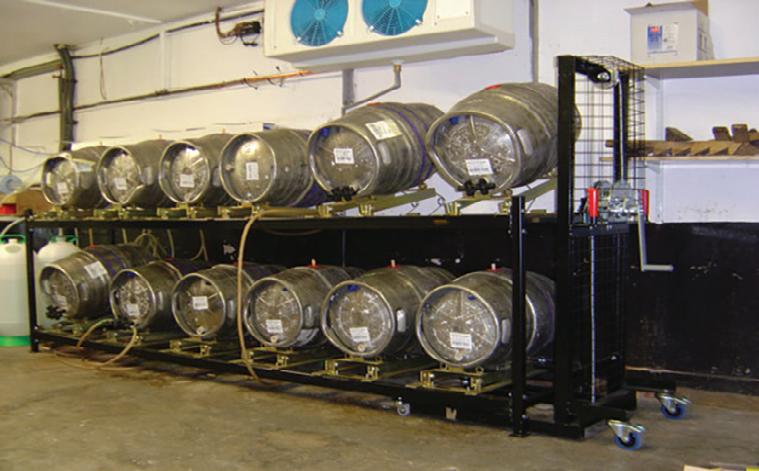
• Keg handling equipment: Effortlessly move and manage your kegs.
• Drop mats: Protect your valuable stock and minimise noise with our range of durable drop mats.
See the advert on this page or visit www.easy-rack.co.uk for further details.

fits seamlessly into both front-ofhouse and back-of-house settings.
Perfect for hotels, leisure facilities, staff areas, and self-service hospitality locations, the BID offers convenient refreshment while helping operators maintain a professional appearance and efficient service.
FIND THE RIGHT ICE SOLUTION
From compact undercounter cubers to high-capacity modular systems, flakers, and self-service dispensing, Blizzard now offers an ice-making option for virtually every application.
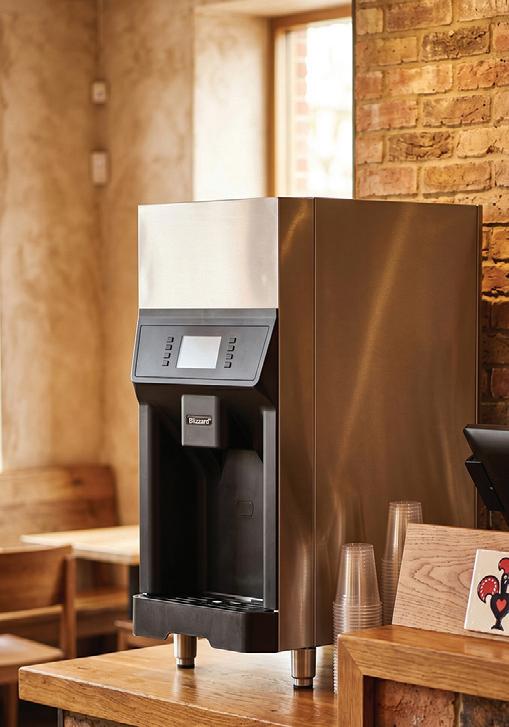
With reliable performance, easy-clean hygienic interiors, low water consumption, and the reassurance of a 3-year warranty as standard, Blizzard continues to prove that professional ice production doesn't have to come with a premium price tag.
So, if you're in the market for a new ice machine and worried the cost might leave you cold, take a closer look at Blizzard's growing ice range. You may be surprised at just how affordable the right solution can be. Contact your Blizzard distributor today to find the perfect ice machine for your business.
Visit www.blizzardequipment.com for further information.

With over 60 years experience of UK manufacturing for the beverage dispense industry, Universal Dispense Systems (UDS) have an unrivalled reputation in the design and manufacture of a large range of dispense fonts, taps and beverage dispense systems which are designed and manufactured in the UK and exported worldwide.
From the clean lines of the Eco Tube Font to the hand-crafted Artisan range of fonts, there is something to fit every theme and concept. If you require a bespoke font, we are able to create customer specific
designs to meet your requirement and these are available in a full range of finishes and branding options.
Our range of fonts have been specifically designed and hand-crafted at our London based manufacturing facility to meet the ever-growing need for brands to stand out from the crowd. Reflecting the heritage of both established and craft beer brands along with providing stylish fonts that are at home in today`s marketplace.
Our range of stainless-steel taps are available in free flow or with flow control capabilities. All our taps are precision engineered using the highest quality materials and manufactured at our purpose-built engineering facility in London.
Contact us here for more information or a quotation- sales@universaldispensesystems.com
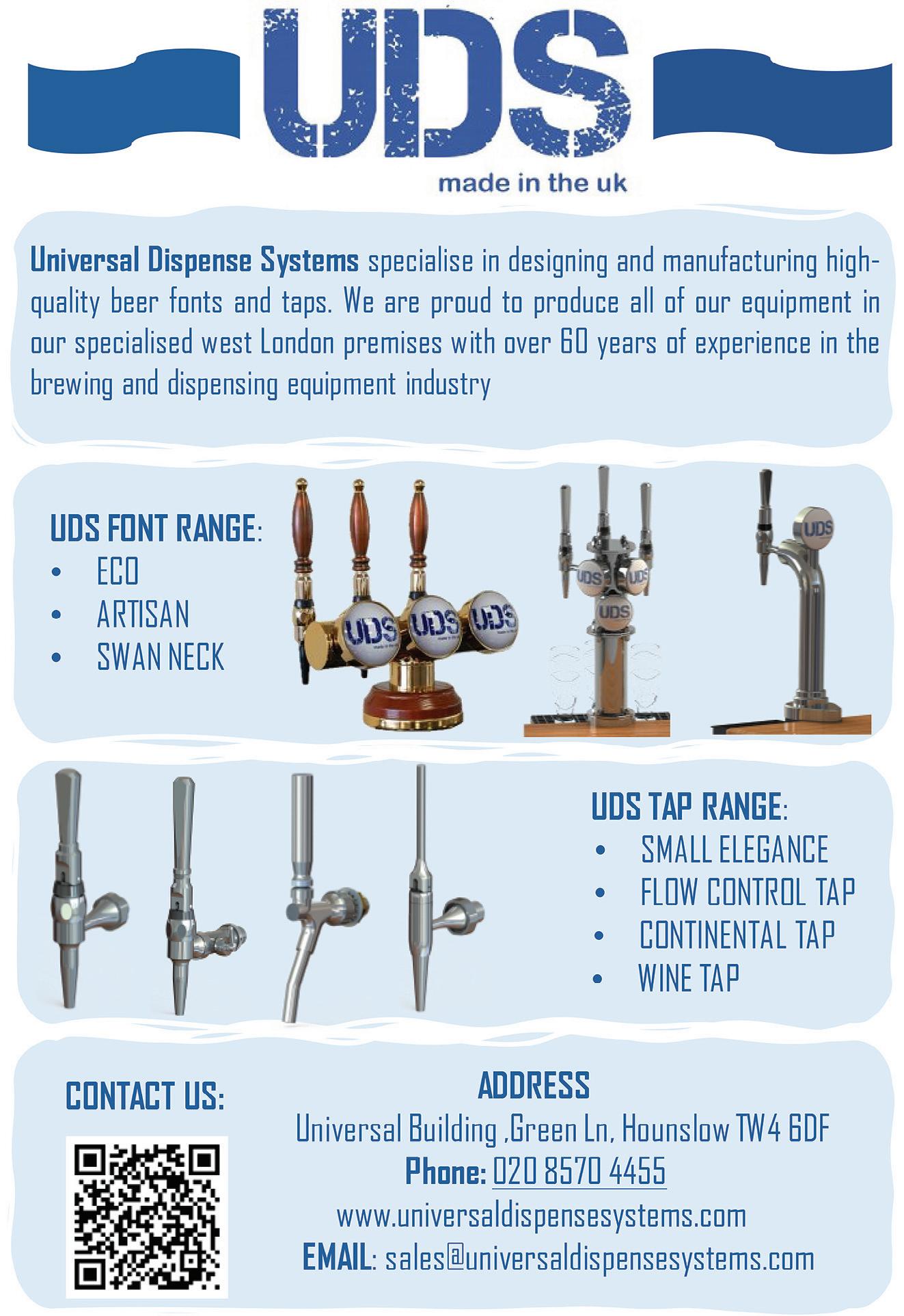
For many hotels, pubs, restaurants and hospitality venues, a conservatory should be one of the most valuable spaces on site. It offers natural light, extra covers, a relaxed dining atmosphere and the potential to host guests in a more inviting setting. Yet for many operators, these rooms are often too hot in summer, too cold in winter and difficult to use consistently throughout the year.
CI Group helps hospitality businesses transform uncomfortable conservatories into practical, year-round spaces with its specialist conservatory insulation solution.
Designed to improve thermal performance, the system helps regulate temperature by reducing heat loss during colder months and limiting heat build-up when the sun is at its strongest. The result is a more comfortable environment for guests, staff and customers, helping venues make better use of space that may currently be underperforming.
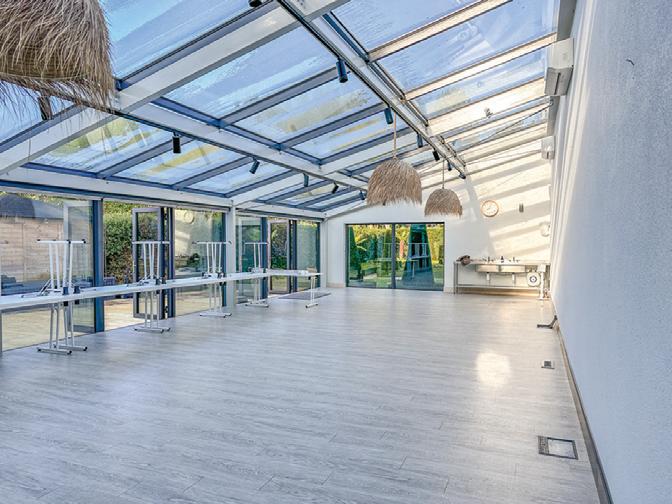
For hospitality operators, this can mean more than improved comfort. A usable conservatory can provide
For pubs looking to get more out of their outdoor space this summer, Gala Tent offers a large range of high quality commercial gazebos and marquees built to handle the demands of the hospitality trade.

Based in South Yorkshire, Gala Tent has spent more than two decades manufacturing and supplying pop-up gazebos, marquees and event shelters to businesses across the UK. Its commercial range is designed for repeated use, with heavy-duty aluminium and steel frames, waterproof roofs and reinforced fittings that hold up across a full season of trading.
For beer gardens, the appeal is practical. A pop-up gazebo can be set up in a matter of minutes by a couple of staff, moved around the garden as needed, and packed away or stored when the space is needed for something else.
Sizes run from compact 3m x 3m units up to larger structures that can cover seating areas, bars and stages for events.
Branding is straightforward too. Roofs and walls can be printed with a pub's name, logo or sponsor, turning a working shelter into part of the venue's frontage and helping draw passing trade.
With UK-based manufacturing, large stock holdings and next working day delivery, Gala Tent can supply venues quickly through the busy summer months, along with replacement parts and accessories to keep structures in service year after year.
To see the full commercial range, request a quote or talk through what would suit your venue, visit galatent.co.uk or call 01709 242454
additional dining covers, private event space, breakfast seating, lounge areas or a more appealing setting for afternoon teas, functions and seasonal promotions. In a sector where every square metre matters, reclaiming an existing room can be a cost-effective alternative to major building work.
Installation is typically completed in just 1-2 days, helping minimise disruption to dayto-day operations. The finished ceiling creates a clean, modern look that enhances the space while maintaining the benefits of a bright, welcoming room.
With energy efficiency, customer experience and revenue generation high on the agenda for hospitality businesses, improving an existing conservatory can be a smart investment.
To find out how CI Group can help your venue create a more comfortable and commercially useful space, contact the team today.
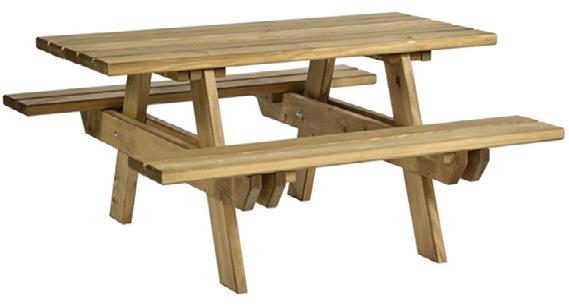
A cold drink in a beer garden is the first thing many people imagine when looking forward to warmer days ahead. Here at Trent Furniture, we offer a wide range of durable contract-grade furniture designed to withstand anything the great British summer can throw at it. A cornerstone of the range is our bestselling Chunky Picnic Table.
Here’s just a few reasons why this bestselling table is a solid investment for your outdoor space:
• Versatility: No-one wants a small group taking up a large table, so the Chunky Picnic Table is available in sizes to seat 4, 6 or 8 in comfort.
• Superior quality: Chunky by name, chunky by nature, our picnic table is constructed from fully dip treated 4cm thickness spruce wood for dependable durability.

• Extra Strength: Galvanised metal fixings and a strong double strut across the A-frame reinforces the table’s durability and suitability for commercial use.
• Sustainability: The timber used to construct the Chunky Picnic Table is sustainably sourced.
• Easy assembly: Your tables will arrive flat packed, with assembly taking two people around 10 minutes.
• Comfort: You can choose to have an umbrella hole to provide shade. Also, rounded edges and corners offer a pleasant and comfortable experience.
Value: Starting at £145.90, our Chunky Picnic Table offers the contract-grade quality you need at a budgetfriendly price point.
• Flexibility: Although the beer garden or outdoor seating area is the natural home of the Chunky Picnic Table, this comfortable and stylish table is increasingly popular in indoor settings such as large commercial venues as well as bars and restaurants with outdoor rooms and conservatories. Call 01162 864911 or email sales@trentfurniture.co.uk


Ask almost any restaurant, hotel or pub operator what keeps them awake at night and there's a good chance labour costs will be near the top of the list.
Finding good staff is difficult enough. Making the best use of the team you already have is often an even bigger challenge.
One area that rarely gets much attention is the wash-up area.
At the end of service, it's common to see members of staff standing polishing cutlery or glassware by hand. It's something the hospitality industry has done for years, so most businesses simply accept it as part of the job. But when you stop and think about it, how much time is actually being spent on polishing?
If a member of staff spends just one hour per day polishing cutlery and glasses, that's 365 hours over the course of a year. For many businesses, the figure is much higher.
Of course, presentation matters. Guests notice dirty glasses, watermarks and poorly presented cutlery. Nobody wants to compromise on standards. The challenge is finding a way to maintain those standards without tying up valuable staff time.
This is one of the reasons professional polishing systems have become
increasingly popular across the hospitality industry. Instead of spending time polishing by hand, staff can focus on jobs that add value to the business and improve the customer experience.
At The Cutlery Polisher Company, we work with everyone from independent restaurants and pubs to large hotel groups, contract caterers and event venues. Despite their differences, they all tend to tell us the same thing after installing a polisher:
"We wish we'd done it sooner."
The reason is rarely just about the labour saving. It's about consistency.
It's about taking pressure off the team during busy periods.
It's about knowing that every knife, fork, wine glass and champagne flute is presented to the same standard every time.
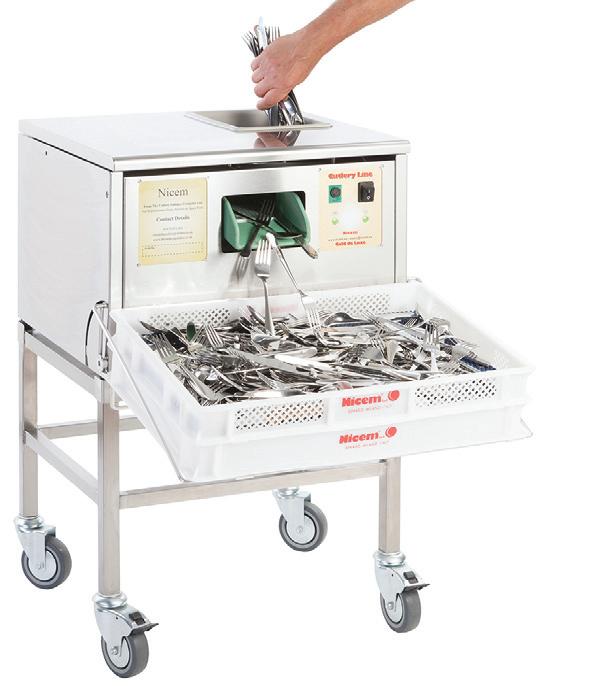
Our range includes Nicem cutlery polishers capable of processing 20007000 pieces per hour, along with the Cuttlers GP360 Glass Polisher, which
Caterquip Ventilation Ltd is proud to be celebrating their 25th Anniversary this year.
This Warwick based company offers nationwide coverage for all your commercial catering needs: free site surveys, quotations and designs (CAD), quality bespoke and standard fabrications, specialist knowledge of catering ventilation systems including input air, odour reduction (carbon filtration and ESP) and sound attenuation.
Affiliated members of Constructionline and CHAS, Caterquip Ventilation have a strong hold in the marketplace often advising industry professionals on ventilation systems to a DW172 specification & BSEN:6173. They have strong relationships with all leading kitchen equipment suppliers, and they offer a kitchen design service to help you build your ideal kitchen.
Fridge Seals Direct proud to be UK's no1 supplier of replacement fridge and freezer seals. We fabricate for a wide variety of commercial fridge & freezers.
The management team at Fridge Seals Direct have over 30 years of experience in the refrigeration industry and have each spent many of those
can polish a glass in as little as five seconds. Many customers choose our all-inclusive rental option, which includes servicing, maintenance, training and support. Others prefer outright purchase. The important thing is that businesses can choose the option that works best for them.
The hospitality industry will always be about people. Technology isn't there to replace them. It's there to help them work more efficiently and spend more time where they make the biggest difference: looking after guests.
The question is simple.
How much time is your team spending hand polishing every week? And what could they be doing instead?
To arrange a FREE On-Site Trial, contact The Cutlery Polisher Company on 01474 873 892 or info@thecutlerypolisher.co.uk or visit www.thecutlerypolisher.co.uk
See the advert on the back cover for further information.
Projects undertaken have included Olympic Villages, Basildon Hospital, The Mitre Hotel at Hampton Court, The Truck Stop at Anglesey, The Lodge at Old Hunstanton, Colleges, Schools, Hotels, Restaurants and Public Houses. They ensure their systems are compliant with the current guidelines whilst maintaining an efficient and dynamic facility.
With extensive knowledge of manufacturing and installing ventilation systems, they can help you design the best kitchen within the space available.
Call: 01926 887167, visit: www.caterquipventilation.co.uk, email: info@caterquipventilation.co.uk
years installing gaskets and hardware for a range of styles, brands and sizes of fridges.
From restaurant kitchens to food warehouses - we have experience in dealing with fridge & freezers of all sizes and scales. To learn more about fridge seals, be sure to explore our range of extensive guides on how to replace a refrigerator door seals. Otherwise, find your specific guides in how to identify, measure, install or maintain your fridge or freezer door seal.
Our reputation in the industry along with our commitment to providing a

high-quality gasket without having to buy from the factory allows us to have competitive pricing and fast turnaround time.

Try us out, order your door gaskets from us and discover a better way to do business. We are here to help you.
www.fridgesealsdirect.co.uk

• Be ready for your inspections
• Damaged fridge seals are unhygienic
• Make your fridge more energy efficient with a good seal on your fridge
• We provide custom seals for cold rooms, discontinued models, and units with no identification information
• Next-day delivery service
• Discounted prices on large orders WhatsApp, phone, and email support 07936807320
sales@fridgesealsdirect.co.uk
Have you recently taken over premises, just fancy a change or need to replace your tired old fixed seating and fixtures? At Drakes, we can help you realise your dreams with our bespoke furniture design service. Every week we build new tailor-made furniture up and down the UK, working with owners to come up with design concepts for fixed seating, booths and even bars and fixtures. We can take ideas from you, or your interior designer, or we can design something ourselves, all done efficiently, with professional quality and on time within budget. Our service provides a unique opportunity to make your establishment stand out from others and add additional comfort for your customers.
We have been providing bars, pubs, restaurants, cafes, clubs, and hotels with high-quality furniture and fixtures for decades. We employ over 15 joiners, upholsterers, polishers and designers who are capable of installing fixed seating and bespoke joinery, new bars and full refurbishments, or simply making stools for the front of the bar, or providing quality tables that last. Our dedicated team are either time-served officially trained craftsmen or externally based professionals.
Got you interested? We are available for a chat on 01422 839 690. If you prefer, email us at sales@askdrake.com, and of course please visit our website www.askdrake.com
Mayfair Furniture will be celebrating 12 years this year of providing the UK’s fastest and affordable commercial furniture. Supplying all kinds of establishments from high end hotel chains to small local takeaways.
We keep in stock a huge variety of items ready for immediate dispatch, and can fulfil a wide range of bespoke orders. We deliver to all areas of the UK, Ireland & Europe.
We are not just a supplier; we understand that from time to time hospitality and leisure establishments like to give themselves a fresh new look.
That's why not only do we supply contract furniture, but when it's time for your establishment to go through a refurbishment we also offer a complete clearance service. We'll organise everything from a suitable time and date, professional clearance staff to remove contract furniture whether fitted or unfitted. Along with our sister company Caterfair who provides commercial catering equipment for your kitchens we are the ideal people to speak to when you are looking to refurbish. 01733 310115 sales@mayfairfurniture.co.uk www.mayfairfurniture.co.uk

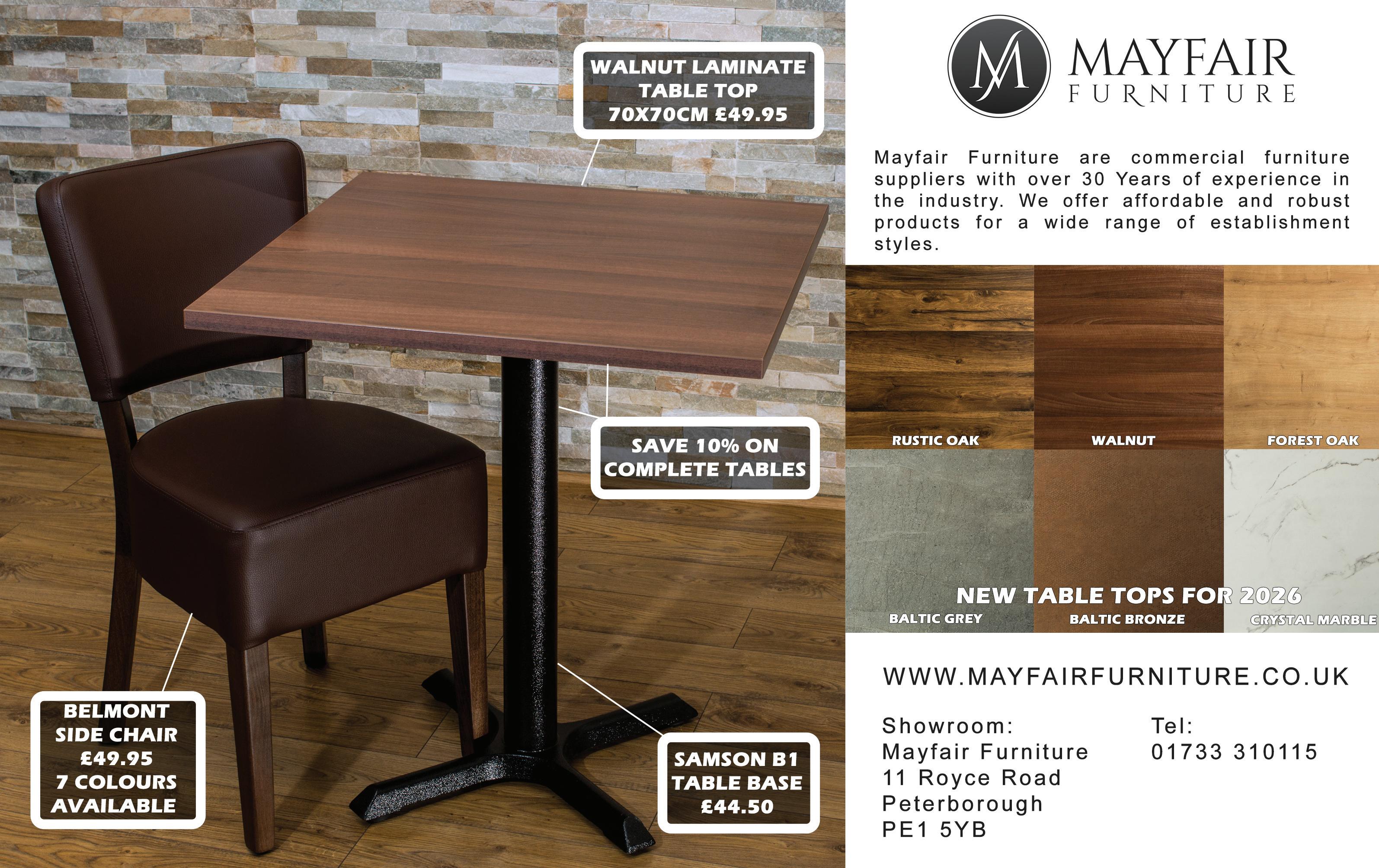
Here at Trent Furniture we’re offering a fantastic 20% off many of our most popular stackable chairs, meaning there’s no reason not to be sitting comfortably this summer!
Available in nine eye catching colours including orange, black, red and blue, the Bella Chair exudes classic European café cool, making it a firm favourite in venues across the country. You can save on both the classic design or add a padded seat to offer extra comfort for your customers. Alternatively choose from the four attractive wood finishes of the York Crossback Stacking Chair to complement the interior of any café, bar or restaurant.
When it comes to the ultimate in easy stackability for events and overflow seating, opt for the
Harrow Steel Stacking Chair or the Oxford Steel Stacking Chair, both of which are available in gold, silver or black frames, in a huge choice of upholstery options. Or get the party started in style with the chic Chiavari Stacking Chair, complete with upholstered seat pad and a choice of limewash, gold or silver frames, making it the perfect choice for weddings, banquets and balls.
To find out more about all the great offers currently available across our bestselling chairs, call us on 0116 286 4911 or email sales@trentfurniture.co.uk.

We create appealing and comfortable outdoor seating areas for your clients supplying everything required including:-
• planters with real or faux plants
• cafe banners and restaurant screens
lighting
heating
classic neon signage
parasols installed and repaired
lenticular bladed roofed shelters • tables and chairs
Our hardy planters are built to order using rot proof artificial wood planks. This unique material is not only completely waterproof but is formed from UK factory waste plastics and materials that would otherwise have gone into landfill. They will last you countless years and are a genuine recyled investment.
From our workshops in Kent we deliver UK wide and are happy to visit and survey your site to to discuss your needs and prepare a drawing and quotation outlining what could be done, all within your available budgets. We firmly believe the better you look on the outside, the more customers will come to the inside so contact us on 01733 559437 or sales@cafeculture.biz
MST AUCTIONEERS Ltd specialise in handling & auctioning a wide variety of goods.
We act for Insolvency Practitioners, Receivers, Bailiffs and Solicitors as well as large PLCs.
We are members of The National Association of Auctioneers and Valuers (NAVA). For the past 25 years, we've provided a unique disposal service tailored to suit, liquidators, banks, receivers as well as private and corporate vendors. We carry out probate valuations and conduct complete house and commercial clearances. We have the largest Auction venue in the South of England. Our regular monthly Auctions occupy 45,000 sq.ft. of undercover space, selling over 2500 lots from 3 rostrums over two days.
We also hold regular Auctions ”On Site” and "On Line" Visit www.mstauctioneers.co.uk for further information.

Capricorn Contract Furnishings are now firmly established as one of the countrys largest stockist and supplier of quality contract furnishings to cafes, bars , restaurants , pubs, clubs and hotels.
Capricorn are based in a large showroom and distribution warehouse on the outskirts of Exeter in Devon. From within the distribution area we are able to offer a next day delivery service on thousands of products including tables , chairs , stools and lounge furniture.
Customers are encouraged to visit our large showroom to
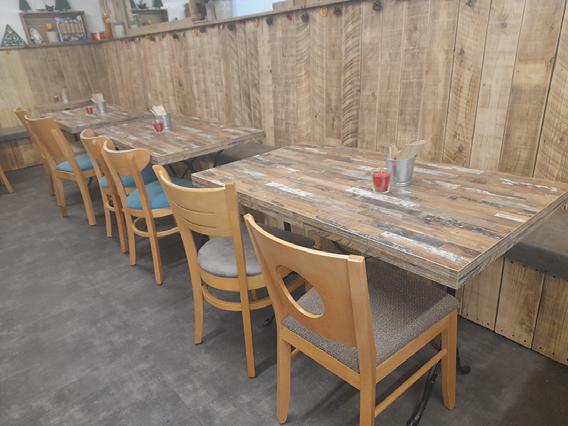
view an extensive range of furniture ideally suited for the leisure market. Here you can relax and let Capricorn help and advise you with your requirements. Opening hours for the showroom are appointment only
We are able to offer a full polishing and upholstery service so many items can be custom made to the customers requirements .
For more information or a Capricorn Contract Furnishings catalogue and price list contact Brian Pengelly on 07767 387 962 or visit www.ccf-ltd.uk
At HotelContractBeds, we’ve been supplying the hospitality industry with premium contract beds and mattresses for over 40 years. Whether you're running a boutique B&B, a busy hotel chain, or student accommodation, we offer a bespoke service that ensures you get the perfect beds to suit your needs.
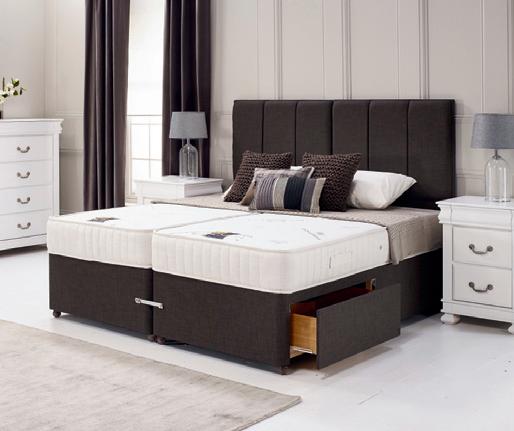
As specialist UK manufacturers, we take pride in delivering high-quality, durable, and comfortable beds that meet strict UK & EU fi re safety regulations (BS 7177:2008 – Crib 5), ensuring your guests sleep safely and soundly. Why Choose HotelContractBeds?
✓ Premium Quality Beds & Mattresses – Zip & Link, Divan, Bed Bases & More…
✓ No Minimum Order Value – Whether you need one bed or a whole hotel’s worth
✓ FREE UK Delivery – Reliable weekly deliveries for your convenience
✓ Competitive Prices – Exceptional quality without the premium price tag
Our zip & link beds offer ultimate fl exibility, allowing rooms to convert from twin to double in minutes—perfect for hotels catering to varied guest needs. From luxury hotel mattresses to budget-friendly options, we cater to all types of commercial accommodation.
Join thousands of satisfi ed customers across the UK who trust HotelContractBeds for unmatched quality, comfort, and service. Ready to upgrade your guest experience? Visit HotelContractBeds.co.uk today or call us (01234 834693) to discuss your requirements!

Please mention the Caterer, Licensee & Hotelier News when replying to advertising

Pub bookings for England’s World Cup kick-off are already surging. New data from hospitality technology provider Zonal shows bookings to watch England’s first game in the pub are up 293% compared with the same date last year. Across hospitality venues overall, match bookings are up 98%.
And if previous tournaments are anything to go by, this could be a huge trading moment for pubs, bars and hospitality businesses across the UK. Analysis from Euro 2024 showed England group games delivered a 42% year-on-year sales uplift, with UKHospitality predicting a similar boost during this World Cup.
That is great news.
But only if your business is ready for it.
More customers means more opportunity, but it also means more pressure. More stock behind the bar. More food in the kitchen. More staff on shift. More supplier invoices to cover. More cash tied up before the takings come in.
People think business finance is just about needing money. Sometimes it is about timing. You have money coming in, but you need to move before it lands. Or you can see the opportunity in front of you, but you cannot afford to wait for traditional funding.
That is where Capify can help.

We provide fast, flexible business funding for UK hospitality businesses that need to act quickly. Whether you need to buy extra stock, prepare your beer garden, bring in temporary staff, upgrade equipment, cover supplier costs or give yourself more breathing room through a busy trading period, we look at the real situation behind the application.
And if you have been rejected elsewhere, that does not mean the conversation is over.
We work with business owners who have been turned away by other lenders. Poor credit does not have to be a problem. Every application is
reviewed by a real person, which means we look beyond a flat spreadsheet and consider what is actually happening in your business.
Speed matters too.
Capify can get you funding the same day or within 24 hours, subject to approval. So when bookings rise, demand spikes and the opportunity is there, you do not have to sit and wait while the moment passes.
The World Cup could be one of the biggest hospitality opportunities of the year. The pubs and venues that benefit most will be the ones that are ready before the rush arrives.
Ready with the stock.
Ready with the staff.
Ready with the space.
Ready with the cash flow to make the most of it.
Because business pressure is not always a sign that something has gone wrong. Sometimes it is a sign that something is about to go very right.
If your hospitality business needs funding to make the most of the World Cup surge, Capify could help you move now.
Apply today at capify.co.uk and see how much your business could access.
See the advert on page 13 for further details.
Pub is The Hub may be able to offer grants of up to £6,000 to publicans in rural, remote, or deprived areas, who want to offer additional services and/or activities in their pubs to help local communities.
These can include a range of services from community cafes, village stores, and allotments, to activities such as theatre and craft workshops, to help bring people together to combat social isolation and loneliness.
The not-for-profit organisation, founded by HM King Charles III when he was Prince of Wales, offers independent specialist advice to publicans and their communities on service diversification and activities, so they can provide viable local services at the heart of their communities.
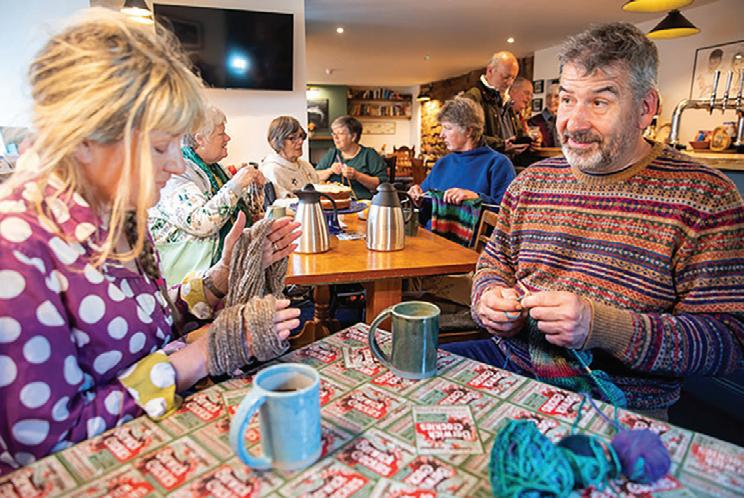
Pub is The Hub recently revealed it will be helping and advising more pubs to diversify their local services and activities after receiving access to Government funding.
The Department for Business and Trade has committed £440,000 to help Pub is The Hub deliver over 40 projects including village stores, community cafes, allotments and play areas in pubs across the country.
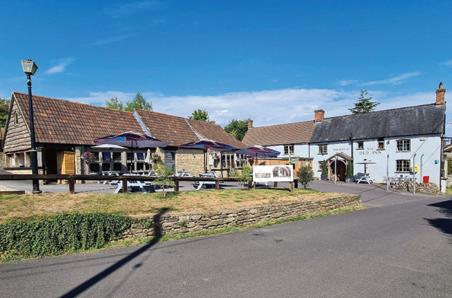
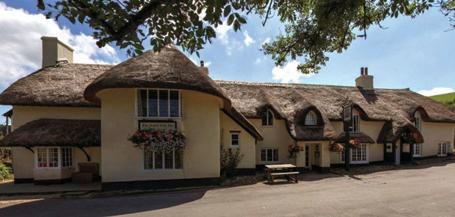
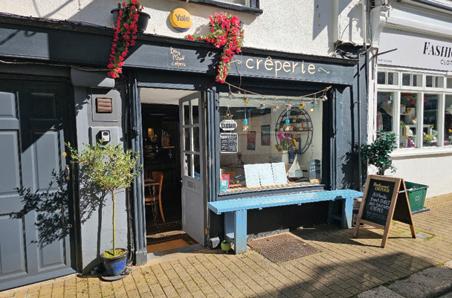
Pub is The Hub chief executive John Longden OBE said: “In isolated rural and deprived areas, adding a service such as a village store, community café or running activities such as craft workshops or theatre at the local pub can be a great way to support people living locally.”
Publican Rhiannon Metters of The Halfway, Tal-Y-Coed, Wales has opened a village store and a marquee events space with help from Pub is The Hub.
“We are situated in an isolated rural community with the pub being the hub of the area. It is so important that we support local people ensuring they do not feel isolated and alone. With the nearest supermarket being 20 mins away the village store here in this isolated rural area is such a support to people in the local community,” she said.
As well as helping the publicans to engage further with their local community, projects can also add social value to an area. For every £1 spent on a new project through the Pub is The Hub, £8.28 of social value is created.
For over three decades, Stonesmith has established itself as the South West's premier business transfer agent, specialising in the sale of licensed, hospitality, and catering businesses throughout Devon, Cornwall, Somerset, and Dorset. Whether you're an aspiring publican seeking your first freehold pub, an experienced hotelier looking to expand your portfolio, or an entrepreneur wanting to enter the thriving restaurant sector, Stonesmith's unrivalled local expertise makes them the natural choice for navigating the Westcountry's dynamic hospitality market.
The team at Stonesmith understands that no two hospitality businesses are alike. From traditional country pubs and coastal hotels to contemporary restaurants and boutique guest houses, each property
presents unique opportunities and challenges. Their approach centers on listening to clients' individual needs and crafting bespoke marketing strategies that align with specific objectives. This personalized service, combined with their deep knowledge of the regional market, ensures that both buyers and sellers receive guidance tailored precisely to their circumstances.
Choosing Stonesmith means partnering with specialists who genuinely understand the hospitality sector's nuances—from licensing requirements and valuation complexities to the seasonal dynamics that define Westcountry trade.
Thinking of selling or buying? Visit www.stonesmith.co.uk
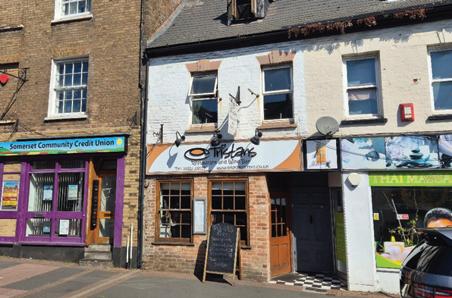
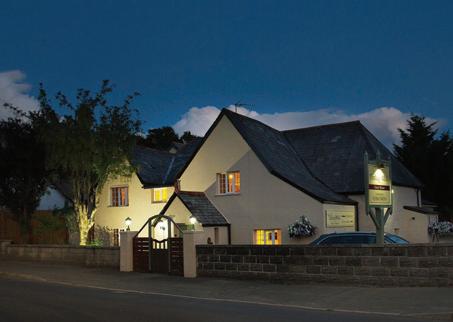
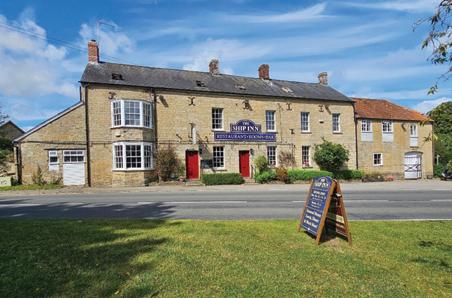

Budgeting, Forecasting, Menu Management, Stock Controls, Purchasing, and controlling Variable Costs are just a few of the other areas that David Hunter, your Restaurant Consultant, will work on with you, and improve with you.
Managing people brings with it a whole set of new skills that are now needed more than ever. From ‘’Managing the Managers’’ through to Service and Kitchen staff, your team needs careful and skilful Management, Motivation, guidance and Development. If your business is actually struggling, or if you just feel that it could be doing some things better, give David Hunter a quick call on 07831 407984 to arrange a ‘’Free of Charge’’ initial consultation (please quote CLH Offer), when David will discuss with you what could be achieved if you ask us to work with you.