Subject: A Call to Conscience and Action on Behalf of Haiti’s Children
Claude Louis, MD
Hampton, Virginia
claudanovMD@gmail.com| www.wiahaiti.org
July 15, 2025
Dear Chairman James E. Risch and members of the Senate Committee on Foreign Affairs,
My name is Claude Louis, a Haitian-born physician practicing in Virginia. I am also an author and a long-standing advocate for the rights of children in Haiti. Additionally, I am the founder of the non-profit organization Words In Action Haiti and the Voice of the Ancestors youth club. On April 17th, 2025—commemorating the two-hundredth anniversary of the Haitian independence ransom imposed by France—I submitted a formal appeal to the French Parliament with voices from our youth club in different parts of Haiti. This document demands restitution for Haiti’s children, who continue to bear the consequences of this historical injustice.
I have resided in the United States since 2010 under Temporary Protected Status (TPS), following the devastating earthquake that shattered Haiti. Today, I write to share with you a deeply personal and urgent request to the U.S. Congress on behalf of Haiti’s children—those whose voices are too often silenced by corruption, violence, abandonment, and geopolitical injustice.
Enclosed is a document that outlines the historical and ongoing role of U.S. foreign policy in destabilizing Haiti. It urges the U.S. Congress, through its Committee on Foreign Affairs, to take meaningful steps toward ending the violence and ensuring that Haiti’s children can dream freely once again—just as I did. This is a plea to stand with the children of Haiti and help ensure that their dreams are not casualties of geopolitics, neglect, or prejudice.
Haiti’s forefathers—Jean-Jacques Dessalines, Toussaint Louverture, and others—fought and sacrificed so that our nation could stand as a symbol of freedom and sovereignty. We believe there are capable sons and daughters of Haiti ready to lead our country toward a different, brighter future—one achievable through a democratically elected government chosen by the Haitian people.
We trust in your commitment to promoting freedom, democracy, and human rights worldwide, including in Haiti. This is also a call to recognize Haiti not as a failed state, but as a nation betrayed—not broken—still striving to stand tall.
To that end, we have recently launched the Voice of the Ancestors youth club—an initiative designed to give young Haitians the opportunity to dream again and reclaim what has been taken away from them. Your support and intervention are more vital now than ever before.
With gratitude and conviction,
Claude Louis
US Senate Committee on Foreign Relations
Attn: Chairman James E. Risch
423 Dirksen senate Office Building
Washington, DC, 20510
202-224-4651
Dear Chairman James E. Risch and members of the committee on Foreign Affairs,
This document reflects the testimony of someone who has witnessed firsthand the devastation unfolding in Haiti, yet continues to draw strength from its persistent spirit of hope and resilience.
In October 2024, I returned to my native village of Qui-Croit, nestled in the mountains of Kenscoff, southeast of Port-au-Prince, to participate in our annual Critical Consciousness Day. This special day is dedicated to teaching our history and honoring the legacy of our ancestors with the 600 students at our local school. I take great pride in sharing our history with those children. I told them that freedom begins in the mind, but mental chains can often be stronger than physical shackles.
During that visit, I brought copies of my latest children’s book, In Pursuit of My Ancestors’ Dream, which we read together. The story follows a 12-year-old captain and her debating team as they travel across the country defending those without a voice through historical debates.
Out of this deep commitment to awaken pride and purpose in our youth, we formed a grassroots initiative called Voice of The Ancestors youth club. It’s a space where children learn their history, develop leadership skills, and give voice to the dreams of those who came before them. Through debate, storytelling, and civic engagement, we are helping shape a new generation that walks with courage, rooted in identity and ready to lead with vision.
Inspired by Toussaint Louverture, one of Haiti’s founding fathers who once said: “I was born a slave, but nature gave me the soul of a free man,” I told them: “Some people call us poor, but our ancestors left us a rich heritage of freedom and pride”. I added that I’ve never considered myself poor—not even as a boy fetching water and gathering cooking wood in the mountains. And they shouldn’t either. They can be rich with integrity, knowledge, wisdom, and above all: love and humanity. I wanted to instill something crucial in these children: Poverty is a state of mind, not lack of dollar bills
Yet in 2025, a child who lives without electricity, sanitation, healthcare, clean water, education, transportation, books and libraries, or access to technology can easily be led to perceive themselves as inferior—subhuman even. In Haiti, actually any hope to rise above these conditions is being crushed by a system designed to keep them down. I refuse to accept that.
Through my children’s books, I’ve helped raise funds to support the education of Qui-Croit’s children and begin the restoration of the aging school built in the 1960s. Visiting Qui-Croit brings me immense joy. I have the privilege to show these children that their education and their lives matter. I know their path because I walked it. I once climbed those same mountain trails, an hour each way, just to get to school from the age of 5. Therefore, when I tell them, “If I did it, you can too,” it’s not just encouragement—it’s lived truth. They can be the generation to transform their community and their country.
Unfortunately, tragedy struck shortly after my visit. Heavily armed gangs overran the village and seized the school. Innocent lives were lost, including some of my ailing, frail and undernourished patients. Hundreds of homes were torched. Six months later, the de-facto government has taken no meaningful action to bring justice or restore order. Like many rural communities, Qui-Croit has been abandoned by the state. Kenscoff, with a population of over 60,000, has yet to see a single public school or hospital built by the government.
The people ask: Why are gangs so heavily armed, and why are they allowed to rape, kill, and destroy in the most vulnerable communities across the country, while the oligarchic elite and the politicians who foment the chaos, and their families, live safely, often abroad, supported by funds stolen from the very people they oppress? Why are gangs targeting schools, universities, hospitals, and community centers? Is there a coordinated effort to dismantle hope, particularly through the destruction of education? Is this strategically designed, like France’s independence ransom and extortion, to keep Haiti on its knees forever?
These are legitimate questions.
I was 16 in 1994 when the U.S. restored President Jean-Bertrand Aristide and dismantled the Haitian army. 1 The army had flaws, but it was the corrupt justice system that enabled abuse. Instead of institutional reform, Haiti was stripped of its ability to protect its people, its land, its borders and airspace, and its natural resources because ironically, it was the army’s duty to protect the nation’s sovereignty. Now, decades later, heavily armed gangs—their main leader formerly trained by the U.S. as police—fire on planes, forcing the FAA to ban flights to Port-auPrince since November of 2024. Meanwhile, the Dominican Republic has closed its border to formal humanitarian trade but allows illegal arms to transit across, further fueling the violence. 2
1 New York Times, September 23, 1994, by John Kifner.
2 Insight Crime, 2023; UNODC Reports
So how do we respond to those who claim this is all part of a foreign-led plot to destroy Haiti? I wish I could dismiss that claim but the weight of history makes it impossible. The truth is, Haiti has long suffered under foreign interference, especially from the United States. And while intentions have varied over time, the cumulative impact has been devastating. To be serious about helping Haiti rise, we must first acknowledge how it was brought to its knees.
While corrupt politicians and the oligarchs remain those who bear the main responsibility for the country’s struggles, here’s how the United States’ past and present actions have contributed to the crisis—and why it must now take responsibility.
Delayed Recognition of Haitian Independence: The U.S. refused to recognize Haiti’s independence for 58 years, economically isolating the world’s first Black republic out of fear it would inspire slave revolts in the American South.
Occupation and Economic Exploitation: The U.S. occupied Haiti from 1915 to 1934 and seized the country’s gold reserves in 1914. Even after the occupation, the U.S. controlled Haiti’s finances, siphoning off nearly 40% of national income to service debts to U.S. and French banks.3
Support for Dictatorship: The U.S. provided financial, military, and political support to the Duvalier regime—one of the most brutal dictatorships in the Caribbean—for nearly three decades. This support was driven by Cold War priorities and the desire to prevent a communist presence near U.S. shores.4
Trade Embargo That Crushed the Poor: In 1991, following a military coup that ousted democratically elected President Jean-Bertrand Aristide, the U.S. imposed a trade embargo on Haiti. While intended to pressure the military regime, the embargo disproportionately affected poor Haitian families. It crippled small businesses, drove up food prices, and restricted access to education and essential goods.5
Weapons Trafficking from the U.S.: Nearly 85% of the illegal firearms used by gangs in Haiti originate from the United States.6
Direct Engagement with Gang Leaders: In October 2024, U.S. Ambassador Dennis Hankins publicly acknowledged having “limited exchanges” with gang leaders—sending dangerous signals about legitimacy.
3 Rosalsky, G., NPR, “The Ransom,” October 5, 2021.
4 Abbott, E. (2011). Haiti: A Shattered Nation. Overlook Press; see also U.S. State Department historical archives on Cold War-era policy in the Caribbean.
5 Fatton, R. (2002). Haiti’s Predatory Republic: The Unending Transition to Democracy. Lynne Rienner Publishers. See also U.S. Congressional Research Service Reports (1991–1994).
6 Washington Post, “Where Haiti’s Illegal Guns Come From,” 2021.
U.S. UN Official’s Suggestion to “Federate” Gangs: Helen Meagher Lalime, then Head of the UN Mission in Haiti (BINUH), suggested in 2020 that federating the gangs had shown “some positive effects”—a statement she later claimed was misinterpreted.
Installation of Unelected Officials: Following the 2021 assassination of President Jovenel Moïse, the U.S., alongside France and Canada, supported a political transition that excluded the Haitian people and installed unelected, corruption-tainted figures.
Destruction of Local Agriculture: U.S. imposed trade policies—especially reductions in tariffs on imported rice—devastated Haitian agriculture. Former President Bill Clinton admitted this policy mistake, which displaced farmers and contributed to mass urban migration and gang recruitment.7
Prejudicial Deportation Practices: Despite the deteriorating conditions in Haiti, the current U.S. administration continues to deport Haitian asylum seekers, and recently took steps to remove the status of more than 500,000 Haitians legally present on US soil under humanitarian parole and temporary protected status (TPS), to send them back to a gangridden place without a functioning government. While the department of Homeland security claims that the situation in Haiti has improved enough for those Haitians to go back, the department of State issued a warning for all US citizens to depart Haiti as soon as possible because of the deterioration of the situation. At least the statement from Security Kristi L. Noem was somewhat less nuanced, adding that the decision for TPS termination is because it is contrary to the national interest to permit Haitian nationals...to remain temporarily in the United States. All of that, while White South African asylum-seekers are welcomed. This is not just policy failure—it is moral dissonance.
On top of everything already outlined, several U.S.-linked actions have further destabilized Haiti’s institutions and public trust. Notorious gang leaders have been given airtime by U.S. and international media outlets, inadvertently amplifying their visibility and perceived legitimacy. Meanwhile, the U.S.-backed Haitian National Police is widely seen as corrupt—many officers have been reported to collaborate with gangs while violently suppressing peaceful protests.
U.S. influence has also extended into electoral affairs: pressure reportedly shaped the 2010–2011 elections in favor of a candidate later tied to drug trafficking and gang networks. And in the wake of President Jovenel Moïse’s assassination in 2021, it was revealed that several mercenaries involved had received U.S. military training, and a Florida-based security firm was allegedly connected to the plot.8
7 PBS NewsHour, “Clinton Apologizes for Trade Policy,” March 10, 2010.
8 NPR, July 16, 2021; The Hill, October 13, 2015; documented news coverage from CBN, Sky News, and NBC News
Despite all this, Haiti’s children are still standing, still dreaming, and still hoping.
After more than a century of international interference, injustice, and manipulation, Haiti’s children are saying: “Change is way overdue.” Our ancestors fought not only for freedom, but also for dignity, identity, and justice. The freedom they envisioned was never just about breaking chains—it was about creating a future worthy of our humanity.
Of our 600 students in Qui-Croit, we’ve only been able to trace 120. Where are the others? What has become of their future? According to UNICEF, the recruitment of children by gangs increased by 70% in just one year. These are not statistics—these are stolen futures. These are the cries of children born into a crisis manufactured to kill their future and dreams. To kill all HOPE.
It is imperative that we recognize the deep-rooted causes of Haiti’s instability a history marked by manipulation, economic sabotage, and strategic neglect. To genuinely support Haiti, the United States and the international community must shift from a posture of interference to one of respectful partnership—supporting Haitians to govern themselves freely.
To help Haitians govern their country without interference, the U.S. must:
1. Step down from political engineering. The U.S. must stop using Haiti as a geopolitical pawn. Let Haitians determine their future—free of coercion, manipulation, or conditional aid tied to foreign interests. End the practice of handpicking leaders behind closed doors and instead support inclusive, Haitian-led democratic processes that reflect the will of the people.
2. Cease harmful economic interventions. Halt policies that sabotage Haitian agriculture, and offer means to repair the wrong in the Artibonite valley’s rice production. To help redefine the role of NGOs which should not be established as a replacement of local government with no oversight, but under its regulations. In some cases, shift resources from foreign NGOs and intermediaries to Haitian-led grassroots organizations that are trusted and rooted in their communities.
3. End backdoor negotiations with criminal organizations. These deals undermine legitimate authority and embolden gang power.
4. Help bring justice for all the victims. Take into custody, every Haitian on U.S. soil involved in illegal traffic of weapons, as well as all gang enablers and sympathizers.
5. Enforce strict arms control. Halt all trafficking of U.S.-sourced firearms to Haiti until gang violence is dismantled and a constitutionally elected government is in place. Support and
reinforce regional cooperation to track, intercept, and prevent the flow of illegal weapons to criminal groups.
6. Support reparative justice. Reinforce Haiti’s demand for restitution of the independence ransom paid to France—funds that could empower long-term investment in schools and higher education, healthcare, job creation, local infrastructure and tourism.
Haiti must belong to Haitians. Its future must be shaped by its children, not imposed by outside interests.
Let us honor our ancestors—not just by remembering their struggle, but by continuing their legacy for justice, freedom, and self-governance. Let us fight for every child in Haiti who still dares to dream. Let us defend their right to learn in peace, to grow with dignity, and to rise beyond the shadows cast by bullets, corruption, and silence. Education is not a privilege—it is their birthright. And it must be protected like life itself.
Even the quietest voice of a Haitian child (In Pursuit of my Ancestors’ Dream) deserves to be heard above the noise of global politics.
The Moral Imperative
Haiti is not your enemy, and its people are not your problem to manage. We are your free neighbors. Your allies. Your brothers and sisters in freedom. Our children are asking: Can we still dream? What will your answer be?
The time has come to answer that question not with platitudes, but with action—meaningful, just, and rooted in truth. Let us not meet this moment with silence, but with the strength of our shared humanity.
Free we are. Free at last.
God bless America and every nation on earth.
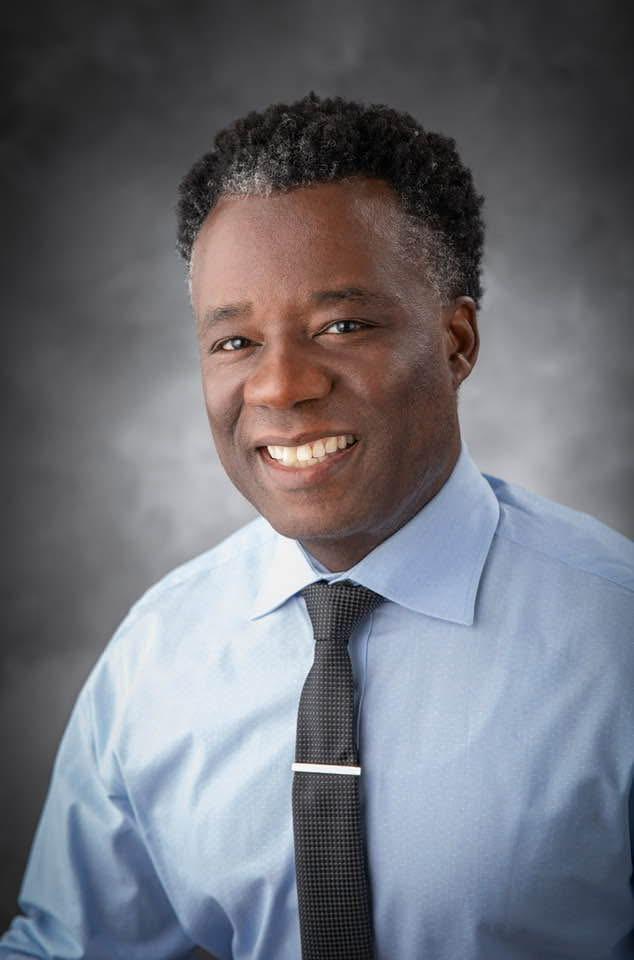
Claude Louis Physician | Author | Advocate
Founder, Voice of the Ancestors youth club
Founder, Words In Action Haiti
Virginia claudanovMD@gmail.com | www.wiahaiti.org
July 15, 2025