Linkages: Global Supply Chain Management at Clarkson University - Spring 2025
Linkages
Global Supply Chain Management
Imposing Tariffs on Imports Would Create Chaos in Supply Chains
While imposing tariffs on a narrow array of products might be justified on national security grounds, acrossthe-board tariffs could have significant negative consequences, leading to major supply chain disruptions.
The potential increase in tariffs will impact materials, components and products across global supply chains, resulting in an increase in prices that would most likely be passed down to the consumers. In addition, tariffs could hinder competition and give protection to domestic companies plagued by inefficiences and quality problems. Considering the current complex supply chain networks, tariffs may even have a negative impact in the short term by reducing exports of U.S. manufacturers that rely on imported intermediate goods. Tariffs can also result in retaliatory action by other countries, which would cause some U.S. exporters to substantially lower the price they charge abroad to maintain their market share. Finally, tariffs imposed to punish adversaries may have limited impact, as such countries will find clandestine ways of avoiding tariffs. In summary, tariffs would undoubtedly add to the uncertainties facing many supply chains in the current highly politicized trade environment.
Chaos could erupt in global supply chains as companies with significant exposure will likely stockpile inventory to avoid the impact of tariffs. A less visible cost of the tariffs will come from the frenzy of appeals for exemption. This process imposes significant costs particularly on small- and mid-sized firms that are ill-equipped to jump through bureaucratic and political hoops. The repercussions would be felt by every firm that sells imported goods and by every firm that uses imported inputs to run its business. Most worrisome would be the prospect of supply chain chaos as many firms would be forced to shift attention from day-to-day business needs in their scramble to re-negotiate contracts, re-configure supply chain networks and lobby for tariff exemptions.
In this issue of Linkages, you will read about our interdisciplinary global supply chain management program, our students and our faculty’s latest achievements, including: Associate Professor Dennis Yu’s research into cold chain network optimization (p. 2); Professor Santosh Mahapatra‘s research into inventory management in disaster relief operations (p. 3); why student Savanah Pierre ’26 learns best through experience (p. 3); how Associate Professor John Milne’s application of operation research methods to solve air travel challenges has brought him global recognition (p. 4); how a generous gift from an alumnus created the Engineering & Management Innovation Lab (p. 5); and Reh School of Business Dean Bebonchu Atems’ insights on the value of STEM designation for business degrees and a strategic investment in graduate programs.
We hope you enjoy this issue and welcome your feedback (mahmoodi@clarkson.edu).
— Professor Farzad Mahmoodi
Joel Goldschein ’57 Endowed Chair in Supply Chain Management & Director of Clarkson’s GSCM Program
Clarkson’s Global Supply Chain Management Program
TOP 25 in the Nation for 18 years. #1 in New York State. — U.S. News & World Report 2023
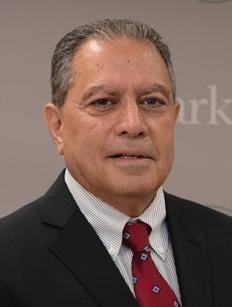
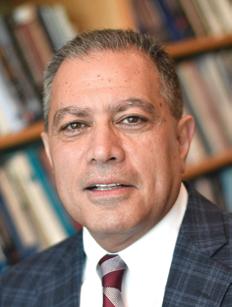
Prof. Farzad Mahmoodi
Cold Chain Network
Optimization Research Helps Supply Chain Professionals
Acold chain network moves temperature-sensitive raw materials and goods, such as fresh food and pharmaceuticals, from growers, manufacturers and warehouses to grocery stores and pharmacies worldwide through a complex multimodal transportation system that can include road, rail, air and waterways.
As production and transportation of these goods increases, the cold chain network industry faces significant challenges – from regulatory compliance and stricter carbon emissions standards to rising costs associated with transportation time, quality assurance and food loss.
“The challenges are complex,” says Dennis Yu, Associate Professor, Operations & Information Systems at the Reh School of Business. “Cold storage cargo is moved globally through different transit systems. Food quality decreases over time, while carbon emissions – and even temperatures -- can fluctuate during shipment.”
“It is imperative that supply chain professionals plan multimodal transportation routes efficiently to address these issues.”
To help find solutions to these challenges, Professor Yu collaborated with researchers in China to develop a multiobjective evolutionary algorithm to address four key optimization objectives for multimodal cold chain transport: total transportation time, costs, carbon emissions and food waste.
The research, funded in part through a grant from the Reh School of Business’ Global Supply Chain Management program, utilized Monte Carlo simulation and a one-by-one selection strategy, to develop a data-driven algorithm that provides a solution set that considers all four objectives. Operations and logistics professionals can choose among the solutions provided to optimize transportation routes and efficiency. The researchers also investigated the impact of different parameters, such as carbon tax rates, temperature and cargo activation energy, on carbon emissions and food waste.
“Our algorithm considers more objectives than have been previously considered,”
says Prof. Yu. “The insights gained from this research will provide valuable decision-making support for multimodal carriers in developing low-carbon and environmentally friendly transportation strategies to efficiently transport perishable goods.”
Their article, “Multiobjective Route Optimization for Multimodal Cold Chain Networks Considering Carbon Emissions and Food Waste” has been published in Mathematics
Complex industry optimization challenges like these interest Prof. Yu. “My research interests are always tied to industry application,” he says. “It’s never purely theoretical. These days it is important to consider new and emerging transportation technologies and the environmental impact of logistics, so my research reflects these concerns.”
His past research has produced new models and algorithms to solve truck-drone routing optimization problems in urban areas within the context of low-carbon logistics and data-driven optimization. He has also explored carbon emissions in multi-trip optimization of unmanned vehicles.
Artificial Intelligence (AI) also promises to improve algorithm development and enhance their research. For example, Prof. Yu and his colleagues are applying deep reinforcement learning to devise new algorithms for addressing truck-drone collaborative delivery logistics issues in the transportation industry. “Once we put in a lot of data, we can build an algorithm to identify and compare solutions in the solution set. AI will make it more efficient to select the best final solutions out of many.”
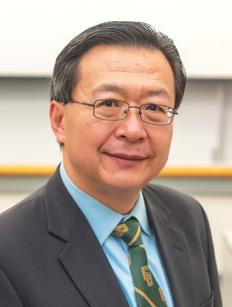
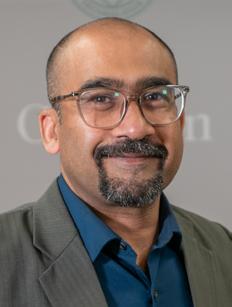
Assoc. Prof. Dennis Yu
Student Savanah Pierre
Learns from Experience
Savanah Pierre ’26, global supply chain management major, came to Clarkson already a CEO and founder of a clothing business, Just Pierre Clothing, which features her own designs. Her perspective as a novice business owner first piqued her interest in global supply chains.
“When I started my business, I had to understand the supply chain and manufacturing process from scratch,” she says. “I was immediately interested in how supply chains work, the process of how things start with raw materials and finish with added value and a product that makes clients happy.”
Pierre continues to operate her company while a full-time student at the Reh School of Business. She has been able to apply what she learns in her classes to her startup.
“What I have learned in my coursework has been invaluable to my business,” she says. So has hands-on work through internships thanks to Clarkson’s robust alumni network and the University’s commitment to providing experiential learning activities for students.
Last year, Pierre was recruited for a summer internship by alumnus Patrick Becker ’07, ’09, the Chief Logistics Engineer at General Dynamics Mission System (GDMS), a business unit of General Dynamics. While at GDMS, Pierre worked with Becker as well as other Clarkson alumni.
“I had the opportunity to work with these alumni and other wonderful individuals on different tasks and programs that make GDMS work so efficiently,” she says. These experiences included sending obsolescence surveys to different vendors to ensure availability and consistency of spare parts with no end-of-life time, and working on warehouse design to facilitate digitalization to improve planning and operations, as well as utilization.
In summer 2025, Pierre will be an intern with GE Wind Supply Manufacturing. “Internships are important because you can take what you are learning in the classroom and transfer it to the real world. You also get a good idea of what interests you.”
Inventory Management Approaches in Disaster Relief Operations
About 80% of disaster relief activities relate to logistics and supply chain management involving materials, information and financial flows. Execution of these operations is complex because of the variations in demand and supplies during the short time window in which relief activities need to be conducted.
Professor Santosh Mahapatra is investigating key natural disaster relief supply chain issues funded in part through a grant from the Reh School of Business’ Global Supply Chain Management program. His research focuses on how the disaster relief inventory (DRI) is to be managed to fulfill the relief requirements due to the seasonal (tropical) cyclones/hurricanes that occur almost every year.
Challenges to costeffective DRI decisionmaking include a short response time, difficulty in predicting the demand, complexity in deploying logistical/ relief resources timely and effectively, involvement of multiple agencies with varied levels of capabilities and objectives, budgetary constraints, and dynamic and uncertain operating context impacting operational lead-times.
Conventional inventory modeling frameworks are of limited applicability in the DRI management context because of the limiting assumptions in those models. To address the shortfall, Prof. Mahapatra’s study examines the relief decision-making
questions in a multi-tier supply chain composed of relief activity centers at the state, county and town/village levels. The study will analyze the effectiveness of simultaneous deployment of pre-positioned and responsive inventory policies with respect to varied levels of disaster severity and operational uncertainty. It considers performance metrics — such as satisfied demand, response time, magnitude of upstream versus lateral supplies, average inventoryforecast demand ratio, etc. — to assess the effectiveness of alternate policies.
Savanah Pierre ’26
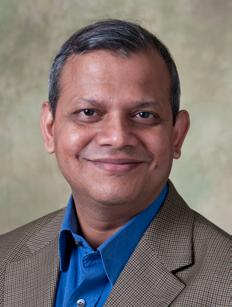
Prof.Santosh Mahapatra
Faster. Safer. Better.
Associate Professor John Milne applies operation research methods to solve global travel challenges. In the classroom, he shows students how to identify problems and invent solutions of their own.
In 2023, United Airlines, a major global carrier, announced it was changing boarding procedures for its Economy class. The Airline would now board by seat location, starting with window seats, then middle seats and, finally, aisle seats. The new boarding procedure kicked up controversy when it was announced but the change promised to save up to “two minutes of boarding time,” according to United.
While that might sound like a small saving of time, it quickly adds up to millions of dollars in savings for the airline.
“United has over 4,500 flights per day, so that’s a lot of flights per year and each flight has a lot of passengers,” says John Milne, Associate Professor, Engineering & Management and the Neil ‘64 & Karen Bonke Endowed Chair. “Saving even one minute in airplane turnaround time can add up to several hundred million dollars a year for a large airline like United. Especially because the boarding time reduction can lead to adding an additional flight during the day.”
With 40 million commercial flights anticipated in 2025, every second counts.
Professor Milne’s research focuses on applying operations research methods to address problems in supply chain management, planning and scheduling. Over the last 10 years he has turned his attention to the air travel industry. Today, he is among the world’s experts on methods for boarding passengers onto airplanes.
Prof. Milne began his research into airplane boarding procedures back in 2014 and published his first article on the subject two years later. Since then, he has co-authored more than 20 journal articles that pertain to airline boarding and the assignment of passenger seats on airplanes.
Most of his boarding research has dealt with how passengers could be boarded on an airplane more efficiently such as by assigning passengers to seats based on their carry-on bags. More recently, Prof. Milne has investigated boarding and seating methods to improve safety and reduce the spread of infectious diseases. It’s a line of research that he plans to extend with a Clarkson Ph.D. student to different settings like restaurants and theaters.
Prof. Milne has tackled large operations and supply chain problems like these throughout his career. During his 26-year tenure at IBM prior to joining the Clarkson faculty in 2010, he developed and applied research methods to complex problems in supply chain management, holding job titles that included Master Inventor. His success in developing innovative solutions has led to more than 40 U.S. patents, in recognition of which he was awarded the title of Fellow by the National Academy of Inventors in 2023. He is also a Fellow of The Institute for Operations Research and Management Sciences (INFORMS), the world’s largest society of operations research professionals.
100% placement rate for 2024 GSCM graduates (74% reporting)
Assoc. Prof. R. John Milne
At Clarkson, in his EM456, the Engineering & Design Capstone course, he guides students through an extensive and intensive problem-solving exercise that has yielded 112 student patent applications to date. “All problem solving starts with identifying the problem,” he says. “This is the first thing my students learn. Understanding the problem and what you actually need to solve it opens the doors to broader considerations and better solutions.”
The students conduct research to see how other people may have tried to approach the problem. This means systematically looking at patents in the area. Students also talk to potential customers as well as experts in the field to understand the key features of a successful solution.
“Finally, they have to submit a written report that describes their work at every step of the process; the features, design and details of the solution so others can implement it,”
New Engineering & Management Innovation Lab
Thanks to a generous gift from E&M alumnus Gus ’82 and Magda Mininberg, future generations of technology leaders will benefit from hands-on learning opportunities that span theory and real-world practice.
Clarkson’s new Engineering & Management Innovation Lab is a dynamic space that provides a unique opportunity to shape the future of engineering and management by developing a new generation of technical leaders who can bridge the critical gap between technical expertise and business acumen.
“This will be a cutting-edge environment where students collaborate across disciplines to solve real-world challenges, from product innovation to supply chain optimization, all while learning to lead teams, manage resources
says Prof. Milne. “The report also includes different sections designed to target different audiences. This can include marketing teams, managers, lawyers, and engineers.”
The students learn firsthand that adjusting their message to effectively communicate to their different stakeholders is key to successfully implementing any solution.
“It isn’t enough to develop a solution; you have to sell it,” he says. It’s a process of problem solving that students can apply to multiple work functions in their future professional work.
“Every problem I approach begins with this same problemsolving method,” he says. “It’s the best way to guarantee you arrive at a successful solution.”
and drive sustainable business growth,” says David D. Reh School of Business Dean Bebonchu Atems.
The E&M Innovation Lab is the brainchild of technical leader and entrepreneur Gus Mininberg ’82, owner and President of the Albany, N.Y.-based company High Voltage Electric Service, Inc., a full-service electrical testing business that has provided acceptance, commissioning and maintenance testing services since 1990. Last August, the company was acquired by RESA Power, LLC, a market leader in power systems electrical testing, transformer services, and life extension solutions for power distribution equipment.
For Global Supply Chain Management students, the Lab offers tremendous resources, including opportunities to explore global market strategies and digital collaboration tools. Students can partner with international companies and universities to create cross-border projects where they work across time zones, navigate cultural differences and solve engineering and management challenges on a global scale.
Students can also train in lean methodologies and Six Sigma principles to improve operational efficiency; learn to apply robotics and automation to streamline business operations from warehouse management to assembly line production; and gain experience increasing overall performance through Business Process Reengineering projects.
Faculty Research, News and Awards
Assistant Professor Shafique Chaudhry has co-authored “Machine Learning Calibration of Low-Cost Sensor PM2.5 Data,” which was presented at the 10th IEEE International Symposium on Systems Engineering. The paper is part of a research project that focuses on improving the accuracy of low-cost air quality monitoring sensors using advanced machine learning techniques. These methods allow researchers to correct the errors in sensor readings and align them with the high standards of traditional, more expensive monitoring equipment. By enabling accurate, real-time air quality monitoring, businesses can better assess the environmental conditions that affect logistics, warehousing and transportation. For instance, accurate PM2.5 data during wildfires can help optimize routing to protect goods, ensure employee safety and maintain operational continuity.
Professor Farzad Mahmoodi, Joel Goldschein ’57 Endowed Chair in Supply Chain Management, co-authored three articles: “Determining Number of Suppliers, Duration of Supply Cycle and Allocation to In-house Production Under Uncertainty,” Computers & Industrial Engineering; “The ThreeBody
Problem of Organizational Resilience: Reconstructing the Systemic Resilience of Global Supply Chains,” Tsinghua Business Review; and “Multi-Echelon Inventory Optimization under Disruption Risk,” Operations and Supply Chain Management: An International Journal.
John Milne, Neil ‘64 and Karen Bonke Associate Professor in Engineering Management, recently co-authored “Airplane Seating Assignment Greedy Algorithms that Separate Passengers Likely to be Susceptible to Infectious Disease from those Likely to be Infectious” in IEEE Access.
onto airplanes, Professor Milne was interviewed for the following national media stories: The Wall Street Journal’s “Science of Success: A Better Way to Board a Plane,” podcast from their series on The Future of Everything; CBSnews. com, “Delta is changing how it boards passengers starting May 1,” ABC 7 Chicago’s “Delta Air Lines will soon drop categories and use ‘zones’ to board passengers,” and CNN.com, “Delta Air Lines will soon update the way it boards passengers.”
Associate Professor Dennis Yu recently co-authored the 2025 article, “Transportation and Carbon Emissions Costs Minimization for Time Dependent Vehicle Routing Problem with Drones,” in Computers & Operations Research.
Professor Santosh Mahapatra is co-author of “Risk-Averse, Integrated Contract, and Open Market Procurement with Quantity Adjustment Costs” in the Journal of Risk and Financial Management.
As a recognized expert on methods for boarding passengers
In 2024 he also coauthored eight articles, including four in Mathematics: “Optimizing Multi-Depot Mixed Fleet Vehicle–Drone Routing
Under a Carbon Trading Mechanism,” “Multiobjective Route Optimization for Multimodal Cold Chain Networks Considering Carbon Emissions and Food Waste,” “Evolutionary Game Analysis of Electric Vehicle Distribution Entities with Shared Charging Facilities” and “Optimizing the Three-Dimensional Multi-Objective of Feeder Bus Routes Considering the Timetable.”
Asst. Prof. Shafique Ahmad Chaudhry
Prof. Farzad Mahmoodi
Assoc. Prof. Dennis Yu
Assoc. Prof. R. John Milne
His other publications included “Multi-Depot Electric Vehicle-Drone Collaborative-Delivery Routing Optimization with Time-Varying Vehicle Travel Time” in Vehicles; “A Swap-Body Vehicle Routing Problem Considering Fuel Consumption Management and Multiple Vehicle Trips” in Future Transportation; and “Consideration of Carbon Emissions in Multi-Trip Delivery Optimization of Unmanned Vehicles” and “Convolutional Neural Network-Based Bidirectional Gated Recurrent Unit–Additive Attention Mechanism Hybrid Deep Neural Networks for Short-Term Traffic Flow Prediction,” both of which appeared in Sustainability.
Professor Yu was also honored with Senior Membership in INFORMS (Institute for Operations Research and the Management Sciences).
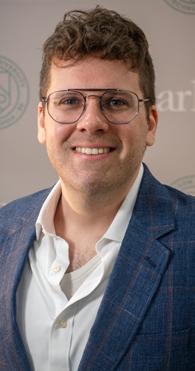
Assistant Professor Michael Sacks
is the co-author of a revised & resubmit manuscript: “Reimbursing Consumer Switching Costs in Network and Non-network Industries” at the Journal of Economics & Management Strategy The paper explores the implications of reimbursing consumers’ switching costs on market dynamics, pricing strategies and welfare in both network and non-network industries. The findings provide valuable insights in supply chain decision-making. The results suggest that leveraging switching cost reimbursement can be a strategic tool to attract and retain customers, thereby expanding market share. This may encourage investment in supply chain capabilities that easily scale with increased demand. However, supply chain managers must also consider the risks of market concentration, such as reduced diversity in suppliers or potential vulnerabilities to disruptions as the enhanced market concentration can induce exit by the smaller firm in industries with large fixed costs. Policymakers, on the other hand, should be cautious about encouraging reimbursement strategies without safeguards, as these can unintentionally stifle competition and innovation within supply chains.
Graduate Degree Study Options in Supply Chain
The Reh School of Business offers both in person and online options for Global Supply Chain Management study:
MBA, Global Supply Chain Management (NEW!)
Fulltime, on campus program, 35 total credits
9 Month, 1.5- or 2-year study options
Focused coursework for depth of study
Online MBA with Certificate in Supply Chain Management
Complete the program in less than two years while you work
Start three times per year, flexible course loads, individualized planning
100% online
Ask about automatic admission options, all programs offer scholarship options!
Josh LaFave
Director of Graduate Business Programs
jlafave@clarkson.edu | 315-268-7799
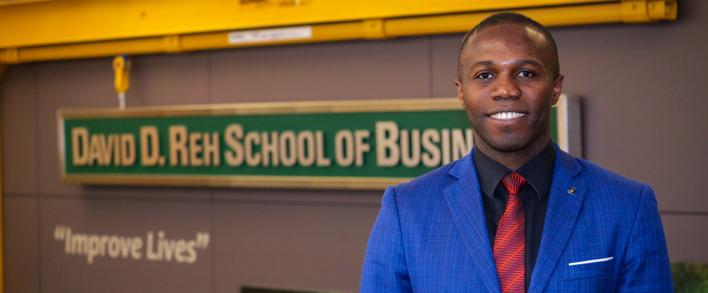
Meet Reh School of Business Dean Bebonchu Atems
ast July, Professor Bebonchu Atems was named dean of the David D. Reh School of Business. Prior to this appointment, Prof. Atems had served as the interim dean of the School since July 2023.
LWhile interim dean, Prof. Atems led curriculum development initiatives to expand the School’s graduate programs. He also led the successful effort to secure STEM-designation for multiple undergraduate and graduate programs, aligning them with the University’s STEM core. In his role as dean, Prof. Atems will continue working collaboratively with the School’s dedicated faculty, staff and students to further elevate the Reh School’s impact and reputation. Here, the Dean is interviewed about the School and its attributes.
What differentiates the Reh School from other schools of business?
First, I would point to our personalized approach to business education. We are committed to small class sizes so the faculty actively interact with the students.
Second is our commitment to experiential and global education. All our students participate in experiential learning through co-ops and internships, and through our approach to project-based learning. Our students also develop a global perspective through our Global Business Programs. Many universities provide global business learning opportunities, but at the Reh School it is a requirement for all our graduates.
Finally, I would point to our worldclass faculty who are top researchers and
practitioners in their fields. For example, Prof. Farzad Mahmoodi in global supply chain management and Prof. Christian Felzensztein for his cutting-edge entrepreneurship research. Meanwhile, Prof. Marc Compeau’s innovative firstyear entrepreneurship courses have been recognized nationally.
Today, the world demands a technologically savvy, agile leadership and workforce. Our graduates will work with people from all over the world so cultural competency and global experiences matter. Through experiential learning, students get the chance to learn problem solving, leadership and communication skills.
What role do the alumni play in reputation and student outcomes?
Our alumni are on campus, meeting and interacting with students and are often involved in admissions, and job placement and recruitment. They also serve on our Business School Advisory Councils to advise on industry trends and recommend curricular modifications to keep our programs relevant and our graduates prepared for a changing global workplace. Their role is invaluable.
Talk
about the growth in graduate programs.
We worked with the previous dean and faculty to develop a residential MBA program in Business Analytics, which was approved by the state in 2023. We are already seeing
incredible numbers in terms of enrollment. Our MBA in Global Supply Chain was approved in fall 2024 and we are already seeing a lot of interest. Our residential MBA program, which can be completed in a year, is always in high demand.
What is the value of STEM designation for business degrees?
We are a business school in a technological university, so STEM is in our DNA. The business degrees we offer are more technical than the business degrees offered through liberal arts institutions. We know there is an increase in demand for individuals with both business and technical skills. We want to stay at the forefront of providing these skills. STEM designation also helps with enrollment. International students who graduate in a STEM designated program can stay longer in the U.S. following graduation to gain work experience.
What is the goal of a Reh School Business Education?
The success of our educational approach is reflected in our high placement rate: 99% of our graduates are employed within six months of graduation. That number boosts our reputation and enrollment.
But the ultimate aim of the Reh School is to develop leaders who will use the business and technical skills they learned here to make positive societal changes.