
Operational Plan
2026/2027

Acknowledgment
We acknowledge the Bundjalung, Gumbaynggirr and Yaegl people as the Traditional Owners of the land on which we live and work. We honour the First Nations peoples culture and connection to land, sea and community. We pay our respects to their Elders past, present and emerging.

Foreword
This Operational Plan 2026/2027 is the second in a series of four that aims to meet the strategies developed by the 2024 elected Council, as identified in the 2025 to 2029 Delivery Program.
We will further strengthen long-term financial sustainability in the next 12 months through reviewing business activities and investing in robust long-term business goals to drive forward operations including the saleyards, holiday parks and the regional airport.
We will also embrace the ethically responsible use of evolving technologies to modernise and strengthen efficiency and long-term financial sustainability.
This year’s $183 million capital works program is an investment in the future and will strengthen community resilience. It features five substantial infrastructure projects: $45M to build a water filtration plant in South Grafton; $36.5M for construction of a modern sewage treatment plant in North Grafton; $22.25M to reinstate Nymboida Tunnel 2; $20.9M to carry out restoration of key sections of the flood levee; and $9M to complete the Maclean Community Precinct.
We will continue to demonstrate our commitment to collaborate respectfully and engage in a meaningful way to deliver outcomes for the community.
We will also invest in our natural environment, with more than $500,000 allocated for an expanded schedule of projects in 2026/2027.
You can check out Clarence Magazine each quarter to see what we’re achieving against the Operational Plan, at clarence.nsw.gov.au/Council/Clarence-magazine. We also provide updates halfyearly against the four-year Delivery Program, as required by the Integrated Planning and Reporting Framework.
Laura Black General Manager
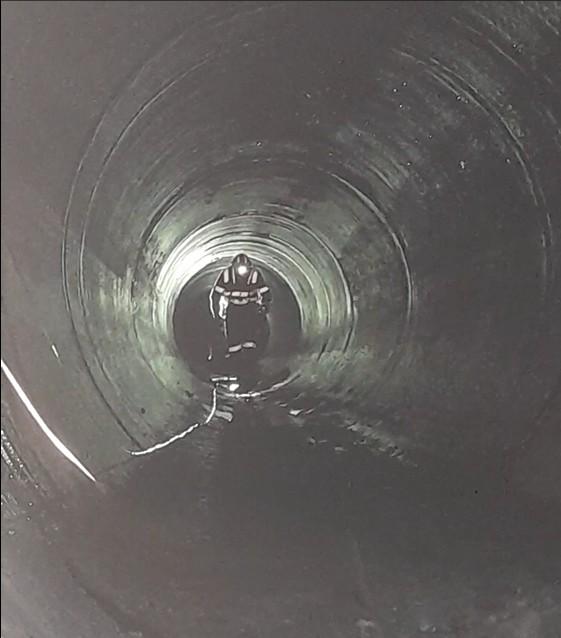
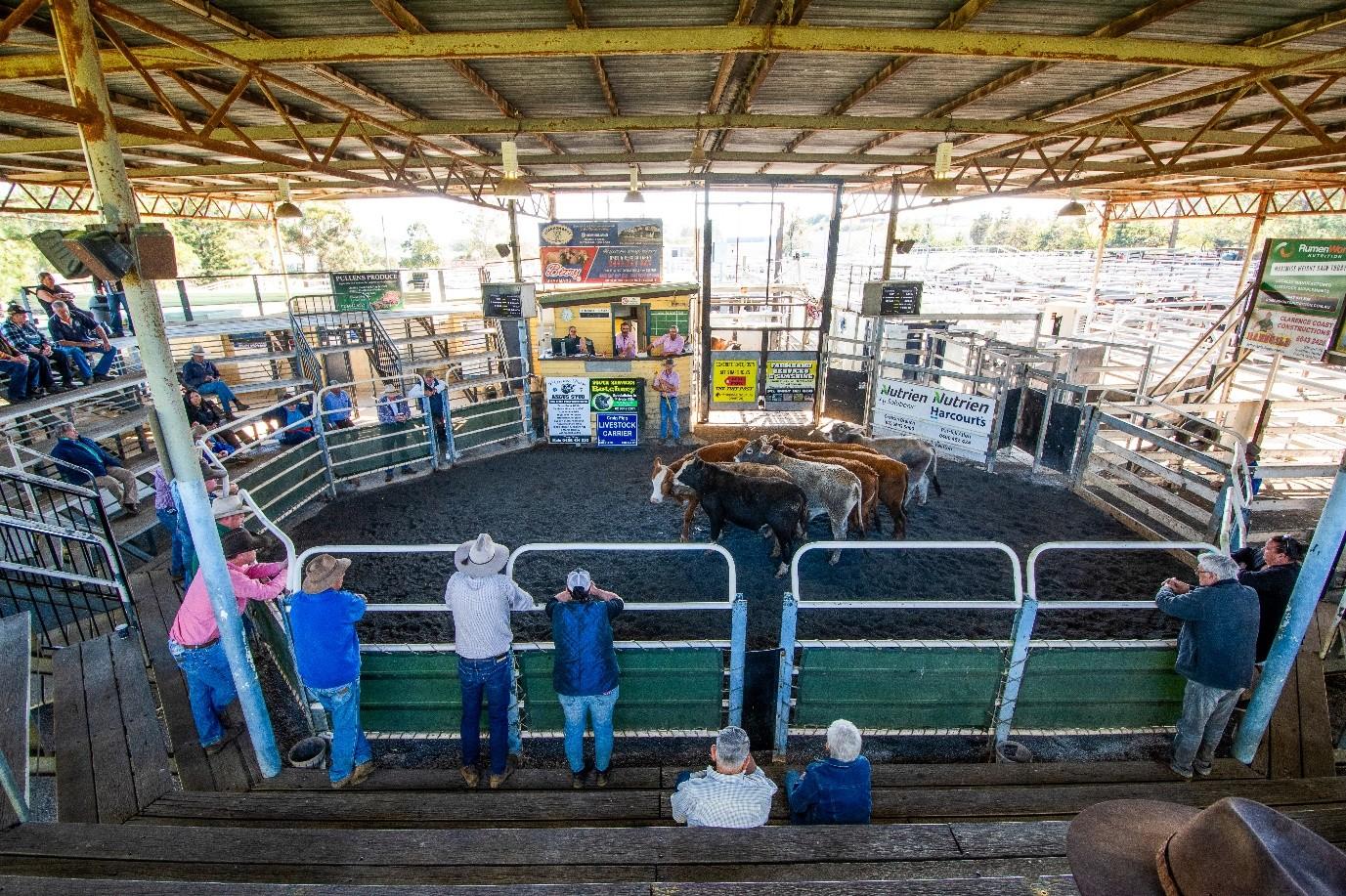
PICTURED: Respectful and meaningful engagement will help inform decision-making to deliver outcomes for the community. Reinstatement of Nymboida Tunnel 2 is a key project that will strengthen water supply security. Business operations will be reviewed, such as the Grafton saleyards, to ensure ongoing sustainability and quality of service delivery. Delivering outcomes as outlined by the community is at the heart of all that we do at Clarence Valley Council.

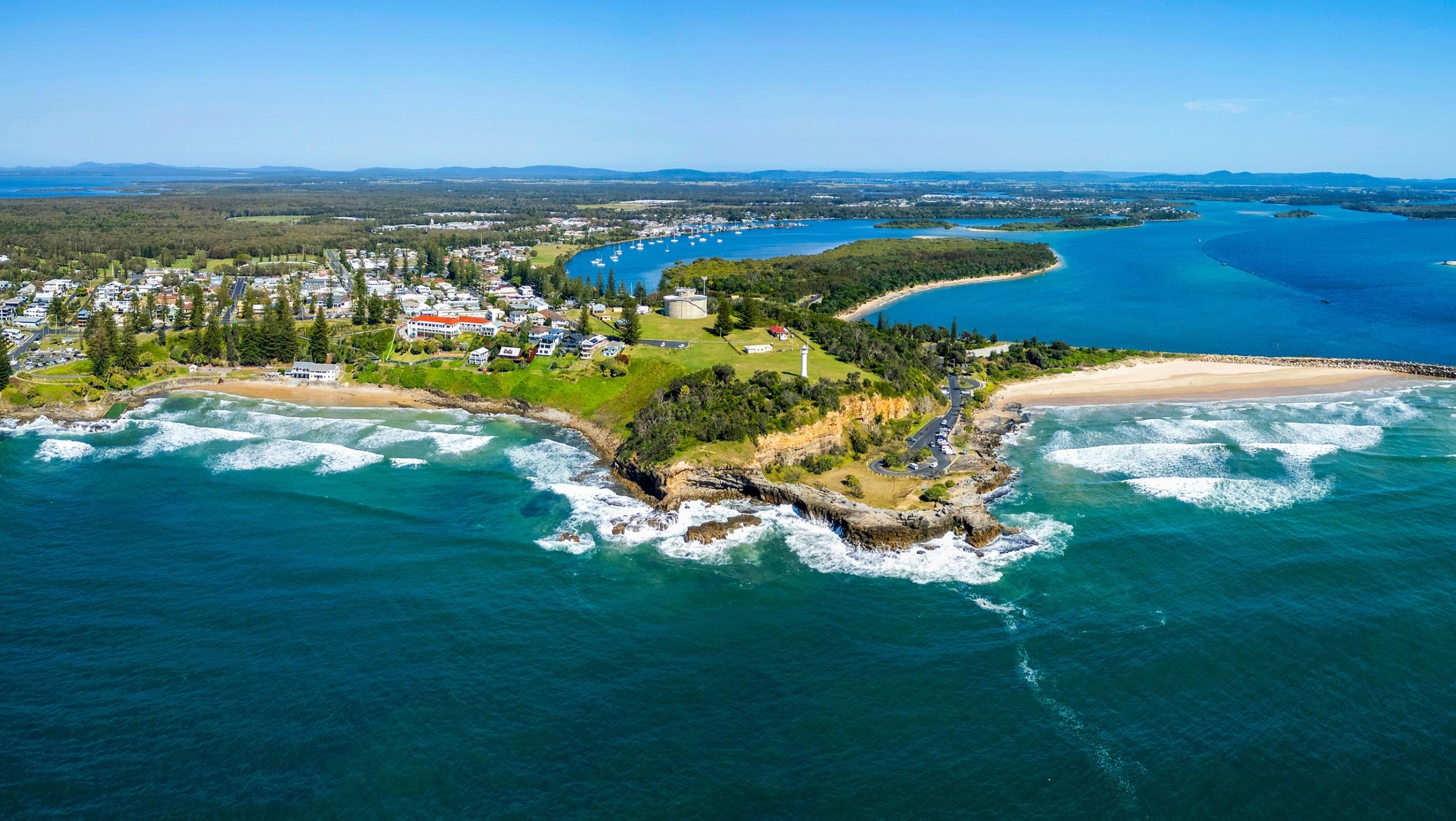
About the Clarence Valley
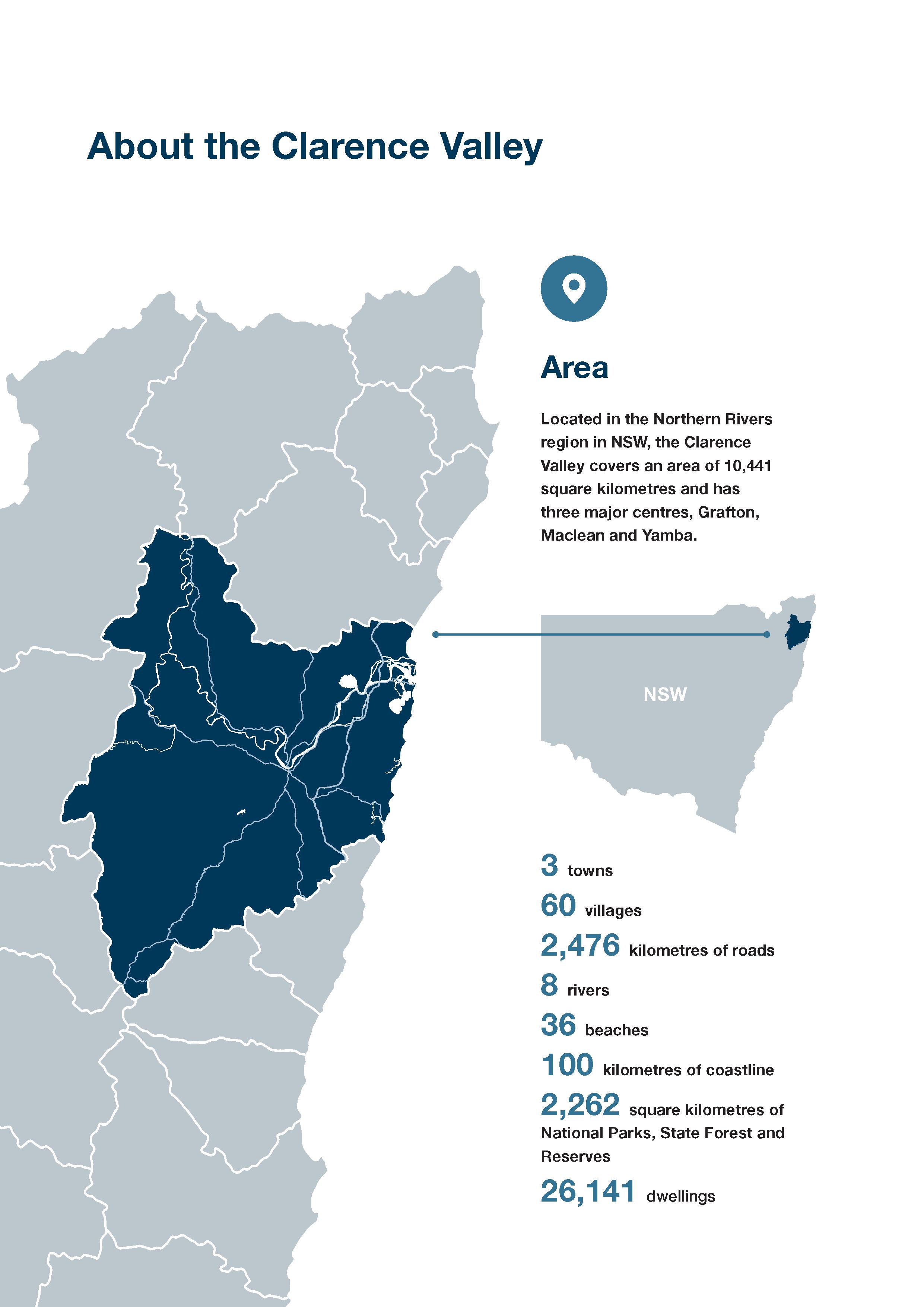
3 towns, 60 villages
2476 kilometres of roads
8 rivers, 36 beaches
100 kilometres of coastline
2262 square kilometres of National Parks & State Forest
People
56,732 population (2026)
66,252 projected population (2046)
49 median age
80.7% residents aged 18+
27,107 dwellings
2.3 people per average household
Economy
$2.80 billion gross regional product (NIEIR 2024)
23,048 employed residents
4329 local businesses
Largest industry (by employment):
Health Care and Social Assistance (4227 jobs)
Construction (2773 jobs)
Retail Trade (2155 jobs)
Source: NIEIR, ABS, Informed Decisions (economyid)
Clarence Valley Council
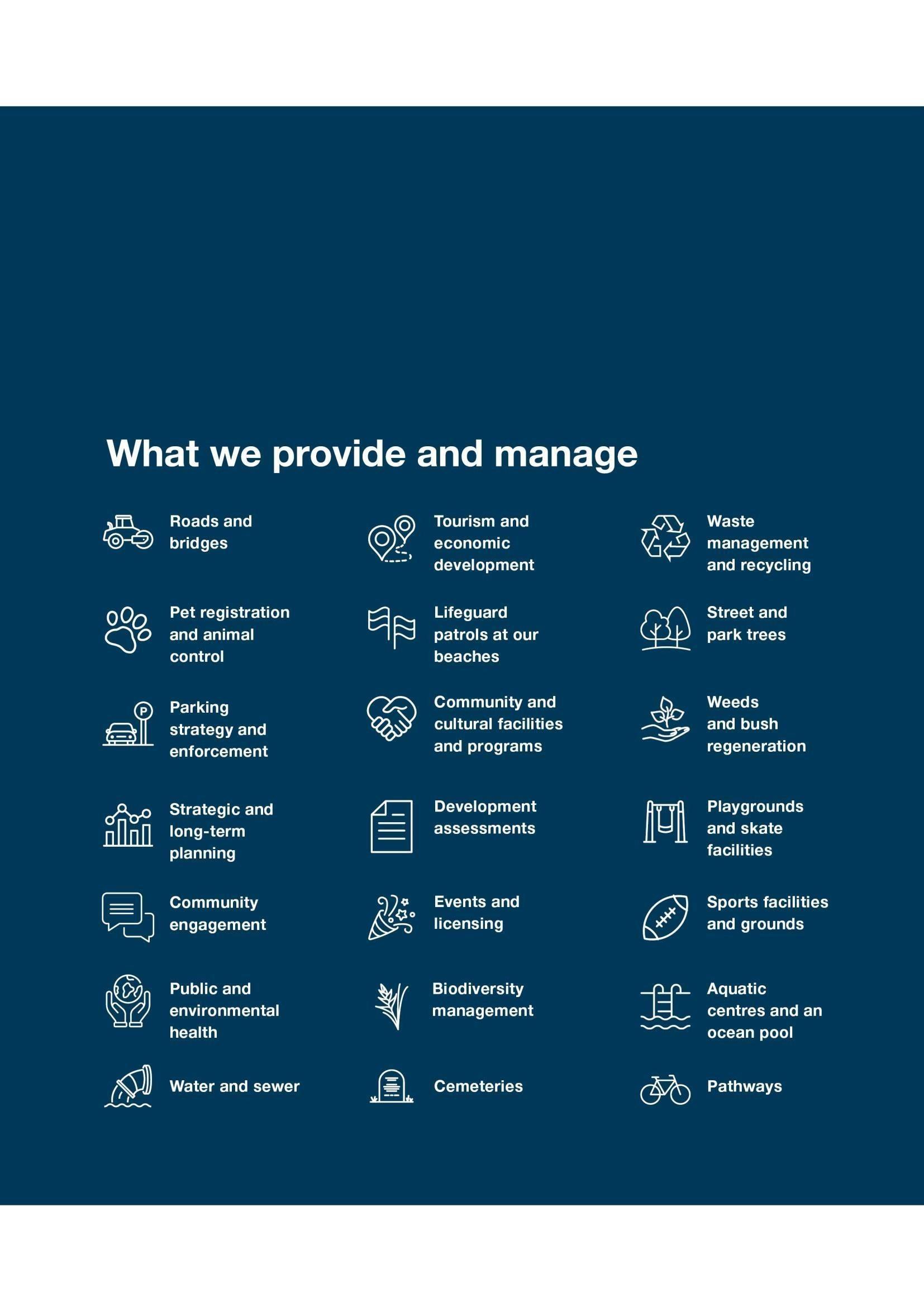
Council employs more than 500 staff and is responsible for providing services and facilities to more than 54,600 people
Vision

The Clarence Valley is a community full of opportunity Our communities are connected; service needs are met; local economies are balanced and thriving; we live in harmony with our environment and; we continue to strive collectively for a better future

Values
STRIVE
Safety
We have a safety focused workplace culture to ensure the wellbeing of our staff and the community
Teamwork

We work together as one council towards shared goals and for the greater good of the community
Respect
Integrity
We behave in a way that is honest, open, and transparent We will take responsibility for our actions and strive for excellence
Value
We deliver services efficiently, effectively, and in an environmentally and financially sustainable manner
Engagement


We are inclusive, treat people with courtesy and fairness, and ensure each individual is valued and heard
We engage with our staff and community to inform our decision making, and create awareness of our activities
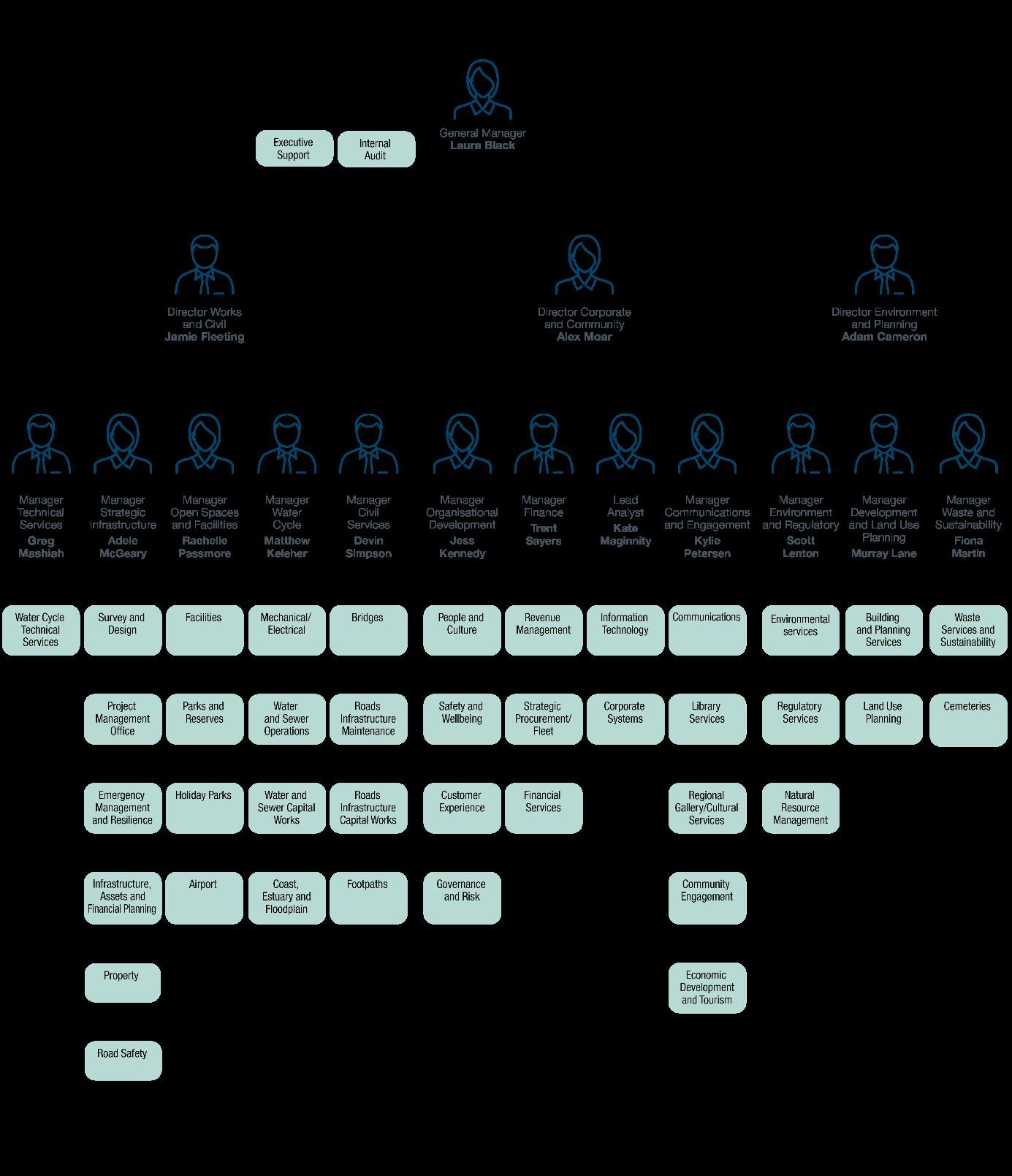
Organisational Structure
Services
Office of General Manager
The Office of the General Manager provides organisational leadership and support to the elected members to deliver services.
Corporate and Community Directorate
The Director Corporate and Community oversees organisational governance and compliance activities, delivered through:
Service
Finance Control and Compliance
Financial Analysis and Business Support
Information
Corporate and Customer
People and Culture
Safety and Risk
Community Engagement
Communications
Economic Development and Tourism
Library Services
Cultural Services – Regional Gallery
Works and Civil Directorate
The Director Works and Civil oversees a coordinated approach to Council’s works and civil services and strategic infrastructure operations, delivered through:
Environment and Planning Directorate
The
and
Integrated Planning and Reporting
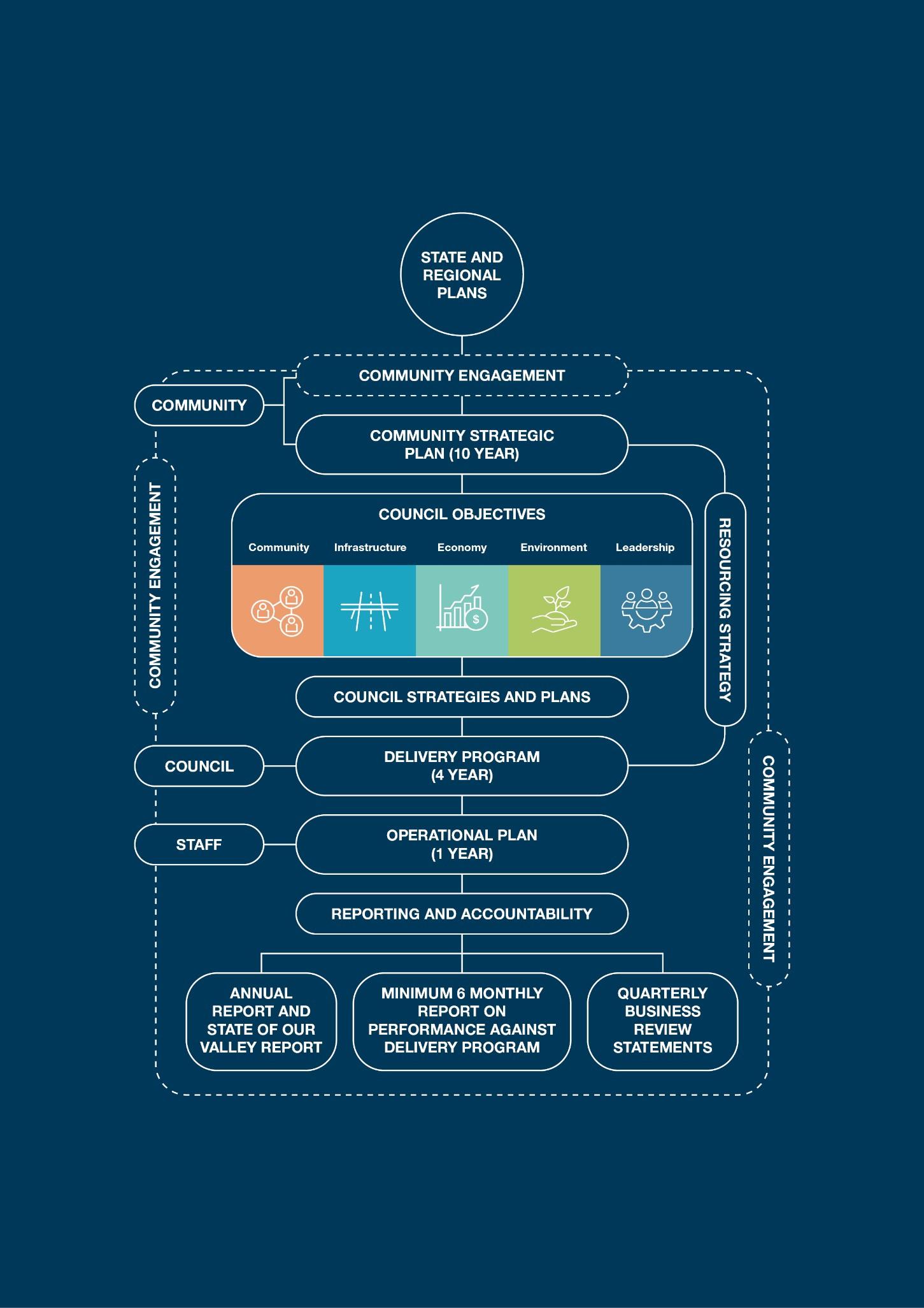
Under the Local Government Act, the Integrated Planning and Reporting (IP&R) Framework guides the way councils in NSW develop, document, report and deliver long term plans for their community.
COMMUNITY STRATEGIC PLAN (10-YEAR)
The Community Strategic Plan is the overarching document. It identifies the community’s vision, aspirations and priorities for all Council plans and policies.
COMMUNITY ENGAGEMENT STRATEGY
The Community Engagement Strategy is based on social justice principles and details how we engage with our community to prepare the Community Strategic Plan. Council’s Community Engagement Strategy includes the
DELIVERY PROGRAM (FOURYEAR)
The Delivery Program establishes the direction for each new Council. It is a statement of commitment to the community by outlining the focus the Council intends to contribute towards achieving the long-term aspirational goals of the community as identified in the Community Strategic Plan.
RESOURCING STRATEGY
Without sufficient resources - money, people and assets, the objectives of the Operational Plan cannot be achieved. The Resourcing Strategy consists of three components: Long-Term Financial Plan, Workforce Management Strategy and Asset Management Strategy.
OPERATIONAL PLAN (ONEYEAR)
The Operational Plan defines how the commitments of the Delivery Program will be achieved by detailing measurable actions: what the Council will deliver where; how delivery will be resourced; what delivery will cost; who is accountable for each action; and, how performance is measured.
CAPITAL WORKS PROGRAM
Capital works are projects that build, renew or upgrade infrastructure. They include such things as road improvements, resurfacing, intersection upgrades, shared pathways, drainage improvements and new facilities such as community centres, playgrounds and libraries. The CWP can be found in the Operational Plan.
REVENUE POLICY
The Revenue Policy ensures fair and equitable levying of rates and charges to provide sufficient funding to carry out services for the benefit of all ratepayers of the Clarence Valley Local Government Area. The Revenue Policy can be found in the Operational Plan.
BUDGET
Council generates income to fund services and assets for the LGA through rates on property, developer contributions, interest on investments, government grants, user charges and business activities. The budget can be found in the Operational Plan.
The Five Strategic Themes
The Operational Plan actions are organised within five Strategic Themes of the Community Strategic Plan (CSP), linked to an objective from the CSP and strategies from the Delivery Program

Community
Access and equality
Cultural activities
Recreation and active living
Built environment
Community facilities
Heritage
Public health and safety
Affordable housing

Environment
Water management
Biodiversity
Waste management
Climate change
Alternative energy
Air quality
Environmental impact of development

Economy
Regional opportunities
Economic sustainability
Small business strategies
Tourism
Vocational pathways
Supply chain issues

Leadership
Policy frameworks
Decision-making
Representation
Service levels
Employer
Business efficiency
Ethics
Consultation

Infrastructure
Infrastructure that supports active living
Transport
Essential infrastructure
Floodplains and drainage
Infrastructure that supports community connection
How to read this Plan
The planning framework is organised under the five Community Strategic Plan (CSP) themes and related Delivery Program Strategies
Objectives
are the community’s long-term priorities and aspirations for the valley
Strategies
are the activities and plans Council has committed to delivering within the 2025 –2029 Council term Each strategy relates to a CSP long-term objective
Actions (along with the Capital Works Program)
are the projects and initiatives Council aims to achieve in 2025/2026
Primary Responsibility
is the Council relevant officers position that will oversee and report on the relevant action

Strategic Theme 1: Community
A community that is safe, connected and inclusive
Community
A proud and inviting community with opportunities to connect, belong and feel safe
The rich cultures of the Gumbaynggirr, Bundjalung and Yaegl people are celebrated
Art and culture are celebrated, and historical assets preserved
Young people are supported in a community that enables growth, development and participation in decision making
A mix of housing options in locations with access to services, health, education and employment
Community
In the coming year Council will continue to demonstrate its commitment to collaborate respectfully and engage in a meaningful way to deliver outcomes for the community.
One example is the exciting partnership with community stakeholders to deliver the Townsend Collective project in the coming year, which will empower local organisations to create opportunities for locals to connect, create and belong. The Collective explores the potential to expand the footprint of the existing Men’s Shed and deliver a new Yaegl Men’s Community Space, Mudyala Community Facilities, Computer Club, and a variety of Complementary community-use and recreational facilities.
The Maclean Community Precinct will be delivered in River Street and will provide an inclusive space for the community to come together, celebrate our local identity, and share in new cultural experiences. The centre, overlooking the Clarence River, will create opportunities for performing arts in the Clarence Valley and broader Northern Rivers region, providing a regionally significant cultural and community space for connection, industry development, events, tourism, jobs and economic activity.
The Sir Earl Page Library and Education Centre in Grafton will be brought back to its full capacity this year, upon completion of repairs to the roof and interior. The library roof and internal spaces were extensively damaged during a storm in 2025, but will this year be back online to provide the full scope of opportunities for people to connect, learn and grow.
PICTURED: The U3A Men’s Shed is among the groups Council is collaborating with to deliver the Townsend Collective project (opposite). Library services and programs in Grafton will be back to full capacity with completion of repairs to the roof and internal spaces (below).


Objective CO1
A proud and inviting community with opportunities to connect, belong and feel safe
Strategy CO1.1 Promote access to services, information, employment and the rights of people with disability
Deliver and report on actions as outlined in the Disability Inclusion Action Plan
Partner with community to support events and activities, including International Day of People with Disability
Include positive stories and images of people with disability in communications
Increase awareness of Council's facilities, services and programs that support access and inclusion
Strategy CO1.2 A community with equal access to services, events and opportunities
Host Citizenship Ceremonies, Citizen of the Year Awards and provide support for ANZAC Day commemorative events
Review community plans and strategies, combining them into a single community strategy or framework
Administer community donations under the Donations and Sports and Cultural Trust Fund Policies
Build the capacity of community organisations to access external funding opportunities
Strategy CO1.3 Prepare precinct plans or character statements for prioritised towns and villages to increase community connection, guide sustainable growth and enhance their identity
Engage with local towns and villages to understand their community aspirations and ideas to guide economic opportunities and support future planning
Strategy CO1.4 Maintain a library network to support growth, learning and a sense of community
Deliver the Clarence Regional Library, including administration of the advisory committee
Deliver recommendations of the library service review
Implement the Clarence Regional Library Strategic Action Plan
Deliver services across the Grafton, Yamba, Maclean, Iluka and mobile libraries, as well as home library services
Librarian X
Strategy CO1.5 Enhance public safety, health and liveability through partnerships and the use of Council’s regulatory controls and services.
Participate in relevant interagencies to support a coordinated approach to issues impacting our community
Partner with community to support events and activities, including 16 Days of Activism
Mitigate fuel loads in asset protection zones around Clarence Valley urban communities with grant funding
Provide compliance services for public spaces, companion animals and private development to enhance public safety and public health and reduce environmental impacts.
Coordinator Natural Resource Management and Projects
Objective CO2
The rich cultures of the Gumbaynggirr, Bundjalung and Yaegl people are celebrated
Strategy CO2.1 Develop strong and productive relationships that empower and engage our First Nations communities
Facilitate meetings between First Nations groups, council and nominated Councillors to build relationships, trust and collaboration
Strategy CO2.2 Develop knowledge and awareness of First Nations Cultural Heritage and protocols, recognising First Nations peoples value
Acknowledgement of Yaegl Country, Gumbaynggirr Country and Bundjalung Country in communications, meetings and signage
Deliver and report on actions as outlined in the Innovate Reconciliation Action Plan 20242026. Review the Plan for continuation of reconciliation actions beyond 2026
Strategy CO2.3 Celebrate events and significant dates of importance in the First Nations community
Celebrate National Reconciliation Week and NAIDOC Week, including flag raising ceremonies in Grafton and Maclean
Recognise significant First Nations dates and events via Council's internal and external communications channels
Strategy CO2.4 Provide space for active community participation and strong relationships with local Traditional Owner
Promote reconciliation through visible commitment, embracing stories in corporate documents and Council attendance at events and activities
Objective CO3
Engagement
Art and culture are celebrated, and historical assets preserved
Strategy CO3.1 Support and enable arts & cultural events, projects and activities within the Clarence Valley
Deliver the Illuminate event as part of Jacaranda Festival
Build creative capacity through the delivery of the annual Plunge Festival
and
Gallery
Establish operations for the Maclean Community Precinct Manger Communications & Engagement
Strategy CO3.2 Support Heritage Story Telling
Support First Nations artists and programs that facilitate cultural awareness and understanding
Partner with First Nations groups to update the Lower Clarence Aboriginal Tourist Site Drive
and
Strategy CO3.3 Support the Regional Gallery, public art and events that build our cultural identity and grow our creative industries
Deliver an annual artistic program at the Grafton Regional Gallery including exhibitions, workshops, public programs and residencies
Support community access to collections through management, digital engagement and exhibitions
Deliver the contemporary drawing exhibition and tour (JADA)
Implement priorities from the Cultural Strategy
Strategy CO3.4 Preserve historic buildings to serve current and future needs of the community
the annual Heritage Assistance Grant Program
Strategy CO3.5 Cultural assets and public art is valued and plays a role in celebrating local arts as well as bringing innovative opportunities to the Valley
Support the Museum Advisor Program and Museum Skills Development Workshops
Support local artists to participate in public art projects and review maintenance of existing public art assets to inform the creation of a maintenance program
Review the Public Art Policy to allow for increased public art activation.
Objective CO4
Young people are supported in a community that enables growth, development and participation in decision making
Strategy CO4.1 Increase engagement and include young people in decisions that impact them and their future
‘n’
Strategy CO4.3 Develop partnerships with educational facilities across all ages of learning
Partner to deliver the One Stop Shop program at local schools
Continue education programs in public schools to promote biodiversity management
Deliver education programs to support arts and cultural development
Engagement
Natural Resource Management and Projects
Gallery
Strategy CO4.4 Support and encourage programs that offer mentoring, leadership and pathways to education and employment
Administer the Sports and Cultural trust Fund to support youth to participate at the national and international level
Objective CO5
A mix of housing options in locations with access to services, health, education and employment
Strategy CO5.1 Ensure planning for new housing is diverse, affordable and in well-located areas, to meet the diverse needs of a growing community, while protecting our stunning natural environment and local character
Revise and renew Development Control Plans to implement key actions from current strategies (Local Housing, Green Infrastructure, Employment Land, Rural Land, Active Transport, Urban Tree Management and Community Energy and Emissions Reduction)
Coordinator Strategic Planning
Strategy CO5.2 Ensure planning controls for new development reduces the impact of natural disasters
Update the Northern Rivers Development and Design Guidelines in collaboration with Northern Rivers Councils, including implementing key actions from current strategies (Local Housing, Green Infrastructure and Active Transport)
Revise and renew Development Control Plans to implement key actions from current strategies (Local Housing, Green Infrastructure, Employment Land, Rural Land, Active Transport, Community Energy and Emissions Reduction, and Climate Adaptation Strategies)
Coordinator Development Services
Coordinator Strategic Planning X
Strategy CO5.3 Work with the private sector, government, and the community to ensure our residents have access to safe, secure, diverse and affordable housing that meets their needs at every stage of life
Advance actions to deliver council-endorsed housing/ development outcomes on prioritised council-owned land
Development and Land Use Planning
Strategy CO5.4 Influence housing affordability either directly or indirectly through land use zoning, development controls, the timing of land release, location of services and facilities and the levying of rates, development contributions and application fees
Review existing Council fees, charges and local developer contributions to facilitate affordable housing, as well as equitable application to manufactured home estates.
Prepare a Planning Proposal for key changes to the Local Environmental Plan in accordance with the Local Housing Strategy
Implement the findings of a Development Assessment Audit
Coordinator Strategic Planning
Coordinator Strategic Planning
Coordinator Development Services
Strategy CO5.5 Ensure that the quality and quantity of parks provides equitable access which can be sustainably maintained into the future
Revise and renew Development Control Plans to implement key actions from current strategies (Local Housing, Green Infrastructure, Employment Land, Rural Land, Active Transport, Open Spaces, Urban Tree Management and Community Energy and Emissions Reduction)
Update the Northern Rivers Development and Design Guidelines in collaboration with Northern Rivers councils, including implementing key actions from current strategies (Local Housing, Green Infrastructure and Active Transport)
Coordinator Strategic Planning X
Coordinator Development Services X
Strategic Theme 2: Infrastructure
Infrastructure and facilities that are safe, accessible and serve the needs of the Clarence

Infrastructure Objectives
A safe, connected and accessible road network
Well serviced communities with access to essential infrastructure including water, sewerage, public amenities and facilities
Floodplain and drainage infrastructure are maintained in a way that improves amenity and liveability
Footpaths and cycleways that are interconnected, maintained and reach destinations
Impact of natural disasters and environmental conditions on infrastructure is minimised
Infrastructure
This year’s $183 million capital works program is an investment in the future and will strengthen community resilience. It features five substantial infrastructure projects:
$45M to build a water filtration plant in South Grafton, which will meet strict new drinking water standards and provide added protection to health.
$36.5M for construction of a modern sewage treatment plant in North Grafton, to improve the quality of wastewater that will protect environmental and human health and enable reuse on local sporting fields.
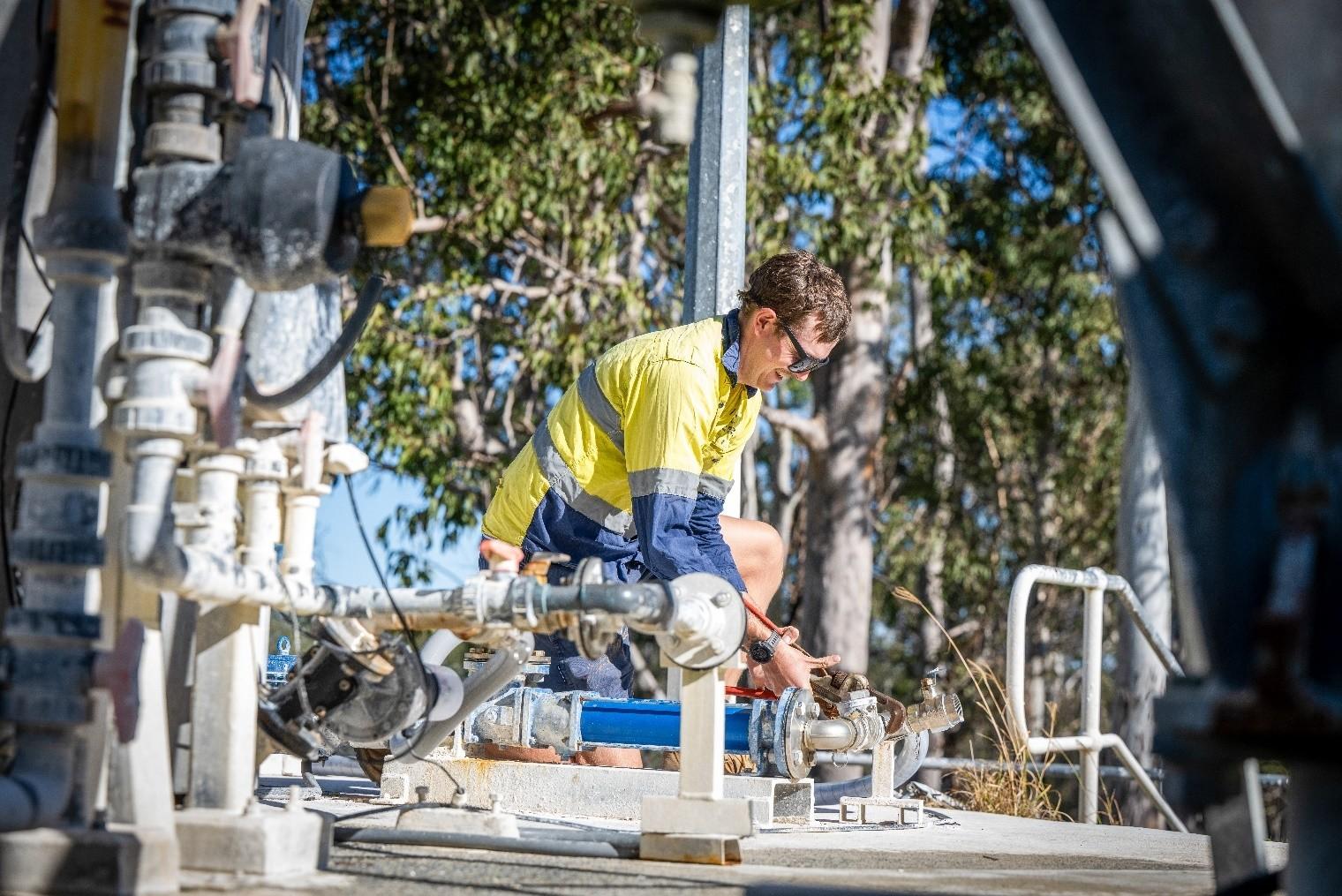
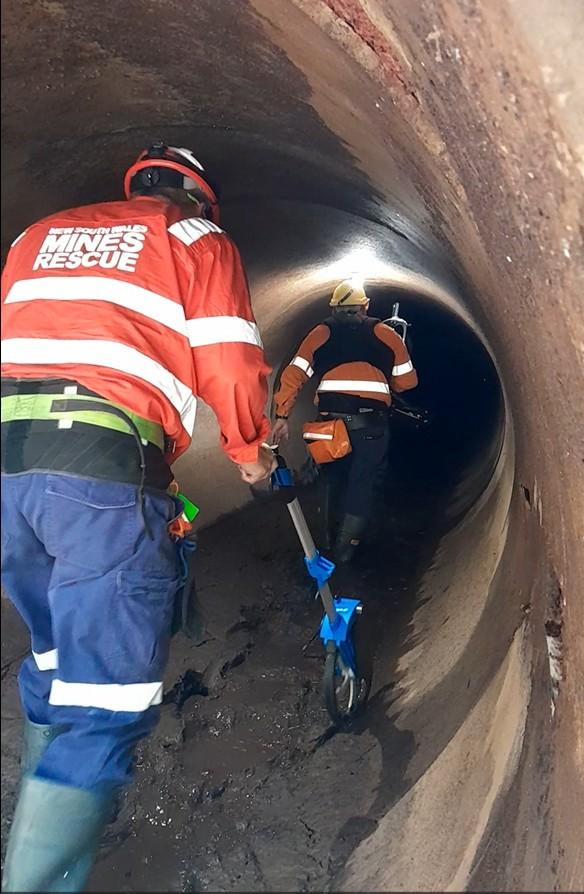
$22.25M to reinstate Nymboida Tunnel 2 and strengthen water supply security for the Clarence and Coffs Harbour regions. Capital works will build on investigations carried out in the previous financial year. The restored tunnel will be utilised to create an additional water supply pipeline from the Nymboida River to the treatment plant in South Grafton, as well as Shannon Creek Dam.
$20.9M to carry out restoration of key sections of the flood levee along the banks of the Clarence River in the Grafton area.
$9M to complete the Maclean Community Precinct and provide an inclusive space for the community to come together, celebrate our local identity, and share in new cultural experiences.
PICTURED: Nymboida Tunnel 2 is to be reinstated to strengthen water supply security (right). A water filtration plant is planned, pending approval, to meet strict modern drinking water guidelines (below).
Strategy IN1.1 Update road and bridge network maintenance to meet standards identified in the Asset Management Plan
Implement rolling asset condition rating process across all asset classes
Strategy IN1.2 Deliver road and bridge upgrades as per Capital Works Program
Deliver on projects outlined in the current year Capital Works Program
Investigate Councilowned lands to determine potential for biodiversity conservation under the NSW Biodiversity Offset Scheme and enhance capacity to prepare biodiversity and ecological assessments for Council land, infrastructure projects and review assessments associated with private development proposals.
Strategy IN1.3 Deliver the level of service and response to a range of road related issues as outlined in the Roads Policy
Deliver the service level requirements as outlined in the Road Policy
Strategy IN1.4 Plan network delivery by preparing shovel ready project proposals to secure funding
Plan and design road safety and traffic improvement projects identified through customer feedback, the Safe Systems Working Group, Local Transport Forum and State and Federal funded road safety programs Road Safety Officer X X
Strategy IN1.5 Support the Safe Work Systems and outcomes for road safety recommendations initiatives
Hold six Safe System Working Group meetings annually and collaborate with TfNSW and local police to identify and develop road safety initiatives
Develop an annual project under the Local Government Road Safety Program
Objective IN2
Safety Officer X X
Well serviced communities with access to essential infrastructure including water, sewerage, public amenities and facilities
Strategy IN2.1 Advocate for State government funding for gateway maintenance of State lands
Seek opportunities through discussions with TfNSW to increase maintenance of State roundabouts and other transport infrastructure
Works & Civil
Strategy IN2.2 Undertake an asset renewal program to ensure the effectively
IN2.3
Undertake water quality sampling in reticulation network to ensure compliance with public health requirements
Implement water catchment programs to improve the water quality in the source water
Strategy IN2.4 Plan for the delivery of infrastructure to support growth
Update the rolling 4-year long term future Capital Works Program
Develop the Yamba Movement and Place Plan, including consideration of feasibility of a future Yamba Bypass
Project manage the construction of the Maclean Community Precinct
Seek funding through grant programs to deliver the Glenreagh Precinct Plan
Seek funding through grant programs to develop the detailed design of the Grafton Precinct Plan
Develop the detailed design and planning for the Townsend Collective
Road Safety Officer X
Manager Strategic Infrastructure
Coordinator Project Management
Coordinator Project Management
Coordinator Project Management
Deliver identified projects in the capital works program Coordinator Open Spaces Strategy
Replace playground equipment to meet strategic objectives Coordinator Open
Develop a masterplan for the Ngayundi Yamba Sports Complex
Operations
Coordinator Open Spaces Strategy X
Implement the infrastructure upgrades and improvements in the See Park masterplan Coordinator Open Spaces Strategy
Implement the infrastructure upgrades and improvements identified in the Grafton Saleyards Future Management options report
Update Integrated Water Cycle Management Plan and Development Servicing Plans Manager Water Cycle
Prepare concept design for upgraded/new South Grafton Animal Shelter consistent with adopted Animal Shelter Strategy
Implement minor works projects and enhanced grounds maintenance at the Maclean and Clarence Lawn Cemeteries to provide increased amenity (particularly seating) and deliver Manager Waste & Sustainability
aesthetic improvements
Progress expansion of the Clarence and Maclean Lawn Cemeteries in accordance with the concept expansion design reports.
Contract out water meter reading
Undertake compliance audits and enforce regulatory requirements for permanent residents in holiday parks.
Undertake topographic survey of the holiday parks to inform future planning
Identify, assess, and acquire permanent sites within holiday parks as and when they become available
Progress the development of a masterplan for the Minnie Water, Wooli and Iluka holiday parks.
Manager Waste & Sustainability X
Manager Water Cycle X
Coordinator Holiday Parks X X
Coordinator Holiday Parks X
Coordinator Holiday Parks X X
Coordinator Holiday Parks X
Strategy IN2.5 Investigate water filtration opportunities
Post acceptance of a concept design in (2024/2025) prepare and issue a request for tender for design and construction in three positions with construction to commence in August 2026
Manager Technical Services
Floodplain and drainage infrastructure are maintained in a way that improves amenity and liveability
Strategy IN3.1 Work collaboratively with property owners and stakeholders to improve outcomes for floodplain drainage crossing
Deliver a cost-efficient infrastructure upgrade program in partnership with stakeholders
Negotiate asset transfer with relevant stakeholders
Strategy IN3.2 Plan and deliver an annual urban stormwater management maintenance program
Review overland flood studies and develop a stormwater upgrade program
Strategy IN3.3 Plan for green infrastructure assets that protect the Clarence River, our wetlands and our beaches and ensure new green infrastructure assets for the Clarence Valley are sustainable over the lifecycle of the asset
Update the Northern Rivers Development and Design Guidelines in collaboration with Northern Rivers Councils, including implementing key actions from current strategies (Local Housing, Green Infrastructure and Active Transport)
Revise and renew Development Control Plans to implement key actions from current strategies (Local Housing, Green Infrastructure, Employment Land, Rural Land, Active Transport, Urban Tree Management, Climate Change Adaptation and Community Energy and Emissions Reduction, Active Transport)
Objective IN4
Footpaths and cycleways that are interconnected, maintained and reach destinations
Strategy IN4.1 Seek funding and deliver priority outcomes identified in the Active Transport Strategy
Prepare shovel-ready projects and apply for funding through state and federal grant programs to deliver projects aligned with the Active Transport Strategy
Develop detailed design and seek funding for delivery of traffic calming and a pedestrian crossing on Skinner Street, South Grafton
Strategy IN4.2 Integrated planning for positive active transport outcomes in new development
Integrate Active Transport Strategy objectives in new project planning
Strategy IN4.3 Increase the active transport network to encourage bike riding and walking, improved mobility and accessibility
Plan and deliver projects in accordance with the Active Transport Strategy
Objective IN5
Impact of natural disasters on infrastructure is minimised
Strategy IN5.1 Consider flood immunity in future planning for assets
Prepare a consolidated Lower Clarence Floodplain Risk Management Study
Coordinator X
Strategy IN5.2 Seek funding to upgrade floodplain assets
Lobby State Government for
Apply for grant applications
Strategy IN5.3 Work with NSW State Government funding for their Disaster Mitigation Plan
Consolidate & coordinate Council resources & information to inform the development of the first Northern Rivers Disaster Adaptation Plan Coordinator Emergency Management & Resilience
Strategy IN5.4 Emergency management planning centre at Grafton airport
All actions for this strategy have been completed in a prior year of the current Delivery Program.
Strategy IN5.5 Ensure quality of water supply
Update Integrated Water Cycle Management Plan and update Development Servicing Plans
Update the Drought Management Strategy
Manager Water Cycle X
Manager Water Cycle X

Strategic Theme 3: Economy
A diverse economy that complements the environmental and social values of the Clarence
Economy Objectives
Business led innovation is supported and encouraged
An attractive environment for industry and local businesses to flourish
Dispersed and sustainable tourism
Telecommunications that adequately service the community
Employment and education are diverse and accessible

Economy
Council will further strengthen long-term financial sustainability in the next 12 months through reviewing business activities and investing in robust long-term business goals to drive forward operations including the saleyards, holiday parks and the regional airport.
Benchmarking reviews will be carried out to look at best-practice models to strengthen business operations and improve service delivery across the Clarence Valley.
Ensuring long-term operational and financial sustainability for Council’s businesses enables them to stand alone from a funding perspective and reduce dependence upon rates.
Recommendations will be implemented from the Saleyards Future Options Report to strengthen the economic viability of the facility, which is an essential driver of economic and social wellbeing among primary producers and the wider community.
A total of $600,000 has been allocated over the next two years to survey holiday parks at Minnie Water, Wooli and Iluka to identify, assess and acquire permanent sites to support their ongoing sustainability into the future.
Strategies will also be developed and implemented to support sustainable agriculture, agribusiness and farming practices.
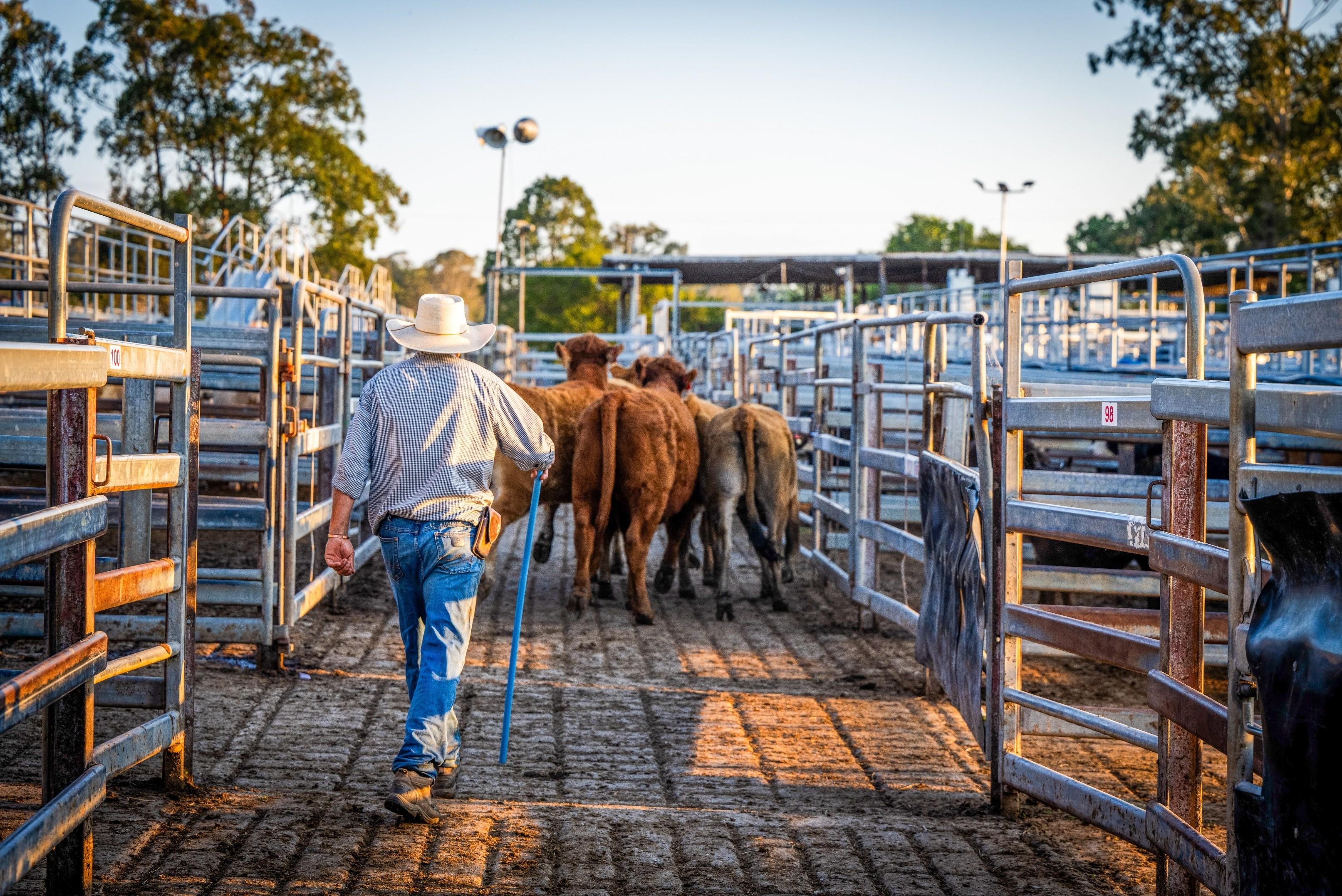
PICTURED: Long-term financial sustainability of Council operations such as the saleyards (opposite and holiday parks will be strengthened in the coming year.
Business led innovation is supported and encouraged
Strategy EC1.1 Strategic planning activities focused on delivery of the Local Growth Management Strategies
Revise and renew Development Control Plans to implement key actions from current strategies (Local Housing, Green Infrastructure, Employment Land, Rural Land, Active Transport, Open Spaces, Climate Change Adaptation and Community Energy and Emissions Reduction)
Commence review of the Local Strategic Planning Statement
Coordinator Strategic Planning X
Coordinator Strategic Planning X
Strategy EC1.2 Monitor development to ensure compliance with planning and building regulations and policies
Provide building assessment and certification services in accordance with NSW Fair Trading, National Construction Code and Australian Standard requirements
Provide compliance services and enforcement of legislation and policies in relation to activities on private and public land
Promote compliance with FOGO management for food premises in accordance with legislative requirements
Strategy EC1.3 Assess development through a transparent and efficient process
Investigate use of Ai to deliver more efficient planning assessment services
Deliver engagement activities with the Development Industry Engagement Group
Ensure Development Applications are assessed and determined in accordance with the EP&A Act and Ministerial directions and expectations
Development Planner (Systems) X
Land Use Planning
Strategy EC1.4 Ensure design and management of the built and landscaped environment limits opportunities for crime to occur
Revise and renew Development Control Plans to implement key actions from current strategies (Local Housing, Green Infrastructure, Employment Land, Rural Land, Active Transport, Open Spaces, Urban Tree Management, and Community Energy and Emissions Reduction)
Coordinator Strategic Planning X
Strategy EC1.5 Ensure development and public spaces meet the Disability Discrimination Act provisions for accessibility
Monitor use of Council managed lands to ensure appropriate activity in public places
Provide building assessment and certification services in accordance with NSW Fair Trading, National Construction Code and Australian Standard requirements
Team Leader Public Spaces Compliance X X
Coordinator Building Services X X
Strategy EC1.6 Ensure our existing urban areas and planning for new development creates healthy street trees which are aligned to achieving great canopy cover for our streets
Revise and renew Development Control Plans to implement key actions from current strategies (Local Housing, Green Infrastructure, Employment Land, Rural Land, Active Transport, Open Space, Urban Tree Management, Climate Change Adaptation and Community Energy and Emissions Reduction)
Ensure Development Applications are assessed and determined in accordance with the EP&A Act and Ministerial directions and expectations
Coordinator Strategic Planning X
Coordinator Development Services X X
An attractive environment for industry and local businesses to flourish
Strategy EC2.1 Work with stakeholders to establish roundtable activities that bring representatives of town, village and community progress associations and business chambers together
Participate in local and regional economic development and tourism forums to advocate for our region
Work with Chambers of Commerce to support local business outcomes, encourage knowledge sharing and collaboration
Develop a calendar of events including programs and activities including swimming lessons, aqua fitness and recreation opportunities.
Strategy EC2.2 Implement Urban Tree Planting Strategy
and Tourism
Development and Tourism
Plan and deliver the annual tree planting program
Open Spaces Operations
Strategy EC2.3 Develop and implement strategies to support sustainable and regenerative agricultural, agri-business and farming practices
Support agriculture in the Clarence Valley through the operations, maintenance and administration of the Grafton Saleyards
Deliver annual Sustainable Agriculture Grant Program
(Climate)
Strategy EC2.4 Support and coordinate activities for small business and industry
Connect businesses with industry development, grants and funding, economic insights, training and workshops
Strategy EC2.5 Implement sustainable procurement practices that promotes positive local, social and economic outcomes
Support the retail food sector by providing education and annual inspections on all medium and high-risk retail food businesses within the LGA
Support contractors in the operations of the Clarence Coast Holiday Parks
Formalise Development Applications and license agreements for market operators
Strategy EC2.6 Plan for the future use of the Grafton Regional Airport
Complete the Airport Business Feasibility Plan
Objective EC3
Dispersed and sustainable tourism
Strategy EC3.1 Create opportunities for outcomes that activate the Clarence River
Participate in and progress actions from the Clarence Riverway Interagency
Promote visitor experiences including positioning of the Clarence as one of the nations great rivers
and
and
Strategy EC3.2 Prioritise the position of Council as an accredited Eco Certified Destination
Review the Destination Readiness Scorecard as part of the Eco Tourism Certification
and
Strategy EC3.3 Sustainably develop and manage the Clarence Valley Visitor Economy by delivering the Destination Management Plan
Encourage and support events through administration of the Special Events and Sports Tourism Policies and development of events toolkit
Promote unique visitor experiences that focus on increasing yield and spreading visitor stay across low/shoulder periods.
and
Strategy EC3.4 Support the sustainable growth of local industries that are respectful of the lifestyle that exists to benefit the whole of the LGA without burdening the coast further
Establish operations for the Maclean Community Precinct, contributing to the development of the cultural industry
Objective EC4
Telecommunications that adequately services the community
Strategy EC4.1 Advocate for equity for mobile and broadband services in regional, rural and remote communities and on regional and remote roads
Monitor for opportunities to advocate
Manager X X
Strategy EC4.2 Seek for funding to deliver the actions of the Disaster Resilience Framework to build resilience of telecommunications infrastructure
grant opportunities
Consolidate & coordinate Council resources & information to inform the development of the first Northern Rivers Disaster Adaptation Plan
Coordinator Emergency Management & Resilience
Establish & deliver an annual program of emergency management, community planning & preparedness Coordinator Emergency Management & Resilience
Maintain & update Local Emergency Management Committee plans in accordance with legislative requirements and lessons learnt during the exercising or activation of those plans to ensure they remain fit for purpose Coordinator
Identify options to replace the disaster dashboard on Council's webpage
Management & Resilience
Coordinator Emergency Management & Resilience
Employment and education are diverse and accessible
Strategy EC5.1 Deliver prioritised planning actions from the Rural Lands Strategy, Local Housing Strategy and Employment Lands Strategy
Revise and renew Development Control Plans to implement key actions from current strategies (Local Housing, Green Infrastructure, Employment Land, Rural Land, and Community and Energy Emissions Reduction, Active Transport) Coordinator
Update the Northern Rivers Development and Design Guidelines in collaboration with Northern Rivers Councils, including implementing key actions from current strategies (Local Housing, Green Infrastructure and Active Transport)
Prepare a Planning Proposal for key changes to the Local Environmental Plan in accordance with the Local Housing Strategy
Strategy EC5.2 Deliver prioritised actions from the Regional Economic Development Plan
Facilitate partnerships with local Aboriginal organisations to develop new tourism offerings – working in collaboration with LALCs, TOACs, Destination North Coast and Destination NSW
Work with relevant lead agencies and identify signature opportunities for the Clarence Valley as part of the Regional Economic and Environment Plan 2040
Strategy EC5.3 Advocate for educational facilities within the Valley and Northern NSW
Work with relevant lead agencies to support educational facilities within the Clarence Valley.
and
Strategy EC5.4 Build partnership with education facilities within the Valley
Work closely with local training organisations to support traineeship programs and job opportunities within Council
Provide and promote opportunities to incorporate education on biodiversity, public and environmental health, and companion animals in Clarence Valley schools


Strategic Theme 4: Environment
A natural environment that is protected from local and global pressures
Environment Objectives
Natural environments, ecosystems and native flora and fauna are enhanced and protected
Coastline, waterways and natural environments are healthy and contribute to wellbeing
Green space is maintained and used responsibly
Protection of the environment is encouraged through initiative and education
Reduce, reuse and recycle are priorities in the community
Environment
Council is committed to investing in our natural environment and has earmarked more than $500,000 for an expanded schedule of projects in 2026/2027.
Council’s bush regeneration activities will be boosted. Grant programs will empower private landholders to undertake environmental restoration, and enable universities and research organisations to conduct local environmental research. Work will be funded through the internal Sustainability Reserve, after the community expressed the view in 2025 that it did not support the introduction of an Environmental Special Variation.
Engagement with community-based volunteer organisations will be strengthened to further expand opportunities for collaboration and cooperation. Council will also undertake investigations into how its land with biodiversity value can generate income as biodiversity offset sites.
Environmental protection and sustainability will also be strengthened through implementation of a riskbased fee structure for management of onsite wastewater systems. This strategic framework significantly mitigates risks associated with failing or unauthorised systems, thereby safeguarding the natural environment and community wellbeing. These projects all seek to achieve value for money, support community environmental efforts and strengthen Council’s attention to looking after our most valuable asset – the natural environment.
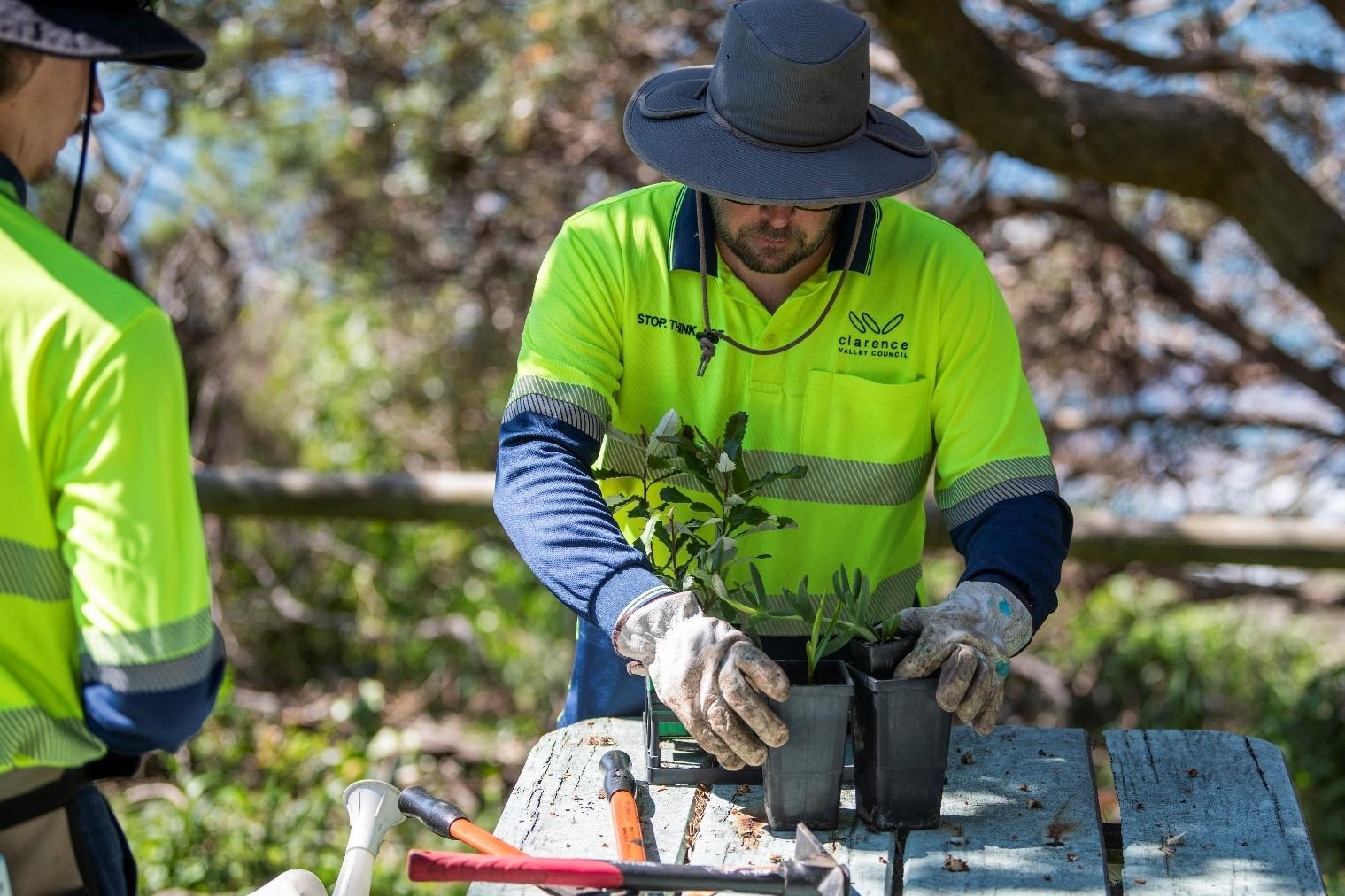
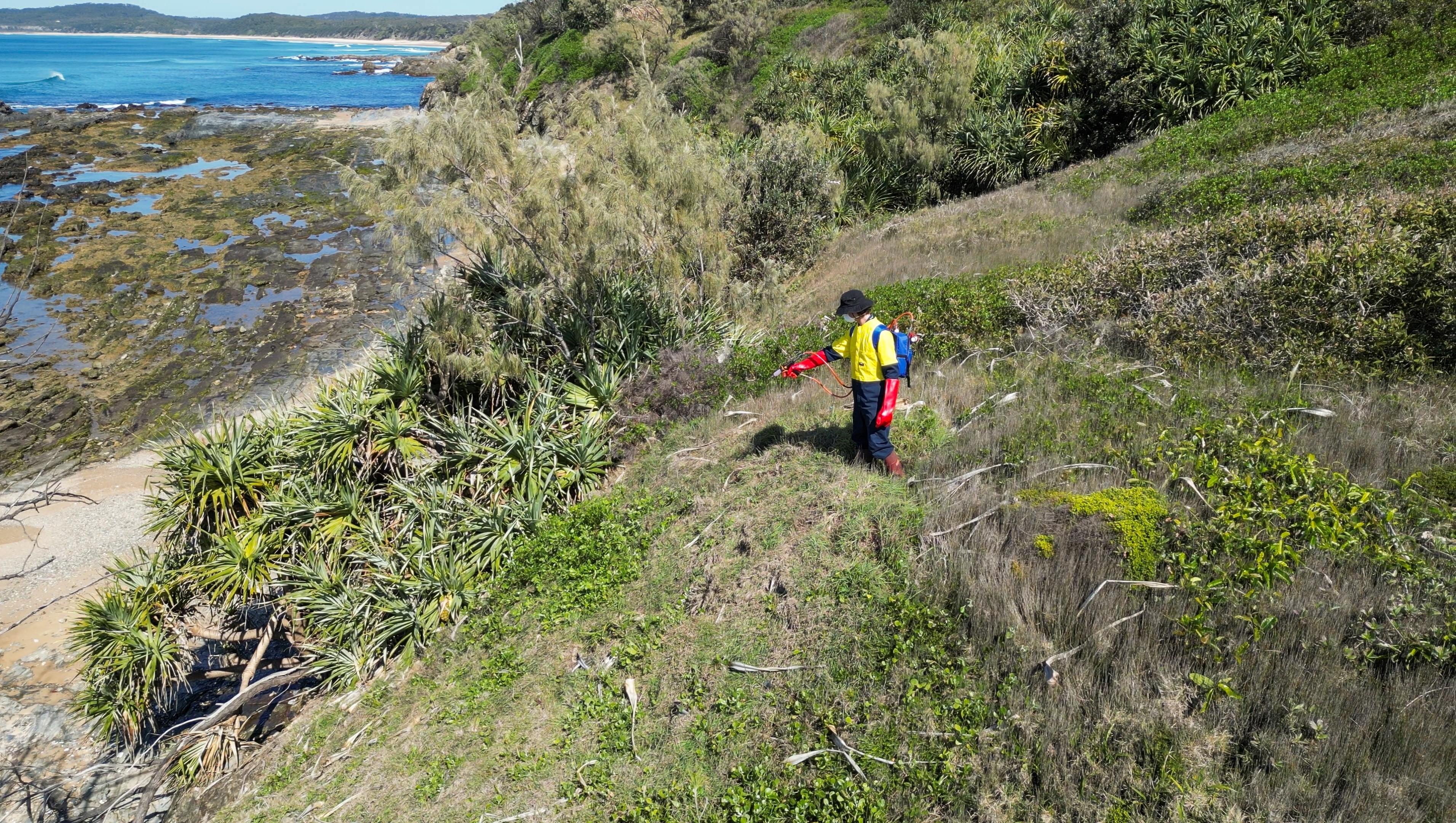
PICTURED: Bush regeneration activities will be expanded in the coming financial year as part of a program of work to protect and enhance our natural environment.
Objective EN1
Natural environments, ecosystems and native flora and fauna are enhanced and protected
Strategy EN1.1 Monitor amendments to the Companion Animals Act aimed at protecting the natural environment and consult the community accordingly
Provide feedback to any NSW Government proposals to amend the Companion Animals Act and related guidelines
Implement actions from the Animal Control and Animal Shelter Strategy
Strategy EN1.2 Improve ecological management of council owned reserve
Continued implementation of weed action plan 2026/2027, with emphasis on high priority species
Mitigate fuel loads in asset protection zones around Clarence Valley urban communities with grant funding
Continue to identify areas where revegetation and/or regeneration is required and practical with a focus on riparian areas across the LGA and seek funding consistent with Biodiversity, Riparian and Bush Regeneration Strategies
Monitor use of Council managed lands to ensure appropriate activity in public places
Identify and prioritise reserves and update vegetation management plans for council managed lands as required by Bush Regeneration Strategy
Continue the Susan Island Flying Fox Habitat Restoration Program
and Projects
and Projects
and Projects
Implement Council's Bush Regeneration Strategy
and Projects
Coordinator Natural
Management and Projects
Revise Council's Biodiversity Strategy
Revise Council's Riparian Action Strategy
Undertake coastal habitat restoration on 5 coastal reserves each year
Investigate Council-owned lands to determine potential and priority for biodiversity assessments to value-add and enable entry into Biodiversity Offset Scheme and generate income
Engage with community-based volunteers and environmental organisations to coordinate and optimise effort and promote alignment of environmental activities with Council's environmental plans and strategies
Enhance capacity for Council's bush regeneration activities to manage and restore biodiversity values on Councilmanaged land
Implement the Flying Fox Management Plan
Coordinator Natural Resource Management and Projects
Coordinator Natural Resource Management and Projects
Coordinator
Management and Projects
Coordinator Natural Resource Management and Projects
Coordinator
Management and Projects
Coordinator
Management and Projects
and Projects
Investigate Councilowned lands to determine potential for biodiversity conservation under the NSW Biodiversity Offset Scheme and enhance capacity to prepare biodiversity and ecological assessments for Council land, infrastructure projects and review assessments associated with private development proposals. Coordinator
and Projects
Continue management of invasive plant and animal species under approved plans
Develop and implement a management plan for monitoring cane toad populations at Grafton Regional Landfill, in collaboration with Natural Resource Management.
and update Council's Solid Waste Management Strategy
Provide an environmental research grant program to encourage more environmental research within the CVLGA
Collate data on all land occupied by underground petroleum storage systems, prepare supporting procedures, and manage compliance
and Projects
Sustainability
Objective EN2
Coastline, waterways and natural environments are healthy and contribute to wellbeing
Strategy EN2.1 Seek funding to deliver the Open Coast Coastal Management Programs to conserve and enhance the coastline
Review and apply for any related grant funding to begin implementation of Stage 5 of the Open Coast Coastal Management Program Floodplain Coordinator
Strategy EN2.2 Deliver the five-stage process for developing an estuary coastal management program
Implement Coastal Management Program actions related to updating planning instruments
Stage 2 projects have been progressed including tidal inundation assessment, review of planning controls, development of database webpage, development of First Nations cultural awareness projects
Complete Stage 2 Project - Clarence River Estuary CMP
Complete Stage 2 Project - Pilot Hill Slope Stability Project
Complete Stage 2 Project - Wooli Beach Scraping
Emergency Coastal Protection Works
Senior Coast & Estuary Officer X X
Senior Coast & Estuary Officer X X
Senior Coast & Estuary Officer
Senior Coast & Estuary Officer
Senior Coast & Estuary Officer
Senior Coast & Estuary Officer
Strategy EN2.3 Support and promote Council’s position against mining in the catchment when opportunities arise
Provide input to state and federal agencies to advocate for environmental protection of natural resources throughout the LGA
Strategy EN2.4 Promote sustainable development that integrates with the environment
Implement the On-site Wastewater Management Strategy, including monitoring program consistent with the Strategy
Prepare tender documentation for construction of Cell 5A at Grafton Regional Landfill
Ensure implementation of waste transfer station contracts to deliver KPIs
Prepare concept plan for construction and demolition waste recovery facility at Grafton Regional Landfill
Oversee the operations of the landfill to ensure safe operations and a high level of customer service
Collaborate with rural landowners to conserve biodiversity on private land
Provide an environmental restoration grants program to assist beneficial environmental activity on private land
Strategy EN2.5 Monitor beach water quality
Implement Beachwatch Water Quality Monitoring Program at twelve sites between November and February
Engage with the community-based Clarence River Guardians who undertake monitoring of the Clarence River system and tributaries
Waste & Sustainability
Waste & Sustainability Officer
Waste & Sustainability
Objective EN3
Green space is maintained and used responsibly
Strategy EN3.1 Reflect ‘best practice’ in tree management that is appropriate to for Clarence Valley Council
Comply with planning controls and compliance requirements as outlined in the Green Infrastructure Strategy and the Urban Tree Management Strategy
Strategy EN3.2 Plan for green, liveable and connected reserves, parks and places to ensure balanced outcomes for the community
Prepare Site Management Plans for prioritised Crown land reserves
Progress the Brooms Head Reserve Plan of Management
Progress the Holiday Parks Plan of Management
Planning X
Planning X
Strategy EN3.3 Plan for development that values and respects the high biodiversity of the Clarence Valley’s natural environment for current and future generations
Prepare new regulatory biodiversity and habitat planning controls
Investigate Councilowned lands to determine potential for biodiversity conservation under the NSW Biodiversity Offset Scheme and enhance capacity to prepare biodiversity and ecological assessments for Council land, infrastructure projects and review assessments associated with private development proposals. Coordinator Natural Resource Management and Projects X X
Strategy EN3.4 Create Tree Master Plans for towns
Create Tree Master plans for towns as per actions detailed in the Urban Tree Strategy
and
Protection of the environment is encouraged through initiative and education
Strategy EN4.1 Demonstrate leadership on climate change through education and action
Review business case for Solar Farm against new technologies and regulatory frameworks
Implement priority actions from Council's Climate Adaptation Strategy
Implement the CVC Community Energy and Emissions Reduction Strategy and promote increased electrification of appliances in domestic households
Monitor, and seek opportunities to reduce, Council's scope 1, 2 and 3 carbon emissions in all activities as well as goods and services used and procured
Manager Waste & Sustainability
Review and update Council's Emissions Reduction Strategy Environmental Officer (Climate)
Strategy EN4.2 Conduct Environmental Learning Facility programs
Promote increased use of the Environmental Learning Facility to deliver education on waste management, sustainability, biodiversity, water and energy efficiency, and climate change consistent with Council's Environmental Education and Communication Framework, Biodiversity Strategy, Water Efficiency Implementation Plan and Community Energy and Emissions Reduction Strategy
Environmental Officer (Waste Education)
Environmental Officer (Education Water Efficiency)
Strategy EN4.3 Continue water quality improvements and communications
Promote water efficiency to schools, businesses and the community
Coordinate the review of the Regional Water Efficiency Strategic Plan
Support the implementation of the Water Efficiency Implementation Plan.
Strategy EN4.4 Facilitate the sustainable living awards
Environmental Officer (Education Water Efficiency) X X
Environmental Officer (Education Water Efficiency)
Environmental Officer (Education Water Efficiency) X X
Review criteria and governance, promote and run the Living Sustainably Awards to attract increased nominations from business and industry
Manager Waste & Sustainability X X
Objective EN5
Reduce, reuse and recycle are priorities in the community
Strategy EN5.1 Increase in community participation in waste recycling through education programs
Continue face to face interaction via Environmental Learning Facility programs and outreach to schools and community groups
Strategy EN5.2 Promote Clarence Valley Waste App
Environmental Officer (Waste Education) X X
Continue to update with events and news on the CVC Waste App and promote through Council's social media, website and education programs with a view to increase downloads and active use by residents Environmental Officer (Waste Education) X
Strategy EN5.3 Renewable and sustainable energy
Continue to progress solar farm and landfill gas to energy projects at Grafton Regional Landfill
Undertake an audit on the Council’s current and projected energy usage, generation, and costs, including opportunities to optimise time-of-day consumption, increase the value of Council-generated electricity, and identify areas where electrification would deliver operational savings
Waste & Sustainability
Manager Waste & Sustainability
Strategy EN5.4 Deliver a waste education program
Community based and School based education programs will be delivered in line with Council's Environmental Education and Communication Framework Environmental Officer (Waste Education) X X
Review and update the Environmental Education and Communication Framework Environmental Officer (Waste Education) X X

Strategic Theme 5: Leadership
Open and transparent leadership that effectively sets and delivers the long-term goals of the Clarence Valley
Leadership Objectives
Council is accountable and representative with open and transparent leadership
Council is financially responsible and sustainable
Council represents, advocates and demonstrates a positive and connected partnership with all levels of government
Diverse views are considered in decision making
Resources and services are managed efficiently and effectively
Leadership
Council is embracing the ethically responsible use of evolving technologies to modernise and strengthen efficiency and long-term financial sustainability.
Artificial intelligence and new technologies will be utilised in the coming year to further boost responsiveness and delivery of outcomes for the community. Information technology and corporate systems will be updated for the benefit of staff and ratepayers. A new payment platform will be among the initiatives to make it easier for the community to interact with Council. Upgrades will also boost staff productivity and decision-making by improving data connectivity and putting required information at staff’s fingertips.
Improvements will also be implemented to strengthen cybersecurity, protecting the privacy of sensitive data and ensuring continuity of service delivery.
Human resources will remain vitally important, and Council will be investing in its staff through implementation of appropriate pay structures, upskilling, and maximising use of the natural talent of individuals. A competitive and flexible reward framework will help attract and retain highly skilled and capable staff, further enhancing the quality and continuity of service delivery for the community.
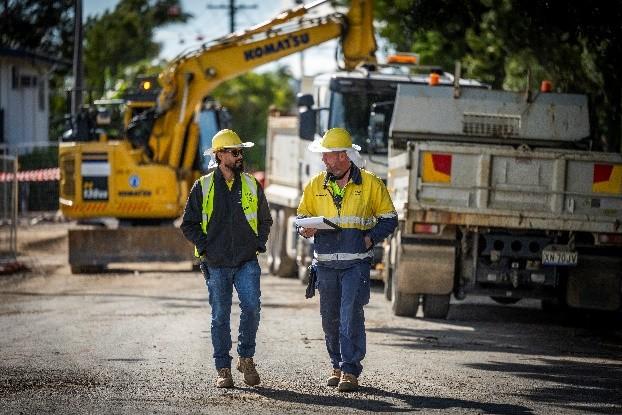
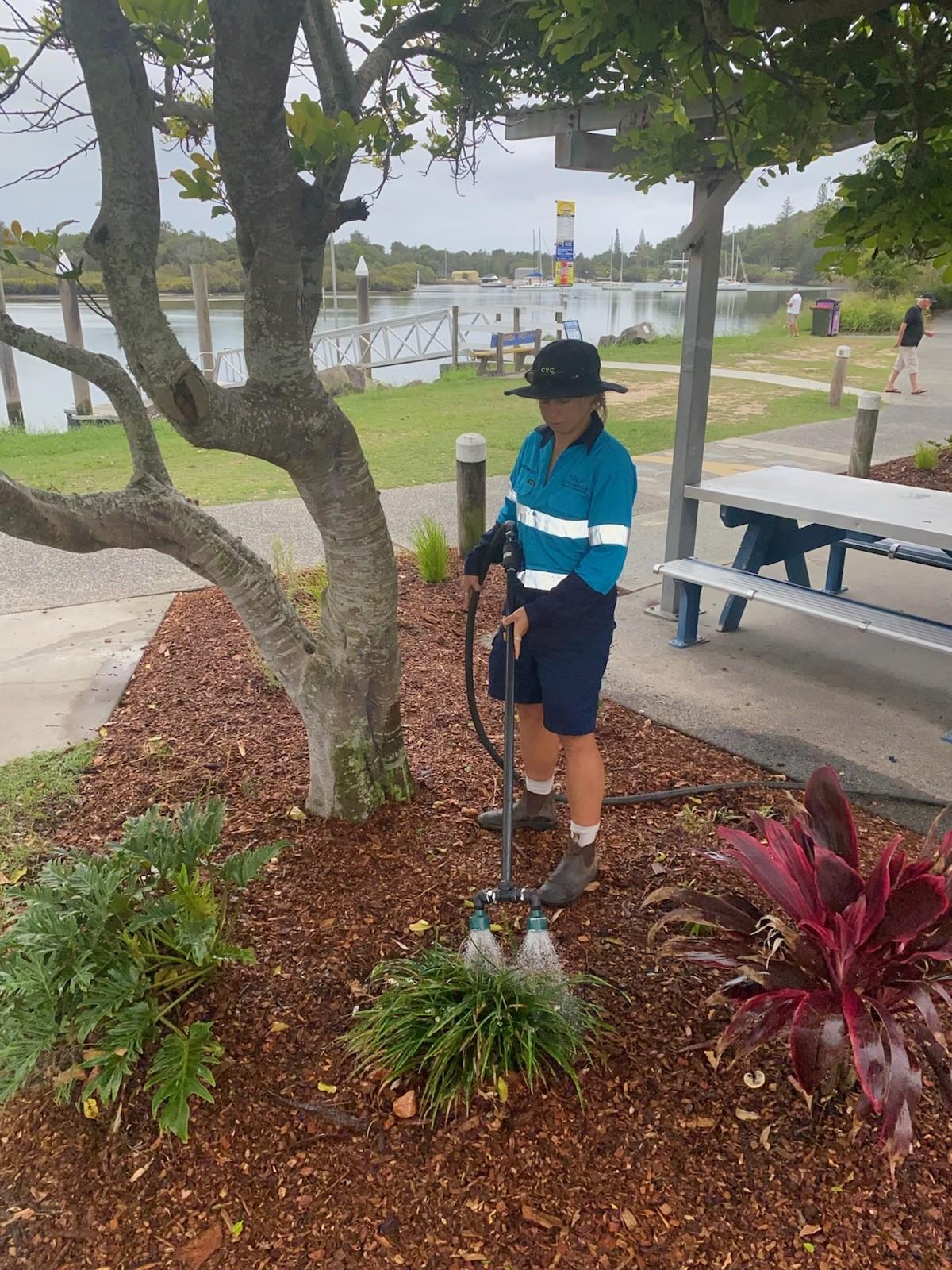
PICTURED: A raft of measures will be implemented in the coming year to strengthen attraction and retention of skilled staf (opposite and below).
Objective LE1
Council is accountable and representative with open and transparent leadership
Strategy LE1.1 Deliver the Councillor Professional Development Program
the annual Councillor Professional Development program
Strategy LE1.2 Enhance Leadership Effectiveness, capability and ethical behaviour through professional development opportunities
Code of Conduct Training as outlined in the Learning and Development Plan
Ensure all new staff complete Code of Conduct Training online within one month of commencing at Council, with completion rates to be included in HR Metrics reports
and
Strategy
Strategy LE1.3 Ensure legislative compliance as demonstrated in the Governance Framework
Strategy LE1.4 Promote transparency of access to information
Deliver Council Business Papers and publish meeting minutes
Publish Open Access Information online in accordance with the Government Information (Public Access) Act 2009
Prepare and publish the Annual Report by November immediately following the end of the financial year.
Engage with State Records to ensure compliance and complete audit requirements as per legislative compliance
Undertake a review of our Proactive Release Program in accordance with Section 7(3) of the GIPA Act 2009
Strategy LE1.5 Manage and reduce risk to the organisation
Manage and continuously improve Council's Enterprise Risk Management Framework to mitigate and reduce risk
Report risk status update to the Audit Risk and Improvement Committee (ARIC) every six months
Executive Review of Strategic Risks to be completed quarterly
Monitor and ensure disclosures are made as outlined by legislation and policy of Council
Ensure that new staff, including Disclosure Officers, receive training to ensure that they understand their role under the Public Interest Disclosures Act (NSW) 2022.
Develop a risk reporting package for delivery to the Leadership Team to better enable monitoring and management of corporate risks and opportunities
Complete the annual Work Health and Safety (WHS) StateCover actions identified in the Audit
Implement urgent upgrades to transfer stations required to address safety and
People, Culture and Workforce Strategy
& Wellbeing
Senior Waste & Sustainability
logistics concerns Officer
Investigate leachate management options at Grafton Regional Landfill to reduce environmental and WHS risks
Prepare traffic management plan for Grafton Regional Landfill to mitigate WHS risks and implement priority actions
Scope and design additional safety improvements resulting from the safety risk assessment of Grafton Regional Landfill.
Ensure compliance with all landfill obligations (e.g. licence renewals, licence reporting, volumetric surveys, annual returns, local government waste data, Pollution Incident Response Management Plan updates, WARP levy etc)
Oversee environmental monitoring of the landfill
Undertake bi-annual testing of Council's Business Continuity Plan
Mitigate environmental risk and impact from Council's activities by conducting audits, reporting and investigating environmental incidents, and implementing corrective measures
Implement priority actions from Council's Climate Adaptation Strategy
Review and implement policies, procedures and practices to ensure compliance with emerging requirements (e.g. CCNSW licence conditions) and continuous improvement
Manager Waste & Sustainability
Manager Waste & Sustainability
Manager Waste & Sustainability
&
&
& Risk
Objective LE2
Strategy LE2.3 Deliver effective asset management by maximising asset maintenance
the Asset Management Plans
Plan and prepare the Asset Management Strategy for next financial year
Complete Asset Revaluations according to revaluation model cycle and fair value measurement requirements
Implement priority actions from Council's Animal Control and Animal Shelter Strategy
Strategy LE2.4 Ensure Council’s sustainable procurement strategy is effective and efficient
Complete actions as outlined in the Procurement Internal Audit
Develop staff awareness, imbed recognition methods into procurement practices and report on the Modern Slavery Regulations
Strategy LE2.5 The organisations workforce meets the Valley of the future
Implementation of 2026/2027 actions from Workforce Management Strategy including the review and implementation of a new salary system to create a clear, fair, and modern framework that supports Council’s people, strengthens performance, reduces risk, and ensures the organisation is well positioned for the future.
Objective LE3
Council represents, advocates and demonstrates a positive and connected partnership with all levels of government
Strategy LE3.1 Coordinate a schedule of meetings with local State and Federal Members
All actions for this strategy have been completed in a prior year of the current Delivery Program.
Strategy LE3.2 Engage with relevant stakeholders to gain an understanding to inform advocacy for the Valley
Seek opportunities to advocate on matters raised through the View Id survey outcomes – health services, social services, law enforcement, public housing, economic development services, emergency services and education opportunities.
Strategy LE3.3 Support and equip Councillors as ‘brand’ ambassadors
Identify media opportunities for the Mayor or nominated Councillor(s) to provide timely communications on Council decisions and achievements
and participate in Council events, media opportunities and programs
Provide communications content (incl. Clarence Magazine) to Councillors to assist in communicating achievements with the community
Objective LE4
Diverse views are considered in decision making
Strategy LE4.1 Engage with the community to inform decision making
Oversee the consistent delivery of engagement activities in line with the Community Engagement Strategy
Strategy LE4.2 Provide reporting to the community, informing of council achievements through effective and best practice communications
Deliver the Clarence Magazine quarterly to report on achievements from the Operational Plan
Deliver timely, informative and valuefor-money communications in line with the Communications Plan and internal tools and resources
Strategy LE4.3 Deliver specialised engagement strategies with our First Nations communities and our young people
Deliver the Youth Voices program to increase participation from local students
Engage with local First Nations groups to ensure effective participation in decision making
Strategy LE4.4 Coordinator Advisory Committees to information decision making related to Council’s CSP and Delivery Program
Provide minute taking and governance guidance around Advisory Committee Meetings
Ensure timely reporting of minutes and any recommendations to Council
Support
& Executive Support
Strategy LE4.5 Deliver opportunity for community input into decision making through submissions and public forums
Ensure public forums are available before each Council Meeting
Objective LE5
Resources and services are managed efficiently and effectively
Strategy LE5.1 Provide a high standard of customer service to the community
Investigate customer service AI tools to support first contact resolution
Review complaint management feedback related to customer service and provide feedback to front-line staff
Implement the actions from the Customer Experience Internal Audit
Oversee cemetery operations to ensure a high level of customer service
the service review program as outlined in the Delivery Program
Implement the recommendations of the Native Title Audit
Complete the next stage of GIS Internal Audit actions to enhance use and currency of mapping data
Complete Property & Rating System Upgrade – Phase 2 lifting the corporate system to latest technology and enhancing compliance applications, knowledge databases and payment application technologies
Scope Property and Rating Software Upgrade – Phase 3 (Identified Modules) for delivery in future years
Complete Property & Rating System Upgrade – Phase 3 lifting the corporate system to latest technology and enhancing customer request and animal management technologies
Scope Property and Rating Software Upgrade – Phase 4 (Identified Modules) for delivery in future years
Complete Property & Rating System Upgrade – Phase 4 lifting the corporate system to latest technology and enhancing customer request and animal management technologies
Support the P&R upgrade through completing the migration of the mapping data and functions associated with each Phase of the upgrade
Complete the Drone Management compliance processes ensuring ongoing education and assessment activities are completed in alignment with licence requirements
Support the Internal Audit program through completion of the IT/System improvement actions identified within the program
Complete the annual upgrade of Council's Corporate System ensuring currency of functionality and security of the database
Support the P&R upgrade and ensure online payment options are investigated and implemented in the relevant stages.
Lead Analyst
Lead Analyst
Implement Microsoft Modern Workplace technology to enhance our digital and remote working environment capabilities
Complete a network security review and implement identified cyber security strengthening actions
Deliver critical server and wifi management upgrades to ensure resilience in adverse operating conditions
Complete CCTV Network Review and implement upgrades and enhancements to improve use, footage and access
Rollout AI enhanced technologies to assist in bulk data capture
Review Council's strategy, policies and cybersecurity management system ensuring continual alignment with mandated risk mitigation levels.
Maintain required security risk and threat registers ensuring incident response, treatment plans and risk mitigation processes are documented for all events and all new and changed systems / technologies
Complete quarterly IT / Systems audit reporting ensuring review of critical risk areas.
Maintain Council's corporate software register ensuring documentation of purpose, licencing structures and dependencies and updating for changes in systems / new technologies
Maintain Council's corporate IT infrastructure and hardware register ensuring documentation of purpose, licencing structures and dependencies and updating for changes in systems / new technologies
www.clarence.nsw.gov.au
Capital Works Program

4 YEAR ROLLING CAPITAL WORKS PROGRAM - DRAFT
Revenue Policy
2026 / 2027

Acknowledgement
We acknowledge the Bundjalung, Gumbaynggirr and Yaegl people as the Traditional Owners of the land on which we live and work. We honour the First Nations peoples culture and connection to the land, sea and community. We pay our respect to their Elders past, present and emerging.

Proposed Borrowings
General Fund
The general fund borrowed $24.72 million during 2023/2024 over a term of 15 years as part of the funding strategy for investing in the upgrade of the Regional Aquatic Centre and the Yamba Community Centre. Works on these projects were completed in 2025/2026. There are no further proposed loan borrowings between 2026/2027 and 2035/2036. All loans will be repaid in full by 30 June 2039.
Water Fund
Water fund is proposing to borrow $20 million during 2026/2027, and a further $30 million in 2027/2028, as part of the funding strategy for future water infrastructure network improvements. All loans will be repaid in full by 30 June 2047.
Sewer Fund
Sewer fund is proposing to borrow $26 million during 2026/2027 as part of the funding strategy for future sewer infrastructure network improvements. All loans will be repaid in full by 30 June 2046.
Long Term Financial Plan
Loan Repayments (Principal and Interest) by Fund from 2026/2027 to 2035/2036:
Rates income
General Fund
Council levies property rates in accordance with the provisions of the Local Government Act
Each property that is rateable has a rate levied which is either a minimum rate or a base charge plus ad valorem rate. The Act allows a number of variations on how rates can be levied and to understand the difference it is handy to understand the following terms:
Unimproved Capital Value (UCV)
This is the value of a parcel of land, as determined by the NSW Valuer General, not considering any improvements such as houses, landscaping, pools, etc.
Ad Valorem (On the Value) Rate
This is the rate in the dollar based on a property’s UCV. For instance, a dollar rate of 0.5184 means a property is rated 51.84 cents for every $100 UCV.
Minimum Rate
Council can also charge a minimum rate, which means that if the rate applicable under the ad valorem rate is less than the minimum, then the minimum will be charged.
Base Rate
In addition to an ad valorem rate, Council can also charge a base rate which, when added to the ad valorem rate, gives the applicable rate. The levying of a base rate tends to moderate the effects of wide variations in the movement of the property values. It assumes that all properties benefit equally from the availability of services and facilities provided by the Council.
Categorisation
The Local Government Act requires that all rateable properties be categorised as one of four categories of ordinary rates based on the dominant use of the property.
Residential Business
Farmland
Mining
Properties that are subject to a Mixed Development Apportionment Factor (MDAF) as supplied by the Valuer General are rated part Residential and part Business on the percentage basis of that MDAF and are not categorised according to the dominant use of the property.
Valuations
Rates are calculated on the land value of a property, multiplied by a ‘rate in the dollar’. The land value is determined by the NSW Valuer General who issues a Notice of Valuation at least every three years The Valuation of Land Act 1916 requires that Council assess rates using the most recent values provided for the 2026/2027 rating year, the valuation base date will be 1 July 2025.
Interest Rate
In accordance with Section 566(3) of the Local Government Act 1993, it has been determined that the maximum rate of interest payable on overdue rates and charges for the period 1 July 2026 to 30 June 2027 will be 9.5%. This rate is 1% reduction from the 2025/2026 rate of 10.5%.

2026/2027 Rate Peg
The rate peg is the maximum percentage Councils can increase their income from ordinary rates. Revenue from rates represents one of the main sources of income for Councils in NSW. The rate peg protects ratepayers from excessive rate increases, while ensuring Councils receive a fair amount of income from rates which enables them to provide quality services for their communities.
The Independent Pricing and Regulatory Tribunal (IPART) have determined that Council’s general ordinary rate income may be increased by 4.3% in accordance with Sections 506 of the Local Government Act 1993 for the rating year commencing 1 July 2026.
2026/2027 Rate Levy
Our rate levy is broken into the following 6 categories. Maps showing the boundary of each of these rate levy categories is attached, refer Appendix A.
• Residential A – Angourie, Brooms head, Diggers Camp, Iluka, Sandon River, Minnie Water, Wooloweyah and Wooli
• Business B – Maclean/Townsend
• Business C – Iluka
• Business D – Yamba
• Business E – Grafton and South Grafton CBD
• Business F – Grafton and South Grafton Other
Pensioners
In accordance with Section 575 of the Local Government Act 1993, ratepayers that hold a current Pensioner Concession Card may be eligible to receive a rebate on rates for a property that is their sole or principal place of residence. The rebate varies from one property to another and will be calculated at the time the application is made.
The rebate for a full year from 1 July to 30 June will be based on 50% of the residential rate levy to a maximum of $250, 50% of the water levy to a maximum of $87.50 and 50% of the sewerage levy to a maximum of $87.50. Where 50% of the water levy is less than $87.50 in one year, the remaining pension entitlement will be applied to the water consumption account until the maximum of $87.50 has been granted.
Pro rata rebates are available and will be calculated for each full quarter following the quarter in which the pensioner becomes eligible.
Rate Structure
The Rate Levy tabled on the next page is a summary of the recommended Rate Structure for 2026/2027, which includes an increase of 4.3% to the general income as originally determined by The Independent Pricing and Regulatory Tribunal (IPART) under section 506 of the Local Government Act. The number of properties, total yield and rates in the dollar have been updated to reflect the most recent land valuation/ property adjustments as supplied by the Valuer Generals Department.
The rate structure for 2026/2027 also contains the following:
• Yamba, Maclean and Townsend Residential Categories Base Amount increases from $568 to $593
• All Business Rating Categories Base Amount increases from $568 to $593
• Residential – “Outside Town Areas” and Residential A – “Coastal Villages” Minimum increases from $760 to $793
• Farmland Category as a Base Amount increases from $370 to $386
• Jetties Category will be charged a minimum rate of $73
Rate Structure
Residential – Ashby, Chatsworth, Copmanhurst, Brushgrove, Gulmarrad, Harwood, Ilarwill, Lawrence, Palmers Island, Coutts Crossing, Woombah, Cowper, Glenreagh, Swan Creek, Tucabia, Ulmarra, Waterview, Seelands, Eatonsville, Illarwill, Tyndale plus rural residential areas This includes residential flood prone land (9 properties)
Residential A – Angourie, Brooms Head, Diggers Camp, Iluka, Sandon River, Minnie Water, Wooloweyah, Wooli
B – Maclean
Business B – Maclean, TownsendOtherBusiness
Water Charges
Council’s water charging structure is made up of two components, a fixed annual access charge levied on properties with access to the water supply and a usage charge based on the volume of water consumed.
Water Access Charge – Annual Charges (Section 501 LGA)
Fixed water access charges for both Residential and Non-Residential properties are charged depending on water meter connection size and the number of services connected to the property.
To properly reflect the load a water connection can place on the system, annual access charges are proportional to the square of the size of the customer’s water supply service.
An annual water access charge will apply to all properties (including strata titled lots and vacant land) that are able to connect and are within 225 metres of Council’s water mains.
Vacant land which does not have a water meter connected will be charged the unconnected charge.
Council will not levy a water access charge for standalone fire service water meters unless the service is consuming water for anything other than firefighting or testing purposes.
For properties that have a master water meter connection and councilownedindividual water meters downstream of the master meter, access charges will be levied based on the sizes of the connected downstream meters The master meter will not attract an access charge.
Council will provide a water allowance for customers requiring home dialysis treatment that may require additional water consumption by the resident and as advised by the Northern New South Wales Local Health District, with the allowance provided on a tri- annual basis.
A high consumption charge will apply to non-residential properties with development approval issued after 1 July 2021. This charge effectively recovers the capital investment council has made in providing water infrastructure. The methodology decreases or eliminates the requirement to pay a developer charge which is associated only with a specific location. The charge is calculated by amortising the Section 64 Developer Charge for water over 40 years, with a cost of capital estimate of 5% and forecast escalation of developer charges by 2.5%, divided by 230kl/year.
Water Usage Charge – Annual Charges (Section 502 LGA)
A volumetric water usage charge will be levied based on the water usage recorded as passing through the water meter/s servicing each property Water meters are read and billed on a tri-annual basis.
Council has an inclining block tariff charge to encourage water conservation. A higher water consumption charge is applied after the adopted kiloliters per day (kl/day) amount is exceeded, which is the same daily consumption as used for the inclining block tariff and the water nonresidential high consumption. The adopted kiloliters per day will be reduced from the current 1.233kl/day to 1kl/day. The reduction is to realign the inclining block tariff to be approximately 2.5 times the average annual residential consumption and align with our Regional Water Supply partner, Coffs Harbour City Council.
The charges for 2026/2027 are shown in Table 1 where an increase of 10% has been applied to the standard consumption charge.
inclining block for average daily water consumption above 1kl/day per unit or residence per billing period (at 1.5 times the above standard consumption charge)
Fire Service consumption - water usage registered on fire service meter that was not for the purpose of the fire service, charged per kl (at 4 times the above standard consumption charge)
Non-residential High Consumption Charge (for developments that were approved after 01 July 2021) for average daily water consumption above 1kl/day per billing period (as per calculation methodology listed in the water annual charges section above)
Table 1: 2026/2027 Water Consumption Charges
(Access) Water Charge is charged using each residential and non-residential customer’s actual meter and is known as a “pure meter” based approach


All customers pay based on their meter size Meters greater than 20mm are scaled up using the follow formula:
Service availability charge
(meter size in mm)2 x charge for a 20mm
Table 2: Fixed (Access) Water Charges for 2026/2027
*The access charge for meter sizes greater than 20mm is calculated on the square of the meter size compared with a 20mm meter.
Untreated water consumers supplied direct from trunk mains prior to treatment are charged at half of the above access charges Council does not approve any additional untreated water connections.
NSW Department of Climate Change Energy Environment and Water (DCCEEW) requires a single charge for both residential and non-residential consumers Charges for 2026/2027 will be in accordance with Table 3.
Table 3: Proposed consumption charge for 2026/2027
Sewerage Charges
Council’s sewer pricing structure for residential, non- residential and properties exempt from Ordinary Rates is outlined on the following page.
An annual Sewer Residential Connected Charge applies to all properties (including strata titled lots) that are connected to the Council’s sewer main.
Residential properties are charged the annual Sewer Residential Connected Charge per connection or separate occupation, within the Sewerage Access area and connected to the sewer. In respect of Residential Flat Buildings or properties under separate occupation, the Sewer Residential Connected Charge will be equal to the number of residential flats or separate occupation multiplied by the Sewer Residential Connected Charge for a single connection.
Properties within a pressure sewer zone are charged $35 less than properties in a gravity sewer zone to reflect the average estimated cost of pressure pump electricity consumption which is paid for by the property. This benefit has increased from $25 in 2024/2025 to reflect increased power costs. This charge is to be known as the Sewer Residential Connected Pressure System charge.
The non-residential sewer charge is the sum of the access charge and the generation charge, with a minimum charge of the residential charge ($1,606 for 2026/2027). As meters are read three times per year, the minimum non-residential charge will be calculated at an equivalent charge of $4.40 per day.
Properties exempt from Ordinary Rates in accordance with the Local Government Act are charged the Non- Rateable Sewer Connection Charge per connection or separate occupation, within the Sewerage Access area and connected to the sewer. In respect of Residential Flat Buildings or properties under separate occupation, the Non-Rateable Sewer Connection Charge will be equal to the number of residential flats or separate occupation multiplied by the Non-Rateable Sewer Connection Charge for a single connection.
Vacant land with no connection to Council’s sewer main but within 75 metres of Council’s sewer main and able to connect in the future, will be charged the Residential Sewer Availability Charge.
There is no fixed sewer access charge on standalone fire services.
Table 1 below shows the 2026/2027sewerage charges and Table 2 shows the 2026/2027 access charge for non-residential properties wherean increase of 10% has been applied.
Table 1: SewerCharges for 2026/2027
exempt from Rating under Sec 556 Sewerage
Properties exempt from Rating under Sec 556 Sewer Connection Charge (per connection or separate occupation)
Non-residential High ConsumptionSewerage Generation Charge (for development approved after 1 July 2021) for sewerage generation above 0.60kl/day4 per billing period – and connected to Clarenza, North Grafton and Coutts Crossing sewerage treatment plants
Non-residential High Consumption Sewerage Generation (for development approved after 1 July 2021) for sewerage generation above 0.60kl/day4 per billing period – and connected to Woodford Island, Yamba andIluka sewerage treatment plants
1. Properties within a pressure sewer zone are charged $35 less than properties in a gravity sewer zone to reflect the estimated average cost of pressure pump electricity consumption, which is paid for by the property.
2. The non-residential sewer charge is the sum of the access charge and the generation charge, with a minimum charge of the residential charge ($1,460 for 2025/2026). As meters are read three times per year, the minimum non-residential charge will be calculated at an equivalent charge of $4.40 per day.
3. Residential properties are charged the Sewer Residential Connected Charge per connection or separate occupation, within the Sewerage Access area and connected to the sewer. In respect of Residential Flat Buildings or properties under separate occupation, the sewer residential connected charge will be equal to the number of residential flats or separate occupation multiplied by the Sewer Residential Connected Charge for a single connection. •
4. The non-residential sewage charge is based on an estimate that 60% of water consumption is directed to the sewer. The non-residential sewer high consumption charge therefore applies for non-residential sewage generation calculated as 60% of 1kL/day, which is 0.60kL/day
Waste ManagementCharges
The Domestic Waste Management (DWM) charge must be determined each year pursuant to Section 496 of the Local Government Act, 1993. This charge is audited by Council’s external auditors to ensure that the rate is reasonable and that the cost of collecting and processing domestic waste throughout the Council area is relative to the charge for providing the service.
Council resolved at its meeting held on the 23 August 2022 to accept a tender from JR Richards and Sons to provide domestic waste collection and waste processing services for the next 10 years.At the Council meeting held on the 28 March 2023, it was resolved to commence a new bulky waste collection model from 1 July 2023 that aligned with the new 10-year Domestic Waste Management Contract.
Council levies a waste management charge pursuant to Section 501 of the Local Government Act 1993 on all rateable properties. The levy contributes to the cost of servicing waste management operations such as waste transfer stations, landfills, composting facilities, recycling centres and other services such as litter collection The 2026/2027 levy has increased from $75 to $78
On-Site Sewage Management Systems
As the designated regulatory authority under the Local Government Act 1993, Clarence Valley Council is responsible for overseeing the regulation, monitoring, and management of On-Site Sewage Management Systems (OSMS) to ensure they meet environmental and public health standards.
Council’s monitoring program, established under the On-Site Wastewater Management Strategy 2025, aims to enhance the ongoing operation of OSMS through programmed and targeted inspections and public education. This strategic framework significantly mitigates risks associated with failing or unauthorised systems, thereby safeguarding the natural environment and community wellbeing.
All OSMS within the LGA are assigned a risk category classification, which serves as the basis for setting inspection priorities and ensuring efficient resource allocation. A OSMS classification is determined by the highest risk rating it meets across various environmental and operational criteria including soil type, proximity to sensitive environments and watercourses, property size, and system age.
The below tiered charge structure reflects the costs associated with administering compliance for each risk category. Section 501 of the Local Government Act 1993 allows for an annual charge to be applied on rateable land for waste management services such as OSMS
BackflowPrevention Device Annual Charge
The annual charge to fund the administration of the backflow prevention device program including the auditing of the backflow devices has been indexed by 10% from $76 (2025/2026) to $84 (2026/2027). The charge is levied on properties that have containment backflow prevention devices that are required to be annually tested and certified in accordance with Council’s Backflow Prevention and Cross Connection Control Policy. The charge known as “Non-Residential Backflow Prevention Device” Charge, is per annum and per containment device. There are currently 166 Backflow Prevention Devices to administer.
Stormwater Annual Charge
In accordance with Section 496A of the Local Government Act 1993 and regulation 125A of the Local Government (General) Regulation 2005 (LGR) Council will levy a Stormwater Management Service Charge against rateable properties for which the service is available. Council has identified the residential and business properties that are within Council’s urban stormwater catchment areas that will be subject to this charge. The Stormwater Management Service Charge will not apply in any areas which have a special drainage rate or charge levied under Section 552(4) of the Local Government Act 1993
The following charging methodology will be used by Council using the guidelines released by the Office of Local Government as well as considering Section 510A of the Local Government Act 1993 and regulation 125AA of the LGR.
The guidelines provide Council with the opportunity to levy charges on a catchment area or global basis, while ensuring that the total income generated does not exceed the level of expenditure for new and additional stormwater management services.
Council has a stormwater capital works program and as a result, a global approach will be used to enable significant works to be funded at a given time using all revenue levied, rather than waiting to collect enough funds in individual catchments. In accordance with these guidelines, Council still needs to ensure equitable distribution of stormwater management services over time.
Eligible Properties categorised as Residential (Not being Strata Titled) – LGR 125AA (1)(a)
A flat charge of $25 for a “Stormwater Management Charge – Residential” is to be charged against each eligible assessment categorised as Residential within the urban stormwater catchment. This charge is uniform across all urban catchment areas to minimize administration costs.
Eligible Properties categorised as Residential (Strata Units) – LGR 125AA (1)(c)
The cost of managing stormwater runoff from impervious surfaces is usually substantially less per residential strata lot than per standard residential property It is for this reason that a flat charge of $12.50 for a “Stormwater Management Charge – Strata Unit” is to be levied against each eligible residential strata unit within the urban stormwater catchment. This charge is uniform across all urban catchment areas to minimize administration costs.
Eligible Properties categorised as Business (Not being Strata Titled) – LGR 125AA (1)(c)
A “Stormwater Management Charge – Business” is to be charged against each eligible assessment (not being strata titled) and categorised as business, within the urban stormwater catchment area. This charge is based on the total impervious area of the property. A charge of $25 for each 350 square metres of impervious land or part thereof will be levied up to a maximum of $500. The criteria for charging business properties by using property impervious areas had been recommended using the guidelines provided by the Office of Local Government.
Eligible Properties categorised as Business (Strata Units) – LGR 125AA (1)(d)
A Stormwater Management Service Charge will be levied a $12.50 charge on each eligible business strata unit within the urban stormwater catchment area.
National Competition Policy –
Business Activities
In accordance with Pricing and Costing for Council Businesses – A Guide to Competitive Neutrality Council has declared the following activities as business activities.
Category 1
(where gross operating turnover is over $2 million)
Clarence Valley Council Water Supply
• Provision of Water Supply Services
Clarence Valley Council Sewerage Services
• Provision of Sewerage Augmentation
• Reticulation and Treatment
Clarence Coast Holiday Parks
• Camping and Holiday Park Accommodation
Category 2
(where gross operating turnover is less than $2 million)
Council has no category 2 businesses
Fees and Charges for 2026/2027
Clause 201 of the Local Government (General) Regulation 2005 provides that Council’s Revenue Policy must include a statement of the types of fees proposed to be charged by Council, the amount of each fee, estimated yield and the proposed pricing methodology for each fee.
A schedule of Fees and Charges for 2026/2027 has been prepared and is available on Council’s website at www.clarence.nsw.gov.au Council’s schedule of Fees and Charges has 1,369 fees including 48 new fees and 454 discontinued fees.
Each fee or charge has been categorised as follows:
U - User Pays Council pricing reflects the nature of service and costs.
R - Regulatory The price is set by Council for a goods/service which Council has a regulatory right or obligation to provide.
S - Statutory The price charged for this goods/ service is a statutory charge set by government regulation.
Details of those fees and charges subject to GST and exempt from GST are identified in the schedule of Fees and Charges. The GST status of each charge/fee depends on whether there is consideration for a supply. Some fees and charges are exempt from GST in accordance with the Federal Treasurer’s Determination under Section 81-5 of the A New Tax System (GST) Act 1999 as amended, and as assessed under the Tax Laws Amendment (2011 Measures 2 No 2) Bill 2011: exempting taxes, fees and charges from the GST. Generally, where permissible, the majority of Council’s fees and charges have been increased by an estimated CPI amount of 4% and rounded. Some prices vary outside CPI based on specific issues impacting the operations, costs, or pricing parameters of the particular service. Regulatory or statutory fees will increase in line with government pronouncements.
The following pricing categories have been used in determining the fees, which are summarised below:
Full Cost Pricing - Fees are set to enable the recovery of all direct and indirect costs involved in the provision of a service.
Subsidised Pricing - Fees and charges are set at a level that recovers less than the full cost incurred in service delivery. In effect some level of subsidisation is factored into the price.
Market Pricing - Fees and charges are based on current market fee structures. The market price is usually determined by examining competitors’ prices and may have little relationship to the cost of providing the service.
Statutory Pricing - Fees and charges are set to comply with statutory legislation
Dynamic Pricing - Fees and charges are set to allow flexible pricing strategies for market influences such as demand and supply
Sewer and Water Connection Fees
Sewer and water connection fees are calculated as outlined in Council’s Policy “Sewer and Water Capital Contribution Credits for Properties not paying availability charges as at 28 June 2005”.
This policy specifies that the connection fee for properties not paying sewer and/or water availability charges as at 28 June 2005 will include a capital component. The capital component for sewer is equivalent to the capital contribution for 1 sewer Equivalent Tenement (ET) and the capital component for a 20mm water meter is equivalent to the capital contribution for 1 water ET. The capital component for larger size water meters is based on an ET assessment of the meter capacity.
The sewer and water contributions for 1 ET were initially set in the Development Servicing Plans (DSP) for Sewer and Water adopted by Council on 28 June 2005, revised in June 2017, and in February 2026 Council adopted exhibition draft DPSs which are scheduled to be adopted in June 2026 Sewer and Water contribution for 1 ET are adjusted annually using the methodology specified in the Department of Primary Industries - Water Guidelines The sewer and water contributions for 1 ET are listed in the Fees and Charges as “Section 64 contributions”.
Hardship Ordinary Rates and Annual Charges Policies
The purpose of these policies is to establish guidelines for the General Manager and staff on providing appropriate assistance to ratepayers suffering financial difficulties with the payment of Ordinary Rates and Annual Charges in both normal times and in times of natural disaster and health pandemics.
The intent of these policies is to ensure that ratepayers facing financial hardship, but with the will to make payments against their Ordinary Rates and Charges, have a clear and simplified way of doing so. Where there is no willingness to make payments against outstanding Ordinary Rates and Annual Charges, the right of Council to take legal action is well-defined.
These policies recognise that ratepayers may at times encounter difficulty in the payment of rates and charges. The Local Government Act 1993 allows Council to provide assistance to those ratepayers. Application for hardship must be made on the appropriate form which is available from Council’s website www.clarence.nsw.gov.au.
Financial Summary
1. 2026/2027 Budget and LongTerm Financial Plan
Assumptions and factors affecting the budget result have been incorporated into the 2026/2027 Budget and 2026/2027 to 2035/2036 Long Term Financial Plan (LTFP) are as follows:
Rates
The general rate revenue Rate Peg determined for 2026/2027 is 4.3% pa. It is then based upon the Reserve Bank Australia CPI forecast to be 3.5% from 2027/2028 onwards.
For the next 5 years (2026/2027 to 2029/2030), the estimated yield from the now built in SRV component of our rate base will be restricted and then subsequently used to improve infrastructure as per the SRV requirements. The estimated yield in 2026/2027 is $6.1 mil per the original SRV application. This built-in SRV is now referred to as the Infrastructure Renewal Value (IRV).
Revenue streams and future service requirements
Revenue streams and future service requirements will be adjusted for population growth forecasts where a direct relationship can be determined.
Population forecasts will be based upon the Forecast Id consultant’s population projections for the Clarence Valley (currently + 0.85% pa).
Operating Expenditure
From 2026/2027 onwards, recurrent operating expenditure will need to be indexed by at least 3% pa as in line with the average RBA forecast. The RBA November 2025 Monetary Policy Statement predicts a CPI of 3.7% at June 2026 subsequently dropping to 2.7% by June 2027 and then 2.6% by December 2027.
Operating Revenue
2026/2027 onwards will initially be increased in line with service deliverables and as evidenced through discussion with management. A general indexation rate of 4% pa will be applied on all general revenue streams where no other evidence is available to support a specific revenue increase.
Interest and investment income
Interest and investment income is forecast at a conservative average rate of 3.3% per year, based on the running yield of Council's investment portfolio (value average $160 million per month). It is then predicted to continue to drop to 3% in 2027/2028 and then settle around 2.5% from there onwards.
Water Charges
Water Charges will be indexed by 10% p.a. from 2026/2027 to 2028/2029 as impacted by recent changes to drinking water standards and to support large water infrastructure renewal projects. It is then anticipated that it can be reduced as follows:
• 4% from 2029/30 to 2033/2034
• 3.5% from 2035/36 to 2036/2037
• 3% from 2037/38 to 2044/2045
• 2% from 2045/46 onwards
Sewer Charges
Sewer Charges will be indexed by 10% p.a. in 2026/2027, as impacted by changes to the EPA requirements and related large future capital works projects. The charge will then be progressively reduced to 3.5% from 2027/2028 to 2029/2030, 3% until 2030/2031 and then 2% from 2031/2032 onwards.
Domestic Waste Management Charges
Domestic Waste Management Charges will be calculated based upon the reasonable cost requirements. The specific Domestic Waste Charge income funds the operating and maintenance costs associated with providing the service.
Operating Grants
Council has assumed it will continue to receive operating grants in relation to ongoing operations (where evidenced by management) and that these will generally increase annually in line with estimated indexation of 3%. Operating grants received for specific project related purposes have been included in the year Council anticipates they will be received.
Capital Grants
The capital grants applied in the model will be based on upon historical 5-year averages.
The Financial Assistance Grant
The Financial Assistance Grant value is estimated at $15.35m which is an increase of approximately 2.5%. This assumes the current prepayment arrangements will stand however reduced to 25% and then phrased out altogether over the following two years. The advance payments impact the Financial Statements as this income must be reflected when received, where the budget reflects the allocation for the actual year that it relates to.
Tax equivalent dividends
Tax equivalent dividends will be based upon the maximum allowable rate of $3 per assessment (which equates to approximately $75K from the Water Fund and $85K from the Sewer Fund). These figures will be adjusted by each estimated charge increases, and population increases.
Return on Capital
In addition to the tax equivalent dividend, Council can charge a Return on Capital invested from the Water and Sewer Fund if operating surpluses are achieved. Due to recent changes being imposed by the EPA, and the extent of future capital works required, no dividends are proposed for the next four years.
Organisational Structure
All positions on the adopted organisation structure are to be funded unless otherwise indicated.
Wage increases
Wage increases are forecast as per the 2023 to 2026 NSW Local Government State Award with a 3% increase forecast for 2026/2027, then forecasted at 2.5% each year from 2027/2028.
Leave Entitlements
Leave Entitlement accruals will be based upon the assumption that all positions in the organisation structure will be filled.
Workers Compensation
Workers Compensation premiums will be based upon 4.15% of the estimated wages from 2026/2027 onwards, which allows for the adjustment to the Basic Tariff for claims history. The historical Basic Tariff Premiums as a percent on wages is as follows:
• 2022/2023 = 2.37%
• 2023/2024 = 2.37%
• 2024/2025 = 3.14%
• 2025/2026 = 3.18%
Over the last three years claims performance history percentage continues to significantly increase, (calculated as the Claims Amount divided by the Basic Tariff). This has more than doubled from a percentage of 6.53% in 2022-23 to the current YTD of 14.52% in 2025/26. This will have an impact of higher premiums over the next three years, especially if this trend continues or worsens.
Council historically receives a Work, Health and Safety rebate, now called the Safety and Wellbeing Incentive. For 2026/2027 this is estimated to be $130,000.
Superannuation
Employees are generally in one of either two schemes being:
a. The Defined Benefits Scheme, which is calculated per employee elected contribution; or
b. The Super Guarantee Scheme (SG), whereby Council is legislatively required to contribute 12% of the employee's gross wages for 2026/2027. At this stage SG will remain fixed at this rate into the foreseeable future.
Electricity expenditure
Electricity expenditure varies by fund and historically has fluctuated from year to year. On that basis, an average amount for 2026/2027 has been determine which will then be indexed 5%.
Street lighting
Street lighting charges have historically fluctuated from year to year Based on this, the forecast for 2025/2027 will be indexed by 3%.
Insurance
Council Insurers have indicated that the hard insurance market cycle has likely ended, recommending that council forecast 5% increases across all premiums.
State Emergency Levies
State Emergency Levies historically has fluctuated from year to year, excluding rebates that were provided in 2020/2021 and 2021/2022. On that basis contributions will be indexed by 3% p.a. for 2026/2027 onwards.
Rural Fire Contribution
The Rural Fire Contribution historically has been up and down from year to year excluding rebates that were provided in 2020/2021 and 2021/2022. On that basis contributions will be indexed at 3% p.a. from 2026/2027 onwards.
Surf Life Saving contributions
Surf Life Saving contributions to Minnie Water and Yamba have increased by CPI of 3%.
Surf Life Saving Contracts
Surf Life Saving Contracts have increased by 2.6% for 2026/2027, and then by 2.5% onwards.
Borrowing
No new General Fund loans are proposed for 2026/2027. New loans which will be required for Water Cycle infrastructure will be based upon an estimated interest rate of 6% over 20 years. The amount will depend on the success of current grant submission and the latest forecast construction costs, but it is anticipated that loan funding will be split over two years commencing in 2026/27. The projected new loan borrowings included in the budget and LTFP are $26m for Sewer Fund in 2026/27 and $20m in 2026/27 and $30m in 2027/28 for Water Fund.
Merchant Card Fees
The RBA has removed the ability to charge surcharges on debit, prepaid and credit cards on designated EFTPOS, Mastercard and Visa card networks, taking effect on 1 October 2026. Council will remove the charges in alignment with the ruling and estimates cost increases of $65k per annum. The cost to Council of providing these services remains until such time as the banks are instructed to remove the merchant change altogether. *Whilst these assumptions provide a general guideline there are items in the budget that are predetermined, for example services that are subject to tender.
2. Best practice dividends from Water and Sewer Funds
Department of Climate Change, Energy, the Environment and Water’s ‘Regulatory and Assurance Framework’ for local water utilities provides that a dividend can be paid from water and sewer surpluses to General Fund provided the utility has in place effective, evidence-based strategic planning in accordance with sections 3 and 4 of the framework.
The criteria that must be satisfied for a dividend to be met are:
• Calculate any dividend payment in accordance with the methodology in section 42 of the framework.
• Be able to demonstrate there is a surplus.
• Demonstrate full cost-recovery pricing and developer charges.
• Have in place effective, evidence-based strategic planning in accordance with section 3 of the regulatory and assurance framework.
• Demonstrate financial reports are a true and accurate reflection of the business.
• Demonstrate that the overhead reallocation charge is a fair and reasonable cost.
To be eligible to make a dividend payment from a surplus, a local water utility must:
Demonstrate best-practice management compliance through an independent compliance audit report.
Obtain an unqualified financial audit report for its water supply and/or sewerage businesses.
Resolve in a council meeting open to the public that it has achieved “substantial compliance” with each criterion in the guidelines.
As per the Water Fund and Sewer Fund 2026/2027 to 2035/2036 Long Term Financial Plan’s, due to planned capital works programing and updated best practice compliance requirements, neither fund will meet the eligibility criteria in 2026/2027 and as such council is not intending to pay any best practice dividends from Water and Sewer Funds to General Fund in 2026/2027.
Appendix 1 –Boundary Maps
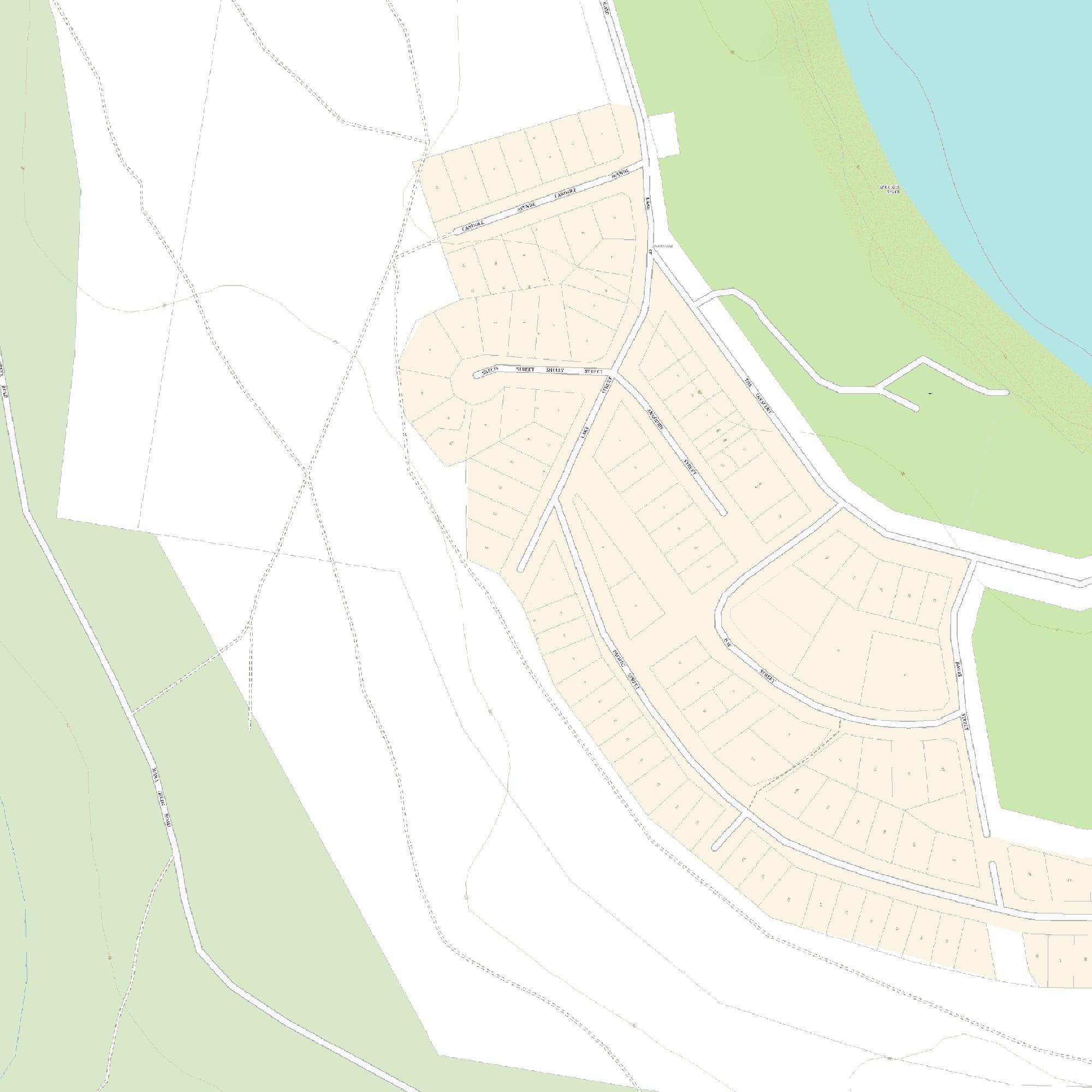
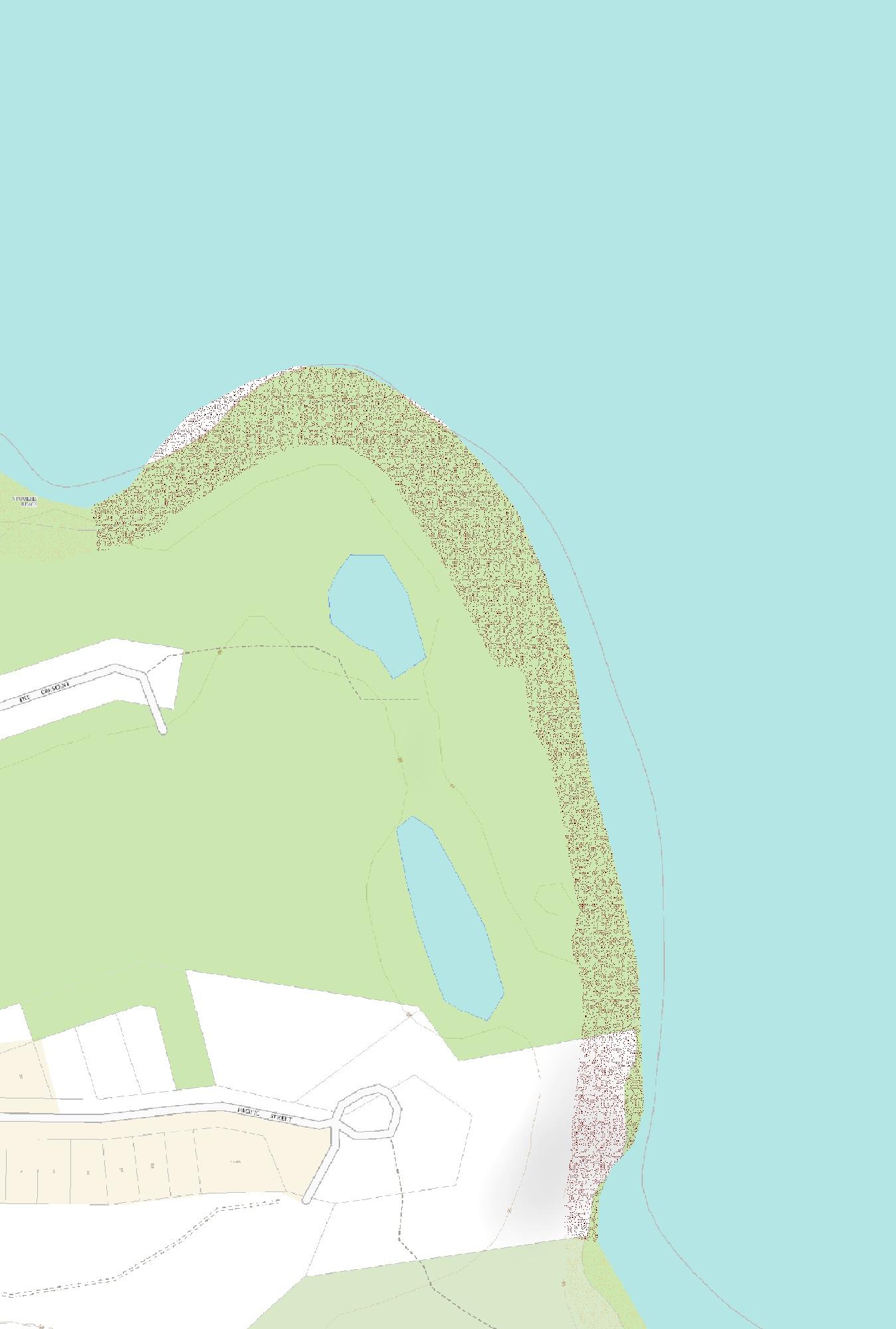
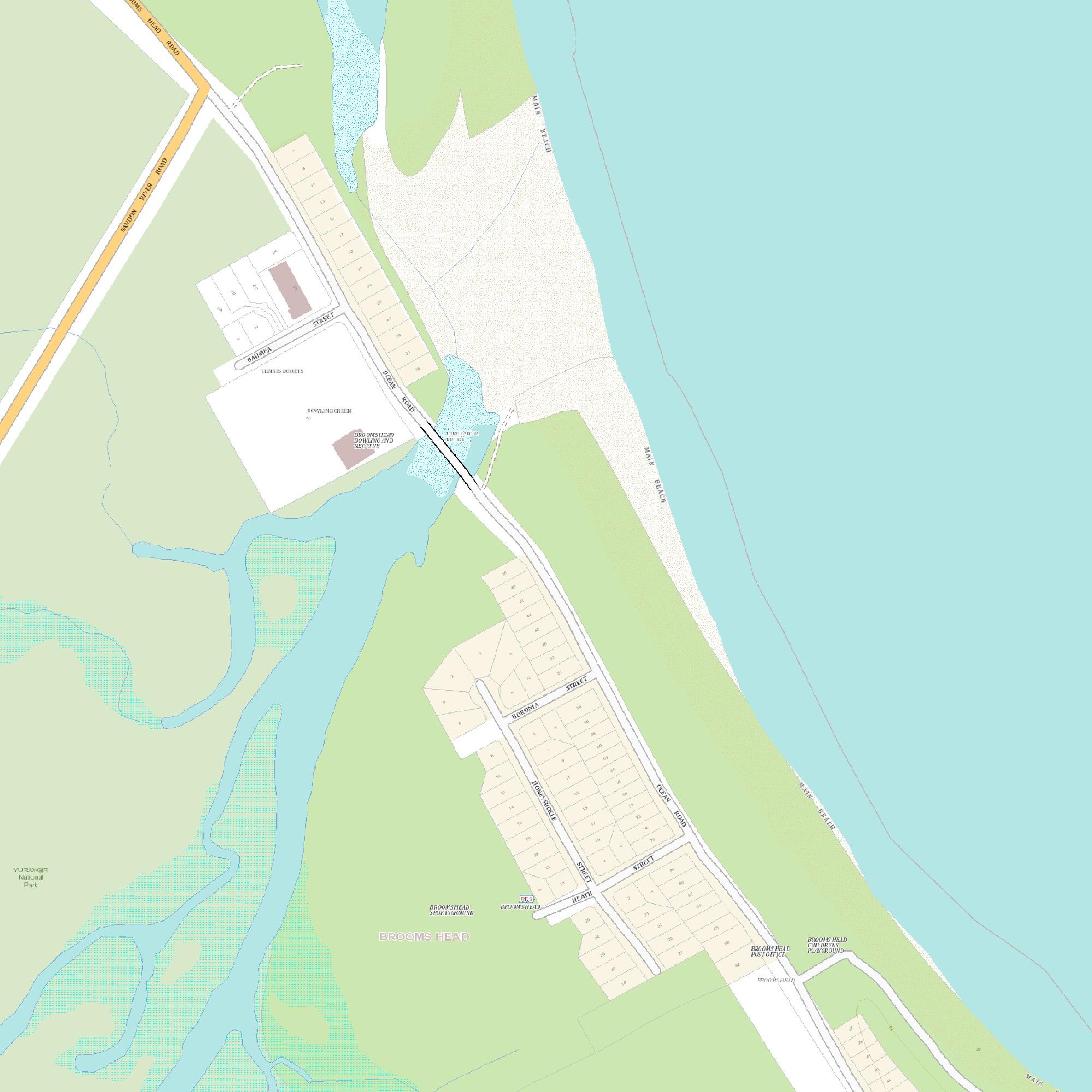
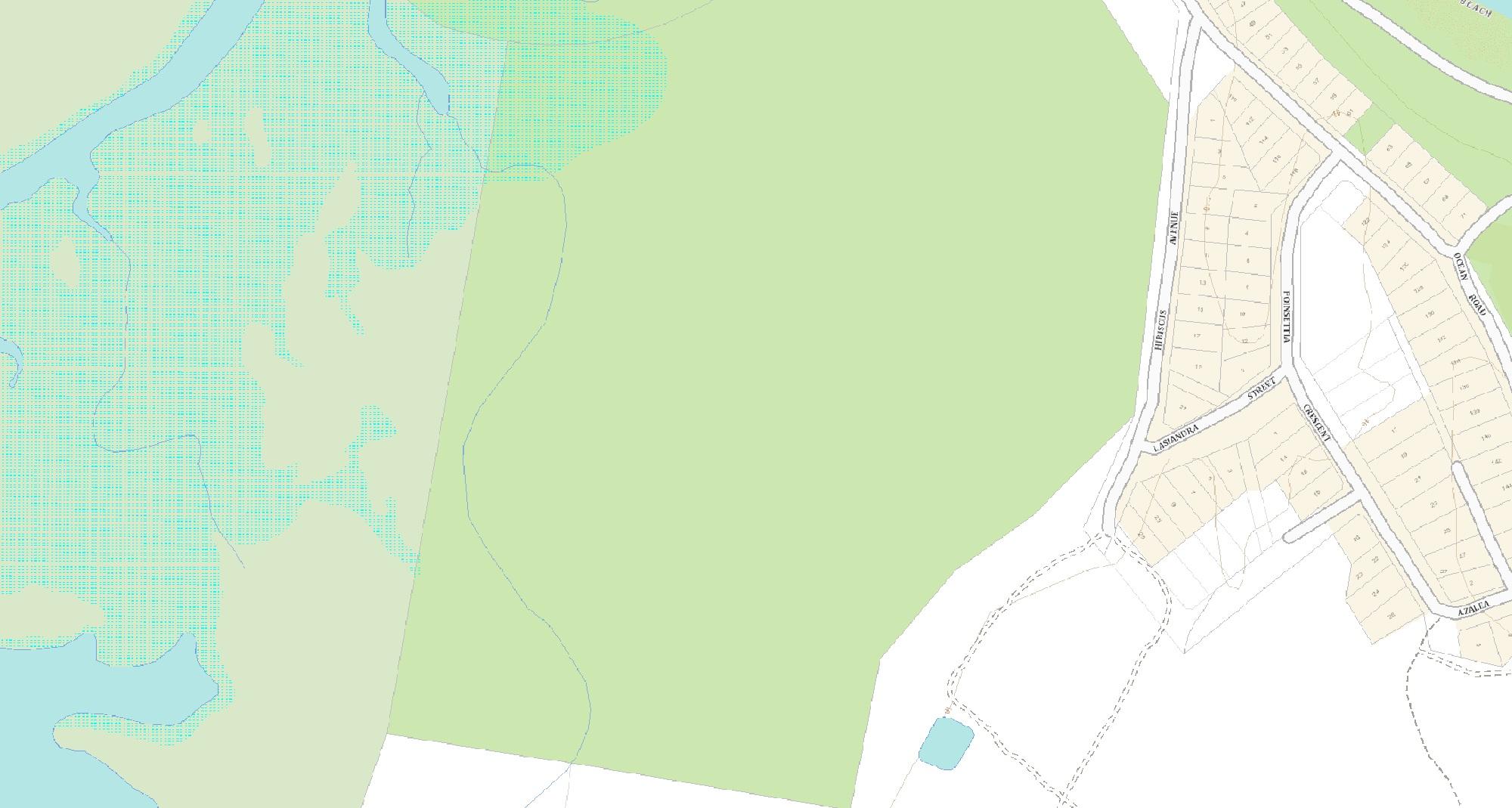

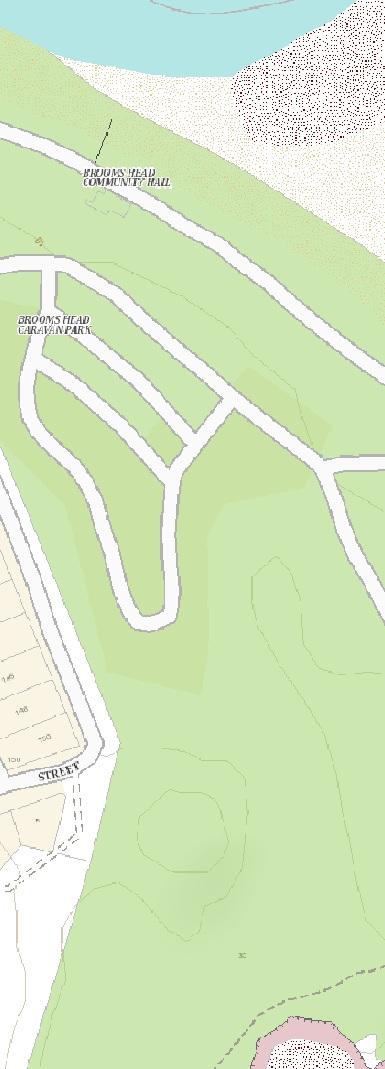
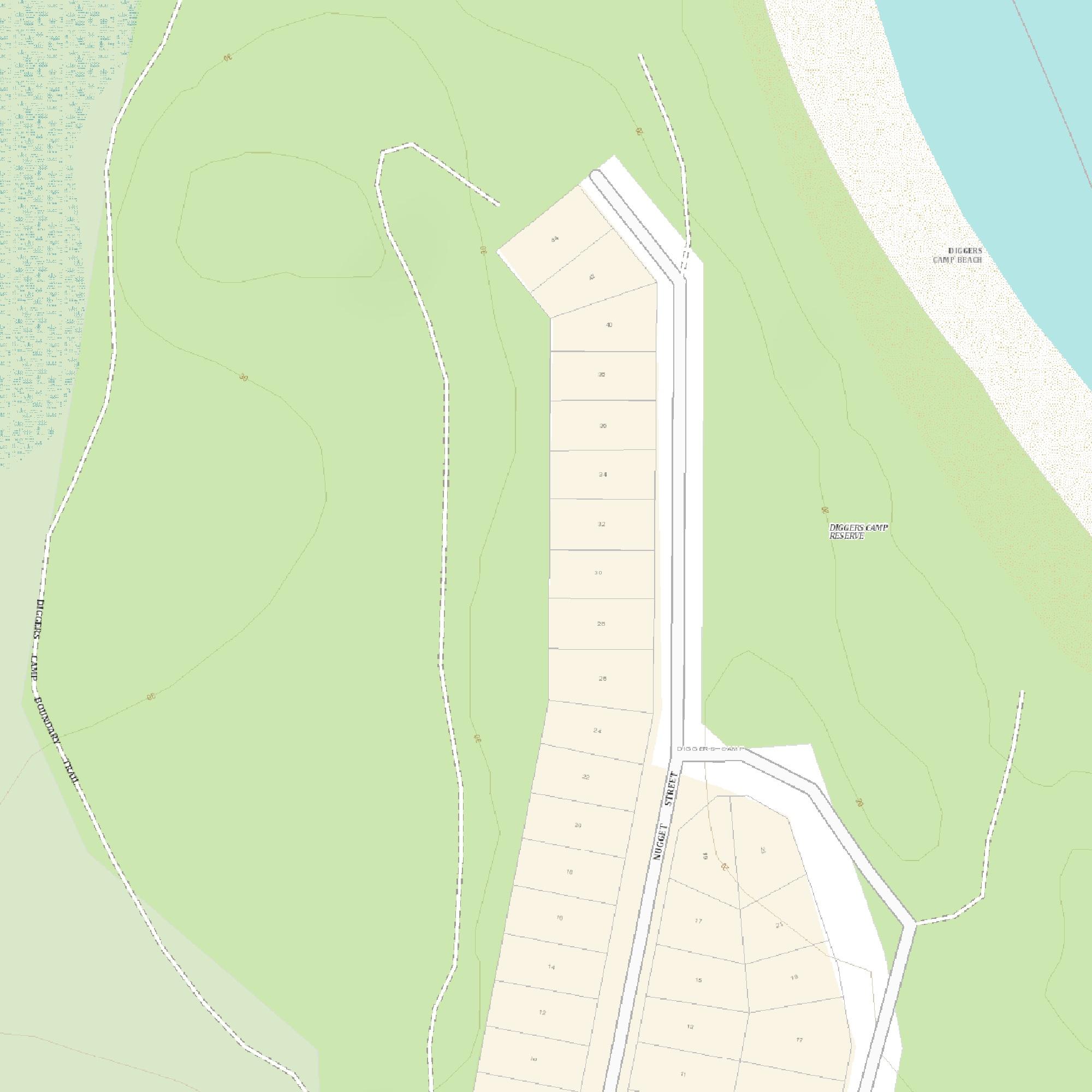
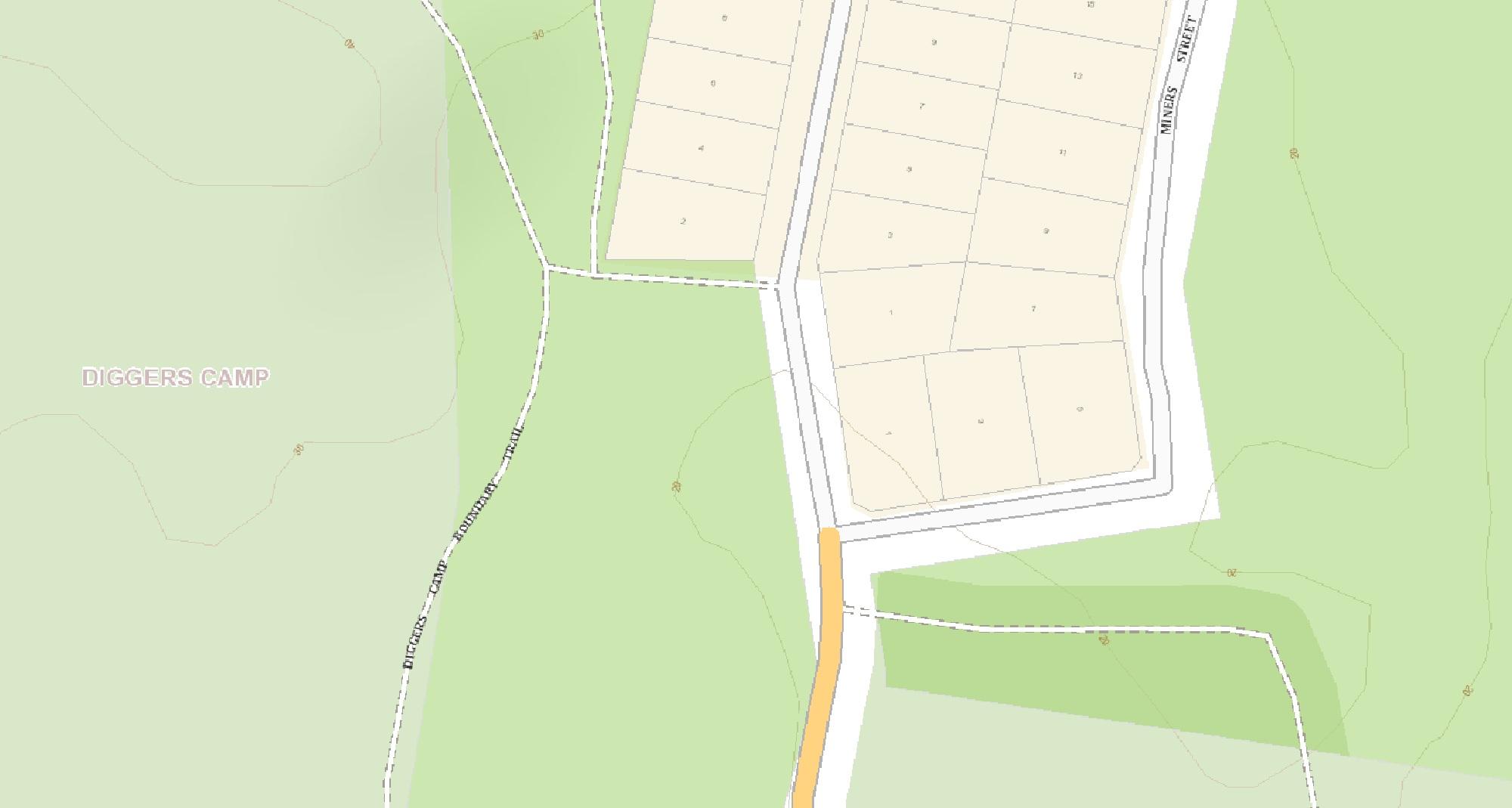

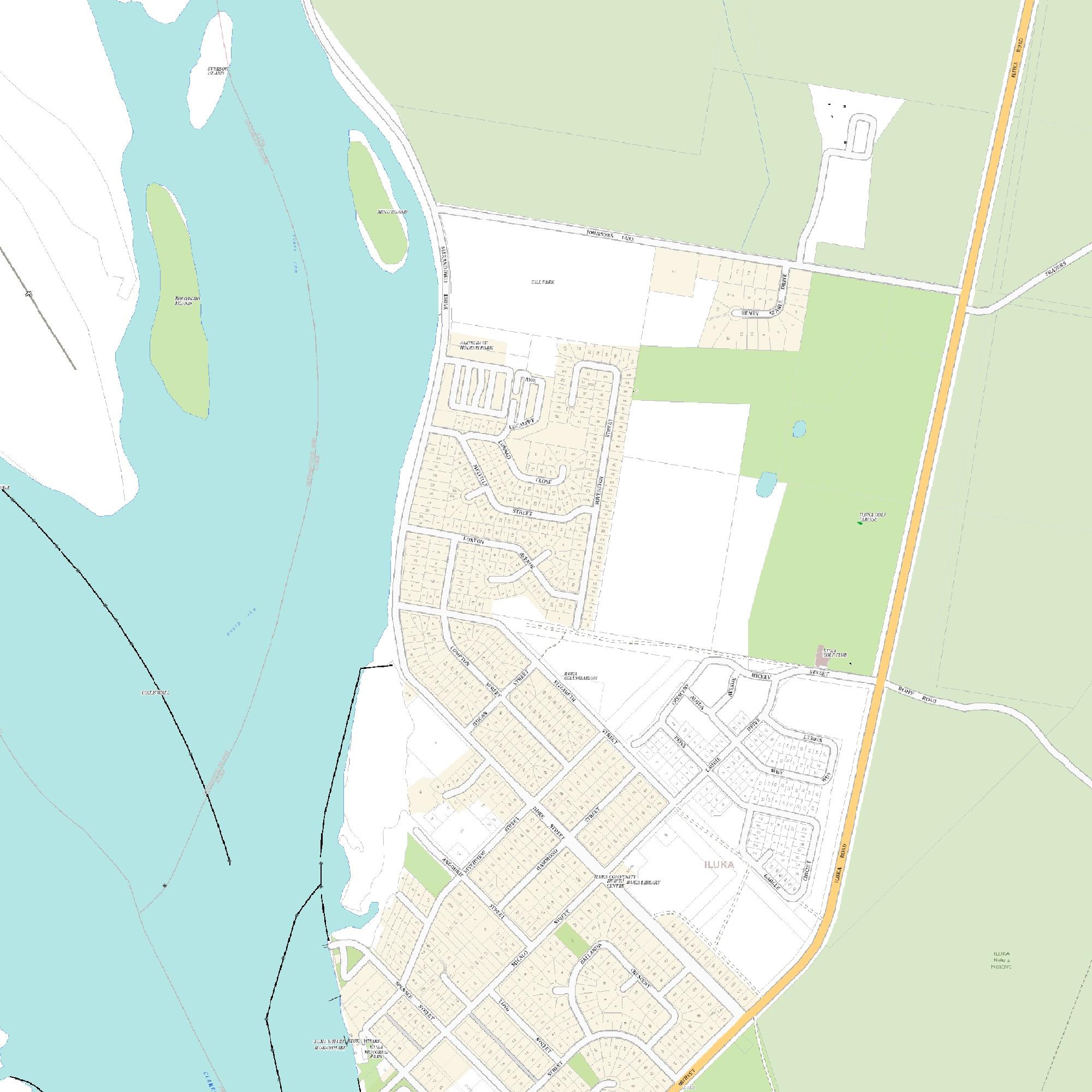
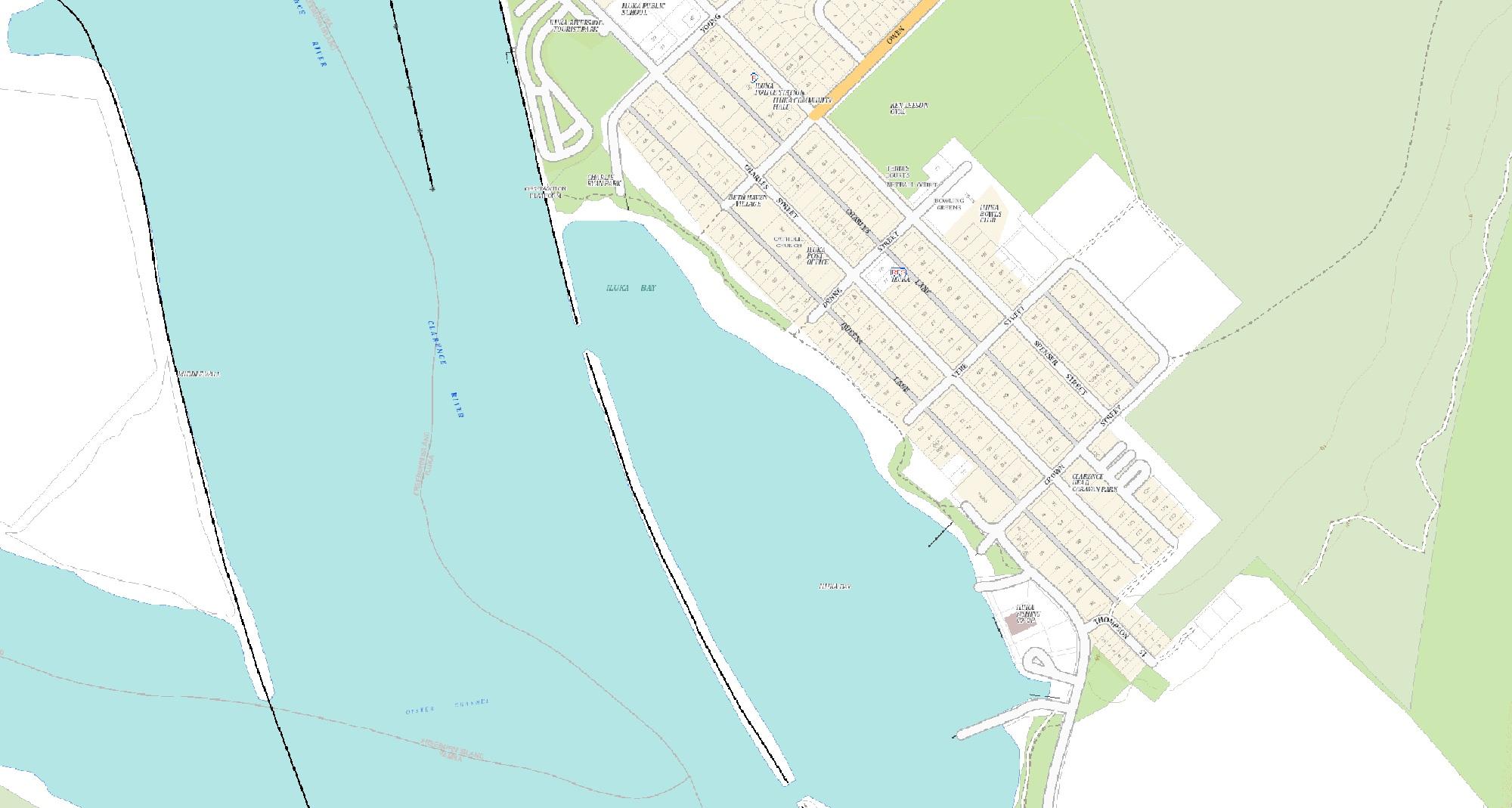


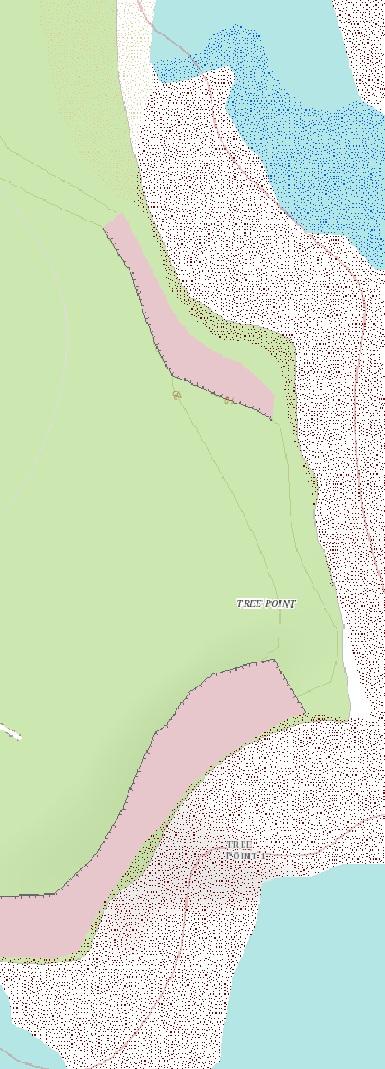
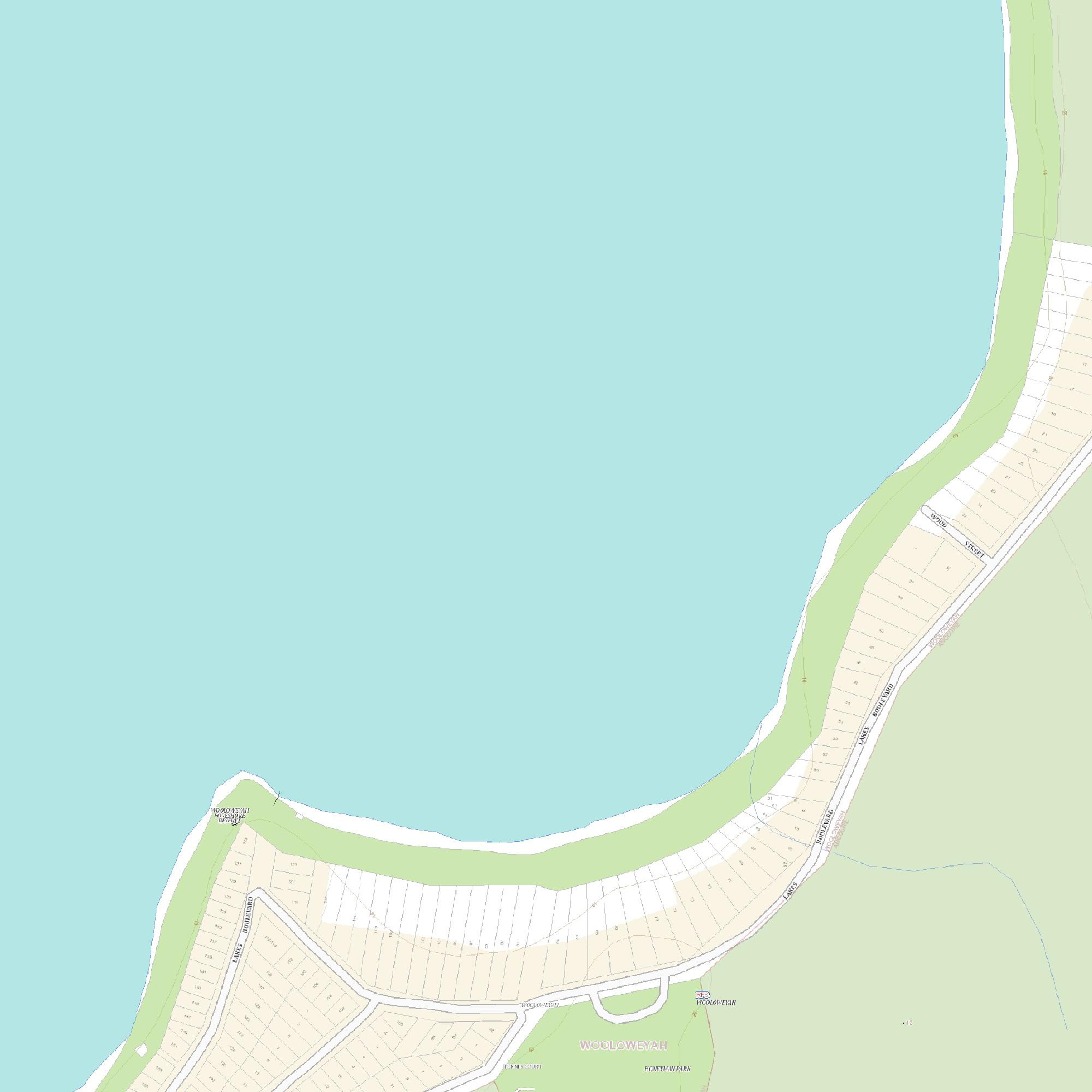
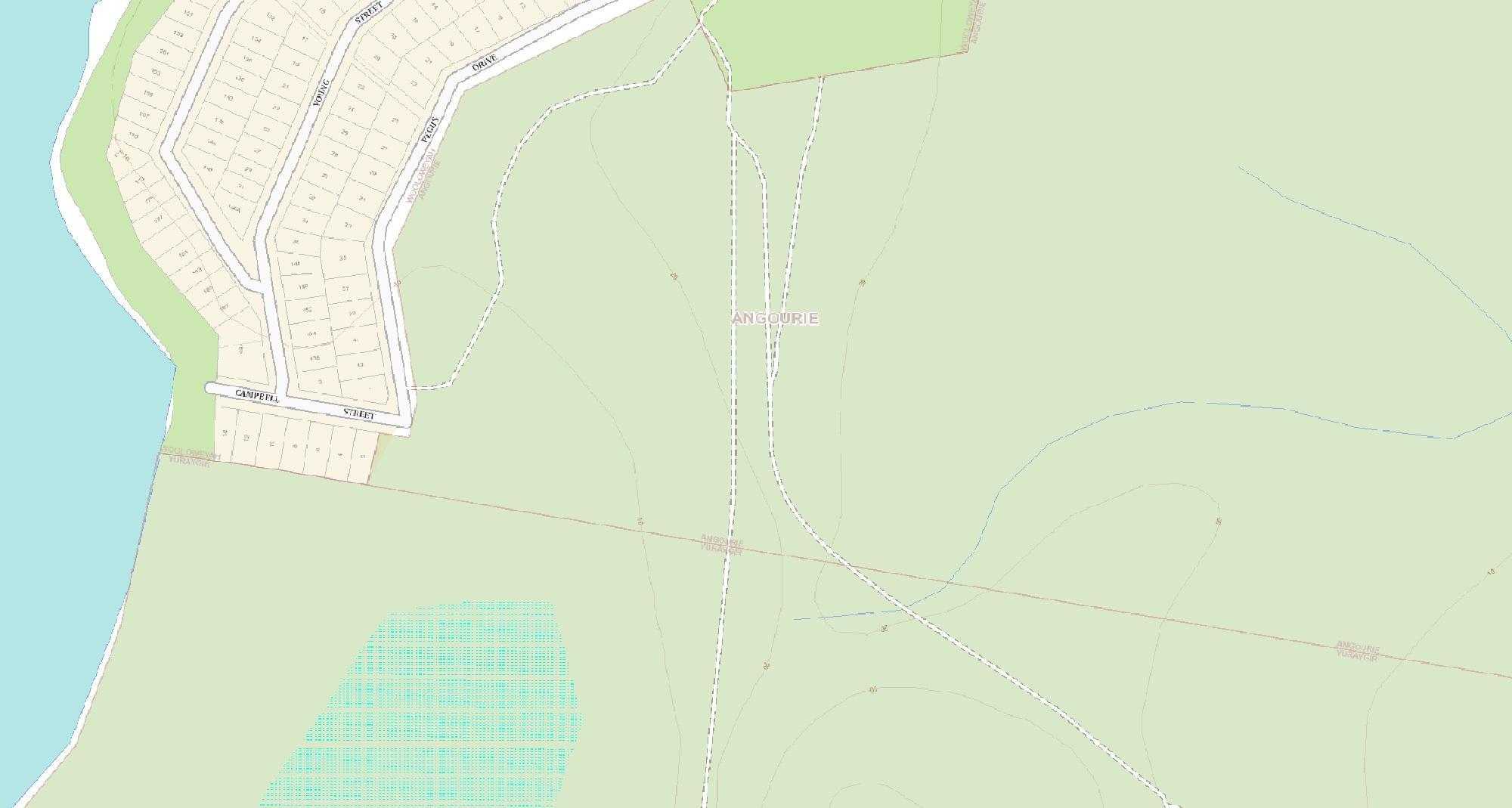


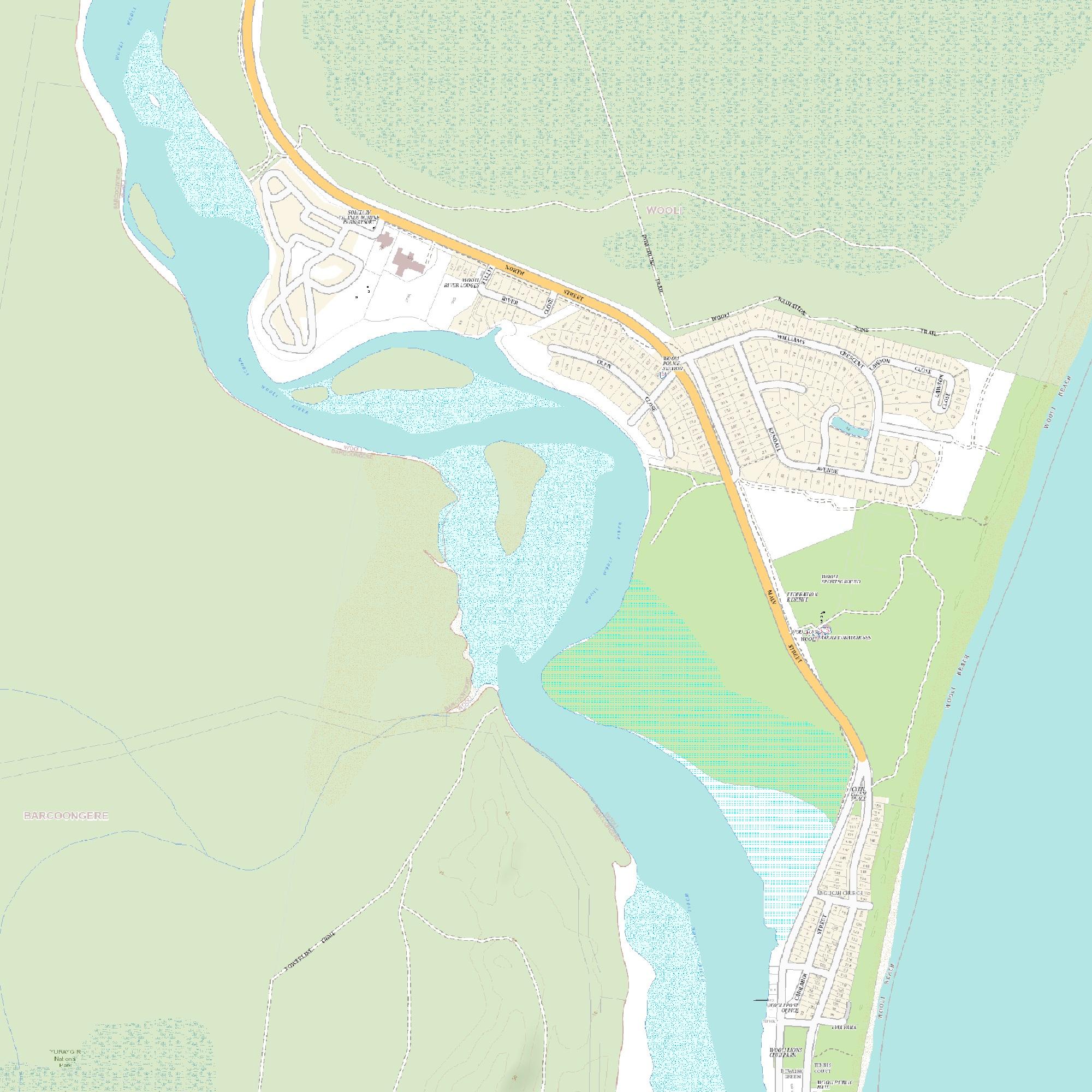


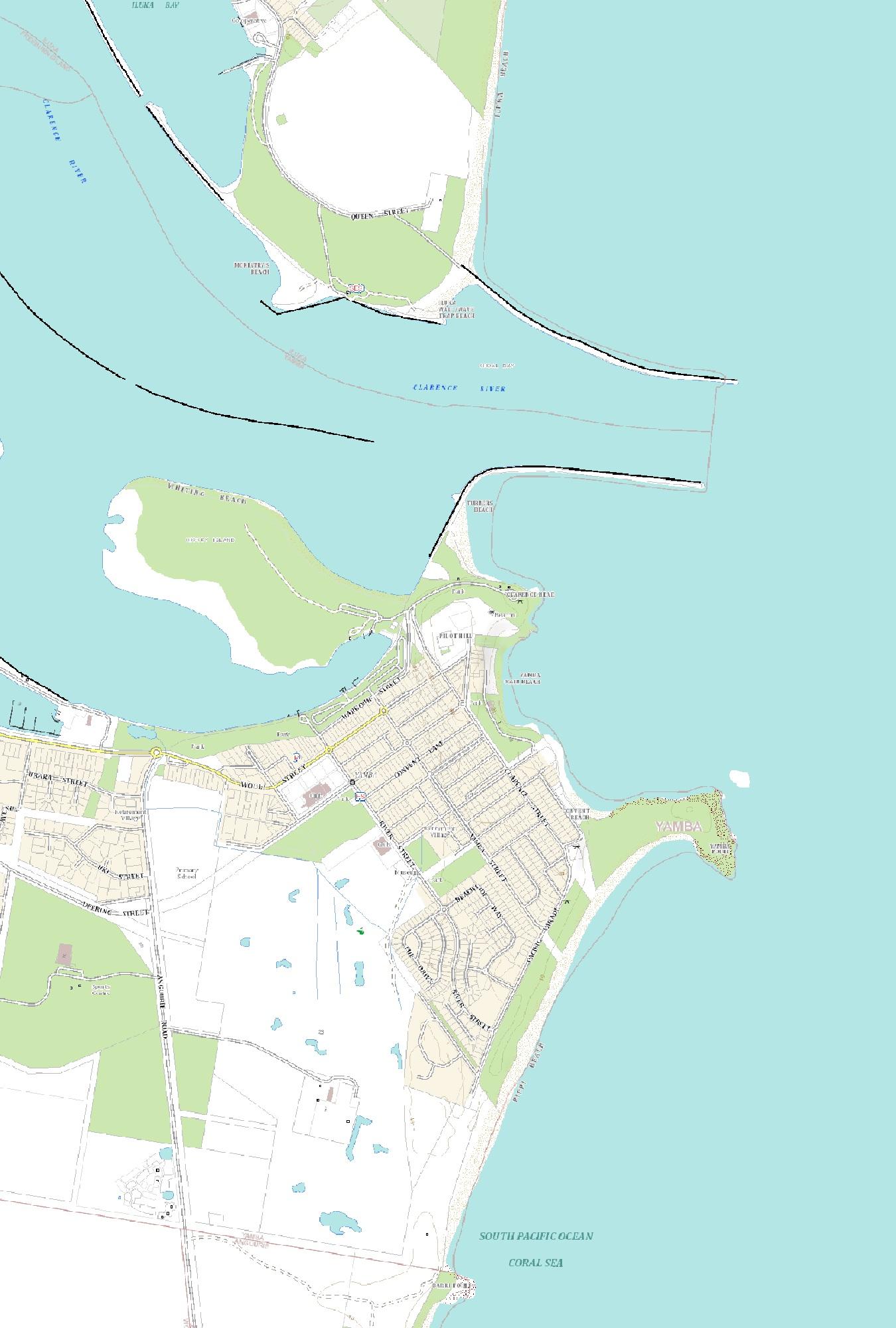
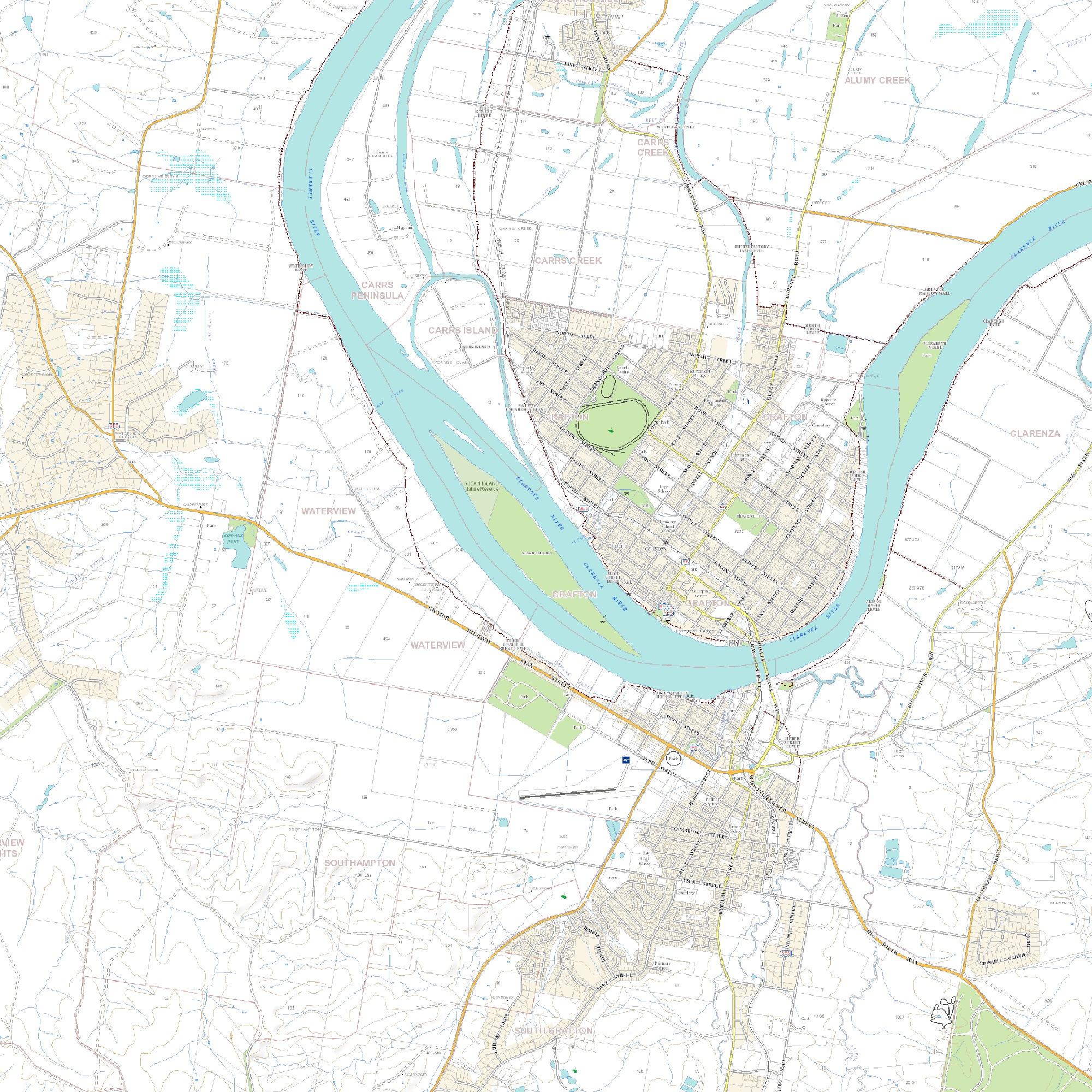

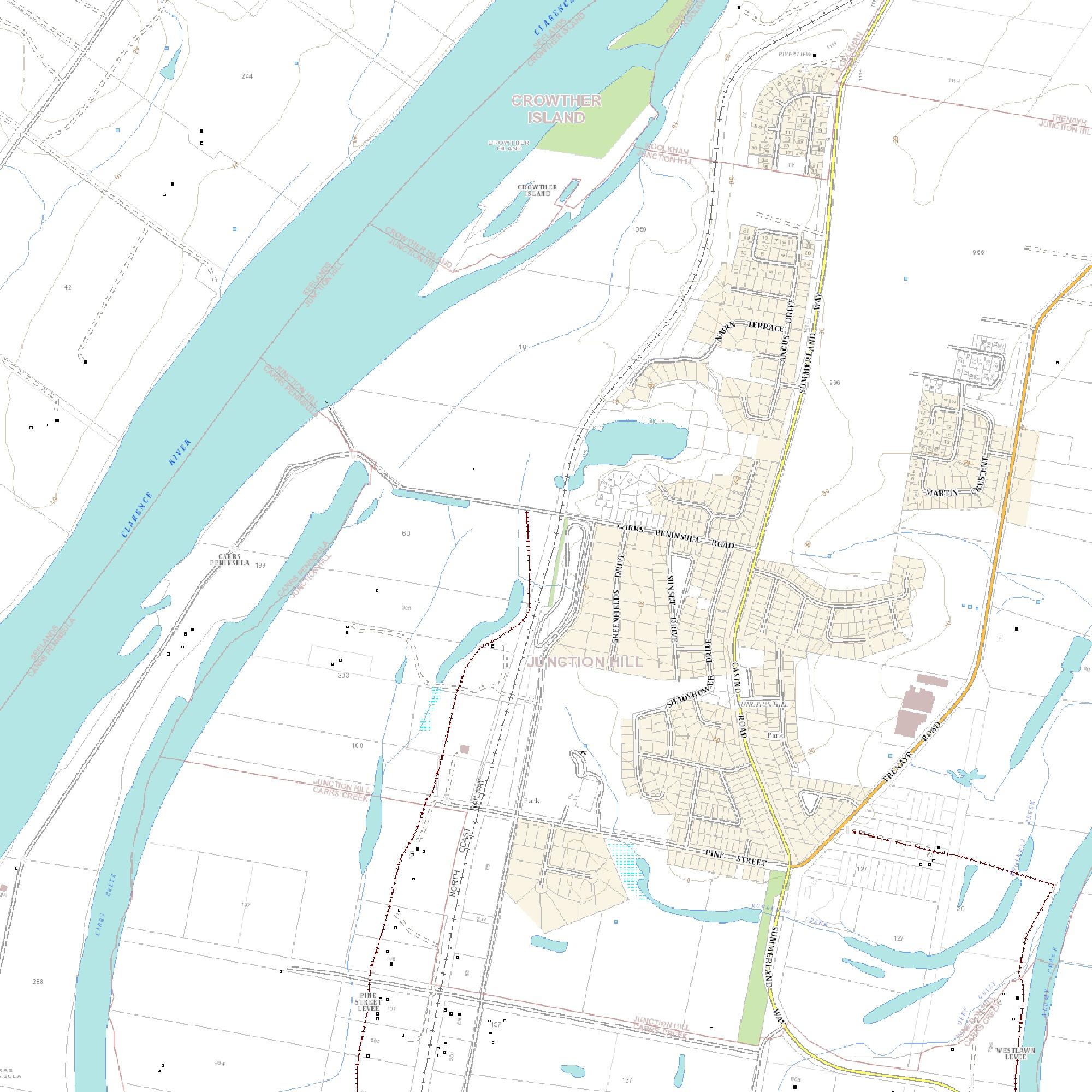
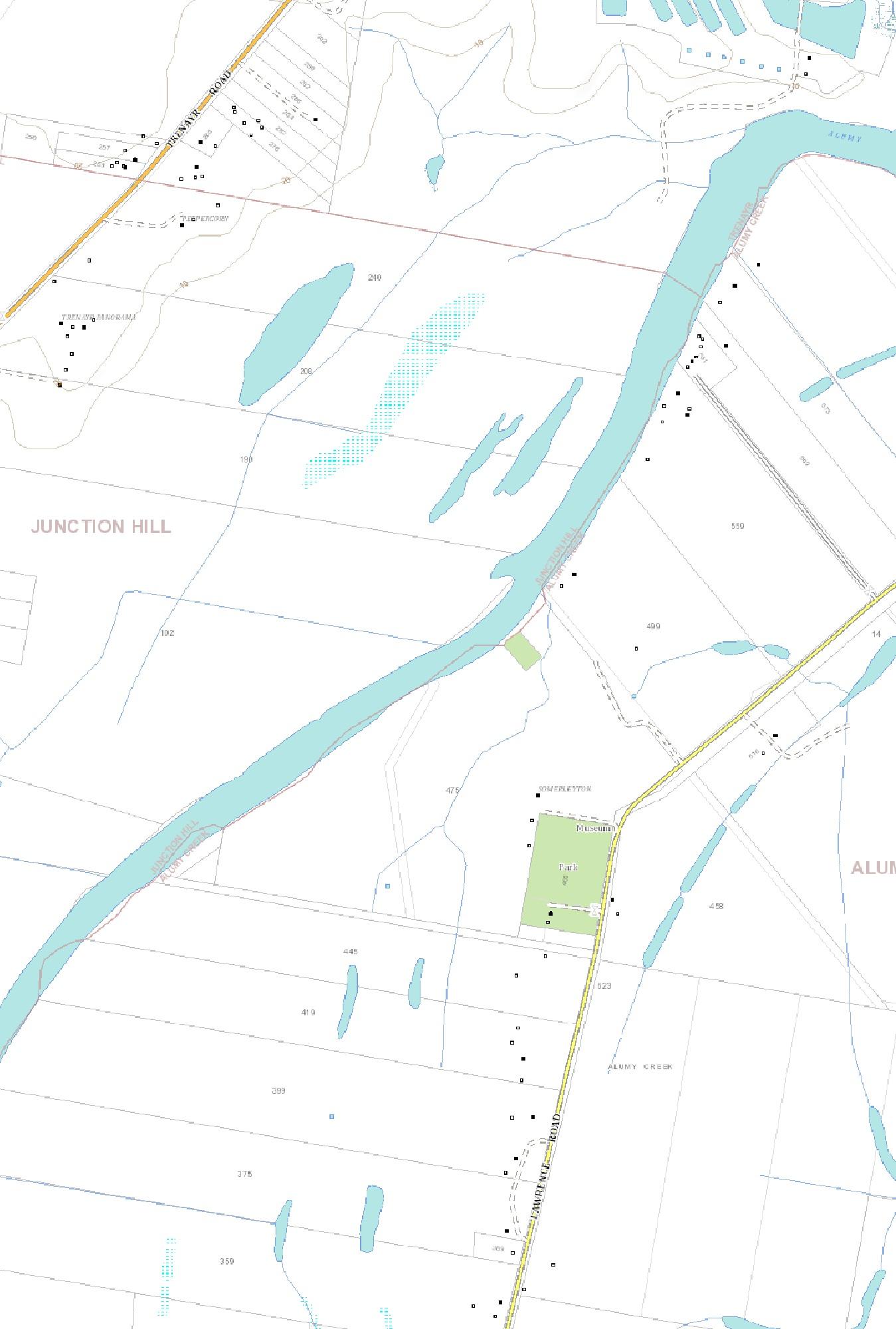
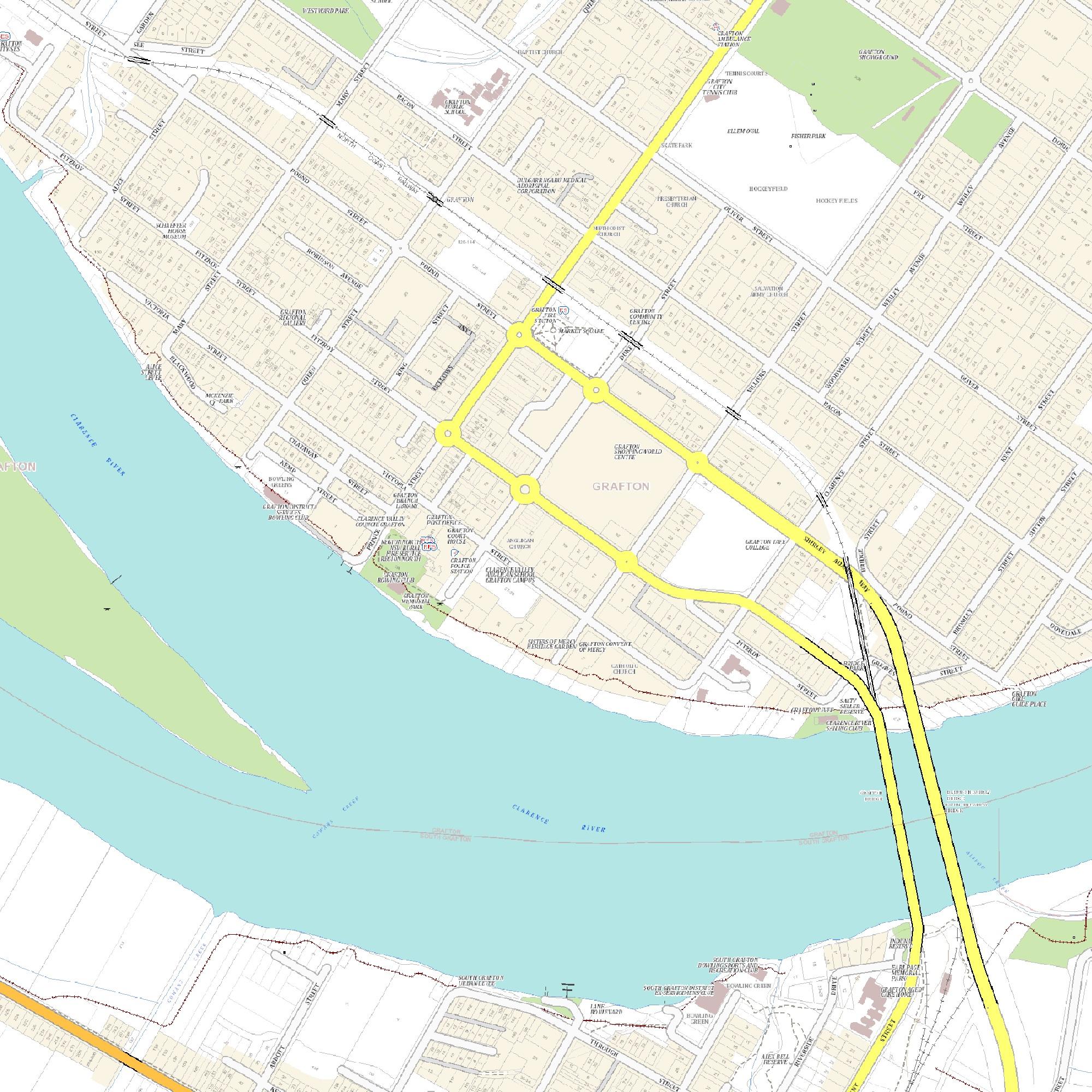
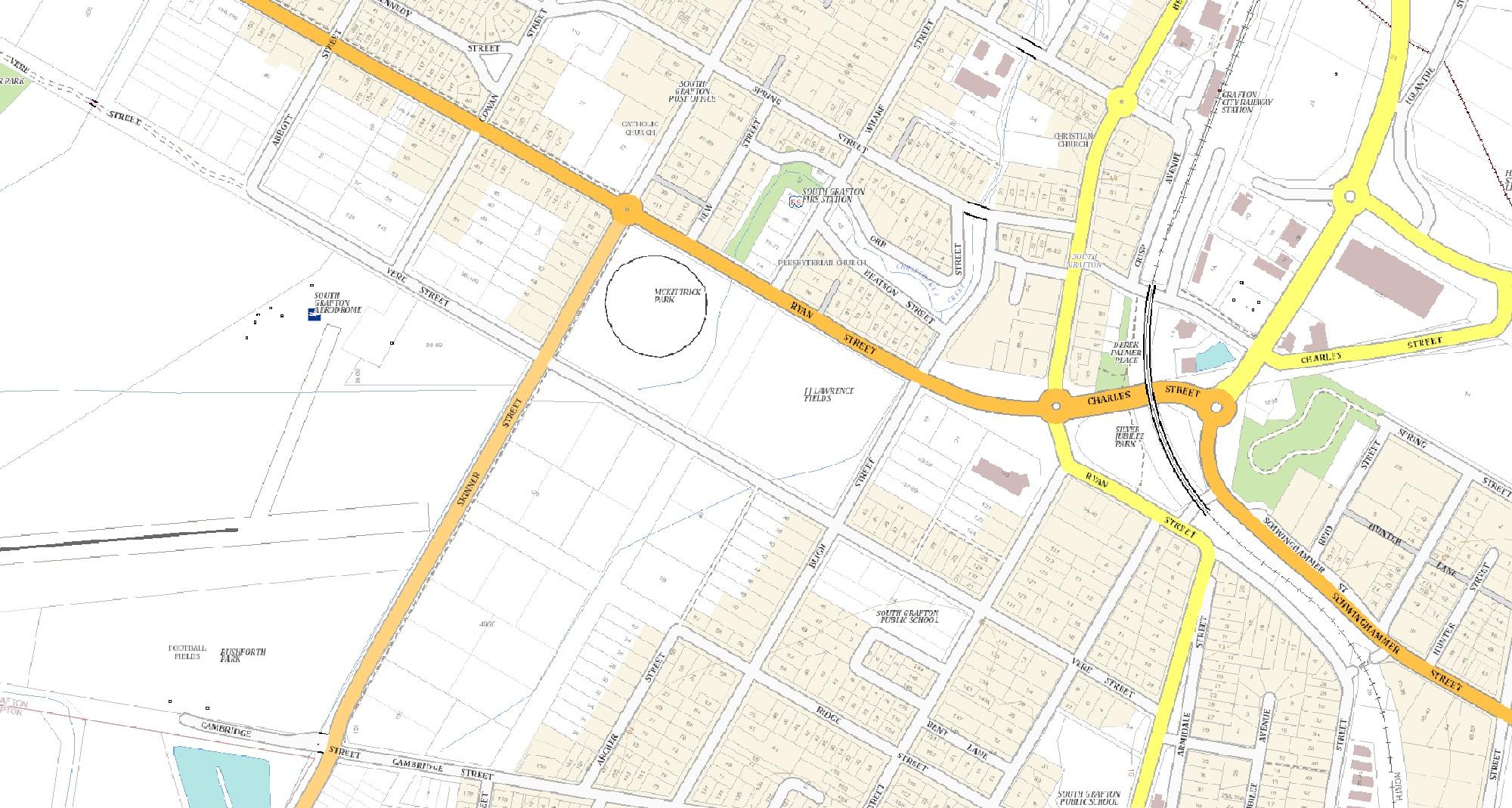

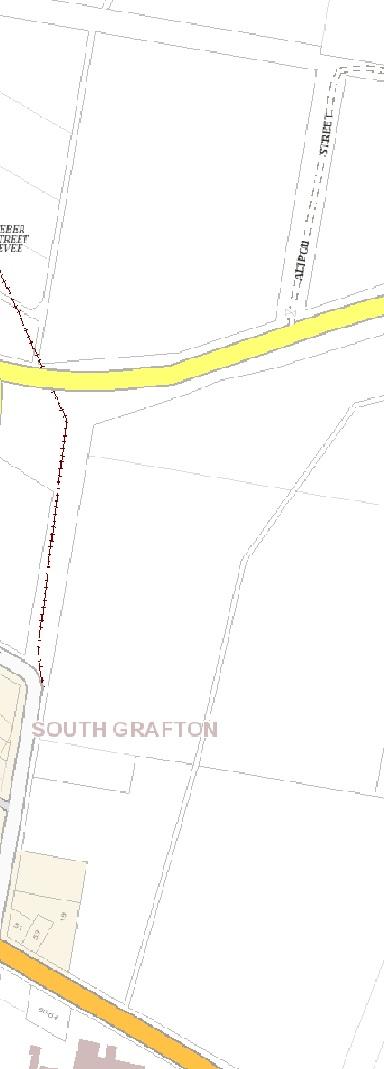
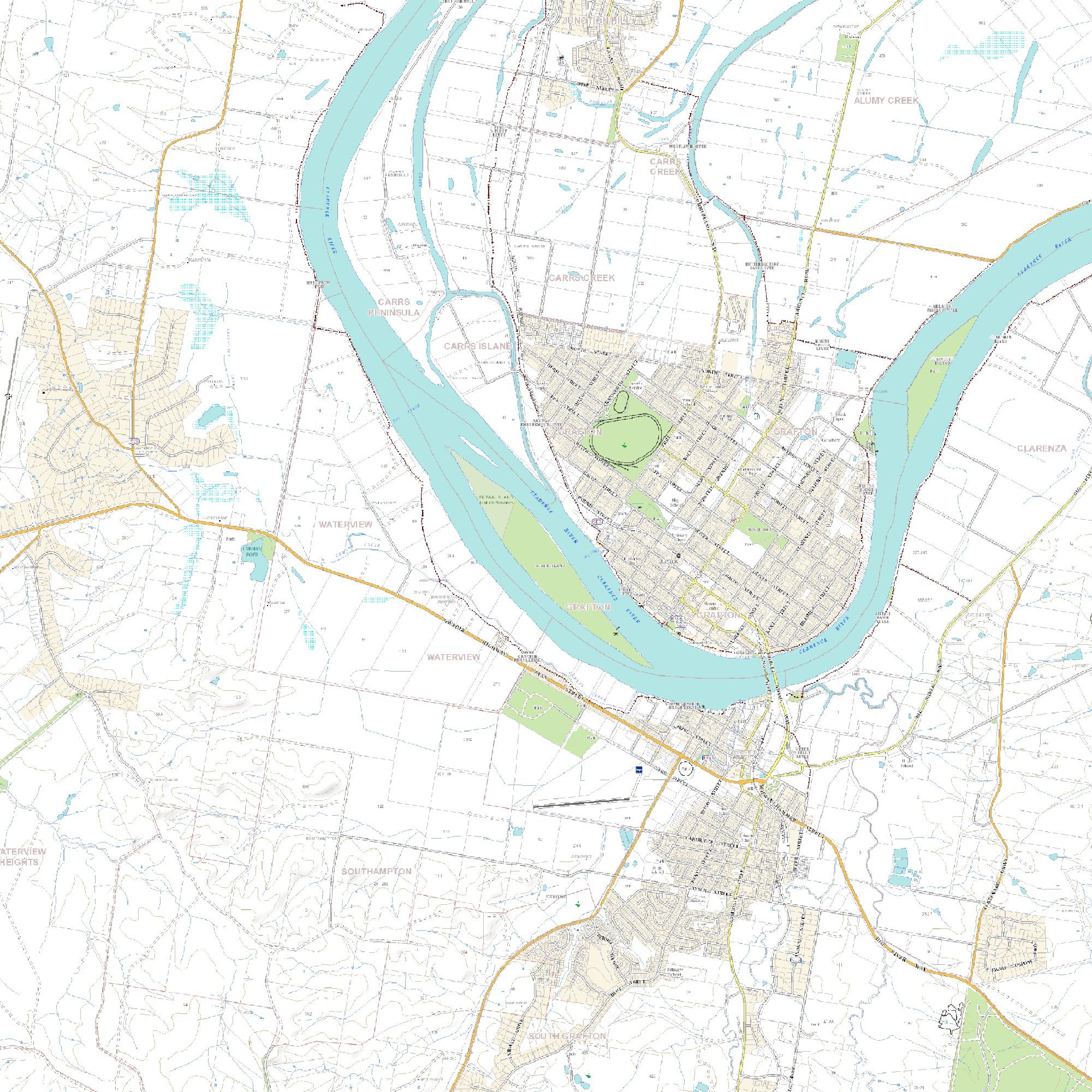
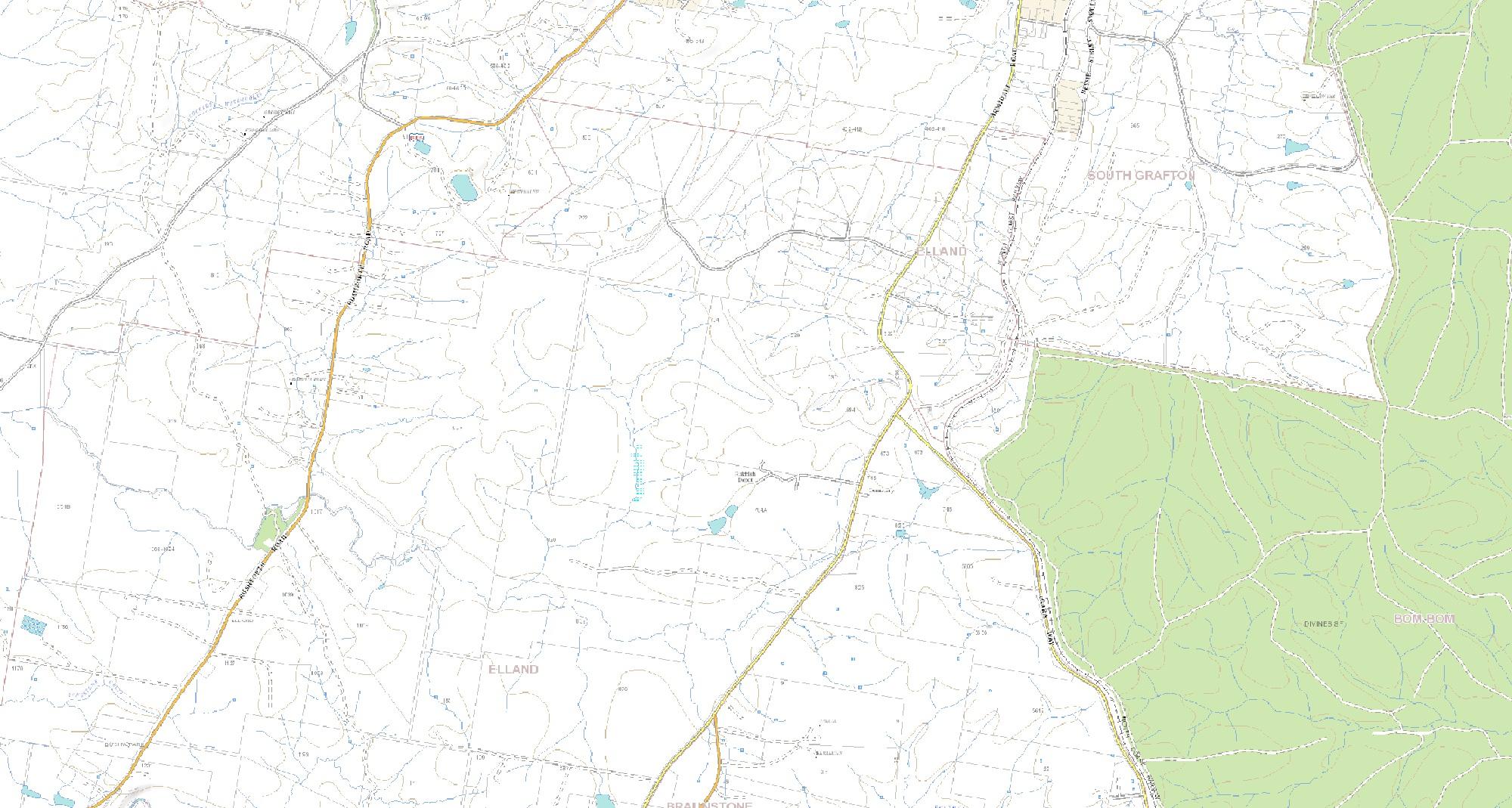

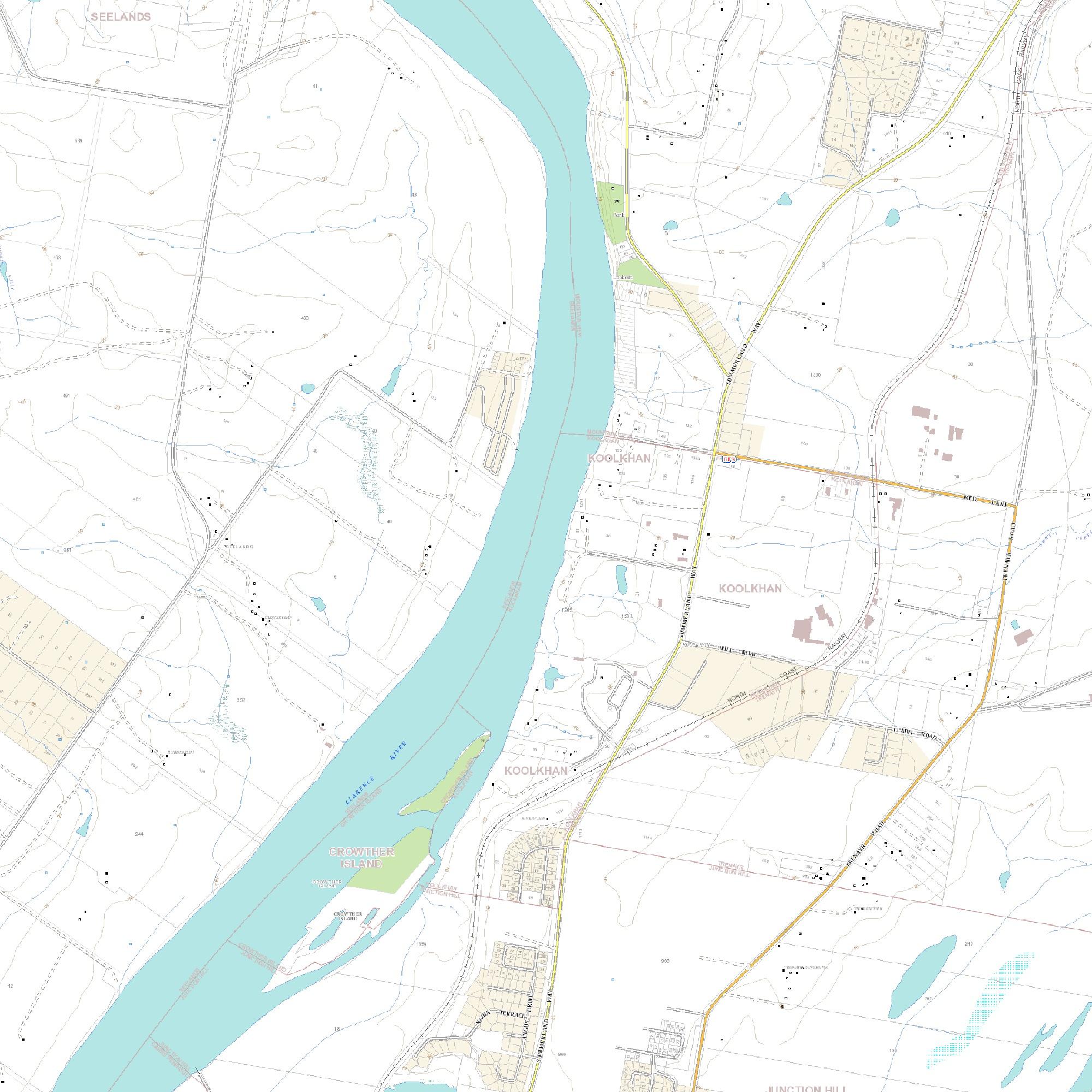
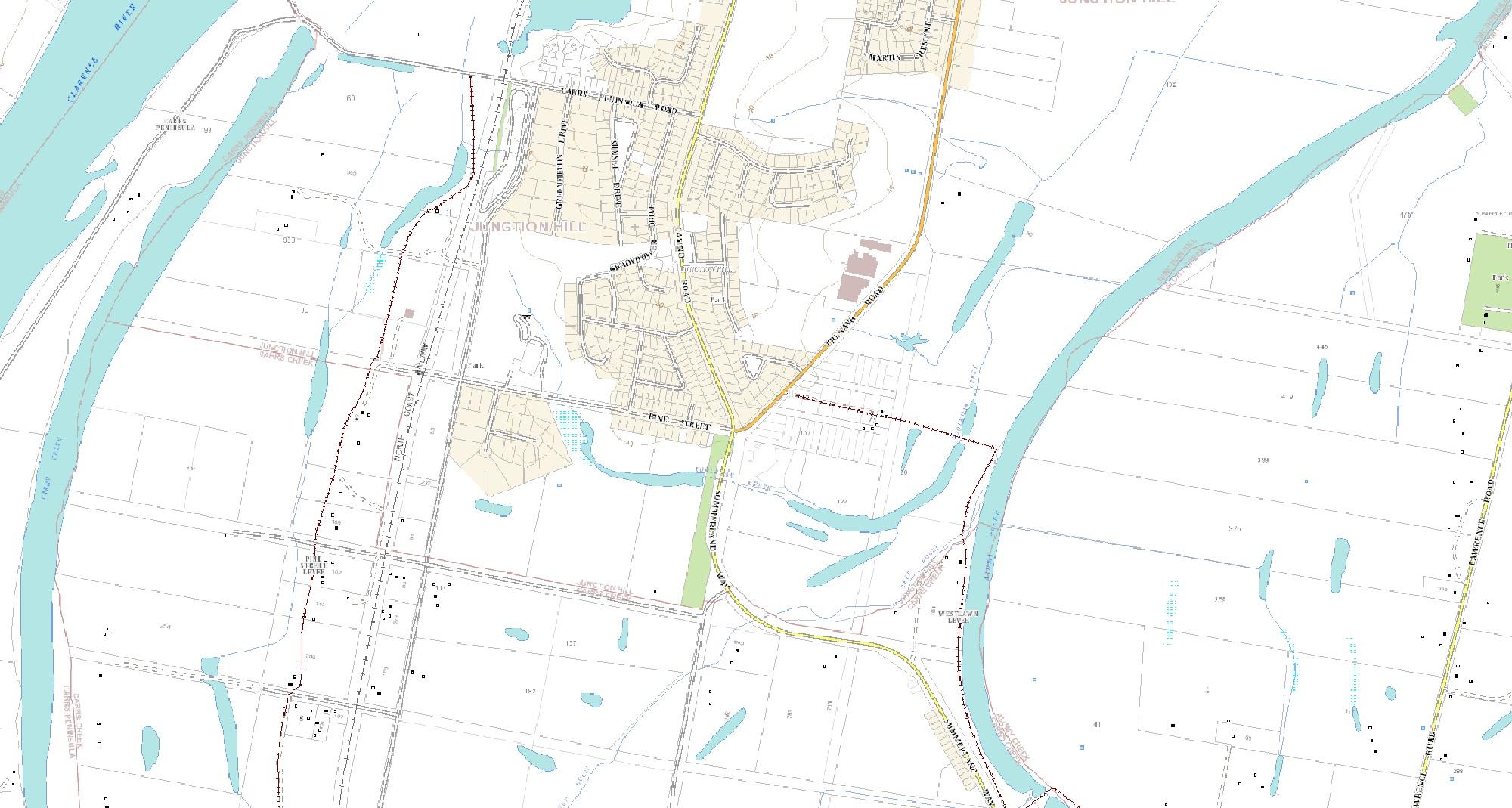


Operational Plan Budget
2026/2027