Separating the noise from the reality when it comes to land reform.
Community Engagement
The evolving relationship with land holdings and stewardship.
Agricultural Update
Farming & Forestry Hand in Hand
Responding to the challenges of climate change.
From Martin Rennie Head of Agri Consultancy at Galbraith.
Welcome to the Spring edition of Rural Matters 2026
Welcome to the latest edition of Rural Matters.
In these pages my colleagues discuss some of the challenges facing land-based businesses currently and highlight some of the many ways that farmers and land managers are achieving their goals and planning for the future while protecting the next generation and, in many cases, leaving a lasting legacy that benefits society as a whole.
As I meet with clients across Scotland and the north of England, I am constantly impressed by the high level of enthusiasm within the sector, despite the often difficult economic and political outlook and notwithstanding the vagaries of the British weather.
This energy and drive has led to the creation of a wide diversity of thriving rural businesses in the UK, some based on the high quality product that British farmers produce, others capitalising on an innovative idea, or the unique attributes of the land in that area.
The resourcefulness and resilience of land managers in the UK is something of which we can all be proud.
I wish all our clients old and new a kind spring and a successful year ahead. n
Ian Hope
07968 209 543 ian.hope@galbraithgroup.com Head of our Rural
Galbraith is a leading independent property consultancy. Drawing on a century of experience in land and property management the firm is progressive and dynamic employing over 200 people in offices throughout Scotland and the North of England. We provide a full range of property consulting services across the commercial, residential, rural and energy sectors. Galbraith provides a personal service, listening to clients and delivering advice to suit their particular opportunities and circumstances.
Like us on Facebook: www.facebook.com/ GalbraithPropertyconsultancy
See us on Instagram: www.instagram.com/GalbraithGroup
Join us on LinkedIn: www.linkedin.com /company/galbraith
See us on TikTok: https://www.tiktok.com/ @galbraithgroup
Scan to listen to our Podcast
LAND REFORM... Take stock & take advice.
Sarah-Jane Laing, Chief Executive of Scottish Land & Estates.
Since the Scottish Parliament was established in 1999, successive administrations have devoted significant time and resources to the matter through the Land Reform Acts of 2003 and 2016, as well as related legislation such as the Community Empowerment Act 2015.
These Acts resulted in the creation of the Scottish Land Commission and funding initiatives such as the Scottish Land Fund to facilitate land purchases by community groups. Land Reform is often the subject of emotive debates in Holyrood, strong on grandstanding messages but low on detail from some.
However, the detail of the new Land Reform (Scotland) Act 2025, passed late last year, is not to be overlooked – and is likely to have significant implications for how rural businesses and landowners manage their land when, or indeed if, it is enacted.
Part 1 of the Act has attracted most attention as it focuses on land reform measures affecting large landholdings – defined as those exceeding 1,000 hectares.
Owners of rural businesses and landholdings could be forgiven for having problems separating the noise from the reality when it comes to land reform.
Among its provisions are two significant restrictions on the transfer of land. First, the Act extends the existing community right to buy by introducing a new pre-sale notification process. Owners of large landholdings will be unable to sell or transfer land without first applying to Scottish Ministers. Where a proposed transfer is notified, the Ministers must publicise this and community bodies will have 30 days to register an interest in acquiring some or all of the land. If such an interest is expressed and Ministers consider that there is a reasonable prospect that the application will result in an interest in the land being registered, Ministers will have the power to prohibit the sale for a further 70 days to allow a formal community right to buy application to be lodged. Following this, there will be further delays to allow the community group to raise the necessary capital – perhaps supported by public funding – to secure the purchase.
Secondly, the Act introduces a new power for Scottish Ministers to make a lotting decision in relation to the
sale or transfer of more than 1,000 hectares from a large landholding; or a smaller area of land if it is deemed part of a composite large landholding. This is a highly significant mechanism within the legislation, and its full implications are beyond the scope of this article. In exercising this power, Ministers must be satisfied that lotting the land would be more likely to lead to it being used in ways that “might make a community in the vicinity of the land more sustainable” than if it was transferred as a single holding to one purchaser. The Scottish Government has substantive work to do over the next few years to set out how, or even if, this will work in practice.
Part 1 also provides for the creation of a new Land and Communities Commissioner (LCC) within the Scottish Land Commission. One of the LCC’s key functions will be to oversee and enforce new community engagement requirements, most notably through the introduction of Land Management Plans (LMPs). Landowners will have a statutory obligation to engage with
communities and tenants in the preparation of an LMP and in relation to any significant changes to it. Engagement with communities may take a variety of forms, but it must be evidenced in the LMP. The duration of the plan is at the discretion of the landowner; however, the plan must be reviewed – and, where necessary, revised – at least every five years. We think that if implemented positively and proportionately the LMP could prove to be a useful tool for land owners and managers.
As currently framed, owners of large landholdings will have to include in their LMP any plans to sell all or part of that landholding in the future, despite the obvious difficulties created by this duty (such as the unnecessary worrying of employees and a negative impact on staff
retention). The LCC will have the power to investigate breaches of obligations, such as the failure to produce an LMP. In investigating a potential breach, they will be able to require a person to provide further information. If a person refuses to provide such information, they may be fined up to £1,000. The Act also allows a fine of up to £40,000 to be imposed if the owner of a large landholding breaches their community engagement obligations – such as the obligation to create and engage communities on an LMP.
Following this, a further fine of up to £40,000 may be imposed if the LCC considers the matter remains unremedied.
Part 2 of the Act focuses on the leasing of land. It introduces a number of new obligations on Scottish Ministers, including a
However, the most concerning provision for many landlords in this part of the Act relates to resumption of land from an agricultural tenant and compensation based on capital value.
u The Act introduces a new power for Scottish Ministers to make a lotting decision in relation to the sale or transfer of more than 1,000 hectares.
requirement to publish a ‘model lease’ for land let wholly or partly for environmental purposes. In addition, Ministers must publish a separate model lease for the letting of public land for the purpose of hutting. Also established is a new legislative framework for small landholdings, updating the framework that governs this category of tenure.
For many, the most relevant changes will be those affecting agricultural holdings. These include changes relating to compensation for improvements, diversification, waygo claims, compensation for damage caused by game or game management and the operation of rent reviews. Underpinning the agricultural holdings legislation is the concept of ensuring that tenants can
participate in sustainable or environmental land use. It will therefore be more difficult for the landlord to object to an improvement proposed by the tenant if it falls into the category of sustainable or environmental land use.
However, the most concerning provision for many landlords in this part of the Act relates to resumption of land from an agricultural tenant and compensation based on capital value. Previously, where a landlord sought to resume part of a holding – for example, to facilitate development such as to create a route of access for an energy project elsewhere on the estate –compensation was payable on a u
basis that ensured the tenant suffered no loss. Under the new Act, a procedure is introduced whereby compensation is calculated as half the difference between the value of the land with vacant possession and its value with the tenant in occupation.
This represents a significant shift in favour of the tenant. Crucially, the change applies retrospectively, not only to traditional 1991 Act tenancies but also to Limited Duration Tenancies (LDT/s). This has been the subject of considerable debate, with many farming organisations, as well as legal and property professionals, opposing the move on the grounds that further retrospective change risks undermining landlord confidence and discouraging landlords from entering into agricultural tenancies.
For those who may not have followed the Bill’s progress closely, these provisions may come as a shock – and that reaction would be
understandable. However, it is also important to recognise that significant further work will be required by the Scottish Government before many of these measures come into effect.
Much of the legislation relies on guidance and secondary legislation that has yet to be developed. At present, it is expected that some provisions could take up to five years to come into force – if they do so at all.
There are also unresolved and fundamental questions around which landowners fall within the scope of the Act, particularly in relation to Part 1. While Scottish Ministers have stated that holdings of 1,000 hectares or more will be subject to many of the new provisions, this is far from straightforward in practice. The position becomes especially unclear once the Act’s concept of ‘connected persons’ is taken into account.
Although Ministers have acknowledged these difficulties, responsibility for resolving them has been deferred to future secondary legislation. In the meantime, many farms and estates are left with uncertainty – unable to determine whether key requirements, such as compulsory Land Management Plans or the potential lotting of land, will apply to them, and consequently unable to plan with confidence for the future.
The Scottish Government has also deliberately left itself considerable discretion with regard to a number of important measures, including the resumption for capital value mechanism highlighted above. In practice, it may take many years before the position is fully resolved.
Scottish Land & Estates worked intensively throughout the Bill’s passage to influence the thinking of both government and parliamentarians, securing a number of important changes along the way.
Engaging with representative bodies such as SLE to stay up to speed and, crucially, taking advice from experienced and knowledgeable professional advisers such as Galbraith to inform future planning.
u Landowners play a vital role in supporting people, jobs and nature across rural Scotland.
While these interventions delivered meaningful improvements, the Act remains challenging for rural Scotland.
The question for rural businesses and landholders now is what happens next. The clear priority must be engagement – both collectively and individually. That means engaging with representative bodies such as SLE to stay up to speed and, crucially, taking advice from experienced and knowledgeable professional advisers such as Galbraith to inform future planning. In a period of prolonged uncertainty, forward planning becomes even more important, and landowners should seek tailored advice to understand how the new provisions may affect their own operations, investment decisions and succession plans.
Landowners play a vital role in supporting people, jobs and nature across rural Scotland – a reality that the Scottish Government acknowledges, even if the policies brought forward do not always reflect it. SLE will continue to influence, and challenge where required, as further details emerge, as well as taking the lead in developing guidance and proposing regulatory details. Land reform, as a concept, is not going away, and we will see more legislation in the next Parliament. The operational challenge now is to remain alert to how the framework evolves, and to ensure that those who own and manage land are as well prepared as possible for what lies ahead. n
RESTORATION FORTH
Reviving Seagrass and Oysters in the Firth of Forth.
Restoration Forth is an initiative launched in 2022, dedicated to breathing new life into the marine habitats of the Firth of Forth. By partnering with local communities, the project aims to restore vital seagrass meadows and oyster populations; two key players in the health and resilience of coastal ecosystems.
Seagrasses are flowering plants that thrive in the shallow, sheltered waters along our coasts. These underwater meadows are bustling with life, providing a home for thousands of marine species. But their importance goes far beyond biodiversity; producing oxygen, storing carbon, stabilising coastlines and keeping coastal water clean and clear.
Despite their value, seagrass meadows in the UK have suffered a dramatic decline, shrinking by up to 90% over the past thirty years, primarily due to habitat destruction, pollution, and other pressures.
So far, the project has planted approximately 200,000 seagrass seeds across three sites in the Firth of Forth, focusing on the restoration of common eelgrass. This ambitious effort is supported by a coalition of funders, including Aviva, the ScottishPower Foundation, the Moondance Foundation, and the Scottish Government’s Nature Restoration Fund through SMEEF facilitated grants.
A key part of the project’s success has been collaboration. An estate managed by Galbraith agreed to dedicate part of the Forth as a restoration site, providing an area for new seagrass meadows to flourish.
Restoration Forth have conducted trials using seagrass seeds sourced from Orkney, the Moray Firth, and the Firth of Forth itself. By diversifying seed sources, the project hopes to answer important questions about how the origin of seeds affects restoration success, filling knowledge gaps that could shape future conservation efforts.
The next phase of Restoration Forth will see the reintroduction of flat oysters to the Forth. Historically, oysters were not a rarity in these waters, but overfishing and declining water quality led to their local extinction in the early 1900s. By bringing oysters back, the project aims to further improve water quality, with the oysters acting as natural filter feeders that help keep aquatic environments healthy.
Restoration Forth demonstrates how community action, scientific innovation, and strategic partnerships can restore the health of our seas. As seagrass meadows and oyster beds return, the benefits will ripple through the ecosystem supporting wildlife and improving water quality for years to come. n
u Hill and upland sheep systems operate on tight margins and rely heavily on support payments.
Future Farming Policy and its Effects
As Scotland moves towards the next phase of agricultural support reform, farming businesses are preparing for one of the most significant transitions since the move away from the CAP.
The Scottish Government’s new support framework broadly mirrors the direction taken in England by placing greater emphasis on environmental sustainability, climate change mitigation, and food production.
The new framework is built around a four-tier system designed to encourage progressive change while maintaining income stability for active farmers.
Tier 1 provides a base level support to underpin food production
• while delivering baseline environmental and animal welfare standards. Farmers must complete a Whole Farm Plan, including carbon audits, soil analysis, and integrated pest management. In 2024, it was reported that only 29% of Scottish farms were profitable without BPS, rising to 73% once support was included, highlighting the importance of baseline payments. As a result, Tier 1 is expected to attract strong uptake, embedding environmental and welfare requirements as a condition of accessing core support.
The Future Farming Investment Scheme (FFIS) provided grants for farms to invest in equipment and infrastructure that supports environmental outcomes...
Tier 2 builds on this by rewarding enhanced • environmental delivery through additional “Enhanced Greening” measures, largely focused on Ecological Focus Areas (EFAs). Participation is expected to increase the value of support payments for businesses able to integrate these measures effectively without undermining productivity.
Tier 3 provides competitive, contract-based • funding for farms to deliver targeted environmental, climate, or efficiency projects beyond the baseline requirements of Tiers 1 and 2. The Future Farming Investment Scheme (FFIS) provided grants for farms to invest in equipment and infrastructure that supports environmental outcomes. In 2025, over 7,500 applications were received, with around 1,700 successful offers made and subsequently receiving a share of £21.4 million, illustrating interest and willingness in environmentally beneficial practices.
Tier 4 focuses on ongoing training and • professional support through the Farming Advice Service, covering areas like biodiversity, carbon management, business planning, and succession. To qualify, farmers must meet cross compliance standards and new conditional requirements including Whole Farm Plan Compliance and Soil Management and Nutrient Planning.
As the transition progresses, farmers are encouraged to prepare early by completing carbon audits, soil testing, animal health and welfare plans, and by using FAS support to integrate environmental management into long-term business planning.
Key Changes for 2026
• enhanced sustainability conditions
BPS transitions into Tier 1 Base Support with
• Enhanced Support
Greening requirements evolve into Tier 2
• penalties are expected
From 2028, stricter enforcement and potential
• vary across sectors, with different challenges and opportunities emerging for each.
Beef
The implications of these policy changes will
Beef production in Scotland spans lowland to upland systems. The new calving interval rules under the Suckler Beef Support Scheme increase focus on fertility, management, and recordkeeping, which may challenge some herds with limited labour. While beef prices remain fairly strong, they are vulnerable to rising costs and demand changes, and premium markets like Scotch Beef PGI require consistent quality and supply. u
Sheep
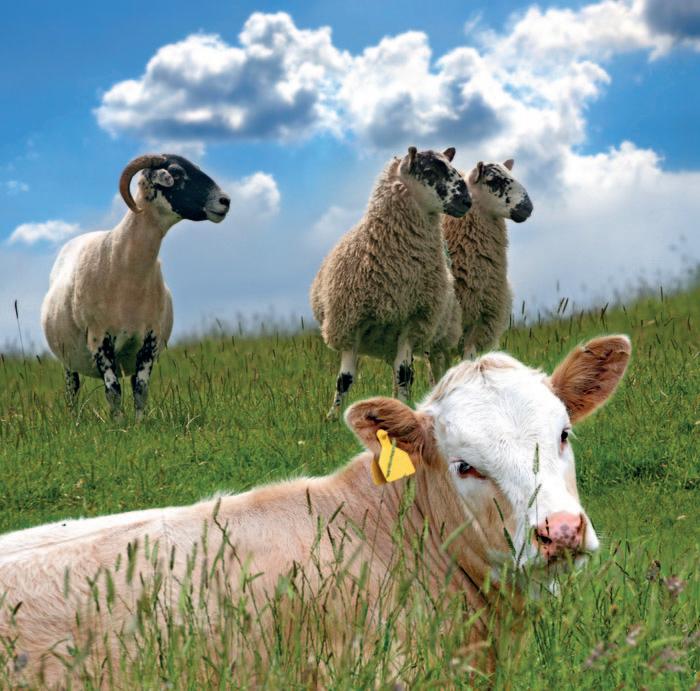
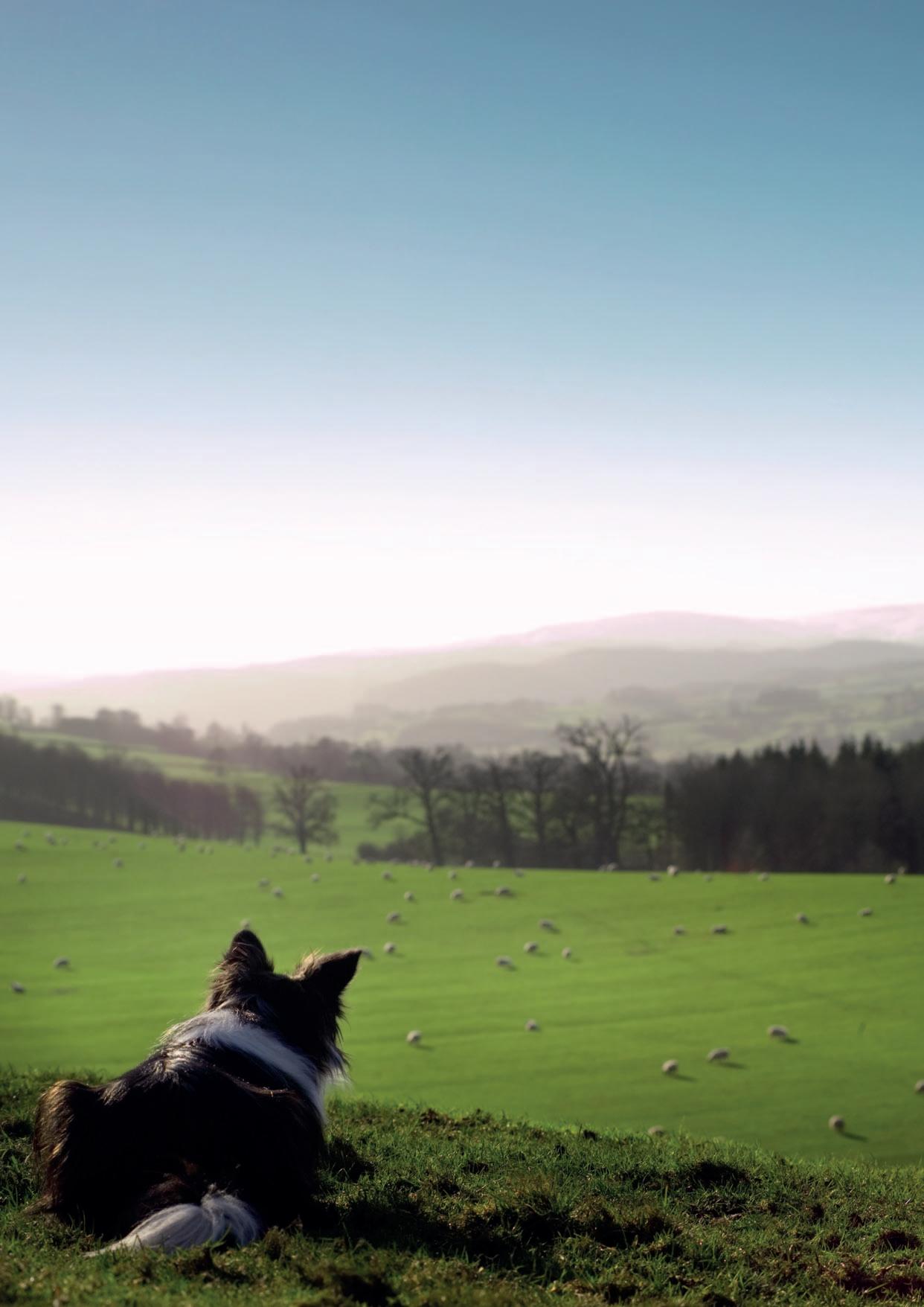
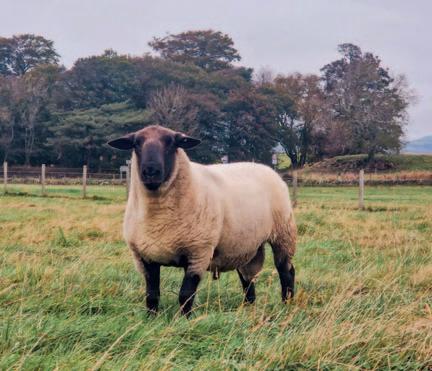
Hill and upland sheep systems operate on tight margins and rely heavily on support payments. Environmental schemes like the AgriEnvironment Climate Scheme (AECS) can benefit extensive flocks, but cuts to core area-based support would hit smaller or remote farms hardest. Volatile lamb prices and rising transport, labour, and input costs (up 12% in 2022/23) continue to tighten already narrow margins.
Dairy
Dairy farms will face increasing pressure to reduce greenhouse gas emissions and improve slurry and nutrient management. Farms that improve productivity while lowering emissions and managing nutrients effectively may be well positioned to benefit. While environmental requirements may increase costs, continued support payments should help many Scottish dairy farms adapt. However, with recent volatility in milk prices, combined with elevated input costs, investment into environmental measures may be limited despite the support.
Arable
While reform initiatives promote improved soil management, crop rotation, and reduced chemical inputs, continued area-based support remains a key component of income stability. Enhanced greening requirements are expected to increase the proportion of land removed from full production through measures such as buffer strips, winter ground cover, and habitat provision, potentially limiting output and rotational flexibility. Although these measures may attract additional support payments, their capacity to offset lost production is likely to vary widely depending on soil type, scale, and enterprise structure.
Poultry
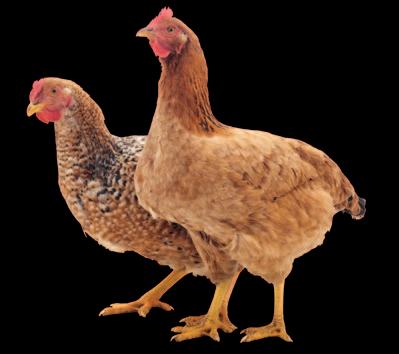
Poultry production is largely unaffected by land-based support, but policy changes around animal welfare, biosecurity, and manure management may increase operating costs. Despite this, strong market demand and low emissions are likely to help this sector remain economically resilient. Poultry numbers have risen to over 12 million, contrasting with declines in other sectors and reflecting changing production dynamics.
Conclusion
The impacts of the new four tier support scheme will differ across sectors. Overall, long-term profitability and sustainability will depend on early preparation, effective use of available support, and the integration of environmental management into routine business planning.
To help farmers navigate this transition, Galbraith’s Agricultural Consultancy team can provide a range of services to maximise both compliance and opportunity under the new framework. This includes assisting with carbon audits, soil analysis, biodiversity audits, integrated pest management plans to comply with whole farm plan requirements and helping businesses meet Tier 1 and Tier 2 requirements while maintaining productivity.
Additionally, Galbraith can advise on Tier 3 opportunities, assisting with grant applications for schemes such as the FFIS, AECS and Agritourism Investment Scheme (AIS). n
Alice Donaldson
07867 977 632
alice.donaldson@galbraithgroup.com
Lisa Brown
07867 977 633
lisa.brown@galbraithgroup.com
Dairy farms will face increasing pressure to reduce greenhouse gas emissions and improve slurry and nutrient management...
u The AECS process begins by using the holding number to identify eligible options for each business.
The Agri-Environment Climate Scheme (AECS) is becoming an increasingly attractive option for farmers and landowners across Scotland. With continued uncertainty surrounding future Basic Payment Scheme, AECS offers a secure and guaranteed income stream over a five year period.
AGRI-ENVIRONMENT CLIMATE SCHEME
with Calum Smith
Recent Galbraith applications for the 2025 round have ranged from £40,000 to £249,000 over the term.
Beyond providing additional funding, the scheme enables farms and estates to create value from areas that may be less productive agriculturally. Many land managers are also aiming to enhance biodiversity, improve water quality and reduce flood risk across their holdings. AECS plays a key role in supporting the maintenance, restoration and improvement of such areas.
The scheme is divided into management options and capital items. Management options relate to the environmental commitments themselves for example, moorland management, wetland management and wader grazed grassland management. There are also arable based options such as forage brassicas for farmland birds, stubbles followed by green manure in an arable rotation and wild bird seed for farmland birds. These options may provide more income
per hectare currently than crops like Spring Barley but may also increase the margin per year if they can be included alongside growing crops. Capital items support the delivery of these commitments and may include livestock fencing, gates and bracken control. There are also stand-alone capital items available, such as pond creation.
The AECS process begins by using the holding number to identify eligible options for each business. We then carry out a site visit and use mapping software to assess where each option would be best placed on the ground. From this assessment, we prepare a financial summary outlining projected returns for each option and the split between management and capital items. A points scoring assessment is also completed at this stage to enable us to make a professional judgment on the level of scoring per application.
Once the proposed scheme layout and financial summary are finalised, we present these to the client for approval. If they wish to proceed,
we prepare and submit the full application, including maps, supporting documentation and all required information for the Scottish Government.
The application window opens at the beginning of February and closes Saturday 20th June 2026, but is normally confirmed by the department after the new year. n
FRINGE BENEFITS
For most people the idea of a Scottish estate conjures up images of the iconic heather moors of the Angus Glens or perhaps sheep grazing peacefully on a hillside with only the occasional walker to break the silence.
Urban fringe estates are less familiar to most, but nevertheless represent a not insignificant proportion of Scottish estates, typically combining farming with community and commercial land uses which would seldom be a part of the mix for many other landowners.
One notable example is Caledonian Estate, situated in East Dunbartonshire, approximately five miles north of Glasgow. The landholding extends to about 5,500 acres, encompassing beautiful views over rolling countryside but right on the edge of suburban Glasgow. Agriculture is a core activity, with in-hand arable farming, tenanted farmland, grazing land and mixed woodland.
Among the many interesting tenants on Caledonian land are a model aeroplane flying club – the Glasgow Barnstormers. The club rents an area of flat ground for use as a runway and has a ‘pitstop’ social room housed in converted containers. The club has grown to around 60 members and the original threeyear lease has now been extended to a 10-year agreement, allowing them to apply, successfully, for National Lottery funding for improvements to the grass runway.
There is also a golf driving range, two well-established golf clubs, a bowling green, an equestrian business which dates back over 40 years and an angling club, which leases the fishing rights on the Gadloch – a loch stocked
with rainbow trout. Close to the centre of Bishopbriggs a secure ‘dog park’ has been created, providing a dog agility course and shelter with drinking water, which has proved exceptionally popular since opening last year.
Good relationships with tenants have enabled long-term leases to be agreed, providing certainty for both the estate and the tenant. A long-term tenancy is also often a pre-requisite for sporting clubs to apply for grant funding of various kinds, a further benefit which the estate is keen to facilitate.
In addition, the estate was approached with a request to lease an area of land for a ‘forest school’. The principle of a forest school is to allow children to play outdoors, learn about insect and birdlife and spend time in a natural environment. These aims align well with the estate’s commitment to sustainable land use, conservation and community partnerships. Since 2019 Caledonian has provided an acre of woodland to the school on a five-year renewable agreement.
Very much along the same lines, a field has been let to ‘New Roots’ a not-for-profit community initiative, which is planting an orchard and working on the restoration of a species-rich meadow. The organisation runs weekly classes for neurodivergent children.
As well as working closely with local farmers and community groups, the estate also attends regular meetings with the local authority, which helps maintain good communication and partnership working on a range of projects which align with the estate’s objectives. As a result of this open dialogue, the council recently purchased an area of land to extend the local cemetery provision. In addition to this, a private crematorium operator has recently opened a crematorium on a long term ground lease.
Given that this land use is so unusual, we sought the expertise of colleagues across Galbraith, who have extensive experience negotiating land sales and ground rent agreements for clients across the UK, whether for retail, industrial or commercial use. Having satisfied ourselves that the lease and the land sale would not impose any additional risk to the business,
terms were set out and the transactions agreed to the satisfaction of both sides.
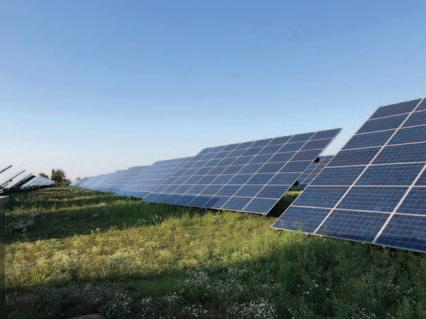
The most recent development relates to solar energy. The largest solar park in Scotland – designed and built by the estate – is now fully operational, generating 18MW and extending to about 90 acres. The power will cover the needs of office buildings owned by Caledonian, using clean, renewable energy and contributing to the estate’s wider carbon sequestration and sustainability objectives.
The location of the estate can present some challenges, such as increased flytipping and the risk of rural crime. The estate team spends a considerable amount of time and resource cleaning
u Among the many interesting tenants on Caledonian land are a model aeroplane flying club.
up rubbish which has been fly-tipped from passing vehicles.
However, with careful management, an urban fringe location offers the ideal opportunity to provide a range of benefits to the local community, supporting grassroots leisure, sporting or educational activities, while diversifying the land use to achieve a range of objectives and to ensure there is no over-reliance on one strand of activity. n
Richard Haggart 07717 835 207 richard.haggart@galbraithgroup.com
The most recent development relates to solar energy. The largest solar park in Scotland – designed and built by the estate – is now fully operational, generating 18MW and extending to about 90 acres.
Georgina Weston 07909 978 645
georgina.weston@galbraithgroup.com
The Land Reform (Scotland) Act 2025 marks the next phase of development in Scotland’s evolving relationship with land holdings and stewardship.
COMMUNITY ENGAGEMENT
While much of the public conversation has focused on obligations for large landholdings, there is a compelling and often underreported upside for landowners: stronger community engagement and structured land management planning can actually enhance long term resilience, reputation, and economic opportunity.
The Act introduces enhanced community engagement obligations for owners of large landholdings, defined as those exceeding 1,000 hectares. These obligations are designed to ensure that communities have a meaningful voice in decisions affecting their local environment and economy.
The Act provides limited detail of community engagement requirements but would be expected to reflect existing good practice guidance from the Scottish Land Commission.
The Scottish Land Commission currently provides best practice guidance and case studies under their route map and the Scottish land rights and responsibilities statement.
Some land use changes, such as forestry or developments requiring planning, require statutory community engagement, but other elements can have significant impacts on communities and SLC recommend engagement is undertaken. This engagement may take the form of publishing a written consultation or survey, holding local meetings or holding site visits, carrying out workshops perhaps with a facilitator, or collaborating with the community to co-design a project.
u It is also fitting that landowners feeding into the community are part of the community themselves and will benefit from strengthened rural economics.
Although this may be seen as another burden on landowners, there is an opportunity for community engagement and wealth building to benefit landowners if it can be viewed for its positive potential.
Large landowners have for centuries undertaken philanthropic activities in their local communities. It was common for 18th century landowners to replace housing with planned
villages. Many landowners gave land for schools, churches or village halls which continue to provide community services, despite many now being run by local councils. All too often these are minimally advertised and underappreciated. Many large estates continue to provide rural housing, rural jobs and premises for small business. Land management plans and community engagement give landowners an opportunity to showcase their role in community wealth building and sustainable land management.
Engaging with communities including their neighbours offers a wealth of opportunities for large landowners to work more collaboratively with others in their local areas and undertake partnership projects to benefit from others’ skills, capital or undertake landscape scale projects, with increased benefit.
It is also fitting that landowners feeding into the community are part of the community themselves and will benefit from strengthened rural economics. More small businesses provide more opportunity for landowners to diversify, letting buildings or undertaking projects with local tenants increasing the resilience and wealth of all involved. Thriving tenants and communities equate to thriving estates overall. There may be other less tangible benefits to large landowners as well, the formulation of a land management plan provides landowners the opportunity to sell their vision for the estate, creating an environment of support, where risks are raised earlier and understood more fully.
Taking short-term letting as an example, engagement with the community at an early stage allows for concerns to be addressed and problems to be dealt with and planned for at an early stage, reducing disruption and abortive costs.
This allows landowners to work with communities and take part in positive discussions. In our experience presentation of the landowners position at an early stage can provide the community with greater understanding for changes and help to generate a healthy relationship, increasing the respectability of landowners and their local reputation.
A greater understanding of community priorities and working together provides an environment where scope can be given to joint projects and development, which is supported by the local community. The engagement with the community also gives the potential to make use of additional government grants and improve the overall success of projects.
Healthy community relationships have economic benefits as well, with engaged communities able to provide prospective tenants and grow business locally to increase the demand for rural property and opportunities for landowners to provide buildings suitable for these business opportunities.
We hope that landowners can look past the negative press on many elements of the Land Reform Act and grow their own benefits alongside their local communities. We await regulations and guidance from the Scottish Government and continue to keep abreast of changes in relation to the Land Reform Act, while preparing our land-holding clients’ estates for future management plans.
We hope that landowners can look past the negative press on many elements of the Land Reform Act and grow their own benefits alongside their communities....
At Galbraith, we hope that our clients will be able to use community engagement as a key part of their planning and strategy, and that the requirements of the Act will improve general community relations, public understanding of the challenges faced by large landowners and help to foster positive relationships. n
The changes to the Inheritance Tax (IHT) regime announced in the Autumn 2024 budget marked one of the most significant alterations to UK capital taxation policy in recent decades.
These changes were of crucial importance to rural landowners and farmers owing to the proposed changes to Agricultural Property Relief (APR) and Business Property Relief (BPR) on inheritance tax, which meant that many in the sector would now be subject to significant IHT liabilities from April 2026.
In the year since this announcement, the farming industry and landowner organisations have been a regular fixture in the national political debate. Industry organisations such as the National Farmers Union (NFU) have organised large-scale rallies protesting the changes on a regular basis, in addition to lobbying the UK Government through MPs both within the Labour Party and opposition parties. Despite the heated political debate, the UK Government remained steadfast in its commitment to implement these changes throughout most of 2025.
Given the scale of the changes announced to the IHT regime in the 2024 Autumn Budget and the precarious nature of the UK’s public finances, many commentators within the sector were anticipating a further raft of reforms to IHT which may possibly have increased the tax burden yet further.
It was therefore somewhat unexpected when the Chancellor announced in November 2025 that IHT thresholds were being frozen at their current levels for an additional year until 2031 and introduced a spousal transfer on any unused APR/BPR allowance. The latter change means that any unused allowance can be transferred between spouses and civil partners, effectively doubling the level at which 100% relief can be claimed. When combined with existing nil-rate bands, the level at which assets can be transferred free of IHT has increased further.
AUTUMN 2025 BUDGET
Despite these changes providing some relief to those likely to be affected by the new regime, the key challenge – that of the £1m threshold for APR/BPR remained postbudget. It was therefore a welcome announcement in the farming community when the UK Government issued a press release on 23rd December 2025 announcing that the £1m threshold would be increased to £2.5m when it is introduced in April 2026. Combined with the spousal transfer provisions, qualifying persons will now be able to pass on up to £5m of qualifying assets tax-free.
While the UK Government has claimed that around 85% of estates claiming agricultural property relief in 2026-27 are forecast to pay no more IHT on their estates, industry organisations such as CAAV (the Central Association of Agricultural Valuers) have disputed figures previously issued by DEFRA, arguing that the number of farming businesses likely to be affected by the changes is significantly higher. As such, while many smaller farming businesses will now be exempt from the changes, larger farming business and estates will still need to assess their potential liabilities and undertake succession planning to avoid incurring significant tax liabilities.
Although many farming business will now breathe a sigh of relief, the impetus to undertake succession planning discussions over the past year has broadly been viewed as a positive by-product of the proposed changes. When these discussions are informed by prudent professional advice from surveyors, accountants and lawyers, proactive steps can be taken to protect farming businesses and effectively plan for the future.
Whilst the effect of these changes on the farmland market remains to be seen, and it will be some time until it flows through to comparable evidence, it is possible that there will still be an increase in supply as land is brought to the market to fund IHT liabilities, where alternative sources of funding are unavailable. n
RURAL MANAGEMENT CLIENT
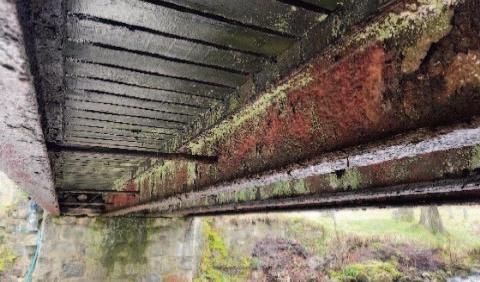
At one of our rural clients’ properties, there are a number of bridges surrounding the main estate lodge, cottages and estate buildings which received heavy use on a daily basis. Obvious signs of deterioration were beginning to show and the Galbraith Building Consultancy team were invited to inspect the bridge in the worst condition. The bridge was in frequent use and was an integral part of the estate. Given the condition that the bridge was in and the traffic that used the bridge, a full replacement was advised.
Working closely with a consultant civil engineer and the client, two proposals were made for the replacement: a timber deck or pre-cast concrete deck. Based on Galbraith’s advice, the client opted for the pre-cast concrete option. Whilst this was slightly more expensive, it would stand the test of time and require less maintenance and costs in the future.
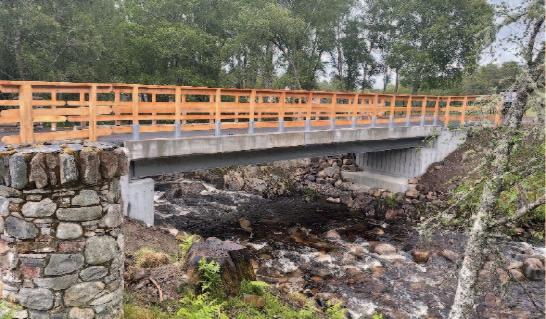
The contractor was appointed following a series of tenders to find the most cost effective, and work started in Nov 24. The bridge was built adjacent to the existing one, which allowed continued access to estate properties that relied on the route. Despite difficult conditions during the winter, and being in a high and remote glen, work was completed in May 25. The new bridge is certified to 44 tonnes and has improved access for the lorries and estate vehicles that use it daily. n
u Before.
u After.
Edward Fletcher
07990 130 753
edward.fletcher@galbraithgroup.com
Alex Davies 01463 224 343
alex.davies@galbraithgroup.com
AN AGRICULTURAL UPDATE
From Martin Rennie Head of Agri Consultancy at Galbraith
The word ‘challenge’ is often used in the agricultural industry, and commonly used in terms of a period of crisis; however, at the moment there is no more apt term, given the current challenges facing the sector.
From rising commodity prices due to recent world events to new subsidy proposals and the continued threat of overarching Tax changes the industry continues to face challenges.
However, after undertaking some recent presentations in front of farming audiences, it is always important to note the high level of enthusiasm within the sector, the high quality product UK farmers produce and the wide diversity of unique and thriving businesses that are developing and already developed within the country.
Recent Greening changes are proving to bring up new challenges for our farming Clients. These Greening changes relate solely to our Scottish based Agri Consultancy Clients with the new changes relating to the withdrawal of grass exemptions which is leading to a greater number of farmers having to adhere to the new Greening requirements. These changes bring about difficult conversations in terms of land use, cropping and utilisation for the 2026 season but also moving forward into the following seasons. A large proportion of the existing Greening measures remain, for example the fallow field margin, green cover and hedge options. However, these have all been enhanced to create greater habitat improvement and requirements in order to meet Greening objectives. In some cases, the adaptation is simple however in most cases these tightenings of the regulations mean a change to the policy for the farming year. We would encourage Clients at this stage to review their Greening requirements early for this season to ensure a decision is made well ahead of the 15th May deadline so that there is time to consider and implement the Greening measures for the 2026 year.
Commodity prices continue to fluctuate throughout the sector from a stalled dairy and arable sector to a rising beef and sheep sector. Fluctuations are commonplace within the industry however we would always encourage Clients to concentrate on what they can control in terms of input purchases and utilising and maximising the assets which are available on the farm and do not have to be bought in.
Recent Government Tax changes have led to many difficult and challenging conversations with our Clients in terms of succession and the routes to restructure businesses moving forward. No situation is the same and no one-size fits all. However, it is important to be patient in some occasions in order to not take or make drastic changes too quickly as it is always important to take the proper advice before making significant changes to a business structure as there can often be wider considerations before changing a succession plan or restricting the business entirely.
As we approach the IACS deadlines, we will be busy with the submission of Single Application Forms and review of the new Greening measures. However, as always we will have a further deadline in the middle of June in relation to the Agri Environment Climate Scheme whereby we will be submitting a number of applicants on behalf of Clients to engage and participate in the Environmental Schemes available. The Environmental Scheme continues to be available and offers a significant benefit to Clients; however, it should always be considered how the wider management options are implemented and how this would impact the existing farming operation.
u Commodity prices continue to fluctuate throughout the sector from a stalled dairy and arable sector to a rising beef and sheep sector.
Fluctuations are commonplace within the industry however we would always encourage Clients to concentrate on what they can control in terms of input purchases and utilising and maximising the assets which are available on the farm and do not have to be bought in... Martin Rennie.
u We would encourage Clients at this stage to review their Greening requirements early for this season to ensure a decision is made well ahead of the 15th May deadline.
The Galbraith Agri Consultancy Team continues to expand with a total of 6 team members carrying out direct farm consultancy advice. The demand to meet Client’s objectives, look at opportunities and change is a factor leading to the expansion of the team and the desire to continue to meet these objectives further drives on the team to grow, expand and fundamentally deliver our Client’s objectives.
If you have any questions or queries concerning the Agri Consultancy Team and the services we can offer we would be delighted to have a conversation. Please contact your local Galbraith office. n
Martin Rennie
01738 451 111 martin.rennie@galbraithgroup.com
BIODIVERSITY NET GAIN
What It Means for Rural Development and Estates
Biodiversity Net Gain (BNG) is now a routine part of planning decision-making in England, affecting far more than large housing developments. Since becoming mandatory, it applies to most forms of development, including small housing schemes, barn conversions, commercial buildings, and estate-led projects.
In practical terms, biodiversity is no longer something considered only on major sites or as part of wider master planning. Instead, it is a material planning consideration for almost any proposal that requires planning permission.
Whether a scheme involves a single new dwelling or the conversion of existing buildings, applicants are increasingly being asked to demonstrate how biodiversity impacts have been addressed and how net gain will be secured.
For landowners and estates, this represents a significant shift. BNG now influences development strategy, land value, and timing — and, increasingly, how rural land itself can be put to productive use.
When Is Biodiversity Net Gain Required?
One of the most common questions is when BNG actually applies.
In short, BNG is required for the majority of planning applications, regardless of scale. Since February 2024, most developments granted planning permission must demonstrate a minimum 10% uplift in biodiversity value, calculated using the statutory biodiversity metric and secured for at least 30 years. This includes: small housing • developments; rural exception sites;
• barn and agricultural • building conversions; commercial and mixed-
• use development; estate-led residential • schemes; and changes of use that • involve physical works affecting habitats. There are some limited exemptions — for example, certain householder applications, permitted development, and very small sites below a defined threshold — but these are narrower than many people expect. Even where a scheme is technically exempt, LPAs
may still expect biodiversity impacts to be considered as part of good planning practice.
From experience, planning officers are increasingly flagging BNG early in the process, even on modest schemes. Applicants who assume BNG “won’t apply” can face delays or additional work later on.
A Planning Requirement First, an Ecological One Second
While BNG is often discussed in environmental terms, in practice it is being driven by planning officers and planning committees. Local Planning Authorities increasingly expect applicants to show, at an early stage, how biodiversity net gain will be delivered and where it will be secured.
BNG is now considered alongside highways access, drainage, heritage constraints, and other planning requirements — and if not addressed properly, it can delay validation or determination of an application. For developers and landowners alike, this means BNG needs to be factored in from the outset, rather than treated as a condition to be resolved later.
u Since February 2024, most developments granted planning permission must demonstrate a minimum 10% uplift in biodiversity value...
The Reality for Rural Development
Many rural schemes — particularly conversions, small housing developments, or estate-led projects — have limited scope to deliver meaningful habitat creation within the application boundary. In these cases, onsite delivery of the required biodiversity uplift is often impractical.
Where this happens, planning policy allows for offsite delivery, provided it is secured, measurable, and managed for the long term. This is where rural estates are increasingly playing a key role, supplying biodiversity units to support development elsewhere.
Off-Site BNG: From Policy Requirement to Estate Opportunity
Off-site BNG has quickly become a practical way for developers to meet their biodiversity obligations when a site cannot deliver the required uplift on its own. For landowners and estates, it also presents a new opportunity to use land strategically while generating long-term value. u
BNG is now considered alongside highways access, drainage, heritage constraints, and other planning requirements — and if not addressed properly, it can delay validation or determination of an application... Joey Dunn.
Where Off-Site BNG Can Be Delivered
Off-site BNG does not need to be immediately adjacent to the development, but it must be ecologically and geographically relevant. In practice, this means:
Proximity matters: Gains should
• generally be within the same or a neighbouring LPA to maximise metric value.
Ecological relevance: Habitats
• should support or connect with existing local ecosystems.
Strategic significance: Where
• possible, locate gains in areas highlighted in Local Nature Recovery Strategies (LNRS) or other local guidance.
Exceptions: Linear habitats (e.g.,
• watercourses, intertidal areas) are valued differently and may be located further from the site.
This ensures that the biodiversity gain genuinely benefits the local environment and contributes to regional nature recovery strategies.
u BNG is still evolving, and both landowners and local authorities are continuing to interpret how it works in practice.
Practical Requirements for Off-Site BNG
To be valid for planning purposes, offsite BNG land must:
How BNG Is Changing Land Value and Decision-Making
Deliver a measurable uplift using
• the statutory biodiversity metric.
Be legally secured for at least 30
• years via a suitable mechanism, such as a Section 106 agreement.
• and monitoring plan to ensure long-term delivery.
Be supported by a management
Be registered on the national
• Biodiversity Gain Site Register.
Why This Matters for Estates
For landowners, understanding these proximity requirements is crucial.
Land that is eligible for off-site BNG needs to be both ecologically suitable and strategically located. By identifying and securing the right areas, estates can provide a valuable service to developers while aligning with wider conservation and stewardship objectives.
BNG is increasingly influencing land value and development strategy. Sites capable of delivering biodiversity uplift — either for their own development or for others — are becoming more attractive.
Conversely, schemes that cannot demonstrate a clear BNG solution may face delays or reduced viability.
From a practical standpoint, understanding the biodiversity potential of land early can help inform decisions about:
whether land is better suited to
• development or biodiversity delivery;
how best to structure long-term
• management commitments; and how to position land within an
• emerging environmental market.
Case Study: Blagdon Estate - Delivering BNG in Practice
The Blagdon Estate provides a useful example of how biodiversity net gain can be delivered in a practical and commercially viable way.
Recognising the growing demand for off-site BNG solutions and its strategic location just to the north of Newcastle-upon-Tyne, the Estate has identified land capable of delivering meaningful habitat enhancement as a Habitat bank without undermining its wider operations. Ecological surveys were undertaken to establish the baseline condition, followed by application of the statutory biodiversity metric to quantify the potential uplift.
The land is in the midst of being secured for biodiversity purposes through the appropriate legal mechanisms with the Local Authority supported by a long-term management and monitoring plan. Once registered on the Biodiversity Gain Site Register, the Estate will be able to use/sell its own BNG units that can be allocated to its own development schemes requiring off-site provision or to the BNG unit market.
From a planning perspective, this approach provides developers with certainty, while allowing the Estate to make productive use of land in a way that aligns with longterm stewardship objectives.
Looking Ahead
BNG is still evolving, and both landowners and local authorities are continuing to interpret how it works in practice. What is clear, however, is that biodiversity net gain is no longer a peripheral consideration. It is now a central part of the planning process, particularly in rural areas.
For landowners and estates, this creates both challenges and opportunities. Those who understand how BNG fits within the planning system — and who take early, informed advice — are best placed to navigate new requirements and, where appropriate, unlock value from their land.
As with many changes in planning policy, success often comes down to timing, strategy, and understanding the system. In that respect, biodiversity net gain is no different.
By identifying and securing the right areas, estates can provide a valuable service to developers while aligning with wider conservation and stewardship objectives. Joey Dunn.
Does BNG Apply to Your Land?
Even small developments may need to deliver Biodiversity Net Gain. Use this quick checklist to see if BNG could apply to your site:
BNG is likely required if your project involves:
• single house)
Building one or more new dwellings (even a
• buildings
Converting agricultural or other existing
New commercial or mixed-use
• development
• cover
Physical works that affect habitats or land
BNG may not apply if:
• extensions)
It is a minor householder application (e.g.,
• development rights
Works are covered by permitted
• threshold (check locally)
The site is very small and below the LPA
Key takeaway:
BNG is now a material planning requirement for most projects. Even if your site seems small, planning authorities may expect you to demonstrate biodiversity impacts and, if necessary, show how net gain will be achieved — either on-site or off-site.
Tip for Landowners & Estates:
Identify your land’s biodiversity potential early. Even marginal or under-used land may generate off-site BNG units, providing opportunities to support development while creating a long-term income stream. n Joey Dunn
07584 383 864 joey.dunn@galbraithgroup.com
FARMING & FORESTRY HAND IN HAND
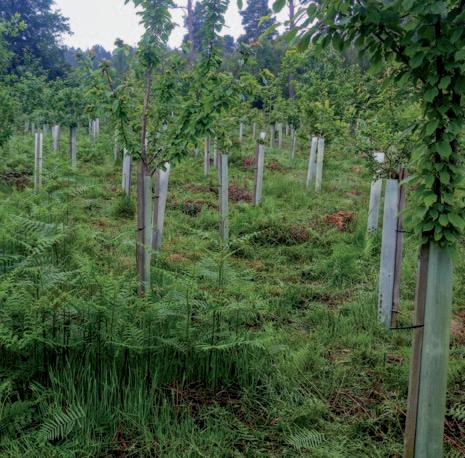
Scottish farmers face the increasingly complex task of producing high-quality, sustainable food while responding to the challenges of climate change, biodiversity loss and building resilient agricultural businesses.
Well managed trees and woodlands thoughtfully placed within farmed landscapes can support these objectives while offering a wide range of practical benefits.
Benefits
to the farm business
Trees offer practical advantages that can help farm businesses improve their resilience. Woodlands, shelterbelts and hedgerows provide shelter for livestock in poor weather, allowing animals to remain outside for longer. Shelter can extend the grazing season, reduce feed costs, and improve productivity, helping to increase survival rates during cold, wet, and windy conditions.
In hot weather, shade from trees and cooling from evapotranspiration can reduce heat stress, contributing to improved animal welfare, growth, fertility, and milk production in dairy herds. Shelter and shade help livestock remain healthy and productive throughout the year. Agroforestry systems that integrate trees into pasture can potentially multiply these benefits.
u Woodlands can provide a valuable source of income.
Farming and forestry both have a role to play in tackling climate change, delivering biodiversity, and supporting rural economies. The danger lies in treating them as competing land uses, when in reality there is an opportunity for them to complement each other.
Rebecca Wilson, fifth generation Yorkshire farmer, named in the Sunday Times Young Power List 2025 (UK Forest Market Report, 2025).
Trees and woodlands also provide shelter from the wind, which can help to reduce soil erosion and improve crop productivity. Trees also provide valuable habitats for pollinators such as bees and butterflies, especially in early spring when few other flowers are in bloom. Trees also support adaptation to climate change by helping to reduce the impact of extreme weather events, such as flooding and heatwaves.
Timber as a product
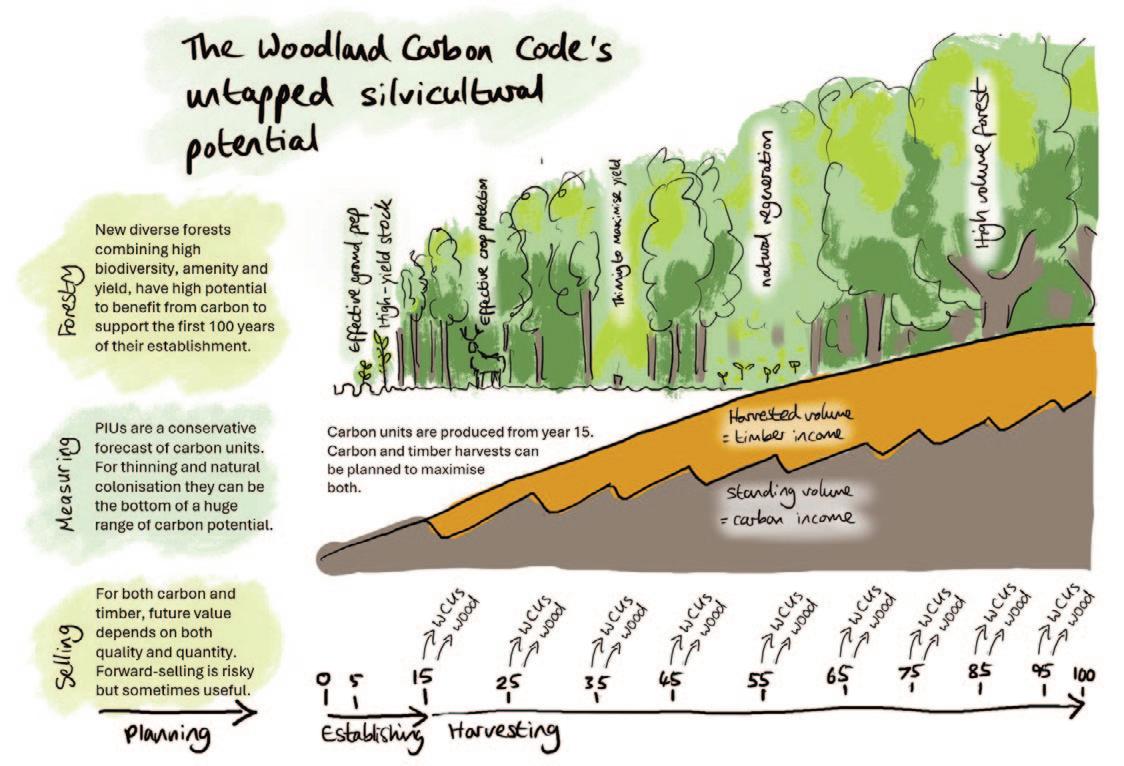
Woodlands can provide a valuable source of income. New and existing woodlands can be managed to produce timber, depending on species choice, scale, and accessibility. Fastgrowing conifer species can provide timber through thinning in 20-30 years. Regular thinning in mixed or broadleaved woodlands allows a regular flow of timber products, including sawlogs, fencing material, chipwood, biomass, and firewood.
Regional timber markets are subject to fluctuation, but there is consistent demand for commercial timber products. The market for locally produced Scottish firewood is typically strong, offering the opportunity to bring under-managed broadleaved woodland back into management cost effectively. Specialist local markets can also provide an outlet for larger hardwoods and premium-quality softwoods.
Some farms and estates retain harvested timber for in-house use, such as running a biomass boiler or producing fencing material.
Conifer plantations that are under-managed or in exposed locations may require clear felling and replanting. Clear felling removes shelter for livestock, impacting the landscape and wildlife habitats. Clear felling is often challenging on a small scale, especially where access to extract the felled timber is poor.
On sheltered sites, woodland can often be managed on a continuous cover basis, avoiding the need for clear-felling. Regular thinning and regeneration under the canopy can provide a steady timber supply, while maintaining all the benefits of shelter, wildlife habitat, and landscape value. This approach works for mixed, conifer, or broadleaved woodland, though not every site is suitable. u
In addition to producing timber products, new woodland creation schemes can be registered under the Woodland Carbon Code to generate verified carbon units that can be sold or used for offsetting carbon emissions from the farm business. Carbon and timber should be regarded as complementary products in a well-managed woodland.
Despite the recent changes to Inheritance Tax (IHT) that take effect in April 2026, the UK tax system is currently still favourable to forestry overall.
Environmental benefits
Trees and woodlands contribute many environmental benefits and can help to maintain diversity in farmed landscapes.
As they mature, absorbing carbon and helping to reduce greenhouse gas emissions, woodlands provide valuable food, shelter and nesting sites for birds, mammals and insects, supporting biodiversity in the local landscape.
Well-designed woodland can improve habitat connectivity, linking fragmented habitats and allowing wildlife to move freely to find food, shelter, breeding sites and adapt to changing conditions. Features such as hedgerows, shelterbelts and riverside trees help to connect larger areas of habitat and make it easier for wildlife to move through farmland.
The stabilising effect of trees helps to protect water quality by reducing soil erosion, sedimentation and nutrient run-off into rivers. Trees along watercourses shade the water, keeping it cooler and richer in oxygen which benefits fish and other aquatic life.
What grants are available for tree planting and woodland management?
The Forestry Grant Scheme (FGS) offers various funding options to support woodland creation and is open to applications all year. Land planted under FGS remains eligible for Basic Payment for the length of the contract.
The Scottish Government recently announced an enhanced package of funding to encourage more small-scale woodland creation projects of up to 20 hectares. For larger woodland creation projects, FGS offers a range of native and productive woodland options, as well as agroforestry options for integrating trees into pasture and arable.
For small areas ineligible for FGS funding, local grants of up to £1,000 are available annually on a first come, first served basis through Tweed Foundation, Borders Forest Trust and Dumfries & Galloway Woodlands amongst others.
Existing woodlands, whatever their type, benefit from pro-active management to generate potential benefits and maintain them in a stable and healthy condition. The prospect of managing woodlands can be daunting but as a starting point, a forestry professional can provide advice about what to do and when based on an owner’s objectives and the capabilities of the woodland in question.
u The Scottish Government recently announced an enhanced package of funding to encourage more small-scale woodland creation projects of up to 20 hectares.
Management interventions such as felling, restocking, and thinning requires formal felling consent from Scottish Forestry. Depending on circumstances, other types of management might also be appropriate, including livestock exclusion, seasonal grazing, underplanting, or deer control. Sometimes it is useful to bring all such measures together in a management plan. For larger and more complex areas of woodland, FGS offers support for preparing long term forest plans, which allows access to potential grants to assist with woodland management. The Scottish Government also supports smaller scale projects through the Farm Advisory Service (FAS) which offers up to £1,600 for specialist woodland management advice.
Trees and woodlands can strengthen farm businesses and the wider environment by contributing practical benefits including enhanced animal welfare and crop productivity, improved soil and water management and an alternative income stream. Well designed and managed woodlands can help farms to remain productive, profitable, and environmentally resilient in the face of climate and economic challenges.
Our rural and forestry teams work closely together to integrate trees with farming, supporting farm and estate owners on projects across Scotland and Northern England. n
paul.schofield@galbraithgroup.com
The Benefits of a Long-Term Forest Plan
Forests and woodlands are permanent land-use features that continue to grow and develop over many years.
Their visibility in the landscape, coupled with the fact that woodlands are often much-loved by local communities and visitors alike, demands a long-term planning approach to ensure that they are providing a full range of environmental and economic benefits, while remaining resilient to the effects of climate change in the future.
Long-Term Forest Plans (LTFP) are an ideal way to do this and are partfunded by Scottish Forestry. They provide felling consent for 10 years and access to a range of grants through the Forestry Grant Scheme (FGS).
A Long-Term Forest Plan is designed principally for larger woods of 100 hectares and over. It provides a structured approach to woodland management and enables plans to be set out in a form that meets the requirements of regulators and future managers. It helps the forest manager or landowner to decide how they want the woodland to look and function in the long-term and then sets out a realistic roadmap to get there. Woodland management must adapt to changing circumstances, but it is important to start with a clear vision that balances objectives such as timber production, conservation and value in the landscape.
The process begins with collecting information about tree species, age structure, projected yield, constraints and key features, as well as identifying opportunities and long-term objectives. It is important to consider how the woodland will change over the
coming decades and how this will impact on the surrounding landscape. Woodland management operations such as thinning, felling and restocking are part of a gradual and deliberate process, each intervention contributing toward a realistic outcome for the whole wood.
Consultation is a necessary and important part of the process. By engaging from the outset with neighbours, local communities, statutory bodies, and environmental organisations, potential issues can be identified before they become obstacles and appropriate mitigation measures agreed. This is of great practical benefit when planning forest operations as the LTFP will identify constraints across a site, such as power lines, water supplies, public access routes, statutory designations, historic features and protected species. Stakeholder engagement also demonstrates to Scottish Forestry, the statutory regulator, that the woodland is being managed responsibly and in compliance with the UK Forestry Standard.
Detailed information about the growing crop and projected yield underpins the scheduling of thinning, felling and restocking operations in 5-year phases. The intention is to regularise income and expenditure across the plan period as much as possible and ensure that harvesting is carried out sustainably. Infrastructure requirements such as roads and stacking space are also factored into the planning.
Circumstances can often change during the plan period due to unforeseen events, such as storm damage, shifting objectives and market conditions or felling in the event of a Statutory Plant Health Notice. Forest Plans are not set in stone and can be amended to react to such events.
Overall, a Long-Term Forest Plan provides a solid yet flexible basis for managing forests and woodlands to maximise their commercial, environmental and amenity benefits. Forest Plans support effective financial planning, provide access to FGS grants and demonstrate the commercial interest of the woodland for tax planning purposes. n
The Renters’ Rights Act is enacting fundamental and long-lasting changes to the private rented sector, shifting greater responsibility onto landlords...
The Renters’ Rights Act
AN OVERVIEW FOR ENGLISH LANDLORDS
The phased roll out of the Renters’ Rights Act in England is set to provide the private rented sector with the biggest shake up to legislation governing residential tenancies in over 25 years since the Housing Act 1998.
The Act received Royal Assent on 27th October 2025 with implementation of the key phases commencing from 1st May 2026 on a rolling basis.
The changes seek to re-balance the powers between landlords and tenants by providing more rights to those in rented homes. This includes the abolishment of fixed term assured shorthold tenancies, as well as the abolishment of Section 21 evictions and changes to the format of rent reviews.
Although these legislative changes are primarily being put in place due to unscrupulous city landlords who provide substandard housing, the impact the Act will have on rural landlords will be significant; it is critical for landlords to check now that their arrangements and properties are fully compliant due to the increased opportunities this Act provides tenants with to report landlords and use legal routes available to their advantage. The rollout is happening in three key phases, with the changes made at each phase summarised below.
Phase 1 – 1st May 2026:
All AST’s become Assured
• Periodic Tenancies. Tenants can stay indefinitely unless their landlord serves a valid Section 8 notice, stating a specific ground, or the tenant provides two months’ notice to end their tenancy. Section 8 grounds are to be expanded beyond their current remit, which is positive news for rural landlords.
Abolition of Section 21 ‘no fault’
• evictions. Landlords will not be able to evict a tenant without providing a ‘ground’ for eviction under Section 8.
Rent increases limited to once a
• year. A Section 13 notice must be served at least two months before the new rent is due to take effect and no more than once a year. Tenants can also challenge a rent review via the First Tier Tribunal, where the judge can only set the new rent at the same or lower than that requested by the landlord.
Ban on rental bidding wars and
• rent in advance. Landlords and letting agents cannot ask for, encourage or accept an offer that is higher than the advertised rent. More than one month’s rent cannot be requested in advance either.
withholding information about a property (including its availability), stopping someone from viewing it, or refusing to grant a tenancy.
Landlords to consider a tenant’s
• request for a pet. Landlords will have an initial 28 days to consider their tenant’s request, and they will have to provide valid reasons if they refuse it.
Strengthen both local councils
• enforcement and rent repayment orders. Civil penalties will be expanded and there will be a new requirement for local councils to report enforcement activity. This will be extended to landlords, and the maximum penalty will be doubled. u
• renters who have children or receive benefits. This includes
Illegal to discriminate against
Phase 2 – Late 2026:
Stage 1 - Regional rollout of the database for landlords and local councils.
• will be mandatory for all private rented sector (PRS) landlords, and they will be required to pay an annual fee which is to be confirmed.
Commencing from late 2026, this
• provided to the database is expected to include:
The information which is to be
- Landlord’s contact details,
- Property details, including full address, type of property, number of bedrooms, number of residents and confirming whether the property is occupied and furnished etc,
- Safety information, including gas, electricity and Energy Performance Certificates (EPC's).
Stage 2 – Further roll out of the database and introduction of the Ombudsman.
Phase 3 – Implementation subject to consultation:
u The changes seek to re-balance the powers between landlords and tenants by providing more rights to those in rented homes.
Public access and data sharing
• will be enabled following the launch of Landlord registration.
Establishment of a Landlord
• Ombudsman for the private rented sector which intends to improve dispute resolution by settling issues between tenants and landlords without costly court proceedings. Registration with the Ombudsman scheme will be mandatory.
Development and • implementation of the Ombudsman will happen after the introduction of the PRS database and will happen in two stages:
- Stage 1 will happen at least 12-18 months before implementation. The Secretary of State (SoS) will choose a scheme administrator to run the new service, which will then need time to scale up
- Stage 2 will require landlords to be members of the new service –expected to be from 2028, when the SoS is confident that the service is ready for delivery. Sufficient notice will be given to landlords in advance requiring them to be members of the scheme.
This phase focuses on raising • standards through the extension of Awaab’s Law and a modernised Decent Homes Standard to the private rented sector – with details of this policy, including implementation timescales, in due course. Awaab’s Law will require landlords to fix reported damp, mould, and emergency repairs within strict timeframes.
Full implementation of the • Decent Homes Standard is proposed to be brought into force in either 2035 or 2037.
As part of this, the government • plans to require all domestic privately rented properties to meet minimum energy efficiency standards of EPC C or equivalent by 2030 unless a valid exemption is in place.
In addition to understanding the key features of the phased rollout of the Act, it is also important to understand the changes that will be made to tenancy agreements and the judicial system:
Tenancy Agreements:
New tenancies on or after 1 May 2026:
Landlords will need to provide • their tenants with certain information in writing as part of the tenancy agreement for tenancies commencing from 1 May 2026. A Statutory Instrument was published in March 2026 detailing the information that must be provided.
New templates for Assured • Periodic Tenancies are being prepared to include all the required information ahead of their introduction from 1st May 2026.
Rules for existing tenancies created before 1 May 2026:
For existing tenancies with • written agreements, these will not need to be changed or new agreements issued.
Instead, landlords will need to • provide tenants with a copy of the government published ‘Information Sheet’ in a set format on or before 31 May 2026, informing tenants about the changes made by the Act.
This was published online in late • March 2026.
If a landlord has agreed an • existing tenancy verbally with a tenant, they will need to provide a written summary of the main terms to the tenant by 31 May 2026.
Although these legislative changes are primarily being put in place due to unscrupulous city landlords who provide sub-standard housing, the impact the Act will have on rural landlords will be significant...
Justice System:
The Residential Property Tribunal:
The First Tier Tribunal (Property • Chamber) is being prepared for the reforms and the government are ensuring sufficient capacity is available to meet the extra demand, albeit initial delays are still to be expected.
In the longer term, the • government intends to establish an alternative body or mechanism to the First Tier Tribunal to make initial rent determinations to support the Tribunal’s capacity.
The Renters’ Rights Act is enacting fundamental and long-lasting changes to the private rented sector, shifting greater responsibility onto landlords. Consequently, it is critical that landlords and their agents prepare now by reviewing and updating tenancy documentation, reviewing property standards and ensure general record keeping is in order to best prepare for the phased changes. Taking early action will help reduce the future risk of enforcement and help landlords plan for the longer-term requirements proposed, including EPC improvements and the new Ombudsman scheme. n
Laura Hunter
014346 93693
laura.hunter@galbraithgroup.com
THE ENGLISH ARABLE SECTOR IS THIS ITS DARKEST HOUR?
A tumultuous 18 months
English arable farmers have faced a tumultuous time over the last 18 months, starting with the announcement of the so called ‘farmers tax’ in the 2024 autumn budget.
u A flexible marketing strategy is more important than ever to make the most of any bursts of activity.
This was followed by the sudden and unannounced closure of the SFI application window in March whilst outside, one of the driest springs and summers on record gave way to a disappointing harvest coupled with a depressed grain market.
The U turn on inheritance tax, raising the threshold from £1million to £2.5 million, will obviously be of some comfort to most farmers looking at the long term futures of their businesses but, there is a more immediate impact of static world grain markets and lack of any sort of subsidy impacting on profitability.
In the North of England, winter crop yields were generally back by as much as 25%, particularly those crops sown late and under duress in the previous autumn, and spring oats and spring barley performed poorly for the most part due to the extreme dry weather. To add further insult to injury, malting spring barley, which is a staple of spring cropping in this part of the world, struggled to hit malting spec in most cases because of low specific weight. Finding a home for this failed malting crop has haunted many grain merchants and farmers have had to take whatever price they can get in a lot of cases.
Oilseed rape, which is always an unpredictable crop to grow, faired better than its cereal counterparts with average to good yields. Prices have also remained strong, reflected in subsequent gross margins well in excess of £450/acre for last harvest.
The cereal market though, remains resolutely flat, and hasn’t peaked above £200/t since April 2025, steadily but surely falling to around £162/t at the time of writing. The cost of production of an average first winter wheat crop is around £170/t, so this is clearly not sustainable. The futures market looks a little better for the end of this year at around £170/t and we have been selling small amounts of crop for the end of 2027 at £185/t. A flexible marketing strategy is more important than ever to make the most of any bursts of activity.
However, farmers are resilient and although the arable sector may be in its darkest hour for the last few decades, there will be plenty of opportunities for those that are prepared to take some risks and have a long term view on business...
Sustainable Farming Incentive
Whilst the Sustainable Farming Incentive (SFI) has undoubtedly helped bolster income levels, removing it from budgets makes a significant difference to the bottom line. Taking one example of a consistently high performing contract farming agreement where net returns (to both parties i.e. the farmer and the contractor) are always north of £225/acre, removing the SFI income from last year would see net returns to both parties fall to just over £170/acre.
This is particularly worrying because the early SFI schemes which commenced in 2023 are now coming to an end and, after the foray in March 2025 and the sudden session of any new applications, there is a worry about what comes next. In the middle of January Defra announced that a window for applications would open for small farmers in June but, have yet to furnish farmers with what they class as a small farmer? A second window will then open from September for everybody else. There is even less detail about what options may be available and how big the overall pot might be.
As an aside, Defra states that nearly 25% of SFI payments have gone to just 4% of farms and that 90% of funding went on 40 of the 102 available options! Many Countryside Stewardship Mid Tier and Higher Tier environment schemes are also due to come to an end in the next couple of years and it is still unclear whether these will be allowed to roll on or finally come to end. This puts a huge amount of land currently managed to increase and improve biodiversity and habitat at risk of being put back into production.
A life without subsidy
English arable farmers are undoubtedly facing some unprecedented challenges at the moment. The weather is an obvious uncontrollable variable, but it feels like they are also facing an onslaught of financial assaults, all of which lay out of their control. This seems wholly unfair when competing against a world market, let alone against other countries within the United Kingdom that still receive subsidy – it has left the English arable sector feeling very exposed.
However, farmers are resilient and although the arable sector may be in its darkest hour for the last few decades, there will be plenty of opportunities for those that are prepared to take some risks and have a long term view on business.
A drop in interest rates has made money cheaper to borrow and those with assets or who are not overly geared, are in a good position to restructure debt. Machinery dealers and agri chemical suppliers are also feeling the squeeze and there are deals to be had on new and secondhand equipment. Now is also the time to shop around when looking to purchase inputs, the fertiliser price is almost universal no matter who it is eventually bought from, but merchants are offering very favourable payment terms which can help manage cashflow.
Similarly, benchmarking variable costs can give a very good indication of agronomic spend and farmers should be challenging their agronomists and suppliers on spray programs, application rates, and chemical prices.
As ever, knowing the financial health of your business is key. The power of a five year budget including cropping and capital expenditure plans that are realistically cash flowed, can not be underestimated. n
I have been noticing that foresters who are excited about hardwood timber are often sceptical of the Woodland Carbon Code.
This is partly because the Woodland Carbon Code Calculator heavily penalises thinning in its calculation of Pending Issuance Units (PIUs).
Management through thinning is essential to developing a forest of species like oak, birch or sweet chestnut with sawlog-quality timber. Unmanaged woodlands are also bad for wildlife – and even carbon. Experience from the past half-century of grant-funded woodland creation demonstrates that, in practice, unmanaged woodlands struggle to thrive. Dense, unthinned woodland often lacks ground flora, and can produce suppressed trees lacking vigour and longevity.
Growing hardwood timber requires deliberate choice of species and spacings, regular thinning, and committed protection from threats such as weeds, deer, diseases, and pests like grey squirrel sustained over many decades. The result of such active management will be fast growth (and therefore carbon capture); vertical, spatial and species diversity (and therefore biodiversity); resilience to threats; and a thriving woodland.
For an investor, any initial fall in land value caused by conversion to woodland will start to rise again if the woodland is managed actively as a timber resource...
But why, if your aim is carbon, should you be interested in timber?
First, for financial reasons. combining carbon and timber can create a viable business plan out of two unviable halves. Carbon alone may work in the medium term, but risks depleting land values. Growing hardwood timber is sustainable in the long term, but it requires 100 years of costly investment to grow an oak sawlog.
In the medium term, carbon sales can support forest management, while income from wood sales slowly increase over the lifetime of the scheme, supplementing and then displacing carbon as a longterm income stream. Volume removed to sell as timber cannot be sold as carbon; but it can accelerate the growth of woodland left behind, so overall carbon+timber can add up to substantially more than carbon alone.
The long term - after the 100 year carbon scheme is up - may seem too far ahead to consider except perhaps for an estate seeking to create a long-term legacy, but it has effects much more quickly. For an investor, any initial fall in land value caused by conversion to woodland will start to rise again if the woodland is managed actively as a timber resource. For an ‘insetter’ aiming to grow offsets to reach net zero, although timber removed during woodland growth cannot be counted as offsets, it can appear elsewhere on a carbon balance sheet: timber or fibreboard used in construction is counted as carbon capture on a Whole Life Carbon Assessment, and can therefore also count as capture in a scope 3 carbon account.
Second, for practical forest management reasons. Woodland carbon is literally wood, so the forester’s interest in growing an abundant supply of timber is closely aligned to
the carbon interest in maximising carbon volume. A woodland in a carbon scheme is closely inspected and inventoried every ten years at verification. These audits will be highly valuable for checking progress on timber growing, and the requirement to undertake them to convert carbon units will make it harder for future landowners or foresters to forget management for a generation, or harvest aggressively when timber prices are high and cash short, undoing all the previous generation’s hard work of forest management. Carbon verifications provide a perfect framework for forester and landowner for the patient work of timber growing.
So now there is no ‘carbon versus timber’ problem. The Calculator is confusing, and it is time to challenge the widespread practice of designing woodland to maximise PIUs. Carbon and silviculture have an opportunity to work together, to bridge that difficult gap between ‘native and commercial’, ‘diverse and profitable’, and create genuinely multi-functional woodlands. The 100-year length of a carbon project is not an ‘effectively endless’ contract: it is the development period in a new native woodland’s life, one which native woodland schemes such as 10-year establishment or occasional woodland management grants have struggled to deliver.
Woodland carbon is complicated, and still evolving. Galbraith’s expert carbon and forestry teams work closely together and are always happy to talk to landowners, foresters, and investors about their potential projects, and advise on how carbon, timber, biodiversity, and other benefits can combine to create fantastic forests. n