NEW Civil War Park Opens in Carolina Beach
Joseph Ryder Lewis Jr. Civil War Park Opens in Carolina Beach, N.C.
 by Chris E. Fonvielle Jr.
James Burriss, nineteenth century farmer, waterman, and river pilot, could never have imagined that his land on Federal Point (modern Carolina Beach), North Carolina would be used as a Confederate encampment site in 1861, a Confederate defensive position in 1864, a battlefield in 1865, and a Civil War park in 2021. But it was, it was, it was, and it is.
The Federal Point Historic Preservation Society and the Town of Carolina Beach held a grand opening ceremony for the Joseph Ryder Lewis Jr. Civil War Park on February 11, 2021, the 151st anniversary of the Battle of Sugar Loaf in the 1865 Wilmington Campaign. Despite the ongoing viral pandemic and a cool, overcast day, 110 people attended the event including civic leaders, municipal officials, Federal Point Historic Preservation Society members, local historians, preservationists, and Civil War enthusiasts.
The last private owner of the property, across North Lake
Boulevard from Carolina Beach Town Hall, was the late Joseph Ryder Lewis Jr. (1926–2010), a Carolina Beach resident, U.S. Army veteran, long-time employee of the U.S. Corps of Engineers, and member of the Federal Point Historic Preservation Society. Keenly interested in the history of the Lower Cape Fear, he donated approximately ten acres that feature Confederate earthworks of the so-called “Sugar Loaf lines” to the Town of Carolina Beach for a public Civil War park.
It took eight years of committee planning meetings, volunteer workers clearing thick vegetation that covered the proposed park grounds, an archaeological dig, and designing interpretive signs for the project to finally come to fruition. Eric Jelinski, Carolina Beach’s Parks and Recreation Director opened the proceedings, followed by remarks from Elaine Henson, president of the Federal Point Historic Preservation Society; Mayor LeAnn Pierce; and Leslie Bright, Park Committee Chair. “It was a great day for the Joseph Ryder Lewis Jr. family, Federal Point Historic Preservation Society, and the Town of Carolina Beach in opening the park and fulfilling
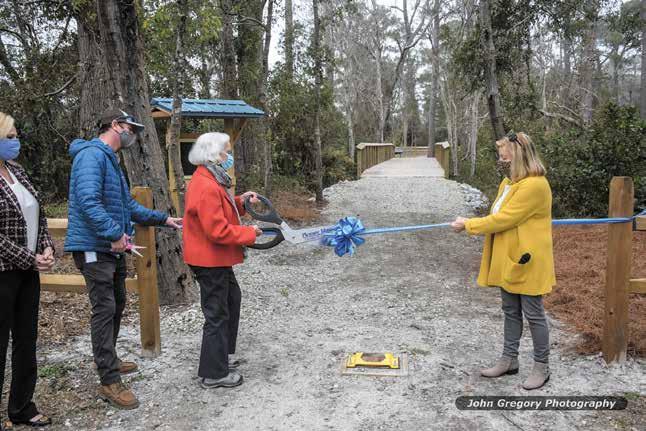
the wishes of Ryder Lewis,” commented Elaine Henson. Mary Ann Lewis officially dedicated the park named for her late husband by cutting a ribbon at a newly constructed wooden bridge leading into the historic grounds. Chris E. Fonvielle Jr., professor emeritus in the Department
of History, UNC Wilmington, then spoke on the importance of Wilmington and the Sugar Loaf lines during the Civil War.
The parcel of land on which the Joseph Ryder Lewis Jr. Park is now located belonged to James Burriss in 1861. North Carolina’s Adjutant General’s Office originally established Camp Wyatt (named for Pvt. Henry Lawson Wyatt, the first Tar Heel soldier killed in action during the War) on the tract in June 1861, before moving it further south three months later.
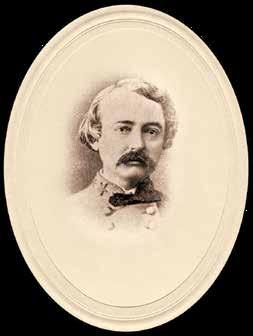
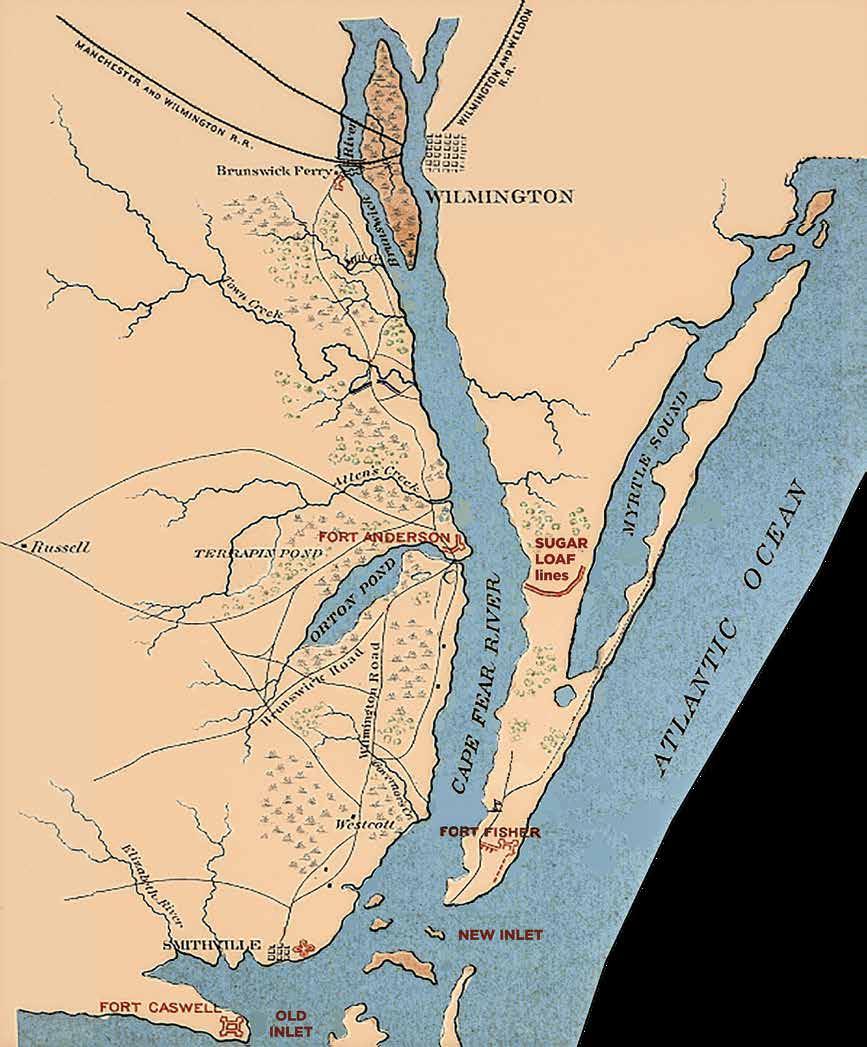
In October 1864, Maj. Gen. W.H.C. Whiting, commander of the Department of the Cape Fear, ordered engineers to construct a line of heavy fieldworks as auxiliary defenses to Fort Fisher, 4 ½ miles to the south, that would stretch from Sugar Loaf Hill, a fifty-foot high natural sand dune on the east bank of the Cape Fear River, eastward for about 1 ½ miles to Myrtle Grove Sound (modern Carolina Beach canal).
Fort Fisher was the main guardian of Wilmington, N.C., the Confederacy’s last major seaport open to maritime trade with
Europe, especially Great Britain, and by late 1864, most important city.
Confederate spies reported that U.S. forces were organizing a joint army/navy operation to close Wilmington Harbor to blockade running by attacking Fort Fisher at New Inlet, the northern entryway into the Cape Fear River. For more than three years, Confederate commerce vessels had evaded, and continued to evade, U.S. Navy gunboats blockading the Cape Fear coast. At least 106 different steamships and an undetermined number of sailing vessels had been employed as blockade-runners to smuggle vital military supplies for soldiers on the battlefront and domestic products for civilians on the home front into the Confederacy by way of Wilmington, far more than came into any other Southern seaport.
If a Union combined attack on Fort Fisher occurred, as appeared increasingly likely, General Whiting determined to keep
Vol. 41, No. 4 48 Pages, April 2021 $3.50 America’s Monthly Newspaper For Civil War Enthusiasts 38 – American Battlefield Trust 10 – Black Powder, White Smoke 40 – Book Reviews 28 – Central Virginia Battlefield Trust 30 – Emerging Civil War 22 – The Graphic War 24 – Inspection, ARMS! 18 – The Source 8 – The Unfinished Fight 14 – This And That 16 – Through the Lens 7 – Trivia H Lewis Park . . . . . . . . . . see pages 4-6
Mayor LeAnn Pierce, Eric Jelinski, Mary Ann Lewis, and Elaine Henson cut ribbon to open the Joseph Ryder Lewis Jr. Civil War Park, Carolina Beach, N.C., Feb. 11, 2021. John Gregory.
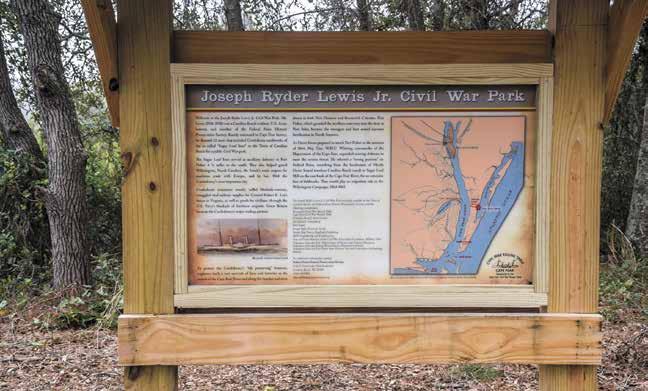
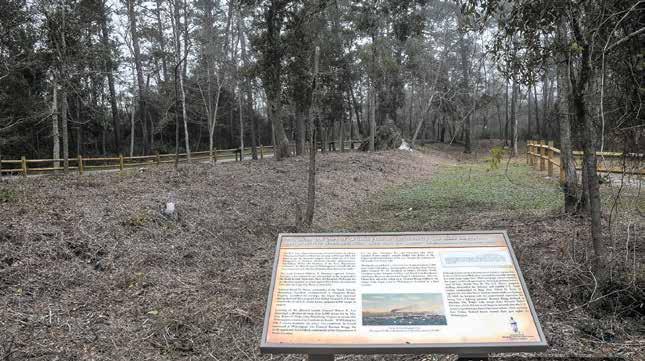
Newly installed kiosk at the Joseph Ryder Lewis Jr. Civil War Park. Photo by John Gregory.
Civil War News
Published by Historical Publications LLC
520 Folly Road, Suite 25 PMB 379, Charleston, SC 29412 800-777-1862 • Facebook.com/CivilWarNews mail@civilwarnews.com • civilwarnews.com
Advertising: 800-777-1862 • ads@civilwarnews.com
Jack W. Melton Jr. C. Peter & Kathryn Jorgensen
Publisher Founding Publishers
Editor: Lawrence E. Babits, Ph.D.
Advertising, Marketing & Assistant Editor: Peggy Melton
Columnists: Craig Barry, Joseph Bilby, Matthew Borowick, Salvatore Cilella, Stephanie Hagiwara, Gould Hagler, Tim Prince, John Sexton, and Michael K. Shaffer
Editorial & Photography Staff: Greg Biggs, Sandy Goss, Michael Kent, Bob Ruegsegger, Gregory L. Wade, Joan Wenner, J.D.
Civil War News (ISSN: 1053-1181) Copyright © 2021 by Historical Publications LLC is published 12 times per year by Historical Publications LLC, 520 Folly Road, Suite 25 PMB 379, Charleston, SC 29412. Monthly. Business and Editorial Offices: 520 Folly Road, Suite 25 PMB 379, Charleston, SC 29412, Accounting and Circulation
Offices: Historical Publications LLC, 520 Folly Road, Suite 25 PMB 379, Charleston, SC 29412. Call 800-777-1862 to subscribe.
Periodicals postage paid at U.S.P.S. 131 W. High St., Jefferson City, MO 65101.
POSTMASTER: Send address changes to: Historical Publications LLC 520 Folly Road Suite 25 PMB 379 Charleston, SC 29412
Display advertising rates and media kit on request. The Civil War News is for your reading enjoyment. The views and opinions expressed herein are those of its authors, readers and advertisers and they do not necessarily reflect the official policy or position of Historical Publications, LLC, its owners and/or employees.
P UBLISHERS :
Please send your book(s) for review to: Civil War News
520 Folly Road, Suite 25 PMB 379 Charleston, SC 29412
Email cover image to bookreviews@civilwarnews.com. Civil War News cannot assure that unsolicited books will be assigned for review. Email bookreviews@civilwarnews.com for eligibility before mailing.

ADVERTISING INFO:
Email us at ads@civilwarnews.com Call 800-777-1862
MOVING?
Contact us to change your address so you don’t miss a single issue. mail@civilwarnews.com • 800-777-1862
SUBSCRIPTION RATES
U.S. Subscription rates are $41/year,
Letter to the Editor:
The book review of Bruce Brager’s Grant’s Victory: How Ulysses S. Grant Won the Civil War in the February issue of CWN makes a point that Grant won the war because “he had more men and equipment.” This, of course, intimates that his generalship was less a factor than his superior numbers, never mind that he had to take the offensive continuously against Lee’s, for the most part, defensive stands. But it should be noted that there is a laundry list of Union generals earlier in the war who also had more men and better equipment but ultimately failed to bring Lee to his knees: George McClellan,
Event Listings
Deadlines for Advertising, Editorial or Events Submissions is the 20th of each month. We strive to add all events submitted to us but do not guarantee that your event will be published. There is a 100 word maximum for each event. Email events to: ads@ civilwarnews.com
Ambrose Burnside, John Pope, and Joe Hooker come to mind.
If “over the past decades a forest of trees has been turned into paper with the purpose of recording how brilliant Grant’s generalship was,” perhaps there is a reason for that.
Greg Sweatt Foster City, Calif.
Letter to the Editor: Joseph L. Wilson’s story “A Yankee Who Cheated Death” which appeared in the March issue was the most interesting article that I have read in quite a while. I look forward to reading more of Joe’s stories in Civil War News.
Steve French Hedgesville, W.V.
Online DIGITAL Subscriptions for Civil War News and The Artilleryman Magazine
Digital subscriptions for back issues of Civil War News (Archive 2012 to the current issue are available) and The Artilleryman magazine from Vol. 1, No. 1 to the current issue, is now available. From the very first issue to the current publication are now available as an online, as a yearly digital subscription. Over 6,500 pages of artillery information available on your phone, tablet, or computer. This project is entirely up to date, with over 160 issues.
If you are a student of the Civil War, artillery, a historian, researcher, author, or just interested in the hobby, you’ll find plenty of information within this massive archive.
To Subscribe Visit: CivilWarNews.com or ArtillerymanMagazine.com
Back Issues:
To purchase back issues of The Artilleryman magazine please visit our website at www.historicalpubs.com.
Civil War News
520 Folly Road, Suite 25 PMB 379 Charleston, SC 29412
2 Civil War News April 2021 2 Civil War News April 2021
$71/2 years, digital only $29.95/year, add digital to paper subscription for only $10/year more. Subscribe securely at CivilWarNews.com CIVIL WAR AUTOGRAPHS LETTERS • DIARIES • STAMPS • CURRENCY Price List Online • Top Price Paid for Quality Material B. M. GREEN P.O. Box 1816N Kernersville, NC 27285-1816 (336)993-5100 • (336)993-1801 www.shop.bmgcivilwar.net bmgcivilwar@triad.rr.com Letters
Letters to the Editor: Please email: mail@civilwarnews.com
Editor to the
Deadlines for Advertising or Editorial Submissions is the 20th of each month. Email: ads@civilwarnews.com

Mike Kent & Associates, LLC • PO Box 685 • Monroe, GA 30655 770-630-7296 • Mike@MKShows.com • www.MKShows.com Military Collectible & Gun & Knife Shows Presents The Finest Williamson County Ag Expo Park 4215 Long Lane Franklin, TN 37064 Dec. 4 & 5, 2021 Middle TN (Franklin) Civil War Show Promoters of Quality Shows for Shooters, Collectors, Civil War and Militaria Enthusiasts WNC Ag Center 1301 Fanning Bridge Road Fletcher, NC July 10 & 11, 2021 Asheville Gun & Knife Show WNC Ag Center 1301 Fanning Bridge Road Fletcher, NC May 8 & 9, 2021 Asheville Gun & Knife Show Exchange Park Fairgrounds 9850 Highway 78 Ladson, SC 29456 Sept. 11 & 12, 2021 Charleston Gun & Knife Show Exchange Park Fairgrounds 9850 Highway 78 Ladson, SC 29456 June 5 & 6, 2021 Charleston Gun & Knife Show Scan for all events South Carolina State Fairgrounds 1200 Rosewood Drive Columbia, SC 29202 June 12 & 13, 2021 Columbia Gun & Knife Show
enemy troops from coming ashore above Fort Fisher. If the Federals established a beachhead, the fall of Fort Fisher and Wilmington would be only a matter of time.
The U.S. Navy Department had proposed several plans for closing Wilmington Harbor to blockade running in 1862 and 1863, but failed to generate the necessary political backing from President Abraham Lincoln’s administration and logistical support from the U.S.
War Department. After Admiral David G. Farragut’s flotilla of warships closed Mobile Bay, Ala., the last Southern seaport on the Gulf coast, to maritime trade in a dramatic sea battle on Aug. 5, 1864, U.S. Navy Secretary Gideon Welles got the go-ahead from President Lincoln to arrange an assault on Wilmington. “To close the port of Wilmington is undoubtedly the most important and effective demonstration that can be made,” exclaimed Welles. “If of less prestige than the capture of Richmond, it would be as damaging to the Rebels.”
Admiral David D. Porter, Welles’s newly appointed commander of the North Atlantic Blockading Squadron headquartered at Hampton Roads, Va., gathered sixty-four warships, the largest fleet assembled during the Civil War, to attack Fort Fisher. General U.S. Grant assigned 6,500 troops, under the command of Maj. Gen. Godfrey Weitzel, for the proposed land assault.
Learning of the planned Union combined operation, General Robert E. Lee dispatched a division of more than 6,400 troops, led by Maj. Gen. Robert F. Hoke, from Petersburg, Va., to reinforce the troops deployed in the forts and batteries around Wilmington and ensure that the port city remained in Confederate hands. By then the supply line through Wilmington was so important that General Lee cautioned authorities: “If Wilmington falls, I cannot maintain my army.” The survival of Lee’s Army of Northern Virginia and the Confederacy depended in large part on the survival of Wilmington as a blockade running seaport.
Given Wilmington’s significance to the Confederacy in the war’s eleventh hour, President Jefferson Davis, at the urging of
North Carolina Governor Zebulon B. Vance, inexplicably superseded General Whiting in command there. Despite Whiting’s vast experience in preparing for the Tar Heel seaport’s defense and the respect and admiration from the officers and soldiers in his department, a reputation for drinking liquor at inopportune times and insubordination to his superiors haunted him. Curiously, Davis replaced Whiting with Braxton Bragg, the Confederate army’s most disliked high ranking officer and someone who was considered “not a fighting general.” “Braxton Bragg has been ordered to Wilmington,” read the headline of the Richmond Enquirer on Oct. 26, 1864. “Goodbye Wilmington.”
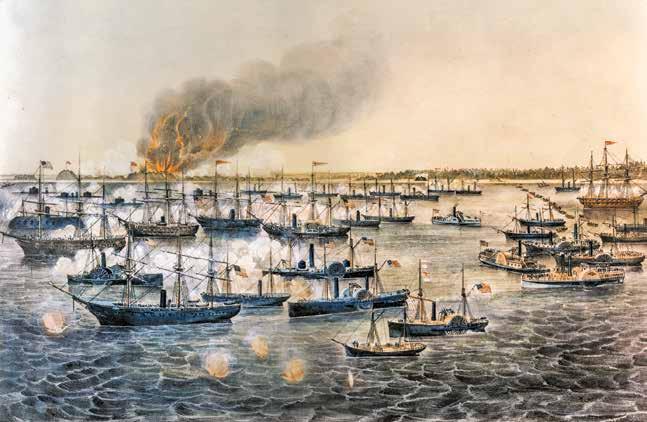
The Union assault on Fort Fisher finally came about in late December 1864. For two days, Christmas Eve and Christmas Day, Admiral Porter’s mighty armada unleashed the largest naval bombardment of the Civil War against the stout, well-armed earthen defenses. Despite the intensity of the shelling, however, the warships failed to dismount or destroy the stronghold’s heavy seacoast guns that guarded the fort’s land approaches across which the U.S. Army troops would have to charge. General Benjamin F. Butler, commander of the Union Department of Southeastern Virginia and North Carolina who had finagled his way into accompanying Weitzel’s expeditionary force and effectively taking control, promptly aborted the planned ground assault and returned to Virginia with the troops close behind.
During the great bombardment, a diverse force of approximately 3,400 gray-uniformed soldiers, including North Carolina infantry of Brig. Gen. W.W. Kirkland’s Brigade of Hoke’s Division, Capt. Andrew B. Paris’s Staunton Hill (Va.) Artillery, North Carolina Junior and Senior Reserve units, and a smattering of South Carolina cavalry manned the Sugar Loaf defenses. After the Union fleet steamed away, General Bragg withdrew the troops from Sugar Loaf to Wilmington, uniting them with Hoke’s other three brigades that straggled into town by rail at battle’s end. It would be a fatal mistake.
Although Union navy and army forces failed to take Fort Fisher at Christmas 1864, they returned for a second attempt less than three weeks later. General Grant had been indifferent to the first mission, but his interest was now piqued. With Fort Fisher in their possession, Federal forces could advance up the Cape Fear River, to capture Wilmington in support
Civil War News April 2021 4 Civil War News April 2021
Map of Wilmington and the Lower Cape Fear 1865.
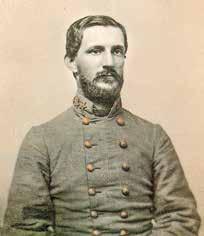
Maj. Gen. W.H.C. Whiting.
of General William T. Sherman’s proposed “Northern expedition,” or Carolinas Campaign as historians call it.
At the same time Porter and Butler suffered defeat at Fort Fisher, General Sherman captured Savannah, Ga., 300 miles to the south. Sherman proposed to Grant that he march to Virginia going through South Carolina and North Carolina, destroying infrastructure, supply caches, and railroad depots as he had done so successfully in his March to the Sea across Georgia in the autumn of 1864. General Grant approved the bold plan, but wanted to provide Sherman with a haven on the seacoast to which he could retreat if he met stiff Confederate opposition in the Carolinas or from where reinforcements and supplies could be forwarded to his army. Wilmington, roughly halfway between Savannah and Petersburg, where Grant and Lee had been slugging it out in a stalemated war since the spring of 1864, now took on a whole new meaning to Grant. Its three railroads and the Cape Fear River offered good lines of communication and transportation into interior North Carolina. Wilmington’s capture might well bring an end to the long, bloody war.
Admiral Porter’s slightly scaled down armada of fifty-eight warships renewed the bombardment of Fort Fisher on Jan. 13, 1865. Under the protection of the navy’s big guns, an expeditionary force of 9,600 army troops, now under the command of Brig. Gen. Alfred H. Terry, began going ashore shortly after sunrise. They met virtually no resistance as General Bragg had encamped Hoke’s Division near Wilmington and not along the Sugar Loaf lines to meet the Federals as they landed. Not until the afternoon of January 13 did Hoke’s brigades finally reach Sugar Loaf. By then, as General Whiting had feared, Federal forces had dug strong trenches halfway between Fort Fisher and Sugar Loaf to meet any threat.
After two-and-a-half days of heavy naval bombardment, the second largest of the war,
General Terry’s troops charged Fort Fisher’s works late on the afternoon of Jan. 15, 1865. A landing party of more than 2,200 sailors and Marines, volunteers from various ships in the fleet, also participated in the ground assault. The vastly outnumbered, outgunned, and exhausted Confederate garrison, under the command of Col. William Lamb and General Whiting, who had gone to Fisher as an advisor and volunteer combatant, fought at close quarters for 5 ½ hours before finally surrendering. Despite desperate pleas from both Lamb and Whiting for assistance during their plight, General Bragg declined to send reinforcements from Hoke’s Division at Sugar Loaf.
When Bragg telegraphed President Davis and General Lee that Fort Fisher surprisingly had fallen, they immediately ordered him to attempt to recapture it, but he refused. Instead, he abandoned the forts at the mouth of the Cape Fear River at Old Inlet, and withdrew their garrisons to Fort Anderson directly across the waterway from Sugar Loaf Hill. From there and Sugar Loaf he determined to defend Wilmington. But the port was of little value now that blockade-runners could no longer ascend the river to reach the city’s docks.
Federal forces soon turned their gun sights upriver to capture Wilmington, their main objective. On Jan. 19, 1865, General Terry’s forces, under the covering fire from Union warships on the ocean-side, made a reconnaissance in force along the Sugar Loaf lines in an attempt to overrun them. With a tangled swamp blocking his view, Bvt. Brig. Gen. Joseph C. Abbott, who led one of the Union brigades, climbed to the top of James Burriss’s house to get a good look at the Confederate defenses. From there he observed that the Sugar Loaf lines were strong, well manned, and probably could not be taken by frontal assault. Brigadier Gen. Charles J. Paine, who led a division of U.S. Colored Troops in the advance, remarked that the Sugar Loaf entrenchments were “as strong as any Lee had at Petersburg or Richmond, & from water to water.”
As January 1865 drew to a close, the Union and Confederate forces facing each other at Sugar Loaf settled into a stalemate. The Federals adopted a strategy of intimidation, while gray-uniformed soldiers dug in deeper. General Bragg was seemingly content to prevent the enemy from moving against Wilmington instead of recapturing Fort Fisher as his superiors in Richmond had ordered.
The campaign devolved into a routine of pickets trading potshots, and Union gunboats regularly firing their cannon against the Sugar Loaf lines. The harassment continued for weeks.
Confederate soldiers stationed at Sugar Loaf invented a unique, if dangerous game to endure the monotony of sand and salt air, and boredom. During the U.S. Navy’s daily shelling, the Southerners would recklessly expose themselves to exploding projectiles in order to claim the brass water cap fuses which they fashioned into rings and ornaments. “As soon as the missile burst,” exclaimed one player, “you would see men running in every direction toward the place for the purpose of finding the broken parts.”
As the Union tempest gathered, civilians and soldiers alike lost faith in General Bragg’s leadership. “We have no confidence in Bragg whatsoever,” stated Lt. Zaccheus Ellis, 1st Battalion North Carolina Heavy Artillery. “I hope we can hold Wilmington, but must say that if we had some other general in command, confidence would be greater.”
As if displaying indifference to Wilmington’s fate, General Bragg left by rail on Feb. 10, 1865, and returned to Richmond to reorganize his military staff. Upon his departure, General Hoke assumed command of local Confederate forces. Hoke maintained his field headquarters at Sugar Loaf, which was defended by 4,500 soldiers in three brigades and Capt. Ellis’s Staunton Hill Artillery and the Wilmington Horse Artillery positioned on the summit of Sugar Loaf Hill. His fourth brigade, South Carolinians under the command of Brig. Gen. Johnson Hagood, was sent to reinforce the North Carolina troops
that garrisoned Fort Anderson. They would soon have to defend against the onslaught on Union forces.
Battered and bloodied after his hard fought victory at Fort Fisher, General Terry waited for reinforcements, commanded by Maj. Gen. John M. Schofield, to arrive in early February before moving against Wilmington. General Grant considered the capture of the city so important that he traveled to the Cape Fear to offer his advice to Admiral Porter and Generals Schofield and Terry as they planned the attack. Having tested the Confederate defenses at both Sugar Loaf and Fort Anderson for almost a month now, Porter and Terry cautioned Schofield, who Grant placed in overall command of Union forces, the positions would be tough to capture.
Schofield organized a two pronged attack. While Admiral Porter’s flotilla of gunboats, that had pushed its way into the Cape Fear estuary after the
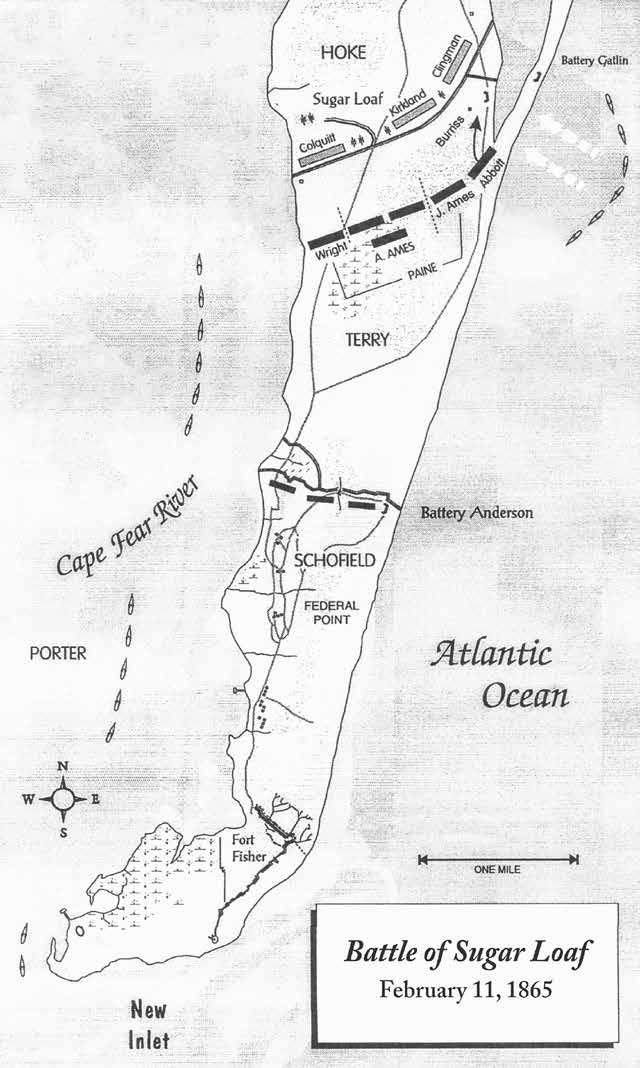
fall of Fort Fisher, shelled both Fort Anderson and Sugar Loaf from the river, General Terry’s Provisional Corps, including two brigades of U.S. Colored Troops, would attack the Sugar Loaf lines. Reinforcements from General Schofield’s 23rd Army Corps would be held in reserve. They launched an all-out ground assault on Feb. 11, 1865. General Paine’s U.S. Colored Troops bore the brunt of the Union fighting in the Battle of Sugar Loaf. “For a little while it was a lively and interesting fight,” stated Maj. John McMurray, 6th U.S. Colored Troops. Despite their prowess and courage in the headlong attack against the strongly entrenched Confederate forces, the African American soldiers, and their white comrades of Bvt. Maj. Gen. Adelbert Ames’s Division, failed to overrun the earthworks. They withdrew to establish their own line of trenches about 900 yards to the south, close enough to keep the Confederates in check.
5 April 2021 Civil War News 5 April 2021 Civil War News
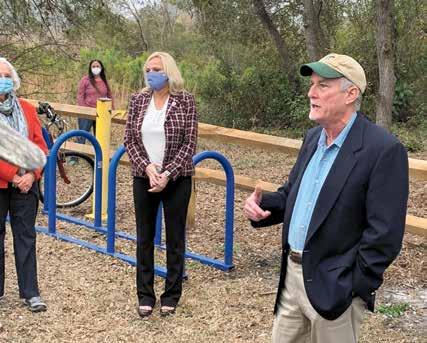
Chris E. Fonvielle Jr. speaks to visitors at the Joseph Ryder Lewis Jr. Civil War Park, after the ribbon cutting ceremony.
Maj. Gen. Robert F. Hoke.
Currier and Ives lithograph of the U.S. Navy’s Bombardment of Fort Fisher, N.C, Jan. 15, 1865.
Having failed to breach the Sugar Loaf lines, General Schofield attempted to outflank them by sending an expeditionary force up the sea beach (modern Masonboro Island) under the cover of darkness on February 12 and again on the 14th, but stormy weather both nights doomed the movements.
Consequently, Schofield abandoned hope of capturing Sugar
Loaf and transferred operations to the west side of the Cape Fear River. As a flotilla of Union gunboats bombarded Fort Anderson, U.S. Army troops outflanked it, forcing the Confederate defenders to evacuate in the pre-dawn hours of Feb. 19, 1865. Now endangered by Union infantry in his front and U.S. Navy gunboats ascending the river above him, General Hoke abandoned
the Sugar Loaf lines later that morning, and retreated toward Wilmington. General Terry’s blue-clad soldiers temporarily occupied the Sugar Loaf lines before beginning their chase of the rapidly retreating Confederates.
General Bragg returned to Wilmington on the afternoon of Feb. 21, 1865, only to order its immediate evacuation. Federal forces occupied the city early the following morning.
As he had predicted if Wilmington fell, Robert E. Lee was forced to evacuate his lines at Petersburg. General Grant pursued the Army of Northern Virginia to Appomattox Courthouse where Lee surrendered on April 9, 1865, only forty-six days after Union forces captured Wilmington.
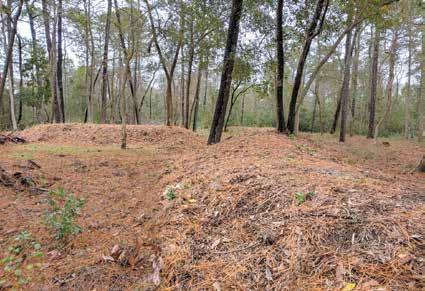
North Carolina infantry of Brig. Gen. Thomas L. Clingman’s Brigade, temporarily commanded by Col. Hector McKethan of the 51st Regiment North Carolina Troops, and Capt. Andrew B. Paris’s Staunton Hill Artillery manned the section of the Sugar
Loaf lines in what is now the Joseph Ryder Lewis Jr. Civil War Park. Gun emplacements used by Paris’s Battery are still extant.
The Joseph Ryder Lewis Jr. Civil War Park is open daily for self guided tours through the historic grounds and around the well preserved Confederate earthworks. For more information, contact the Federal Point Historic Preservation Society, 1121 N Lake Park Blvd., Carolina Beach, NC 28428, 910-458-0502, or visit its website: http://federal-point-history.org.
Chris E. Fonvielle Jr. is a native Wilmingtonian with a lifelong interest in American Civil War, North Carolina, and Cape Fear history. He attended public schools, including New Hanover High School, class of 1971, where he was the first soccer-style placekicker in North Carolina football history. After receiving his B.A. in anthropology at the University of North Carolina Wilmington, Chris served as the last curator of the Blockade Runners of the Confederacy Museum. He subsequently received his M.A. in American history at East Carolina University, and his Ph.D. from the University of South Carolina. That
makes Chris a Wildcat, a Seahawk, a Pirate, and a Gamecock.
After a brief teaching stint at East Carolina University, Dr. Fonvielle returned to his undergraduate alma mater at UNCW in 1996, where he taught courses on the Civil War, Wilmington and the Lower Cape Fear, and Antebellum America. His in-depth research focuses on coastal operations and defenses, and blockade running in southeastern North Carolina during the Civil War. He has published books and articles including The Wilmington Campaign: Last Rays of Departing Hope; Wilmington and the Lower Cape Fear: An Illustrated History; and Fort Fisher 1865: The Photographs of T.H. O’Sullivan.
In 2014, then-Governor Pat McCrory appointed Dr. Fonvielle to the North Carolina Historical Commission. Upon his retirement from UNC Wilmington in 2018, Chris was presented with the Order of the Long Leaf Pine for distinguished service to the State of North Carolina, signed by incumbent Governor Roy Cooper. He is also a regular tour guide for Wilmington Water Tours, and a featured guest on “Cape Fear Unearthed” podcasts. His website is www.chrisfonvielle.com.
6 Civil War News April 2021 6 Civil War News April 2021
Confederate earthworks at the Joseph Ryder Lewis Jr. Civil War Park. Photo by Chris E. Fonvielle Jr., Jan. 12, 2021.
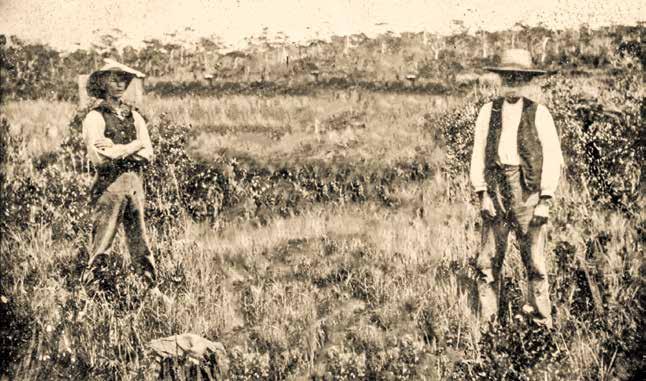
James Burriss and son with the Confederate earthworks in the background. Taken about 1880, this is the earliest known photograph of the Sugar Loaf lines.
The brush has been removed from the Confederate earthworks exposing the lines. Joseph Ryder Lewis Jr. Civil War Park. Photo by John Gregory. The Battle of Sugar Loaf, Feb. 11, 1865.
The N-SSA is America’s oldest and largest Civil War shooting sports organization. Competitors shoot original or approved reproduction muskets, carbines and revolvers at breakable targets in a timed match. Some units even compete with cannons and mortars. Each team represents a specific Civil War regiment or unit and wears the uniform they wore over 150 years ago. Dedicated to preserving our history, period firearms competition and the camaraderie of team sports with friends and family, the N-SSA may be just right for you.
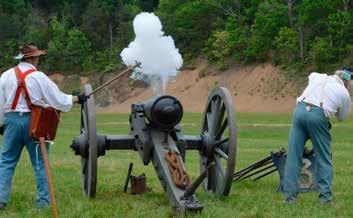
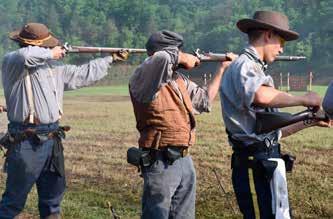
For more information visit us online at www.n-ssa.org.
 By Lawrence E. Babits
Civil War
Alphabet Quiz – L as in...April
1. “Marse Robert”
2. Kansas town raided by Quantrill
3. First Union general killed
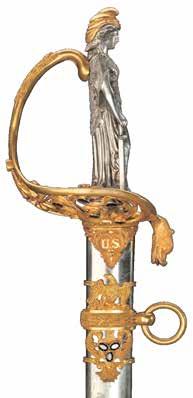
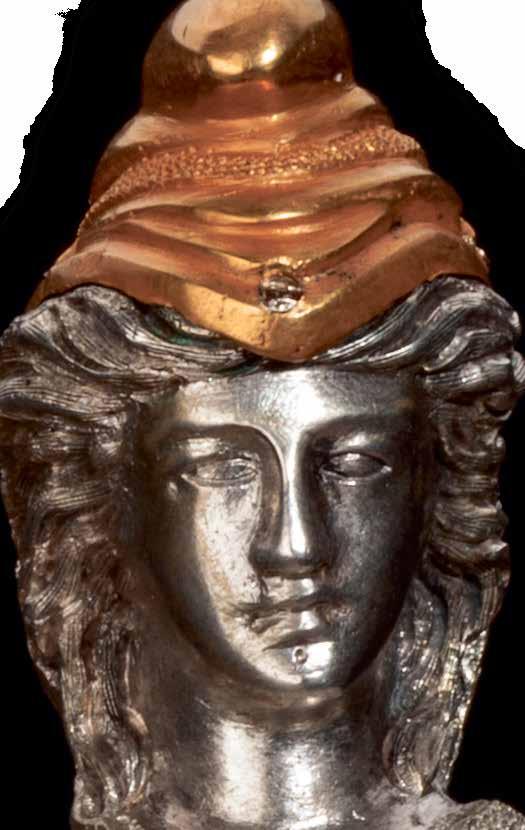
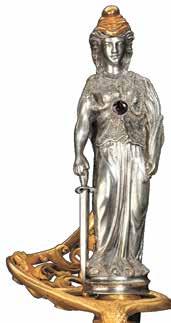
4. Key terrain feature overlooking Chattanooga
5. Turner Ashby’s command


6. English shipbuilder that made ships, including Alabama, for the CSA
7. US admiral who commanded North Atlantic, then Mississippi, squadrons
8. Grant’s “worse general in the army” who “commanded” at the Crater
9. Confederate Corps commander known as “Old Pete”
10. Lincoln’s friend and bodyguard“
Answers found on page 47.
7 April 2021 Civil War News 7 April 2021 Civil War News
Buying and Selling The Finest in Americana 11311 S. Indian River Dr. • Fort Pierce, Florida 34982 770-329-4985 • gwjuno@aol.com George Weller Juno
Send your book(s) for review to: Civil War News 520 Folly Road, Suite 25 PMB 379 Charleston, SC 29412
Publishers:
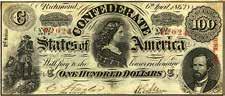
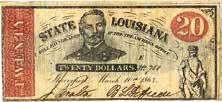
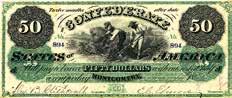
Confederate Currency
“In Richmond when the cash was low and promises were all the go. Then rapid, constant was the flow of the paper currency:” –Richmond Daily Examiner, March 9, 1864
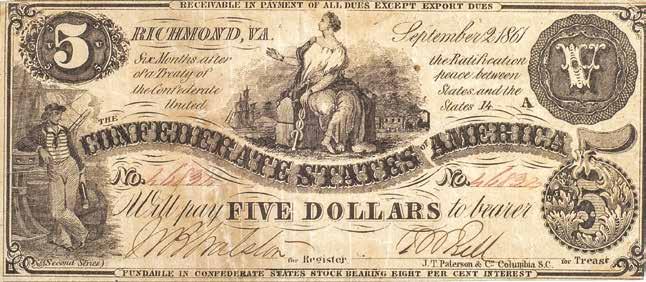
When the Civil War began in April 1861, one dollar of Confederate currency or “paper money” was worth ninety cents in gold. While the Confederacy never adopted any standard of value to back the currency, people in the 19th century instinctively measured the value of money in terms of gold, this being, historically-speaking, the soundest commodity. British banks in 1861 were willing to offer an exchange rate of $5 (Confederate) to one £ sterling, roughly the same exchange rate given the U.S. dollar at that time; the U.S. government exchange rate was $4.86 to one £ sterling in early 1861.
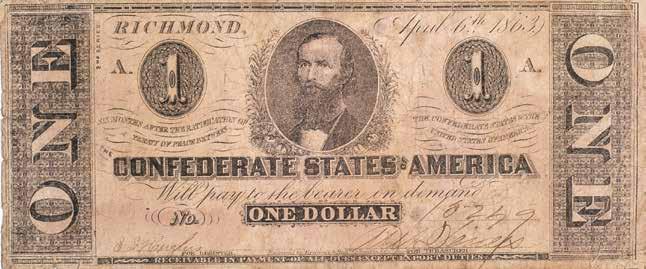

The financial situation quickly degenerated as the Confederate government simply printed more and more paper currency to pay down its growing war debt while they devised new forms of revenue measures. The results proved disastrous. The rates offered in 1861 on Confederate paper currency would never be that generous again. Within a year the British exchange rate was $9 (Confederate) to one £ sterling. In the absence of a substantial gold reserve, the most sensible economic method used to control the value of paper currency was to back it with some other commodity. Goods such as cotton or tobacco represented tangible value for the South. The situation seemed straightforward enough; the Confederacy had commodities that were in demand and needed money. Backing paper money with commodities is
not as strange as it sounds. The Confederacy used cotton as collateral for a major bond issue in 1863. These Confederate bonds were considered as a practically fail-safe investment due to the value of the commodity (cotton) used to back the securities. Cotton was always in demand world-wide.
The Confederate cotton bonds were brokered by the House
of Erlanger & Company of Frankfurt, Germany, and marketed throughout England and Continental Europe. Baron Emile Erlanger was one of the wealthiest men in the world and his “House” also had branches in Paris and Amsterdam.
The cotton bonds came to Erlanger after the Confederacy failed to find a British bank willing to float them. After several weeks of negotiations, Erlanger dispatched three agents to Richmond to propose a much larger bond issuance than the Confederate government had requested. In early March 1863, the parties agreed on three million £ sterling or $15,000,000 (C.S.), which amounted to a roll-back of the original exchange rate offered on Confederate paper money back in 1861. Such is the value of backing commercial “paper” with something of tangible value.
The “Erlanger bonds” sold at 90% face value and were redeemable for Confederate government
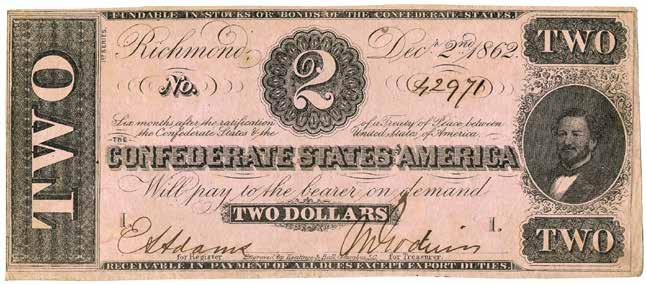
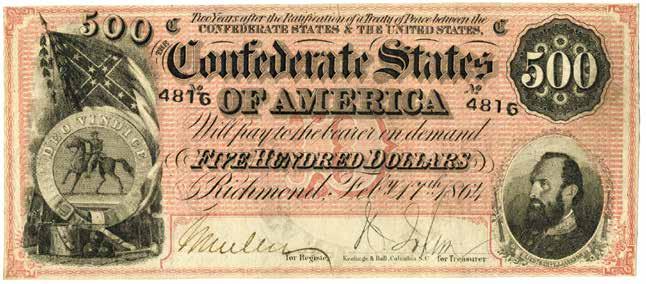
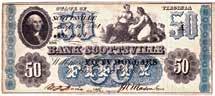
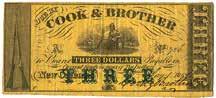
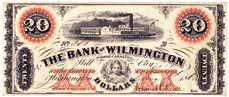
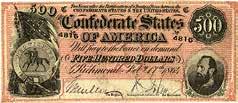
owned cotton but the cotton was still in the Confederate States. The clause had a critical effect in stimulating blockade running because “Erlanger bonds” holders had to run the Union blockade to convert their bonds into cotton. Of course, most European investors lost their investment post-bellum when one key assumption about redeeming the cotton bonds turned out to be false. The Federal Consul in London, F.H. Morse, wrote U.S. Secretary of State William Seward somewhat incredulously: “…as strange as it might seem these people (European investors) who are aiding the Rebels believe if worse comes, and the Union is restored, the United States Government will assume payment of their bonds.” Why the Confederate government in Richmond did not back its domestic supply of paper currency with cotton (or tobacco) as it did the Erlanger bonds is not known. Doing so may have saved them Confederate currency. Different denominations and years. Courtesy Greg Ton Currency.
8 Civil War News April 2021 8 Civil War News April 2021
financially, or at least lessened the misery on the home front. The amounts of paper currency in circulation were not solely responsible for their decline in value, but rather, it was that there was a growing suspicion (as early as 1863) that, if the Confederacy survived, it would repudiate all its debts and begin anew with respect to financing.
This was not entirely baseless as laws had been passed stipulating that certain denominations of paper currency must be converted into low interest Confederate bearer bonds by a fixed date, or else they could not be used as legal tender at all. In mid-February 1864, a very complicated law was enacted as a last desperate measure to reduce the amount of currency in circulation and stabilize its value. All non-interest bearing notes larger than $5 (C.S.) had to be exchanged for 4% bonds before April 1; if this was not done the currency would be de-valued by 10% monthly until the notes were valueless. For some odd reason any $5 (C.S.) notes in circulation would retain their full value until July 1, at which point they would be reduced by 33% in value.
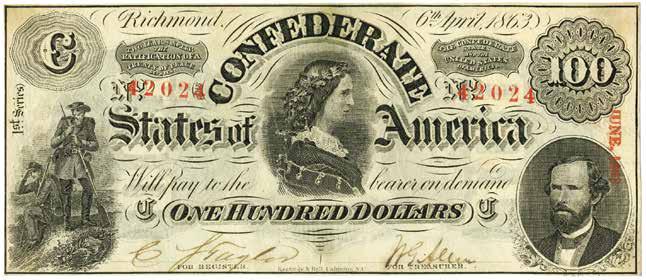
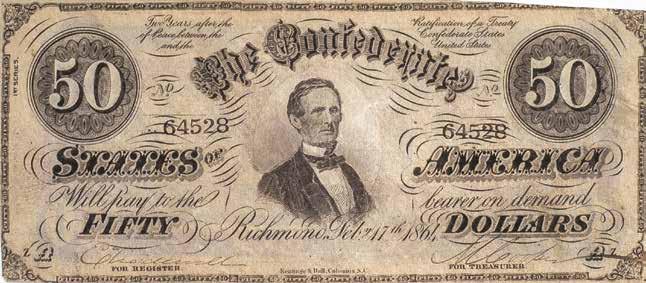
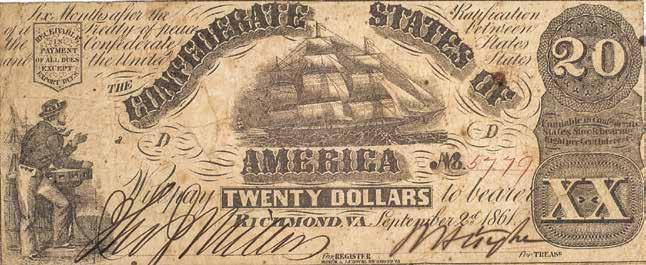
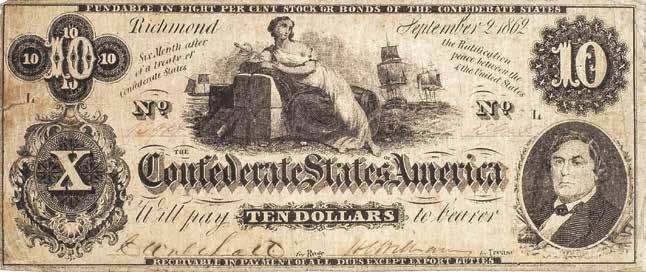
This act effectively took away the right of the Treasury to issue additional paper currency, except in exchange for old notes at 2/3 of the face value. The results were predictable…loss of confidence in the government, financial panic, and confusion. The record keeping of the Treasury was so incomplete that little certain knowledge of monetary supply was to be had. “Bill Arp” (a/k/a Charles H. Smith), a humorist of the times reported on the situation as follows:
Secretary Memminger was asked to say about how much paper (money) he thought was in circulation…and he said he to the best of his recollection it was either six hundred millions or six thousand millions, but he wasn’t sure which…
Meanwhile in March 1864, the Confederate Congress ignored the
new initiatives and passed legislation to issue another $80,000,000 in currency to pay the back wages due to the Confederate troops in the field. President Jefferson Davis vetoed the measure. Vice President Alexander H. Stephens lamented privately that, “Our finances are now a wreck…past all hope in my judgment.”
The old paper money was eventually collected and mutilated by cutting a hole through the center then burned. The newly issued Confederate paper currency was very much like the old, and the Richmond Daily Examiner (February 16, 1864) could not resist lampooning it.
To see the faces on the notes with that unchanging expression of ineffable melancholy which the engraver has given to all of them…Davis is doleful and Stephens saturnine, Hunter is heavy and Clay clouded with care, Memminger is mournful and (Judah) Benjamin the buoyant is bien trist, having had in sight evidence of the country’s impecuniosity. It was enough to drive a well-regulated mind to lunacy.”
The term “bien trist” means “a sad fate.”
Craig L. Barry was born in Charlottesville, Va. He holds his BA and Masters degrees from the University of North Carolina (Charlotte). Craig served The Watchdog Civil War Quarterly as Associate Editor and Editor from 2003–2017. The Watchdog published books and columns on 19th-century material and donated all funds from publications to battlefield preservation. He is the author of several books including The Civil War Musket: A Handbook for Historical Accuracy (2006, 2011), The Unfinished Fight: Essays on Confederate Material Culture Vol. I and II (2012, 2013). He has also published four books in the Suppliers to the Confederacy series on English Arms & Accoutrements, Quartermaster stores and other European imports.
9 April 2021 Civil War News 9 April 2021 Civil War News
New Jersey Governor Rodman Price, who viewed himself rather grandiosely, apparently decided to capitalize on his Adjutant General Thomas Cadwallader’s interest in evolving weapons technology. In 1856 he dispatched Cadwallader on a tour of Europe, with instructions to study, take notes, and make comments on the status of European armies and their weaponry to “obtain correct information as to the most improved arms, tactics and drill, applicable to the efficiency and improvement of our militia system.”
At the same time, the Federal
by Joe Bilby
government assigned a credentialed arms expert and ordnance officer of vast experience, Major Alfred Mordecai, who had previously traveled abroad on inspection tours, to conduct the same mission. Price and Cadwallader were evidently unaware they were duplicating the Federal effort or didn’t care. To his credit, for the first leg of his trip, the adjutant general picked Samuel Colt, the famed firearms inventor who began his small arms manufacturing career in Paterson, N.J., but by then was located in Hartford, Conn., as a traveling companion.
Cadwallader and Colt toured the Royal Small Arms Factory at Enfield Lock together, and the adjutant general correctly reported that the British government had adopted the “American System” of firearms manufacturing, with precise machinery creating interchangeable parts. In the past, when firearms needed maintenance in the field, replacement parts had to be hand fitted, so the “American System” was a decided improvement. Cadwallader described the manufacturing process in some detail, including the use of American Blanchard lathes
to produce gun stocks of identical dimensions. At the time of the adjutant general’s visit, Enfield was producing the Model P53 rifle-musket, the AK-47 of its day that would become one of the nineteenth century’s iconic military small arms and, supplied by private contractors, the second most common arm used by both sides during the American Civil War.
Cadwallader subsequently visited the British supply depot and production site for artillery pieces and artillery and small arms ammunition at Woolwich before crossing the channel to France, where he was impressed with the quality of the soldiers in the French army (over the British) but lamented the dictatorship of Napoleon III. On a more practical level, he submitted a series of questions to French ordnance officers regarding firearms cost, cartridge making, bullet
diameter and lubrication, gun finishes, arms making machinery, and trends in artillery.


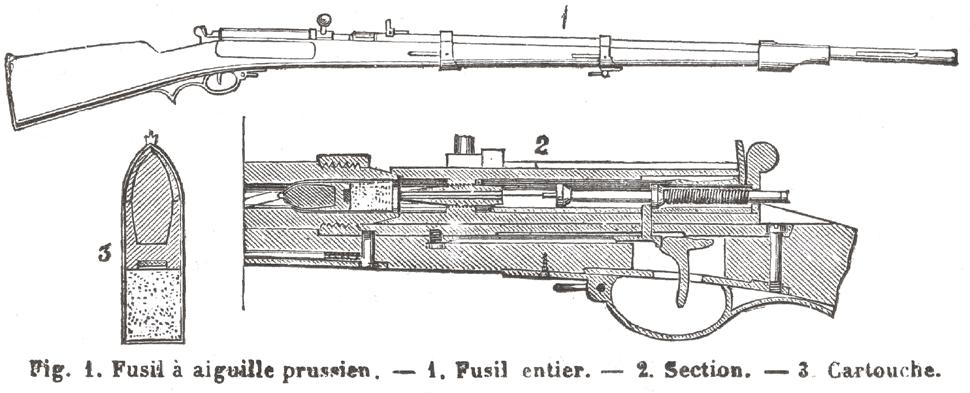
Leaving France, the adjutant general traveled through Belgium, where he visited the Waterloo battlefield and moved on to the German principalities along the Rhine and then Prussia, which impressed him considerably with the size and apparent quality of its army. Cadwallader was particularly interested in the fact that the Prussian army was using the breech-loading Dreyse “needle gun,” which increased the infantry’s rate of fire dramatically. In Austria, he asked the American ambassador to forward a description of Austrian weapons manufacturing to him in Trenton, but it was apparently lost in transit. In a brief side trip to Piedmont, he concluded that the “Sardinian troops …will distinguish themselves…whenever called upon.”
The interaction between Cadwallader and Price suggests that they viewed themselves as valuable contributors to national as well as state policy. The adjutant general’s conclusions at the end of his trip were that the political situation in Europe was dicey, most governments tended toward the despotic, and that America should not get involved in any “entangling alliances.” Following this bit of foreign policy advice to the governor, the adjutant general returned to his usual annual report recommendations, including, once again, increasing
the number of uniformed militia companies and requesting they be paid for drilling, with the money to come from a tax on military age men who chose not to drill. As in the past, neither Price nor the state’s Assembly or Senate was eager to initiate this policy. One writer described the New Jersey militia at the outbreak of the Civil War as “a system of shreds and patches.”
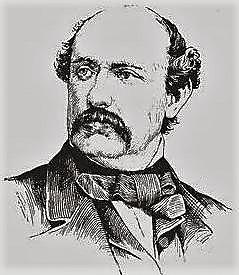
Rodman Price had a dubious background. As a naval quartermaster in California after the Mexican War, he dabbled in local politics and appears to have speculated with Federal money. Recalled to explain his actions, the ship bearing evidence sank in a storm, leaving Price with a clean slate. He was elected to one term in Congress and then as governor, the last post of his political career. With the outset of the Civil War, he advocated New Jersey joining the Confederacy, which no doubt embarrassed his son, a Union officer. The former governor was finally arrested based on new evidence about his California activities. Released due to ill health, his case never came to trial, as he passed away on June 7, 1894.
Joseph G. Bilby received his BA and MA degrees in history from Seton Hall University and served as a lieutenant in the 1st Infantry Division in 1966–1967. He is Assistant Curator of the New Jersey National Guard and Militia Museum, a freelance writer and historical consultant and author or editor of 21 books and over 400 articles on N.J. and military history and firearms.
He was also publications editor for the N.J. Civil War 150 Committee and edited the award winning New Jersey Goes to War. His latest book, New Jersey: A Military History, was published by Westholme Publishing in 2017.
He has received an award for contributions to Monmouth County (N.J.) history and an Award of Merit from the N.J. Historical Commission for contributions to the state’s military history. Email at jgbilby44@aol.com.
10 Civil War News April 2021 10 Civil War News April 2021
Tom Cadwallader’s Arsenal Tour
Rodman M. Price. Library of Congress.
Royal Small Arms Factory.
Breech-loading Dreyse “needle gun.”









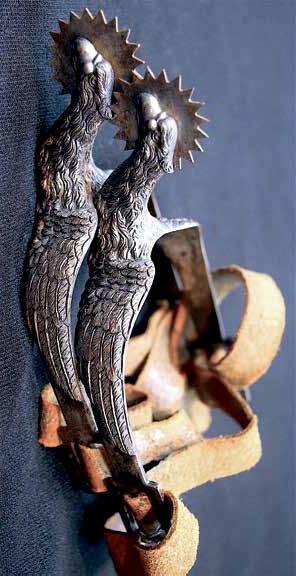
11 April 2021 Civil War News 11 April 2021 Civil War News Digital Issues of CWN are available by subscription alone or with print plus archives from 2012 to present at CivilWarNews.com Deadlines for Advertising or Editorial Submissions is the 20th of each month. Email to: ads@civilwarnews.com Subscribe online at CivilWarNews.com Greg Ton • P.O. Box 9 • Franklin, TN 37065 901-487-5944 • GTon1@aol.com Greg Ton Buying and Selling the Finest Confederate, Obsolete and Southern States Currency Since 1978 GregTonCurrency.com THE FINEST HISTORICAL ANTIQUE MILITARIA Wallace Markert info@csacquisitions.com 16905 Nash Road • Dewitt, Virginia 23840 804-536-6413 • 804-469-7362 www.csacquisitions.com Camp Jordan Arena 323 Camp Jordan Pkwy. East Ridge, TN July 24-25, 2021 CHATTANOOGA ANTIQUE MILITARIA & AMERICANA SHOW American Digger® Magazine now has TWO great shows each year! January 15-16, 2022* Omar Shrine Temple 176 Patriots Point Rd. Mt Pleasant, SC For information: Call (770) 362-8671 or (716) 574-0465 Email: anita@ americandigger.com Both shows Open to Public: Saturday: 9-5 Sunday: 9-3 Dealer Setup: Friday 1-7 PM Sat 7-9 AM americandigger.com/american-digger-events/ • Swords & Knives • Antique Firearms Dug & Non-dug Relics Civilian Items & Jewelry Bottles & Stone Artifacts • Art, Photos, & Books • Militaria & Americana All Eras to WWII Metal Detectors Awards & Prizes Both shows feature all this and more: LOWCOUNTRY ANTIQUE MILITARIA & AMERICANA SHOW Display!Trade! Buy!Sell! Note date change! *Temporary date change to avoid New Years Eve conflict. Michael Simens HistoricalArms.com Tel: 440-744-9088 • mail@HistoricalArms.net Precious Metal Rarities Solid Silver Presentation Eagle Head Spurs of Major General George G. Meade.

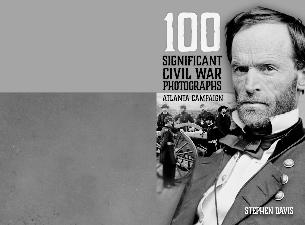

12 Civil War News April 2021 12 Civil War News April 2021 19th CENTURY LIVING HISTORY! James Country MERCANTILE 111 N. Main Liberty, MO 64068 816-781-9473 • FAX 816-781-1470 www.jamescountry.com Ladies – Gentlemen Civilian – Military • Books • Buttons • Fabrics • Music • Patterns • Weapons Mens, Ladies and Children’s • Civilian Clothing • Military Clothing • Military Accessories • Accoutrements Everything needed by the Living Historian! Our Clothing is 100% American Made! The home of HOMESPUN PATTERNS© 100 Significant Civil War Photographs: Atlanta Campaign collection of George Barnard’s camera work. Most of the photographs are from Barnard’s time in Atlanta, mid-September to mid-November 1864, during the Federal occupation of the city. With this volume, Stephen Davis advances the scholarly literature of Barnardiana. The American Civil War was the first war in which both sides widely used entrenchments, repeating rifles, ironclad warships, and telegraphed communications. It was also the first American War to be extensively photographed. Mathew Brady, Alexander Gardner and Timothy O’Sullivan are famous for having made iconic photographs in the Civil War’s eastern theater. George N. Barnard deserves to be ranked in this top tier for his photographic A civilian photographer hired by Gen. William T. Sherman’s chief engineer to take pictures of fortifications around Atlanta, Barnard took several hundred of them in and around the city in the fall of 1864. His most famous is the site of Union Maj. Gen. James B. McPherson’s death in the battle of Atlanta, July 22, Thus far, no comprehensive, definitive listing has been made of the photographer’s work. The Library of Congress has 130 images; the U. S. Military Academy at West Point, New York, has at least 98 photographs, donated by Captain Poe’s widow. Other repositories, such as the Gilder Lehrman Institute of American History in New York City, have smaller collections. For this book we have chosen hundred images we deem “significant,” though other students may wonder at some of our selections. We hope that this work will stimulate further interest in Barnardiana, and that other scholarly volumes are yet to come. The Atlanta Campaign STEPHEN DAVIS 100 SIGNIFICANT CIVIL WAR PHOTOGRAPHS ATLANTA CAMPAIGN $19.95 + $3.50 shipping 128 pages, photographs, maps, bibliography. $19.95 + $3.50 shipping. Softbound. ISBN: 978-1-61850-151-6. www.HistoricalPubs.com. Order online at www.HistoricalPubs.com or call 800-777-1862 Subscribe online at CivilWarNews.com – MAKER –LEATHER WORKS (845) 339-4916 or email sales@dellsleatherworks.com WWW. DELLSLEATHERWORKS.COM Publishers/Authors Send your book(s) for review to: Civil War News 520 Folly Road, Suite 25 PMB 379 Charleston, SC 29412 bookreviews@civilwarnews.com



















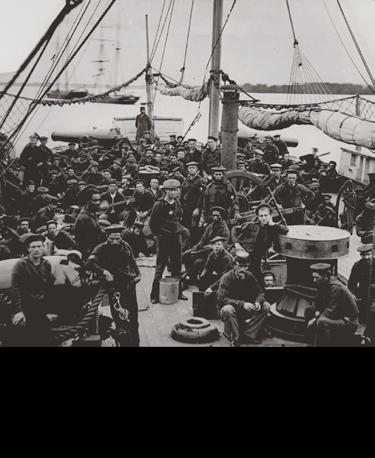

















CivilWarShop.com Offering the Finest Investment Grade Military Memorabilia since 1981 Buy – Sell – Trade Certified Appraisal Services Life Member Company of Military Historians Lynn and Will Gorges, Proprietors 3910 US Hwy. 70 East New Bern, NC 28560 (252) 636-3039 • civilwarshop@gmail.com www.CivilWarShop.com Long Bay Salvage LLC specializes in the recovery and restoration of authentic Civil War Cannon with an emphasis on 10-Inch Columbiads, offering discerning collectors and museums the opportunity to own what has become a rare piece of Civil War history. Long Bay Salvage also works with historical entities (government and private) to recover and conserve large historical artifacts with Glenn Dutton Glenn Dutton glennjdutton@aol.com 770-351-7565 Rufus Perdue Rufus Perdue rperdue1@sc.rr.com 843-315-9818 PLEASE CONTACT US FOR MORE INFORMATION www.LongBaySalvage.com Promoters of Quality Shows for Shooters, Collectors, Civil War and Militaria Enthusiasts Military Collectible & Gun & Knife Shows Presents The Finest Mike Kent and Associates, LLC • PO Box 685 • Monroe, GA 30655 (770) 630-7296 • Mike@MKShows.com • www.MKShows.com Northwest Georgia Trade Center 2211 Dug Gap Battle Road Dalton, GA 30720 January 30 & 31, 2021 Chickamauga (Dalton) Civil War Show Williamson County Ag Expo Park 4215 Long Lane Franklin, TN 37064 December 4 & 5, 2021 Middle TN (Franklin) Civil War Show l Shiloh Buying & Selling Authentic Civil War Artifacts 2405 Oak Grove Road Savannah, TN 38372 731-438-3541 ShilohRelics.com History@shilohrelics.com owner Rafael Eledge .com Dealing in the Finest Authentic Militaria Since 1995 with an Emphasis on the American Civil War Pistols, Muskets, Carbines, Rifles, Bayonets, Swords, Uniforms, Headgear, Belt Buckles, Cannon, Buttons, Bullets, Artillery Implements Etc. Mid West Civil War Relics MidWestCivilWarRelics.com Allen Wandling Phone: 618-789-5751 Email: awandling1@gmail.com Museum Quality Civil War Union & Confederate Artifacts! We handle the Best Antique Bowie Knifes, Civil War Swords, Confederate D-guards, Antique Firearms, Dug Relics, Buckles & Belts, Identified Relics, Letters, Documents, Images, Currency, Uniforms, Head Gear & Flags. ROCK ISLAND AUCTION COMPANY REAL ART COMING IN 2021 REAL HISTORY REAL IRON CONSIGN TODAY Contact our Acquisitions Department by calling 800-238-8022 or Email: guns@rockislandauction.com WWW.ROCKISLANDAUCTION.COM Street West, Rock Island, IL 61201 info@rockislandauction.com Premier: April 16-18, Sept. 10-12 & Dec. 3-5 Sporting & Collector: Feb. 3-6, June 10-11 & Oct. 7-8 Online: Jan. 27, Feb. 24, Mar. 24, April 28, May 26, June 30, July 28, Aug. 25, Sept. TBD, Oct. TBD, Nov. TBD, Dec. TBD DATES SUBJECT TO CHANGE Extremely Rare New Haven Arms Company Iron Frame Henry Lever Historically Significant, National Treasure Ulysses S. Grant’s Appointment as Major General Signed by President Abraham Lincoln and Secretary of War Edwin Stanton Formerly From the Grant Family Historic, Highly Desirable Civil War New Haven Arms Co. Henry Lever Captain Stapleton Wright Historically Significant, Phenomenal W.H. Horstman & Sons Model 1850 Staff & Field Presentation Recipient Lieutenant Colonel Jacob Frick of the 96th Pennsylvania Volunteer Infantry Historic, Award Winning, Extremely Well-Documented, Superb Civil War G.W. Simmons & Bros. Sword Presented to Captain Jon Digman of Co. H, 183rd Pennsylvania Volunteer Infantry 2021 AUCTION SCHEDULE: Undisputed World Leader for Quality Collectable and Antique Firearms ® Abraham Lincoln Ulysses S. Grant 297 Steinwehr Avenue • Gettysburg, PA 17325 717-334-6245 • GettysburgMuseum.com @GettysburgHeritageCenter Operated by the non-profit Gettysburg Nature Alliance 297 Steinwehr Avenue • Gettysburg, PA 17325 717-334-6245 • GettysburgMuseum.com @GettysburgHeritageCenter Operated by the non-profit Gettysburg Nature Alliance Award-Winning MUSEUM Orientation MAP EVENTS... Licensed Battlefield Guided & Other TOURS Gift SHOP BookSTORE Visitor INFORMATION Accoutrements www.csarms.com PO Box 602 9150 John S. Mosby Hwy. Upperville, Virginia 20185 Shop Phone: 540-592-7273 Email: sophiacsarms@aol.com weaves the history behind Civil War flags of Tennessee: the stories of the women who stitched them, the regiments that bore them, and those who served under them and carried them. THE UNIVERSITY OF TENNESSEE PRESS GET YOUR BOOKS DELIVERED UTPress.org or 800-621-2736 This book Please see our website www.AndrewBottomley.com Mail Order Only • Worldwide Shipping Calling the UK from overseas: +44 1484 685 234 Calling our UK cellphone from outside the UK: +44 7770 398 270 email: sales@andrewbottomley.com The Coach House • Huddersfield Rd. HOLMFIRTH West Yorkshire United Kingdom HD9 3JJ £7,580 £17,500 £6,950 £3,850 £3,850 £1,750 Valuable Colts Attributed To Rembrandt Peale. 34 York St • Gettysburg, PA 17325 717-334-2350 • CIVILWAR@UNIONDB.com uniondb .com All Hands on Deck! Support Our Mission to Bring You the Naval History “This is the magazine for all things Civil War Navy. From ‘Uncle Sam’s web-feet’ to the ‘grey jacket navy’ raised by Jeff Davis! It is all here thoroughly researched and illustrated by beautiful contemporary navy images.” Ron Field, military historian and author of over 45 books, including Bluejackets: Uniforms of the United States Navy in the Civil War Period, 1852-1865. 1 Year—4 Issues: $37.95 Subscribe Now at civilwarnavy.com Or send a check to: CSA Media, 808 Drayton St., Savannah, GA 31401 International subscriptions subject to postage surcharge. Sailors and Marines on the deck of the U.S. gunboat Mendota, 1864. National Archives (Identifier 524548). P.O. Box 342 Thompsons Station, TN 37179 615-585-0115 Email: brubon2@bellsouth.net Franklin Relics Specializing in Accoutrements, Edged Weapons, Firearms and Uniforms FranklinRelics.com Bruce Hohler Proprietor www.AmericanRelics.net Allen Phillips 1014 Reservoir St., Suite B Harrisonburg, VA 22801 Phone: 540-476-1969 Email: americanrelicsnet@gmail.com American Relics Specializing in Buttons, Buckles, Currency, Hat Devices and other Military Artifacts. www.CivilWarBadges.com Everitt Bowles, Owner • 770.926.1132 1036 Washington Avenue Woodstock, Georgia 30188 The Largest Selection of GAR & UCV Hundreds of Memorabilia Items from Rev War through Vietnam Secure & Easy Guaranteed Authenticity of Every Item Vin Caponi Historic Antiques Vin Caponi, Jr. 18 Broadway Malverne, NY 11565 Store: 516-593-3516 Cell: 516-353-3250 rampantcolt@aol.com http://www.vincaponi.com We carry a very large inventory of Colt and Civil War firearms including muskets, carbines, rifles and accoutrements. Our inventory of historic antiques and firearms begin at the early collectors level and range all the way up to the advanced collector and investors level. 8895 Town and Country Circle • Knoxville, TN 37923 Phone: 865-693-3007 info@armyoftennesseerelics.com Civil War Artifacts Nick Periut Proprietor ArmyofTennesseeRelics.com Buying and Selling High Quality Images, Belt Buckles and Plates, Artillery Shells, rare Bullets and Buttons! Contact Glenn Dutton at: glennjdutton@aol.com or 770-351-7565 BUYING & SELLING Field & Heavy Artillery Cannon, Shells, Fuses & Etc. The 2021 Civil War Dealers Directory is out. To view or download a free copy visit: www.civilwardealers.com/dealers.htm The 2021 Civil War Dealers Directory is out. To view or download a free copy visit: www.civilwardealers.com/dealers.htm The 2021 Civil War Dealers Directory is out. To view or download a free copy visit: www.civilwardealers.com/dealers.htm The 2021 Civil War Dealers Directory is out. To view or download a free copy visit: civilwardealers.com/dealers.htm
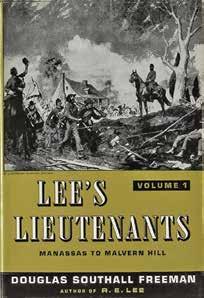
My paternal grandfather was a brick manufacturer, a practical and down-to-earth occupation for a practical and down-to-earth man. He was also a voracious reader with widely varied interests. The contents of his library ranged from Proust to Douglas Southall Freeman. I took several items from his shelves when he died in 1971. I never managed Proust, but I still have Papa’s copy of Lee’s Lieutenants, which I have read more than once and refer to with some frequency.
The three volumes of Freeman’s work were published between 1942 and 1944 by Charles Scribner’s Sons. Many readers, like my grandfather, read these
books about the Confederate War while their sons waged war against Japan and Germany.
Mr. Freeman and Mr. Scribner’s sons had confidence their readers cared enough about the details of this “Study in Command” to read the notes with care. They knew that readers would be interested in the documentation backing up assertions made about the events of a war fought two generations before. Virtually every page of the three-volume history has multiple footnotes. Each individual datum that requires sourcing comes with its own individual note. The reader can glance down and see precisely what document or documents support the
statement made in the text.
On pages 324 and 325 of Volume I, Freeman tells us about ill-feelings some officers had for Stonewall Jackson because of his brusque manner. One colonel vowed never to go to Jackson’s headquarters because of the general’s attitude. How do we know? Well, this officer, McHenry Howard, said so, in a book he wrote in 1914.
On page 362 there is a reference to a place called Mount Solon. Don’t know where that is? Look down, and in an instant you will know that it is ten miles southwest of Harrisonburg, Va. Freeman tells us that Jackson put aside his old blue uniform on May 5, 1862, and donned regulation C.S.A. attire. Another quick glance advises that Jedidiah Hotchkiss mentioned that in his diary. Let’s put some emphasis on “quick” and “glance” and come back to them later.
Trivia? Maybe, but facts are facts. A bigger fact was Ewell’s decision to stick with Jackson and follow his orders as Jackson planned an attack in the Valley, in spite of the fact that Ewell had conflicting orders from Joseph Johnston. Jackson’s Valley Campaign is not trivia, and the risk Ewell took was a big deal.
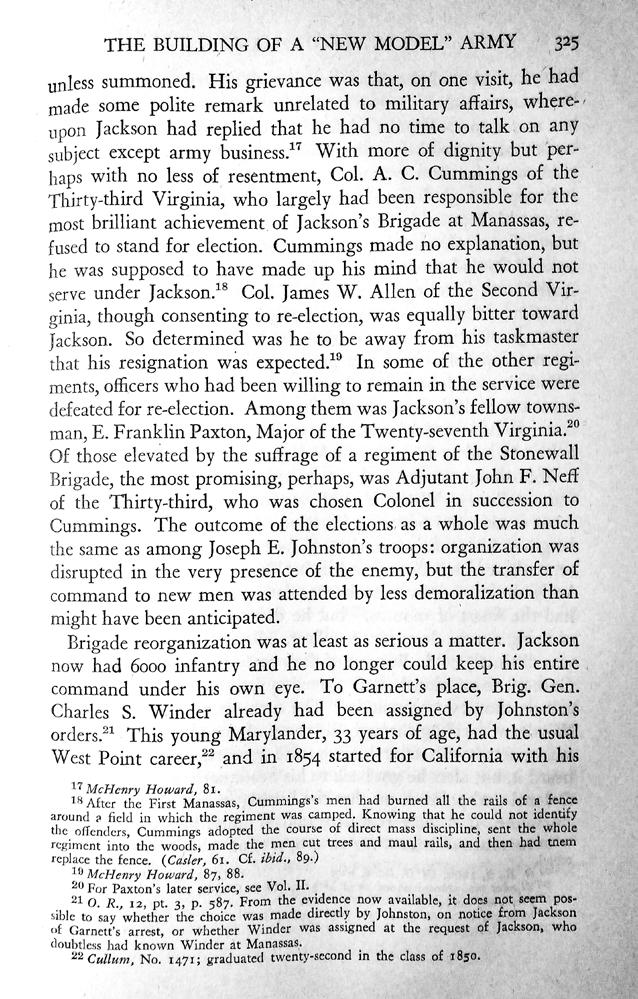
Two footnotes on page 365 tell us more about this episode and provide references to the OR and an 1866 book by Jackson’s chief of staff.
Many footnotes, of course, include discussion of various issues that would distract if embodied in the text. Readers interested in a particular matter can benefit from these discussions, such as the note on page 369 that provides detail on the makeup and service of Arnold Elzey’s Brigade. If you want to know more you can look at the pages in the OR mentioned in the 12-line note.
Two things are important here. First, the quick glance emphasized above. The notes are where they are most useful, at the bottom of the page, not at the back of the book. No flipping pages to find the note; no putting fingers between pages to hold open two places in the book; no repeating the process one page later to check another source.
Second, the notes are separate, each datum having its own separate note, as I said before, inserted as it is needed. A typical paragraph will have two or three notes. A greater number is not uncommon. It is not unusual for a single sentence to have two notes. After all, if a sentence has more than one datum that requires sourcing, it needs more than one note, right? Elementary.
A single catch-all note, at the end of a paragraph, is less useful, as the reader must sometimes labor to match a given datum to its source.
I have reviewed 21 books for Civil War News. Thirteen have endnotes and one has notes at the end of each chapter. One has no notes at all and needs none because of the nature of the book. Of the books I have reviewed, only six have footnotes, two of which are the sometimes-problematic end-of-paragraph notes.
Once I heard Gordon Jones, the military historian at the Atlanta History Center, say that when he is king all maps in history books will be oriented the same way, the logical way, the way readers expect, with north at the top. Well, when I am king all history books will have footnotes. Penalties for noncompliance will be severe.
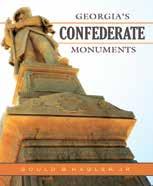
Gould Hagler is a retired lobbyist living in Dunwoody, Ga. He is a past president of the Atlanta Civil War Round Table and the author of Georgia’s Confederate Monuments: In Honor of a Fallen Nation, published by Mercer University Press in 2014. Hagler speaks frequently on this topic and others related to different aspects of the Civil War and has been a regular contributor to CWN since 2016. He can be reached at gould.hagler@gmail.com.

Civil War Artillery Book
Civil War Artillery Projectiles
– The Half Shell Book. This hardbound book has 392 pages, and is full-color with 850 photographs.
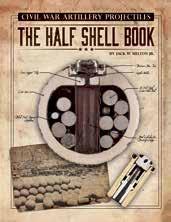
For more information and how to order visit the website ArtillerymanMagazine.com or call 800-777-1862.
$89.95 + $8 media mail for the standard edition.
Gould B. Hagler, Jr.
This unique work contains a complete photographic record of Georgia’s memorials to the Confederacy, a full transcription of the words engraved upon them, and carefully-researched information about the monuments and the organizations which built them. These works of art and their eloquent inscriptions express a nation’s profound grief, praise the soldiers’ bravery and patriotism, and pay homage to the cause for which they fought.
14 Civil War News April 2021 14 Civil War News April 2021 Noted, or a Quick Glance
866-895-1472 toll-free
www.mupress.org
In Honor of a Fallen Nation
GEORGIA’S CONFEDERATE MONUMENTS
Page 325 footnotes example.
Dust jacket of Lee’s Lieutenants Manassas to Malvern Hill, Vol. 1.

15 April 2021 Civil War News 15 April 2021 Civil War News REINFORCEMENTS MAKE ALL THE DIFFERENCE!!! Nobody even comes close to building a Civil War tent with as much attention to reinforcing the stress areas as Panther. Our extra heavy duty reinforcing is just one of the added features that makes Panther tentage the best you can buy! PANTHER Catalog - $2 Web: www.pantherprimitives.com 160 pages of the best selection of historical reenactment items from Medieval era to Civil War era. Includes over 60 pages on our famous tents and a 4-color section. Your $2 cost is refundable with your first order. SEND for copy TODAY The Best Tents in History P.O. Box 32N Normantown WV 25267 (304) 462-7718 Deadline for submissions is the 20th of each month. Email: ads@civilwarnews.com Publishers: Please send your book(s) for review to: Civil War News 520 Folly Road, Suite 25 PMB 379 Charleston, SC 29412 Contact Mike at: 910-617-0333 • mike@admci.com Fort Fisher Items Wanted! Provenance a Must! Fort Fisher
The Camden Expedition Part I

“The men seemed eager as bloodhounds, and never halted or retired under the hottest fire.” –C.S. Gen. Joseph Shelby
In 1864, for political reasons, U.S. Gen. Henry Halleck launched the Red River Campaign to “restore the flag to some one point in Texas.” The objectives were to ease Northern textile mills yearning for Texas cotton, discourage the French from moving north from Mexico, and sever the Confederate supply line from the Gulf of Mexico.
It was a deceptively simple plan. Federal forces would move up the Red River to Shreveport, La. before moving on to Texas. Adm. David Porter’s gunboat fleet would provide firepower. Gen. Nathaniel Banks would lead 20,000 men along with an additional 15,000 men from
Gen. William Sherman and Gen. Frederick Steele’s 16,000 troops who would swoop down from Arkansas and join the advance in Shreveport.
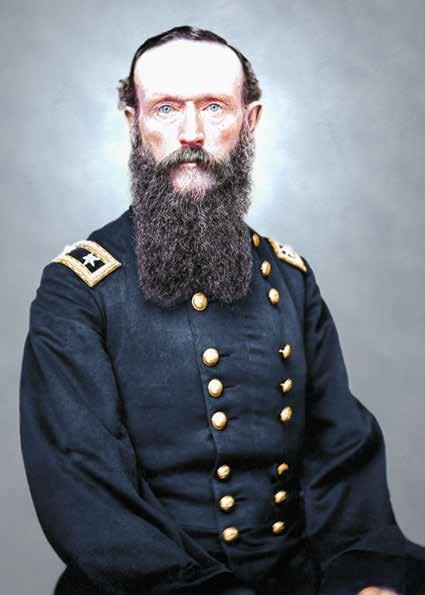
Career soldier Steele had met his life-long friend Gen. Ulysses S. Grant at West Point. He earned promotions for his bravery in the Mexican-American War and Pres. Lincoln requested his promotion to brigadier general for his actions at the Battle of Wilson’s Creek, Mo. During the Vicksburg Campaign, he again showed his mettle. After the capture of Vicksburg, Grant appointed Steele commander of the “Army of Arkansas.”
Although his part in the expedition was conceived primarily as a diversion, Steele had doubts about the plan citing, “… The roads are most if not quite impracticable; the country


is destitute of provisions on the route.” He proposed making a feint instead. Grant, newly promoted to command of all Union troops, understood the campaign’s success depended on confusing the Confederates. Grant ordered his force to move in full. “…. A mere demonstration will not be sufficient.”
On March 17, Steele ordered Gen. John M. Thayer’s 5,000 “District of the Frontier” men to meet him at Arkadelphia, Ark., before April 1. Both Steele and Thayer had unreliable supply chains and were unable to stockpile necessities for the expedition. The plan was to forage for supplies while quickly making their way to Shreveport. They were unaware that the Confederates had previously cleared the area of provisions, caching them for their later use.
On March 23, Steele departed Little Rock, Ark., with 8,500 infantry, artillery, and cavalry. The Camden Expedition began “in style,” with bugles and a brass band playing “Yankee Doodle.” Morale sank after the quartermaster announced that, apart from coffee, only half rations would be issued during the expedition. Steele had arranged his own plan to deceive the Confederates. He ordered Col. Powell Clayton, commander of the Pine Bluff, Ark., supply depot to create a distraction. First, Clayton sent 100 men to burn the bridge over the Saline River. On the way, his men captured some Confederates who talked of an approaching supply train. The men decided to deviate from their orders and destroy it. The Federals followed the train and surrounded it after dark. Mistaking the Federals for their own men, the train guard didn’t prepare for an attack. The Federals captured 258 men, over 30 wagons, and 300 horses and mules, burned the bridge, and returned to Pine Bluff within 24 hours.
On March 30, to further confuse the enemy, Clayton sent a small group to demonstrate at Monticello. Meanwhile, Clayton led his main column to Mt. Elba,
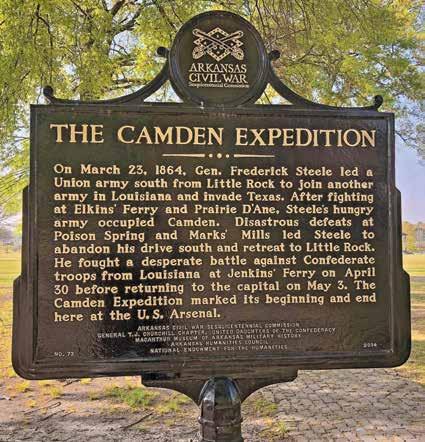
The Camden Expedition Historical Marker.
Marker reads: On March 23, 1864, Gen. Frederick Steele led a Union army south from Little Rock to join another army in Louisiana and invade Texas. After fighting at Elkins’ Ferry and Prairie D’Ane, Steele’s hungry army occupied Camden. Disastrous defeats at Poison Spring and Mark’s Mills led Steele to abandon his drive south and retreat to Little Rock. He fought a desperate battle against Confederate troops from Louisiana at Jenkins’ Ferry on April 30 before returning to the capital on May 3. The Camden Expedition marked its beginning and end here at the U.S. Arsenal. Photo by Mark Hilton.
16 Civil War News April 2021 16 Civil War News April 2021
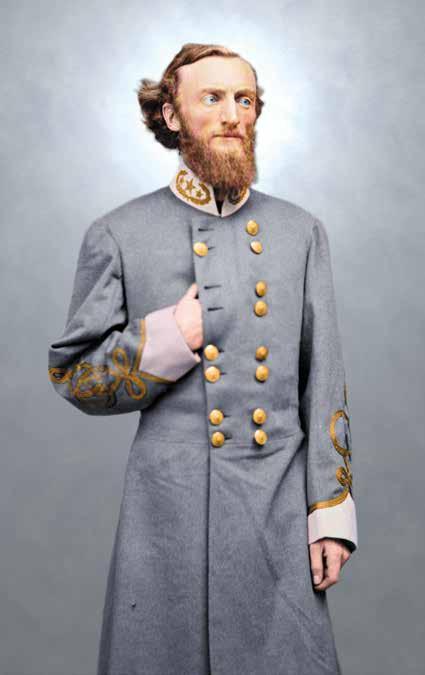
Brig. Gen. John S. Marmaduke, C.S.A. Colorization © 2021 civilwarincolor.com courtesy civilwarincolor.com/cwn. Library of Congress.
Maj. Gen. Frederick Steele, Col. 8th Iowa Inf. Colorization © 2021 civilwarincolor.com courtesy civilwarincolor.com/cwn. Library of Congress.
made a feint towards Camden, Ark., before retracing his steps to attack the Rebel camp from the south. Believing the demonstration was Clayton’s main force, the Confederates marched out to fight it. The demonstrators “handsomely repulsed” this first attack. As the Confederates prepared a second strike, Clayton placed the 1st. Indiana’s two howitzers squarely behind the Rebel’s rear. Ready, the artillery fired as the 5th Kan. cavalry and 28th Wis. infantry charged through the peach orchard towards their unsuspecting foe, routing the Confederates.
Although harassed by C.S. Gen. Sterling Price’s cavalry, Steele reached Arkadelphia on the Ouachita River. The villagers were willing to share their provisions but unwilling to accept greenbacks due to their fear of being deemed Yankee collaborators. Still, they had limited surplus food. More to the point, Steele was unable to communicate with either Thayer or Banks. After three days Steele had to leave without Thayer. Steele headed down Military Road, through a pine forest towards the Little Missouri River. Skirmishing with
the Rebels along the route slowed the column down. “Two or three of the companies were kept double-quicking a good deal of the time, first to the rear as reinforcements, and then back … again.”
Meanwhile C.S. Gen. John S. Marmaduke was positioning his men for an attack from the front as Gen. Joseph Shelby was to attack from the rear and capture the Federal supply train.
Marmaduke came from a political family. His great grandfather served as a Kentucky governor.
Both his pro-Union father and his father’s pro-secession brother-in-law had served as governors of Missouri. At the start of the War, Marmaduke met with his father and resigned his commission from the U.S. Army. His uncle, the governor, appointed him a colonel in the State Militia. He would later resign and receive a commission in the regular Confederate army.
About 11 a.m. on April 2, 100 of Shelby’s men charged the Federal rear, firing their pistols at “point blank range.” Capt. Colins advanced the two pieces of the battery “as flying artillery either at the trot or gallop.” Shelby’s

entire force attacked from both sides of the road.
U.S. Gen. Samuel A. Rice, defending at the rear, realized that the “harassing fire” was turning into an attack on the supply wagons. He led his entire brigade including an artillery battery, moving from one position to another, to defend the column. Darkness ended six hours of fighting.
On April 3rd, three hours of fighting were interrupted by a terrible hail-storm. Amid the thunder and lightning, the “crash of artillery, the sharp rattle of musketry, and… the wild blare of bugles and the ring of sabers came from the valley below.”
Despite the efforts of Marmaduke’s men, Steele arrived at the Little Missouri River, but he had no idea of Thayer’s location or Banks’ progress and he needed resupplying. Steele decided to keep his forces moving on Military Road giving Thayer time to catch up and his men to find a crossing. After he crossed the river, he would head to Camden, Ark. hopefully, he could find provisions there or use the nearby Ouachita River to resupply his men and still make
his rendezvous with Banks. The Confederates would have to decide if and how much of their resources to expend to stop him. As planned, Steele was succeeding in keeping the enemy busy.
Sources:
• Forsyth, Michael J. The Camden Expedition of 1864 and the Opportunity Lost by the Confederacy to Change the Civil War. McFarland & Company, Inc., 2015
• Sperry, A. F. History of the 33d Iowa Infantry Volunteer Regiment 1863–1866. Mills
& Company, 1866
• OR, Vol. 34, Part 1, 837
• Johnson, Ludwell H. Red River Campaign: Politics and Cotton in the Civil War. Kent State University Press, 1993
Stephanie Hagiwara is the editor for Civil War in Color.com and Civil War in 3D.com. She also writes a weekly column for History in Full Color.com that covers stories of photographs of historical interest from the 1850’s to the present. Her articles can be found on Facebook, Tumblr and Pinterest.
100 Significant Civil War Photographs: Atlanta Campaign collection of George Barnard’s camera work. Most of the photographs are from Barnard’s time in Atlanta, mid-September to mid-November 1864, during the Federal occupation of the city. With this volume, Stephen Davis advances the scholarly literature of Barnardiana.
$19.95 + $3.50 shipping 128 pages, photographs, maps, bibliography. $19.95 + $3.50 shipping. Softbound. ISBN: 978-1-61850-151-6. www.HistoricalPubs.com.
Order online at www.HistoricalPubs.com or call 800-777-1862
SAVE COLD HARBOR & GAINES MILL FOREVER AN INCOMPARABLE PRESERVATION OPPORTUNITY DECADES IN THE MAKING!
JOIN US IN PRESERVING the most-important unprotected hallowed ground in America, a 5-year effort to save the land that has been at the very top of every historian and preservationist’s “must-have” list 20-plus years. Learn about the first phase of this effort — how you can help save a place that witnessed fighting that was “Pickett’s Charge, Five Times as Large” and how to receive your American Battlefield Trust Gaines’ Mill-Cold Harbor Challenge Coin at www.battlefields.org/picketts5x.
17 April 2021 Civil War News 17 April 2021 Civil War News Deadlines for Advertising or Editorial Submissions is the 20th of each month. Email to ads@civilwarnews.com
Gaines’ Mill Battlefield Hanover County, Va. LAWRENCE SWIADER
“Even if you have to sell every other piece of battlefield land the Trust has ever saved in order to preserve this land, you should do it. It’s that important!”
MAR C HING INTOBATTLE iaG n es ’ Mill Cold HarborSAVED FOREVER CAMPAIGN
— ED BEARSS, HISTORIAN
The American Civil War was the first war in which both sides widely used entrenchments, repeating rifles, ironclad warships, and telegraphed communications. It was also the first American War to be extensively photographed. Mathew Brady, Alexander Gardner and Timothy O’Sullivan are famous for having made iconic photographs in the Civil War’s eastern theater. George N. Barnard deserves to be ranked in this top tier for his photographic work in the war’s western theater. A civilian photographer hired by Gen. William T. Sherman’s chief engineer to take pictures of fortifications around Atlanta, Barnard took several hundred of them in and around the city in the fall of 1864. His most famous is the site of Union Maj. Gen. James B. McPherson’s death in the battle of Atlanta, July 22, 1864. Thus far, no comprehensive, definitive listing has been made of the photographer’s work. The Library of Congress has 130 images; the U. S. Military Academy at West Point, New York, has at least 98 photographs, donated by Captain Poe’s widow. Other repositories, such as the Gilder Lehrman Institute of American History in New York City, have smaller collections. For this book we have chosen hundred images we deem “significant,” though other students may wonder at some of our selections. We hope that this work will stimulate further interest in Barnardiana, and that other scholarly volumes are yet to come. The Atlanta Campaign STEPHEN DAVIS 100 SIGNIFICANT CIVIL WAR PHOTOGRAPHS ATLANTA CAMPAIGN
The Papers of Ulysses S. Grant
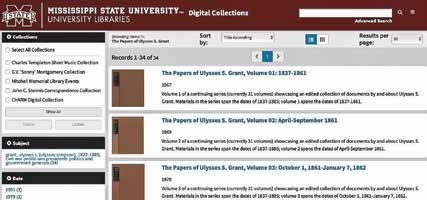
Grant in Mississippi! The Papers of Ulysses S. Grant reside at Mississippi State University in Starkville, home of the Ulysses S. Grant Presidential Library. (http://www.usgrantlibrary.org)
Check out this excellent museum via their website and plan a visit
when safe. As most readers will know, in an attempt to provide financial security for his family, Grant finished his memoirs while dying. More on this later.
The general’s memoirs provide an excellent primary source for researchers, as do the multi-volume collection of his papers. Digitalization efforts have placed Grant’s words online and available to researchers! John F. Marszalek, Executive Director and Managing Editor of the Ulysses S. Grant Association, indicated: “This digital edition, consisting of the first thirty-two volumes of The Papers of Ulysses S. Grant, was conceived by the Mississippi State University’s Mitchell Memorial Library professionals. It is another fruit of John Y. Simon’s forty-four years of outstanding documentary scholarship at Southern Illinois University Carbondale. The Ulysses S. Grant Association is honored to dedicate this digital edition to a major leader in the fields of American history and documentary editing, John Y. Simon.” Beginning in 1964, Simon, and later Frank J. Williams, compiled the papers. Commence your journey of
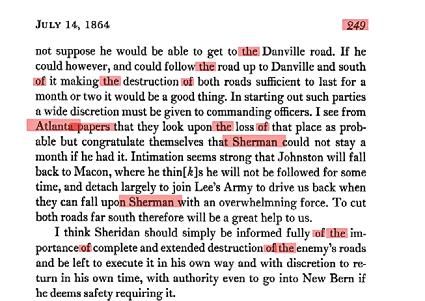
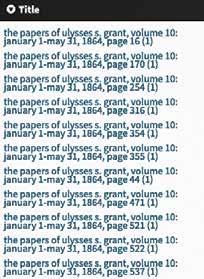
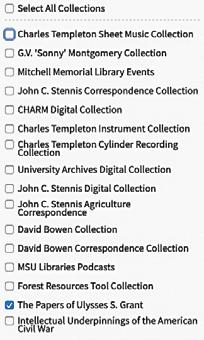
the Papers at https://msstate. contentdm.oclc.org/digital/collection/USG_volume. One note before proceeding. While the site does not require an account, utilizing a WorldCat account (again, free to create) and logging in with the WorldCat information allows researchers to save search results and retrieve them in an orderly fashion. See the main database page image Fig. 1. The site offers various search options as well as tweaks to the layout. This writer prefers the list view as shown above and conducts keyword searches via the search box shown in the image’s top right; the more specific the keyword, the more significant the focus of the results. For example, a search of “Sherman” nets results from almost every volume of the collection. However, Sherman and Atlanta (use the ‘advanced search’ function to query multiple keywords) yielded a manageable starting position. Users should filter the search to The Papers of Ulysses S. Grant, as shown in Fig. 2. The search results page lists the various volumes in the central part of the page. On the left of the page, scroll down to ‘Title’ (see Fig. 3) and click an entry. Note the page number listed, as one may need to navigate to the specific page once inside the referenced volume. For this example, the writer selected ‘volume 11: June 1-August 15, 1864, page 249.’ The resultant record appears in page format and includes a text version. See the example shown in Fig. 4. When selecting a search result link, please allow a few seconds for the page to load, as the files prove quite large.
Take advantage of this source, visit the Grant Presidential Library, and checkout Marszalek’s edited edition of The Personal Memoirs of Ulysses S. Grant, available from most booksellers. Kudos to John and the Mitchell Memorial Library professionals for their continuing efforts! Until next month, continued good luck in researching the American Civil War!
Michael K. Shaffer is a Civil War historian, author, lecturer, and instructor, who remains a member of the Society of Civil War Historians, Historians of the Civil War Western Theater, and the Georgia Association of Historians.
Readers may contact him at mkscdr11@gmail.com or request speaking engagements via his website www.civilwarhistorian.net. Follow Michael on Facebook www.facebook.com/michael.k.shaffer, and Twitter @michaelkshaffer.
18 Civil War News April 2021 18 Civil War News April 2021
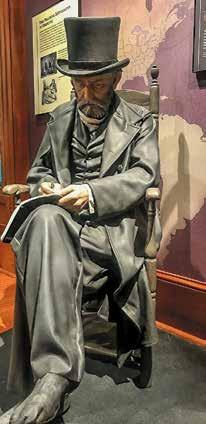
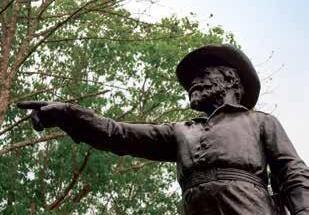
Ulysses S. Grant figure at the Grant Presidential Library.
Fig. 1. Grant Papers search page.
Fig. 2. Search filters.
Fig. 3. Search results.
Fig. 4. Search results actual page, keywords will appear highlighted.





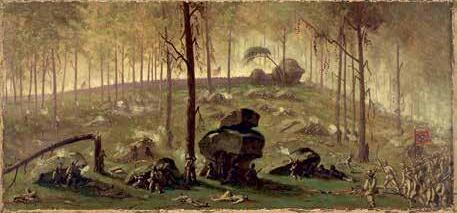

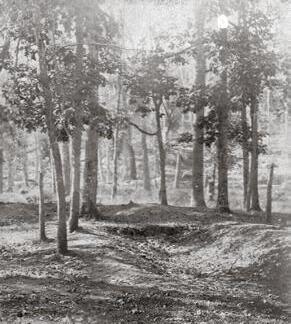

Join us in the rehabilitation of Culp’s Hill. Improved sightlines, more visitor access and additional interpretive signage will help provide visitors with insights into the key battle site on Culp’s Hill, July 2–3, 1863. To learn more and donate to the Culp’s Hill Rehabilitation Project, visit GettysburgFoundation.org/Culps. 866-889-1243 | GettysburgFoundation.org
— U NION B RIGADIER G ENERAL G EORGE S EARS G REENE ON C ULP ’ S H ILL ” “
These rocks and trees offered good cover for marksmen. The surface was very steep on our left, diminishing to a gentle slope on our right.
by Joseph F. Wilson
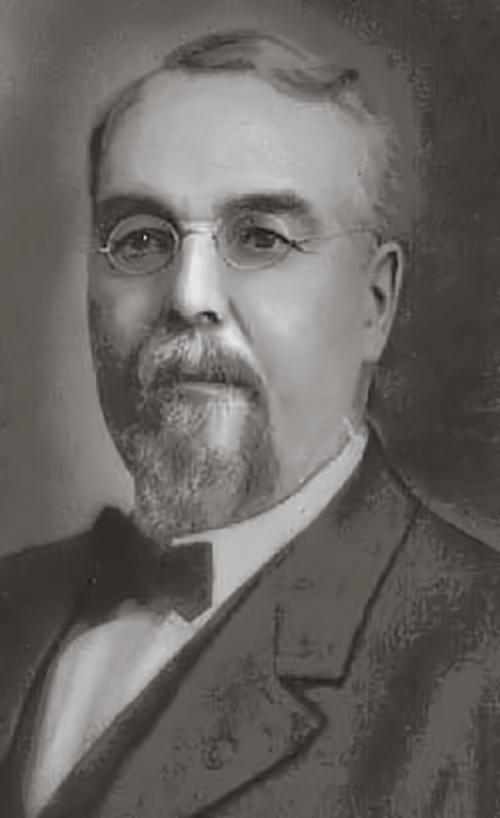
All the regiment beamed with pride when the time came to stand in formation for the presentation of their beautiful silk regimental flag. Colonel Peter Sullivan accepted the battle flag of the 48th Ohio Volunteer Infantry that represented the regiment’s honor. Now the Ohio boys felt like a unit. Soon the unfurled flag flapped in the breeze prompting wild cheers from the citizen soldiers.
Rousing speeches urged the soldiers of the 48th Ohio Infantry to protect the flag at all costs; every man agreed it was the solemn duty of any regiment. All promised to defend the flag to the death if necessary. Officials warned that shame came to a regiment if the colors fell into the hands of the enemy. Later in the war, the Ohio boys remembered their pledge when confronted first hand with the impending disgrace of surrendering their banner.
The Buckeye troops upheld their vow to not let their colors be taken. Fulfillment of that oath gave the soldiers of the 48th an
A Steadfast Devotion to the Colors!
unlikely story that no other regiment could claim on either side of the Civil War.
Like other northern states, patriotic fervor swept through the towns, cities, and small hamlets of Ohio. Young men came from all corners of the state when Father Abraham issued his call to preserve the Union. Recruiting halls overflowed with eager young volunteers from all walks of life willing to lay down the tools of their trade and pick up a musket to fight for the Union.
Ohio Governor William Dennison established a camp a few miles from the Ohio River to gather his troops. The 48th Ohio Volunteers came together at Camp Dennison in October 1861. The newly formed regiment from southwestern Ohio found the business of army life more like work than soldiering. Disgruntled enlistees longed for the opportunity to put down the rebellion and escape the endless drilling and fatigue duty. Despite not having any arms, the new recruits performed repetitive drilling and manual labor. The volunteers watched enviously as other troops headed out to the fighting.
Before October came to a close the boys stood for inspection in their new uniforms. For the first
time they felt like soldiers, but they still didn’t have guns. The 48th Ohio at last said goodbye to the monotony at Camp Dennison in February 1862. Two steamers, the Argonaut and the Hastings, carried the regiment down the Ohio River toward the heart of the rebellion.
At Paducah, Ky., on March 5, all 930 men finally received brand new Austrian muskets. Shortly thereafter the regiment was assigned to General William Tecumseh Sherman’s Division. Then the 48th again boarded the riverboats bound for Pittsburg Landing in Tennessee. The regiment had no idea of pending danger when they set up camp along the Tennessee River near a church locals called Shiloh.
Only 30 days after being armed with muskets, the 48th Ohio Volunteers stood in line of battle for the first time April 6, 1862. With little time to practice firing their newly issued arms, the newly armed regiment stubbornly held the line beneath their unsullied silk banner amid the crush of repeated Confederate assaults. General Sherman later praised the new regiment after the fight. With over 100 killed and wounded, the battle revealed what a terrible war awaited. Any romantic
Major Bering
Thos. Montgomery - Lynchburg, Ohio [Captain,
Eliugh Hiatt - Cols, Ohio [Elihu Hiatt, Sgt. Co A,
Mr. Schumardt - Nebraska [Corp. Albert Shumard, Color Guard,
I. H.
W.L.
-
notion of war vanished at Shiloh.
The 48th Ohio garnered more accolades as the war progressed. On May 22, 1863, at Vicksburg, the banner nearly fell into the hands of the enemy. After planting the flag on the Confederate earthworks, a Southern counterattack left the banner alone on the fortification. Only the heroics of Corporal Isaac H. Carmen saved the colors from capture. “Ike” Carman dashed under heavy fire, despite a bloody bayonet wound to his leg, to retrieve the flag. For his actions, Carmen received the Medal of Honor on Feb. 25, 1895. It wasn’t until 1864 that the improbable ordeal involving the silk banner of the 48th Ohio earned the regiment a page in the history books. In the spring, the regiment received orders to join General Nathaniel Banks for his Red River campaign. In their first battle under Banks they met with disaster. At Sabine Crossroads, La., on April 8, the entire regiment was captured. Nearly 200 men laid down their arms. What
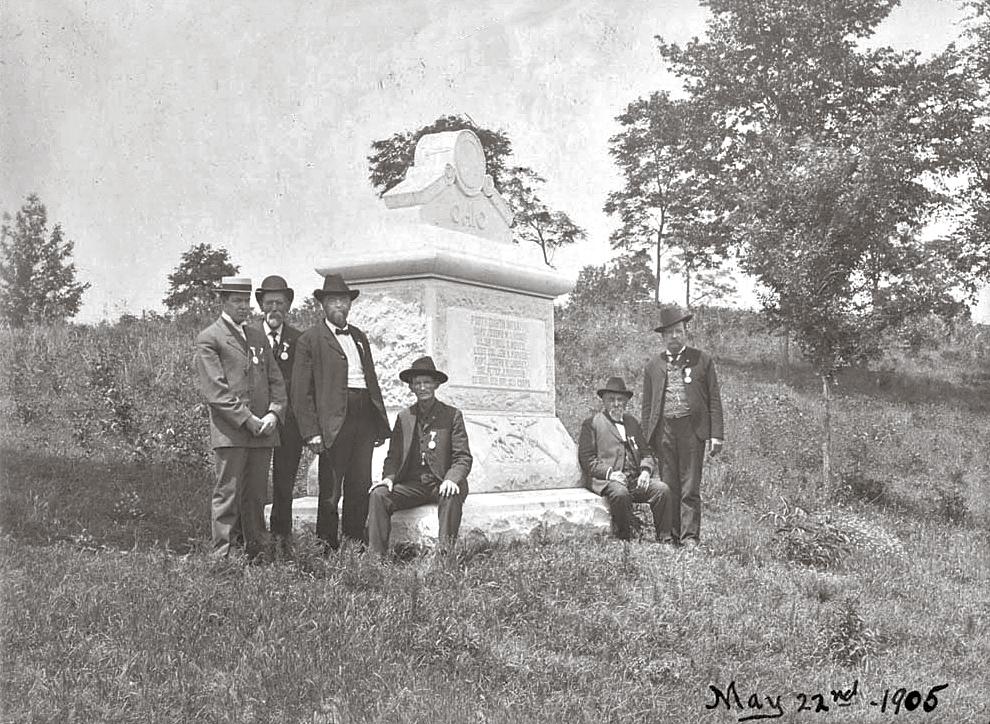
happened next is a matter of record.
One color bearer, Corporal Isaac Scott, thought of the colors. His mind harkened back to the Camp Dennison exhortations. The shame associated with losing the colors echoed loud and clear. Corporal Scott determined that shame had no place in the 48th Ohio. In an instant, the quick-thinking corporal ripped the flag from its staff and stashed it in his haversack. Luckily, the Confederates never saw the flag, despite the plundering of Yankee property.
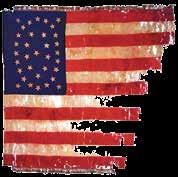
After marching seven days, the foot sore and hungry Yankees arrived at Camp Ford Stockade near Tyler, Texas. Spirits sagged for a time until the boys of the 48th learned their flag evaded capture.
When Confederate officials learned a Union flag was into the stockade, a vigorous search ensued. The prisoners stayed one step ahead of their captors. A hole was dug in one shanty and the flag buried under two feet
20 Civil War News April 2021 20 Civil War News April 2021
Corporal Isaac Harrison Carman (Nov. 17, 1841–June 3, 1919). His Medal of Honor citation reads: “Saved his regimental flag; also seized and threw a shell, with burning fuse, from among his comrades.”
“The only members of the 48th OVI who were present at the dedication of the 48th Ohio monument at Vicksburg, May 22, 1905”
- Lynchburg, Ohio [seated at right]
standing rearmost at left]
standing far right]
seated at left]
Carman
Selden, Ohio [Medal of Honor winner - standing with coat open at left]
Carman - Selden Ohio [Ike’s son - far left with straw hat]” Courtsey Samantha Parish.
HDQRS. FORTY-EIGHTH REGT. OHIO VOL. INFANTRY, Vicksburg, Miss., August 4, 1863.
... May 22, we engaged in the charge on the enemy’s fortifications in rear of Vicksburg, and, after a most sanguinary and bloody engagement, succeeded in planting our bullet-riddled flag on the enemy’s fort nearly in front of us, where it remained till evening, when the enemy massed his forces in vastly superior numbers to ours, and regained possession of the fort. Perceiving his intention, we saved our flag before the charge was made.
At 10 p.m. We were ordered to fall back. The Forty-eighth was never driven back from its position near this fort until ordered to fall back, as above stated. There were none with our flag while planted on this fort save the color-guard, the regiment being a little to the left of the fort during the time...
PETER J. SULLIVAN, Col., Commanding.
First Lieut. C. C. TRACY, A. A. A. G., Second Brig, Tenth Div., Thirteenth A.C.*
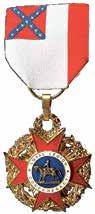
of earth. The southern soldiers tore apart shanties and poked the ground with bayonets searching for the flag. No flag was found. Another search the next day also failed to detect the flag.
Realizing their colors would rot in the soil, the enterprising Ohio men devised another scheme. A search in camp for a competent tailor followed. The captives dug up the flag and sewed it into the shirt of Captain Daniel Gunsaullus. For the next six months the Captain walked
freely among the unsuspecting Confederates with the flag safely pressed to his back as the lining of his shirt.
Shouts of joy rented the air when the 48th Ohio and the other prisoners learned an exchange was imminent. Captain Gunsaullus and the rest of the 48th Ohio walked out of Camp Tyler in early October 1864, for a grueling five day march to the point of exchange on the Red River. Moving along with them on the dusty trail was the hidden
colors still tucked away in the Captain’s blouse.
At Shreveport, the group boarded Rebel boats for the trip down Red River to its junction with the Mississippi. At the mouth of the river the Confederates delivered the prisoners to the Union officials in a formal exchange. A Federal agent welcomed them aboard a waiting Union ship. Nothing compared to the moving scene that unfolded once on board the steamer. Six months of fearing discovery of the colors gave way to unbridled enthusiasm. Immediately upon stepping aboard ship, the Ohio boys rushed to the upper deck and tore open the shirt of Captain Gunsaullus. The smiling Captain didn’t mind. It had all been planned in advance.
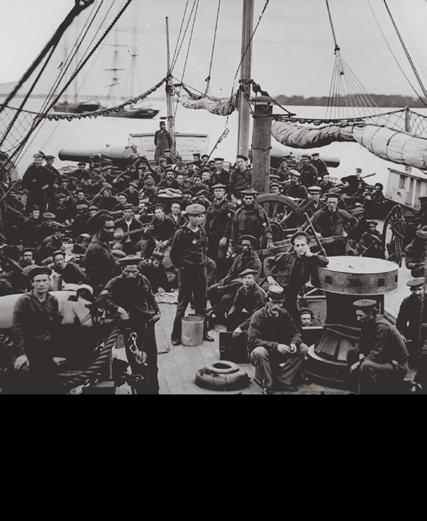
With a pole that doubled as a walking stick on the trek from prison, the boys attached the colors to the new staff. The ex-prisoners unfurled the silk flag and waved the liberated banner in a scene that touched everyone in attendance. A raucous cheer echoed along the river bank as the wind caught the flag and celebration engulfed the ship.
Some former captives cheered loudly, others cried uncontrollably. Onboard the steamer, a band struck up the “Star Spangled Banner.” The colors of the 48th Ohio Volunteers never fell into the hands of the enemy. Shame never did fall on the Ohio regiment. The shrewd soldiers of the 48th bested the Confederates for six long months.
Confederates watched in disbelief from the shore. Even the Confederate agent of exchange, Captain Birchett, felt touched after observing the scene playing out before him. He later remarked that he never witnessed such a loyal display in all four years of the war. When the Confederate captain returned to Camp Ford, he related the whole story to the remaining prisoners. When deafening cheers filled the air, the sympathetic Confederate captain understood.
Once back in Ohio, the flag was turned over to Colonel Job R. Parker who now led the regiment. After Parker’s death, Dec. 5, 1865, the flag took up residence in the Ohio statehouse. Many regiments stood by their colors in the Civil War, but few have such a unique story as the 48th Ohio.
The silk standard is the only flag to ever serve a prison term. For years to come the boys of the 48th Ohio had an exclusive and interesting story to remember in the coming reunions. The aging old veterans joyfully relived the tale as if it were yesterday. The Ohio men happily retold the
account to many delighted listeners. The devoted Buckeye boys of the 48th Ohio Volunteers had a right to be proud.
And a story to tell like no other!
Source: *48th Regiment Ohio Volunteer Infantry.” (2021) In Ohio Civil War Central, Retrieved March 7, 2021, from Ohio Civil War
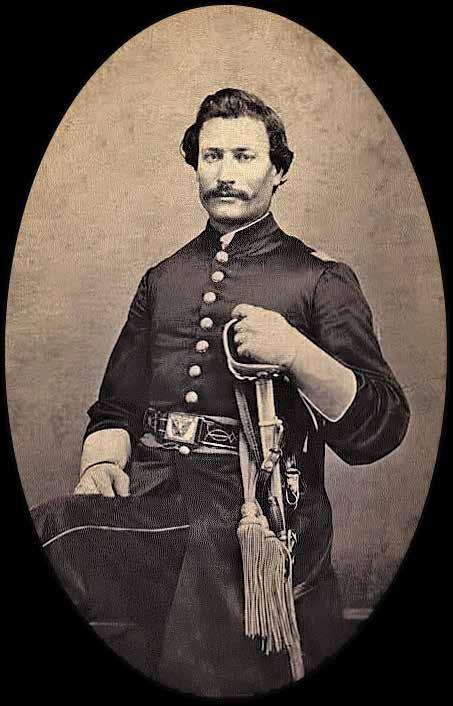

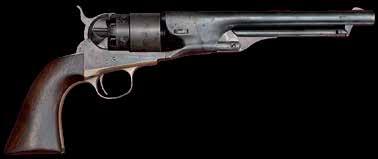
Central: http://www.www. ohiocivilwarcentral.com/entry. php?rec=605t
Joseph F. Wilson is a member of the General Meade Society and the writer and producer of the new documentary film “Civil War Prisons –An American Tragedy” now available on Amazon. Contact: joef21@ aol.com - 856 627-5401.
21 April 2021 Civil War News 21 April 2021 Civil War News All Hands on Deck! Support Our Mission to Bring You the Naval History “This is the magazine for all things Civil War Navy. From ‘Uncle Sam’s web-feet’ to the ‘grey jacket navy’ raised by Jeff Davis! It is all here thoroughly researched and illustrated by beautiful contemporary navy images.” Ron Field, military historian and author of over 45 books, including Bluejackets: Uniforms of the United States Navy in the Civil War Period, 1852-1865. 1 Year—4 Issues: $37.95 Subscribe Now at civilwarnavy.com Or send a check to: CSA Media, 808 Drayton St., Savannah, GA 31401 International subscriptions subject to postage surcharge. Sailors and Marines on the deck of the U.S. gunboat Mendota, 1864. National Archives (Identifier 524548). Loyal Legion of the Confederacy CSA National Defense Medals & other banned internet items Civil War Recreations WWW.CWMEDALS.COM cwmedals@yahoo.com 1 Smithbridge Rd., Unit 61, Chester Heights, PA 19017 Cliff Sophia | Proprietor CSArms.com 9150 John S. Mosby Hwy. (Rt. 50) Upperville, Va 20185 for US Mail: PO BOX 602 (540) 592-7273 • SophiaCSArms@aol.com Collector’s Arms 1700-1945 Militaria Specializing in Civil War-World War II
Captain Daniel Gunsaullus., Company F, 48th Ohio Volunteer Infantry.
An Unknown Artist
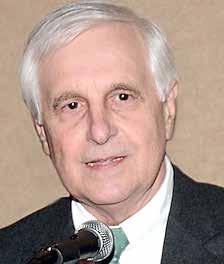
The Graphic War highlights prints and printmakers from the Civil War discussing their meaning and the print maker or artist’s goals.
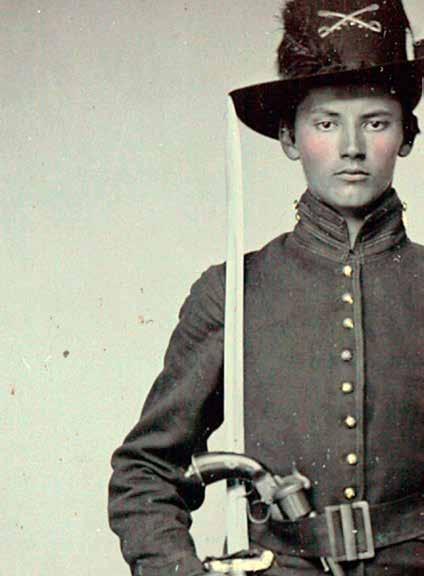
Throughout the Civil War countless artists, professional and amateur alike, tried to capture the reality of the war’s horrors. Most professionals, like Winslow Homer, produced quality single sheet and, in Homer’s case, Harper’s Weekly, timely vignettes from the front. Currier and Ives output during the war varied greatly in quality. Competing with the periodicals of the day, their production of Civil War art was inconsistent. Their attempts to meet “news” deadlines and be relevant and timely often found them sacrificing quality. We have already covered in this column some so-called “soldier artists”
who captured battle scenes or their own unit’s (usually their regiment’s) camp scenes.
Intriguing are the “unknown’s.” Within the collections of the Library of Congress are two crude and probably only known examples of a battle’s aftermath by an unknown artist who signed his work only as “M. Henochsberg.” Both are dated and both are titled. Both are remarkably large, 19 by 24 inches.
The first work is titled simply “Recovered.” Below the image in script is “M. Henochsberg Pub. Pro. Filed January 30, 1869 Mountain creek[?].” The print shows a wounded and possibly dead soldier lying on ground at the edge of a pond with two soldiers kneeling alongside him. The dead soldier has a bullet hole in his head. His left arm and right hand are submerged in the water.
Both the dead soldier and one of the other two soldiers are dressed as Zouaves, wearing bright red pantaloons. Center, looking over the scene with one paw on the deceased soldier’s body, is a dog. To the right, completing the tableau, is another soldier kneeling at the wounded soldier’s arm. He
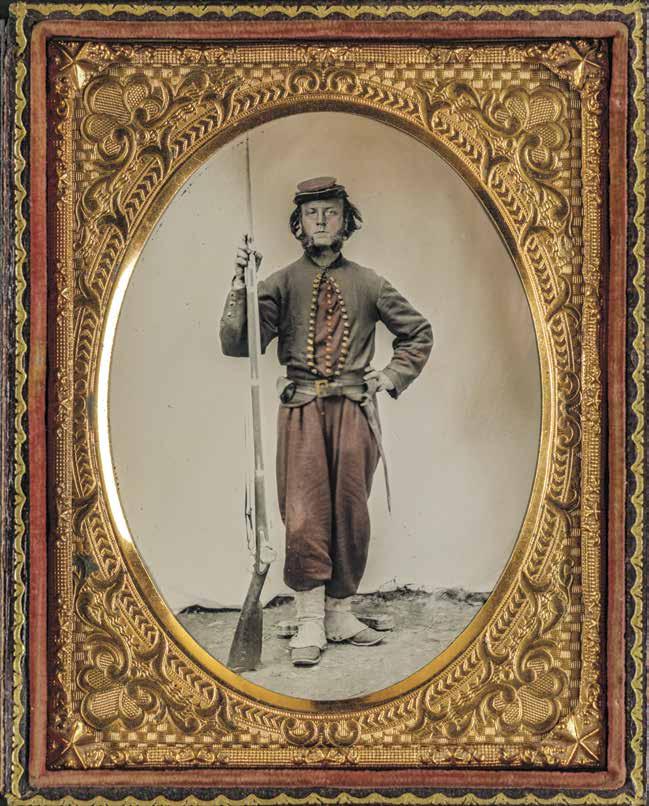
appears to be pulling the soldier’s arm and therefore his body from slipping further into the pond. He is not a zouave. In the background, mounted soldiers moving from right to left are depicted against a mountain range. It is entirely possible that the “Mountain Creek” referred to under the title is located in the Shenandoah Valley prominent in the Valley Campaigns of 1862 and 1864. On the other hand, it just may be referring to the obvious, the depiction of a creek in the foreground.
Henochsberg’s second work is entitled “Found.” It is a black and white lithograph with the title within the image. Below the image in script is “M. Henochsberg” in the lower left. On the lower right corner of the margin is the date “May 8, 68.” Similar to the first print, it shows a young soldier lying at the edge of a pond, as he is found by other soldiers and a dog. The deceased soldier is wearing zouave pantaloons as is the soldier standing above him.
He wears a typical kepi, holds a sword, and is probably an officer. The soldier kneeling before the young soldier’s body with his left hand on the recumbent’s head, is wearing a zouave fez. Adding to the melodrama is a dog to the left, with his head cocked toward the officer in a quizzical pose. In the background upper right, a column of soldiers marches toward the scene.
Both prints present several mini-mysteries. Who was Henochsberg? Was he a member of a zouave regiment/company? These depictions were completed after the war, judging from their dating. Were they meant to be actual representations of the loss of a comrade during the war? Or are they merely amateurish depictions of a scene that “might have been?” Both prints appear to be artist’s proofs with little evidence that they were eventually published. A thorough survey of known of Civil War-era prints and print makers produced nothing.
22 Civil War News April 2021 22 Civil War News April 2021
MI
Unidentified soldier in Union zouave uniform with bayoneted musket with initials A.T. on stock. The hand tinting has faded over time. Liljenquist Family Collection of Civil War Photographs, Library of Congress.
magazine MilitaryImagesMagazine.com | Facebook.com/MilitaryImages Since 1979, MI has been America’s only publication dedicated to historic photographs of soldiers and sailors. By check payable to: Military Images PO Box 50171 Arlington, VA 22205 Online: MilitaryImagesMagazine.com SUBSCRIBE NOW 4 quarterly issues, $24.95 Want to try before you subscribe? Visit MI’s website to sign up for a 2 issue trial.
Military Images
TRIAL ISSUES
There were more than 70 Federal zouave and 25 Confederate zouave units during the war. If anyone has information on our mysterious artist, we would like to know.


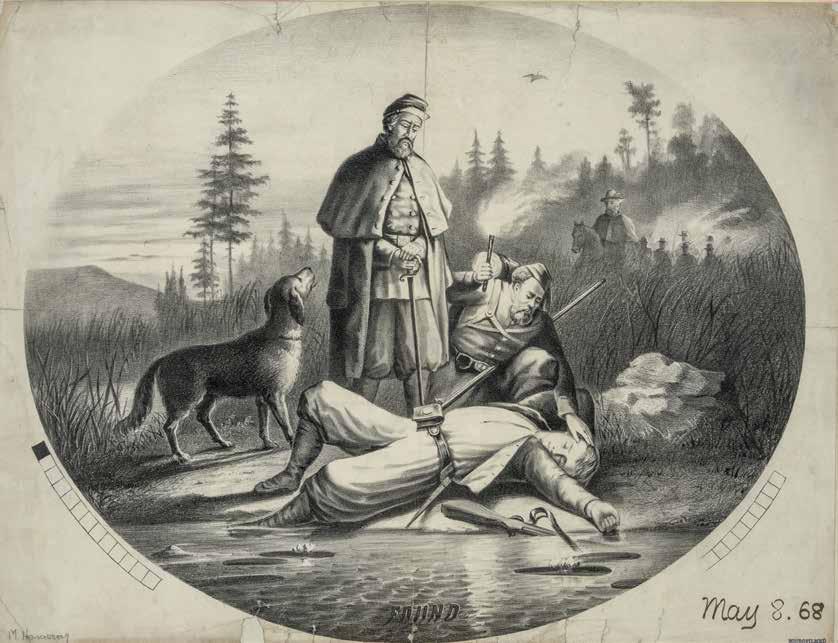
After 43 years in the museum field, Salvatore Cilella devotes his time collecting American prints and maps and writing. His last professional position was President and CEO of the Atlanta History Center. His most recent books are Upton’s Regulars: A History of the 121st New York Volunteers in the Civil War (U. Press Kansas, 2009). His two-volume Correspondence of Major General Emory Upton, (U. of Tennessee Press, 2017), received the 2017–2018 American Civil War Museum’s Founders Award for outstanding editing of primary source materials. His latest book “Till Death Do Us Part,” an edit of Upton’s letters to his wife 1868–70, was published in 2020 by the Oklahoma University Press.
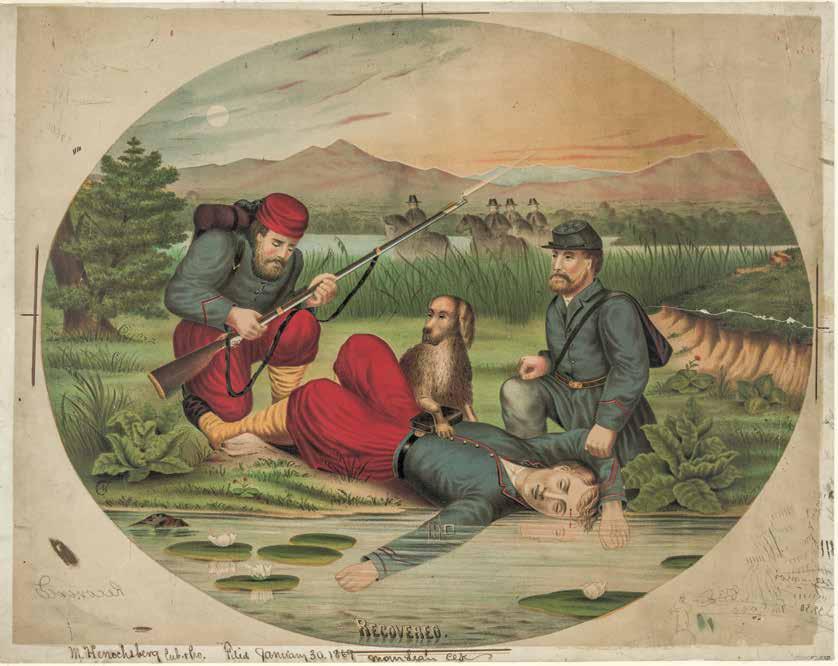
23 April 2021 Civil War News 23 April 2021 Civil War News
Print shows a wounded or dead soldier lying on ground at the edge of a pond with two soldiers kneeling, and dog sitting alongside him. Library of Congress.
Print shows a young soldier lying at the edge of a pond, as he is found by other soldiers and a dog in the Civil War. Library of Congress.
To Advertise In Civil War News? Email us at ads@civilwarnews.com Call 800-777-1862 CW N 48 Pages, January 2020 Civil War News America’s Monthly Newspaper For Civil War Enthusiasts 12 The Unfinished Fight Day Remembrance Day, 2019, Gettysburg President Lincoln was wronggathered Gettysburg, Penn., The world will little note, nor long remember what we say here, but can never forget what they did here. – Abraham Lincoln, November 19, 1863.graves occurs each year, as well.enactors; still impressive num-Teacher Don Mullen, portrays Battlefield Trust) The Delaware Valley Blues march towards the Codori Farm.
Want
A Confederate Fighting Knife by M.L. Ferguson
There is probably no more iconic Civil War image than the young Confederate soldier, heading off to war with an absurdly large fighting knife in his hand or on his belt. Early war Southern ambrotypes and tintypes provide us with a dizzying array of large, wicked, and sometimes comical fighting knives of all descriptions, often made by local blacksmiths for the Southern boys of ’61 to take to war. The classic Southern fighting knife was usually overly large and robust. Overall lengths were typically between 12 and 24 inches, with blade lengths that varied from about 8 to over 18 inches! Over the years, the majority of these local knife makers have remained anonymous, although sometimes certain traits and characteristics of surviving
knives can help us to make general statements about the likely region or state where an unmarked knife may have originated. More recent scholarship has allowed us to identify some knives as to their maker, even though they bear no markings. The knife pictured here is one of those rarely encountered examples of a locally made, and yet maker marked, Confederate fighting knife. The bottom of the knuckle bow of this massive D-guard knife is clearly marked with a single die stamp M.L. FERGUSON. The use of an actual gang stamp suggests that Ferguson was a blacksmith or metalworker in business prior to the Civil War, who produced metal items that he would find necessary to mark. Research into the 1860 Census, the Confederate
Citizen Files, and Confederate Service Records reveals that the most likely identity for M.L. Ferguson was a Mississippi blacksmith.


Listed only as “M. L. Ferguson” in the 1860 Census, Mr. Ferguson was a blacksmith, working in Richland Beat (now simply Richland), Holmes County, Miss. Richland is just a few miles south of Jackson, Miss. Mr. Ferguson was listed as having been born around 1826 in Maryland, and was 34 years old when the 1860 Census was taken. He owned real estate valued at $700, and had a personal estate valued at $15,575. He is listed as living with A.J. Knapp, a 27 year old carriage maker, born in New York, who held real estate valued at $600 and a personal estate valued at $3,425. As they lived in the same household, it is reasonable to assume that Ferguson & Knapp operated a carriage making and blacksmithing business together, or at the very least shared shop and manufacturing space. Mr. Ferguson was apparently well thought of in his community. According to a report in the May 2, 1860, Vicksburg Whig newspaper, Ferguson was one of two representatives from Holmes County, Miss., at the Constitutional-Union State Convention held in Jackson on April 23, 1860.
Normally locally made “blacksmith” D-guard knives cannot be identified, but this is one of the exceptions to that rule. Extant examples of Confederate made arms typically survive at the rate of about 1 percent of production, suggesting that Ferguson may have manufactured as many as a couple of hundred knives. One other M.L. Ferguson marked fighting knife is known to exist, and it bears similar features.
Both known examples utilize grooved wood grips with iron hilts, guards, and backstraps. The hilt design is very similar to the Starr Model 1818 contract NCO saber, and noted Confederate knife researcher, historian, and
author Josh Phillips feels that both extant examples use modified Starr hilts with shortened guards, rather than newly made copies of the hilts.




M.L. Ferguson was apparently a patriotic Southerner, and although he was middle aged at 35 when the war broke out, he joined a local Holmes County cavalry battalion. The battalion was never mustered into Confederate service and is listed in Confederate service records as a “Rebel Troop of Independent Cavalry.” The cavalry troop was variously known as the Holmes County Independent Battalion, Capt. Davis’ Company of Independent Cavalry and later Red’s Company of Independent Cavalry. Ferguson served in Company C of this organization. The reality is that Ferguson served in a Partisan Ranger cavalry battalion of irregulars. Like many similar organizations, they were probably just as ruthless as some more famous partisan ranger companies that were commanded by William Quantrill and “Bloody Bill” Anderson in Missouri, and Champ Ferguson in Tennessee. It is possible that the knives he made were for use by that partisan ranger organization, and the use of old Starr saber hilts may have been a way to re-use old, obsolete arms already in possession of, or damaged in use by, the rangers. Very little is known of Ferguson’s service, as records for partisan ranger battalions were rarely maintained. Only two pages of service records for Ferguson are available and provide almost no additional information beyond the fact that he served with the organization.
The M.L. Ferguson Confederate fighting knife pictured here is truly massive and could almost be called a short sword as much as a knife. The knife is somewhat crudely made and assembled, suggesting that the Ferguson was truly a blacksmith and no cutler. The knife is 21 3/8 inches in overall length. It has a heavy 16 3/8-inch long spear point blade with a median reinforcement ridge running the length of the blade. The ridge makes the center of the blade rather thick, measuring almost 3/8-inches in thickness. The blade has a very subtly tapered profile and is slightly narrower at the ricasso, widening towards the tip and then narrowing rapidly to a spear point. The blade width is about 1 13/16-inches at its widest point. It is secured to the hilt via its iron tang, which terminates at a round, knurled, capstan nut at the pommel cap. The reverse of the blade is stamped M.L. FERGUSON below the medial ridge, near the ricasso. The mark is well worn and barely legible but it is present and can be seen in good light if viewed from
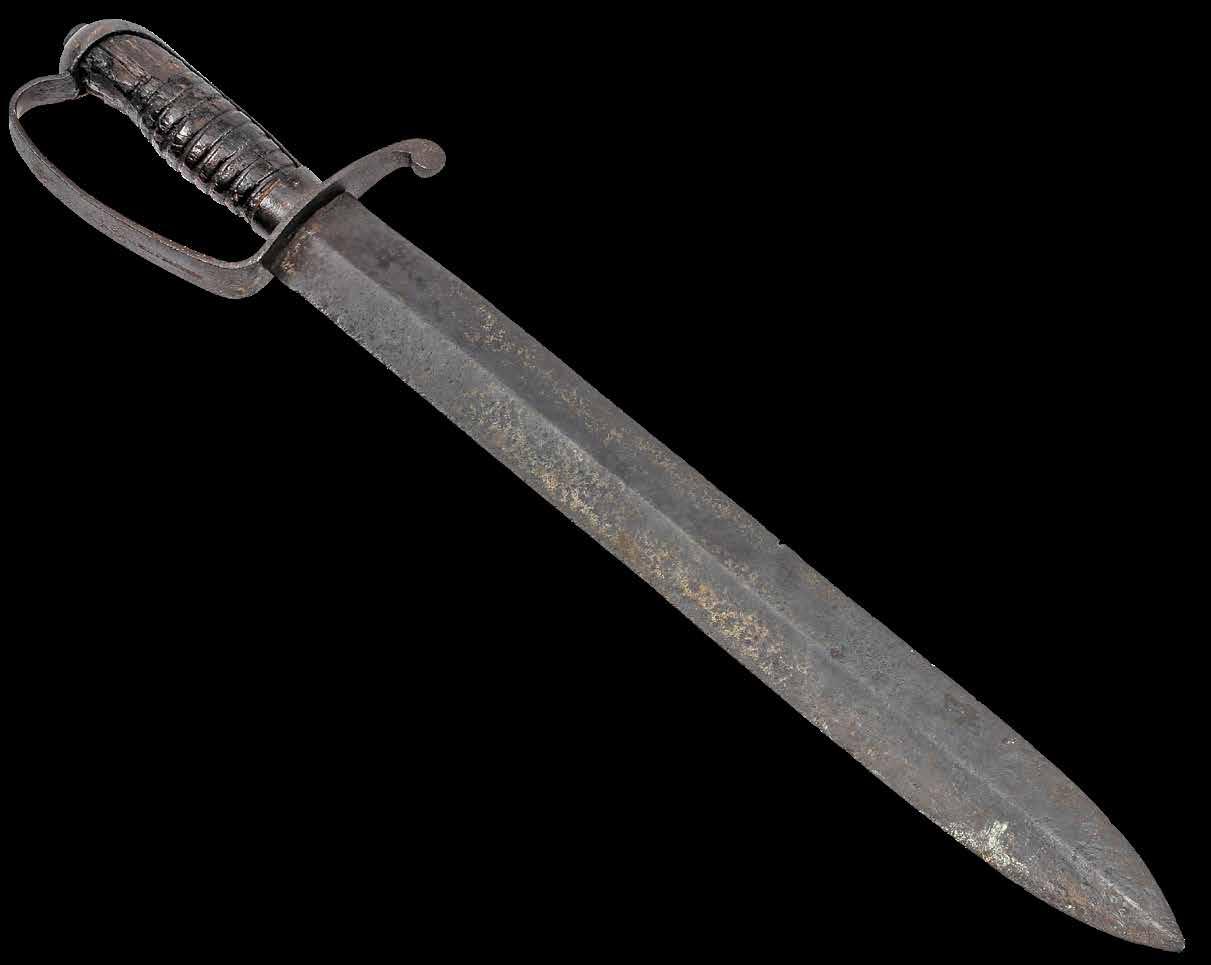
24 24 Civil War News April 2021 www.CollegeHillArsenal.com Tim Prince College Hill Arsenal PO Box 178204 Nashville, TN 37217 615-972-2418
the correct angle. Unfortunately the mark proved very difficult to photograph well. As previously noted, the hilt appears to be a reworked Starr NCO saber hilt. It consists of a rudimentary onepiece, iron D-shaped guard that runs from a forward swept quillon at the front and terminates under the iron backstrap at the pommel cap. The outer face of the knuckle guard is crisply stamped M. L. Ferguson as well, with the same die used to mark the blade. The backstrap is also a single piece of iron that runs from the upper rear of the guard to the pommel cap. The backstrap is retained by a ½-inch wide iron ferrule behind the guard and the capstan nut at the pommel cap.

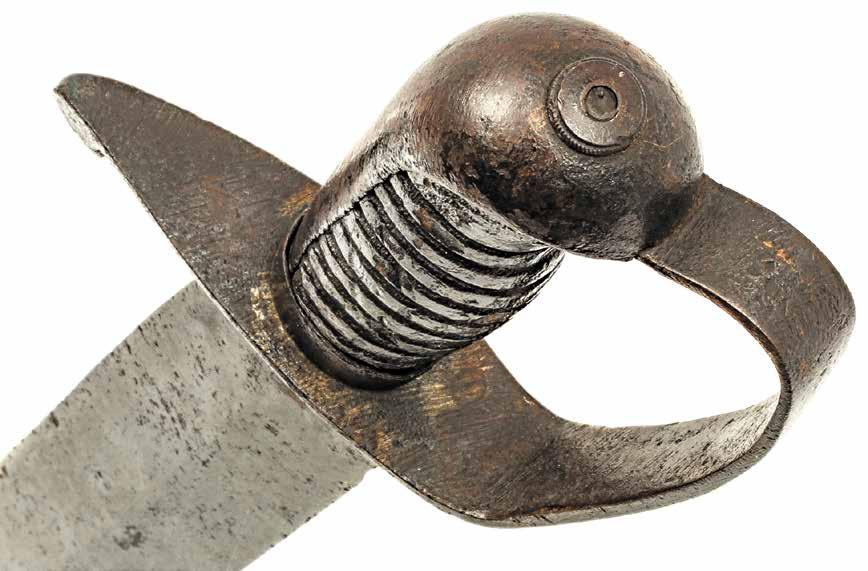
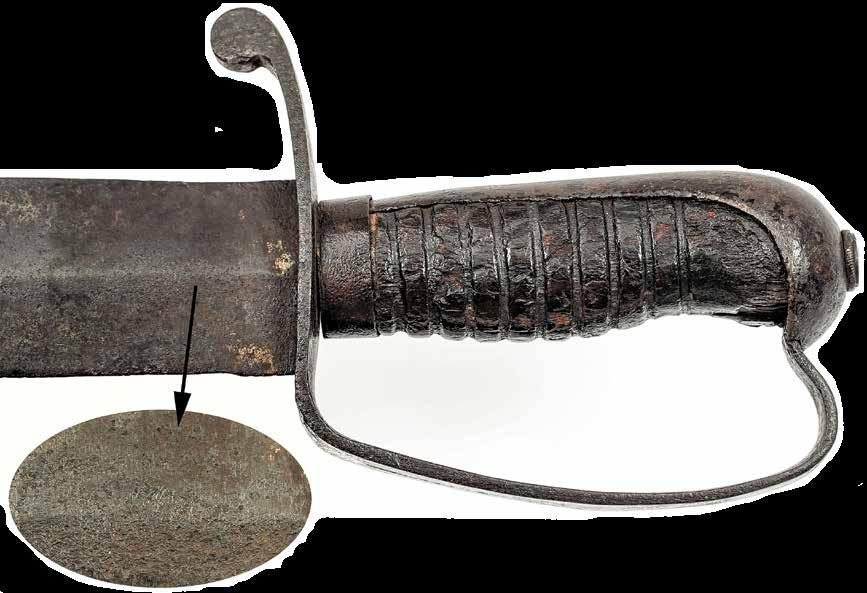
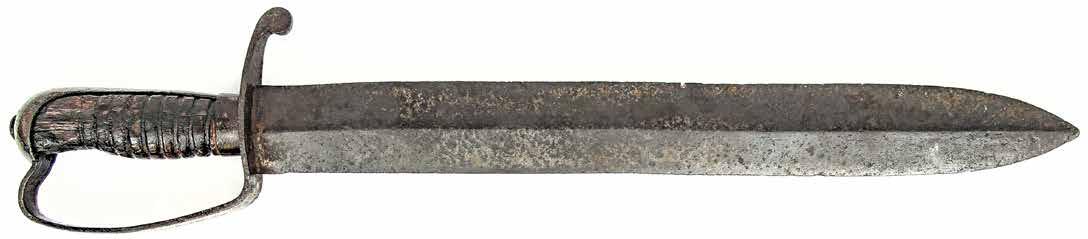
This massive knife weighs in at slightly more than 2 pounds, 1 ounce, and, despite the large, thick blade and significant weight, the knife is relatively well balanced. The wooden grip has a moderate palm swell with nine grooves that may have had wire wrapping at some point in time to enhance the gripping surface. This knife is in untouched, attic condition, and the blade and iron hilt mountings all have a thick, chocolate brown patina.
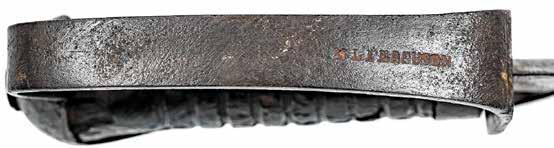
Tim Prince is a full-time dealer in fine & collectible military arms from the Colonial Period through WWII. He operates College Hill Arsenal, a web-based antique arms retail site. A long time collector & researcher, Tim has been a contributing author to two major book projects about Civil War era arms including The English Connection and a new book on southern retailer marked and Confederate used shotguns. Tim is also a featured Arms & Militaria appraiser on the PBS Series Antiques Roadshow.
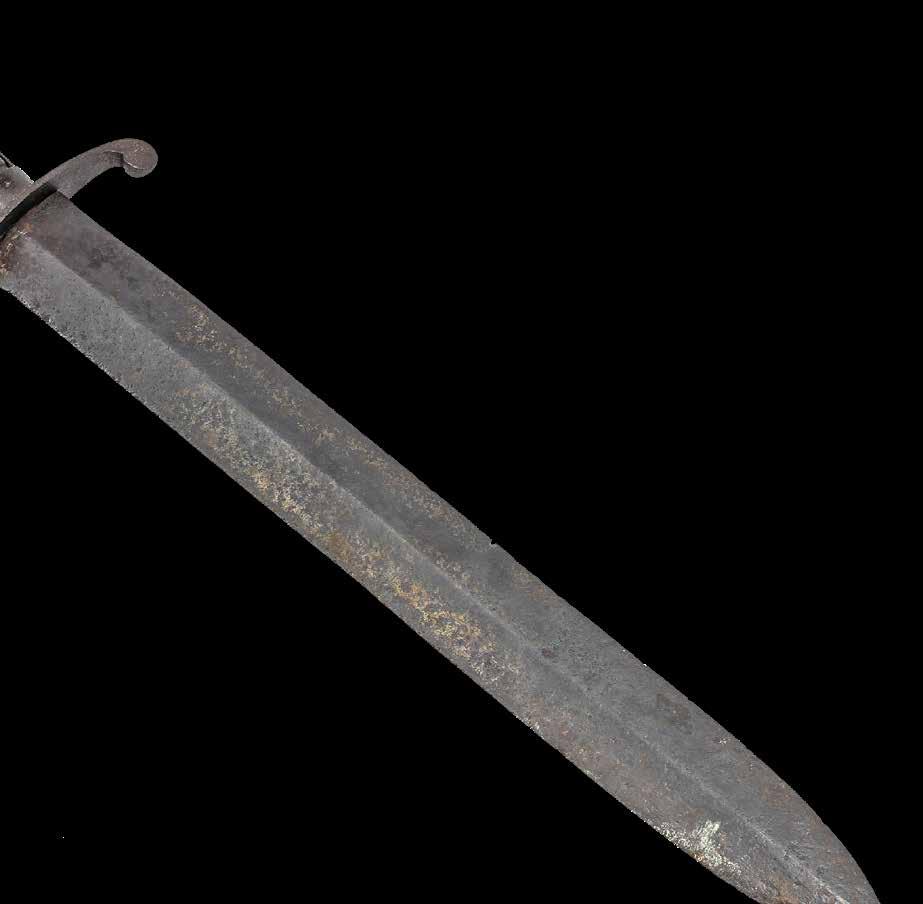
25 April 2021 Civil War News 25 April 2021 Civil War News
Left: The M.L. Ferguson D-guard fighting knife is large enough to be considered a short sword or possibly even a “cutlass.”
Overall obverse view of the ML Ferguson fighting knife.
Reverse hilt of the Ferguson knife, with the inset showing the same maker’s mark found on the guard. The mark is weak, probably a combination of having been struck by hand on a hardened blade and from wear, oxidation, and pitting.
Pommel cap view of the Ferguson knife, showing the knurled capstan nut, a somewhat unique method of attaching the tang to the hilt of Confederate-made knives.
M L FERGUSON
Brunswick CWRT Helps With Placing Interpretive Signs at Fort Caswell
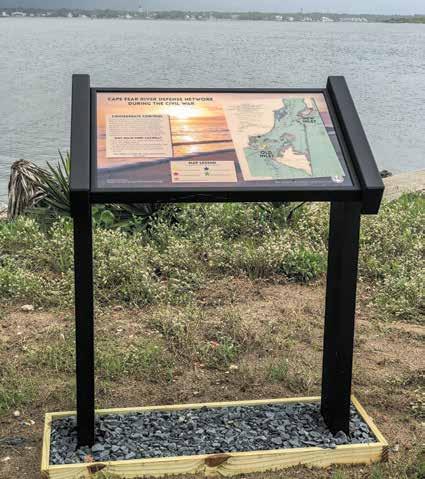 by Mike Powell
The Brunswick CWRT is the nation’s largest Civil War Round Table. Before the virus pandemic we had over 1,400 members and averaged about 450 per meeting. In our ten years existence we have donated over $50,000 to preservation all over N.C
In 2014 the BCWRT moved into Hatch Auditorium on the grounds of the North Carolina Baptist Retreat in 2014. This Oak Island site is also home to Fort Caswell. The fort sits on the island’s eastern shore that is also the western side of the Cape Fear River’s Old Inlet. There are also late 19th century Endicott forts on the property in excellent
condition. The town of Southport is just across the harbor.
In 1825, the U.S. government authorized fortifying the mouth of the Cape Fear. The Oak Island fort’s construction went slowly due to funding, distance from supplies, and labor shortages.

It was finally completed about 1838.
Fort Caswell’s initial armament was supposed to be 90 cannon. Ten years later, plans called for a slight reduction to 80 cannon of different sizes. There is no documentary evidence these guns were ever mounted in the fort.
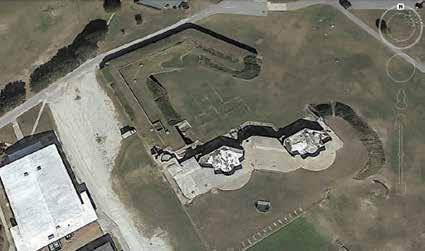
When North Carolina authorities took over the fort in 1861, there were only two, 24-pounder
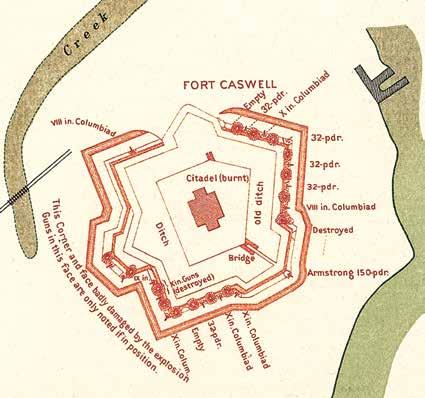
cannon in Fort Caswell.
During the Civil War, the fort was upgraded as Wilmington turned into a major, then the only, east coast port importing supplies for the Confederacy. Wilmington became so important that many other forts were built to protect the Cape Fear with the most famous being Fort Fisher.
When Fort Fisher fell on January 15, 1865, Fort Caswell was evacuated. Some buildings were burned, the powder magazines were blown up, and guns spiked. The garrison went upriver to Fort Anderson.
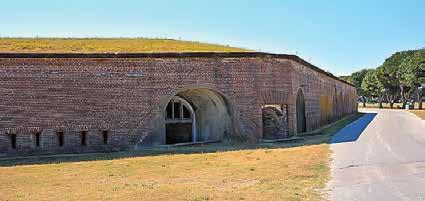
In 2018, BCWRT, working with the site’s administrators put up five interpretive plaques to tell some parts of the Fort Caswell story. Two additional plaques are planned. Until we installed the signage there was no interpretation on the site. Since we put the signs up, the NC Baptist Retreat’s administrators have allowed me to conduct tours of the forts, so it has been a good relationship.
BCWRT is committed to providing support, including financial support, to like minded organizations that advance the study and understanding of the American Civil War. Visit brunswickcivilwarroundtable.com.
26 Civil War News April 2021 26 Civil War News April 2021
Plan and sections of Fort Caswell showing its condition in February 1866.
Fort Caswell showing Endicott Period gun emplacements
View of Fort Caswell’s sea face brick walls.
Enlargement of Fort Caswell from the Atlas To Accompany The Official Records Of The Union And Confederate Armies,.
The defensive forts, Caswell, Fisher, and Fort Holmes across the river on Bald Head Island, and Johnston, at Southport, along with the many batteries along the banks of the Cape Fear River to defend Wilmington was called the Cape Fear River Defensive System.
“The best little book on Barnard”
The American Civil War was the rst war in which both sides widely used entrenchments, repeating ri es, ironclad warships, and telegraphed communications. It was also the rst American War to be extensively photographed. Mathew Brady, Alexander Gardner and Timothy O’Sullivan are famous for having made iconic photographs in the Civil War’s eastern theater. George N. Barnard deserves to be ranked in this top tier for his photographic work in the war’s western theater. A civilian photographer hired by Gen. William T. Sherman’s chief engineer to take pictures of forti cations around Atlanta, Barnard took several hundred of them in and around the city in the fall of 1864. His most famous is the site of Union Maj. Gen. James B. McPherson’s death in the battle of Atlanta, July 22, 1864. Thus far, no comprehensive, de nitive listing has been made of the photographer’s work. For this book we have chosen a hundred images we deem “signi cant.”
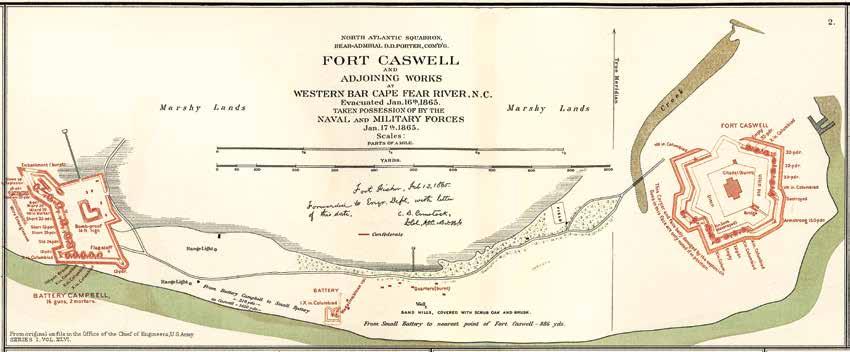
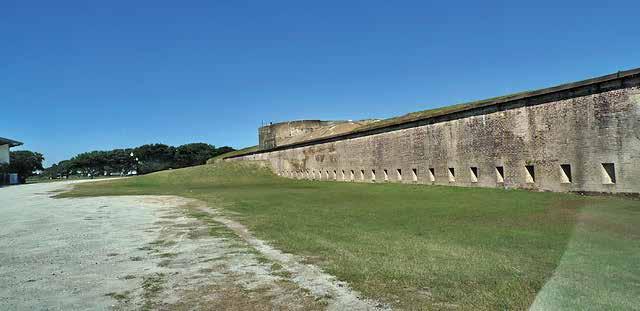


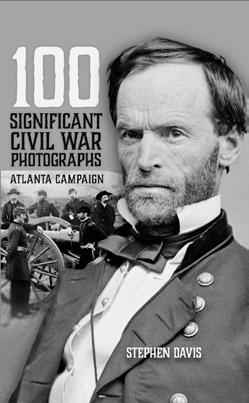
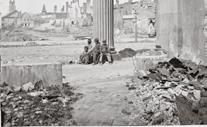
128




page Paperb ac k: $19.95 (+$3.50 S & H)



Ordering info: $19.95 plus $3.50 s&h
Carolina residents add 9% sales tax
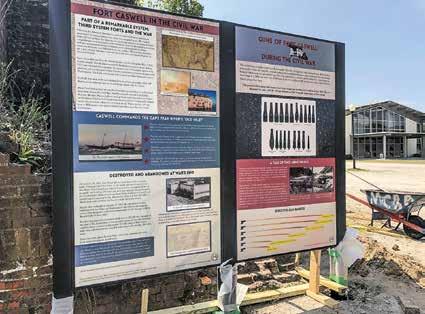

27 April 2021 Civil War News 27 April 2021 Civil War News “The STORIES BEHIND THE PICTURES” 100 Significant Civil War Photographs CHARLESTON IN WAR By Stephen Davis & JACK W. MELTON JR Name Shipping Address City State Zip 160 pages • OVER 100 PHOTOS • MAPS • INDEX • BIBLIOGRAPHY • ISBN: 978-1-61850-167-7 Paperback: $19.95 (+$3.50 S & H) • Released Jan. 2020 3 ways to order YOUR COPY! CALL US 800-777-1862 ORDER ONLINE www.historicalpubs.com fill out this form BELOW & mail with a check for $23.45 to: Historical Publications LLC 520 Folly Road, Suite 25 PMB 379, Charleston, SC 29412 (S.C. residents include 9% sales tax of $1.80) newly and Charles photograph, selected as e Fire allow book are Confederates Harbor Reminiscences of Federal history historical works. such as (1838–1910). DAVIS & MELTON 100 SIGNIFICANT CIVIL WAR PHOTOGRAPHS CHARLESTON IN THE WAR
a
to: Historical Publications LLC 520 Folly Road, Suite 25 PMB 379 Charleston, SC 29412 or Order online at www.historicalpubs.com Wrecking Atlanta Northern Engineers Prying Up Track themselves,tothepointofreprintingthedrawingintheirregimentalhistoryof1889with thecaption,“theFirstMissouriEngineersdestroyingarailroadshowingtheuseofhooks made by them for the purpose.” Barnard Under the Microscope for Monday, November 7. Freedpeople on the Boxcars 67 Confederate Fortifications Congress images bear no captions (as do Poe’s pictures), so students of Barnardiana have to scrutinize the pictures and compare them to others. standing just beyond their parapet. Confederate Lt. Col. Bushrod W. Frobel, assistant chief engineer in Hood’s army, called works surrounding Atlanta. Peachtree Battery–Another View Order these books online at www.HistoricalPubs.com
South
Mail
check
Oceanside view of the rifle slits that offered protection from infantry.
Double marker helps the visitor better understand the fort’s history and armament.
Map of Fort Caswell and adjoining works from the Atlas To Accompany The Official Records Of The Union And Confederate Armies, Plate 132, Fig. 2.
“Hold it at all Hazards”: General Battle’s Counterattack
by Tom Van Winkle
“The woods in front were so thick that it was impossible to see more than 20 steps from our line.”
Located west of I-95, in central Virginia’s rapidly urbanizing heart, lies 36 acres of once-tangled backwoods, land that played a key role during the opening day of the May 1864 Battle of the Wilderness. Bordered on the north by the residential subdivision known as Lake of the Woods, on the west and east by privately owned tracts, and on the south by busy Virginia State Route 20, it is a major part of telling the story of the Overland Campaign’s opening engagement.
On May 5, 1864, divisions of the Confederate Second Corps straddled the Orange Turnpike (Route 20) near the acreage which we are now referring to as
General Battle’s Counterattack.
National Park Historian Bert Dunkerly researched and described the May 5th action in this area as follows:
“Extending [General Edward] Johnson’s line to the south was the division of General Robert Rodes. Shortly after noon, two divisions of General Gouverneur
K. Warren’s Union V Corps launched an attack against Johnson’s and Rodes’ line.
One of Warren’s divisions, under General Charles Griffin, attacked down the Orange Turnpike through Saunders’ Field, while the other, under General James Wadsworth, attacked through the woods to Griffin’s left (south).
Wadsworth’s line overlapped Rodes’ and as the attack developed, Rodes struggled to hold back the overwhelming Union force that threatened to turn his flank. Reinforcements rapidly approached, along the Turnpike, in the form of General John B. Gordon’s Georgia Brigade and General Junius Daniel’s North Carolina Brigade. Both units left the Turnpike and pushed cross country, moving southeast, to reach the threatened Confederate right flank. Splashing across Wilderness Run, they slammed into Wadsworth’s brigades and sent the Union troops fleeing in retreat, thus stabilizing the Confederate line.
“To the north, along the Turnpike, Griffin’s division clashed with Johnson’s men just to the east of the [General Battle’s
Counterattack property], in what is now park property. General John M. Jones’ Confederate brigade extended south from the road and confronted General Joseph Bartlett’s brigade of Union troops. Jones himself was struck down in the attack and his brigade broke to the rear under the weight of the attack. Bartlett punctured the Confederate line and pushed further beyond Johnson’s line. Elements of the 20th Maine managed to push nearly ¼ mile farther into the Confederate rear before falling back.
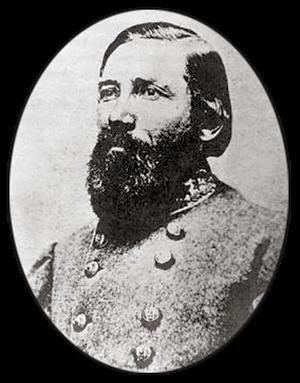
“Alabama troops positioned north of the Turnpike on [General Battle’s Counterattack property] under General Cullen A. Battle attacked southward into Bartlett’s exposed flank and forced him to retire back across Saunders’ Field. With the Confederate line re-established, Griffin’s men fell back to their lines.”
General Cullen A. Battle’s 6th, 3rd, 5th, 12th, and 61st Alabama Regiments, launched their counterattack against Bartlett’s brigade from the General Battle’s Counterattack property. The Union advance, along the Orange Turnpike, was thwarted by this action.
According to an account by a 3rd Alabama soldier, “Orders were given for regimental commanders to move up rapidly to the crest of the hill and hold it at all hazards in case Jones gave way. The woods in front were so thick that it was impossible to see more than 20 steps from our line,
and all though that General Jones held the crest of the hill. Our enemy soon hurled a heavy column against General Jones, sweeping down on his flanks and it became evident that he was pressing our men back. At this juncture, Battle’s brigade moved up at a double-quick, but instead of finding Jones on the hill, his men were scarcely thirty steps beyond the branch. While crossing the branch the line became broken and scattered and the cry from the road of ‘[f]all back,’ ‘surrendered,’ and ‘cut off,’ caused such confusion to both lines that the 3rd and 6th Alabama became involved in the general difficulty.”
He continued, “About that time, the 6th and 61st Alabama swung around from the left of the road, struck the enemy on the flank, drove him handsomely and inflicted heavy loss. The 12th Alabama, being on the extreme left, did not come into contact with the enemy. While driving the Yankees, the 6th and 61st captured two pieces of artillery and a large number of prisoners.”
The American Battlefield Trust (ABT) has contracted to purchase this Wilderness property that is within the Civil War Sites Advisory Commission’s defined Core Battlefield Area and just west of the National Park Service Saunders Field battlefield. Having received both state and federal grants, there is still a $49,000.00 shortfall in covering the cost of this property with an impending closing date of April 2021.
As with all struggles, one that is coordinated holds the best chance of a positive outcome. The Central Virginia Battlefields Trust has partnered with ABT in a coordinated effort to raise the remaining needed funds. This is not CVBT’s first partnership with ABT as both organizations enjoy a symbiotic relationship. Several previous acquisitions, including CVBT’s donation of one million dollars towards the Fredericksburg’s Slaughter Pen farm and several Chancellorsville property partnerships have been realized.
I have recently walked this 36acre tract and viewed the historic earthworks and road traces still remaining. There is nothing like standing on a battlefield and visualizing the history in your mind’s eye. Embedded in this ground are the stories of those who gave so much, and, in some case everything; we need to tell what happened here.
Preserving this site of the
Confederate counterattack adds an essential piece to our understanding of the opening volleys in this battle. With ever looming development pressure along Route 20 (Orange Turnpike) opportunities to save battlefield land in this area of Virginia must be acted upon quickly.
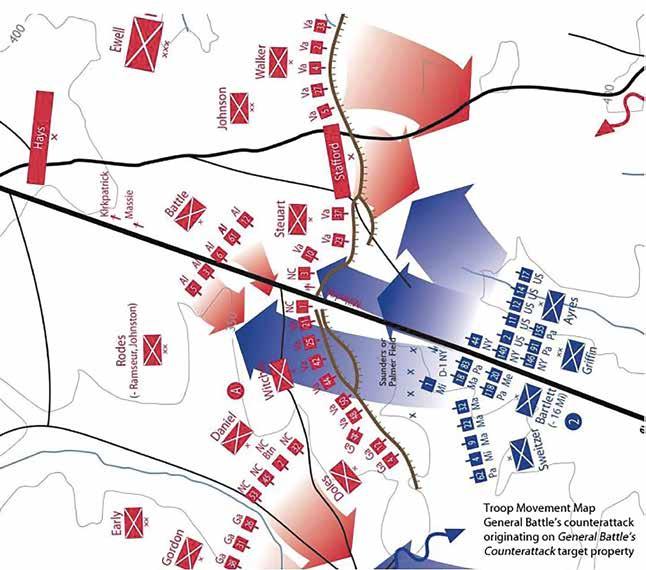
So, what is our plan of attack to save this important piece of history? We (CVBT) have offered to raise half the remaining $49,000 balance. We need to raise $24,500.00 before April 2021 to meet the closing date. I was pleased to be asked by ABT President David Duncan to assist in this project and continue our ongoing partnership to preserve this country’s history for generations to come.
Please visit www.cvbt.org for more information or to donate to save this historic battlefield land.
Tom Van Winkle serves as the president of CVBT and has been an advocate for preservation for many years. Central Virginia Battlefields Trust has been saving land at Fredericksburg, Chancellorsville, The Wilderness, and Spotsylvania Court House for twenty-five years.
28 Civil War News April 2021 28 Civil War News April 2021 Subscribe online at CivilWarNews.com
This map shows General Battle’s counterattack and the area of the land to preserve.
Confederate General Cullen A. Battle lined up his brigade of Alabamians and rushed to combat from the 36 acres ready for preservation.
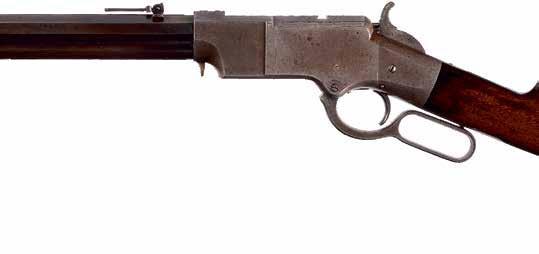
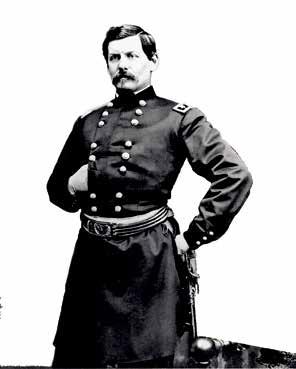
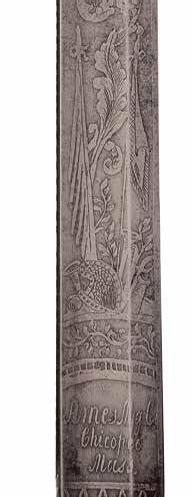
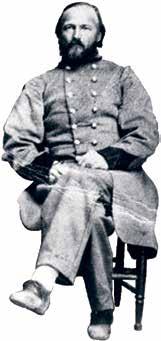
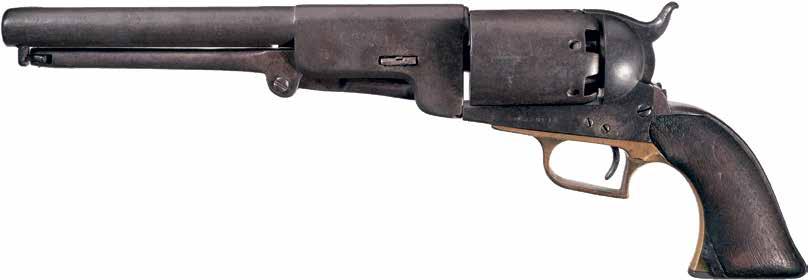
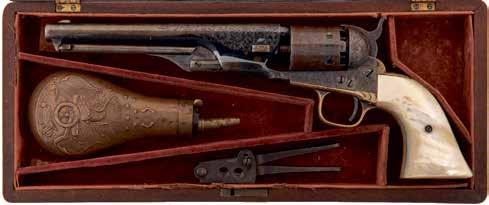
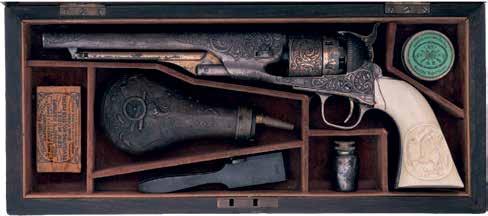
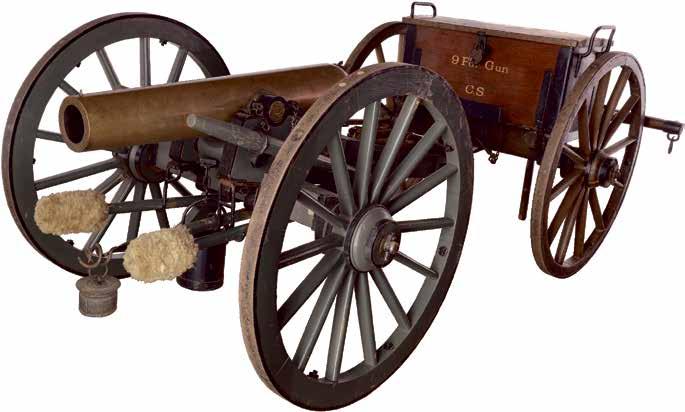


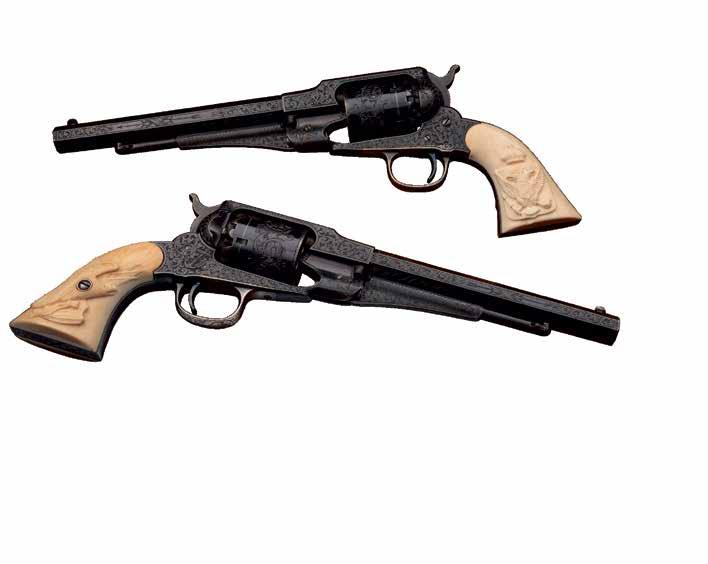
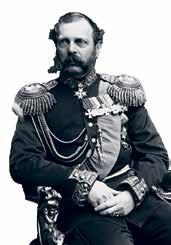
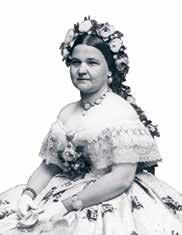
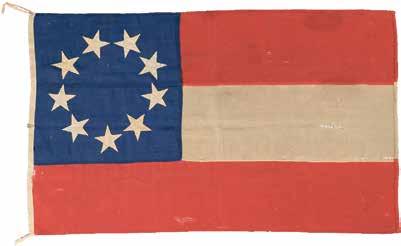
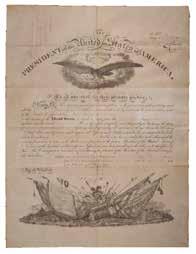
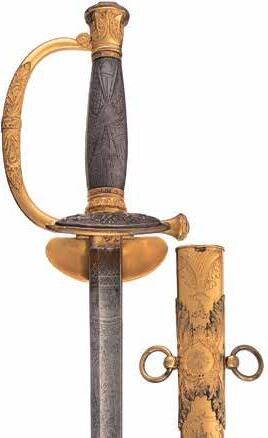
Historic, Documented Ames Gilt and Silver Mounted Model 1840 Foot Infantry Officer’s Sword and Scabbard with Presentation Inscription to George B. McClellan, Later General-in-Chief of the Union Armies, Citing His Leadership in the Mexican-American War REAL ART REAL HISTORY REAL IRON ∙ ∙ Desirable Civil War Era LeMat Percussion “Grape Shot” Revolver Extremely Rare New Haven Arms Company Iron Frame Henry Lever Action Rifle Exceptionally Rare, Only Known Civil War Confederate Columbus Arsenal 9-Pounder Napoleon Cannon Dated 1863 Cased Engraved and Silver and Gold Plated Colt Model 1860 Army Percussion Revolver with Carved Mexican Eagle Grip Documented Cased Factory Engraved Colt Model 1861 Navy Revolver with Pearl Grips and Accessories “Stars and Bars” Nine-Star First National Flag WWW.ROCKISLANDAUCTION.COM CATALOG ONLINE NOW! 7819 42 nd Street West, Rock Island, IL 61201 ∙ PHONE: 309-797-1500 or 800-238-8022 FAX: 309-797-1655 ∙ EMAIL: info@rockislandauction.com ∙ Fully Licensed Class III Auctioneer To Order Your Full-Color 3-Volume Set Catalog Call (800) 238-8022 ($70 plus sales tax) ALWAYS ACCEPTING QUALITY CONSIGNMENTS - Contact our Acquisitions Department by calling 800-238-8022 or Email: guns@rockislandauction.com Undisputed World Leader for Quality Collectable and Antique Firearms ® ISLAND ROCK AUCTION COMPANY® Premier Auction Well-Documented D Company No. 13 Colt Model 1847 Walker Percussion Revolver Documented as Owned by Texas Pioneer and Confederate Cavalry Veteran John Z. Leyendecker with Extensive Research Documented Cased Pair of Historic Exhibition Quality Engraved Remington New Model Army Percussion Revolvers with Relief Carved Russian Imperial Coat of Arms Grips Presented to the Czar of Russia by First Lady Mary Todd Lincoln Mary Todd Lincoln John Z. Leyendecker & Alexander II of Russia
Chris Mackowski
From the Editor

For only lasting 28 days, February sure seems like the longest month.
The days are getting longer, it’s true, but the accumulated darkness of long winter nights still seems to hover. It crowds the dawn and rushes the sunset. As a result, the days are longer, but they don’t yet seem lighter.
In central Virginia, winter never seems to come until February. Certainly colder temperatures start tapping at the thermometer in November, and we might even get snow flurries now and then during the stretch of cozy holidays that run from late October through New Year’s. But we always get our most protracted cold in February, as if in defiance of anything that Yankee groundhog from Pennsylvania might have to say about more winter or not. The grip of cold is strongest in February.
Earthworks, which look like long piles of leaves even at their best, now look like long piles of snow. Leaf litter and forest debris might poke through if the

snow isn’t thick enough. The battlefields don’t quite look frozen; instead, the menacing threat of mud and water lurks just below the surface, ready to smear a visitor into a cold mess. The fields don’t invite exploration and contemplation.
I realize this is all perception. February is a state of mind as much as anything. In Alaska, they call it “The ‘F’-Month,” explains my ECW colleague Terry Rensel, an Alaskan ex-patriot now living in Virginia. “It’s the month cabin fever begins to set in. Everyone begins to lose their minds.”
This February, everywhere, has not just been hard on a lot of people; it’s been especially hostile. Forces of Nature have paid little attention to man’s hubris and have smacked around millions of people almost willfully, except Nature doesn’t care one way or the other. It’s a reminder for us to approach the world with a little more humility. Hopefully it’s also a reminder to approach each other, especially those millions impacted by the weather, with more compassion.
The winds of March will soon begin to blow in spring. The battlefields will once more stand as sublime landscapes, welcoming visitation. We can all help each other get through February together.
—Chris Mackowski, Ph.D. Editor-in-Chief
Seventh Annual Emerging Civil War Symposium at Stevenson Ridge
We’re less than six months away from our 2021 Symposium! While ticket sales closed on
January 31, we will continue to monitor both state and federal guidelines, and as conditions improve we may be able to open a limited number of additional tickets closer to the date of the symposium. All registered attendees will be contacted in the near future as our plans continue to develop. We’d like to thank everyone again for all of your support and understanding over the past year as we continue to navigate the ongoing pandemic. We look forward to welcoming everyone back to Stevenson Ridge!
ECW News & Notes
From Edward Alexander: “Two anticipated books I did the maps for have been published. Brian Matthew Jordan’s A Thousand May Fall: Life, Death and Survival in the Union Army (New York, NY: Liveright). This regimental history of the 107th Ohio Infantry contains theater maps, troop movement maps for Chancellorsville and Gettysburg, and a campaign map for Potter’s 1865 South Carolina Raid.
“Eric Wittenberg’s Six Days of Awful Fighting: Cavalry Operations on the Road to Cold Harbor (Burlington, NC: Fox Run Publishing) contains daily troop movement maps covering the movement from the North Anna to Cold Harbor and detailed battle maps for Hanovertown, Haw’s Shop, Matadequin Creek, Hanover Court House, and Ashland.”
Sarah Kay Bierle has been rearranging her bookshelves during winter storms to make better backgrounds for Zoom presentations and history interviews!
Bert Dunkerly has embarked on a personal campaign to visit every one of the 59 Freeman Markers in and around Richmond. Placed in the 1920s by a group led by historian Douglas S. Freeman, they mark important battlefield landmarks, fortifications, etc. Phil
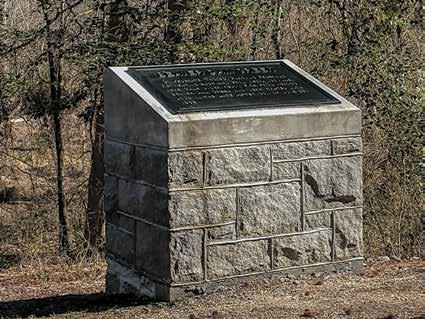
Greenwalt did an article on them a few years ago. “It’s been fun,” he says. “Only 3 more to go!”
David Dixon’s book Radical Warrior: August Willich’s Journey from German Revolutionary to Union General received a review in the March 2021 issue of Civil War News. Reviewer Stewart Bennett said, “Dixon gives a fair and balanced appraisal of a failed European revolutionary turned successful Union general regardless of his [Willich’s] communist leanings.”
Jon-Erik Gilot has been named Curator and Social Historian at the Captain Thomas Espy Post in Carnegie, Pennsylvania.

Meg Groeling is furiously pounding the keys on pieces about “Old Abe,” the War Eagle and Abraham, the enslaved man blown to freedom” in the Vicksburg mine (one good Abe deserves another—is Lincoln next?). She is carefully choosing poems for the blog’s “Weekly Whitman” and is preparing a blog post or two. However, a shipment of roses from Jackson & Perking came, so she may be seriously interrupted by the planting of roses. “Why aren’t there more CivilWar-themed roses?” she asks. “‘Mr. Lincoln’ is one of the great roses, but surely there should be more. A ‘Grant’ rose, or a ‘Harriet Tubman’ rose--surely someone has this in their sights!”
Dwight Hughes gave a virtual presentation to 72 members of the Civil War Round Table of the District of Columbia, the largest audience on record, on his
new ECW Series volume Unlike Anything That Ever Floated: The Monitor and Virginia and the Battle Hampton Roads, March 8-9, 1862, which will hit the shelves in March. This month, he speak virtually to the Falls Church Military History Forum, Falls Church, Va. As a reward for completing the book, Dwight commissioned a 28-inch, scratchbuilt, plank on frame model of Monitor for his study. It’s covered with individual “iron” (actually tin) plates. The turret rotates and shows a cutaway view of the interior, guns, and accoutrements.
On February 4, Chris Mackowski did a talk about his book Grant’s Last Battle: The Story Behind the Personal Memoirs of Ulysses S. Grant for St. Bonaventure University’s Alumni Office. Bonnies from around the country Zoomed in for the talk. Go, Bonas!
Derek Maxfield spoke on Civil War Talk, an online forum, on Feb. 10 about his book Hellmira: The Union’s Most Infamous Civil War Prison Camp – Elmira, NY. Over 75 were in attendance from all over the country.
Ryan Quint has long been at work on a book about the early war battle of Dranesville, and he’s excited to report his passion project is under contract. “I’ll be working with Ted Savas; no ETA on when it’ll be released, but the ball is moving!” he says. The working title is Dranesville: A Town, a Battle, and J.E.B. Stuart’s First Defeat, Dec. 20, 1861, “which admittedly isn’t very flashy,” he chuckles. “A new title is on the to-do list.”
Jon Tracey is presenting “’A Fragment of Brave Men:’ Andrew Gatewood’s Parole Pass and Lost Cause Memory” at Temple University’s (virtual) James A. Barnes Graduate Student Conference, April 10.
On March 31, Kris White talked to the Civil War Roundtable Congress about “Lee’s Greatest Victory-Lee’s Greatest Defeat: The Battle of Chancellorsville.”
ECW Bookshelf
A Thousand May Fall attempts an intimate, absorbing chronicle of the Civil War from the ordinary soldier’s perspective.
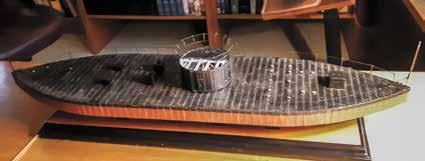
30 Civil War News April 2021 30 Civil War News April 2021 www.emergingcivilwar.com
Dwight Hughes had the ship model built to commemorate his new book about the USS Monitor.
Are those earthworks or just piles of dirty snow?
The Freeman marker at Beaver Dam Creek is one of many Bert Dunkerly visited this winter.
At the heart of the book is the 107th Ohio Volunteer Infantry. The unit saw service in two defining battles, Chancellorsville and Gettysburg, each time in the thick of the killing. But the men of the 107th were not lauded as heroes for their bravery and their suffering. Most of them were ethnic Germans, set apart by language and identity, and their loyalties were regularly questioned by a nativist Northern press.
In the course of its service, the 107th Ohio was decimated five times over. Yet even as they endured the horrible extremes of war, the Ohioans contemplated the deeper meanings of the conflict at every turn, from personal questions of citizenship and belonging to the overriding matter of slavery and emancipation. Based on prodigious new research, including diaries, letters, and unpublished memoirs, A Thousand May Fall restores the common man and immigrant striver to the center of the Civil War narrative.
“Also worth noting,” Brian says: “ten of Ed Alexander’s brilliant maps illustrate the book.”
10 Questions . . . with Jon Tracey
Jon Tracey is the newest regular contributor to ECW, and we’re pleased to have him aboard. You can view his full bio here: https://emergingcivilwar.com/2020/12/19/ ecw-welcomes-jon-tracey/
We always love to hear a person’s Civil War “origin story.” How did you get hooked on the Civil War? I’ll place that blame, or credit!, on my parents. Though they both pushed hard into STEM fields in their careers, their own interest in history was manifested through book collections and family trips to battlefields and historic sites, which really sparked my interest. That passion turned academic when I started my studies at Gettysburg College, where I was able to dive more deeply into primary sources and in-depth accounts, which added a lot of nuance to the secondary sources I was used to reading. From there I started working in historic site interpretation, and it all took off from there!
Many of your blog posts so far have told stories from Gettysburg. Why does that battle in particular fascinate you? I think the interesting thing about Gettysburg is that despite the conception that it has been done to death, it hasn’t. As I hope my blogs show, there’s a lot of fascinating stories that get buried by the traditional narratives. Changing landscapes, WWII prisoners, individual accounts of combat elsewhere, under-credited actions like those of Cutler’s Brigade, and the medical operations at Camp Letterman are too often overlooked in favor of more popular things like Little Round Top or Pickett’s Charge. I may be a little biased since I’ve spent so
much time there, but there’re so many new stories yet to be told. You’ve worked at Gettysburg, but you’ve worked elsewhere, too. Where have some of your other adventures taken you? I’ve bounced around a few other NPS sites, including Appomattox Court House NHP, Fredericksburg & Spotsylvania NMP, and Eisenhower NHS. It’s been great to have the opportunity to work at so many varied sites. Each of the four has been so different, and they all have very important stories to share with the public. From living history at a small village that saw the beginning of Reconstruction, to battlefields across three campaigns, to the presidential and retirement home of Dwight Eisenhower, I have never lacked for variety. I’m excited to see where I go next, and I’m eager for new opportunities!
Do you have a particular favorite Civil War spot? What is it why? Sometimes I feel like my favorite spot changes monthly! At the moment, I’d have to say the Sunken Road at Antietam. It’s incredible to think about what that landscape has seen over time, and it is so wonderfully preserved now. My recent genealogy work revealed a direct ancestor in the 130th Penn., which not only attacked that position but was also assigned burial detail on that part of the field. Taking a look at photos, period engravings, and later art by veterans who witnessed it showed me a small portion of what he would have seen, and that added a lot of meaning to that landscape.
What are you working on these days? Wrapping up my last semester of graduate school at West Virginia University takes up the majority of my time, but I’m also revising an article-length work on a type of amputation at Camp Letterman. I’m using period medical records, accounts from that major hospital in the aftermath of Gettysburg, and postwar medical journals to make the argument that operations there fit into the broader theme of the professionalization of American medicine and helped advance debates about how effective amputation actually was as a life saving measure. Spoilers: It was highly effective, as shown through period records as well as following up with amputee veterans later in life, and Camp Letterman was an excellent hospital.
Lightning Round (short answers with a one-sentence explanation)
Favorite primary source?
Surgeon Henry Janes’ case ledger, packed full of treatment records from Camp Letterman.
Favorite Civil War-related
monument? The Soldiers’ National Monument in Gettysburg National Cemetery.
Favorite unsung hero of the Civil War era? Perhaps a bit cliché, but I still think the average soldier deserves more credit.
What’s a bucket-list Civil War site you’ve not yet visited? Stretching the definition of Civil War site a little, but the U.S. Grant Cottage.
Favorite ECWS book? That Field of Blood: The Battle of Antietam, September 17, 1862 by Dan
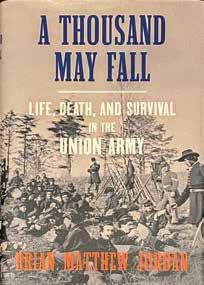 Vermilya
ECW Multimedia
Have you been following the ECW YouTube page? You can check it out by going to YouTube and search “Emerging Civil War.”
In January, we:
• revisited Richmond in the Civil War with Bert Dunkerly and Doug Crenshaw and their new book about the topic, Embattled Capital
• mapped the Western Theater with cartographer Steve Stanley and historian Kris White, authors of a new map book from the American Battlefield Trust
• began exploring Petersburg National Battlefield with a series of “on location” videos
We also made a number of our interviews available as free podcasts on the ECW Patreon page.
Be sure to subscribe to the Emerging Civil War YouTube channel to get all the latest. While you’re at it, don’t forget to follow ECW on Facebook and Instagram (@Emergingcwblog). Please share and like our pages!

Behind the Scenes:
ECW’s Partnership with Reconstruction Blog
By Patrick Young
More than a decade ago I began writing The Immigrants’ Civil War series for a Long Island immigrant news site. A lifelong fascination with the Civil War and my professional life as an immigration law professor at Hofstra University School of Law made writing the 250 installments a natural fit. As I pushed the stories of individual immigrants into the post-war world, I began to study the Reconstruction Era for the first time. I saw that the Civil War could not be fully appreciated without understanding the world the Civil War created. It would be like studying the United States conflict in Iraq and stopping with the toppling of the statue of Saddam Hussein!
I decided to create a blog on
Patrick Young has made himself into one of the most widely read authorities on Reconstruction on the web.
Reconstruction. The era was so neglected that in 2019 I was able to purchase the domain thereconstructionera.com for the price of my tea kettle. With its white nationalist uprisings, widespread terrorism, and the first-ever impeachment, Reconstruction looked more like the world I live in than any other period in the 19th Century. Over the last two years, readers have found the blog and it developed a loyal following.
When Chris Mackowski approached me to partner and write a monthly column for Emerging Civil War, I saw an opportunity to put my research in front of new readers. Readers interested in the Civil War often know everything about the military campaigns, the major political figures, and the events leading up to the opening of the conflict. Paradoxically, their research often ends with the last Confederate battle flag being surrendered. I hope the new Echoes of Reconstruction column can help fill that void. Echoes of Reconstruction fleshes out the rest of the story. Reconstruction has brave stories of hope, and tales so horrid that they were purposely hidden for one-hundred and fifty years. Both need to be told.
By Phill Greenwalt
February saw the birth of the George Washington in 1731 and the alliance of France with the colonies in 1778. On February 22, Emerging Revolutionary War historians commemorated the birthday of the Continental army leader and first president at the George Washington birthplace with a special “Rev War Revelry.”
Speaking of the “Rev War Revelry” series, February 21 saw an interview with historian
31 April 2021 Civil War News 31 April 2021 Civil War News
Jon Tracey tries to keep warm in style with a little reading about Antietam.
Brian Matthew Jordan’s A Thousand May Fall.
John Maass, and March 7 will see Kristopher White, Vanessa Smiley, and Phillip S. Greenwalt on Guilford Court House. Just click onto Emerging Revolutionary War’s Facebook page at 7 p.m. EST to watch/listen and ask questions.
Also, mark your calendar for a winter campaign of ten days crucial to the eventual American victory in the Revolutionary War. On November 12-14, 2021, ERW historians will lead a bus tour of the Trenton and Princeton Campaign. Check out our blog, www.emergingrevolutionarywar. org, for details and how to reserve your spot.
While on the blog, make note to attend the Emerging Revolutionary War Symposium

held in conjunction with Historic Alexandria. Blog posts of the speaker line-up are going live every other week. There is also rumor that the next volume of the Emerging Revolutionary War Series will be available prior to the conference in May. To find out if the rumor is correct, you will have to attend!”
You can help support Emerging Civil War
Emerging Civil War is a 501(c)3 not-for-profit organization. If you’re interested in supporting “emerging voices” by making a tax-deductible donation, you can do so by visiting our website: www.emergingcivilwar.com.





43rd Annual Ohio Civil War Show | Including WWI & II
28th Annual Artillery Show Military Material From 1775 Through 1945
Saturday May 1st – Sunday May



OVI Regimental Band
Gettysburg Address Presented by President Lincoln

Marlboro Volunteers Traveling Museum & Military Vehicles
$7 Admission (includes parking) – Under 12 FREE Handicap Facilities, Food and Door Prizes www.ohiocivilwarshow.com | Facebook: Ohio Civil War Show | For Information Call: 419-884-2194
100 Significant Civil War Photographs: Atlanta Campaign collection of George Barnard’s camera work. Most of the photographs are from Barnard’s time in Atlanta, mid-September to mid-November 1864, during the Federal occupation of the city. With this volume, Stephen Davis advances the scholarly literature of Barnardiana.
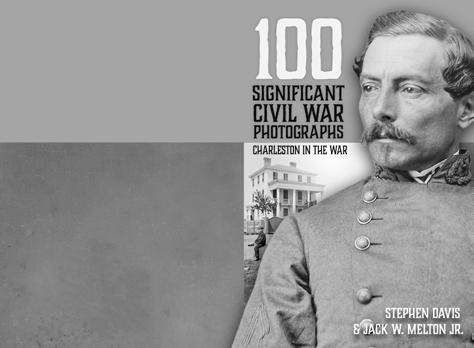

$19.95 + $3.50 shipping 128 pages, photographs, maps, bibliography. $19.95 + $3.50 shipping. Softbound. ISBN: 978-1-61850-151-6. www.HistoricalPubs.com. Order online at www.HistoricalPubs.com or call 800-777-1862
CHARLESTON IN THE WAR
CHARLESTON IN THE WAR
32 Civil War News April 2021 32 Civil War News April 2021 Deadlines for Advertising or Editorial Submissions is the 20th of each month. Email Ads or Events to ads@civilwarnews.com 100 Signi cant Civil War Photographs: Charleston in the War features newly restored images of scenes in the famed city, taken 1860–1865. e cameramen include the better-known, such as George N. Barnard and George S. Cook, as well as some lesser-known ones: Samuel Cooley, Charles Quinby, the partners Haas & Peale, Osborn & Durbec. Text by Stephen Davis and Jack Melton accompanies each featured photograph, describing the pictured scenes and the history surrounding them. e selected images depict a variety of settings: that portion of Charleston known as e Battery, the “Burnt District” (the area of the city destroyed by the Great Fire of December 1861), the Charleston Arsenal, and the many churches that allow Charlestonians to call theirs “the Holy City.” Special sections of this book are devoted to the huge Blakely guns imported from England by the Confederates and close-ups of Barnard’s views. e history of Civil War Charleston goes back to e Defense of Charleston Harbor (1890) by John Johnson, Confederate major of engineers, and to Reminiscences of Forts Sumter and Moultrie in 1860-’61 (1876) by Capt. Abner Doubleday, Federal second-in-command. Since then Charlestonians have contributed to the history of their city, notably Robert N. Rosen and Richard W. Hatcher III. e historical text surrounding 100 Signi cant Photographs draws on these and other works. A unique feature is its reliance upon the writings of actual participants, such as Augustine T. Smythe (1842–1914) and Emma Edwards Holmes (1838–1910). As a contribution to this literature, 100 Signi cant Civil War Photographs: Charleston in the War o ers rewards for all readers, from the casual novice to the serious student.
DAVIS & MELTON 100 SIGNIFICANT CIVIL WAR PHOTOGRAPHS CHARLESTON IN THE WAR 100 Signi cant Civil War Photographs: Charleston in the War features newly restored images of scenes in the famed city, taken 1860–1865. The cameramen include the better-known, such as George N. Barnard and George S. Cook, as well as some lesser-known ones: Samuel Cooley, Charles Quinby, the partners Haas & Peale, Osborn & Durbec. Text by Stephen Davis and Jack Melton accompanies each featured photograph, describing the pictured scenes and the history surrounding them. The selected images depict a variety of settings: that portion of Charleston known as The Battery, the “Burnt District” (the area of the city destroyed by the Great Fire of December 1861), the Charleston Arsenal, and the many churches that allow Charlestonians to call theirs “the Holy City.” Special sections of this book are devoted to the huge Blakely guns imported from England by the Confederates and close-ups of Barnard’s views. The history of Civil War Charleston goes back to The Defense of Charleston Harbor (1890) by John Johnson, Confederate major of engineers, and to Reminiscences of Forts Sumter and Moultrie in 1860-’61 (1876) by Capt. Abner Doubleday, Federal second-in-command. Since then Charlestonians have contributed to the history of their city, notably Robert N. Rosen and Richard W. Hatcher III. The historical text surrounding 100 Signi cant Photographs draws on these and other works. A unique feature is its reliance upon the writings of actual participants, such as Augustine T. Smythe (1842–1914) and Emma Edwards Holmes (1838–1910). As a contribution to this literature, 100 Signi cant Civil War Photographs: Charleston in the War o ers rewards for all readers, from the casual novice to the serious student. Stephen Davis JACK W. MELTON JR.
160 pages, Over 100 Photos, Maps, Index, Bibliography, Softcover. ISBN: 978-1-61850-167-7 $19.95 + 3.50 S&H Order online at www.HistoricalPubs.com or call 800-777-1862
The American Civil War was the first war in which both sides widely used entrenchments, repeating rifles, ironclad warships, and telegraphed communications. It was also the first American War to be extensively photographed. Mathew Brady, Alexander Gardner and Timothy O’Sullivan are famous for having made iconic photographs in the Civil War’s eastern theater. George N. Barnard deserves to be ranked in this top tier for his photographic work in the war’s western theater. A civilian photographer hired by Gen. William T. Sherman’s chief engineer to take pictures of fortifications around Atlanta, Barnard took several hundred of them in and around the city in the fall of 1864. His most famous is the site of Union Maj. Gen. James B. McPherson’s death in the battle of Atlanta, July 22, Thus far, no comprehensive, definitive listing has been made of the photographer’s work. The Library of Congress has 130 images; the U. S. Military Academy at West Point, New York, has at least 98 photographs, donated by Captain Poe’s widow. Other repositories, such as the Gilder Lehrman Institute of American History in New York City, have smaller collections. For this book we have chosen hundred images we deem “significant,” though other students may wonder at some of our selections. We hope that this work will stimulate further interest in Barnardiana, and that other scholarly volumes are yet to come. The Atlanta Campaign STEPHEN DAVIS 100 SIGNIFICANT CIVIL WAR PHOTOGRAPHS ATLANTA CAMPAIGN
Sat.
Richland
US-30
800
of Military
For
~ S P E C I A L F E A T U R E S ~
Demonstrations & Cannon Firing Demonstrations • Civil War & WWII Encampments • Sutler’s Row • Field Hospital Scenario • Period Church Service
2nd 2021
9:00 – 5:00 | Sun. 9:00 – 3:00
County Fairgrounds, Mansfield, Ohio | Location:
and Trimble Road
Tables
Items, Books, Prints and More
Buy, Sell, Trade & Display
Artillery
Camp Chase Fife & Drum & 73rd
Digital Issues of CWN are available by subscription alone or with print plus CWN archives at CivilWarNews.com Publishers/Authors Send your book(s) for review to: Civil War News 520 Folly Road, Suite 25 PMB 379 Charleston, SC 29412 bookreviews@civilwarnews.com
A New Look at Old Stories


Civil War Trails, Inc. has teamed up with the City of Rockville, Peerless Rockville, Montgomery History, and a private donor to develop two new signs for the Stonestreet Museum and Beall-Dawson House. The signs are the first of several in and around Rockville which the group will refresh.
Rockville is part of the Civil War Trails program that connects visitors to over 1,200 sites across six states. The program encourages visitors to stand in


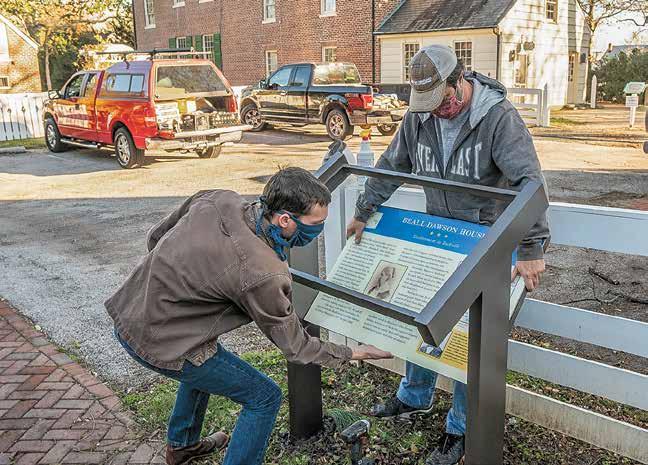
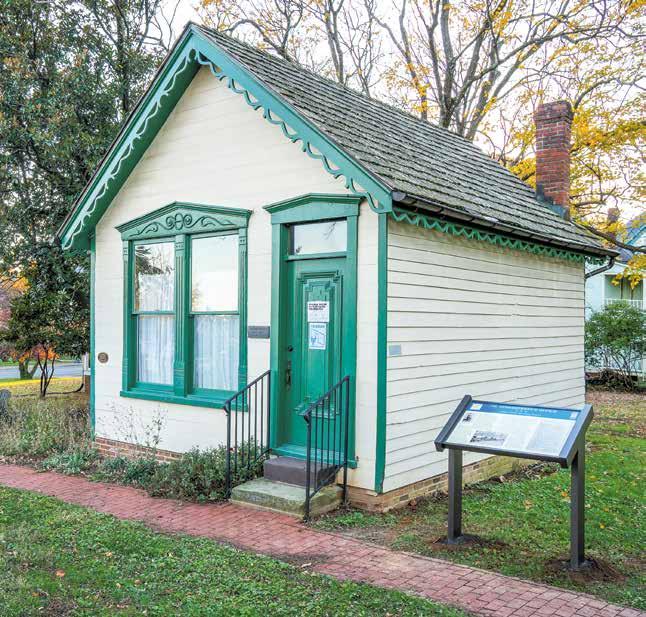
the footsteps of soldiers, citizens, and those fighting for freedom. Each Civil War Trails site is marketed internationally by state tour-ism offices, regional destination marketing organizations, and municipal partners. This means the educational product is part of a much larger economic development mission.
“The best way to learn about the Civil War is by traveling Maryland’s five Civil War Trails,” says Tom Riford, Assistant Secretary, Maryland Department of Commerce Division of Marketing, Tourism, Film, and the Arts. “Maryland’s trails have inspired travelers from around the world to leave the interstates and take the state’s scenic and historic routes to battlefields and beyond to places such as the Beall-Dawson House. These travelers visit our cities and towns where they shop, dine, and spend the night thereby creating some of the economic impact that helps save each Maryland household more than $1,175 per year.”
As an ‘open air museum,’ Civil War Trails is a popular way for travelers and families to explore in a safe and responsible way. Of course, as visitors drive the Civil War Trails they are gassing up, grabbing curbside service, and patronizing local businesses. “The timing of the updated signage is perfect,” says Montgomery History’s Executive
Director Matt Logan, “because it means visitors can continue to engage with history even while our campus is closed. We are excited to be sharing new perspectives and, through these stories, bring untold voices that will resonate with visitors to life. The stories of Dr. Stonestreet, and the community he served through his medical service, as well as those who lived at the Beall-Dawson
House, including those who were enslaved, have something to teach all of us, even today.”
The updated content was made possible by a private donor and the City of Rockville’s Planning and Development Services division. Now more than ever it is important to ensure that interpretive signs are relaying accurate and engaging content. The Civil War Trails program is uniquely geared to update their signs as new research comes to light, to improve accessibility, and to compliment a dynamic audience.
Peerless Rockville, Montgomery History, and local historian Clarence Hickey helped develop the new text and will be part of the revisions to the other signs in the locality.
For more information about Civil War Trails, Inc. contact: Drew A. Gruber Executive Director Civil War Trails ® PO Box 1862 Williamsburg, Va. 23187 757-378-5462 civilwartrails.org



INSIDE EVERY ISSUE

33 April 2021 Civil War News 33 April 2021 Civil War News
Stonestreet Museum, courtesy of Montgomery History.
The Civil War Trails team replaced older panels with newly updated content and repainted both signs for a fresh look.
Historical Publications, LLC Civil War News • 800-777-1862 520 Folly Road, Suite 25 PMB 379 Charleston, SC 29412 www.CIVILWARNEWS.com UP-TO-DATE COVERAGE • PRESERVATION NEWS • BOOK REVIEWS SHOWS, LIVING HISTORY AND REENACTMENTS • HISTORICAL ARTICLES MONTHLY COLUMNS • CALENDAR OF EVENTS STAY INFORMED! Only $41.00/One Year • $71.00/ Two Years THE MONTHLY CURRENT EVENTS NEWSPAPER -FORCIVIL WAR ENTHUSIASTS SINCE 1974 12 ISSUES PER YEAR PRINT & DIGITAL EDITIONS AVAILABLE CALL OR SUBSCRIBE ONLINE TODAY! 2018 CW N 44, $3.50 America’s Monthly Newspaper For War Enthusiasts War acres states! Culpeper Virginia. Friends Mountain Civil War Trust’s Path to Preservation CW N No. Pages, January Civil War News America’s Newspaper Enthusiasts Holzer Dancingsee Inside this issue: GETTYSBURG,believe the the industryaround spirits. might placesmore whereplace and McClellan’s owners. now nursed woundedwoman ballroom. believe these Hotel banquetroomRemembrancePenn., KarentionsDay, affairs photographs theto the stories meantime, dancers Dancing the Night Away at the Gettysburg Hotel Poretsky guides Lincoln Scholar Harold Holzer’s Oration at the 154th Anniversary of the Gettysburg Address Gettysburg spot—in Washington—standscoln clutchingbecauseAmerican freedmen. “unveiledbronze, something great today, politically the kneeling theDespite endure, such Wewithoutcontroversy—the roiling country.remember Gettysburg who mightgallery,uments:and secessionequal—remained coming—inspeech own, other statues
News from Shenandoah University’s McCormick Civil War Institute
 Jonathan A. Noyalas, Director
Baker Family Collection Latest Addition to MCWI’s Collection
Near the end of 2020, Shenandoah University’s McCormick Civil War Institute received a donation of items related to Winchester’s Baker family. During the Civil War, Josiah Lockhart Baker, his wife Alcinda, and their two children, George and Fannie, lived at Osburn, a brick home located near the Berryville Pike east of Winchester.
On June 14, 1863, during the Second Battle of Winchester, Confederate sharpshooters occupied Baker’s home. Their fire proved so effective that Captain Charles Bowen, Company H, 18th Conn. Inf., charged the house. Evidence indicates that Bowen’s command killed six Confederates and captured nineteen others. More than one year later Osburn again stood in war’s track on Sept. 19, 1864, during the Third Battle of Winchester.
Josiah Baker and his family experienced the Civil War, not sporadically but, as did all who lived in Winchester and surrounding areas, incessantly. Among the documents in the Baker collection
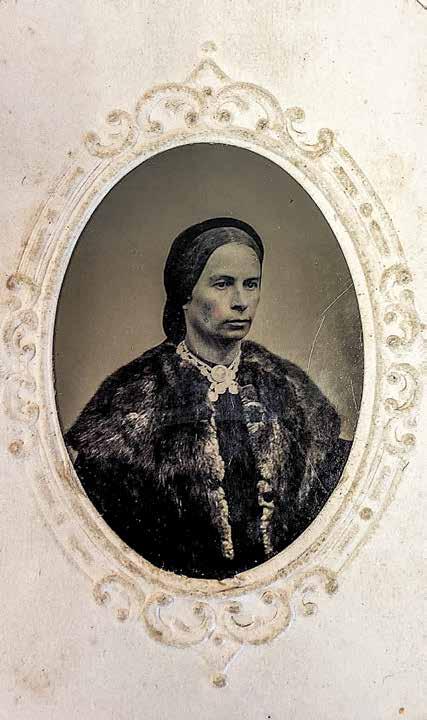
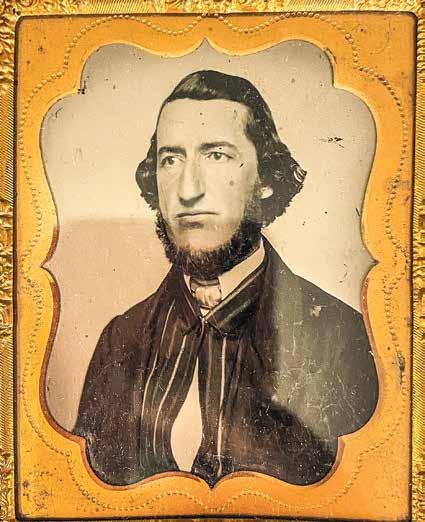
are receipts given to Josiah Baker for items taken from his farm and orders signed by military officials prohibiting plunder on his farm. For example, on April 12, 1862, Major Jonathan Lockwood, 7th Virginia (U.S.) issued a directive forbidding “all soldiers… to trespass upon the premises of Mrs. Josiah Baker, upon the Berryville Pike… [and that] all soldiers found disobeying this order will be strictly punished according to the articles of war.”
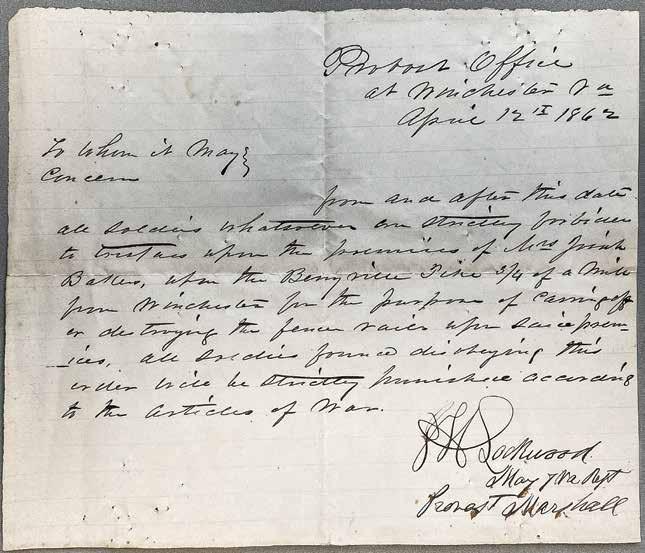
Despite various orders issued to protect Baker’s property, his farm suffered significantly. Baker reported the loss of “forty acres of timber and all the fencing on 200 acres besides other losses.”
The damage compelled Baker to investigate whether or not he should attempt reimbursement from the Southern Claims Commission. Among letters in the collection is one Baker penned to an attorney on Jan. 26, 1876, inquiring whether or not it would be feasible to submit a claim. This letter not only provides insight into the damage done to Baker’s farm, but to his loyalty. Although a non-combatant during the conflict, Baker stated clearly his sympathies
rested with the Confederacy. “The circumstances are that I was a non-combatant (but a sympathizer I do not deny).” Baker never filed a claim.
Other items in the collection include a copy of Josiah Baker’s oath of allegiance to the United States, various Civil War era documents, photographs, and artifacts from Osburn including a box of nails salvaged when the house was razed in 1974. A complete inventory of the items in this collection, along with inventories of other items in the McCormick Civil War Institute’s growing collection, can be viewed at https://www.su.edu/mcwi/mccormick-civil-war-institute-archives.
The items in this collection will form the nucleus of an article about the Baker family’s wartime experience in a future issue of Journal of the Shenandoah Valley During the Civil War Era which is published annually by the McCormick Civil War Institute.
Donation from Trustee Fuels Additional Research at Cool Spring
Since 2013, when Shenandoah University became custodian of 195 acres of the Cool Spring Battlefield in Clarke County, Va.,, the McCormick Civil War Institute has done much to interpret the battle fought there on July 18, 1864. These include regularly scheduled guided tours, installation of wayside interpretation, printed tour guides, and
34 Civil War News April 2021 34 Civil War News April 2021
Josiah Lockart Baker, (1827-July 26, 1899), built Osburn in 1846. Courtesy, McCormick CWI.
Alcinda Baker, born in 1828, married Josiah Baker in 1849. She died in 1903. Courtesy, McCormick CWI.
Major Jonathan Lockwood’s order prohibiting trespassing on Baker’s farm. Courtesy, McCormick CWI.
development of an exhibition. While additional tools, including an augmented reality experience slated for release later this spring, will enhance the battle’s interpretation, the site’s historical significance is not confined to the 1864 fighting that occurred there.
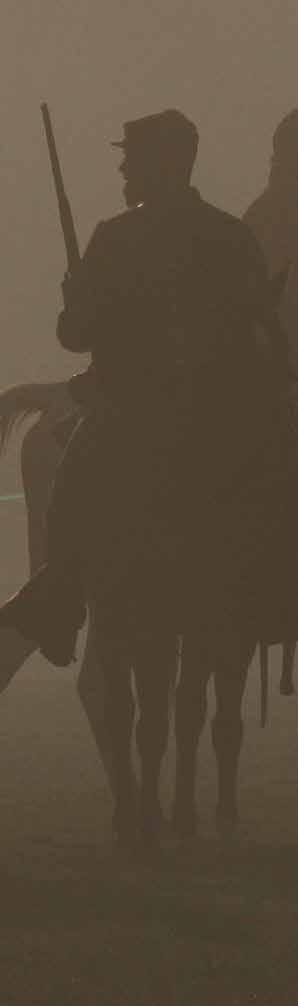
The 195 acres that comprise Shenandoah University’s River Campus at Cool Spring Battlefield were once part of an approximately 1,100 acre plantation owned by Judge Richard Parker, the Retreat. Due to a generous donation from Diane Kearns, a member of Shenandoah University’s Board of Trustees, the McCormick Civil War Institute will now have the resources to begin an investigation into Parker’s
time as the owner, including the lives of enslaved people who labored there during the Civil War era, and the manner in which enslaved people reacted to news of Brown’s attack on Harpers Ferry.
Preliminary investigations reveal that some enslaved people at the Retreat burned various buildings after learning of Brown’s raid. Actions such as these proved typical in the wake of Brown’s raid.
The funding will allow seven students in Civil War Era Studies at Shenandoah University.
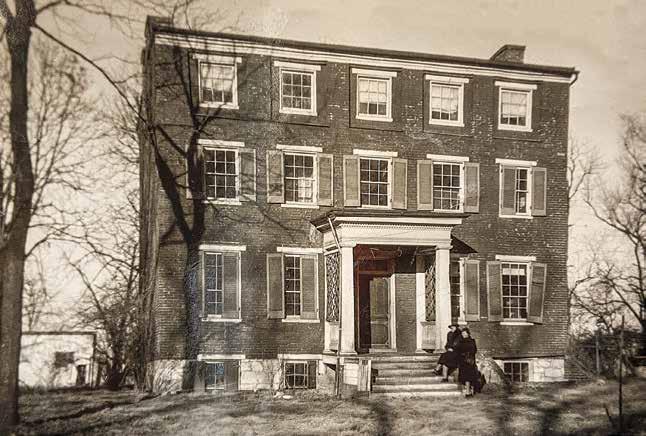
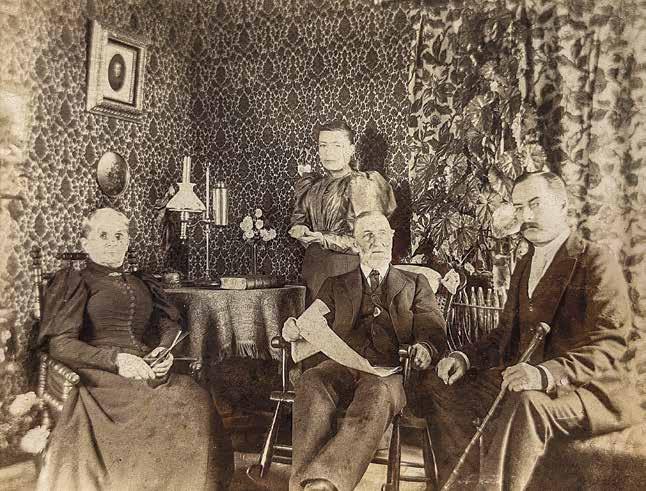
Caitlyn Graulau, Kim Oliveto, Mel Siebert, Aidan Steinly, James Hall, Brianna Jarvis, and Steven Stabler, to work on this project which will be supervised by MCWI’s director, Prof. Jonathan
Vol. Inf.; an essay on Battery G, First Rhode Island Light Arty. during the autumn 1864 campaign in the Shenandoah Valley; a contribution examining Union General William Woods Averell’s Cavalry Division during the Third Battle of Winchester; and an edited collection of documents from the Southern Claims Commission that reveal the War’s impact on African Americans in Clarke, Frederick, and Warren Counties. Volume 4 is now available for purchase at various book stores and historic sites in the Shenandoah Valley. Copies of the Journal can also be purchased online via Amazon. The Journal retails for $10 with all proceeds supporting the McCormick Civil War Institute’s myriad efforts.
The Journal, governed by an editorial board of fifteen historians, is always looking for contributions of original scholarship on the Civil War era in the Shenandoah Valley. Submissions should not exceed 10,000 words in length, including footnotes (Chicago Manual of Style). If interested in submitting an essay for consideration please email jnoyalas01@su.edu.
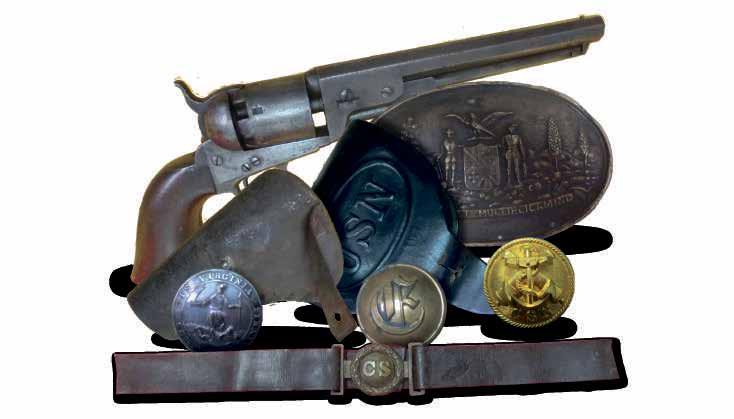
Jonathan A. Noyalas is director of Shenandoah University’s McCormick Civil War Institute and a professor in the history department at Shenandoah. He is the author or editor of fourteen books, including his latest volume Slavery and Freedom in the Shenandoah Valley during the Civil War Era.
A. Noyalas. A preliminary report will be completed by early June. The ultimate goal is to develop an immersive learning experience at the site.
Volume 4 of Journal Released, Seeking Contributors for Future Volumes
Each year, since 2017, the McCormick Civil War Institute has published an annual jour nal, Journal of the Shenandoah Valley During the Civil War Era. Volume 4 contains biographies of Confederate soldiers killed at Cool Spring; the 1862 diary of Ephraim Burket, a hospital steward in the 110th Penn.
35 April 2021 Civil War News 35 April 2021 Civil War News Subscribe online at CivilWarNews.com
Postwar image of Josiah Baker (seated center), wife Alcinda (seated left), son George (seated right), and daughter Fannie (standing), in sitting room at Osburn. Courtesy, McCormick CWI.
Postwar image of Osburn. Courtesy, McCormick CWI.
3910 Highway 70 East, New Bern, NC 28560 Get in touch! civilwarshop@gmail.com (252) 636-3039 WE BUY! • WE BROKER! • WE APPRAISE! www.civilwarshop.com Federal Firearms Licensed Dealer Life Member, Company of Military Historians Life Member, National Rifle Association (NRA) Life Member, Sons of Confederate Veterans BATTLEGROUND ANTIQUES, INC. Est. 1981
Core Mausoleum Stands in Self-Tribute to Confederate Phoenix
 by Bob Ruegsegger
At the end of the Civil War, Corporal John Core’s dream for Southern independence vaporized with the surrender of the Confederate armies. Virginia was in shambles. The South was devastated. The future for former Confederate soldiers looked dismal. Embraced by the ashes of a vanquished South, Core could hardly have imagined that his best days were ahead of him.
John Core served in the Confederate Army in the Commissary General’s office and then the 6th Virginia Infantry before joining Mosby’s Partisan Rangers, the 43rd Battalion of Virginia Cavalry. Core participated in a fight with Union cavalry at Mt. Carmel Church on February 19, 1865.
Major A.E. Richards gathered about 40 Rangers and attacked a contingent of the 21st New York Cavalry led by Major Thomas Gibson. Colt revolvers gave the Confederate cavalrymen a distinct advantage in the close range fighting. After a few minutes, two-thirds of Major Gibson’s 90 troopers had been killed, captured, or wounded, including Gibson. Mosby, in later years, characterized the Mt. Carmel Church battle as “the most brilliant thing our men ever did.”
Richards claimed in an official report that he had wounded or killed 25 Federals, captured 64, and seized 90 horses.
After Mosby disbanded, rather than surrendering, his rangers, Core remained with Mosby. They intended to head south to join General Joseph Johnston. When word reached Mosby that Johnston had surrendered, Mosby
and Core abandoned their plan.
Compared to Core’s final resting place, Colonel Mosby’s modest tombstone in Warrenton, Va., looks like a pauper’s grave. Mosby criticized Core’s enormous allocation of funds for a mausoleum as inconsequential.
“I think he would have done better,” observed Mosby, “if he had left the $100,000 for a hospital. That would have been a gift for which he would have been blessed by his fellow-men.”
Core’s place of interment was ostentatious, and still is. The entrance to John Henderson Core’s mausoleum in historic Elmwood Cemetery faces south toward East Princess Anne Road in downtown Norfolk. The price tag in 1915 was $100,000.
Core made his fortune as a wholesale broker and merchandise agent. He also bred and raised thoroughbred hogs. Also a real estate tycoon, Core owned large parcels of land totaling 475 acres in Norfolk and Princess Anne counties. In his will, John Core, who died in 1910, directed that the mausoleum be built for his remains and those of his wife. The Cores had no children. His estate at the time of his death amounted to well over $500,000.
American architect Harold Van Buren Magonigle designed the tomb that contains the remains of John Core and Martha Ann, his devoted wife. Magonigle was known for his artwork, sculptures, graphic design, and painting. The Core Mausoleum reflects the Greek Revival style that was popular in Northern Europe and the United States during the late 18th and 19th centuries. Massive fluted Doric columns support a
pediment at the entry to the mausoleum. The interior of the tomb has a domed ceiling inlaid with mosaic tiles. Huge bronze doors with plate glass panels and covered locks block access to the Core crypt. Windows on the east and west walls of the mausoleum provide light to the interior.
Throughout the mausoleum, figures of scarabs, butterflies, and phoenixes suggest belief in immortality, resurrection, and eternal life. The bronze butterflies on the doors of the mausoleum are symbols of the afterlife.
To the ancient Greeks, a butterfly was a symbol of a human soul released from a deceased body. For Christians and Native Americans, the butterfly represented rebirth. In ancient Egypt, the scarab was a symbol of immortality. The elegant bronze Romanesque sculptures at the front entrance were created by Edward Field Sanford Jr. They were cast at Roman Bronze Works in New York City in 1915. It was the leading art foundry in the country during the American Renaissance [1876–1917].
Inside the mausoleum Core and Martha Ann, his wife, rest peacefully nestled in their heavy bronze sarcophagus on a raised marble platform. Inscriptions on the sarcophagus gave testimony to their affection foreach other. Martha Ann’s “affection for her husband was unbounded.”
According to an inscription, John Core loved his wife with all of his heart, soul, and mind, as well as “all of his strength.”
Side by side within the confines of their bronze sarcophagus, the Cores’ remains rested in peace for 92 years until grave robbers broke
into the mausoleum through a window, tore open the sarcophagus, and scattered their remains inside the vault while looking for valuables in 2007.
The bronze bars that protected the mausoleum windows were slightly pried apart and a foot stone from the cemetery was used to shatter one of the mausoleum windows and gain entry. A visitor on a self-guided tour peered into the mausoleum through the bronze-plate glass entrance door, saw a skeleton on the tomb floor and reported the vandalism to cemetery authorities.
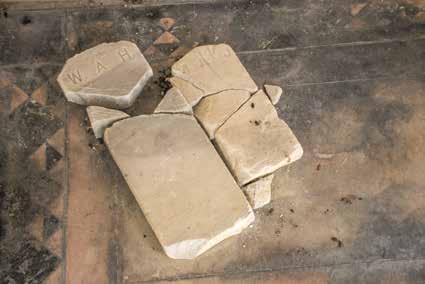
36 Civil War News April 2021 36 Civil War News April 2021
Core Mausoleum. All photos by Bob Ruegsegger.
One of two bronze sculptures gracing the entrance to the mausoleum, Romanesque in style. These were sculpted by Edward Field Sanford who was the sculptor of several public art installations in Brooklyn, New York. The sculptures were cast by Roman Bronze Works in New York in 1915.
Broken foot stones inside the mausoleum.
Scarab.
Ornate bronze butterflies are not only decorative but protect the glass windows. Bronze sarcophagus. “Within this mausoleum repose the mortal remains of John H. Core and Martha Anne Core.”
The grave robbers, who probably found nothing of value, caused $6,000 in damage to the interior of the elaborate granite mausoleum. While the Cores’ tomb was being restored, their remains were in the custody of H.D. Oliver Funeral Home in Norfolk.
Tim Bonney, at the time vice president of Friends of Norfolk’s Historic Cemeteries, and his organization took the lead in fundraising efforts to restore the Core mausoleum and its contents to its appearance before the break-in and vandalism took place.
“It took three years to restore. That was because of fundraising and then finding the right person who could do the work,” said Tim Bonney. “We probably spent about $8,000 in total. That was also with donation of the window by Walter T. Howard of Chesapeake Glass Company.”
“When I got over there, the remains of Mrs. Core had been pulled out of the sarcophagus. “The vandal pounded on the left side of the sarcophagus until he broke the bronze plate loose and peeled it back like a sardine can,” he said. “The first body he came to was Mrs. Core.”
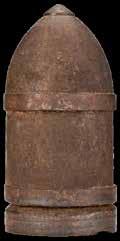
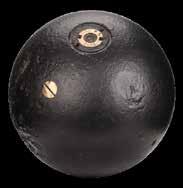
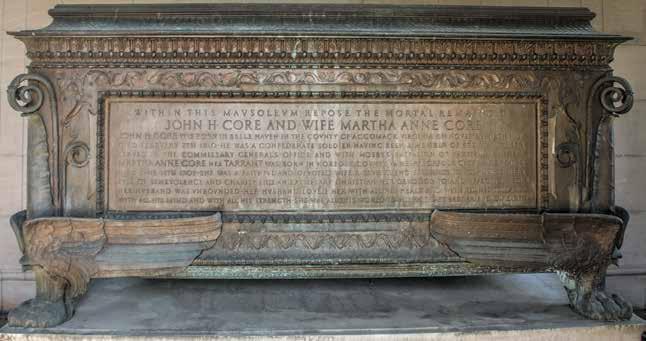
Martha Anne Core had been buried in a wooden coffin sheathed in copper. When the break-in occurred, the wooden casket had completely deteriorated. “She still had a henna rinse on her hair, but her body had completely deteriorated. It was just a skeleton with some clothes on,” said Bonney. “When we finally opened up the sarcophagus to get Mr. Core out so we could make repairs, he was remarkably intact with a leathery-type skin.”
No forensic analysis was done. A clear motive for the crime was never determined. Tim Bonney called H.D. Oliver Funeral Home, who had originally buried the Cores, and requested that they store the remains until the sarcophagus and broken window could be fixed.
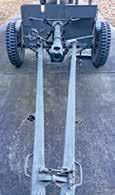
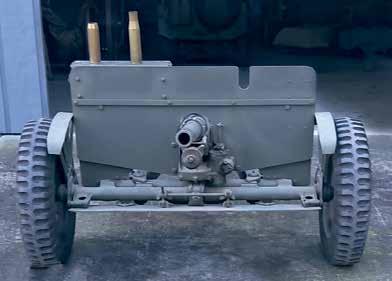

“They kept them at the funeral home until we were ready for them to go back to the mausoleum,” said Bonney. “We had a little rededication ceremony in 2010.”


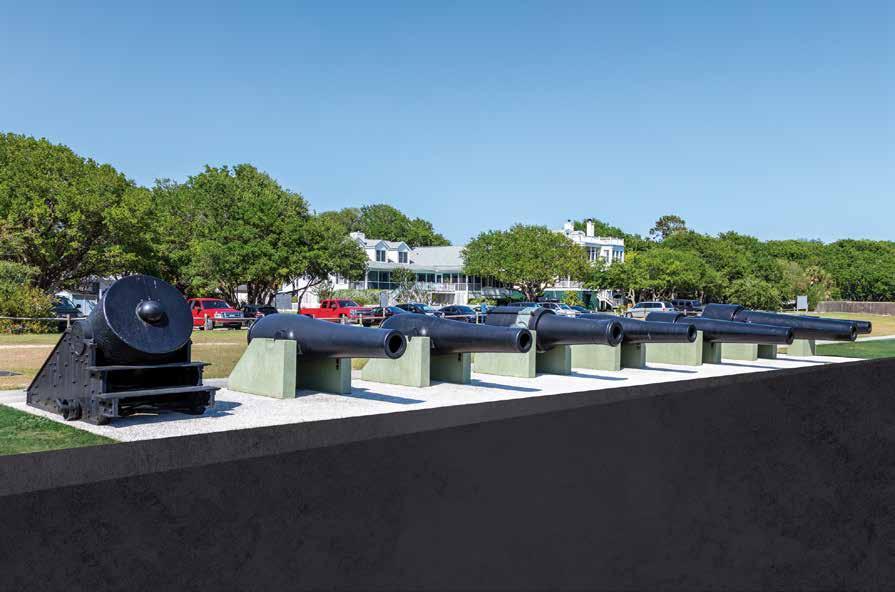
When the restoration of the Core mausoleum was completed, John and Martha Anne Tarrant Core were returned to their sarcophagus, and a contingent of the Sons of Confederate veterans came to honor Corporal John Core at the rededication ceremony.
“He was a Confederate veteran and we gave him full Confederate honors with the flags and the rifle salute as we would with any Confederate veteran when we’re marking a grave or having them re-interred,” said Frank Earnest, a member of the Norfolk County Grays.
About Elmwood Cemetery: Visitor Hours: Sunrise to Sunset Office hours: Monday to Friday 9 a.m. to 4:30 p.m. Free admission and parking inside cemetery
Address: 238 E. Princess Anne Road, Norfolk, VA 23510 For more information: www.norfolk.gov/cemeteries.
Bob Ruegsegger assignments frequently take him to historic sites throughout Virginia, the MidAtlantic, and the Southeast. His favorite haunts include sites within Virginia’s Historic Triangle— Jamestown, Yorktown, and Williamsburg. Bob served briefly in the U.S. Navy. He is a retired educator and has been an active newspaper journalist for the last twenty years.
37 April 2021 Civil War News 37 April 2021 Civil War News
Contact Glenn Dutton at: glennjdutton@aol.com or 770-351-7565 Field & Heavy artillery Cannon, Shells, Fuses & Etc. & *(not these specfic cannon though) * Anti-tank
is reproduction $22,500.
in 1940, it became the standard anti-tank gun of the U.S. infantry with its size enabling it to be pulled by a Jeep. Also, Lantana is for sale, 32-inches to 60-inches, $1,800 to $3,000. U.S. 37 mm Anti-tank gun Leonard Draper • Phone: 404-401-5591 Email: draper.leonardc@gmail.com Located in Northwest Georgia $22,500
gun non-firing, good barrel and carriage. Breach
Introduced
Preservation of Land at New Market Heights Honors the Valor of Black Civil War Soldiers

Nearly 180,000 black men in Army units designated as U.S. Colored Troops fought for liberty on scores of major battlefields during the Civil War, but nowhere with more distinction than at New Market Heights, Virginia, where the American Battlefield Trust is working to preserve land and create a battlefield park in their honor. Recently, the Trust announced the purchase of 22 additional acres to further these efforts.
The $260,000 land purchase, that otherwise could have been targeted for development in the quickly growing Richmond suburbs, was paid for by donors and a matching grant from the Commonwealth of Virginia. The Trust has now protected a total of 88 acres at New Market Heights.
The Sept. 29, 1864, battle was a key to securing the Union position and eventually helped lead to the Confederate surrender of Richmond the next year. That day, 14 USCT soldiers earned the Medal of Honor; a remarkable figure considering only 25 black men earned the nation’s highest award for valor during the entire Civil War. Two white officers of USCT units were also awarded the Medal of Honor for their actions that day.
Completion of the latest Trust
project was made possible by donations made by Trust members and private donors, as well as a matching grant awarded by the Commonwealth’s Virginia Battlefield Preservation Fund, administered by the Department of Historic Resources. These competitive grants have helped protect 9,598 acres that tell a diverse scope of military history across the Commonwealth.
Learn more about the Trust’s work to tell the stories and save land associated with the African American military experience at www.battlefields.org/ fighting-for-freedom.
Mark Your Calendar for Park Day’s Silver Anniversary
For 25 years, the American Battlefield Trust’s Park Day has offered volunteers of all ages nationwide the opportunity to give back to their communities by helping maintain places sacred to our nation’s heritage. Since 1996, battlefields and historic sites have embraced the hands-on preservation event to meet the needs of upkeep projects large and small, ranging from raking leaves and hauling trash to painting signs and building trails. This means that even amidst the COVID-19 pandemic, sites can rally to safely host deeply beneficial Park Day projects, while practicing social distancing or selecting alternative dates as necessary.
While the spirit of Park Day is timeless, this year’s nationwide event is scheduled for April 10, 2021. Revolutionary War, War of 1812, and Civil War battlefields and historic sites across the nation have signed up in hopes of fulfilling necessary projects and look forward to welcoming volunteers. To find your nearest volunteer opportunity, along with site contacts and relevant details, please visit www.battlefields.org/ parkday.
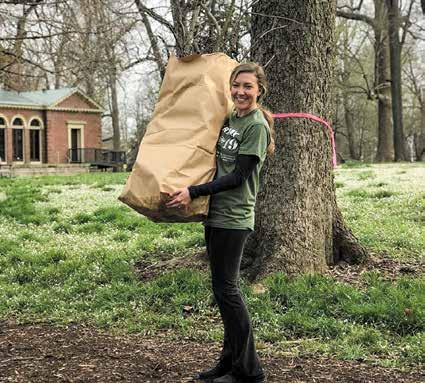
As sites consider weather realities and public health guidelines, please note that alternative dates may be sought
to ensure that Park Day projects are brought to life.
For any questions regarding weather policies, rain dates, COVID-19 considerations, and more, please contact the site at which you would like to volunteer for more information.
Seeking Motivated Teen Leaders for the Trust’s 2021-2022 Youth Leadership Team
The American Battlefield Trust Youth Leadership Team is a rotating group of young people, aged 15-18, who serve as the youth face and voice of the Trust, introducing to a new generation the importance of historic preservation. In return, these students gain invaluable skills and experiences that will set them apart as they pursue college admissions and future careers. In this academic-year-long program, members will:
• Receive training in leadership, program management, lobbying, media relations, and fundraising.
• Travel to Washington D.C., two times for a training session and Youth Lobby Day, and off-site to our Annual Conference, where they are encouraged to network with our nation’s leaders in historic preservation. All expenses are paid for the participant and relevant travel guidelines
respected.
• Contribute to content creation on battlefields.org, interact with, and create posts for the Trust’s social media channels, and use their creativity to produce photos and video for the Trust.
• Be responsible for a preservation, education, or visitation project in their hometown. Current members spread across the nation are busy exploring an impressive range of topics. Francesca is creating a video documentary; Alex is crafting an audio drama bringing the voices of the war of 1812 to life; Ashlyn is developing an interactive scavenger hunt at Gettysburg, and Tiffany is writing and illustrating a preservation-themed children’s book.
By supporting this group of motivated young leaders, we hope to create a ripple effect, fostering the next generation of preservation advocates who will tend to the places that make up our American story. If you know a student interested in participating, please encourage them to apply. Applications are open until April 30, 2021 and more information can be found at www.battlefields.org/youth-leadership-team.

Pushing to Preserve Hallowed Ground at Three 1864 Battlefields
In the Trust’s latest endeavor to save priceless hallowed ground, the organization looks to 95 acres at three consequential 1864 battlefields: Mansfield in the Bayou State of Louisiana, plus First Deep Bottom and the Wilderness in Virginia. These struggles were all puzzle pieces that factored into Union Lt. Gen. Ulysses S. Grant’s grand strategy for the final full year of war.
The first of these engagements was at Mansfield, where the Trust seeks to preserve approximately 20 acres. With their objective to capture Louisiana’s Confederate capital at Shreveport and open the gateway for Federal troops to enter Texas, Union forces launched the Red River Campaign in the spring of 1864. Forces under Maj. Gen. Richard Taylor stood as a roadblock to Shreveport when they forced the retreat of Maj. Gen. National P. Banks’ Union forces at the Battle of Mansfield on April 8.
The following month, the Battle of the Wilderness marked not only the initial stages of the Overland Campaign in the East, but also the first major battle between newly appointed Union commander Grant and his
38 Civil War News April 2021 38 Civil War News April 2021
New Market Road historical marker. Noel Kline.
American Battlefield Trust’s Park Day volunteer at the Henry Clay Estate.
Confederate counterpart, Gen. Robert E. Lee. The 36 acres of core battlefield up for preservation encompass action that unfolded May 5, 1864, during the first day’s battle. From this parcel, the Confederates launched part of their counterattack that stymied the Union advance along the Orange Turnpike. This fighting was not easy, as men on both sides moved “cross-country,” cutting through dense forest. You can read more about this property on page 28.
Meanwhile, during the sweltering summer of 1864, the engagement at Deep Bottom played a valuable role in the Petersburg Campaign. A diversionary Union maneuver intended to threaten Richmond and pressure Lee to dispatch a sizeable number of his Petersburg defenders to stop this advance, the First Battle of Deep Bottom involved Union forces under Winfield Scott Hancock and Philip Sheridan over the course of July 27-29. The 39-acre parcel tract we’re working to save, located alongside the Gravel Hill Church, includes at large portion of the land where fighting on July 28 helped set the stage for the Battle of the Crater on July 30. Efforts will simultaneously protect the history of the Gravel Hill community, where formerly enslaved individuals once settled and created a safe haven for their expanding families and culture. Today, many of their descendants still live nearby.
Recognizing an opportunity to save American history in perpetuity, a combination of federal grants and gifts from the Trust’s local partners at the Central Virginia Battlefields Trust and the Virginia Land Conservation Foundation are already anticipated. This means that more than 88% of the funds needed to pay for the approximate $1.2 million transaction value has already been accounted for. $145,671 remains to be raised, and the Trust now turns to its resilient donors to make the final push for preservation, with each donation dollar matched $8.90-to-$1.

American Battlefield Trust Saves 49 Acres at Gettysburg, including Historic Mcknight House
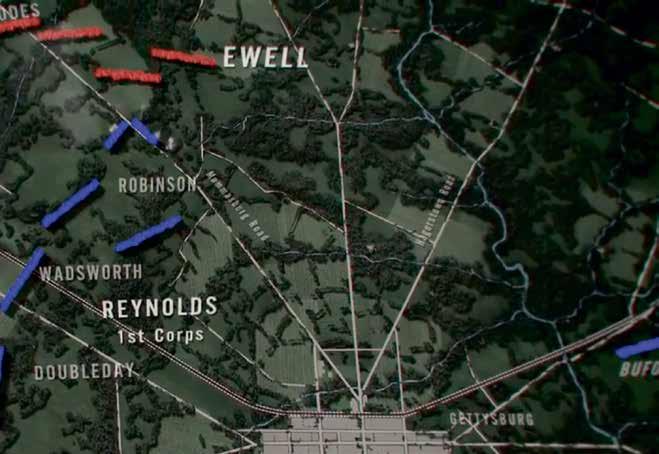
Another 49 acres on the country’s most famous battlefield has been purchased. Among the parcels recently purchased by the American Battlefield Trust is the historic James McKnight House, located along the Baltimore Pike near East Cemetery Hill. But thanks to the Trust’s acquisition, all three properties will be saved from development threats encroaching on the edges of Gettysburg National Military Park.

“If any battlefield is universally considered ‘hallowed ground’ by Americans, it is Gettysburg, where president Abraham Lincoln coined the phrase,” said Trust President David Duncan. “This is a place quintessential to the American experience and it is our privilege and honor to ensure that it remains a sacred place of memory and contemplation for future generations.”
Cumulatively, the Trust has protected 1,231 acres across the Gettysburg landscape, representing important action from all three days of the July 1-3, 1863 battle—the bloodiest engagement of the Civil War and a moment widely considered a turning point of the conflict. The 49 acres most recently protected include a 47-acre parcel near Big Round Top that was a prime location for a housing subdivision of largelot “McMansions,” construction of which would have intruded on views from across the battlefield.
Two small adjacent parcels along Baltimore Pike near East Cemetery Hill—adjacent to McKnight’s Hill or Stevens Knoll, an area of the battlefield set aside for preservation in the 1860s— were also purchased. One lot consisted of the historic James McKnight House, a landmark on this portion of the field. Tens of thousands of Union troops—up to a third of the Federal army— marched along the road past this property on July 1 and 2. Notable
fighting occurred here on the evening of July 2, as the 5th Maine Light Artillery helped to stymie a fierce Confederate assault against East Cemetery Hill long enough for reinforcements to arrive on the scene. Period documentation also demonstrates that Union ca sualties were temporarily interred all around this property prior to the opening of the Soldiers’ National Cemetery, the ceremo ny at which Lincoln delivered the Gettysburg Address in November 1863. Both small lots were zoned “village mixed use,” allowing for commercial development, and there were no protections or ease ments on the McKnight House.
The Trust announced the three projects last year and completed the purchases by leveraging pri vate donations from Trust mem bers against matching grants from the federal American Battlefield Protection Program. This mech anism promotes preservation of significant Revolutionary War, War of 1812, and Civil War bat tlegrounds by making use of monies from the Land and Water Conservation Fund to encour ages private sector investment in historic preservation. During an event at Gettysburg last May, then-Secretary of the Interior David Bernhardt announced $573,000 in federal funding for two of these three properties.


39 April 2021 Civil War News 39 April 2021 Civil War News
Youth Leadership Team member Ian Wooldridge. Amy Sheridan.
297 Steinwehr Avenue • Gettysburg, PA 17325 717-334-6245 • GettysburgMuseum.com @GettysburgHeritageCenter Operated by the non-profit Gettysburg Nature Alliance Award-Winning MUSEUM Orientation MAP EVENTS... Licensed Battlefield Guided & Other TOURS Gift SHOP BookSTORE Visitor INFORMATION
CIVIL WAR BOOK,___ B mv 11:
Civil War News book reviews provide our readers with timely analysis of the latest and most significant Civil War research and scholarship. Contact email: BookReviews@CivilWarNews.com.

Lifeline of the Confederacy
Suppliers To The Confederacy
Volume Four: From Brass Pins, Pistols and Swords to Warships. By David C. Burt. Illustrated, bibliography, appendices, BookLocker Publishers, 2020, 375pp., hardcover.
Reviewed by Wayne L. Wolf
Immortalized in the Atlanta Cyclorama Painting
Atlanta’s Fighting 42nd, Joseph Johnston’s “Old Guard.” By W. Clifford Roberts Jr. and Frank E. Clark. Illustrated, Notes, Bibliography, Index, Mercer University Press, 2020, 526 pp., hardcover, $39.00.
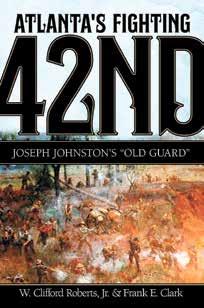
Reviewed by Keith Bohannon

focused on the Georgia brigades commanded by Generals Alfred Cumming and Seth Barton; the 42nd served in the latter organization. The stigma of this defeat, the authors point out, tarnished the reputation of the Georgians for quite some time.
this last Confederate Navy raider, registered blockade runners, and the proceedings of the Alabama claims dispute.
David Burt has done a commendable job of weaving the history of the firms, e.g. S. Isaac Campbell Co., Robert Mole & Son, Wilkerson Sword Co., Tranter Co., E.&A. Ludlow, Ross and Co., G. Wostenholm etc., into how their goods were manufactured, exported, principally through Caleb Huse, Confederate Quartermaster and Ordnance Agent, and performed in the field. Many never published before photographs supplement every company’s wares, with material from museums and private collections. Notes at the end of each chapter lead the historian to original sources of additional material.
This is the fourth and final volume of a series tracing the vital impact British goods had on sustaining the Confederacy by supplying its military and civilian needs. The supply effort was all done within a politically divided nation where slavery, economics, and moral values made Confederate support a difficult proposition. This volume includes all the title’s items, as well as newly discovered artifacts, that did not make it into the first three volumes. This text expands Burt’s research into the vital ports of Liverpool and Birkenhead, the spy networks of both North and South, and contains over 250 new photographs and illustrations showing soldiers and their British made equipment.
Individual chapters deal with building and selling warships to the Confederacy, the history of imported swords and knives, bullet molds, pistols, and gunpowder. Newly discovered accoutrements, artifacts, and household items are included in additional chapters. Appendices add a complete listing of ships that were victims of the Shenandoah, a manifest of the sailors aboard
The author also relates where artifacts were purchased, usually Civil War shows, or which relic hunter was fortunate enough to find a prized British relic. These tidbits add a human touch to the story which hopefully encourages greater Civil War show attendance and increased documented relic hunting to enhance the history of the Civil War.
While the author claims this volume is the last in the four volume series, hopefully he will provide a fifth and sixth when new finds, photographs, and documents are located detailing the enormous role Britain played in supporting the Confederacy’s war effort. It is extremely well written, accurate, and voluminously illustrated, an indispensable tool for historians today. It, along with the first three volumes, is highly recommended to anyone who collects Civil War artifacts or wishes to understand how the Confederacy survived four long years
Wayne L. Wolf is Professor Emeritus at South Suburban College, past president of the Lincoln-Davis Civil War Roundtable and the author of numerous articles and books including the Last Civil War Scout and Two Years Before the Paddlewheel
Atlanta’s Fighting 42nd chronicles the service of the 42nd Georgia Volunteer Infantry, a regiment raised in March 1862 during a statewide militia call. Georgia Governor Joseph E. Brown called on volunteers to defend their country or “be subject to the draft which will then and there be made.” Brown also appealed to the racial fears of Georgians, particularly non-slaveholding whites, by conjuring apocalyptic images similar to those he had used to argue for secession. The Lincoln administration, he warned, would “arm the negroes, and incite them to destroy our wives and children.”
After organizing and training at Camp McDonald in Big Shanty, Georgia, the 42nd headed to eastern Tennessee, seeing battle for the first time at Cumberland Gap in May 1862. The regiment then marched several hundred miles in that fall’s Kentucky Campaign before ending the year in Mississippi. A portion of the 42nd participated in the Confederate victory at Chickasaw Bluffs on Dec. 29, 1862, before spending the remainder of the winter as part of the Vicksburg garrison.
The authors of Atlanta’s Fighting 42nd contend that the regiment’s worst performance of the Civil War came at the battle of Champion’s Hill on May 16, 1863. Much of the blame for the Confederate disaster in the battle
Following Champion’s Hill, the 42nd served as part of the besieged garrison of Vicksburg, surrendering there on July 4, 1863, with General John C. Pemberton’s Army of Mississippi. When the 42nd reorganized in the fall of 1863, the authors write that not all Vicksburg parolees returned to the regiment, claiming that some were too physically debilitated to do so, while others were unwilling to fight. The reviewer wishes the authors had offered statistics of how many members of the regiment never returned, as a survey he did of six companies of Vicksburg parolees from North Georgia revealed that between 32% and 46% did not rejoin the Confederate Army after being exchanged. How did the 42nd compare to these of other Georgia regiments? How many men who never returned to the 42nd went on to serve later in home guard organizations?
The bloodiest day of the war for the reconstituted 42nd was at the battle of Resaca, Ga., the first major engagement of the 1864 Atlanta Campaign. In subsequent engagements during the campaign, particularly at New Hope Church and Atlanta, the regiment performed well. The regiment’s July 22, 1864, charge in the battle of Atlanta is immortalized in the Atlanta Cyclorama. While the 42nd missed the battle of Franklin, Tenn., at the end of November 1864, it acted admirably on the second day of the battle of Nashville and in subsequent rearguard actions during Hood’s retreat out of Tennessee.
Like most of Hood’s ill-fated Army of Tennessee, the veterans of the 42nd Georgia ended their service in North Carolina, seeing battle for the last time at Bentonville. The 42nd was one of the largest regiments in its brigade at this point in time, but the authors don’t really explore why this was the case. Did the 42nd have better officers than other regiments in the same brigade? Were conditions on the home front not as bad in the counties where the 42nd had been raised compared to the home counties of other regiments?
While the chapters of Atlanta’s Fighting 42nd covering the 42nd Georgia’s wartime service are solid, the final two chapters on the postbellum era offer a somewhat disjointed and largely celebratory account of veterans’ survivors’ organizations, parades, and reunions. The focus is almost exclusively on the regiment’s surviving field officers, several of whom had successful political and business careers. It would have been interesting to know more about the postwar lives of enlisted men, many of whom faced poverty and debility in their old age as revealed in state pension applications.
The postbellum chapters would also have benefited from being informed by modern scholarship on the Reconstruction and Gilded Age eras rather than relying primarily on accounts written by ex-Confederates and their sympathizers. Describing postbellum Atlanta politics as a “free-for-all” is overly simplistic and saying that the Klan only intimidated potential African American voters while Union League militias threatened violence against freed people if they didn’t vote for the Republican ticket misrepresents the central role that the latter organization had in mobilizing freed people to support a party that clearly championed their interests.
The authors of Atlanta’s Fighting 42nd deserve praise for mining a wide array of primary sources, including letter collections, diaries, memoirs, and newspapers. The regimental roster is also impressive, exhibiting information culled from compiled service records, pensions, the census, and cemetery records. Overall, the first nine chapters of Atlanta’s Fighting 42nd comprise one of the best regimental histories of an Army of Tennessee unit to appear in recent years.
Keith Bohannon is a professor of history at the University of West Georgia and author of numerous essays and articles dealing with various aspects of the Civil War. One of his most recent essays, entitled “The Fatal Halt: Gettysburg, the Wilderness, and Cedar Creek in John B. Gordon’s Reminiscences,” appeared in Gary Gallagher and Stephen Cushman, editors, Civil War Writing New Perspectives on Iconic Texts published by Louisiana State University Press, 2019.
40 Civil War News April 2021 40 Civil War News April 2021
Two-hundred Letters from an Engineer to his Wife
My Dear Nelly: The Selected Civil War Letters of General Orlando M. Poe to His Wife Eleanor. Editor by Paul Taylor. (Kent, OH: Kent State University Press 2020). Notes, bibliography, index. Hardcover. 337 pp. $55.00
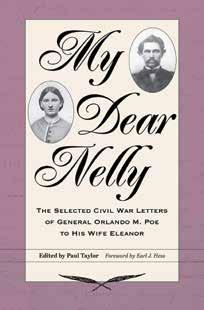
 Reviewed by Christopher L. Kolakowski
How Nice it is to Have a Face with the Name
Faces of Civil War Nurses.
correspondence and papers to the Library of Congress in the early 20th Century. Paul Taylor encountered them while researching his biography of Poe titled Orlando M. Poe: Civil War General and Great Lakes Engineer.
As a follow-on to his book, Taylor selected nearly 200 of the couple’s letters and compiled them into this volume. Almost without exception, the book contains transcriptions of handwritten letters from Poe to Nelly, footnoted with key details to help understanding. Given the various positions he held, Poe was in a position to observe many different parts of the war; as a result, his voluminous correspondence covers many topics. Readers will find accounts of his activities and campaigns interspersed with commentary on the people and places he encounters. Poe’s pithy remarks are often quite illuminating and bring fresh perspectives.
By Ronald S. Coddington. Johns Hopkins University Press. jhupbooks.press.jhu.edu, 2020. Hardbound. 424 pp. Black and white photos. $32.95.
Reviewed by Richard J. Blumberg
into what life was like. The ladies came from all walks of life: some served as trained nurses and others were aid workers or vivandieres.
Photography was about twenty years old at the outbreak of the Civil War. Images were prepared in four different processing formats: cartes de visites; ambrotypes; tintypes; and daguerreotypes. Cartes de visites were popular during this time as they were about the size of visiting cards. Proper social etiquette required individuals leave contact cards with the host as a social grace. Additionally, the cartes de visite were small and inexpensive. This made them popular with soldiers who could easily mail them to loved ones. Ron compares the cartes de visite used as a visiting card as the1860s version of social media.
pages long, making it an easy read and each story/image stands alone. This work provides valuable insight regarding the contributions to medical care made by these women. It is thoroughly researched and provides insight into women’s studies, photography and medical care during the Civil War. I give it a strong recommendation to anyone looking for works in any of these areas.
Richard has served as a Book Reviewer for over eighteen years. He has published three articles for Civil War News. He is currently conducting research for an article on logistical operations in the Civil War.
Orlando M. Poe may not be a famous Civil War name, but he served in some of the War’s most well-known actions. Starting as colonel of the 2nd Michigan Infantry, he led his regiment and later brigade from the Peninsula through Second Manassas and Fredericksburg. Failing to win a general’s star, he resigned and moved West as an engineer officer. He was chief engineer of the Knoxville, Tenn., defenses, followed by service as General William T. Sherman’s Chief Engineer during the Atlanta Campaign, the March to the Sea, and Carolinas Campaign. He was present for the Confederate surrender at Durham Station, North Carolina.
Poe and his wife Eleanor (Nelly) kept up a lively correspondence during the war years, stopping only when she visited him in camp. They wrote each other frequently, sometimes daily, and Poe often sent her documents for archiving. After Poe’s death, Nelly donated their
That said, the book does have some limitations. The author admits that it is a “companion” to his Poe biography, and readers not familiar with that work may not have important information about Poe and some characters in the book. Repetitive headings of letters add little to the text. Lastly, the book needs maps to help readers follow Poe’s travels. Knowledgeable readers will be able to work around these concerns, but more casual readers may find them daunting.
Nonetheless, this is an important and vivid new primary source from a senior Federal leader. It offers a vivid look into the Union Army and some of its key leaders and events. Poe’s letters should be incorporated into any future study of the campaigns he participated in or the places he was stationed.
The reviewer works as a historian in Madison, Wisconsin. He is the author of four books on the American Civil War and World War II, and is a contributor to the Emerging Civil War blog. The views contained herein are his own.
Ron Coddington, publisher of Military Images magazine, editor of The Chronicle of Higher Education and The Chronicle of Philanthropy, is no stranger to Civil War News. He authored the Faces of War column from 2001–2016. Each issue featured a soldier’s story including original wartime images of that person.
The purpose of this work, like Coddington’s preceding four volumes, is to humanize the Civil War by providing stories of real women who worked and served in the medical field. These mini-essays give readers insight
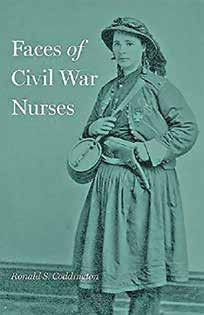
Thirty-eight of the seventy-seven images used in this volume were from the Foard Collection at the Library of Congress. Ron, a collector of military memorabilia, met fellow collector Chris Foard in 2014. Mr. Foard, a nurse, collected many nursing related images via the cartes de visite format. These images, along with other primary source images located at the United States Army Heritage and Education Center, made these ladies’ stories come to life.
The short essays tell each woman’s story and are drawn from personal diaries/letters and pension records. The description of each woman is about two to four
Middle TN (Franklin) Civil War Show

MK Shows presents the 34th Annual Middle Tennessee Civil War Show and Sale at the Williamson County Ag Expo Park, 4215 Long Lane in Franklin. The nation’s largest Civil War show, featuring 800 tables of antique weapons, artifacts and memorabilia from top dealers and collectors around the country and encompassing all eras of military history from the Revolutionary War through World War II.
Appraisers are always on hand to help you identify and value your military collectibles at no cost. Hours are 9-5 on Sat., 9-3 on Sun., parking is free and admission is only $10/adults and children under 12 are free.
This will be a sold out show so make your table reservations early.
Mike Kent and Associates, LLC • PO Box 685 • Monroe, GA 30655 (770) 630-7296 • Mike@MKShows.com • www.MKShows.com
41 April 2021 Civil War News 41 April 2021 Civil War News Digital Issues of CWN are available by subscription alone or with print plus CWN archives at CivilWarNews.com Want To Advertise In Civil War News? Email us at ads@civilwarnews.com Or call 800-777-1862 CW N Civil War News Inside this issue: Remembrance Day, 2019, Gettysburg by Joe Bordonaro about the first part, but very much this famous phrase from his magThe world will little note, nor long remember what we say here, but can never forget what they did here. –and visiting monuments. Gettysburg National Cemetery Although the numbers reenac---
I Thought I Knew, But Apparently…
Wild
.
Reviewed by Meg Groeling
Hand” of eights and aces, everyone knows that, or did he? Or do they? Excavating the truth is what this book is about. This excellent volume should come with a pin for balloon-popping.
Growing up in Oklahoma, one’s world view certainly includes the Wild West. I participated in schoolyard reenactments of the Oklahoma Land Run, watched Bonanza and Maverick, and dreamed of the day when our family would finally move to California. Little did I know the hold between truth and imagination was so tenuous. Paul Ashdown and Edward Caudill, joint authors of Imagining Wild Bill: James Butler Hickok in War, Media, and Memory, have clarified much, and maybe muddied some.
As historians, it is easy to say we need facts and sources before we believe, but the reality is not so clear. Most of us have, even if it is hidden, a romantic, sepia-colored view of history. We want our heroes to be heroes; we want their deeds to be essential and real. Then comes “The Wild West,” and things get murky. Imaging Wild Bill explains the impact pulp fiction has had on the phenomenon of creating western heroes. I had heard of Ned Buntline (Edward Judson) and others, although I had no idea that Lincoln’s third secretary, William Stoddard, became a pulp writer.
Much like today’s television “events,” dime novels were consumed by many and taken for truth. Of course Bill Hickok and Calamity Jane hooked up; Hickok killed many other gunfighters and only fired after he was fired upon; Hickok was killed because he broke the “Code of the West” and sat with his back not against the wall. He definitely held the “Dead Man’s
As it turns out, the truth is sometimes a little dull. It does not create the excitement of imagination that written fiction, radio, television, and movies do. That is why we cling to the legends. We want America to have a glorious, heroic history. That history may not have happened that way lands with a thud in our hearts. Readers of any age will find something to relate to in the thorough work of Paul Ashdown and Edward Caudill. I particularly remember all the television shows mentioned, and many of the songs. That is the magic word, remember. What people claim to remember is specious at best. Memory and history are undoubtedly intertwined topics in current research; and, of course, don’t forget the outright storyteller.
One of the most compelling, and easiest to research, accounts is Hickok’s participation in the Civil War. Most of us have done at least a rudimentary examination of existing military records or perused a unit history. When it comes to “Wild Bill,” these trusted sources come up short. Some writers claim, with great authority, that Hickok was a Union sharpshooter who had over one hundred kills to his credit, or that his nickname “Wild Bill” came when he stopped a mob from killing a saloon owner while on his way to recapture a military wagon train stolen by Rebels near Independence, Mo. About all that can be pieced together as truthful is that Hickok’s military duties included scouting, spying, sharpshooting, and driving wagons. The rest is a combination of conjecture and lies told by many, including Hickok himself.
If everything known about gunslinger Bill Hickok is wrong, why does he figure so largely in American history? Never underestimate the power of myth. Myth drives much of our past, and it is one of the most dynamic subjects
being re-examined. The Lost Cause, the Wild West, the New World, Manifest Destiny, all have had their day at the top of the myth mountain. More and more historians are wrestling with this topic, and if it is one in which interest sparks, Imaging Wild Bill is a great place to start one’s reading. This book is well-written and filled with new information. It is broad in scope, considering Wild Bill in the press, the East and the West, in literature, movies, radio, and TV. The assessments are fair and balanced, and the conclusion of the book, taking place in Deadwood, where all good Hickok groupies wind up at one time or another, puts the subject in his historical place. There is more, much more. This reviewer’s only issue with Ashdown and Caudill is that the subject is by no means finished. There are rabbit holes everywhere, and the reader will want to explore them all. Suppose one is interested in examining public memory. In that case, Southern Illinois University Press and Emerging Civil War should be your go-to source for intelligent, probative writing on a subject that concerns most of us. There is an old saying, “Those who do not know history are doomed to repeat it.” Imagining Wild Bill: James Butler Hickok in War, Media, and Memory turns that saying on its head. Readers will question just how much real history is actually known!
Meg Groeling received her Master’s Degree in Military History, with a Civil War emphasis, in 2016, from American Public University. Savas Beatie published her first book, The Aftermath of Battle: The Burial of the Civil War Dead, in the fall of 2015. Her biography, First Fallen: The Life of Colonel Elmer Ellsworth, the North’s First Civil War Hero, will be published by Savas Beatie. She is a book reviewer for LSU, Civil War News, and a regular contributor to the blog Emerging Civil War. She lives in Hollister, California, in a 1928 bungalow with her husband, her cats, and a lot of books and roses.
“The Great Disruption” as Seen in Britain
Stonewall Jackson, Beresford Hope, and The Meaning of the American Civil War in Britain.
 By Michael J. Turner. Notes, index, Louisiana State University Press, 2020, 334 pp., hardcover.
Reviewed by Wayne L. Wolf
embodiment of the struggle for independence and religious commitment. His love of country, fear of God, courage, dash, and military ingenuity reflected British ideals of the hero and ideal citizen.
James Beresford Hope, leader of the pro-Southern lobby in England, Member of Parliament, owner of the Saturday Review, and staunch admirer of Stonewall Jackson, served as the window through which the British people viewed the American Civil War. A thorough analysis of Beresford Hope’s articles and speeches are used to answer the question, “Why so any people in Britain sympathized with the South?”
Beresford Hope constructed a thorough basis for why socially, culturally, politically and religiously the South’s independence was justified and would benefit Britain in the long run. While Northern support was evident in England during the Civil War, Hope financially and politically supported the Southern cause and idolized Stonewall Jackson for his religious fervor, military talents, and moral habits. He gave Britain Stonewall Jackson as exemplifying British values of ordered liberty, self-determination, and constitutional government. Stonewall Jackson was the living
In contrast, the North was seen as riddled with machine politics, scandals, tariffs, patronage, bribery and anti-British tabloid sentiment. The South exemplified conservative moderation and was orally and socially superior to the North. Slavery was seen in the South as on the road to gradual emancipation with assistance to the freed slaves to make freedom meaningful and whole. Slavery was not seen as the cause of the war. Rather self-determination, states rights, free trade, and the absence of restrictive tariffs forced the South to separate to preserve their natural virtues, economic growth, and political power. With the end of the Civil War, Beresford Hope continued until his death in 1887 to defend secession, help fund the Stonewall Jackson statue unveiled in Richmond in 1875, and be regarded as a good man who supported a questionable cause.
This book is very well written, thoroughly researched, replete with primary source documentation, and objective in presenting divergent British viewpoints. For a treatise on British sympathies during the American Civil War, the reasons for these views, and the impact on British-American relations, this volume is a most welcome addition. Every historian should add this highly recommended book to his must read list.
Dr. Wayne L. Wolf is Professor Emeritus at South Suburban College in Illinois, past president of the Lincoln-Davis Civil War Roundtable, and the author of numerous books and articles on the Civil War including Two Years Before the Paddlewheel and The Last Civil War Scout.
42 Civil War News April 2021 42 Civil War News April 2021
Imagining
Bill: James Butler Hickok in War, Media, and Memory
By Paul Ashdown and Edward Caudill. Southern Illinois University Press. http:// siupress.siu.edu. Paperback, 272 pp., $26.50.
Publishers/Authors Send your book(s) for review to: Civil War News 520 Folly Road, Suite 25 PMB 379 Charleston, SC 29412 bookreviews@civilwarnews.com
Who was Cornelia Phillips Spencer?
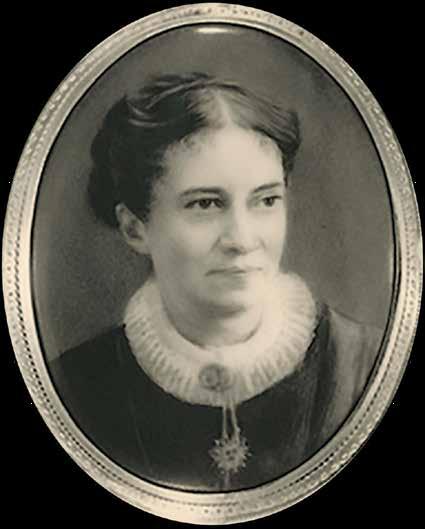
rebels must look out for consequences and ordered the torch to be applied.”
“While the raiders were in the Yadkin river-bottom, they were detained three days by freshets. Small parties scoured the country, carrying off all the horses and mules, and burning the factories. There seemed to be no systematic plan of destruction while some mills and factories were burned, others in the same neighborhood and quite as easily accessible were spared and depended on the personal character and disposition of the commanding officer of these detachments. If he were simply a brute dressed in a little brief authority, even injury was inflicted, accompanied with true underbred insolence and malice. The privates always followed the lead of the commander.”
She continues:
Part 1 of 2
“There is as yet too much to be forgotten—too much to be forgiven.” – Cornelia Phillips Spencer of North Carolina
by Joan Wenner, J.D.
We know from the Dictionary of North Carolina Biography that Cornelia Phillips Spencer’s father, James Phillips, was an English educator and immigrant. She married law student James Munroe Spencer at age 26 and, upon his early death, returned to her father was then living in Chapel Hill. She was a prominent journalist, social historian, poet, and prolific writer of bibliographies from 1853 to 1900; during her long life (1825–1908), she also penned what was published by C. Deems, editor of The Watchman in 1868 as The Last Ninety Days Of The War In North Carolina. (Digital edition: https://docsouth.unc.edu/true/ spencer/menu.html) This article is as close as we may ever get to an extremely detailed glimpse of the Civil War in western North Carolina by a female whose world it was and as she writes:
“That North-Carolina accepted a destiny which she was unable to control, when she ranged herself in the war for Southern independence, it is a fact which can not be disputed though none the less ardently did her sons spring to arms, and none the less generously and splendidly did her
people have a great army that poured forth from her borders; though none the less patient endurance and obedience government was theirs; yet it is also a fact, indisputable and on record, that North-Carolina was never allowed her just weight in councils of the Southern Confederacy, nor were the opinions or advice of her leading men either solicited or regarded too lenient, and
“Leaving Wilkesboro on the thirty-first day of March, General Stoneman [Union cavalry comander] moved over into Surry County, in the direction of Airy, and thence into Virginia, aiming for Christiansburg, on the Tennessee Railroad. A portion of the command being at Wythville, was met near that place by General Duke’s cavalry, and repulsed, but rallying, took the town and destroyed supplies there. Having effectually destroyed the road above Wytheville, between the New River and Big Lick, General Stoneman turned back upon North-Carolina, reentering it from Patrick county [sic],
Virginia, and marching rapidly through stokes county [sic], suddenly in Salem and Winston on the tenth of April. Here he sent out various detachments to cut the North-Carolina and the Danville and Greensboro Road, destroy bridges, supplies, etc., etc. One of these parties, as I have said before, missed capturing the train conveying the whole Confederate government in its flight to Greensboro.
They burned the bridge at Jamestown, and were about to fire the depot, but upon a sudden false alarm left precipitately without finishing their work. At High Point they burned the depot and large quantities of government stores and seventeen bales of cotton belonging to Francis Fries of Salem. The public buildings and stores at Lexington and Thomasville were saved by the arrival of a body of Ferguson’s cavalry [probably Samuel Wragg Ferguson], who chased the raiders back to Salem. The grand purpose of the whole raid seemed to contemplate the destruction of stores and the cutting off of communications without risking a battle.
At Salem and Winston private property was protected, no pillage being permitted. This was
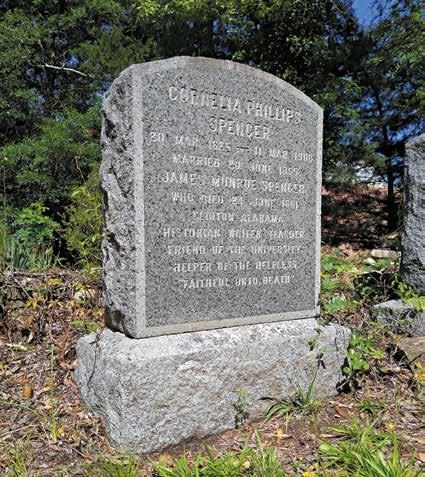
probably owing to the inhabitants having had notice of the approach of the raiders, sent a deputation to meet them and make a formal surrender of the town. I am not aware that a demand for surrender was made of any place during the entire raid, or that any place besides Salem and Winston, which may be regarded as one, offered a surrender. The first notice of the presence of any enemy was given by the unlooked-for arrival of the advance-guard galloping in and taking possession.
At Mocksville, a number of the citizens, supposing it was only a small squad that was hurrying through the country plundering, prepared to give them a warm reception, and a short distance from town fired upon the advancing column and realizing their mistake, they retreated. Threats of burning the village for this audacious thought of resistance were made, but as General Stoneman was pressing forward with all speed there was no time for any such exchange of compliments.”
Joan Wenner, J.D. has contributed for many years to the Civil War News and The Artilleryman among other history publications and has a law degree. Comments are welcomed at joan_writer@yahoo.com

weaves the history behind Civil War flags of Tennessee: the stories of the women who stitched them, the regiments that bore them, and those who served under them and carried them.
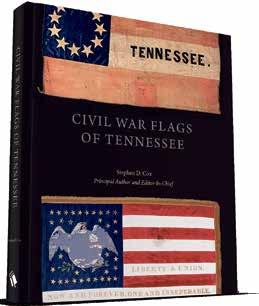
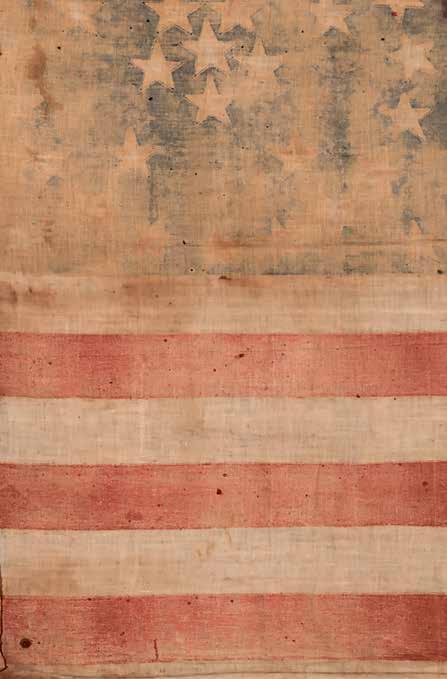
43 April 2021 Civil War News 43 April 2021 Civil War News
Gravestone of Cornelia Phillips Spencer at the Old Chapel Hill Cemetery in Chapel Hill, N.C. Courtesy Mx. Granger.
Cornelia Phillips Spencer.
THE UNIVERSITY OF TENNESSEE PRESS GET YOUR BOOKS DELIVERED UTPress.org or 800-621-2736
This book
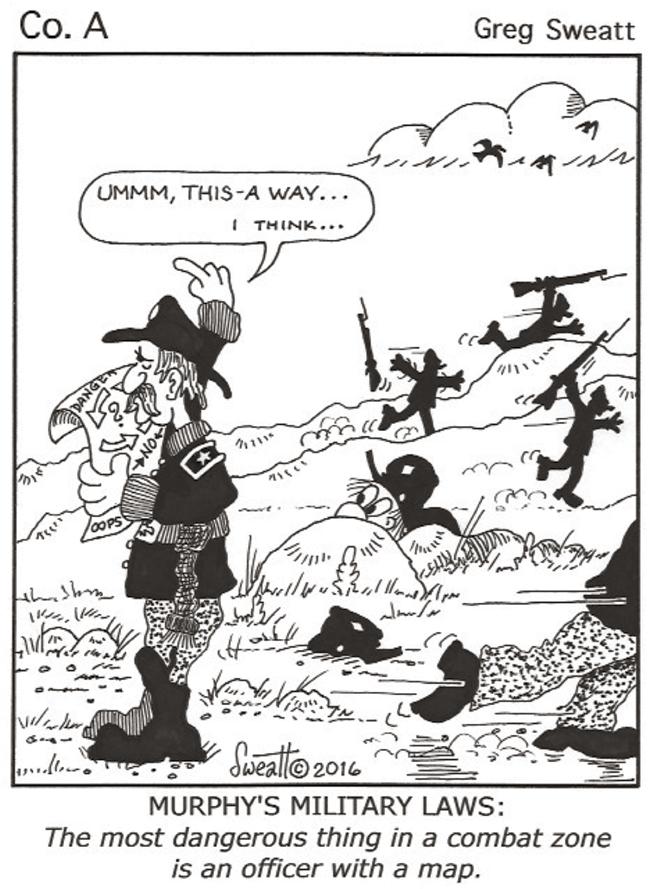

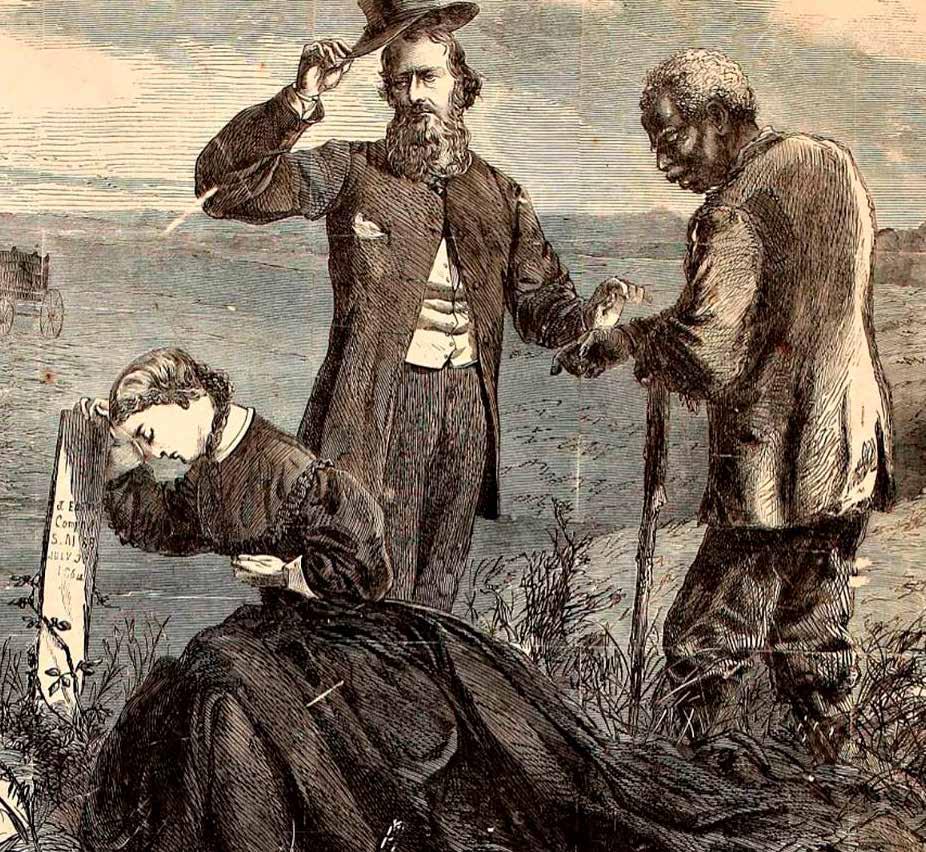
44 Civil War News April 2021 44 Civil War News April 2021 Subscribe online at CivilWarNews.com DIXIE GUN WORKS, INC. 1412 W. Reelfoot Avenue PO Box 130 Dept. 17 Union City, TN 38281 INFO PHONE: (731) 885-0700 FAX: (731) 885-0440 EMAIL: info@dixiegunworks.com Gun Works, Inc. Where “Hard-to-Find” becomes easy. For generations, re-enactors, modern hunters and competitive shooters have looked to the DIXIE GUN WORKS’ catalog for the hardest to find blackpowder items. Our all new 2021 catalog continues the tradition with the world’s largest selection of blackpowder replica arms, accessories, antique parts, muzzleloader hunting and sport shooting equipment. VIEW ITEMS AND ORDER ONLINE! www.dixiegunworks.com Major credit cards accepted FOR ORDERS ONLY (800) 238-6785 PROFESSIONAL SERVICE AND EXPERTISE GUARANTEED ORDER TODAY! STILL ONLY $5.00 48 E. Patrick St., Frederick, MD. 301-695-1864 / civilwarmed.org Divided by Conflict. United by Compassion. e Artilleryman is a quarterly magazine founded in 1979 for enthusiasts who collect and shoot cannons and mortars primarily from the Revolutionary War, Civil War to World War II. Now expanded and fully illustrated in rich color throughout the entire magazine. 520 Folly Road, Suite 25 PMB 379, Charleston, SC 29412 • 800-777-1862 • mail@artillerymanmagazine.com www.ArtillerymanMagazine.com The Artilleryman Magazine FOUR INCREDIBLE ISSUES A YEAR
Before making plans to attend any event contact the event host. Deadlines for Advertising, Editorial or Events Submissions is the 20th of each month.
We strive to add all events submitted to us but do not guarantee that your event will be published. There is a 100 word maximum for each event. Email events to: ads@civilwarnews.com
April 10-11, Mississippi. Civil War Show.
The 12th Annual Corinth Civil War Relic Show and Sale sponsored by the Col. W.P. Rogers, SCV Camp #321 will be held at the Crossroads Arena. Located at 2800 S. Harper Road exit on Hwy 45, just 1 mile south of Hwy 72 in Corinth, Miss., this show is expanded, larger and better than ever before, with daily door prizes. Sat. 9 a.m. to 5 p.m., Sun. 9 a.m. to 3 p.m. For information; Dennis Brown, 662-212-4621/ducksu@frontier.net, Buddy Ellis, 662-6651419/bellis@1960@comcast.net or visit www.battleofcorinth.com.
April 23-24, Georgia. Antique Gun-International Military Show
Explore antique guns, U.S. and foreign military arms, Civil War collectibles, books, and military collectibles of all periods. Exhibit, buy, sell, and trade.
IAMAW Union Hall, 1032 S. Marietta Parkway, Marietta. Fri. 12 p.m. – 5 p.m., Sat. 9 a.m. – 4 p.m. Admission $7, Ages 7-12 $1. For more information; 704-282-1339, richard@thecarolinatrader.com, www.thecarolinatrader.com.
April 24, Illinois. Civil War & Military Extravaganza.
The April 24, 2021 show has been canceled due to the Fairgrounds being used as a COVID vaccination site thru April. We will return September 25, 2021. For information; www.chicagocivilwarshow.com.
April 24-25, Pennsylvania. Reenactment and Living History –160th Battle of Manassas
This spring Reenactment and Living History event at the Daniel Lady Farm in Gettysburg will feature The Battle of the First Manassas and an extensive Living History area for an all-around, all-day educational Civil War experience! The Reenactment will focus on what was learned by both armies during the first major battle of the American Civil War. For more information; daniellladyfarm.com.
April 30-May 2, Florida. Federal Garrison of Fort Clinch
Sponsored by Ft. Clinch State Park. Union Soldier, Sailor, and Marine reenactors are needed for first person interpretation of Fort Clinch in May of 1864. Military activities will include guard duty, drill, firing demonstrations, and mail call. Barracks accommodations will be available on a first come first serve basis. Separate accommodations are available. Reenactors MUST be in proper uniform to participate (kepi or forage cap, sack coat or frock, trousers, and blackened brogans and leather gear, only corps badge acceptable is 10th corps red). Meals will be breakfast and lunch on Sat. and breakfast on Sun. morning. There will be a candlelight tour for spectators after dark on Sat. Please RSVP to assist us in planning for the event. No charge for reenactors. Please contact Tom Criscuolo at buckeye75th@aol.com, or Rob Pfluger at rpfluger@rollins.edu. Civilians may contact Trasey Pfluger thepflugers@aol. com. For more information; floridastateparks.org/fortclinch.
May 1-2,
Ohio. Civil War Show and Sale
The 43rd Annual Show in Mansfield at the Richland County Fairgrounds. Friday dealer setup. One of the most impressive artillery living history displays you will ever see. Living history units representing Rev war through WWII. Over 750 tables. Admission is $7, kids under 12 free. For information; email: info@ohiocivilwarshow.com or visit www.ohiocivilwarshow.com.
May 14-16,
Georgia. Reenactment and Living History
The 157th Anniversary “Battle of Resaca” reenactment will be held on over 650 acres of the original battlefield. This event will have main camps located within the original US and CS lines. Camping allowed in or near the breastworks. The planned activities include main battles both days at 2 p.m., period dance, medical demo’s, cavalry competition, ladies’ tea, reenactor clothing “yard sale”, a memorial service at the CSA cemetery and much more. Handicapped parking is available. A portion of the proceeds will be donated
to the preservation efforts of the Friends of Resaca Battlefield, Inc. Reenactor pre-registration fee is $10 for (12 and older) due by May 7. After May 7 registration and walk-on fee is $20. For more information, www.georgiadivision. org or Battle of Resaca, P.O. Box 0919, Resaca, GA 30735-0919.
May 29-30th, Pennsylvania. Military Field Days
This Living History Event at the Daniel Lady Farm in Gettysburg will feature Revolutionary War, American Civil War, and World War Reenactors to name a few. It will be an all-around, all-day educational experience for the whole family! For more information; daniellladyfarm.com.
June 4-6, Virginia. Reenactment: The Action at Wilson’s Wharf
Located between Richmond and Williamsburg, scenic Fort Pocahontas is the site of the May 24, 1864 Action in which US Colored Troops (USCTs) defended the fort they built against an assault by Fitzhugh Lee’s Confederate Cavalry. Open to the public 10-4 Sat. and 10-3 Sun: $10/adults, $8/students. See Civil War camps and enjoy living history including family activities; battle reenactment 1 p.m. both days. For reenactors: Pre-registration required between Mar. 1 and Apr. 16 at www.fortpocahontas.org ; shaded campsites with vistas of the James River; Friday officers’ social; dinner provided Saturday; evening entertainment and artillery fire.
June 12-13, Mississippi. Civil War Show
Civil War Relic Show will be held at Brandon City Hall, located at 1000 Municipal Drive, Brandon, Mississippi. Admission $7, 12 and under are free. Saturday, 9 a.m. to 6 p.m., Sunday, 9 a.m. to 3 p.m. See our ad on page 15 in this issue for more information.
June 26-27, Pennsylvania. Annual Gettysburg Civil War Artifact Show
The nation’s premier Civil War relic and collectors show at the Eisenhower All Star Complex. Brendan Synnamon, GBPA Vice President of Administration and the event’s coordinator, is working closely with the Eisenhower Complex to ensure the event follows PA Guidelines for COVID 19 control. America’s Premier Civil War relic and collector’s show. Held at the Eisenhower All Star Complex at 2634 Emmitsburg Rd, Gettysburg,our 300+ tables are a great way to view and even purchase authentic Civil War artifacts. Browse the tables and speak with the vendors who are all well versed in history and artifact identification. Better than a museum! Every item has someone willing to give you its history lesson and answer all your questions. $100 VIP Charitable donation includes Friday and early admission for the serious collector. Admission $10, children under 12 free. For more information visit https://www.gbpa.org/ event/annual-civil-war-relic-show.
July 3-4, Pennsylvania. Reenactment: 158th Battle of Gettysburg
This summer Reenactment and Living History event at the Daniel Lady Farm in Gettysburg will feature popular battles such as McPherson’s Ridge, The Wheatfield, and Pickett’s Charge, along with an extensive Living History area for an all-around, all-day educational Civil War experience for the whole family! For info: daniellladyfarm.com.
July 16-17, Georgia. Antique Gun and International Military Show
Explore antique guns, U.S. and foreign military arms, Civil War collectibles, books, and military collectibles of all periods. Exhibit, buy, sell, and trade. IAMAW Union Hall, 1032 S. Marietta Parkway, Marietta. Fri. 12 p.m. – 5 p.m., Sat. 9 a.m. – 4 p.m. Admission $7, Ages 7-12 $1. For more information; 704-282-1339, richard@thecarolinatrader. com, www.thecarolinatrader.com.
July 24-25, Tennessee. Civil War Show and Sale
American Digger presents the Chattanooga Antique Militaria & Americana Show at the Camp Jordan Arena, 323 Camp Jordan Pkwy., East Ridge, TN. Hours are 9 a.m. to 5 p.m. on Sat and 9 a.m. to 3 p.m. on Sun. For more information; 770-362-8671 or americandigger.com/American-digger-events.
Aug. 14-15, Georgia. Civil War Show and Sale
42nd Annual show in Marietta at the Cobb County Civic Center hosted by the North Ga. Relic Hunters. Cobb County Civic Center, 548 South Marietta Pkwy SE, Marietta, GA 30060. Hours Sat. 9 a.m. - 5 p.m., Sun. 9 a.m. - 3 p.m. Show chairman: Ray McMahan at terryraymac@hotmail.com. For more information visit www.ngrha.com.
Aug. 28-29, North Carolina. Antique Gun and Military Antiques Show
82nd Old North State Show consisting of antique guns, U.S. and foreign military arms, Civil War collectibles, books, and military collectibles of all periods. Exhibit, buy, sell, and trade at the North Carolina State Fairgrounds, 1025 Blue Ridge Rd., Raleigh, N.C. Sat. 9 a.m. to 5 p.m. and Sun. 10 a.m. to 4 p.m. Daily admission adults $8, and ages 7-12 $1. For more information; 704-282-1339, richard@thecarolinatrader.com, www.thecarolinatrader.com.
Sept. 18-19, Pennsylvania. Reenactment and Living History: 159th Battle of Sharpsburg
This fall Reenactment and Living History event at the Daniel Lady Farm in Gettysburg will feature The Cornfield Battle, The Sunken Road Battle, and Burnside’s Bridge Battle, the bloodiest day on American soil, along with an extensive Living History area for an all-around, all-day educational Civil War experience for the whole family! For information; danielladyfarm.com.
Sept. 25, Illinois. Civil War & Military Extravaganza.
Zurko Promotions presents The National Civil War Collectors Fall Show and Sale which will be held at the DuPage County Fairgrounds in Wheaton. Hours: 9 a.m. to 4 p.m. Admission is $9, Free parking. For more information visit www.chicagocivilwarshow.com.
Dec. 4-5, Tennessee. Civil War Show and Sale
MK Shows presents the 34th Annual Middle Tennessee Civil War Show and Sale at the Williamson County Ag Expo Park, 4215 Long Lane in Franklin. The nation’s largest Civil War show, featuring 800 tables of antique weapons, artifacts and memorabilia from top dealers and collectors around the country and encompassing all eras of military history from the Revolutionary War through World War II. Appraisers are always on hand to help you identify and value your military collectibles at no cost. Hours are 9-5 on Sat., 9-3 on Sun., parking is free and admission is only $10/adults and children under 12 are free. For more information; www.MKShows.com or Mike@MKShows.com.
45 April 2021 Civil War News 45 April 2021 Civil War News


























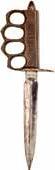








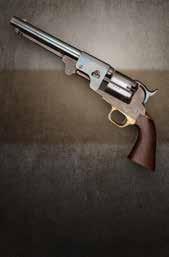










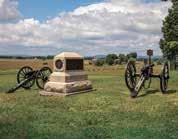



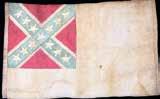


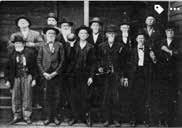








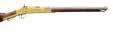


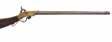














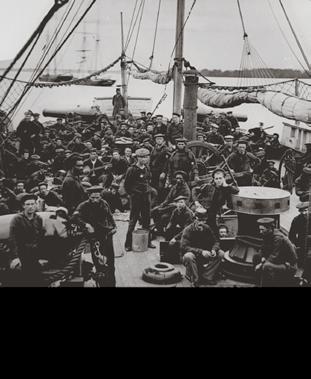
46 Civil War News April 2021 46 Civil War News April 2021 ACE Pyro & Fire Art – Black Powder ACE Pyro Saline, MI 48176 Phone: 877-223-3552 Website: http://www.acepyro.com Fire Art Clearfield, PA 16830 Phone: 814-765-5918 Website: http://www.fireartcorp.com Master Distributors of Schuetzen/Wano Black Powder 1FA, 2FA, 3FA, 4FA and Meal-D. B. M. Green Civil War Paper Memorabilia, Inc. B. M. Green PO Box 1816 Kernersville, NC 27285 Phone: 336-993-5100 Email: bmgcivilwar@triad.rr.com Website: http://shop.bmgcivilwar.net Confederate & Union autographs, letters, documents, diaries, Confederate currency, Confederate postal history, UCV & GAR encampment & first day covers. Our long time experience as dealers and collectors of Civil War material assures you a service second to none. Bowling Green Drummer Herman Kinder 14 Clayridge Court Bowling Green, KY 42103 Phone: 270-842-8058 or 270-779-3104 Email: cwbgdlr@twc.com Website: http://www.bowlinggreendrummer.com Bowling Green Drummer buys, sells & trades on quality, original Civil War, Indian Wars, Old West, WWI & WWII artifacts & militaria. This site has quality Civil War & other era militaria including WWI & WWII items. Regular high quality Union & Confederate artifacts are listed as well as items that are not normally seen on most Civil War websites. David S. LaSlavic 530 E. McDowell Rd. Suite 107-160 Phoenix, AZ 85004 Phone: 602-245-4721 Email: DAVEL@azswords.com Website: http://azswords.com Dedicated to Civil War Edge Weapons! Swords – Sabers – D-Guards – Bowies – Muskets – Rifles – Pistols – Revolvers Best time to call: 9AM – 7PM – Arizona time. ARIZONA SWORDS Mid West Civil War Relics Museum Quality Civil War Union & Confederate Artifacts! We handle the Best Antique Bowie Knifes, Civil War Swords, Confederate D-guards, Antique Firearms, Dug Relics, Buckles & Belts, Identified Relics, Letters, Documents, Images, Currency, Uniforms, Head Gear & Flags. 3500 Shacklett Rd • Murfreesboro, TN 37129 tom@stonesrivertrading.com (615) 336-2188 StonesRiverTrading.com Tom Hays Proprietor We carry all types of relics, dug & non-dug, Confederate & Federal. 100% Guaranteed. A strong emphasis on dug relics, but also a full line of non-dug relics of all types. Over 30 years experience with a full time, online store since 1997. We also have a shop located five miles from Battlefield that is open by appointment. The Maryland Arms Collectors Assoc., Inc. presents The “Original Baltimore” Antique Arms Show Since 1955 Maryland State Fairgrounds Timonium, MD North of Baltimore, York Road, MD. - Rt. 45 1,000 8-Foot Tables March 20-21, 2021 Public Hours: Sat. 9 to 5, Sun. 9 to 3. Admission: $10.00 – Modern Handguns are Prohibited –Complete information on web site: www.baltimoreshow.com Or Call 443-497-9253 Known as the “CROWN JEWEL” of Collector’s Shows! BrentsAntiques.com Specializing in Civil War and World War II Militaria Cell: 336-580-3330 • Email: Bsmith1181@aol.com Website updated Daily! Civil War Buttons William Leigh PO Box 145 Hamilton, VA 20159 Phone: 703-777-8549 Email: wmleigh@msn.com Website: http://www.civilwarbuttons.com Collector & Purveyor of American Military Buttons. Our business is founded on the fundamental principle that our customers are our most important resource. Buy with confidence and be assured that the items you order are authentic & accurately represented. Also, interested in purchasing all types of buttons, uniforms, other historical & military items that you may have to offer. Steve & Melody Strickland PO Box 17 Cumming, GA 30028 Phone: 770-633-5034 Email: 66thgeorgia@bellsouth.net Website: http://www.dixierelicsonline.com eBay ID: Dixierelics Civil War Firearms, Edged Weapons including excavated and non-excavated relics. Our specialty is American Civil War but we do deal in World War and World War II militaria. Burnt Hickory Relics David Baity & Jeff Cash Dallas, GA (Atlanta area) David’s Phone: 770-871-8753 Email: csa1864dab@comcast.net Jeff’s Phone: 678-471-4014 Email: RelicDealer67@gmail.com Looking to buy one piece or entire Civil War collections. Buy, sell and trade. Specializing in quality dug relics such as artillery, bullets, cartridges, Confederate and Union belt buckles, plates and buttons. Will travel to buy collections. J h J H y Q G t b g PA j yHayes Otoupalik Militaria PO Box 8423 Missoula, MT 59808 Phone: 406-549-4817 Email: hayesotoupalik@aol.com Website: http://www.hayesotoupalik.com We have been collecting and dealing in American Militaria from 1830 to 1960 for over 45 years. We Buy, Sell, Trade, Appraise. Your satisfaction is always assured. See our website for over 5,000 American Militaria GET SERIOUS ABOUT COLLECTING! “LET’S CHARGE TO VICTORY!” in JOSHUA’S ATTIC website. Specializing in Photos, Insignia, Weapons, Shells, Plates, Accoutrements and Anything Cool. Visit: www.JoshuasAttic.com HMS Productions, Inc. Charles Mauro & Don Hakenson 2508 Iron Forge Road Herndon, VA 20171 Email: cmauro10@aol.com or dhakenson@verizon.net Website: http://www.hmshistory.com HMS Productions covers the Civil War in Northern Virginia. Our products include three tour guides and DVD on Colonel John S. Mosby’s Combat Operations in Fairfax, Loudoun and Fauquier counties. We have a book and DVD on the Battle of Chantilly. We also have books on the Civil War in Alexandria and Fairfax County; and on civilians and spies. John S. Mosby MidTenRelics/YesterYear Larry Hicklen 3511 Old Nashville Hwy. Murfreesboro, TN 37129 Phone: 615-893-3470 Email: larryhicklen@comcast.net Website: http://www.midtenrelics.com Since 1977! Our specialty is museum quality Civil War artifacts for sale, both Union and Confederate items including artillery, swords, rifles, muskets, belt buckles, buttons, currency, images, and documents. Visit us online, at shows and by appointment only. North MS Civil War Relics Tony & Lydia Moore 248 Hwy. 72 E, PO Box 83 Burnsville, MS 38833 Phone: 662-802-0041, 662-665-2290 Email: Tony@nmsrelics.com Website: http://www.nmsrelics.com We offer wide range of Civil War relics – always having plenty of excavated items. We are always looking to purchase “New” items. Come by our shop or call/email us and be sure to look for us at most major shows. A 50 YEAR COLLECTION Soldiers Letters & Artifacts Will buy letter collections, ID discs & slave tags Call: Cal Packard @ 419-565-4100 http://www.mqamericana.com Email: cal@mqamericana.com WWW.PECARD.COM MADE IN THE USA SINCE 1902 Green Bay, WI 54311 Info@pecard.com 1-920-468-5056 DEALER INQUIRES WELCOME Whether genuine relic or an authentic reproduction, valuable leather needs care. Pecard Antique Leather Dressing has time tested, proven results for the care and treatment of oil tanned leather. 14 Rick Burton’s Civil War Antiques 931-B S. Main St. #110 Kernersville NC 27284 Phone: 336-830-1203 Email: ccrelics@ccrelics.com Website: http://www.ccrelics.com Authentic Civil War Military Items with emphasis on Confederate. Revolvers, muskets, carbines, swords, knives, pistols, buttons, bullets, belt plates, cannon and artillery projectiles. We sell both non-dug and dug relics, Union and Confederate. We also offer military objects from the American Revolution, War of 1812, Mexican War, Indian War, World War and World War II. Regimental Headquarters Karen Eubanks Falmouth, VA 22403 Email: regimentalhq@cox.net Website: http://www.regimentalheadquarters.com Ebay User Id: Regimentalheadquarters Authentic American Civil War Artifacts. Dug & non-dug. Specializing in Buttons and ID tags. setup at many shows and also sell on eBay. Over 30+ years experience. Contact me if there is something you are looking for. RegimentalHeadquarters.com 1,000’s of Civil War Treasures! Plus! Revolutionary War Spanish-American War Indian Wars • Mountain Men Bowie Knife Collector Arms Fur Traders World Wars I & II April 24 Sept. 25 2021 • CHICAGOLAND’S NATIONAL OSMA LLC Hickory Hill Mansion • 9222 Wickham Manor Way Ashland, VA 23005 • 804-543-4597 • oldsouthantiques@gmail.com Buying & Selling only the Highest Quality Original Confederate Antiques in the World OldSouthAntiques.com CivilWarGuru.com Civil War Shot and Shell Relics CivilWarShotandShellRelics.com P.O. Box 362 East Petersburg, PA 17520 Ph: 717-449-6302 or 717-380-4685 Email: ShotandShellRelics@yahoo.com CivilWarGuru.com Steve Munson 151 Atkinson Hill Ave Bardstown, KY 40004 Phone: 502-349-0910 • Email: stevemnsn@yahoo.com Rev-War thru WWII Artwork Cannons Airplanes Classic Corvettes Free Verbal Appraisals 50+ Years of Collecting l l l l l l l Special Interest in Civil War Watch the Civil War Guru on youtube.com Civil War Shot and Shell Relics Specializing in Artillery Items, Buckles and Plates, Bullets, Confederate and Union Buttons, Insignia, Military Items and Misc. Dug Relics. CivilWarShotandShellRelics.com P.O. Box 362 East Petersburg, PA 17520 Ph: 717-449-6302 or 717-380-4685 Email: ShotandShellRelics@yahoo.com Christopher & Carrie Harwick Buying and Selling The Finest in Americana 11311 S. Indian River Dr. • Fort Pierce, Florida 770-329-4985 • gwjuno@aol.com George Weller Juno John & Nikki Walsh Fort Donelson Relics FortDonelsonRelics.com Full Line Civil War Artifact Dealer Email: john@fortdonelsonrelics.com Promoters of Quality Shows for Shooters, Collectors, Civil War and Militaria Enthusiasts Mike Kent and Associates, LLC PO Box 685 Monroe, GA 30655 (770) 630-7296 Mike@MKShows.com • www.MKShows.com January 30 & 31, 2021 Chickamauga (Dalton) Civil War Show November 13 & 14, 2021 Capital of the Confederacy Civil War Show Get your tickets online! 401 Baltimore Street Gettysburg, PA 17325 717-334-8838 www.farnsworthhouseinn.com The Historic FARNSWORTH HOUSE INN “The Showplace of the Civil War” Fine Antiques & Militaria Military Items 1650-1945 Armor Swords Firearms Bayonets Equipment Accoutrements www.csarms.com PO Box 602 9150 John S. Mosby Hwy. Upperville, Virginia 20185 Shop Phone: 540-592-7273 Email: sophiacsarms@aol.com C.S. Arms, Inc. Specialize in U.S. & British Militaria American Digger Magazine has TWO great annual shows! Call (770) 362-8671 or (716) 574-0465 Email: anita@ americandigger.com Both shows americandigger.com/american-digger-events/ Camp Jordan Arena 323 Camp Jordan Pkwy. East Ridge, TN July 24-25, 2021 CHATTANOOGA ANTIQUE MILITARIA & AMERICANA SHOW Swiftly becoming one of the southeast’s biggest shows! January 1-2, 2022 LOWCOUNTRY ANTIQUE MILITARIA & AMERICANA SHOW Don’t miss the first show of a brand new year! Bigger & better than ever! Swords & Knives Antique Firearms Dug & Non-dug Relics Civilian Items & Jewelry Bottles & Stone Artifacts Art, Photos, & Books Militaria & Americana All Eras to WWII Metal Detectors Awards & Prizes Both shows feature all this and more: Display!Trade! Buy!Sell! 43rd Annual Ohio Civil War Show Including WWI & II 28th Annual Artillery Show Military Material From 1775 Through 1945 Saturday May1st – Sunday May 2nd 2021 Sat. 9:00 – 5:00 Sun. 9:00 – 3:00 Richland County Fairgrounds, Mansfield, Ohio Location: US-30 and Trimble Road 800 Tables of Military Items, Books, Prints and More For Buy, Sell, Trade & Display SPECIAL FEATURES Artillery Demonstrations & Cannon Firing Demonstrations Civil War & WWII Encampments Sutler’s Row Field Hospital Scenario Period Church Service Camp Chase Fife & Drum & 73 OVI Regimental Band Gettysburg Address Presented by President Lincoln Marlboro Volunteers Traveling Museum & Military Vehicles $7 Admission (includes parking) – Under 12 FREE Handicap Facilities, Food and Door Prizes www.ohiocivilwarshow.com For Information Call: 419 Facebook: Ohio Civil War Show FOR VALUABLE AMERICAN HISTORIC ITEMS OF ANY GENRE AUTHENTICATIONS & APPRAISALS International Society of Appraisers Appraisers Association of America Senior Accredited Appraiser (ASA) John Sexton ASA, ISA-CAPP 770-329-4984 CivilWarAppraiser@gmail.com www.civilwarappraiser.com CONFIDENTIAL CONSULTATIONS Over 40 years experience • AUTHENTICATION SERVICES FOR COLLECTORS & MUSEUMS • APPRAISALS FOR ANY INTENDED USE • I attend most major trade shows and auctions nationwide. • Available as a Buyers Agent when purchasing rare & expensive items. • Consultations as to best monetize valuable objects or collections in current markets. The Historical Shop Margaret & Cary Delery Box 73244 Metairie, LA 70033 Phone: 504-467-2532 c.j.delery@att.net www.historicalshop.com Since 1978 selling rare Americana Historical Shop The Early American items through the Civil War artifacts, autographs, photography, currency, bonds, historical displays, military items, “Reproduction Antique Spectacles to suit all sights” Authentic reproduction Civil War era eyeglasses to fit your lifestyle. Historically accurate, ophthalmic quality eyeglass frames suitable for reading, distance, bifocals, progressive lenses, sunglasses & nonprescription tinted lenses. Made for full time wear. “Spectacles are most overlooked, most obvious way to spoil an otherwise fine impression.” Thomas Valenza, Optician When you are ready to complete your impression, visit us online for detailed information about our spectacles: www.HistoricEyeWearCompany.com Prices start at $139.95 862.812.4737 Left: Unidentified Union soldier wearing oblong spectacles (Library of Congress) Above Right: First Lieutenant Adam J. Slemmer, defender of Fort Pickens (U.S. Army Heritage & Education Center) The Best Civil War Era Spectacles Civil War Military Longarms a Specialty ConfederateArmsCompany.com 1209 Victor II Blvd., Morgan City, La. 70380 Cell: 985-518-1802 • Email: leegray@LHprinting.com Lee Gray Confederate Arms Company P.O. Box 160 • Kingston, TN 37763 Phone: 803-431-1798 Email: vann@veteransattic.com www.VeteransAttic.com Vann Martin United Confederate Veterans, Grand Army of the Republic, Civil War Photographs and other Civil War items. David K. Parks Military Antiques PO Box 180674 Utica, MI 48318-0674 Phone: 586-871-6462 Email: dkpma@comcast.net Offering a large selection of Civil War and Historical Memorabilia ranging from the Revolutionary War to World War (emphasis on the American Civil War). On line catalog regularly offers over 700 items from nearly every category of collecting. www.RelicsOfHistory.com SELLING CIVIL WAR MILITARIA Journey’s End Antiques Antiques • Collectibles Furniture • Glassware Old Toys, Dolls & Trains Paul Brill apbrill@earthlink.net Home: 910.725.0466 | Cell: 910.638.4542 Southern Pines, NC 28387 journeysendantiques.com Antique Flag Conservation Services Save your family heirlooms and valuable textiles Specialist in Civil War flag Restoration and Conservation Custom affordable rates free estimates/fully insured email heritageconservationva@gmail.com Or call Josh Phillips at 540-320-6588 Heritage Conservation, LLC Robert Jones • 119 Frances Ave. • Stanhope, NJ 07874 Phone: 973-810-2976 • Email: Bob33rd@optonline.net We sell original Civil War artifacts, There is also a selection of mid-19th century antiques. www.YankeeRebelAntiques.com Proprietor, Robert Jones, is the author of seven books on Civil War subjects: The Civil War Canteen Civil War Artillery A Pictorial Introduction Children at the Battle of Gettysburg –Their Unforgettable Summer The Civil War Canteen Second Edition, Battle of Gettysburg –The Relics, Artifacts & Souvenirs, The Civil War Soldier His Personal Items, magazine. Order his books online at http://www.lulu.com/spotlight/civilwarbooks alabamaCavalry@gmail.com 615 306 2364 1stAlabamaCavalry.com 1st Alabama Cavalry Southeastern Civil War & Antique Gun Show 43rd Annual Cobb County Civic Center 548 S. Marietta Parkway, S.E., Marietta, Georgia 30060 Free Parking Admission: $6 for Adults Veterans & Children under 10 Free Aug. 14 & 15, 2021 Saturday 9–5 Sunday 9–3 Over 230 8 Foot Tables of: Dug Relics Guns and Swords Books Frameable Prints Metal Detectors Artillery Items Currency Inquires: NGRHA Attn: Show Chairman P.O. Box 503, Marietta, GA 30061 terryraymac@hotmail.comCompetitors shoot original or approved reproduction muskets, carbines and revolvers at breakable targets in a timed match. Some units even compete with cannons and mortars. Each team represents a specific Civil War regiment or unit and wears the uniform they wore over 150 years ago. Dedicated to preserving our history, period firearms competition and the camaraderie of team sports with friends and family, theFor more information visit us online at -ssa.orgCompetitors shoot original or approved reproduction muskets, carbines and revolvers at breakable targets in a timed match. Some units even compete with cannons and mortars. Each team represents a specific Civil War regiment or unit and wears the uniform they wore over 150 years ago. Dedicated to preserving our history, period firearms competition and the camaraderie of team sports with friends and family, the N-SSA may be just right for you. For more information visit us online at -ssa.org Sold $23,500 Morse Breech Loading Carbine (Est. $15,000-20,000) Firearms & Militaria Auctioneers Or Better! Expensive Items and Valuable Collections %0 Premier Firearms 5 Day Auction Event December 11-15, 2020 | Fairfield ME 199 Skowhegan Rd Fairfield, ME 04937 207-453-2114 civilwar@poulinauctions.com poulinauctions.com Stephen Poulin, ME Lic 1115 auction world records set in june 2020 auction SOLD $230,000 SOLD $63,250 SOLD $57,500 SOLD $92,000 SOLD $64,400 below are a few more of the past successes we have had for our consignors Sold $36,425 Breech Loading Percussion Carbine (Est. $20,000-30,000) Confederate Bilharz Muzzleloading Carbine (Est. $15,000-20,000) Sold $38,185 Hand Sewn Civil War Era 13 Star Flag (Est. $3,000-5,000) Sold $41,710 Antiques Buying Selling Rev WWII Swords, Molds, Tools and Accoutrements. in Union www.jjmilitaryantiques.com 610-599-0766 THE FINEST HISTORICAL ANTIQUE MILITARIA Wallace Markert info@csacquisitions.com 16905 Nash Road • Dewitt, Virginia 23840 804-536-6413 • 804-469-7362 www.csacquisitions.com The 2021 Civil War Dealers Directory is out. To view or download a free copy visit: civilwardealers.com/dealers.htm The 2021 Civil War Dealers Directory is out. To view or download a free copy visit: civilwardealers.com/dealers.htm 11311 S. Indian 770-329-49 George ■12m Annual Corinth Civil War Reliu Show and Sale Sponsored y: Camp# 321, P.O. Box 1591, Corinth, ississippi 38835 Daily Door Prizes! At the CROSSROADS ARENA 2800 S. Harper Road Corinth, MS 38834 (Located at the Harper Road Exit on Hwy. 4-5 - just mile south of Hwy. 72 in Corinth, MS) SHOWHOURS: Saturday,April10 9:00a.mto500p.m. Sunday,April11 9:00a.mto3:00p.m. Show&SaleTABLES:$65.00,afterJan15th$70.00 Day Sh $80 ADMISSION: $5.00 Children Under 2: Free Dennis Brown 662-212-4621 ducksu@frontiernct.net) Buddy Ellis 662-66S-1419 @ ) visit ww"\-v.battleofcorinth.com (Nearby) Sponsored by: COB.INTI-I �-N Corinth Civil War Show Corinth Civil War Show www.AmericanRelics.net Allen Phillips 1014 Reservoir St., Suite B Harrisonburg, VA 22801 Phone: 540-476-1969 Email: americanrelicsnet@gmail.com American Relics Specializing in Buttons, Buckles, Currency, Hat Devices and other Military Artifacts. P.O. Box 342 Thompsons Station, TN 37179 615-585-0115 Email: brubon2@bellsouth.net Franklin Relics Specializing in Accoutrements, Edged Weapons, Firearms and Uniforms FranklinRelics.com Bruce Hohler Proprietor alabamaCavalry@gmail.com 615 306 2364 1stAlabamaCavalry.com 1st Alabama Cavalry All Hands on Deck! Support Our Mission to Bring You the Naval History “This is the magazine for all things Civil War Navy. From ‘Uncle Sam’s web-feet’ to the ‘grey jacket navy’ raised by Jeff Davis! It is all here thoroughly researched and illustrated by beautiful contemporary navy images.” Ron Field, military historian and author of over 45 books, including Bluejackets: Uniforms of the United States Navy in the Civil War Period, 1852-1865. 1 Year—4 Issues: $37.95 Subscribe Now at civilwarnavy.com Or send a check to: CSA Media, 808 Drayton St., Savannah, GA 31401 International subscriptions subject to postage surcharge. Sailors and Marines on the deck of the U.S. gunboat Mendota 1864. National Archives (Identifier 524548).
Trivia Answers
Terms and Conditions
The following terms and conditions shall be incorporated by reference into all placement and order for placement of any advertisements in Civil War News by Advertiser and any Agency acting on Advertiser’s behalf. By submitting an order for placement of an advertisement and/or by placing an advertisement, Advertiser and Agency, and each of them, agree to be bound by all of the following terms and conditions:
1. All advertisements are subject to acceptance by Publisher who has the right to refuse any ad submitted for any reason.
2. The advertiser and/or their agency warrant that they have permission and rights to anything contained within the advertisement as to copyrights, trademarks or registrations. Any infringement will be the responsibility of the advertiser or their agency and the advertiser will hold harmless the Publisher for any claims or damages from publishing their advertisement. This includes all attorney fees and judgments.
3. The Publisher will not be held responsible for incorrect placement of the advertisement and will not be responsible for any loss of income or potential profit lost.
4. All orders to place advertisements in the publication are subject to the rate card charges, space units and specifications then in effect, all of which are subject to change and shall be made a part of these terms and conditions.
5. Photographs or images sent for publication must be high resolution, unedited and full size. Phone photographs are discouraged.
6. At the discretion of Civil War News any and all articles will be edited for accuracy, clarity, grammar and punctuation per our style guide.
7. Articles can be emailed as a Word Doc attachment or emailed in the body of the message. Microsoft Word format is preferred. Email articles and photographs: mail@civilwarnews.com
47 April 2021 Civil War News 47 April 2021 Civil War News Advertisers In This Issue: 100 Significant Civil War Photographs: Atlanta 12, 27 100 Significant Civil War Photographs: Charleston 27, 32 American Battlefield Trust 17 Ace Pyro LLC 12 Artilleryman Magazine 44 B.M. Green Civil War Paper Memorabilia, Inc. 2 Castle Pinckney Foundation 2 C.S. Acquisitions – Wallace Markert 11 CS Arms – Cliff Sophia 21 CWMedals.com, Civil War Recreations 21 Civil War Artillery Projectiles: Half Shell Book 14 Civil War Navy Magazine 21 Civil War News 32 Civil War Shop – Will Gorges 35 College Hill Arsenal – Tim Prince 24 Dell’s Leather Works 12 Dixie Gun Works Inc. 44 Georgia’s Confederate Monuments – Book 14 Glenn Dutton Artillery 37 Gettysburg Foundation 19 Gettysburg Heritage Center 39 Greg Ton Currency 11 Gunsight Antiques 10 Harpers Ferry Civil War Guns 23 The Horse Soldier 15 James Country Mercantile 12 Jeweler’s Daughter 39 Le Juneau Gallery 7 Leonard Draper 37 Lincoln Pocket Knife 12 Michael Simens 11 Mike McCauley – Wanted Fort Fisher Artifacts 15 Military Images Magazine 22 National Museum of Civil War Medicine 44 N-SSA 7 Panther Lodges 15 The Regimental Quartermaster 7 Richard LaPosta Civil War Books 12 Suppliers to the Confederacy – Book, Craig Barry 8 Ulysses S. Grant impersonator – Curt Fields 8 University of Tennessee Press 18, 43 Events: American Digger Events 11 Bruneau & Co. Auctioneers 19 Civil War Show – Brandon, MS 15 MKShows, Mike Kent 3, 41 Ohio Civil War Show (Mansfield, OH) 32 Poulin Auctions 48 Rock Island Auction Company 29
c c c c c c Charge my: Discover MasterCard Visa NAME ADDRESS ADDRESS CITY STATE ZIP CODE EMAIL $41 - 1 year USA Print $51 - 1 year USA Print & Digital $71 - 2 year USA Print $91 - 2 year USA Print & Digital $29.95 - 1 year Digital only Payment Enclosed Check # Card # Exp. Date Security Code Name on Card New Renewal c Make checks payable to Historical Publications LLC. c c c c Civil War News – 12 Issues Per Year Subscription/Renewal Form (required for digital subscription) USA Subscriptions Only No Canada or International Mail to: Historical Publications LLC 520 Folly Road, Suite 25 PMB 379, Charleston, SC 29412 Civil War News is now in a secure polybag with plain cover sheet for privacy. Subscribe online CivilWarNews.com PHONE Required 800-777-1862
1. General Robert E. Lee 2. Lawrence, Kansas 3. General Nathaniel Lyon at Wilson’s Creek 4. Lookout Mountain 5. Laurel Brigade 6. Laird 7. Rear Admiral Samuel P. Lee 8. General James Hewett Ledlie 9. General James Longtreet 10. Ward Hill Lamon
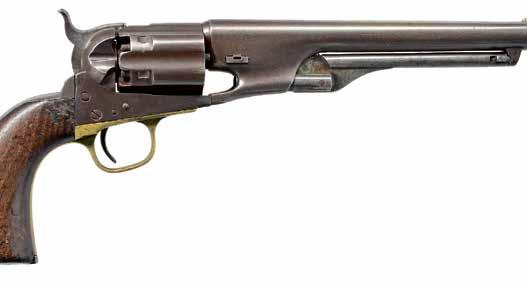
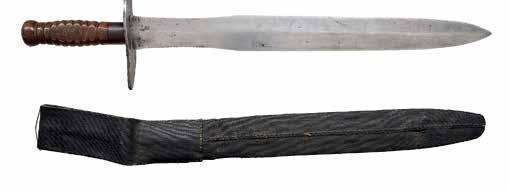
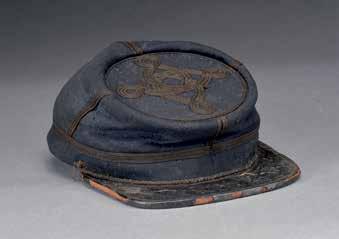
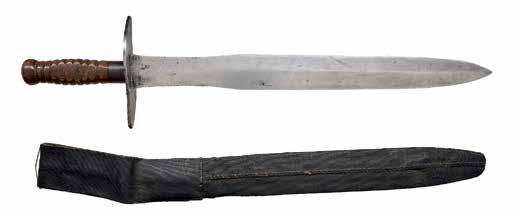
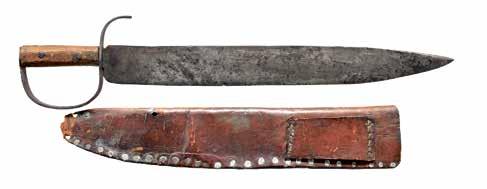
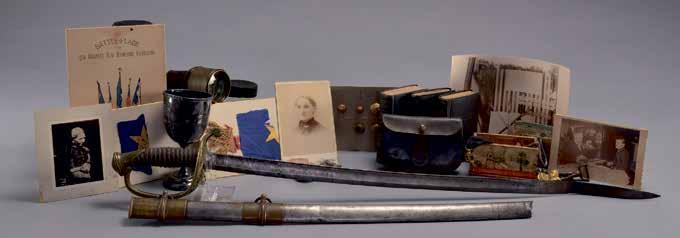
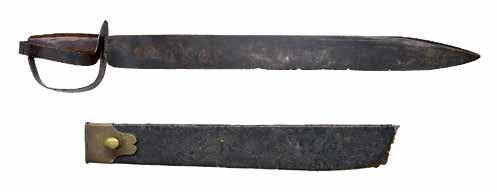
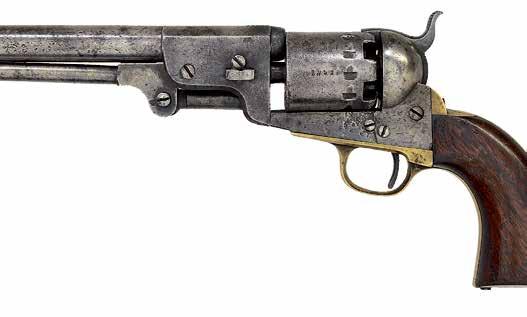
civilwar@poulinauctions.com | poulinauctions.com | 199 Skowhegan Rd, Fairfield, ME 04937 | 207-453-2114 Stephen Poulin, ME Lic # 1115 Consignments Wanted For Our Spring 2021 Auction Firearms & Militaria Auctioneers May 21, 22 & 23, 2021 | Fairfield ME Below are just a few examples of items to be featured in our May 2021 Premier Auction Go to poulinauctions.com to view more May 2021 Auction Highlights
Captain George N. Julian 13th New Hampshire Archive Including Documented Battle Damaged Presentation Sword Which Saved His Life At Petersburg.
Documented Union Officer’s Cap “Capt. John H. Rosler, 13Th West Virginia”.
Fine Confederate D-Guard Bowie Carried In War By Daniel C. Rice, 7th Kentucky Cavalry, John Hunt Morgan’s Command.
Extremely Rare Columbus Georgia
0% Or Better! Seller’s Commission On Expensive Items and Valuable Collections Serial Number For Confederate Leech & Rigdon Revolver. S# 1461.
Fantastic Confederate “Double D” D-Guard Bowie Inscribed “Yankee Killer”.
