CITY WEEKLY salt lake FREE BREAKING THE OVERTON WINDOW
Lake Powell’s Glen Canyon Dam is failing and Utahns need to stop pretending it’s worth saving.
COMMENTARY
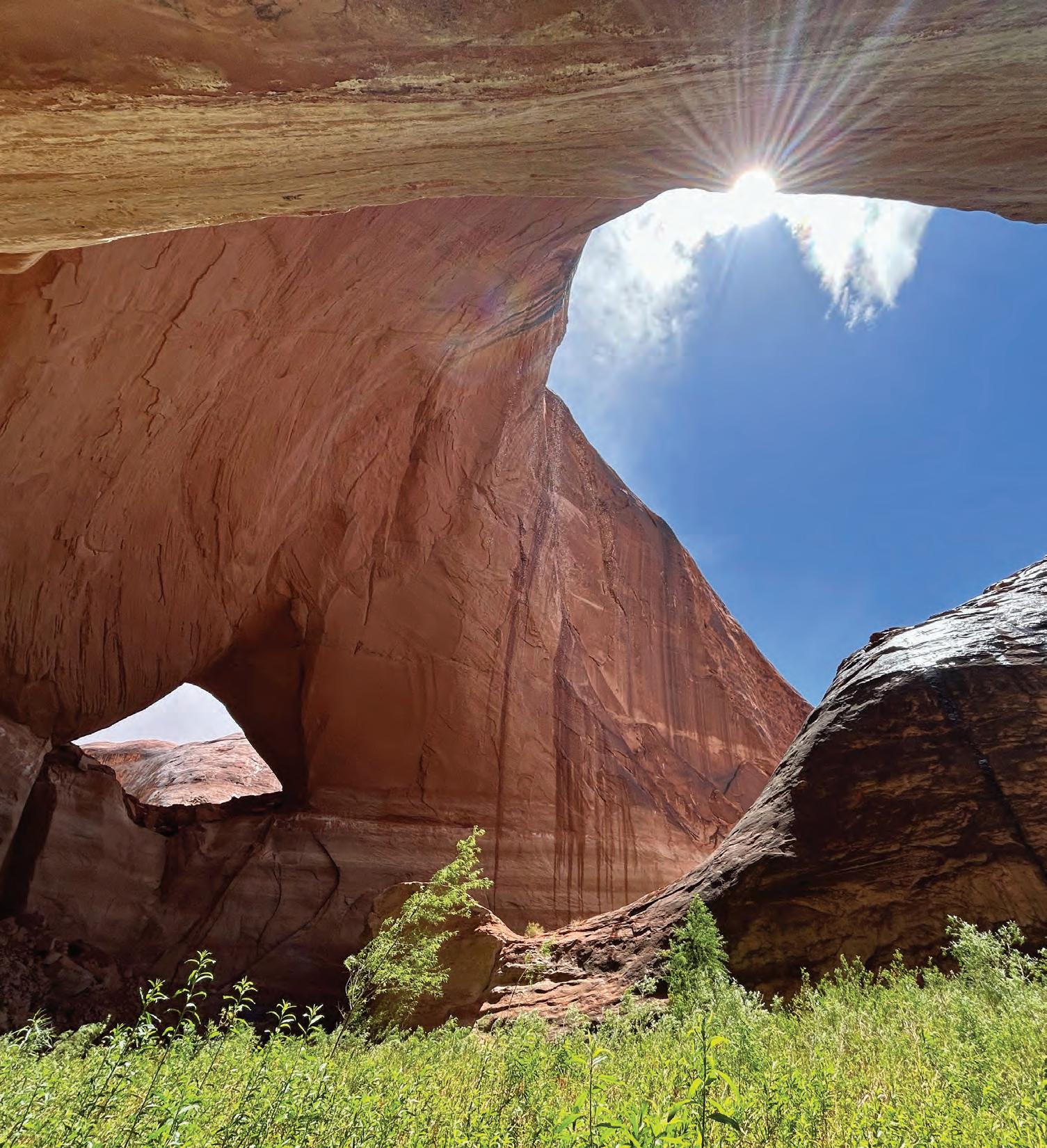












Lake Powell’s Glen Canyon Dam is failing and Utahns need to stop pretending it’s worth saving.
COMMENTARY
“The Borg are a fictional cybernetic species from Star Trek that assimilates individuals and technology to achieve perfection. Resistance is futile.” So said the AI assistant on my computer. The irony isn’t lost on me.
Every day, I use a computer, smartphone, modern car and countless digital services. Like most people, I enjoy the convenience.
But all that technology is driving explosive growth in artificial intelligence data centers—enormous facilities with staggering demands for electricity and
water, including projects proposed for Duchesne and Box Elder counties.
In Star Trek: First Contact, Earth has been transformed into a “Borg planet,” stripped of its natural environment and covered with refineries, mining operations and industrial infrastructure. Humans exist only to “serve the collective.”
That science-fiction image no longer feels entirely fictional.
Like many Utahns, I’m only beginning to grasp the scale of AI’s environmental footprint. At first, I dismissed descriptions of these facilities as exaggerated. I shouldn’t have.
Kevin O’Leary, the billionaire entrepreneur behind the proposed Stratos Project in Box Elder County, says, “Sustainability is at the heart of what we do.” But sustainability means using resources in ways that preserve a livable future for the next generation. By that standard, Stratos raises serious concerns.
The project was initially presented as operating entirely on natural gas supplied by the Ruby Pipeline. Burning natural gas releases carbon dioxide, a major greenhouse gas. The proposed 9-giga-
watt power plant would consume roughly twice as much electricity as the state of Utah currently uses.
According to estimates, the facility could generate about 35 million tons of carbon dioxide annually. Utah currently emits about 55 million tons statewide from all sources combined. Stratos alone could increase Utah’s emissions by more than 60%.
Could renewable energy solve the problem? Only partially.
Solar power on that scale would require vast amounts of land. One gigawatt of solar generation can require thousands of acres of panels. A 9-gigawatt facility could demand tens of thousands of acres, plus massive battery systems to provide reliable power around the clock.
Then there is the heat. Data centers convert enormous amounts of electricity into waste heat that must be continuously removed through water cooling or energy-intensive air cooling. Either way, that heat is ultimately released into the surrounding environment.
Utah State University physics professor Robert Davies has estimated that a project

of this magnitude could significantly raise local temperatures in parts of Box Elder County, especially at night.
I support technological progress. I appreciate the benefits of computing and artificial intelligence. But technological advancement cannot come at the expense of a livable environment.
Utah’s pioneers dreamed of making “the desert blossom like a rose.” We should be careful not to transform it instead into an industrial landscape defined by endless energy consumption, rising temperatures and depleted resources.
“Resistance is futile” makes for a memorable line in science fiction. In real life, however, citizens still have a choice about the kind of future we build.
And this one deserves far more scrutiny before we power it on.
TOM ELDER Vernal
Care to sound off on a feature in our pages or about a local concern? Write to comments@ cityweekly.net or post your thoughts on our social media. We want to hear from you!
If you could be on any game show as a contestant or host, which would it be?
I guess I’d go with Who Wants to Be a Millionaire? It’s the first one I thought of. I’m not sure if it’s still on the air, but I could really use that prize money.
I’d be a contestant on Jeopardy during the Alex Trebek years!
For years when Who Wants to Be a Millionaire was a big deal, my wife kept bugging me to apply. It’s amazing how much trivia can get stuck in your head from watching a lot of documentaries.
Deal or No Deal or The Wall. I prefer luck and probability over knowing trivia. John needs to be on Jeopardy; he would crush it.
I did a taping of The Price is Right during spring break in college, and my friend Trevor even made it up onto the stage. (He did not win the new car, but did make a couple hundred bucks). I’m not much of a game show fan but my wife and I got into the reboot of Supermarket Sweep with Leslie Jones. Bring that back, again, and I’ll run the aisles!

BY KEITH BURNS
Leaders of The Church of Jesus Christ of Latter-day Saints have a complex history with female members. In the early church, women held a relatively high degree of institutional authority, including stewardship over Relief Society funds and welfare initiatives. LDS women maintained much of this financial and administrative capacity into the 20th century, overseeing their own magazine until 1970.
But as part of a top-down correlation effort, ecclesiastical authority was centralized under male priesthood leadership, and women’s auxiliary organizations—including the Relief Society—experienced a marked reduction in independent administrative and financial authority. It was not until April 2013 that Jean A. Stevens offered the first prayer by a woman at a general session of the church’s General Conference.
In 2019, LDS authorities revised temple ritual language that previously asked women to “hearken” to their husbands, while men promised to hearken to God. The updates placed both men and women in a direct, covenantal relationship with God. That same year, temple marriage language was also altered so both men and women now “receive” each other, replacing wording in which men “received” wives and women “gave” themselves to husbands.
While the late Russell M. Nelson—church president from 2018 to 2025—maintained a conservative theological record, his tenure included notable changes affecting women. In addition to the temple revisions above, he expanded certain forms of ecclesiastical participation, including authorizing women to serve as witnesses to baptisms and temple marriages. He also oversaw adjustments to dress standards, allowing sister missionaries to wear pants in certain climates and permitting modifications to temple garments.
Shortly after Nelson’s passing, his successor Dallin H. Oaks continued shifts affecting women’s roles. On March 18, the faith’s governing First Presidency allowed women
to serve as Sunday School presidents—though the threeperson presidencies must be “single-gender.” Weeks later, another statement revised the names of young women’s quorums, explicitly authorizing female presidencies.
Despite the church’s ongoing structural subordination of women, authorities are demonstrably increasing women’s visibility, influence and institutional participation. While precise motives are difficult to determine, a sustained and observable shift toward expanded roles for women is clear.
Some suggest these changes are motivated by public relations, in response to external criticisms. Others—especially practicing Latter-day Saints—see them as ongoing revelatory communication from God to church leaders. Still others occupy a middle position, affirming many of the faith’s truth claims while acknowledging political and sociocultural forces that influence decisions.
Realistically, LDS leaders have two options. The first is to ordain women as priesthood holders, as the Ordain Women movement called for. This change would build on the church’s 1978 rationale for lifting priesthood and temple restrictions placed on Black members, affirming that God had authorized “all worthy males” to hold the priesthood.
In a parallel move, leaders could extend ordination to “all worthy members,” potentially drawing on scriptural precedents like Galatians 3:28: “There is neither Jew nor Greek, there is neither bond nor free, there is neither male nor female: for ye are all one in Christ Jesus.” The rationale is that leadership opportunities should be based on individual capacity and character, rather than gender. While this change would represent a significant step foward, Latter-day Saints would still face the task of dismantling patriarchal patterns deeply embedded in LDS culture and teachings.
The second, more pragmatic option is to continue decoupling leadership roles from priesthood office. Just as women may now serve as Sunday School presidents, church leaders could further separate administrative callings from the allmale priesthood, allowing women to serve as clerks, high councilors, mission and temple presidents and eventually bishops, stake presidents, general authorities and apostles.
Some may object that this approach would dilute the meaning of the priesthood so much that little would remain distinct. In that view, the remaining priesthood functions would involve blessings, ordinations and the administra-
tion of the sacrament—responsibilities that raise the same underlying question as leadership roles: why should women and girls be excluded from participating in them?
LDS feminists, like the late Linda King Newell, have long argued a mother should be able to lay hands on children in blessing. And historically, women in the early church participated in similar practices, including what were known as “blessings of healing.” Restoring this practice—even without ordaining women—would be straightforward and has historical precedent in early Latter-day Saint practice.
Each approach has advantages and drawbacks. Ordaining women directly would represent a powerful moral response to the church’s patriarchal history. It aligns with the Christian imperative of equality before God and could slow the ongoing disaffiliation of female Latter-day Saints in the U.S. From a leadership perspective, it would significantly expand the pool of candidates for high-influence callings, increasing institutional capacity, perspective diversity and talent breadth. Such a change would also improve public perception, presenting the church as more responsive, accountable and morally attentive to gender equality.
One concern church leaders may raise about ordaining women is backlash from conservative members. In 1978, a sizable portion of Latter-day Saints opposed lifting the priesthood and temple ban, and some left the faith. A similar response could follow women’s ordination.
On the other hand, separating leadership roles from priesthood offices offers several advantages: it aligns with the church’s gradualist model, avoids major cultural disruption and helps retain the more conservative members. The drawback is that incremental change is unlikely to curb ongoing female disaffiliation. More importantly, it forgoes an opportunity for accountability and reform and could reinforce criticisms of the church’s gender hierarchy.
Whichever path its leaders take, the church is likely to continue expanding gender equality. As a student of LDS history and politics, I’m persuaded there is both historical precedent and theological space for ordaining women. Such a shift would represent a significant moral advancement within a Christian framework, but would also broaden and diversify leadership capacity in ways that meaningfully affect not only women, but the entire membership. CW
Send feedback to comments@cityweekly.net
















Wide variety of job opportunities from Logan to Springville
Good pay: every Monday, Wednesday & Friday
Salt Lake City 801.313.1234 Ogden 801.399.1234 apply @alltradestemp.com


BY KATHARINE BIELE | @kathybiele BY ARICA ROBERTS
We thought Utah’s parents liked the idea of school choice. You know—the ability to choose how your kids get educated is somehow essential to the concept. Well, not exactly in Utah, which has now banned 34 books from classrooms around the state because a couple of school districts found them offensive or “pornographic,” a word that has long defied legal definition. The Salt Lake Tribune found that most of the bans originated from only two districts: Davis and Washington. But their sensibilities are affecting all 41 districts in the state. None of this is strange in a dystopian world horrified by diversity, equity and inclusion, or one that believes the country’s racism is a thing of a distant past. And there’s some irony in a new law that allows students to opt out of content they don’t like, but not into others. In a bit of karma, The King’s English Bookshop decided not to promote the governor’s book Off Ramp: How to Be a Peacemaker in an Age of Contempt after he’d signed the book-banning law.
As long as we’re talking about Utahns’ fragile emotions, let’s hail Salt Lake’s Kilby Block Party and their internationally acclaimed guest performer Pattie Gonia. Yes, the artist and environmentalist is indeed a drag queen— gasp! And she took on the people’s favorite target these days, “Mr. Wonderful” Kevin O’Leary and the proposed Box Elder data center. Lots of F-words were flying in the air and on screen. (Sidenote: Poor St. George now has to pay $30,000 after officials there tried to block a drag show at a local park.) At the Utah State Fairpark, the Queerby Block Party feat went on and took off with fans cheering and music blaring. For any concerned parents, it was an adults-only event.
It’s no surprise Sen. Mike Lee continues his mission to take over or decimate Utah’s public lands. Now he’s joined by rural sweetheart Rep. Celeste Maloy, who offered a joint resolution to end the management plan for the political balloon that is Grand StaircaseEscalante National Monument. If the resolution passes, the Bureau of Land Management wouldn’t be able to create another similar plan for any national monument. The prospect of unrestricted access and potential harms prompted scientists and stakeholder groups to send an urgent letter to Congress and the Department of the Interior. “Scientists are making extraordinary discoveries there—from dinosaurs and ancient mammals to entire ecosystems we never knew existed—and those discoveries are only possible because this landscape has remained protected and scientifically managed at a large scale,” Rowan Lockwood, president of the Paleontological Society, said in a statement. Science, however, is also on the chopping block. The management plan is considered a “rule,” making it easier to overturn, according to the Congressional Review Act. A few weeks should tell if the plan is on or off. CW
The Utah Library Association, PEN America of Utah, ACLU of Utah and EveryLibrary have banded together to launch Let Utah Read, a unified front against book censorship. Utah has seen several bills on this issue, including HB29 in 2024, which created a statewide list of banned materials, triggered when three school districts remove a particular book from shelves.
But a very small number of individuals are said to be responsible for a large majority of Utah’s book challenges. In Davis County, one person challenged 24 of the 25 books that were ultimately banned, and a 2022 investigation by KUTV found that in one district, 199 out of 204 book challenges came from a single couple. “It only takes three people to control what’s read in the whole state, or rather, not read in the whole state,” said Susan Heiner, Let Utah Read’s administrative director.
Book censorship in Utah increased with the rise of organized groups like Utah Parents United and Moms for Liberty. Those organizations initially formed around issues like COVID mandates, Critical Race Theory (CRT) and Diversity, Equity, and Inclusion (DEI), but then shifted their focus to libraries and worked with elected officials to pass book-banning legislation.
On par with national trends, Utah specifically targets books with LGBTQ themes or content about sexual assault. But more extreme than other states are the guidelines urging destruction of these books—such as burning, rather than sale or donation.
“Just the removal of LGBTQ books, the removal of ideas and concepts that they don’t agree with is a violation of our students’ First Amendment rights,” said Rebekah Cummings, a digital director at the Marriott Library and Let Utah Read member. “And it is honestly just downright un-American.”
Critics of the censorship laws argue that removing books from schools denies access to stories that can provide language, validation and empathy regarding their experiences. They also suggest predatory behavior can thrive in cultures and environments where even discussions of sex are taboo.
Shannon Hale, a Utah native and author, said she has been personally targeted by organized parent groups. She described a “soft censorship,” where books are removed out of fear. She said her own work, like the picture book Itty-Bitty Kitty-Corn have been challenged for “nonsensical” reasons.
“We’re not banning sex and assault from the world,” she remarked, “but we’re banning tools that help teenagers understand what’s happening.”
The coalition’s efforts include educating the public, hosting “read-ins” at the Capitol and mobilizing an email list to contact legislators regarding pending bills and book removals. Longterm goals include supporting an ACLU lawsuit to challenge the constitutionality of HB29 and working to amend or repeal existing book-banning laws. Utah’s most recent legislative session saw successful opposition to one bill, HB197—one legislator reportedly received more than 400 emails. CW
City Weekly has been your go-to source for local news, arts, entertainment and culture since 1984-- absolutely free!
If you are in a position to truly make an immediate impact today and are able to do more than what is listed below, you can send a donation check here:

Salt Lake City Weekly PO Box 17009 Holladay, Utah 84117
$48 Annual Supporter
Provides support for ongoing cost of weekly columnists, reviewers & beat reporters
$4.00 / MONTH
Charged every month / Cancel anytime
Name listed on City Weekly’s supporters page
Provides coverage for weekly news pieces
$8.00 / MONTH
Charged every month / Cancel anytime
• Name listed on City Weekly’s supporters page
• Two tickets to City Weekly’s annual Best of Utah end of year celebration
Steadfast community coverage
$2.00 / MONTH
Charged every month / Cancel anytime
Name listed on City Weekly’s supporters page
Sustain in-depth reporting that holds power accountable
$20.00 / MONTH
Charged every month / Cancel anytime
• Name listed on City Weekly’s supporters page
• Two tickets to City Weekly’s annual Best of Utah end of year celebration
• 10% discounts on all City Weekly events
Your contribution directly supports more sticks into the eyes of leaders who represent themselves and their political parties more than their constituents. cityweekly.net/subscribe
Dancer Liz Dibble takes on the “loneliness epidemic” by exploring a matrilineal personal history.
BY SCOTT RENSHAW scottr@cityweekly.net @scottrenshaw
When dancer Liz Dibble started contemplating the “loneliness epidemic” as a thematic centerpiece for an artistic work, there were any number of directions it could have taken her. The direction she chose involved a unique component of her family history: a name that has been shared over seven generations.
Dibble’s Seven Seeds—part of the evening-length dance performance Of Each OtHER, produced as part of RDT’s Link Series—evolved from her place in a line of women in her family all named “Charlotte Elizabeth” (Dibble’s given name), including her own daughter, reaching back to multitimes-great-grandparents. For her, it was a way to link the idea of family connections to that aforementioned sense of isolation.
“It isn’t necessarily the most intuitive place to go,” Dibble acknowledges, “because connecting to relatives who have passed on doesn’t solve interpersonal connection. But I do think there’s something to this idea of connecting to where you come from, to inform who you are and what you have to give to those around you. How does that information help me find a place to help me give and receive?”
With family history being such a foundational part of Latter-day Saint culture, it wasn’t unusual that there was a lot of documentary evidence about Dibble’s ancestors. But she also wanted to probe deeper and learn about their lived experiences.
“On FamilySearch, there’s so much information about these women, and I’ve almost taken it for granted,” Dibble says.
“As my mom has gotten older, I haven’t dug into these stories. My mother’s childhood was difficult, so I hadn’t asked, but my great-grandmother was still around when my mom was alive. That was the avenue I took: What were my mom’s realtime memories of these women, the good and the bad. You don’t get as much of the bad in FamilySearch. But I wanted all of it, and to make sense of all of it.”
Being part of a lineage that has passed along her name could come with a set of expectations to live up to, but Dibble embraces that history fully—and, in fact, wishes that history could have been more evident and pronounced in her name.
“As a child, I remember being mad that I couldn’t be Charlotte Elizabeth the Sixth, because women so often take on a married name,” she notes. “I never felt pressure to live up to anything; that wasn’t part of my experience. I just felt I had all these women on my side, this entourage of women cheering me on from another dimension.
“I feel like a lot of people who get into contemporary dance are a little rebellious by nature, but even when it came to the naming of my daughter, I never once doubted I would pass that along. You get to join in this sisterhood.”
Conveying this family narrative through movement is a fascinating concept—and, as Dibble notes, also perhaps not the most intuitive one. “Dance is really the most inefficient way to tell a complex story,” she says with a laugh. “You can write about it or sing about it, and it will make a lot more sense to an audience. But in the age of AI, there’s an added power to embodying something physically. … Let’s play with what it would feel like to not have full use of your legs, or if you couldn’t speak, or if your husband was attacking you. The beauty of dance is every human has felt fear in their body, felt fatigue, felt anxiety.”
In addition to Seven Seeds, the program includes works by collaborators including Alexandra Yerby-Bradshaw and Rachel Barker, all of whom collaborated on the Link Series production Superwomen in
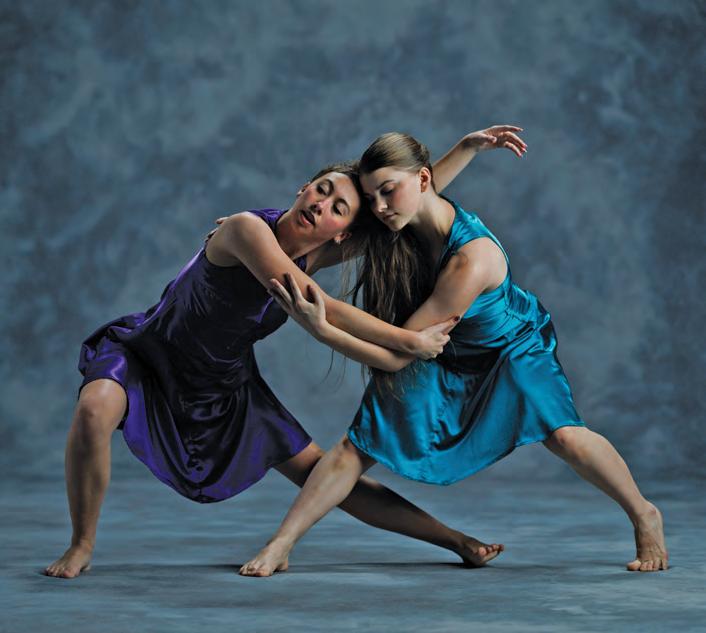
2022. As they reconnected, they realized that they were all thinking about issues of female connection in different ways, and for different reasons—Yerby-Bradshaw contemplating bonds of friendship in her piece Starboard with Tara McArthur; Barker exploring recently becoming a mother in HERstory
Dibble understands that women are often defined through family connections— as wife, as mother—where men often are not to the same degree, and thinks about this performance as a way of embracing the positive components of that reality, while pushing back against the negative.
“It is so interesting, especially with the rise of the ‘tradwife influencer,’” Dibble says, “but I do feel we’re not defined by these relationships. By our own merit, we’re artists with something powerful to say. But maybe celebrating relationships
is what we need at this time. We have all these technological tools to allow us to connect, but still have this lonelieness. Maybe this is what we need more of.
“Connection and relationship—it should not only be a female-specific identity marker,” she continues. “It should be a human identity marker that we curate community. I love that a live dance concert is automatically doing that—getting people in a room together and uniting their gaze in one direction.” CW
RDT LINK SERIES: OF EACH OTHER Rose Wagner Center Leona Wagner Black Box 138 W. 300 South May 21 – 22 7:30 p.m.
$12.50 - $24 saltlakecountyarts.org

It was really only supposed to be a palate-cleanser for the famed Eurovision Song Contest, first in a musical presentation called Timedance in 1981, and then accompanied by dancers in 1994. But that original music by Bill Whelan, set to choreography by Irish dance champions Jean Butler and Michael Flatley, immediately became a sensation, as a seven-minute performance evolved first into a five-week theatrical show that sold out in three days, and eventually into international renown.

Now, more than 30 years after Riverdance made its debut—and nearly that long since Flatley departed to create his own spinoff show, Lord of the Dance—it remains a touring fixture, bringing phenomenal athleticism and traditionally-influenced Celtic music to audiences everywhere. The show has changed and evolved plenty over the years, including incorporating newer technological developments like projection mapping. Yet the core of the performance has remained a focus on sharing stories and history through music and dance, ranging from the mythology of the Celtic people and cycles of nature, to the events that shaped the 19th and 20th centuries for native Irish and Irish immigrants to America, including mixing and mingling with other cultures. It’s still a lively, electrifying evening of talented performers—and it all started with those seven unforgettable minutes.
Riverdance comes to the Delta Hall at the Eccles Theater (131 S. Main St.) May 22 – 24, for five performances. Tickets begin at $40; visit saltlakecountyarts. org to purchase tickets and additional event info. (Scott Renshaw)
If you’re new or new-ish to Utah, you might wonder a bit about the prevalence of certain last names: Jensen, Sorensen, Christensen and so on. That has a lot to do with the early success of missionaries from the Church of Jesus Christ of Latter-day Saints in Norway, Denmark and Sweden in the latter part of the 19th century, leading to an influx of some 30,000 new converts to Utah; in the 1900 census, people of Scandinavian descent accounted for 34 percent of Utah’s population.


For the first decade-plus of its existence, New World Shakespeare has stayed true to its name, focusing on Shakespeare and Shakespeare-adjacent works. For the company’s first production outside of the Bard’s realm, they’ve taken on Chekhov’s The Seagull—which, like the works of Shakespeare, remains vital in its insight into human psychology centuries after its creation. Notes the show’s director, Shea Potter, “I believe these very wellwritten, relatable characters and their subtextual Easter eggs create a magic, something timeless that the audience will feel.”
Of particular ongoing relevance, according to Potter, is The Seagull’s portrayal of issues surrounding mental health, which is further evidenced by New World Shakespeare partnering on this production with Alliance of Hope for suicide loss survivors and 988Lifeline.org. “Sure, we could talk about upper and lower wealth classes, and the societal impact that has on a community,” Potter says, “but I think the impact of living a life and getting caught up in career, appearances, finances, comparison, or our own relevance and as a result, missing the beauty that life should be … I really hope that this play reminds the audience to take advantage of the time you have, to live your life and don’t obsess about the things that make life fake, but rather, to search for and feel the authenticity that life has to offer.”
New World Shakespeare presents The Seagull at the Alliance Theater Black Box, May 23 – June 27. Tickets are $20, but special accommodations can be available for discounts; visit newworldshakespeare.com for additional information. (SR)
That substantial cultural history forms the foundation of the annual Scandinavian Festival, which is hosted by the city of Ephraim over Memorial Day weekend. The centerpiece event is the parade—this year with the theme “Scandinavian Innovations”—which takes place at 10 a.m. Saturday morning, but that’s far from the only reason to visit. After all, where else can you experience a “wife-carrying contest?” You can learn about history and culture in the Viking Village, and explore coziness in the Hygge Center. Of course, there are plenty of food and vendor booths, as well as crafts and all-ages activities for families to enjoy on the festival days. And the entertainment headliners include Ryan Shupe and the RubberBand, Mesozoic, Sofia Talvik and the Fox Brothers, as well as Utaiko Drummers.
The Scandinavian Festival centers around the intersection of College Ave. and Main St. in Ephraim on Friday, May 22 (10 a.m. – 8 p.m.) and Saturday, May 23 (9 a.m. – 6 p.m.), free to the public. Visit scandifest.org for full schedule and additional information. (SR)

Sometimes the best way to enjoy Utah is to take a step back and admire it from afar. Whether you’ve had one too many dirty sodas or crave a happy hour cocktail, Idaho’s Lava Hot Springs offers a change of pace. The resort’s geothermal waters can be enjoyed indoors or out with plenty of kid-friendly sections. If you’re more time-limited, the High Uintas serve as a pristine natural retreat for a weekend or merely an afternoon. These mountains offer access to dozens of trails including the iconic 25-mile King’s Peak hike. Of course, Utah’s best vacation getaway is a mere four hours south of SLC. Moab serves as a base camp for two national parks and provides unparalleled access to sandstone climbing, mountain biking and spectacular views. While the small town can be overrun by tourists over the
summer, Utah locals can enjoy relative calm from fall through spring.

STAY TUNED FOR THE 2026 BEST OF UTAH BALLOT THIS AUGUST!
Each week, City Weekly will publish, email to our Best of Utah list and post on our socials an expanded version of our beloved Best of Utah issue. With over 400 categories to choose from, we selected our favorites to post from now til the Best of Utah issue in November. Remember, always support local!
CONTACT US TO ADVERTISE! sales@cityweekly.net




The Mandalorian and Grogu only works when one half of that title equation takes center stage.
BY SCOTT RENSHAW scottr@cityweekly.net @scottrenshaw
In a classic early-season episode of The Simpsons, Homer becomes the voice actor for Poochie, a new character added to the cartoon series The Itchy & Scratchy Show to give it fresh energy. Eager to emphasize how important Poochie now is to the whole enterprise, Homer suggests to the show’s producer, “Whenever Poochie’s not on screen, all the other characters should be asking, ‘Where’s Poochie?’”
I swear on the lives of my children that at one point during the preview screening for The Mandalorian and Grogu—the spinoff feature from the Disney+ Star Wars series—when Grogu was not on screen, a child behind me asked, “Where’s Grogu?” And anecdotal though that evidence might be, I think it suggests what actually works about this premise, and why it doesn’t work enough
You don’t really need to have consumed all three seasons of the series to understand what’s going on as we pick up the adventures of the mercenary Mandalorian (Pedro Pascal) and his young charge, Grogu (aka “Baby Yoda”). In a time frame not long after the end of the original Star Wars trilogy, Mando is now working for the New Republic tracking down warlords and crime bosses still loyal to the toppled Empire, and in so doing, finds himself entangled with the Hutts—including Rotta (Jeremy Allen White), the son of Jabba, who has no interest in continuing dad’s nasty ways.
That’s a relatively minor character-


ing along during its first half through various blaster fights, gladiatorial contests, Star Wars Easter eggs, bar fights, speeder chases, spaceship dogfights, tussles with sea dragons and a brief voice cameo by Martin Scorsese as an alien street-food vendor with full-on Martin Scorsese eyebrows. As a director of action, Jon Favreau barely manages to keep the camera in focus, resulting in scenes that move fast and break things, but in a way where it’s almost impossible on a moment-to-moment basis to understand who’s in peril, from what direction, and why.
It’s also kind of a problem that Mando himself is an absolute bore as a character in this movie. The series at least gave him some shades, in the evolution of his affection for Grogu after once being paid to turn him over as cargo, and in his history among the outcast Mandalorian people. But Pascal’s generally monotone line readings and the lack of a visible face makes it nearly impossible to care at all about him, or whatever plight he’s gotten himself into.


That fact comes into sharp focus during the film’s second act, when Grogu takes over the narrative for an extended, mostly wordless stretch as he’s forced to be the rescuer of Mando for a change. Teamed up for a while with a quartet of tiny Anzellans—aliens with funny voices slightly more intelligible than Minions—the little puppeteered critter keeps drawing “awwwws” from viewers, and some of the few laughs that The Mandalorian and Grogu has going for it. During that stretch, the movie stops being a Star Wars action adventure, and turns instead into a showcase for concentrated adorableness. And it’s hard to argue that it’s not all the better for it.
Unfortunately, that part of the movie gives way to yet more incomprehensible action, including a three-arena finale that should have some kind of life-or-death stakes, but only seems to grab the audience’s attention when Grogu is using The Force to make a mean alien dog lie down and succumb to skritches. The effort to pump up the volume so it doesn’t simply feel like an expanded episode of a TV
show makes the movie bigger and louder, but doesn’t acknowledge that everything’s better when it’s quieter and Grogu-er. There’s a suggestion in one line of dialogue that the emotional crux of the narrative is Mando realizing that Grogu—who during the series’ first season was referred to simply as “The Child”—isn’t really a child, and should be treated as more of a partner than a kid in peril. He’s more than capable of holding his own and taking center stage, to the extent that a big chunk of this movie devoted to an armored warrior shooting fire, battling monsters and generally kicking ass mostly inspires those watching to wonder, “Where’s Grogu?” CW
May 22 in theaters
















Lake Powell’s Glen Canyon Dam is failing and Utahns need to stop pretending it’s worth saving.
Lake Mead wraps itself around the southeastern edge of Nevada, a blob of dark blue clinging to the gray desert like a three-armed barometer of climate collapse.
One arm reaches upstream from Hoover Dam, past the inlets that pump water to Las Vegas and the wash that returns the city’s treated wastewater to the reservoir. The lake narrows in Boulder Canyon and then splits into its main bays, one connecting to the Colorado River in western Grand Canyon and the other fed by the Virgin River in what’s known as the Overton Arm.
If you look at maps of the Overton Arm today, you’ll see it’s dotted with place names like Old Swim Beach, places that are no longer anywhere near the reservoir. The Overton Arm has shifted, retreating down the historic path of the Virgin River toward the Hoover Dam as the reservoir shrinks.
Lake Mead and Lake Powell, the two largest reservoirs in the United States, haven’t been close to full since 1999, and both are more than two-thirds empty today. Nobody can debate that.
But somehow, the Overton Window that frames what’s permissible in the discourse around Colorado River management has not shifted as rapidly as the Overton Arm of Lake Mead, even as recognition spreads that the river is headed into a new phase of crisis in 2026.
The heat wave in March decimated an already dismal snowpack, and the Colorado River’s spring runoff is set to be lower this year than any in modern history, breaking the record-low set in 2002. But unlike 2002, when the Colorado’s biggest reservoirs were mostly full, this year’s meager snowmelt will flow into reservoirs that are now mostly empty.
There is a lot of noise around the stalled negotiations between the seven Colorado River states, the deepening megadrought, and the states that are lawyering up. Those are all real factors in a vast system that’s impacted by everything from layers of state water law and century-old legal frameworks to the bare mountainsides in the Wasatch. It’s possible for decision makers to hide behind competing narratives because water issues are so complicated. But after 15 years of reporting on water in the Southwest, much of the discussion appears to me as delusional. Basin states like Utah and Colorado are arguing over paper water that doesn’t exist.
Some large environmental groups are behaving as if the Glen Canyon Dam—a failing, 60-year-old piece of concrete—is as integral to the Colorado River as the six-million-year-old Grand Canyon. Other voices are suggesting that we should build our way back into a wetter past by constructing a vast network of desalination plants.
Reading “water Twitter” or the op-ed pages these days all too often feels like we’re standing on Old Swim Beach in the Overton Arm. We’re miles from water. Lake Mead is barely visible far in the distance. And yet, there’s a group of people—some of the very people responsible for setting water policy—who are loudly stating that their feet are wet even though they’re ankle deep in sand.
One of the biggest delusions centers upon Lake Powell. The situation is as urgent as it is because of the design of the Glen Canyon Dam, which is on the brink of failure.
Unless, by some miracle, the Overton Arm refills with water, the Overton Window needs to recenter on fixing what Glen Canyon Institute has called the “antiquated plumbing” inside the Glen Canyon Dam. The dam must be modified so Lake Powell can be emptied, and there is little time left to wait.
Right now, it’s not possible to drain Lake Powell, even in an emergency. And there is no way to significantly refill Lake Powell by sacrificing other reservoirs. The emergency water releases from Flaming Gorge Reservoir on the Wyoming/Utah border probably won’t be enough to prevent Lake Powell from dropping to 3,500 feet in elevation by the early fall.
According to the Bureau of Reclamation, that’s the safest minimum elevation that Lake Powell can reach, and releases from the dam are already being curtailed. Less water will flow through the Grand
As Lake Powell continues to recede, a growing body of stakeholders argue that the best fix is to let it die.
Canyon in 2026 than any year since 1963, when Lake Powell first started to fill.
The 3,500-foot elevation isn’t true “dead pool” on Lake Powell, when water cannot flow downstream. But due to flaws in the dam’s lowest outlets—at 3,370 feet—relying on them is extremely risky. If 3,500 feet is the lowest safe elevation, it can be thought of as what High Country News has called “de facto dead pool.” At that level, Lake Powell is over 23% full and contains nearly 6 million acrefeet of water, enough to supply downstream water users—27 million people and some of the most productive farmland in the country—for around nine months at standard rates of consumption.
Delivering that water to Lake Mead would help prevent dead pool on the Hoover Dam as the seven basin states continue to negotiate a plan. But there is no easy way to move that water downstream unless river-level tunnels are drilled around the Glen Canyon Dam.
So why, after a quarter-plus century of warnings about climate change’s toll on the Colorado River, hasn’t the dam been upgraded to prevent dead pool? There’s no great answer to that question.
Lake Powell does not directly supply water to any farms or major cities. Glen Canyon Dam is set to generate less electricity than ever this summer, the rough equivalent of the power produced by a 10,000-acre, utility-scale solar farm.
Only one of its boat ramps is expected to be operational by mid-summer, and the recreation economy of Page, Arizona, has started to shift toward land-based activities.
Modifying the dam and emptying Lake Powell would mean the end to reservoir recreation and hydropower generation, both of which are threatened already. But it would also make the overall management of water along the Colorado River more efficient.
Despite an historic drought, negotiations among the seven Colorado River states have repeatedly stalled.
There is growing recognition that the existence of Lake Powell is an impediment to water deliveries. The three Lower Basin states—California, Arizona and Nevada—have called the Bureau of Reclamation “shortsighted” for focusing on plans to prop up Lake Powell without also considering a longer-term fix: “infrastructure repairs and improvements” at the dam.
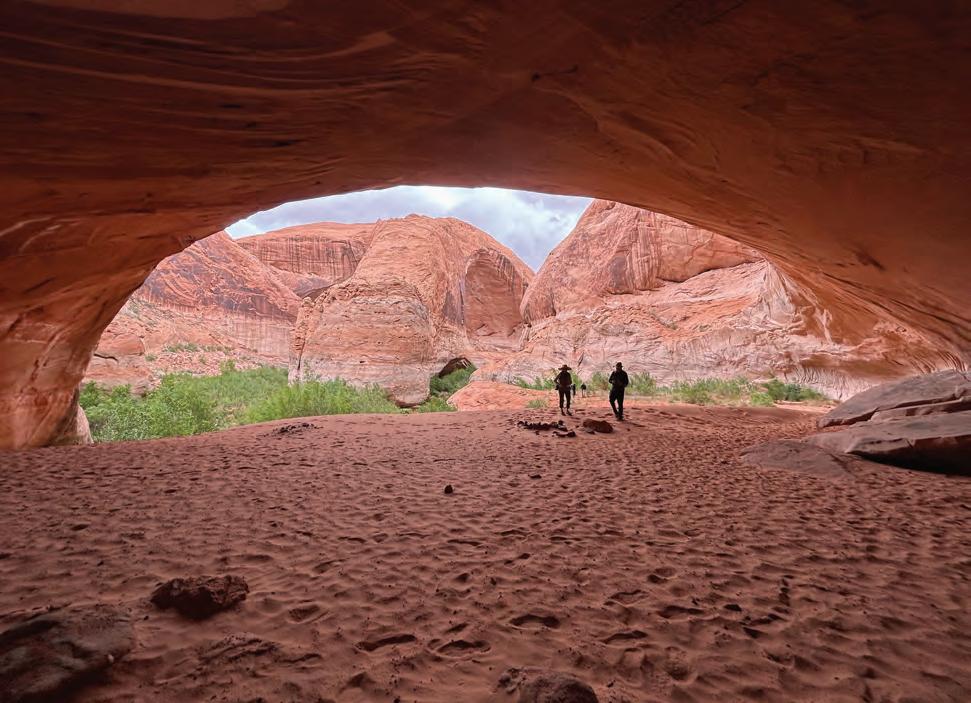
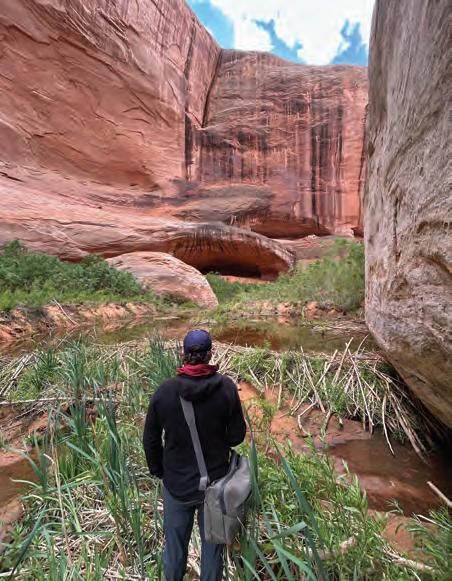
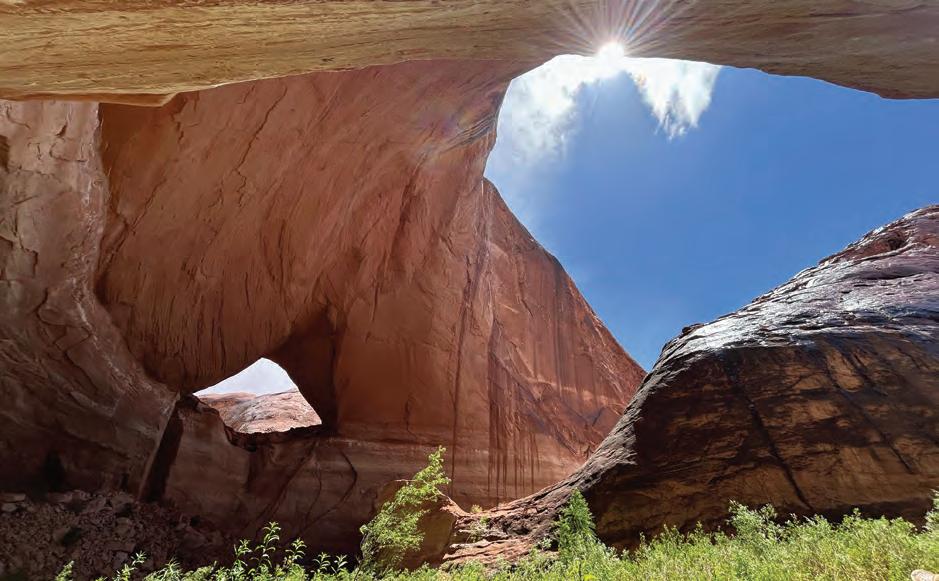
There would be another major benefit to bypassing the Glen Canyon Dam with river-level tunnels. Its namesake, Glen Canyon, would continue to heal. Already, 100,000 acres of land that were once flooded by Lake Powell have been re-exposed. And in the 100-plus side canyons that feed into the Colorado and San Juan rivers, the ecological recovery has been swift.
Native species are outcompeting invasive species along perennial streambeds, and researchers have found that after 15 years of recovery, biodiversity in many side canyons is as rich as areas that were never flooded.
The rivers flow more than 90 miles further than they did in 1999, carving through reservoir sediments to restore habitat for endangered fish, beavers, river otters, bighorn sheep, peregrine falcons and many other species.
But you wouldn’t know any of that if you receive Colorado River updates from major environmental groups. American Rivers, which fundraises off of dam removal across the country, has long opposed upgrading the dam and recently questioned the feasibility of capping Lake Powell’s water level to allow environmental restoration to continue.
The Audubon Society, Nature Conservancy and Environmental Defense Fund joined American Rivers and other groups in submitting lengthy recommendations to the Bureau of Reclamation in March, which made no demand that the federal agency study dam modifications.
The Sierra Club, to its credit, is finally calling upon Reclamation to fully analyze the construction of “new outlet works at or near the river bed level,” after remaining mostly silent on the issue in recent years. The Salt Lake City-based Glen Canyon Institute remains a leader in analyzing plumbing problems at the dam while also documenting the remarkable ecological recovery already underway in Glen Canyon.
Back in the 1990s, when you could swim from the now-stranded beaches in the Overton Arm, there was an environmental argument for draining Lake Powell. But it made sense why that position was not part of mainstream water management discussions—the system appeared to be working.
The reservoirs emptied some during droughts, and refilled when wet cycles returned. The dams were churning out electricity, allowing the federal government to provide power to rural areas at subsidised rates. Millions of people came to lakes Mead and Powell every year to fish, camp and houseboat.
There was some logic to an ostensibly pro-river group like American Rivers taking it for granted that the Glen Canyon Dam, despite the negative environmental consequences of its construction, would be around for decades to come. And it would have been shocking to see the governor of California, Arizona or Nevada demand dam upgrades.
Back then, acolytes of the environmentalist writer Edward Abbey dreamed of a precision earthquake near Page, imagining a future outside the scope of Overton Bay. The middle-of-the-river position was a flooded Glen Canyon.
But in a world where Swim Beach has become Old Swim Beach, the moderate, reasonable and sensible position is now represented by Glen Canyon Institute. The group says new bypass tunnels should be
built around the dam so that the nearly 6 million acre-feet of water trapped in Lake Powell at 3,500 feet can be accessed. But it also proposes installing gates on those tunnels so the reservoir could be used again if 20th-century streamflows return.
Wealthy Imperial Valley farmers in California now see dam modifications as a necessity, not an environmentalist dream. Other groups like Living Rivers in Moab are calling for a full, permanent decommissioning of the dam, a proposal that has also become more reasonable as the Overton Arm has dried up and Lake Powell provides fewer real benefits to water managers.
Conservative organizations like the Blue Ribbon Coalition now stand where monkey wrenchers were once seen to occupy—outside the scope of polite discourse. Last year, the pro-motorized-recreation group released its draft Colorado River Abundance Act, which proposes spending at least $40 billion in federal funds to artificially prop up Lake Powell through the construction of expensive and energyintensive desalination plants—a price tag 40 times greater than the cost of the Glen Canyon Dam itself, even after being adjusted for inflation.
A classic boondoggle, the Blue Ribbon Coalition has proposed taking this costly and complicated path in service of its one major goal: continued reservoir recreation on Lake Powell.
Aridification has come to the Colorado River Basin. What makes more sense? Should we prepare to drain Lake Powell and celebrate the largest environmental restoration in the history of the Southwest? Or should we bury our heads in the sand of Old Swim Beach and pray for rain? CW
Zak Podmore is the author of Life After Dead Pool: Lake Powell’s Last Days and the Rebirth of the Colorado River, which was published by Torrey House in 2024. He lives in Bluff, Utah.







Chef Tyson Peterson hosts an upscale backyard barbecue at Mar Muntanya this summer.
BY ALEX SPRINGER comments@cityweekly.net @captainspringer
My wife and I had the privilege of previewing the Chef’s Garden Table at Mar Muntanya, and I think it’s safe to say this is going to be a must this summer. Hosted by Chef Tyson Peterson and his attentive team, the Chef’s Garden Table is a culinary deep dive into seasonal ingredients as Chef Peterson elaborates on his personal connection to each dish on the menu.
It’s a small affair that takes place on Saturday evenings throughout the summer—only 10 seats are available per evening—which makes the experience all the more intimate. It’s hard not to feel a certain affection toward Chef Peterson and his team as they carefully assemble each dish from ingredients like charcoal grilled-king crab—which is prepared tableside—and foraged morel mushrooms right before your eyes.
The menu will likely change based on Chef Peterson’s vision for each event, but our menu kicked off with a savory tart filled with a creamy, whipped local goat feta. The tart was then topped with English and snap peas, some slivered ramp tops and an extremely generous portion of sturgeon caviar. The butteriness of the tart is evenly sliced by the unctuous flavor of the goat feta, and you get just a tang of allium from the ramps and a nice, sweet crunch from the peas. The caviar brings the whole bite to a luscious crescendo, as its subtle brininess ties the whole bite together. I can’t remember the last time my bouche was this amused.
As we finished our first course, the air filled with the aroma of fresh sourdough bread getting lightly toasted on an outdoor grill. Longtime visitors of Mar Muntanya will recognize the restaurant’s famous sourdough bread—legend says it’s made from a starter that is 150 years old—and it’s served with an almost vulgar amount of locally churned butter. It hides a crop of adorable radishes whose leafy green tops peek out from within the butter’s creamy depths.
This dish was inspired by a story that Chef Peterson shared about a misadventure with a fresh radish on his grandparents’ farm. The root’s bright red color made him think it was some kind of cherry-flavored candy, and he was horrified by the radish’s peppery flavor. To help the young chef understand the beauty of a farm-fresh radish, his grandfather presented him with a slice of bread spread thick with butter and topped with thin slices of radish. After one bite, little Chef Peterson was sold.
Our experience was equally eyeopening. There is something gorgeous and simple about putting a few perfect ingredients together and just letting them shine, and this is a good example of that alchemy. Fresh radishes, grilled sourdough and a heaping pile of butter churned with smoked sea salt is all you need for a memorable bite of food.
One of the culinary motifs of the evening was the flavor of spruce tips; these tender little bunches of pine add a wonderfully sharp botanical flavor wherever they are used. The flavor of spruce tips was front and center with the charred cucumber gazpacho, poured over seasonal garnishes like strawberries—both ripe and unripe for a nice, acidic note—and fresh cucumbers. It’s a cool, refreshing take on gazpacho that sets itself apart with a subtle charred flavor and the snap of new strawberries.
Before moving onto the evening’s pro-
teins, Chef Peterson presented guests with a little gem lettuce heart dipped in basil avocado dressing and sprinkled with sunflower seeds. It was a fresh, crunchy little bite that cleansed the palate while the brightness of the avocado basil dressing prepped the taste buds for the incoming meat dishes.
First among them was the charcoal king crab. Grilled by Chef Peterson tableside, this eye-popping portion of king crab was served with an equally impressive stalk of white asparagus and a few wild-foraged morel mushrooms. Each of the evening’s dishes presented stiff competition, but this was the one that really knocked my socks off. The crab was perfect, and the minted pea puree that served as its bed was a wonderful complement. This was followed by a plate of yakitori chicken served with an amino tare— think soy sauce made from the restaurant’s famous sourdough bread—ramp hearts, piquillo peppers and a luscious mustard foam. It was everything you’d want from a yakitori dish. It had a slightly sweet glaze that caramelized on the grill, and the mustard foam was a light, frothy flavor bomb.
A sliced tenderloin of Kagoshima Japanese BMS 12 Wagyu—that’s the highest beef marbling score available, mind you—came next. This was served with a bit of spruce salt and a bright rhubarb jus. It’s hard to quite capture the buttery texture and flavor of that tenderloin, but it positively sang when it danced with the rhubarb jus on the tongue.
The dessert course featured a quick venue change, as diners were escorted to the far edge of the patio to tables that overlooked the city. We finished the meal with a strawberry-and-cream pavlova served with a yuzu curd and fresh strawberries. The color of the dish mimicked the colors of the beautiful sunset, and I don’t think there was a dry eye in the house by the time the meal was over. CW












2 Row Brewing
73 West 7200 South, Midvale 2RowBrewing.com
On Tap: Elder Berry - Fruited Blonde Ale
Avenues Proper 376 8th Ave, SLC avenuesproper.com
On Tap: White Out - White Stout
Bewilder Brewing
445 S. 400 West, SLC BewilderBrewing.com
On Tap: Pink Boots - Pink Pony Pilz
Bohemian Brewery
94 E. Fort Union Blvd, Midvale BohemianBrewery.com
NEW Releases: Kölsch, Dusseldorfer “Alt” Bier
Bonneville Brewery 1641 N. Main, Tooele BonnevilleBrewery.com
On Tap: Peaches and Cream Ale
Chappell Brewing
2285 S Main Street, SLC, chappell.beer
On Tap: Pie Hole - Strawberry Rhubarb Tart Ale
Craft by Proper
1053 E. 2100 So., SLC properbrewingco.com
O n Tap: El Hefe - Hefeweizen
Desert Edge Brewery
273 Trolley Square, SLC DesertEdgeBrewery.com
On Tap: Edge’s Special Bitter ESB
Epic Brewing Co.
825 S. State, SLC EpicBrewing.com
On Tap: A rotation of 8 new draft beers!
Etta Place Cidery
700 W Main St, Torrey EttaPlaceCider.com
On Tap: 435 Hopped Cider, Pineapple-Passion Fruit Mead
Fisher Brewing Co.
320 W. 800 South, SLC FisherBeer.com
On Tap: A rotation of up to 17 Fresh Beers!
Grid City Beer Works
333 W. 2100 South, SLC GridCityBeerWorks.com
In a Can: Extra Pale Ale
Heber Valley Brewing
501 N. Main Street, Heber City, hebervalleybrewing.com
On Tap: Pearl Diver Saison
Helper Beer
159 N Main Street, Helper, h elperbeer.com
Hopkins Brewing Co.
1048 E. 2100 South, SLC HopkinsBrewingCompany.com
On Tap: Olivetti’s Best
Kiitos Brewing
608 W. 700 South, SLC KiitosBrewing.com
On Draft: Bliss IPA (Extremely Small Batch)
Kiitos Brewing Sugar House
1533 S. 1100 East, SLC KiitosBrewing.com
On Draft: Bliss IPA (Extremely Small Batch)
Level Crossing Brewing Co. 2496 S. West Temple, SLC LevelCrossingBrewing.com
On Tap: Nitro Sinday Pale Ale
Level Crossing Brewing Co., POST
550 South 300 West, Suite 100, SLC LevelCrossingBrewing.com
On Tap: Helles Munich Pale Lager
Moab Brewing 686 S. Main, Moab TheMoabBrewery.com
On Tap: “Big Drop” West Coast Pilsner
Mountain West Cider
425 N. 400 West, SLC MountainWestCider.com
On Tap: Hot Girl Summer (Pineapple Ginger Hard Cider)
Offset Bier Co 1755 Bonanza Dr C, Park City offsetbier.com/ On Tap: DOPO IPA
Ogden Beer Company 358 Park Blvd, Ogden OgdenBeerCompany.com
On Tap: 11 rotating taps as well as high point cans and guest beers
Park City Brewing 1764 Uinta Way C1 ParkCityBrewing.com On Tap: Cold Town - Cold IPA
Prodigy Brewing 25 W Center St., Logan Prodigy-brewing.com
On Tap: 302 Czech Pilsner
Proper Brewing/ Proper Burger 857 & 865 So. Main properbrewingco.com
O n Tap: Concerning Hops - West Coast IPA
Proper Brewing Moab 1393 US-191, Moab properbrewingco.com
O n Tap: Concerning Hops - West Coast IPA
A list of what local craft breweries and cider houses have on tap this week
Red Rock Brewing 254 So. 200 West RedRockBrewing.com
On Tap: Gypsy Scratch
Red Rock Fashion Place 6227 So. State Redrockbrewing.com
On Tap: Grand Bavaria
Red Rock Kimball Junction 1640 Redstone Center Redrockbrewing.com
On Tap: Bamberg Rauch Bier
RoHa Brewing Project 30 Kensington Ave, SLC RoHaBrewing.com
On Tap: Bramble Brown
Roosters Brewing Multiple Locations
RoostersBrewingCo.com
On Tap: Hibiscus Sour
SaltFire Brewing 2199 S. West Temple, SLC SaltFireBrewing.com
On Tap: Huckleberry Blonde Ale
Salt Flats Brewing 2020 Industrial Circle, SLC SaltFlatsBeer.com
On Tap: OPEN ROAD SERIES #3 - Barrel Aged Grand Cru
Scion Cider Bar 916 Jefferson St W, SLC Scionciderbar.com
On Tap: Newtown Pippin | ABV 7.40%
Second Summit Cider 4010 So. Main, Millcreek SecondSummitCider.com On Tap: Prickly Pear Habanero
Shades Brewing 1388 S. 300 West, SLC ShadesBrewing.beer New Batch: Raspberry Pistachio Sour Ale
Shades On State
366 S. State Street, SLC Shadesonstate.com On Tap: Six Wheat Under Hefeweizen
Silver Reef 4391 S. Enterprise Drive, St. George SGBev.com
Squatters Brew Pub
Sugar House 2110 S. Highland Drive, SLC squatterspubs.com On Tap: Salt Lake Brewing Co. Big U Pilsner
Squatters Brew Pub West Valley
3555 Constitution Blvd, West Valley City squatterspubs.com
On Tap: Salt Lake Brewing Co. Acapulco Gold Mexican Lager
Squatters Pub Brewery / Salt Lake Brewing Co.
147 W. Broadway, SLC squatterspubs.com
On Tap: Salt Lake Brewing Co. Emigration Amber Ale
Strap Tank Brewery, Lehi 3661 Outlet Pkwy, Lehi StrapTankBrewery.com
On Tap: “Virgil the Guide” (Italian Pilsner); “Smiles und Sunshine” (German Leichtes Weizen)
Strap Tank Brewery, Springville
596 S 1750 W, Springville StrapTankBrewery.com
On Tap: “Orange Hopsicle” Hazy Pale; “Trouble” American Sour with Mango and Passionfruit
TF Brewing
936 S. 300 West, SLC TFBrewing.com
On Tap: Twelve taps and high point cans available.
Talisman Brewing Co.
1258 Gibson Ave, Ogden TalismanBrewingCo.com
On Tap: Berry Keller (Kellerbier); Save the Fkn Bees (Smoked Honey Kolsch)
Thieves Guild Cidery
117 W. 900 South, SLC thievesguildcidery.com
NEW: Seaside CitadelPineapple and passion fruit cider with a hint of sea salt | 6.5%
Uinta Brewing 1722 S. Fremont Drive, SLC UintaBrewing.com
On Tap: Was Angeles Craft Beer
UTOG
2331 Grant Ave, Ogden UTOGBrewing.com
On Tap: Bar Down IPA
Vernal Brewing
55 S. 500 East, Vernal VernalBrewing.com
Zion Brewery 95 Zion Park Blvd, Springdale ZionBrewery.com

BY MIKE RIEDEL comments@cityweekly.net
@utahbeer
Offset - All Black Nothing: The team at Offset have cultivated a bit of a reputation in the global beer world and that reputation is getting them access to new hotness when it comes to hops. Nelson and Riwaka with a dash of Southern Cross hops make this IPA shine; this ale drenches itself in them. From the moment it hits the glass, this beer screams what it is with a turbid peach-colored glow—no black here that practically radiates juice and softness. It looks like a liquid sunset haze, dense and inviting without feeling heavy.
Then the aroma lands. And wow… this thing is aggressively “New Zealandy,” in all the best ways possible. Huge waves of ripe cantaloupe explode from the glass first, followed by a vivid burst of citrus zest that feels freshly shaved from a pile of overripe tropical fruit. The nose alone feels decadent, like sticking your face into an expensive fruit platter while somebody peels oranges nearby.
But the sip? That’s where things go completely off the rails.
The 7.0 percent ABV texture is unbelievably creamy, giving the beer a plush, almost whipped feel across the palate. Those massive melon notes roll directly into layers of strawberry puree, fuzzy peach skin and bright citrus oils that linger long after each pull. Somehow it manages to be intensely expressive without becoming sugary or exhausting. Every flavor feels saturated yet soft around the edges.
Verdict: This is the kind of IPA that reminds you why New Zealand hops have become such a phenomenon among modern hop heads. It’s loud, juicy, creamy, tropical and unapologetically excessive in the most beautiful way possible. Every sip feels indulgent. Every aroma pull feels ridiculous. Quite honestly, this thing crosses the line from beer into full-blown beer porn.

SaltFire - Jamie’s Huckleberry Blonde Ale: Some beers are engineered in labs of trend-chasing hype. Others happen because somebody genuinely loves an ingredient and refuses to let it go to waste. This beautifully crushable huckleberry blonde ale falls firmly into the second category. When Jamie Asslet received multiple hand-plucked bags of fresh Northwestern huckleberries from her father, the mission became obvious: Turn them into beer. Teaming up with the crew at SaltFire, the idea quickly transformed into a vibrant fruit ale that feels heartfelt, approachable and dangerously easy to drink.
Right away, this purple-hued ale’s aroma delivers exactly what you hope a real huckleberry beer would. The berry character jumps out naturally and vividly without feeling artificial or candy-coated. Oddly enough, there’s a nostalgic gummy bear quality to it—not in a sugary or fake way, but in the soft mixed-berry perfume that triggers childhood snack memories. It’s playful and inviting, while still smelling unmistakably like actual fruit.
The beauty here is in the restraint. So many fruit beers bulldoze the base beer beneath syrupy sweetness or overwhelming puree additions. This one never loses itself. The blonde ale’s 5.0 percent foundation remains very much alive, providing a subtle semi-sweet malt backbone that keeps everything grounded. Light grain notes and soft malt sweetness gently support the fruit instead of competing with it.
On the palate, the huckleberry note remains balanced and refreshing. It’s flavorful without becoming sticky, sweet or exhausting. Every sip carries just enough berry presence to keep things interesting while maintaining the breezy drinkability of a classic blonde ale. The finish is clean, smooth and absurdly crushable.
Verdict: This is the kind of fruit beer that disappears faster than expected because it never feels heavy-handed. Thoughtful, subtle and endlessly drinkable, it’s evidence that Jamie and the SaltFire team absolutely nailed the assignment.
You’ll only find Jamie’s Huckleberry at SaltFire Brewing, while All Black Nothing can be found at Offset’s Park City Brewery, Slackwater or where I found it, at The Bayou.
always, cheers!







BY ALEX SPRINGER | @captainspringer

Squatters Pubs (squatterspubs.com) recently announced that their Park City location Top of Main Brewery and Brew Pub will be closing. The closure comes as the result of the building being sold by its landlord. Top of Main was originally Wasatch Brewery, which opened in 1986, and Top of Main was Utah’s first brewpub and modern brewery. When one keg closes, another one opens, and Squatters’ has also expanded to West Valley with a bar space in West Valley at 3555 Constitution Blvd. The West Valley location is a slight departure from the brew pub vibe that Squatters leans into at its downtown and Sugar House locations, as it’s a designated bar—remember to bring those IDs if you want to check it out.
Wasatch Food Co-Op recently opened Salt Lake City’s first community-owned grocery store in the Milk Block at 416 E. 900 South. The space will be over 6,000 square feet, and will feature groceries from a wide variety of local farms, orchards and manufacturers. This new store functions like a traditional grocery store, but it’s stocked with items that were made in our own back yard. As any locavore will tell you, keeping our money circulating within our local economy is a big step in promoting sustainability and resilience, so this brand-new initiative is definitely worth checking out—especially for those of you who don’t want to get up early for the farmer’s market on Saturdays.
Taste of Red Iguana fans lamented its City Creek closure a few months ago, but the time for the satellite restaurant of Salt Lake’s celebrated Red Iguana has been reborn in Daybreak. Taste of Red Iguana recently opened a location on 5434 Center Field Dr. (Ste. 14), and unlike its fast-casual vibe at City Creek, this location will be a full-service restaurant and feature most of Red Iguana’s classic menu. This means denizens of South Jordan and its surrounding areas are only that much closer to the restaurant’s classic roster of moles. As Daybreak has been growing exponentially, it’s nice to see expansion plans create opportunities for local legends like Red Iguana.
Quote of the Week: “Food to a large extent is what holds a society together.” – Peter Farb








BY MARK DAGO comments@cityweekly.net
Celebrating its seventh year, Kilby Block Party has fast become a can’t-miss experience. Whether you’re a local or visiting from all parts of the world, this annual festival is now the largest all-ages indie music spectacle to ever happen in Salt Lake City.
When music promoters can fuse up-and-coming performers with established and iconic acts ... well, you are not just punching a ticket to an event—you are part of the scene. Nothing compares to the feeling of being surrounded by thousands of people dancing and vibing to the same sounds.
On the way out one night, I reminisced with a festivalgoer who asked, “Remember when this was a block party?” Yeah, them days are long gone.
This thing is a behemoth.
Day 1—Friday, May 15
I’m lucky to have been front and center to check out Gelli Haha and I had just as much fun as I thought I would. The choreography, the props, the whole spectacle of it all was just fantastic. Later, Irish alt-rockers NewDad displayed why no contemporary band does joyful/melancholy quite like they do.
The darkwave band Provoker blurred boundaries all over the place, and Die Spitz’s set got louder and louder as it went on. Their blend of high-velocity punk and hardcore polish is distinctive.
Traditional troubadour image aside, Father John Misty ruled with his wistful rock balladry. I’ve seen him a few times now and I prefer this setting. A large, seated venue isn’t a good fit for him; he’s better in looser confines.
The crowd didn’t need any time to warm up to Modest Mouse, judging by the rapturous applause exploding as soon as they took the stage and after almost every single song. This was my first time seeing them live and they brought a general atmosphere of joyous chaos. All eyes (and phones) were front and center.
Turnstile and their fans are the real deal. This band is part hardcore intensity, part blistering punk energy with a splash of pop sensibilities. Their take on “hit drum very
hard, play real fast, scream into mic” is very refreshing. The pit(s) were quality and the mob of music lovers … well, they ran from the Kilby stage almost to the Lake. No joke.
Turnstile represents all that is great about new, genrebending underground music. Utah says no to the data center. We don’t want it. If you know, you know.
Day 2—Saturday, May 16
I kicked off the second day of the fest checking out the local talent. SLC’s Chalk is one of those “legacy groups” that you need to see live. Incredible music just flows from this garage rock quintet.
Electronic steel wave artist Jill Whit continues to impress. Great lyrics matched by great tunes. This trio always finds new ways to manipulate my ears as one can never be too old for ambient bedroom meditation bangers. Indie rockers The Kilans know what they’re doing at this point. They are a well-oiled machine and know why the crowd turns up. You could tell they were excited to be at Kilby. An absolute joy from start to end.
Automatic is one of my favorites. No formulaic stuff, just creative and exciting. They have the tunes, the attitude and they exude a special kind of cool aura. Lead vocalist Izzy Glaudini seemed to be battling audio issues at the beginning of the band’s set. It’s a good reminder—how things sound sometimes matters more than how shiny they look.
Ben Kweller’s vocals and musicianship are extraordinary. He ripped through a catalog of songs almost in one breath. Rocking alongside Christopher “McLovin” MintzPlasse on bass, the entire band was focused.
I should have brought along a box of Kleenex for Lucy Dacus’ performance. Not for myself, but for the festivalgoers all around me. There are so many layers to her music and her storytelling that it brings many to tears.
The XX has mastered the moody longing melancholia vibes. They’re a close-knit and sophisticated group that can still blast the wax out of one’s ears with live versions of “Crystallized,” “On Hold” and “Islands.” For someone who has been wanting to see this band for ages, I was not left disappointed.
One of the most exciting new(er) bands in the 801 is Bad Luck Brigade. The evolution of the live hip-hop jam band to a more refined product is difficult to pull off … as is playing a keyboard while rapping at the same time. Their funky set indeed proved that they have a little something for everyone.

For Hayley Williams, Kilby Block Party was her first festival as a solo act. She was really appreciative of the crowd and it showed as the quality is there to be heard. She really does have a cracking voice—I feel like I get much more from her stuff live. Williams also paused to check on someone in the crowd (Kudos!).
Ella Marija Lani Yelich-O’Connor (a.k.a. Lorde) was the perfect choice to close out a rainy Sunday evening in the city. It was her first time performing in the Beehive State and you could sense she was enjoying every minute (even with the abridged “Royals”). I absolutely loved the experience—it felt intimate and atmospheric all at once.
“When all was said and done,” a friend of mine said, “the best thing about bands is they don’t play forever.” At the Kilby Block Party, I wish they did. CW




TUESDAYS

WEDNESDAYS








When one thinks of music from Liverpool, England, the first group to come to mind is The Beatles. But the port city on the Mersey River has a long and proud musical tradition, and not all of the artists from Liverpool draw upon the Fab Four for inspiration. Launched in 1978, Echo & the Bunnymen cut a decidedly different figure. The group’s namesake wasn’t a person; according to popular lore (though disputed by the group itself), “Echo” was the moniker given to the group’s drum machine. Echo & the Bunnymen crafted dramatic, haunting post-punk that drew from goth and electronica, but with a sound firmly rooted in the rock tradition. Echo & the Bunnymen scored more than a dozen Top 40 singles in their native England. Stateside they remained a popular fixture of college radio, with memorable tracks like “Rescue,” “The Cutter,” “Bring on the Dancing Horses” and “The Killing Moon.” The group disbanded in 1993, but in 1997 lead vocalist and keyboardist Ian McCulloch and lead guitarist Will Sergeant re-launched the project. Dubbed “More Songs to Learn & Sing,” the band’s current tour focuses on their best-loved material. Tickets for this 8 p.m. concert are $62.40 at ticketmaster.com. (Bill Kopp)

UPCOMING SHOWS
5/21
5/22


5/23 5/24 5/27


Principal SW Engineering Architect (inContact, Inc.; Sandy, UT): Design, develop and architect software projects based on customer specifications. Telecommuting permitted pursuant to company policy. To apply, send resume to marian.alvarado@ nice.com. Ref: 00088156.











The 1994 debut studio LP We Come Strapped by Compton, Calif.’s MC Eiht is a massively underrated record. I remember picking this up on its first day, and “All for the Money” was on loop on my decks for weeks. Now, over three decades in the game, Aaron Tyler (a.k.a. MC Eiht), is a survivor (errr) thriver in a dangerous sport. Everything he once was is still here, only now he’s a wizened OG. “A lot of stuff is glorified today in young music. So, my take on it is it’s just the trendy shit. It’s what they see, what they hear. It’s what they think is popularized.” Eiht told Drink Champs. “It’s what they think they’re gonna get a fast buck off of.” Sure, back in the day a handful of competent rappers might have had a hit with one of the classic G-Funk-era tunes or even one of the many “poppier” floor-fillers that artists have had later in their careers. But would they have iconic hip-hop touchstones like “Streiht Up Menace,” “Growin’ Up in the Hood” and the Kendrick Lamar collab “m.A.A.d. City” on their resume? If you are just realizing that you haven’t seen any good live emceeing for ages, change that. Doll-e Girl, Cam Da Guapo, WoWo, RVS, Trippen3K, JV41, Kaydo, Ortega The Omega & DJ Dreama open. Catch these acts at the ’90s Bday Bash at Liquid Joe’s on Friday, May 22. Doors at 8 p.m. Tickets for the 21+ show are $22.39 and can be found at 24tix.com. (Mark Dago)


Friends

NIGHTLIFE |CONCERTS
Go








In the early ’90s, Brazilian heavy metal band Sepultura was one of the most exciting live acts on the scene. They also have quite the discography to boot. Their LP Beneath the Remains is the logical endpoint of professional-sounding thrash metal of the late ’80s: a lean, clean, percussively-intensive riff machine. It’s a good entry point for beginners, who can then work their way back to the all the messy, sloppy glory of Morbid Visions/Bestial Devastation, and then onto the transitional Schizophrenia. Still, Chaos AD is peak Sepultura for me. NYC’s hardcore rockers Biohazard, meanwhile, are trailblazers in their own right. Their amalgam of punk/metal/hip-hop (a.k.a nu-metal) helped break down boundaries between “urban” and “rock” musical styles, but you could go even further and say that it might have been the first guitar-based movement in decades to genuinely break down racial boundaries when it came to fan-base as well. While hip-hop group Onyx is sitting this part of the tour out, I am hoping Biohazard performs the title track off of perhaps the greatest movie soundtrack of all time, Judgment Night. If you haven’t heard, it is the time capsule, capturing a moment when the fusion of rap and rock felt like a bold, electrifying exit off the mainstream path. Exodus and Tribal Gaze open. Catch these musicians on the Celebrating Life Through Death Final North American Tour at The Depot on Friday, May 22. Doors at 5:30 p.m.; show at 6:30 p.m. Tickets for the all-ages event are $46.50, and can be found at ticketmaster.com. (Mark Dago)
German DJ and producer duo Jonas Hellberg and Leonard “Leo” Hans Victor Brede first teamed up in Berlin in 2021. When they debuted at the Audio-Visual Arts (AVA) Festival, they achieved over 100k views for their Boiler Room set playing a remix of “Teenage Dreams” that helped them gain rapid popularity and the international success to properly launch their career. Songs like “Destiny of the Moment,” “Eternal Euphoria” and more recent releases like “You Are The Sun, I Am The Sky” and “Forever” contain the
pop-infused techno Hellberg and Brede are known for. To contrast DJ Heartstring, Mutiny Music Collective will also host the dance production duo Ben Clarke and Jesse Morath, known as X CLUB. The London-based artists are a mix of early ’90s techno and future drum and bass. They play hard and fast tracks like “You’re Not a Popstar” on the album Stay With Me. X CLUB also has plenty of popular singles, like “Only If U” and “Block Rockin.” For the first time, both duos are playing in Salt Lake City as solo acts and a back-to-back at the end of the night. This event takes place on Sunday, May 24 at Boxpac Project. This is the second-to-last show taking place at Boxpac by Mutiny Presents before they move to Granary Live, so do not miss out! Tickets cost $46.74 for this 21+ show and can be found at eventim.us. (Arica Roberts)
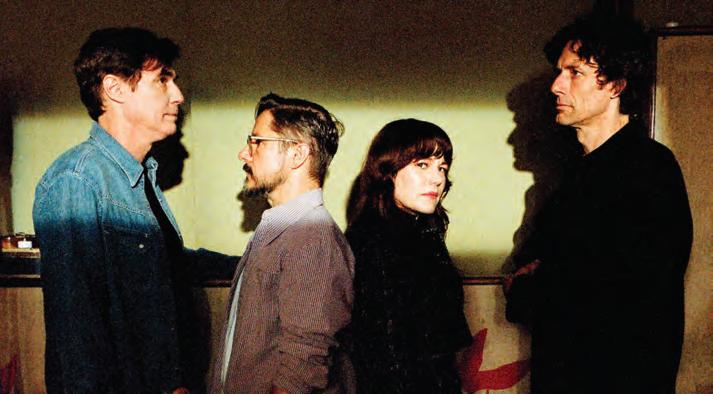
From late-night conversations in your bedroom to the uncontrollable sobbing on the main stage, Rilo Kiley has been there for all brokenhearted teenagers and millennials since 1998. Made up by Jenny Lewis, Blake Sennett, Jason Boesel and Pierre de Reeder, Rilo Kiley is back in Salt Lake City as part of a reunion tour, bringing a resurgence of the early 2000s with them. The band is incredibly cinematic, from the string instrumentations to the gradual rollercoaster in storytelling. It is dramatic and relatable from start to finish, becoming an instant replay in any season. Listening to each track allows for memories from yearbook signings and one’s first love to roll back suddenly, without warning. It is the ultimate coming-of-age project, and for people who have found themselves lost or stuck in a crisis, Rilo Kiley is there to keep the blues at bay. More Adventurous and The Execution of All Things are the band’s most popular releases, with tracks like “A Better Son/Daughter,” “Portions For Foxes” and “The Execution of All Things” lending themselves particularly well in the mixtape for the purest form of early adolescence. If there is anything to control the tide from crashing down over the life ahead of you, it’s the vocals and lyricism of Lewis. Catch Rilo Kiley during their “Really f**ing on Tour” at The Complex on Monday, May 25 at 8 p.m. Doors at 7 p.m. Tickets are about $65 and can be found at axs.com. (Laney Hansen)
BY ROB BREZSNY
ARIES (March 21-April 19)
If you’re a professional photographer, now is an ideal moment to invest in the higher-end lens you know would expand your best work. If you’re a committed chef, it’s a perfect time to spring for a precision knife set that elevates your craft. If you’re a devoted yoga or meditation teacher preparing a new series, you might decide to purchase an upgraded sound system to share your vocal offerings more crisply. And if you are none of the above, consider this your sign to obtain a key instrument or tool that will help you move to the next level of professionalism in the work you’re called to do.
TAURUS (April 20-May 20)
When we hear people described as having fertile imaginations, we may assume they are artists, writers or musicians. But the truth is that many creative visualizers are engineers, city planners, inventors and the like: those who design and build functional wonders. Of this group, you Tauruses make up a disproportionately high percentage. Your tribe is often most imaginative when vitalizing concrete details and transforming practical matters. In the coming weeks, this will be a vibrant X-factor in your relationship with the world.
GEMINI (May 21-June 20)
When many people reflect on their early years, they focus on the alienation and wounds they endured. Few recall, in vivid detail, the moments of joy, triumph and breakthrough. It’s a symptom, I suppose, of our era’s compulsive cynicism, and not necessarily an accurate account of the past. So many good things happened, too! This isn’t to dismiss the real pain that shaped us in our tender years. Still, I want you to know that you are in a season when it’s essential to recognize and celebrate the blessings of your beginnings—the fun, guidance and grace that helped you flourish. Update your gratitude!
CANCER (June 21-July 22)
Of all the zodiac signs, you have the most potential to cultivate robust emotional intelligence that’s helpful in practical situations. More than everyone else, your feelings are less likely to render you vulnerable and fragile and more likely to make you a powerhouse. The coming weeks will be prime time to deploy these talents to the max. I encourage you to summon gleeful exuberance as you provide your sensitive, heartful nurturing. Practice the ingenious art of keeping the world emotionally literate and spiritually alert.
LEO (July 23-Aug. 22)
I am pleased to predict that you will be less egotistical and narcissistic in the coming weeks than you have ever been in your life. In saying that, I don’t mean to imply that you’re any more egotistical and narcissistic than the rest of us. I’m simply saying you can get a liberating reprieve from the excessive pride and selfishness that regularly debilitates us all. Congratulations, Leo! This grace period should enable you to deepen your attunement with your soul’s blueprint, the design of destiny you chose before birth. I bet you will enjoy a period of vibrant, exciting tranquility.
VIRGO (Aug. 23-Sept. 22)
Consider this a friendly heads-up to your inner critic, your gloomy side, and any voice in your head that expects too little from life. Upcoming astrological omens are influencing me to predict a stream of auspicious omens and fortunate events. So if you’d rather cling to tired stories about not being good enough or strong enough, you might want to skip my forecasts for a while. But if you’re ready to vivify your faith in your power to eagerly create what you desire, stay tuned. Karmic blessings are coming.
LIBRA (Sept. 23-Oct. 22)
To be blunt, dear Libra, I think you need soul medicine that’s most available in frontiers, borderlands and thresholds. Some of these might be bright, shiny places, and others may be akin to mazes and tunnels. Please keep in mind that your main motivation, as you seek adventures in the
outskirts, should be the quest to have fun as you blow your own mind. For the sake of your lust for life and joie de vivre, you really must explore power spots untouched by trivia and pettiness: sanctuaries where vastness, freedom and raw vitality can wash away at least some of your fixations and habits.
SCORPIO (Oct. 23-Nov. 21)
Giant Pacific octopus dens are identifiable by the “gardens” of debris outside. They include shells and bones, arranged like ornamentation around the entrance. Are the creatures trying to decorate? Scientists don’t know. But it’s clear they are leaving evidence of their appetites. The result is distinctive, artistic and revealing. With this scenario as your metaphorical meditation, Scorpio, I invite you to look at what you have been pursuing and consuming in recent months. Contemplate the stuff piling up in your sphere. What do your finished experiences reveal about your quest for meaning? Does this pattern reflect your deepest intentions? Is this who you want to be? Make sure the story you’re telling about yourself is the right one.
SAGITTARIUS (Nov. 22-Dec. 21)
Advising a Sagittarius to be patient is like asking a bonfire to burn slowly and politely. Still, I will give it a try. Because I love you, I will dare to be frank. So here goes: If you want to align yourself with astrological currents, practice being reverently at ease with life’s madness as you watch and wait. See if you can take genuine pleasure in resting within a field of calm trust. Imagine, with fearless delight, the rewards that will find you as you nurture a steady, unhurried confidence in your intuition, which will ultimately tell you exactly what you need to do.
CAPRICORN (Dec. 22-Jan. 19)
In 1994, immunologist Polly Matzinger revolutionized her field with a radical theory. She discovered that our immune systems don’t focus on distinguishing “self” from “nonself,” but rather responding to threats. The body puts less emphasis on asking “is this me?” and more on “is this harmful?” Her breakthrough transformed our understanding of immunity, autoimmune disease and transplant rejection. According to my analysis of the astrological riddles, you Capricorns could benefit from a similar adjustment. Don’t worry about whether any particular influence harmonizes with your identity or aligns with your history. Instead, ask, “Is it nourishing or harmful? Supportive or useless?” As you refresh your approach to guarding and protecting your precious self, new options will become visible.
AQUARIUS (Jan. 20-Feb. 18)
According to my interpretation of the signals, you have run into an obstacle to your creative flow, or may soon do so. Though this could feel discouraging at first, I think it’s a promising sign. It indicates a hidden bug is surfacing. An inner saboteur is no longer operating in the shadows. You’re being given the opportunity to repair an unseen energy leak that has been sapping your vitality. To illuminate this process, consider the wisdom of author Joyce Carol Oates. She says that writer’s block arises when a writer subconsciously believes that what they’re trying to create is false, misguided, or harmful to themselves, which results in a temporary creative paralysis. Be brave and relentless in hunting down the glitch in your self-love, Aquarius.
PISCES (Feb. 19-March 20)
Maybe you’ve been having thoughts like this: “I’m too scrambled to do what’s necessary to get unscrambled.” Here’s another snag that may be tangling your mind: “I’m too mixed up to know what questions to ask to sort out my confusion.” If this is true, Pisces, I’m here to offer advice. Imagine calling a timeout on the whole noisy world and slipping free of the habitual trance. Consider retreating to a sanctuary where time doesn’t oppress you and complications subside. Let your mind be empty, give your ambitions a rest, and immerse your tender attention in the deepest part of yourself you can find.
Data Engineer (DE-LMY) in Midvale, UT. Telecommute permitted from anywhere in the U.S. Work on cross-functional agile SCRUM team to deliver & support master data mgmt capabilities to the organization. BS followed by 5yrs prog rltd exp. Send resumes to Zions Bancorporation at ZionsCareers@ zionsbancorp.com. Must reference job title & code in subject line.
Business Systems Analyst III (BSA3-SW) in Midvale, UT. Telecommute permitted within area of intended employ 2 days week. Admin ID Access Mgmt Solution w/understanding of OATH2, OIDC & SAML ID patterns. BS followed by 5yrs prog rltd exp or MS+3yrs. Send resumes to Zions Bancorporation at ZionsCareers@zionsbancorp. com. Must reference job title & code in subject line.
Jeuveau and Xeomin $8 a unit
MURRAY UT 84117 801-272-3900 WWW.ANEWDAYSPA.COM







WITH BABS DELAY
Broker, Urban Utah Homes & Estates, urbanutah.com
The other day, I went out to lunch with friends across from IHC’s megahospital in Murray to a chain restaurant, not of my choosing. The food was horrible, tasting like it had been warmed from a SYSCO bag of product produced in San Diego and shipped to chains around the west. I’ve generally seen a full parking lot at this place, but at noon there were only five occupied tables in a restaurant that seats 144.
I’ve noticed other restaurants closing as of late. What’s up? Simply, the economy is beating up both consumers and businesses alike.








For example, according to the USDA, the U.S. beef cattle herd has reached its lowest size since Harry Truman’s administration (1945-1953), with total cattle and calves at 86.2 million head as of January 1, 2026—the smallest inventory in 75 years. The beef cow herd is even more dire, down 1% to 27.6 million head, the lowest since 1961.
Predictions are that a small calf crop and tight feed supplies will push beef prices higher this year, which explains in part why ground beef is at $6 a pound these days. Other factors, such as drought in much of the country, is causing some ranchers and farmers to cull their herds. Plus, the price of fertilizers and gas is rising drastically.
If you like a good steak, then you may also like a garlic-based chimichurri sauce on top, or garlic fries with your slab of meat. There’s a garlic shortage outlook for this year due to (again) weather, production and supply chain issues. California produces about 90% of the U.S.-grown spicy bulb. But garlic powder, granulated garlic and chopped garlic (think “jarlic,” the chopped stuff in a glass jar) for most food brands is produced in China. China produces more than 10 billion pounds of garlic a year, grown by 1.2 million farmers there.
I gleaned from several websites’ predictions for more shortages this year. I’m not trying to scare anyone, just sharing some facts based on weather, labor and supply issues affecting food.
For example, olive oil production is at a low because areas in Spain, Greece and Jordan have experienced both massive drought, heatwaves and heavy rainfalls. Increased demand by people on Keto/high protein diets has seen massive demand for low-carb alternatives like frozen veggies, and farmers have also been victims of extreme weather and poor crop yields. The same is true with spices like black pepper and cumin, and there were some early frost kills in the southern U.S. that have affected citrus production.
The supply chain has shifted more toward California for our lemons, limes, oranges, etc. You may have noticed that after 80 years, Minute Maid orange juice concentrate has been discontinued. Grain harvests have been in chaos and profits at your favorite cereal producer (General Mills) were down 32% last year, causing some products to be discontinued. Happy news though—some cereals will bring back prizes in the boxes later this year to lure you into buying their product. ■
1. 1996 gymnastics star Kerri
6. Opposite of fore, at sea
9. Senate hearing channel
14. “Rice-___, the San Francisco treat”
15. Short story?
16. Airy courtyards
17. Broadcast signal carrier
19. Very resonant
20. Aussie verb ender
21. Habit that’s best broken
22. Occupy a tent
23. Name of multiple British earls (one of which changed his name slightly and wrote the first Gothic novel)
28. Question’s opposite (abbr.)
29. “___ gratia artis” (MGM motto)
30. Sat ___ (GPS system)
31. Part of G&T
32. Threesome
34. Game before a final
35. Soundproofing square
39. Shouts of inspiration
40. Deli loaves
41. Grind
42. Oscar-winning Telugu-language film
43. 2006 World Series winners, on scoreboards
44. “Mad Men” protagonist Draper
45. Electronic identifier embedded in sound files to protect copyright
51. ___ wat (national dish of Ethiopia)
52. Fashion designer Cassini
53. Shortest English sentence with a subject and verb
55. Between 0 and 90 degrees
57. Series of Nintendo microgames featuring a squiggly-mustached villain
59. Breads for gyros
60. That thing, in Spanish
61. Consumed
62. Meeting on the sly
63. Pig pen
64. Actresses Meg and Jeri
DOWN
1. Rajasthan wrap
2. Refuse
3. Event involving big bucks?
4. Corn opener?
5. Actor Ribisi of “Avatar: Fire and Ash”
6. Ancient counters
7. “Hawaii ___” (CBS police drama)

8. Boot end
9. Conspiratorial groups
10. Put your foot down
11. Person arguing in favor
12. Goal
13. No vote
18. They may be about you
22. Christmas song
24. Fridge invasions
25. Banshee’s sounds
26. Gold fabric
27. Immorality
31. Sentry’s job
32. Choreographer Tharp
33. “Call Me Maybe” singer Carly ___ Jepsen
34. Hot spot?
35. Singer Bareilles
36. “No ___ Traffic” (street sign)
37. “In a day ___” (the really high lyric of “Take On Me”)
38. End-of-year school event attendee
43. Most peeved
44. Three, in Trier
46. Minuscule amounts
week’s answers


Wait, What?
How does a car from a 1980s action-adventure TV series end up with a speeding ticket in Chicago in 2026? That’s what officials at the Volo Museum—home to a replica of KITT, the car from Knight Rider, starring David Hasselhoff—would like to know. On May 13, the Associated Press reported that the museum recently received a $50 speeding ticket for a car matching KITT’s description going 36 mph in a 25 mph zone in Brooklyn on April 22. The black Trans Am even had the California license plate KNIGHT, the same as KITT on the show, and the museum’s replica, which is unregistered. “The fact that we’re legally tied to a movie prop is interesting,” said Jim Wojdyla, the museum’s marketing director. “We’re known for having our Hollywood cars from TV and movies, but I have no idea how we got registered from a ticket in New York to the plates in California to the Volo Museum in Illinois. We’re still trying to figure it out.” Amateur replicas of KITT are not uncommon—a Facebook group for people who own one has about 19,000 members—and five original KITTs remain, out of the 20 built for the show. Volo Museum officials are challenging the ticket but haven’t lost their sense of humor over the situation.
“Does anyone have Hasselhoff’s number?” they posted on social media. “He owes us $50!!!!”
The Bear(s)
■ Over the last year, 13 people have been killed by bears in Japan, with an additional 50,000 sightings recorded. The bears roamed near schools and broke into homes, supermarkets and resorts. Now, Japanese company Ohta Seiki has come up with a unique solution to the country’s bear problem: robot wolves. Yahoo! News reported on May 13 that orders for the animatronic “Monster Wolf” are up by so much that the waiting list is a few months long. “We make them by hand,” company president Yuji Ohta said. “We cannot make them fast enough now. We are asking our customers to wait two to three months.” The “wolves” are made of pipe frames attached to speakers and covered with artificial fur. They can make up to 50 different sounds, including recorded human voices and electronic noises, and their eyes and tails flash with red and blue LEDs. Orders have come mainly from people who work in rural areas, such as farmers, construction workers and golf course operators. The wolf apparatus starts at $4,000.
■ Meanwhile, in Tennessee, Gatlinburg police were called upon to free a black bear that had locked itself in a bathroom at a downtown Quality Inn and Suites, Fox News reported on May 11. In the wee hours of the morning on Friday, May 8, a hotel employee called for help because they “observed a bear enter an exterior bathroom and lock itself inside,” according to the police report. When police arrived on the scene, one officer carefully opened the bathroom door while the other beat sticks together to draw the bear out. In the end, the bear ambled out, seemingly unbothered, leaving behind only minor property damage to the tune of $50.
I’m Lovin’ It
The Minor League baseball team the Charlotte Knights had an unusual celebrity lend their pipes for the national anthem at a recent game, Fox News reported on May 8. A May 1 Instagram post from the team shared a clip of fast-food chain mascot Ronald McDonald singing “The Star-Spangled Banner.” The beloved clown also threw the ceremonial first pitch before a Philadelphia Phillies home game against the Texas Rangers on March 28.
Kacy Claassen, 28, was arrested in New York for endangering the welfare of a child, trespassing and criminal impersonation, Oddity Central reported on May 8. Her crime? Impersonating a 16-year-old and enrolling in Westchester Square Academy in the Bronx. Claassen, who went by the name Shamara Rashad and attended classes for two weeks before she was caught, recently moved to New York from Ohio. Acting on a friend’s suggestion, Claassen donned a teenage persona in hopes of qualifying for more social assistance. Her disguise was uncovered when school officials found her social media profiles, which showed her holding a baby that she referred to as her daughter, and listed Claassen’s birth year as 1997. Claassen was arrested and released and is pleading not guilty to all charges. She is expected back in court on June 15.
Two women are facing federal charges after getting into a slap fight on a Carnival cruise in March, Fox 10 reported on May 13. During their return voyage from the Bahamas, Tonya Nelson, 58, and Lisa Horace, 51, were in line to settle their cruise accounts. Nelson told investigators she was trying to be helpful when she suggested to Horace and Horace’s husband that they were in the wrong line. According to Horace’s statement, she ignored Nelson, but took action after Nelson kept touching Horace’s husband’s shoulder. Horace said that Nelson threatened to slap her, so she slapped Nelson back. The fight escalated from there, with crew members stepping in to separate the two. The women, who did not know each other before the encounter, were issued federal citations for simple assault. The women report that they have both been banned from Carnival cruises and have lost their Diamond member status. “Things happen sometimes on a crowded ship,” said Buzz Jordan, Nelson’s attorney.
After decades of playing the same numbers, Stephen Huesgen, 56, of Fraser, Michigan, finally struck it rich. UPI reported on May 13 that Huesgen won the $1 million prize in the April 22 drawing using numbers he received from, of all places, a Zoltar fortunetelling machine. “About 30 years ago, I was in Las Vegas and got a fortune from a Zoltar machine,” Huesgen said. “On my fortune, there was a set of lucky numbers, so I have been playing those numbers on lottery games ever since.” Huesgen plans to use the money to pay off loans, travel and save for retirement. “The morning after the Powerball drawing, I saw an email from the lottery, which is when I found out I’d won a $1 million Powerball prize,” he said. “I yelled to my wife: ‘Is this real?’ I don’t think this is going to fully hit me until I cash the check!”
Well, Well, Well, How the Turntables ... Motorists in France are driving more carefully after a warning from police: Watch out for inebriated wildlife.
UPI reported on May 13 that a social media post from the police in the Saone-et-Loire region of northcentral France showed deer running around erratically after consuming fermented fruit. “Not all road users are sober,” the post said. “If Bambi overindulges on the forest aperitif, it might not be the time to drive like you own the road.” Drivers were urged to keep an eye out for “sudden crossing, inconsistent trajectory, immobilization on the road [and] disorderly escape” from local wildlife.