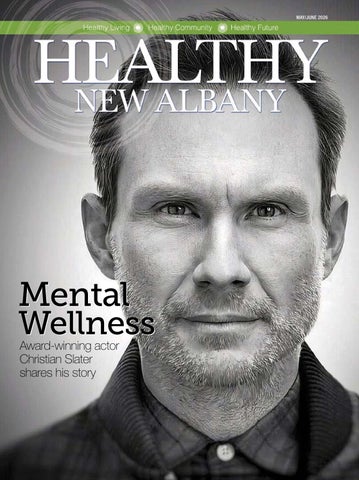
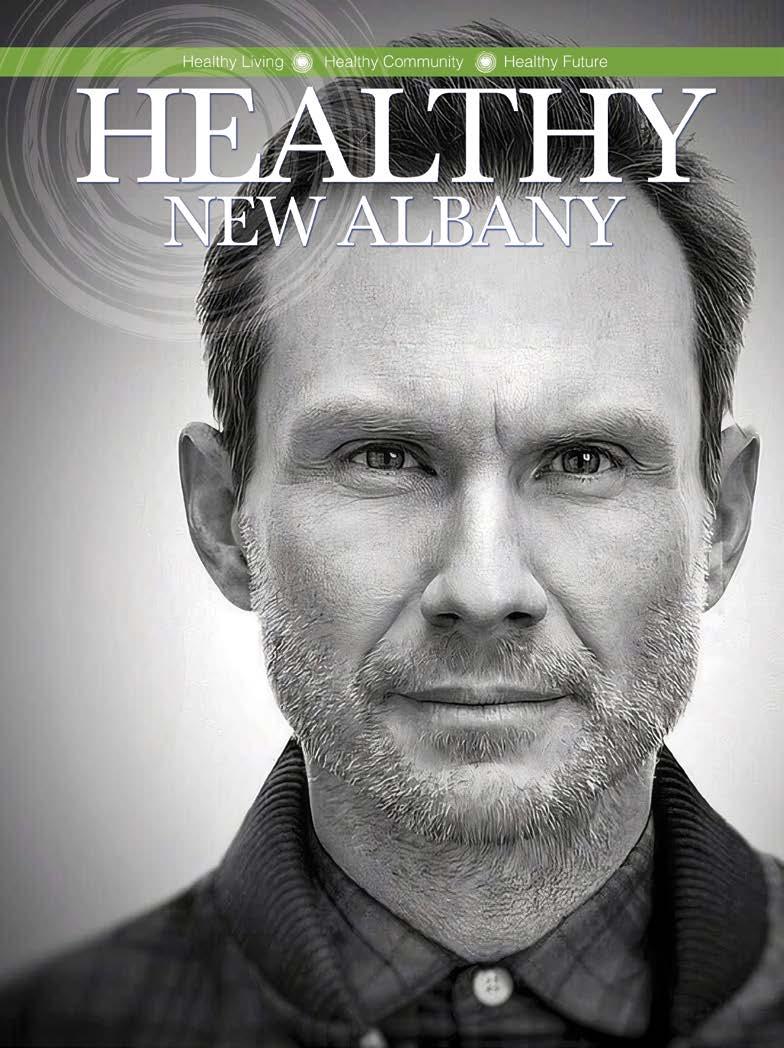
Mental Wellness Mental Wellness
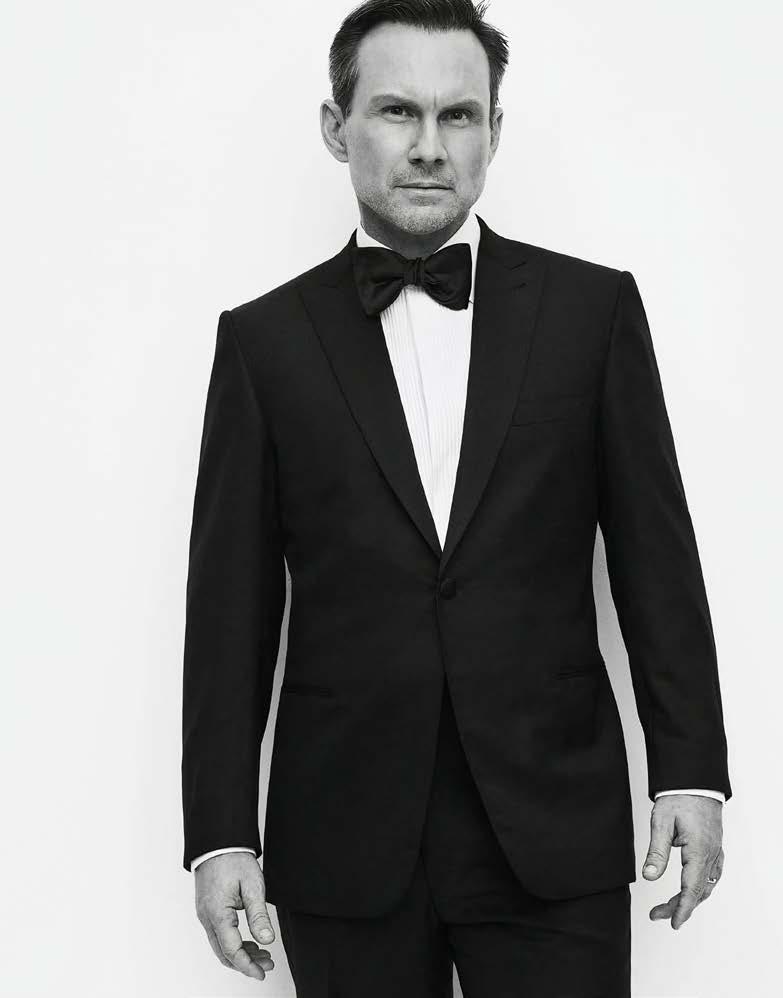
Award-winning actor Christian Slater shares his story
Community
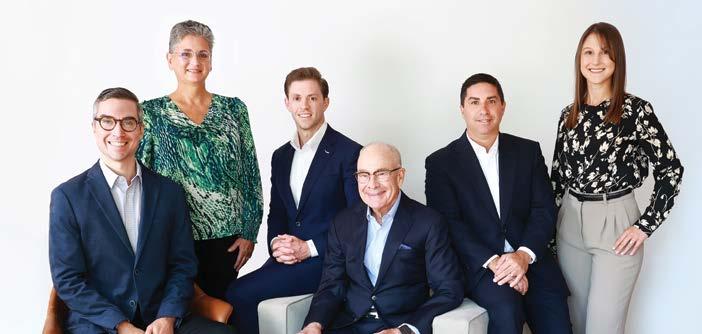
UBS Financial Services
180 Market Street, Suite 200 New Albany, OH 43054 614-939-2202 newalbanywealthpartners@ubs.com
Kevin Snead, CFA
Vice President




1335 Dublin Rd. Suite 101C Columbus, OH 43215
614.572.1240 www.cityscenecolumbus.com
Gianna Barrett
Dave Prosser
Isabella Gaydosh-Bruce
Kathleen K. Gill
Megan Brokamp, Jane Dimel, Rachel Hanz, Ella Jay
Katie Allen, Melissa Braithwaite, Korrigan Craddock, Amanda Stevens, Dylan Telerski
Katarina Guy, Sandhya Kannan
Maggie Valentine, Rose Whaley
Rae Moro, Nick Pearson, Sarah Reese
President
Chief Creative Officer
Business/Office Manager
Editorial Advisor
Editors
Contributing Writers
Editorial Assistants
Media & Marketing Advisors

Rachel Haugk
KJ Coit
Denise Dahl
Dylan Telerski
Pamela Conn
Executive Director
Mission Director
Development Director
Marketing and Communications Manager
Director of Volunteer and Corporate Engagement
The Publisher welcomes contributions in the form of manuscripts, drawings, photographs or story ideas to consider for possible publication.
Enclose a SASE with each submission or email rkaras@cityscenemediagroup.com. Publisher does not assume responsibility for loss or damage.
The appearance of advertising in Healthy New Albany Magazine does not constitute an endorsement of the advertiser’s product or service by the City of New Albany or Healthy New Albany, Inc.
Healthy New Albany Magazine is published in January, March, May, July, September and November. Subscriptions are free for house holds within New Albany-Plain Local Schools. For advertising information or bulk purchases, contact Gianna Barrett at 614-572-1255 or gbarrett@cityscenemediagroup.com.
No part of this publication may be reproduced without the written consent of the publishers. Healthy New Albany Magazine is a registered trade mark of CityScene Media Group. Printed in the U.S.A. ©2026
www.healthynewalbanymagazine.com

Preschool Enrollment

For Children Ages 2½–5 September–May
Our nurturing preschool promotes:
• Kindergarten readiness
• Self-expression & creativity
• Physical development
• Social & emotional growth
• Prayer and Bible stories

Outreach Christian Preschool ocpnapreschool@gmail.com newalbanyumc.com/preschool Call 614-855-4100 to register today 20 3rd Street, New Albany, OH 43054

NOURISH
Spring & Summer 2026 Program Listings
150 W. Main St, New Albany, OH | healthynewalbany.org
The Art of the Bowl (Ages 16+)
Saturday, May 16 | 3:00-5:00 PM
The Art of Chai: Sip, Blend, and Connect (Ages 10+)
Saturday, Jun 6 | 1:00-2:30 PM
Plant-Based Coastal Cuisine
Tuesdays | Jun 9-Jul 28 | 6:00-8:00 PM
Sourdough: Starter to Loaves
Sunday, Jun 14 | 2:00-4:00PM
Kitchen Blueprint: Basics for Independent Living (Ages 16+)
Tuesdays | Jun 16-Jul 21 | 6:00-8:00 PM
The Roaming Teacup: Cup Full of Blooms (Ages 16+)
Saturday, Jun 20 | 2:00-4:00 PM
Bad & Bougie Mocktails: Functional Mixology (Ages 21+) Saturday, Jun 27 | 11:00AM-12:30 PM
The Roaming Teacup: Tea Lights & Delights
Saturday, Jul 11 | 4:00-6:00 PM
Roll With It: Sourdough
Cinnamon Rolls
Sunday, Jul 12 | 2:00-4:00 PM
KNOWLEDGE
Breastfeeding Basics: Preparing for Success
Saturday, Jun 6 | 9:00-11:30 AM | FREE
Community Is Stronger Than Cancer
Monday, Jul 13 | 6:00-7:00 PM | FREE
Scan for program information and registration
MOVEMENT
The Play Spot (Ages 1-5) Friday, May 29 | 10:00-10:45 AM
Chair Yoga Mondays Mondays | Jun 1-Aug 24 | 10:00-11:00 AM
Be Strong (Boys Grades 4-7) Mondays | Jun 1-Jun 29 | 12:30-1:30 PM
Chair Yoga Wednesdays Wednesdays | Jun 3-Aug 26 | 4:30-5:30 PM
Ballroom Dance Thursdays | Jun 4-Aug 20 | 6:00-7:00 PM
Chair Barre: Balance & Strength Fridays | Jun 5-Aug 28 | 10:00-11:00 AM
Music Together (Ages 9 mo - 6 yrs) 9:30, 10:30, or 11:30 AM sessions available Tuesdays | Jun 9-Jul 21
The Play Spot: Summer Series (Ages 1-5) Wednesdays | Jun 10-Jul 1 | 10:00-10:45 AM
Introduction to Tai Chi Fundamentals Friday, Jun 12 | 10:30-11:30 AM
Lift Like a Girl (Grades 8-12) Tues+Fris | Jun 16-Jul 17 | 8:30-9:30 AM
Tai Chi: From Skill to Mastery Wednesdays | Jun 17-Aug 26 | 10:30-11:30 AM
Somatic Exercise for Mind-Body Wellness Wednesdays | Jun 17-Jul 8 | 6:00-7:00 PM
NATURE
NATURE
Plant-Based Skin Care: Make N Take Experience Sunday, May 17 | 2:00-3:30 PM
Foundations of Better Sleep
Sunday, Jun 7 | 2:00-3:30 PM
Natural Solutions for a Toxic World Tuesdays | Jul14-Aug 18 | 6:00-7:30 PM
Photo by Ray LaVoie
Getting Ready for My ZZZZ’s
Iwill admit that my health behaviors sometimes present an image that I am a model for others to emulate. I might be seen exercising whether at a fitness facility or walking along the miles of pristine trails throughout the community.
Let me clarify fact from fiction. Yes, I don’t smoke or lead a sedentary lifestyle, but that does not provide an overall synopsis of the many underlying facets of my health habits. What you see does not account for my lack of self-enhancing behaviors.
When I reviewed Korrigan Craddock’s article, Beyond Counting Sheep, I felt as if the health fairy stood above me, pricking my head with the sharp point of one of the stars on her wand along with her sneering eyes and chastising me for my lack of embracing a pattern of healthy sleep behaviors.
Rather than elaborate on the valuable and well-written facts presented in Craddock’s article, I thought it would be best to share some thoughts often not addressed when perusing the sleep literature.
“A well spent day brings happy sleep.” Attributed to Leonardo da Vinci, his insightful message remains as applicable today as it was centuries ago. How my day goes determines the quality of my night’s sleep.
It’s not unusual to feel overwhelmed on occasion with multiple tasks at hand. Finishing one task before going on to another elicits a sense of accomplishment. I feel good and that allows me to move to the next challenge. But as important, it relaxes me and facilitates the coming night’s rest.
Be careful about your pre-bedtime habits. My iPhone and Apple Watch are silenced after 9 p.m. In the past this was not the case, but I’ve found this helpful to avoid work-related and personal calls and of course the many spam notifications I receive.
However, I do have a poor bedtime behavior. I like to watch sports. As I write this article, I am glued to the TV watching March Madness. My excitement increases when close games approach an undetermined ending. When bedtime finally calls, I have difficulty falling asleep. If this is a problem, watch a boring movie instead. It’s a sleep enhancer for me.
One topic often not addressed is the relationship between physical health and its impact on sleep quality. If your sleep is interrupted because of the need to urinate at night, don’t feel alone.
After age 50, half of all adults wake up for a bathroom visit. Two-thirds of women over 40 wake up at least once per night and 21 percent of men in their 20s have nocturia, meaning they awake at least two times per night. As men age, the number of times they wake up to urinate increases significantly.

Any number of reasons exist for nighttime urination and concerns should be addressed by a physician. Knowing the reasons for night-time urination may help with sleep.
Now that I’ve completed my Glance column, it’s time for my afternoon snooze. Sweet dreams to you for a wonderful sleep tonight.
Healthfully,
Phil Heit Emeritus Executive Director Healthy New Albany, Inc.
Healthful events

Sat., May 2
Alicia’s Closet 5K
9 a.m., Dublin Community Recreation Center, 5600 Post Rd., Dublin www.runsignup.com
Wed., May 6
Adventure Eagles - Spring Survival
3-4:30 p.m., Swickard Woods www.newalbanyohio.org
Sat., May 9
Autism Speaks Empower 5K Run and Walk
9 a.m., Columbus Commons, 160 S. High St., Columbus www.autismspeaks.org

Sun., May 10
Mom Day 5K, 10K + Kiddo Dash
9 a.m., Westerville Sports Complex, 325 N. Cleveland Ave., Westerville www.runsignup.com
Mon., May 11
New Albany Health Talk: Mental Health
7-9 p.m., Jeanne B. McCoy Community Center for the Arts, 100 E. DublinGranville Rd. www.newalbanychamber.com
Sat., May 16
Healing with Horsepower Car Show Benefitting PBJ Connections
8 a.m.-2 p.m., Dick’s Sporting Goods, 4304 Easton Gateway Dr., Columbus www.pbjconnections.org
Sat., May 16
Artist Opening Reception for Dana Grubbe & Marianne Philip 5-8 p.m., Hayley Gallery, 260 Market St., Suite B www.localohioart.com
Sun., May 17
Private School Pups 5K Run/Walk
9 a.m., Dublin Community Recreation Center, 5600 Post Rd., Dublin www.runsignup.com
Sat., May 23
2026 Ohio Honor Ride
8 a.m., Philip Heit Center for Healthy New Albany Parking Lot, 150 W. Main St. www.weareprojecthero.org
Sun., May 24
Field of Heroes 5K
6:30 a.m., Westerville Sports Complex, 325 N. Cleveland Ave., Westerville www.runsignup.com
Thurs., May 28 FORE! Miler
7 p.m., Muirfield Village Golf Club, 5750 Memorial Dr., Dublin www.foremiler.com
Thurs.-Sun., May 28-31
Major League Pickleball Columbus 2026 Pickle & Chill, 880 W. Henderson Rd., Columbus www.pickleandchill.com
Thursdays, June 4-Aug. 27
Summer Farmers Market 4-7 p.m., Market Square www.healthynewalbany.org
Thurs., June 11
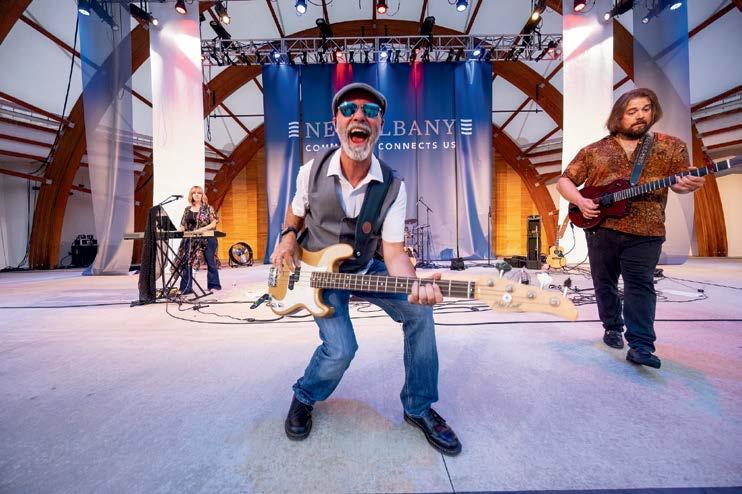
2026 Free Summer Concert Series presents the Eric Clapton Experience
7-8:30 p.m., Charleen & Charles Hinson Amphitheater, 170 E. Dublin-Granville Rd. www.newalbanyohio.org
Fri., June 12
New Albany Parks and Recreation
Summer Movie Series: Sonic 3 6:30 p.m., Upper Clarenton Neighborhood, 8424 Kiernan Dr. www.naparksohio.org
Photos courtesy of James DeCamp Photography, Rob and Katie Eberst
Free Family Flick Nights
Healing with Horsepower Car Show
Sat., June 13
Artist Opening Reception for David Hunt & Mahleah Cochran
5-8 p.m., Hayley Gallery, 260 Market St., Suite B www.localohioart.com
Sun., June 14
Running Against ALS 5K, 15K, 15K Relay
8:30 a.m., Three Creeks Metro Park, 3860 Bixby Rd., Groveport www.runsignup.com
June 14-19, 21-26 and 26-31
Nike Tennis Camp
8:45 a.m.-4:30 p.m., Otterbein University Tennis Courts, 180 Center St., Westerville www.ussportscamps.com
Tues., June 16
Free Family Flick Nights: The Princess and the Frog 6:30 p.m. gates open, 7:30 p.m. movie starts, Charleen & Charles Hinson Amphitheater, 170 E. Dublin-Granville Rd. www.newalbanyfoundation.org
Fri., June 19
Juneteenth Celebration
Charleen & Charles Hinson Amphitheater, 170 E. Dublin-Granville Rd. www.newalbanyohio.org
Fri., June 19
Sunset Mile
7 p.m., Otterbein University Memorial Stadium, 135 Center St., Westerville www.runsignup.com
Sat., June 20
Columbus Donut Run and Walk
9 a.m., Scioto Audubon Metro Park, 400 W. Whittier St., Columbus www.runcolumbusraceseries.com
Thurs., June 25
2026 Free Summer Concert Series presents SugarCreek 7-8:30 p.m., Charleen & Charles Hinson Amphitheater, 170 E. Dublin-Granville Rd. www.newalbanyohio.org
Submit Your Event
Do you have an event you would like to submit to our calendar?
Send details and photos to rhanz@cityscenemediagroup.com
www.healthynewalbanymagazine.com







Thank you Remarkable Evening 2025 donors and sponsors for your support.
2025 REMARKABLE EVENING GOLD SPONSORS
2025 REMARKABLE EVENING PRESENTING SPONSORS
2025 REMARKABLE EVENING PREMIER PATRONS



Barbara & Al Siemer-Siemer Family Foundation
Accel, Inc.
Donna & Nick Akins
Aurora Exhibit Solutions
Linda & Don Barger
Jewel & Frank Benson
Buckeye Innovation
Delaney Burgdoerfer & Family
CFBank
Creative Muse
Georgia & John DallePezze
Cindy & Mark DeBellis & Family
Karen Levin & David DiStefano
Tami & Bill Ebbing
Maura & Bruce Brickman*
KDC/one*
Midstates Recreation*
The Miller Family*
TRC Companies*
Alene Candles
Alston Construction
The Anderson Family, Anderson Aluminum
Anonymous Donor
Anonymous Donor
Leslie & Scott Barbour
George Barrett
Bath & Body Works
Cynthia & Evan Beane
Buckeye Innovation
Jen & John Carne
The Castleforte Family
CASTO
Cologix
Cooke & Demers
Corient
Zibbi Wentz-Cunningham & Andrew
Cunningham
The Daimler Group, Inc.
Faith & Charlie Dankworth
DLR Group
Elford
EMH&T
Event Source
The Ferriter Family
Fischer-Backus
Becky & Everett Gallagher
The Girardi Family
Beth & Mark Gittins
Diane & Steve Herman
Jill Beckett-Hill & Adam Hill
Laura & Alton Hill
Hinson Family Trust
Holder Construction
Marci & Bill Ingram
Insurance Office of Central Ohio
Intel
Penny & Rick Jackson
Kristina & Pete Jenny
Melissa & Jonathan Kass
Kokosing
Jackie & Ken Krebs
Dr. Varun & Dr. Monica Mahajan
Dr. & Mrs. Bradford and Kimberly Mullin
Michael H. & Sara Wolfe Perrini
Susan & Tom Pigott
The Redgrave Family
2025 PILLARS OF THE COMMUNITY
Carrie & Brandon Dupler
Elliot’s Wood Fired Kitchen & Tap
The Energy Cooperative
EQT Real Estate
Marilu & Tim Faber
Fidelity Institutional Asset Management
Fifth Third
Lori Barreras & Alex Fischer
Beth & David Fisher
Abigail & Andrew Fredelake
Wendy Arlin & Craig Gardner
Eydie & Don Garlikov
Traci & Matt Golis
Drs. Leslie & Hesh Green
Phil & Sheryl Heit
Laurie Ann & Thomas W. Hill
Cindy & Larry Hilsheimer
The Hirsh Family
Ashley & Mike Holt
Elizabeth McNellie & Jonathan Iten
Sarah & Rick Jackson
Debra & Ian Kalinosky
Tawnia & Matt Kallner
Karen Karlsberger
The Kieninger Family
Karen & Mark Koenig

Tahlman & Elizabeth Krumm Family Fund
Lane57 Event Venue
Lincoln Property Company
MA Design
Marie Luise & Michael Marx
Stephanie & Matt McQuade
McCullough’s Landscape & Nursery
Midwest Trust
Lori & Craig Mohre
Alicia & Greg Munster
NAI Ohio Equities
Deborah Neimeth
NetJets
Jeff Ramm & Neal Hauschild – The Nth
Degree Companies
The Panley Family
Park National Bank
Pepper Construction
PNC
Red Roof
Rite Rug Co.
Corey Robinson & Justin Flowers
The Rocky Fork Company
Roetzel Charitable Foundation
Renee & Richard Roggenkamp
Katie & Timothy Rooney
The Roush Family
Sue Porter & Mike Sayre
Marcy & Jonathan Schaffir
Ginny & Michael Schlonsky
The Schumacher Family
Lynne & Steve Smith
The Snyder Family & Lower.com
Jane & Tim Stehle
Doctor Martin & Ashley Taylor
The O.H.I.O. Fund
Nanette & Michael Triplett
Laura & Todd Wedekind
Jennie & Mark Wilson
Cindy & Tom Rubey
Sarah & Mark Ryan
The Sasso Family
Scannell Properties
Sheetz
Simply Quartered
Mary & Jeffrey Smith
Patti & Steve Steinour
Leigh Anne & Francis Strahler
Tenby Partners
Thanks Be To God Foundation
Thrive Companies
Aaron Underhill
Vorys, Sater, Seymour & Pease LLP
Kendra & Romeo Vuticevski
Claudia & Blane Walter
Lynn & Ken Weixel
Candice & Lance White
White Castle
Wiley Companies
Williams Companies
Tanny Crane & John Wolff
Marcia & Allan Wool
Kathy & Jay Worly
Edward J. Yen
*Denotes multiple gifts at this level

Thank you New Albany Lecture Series 2025-2026 donors and sponsors for your support.
NEW ALBANY LECTURE SERIES SPECIAL PROGRAM UNDERWRITER
Donna & Nick Akins Fund
Archer Family Fund
Karen & Irving Dennis Family Fund
NEW ALBANY LECTURE SERIES SEASON SPONSORS

NEW ALBANY LECTURE SERIES ENDOWMENT FUND SUPPORTERS
Ben W. Hale Jr. Memorial Fund
Linda Hondros and John Hondros, In Memoriam and the Hondros Family Foundation
Redgrave Family Fund
Ryan Family Fund
Lynne & Steve Smith Family Fund
NEW ALBANY LECTURE SERIES SPEAKER SPONSORS
Anonymous Donors


Leslie H. Wexner New Albany Lecture Series Fund
Wolman Family Fund


NEW ALBANY LECTURE SERIES PREMIER SPONSORS


Accel, Inc.
Donna & Nick Akins
Amgen
Teresa & John Archer
Christy & George Arenschield
Auora Exhibit Solutions
Axium
Linda & Don Barger
Bath & Body Works
Battelle
Bechtel
Jewel & Frank Benson
Bob Evans Farms
Buckeye Innovation
Brandi & David Burch
Delaney Burgdoerfer & Family
CAS
CFBank
CK Construction Group, Inc.
David L. Clark
Columbus Partnership & One Columbus
Creative Muse
Georgia & John DallePezze
Danis
Cindy & Mark DeBellis & Family
Karen Levin & David DiStefano
Tami & Bill
Ebbing
EdgeConneX


Tahlman & Elizabeth Krumm Family Fund
Elford
EMH&T
Encova Insurance
Event Source
Express Wash Concepts
The Ferriter Family
Fischer-Backus
Becky & Everett Gallagher
Heather & Franz Geiger
Dr. Gloria Galloway & Dr. Dwight Goddard
The Girardi Family
Beth & Mark Gittins
Elaine & Victor Goodman
Jan Hale
Diane & Steve Herman
Jill Beckett-Hill & Adam Hill
Laura & Alton Hill
Hinson Family Trust
Holder Construction
The Iams Family
Marci & Bill Ingram
Insurance Office of Central Ohio
Intel
Penny & Rick Jackson
Dr. Samuel & Jean Jacobs
Kristina & Pete Jenny
J.P.Morgan Private Bank
Melissa & Jonathan Kass
KeyBank
Kokosing
Jackie & Ken Krebs
Amanda & Jason Lee
L!VE
Dr. Varun & Dr. Monica Mahajan
M/I Homes Foundation
Jennifer & Marc Miriello
Dr. & Mrs. Bradford & Kimberly Mullin
Marcia & Jared Nodelman Charitable
Trust
Northwest Bank
OhioHealth
OKLO
Dr. Erin & Brian Olah
Dr. Amish Oza and Michaela Oza
Your Concierge MD
Michael H. & Sara Wolfe Perrini
Susan & Tom Pigott
The Redgrave Family
Laurie Regan-Angela Wical
Darryl & Harriette Robbins
Rockbridge
Ruscilli Construction
Sue Porter & Mike Sayre
Marcy & Jonathan Schaffir
Ginny & Michael Schlonsky
Kim & Tom Schmid
The Schumacher Family
Arlene & Steve Senser
ServiceMaster Elite
Barbara & Al Siemer, The Siemer Family Foundation
Lynne & Steve Smith
Smoot Construction
Cynthia Snyder
The Snyder Family & Lower.com
Jane & Tim Stehle
Sadie & Seyman Stern
S U R R O U N D Interior Design
Jennifer & Ryan Swincicki
Dr. Sean & Michele Tabaie
Doctor Martin & Ashley Taylor
The O.H.I.O. Fund
The Ohio State University
The Ohio State University Wexner
Medical Center
Nanette & Michael Triplett
Laura & Todd Wedekind
Jennie & Mark Wilson
Janice & Herbert Wolman
Wesley Woods

The New Albany Community Foundation is grateful to all who supported the Amphitheater through the 2025 Amp Up the Arts Benefit and the 2025 Amphitheater Season.


Performance Sponsor s
Anonymous Donors
Friends of the Arts
BalletMet
Bechtel
Delaney A. Burgdoerfer & Family
Georgia & John DallePezze
Hinson Family Trust
Marie Luise & Michael Marx
Sandy Mendoza
Nationwide Children’s Hospital
The Redgrave Family
The Rouse Family
ServiceMaster Elite
Kendra & Romeo Vuticevski


Champions for the Arts
Arts Partners
Lisa Carson
Zibbi & Andrew Cunningham
Becky & Everett Gallagher
GT Partners
Sallie & Carl Levander
Debbie & Dr. Jeffrey Milks

Lori & Craig Mohre
Dr. & Mrs. Bradford & Kimberly Mullin
Cherie & Jim Nelson
Simply Quartered
Cynthia Snyder & Family
Mary & Kevin Blosser, Brandi & David Burch, Beth & Mark Gittins, Gina Stelluti & Mike Boyd
The Ohio State University Wexner Medical Center
Timeless Skin Solutions & DOCS
Dermatology Group
Terrace Patrons
Marci Ingram
Jackie Bennett Murray
Arlene & Steve Senser


The Olivia Claire Obrokta Foundation
The Olivia Claire Obrokta Foundation








By Katie Allen
The Soundtrack of Summer
Free Summer Concerts to return to New Albany

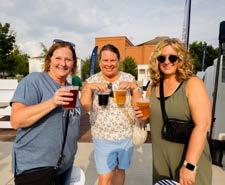
Free Summer Concerts are back at the Hinson Amphitheater for their fourth year, proving that the best things in life really are free. Designed to make this worldclass amphitheater a welcoming public space for all, the series has skyrocketed in popularity. Last year, more than 4,000 fans packed the house, showcasing that nothing draws a crowd quite like great music and free admission.
“We’ve been coming to these concerts since they first began,” says resident Paul Briggs. “The music is always terrific, and we love the chance to catch up with our friends and neighbors.”
Fellow regular Amy Thiel and her family agree.
“We love the variety of music the City brings in,” says Thiel. “The amphitheater is such a cool venue, and having the food trucks and DORA nearby is an added bonus. These concerts are one of the many reasons we love calling New Albany home.”
Concerts take place on select Thursdays from 7-8:30 p.m., perfectly timed
to follow the Healthy New Albany Farmers Market. So, you can grab your local, farm-fresh finds, snag a drink from a DORA establishment and settle in for an evening of great melodies – just remember to bring your own seating and refillable water bottles.
And while many people may love your furry friends, please leave pets at home.
Katie Allen is a Communications & Marketing Specialist at the City of New Albany.
The 2026 Lineup
June 11 – Eric Clapton Experience: A high-energy tribute capturing every iconic riff and soulful melody of Slowhand himself.
June 25 – SugarCreek: Dust off your boots. This set blends classic country storytelling with modern hits for a night of dancing under the stars.
July 9 – Catalina Wine Mixer Band: The ultimate yacht rock voyage. Expect smooth ‘70s vibes and breezy, easy-listening, perfect for a relaxing evening out.
July 23 – Big Bad Stache: Playing your favorite rock and pop classics from the ‘90s to today. Plus, catch a special opening set from the rising stars at the School of Rock.
August 6 – The Mystery Concert: We know who it is, but we aren’t talking… yet. Come to each prior concert and follow our social media clues to find out who is playing our last concert of the summer, and for a chance to win a front-row reserved table.
Whether you’re a long-time local or a first-time visitor, this series is more than just a show – it’s where our community connects. And with no admission costs, it’s one of the most accessible traditions that sets the soundtrack for an unforgettable summer.
The City of New Albany is committed to creating inclusive and accessible events. If you need a reasonable accommodation, please contact Community Programs at communityevents@newalbanyohio. org or 614-855-6226.
Photos courtesy of the City of New Albany
By Melissa Braithwaite
Ride Right
New Albany safely navigates the electric bike and scooter boom
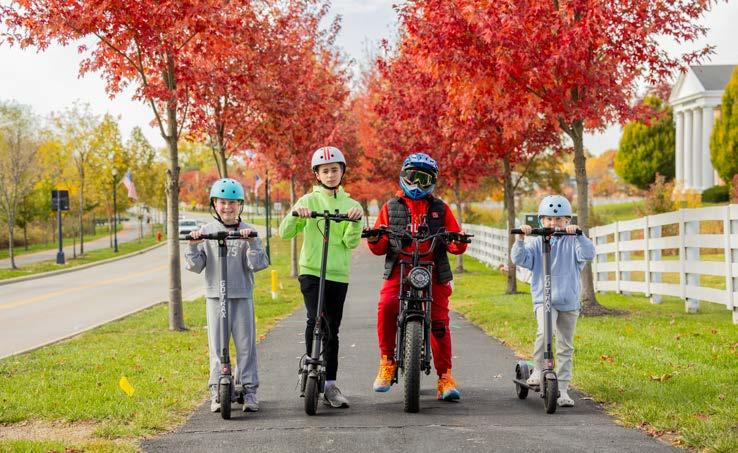
New Albany was built for this. The city boasts more than 84 miles of shareduse paths that weave through neighborhoods, parks and the Village Center, and the community values getting outside, staying active and connecting with neighbors along the way. Electric bikes and scooters are already showing up in greater numbers on those trails – and on the roads, sidewalks and school campus. With more riders comes more complexity. More speed differentials on shared paths. More questions about where different types of bikes are allowed and who’s
old enough to ride them. And more urgency around the question of how we make this work for everyone.
E-bike evolution
Across the country, e-bike sales have surged, as riders of all ages discover a faster, greener, more accessible way to get around. The appeal is simple: all the fun of cycling with a little assistance when you need it. The city’s extensive trail network, walkable Village Center and wellness culture make it ideal for this kind of transportation shift. Riding to a friend’s house, the
farmers market or even work isn’t just possible here – it’s genuinely pleasant. For families especially, e-bikes and scooters have afforded older kids greater independence, as they can travel a little farther.
Riding by the rules
Last October, New Albany City Council passed new legislation clarifying exactly how e-bikes and powered scooters fit into the city’s traffic code. The laws exist to ensure everyone – the cyclist, the jogger, the toddler on a tricycle and the dog walker – can share New Albany’s leisure trails
Photos courtesy of the City of New Albany
safely and confidently. Here’s what every rider, parent and resident needs to know:
• E-bikes and powered scooters are now classified as vehicles (not motor vehicles). On sidewalks, vehicles must remain human-powered; motors are not permitted.
• 10 mph speed limit on shared-use paths, yield to pedestrians, use an audible signal before passing
• Helmets required for all riders under 18 years old
• Lights and reflectors required when riding before dawn or after dusk
• Class 3 e-bikes (faster models): riders must be 16 and older, wear a helmet and stay on the road – not permitted on shared-use paths
• Parents and guardians can be cited if their child under 18 violates these rules
A hard line on e-dirt bikes
Not every electric ride belongs on New Albany’s paths, and e-dirt bikes are the clearest example. Unlike e-bikes and powered scooters, e-dirt bikes are not street legal and are not permitted on New Albany streets, sidewalks or shared-use paths. Full stop.
If your family owns one, it belongs offroad and off New Albany’s shared community spaces. For parents who may have purchased one without realizing the restrictions, now is the time to have that conversation with your child – before the New Albany Police Department has it for you.
Stressing safety at school
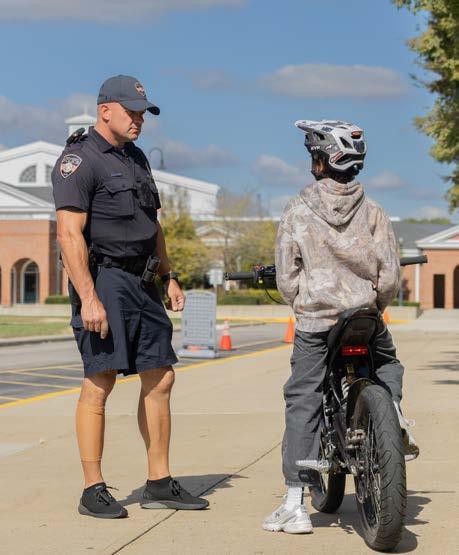
The City of New Albany isn’t just writing rules; it’s making sure young riders understand them. The NAPD partnered with New Albany-Plain Local Schools to deliver e-bike and e-scooter safety education directly to students, embedding it in the NAPLS wellness program through school resource officers who work alongside school staff.
“The City ordinance, as well as NAPLS policy, is intended to keep everyone safe,” says NAPD Officer L.A. Kelly. “Parents can encourage student compliance by being firm with their own in-house consequences, especially if their child has already received a warning from NAPD.” By meeting students where they already are in school and in the context of their
overall health and wellness, safe riding becomes more second nature rather than an afterthought.
Ride on, New Albany
New Albany’s trails and shared-use paths are among the community’s greatest assets, giving residents a reason to get outside and stay active year-round. Used responsibly, e-bikes and e-scooters enhance the experience, offering more ways to explore a community designed for it.

New Albany has always been a community in which neighbors look out for one another. That doesn’t stop at the leisure trail. Whether you’re on foot, on a bike or gliding on an e-scooter, the shared-use path is better when everyone on it feels safe and welcome. For the full ordinance and details on e-bike and scooter rules in New Albany, visit newalbanyohio.org/e-bikes.
Melissa Braithwaite is a Communications & Marketing Specialist at the City of New Albany.

Officer Leland Kelly chats with a student on the NAPLS campus.
The racks at Rose Run Park are full of e-bikes.
NAPD school resource officers visited the schools to share safety expectations and answer student questions about e-bikes and e-scooters.
By Ella Jay
GrowingSomething Greater
Master gardener volunteer Susan Benedetti gives back through gardening
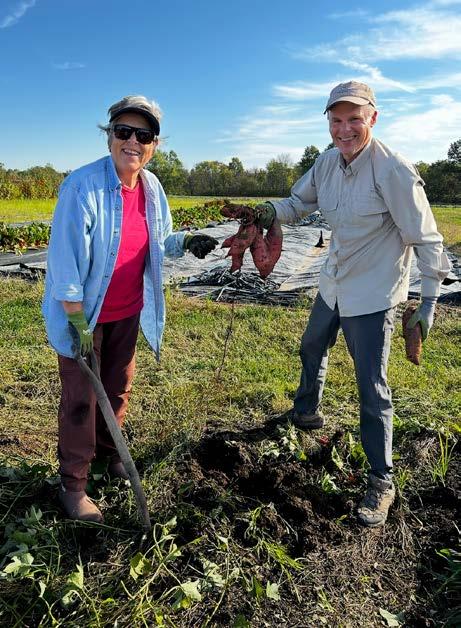
For New Albany Master Gardener Volunteer Susan Benedetti, gardening isn’t just about what grows in the ground – it’s about giving.
As a lead volunteer and board member for New Albany’s Garden for All, she dedicates much of her time to cultivating not only food for those in need but also a sense of connection and purpose within the community.
Over the years, her work has helped bring recognition to both herself and the Garden – momentum she hopes will continue to grow well into the future.
From career to calling
Benedetti has called New Albany home for the past 25 years, and central Ohio home since 1980, after moving to the area following her college graduation. After earning a bachelor’s degree in criminology from Indiana University of Pennsylvania, she began her career in the Ohio Attorney General’s Office, eventually transitioning into the IT field, where she helped modernize business systems for nearly 40 years.
While gardening was a part of Benedetti’s childhood, it didn’t always feel like a passion. However, following her retirement, she found herself looking for a way to stay connected – that’s when she rediscovered a love for the hobby.
“I was raised growing vegetables, eating out of the garden and butchering. We lived a rural lifestyle. So, I grew up with gardening, but it was a chore as a child,” says Benedetti. “But then I became interested in OSU’s agricultural volunteer projects.”
In 2018, she applied to become a master gardener through The Ohio State University Extension Master Gardener Volunteer (MGV) program. The program consists of 40 to 50 hours of training and
Photos courtesy of Marci Leveillee/Garden for All and Ella Jay
50 hours of volunteer service, followed by a certification test. Once certified, MGVs must maintain 20 to 25 service hours and 10 continuing education hours per year. Racking up about 1,000 hours of volunteer work per year, Benedetti wellsurpasses that requirement.
Joking that her husband now calls her a “career volunteer,” Benedetti says: “It’s just very rewarding to give back. I find non-profit work very purposeful.”
It wasn’t until 2023 that Benedetti happened upon the Garden for All.
Founded in 2020 by Shawn Duffy and Reverend Catherine Duffy, the Garden for All was originally a COVID-19 project: a small plot planted at the All Saints Episcopal Church on Johnstown Road, meant to support the New Albany Food Pantry.
While it started as a personal endeavor, the Garden quickly grew, leading the Duffys’ to search for technical assistance – a position that happened to fit Benedetti perfectly.
“They invited me to work for them, and I never looked back,” says Benedetti.
Garden for All
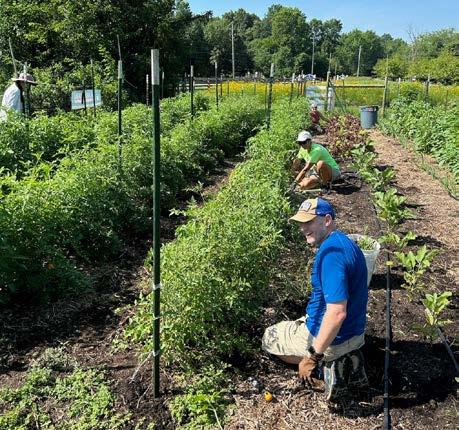
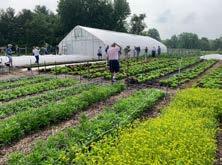
Today, the Garden for All has expanded exponentially, becoming an official nonprofit, garnering hundreds of volunteers as well as additional growing space – including a high tunnel and a secondary, 3-acre farm in Johnstown – and extending its community reach. As a comparison, the Garden donated 750 pounds of produce in its first year; last year, it donated 36,000.
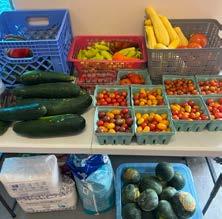
The Garden grows 20-plus types of organic produce, from carrots and
sweet potatoes to cucumbers and yellow squash, as well as 10-plus types of fresh flowers. Everything grown in the Garden is donated to 10 local food pantries across Franklin and Licking counties.
“We’re not growing to make money, but to feed people who aren’t getting nutritional food,” says Benedetti. “There are a lot of food deserts in the Columbus area.”
Throughout the growing season, the Garden’s operations are carefully coordinated by Benedetti and others, starting with meetings with the food pantries to determine their needs.
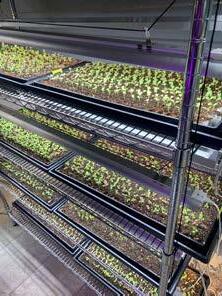
Seeds are then started in a growing room inside the church before being transplanted outside. Spring vegetables grow in the high tunnel until their April harvest, followed by summer crops out in the fields which are harvested through September, while winter produce is planted soon after the spring harvest to grow in the tunnel and allow for continued delivery year-round.
But beyond the rows of veggies and the buzzing pollinator meadow, Benedetti says it’s the people who truly bring the Garden to life, and as an MGV and board member, she plays a large role in finding new volunteers and partnership opportunities.
“We get a lot of volunteers from all walks of life. I just love recruiting and helping the volunteers,” says Benedetti. “We try to arrange groups for big activities, so everyone walks away with a good experience. Volunteers can do different roles, from gardening to packaging to transporting produce.”
Painting done by a Perfectionist

“When you hire me, you get me – I’m doing the work start to finish” No Subs, No Surprises!

Outside the garden
When she’s not gardening, Benedetti stays active. In the past, she has volunteered for SCORE, a mentoring platform for business owners; most recently, she traveled with the Tandana Foundation to Ecuador to plant gardens for communities in Otavalo.
She also enjoys leisure travel, spending time with friends and family – including her husband, Jeff; daughter, Hattie; and her five siblings – golfing with Jeff as members of the Gahanna Senior Golf League, watching movies and Broadway musicals, and reading mystery novels
Alongside the pantries, Benedetti says the Garden also works closely with local schools, the New Albany Branch Library, the New Albany Farmers Market and VISTA volunteers to connect with the community through educational events, garden tours, workshops and more.
“We don’t give awards, but we recognize people for all they do, because they’re not incentivized by money, but by what they do. They believe in the mission,” says Benedetti. “People give a lot of their time. It just speaks highly of the people in the community.”
A harvest worth celebrating Benedetti herself recently received some of that recognition thanks to the Garden for All nominating her for the 2025 Bill Dawson Community Gardener of the Year Award. Presented by the Franklin Park Conservatory to individuals who show dedication to and demonstrate leadership within their community gardens, Benedetti was honored to get the award.
“It was very cool. I don’t need awards and publicity, but it’s nice to be recognized,” Benedetti says.
Simultaneously, Benedetti nominated the Garden for All for the 2025 Outstanding OSU Master Gardener Volunteer Site – Large Program award. A category winner, Benedetti accepted $600 on behalf of the Garden, donating it back to buy the nonprofit a new seeder.
“We didn’t even know we nominated each other. We both won at the same time!” recalls Benedetti. “That was such a great evening because I had no idea, I wasn’t there to accept the Bill Dawson award because I was accepting the other one, but it was just meant to be.” .
Ella Jay is an assistant editor at CityScene Media Group. Feedback welcome at ejay@cityscenemediagroup.com.

Stephanie B., Tennis Instructor and Orthopedic ONE Patient Watch her story here

Stephanie’s
Orthopedic Practice MOST TRUSTED
After multiple injuries and surgeries -- to her hips, shoulder and spine -Stephanie is stronger than ever. She continues to pursue her passion for teaching and inspiring young athletes on and off the tennis court. She credits her physicians at Orthopedic ONE for sharing faith in her determination to recover and return to the game she loves.
RANKED #1 IN OHIO, AND #3 IN THE NATION FOR ORTHOPEDICS!


By Rachel Hanz
Swing, Paddle Paddle,
The physical, mental and social benefits of pickleball
Swing

With origins dating back to the 1960’s in a family’s backyard, pickleball was created to be easy to learn and fun to play. Since those humble beginnings, interest and participation in the sport have drastically increased, with an estimated 24.3 million Americans playing the sport last year, according to a report from the Sports & Fitness Industry Association.
This has led to the introduction of professional leagues and teams – including a local team known as the Columbus Sliders – as well as pickleball courts and resources becoming available all over Ohio and the country.
Despite its growing fame over the years, the sport has stayed true to its origins and remains an accessible game for
many, leading to a host of health benefits to anyone who picks up a paddle.
Up and active
Like many sports, pickleball offers cardio benefits as it increases players’ heart rates when running across the court, improving heart health in the process.

Dr. Jason Ferrel, an orthopedic sports medicine surgeon with Ortho ONE, can attest to this. He helps many patients with pickleball injuries, but also enjoys playing the sport himself.
“You can’t underestimate the cardiovascular benefit that it has for patients when they’re getting 10, 15, (or) 20,000 steps a day, and 75 percent of those are on a pickleball court,”
Ferrel says. “So (the) cardiovascular benefits are incredible.”
Due to the quick movements and response times needed for games, pickleball also helps create healthy stress on the body’s muscles and bones, which, according to the Cleveland Clinic, can lead to a decrease in health issues such as osteoporosis. It also engages muscles all over the body – from biceps and deltoids to hamstrings and calves. Professional pickleball player and team captain of the Columbus Sliders Andrei Daescu says it’s a full-body workout.
“It involves lower body, upper body, abs. It’s a lot,” Daescu says. “There’s a lot of back and forth, which will test your reflexes (and) test your speed, so it’s very important to have a good athletic base… There’s a little bit of running, but nothing excessive, so I think that’s what (helps people) to play it for a long time and even later in life.”
With a paddle and ball setup similar to tennis, pickleball players can not only work on their hand-eye coordination, but also on their strength, agility, balance and mobility, according to medical experts, including Ferrel.
Mental and social engagement
Whether playing recreationally or professionally, as the body gets active and engaged, so does the brain.
Save the Date
Major League Pickleball returns to Columbus this year for a tournament at the Pickle & Chill facility from May 28-31. Learn more about the schedule and ticket prices at www.pickleandchill.com
Photos courtesy of Major League Pickleball and Orthopedic ONE
Dr. Jason Ferrel



Avoiding Injuries
Just like with any sport, pickleball can be all fun and games until you get injured. Ferrel says that some of the most common injuries he sees are soft tissue ones. Torn meniscus, muscle strains in the back and hamstrings as well as joint strains are among the most common.
Here are a few of Ferrel’s best tips of how to avoid injuries so you can stay on the court:
• Begin with a proper warmup and finish with a cool down
• Wear proper footwear with lateral stability – not just regular running shoes – to aid with balance
• Cross-train by doing other sports and activities to help with mobility
• Stay hydrated and well-nourished
• Play with others of similar skill levels
• Listen to your body and know when to stop
History and Growth
Although its name recognition and player base have grown exponentially in recent years, pickleball has been around since the mid-1960s.
The game came to life one summer weekend in 1965 when Washington State Congressman Joel Pritchard and his family were looking for something to do. With the help of Bill Bell and Barney McCallum, Pritchard created the game by utilizing the badminton court at his house, along with some ping-pong paddles and a perforated ball.
Over the next few decades, the sport grew in popularity, reaching all 50 states by the 1990s and more than 2 million players by 2015, according to USA Pickleball.
During the COVID-19 pandemic, the sport saw a rapid increase in interest due in part to its outdoor court and easily spaced-out game play that allowed players to follow safety protocols while staying active. However, that interest has continued well past as more communities welcome pickleball by making courts and spaces for residents to enjoy the sport.
Ohio Connection
Although the sport was invented in the state of Washington, its origin has an Ohio connection. Joel Pritchard’s wife, Joan, was born and raised in Marietta, Ohio. She was the one who suggested the name of the game.


Strategy comes into play as each player has to read their opponents, with quick decision-making on what move to do next and the impact it will have. This mental stimulation and comprehensive thinking has been reported to reduce the risk of health conditions such as dementia, Alzheimer’s disease and general cognitive decline.
A systematic review by the research publisher Frontiers also found that over time, people over the age of 50 who regularly play pickleball showed significant improvements in several psychological variables, including life satisfaction, personal well-being, stress, depression and happiness.
Having a team, or a teammate when playing doubles, can have additional benefits and support Daescu says.

“In doubles, there’s always someone next to you, so at times, that could be very helpful. They could sense that you’re not playing your best… or maybe they could see something on the court that you don’t see,” he says. “On top of that, if you play with somebody who’s a supportive partner, they could just lift you up.”
That camaraderie and support can be found all throughout the sport, whether being played competitively or recreationally, says New Albany resident and pickleball enthusiast Caroline Worley.
As a partial owner of the Columbus Sliders, Worley has seen how the team connects and supports each other, something she has experienced herself. Although she has only played for a few years, Worley enjoys how much the sport not only gets her up and moving, it also gives her new skills and experiences every time she steps on the court.
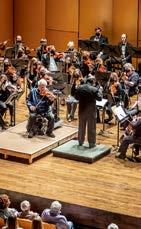
A PLACE where our beloved local arts groups enthrall audiences with musicals, concerts, recitals, and more.
A STAGE for world-renowned performers and speakers to create thrilling art and deliver thought-provoking lectures.
A STATE-OF-THE-ART HOME for New Albany’s young artists to learn from industry professionals and to participate in their school productions, connecting them to performing arts appreciation and unparalleled opportunity.
A CLASSROOM for students to learn from and perform with top-notch artists, like Itzhak Perlman, Sogbety Diomande, and Simply Three, through the McCoy Board Educational Grant program.
“For me, it just makes me happy,” she says. “And it keeps me interested in something that I’m still learning about, and you can’t fully master it. It’s one of those things, (where) you can win a game, but you can always improve.”
Accessibility and health benefits for all
In addition to the positive atmosphere surrounding the sport, another thing that sets pickleball apart is its accessibility for a wide range of ages and abilities. New Albany resident David Kass – a former professional tennis player and partial owner of the Columbus Sliders – always encourages others to pick up the sport by sharing how easy it is to learn.
“I tell people that if you’ve played any racket sports before… (or) anything with hand-eye coordination, you can literally be confident in five or 10 minutes,” Kass says.
With its easy-to-learn game play and low entry needs of a paddle and a ball, Ferrel and other physicians are encouraged by the growing number of people who are staying more active at older ages and the future impacts it can have on their health.
“The snowball benefits of the health that come from the sport are really, really impressive,” Ferrel says. “It’s not uncommon that I’m connecting with (players) and they might have some type of small injury, but they might be living the healthiest they’ve ever been in one or two decades. And if you’re 65 years old, and you’re healthier than you were at 55, that’s a huge achievement.”
Rachel Hanz is the lead editor at CityScene Media Group. Feedback welcome at rhanz@cityscenemediagroup.com




By Sandhya Kannan
courtesy of Jazz Pharma Corp
Powerhouse Breakthrough
FDA approves new drug for rare brain tumor
DMG, or diffuse midline glioma, is a rare and aggressive brain tumor that grows on the brain’s thalamus, pons, brainstem, cerebellum and spinal cord. Every year, between 200 to 400 children are diagnosed with DMG, and survival rate beyond five years is less than one percent. That is, until the Food and Drug Administration’s recent approval for the drug, Modeyso.
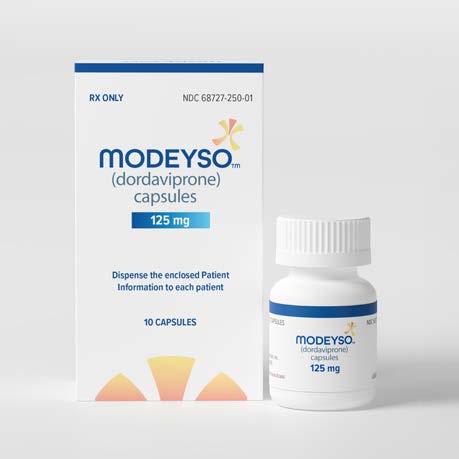
On Aug. 6, 2025, the FDA approved Jazz Pharmaceutical’s drug, Modeyso, which targets cancer cells directly to kill
them. Modeyso helps to extend a patient’s life span, mitigate their symptoms and slowly eliminate the tumor.
What is DMG?
This fast-spreading tumor falls under the umbrella of diffuse intrinsic pontine glioma (DIPG), with glioma signaling a tumor that originates from the glial cells that support the central nervous system (CNS). The tumor is characterized by its ability to diffuse into surrounding healthy brain tissue through cerebrospinal fluid.
Most common in children and young adults, there is no known cause of DMG yet. However, scientists believe that since children ages 5 to 10 experience rapid brain development, their genes are most susceptible to errors in coding, as their genes are writing several instructions at a rapid pace. Genetic errors can lead to mutations, then to the development of tumors.
Researchers identified the mutation driving these tumors between 20122014, and the World Health Organization classified DMG in 2016. Having already been noted as an aggressive tumor prior to the official classification, researchers have been developing Modeyso, originally called ONC201, for years.
Symptoms of DMG
The tumor spreads very quickly, and is often only observed when it is too late. Some symptoms include fatigue, double vision, nausea, dizziness, seizures, trouble balancing, difficulty swallowing or speaking, tingling or numbness in the limbs and face, and loss of hearing and sight, as well as headaches, especially in the morning.
More severe symptoms, such as loss of hearing and ability to walk, tend to appear later on.
Upon identifying the symptoms, the next steps are using MRI and CT scans to identify the tumor. Then, targeted radiation therapy, and now, Modeyso, can be used to mitigate and remove the tumor from the CNS without requiring an operation.
About Modeyso
Modeyso targets the mitochondria of the cancer cell, since cancer cells have very high metabolic demands and rely heavily on the mitochondria for energy. The drug stimulates the mitochondrial caseinolytic protease P agonist to help
Photo
break down critical mitochondrial proteins and lead to mitochondrial dysfunction, thus inducing the death of the tumor cells without harming the surrounding healthy cells.
The most popular form of the drug is a once-a-day pill, which can be prescribed to patients 1 year and older.
Having developing Modeyso over the course of roughly 10 to 11 years, and since its FDA approval, Jazz Pharmaceuticals has begun its Phase III Action Trial to confirm clinical benefits. Modeyso is still being updated and is now being tested to see if it responds well to brain tumors outside of DMG.
Sandhya Kannan is an editorial assistant at CityScene Media Group. Feedback welcome at feedback@cityscenemediagroup.com
Of children diagnosed with this brain cancer, 10 percent live past 2 years, and less than two percent of those diagnosed live past 5 years. In adults, the 5-year survival rate is 42.2 percent.
Looking at the future of Modeyso, the FDA found that 73 percent of individuals who responded well to Modeyso had positive effects that lasted around six months, while 27 percent of those who responded well to the drug had effects that lasted at least 12 months.
In the FDA’s analysis, the median age of participants in the trials for Modeyso’s efficacy was 23. Both men and women responded well to the drug, and the majority of the participants in the trial were under the age of 18. The FDA also found that with 50 patients across five clinical studies, Modeyso shrank tumors in 22 percent of the cases.
Possible Side Effects
Side effects of Modeyso include fatigue, nausea, musculoskeletal pain and headaches.

• Pain in calf or thigh muscles when walking
• Tingling, heaviness, numbness or swelling of your lower extremities
• Restless legs at night when trying to sleep
• Varicose veins (especially for women who develop varicose veins after pregnancy)
• Sores and ulcers of the feet and ankle that don’t heal
• Foot and ankle ulcers
If
find out if you’re at risk—for free.



Wellness Within
Mental health awareness, with experiences from award-winning actor Christian Slater
By Korrigan Craddock
Photo courtesy of region/Wallpapers.com
May is recognized as Mental Health Awareness Month, a time dedicated to fostering open conversations, reducing the stigma, celebrating recovery and highlighting the importance of mental wellness.
Award-winning actor Christian Slater has dedicated himself to mental health advocacy, sharing his story with mental illnesses. Having experienced fame and pressure from a young age as well as addiction, Slater has made it a mission to share his journey through recovery.
Slater began his career as a child actor at just 8 years old, where he first appeared on screen in the soap opera One Life to Live, along with performing in multiple Broadway shows. Throughout his career, Slater has starred in multiple notable films and shows, including Heathers, The Wizard, True Romance and Mr. Robot
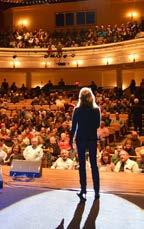
Slater will visit New Albany this May to share his story during The New Albany Lecture Series hosted by the New Albany Community Foundation. He will be interviewed by NPR’s Arts Desk reporter Neda Ulaby for a conversation on mental health.
Success and mental health
Social pressure and comparison, as well as high expectations, can all be detrimental to someone’s sense of self-worth and overall mental health.

The New Albany Lecture Series with Slater will be held at the McCoy Center for the Arts on May 11 at 7 p.m.
From the spotlight of Hollywood to the pressure of getting into a good school, anyone can feel the weight of societal perfectionism, which has been linked to depression, anxiety and suicidal ideation, according to the American Psychological Association (APA).
“With success, there are potentially many people willing to overlook certain behaviors if financial success isn’t being impeded,” says Slater. “Enabling someone and giving them a permission slip to act out and behave inappropriately can be a death sentence to someone struggling with mental issues.”
The APA emphasizes that while ambition can help create a sense of purpose, meaning and joy, when someone believes they don’t live up to these expectations, it can negatively impact their mental health.
In some cases, people may turn to harmful coping methods such as drugs and alcohol to deal with the pressure.
“I was an alcoholic and a drug addict. Those were the tools I used to cope with my demons. They gave me the ability to escape from myself and my struggles,” says Slater. “They helped me to get over the fears and anxieties I was dealing with and be able to handle a world that I felt very overwhelmed by and unprepared for. But my solution wasn’t sustainable.”
According to the APA, recent studies show that societal perfectionism and high pressure to succeed have increased over the past decade, especially in younger generations, which has contributed to the growing mental health challenges many face today.
Getting help
Whether it is struggling to admit the problem, fear of judgement or simply not recognizing the signs, many factors can prevent individuals from seeking the help they need.
“When I first realized I needed help, group meetings were suggested. I went to some and initially felt like it wasn’t really for me. It took me a long time to accept the fact that I was an alcoholic. It’s not something anyone strives for in life. In my opinion, it was something to be avoided at all costs,” says Slater.
Recognizing there is a problem is often the first step toward recovery.
“I told myself that it was all a big misunderstanding and I’d be more careful in the future. I kept testing the limits and eventually flew too close to the sun and found my way back into the rooms of group meetings. It was within those rooms where I met the people I could fi-
nally relate to and feel the understanding that I needed to feel,” says Slater.
There are many types of therapy and approaches, such as group therapy, peer support groups, one-on-one therapy and mindfulness-based cognitive therapy that can improve your mental health. Some people add methods to their daily life, such as exercising, meditation, art and nature therapy, as well as diet and nutrition, to improve their mental health.
While what works can vary from person to person, finding the right support and methods can be lifesaving.
Therapy can help people understand how their mind works, navigate their feelings, build healthier habits and shift their outlook on life. It can also reduce disability, morbidity and mortality, according to Mental Health America.
The organization also states that regular therapy sessions can help improve communication skills, improve interpersonal skills, support stronger relationships and increase self-awareness.
Slater has found several means that work for him. In his free time, he prioritizes simple things such as focusing on friends and family, meditating, cooking, walking his dog, exercising, attending therapy sessions and doing school pickups and drop-offs.
“Today I prioritize my own mental health, and I listen to the people in my
On a Personal Level
The National Alliance on Mental Illness says there are ways to help fight the mental health stigma in your personal life:
• Talking openly about mental health
• Educating yourself and those around you
• Being conscious of the language you use regarding mental health
• Encouraging equality between physical and mental illnesses
• Showing compassion for those struggling with their mental health
• Choosing empowerment over shame
• Being honest about treatments
• Being aware of how the media portrays mental health
• Avoiding internalizing stigma
life and prioritize their mental health as well. I have people in my life that I love and care for,” says Slater.
Reducing the stigma around mental health
More than 59 million people in the U.S. live with a mental illness, according to the National Institute of Mental Health, many of whom hide what they are going through out of fear of judgment.
A survey by Rethink Mental Illness, a mental health nonprofit in England, found that three in five people living with a severe mental illness worry about how others perceive them, causing them not to seek treatment.
According to the APA, stigma and discrimination can contribute to reduced hope, lower self-esteem, increased psychiatric symptoms, difficulties with social relationships and social isolation.
“I’m in a business that is all about make-believe, looking good and saying the right things. Reality is not always what media shows us. Nobody has it all together. Nobody feels completely secure all the time,” says Slater. “And the more honest we are about those parts of humanity that so many of us want to hide from, the safer and more secure we will all feel with each other.”
The survey by Rethink Mental Illness also found that 93 percent of people living with a mental illness still feel that there isn’t enough awareness surrounding mental health.
Although many believe there is still more education and advocacy needed, in recent years, many organizations have been recognized for their effort in reducing the stigma surrounding mental illnesses. Organizations such as the National Alliance on Mental Illness, Mental Health America, the American Foundation for Suicide Prevention and the Jed Foundation are dedicated to spreading awareness and resources to help those who may be struggling.
Slater believes that those who are willing to speak openly have played an important role in changing the conversation, something that Slater is now doing himself.
“I believe courage has played a major role,” says Slater. “There have been so many more people with mental health issues willing to speak up and without shame. Having honest and open conversations.”
Korrigan Craddock is a contributing writer at CityScene Media Group. Feedback welcome at feedback@cityscenemediagroup.com















Beyond Counting Sheep
The harmful effects of sleep deprivation
By Korringan Craddock
Avital part of overall well-being, it is recommended for adults to get seven to nine hours of sleep each night. Consistently not getting enough sleep can cause side effects, both mentally and physically.
Dr. Larry Turton, assistant professor of emergency medicine at The Ohio State University’s department of emergency medicine and emergency medicine residency program, emphasizes that chronic sleep deprivation can lead to many of the same medical issues also associated with chronic stress.
Physical changes
According to the National Institute of Health and the Cleveland Clinic, sleep deficiency and untreated sleep disorders are linked to heart disease, high blood pressure, stroke, diabetes, obesity and some cancers.

“It’s definitely a cumulative effect. A lifetime of poor sleeping habits catches up with you,” says Turton.
More than 50 million people in the United States have a sleep disorder, and over 100 million report that they don’t get enough sleep, as reported by the Cleveland Clinic.
Sleep issues can negatively impact daily life through symptoms such as difficulty staying awake, decreased energy and mood changes. However, poor sleep habits can also increase the risk of longterm health issues.
Did You Know?
Sleep also has an effect on the cortisol hormone, which impacts functions such as your body’s response to stress and your sleepwake cycle regulation.
“Cortisol levels are affected by sleep and sleep plays a major role in cortisol regulation. Poor sleep or sleep deprivation can cause higher nighttime cortisol levels, decreased morning cortisol rises and prolonged stress hormone activation,” says Turton.
These elevated cortisol levels can contribute to several side effects of sleep deprivation and can be harmful to overall health. Cleveland Clinic shares that high levels of cortisol can lead to high blood sugar, weight gain, high blood pressure, inflammation and muscle weakness. Low levels of cortisol can lead to fatigue, weight loss, loss of appetite and low blood pressure.
Guiness World Records stopped doing the world record for the longest time awake because of the serious mental and physical dangers associated with sleep deprivation. Past record holders reported experiencing severe side effects such as hallucinations, weight loss and even long-term insomnia. The last record time was 453 hours and 40 minutes (almost 19 days) held by Robert McDonald in 1986.
Mental strains
The relationship between sleep and the brain is much deeper than morning grogginess, as it is a part of the brain’s overall regulation process.
“Good sleep habits are vitally important for good brain function and activity. Sleep helps with learning and the formation of long-term memories. It functions as maintenance for the brain, processing emotions, consolidating memories and clearing out toxins that build up during the wake cycles,” says Turton.
Sleep helps maintain cognitive skills such as attention and emotional regulation. Poor sleep can make it more difficult to cope with stressors, according to the Columbia University Department of Psychiatry.
“Sleep deprivation has an impact on both mental health and social functioning. With reference to mental health, sleep deprivation increases anxiety, depression and general irritability. Socially it may cause an individual to withdraw and be less interested in connecting with others,” says Turton.
Statistics from Stanford Medicine show that people with insomnia are 10 times more likely to have depression and 17 times more likely to have anxiety.
Healthy sleep habits
It’s never too late to start making changes to your nighttime routine.
According to the Centers for Disease Control and Prevention, there are several things to pay attention to when building healthier sleep habits.
To start, consistency is key for building healthy sleep habits. Going to bed
Photo courtesy of Dr. Larry Turton
Dr. Larry Turton
and waking up at the same time every day helps regulate your internal clock, as well as having established times for other parts of your routine.
This includes exercising regularly and maintaining a balanced diet to help improve the quality of your sleep.
Limiting caffeine intake in the afternoon and avoiding large meals or alcohol close to bedtime helps your body wind down.
Electronics should be put away at least 30 minutes before bed, as cell phones and other screens emit blue light, which suppresses the brain’s production of melatonin and can disrupt natural sleep patterns. Social media and other engaging content such as video games can make it more difficult for the brain to wind down.
Tools such as blue light glasses, red tinted screens and night mode settings can reduce blue light exposure and increase sleepiness before bed.
For short-term sleep disruption, a dietary supplement of melatonin –a chemical naturally produced by the brain that aids in sleepiness before bed – may help, though most studies conclude that melatonin is not as effective at helping you stay asleep.
Some alternate options that may also help with the onset of sleep are valerian root and herbal teas such as chamomile.
Korrigan Craddock is a contributing writer at CityScene Media Group. Feedback welcome at feedback@cityscenemediagroup.com
Sleep Deprivation Side Effects by Numbers
• 48 percent more likely to develop heart disease
• 50 percent higher risk of obesity
• 33 percent increased risk of developing dementia
• 36 percent increased risk of colorectal cancer
• 3 times more likely to catch a cold
• 3 times more likely to develop type 2 diabetes
• 6,000 fatal car crashes caused by drowsy driving each year
• 1 in 25 people fall asleep behind the wheel in a month
• 3-5 years of additional aging can affect the brain
(Data from Johns Hopkins Medicine)
Melatonin Supplements
Long-term use of melatonin has not been studied extensively, but many physicians recommend short-term use such as taking it for jet lag or temporary sleep distribution.
The Mayo Clinic recommends treating melatonin as you would any other sleeping pill and using it under a doctor’s supervision.
It is also important to pay attention to nutrition labels to check for dosage and unwanted additives. Typical dosage is one to five milligrams.
Although melatonin is generally considered safe, some side effects can include vivid dreams, dizziness, nausea, headaches and drowsiness.
Lack of Sleep Affecting Teens
You may often blame not getting enough sleep on work stress or aging, but many adolescents also experience sleep deprivation. Recent studies have shown an increase in the number of teens not getting enough sleep each night.
According to studies by the National Institutes of Health, less than nine hours of sleep for pre-teens is associated with differences in brain structure, and more mood and thinking problems compared to peers who get adequate sleep.
student
By Maggie Valentine
Piano Prodigy
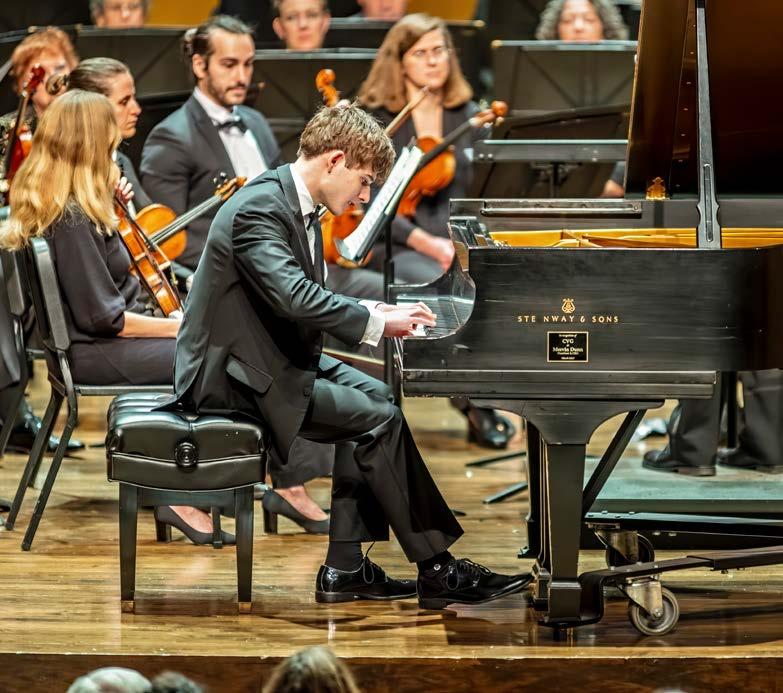
Erik Jacoby, Junior Division winner, performs piano solo with NASO
Photos by James DeCamp Photography
The New Albany Symphony Orches-
tra held its 2026 Student Concerto Competition on Jan. 24 and announced 17-year-old Erik Jacoby as the Orchestra’s Junior Division winner.
The New Albany High School honors student has been playing piano since the age of 5 with the assistance of teachers Kathleen Sadoff and Nina Polonsky.
Throughout his career, Jacoby has received recognition from the Chopin Foundation and competed in several events including the Denison University International Piano Competition, OhioMTA senior solo and duet competitions and the Piano Star International Competition.
Jacoby’s recent NASO win came with a solo piano performance with the group on March 8 as well as a featured performance in NASO’s sensory-friendly performance, Rising Stars, March 7.
“I love being on stage,” Jacoby says, “Everyone says I’m a showman.”
Sibling encouragement
At just 4 years old, Jacoby knew he loved the piano after watching his brother, Alek; and sister, Katia; play.
“I always looked up to them and that’s what motivated me to start piano,” Jacoby says.
Jacoby also admired their other hobbies, as both played tennis and encouraged Jacoby to play as well.
Now, alongside piano, Jacoby also plays for the varsity tennis team at New Albany and personally competes in United States Tennis Association tournaments.
Peace behind the piano
While performing can sometimes cause stress for Jacoby, especially during competitions, he says the musicality of it all outweighs the bad and allows him to become one with the performance.
“It is very stressful to play somewhere that’s big and nerve-racking, of course, but as soon as I sit down on the piano and I’m actually playing, my mind really just goes into the music,” Jacoby says. “Honestly, sometimes I create little stories in my music that reflect what it sounds like and what I wanted it to sound like.”
Jacoby finds the emotional factors of the music help distract him from the nerves that come with performing, whether that’s

“I can sit down and practice and I can reflect because music is a very emotional type of art ”
playing his favorite piece, Franz Liszt’s “Hungarian Rhapsody No. 2,” or when he is just practicing and playing whatever comes to his head at the moment.
“I can sit down and practice and I can reflect because music is a very emotional type of art,” Jacoby says.
More than music
From following his siblings’ footsteps to now being the only child in the house, Jacoby has gained a newfound level of independence and created his own path.
“I can control myself and do what I do on my own, and that’s really brought the atmosphere to be more encouraging in my house,” he says.
Jacoby balances his abnormal schedules with typical teen activities, such as hanging around Market Street or Rocky Fork Metro Park with his friends and joining his mom on nightly walks around their neighborhood.
As a junior, Jacoby feels it is a bit early to decide on college goals, but he does know he would like to accommodate all his hobbies. During this past spring semester, he took a music theory class which piqued his interest in music and mathematics. The course inspired him to
research schools that will meet his creative and logistical needs.
Maggie Valentine is an editorial assistant at CityScene Media Group. Feedback welcome at feedback@cityscenemediagroup.com.
Valuable Volunteers
During Jacoby’s sophomore year, he and Katia created the New Albany Tennis Outreach Program which is designed to give free tennis clinics for kids. After Katia graduated, he took on the role of head coach and director of the organization.
“All the coaches are volunteers, and we got sponsorships from the USTA,” Jacoby says, “So I love doing that.”
Another volunteer organization passed down from his sister is DaCapo, an organization where musicians play for senior communities. Jacoby now leads the Columbus Chapter.
“It’s always wonderful because they love listening to our music and I always like to play for them,” Jacoby says.
By Dylan Telerski
of Connection
Exploring tea and tradition through hands on learning
Tea is one of the most widely enjoyed beverages in the world, woven into daily routines across diverse cultures. It can be a comforting start to the morning, a refreshing pick-me-up in the middle of a busy day or a reason to gather with others. Across traditions, tea carries meaning beyond what is in the cup, reflecting generations of knowledge tied to healing, hospitality and connection.
This summer, Healthy New Albany is leaning into that sense of connection through a series of hands-on classes that explore tea, herbalism and the rituals that bring people together.
Several of the instructors leading these experiences are also part of the Healthy New Albany Farmers Market, creating opportunities to connect with their work both in the classroom and throughout the summer season.
From cultural traditions to practical skills, each program offers a different way to engage with tea and plant-based practices.
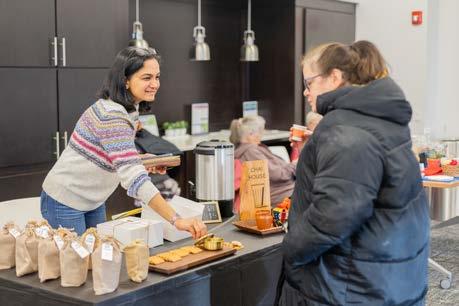
One upcoming workshop, The Art of Chai: Sip, Blend, and Connect, offers a deeply personal introduction to masala chai. Led by ChaiHouse founder and New Albany resident, Nidhi Sharma, the class centers on chai as more than a beverage. It is a daily ritual rooted in care, hospitality and shared experience.
Sharma traces that connection back to her childhood in India, where chai was part of everyday life. She remembers early mornings when her mother would prepare chai at 4 a.m. to help the family stay awake while studying, and the familiar rhythm of
crushing cardamom and ginger on quiet weekends. Friends and relatives would often stop by just for a cup, turning a simple drink into a moment of connection.
In class, Sharma will share the warmth, stories and generosity that defined those early experiences, while participants explore traditional spices and learn how to blend and brew their own tea. ChaiHouse can also be found at the Healthy New Albany Farmers Market throughout the summer season.
Later in the summer, Sri Lankan Tea Masterclass: The Art of the Perfect Steep shifts focus to the traditions and techniques behind Ceylon black tea. This interactive workshop highlights the craft of loose-leaf brewing and the balance of strength and aroma that defines a well-prepared cup.
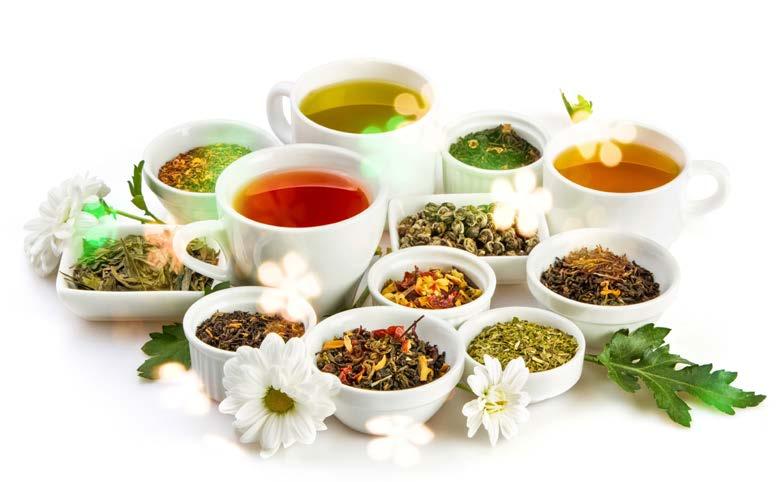
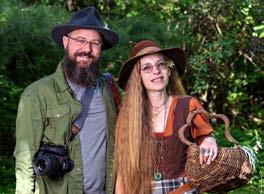
Instructor Michelle Michael-Kang, cofounder of Aachchi’s Tea, draws from her Sri Lankan upbringing and family traditions to guide participants through spice blending and preparation methods that reflect generations of practice.
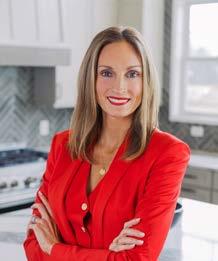
For those interested in going deeper, the Natural Solutions for a Toxic World: Home Herbalist Essentials series offers a more comprehensive look at plant-based practices, including the role tea plays in everyday routines. Led by Brandon Elijah Scott of Woodland Herbal, this six-part series focuses on practical skills that participants can use at home. Scott began working with Healthy New Albany earlier this year through April’s Garden-to-Apothecary: The Basics of Herbalism series, and continues to build on that foundation with a deeper, skill-building approach. Woodland Herbal is also a regular presence at the Healthy New Albany Farmers Market.
In one session titled “Teas, Tinctures, and Extractions: Making Remedies That Last,” Scott will introduce the foundational techniques behind herbal preparation. Participants will learn how water,
time and plant material work together and how to choose the right method for the desired outcome. The class also covers the habits that make herbal preparations reliable, including storage, labeling and consistency in preparation.
In a time when so much of daily life moves quickly, these moments matter. A cup of tea can be simple, but the act of preparing and sharing it creates space for something more. It becomes a pause in the day, a conversation starter or a way to reconnect with traditions both old and new.
Through these programs, Healthy New Albany continues to create opportunities for the community to gather, learn and experience something meaningful together, one cup at a time. The Healthy New Albany Farmers Market runs Thursday evenings from June through August, 4-7 p.m. in Market Square. More information about these classes and the farmers market can be found at www.healthynewalbany.org
Dylan Telerski is the Marketing and Communications Manager for Healthy New Albany.
Upcoming Classes & Experiences
The Art of Chai: Sip, Blend, and Connect Sat., June 6, 1-2:30 p.m.
Natural Solutions for a Toxic World: Home Herbalist Essentials (6-Part Series) Tuesdays, July 14-Aug. 18, 6-7:30 p.m.
Sri Lankan Tea Masterclass: The Art of the Perfect Steep Sat., July 18, 3:30-5 p.m.



Chai House
Woodland Herbal
By Dylan Telerski
Give and Get Back
Five ways volunteering supports your health and well-being
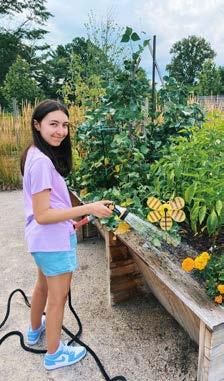
Volunteering can be a meaningful way to support others, strengthen your community and give the gift of time to a cause that matters to you. What is sometimes overlooked is how much volunteers gain in return. A growing body of research shows that volunteering is closely linked to improved mental, social and physical well-being.
At Healthy New Albany, that impact shows up every day. In 2025 alone, volunteers contributed more than 6,600 hours of service, supporting programs such as the Food Pantry, Community Garden and the Walking Classic. Many of those volunteers are older adults, a group for whom research shows volunteering can be especially beneficial.
Here are five ways giving your time can support your health.
1. It supports your mental health Research highlighted by the Mayo Clinic has found that volunteers report
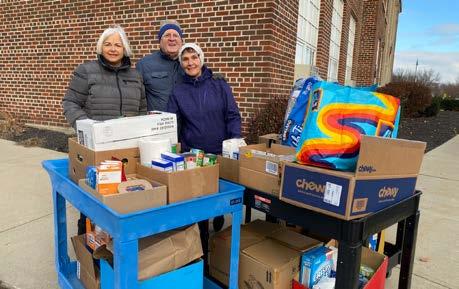
lower levels of depression and anxiety, along with higher self-esteem and life satisfaction. Engaging in meaningful work can create a stronger sense of purpose, which plays an important role in overall mental health.
At Healthy New Albany, volunteers often describe this shift firsthand. Debbie Smith, a pantry volunteer, shares, “I have found that getting to know the people who visit the Pantry has resulted in me growing more as a person than I ever thought possible.” Her experience reflects what research consistently shows: connection and purpose are closely tied to well-being.
2. It strengthens social connections
Volunteering creates opportunities to build relationships through shared work and common goals. According to data from AmeriCorps and the U.S. Census Bureau, more than 60 million Americans formally volunteered in a single year. These connections are especially meaningful for older adults. Research shows that life transitions such as retirement or changes in routine can reduce daily social interaction, and volunteering can help fill that gap by creating consistent opportunities to engage with others.
3. It encourages physical activity
Volunteering often involves movement, whether it is packing food, organizing supplies or working outdoors. A study conducted by Carnegie Mellon University found that adults over 50 who volunteered regularly, defined as at least 200 hours per year, had a 40 percent lower risk of developing high blood pressure. Even light, consistent activity through volunteering can contribute to overall physical health and daily movement.
Photos courtesy of James DeCamp and Healthy New Albany
4. It reduces stress and builds resilience
Volunteering can serve as a steady, positive outlet during stressful times. Research from Carnegie Mellon University and other public health institutions shows that volunteering helps reduce stress while supporting emotional resilience. Focusing on meaningful tasks can shift attention away from everyday pressures and create a sense of accomplishment.
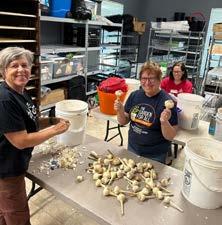
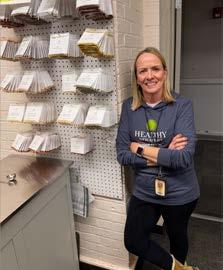
Nancy Ruick’s work at the pantry reflects that sense of purpose. Since 2019, she has packaged hundreds of spice bags for pantry families, carefully labeling each one in English and Spanish. She also takes the extra step to source spices that reflect the diverse cultural backgrounds of the families served, helping create a sense of familiarity and connection through food.
5. It increases overall happiness
A 2020 study published in the Journal of Happiness Studies found that people who volunteered within the past year reported higher levels of life satisfaction than those who did not. Volunteers were also more likely to feel a sense of identity, pride and connection to their communities.
That sense of fulfillment often builds over time. Small, consistent acts of service can create a lasting impact, not only for the people being served, but for the volunteers themselves.
Healthy New Albany offers a variety of ways to get involved, with opportunities that align with your skills and interests. Whether you are stocking shelves at the Food Pantry or looking for tadpoles alongside youth in a nature class, each role plays a part in building a healthier, more connected community. To learn more and get started, visit www.healthynewalbany.org/volunteer
Dylan Telerski is the Marketing and Communications Manager for Healthy New Albany.















By Rose Whaley
Chernetska/zeljkosantrac/iStock
Cooking Fuels
Choosing the right oil for the right dish

Cooking oils transfer heat efficiently, help ingredients cook evenly and elevate flavors so each dish performs at its best.
Beyond their culinary role, oils also fuel the body, supplying essential fats and nutrients which support energy, cell function and overall health.
Enhancer and distributor
Cooking oils are both a powerful flavor carrier and an essential nutrient facilitator. They dissolve and concentrate fat-soluble flavor compounds and help the body absorb fat-soluble vitamins and carotenoids, serving as antioxidants and vitamin A precursors that support vision, immune function and help reduce chronic disease risk.
A drizzle or a light sauté in oil releases and distributes those compounds more effectively than water alone, increasing the fraction of those nutrients the body can absorb and tacitly boosts the nutritional value of a meal.
Smoke point
When choosing an oil to use with your meal, it’s best to start by thinking about what is being prepared and how.
Smoke point – the temperature at which an oil begins to break down, produce visible smoke and form off-flavors and potentially harmful oxidation products – is both a health and flavor consideration. The smoke point threshold of an oil is influenced both by the oil’s fattyacid profile and by how much it has been refined – determining how well an oil can maintain its health benefits under heat.
The Dietary Guidelines for Americans recommends roughly 27 grams (just under 2 tablespoons) of added oils per day for a 2,000-calorie diet.
Here are some foods you can pair with oils.
• Carrots
• Tomatoes
• Spinach
• Kale
• Sweet potatoes
• Bell peppers
• Radishes
• Cooked broccoli
Oils with more saturated and monounsaturated fats are chemically more stable under heat than oils high in polyunsaturated fats. Those oils are more prone to oxidation and breakdown when heated, leading to health effects such as cellular damage.
Refined oils tolerate higher temperatures; however, unrefined oils retain more flavor and nutrients. Utilizing appropriate smoke points ensures the oils retain their flavors and don’t lose nutritional value.
Olive oil: a reliable staple
Olive oil has withstood the test of time as a staple in both cooking and health. Liquid plant-based oils such as olive oil are considered among the healthiest fats.
Most of the fat in olive oil comes from monounsaturated fatty acids, which have been shown to raise HDL cholesterol and lower LDL cholesterol,
Photos courtesy of Liudmila

with olive oil containing the highest monounsaturated fatty acid levels of any plant-based cooking oil.
However, nutritional quality can vary by type. Extra-virgin olive oil retains the most polyphenols and antioxidants because it undergoes the least processing, virgin olive oil contains slightly fewer of these compounds and oils that are labeled light, pure or refined are more processed and therefore milder in flavor and lower in beneficial compounds.
Uses: salad dressing, drizzle over roasted vegetables, sauté up to medium heat cooking
Avocado oil: bring the heat
Avocados are already found in an array of dishes, bringing health benefits to dishes from toast and sandwiches to salads and even smoothies, and avocado oil carries many of the same benefits.
Avocado oil provides monounsaturated fats, including oleic acid, that lower blood pressure. These fats also help reduce LDL cholesterol and support blood sugar control.
Avocado oil is also rich with vitamin E and other antioxidants such as lutein and phytosterols, which counteract free radicals in the body to protect from disease and contribute to healthier skin and protect against sun damage.
Uses: searing, deep-frying, high-heat cooking up to 520°F
Flaxseed: cold bowl flow
Flaxseed oil provides a concentrated source of alpha-linolenic acid omega-3 fatty acids. Rich in heart-healthy omeg-3s, a single tablespoon can meet or exceed the typi-
Other Oil Uses
Peanut, rice bran and refined sunflower oils are good for stir-frying, deepfrying and high-temperature searing because they resist breakdown and won’t impart burnt flavors, but can reduce some antioxidants.
Refined olive oil, unrefined avocado oil, canola, grapeseed and refined peanut oil balance flavor and heat tolerance and are ideal for most home cooking tasks such as sautéing and oven roasting below 400 degrees Fahrenheit.
A Butter Alternative
Canola oil is one of the four most commonly used vegetable oils in the U.S. and is often considered a healthy option because it is low in saturated fat and trans fats, high in monounsaturated fat and contains small amounts of omega-3 fatty acids and phytosterols that can help reduce cholesterol absorption.
It also can be used as a butter alternative in baking due to its neutral flavor and liquid consistency allowing it to blend easily into batters without altering taste or requiring melting. In cakes, muffins and many other loaf and brownie style recipes, it provides moisture and tenderness, which is especially useful in baked goods that rely more on softness than on the structure created by creamed solid fats.
cal daily ALA recommendations of 1,100 mg for women and 1,600 mg for men.
Research also suggests potential benefits for digestive health if used in moderation, though findings are limited and not yet well established. Those who are pregnant or breastfeeding are advised not use this oil.
Uses: salad dressings, dips, sauces and smoothies; low or no heat dishes
Walnut oil: drizzle of flavor
High-quality walnut oils are coldpressed and unrefined, offering a low heat piquant oil option.
Research shows that walnut oil’s antioxidants and unsaturated fats – including ALA and linolenic acid – may help improve blood sugar control in type 2 diabetes, reduce oxidative stress associated with high blood sugar levels, support healthier blood vessel function, lower blood pressure and contribute to healthy skin.
Uses: salad dressings with vinegar and seasonings or drizzled over steamed vegetables
Rose Whaley is an editorial assistant at CityScene Media Group. Feedback welcome at feedback@cityscenemediagroup.com





By Maggie Valentine
Photos courtesy of coldsnowstorm/SolStock/iStock
Life in the Greenhouse
Better your health with home gardening
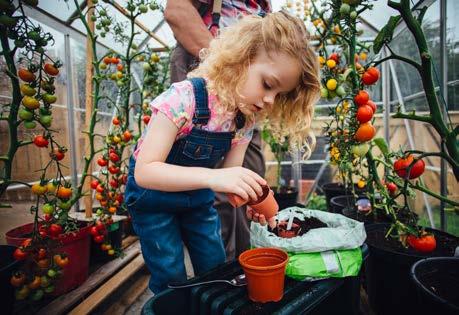
Gardening is not only a fun hobby, but a healthy one too – beyond fresh produce, it offers many physical and mental health benefits, especially when enhanced by the use of a greenhouse.
As an enclosed space that provides a controlled environment for seedlings, greenhouses create warm and humid environments that extend the growing season, preserving the health of both your produce and yourself. Greenhouses also help your produce as the enclosed space reduces the risks of pests and unknown diseases, while home gardening in general allows one to control what fertilizer is being used, preventing pesticide use.
Know before you grow
There are several ways to prepare your crops for the most bountiful harvest possible. Seed trays are an easy way to manage seedlings and monitor growth before potting. Organic seeds reduce chemical intake. Many local nurseries carry a selection of seeds to choose from, whether
organic or heirloom, which preserve the traditional variety of crops.
Soil care is equally important; a pH of 6-7.5 is an optimal soil base for most plants.
Bountiful benefits
Everyday exposure to soil is beneficial to cognitive function, as nutrient-rich soil contains similar microbes to the human body. The wider range of bacterial diversity our immune systems are exposed to, the better our bodies operate.
A well-balanced diet is another perk of home gardening. Locally-grown produce such as peppers containing capsaicin have anti-inflammatory properties and can reduce heart disease, and also make for a delicious salsa. Vegetables such as sweet potatoes and carrots are high in beta carotene, an antioxidant the body converts into vitamin A – increasing eye health, immune support and slowing the aging process. Super greens also boost the immune system, including Ohio favorites such as spinach and broccoli, which protect the body’s cells from potential damage.
Overall, home-grown fruits and vegetables have more nutrients compared to grocery store produce, as they are picked while ripe as opposed to being picked early to later ripen in-store.
Gardening is also a form of functional fitness, helping you burn calories and improve strength as you work. Alongside these positives, implementing home gardening into your everyday life also provides mental health benefits.
The act of gardening itself satisfies the body, as the exposure to clean air and the habitual movements of the hobby create a therapeutic environment for everyone –green thumb or not – to relax and enjoy. According to Mayo Clinic, time outdoors has been shown to reduce heart rate and muscle tension. There has also been research on improvement in immune response and oxygen levels, as people tend to breathe deeper while outside.
Greenhouses for good
Whether a master of the garden or a backyard novice, growing a home garden is a gratifying experience and an opportunity to positively contribute to the community and one’s own health – and a greenhouse is a great way to aid the learning process and extend any growing season, allowing for experimenting and a more sustainable space.
The New Albany community also offers plenty of opportunities for anyone to get some dirt on their hands. Specifically, community gardens such as Taylor Farm Park and The Garden for All are actively searching for volunteers in the 2026 growing season.
Residents can also visit local farmers’ markets such as the Healthy New Albany Farmers Market, where fresh, local produce is offered weekly in the summer months.
Maggie Valentine is an editorial assistant at CityScene Media Group. Feedback welcome at feedback@cityscenemediagroup.com.
Beating the Heat
Specifically in the summer, greenhouses may require additional attention as they can reach high temperatures and dry out more easily.
During the warmer seasons, the optimal temperature for greenhouses can range from 70 to 85 degrees Fahrenheit. Hosing down the floors and pathways or hanging shade cloths creates a cooler environment for plants.
Finding seasonal vegetables is also helpful as they are more likely to adapt to the seasonal temperatures and moisture levels. Tomatoes and cucumbers as well as herbs such as basil, oregano, thyme and mint are easier to maintain in the summer heat.
REAL ESTATE MARKETPLACE





Thoughtfully updated, this exceptional
blends
A light-filled great room with a fireplace creates an inviting central

while the expansive chef’s kitchen features vaulted ceilings, a large
and a sunlit dining area. Designed for both everyday living and entertaining, the home offers a private guest suite, dual laundry rooms, and a serene sunroom retreat. The spacious primary suite includes dual walk-in closets and garden views. The finished lower level is ideal for hosting, complete with a pub, game room, fitness area, and lounge space. Two private offices provide flexibility for today’s lifestyle. Set within a community offering scenic walking paths, a playground, and a stocked pond, this home delivers a refined yet relaxed living experience. Lauren.davie@evrealestate.com


Newly updated estate property in the desirable Fenway neighborhood. Surrounded by lush landscaping, walking distance to parks & pond, and minutes to the hub of New Albany and the Country Club. This stately 6-bed 7-bath home has been modernized and boasts sophistication. Offering elegance both inside and out, with thoughtful improvements and a private backyard. All brick home, three-car side-load garage, finished lower level, carriage suite, and more.. NEW ALBANY REALTY www.NewAlbanyRealty.com Jean
weekendscene


Top Homes Sold in New Albany
New Albany home prices increased by 9.9 percent in February 2026 compared to the previous year. Homes sold for a median price of $583,000. On average, homes sold after 63 days on the market, the same as the previous year. There were 68 homes sold in February 2026, down from 85 the previous year.
All information is collected from Redfin and Franklin County Auditor.
7668 Sutton Pl.
$1,417,000 5 beds, 4 baths
Sold 3/16/26
7342 New Albany Links Rd. 4 beds, 4 baths
$1,075,000
Sold 3/10/26
2869 Sandycombe Dr. 4 beds, 3 baths
$993,000
Sold 3/24/26
7580 Skarlocken Green
4 beds, 4 baths
$980,000
Sold 2/25/26
8186 Bevelhymer Rd. 3 beds, 3 baths
$895,000
Sold 2/12/26
6891 Jersey Dr. 5 beds, 4 baths
$886,500
Sold 3/11/26
10101 Oakwood Dr.
4 beds, 4 baths
$825,000
Sold 3/12/26
7135 Fodor Rd.
3 beds, 3 baths
$815,000
Sold 2/17/26
8423 Laidbrook Pl. 3 beds, 3 baths
$810,000
Sold 3/3/26
1514 Sheridan Rd. N.E. 4 beds, 4 baths
$660,000
Sold 3/5/26
6757 Upper Brook Way 4 beds, 3 baths
$625,000
Sold 3/17/26
8850 Lyra Dr. 4 beds, 4 baths
$600,000
Sold 3/23/26
ontheshelf
By Elizabeth Cullinan, Librarian at the New Albany branch of the Columbus Metropolitan Library
A Year of
Living Kindly: Choices That Will Change Your Life and the World Around You
By Donna Cameron, 2018
Author Donna Cameron spent a year intentionally practicing kindness in everyday life. This is her story of how making small, conscious choices can transform ourselves and our relationships with others. During her year-long experiment, Cameron learns to identify her own judgement, impatience and fear leading to an understanding that kindness requires courage and mindfulness.
Her thoughtful reflections show that kind acts can ripple outward, encouraging more connection, strengthening community and building personal growth. Readers will learn that choosing to show kindness repeatedly is a powerful way to live with greater purpose, compassion and joy.
Growing Young: How Friendship, Kindness, and Optimism Can Help You Live to 100
By Marta Zaraska, 2020
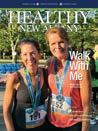
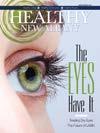

What is the secret to staying healthy for longer? The answer may just be showing kindness to others. This book explores how social connections, compassion and healthy emotional habits can do more for longevity than many traditional biomedical approaches. The research presented shows that friendship, community involvement and a sense of purpose strongly influence physical health, affecting immune function to cardiovascular well-being. The author also argues that these “soft” health interventions can have more power on the body than diet and exercise. Readers will be encouraged to invest in relationships and meaningful social bonds as a path towards a happier, healthier and longer life.
HumanKind: Changing the World One Small Act at a Time
By Brad Aronson, 2025
Inspired by events from the author’s own life, this book is a collection of true stories exemplifying how small acts of kindness can profoundly impact individuals and communities. The lasting positive change of simple gestures is highlighted with stories of everyday heroes, from mentors to children to volunteers. These stories demonstrate that compassion affects all those it touches, offering hope, connection and renewed faith in humanity. Full of practical ideas and resources, this book will inspire all those that read it to take meaningful action and spread kindness in their own lives.
The
Simple Difference: How Every Small Kindness Makes a Big Impact
By Becky Keife, 2021
The Simple Difference encourages readers to embrace small, intentional acts of kindness
on a regular basis. The author emphasizes that kindness doesn’t require grand gestures but grows from awareness, compassion and attentiveness. The most ordinary moments are the best opportunities to create the most meaningful impact in everyday life. With a blend of personal stories and faith-centered insight, readers are invited to let kindness guide their daily choices to cultivate a lifestyle that makes the world gentler and more connected.
The Kindness Cure: How the Science of Compassion Can Heal Your Heart and Your World
By Tara Cousineau, PhD., 2018
Kindness can go a long way to make the world a better place. The Kindness Cure explores how compassion and simple acts of goodwill can counter things like stress, fear and disconnection in modern life. Through a blend of neuroscience research, psychology theories and personal stories, the author shows that kindness is both a natural human capacity, as well as a powerful tool for emotional healing. Readers will learn that taking the time to practice empathy, gratitude and mindful awareness can strengthen resilience and foster healthier relationships. If intentional kindness is cultivated every day, it can become a transformative habit that benefits everyone and spreads throughout communities.
The Little Book of Kindness: Everyday Actions to Change Your Life and the World Around You
By Bernadette Russell, 2017
Often feeling overwhelmed by global problems, author Bernadette Russell embarked on a year-long pledge to perform a random act of kindness for a stranger every day. This experience transformed her outlook on life and inspired her to share practical ideas, tips and exercises that encourage kindness toward oneself, loved ones, strangers, the environment and one’s community. The message readers will take away is that kindness is accessible, low-cost and deeply impactful. A simple act of kindness is an easy way anyone can contribute to a more compassionate world.





















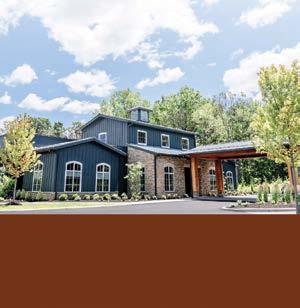


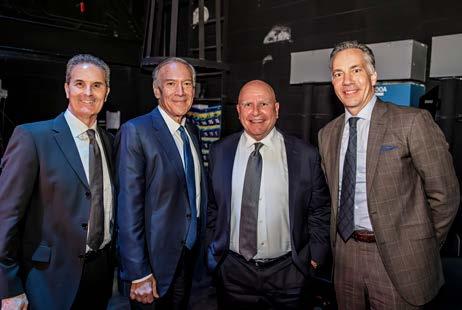
Security and Safety
New Albany Lecture Series continues with national security talk
As a part of the 13th season of The New Albany Lecture Series, The New Albany Community Foundation hosted a sold-out discussion on national security at The Jeanne B. McCoy Community Center for the Arts in New Albany. At the event, Lt. General (Retired) H.R. McMaster and Mike Pompeo were led in a discussion by CNN Anchor and Chief National Security Analyst, Jim Sciutto. McMaster was a National Security Advisor and Lieutenant General in the U.S. Army, and Pompeo was 70th Secretary of State and served as the Director of the CIA. A reception was held in the Mershad Hall at the McCoy as well as at the New Albany Country Club prior to the event as a way to welcome ROTC and JROTC cadets, veterans, active-duty military members, sponsors and the three speakers.
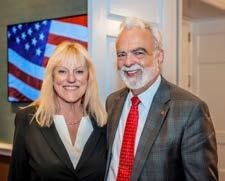
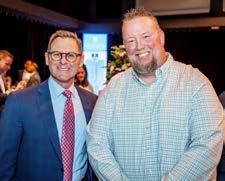
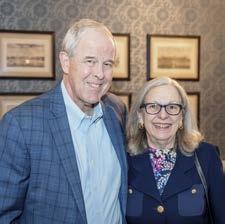
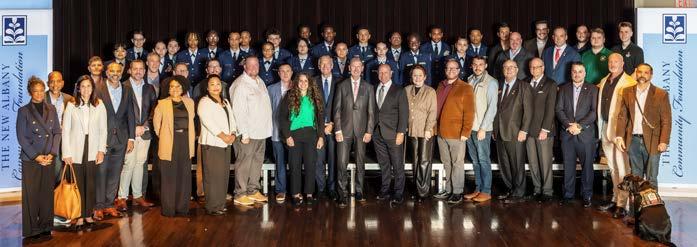
Photos by James DeCamp Photography
Craig Mohre, Secretary Mike Pompeo, Lt. General (Ret.) H.R. McMaster and Jim Sciutto
Active-duty military, veterans, ROTC and JROTC cadets
Inez and Michael Eicher
Dave Ciesinski and Brian Caudill
Martyn and Lynne Redgrave