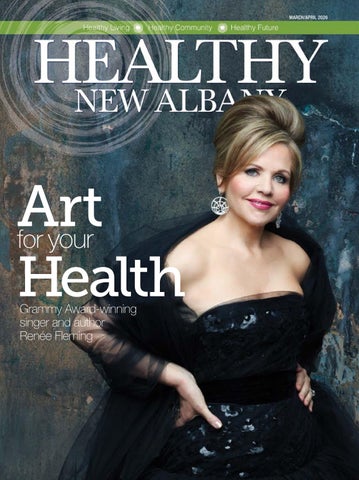
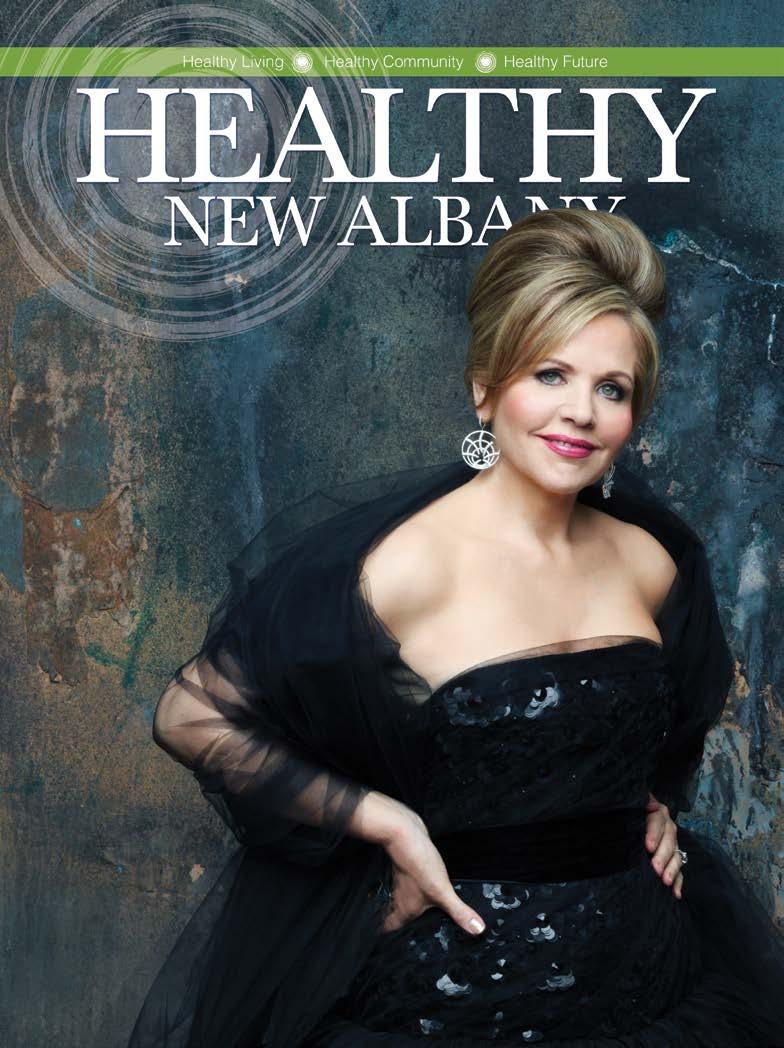
Art for your Health
Grammy Award-winning singer and author
Renée Fleming
Community
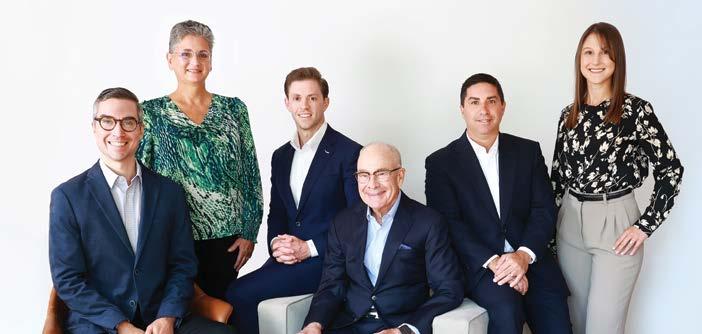
UBS Financial Services
180 Market Street, Suite 200 New Albany, OH 43054 614-939-2202 newalbanywealthpartners@ubs.com
Kevin Snead, CFA
Vice President






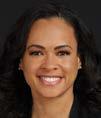
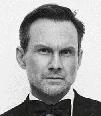
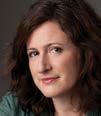



Christian Slater Award Winning Actor & Mental Health Advocate
Interviewed by Neda Ulaby Reporter, NPR’s Arts Desk
Moderated by Jim Sciutto
Civil Discourse & Debate
James Carville Political Icon Reince Priebus White House
of Staff (2017) & Republican National Committee Chair (2011-2017)
Linsey


www.healthynewalbanymagazine.com
1335 Dublin Rd. Suite 101C Columbus, OH 43215
614.572.1240 www.cityscenecolumbus.com
Kathleen K. Gill
Gianna Barrett
Dave Prosser
Isabella Gaydosh-Bruce
Megan Brokamp, Jane Dimel, Rachel Hanz, Ella Jay
Katie Allen, Melissa Braithwaite, Korrigan Craddock, Dylan Telerski
Amanda Stevens
Rae Moro, Sarah Reese
CEO President
Chief Creative Officer
Business/Office Manager
Editors
Contributing Writers
Editorial Assistants
Media & Marketing Advisors


Healthy New Albany Magazine is the Official Publication of Healthy New Albany, Inc., convened by The New Albany Community Foundation.
Rachel Haugk
KJ Coit
Denise Dahl
Dylan Telerski
Pamela Conn
Executive Director
Mission Director
Development Director
Marketing and Communications Manager
Director of Volunteer and Corporate Engagement
The Publisher welcomes contributions in the form of manuscripts, drawings, photographs or story ideas to consider for possible publication.
Enclose a SASE with each submission or email rkaras@cityscenemediagroup.com. Publisher does not assume responsibility for loss or damage.
The appearance of advertising in Healthy New Albany Magazine does not constitute an endorsement of the advertiser’s product or service by the City of New Albany or Healthy New Albany, Inc.
Healthy New Albany Magazine is published in January, March, May, July, September and November. Subscriptions are free for house holds within New Albany-Plain Local Schools. For advertising information or bulk purchases, contact Gianna Barrett at 614-572-1255 or gbarrett@cityscenemediagroup.com.
No part of this publication may be reproduced without the written consent of the publishers. Healthy New Albany Magazine is a registered trade mark of CityScene Media Group. Printed in the U.S.A. ©2026
www.healthynewalbanymagazine.com
Preschool Enrollment

For Children Ages 2½–5 September–May
Our nurturing preschool promotes:
• Kindergarten readiness
• Self-expression & creativity
• Physical development
• Social & emotional growth
• Prayer and Bible stories

Outreach Christian Preschool ocpnapreschool@gmail.com newalbanyumc.com/preschool Call 614-855-4100 to register today 20 3rd Street, New Albany, OH 43054

UPCOMING PROGRAMS MOVEMENT
Ramen at Home
Tuesday, March 3 | 6:00 PM
Sourdough Pretzels
Sunday, March 15 | 2 PM
Sweet Satisfaction: Cooking with Less Sugar
Saturday, April 11 | 3 PM
Sourdough: Starters to Loaves
Sunday, April 19 | 2 PM
Super Smoothies (Gr. 4-6)
Saturday, May 16 | 3 PM
KNOWLEDGE NOURISH
Self-Care Science Lab (Gr 4-6)
Friday, March 6 | 6:00 PM
FREE COMMUNITY HEALTH TALK:
Allergies and Asthma Attacks
Monday, March 23 | 6:00 PM
FREE: Aging with Harmony: The Joy of Lifelong Music
Tuesday, April 14 | 1:00 PM
FREE: Resonant Healing: Honoring Grief with Music
Tuesday, April 14 | 1:00 PM
FREE COMMUNITY HEALTH TALK:
Clear View: Long-Term Eye Health
Tuesday, April 14 | 6:00 PM
The Roaming Teacup: Tea, Tales & Timeless Florals
Saturday, April 18 | 2:00 PM
FREE: Melodies of Bonding: Pregnancy & Fourth Trimester
Tuesday, May 12 | 1:00 PM
for these programs and more by scanning the QR code or visiting: healthynewalbany.org/programs REGISTER
The Play Spot (15 months-5 years) Monday, March 16 | 10:00 AM
Music Together (9 months-6 years)
Tuesdays | March 17-May 21
3 TIME SLOTS: 9:30 AM, 10:30 AM, 11:30 AM
Lift Like a Girl: Starting Strength (Gr. 4-6)
Wednesdays | March 18-May 13 | 3:20 PM
Ballroom Dancing: Step Up Your Style Thursdays | March 19-May 28, 2026 | 6:00 PM
Gentle Movement and Restoration Sundays | March 22-May 10 | 4:00 PM
Chair Yoga
Mondays | March 23-May 18 | 10:00 AM
Wednesdays | March 25-May 20 | 4:30 PM
Tai Chi: From Skill to Mastery Wednesdays | March 25-May 20 | 10:30 AM
Chair Barre: Balance & Strength
Fridays | March 27-May 22 | 10:00 AM
Line Dancing
Tuesdays | March 31-May 19, 2026 | 7:00 PM
Latin Fusion Zumba Dance Party
2 DATES: Saturday, March 21 | 12:00 PM Saturday, April 18 | 12:00 PM
NATURE
Adventure Eagles (Gr. 4-6)
Wednesdays | April 8-May 13 | 3:00 PM
Exploring Archery (Ages 8+)
Monday, April 13 | 3:30 PM
Photo by Ray LaVoie
Fermenting Your Health
While some have labeled me a thinker or innovator since, occasionally, I operate outside conventional boundaries, I’m more comfortable identifying myself as a creature of habit. Somehow, being innovative and adhering to routines are not viewed as synergistic behaviors.
Often my routines act as a cultivator for gaining valuable insights. Every morning, I begin my day by reading the NY Times, gravitating toward health-related articles.
As I was preparing to write this column, I came across an article about the relationship between cancer risk and what you eat. It emphasized the importance of following a diet that emphasizes whole grains, vegetables, fresh fruits and plant-based proteins along with certain kinds of fish such as wild-caught salmon that is high in omega-3 oils and lean meats such as white-meat poultry.
But there was another point highlighted in this article that caught my attention. It focused on fermented foods and its role in reducing cancer risk. I had just reviewed Korrigan Craddock’s informative article in this issue regarding fermented foods that warranted further investigation.
Fermented foods and beverages are beneficial for one’s wellness journey whether reducing cancer risk, promoting heart health, lowering A1C and perhaps even slowing the progression of dementia.
Consider eating Greek yogurt. The most healthful kinds are Greek yogurts that are typically plain and unsweetened. I prefer Fage 2% although others like Stonyfield Organic and store brands like 365 by Whole Foods are also very good. I will not eat flavored yogurt since it generally is sweetened.
I eat yogurt after I have worked out in the morning. I add blueberries and a splash of granola. I also add yogurt to my smoothies.
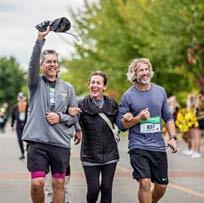
I have been introduced to kombucha which is a fermented tea drink replete with antioxidants which is a healthful gut drink due to its beneficial bacteria. I had provided kombucha as an after-race beverage at the Walking Classic and the reception was extremely positive by the athletes who competed.
Other fermented foods you may wish to try are kefir, kimchi, sauerkraut, miso and tempeh. However, be careful as many commercial-canned or jarred products are pasteurized and have been heated to kill bacteria thus removing their beneficial probiotics.
And now that I’ve finished my writing session, I’m going to relax and have a Guinness. I can justify imbibing since Guinness is fermented!
Healthfully,
Phil Heit Emeritus Executive Director
Healthy New Albany, Inc.

Healthful events happening in and out of central Ohio


Thurs., March 5
Line Dance Fitness
6:30-7:45 p.m., Oakstone Academy, 939 S. State Rd., Building B, Room 209, Westerville www.talkinbody.com
Fri.-Sun., March 6-8
Arnold Sports Festival
Fri.-Sat.: 10 a.m.-7 p.m.
Sun.: 10 a.m.-4 p.m.
Greater Columbus Convention Center, 400 N. High St., Columbus www.arnoldsports.com
Sat., March 7
Walk with a Doc
8:30-9 a.m., Highbanks Metro Park, 9466 Columbus Pike, Lewis Center www.eventbrite.com
Sat., March 7
Healthy New Albany Indoor Farmers Market
9 a.m.-noon, Philip Heit Center for Healthy New Albany, 150 W. Main St. www.healthynewalbany.org
Sat., March 7
Maternal Mental Health Summit
10 a.m.-3 p.m., Nationwide Children’s Hospital, 700 Children’s Dr., Columbus www.eventbrite.com
Sun., March 8
Celebrate Her: A Women’s Wellness Event
Noon-5 p.m., The Peak at Edison, 781 Science Blvd., Gahanna www.celebrateherevent.com
Sun., March 8
Triumph and Light presented by New Albany Symphony
3 p.m., McCoy Center for the Arts, 100 E. Dublin Granville Rd. www.newalbanysymphony.com
Sat., March 14
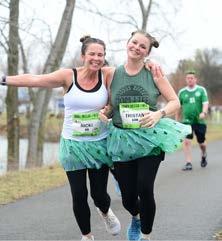
Crooked Shillelagh 4 Miler
5-8 p.m., Crooked Can Brewing Co., 5354 Center St., Hilliard www.m3ssports.com
Sat., March 14
Artist Opening Reception for Robert Coomer & Ryan Metzger
5-8 p.m., Hayley Gallery, 260 Market St. www.localohioart.com
Sun., March 15
Time to Paddy Race 5K/10K & Lucky 13.1
8 a.m., Smith Farm Park, 3285 Watkins Rd., Columbus www.runsignup.com/bodiesrc
Tues., March 17
Music Together 9:30-10:15 a.m., Philip Heit Center for Healthy New Albany, 150 W. Main St. www.newalbanyohio.org
Sun., March 22
Fight for Air Climb
8 a.m.-1 p.m., Ohio Stadium, 411 Woody Hayes Dr., Columbus www.action.lung.org
Photos courtesy of Arnold Sports Festival, Lynette Ford and M3S Sports
Crooked Shillelagh 4 Miler
Arnold Sports Festival
OhioHealth Capital City Half & Quarter Marathon
Mon.-Fri., April 4- 10
Kids 5-Day Spring Cooking Class
10 a.m., Sur La Table, 4009 Easton Station, Columbus www.surlatable.com
Tues., April 21
Laughter Wellness Yoga Session
6:30-7:30 p.m., Thurber Center, 91 Jefferson Ave., Columbus www.thurberhouse.org
Thurs., April 23
Columbus Spring Senior Expo
10 a.m.-1 p.m., Hollywood Casino, 200 Georgesville Rd., Columbus www.seniorexpousa.com
Sat., April 25
OhioHealth Capital City Half & Quarter Marathon
8 a.m., Columbus Commons, South High St., Columbus www.capitalcityhalfmarathon.com

Submit Your Event
Do you have an event you would like to submit to our calendar?
Send details and photos to rhanz@cityscenemediagroup.com


Laughter Wellness Yoga Session
By Melissa Braithwaite
Building an Inclusive Community
Developmental Disabilities Awareness Month centers on lived experience and community action
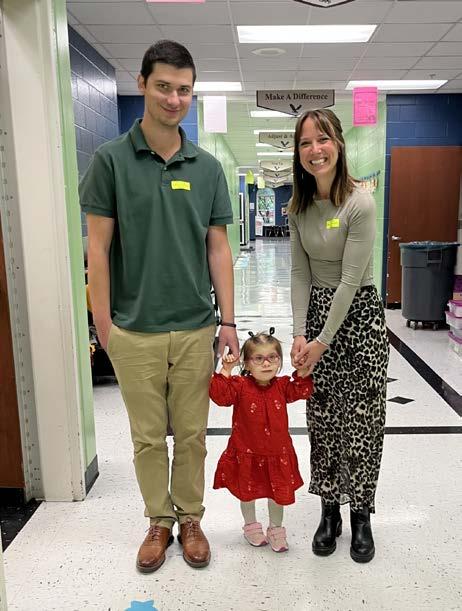
March is Developmental Disabilities Awareness Month, and in New Albany, awareness is turning into action. Driven by parents, partnerships and Cityled initiatives, New Albany is continuing to build a community where inclusion is part of everyday life.
“My daughter Elaina has a rare genetic condition, Mowat-Wilson syndrome, and developmental disabilities are a major part of her life,” says Jennifer Cohen, program coordinator for Healthy New Albany and a New Albany parent. “She’s nonverbal, so awareness means teaching people how she communicates.”
After living in three different states, Cohen says her family chose New Albany for its special education programming.
“For us, inclusion isn’t just about services,” Cohen says. “It’s about being seen and embraced as part of the community.”
Natalie Goss, a New Albany parent to a child with developmental and physical disabilities, says that sense of belonging reshaped how her family experiences the community.
“My husband and I moved here eight years ago, and everything changed after our daughter was born in 2020,” Goss says. “You start seeing your town, and everyday life, very differently.”
She credits her daughter’s time at the New Albany Early Learning Center (ELC) with helping her family feel connected.
“The ELC gave us a village,” Goss says. “It’s an incredibly inclusive place where children grow up seeing disability as a normal part of life.”
Jessie Kozak, a New Albany parent of an autistic child, says that kind of inclusion allows families to participate in
Photos courtesy of the City of New Albany, Jennifer Cohen and the Goss family
The Goss family has found the ELC welcoming and supportive. Pictured are (from left) residents Aric, Olive and Natalie Goss.
community life without having to push against barriers.
“Inclusion matters to our family because everyone deserves to belong exactly as they are,” Kozak says. “When spaces are inclusive, my son doesn’t have to work harder just to fit in, he gets to participate fully, supported in the way that works best for him.”
Developmental disabilities vary widely, from autism to rare genetic syndromes. However, the desire to belong and participate fully in community life is universal.
The City listens
In March 2025, the City of New Albany hosted an Accessibility Listening Session led by City Council’s Inclusion, Diversity, Equity & Accessibility (IDEA) Implementation Panel, inviting residents to share feedback on how public spaces and events could be more accessible.
Since then, the City continues to expand accommodations, such as accessible parking, mobility-aware layouts and by providing sign language interpreters.
“The listening session was about asking, ‘What are we missing? What do you need to feel welcome?’” says Community Program Administrator Abbey Brooks.
Goss says that openness extends beyond formal meetings. She has worked directly with City staff, including walking through Taylor Farm Park with planners to discuss accessibility improvements.
“Being asked for input, and seeing it taken seriously, makes a real difference,” Goss says.
Kozak echoed that sentiment, noting the City’s willingness to adapt experiences rather than apply one-size-fits-all solutions.
“When I’ve shared ways something could be more supportive for different learners and thinkers, the response has been open and curious,” she says.
Sensory-friendly hours at events such as Touch-a-Truck have opened the door for more families to attend community events comfortably and confidently, prompting the City to explore similar accommodations at larger community events – such as the Inclusivity Zone at its Fourth of July celebration.
“If someone is willing to share what they need, we’ll work hard to make it happen,” Brooks says.
Brooks adds that one key takeaway from the listening session was the need to clarify how residents can request accommodations. Families who need reasonable accom-
modations for City programs can contact Community Programs at communityevents@newalbany ohio.org or 614-855-6226.
Looking ahead
One of New Albany’s most significant upcoming initiatives is its effort to become KultureCity certified in 2026. KultureCity is a national organization that certifies cities, venues and events for sensory inclusivity.
As part of the process, City staff and volunteers are being trained to better recognize and respond to sensory needs. Sensory bags, which may include noisereducing headphones, fidgets and sensory-friendly sunglasses, will be available.
“Sensory accommodations aren’t one-size-fits-all,” says Alonna Skinner, New Albany community program specialist. “Accessibility looks different for everyone.”
Goss says she hopes future planning continues to prioritize universal design from the start.
“I would love to see a fully accessible, fenced-in playground in New Albany, similar to the accessible playground that opened last spring at Blendon Woods,” she says.
A shared responsibility

As Developmental Disabilities Awareness Month continues, families and City leaders emphasize that inclusion strengthens the entire community. Inclusion, families say, is about building spaces that work better for everyone.
“When I think about inclusivity, I don’t just think about disability,” Cohen says. “It’s about empathy, understanding and making sure people feel like they belong.”
Families say those moments – of feeling seen, supported and included – are what turn awareness into community.
Learn about IDEA at newalbanyohio.org/ community-resources/idea. Contact Community Programs at communityevents@ newalbanyohio.org or 614.855.6226 to request accommodations.
Melissa Braithwaite is a Communications & Marketing Specialist for the City of New Albany.
Parent Resource: The Compass Group
The Compass Group is a local parent-led support group for families of children with Individualized Education Programs in and around New Albany.
Compass hosts monthly gatherings, from social meetups to its Navigate This series, where families share their experiences and lessons learned. While supported by the local schools, the group is open to families outside the district.
For more information, email nacompassgroup@gmail.com or follow @nacompassgroup on Facebook and Instagram.
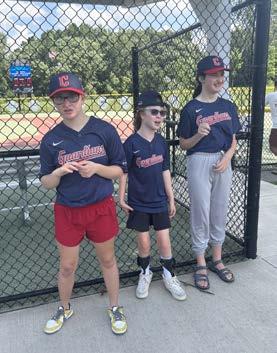
Teammates Elaina Cohen, Channing Dixon and Alisha Tamini connect at Miracle League New Albany.
Miracle League baseball is just one example of inclusion and accessibility in New Albany.
By Katie Allen
Mini Drivers, Major Lessons
The ultimate summer safety adventure

For more than two decades, New
Albany Safety Town has been a beloved summer tradition, transforming curious youngsters into confident, safetyconscious community members.
Launched in 2004, this eight-day educational camp is designed for children entering kindergarten who have turned 5 by the first day of camp, as well as firstgraders. Under the guidance of statecertified teachers, New Albany Police Officers and Plain Township Firefighters, the littlest campers learn that safety isn’t just a set of rules – it’s an adventure.
The program’s hands-on philosophy truly comes to life during its signature field trips. Campers get to go behind the scenes at the New Albany Police Department and the Plain Township Fire Station, meeting local heroes and learning emergency protocols. Another highlight for many is the trip to the Plain Township Aquatic Center Pool to help learn essential water safety tips.
“I loved the field trips! My favorite was visiting the pool, because there was so much I could interact with,” says Safety Town Graduate camper Adelyn S.
But the real daily draw? Adventureland. There, campers navigate a miniature town
on self-pedaling go-karts, practicing pedestrian and bike safety in a controlled, fun environment.
“I loved driving the go-karts! And getting my very own helmet with stickers,” shares recent Safety Town graduate Owen A.
Parents also love the experience.
“It was great. John had the best teachers,” says Jessie Kozak, mom of camper John. “They made sure he was comfortable, happy and accommodated. It was so easy to drop him off. He really loved it!”
Katie Williams agreed, “Safety Town was a fantastic addition to our summer camp lineup. It quickly became something my daughter looked forward to every day, especially her time at the pool and seeing her former preschool teachers.”
The fun doesn’t stop after graduation, either. If your child is headed into first or second grade and has already conquered the basics, Safety Town offers a Graduate Camp with even more safety adventures.
Ready to join the fun? Get more information and to learn how to register at newalbanysafetytown.org.
Katie Allen is a Communications & Marketing Specialist for the City of New Albany.


2026 Safety Town Registration
New Albany residents: Opens March 7
Non-residents: Opens March 21
Sessions
Session 1 runs from 8:30–11:30 a.m. on June 1–4 and June 8–11, 2026.
Session 2 runs from 12:30–3:30 p.m. on June 1–4 and June 8–11, 2026.
Session 3 runs from 8:30–11:30 a.m. on June 15–18 and June 22–25, 2026.
Graduate Camp runs from 8:30 a.m.–Noon on June 29–July 2, 2026.
Camp Fee
$105 for New Albany residents
$120 for non-residents
Photos courtesy of the City of New Albany
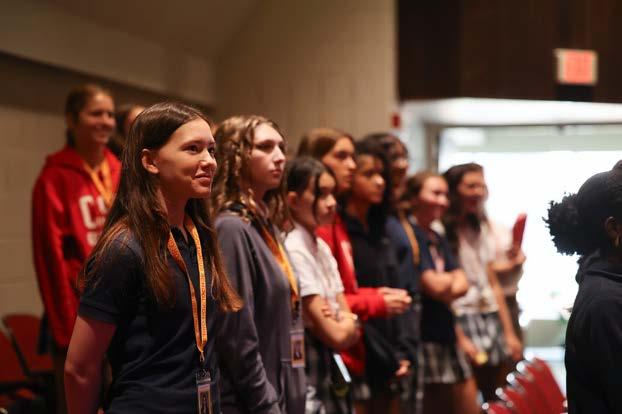




By Megan Brokamp
Built to Last
How Simply Quartered owners live
timelessly
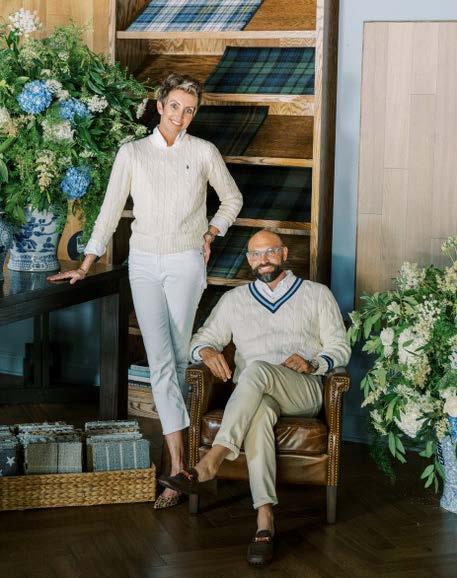
On any given day in New Albany, it’s not unusual to find Keri and Chad Thompson moving together. Whether they’re walking familiar routes, gathering around the dinner table or designing surfaces side by side at their office just off South High Street, the Thompsons’ lives are shaped around connection.
Long before they opened their flourishing design studio, the Thompsons were practicing a way of living rooted in family and a deep sense of home.
Building the foundations
Chad and Keri both grew up in Wheelersburg, a town just outside of Portsmouth located on the Ohio River. They were raised in family-first households, growing up watching their parents tackle life side by side.
They met and started dating at Wheelersburg High School, staying together throughout college. They both attended Shawnee State University, where Chad studied Computer-Aided Design and Drafting (CADD) and Keri studied engineering, becoming official high school sweethearts after tying the knot at the age of 21.
The Thompsons have been married for 25 years, mirroring the longstanding bond they grew up witnessing.
“My parents still do everything together,” Keri says. “They have been together for 55 years, his parents for 50.”
Shortly after they married, they went searching for a home in New Albany. In 2001, they built their first house in Albany Park.
“There was no Market Street, there was nothing around right when we first moved here,” Chad says.
During that time, Chad began working in the flooring industry, following a path familiar to him after growing up alongside his father, who spent more than 50 years in the business. When his father
sold the company in 2001, Chad stayed in the industry as a mill representative and in related roles, while Keri built her own career as an engineer specializing in quality control.
As the young couple built a life in New Albany, their three children were born: twin sons, Landon and Lleyton, who are 23, and their daughter, Halle, who is 17.
Although schedules were busy growing up, with the kids active on sports teams and Chad and Keri balancing fulltime jobs, they prioritized quality family time – something the Thompsons still value today.
From big family dinners to Sunday church, the Thompsons tend to show up as a group; if you see one around the
Photos courtesy of Kismet Visuals & Co. and the Thompson family
community, chances are you’ll see several more close by.
“I think we’ve always kind of done everything as a family… we’re always known for traveling in a pack,” Chad says.
“We are always all together, which we love, that (the kids) still want to be around us,” Keri adds.
Re-routing
In 2010, Chad’s father was diagnosed with cancer, and to help with the flooring business, which his father was still actively involved with running, Chad and his family moved back to Wheelersburg. Keri got a new engineering job in southern Ohio, and Chad launched Thompson Contract, a stem off his father’s business, which was primarily a labor house focusing on commercial projects. For seven years, Chad commuted between Columbus and Wheelersburg, growing his business in both areas.
Each time the Thompsons came back to Columbus, they drove around New Albany, watching it evolve. Keri says that during these trips, they realized just how much they missed their first home. As Chad’s father’s health improved, the pull back to New Albany grew stronger. However, no serious plans to move had been made.
“I loved my job down there. We weren’t thinking about moving,” Keri says. “And then one day, we had a phone call from a realtor.”
The realtor asked if they’d be interested in showing their house, which was not even on the market. They decided to do it, and in one day, they had a full asking price offer on the house.
Before making any decisions, they went to their kids. At that time, the twins were sophomores in high school, and Halle was in the fifth grade. Once they were sure the kids were on board, they decided to return to New Albany. In June of 2018, they officially moved back.
“That first morning we were back when we woke up, we just (thought), ‘We’re home,’” Keri says.
Simply Quartered
Back in New Albany, Chad continued projects with Thompson Contract, while Keri remained in the engineering field. During the pandemic, many of the contractors Chad worked with began shifting toward higher-end residential remodels.
Fitness Focused
When they aren’t designing flooring, the Thompsons love to stay active. Everyone in the family are members of the New Albany Country Club, and they make it a priority to work out each morning, typically as a family.
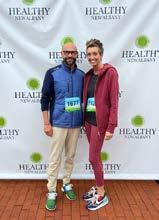
During the warmer months, they take long walks around Pickett Place after dinner and participate in weekly Sunday evening golf.
To ensure health is a priority, Chad schedules exercise and health-related activities in his calendar.
“I think part of it is you have to schedule your healthy habits as part of your daily routine,” Chad says. “There are time blocks for working out, there are time blocks for walks… It’s something I’ve been putting in place to make sure I’m well.”
Chad adds that disconnecting from social media plays an important role during this time. From music-free jogs to gym sessions without the Apple Watch, exercise is becoming less about tracking and more about building both mental and physical strength.
Interior Tips
Here are a few pieces of advice Chad and Keri have for owners looking to renovate:
Build to last. Foundational elements such as flooring should be sturdy, not trendy.
Don’t design for the next owner. Make choices for you, not what you think someone else might want later.
Let the materials age. Natural wood and stone develop patina over time, telling a story rather than showing wear.
Save color for the accessories. Pillows, paint and decorations are great ways to add color and flair, keeping floors minimalistic.
Take your time. Thoughtful spaces are a marathon, not a sprint. Good design isn’t completed all at once.

As those projects took shape, their involvement started earlier in the process, first with pre-budget planning, and then with helping clients think through materials and long-term choices. Those conversations naturally deepened, moving from numbers to selection and intention, and eventually led to the idea of creating a studio centered on thoughtful, curated decisions.
In 2022, Thompson Contract rebranded to Simply Quartered, opening its current studio at 29 S. High Street. During that time, Keri joined the team, helping behind the scenes to curate their brand and design the studio.
Over the past few years, Simply Quartered has exploded in success. From features in Architectural Digest and The Scout

Guide to an interview on Classic & Curious, the company quickly gained media attention after its launch. With that, their projects grew as well – providing flooring for Muirfield Village, Jeff Ruby’s Steakhouse and more.
Simply Quartered reflects a philosophy of intentionality, the idea that meaningful design choices are foundational and prove graceful over time. The studio itself has a Ralph Lauren-esque feel, with designs that cater to timelessness over trends.

“We curate a collection that we feel is a representation of how we see New Al-

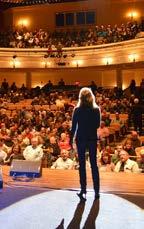
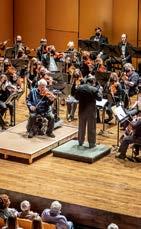
A PLACE where our beloved local arts groups enthrall audiences with musicals, concerts, recitals, and more.
A STAGE for world-renowned performers and speakers to create thrilling art and deliver thought-provoking lectures.
A STATE-OF-THE-ART HOME for New Albany’s young artists to learn from industry professionals and to participate in their school productions, connecting them to performing arts appreciation and unparalleled opportunity.
A CLASSROOM for students to learn from and perform with top-notch artists, like Itzhak Perlman, Sogbety Diomande, and Simply Three, through the McCoy Board Educational Grant program.
bany,” Chad says. “Our goal is basically to put products in the house that can be passed down to the next generation.”
Legacy is at the core of Simply Quartered. The business was born from Chad’s father’s work, and recently, their sons joined the team as project managers.
“It’s great to have the third generation come in,” Chad says.
“They’ll come in from job site visits in the morning and give us updates, and it just doesn’t seem real,” Keri adds. “We’re pretty proud.”
The couple plans to pass the business down to their sons eventually, but for now, they are enjoying the time spent working together on projects.
Rooted in connections
Along with strengthening their own family ties, Simply Quartered has rooted the Thompsons more deeply in the New Albany community. From their South High Street studio, Keri and Chad experience the rhythm of downtown each day: the foot traffic, the music drifting in during summer concerts, the familiarity of a place that feels lived in.
Outside of work, their involvement reflects that same feeling of consistency.
They return each year to the New Albany Walking Classic, spend Saturdays at the farmers market and enjoy evenings at the Summer Concert Series. Their commitment also extends to the New Albany Community Foundation and volunteer work tied to their children’s schools.
Their life in New Albany is built around shared meals, familiar paths and generations moving forward together, a lifestyle rooted in legacy rather than momentum. In many ways, Keri and Chad Thompson live exactly as they design, grounded in tradition and shaped by routine.
“We don’t feel like it’s that different to us,” Chad says, “because that’s always been the way we were both raised.”
Megan Brokamp is an editor at CityScene Media Group. Feedback welcome at mbrokamp@cityscenemediagroup.com.
The Thompsons on vacation


By Ella Jay
of Decca/Andrew Eccles and Renée Fleming
Music Meets Medicine
Local and national experts explore how singing impacts the mind, body and health
When renowned soprano Renée Fleming found herself struggling with performance pressures and bouts of stage fright, she began searching for solutions; along the way, she discovered the fascinating interdisciplinary field of neuroarts.
An emerging area of study, neuroarts explores how the arts affect the mind and body – inspiring Fleming to publish her 2024 anthology, Music and Mind: Harnessing the Arts for Health and Wellness, and become one of the world’s most prominent advocates for such research.
“I thought that audiences would be fascinated by these things too, and it’s been true, it’s really grown,” says Fleming.
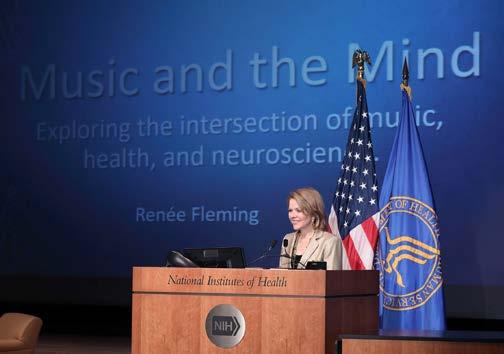
Now, she brings that conversation to New Albany this April, pairing a performance at the McCoy Center for the Arts and a Music and Mind lecture alongside The Ohio State University Wexner Medical Center CEO Dr. John J. Warner to underscore the growing notion that music is more than art – it’s medicine.
The science of singing
Within the neuroarts field, music has emerged as one of the most closely studied artistic experiences. Research shows that listening to music and singing offer a wide range of both physical and mental health benefits.
According to New Albany Symphony Orchestra (NASO) Chorus Director Dr. Michael G. Martin, singing can improve longevity by strengthening cardiovascular and respiratory health, reducing stress and anxiety, improving posture and balance, and even alleviating chronic pain. It also works core muscles, engages the nervous system, improves mood and boosts immune health and cognition.
For many people such as Martin himself, singing also provides an avenue through which to heal.
“I was in the process of writing a Christmas cantata when my dad passed away, and it helped me heal from that. When my mother passed away, I wrote a piece based on a requiem and that was cathartic,” says Martin.
Both Martin and Dr. Amy Arnett Budzik, a member of the NASO Chorus and emergency physician, also emphasize the socialemotional benefits of singing with a group.
“Singing is very personal, your instrument is your body, so there’s a connection there, but also a connection with the group,” Arnett says. “There’s something about singing harmonies, the combination of voices and the instruments playing that is really, very moving… Music connects people universally.”
Fleming herself attests to the power of singing together, noting that she makes sure she and her audience sing together at least once or twice per performance.
While group singing is mutually beneficial for people of all ages, Martin says it can be especially rewarding for older individuals, offering a family-like support group, an easy way to exercise and a fun way to continue being involved in the community.
“It’s rewarding to see the friendships that are made,” says Martin. “It gives you
Photos courtesy
Fleming speaks at the National Institutes of Health J. Edward Rall Cultural Lecture, 2019

Understanding Music and Mind
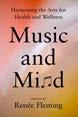
In Music and Mind, Fleming compiles a collection of essays from leading scientists, artists, musicians, educators, healthcare providers and creative arts therapists to convey the powerful impact music and the arts can have on health and the human experience. Some of the contributing writers include renowned musicians such as Rosanne Cash, Ben Folds, Rhiannon Giddens, Zakir Hussain, Yo-Yo Ma and Esperanza Spalding, as well as best-selling authors Daniel Levitin, Ann Patchett, Richard Powers and Anna Deavere Smith.
Fleming says the book does not need to be read from cover-tocover; rather, she recommends readers read the first several introductory chapters, then dive deeper into whichever sections interest them most.
Renée Fleming in New Albany
Preceding her concert, on April 22, Fleming will be presenting her lecture on Music and Mind alongside Dr. John J. Warner and other OSU researchers.
On April 24, Fleming will perform at the McCoy Center for the Arts, transforming the venue into a spectacular soundscape in “Voice of Nature: The Anthropocene,” inspired by her 2023 Grammy Awardwinning album. In the first half of the program, National Geographic visuals will accompany Fleming’s voice in a celebration of the beauty of the natural world, while the second half will celebrate the traditional operatic repertoire with an eclectic mix of both classic and contemporary selections.
The concert will take place from 7:309:30 p.m., with the Post-concert VIP Gala Reception following from 9:3010:30 p.m. For more information and to purchase tickets, visit www.new albanysymphony.com.

More About Renée Fleming
One of the most highly-acclaimed singers of her time, Renée Fleming is a 2023 Kennedy Center Honoree, and winner of five Grammy® awards and the U.S. National Medal of Arts. She has sung on many momentous occasions, such as at the Nobel Peace Prize ceremony and the Diamond Jubilee for Queen Elizabeth II at Buckingham Palace. She is also a Goodwill Ambassador for Arts and Health, a role she was appointed to by the World Health Organization in 2023.
a sense of purpose, and, overall, singing makes you happier.”
Prescribing the arts
In medical and therapeutic settings, music and singing are showing particular promise as a complementary approach to traditional care.
According to NASO Founder and Executive Director Heather Garner, singing and rhythm are being utilized to help stroke patients learn how to talk and walk again as well as to help patients who have suffered heart attacks regain lung strength through accessible aerobic activity.
Additionally, for individuals with PTSD, singing can regulate stress response and foster emotional expression. For those living with dementia or Alzheimer’s, it can access preserved memory pathways to support communication and reduce agitation. And for those on the autism spectrum, singing can provide a structured form of expression when communication through spoken language is limited.
Mind and Music has helped push this research to the forefront of public and medical conversation, and as someone who has both read Fleming’s book and seen the therapeutic capabilities of mu-
sic first-hand, Arnett is excited to see the neuroarts field gaining traction.
“People aren’t necessarily aware of the connections between music and medicine, and I think that’s the point of the book. So, it’s great seeing this research being funded and given weight, and seeing people integrate it into different spaces knowing it has a profound effect,” Arnett says.
Music matters
As research continues to reveal the measurable connections between music and health, experts share an important reminder: the true power of music lies in its accessibility. Whether through listening, playing an instrument or singing in a community choir, music provides a low-barrier and human-centered way for individuals and medical professionals to support physical, emotional and cognitive well-being in themselves and others.
“If you think about it in terms of human history and its entirety, artistic expression and communication has been part of our development since almost the very beginning,” says Fleming. “That’s why it’s still so powerful.”
Ella Jay is an assistant editor at CityScene Media Group. Feedback welcome at ejay@cityscenemediagroup.com.








By Korrigan Craddock
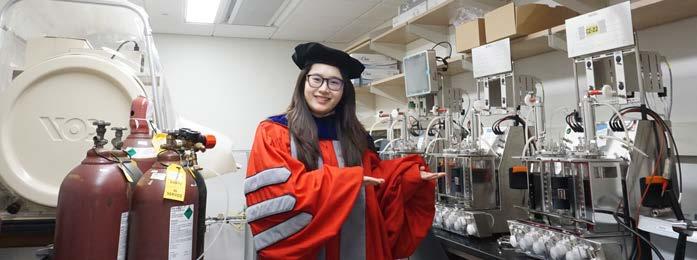
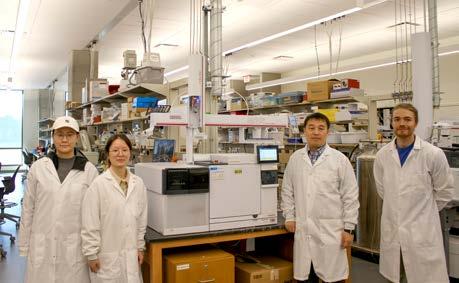
Dr. Shiqi Zhang and Dr. Chris Zhu
Trusting Your Gut Recent research on the gut microbiome
The gut has been studied for years, however, research on it has been limited due to the difficulty of replicating the human digestive tract as well as the ethical concerns surrounding human trials.
But, recently, a newly-improved model developed at The Ohio State University has successfully replicated the human digestive system, allowing researchers to better study how the gut microbiome behaves and the impact it has on overall health.
Dr. Chris Zhu’s lab, a metabolomic-based research group at OSU, created the replica known as the Human Colonic Model.
After helping develop the model in the Zhu lab, Dr. Shiqi Zhang used it to study
More on the Gut
how the gut reacts to compounds in fruits and vegetables and how those interactions can be applied to disease treatment and nutrition programs.
Human Colonic Model
About 10 years ago, the Zhu lab created a hand-built model of the digestive tract using glass, vessels, pumps and heating components.
The system was divided into three sections to mimic the ascending human colon, creating the Human Colonic Model.
The model allows the researchers to control variables such as temperature, pH and nutrient inputs.
While the human body functions as one organism, it’s also home to millions of microorganisms, especially within the gut.
These microorganisms make up the gut microbiome, a collection of the microbes that play an important role in our health by interacting with the food and nutrients we eat.
Zhang’s research focuses on the microbes’ interaction with the compounds found in fruits and vegetables.
Unlike traditional single-batch fermentation research methods, the Human Colonic Models allows for long term and dynamic monitoring of a gut environment.
This model can also regularly collect samples to measure microbial compositions and metabolic functions over time.
Roughly three years ago, the lab received funding from the National Institute of Health to develop a second-generation of the Human Colonic Model. This version has more repairable and replaceable parts, making it easier to maintain.
The second-generation model also allows them to run two experiments at a time, allowing for a control and treatment group.
“This lab environment can allow us to evaluate and investigate a variety of nutrition or even environment contaminants, drug components and the interaction with the human gut microbes,” says Zhu.
Inside the gut
Using the model and working alongside the lab team, Zhang discovered that foods rich in polyphenols – a chemical compound in plants – interact with the microbes in the gut.
Photos courtesy of Maya Stepnick,
Dr. Shiqi Zhang
Polyphenols, commonly found in colorful fruits and vegetables, help keep plants healthy by protecting them from diseases and aiding in their absorption of sunlight.
Zhang’s research suggests that polyphenols can have similar effects on humans.
She ran two interventions, one with green tea and one with black raspberries.
“We applied the two interventions to the system and found these two polyphenol rich interventions had the ability to shape the gut microbiome, modify the metabolites produced by the gut bacteria and eventually would be beneficial for human health,” says Zhang.
The interactions between polyphenols and the microbes increase the number of health-related metabolites, which are linked to improved gut health, reduced inflammation and lowered risks of chronic metabolic diseases.
Previous Research on Polyphenols
Research has already shown that polyphenols are beneficial to the human body. According to the Cleveland Clinic, polyphenols have antioxidant and antiinflammatory properties.
Digesting the results
The Human Colonic Model and Zhang’s research both contribute to a better understanding of the gut microbiome and how different inputs affect it.
Zhang’s findings are a step toward developing new therapeutic options for disease prevention and treatment.
“The research is the starting point of everything,” says Zhang. “Eventually we want to see if what we found can establish some dietary guidelines or have disease treatment and disease prevention.”
Although fruits, vegetables and green tea are rich in polyphenols, there are limits to how much you can consume.
“For example, drinking green tea, you can only drink so much. You cannot drink like 10 or 20 cups a day,” says Zhu. “So, our goal is to try to identify and potentially, down the road in the future, isolate some of those bio-active components and make them more theopoetical.”
With continued research, the goal is to isolate the polyphenols and use them
in more targeted ways to help treat diseases. This research could also influence nutritional guidelines.
Additionally, learning more about how everyone’s body responds to polyphenols and other inputs could lead to more personalized nutrition guidelines.
“I think the whole point would be utilizing our system, the Human Colonic Model, and conducting research that can eventually help the public understand the interaction between what we eat and what the gut microbiome can do,” says Zhang.
Korrigan Craddock is a contributing writer at CityScene Media Group. Feedback welcome at feedback@cityscenemediagroup.com
Foods Rich in Polyphenols
• Apples
• Berries
• Broccoli
• Carrots
• Green tea
• Red cabbage
• Spinach
• Cumin
• Dark chocolate
• Turmeric
Info from Cleveland Clinic


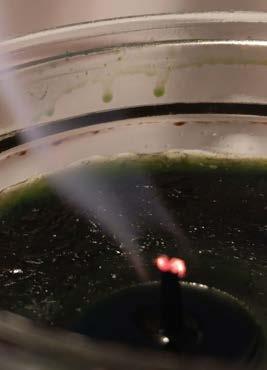
Whether it’s the fragrance or ambience, candles can enrich a home. However, not all candles are created equal.
When choosing candles, there are several ingredients to lookout for, given the potential for indoor air pollution and health consequences.
What’s in a wax?
While older candles were commonly made from natural materials such as animal tallow and beeswax, modern, massproduced candles tend to be made with paraffin wax, a petroleum waste byproduct, on account of cost-effectiveness, color retention and fragrance output.
Reputable manufacturers are likely to use fully refined or food-grade paraffin, which is nontoxic as its oil byproducts and impurities have been removed, meeting strict Food and Drug Administration standards.
Conversely, cheaply-made candles containing less refined paraffin wax can pose health risks when heated or burned since the impurities are released into the air as volatile organic compounds (VOCs) such as acetone, toluene and benzene.
Benzene, a gas naturally emitted from forest fires, volcanoes and burning coal or oil, is a known carcinogen, though the primary source of benzene exposure in the U.S. is smoking.
With long-term exposure to this and the other chemicals, individuals may experience dizziness and headaches. VOCs
may also trigger eye, nose and throat irritation, allergies and asthma attacks.
An additional concern about paraffin is its soot production, which is reportedly greater than that of soy or beeswax candles. However, some studies suggest paraffin soot production is comparable to natural waxes, though an emphasis remains on using high-quality paraffin.
For individuals looking for a cleanburning candle, soy and beeswax are generally safer, though if the ingredients say the candle wax is a blend, that may indicate paraffin is mixed in.
Scented aesthetic
Consumers are often attracted to candles’ bright colors and rich fragrances. However, candles tend to achieve these properties with chemicals that can pose problems with extended use.
When shopping for scented candles, it is important to look for those that are marked as phthalate free. Phthalates are chemical additives that help make plastics more flexible and durable. In candles, they stabilize scent and extend fragrance. However, they can release toxins into the air when candles are burned and be inhaled or absorbed into the skin.
In the short term, phthalates may trigger headaches, dizziness and respiratory difficulties, and they may be particularly aggravating for asthma and allergies. In the long term, phthalate exposure is associated with hormone disruption and
fertility issues, thyroid disruption and cardiovascular issues.
Even without phthalates, scented candles may still pose health concerns. Synthetic oils, while cheaper than natural oils, can release VOCs and other toxic chemicals such as formaldehyde, styrene, benzophenone and acetaldehyde.
For consumers, it may be difficult to determine what ingredients are used in candles, as they may be listed as fragrance or parfum, allowing manufacturers to obscure synthetic additives. Searching for candles made with a single pure essential oil, as opposed to an essential oil blend, may be more effective in avoiding toxic chemicals.
Colored with chemicals
In terms of color, dyes too pose similar risks with many artificial colorants in candles being the same as those used in paints, plastics or inks. Unlike food dyes, many synthetic dyes lack safety oversight and may not have undergone burn safety testing.
While synthetic dyes offer a more vibrant, long-lasting hue than natural dyes made from flowers, herbs, minerals, spices, berries or fruits, many synthetic dyes come from petroleum-derived ingredients and can release VOCs and other pollutants when burned.
Further, manufacturers may not explicitly list dye, rather, packaging may say “fragrance and color added,” “artificially colored” or “proprietary blend.” If the color is vivid, it is likely a synthetic dye is used.
Cultivating a C ean Burn
Candle choice impacts air quality and health
By Amanda Stevens
by Stuart Payne/iStock and Amanda Stevens
Photos

Gel candles, while visually appealing, are typically made from mineral oil (a petroleum product) and polymer resin, posing similar issues as paraffin wax candles in regard to releasing VOCs.
Which wick is which?
While candle shopping, wicks can be overlooked. Most candle wicks are made of braided cotton, though they may also be made with hemp, paper or wood.
However, some wicks may have metal cores, using zinc or tin to keep them upright. While burning, these metals can emit fine particles and affect indoor air quality.
When looking at candles, it’s important to verify if they’re lead-free. Even though the U.S. Consumer Product Safety Commission banned the manufacturing and sale of candles with lead-core wicks in 2003, imported candles from lesser-known brands or discount stores may still have lead-cores.
Another consideration for finding nontoxic wicks is ensuring they are organic, unbleached and untreated, as some cotton wicks may be bleached or include synthetic stiffeners. For wood wicks, search for single-ply, untreated wicks with no glue or additives.


As with other candle ingredients, some manufacturers may not share all the ingredients. Transparent brands should include clear and detailed information about ingredients and sourcing.
Amanda Stevens is a contributing writer at CityScene Media Group. Feedback welcome at feedback@cityscenemediagroup.com
Keep it Short
To reduce soot production, trim wicks to about a quarter of an inch since overwicked candles tend to create larger flames that create excess soot. Proper ventilation will also help reduce soot build up and support air quality.
Wax Warmers: On or Off?
While wax melts don’t involve burning and soot production, a greater surface area being heated corresponds with an increased release of fragrance, and VOCs, into the air.

In a 2025 study on wax melts from the American Chemical Society, the main VOCs emitted were terpenes, which reacted with ozone and formed compounds that then clustered into nanoparticles, which are small enough to pass through respiratory tissues and enter the bloodstream.
The concentrations of nanoparticles were comparable to those of combustion-based candles, gas stoves, diesel engines and natural gas engines, which suggests wax melts may not be as pollutionfree as previously thought.
Shop Local
Environment and health-friendly candles can be found at local central Ohio businesses such as Alene Candles and Renegade Candle Company as well as Blend Candle Co. in Westerville and Common Scents Wax Co. in Pataskala.





FORWARD Spring
Providing extra support for dementia patients with time change effects
By Jane Dimel
courtesy of adamkaz and Heiness/iStock
As the rays of sunlight beam through the curtains in the early morning of March 8, the shift from Standard Time to Daylight Saving Time is welcomed for another year.
For many, it’s an expected and welcome change, allowing more sunlight during the upcoming summer months, but for others, it’s a time that brings disruption and confusion to their established schedules and body rhythms.
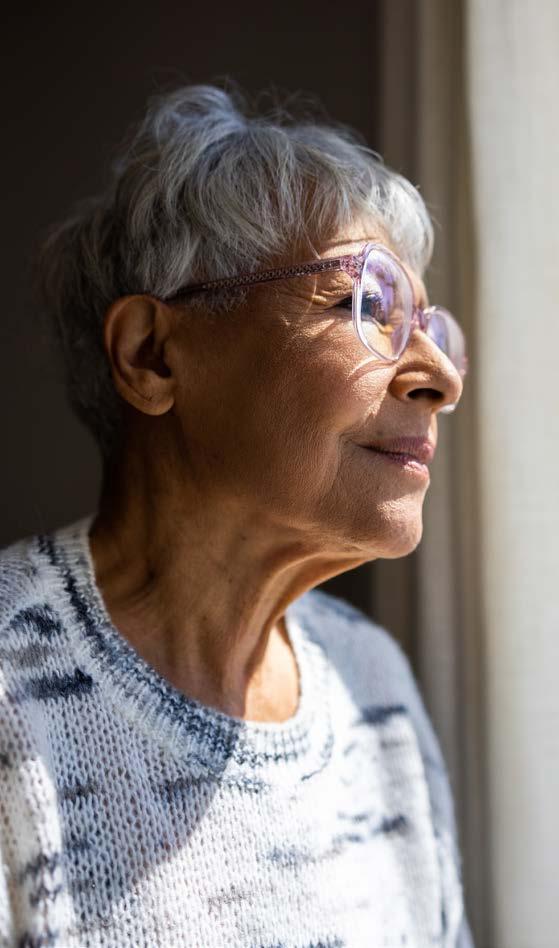
Individuals with memory loss, such as those with dementia or Alzheimer’s, are a vulnerable population for this time shift. With clocks springing forward, it brings about a need for additional preparation for altering routines and settling into new patterns.
Photo

Changing routines
Structure plays a big factor in treatment plans for dementia and Alzheimer’s patients. Brown University Health shares that routines allow the brain something to expect and rely on – consistent wakingup and sleeping times, hygiene, meal times and activities such as TV watching times or evening exercise.
As new information becomes harder to process – and new memories harder to form – consistency is key for those with dementia. Unfortunately, a few factors are working against a consistent daily routine, including sundown syndrome.
An estimated 20 percent of individuals with Alzheimer’s experience sundown syndrome, or sundowning – a myriad of symptoms correlated with changes in light as the sun sets.
Sundowning can result in increased confusion and disorientation, including mixed-up internal body clocks and potentially experiencing or misinterpreting hallucinations from cast shadows or dreams.
Further, many experience increased mental and physical exhaustion from a day’s activities and heightened sensitivity to others’ stress and frustration.
Arts Alive!



Adjusting light exposure can help with this, as light aids the body’s natural circadian rhythm throughout the day, and consistency helps establish patterns and build normalcy with daily patterns. And, though this cycle is disrupted by the time change twice a year, it can be modified to help during those times.
Forward thinking
With the one-hour spring forward approaching, the trick to changing routines is complementing activities to the available daylight hours.
According to the Alzheimer’s Association, a consistent schedule is the first step. Maintaining the order of activities, as well as similar durations, helps with familiarity even though it’s a different time on the clock.
Throughout the day, aligning with the natural circadian rhythm, when possible, also helps mitigate the effects of the time change – whether that is limiting daytime or unplanned napping, or using blackout curtains to control light exposure at times convenient for waking up and sleeping.
The time change can be a triggering time, so utilizing soothing activities such as watching a favorite movie or listening to calming white noise or music and minimizing exposure to triggers and loud, overstimulating environments can help create calm.
Jane Dimel is an assistant editor at CityScene Media Group. Feedback welcome at jdimel@cityscenemediagroup.com
Other tips for fall back on Sun., Nov. 1:
• Shift schedule an hour earlier with the fallback
• Limit sugar and caffeine intake to the morning and/or early afternoon
• Enjoy the daylight and schedule activities, from trips and appointments, in the morning or early afternoon, and avoid stimulation such as television, chores and loud music in the evening
• With meal times, eat a larger lunch and a smaller dinner to allow more time for bodies to process the food and minimize disruption to sleep
• Keep steady lights throughout the home to prepare for and distract from changes in light and start slowly decreasing lighting leading up to the adjusted bedtime
• Engage in soothing activities to distract from light changes and earlier darkness
Where Daylight Saving Time Stands Today
As Daylight Saving Time approaches 85 years since it was fully established in the United States, states continue to take varying stances on Daylight Saving Time (DST). Under the amended Uniform Time Act, states can be exempt from observing DST, as seen in Hawaii and most of Arizona, as well as U.S. territories including American Samoa, Guam, Northern Mariana Islands, Puerto Rico and the Virgin Islands.
However, the reverse is not true, as states that choose to observe Daylight Saving Time are only permitted to do so during the mandated time period. A 2025 report from the National Conference of State Legislatures shares that 19 states have enacted legislation to support year-round Daylight Saving Time, if Congress enables the change, with Ohio among the states in progress of passing such legislation.
Though observing Daylight Saving Time year-round would bring an added benefit of increased sunlight exposure, such a change may also lead to disruption to the natural circadian rhythm with the sun – requiring more precision in aligning routines for maximizing sleep.
























By Jane Dimel
Leadership Roots
New Albany High School senior advocates for girls, diversity and student engagement
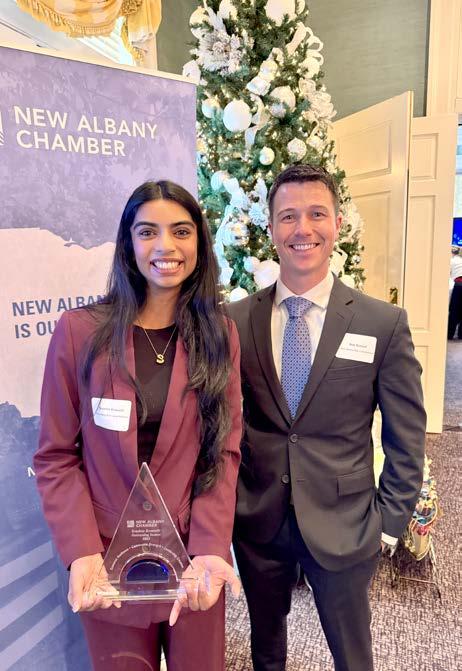
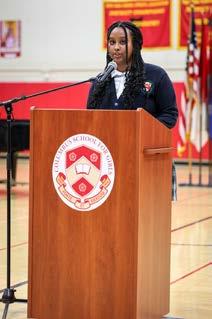
If there’s a spot behind the microphone – whether it’s at a pep rally, debate or school function – New Albany High School senior Sreshta Erravelli will likely be there, and handling the show behind the scenes.
An involved leader and avid participant, Erravelli was recently recognized as the Outstanding Student for the 2025 Delta Awards by the New Albany Chamber of Commerce for her work promoting student engagement and community connections in the school halls and beyond.
Leading by doing
Drawn to leadership and community building from an early age – a trait she jokingly attributes to nosiness – Erravelli is involved in numerous clubs and organizations.
Now a graduating senior, Erravelli has acquired many leadership roles, including her work as the president of the student council and the New Student Network, and leader of Cypress House for the district’s community house system.
In the halls, Erravelli welcomes new students and encourages others to be active and bring new ideas to the school for student events, engagements and more.
In her junior year, she represented the state of Ohio in national student council meetings, meeting student council members from around the world and learning more about ideas she could bring to New Albany-Plain Local Schools.
“She’s connecting people on a daily basis, enhancing their belonging, and she does it with kindness, dignity and respect.”
- Dr. Rob Russell, NAHS principal
Photos courtesy of Sreshta Erravelli and Patrick Gallaway
Sreshta Erravelli and Dr. Rob Russell

Her leadership and commitment extend into the community, working with the City’s IDEA Panel, as well as larger organizations, including Girl Up and Her Best Foot Forward. She uplifts others by helping with events such as New Albany’s Diwali Festival, Girl Up’s annual fashion show and local markets selling beadwork and artisanal goods made by women in Tunisia.
For the past few summers, she has extended her help in Tunisia by traveling there and teaching teen girls about menstrual health, safety and hygiene through Her Best Foot Forward.
“(The program is) just a really unique opportunity, because I’m meant to be a teacher with that. So, it’s cool to see that perspective of things, but it’s also just me talking to teenage girls I feel like are sisters of mine, and I love it,” Erravelli says.
A star nomination
Ahead of the Delta Luncheon in December, Erravelli was shocked by the news that she had been nominated and won the award.
“I got called down to the office… I went down, and I spoke with Miss. Shaffer, my counselor, and she was so giddy. She was like, ‘You’ve got to hear this. You know, there’s this event coming up. Dr. Russell nominated you.’ And I was just really overwhelmed with gratitude,” Erravelli says.
Dr. Rob Russell, New Albany High School Principal and Erravelli’s nominator, notes that the decision to nominate her was well-supported.
With her widespread involvement in school, along with her propensity for leading and uplifting others, Erravelli’s efforts throughout her high school career
Planning Precision




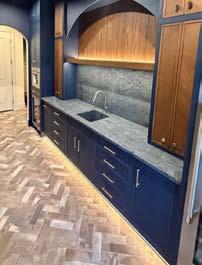
Clean lines lead the way in this kitchen. The herringbone floor draws you in, the crisp tile keeps the rhythm, and warm cabinetry brings it all together. Every angle, surface, and sightline was considered early, then carried through with care. When decisions are aligned from the start, the result feels calm, intentional, and easy to live in.



Painting done by a Perfectionist


resonated with teachers and staff schoolwide when the time came for the Delta Outstanding Student Award nomination.
“We have this conversation about an individual who moves our collective culture in a positive direction, so we talk about sense of belonging. We talk about kindness, dignity and respect, and she is absolutely the definition of those things and representative of our community at really the highest level,” Russell says.
His speech about her accumulated a list of her involvement and accomplishments, and kind words about her, including a description of being “joy personified.”
“Having conversations with her peers in avenues that she’s worked in, she is bringing peers in to have conversations. So, although she’s leading a group or appears to be the potential spokesperson, there are a lot of people that are involved in the movement that she’s creating,” says Russell.
With her collaboration skills and ability to bring new ideas to the table, Erravelli has become a pillar for connecting the learning community and the larger community.
Taste of community and beyond
As she wraps up her final year with the district, Erravelli has seized the opportunity to meet with other seniors to make their final year great while continuing to elevate student experiences well into the future.
Interested in International Relations and diplomacy post-graduation, her senior seminar project became a way to enhance her skillset by connecting people and uplifting the diversity of New Albany through a cookbook – one full of recipes from immigrant families around the community.
“A career in international relations and diplomacy is literally just bridging strangers and figuring out how I can help them and how to make communities happen, and I knew the best way to highlight that here was to bring out those communities,” Erravelli says.
From interviewing the families about their native cuisine and dining with them, to building relationships with her fellow students and community members, she continues to strengthen her ties with others.
“I think the connecting thread through all of it just has to be people and being able to connect with them,” Erravelli says. “I just can’t get enough of it. It’s so exciting to me because no person is like the other. And every time I think I’ve met the most interesting person ever, I’m proven wrong. I get a story out of everything and everyone I meet.”
Jane Dimel is an assistant editor at CityScene Media Group. Feedback welcome at jdimel@cityscenemediagroup.com.
weekendsceneweekendsceneweekend sceneweekend scene weekend scene

By Dylan Telerski
A Season for Trying Something New
Spring often brings a quiet invitation to reset. Longer days and warmer weather make it easier to move, explore and step outside familiar routines. As the season shifts, many people feel ready to reconnect with interests they have set aside for the winter or to try something entirely new.
Studies continue to show that engaging in enjoyable, skill-building activities can support mental and emotional well-being by reducing stress, improving focus and strengthening social connections. Unlike passive leisure activities such as watching TV or scrolling social media, a new hobby that actively engages the brain and body can help people feel more energized, confident and present. In a busy, always-on world, making space to try
something new can be a powerful form of self-care.
This spring, Healthy New Albany is leaning into that sense of possibility with a lineup of new programs and instructors designed to make that first step feel approachable. Across movement, music, cooking and family programming, these offerings emphasize curiosity over perfection and accessibility to a wide range of ages and interests.
Music as a tool for connection and well-being
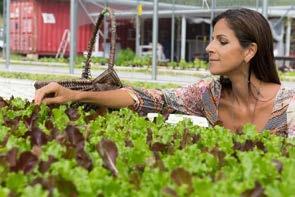
Several new spring programs introduce music therapy as a way to support emotional health, cognitive engagement and connection across life stages. Led by Jen-
nifer A. Yurkovich, a licensed and boardcertified music therapist, these free, onehour sessions explore how music can support vibrant aging, help process grief and strengthen early bonds during pregnancy and the post-partum period.
Participants engage in simple, active musical experiences that support memory, emotional regulation and reflection, with no musical background required. Each session offers practical tools that can be carried into everyday life, reinforcing music as an accessible and meaningful part of overall wellness.
Movement that feels joyful and accessible
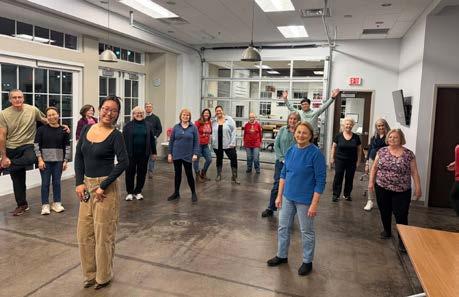
Trying something new does not have to mean intense workouts or complicated routines. This spring also marks the first full feature of line dancing at Healthy New Albany, led by Cindy Tang. The spring series introduces a new repertoire of dances and music designed for both beginners and returning participants.
Line dancing offers a unique blend of physical activity, coordination and social connection that supports cardiovascular health, balance and cognitive engagement.
Participants describe the experience as both fun and mentally stimulating, highlighting the satisfaction of learning new steps, exercising the brain and feeling
Photos courtesy of Healthy New Albany and The Play Spot
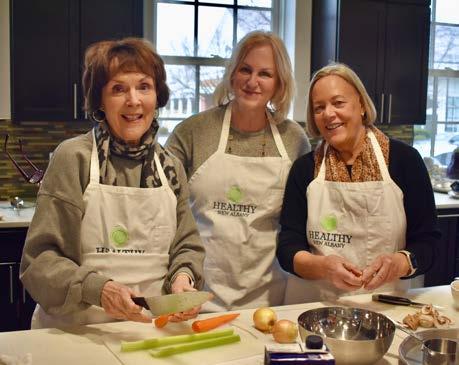
Plant-based chef Manuela Scalini
welcomed as beginners – all within a lowpressure environment led by an energetic and approachable instructor. The result is a class where movement feels joyful, accessible and easy to return to week after week.
Fresh perspectives in the kitchen
Spring programming also brings new voices into the Nourish kitchen. Classes led by Manuela Scalini, a globally trained plant-forward chef and culinary wellness educator, focus on practical approaches to healthy cooking that do not sacrifice flavor. From reducing added sugar to building vibrant, satisfying bowl meals, these hands-on classes encourage creativity, balance and confidence in everyday cooking.
Rather than rigid rules or trends, the emphasis is on simple techniques and thoughtful ingredient choices that support wellness in real-world routines.
Programs for kids and families
New spring offerings for children and families emphasize curiosity, confidence and skill-building through hands-on learning and play. Programs range from the Self-Care Science Lab for elementaryaged students – which blends hygiene, wellness and STEM concepts – to archery experiences with the Ohio Division of Wildlife and sensory-based early childhood classes through The Play Spot.
Designed to support both physical and social-emotional development, these programs reflect Healthy New Albany’s broader approach to wellness by meeting participants where they are and encouraging growth through experience.
Looking ahead
Trying something new does not require a major commitment. Sometimes it begins with a single class, a new movement pattern or a fresh way of thinking about wellness. This spring’s programs are designed to offer those entry points, inviting the community to explore learning, movement and connection in ways that feel supportive and achievable.
Full schedules, dates and registration details for spring programs are available at healthynewalbany.org/programs
Telerski is the Marketing and Communications Manager for Healthy New Albany.
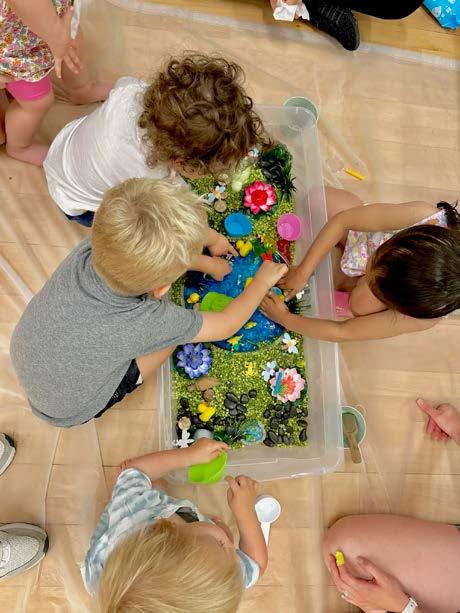
The Play Spot
Line dance class
Dylan
By Dylan Telerski
Healthy New Albany Walking Classic Miles for Meals
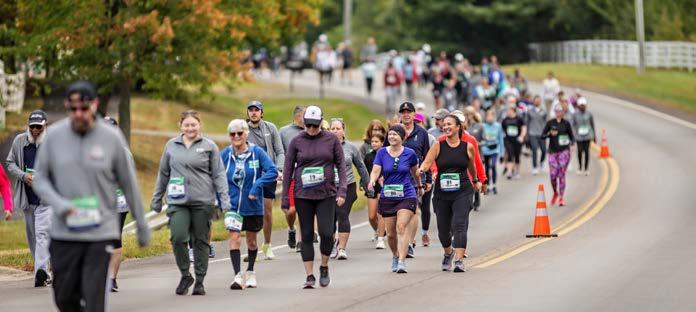
For many in our community, the Walking Classic is a staple on their fall calendar – a chance to come together, get moving and support the work that helps neighbors live healthier lives.
This year, the event enters a new chapter with a refreshed name and a clearer focus on where that support can do the most good. Beginning in 2026, all proceeds from the Walk will directly support the Healthy New Albany Food Pantry.
The pivot reflects what Healthy New Albany has learned over time through its work alongside families across the community. While the Walking Classic has long supported a range of wellness initiatives, patterns of Pantry use and community engagement helped sharpen the focus of how this long-standing tradition can make the greatest impact moving forward.
Formerly known as the New Albany Walking Classic, the event will move forward this fall as the Healthy New Albany Walking Classic, presented by Axium Packaging. This year’s theme, Miles for Meals,
highlights the direct connection between participation in the Walk and neighbors helping ensure neighbors aren’t hungry.
A focus informed by community experience

In 2025, the Healthy New Albany Food Pantry provided nearly 250,000 meals to more than 1,500 neighbors across the community. Families came to the Pantry for many reasons and in many seasons, among them were 139 households who visited the Pantry for the first time.
Families with children frequently relied on Pantry support during predictable high-cost periods, including summer, spring and winter breaks, when students are without access to free and reducedprice school meals. Beyond groceries, the Pantry also served as a place of connec-
tion, with 142 families linked to outside resources, reinforcing a model grounded in dignity, trust and mutual support.
“The Walking Classic has evolved alongside this community,” says Rachel Haugk, executive director of Healthy New Albany. “What we see through direct engagement with neighbors through all our programs continues to guide that evolution. Families come to the food pantry for many reasons, and in each case, consistent access to food makes a meaningful difference. Focusing the Walk’s support here allows the community’s generosity to meet people where they are.”
Photos courtesy of James DeCamp and Healthy New Albany
Walking with purpose
The Walking Classic has always been rooted in movement, wellness and community connection. The Miles for Meals theme brings added clarity to that purpose, linking every mile walked to tangible local impact.
Funds raised through the event help keep Pantry shelves stocked with fresh produce, proteins, dairy and essential household items, allowing the Pantry to respond flexibly as needs ebb and flow.
Looking ahead
As walkers gather on Sunday, Sept. 13, their participation will directly strengthen a food access model centered on dignity, flexibility and care. The walk also takes place during National Hunger Action Month, offering an opportunity for the community to come together around a shared commitment to ensuring neighbors have consistent access to food.
Registration opens in early March. Community members can visit healthynewalbany.org, follow Healthy New Albany on social media or sign up for email updates to stay connected as details are shared.
Dylan Telerski is the Marketing and Communications Manager for Healthy New Albany.

• Pain in calf or thigh muscles when walking
• Tingling, heaviness, numbness or swelling of your lower extremities
• Restless legs at night when trying to sleep
• Varicose veins (especially for women who develop varicose veins after pregnancy)
• Sores and ulcers of the feet and ankle that don’t heal
• Foot and ankle ulcers
If you have any of these issues, find out if you’re at risk—for free.


By Korrigan Craddock
Photos courtesy of Igor Dudchak, Bogdan Nicolaescu, Aamulya/marekuliasz/iStock
Gut Health Boost
The benefits of eating fermented foods
Fermentation has been used for centuries across the world to preserve food, dating as far back as ancient Egypt.
While fermentation originally served as a practical way to store foods, recent studies have shown that through fermentation, foods and drinks provide a wide range of health benefits such as supporting your digestion and immune systems.
Science behind fermentation
The American Medical Association (AMA) defines fermentation as the process of bacteria converting natural sugars in foods into acidic compounds.
These acidic compounds accelerate the growth of beneficial bacteria while preventing harmful strains that are responsible for spoiling food.
For example, vegetables can be fermented in a salty brine, which encourages the growth of naturally-occurring bacteria in those vegetables. Those bacteria then metabolize the sugars in the vegetables into lactic acid, producing the tangy flavor that is common in many fermented foods.
The fermentation process of dairy products is slightly different, according to Dairy Farmers of America (DFA). In this fermentation process, there are starter
cultures added to the dairy, which initiates the fermentation process of converting the lactose into lactic acid.
Common misconceptions
Due to the nature of the fermentation process, there are several common misconceptions when it comes to consuming these foods and drinks.
One of the most common misconceptions is that fermented foods are unsafe due to the bacteria content. The fermentation process encourages the growth of the beneficial bacteria that already lives in the gut.
Another common misconception is whether the products found in stores are truly fermented.
When thinking of fermented foods, items such as pickles and sauerkraut may come to mind. Many shelf-stable pickled products are not truly fermented; they are just acidified in vinegar. True fermented foods require refrigeration and do not list vinegar as an ingredient.
Foods containing probiotics may also come up when referring to fermented foods. Although many fermented foods contain probiotics, not all of them do.
Probiotics can provide added health benefits, but fermented foods do not need them to be beneficial.

Benefits
Recent studies have shown that fermented foods can provide health benefits but “in order for a food to deliver the health benefits of fermentation, it must contain both live and active cultures,” according to the AMA
Pay attention to food and drink labels, which should say if there are live and active culture in the product.
Research shows that fermented foods with these active cultures can improve

Examples of Fermented Foods:
• Kefir
• Plain yogurt
• Fermented vegetables
• Miso
• Kimchi
• Kombucha
• Sauerkraut
From UMass Chan Medical School


digestion, boost the immune system and help the body better absorb nutrients.
Clinical studies have also shown that consuming fermented foods can increase your gut microbiome diversity, which in return can reduce inflammation and aid digestion. There has also been research that suggests the diversity in your gut microbiome lowers the risk of certain health conditions such as type two diabetes, according to Stanford Medicine.
Another added benefit of fermented dairy, according to the DFA, is that individuals who are lactose intolerant may be able to enjoy some fermented dairy products without discomfort. This is because some of the lactose is broken down by the bacteria during fermentation.
Korrigan Craddock is a contributing writer at CityScene Media Group. Feedback welcome at feedback@cityscenemediagroup.com
Did you know?
Although chocolate, beer and wine go through fermentation during their creation, they are considered fermented foods without live microbes.

Adding Fermented Food to Your Diet
Eating or drinking fermented food daily can help you reap the benefits. If you are just starting out, it is best to start slowly, giving your gut time to adjust.
Some commercial fermented products marked as “gut friendly” may not be truly fermented or contain probiotics, so be sure to pay attention to the labels to check for live and active cultures.



By Ella Jay
Cleaning for Clarity
How spring cleaning supports mental and physical well-being
Spring cleaning has long been framed as a seasonal chore, but beyond tidier closets and dust-free shelves, clearing out and cleaning up offers real benefits that support both mental and physical health. From reducing stress and boosting focus to encouraging movement and eliminating germs, spring cleaning is not just another task, but rather an opportunity to make space for healthier habits and fresh starts.
Mental reset
Clutter in your home and work space doesn’t just take up physical space – it also contributes to mental overload. According to the American Psychological Association, a disorderly environment leads to increased stress, anxiety and difficulty focusing; but tidying up can give you a greater sense of control and improve mood.
Because cleaning is generally a finite task, it offers a simple way to regain control of your space, and with tangible, visible results, it offers a sense of accomplishment once completed.
According to the Cleveland Clinic, gaining a sense of accomplishment and control relieves stress, anxiety and tension within the body, providing immediate mental and emotional clarity. The act of cleaning itself is also grounding in its repetitiveness, promoting feelings of calmness.
With less clutter in sight comes less cognitive strain, and, as a result, your home or work environment becomes a restorative space rather than a stressful one.
When your environment feels calmer, safer and more comforting, the impact of cleaning on mental health spans longterm. In a space free of stressors, focus and productivity increase, further promoting accomplishment and improved mood. These results can even help fend off symptoms of depression, according to
a study published by Society for Personality and Social Psychology.
Body boost
Beyond calming the mind, spring cleaning also provides physical health benefits, according to the Cleveland Clinic.
From lifting, bending and stretching, to spending more time on your feet, decluttering engages more muscles than you realize and gets you moving. This type of functional movement not only allows you to accomplish two things at once, but can be especially valuable for those who aren’t fans of rigorous exercise.
In addition to serving as a form of physical activity, regular cleaning improves posture, strength and balance – improving overall function and mobility and
even increasing longevity, according to a study published by BMC Geriatrics.
A tidy space also plays a part in injury prevention, as less clutter reduces potential hazards.
Lastly, and perhaps the most obvious health benefit of spring cleaning, is the timely elimination of germs and allergens.
Vacuuming, disinfecting surfaces and washing fabrics rids your space of bacteria, viruses and allergens such as dust, pollen, mold and pet dander – in turn, preventing the seasonal spread of sickness and lessening allergy-season symptoms.
Ella Jay is an assistant editor at CityScene Media Group. Feedback welcome at ejay@cityscenemediagroup.com.
Photos courtesy of City of New Albany
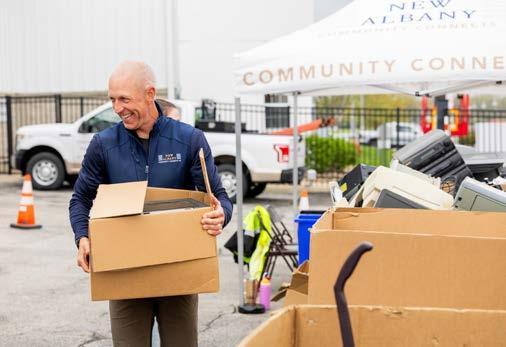
Councilmember Kasey Kist helps move e-waste into recycling bins.
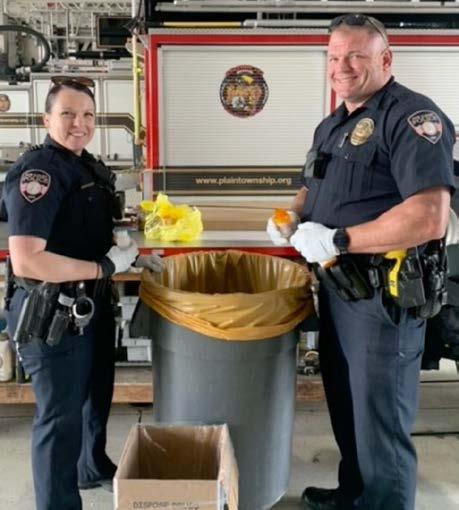
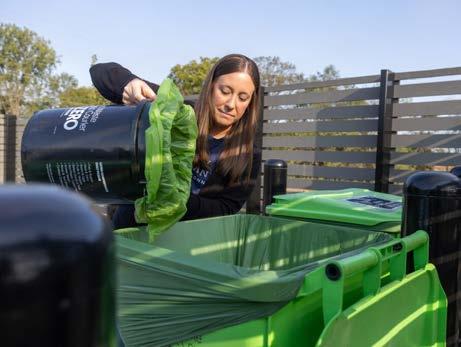
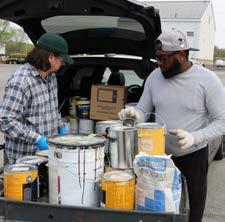

E-waste, hazardous household, paper shredding event.
Community Resources
From responsible disposal to extra support, New Albany offers a variety of local resources and events to make both spring and year-round cleaning easier and more effective.
• E-waste, household hazardous waste drop-off and paper shredding event (April)
• National Prescription Drug Take Back Day (April)
• Trash, recycling and yard waste curbside pick-up (Thursdays)
• SWACO recycling drop-off location (5101 Swickard Woods Blvd.)
Compost and food waste drop-off locations:
• Village Hall (99 W. Main St.)
• Taylor Farm Park (5526 E. DublinGranville Rd.)
• Public Service building (7800 Bevelhymer Rd.)
• Temple Beth Shalom/All Saints Episcopal Church (5089 Johnstown Rd.)
Prescription Drug Take Back Day
Composting
REAL ESTATE MARKETPLACE


The Powell Buehler Group (614) 915-4588
10019 Duncan Plains Rd., Johnstown | $325,000
This 2.61 Acre parcel offers endless potential in a rapidly developing area. Just minutes from retail, restaurants and key transportation routs, this property is ideally suited for residential, commercial or mixed use development (Subject to zoning). Interested parties must contact agent to see the property. COLDWELL BANKER REALTY ThePowellBuehlerGroup.com


6940 Clivdon Mews • 4,692 sq. ft., 4 Bedrooms , 5 Bathrooms, $1,499,000 Nestled within the exclusive, private, and gated community of Clivdon Mews at the New Albany Country Club, this beautifully renovated home offers four bedrooms, five bathrooms, three car garage, and 4,692 square feet of thoughtfully designed living space. Updated finishes throughout complement soaring ceilings that enhance the sense of space and light, creating an ideal setting for entertaining and hosting. Situated along the golf course, the home provides scenic views while benefiting from Columbus city taxes and the highly regarded New Albany School District. Lauren.davie@evrealestate.com Lauren Davie 740-975-1826 LaurenDavieRealtor.com



The Powell
Group (614) 915-4588
407 Hances Dr., Blacklick | $350,000
Great curb appeal on a premium Crawford Farms lot. Low-maintenance brick and vinyl exterior, covered porch, and landscaping. Inside: dark tile floors, white woodwork, vaulted living room with chandelier, and formal dining. Kitchen offers raised oak cabinets, granite counters, all appliances, and eat-in area. Vaulted family room opens to patio and fenced .39-acre yard. Three bedrooms, owner’s bath, basement potential. Minutes to Easton, airport, Mount Carmel, Licking Schools. COLDWELL BANKER REALTY ThePowellBuehlerGroup.com
Showcase your home listings to every homeowner in the New Albany school district. Your listings will also appear in the digital edition of the magazine, hosted on the Healthy New Albany Magazine home page: www.healthynewalbanymagazine.com
Contact Gianna Barrett today for more information: 614-572-1255 gbarrett@cityscenemediagroup.com Get a great response from your ads in HEALTHY NEW ALBANY MAGAZINE!
Buehler

Top
Homes Sold in New Albany
New Albany home prices were down 4.9 percent in December 2025. At that time, homes sold for a median price of $775,000.
On average, New Albany homes sold after 77 days on the market, down from 83 days in December 2024. There were 13 homes sold in December 2025, the year prior there were 19 houses sold.
All information is collected from Redfin and Franklin County Auditor.
6920 Clivdon Mews
3 beds, 2.5 baths
$1,265,000
Sold 12/18/25
3637 Head of Pond Rd.
4 beds, 3.5 baths
$1,175,00
Sold 1/05/26
4470 Ackerly Farm Rd.
4 beds, 3.5 baths
$1,125,000
Sold 1/26/26
109 Keswick Dr.
3 beds, 3.5 baths
$950,000
Sold 12/23/25
7444 Farmington Close 4 beds, 3.5 baths
$900,000
Sold 12/23/25
7185 Dean Farm Rd. 5 beds, 3.5 baths
$865,000
Sold 12/18/25
8730 Swisher Creek Cr.
4 beds, 3.5 baths
$805,000
Sold 1/26/26
8961 Grate Park Sq. 4 beds, 3.5 baths
$800,000
Sold 1/02/26
6935 Kindler Dr. 4 beds, 2.5 baths
$799,999
Sold 12/24/25
6500 Cedar Glen Ct. 3 beds, 3 baths
$750,000
Sold 12/17/25
7061 Maynard Pl. 3 beds, 2.5 baths
$720,000
Sold 1/02/26
5076 Turner Close 4 beds, 2.5 baths
$651,100
Sold 1/14/26



ontheshelf
By Elizabeth Cullinan, Librarian at the New Albany branch of the Columbus Metropolitan Library
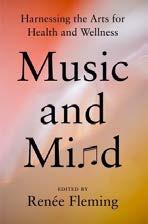

Music
and Mind:
Harnessing the Arts for Health and Wellness
Foreword by Francis S. Collins, M.D., Ph.D.
Edited by Renée Fleming, 2024
An anthology of essays by neuroscientists, clinicians, artists and educators, this book explores the powerful relationship between the arts and how they can promote healing and well-being. Using evidence from neuroscience, evolutionary biology and real-world examples, contributors highlight mu-
sic’s unique ability to alleviate physical and mental ailments. It’s shown that music can engage multiple brain regions, promote social unity and even improve fine-motor and speech functions. Furthermore, emphasis is placed on advocating for the use of art therapies within mainstream healthcare.
I Heard There Was a Secret Chord: Music as Medicine
By Daniel J. Levitin, 2024
According to this book, music is one of the world’s most ancient medicines. Science and cultural traditions show that things like rhythmic patterns and melodies found in music can help regulate neurotransmitters like serotonin and dopamine used to soothe trauma and depression. Through a combination of scientific case studies, interviews with fellow musicians, and the author’s own expertise in the field, readers will find a compelling argument for integrating music into modern healthcare practices.

The Schubert Treatment: A Story of Music and Healing
By Claire Oppert, 2024
Playing live music for patients with autism, dementia, chronic pain and those at the end of life can bring about moments of profound connection and relief unlike that of traditional medicine alone. This therapeutic approach is referred to as the Schubert treatment, which combines music
with art therapy techniques. By weaving together scientific evidence from clinical trials to the author’s personal experiences as a classically trained cellist and reflections on the role of art, this book demonstrates how this approach can significantly lessen anxiety, pain and emotional distress.
How Music Can Make You Better
By Indre Viskontas, 2019
Music shapes our cognition, emotion and social bonds. By intersecting neuroscience with human impact, this book focuses on how our brain is transformed by music as it responds to simple sounds from melody and rhythm, developing it into an emotionally rich experience. It highlights the idea that music connects us socially by uniting individuals of diverse backgrounds with shared experiences and how music serves in a healing role by helping regulate emotion.
Reverberation: Do Everything Better with Music
By Keith Blanchard, 2022
Music goes deeper into our subconscious than just being used as a form of entertainment. This universal form of communication affects brainwave patterns related to mood and behavior, influencing memories, habits and relationships. Drawing on a variety of interviews from neuroscientists and wellknown musicians, this book demonstrates music’s ability to strategically be used to improve sleep, enhance creativity and heighten productivity. Full of practical tips and curated playlists of songs, readers can use this book to support mental health improvement, deepen social connections and ultimately, provide guidance for personal transformation.
Wired for Music: A Search for Health and Joy Through the Science of Sound
By Adriana Barton, 2022
Blending neuroscience, anthropology and biology with her own experience as a classically trained cellist, this author explores the ways music acts as a powerful force for health, connection and emotional well-being. She explains how rhythm and melody affect core memory, motor and emotion centers in the brain. This allows music to act as an antidepressant, pain reliver, sleep aid and memory enhancer.
James DeCamp



New Albany Community Foundation’s Remarkable Evening welcomed Kyra Sedgwick and Kevin Bacon
On Dec. 3, 2025, more than 700 people attended the New Albany Community Foundation’s annual Remarkable Evening benefit that was hosted at The New Albany International Business Park.
At the event, the organization announced the 2025 Jeanne & John G. McCoy Community Service Award recipient, New Albany-Plain Local Schools Superintendent Michael Sawyers.
Prior to the event, attendees were able to connect with husband-and-wife duo Kyra Sedgwick and Kevin Bacon at the reception held at the New Albany home of Gena and Jimmy Merkel.
Through the event, the Foundation has raised nearly $25 million since its inception. These funds are put towards grants issues for area not-for-profit organizations and other community projects and initiatives, in addition to being put towards the annual Lecture Series.
Photos by
Photography
Ian and Debra Kalinosky
Renee and Alex Shumate
Rick and Sara Mershad
Marilu and Tim Faber
Jeri Block, President Ted Carter, Lynda Carter and Bob Schottenstein
Todd and Laura Wedekind, and Laura and Al Hill


New Albany offers award-winning schools, scenic parks, and a vibrant civic life— all grounded in the pillars that shape our identity: lifelong learning, health and wellness, arts and culture, and environmental sustainability. It’s not just a place to live. It’s a place to grow, connect, and truly belong. Here in New Albany, you’re always welcome. OHIO


START HERE. STAY HERE. BELONG HERE.
START HERE. STAY HERE. BELONG HERE.
No matter where you are in life, there’s a place for you here.
No matter where you are in life, there’s a place for you here.
New Albany offers award-winning schools, scenic parks, and a vibrant civic life— all grounded in the pillars that shape our identity: lifelong learning, health and wellness, arts and culture, and environmental sustainability.
It’s not just a place to live. It’s a place to grow, connect, and truly belong. Here in New Albany, you’re always welcome.