The City of Rock Hill is pleased to present this Consumer Confidence Report in accordance with the Safe Drinking Water Act. This report provides detailed information regarding the source, treatment, monitoring, and regulatory compliance status of your public water system. Our system consistently meets all applicable federal and state drinking water standards, and we are proud to report that no violations occurred during the reporting period.
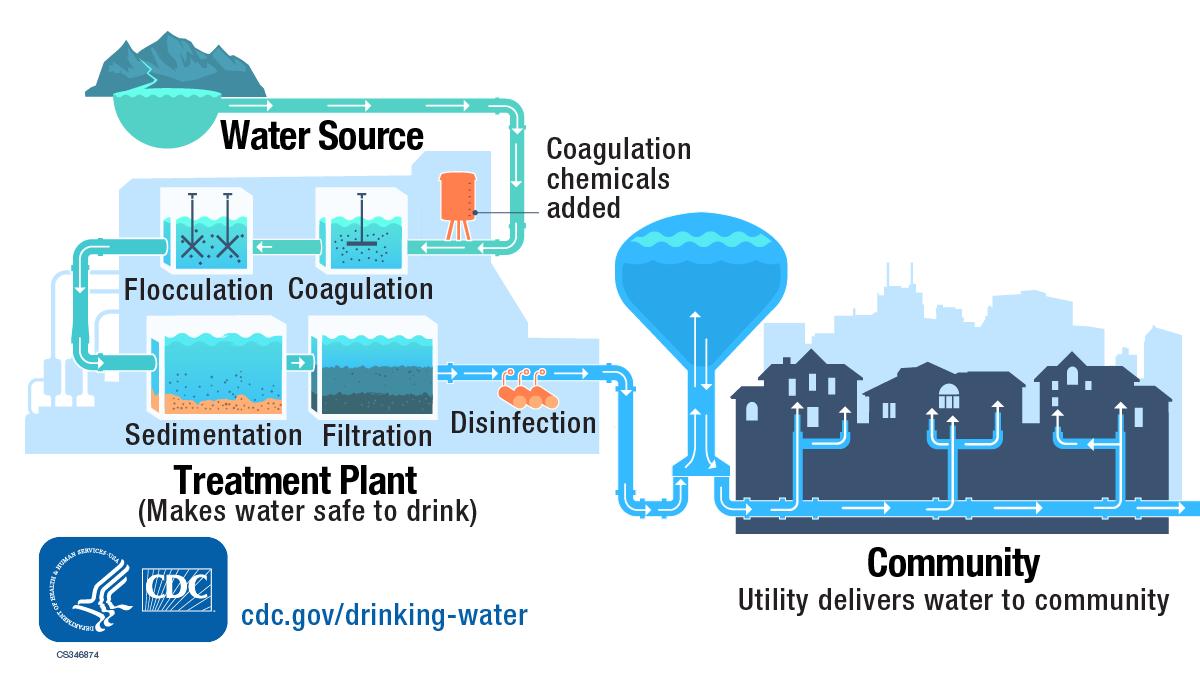
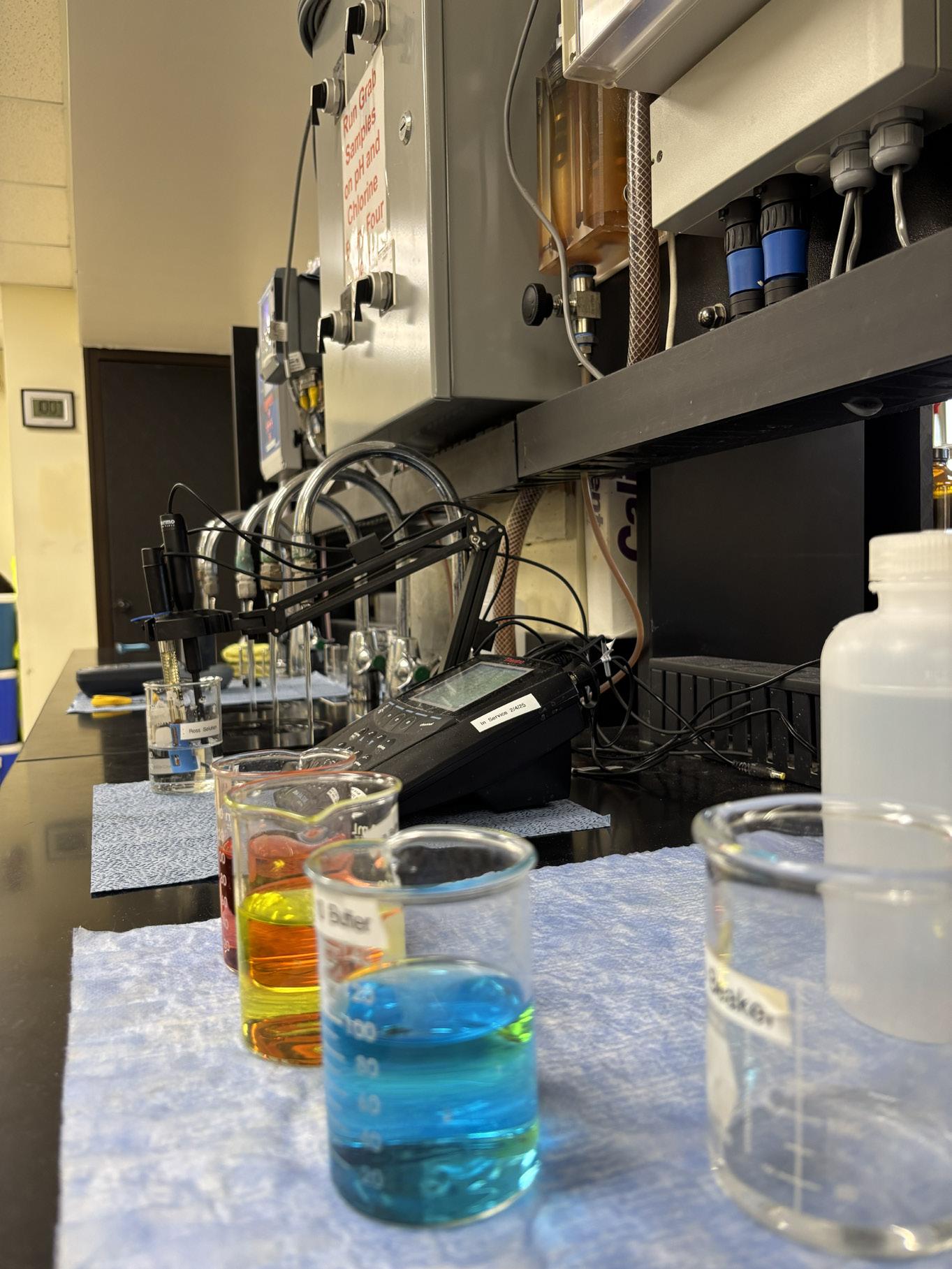
The City operates a conventional surface water treatment facility utilizing raw water withdrawn from the Catawba River basin. Treatment processes include coagulation, flocculation, sedimentation, filtration, and disinfection to remove particulate matter, pathogens, and other potential contaminants. Continuous process monitoring, routine compliance sampling, and certified laboratory analysis are conducted to verify performance and regulatory adherence.
The City of Rock Hill operates as a lead-free water system and maintains corrosion control practices to protect distribution system integrity and minimize the potential for lead and copper exposure. Ongoing sampling under the Lead and Copper Rule confirms system-wide compliance.
Operational reliability is supported by a staff of state-certified treatment plant operators, laboratory technicians, maintenance personnel, backflow prevention specialists, and distribution system operators. These professionals oversee treatment optimization, water quality testing, cross-connection control, preventive maintenance, storage tank management, and distribution system pressure and residual disinfection monitoring to ensure safe delivery of potable water to every customer connection.
The City is also nearing completion of a centrifuge upgrade project designed to enhance solids handling capacity and improve residuals management efficiency. This infrastructure investment supports regulatory compliance, operational sustainability, and environmental stewardship.
While this report focuses on drinking water operations, the City’s wastewater professionals play an equally important role in protecting our waterways and supporting environmental stewardship. Both divisions are committed to continuous improvement and operational excellence in service to our community.
Additional information regarding your drinking water, monitoring data, and system operations is available at CityofRockHill.com. Customers are encouraged to review this report and contact the City of Rock Hill Water Utilities Department with any questions.
Terry Crowe Water Plant Superintendent
Important Information About YOUR Water
To ensure that tap water is safe to drink, the EPA prescribes stringent maximum contaminant levels (MCLs) for certain contaminants in water supplied by public water systems.
All sources of drinking water are subject to potential contamination by substances that are naturally occurring or man made. All drinking water, including bottled water*, may reasonably be expected to contain at least small amounts of some contaminants. The presence of contaminants in drinking water does not necessarily indicate the water poses a health risk.
More information about contaminants and potential health effects can be obtained by calling the Environmental Protection Agency’s Safe Drinking Water Hotline at 1-800-426-4791. You can also visit the EPA’s website at https://www.epa.gov/ ground-water-and-drinking-water.
DRINKING WATER CONTAMINANTS
The sources of both drinking water includes rivers, lakes, streams, ponds, reservoirs, springs and wells. As water travels over land surfaces and underground, it dissolves naturally occurring minerals and radioactive minerals, and it can pick up substances resulting from the presence of animals and human activity.
CONTAMINANTS
THAT MAY BE PRESENT IN SOURCE WATER INCLUDE:
• Microbial contaminants, such as viruses and bacteria, which may come from wastewater treatment plants, septic systems, agricultural livestock operations and wildlife.
• Inorganic contaminants, such as salts and metals, which can be naturally-occurring or result from urban storm water runoff, farming, mining, industrial or domestic wastewater discharges, or oil and gas production.
• Pesticides and herbicides, which may come from a variety of sources such as agriculture, urban storm water runoff or residential uses.
• Organic chemicals, including synthetic and volatile organic chemicals, which are by-products of industrial processes and petroleum production, and can also come from gas stations, urban storm water runoff and septic systems.
• Radioactive contaminants, which can be naturally occurring or be the result of oil and gas production and mining activities.
CONTAMINANT INFORMATION
It is our ultimate goal to remove all contaminates from drinking water. A few naturally-occurring substances may improve the taste of drinking water and have a low-level of nutritional value.
For most customers, water that meets all federal, state and local regulations is considered safe to drink. Some customers may be more vulnerable to contaminants in drinking water than the general population. People with specific health problems should seek guidance from their healthcare provider.
EPA/CDC guidelines on appropriate means to lessen the risk of infection by cryptosporidium and other microbial contaminants are available by calling the EPA SAFE DRINKING WATER HOTLINE at 1-800-426-4791.
*FDA regulations establish limits for contaminants in bottled water which must provide the same protection for public health.
City of York, River Hills, the Catawba Indian Nation, and a small number of private water suppliers in the area. Rock Hill Utilities is well prepared to continue being the area’s regional water provider for years to come.
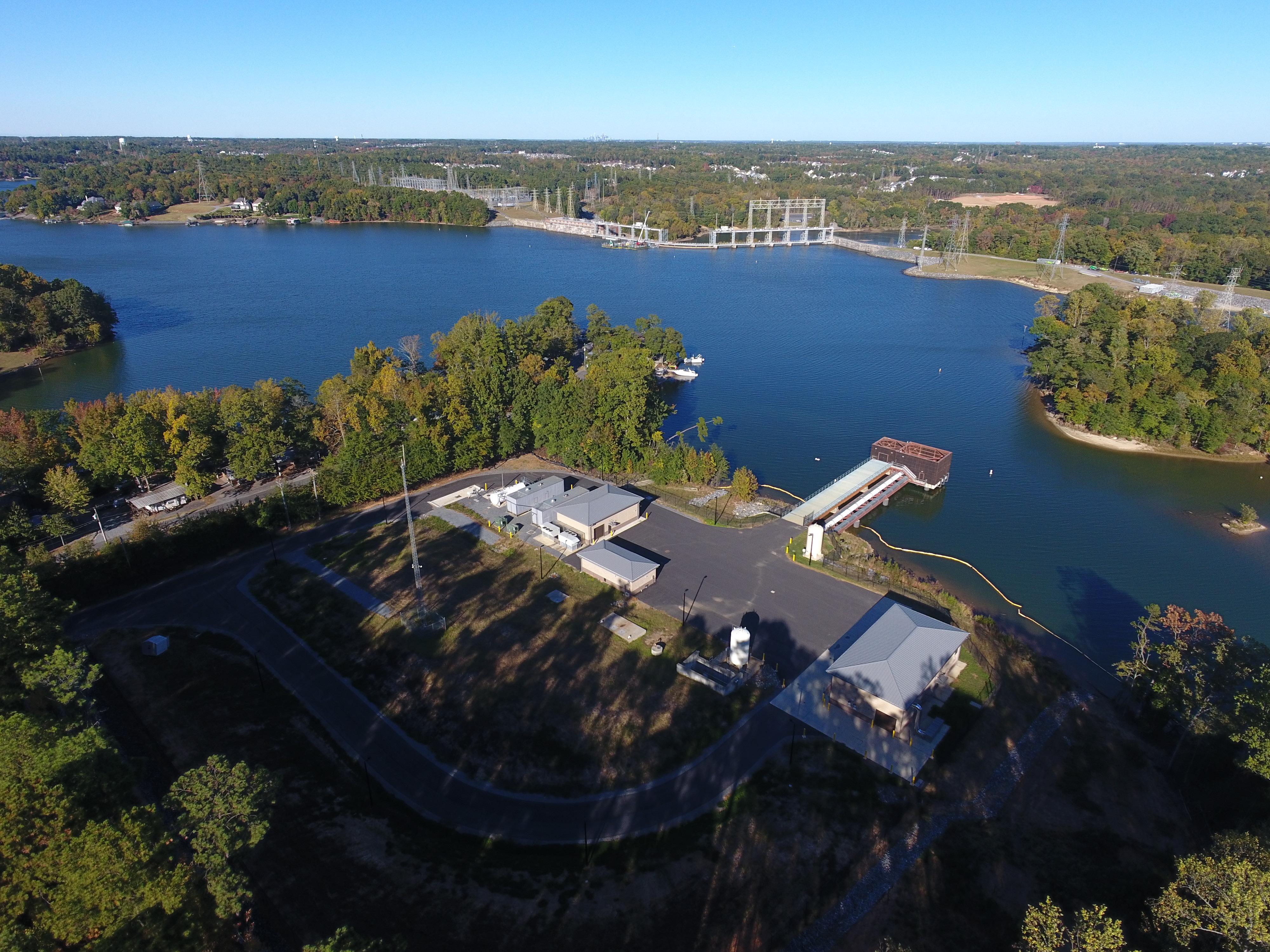
The drinking water sources for the system are surface water intakes on Lake Wylie and the Catawba River. Water is pumped from these sources to the treatment plant on Cherry Road. There, conventional treatment and chemical addition produce the water you consume. Access to our raw water intake and treatment plant is highly restricted and closely monitored around the clock.
The South Carolina Department of Environmental Services SCDES (formally DHEC) serves as the coordinating agency for the state’s Source Water Assessment and Protection Program (SWAP). This program is required by EPA’s 1996 amendments to the Safe Drinking Water Act. SWAP provides added protection of the City’s water by conducting assessments for all drinking water sources across South Carolina and implementing safeguard measures.
Water Quality Assessment for the Catawba Basin. The assessment provides an inventory of potential contaminant sources (PCSs), identifies potential contaminants of interest, and ranks the potential susceptibility of these PCSs with respect to the water source. SCDES has identified Rock Hill’s source water to be susceptible to contaminants such as volatile organic contaminants, petroleum products, metals, nitrates, pesticides and herbicides. The City of Rock Hill continually monitors for the presence of these contaminants, and through state-of-the-art filtering and disinfecting techniques, delivers safe drinking water to its customers.
For a complete copy of this assessment report, contact Rock Hill Utilities at 803-325-5500 or visit South Carolina Department of Environmental Services: https://des.sc.gov/sites/des/files/media/document/ Catawba%20 WWQA_2012.pdf.
Coagulation is a water treatment process that uses chemicals, called coagulants, to help remove dirt, particles, natural organic matter, and other impurities from water. The coagulant causes small, suspended particles to stick together and form larger particles, called “floc,” which can then be removed through settling and filtration. This process improves water clarity and helps reduce substances that can affect water quality, taste, odor, and disinfection effectiveness.
Flocculation is a water treatment process in which small particles suspended in water are gently mixed, so they collide and stick together, forming larger particles called “floc.” These larger particles are easier to remove during sedimentation and filtration.
Sedimentation is a water treatment process that removes suspended particles from water by allowing them to settle naturally to the bottom of a basin or clarifier due to gravity. During this process, heavier materials such as sand, silt, organic matter, and small particles formed during coagulation and flocculation settle out of the water. The clarified water is then collected from the top and continues through filtration and disinfection. Sedimentation improves water quality by reducing turbidity, removing contaminants attached to particles, and increasing the effectiveness of downstream treatment processes.
Filtration is a water treatment process used to remove suspended particles, microorganisms, and other impurities from drinking water by passing the water through layers of filter media such as sand, anthracite coal, or granular activated carbon. Filtration helps improve water clarity, taste, and overall quality while reducing the presence of contaminants that can cause health concerns.
In a conventional treatment plant, like Rock Hill, filtration occurs after coagulation, flocculation, and sedimentation. As water passes through the filters, remaining fine particles and some microorganisms are trapped within the filter media. The filtered water is then disinfected before being delivered to customers.
Disinfection is a water treatment process used to destroy or inactivate harmful microorganisms such as bacteria, viruses, and parasites that may be present in drinking water. This process helps protect public health by reducing the risk of waterborne disease.
Public water systems commonly use disinfectants such as chlorine, chloramines, ozone, or ultraviolet (UV) light to maintain safe drinking water throughout the treatment and distribution system. A disinfectant residual is often maintained in the water distribution system to help prevent microbial contamination as water travels to customers.
Water Quality in Your Home
Lead in Drinking Water
The City of Rock Hill uses lead-free materials in our water system and, in accordance with the Lead and Copper Rule Revisions, has completed a service line inventory identifying no known lead service lines in the distribution system.
Lead is not typically present in our source water; however, it can enter drinking water through plumbing materials inside homes or buildings. The City of Rock Hill conducts lead and copper monitoring as required by the United States Environmental Protection Agency under the Safe Drinking Water Act. Based on consistently low lead results, our system qualifies for reduced monitoring. Our most recent sampling results were below the EPA action level of 15 parts per billion (ppb) at the 90th percentile.
The City of Rock Hill maintains corrosion control treatment to minimize the potential for lead to leach from plumbing materials. Customers concerned about lead may flush taps after periods of non-use and contact our office for testing information. Information on lead in drinking water, testing methods, and steps you can take to minimize exposure is available at http://www.epa.gov/safewater/lead.
Discolored Water – Cause & Solution
Customers may occasionally notice yellow, brown, or cloudy water due to hydrant flushing, firefighting or water main repairs that temporarily disturb mineral deposits in the pipes. While the water may appear unpleasant, it still meets all water quality regulations and is safe to consume.
• Run cold water for 5–10 minutes, or until clear. Avoid using hot water or doing laundry until the water clears.
• Discoloration should not persists for more than 24 hours.
Milky (Cloudy) Water – Causes & Solutions
Milky or cloudy water is usually caused by tiny air bubbles in the water, often from changes in temperature or pressure. It is generally safe and will clear on its own.
• Pour water into a clear glass and let it sit—if it clears from the bottom up within a few minutes, it is air.
Blue or Blue-Green Stains – Cause & Solution
Blue or blue-green stains on fixtures are usually caused by corrosion of copper plumbing. This can occur when water is slightly acidic or has characteristics that make it more corrosive.
Staining may indicate plumbing corrosion. Customers may flush taps regularly and consider testing water for pH and copper. If staining persists, consult a licensed plumber.
Black or Pink Stains– Cause & Solution
Pink stains are usually caused by airborne bacteria (such as Serratia marcescens) that grow on moist surfaces. They are not typically related to the water supply. Clean plumbing fixtures regularly with a household disinfectant or vinegar and keep surfaces dry.
Black stains are often caused by manganese in the water or deterioration of rubber plumbing components. Running cold water to flush the line may help.
Taste and Odor Issues– Cause & Solution
Unusual taste or odor in drinking water can result from naturally occurring minerals (such as iron or manganese), chlorine used for disinfection, seasonal algae activity in source water, temperature changes or plumbing materials inside the home. Common descriptions include metallic, earthy, musty, sulfur (rotten egg), or chlorine-like tastes or smells.
Run cold water for several minutes to flush household plumbing and always use cold water for cooking and drinking. Refrigerating water in an open container may help reduce chlorine taste.
If you are experiencing any of these issues please contact Rock Hill Utilities at 803-329-5500.
2017 Water Quality Data Table 2017 Water Quality Data Table
2025 Water Quality Data Table
from fertilizer use; Leaching from Septic tanks, sewage; Erosion of natural deposits
Erosion of natural deposits; Water additive which promotes strong teeth; Discharge from fertilizer and aluminum factories
Erosion of natural deposits; Leaching from wood preservatives; Corrosion of household plumbing systems
of
plumbing systems; Erosion of natural deposits
* Please note: The City of Rock Hill’s monitoring cycle under the Lead and Copper Rule is every 3 years.
*Average annual concentration assumed to produce a total body or organ dose of 4 mrem/yr for Tritium is 20,0000 pCi per liter.
*Some people who drink water containing TTHMs in excess of the MCL over many years may experience problems with their liver, kidneys, or central nervous system, and some may have an increased risk of getting cancer. Some people that drink water containing HAA5 in excess over the MCL over many years have an increased risk of getting cancer.
Action Level (AL)
GLOSSARY OF TERMS IN WATER QUALITY DATA TABLE
The concentration which, if exceeded, triggers treatment or other requirements which a water system must follow.
Action Level Goal (ALG)
The level of a contaminant in drinking water below which there is no known or expected risk to health. AGLs allow for a margin of safety.
LRAA - Locational Running Annual Average
LLD - Lower Limit of Detection
Maximum Contaminant Level (MCL)
The highest level of a contaminant that is allowed in drinking water. MCLs are set as close to the MCLGs as feasible using the best available treatment technology.
Maximum Contaminant Level Goal (MCLG)
The level of a contaminant in drinking water below which there is no known or expected risk to health. MCLGs allow for a margin of safety.
Maximum Residual Disinfectant Level Goal (MRDLG)
The level of a drinking water disinfectant below which there is no known or expected risk to health. MRDLGs do not reflect the benefits of the use of the disinfectants to control microbial contaminants.
Maximum Residual Disinfectant Level (MRDL)
The highest level of a disinfectant allowed in drinking water. There is convincing evidence that addition of a disinfectant is necessary for control of microbial contaminants.
Minimum Reporting Levels (MRL)
The value and unit of measure at or above which the concentration of the contaminant must be measured using the approved analytical methods.
NA - Not applicable
ND - Not detected
NR - Monitoring not required, but recommended.
Nephelometric Turbidity Units (NTU)
Turbidity is a measure of the cloudiness of the water. We monitor it because it is a good indicator of the effectiveness of our filtration system.
Parts Per Million (ppm)
Parts per million, or milligrams per liter (mg/L).
Parts Per Billion (ppb)
Parts per billion, or micrograms per liter (µg/L).
pCi/L
Picocuries per liter (a measure of radioactivity)
Treatment Technique (TT)
A required process intended to reduce the level of a contaminant in drinking water.
Unregulated Contaminants Monitoring Rule (UCMR) 5
Our system has sampled for a series of unregulated contaminants. Unregulated contaminants are those for which EPA has not established drinking water standards. The purpose of this monitoring is to assist EPA in determining the occurence of unregulated contaminants in drinking water and whether future regulations are warranted. If you are interested in examining the results, please contact us at 803-326-2455. Visit https://www.epa.gov/dwucmr to view EPA’s Unregulated Contaminant Monitoring Rule to view the data of all systems
CITY OF ROCK HILL UTILITIES WATER TREATMENT AND DISTRIBUTION SYSTEM
• Miles of Water Main Lines: 565 Miles
• Inline Valves: 6,672
• Fire Hydrants Maintained: 3,369 Hydrants
• Number of Elevated Water Tanks: 5 Elevated Tanks totaling 4.75 million gallons in storage
• Number of Water Meters: 37,831 Active Meters
• Average Daily Consumption: 24.057 Million Gallons
• Annual Finished Water: 8.7 Billion Gallons
• Maximum Plant Capacity: 48 Million Gallons Per Day
• City of Rock Hill plus wholesale metered customers (York County, City of York, Fort Mill, Tega Cay and Catawba Indian Nation): 113,181+
ALWAYS ON - 24/7/365
To understand the possible health effects described for many regulated contaminants, a person would have to drink two liters of water every day at the maximum contaminant level (MCL). The maximum contaminant level is the level of a contaminant in drinking water below which there is no known or expected risk to health.
As required by law, the City of Rock Hill monitors for contaminants 24 hours a day in the drinking water that it treats and supplies to customers. In 2025, the City of Rock Hill performed approximately 4,000 routine water quality tests at 164 local sites. These tests measure for bacteria, chlorine residual, pH and temperature. Sites include schools, residences, commercial businesses and industries in the Rock Hill water service territory. In 2023, lead and copper samples were collected at thirty designated homes, and corrosion control at ten approved sites throughout the city. Additionally, with increased concerns about water quality within US public schools, the City expanded the corrosion control sample protocol to include testing at Rock Hill schools. This ensures our schools have protection on pipe walls to prevent possible metal leaching in the water.
Every regulated contaminant detected in the water, even in the most minute traces, is listed in the Water Quality Table on page 6 and 7. In 2025, the City tested for numerous contaminants, the majority of which were not detected. For a list of non-detects, please contact Rock Hill Utilities at 803-329-5500.
DRINKING WATER DATA & REPORTS
Through the Safe Drinking Water Act (SDWA), the Environmental Protection Agency (EPA) requires public water systems meet national drinking water standards to ensure that the health of water consumers is carefully protected.
All public water systems must publish an annual Consumer Confidence Report that tells how the drinking water standards are achieved. The EPA allows this report to be posted on the City’s website for customer viewing or printing. If you would like this report mailed to you, please contact Rock Hill Utilities at 803-329-5500 to request a paper copy.
Este informe contiene información importante sobre su agua potable. Para obtener el informe en español, llame al 803-329-5500 para recibir asistencia.
WATER CONSERVATION
The City of Rock Hill always encourages voluntary conservation and the use of “Best Management Practices” to preserve our limited water supply. There are many ways to save water around your house. You can also practice water conservation while irrigating with a properly designed landscape plan and being water-smart every time you use water. For more information on water conservation, visit: https://www.clemson.edu/extension/water/index.html
City of Rock Hill utility customers can monitor their water consumption with CustomerConnect. This tool allows customers to access graphs and reports of their usage and set email/text notifications based on usage to help identify possible water leaks. More info at www.cityofrockhill.com/customerconnect
DIRECTORY
The City’s water system is governed by Rock Hill City Council and operated by the Utilities Department under the supervision of City Management.
John Gettys, Mayor
Derrick Lindsay, Councilmember Ward 1
Anne Poag Harty, Ward 2
Kevin Sutton, Councilmember Ward 3
John A. Black III, Councilmember Ward 4
Nikita Jackson, Councilmember Ward 5
Sarah Vining, Councilmember Ward 6
David B. Vehaun, City Manager
James G. Bagley Jr, PE, Deputy City Manager
Steven Gibson, Deputy City Manager
Deana Keever, Assistant City Manager
David Melton, Water & Wastewater Director
Rock Hill City Council Meetings are scheduled on the second Monday of each month at 6 PM with citizens hearing at 5:30 PM. Special sessions will be called as needed and advertised at least 24 hours in advance.
City Council Meetings are broadcast live during the meeting on www.cityofrockhill.com/livestream, or on Comporium Stream TV channel 701. Council Meetings are rebroadcast on channel 701 and are available anytime on demand (see www.cityofrockhill.com under City Council Meetings).
Website: www.cityofrockhill.com
Customer Service, Utility Bill Questions: 803-325-2500
24-Hour Automated Service: 803-329-5500
Utilities Department: 803-329-5500
City Council/Meeting Information: 803-329-7012
TDD for Hearing Impaired: 803-329-8787
EPA Safe Drinking Water Hotline: 1-800-426-4791
http://www.epa.gov/safewater
South Carolina 811 - “Call Before You Dig”:
Dial 811 or call toll-free 1-888-721-7877
Este informe contiene información importante sobre su agua potable. Para obtener el informe en español, llame al 803-329-5500 para recibir asistencia.