

Key outcomes, insights and success stories from the project Aurora Entrepreneurialis

Aurora Entrepreneurialis has been a collaborative journey to strengthen entrepreneurial skills, creativity and sustainability in upper secondary education across borders. Over the course of the project, partners from Finland and Sweden have worked together to develop innovative methods, tools and learning environments that empower young people to think entrepreneurially and act responsibly in a changing world.
This publication brings together the key outcomes, insights and success stories from the project. It showcases practical models for integrating entrepreneurship and sustainability into curricula, highlights cross-cultural collaboration and shares experiences that can inspire educators, students and stakeholders alike.

Entrepreneurship education is a vital component in preparing students for the rapidly changing demands of working life. The Aurora Entrepreneurialis project highlighted how teaching entrepreneurship, both external and internal entrepreneurship, equips young people with essential future skills and fosters a proactive, responsible and creative mindset.
Intrapreneurship refers to entrepreneurial thinking and the ability to act entrepreneurially within an organization or community. You don’t have to start a business to be an intrapreneur. It emphasizes initiative, problem-solving, collaboration and the courage to take responsibility — skills that are increasingly valued in all sectors of working life. In entrepreneurship the focus is also on creating new business ventures by individuals or groups. By promoting an entrepreneurial culture in upper secondary schools, which refers to changing the mindset and concentrating on the set of values, behaviors and practices, the project supported both students and teachers in developing competencies in authentic, work-life-oriented contexts.
Another key part of this project has been sustainability and combining entrepreneurship education with it. We presented similarities between teaching sustainability and entrepreneurship in our teacher training and encouraged participants of our events to find solutions to sustainability challenges by using entrepreneurial skills. We chose to focus on the three pillars of sustainability –environmental, social and economic sustainability. In teaching both future employees and/or entrepreneurs, it is important to teach about all aspects of sustainability.
Sustainable Entrepreneurship Education (SEE) is an approach to teaching entrepreneurship that integrates economic, social and environmental sustainability principles into entrepreneurial thinking and practice. Sustainable entrepreneurship is the ability to discover, create and make use of entrepreneurial opportunities that help build sustainable societies. Instead of approaching entrepreneurship from the perspective of economic profit, sustainable entrepreneurship education brings sustainability themes to the very core of entrepreneurial innovation and creating business models:
- Generate Economic Value: Businesses should be financially viable and innovative.
- Working for sustainability: The business model itself is built around solving a sustainability challenge.
- Promote Social Responsibility: The business addresses societal challenges such as inequality, health and education.
- Protect the Environment: The business strives to protect the environment, reduce ecological impact, use resources responsibly and support circular economy models.
Entrepreneurship and sustainability are overarching topics that should be seen as a logical part of every subject. Students will need both sustainability skills and entrepreneurial skills in their future lives. For the teacher, bringing entrepreneurial activities and sustainability thinking to the classroom gives deeper meaning and motivation to learning.
Key Characteristics to Sustainable Entrepreneurship education are e.g.
- Balancing people, planet and profit
- Understanding how businesses interact with ecosystems and communities
- Encouraging responsible leadership, long-term thinking and sustainable solutions
- Using real-world projects, case studies and collaboration to teach innovation and sustainable problem solving
Sustainable entrepreneurship education aligns with the UN Sustainable Development Goals (SDGs) and builds resilience and innovation in business ecosystems.
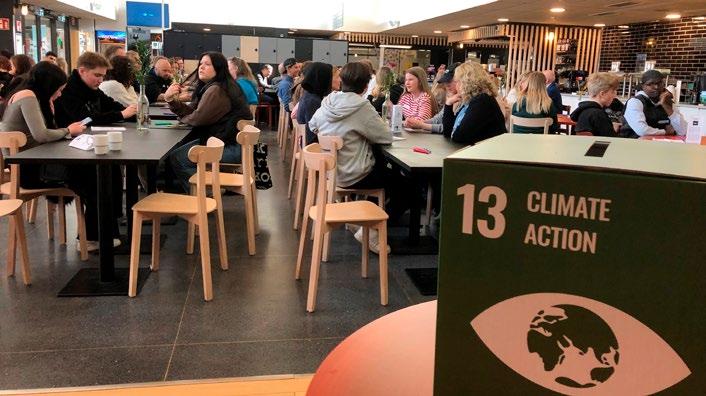
Why combine entrepreneurship education and sustainability?
• The need for sustainable change: Current resource use and environmental impact are unsustainable, leading to ecological, social and economic consequences. Today’s students will face these sustainability challenges throughout their careers and lives, so they need the tools and knowledge to navigate them effectively.
Sustainability is a requirement for entrepreneurship now and in the future. The future working life needs people with skills to act both sustainably and entrepreneurially. Also, the official regulations for organizations to implement sustainable practices will only keep growing, such as when applying for bank credit or selling to larger companies which need to report their sustainability practices to the EU.
• Improved learning outcomes: Combining entrepreneurship and sustainability enhances learning in both areas. This is particularly the case when working with the JA Company program Year as an entrepreneur, where students get to run companies selling real products and services during a school year, but it is also the case when working with innovation camps or similar assignments.
• Creating a practical and real-world connection to teaching sustainability: Teaching entrepreneurship alongside sustainability makes sustainability issues tangible and practical. On its own, sustainability can feel abstract, but starting a student company or tackling real-world innovation challenges creates a concrete connection to these topics. This hands-on experience of thinking about sustainability in practice can translate into a deeper theoretical understanding of sustainability.
“ If I want to sell T-shirts with my own print, what materials are more, and which are less environmentally sustainable? Can I make choices that support better
“ If a person wants to have a sustainable business idea one can’t just order a cheap product from overseas and resell it.
• Give students agency by teaching entrepreneurial skills: Entrepreneurship education, and particularly teaching entrepreneurial skills like courage, responsibility, initiativetaking and creativity, gives students agency. Only learning about sustainability issues and the problems of the world can make people feel hopeless and like there’s nothing they can do. Teaching students about sustainability issues and entrepreneurship together does not shy away from talking about
Here are some examples of how we have combined sustainability and entrepreneurship in practice.
1. Solving sustainability challenges with entrepreneurial methods: During all our innovation camps and some of our cross-border exchanges we had participants work on solving sustainability challenges through entrepreneurial innovation. We have approached different industries such as food production, tourism, fashion and circular economy, industrial green transition in the region etc. In our innovation camps, we have also included sustainability as an evaluation criterion in the competitions that were judged by a jury. As a teacher, you can choose almost any theme and approach it through sustainability and entrepreneurship.
Example
In one event, participants explored how to make the fashion industry more sustainable. Students used secondhand clothing and fabric waste to illustrate their ideas and presented their solutions in a fashion show. Their proposals included clothing deposit systems, repair meet-ups, an app for second-hand store inventories, promoting visible repairs as a trend, clothing libraries, and workshops for sewing skills
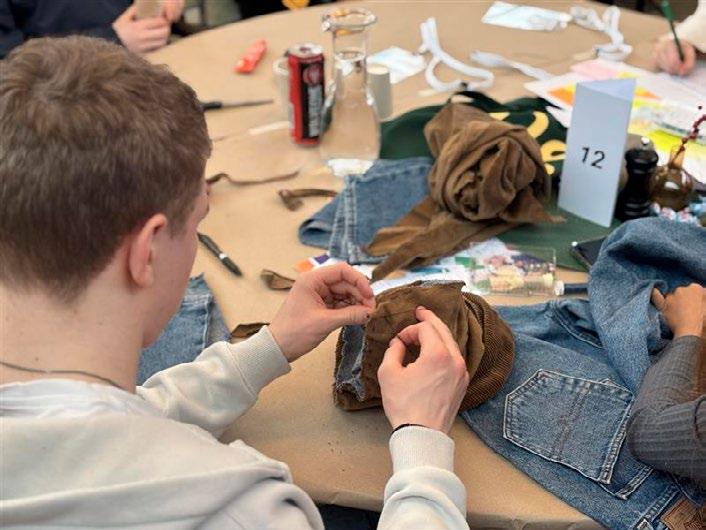
2. Organizing study visits: We have incorporated many study visits to different companies and organizations at our events and asked them to share how they work with sustainability, and which issues are important to them. We have also specifically chosen to collaborate with stakeholders that have a strong sustainability focus on their own work.
Example
We collaborated with Lumire, Luleå’s waste management service, and their second-hand shop Samlat. They want to inspire customers to reduce waste and achieve a reduced environmental impact by promoting second-hand shopping or other means of sharing, borrowing, or reusing clothes and items. Their shop also has equipment for repairing clothes and upcycling different used items.
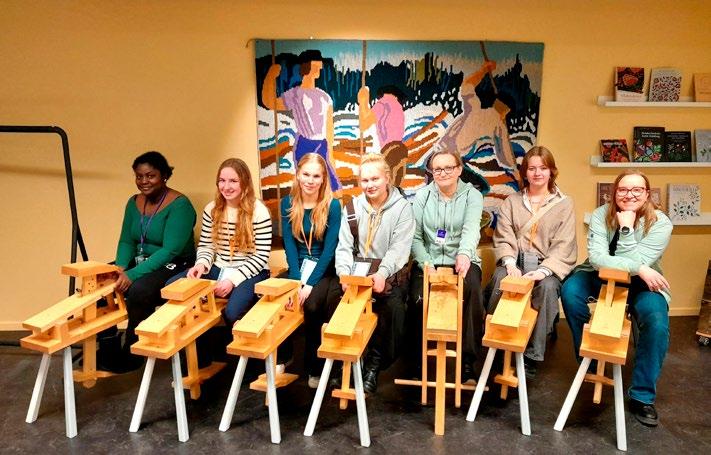
3. Being sustainable yourself: We have also strived to show examples and organize sustainable events as a project, by making sustainable choices when it comes to things like transport, food and use of resources. Sustainable choices often require getting out of your comfort zone and this can also stir critique. In our events, some participants did not enjoy having only vegetarian option on meals, but we chose to do it based on the strong sustainability values that we had in our project.

Example
We have used public transportation or joint buses for travelling. We have asked offers for vegetarian meals for the events –remember to require good protein sources. We searched for disposable material e.g. for our roll up (pull up) and table displays.
We produced a series of video lectures with experts as part of a comprehensive course that was designed to support entrepreneurship education and sustainability in upper secondary schools. The package consists of 12 expert-led sessions, each focusing on a specific theme.
Feel free to use our materials in your teaching and guidance work! Our video content is designed primarily for education professionals, but anyone interested in entrepreneurship education is welcome to use it for teaching, learning, or as a source of information and support.
For easier use, the video content is structured into subcategories
- Sustainable Entrepreneurship Education: What, Why, How
- Future skills in working life and as an Entrepreneur
- Social Entrepreneurship and Education
- Other related themes like STEAM, Collaboration, Morality and Conscience
How to use our video materials
All videos are available with subtitles in Finnish, English and Swedish (you can change them from the Youtube video settings icon), despite of the language that the specialists use. Therefore, these videos are excellent material for language teaching with a special theme.
We have received feedback that the themes Future skills and working life suit very well for guidance counselling lessons or self-study materials for students as they are applying for a job or pondering their skills.
You can watch the videos any time to learn more yourself – for Finnish teachers it is possible to ask their headmaster, if the package could be used in VESO-day program.
Critic, Mindset, Entrecomp & Greencomp
Expert: Mats Westerberg / Luleå University of Technology
Covers entrepreneurial skills and the foundations of entrepreneurial thinking.
Tools for Entrepreneurship Education
Expert: Eemeli Alanne / City of Oulu
Practical tools and methods for entrepreneurship education that can be smoothly integrated into various subjects.
Sustainable Entrepreneurship from an Educational Perspective
Expert: Ulrika Persson-Fischier / Uppsala University
How to approach entrepreneurship education from a sustainability perspective. Highlights the similarities between sustainability and entrepreneurship education and discusses how entrepreneurial skills can be used to solve global challenges.
Entrepreneurial Stories – Experiences from Teachers and Students
Multiple experts
How entrepreneurship can be taught in your own institution and across different subjects. The topic is introduced through a video in which three experienced teachers share their experiences with entrepreneurship education – its challenges, opportunities, and impact on learning.
Example of how to use the videos: When organizing teacher training or development days in your school or region, you can create a workshop based on these videos. This approach was used during the Oulukio Days, a joint event for all upper secondary school teachers in the City of Oulu. Teachers who selected the video workshop had 90 minutes to explore sustainable entrepreneurship education by watching the chosen videos. To enrich the experience, you can include pre-assignments from previous teacher trainings, available on the Aurora Entrepreneurialis website.
Future Skills and Working Life
Expert: Perttu Pölönen / futurist, inventor and writer
A video lecture exploring what skills are needed in life and in the future job market.
Social Media and Digitalization in Entrepreneurship
Expert: Perttu Pölönen / futurist, inventor and writer
Discusses social media and digitalization in entrepreneurship. How does social media affect us, and how can we use these technologies in a positive way?
Sustainabilisation – The Importance of Sustainable Entrepreneurship
Expert: Mikael Botnen Diamant / sustainability expert, author and educator
Societal transformation through sustainable development, as profound and extensive as urbanization, globalization, or digitalization. Why are sustainability and sustainable entrepreneurship important for businesses and organizations, and why are these essential themes for teachers and students to engage with?
hese videos. This approach was used during the Oulukio Days, a joint event for all upper secondary school teachers in the City of Example of how
to use the videos: If you are a guidance counselor or teaching a subject related to working life and essential skills, you can base a lesson on a Perttu Pölönen video. The video is short enough for a 45-minute class. To deepen the discussion, create an assignment around the skills Perttu highlights, such as:
• Communication and storytelling
• Curiosity and experimentation
• Critical thinking and interpretation
• Creativity and problem-solving
• Entrepreneurship and teamwork (and others from his list)
Most videos also work well for language learning. Despite of the spoken language, all videos include subtitles in Finnish, Swedish and English.
for
Expert: Anzelika Krastina / Lapland University of Applied Sciences
Delves into social entrepreneurship, its challenges and opportunities, and the lessons that can be learned from entrepreneurship and entrepreneurship education. The video explores tools for applying the theme in practical teaching.
Experts: Jessica Lindbergh & Anna Wettermark / Stockholm Business School
Shares experiences on how students – and sometimes colleagues or even oneself – can be encouraged to think about things from a new perspective.

Example of how to use the videos: Social entrepreneurship offers an ethical perspective on business. If you are unsure about teaching entrepreneurship, start with Anzelika Krastina’s video, which presents a practical teaching method. It also works well for students participating in the JA Year Program and planning to start their own company.
STEAM Pedagogy and ToolCamp Method in Entrepreneurship Education
Experts: Maikki Manninen & Paula Vorne / City of Oulu
A video podcast exploring the connection between STEAM pedagogy and entrepreneurship education, the background of STEAM, and discussing the ToolCamp model.
Stronger Together – Eight Principles for Collaboration in Student Companies and Teacher’s Teams
Expert: Oskar Henrikson / CEO Psykologifabriken
A scientifically grounded framework for building sustainable and successful teams, groups, and collaborative relationships.
Morality and Conscience in Sustainable Development and Entrepreneurship Education
Expert: Jani Pulkki / University of Oulu
How morality and conscience are reflected in basic and secondary education, especially when discussing nature, sustainable development, future working life, and entrepreneurship.

Example of how to use the videos: If you teach natural sciences, arts, entrepreneurship, or want to learn about STEAM pedagogy, watch the video by Maikki Manninen and Paula Vorne. Use it as inspiration to create innovation challenges for your students and foster collaboration with colleagues and working life partners. If you aim to strengthen teamwork among student groups or teachers, the video by Oskar Henrikson provides clear, practical steps
International student events with study visits, lectures, teamwork and innovation activities are a great way to learn about sustainable entrepreneurship. On top of that, it offers new learning environments, gives students international experiences and an opportunity to travel to new places. In our project we piloted diverse working methods and ways of organizing events. In this chapter we offer some of our experiences and practical tips for organizing innovation camps and international events.
Choose a topic and innovation challenge
You can choose any kind of topic for your event. We have approached topics such as sustainable fashion, sustainable food production and sustainable tourism. The topic can be related to a certain school subject, or it can be based on a societal, environmental or a businessrelated topic. Using a topic which is connected to working life and to your local area gives relevant context.
After choosing the topic, define the challenge which you wish the participants to work with. For example: “How can you get people to use clothes in more sustainable ways?”
Using pre-assignments before the event
We provided short and focused pre-event assignments (under 60 minutes working time) to help participants familiarize with the topics of the event in advance. With some prior knowledge of the topics, participants are better able to jump into innovation projects.
In our project, we mostly used short videos and articles paired with reflection questions. Some participants did the assignment on their own, in some schools with the teacher, who was also participating in the event.
Teamwork and a safe environment enable innovation

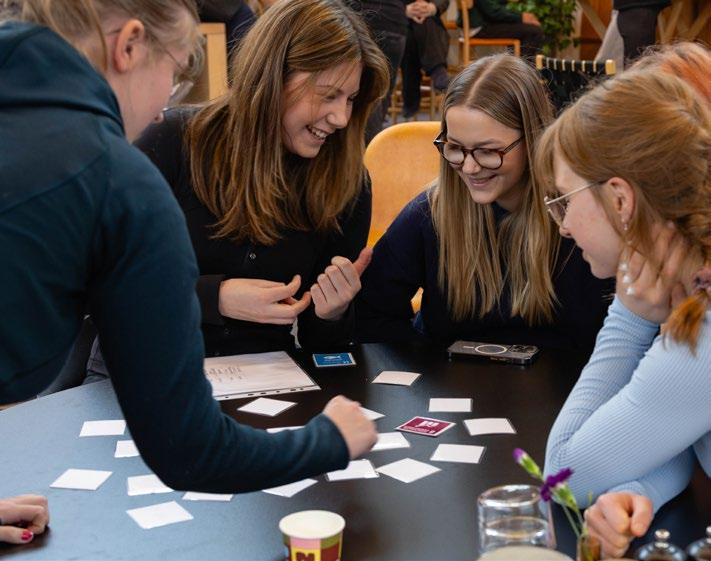
Entrepreneurial innovation thrives in teamwork. In each of our innovation camps, students were placed into international teams (approx. 5–7 people in each team) and given a challenge to solve together. One of our goals was to help participants meet new people from different regions and provide opportunities to speak and work in English. Through this teamwork, students developed communication and collaboration skills.
Teamwork with unfamiliar people from different schools and countries might feel difficult and scary. That’s why good teambuilding and icebreakers are an important part of creating a successful learning experience. We tried out many fun teambuilding activities, some of which you can check out here: Teambuilding exercises.
For us, it was important that every student felt safe and had at least one familiar person in their team. During registration, we asked teachers to indicate with whom the students would like to share accommodation at the event. We then used these pairs or groups of three as the basis for forming teams for the challenges. While creating the teams, we aimed to mix students from different areas as much as possible.
In addition, we also put extra effort into communicating to our participants in order to create an environment, where people feel safe. Before every event, we sent out a welcome package where the participants could find information about the schedule, accommodation and the program. We also provided a list of things to pack and contact details for health emergencies. During the event, we guided the innovation process step-by-step and visualized the progress on the big screen. Setting clear expectations of the event helps reduce the stress of participating in something new and unknown.
There are many different models for innovation available, but some basic principles can be applied to all of them: 1) gathering background information of the innovation challenge, 2) ideate solutions, 3) narrow down your ideas, 3) gather feedback or validate your ideas, 4) create a prototype or end solution 5) evaluate.
Innovation is based on creativity, fast feedback loops and testing your ideas with limited resources.
Make sure the innovation process is clearly explained while giving teams and individuals the freedom to make their own decisions. Use charts, images, templates, or other visual aids to support different learning styles and help participants fully understand the task. Make the goal clear.
Trust the youth! A core principle of entrepreneurship education is to create an atmosphere that feels safe yet is challenging enough to push participants beyond their comfort zones. As a teacher, your role is more of a facilitator and a coach. Remember that you cannot control the end results. Clear instructions are essential but let the participants develop their own solutions. Each team is unique: some handle challenges with ease, while others choose simpler paths. Everyone is learning, and it’s important to respect and encourage participants’ independence.
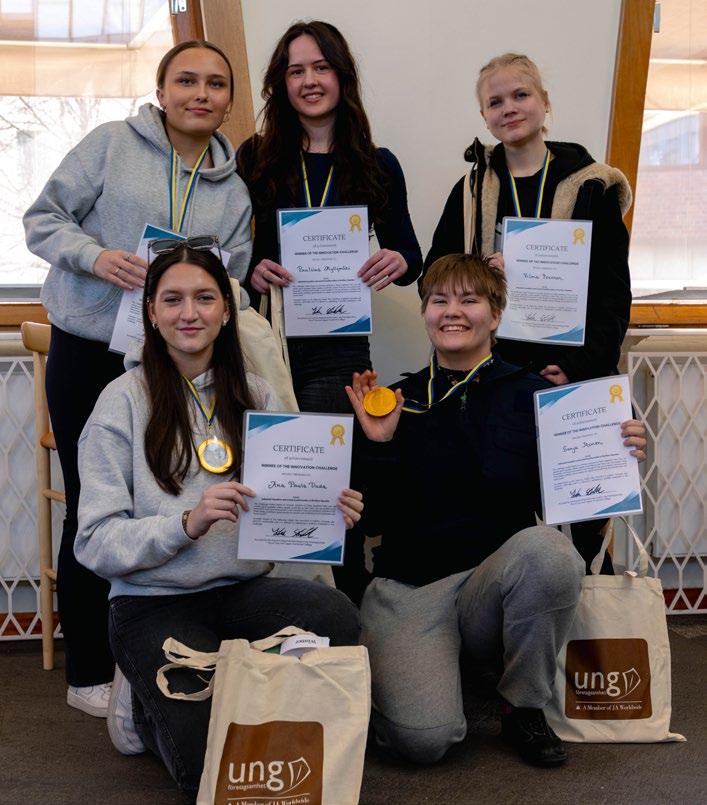
Make it a competition and invite judges
Competition always spices up things and gives motivation for participants. Awarding winners also offers you a way to recognize great work. You can use multiple winner categories to highlight different evaluation criteria. We have used categories such as overall winner, best teamwork, most sustainable solution, most innovative solution etc.
Inviting external judges to evaluate the end results adds value to the competition. It shows that adults and professionals are interested in youth and the external judges can offer feedback from a professional point of view. Depending on the topic of the innovation challenge, we have invited entrepreneurs as well as experts from municipalities and public sector institutions to act as competition judges. You can also use participating teachers as judges of the competition. This way, the teachers get to observe their students’ work and gain experience in evaluating innovation processes.
Make sure you allocate enough time to explain the judging process and provide each judge with written instructions during the evaluation. Remember, judges are your guests — prepare a small gift to show appreciation for their collaboration.
Trust the youth! A core principle of entrepreneurship education is to create an atmosphere that feels safe yet is challenging enough to push participants beyond their comfort zones.
Recognize your students’ work – giving ECTS points for participation
Today’s students are motivated to go beyond traditional classroom learning and gain new experiences during their studies. We partnered with general upper secondary schools in Oulu to pilot a study module to recognize participation in our events. This increases motivation for students to join events and supports the school to offer multidisciplinary learning activities as part of the curriculum.
Each of our 2- or 3-day events enabled students to earn 1 ECTS credit through their school. The course, titled International Future Working Life Skills Camp, was published in the schools’ official study portals, where students could enroll to participate. This also supported teachers in registering students for the events. When applications exceeded available spots, schools requested motivation letters to select 5-6 participants for each event. Those not selected were placed on a waiting list and could join if spaces became available. This approach proved highly effective, and we strongly recommend adopting a similar procedure for future events.
Whenever possible, involve teachers as observers or judges during events so they can follow the entire student process. On the other hand, if you organize multiple events, ensure teachers also can experience innovation themselves. Invite teachers to complete the same challenge designed for students — the best way to learn is by
doing. Also remember to reserve time for reflection and discussion. Based on our experience, teachers particularly value to get time for slightly moderated conversations with their peers.
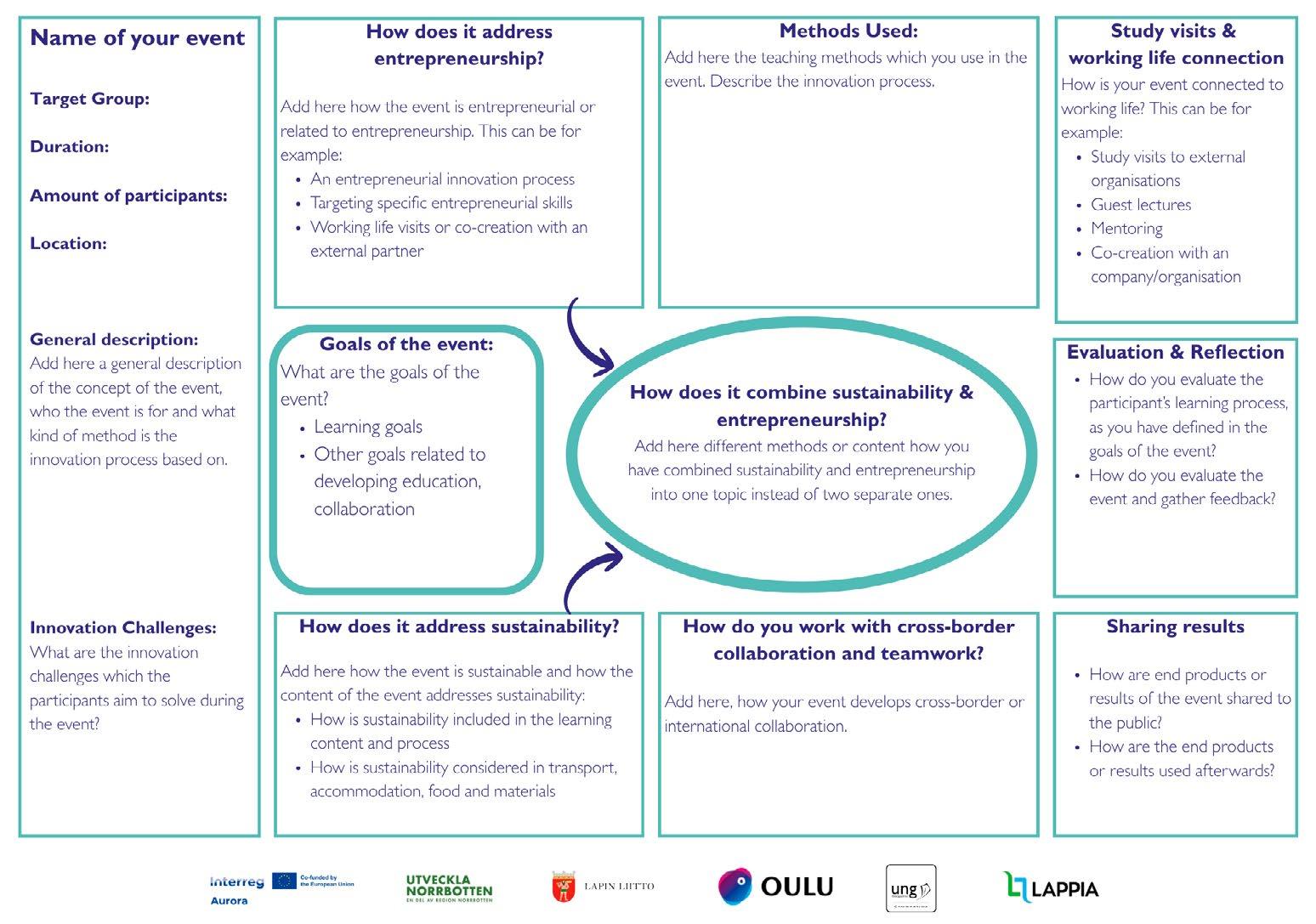
During the project, we have tested and created a model for creating an innovation camp in a cross-border setting and focusing on sustainable entrepreneurship education. Below you can check out a few examples of our innovation camp models. You can also use our empty template with instructions, which you can find here: Jump to Innovation Camp Model Template
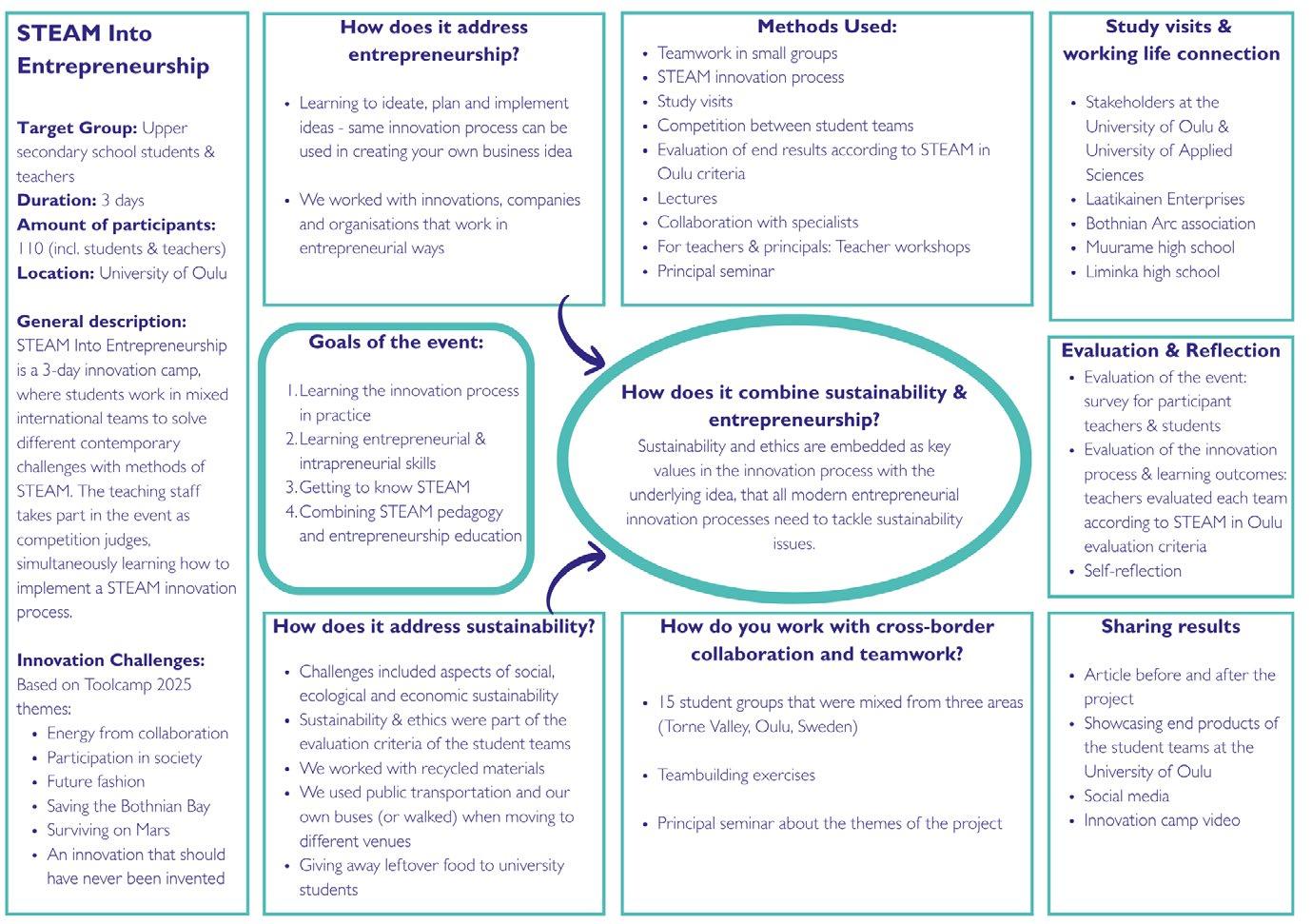
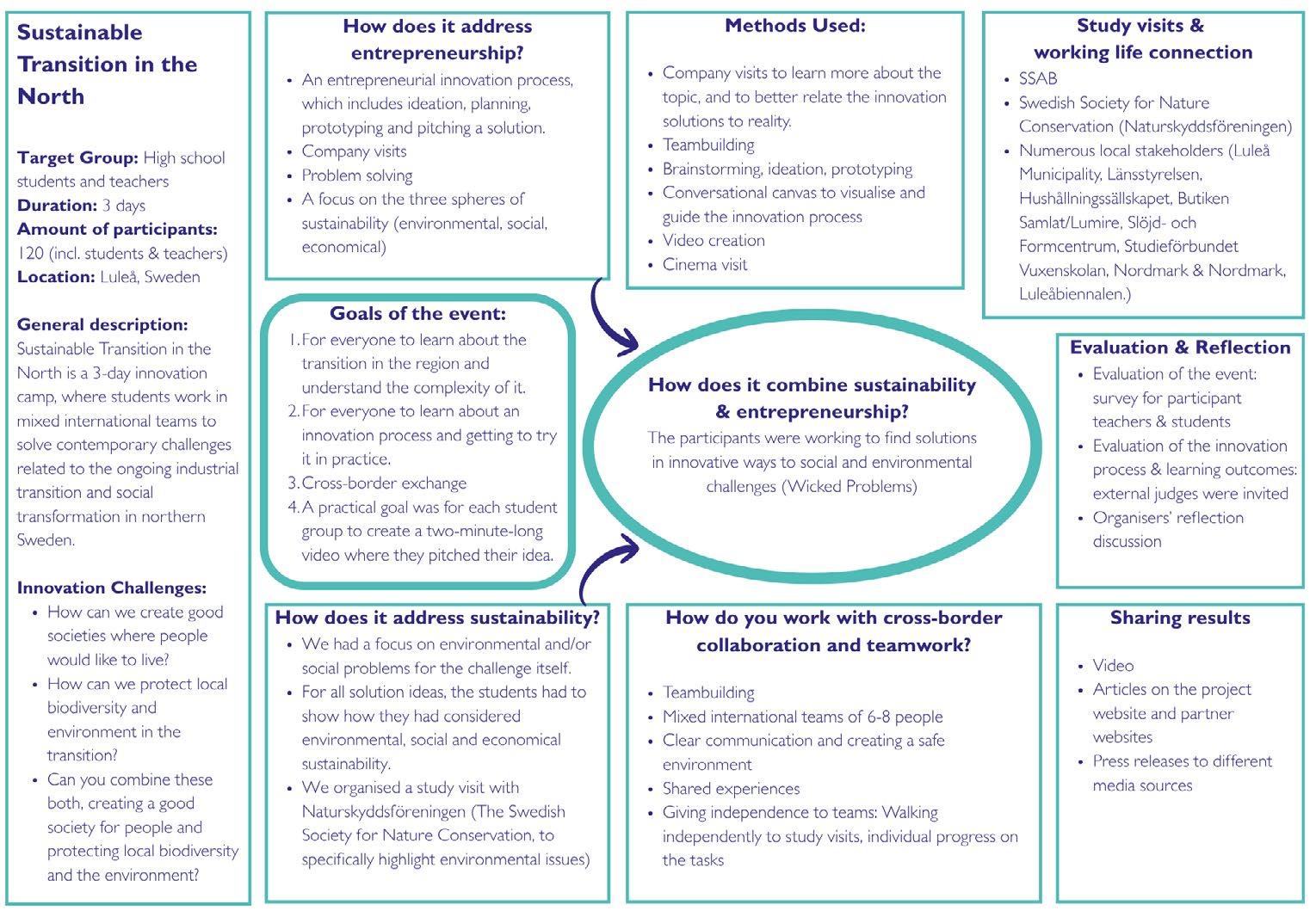
This event planning checklist will help you in organizing successful events. However, regardless of good planning, you can always expect some surprises. Having a flexible mindset and preparing plan B can be useful.
1. Define the purpose and goals of your event
Clarify the event’s objective and theme (basic information, general description)
Set measurable goals (e.g. attendees, engagement level)
Set goals for the content (e.g. learning goals)
2. Budget planning
Estimate costs (venue, catering, transport, speakers, materials, marketing)
Round up estimates to avoid exceeding budget
3. Know your audience
Identify target participants
Tailor content and activities to their needs
Collect feedback from target group after the event
4. Set the date and venue
Choose a date avoiding conflicts (use Aurora Entrepreneurialis White weekssystem)
Select a suitable, accessible and sustainable venue (ask about recycling and green values)
5. Build timeline
Create a detailed schedule (planning → post-event)
Assign responsibilities and deadlines
Schedule team check-ins
6. Program and content
Plan agenda (speakers, workshops, breaks)
Ensure content aligns with goals and expectations
Create a detailed running schedule for the organizing team: who does, what and when
7. Promotion and communication
Use email, social media, internal channels
Provide clear registration and logistics info
Ask for special diets during registration
Prepare Welcome letter with all details and send it to the participants (two weeks before the event)
8. Logistics and operations
Coordinate catering, technology, signs, accessibility
Reserve accommodation (use existing contracts)
Plan check-in, crowd flow, emergency procedures
Book buses early and confirm pickup points
9. Engage and interact
Include interactive elements (keynotes, workshops, teambuilding exercises)
Provide guiding tools (apps, printed materials and/or lanyards with program)
10. Post-event follow-up
Send thank-you messages and prepare feedback surveys
Analyze results and document lessons learned
Share results
The effort required for successful external collaboration depends on its depth and duration. In many cases, a phone call or email to the right person — explaining the purpose, the value for students and teachers and expected outcomes — is enough. Offering a benefit, such as marketing opportunities, can help. For deeper collaboration that demands more resources from partners, ensure a win-win situation and consider reserving a budget for specialist costs. Feel free to use our lessons learned list to help your collaboration run smoothly.
1. First contact
Send an email that clearly outlines your inquiry and specifies the date of the event. Like all of us, external stakeholders often have busy schedules, so we recommend making the collaboration as simple as possible for them. Provide them with the key information and clear instructions regarding what is expected.
If you need to negotiate with an external party, you can motivate them to collaborate by providing extra incentives. This could be, for example, social media visibility for the company or its product. Alternatively, you can highlight how the collaboration may help the organization connect with future customers, employees or professional networks. Sometimes stakeholders are hard to reach via email, so you can also follow up with a phone call to explain your collaboration proposal in more detail.
2. Go into details in more extensive collaborations or by request of the stakeholder:
If you are organizing a more extensive collaboration, you can also propose a digital meeting (TEAMS, Zoom) before the activity
to discuss details, using slides or other materials to clarify your expectations and to make it as easy as possible for the stakeholder to participate. If the event requires it, suggest a faceto-face meeting at the stakeholder’s premises to visit the venue in person. Remember to be grateful that the stakeholders take off their time to invite us/teach us/show us things and try to make it as hitch-free as possible for them.
3. Make sure that information flows to everyone in the same way: If there are multiple people working with the collaboration, try to see if you can get to talk with all of them to make sure that everyone is on the same page.
4. Reminders before the actual collaboration
As the event approaches, send a confirmation email including the exact schedule, billing details and any other relevant information. Request confirmation that the message has been received and understood.
5. Show your appreciation
If possible, meet and greet the stakeholder in person at the event to strengthen the relationship. Maybe give a small gift at the occasions to show your gratitude. After the event, send a thankyou message to the stakeholder. Include photos, if appropriate.
Tip! Share your appreciation publicly e.g. on the project`s and/or your social media channels to acknowledge their contribution and increase their visibility (“the carrot”).
An essential part of our project has been collaboration between schools in our region. Aurora Entrepreneurialis collaborated with 18 upper secondary schools or units over three years. These schools are in Oulu (Northern Ostrobothnia), the Torne Valley region up to Muonio in Finland and in Norrbotten, Sweden. We have managed to create fruitful collaboration with schools that were following different educational systems, schedules and curriculums. These structural differences, whether in curricula, holiday timing, teacher contracts and other project commitments, impact collaboration between schools and stakeholders. Collaboration gives the opportunity to gain new perspectives and experiences for both teachers and students, boosts learning outcomes and increases motivation.
In our project the priority was to avoid adding extra burden on teachers. The consortium worked to make the cooperation as easy
as possible to individual teachers and schools. Feel free to use our White Weeks system to find suitable times for collaborating during the school year. Check out our tips for working with schools! We hope they help make your collaboration smooth and flexible.
In the Aurora Entrepreneurialis project, we have piloted collaboration between individual classes and teachers, collaboration that happens in a smaller scale and is realistically achievable with limited resources.
For successful collaboration activities, you don’t always have to create something new and from the beginning. Think about all the activities that your school already does and then consider whether inviting another school or class could bring added value and a rewarding experience without a lot of extra work. For example: inviting your neighboring school to join your school’s Christmas market or career fair.
Class-to-class collaboration in the project was based on the motivation of participating teachers to create and offer more engaging learning experiences through multidisciplinary projects and teamwork. We have focused on international collaboration, but the same methods could also be used to create collaboration between different schools in the same country, or even between different classes in the same school.
The benefit of doing class-to-class collaboration is that you can:
• combine different school subjects (for example: English language course in Finland combined with an Entrepreneurship course in Sweden) and increase motivation for learning
• promote transversal skills such as courage, responsibility, taking initiative, tolerance for ambiguity, collaboration skills and creativity
• give your students the opportunity to create new connections and networks
• boost your own professional development as a teacher by trying out new projects and methods
1. Define the ‘why’:
Write down your personal/your school’s motivation to do collaboration with another school.
• What do you wish to benefit from the collaboration?
• What can you or your school give to the collaboration?
• What are the key topics that you wish to collaborate on?
2. Find a suitable partner school:
This is often the most difficult part. In our project, schools have
In the planning meeting you can follow our ready-made simple structure:
• Share each other’s key goals for collaboration.
• Decide on a topic and content of the collaboration.
• Share the key learning outcomes that are expected from the collaboration. These can be linked to your school level, local or national curriculums. The collaboration is more beneficial and motivating for you as a teacher, if it can be directly linked to the subject or course that you are teaching.
• Decide on the methods that you will use in the collaboration.
• Choose a suitable date and time for both participating classes.
• Decide on a main coordinator for the collaboration, who takes responsibility. In some cases, it might also be possible to get additional compensation for organizing collaboration activities, so we recommend asking for this possibility from your school’s principal.
• Divide tasks between the involved teachers.
For physical visits between collaboration schools, you need to make practical arrangements in advance. You can follow our ready-made checklist for preparing a visit:
• Book transport (e.g. booked bus or public transport tickets)
• Collect special diets, allergies and other required information from participants. This can be done in the beginning, when you collect the names and details of participants.
• Order catering, or food
• Contact stakeholders (for example, if you are planning to do a company visit). Remember that companies are not pedagogically oriented, so you will need to provide them with instructions about the content of the tour or presentation that you wish from them. Be flexible.
• Prepare detailed schedule
• Inform students or recruit interested students to participate.
• Inform parents/guardians well in advance according to your school’s common procedures
We recommend making initial contact with a suitable partner at least during the previous semester before the intended collaboration project (e.g. many high schools plan the whole next school year in April). Often countries have different educational systems and timetables for planning their semester schedules.
Check the White Weeks to find suitable times to collaborate between Finnish and Swedish upper secondary schools: Jump to White Weeks
STEP 5. Implement:
Now is the time to implement your plan! Remember to document your collaboration project. This will help promote your school, reporting to potential funders, and encouraging your colleagues to try out similar projects. The documentation can be for example photos in social media, a blog post on your school website or an article in your school newsletter. You can ask your students to write a learning diary.
When booking transport and ordering lunch, please refer to your school’s and public requirements related to procurements. For small-scale procurements, it is commonly advised to ask for offers from 3 different providers. Procurement regulations and laws may vary in different countries. Document and archive the procurement process according to your school’s policies.
Tip! We recommend collecting a photo release form if you will use photos from your activity in public channels.
STEP 6. Evaluate:
Like in all learning activities, evaluation is also an important part of class-to-class collaboration. We recommend evaluating the following aspects of the collaboration project:
• Evaluate learning outcomes according to your curriculum requirements and your course plan. This depends on how you have planned to integrate the collaboration project into your course or subject. If the collaboration is an extracurricular activity, you could for example have a reflection exercise where you let the students think about what they have learned during the collaboration.
• Communication to participants before, during and after the collaboration.
• Practical arrangements such as the schedule of the activity, transportation, food and potential equipment or materials that were used.
STEP 7. Repeat:
A one-time class-to-class collaboration is nice, but the best results are often achieved by continuous collaboration between teachers, classes and schools. After the evaluation, you can ask your counterpart whether they are interested in continuing the collaboration and repeating the activity or introducing something new. This way, you have better chances of including these projects in your school’s annual plans and school level curriculum.
Collaboration between different schools and classes can be also implemented in hybrid and digital formats. If you plan to do a digital class-to-class activity, you can follow these steps to prepare:
• Decide on the platforms that you will use. We have used Microsoft Teams for the hybrid meeting and Miro boards for collaboration.
• Prepare the exercises and instructions. We recommend making instructions available on the platform itself, so students can independently navigate through different exercises with their group. This helps the facilitator to manage the session.
• Send clear instructions to the students in advance so they are
Online environments are usually much more vulnerable to inactivity and misbehavior from participants especially, if you can act anonymously on the platform. Therefore, it is good as a facilitator to prepare beforehand how you will moderate the platforms. You can use separate working spaces for each group and in hybrid settings a teacher can go around and help the groups forward. Remember also to check sharing settings as well as how to pause the activity or reverse any unwanted edits from the online collaboration platform. Be ready and flexible to react if participants don’t engage or
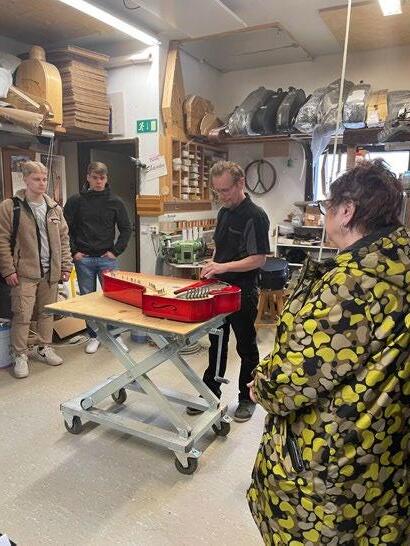
of collaboration activities
Students and teachers from Övertorneå and Ylitornio high schools met together for one day and visited local entrepreneurs from both sides of the border to learn about how four different companies works with social, environmental, economic, and cultural sustainability in entrepreneurship. The companies represented a variety of different fields from robotics to tourism and musical instruments production. Students worked in mixed groups and prepared questions for the companies.
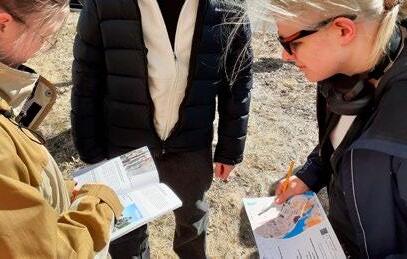
Students from Tornio and Haparanda joined together for a culture walk in both cities to learn about the dual city. Students walked in mixed groups and answered questions about statues, sculptures, and other public art in the two cities. The programme was prepared and led by the teachers from the participating schools. Through the exercise, students had the opportunity to gain cross-border connections, learn about the local area and culture as well as develop their teamwork and language skills. The cultural walk has been organized already 2 times between Vocational College Lappia, Tornion Yhteislyseon lukio and Tornedalsskolan in Haparanda. The collaboration between schools has been formalized with a partnership agreement.
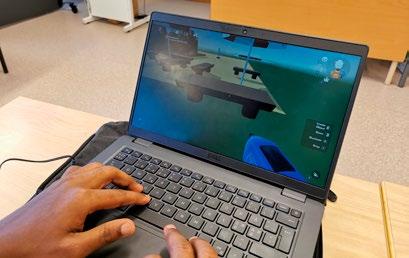
Two teachers, one from Piteå and one from Kemi, made a virtual collaboration project together. Their students built a shop in a virtual reality environment in which they were able to move with their player, carry items and build structures, and even communicate with each other. Students used VR glasses during the session. The project stemmed from the motivation and personal interest of the teachers. It is a nice example of gamification, using virtual reality in a pedagogical way and collaborating remotely across distances.
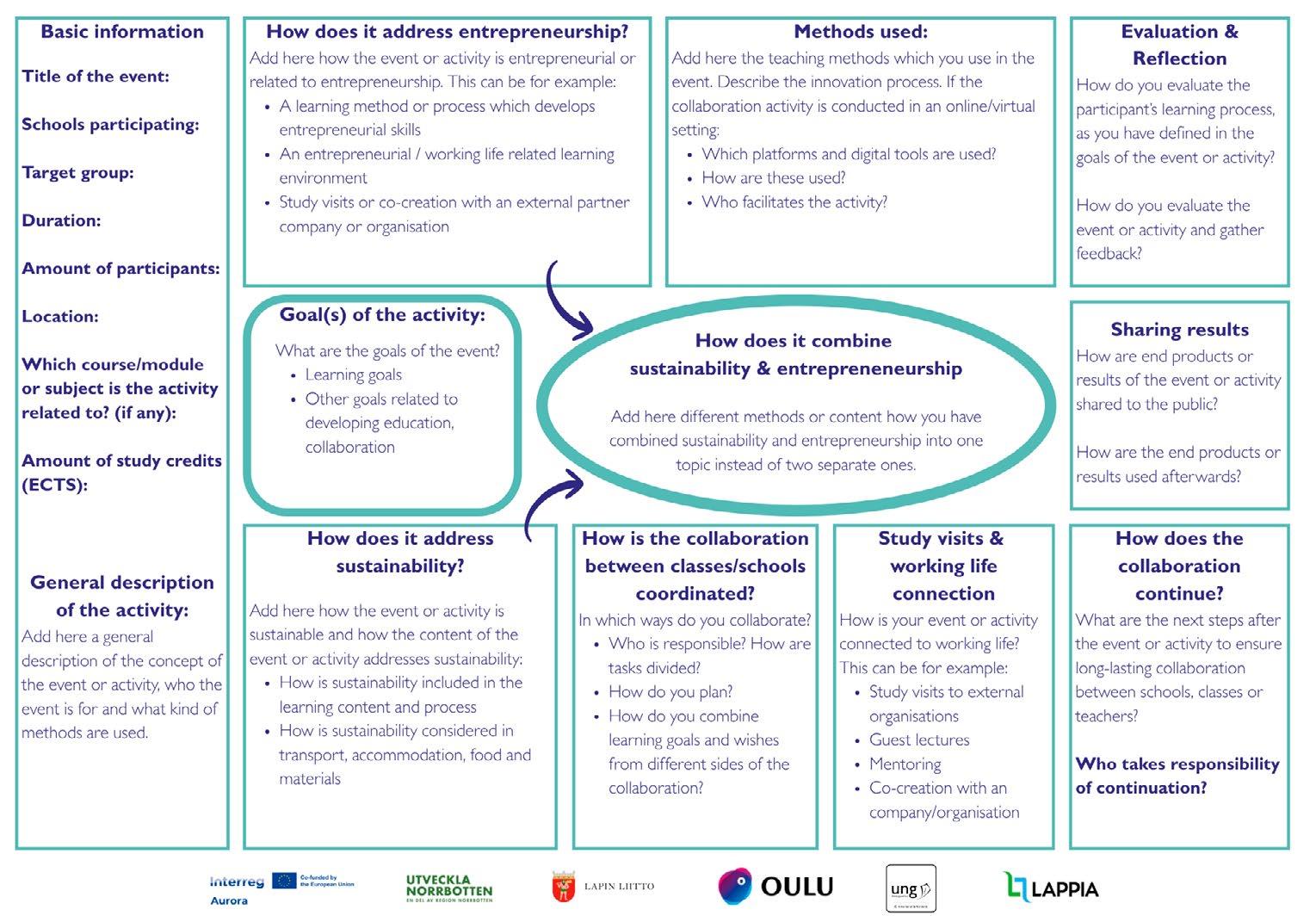
During the project, we have tested and created a model for class-to-class collaboration in a cross-border setting and focusing on sustainable entrepreneurship education. Below you can check out an example of how we have used the model. You can also use our empty template with instructions, which you can find here: Jump to Class-to-Class Model template.
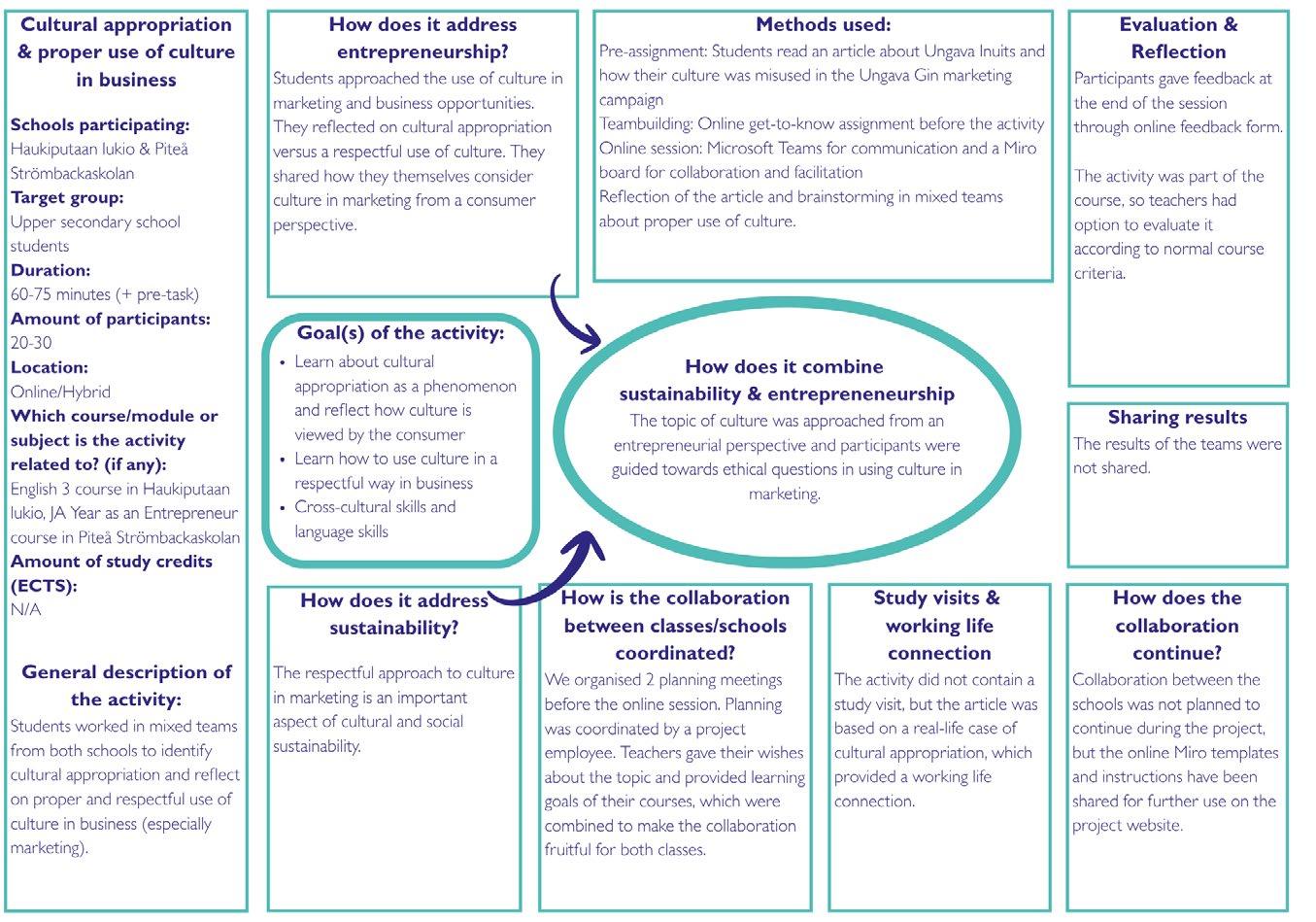
Example: Class-to-Class Model in use with Haukiputaan lukio and Piteå Strömbackaskolan.

Tip 1: Plan Early
Schools plan their schedules months in advance—early engagement is essential.
Why It Matters:
Schools often finalize plans 6–12 months ahead.
Practical Tips:
• Contact schools at least half a year before events.
• Fix and communicate dates early to allow preparation.

Tip 2: Use “White Weeks -system”
Identify open weeks for collaboration by mapping the school year.
Why It Matters:
Joint planning avoids conflicts with exams and holidays.
Practical Tips:
• Create a Gantt chart with holidays, exams and fixed dates.
• Share the chart with schools to agree on collaboration windows.

Tip 3: Involve the Whole School
Engage headmasters and multiple teachers—not just one.
Why It Matters:
Collaboration is fragile if only one teacher is involved.
Practical Tips:
• Secure headmaster support early.
• Ensure teachers have permission to use working time.

Tip 4: Keep Communication Regular
Busy schedules mean things can be forgotten—stay connected.
Why It Matters:
The better you know each other, the smoother is the collaboration.
Practical Tips:
• Schedule regular check-ins.
• Invite schools to short update meetings.
Tip 5: Make Participation Easy & Rewarding
Lower barriers for teachers and motivate students.
Why It Matters:
Motivation means also better results for both students and teachers.
Practical Tips:
• Simplify processes for teachers.
• Offer ECTS credits for students (e.g., 1–3 ECTS courses).
• Motivate students: participation offers fun peer experiences, possibility to travel for free, stay in hotel etc.
Tip 6: Align with Curriculum
Help teachers meet their goals through your activities.
Why It Matters:
It is easier to adapt new methods, if they are aligned with the goals of the taught subject.
Practical Tips:
• Link tasks to curriculum objectives.
• Avoid creating extra workload.
Tip 7: Trust the Students
Give responsibility—they often exceed expectations.
Why It Matters:
Learning is the most effective by doing yourself.
Practical Tips:
• Mixed Finnish-Swedish teams.
• Creative tasks like fashion shows, videos and presentations.
Tip 8: Create Good Conditions
Build trust and comfort for collaboration.
Why It Matters:
Students need an environment that is safe, but pushes them outside the comfort zone.
Practical Tips:
• Include team-building activities.
• Pair students with friends for accommodation and group work.
Tip 9: Tolerate Uncertainty
Freedom fosters creativity—even if it feels uncomfortable.
Why It Matters:
When a teacher lets go of the reins, students can truly flourish.
Practical Tips:
• Provide clear goals but allow flexibility.
• Encourage learning from mistakes.
Aurora Entrepreneurialis collaborated with general upper secondary and vocational institutions in Northern Finland and upper secondary schools in Sweden. These schools operate in different holiday zones and follow distinct national curricula, which introduced constraints for cross-border coordination.
The Finnish schools follow a period-based system (4–5 periods per year), while Swedish schools use a school-year-based curriculum. Holiday schedules also differ quite a lot. Autumn breaks occur in different weeks in October and Swedish schools start summer vacation three weeks later than Finnish schools, which affects in the start of the school year. Finnish vocational schools began in early August, Finnish general upper secondary schools in mid-August and Swedish schools toward the end of August.
To identify suitable timeframes for joint activities, we gathered all fixed dates and schedules from each region and compiled them into a unified academic calendar overview, using color coding. This process revealed so-called “white weeks -system” (see illustration), which mean periods free from regional restrictions such as matriculation exams or autumn and Easter holidays. These white weeks provided valuable windows for seamless collaboration across borders.
Tip! We encourage all schools that collaborate with other schools or companies to establish their own or joint “white weeks” view to help organizing the visits, events, projects or other types of collaboration
Aurora Entrepreneurialis has proven that when combining entrepreneurship education with sustainability, we create learning experiences that truly matter. Over these three years, we have seen students grow into confident, creative problem-solvers, and teachers discover new ways to inspire and lead.
This cookbook is not just a guide; it’s an invitation. An invitation to keep experimenting, to bring bold ideas into your classroom, and to trust that your efforts will spark change. Every activity, every discussion, every challenge you introduce can empower young people to think differently and act responsibly.
Education is the foundation of a better future. By working together across subjects, schools and even borders, we can give students the courage and skills they need to thrive in a world that demands innovation and sustainability. Thank you for being part of this journey. Let’s keep building, learning and shaping the future — together.
Thank you from the whole Aurora Entrepreneurialis team!
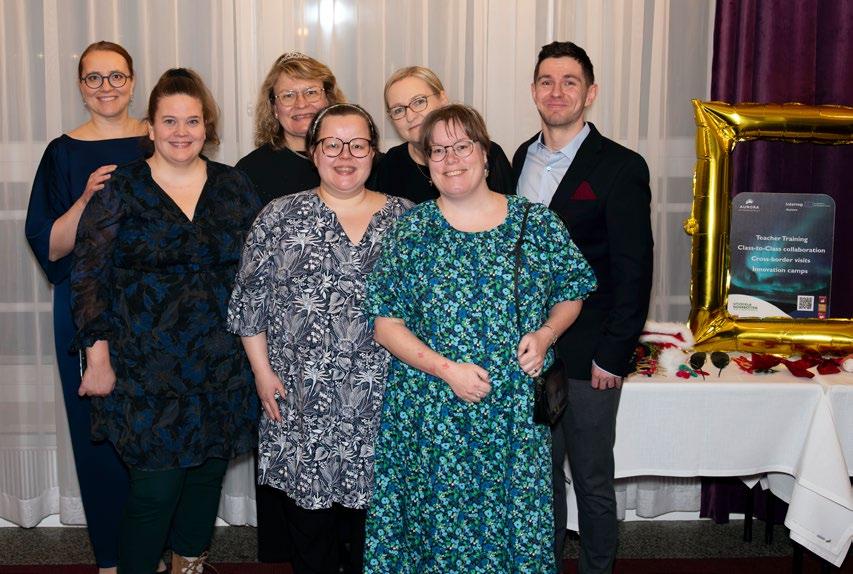
In this chapter you can find a collection of our best teambuilding exercises.

This is an exercise that helps participants get to know each other better. It can easily be done independently, and participants can get written instructions if needed. The time it will take depends on the number of participants. For a group of 6 people, 10 minutes is a good amount of time.
Instructions: Each of you should come up with three facts about yourself. Two of these facts should be true and one should be a lie. You can take a few minutes to do this. When everyone has chosen three facts it is time for the next step.
Take turns, one person at a time tells their three facts. The rest of the group guesses which facts are true and which fact is a lie. When everyone has guessed, the person telling the facts can reveal the truth. Then move on to the next person and let them tell their three facts, continue until everyone has shared their facts.
Building things relay
Amount of people: depending on max. capacity of space, you need at least 2 teams
Materials required: -
Instructions: Divide the group into teams of 3-6 people (minimum 2 teams). The teams are challenged to build a tower structure purely with the objects on display and what they have on themselves. They can use for example their hat, shoes, belt, wristwatch, etc. Give them a timeframe of 5-7 minutes. After the time is up, the team with the highest tower wins.

Amount of people: 8-16 (divided into 2 teams)
Materials required: A big blanket that you cannot see through
Instructions: Start by everyone introducing their first name in a big circle. Do the round twice. Have the big group divided itself into two teams. Tell the teams to sit on the floor facing each other. Hold up a blanket between the teams so that each team cannot see the other. A member of each team is quietly selected to move up to the blanket. On the count of three, drop the blanket so that each of the selected members faces each other. Whoever says the other person’s name first wins. Whoever loses, goes to the other team.
Eats mainly plant-based Mainly bikes to school / work Uses Public transportation Shops mostly secondhand
Uses reusable straws in drinks
Carries a reusable water bottle
Uses rather real plates and bowls than plastic ones Family has an electric car
Uses ecofriendly cleaning products
Can name at least two Agenda 2030 goals
Uses reusable shopping or produce bags
Has not bought any new clothes or accessories (jewelry, bags etc.) in three months
Supports ethically made fashion
Travels rather by train than an airplane, when going on a holiday
Showers in less than 10 minutes recycles (plastic, bio, glass…) daily
Getting-to-Know-You Bingo Instructions
1. Find a person in your group who answers yes to one of the statements.
2. Write their name in the corresponding box. NOTE! Ask only one question per person at a time, then move on to the next person.
3. When you complete four horizontal or vertical rows, shout Bingo! The game continues until at least three people have bingo or time runs out.
4. If there’s time left, write your own name in every box where you can answer yes.
5. Then, find someone again who shares the same yes answers as you.
• Compare your responses.
• Do you find more answers in common?
• Why do you think you made the choices you answered yes to?
Amount of people: 10-20
Materials required: A ball of thread
Instructions:
1. Participants form a standing circle.
2. The first person says their name while holding the end of a ball of thread.
3. Keeping hold of the thread, they throw the ball to another person in the circle and ask for their name.
4. The next person catches the ball, says their name, holds onto the thread, and throws the ball to someone else.
5. This continues until everyone is holding a part of the thread, forming a web across the circle.
Note: Each participant should remember the name of the person who threw the ball of thread to them.
1. The last person to receive the thread starts by sharing a place they’ve loved visiting and why.
2. Holding the ball of thread, they walk along the thread path back to the person who passed it to them.
3. Once they reach that person, they ask: “Where have you loved to visit and why, [Name]?”
4. That person answers the question, then walks the thread path back to the person who passed it to them, repeating the same process.
5. Each person stays at the spot where they finish their walk, so the circle gradually reshapes.
Note: By the end of the game, everyone will have changed their position in the circle.
End of the Game The game ends when the ball of thread has been fully rewound and everyone has shared their story.
Optional Extension (if time allows): If there is still time left, each person should find one or two group members, who mentioned a favorite place that sounded interesting or was the same place they have visited. These pairs or small groups can then discuss their experiences in more detail and share what made those places meaningful to them.
Amount of people: depending on the bus size (up to 52)
Materials required: -
Instructions:
1. Divide the group of travelers so that, for example, students and teachers from the same school sit by the window. Other participants take seats next to these window pairs.
2. Each pair has 2 minutes to:
• Introduce themselves
• Explain why they are on this journey
• Share what they hope to achieve (If time remains, they can ask each other questions.)
3. After 2 minutes, the leader asks those sitting by the aisle to move one seat forward on the opposite side of the bus, toward the back.
4. Continue until a full rotation is completed, so everyone has interacted with multiple partners.
Amount of people: depending on the time that can be used – in our project this has been organized with groups of 6-8 people
Materials required: if needed some helping questions
Instructions:
1. Divide the group into two halves, making sure people from the same school stay in the same half.
2. Ask one half to form a circle, facing outward.
3. Ask the other half to stand outside the circle, each person facing someone in the inner circle.
4. Each pair has 2–3 minutes (the leader decides the time) to introduce themselves and discuss the theme given by the leader.
5. When time is up, the outer circle moves one step to the left, so each person faces a new partner.
6. Repeat steps 4 and 5 until everyone in the outer circle has spoken with everyone in the inner circle.