NEWNHAM URBAN GREENING PRECINCT PLAN
2025-2030
ACKNOWLEDGEMENT OF COUNTRY
The City of Launceston acknowledges the Tasmanian Aboriginal people as the traditional custodians of this land on which the city and its surrounds are located, and pays respect to the Elders – past, present and future. Their legacy is evident in the natural and cultural values of this special place, and it speaks to us of the duty we have to preserve these values for future generations.
INTRODUCTION
In December 2023, the City of Launceston endorsed its first Urban Greening Strategy. The City of Launceston’s Urban Greening Strategy replaces the Street Tree Strategy and shifts its focus from managing trees on an individual basis to delivering a whole-of-forest approach. This approach encompasses trees and all other forms of vegetation, recognising that urban forests have economic, social, and cultural benefits. It also emphasises the importance of conserving biodiversity, maintaining soil and water values, and mitigating against heat impact and climate change.
While Launceston is known for its leafy parks and significant trees, the urban forest that people enjoy today only covers around 19% of the urban area and lacks species diversity, falling below the national standard of 39%.
The vision of the Launceston Urban Greening Strategy is as follows:
“The City of Launceston’s Urban Forest will be resilient, connected, and diverse, contributing to the health and wellbeing of our community and to the creation of a vibrant, liveable, and sustainable city.”
The Urban Greening Strategy outlines guiding principles that go beyond tree canopy, including:
• Mitigating and adapting to climate change
• Reducing the urban heat island effect
• Transitioning to a water-sensitive city
• Designing for health and wellbeing
• Designing for liveability and sustainability
• Creating healthier ecosystems
• Designing for heritage sensitivity
The strategy also establishes five key themes and targets for the development of an urban forest, encompassing not only tree canopy in the public and private domain but also other forms of urban greening. Following the Urban Greening Strategy, an Implementation Plan has been developed to inform priorities and key actions.
The Urban Greening Precinct Plans were identified as an action in the Implementation Plan. Precinct Plans will be developed for identified priority areas based on the vulnerability index, with a focus on paths that link bus stops and public places such as playgrounds, schools, aged care, and medical facilities. They are
intended to be a working document that will develop over time to strategically inform greening works within each suburb. The precinct plans will guide tree planting and other greening works for both councilowned and private land.
Precinct Plans are subsidiary documents to the Launceston Urban Greening Strategy and form a key component of the strategy’s implementation. The precinct plans will also target other key actions outlined in the Implementation Plan.
As actions from the Implementation Plan are developed, progress and updates on the delivery of this Precinct Plan will be posted on the City of Launceston’s webpage, Tomorrow Together.
Greater Launceston Plan (2019-2034)
Tamar Valley Regional Valley Open Space System (2004)
Urban Design Guide 2024
City of Launceston Rec & Open Space Plan
Public Open Space assessment and acquisition process
Reserve Management Plans, Conservation Management Plans and Bushfire Management Planning
City of Launceston Strategic Plan (2025-2035)
Influencing Documents
Planning legislation
Tasmanian Planning Scheme
Launceston Local Provisions Schedule
City of Launceston Urban Greening Strategy
Associated Policies and Deliverables
Urban Greening Strategy 2023-2040
Urban Greening Implementation Plan
Storm water System Management Plan
Sustainability Strategy (2019)
Sustainability Action Plan 2022 – 2030
City of Launceston Transport Strategy
WHAT IS AN URBAN FOREST?
The urban forest is made up of all the trees, shrubs, grassland and other vegetation, growing on public and private land within the city, and the soil and water that supports them.
This includes vegetation located in parks, private gardens, plazas, reserves, along main roads, local streets, in commercial areas, railways and waterways, and other green infrastructure such as balconies, walls and roofs.
The urban forest provides important ecosystem services such as air and water filtration, oxygen, shade, carbon sequestration, nutrient cycling and habitat for fauna. Whilst trees and shrubs are a critical element of urban forests, the Urban Greening Strategy encompasses a holistic approach to the cumulative benefits of all vegetation and associated ecosystems across the city and extends beyond the singular approach to tree management.
The Urban Greening Strategy addresses the broader issues of climate change, urban heat island effects, urban densification and social equity, recognising that every part of the city, both public and private, contributes to and can be influenced by the urban forest.
The urban forest plays a significant role in enriching quality of life of its urban communities by supporting health and wellbeing, and making a city more liveable, attractive, sustainable and productive.
Benefits of the Urban Forest
Research has found that urban forests provide a wide range of important benefits for the community, environment and economy that extend beyond aesthetic and recreational values into an interconnected landscape, holistically feeding into the resilience, sustainability and prosperity of cities.
WHAT WILL THE PRECINCT PLANS ACHIEVE?
A key action from the Launceston Urban Greening Implementation Plan is the preparation of Precinct Plans. Each Precinct Plan will provide set targets to address the individual needs, challenges, and aspirations of the locality.
The Precinct Plans will help guide the implementation of the Launceston Urban Greening Strategy and direct the Council’s focus to areas with higher vulnerability, lower levels of vegetation, and with a focus on paths that link bus stops and public places such as playgrounds, schools, aged care, and medical facilities.
Within this document, specific direction is provided on the selection of appropriate street trees and implemented staging across a five year period.
This document focuses on the suburb of Newnham. The documents are designed to be developed and added to over time, to allow priority on-ground works to begin immediately.
The Precinct Plans will target actions outlined in the Launceston Urban Greening Implementation Plan 2023-2040, as shown in Table 1.1.
Priority Suburbs
Priority suburbs for the Precinct Plans were identified using Australian Bureau of Statistics data.
To determine the priority suburbs, data from Index of Relative Socio-economic Advantage and Disadvantage (IRSAD), vulnerable age percentages, land surface temperature, and tree canopy cover was combined to create a priority index. This index ranks suburbs by their need for heatwave vulnerability reduction.
The highest priority suburbs are Newnham, Mayfield, Mowbray, Invermay, Ravenswood, Waverley, Summerhill, Kings Meadows, and Youngtown.
Figure 1.2 Newnham’s location within the City of Launceston
PLANNING ACTIONS
Number Actions
P-1
P-8
P-9

Establish canopy cover targets and milestones for each priority area or green zone to achieve the canopy cover target of 40% by 2040.
Work with community leaders to develop strategies to protect vegetation and deter vandalism.
Develop and implement neighbourhood precinct plans for identified priority areas based on the vulnerability index, with a focus on paths that link bus stops and public places such as playgrounds, schools, aged care and medical facilities.
Priorities:
1. Newnham, Mowbray, Mayfield
2. Invermay, Ravenswood, Waverley
3. Summerhill, Kings Meadows, Youngtown
OPERATIONAL ACTIONS
O-15
Achieve a minimum of 20% canopy cover in, and within 400m, of all schools through collaboration with Department of Education, schools, school communities, not-for-profit and community organisations.
Priorities:
1. schools with <5% canopy cover
2. schools with 5-7% canopy cover
3. schools with 7-9% canopy cover
4. schools with 9-14% canopy cover
5. schools with >14% canopy
Note - priority areas identified in GeoNeon Technical report (2022)
O-25
O-26
Develop and deliver an external engagement program to inform, educate and inspire community about the benefits of trees and other vegetation, provide guidance on planting and maintenance, and the role increased canopy coverage has in sequestering carbon, mitigating against climate change and reducing the urban heat effect.
Priority activities include:
Planting days, nursery open days and pop-up demonstrations, establishment of community gardens, informal seminars, and workshops on urban forest maintenance and neighbourhood character.
Work with communities in areas of low canopy cover and high heat vulnerability index to educate and overcome resistance to trees and develop unique engagement methods that demote negative behavior and vandalism and promote protection and connection to trees.
Table 1.1 Planning and operational actions from the 2023- 2040 Urban Greening Implementation plan that are relevant to this precinct plan.
Newnham
The Precinct Plans will help guide the implementation of the Launceston Urban Greening Strategy and direct the Council’s focus to areas with higher vulnerability, lower levels of vegetation, and with a focus on paths that link bus stops and public places.
NEWNHAM
MAYFIELD
MOWBRAY
ROCHERLEA
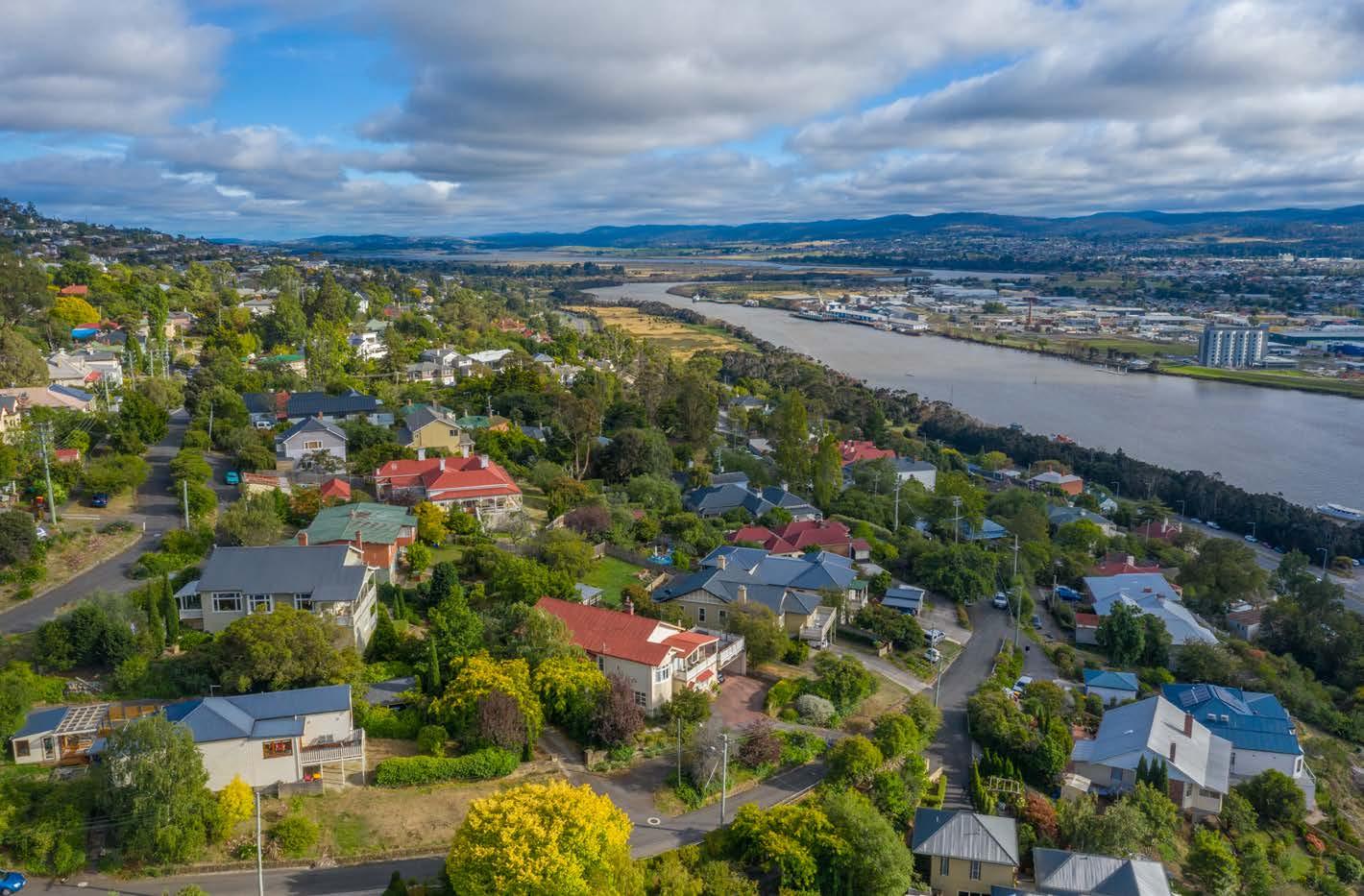
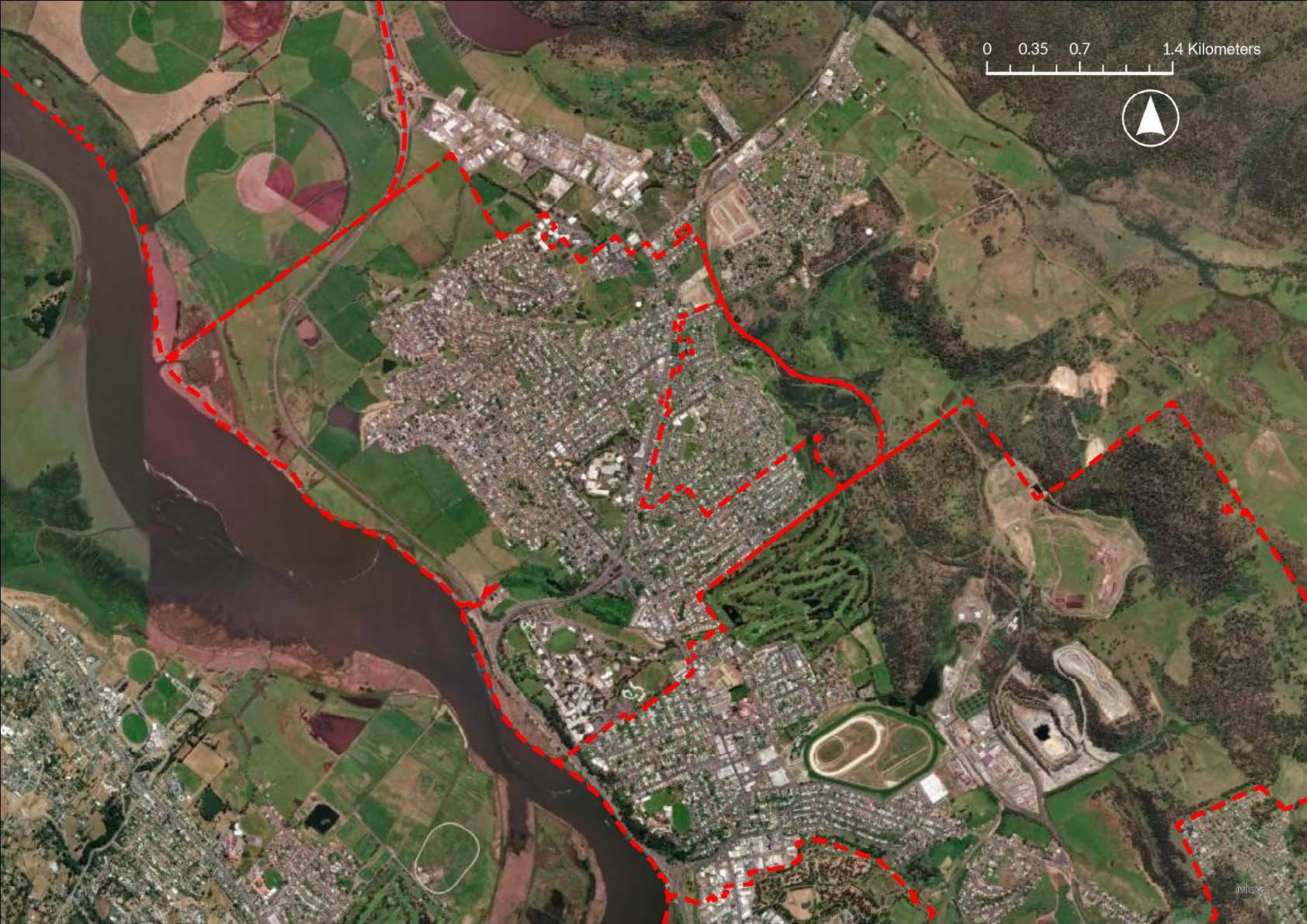
Figure 1.3 Newnham aerial plan
NEWNHAM CONTEXT OVERVIEW
Geographic area
The land area of Newnham is 6.06 square kilometres. It has 17 City of Launceston managed parks and reserves.
Population
The population of Newnham in 2024 was 7,352 people. The predominant age group in Newnham is 25-29 year olds, at 11% of the population.
Age Structure
Age is a critical factor in determining the vulnerability to extreme heat. People over 65 years old and youth less than 5 years old are the most vulnerable.
Newnham has a moderately high percentage of youth less than 5 years of age, with 5.7% of the population in the 0-4 age group.
Overall, 16.9% of the population was aged between 0 and 14, and 21.7% were aged 60 years and over.
Mode of Transport
On Census day 2021 in Newnham, 76.8% of people travelled to work in a private car, 4.4% took public transport and 1.9% rode a bike or walked. 2.9% worked at home.
Newnham is serviced by three main bus routes, with 19 bus stops located in the suburb. The majority of stops have no shelter or canopy coverage, with only those located around The University of Tasmania recording canopy coverage of 20-30%.
Climate Change
The effects of climate change are anticipated to significantly impact tree canopy and vegetation. In Tasmania projected changes include a significant shift in rainfall patterns, an increase in air and sea temperatures, more heatwaves, reduced incidence of frost, increased frequency and severity of storm events, and a doubling of bushfire frequency and severity by 2100.
Trees can play an important role in mitigating the impacts of a flooding event. The soil under trees and vegetation absorbs water as opposed to urban impervious surfaces where the water just runs (such as pavement and roofs). The leafy canopy of trees also spreads out the rainfall and slows it down.
Trees also provide shade and protection during hotter weather, and help to reduce the heat island effect caused urban development. Trees provide shade, reducing the amount of sunlight that reaches the ground and thus lowering surface temperatures.
Median Age: 34 (no significant change from 2016)
Worked (full or part time): 86.4% ( from 2016)
Children 0 – 4 years: 5.7% ( from 2016) Travel to work:
People 60 and over: 21.7% (q from 2016)
Top languages used at home (other than English): Nepali (10.3%)
Top ancestry (other than Australian): English (35.5%), Nepalese (10.8%), Irish (8.3%), Scottish (7.5%), Chinese (4.2%).
PLANNING OVERVIEW
Zones
• General Residential
• Rural
• Particular Purpose Zone(UTAS, Newnham Campus AMC (Maritime College) Tasmania Police
National Agricultural Institute
Open Space
• Newnham Reserve / Bikeway Reserve
• Bishops Drv Reserve
• Vermeer Ave Reserve
• Mallard Place Reserve
• Commodore Drive Reserve
• Alanvale Trail
• Packham/Bartlett Link
• Mt Stuart Park
• Stephen Street Park
• Hellenwood Grove Park
• Cornwall Crescent Park
Access
The suburb is bordered by the road corridor George Town Road and the East Tamar Highway and has a number of throughfare subsidiary streets that connect the suburb - Alanvale Road, Tompsons Lane and Franmaree Road.
The suburb has a walk score of 36, with moderate dependency on cars travel for access to amenities. The bus network is strong along the arterial Alanvale Road and Tompsons Lane and services the TAFE.
Facilities
Higher Educational facilities and 1 K-12 school. There are some services situated along George Town Road - these include a Post Office, Chemist, Hairdresser, Service Station and various local takeaway shops and bakery.
Existing structures
Predominantly single one storey dwellings and associated outbuildings, and smaller single level multiple dwelling (unit) developments. Larger Commercial scale buildings within the Educational precinct and within the Local Business Zone.
Vegetation
Planted residential with some remnant larger established trees. Significant vegetation with the UTAS site and re-vegetation occurring within the Newnham Reserve.
Surrounding land
Predominantly General Residential zoned land, Recreation zone - Mowbray Golf course to the south of the suburb, Rural land to the west. Light and General Industrial to the north which encompasses metal recycling and manufacturing and Utilities.
Overlays:
• Particular Purpose Zone (PPZ),
• Mount Stuart Drive Specific Area Plan. Local Historic Heritage Code & Tasmanian Heritage Register building/site of significance within the UTAS campus, Mt Stuart Drive and Laver Grove.
• Natural Assets Code (waterways and remnant vegetation), Bushfire-Prone Area Code (to the east), Scenic Road Corridor - George Town road, East Tamar Hwy
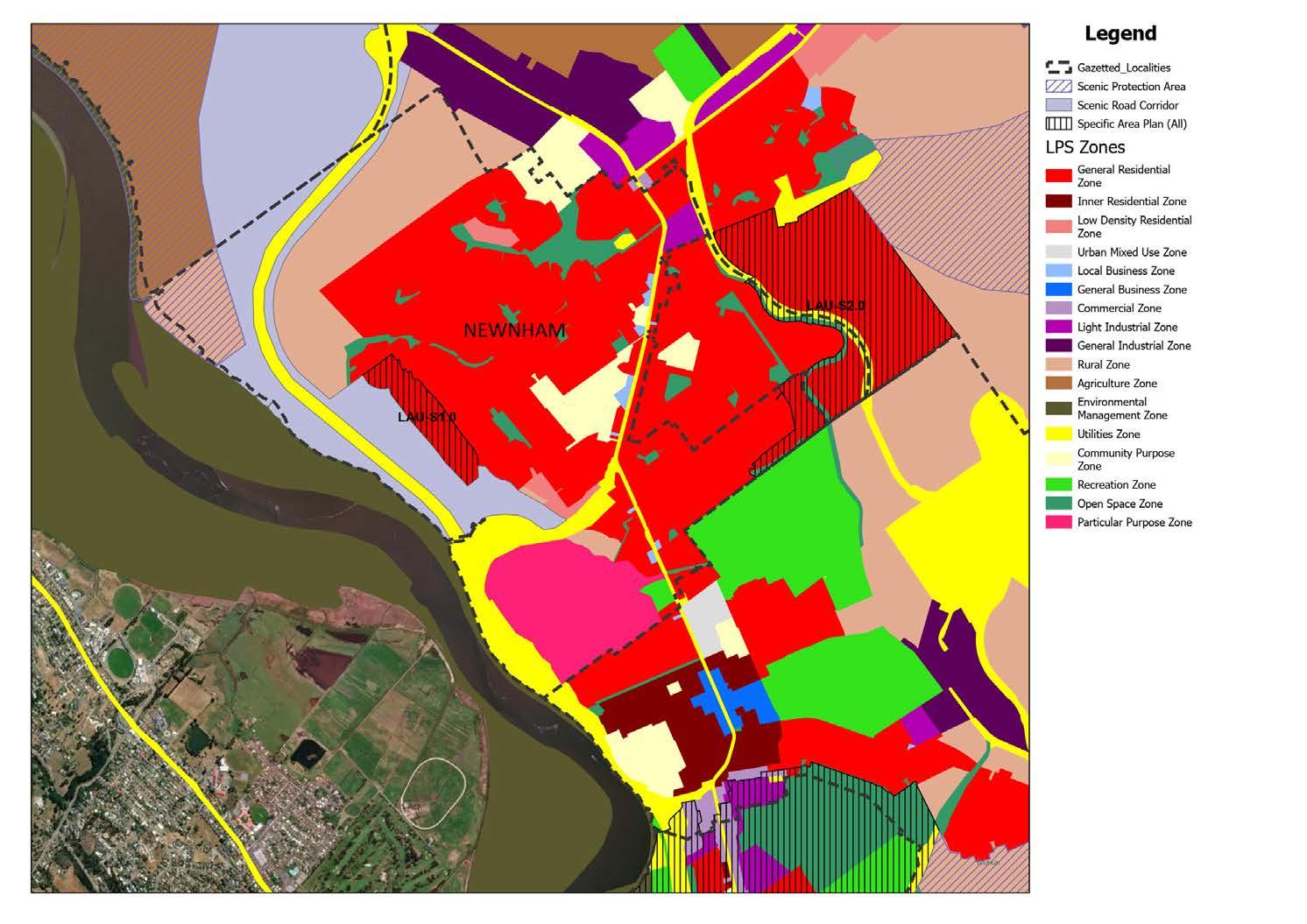
Figure 1.4 Newnham planning overlays
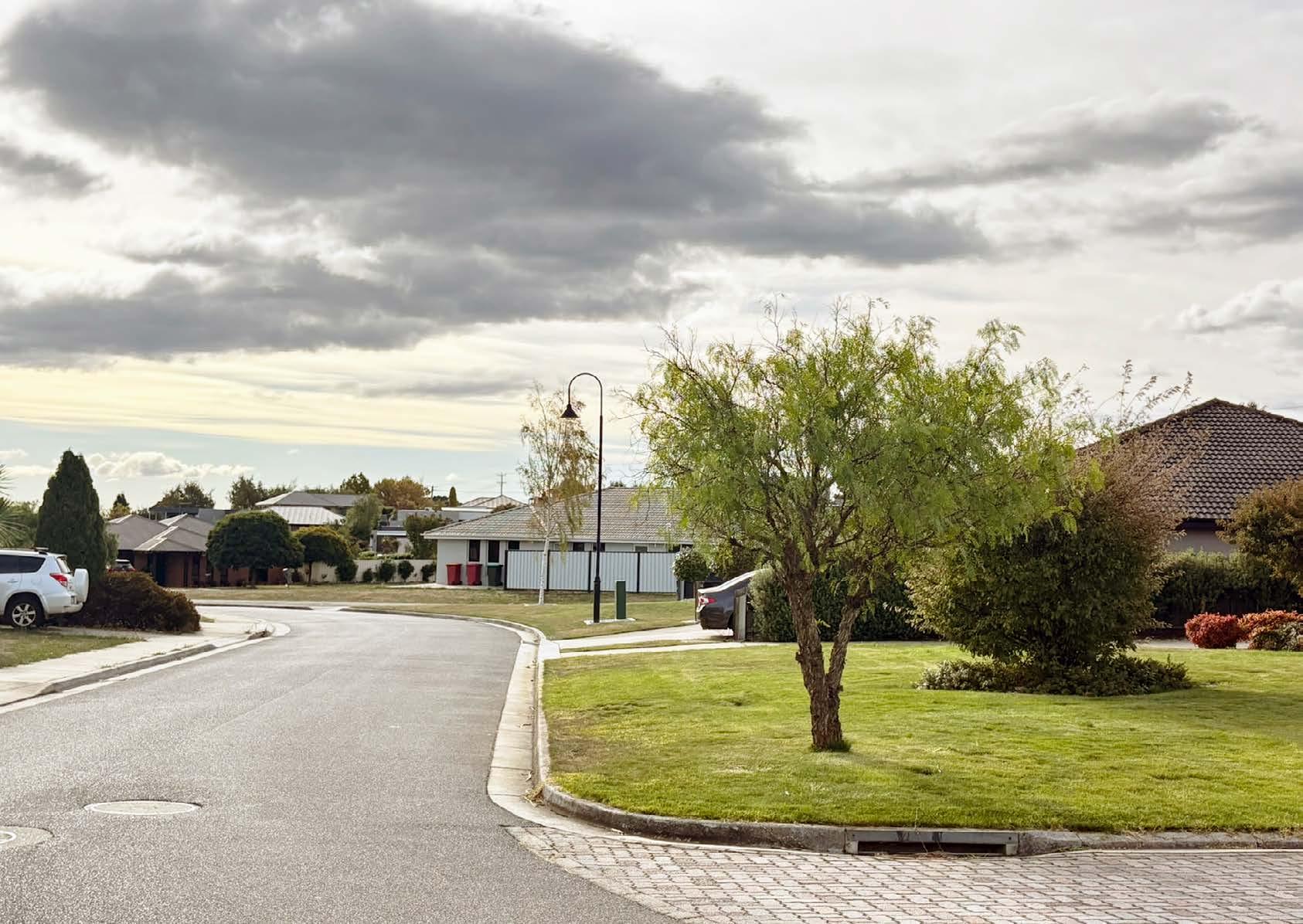
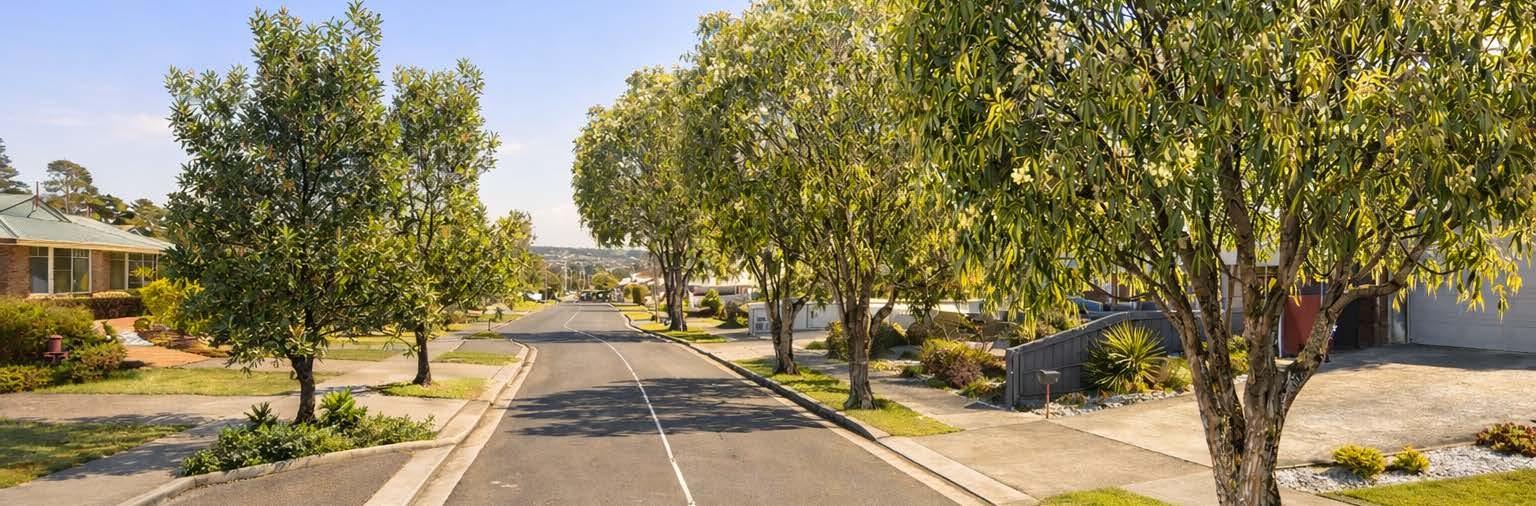
Comice Place, Newnham
Image: City of Launceston
EXISTING NEWNHAM NEIGHBORHOOD CHARACTER
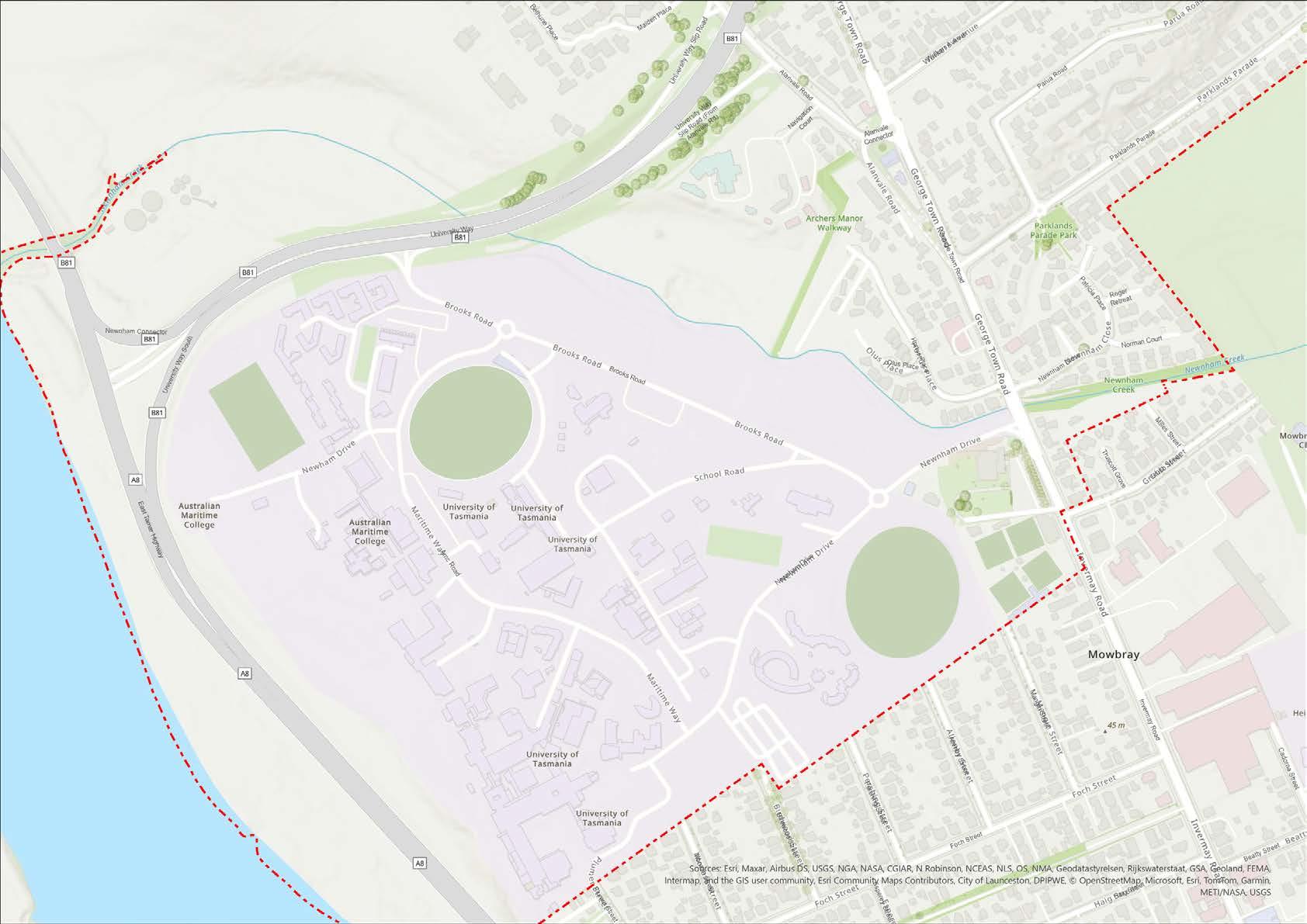
Spanning over 6 square kilometres, Newnham has a diverse visual character that blends suburban residential areas with educational, rural and industrial precincts, set against the backdrop of rolling hills and the kanamaluka / Tamar Estuary.
Residential streets feature a mix of mid-century brick homes, weatherboard dwellings and newer suburban developments, typically set on generous blocks with well-maintained lawns and gardens. The gently undulating terrain provides occasional views of the river and distant hills. While some streets include mature street trees, canopy cover is inconsistent, with a mix of native and exotic species contributing to overall greenery.
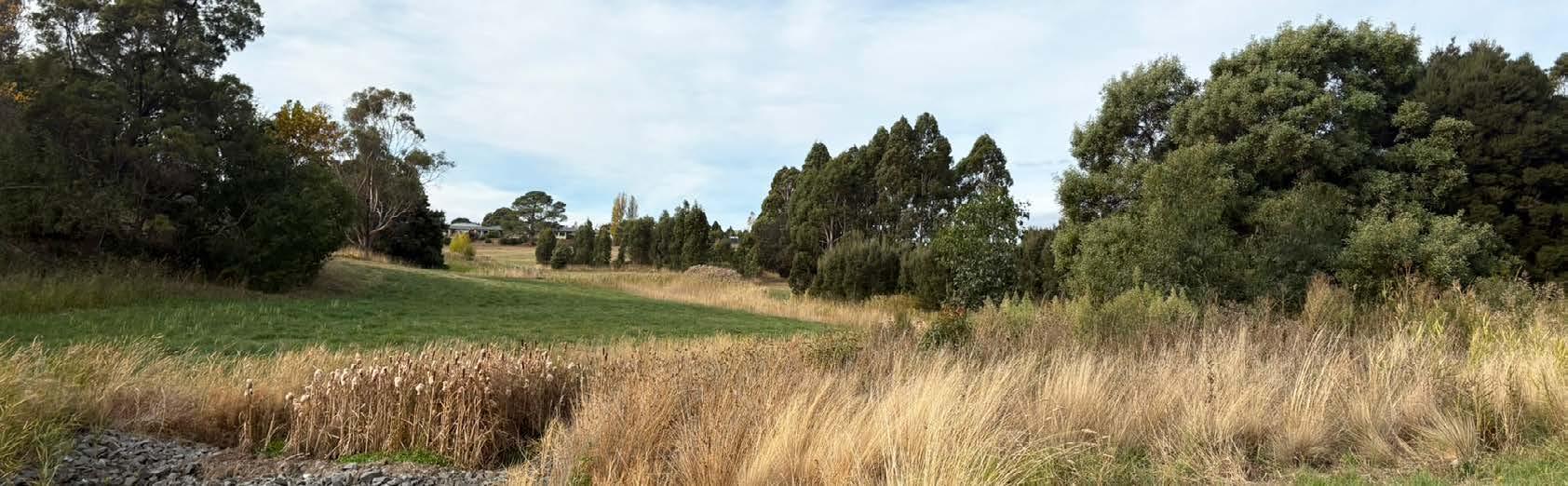
Newnham benefits from several green spaces, including Newnham Creek Reserve, which contains native and exotic vegetation, walking trails, recreation areas and habitat for local wildlife. The reserve features native grasses, eucalypts and casuarinas, with sections enhanced through student-led revegetation initiatives. To the west, the Tamar River provides scenic views, with areas of saltmarsh and wetland vegetation along its edge.
A number of pocket parks, local reserves and pedestrian corridors — including the Alanvale Trail — currently have limited vegetation cover. These areas present valuable opportunities to increase canopy coverage and strengthen biodiversity corridors across the suburb.
The University of Tasmania (UTAS) Newnham Campus is a dominant feature of the suburb, introducing a strong institutional presence through large buildings, open lawns and retained bushland. The campus includes a mix of contemporary and older structures, with paved pathways and tree-lined avenues.
The eastern portion of Newnham transitions into light industrial areas, characterised by warehouses, automotive businesses and trade suppliers. These precincts contain larger-scale buildings, wide streets and minimal canopy cover, contrasting with the more landscaped residential and university areas.
Overall, Newnham combines a suburban and semi-rural aesthetic, with natural elements such as the Tamar Estuary and Newnham Creek Reserve breaking up the built environment. The suburb feels open and spacious, shaped by a mix of greenery, academic infrastructure and practical industrial zones. Views toward the Tamar River and surrounding hills reinforce its connection to the broader northern Tasmanian landscape.
The road network reflects a clear hierarchy. George Town Road forms the eastern boundary of the suburb, while the East Tamar Highway follows the curve of the Tamar Estuary to the west. Three collector roads — Alanvale Road, Tompsons Lane and Viewbank Road — further structure the suburb, dividing it into four local areas connected by a network of link and local roads.
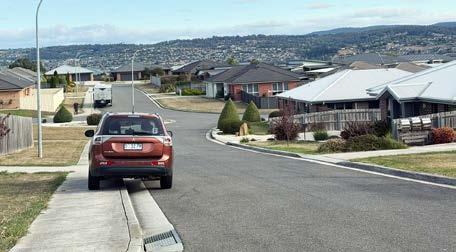
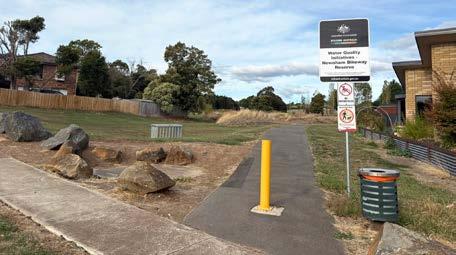
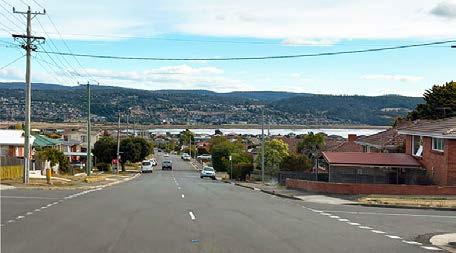
1. Ford Court, Newnham, looking SW. 2. Entry to Newnham Bikeway Reserve from Viewbank Road 3. View towards kanamaluka / River Tamar from Thomsons Lane
THE URBAN FOREST OF NEWNHAM
In accordance with the Launceston Urban Greening Strategy (2023), Newnham currently has an overall canopy coverage of 7.7% (Figure 1.6), which is below the City of Launceston’s urban average, and well below the city’s target of 40%. A significant proportion of the suburb remains rural land (28%), and this open landscape contributes to the relatively low overall canopy figures.
Despite this, there are pockets of stronger canopy coverage, particularly where stands of mature trees remain along University Way and adjacent to the East Tamar Highway. In contrast, most of Newnham’s
residential areas feature wide verges with little to no tree planting. This lack of verge planting presents an excellent opportunity to increase canopy cover across the suburb, reduce urban heat, and create greener, more shaded neighbourhoods.
Education and transport nodes highlight the suburb’s canopy shortfall. Within Newnham, three major areas fall within a 400-metre radius of a school or education facility—including TasTAFE Alanvale Campus, Australian Christian College, Brooks High School, and Studentworks. All of these zones sit within the 0–10% canopy coverage range (Figure 1.7). Similarly, almost
all bus stops in the suburb are exposed, with 0–10% canopy coverage recorded at every stop except those south of University Way (Figure 1.8). The lack of shade in these high-use areas is a clear priority for future greening.
At the same time, Newnham has a rich and diverse urban forest. More than 1,500 trees are currently mapped in the City of Launceston’s database, representing 31 different families, 35 genera, and more than 146 species. This level of diversity is relatively high compared to other suburbs and provides a strong foundation for building resilience.
Family-level Diversity
Analysis shows that Newnham’s urban forest is dominated by four key families:
• Myrtaceae (Eucalyptus, Melaleuca, Callistemon, Angophora) – 28.94%
• Rosaceae (Prunus, Malus, Photinia, Cotoneaster) – 26.32%
• Fabaceae (Acacia, Gleditsia) – 14.14%
• Betulaceae (Betula) – 6.71%
The Myrtaceae family makes up nearly a third of the suburb’s urban forest. This dominance is common in Australian cities, as genera such as Eucalyptus, Melaleuca, and Callistemon are naturally welladapted to Tasmanian conditions and have long been used in street and park plantings. While high representation of one family can reduce resilience, this risk can be managed by increasing species- and genetic-level diversity within Myrtaceae itself— ensuring that no single pest, disease, or climatic stress undermines the population.
The Rosaceae family is also strongly represented, particularly the Prunus genus, which alone accounts for 15.27% of all trees recorded in Newnham. Species such as Prunus blireiana and Prunus cerasifera have historically been popular choices for street tree planting in the suburb. However, these species have relatively short life expectancies of 20–30 years, and many specimens are now reaching the end of their useful life. This highlights the need for a strategic replacement program to maintain canopy while diversifying the species base.
Family level diversity in Newnham
Percentage of total tree population (by family)
Myrtaceae
Rosaceae
Fabaceae
Other (<1%)
Betulaceae
Oleaceae
Casuarinaceae
Figure 1.5 This bar chart the proportional representation of tree families within the existing tree population. “Other” represents the combined contribution of families that each comprise less than 1% of the total tree population.
Distinctive Trees and Corridors
Although Newnham does not feature many avenues of continuous street trees, several distinctive specimens and corridors add character to the suburb:
• Yellow Gums (Eucalyptus leucoxylon), Brush Box (Angophera costata) and Drooping She-oak (Allocasuarina verticillata) along Allanvale Road
• Flowering Gums (Corymbia ficifolia) on Mt Stuart Drive
• Californian Redwood (Sequoia sempervirens) and Ficus macrophylla near All Saints Launceston North
• Cupressus macrocarpa in Stephen Street Park
• Quercus robur in Helen Wood Park
• Blue Gums (Eucalyptus globulus) at the corner of Notley Street and George Town Road and Newnham Reserve
The Newnham Creek corridor, which supports a rich diversity of species and provides a valuable biodiversity link
Other open space corridors such as the Allanvale trail, are currently devoid of trees- but present a valuable opportunity for enhancing biodiversity corridors and connections, which have the potential to create a shaded and cool walking connections within the suburb.
These feature trees and corridors play an important role in defining local landscape character and connecting Newnham’s urban forest with its natural assets. Taking cues from these successful plantings can help strengthen the existing character of the suburb, and provide a clear framework for defining important places such as gateways, key intersections, and significant road corridors. 30
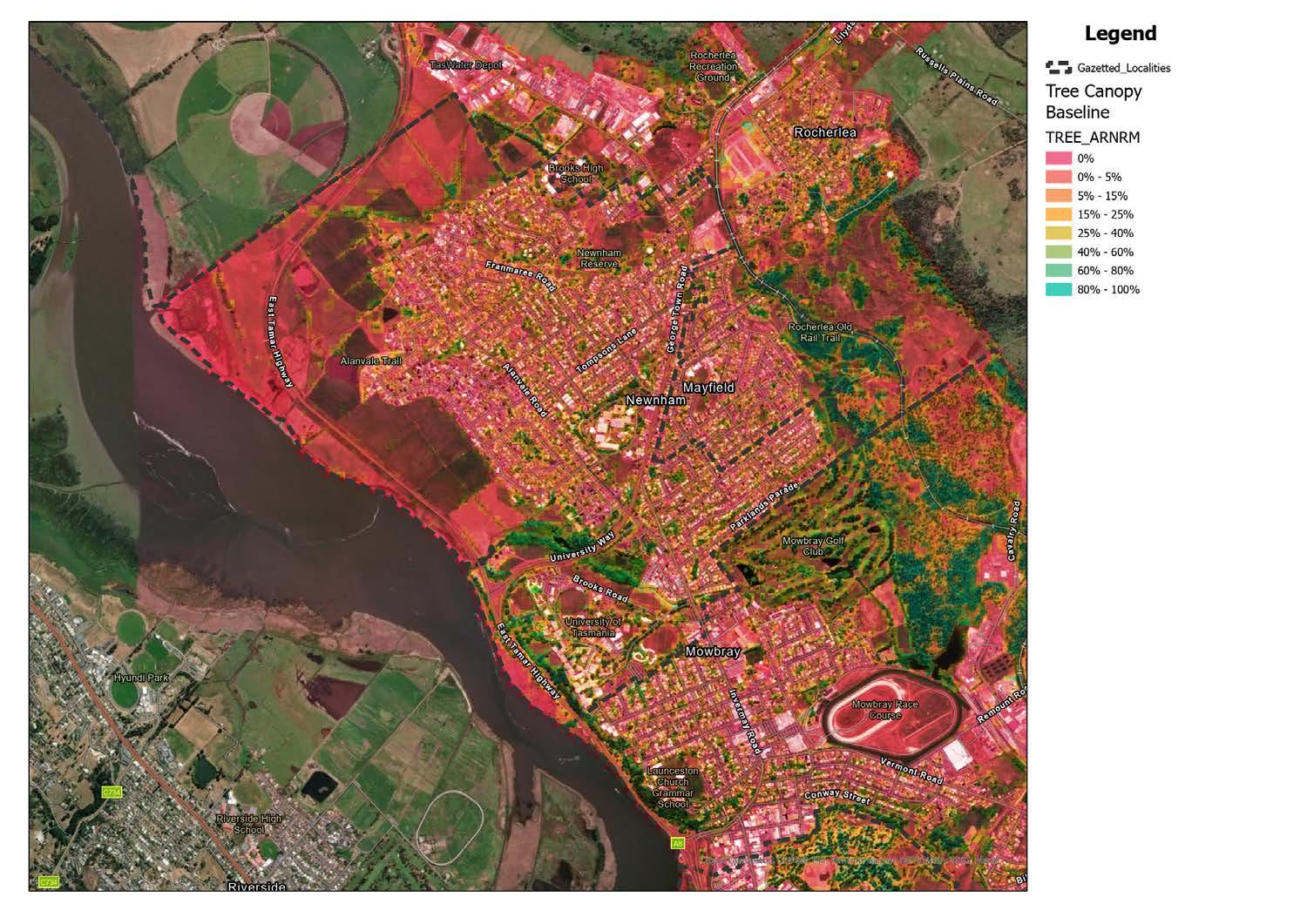
Figure 1.6 Tree canopy coverage of Newnham
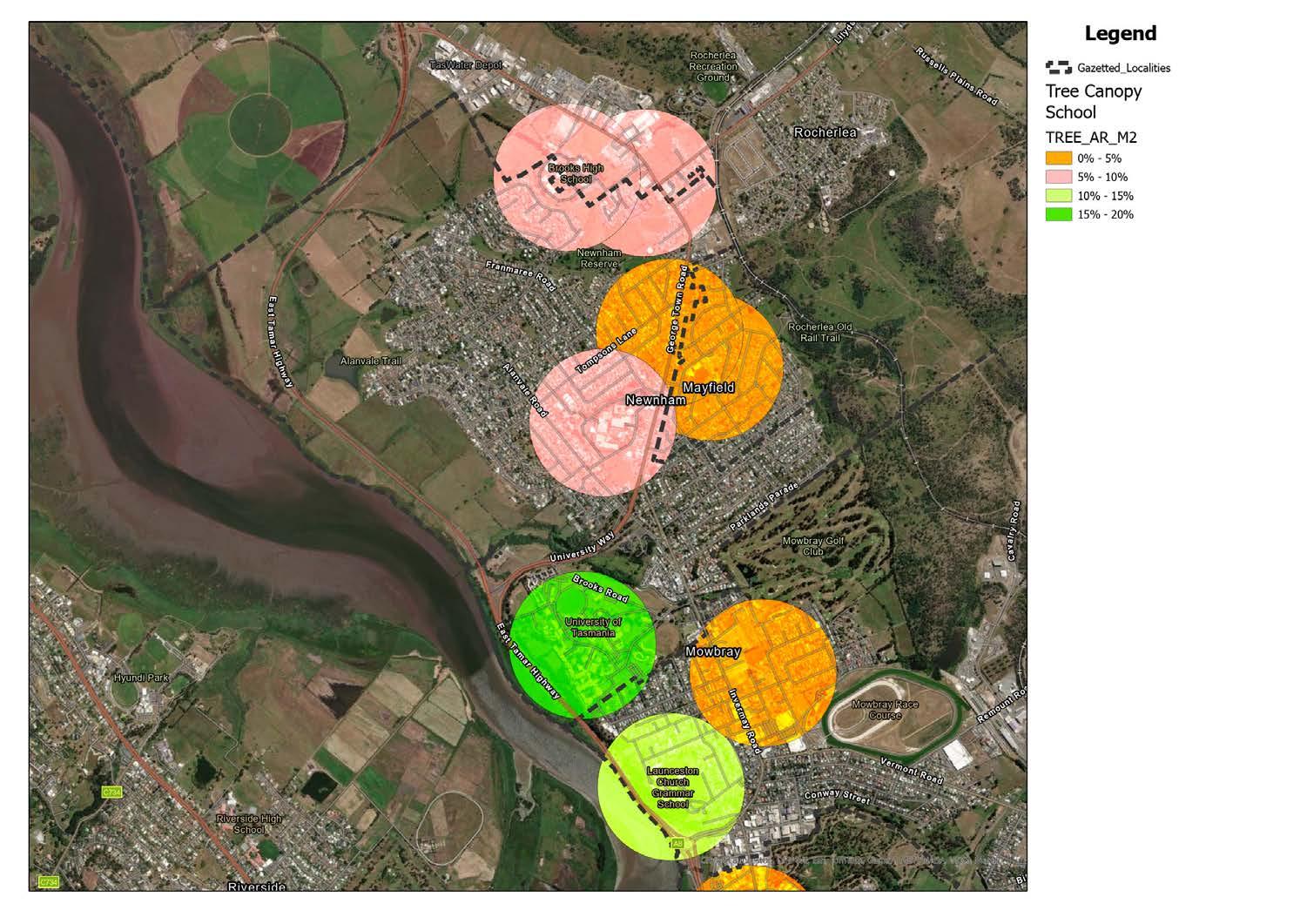
coverage of within a 400m radius of schools and educational facilities.
Figure 1.7 Tree canopy
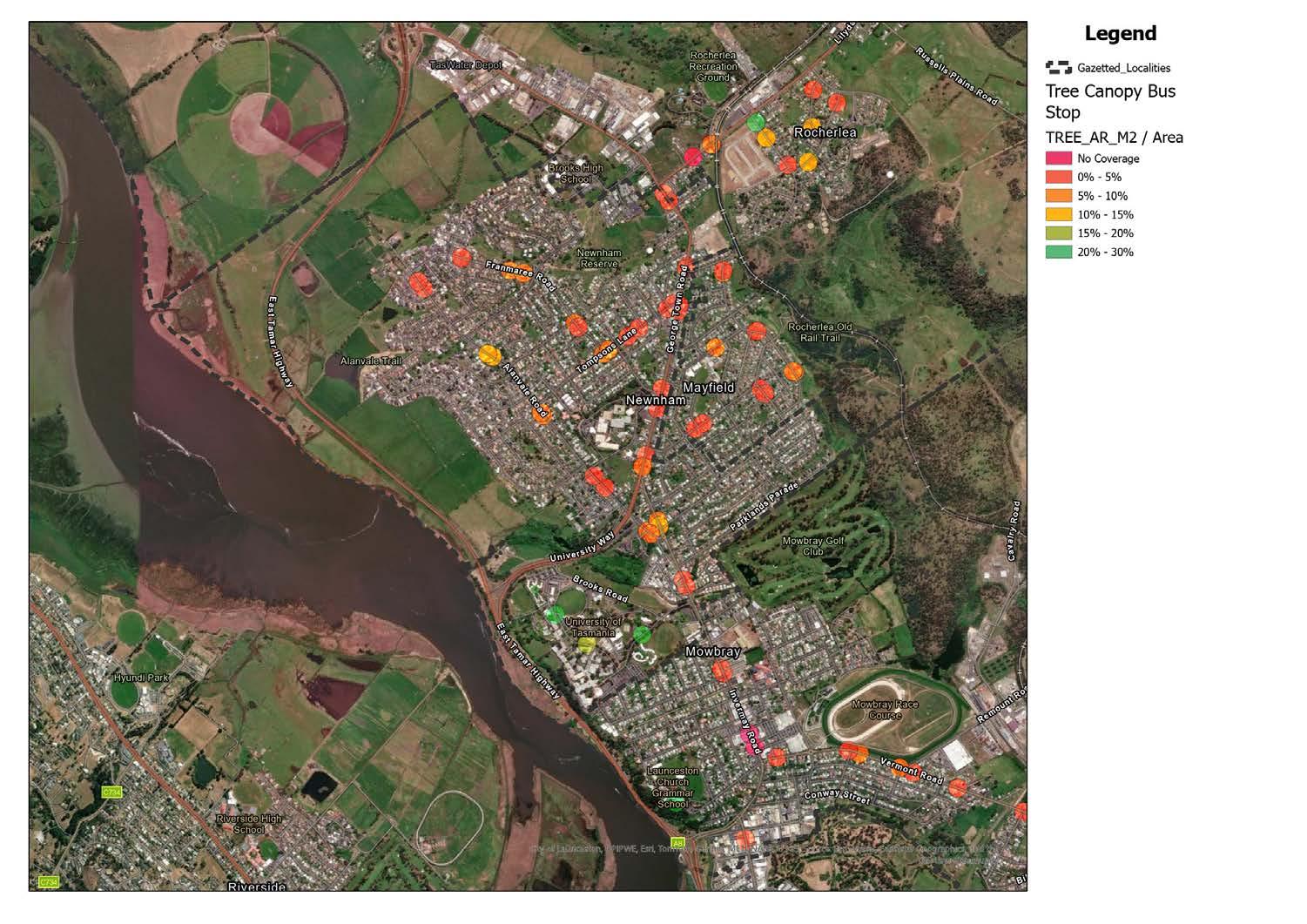
Figure 1.8
Tree canopy coverage of Newnham around bus stops.
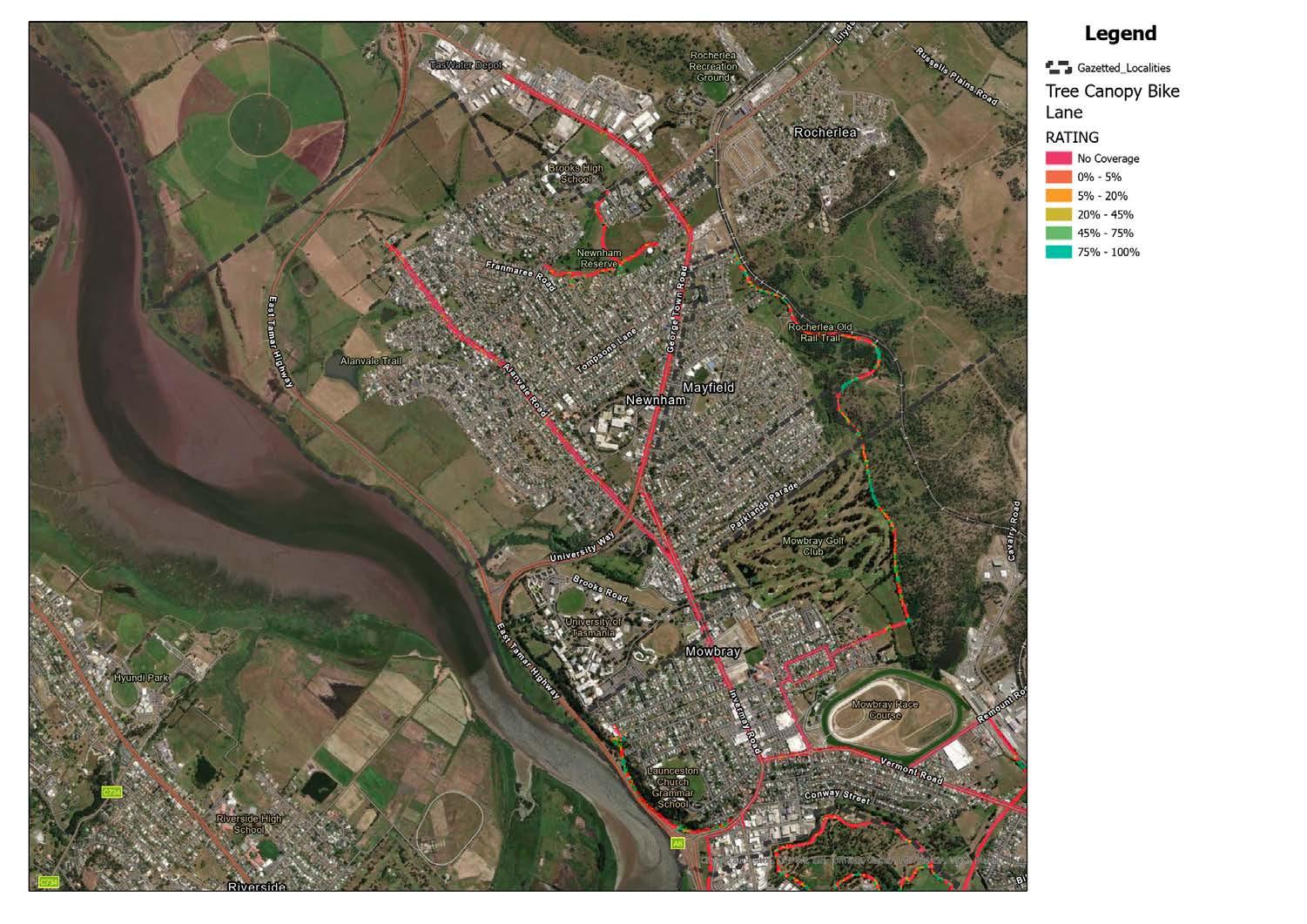
Figure 1.9 Tree canopy coverage of Newnham around active transport routes.
Figure 1.9
Tree canopy coverage of Newnham around active transport routes.
Surrounding areas of native vegetation
The majority of Newnham is urban areas, and agricultural land which will soon be developed.
Whilst there is no remnant vegetation direclty in the suburb, we can look to the surrounding areas for cues about the endemic vegetation.
Utilising endemic vegetation in urban forests offers a multitude of benefits that contribute to the overall well-being of both the environment and the community. Endemic plants are naturally adapted to local climate and soil conditions, requiring minimal maintenance and reducing the need for artificial irrigation or chemical inputs. By incorporating native species, urban forests can enhance biodiversity, providing habitats for local wildlife and promoting a balanced ecosystem
These plants also contribute to the mitigation of urban heat islands, as their natural adaptability aids in temperature regulation. Additionally, the use of plants endemic to the surrounding landscapes of Newnham fosters a sense of connection to Country, promoting environmental awareness and a deeper appreciation for regional ecosystems. The incorporation of endemic vegetation in thegreening of Newnham will create a sustainable, resilient, and ecologically harmonious landscape for present and future generations.
To the east of the suburb, there are patches of Eucalyptus viminalis grassy forest and woodland (DVG), Eucalyptus amygdalina inland forest and woodland on Cainozoic deposits (DAZ) and Eucalyptus amygdalina forest and woodland on dolerite (DAD) and native grassland areas (GCL).
Eucalyptus viminalis grassy forest and woodland is characteristically low to medium height (15-25m) open grassy forest dominated by E. viminalis. The understorey is generally grassy; however, rock can form a significant cover in some situations
Eucalyptus amygdalina inland forest and woodland on Cainozoic deposits is dominated by E. amygdalina, E. viminalis, E. pauciflora or occasionally E. ovata. Dry sclerophyll shrubs (often low or prostrate species), Pteridium esculentum, and grasses or graminoids dominate the understorey.
Eucalyptus amygdalina forests and woodlands on dolerite are dominated by uneven-aged E.amygdalina in an open forest structure with trees rarely exceeding 25 m. They are dry sclerophyll communities with variable understoreys ranging from grassy to shrubby. In some places, rock forms a cover.
Lowland grassland complex generally contains natural or disturbance-induced grasslands dominated by a species-poor grassy sward of Rytidosperma or Austrostipa, with occasional patches of Poa species and Themeda triandra. Rytidosperma/ Austrostipa grasslands occur naturally in valley bottoms and lower slopes.
1. Eucalyptus viminalis grassy forest and woodland (DVG)
2. Eucalyptus amygdalina inland forest and woodland on Cainozoic deposits (DAZ)
3. Eucalyptus amygdalina forest and woodland on dolerite (DAD)
4. Native grassland (GCL)
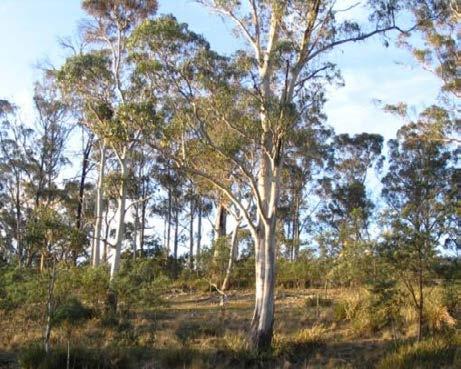
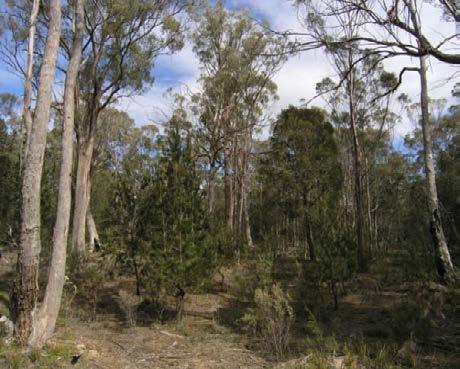
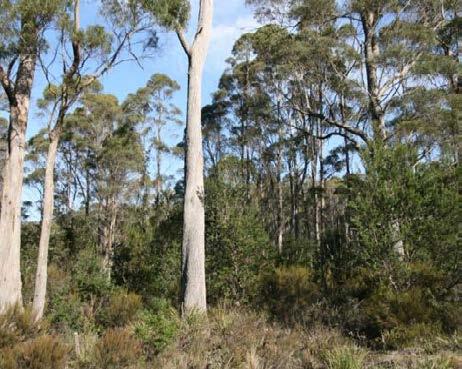
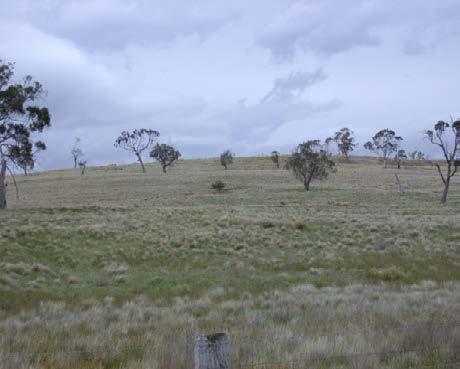
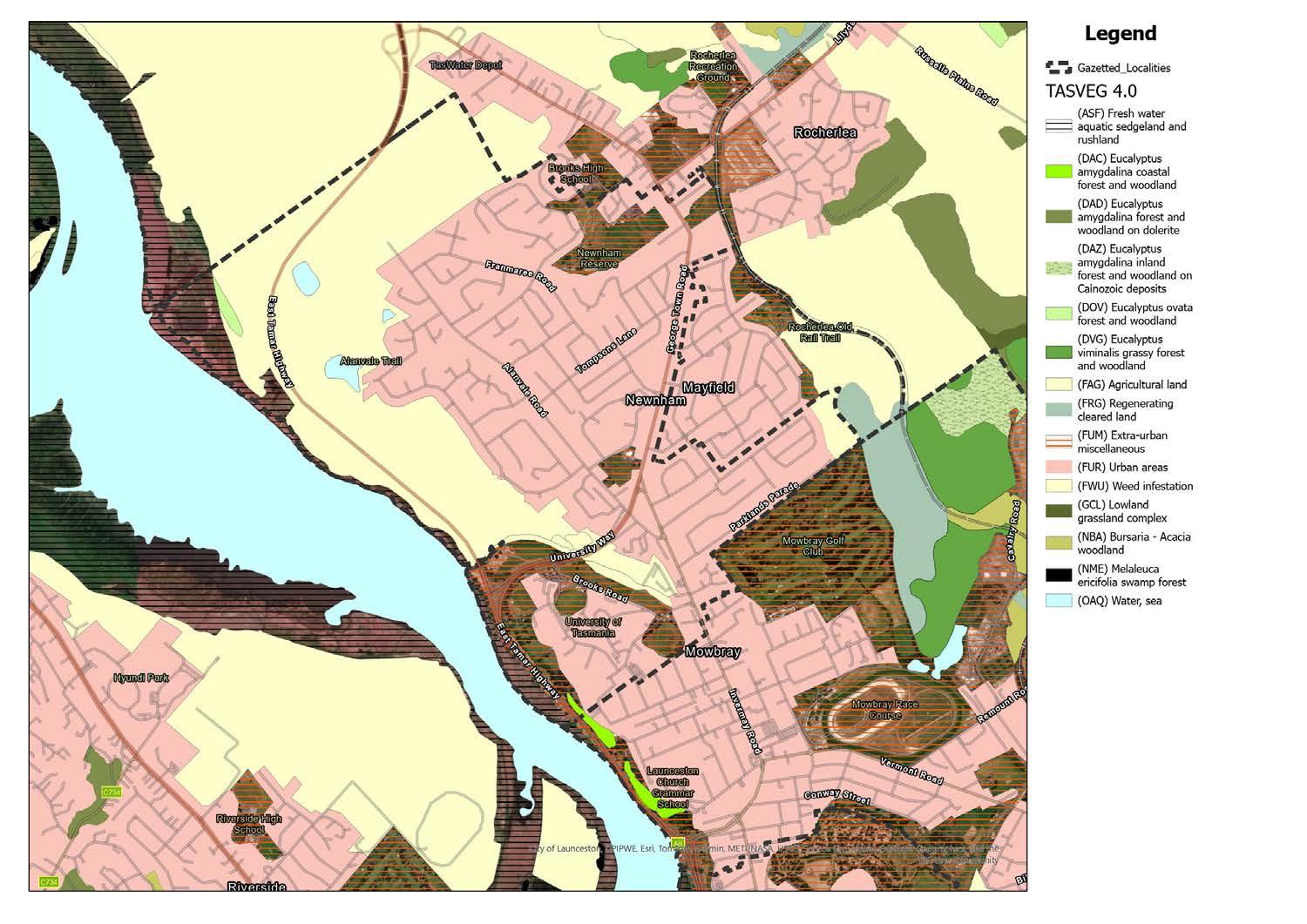
Figure 1.10
Vegetation communities surrounding Newnham
INTENDED FUTURE CHARACTER
Guidelines outlined in the Urban Greening Strategy set clear limits for tree diversity in Launceston’s urban forest—no more than 5% of any one species, 10% of any genus, and 20% of any family. Newnham currently exceeds these thresholds in several categories, particularly in the Rosaceae and Myrtaceae families.
As Newnham contributes significantly to Launceston’s overall canopy and urban forest composition, future planting should aim to balance the species mix, reduce reliance on a small number of genera, and enhance canopy cover in priority areas such as schools, bus stops, and residential verges. This approach will not only improve resilience but also help deliver on the broader objectives of the Urban Greening Strategy—creating a greener, cooler, and more livable suburb for the community. The future urban forest character of Newnham is intended to reflect and strengthen the suburb’s open, spacious and semi-rural qualities, while significantly increasing canopy cover and thermal comfort.
Future planting will build upon existing native corridors, particularly along Newnham Creek and key road reserves, reinforcing connections to the surrounding grassy woodland and dry sclerophyll landscapes. A layered planting approach will introduce dominant canopy trees reflective of endemic Eucalyptus communities, supported by structurally diverse understorey species and native grasses in appropriate locations.
In residential streets, a complementary mix of native evergreen and carefully selected deciduous species has been proposed. This combination will provide meaningful summer shade while maintaining winter solar access to dwellings, minimising longterm overshadowing impacts and responding to community expectations.
Collector roads and gateway corridors will feature larger-scale canopy species to create visual cohesion, improve shade provision, and strengthen neighbourhood identity. Streets with existing successful species will be reinforced to maintain avenue consistency and landscape character.
Species selection has been guided by four key principles:
• Alignment with local vegetation communities and landscape context
• Increased species, genus and family diversity in accordance with the Urban Greening Strategy
• Suitability to verge width, infrastructure constraints and service locations
• Longevity and resilience under projected climate conditions
Over time, this approach will deliver a cooler, greener and more cohesive streetscape character, enhancing both environmental performance and neighbourhood amenity while remaining practical and maintainable.
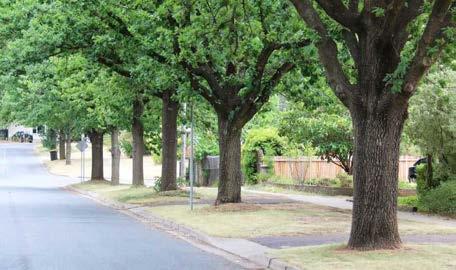
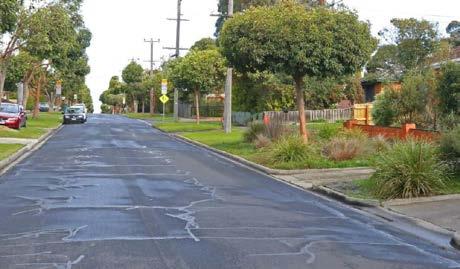
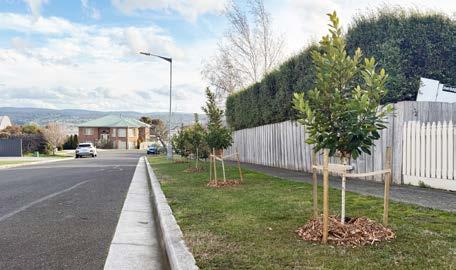
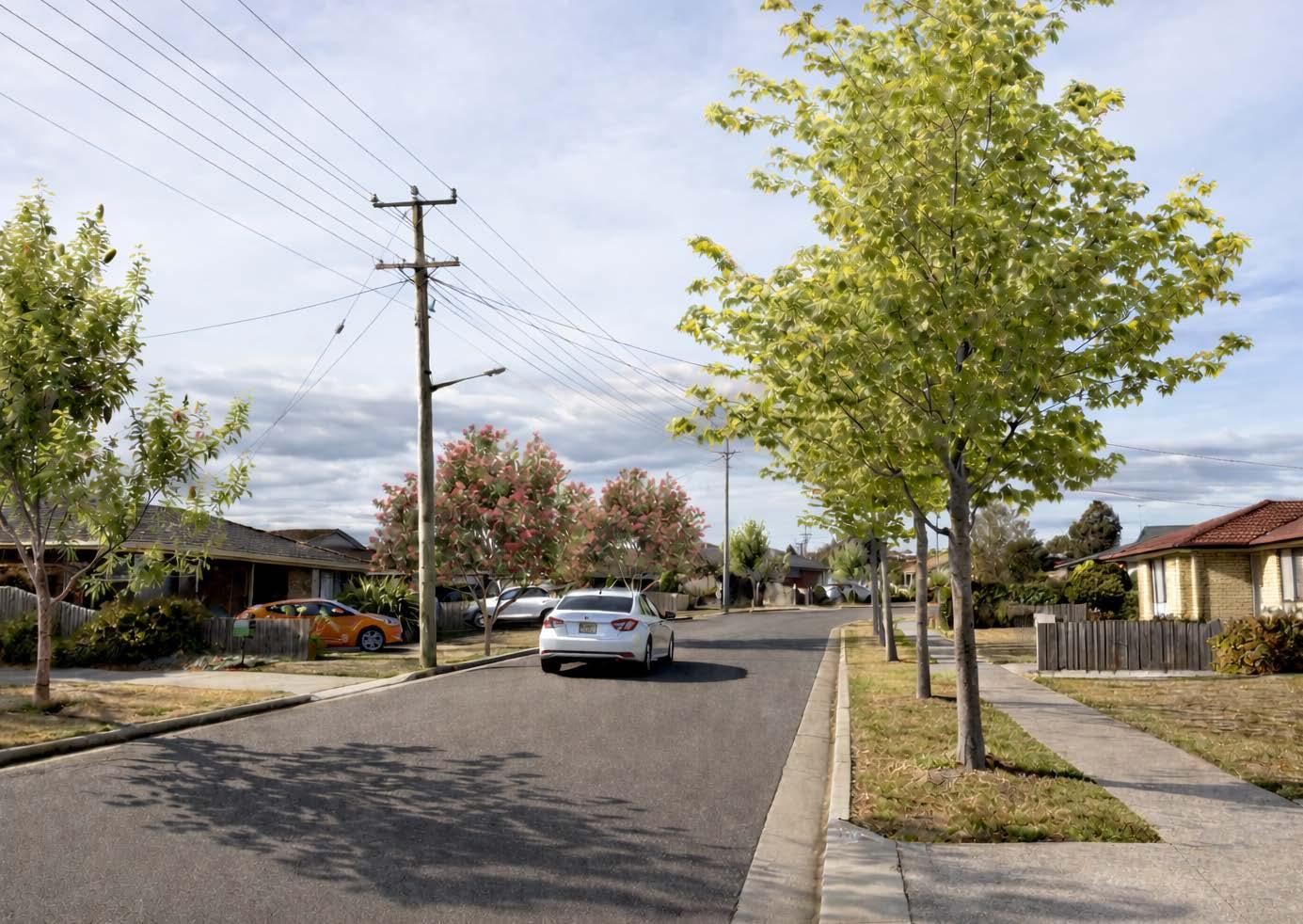
Artist impression of Packham Street, illustrating future character of Newnham.
Image: City of Launceston
LOCAL NATIVE SPECIES SELECTION
The surrounding vegetation communities provide a strong ecological reference for species selection within Newnham. While the suburb itself is largely urbanised, the adjacent grassy forests, dry sclerophyll woodlands and lowland grasslands offer guidance on endemic species suited to local soils, topography and climate.
Incorporating species characteristic of Eucalyptus viminalis grassy forest, Eucalyptus amygdalina woodland and lowland grassland communities will strengthen ecological function, resilience and habitat connectivity across the suburb. In selected areas, species selection should reflect site conditions, scale and intended function within streets, parks, reserves and private land.
These species selectoins also align with the City of Launceson Street Tree Masterplan (Draft 2026).
Canopy Trees
Canopy trees should reflect the open forest structure typical of surrounding grassy woodlands, with a mix of dominant and secondary species to build long-term resilience.
Primary canopy species (where space allows):
• Eucalyptus viminalis (White Gum)
• Eucalyptus amygdalina (Black Peppermint)
• Eucalyptus pauciflora (Snow Gum)
• Eucalyptus ovata (Black Gum – suitable for wetter soils, and low amenity use)
• Eucalyptus pulchella (White peppermint)
Secondary and supporting species:
• Allocasuarina littoralis (Black Sheoak)
• Acacia melanoxylon (Blackwood)
• Banksia marginata (Silver Banksia)
Understorey Shrubs
Dry sclerophyll shrub layers can be interpreted in urban landscapes through low to medium shrubs suited to streetscapes, reserves and residential gardens.
• Bursaria spinosa (Sweet Bursaria)
• Leptospermum scoparium (Tea Tree)
• Shrub planting should aim to create structural diversity while maintaining sightlines for safety in public spaces
Native Grasses and Groundcovers
Grass-dominated understoreys are characteristic of the surrounding lowland grassland and grassy forest communities. These species are well suited to urban reserves, park edges and biodiversity corridors
• Themeda triandra (Kangaroo Grass)
• Poa labillardierei (Common Tussock Grass
• Rytidosperma species (Wallaby Grass)
• Austrostipa species (Spear Grass)
• Lomandra longifolia (Sagg)
• Chrysocephalum apiculatum (Yellow Buttons)
• Dichondra repens (Kidneyweed)
• Wahlenbergia spp. (Bluebell)
• Diplarrena moraea (White flag-iris)
• Dianella revoluta (Spreading flaxlily)
• Pimelea spp. (Riceflower)
• Leptorhynchos squamatus (Scaly buttons)
• Hibbertia spp. (Guineaflower)
• Arthropodium strictum (Chocolate lily)
• Bulbine gluca (Rock lily)
Incorporating native grasses reduces irrigation demand, supports pollinators and improves soil structure, while maintaining the open character typical of local woodland systems.
By drawing on the structure and species composition of surrounding grassy forest and woodland communities, Newnham’s urban forest can reflect local landscape character while strengthening biodiversity, canopy cover and longterm resilience.
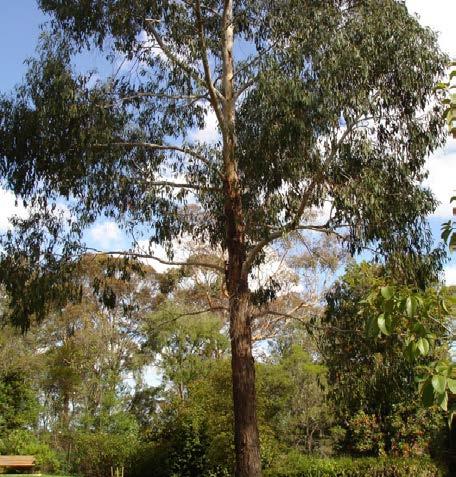
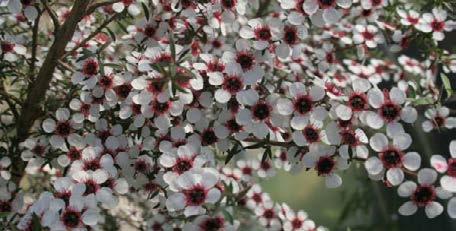
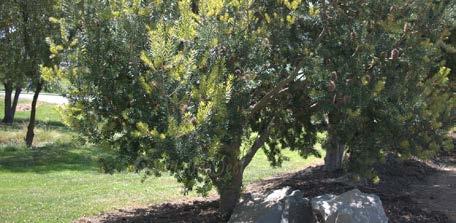
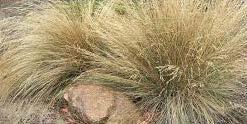
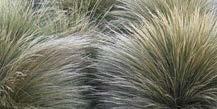
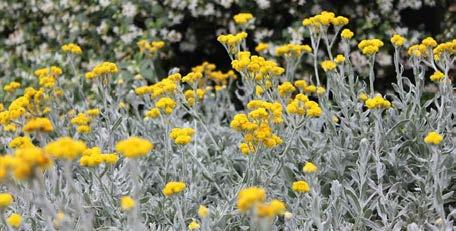
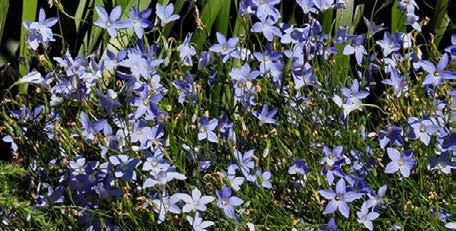
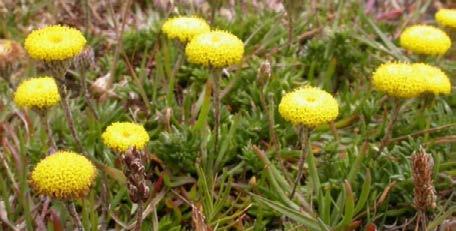
8.
1. Eucalyptus ovata (Swamp Gum)
2. Eucalyptus pulchella (White peppermint)
3. Leptospermum scoparium (Tea Tree)
4. Banksia marginata (Silver Banksia)
5. Poa labillardierei (Common Tussock-grass)
6. Austrostipa stipoides (Coastal Spear Grass)
7. Chrysocephalum apiculatum (Yellow Buttons)
Walhenbergia sp. (Bluebells)
9. Leptorhynchos squamatus (Scaly Buttons)
ADDITIONAL PROVEN NATIVE SPECIES
To support Newnham urban greening, additional native species will be used in strategic planting programs across the suburb.
While the previous page outlines endemic species reflective of surrounding vegetation communities, the following species are drawn from the City of Launceston Street Tree Masterplan (Draft 2026). These trees and shrubs have already demonstrated strong performance within Newnham’s urban conditions, including compacted soils, exposed verges, and high-use streetscapes.
Their continued use will:
• Accelerate canopy uplift in low-coverage areas, particularly residential verges
• Support shade provision in priority zones such as schools and bus stops
• Strengthen climate resilience
• Increase species- and genetic-level diversity within dominant families such as Myrtaceae
• Assist with the staged replacement of ageing Rosaceae species (particularly Prunus spp.)
• Importantly, future planting will align with Urban Greening Strategy diversity thresholds — ensuring no single species, genus or family exceeds recommended limits.
Canopy Trees
These species are suited to streets, parks and larger verge environments where meaningful canopy uplift is required:
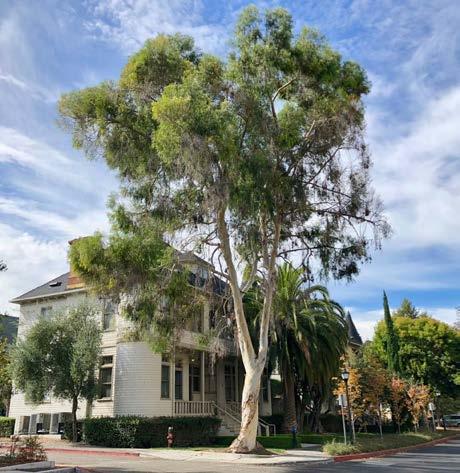
• Eucalyptus leucoxylon ‘Megalocarpa’ (Large-fruited Yellow Gum)
• Eucalyptus perriniana (Spinning Gum)
• Corymbia ficifolia (Flowering Gum)
• Acacia implexa (Hickory Wattle)
• Tristaniopsis laurina (Water Gum)
• Corymbia maculata (Spotted Gum)
• Eucalyptus torquata (Coral Gum)
These species are already present in Newnham and have proven adaptable to local conditions. Their use builds on existing landscape character, including established Yellow Gums and Flowering Gums within the suburb.
Small Trees and Large Shrubs
For constrained sites, pedestrian corridors and near services:
• Callistemon ‘Kings Park Special’ (Kings Park Bottlebrush)
• Syzygium australe ‘Resilience’ (Lily Pilly)
• Melaleuca linariifolia (Narrow-leaved paperbark)
• Eucalyptus leucoxylon ‘Euky Dwarf’ (Dwarf Yellow Gum)
These species contribute to shade, seasonal interest and nectar resources while fitting within tighter planting environments.
By combining endemic reference species with proven urban performers, Newnham’s future planting program can:
• Increase canopy cover in priority areas
• Improve thermal comfort around schools and transport nodes
• Replace ageing short-lived species with longerterm canopy contributors
• Balance family-level representation within the urban forest
• Strengthen the identity and resilience of the suburb.
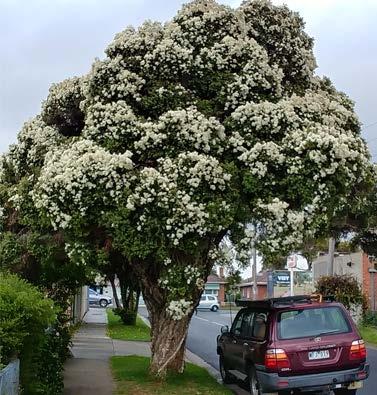
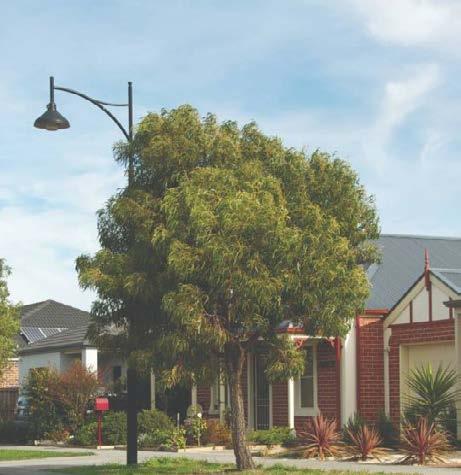
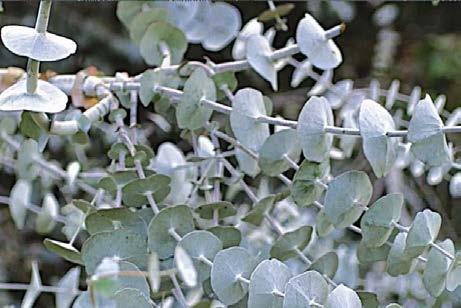
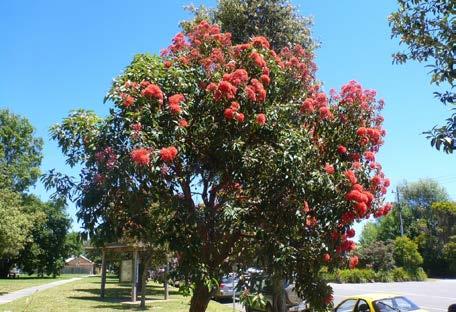
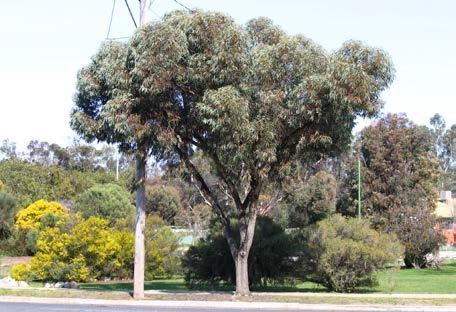
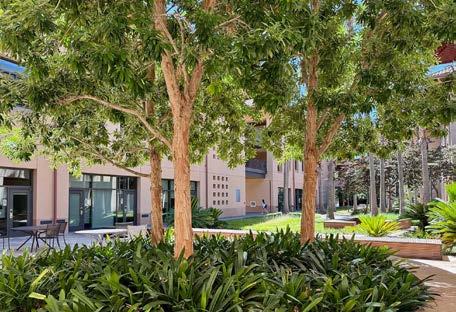
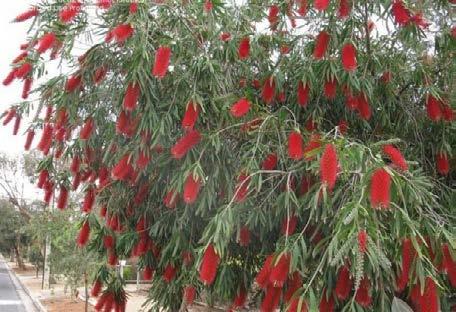
1. Melaleuca linariifolia (Narrow-leaved paperbark)
2. Acacia implexa (Hickory Wattle)
3. Eucalyptus perriniana (Spinning Gum)
4. Corymbia ficifolia (Flowering Gum)
5. Eucalyptus torquata (Coral Gum)
6. Tristaniopsis laurina (Water Gum)
7. Callistemon ‘Kings Park Special’ (Kings Park Bottlebrush)
DECIDUOUS SPECIES FOR URBAN AREAS
While endemic and evergreen native species form the strong porportion Newnham’s urban forest, deciduous trees play an important complementary role — particularly within residential streets, education precincts and transport nodes where seasonal performance, solar access and pedestrian comfort are priorities.
Newnham’s wide verges and open streets present significant opportunities to introduce shade trees that provide:
• Dense summer canopy for heat mitigation
• Winter solar access to homes and footpaths
• Reduced long-term overshadowing of private properties
• Strong seasonal character and visual interest
• Increased genus and family diversity within the urban forest
Deciduous species have been deliberately selected in residential and mixed-use areas to minimise yearround overshadowing. By shedding leaves in winter, these trees allow sunlight penetration to dwellings, gardens and pavements during cooler months while still delivering meaningful shade during summer.
Given the suburb’s low overall canopy coverage and exposed school and bus stop environments, deciduous trees are well suited to improving thermal comfort without creating permanent shading
impacts. Their inclusion also assists in reducing reliance on dominant families such as Myrtaceae, supporting compliance with the Urban Greening Strategy’s diversity thresholds.
Large Deciduous Street and Park Trees
Suitable for wider verges, collector roads and open space edges:
• Zelkova serrata ‘Green Vase’ (Japanese Zelkova)
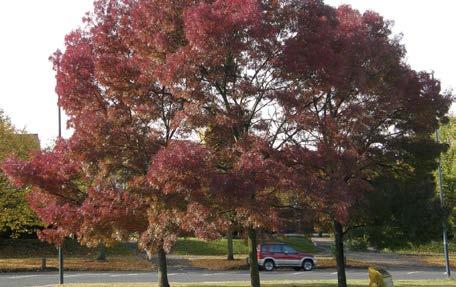
• Fraxinus angustifolia ‘Raywood’ (Claret Ash)
• Acer campestre (Field Maple)
• Pyrus betulifolia (Birch-leaved Pear)
• Acer buergerianum (Trident Maple)
• Betula utilis (Himalayan Birch)
These species provide structured canopy form, reliable shade performance and longevity in urban conditions. Upright or vase-shaped habits make them appropriate for streets with spatial constraints.
Medium Deciduous Trees
Appropriate for residential streets, school frontages and neighbourhood parks:
• Koelreuteria paniculata (Golden Rain Tree)
• Carpinus betulus ‘Fastigiata’ (Upright Hornbeam)
• Parrotia persica (Persian ironwood)
• Acer negundo (Box elder)
• Ulmus parvifolia ‘Todd’ (Chinese Elm)
These species contribute seasonal interest through flowering or autumn colour, reinforcing neighbourhood character while maintaining appropriate scale.
Small Deciduous Trees and Feature Planting
Suitable for constrained sites, intersections and pocket parks:
• Lagerstroemia indica × ‘Zuni’ (Crepe Myrtle)
• Malus spectabilis (Chinese crabapple)
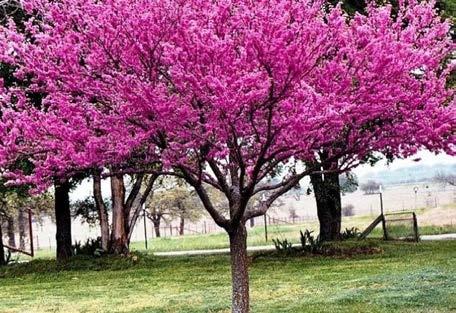
• Cercis canadensis (Eastern Redbud)
These trees provide compact canopy forms while enhancing streetscape amenity and biodiversity value.By integrating deciduous species alongside evergreen natives, Newnham’s urban forest can strengthen species diversity whilst respecting and enhancing the existig suburb character and identity.
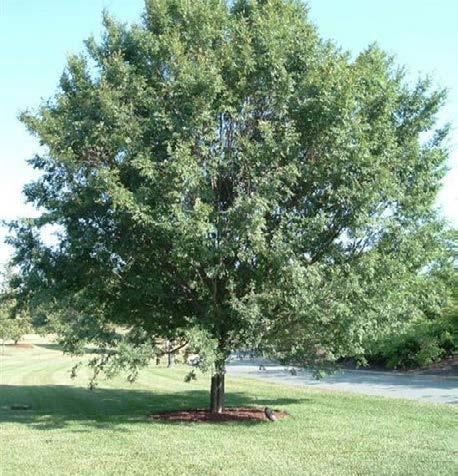
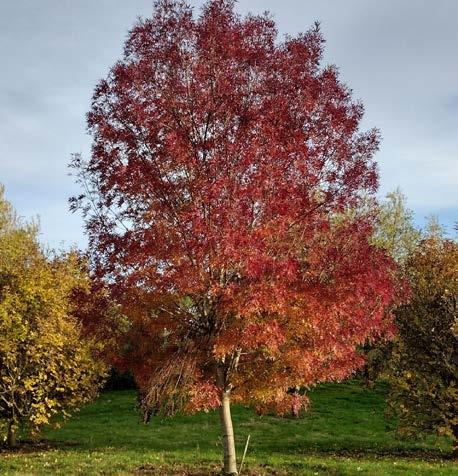
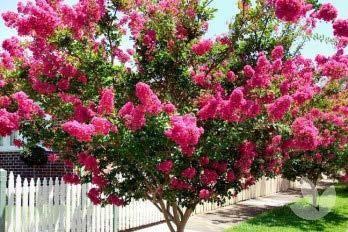
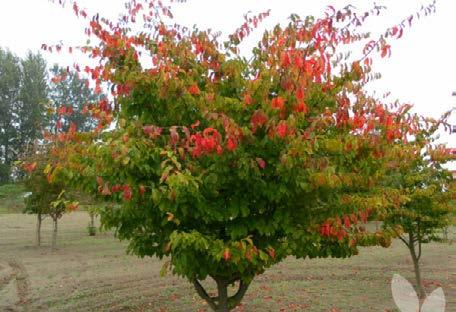
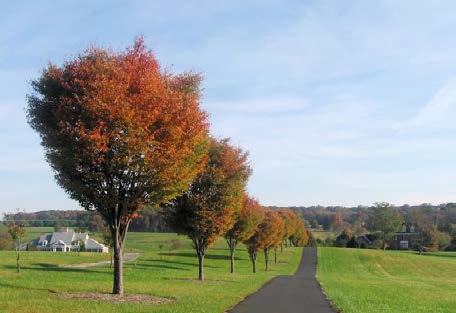
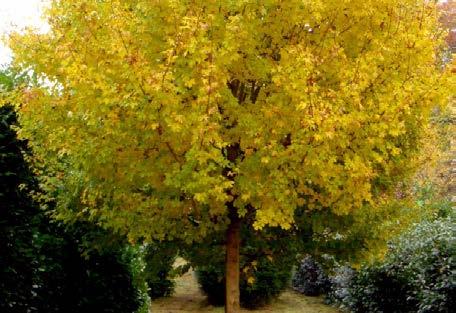
1. Ulmus parvifolia ‘Todd’ (Chinese Elm)
2. Fraxinus angustifolia ‘Raywood’ (Claret Ash)
3. Lagerstroemia indica × ‘Zuni’ (Crepe Myrtle)
4. Parrotia persica (Persian ironwood)
5. Zelkova serrata ‘Green Vase’ (Japanese Zelkova)
6. Acer campestre (Field Maple)
7. Cercis canadensis (Eastern Redbud)
CANOPY COVER AND KEY TARGETS
To determine how many trees need to be planted in Newnham to achieve the 40% canopy cover target, a detailed GIS analysis was undertaken.
Newnham encompasses an area of 6.01 square kilometres, with a significant portion currently undeveloped rural land that will be developed in the future (28%). It is anticipated that much of the tree planting in these future development areas will be undertaken by developers through the provision of public open space planting.
Based on canopy mapping from the Urban Greening Strategy, and using a tree with an average mature canopy size of 8 m², it is estimated that approximately
38,460 trees would be required to increase canopy coverage in Newnham from 8% to 40%.
A breakdown of land ownership and management in Newnham is as follows:
• Council-managed land (road reserves and public open space): 22%
• Privately owned land within developed areas: 37%
• Land identified for future development: 28%
Based on these proportions, it is estimated that:
• Council-managed land would require approximately 8,400 trees
Table 1.2 Newnham targets for street and private trees per year, over a 5 year period.
Note1: Tree numbers are indicative and represent a portion of the total canopy target for Newnham. The remaining trees will be planted on private and future development land through developer and community initiatives.
• Undeveloped land (future development areas) would require approximately 10,770 trees
• Privately owned land (future development) would require approximately 10,200 trees.
The total number of trees required to achieve canopy targets on Council-managed land has been distributed over a five-year period to establish clear annual planting targets. These are front-loaded to ensure early canopy gains and allow time for trees to mature.
Contribution of Private Trees
Estimated planting targets have been developed for private land to support overall canopy expansion. These figures have been used to inform community tree giveaway programs and encourage greening on private property.
The robust presence of an urban forest canopy on private land holds immense value, contributing significantly to the overall health and well-being of the environment and the community. In addition to enhancing the aesthetic appeal of urban landscapes, private landowners investing in and maintaining a diverse tree canopy contribute to improved air quality and energy efficiency. Beyond environmental benefits, trees on private property enhance property values, create recreational spaces, and foster community pride, ultimately contributing to a more sustainable and resilient urban ecosystem.
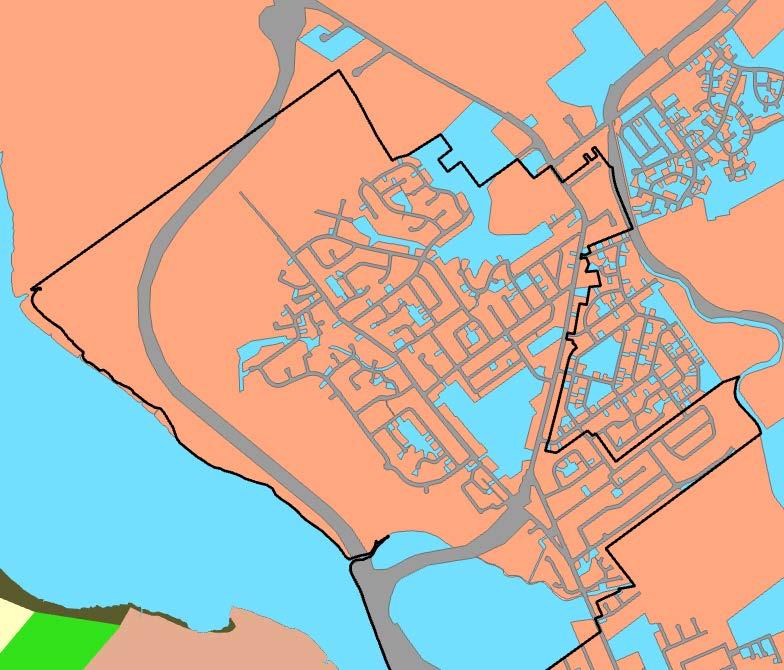
Figure 1.11 Diagram of land ownership in Newnham
PRIORITY ZONING
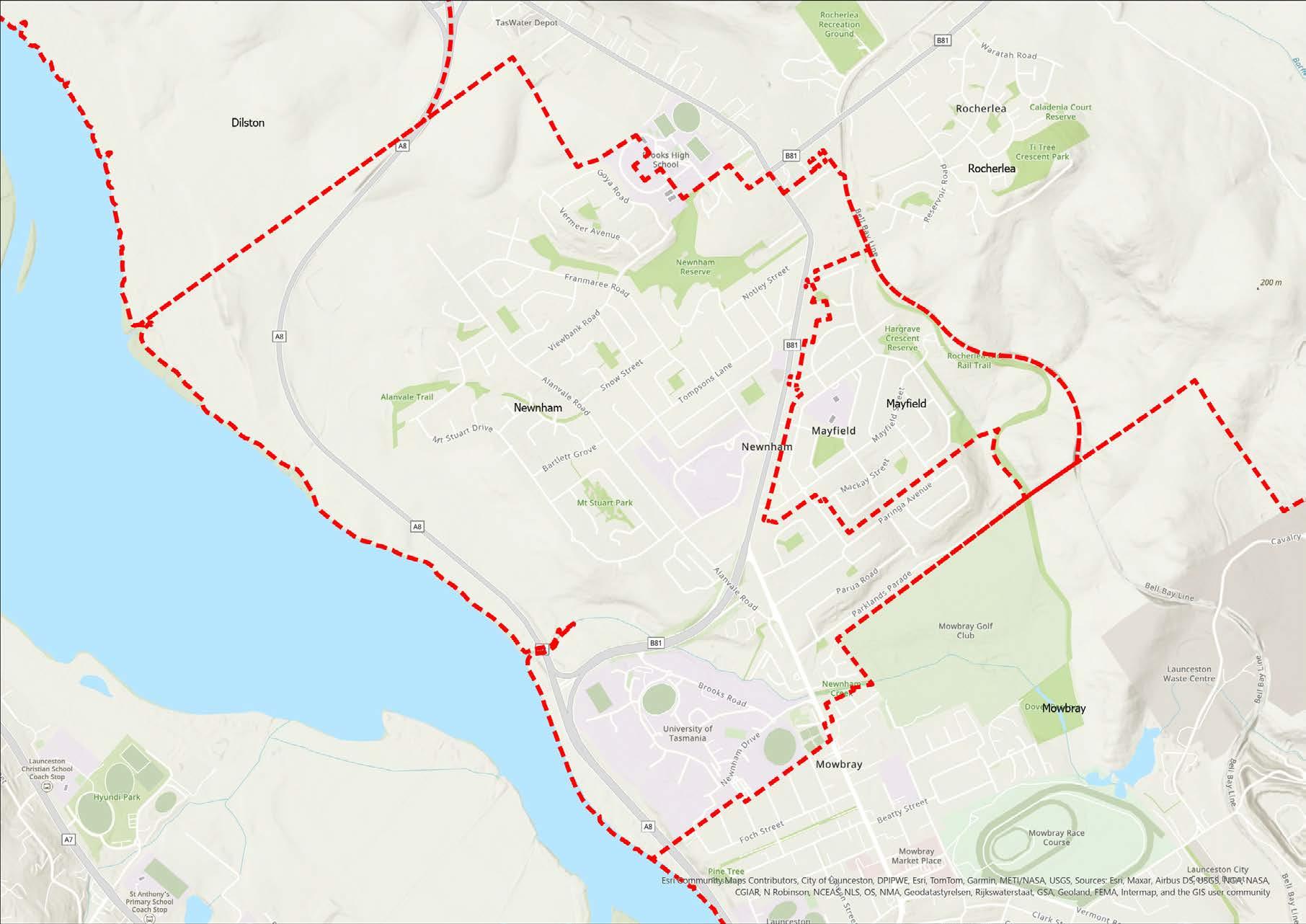
To support efficient planning, planting, and ongoing maintenance, Newnham has been divided into four zones. Street tree planting priorities will be applied within each zone and delivered in a staged program over a six-year period. This approach allows resources to be concentrated, ensures even distribution of planting effort, and provides a manageable framework for long-term establishment and care.
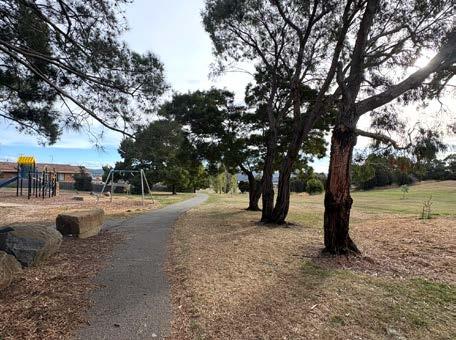
Zone 1: Planting year 1
Covers streets north of and including Tompsons Lane, and east of and including Alanvale Road.
This zone will be the first focus of planting activity, enabling quick canopy improvements in residential streets with wide verges and limited existing tree cover.
Included within this zone are streets where planting has already been completed, but where an ongoing watering and establishment schedule is still required.
Consolidating new and existing plantings in this area will ensure that trees are efficiently maintained and that canopy gains are strengthened across the north-eastern quarter of the suburb.
Zone 2: Planting years 2
Covers streets south of Tompsons Lane, and east of and including Alanvale Road.
Planting in this zone will consolidate canopy improvements in the eastern half of the suburb, with a focus on strengthening connections to education and transport nodes.
Zone 3: Planting year 3
Includes streets west of Alanvale Road and north of University Way.
Planting in this area will build on existing canopy near University Way, with opportunities to enhance shade along key road corridors.
Zone 4: Planting year 4
Covers streets south of and including University Way, west of George Town Road, and north of the Newnham suburb boundary.
This final stage will complete the program, targeting exposed residential areas and strengthening connections to adjoining suburbs and educational facilities.
ZONE 1
ZONE 2
ZONE 3
ZONE 4
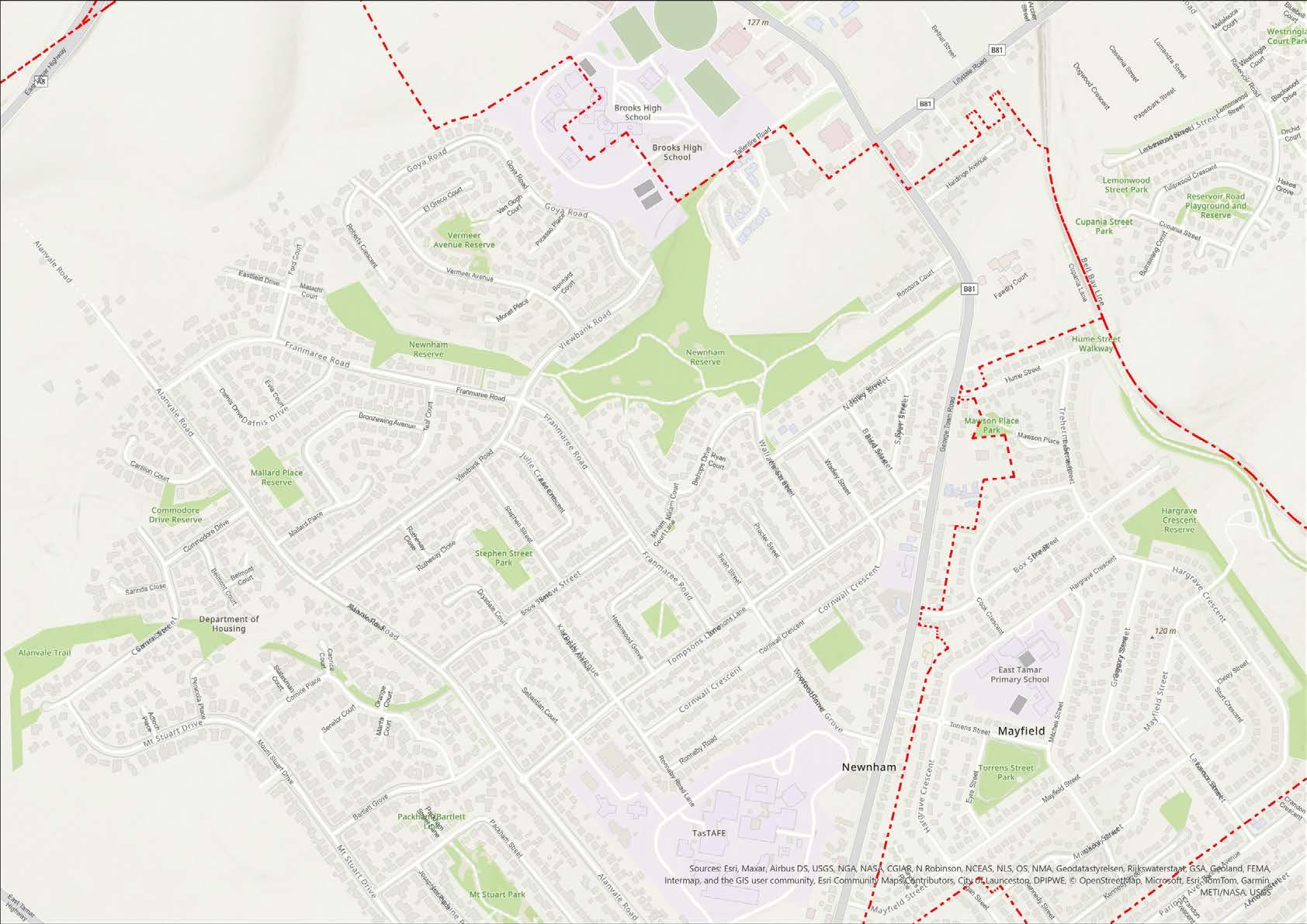
ZONE 1, FY 26/27
North of and including Tompsons Lane, and east of and including Alanvale Road.
Table 1.3 Newnham Zone 1 Tree Planting Schedule
George Town Road (North of Thompsons Lane)
Alanvale Road (North of Tompsons Lane)
Franmaree Road
Acacia melanoxylon, Callistemon salignus, Corymbia ficifolia, Allocasuarina verticillata, Eucalyptus leucoxylon Alternating Eucalyptus leucoxylon megalocarpa and Allocasuarina verticillata
Hakea laurina and Tristaniopsis laurina Ulmus parvifolia ‘Todd’
Callistemon pallidus, Corymbia ficifolia, Prunus cerasifera 'Nigra'
‘Kings Park Special’
Carpinus betulus 'Fastigiata' Prunus cerasifera 'Nigra' Carpinus betulus 'Fastigiata' Prunus cerasifera 'Nigra'
Callistemon, prunus sp. Corymbia eximia 'nana' Callistemon viminalis ‘Dawson River Weeper’
glabra 'Robusta', Chamaecyparis lawsoniana"
Evia Court 15 5
Ford Court 18
Malachi Court 13
Eastfield Drive 18
Snow Street 47 "Prunus cerasifera 'Nigra', Prunus blireiana, Prunus cerasifera 'Nigra', Callistemon salignus"
Stephen Street 42 2.5 "Melaleuca linariifolia, Acacia baileyana"
Julie Crescent 47
"Nerium oleander, Prunus blireiana, Photinia glabra 'Robusta', Callistemon salignus, Photinia glabra 'Robusta'"
cerasifera 'Nigra'
serrata 'Green Vase'
Wadley Street 40 2
Melaleuca linariifolia, Prunus sp.
Fraxinus angustifolia 'Raywood' Melaleuca linariifolia Oct-26
Baird Street 32 3.5 Ulmus parvifolia 'Todd'
Notley Street 60 4 "Prunus 'Elvins', Viburnum sp, Callistemon salignus, Photinia glabra 'Robusta'"
Corymbia maculata 'Gamai' Lagerstroemia indica × fauriei
Sayer Street 20 2.5 Callistemon viminalis Melaleuca linariifolia
Bishops Drive 41 4.05.0 "Melaleuca linariifolia, Photinia glabra 'Robusta', Allocasuarina verticillata, Betula pendula" Eucalyptus perriniana Syzygium australe ‘Resilience’, and Corymbia ficifolia
Rondora Court 14 6.5 Pittosporum tenuifolium Acacia Implexa
‘Kings Park Special’
‘Kings Park Special’
Miriam Court 9 2.5 Photinia glabra 'Robusta' Tristaniopsis laurina Tristaniopsis laurina Oct-26
Hardinge Avenue 31 2.5 Prunus serrulata, Acca sellowiana, Prunus blireiana
‘Euky Dwarf’
parvifolia 'Reflection'
Ryan Court 8 2 Melaleuca linariifolia Callistemon ‘Kings Park Special’ Oct-26
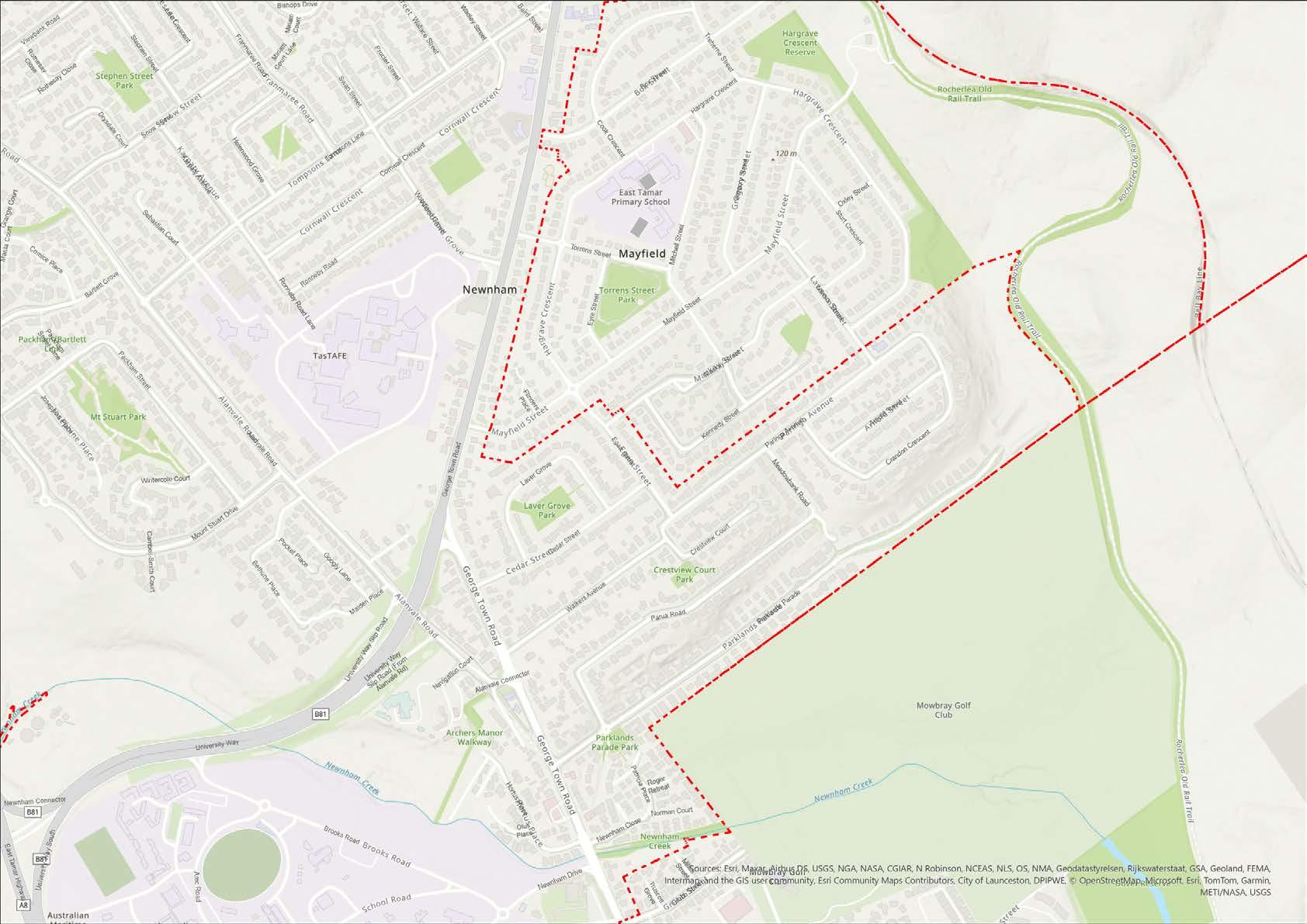
ZONE 2, FY 27/28
North of and including Tompsons Lane, and east of and including Alanvale Road.
Alanvale Road (South of Thomsons Ln) 163
Cornwall Crescent 114
Ronneby Road 78
5.5 Acacia melanoxylon, Callistemon salignus, Corymbia ficifolia, Allocasuarina verticillata, Eucalyptus leucoxylon
2.5 Liquidambar styraciflua, Hibiscus syriacus, Callistemon sp. Prunus serrulata Banksia marginata (under power lines)
2.5 "Prunus serrulata, Prunus blireiana" Banksia marginata (under power lines)
Alternating Eucalyptus leucoxylon megalocarpa and Allocasuarina verticillata Callistemon ‘Kings Park Special’
Fraxinus angustifolia ‘Raywood’ Aug-27
Pyrus betulaefolia ‘Southworth’ Dancer
Pyrus betulaefolia ‘Southworth’ Dancer
Pyrus salicifolia ‘Disco Ball’
Woodland Grove 39 3 4.5 Betula pendula, Pittosporum eugenioides Corymbia citriodora ‘Babycit’ Betula utilis Jacquemontii Aug-27
Cedar Street 64 3 Callistemon salignus, Lagerstroemia indica Elaeocarpus reticulatus Lagestroemia indica Sep-27
Table 1.4 Newnham Zone 2 Tree Planting Schedule
George Town Road (South of Tompsons Lane)
Laver Grove 56
Egan Street 57
Walkers Avenue 40
Crestview Court 35
Paringa Avenue 110
Parua Road 90 21 16
3.7 Callistemon salignus Elaeocarpus eumundi Malus spectabilis Malus spectabilis (under power lines) Koelreuteria paniculata Malus spectabilis (under power lines) Koelreuteria paniculata
‘Todd’
Meadowbank Road 40
2.5 Nerium oleander, Pittosporum eugenioides, Malus sp,
Prunus sp, Callistemon salignus, Betula pendula, Malus sp Lophostemon confertus/ Eucalyptus pauciflora
Photinia glabra 'Robusta', Prunus blireiana
Crandon Crescent 97 4.3 Photinia glabra 'Robusta', Corymbia ficifolia, Araucaria heterophylla Corymbia maculata ‘Gamai’ Malus spectabilis Corymbia maculata ‘Gamai’/ Banksia marginata (U P) Corymbia maculata ‘Gamai’/ Malus spectabilis (UP)
Arnold Street 45 3 Callistemon sp, Hibiscus syriacus, Photinia glabra 'Robusta' Tristanopsis laurina Lagestroemia indica Oct-27
Parklands Parade 80
Corymbia emima ‘Nana’, Corymbia ficifolia, Lophostemon confertus Callistemon viminalis/ Eucalyptus pulchella Oct-27
Newnham Close 11 3 Allocasuarina verticillata/ Acacia melanoxylon
Roger Retreat 3
Image: City of Launceston
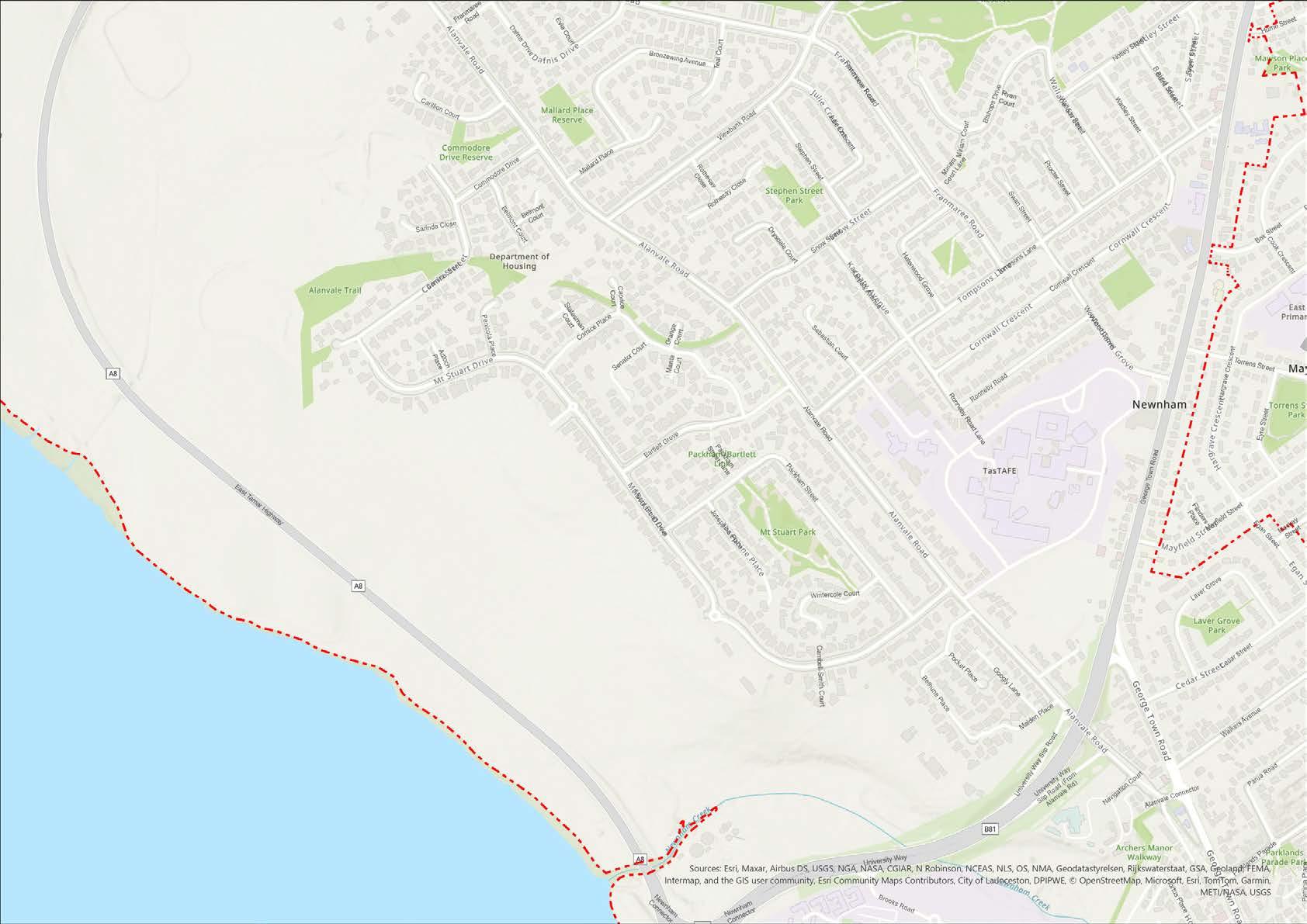
ZONE 3, FY 28/29
Includes streets west of Alanvale Road and north of University Way.
Table 1.5 Newnham Zone 3 Tree Planting Schedule
Carillion Court 35 Acacia implexa Fraxinus pennsylvanica ‘Urbdell’
Camira Street 48 4.2-6
Sarinda Close 23 4
Belmont Court 11 1.7
Callistemon salignus, Photinia glabra 'Robusta' Elaeocarpus reticulatus Nyssa sylvatica ‘NXSXF’ Nyssa sylvatica ‘NXSXF’
Brachychiton populneus Ulmus minor ‘Variegata’/ Corymbia maculata (large verge)
Acacia melanoxylon, Photinia glabra 'Robusta', Callistemon sp.
Mount Stuart Drive 182 Photinia glabra 'Robusta', Prunus blireiana, Corymbia ficifolia
laurina (UP)
Senator Court 0 Fraxinus excelsior 'Aurea', Liquidambar
Manta Court 5 Acer buergerianum Euc. sideroxylon, Acer buergerianum Sep-28
Packham Street 72 2.5 "Schinus molle, Corymbia ficifolia Photinia glabra 'Robusta'"
australe ‘Resilience’ U/P
Josephine Place 7 2 Laburnum x watereri, Betula pendula 'Dalecarlica', Callistemon viminalis Betula nigra ’BNMTF Dura Heat’ Hakea laurina
Wintercole Court 25 4.5 Cupressocyparis leylandii
Pocket Place 8 5.5
reticulatus Lagerstroemia indica U/P
nigra ‘BNMTF Dura Heat’ Betula nigra ‘BNMTF Dura Heat’ Sep-28
Campbell-Smith Court 4 2.5 Fraxinus pennsylvanica ‘Urbdell’ Ulmus davidiana ‘Autumn Gold’
Bethune Place 20 Prunus cerasifera 'Crimson Spire', Betula pendula
Allocasuarina verticilata Betula nigra ’BNMTF Dura Heat’
pennsylvanica ‘Urbdell’
pennsylvanica ‘Urbdell’
Maiden Place 6 Brachychiton populneus Pistacia chinensis Oct-28
East Tamar Highway (North of University Way) 267
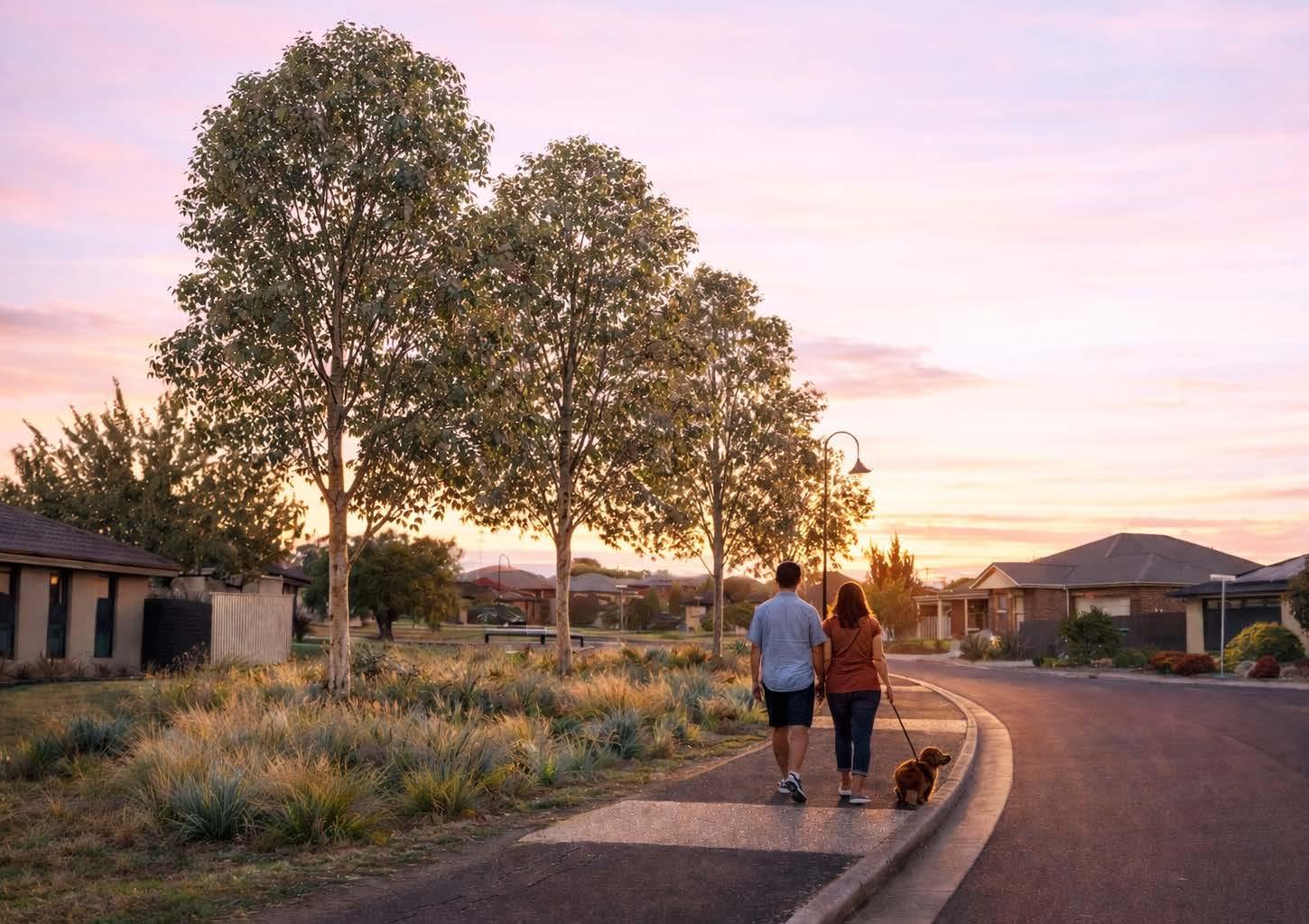
Artist impression of Comice place showing what the street could look like with future native planting along drainage corridor.
Image: City of Launceston
July 2027
August 2027
Sept 2027
ZONE 4, FY 29/30
Covers streets south of and including University Way, west of George Town Road, and north of the Newnham suburb boundary.
Table 1.6 Newnham Zone 4 Tree Planting Schedule
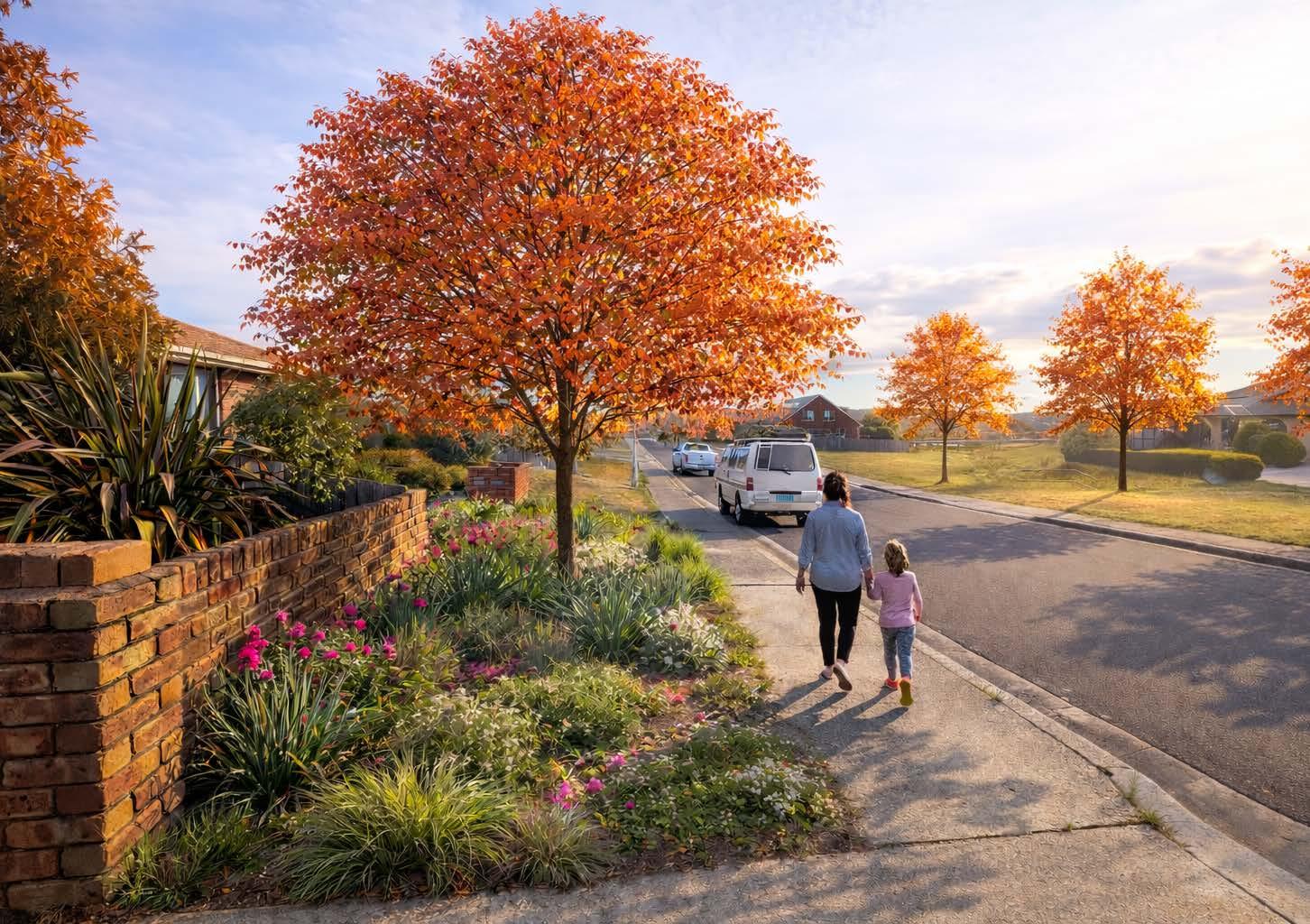
Artist impression of Camira Street, showing what the street could look like with future community naturestrip planting and deciduous trees.
Image: City of Launceston
STREET DESIGN GUIDANCE
Newnham streets contain a diverse range of verge widths, building interfaces, and surrounding environmental conditions. Consequently, street tree species have been selected on a street-by-street basis, guided by the principle of planting the largest canopy tree appropriate for the space available. This approach ensures the long-term delivery of shade, canopy cover, and urban cooling benefits, while still respecting spatial and infrastructure constraints. All tree selections are consistent with the City of Launceston Street Tree Masterplan (currently in draft form), ensuring ongoing alignment between this project and Council’s broader strategic direction for street tree planting.
The street tree design has been informed by the following core principles:
Solar access and overshadowing considerations
Species have been chosen to avoid unreasonable shading of private properties. In particular, evergreen species have generally been placed on the northern side of east–west aligned streets to maintain winter solar access for residents, while deciduous species have been considered where shading impacts require mitigation.
Compatibility with underground and overhead services
Species selection has considered existing and proposed service locations, including water, sewer, stormwater, power, and telecommunications assets. Trees have been chosen for root behaviour and mature size to minimise conflict with services, pavement, and built infrastructure, and to support long-term asset protection.
Integration with local vegetation character
Where possible, species have been selected to reflect and complement the surrounding endemic vegetation communities. This supports local biodiversity outcomes, habitat continuity, and landscape character, particularly in streets that interface with Newnham Creek Reserve and other natural areas.
Respect for existing street tree character
The proposed palette builds upon the strengths of the existing street tree network. In streets where healthy, successful specimens are already present, the same or complementary species have been selected to maintain avenue consistency, visual cohesion, and neighbourhood identity.
Together, these principles ensure street tree plantings that are spatially appropriate, environmentally responsive, and community focused, supporting a resilient and attractive canopy network for Newnham into the future.
The diagrams in the following pages demonstrate the principles behind the design process in Newnham.
Verge gardens
In addition to tree planting undertaken by council, road verges also present a wonderful opportunity to increase biodiversity and habitat within the suburb and greatly improve the character of Newnham. Residents are encouraged to discuss this option with council, who are able to provide guidance on appropriate species for planting.
Planted road verges play a vital role in enhancing biodiversity and providing habitat for various species within urban environments. These green spaces serve as interconnected corridors, facilitating the movement of wildlife across fragmented landscapes. By incorporating diverse native plant species, road verges offer food and shelter for pollinators such as bees, butterflies, and birds, contributing to the preservation of local ecosystems. Additionally, the presence of vegetation helps mitigate the effects of urban heat islands, regulate water runoff, and improve air quality by absorbing pollutants. Planted road verges provide opportunities for communities to connect and engage, fostering a sense of stewardship among residents. Thus, recognising the importance of these green corridors and implementing sustainable management practices is crucial for promoting biodiversity conservation and creating healthier, more resilient urban environments.
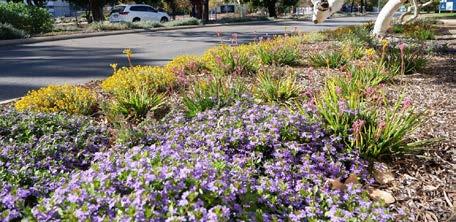
Options for verge gardens could include native, drought tolerant species, vegetable gardens or polinator attracting species.
NORTH - SOUTH STREETS (POWER LINES EAST)
For N–S streets air temperature, mean radiant temperature and solar radiation are greater on the east side in the early morning and greatest on the west side in the mid-afternoon.
Planting small deciduous and evergreen trees on the east side of the street will take advantage of the thermal warming of winter morning sun, and also allow for trees under power lines.
Planting medium deciduous trees on the west side of the street will block the undesirable afternoon sun in the summer months, while still allowing sunlight to permeate during the winter months. Smaller evergreen trees can be planted in areas where overhead wires cross over to this side of the street.
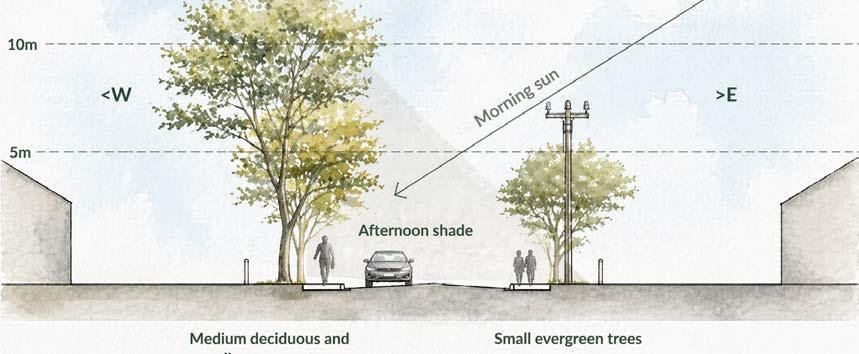
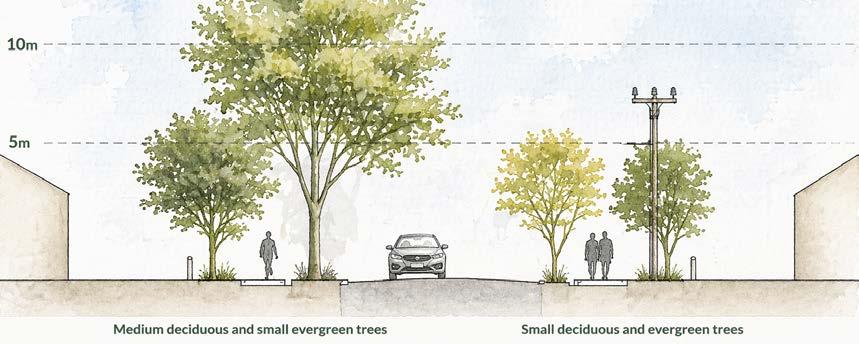
Figure 1.1 Option one, all trees planted in existing verge.
Figure 1.2 Option 2, Trees planted in both verge and open tree pit in road reserve.
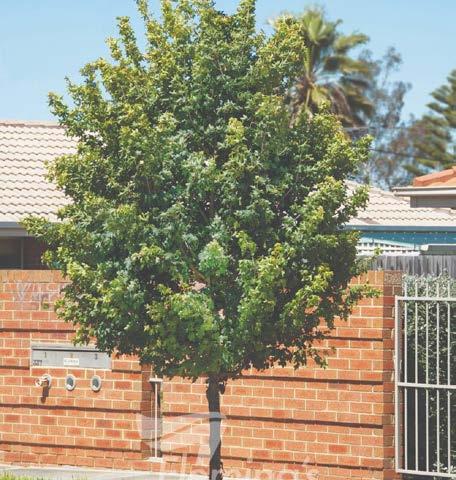
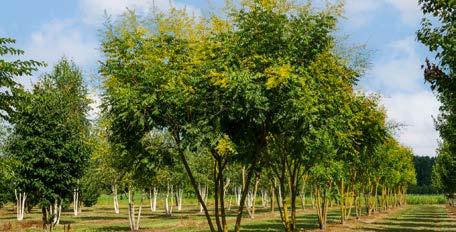
Medium to Large deciduous
• Acer campestre ‘Elsrijk’ (7 x 6m)
• Fraxinus angustifolia ‘Raywood’ (12 x 9m)
• Ulmus parvifolia ‘Todd’ (10 x 11m)
• Koelreuteria paniculata (7 x 7m)
Small evergreen
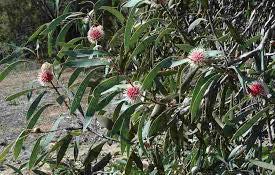
• Hakea laurina (6 x 5m)
• Syzygium australe ‘Resilience’ (4 x 2m)
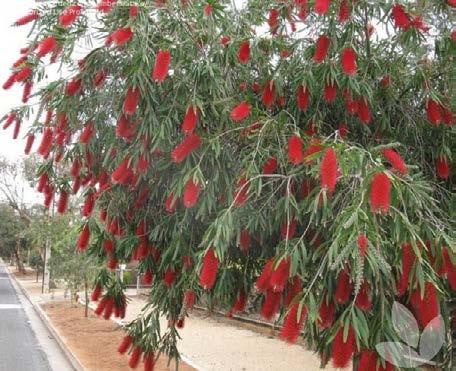
• Callistemon viminalis ‘Kings Park Special’ (4 x 4m)
Small deciduous
• Catalpa bignonioides ‘Nana’ (5 x 4m)
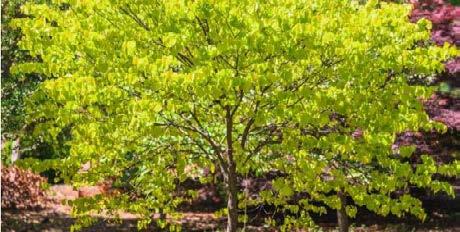
• Cercis canadensis ‘Aurelian’ (6 x 6m)
• Malus transitoria ‘Royal Raindrops’ (6 x 4m)
paniculata
3. Cercis candensis ‘Aurelian’
4. Fraxinus angustifolia ‘Raywood’
5. Hakea laurina
6. Callistemon viminalis ‘Kings Park Special’
1. Acer campestre
2. Koelreuteria
NORTH - SOUTH STREETS (POWER LINES WEST)
The presence of power lines along the western side presents challenges in creating afternoon shade from the intense western sun. Therefore, prioritising the eastern side for planting large deciduous trees becomes crucial to maximise canopy coverage while ensuring adequate light to properties during winter. These majestic deciduous trees will also contribute to the character of Newnham by forming impressive avenues.
To provide shading on the western side, the use of small evergreen trees with broad canopies, strategically positioned to shade directly over the footpath.
By incorporating a combination of evergreen and deciduous trees on both sides of the street, foliage and color can be maintained throughout the winter months, contributing to increased biodiversity in the area.
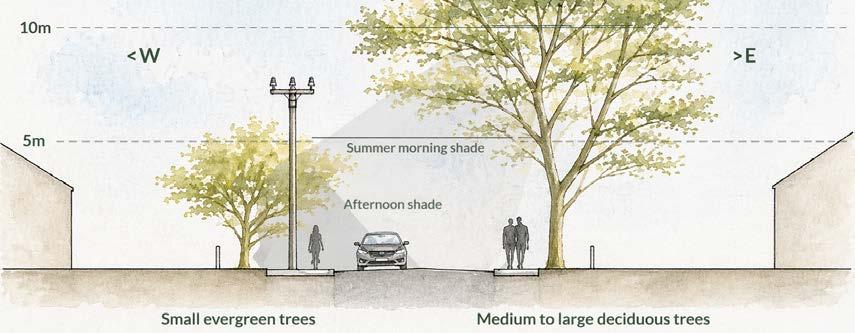
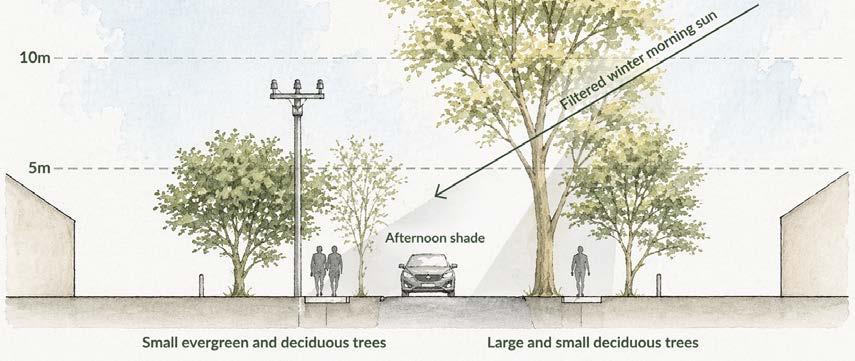
Figure 1.3 Option one, all trees planted in existing verge.
Figure 1.4 Option 2, trees planted in both verge and open tree pit in road reserve.
Large deciduous
• Quercus palustris (15 x 8m)
• Acer negundo (15 X 12m)
• Ulmus parvifolia ‘Reflection’ (10 x 11m)
Small evergreen
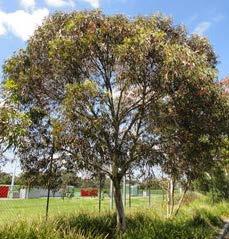
• Eucalyptus leucoxylon subsp. ‘Euky Dwarf’ (7 x 5m)
• Eucalyptus pauciflora ‘Little Snowman’ (6 x 4m)
• Melaleuca linariifolia (4 x 4m)
• Callistemon viminalis ‘Kings Park Special’ (4 x 4m)
Small deciduous
• Fraxinus ornus ‘Meczek’ (5 x 4m)
• Catalpa bignonioides ‘Nana’ (5 x 3m)
• Lagerstroemia indica ‘Zuni’ (4 x 3m)
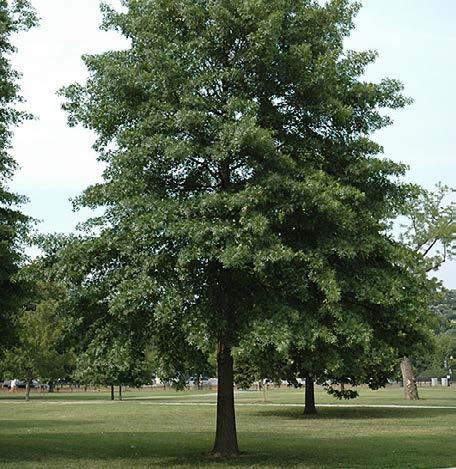
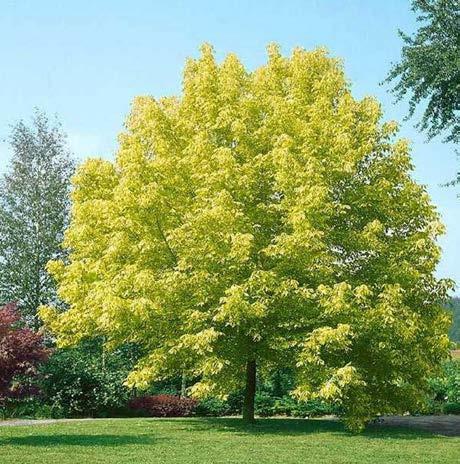
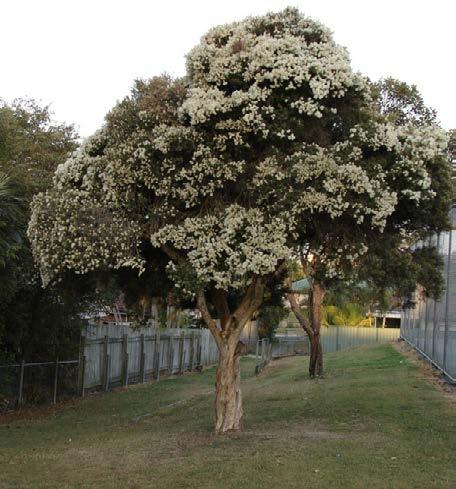
1. Quercus palustris ‘Pin Oak’
2. Eucalyptus leucoxylon subsp. ‘Euky Dwarf’
3. Acer negundo
4. Melaleuca linariifolia
EAST - WEST STREETS (POWER LINES NORTH)
Midday thermal benefits are limited on east-west streets aligned with the summer sun’s zenith. Therefore, it’s crucial to utilise trees with broad canopies where possible to maximize shade and thermal advantages.
Introducing a blend of deciduous and evergreen trees on the north side of the street can offer thermal warming during winter months. Planting deciduous trees on the south side ensures adjacent properties continue to benefit from the warming effects of the winter sun.
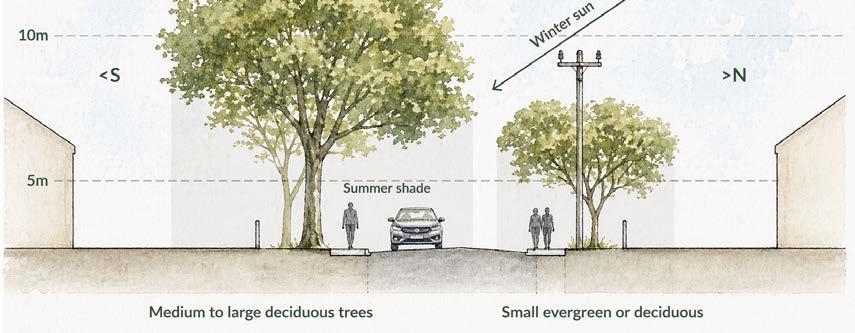
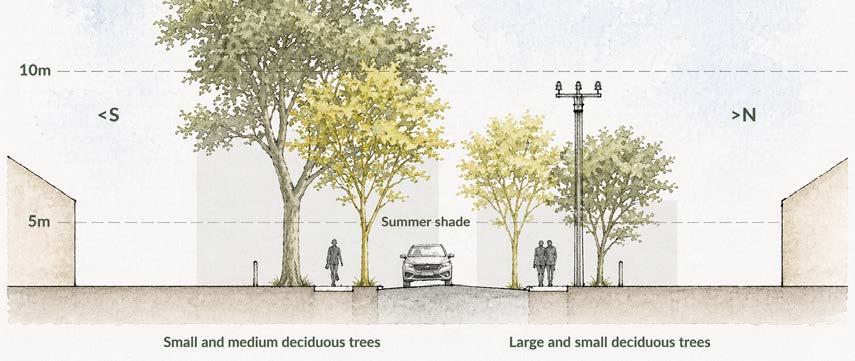
Figure 1.3 Option one, all trees planted in existing verge.
Figure 1.4 Option 2, trees planted in both verge and open tree pit in road reserve.
Medium to large deciduous
• Pistacia chinensis (8 x 6m)
• Parrotia persica (7 x 5m)
• Fraxinus angustifolia ‘Raywood’ (12 x 9m)
• Acer negundo (10 x 8m)
• Koelreuteria paniculata (7 x 7m)
Small evergreen
• Tristaniopsis laurina ‘Luscious’ (7 x 4m)
• Agonis flexuosa ‘Burgundy’ (5 x 3m)
• Syzygium australe ‘Resilience’ (4 x 2m)
Small deciduous
• Lagerstroemia indica ‘Zuni’(3 x 2m)
• Gleditsia triacanthos ‘Elegantissima’ (5 x 3m)
• Malus transitoria ‘Royal Raindrops’ (6 x 4m)
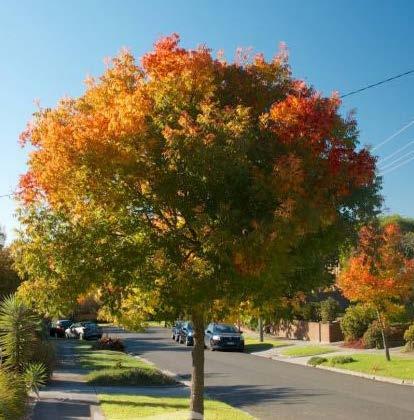
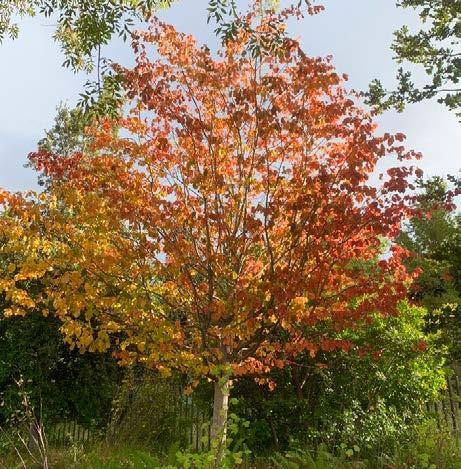
Tristaniopsislaurina ‘Tristanopsis laurina’
3. Parrotia persica
4. Lagerstroemia indica ‘Zuni’
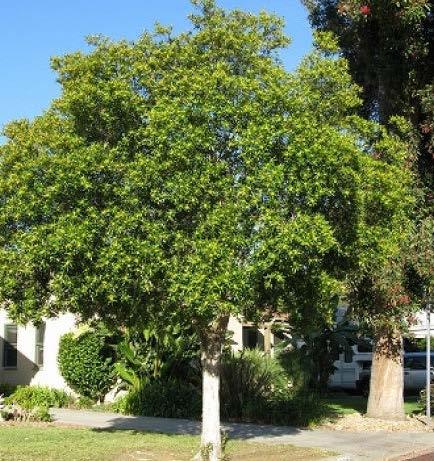
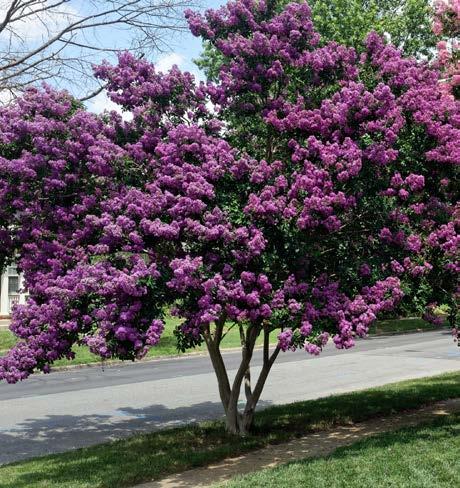
1. Pistacia chinensis
2.
EAST - WEST STREETS (POWER LINES SOUTH)
With power lines situated along the southern side, there exists a prime opportunity for the planting of larger evergreen trees on the northern side of the road. Employing ideally native species in this context will greatly enhance biodiversity and habitat within the suburb.
Furthermore, opting for smaller, broad-canopy deciduous or evergreen trees on the southern side can effectively offer shade from the intense midday sun for pedestrians and parked vehicles, all while ensuring that sunlight isn’t unduly obstructed to neighboring properties during winter months.
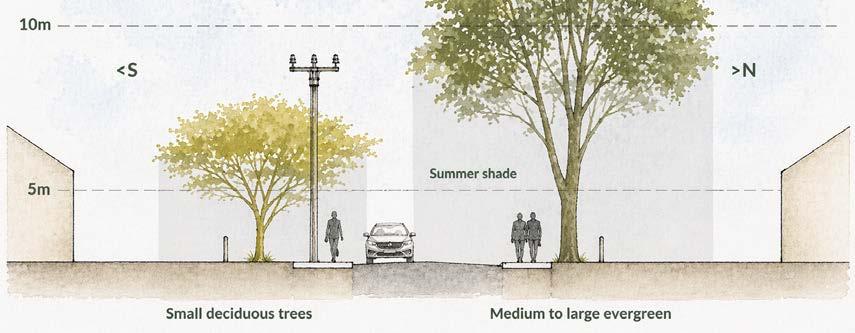
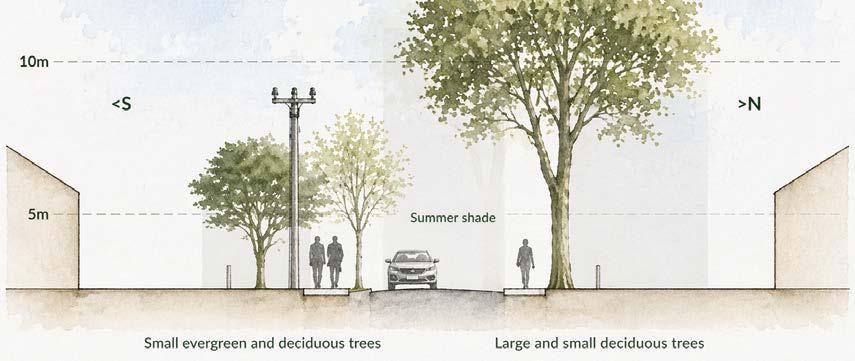
Figure 1.7 Option one, all trees planted in existing verge.
Figure 1.8 Option 2, trees planted in both verge and open tree pit in road reserve.
Medium to large evergreen
• Banksia serrara (12 x 4m)
• Corymbia eximia ‘Nana’ (8 x 6m)
• Tristania laurina (9 x 4m)
• Corymbia maculata ‘Gamai’ (12 x 4m)
Small deciduous
• Prunus ‘Kanzan’ (5 x 4m)
• Lagerstroemia indica x L. fauriei ‘Tuscarora’ Indian Summer (6 x 4m)
• Cercis candensis ‘Forest Pansy’ ( 5 x 5m)
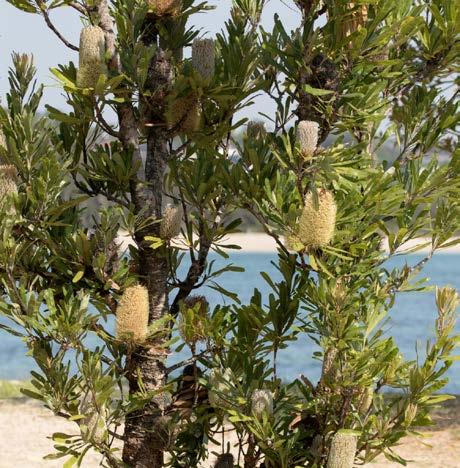
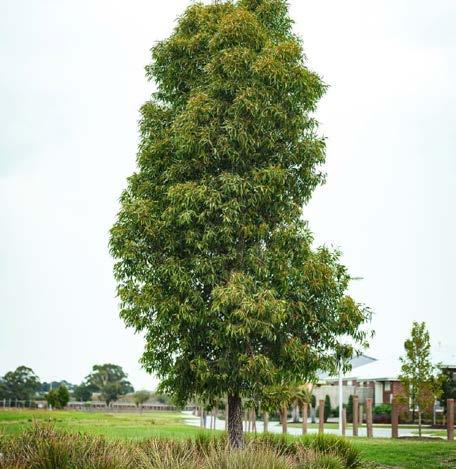
4. Lagerstroemia indica
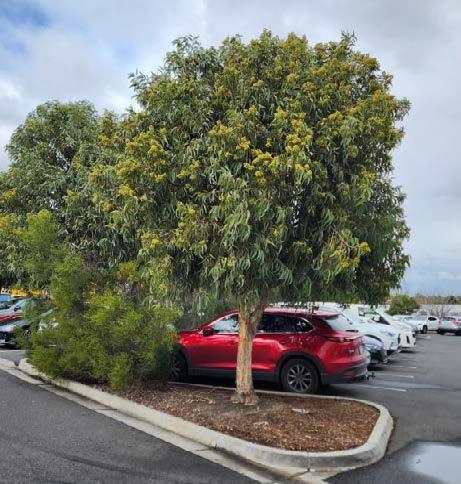
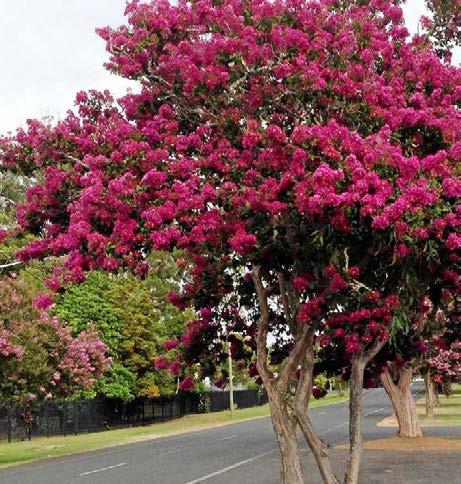
1. Banksia serrata
2. Corymbia eximia ‘Nana’
3. Corymbia maculata ‘Gamai’
PRECINCT GREENING INCENTIVE PROGRAM
Purpose
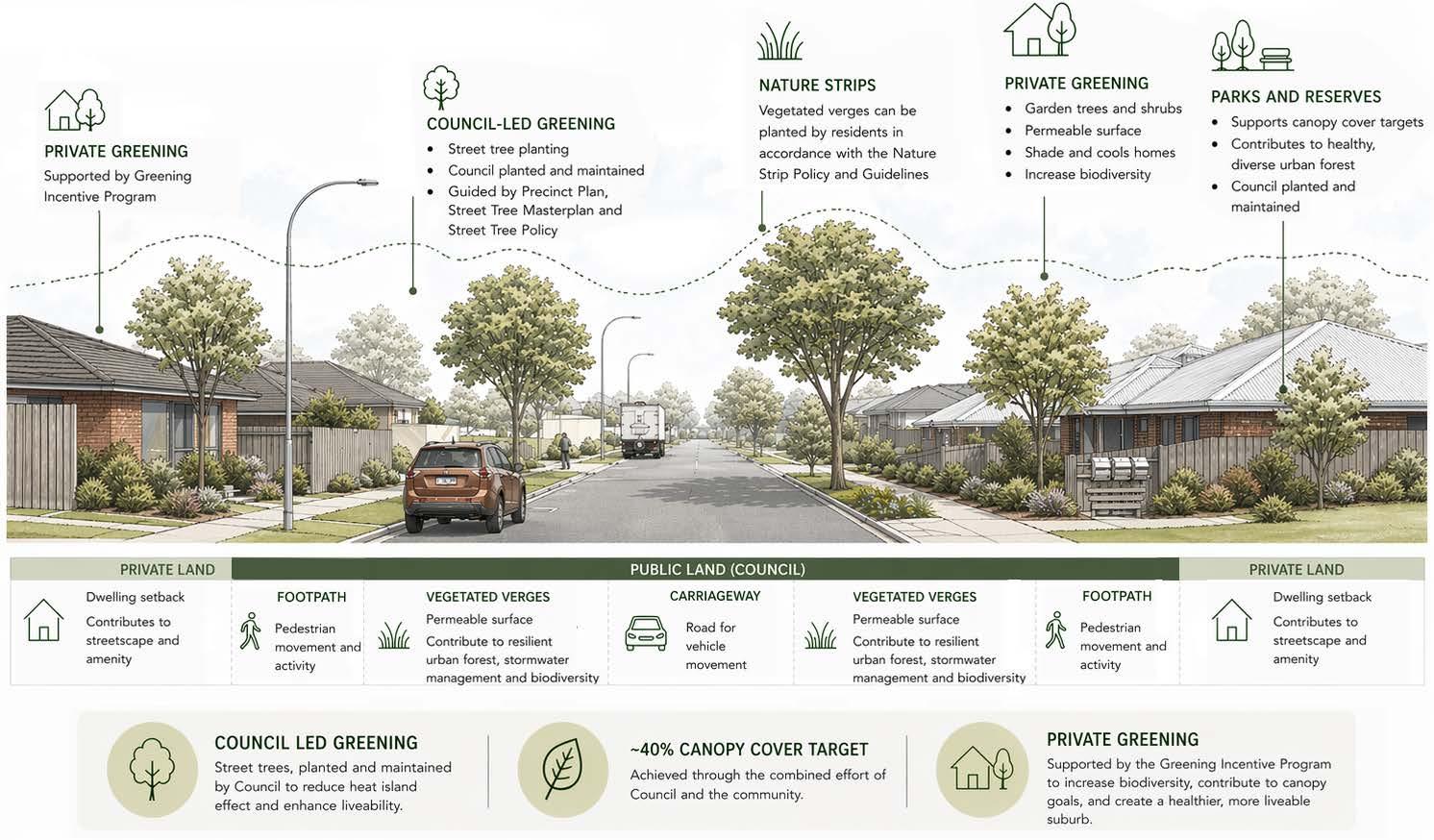
The Precinct Greening Incentive Program is a targeted initiative designed to support delivery of the Newnham Urban Greening Precinct Plan by facilitating vegetation establishment on private land within priority planting areas.
While Council-led planting focuses on streets, parks and other public land, a significant proportion of the precinct is privately owned. Achieving meaningful increases in canopy cover and associated urban cooling outcomes requires coordinated greening across both public and private domains.
This program provides a mechanism to extend greening outcomes beyond the public realm and accelerate canopy uplift at a precinct scale.
Program Overview
The program provides eligible households within active planting zones with a voucher to purchase trees and associated vegetation from approved local nurseries.
Key characteristics of the program include:
• Spatial targeting – eligibility is limited to properties within defined precinct planting zones aligned with staged delivery
• Time-bound rollout – program availability corresponds with Council planting programs within each zone
• Incentive-based participation – supports voluntary uptake of private land planting
• Local supply chain integration – utilises local nurseries to support delivery
The program is intended to operate alongside Council’s street tree planting program to achieve coordinated, neighbourhood-scale greening outcomes.
Eligibility Framework
Eligibility is restricted to properties located within the current active planting zone identified in the Newnham Precinct Plan staging.
This approach ensures:
• Alignment with Council’s annual planting program
• Concentration of investment within priority areas
• Delivery of measurable canopy uplift at a local scale
Strategic Alignment
The Precinct Greening Incentive Program directly supports implementation of the City of Launceston’s Urban Greening Strategy (2023–2040) and associated technical frameworks.
Specifically, the program contributes to:
• Urban canopy expansion; Supporting progress toward the municipality-wide canopy cover target through increased planting on private land.
• Heat mitigation and climate resilience; Increasing vegetation in areas identified as having elevated land surface temperatures and lower canopy cover.
• Equitable greening outcomes; Targeting investment within priority precincts identified through combined canopy, heat and socioeconomic analysis.
• Biodiversity enhancement; Encouraging a diversity of species across the urban landscape, complementing public realm planting.
• Integrated delivery model; Aligning private land planting with Council-led street tree programs to achieve cumulative, precinct-scale outcomes.
Contribution to Precinct Outcomes
By enabling private land participation, the program:
• Expands the total area available for greening within the precinct
• Reinforces streetscape planting outcomes through adjacent private land canopy
• Accelerates canopy establishment beyond what can be achieved through public land alone
• Supports long-term resilience through distributed planting across multiple land tenures
This integrated approach is critical to achieving the intended outcomes of the Newnham Urban Greening Precinct Plan.
Integrated approach to achieving 40% canopy cover.
PARKS AND RESERVES
Parks and reserves are essential to urban greening and biodiversity, providing important habitats within suburban areas while supporting ecological resilience. These spaces help reduce the urban heat island effect, improve air quality, and offer recreational and educational benefits to the community.
Increasing tree, shrub, and grass planting within parks and reserves enhances environmental sustainability, supports native wildlife, and contributes to healthier, more liveable neighbourhoods.
Canopy cover is a critical component of wellfunctioning urban parks. Parks and reserves in Newnham should target a minimum canopy cover of 40%, consistent with the Launceston Urban Greening Strategy, to deliver cooling, air quality, and amenity benefits.
Tree planting should incorporate a diverse mix of species, prioritising endemic and locally appropriate species to improve biodiversity, resilience, and habitat value. Trees should be strategically located along paths, near play and picnic areas, and around water bodies to maximise shade, cooling, and visual amenity.
Priority areas for greening of parks and reserves are informed by The Urban Greening Strategy priority data, as outlined in Table 2.1.
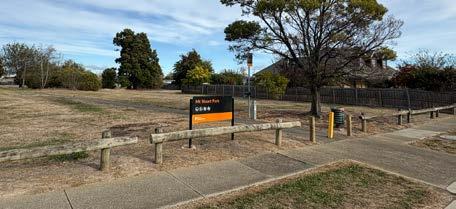
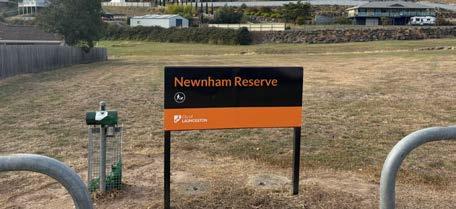
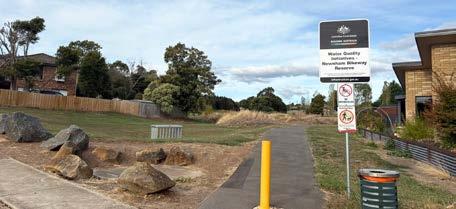
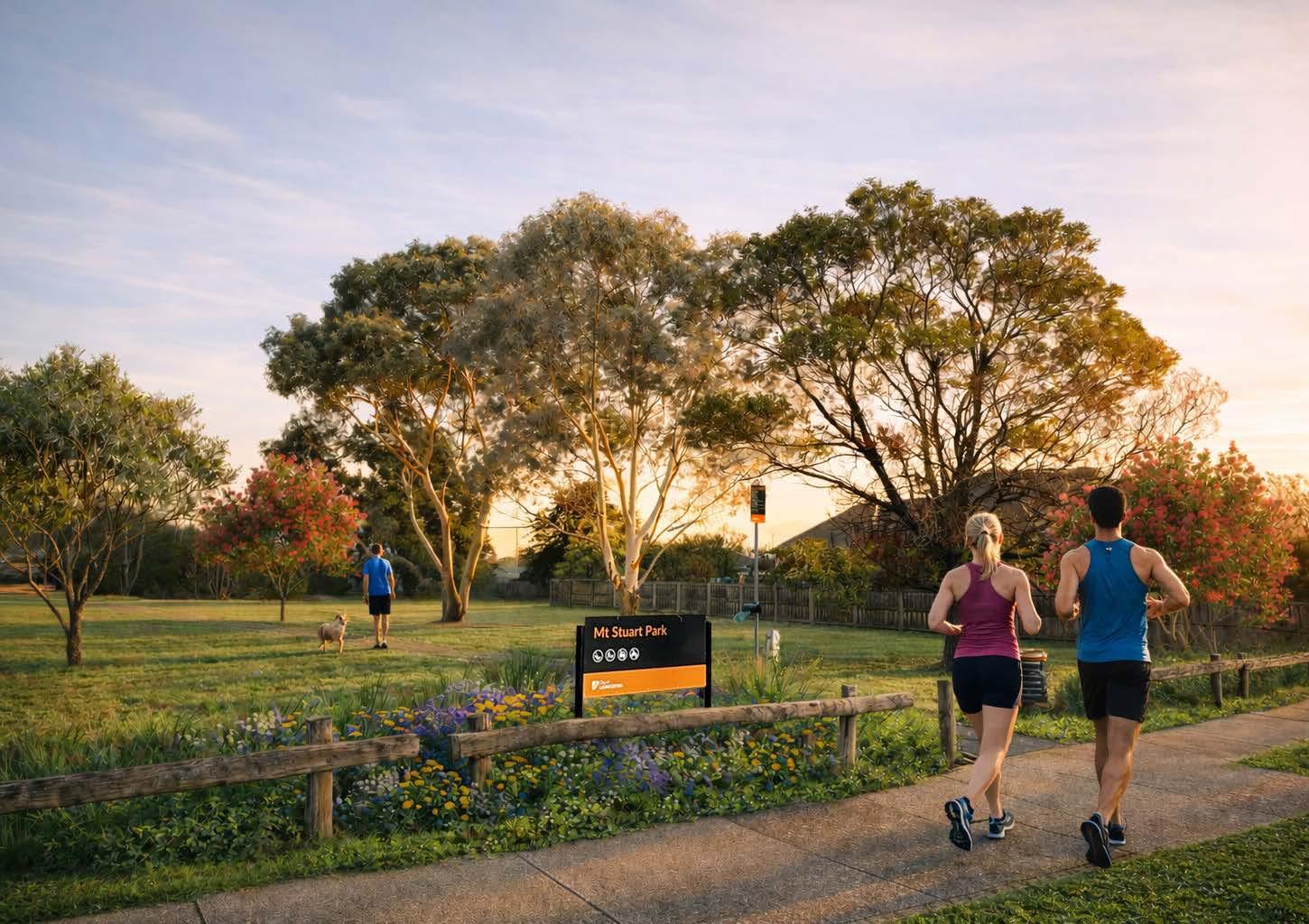
Image: Artist impression of future Mt Stuart Park
References
• Australian Bureau of Statistics (2021) Census of Population and Housing.
• Australian Bureau of Statistics (n.d.) Index of Relative Socio-economic Advantage and Disadvantage (IRSAD).
• City of Launceston (2014) Greater Launceston Plan.
• City of Launceston (2025–2035) Strategic Plan.
• City of Launceston (2019) Sustainability Strategy.
• City of Launceston (2021) 2021 Census Results – Newnham. Available at: https://home.id.com.au/
• City of Launceston (2022) Sustainability Action Plan 2022–2030.
• City of Launceston (2023-2040) Urban Greening Strategy.
• City of Launceston (2023) Urban Greening Implementation Plan 2023–2040.
• City of Launceston (2026, Draft) Street Tree Masterplan.
• City of Launceston (2026, Draft) Recreation and Open Space Strategy.
• Department of Natural Resources and Environment Tasmania (2022) Tasmanian Planning Scheme.
• Department of Natural Resources and Environment Tasmania (n.d.) From Forest to Fjaeldmark – Edition 2: Dry eucalypt forest and woodland (Eucalyptus amygdalina). Available at: https://nre.tas.gov.au/Documents/f2f_dry_ eucalypt.pdf
• Department of Natural Resources and Environment Tasmania (n.d.) From Forest
to Fjaeldmark – Edition 2: Native grassland. Available at: https://nre.tas.gov.au/Documents/ f2f_native_grassland.pdf
• Department of Natural Resources and Environment Tasmania (n.d.) Launceston Local Provisions Schedule.
GeoNeon (2022) Urban Greening Technical Report prepared for City of Launceston.
• NSW Department of Planning, Industry and Environment (2021) Street Tree Planting Design Manual. Available at: https://www.planning.nsw. gov.au/sites/default/files/2023-10/street-treedesign-manual.pdf
• RecFIT Tasmania (n.d.) Local Climate Profile – Launceston City Municipality. Available at: https://recfit.tas.gov.au/__data/assets/pdf_ file/0007/348919/Launceston_Climate_Profile.pdf
Note: This report was prepared with the assistance of AI-supported tools for editing and visualisation. All content has been reviewed, edited, and verified by the project team to ensure accuracy and alignment with project objectives.