



For the year ended December 31, 2025 Report prepared by the
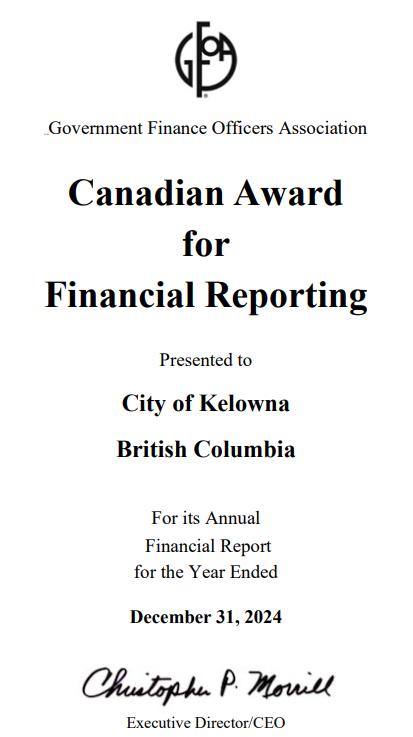
Government Finance Officers Association of the United States and Canada (GFOA) awarded a Canadian Award for Financial Reporting to the City of Kelowna for its annual financial report for the fiscal year ended December 31, 2024. The Canadian Award for Financial Reporting program was established to encourage municipal governments throughout Canada to publish high quality financial reports and to provide peer recognition and technical guidance for officials preparing these reports
In order to be awarded a Canadian Award for Financial Reporting, a government unit must publish an easily readable and efficiently organized annual financial report, whose contents conform to program standards. Such reports should go beyond the minimum requirements of generally accepted accounting principles and demonstrate an effort to clearly communicate the municipal government’s financial picture, enhance an understanding of financial reporting by municipal governments, and address user needs.
A Canadian Award for Financial Reporting is valid for a period of one year only. We believe our current report continues to conform to the Canadian Award for Financial Reporting program requirements, and we will be submitting it to GFOA to determine its eligibility for another award.
We acknowledge that the City of Kelowna is located on the traditional, ancestral, unceded territory of the syilx Okanagan people.

Welcome to our annual report showing how smart investments in 2025 turned into real impact for the people and places that make up our safe, sustainable community.
Over the past decade, Kelowna has experienced remarkable growth, driven by its reputation as a vibrant, forward thinking community in the heart of the Okanagan Valley. Guided by Council Priorities, strategic goals, and a bold vision to 2040, we are advancing our ambition to become a City of the Future one that delivers stable services, makes smart investments, and manages public resources responsibly for the more than 170,000 people who call Kelowna home.
This year’s achievements reflect our commitment to responsible leadership, collaboration, and service excellence. We continue to work as one organization to deliver what residents value most: quality services, fiscal responsibility, and transparency.
Together with our partners, we’re building a city that’s safer, more connected, and ready for what’s next. We invite you to explore this report and see how our shared efforts are shaping Kelowna’s future.

To learn more about the City of Kelowna, visit kelowna.ca.
On behalf of Council, I am pleased to present the City of Kelowna’s 2025 Annual Report. This report outlines the work we have done over the past year and the progress we are making as a community.
Kelowna continues to experience remarkable growth. With that growth comes the responsibility to invest in the infrastructure and services our community needs both today and into the future.
From the beginning of this Council term, we made a decision to get back to the basics. We set clear priorities, built a plan, and committed to delivering measurable results while being accountable to the people of Kelowna. This work is made possible through collaboration Council, City staff, and community partners working together toward shared goals.
In 2025, that approach continued to guide our work.

Community safety remained our number one priority. Council continued to advocate for changes to the justice system, including bail reform, increased Crown prosecutor capacity, and the need for mandatory, compassionate care for individuals with complex needs. At the same time, we made targeted local investments to strengthen RCMP, Bylaw, and Fire services, while working with partners to improve coordination and response on the ground.
Council also accelerated investment in the infrastructure and amenities that support everyday life and long-term community well-being. The City has doubled its level of capital investment relative to 2023. This historic level of investment is advancing projects in transportation and transit, recreation facilities, parks, civic buildings, the airport, and critical water infrastructure. These are legacy investments projects that will shape how our city grows and functions for decades to come.
At the same time, Council remained firmly committed to fiscal responsibility. Through service- based budgeting, increased financial reporting, and improved infrastructure delivery, we are ensuring residents can clearly see where their tax dollars are going and the outcomes they are delivering.
With only about a third of the City’s revenues generated through property taxes in 2025, this approach has allowed us to maintain one of the lowest and most consistent tax increases in the province while continuing to deliver the infrastructure and services our community expects. User fees, sustainable business units, partnerships, grants, and reserves all play a role in ensuring we get the best value from every dollar collected.
This annual report highlights the progress made across all six Council priorities from Crime & Safety, Transportation, Affordable Housing, Homelessness, Agriculture & Environment, and the Economy while also advancing corporate priorities. Together, these efforts reflect a disciplined and balanced approach focusing on what matters most, delivering results, and planning for the future.
None of the progress our city makes happens alone. Kelowna is a community built by people who step forward for their neighbours, for their families, and for the next generation. That responsibility continues to guide our work today.
Council is proud of the progress made in 2025, and we remain committed to making the decisions necessary to continue building a safe, strong, and prosperous Kelowna.
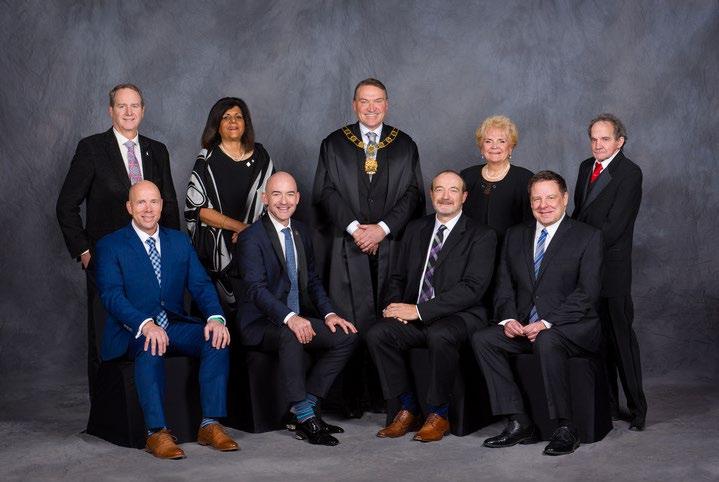
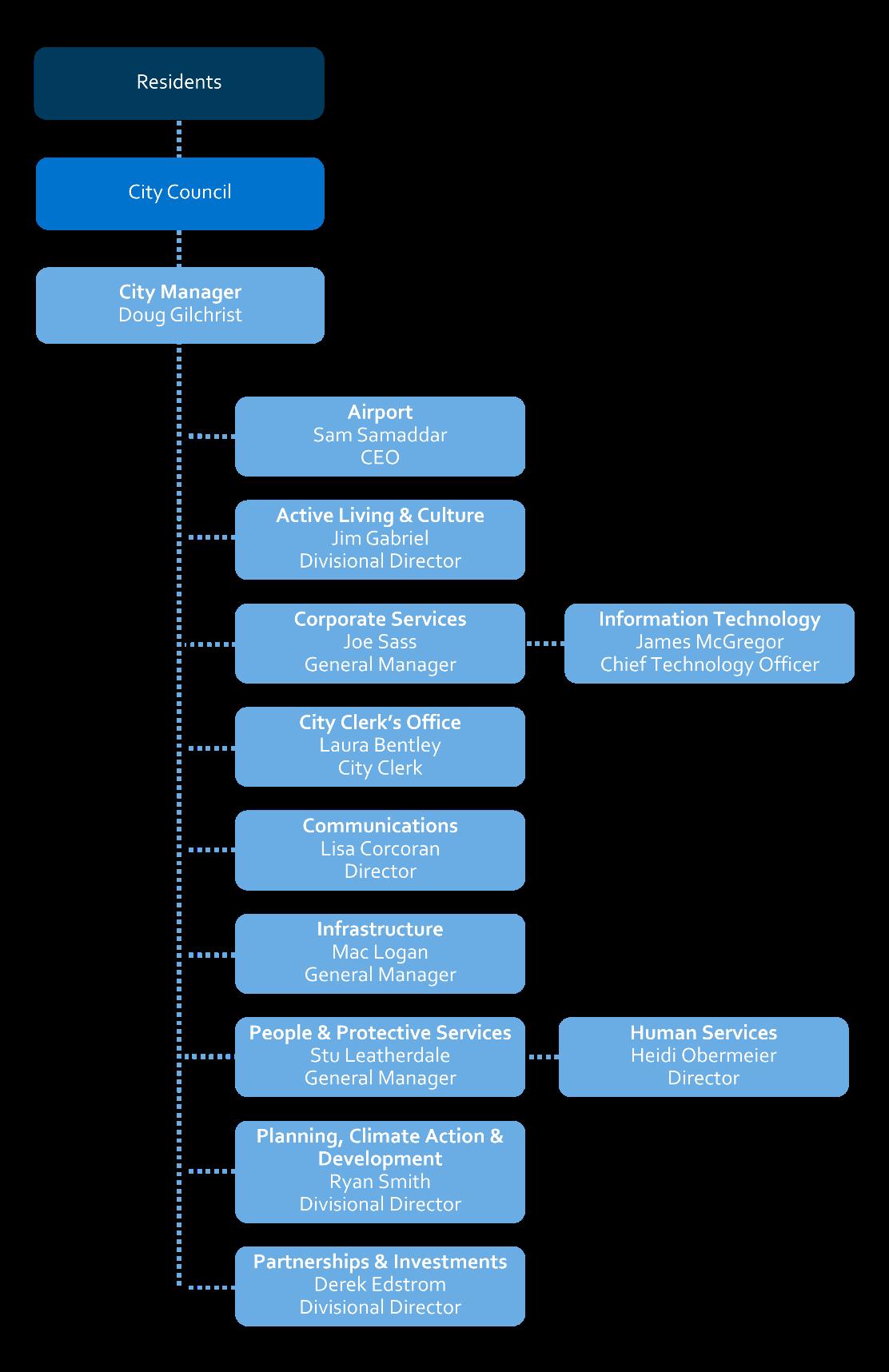
City Council is the governing body for the City of Kelowna. Council is comprised of the Mayor and eight Councillors elected to a four-year term. Council was elected on October 15, 2022.
Council is responsible for providing leadership to address the existing and future needs of the City. Council achieves these needs by establishing policies, bylaws and strategic priorities that benefit the City, prioritizing programs and services that are fiscally responsible and maximize overall value for community members. Council meets regularly and welcomes public attendance at open meetings or feedback by mail or email learn more at kelowna.ca/council.
Council delegates operational responsibility to the City Manager, who ensures Council’s priorities are met.
Doug Gilchrist City Manager, Kelowna
I’m pleased to share the City of Kelowna’s 2025 Annual Report with residents, businesses, and visitors. Covering the third year of the 2022–2026 Council term, it reflects a year of momentum, one marked by steady progress on Council priorities, meaningful results, and continued investment in the people and systems that support our work
Delivering results in a growing city like ours takes intention. It means making thoughtful, well timed investments and staying focused on what matters most. In 2025, the organization concentrated on disciplined execution, strong financial stewardship, and building the capacity needed to grow responsibly. Across all departments, our teams aligned people, processes, and investments to meet today ’s needs while thoughtfully preparing for the future
As growth and demand increased, the City accelerated the delivery of capital projects, more than doubling the annual rate of capital investment compared to 2023. Important progress was made across transit and transportation networks, recreation facilities, parks and civic buildings, airport infrastructure, and critical water related systems. Building infrastructure ahead of need improves coordination, stretches public dollars further, and reduces disruption for residents and businesses. This is purposeful growth in action, planning today to support reliable services, economic vitality, and long term resilience
Public safety remained a key focus throughout the year. Targeted investments supported new positions in RCMP, Bylaw, and Fire services, along with enhanced traffic safety initiatives and alternative response models for people in crisis. Together, these efforts strengthened frontline capacity, improved visibility and response, and helped ensure police and emergency services can stay focused on higher risk and criminal matters. This balanced approach recognizes that a growing community needs both strong enfor cement and modern, compassionate service models
Strong financial management supported all of this work. The City continued to rely on a diversified revenue model, with about two-thirds of annual revenues generated through sources other than property taxes. Those sources include user fees, self funded business units such as the airport and parking, grants from other levels of government, and partnerships. This approach helped maintain stable service delivery, support significant capital investment, and keep property tax impacts low and predictable.
Operational improvements further strengthened the organization’s ability to deliver. Service based budgeting, quarterly budget reviews, and continued digital transformation improved transparency, flexibility, and data informed decision making across the organization. These tools help ensure resources are clearly linked to Council priorities, community expectations, and service outcomes, while allowing the organization to adapt as needs evolve
The progress achieved in 2025 reflects the dedication and professionalism of City staff across all departments. Through accelerated investment, strengthened public safety services, improved operations, and responsible financial management, the organization continues to deliver strong value for the community while positioning Kelowna to navigate growth with confidence, today and into the future


Council Priorities serve as a compass, guiding how the City invests public dollars and delivers results for the community. Informed by community needs and the long term Imagine Kelowna vision of “Building the City of the Future,” these priorities establish a four year focus on addressing Kelowna’s most pressing challenges.
For the 2022–2026 term, Council identified six priorities: crime and safety, affordable housing, homelessness, transportation, agriculture and environment, and the economy. These priorities are in addition to the essential services the City provides every day, from first responders and clean drinking water to safe roads and recreation.
The City worked towards the following desired results:
Business break and enters and thefts are decreasing.
Residents’ sense of safety is increasing.
Public safety resources are keeping pace with community growth.
Better t raffic enforcement.
Use of alternate call response and flexible deployment.
Improved access to affordable housing.
Improved housing supply.
Increased supply of affordable housing options for low to moderate incomes Electrical infrastructure can support growth.
A decrease in the number of people living on our streets.
A reduction in social issues stemming from lack of support.
Capacity and traffic flow is enhanced on major road corridors. More trips by alternative transportation modes.
Traffic safety management is increasing.
A reduction in corporate and community greenhouse gas emissions.
More protected and restored natural areas.
A climate lens is applied to City decision making.
Enhanced climate emergency planning and response programs.
Sufficient agricultural water supply.
For the latest performance report on Council Priorities, visit council.reporting.kelowna.ca
Community Task Force on Economic Prosperity is established.
Accelerated development of major employment lands. Review investment in economic development programs.
Enhance sports tourism and recreation development.
Corporate Priorities are set by the City Manager and Senior Leadership Team to ensure the organization operates effectively and delivers high quality services and value to residents. These priorities complement Council Priorities and guide how we work toward the Imagine Kelowna vision of “Building the City of the Future” through efficient operations.
In 2025, the City focused on strengthening leadership capacity, advancing active financial management, and transforming how we work through digital solutions. This work was guided by the following desired results:







See how the City of Kelowna advanced Council and Corporate Priorities and invested in big capital projects. This report provides a year end status update on key initiatives, and the status of each project from completed to delayed


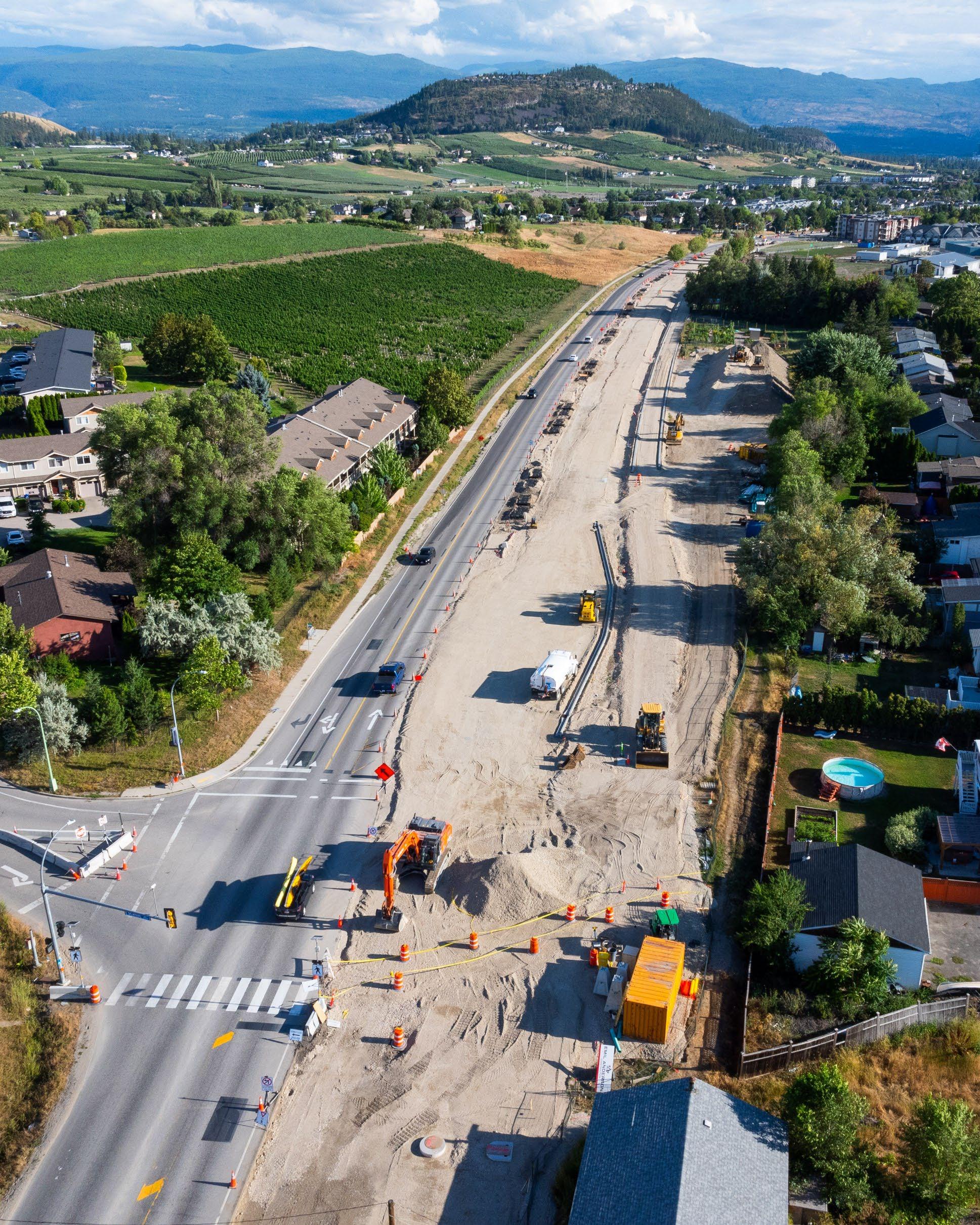
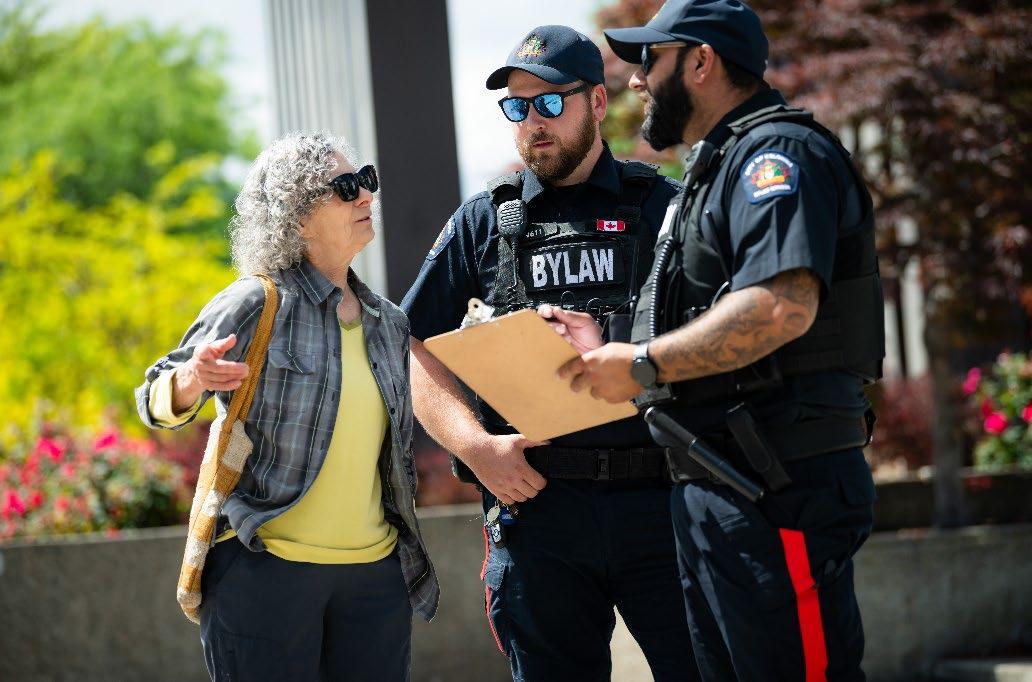
Making Kelowna safer is a top Council priority. The City’s focus was on reducing business break ins and theft, strengthening residents’ sense of safety, and ensuring public safety services keep pace with a growing community.
Here’s what the City delivered in 2025:
In October 2025, the City strengthened its advocacy on justice reform with the release of Chronic Offenders –Closing the Revolving Door, a paper calling on provincial and federal governments to tighten bail conditions for repeat property offenders and increase local Crown prosecutor capacity. These efforts aligned with federal legislation introduced later that month to strengthen bail laws and sentencing. Advocacy continued through meetings in Ottawa with the Attorney General and was amplified at the Union of BC Municipalities through meetings with the Attorney General and Solicitor General, participation in the Save Our Streets press conference, and media interviews, including a panel with the Premier. Regional mayors also reinforced these priorities through a joint op ed published in provincial, legislative, and local news outlets.
The City continued to advocate for the activation of a regional secure, compassionate care facility to better support individuals with complex mental health, substance use, and concurrent disorders, while improving community safety. This included meetings with the Attorney General and Solicitor General at the Union of BC Municipalities (UBCM) annual conference to emphasize the need for coordinated regional solutions. Ongoing engagement also took place with Dr. Daniel Vigo, BC’s Chief Scientific Advisor for psychiatry, toxic drugs, and concurrent disorders, including in person discussions at UBCM, to align advocacy with emerging clinical and policy approaches.

The City established a more sustainable funding model for Business Improvement Areas (BIA) to strengthen public safety programs. A new Business Liaison Corporal position was established at the Rutland Community Police Office to improve day to day communication and relationship building between police, businesses, and community associations. The 2025 Financial Plan also included funding to expand and sustain BIA ambassador programs, providing a visible presence in commercial areas. Additional investments supported community based restorative justice initiatives and expanded business coaching workshops, alongside other new programs aimed at improving safety and collaboration in BIA districts.
Efforts to improve traffic safety focused on increasing RCMP visibility and strengthening enforcement through coordinated initiatives. The Kelowna RCMP established a Traffic Safety Advisory Committee with ICBC, the BC Ministry of Transportation and Infrastructure, and the City to align priorities and improve collaboration. The Speed Watch Program resumed in the spring, resulting in 383 warning letters issued to drivers identified as excessive speeders. Variable speed signage was expanded in 2025 to support driver awareness and compliance, while work continued on the Safe Mobility Action Plan through year end.
Progress continued on alternate call response and more flexible deployment models to ensure appropriate responses to people in crisis. Beginning in December 2025, police began diverting select calls to a specialized mobile response team led by the Canadian Mental Health Association. Funded by all orders of government and identified as a key action in the Community Safety Plan, the two year Community Response, Community Led (CRCL) pilot supports individuals aged 13 and older experiencing mental health crises, including acute substance use issues, while allowing police to focus on higher risk and criminal matters.
Transportation is one of Council’s six priorities and plays a key role in keeping Kelowna moving. The City focused on improving traffic flow on major roads, making streets safer for everyone, and encouraging more people to choose transit, biking, walking, and ridesharing. As the community grows, we also worked to ensure traffic safety measures kept pace.
Here’s what the City delivered in 2025:
Work continued on the functional design of the Clement Crosstown Connector, a key multi modal transportation project and a Council advocacy priority for this term. Preliminary design for the Spall Road to Highway 33 segment was substantially complete in 2025, along with conceptual design for the Highway 33 to McCurdy Road segment. The full extension is planned in three phases: Spall to Highway 33, Highway 33 to McCurdy, and McCurdy to UBCO/YLW. The City has invested $2.4 million to advance design work between Spall and Highway 33, with an additional $600,000 contributed by the Province. Advoca cy with the Ministers of Transportation and Transit is ongoing to advance funding and delivery of the full corridor.
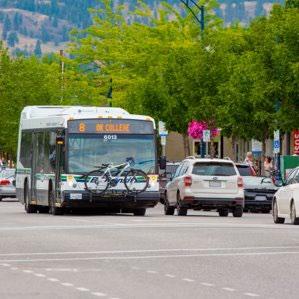
Advocacy efforts continued to secure funding for a new transit operations and maintenance centre to support future transit service expansion. Engagement at the Union of BC Municipalities included meetings with the Minister of Transportation and Infrastructure and BC Transit. Federal advocacy included meetings with the Minister of Housing, Infrastructure and Communities, presentations to the Federal Liberal Caucus, and discussions with Infrastructure Canada to advance Kelowna’s prioritization under the Canada Public Transit Fund.
Council has endorsed rezoning of the proposed site, enabling completion of the Agricultural Land Reserve exclusion in March. Design work for the Hollywood Road site continues alongside the Hollywood Road project, with building options, indicative designs, and cost estimates underway in 2025. Next steps include completing a business case and funding plan with Central Okanagan partners.
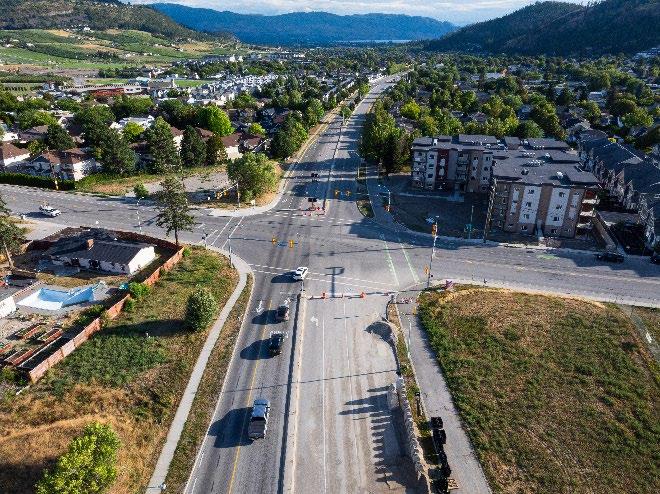
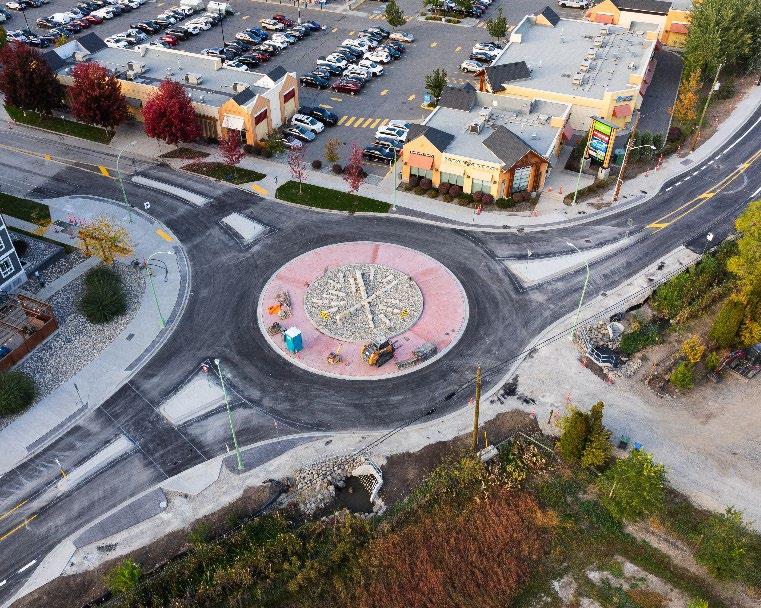
Traffic safety improvements continued across the city, with an update to Council in October summarizing progress on crosswalks, traffic calming, and cycling infrastructure. Key projects completed or underway include the opening of the Chute Lake Road roundabout in October 2025, completion of the Kane and Valley Road roundabout, and continued construction of the KLO–Mission Creek Bridge replacement. This project includes a new roundabout at KLO and Spiers Road and improved walking and cycling connections to the Mission Creek Greenway. Additional safety upgrades were made at the Spall/Springfield and Richter/KLO intersections, while the Hollydell Neighbourhood Traffic Calming Project completed at year-end. The Safe Mobility Action Plan completed in December, supported by a federal Enhanced Road Safety Transfer Payment grant.
Work continued to explore alternative transportation options between UBCO, Kelowna International Airport, and downtown Kelowna. The Ministry of Transportation and Transit is advancing the Highway 97 Strategic Corridor Review, which includes planning for transit priority improvements and long term dedicated transit lanes. In parallel, a research partnership with UBCO is examining opportunities along the Okanagan Rail Trail corridor to connect key destinations using both current and emerging travel modes. Development of a travel mode choice model is underway. The City’s Micromobility Program also continues to operate at the UBCO campus, providing an additional alternative travel option between the campus and downtown.
Significant transit service expansion was approved by Council in September, supported by operational and infrastructure investments. Transit fares were increased for the first time since 2015 to improve cost recovery and support service sustainability. An affordable transit pass program is being explored, informed by public survey feedback, alongside expanded access for equity deserving groups through a partnership with United Way. Construction is underway to expand capacity at the Hardy Street operations centre and prepare for battery electric buses, with completion targeted for mid 2026. Detailed design is also advancing for upgrades to the Mission, Okanagan College, and Rutland transit exchanges, with construction of the Rutland exchange underway and the remaining two planned for 2026 with federal infrastructure funding support.
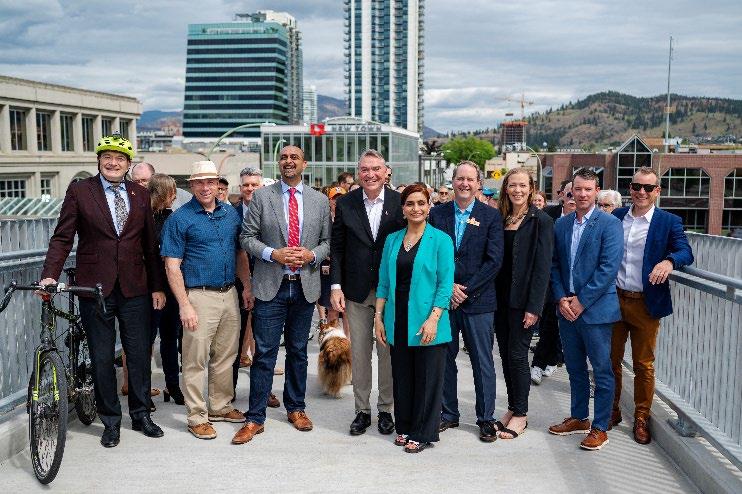
Major road and multi modal transportation investments continued to improve capacity, connectivity, and travel options. Glenmore Road widening between Union Road and Snowsell Road is underway, extending the five lane cross section northward in coordination with utility upgrades, with completion targeted for 2026. The Chute Lake Road roundabout and Frost Road extension were completed in October 2025, improving access between Upper Mission neighbourhoods and reducing pressure on local streets. The Bertram Multi Use Overpass was completed in early 2025, creating a key connection between the Central Green site, downtown, the future UBCO downtown campus, and surrounding active transportation corridors. Design work is underway for Burtch Road and Hollywood Road, with construction scheduled to begin in 2026, as well as for the Bernard and Burtch Road expansions, coordinated with the Parkinson Recreation Centre redevelopment. Preliminary design has also begun for the Commonwealth Road project. Continued expansion of transit services, sidewalks, active transportation routes, and employer trip reduction initiatives is helping to manage growth by providing safer and more viable travel alternatives.
The City continued to advance cycling infrastructure using a quick build approach where appropriate, informed by lessons learned from the 2024 Abbott Active Transportation Corridor post project review. Quick build materials were incorporated into the Bertram Overpass to support safe transitions at Leon Avenue, with additional quick build cycling improvements planned for Lawrence Avenue and Bertram Street in 2026. A 750 metre segment of the Sutherland Avenue Active Transportation Corridor was completed in 20 24 using a quick build approach. Detailed design is now complete for the 2.8 kilometre Rutland Neighbourhood Bikeway, which will connect residential areas, schools, parks, and public facilities. Construction is planned for 2026 and will include targeted use of quick build infrastructure.
Making housing more affordable is a Council priority. In 2025, the City focused on improving access to affordable housing for residents whether they rent or own by increasing the range of housing options available and expanding the supply of homes affordable to low and moderate income households.
Here’s what the City delivered in 2025:
Work continued to advance the construction of supportive and affordable housing projects in partnership with BC Housing through the Housing Accelerator Fund, encompassing five active developments. This includes the BC Housing–led Bertram project, a 176 unit affordable housing development, with a provincial commitment to submit a permit application by Q1 2026 for Council consideration. Through the Middle Income Housing Partnership, the City is also working with Troika Developments to deliver two new affordable rental projects in Glenmore and Rutland, collectively providing 195 rental units, with 40 per cent of units offered at 20 per cent below market rents. In addition, Housing Okanagan, with support from BC Builds, is advancing an application on City owned land at 1428 St. Paul Street to develop 221 rental units, 30 per cent of which will be offered at 20 per cent below market rates. Progress is also underway through the Community Housing Fund, with two projects being delivered in partnership with non profit operators: 68 units at 1951 Cross Road with Turning Points Collaborative Society, and 49 units at 1230 Brookside with the Canadian Mental Health Association.

The City continued to advocate for faster delivery of electrical distribution infrastructure needed to support growth and development. Priority areas have been identified, and staff are working closely with FortisBC and other stakeholders to improve coordination and planning. FortisBC has established a new industry liaison role to strengthen communication with local builders and developers. Progress is also being made on key infrastructure upgrades, including advancement of the Saucier substation, which will help increase system capacity and support future development.
Implementation of the Council approved Housing Action Plan advanced, with a focus on protecting renters while enabling new housing. A new Tenant Protection Program is now in place, providing increased notice, financial compensation, and moving support for tenants affected by redevelopment. Work is also progressing on the Transit Supportive Corridor pilot, which will be brought to Council in November and is intended to support more homes and jobs near frequent transit routes. In addition, updates to the Density Bonus program were presented to Council in November, with proposed changes aimed at better supporting affordable housing delivery.
Addressing homelessness is a Council priority. The City’s focus was on helping people move off the streets and into safer, more stable situations, while improving access to mental health and substance use supports. This approach also helps reduce impacts on neighbourhoods and the wider community.
Here’s what the City delivered in 2025:
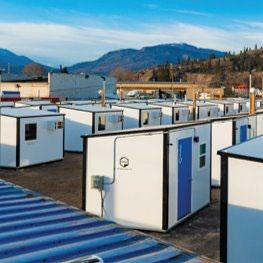
Implementation of the outdoor sheltering strategy continued with the opening of 60 new rapid safety net housing units at Balsam Place. This builds on the previously established 60 units at STEP Place and 60 units at Trailside, completing the Province’s housing commitments through the HEART and HEARTH program totaling 180 units. The City contributed municipal land for all three sites to support rapid delivery. In addition, management of the overnight sheltering site was restructured in partnership with community organizations to improve safety and better support timely transitions from outdoor sheltering to indoor housing and shelter options.
The City continued to work with BC Housing and community partners to advance plans for Kelowna’s first purpose built permanent shelter with wrap around supports. Staff are actively identifying a site that is appropriately located and zoned to support long term shelter operations and integrated services.
COMPLETED ON TRACK DELAYED
The City continued to advocate for an Indigenous-led regional care facility modeled on the Red Fish Healing Centre, recognizing the need for culturally appropriate, trauma-informed care. Ongoing discussions took place with the Province and local First Nations to explore opportunities for a facility that supports healing, recovery, and regional service coordination
Caring for Kelowna’s agricultural sector and environmental health is a Council priority. The City focused on strengthening agriculture as an essential part of Kelowna’s food system, economy, and culture, while also taking meaningful action on climate change by reducing greenhouse gas emissions, protecting and restoring natural areas, and ensuring climate impacts are considered in City decision making.
Here’s what the City delivered in 2025:
Implementation of the Climate Resilient Kelowna Strategy continued across multiple priority areas. An online public dashboard was launched to help residents, City staff, and partners track progress on strategy actions. The City received a Climate and Energy Action Award at the 2025 UBCM Convention in recognition of the strategy, and the Mill Creek Diversion Project received the International Federation of Consulting Engineers’ Project of the Year Award for its climate resilience benefits. Progress on emissions reduction and adaptation initiatives included issuing more than 100 e-bike rebates through the Income-Qualified E-Bike Program, continuing the Home Energy Navigator Program to support residential energy upgrades, and delivering Build-Your-Own Air Purifier workshops to support residents most vulnerable to wildfire smoke, with 380 residents participating between May and August 2025.
The City continued to embed climate mitigation and adaptation considerations into decision-making through the use of a Climate Lens. Sustainability criteria were integrated into the Strategic Facilities Master Plan to help ensure new City facilities meet LEED Gold and Zero-Carbon Design standards. Facilities within the Building a Stronger Kelowna portfolio and the Glenmore Protective Services Campus are targeting these standards. A Climate Lens Assessment tool was also piloted to support facilities capital renewal planning, helping staff identify opportunities to reduce emissions and increase climate resilience as part of routine project planning

ON TRACK
Work continued to ensure a reliable and secure water supply for agriculture. The Glenmore Ellison Irrigation District is being integrated into the City of Kelowna through 2027 as part of the long term Integrated Water Supply Plan, improving system reliability and safety. The City completed a review of non potable system capacity and Council adopted an Agricultural Allotment sale process to enable the sale of additional allotments. Kelowna’s first Water Security Plan was also completed, providing a more comprehensive framework for managing, protecting, and sharing water resources now and into the future. In addition, the City is participating in the development of a new Regional Agricultural Strategy.
Supporting a strong and resilient economy is a Council priority. The City focused on diversifying Kelowna’s economy, helping businesses start and grow, and ensuring sufficient serviced employment land is available in the right locations. Efforts also included reviewing economic development programs to ensure City investments are well targeted and effective.
Here’s what the City delivered in 2025:
Council endorsed the Community Task Force on Economic Prosperity in June 2025 to help guide the City’s approach to long-term economic growth and resilience. Task Force members were announced in November 2025, and the group is expected to report back to Council within six months of its first meeting
The City undertook a review of its current investments in economic development programs, including research into economic development models, case studies, and programming options aligned with Kelowna’s socio- economic and demographic profile. This work reaffirmed the City’s primary role in supporting economic growth by creating strong conditions for business success, including competitive tax rates, effective land-use planning, and investment in community amenities that attract and retain employers and talent.
Progress continued to advance major employment lands and economic development opportunities across the city. A new hotel and parkade project at Kelowna International Airport (YLW) reached the groundbreaking stage, supporting airport growth and visitor capa city. Planning for the Airport Campus Expansion also includes development of lands east of the terminal to attract new commercial opportunities, create jobs, and strengthen the aerospace sector at the regional, provincial, and national levels.

The City continued to advocate to provincial and federal governments for airport infrastructure investments, including through meetings at UBCM and in Ottawa. In addition, the City acquired a key waterfront property to support future world-class downtown hotel development.
At the regional level, the Regional District of Central Okanagan completed a Regional Employment Lands Inventory in 2025, which is informing multiple City initiatives. Building on this work, City staff are assessing future employment growth needs within Kelowna sub-areas, with projections anticipated in early 2026, alongside analysis of gaps and strategies for commercial space.
The Thriving Urban Centres Future Directions report, completed in Q3 2025, also outlines actions to increase employment and local services in urban centres and surrounding neighbourhoods
Kelowna continued to strengthen its position as a destination for major sporting and cultural events. BC Lions games and the BC Summer Games are scheduled for summer 2026, while significant upgrades to Prospera Place were completed to support future event hosting, including the 2026 Memorial Cup. A new facility operator was also selected for Prospera Place and MNP Place.
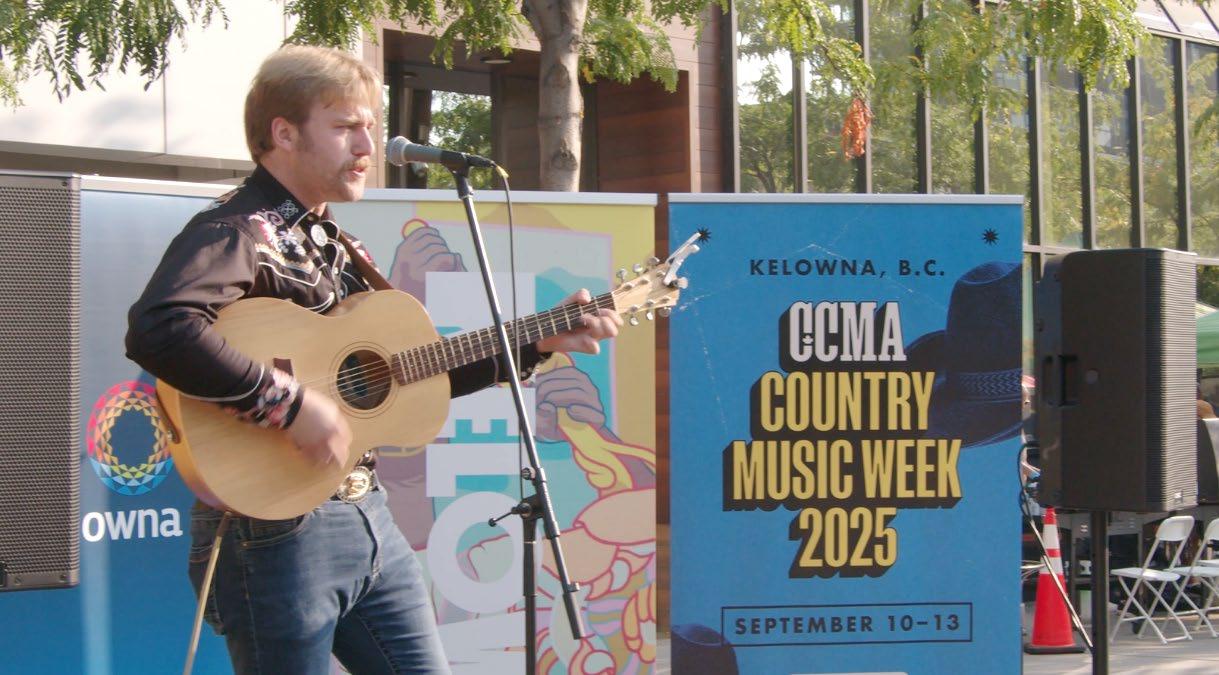
Major events hosted during the year included the Canadian Country Music Awards and the Montana’s Brier curling championship, generating an estimated combined economic impact of approximately $30 million. Kelowna also received a UNESCO Creative City of Gastronomy designation, becoming the first city in Canada and the third in North America to receive this recognition. More than 100 sport tournaments across over 30 sports were hosted, drawing participants and visitors from across the region and beyond.
In parallel, significant progress continued on the Building a Stronger Kelowna capital program, including construction of the new Parkinson Recreation Centre and new activity centres in Glenmore, Mission, and Rutland, supporting long-term recreation and event hosting capacity
Growing non tax revenues and improving financial efficiency is a corporate priority. The City is focused on strengthening the budget process to better align financial resources with Council priorities, presenting budgets that support defined service levels, and advancing targeted initiatives to increase non tax revenues and reduce reliance on property taxes.
Here’s what the City delivered in 2025:
The 2025 Financial Plan marked the City’s first servicebased budget to combine operating and capital expenditures by service area. This approach provides a clearer and more comprehensive view of City investments by linking funding for assets such as buildings and equipment with the operating budgets required to make them productive. Aligning capital cash flows with annual budget years strengthened multi-year financial planning, reduced project carryovers, and improved the City’s ability to estimate tax demand for major capital projects. Together, these improvements support more predictable tax rates and long-term financial stability.
With one of the lowest property tax demand increases in the province, the City maintained stable service delivery while achieving a two-fold investment increase in capital projects like roads, utilities and other longterm infrastructure compared to 2023. Taxation funded about one-third of services and investments, with the balance supported through alternative revenue sources such as fees, reserves, and grants. This balanced approach enabled continued infrastructure investment while keeping property taxes predictable and affordable for residents.

The City strengthened Active Financial Management by using quarterly budget reviews to actively reallocate funding to ready to go community projects while maintaining service levels. With a budget exceeding $900 million, the City accurately forecasted financial requirements and delivered services within a five per cent variance. This disciplined, year round approach improved financial agility, enabling timely decisions, responsive investment, and strong fiscal oversight as needs and priorities evolved.
Improving how the City operates is a corporate priority. The City focused on making it easier to do business with and within the City, embracing change through structured transformation, using digital tools to improve efficiency, and strengthening data driven decision making. These efforts support continuous improvement and reinforce the City’s role as a leader in innovative municipal service delivery.
Here’s what the City delivered in 2025:
The City strengthened how it manages the hundreds of millions of dollars in goods and services it purchases each year by increasing automation across accounts payable and related administrative functions. Building on automation introduced in 2024–25, these improvements enhanced payment performance and reliability supporting the City’s target of paying 75% of invoices on time. For vendors, this meant faster, more predictable payments; for the organization, it meant greater efficiency, stronger financial controls, and better value for the community.
The City advanced its digital transformation by strengthening how data and performance measures informed decisions making information more accessible, transparent and actionable for both the public and decision makers. Through service based budgeting, public dashboards and improved analytics tools, investments were increasingly tied to clear service outcomes and trade offs, helping leaders target resources where they would deliver the greatest impact, from public safety to community well being.

Residents increasingly chose fast, convenient digital service options, with the City responding to a record number of citizen inquiries through online and voice assistants. Questions handled by these tools rose by nearly 28% year over year, increasing from 2024 to 2025, evidence of growing uptake as the City expanded the number, quality and reliability of its digital assistants. By answering routine questions quickly and consistently, these tools improved access to information, allowed staff to focus on more complex requests, and helped the City deliver better service to a growing community without proportional cost increases.
Developing high performing employees is a corporate priority. The City focused on creating greater opportunities for all employees to learn, grow, and strengthen their leadership skills.
Here’s what the City delivered in 2025:
The City of Kelowna continued implementing its corporate Diversity, Equity and Inclusion (DEI) Strategy to strengthen inclusive leadership across the organization. This work focused on building shared understanding and accountability among people leaders, embedding DEI principles into leadership practices, and supporting leaders to create respectful, inclusive, and psychologically safe workplaces. Through targeted training, education, and leadership expectations, the City reinforced the role of leaders in fostering belonging, addressing barriers, and modelling inclusive behaviours that support a diverse workforce and better service to the community.
The City reintroduced bi annual all supervisor meetings to improve leadership alignment, communication, and consistency across departments. These sessions provided a dedicated forum for supervisors to connect directly with senior leadership, share information, discuss organizational priorities, and build a common understanding of expectations for people leadership. By bringing supervisors together regularly, the City strengthened leadership networks, supported collaboration across service areas, and reinfor ced a shared approach to leading teams through change and growth.

With a focus on reducing employee turnover and vacancy rates, the City of Kelowna continued investing in employee engagement by strengthening leadership development and career growth opportunities across the organization. In 2025, this included expanded mentorship programs, clearer career path planning tools, an annual performance management program, coaching skills training for managers, leadership essentials programming, and succession planning and talent mapping. Together, these initiatives equipped leaders at all levels to build skills, support meaningful performance and career conversations, and prepare the organization for future workforce needs reinforcing a culture of continuous learning, shared leadership, and long term organizational resilience.
In addition to Council and corporate priorities, the City undertakes a wide range of projects each year that keep Kelowna running safely and responding to community needs.
Here’s what the City delivered in 2025:
In the fall, the City completed a successful prescribed burn on Knox Mountain as part of an expanded wildfire mitigation program made possible by new funding following the 2023 wildfires. Delivered by Urban Forestry and the Kelowna Fire Department, with support from the BC Wildfire Service, the burn reduced excess vegetation and wildfire risk while supporting ecosystem health. Conducted under strict safety controls and provincial approval, the project demonstrated how this proven approach can be safely applied in Kelowna.
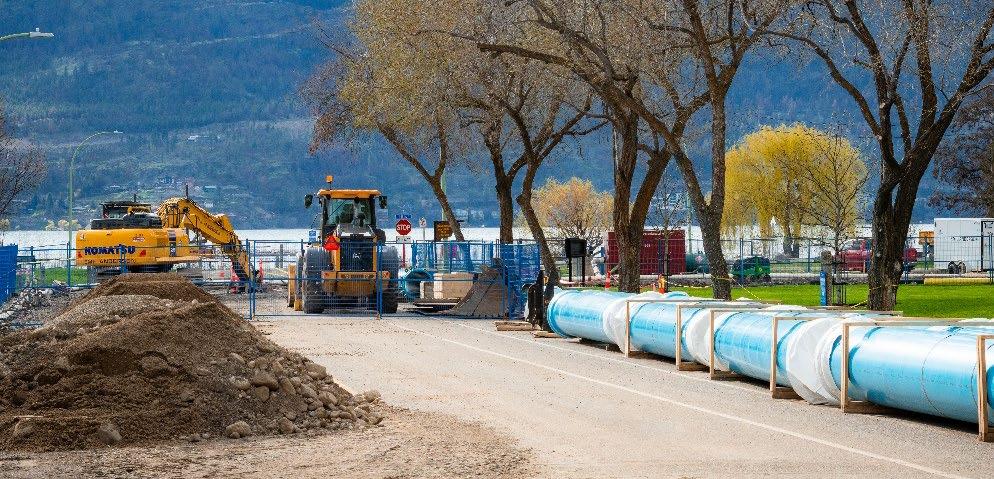
The City strengthened the essential underground systems residents rely on every day, completing water, sewer and stormwater upgrades in the Lower Mission, North End, Glenmore and Rutland. While largely unseen, these investments protected reliable service and prepared neighbourhoods for future growth, including the completion of the Summit Reservoir expansion, which increased potable water storage and firefighting capacity for the Dilworth Mountain area. Together, these projects showed how smart, behind the scenes investments deliver real, long term value for the community.

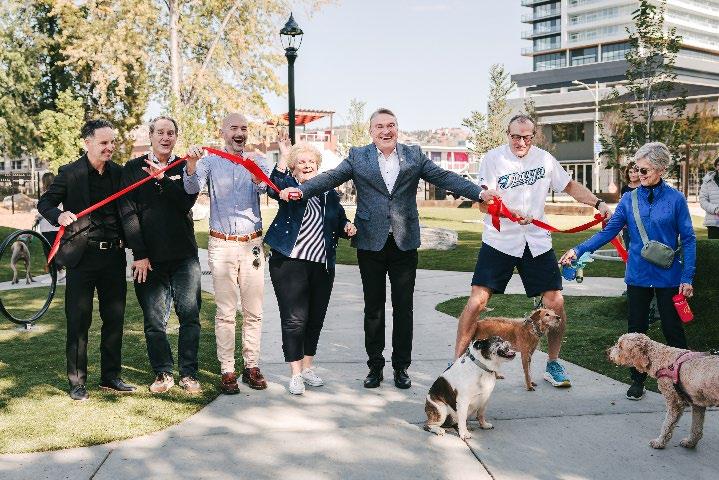
Throughout the year, the City turned long planned park investments into real places residents could use and enjoy, opening DeHart Park in May, the Waterfront Park stage in June, and new inclusive park features at Strathcona Beach Park. June also brought the installation of new artwork by local syilx artists at Knox Mountain Park’s first lookout. In October, the City celebrated the opening of a new dog run in City Park, along with a first of its kind park in the Dilworth Mountain area. Together, these projects delivered tangible community benefits while building a stronger, more livable city for the future.
Many of the actions that advance Council and Corporate Priorities and strengthen the organization span multiple years and are already underway, as highlighted in the Year in Review section of this report. Looking ahead to 2026, the City is focused on building momentum. The priorities and initiatives outlined below reflect where we are directing our efforts next and are partially reflected in the 2026 Financial Plan.
In 2026, the City will continue to concentrate resources on the community priorities residents have told us matter most particularly Crime & Safety and Transportation. This includes increased investment in police, fire, and bylaw services to enhance public safety, as well as accelerated construction of roads, bridges, sidewalks, bike lanes, and other transportation infrastructure to improve mobility. Additional funding is also being directed to transit operations and traffic safety initiatives to support a safer, more connected city.
The City is advancing transformative projects designed to benefit Kelowna for generations to come. New urban parks are opening in more neighbourhoods, and modern recreation facilities and sports fields are being delivered through the Building a Stronger Kelowna initiative. Major projects include the redevelopment of the 50 year old Parkinson Recreation Centre and the creation of all ages community centres in Glenmore, Mission, and Rutland, along with upgrades to sports fields in Rutland. Continued investment in major parks and community venues across the city will help keep Kelowna vibrant, inclusive, and attractive for residents and visitors alike.
The City continues to modernize how it operates to better serve residents. Corporate priorities remain focused on building a high performance organization through smarter automation, stronger cybersecurity, and improved customer service both online and in person. In 2026, there will be added emphasis on enhancing the Customer Experience as a Corporate Priority, replacing Active Financial Management which has now become part of City operations. These investments will make City services easier to access, improve responsiveness, and ensure operations remain efficient, secure, and resilient.
In 2026, the City will take another step forward by embedding enhanced performance measures across all service areas. This shift supports a move from simply funding services to funding outcomes. New tools are being explored to better adjust service levels up or down as needed, helping balance community needs with stable and predictable taxes. As these tools are implemented, the City will make them available online strengthening transparency, accountability, and informed decision making.
As a municipality governed by the Community Charter and Local Government Act, the City of Kelowna is a high-performing organization of over 1,300 employees dedicated to delivering essential services that shape daily life clean drinking water, wastewater systems, waste management, parks and recreation, fire protection, transportation, community planning, and environmental stewardship.
With 2025’s annual budget surpassing $900 million, the City balances operational costs with capital investments to meet the needs of a growing and evolving community. On average, less than a quarter of the budget is funded through taxation, with the remainder generated through reserves, grants, user fees, and revenues from self-sustaining business units such as Kelowna International Airport, the City’s water and wastewater utilities, and solid waste operations.
For more information about the organization, visit kelowna.ca .
The City of Kelowna has received many awards that highlight our efforts to make Kelowna a City of the Future. For a full list of awards, visit kelowna.ca/awards.
Canadian Award for Financial Reporting
Government Finance Officers Association
2024 Annual Report
City was recognized for its annual financial report for the fiscal year ended December 31, 2024 for the 23rd consecutive year.
Distinguished Budget Presentation Award
Government Finance Officers Association
2025 Financial Plan
City was recognized for excellence in governmental budgeting for the 24th consecutive year.
Municipal Inspiring Workplace Award
Canada Association of Municipal Administrators
Leadership Development Mentorship Program
City was recognized for its internal staff Leadership Development Mentorship Program.
Climate and Energy Action Awards
Community Energy Association
DeHart Community Park Carbon Neutral Design & Climate Resilient Kelowna Strategy
City was recognized with two awards for its sustainability and climate action initiatives.
MarCom Award and Hermes Creative Award
Association of Marketing and Communication Professionals
City at Work video series
City recognized with two awards for its excellence in marketing and communication.
Criteria Award
BC Communities in Bloom
Community Appearance
City recognized for its community enhancement initiatives.

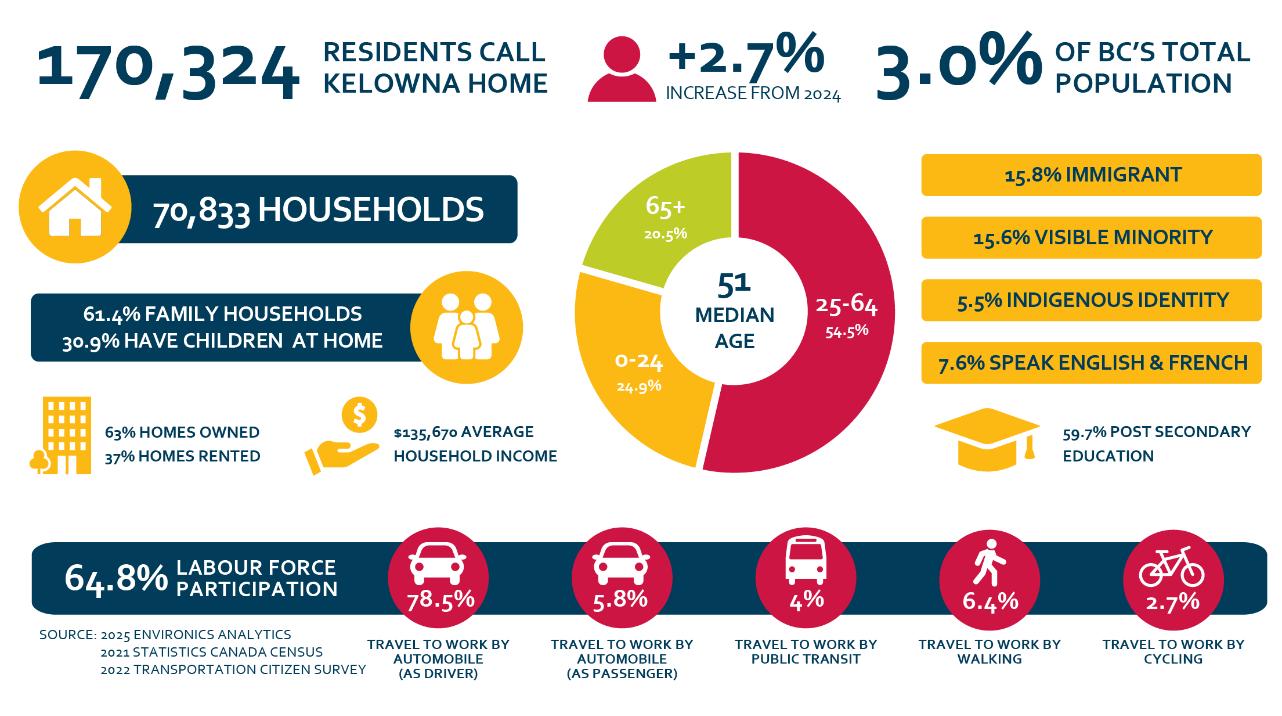
Kelowna is a vibrant city located in the heart of the Okanagan Valley in British Columbia’s southern interior. After a decade of rapid growth, the city is now home to more than 170,000 residents drawn to the region’s mountains, lakes, and vineyards, which offer a distinctive balance of natural beauty and urban opportunity.
The city is supported by a diverse and growing economy that includes agriculture, manufacturing, retail trade, construction, technology, healthcare, and tourism. The region is internationally recognized for its wine industry and is also home to a top ranked college and university, a world class teaching hospital, the second largest trade school in the province, and Kelowna International Airport one of the largest economic drivers in the Southern Interior and the largest municipally owned airport in Canada. As a growing hub for technology and aerospace related companies, Kelowna continues to strengthen its
Source: 2025 Environics data
position as an economic powerhouse while remaining one of the region’s most sought after tourist destinations.
Kelowna’s natural environment is a cornerstone of the community’s identity and plays a vital role in supporting health, economic activity, and overall livability. The city offers extensive parks, trails, beaches, and recreational facilities that provide year round opportunities for hiking, biking, golfing, swimming, and boating for both residents and visitors.
Together, this natural setting, a diverse economy, and a vibrant arts and culture scene featuring numerous festivals and events throughout the year foster a strong sense of community and a high quality of life that continues to attract people to live, work, and visit Kelowna.
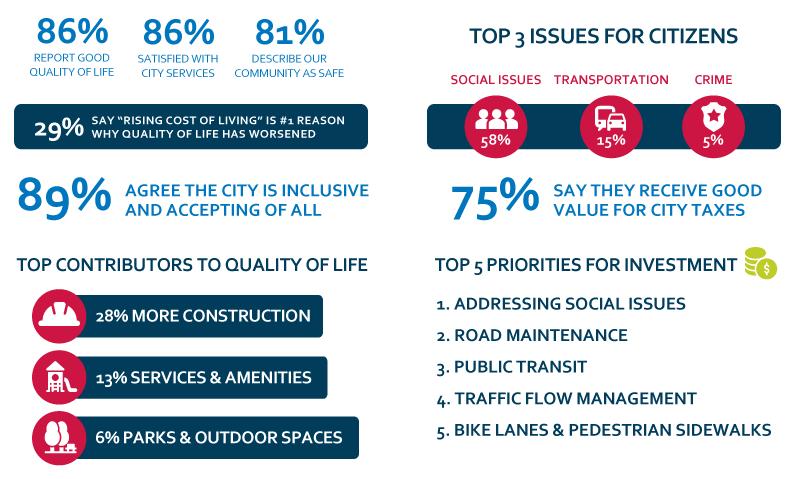
Every two years, the City of Kelowna conducts a citizen survey to better understand residents’ experiences and priorities. The survey provides a consistent measure of quality of life in the city, identifies community priorities for the future, and gauges satisfaction with the municipal services, programs, and facilities the City provides.
Where possible, results are benchmarked against other B.C. municipalities to help us understand how Kelowna compares. Responses are weighted by age, gender, and geographic distribution to ensure the results accurately reflect the city’s population. The insights gained from this research play an important role in informing planning, budgeting, and service improvements.
Explore the 2024 Citizen Survey results at kelowna.ca
The 51st Annual Civic & Community Award honours individuals and organizations for outstanding contributions and achievements in 2025 that directly benefited our community.
Dr. Paul Clark
Fred Macklin & Sarah Donalda-Treadgold Memorial Award - Citizen of the Year
Shane Worman
Anita Tozer Memorial Award bestowed by Mayor and Council
Dilynn Scott
Young Citizen of the Year Award
Dr. Cole Mash
Honour in the Arts Award
Payton Bischoff
Teen Honour in the Arts Award
Central Okanagan Bursary & Scholarship Society
Central Okanagan Foundation Volunteer Organization of the Year Award
Wilden Group
Corporate Community of the Year Award
Kelowna Chinese United Association Champion for the Environment Award
Ashlee Davison
Bob Giordano Memorial Award – Coach/Sport Administrator of the Year
UBCO – Women's Softball
Bryan Couling Memorial Award – Athletic Team of the Year
Kassidy Rutledge
Female Athlete of the Year Award
Finley Cashin
Male Athlete of the Year Award
Layna Haggerty & Karina Haggerty
Augie Ciancone Memorial Award – Young Female Athlete
Haydn Bosma
Augie Ciancone Memorial Award – Young Male Athlete

5, 2026
I am pleased to present the City of Kelowna’s 2025 Annual Financial Report for the year ended December 31, 2025. The purpose of this report is to publish the City of Kelowna’s Consolidated Financial Statements and the Auditor’s Report, and to provide an update on City services and projects, pursuant to Sections 98 and 167 of the Community Charter.
Preparation of the Consolidated Financial Statements is the responsibility of City of Kelowna management. These statements are prepared by City staff in accordance with Canadian public sector accounting standards. Management is also responsible for implementing and maintaining a system of internal controls for the safeguarding of assets and to provide reasonable assurance that reliable information is produced.
The external auditor, BDO Canada LLP, conducted an independent audit of the Consolidated Financial Statements in accordance with Canadian auditing standards and, in their opinion, determined them to be presented fairly and materially stated. The City received an unqualified audit opinion. The City’s Audit Committee also reviewed the Consolidated Financial Statements to ensure they are comprehensive, reliable, and understandable.
The information presented in this document reflects the results of the past year’s work on Council Priorities 2023-2026, which help guide how the City will acquire and manage financial and physical assets to meet current and future community needs. The City also continues to monitor and report financial health indicators as part of presentations to Council on our financial performance. These indicators demonstrated a stable year for the City as it continues to be well positioned to meet current and future financial obligations. The City has shown resiliency while adapting to the changing economic and geopolitical climates such as the challenges of inflation, and trade-related uncertainty, and is well positioned financially to meet these challenges.
The City of Kelowna recognizes the value of advancing projects today where resources permit to avoid higher costs in the future. It has become increasingly important to deliver capital infrastructure more efficiently to support our residents and meet evolving community needs. Due to our strong financial management, the City of Kelowna has been successful in employing innovative treasury and procurement strategies to expedite capital infrastructure delivery.
The City has seen increases in revenues and expenses for the year specifically due to increased user and operational activity, dynamic funding strategies for capital delivery, and the anticipated property tax increase. Despite economic pressures, Kelowna has maintained one of the lowest cumulative property tax increases in the Province over the past four years, while continuing to adapt and deliver strong financial results.
The 2025 revenues increased by $32 million over the prior year, including a $26 million increase in fees and charges and a $30 million rise in development cost charge (DCC) contribution revenue. The growth in fees and charges was driven by higher user activity, particularly in parking, the water utility following the acquisition of the Glenmore Ellison Improvement District (GEID), and increased airport passenger volumes. DCC contribution revenue also increased as more DCC-funded capital projects were completed during the year.
The City’s expenses increased by a total of $40 million over the prior year. $15 million is attributed to the increase in salaries and wages mainly due to expanded operations and increases to RCMP and Fire services, aligning with council priorities to improve community safety. Contract and professional services rose by $8 million due to higher operational activity. Cost escalations due to inflation were another contributor to the increase in expenses for 2025.
By the end of 2025, the City reported an unappropriated surplus of $7 million, primarily generated within the Wastewater Fund and will be allocated to support future wastewater infrastructure. The General Fund unappropriated surplus increased slightly to $5.5 million and remains reserved for extraordinary or unforeseen events.
Overall, the City’s accumulated surplus increased to $3.0 billion, mainly because the City continued to invest in roads, utilities, buildings, land, and other long-term assets that support community services. This means, the City increased its infrastructure base while keeping other reserves relatively stable. It reflects a balanced financial position that supports the services residents rely on today and the infrastructure needed for future growth.
In 2025, the City executed land purchases and significantly increased the level of capital delivery compared to 2024. A total of $408 million was spent on capital projects in 2025, an increase of $150 million from 2024. The City also acquired $75 million in capital infrastructure through the Glenmore Ellison Improvement District amalgamation. The City invested $53 million in land, including parkland and property acquisitions related to future projects. Large capital projects underway or completed in 2025 include the Airport Terminal Expansion, the new Parkinson Recreation Centre redevelopment, the KLO-Mission Creek Bridge replacement, the Rutland Center sewer connection, and the Royal View transmission mainline. $43 million was spent on roads and road improvements, including active transportation, to enhance the City’s transportation network.
The City’s active management of its budget has enabled it to deliver strong financial results while expanding services and infrastructure in line with community growth. Through service-based budgeting, quarterly financial reviews, and a diversified revenue model where approximately two-thirds of funding is generated from sources other than property taxes, the City has been able to respond to increased service demands and accelerate capital investment without placing disproportionate pressure on taxpayers. This approach has supported enhanced investments in key areas such as public safety, transportation, recreation, and utilities, while maintaining one of the lowest and most consistent property tax increases in the Province. As a result, Kelowna continues to offer a high level of service relative to its tax rates and remains well positioned compared to peer communities, demonstrating strong value for money and a balanced approach to affordability and long-term financial sustainability.
Respectfully submitted,

– Joe Sass, CPA, CA General Manager, Corporate Services
In April 2025, Council approved the City’s $908 million budget with a 4.34% property tax increase one of the lowest in B.C. while continuing to invest in community safety and critical infrastructure. For the average household, the increase was about $108 per year.
Less than one quarter of the City’s budget is funded by property taxes. The remainder comes from user fees, utility charges, reserves, and other sources.
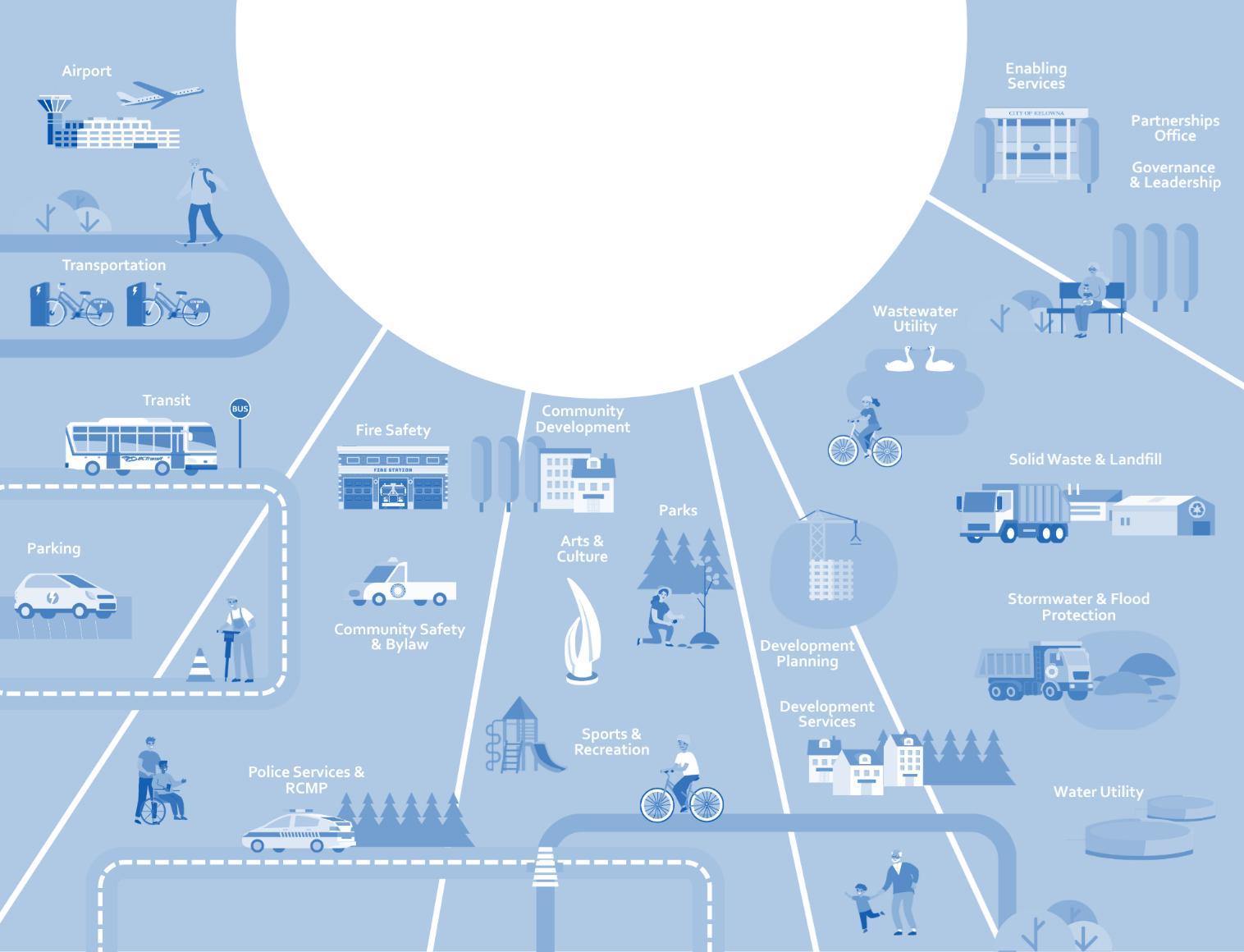
The 2025 Budget also marked the City’s second year of service based budgeting, organizing spending across 20 service areas to make it clearer how tax dollars translate into real results for the community. Visualize City services below.
Every year, the City of Kelowna receives applications from non-profit organizations that own land and qualify for tax exemption under the requirements of provincial legislation. In 2025, the following non-profit organizations qualified: Art
Source: City of Kelowna Corporate Services Division.
Each year, the City of Kelowna invites eligible property owners to apply for a Revitalization Tax Exemption under the provisions of the Community Charter and the City’s own bylaw framework, City of Kelowna’s Revitalization Tax Exemption Program Bylaw No. 12561. This program is designed to encourage investment in targeted areas by offering temporary property tax relief for qualifying developments. In 2025, the following properties and developments qualified:
Source: City of Kelowna Corporate Services Division. Heritage Building Tax Exemptions
Each year, the City of Kelowna accepts applications from property owners who have restored qualifying heritage buildings and meet the criteria outlined in Council Policy No. 318. This program offers a permissive property tax exemption for up to 10 years, helping offset the costs of conservation, restoration, and structural maintenance. In 2025, the following heritage properties qualified:
Source: City of Kelowna Corporate Services Division.
Development Cost Charges (DCCs) are fees collected from new development to help pay for the roads, pipes, parks, and other infrastructure needed as the city grows. Under the Local Government Act, municipalities can use DCCs to fund major capital projects such as transportation, drainage, sewer, waterworks, and parkland helping ensure growth helps pay for growth.
Kelowna’s DCC program is guided by long term planning, including the 2040 Official Community Plan, which anticipates a population of nearly 180,000 by 2040. The 20 Year Servicing Plan and Financing Strategy identifies the infrastructure needed to support that growth and outlines how costs are shared fairly between existing taxpayers and new development, based on who benefits and how services are used.
The 20 Year Servicing Plan and Financing Strategy includes $1.3 billion in infrastructure to support growth to 2040. About 65 per cent of this investment is funded by development, with the remainder shared between City funds, developer constructed works, and senior levels of government. The largest investments are in Arterial Roads and Park Development and Land Acquisition, followed by wastewater, water distribution, and drainage infrastructure.
As permitted under the Local Government Act, the City can temporarily borrow between DCC reserve funds to keep projects moving, with all funds plus interest repaid. In 2025, this approach was used to cover a deficit in the Drainage reserve using funds from the Road Sector I reserve for a portion of the year By year-end the Drainage reserve returned to a positive balance.
Under the Local Government Act, local governments are required to share in the cost of infrastructure needed to support growth. This cost sharing approach helps keep development more affordable while ensuring essential infrastructure is built.
The municipal assist factor is a reduction applied to DCCs paid by developers. It recognizes that new infrastructure like roads, parks, and utilities benefits the entire community, not just new development. The level of assistance is set by City Council and reflects the community’s priorities and desire to support growth.
The City of Kelowna currently provides the following municipal assist factors:
Roads 16%
Parks 11%
Water 2%
Wastewater 2%
Drainage 2%
Parks Acquisition
$7.5 million – 1085 Lexington Drive
$5.7 million – 3602 Lakeshore Road
$2.5 million – 898 Manhattan Drive
$1.7 million – 511 Poplar Point Drive
$1.1 million – 806 Burne Avenue
Parks Development
$4.4 million – Glenmore Recreation Park
$2 million – Parkinson Recreation Park
$1.7 million –Burne Park
$1.3 million – City Park and Kerry Park
Roads
$5.6 million – Glenmore Road – Road and ATC Improvements
$5 million – Frost Road – Road Improvements
$4.1 million – Burtch Road – Road and ATC Improvements
$3.6 million - K.L.O. Road/Spiers Road/Hall Road – Intersection and Road Improvements
$2.7 million – Hollywood Road – Road Improvements
$1 8 million – Intersection and Road Safety Improvements
$1.5 million – Lakeshore Road – Road and ATC Improvements
$1.2 million – Clement Avenue – Design
Water
$6 million – Royal View Transmission Main
$0.8 million – Summit Reservoir
Wastewater Trunks and Treatment
$3.3 million – Water Street Lift Station
$1 million – Glenmore Connection – Glenmore Road from Cross Road to Scenic Road
For details on DCC opening balances, funds received and spent, and ending balances, please see Note 7 of the Consolidated Financial Statements
Note regarding waivers and reductions: The Local Government Act provides an option to grant relief from DCCs for eligible types of development which include not-for-profit rental housing, for-profit affordable rental housing, subdivision of small lots designed to result in low greenhouse gas emissions and development designed to result in low environmental impact. In 2025 no waivers or reductions were granted.
The City of Kelowna (the “City”) Consolidated Financial Statements for the year ended December 31, 2025 have been prepared by management in accordance with Canadian public sector accounting standards (“PSAS”). The integrity and objectivity of these statements are management's responsibility. Management is also responsible for all the statements and schedules, and for ensuring that this information is consistent, where appropriate, with the information contained in the financial statements.
Management is also responsible for implementing and maintaining a system of internal controls to provide reasonable assurance that reliable financial information is produced.
City of Kelowna Council is responsible for ensuring that management fulfills its responsibilities for financial reporting and internal control and exercises this responsibility through the Audit Committee. The Audit Committee meets with management regularly and with the external auditors a minimum of once per year.
The external auditors, BDO Canada LLP, conduct an independent audit of the City’s Financial Statements in accordance with Canadian auditing standards and, in their opinion, determined them to be presented fairly and not materially misstated.
On behalf of City of Kelowna,

Joe Sass, CPA, CA General Manager, Corporate Services

To Mayor and Council of the City of Kelowna
Opinion
Tel: 250 763 6700
Fax: 250 763 4457
www.bdo.ca


We have audited the consolidated financial statements of the City of Kelowna and its controlled entities (the "City"), which comprise the consolidated statement of financial position as at December 31, 2025, the consolidated statements of operations and accumulated surplus, the consolidated statement of remeasurement gains and losses, the consolidated statement of changes in net financial assets and the statement of cash flows for the year then ended, and notes to the consolidated financial statements, including a summary of significant accounting policies.
In our opinion, the accompanying consolidated financial statements present fairly, in all material respects, the financial position of the City of Kelowna as at December 31, 2025, and its results of operations, its remeasurement gains and losses, its changes in net financial assets and its cash flows for the year then ended in accordance with Canadian public sector accounting standards.
We conducted our audit in accordance with Canadian generally accepted auditing standards. Our responsibilities under those standards are further described in the Auditor’s Responsibilities for the Audit of the Financial Statements section of our report. We are independent of the City in accordance with the ethical requirements that are relevant to our audit of the financial statements in Canada, and we have fulfilled our other ethical responsibilities in accordance with these requirements. We believe that the audit evidence we have obtained is sufficient and appropriate to provide a basis for our opinion.
Responsibilities of Management and Those Charged with Governance for the Financial Statements
Management is responsible for the preparation and fair presentation of these financial statements in accordance with Canadian public sector accounting standards, and for such internal control as management determines is necessary to enable the preparation of financial statements that are free from material misstatement, whether due to fraud or error.
In preparing the financial statements, management is responsible for assessing the City’s ability to continue as a going concern, disclosing, as applicable, matters related to going concern and using the going concern basis of accounting unless management either intends to liquidate the City or to cease operations, or has no realistic alternative but to do so.
Those charged with governance are responsible for overseeing the City’s financial reporting process.
The financial statements for the year ended December 31, 2024 were audited by another auditor who expressed an unmodified opinion on those consolidated financial statements on May 12, 2025. Our opinion does not extend to the comparative information presented for that year.
Our objectives are to obtain reasonable assurance about whether the consolidated financial statements as a whole are free from material misstatement, whether due to fraud or error, and to issue an auditor’s report that includes our opinion. Reasonable assurance is a high level of assurance, but is not a guarantee that an audit conducted in accordance with Canadian generally accepted auditing standards will always detect a material misstatement when it exists. Misstatements can arise from fraud or error and are considered material if, individually or in the aggregate, they could reasonably be expected to influence the economic decisions of users taken on the basis of these consolidated financial statements.
Tel: 250 763 6700
Fax: 250 763 4457
www.bdo.ca
As part of an audit in accordance with Canadian generally accepted auditing standards, we exercise professional judgment and maintain professional skepticism throughout the audit. We also:
• Identify and assess the risks of material misstatement of the consolidated financial statements, whether due to fraud or error, design and perform audit procedures responsive to those risks, and obtain audit evidence that is sufficient and appropriate to provide a basis for our opinion. The risk of not detecting a material misstatement resulting from fraud is higher than for one resulting from error, as fraud may involve collusion, forgery, intentional omissions, misrepresentations, or the override of internal control.
• Obtain an understanding of internal control relevant to the audit in order to design audit procedures that are appropriate in the circumstances, but not for the purpose of expressing an opinion on the effectiveness of the City’s internal control.
• Evaluate the appropriateness of accounting policies used and the reasonableness of accounting estimates and related disclosures made by management.
• Conclude on the appropriateness of management’s use of the going concern basis of accounting and, based on the audit evidence obtained, whether a material uncertainty exists related to events or conditions that may cast significant doubt on the City’s ability to continue as a going concern. If we conclude that a material uncertainty exists, we are required to draw attention in our auditor’s report to the related disclosures in the consolidated financial statements or, if such disclosures are inadequate, to modify our opinion. Our conclusions are based on the audit evidence obtained up to the date of our auditor’s report. However, future events or conditions may cause the City to cease to continue as a going concern.
• Evaluate the overall presentation, structure and content of the consolidated financial statements, including the disclosures, and whether the consolidated financial statements represent the underlying transactions and events in a manner that achieves fair presentation.
• Plan and perform the group audit to obtain sufficient appropriate audit evidence regarding the financial information of the entities or business units within the City as a basis for forming an opinion on the group financial statements. We are responsible for the direction, supervision and review of the audit work performed for purposes of the group audit. We remain solely responsible for our audit opinion.
We communicate with those charged with governance regarding, among other matters, the planned scope and timing of the audit and significant audit findings, including any significant deficiencies in internal control that we identify during our audit.
Chartered Professional Accountants
Kelowna, British Columbia April 29, 2026
As at December 31, 2025 (in thousands of dollars)
and Commitments (Notes 13 and 14)

Joe Sass, CPA, CA General Manager, Corporate Services
See accompanying notes to the consolidated financial statements.

For the Year Ended December 31, 2025 (in thousands of dollars)
See accompanying notes to the consolidated financial statements.
For the Year Ended December 31, 2025 (in thousands of dollars)
Realized (gains) reclassified to the consolidated statement of operations and accumulated surplus:
See accompanying notes to the consolidated financial statements.
For the Year Ended December 31, 2025 (in thousands of dollars)
See accompanying notes to the consolidated financial statements.
For the Year Ended December 31, 2025 (in thousands of dollars)
December 31, 2025
(in thousands of dollars)
The notes to the consolidated financial statements are an integral part of the statements. They explain the significant accounting and reporting policies and principles underlying these statements. They also provide relevant supplementary information and explanations which cannot be conveniently expressed in the consolidated financial statements.
Basis of presentation
The consolidated financial statements of the City pf Kelowna (the "City") have been prepared in accordance with Canadian Public Sector Accounting Standards ("PSAS") as recommended by the Canadian Public Sector Accounting Board.
The consolidated financial statements reflect the assets, liabilities, revenues and expenses of the reporting entity. The reporting entity is comprised of all the organizations controlled by the City. Interfund and inter corporate balances and transactions have been eliminated. The reporting entity includes the Kelowna Developments Ltd., a 100% subsidiary, which is currently inactive.
The resources and operations of the City are accounted for in the following funds: General, Airport, Wastewater Utility, Water Utility, Development Cost Charges and Statutory Reserve Funds.
Accrual accounting
The accrual method for reporting revenues and expenses has been used. Revenues are recognized in the period in which the transactions or events occur that give rise to the revenues. Expenses are recognized in the period in which the goods or services are acquired and a liability is incurred.
Assets held for resale
Assets held for sale are those expected to be sold within one year. Assets are valued at the lower of cost or expected net realizable value. Cost includes amounts for improvements required to prepare the asset for sale.
Cash and cash equivalents
Cash and cash equivalents consist of cash and short-term investments with maturities of 90 days or less from the date of acquisition.
Inventory
Inventory is valued at the lower of cost or net realizable value, determined principally on a weighted average and specific item basis, or replacement cost.
The City issues the majority of its debt instruments through the Municipal Finance Authority. As a condition of these borrowings, a portion of the debenture proceeds is withheld by the Municipal Finance Authority as a debt reserve fund. The City also executes demand notes in connection with each debenture whereby the City may be required to loan certain amounts to the Municipal Finance Authority. These demand notes are contingent in nature and are not reflected in the financial statements. The Debt Reserve and Demand Note balances are as follows:
The City of Kelowna and its employees participate in the Municipal Pension Plan. The Municipal Pension Plan is a multiemployer contributory defined benefit pension plan. Payments in the year are expensed as incurred.
Reserves for future expenditures are non-statutory reserves which represent an appropriation of surplus for specific purposes. Transfers to reserves for future expenditures include funds to finance incomplete projects and accumulations for specific purposes.
The use of these funds is restricted by the Community Charter and associated Municipal Bylaws. Statutory reserve funds are funded 100% by cash and portfolio investments.
Intangible assets are not reflected in these consolidated financial statements. They include works of art and historic assets located throughout the City.
The City of Kelowna only capitalizes interest on projects being financed internally which will require debenture borrowing upon completion.
Cash and equity instruments quoted in an active market are measured at fair value. Accounts receivable, accounts payable, and long-term debt are measured at cost or amortized cost. The carrying amount of each of these financial instruments is presented on the statement of financial position.
Unrealized gains and losses from changes in the fair value of financial instruments are recognized in the statement of remeasurement gains and losses. Upon settlement, the cumulative gain or loss is reclassified from the statement of remeasurement gains and losses and recognized in the statement of operations. Interest and dividends attributable to financial instruments are reported in the statement of operations.
When investment income and realized and unrealized gains and losses from changes in the fair value of financial instruments are externally restricted, the investment income and fair value changes are recognized as revenue in the period in which the resources are used for the purpose specified.
For financial instruments measured using amortized cost, the effective interest rate method is used to determine interest revenue or expense.
All financial assets are tested annually for impairment. When financial assets are impaired, impairment losses are recorded in the statement of operations.
Transaction costs are added to the carrying value for financial instruments measured using cost or amortized cost. Transaction costs are expensed for financial instruments measured at fair value.
Equity instruments quoted in an active market are measured at fair value.
The City has elected to measure other specific financial instruments at fair value, to correspond with how they are evaluated and managed. These financial instruments are MFA pooled fund investments.
All other financial assets and financial liabilities are measured at cost or amortized cost.
Tangible capital assets are written down when conditions indicate that they no longer contribute to the City's ability to provide goods and services, or when the value of future economic benefits associated with the tangible capital assets are less than their net book value. The net write downs are accounted for as expenses in the statement of operations.
An asset retirement obligation is recognized when, as at the financial reporting date, all of the following criteria are met:
• There is a legal obligation to incur retirement costs in relation to a tangible capital asset;
• The past transaction or event giving rise to the liability has occurred;
• It is expected that future economic benefits will be given up; and
• A reasonable estimate of the amount can be made
The liability is initially recorded at the best estimate of the expenditures requires to retire a tangible capital asset, and the resulting costs are capitalized as part of the carrying amount of the related tangible capital asset if the asset is recognized and in productive use. This liability is subsequently reviewed at each financial reporting date and adjusted for any revisions to the timing or amount required to settle the obligation. The changes in the liability for the passage of time are recorded as accretion in the Statement of Operations and all other changes are adjusted to the tangible capital asset.
The landfill tangible capital asset is amortized using the units of production method, while the structures tangible capital assets, affected by the asbestos liability, are being amortized along with their respective assets following the amortization accounting policies outlined in Note 1.
Work in progress represents capital projects under construction but not yet completed and are valued at cost.
Tangible capital assets are recorded at cost less accumulated amortization. Cost includes amounts that are directly related to the acquisition, construction, development, or betterment of the tangible capital assets. Cost includes overhead directly attributable to construction and development, as well as interest costs that are directly attributable to the acquisition, construction or development of the asset.
Tangible capital assets under construction, development or that have been removed from service are not amortized until they are available to be put into service.
Contributed tangible capital assets are recorded at their fair value on the date of contribution, except in unusual circumstances where fair value cannot be reasonably determined, in which case they are recognized at nominal value.
The cost less residual value of the tangible capital assets is amortized on a straight line basis over the useful lives of th e asset as follows:
Land and Work in Progress are not amortized.
Public-private partnership projects
Infrastructure assets procured through public-private partnership (“P3”) arrangements are recognized as tangible capital assets when the City controls the purpose and use of the asset, access to the related economic benefits, and exposure to the associated risks, including any significant residual interest at the end of the arrangement.
Assets are initially recorded at cost, generally determined as fair value when determinable, using construction progress billings (as applicable) and other directly attributable costs. Where fair value or allocations require estimation (including separating capital from operating/maintenance components), management applies appropriate valuation techniques and assumptions. When available for use, P3 assets are amortized over their estimated useful lives.
When the City has an obligation to provide consideration to the private sector partner, a corresponding liability is recognized, initially measured at the same amount as the related asset, net of any contributions or consideration previously provided, and is included in debt. Upon substantial completion, payments to the private sector partner are made over the term of the agreement to cover operating and maintenance services, financing costs, and a return of capital.
Revenue recognition
Taxation revenue
Annual levies for non optional municipal services and general administrative services are recorded as taxes for municipal purposes. Levies imposed by other taxing authorities are not included as taxes for municipal purposes. Taxes are recognized as revenue in the year they are levied. Minor valuation changes through BC Assessment due to audits, appeals and court decisions, could result in a nominal change in the amount of tax revenue recognized in the original levy.
Development Cost Charges (DCC) contributions
Development Cost Charges (DCC) contributions are recognized as revenue during the period in which the related costs are incurred. Development cost charges collected or collectible, but not yet expended, are recorded as deferred development cost charges.
Government transfers
Government transfers are recognized as revenue in the consolidated financial statements when the transfer is authorized and any eligibility criteria are met, except to the extent that transfer stipulations give rise to an obligation that meets the definition of a liability. Transfers are recognized as deferred revenue when transfer stipulations give rise to a liability. Transfer revenue is recognized in the statement of operations as the stipulation liabilities are settled.
Fees and charges revenue
Revenue from transactions with performance obligations is recognized at the point in time or over the period the City satisfies the performance obligations, which occurs when control of the benefits associated with the promised goods or services has passed to the payor.
Charges for user fees, airport user fees, utility user services, licenses and permits and other revenue are included in this category. These revenues are recorded on the accrual basis and recognized when performance obligations are met, which is usually when services are provided or facilities are utilized.
Revenue from transactions without performance obligation is recognized at realizable value when City has the authority to claim or retain an inflow of economic resources received or receivable and there is a past transaction or event that gives rise to the economic resources.
The City’s investments are disclosed in Note 3.
Investment income is recorded on the accrual basis and recognized when earned.
A portion of the City’s investments are invested in pooled funds of the Municipal Finance Authority of British Columbia. Earnings on these funds are allocated to the members from time to time based on the market value of the pool. The City recognizes only its share of the realized earnings of the pool. This revenue is recorded as investment income and the amount is added to the cost base of the investment.
To the extent that investments have no stated rate of return, investment income is recognized as it is received.
Fees and charges and investment income transactions with performance obligations are recognized when the City satisfies the performance obligations, which occur when control of the benefits associated with the promised goods and services have passed to a payor. Transactions without performance obligations are recognized at realizable value when the City has the authority to claim or retain an inflow of economic resources and a past event has occurred.
Expenses are recorded in the period in which the goods or services are acquired and a liability is incurred.
Contaminated sites are a result of contamination being introduced into air, soil, water or sediment of a chemical, organic or radioactive material or live organism that exceeds an environmental standard. The liability is recorded net of any expected recoveries. A liability for remediation of contaminated sites is recognized when a site is not in productive use, and all the following criteria are met:
• An environmental standard exists;
• Contamination exceeds the environmental standard;
• The City is directly responsible; or accepts responsibility;
• It is expected that future economic benefits will be given up; and
• A reasonable estimate of the amount can be made.
The liability is recognized as management’s estimate of the cost of post remediation including operation, maintenance and monitoring that are an integral part of the remediation strategy for a contaminated site.
Management has made estimates and assumptions that affect the amounts reported in preparing these financial statements. Actual results could differ from the estimates. Significant areas requiring the use of management estimates relate to the determination of asset retirement obligations, the value of contributed tangible capital assets, tangible capital assets estimated useful life and related amortization, allowance for doubtful accounts, contaminated site liabilities, and settlement costs associated with outstanding legal actions.
The PSAB issued The Conceptual Framework for Financial Reporting in the Public Sector, which replaces the conceptual aspects of Section PS 1000, Financial Statement Concepts and Section PS 1100, Financial Statement Objectives. This conceptual framework applies to fiscal years beginning on or after April 1, 2026, with early adoption permitted.
This section revises and replaces the existing PS 1201 Financial Statement Presentation. This section applies to fiscal years beginning on or after April 1, 2026, with early adoption only permitted if The Conceptual Framework for Financial Reporting in the Public Sector is also adopted at the same time.
Cash and cash equivalents
The City has an operating line of credit with the Royal Bank of Canada for an authorized amount of $5,000 bearing interest at bank prime rate. At December 31, 2025 the balance outstanding was $nil (2024 - $nil).
The Municipal Finance Authority investment funds cost base is $126,368 for the short-term bond fund (2024 - $210,491), $41,266 for the mortgage fund (2024 - $39,852), and $88,631 for the diversified multi asset class fund (2024 - $83,914).
The cost basis for publicly traded shares is $33,410 (2024 - $33,410).
Guaranteed investment certificates and deposit notes accrue interest at a range of 1.4% to 6% and mature between zero and nine years.
Included in portfolio investments are designated assets related to the City’s Legacy Fund. At December 31, 2025 the fair market value of these internally restricted funds was $207,148 (2024 - $180,883).
Sinking fund installments and mortgage payments on net outstanding debt and loans payable over the next five years and thereafter are as follows:
Total debt payable at December 31, 2025 was $53,134 (2024 - $57,988). Total interest paid in 2025 was $4,738 (2024$5,089). Schedule 3 provides a breakdown of long-term debt.
Schedule 1 provides a break down of tangible capital assets and work in progress.
During the year, tangible capital assets with a cost of $4 (2024 - $355) were written off due to impairment.
During the year, no interest was capitalized (2024 - $nil).
Accumulated Surplus detail as follows:
The City records deferred revenue for funds received in advance on services not yet rendered and is recognized into revenue during the period in which the service is provided. The City also records deferred revenue when a contract specifies how the resources are to be used and therefore funds received in advance are deferred until the period in which the requirements are met. Because these funds are restricted in nature they are shown as a liability.
The City collects development cost charges to pay for a proportionate share of infrastructure related to new growth. In accordance with the Local Government Act, these funds must be deposited into a separate reserve fund. Because these funds are externally restricted in nature they are shown as a liability.
Local governments are permitted to temporarily lend available money from one DCC reserve fund to another. The money, along with appropriate interest, must be returned to the original reserve fund.
The City's asset retirement obligations consist of several obligations as follows:
a) Landfill obligation:
The City owns and operates a landfill site which the City is required to incur expenses for closure and post closure activities. The costs were based upon the presently known obligations that will exist at the estimated year of closure of the site and for 200 years post this date. The landfill had an estimated useful life of 160 years when it was purchased, of which 101 years remain. Post closure care is estimated to be required for 200 years from the date of site closure. Estimated costs of $776,798 have been discounted to the present value using a discount rate of 4.76% (2024 – 4.43%) per annum.
b) Asbestos obligation:
The City owns and operates structures that are known to have asbestos, which represents a health hazard upon demolition of the building and there is a legal obligation to remove it. The City recognized an obligation relating to the removal and post removal care of the asbestos in these structures. Post closure care is estimated to extend for up to a year post the closure of the structure, while demolition and construction continues. Estimated costs of $20,822, with settlement dates between 2026 and 2079 (2024 – 2026 and 2079), have been discounted to the present value using a discount rate of 4.76% (2024 – 4.43%) per annum.
Changes to the asset retirement obligation in the year are as follows:
In early 2020 the City acquired 1746 Water Street and accepted responsibility to clean up contamination found at the site. Clean up activities took place in 2020 - 2025 and further work will be undertaken in 2026 to remediate the site. This will consist of groundwater and vapour monitoring and sampling, drilling investigation and monitoring to assess plume stability and seasonality. A liability in the amount of $132 (2024 - $93) is based on contractor estimates of the remaining work required to be undertaken.
The City’s liability of $132 (2024 - $93) for contaminated sites is included in accounts payable and accrued liabilities.
In addition, the City owns two potentially remediated sites. At this point the City has not recognized these obligations, as the level of contamination is unknown. The total expected future costs of remediation and post remediation will be recognized as a liability in the period when their value can be reasonably estimated.
Taxation revenue comprises the following amounts raised less transfers to other governments:
Government transfers are the major source of transfers to the City. Government transfers received are for completed projects that meet the required criteria as set out by the Government body providing the funding. Government transfers do not include grants in lieu of taxes received from the Federal and Provincial governments. During the year $14,312 (2024 - $777) remained as deferred revenue for future expenditures. In 2025 the City received and recorded as revenue the following transfers:
Regional District of Central Okanagan
Regional District debt is, under the provisions of the Local Government Act, a direct, joint and several liability of the District and each member municipality within the District including the City of Kelowna.
The loan agreements with the Regional District of Central Okanagan and the Municipal Finance Authority provide that if at any time the scheduled payments provided for in the agreements are not sufficient to meet the Authority's obligation with respect to such borrowing, the resulting deficiency becomes a liability of the member municipalities.
The City of Kelowna does not accrue expenses for post employment benefits and compensated absences. Post employment benefits are benefits expected to be provided after employment but before retirement to employees and their beneficiaries. Compensated absences are benefits for employee absences for which employees will be paid (i.e. sick leave). City employees retiring do not receive any post employment related benefits that either vests or accrues over the period of employment. Compensated absences: such as sick leave benefits do not accumulate and are not vested. The City recognizes the expense for compensated absences when the event obligates the City to pay.
From time to time, the City of Kelowna becomes engaged in certain legal activities, the outcome of which is not determinable at this time. Accordingly, no provision has been made in the accounts for these actions.
The amount of loss, if any, arising from these contingent liabilities will be recorded in the accounts in the period in which the loss is realized. The City of Kelowna has insurance policies and financial reserves to offset associated risks.
The City has entered into various agreements and contracts for services and construction projects. As of December 31, 2025, the City has open purchase orders that have outstanding commitments. The total balance of these commitments are currently undetermined. They span multiple years, and funding for these obligations has been allocated to reserves. The commitments will be reduced and the expense will be recorded upon receipt of the related goods and services.
The City has, under the terms of the partnering agreement between the City of Kelowna and YMCA of Southern Interior BC, guaranteed repayment in the event that the YMCA of Southern Interior BC defaults on a $1,800 20-year loan issued in 2001. Under the agreement the City shall resume operation of the facility and assume responsibility for the repayment of the debt incurred by the YMCA of Southern Interior BC. During 2010 an amendment was made to the agreement for additional financing of $700 for a 20-year term. Both loans have an interest rate of prime minus 0.5%. As at December 31, 2025, the outstanding loan balance was $347 (2024 - $378). The City does not expect to make any payments on the guarantee and no amounts have been accrued in the financial statements.
The Province of British Columbia and the Federal Government have an agreement with the Royal Canadian Mounted Police to provide police services for various municipalities in the Province, including the City of Kelowna. This agreement has a 20-year term expiring on March 31, 2032.
The City of Kelowna entered into a Tripartite Agreement in 1999 with the Royal Bank of Canada, RG Arenas (Kelowna) Ltd., RG Properties Ltd., and Prospero Canadian Land Investment Fund Ltd. group of companies. Under this agreement, the private sector partner designed, built, financed, and maintained the multi purpose facility. The multi purpose facility was capitalized and is included in the City's tangible capital assets. The public private partnership debt associated with this facility is included in the City's long-term debt (Schedule 3). The loan is repaid through a combination of a portion of the City’s community use time payments and revenue through the user pay model for non community use time. As part of the agreement, the City invested $6,000 in preferred shares with RG Arenas (Kelowna) Ltd. representing the City's investment in the Multi Purpose facility. This investment was a required payment under the agreement and was recorded as a reduction of the public private partnership debt. The City has the option to purchase the facility for $1.00 and surrender the preferred shares within the 10-year period beginning 30 years and one week from the date of substantial completion (November 19, 2029).
As part of the agreement the City committed to the annual purchase of community use time at the Multi Purpose Facility with the option to make a lump sum payment before the 15th day of one of the years 6, 11, 16, 21, 26, commencing with the year of substantial completion (November 10, 1999).
In 2019 (Year 21), the City exercised its option to make a lump sum payment of $6,727 as prepayment for community use time. Consequently, no further amounts are payable under the Tripartite Agreement until November 9, 2029. The balance of $2,691 (2024 - $3,364) in prepaid community use time is included in prepaid expenses.
In addition to the performance deposits reflected in cash balances, the City is holding irrevocable Letters of Credit in the amount of $113,309 (2024 - $92,725) which were received from depositors to ensure their performance of works to be undertaken within the City. These amounts are not reflected in the financial statements but are available to satisfy any liabilities arising from non performance by the depositors. Included in the $113,309, the City is holding irrevocable Letters of Credit in the amount of $16,788 (2024 - $18,931) which are received from developers to ensure payment of development cost charges in future years and GEID Letters of Credit in the amount of $14,643 (2024 - $nil).
In accordance with PSAS, trust funds are not included in the City’s consolidated financial statements. The City administers a Cemetery Perpetual Care Fund for the perpetual care and maintenance of the City owned and operated cemetery. As at December 31, 2025, the Trust Fund balance is $4,208 (2024 - $4,096).
The City of Kelowna is connecting communities and providing a multitude of services to the citizens of Kelowna. The City’s operations and activities are organized and reported by funds and departments. The General Fund reports on operations, funded primarily by property taxes, which include services provided by the City such as general government, protective services, transportation services, recreation and cultural services, as well as public health, and environmental and development services. The City also operates the Kelowna International Airport (the Airport) and City utilities comprised of the wastewater and water systems that are self sustaining operations. Operating results reported by the following segments are included in Schedule 2.
General government
General Government operations are primarily funded by property taxation and business tax revenues. The general revenue reported under this segment includes revenues associated with taxation, business tax revenues and senior government payments in lieu of taxes. These revenues have not been apportioned to other departments supported by the General Fund. The expenses within this segment are for executive and legislative costs, general administration, and other general government areas such as community service grants and rental property operating costs within the municipality.
Protective services
Protective services are comprised of fire protection services, building inspection services, bylaw enforcement and police services provided by the Royal Canadian Mounted Police.
The fire department is responsible for effective fire protection and public safety services to the City. This includes fire suppression and rescue, prevention and investigation, specialty rescue/first medical responses and fire safety inspections.
Police services, provided by the Royal Canadian Mounted Police, include administration, crime investigation and prevention, traffic, prisoner custody and court liaison expenses.
Transportation services are responsible for the delivery of municipal public works services related to the planning, development and maintenance of streets and roads; bridges; drainage systems; streetlights; traffic lights and signals; parking lots and on-street parking; and public transit as well as maintenance of workshops, yards and other buildings. The mandate is to provide a safe, efficient, environmentally -sensitive and cost-effective transportation network.
Recreation and cultural services
Recreation and cultural services are comprised of services related to recreation, leisure and culture including administration and program costs as well as grounds and building maintenance. Facilities managed within this segment include parks and playgrounds, arenas, swimming pools, beaches, boat launches, stadiums as well as community and multi-age activity centers. Some of the larger facilities that the City owns and/or operates include the H2O Adventure & Fitness Centre, Parkinson Recreation Centre, Kelowna Community Theatre, Kelowna Museums Society, Kelowna Library, Kelowna Art Gallery, MNP Place and the Rotary Centre for the Arts.
Other services (Public Health/Environmental/Development services)
Public health services are comprised of cemetery operations and maintenance, environmental and development services including community planning and zoning as well as landfill operations.
Airport services
The Airport, owned and operated by the City of Kelowna, is a regional economic driver that connects passengers to domestic and international destinations in compliance with Federal regulations. The Airport is self-funded, provides a payment in lieu of property taxes to the City of Kelowna, and is accounted for in its own fund.
Wastewater services
Kelowna’s wastewater system collects, conveys, treats and disposes of domestic wastewater (derived from the home) and industrial wastewater (resulting from business use, manufacturing and processing). The system currently services approximately 85% of Kelo wna’s population and expansion to unserviced areas continues. Kelowna’s wastewater system has a treatment capacity of 70 million litres per day. Wastewater Utility is accounted for in its own fund.
Water services
The Water Utility is responsible for planning, expansion, operation and maintenance of the City’s Water Supply System and is one of three water suppliers operating within Kelowna’s boundaries. During the current year, the operations and assets of GEID were transferred to the City of Kelowna to the water fund. The Water Utility is accounted for in its own fund.
Statutory reserves
Statutory Reserves include funds for parking, land, capital works, machinery and equipment, and public amenities.
Total consolidated expenses by object are itemized in Schedule 2 – Segmented information.
The budget figures are from the Annual Five-Year Financial Plan Bylaw adopted before May 15th of each year. Subsequent amendments have been made by Council to reflect changes in the budget as required by law. The table below reconciles the statutory financial plan and the financial plan surplus presented on the Consolidated Statement of Operations:
Lease revenue
The City of Kelowna contractual rights arise from rights to receive payments from lease agreements. During 2020, the City of Kelowna entered into a long-term lease agreement with Rise Commercial Developments Inc to lease 350 Doyle Avenue commencing in 2021. The long-term lease is for $7,000 to be received over 80 years with an option to renew for an additional 19 years.
As of December 31, 2025, the City of Kelowna had received a $2,700 prepayment. The remaining balance of $4,300 represents non-cash consideration, the realization of which is dependent on the outcome of ongoing legal proceedings. Accordingly, the timing and amount of any future non-cash consideration is undeterminable at this time.
The Airport’s contractual rights arise from rights to receive payments from sublease agreements. During 2023, the Airport entered into two long term sublease agreements which include the construction of a hotel (“the hotel sublease”), and a parkade structure (“the parkade sublease”), with lease payments commencing upon substantial completion of the buildings. The long-term leases expire on December 31, 2054, with an automatic extension up to 99 years upon renewal of the Airport’s Ground Lease with the Government of Canada.
Under the hotel sublease, the Airport expects to receive a prepayment of $2,333, estimated to be received in 2026, with the remaining consideration of $124 annually estimated to commence in 2027. Annual revenues under the parkade sublease are estimated to commence beginning in 2026 but cannot be reasonably estimated at this time.
Risk management of financial instruments
The City of Kelowna has exposure to the following risks related to its financial instruments: credit risk, liquidity risk, interest rate risk, foreign exchange rate risk, and other price risk.
The City employs various risk management strategies to identify and mitigate these risks.
Credit Risk
Credit risk is the risk that one party to a financial instrument will fail to meet its contractual obligation and cause a financial loss for the other party. The City is primarily exposed to credit risk on its cash and cash equivalents, accounts receivable and portfolio investments. The Government’s carrying amounts for these financial assets best represent its maximum exposure to credit risk.
For cash and cash equivalents, and portfolio investments, the City manages this risk by dealing solely with reputable financial institutions, and through an investment policy that limits investments to high credit quality as well as maintains asset allocation and portfolio diversification. For accounts receivable, the City reviews balances and aging information to determine if a valuation allowance is necessary, and initiates collection actions.
Liquidity risk
Liquidity risk is the risk that the City will encounter difficulty in meeting obligations associated with financial liabilities. The City is exposed to liquidity risk on its accounts payable and accrued liabilities and long-term debt.
The City manages its overall liquidity risk by managing cash resources which is achieved by monitoring actual and forecasted cash flows. The City manages this risk on its borrowings by applying limits to its debt capacity and distributing debt maturities o ver many years (Schedule 3).
Interest rate risk
Interest rate risk is the risk that the fair value or future cash flows of a financial instrument will fluctuate unfavourably with changes in market interest rates.
The City is exposed to interest rate risk through its portfolio investment holdings in interest bearing, or fixed income assets which may include GICs, term deposits, and funds that include debt securities of Canadian Governments and corporate issuers. The City manages this risk by holding interest bearing instruments to maturity.
Foreign exchange rate risk is the risk that the fair value or future cash flows of a financial instrument will fluctuate unfavourably with a change in the value of the Canadian dollar relative to other currencies. The City is not exposed to any significant foreign exchange risk because instruments held in foreign currency are not considered significant.
Other Price risk is the risk that the fair value or future cash flows of a financial instrument will fluctuate because of changes in market prices (other than those arising from interest rate or currency risk). The City is exposed to other price risk through its portfolio investments and manages these risks through maximum proportions of equities in its investment portfolio and through concentration limits on investments in any one issuer, as outlined in the investment policy.
The City is not involved in any hedging relationships through its operations and does not hold or use any derivative financial instruments for trading purposes. Overall, the other price risk is not considered significant.
The employer and its employees contribute to the Municipal Pension Plan (a jointly trusteed pension plan). The board of trustees, representing plan members and employers, is responsible for administering the plan, including investment of assets and administration of benefits. The plan is a multi-employer defined benefit pension plan. Basic pension benefits are based on a formula. As at December 31, 2024, the plan has about 273,000 active members and approximately 133,000 retired members. Active members include approximately 47,000 contributors from local governments.
Every three years, an actuarial valuation is performed to assess the financial position of the plan and adequacy of plan funding. The actuary determines an appropriate combined employer and member contribution rate to fund the plan. The actuary’s calculated contribution rate is based on the entry age normal cost method, which produces the long-term rate of member and employer contributions sufficient to provide benefits for average future entrants to the plan. This rate may be adjusted for the amortization of any actuarial funding surplus and will be adjusted for the amortization of any unfunded actuarial liability.
The most recent valuation for the Municipal Pension Plan as at December 31, 2024, indicated a $2.7 billion funding surplus for basic pension benefits on a going concern basis.
The next valuation will be as at December 31, 2027.
The City of Kelowna paid $11,013 (2024 - $10,243) for employer contributions while employees contributed $9,643 (2024 - $8,911) to the plan in fiscal 2025.
Employers participating in the plan record their pension expense as the amount of employer contributions made during the fiscal year (defined contribution pension plan accounting). This is because the plan records accrued liabilities and accrued assets for the plan in aggregate, resulting in no consistent and reliable basis for allocating the obligation, assets and cost to individual employers participating in the plan.
On January 1, 2025, the City entered into a restructuring transaction with an unrelated irrigation district in the Central Okanagan community. The restructuring transaction was undertaken to provide services more efficiently. The City has recognized in the consolidated statement of financial position, the assets and liabilities received from the Glenmore Ellison Irrigation District at its carrying amount on the date of the restructuring as illustrated below.
In the current year, $82,389 has been recognized as a separate line item on the consolidated statement of operations, which represents the net effect of the assets and liabilities received. No compensation was exchanged as a result of this transaction. The City of Kelowna incurred $42 of legal costs, $63 of consulting fees, and $12 of supplies and materials in 2024 and 2025 in relation to the restructuring of the Irrigation District to the City in 2025. These costs relate to the integration of the water utility into city operations, workforce adjustments and data alignment.
Included in the consolidated statement of operations and accumulated surplus for the year ended December 31, 2025 are the following revenues and expenses related to the responsibilities transferred from the Glenmore Ellison Irrigation District as part of the restructuring transaction.
Certain comparative figures have been reclassified to conform to the presentation format adopted in the current year.
For the Year Ended December 31, 2025 (in thousands of dollars)
< Table continues from previous page
For the Year Ended December 31, 2025 (in thousands of dollars)
For the Year Ended December 31, 2024 (in thousands of dollars)
For the Year Ended December 31, 2025 (in thousands of dollars)
For the Year Ended December 31, 2025 (in thousands of dollars)
The BC Growing Communities Fund Grant was received from the Provincial Government in 2023. The schedule below provides disclosure of funds received, spent and remaining as well as any interest earned on unused funds. A balance at the end of the year represents unused funds received and is included in the General fund reserve.
Less use of funds:
Active transportation infrastructure
Local road improvements (54) (821)
Recreation infrastructure (34) (2,697)
Wastewater infrastructure (1,180) (1,656) (2,976) (8,629)
Balance, end of year $ 14,651 $ 17,627
Source:
is available from Statistics Canada.
Revenues
Consolidated Revenues by Source
Revenues per Capita
Consolidated Expenses by Function


General Debenture Debt Charges as a Percentage of Total General Expenditures
Source: City of Kelowna Corporate Services Division
Consolidated Long Term Debt per Capita
Consolidated Debt as a Percentage of Total Expenditures
Consolidated Debt Charges as a Percentage of Taxation
Property Tax Levies
Total Current Year Property Taxes Collected
2025 Principal Corporate Taxpayers
6. Mcintosh Properties Ltd (Shopping
7. Midwest Ventures Ltd (Multiple Types)
8. Inland Natural Gas Co Ltd (Gas Utility) 9. Callahan Construction Company Ltd (Multiple Types) 10. Whitworth Holdings Ltd (Property Management)