



Fiscal Year 2026 - 2027
Presented to the CITY COUNCIL on May 4, 2026

Executive Director




May 4, 2026
Honorable Mayor and Members of the City Council
City of High Point, North Carolina

In accordance with the General Statutes of North Carolina, the Manager’s Recommended Fiscal Year 2026-27 Budget is submitted for your consideration. The $534.2 M budget is balanced and was prepared in accordance with the provisions of the North Carolina General Statutes and the policies of the North Carolina Local Government Commission. It serves as the primary financial plan for the organization and details the operational framework based on the priorities and policy direction communicated by the Mayor and City Council This budget reflects the City Council’s commitment to responsible fiscal management while continuing to provide services that support the quality of life for the residents of High Point. The proposed budget reduces the property tax rate by 8.75 cents from 64.75 cents to 56.00 cents per $100 of property value, which is based on a total valuation of $19,519,026,762 The property tax rate is allocated to the General Fund (52.60 cents) and the Debt Service Fund (3.4 cents).
The Guilford County and Davidson County Tax Offices conducted appraisals of real property values in 2026. The revenue neutral rate (which is the rate that is estimated to produce revenue for the next fiscal year equal to the revenue that would have been produced for the next fiscal year by the current tax rate if no revaluation had occurred) is 48.69 cents.
The proposed budget is shaped by our community’s growing needs and reflects the City’s commitment to excellence through innovation, targeted economic growth, and efficient government by funding initiatives the Mayor and City Council have identified as priorities. Our staff works with care and intention to use resources wisely, always focused on serving residents well. Their dedication to doing the right thing, the right way, keeps our city at the forefront of customer service
Below are the highlights of the proposed budget:
• Reduces property tax rate by 8.75 cents
• No increase in electric and stormwater rates
• 8% water resources rate increase
• $2/month increase to Solid Waste Availability Fee
• Implementation of the final phase of the compensation and classification study
• Average 3% mid-year merit adjustment
• Pay plan adjustment of 2.5% for all employees
• $300,000 for sidewalk construction
• Addition of six full-time and three part-time positions
• $8.8 million for scheduled vehicle and other rolling stock replacements
In November 2024, the Mayor and City Council participated in a two-day retreat that included discussion, analysis, and affirmation of the City’s vision, mission, and core values. The retreat also produced six strategic goals to provide the policy framework for investments. Major strategic initiatives were aligned with these goals, and the proposed budget includes investments that advance the objectives within each area.
Since the pandemic, the City has continued to make foundational investments, even during periods of economic volatility, to advance the goals outlined in previous strategic plans, the current strategic plan, and new priorities of the City Council. These investments reflect a sustained commitment to long-term progress, organizational resilience, and responsible stewardship of public resources.
During the February 2026 retreat work session, the City Council reviewed the strategic plan, assessed progress to date, and reaffirmed that the established priorities remain aligned with the City’s long-term direction. This review reinforced the continuity between past planning efforts and current initiatives, ensuring that the City remains focused on the areas of greatest impact for the community.
Work toward these goals is ongoing, with departments continuing to develop, refine, and implement initiatives that support long-term progress. Outlined below are the strategic goal areas and highlights of the investments included in the proposed budget.

A thriving economy is characterized by tangible outcomes like business growth, competitive tax rates, and transformative spaces driven by policies that stimulate innovation, job creation, and wage growth. Leveraging the region’s identity as the “Arts and Design Capital of the World,” enhanced placemaking and support for a variety of small businesses foster a resilient and growing economy.
• Allocation of $1,937,187 in the Capital Improvement Program (CIP) for parking infrastucture and downtown redevelopment efforts in the Catalyst area.
• Funding for utlities and the operation of the Commercial Shared-Use Kitchen, totaling approximately $253,000.
• Continued funding of the City’s economic development incentive program, providing approved incentives for businesses that meet their investment and employment targets. Funding is also utilized for future incentive agreements.

This goal focuses on fostering connection, transparency, and civic engagement through special events, targeted outreach, and clear communication about City services and successes. Enhancing marketing, resident involvement in decision-making, along with proactive communication, builds a more informed, engaged, and connected community.
• Investment for the High Point Kids Fest Event by the High Point Public Library, which will be a family event with live performances, local vendors, youth activities, and a canned-food drive.
• Funding for the biennial resident survey, which will be conducted in late 2026.
• Continued fundng for the High Point 101 Citizens Academy, which began last fall.
• Allocation of $200,000 in the Capital Improvement Program (CIP) for maintenance and repairs at the High Point Theatre.
• Annual $250,000 for the City’s continued marketing and branding efforts.

This goal aims to build a well-connected, sustainable, and livable community by enhancing transportation options, improving walkability, and supporting smart density through updated zoning policies. Expanding greenways, increasing amenities, and maintaining strong inspection and permitting programs ensure a high-quality urban environment that supports residents and sustainable growth.
• Allocation of $220,000 in the Capital Improvement Program (CIP) for transit maintenance facility renovations and replacement of the fuel dispenser at the transit fueling station
• Annual funding for the new GovWell enterprise permitting software for development, permitting, and inspections that will replace the current solution later in FY 2026-27.
• Continued support to the Planning and Development Department for the implementation of the 2045 Comprehensive Plan, including updating the Unified Development Ordinance (UDO).

A resilient community emphasizes safety, health, and sustainability through proactive code compliance, reduced blight, and increased access to food, mental health resources, and various housing options. Priorities include enhancing neighborhood vitality, improving safety, and supporting emergency response, disaster preparedness, and recreation services to foster longterm community well-being.
• Federal grant dollars and the City’s local match for the 2026 SAFER Grant that was awarded to the High Point Fire Department last fall, allowing the City to hire an additional 24 firefighters. This was the second application for this grant after an unsuccessful bid in 2022. This investment advances a recommendation from the Continuous Improvement Initiative, identified for implementation in the FY 2026-27 budget for the High Point Fire Department
• Addition of three fire safety training officer positions (one per shift) for the Fire Department. These positions will be responsible for independently monitoring incident conditions, identifying hazards, and ensuring that safety considerations remain a priority during dynamic and high-risk operations. This investment advances a recommendation from the Continuous Improvement Initiative, identified for implementation within five to seven years for the High Point Fire Department
• An additional telecommunicator trainee position for 911 Communications that will address current operational staffing shortfalls and move the 911 center above minimum staffing standards, improving resiliency and service delivery
• Allocation of $250,000 in the Capital Improvement Program (CIP) for fire station upgrades and repairs.
• Funding for the fire apparatus replacement program ($4,100,000) to replace an engine, tanker, and ladder truck, as well as funds for thermal imaging cameras and fire station generators.
• Two part-time Park Attendant positions for the new Center for Active Adults. These positions will help with additional programming needs, expanded operating hours, and resumed rental responsibilities at the facility.
• One part-time counselor for the Adaptive Sports, Programs & Inclusive Recreation (ASPIRE) program for Parks and Recreation that would help promote positive peer interactions, encourage participation, and improve efforts that align with the High Point Parks & Recreation mission.

Effective infrastructure and public utilities ensure safe, reliable, and sustainable support for the community through maintained bridges, roads, and sidewalks, along with robust repair programs. Priorities include safe water resources, stormwater management, flood prevention, and adopting green strategies to protect the environment and ensure long-term resilience.
• Allocation of $300,000 in the Capital Improvement Program (CIP) for sidewalk maintenance and new sidewalks.
• Allocation of $350,000 in the Capital Improvement Program (CIP) for bridge maintenance and repair.
• Allocation of $450,000 in the Capital Improvement Program (CIP) for ongoing parking deck maintenance and elevator modernization.
• One electronics technician and one plant electrician in the Facilities Maintenance Division of the Water Resources Department. These positions will support the department by ensuring uninterrupted equipment maintenance and facility operations essential to the City’s water and sewer treatment processes.
• Funds the Capital Improvement Program (CIP) for Water Resources ($14,065,000), Electric ($9,397,350), Solid Waste ($221,000), and Stormwater ($1,050,000). Full project details can be found later in the budget message and in the CIP section of the budget document.

This goal ensures efficiency, empowerment, and excellence by attracting and retaining highperforming employees while promoting resource optimization and effective project management. Focus areas include financial excellence, strong organizational development, and strategic use of technology and training to support a high-performing, well-managed organization.
• Fully funds the City’s Pay for Performance Program - an average 3% mid-year merit adjustment.
• Funds the implementation of the final phase of the compensation and classification study. This phase continues the model for implementation that considers the need to keep these positions competitive with the market and address compression issues. This phase also includes a recommendation for a 2.5% adjustment to the entire pay plan so the City can remain competitive with starting salaries and not exacerbating compression
• Allocation of $836,000 in the Capital Improvement Program (CIP) for the Core Switch Refresh project. This upgrade will deliever enhanced capacity, including higher-speed
uplinks and broader fiber connectivity, will strengthen our security and operational posture by moving off equipment that is nearing end-of-life support, and positions the network to accommodate upcoming growth in cloud services, public-safety systems, AI (artificial intelligence), and smart-city initiatives.
• Invests $73,629 towards learning and development initiatives. These initiatives include a leadership lab and leadership academy for staff development and succession planning, an AI strategy roadmap for governance and workforce readiness, and support for City staff to pursue identified certifications
Funds included in the budget are adequate to continue providing the services that are expected by our residents. The total FY 2026-27 budgeted expenditures for the City of High Point is $534,193,658. This is a decrease of $3,850,570, or 0.7% from the FY 2025-26 budget.
Below is a chart of total FY 2026-27 budgeted revenues and expenditures compared to the FY 2025-26 Adopted Budget:
The proposed FY 2026-27 property tax rate is 56.00 cents per $100 of valuation. The general fund allocation of the property tax is reduced by 8.75 cents to 52.60 cents, and the debt service fund allocation remains at 3.40 cents.
There is no proposed increase to stormwater fees or electric rates. There is a change to one passthrough electric charge, outlined below. The proposed budget also includes proposed changes to fees, as outlined below.
• A water resources rate increase of 8%. The increased rates will help fund increases in personnel and operating costs, including the immediate infrastructure needs of the aging system. The increased rates also assist in the funding of the department’s pay-go capital plan and debt service for previous and upcoming revenue bond issuances.
• A change in the Renewable Energy Portfolio Standard (REPS) charge. These charges are collected for the express purpose of enabling the City to meet its Renewable Energy Portfolio Standards compliance obligations as required by the North Carolina General Assembly. The funds collected are a pass-through to the power agency.
• For the past two years, the Public Services Department and other key staff have worked with an outside consultant to examine the Solid Waste function and services provided, including the existing fee structure and fiscal health of the Solid Waste Fund. Costs for the services provided by Solid Waste continue to significantly outpace revenues.
To keep the fund in good financial standing for next year, a $2 per month increase to the solid waste availability fee for collection services is proposed. This increase, alongside some short-term reductions in capital and other expenses, will allow staff to work on expanding the scope of the feasibility study to include examination of alternative revenue sources, cost and frequency of services, and a long-term plan for the fund and services for when the landfill is set to close. Short and long-term recommendations will be brought to City Council in the next fiscal year.
In addition to the above fee increases, the Ingleside Compost Facility charges for the sale of certain types of yard debris. Fees are proposed to increase for engineered soil (+$3/ton), wood mulch (+$3/ton), compost (+$1/ton) and leaf mulch (+$3/ton). These fees remain lower than comparable facilities and will help offset the continued growth in the cost of operating this facility.
Lastly, the fee for opening and closing of traditional adult burials at the cemeteries is proposed to be removed, as this service is no longer performed by staff and is contracted out.
• The proposed budget includes increased (and consolidated fees) in Parks and Recreation at the golf courses (golf cart rental, discount golf card, entire course rental), indoor tennis court rentals at Oak Hollow Tennis Center, resident and non-resident fees for the multipurpose room at the new Center for Active Adults, and the option to add the weight room when renting the gym at the Recreation Centers. There are also increases proposed for the cost of holding games, meets, or practices at the Aderholt Track and Football Field.
• Several changes to the fee schedule for Inspections are also proposed, consisting of removal of fees, consolidation of existing fees, and changes to existing/new fees.
Inspections fees proposed to be removed include code compliance site visits, building evaluations, permit assessments (document scanning, record conversion, residential change in use), and over-the-counter permits for fire protection and commercial plumbing fixture replacement.
The proposed budget simplifies the fee structure by consolidating groups of similar permit fees into broader, easier-to-understand categories. For example, instead of separate over-the-counter residential electrical fees for outlets, fixtures, sub-panels, generators, and other items, these would be combined into a single over-the-counter residential electrical permit. Similar consolidation is planned for residential mechanical and plumbing permits, as well as commercial electrical and plumbing categories, along with other trade-based calculations. This streamlining makes the structure clearer and better aligned with how the work is performed.
Changes to existing fees include reducing two residential permit fees to align them with similar charges and increasing two sign permit fees to meet the minimum commercial construction standards. Four additional fees for residential, commercial, and over-the-counter permits are being adjusted to better reflect the actual services provided. Finally, two reinspection fees are being revised to account for the rising cost associated with repeated failed inspections.
Three new minimum fees are being added under over-the-counter permits and zoning compliance to cover unlisted items and refund processing. Four fees are being introduced in the commercial fire protection category to meet required North Carolina Fire Code permitting. Two additional fees are proposed: one for ABC building code compliance to ensure cost recovery, and another for the commercial stocking permit to simplify the customer experience.
Lingering inflation, rising fuel costs, space limitations, and the final phase of the compensation and classification study continue to create substantial financial and operational pressures for the City as we prepared this budget.
While greatly improved, inflation remains slightly elevated across many core service areas, increasing the cost of construction materials, contracted services, utilities, and essential equipment. These higher baseline costs continue to make it more challenging to maintain service levels without placing additional strain on the operating budget. The table below shows examples of some of the increases in costs the City has faced since 2022.
Fuel prices have also become increasingly volatile, which can have a significant impact on departments with large fleets such as police, fire, and sanitation. The current uncertainty is making long-term budgeting for fuel both difficult and unpredictable.
The City’s current office space is no longer adequate to support the size and structure of today’s workforce. Departments are operating in areas that are undersized, outdated, or fragmented across multiple locations, which affects efficiency, collaboration, and service delivery. The need for a long-term facilities solution is becoming more urgent as the organization continues to grow and modernize.
Lastly, the City is implementing the final phase of its multi-year compensation and classification study. This phase carries the highest implementation cost, reflecting the positions studied, the market pressures, and the need to address internal equity and compression issues that have accumulated over time. Completing this work is essential to maintaining a competitive compensation structure, but it represents one of the most significant financial commitments in the upcoming budget.
The needs, priorities, and details of each fund are highlighted in detail throughout this document. Below are the major expenditure recommendations included in the FY 2026-27 Proposed Budget:
• Fully funds the City’s Pay for Performance Program. An average 3% mid-year merit adjustment is programmed, at an estimated cost, including benefits, of $2.16 million.
• Funds the implementation of the final phase of compensation and classification study adjustments for FY 2026-27, totaling $3.76 million, including benefits, across all funds.
• Funds a 2.5% pay plan adjustment, adjusting pay ranges (minimum, midpoint, maximum) by 2.5% and increasing employee pay to keep their position in their respective range, totaling $3.14 million, including benefits.
• Continued funding of the required employer contribution to the Local Government Employees’ Retirement System (LGERS) for regular, fire, and sworn police employees. The cost of this increase for FY 2026-27 is about $2.46 million.
• The proposed budget fully funds the City’s self-funded health insurance program. The City’s contribution per employee increases by approximately 10%, with no increase to the employee contribution. Funding also remains in place for the employee health clinic, now in operation for about 2.5 years.
The contribution amount paid by retirees who remain on the City’s health plan will increase by 15% (following a 25% increase last year), as the City’s share of retiree health costs continue to be at unsustainable levels. Retiree premiums covered about 90% of claims in FY 2022–23, but premiums are projected to cover only about half of claim costs in the current year. For reference, Affordable Care Act (ACA) marketplace premiums increased by an average of 22% for benchmark plans last year
• High Point Fire Department Continuous Improvement Report – In December, Fire Chief Consulting presented their findings and recommendations after reviewing operational practices within the High Point Fire Department. The proposed budget includes funding for the following recommendations from that study and the timeframe for implementation recommended:
o Allocation of funds to retain the 24 SAFER firefighter grant award positions (3-5 year implementation).
o Addition of three fire safety training officer (1 per shift) positions (5-7 year implementation).
• Outside non-profit organization funding is proposed at $500,000
• Funding for marketing/branding efforts totaling $250,000.
• Funding for the repayment of the twenty-year internal loan for the Catalyst project land purchases. The amount is $443,323.
• Funding for the repayment of the fifteen-year internal loan for the improvements to City Lake Park. The amount is $600,000.
• Incremental tax revenue payment for the Catalyst project of $2,759,114. The taxable value of this area has increased $496,022,206 from its 2017 assessed value.
• Investments in the City’s Information Technology network including updated software, maintenance of existing systems and applications, and cybersecurity improvements, totaling approximately $200,000.
• Replaces $4,750,000 in vehicles funded with pay-go funding. Planned fleet purchases include two (2) dump trucks, fifteen (15) police vehicles, three (3) rear loader refuse trucks, (1) side loader refuse truck, two (2) wheel loaders, one (1) bucket truck, one (1) skid steer, one (1) 15-passenger van, SUVs, light duty pickup trucks, body equipped work trucks, work trucks with dump bodies, and other necessary rolling stock.
In addition, the proposed budget funds the fire apparatus replacement program, budgeting for the replacement of an engine ($1,225,000), a ladder truck ($2,125,000), and a tanker truck ($750,000) for the Fire Department. These vehicles will be financed over 10 years.
• The addition of six full-time and three part-time positions as outlined below. Costs include salaries, benefits, and operating expenses.
• The telecommunicator trainee position will address current operational staffing shortfalls and move the 911 center above minimum staffing standards, improving resiliency and service delivery. The position will bring the division closer to a balanced staffing model across all teams, which reduces burnout, supports compliance with call-answering performance expectations, and strengthens continuity of operations.
• The three fire safety training officer (one per shift) positions will be responsible for independently monitoring incident conditions, identifying hazards, and ensuring that safety considerations remain a priority during dynamic and high-risk operations. By focusing solely on safety, the fire safety training officers provide an added layer of protection that allows command and operations personnel to concentrate on tactical objectives.
• One electronics technician and one plant electrician in the Facilities Maintenance Division of the Water Resources Department. These positions will support the department by ensuring uninterrupted equipment maintenance and facility operations essential to the City’s water and sewer treatment processes.
• Two part-time park attendants for Parks and Recreation for the new Center for Active Adults, scheduled to open in the fall. These positions will help with additional programming needs, expanded operating hours, and resumed rental responsibilities at the facility.
• One part-time counselor for the Adaptive Sports, Programs & Inclusive Recreation (ASPIRE) program for Parks and Recreation that would help promote positive peer interactions, encourage participation, and improve efforts that align with the High Point Parks & Recreation mission.
The FY 2026-27 General Fund Budget of $175,040,477 is $21,504,653, or 14.0% more than the adopted FY 2025-26 budget. The FY 2026-27 General Fund Budget is balanced with an 8.75 cent reduction to the property tax rate. The general fund does not include an appropriation of fund balance reserves.
General Fund revenues and expenditures are summarized on the table below:
Below is a summary of major General Fund revenue changes:
• Property tax revenues represent 58.5% or $102,393,018 of the total General Fund revenues. Property tax revenues are projected to increase by $16,203,181, or 18.8%. The projected collections are based on a collection rate of 99.3%.
• Sales tax revenues represent 24.0% or $42,066,145 of General Fund revenues and are projected to increase by approximately $1,480,896, or 3.6%.
Retail sales tax revenue is estimated to increase approximately 2.4% above year-end estimates. Minimal change is expected to the Guilford County ad valorem sales tax distribution percentage.
• Intergovernmental revenues are projected to decrease $113,461, or 0.9% There is a slight decrease in the amount of Powell Bill revenues expected to be distributed by the State.
• Charges for services are increasing by $230,192, or 3.5%, primarily due to a projected increase in golf course greens fees, golf cart rental fees, and driving range fees at Oak Hollow and Blair Park golf courses.
• Miscellaneous revenue is estimated to increase by $3,828,845, due to the budgeting of debt proceeds for the financing of three fire apparatus trucks. There is a corresponding expense for the purchase of these vehicles.
The proposed FY 2026-27 tax rate is 56.00 cents, an 8.75 cent reduction from the FY 2025-26 approved rate. The value of one cent in the tax rate will produce approximately $1.937 million of revenue. The total proposed tax rate is divided between the General Fund (52.60 cents) and the General Debt Service Fund (3.40 cents)
A collection rate of 99.3% is planned for the proposed tax year collections
FY 2017-18
FY 2018-19
FY 2019-20
FY 2020-21
FY 2021-22
FY 2022-23
FY 2023-24
FY 2024-25
FY 2025-26
FY 202 6-27 (proposed)
$0.6475
$0.6475
$0.6475
$0.6475
$0.6475
$0.6175
$0.6175
$0.6475
$0.6475
$0.5600
The combined total assessed valuation estimates for our four County taxing authorities are $19.519 billion for FY 2026-27, which is a 37.5% increase over the estimated current year valuation.
Below is a chart of our historic assessed value history:
The sales tax category includes sales tax related to retail sales, utility sales tax, and rental vehicle tax.
Current year retail sales taxes are expected to exceed budgeted projections by 2.4% or about $750,000 FY 2026-27 sales taxes are estimated to increase an additional 2.4% above year-end estimates. Minimal change is expected to the ad valorem distribution percentage for Guilford County.
Below is a chart of our historic sales tax history:
*An additional monthly distribution of sales tax was collected in FY 2023-24.
Below is a summary of major General Fund expenditure changes:
• Personnel services are increasing by $4,732,677 or 4.6%. This includes increases to fund the following:
o Implementation of the final phase of compensation and classification study adjustments proposed for FY 2026-27, totaling $3.21 million
o 2.5% pay plan adjustment: $2.16 million
o Average 3% mid-year merit increase: $1.51 million
o Required increase to the City’s contribution to the Local Government Employees’ Retirement System (LGERS) for regular, certified fire, and sworn police employees: $1.73 million.
o Increased employer costs for health insurance plan: $1.26 million.
The General Fund budget also includes four additional full-time and three additional parttime positions, as outlined earlier in this message.
• Operating expenditures are increased by $1,721,625 or 6.1% Drivers include increases in phone and utility budgets ($559,000), license and maintenance for software applications and I.T. infrastructure ($275,000), higher Fleet Services charges for the cost of vehicle replacements and vehicle maintenance ($215,000), and operational costs for the commercial shared-use kitchen ($253,000)
• Capital outlay funding is budgeted at $5,576,938 for FY 2026-27. This is driven by the funding for the fire apparatus replacement program ($4,100,000) and other fire equipment including station generators ($200,000) and thermal imaging cameras ($15,000). The fire apparatus replacement program includes three apparatus vehicles (engine, ladder, tanker)
that will be financed over a 10-year period. The $4.1 million is the full cost which is offset by debt proceeds revenues.
• Debt service payments are increased by $706,263 for FY 2026-27. This includes new debt service payments for the three fire apparatus vehicles to be financed over a 10-year period.
• Interfund transfers are increased by $3,837,355 The General Fund contribution for capital projects is $4,956,510, helping meet growing deferred maintenance and other capital needs of the general fund service areas, as well as an additional $1.93 million for parking infrastructure and downtown redevelopment
The proposed budget also includes an increased transfer to the debt service fund of $1.14 million for the increase in the incremental tax revenue payment for the Catalyst project The General Fund subsidy for mass transit is $2,307,408, an increase of $541,520 due to growing expenses and minimal growth in federal and state transit revenues.
The $80,304,500 Water Resources Fund Budget for FY 2026-27 represents a 6.0% or $4,524,492 increase from the FY 2025-26 adopted budget, as summarized below:
Below is a summary of Water Resources revenue changes:
• The proposed budget increases water and sewer rates by 8%. The increased rates will help fund increases in personnel and operating costs, including the immediate infrastructure needs of the aging system. The increased rates also assist in the funding of the department’s pay-go capital plan and debt service for previous and upcoming revenue bond issuances.
• The proposed budget for water resources operations does not include any appropriation of reserves.
The FY 2026-27 Water Resources Fund includes an increase in water resources rates of 8%. Below is a history of water resources rate changes: CITY OF HIGH POINT
FY 2012-13 no increase
FY 2013-14 no increase
FY 2014-15 7/1/2014 3.00%
FY 2015-16 10/1/2015
FY 2016-17 10/1/2016
FY 2017-18 10/1/2017
FY 2018-19 10/1/2018 3.00% 3.00%
FY 2019-20
FY 2020-21 10/1/2020
FY 2021-22 no
FY 2022-23 10/1/2022 4.00% 4.00%
FY 2023-24 10/1/2023 4.00% 4.00%
FY 2024-25 10/1/2024 5.00% 5.00%
FY 2025-26 10/1/2025 8.00% 8.00%
FY 2026-27 (proposed) 10/1/2026 8.00% 8.00%
Water resources revenue rates are a critical component for funding the operation, maintenance and needed capital improvements for water treatment facilities and distribution lines, and for wastewater collection lines and treatment systems. Property taxes are not used to finance water and sewer utility services. Several years of minimal or no rate increases (FY 2020-21 and FY 202122) led to a reduction in overall revenue for the water resources system. When factoring in rising costs for personnel, chemicals, equipment, major infrastructure upgrades, and new expenses related to emerging contaminants like PFAS, larger rate increases are essential.
Staff are currently collaborating with a rate consultant to assess the existing rate structure and future needs of the system and will provide recommendations for future adjustments next year.
Below is a summary of Water Resources Fund expenditures:
• Personnel Services are increasing by $1,109,522, or 7.4%, due to implementation of the final phase of compensation and classification study adjustments, a 2.5% pay plan adjustment, an average mid-year merit adjustment of 3%, increased health insurance costs, and increased employer contributions for retirement.
The proposed budget includes the addition of two new positions for Water Resources: one electronics technician and one plant electrician in the Facilities Maintenance Division of the Water Resources Department. These positions will support the department by ensuring uninterrupted equipment maintenance and facility operations essential to the Cty’s water and sewer treatment processes.
• Operating expenses have increased $905,300, or 4.5% primarily due to continuing increases in costs for fuel, maintenance supplies, and parts for the aging infrastructure of the system and facilities
• Pay-go capital includes $14,065,000 in funding for water resources capital projects.
The FY 2026-27 Electric Fund Budget of $126,989,179 represents a 7.0%, or $9,560.182 decrease from the FY 2025-26 adopted budget. There is no increase in electric rates but there are changes to the Renewable Energy Portfolio Standard (REPS) charge.
Wholesale power cost for FY 2026-27 is budgeted at $75.0 million, which is the single largest expense in the Electric Fund and citywide budget. This expense is estimated based on the current year’s trends.
The budget continues to invest funds to maintain electric infrastructure and includes $ 9,397,350 in major capital projects. This has decreased approximately $12.02 million compared to the current year, as the annual capital needs vary based on the size and scope of projects. Capital investments are necessary to maintain efficient and ongoing operation of the Electric System. Major capital projects include transmission pole replacements ($1.0 million), substation expansion ($2.0 million), and the rebuilding of the buss at the Commerce substation ($5,037,350).
Capital investments and reinvestments are critical elements in the City’s total financial program. Capital improvements are financed through several methods.
The first method involves the issuance of voter-approved general obligation bonds generally backed and paid by property taxes. The second method is a slight variation of the first and allows the City to issue small amounts of what are known as two-thirds general obligation bonds, which are utilized from time to time and do not require tax increases or voter approval. Limited obligation bonds are a general government debt financing mechanism like general obligation bonds; however, limited obligation bonds do not require voter approval to issue the debt.
Another method involves revenue bonds, backed, and paid for by revenues from our water resources and our stormwater system. Revenue bonds do not require voter approval. The final method is pay-go capital financing. The pay-go alternative, developed and expanded in the past ten years, allows the City to fund needed capital improvements from current revenues, grants, and other funds, thereby avoiding the additional and higher costs associated with the issuance and financing of long-term debt.
Capital investments are necessary for a city to replace existing infrastructure and to invest in new infrastructure. Debt financing of this infrastructure is a sound financial strategy if the borrowing is done in a strategic and conservative manner. Local policies are in place to ensure that borrowing is done responsibly, and oversight of our borrowing practices is in place through the Local Government Commission. The City is well prepared to address the replacement of existing infrastructure to meet and provide for future growth and development.
The City has engaged Davenport & Company, LLC of Richmond, Virginia as our financial advisor since 2003. Davenport has assisted the City with general obligation and revenue bond planning and modeling, financial policies, rating agency strategies and interactions, bond issuance, investment analysis, and bond refunding analysis.
Earlier this year, the City utilized Davenport & Company, LLC to update a model for potential debt scenarios for general obligation bond debt issuances in the near term and presented their findings to the Mayor and City Council. This provided the most up-to-date information on our debt capacity and ability to fund future debt service payments.
General obligation bonds are a common type of municipal bond that are secured by the full faith and credit of the tax rate to repay bond holders. This debt instrument was used to fund the 2004 bond authorization and is being used to fund the $50.0 million authorization that was approved by voters in 2019. The authorization is for the following uses:
• Streets and Sidewalks - $22,000,000
• Parks and Recreation - $21,500,000
• Housing - $6,500,000
The first series of bonds was issued in FY 2021-22 and an issuance of $12,000,000 for Parks and Recreation is under consideration by the Local Government Commission. Authorization of $12,000,000 for Transportation (FY 2025-26) remains. The debt service fund has the capacity for the payments on these issuances with no change to the current property tax allocated for debt service (3.4 cents).
Two-thirds bonds are State authorized General Obligation bonds that may be issued without voter approval. The statute allows local governments to issue up to 2/3 of the amount of general obligation bonds that were paid off in the previous year. These bonds can be used for any other general obligation purpose other than the financing of auditoriums, coliseums, arenas, stadiums, civic centers or convention centers, art galleries, museums, historic properties, public transportation systems, cable television systems, or redevelopment projects.
A two-thirds bond issuance of $5,555,000 for Transportation in currently under consideration by the LGC. In addition to the upcoming general obligation bond issuance, the debt service fund has the capacity for the payments on these issuances with no change to the current property tax allocated for debt service (3.4 cents).
Limited obligations bonds are a general government debt financing mechanism like general obligation bonds; however, limited obligation bonds do not require voter approval to issue the debt. An asset is pledged as collateral to secure the financing. Recent projects that utilized LOBS as a funding strategy include the downtown stadium and the new Police Headquarters.
Several projects included in debt modeling completed earlier this year, totaling approximately $113,000,000, could utilize this funding strategy. The projects include 300 Oak Street, a new City Hall, and improvements to downtown parking. The debt modeling included several tax rate increase scenarios to fund the debt service on these projects.
The current budget does not include any increase to the property tax rate allocated for debt service. Staff will continue to work with Davenport & Company LLC on future debt modeling, recasting the model when new information is available. The City will also continue to assess our debt capacity, and explore new sources of revenue, to ensure sound long-term fiscal management while making investments that further support growth in High Point.
Revenue bonds are municipal bonds that finance income-producing projects that are secured by a specified revenue source, such as water resources or stormwater rates. Revenue bonds are issued by the government agency for operations that run in the manner of a business, with operating revenues and expenses, such as our Water Resources Fund. The pledge to repay the bond is guaranteed by the rates of the Water Resources Fund.
Over the next five years, staff have identified an estimated $362.1 million in additional major water and wastewater bond projects. The capital improvement program anticipates cash funding of $74.5 million and debt funding of $287.6 million in water and sewer projects.
As with governmental debt, staff will continue to work on future debt modeling for enterprise funds, recasting the model when new information is available. Capital project costs have increased significantly over the past year and these increases, along with the potential for additional federal and state regulations on emerging compounds like PFAS, will have an impact on the future debt capacity for Water Resources.
The City’s capacity to finance and pay for improvements needed is evaluated from time to time by the following rating agencies: Moody’s Investment Services, Standard & Poor’s, and Fitch Ratings. Protecting and enhancing our bond ratings is one of our highest priorities.
The City has seen a series of bond rating upgrades since 2003, including the addition of an AAA bond rating assignment by Standard & Poor’s. The City’s bond ratings were re-affirmed in conjunction with our bond sale in April 2026
The City has made a commitment to fund a healthy level of pay-go financing for routine improvements, infrastructure maintenance, and grant matches of capital projects funded by state and federal grant programs. Below is a summary of pay-go projects in each fund.
The table below shows the history of general fund allocations for capital projects since FY 201920.
Fiscal Year Amount
FY 2019-20
FY 2020-21
FY 2021-22
FY 2022-23
FY 2023-24
FY 2024-25
FY 2025-26
FY 2026-27 (proposed)
$1,810,000
$1,257,000
$0
$1,422,000
$2,554,575
$2,557,000
$2,557,000
$4,513,187
The General Fund share for FY 2026-27 totals $4,513,187, which is an increase of $1.96 million. If the City were to fund every General Capital request from this past year’s Capital Improvement Program (CIP) process, it would require an allocation of $14.75 million.
The proposed budget includes $5,415,187 in prioritized general capital pay-go projects.
Core Switch Refresh*
City Facilities Improvements 350,000
Infrastructure and Downtown Redevelopment 1,937,187
Station Upgrades and Renovations
*The Core Switch Refresh includes funding from the General Fund ($209,000), Water Resources Fund ($209,000), Electric Fund ($334,400), Solid Waste Fund ($58,520), and Stormwater Fund ($25,080).
**The stadium capital reserve is funded by proceeds from the sale of land.
Water Resources pay-go capital investments are budgeted at $14,065,000 Projects Include:
The Electric pay-go projects are budgeted at $9,397,350. Projects include:
The Solid Waste pay-go budget is $221,000. The projects planned are:
The $6,355,245 in other FY 2026-27 pay-go investments include the scheduled replacement of vehicles, normal computer and radio replacements, routine stormwater projects, and others outlined below:
Fund balances and retained earnings are critical but their nuances are often hard to understand as part of the annual budget process Fund balances and retained earnings consist of unencumbered and unappropriated monies. They are a key factor for maintaining our strong bond ratings as well as maintaining positive year-round and year-to-year cash flows. Strong fund balances are essential as we plan for subsequent budgets and future capital investments
Fund balance available for appropriation is an important reserve for local governments to provide cash flow during periods of declining revenues and to be used for emergencies and unforeseen expenditures. The High Point City Council’s adopted Fiscal Policy calls for a minimum 10.0% fund balance of estimated expenditures as a signal of financial strength and fiscal stability. This is necessary for maintaining positive year-round cash flows, reducing the need for short-term borrowing, and assisting in maintaining an investment grade bond rating. The City of High Point applies the policy to all operating funds except the Water Resources Fund, which calls for a 50% fund balance, and the Economic Development, General Debt, and General Capital Project funds, which are covered by more specific strategic plans.
We continue to be energized by the strength of our partnerships with key stakeholders and by the steadfast support of our state and federal delegations. Together, we are advancing projects that do more than meet today’s needs, they set the stage for a more vibrant, resilient, and opportunity rich High Point.
The proposed budget invests soundly based on our current program of work and known pressures now and on the horizon. It aligns with the City’s long-term strategic vision, embraces innovation, and positions us to deliver outcomes that will shape the community for decades to come. It builds the groundwork for future generations who will choose High Point as their home, their workplace, and their launching pad for new ideas. It also ensures that we continue to provide the exceptional services our residents rely on as we move confidently toward the future we are creating together.
I want to recognize and thank all the staff members who contributed to the preparation of this budget and policy document. I especially appreciate the dedication and professionalism of Deputy City Manager Greg Ferguson, Assistant City Manager Eric Olmedo, Assistant City Manager Damon Dequenne, Managing Director Jeron Hollis, Budget and Performance Director Stephen Hawryluk, Strategic Initiatives Manager Meridith Martin, Budget and Evaluation Analysts Carla Huggins, Roslyn McNeill, and Don Scales, Executive Assistant Dona Turner, and the rest of our executive team.
I want to extend my deepest appreciation to all City employees whose dedication, creativity, and daily commitment continue to elevate the standard of service we provide to our community. Their work is the engine that moves High Point forward. I am equally grateful to the Mayor and City Council for your leadership, your passion for public service, and the trust you place in me. Your unwavering commitment to the City of High Point fuels our collective vision, a vision of a community that grows stronger, more connected, and full of more possibility with each passing year.
Respectfully submitted,
Tasha Logan Ford City Manager
The 2024-27 Strategic Plan outlines priorities and goals, influences the City’s budgeting process and guides the implementation of the City’s full range of services.
True North Performance Group, LLC (TNPG) led the City of High Point’s FY 2024-2027 strategic planning process. As part of this, the consultant conducted individual interviews with the Mayor and City Council members to understand their priorities and group dynamics in preparation for the two-day retreat, which took place on Nov. 21-22, 2024. TNPG led the retreat, which provided discussion, analysis and affirmation of the City’s vision, mission, core values and strategic goals.


Creating the single most livable, safe and prosperous community in America.
The City will serve as the catalyst for bringing together the community’s human, economic and civic resources for the purpose of creating the single most livable, safe and prosperous community in America.


Demonstrate accountability by responsibly managing resources & making sustainable decisions for the future.

Communicate effectively; create a friendly & open environment for residents, partners, stakeholders & visitors, ensuring everyone feels valued & embraced.
Act with honesty, transparency & ethical responsibility in all decisions & actions.

Stay focused on results, ensuring our actions lead to meaningful, impactful outcomes; foster creativity, innovation & outside-the-box thinking.
A strategic goal is a critical focus within an organization's strategic plan that is essential for achieving its mission and vision. Strategic goals are defined by outcomes and are designed to address fundamental challenges, leverage opportunities and guide decision-making processes. Strategic goals serve as the foundation for establishing a 12-18 month action plan.
Strategic goals are not listed in priority order.
Each strategic goal includes supplemental information to help define and provide context for the goal.
Strategic goals are intended to be representational but not all-encompassing.
Strategic initiatives will be re-evaluated annually or as capacity allows for implementation.

A thriving economy is characterized by tangible outcomes like business growth, competitive tax rates and transformative spaces driven by policies that stimulate innovation, job creation and wage growth. Leveraging the region's identity as the "Arts and Design Capital of the World," enhanced placemaking and support for diverse small businesses foster a resilient and growing economy.
This goal focuses on fostering connection, transparency and civic engagement through special events, targeted outreach and clear communication about City services and successes. Enhancing marketing and resident involvement in decision-making, along with proactive communication, builds a more informed, engaged and connected community.




This goal aims to build a well-connected, sustainable and livable community by enhancing transportation options, improving walkability and supporting smart density through updated zoning policies. Expanding greenways, increasing amenities and maintaining strong inspection and permitting programs ensure a high-quality urban environment that supports residents and sustainable growth.
A resilient community emphasizes safety, health and sustainability through proactive code compliance, reduced blight and increased access to food, mental health resources and various housing options. Priorities include enhancing neighborhood vitality, improving safety and supporting emergency response, disaster preparedness and recreation services to foster long-term community well-being.
Effective infrastructure and public utilities ensure safe, reliable and sustainable support for the community through maintained bridges, roads and sidewalks, along with robust repair programs. Priorities include safe water resources, stormwater management, flood prevention and adopting green strategies to protect the environment and ensure long-term resilience.
This goal ensures efficiency, empowerment and excellence by attracting and retaining high-performing employees while promoting resource optimization and effective project management. Focus areas include financial excellence, strong organizational development and strategic use of technology and training to support a high-performing, well-managed organization.

Contained in this document is the City of High Point Fiscal Year 2026-2027 Budget. The budget format was prepared to make it simple and easy to read. We have tried to prepare a document that contains the information necessary for the Mayor, City Council, and the residents of High Point to understand the operations of the City and the resources and costs necessary to carry out its various missions for fiscal year 2026-2027.
The book is divided into funds beginning with the General Fund. The City's Five-Year Capital Improvement Program (CIP) along with a description of each project is found in the Capital Improvement Program section.
The Summaries/Analysis section contains revenue and expense summaries, charts, and other data pertinent to the preparation of this budget. Revenue information is presented first, and expense summaries follow.
Revenue and Expense Summaries are found at the beginning of each fund's section. The Revenue and Expense Summaries provide a consolidated picture of each fund's revenue and expense status.
A glossary of frequently used terms is found in the last section of the document to assist in understanding the budget.
We hope that this book is presented in a fashion that will aid you in the location of specific information. Your comments and suggestions are greatly appreciated in helping us compile a document that serves your needs.
Any comments or questions should be directed to:
City of High Point Budget and Evaluation Department
P.O. Box 230 High Point, NC 27261
Telephone: 336-883-3296
Fax: 336-822-7026
































City Manager
Deputy City Manager
Assistant City Manager
Assistant City Manager
Managing Director
City Attorney
City Clerk
Tasha Logan Ford
Greg Ferguson
Eric Olmedo
Damon Dequenne
Jeron Hollis
Meghan Maguire
Sandra Keeney
Community Development Director Thanena Wilson
Customer Service Director
Economic Development Director
Electric Utilities Director
Engineering Services Director
Financial Services Director
Fire Chief
Fleet Services Director
Human Resources Director
Info. Technology Serv. Director
Inspections Services Director
Libraries Director
Parks & Recreation Director
Planning & Development Director
Police Chief
Public Services Director
Theatre Director
Transportation Director
Water Resources Director
Budget & Evaluation Staff
Jeremy Coble
Peter Bishop
Tyler Berrier
Trevor Spencer
Bobby Fitzjohn
Brian Evans
Kevin Rogers
Angela Kirkwood
Adam Ward
Christopher Whaley
Mary M. Sizemore
Lee Tillery
Michael Harvey (interim)
Curtis Cheeks
Robby Stone
Dr. Dan Barnard
Greg Venable
Allison Kraft
Stephen Hawryluk, Budget & Performance Director
Meridith Martin, Strategic Initiatives Manager
Roslyn J. McNeill, Budget Analyst
Don Scales, Budget Analyst
Carla Huggins, Budget Analyst

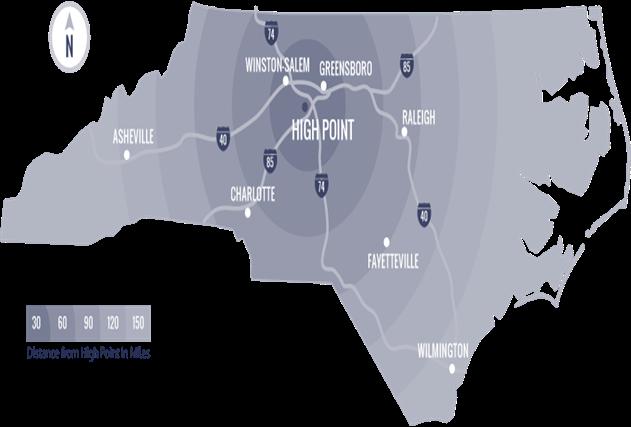
High Point is centrally located in the Piedmont Triad region of the State of North Carolina and is currently the ninth-largest municipality in North Carolina. Settled before 1750, High Point was incorporated in 1859.
Being a great place to live also means being a great place to work. High Point is a thriving city of 118,399 residents situated along the rolling Piedmont crescent region of North Carolina. High Point lies in four counties: Guilford, Davidson, Forsyth, and Randolph. Being centrally positioned along the East Coast with easy access to several interstate highways and the Piedmont Triad International Airport, High Point is a great place to live and to do business.
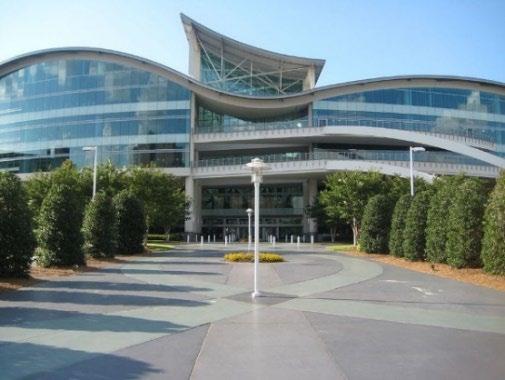

A globally connected community, High Point earned its nicknames as North Carolina's International City™ and Home Furnishings Capital of the World™. The first North Carolina furniture exposition was held in High Point in 1905. In 1921, a brand-new Southern Furniture Exhibition Building was built with ten stories and 249,000 square feet at a cost of $2 million, and the event has grown into an internationally renowned furniture trade fair for all home furnishings. Twice each year, the City hosts the High Point Market, the world's largest home furnishings trade show. High Point Market has a tremendous impact on the economy of the entire Piedmont Triad. All 50 states and more than 110 foreign countries are represented at these markets. High Point continues to be the prime location in the United States to purchase brand name furniture at a substantial discount.
The furniture industry and developing textile manufacturing set the pace for two 20th century growth booms in High Point.

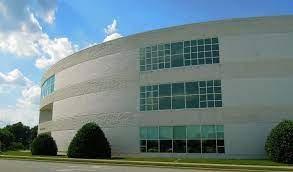

A massive full-service public library contains nearly 400,000 books, music recordings, videotapes, audiobooks, periodicals, newspapers, and a comprehensive collection of books related to history and genealogy equipped with many attractions for Youth and Young Adults.
Missions of the High Point Public Library
• Nurturing the joy of reading
• Sharing the power of knowledge
• Strengthening the sense of community
• Enhancing cultural and economic vitality
The High Point Library also hosts the High Point Farmers Market, which aligns itself to promote a healthy lifestyle and a sense of community in a family-friendly gathering place. Opening and closing dates are subject to change. Admission to the event is free for shoppers, however vendor booth spaces require a minimal fee to cover the costs of event production.

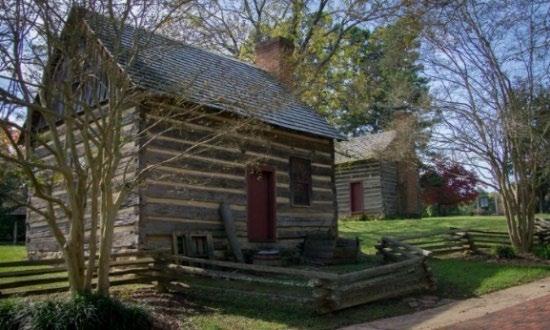

The High Point Museum shares greater High Point history, provides perspective for current issues and strengthens our community. It strives to be a thriving, trusted community center where people come to learn about themselves and our city. It endeavors to encourage familial ties and relationships, help people enjoy life and inspire people to make positive contributions to our society. It is a Certified Autism Center.
Adjacent to the Museum is the Historical Park, which is home to four historic structures: John Haley House (1786), Hoggatt House (1801), a working blacksmith shop (1841), and the iconic Little Red Schoolhouse (1931).
The Museum and Historical Park feature permanent and changing exhibits year-round, along with engaging historic demonstrations and public programs for people of all ages. In addition to inperson experiences, the Museum offers a variety of opportunities to explore High Point’s history digitally through its website, app, and social media channels. Examples include a searchable database of Museum artifacts, regularly updated blog posts, educational videos, and historic walking and driving tours around High Point.
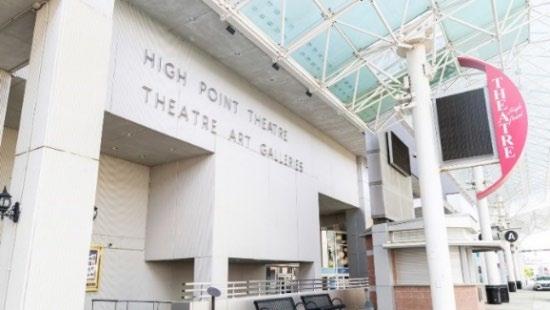

Owned and operated by the City of High Point, the complex represents one of the nation's first cooperative ventures between municipal government, private enterprise, and the arts. In 1975, the International Home Furnishings Center was awarded the Esquire/BCA "Business in the Arts" award in recognition of its cooperation with the City of High Point.
Constructed in 1975, the facility combines contemporary "sculptured" architecture with an interior design dominated by earth tones. The Theatre features an elegant 900-seat auditorium with continental style seating. Other facilities include three large exhibition galleries for meetings, displays, or receptions. The center is suited for meeting use, all types of performing arts, and is available to both professional and amateur groups on a rental basis.
Preparation of the City of High Point's fiscal year budget is a process that involves the citizens of High Point, the Mayor and City Council, individual city departments, and the Budget and Evaluation Department.
It is a process that begins in October with preliminary budget meetings and budget software and process training sessions with departments. During the Fall, the Budget and Evaluation Department prepares revenue and expenditure forecasts for the current budget year. The Budget and Evaluation Department distributes operating base budget target numbers and personnel workpapers to departments and distributes grant request forms to departments and to outside non-profit organizations requesting funding.
City management and department directors meet to discuss immediate goals and directives, strategic plan initiatives, and major issues to be emphasized in the upcoming year. The City Manager gives general direction regarding economic conditions and how these conditions should relate to budget proposals.
In October, departments begin preparing their Five-Year Capital Improvement Program (CIP). This process requires departments to submit financial information for each project, detailing the description of the project, the projected beginning and end dates, as well as how the project will be financed.
Department directors submit their Five-Year CIP requests to the Budget and Evaluation Department, ranking projects by priority. The Budget and Evaluation Department prepares the CIP requests for review. The assistant city managers, department directors, and the Budget and Evaluation Department perform the next review of these requests. Changes that best meet the City’s needs are incorporated into the requests. Upon completion of these reviews in early winter, the program is then presented to the City Manager for review, at which time additions or reductions may be made as any new priorities are identified.
Each Fall/Winter, the Budget and Evaluation Department meets with department staff and conducts budget software training and outlines expectations for the upcoming budget year. The Budget and Evaluation Department prepares revenue forecasts and operating budget target numbers for the upcoming year. The budgeting software is opened for each department to begin the input of their operating budget requests. The Budget and Evaluation Department distributes personnel workpapers and grant request forms to each department.
At the City Council's discretion, a City Council/Management Team retreat is held early in the calendar year, during which the Mayor and City Council communicate their concerns and priorities and update the Strategic Plan for the upcoming year. The City Manager’s staff presents an overview of the current budget year, preview of the year-end financial picture, and major capital projects on the horizon. This important meeting provides valuable insight and feedback from Council members for the management team to use in developing the proposed budget.
Once budget information is input into the budget software, budget review meetings are scheduled as necessary during February/March with department heads and the Budget and Evaluation Department to study their requests. The City Manager is given a briefing on any new programs that are being proposed, new position requests, as well as major increases in the budget requests. The Budget and Evaluation Department produces the initial recommended budget to be reviewed with the City Manager. The Manager makes any final revisions to the proposed budget along with the proposed tax rate and any utility rate or other fee changes being proposed for the new fiscal year.
In May, the City Manager's proposed budget is presented to the Mayor and City Council, the press, and the public. The proposed budget is made available for public inspection in the office of the City Clerk, the Library, and the Budget and Evaluation Department
During May/June, the Mayor and City Council hold a series of budget work sessions in which review of the budget occurs. During these meetings, the City Council discusses the budget and makes any necessary adjustments. North Carolina General Statutes require one public hearing be held for public comment on the proposed budget. This hearing is conducted in May or June, prior to adoption of the budget. The City Council is required by law to formally adopt the budget at a City Council meeting on or prior to June 30.
The proposed budget is also posted on the City of High Point’s website and can be accessed at www.highpointnc.gov.
PLANNING October - January
• Budget team prepares revenue and spending forecasts for current budget year
• Budget Kickoff - January 9, 2026
• Budget team distributes operating base budget target numbers and personnel workpapers to departments
• Operating/Performance Measures training sessions - January 15 & 22, 2026
• Budget team distributes Outside Non-Profit Grant Application - Due February 6, 2026
BUDGET REVIEW February - April
• Revenue, Expenditures and Change Requests updated in QuesticaDue January 30, February 6, & February 13, 2026
• Performance Measures for the first six (6) months of the current yearDue January 30, February 6, & February 13, 2026
• Budget team initial review of departmental requests
• Budget team review with City Manager's Office
CITY COUNCIL REVIEW May
• Proposed budget presentation to Mayor and City Council - May 4, 2026
• Mayor and City Council Budget Review
• Budget Work Sessions - May 11, May 20, & May 27 (if necessary), 2026
• Budget public hearing - May 18, 2026
ADOPTED BUDGET June
• Adoption of FY 2026-2027 Annual Budget and Related Ordinances
The City of High Point annual budget shall be prepared in accordance with the General Statutes of the state of North Carolina section 159-8(a) that requires an annual balanced budget defined as follows: The budget ordinance is balanced when the sum of estimated net revenues and appropriated fund balances is equal to appropriations.
The City of High Point adheres to state statutes by strictly applying the following policies in the development of its annual operating budget. These policies provide the basis for decisionmaking and in continuing a tradition of financial stability in High Point’s operation.
1. The City of High Point shall prepare an annual budget appropriation document covering the twelve-month period beginning July 1 and ending June 30 of the following year.
2. Before April 30th of each year, each department head shall present budget requests and revenue estimates for the coming budget year.
3. The proposed budget document shall be presented to the City Council for consideration no later than June 1 with adoption of the approved ordinance by June 30.
4. One public hearing is mandated by North Carolina State General Statutes.
5. The City budget will be developed incorporating all programs and service levels as established by City Council and as required by all statutes.
6. Budgets shall be prepared at the department level and provide the basis for the City’s financial management and operation. The adopted appropriations by fund shall constitute the maximum expenditure authorization for that fund and may be amended only by action of the City Council.
1. Estimation of revenue receipts shall be realistic and attainable both in the determination of fund balance generation in the current fiscal year and in the estimated receipts for the following fiscal year. Where judgment is required, conservatism shall be the rule.
2. Amounts appropriated into fund balance shall not exceed the sum of cash and investments minus the sum of liabilities, encumbrances, and deferred revenues arising from cash receipts at the close of the fiscal year preceding the budget year.
3. Every effort shall be made to maintain a balance of 10% of the City’s estimated expenditures in undesignated fund balance. Appropriations from unappropriated fund balance shall be made only at the direction of the City Council.
4. Water, sewer, stormwater, and electric rates shall be set at an amount that will enable these funds to be self-supporting.
5. The practice of transferring from the Electric Fund to supplement the General Fund was eliminated beginning with Fiscal Year 2000-2001. The Proposed FY 2026-2027 Budget does not include a transfer of electric funds.
6. One-time or special revenues shall not be used to finance ongoing City operations but rather be used for the funding of special projects.
7. An aggressive policy of seeking the collection of delinquent utility and license fee accounts will be maintained.
The goal of the City’s debt policy is to manage debt by maintaining a sound fiscal position and protecting the City’s credit rating. Long-term debt shall only be used to finance those capital projects that cannot be financed with current revenues and will require strong financial administration.
When the City considers debt financing, analyses of the financial impact of short-term and longterm issuing of the debt are considered. Issuing long-term debt commits the City’s revenues several years into the future and may limit its flexibility to respond to changing service priorities, revenue inflows, or cost structures. For this reason, it must be determined that future citizens will receive benefit from the capital improvement that the debt will finance.
Bonds may be sold as authorized or by first issuing bond anticipation notes (BANs) to finance the bond projects. When BANs are issued, such shall be retired by the issuance of the bonds historically within a period of one year.
The payment of debt service shall be developed on a schedule that provides even or level debt payments annually in order to prevent major swings from year to year.
1. The issuance of all bonds for the purchase of or construction of major capital projects will be with the approval of the North Carolina Local Government Commission.
2. In adherence to North Carolina General Statute 159-7, funds shall be appropriated to cover debt service before any other appropriation is authorized.
3. The legal debt margin of 8% of assessed valuation shall be maintained.
1. The City shall prepare a Five-Year Capital Improvement Program (CIP) in conjunction with the annual operating budget. The first year of this program shall be presented for adoption. The subsequent four years shall be for information and planning purposes.
2. Capital expenditures included in the CIP are attributable to a specific fund (General, Water, Sewer, Electric, etc.) and will be financed from revenues assigned to that fund. Projects included in the CIP shall have a cost greater than $15,000 and a useful life of at least ten years.
3. Capital acquisitions costing not less than $5,000 and having a useful life of at least three years and which do not materially add to the value of existing assets shall be budgeted for in the operating budget of the department to which the asset is to be assigned. These acquisitions shall not represent major acquisitions that are budgeted for in the CIP. Vehicles for the City’s fleet are not budgeted for in the CIP. First-year acquisition of vehicles is budgeted in the using department; subsequent replacement vehicles are managed through the City’s Fleet Replacement Program.
4. Capital Project Ordinances (CPO) shall be established and adopted by the City Council separate from the regular operating budget ordinance and shall authorize the construction or acquisition of major capital that spans a period of time greater than one year to complete. The appropriation of the capital project ordinance budget shall remain in effect for the life of the project and not require reappropriation each fiscal year.
5. The expenditure of all bond-authorized projects will be controlled through the establishment of capital project ordinances.
North Carolina General Statute 159-8 states that each local government shall operate under an annual balanced budget ordinance.
The budget ordinance as adopted by the City Council may be amended in two ways:
(1) Budget transfers within a fund authorized by the City Manager, or
(2) Appropriation increases or decreases authorized by the City Council including transfers, contributions, and reimbursements among funds.
The first procedure authorized by the budget ordinance states that the City Manager is authorized to approve transfers of appropriations within a given fund. Conversely, transfers cannot occur between funds without authorization from the City Council.
To initiate a transfer of budgeted funds from one line item to another within the same fund, the department requesting the transfer must complete the “Create a Budget Amendment” task in the Workday ERP system. This task will indicate the relevant budget account numbers to transfer from, the budget account numbers to transfer to, and the amount to be transferred. A description of the transfer must accompany the request.
The task is routed through the department head and then submitted to the Budget and Evaluation Department. Upon receipt, the Budget and Evaluation Department reviews for completeness and accuracy, verifies that the requested transfer amount is available for transfer, and determines if the request is valid.
If approved by the Budget and Performance Director or appropriate designee, the request is approved and the transfer processed in the general ledger. Budget transfers result in no increase or decrease in the budget for each fund.
One exception to the City Manager’s authority to transfer budget within a fund is that of contingency transfers. The City Manager is required to communicate to City Council any transfers by his/her authority out of a fund’s contingency account into any other budget for expenditure.
The need for any budget ordinance amendment that results in either increases or decreases in a fund’s total budget or which involves transfers of budget between funds requires City Council formal authorization and approval.
For example, if revenue is made available during the fiscal year that was not included in the original adopted budget ordinance, the City Council may elect to appropriate this revenue and budget a corresponding amount of expense for a stated purpose.
In addition, the City Council may elect to transfer, contribute, or reimburse one fund from another fund for a stated purpose.
In any of these instances an increase in the fund’s budget is the result.
To implement this, the Budget and Evaluation Department prepares a Budget Ordinance Amendment which states the revenue and expense accounts involved, the amount of the amendment, and the purpose of the amendment. This Appropriation Ordinance is then presented to the City Council for deliberation and approval. When approved, the Budget and Evaluation Department files the ordinance with the City Clerk and prepares the appropriate budget amendment task and processes them as outlined in the section above.
The accounting policies of the City of High Point shall conform to the generally accepted accounting principles as applicable to governments.
The diverse nature of governmental operations and the requirements of assuring legal compliance preclude recording all governmental financial transactions and balances in a single accounting entity. Therefore, from an accounting and financial management perspective, a governmental unit is a combination of several distinctly different fiscal and accounting entities, each having a separate set of accounts and functioning independently of each other.
The basis of accounting refers to the point at which revenues or expenditures are recognized in the accounts and reported in the financial statements. It relates to the timing of the measurements made regardless of the measurement focus applied. As in the basis of budgeting, accounting records for the City of High Point governmental funds are maintained on a modified accrual basis with the revenues being recorded when available and measurable and expenditures being recorded when the services or goods are received and the liabilities are incurred. In contrast to the basis of budgeting, accounting records for proprietary funds are maintained on the accrual basis in which revenues are recognized when earned and expenses are recognized when incurred.
The City of High Point’s accounting system is organized and operated on a fund basis. Each accounting entity is accounted for in a separate fund, which is defined as a fiscal accounting entity with a self-balancing set of accounts recording cash and other financial resources together with related liabilities and residual equities or balances, and changes therein. Two fund types defined in the “Description of Budgeted Funds” are further defined below as well as the addition of Fiduciary Funds.
Classification
Governmental Fund
Proprietary Funds
Fiduciary Funds
Fund Type
General
Special Revenue
Debt Service
Capital Projects
Enterprise
Internal Service
Agency
Expendable Trust
Governmental Funds | These funds are, in essence, accounting segregations of financial resources. Expendable assets are assigned to the various governmental funds according to the purposes for which they may or must be used; current liabilities are assigned to the fund
from which they are to be paid; and the differences between governmental fund assets and liabilities (the fund equity) is referred to as Fund Balance. The primary measurement focus is “flow of current financial resources.” Increases in spendable resources are reported in the operating statement as revenues or other financing sources, and decreases are reported as expenditures or other financing uses.
Proprietary Funds | These funds are sometimes referred to as income determination, nonexpendable, or commercial-type funds and are used to account for a government's on-going organizations and activities which are similar to those often found in the private sector. All assets, liabilities, equities, revenues, expenses, and transfers relating to the government's business and quasi-business activities, where net income and capital maintenance are measured, are accounted for through proprietary funds. The generally accepted accounting principles here are those applicable to similar businesses in the private sector, and the measurement focus is the economic condition of the fund as a result of the events and transactions of the period. Events and transactions that improve the economic position of a proprietary fund are reported as revenues or gains in the operating statement. Those that diminish the economic position are reported as expenses or losses.
Fiduciary Funds | These funds account for assets held by the City in a trustee capacity or as an agent for other governmental units and for other funds. Each trust fund is accounted for as either a governmental or a proprietary fund.
Fiduciary funds are not budgeted in the annual budget process.
These represent another accounting entity used to establish control and accountability for the City's general fixed assets and the outstanding principal of its general long-term debt (General Fixed Assets Account Group and General Long-Term Debt Account Group).
These records are accounted for in a self-balancing group of accounts because the City's General fixed assets all fixed assets except those accounted for in Proprietary Funds or Trust Funds are not financial resources available for expenditures. The outstanding principal of the general long-term debt and general long-term liabilities not accounted for in the Proprietary Funds or Trust Funds do not require an appropriation or expenditure during the account year.
In developing and maintaining the City's accounting system, consideration is given to the adequacy of internal accounting controls. Internal accounting controls are designed to provide reasonable, but not absolute, assurance regarding the safeguarding of assets against loss from unauthorized use or disposition and the reliability of financial records for preparing financial statements and maintaining accountability for assets.
The concept of reasonable assurance recognizes that the cost of a control should not exceed the benefits likely to be derived, and the evaluation of costs and benefits requires estimates and judgments by management.
All internal control evaluations occur within the above framework. We believe that the City's internal accounting controls adequately safeguard assets and provide reasonable assurance of proper recording of financial transactions.
Because of the major impact that this revenue source could have on the General Fund, and therefore, the tax rate, special comment is warranted on the Electric Fund.
On February 1, 1996, the High Point City Council adopted an Electric Fund Transfer Policy, which restricts the amount of funds which can be transferred to the General Fund from the Electric Fund. The policy provisions are summarized below:
♦ Whereas the City Council desires to preserve the financial integrity of the Electric Fund and to reduce the General Fund’s dependence on Electric Fund transfers…
♦ Whereas if electric services had been provided by an investor-owned utility instead of the city’s Electric Fund, such utility would have paid municipal ad valorem taxes to the General Fund of the City and would have been entitled to a return on investment;
♦ Therefore, be it resolved by the City Council, that the following policy regarding payments in lieu of taxes and operating transfers from the Electric Fund be adopted:
1. The City shall budget annually a payment in lieu of taxes amount from the Electric Fund to the General Fund that approximates the amount of ad valorem taxes that would have been paid had electric services been provided by an investor-owned utility.
2. Operating Transfers: The City may budget an operating transfer from the Electric Fund to the General Fund not to exceed 3% of the gross fixed assets of the Electric Fund as reported in the City’s most recent audited financial statements.
The transfer to the General Fund was eliminated in FY 2000-2001. The FY 2026-2027 Proposed Budget does not include a transfer from the Electric Fund. The amount budgeted for Payment in Lieu of Taxes from the Electric Fund to the General Fund for FY 2026-2027 is $985,272
The City’s budget is developed on a modified accrual basis for all funds, which means that obligations of the City are budgeted as expenditures, but revenues are recognized only when they are measurable and available. Available means that the funds are collectible within sixty days of the fiscal year-end. The Local Government Budget and Fiscal Control Act requires that the budget ordinance be balanced. North Carolina General Statute 159-8(a) states:
Each local government and public authority shall operate under an annual balanced budget ordinance....A budget ordinance is balanced when the sum of estimated net revenues and appropriated fund balance is equal to appropriations.
Appropriations are exclusively limited to cash and cash equivalents less current claims against that cash. The statutory formula is cash and investments minus the sum of liabilities, encumbrances, and deferred revenues arising from cash receipts.
The Annual Budget authorizes and provides the basis for the City's financial management. The adopted appropriations constitute the maximum expenditure authorization during the fiscal year and can only be amended by action of the City Council.
The City's budget is divided into funds. An annual budget is adopted for the General, Special Revenue, Debt Service, General Capital Projects, Enterprise, and Central Service Funds. (These are illustrated in the “Budgetary Fund Structure” chart and further defined in the “Description of Budgeted Funds” on the following two pages.) Within each fund are the separate departments with various activity budgets. The Annual Budget is adopted at the department level.
Beginning with the budget for fiscal year 2016-2017, a new budget software system was implemented. Questica is a web-based application that provides entities with the functions and features necessary to gain visibility into their financials and control their operating budgets. The program ensures the budgeting cycle runs smoothly and securely for users. The product also includes a Salary and Position Planning module, a Capital Improvement Planning module, and a Performance Management module.
The implementation of this software has eliminated the need for the Budget and Evaluation Department to push spreadsheets out to departments for budget preparation. Departments enter budget requests directly into the budget system and can generate individual reports at the fund, department, and accounting unit levels.
The system will also allow many “what if” scenarios to be tested. All preparation of the budget up to adoption is done in the Questica software. The budget system is solely a system for preparing and balancing the budget. The budget is uploaded into the Workday ERP system following adoption.
The financial system implemented in fiscal year 2025-2026 by the City of High Point is Workday and it provides for fiscal management, among other functions.
The General Ledger acts as the heart of the financial management system. The General Ledger function interfaces with other Workday functions such as Purchasing and Accounts Payable, each of which feed into the General Ledger.
The Workday budget check override task allows for excellent budgetary control at the department or cost center level. This functionality checks for available funds before new commitments and encumbrances are released by the system
General Fund
• General Government
• Public Safety
• Public Services
• Planning & Community Development
• Cultural & Recreation
Internal Service Funds
• Central Service Funds
• Print Shop
• Radio Repair
• Computer Replacement
• Fleet Maintenance
• Insurance Reserve
• General Risk Retention
Economic Development
Special Revenue
• Special Grants
• Community Development
• Showroom and Occupancy Tax
Debt Service
• General Debt Service
Capital Projects
• General Capital Projects
Enterprise Funds
• Water Resources Fund
• Electric Fund
• Mass Transit Fund
• Parking Fund
• Solid Waste Fund
• Stormwater Fund Legend:
Fund Group Level: Gray
Fund Level: Blue
Below Fund Level: Red
The City’s budget is developed on a modified accrual basis for all funds, which means that obligations of the City are budgeted as expenditures, but revenues are recognized only when they are measurable and available. As in the basis of budgeting, accounting records for the City of High Point governmental funds are maintained on a modified accrual basis with the revenues being recorded when available and measurable and expenditures being recorded
when the services or goods are received, and the liabilities are incurred. In contrast to the basis of budgeting, accounting records for proprietary funds are maintained on an accrual basis in which revenues are recognized when earned and expenses are recognized when incurred.
The City of High Point budget consists of two basic fund types: Governmental Funds and Proprietary Funds
The measurement focus of governmental funds is upon determination of financial position and changes in financial position rather than upon net income.
The General Fund is used to account for general government operations of the City, which are financed through taxes or other general revenues, contributions, reimbursements, or transfers from other funds. The General Fund accounts for all financial transactions not required to be accounted for in another fund. The Economic Development Fund is used to account for funds appropriated for investment incentives to aid in attracting investors to the City.
Special Grants is used to account for revenues received from federal, state, and local sources or groups designated for expenditure on particular programs and projects. These programs and projects are usually non-recurring in nature and of short duration.
Community Development is used to account for revenues and expenses derived from the Community Development Block Grant entitlements to the City.
Showroom and Occupancy Tax is used to account for revenues from the occupancy tax on hotels and rental properties and the showroom privilege license tax. The revenues are primarily passed on to Visit High Point and the High Point Market Authority for tourism and furniture market promotion and administration.
The General Debt Service Fund is used to account for the accumulation of resources for and the payment of general long-term debt, principal and interest for bonded indebtedness incurred for the financing of projects associated with General Fund activities. (Debt service for enterprise funds is accounted for in those funds.)
The General Capital Projects Fund is used to account for the acquisition or construction of major capital facilities, equipment, and improvements other than those financed by the enterprise funds.
The measurement focus of proprietary funds is upon determination of operating income, changes in net assets, financial position and cash flows. Use is required for operations for which a fee is charged to external users.
The Central Services Fund is used to provide centralized services such as radio, computer, and fleet services on a cost-reimbursement basis that provides the revenue to support the Central Services Fund.
Insurance Reserve Fund is used to account for revenues and expenses for Health, Dental, Life Insurance, and Worker’s Compensation.
General Risk Retention Fund is used to accumulate claim reserves and to pay claims and administrative fees for general and auto liability claims in the City’s self-funded risk program.
Water Resources Fund is an enterprise fund used to account for the provision of water and sewer services to the residents of the City and some county residents. It includes all operating, debt service, and capital improvements associated with providing water and sewer services.
Electric Fund is an enterprise fund used to account for the provision of electric service to the residents of the City. It includes all operating, debt service, and capital improvements associated with providing electric service.
Mass Transit Fund is an enterprise fund used to account for the operation and maintenance of the City’s public transportation system, High Point Transit System.
Parking Fund is an enterprise fund used to account for the operation and maintenance of the City’s various parking facilities. It includes all operating, debt service, and capital improvements for the parking facilities.
Solid Waste Fund is an enterprise fund used to account for the operation and maintenance of the City’s landfill, municipal recycling facility and garbage collection. It includes all operating, debt service, and capital improvements for the landfill and recycling facilities.
Stormwater Fund is an enterprise fund used to account for the operation and maintenance of the stormwater program, which manages stormwater runoff, bank stabilization, and maintenance of retention lakes and ponds. All expenses including debt service and capital improvements for the stormwater operation are included in this fund.
The City of High Point’s Fiscal Policy Guidelines were originally adopted April 3, 2006, and were most recently revised on June 1, 2021. The Guidelines consist of six sections: Objectives, Capital Improvement Budget Policies, Debt Policies, Reserve Policies, Budget Development Policies, and Cash Management and Investment Policies.
This fiscal policy is a statement of the guidelines and goals that will influence and guide the financial management practice of the City of High Point, North Carolina. A fiscal policy that is adopted, adhered to, and regularly reviewed is recognized as the cornerstone of sound financial management. Effective fiscal policy:
• Contributes significantly to the City's ability to insulate itself from fiscal crisis,
• Enhances short-term and long-term financial credit ability by helping to achieve the highest credit and bond ratings possible,
• Promotes long-term financial stability by establishing clear and consistent guidelines,
• Directs attention to the total financial picture of the City rather than single issue areas,
• Promotes the view of linking long-run financial planning with day-to-day operations, and
• Provides the City Council, citizens, and the City’s professional management a framework for measuring the fiscal impact of government services against established fiscal parameters and guidelines.
To these ends, the following fiscal policy statements are presented.
1. The City will prioritize all capital improvements in accordance with an adopted capital improvement program.
2. The City will develop a five-year plan for capital improvements and review and update the plan annually. The City utilizes a weighted ranking system based on five critical factors to recommend projects to the capital improvement program. Additional projects can be added to the CIP without ranking, but funding for projects added in this manner is subjected to normal operating budget constraints.
3. The City will enact an annual capital budget based on the five-year capital improvement plan. Future capital expenditures necessitated by changes in population, changes in real estate development, or changes in economic base will be calculated and included in capital budget projections.
4. The City will coordinate development of the capital improvement budget with development of the operating budget. Future operating costs associated with new capital improvements will be projected and included in operating budget forecasts.
5. The City will use intergovernmental assistance to finance only those capital improvements that are consistent with the capital improvement plan and City priorities, and whose operating and maintenance costs have been included in operating budget forecasts.
6. The City will maintain all its assets at a level adequate to protect the City's capital investment and to minimize future maintenance and replacement costs.
7. The City will project its equipment replacement and maintenance needs for the next several years and will update this projection each year. From this projection, a maintenance and replacement schedule will be developed and followed.
8. The City will identify the estimated costs and potential funding sources for each capital project proposal before it is submitted for approval.
9. The City will attempt to determine the least costly and most flexible financing method for all new projects.
General
1. The City will confine long-term borrowing to capital improvement or projects that cannot be financed from current revenues except where approved justification is provided.
2. The City will utilize a balanced approach to capital funding utilizing debt financing, draws on capital reserves and/or fund balances in excess of policy targets, and current year (pay-asyou-go) appropriations.
3. When the City finances capital improvements or other projects by issuing bonds, or entering into capital leases, it will repay the debt within a period not to exceed the expected useful life of the project. Target debt ratios will be annually calculated and included in the review of financial trends.
4. Where feasible, the City will explore the usage of special assessment, revenue, or other selfsupporting bonds instead of general obligation bonds.
5. The City will retire tax anticipation debt, if any, annually and will retire bond anticipation debt within six months after completion of the project.
1. Net debt as a percentage of total assessed value of taxable property should not exceed 2.5%. Net debt is defined as any and all debt that is tax-supported.
2. The ratio of debt service expenditures as a percent of total governmental fund expenditures should not exceed 15% with an aggregate ten-year principal payout ratio target of 60% or better.
3. The City recognizes the importance of underlying and overlapping debt in analyzing financial condition. The City will regularly analyze total indebtedness including underlying and overlapping debt.
4. The City will target a minimum amount of equity funding of 10% of the capital improvement plan on a five-year rolling average.
1. The City will establish an emergency reserve to pay for needs caused by unforeseen emergencies, including unanticipated expenditures of a nonrecurring nature, or to meet unexpected small increases in service delivery costs. This contingency reserve will be budgeted at not less than 0.5% of the operating funds.
2. Unreserved, Undesignated Fund Balances will mean funds that remain available for appropriation by the City Council after all commitments for future expenditures, required reserves defined by State statutes, and previous Council designations have been calculated. The City will define these remaining amounts as “available fund balances.”
3. Available fund balances at the close of each fiscal year should be at least 10% of the Total Annual Operating Budget of the City.
4. The City Council may, from time-to-time, appropriate fund balances that will reduce available fund balances below the 10% policy for the purposes of a declared fiscal emergency or other such global purpose as to protect the long-term fiscal security of the City of High Point. In such circumstances, the Council will adopt a plan to restore the available fund balances to the policy level within 36 months from the date of the appropriation. If restoration cannot be accomplished within such time period without severe hardship to the City, then the Council will establish a different but appropriate time period.
5. The City has adopted a comprehensive strategy for the long-term stability and financial health of the Combined Water and Sewer Fund that provides for annual increases in fund reserves to an established goal of 50% of the Water and Sewer Fund operating budget.
6. The City Council has adopted a strategy to stabilize retail electric utility rates for the benefit of users of the Electric Utility Operations Fund by creating a Rate Stabilization Reserve. The Reserve was funded by the cumulative disparity between wholesale purchased power rates and the City’s adopted retail rate between FY 2016 and FY 2020 in addition to a working capital credit from NCMPA1. Staff will recommend appropriating a portion of the reserve on an annual basis to mitigate future rate increases.
1. The City will develop the Annual Budget in conjunction with a stated program of performance objectives and measures with which to gauge progress toward meeting those objectives.
2. Water, sewer, and electric rates will be established at the appropriate level to enable the related funds to be self-supporting. In addition, water and sewer rates will be established to maintain compliance with revenue bond covenants.
3. One-time or other special revenues will not be used to finance continuing City operations but instead will be used for funding special projects.
4. The City will pursue an aggressive policy seeking the collection of delinquent utility, license, permit and other fees due to the City.
1. It is the intent of the City that public funds will be invested to the extent possible to reduce the need for property tax and utility revenues. Funds will be invested with the chief objectives of safety of principal, liquidity, and yield, in that order. All deposits and investments of City funds will be in accordance with N.C.G.S. 159.
2. The Financial Services Director will establish a Cash Management Program that will be conducted in such a manner as to ensure that adequate funds will always be available to meet the City’s financial obligations and to provide the maximum amount of funds available for investment at all times. The Program shall comprehensively address at a minimum; Accounts Receivable/Billings, Accounts Payable, Receipts, Disbursements, Deposits, Payroll, Special Appropriations and Debt Service Payments.
3. The City will use a Central Depository to maximize the availability and mobility of cash for all funds that can be legally and practically combined.
4. All security transactions, including collateral for repurchase agreements, entered into by the city shall be conducted on a delivery-versus-payment (DVP) basis. Securities will be listed in the City’s name if issued only in book entry form or held by a third-party custodian and evidenced by safekeeping receipts. Certificated investments will be held by the Financial Services Director in the name of the City.
5. Investments of the City will be diversified to eliminate the risk of loss as a result of over concentration of securities in a specific issuer, class of securities, or maturity sector.

The Summaries/Analysis section contains charts, graphs, summary tables, and discussions of the City's revenues and expenses for fiscal year 2026-2027 with historical data for comparison purposes.
The Consolidated Summary of Revenues and Expenditures that begins this section is a summary of total revenues and expenses by fund by major revenue and expense category. Following this summary, the section is divided into revenue and expense information, personnel summaries, and outstanding debt information.
Balances June 30, 2027
$207,920,254
80,023,517
Includes General, Special Revenue, Capital Projects, and Debt Service Funds; excludes Other Financing Uses
Source:TheabovestatisticsarefromtheCityofHighPointAnnualComprehensiveFinancialReport
*Includes Property Taxes, Sales and Use Taxes, and Occupancy Taxes. Except that starting in FY2018, sales and use taxes were captured in the Intergovernmental Revenues category.
Includes General, Special Revenue, Capital Projects, and Debt Service Funds; excludes Other Financing Sources
Source:TheabovestatisticsarefromtheCityofHighPointAnnualComprehensiveFinancialReport












Fees, Water and Sewer Fees Property Tax General Fund Property Tax, Debt Service Property Tax Charges for Services Charges for Services from General, Central Services, Transit, Parking, Solid Waste and Stormwater Funds, and Miscellaneous Revenues
Interfund Charges
Financing Sources
Intergovernmental Revenues Revenues from Federal, State and other Local jurisdictions
Sales and Use Tax/Licenses and Fees
Sales Tax, Vehicle Tax, Room Occupancy Tax, Licenses, Permits, Inspections, Library Fines, and other Miscellaneous Fees Appropriated Fund Balance Fund Balances
Fund Balance represents the excess of a fund's assets and revenues over its liabilities, reserves, and expenditures at the close of the fiscal year.
The High Point City Council-adopted Fiscal Policies maintain minimum fund balances at 10% of estimated expenditures as a signal of financial strength and fiscal stability. The City of High Point applies the policy to all operating funds except the Economic Development, General Debt, and General Capital Project funds as they are covered by more specific strategic plans. A summary of fund balances and estimated changes therein are shown below:
Resource Officers (SROs)










Electric


Electric Fund
Public Safety Communications Center, Police, Fire, Building Inspections, Local Code Enforcement
Recreation/Culture/ Neighborhoods
General Government
Parks & Recreation, Library, Theatre, Outside Non-Profit Organizations, Planning & Development, Economic Development, Community Development
Governing Body, City Management, City Attorney, Budget and Evaluation, Communication & Public Engagement, Engineering, Information Technology Services, Human Resources, Financial Services, Special Appropriations
Transportation Transportation, Street Maintenance, Transit, Parking
Debt Service/ Other/Transfers
Reimbursement, Contingency, Debt Service, Internal Service Funds, Special Grants Fund, Showroom & Occupancy Tax Fund, General Risk Fund
Environmental Health Water Resources, Solid Waste, Stormwater, Public Services except Street Maintenance
In North Carolina, the issuance of bonds is accomplished with the guidance and approval of the North Carolina Local Government Commission (LGC) from the point of development of a bond referendum to the actual sale of the bonds. The LGC must approve the concept and amount of a bond issuance before it goes to the voters for approval. Upon approval of a bond referendum by the citizens and sale of the bonds, the LGC is able to develop a level payment schedule to avoid major swings in the debt service obligations from year-to-year. As old debt is either retired or decreases, new debt is issued. This helps in minimizing the effect of debt on the property tax rate and as well as utility rates when revenue bonds are issued.
In November 2019, voters approved a $50 million bond referendum to fund transportation, affordable housing, and parks and recreation projects. As of June 30, 2026, approximately $12 million of authorization remains
Listed below are the City of High Point debt issues that are on the current long-term debt plan. The total long-term debt service for FY 2026-27 is shown by fund below.
The total General Debt Service for fiscal year 2026-2027 is $15,579,600. The fiscal year 20262027 General Debt Service Fund debt issues are as follows: FY 2027 Debt Service Pay Off Year
2014 – GO Public Improvement Bond $380,869 2034
2014 – GO Refunding 651,062 2027
2016 – GO Refunding 1,770,801 2029
2018 – GO 2/3 Public Improv. Bond
–
2039
2039
2030
2020 – Limited Obligation Bond 1,244,885 2040
2022A – 2/3 Public Improvement Bond 689,000 2032
2022B – Public Improvement Bond 1,912,813 2042
2022C – GO Refunding 328,516 2032
2024 – 2/3 Public Improvement Bond 1,028,455 2031
2025 – Limited Obligation Bond 804,934 2040
2026 – GO Public Improvement (est.) 2,689,436 2046
Water Resources Fund
Water Resources debt service for fiscal year 2026-2027 is $17,706,360 The fiscal year 2026-2027 Water Resources debt issues are as follows:
FY 2027 Debt Service Pay Off Year
ARRA – Federal Revolving Loan
2016 Revenue Refunding
2019 Revenue Bonds
2022 Revenue Bond
2022B Refunding
2024 Refunding
2025 Revenue Bond (est.)
$32,609 2030
4,602,026 2034
3,403,101 2044
2,329,575 2047
2,402,213 2032
2,363,648 2040
2,573,188 2050
The total debt service for the Stormwater Fund in fiscal year 2026-2027 is $719,434. The 2004 bond referendum included $15.4 million in Stormwater projects Stormwater debt service includes the principal and interest payment of the General Obligation portion for Stormwater Bonds. The debt on these bonds has previously been supported by property taxes dedicated to the General Obligation Bonds.
Smaller stormwater projects will continue to be funded through user fees in the Pay-Go Capital Program. The fiscal year 2026-2027 Stormwater Fund debt issue follows:
FY 2027 Debt Service Pay Off Year
2014 – G.O. Refunding
$90,538 2027
2016 – G.O. Refunding 356,426 2029
2020 – G.O. Refunding
272,470 2030
The City of High Point finances some equipment with installment contracts. The total lease principal and interest for fiscal year 2026-2027 is $1,721,672.
FY 2027 Debt Service Pay Off Year
Fleet Equipment
$358,772 2026
Fire Equipment 101,235 2027 Fire Equipment 553,620 2029
Fleet Equipment 198,144 2029
Fire Equipment (est) 509,901 2037
The City’s capacity to finance and pay for needed improvements is evaluated from time to time by the following rating agencies: Moody’s Investment Services, Standard & Poor’s, and Fitch Ratings. Protecting and enhancing our bond ratings is one of our highest priorities.
The City has seen a series of bond rating upgrades since 2003, including the addition of a AAA bond rating assignment by Standard & Poor’s. The City’s bond ratings were re-affirmed in conjunction with our bond sale in April 2026.
ASSESSED VALUES AND DEBT LIMITATIONS – END OF FISCAL YEAR 2025 (dollars in thousands)
Value $13,809,555
Limit (1) 8% of assessed value $1,104,764
Amount of Debt Applicable to Limit
Less: Amount available for repayment of GO
Note: NC Statute GS 159-55 limits the city’s outstanding debt to 8% of the appraised value of property subject to taxation. The following deductions are made from gross debt to arrive at net debt applicable to the limit: Money held for payment of principal; debt incurred for water, sewer, gas, or electric power purchase; uncollected special assessments, and funding and refunding bonds not yet issued.
The legal debt margin is the difference between the debt limit and the City’s net det outstanding applicable to the limit and represents the City’s legal borrowing authority.
Note: Debt is presented as gross and does not include bond premiums/discounts.
Proposed 202 6- 202 7 Operating Budget
$175,040,477
The General Fund is the general operating fund of the City. It is used to account for all financial resources except those required to be accounted for in another fund.
Budget Summary
REVENUES
The FY 2026-2027 proposed budget reduces the property tax rate by 8.75 cents from 64.75 cents to 56.00 cents per $100 of valuation. The Debt Service Fund continues to include 3.4 cents of the tax rate to fund the 2004 bond authorization bond issues as authorized by High Point voters in the 2004 bond referendum. The Proposed General Fund property tax rate is 52.60 cents.
Property tax revenues represent 58.5% or $102,393,018 of the total General Fund revenues. Property tax revenues are projected to increase by $16,203,181, or 18.8%. The projected collections are based on a collection rate of 99.3%.
Sales tax revenues represent 24.0% or $42,066,145 of General Fund revenues and are projected to increase by approximately $1,480,896, or 3.6%. Retail sales tax revenue is estimated to increase approximately 2.4% above year-end estimates. Minimal change is expected to the Guilford County ad valorem sales tax distribution percentage.
Intergovernmental revenues are projected to decrease $113,461, or 0.9%. There is a slight decrease in the amount of Powell Bill revenues expected to be distributed by the State.
Charges for services are increasing by $230,192, or 3.5%, primarily due to a projected increase in golf course greens fees, golf cart rental fees, and driving range fees at Oak Hollow and Blair Park golf courses.
Miscellaneous revenue is estimated to increase by $3,828,845, due to the budgeting of debt proceeds for the financing of three fire apparatus trucks. There is a corresponding expense for the purchase of these vehicles.
Personnel services include an average mid-year merit adjustment of 3%, implementation of the final phase of compensation and classification study adjustments, a 2.5% pay plan adjustment, an increased employer contribution for retirement, and higher health insurance costs. The general fund budget includes the addition of four full-time and three part-time positions. Details are in the Manager's Message.
Operating expenditures are increased by $1,721,625 or 6.1%. Drivers include increases in phone and utility budgets ($559,000), license and maintenance for software applications and I.T. infrastructure ($275,000), higher Fleet Services charges for the cost of vehicle replacements and vehicle maintenance ($215,000), and operational costs for the commercial shared-use kitchen ($253,000).
Capital outlay funding is budgeted at $5,576,938 for FY 2026-27. This is driven by the funding for the fire apparatus replacement program ($4,100,000) and other fire equipment including station generators ($200,000) and thermal imaging cameras ($15,000). The fire apparatus replacement program includes three apparatus vehicles (engine, ladder, tanker) that will be financed over a 10-year period. The $4.1 million is the full cost which is offset by debt proceeds revenues.
Debt service payments are increased by $706,263 for FY 2026-27. This includes new debt service payments for the three fire apparatus vehicles to be financed over a 10-year period.
Interfund transfers are increased by $3,837,355. The General Fund contribution for capital projects is $4,956,510, helping meet growing deferred maintenance and other capital needs of the general fund service areas, as well as an additional $1.93 million for parking infrastructure and downtown redevelopment.
The proposed budget also includes an increased transfer to the debt service fund of $1.14 million for the increase in the Incremental tax revenue payment for the Catalyst project. The General Fund subsidy for mass transit is $2,307,408, an increase of $541,520 due to growing expenses and minimal growth in federal and state transit revenues.







Property Tax
Charges for Services

General Fund Property Tax
Charges for Services from General and Miscellaneous Revenues Intergovernmental Revenues
Sales & Use Tax/Licenses and Fees
Revenues from Federal, State and other Local jurisdictions
Sales Tax, Vehicle Tax, Licenses, Permits, Inspections, Library Fines, and other Miscellaneous Fees






Public Safety Police, Fire
Recreation & Culture Parks & Recreation, Library, Museum, Theatre
Community & Economic Development Economic Development, Community Development & Housing, Planning, Inspections & Development, Joblink – Idol Street Building
General Government Governing Body, City Management, City Attorney, Budget & Evaluation, Communication & Public Engagement, Engineering, Information Technology Services, Human Resources, Financial Services, Special Appropriations, Public Services Admininstration
Public Services Transportation, Streets Maintenance, Cemeteries
Other Transfers & Reimbursements
$ 925,080
SANDRA KEENEY, CITY CLERK
Mission Statement
The mission of the City Clerk's Office is to keep and maintain records of the High Point City Council including minutes, ordinances, resolutions, contracts and other vital documents, and to perform other duties as may be required by the High Point Charter/Code of Ordinances and the North Carolina General Statutes.
Budget Summary

Proposed 2026-2027 Operating Budget $ 1,566,691
TASHA LOGAN FORD, CITY MANAGER
Mission Statement
The City Manager’s Office provides overall leadership and direction for carrying out the policy directives of the City Council and setting the standards for delivering excellent public programs and services to the City of High Point. The Manager’s Office provides strategic guidance to the City Council on issues of importance to the city in order to bring together the community’s human, economic and civic resources for the purpose of creating the single most livable, safe and prosperous community in America.
Budget Summary
Proposed 2026-2027 Operating Budget $ 1,954,276
MEGHAN MAGUIRE, CITY ATTORNEY
Mission Statement
The City Attorney's primary purpose is to advise the City Council and administration on legal aspects of the City's activities, administer the legal programs of the City and advocate for the City's legal interests before the courts.
Budget Summary
Expenditures
Expenditures by Division
Personnel Summary
Attorney representation to City Council, Council Committees, and Council appointed legislative and quasi-judicial boards and commissions
Proposed 2026-2027 Operating Budget $ 1,551,311
JERON HOLLIS, MANAGING DIRECTOR
Mission Statement
The Office of Communications & Public Engagement strives to keep residents engaged and informed about the mission, programs and services offered by the City of High Point through various media platforms. We support the City Council, City Manager and City of High Point staff by enhancing the delivery of information to our various community audiences and by helping to promote our organization’s values of integrity and excellence.
Budget Summary
by Division
Proposed 2026-2027 Operating Budget $ 2,188,391
ANGELA KIRKWOOD, HUMAN RESOURCES DIRECTOR
Mission Statement
The mission of the Human Resources Department is to provide services that promote a work environment characterized by fair treatment of staff, open communications, personal accountability, trust and mutual respect.
Budget Summary
- The proposed budget funds $73,629 towards learning and development initiatives. These initiatives include a leadership lab and leadership academy for staff development and succession planning, an AI strategy roadmap for governance and workforce readiness, and support for City staff to pursue identified certifications.
Proposed 2026-2027 Operating Budget $ 740,475
STEPHEN HAWRYLUK, BUDGET & PERFORMANCE DIRECTOR
Mission Statement
Dedicated to prudent fiscal stewardship, the Budget and Evaluation Department is committed to optimizing resource allocation. Through meticulous analysis and transparent evaluation, the department empowers informed decisions that enhance our community’s well-being and future prosperity.
Budget Summary
Personnel Summary
Performance Measures
Receive Distinguished Budget Presentation Award from GFOA* Yes Yes Yes *Government Finance Officers Association (GFOA)
Proposed 2026-2027 Operating Budget $ 3,659,984
BOBBY FITZJOHN, FINANCIAL SERVICES DIRECTOR
Mission Statement
The mission of the Financial Services Department is to provide a centralized resource for the City's financial affairs, including establishing and maintaining the City's fiscal policies and procedures; coordinating and managing the City's capital projects and debt management programs; providing an internal audit function to safeguard assets and assist with operational efficiencies and compliance with City policies, federal and state laws, and administrative regulations.
Budget Summary
Sustained Professional Purchasing Award (SPPA) from NCAGP**
*Due to ERP implementation some journal entries are no longer needed **North Carolina Association of Governmental Purchasing (NCAGP)
Proposed 2026-2027 Operating Budget $ 5,374,920
TREVOR SPENCER, ENGINEERING DIRECTOR
Mission Statement
The Engineering Services' mission is to assist in making High Point the most livable and prosperous community by providing professional engineering services to other City departments with direct contact and service missions to the public. When directly involved with individual citizens, we advise, solve problems, answer complaints and regulate development for quality assurance. We are dedicated to innovation, teamwork, and professional engineering, while providing quality construction through inspection and contract administration.
Budget Summary
Proposed 2026-2027 Operating Budget $ 17,350,569
ADAM WARD, INFORMATION TECHNOLOGY DIRECTOR
Mission Statement
The Information Technology Services Division will provide relevant and timely solutions to business issues to enable our customers to support the City’s vision in a secure and reliable customer service driven environment. The mission of the Communications Services Division is to provide the citizens of High Point with a central point of contact to request public safety services and to dispatch those services in a timely and cost effective manner.
Budget Summary
Average Call Entry for Police Non-Emergency Calls (Receive to call taking finished) Priority 2-6
Budget Highlights
- Investments in the City’s Information Technology network including updated software, maintenance of existing systems and applications, and cybersecurity improvements, totaling approximately $200,000.
- The proposed budget includes an additional telecommunicator trainee position for 911 Communications. This position will address current operational staffing shortfalls and move the 911 center above minimum staffing standards, improving resiliency and service delivery. The position will bring the division closer to a balanced staffing model across all teams, which reduces burnout, supports compliance with call-answering performance expectations, and strengthens continuity of operations.
Proposed 2026-2027 Operating Budget $ 47,814,245
CURTIS CHEEKS, POLICE CHIEF
Mission Statement
To make High Point a safe city by developing leaders and employees in crime fighting, community engagement, training, and professional policing.
Budget Summary
Revenues
$ 38,505,138
BRIAN EVANS, FIRE CHIEF
Mission Statement
The High Point Fire Department's mission is to serve the citizens of High Point by protecting lives and property throughout the City by emphasizing preparedness, education, prevention and intervention.
Budget Summary
Personnel Summary
Positions Authorized:
Performance Measures
Budget Highlights
- High Point Fire Department Continuous Improvement Report – In December, Fire Chief Consulting presented their findings and recommendations after reviewing operational practices within the High Point Fire Department. The proposed budget includes funding for the following recommendations from that study and the timeframe for implementation recommended:
o Allocation of funds to retain the 24 SAFER firefighter grant award positions (3-5 year implementation).
o Addition of three fire safety training officer (1 per shift) positions (5-7 year implementation). These positions positions will be responsible for independently monitoring incident conditions, identifying hazards, and ensuring that safety considerations remain a priority during dynamic and high-risk operations.
Budget Highlights, cont.
- The proposed budget funds the fire apparatus replacement program, budgeting for the replacement of an engine ($1,225,000), a ladder truck ($2,125,000), and a tanker truck ($750,000) for the Fire Department. These vehicles will be financed over 10 years.
Proposed 2026-2027 Operating Budget $ 18,649,792
LEE TILLERY, PARKS & RECREATION DIRECTOR
Mission Statement
The purpose of the Administration Division is to provide the various administrative functions of the department and provide supervision to the divisions that provide recreational programs, neighborhood recreation centers, and landscaping and grounds maintenance. The Programs Division consists of various athletic programs, each of the neighborhood recreation centers, Aspire, and Senior Citizen Services. The Special Facilities Division of the Parks and Recreation Department consists of City Lake Park and Pool, Washington Terrace Pool, Oak Hollow Marina and Park, Tennis, Golf, and Grillrooms, as well as Blair Park Golf and Grillrooms. The Parks Division of the Parks and Recreation Department provides services for landscaping. Facilities, and grounds, which include mowing and landscaping at City facilities, medians, and islands. This division does field preparation and maintenance for the various athletic fields in the city.
Budget Summary BUDGET
Measure(s)
- The proposed budget inlcudes two additonal part-time pak attendants for Parks and Recreation for the new Center for Active Adults, scheduled to open in the fall. These positions will help with additional programming needs, expanded operating hours, and resumed rental responsibilities at the facility.
- One part-time counselor for the Adaptive Sports, Programs & Inclusive Recreation (ASPIRE) program is proposed that would help promote positive peer interactions, encourage participation, and improve efforts that align with the High Point Parks & Recreation mission.
Budget Highlights, continued
- The proposed budget includes increased (and consolidated fees) in Parks and Recreation at the golf courses (golf cart rental, discount golf card, entire course rental), indoor tennis court rentals at Oak Hollow Tennis Center, resident and non-resident fees for the multi-purpose room at the new Center for Active Adults, and the option to add the weight room when renting the gym at the Recreation Centers. There are also increases proposed for the cost of holding games, meets, or practices at the Aderholt Track and Football Field.
Proposed 2026-2027 Operating Budget
$ 8,333,706
MARY M. SIZEMORE, LIBRARY DIRECTOR
Mission Statement
The Library’s mission is to nurture the joy of reading, share the power of knowledge, strengthen the sense of community, and enhance community vitality. The library supports this mission by focusing on the strategic priorities of creating a customer-centered workforce, building cross-functional teamwork capacity, maximizing operational effectiveness, using our facility and technology innovatively, and providing convenient and available access. The library serves customers and staff by acquiring, cataloging, and maintaining an electronic database of library materials. The library serves children from birth through age 12, and their caregivers, with programming developed to encourage, support, and foster the child's inalienable right to read, learn, and become the person of their choice. The library assists library users of all ages to locate requested materials, specific, general, business-related, and genealogical information using the resources of the City's library, other libraries, and on-line information sources and databases. The library develops and markets adult and young adult fiction book collections and non-print materials collections. The library lends circulating materials through in person and remote checkout.
The History Museum shares greater High Point's history by exploring the power of memory, providing perspective for current issues, and strengthening the sense of community.
Budget Summary
Budget Summary, cont.
Personnel Summary, cont.
- The proposed budget includes an Investment for the High Point Kids Fest Event by the High Point Public Library, which will be a family event with live performances, local vendors, youth activities, and a canned-food drive.
Proposed 2026-2027 Operating Budget $ 1,815,610
DR. DAN BARNARD, THEATRE DIRECTOR
Mission Statement
The mission of the High Point Theatre is to excel in quality programming, customer service and facility utilization. The High Point Theatre's contribution to the cultural and artistic climate can help High Point in becoming the most livable city in North Carolina.
Budget Summary BUDGET
Revenues
Expenditures by Division
Proposed 2026-2027 Operating Budget $ 627,757
PETER BISHOP, ECONOMIC DEVELOPMENT DIRECTOR
Mission Statement
The mission of High Point Economic Development is to work to retain existing business and industry in the city, assist local companies expanding in High Point, attract new businesses to locate in the city, and collaborate with partners to increase new job creation and investment throughout the NC Carolina Core / Piedmont Triad region.
Budget Summary
Summary
Proposed 2026-2027 Operating Budget $ 4,164,883
GREG VENABLE, TRANSPORTATION DIRECTOR
Mission Statement
The Department of Transportation is responsible for the safe and efficient movement of persons and goods on a system of streets and thoroughfares within the City of High Point.
Budget Summary
Revenues
Expenditures
Proposed 2026-2027 Operating Budget $ 1,807,614
MICHAEL HARVEY, INTERIM PLANNING & DEVELOPMENT DIRECTOR
Mission Statement
Shaping a more livable High Point by facilitating and promoting a shared, comprehensive plan for the development of the community that advances a quality environment, both natural and built; by creating strategies that guide development in a manner that protects and enhances the community; and by administering services that implement the comprehensive plan and form a safe, sustainable and livable place.
Budget Summary
Proposed 2026-2027 Operating Budget $ 2,914,414
Mission Statement
Provide timely and accurate reviews of development proposals to ensure consistency with the City's goals and objectives. Conduct work program projects to promote sustainable, cost-efficient and coordinated development. Provide full, clear and accurate information in all activities. To administer the Uniform Statewide Building Code and associated laws and ordinances of the City of High Point in a courteous, responsive, and professional manner in order to contribute to the health, safety, and welfare of the community.
Budget Summary
Personnel Summary
- Several changes to the fee schedule for Inspections are proposed, consisting of removal of fees, consolidation of existing fees, and changes to existing/new fees.
Inspections fees proposed to be removed include code compliance site visits, building evaluations, permit assessments (document scanning, record conversion, residential change in use), and overthe-counter permits for fire protection and commercial plumbing fixture replacement.
The proposed budget simplifies the fee structure by consolidating groups of similar permit fees into broader, easier-to-understand categories. For example, instead of separate over-the-counter residential electrical fees for outlets, fixtures, sub-panels, generators, and other items, these would be combined into a single over-the-counter residential electrical permit. Similar consolidation is planned for residential mechanical and plumbing permits, as well as commercial electrical and plumbing categories, along with other trade-based calculations. This streamlining makes the structure clearer and better aligned with how the work is performed.
Changes to existing fees include reducing two residential permit fees to align them with similar charges and increasing two sign permit fees to meet the minimum commercial construction standards. Four additional fees for residential, commercial, and over-the-counter permits are being adjusted to better reflect the actual services provided. Finally, two reinspection fees are being revised to account for the rising cost associated with repeated failed inspections.
Three new minimum fees are being added under over-the-counter permits and zoning compliance to cover unlisted items and refund processing. Four fees are being introduced in the commercial fire protection category to meet required North Carolina Fire Code permitting. Two additional fees are proposed: one for ABC building code compliance to ensure cost recovery, and another for the commercial stocking permit to simplify the customer experience.
Proposed 2026-2027 Operating Budget $ 2,606,670
THANENA WILSON, COMMUNITY DEVELOPMENT D IRECTOR
Mission Statement
To strengthen neighborhoods by providing decent, safe, and affordable housing for low- to moderateincome families, promoting community and economic development opportunities, assisting with provision of services for homeless and other vulnerable populations, and strategic code enforcement.
Budget Summary
Personnel Summary
Proposed 2026-2027 Operating Budget
$ 10,909,524
ROBBY STONE, PUBLIC SERVICES DIRECTOR
Mission Statement
The purpose of the Public Services Administrative group is to oversee the divisions that provide the citizens of High Point with garbage collection, recyclables collection, yard waste collection, loose trash collection, a Material Recovery Facility, a solid waste disposal facility, a yard waste composting facility, public cemeteries, stormwater maintenance, and road and bridge maintenance services. The Street Maintenance Division strives to provide the safest and best roadways possible for citizens of the City of High Point.
Budget Summary
Proposed 2026-2027 Operating Budget $ 3,451,284
Mission Statement
Special Appropriations budgets have been designated to present recommended appropriations for City contributions to outside organizations and other General Fund expenditures not provided for in departmental operating budgets.
Budget Summary
Special Appropriations includes funds for the following:
♦ $935,000 for general property and general liability insurances.
♦ $143,260 for city-wide memberships to groups such as Piedmont Triad Council of Governments and the Guilford County Economic Development Alliance among others.
♦ $250,000 for Marketing and Branding Task Force recommendations
♦ $312,500 allocation to Downtown High Point
♦ $515,000 for outside non-profit organization funding.
♦ $879,000 for property tax administration.
♦ ($2,250,000) in salary savings.
Proposed 2026-2027
($ 1,871,857 )
Mission Statement
Transfers and Reimbursements budgets are used to account for the transfers and reimbursements to other funds for direct and indirect costs.
Budget Summary
To meet recommendations on the presentation of budget transfers and reimbursements from the Government Finance Officers Association (GFOA), we show certain transfers as offsetting expenses, which is a negative number. Transfers & Reimbursements includes the following annual transfers:
♦
♦
♦
♦
*Community Development Block Grant (CDBG)
**Law Enforcement Officer (LEO)
Proposed 202 6- 202 7
Operating Budget $15,739,600
The General Debt Service fund is used to account for the accumulation of resources for and the payment of general long-term debt principal and interest. Debt service for proprietary funds are found in the individual fund summaries.
Budget Summary
The General Debt Service Fund includes a dedicated 3.4 cents of the tax rate to fund the 2004 bond authorization. The budget also includes the revenue associated with the Downtown Multi-Use Stadium project, including funds from the stadium operating agreement, the funding commitment of $250,000 annually from Visit High Point, and the tax increment financing estimate. The tax increment financing estimate for FY 2026-27 is $2,759,114
The budget includes funding for all current debt service. The below table shows the proposed schedule of debt payments for FY 2026-27.
Proposed 202 6- 202 7 Operating Budget
$6,458,510
The General Capital Projects Fund is used to account for pay-go General Fund capital projects. Resources for these projects are used for the acquisition or construction of capital facilities, other than those financed by the enterprise funds. Long-term general capital projects, which are generally financed by general obligation bonds, can be found in the Capital Improvement Program section of this document.
Budget Summary
Revenues
Funding for General Capital Projects comes from a transfer from the General Fund, transfers from other funds, and proceeds from the sale of land. The core switch refresh project includes funding from the General Fund ($209,000), Water Resources Fund ($209,000), Electric Fund ($334,400), Solid Waste Fund ($58,520), and Stormwater Fund ($25,080).
Expenditures
A summary of funded projects can be found on the next page. Detailed information on all General Capital Projects can be found in the Capital Improvement Program (CIP) section of the document.
*The core switch refresh project is funded by the General Fund ($209,000), Water Resources Fund ($209,000), Electric Fund ($334,400), Solid Waste Fund ($58,520), and Stormwater Fund ($25,080).
Information System (GIS)
Pay-Go General Capital Projects 2025-2026 2026-2027
Budgeted Expenditures Continued Adopted Proposed Budget Budget
Community Development
Shared-Use Kitchen $350,000 $0
Transportation
City Sidewalk Construction $250,000 $300,000
CMAQ* – Future Projects 228,000 0
Public Services
Local Match for NCDOT** Bridge Projects $45,000 $45,000
* Congestion Mitigation and Air Quality ** North Carolina Department of Transportation (NCDOT)
Proposed 202 6- 202 7 Operating Budget $80,304,500
The Water Resources Fund operations is used to account for the provision of water and sewer services to the residents of the City and some County residents. All expenses necessary to provide such services are accounted for in this fund as well as debt service on water resources bond issues.
Budget Summary
The proposed budget increases water and sewer rates by 8%. The increased rates will help fund increases in personnel and operating costs, including the immediate infrastructure needs of the aging system. The increased rates also assist in the funding of the department’s pay-go capital plan and debt service for previous and upcoming revenue bond issuances.
The proposed budget for operations does not include any appropriation of reserves.
Personnel Services are increasing by $1,109,522, or 7.4%, due to implementation of the final phase of compensation and classification study adjustments, a 2.5% pay plan adjustment, an average mid-year merit adjustment of 3%, increased health insurance costs, and increased employer contributions for retirement.
The proposed budget includes the addition of two new positions for Water Resources: one electronics technician and one plant electrician in the Facilities Maintenance Division of the Water Resources Department. These positions will support the department by ensuring uninterrupted equipment maintenance and facility operations essential to the City’s water and sewer treatment processes.
Operating expenses have increased $905,300, or 4.5% primarily due to continuing increases in costs for fuel, maintenance supplies, and parts for the aging infrastructure of the system and facilities.
Pay-go capital includes $14,065,000 in funding for water resources capital projects.
Proposed 2026-2027 Operating Budget $ 80,304,500
ALLISON KRAFT, WATER RESOURCES DIRECTOR
Mission Statement
The purpose of Water Resources is to oversee the divisions that provide the citizens and businesses of High Point with high quality drinking water and a system to collect and treat wastewater and to protect the environment through effective wastewater treatment in accordance with the rules and regulations of the state and Environmental Protection Agency. The department manages the divisions of water supply, treatment, and distribution as well as sewer collection and wastewater treatment to ensure that all services are provided effectively and efficiently according to city policy.
Budget Summary
Personnel Summary, cont.
Performance Measures Measure(s)
*National Pollutant Discharge Elimination System (NPDES)
**North Carolina Department of Environment and Natural Resources (NCDENR)
$18,440,330
Proposed 202 6- 202 7 Operating Budget
$126,989,179
The Electric Fund is used to account for the Electric Operations Department as well as the Customer Service Department. Collectively, these departments provide electric services and simple information access to the residents and businesses of the City of High Point. All expenses necessary to provide such services are accounted for in this fund.

The proposed budget includes no increases to electric rates but includes the following fee changes:
A change in the Renewable Energy Portfolio Standard (REPS) charge. These charges are collected for the express purpose of enabling the City to meet its Renewable Energy Portfolio Standards compliance obligations as required by the North Carolina General Assembly. The funds collected are a pass-through to the power agency.
The proposed budget for electric operations does not include any appropriation of reserves.
Personnel Services are increasing $1,467,415, or 9.3% due to implementation of the final phase of compensation and classification study adjustments, a 2.5% pay plan adjustment, an average mid-year merit adjustment of 3%, increased health insurance costs, and increased employer contributions for retirement.
Wholesale power cost for FY 2026-27 is budgeted at $75.0 million, which is the single largest expense in the Electric Fund and citywide budget. This expense is estimated based on the current year’s trends.
The budget continues to invest funds to maintain electric infrastructure and includes $9,397,350 in major capital projects. This has decreased approximately $12.02 million compared to the current year, as the annual capital needs vary based on the size and scope of projects. Capital investments are necessary to maintain efficient and ongoing operation of the Electric System. Major capital projects include transmission pole replacements ($1.0 million), substation expansion ($2.0 million), and the rebuilding of the buss at the Commerce substation ($5,037,350).
Proposed 2026-2027 Operating Budget $ 8,000,996
JEREMY COBLE, CUSTOMER SERVICE DIRECTOR
Mission Statement
The Customer Service Department will serve as the catalyst to provide simple and easy access to our customers as they request information and/or services and utilities from the City of High Point. We will work to blend the needs of our customers and the operation of City departments to broker a positive response for the purpose of creating healthy families, safe and livable neighborhoods and prosperous business.
Budget Summary
Proposed 2026-2027 Operating Budget
$1 18 , 98 8,1 83
TYLER BERRIER, ELECTRIC UTILITIES DIRECTOR
Mission Statement
The Electric Department strives to maintain and improve efficiency of the department, including but not limited to, quality street lighting, outdoor lighting, and substation and line maintenance, as well as to provide new facilities for electric system growth. Our mission is to promote a prosperous community for the benefit of City of High Point residents.
Budget Summary
Budget Summary, cont.
Proposed 202 6- 202 7 Operating Budget
$1,062,682
The Parking Facilities Fund operates under the direction of the Transportation Department. The fund is used to account for the operation and maintenance of the City's various parking facilities.
Budget Summary
Revenues
The proposed budget includes an appropriation of $357,682 in fund balance for major capital improvements at the parking decks.
The Parking Fund is subsidized by a $175,000 transfer from the General Fund.
Expenditures
The proposed budget includes a transfer of $450,000 to the Parking Capital Projects Fund. This will allow for ongoing maintenance and repairs and several major improvements at the parking decks.
Proposed 2026-2027 Operating Budget $ 1,062,682
Mission Statement
The Parking Facilities Division is responsible for providing and maintaining safe off-street parking facilities to the residents and visitors of the City of High Point. The fund operates under the direction of the Director of Transportation
Budget Summary
Personnel Summary
Proposed 202 6- 202 7 Operating Budget
$21,944,820
The Solid Waste Fund operations are under the direction of the Public Services Department. The fund is used to account for the operation and maintenance of the City's landfill, municipal recycling facility, and garbage collection service.
Budget Summary
For the past two years, the Public Services Department and other key staff have worked with an outside consultant to examine the Solid Waste function and services provided, including the existing fee structure and fiscal health of the Solid Waste Fund. Costs for the services provided by Solid Waste continue to significantly outpace revenues.
To keep the fund in good financial standing for next year, a $2 per month increase to the solid waste availability fee for collection services is proposed. This increase, alongside some short-term reductions in capital and other expenses, will allow staff to work on expanding the scope of the feasibility study to include examination of alternative revenue sources, cost and frequency of services, and a long-term plan for the fund and services for when the landfill is set to close. Short and long-term recommendations will be brought to City Council in the next fiscal year.
In addition to the above fee increases, the Ingleside Compost Facility charges for the sale of certain types of yard debris. Fees are proposed to increase for engineered soil (+$3/ton), wood mulch (+$3/ton), compost (+$1/ton) and leaf mulch (+$3/ton). These fees remain lower than comparable facilities and will help offset the continued growth in the cost of operating this facility.
Personnel Services include an average mid-year merit adjustment of 3%, implementation of the final phase of compensation and classification study adjustments, a 2.5% pay plan adjustment, increased employer contribution for retirement, and higher health insurance costs
Operating expenses are increased by $518,608, an increase of 4.9%. This is driven by increases to vehicle replacement charges ($264,048), reflective of the increased replacement costs of large vehicles and other rolling stock over the past several years, as well as increases for the cost of fuel
Solid Waste capital projects have been reduced as a temporary cost savings measure for FY 2026-27. The full list of proposed projects can be found in the Capital Improvement Program (CIP) section of the document.
Proposed 2026-2027 Operating Budget
$ 21,944,820
ROBBY STONE, PUBLIC SERVICES DIRECTOR
Mission Statement
The Ingleside Compost facility is the collection point for the drop off of residential and commercial yard waste and provides products for purchase (mulch and engineered soil). Landfill Operations will provide a safe and equitable means of solid waste disposal for its customers while complying with all state and federal rules or regulations. The Material Recovery Facility will provide the citizens of High Point with a material recovery facility which properly processes, separates, packages, and ships an estimated 9,000+ tons annually of co-mingled recyclables and provides cardboard recovery for bi-annual Furniture Markets. The Environmental Services division provides the customers of High Point with quality weekly collection of household waste, yard waste, and bulky items and bi-weekly recycling collection to ensure a safe and livable community
Budget Summary
Budget Summary, continued
Personnel Summary
Pay-Go Solid Waste Projects 2025-2026 2026-2027 Budgeted Expenditure
*Material Recovery Facility (MRF)
Proposed 202 6- 202 7 Operating Budget
$7,865,098
The Stormwater Fund is used to account for the operation and maintenance of the City's Stormwater program which manages runoff through pipe maintenance/repair, ditch maintenance, stream cleaning, bank stabilization, and oversight of detention lakes and ponds maintenance.
Budget Summary
Stormwater fees are projected to bring in $6,696,390 in revenue for FY 2026-27.
The proposed budget includes an appropriation of $968,708 in fund balance reserves.
Expenditures
Personnel Services are decreasing by approximately $347K as five positions have transitioned into the Engineering and Facilities Department in the general fund
The operating budget includes $542,600 for contractual services to perform routine stormwater maintenance.
The full list of proposed Stormwater capital projects can be found in the Capital Improvement Program (CIP) section of the document.
Proposed 2026-2027 Operating Budget $ 7,865,098
ROBBY STONE, PUBLIC SERVICES DIRECTOR
Mission Statement
The mission of the Stormwater Fund is to provide citizens with a comprehensive Stormwater management program that addresses Stormwater pollution and provides timely assistance in making drainage improvements on public and private property based on eligibility and prioritized needs.
Budget Summary
Personnel Summary
*Stormwater Control Measures (SCMs) STORMWATER DEBT SERVICE
STORMWATER CAPITAL PROJECTS
*Closed Circuit Television (CCTV)
Proposed 202 6- 202 7 Operating Budget
$21,850,289
The Central Services Fund is used to account for the financing of goods and services provided by one department to other departments on a cost reimbursement basis.
Budget Summary
Revenues
Fleet charges are increased $787,265 to cover the costs for vehicle and other rolling stock replacements, as well as overhead and the other services provided by the Fleet Services Department
Expenditures
The proposed budget funds $4,750,000 towards the replacement of vehicles and other rolling stock. Planned fleet purchases include two (2) dump trucks, fifteen (15) police vehicles, three (3) rear loader refuse trucks, one (1) side loader refuse truck, two (2) wheel loaders, one (1) bucket truck, one (1) skid steer, one (1) 15-passenger van, SUV’s, light duty pickup trucks, body equipped work trucks, work trucks with dump bodies, and other necessary rolling stock.
Proposed 2026-2027 Operating Budget $ 2,453,654
ADAM WARD, INFORMATION TECHNOLOGY DIRECTOR
Mission Statement
The Radio Maintenance Division operations are under the direction of the Information Technology Department. This division is responsible for the installation and maintenance of all City-owned two-way communications systems and components.
Budget Summary
Proposed 2026-2027 Operating Budget $ 954,590
ADAM WARD, INFORMATION TECHNOLOGY DIRECTOR
Mission Statement
This division's operations are under the direction of the Information Technology Department. Operations in this division provide budgetary information and internal billings for replacing existing computers and related equipment.
Budget Summary
Proposed 2026-2027 Operating Budget $ 17,974,342
KEVIN ROGERS, FLEET SERVICES DIRECTOR
Mission Statement
The mission is to provide our customers with the highest quality fleet management services at the lowest possible cost. We strive to service the equipment in the most cost-effective manner possible through high productivity of our personnel and sound professional decisions in the management of the fleet. We are proud of our organization and the services that we provide through hard work, professionalism, and a positive image our people present. We appreciate and encourage pride in services rendered.
Budget Summary
Summary
Maintenance (PM)
Proposed 2026-2027 Operating Budget $ 467,703
JERON HOLLIS, MANAGING DIRECTOR
Mission Statement
Print Shop operations are under the direction of the Communications and Public Engagement Department. This division is responsible for providing printing and copying services to all City Departments, as well as receiving, processing, and delivering all incoming and outgoing City mail.
Budget Summary
Expenditures by Division
Proposed 20 26- 202 7 Operating Budget
$1,500,000
The Economic Development Incentive Fund is used at the City Council’s direction to provide for possible incentives for economic development within the City of High Point.
Budget Summary
Revenues
Incentive payments are funded by previously accumulated reserves and transfers from the General Fund and the Electric Fund.
Expenditures
Economic development incentives are budgeted at $1,500,000 for FY 2026-27.
Proposed 202 6- 202 7 Operating Budget
$27,963,542
The Insurance Reserve Fund is used to budget expenses for health, dental, life insurance, and workers’ compensation insurance contracts
Budget Summary
Revenues
The per employee cost for health and dental premiums is increasing 10% for FY 2026-27. There is no increase to the employee contribution for health and dental. Retiree health/dental contributions are increased by 15%.
Expenditures
Expenditures are based on recent year trends and discussions with the City’s health benefits consultant. The employee health clinic contract is budgeted at a cost of $497,504 for FY 2026-27 This includes funding to perform physicals for Fire Department personnel.
Proposed 202 6- 202 7 Operating Budget $0
The General Risk Retention Fund is used to accumulate claim reserves and to pay claims and administrative fees for general and auto liability claims in the City’s self-funded risk program.
Budget Summary
Expenditures by Division
Proposed 202 6- 202 7 Operating Budget
$6,025,000
The Showroom and Occupancy Tax Fund is used to account for revenues from the occupancy tax on hotels and rental properties and the showroom privilege license tax. The revenues are primarily passed on to Visit High Point and the High Point Market Authority for tourism and furniture market promotion and administration.
Budget Summary
Revenues
Current year trends see a slight decrease in room occupancy taxes. Occupancy tax revenues are projected to decrease about 3% compared to the adopted FY 2025-26 budget.
Expenditures
Occupancy tax revenues are passed through to Visit High Point, the Market Authority, and for the contribution to the debt service payments on the stadium. Showroom license tax revenue is passed through to the Market Authority.
Proposed 202 6- 202 7 Operating Budget
$2,524,000
The Community Development Fund accounts for the receipt and disbursement of all grants, including federal, state, and local grants or entitlements, related to the Community Development Block Grant program. The budget appropriation represents that portion of existing grants which were not fully expended in the prior fiscal year, and which will be reestablished in the current year, and also allowance for grants that will be received during the current year.
Budget Summary
Personnel Summary
*Community Development Block Grant (CDBG) **Construction Training Program (CTP)
Proposed 202 6- 202 7 Operating Budget
$6,687,064
The Special Grants Fund accounts for the receipt and disbursement of all grants, including federal, state, and local grants or entitlements but excluding the Community Development Block Grant. The budget appropriation represents that portion of existing grants which were not fully expended in the prior fiscal year, and which will be reestablished in the current year, and also allowance for grants that will be received during the current year
Budget Summary
Personnel Summary
*Metropolitan Planning Organization (MPO)
**North Carolina Department of
(NCDOT)
(VITA)
Proposed 202 6- 202 7 Operating Budget
$6,664,547
The Public Transportation division is responsible for providing safe, reliable transportation at a fair cost to all the citizens of High Point through the High Point Transit System (HPTS), which offers fixed route bus service, Americans with Disabilities Act (ADA) complementary paratransit service, and door-to-door demand responsive service for the elderly.
Budget Summary BUDGET
Performance Measures
Budget Highlights
- Federal grant revenue for operating assistance is budgeted at $2,644,228 for FY 2026-27. State Maintenance Assistance Program (SMAP) funds are budgeted at $554,456.
- The Transit Fund is subsidized by a transfer from the General Fund totaling $2,307,408 for FY 202627.
- Personnel services include implementation of the final phase of compensation and classification study adjustments, a 2.5% pay plan adjustment, an average mid-year merit adjustment of 3%, increased health insurance costs, and increased employer contributions for retirement.
The Capital Improvement Program (CIP) is a prioritized, multi-year plan for major capital expenditures, such as the construction, reconstruction, renovation or replacement of a public building; facility or major equipment items; the purchase of land, buildings or facilities for a public purpose; studies and surveys leading to such physical improvements or any combination of the above. By providing a planned schedule of public improvements, the program outlines present and future needs and intentions. A capital improvement project should have a cost greater than $15,000 and a useful life of at least ten years.
The City of High Point’s capital improvement program is the result of a detailed financial planning process used by City leaders to establish funding priorities of major capital projects. The purpose is to address the City’s immediate and long-term capital needs in a conscious effort to best provide services and facilities to the citizens of High Point.
To accomplish this, the CIP process consists of a three-phase mechanism. Mid-year department heads submit a five-year capital plan to the Budget and Evaluation Department for consideration. This requires substantial planning at the department level to identify projects that are deemed necessary to respond to public needs.
A vital segment of the proposal includes entering project financial information into Questica which projects cost estimates as well as the revenue sources for the project. Submission of the project’s financial information is a fundamental component in coordinating the available resources to fund the project.
The second phase of the CIP process includes review of each proposal by the Budget and Evaluation Department. Factors analyzed include:
• The priority of the project as defined by City leaders or formal Council policy
• Feasible funding sources in relation to the projected timetable
• Impact the project will have on the operating budget and service levels
The projects are evaluated according to the following criteria:
• Risk to Public Safety or Health
• Deteriorated Facility
• Systematic Replacement
• Improvement of Operating Efficiency
• Coordination
• Equitable Provision of Services/Facilities
• Protection and Conservation of Resources
• New or Substantially Expanded Facility
• Prior Commitment by City Council or Manager
The budget staff compiles a priority list as the projects relate to the City’s overall mission of “…creating the single most livable, safe and prosperous community in America.” This list of proposed projects is presented to the management team.
The final phase consists of compiling the five-year Capital Improvement Program for consideration by the City Council as part of the budget review and adoption process. Recognizing that needs and priorities vary from year-to-year, only the first fiscal year of the five-year program is considered for adoption. The subsequent four years are used for strategic financial planning purposes.
Funding for the Capital Improvement Program varies by fund. Typically, in the General Capital Projects Fund most of the funding comes by transfer from the General Fund.
For Water Resources capital projects, funding comes into the Water Resources Capital Projects Fund by transfer from the Water Resources Fund. The other utility funds (Electric, Solid Waste, and Stormwater Funds) operate in a similar manner, with funding coming into the Capital Funds by transfer from the respective operating fund.
Projects that authorize the construction or acquisition of major capital and will extend more than one fiscal year are adopted in Capital Project Ordinance Funds, which are in effect for the life of the project. Bonds, state and federal grants, or some combination of these normally fund these projects. The uniqueness of these funds is that they do not require re-appropriation each fiscal year and are not part of the regular budget but are adopted separately.
The capital budget summary shown below of $59,877,137 is the first year of a five-year capital improvement program which is reviewed and updated annually to meet the capital needs of the community. The largest portions are in Water Resources and Electric. Water Resources includes $6.0 million for water and sewer obsolete line replacement and $20.8 million to rebuild the pump station at Riverdale. Electric is rebuilding the buss at the Commerce Substation ($5.0 million) and expanding the Northeast Substation ($2.0 million).
Infrastructure improvements remain a top priority of the City's long-term capital planning as the City of High Point prepares for the present and future challenges of an aging infrastructure, safe water quality and availability of safe waste disposal.
Expenditure By Program
Capital project ordinances authorize the construction or acquisition of major capital and continue in effect for the life of the project that extends over more than one fiscal year and do not require re-appropriation each fiscal year.
The information presented below represents the status of our currently authorized capital project ordinances as of April 13, 2026. Actual expenses include funds that are encumbered.


Proposed 2027-2031
Project Title: Core Switch Refresh
Project Type: Software
Start Date: July 1, 2026
Est. Completion Date: June 30, 2027

Description: The City of High Point will undertake a Network Core and Distribution Switch Refresh project This upgrade delivers enhanced capacity, including higher-speed uplinks and broader fiber connectivity, strengthens security and operational posture by moving off equipment that is nearing endof support, and positions the network to accommodate upcoming growth in cloud services, public-safety systems, AI (artificial intelligence), and smart-city initiatives. The project ensures that network infrastructure remains resilient, maintainable, and scalable for the next decade.
Project Details
Proposed 2027-2031
Project Title: Facilities Improvements and Deferred Maintenance
Project Type: Improvements
Start Date: Ongoing
Est. Completion Date: Ongoing
Description: The Citywide Deferred Maintenance Program allows the department to cover deferred maintenance needs, as well as other needed improvements, at all of the facilities throughout the City.
Project Details
Proposed 2027-2031
Capital Improvement Program (CIP)
Project Title: Downtown Infrastructure and Redevelopment
Project Type: Improvements
Start Date: Ongoing
Est. Completion Date: Ongoing
Description: This project includes parking infrastucture improvements and downtown redevelopment efforts in the Catalyst area.
Project Details
Project Title: Future Facility Improvements
Project Type: Improvements
Start Date: Ongoing
Est. Completion Date: Ongoing
Description: This project provides for future improvements, renovations, and upgrades to public facilities to ensure continued service delivery, address emerging needs, and maintain safe, functional spaces.
Project Details
Proposed 2027-2031
Capital Improvement Program (CIP)
Project Title: Station Upgrades and Renovations
Project Type: Facility Upgrades
Start Date: Ongoing
Est. Completion Date: Ongoing

Description: Renovations and upgrades to Fire Stations throughout the City.
Project Details
Proposed 2027-2031
Capital Improvement Program (CIP)
Project Title: Parks and Recreation Deferred Maintenance Program
Project Type: Improvements
Start Date: July 1, 2023
Est. Completion Date: Ongoing
Description: The Parks and Recreation Deferred Maintenance Program allows the department to cover deferred maintenance needs at all the Parks and Recreation facilities throughout the city. Potential projects for the upcoming fiscal year include replacing park amenities, facility painting, greenway deck repair, and park accessibility improvements.
Project Details
Project Title: Playground and Equipment
Project Type: Equipment
Start Date: Ongoing
Est. Completion Date: Ongoing
Description: To replace older playground equipment. New equipment will comply with Playground Standards and Consumer Product Safety Commission Standards.
Project Details
Proposed 2027-2031
Project Title: Sand Trap Replacement
Project Type: Construction
Start Date: July 1, 2026
Est. Completion Date: June 30, 2029
Description: The scope of this project is sand trap replacement at Oak Hollow and Blair Park Golf Courses. Bunker maintenance and repair are part of the ongoing tasks completed by the crews at both golf courses. Crews work through and replace the sand on a rotating schedule and address general upkeep throughout the year. At this point, more substantial maintenance work is required to ensure the longevity and integrity of the bunkers.
Project Details
Proposed 2027-2031
Capital Improvement Program (CIP)
Project Title: Southside Splash Pad Replacement
Project Type: Improvements
Start Date: July 1, 2029
Est. Completion Date: June 30, 2030
Description: This project would replacement the current splash pad at Southside due to its need for continual repairs.
Project Details
Proposed 2027-2031
Capital Improvement Program (CIP)
Project Title: Park Improvements – Parking Lots
Project Type: Improvements
Start Date: Ongoing
Est. Completion Date: Ongoing
Description: Many of the parking lots have deteriorated because of deferred maintenance. Future parking lots include City Lake Park Amusement Area, Oak Hollow Campground, Washington Terrace, Festival Park, and Johnson Street Disc Golf.
Project Details
Proposed 2027-2031
Capital Improvement Program (CIP)
Project Title: Washington Terrace Splash Pad
Project Type: Construction
Start Date: July 1, 2030
Est. Completion Date: June 30, 2031
Description: This project would install a new pool splash pad feature at Washington Terrace Park.
Project Details
Proposed 2027-2031
Capital Improvement Program (CIP)
Project Title: Stadium Capital Maintenance Reserve
Project Type: Maintenance
Start Date: July 1, 2020
Est. Completion Date: Ongoing
Description: This reserve is set up to provide funds available for capital maintenance, repairs, and improvements for the multi-use stadium.
Project Details
Proposed 2027-2031
Capital Improvement Program (CIP)
Project Title: Library – Sealing and Cleaning Building Exterior
Project Type: Construction
Start Date: July 1, 2025
Est. Completion Date: June 30, 2028
Description: In 2016, the library had the exterior of the building cleaned and sealed, on the north side. At that time, the skylight was also sealed. The library is currently experiencing leaking at windows and the skylight.
Project Details
Proposed 2027-2031
Capital Improvement Program (CIP)
Project Title: Museum - Historical Park Buildings Roof Replacement
Project Type: Facility Upgrade
Start Date: July 1, 2030
Est. Completion Date: June 30, 2031
Description: This project will replace the wooden shake roofs on the historic Haley House, Blacksmith Shop, and Hoggatt House, all located in the historical park of the High Point Museum campus. At the projected start date of this project, the roofs will be 22-28 years old. The goal is to replace the roofs before further deterioration which could lead to water damage.
Project Details
Proposed 2027-2031
Project Title: Theatre – Maintenance and Repair
Project Type: Construction
Start Date: July 1, 2026
Est. Completion Date: Ongoing
Description: This project allows the department to cover maintenance and repair needs for the theatre as part of the comprehensive facility plan, which totaled $5.6 million. Components of this project include the replacement and improvement of aging infrastructure.
Project Details
Expense
$1,000,000
Proposed 2027-2031
Capital Improvement Program (CIP)
Project Title: Geographic Information Systems (GIS) Orthoimagery Program
Project Type: GIS
Start Date: Ongoing
Est. Completion Date: Ongoing
Description: The purpose of the multi-year GIS Orthoimagery Program is to update the digital data in the City's Geographic Information System (GIS) as obtained from aerial photography data. The program provides data for current & future GIS applications, including E-911 dispatch; fire and police; stormwater; zoning and land use; code enforcement; neighborhood and area plans; capital projects; and transportation projects.
Project Details
Proposed 2027-2031
Capital Improvement Program (CIP)
Project Title: Cedrow Pedestrian Bridge
Project Type: Construction
Start Date: July 1, 2026
Est. Completion Date: October 1, 2029
Description: This project will construct a pedestrian bridge across I-74 on Cedrow Drive to provide a pedestrian connection across the interstate to allow people safe access, which is a focus of the City’s strategic plan – pedestrian safety.
Project Details
Proposed 2027-2031
Capital Improvement Program (CIP)
Project Title: City Sidewalk and Greenway Construction
Project Type: Sidewalks/Greenways
Start Date: Ongoing
Est. Completion Date: Ongoing
Description: Construction of city-funded sidewalks and greenways at prioritized locations throughout the city.
Project Details
Proposed 2027-2031 Capital Improvement Program (CIP)
Project Title: Eastchester Sidewalk
Project Type: Construction
Start Date: July 1, 2028
Est. Completion Date: June 30, 2029
Description: Construct sidewalk on Eastchester Drive from Centennial Street to Lassiter Drive.
Project Details
Proposed 2027-2031
Capital Improvement Program (CIP)
Project Title: Local Match for North Carolina Department of Transportation (NCDOT) Bridge Projects
Project Type: Bridge Repair
Start Date: Ongoing
Est. Completion Date: Ongoing
Description: The city maintains 26 traffic bearing and three pedestrian bridges. Federal and State regulations require these structures to be inspected by an accredited engineer every other year. An inspection report provides a list of priority maintenance items that have to be completed within a given time frame.
Project Details
Proposed 2027-2031
Capital Improvement Program (CIP)
Project Title: Locally Funded Bridge Maintenance and Repair
Project Type: Bridge Repair
Start Date: Ongoing
Est. Completion Date: Ongoing
Description: Maintenance and repair of bridges throughout the city.
Project Details
Proposed 2027-2031
Capital Improvement Program (CIP)
Project Title: Generators – Automation and Replacement
Project Type: Improvements
Start Date: Ongoing
Est. Completion Date: Ongoing
Description: Automation of generators located at Eastside, Westside, Ward, and Riverdale Lift Station. Ability to start/stop generators via supervisory control and data acquisition (SCADA). Will allow locations to operate in island mode and maintain operations remotely. This project will also include the annual replacement of nine (9) ageing generators at the wastewater lift stations.
Project Details
Proposed 2027-2031
Capital Improvement Program (CIP)
Project Title: Obsolete Water Lines
Project Type: Improvements
Start Date: Ongoing
Est. Completion Date: Ongoing
Description: Replacement or rehab of obsolete water mains, valves, and hydrants. Replacement of old and undersized water lines will reduce service interruptions, maintain system pressure, and meet the demands for peak flow.
Project Details
Proposed 2027-2031
Capital Improvement Program (CIP)
Project Title: Obsolete Sewer Lines
Project Type: Re-inspection & Repairs
Start Date: Ongoing
Est. Completion Date: Ongoing
Description: Replacement of deteriorated and/or undersized sewer outfall and sewer services/mains. This will reduce blockages and problems that create sewer backups and overflows.
Project Details
Proposed 2027-2031
Capital Improvement Program (CIP)
Project Title: Alum Sludge Removal
Project Type: Maintenance
Start Date: Ongoing
Est. Completion Date: Ongoing
Description: Alum sludge will be removed from the two storage lagoons every 1-2 years by contract. This project helps to assure that the water treatment process is not interrupted, and that all phases of treatment run efficiently.
Project Details
Proposed 2027-2031
Capital Improvement Program (CIP)
Project Title: Water Storage Tank Maintenance
Project Type: Maintenance
Start Date: Ongoing
Est. Completion Date: Ongoing
Description: To inspect, sandblast and paint both the inside and outside of the (5) finished water storage tanks.
Water storage tanks need to be periodically inspected and cleaned to help maintain good water quality in the distribution system, and to help extend the life of the tank. Regular tank inspections can also help to identify small problems that may develop into major problems that can create health related issues, lead to costly repairs or premature tank failure.
Project Details
Proposed 2027-2031
Capital Improvement Program (CIP)
Project Title: North Carolina Department of Transportation (NCDOT) Transportation Improvement Program (TIP)
Project Type: Utility Relocate
Start Date: Ongoing
Est. Completion Date: Ongoing
Description: Relocate utilities relative to TIP Program (Water/Sewer combined).
Project Details
Proposed 2027-2031
Project Title: Water/Sewer Developer Reimbursements
Project Type: Reimbursements
Start Date: Ongoing
Est. Completion Date: Ongoing
Description: Reimbursement for oversized outfalls and sewer mains required for ultimate development. City policy is to reimburse developer for additional size required by sewer master plan but not needed by the individual development.
Project Details
Proposed 2027-2031
Capital Improvement Program (CIP)
Project Title: Wastewater Plants and Lift Stations Equipment Replacement
Project Type: Improvements
Start Date: July 1, 2024
Est. Completion Date: Ongoing
Description: To address unplanned equipment repairs / replacement needs that occur at the Wastewater Plants and Lift Stations. The intent is to better plan and budget for the emergency or unscheduled repair of equipment at the wastewater treatment plants and lift stations.
Project Details
Proposed 2027-2031
Capital Improvement Program (CIP)
Project Title: Water Distribution Master Plan Recommendations
Project Type: Improvements
Start Date: July 1, 2024
Est. Completion Date: Ongoing
Description: To address deficiencies in the water distribution system that were identified by the Water Master Plan that was completed in 2019. The intent is to better plan and budget for the replacement of aging water lines throughout the distribution system.
Project Details
Expense
Proposed 2027-2031
Capital Improvement Program (CIP)
Project Title: Sewer System Improvements
Project Type: Improvements
Start Date: Ongoing
Est. Completion Date: Ongoing
Description: Extension of sewer lines for new services and make needed system improvements. Program is available to those who have petitioned the City Council for sewer services.
Proposed 2027-2031
Capital Improvement Program (CIP)
Project Title: Water System Improvements
Project Type: Improvements
Start Date: Ongoing
Est. Completion Date: Ongoing
Description: Extension of water lines for new (petition) services and to make needed system improvements. Project is available to those who petitioned the City Council for water services and to make other system improvements.
Project Details
Proposed 2027-2031
Project Title: Arc Flash Project
Project Type: Improvements
Start Date: Ongoing
Est. Completion Date: Ongoing
Description: Working from large to smaller facilities to study arc flash and complete required labeling to electrical panels plus make recommendations to meet all safety requirements (personal protective equipment (PPE), operating procedures, etc.).
Project Details
Proposed 2027-2031
Capital Improvement Program (CIP)
Project Title: Ward Water Treatment Plant Capital Projects
Project Type: Improvements
Start Date: July 1, 2022
Est. Completion Date: June 30, 2027
Description: To address unplanned equipment repairs and replacements needs that occur at the water plant and offsite pumping stations.
Project Details
Proposed 2027-2031
Project Title: Compliance with Lead and Copper Rule Revisions
Project Type: Improvements
Start Date: July 1, 2026
Est. Completion Date: June 30, 2028
Description: The United States Environmental Protection Agency (EPA) finalized the first major update to the Lead and Copper Rule (LCR) in nearly 30 years. The finalized Lead and Copper Rule Revisions (LCRR) were promulgated in the Federal Register with a focus on switching from a reactive to proactive approach to improve water quality at the customers’ tap.
Project Details
Proposed 2027-2031
Project Title: Watershed Protection Plan
Project Type: Improvements
Start Date: July 1, 2025
Est. Completion Date: June 30, 2027
Description: This project will provide the backbone for any Watershed Management Plan in the future. The focus in the first year will be on finalizing assessment objectives, inventorying data, selecting assessment/modelling methods, identifying and filling data gaps, and developing the watershed models along with their documentation.
Project Details
Proposed 2027-2031
Capital Improvement Program (CIP)
Project Title: Westside Final Clarifier 3 Coating Repairs
Project Type: Improvements
Start Date: July 1, 2025
Est. Completion Date: June 30, 2027
Description: This project will address the coating dry film thickness, adhesion tests, and visual coating deficiencies in Westside Final Clarifier #3.
Project Details
Proposed 2027-2031
Capital Improvement Program (CIP)
Project Title: Eastside – Dissolved Air Flotation (DAF) System
Project Type: Improvements
Start Date: July 1, 2025
Est. Completion Date: June 30, 2027
Description: To replace tank internal components of DAF tanks #1 and #2.The units were put in service around 1985 and are not a good candidate for rehabilitation due to excessive metal loss. The DAF system is the method by which Eastside Wastewater Treatment Plant controls the biological treatment process's biomass.
Project Details
Proposed 2027-2031
Capital Improvement Program (CIP)
Project Title: City Lake Raw Water Line Replacement
Project Type: Water/Sewer Lines
Start Date: July 1, 2026
Est. Completion Date: January 1, 2029
Description: The City Lake Raw Water Line is nearly 100-years old and is in need of replacement. Water must be conveyed from the City Lake Dam to the City Lake Raw Water Pump Station and then to the Ward Water Treatment Plant so that safe drinking water can be provided to the citizens of High Point. The raw water line conveys water that will eventually become treated drinking water. This project will need to be constructed in conjunction with the dam replacement project.
Project Details
Proposed 2027-2031
Capital Improvement Program (CIP)
Project Title: Pennywood Lift Station Repairs
Project Type: Improvements
Start Date: July 1, 2026
Est. Completion Date: June 30, 2027
Description: Improvements are needed to support the building and slab of the Pennywood Lift Station. Significant ground settlement has occurred under the Pennywood Lift Station. Improvements to the lift station will include the installation of helical pier support of the entire building and slab. Failure of the lift station could impact sewer service for the citizens that live near the Pennywood Lift Station. Failure of the lift station could cause sewer to flow into City Lake and impact sewer service for the citizens that live near the Pennywood Lift Station.
Project Details
Proposed 2027-2031
Capital Improvement Program (CIP)
Project Title: Eastside AAA Gates Modification
Project Type: Improvements
Start Date: July 1, 2026
Est. Completion Date: June 30, 2027
Description: This project will include AAA Gate and valve modification upgrade. Gates and valves on the AAA tank can not be opened or closed due to age. This could cause compliance issues going forward as tanks cannot be taken out of service for cleaning, repairs, or to help sustain compliance. The plant is permitted by NC DWQ. The AAA is the process that reduces Nitrogen and phosporus for the plant. Project Details
Proposed 2027-2031
Capital Improvement Program (CIP)
Project Title: Johnson Street Siphon
Project Type: Water/Sewer Lines
Start Date: July 1, 2030
Est. Completion Date: June 30, 2031
Description: To abandon the existing siphon that currently runs under Johnson Street. The siphon was originally constructed in 1967 during the construction of Johnson Street. The preliminary plan is to abandon the existing siphon and construct a new line that will tie into the Windchase Pump Station and discharge into the sanitary sewer outfall on the east side of Johnson Street.
Project Details
Proposed 2027-2031
Capital Improvement Program (CIP)
Project Title: Irbywood-E. Parris Sewer Improvements
Project Type: Water/Sewer Lines
Start Date: July 1, 2027
Est. Completion Date: June 30, 2028
Description: The existing sewer line is undersized. The line is downstream of a local dairy company and the lines become blocked resulting in sewer overflows. The sewer line has become a continual maintenance problem. Temporary repairs have been performed, but the entire line must be replaced. The replacement is required to keep the City in compliance with the State issued permit. An additional backup and overflow could result in untreated wastewater reaching Oak Hollow Lake.
Project Details
Proposed 2027-2031
Capital Improvement Program (CIP)
Project Title: Dilworth Road / Squire Davis Loop
Project Type: Construction
Start Date: July 1, 2028
Est. Completion Date: June 30, 2029
Description: This project will install approximately 5,700 linear feet of 8” water main on Dilworth Road from Skeet Club Road to Squire Davis Road and aproximately 6,800 linear feet of 12” water main on Squire Davis Road from Dilworth Road, which will tie in on Sandy Ridge Road. The project is needed to supply the demand due to growth in the area.
Project Details
Proposed 2027-2031 Capital Improvement Program (CIP)
Project Title: NW Water System Improvements Phase 3
Project Type: New Lines
Start Date: July 1, 2028
Est. Completion Date: June 30, 2030
Description: NW Water System Improvements through Forsyth County to loop the system together.
Project Details
Proposed 2027-2031
Capital Improvement Program (CIP)
Project Title: Kivett Drive – Groometown Road 8’’ Water Main
Project Type: New Lines
Start Date: July 1, 2029
Est. Completion Date: December 31, 2030
Description: This project will install approximately 12,700 linear feet of 8" water main from Hickory Creek Rd East to Groometown Rd. then south to Hickory Creek Rd. This line will be used to transport water from Vickery Chapel Rd to Groometown Rd. This additional capacity will subsidize High Point's current reservoir for future growth. Project
Proposed 2027-2031
Capital Improvement Program (CIP)
Project Title: NE Sewer Line Replacement – Upstream of Gallimore Dairy (Econ Dev)
Project Type: Water/Sewer Lines
Start Date: July 1, 2028
Est. Completion Date: June 30, 2030
Description: To upgrade the existing sanitary sewer lines upstream of Gallimore Dairy Road for future development in the northeast section of High Point. This project was added to the Capital Improvements Plan based on an Economic Development inquiry about a prospective 500,000 gallons per day industrial user looking at constructing a factory within the northeast section of the city.
Project Details
Proposed 2027-2031
Project Title: Upper Boulding Branch Sewer Rehabilitation
Project Type: Water/Sewer Lines
Start Date: July 1, 2022
Est. Completion Date: June 30, 2031
Description: As part of the Sanitary Sewer Master Plan (2019), temporary flow monitoring results showed high infiltration and inflow (I/I) in the Upper Boulding Branch basin. After completion of the hydraulic modeling analysis, it was determined that the Upper Boulding Branch was the highest priority for potential I/I reduction due to downstream capacity constraints. The scope of the project will be to perform rehabilitation on identified portions of the sewer collection system within the Upper Boulding Branch basin.
Project Details
Expense
Proposed 2027-2031
Project Title: Riverdale Pump Station Rebuild
Project Type: Facility Upgrade
Start Date: July 1, 2022
Est. Completion Date: June 30, 2027
Description: The scope of the project will be to replace the pumps, motors, and electrical components that were originally installed in the Riverdale Pump Station in 1994. The project will also address flood proofing of the pump station.
Project Details
Proposed 2027-2031
Capital Improvement Program (CIP)
Project Title: BUILD Grant – Water and Sewer Utilities
Project Type: Improvements
Start Date: July 1, 2022
Est. Completion Date: December 31, 2028
Description: In 2021, the City secured a $19.8 million Better Utilizing Investments to Leverage Development (BUILD) grant to construct approximately 3.5 miles of shared-use greenway, approximately 1.2 miles of Complete Streets, and two blocks of bicycle boulevards in High Point. Included in this proposal are water and sewer utility improvements on Elm Street.
Project Details
Proposed 2027-2031
Capital Improvement Program (CIP)
Project Title: Waterview Lift Station Improvements
Project Type: Improvements
Start Date: July 1, 2024
Est. Completion Date: June 30, 2029
Description: The Waterview Pump Station is located adjacent to Oak Hollow Lake and is critical for carrying wastewater flow to the Eastside Wastewater Treatment Plant. New development upstream of the pump station will be prohibited due to the pump station being undersized to handle wastewater flows.
Project Details
Proposed 2027-2031
Capital Improvement Program (CIP)
Project Title: Shadybrook Lift Station Improvements and Upsizing
Project Type: Improvements
Start Date: July 1, 2024
Est. Completion Date: December 31, 2028
Description: This project includes upsizing the existing lift station. The current upstream gravity system and force main are undersized for existing wastewater flows. This lift station is critical for carrying wastewater flow to the Eastside Wastewater Treatment Plant.
Project Details
Proposed 2027-2031
Capital Improvement Program (CIP)
Project Title: Triangle Lake Road – Hickory Chapel Road
Project Type: Obsolete Lines
Start Date: July 1, 2021
Est. Completion Date: December 31, 2027
Description: Obsolete water and sewer lines replacements for Triangle Lake and Hickory Chapel Road and various street tie-ins. The water lines are cast iron and were constructed in 1965. The sewer line is vitrified clay and was constructed in 1965.
Project Details
Proposed 2027-2031
Project Title: City Lake Dam Upgrade
Project Type: Upgrade
Start Date: July 1, 2022
Est. Completion Date: December 31, 2030
Description: This project will rehab and upgrade the City Lake dam to increase spillway capacity to meet current dam safety criteria and state requirements for a design storm event.
Project Details
Proposed 2027-2031 Capital Improvement Program (CIP)
Project Title: NCDOT Johnson St/Sandy Ridge Rd Widening
Project Type: Improvements
Start Date: July 1, 2022
Est. Completion Date: December 31, 2030
Description: This project will widen Johnson Street and Sandy Ridge Road, including sewer improvements to accommodate growth.
Project Details
Proposed 2027-2031
Capital Improvement Program (CIP)
Project Title: Eastside Expansion (26 to 32 mgd)
Project Type: Building Expansion
Start Date: July 1, 2025
Est. Completion Date: December 31, 2028
Description: The Eastside Wastewater Treatment Plant was expanded in the early 2000’s and a large portion of the equipment utilized for the wastewater treatment is becoming obsolete and requiring increased maintenance. There is also a need to expand the capacity of the plant due to future development and the potential of increased wastewater flows.
Project Details
Proposed 2027-2031
Capital Improvement Program (CIP)
Project Title: Piedmont Triad Regional Water Authority New Transmission Line
Project Type: System Upgrade
Start Date: July 1, 2027
Est. Completion Date: December 31, 2028
Description: To construct a new water transmission line to carry additional treated water from the Piedmont Triad Regional Water Authority. The new line will connect to the existing 30” transmission line at the intersection of Groometown Road / NC 62 and then be routed along NC 62 and I-74 corridor to tie into the Ward Water Treatment Plant.
This project will provide additional treated water for the citizens of High Point - current and future. The project will provide an alternate water source in the event an issue occurs with the water plant or water distribution system.
Project Details
Proposed 2027-2031
Capital Improvement Program (CIP)
Project Title: Shadybrook Gravity Sewer Improvements (Upstream)
Project Type: Improvements
Start Date: July 1, 2029
Est. Completion Date: December 31, 2031
Description: This project includes upsizing the gravity sewer lines to the Shadybrook Lift Station.
Project Details
Project Title: McKinley Lift Station Improvements (Upsizing)
Project Type: Improvements
Start Date: July 1, 2028
Est. Completion Date: December 31, 2031
Description: This project includes upsizing the existing lift station including water crossing.
Project Details
Proposed 2027-2031
Capital Improvement Program (CIP)
Project Title: W. Lexington – Water Line Replacement (N. Main to Westchester)
Project Type: Water/Sewer Lines
Start Date: July 1, 2028
Est. Completion Date: September 30, 2030
Description: This project will replace the existing 6” water main located between N. Main Street and Westchester Drive.
Project Details
Proposed 2027-2031
Capital Improvement Program (CIP)
Project Title: E. Lexington – Water Line Replacement (N. Main to Centennial)
Project Type: Water/Sewer Lines
Start Date: July 1, 2028
Est. Completion Date: September 30, 2030
Description: This project will replace the existing 6” water main located between N. Main Street and N. Centennial Drive.
Project Details
Proposed 2027-2031
Capital Improvement Program (CIP)
Project Title: E. Lexington – Water Line Replacement (McGuinn to Five Points)
Project Type: Water/Sewer Lines
Start Date: July 1, 2028
Est. Completion Date: September 30, 2031
Description: This project will replace the 6” water main located between N. McGuinn Drive and Five Points Place. The existing water line was constructed in 1928 and there have been numerous main breaks along this line.
Project Details
Proposed 2027-2031
Capital Improvement Program (CIP)
Project Title: Eastside - Primary Clarifiers 1-4 Coating Repairs
Project Type: Improvements
Start Date: July 1, 2026
Est. Completion Date: December 31, 2029
Description: Project includes the evaluation of the condition of the Primary Clarifiers 1-4 at Eastside Wastewater Treatment Plant and develop a scope of service to address any issues that are found.
Project Details
Proposed 2027-2031
Capital Improvement Program (CIP)
Project Title: Water Resources Plants & Lift Station Security Design
Project Type: Improvements
Start Date: July 1, 2026
Est. Completion Date: December 31, 2029
Description: The Water Resources department recently completed and risk and resiliency evaluation for the water infrastructure. The evaluation included recommendations to improve the security at the facilities and remote locations. The project will improve the safety of water and sewer infrastructure.
Project Details
Proposed 2027-2031
Project Title: Westside Primary and Final Clarifiers Coating Repairs
Project Type: Improvements
Start Date: July 1, 2026
Est. Completion Date: December 31, 2029
Description: For re-coating of all primary and secondary clarifiers to prevent degradation and malfunction.
Project Details
Proposed 2027-2031
Project Title: Westside UV System Upgrade
Project Type: Improvements
Start Date: July 1, 2026
Est. Completion Date: December 31, 2029
Description: A new UV system is needed to replace an old and obsolete system that is running out of replacement parts and is substituting damaged parts as they fail.
Project Details
Proposed 2027-2031
Capital Improvement Program (CIP)
Project Title: East Fork Lift Station Design
Project Type: Improvements
Start Date: July 1, 2026
Est. Completion Date: December 31, 2029
Description: The East Fork Lift Station is critical for carrying wastewater flow from the north side of the City to the Eastiside Wastewater Treatment Plant. This project will upgrade the pumps, electrical, and generator.
Project Details
Proposed 2027-2031
Capital Improvement Program (CIP)
Project Title: Ward Filters 5-8 and Super Pulsator Design
Project Type: Improvements
Start Date: July 1, 2026
Est. Completion Date: December 31, 2029
Description: The green leaf filters and super pulsator are nearly 20 years old and are showing signs of metal and concrete deterioration. This project will evaluate the condition of the Ward Filters 5-8 and super pulsator.
Project Details
$2,000,000
Proposed 2027-2031
Project Title: Eastside Filter 1-4 Rebuild
Project Type: Improvements
Start Date: July 1, 2026
Est. Completion Date: December 31, 2029
Description: The filter facilities at the Eastside Wastewater Treatment Plant are in need of replacement due to age and condition.
Project Details
Proposed 2027-2031
Capital Improvement Program (CIP)
Project Title: Ensley Outfall 2B
Project Type: Improvements
Start Date: July 1, 2026
Est. Completion Date: December 31, 2029
Description: This project will replace deteriorated sanitary sewer pipe and provide for improved sewer service to customers.
Project Details
Proposed 2027-2031
Capital Improvement Program (CIP)
Project Title: NW Sewer System Improvements Future 3
Project Type: Improvements
Start Date: July 1, 2026
Est. Completion Date: December 31, 2029
Description: This project will include improvements to meet the demands of future growth in the community.
Project Details
Proposed 2027-2031
Capital Improvement Program (CIP)
Project Title: Large Water Meter Change Out
Project Type: Improvements
Start Date: July 1, 2026
Est. Completion Date: Ongoing
Description: The purpose of this program is to replace and/or retrofit existing large meters and meter boxes.
Project Details
Project Title: Area Outdoor Lighting
Project Type: Infrastructure
Start Date: Ongoing
Est. Completion Date: Ongoing
Description: Installation of new area lighting. Provides rental area lights as requested by customers.
Project Details
Project Title: Street Lighting
Project Type: Infrastructure
Start Date: Ongoing
Est. Completion Date: Ongoing
Description: Installation of new street lighting. Provides roadway lighting for city streets, improving safety and visibility.
Project Details
Project Title: Downtown Underground
Project Type: Infrastructure
Start Date: Ongoing
Est. Completion Date: Ongoing
Description: Addition of new circuits downtown and replacement of 30 year old submersible transformers and conversion of existing overhead lines downtown. The project will improve reliability, replace transformers before they fail resulting in outages and provide additional capacity for load growth downtown. The conversion of overhead lines will allow for construction of multi-story buildings without violating safety codes and make property more attractive for investment and development.
Project Details
Project Title: Overhead to Underground Conversion
Project Type: Infrastructure
Start Date: Ongoing
Est. Completion Date: Ongoing
Description: Replacement of 30 year old overhead facilities for circuits E4, E7 and B4. This will improve electric system reliability for these circuits. The reconstruction will reduce the possibility of service interruption. These circuits not only serve customers but provide reserve capacity for the hospital, Westchester Drive, North Main Street and the Downtown area. The conversion of overhead lines to underground will promote development and provide capacity for electric system load growth.
Project Details
Project Title: Filter T1 Transformer Replacement
Project Type: Equipment
Start Date: July 1, 2025
Est. Completion Date: June 30, 2027
Description: Scheduled replacement for transformer at the end of its service life.
Project Details
Project Title: Future Transmission
Project Type: Equipment
Start Date: July 1, 2025
Est. Completion Date: June 30, 2029
Description: Construction of an overhead transmission line connecting Jackson Lake Substation with Fairfield Substation. To provide backup to Jackson Lake and Fairfield Substations and to provide service to the proposed Southeast Substation.
Project Details
Project Title: Rebuild Buss at Commerce Substation
Project Type: Facility Upgrade
Start Date: July 1, 2026
Est. Completion Date: June 30, 2027
Description: Rework the main buss, which is in need of an upgrade, at the Commerce Substation.
Project Details
Project Title: Southeast Substation
Project Type: Infrastructure
Start Date: July 1, 2028
Est. Completion Date: June 30, 2030
Description: Construction of a new 30 Mega Volt Amp (MVA) substation on the Fairfield Road site, which was purchased in prior years. This station will serve the southeastern part of the city.
Project Details
Project Title: Voltage Regulator Replacements
Project Type: Equipment/Machinery
Start Date: July 1, 2025
Est. Completion Date: June 30, 2029
Description: The City has Voltage Regulators at some stations that have reached the end of their useful life.
Project Details
Project Title: Feeder Breaker Additions
Project Type: Equipment/Machinery
Start Date: July 1, 2025
Est. Completion Date: June 30, 2029
Description: The utility is executing a multi-year initiative to replace aging distribution breakers with modern, digitally enabled units that improve reliability, fault detection, and remote operation capabilities. This project reduces outage durations, enhances system protection coordination, and supports grid modernization efforts such as automation and integration of distributed energy resources.
Project Title: Transmission Pole Replacements
Project Type: Infrastructure
Start Date: July 1, 2027
Est. Completion Date: June 30, 2030
Description: This project will replace older wood transmission poles with steel.
Project Details
Project Title: Centennial Substation
Project Type: Infrastructure
Start Date: July 1, 2028
Est. Completion Date: June 30, 2031
Description: The addition of Centennial Substation would aim to improve the reliability, capacity, and efficiency of the power grid. As our community grows and demand for electricity increases – due to new homes, businesses, data centers, or industrial facilities existing infrastructure can become overloaded. This station will help distribute electricity more effectively by reducing strain on transmission and distribution lines and minimizing outages. It also supports future development, integrates renewable energy sources, and enhances overall grid resilience.
Project Details
Project Title: Northeast Substation
Project Type: Infrastructure
Start Date: July 1, 2028
Est. Completion Date: June 30, 2030
Description: The northeast portion of the City is experiencing high load growth. This project will address the growth and additional electircal capacity needed.
Project Details
Project Title: Bus Fleet Replacement
Project Type: Vehicles
Start Date: Ongoing
Est. Completion Date: Ongoing
Description: Buses are being replaced because of the cost associated with an aging fleet with high mileage. Replacement cost is estimated at $800,000 per bus. Federal/State/City funding of 80%, 10%, 10% split.
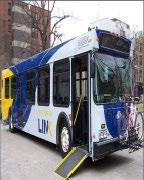
Project Details
Project Title: Transit Maintenance Facility Renovation
Project Type: Improvements
Start Date: July 1, 2026
Est. Completion Date: June 30, 2027
Description: This project would include the rehabilitation and resurfacing the damaged areas of the parking lot as well as add a new parking area to replicate the existing spaces at the end of the building. The addition of a 50' x 54' space to include a dedicated parts room, general storage space for large items, and two (2) offices.
Project Details
Project Title: Transit Fueling Station Dispenser Replacement
Project Type: Equipment/Machinery
Start Date: July 1, 2026
Est. Completion Date: June 30, 2027
Description: Replace an aging, existing diesel fuel dispenser unit that serves the bus fueling at the Transit Operations Center. The replacement ensures continued operational efficiency and regulatory compliance with minimal downtime, securing our fueling infrastructure for the foreseeable future.
Project Details
Project Title: Paratransit Vehicle Replacement
Project Type: Vehicles
Start Date: Ongoing
Est. Completion Date: Ongoing
Description: Vehicles are being replaced because of the cost associated with an aging fleet with high mileage. Newer vehicles are more reliable and have a ramp to allow for accessible entry for passengers in wheelchairs or who have difficulty with stairs. Estimated cost is $250,000 per vehicle.
Project Details
Project Title: Five Points Transfer Hub Property Acquisition and Facility Construction
Project Type: Land Purchase/Construction
Start Date: July 1, 2020
Est. Completion Date: December 31, 2031
Description: This project will build a small passenger waiting facility in the Five Points area where two current, one forthcoming route, and one planned route will all intersect and passengers will be able to transfer between the routes.
The convergence of four routes in one area outside of downtown will be a great convenience for transit passengers. Unlike downtown, the routes may not be timed so that the buses will all be there at the exact same time. This will necessitate a waiting area to protect passengers from environmental factors. This building will also provide the operators access to restroom facilities as two of the four routes never go downtown.
Project Details
Project Title: Operators’ Training Property Acquisition & Facility Construction
Project Type: Construction
Start Date: July 1, 2023
Est. Completion Date: June 30, 2030
Description: The purchase of approximately 2.3 acres that consist of multiple properties between the northeast property line of the current transit system location and W English Rd. for construction of a training facility.
Currently, transit operators are trained solely in the limited area in the current operations center parking lot and in the right-of-way with other traffic. There is no space to work with operators on specific skills and maneuvers.
Project Title: Bus Parking Canopy
Project Type: Construction
Start Date: July 1, 2023
Est. Completion Date: June 30, 2026
Description: Construct a large-scale, elevated canopy structure over the existing 180 foot by 90 foot fleet parking lot to provide essential weather protection, integrated task lighting for staff working during early morning/evening hours, and a sustainable, solar-powered energy source for the facility's electrical needs.
Project Details
Project Title: Transit Fuel Island Canopy Replacement
Project Type: Construction
Start Date: July 1, 2023
Est. Completion Date: June 30, 2029
Description: The current canopy was built in 1979. A contractor repaired the canopy roof approximately 5 years ago. The roof is leaking again, and the entire structure is showing its age.
Project Details
Project Title: Neighborhood Transfer Centers
Project Type: Construction
Start Date: July 1, 2023
Est. Completion Date: June 30, 2032
Description: This project is to develop five enhanced transfer facilities at locations where two or more bus routes connect. The facilities could be enhanced shelters with seating, trash receptacles, lighting, real-time signage, additional shade canopies, and emergency call buttons. The proposed five community transfer points can be designed to meet ridership needs and reflect the neighborhood's character. The transfer points can start as enhanced shelters and grow to more advanced facilities.
Project Details
Project Title: Parking Facilities Improvements
Project Type: Facility Maintenance
Start Date: Ongoing
Est. Completion Date: Ongoing
Description: Facility upgrades for the City's parking decks. Structural repairs and upgraded monitoring and security systems. The funds would also be used for deferred maintenance issues.
Project Details
Project Title: Broad Street Deck Elevator Modernization
Project Type: Facility Maintenance
Start Date: Ongoing
Est. Completion Date: Ongoing
Description: Modernization of the existing elevator in the Broad Street Parking Deck.
Project Details
Capital Improvement Program (CIP)
Project Title: Plaza Deck Elevator Modernization
Project Type: Facility Maintenance
Start Date: Ongoing
Est. Completion Date: Ongoing
Description: Modernization of the existing elevator in the Plaza Parking Deck.
Project Details

Proposed 2027-2031
Capital Improvement Program (CIP)
Project Title: Material Recycling Facility (MRF) Maintenance
Project Type: Maintenance
Start Date: Ongoing
Est. Completion Date: Ongoing
Description: MRF facility upgrades will require ongoing maintenance. This funding will be used to assist with keeping the facility and equipment in good working order. Ongoing equipment and building maintenance will assure efficient operations and safe environments on site for the workers, those visiting, and processing of materials.
Project Details
Proposed 2027-2031
Capital Improvement Program (CIP)
Project Title: Landfill - Leachate Pump Station Sand Filter
Project Type: Maintenance
Start Date: July 1, 2027
Est. Completion Date: June 30, 2028
Description: Construction of a Leachate Pump Station Sand Filter is needed at the Kersey Valley Landfill to mitigate sediment from the landfill getting into the treatment unit. Project includes a master plan layout and potential treatment units, increased dimensions of the existing Sand Trap, temporary bypass connection for easier access and downstream of the flow meter.
Project Details
Proposed 2027-2031
Capital Improvement Program (CIP)
Project Title: Kersey Valley Phase I-IV Post Closure Reserve
Project Type: Landfill Development
Start Date: January 20, 2017
Est. Completion Date: Ongoing
Description: This project has been established to fund the ongoing expenses associated with postclosure activities associated with the Kersey Valley Landfill. These expenses are estimated by the contracted engineering and geological services consultant and expected to be paid over a 30 year period. The activities include annual expenses for mowing, leachate management, groundwater/surface water monitoring, and revegetation.
Project Details
Proposed 2027-2031
Capital Improvement Program (CIP)
Project Title: MRF - Relocation of Compactor
Project Type: Infrastructure
Start Date: July 1, 2027
Est. Completion Date: June 30, 2028
Description: Relocation of the compactor that holds the residual at the end of the recycling process. Currently, the compactor is in the building. This project would connect the compactor with an additional long conveyor and then place it outside the facility. The relocation will free up space for more commodities and furniture market material. In addition, it will make the facility cleaner and more efficient.
Project Details
Proposed 2027-2031
Capital Improvement Program (CIP)
Project Title: Environmental Services Administration Building
Project Type: Building Construction
Start Date: July 1, 2021
Est. Completion Date: December 31, 2030
Description: Construction of an administration building to provide offices, lockers, restrooms, and adequate storage to accommodate the growing needs of the division. The new facility would allow a more adequate administration area while providing sufficient break area and restroom facilities for the front-line staff. Additionally, much needed parking would result from this addition.
Project Details
Proposed 2027-2031
Capital Improvement Program (CIP)
Project Title: Ingleside Composting Facility (ICF) – Future Tub Grinder Replacement
Project Type: Equipment/Machinery
Start Date: July 1, 2027
Est. Completion Date: June 30, 2030
Description: Replacement of a 2009 Morbark 1300b tub grinder. This machine plays a crucial role in maintaining the cleanliness of the city and effectively managing yard waste debris. The parts for this machine are becoming more expensive compared to those for a newer machine, as they are less abundant and can be challenging to locate. Considering the age of the machine, it has surpassed its expected lifespan and is resulting in more time dedicated to repairs than actual usage.
Project Details
Expense
Proposed 2027-2031
Capital Improvement Program (CIP)
Project Title: Kersey Valley Landfill Phase VIII Expansion
Project Type: Landfill Development
Start Date: July 1, 2027
Est. Completion Date: June 30, 2029
Description: This project will connect the old landfill site (west of Kersey Valley Rd) to the new landfill site (east of Kersey Valley Rd), thus providing additional years of municipal solid waste disposal serving the city and its customers.
Project Details
Proposed 2027-2031
Capital Improvement Program (CIP)
Project Title: Kersey Valley Landfill Transfer Station
Project Type: Building Construction
Start Date: July 1, 2029
Est. Completion Date: December 31, 2031
Description: Construction of a Transfer Station at the current landfill site. This project will lessen the traffic on the working face of the landfill. This will translate into less congestion with the possibility of accidents. When Kersey Valley Landfill reaches full capacity, waste will have to be transferred to another location. The Transfer Station would be located at the current landfill site. The scale house and convenience center would still be utilized. Operating the station now will allow City of High Point collection vehicles to take their waste to the station versus entering the landfill.
Project Details
Proposed 2027-2031
Capital Improvement Program (CIP)
Project Title: Landfill – Lowboy Trailer
Project Type: Equipment/Machinery
Start Date: July 1, 2029
Est. Completion Date: June 30, 2030
Description: Replacing the current trailer will ensure the safe transport of heavy equipment for daily operations to locations such as Ingleside, Riverdale, and maintenance vendors.
Project Details
Project Title: Annual Culvert Repairs
Project Type: Improvements
Start Date: July 1, 2024
Est. Completion Date: Ongoing
Description: This project is focused on the annual repair of culverts identified as needing repair or replacement. The Engineering Department will perform the design, while the repairs will be put out for bid based on severity.
This project will eliminate the need to close roadways or reduce posted weight for culverts that are under roadways. This infrastructure is vital for the passage of stormwater on normal days, but in particular during storm events, to prevent flooding of surrounding properties.
Project Details
Project Title: Closed-Circuit Television (CCTV) Trailer with Equipment Replacement
Project Type: Equipment/Machinery
Start Date: July 1, 2024
Est. Completion Date: December 31, 2031
Description: The current stormwater CCTV camera system is approaching the end of its life cycle. It has required multiple repairs this past year to maintain functionality and has negatively impacted the Stormwater Divisions ability to find and document stormwater issues.
CCTV Equipment is used to help diagnose stormwater issues and provide greater detail of our stormwater infrastructure. This equipment is used to respond to citizen complaints and provide details of failing stormwater infrastructure to determine repairs that may be needed. Stormwater infrastructure is checked with this equipment prior to resurfacing projects to prevent utility cuts in the future after new asphalt.
Project Details
Project Title: Ray Street (R1, 2, 3a, b, c, d)/Hospital
Project Type: Stormwater
Start Date: July 1, 2017
Est. Completion Date: June 30, 2027
Description: This project is part of a larger study that was performed in 2004. This work will reduce and mitigate stormwater issues in the Ray Street basin.
Project Details
Project Title: Hamilton Street (M2) – Central Business District NE Side
Project Type: Stormwater
Start Date: July 1, 2023
Est. Completion Date: December 31, 2027
Description: This project is part of a larger study that was performed in 2004. This work will reduce and mitigate stormwater issues in the Hamilton Street basin.
Project Details
Project Title: Jacobs Place (JP7)
Project Type: Stormwater
Start Date: September 1, 2020
Est. Completion Date: December 31, 2027
Description: The existing drainage system is undersized. The drainage improvements will address frequent flooding that occurs along Wrenn Street, Main Street, and Russell Avenue. Surrounding buildings along Main Street and Wrenn Street flood. The improvements will address flooding - Wrenn Street drainage system improvements.
Project Details
Account Number - the accounting designation for revenue and expenditure line items.
Accrual Accounting - a basis of accounting in which revenues and expenses are recorded at the time they are incurred, instead of when cash is actually received or disbursed.
Activity - a level of budgeting which identifies a particular program or service within a department. Contained within an activity budget may be one or more sub-activity budgets.
Ad Valorem Taxes - commonly known as property taxes. For most governments, it is the single greatest revenue source. Taxes are levied at the stated tax rate for both real and personal property according to the valuation.
Adopted Budget - the official expenditure plan adopted by the City Council for a fiscal year.
Allocation - distribution of funds to different departments, programs, or projects.
Appropriated Fund Balance - revenue appropriated from existing fund balance to help fund expenditures in a given fiscal year.
Appropriation - an authorization by the governing board to make expenditures and incur obligations for specific purposes.
Assessed Valuation - the total value established for real property and used as the basis for levying property taxes.
Assets - any resource owned by the city that has economic value, such as buildings, infrastructure, land, equipment, and investments. -B-
Balanced Budget - the situation that exists when total anticipated revenues are equal to total planned expenditures. The state of North Carolina requires a balanced budget.
Benchmarking - the identification of best-in-class performers; the comparison of local performance outputs and results with those of top performers; the analysis of practices that account for any performance gaps; and the development and implementation of strategies to adjust the gap in one’s favor.
Benefits - mandated employee benefits and other programs such as health insurance, which benefit the employee and their family.
Bond - a written promise to pay a specified sum of money at a specified date in the future with periodic interest at a specific rate.
Bond Anticipation Note - short-term, interest-bearing notes issued by the City in anticipation of bonds to be issued at a later date. The notes are retired from proceeds of the bond issue to which they are related.
Bond Issuance - the process of raising funds by selling bonds to investors, which the municipality agrees to repay with interest over time, typically for financing large capital projects.
Bond Referendum - an election in which voters pass or defeat a proposal by the City government to issue debt in the form of interest-bearing notes.
Budget - a comprehensive financial plan of operation for a specified period of time containing an estimate of proposed expenditures and the means of financing them. In the state of North Carolina, it is mandated that a balanced budget be produced, i.e., revenue equals expense.
Budget Calendar - the schedule for completion of the various tasks involved in the preparation, submission, and adoption of the fiscal year annual operating budget for the City.
Budget Document - a detailed report outlining the City’s financial plan, including the projected revenues, expenditures, and allocations for a specific period, usually one fiscal year.
Budget Message - a formal letter of transmittal contained in the proposed budget document prepared by the City Manager and addressed to the governing board which contains the City Manager's views and recommendations on the City's operation for the coming fiscal year.
Budget Ordinance - the legal document approved by the governing board that establishes the spending authority for the City.
-C-
Capital Asset - facilities and equipment that are tangible assets having a significant value ($5,000 or greater) and a useful life of three years or more.
Capital Improvement Program - a plan for capital expenditures to be incurred each year over a fixed period of years to meet capital needs arising from long-term work programs. Capital expenditures of significant amounts of money involving major construction and acquisition are usually included in the capital improvement program (CIP).
Capital Outlay - budgeted expenditures of at least $5,000 for tangible items with a useful life of at least three years.
Capital Project Fund - a fund used to account for expenditures for major construction and acquisition projects that are not accounted for in other funds and are anticipated to be completed in one year.
Capital Project Ordinance - authorizes a major capital expenditure and continues in effect for the life of the project. It is characteristic that the types of projects covered by a capital project ordinance span several years due to the scope of work being performed. The ordinance specifies the funding and line-item expenditures for the project.
Capital Reserve Fund - a fund established for the purpose of receiving transfers of money from other funds (usually enterprise funds) to build fund balance for a specific future outlay of capital.
Cash Equivalents - highly liquid investments with maturities of three months or less when purchased to be cash or cash equivalents, or demand deposits.
Catalyst Project – a downtown development project identified in 2016 to produce 500 private sector jobs, 15-20 new restaurants and shops, 250 additional residential housing units and a centralized gathering space.
Central Services Fund - a fund used to account for goods and services provided by one department to other departments on a cost reimbursement basis, such as print shop services or computer replacement.
Community Development Block Grant Fund - used to account for revenues and expenses derived from the Community Development Block Grant entitlements to the City.
Contingency - an appropriation by fund used at the City Council's discretion to provide budget for unanticipated expenditures.
Core City Plan - A plan for guiding the development, redevelopment and revitalization of neighborhoods as outlined in the Core City Plan developed in 2006 and adopted by the City Council on February 8, 2007. The public-private partnership Plan’s purpose is designed to define and improve the physical, economic and social fabric of the downtown and surrounding neighborhood, institutional, commercial, and industrial areas. The City contributes funding to the plan annually. The name was changed from Core City to “The City Project” in 2011.
Cost Allocation - process of distributing shared costs among different departments, programs, or projects to accurately reflect their expenses.
-D-
Debt Service - Moneys required for payment of principal and interest and other associated expenses on outstanding bond debt.
Deferred Revenues - revenues submitted to the City before the eligibility requirements are recorded and reported.
Deficit - occurs when expenditure exceeds revenue over a period of time.
Department - a major operating budget area of the City which includes overall management for an activity or group of related activities with possibly one or more sub-activities.
Effectiveness Measures - the level of satisfaction of the services being delivered or the extent to which pre-determined goals and objectives have been reached. Effectiveness indicators more accurately measure the quality-of-service output to know whether a program or service is accomplishing what was intended.
Efficiency Measures - the units of service produced (output) per amount of resources expended (input). Indicates how well a government is performing the things it is doing. This measure is a good indicator of how reasonable service costs are - the ratio of quantity of service provided to the cost, in dollars or labor.
ElectriCities - a not-for-profit government service organization representing cities, towns, and universities that own electric distribution systems. Today, ElectriCities represents more than 90 members in North Carolina, South Carolina, and Virginia.
Encumbrance - an obligation in the form of a purchase order or a contract, which is chargeable to an appropriation and for which a part of the appropriation is reserved. It becomes an expenditure when paid.
Enterprise Fund - a fund established to account for the operation of facilities and services that are entirely or predominantly financed through user charges. The City's enterprise funds are Water, Sewer, Electric, Mass Transit, Parking, Solid Waste Facilities, and Stormwater.
Environmental Services Pick-up Fee (Availability Fee) – a revenue source for the Solid Waste Fund from the pickup of refuse from residential, commercial and industrial customers.
Equities - assets less liabilities of a fund.
ERP – Enterprise Resource Planning - integrated financial and human resources solutions that help to streamline and improve public-sector business processes.
ERU – Equivalent Residential Units - a calculated methodology to determine the basis for determining the monthly stormwater utility fee to be charged to the customer. The ERU per customer is determined by dividing the total square footage of impervious surface area on the customer’s property by the square footage of one ERU (2,588). The result is multiplied by the dollar amount established by City Council.
Expenditure - the amount paid for goods delivered and services rendered.
Fiduciary Fund - a fund used to account for assets held by the City in a trustee or agent capacity for other agencies or organizations.
Fiscal Year - a twelve-month period of time to which the annual budget applies. The City of High Point's fiscal year is from July 1 through June 30.
Fixed Asset - tangible property owned by the City having a monetary value of $5,000 or greater and a useful life of three years or more.
Fringe Benefits - funds budgeted for the City’s contribution for employee benefits including retirement, health insurance, social security, and life insurance.
Full Accrual - a method used in proprietary funds for recording the expenditure of funds in which revenues are recorded when they are earned, and expenses are recorded when a liability is incurred.
Full-Time Positions - authorized positions budgeted per year.
Fund - an independent accounting entity with a self-balancing set of accounts.
Fund Balance - the excess of a fund's assets and revenues over its liabilities, reserves, and expenditures at the close of the fiscal year.
GAAP (Generally Accepted Accounting Principles) – accounting principles that are commonly used in preparing financial statements and generally accepted by the readers of those statements. The source of GAAP for state and local governments is the Governmental Accounting Standards Board.
General Capital Projects Fund - used to account for major capital expenditures (acquisition and construction) other than those financed by enterprise funds. These projects usually require more than one year for completion.
General Fund - used to account for the ordinary operations of the City, which are financed through taxes, other general revenues, and contributions, transfers, and reimbursements from other funds. Unless there is a legal accounting requirement, all activities are accounted for in the General Fund.
General Obligation Bonds - debt issued by the City that is backed by its taxing authority.
Goal - a broad statement of purpose or intent to achieve a desired state of affairs. A goal describes a desired effect on the community.
Governmental Funds – segregations of financial resources. Expendable assets are assigned to the various governmental funds, and current liabilities are assigned to the fund from which they are to be paid. The difference between governmental fund assets and liabilities, the fund equity is referred to as “Fund Balance.”
Grants - a contribution or gift in cash or other assets from another government or non-profit foundation to be used for a specified purpose — For example, a grant from the State of North Carolina for the construction of a major highway.
Indirect Costs - expenses not directly linked to a specific project or department but necessary for overall operations, such as utilities, IT services, and office supplies.
Infrastructure - the base or framework of a community that is necessary to support the orderly function of government and service delivery to communities. Examples include water and sewer (improvements to lines, treatment plants), streets, and stormwater projects.
Input Measures - the amount of resources expended or consumed in the delivery of services.
Interest on Investments - revenue earned from investment of City funds with a third party.
Interfund Transfers - transfers of money between accounting funds as authorized by the City Council.
Intergovernmental Revenue - revenue received by the City from federal, state, and county agencies.
Internal Service Funds - a type of proprietary fund that accounts for activities that serve other city departments. For instance, the Central Services Fund accounts for services such as radio, computer, and fleet services on a cost-reimbursement basis that provides the revenue to support the fund. Other city internal service funds include Insurance Reserve Fund and General Risk Retention Fund.
Intragovernmental Revenue - revenues generated by a City department for services provided to other City departments.
-L-
Lease-Purchase Agreement - a method of financing the purchase of a fixed asset, which allows the City to spread the cost over a specified period of time.
LED Lighting (light-emitting diode) – LEDS are more efficient because LEDs produce more lumens per watt than other alternatives, and also because they can be tuned to the specific wavelengths. They can be used for traffic signals, light bulbs, lanterns, and streetlights.
LEED Certification (Leadership in Energy and Environmental Design) – provides independent, third-party verification that a building project is environmentally responsible, profitable and a healthy place to live. Green Building Rating System, developed by the U.S. Green Building Council (USGBC), provides a suite of standards for environmentally sustainable construction.
Licenses & Permits - revenue received by the City from individuals and corporations for the purpose of conducting business or performing certain activities.
Line Item - a unit of budgeted expense used to classify expenditures by item or category. A line item establishes the permissible level of expenditure for an item.
-M-
Miracle League - A non-profit organization in High Point called “The Miracle League of High Point” for the purpose of providing opportunities for children with disabilities to play Miracle League baseball on a specially designed field. The High Point field was funded by private donations, with the land and grading for the site provided by the City of High Point.
Mission Statement - a clear statement of the purpose and goal(s) toward which a department directs their efforts. (The reason the department exists.)
Modified Accrual - a method for recording the receipt and expenditure of funds in which revenues are recorded when they become measurable and available, and expenditures are recorded when the liability is incurred.
-N-
Non-Departmental - expenditures for purposes that are not related to a specific department function.
Non-Departmental Appropriations - budgeted funds that are allocated for expenses that do not belong to any specific department, such as citywide initiatives or general administrative costs.
-O-
Objective - a specific target for achievement which represents an interim step, or progress toward a goal, within a specified time span and which is measurable.
Ombudsman - A government official who investigates citizens' complaints against the government or its functionaries.
Operating Budget - the City’s financial plan for its operation for the fiscal year that outlines the proposed expenditures and revenue estimates to finance the expenditures.
Operating Expenses - funds allocated for the day-to-day operation of the City’s services. These expenses exclude capital outlay.
Ordinance - a legislative enactment by the City Council. It has the full force of law within the City if it is not in conflict with any higher law.
Outcome Measures - the social, economic or cultural conditions that the program seeks to influence, and the actual results/impacts produced by the program or service.
Output/Workload/Activity Measures - the quantity of services provided.
-P-
Part-Time Positions - authorized positions with various work schedules of 1,750 hours per year or less.
Pay Go Funding - a method in which annual revenue appropriations are used for funding capital projects as opposed to the issuance of long-term debt. General Fund projects are usually funded by an appropriation from the General Fund consisting of primarily property tax revenues. Capital projects in proprietary funds are funded by the respective revenues in these funds.
Performance Measure - the quantity or level of service provided. The indicator or criterion against which users can assess the successful achievement of a service or program.
Performance Measurement - the systematic method in which City departments develop and monitor objectives that assess the outcome and effectiveness of a delivered service or program. Provides the government a way of determining whether it is providing a quality service at a reasonable price. Must not be seen as a “score-keeping system,” but as a decision-making tool.
TERMS
Performance Objectives - the means used to accomplish a mission. Clear targets for specific action. More detailed than the mission statement; have shorter time frames; state quantity when possible; measurable over time and reasonably achievable.
Personal Property - includes tangible property not permanently affixed to real property. Examples include vehicles, boats, trailers, and equipment.
Personnel Services - salaries, wages, and fringe benefits.
Powell Bill Funds - state allocated funds for the maintenance, construction, and improvement of local streets and public thoroughfares.
Property Tax - an annual tax levied by the City Council on the value of real property to fund General Fund expenditures. The amount of revenue derived from the tax is calculated by taking the tax value of the real property, dividing it by 100, multiplying it by the tax rate, and then by the collection percentage.
Proposed/Recommended Budget - a financial plan presented by a government entity outlining anticipated revenues and expenditures for a specific period, typically a fiscal year, which is subject to review, modification, and approval by the governing body.
Proprietary Funds – funds that are used to account for a government’s on-going organizations which are like those found in private businesses or private sector. These funds have their own set of revenue and expense accounts. Measurement focus is income, financial position and changes in financial position.
-R-
Real Property - land, buildings, and items permanently affixed to land or buildings.
Reserve - a portion of a government’s funds set aside for specific purposes, such as emergency expenses, future projects, or to cover unexpected shortfalls, ensuring financial stability and flexibility.
Retained Earnings - an equity account reflecting the accumulated earnings of an enterprise fund or internal service fund.
Revaluation – defined as the re-appraisal or re-assessment of value. In the City of High Point budget document, “revaluations” describe the process county tax collectors use to update the values of taxable real property within the city limits as well as the county.
Revenue - income received by the City from various sources used to finance its operations.
Revenue Bonds - bonds whose principal and interest are payable exclusively from the earnings of an enterprise fund. Revenue bonds are payable from identified sources of revenue and do not permit the bondholders to compel taxation or legislative appropriation of funds not pledged for payment of debt service.
Revenue Neutral Property Tax Rate – defined by North Carolina General Statutes as the rate that is estimated to produce revenue for the next fiscal year that would have been produced the current property tax rate if no re-appraisal had occurred. -S-
Solid Waste User Fee – the per month fee that customers pay for access of refuse to the landfill. This fee does not cover the actual pick-up of refuse.
Special Appropriations - accounts used for a non-profit organization’s funding, prior year workers’ compensation and unemployment claims, and for expenditures not routinely appropriated in operating budgets.
Special Grants Fund - a fund established to account for grant revenues received designated for expenditure on programs and projects. These programs and projects are usually non-recurring in nature and of short duration. Revenues received are from federal, state, and local sources.
Special Revenue Fund – a type of governmental fund used to account for specific revenues that are designated for specific expenditure. For example, the Special Grants Fund is used to account for revenues received from federal, state, and local sources or groups designated for expenditure on programs or projects. Other Special Revenue Funds include the Community Development Fund and Showroom and Occupancy Tax Fund.
Sub-Activity - a level of budgeting which identifies a specific area of work necessary for performing a budgeted activity.
-T-
Tax Base - the total assessed valuation of real property within the city limits.
Tax Levy - the total amount of revenue to be raised from the property tax levied by the City Council in the annual budget ordinance.
Tax Rate - the amount of tax per $100 of assessed valuation levied by the City Council.
Treasury Subsidies – subsidies from the United States Department of Treasury will rebate a portion of the interest paid on taxable bonds as authorized by the American Recovery and Reinvestment Act of 2009 (ARRA).
Two-Thirds Bonds - legally authorized General Obligation bonds that may be issued without voter approval. The statute allows local government to issue up to 2/3 of the amount of general obligation bonds that were paid off in the previous year. These bonds can be used for any other general obligation purpose other than the financing of auditoriums, coliseums, arenas, stadiums, civic centers or convention centers, art galleries, museums, historic properties, public transportation systems, cable television systems, or redevelopment projects. -U-
Unassigned Fund Balance - portion of a governmental fund’s resources that are not restricted, committed, or assigned for specific purposes. It represents the financial flexibility and reserves available for unforeseen expenditures or emergencies within the municipality.
User Charges - the payment of a fee for receipt of a service provided by the City.
-V-
Valuation - the tax value of real property as determined by the Guilford County tax assessors every eight years. The property valuation is multiplied by the tax rate per $100 of valuation to arrive at the tax bill for a particular piece of taxable property.
- W -
Workforce Program - a separate but supported strategic plan to implement recommended development strategies to assist the community’s workforce as they compete for highly-skilled jobs in the region. The idea is to develop communication and training materials to support community education with a combination of government, business, education, and community leaders working together to assist community residents’ short-term actions to improve workforce education, training, and preparedness.
Budgets, both revenue and expense are identified by a six-digit accounting unit number. The first three digits identify the fund for the accounting unit. Each division within a department is assigned an accounting unit. Accounting Unit Department
Accounting Unit Department Division
General Fund (cont’d)
101311 Police Chief's Office 101312 Police Police Investigations 101315 Police Police Facilities
101316 Police Police Patrol 101317 Police Police Support Services 101318 Police Police Community Engagement
101351 Fire Administration 101352 Fire Suppression
101411 Parks and Recreation Administration
101421 Parks and Recreation Recreation Programs
101431 Parks and Recreation Special Facilities 101441 Parks and Recreation Parks
101451 Library Administration
101452 Library Technical Services
101453 Library Building Maintenance
101454 Library Children Services
101455 Library Research Services
101456 Library Library Information Services
101457 Library Reader's Services
101458 Library Heritage Resource Center
101459 Library Lending Services
101465 Library Historical Museum
101471 Theatre Administration 101472 Theatre Box Office
101473 Theatre Technical Services 101474 Theatre Building Maintenance
101491 Special Appropriations-General Special Appropriations-General
101511 Economic Development Economic Development
101521 Planning & Development Planning
101534 Community Development Community Development and Housing
101535 Community Development Tax Foreclosure & Properties
101537 Community Development Local Code Enforcement
Accounting Unit Department Division
General Fund (cont’d) 101562 Inspections Services Building Inspections 101563 Inspections Services Development Services
101611 Transportation Administration 101612 Transportation Signs and Markings 101613 Transportation Traffic Signals 101614 Transportation Computerized Signal System
101711 Public Services Administration 101713 Public Services Cemeteries 101721 Public Services Street Maintenance
101911 Transfers and Reimbursements Transfers and Reimbursements
Assigned Fund Balances Assigned Fund Balances
Economic
Accounting Unit Department
Community Development Fund
302530
Showroom & Occupancy Tax Fund 305101
General Capital Projects Fund
General
Enterprise
Accounting Unit Department Division
Water Resources Fund (cont’d)
621753
Water Resources Operating Westside Plant
621754 Water Resources Operating Mains
621756
621757
Water Resources Operating Laboratory Services
Water Resources Operating Maintenance Services
621758 Water Resources Operating Frank L. Ward Plant
621759
621911
Water Resources Operating W/S-Residuals Management
Water Resources Operating Transfers and Reimbursements
621991 Water Resources Contingency Contingency
621950 Water Resources Debt Service Water Resources Debt Service Admin 621951 Water Resources Debt Service 1986 G.O. Water 621991 Water Resources Debt Service Water Resources Contingency
621999 Water Resources Debt Service Water Resources Operations Unclassified
Electric Fund
631251 Customer Service Operating Administration
631252 Customer Service Operating Meter Reading
631253 Customer Service Operating Revenue Collections
631255 Customer Service Operating Mailroom
631256
631257
Customer Service Operating Telephone Center
Customer Service Operating Water Meter Services
631258 Customer Service Operating Dispatch
631259 Customer Service Operating Field Services 631232 Electric-Operating Engineering 631491 Electric Fund Special Appropriations-Electric 631781 Electric-Operating Administration 631782 Electric-Operating Power Supply Expense
Electric-Operating Warehouse Operations
Electric-Operating Structures and Stations 631785 Electric-Operating Lines Maintenance 631786 Electric-Operating Street Lighting 631788 Electric-Operating Meter/Customer Installations 631795 Electric-Operating Electric System Improvements 631799 Electric Capital Projects Electric Capital Projects
631911 Electric Fund Transfers and Reimbursements 631991 Electric Contingency Contingency
Mass Transit Fund
641621 Mass Transit Operating Mass Transit
Mass Transit Operating Grants Pending 641623
Mass Transit Operating High Point Transit System Access
Accounting
Parking
651631
ACFR
APPA
ARPA
BABS
BAN
Annual Comprehensive Financial Report is a set of U.S. government financial statements comprising the financial report of a government entity that complies with the accounting requirements promulgated by the Governmental Accounting Standards board.
American Public Power is a service organization for more than 2,000 communityowned electric utilities.
American Rescue Plan Act.
Build America Bonds are bonds that receive a 35% rebate on each interest payment.
Bond Anticipation Notes are smaller short-term bonds that are issued by corporations and governments wishing to generate funds for upcoming projects.
BET
CAP or CPO
Benefits Education Team is an employee-led group that studies and offers suggestions to guide our employee group health and related insurance program through difficult and ever-changing and challenging times. The BET has concentrated on employee and retiree wellness program plan cost-containment, and cost-sharing strategies directed to limit future health insurance rate increases and shift costs to those actually using the benefits.
Capital Project Ordinance is an ordinance that can be multi-year, covering the unique needs of capital project budgeting.
CD Community Development is an office with the City of High Point.
CDBG
Community Development Block Grant funds are specific funding from the Department of Housing and Urban Development that allow for implementation of a wide range of projects and programs dealing with neighborhood improvements and city services.
CHP or COHP City of High Point.
CIP
CVB
(NC)DENR
(NC)DOT
(US)DOL
(US)DOT
DWI
Capital Improvement Plan is a short-range plan which identifies capital projects and equipment purchases, provides a planning schedule, and identifies options for financing the plan.
Convention and Visitors Bureau is a non-profit organization that recruits visitors, conventions etc. to the city.
North Carolina Department of Environment and Natural Resources is the lead stewardship agency for the preservation and protection of North Carolina's natural resources.
North Carolina Department of Transportation is the North Carolina agency which oversees transportation within the state.
United States Department of Labor is charged with preparing the American workforce for new and better jobs and ensuring the adequacy of American's workplaces.
United States Department of Transportation is a federal agency that oversees federal highway, air, railroad, and maritime functions.
Driving While Impaired is a driving offense of driving drunk or drugged.
(HP)EDC
EEOC
High Point Economic Development Corporation is a public-private organization which works to retain existing business and industry in High Point, to assist local companies in expanding and to attract new business to High Point.
Equal Employment Opportunity Commission is the federal agency that provides oversight and coordination of all federal equal employment opportunity regulations, practices, and policies.
EMT Emergency Medical Technician – Training certification for public safety personnel.
ERP Enterprise Resource Planning (referencetoglossaryfordefinition).
FEMA The Federal Emergency Management Agency which assists in federal disasters.
FT Full-time classification of employment.
FTE
Full-Time Equivalent refers to the number of employees directly involved in providing the service as approved in the annual operating budget. The number can include full- and part-time workers. For High Point, an FTE equates to 2,080 hours of work per year.
FY Fiscal Year is the budget year from July 1st of one year to June 30th of the next year.
GASB
The Governmental Accounting Standards Board is the source of generally accepted accounting principles used by state and local governments.
GED General Educational Development tests are a group of five subject tests which certify that the test taker has high school level academic skills.
GFOA
GIS
Government Finance Officers Association is a professional association of approximately 17,500 state, provincial and local government finance officers in the United States and Canada.
Geographic Information System is system designed to capture, store, analyze, manage, and present all types of geographic data.
GO General Obligation are bonds which are sold by governments to support capital projects.
GTCC
Guilford Technical Community College is a two-year accredited community college. GTCC offers certificates, one-year and two-year career-related programs, a twoyear college transfer program, personal enrichment courses, a variety of adult literacy opportunities and training for business and industry. It opened in 1958 and was created as a training center designed to prepare people for jobs created by the rapid manufacturing growth of the early 1950s. Its purpose has remained basically unchanged: to give the people of Guilford County the training and education they need to compete in the job market.
HP High Point.
HPFD High Point Fire Department.
HPPD High Point Police Department.
HQ Headquarters – main administrative location for a corporation.
HR Human Resources is the department within the City that oversees employees.
IIMC
International Association of Municipal Clerks is a professional nonprofit association that promotes continuing education and certification through university and college-based institutes and providing networking solutions, services, and benefits to its members worldwide.
IT Information Technology is the department that focuses on processing, storage, and dissemination of vocal, pictorial textual and numerical information through computing and telecommunications.
KWH Kilowatt hour is a unit of energy equal to 1,000-watt hours.
Leadership in Energy and Environmental Design is a certification that provides independent, third-party verification that a building project is environmentally responsible, profitable and a healthy place to live. Green Building Rating System, developed by the U.S. Green Building Council (USGBC), provides a suite of standards for environmentally sustainable construction.
Light emitting diode lighting is more efficient because LEDs produce more lumens per watt than other alternatives, and also because they can be turned to specific wavelengths. They can be used for traffic signals, light bulbs, lanterns, and streetlights to name a few.
LMS Learning Management System is the City's online training system for employees.
MGD Million gallons per day is a unit of flow measurement.
MMC
Master Municipal Clerk is a professional designation granted by IIMC that is an advanced continuing education program that prepares participants to perform complex municipal duties.
MOC Maintenance Operation Center facilities for the City of High Point.
MRF Material Recovery Facility is the facility in the City where recyclable materials are taken to be sorted and sold.
MSA Metropolitan Statistical Area is a geographical region with a relatively high population density at its core and close economic ties throughout the area.
MWh Megawatt hours are a unit of energy equal to 1,000 kilowatt hours.
NGO Non-governmental organization is a legally constituted organization created by natural or legal persons that operates independently from any government.
NFPA
NPDES
National Fire Protection Agency provides support, education, and publications to fire personnel throughout the United States.
National Pollutant Discharge Elimination System is a permit program, authorized by the Clean Water Act, which controls water pollution by regulating point sources that discharge pollutants into U.S. waters.
OSHA
The Office of Safety and Health Administration is the main federal agency charged with the enforcement of safety and health legislation.
PM Preventive Maintenance is work done on fleet vehicles to prevent unexpected repairs.
PT Part-time classification of employment.
PTRWA
Piedmont Triad Regional Water Authority is an authority that was formed in 1986 by the cities of High Point, Archdale, Greensboro, and Randleman for the purpose of developing plans for the Randleman Lake water supply.
ROW Right of Way.
RZEDBS
Recovery Zone Economic Development Bonds are a special subset of these authorized bonds and issued only in the Water and Sewer Fund receive a 45% rebate on each interest payment.
S&P Standard and Poor’s – bond rating agency.
SCBA
TIA
Self-contained Breathing Apparatus – firefighters use to breathe when fighting fires.
Traffic Import Analysis is the term to describe studies often required by governments to provide statistical information to determine the need for street and highway improvements to serve a public street network.
TIP Transportation Improvement Program – a multi-year schedule for all transportation projects.
TRC
WRC
Technical Review Committee is a City of High Point committee administered by the Planning and Development Department for the purpose of providing City departments and private agencies and developers an organized review of development plans as well as to provide internal information to City departments in order to coordinate efforts and services required by any new development.
The Watershed Review Committee is an internal oversight committee consisting of representatives from three City departments for the purpose of reviewing watershed plans submitted through the Technical Review Committee. The committee ensures plans are following the City Ordinance for stormwater runoff, retention/detention.