clean water
PROTECT YOUR TREES: KNOW HOW TO WATER AND KEEP THEM HE ALTHY
Last year’s intense summer sun was tough on tree health. If you walk around your neighborhood, you may see several large trees with wilting leaves or an abundance of needles heaped up on the ground. Ornamental trees, such as dogwoods and Japanese maples, along with evergreen trees are the most vulnerable to dry conditions. When these trees lack enough moisture, the result is smaller, off-colored leaves, or, in the case of evergreens, a premature dropping of needles. Your trees might need a little more attention from you in these conditions.
WATER WHERE IT COUNTS
Water around the tree’s drip line for water to reach the tree’s feeder roots. The roots that absorb water and nutrients are only close to the trunk for about the first five years of a tree’s life. These feeder roots grow farther out as the tree grows. The optimal place to water mature trees is between the drip line and the trunk. The drip line is the outside edge of the tree canopy where rain would drip down from the leaves.
continued on pg. 5 “Trees”
VOLUNTEERS MAKE AN IMPACT ON LOCAL WATERWAYS
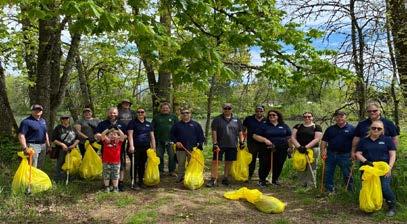
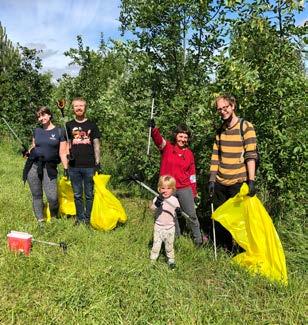
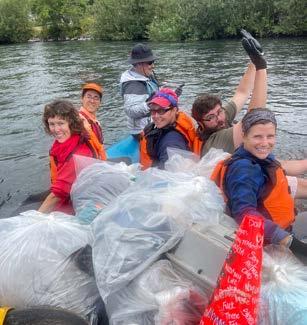
Lending a hand with our waterways is a valuable way for individuals to contribute to the health and vitality of aquatic ecosystems. Volunteers often engage in activities such as cleaning up litter, removing invasive species, and planting native vegetation along riverbanks and shores. These efforts help to improve water quality, enhance habitats for wildlife, and increase the overall ecological balance of the area. Additionally, volunteering fosters a deep sense of environmental stewardship and connection to nature, as participants witness firsthand the positive changes their actions bring about.
GOOD TREE CARE SAVES MONEY
These simple watering and tree care techniques can save you a lot of money down the road. A large, unhealthy tree can cost thousands to remove.
YOU CAN HELP PROTECT POLLINATORS
As part of our state’s broader effort to protect bees and other pollinators critical to life on Earth, Oregon has taken a few steps over the years to restrict the use of neonicotinoid pesticides (also known as “neonics”). The City of Eugene was the first in the nation to ban the use of neonic pesticides on City property in 2014, and Portland followed suit shortly after. Statewide, it has been 10 years since the Oregon Department of Agriculture banned the use of four neonicotinoid products on Linden, Basswood and other Tilia trees, but with pollinators still facing dramatic declines, additional action is required. More than 80% of flowering plants and about one-third
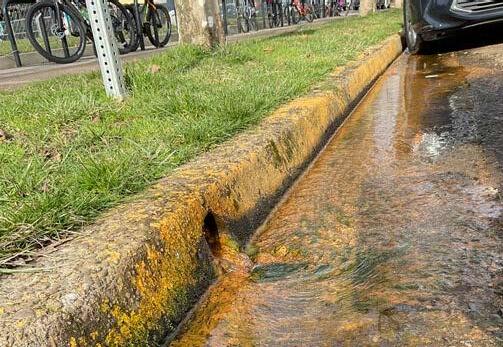
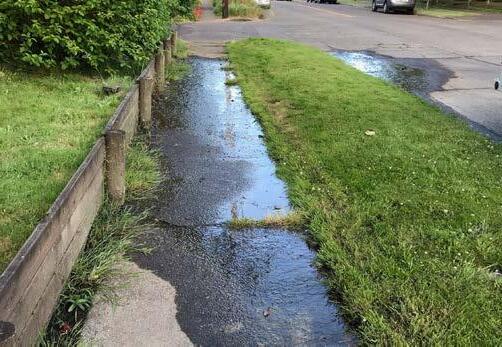
If you’ve ever noticed water coming up beside a sidewalk, from a hillside, or out of a crack in the street, the source is often groundwater. In the Eugene area, groundwater springs are fairly common and are generally unseen. When groundwater finds its way to the surface as a spring, it can be a major maintenance challenge. Without an obvious source and with uncertain volume, groundwater can be difficult to capture and direct into the City’s stormwater system.
Several years ago, a natural spring found its way to the surface of Chambers Street, just north of West 28th Avenue, leaking out around two manholes and coming out of cracks in the street.
Public Works Maintenance crews tried to collect the water by installing a perforated pipe placed in the path of the spring and connecting it to the stormwater system. The attempt was a partial success. It captured enough water to eliminate the water leaking around the manholes but the water began leaking from another part of the street. Staff continue to look for a solution.
While this may look concerning, this is in fact normal groundwater runoff. If you see something like this and are concerned, call the City at 541-682-4800.
STORMWATER BASIN MASTER PLAN IS
Public Works Engineering is working on an updated Stormwater Basin Master Plan, which will identify new Capital Improvement Program projects to address flood control, water quality, and natural resource needs over the next 20 years. Engineering staff have partnered with Brown and Caldwell consulting engineers to update and analyze a hydrologic and hydraulic model that will assess the flood-carrying capacity of the stormwater system under current conditions and under “future buildout” conditions that reflect the anticipated level of development over the next 20 years throughout the city’s stormwater planning area, which includes the Urban Growth Boundary. This analysis will help to prioritize capacity improvements to sustain our projected growth and keep people and property safe from flood damage.
Staff from across the City, including Engineering, Parks and Open Space, Maintenance, Planning, and Lane County Engineering are collaborating with assistance from another consultant, Jeff Krueger Environments LLC, to identify areas of need and opportunity for projects that can help improve water quality in our creeks and rivers and provide better habitat for plants and animals. This could result in CIP projects similar to the Amazon Creek Restoration Project or the Fifth Avenue and Seneca Water Quality Improvement Project, which are currently underway and were featured in the spring 2024 Clean Water Connections newsletter.
Brown and Caldwell will also help with an analysis of climate projections and rainfall data that will assess what rainfall might look like later this century. This analysis will be used to identify potential areas of need beyond the 20-year threshold and to create resilience in our stormwater system for future generations.
All of this work is ongoing, and a final report is expected to be completed by mid 2026. Keep an eye out for more information and opportunities to provide input on the Engage Eugene website.
STORMWATER AND WASTEWATER FEES: WHAT ARE THEY AND HOW ARE THEY USED
Stormwater Fees
Stormwater fees support a system of City services, permits and pollution prevention that keeps local waterways and aquifers clean today and for future generations.
There are many components to the stormwater program. When it rains, water hits your roof or lawn and picks up oil from cars, sediment, bacteria, grease and other chemicals associated with urban life. Instead of going into the ground where they are filtered naturally, those contaminants are carried through City storm pipes and go directly into the Amazon Creek or the Willamette River. A large portion of the stormwater system is underground. Improved streets (those with sidewalks and curbs) have a system of pipes and culverts that direct rain from impervious surfaces to the nearest waterway. These pipes and culverts also catch leaves, sediment and trash, so they must be cleaned regularly. Street sweeping, leaf pick up, vactor cleaning, and building and maintaining rain gardens are just a few of the stormwater operations that the City provides to maintain this system. A functioning stormwater system also reduces the risk of flooding (for a recent example see pg. 6). Additionally, there is a growing inventory of green infrastructure such as rain gardens and swales that are required for new development.
The City of Eugene is proposing to increase the stormwater user fee by 5%, effective July 1, 2025. This rate increase provides the resources to invest in several solutions that address issues impacting the stormwater service. Specifically, this funding will be used to contribute to the addition of 1.50 full time equivalent that focus on keeping the right-of-way in the downtown core area clean of trash and debris so that it does not make its way to storm drains or the river. Additionally, this fee increase will allow the stormwater service to partner in the addition of 0.30 of a FTE in the Engineering division for capital project delivery, Housing and Development; 0.20 FTE in the Wastewater division for increased workload for operations and maintenance, one-third of the cost of a security contract at Roosevelt Yard. This proposed rate increase will increase the monthly stormwater bill for a typical residential customer from $18.61 to $19.53, a $0.92 per month increase.
Wastewater Fees
All properties connected to the public wastewater system pay wastewater fees. Eugene provides local wastewater collection services, and the Metropolitan Wastewater Management Commission, a partnership of Lane County and the cities of Eugene and Springfield, operates the regional wastewater collection and treatment facilities.
Stormwater Fees
The City of Eugene is proposing to increase wastewater user fees by 5%, effective July 1, 2025. This rate increase includes inflationary pressures by this industry, as well as the addition of 0.30 of a full-time equivalent in the Engineering division for capital project delivery: Housing and Development, 0.20 FTE at the Wastewater Treatment Plant for increased workload for operations and maintenance and one-third of the cost of a security contract at Roosevelt Yard.
This proposed rate increase will increase the local portion of the monthly wastewater bill for a typical residential customer from $16.01 to $16.81, a $0.80 per month increase. Staff anticipates a 5% increase in regional user fees, effective July 2025. A 5% increase will increase the regional portion of the monthly wastewater bill for a typical residential customer from $31.90 to $33.50, a $1.60 per month increase.
If you would like more information on user rates, please call 541-6824900.
The City of Eugene adopts and administers stormwater and wastewater service fees, and they are billed through EWEB. EWEB acts only as the City’s billing agent.
DID YOU KNOW THAT NO WIPES ARE FLUSHABLE?
There’s no such thing as flushable wipes! The proper place for all wipes after they’re used is the garbage. Even though many companies now marketing wipes as “flushable” the truth is those wipes damage the wastewater system. They can clog pipes and break pump stations because they don’t dissolve in water the same way toilet paper does. Their fibers can get caught and collect garbage, grease and other wipes as well. The only things that should go down the toilet are the three P’s: pee, poop and toilet paper!
2025 STORMWATER CAPITAL IMPROVEMENTS UPDATE
The Stormwater Capital Improvement Program is funded by stormwater user fees and system development charges. A six-year CIP is developed every two years and results in a list of projects managed by staff in Public Works Engineering. Staff compile the CIP using input and requests from a variety of sources, including adopted plans, policy documents, neighborhood and advisory groups, and boards and commissions. The following projects are scheduled for construction in 2025:
• The West Fifth Avenue and Seneca Road Water Quality Improvements project involves constructing stormwater treatment manholes to treat water from a drainage basin that is over 300 acres and discharges into the A3 Channel. The treatment manholes use a combination of swirling water flow and a specially designed screen to capture and remove trash, debris, sediment, and hydrocarbons from stormwater runoff by directing them to the center of a separation chamber, effectively trapping pollutants while allowing clean water to exit the system.
• The Onyx Street Stormwater Improvements project between East 22nd Avenue and East 24th Avenue will construct improved stormwater infrastructure to reduce flooding and install a stormwater planter in the right-of-way near Edison Elementary School.
• A second phase of the Under-Bridge Safety Modifications project will make minor modifications at two locations over Amazon Creek: City View Street and Amazon Parkway. These changes will reduce illicit activities that result in water quality issues.
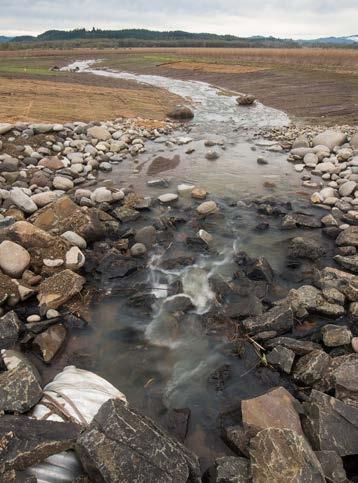
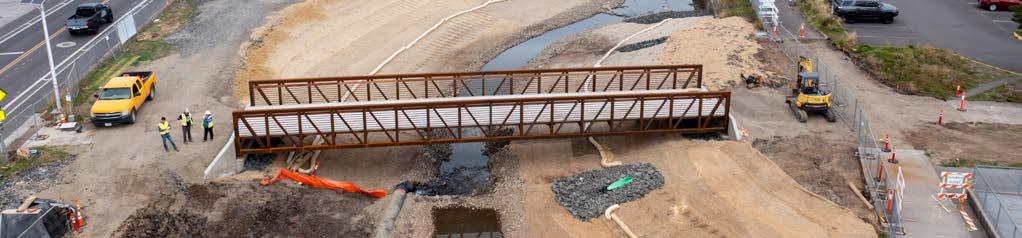
• The Amazon Creek Restoration project will continue for a second year with substantial completion anticipated by the end of 2025. This project involves removing the 65-year-old concrete channel of Amazon Creek that runs through Amazon Park from East 24th Avenue to East 20th Avenue. The bank of the creek will be sloped and replanted with native species. There are also several projects in the design phase, including the North Delta Highway Stormwater Improvements project, the East Santa Clara Waterway Improvements project, the North Gilham Capacity and Water Quality Improvements project, and the Trainsong Park Stormwater Retrofit project.
VOLUNTEERS - CONTINUED FROM PG 1
This not only benefits the environment but also strengthens community ties, as people from diverse backgrounds come together with a shared goal of preserving and protecting their local waterways. By dedicating time and energy to these efforts, volunteers play a crucial role in ensuring the sustainability and beauty of these natural resources for future generations. The City of Eugene Parks and Open Space division has a robust Volunteer Program that connects community members to their interests in doing stewardship activities on park land, including our many essential waterways. Contact Kelsey Irvine at KIrvine@eugene-or.gov for more information or to RSVP to an event. Also review our 2024 Volunteer Program Annual Impact Report to see the culmination of work done by you and your community, which was monumental this year! Thank you!
eugene-or.gov/parkvolunteer
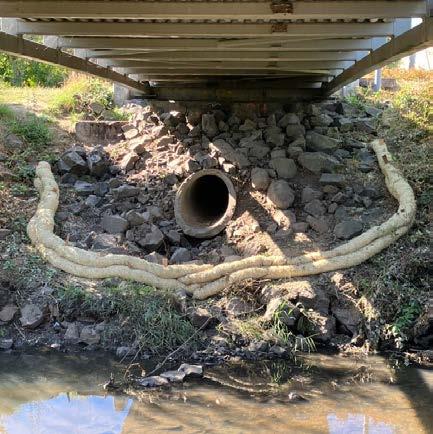
In the summer of 2024, the first phase of the Under-Bridge Safety Modifications project was constructed. Riprap was rearranged to the condition it was in when it was originally installed, and to prevent it from being moved, it was surrounded with grout to ensure it stays in place. These improvements will protect the structural integrity of the bridges, prevent erosion, and discourage camping, which will help prevent water quality issues.
Completed grouted riprap installation, Wallis St at Amazon Creek
Progress on the Amazon Creek Restoration project (photo taken by drone in October, 2024)
Water where it counts! Water around the tree’s drip line, as this allows water to reach the tree’s feeder roots.
TECHNIQUE
• Be sure the water is going inside of the mulch ring
• For young trees, purchase a tree watering bag designed specifically for trees.
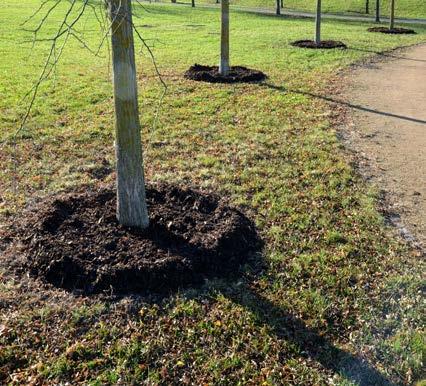
Use mulch to make a flat ring of around the base of your tree (like a donut). This lets roots breathe, helps hold in moisture and protects the tree from weeds, trimmers and mowers.
• Use a garden hose. Turn on only enough water to create a slow drip and set the end of the hose near the tree for about an hour per watering session.
• Use a watering bucket (small hole drilled in a five-gallon bucket)
• Use a tree specific irrigation system
MULCH, MULCH, MULCH
Mulch around the trees in your landscape to retain moisture for roots, keep light from reaching weeds below, discourage weeds that land on top, and provide the tree nutrients as the mulch breaks down. A good mulch ring should be donut-shaped and extend three feet from the trunk in all directions. As the tree grows, continue to expand the mulch ring out to just past the drip line of the tree.
Tip: Keep mulch and water off the trunk! It can lead to trunk decay, root issues, and subsequent premature tree death. For even more tips on pruning and fertilizing, how to make a drip irrigation bucket and more, see our “How to water trees” handout at www.happyrivers. org. Healthy trees provide much needed shade in the summer, reducing heat generated by sidewalks and hard surfaces.
GOING FOR A WALK WITH YOUR DOG?
Be sure to bring a bag or two to pick up after your pal. Doggie droppings contain an abundance of parasites and bacteria and some remain infectious for up to a year. Dog waste contains high levels of nitrogen and phosphorus that can cause algae and aquatic weeds to overgrow in streams and rivers causing harm to our waterways.
Already a super pooper scooper? Visit our web site and sign up for a free bandana at: eugene-or.gov/cleancanines
GRANT PROVIDES STORM DRAIN CLEANING ASSISTANCE TO BUSINESSES
Storm drains send rain water directly to local streams and rivers and require regular maintenance to remove contaminants and prevent flooding. Through an EPA grant, Lane County coordinates this program in partnership with Stormwater Protection Systems to help area businesses maintain their parking lot drains at a discounted price of $70 per drain. Additional services not included.
Register or get more information by signing up by May 31, 2025 LaneCountyor.gov/SCAP or email: SCAP@lanecountyor.gov
TREE CANOPY
of the food we eat rely on pollinators to reproduce. Yet, pesticides like neonics are one of the leading drivers of pollinator declines, along with habitat loss and climate change. Neonics are the most widely used class of insecticides, and they are uniquely harmful to pollinators. These chemicals are highly persistent in the environment, which means pollinators can be exposed months to years after they are applied. They are also highly mobile, poisoning nearby plants and waterways. The ripple effects of losing pollinators and other essential species to these pesticides could threaten the balance of ecosystems in Oregon, across the country and even globally.
State-level restrictions on neonicotinoids are not just about regulation— they’re about survival. Bees, butterflies and other pollinators are essential for healthy ecosystems, and the actions taken by states like Oregon and others represent a collective effort to secure a future where both humans and nature can thrive.
If you or anyone you hire for yard care uses insecticides or pesticides, always read the product label before you buy or apply.
Reprinted with permission. See original content at environmentoregon.org
PUBLIC WORKS CREWS RESPOND TO HEAVY RAIN FALL
A stretch of run-of-the-mill rainy Oregon weather yielded some localized flooding on St. Patrick’s Day eve that took Eugene a bit by surprise. Fortunately, the year-round stormwater and wastewater maintenance performed by the teams at Public Works Maintenance and Public Works Wastewater (part of MWMC) prevented more significant flooding in the public right-of-way.
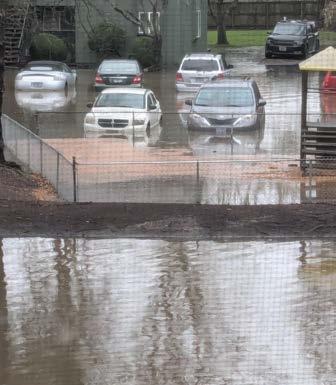
The day began early for some workers at the Roosevelt Yard, where on-call teams started as early as 2 a.m. to address blocked storm drains and a rising Amazon Creek. As dawn broke, there was flooding on West 11th, mainly between Chambers and Oak Patch, and many private parking lots experienced quite a bit of flooding. Some residents of an apartment complex in south Eugene had to be evacuated when water rose to the windows of cars in the lot. Many businesses saw impromptu lakes appear in their parking lots, making it a challenge for customers to navigate entering the store.

In early afternoon, more than a dozen Lane County agencies held a joint strategic Zoom call to update each other on their situations and offer assistance where needed. Eugene Public Works Maintenance, Wastewater and Urban Forestry teams were out in the field all day, addressing hazards in the public right-of-way, monitoring levels at the Wastewater Treatment Plant on River Road and clearing tree hazards. Thankfully, the flooding in public spaces was relatively minor and easily contained. Thanks to the diligence of multiple divisions and strategic planning and maintenance of one water infrastructure throughout Eugene, no lives were threatened or public structures harmed. The City’s extensive stormwater system, funded by stormwater fees that residents pay monthly, worked as designed to accommodate the extra flow. The wastewater system, too, flexed as designed to ensure the sanitary sewer operated appropriately until things returned to normal.
Are you a business owner who wants to ensure your parking lot doesn’t turn into a lake in the next heavy rain? Check out the SCAP program! See page 5 for contact info.
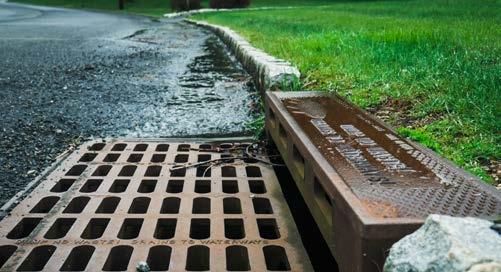
Public Works staff in the field ensuring storm drains are clear of debris and are draining properly. Photo by City Staff.
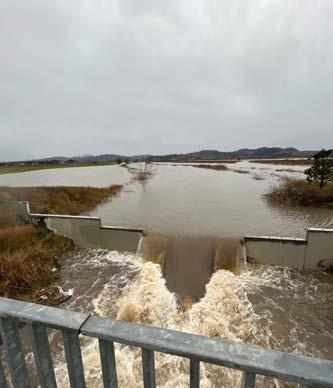
The Meadowlark Prairie A Channel Weir on March 16, 2025. Photo by City Staff.
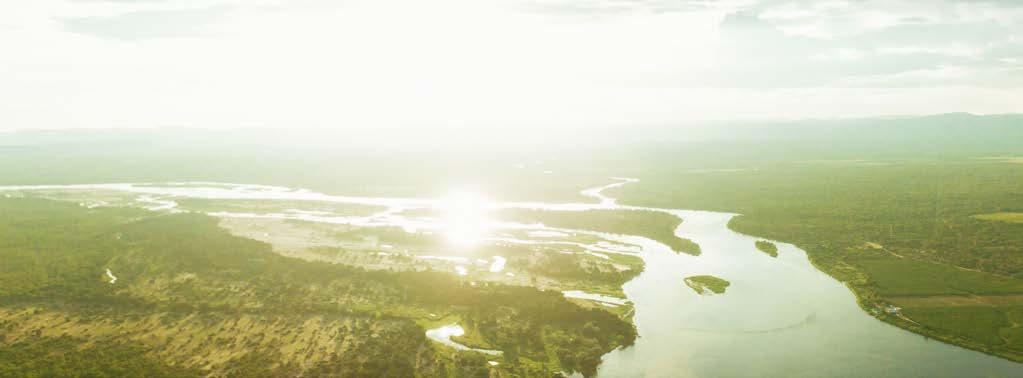
While flooding can be hazardous to safety and property, it is still a natural function of a floodplain. People have been attracted to the Willamette Valley for many reasons related to the benefits provided by floodplains. Our rivers and floodplains have provided our community with transportation, industry, food and recreation.
FLOODPLAINS
HAVE NATURAL AND BENEFICIAL FUNCTIONS
Floodplains are important for the natural storage and conveyance of floodwater and not just during large events like the 100-year flood, but also during smaller, more frequent events. They protect water quality, recharge groundwater reserves, and help preserve our local ecosystem. Natural floodplains can reduce the severity and frequency of floods.
Preserving natural floodplains can allow water to spread across a wide area, reduce erosion of streambanks and channels, reduce flow rates, and temporarily store excess water which, can reduce flood peaks and velocities and the potential for erosion. One acre of floodplain flooded one foot deep holds approximately 330,000 gallons of water. Flood storage is particularly important in urban areas where even small floods, for example from a 5- or 10-year storm, can cause severe damage. Floodplains can also allow for sediments to be deposited higher in the watershed and allow more time for groundwater recharge. Floodplains can also be scenic, valued wildlife habitat and fertile farmland.
A natural floodplain has surface conditions favoring local ponding and flood detention, plus subsurface conditions favoring infiltration and storage. Slowing runoff across the floodplain allows additional time for the runoff to infiltrate and recharge available groundwater aquifers when there is unused storage capacity. The slowing of runoff provides the additional benefit of natural purification of water as local runoff or overbank floodwater infiltrates and percolates through the floodplain alluvium (flat land area next to a stream).
BIOLOGIC RESOURCES AND FUNCTIONS
Floodplains enhance biological productivity by supporting a high rate of plant growth. This helps to maintain biodiversity and the integrity of ecosystems. Floodplains provide excellent habitats for fish and wildlife by serving as breeding and feeding grounds.
SOCIETAL RESOURCES AND FUNCTIONS
Floodplains enhance the quality of life for those living and visiting our community—a role that can often be undervalued. Parks, bike paths, open spaces, wildlife conservation areas and the aesthetic features they provide are important to many citizens. Assets like these help make our community more appealing to potential employers, investors, residents, property owners and tourists.
EUGENE’S FLOODPLAINS
Examples of local floodplains include the Rewilding Project on Amazon Creek between 19th and 24th avenues and upstream, West Eugene Wetlands preservation project, Delta Ponds and the bike paths along the Willamette River. Floodplains maintained in a natural state can slow stormwater runoff and help filter water pollution.
YOU CAN HELP PROTECT NATURAL FLOODPLAIN FUNCTIONS
Do not dump or throw anything into ditches or streams.
A plugged channel cannot carry water. When it rains, the excess water can cause a flood. Trash and vegetation dumped into a stream degrades both the stream itself and its receiving waters, and every piece of trash contributes to flooding. To report dumping, call 541-682-4800.
Remove debris, trash, loose branches and vegetation.
Keep banks clear of brush and debris to maintain an unobstructed flow of water in stream channels. Do not, however, remove vegetation that is actively growing on a stream bank. Streamside vegetation is tightly regulated by local, state and federal regulations.
Clean Water Connections is published by the City of Eugene Public Works Department to enhance awareness of stormwater and related surface water management issues.
Senior Editor: Kathy Eva
Thanks to our contributing writers: Carrie Peterson, Heidi Lakics, Kelsey Irvine, Josh Colley, Fuji Ngariki, Becky Nickell, Will Carter, Jack Blackham, Rachael Vaicunas, Susan Weixelman, Environment Oregon, Marion Barnes and Kathy Eva
For more information about stormwater in general, email pwadmin@eugene-or.gov
Lily the Frog is the mascot for Eugene's stormwater program. Her job is to remind people that we all live downstream, and it is important to keep water clean!
POLLINATORS ARE IMPORTANT!
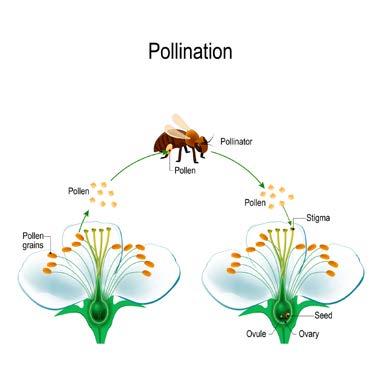
Pollination is part of a flowering plant’s life cycle that helps it make fruits, seeds and more plants. We depend on pollinated plants for food. Apples, oranges, bananas, peaches, nuts, berries, cherries, grapes, even vanilla and chocolate are just some of the foods we eat every day that need pollination to grow!
Pollination happens when tiny grains of pollen move from the anthers of one flower to the stigma of another flower of the same kind. The pollen can then go into that flower’s ovary where it fertilizes ovules, and then fruit and seeds can develop.
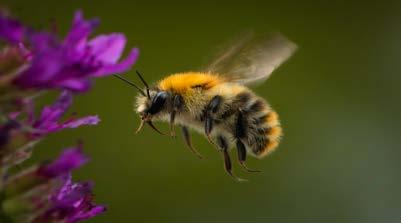
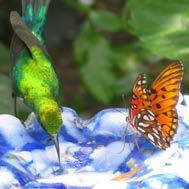
When bees, butterflies, hummingbirds and many other insects (pollinators!) move around a flower, often collecting nectar for food, pollen sticks to them and is carried to the next flower they visit. These tiny helpers are pollinating the flowers as they move around.
Pollination is an important job!
YOU CAN HELP YOUR NEIGHBORHOOD POLLINATORS
1. Plant flowers, especially native wildflowers, to attract and feed pollinators.
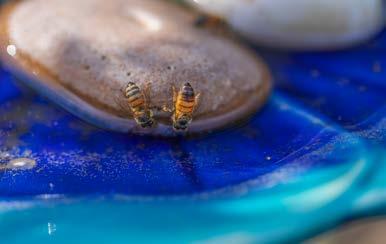
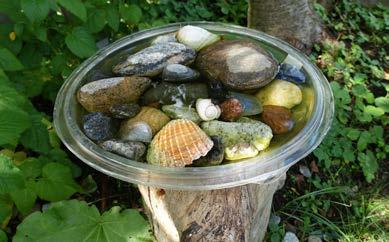
2. Make a pollinator cafe with a dish of water and some rocks or sticks for seating so thirsty pollinators can have a drink. Remember to refill it!
3. Avoid using pesticides in your yard. Learn other ways to reduce pests while keeping your garden safe for beneficial insects.
4. Keep some leaves and dead plant materials in the garden for pollinators to have food and shelter through winter.
HOW TO MAKE A POLLINATOR CAFÉ
Get a dish and some interesting rocks, sticks, broken pottery, crystals, shells, etc.
Fill the dish with water. Set the stones and other objects in the water so they are partially submerged to provide a safe place for the critters to drink from without falling in and drowning.
Put your café in a place that is out of the way of people and pets, but close enough to easily refill with water. Maybe near a sprinkler or hose. Place it near flowers so pollinators can have a meal and a drink!
Get creative! Your café can be simple and natural, or creative and fancy!