



For the Fiscal Year Ended September 30, 2025
CITY MANAGER
Sam A. Listi
ASSISTANT CITY MANAGER
Matt W. Bates
Prepared by:
William Michael Rodgers, CPA
Amanda F. Cox Director of Finance Assistant Director of Finance
Christina L. Sparks
Jo-Ell L. Guzman Senior Accountant Grants/Special Projects Coordinator
Margaret L. Van de Plas
Gwen L. Curry Court Administrator Deputy Court Clerk
Amanda R. Hernandez
Silvia R. Ramos
Utility Billing Specialist Customer Service Representative II
Mary Katherine Crawford
Donna M. Yasin
Customer Service Representative I Customer Service Representative I
Alexis N. Suarez
Accounting Technician
Please visit us at our website: www.beltontexas.gov


February 2, 2026
To the Honorable Mayor, Members of the City Council, and Citizens of the City of Belton, Texas:
The City Charter and State statutes require that the City of Belton (City) publish, at the close of each fiscal year, a complete set of financial statements presented in conformity with generally accepted accounting principles and audited in accordance with generally accepted auditing standards by a firm of licensed Certified Public Accountants. Pursuant to that requirement, we hereby issue the Annual Comprehensive Financial Report (ACFR) of the City of Belton, Texas, for the fiscal year ended September 30, 2025.
Management assumes full responsibility for the completeness and reliability of the information contained in this report, based upon a comprehensive framework of internal control that it has established for this purpose. Because the cost of internal control should not exceed anticipated benefits, the objective is to provide reasonable, rather than absolute, assurance that the financial statements are free of any material misstatements.
JRBT, PC has issued an unmodified (“clean”) opinion on the City of Belton’s financial statements for the year ended September 30, 2025. The independent auditor’s report is located at the front of the financial section of this report.
Management’s Discussion and Analysis (MD&A) immediately follows the independent auditor’s report and provides a narrative introduction, overview, and analysis of the basic financial statements. The MD&A complements this letter of transmittal and should be read in conjunction with it.
The City of Belton was founded in 1850 and chartered in 1852. On July 13, 1877, Belton was incorporated by the Texas Legislature. Located in Central Texas on Interstate Highways 35 and 14, Belton is approximately 65 miles north of Austin and 40 miles south of Waco. The City occupies a land area of 21 square miles and serves a population of approximately 26,000.
The City of Belton is a home rule city and operates under the council-manager form of government. Comprised of the Mayor and six councilmembers, the City Council is responsible for enacting ordinances, resolutions, and regulations governing the City. City Council also appoints the City Manager, City Attorney, Municipal Judges, City Clerk, and members of various boards. As the chief administrative officer, the City Manager is responsible for enforcing the laws and ordinances of the city. The City Manager appoints and supervises Department Heads. The City of Belton is empowered to levy a property tax on both real and personal properties located within its boundaries. It is also empowered by State statute to extend its corporate limits by annexation, which occurs periodically when deemed appropriate by the governing body in accordance with State law.
The City of Belton provides a full range of services, including police and fire protection, construction and maintenance of streets, roads and other infrastructure, solid waste collection, planning and zoning, parks programming and maintenance, library services, and administrative services necessary to serve the citizens of our community. Water, sewer, and drainage services are operated under an enterprise fund concept, with user charges set to ensure adequate coverage of operating expenses and payments on outstanding debt. In addition, the City of Belton is also financially accountable for a legally separate economic development corporation, which is reported separately within the City of Belton’s financial statements. Additional information on this legally separate entity can be found in the notes to the financial statements.
The annual budget serves as the foundation for the City’s financial planning and control. It defines the type, quality, and quantity of city goods and services that will be provided to citizens. The budget is also a control device that serves as a system of "checks and balances" between levels of city government.
The City Charter establishes the fiscal year as the twelve-month period beginning October 1 and ending September 30. Department Heads submit to the City Manager a budget of estimated expenditures for the ensuing fiscal year by March 1. The City Manager then submits a proposed budget of estimated expenditures and revenues to the City Council no later than July 15. Afterwards, the City Council sets the time and place of a public hearing on the budget. A notice of the hearing is published at least five days before the day of the hearing. The budget shall be finally adopted by ordinance no later than the twenty-seventh day of September. If City Council takes no final action on or prior to such day, the budget submitted by the City Manager shall be deemed to have been finally adopted by the Council until such time as the City Council adopts a budget pursuant to the provisions of the Charter.
After adoption of the budget, the City Manager may transfer any unencumbered appropriation or portion thereof between general classifications of expenditures within a division or department. At the request of the City Manager, the Council may by resolution, transfer any unencumbered appropriation or portion thereof from one division or department to another. After adoption, the City Council may amend the budget at any time by ordinance.
Budget-to-actual comparisons are provided in this report for governmental funds for which an annual budget has been adopted. For the General Fund and TIRZ Fund, this comparison is presented as part of the required supplementary information.
The information presented in the financial statements is perhaps best understood when it is considered from the broader perspective of the specific environment within which the City of Belton operates. Belton is a proactive, business-friendly community in the heart of Central Texas, strategically located within the core of the Killeen-Temple MSA (MSA). Belton sits at the crossroads of IH-35 and IH-14 (formerly U.S. Highway 190) within 180 miles of every major market in Texas. This location provides easy access to the estimated 510,000 people in the region. Military, government, medical/healthcare, agricultural/agribusiness, and retail trades are thriving industry sectors in the MSA that continue to be a major economic influence contributing to the growth and prosperity of Belton.
Belton is proud to be the home of the University of Mary Hardin-Baylor (UMHB), a private fouryear college with an enrollment of over 3,800 students representing 31 foreign countries. UMHB was chartered by the Republic of Texas in 1845, making it the oldest continuously operated college in the State of Texas. Belton Independent School District (BISD) is the largest employer in the City. BISD serves over 13,000 students on 19 campuses, 9 of which are in the city limits of Belton.
The unemployment rate for the Temple-Killeen-Ft Hood MSA increased to 5.0% from 4.6% one year ago. Despite the slight jump in unemployment, the economy remains strong as both population and property values continue to grow throughout the area.
The City of Belton Strategic Plan is the City’s primary planning document. It outlines the City’s vision and goals for the long term. There are seven goal categories: governance, public safety, quality of life, economic development, connectivity, parks/natural beauty, and service delivery. The Strategic Plan focuses on the City of Belton’s vision of being the “Community of Choice in Central Texas, Providing an Exceptional Quality of Life.” Each year, the Plan is reviewed, revised and updated as needs and conditions dictate. The revised plan forms the framework upon which the budget is built. Performance of Strategic Plan initiatives is measured regularly during the year. Additionally, each department measures success and progress by tying both accomplishments for the prior year and goals for the upcoming year to the various Strategic Plan goals and tasks.
The Strategic Plan leads to the development of a Capital Improvements Program (CIP). The CIP lists major projects that are expected within the next five years. It includes cost estimates and funding methods. The City of Belton has identified $80 million in capital projects for the 20262030 timeframe. The timing of these projects may be advanced or postponed depending upon development and funding availability.
A strong, thriving community requires continual investment in its people, facilities, and infrastructure to deliver an exceptional quality of life. As a goal in the Strategic Plan, the City of Belton implemented a street maintenance plan. The plan should elevate the quality of streets and create long-term savings through the systematic use of preventive maintenance. The cost of maintenance and other corrective actions each year are analyzed and typically included in the
annual budget. Street maintenance funding in FY 2026 will reach $1,100,000, increasing by five percent annually in the years to come.
Belton implemented a capital equipment replacement plan and a capital improvements plan. By identifying potential projects and critical machinery today, funds can be accumulated over time to meet future demand. The plans include an analysis of the timing of expenditures and the various sources of funding that may be available. The impact upon future operating budgets should also be considered.
To become a “quality of life” city, a municipality must provide ample opportunities for residents and visitors to retreat from the rigors of daily life by exploring the outdoors. The City of Belton addressed this by creating a Parks and Recreation Strategic Master Plan to guide the development of parks and recreation amenities within the City. Priorities over a ten-year period are recognized. Feasibility studies are prepared that envision usage of these quality-of-life facilities. The result of this master plan is a parks system that is harmonious with its surroundings and available all.
The City’s adopted fund balance policy requires a reserve balance of no less than thirty percent of annual operating appropriations. Balances in excess of this reserve requirement can be directed by City Council towards capital improvements. As of September 30, 2025, all operating funds were compliant with this policy.
The Government Finance Officers Association of the United States and Canada (GFOA) awarded a Certificate of Achievement for Excellence in Financial Reporting to the City of Belton, Texas, for its annual comprehensive financial report for the fiscal year ended September 30, 2024. This was the 39th consecutive year that the City of Belton has achieved this prestigious award. To be awarded a Certificate of Achievement, a government must publish an easily readable and efficiently organized ACFR. This report must satisfy both generally accepted accounting principles and applicable legal requirements.
A Certificate of Achievement is valid for a period of one year only. We believe that our current ACFR continues to meet the Certificate of Achievement Program’s requirements, and we are submitting it to the GFOA to determine its eligibility for another certificate.
In addition, the GFOA presented a Distinguished Budget Presentation Award to the City of Belton, Texas, for its annual budget document for the fiscal year beginning October 1, 2025. In order to receive this award, a governmental unit must publish a budget document that meets program criteria as a policy document, as an operations guide, as a financial plan, and as a communications device. This award is valid for a period of one year only. This was the 34th consecutive year that the City of Belton has received the budget award.
The preparation of this report was made possible with the proficient and dedicated work of the entire staff of the Finance Department. We would also like to thank the Mayor and the City Council for their continued interest and support in planning and conducting the financial operations of the City in a responsible and progressive manner.
Respectfully submitted,
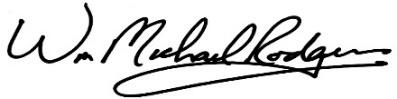
Sam A. Listi William Michael Rodgers, CPA City Manager Director of Finance

CITY COUNCIL
Three-Year Terms
NAME TERM EXPIRES
David K. Leigh, Mayor May 2027
John R. Holmes, Sr., Mayor Pro Term May 2026
Dave Covington
Stephanie O’Banion
Craig Pearson
Daniel Bucher
Luke Potts
POSITION
City Manager
City Attorney
City Clerk
Assistant City Manager
Police Chief
Fire Chief
Director of Finance
Director of Parks & Recreation
Director of Public Works
Director of Library
Director of Development Services
Director of Human Resources
Director of Information Technology
Director of Communications
Executive Director of Economic Development
CITY ADMINISTRATION
NAME
Sam Listi
May 2026
May 2028
May 2027
May 2028
May 2028
DATE APPOINTED
March 12, 2001
John Messer September 1, 1978
Amy Casey June 29, 2015
Matt Bates March 1, 2024
Larry Berg February 1, 2024
Jonathon Fontenot
June 15, 2020
William Michael Rodgers December 9, 2019
James Grant October 29, 2024
Scott Hodde October 29, 2024
Amanda Hairston
Robert Van Til
Megan Odiorne
Chris Brown
Paul Romer
September 2, 2025
June 26, 2017
June 10, 2024
April 18, 2016
October 31, 2012
Cynthia Hernandez September 27, 2011





The Honorable Mayor and Members of the City Council City of Belton, Texas:
We have audited the financial statements of the governmental activities, the business-type activities, the discretely presented component unit, each major fund, and the aggregate remaining fund information of the City of Belton, Texas (the “City”) as of and for the year ended September 30, 2025, and the related notes to the financial statements, which collectively comprise the City’s basic financial statements as listed in the table of contents.
In our opinion, the accompanying financial statements referred to above present fairly, in all material respects, the respective financial position of the governmental activities, the business-type activities, the discretely presented component unit, each major fund, and the aggregate remaining fund information of the City as of September 30, 2025, and the respective changes in financial position and, where applicable, cash flows thereof, for the year then ended in accordance with accounting principles generally accepted in the United States of America.
We conducted our audit in accordance with auditing standards generally accepted in the United States of America (“GAAS”) and the standards applicable to financial audits contained in Government Auditing Standards, issued by the Comptroller General of the United States. Our responsibility under those standards are further described in the Auditor’s Responsibilities for the Audit of the Financial Statements section of our report.
We are required to be independent of the City and to meet our other ethical responsibilities, in accordance with the relevant ethical requirements relating to our audit. We believe that the audit evidence we have obtained is sufficient and appropriate to provide a basis for our audit opinions.
Management of the City is responsible for the preparation and fair presentation of these financial statements in accordance with accounting principles generally accepted in the United States of America, and for the design, implementation, and maintenance of internal control relevant to the preparation and fair presentation of financial statements that are free from material misstatement, whether due to fraud or error.
In preparing the financial statements, management is required to evaluate whether there are conditions or events, considered in the aggregate, that raise substantial doubt about the City’s ability to continue as a going concern for twelve months beyond the financial statement date, including any currently known information that may raise substantial doubt shortly thereafter.
Our objectives are to obtain reasonable assurance about whether the financial statements as a whole are free from material misstatement, whether due to fraud or error, and to issue an auditor’s report that includes our opinions. Reasonable assurance is a high level of assurance but is not absolute assurance and therefore is not a guarantee that an audit conducted in accordance with GAAS and Government Auditing Standards will always detect a material misstatement when it exists. The risk of not detecting a material misstatement resulting from fraud is higher than for one resulting from error, as fraud may involve collusion, forgery, intentional omissions, misrepresentations, or the override of internal control. Misstatements are considered material if there is a substantial likelihood that, individually or in the aggregate, they would influence the judgment made by a reasonable user based on the financial statements.
In performing an audit in accordance with GAAS and Government Auditing Standards, we:
• Exercise professional judgment and maintain professional skepticism throughout the audit.
• Identify and assess the risks of material misstatement of the financial statements, whether due to fraud or error, and design and perform audit procedures responsive to those risks. Such procedures include examining, on a test basis, evidence regarding the amounts and disclosures in the financial statements.
• Obtain an understanding of internal control relevant to the audit in order to design audit procedures that are appropriate in the circumstances, but not for the purpose of expressing an opinion on the effectiveness of the City’s internal control. Accordingly, no such opinion is expressed.
• Evaluate the appropriateness of accounting policies used and the reasonableness of significant accounting estimates made by management, as well as evaluate the overall presentation of the financial statements.
• Conclude whether, in our judgment, there are conditions or events, considered in the aggregate, that raise substantial doubt about the City’s ability to continue as a going concern for a reasonable period of time.
We are required to communicate with those charged with governance regarding, among other matters, the planned scope and timing of the audit, significant audit findings, and certain internal control-related matters that we identified during the audit.
Accounting principles generally accepted in the United States of America require that the management’s discussion and analysis on pages 5 through 16, the schedule of budgetary comparisons for the General Fund and TIRZ Fund on pages 70 to 73, the schedules of changes in the City’s net pension liability and related ratios and contributions on pages 74 to 78, and the schedule of changes in the City’s total OPEB liability and related ratios and contributions on pages 80 to 84 be presented to supplement the basic financial statements. Such information is the responsibility of management and, although not a part of the basic financial statements, is required by the Governmental Accounting Standards Board, who considers it to be an essential part of financial reporting for placing the basic financial statements in an appropriate operational, economic, or historical context. We have applied certain limited procedures to the required supplementary information in accordance with auditing standards generally accepted in the United States of America, which consisted of inquiries of management about the methods of preparing the information and comparing the information for consistency with management’s responses to our inquiries, the basic financial statements, and other knowledge we obtained during our audit of the basic financial statements. We do not express an opinion or provide any assurance on the information because the limited procedures do not provide us with sufficient evidence to express an opinion or provide any assurance.
Our audit was conducted for the purpose of forming opinions on the financial statements that collectively comprise the City’s basic financial statements. The combining and individual fund financial statements and schedules are presented for purposes of additional analysis and are not a required part of the basic financial statements.
The combining and individual fund financial statements and schedules are the responsibility of management and were derived from and relate directly to the underlying accounting and other records used to prepare the basic financial statements. Such information has been subjected to the auditing procedures applied in the audit of the basic financial statements and certain additional procedures, including comparing and reconciling such information directly to the underlying accounting and other records used to prepare the basic financial statements or to the basic financial statements themselves, and other additional procedures in accordance with auditing standards generally accepted in the United States of America. In our opinion, the combining and individual fund financial statements and schedules are fairly stated, in all material respects, in relation to the basic financial statements as a whole.
Management is responsible for the other information included in the annual comprehensive financial report. The other information comprises the introductory and statistical sections of the annual comprehensive financial report but does not include the financial statements and our auditor's report thereon. Our opinions on the financial statements do not cover the other information, and we do not express an opinion or any form of assurance thereon.
In connection with our audit of the financial statements, our responsibility is to read the other information and consider whether a material inconsistency exists between the other information and the financial statements, or the other information otherwise appears to be materially misstated. If, based on the work performed, we conclude that an uncorrected material misstatement of the other information exists, we are required to describe it in our report.
In accordance with Government Auditing Standards, we have also issued our report dated February 2, 2026 on our consideration of the City’s internal control over financial reporting and on our tests of its compliance with certain provisions of laws, regulations, contracts, and grant agreements and other matters. The purpose of that report is solely to describe the scope of our testing of internal control over financial reporting and compliance and the results of that testing, and not to provide an opinion on internal control over financial reporting or on compliance. That report is an integral part of an audit performed in accordance with Government Auditing Standards in considering the City’s internal control over financial reporting and compliance.
February 2, 2026
As management of the City of Belton, Texas, we offer readers of the financial statements this narrative discussion and analysis of the financial activities of the City of Belton for the fiscal year ended September 30, 2025. We encourage readers to consider the information presented here in conjunction with additional information that we have furnished in our letter of transmittal, which can be found on pages i through v of this report.
• The assets and deferred outflows of resources of the City exceeded its liabilities and deferred inflows of resources at the close of the most recent fiscal year by $125,594,199 ( net position). Of this amount, $29,857,800 represents unrestricted net position, which may be used to meet the City’s ongoing obligations to citizens and creditors.
• The City’s total net position increased by $6,821,842 primarily due to grants and contributions from third parties, earnings from investments, and greater general revenues from property taxes.
• Effective October 1, 2024, the City adopted the provisions of Governmental Accounting Standards Board (“GASB”) Statement No. 101, Compensated Absences. The adoption of GASB 101 did not have a material impact on beginning fund balance or beginning net position as of October 1, 2024.
• At the close of the current fiscal year, the City’s governmental funds reported combined fund balances of $23,372,064, an increase of $3,314,381 in comparison with the prior year. Of this total amount, $8,326,047 (35.6 percent) is available for spending at the City’s discretion (unassigned fund balance).
• At the end of the current fiscal year, unrestricted fund balance (total of the committed, assigned, and unassigned components of fund balance) for the General Fund was $9,198,047, or 37.1 percent of budgeted General Fund expenditures.
This discussion and analysis is intended to serve as an introduction to the City’s basic financial statements. The City’s basic financial statements are comprised of three components: 1) government-wide financial statements; 2) fund financial statements; and 3) notes to the financial statements. This report also includes other supplementary information intended to furnish additional detail to support the basic financial statements themselves.
Government-wide financial statements. The government-wide financial statements are designed to provide readers with a broad overview of the City’s finances, in a manner similar to a privatesector business.
The statement of net position presents information on all of the City’s assets, liabilities, and deferred inflows/outflows of resources, with the difference reported as net position. Over time, increases or decreases in net position may serve as a useful indicator of whether the financial position of the City is improving or deteriorating.
The statement of activities presents information showing how the City’s net position changed during the most recent fiscal year. All changes in net position are reported as soon as the underlying event giving rise to the change occurs, regardless of the timing of related cash flows.
Thus, revenues and expenses are reported for some items that will only result in cash flows in future fiscal periods (e.g., uncollected taxes and earned but unused vacation leave).
Both government-wide financial statements distinguish functions of the City that are principally supported by taxes and intergovernmental revenues (governmental activities) from other functions that are intended to recover all or a significant portion of their costs through user fees and charges (business-type activities). The governmental activities of the City include general government, public safety, highways and streets, planning, culture and recreation, solid waste collection, economic development, and maintenance. The business-type activities of the City include a water and sewer utility and a drainage utility.
The government-wide financial statements include not only the City itself (known as the primary government), but also a legally separate economic development corporation for which the City is financially accountable. Financial information for this component unit is reported separately from the financial information presented for the primary government itself.
The government-wide financial statements can be found on pages 19 - 21 of this report.
Fund financial statements. A fund is a grouping of related accounts that is used to maintain control over resources that have been segregated for specific activities or objectives. The City, like other local governments, uses fund accounting to ensure and demonstrate compliance with finance-related legal requirements. All funds of the City can be divided into two categories: governmental funds and proprietary funds.
Governmental funds. Governmental funds are used to account for essentially the same functions reported as governmental activities in the government-wide financial statements. However, unlike the government-wide financial statements, governmental fund financial statements focus on nearterm inflows and outflows of spendable resources, as well as on balances of spendable resources available at the end of the fiscal year. Such information may be useful in assessing a government’s near-term financing requirements.
Because the focus of governmental funds is narrower than that of the government-wide financial statements, it is useful to compare the information presented for governmental funds with similar information presented for governmental activities in the government-wide financial statements. By doing so, readers may better understand the long-term impact of the City's near-term financing decisions. Both the governmental funds balance sheet and the governmental funds statement of revenues, expenditures, and changes in fund balances provide a reconciliation to facilitate this comparison between governmental funds and governmental activities.
The City maintains approximately thirty individual governmental funds. Information is presented separately in the governmental fund balance sheet and in the governmental fund statement of revenues, expenditures, and changes in fund balances for the General Fund, Debt Service Fund, and TIRZ Fund, which are considered to be major funds. Data from the other governmental funds are combined into a single, aggregated presentation. Individual fund data for each of these nonmajor governmental funds is provided in the combining and individual fund statements and schedules section of this report.
The basic governmental fund financial statements can be found on pages 22 - 24 of this report.
Proprietary funds. The City maintains two types of proprietary funds. Enterprise funds are used to report the same functions presented as business-type activities in the government-wide financial statements. The City uses enterprise funds to account for its water and sewer utility and for its drainage utility.
Internal service funds are an accounting device used to accumulate and allocate costs internally among the City’s various functions. The City uses its internal service funds to account for its information technology and building maintenance services. These internal service functions have been included within governmental activities in the government-wide financial statements.
Proprietary fund financial statements provide the same type of information as the governmentwide financial statements, only in more detail. The proprietary fund financial statements provide separate information for the Water and Sewer Fund and for the Drainage Fund, both of which are major funds of the City. All internal service funds are combined into a single aggregated presentation in the proprietary fund financial statements. Individual fund data for the internal service funds is provided in the form of combining and individual fund statements and schedules section of this report.
The basic proprietary fund financial statements can be found on pages 25 - 27 of this report.
Notes to the financial statements. The notes provide additional information that is necessary to acquire a full understanding of the data provided in the government-wide and fund financial statements. The notes to the financial statements can be found on pages 31 – 68 of this report.
Other information. In addition to the basic financial statements and accompanying notes, this report also presents required supplementary information concerning the City’s progress in funding its obligation to provide pension and OPEB benefits to its employees. The City adopts an annual appropriated budget for its General Fund and TIRZ Fund. A budgetary comparison schedule has been provided for the General Fund and TIRZ Fund to demonstrate compliance with the budget. Required supplementary information can be found on pages 70 - 84 of this report. The combining statements referred to earlier in connection with nonmajor governmental funds and internal service funds are presented immediately following the required supplementary information. Combining and individual fund statements and schedules can be found on pages 90 – 101 of this report.
As noted earlier, net position over time may serve as a useful indicator of a government's financial position. In the case of the City, assets and deferred outflows of resources exceeded liabilities and deferred inflows of resources by $125,594,199 at the close of the most recent fiscal year.
City of Belton Statement of Net Position
By far the largest portion of the City’s net position ($87,589,437 or 69.7 percent) reflects its investment in capital assets (e.g., land, buildings, machinery, equipment, leases, subscriptions, vehicles, and infrastructure), less any related outstanding debt that was used to acquire those assets. The City uses these capital assets to provide a variety of services to its citizens. Accordingly, these assets are not available for future spending. Although the City’s investment in its capital assets is reported net of related debt, it should be noted that the resources used to repay this debt must be provided from other sources, since the capital assets themselves cannot be used to liquidate these liabilities.
An additional portion of the City’s net position ($8,146,962 or 6.5 percent) represents resources that are subject to external restrictions on how they may be used. The remaining balance ($29,857,800 or 23.8 percent) is unrestricted and may be used to meet the City's ongoing obligations to citizens and creditors.
At the end of the current fiscal year, the City is able to report positive balances in all reported categories of net position, both for the City as a whole, as well as for its separate governmental and business-type activities. The same situation held true for the prior fiscal year.
The City's total net position increased $6,821,842 from the prior fiscal year. The reasons for this overall increase are discussed in the following sections for governmental and business-type activities.
Revenues:
September 30, 2024 and 2025 (in
Governmental activities. During the current fiscal year, net position for governmental activities increased by $6,857,636 to $66,160,262. This increase was partially driven by revenue of $1,363,779 from the American Rescue Plan Grant which in turn led to an increase in grant expenditures. Contributions into the TIRZ Fund from Bell County totaled $1,311,084 for the year. Developer contributions of assets added another $4,796,282. Property tax revenue also increased by $659,856 over the previous year as property values continued to grow. Governmental expenses were essentially flat.
$14,000,000
$12,000,000
$10,000,000
$8,000,000
$6,000,000
$4,000,000
$2,000,000
$0
Business-type activities. For the City’s business-type activities, the overall net position decreased by $35,794 to an ending balance of $59,433,937. Key changes year over year included:
• Charges for business-type activities totaled $13,571,309, an increase of $932,460 from the prior year due to utility rate changes.
• Expenses for business-type activities totaled $14,283,251, a 21.5 percent increase over the prior year. The increase is primarily the result of higher water treatment costs and expenses related to the issuance of bonds in 2025.
• Capital grants and contributions from developers totaled $918,462, a decrease of $3,930,899 from the prior year.
As noted earlier, the City uses fund accounting to ensure and demonstrate compliance with finance-related legal requirements.
Governmental funds. The focus of the City’s governmental funds is to provide information on near-term inflows, outflows, and balances of spendable resources. Such information is useful in assessing the City’s financing requirements. In particular, unassigned fund balance may serve as a useful measure of a government’s net resources available for discretionary use as they represent the portion of fund balance which has not yet been limited to use for a particular purpose by either an external party, the City itself, or a group or individual that has been delegated authority to assign resources for particular purposes by the City Council.
At September 30, 2025, the City’s governmental funds reported combined ending fund balances of $23,372,064, an increase of $3,314,381 in comparison with the prior year. Approximately 35.6 percent ($8,326,047) of this amount constitutes unassigned fund balance, which is available for spending at the City’s discretion. The remainder of fund balance is non-spendable, restricted, committed, or assigned to indicate that it is:
1) Not in spendable form ($1,765,959)
2) Restricted for particular purposes:
a. Debt service ($161,862)
b. Public, educational, or governmental access facilities ($577,392)
c. Public safety training, equipment, and security facilities ($14,030)
d. Court technology and security ($203,409)
e. Capital projects ($5,247,742)
f. Economic development ($1,837,390)
3) Committed for particular purposes:
a. Economic development ($127,208)
4) Assigned for particular purposes:
a. Future civil service costs ($872,000)
b. Culture and recreation ($546,798)
c. Capital projects and equipment ($3,692,227)
General Fund Components of Fund Balance September 30, 2024 and 2025
The General Fund is the chief operating fund of the City. At the end of the current fiscal year, unassigned fund balance of the General Fund was $8,326,047, while total fund balance decreased by $665,442 to $9,223,714. Property tax revenue increased by 6.9% over the previous year to $9,056,810 due to rising property values within the City. Sales tax revenue was essentially flat at $6,499,303 due to a retraction in construction-related activity and slowing growth in other sectors of the economy. Expenditures increased by $1,245,149 due to higher costs for personnel, street maintenance, water service, and capital items. As a measure of the General Fund’s liquidity, it may be useful to compare both unassigned fund balance and total fund balance to total general fund budgeted expenditures. Unassigned fund balance represents 33.6 percent of total General Fund budgeted expenditures (including transfers), while total fund balance represents 37.2 percent of that same amount.
Components of Fund Balance
September 30, 2024 and 2025
Assigned other governmental funds consists primarily of capital project and capital equipment replacement funds. The $100,399 increase to assigned fund balance is the result of capital transfers into these funds exceeding expenditures during the year.
Committed other governmental funds consist of the City funding dedicated to projects under the Texas Department of Housing and Community Affairs home replacement program. Revenues surpassed expenditures during the year by $34,687.
Restricted other governmental funds relate to funds restricted to a specific purpose such as hotel occupancy taxes, security and technological enhancements of the municipal court, truancy prevention, and capital projects in the City’s tax increment and reinvestment zones. The fund balance increase from 2024 to 2025 was the result of rising contributions into the Tax Increment Reinvestment Zone Capital Projects Fund.
The Debt Service Fund, a major fund, reported an increase in fund balance during the current year of $95,948 to bring the year-end fund balance to $161,862. This increase was due to growing property tax values within the City.
Fund balance in the TIRZ Fund, a major fund, increased by $341,708 to $589,671. The change was due to rising contributions from participating entities and lower transfers into the TIRZ Capital Projects Fund for future projects.
Proprietary funds. The City’s proprietary fund statements provide the same type of information found in the government-wide financial statements but in more detail.
Net position of the Water and Sewer Fund at the end of the year was $53,437,300, and the net position of the Drainage Fund amounted to $5,996,637. The total change in net position was $48,141 and ($83,935), respectively.
Notable changes in the Water and Sewer Fund activity include:
• Total operating revenues increased by 7.6 percent to $12,972,728. A new water and sewer rate structure became effective in FY 2025 that included base rates by meter size, tiered water volumetric rates, and winter-averaging for sewer charges. Consequently, water charges increased by $1,369,539 while sewer charges decreased by $682,629 from the prior year.
• Operating expenses totaled $12,751,485, an increase of $2,157,999 or 20.4 percent from the prior year. The increase was due to higher personnel expenses, water purchases, interest costs, and depreciation.
• Capital contributions were $599,159 for the dedication of water and sewer lines in new subdivisions.
Notable changes in the Drainage Fund activity include:
• Operating revenues rose by $15,509 or 2.6 percent due to a growing number of customers in the current year.
• Operating expenses totaled $697,938, an increase of $46,195 or 6.6 percent over the prior year. The increase was primarily driven by higher depreciation charges.
• There was $65,572 in capital contributions for the dedication of drainage facilities in new subdivisions.
Original Budget Compared to Final Budget. General Fund budgeted revenues decreased by $410,000 to $23,972,210. The decrease was attributable to shortfalls in property tax, sales tax, interest, grants, and refuse-related revenues. The budgeted use of funds decreased from the original budget of $24,913,890 to the final budget of $24,770,890. Cost overruns on supplies, maintenance, and capital outlay were more than offset by savings in personnel and services.
Final budget compared to actual results. For the General Fund, actual revenues exceeded budgeted revenues by $38,017 due to insurance proceeds. Actual General Fund expenditures were $113,349 under budget with savings in various divisions from personnel and services. TIRZ Fund revenues were generally in line with budget. Expenditures for the TIRZ Fund had a positive variance of $219,000 in façade grants and consulting.
Capital assets. The City’s investment in capital assets for its governmental and business type activities as of September 30, 2025, amounts to $115,036,212 (net of accumulated depreciation). This investment in capital assets includes land, buildings, improvements, machinery and equipment, leases, subscriptions, park facilities, streets, bridges, drainage structures, and water and sewer system infrastructure to include pumps, pipes, storage tanks, and associated fittings and fixtures, and construction in progress. The total increase in the City’s investment in capital assets for the current fiscal year was 4.4 percent (an 11.9 percent increase for governmental activities and a 2.0 percent decrease for business-type activities).
(net of depreciation) 202520242025202420252024
Major capital asset events during the current fiscal year included the following:
• Work was completed on:
o Standpipe Park
o Miller Heights Public Safety Center
o Lena Armstrong Library renovation
o 13th Avenue sidewalks
• Work began/continued on:
o Loop 121 utility relocation
o Connell Street reconstruction
o East Central/Spring bridge relocation
o Temple-Belton wastewater treatment plant
o Nolan Creek force main improvements
Additional information on the City’s capital assets can be found in Note V on pages 46 - 49 of this report.
Long-term debt. At the end of the current fiscal year, the City had total bonded debt outstanding of approximately $41,665,000, excluding bond premiums. All of this debt is secured by the full faith and credit of the City. Of the total, $32,695,567 is pledged with water and sewer revenue and storm water drainage revenue.
The City’s total bonded debt increased by $14.9 million (55.8 percent) during the year. The increase was due to the issuance of Certificates of Obligation, Series 2025, for $17,290,000 less regularly scheduled principal payments. Proceeds from the sale of the Certificates will be used to acquire a fire truck and a building for public safety purposes as well as constructing, improving and/or extending the City’s waterworks and sewer system.
No direct funded debt limitation is imposed on the City under current State law or the City Charter. Article XI, Section 5, of the Texas Constitution is applicable to the City and limits its maximum ad valorem rate to $2.50 per $100 of assessed valuation for all city purposes. The City Charter limits the tax rate to $1.90 per $100 of assessed valuation for all City purposes. Administratively, the Attorney General of the State of Texas will only permit the allocation of $1.50 of the maximum tax rate for general obligation debt service. The City’s fiscal year 2025 tax rate is well below the aforementioned limits.
Additional information on the City’s long-term debt can be found in Note VI on pages 50 - 54 of this report.
The budget for FY 2026 is intended to be lean without significant changes from FY 2025. Consequently, the number of full-time-equivalent positions declines by one. No utility rate changes are included. While resources from property and sales taxes continue to rise, a fifteen percent jump in health insurance premiums and limited pay increases for employees elevate personnel costs. The appropriation for debt service increases after issuing bonds in 2025 for utility projects, a fire engine, and a facility acquisition. In FY 2026, the City of Belton will invest heavily in its information technology infrastructure with data center and software upgrades. Having funded several items during 2025, various transfers for capital projects and equipment will decrease in FY 2026.
The proposed budget that was presented to City Council in July was based upon a property tax rate of $0.5306 per $100 of taxable value, a slight increase over last year’s adopted rate of $0.5225. Property valuations and property tax rates have been in the spotlight throughout the State of Texas recently. Knowing this, the City Council voted to leave the property tax rate unchanged at $0.5225 per $100 of taxable value. The General Fund will use accumulated reserves in FY 2026 to continue providing quality services to constituents.
As the proposed budget was being developed, various departments submitted over $500,000 of supplemental budget requests. These requests included personnel additions, equipment, and facility renovations. Some of these items were funded with money that was previously set aside for capital projects while others were eliminated from the proposed budget entirely as a costreduction measure. However, many of those needs will need to be addressed in future years.
This financial report is designed to provide a general overview of the City’s finances for all those with an interest in the City's finances. Questions concerning any of the information provided in this report or requests for additional financial information should be addressed to:
Director of Finance
City of Belton P.O. Box 120 Belton, Texas, 76513
Basic Financial Statements

City of Belton, Texas Statement of Net Position September 30, 2025
Primary Government
City of Belton, Texas
Statement of Activities For the Fiscal Year Ended September 30, 2025
Program Revenues
General revenues: Property taxes
Sales taxes
Franchise taxes
Hotel/motel taxes
Alcoholic beverage taxes
Unrestricted investment earnings
Gain on sale of assets
Miscellaneous
Insurance proceeds
Transfers
Total general revenues and transfers
Change in net position
Net position, beginning of year
Net position, end of year
Net Revenues (Expenses) and Changes in Net Position
Primary Government
Component Unit
Belton Economic GovernmentalBusiness-typeDevelopment ActivitiesActivitiesTotalCorporation, Inc.
(3,562,003)(3,562,003) (11,315,406)(11,315,406) 377,208 377,208 (537,265)(537,265) (3,532,662)(3,532,662) 661,192 661,192 2,340,813 2,340,813 (771,382)(771,382) (265,253)(265,253) (16,604,758)(16,604,758) -
- (37,743)(37,743) - 206,520
(16,604,758)206,520 (16,398,238) (5,781,487) (5,781,487)
$12,317,438
-
42,787 35,164 77,9511,405,320 (1,405,320)-23,462,394 (242,314)23,220,080 3,917,274 6,857,636 (35,794)6,821,842 (1,864,213)
City of Belton, Texas
Resources, and Fund Balances Assets
Liabilities, Deferred Inflows of
Amounts reported for governmental activities in the statement of net position are different because:
Capital assets used in governmental activities are not financial resources and, therefore, are not reported in the funds56,735,176
Other long-term assets are not available to pay for current period expenditures and, therefore, are reported as unavailable revenue in the funds.354,340
Internal service funds are used by management to charge the costs of certain services to individual funds. The assets and liabilities of the internal service funds are included in the governmental activities in the statement of net position.653,117
Long-term liabilities, including bonds payable and the net pension and total OPEB liabilities, are not due and payable in the current period, and therefore, are not reported in the funds. (14,954,435)
Net position of governmental activities$66,160,262
Revenues:
Statement of Revenues, Expenditures and Changes in Fund Balances - Governmental Funds For the Fiscal Year Ended September 30, 2025
Reconciliation of the Statement of Revenues, Expenditures, and Changes in Fund Balances of Governmental Funds to the Statement of Activities For the Fiscal Year Ended September 30, 2025
Amounts reported for governmental activities in the statement of activities are different because: Net change in fund balances -
Governmentalfundsreportcapital outlaysasexpenditures.However,in thestatementofactivities,thecostofthoseassetsisallocatedovertheir estimatedusefullivesasdepreciationexpense.Thisistheamountby whichcapitaloutlay($5,464,920)exceedsdepreciationexpense ($4,279,035) in the current period.
Theneteffectofvariousmiscellaneoustransactionsinvolvingcapital assets(i.e.,sales,donations,etc.)istoincreasenetposition.Thisis capitalassetscontributed($4,796,282)lessthenetbookvalueofcapital assets sold ($0) in the current period.
Revenuesinthestatementofactivitiesthatdonotprovidecurrent financial resources are not reported as revenues in the funds.
4,796,282 12,697
Internal service funds are used by management to charge the costs of certain services to individual funds. The change in net position of internal service funds is reported with governmental activities. (168,376)
Someexpensesreportedinthestatementofactivitiesdonotrequirethe useofcurrentfinancialresourcesand,therefore,arenotreportedin governmentalfunds.Thisamountistheneteffectofchangeinthenet pension liability and the related deferred outflows and inflows of resources ($266,897),plustheneteffectofchangeinthetotalOPEBliabilityand therelateddeferredoutflowsandinflowsofresources($7,428)plusthe changeinaccruedinterestpayable($4,941)plusthechangein compensated absences ($537,447).
Theissuanceoflong-termdebt(e.g.,bondsandleases)providescurrent financialresourcestogovernmentalfunds,whiletherepaymentofthe principaloflong-termdebtconsumescurrentfinancialresourcesof governmentalfunds.Neithertransaction,however,hasanyeffectonnet position.Thisistheamountbywhichincreasesinlong-termdebt ($2,517,644)exceedsprincipalrepaymentsandbondpremium amortization ($1,051,124) in the current year.
Change in net position of governmental activities $6,857,636
Statement of Net Position –Proprietary Funds
September 30, 2025
Business-type Activities - Enterprise Funds
Statement of Revenues, Expenses, and Changes in Net Position –Proprietary Funds For the Fiscal Year Ended September 30, 2025
For the Fiscal Year Ended September 30, 2025
Business-type Activities - Enterprise Funds

City of Belton, Texas

Notes to Financial Statements
September 30, 2025
The City of Belton, Texas (the “City”) was founded in 1850 and chartered in January of 1852 under provisions of the Constitution of the State of Texas. The City operates under a home rule charter which was first approved by the electorate on August 20, 1951. Subsequent revisions to the charter occurred in 1990, 2005, and 2020. The charter provides for the Council-Manager form of government for the City. The Council is the legislative and governing body of the City and has control of all the City finances, property, functions, services, affairs and programs, subject to the terms and provisions of the City Charter. The City Manager is the chief executive and administrative officer of the City and is responsible to the Council for the proper administration of all the affairs and business of the City. As authorized by its charter, the City provides the following services: public safety (police and fire), highways and streets, sanitation and health, public improvements, planning and zoning, recreation, general administrative services, and water, sewer, and drainage utilities.
The accompanying financial statements present the government and its component units, entities for which the government is considered to be financially accountable. Blended component units, although legally separate entities are, in substance, part of the government's operations and so data from these units are combined with data of the primary government. The City did not have any blended component units. A discretely presented component unit, on the other hand, is reported in a separate column in the government-wide financial statements to emphasize it is legally separate from the government.
Discretely presented component unit - The Belton Economic Development Corporation, Inc. (the “Development Corporation”) is a governmental nonprofit corporation organized for the purpose of promoting, assisting, and enhancing economic development activities of the City of Belton, Texas. The City Council appoints a governing body that is not substantively the same as the governing body of the primary government. Budgets of the Development Corporation and debt to be incurred must be approved by the Council.
Financial statements for the Development Corporation may be obtained from the finance department of the City.
The government-wide financial statements (i.e., the statement of net position and the statement of activities) report information on all of the activities of the primary government and its component unit. Governmental activities, which normally are
B.
(continued)
(continued)
supported by taxes and intergovernmental revenues, are reported separately from business-type activities, which rely to a significant extent on fees and charges for support. Likewise, the primary government is reported separately from certain legally separate component units for which the primary government is financially accountable.
The statement of activities demonstrates the degree to which the direct expenses of a given function or segment is offset by program revenues. Direct expenses are those that are clearly identifiable with a specific function or segment. Program revenues include: (1) charges to customers or applicants who purchase, use, or directly benefit from goods, services, or privileges provided by a given function or segment; and (2) grants and contributions that are restricted to meeting the operational or capital requirements of a particular function or segment. Taxes and other items not properly included among program revenues are reported instead as general revenues.
Separate financial statements are provided for governmental funds and proprietary funds. Major individual governmental funds and major individual enterprise funds are reported as separate columns in the fund financial statements.
The government-wide financial statements are reported using the economic resources measurement focus and the accrual basis of accounting, as are the proprietary fund financial statements. Revenues are recorded when earned and expenses are recorded when a liability is incurred, regardless of the timing of related cash flows. Property taxes are recognized as revenues in the year for which they are levied. Grants and similar items are recognized as revenue as soon as all eligibility requirements imposed by the provider have been met.
Governmental fund financial statements are reported using the current financial resources measurement focus and the modified accrual basis of accounting. Revenues are recognized as soon as they are both measurable and available. Revenues are considered to be available when they are collectible within the current period or soon enough thereafter to pay liabilities of the current period. For this purpose, the City considers revenues to be available if they are collected within 60 days of the end of the current fiscal period. Expenditures generally are recorded when a liability is incurred, as under accrual accounting. However, debt service expenditures, as well as expenditures related to compensated absences, and claims and judgments, are recorded only when payment is due. General capital asset acquisitions are reported as expenditures in governmental funds. Issuance of long-term debt is reported as an other financing source.
C. Measurement Focus, Basis of Accounting, and Financial Statement Presentation (continued)
Property taxes, sales taxes, franchise taxes, licenses, and interest associated with the current fiscal period are all considered to be susceptible to accrual and so have been recognized as revenues of the current fiscal period. All other revenue items are considered to be measurable and available only when cash is received by the City.
The City reports the following major governmental funds:
The General Fund is the City's primary operating fund. It accounts for all financial resources of the general government, except those required to be accounted for in another fund.
The Debt Service Fund accounts for the resources accumulated and payments made for principal and interest on long-term general obligation debt of governmental funds.
The TIRZ Fund accounts for economic development projects in the City's tax increment and reinvestment zone. Financing is provided by certain tax revenues collected within the City's tax increment and reinvestment zone pursuant to state tax code statutes and county contributions.
The City reports the following major proprietary funds:
The Water and Sewer Fund accounts for the provision of water and sewer services to the residents of the City. All activities necessary to provide such services are accounted for in this fund including, but not limited to, administration, operations, maintenance, financing and related debt service, billing, and collection.
The Drainage Fund accounts for operations related to providing storm drainage service to the citizens of Belton. All activities necessary to provide such services are accounted for in this fund including, but not limited to, operations, maintenance, financing and related debt service, billing, and collection.
Additionally, the City reports the following fund type:
The Internal Service Funds account for information technology and building maintenance services provided to other departments of the government on a cost reimbursement basis.
C. Measurement Focus, Basis of Accounting, and Financial Statement Presentation (continued)
As a general rule, the effect of interfund activity has been eliminated from the government-wide financial statements. Exceptions to this general rule are payments in lieu of taxes and other charges between the government’s water and sewer function and various other functions of the government. Elimination of these charges would distort the direct costs and program revenues reported for the various functions concerned.
Amounts reported as program revenues include: (1) charges to customers or applicants for goods, services, or privileges provided, (2) operating grants and contributions, and (3) capital grants and contributions. Internally dedicated resources are reported as general revenues rather than as program revenues. Likewise, general revenues include all taxes.
Proprietary funds distinguish operating revenues and expenses from nonoperating items. Operating revenues and expenses generally result from providing services and producing and delivering goods in connection with a proprietary fund's principal ongoing operations. The principal operating revenues of the City’s enterprise funds and internal service funds are charges to customers for sales and services. The water and sewer fund also recognizes as operating revenue the portion of tap fees intended to recover the cost of connecting new customers to the system. Operating expenses for the enterprise funds include the cost of sales and services, administrative expenses, and depreciation on capital assets. All revenues and expenses not meeting this definition are reported as nonoperating revenues and expenses.
The City’s procedures in establishing the budgetary data reflected in the financial statements are as follows.
Between thirty and ninety days prior to the beginning of each fiscal year, the City Manager submits a proposed budget to the City Council. The operating budget includes proposed expenditures and the means of financing them.
Public hearings are held on the proposed budget and on the revised budget, if applicable. Prior to September 27, but no sooner than five days after the final public hearing, the budget is legally enacted through passage of an ordinance. If not accepted and formally approved by the City Council before September 27, the budget as submitted by the City Manager is automatically adopted.
The City Manager is authorized to transfer budgeted amounts within departments within any fund and with Council authorization, between departments within any fund during the last three months of the fiscal year. Any revisions that alter the total expenditures of any fund must be approved by the City Council.
A provision is made in the annual budget of the General Fund for a contingent appropriation not to exceed three percent of the total General Fund expenditures to be used in the case of unforeseen expenditures. This contingency is under the control of the City Manager and distributed by him. Disbursements of this appropriation are transferred to the department incurring the expenditure.
Annual budgets are legally adopted for the General Fund, the Hotel/Motel Tax Special Revenue Fund, the Debt Service Fund, the TIRZ Special Revenue Fund, the Water and Sewer Fund, the Drainage Fund as well as the Information Technology and Building Maintenance Internal Service Funds. Certain differences exist between the basis of accounting used for budgetary purposes and that used for financial reporting in accordance with generally accepted accounting principles (“GAAP”). Budgets are not prepared for capital project funds because all significant expenditures are based on fixedbid contracts, which are controlled by management in the initial project planning stages.
Budget appropriations lapse at year-end and do not carry forward to future periods. The reported budgetary data has been revised for amendments authorized during the year. The level of control (level at which expenditures may not exceed budget) is the division level of each fund.
Encumbrance accounting, under which purchase orders, contracts, and other commitments for the expenditure of monies are recorded in order to reserve that portion of the applicable appropriation, is employed as an extension of formal budgetary integration in governmental funds. Encumbrances do not constitute expenditures or liabilities because the commitments lapse at year-end and must be budgeted in the following year. At year-end, the amounts of encumbrances expected to be honored upon performance by the vendor in the next year were as follows:
The City's cash and cash equivalents are considered to be cash on hand, demand and time deposits, external investment pools and deposits in the City’s internal cash and investment pool. Certain proceeds of the enterprise fund bonds and certain resources set aside for their repayment are classified as restricted cash and cash equivalents on the balance sheet because their use is limited by applicable bond covenants.
State statutes and the City’s investment policy authorize the City to invest in obligations of the United States and its agencies, certificates of deposit, and public funds investment pools.
Investments are reported at fair value, except for governmental investment pools. The City invests in public funds investment pools that were created to function as money market mutual funds within appropriate state laws and regulations. Each of these public funds investment pools seek to maintain a constant $1.00 net asset value per share.
Activity between funds that are representative of lending/borrowing arrangements outstanding at the end of the fiscal year are referred to as either "due to/from other funds" (i.e., the current portion of interfund loans) or "advances to/from other funds" (i.e., the noncurrent portion of interfund loans). All other outstanding balances between funds are reported as "due to/from other funds." Any residual balances outstanding between the governmental activities and business-type activities are reported in the government-wide financial statements as "internal balances."
All trade and property tax receivables are shown net of an allowance for uncollectibles. The property tax receivable allowance is equal to 36 percent of outstanding property taxes at September 30, 2025.
The City does not maintain any significant amount of supplies. Supplies are expensed when the purchase is made.
Certain payments to vendors reflect costs applicable to future accounting periods and are recorded as prepaid items in both the government-wide and fund financial statements. The cost of prepaid items is recorded as expenditures/expenses when consumed rather than when purchased.
Capital assets, which include land, buildings, improvements other than buildings, machinery and equipment, subscription and lease right-of-use assets and infrastructure assets (e.g., roads, bridges, sidewalks, and similar items) are reported in the applicable governmental or business-type activities columns in the government-wide financial statements. Capital assets, other than infrastructure assets, are defined by the City as assets with an initial, individual cost of more than $20,000 and an estimated useful life in excess of two years. Infrastructure assets are defined by the City as assets with an initial, individual cost of more than $50,000 and an estimated useful life in excess of two years. Such assets are recorded at historical cost or estimated historical cost if purchased or constructed. Donated capital assets are recorded at acquisition value at the date of donation.
The costs of normal maintenance and repairs that do not add to the value of the asset or materially extend assets' lives are not capitalized.
Capital assets of the primary government, as well as the component unit, are depreciated using the straight-line method over the following estimated useful lives:
In addition to assets, the statement of financial position will sometimes report a separate section for deferred outflows of resources. This separate financial statement element, deferred outflows of resources, represents a consumption of net assets that applies to a future period(s) and so will not be recognized as an outflow of resources (expense/expenditure) until then.
In addition to liabilities, the statement of financial position will sometimes report a separate section for deferred inflows of resources. This separate financial statement element, deferred inflows of resources, represents an acquisition of net assets that applies to a future period(s) and so will not be recognized as an inflow of resources (revenue) until that time.
For purposes of measuring the net pension asset or liability, deferred outflows of resources and deferred inflows of resources related to pensions, and pension expense, information about the fiduciary net position of the Texas Municipal Retirement System (“TMRS”) and additions to/deductions from TMRS’s fiduciary net position have been determined on the same basis as they are reported by TMRS. For this purpose, plan contributions are recognized in the period that compensation is reported for the employee, which is when contributions are legally due. Benefit payments and refunds are recognized when due and payable in accordance with the benefit terms. Investments are reported at fair value.
For purposes of measuring the total OPEB liability, deferred outflows of resources and deferred inflows of resources related to OPEB and OPEB expense, plan contributions are recognized in the period that compensation is reported for the employee, which is when contributions are legally due. Benefit payments are recognized when due and payable in accordance with the benefit terms. There are no investments as this is a payas-you-go plan.
It is the City's policy to permit eligible employees to accumulate earned but unused sick leave, compensatory time, and vacation leave based on their length of service and employment agreements. Vacation leave and compensatory time are generally expected to be liquidated through paid time off or, in certain cases, through cash payments upon termination or retirement. Accumulated unused sick leave benefits are paid upon termination, up to the maximum prescribed, for those employed under the civil service statute as outlined in local government code chapter 143. The liability for compensated absences is accrued when leave is earned, attributable to services already rendered, and when it is probable that the City will compensate employees for such leave. The liability includes salary-related payments and is measured using the pay rates in effect at the financial statement date. Changes in the compensated absences liability are presented on a net basis in the financial statements.
Accumulated leave expected to be liquidated with expendable available financial resources, is reported as an expenditure and liability in the governmental fund financial statements. Amounts not expected to be liquidated with current financial resources are reported as a long-term liability on the statement of net position, and no expenditure is reported for these amounts in the governmental fund financial statements. Proprietary funds recognize compensated absences as expenses and liabilities as benefits accrue to employees. The liability recorded represents the portion of accumulated leave that is probable of being used or paid in future periods.
In the government-wide financial statements and proprietary fund types in the fund financial statements, long-term debt and other long-term obligations are reported as liabilities in the applicable governmental activities, business-type activities, or proprietary fund type statement of net position. Bond premiums and discounts are deferred and amortized over the life of the bonds using the effective interest method. Bonds payable are reported net of the applicable bond premium or discount. Bond issuance costs are expensed as incurred.
In the fund financial statements, governmental fund types recognize bond premiums and discounts, as well as bond issuance costs, during the current period. The face amount of debt issued is reported as other financing sources. Premiums received on debt issuances are reported as other financing sources while discounts on debt issuances are reported as other financing uses. Issuance costs, whether or not withheld from the actual debt proceeds received, are reported as debt service expenditures.
In the fund financial statements, governmental funds fund balances classified as restricted are balances with constraints placed on the use of resources by creditors, grantors, contributors, or laws or regulations of other governments. Fund balances classified as committed can only be used for specific purposes pursuant to constraints imposed by the City Council (the City’s highest level of decision-making authority) by adoption of an ordinance prior to the end of the fiscal year. Once adopted, the limitation imposed by the ordinance remains in place until a similar action is taken to remove or revise the limitation. Assigned fund balances are constrained by intent to be used for specific purposes but are neither restricted nor committed. Through a
provision in the City’s charter, the City Manager may assign fund balance. The City Council may also assign fund balance by ordinance. Unlike commitments, assignments generally only exist temporarily. In other words, an additional action does not normally have to be taken for the removal of an assignment.
For the classification of governmental fund balances, the City considers expenditures to be made from the most restrictive first when more than one classification is available.
In the government-wide and proprietary fund financial statements, net position represents the difference between assets, deferred outflows and inflows of resources, and liabilities. Net investment in capital assets consists of capital assets, net of accumulated depreciation, reduced by the outstanding balances of any borrowing used for the acquisition, construction or improvements of those assets, and adding back unspent proceeds.
(continued)
Net position is reported as restricted when there are limitations imposed on its use either through the enabling legislations adopted by the City or through external restrictions imposed by creditors, grantors, laws or regulations of other governments.
Sometimes the City will fund outlays for a particular purpose from both restricted and unrestricted resources (the total of committed, assigned, and unassigned fund balance).
In order to calculate the amounts to report as restricted, committed, assigned, and unassigned fund balance in the governmental fund financial statements, a flow assumption must be made about the order in which the resources are considered to be applied. It is the City’s policy to consider restricted fund balance to have been depleted before using any of the components of unrestricted fund balance. Further, when the components of unrestricted fund balance can be used for the same purpose, committed fund balance is depleted first, followed by assigned fund balance. Unassigned fund balance is applied last.
Sometimes the City will fund outlays for a particular purpose from both restricted (e.g., restricted bond or grant proceeds) and unrestricted resources. In order to calculate the amounts to report as restricted – net position and unrestricted – net position in the government-wide and proprietary fund financial statements, a flow assumption must be made about the order in which the resources are considered to be applied. It is the City’s policy to consider restricted – net position to have been depleted before unrestricted – net position is applied.
Notes to Financial Statements (Continued)
I. Summary of Significant Accounting Policies (continued)
S. Reconciliation of Government-wide and Fund Financial Statements
The governmental fund balance sheet includes a reconciliation between fund balance –total governmental funds and net position – governmental activities as reported in the government-wide statement of net position. One element of that reconciliation explains, “long-term liabilities are not due and payable in the current period and, therefore, are not reported in the funds.” The details of this $14,954,435 difference are as follows:
General obligation bonds$8,969,426
Premium on general obligation bonds395,845
Deferred charge on refunding(40,346)
Compensated absences2,799,409
Accrued interest payable59,115
Lease liability30,610
Subscription liability7,218 Net pension liability3,651,714 Total OPEB liability385,070
Pension-related deferred outflows of resources(1,764,662)
Pension-related deferred inflows of resources404,974
OPEB-related deferred outflows of resources(70,184)
OPEB-related deferred inflows of resources126,246 $14,954,435
II. Deposits and Investments
Investments of the City at September 30, 2025, consist of investments in Texas Local Government Investment Pool (“TexPool”), Texas Local Government Investment Pool Prime (“TexPool Prime”), Texas Short-Term Asset Reserve Program (“TexSTAR”), TexSTAR Local Government Investment Cooperative (“LOGIC”), and Texas Cooperative Liquid Assets Securities System (“Texas CLASS”) of $27,738,194, $8,495,920, $1,201,094, $8,487,570, and $18,030,281, respectively.
Credit Risk: For an investment, credit risk is the risk that an investment issuer or other counterparty to an investment will not fulfill obligations. The Public Funds Investment Act (Government Code Chapter 2256) restricts the types of investments in which the City may invest. The City’s investment policy addresses credit quality by further restricting authorized investments to obligations of the United States and its agencies, and public funds investment pools rated no lower than AAA or an equivalent rating by at least one nationally recognized rating service. The City’s investments in TexPool, TexPool Prime, TexSTAR, LOGIC, and Texas CLASS are rated AAAm by Standard & Poors.
Interest Rate Risk: Interest rate risk is the risk that changes in market interest rates will adversely affect the fair value of an investment. In accordance with its investment policy, the City will not invest in securities maturing more than two years from the date of purchase, and the composite portfolio will have a weighted average maturity of 365 days or less. The weighted average maturities of TexPool, TexPool Prime, TexSTAR, LOGIC, and Texas CLASS are 41, 52, 49, 54, and 43 days, respectively, as of September 30, 2025.
Custodial Credit Risk: The custodial credit risk for deposits is the risk that, in the event of the failure of a depository financial institution, a government will not be able to recover deposits or will not be able to recover collateral securities that are in the possession of an outside party. City policy requires all deposits to be fully secured in accordance with state law, by either surety bonds, letters of credit of the United States or its agencies and instrumentalities, or by eligible securities held by an independent third-party custodian. For an investment, custodial credit risk is the risk that in the event of the failure of the counterparty, the City will not be able to recover the value of its investment or collateralized securities that are in the possession of an outside third party. The City’s investment policy requires that the purchase of investment securities be settled on a delivery basis and that ownership of all securities be perfected in the name of the City.
The City uses the following external public funds investment pools:
TexPool and TexPool Prime: The Texas Local Government Investment Pool (“TexPool”) and the Texas Local Government Investment Pool Prime (“TexPool Prime”) were created by an inter-local contract under the laws of the State of Texas and are governed by the Public Funds Investment Act, Chapter 2256 of the Texas Government Code. TexPool and TexPool Prime are governed by the Comptroller of Public Accounts as public funds investments pools through the Texas Treasury Safekeeping Trust Company. The Comptroller is the sole officer, director, and shareholder of the Trust Company. The Comptroller and the Texas Treasury Safekeeping Trust Company have contracted with Federated Investors, Inc., as administrator and investment manager for the TexPool Portfolios. There are no maximum transaction amounts and withdrawals from TexPool and TexPool Prime may be made daily. TexPool and TexPool Prime use amortized cost rather than the fair value to report net position to compute share prices.
TexSTAR: The Texas Short-Term Asset Reserve Program (“TexSTAR”) was organized in conformity with the Interlocal Cooperation Act, Chapter 791 of the Texas Government Code, and the Public Funds Investment Act, Chapter 2256 of the Texas Government Code. TexStar’s governing body is a five-member Board of Directors consisting of representatives of three participants and one member designated by each
of the co-administrators. JPMorgan Investment Management, Inc. (the investment manager) and First Southwest Company, LLC serve as co-administrators for TexSTAR. There are no maximum transaction amounts and withdrawals from TexStar may be made daily. TexSTAR uses amortized cost rather than the fair value to report net position to compute share prices.
LOGIC: The Local Government Investment Cooperative (“LOGIC”) was organized in conformity with the Interlocal Cooperation Act, Chapter 791 of the Texas Government Code, and operates under the Public Funds Investment Act, Chapter 2256 of the Texas Government Code. LOGIC’s governing body is a five-member Board of Directors comprised of employees, officers or elected officials of participant government entities or individuals who do not have a business relationship with LOGIC and are qualified to advise it. A maximum of two advisory board members represent the co-administrators for LOGIC. JPMorgan Investment Management, Inc. (the investment manager) and First Southwest Company, LLC serve as co-administrators. There are no maximum transaction amounts and withdrawals from LOGIC may be made daily. LOGIC uses amortized cost rather than the fair value to report net position to compute share prices.
Texas CLASS: The Texas Cooperative Liquid Assets Securities System (“Texas CLASS”) was organized in conformity with the Interlocal Cooperation Act, Chapter 791 of the Texas Government Code, and the Public Funds Investment Act, Chapter 2256 of the Texas Government Code. Texas CLASS’s governing body is a threemember Board of Trustees. Public Trust Advisors, LLC serve as the pool’s administrator and investment adviser. There are no maximum transaction amounts and withdrawals from Texas CLASS may be made daily. Texas CLASS uses amortized cost rather than the fair value to report net position to compute share prices.
A reconciliation of deposits and investments as shown on the statement of net position:
Cash on hand$46,278
Carrying amount of deposits2,439,435
Carrying amount of investments63,953,059
Total$66,438,772
Per the statement of net position for the City: Cash and cash equivalents$40,902,861
Restricted cash and cash equivalents15,907,068
Per the statement of net position for the Belton Economic Development Corporation, Inc.: Cash and cash equivalents9,628,843
Total$66,438,772
Notes to Financial Statements (Continued)
Receivables as of year-end for the City's individual major funds and nonmajor funds in the aggregate, including the applicable allowances for uncollectible accounts, are as follows:
The City's property taxes are levied each October 1 on the assessed value listed as of the previous January 1 for all real and personal property located in the City. The assessed value for the tax roll of January 1, 2024, upon which the 2025 fiscal year levy was based, was $2,350,504,437.
The tax rate for fiscal year 2025 was $0.5225 per $100 of assessed valuation at 100 percent of assumed market value. The City may levy a tax of up to $1.90 per $100 of assessed valuation.
Taxes were due January 31, 2025, at which time a lien attaches for unpaid taxes. Tax collections during the fiscal year ended September 30, 2025, for the tax year 2024 levy, were 98.3 percent of the total tax levy for that year.
Legislation has been passed by the Texas Legislature, which affects the method of property assessment and tax collection in the City. This legislation, with certain exceptions, exempts intangible personal property and household goods. In addition, this legislation creates a "property tax code" and provides, among other things, for the establishment of county appraisal districts and for a state property tax board.
The appraisal of property within the City is the responsibility of the county appraisal district. The appraisal district is required under the property tax code to assess all property within the appraisal district on the basis of 100 percent of its appraised value and is prohibited from
applying any assessment ratios. The value of property within the appraisal district must be reviewed at least every five years. The City may challenge appraised values established by the appraisal district through various appeals and, if necessary, legal action. State law provides that the City Council sets the ad valorem tax rates on taxable property within the City. With some exceptions, if the adopted maintenance and operations tax rate (which excludes the tax rate necessary to service the debt obligations of the City) exceeds the nonew-revenue maintenance and operations tax rate by more than 3.5 percent, qualified voters of the City may petition for an election to determine whether to limit the tax rate to no more than 3.5 percent above the no-new-revenue tax rate.
Capital asset activity for the year ended September 30, 2025, was as follows:
andEnding
Capital
Less accumulated depreciation and amortization for:
Buildings(6,244,551)(305,299)- (6,549,850)
Improvements other than buildings(3,259,340)(221,174)- (3,480,514)
Machinery and equipment(6,345,963)(831,632)424,553 (6,753,042)
Equipment - right-to-use lease asset(34,325)(55,388)- (89,713)
Software - right-to-use subscription assets(134,702)(89,814)- (224,516) Infrastructure(27,845,082)(2,913,045)- (30,758,127)
Total accumulated depreciation/ amortization(43,863,963)(4,416,352)424,553 (47,855,762)
Total capital assets, being depreciated and amortized, net43,468,281 2,860,076 2,990,671 49,319,028
Total governmental activities capital assets$51,030,941 6,065,912 - 57,096,853
Notes to Financial Statements (Continued)
Primary Government (continued)
BeginningTransfers andEnding BalanceAdditionsDeletionsBalance
Business-type activities: Capital assets, not being depreciated: Land$285,175 - - 285,175 Construction in progress1,231,185 1,581,799 (1,326,880)1,486,104
Total capital assets not being depreciated1,516,360 1,581,799 (1,326,880)1,771,279
Capital assets, being depreciated and amortized:
Buildings4,785,262 - - 4,785,262 Machinery and equipment4,756,080 1,017,649 (19,055)5,754,674 Equipment - right-to-use lease assets106,115 - - 106,115 Infrastructure97,122,526 1,030,061 1,326,880 99,479,467
Total capital assets being depreciated and amortized106,769,983 2,047,710 1,307,825 110,125,518
Less accumulated depreciation and amortization for:
Buildings(942,727)(217,759)- (1,160,486)
Machinery and equipment(3,265,260)(330,895)19,055 (3,577,100) Equipment - right-to-use lease assets(34,711)(11,900)- (46,611) Infrastructure(44,917,545)(4,255,696)- (49,173,241)
Total accumulated depreciation/ amortization:(49,160,243)(4,816,250)19,055 (53,957,438)
Total capital assets, being depreciated and amortized, net57,609,740 (2,768,540)1,326,880
Depreciation and amortization expense was charged to functions/programs of the City as follows: Governmental activities:
Notes to Financial Statements (Continued)
(continued)
Primary Government (continued)
The City has active construction projects as of September 30, 2025. At year-end, the City’s construction commitments for governmental activities are as follows:
The projects will be financed with available resources. At September 30,
Total$1,486,104 22,053,570
Notes to Financial Statements (Continued)
Capital asset activity for the Development Corporation for the year ended September 30, 2025, was as follows: BeginningTransfers andEnding BalanceAdditionsDeletionsBalance
(4,337,188)11,941,964
At September 30, 2025, the City’s construction commitments for the discretely presented component unit are as follows: ExpendedRemaining Project Titleto
Total$2,193,883 2,026,814
The projects will be financed with available resources.
During the fiscal year, the Development Corporation transferred public infrastructure to the City. The City recognized the assets at acquisition value and recorded $4,126,635 as program revenue – capital grants and contributions. The assets were capitalized within infrastructure and will be depreciated consistent with the City’s capital asset policy. Upon transfer, the City
Notes to Financial Statements (Continued)
Discretely Presented Component Unit (continued)
assumed responsibility for operations and maintenance. The Development Corporation unrecognized the asset and recorded contribution expense.
The City issues general obligation bonds and combination tax and revenue certificates of obligation to provide funds for the acquisition and construction of major capital facilities for both governmental and business-type activities. The amount of this debt that is reported in proprietary funds is that portion that directly relates to a given proprietary fund and that is expected to be repaid from the resources of a proprietary fund. Surplus water and sewer revenues are pledged for the combination tax and revenue certificates of obligation; however, the pledge is limited to only an amount not to exceed $1,000.
The following is a summary of changes in long-term debt for the City for the year ended September 30, 2025:
Internal service funds predominantly serve the governmental funds. Accordingly, long-term liabilities for them are included as part of the above totals for governmental activities. At year-end, $15,239, $161,724, $17,056 and $74,158 of internal service funds’ subscription liability, net pension liability, total OPEB liability, and compensated absences, respectively, are included in the above governmental amounts. Pension and OPEB liabilities for governmental activities are generally liquidated by the General Fund.
City of Belton, Texas Notes to Financial Statements (Continued)
Bonds of the City’s governmental activities at September 30, 2025, are comprised of the following:
$1,485,000 Series 2008 combination tax and revenue certificates of obligation due in annual installments of $59,400 to $107,663 through 2028; interest at 4.19%$304,426
$1,070,000 Series 2015 combination tax and revenue certificates of obligation due in annual installments of $45,000 to $65,000 through 2035; interest at 2.00%595,000
$2,270,000 Series 2017 general obligation refunding certificates of obligation due in annual installments of $135,000 to $175,000 through 2027; interest at 1.65%345,000
$2,185,000 Series 2018 combination tax and revenue certificates of obligation due in annual installments of $25,000 to $445,000 through 2030; interest at 5.00%1,835,000
$5,575,000 Series 2019 general obligation refunding bonds due in annual installments of $45,000 to $500,000 through 2033; interest at 4.00%3,585,000
$2,305,000 Series 2025 combination tax and revenue certificates of obligation in annual installments of $50,000 to $200,000 through 2035; interest at 5.00%2,305,000 $8,969,426
Annual debt service requirements for governmental activities to maturity are as follows: Year Ended September 30,PrincipalInterest
2026$1,146,525 354,690
20271,210,238 291,186
20281,202,663
20291,145,000
2031 - 20353,085,000 389,186
$8,969,426 1,642,523
Notes to Financial Statements (Continued)
Bonds (continued)
Bonds of the City’s business-type activities at September 30, 2025, are comprised of the following:
$515,000 Series 2008 combination tax and revenue certificates of obligation due in annual installments of $20,600 to $37,337 through 2028; interest at 4.19%$105,567
$8,595,000 Series 2015 combination tax and revenue certificates of obligation due in annual installments of $345,000 to $550,000 through 2035; interest at 2.00%4,820,000
$9,585,000 Series 2016 combination tax and revenue certificates of obligation due in annual installments of $85,000 to $665,000 through 2036; interest at 3.00%6,975,000
$1,350,000 Series 2017 general obligation refunding certificates of obligation due in annual installments of $105,000 to $170,000 through 2027; interest at 1.50%220,000
$6,295,000 Series 2022 combination tax and revenue certificates of obligation due in annual installments of $225,000 to $390,000 through 2042; interest at 2.00% to 4.00%5,590,000
$14,985,000 Series 2025 combination tax and revenue certificates of obligation in annual installments of $25,000 to $960,000 through 2045; interest at 5.00%14,985,000 $32,695,567
Annual debt service requirements to maturity for business-type activities are as follows: Year Ended September 30,PrincipalInterest
2026$1,763,475 1,347,889 20271,959,755 1,150,745 20282,097,337 1,080,879 20291,775,000 1,005,264
20301,840,000 939,364
2031-203510,260,000 3,652,370
2036-20406,815,000 2,119,176
2041-20456,185,000 767,485
$32,695,567 12,063,172
City of Belton, Texas Notes to Financial Statements (Continued)
Bonds (continued)
The City's bond indentures contain restrictions concerning the maintenance of accounting records as well as reporting the results of the City's operations to specified major bond holders. The City is in compliance with all significant requirements and restrictions.
The City has entered into operating leases for body cameras used by the Police Department. Leases have an imputed interest rate ranging from 4.33% to 5.50% with various payment terms through 2027. The leases are funded by the General Fund.
The City also leases space on a communication tower for its utility metering system under an operating lease agreement through 2030 funded by the Water and Sewer Fund. The lease has an imputed interest rate of 1.83% with a monthly payment term of $1,013 in 2025. The lease contains a 3% annual rent escalator.
Future principal and interest requirements for the lease liabilities are as follows:
Notes to Financial Statements (Continued)
Subscription-Based Information Technology Arrangements (“SBITAs”)
The City has entered into subscription-based information technology arrangements (“SBITAs”) for computer software subscriptions through 2027. The SBITAs have imputed interest rates ranging from 4.33% to 5.50%. As of September 30, 2025, the principal and interest requirements for the SBITAs liability are as follows:
Governmental activities:
The following is a summary of changes in long-term debt of the Development Corporation for the year ended September 30, 2025:
Notes to Financial Statements (Continued)
Interfund transfers for 2025 are as follows:
Transfers in
Interfund transfers are authorized through City council approval. Significant transfers include: (1) general fund to other nonmajor governmental funds totaling $1,259,865 for future equipment replacement, capital project funding, and local grant match, (2) TIRZ to other nonmajor governmental funds totaling $2,976,000 for capital projects, and (3) water and sewer fund to general fund for $1,566,150 for franchise fees and personnel allocations.
Plan Description - The City participates as one of 938 plans in the defined benefit cashbalance plan administered by the Texas Municipal Retirement System (“TMRS”). TMRS is a statewide public retirement plan created by the State of Texas and administered in accordance with the TMRS Act, Subtitle G, Title 8, Texas Government Code (the “TMRS Act”) as an agent multiple-employer retirement system for employees of Texas participating cities. The TMRS Act places the general administration and management of TMRS with a six-member, Governor-appointed Board of Trustees; however, TMRS is not fiscally dependent on the State of Texas. TMRS issues a publicly available Annual Comprehensive Financial Report (“Annual Report”) that can be obtained at www.tmrs.com.
All eligible employees of the City are required to participate in TMRS.
Benefits Provided – TMRS provides retirement, disability, and death benefits. Benefit provisions are adopted by the governing body of the City, within the options available in the state statutes governing TMRS.
Plan (continued)
At retirement, the member’s benefit is calculated based on the sum of the member’s contributions with interest, and the City-financed monetary credits with interest. The retiring member may select one of seven monthly benefit payment options. Members may also choose to receive a portion of their benefit as a lump sum distribution in an amount equal to 12, 24, or 36 monthly payments, which cannot exceed 75% of the total member contributions and interest.
Employees Covered by Benefit Terms – At the December 31, 2024 valuation and measurement date, the following employees were covered by the benefit terms:
Inactive employees or beneficiaries currently receiving benefits
106
Inactive employees entitled to but not yet receiving benefits 193 Active employees 197
496
Contributions – Member contribution rates in TMRS are either 5%, 6%, or 7% of the member’s total compensation, and the City matching percentages are either 100%, 150%, or 200%, both as adopted by the governing body of the City. Under the state law governing TMRS, the contribution rate for each city is determined annually by the actuary, using the Entry Age Normal (EAN) actuarial cost method. The City’s contribution rate is based on the liabilities created from the benefit plan options selected by the City and any changes in benefits or actual experience over time.
Employees for the City were required to contribute 7.00% of their annual compensation during the fiscal year. The contribution rates for the City were 11.04% and 11.34% in calendar years 2024 and 2025, respectively. The City’s contributions to TMRS for the year ended September 30, 2025 were $1,476,073 and were equal to the required contributions.
Net Pension Liability – The City’s net pension liability was measured as of December 31, 2024, and the total pension liability used to calculate the net pension liability was determined by an actuarial valuation as of that date.
Pension Plan (continued)
Actuarial assumptions – The total pension liability in the December 31, 2024 actuarial valuation was determined using the following actuarial assumptions:
Inflation
2.5% per year
Overall payroll growth 2.75% per year, adjusted down for population declines, if any
Investment rate of return 6.75%, net of pension plan investment expense, including inflation
Salary increases were based on a service-related table. Mortality rates for active members are based on the PUB(10) mortality tables with 110% of the Public Safety table used for males and 100% of the General Employee table used for females. Mortality rates for healthy retirees and beneficiaries are based on the Gender-district 2019 Municipal Retirees of Texas mortality tables. Male rates are multiplied by 103% and female rates are multiplied by 105%. The rates for actives, healthy retirees and beneficiaries are projected on a fully generational basis by the most recent Scale MP-2021 to account for future mortality improvements. For disabled annuitants, the same mortality tables for healthy retirees are used with a 4-year set-forward for males and a 3-year set-forward for females. In addition, a 3.5% and 3.0% minimum mortality rate is applied, for males and females, respectively, to reflect the impairment for younger members who become disabled. The rates are projected on a fully generational basis by the most recent Scale MP-2021 to account for future mortality improvements, subject to the 3% floor.
The actuarial assumptions were developed primarily from the actuarial investigation of the experience of TMRS over the four-year period from December 31, 2018 to December 31, 2022. The assumptions were adopted in 2023 and first used in the December 31, 2023 actuarial valuation. The post-retirement mortality assumption for Annuity Purchase Rates (APRs) is based on the Mortality Experience Investigation Study covering 2009 through 2011 and dated December 31, 2013. Plan assets are managed on a total return basis with an emphasis on both capital appreciation as well as the production of income in order to satisfy the short-term and long-term funding needs of TMRS.
The long-term expected rate of return on pension plan investments was determined by best estimate ranges of expected returns for each major asset class. The long-term expected rate of return is determined by weighting the expected return for each major asset class by the
City of Belton, Texas
Notes to Financial Statements (Continued)
Pension Plan (continued)
respective target asset allocation percentage. The target allocation and best estimates of real rates of return for each major asset class in fiscal year 2024 are summarized in the following table:
Long-Term Expected Real
Rate of Return (Arithmetic)
Discount Rate – The discount rate used to measure the total pension liability was 6.75%. The projection of cash flows used to determine the discount rate assumed that member and employer contributions will be made at the rates specified in statute. Based on that assumption, the pension plan’s Fiduciary Net Position was projected to be available to make all projected future benefit payments of current active and inactive members. Therefore, the long-term expected rate of return on pension plan investments was applied to all periods of projected benefit payments to determine the total pension liability.
City of Belton, Texas
Notes to Financial Statements (Continued)
VIII. Employee Benefits (continued)
Pension Plan (continued)
Increase (Decrease)
Total PensionPlan FiduciaryNet Pension LiabilityNet PositionLiability (a)(b)(a) - (b)
Balance at December 31, 2023$36,567,687 31,820,198 4,747,489
Changes for the year:
Contributions - employer- 1,395,168 (1,395,168)
Contributions - employee- 912,728 (912,728)
Net investment income- 3,306,355 (3,306,355)
Benefit payments, including refunds of employee contributions(1,526,457)(1,526,457)Administrative expense- (21,204)21,204 Other changes- (496)496
$84,121 of the net pension liability of $4,477,863 is the liability of the Development Corporation, the discretely presented component unit. Detailed information regarding the deferred outflows and inflows of resources related to pensions of the component unit can be found in Note IX.
Sensitivity of the Net Pension Liability to Changes in the Discount Rate – The following presents the net pension liability of the City, calculated using the discount rate of 6.75%, as well as what the City’s net pension liability would be if it were calculated using a discount rate that is one percentage point lower (5.75%) or one percentage point higher (7.75%) than the current rate: 1% DecreaseCurrent Rate Assumption1% Increase (5.75%)(6.75%)(7.75%) City's net pension liability$10,414,824 4,477,863 (376,591)
Notes to Financial Statements (Continued)
Pension Plan (continued)
Pension Plan Fiduciary Net Position – Detailed information about the pension plan’s Fiduciary Net Position is available in the Schedule of Changes in Fiduciary Net Position, by Participating City. That report may be obtained on the internet at www.tmrs.com.
For the year ended September 30, 2025, the City recognized pension expense of $1,849,376 of which $37,252 is the expense of the Development Corporation.
At September 30, 2025, the City reported deferred outflows of resources and deferred inflows of resources related to pensions from the following sources: DeferredDeferred Outflows ofInflows of ResourcesResources
The $1,152,674 reported as deferred outflows of resources related to pensions resulting from contributions subsequent to the measurement date will be recognized as a reduction of the net pension liability for the year ending September 30, 2026. Other amounts reported as deferred outflows and inflows of resources related to pensions will be recognized in pension expense as follows:
Measurement Year Ended December 31, 2025$468,979 2026638,251 2027(360,910) 2028(231,696) Total$514,624
Plan Description – The City also participates in a defined benefit group-term life insurance plan administered by TMRS known as the Supplemental Death Benefits Fund (“SDBF”). The City elected, by ordinance, to provide group-term life insurance coverage to both current and retired employees. The City may terminate coverage by adopting an ordinance before November 1 of any year to be effective the following January 1. As the SDBF covers both active and retired members, with no segregation of assets, the SDBF does not meet the definition of a trust under paragraph 4 of Governmental Accounting Standards Board (“GASB”) No. 75, Accounting and Financial Reporting for Postemployment Benefits Other Than Pensions (i.e. no assets are accumulated for OPEB). As such, the SDBF is considered to be a single-employer unfunded OPEB plan with benefit payments treated as being equal to the City’s yearly contributions for retirees.
Benefits Provided – The death benefit for active employees provides a lump-sum payment approximately equal to the employee’s annual salary (calculated based on the employee’s actual earnings, for the 12-month period preceding the month of death). The death benefit for retirees is a fixed amount of $7,500.
Employees Covered by Benefit Terms – At the December 31, 2024 valuation and measurement date, the following employees were covered by the benefit terms: Inactive
Contributions – The City contributes to the SDBF at a contractually required rate as determined by an annual actuarial valuation. The rate is equal to the cost of providing oneyear term life insurance. The funding policy for the SDBF program is to assure that adequate resources are available to meet all death benefit payments for the upcoming year. The intent is not to pre-fund retiree term life insurance during employees’ entire careers.
The City’s contributions to the SDBF for the year ended September 30, 2025 were $38,390 and were equal to the required contributions.
Total OPEB Liability – The City’s total OPEB liability was measured as of December 31, 2024 and the total was determined by an actuarial valuation as of that date.
OPEB (continued)
Actuarial assumptions – The total OPEB liability in the December 31, 2024 actuarial valuation was determined using the following actuarial assumptions:
Inflation
Salary increases
Discount rate
2.50% per year
3.60% to 11.85%, including inflation
4.08% (based on the Bond Buyer “20-Year GO Index” rate closest to, but not later than December 31, 2024)
Administrative expenses All administrative expenses are paid through the TMRS Pension Trust and accounted for under reporting requirements of GASB Statement No. 68.
Mortality rates for service retirees were based on the 2019 Municipal Retirees of Texas Mortality Tables. Male rates are multiplied by 103% and female rates are multiplied by 105%. The rates are projected on a fully generational basis with scale MP-2021. For disabled retirees, the 2019 Municipal Retirees of Texas Mortality Tables were used with a 4 year set-forward for males and a 3 year set-forward for females. In addition, a 3.5% and 3% minimum mortality rate will be applied to reflect the impairment for younger members who become disabled for males and females, respectively. The rates are projected on a fully generational basis by the most recent Scale MP-2021 (with immediate convergence) to account for future mortality improvements subject to the floor.
The actuarial assumptions used in the December 31, 2024 valuation were based on the results of an actuarial experience study for the period ending December 31, 2022.
The changes in the total OPEB liability for the measurement period ending December 31, 2024 was as follows:
Total OPEB Liability
Balance at December 31, 2023$466,601
Changes for the year:
Service cost26,065
Interest on total OPEB liability 17,787
Differences between expected and actual experience4,128
Changes in assumptions or other inputs(26,747)
Benefit payments **(15,639)
Net changes5,594
Balance at December 31, 2024$472,195
** Due to the plan being considered an unfunded OPEB plan under GASB 75, benefit payments are treated as being equal to the employer's yearly contributions for retirees.
Notes to Financial Statements (Continued)
$8,873 of the total OPEB liability of $472,195 is the liability of the Development Corporation, the discretely presented component unit. Detailed information regarding the deferred outflows and inflows of resources related to OPEB of the component unit can be found in Note IX.
Sensitivity of the Total OPEB Liability to Changes in the Discount Rate – The following presents the total OPEB liability of the City, calculated using the discount rate of 4.08%, as well as what the City’s total OPEB liability would be if it were calculated using a discount rate that is one percentage point lower (3.08%) or once percentage point (5.08%) higher than the current rate. 1% DecreaseCurrent Rate Assumption1% Increase (3.08%)(4.08%)(5.08%)
OPEB Expense and Deferred Outflows of Resources and Deferred Inflows of Resources Related to OPEB
For the year ended September 30, 2025, the City recognized OPEB expense of $10,384 of which $737 is the expense of the Development Corporation.
At September 30, 2025, the City reported deferred outflows of resources and deferred inflows of resources related to OPEB from the following sources:
154,808
The $28,114 reported as deferred outflows of resources related to OPEB resulting from contributions subsequent to the measurement date will be recognized as a reduction of the total OPEB liability for the year ending September 30, 2026. Other amounts reported as deferred outflows and inflows of resources related to OPEB will be recognized in OPEB expense as follows:
(continued)
OPEB (continued)
Measurement Year Ended December 31, 2025$(20,841) 2026(33,049) 2027(36,398) 2028(3,897) 2029(2,674) Total$(96,859)
The statements of financial position and the balance sheet include the following deferred outflows/inflows of resources at September 30, 2025: Belton EconomicDebt Business-TypeDevelopmentGeneralService ActivitiesCorporation, Inc.FundFund Deferred outflows of resources:
Governmental Activities
Balance SheetStatements of Net Position
Governmental Funds
(continued)
Deferred Outflows of Resources. The deferred charge on refunding, resulting from the difference in the carrying value of the refunded debt and its reacquisition price, is amortized as interest expense over the shorter of the life of the refunded or refunding debt. Postmeasurement date contributions will be recognized as a reduction of the net pension liability and total OPEB liability in the following fiscal year. The pension-related differences between expected and actual experience will be recognized in pension expense over 3.56 years. The OPEB-related differences between expected and actual experience and changes in assumptions will be recognized in OPEB expense over 5.67 years.
Deferred Inflows of Resources. The governmental funds, under the modified accrual basis of accounting, report unavailable revenues from property taxes, fines, and leases, which is deferred and recognized as an inflow of resources in the period that the amounts become available. The pension-related changes in assumptions and OPEB-related differences between expected and actual experience will be recognized in pension and OPEB expense, respectively, over 5.67 years. The pension-related difference between projected and actual earnings will be recognized in pension expense over five years.
The City is a member of the Texas Municipal League's Intergovernmental Risk Pool (the “Pool”). The Pool was created for the purpose of providing coverage against risks, which are inherent in operating a political subdivision. The City pays annual premiums to the Pool for liability, property, and workers' compensation coverage. The City's agreement with the Pool provides that the Pool will be self-sustaining through member premiums and will provide through commercial companies’ reinsurance contracts. The Pool agrees to handle all liability, property, and workers' compensation claims and provide any defense as is necessary. The Pool makes available to the City loss control services to assist the City in following a plan of loss control that may result in reduced losses. The City agrees that it will cooperate in instituting any and all reasonable loss control recommendations made by the Pool. The City also carries commercial insurance on all other risks of loss, including employee health and accident insurance.
The City has experienced no significant reductions in coverage through the Pool over the past year. There have been no insurance settlements exceeding Pool coverage for any of the past three years.
Amounts received or receivable from granting agencies are subject to audit and adjustment by grantor agencies. Any disallowed claims, including amounts already collected, may constitute a liability of the applicable funds. The amount, if any, of expenditures which may
Notes to Financial Statements (Continued)
be disallowed by the grantors cannot be determined at this time, although the City expects such amounts, if any, to be immaterial.
The Development Corporation has entered into several economic development agreements with business that will provide financial incentives to the businesses based on specific capital investment, employment or other economic development measures. Commitments made under the agreements total approximately $2.57 million.
The City has entered into a long-term agreement to purchase water from the Brazos River Authority (the “Authority”). The agreement requires the City to pay for a certain portion of the water rights, whether or not it actually withdraws the full amount of water to which it is entitled. The cost of the water may be adjusted each year based on changes in the consumer price index. Further, additional costs imposed on the Authority (by taxation or as a result of new regulations) may be passed through to the City. The agreement expires in 2042. The City's cost under the agreement for the year ended September 30, 2025 was $38,450.
The City has entered into a long-term agreement to purchase water from Bell County Water Control and Improvement District No. 1 (the “District”). The District serves six civilian resale customers (cities and water districts) and the Fort Hood Military Reservation. Under the agreement, the City pays its proportionate share of fixed capital costs (debt service) and operating costs (purchasing, producing, treating and delivering water) of the District. Consequently, the price of the water will vary over the term of the agreement. In addition to capital and operating costs, the contract with the District requires the City to pay for water rights, both for water currently being used (election use water) and for rights to future water (option water). The cost of option water is paid whether or not the City actually withdraws the full amount of water to which it is entitled. The cost of both election use and option water may be adjusted annually each year based on changes in the consumer price index. The original agreement remained in effect until all bonds of the District were repaid, which occurred in 2018. The agreement has been extended through the evaluation of plant expansion and related debt repayment. Charges for water under the agreement for the year ended September 30, 2025 were $3,620,641.
Also, the City entered into a tri-party agreement with the City of Temple, Texas (“Temple”) and the Authority, whereby the Authority operates and maintains a wastewater treatment plant for Temple and the City (currently known as the Temple Belton Regional Sewerage System). The City is charged an amount equal to a pro-rata portion of actual expenditures based on its percentage of flow through the plant. The plant is jointly owned by Temple and the City but a separate legal entity was not created. Consequently, Temple and the City each report their proportionate share of capital assets of the plant. The City's expense under the tri-party agreement for the year ended September 30, 2025 was $1,012,015.
Notes to Financial Statements
(continued)
The City has entered into a Development Agreement with Bearden Investments to construct up to 62,000 square feet of warehouse space in up to two buildings on property located at the southeast corner of Digby Drive and Wheat Road. The developer agrees to provide all required plans and specifications for City review and approval by seeking a permit by December 31, 2025. The expected project completion date is December 31, 2026. The City agrees to waive all building permit fees, inspection, utility tap and meter fees, irrigation backflow, and all associated fees, for the building and site renovation, up to a maximum cost of $25,000. The City’s expense under this agreement for the year ended September 30, 2025 was $20,717.
The City has entered into a Development Agreement with Belton Partners, LLC to oversize a waterline along Dillard Road. The developer will furnish and install approximately 3,251 linear feet of 12-inch waterline beginning at Amity School Road, proceeding eastward along the north right-of-way of Dillard Road, including boring underneath Interstate Highway 35, and terminating at the Rodeo Travel Center. The City of Belton will reimburse the developer for the actual cost of upsizing the waterline from eight inches to twelve inches in an amount not to exceed $329,613. The project will be paid in two installments: 50% at the start of construction and the remaining balance after completion, acceptance, and verification that all subcontractors have been paid in full. The City's expense under this agreement for the year ended September 30, 2025 was $164,806.
The City is involved in various claims and legal actions arising in the ordinary course of business. In the opinion of management, the ultimate outcome of these claims will not have a material adverse effect on the City's financial position.
The following entities are related organizations to which the City appoints board members but for which the City has no significant financial accountability: Central Texas Housing Consortium, Texas; Public Property Finance Corporation of Texas; and Texas Dormitory Finance Authority.
The City enters into ad valorem tax abatement agreements with businesses pursuant to its Tax Abatement Policy and Texas Tax Code Chapter 311, Texas Tax Code Chapter 312, Texas Local Government Code Chapter 380 and Section 52-a of the State Constitution of Texas. Under its policy, the City may grant ad valorem tax abatements up to 100% of a business’ ad valorem tax bill for the purpose of the promotion of high quality commercial and industrial development in all parts of the City, and an ongoing improvement of the quality of life of its citizens. For the fiscal year ended September 30, 2025, the City abated no ad valorem taxes.
Notes to Financial Statements (Continued)
The American Rescue Plan Act Grant fund that was previously reported as a major fund is now reported as a non-major fund.
Reporting Units Affected by Adjustments to and Restatements of Beginning Balances
Funds American Nonmajor Rescue PlanGovernGrantmental
Fund balances, beginning of year, as previously reported$400,479Change within reporting entity (from major to nonmajor fund)( 400,479)400,479 Fund balances, beginning of year, as adjusted or restated$- 400,479
Effective October 1, 2024, the City adopted the provisions of Governmental Accounting Standards Board (“GASB”) Statement No. 101, Compensated Absences. GASB 101 establishes recognition and disclosure requirements for leave for which employees may receive cash payments when the leave is used for time off or upon termination, or that may be settled through noncash payments. The adoption of GASB 101 did not have a material impact on beginning fund balance or beginning net position as of October 1, 2024.
A summary of pronouncements issued by the Governmental Accounting Standards Board (“GASB”), which may impact the City but are not yet effective follows. The City has not yet determined the effects of the adoption of these pronouncements on the financial statements.
GASB Statement No. 103, Financial Reporting Model (issued April 2024) – the objective of this statement is to improve key components of the financial reporting model to enhance its effectiveness in providing information that is essential for decision making and assessing a government’s accountability. The requirements of this statement are effective for the financial statements for fiscal years beginning after June 15, 2025.
GASB Statement No. 104, Disclosure of Certain Capital Assets (issued September 2024) –the objective of this statement is to provide users of government financial statements with essential information about certain types of capital assets. The requirements of this statement are effective for the financial statements for fiscal years beginning after June 15, 2025.
Required Supplementary Information
Schedule of Revenues, Expenditures, and Changes in Fund Balances – Budget and Actual – Budgetary Basis For the Fiscal Year Ended September 30, 2025
Budgeted Amounts
Revenues: Taxes:
Schedule of Revenues, Expenditures, and Changes in Fund Balances – Budget and Actual – Budgetary Basis For the Fiscal Year Ended September 30, 2025 (continued)
Budgeted Amounts
Net change in fund balances(531,680)(798,680)(647,283)151,397 Fund balances, beginning of year9,461,704
Revenues:
Expenditures:
City of Belton, Texas TIRZ Fund
Schedule of Revenues, Expenditures, and Changes in Fund Balance - Budget and Actual - Budgetary Basis For the Fiscal Year Ended September 30, 2025
Budgeted Amounts
City of Belton, Texas
Note to Schedules of Revenues, Expenditures, and Changes in Fund Balances – Budget and Actual – Budgetary Basis –General Fund and TIRZ Fund Year Ended September 30, 2025
The City prepares its annual appropriated budgets on a budgetary basis which differs from the GAAP basis. The budgets and all transactions of the General Fund and TIRZ Fund are presented in accordance with the City’s budgetary basis in the Schedules of Revenues, Expenditures and Changes in Fund Balances – Budget and Actual – Budgetary Basis to provide a meaningful comparison of actual results with the budget. The major differences between the budgetary basis and the GAAP basis are that revenues, expenditures and other financing sources (uses) of certain activities are not budgeted, and the budget is not amended for year-end adjustments and accrual entries. These entries include final revenue and expenditure accruals and other adjustment necessary to present the financial statements in accordance with GAAP.
Adjustments necessary to convert the net change in fund balance on the budgetary basis to a GAAP basis for the General Fund are provided below:
Net change in fund balance - budgetary basis$(647,283) Adjustments - increases (decreases) due to: Timing differences(19,458) Unbudgeted proceeds from sale of capital assets934 Other365
Net change in fund balance - GAAP basis$(665,442)
There were no adjustments necessary for the TIRZ Fund.
Budgeted use of funds, inclusive of expenditures and transfers out, decreased by $143,000 between the original budget and the final General Fund budget. The decrease in uses was attributable to savings in personnel and services. Budgeted sources of funds, inclusive of revenues and other financial sources, decreased by $410,000 between the original and final General Fund budget. The decrease in sources was attributable to shortfalls in property tax, sales tax, interest, grants, and refuse-related revenues.
There were no changes between the original and final budgeted amounts for the TIRZ Fund.
auditor’s report.
City of Belton, Texas
Schedule of Changes in Net Pension Liability and Related Ratios –Employees’ Pension Plan Last Ten Measurement Dates
December 31,
December 31,
(1,209,321)(1,149,484)(1,382,322)(1,058,081)(1,060,641)(900,011)(950,060)
(1,209,321)(1,149,484)(1,382,322)(1,058,081)(1,060,641)(900,011)(950,060) (15,595)(11,689)(18,141)(12,396)(13,547)(13,474)(15,851) 107 (456)(544)(648)(686)(726)(783)
City of Belton, Texas
Schedule of Contributions –Employees’ Pension Plan Fiscal Years Ended 2025202420232022
Actuarially Determined Contributions$1,476,073 1,359,101 1,148,057 1,077,406
Contributions in relation to the actuarially determined contributions1,476,073 1,359,101 1,148,057 1,077,406
Contribution deficiency (excess)$- - - -
Covered payroll$13,435,017 12,845,169 11,256,250 10,471,451 Contributions as a percentage of covered payroll11.0%10.6%10.2%10.3% September 30,
See accompanying independent auditor’s report.
September 30,
Valuation Date:
Notes to Schedule of Contributions
NotesActuarially determined contribution rates are calculated as of December 31 and become effective in January, 13 months later
Methods and Assumptions Used to Determine Contribution Rates:
Actuarial Cost MethodEntry Age Normal
Amortization MethodLevel Percentage of Payroll, Closed
Remaining Amortization Period21 years (longest amortization ladder)
Asset Valuation Method10 year smoothed fair market value, 12% soft corridor
Inflation2.50%
Salary Increases3.60% to 11.85%, including inflation
Investment Rate of Return
Retirement AgeExperience-based table of rates that vary by age. Last updated for the 2023 valuation pursuant to an experience study of the period ending 2022.
MortalityPost-retirement: 2019 Municipal Retirees of Texas Mortality Tables.
Male rates are multiplied by 103% and female rates are multiplied by 105%. The rates are projected on a fully generational basis by the most recent Scale MP-2021 (with immediate convergence).
Pre-retirement: PUB(10) mortality tables, with the 110% of the Public Safety table used for males and the 100% of the General Employee table used for females. The rates are projected on a fully generational basis with scale MP-2021 (with immediate convergence).
Other informationThere were no benefit changes during the year.

Schedule of Changes in Total OPEB Liability and Related Ratios –Employees’ OPEB Plan Last Eight Measurement Dates
Total OPEB Liability Service
December 31,
2024202320222021
Interest (on the Total OPEB Liability)17,787
Changes in benefit terms including TMRS plan participation- - -Differences between expected and actual experience4,128
Changes in assumptions or other inputs(26,747)22,721 (228,109)18,400 Benefit payments**(15,639)(16,092)(11,601)(11,506)
Net change in Total OPEB Liability
** There are no assets accumulated in a trust for the OPEB plan to pay related benefits. Due to the plan being considered an unfunded OPEB plan under GASB 75, benefit payments are treated as being equal to the employer's yearly contributions for retirees.
Note: The City adopted GASB Statement No. 75, Accounting and Financial Reporting for Postemployment Benefits Other Than Pensions , effective October 1, 2017. Information for years prior to 2017 is not available.
December 31,
2020201920182017
- - (10,688)(30,445)(4,216)-75,244 75,370 (27,421)30,214 (3,617)(3,413)(4,244)(3,228)
City of Belton, Texas
Schedule of Contributions –Employees’ OPEB Plan Fiscal Years Ended 2025202420232022
September 30,
Note: The City adopted GASB Statement No. 75, Accounting and Financial Reporting for Postemployment Benefits Other Than Pensions , effective October 1, 2017. Information for years prior to 2017 is not available.
See accompanying independent auditor’s report.
Valuation Date:
NotesActuarially determined contribution rates are calculated as of December 31 and become effective in January, 13 months later
Methods and Assumptions Used to Determine Contribution Rates: Inflation2.5%
Salary increases3.60% to 11.85%, including inflation
Discount rate*
Retirees' share of benefit-related costs$0
Administrative expensesAll administrative expenses are paid through the Pension Trust and accounted for under reporting requirements under GASB Statement No. 68.
Mortality rates-services retirees2019 Municipal Retirees of Texas Mortality Tables. Male rates are multiplied by 103% and female rates are multiplied by 105%. The rates are projected on a fully generational basis by the most recent Scale MP-2021 (with immediate convergence).
Mortality rates-disabled retirees2019 Municipal Retirees of Texas Mortality Tables with a 4 year set-forward for males and a 3 year set-forward for females. In addition, a 3.5% and 3% minimum mortality rate will be applied to reflect the impairment for younger members who become disabled for males and females, respectively. The rates are projected on a fully generational basis by Scale MP-2021 (with immediate convergence) to account for future mortality improvements subject to the floor.
*The discount rate was based on Bond Buyer "20-Bond GO Index" rate closest to, but not later than December 31, 2024.
Note: The City of Belton adopted GASB Statement No. 75, Accounting and Financial Reporting for Postemployment Benefits Other Than Pensions, effective October 1, 2017. Information for fiscal years prior to 2018 is not available. Notes to Schedule of Contributions
Combining and Individual Fund Statements and Schedules
SpecialRevenueFunds areusedtoaccountforspecificrevenuethatislegallyrestrictedtoexpenditurefor particular purposes.
Hotel/MotelTaxFund: Thisfundisusedto accountforthelevyandutilizationofthelocalhotel occupancytax.Statelawrequiresthatrevenuefromthistaxbeusedforadvertisingandpromotionofthe City.
GrantFund: ThisfundisusedtoaccountfortheCity'sgrantexpendituresandreimbursementsfrom various federal and state grants received.
AmericanRescuePlanGrantFund: Thisfundisusedtoaccountfortheresourcesreceivedfromthe AmericanRescuePlanActof2021torespondtoandrecoverfromtheCOVID-19publichealth emergency.
MunicipalCourtFunds: Thesefundsareusedtoaccountforcourttechnologyandsecurityfees collectedinconnectionwithcitationsissuedbytheCity.Statelawrequiresthatrevenuefromthesefees beusedfortechnologicalandsecurityenhancementsofthemunicipalcourtand/orthebuildingthat houses the court. In addition, these funds are used to account for fees collected for truancy prevention.
TDHCAHomeGrantsFund: ThisfundisusedtoaccountfortheCity'sTexasDepartmentofHousing andCommunityAffairsHOMEProgramwhichprovidespaymentassistancetoqualifiedfirst-timehome buyerswithintheCityofBeltonandfundingfortherehabilitationandreplacementofdilapidatedowneroccupied housing within the City of Belton.
OtherSpecialRevenueFunds: ThesefundsareusedtoaccountforvariousotherrevenuesoftheCity thatarelegallyorcontractuallyrestrictedforspecificpurposesthatincludedonationstothepoliceand firedepartments,collectionofpublicaccessfees,donationsforimprovingandequippingCityparks, donationsforthepubliclibrary,remedyingopioduse,anddeveloperfeesfortreeremovalandsidewalk construction.

Capital Projects Funds
Capital Projects Funds are used to account for the acquisition and construction of major capital facilities other than those financed by proprietary funds.
GeneralCapitalProjectsFund: Thisfundaccountsforconstructionofvariousfacilityand infrastructureprojectswhichextendoverseveralfiscalyears.Financingisprovidedprimarilybythe transfer of funds from the General Fund.
GeneralCapitalEquipmentFund: Thisfundaccountsforacquisitionofvariouscapitalequipment. Financing is provided primarily by the transfer of funds from the General Fund.
2025CertificatesofObligation-GeneralGovernmentFund: Thisfundaccountsfortheaccumulation anddistributionofaportionoftheproceedsreceivedfromtheissuanceofCertificatesofObligation, Series2025,forthepurposeofacquiringafiretruckandrelatedequipmentaswellaspurchasinga building for a public safety facility.
TIRZCapitalProjectsFund: ThisfundacccountsforcapitalprojectsintheCity'staxincrementand reinvestment zones. Financing is provided by transfer of funds from the TIRZ special revenue fund.
VehicleandEquipmentReplacementFunds: Thesefundsaccountforthesystematicreplacementof fireandpolicedepartmentfleetvehicles,andpublicworksfleetvehiclesandequipmentbasedonage, condition, and usable life. Financing is provided by the transfer of funds from the General Fund.
City of Belton, Texas
Combining Balance Sheet
September 30, 2025
Capital Projects
2025 CertificatesVehicle and Capital Total
GeneralGeneralof Obligation - TIRZEquipmentProject Nonmajor CapitalCapitalGeneralCapitalReplacementFundsGovernmental ProjectsEquipmentGovernment FundProjectsFundsTotalFunds
Excess (deficiency) of revenues over (under)
Combining Statement of Revenues, Expenditures, and Changes in Fund Balance
Nonmajor Governmental Funds For the Fiscal Year Ended September 30, 2025
Capital Projects
2025 CertificatesVehicle andCapitalTotal
GeneralGeneralof Obligation - TIRZEquipmentProjectNonmajor CapitalCapitalGeneralCapitalReplacementFundsGovernmental ProjectsEquipmentGovernment FundProjectsFundsTotalFunds

Revenues:
City of Belton, Texas
Hotel/Motel Tax Fund
Schedule of Revenues, Expenditures, and Changes in Fund Balance - Budget and Actual - Budgetary Basis For the Fiscal Year Ended September 30, 2025
See accompanying independent auditor’s report.
Budgeted Amounts
City of Belton, Texas Debt Service Fund
Schedule of Revenues, Expenditures, and Changes in Fund Balance - Budget and Actual - Budgetary Basis For the Fiscal Year Ended September 30, 2025
Budgeted Amounts
Revenues:

InternalServiceFunds areusedtoaccountforfinancingofgoodsandservicesprovidedbyonedepartment oragencytootherdepartmentsoragenciesoftheCityandtoothergovernmentunitsonacost reimbursement basis.
InformationTechnologyFund: Thisfundaccountsforallcostsofprovidinggeneral informationtechnologyservicestoCitydivisions.Theseactivitiesarefinancedthroughcharges for services rendered.
BuildingMaintenanceFund: Thisfundaccountsforallcostsofprovidingroutinebuilding maintenanceservicestoCitydivisions.Theseactivitiesarefinancedthroughchargesforservices rendered.
Combining Statement of Net Position
Internal Service Funds
September 30, 2025
Combining Statement of Revenues, Expenses, and Changes in Net Position Internal Service Funds
For the Fiscal Year Ended September 30, 2025
For the Fiscal Year Ended September 30, 2025
Adjustments to reconcile operating loss to net cash provided by (used in) operating activities:
Net cash provided by (used
ThispartoftheCityofBelton'sannualcomprehensivefinancialreportpresentsdetailedinformationas acontextforunderstandingwhattheinformationinthefinancialstatements,notedisclosures,and required supplementary information says about the City's overall financial health.
These schedules contain trend information to help the reader understand how the City's financial performance and well-being have changed over time.
These schedules contain information to help the reader assess the City's most significant local revenue sources.
These schedules present information to help the reader assess the affordability of the City's current levels of outstanding debt and the City's ability to issue additional debt in the future.
These schedules offer demographic and economic indicators to help the reader understand the environment within which the City's financial activities take place.
Theseschedulescontainserviceandinfrastructuredatatohelpthereader understandhowtheinformationinthe City'sfinancialreportrelatestothe services the government provides and the activities it performs.
Sources: Unless otherwise noted, the information in these schedules is derived from the annual comprehensive financial reports for the relevant year.
City of Belton, Texas
Net Position by Component Last Ten Years (Accrual Basis of Accounting) (Unaudited)
Year
Program Revenues
Changes in Net Position Last Ten Years (Accrual Basis of Accounting) (Unaudited)
Fiscal Year
Fiscal Year
(10,704,625)(14,105,809)(14,265,608) (15,276,087)(18,120,686)(16,604,758) 5,708,198 3,166,347 (116,405) 3,875,842 5,882,909 206,520 (4,996,427)(10,939,462)(14,382,013) (11,400,245)(12,237,777)(16,398,238)
Changes in Net Position Last Ten Years (Accrual Basis of Accounting – Continued) (Unaudited)
General Revenues and Other Changes in Net Position
year
(599,226)(562,731)(1,053,200)(1,036,730)(1,182,020)(1,405,320) (417,908)(531,364)(912,649)(234,834)(62,532)(242,314)
City of Belton, Texas
Fund Balances of Governmental Funds Last Ten Years (Modified Accrual Basis of Accounting) (Unaudited)
Fiscal Year
Changes in Fund Balance of Governmental Funds Last Ten Years (Modified Accrual Basis of Accounting) (Unaudited)
Fiscal Year
Fiscal Year
(1,123,816)(4,603,073)(3,102,911)
General Governmental Tax Revenues By Source Last Ten Fiscal Years (Modified Accrual Basis of Accounting) (Unaudited)
(1) Includes penalty and interest on delinquent taxes and payments in lieu of taxes.
City of Belton, Texas
Municipal Sales Tax History Last Ten Fiscal Years (Unaudited)
Notes:TheCityhasadoptedtheMunicipalSalesandUseTaxActV.A.T.C.S.,TaxCode, Chapter321,whichgrantstheCitythepowertoimposeandlevya1%LocalSalesandUseTax withintheCity.ProceedsarecreditedtotheGeneralFundandarenotpledgedtothepaymentof theBonds.CollectionsandenforcementsareeffectivethroughtheofficesoftheComptrollerof PublicAccounts,StateofTexas,whoremitstheproceedsofthetax,afterdeductinga2%service fee, to the City monthly.
Principal Property Taxpayers Current Year and Nine Years Ago (Unaudited)
Source: Bell County Appraisal District, Top 10 Taxpayer Report and Certified 2024 Tax Roll.
Source: Bell County Appraisal District, Certified Tax Rolls and Year-to-Date Recap Report as of September 30, 2025.
(1) Chapter 23, Section 23.01 (a) of the Texas Tax Code states that all taxable property is assessed at 100% of its market value.
Fiscal Year (2) Per $100 of taxable value.
Assessed and taxable values reflect the certified and uncertified values of each fiscal year as of September 30, 2025.
Fiscal Year
20212022202320242025
1,179,756,119
(621,307,925)(608,314,328)(797,181,996)(918,048,624)(969,773,185) 1,465,089,774
(44,092,155) (15,141,725) (29,876,906) (50,013,355) (50,908,912) 1,420,997,619
$8,952,285$9,711,123$10,760,043$11,638,739$12,282,643
City of Belton, Texas
Fiscal Year
Notes:
(1) The tax levy reflects the certified and uncertified property values of each fiscal year as of September 30, 2025.
(2) Negative tax collections in subsequent years reflect refunds due to losses in property tax hearings.
City of Belton, Texas
Source: Bell County Appraisal District (1) Tax rates per $100 of assessed value. (2) Overlapping rates and levies are those of local and county governments that apply to property owners within the City of Belton. Not all overlapping rates and levies apply to all City of Belton property owners (e.g., the rates for special districts apply only to the proportion of the city's property owners whose property is located within the geographic boundaries of the special district).
Fiscal Year
202020212022202320242025
0.57120.52890.54660.50800.46630.4618 0.08860.10110.08340.07700.06630.0607 0.65980.63000.63000.58500.53260.5225 1.46511.36511.35711.33711.15171.1494
0.42080.39680.36800.31600.29140.3128 0.29200.02850.02630.02330.02110.0199 0.02970.03000.02800.02660.02470.0243 0.00360.00330.00310.00270.00240.0022 2.87102.45372.41252.29072.02392.0311
City of Belton, Texas
Direct and Overlapping Governmental Activities Debt General Obligation Bonds September 30, 2025 (Unaudited)
$9,418,338 Overlapping Debt : Belton Independent School District359,990,00030.36%109,292,964 Salado Independent School District224,085,0001.46%3,271,641 Bell County109,355,0006.47%7,075,269
Total overlapping693,430,000119,639,874
Total direct and overlapping debt$702,848,338$129,058,212 Percentage Applicable (2) (1) City Direct Debt is comprised of debt obligations supported by a pledge of ad valorem taxes. (2) Overlapping debt estimates provided by Municipal Advisory Council of Texas Estimated
City of Belton, Texas
Valuation, Exemptions and Ad Valorem Tax Debt September 30, 2025 (Unaudited)
2024 Tax Year, 2025 Fiscal Year Market Valuation (1)
$3,371,427,169
Less Exemptions/Reductions (969,773,185)
2024 Tax Year, 2025 Fiscal Year Net Taxable Assessed Valuation
$2,401,653,984
Debt Payable from Ad Valorem Taxes as of 09/30/2025$43,153,871
Less Self-Supporting Debt (2) (33,735,533)
Net Debt Payable from Ad Valorem Taxes
Interest & Sinking Fund as of 9/30/2025 $ 161,862
Ratio Net Tax Supported Debt to Taxable Assessed Valuation 0.39%
2025 Estimated Population 27,151 Per Capita Taxable Assessed Valuation -$ 88,455 Per Capita Net Debt Payable from Ad Valorem Taxes $ 347
$9,418,338
(1) Valuations established by Bell County Tax Appraisal District. (2) Self-supporting debt payable from the City's water & sewer utility fund and the drainage fund.
City of Belton, Texas
Tax Adequacy
September 30, 2025 (Unaudited)
2025 Net Principal and Interest Requirements (1)
$1,198,571
$0.0574 Tax Rate at 98% Collection Produces $1,350,978
Average Annual Net Principal and Interest Requirements, 2025-2035$838,681
$0.0356 Tax Rate at 98% Collection Produces $838,830
(1) Excludes self-supporting ad valorem tax debt.
Ratios of Outstanding Debt by Type Last Ten Fiscal Years (Unaudited)
Fiscal Year
Note: Details regarding the City's outstanding debt can be found in the notes to the financial statements. (1) See the Schedule of Demographic and Economic Statistics for personal income and population data.
City of Belton, Texas
Ratios of General Bonded Debt Outstanding Last Ten Fiscal Years (Unaudited)
Year
Bonded Debt (2)
Ratio of Net Bonded Debt to Taxable Value
Note: The values reflect adjusted taxable value as of September 30, 2025. See Assessed Value and Adjusted Taxable Value of Property for more details.
(1) Taxable values reflect the certified and uncertified values of each fiscal year as of September 30, 2025.
(2) Net bonded debt reflects obligations supported by a pledge of ad valorem taxes.
(3) Population data can be found in the Schedule of Demographic and Economic Statistics.
Legal Debt Margin Calculation
Legal Debt Margin Information Last Ten Years (Unaudited)
Fiscal Year
Less: pledged utility revenues
Less: amount set aside for repayment of debt
(1) All taxable property in the City of Belton is subject to the assessment, levy, and collection by the City of an annual ad valorem tax levied, within the limits prescribed by law, sufficient to provide for the payment of principal and interest on debt issued by the government. Article XI, Section 5, of the Texas Constitution is applicable to the City, and limits its maximum ad valorem tax rate to $2.5 per $100 of assessed valuation for all City purposes. The City operates under a Home-Rule Charter, which limits its tax rate to $1.90 per $100 Assessed Valuation for all City purposes. Administratively, the Attorney General of the State of Texas will permit allocation of $1.50 of the maximum tax rate for general obligation debt service, as calculated at the time of issuance. The City's total rate of $0.5326 and debt rate of $0.0649 are well below the maximum rates allowed by law.
Fiscal Year
Demographic and Economic Statistics Last Ten Years (Unaudited)
201621,214490,913,174
201721,721502,645,661 23,141
201822,078528,591,476
202224,553680,510,948 27,716
Data Sources:
(1) City of Belton
(2) U.S. Census Bureau
(3) Belton Independent School District, Fall 2024 Demographic Report
(4) Texas Labor Market Information, Local Area Unemployment Statistics as of September 2025 (Bell County).
Source: Finance Department, City of Belton, Texas
City of Belton, Texas
Full-Time Equivalent City Government Employees by Function Last Ten Years (Unaudited)
Source: Finance Department, City of Belton, Texas Function
City of Belton, Texas
Operating Indicators by Function Last Ten Years (Unaudited)
Fiscal Year
Police: Alarms responded to1,0881,1019251,100 Calls for Service38,64236,80536,65835,800
Code Inspections *- - 1,8312,012
Code Citations issued *- - 310
Fire: Fires671278199 Inspections200249235228 Investigations45132135
Highways and streets: Signs erected352254275400
Planning: Permits issued1,9322,5182,5412,489 Inspections3,8124,8424,8374,982
Culture and recreation: Library circulation83,88084,60790,07687,023
Maintenance: Work orders completed2,5902,8032,6581,469
Water: New connections150270335385 Water main breaks11101815 Avg. daily water consumption2.843.063.092.69 (millions of gallons)
Sewer: Avg. daily sewage treatment1.861.531.271.73 (millions of gallons)
Sources: Various city departments.
Note: Indicators are not all available for the general government, refuse collection, and economic development functions.
* Beginning in FY 2018, Code Enforcement began a new compliance-encouraged approach to addressing properties in violation. Therefore, the appropriate metrics have been adjusted and data prior to FY 2018 is not available.
202020212022202320242025
1,1509501,1281,1491,3511,311 33,40033,60035,45233,92934,96436,104 2,9503,9253,1843,1463,900 3,536 8 8 73 138 67 18
10012613610497112 175350310268452535 272410442125 393440318333340254
2,8011,3901,3159121,9121,865 5,7114,1588,6625,0317,0877,056 58,12253,35685,91297,51488,38588,805 2,4251,2131,2251,0251,500646 422358453309440413 18163112913 3.003.303.803.703.703.90 1.781.661.541.712.122.17 Fiscal Year
City of Belton, Texas
Capital Asset Statistics by Function Last Ten Years (Unaudited)
Public safety: Police: Stations1111 Substations1111 Patrol units17172021 Fire stations2222
Highways and streets: Streets (miles)109111115115 Culture and recreation: Parks acreage177186275349 Playgrounds18181818 Irrigated ball fields15151515 Trails (miles)4.004.064.005.20
Water: Service connections6,3246,5966,8857,729 Water mains (miles)144152156160 Water pump stations2222
hydrants1016109811381188
capacity8.308.308.308.30 (millions of gallons)
Sewer: Service connections4,8435,0685,3325,702 Sanitary sewers (miles)100112114118 Number of lift stations17171717 Treatment plant capacity2.502.502.502.50 (millions of gallons)
Sources: Various city departments.
Note: Capital asset indicators are not available for the general government, refuse collection, planning, maintenance, and economic development functions.
8,5668,5918,7028,7638,83310,493 162168164166170174 222222 120811751183120712501261 8.3010.0010.0010.0010.0010.00
6,0206,4586,9057,0587,4047,747 119132131135140145 171717181818 2.502.502.502.502.502.50