
2024/25 Annual Report

Page 1


Annual Report

2024/25

Cover Artwork
A child interacts with a stunning mural along Lyric Lane in Maylands from internationally renowned local artist Graeme Miles Richards.

City of Bayswater Annual Report for 2024/25

We are pleased to present the City of Bayswater Annual Report for 2024/25. This report highlights the financial and operational performance of the City over the past financial year, detailing our achievements against the 2024/25 Budget and tracking progress within our four-year Corporate Business Plan. It provides a snapshot of our performance and outlines our future plans, emphasising our commitment to the sustainability of our organisation, the City, and the broader community we serve.

Readership

This report aims to provide information to a wide range of stakeholders, including City of Bayswater residents and ratepayers, local businesses, non-government organisations, partners, and various government departments and agencies.

Our City

Situated just 6km north-east of Perth’s CBD, the City offers easy access to major transport routes and significant destinations, including Perth International Airport. Our City is renowned for delivering valued services to the community, emphasising sustainability and environmental stewardship, enhancing town centres, fostering community engagement, and providing abundant opportunities for residents to thrive in this urban setting.

A culturally diverse and thriving community

The City of Bayswater features a culturally rich and thriving community, flourishing across eight suburbs and four bustling town centres. Our City encompasses more than 380 hectares of lush open spaces and a 10km expanse along the scenic Derbarl Yerrigan (Swan River), within the land of the Whadjuk people of the Noongar Nation, the traditional custodians of the land around Boorloo (Perth), Western Australia.

Situated just 6km north-east of Perth’s CBD, the City offers easy access to major transport routes and significant destinations, including Perth International Airport. Our City is renowned for delivering valued services to the community, emphasising sustainability and environmental stewardship, enhancing town centres, fostering community engagement, and providing abundant opportunities for residents to thrive in this urban setting.

The City supports the community with three libraries, two community centres, three recreation centres (including aquatic facilities at Bayswater Waves, which offers three pools) and Maylands Waterland. We support more than 150 local sporting clubs and manage 180 parks, ovals and open spaces, as well as 107 play areas. We oversee a local road network extending 460km and more than 300km of footpaths.

The City has a multicultural community, with 38% of our residents born overseas and 32% speaking a language other than English at home. We proudly celebrate the diverse cultures and backgrounds that enrich our City and contribute to its dynamic character. Our district is rich in Aboriginal history and the City is committed to our role in progressing our nation’s shared journey towards reconciliation.

The City is experiencing an annual growth rate of 1.3% and our population is projected to reach more than 100,000 by 2050. This growth not only brings increased diversity but presents new opportunities for development and community engagement, positioning Bayswater as a thriving and inclusive place in which to live, work and visit.

The City has benefitted significantly from the State Government’s substantial investment in road and rail infrastructure, particularly through the METRONET project. The reconstructed Bayswater Train Station, the second largest in Western Australia, and the new Noranda and Morley stations have further enhanced our transport network and solidified Bayswater’s position as a central hub for public transport. Residents and visitors enjoy fast, reliable access across the City and beyond. This not only enhances connectivity for our community but stimulates local business opportunities by bringing a steady flow of commuters through our City.

Additionally, this transport connectivity has enabled the City to attract investment and support the revitalisation of our town centres, fostering economic growth and enhancing the overall urban environment.

City of Bayswater quick stats

75,981

2024 Estimated residential population^^

Top countries of birth

Australia, United Kingdom, India, Vietnam, New Zealand and China

29,064 Total households^

38 Median age^

37.7% Born overseas^

338 Accommodation and food services businesses^^

69,283 Population (Place of usual residence)^

6,424 GST registered businesses^^

3 Libraries

17% Manufacturing is the largest industry for economic output^^^

20,000+ People attending events

26,029 Local jobs^^

31.9% Medium or high-density dwellings^

Top languages English, Vietnamese, Mandarin, Italian, Cantonese and Filipino/Tagalog

35.9% Households with children^

107 Play spaces

2.3 Average household size (persons per dwelling)^

$1,734 Median weekly household income^

2 Aquatic facilities *Data sourced 22 May 2025 from https://profile.id.com.au/bayswater and https://economy.id.com.au/bayswater

$3.98B Headline gross regional product^^

3 Recreation centres 150+ Local sporting clubs

2 Golf courses 31.1% Renters^

460 Kms of local road network

180+ Parks, ovals and open spaces

Our history

Pre-1800s

The City of Bayswater respectfully acknowledges the Whadjuk Noongar people as the Traditional Custodians of this land. The Whadjuk Noongar people have a rich history in the Bayswater area, having lived here for thousands of years. Evidence of their longstanding presence includes the remains of a campsite at nearby Upper Swan, estimated to be between 40,000 and 53,000 years old, making it one of the oldest inhabited sites on Earth.

The Noongar people were nomadic huntergatherers who moved with the seasons and food sources. At the time of European settlement, it is believed the Noongar people spoke 13 different dialects. The Swan River holds special significance to the Noongar people, who believe it was created by a Wagyl, a snake-like being from the Dreamtime, which meandered over the land to form the rivers.

The Noongar people traditionally occupied the entire south-west region of Western Australia, stretching from Geraldton to Esperance. Their country is divided into 14 different groups, each occupying distinct territories. The City of Bayswater stands on the land of the Whadjuk group, who continue to maintain a deep connection to this land and its waterways.

European exploration began in 1697 with Dutch explorer Willem de Vlamingh, followed by French and English explorers in the 18th and 19th centuries. The English established the Swan River Colony, drawn by the region’s fertility. However, much of the land in Bayswater was initially deemed unsuitable for agriculture, leading to a period of absence until the late 19th century.

1800s – 1900s

The construction of the Perth to Guildford railway line in 1881 marked a turning point for Bayswater, spurring a property boom and the development of the Bayswater Estate. The discovery of gold further attracted settlers, and the area’s growth continued with infrastructure developments such as the construction of Walter Road in 1887. In 1897, the Bayswater Road Board was established, giving the local community a voice in governance.

1900 – 1930

The early 20th century brought both challenges and growth. The impact of World War I and the Great Depression was felt deeply, but Bayswater continued to develop, particularly with the expansion of residential areas like Bedford and the emergence of industrial zones.

1940 – 1970

Post-World War II, Bayswater experienced rapid population growth, driven by returning soldiers and immigrants. This period saw the establishment of significant infrastructure, including the Bayswater Aquatic Centre and Mertome Retirement Village.

1970 – 2000

The 1970s and 1980s were marked by significant urban development, including the creation of the suburb of Noranda and the construction of the Tonkin Highway. The transformation from a shire to the City of Bayswater in 1983 reflected its growing population and evolving character. The opening of the Galleria shopping centre in 1994 further established Morley as a major commercial hub.

2000 – Present

Today, the City of Bayswater continues to grow and develop, with significant infill development around train stations and the Morley Activity Centre. These developments are transforming the City into a vibrant and dynamic community, poised for continued growth and prosperity.

Message from the Mayor

I am pleased to present the City of Bayswater’s Annual Report for 2024/25. This report is a testament to what can be achieved when Council and Administration work together to deliver positive outcomes for our community.

Our commitment to investment attraction and strong planning frameworks have enabled us to continue to capitalise on State Government investment in the City. New train stations in Morley and Noranda and the introduction of new bus routes have improved connectivity and created further opportunities for growth.

This year, we received more than 400 submissions from businesses on how we can best support them given the vital role they play in our local economy. This helped us develop an Economic Development Strategy that will serve as a roadmap for future initiatives that support local enterprises and attract investment.

Fostering a community where everyone feels welcome and supported remained a focus this year. The City launched Inclusive Bayswater: Access and Inclusion Plan 2025–2030, a five-year roadmap developed through extensive engagement with people with disability, their families, culturally and linguistically diverse residents and LGBTQIA+ community members. We also delivered practical improvements, including the City’s first accessible wheelchair swing at Bardon Park and inclusive changeroom facilities at Upper Hillcrest Reserve and Crimea Park.

Our commitment to protecting and enhancing our natural environment continued to guide our initiatives. Construction began in January on our Riverside Gardens Urban Forest – an exciting project that will transform a grassed area into a biodiverse landscape showcasing native species. In a major step towards a more sustainable future, I am delighted the City achieved its 2025 target of 100% renewable electricity for operations, excluding streetlighting, under our Emission Reduction and Renewable Energy Plan.

What we have achieved this year has been made possible through effective planning, strong community partnerships and the dedication of Council, our staff and Executive Leadership Team.

I would like to extend my heartfelt thanks to the many community groups, organisations and volunteers who continue to advocate for, and support, our local community. Your dedication and passion make a real difference and ensure Bayswater is not just a place to live, but a place people enjoy and feel proud to call home.

Message from the CEO

The City of Bayswater’s 2024/25 Annual Report highlights our achievements, performance and continued commitment to delivering quality services on behalf of our community. This report reflects the dedication of our staff, Executive and Council, who are passionate about building a connected, innovative and sustainable City.

We continue to work with all levels of government to attract vital funding for projects and infrastructure that improve the lives of those around us. This year, we secured $5 million in funding from the State Government towards the redevelopment of the Frank Drago Reserve Soccer Precinct and delivered stage one of the Riverside Gardens Urban Forest project.

A comprehensive review of our high-level strategic documents, undertaken this year, enabled us to set a clear direction for the next decade. Through extensive consultation, we developed our first Council Plan 2025 – 2035, which incorporates the Strategic Community Plan 2025 – 2035 and Corporate Business Plan 2025/26 – 2028/29. Shaped through focus groups, online surveys and workshops, our new Council Plan reflects the values and priorities of our residents, and will guide our progress across five key result areas.

We implemented e-Services, providing residents and ratepayers with the ability to submit and track building and planning applications, register pets, make payments and lodge appeals online at any time. We also continued our journey of digital transformation to ensure our IT systems are customer focused, user friendly and accessible across all devices.

Economic development remained a key focus, with more than 400 submissions from local businesses contributing to our new Economic Development Strategy. These insights will help shape a roadmap for future growth, supporting local businesses and driving investment. To attract investment in Morley, we developed a concept plan for the Les Hansman Community Centre – a strategically located site in the Morley Activity Centre – to unlock potential in this area. We have built strong planning frameworks needed to support investment in the City and, this year, the Western Australian Planning Commission endorsed our first Local Planning Strategy.

The achievements documented in this year’s Annual Report would not have been possible without our staff, whose dedication and passion continue to deliver exceptional outcomes for our community. I would like to thank our staff and our Executive Leadership and Management teams for their expertise and leadership.

I look forward to continuing our strong partnership between Council and Administration to ensure the City of Bayswater remains a wonderful place to live, work and visit.

Strategic Community Plan

Vision

The Strategic Community Plan 2021 – 2031 outlines the vision and goals of both the community and Council, guiding the City’s strategic direction and priorities.

An inclusive community, building a sustainable and thriving city.

By 2031, the City of Bayswater will be a thriving, sustainable and sought-after location for residents and businesses.

The City of Bayswater is a destination. It is not an area people pass through, it is somewhere people want to live, visit, linger and enjoy.

Community

We have created inclusive neighbourhoods where people of all ages and abilities can gather, experience and live.

Our suburbs are unified by a strong sense of community that celebrates our multicultural society, rich in artistic talent.

The area is teeming with quality outdoor spaces, encouraging us to make the most of this garden city oasis.

Environment and Liveability

With carefully planned developments to preserve the heritage and character of the area, we will have successfully increased density and created local jobs.

The City will be renowned for environmental sustainability and preservation.

Development is no longer separate from green strategies, they work in harmony to build our climate change resilience, while protecting our biodiversity.

Links between the natural and built environment are clear and indivisible.

Vibrancy

Our vibrant and pedestrian-friendly town centres are connected with sound public transport options, cycleways and shaded footpaths.

Our town centres are brimming with activity, filled with people enjoying street art, attending festivals or making the most of the many bars, restaurants and cafés.

Leadership and Governance

The City of Bayswater will be a place that provides strong leadership, values customer service and makes well-informed decisions based on community input.

Decision-making will be open and transparent, and ensure the responsible and efficient use of City resources.

The City will deliver and advocate for community outcomes through partnerships, engagement and good communication.

During 2024/25, the City undertook a major review of its Strategic Community Plan (SCP). The City’s new Council Plan 2025 – 2035, incorporating the revised SCP and Corporate Business Plan was adopted at the June 2025 Council meeting and guides City planning from 2025/26 onwards.

Our Values – CARES

In 2024, the City undertook a review of its Corporate Values, guided by feedback from staff through the 2024 Employee Culture Survey. The response was overwhelmingly positive, and as a result, the City adopted its new Corporate Values in September 2024: Customer, Accountability, Excellence, Respect and Safety (CARES).

Customer

Our service meets the needs and expectations of our customers.

Excellence

We continuously improve and strive to do better.

Accountability

We are responsible for our actions and decisions and have integrity.

Safety

We take safety seriously.

Respect

We value diverse perspectives, treating everyone with fairness in all our interactions.

Our year in review

The City successfully completed or made significant progress on a wide-ranging program of capital projects and operational initiatives designed to enhance the wellbeing of our community.

Performance snapshot

The activities carried out during the 2024/25 financial year were integral to advancing our four-year Corporate Business Plan 2024/25 – 2027/28 and aligned with the long-term objectives outlined in our Strategic Community Plan 2021 – 2031.

The City successfully completed or made significant progress on a wide-ranging program of capital projects and operational initiatives designed to enhance the wellbeing of our community. Key achievements, improvements and innovations have been described in the service and project highlights sections of this report. Some key achievements of 2024/25 include:

Community

• Extensive calendar of events, including Orchestraoke partnership with Perth Festival and Perth Symphony Orchestra

Wildcats pre-season game at Morley Sport and Recreation Centre

Development of Inclusive Bayswater: Access and Inclusion Plan 2025 - 2030

• Unearthing the Truth Place Names Bayswater project

• Winner of WA Seniors Award

Environment and Liveability

Achieved 2025 target of 100% renewable electricity for City operations, excluding streetlighting

• Over 60,000 native plants installed

• Progressed the Riverside Gardens Urban Forest project

• Maylands Lakes Masterplan, Scientific Advisory Panel and innovative community engagement

• Achieved Roadwise Council status from WALGA

• Reviewed and developed five Asset Management Plans

• Opening of the Morley and Noranda Train Stations

Vibrancy

• First Local Planning Strategy delivered

• Extensive local business consultation conducted to inform the City’s Economic Development Strategy 19 placemaking partnership projects commenced

Leadership and Governance

• New Council Plan endorsed

• Online services launched

• New Intranet launched

• 'Leading with CARES' leadership development program

• DoneSafe Work Health and Safety platform and Psychosocial Framework launched

Financial snapshot

Where your rates go

Each property in the City of Bayswater is issued an independent valuation by the State Government’s land information authority, Landgate. This is called Gross Rental Value (GRV). Every year, the City sets a budget for the upcoming year. The total budget is the amount of money needed to fund the services the City provides and the infrastructure it maintains and upgrades. The budget is funded by rates collected, fees and charges, and government grants.

*For accounting reasons and for ease of understanding, depreciation and asset disposals have been removed from the figures listed above. The depreciation and asset disposal figures can be found in the 2024/25 Statutory Budget. Figures are rounded to the nearest $10,000.

Total budget

113.35M*

Where our operating revenue came from

How we spent our money

Financial position

The City achieved a Net Operating Deficit of $0.86 million this financial year; a less than favourable result compared to the previous year which was impacted by the timing of service charges.

Total Income from Continuing Operations increased from $99.54 million in 2023/24 to $100.06 million in 2024/25, surpassing the budgeted $96.75 million.

Similarly, expenses were well managed, coming in below the budgeted $101.17 million at $100.92 million. Net Assets grew to $920.87 million, up from $911.63 million in 2023/24, reflecting a stronger financial position despite a slight decline in Total Assets.

Total Capital Expenditure in 2024/25 was $18.09 million, with $7.2 million allocated to property, plant and equipment, and $10.89 million to infrastructure improvements.

Celebrating our City

City awards and recognition

The City has been recognised for its achievements during 2024/25, highlighting the outstanding services and initiatives delivered to our community. The following are some key achievements attained this financial year.

Winner – WA Seniors Awards 2024

In 2024, the City’s dedication to creating an agefriendly community was formally recognised with the esteemed WA Seniors Award.

Key community hubs, including the Bayswater and Morley Community Centres, provide spaces that foster social connection and community participation. Our library service offers free digital literacy courses, empowering older adults with essential skills and fostering independence.

The City’s recreation centres also deliver Strength for Life classes, which is a strength-based program specifically designed for older adults. The program enhances strength and mobility with participants reporting significant improvements in their physical health, confidence and overall wellbeing.

Winner – 2024 WALGA Showcase in Pixels – Community Group Award

WALGA's Showcase in Pixels is the pre-eminent local government art competition and has run since the early 1990s, originating as 'Banners on the Terrace' and evolving into an amazing digital display that sees both finalists and winners have their pieces showcased on the iconic digital tower at Yagan Square in Perth’s CBD.

The City of Bayswater was honoured to receive the Community Group Award on behalf of Moorditj Wirin Circle, an Aboriginal women’s yarning group in the City of Bayswater who come together each month for friendship and yarning in a culturally appropriate safe space.

The outstanding artwork was created from the heart to recognise the real ‘Heroes Among Us’ – Stolen Generation Survivors. This involved creating a collaborative artwork using acrylic paints on canvas with 47 hibiscus leaves, each one representing a mission in Western Australia.

The native hibiscus flower was chosen to symbolise the Stolen Generation as the flower survives in harsh conditions and is a symbol of strength and resilience. The artwork is in memory of all the children removed and all the mothers and families who lost children through government policy.

Finalist – IPAA WA Best Practice Awards for Health and Wellbeing

In recognition of our innovative new Culture of Care program, the City was named a finalist in the IPAA WA Best Practice Awards for Health and Wellbeing. The City designed and implemented its Culture of Care program – a dynamic, leader-led and human-centric program aimed at enhancing the health and wellbeing of our workforce.

With touchpoints across all levels of the organisation, the program drives meaningful change and ensures staff feel genuinely supported, valued and heard. Since its rollout, the program has delivered measurable improvements in staff wellbeing and engagement, and is now embedded as a core element of the City’s organisational strategy and culture.

Through the program, the City is setting a new benchmark for local governments committed to fostering a workplace where care is not just encouraged but lived every day.

Finalist – 2024 Women in Local Government – Evelyn Parker Women of Excellence Award

As part of the 2024 Australian Local Government Women's Association WA Women in Local Government Awards, the City’s Mayor, Filomena Piffaretti, was honoured as a finalist for the prestigious Evelyn Parker Women of Excellence Award. This recognition highlights Mayor Piffaretti’s outstanding leadership, dedication to community service and her ongoing commitment to advancing the role of women in local government.

Mayor Piffaretti began her career in local government in 2017 when she was elected as a City of Bayswater Councillor, representing the North Ward. Mayor Piffaretti was elected as Deputy Mayor in 2019 before becoming the City’s first female Mayor in 2021 and the City’s first popularly elected Mayor in 2023.

Nominee – 2024 WA Ranger Team of the Year Award

In recognition of their outstanding improvements in public perception and the delivery of exceptional service with limited resourcing, the Community Safety team were nominated for the 2024 WA Ranger Team of the Year Award.

The team consistently demonstrated remarkable levels of friendliness, efficiency and customer focus, earning praise from the community and setting a high standard for local government service delivery.

Nominee – 2024 IPAA WA Achievement Awards – Pride Mural, Maylands

The City was nominated for the Lotterywest Best Practice in LGBTQIA+ Inclusion Award as part of the 2024 IPAA WA Achievement Awards for its Pride mural in Maylands. The mural was unveiled in June following feedback from the local LGBTQIA+ community collected during the City's 2023 PrideFEST events. Located on Lyric Lane, the colourful mural was painted by renowned artist Jordan Rush and features drag queens from Priscilla Queen of the Desert, an iconic Australian film that helped introduce positive LGBTQIA+ themes to a mainstream audience. The mural highlights the City's commitment to providing a safe and inclusive space for all who visit, work and live in the area.

Recipient – Water Corporation Gold Waterwise Council Status

The City of Bayswater once again achieved Gold Waterwise Council status, reflecting our leadership in sustainable water management and commitment to creating a cooler, greener and more resilient community. This recognition from the Water Corporation and Department of Water and Environmental Regulation highlights the City’s strong waterwise verge policy, dedicated water management team, and its work to ensure community facilities, parks and aquatic centres are managed with best-practice efficiency. It reinforces Bayswater’s position as a leader in waterwise living and demonstrates the City’s ongoing commitment to protecting water resources for future generations.

Recipient – WALGA Local Government Awards – RoadWise Council Status

The City of Bayswater was recognised for its commitment to road safety at the WALGA Local Government Awards 2024. The City was announced as a RoadWise Council, receiving 3 out of 5 ribbons in recognition of its holistic approach to the planning and delivery of local road safety activities.

Being recognised by WALGA as a RoadWise Council highlights our commitment to improving road safety for our community. We are focused on planning and designing a safe and sustainable transport system that meets the needs of all road users.

Achievement – SERCUL Overall Best Management Practice Score 95% Excelling – Nutrient use for turf around the Swan River

Each year, local government authorities in Perth are surveyed on their nutrient practices by the Phosphorous Awareness Project of the South East Regional Centre for Urban Landcare (SERCUL). The survey is broken up into different sections, including nutrient monitoring, fertiliser applications to foreshore areas, nutrient management, water quality monitoring, development control and nutrient education. The results are then used to provide a score card.

In 2024, the City achieved the Overall Best Management Practice Score – 95% Excelling, in implementing best management practices for nutrient use for turf around the Swan River.

The Parks team continues to embrace a zero-phosphate approach to fertiliser usage on the active sporting grounds and passive reserves, especially in proximity to river frontage and water courses. This, as well as the ongoing training of key staff members, has led to a high scoring rating with SERCUL.

Achievement – 2024/25 Western Australian Cricket Association (WACA) –Cricket Pitch Ratings

Each year, the WACA provides a rating system on registered cricket pitches. The City and Bayswater Morley Cricket Club achieved impressive rankings of 5th and 6th respectively out of 32 metropolitan grounds for the 2024/25 playing season, with Upper and Lower Hillcrest earning high praise from the WACA.

Events and celebrations

Across 2024/25, the City was committed to delivering vibrant, inclusive events and supporting community-led activities that reflected Bayswater’s rich cultural diversity. By working closely with local groups, organisations and sponsors, we helped create opportunities that brought people together, celebrated multiculturalism and fostered a strong sense of belonging. The 2024/25 Community Activities and Events Calendar integrated arts, culture and community life; maximised the use of public spaces; and strengthened social connections by delivering events that were for the community and shaped by the community.

City-led events

In 2024/25, the City successfully delivered a diverse program of free City-led events, engaging over 15,000 community members across five major events.

Key signature events included:

• Bayswater Community Concert, in partnership with Perth Festival – Orchestra-oke

• Avon Descent Finish Line Festival

• Community Art Awards and Exhibition

• Carols by the River

• Community BBQ and Citizenship Ceremony

Community-led events

During 2024/25, the City approved 39 external event applications and provided 16 Community Events Grants, totalling $62,390. Events included Bayswater Twilight Markets, Rainbow Families Pride Picnic, Baigup Wetlands Interest Group Art Exhibition, Community Arts Network WA Making Time symposium and many more.

The Community Events Grants are open all year round and community groups are encouraged to access available grants through our online grants portal, which provides a streamlined and accessible approach to managing community grant applications. This financial support enabled local groups to host a diverse array of events, boosting participation and community engagement.

Feature event: Orchestra-oke with Perth Festival and Perth Symphony Orchestra

On Saturday 22 February, the City partnered with Perth Festival and Perth Symphony Orchestra to present Orchestra-oke, a free community concert bringing together orchestral music and pop songs. The event was a huge success and attracted a crowd of more than 2,500.

Friends and family cheered on their loved ones, who sang their hearts out accompanied by Perth Symphony Orchestra. The event was a first for all three partners, who were thrilled with the outcome of the event.

Calendar of events

Arts and events are at the heart of the City’s character, liveability, vibrancy and economic vitality. We are dedicated to cultivating a flourishing cultural scene, supporting creative industries and building a strong, sustainable local economy. The City proudly hosts a diverse calendar of events, from markets and multicultural celebrations to sports, live music, film nights and communityfocused activities.

In 2024/25, the City was home to more than 30 events across multiple suburbs, attracting 45,000 visitors to our neighbourhoods.

August 2024

• Avon Descent Finish Line Festival^^

• Perth Wildcats Pre-season Game^^

September 2024

• North of Perth Music Festival^^^

• Laneway Artspace – Antarctica Polar Workshop^^^

• Future Bayswater – Twilight Markets 2024/25 season^^^

October 2024

• Noranda Bites^^^

• Chinese Dance – Cultural Connections^^^

Creative Connections – Side by Side exhibition^^^

• Talk Millennial – Noranda Bites 2024/25 season^^^

November 2024

• Community Art Awards and Exhibition^

Flourish Community Arts Festival^

• RISE-Up Art Market^

• Pridefest Fair Day^

• Maylands Summer Nights ^^^

• Neighbourhood Watch Asian Inc – Community Harmony and Neighbourhood Watch^^^

• Community Arts Network – Making Time Symposium^^^

• Rainbow Families – Pride Picnic^^^

• Steam Haus – Easels and Equality^^^

• Sarah Weston Designs – Aboriginal Art Workshops^^^

• Conan Fitness – Maylands Health and Wellness Weekend^^^

December 2024

• Carols by the River^

• Annual Christmas Food Appeal^ Christmas Street Banner competition^

January 2025

• Community BBQ Breakfast and Citizenship Celebration^ (Community Citizen of the Year Awards)

February 2025

City of Bayswater Community Concert with Perth Festival to deliver Karla Bidi and Orchestra-oke^^

March 2025

• Harmony Week music and dance performance event, hosted at Galleria Shopping Centre^^

• International Women's Day – Women’s Impact with Orana House^

April 2025

• ANZAC Day ceremonies^

Rag Pop Up - Free Baysie Pop Market^^^

June 2025

• Baigup Wetlands Interest Group – Nurtured by Nature Art Exhibition^^^

Key:

^City-run event

^^City-run event (in partnership)

^^^Sponsored by the City of Bayswater (including grant-funded events)

Grants and sponsorships awarded to the community

The Community Grants program allows the City to provide essential financial support to various local projects and organisations, and enables communityled initiatives to thrive. Community organisations who have benefitted from community grants during the 2024/25 financial year are detailed below.

Grants issued for the 2024/25 financial year

Community Capital Request Grants 2024/25

Grants 2024/25

Bold Park Community School, Maylands School student designed new fence banner to be run on the outside of the school along Lyric Lane $2,500 Mrs S Café, Maylands A long-lasting floral display to enliven the main entrance of the café $2,000

Roxy Lane Theatre, Maylands Roxy Lane Theatre signage to highlight the building’s use $3,000

GLOW Garage Automotive Detailing (Bayswater Landscaping), Maylands A quirky approach to promotion and signage – a spray-painted Holden car with garden and

Hear This Coffee House, Morley Façade improvements to reduce the heat inside the café for customers and planting of trees on the verge to help green Morley $2,850 Blue Lotus Studio, Morley Illuminated street signage for Dance and Wellness Studio to allow patrons to find the venue at all hours $2,800 Mulberries Cafe, Morley Alfresco furniture and signage improvements $1,000

Awards presented by the City

2025 Community Citizen of the Year Awards

Community Citizen of the Year:

Perrin

Kara is a strong advocate for Lyme disease awareness and is passionate about educating the community on tick-transmitted illnesses. She is the author of the book, Mick the Tick, a child-friendly story of living with Lyme disease. Kara is an active local citizen and continues to raise money and support for the Lyme disease community.

Senior Citizen of the Year:

Greg Elliott

Greg is a dedicated volunteer coordinator for Read Write Now, assisting local Morley residents struggling with low literacy in their day-to-day lives. Greg has been volunteering for 18 years and continues to impact lives and be a role model with his compassionate approach to helping others.

Active Citizenship of the Year (Community Group):

Maylands Historical and Peninsula Association

Maylands Historical and Peninsula Association has been active in the Bayswater community since 1992 and continues to undertake high-quality research, develop City archives and create displays for community members to enjoy. The group is passionate about the heritage and history of our beautiful City and sharing the stories held by many valued community members.

Youth Citizen of the Year:

Rodrigues Niyongere

Rodrigues, also known as Roddy, is a young local footballer who works with Football Futures Foundation as a community coach for inclusive and accessible sports. Being born with cerebral palsy in Burundi, he is an inspiration to other young people living with disability, encouraging them to continue their sporting dreams.

Outstanding Women in Leadership:

Kate Bettenay

Kate is the founder of the Hero Hunter Foundation, providers of practical support to families with a child undergoing treatment for cancer and certain blood disorders. After experiencing firsthand the unimaginable difficulties with her eldest son, Hunter, who bravely battled leukaemia for five years, Kate is committed to providing support and services to families facing similar challenges.

2024 Volunteer Awards

Each year, the City recognises the many valued volunteers who support our libraries, community centres, events, youth and environmental programs. In December 2024, the following awards were presented:

Five years’ service:

• Ammu Rajan, Age Friendly Ambassador

• Betty Bainbridge, Morley Community Centre

• Jacquline Campbell, Morley Community Centre

John Green, Community Bus Driver

• Judith Barker, Morley Community Centre

• Julie Holmshaw, Home Library Service

• Lena Shim, Morley Community Centre

• Leonie Wise, Bayswater Community Centre

Lourdes Laidlaw, Morley Community Centre

• Pamela Stewart, Bayswater Community Centre

• Peter Stroka-Taran, Community Bus Driver

• Timothy Benson, Age Friendly Ambassador

• Deborah Muldoon, Morley Community Centre

Kirsten Unrath, Bayswater Community Centre

• Linda Beaverstock, Home Library Service

• Penny Robson, Bayswater Community Centre

• Graham Whitney, Community Bus Driver

10 years’ service:

• Margaret Ireland, Morley Community Centre

• Andrew Mollatt, Community Bus Driver and the City of Bayswater’s 2024 Senior Citizen of the Year

Ann Molloy, Home Library Service; and

• Bruce Savage, Home Library Service.

2024 Community Art Awards and Exhibition

The City was proud to provide artists of all mediums, ages and backgrounds with a platform to share their work with the community at the annual Community Art Awards and Exhibition, hosted as part of the City’s Flourish Community Arts Festival. The following awardees were recognised for their expressive works of art:

City of Bayswater Open Award

Wesley Jackson for Leshi – Goddess of the forest

Whadjuk Award

Brett Nannup for Boorloo

Highly Commended

Damien Goerke for Disappearing Artist Award 2024

Alma Moriah Winik for No worries

Sculpture Award

Pip Milton for The Woven Mobius

Photography Award

Marnie Richardson for Soundless | Mum

City of Bayswater Resident Award

Pearl Chaloupka for Pride and Joy

Ellis House Member Award

Pam Tuckett for Tracing Our Place. Bowden Street Basin, Bayswater

High School Award

Sadie Pelusey for Silence of a Spinning Mind

Primary School Award

Bella Ho-Faithful for Amethyst

Highly Commended High School Award

Marcus Marchetti for Echoes of the empire

Highly Commended Primary School Award

Layla Hayden for What a Hoot

Connecting with our community

We communicate through a range of channels tailored to the needs and interests of different groups. Our goal is to be accessible, responsive and easy to interact with – ensuring every interaction is a positive experience.

Stakeholder communication and engagement

At the City of Bayswater, we are committed to building strong relationships with our diverse community.

We communicate through a range of channels tailored to the needs and interests of different groups. Our goal is to be accessible, responsive and easy to interact with – ensuring every interaction is a positive experience. The table below outlines the key stakeholder groups we work with, and highlights our commitment to open, inclusive and transparent communication and engagement with each.

Stakeholder group

Community and interest groups

City staff and volunteers

Why they are important to us

Represent diverse community interests and needs; advocate for social issues

Essential for service delivery and program implementation; community engagement support

Why we are important to them

Collaborate with the City on projects and initiatives that enhance community life

Rely on the City for employment, training and opportunities to contribute to the community

Connection methods

Regular meetings, participatory events, advisory committees, community engagement

Internal communications, training, meetings, volunteer coordination

Educational institutions

Contribute to community education and development

Investors Provide capital and financial support for City development projects and infrastructure

Local businesses Drive economic growth and employment; enhance community vibrancy

Media Disseminate information; shape public perception

Neighbouring local governments

Shared boundaries, services and regional priorities require collaboration to address common challenges and opportunities

Non-profit organisations Partner in service delivery; support community welfare and development

Depend on City partnerships and support for educational programs and facilities

Rely on the City for a stable and attractive investment environment with transparent governance

Benefit from City support and infrastructure improvements that boost business prospects

Rely on the City for accurate and timely information about services and initiatives

Our cooperation supports regional planning, efficient service delivery and consistent approaches to community and infrastructure needs

Benefit from City support for program funding, collaboration and resource sharing

Partnerships, educational programs, joint initiatives

Financial reports, investor briefings, project updates, public-private partnership opportunities, direct outreach, regular meetings

Business forums, community engagement, workshops, direct outreach, newsletters

Press releases, media briefings, social media, public announcements, website

Inter-council working groups, regional forums, joint planning and advocacy, shared service initiatives

Collaboration on projects, grants, information sharing

Stakeholder group

People from diverse backgrounds and lived experiences

Why

they are important to us

Bring valuable perspectives that shape a more inclusive, vibrant and equitable community

Why

we are important to them

Help ensure access, inclusion and representation in local decision-making and services

Connection methods

Focus groups and targeted community engagement, advisory committee participation, accessible and translated communications, community partnerships, inclusive events and campaigns

Residents and ratepayers

State and Federal governments

Tourists and visitors

Core beneficiaries of City services; provide feedback and support

Traditional Custodians

Provide policy direction, funding and regulatory framework

Support the local economy, promote the area’s profile, and enhance community vibrancy

Aboriginal and Torres Strait Islander peoples’ deep cultural knowledge, connection to Country and enduring contributions to community life are central to shaping inclusive, respectful, and sustainable local government outcomes

Depend on the City for essential services, infrastructure and community wellbeing

Need local implementation of state and national policies; require local feedback

Provide services, facilities and experiences that make visits enjoyable, safe and memorable

Supporting reconciliation, preserving and promoting culture and heritage, ensuring equitable access to services, and fostering genuine partnerships that advance outcomes for Aboriginal and Torres Strait Islander peoples

Community engagement opportunities – in person and online, newsletters, website, social media posts, public meetings, events

Formal reports, submissions, partnerships, meetings

Online channels, events, community engagement, collaboration with tourism bodies, destination marketing

Advisory committee participation, culturally appropriate community engagement on projects and planning, collaborative initiatives and partnerships, recognition and celebration of NAIDOC Week and National Reconciliation Week

How We Engage with Our Community

The City of Bayswater values open communication and active participation from the public in its governance. We believe sharing information, engaging and encouraging community participation are essential for effective decision-making. The City is dedicated to engaging residents and other stakeholders during the development of policies, plans and projects. More information on our engagement activities can be found on page 115 of this report and on our website.

Stay Informed

To stay informed with the latest news, residents can visit our website and subscribe to our e-newsletters. We also actively connect with the community through our social media platforms, including Facebook, LinkedIn and Instagram.

Get Involved

Our community engagement reflects the desire for active involvement in Council decision-making and long-term planning. The City of Bayswater is committed to improving communication and engagement processes to better engage with residents.

Residents can participate in various engagement opportunities, such as attending community sessions, information forums or participating in surveys and focus groups on specific projects. The public can make submissions on major projects or plans that are open for feedback, advertised throughout the year on Engage Bayswater: engage.bayswater.wa.gov.au

Join a City Group or Committee

Working groups and committees bring together community members who contribute their knowledge and expertise, providing valuable input that helps shape Council decisions and recommendations. These groups also serve as a platform for communicating community concerns directly to Council. Keep an eye on the City’s news for updates on when expressions of interest are invited, offering opportunities for residents to join and participate in these groups.

Contact an Elected Member

Our Elected Members are representatives who advocate for the interests of residents in matters relevant to the City. They are accessible for discussing any thoughts, issues or concerns you may have. For more details on how you can get involved and make your voice heard, visit bayswater.wa.gov.au/ city-and-council/council/elected-members

Planning and reporting

During 2024/25, the City responded to challenges and opportunities arising in an operating environment that continues to change rapidly. The City strives to ensure resilience and an ability to adapt its plans, services and projects to meet current and future considerations.

Integrated Planning and Reporting

Integrated Planning and Reporting (IPR) establishes a realistic, integrated and accountable system of longer-term strategic planning and management, and enables local governments to deliver their strategic and organisational objectives.

Integrated Planning and Reporting involves:

• Engaging with the community, understanding the context and establishing the community’s long-term vision, aspirations and goals

• Developing realistic and integrated strategic, corporate and operational plans that: Are consistent with the community’s long-term vision

Are based on an accurate and clear understanding of the local government’s resources and service delivery capabilities

• Establish the long-term allocation of resources and ‘drive’ the annual budget

• Putting in place a linked strategic performance management system to provide accountability, support decision-making and inform ongoing improvement.

The Local Government Act 1995 and the Local Government (Administration) Regulations 1996 establish the key components of IPR and require local governments to prepare a ‘Plan for the Future’ consisting of a 10-year visioning Strategic Community Plan (SCP) and a four-year Corporate Business Plan (CBP) with integrated financial, asset and workforce plans. The legislation also requires the Corporate Business Plan, as the ‘driver’ of the annual budget, to be reviewed every year and the Strategic Community Plan to be reviewed at least every four years. The diagram on the opposite page illustrates the Integrated Planning and Reporting Framework (IPRF).

Integrated Planning and Reporting Framework (IPRF)

Progress and Performance Plans for the Future

Informing Documents

• Long-Term Financial Plan

• Asset Management Plans

• Workforce Plan Local Planning Strategy

• Risk Management Framework

• Council-endorsed Strategies and Plans

Strategic Community Plan (10-year plan)

• Vision

• Values

• Key Result Areas

• Goals

Corporate Business Plan (4-year plan)

• City Services

• City Projects

Annual Service Plans

• Annual Project Plans

Annual Budget

Corporate Performance Reported quarterly and in the Annual Report to Executive, Council and community Measured via:

• Community and Business Perception Surveys

• CEO KPIs

• Corporate measures

• Service delivery progress

• Project deliverable progress

• Strategy and plan progress

The diagram reflects how the City’s plans link and roll down, and how achievement rolls up, with success at each level ultimately enabling progress towards community outcomes and the vison and objectives of the Strategic Community Plan.

Challenges and strategic considerations

During 2024/25, the City responded to challenges and opportunities arising in an operating environment that continues to change rapidly. The City strives to ensure resilience and an ability to adapt its plans, services and projects to meet current and future considerations, such as:

Social

Population growth, multicultural diversity, ageing population

Housing trends – cost of living pressures, homelessness

Increasing expectations

• Support wellbeing, physical activity, connection and cohesion

Technology

• Increasing expectation of services and communication being online and 24/7

• Rapid technology advancement, artificial intelligence and automation

• Increasing cyber security risk

Economic

• Demand for thriving CBDs, enhancing the urban experience for residents and visitors

• State investment in transport infrastructure –METRONET opportunities

• Weakened business confidence

• CPI and interest rate increase, cost of living

Economic uncertainty

• Escalated construction market costs, skills shortage

Natural environment sustainability

Changing climate

• Urban tree canopy, biodiversity loss, invasive species

Water and energy management

• Need to reduce carbon emissions

Waste management

• Demand for leafy, green public spaces

Built environment

• Demand for connected townsites improving accessibility and community integration

• Evolving transport modalities, changing the City’s transportation landscape, increased uptake of e-rideable devices and electric vehicles

• Increased costs in managing assets and infrastructure (new and renewal)

Political

• Potential for increased resource sharing amongst local government authorities

• Strengthen advocacy and partnership development

• Local Government Act reform

• Broader legislation and regulatory changes affecting local government

• Privacy and Responsible Information Sharing Bill

• Accountability and transparency

• Misinformation and disinformation, increase in online conflict and abuse

Strategic Community Plan –Themes

and Goals

All City work undertaken during 2024/25 aligned to the City’s Strategic Community Plan 2021 – 2031* Themes and Goals.

Community goals

C1 Create safe and inviting places for people to come together.

C2 Celebrate multiculturalism, arts and culture by supporting local events and initiatives.

C3 Maximise the use of the City’s facilities and parks by all sections of the community.

C4 Empower the community by helping them develop social connections.

Vibrancy goals

V1 Plan for increased business opportunities around transport nodes.

V2 Encourage economic development across the City, and provide increased opportunities for people to live and work locally by facilitating new investment in the City.

V3 Activate the City’s town and neighbourhood centres.

V4 Support businesses across the City to grow and thrive.

Environment and Liveability goals

E1 Maintain the identity and heritage of our neighbourhoods while supporting an increase in high-quality density around transport nodes.

E2 Remain focused on greening the City’s suburbs and streetscapes, and increasing the tree canopy.

E3 Improve the City’s walking and cycling network, and create safer streets.

E4 Lessen the City’s impact on the environment through its buildings, infrastructure, services and targets, such as zero emissions by 2040, and empower the community to live sustainably.

E5 Protect and enhance the City’s natural environment and biodiversity, and encourage the community to participate in its protection.

Leadership and Governance goals

G1 Engage the community in a meaningful way.

G2 Plan and deliver projects and services in a sustainable way.

G3 Provide good customer service.

G4 Communicate in a clear and transparent way.

*The City’s Strategic Community Plan underwent a major review during 2024/25 and all future planning and delivery will align to the City’s Strategic Community Plan 2025 – 2035.

Corporate Business Plan 2024/25

The Corporate Business Plan (CBP) operationalises the goals of our Strategic Community Plan, detailing a four-year program of services, projects and resources needed for their delivery.

The City’s CBP 2024/25 detailed the ongoing services and projects planned to be undertaken by the City. The tables below highlight the key themes, services and projects that have significantly contributed to the goals of our vision areas. While all City services work together to support the City’s vision, these specific initiatives will be delivered to the community over the next four years and reviewed annually.

The CBP is amended and updated annually, allowing us to adapt to changes and continue aligning our efforts with the City’s strategic goals and ensure it remains responsive to evolving community needs and priorities.

Community Services

• Community Development

• Community Care and Aged Services

• Community and Events

• Library Services

• Recreation Services

• Golf Courses

• Ranger Services

• Security Services

• Emergency Management

• Environmental Health

Operating Projects

• Unearthing the Truth – Dual Naming

• Homelessness Consortium

• Event Grants/Sponsorships

• Local Events

• Signature Arts and Events

• Library Programs – Children, Youth and Adult

• Pilot External Lighting Audit

• CCTV System Project

• Commercial Mosquito Control

• Midge Control

• Duress System Management

Capital Projects

• Recreation Centre Renewal and Upgrade

• Building Program

• Parks and Playground Program

• Sports Park Infrastructure

Environment and Liveability

Services

• Asset Management and Mapping

• Building Maintenance

• Building Approvals

• Planning Approvals

Planning and Building Compliance

Transport Infrastructure and Operations

Property (Community)

• Strategic Land-Use Planning

Environmental Sustainability

• Waste Management

• Parks and Gardens

Operating Projects

• Morley Streetscape

• Morley Station Precinct Structure Plan

• Biodiversity Management

• Maylands Lakes Environment Restoration

Plants to Residents

Capital Projects

• Drainage Renewal and Upgrade

• Pathways Extension and Upgrade

• Other Transport Renewal and Upgrade

Street Lighting Renewal and Upgrade

Car Park Renewal and Upgrade

• Roads Renewal and Upgrade

Natural Reserves Renewal and Upgrade

• Waste Transfer Station Renewal

• Irrigation Renewal and Upgrade

• Streetscapes and Tree Planting

• Riverside Gardens Urban Forest

• Low-Cost Urban Road Safety (LCURS) Program

Services

• Economic Development

• Infrastructure Planning Operating Projects

• Implementation of Economic Development Activities New Economic Development Strategy

• Profile ID Subscription

• Banner Maintenance

• City-Led Activation

Capital Projects

• Nil

Leadership and Governance

Services

• Communications, Engagement and Customer Relations

• Financial Services

• Digital Solutions and Services

• People, Culture and Safety

Governance and Executive Services

Planning, Performance and Risk

• Project Management Plant, Fleet and Equipment

Operating Projects

• Digitising Archives

• Information Security Action Plan (Cyber Security)

• Eden Project (digital transformation)

• Baynet Intranet Renewal

Strategic Community Plan (SCP) Major Review

• Project Management Framework Review

• Targeted Underground Power Program (TUPP)

Capital Projects

• Technology and Equipment Renewal and Upgrade

• Plant, Fleet and Equipment Renewal and Upgrade

How we monitor progress

The City of Bayswater closely monitors its strategic and operational performance to ensure we deliver on our commitments to the community. Our progress is measured through a robust performance management framework, which aligns our strategic objectives with key deliverables across various service areas. To track our effectiveness in delivering services, managing projects and achieving desired outcomes, regular quarterly progress reports are provided to Council, detailing performance in operational areas, financial management and project delivery, allowing us to address any emerging issues and stay aligned with community priorities.

Our performance is also shared with the community through this Annual Report, which offers a comprehensive overview of the City’s achievements and areas for improvement over the past year. By reporting transparently on our progress, we ensure residents are informed about how we are meeting our goals and making a positive impact. This commitment to regular monitoring and reporting helps us maintain accountability, adapt to challenges and continuously improve our service delivery to the community.

Our performance

The City's performance is reported quarterly. The following sections present an annual overview of our performance against the strategic themes of Community, Environment and Liveability, Vibrancy, and Leadership and Governance.

Community

Fostering an inclusive and vibrant community

The City of Bayswater is committed to fostering a vibrant, inclusive and supportive community that aligns with its vision to enhance the quality of life for all residents. By actively supporting vulnerable groups, promoting youth engagement and addressing key issues such as homelessness, the City strengthens social cohesion and community capacity. Investments in upgraded recreational facilities, enhanced library services and robust community safety initiatives ensure accessible and welcoming spaces for all. Through strategic planning and collaboration with community groups and stakeholders, the City is dedicated to achieving its goal of building a connected, resilient and thriving community.

Services and informing documents

Services

Community Development

Community Care and Aged Services

Community and Events

Library Services

Recreation Services

Golf Courses

Ranger Services

Security Services

Emergency Management

Environmental Health

Operating Projects

Unearthing the Truth – Dual Naming

Homelessness Consortium

Event Grants/Sponsorships

Local Events

Signature Arts and Events

Library Programs – Children, Youth and Adult

Pilot External Lighting Audit

CCTV System Project

Commercial Mosquito Control

Midge Control

Duress System Management

Informing Documents

Access and Inclusion Plan 2020 – 2024

The Platform Youth Action Plan 2019 – 2023

Innovate Reconciliation Action Plan 2021 – 2023

Local Homelessness Strategy 2021 – 2025

Age Friendly Strategy 2021 – 2025

Cultural Plan 2019 – 2024

Play Space Strategy 2019 – 2029

Community Recreation Plan 2022 – 2032

CCTV Strategy 2018 – 2028

Public Health and Wellbeing Plan 2019 – 2024

Capital Projects

Recreation Centre Renewal and Upgrade

Building Program

Parks and Playground Program

Sports Park Infrastructure

Performance measures and key statistics

* Includes Citizenship Ceremonies

Overall actions status

Actions include service, project and informing plan actions.

Actions are reported quarterly using the Red, Amber, Green status system, covering the 2024/25 financial year. Measures are reported quarterly, annually or biennially, with progress dependent on data availability, targets and baseline data.

Actions that are on hold or discontinued may be reconsidered for delivery in the following year. Actions that are off track will continue into the following year as required until they are finalised.

Service and project highlights

Community Development

Facilitate, educate and enable community capacity building and services to communities and vulnerable community members. Connect and support our local communities through advocacy and engagement.

Advancing inclusivity and diversity initiatives

The City continues to enhance community engagement, inclusivity and support for vulnerable populations through the operation of its key advisory groups. The Inclusion and Diversity Advisory Group (IDAG), Disability Advisory Group (DAG) and Reconciliation Advisory Committee (RAC) play pivotal roles in shaping policies and initiatives that reflect the diverse needs of our community.

The City launched its new Inclusive Bayswater: Access and Inclusion Plan 2025-2030 to improve access, inclusion and equity for all over the next five years. Developed with input from people with disabilities, their families, the CALD community and LGBTQIA+ members, the Plan focuses on seven key areas to ensure equal opportunities in services, buildings, information, employment, and more. It also addresses the broader challenges faced by diverse communities to create a more welcoming and inclusive Bayswater for everyone.

New accessible wheelchair swing at Bardon Park

The City installed its first accessible wheelchair swing, open for public use at the upper Bardon Park play space. The new swing promotes inclusion and enhances Bardon Park as a safe and enjoyable play space for all members of the community. The project also included a new A-frame swing set, upgraded basket swing, rubber soft fall, accessible pathways, bicycle rack, repairs to existing equipment and minor landscaping. The project aligns with the City’s Access and Inclusion Plan and was fully funded by the City.

Unearthing the Truth – Dual Naming

As an initiative of the City’s Innovate Reconciliation Action Plan, we worked collaboratively with Noongar people in the City of Bayswater to build trust, quality engagement and relationships.

Commencing in March 2024, the Place Names Bayswater project involved informal yarning sessions and interactive workshops led by Dr Len Collard from Moodjar. Elders and Traditional Owners with cultural ties to the area revealed stories that helped guide and identify potential places and spaces for dual naming. The group shared the rich history behind five ancient place names connected to the land within and around the City of Bayswater: Birralyn, Malgamongup, Moorordup, Nyurrdup and Woorat. At the heart of these workshops was the creation of a stunning, large-scale handmade map (pictured above), bringing these names to life on the landscape.

The powerful stories shared by Elders and Traditional Owners were carefully recorded in writing by Yamatji/ Native American playwright and writer Bruce Denny. These stories formed the basis of a book and an accompanying animation. The important project was celebrated with an exhibition titled Birralyn Kaartadjin | Bayswater Knowledge, held at The RISE in Maylands from 16 April to 11 May 2025. The exhibition offered a powerful and immersive experience, connecting visitors with Noongar life, language and culture.

Place Names Bayswater was produced by CAN in partnership with the City of Bayswater and Moodjar. Place Names Bayswater was supported through the Australian Government’s Indigenous Languages and Arts program, Creative Australia, the City of Bayswater and Principal Partner Moodjar.

Outreach services

Aligned with the WA Government’s 10-Year Strategy on Homelessness, All Paths Lead to a Home (2020–2030), the City actively collaborated to share resources, coordinate outreach services and deliver tangible support to people experiencing homelessness, while providing strategic advocacy to help end homelessness. The City committed $60,000 in 2024/25 to join a consortium to access outreach services that will directly improve the lives of people experiencing homelessness in the City of Bayswater.

Community Care and Aged Services

Support aged and vulnerable adults by providing programs and connections at the Morley and Bayswater Community Centres and through collaborative partnerships working closely with volunteers and ambassadors.

Supporting seniors and age-friendly initiatives

Under the coordination of dedicated program officers and a team of committed volunteers, the Morley and Bayswater Community Centres continued to offer diverse programs aimed at promoting social engagement, physical activity and mental wellbeing.

Workshops provided practical and relevant information to support healthy and independent ageing across topics such as fall prevention, mental health and wellbeing, FOGO (Food Organics and Garden Organics), Neighbourhood Watch, gardening, gynaecological cancer, banking and financial services, Parkinson’s Disease, and free health checks. The City also welcomed a new service provider to deliver multicultural programs for older adults one day a week at the Morley Community Centre, enhancing inclusivity and cultural engagement.

Community Centre/Age Friendly Statistics

Community Care and Aged Services continued to deliver initiatives identified in the City’s Age Friendly Strategy. Nine volunteers were recruited into the Age Friendly Ambassador Program and attended monthly meetings, training sessions with service providers and community pop-up stalls including hosting a stall at the City of Stirling Age Friendly Expo.

New members in 2024/25 730

Community Centre programs delivered per week 30-35

City coordinated bus outings 12

Total attendance/participation for 2024/25 19,157 (69% increase on previous year)

Number of partner organisations involved in delivering Savvy Seniors workshops 36

Community and Events

Manage City-led community events, support the planning and delivery of communityled events within the City, and build capacity and relationships to expand community-led events and cultural arts.

See page 32 for City events and celebrations.

Library Services

Provide vibrant, inclusive libraries that support community harmony, connection, lifelong learning and creativity. Provide City access and customer service in local areas.

Early literacy and cultural awareness

More than 7,924 children and families participated in Storytime programs, including Sensory Storytime, Rainbow Storytime, Mandarin Storytime, Mums and Muffins, Police Storytime, Storytime Adventures with WA Ballet, outreach to early learning centres, and CBCA Book Week celebrations. New initiatives included a fiveweek Noongar language course and bilingual Mandarin and Chinese Storytimes, celebrating cultural diversity and supporting language learning from an early age.

Inclusion and accessibility

Auslan Storytime and workshops provided opportunities for children and families to engage with sign language, supporting access, inclusion and awareness of the Deaf community.

Youth engagement

The first Library Lock-In at Maylands Library offered teens an exclusive after-hours experience combining games, technology and creative activities, strengthening youth connection to library spaces.

Digital and lifelong learning

More than 630 community members participated in technology and digital literacy programs, including Hi, Tech! workshops, Get Online Week sessions and targeted classes on safe device use, cloud storage and emerging technologies. These programs empowered residents of all ages to improve their digital skills, enhance their online safety and confidently use technology for learning, communication and personal development. Libraries also hosted wellbeing activities and creative craft groups that fostered social connection.

Community partnerships

Collaborations with WA Ballet, Guide Dogs WA and WA Police expanded the reach of library services and strengthened community ties.

Ranger Services

Provide responsible, visible community safety and ranger services, including engagement, education and legislative compliance activities to build a strong sense of community safety, making the City of Bayswater a safe and welcoming place.

Security Services

Provide a visible and proactive community patrol service to support a safe and welcoming community.

Emergency Management

Provide support for emergency management activities within the City including education, planning, preparation and recovery activities.

Commitment to community safety

2024/25 saw the renaming and rebranding of the City’s Rangers and Security branch to Community Safety. This rebranding is symbolic of the City’s strategic intent towards a more proactive, education-first approach to compliance and safety. The Community Safety Officers (Rangers, Parking and Security) are now more easily identifiable in their new green and khaki uniforms.

The City of Bayswater and Police signed an MOU to enhance community safety, crime prevention and the prosecution of offences through coordinated efforts, including information sharing, joint responses to nonurgent issues, mutual operational support and strategic planning for CCTV deployment based on crime data and geographical analysis. Monthly meetings continued with Bayswater and Morley Police to focus on high-risk areas and implement targeted patrol strategies.

The City’s CCTV network, comprising 270 fixed cameras with Automated Number Plate Recognition technology and AI-enabled portable units, played an important role in supporting Police investigations. Portable CCTV cameras were deployed at Lightning Park in Noranda, The RISE and the Bayswater Town Centre, deterring offenders and contributing to safer public spaces. The City also commenced scoping options for the future management of its CCTV systems and infrastructure.

Recreation Services

Provide sustainable and safe recreation facilities, activities and services that are accessible to the community, supporting healthy, socially connected outcomes. Maximise participation in programs, engage in partnerships to build active, healthy clubs. Provide diverse and accessible bookable facilities for the community.

Supporting an active and healthy community

The City launched a new online portal to make it easier for members to stay active and connected with our recreation centres. With features such as group fitness check-in, swim school enrolments and visit pass renewals only a click away, the portal offers greater convenience and a smoother experience for members.

Visitors enjoyed a new-look Bayswater Waves resulting from the extensive renovations completed during 2023/24. This year Waves received further facility upgrades including the replacement of wave and heating pumps and associated pipework, installation of a new aquatic stereo system, an upgraded Facility Building Management System, and a brand-new roof.

The RISE remained a vital hub for community engagement and fitness, maintaining a steady and growing membership base of around 1,000 members.

Swim School membership

2,681 enrolments (11% increase from 2023/24)

Pickleball participation at The RISE 25% increase from 2023/24

The City proudly hosted the Perth Wildcats for an exciting pre-season intrasquad game at Morley Sport and Recreation Centre – a standout event for local basketball fans in the lead-up to the 2025/26 NBL season. Delivered in partnership with the Perth Wildcats and East Perth District Basketball Association, the event drew a strong crowd, showcased elite-level basketball and offered an inspiring experience for the community.

Due to growing popularity and community request, the City installed its first outdoor Pickleball courts at the existing community tennis courts at Houghton Park. The Pickleball courts have been completed so players can use the existing tennis net infrastructure. These courts are available for community use, free of charge.

Golf Courses

Deliver sustainable and accessible golf courses that balance commercial viability with subsidised services to enhance community wellbeing and support the City’s financial goals.

To support year-round playability and enhance turf quality, Maylands Golf Course underwent a significant upgrade to its watering system, ensuring consistent and efficient irrigation of the greens.

In the 2024/25 financial year, there were 94,216 players across both courses, plus 21,703 attendees to the driving range at the Maylands Peninsula Golf Course.

Peninsula (inc. Driving Range)

Environmental Health

Maintain high public health standards through the administration of state and local legislation and codes of practice. Monitor and manage public health to ensure prescribed legislative requirements are being met.

The City’s health promotion team delivered a wide range of programs to support the health, wellbeing and connection of our community. Programs included the Age-Friendly Connectivity Program, Parents and Bubs, Parent Connect, Yoga for New Mums and Yoga by the River, providing both physical activity and social connection. The City ran home composting and garden critters workshops, mental health activities at Noranda Primary School and Food Sensations workshops for parents of fussy eaters.

Managing mosquitoes and midge

The City expanded its impact by providing commercial mosquito control services, including drone-assisted treatments, for the Cities of Perth and Belmont, Town of Bassendean and Department of Planning, Lands and Heritage. These efforts assisted in reducing the risk of mosquito-borne disease across the region, and generated additional revenue for the City.

To combat midge issues around Maylands Lakes, the City installed an additional 16 solar-powered midge traps across Lake Brearley, Lake Bungana and Brickworks Lake, bringing the total to 20. This was supported by ongoing monitoring, treatments and fortnightly raking, all aimed at keeping midge numbers under control and improving the amenity of the area. Weekly updates on midge numbers, treatments and observations are published on the Engage Bayswater Maylands Lakes project webpage.

2,224

The City responded to 2,224 health-related enquiries. Of these, 1,209 enquiries related to pest control, 552 enquiries related to food applications and complaints, and 231 enquiries related to pollution (including noise).

The year ahead – planning for 2025/26

Following a major review of the City’s Strategic Community Plan and aligned Corporate Business Plan, from 2025/26 onwards the Community Theme will be known as the Social Key Result Area.

2025/26 Services

• Arts and Events

• Community Strategy and Programs

• Library and Community Centres

• Emergency Management

• Ranger Services

• Safety and Crime Prevention

• Health Services

• Golf Services

• Recreation Services

Financial provisions for Social services

For the 2025/26 fiscal year, the City has provisioned substantial funding for Social services:

• Total Social Services Cost: Approximately $21 million in net costs.

• Significant Revenue Generation: Approximately $12.2 million in total expected revenue, including over $1.9 million from Golf Courses and $8.6 million from Recreation Services.

2025/26 Projects

Operating Projects:

• Event Grants and Sponsorships ($75,000)

• Perth Wildcats Pre-season Game ($7,430)

• STREATS ($100,000)

• CCTV System ($417,500)

Capital Projects:

• ICT – CCTV Infrastructure ($327,037)

Environment and Liveability

Creating a sustainable and liveable environment

The City is dedicated to creating a sustainable and liveable environment that supports the wellbeing of its residents and natural ecosystems. By prioritising environmental stewardship, enhancing green spaces and implementing strategic planning initiatives, the City ensures its infrastructure and services are aligned with sustainability goals. The successful management of City assets, waste reduction initiatives and upgrades to community facilities further contribute to a resilient and vibrant environment. Through strategic partnerships and a commitment to sustainability, the City continues to build a greener and more liveable future for all.

Services and informing documents

Services

Asset Management and Mapping

Building Maintenance

Building Approvals

Planning Approvals

Planning and Building Compliance

Transport Infrastructure and Operations

Property (Community)

Strategic Land-Use Planning

Environmental Sustainability

Waste Management

Parks and Gardens

Informing Documents

Environment and Liveability Framework 2021 – 2045

Urban Forest Strategy 2021

Waterwise Bayswater Strategy 2020 – 2030

Emission Reduction and Renewable Energy Plan 2021 – 2040

Bayswater Foreshore Area 10-Year Priority Plan

Morley Activity Centre Plan

Local Biodiversity Strategy (2008) Operational Informing Plans

Asset Management Plans

CCTV Strategy 2018 – 2028

Low-Cost Urban Road Safety Program

Safe Routes to School Program

Local Planning Strategy

Operating and capital projects

Operating Projects

Morley Streetscape

Morley Station Precinct Structure Plan

Biodiversity Management

Maylands Lakes Environment Restoration

Plants to Residents

Capital Projects

Drainage Renewal and Upgrade

Pathways Extension and Upgrade

Street Lighting Renewal and Upgrade

Car Park Renewal and Upgrade

Roads Renewal and Upgrade

Low-Cost Urban Road Safety (LCURS) Program

Other Transport Renewal and Upgrade

Natural Reserves Renewal and Upgrade

Waste Transfer Station Renewal

Irrigation Renewal and Upgrade

Streetscapes and Tree Planting

Riverside Gardens Urban Forest

Performance measures and key statistics

Note: Figures included where available. * includes all emissions from the City’s operations and value chain ** includes plants installed by the Parks and Gardens team, Environment Sustainability team and volunteers during community planting days.

Overall actions status

Actions include service, project and informing plan actions. Actions are reported quarterly using the Red, Amber, Green status system, covering the 2024/25 financial year. Measures are reported quarterly, annually or biennially, with progress dependent on data availability, targets and baseline data.

Actions that are on hold or discontinued may be reconsidered for delivery in the following year. Actions that are off track will continue into the following year as required until they are finalised.

Service and project highlights

Asset Management and Mapping

Provide and maintain asset management and spatial information services to support organisational decision-making.

Administer the land and property data as well as the Digital Mobile Radios and GPS-enabled duress system software and equipment.

Securing sustainable assets

The City manages a vast range of assets with a total asset replacement value of $1.1 billion. In 2024/25, the City continued to refine its Asset Management and Forward Capital Works Program (FCWP) processes. A review of the City’s Asset Management Policy was endorsed by Council to ensure that services delivered by the City continue to be sustainably delivered, as well as for the purpose of achieving the City’s Strategic Community Plan.

The Asset Management Working Group (AMWG) – comprising over 30 Asset Custodians, Technical Experts and the Executive Leadership Team (ELT) –oversees the sustainable management of the City’s asset portfolio and ensures capital projects align with strategic objectives through the FCWP and its annual review.

The FCWP provides transparent, evidence-based information to support effective and responsible decision-making by ELT and Council. Decision makers must balance providing for the needs of a growing and evolving community with the long-term affordability of maintaining City assets.

As part of the integrated business planning and reporting process, the City presents a 10-year projectlevel program to Council for review each year and continues to enhance this process through ongoing collaboration and improvement.

The City conducted several asset management plan reviews to ensure alignment with community requirements and sustainability goals. Reviews undertaken during 2024/25 included:

• Transport Asset Management Plan 2024/25 to 2033/34

• Recreation Asset Management Plan 2024/25 to 2033/34

• Property Asset Management Plan 2024/25 to 2033/34

• Fleet, Plant and Equipment Asset Management Plan 2024/25 to 2033/34, and

• Information and Communication Technology Asset Management Plan 2024/25 to 2033/34.

2024/25 also saw the complete rebuild of the City’s geographic information system and the launch of the City’s interactive mapping system, IntraMaps. This system is now available to the public from the City’s website under City Maps. The new geographic information system also provided additional opportunities to build improvements into the City’s land and property database.

Building Maintenance

Manage and maintain buildings and associated infrastructure to ensure assets are fit for purpose in line with the City's Asset Management Plan.

Keeping our facilities functional and fit for purpose

The City delivered a range of projects to upgrade and maintain its facilities, ensuring they remain safe, accessible and functional for the community. The team completed 22 projects within the Building program.

Highlights include:

• Completion of renewal and upgrades to Bayswater Waves, Morley Sport and Recreation Centre, and The RISE

• Disability access upgrades to Houghton Reserve Pavillion

• Airconditioning replacements at Bayswater Community Centre, Civic Centre, Drill Hall, Ellis House, and Maylands Sport and Recreation Centre

• Fire detection and system upgrades to the Civic Centre, The RISE and Maylands Hall

Security upgrades to Lower Hillcrest Reserve Bob Massie Pavilion

Roof renewal to Silverwood Child Care Centre, Maylands Sport and Recreation Centre, and Bayswater Waves (Stage 1)

• Flooring renewal to Bedford Hall, SES Headquarters

• Fencing upgrades to Maylands Brickworks Reserve.

Together, these projects highlight the City’s ongoing commitment to enhancing community spaces while prioritising safety and accessibility.

The Building Services team continued to carry out routine inspections and condition assessment programs for built assets to inform maintenance and renewal requirements. 2024/25 saw the implementation of Touch Books for electronic recording by our in-house trades, significantly improving the efficiency of our services.

Building Approvals

Maintain high building standards through the administration of state and local legislation and codes of practice.

Provide assessment and processing of building permits, within prescribed timeframes, to ensure buildings are constructed or demolished to required standards.

Approving safe buildings and pools

The City ensured both certified and uncertified building permits were processed within required timeframes, preventing delays to construction and demolition works. A total of 1,065 permit applications were processed.

In accordance with the Building Regulations 2012 (WA), all private swimming pools and spas that contain water more than 300mm deep must have a compliant barrier

installed to restrict young children from accessing the area. 895 pool inspections were carried out during 2024/25, supporting ongoing safety and compliance across residential properties. A review of the pool inspection program was undertaken to improve efficiency and resourcing, in response to an increased number of inspections required under amended legislation.

Planning Approvals

Assess and process planning applications in terms of legislated standards and within regulated timeframes, providing recommendations and approvals.

Maintaining statutory planning integrity

The City is dedicated to maintaining planning integrity and guiding sustainable development.

Despite rising application numbers, Planning Officers consistently met or exceeded statutory deadlines, keeping development timelines on track.

Planning and Building Compliance

Ensure statutory compliance through the provision of integrated compliance services to facilitate healthy and safe communities.

The City remained consistent in its commitment to identifying and mitigating the risk of non-compliance with legislative requirements, and ensuring a safe and sustainable urban environment.

Completed outstanding matters

Compliance matters resulted in a legal outcome

The ongoing management of Tree Protection Zones (TPZs) allows for the protection of trees during development. Inspections are carried out early in the process to ensure TPZs are correctly installed. This helps prevent issues arising and reduces the need for complaints. This proactive approach has also significantly reduced the number of concerns about materials being stored on verges.

Transport Infrastructure and Operations

Provide and maintain safe and sustainable transport infrastructure in accordance with relevant industry standards.

Infrastructure projects connecting our community

$3.08 million was committed for road resurfacing during 2024/25. This included $30,000 in combined City and State Government Black Spot funding for the intersection of Benara Road and Emberson Road to install a seagull island, which is now complete, and $1.33 million to upgrade our local footpath network to facilitate walking and cycling.

As part of Main Roads WA’s Low-Cost Urban Road Safety (LCURS) Program, funding was allocated to install safety treatments to the City’s local road network. The City installed a total of 29 road safety treatments in the Shearn Park Precinct Area, and is currently delivering more treatments in other precincts under the same program. Traffic treatments have been shown to slow traffic in residential areas as a whole and the City will be looking at lowering the speed limit on these roads following the completion of these treatments.

The 2.2km Drake Street Separated Bike Path provides dedicated bike-only and shared path sections and connects Bayswater Train Station with the Morley Activity Centre. It also links to Hillcrest Reserve, Hillcrest Primary School, the May Street Safe Active Street and the City of Bayswater Civic Centre. 50% funding for the $760,000 project was provided by the State Government through the Western Australian Bicycle Network Grants Program.

The City installed 1.7 kilometres of new pathways on its local road network to complete missing links and provide a safer environment for pedestrians, cyclists and other active transport users. The additional pathways contribute to the City’s overall strategy of providing at least one pathway on every road in the City of Bayswater.

Property (Community)

Responsible management of land and property in ownership or in the control of the City.

Community building leases reviewed

The annual lease audit was completed, ensuring compliance with policy and promoting communityfocused use of City-owned or vested buildings. As part of ongoing service improvements, the City has streamlined its property leasing processes to improve efficiency and financial management. Improvements have increased the accuracy and frequency of cost recovery, helping maintain a more balanced cash flow, ensuring public funds are used responsibly.

The Leasing, Property and Building Operation teams continue to work closely to manage all leased properties and review ageing assets, ensuring community-owned buildings are maintained sustainably and remain fit for purpose into the future.

Strategic Land-use Planning

Develop and review the local planning framework (scheme, policies, strategy, precinct plans) in accordance with state and local requirements, providing parameters to development approvals and providing planning advice to the community.

Shaping the future of our City’s growth

The City’s first Local Planning Strategy received final endorsement from the Western Australian Planning Commission (WAPC) in January 2025. This marks the completion of a process that began in 2016 with the Building Bayswater community engagement and which navigated significant challenges, including COVID-19 and major state planning reforms. With the Strategy now in place, it forms the foundation for updating the City’s planning framework.

In January 2025, the WAPC also approved the City to begin work on a new Local Planning Scheme, which will reflect the community’s vision and align with state planning requirements. A draft scheme is expected to be presented to Council by late 2025, paving the way for a more contemporary and coordinated approach to local development.

Council endorsed the findings of the Town Planning Scheme No. 24 Review Report, which was submitted to the WAPC in October. Following submission, City officers met with the Department of Planning, Lands and Heritage (DPLH) to discuss the review and next steps. The review is progressing on schedule, with a final report set to be presented to Council for consideration in August 2025.

The City worked with DPLH and consultants to develop the draft Morley Station Precinct Structure Plan. Informed by strong community participation, including well-attended local workshops, the draft plan aims to encourage new housing and business opportunities around the Morley Train Station. The draft Structure Plan and Scheme Amendment were formally advertised, with community feedback helping shape the final proposal. A report is expected to be presented to Council in July 2025.

Environmental Sustainability

Lead and manage the City’s strategic, capital and operational programs to protect, build resilience and improve the City’s natural environment, liveability, urban form and sustainability for current and future residents of the City of Bayswater.

Leading the way in waterwise management

In 2024/25, the City proudly renewed its Waterwise Council Gold Status, reinforcing our continued leadership in integrated water management. A key achievement was the delivery of the Bayswater Brook Catchment Monitoring Program, delivered in partnership with the Department of Biodiversity, Conservation and Attractions (DBCA). To further this important work, we welcomed a dedicated Catchment Management Officer, co-funded by DBCA. This position is delivering results, including the development of a comprehensive drain management plan to guide future priorities across the City.

Ongoing maintenance and care of key environmental assets, such as the Eric Singleton Bird Sanctuary, remained a priority to ensure their long-term health and performance. The City advanced its Water Sensitive Urban Design (WSUD) program, helping improve stormwater management and urban greening. As part of our commitment to creating greener, more liveable spaces, retrofitting works began at Birkett Street and Arbor Park under the Drains for Liveability program, aimed at improving water quality, biodiversity and public amenity. The Arbor Park Wetland Project received funding support from Water Corporation, enabling further enhancements to this important local space. Planning is underway for additional living streams and stormwater upgrades in key catchments, with early engagement involving local schools and residents to foster community stewardship and care for our waterways.

Restoration of Maylands Lakes

Water quality monitoring and data collection continued and the Maylands Lakes Masterplan Concept Report was formally endorsed by Council, marking a major step forward in this long-term initiative. The Masterplan project champions technology, science and community co-design in a complex urban water setting.

Key City innovations include:

• Interactive Power BI dashboards: In a first for WA local government, and possibly Australia, residents access monthly water quality and midge updates. Data is now presented accessibly on the City’s Engage Bayswater website, enabling residents to review information, increasing transparency.

• Community Engagement: To rebuild trust and ensure genuine dialogue, an independent facilitator leads quarterly community forums, creating a space where residents are seen and heard. This fosters open, two-way communication, strengthening collaboration and ensuring clear, constructive outcomes. Alongside this, an extensive engagement program supported development of the Masterplan, including a workshop and online mapping tool where residents identified specific issues and opportunities. These valuable insights ensured the Masterplan was informed by residents’ lived experiences, meaning technical solutions were informed and backed by community.

• Scientific Advisory Panel: An expert panel has been appointed to assist in implementing the Masterplan by reviewing and overseeing the delivery of solutions. The panel includes residents to ensure technical considerations are balanced in light of community concerns and aspirations. This modern governance model integrates scientific rigour with community vision.

• Multidisciplinary consulting team: Ecologists, landscape architects, coastal engineers and environmental scientists also reviewed solutions, which were peer reviewed by a Griffith University professor, building confidence in the interventions proposed.

• Cross-department meetings: Weekly project team meetings occurred during 2024/25, involving staff from all levels, to ensure alignment across the organisation and support coordinated implementation and communication.

Progressing Riverside Gardens

Urban Forest

Construction on this exciting project began in January 2025. The project will transform an open grassed area into a vibrant natural space, showcasing native vegetation found locally and across the Swan Coastal Plain and Darling Scarp. Stage 1A is on track for completion in August 2025. The Urban Forest will enhance the City’s tree canopy, support local biodiversity and create a welcoming environment for the community to enjoy. This project is jointly funded by the Australian Government’s Urban Rivers and Catchments Program and the City of Bayswater, with the Department of Local Government, Sport and Cultural Industries ($1 million); the Department of Water and Environmental Regulation, and Water Corporation ($600,000); and the Department of Biodiversity, Conservation and Attractions ($233,147).

Protecting wildlife and their homes

The City worked alongside community to achieve significant progress in restoring and protecting our valued natural areas, and providing essential habitat for local wildlife, contributing to healthier ecosystems across our bushland and reserves.

Number of community planting days held 13

Number of planting sites 9

Number of volunteers attending 250

Number of volunteer hours contributed 750

Number of native plants installed by volunteers 14,000

Total number of plants installed by the City’s conservation team, contractors and volunteers

The City tackled erosion issues along the river foreshore, where soil had been lost due to wind and tidal forces. Using natural erosion control methods, such as matting and the planting of native species, the team helped stabilise the area to prevent further damage. In areas where there had been little or no previous environmental management, work began to prepare for future planting seasons. This included the removal of invasive weeds to give native vegetation the best chance to thrive.

The City hosted an information evening to raise awareness about the threat of the Polyphagous Shot Hole Borer, an invasive pest affecting trees across the region. The City undertook pest management in natural areas to help protect native species such as quenda from introduced predators.

To further support biodiversity, the City introduced catio workshops and a catio rebate program, encouraging cat owners to build safe outdoor enclosures to protect native wildlife.

Strengthening its commitment to environmental education and advocacy, the City entered into an MOU with Environment House to deliver biodiversity-focused programs across the community. These initiatives reflect the City’s ongoing dedication to creating a greener, more sustainable environment for people and wildlife.

Plants to Residents

The Plants to Residents event was held from Saturday 31 May to Monday 2 June. In partnership with Environment House, the City distributed 13,000 plants to residents to assist the community in creating waterwise native gardens that support local biodiversity and urban greening. This extremely popular event sold out of plants in 24 hours.

Powering the future with 100% renewables

The City achieved its 2025 target of 100% renewable electricity for City operations, excluding streetlighting, as part of its Emission Reduction and Renewable Energy (ERRE) Plan. This was achieved through the application of the Synergy Natural Power tariff at smalluse sites and the City’s continued participation in the WALGA Sustainable Energy Project to supply renewable energy to large-use sites.

To support sustainable energy use across the community, the City launched new home energy audit kits at its libraries as part of the Switch Your Thinking Energy Efficiency Pilot Program. A community workshop was run in partnership with Electrify Bayswater, empowering residents to better understand and reduce their energy use.

Infrastructure upgrades marked a big step forward. A business case for renewable energy options for pool heating at Bayswater Waves was presented in February 2025 with Council resolving to investigate geothermal energy to replace the ageing gas boiler system. Additionally, a community battery was installed by Western Power at Halliday Park, and planning progressed for a second battery at Newington Reserve.

To guide future action and monitor progress, the City updated its greenhouse gas emissions inventory and tracked targets under the ERRE Plan. In a further commitment to embedding sustainability across operations, the City’s Procurement Policy was updated to include a 5% weighting for sustainability, ensuring environmental considerations are part of every decision we make.

Waste Management

Provide a quality waste collection and management service to residents and the community. Maximise recovery of waste to minimise landfill costs, emissions and environmental impact.

FOGO success

The City received overwhelmingly positive feedback through a community waste survey, praising the 3-bin system, which includes FOGO bins (Food Organics Garden Organics).

As part of the FOGO in Schools Trial, Morley Senior High School has fully implemented FOGO bins in their canteen to help reduce food waste. Additionally, FOGO bins were featured at four major City events, including the Avon Descent Finish Line Festival, where waste staff and Go2Cup supported correct sorting and reuse practices.

Improving public waste infrastructure

Major upgrades to the City’s public waste infrastructure occurred, including the installation of new bins and concrete pads in high-use reserves.

The City revised the bulk waste system, replacing the tip pass model. Now, residents may request three annual bulk bin allocations and/or benefit from unlimited waste drop-offs (up to 300kg per visit) at Baywaste by showing proof of residency. The new system enhances convenience and equity by providing consistent entitlements to residents without the need for tip passes. It also streamlines operations, reduces the risk of misuse and improves waste volume monitoring, which offers better data for future planning.

Tackling waste contamination

To improve waste stream quality, the City developed and adopted a new contamination report and management process. Signage aligned with WasteSorted messaging was distributed to multi-unit dwellings, and database updates ensured accurate tracking for ongoing education and compliance.

Planning for the future: Baywaste and beyond

Significant planning took place around the future of the Baywaste Transfer Station. A tender process was approved and consultants were engaged to assist in applying for a licence amendment as the City progresses with future site planning. The City completed a key strategic report on commercial waste services and modelled budget impacts related to overall waste disposal.

Parks and Gardens

Support our community by providing quality green spaces and protecting and enhancing the urban forest and natural environment.

Urban greening and tree canopy expansion

The City continued to expand its urban tree canopy by planting 3,200 new trees and 11,345 native plants across street verges, medians and public reserves, contributing towards the goal of achieving 20% canopy coverage by 2035.

As part of this effort, 40 trees were installed along King William Street, enhancing streetscape amenity and helping to mitigate the urban heat island effect. This project required detailed design work to accommodate the plantings within a complex network of underground services.

Additionally, the City broadened its spring planting program, enriching several areas with everlastings and other vibrant floral displays to create more visually appealing public spaces.

Tree health and water management

In response to high mortality rates among mature trees during the previous summer’s prolonged dry period, the City implemented a supplementary tree watering program. This initiative significantly improved survival rates and helped preserve valuable canopy cover across the City.

A new water tank and modified irrigation systems were installed at the Maylands Lakes estate to eliminate the partial use of lake water for irrigating nearby public open spaces. This precautionary measure ensures the ongoing quality of irrigation water.

The City also commenced a comprehensive study of its irrigation systems to guide the development of a plan aimed at achieving a 10% reduction in groundwater use, while improving reliability and efficiency.

Sustainable landscaping and reserve enhancements

An extensive mulch program was successfully implemented at Emberson, Waltham and Lightning Reserves to control weeds, reduce irrigation needs and enhance the overall appearance of the reserves.

A major mulch renovation at Robert Thompson Reserve further improved soil moisture retention to support verge trees and sustain healthy landscapes.

Sports turf management and park maintenance

The City continued its annual sports surface renovation program, ensuring that active reserves meet the needs and expectations of local sporting clubs. The City received commendations for its efforts and is recognised as a leader in delivering high-quality turf sporting surfaces.

To support improved park maintenance and asset management, a new parks inspection regime was introduced, enhancing the City’s ability to plan renewals and improvements effectively.

Sustainable operations and innovation

In support of its transition towards a more sustainable, electric-powered future, the City purchased several electric mowers. Insights gained from trials with these mowers will inform future decisions on the adoption of electric and low-emission equipment across operations.

3,200

The City continued to expand its urban tree canopy by planting 3,200 new trees and 11,345 native plants across street verges, medians and public reserves

The year ahead – planning for 2025/26

Following the major review of the City’s Strategic Community Plan and aligned Corporate Business Plan, from 2025/26 onwards the Environment and Liveability Theme will be split into two Key Result Areas: Built and Natural.

Built Key Result Area

2025/26 Services

• Asset Management and Mapping

• Statutory Building

• Building Maintenance

• Infrastructure Projects

• Planning Approvals

• Property (Community)

• Statutory Planning and Compliance

• Strategic Land-Use Planning

• Transport Infrastructure and Operations

Financial provisions for Built services

For the 2025/26 fiscal year, the City has committed substantial funding to ensure services under the Built Key Result Area are well supported:

• Total Built Services Cost: Approximately $23.4 million in net costs across all services.

• Total Revenue Generation: Approximately $2 million in total revenue across all services.

2025/26 Projects

Operating Projects:

• Major Recreation Building Masterplan ($200,000)

• Local Planning Scheme Review ($20,000)

• Town Centre Streetscape Banners ($35,000)

Capital Projects:

• Buildings – Buildings ($823,000)

• Buildings – City Sport and Recreation ($1,565,000)

• Parks and Reserves – Parks Built ($369,265)

• Parks and Reserves – Playgrounds ($535,000)

• Parks and Reserves – Sportsgrounds ($1,453,469)

• Transport – Drainage ($67,780)

• Transport – Other ($49,595)

• Transport – Pathways ($982,910)

• Transport – Roads and Car parks ($5,738,287)

Natural Key Result Area

2025/26 Services

• Environmental Sustainability

• Parks and Gardens

• Waste Management

Financial provisions for Natural services

For the 2025/26 fiscal year, the City has committed substantial funding to ensure services under the Natural Key Result Area are well supported:

• Total Natural Services Cost: Approximately $20.6 million in net costs across all services.

• Total Revenue Generation: Approximately $14.8 million in total revenue across all services, with key revenue streams including $14.6 million from waste services.

2025/26 Projects

Operating Projects:

• Biodiversity Management ($50,000)

• Fleet Transition Plan ($50,000)

• Maylands Lakes Environmental Restoration ($395,000)

Capital Projects:

• Parks and Reserves – Bores and Irrigation ($2,110,698)

• Parks and Reserves – Parks Natural ($4,369,250)

Vibrancy

Fostering lively and sustainable town centres and urban spaces

The City is committed to cultivating vibrant and lively town centres that are pedestrian-friendly and brimming with activity. Through strategic economic development, place management and commercial activities, the City ensures its town centres are dynamic spaces filled with people enjoying festivals, street art and a diverse range of bars, restaurants and cafés. The City’s efforts to enhance public spaces and support local businesses through strategic planning and partnerships are driving economic growth and ensuring the City remains a connected and desirable place to live, work and visit.

Services and informing documents

Services

Economic Development

Infrastructure Planning

Informing Documents

Interim Economic Development Strategy 2022

Destination Marketing Strategy

Town Centre Activation Plans

Town Centre Parking Management Plans for Morley

Town Centre Parking Management Plans for Maylands

Land Acquisition and Disposal Strategy

Operating and capital projects

Operating Projects

Implementation of Economic Development Activities

New Economic Development Strategy

Profile ID Subscription

Banner Maintenance

City-Led Activation

Capital Projects

Nil

Performance measures and key statistics

Figures included where available. *Figures sourced/calculated from data provided by economy.id.com.au/bayswater at 30 June 2025.

Overall actions status

Actions include service, project and informing plan actions. Actions are reported quarterly using the Red, Amber, Green status system, covering the 2024/25 financial year. Measures are reported quarterly, annually or biennially, with progress dependent on data availability, targets and baseline data.

Actions that are on hold or discontinued may be reconsidered for delivery in the following year. Actions that are off track will continue into the following year as required until they are finalised. Total actions

Service and project highlights

Economic Development

Improve the amenity, function, safety, economic effectiveness and visitation of public spaces and town centres in collaboration with community groups and businesses. Develop commercially focused opportunities to provide sustainable and accessible community activities and facilities that balance financial and social capital outcomes.

Provide oversight of the management agreements for the City’s aged care sites.

Building business, backing Bayswater

In 2024/25, the City advanced its economic vision through targeted advocacy, strategic partnerships and support for local businesses. The City developed advocacy papers for priority projects to strengthen connections with key stakeholders ahead of the State Government election.

To foster local entrepreneurship, the City partnered with Curtin University to sponsor two local startups through the Curtin Ignition program, giving earlystage founders access to industry knowledge, tools and mentoring during a week-long intensive course in September.

Community engagement played a vital role in shaping the City's future economic direction. Consultation on the new Economic Development Strategy received more than 400 submissions from local businesses. These insights were used to draft the strategy, which will guide the City’s future economic initiatives to better meet business needs and support economic resilience.

The City continued to support inclusion and networking within the business community. In celebration of International Women’s Day, a She Means Business workshop was delivered to encourage and empower women in business. Additionally, the City partnered with Facilit8 to sponsor a Morley Sundowner, providing valuable networking opportunities for local entrepreneurs and businesses in the area.

Shaping the future: commercial activities for community impact

The City advanced plans for the Les Hansman Community Centre, engaging a consultant to develop a concept plan. After consulting with key stakeholders in early 2025, the concept plans were presented to Councillors at a workshop in April, supporting the redevelopment of the space to better serve the community’s future needs.

Enhancing public spaces: place management success

In 2024/25, the City made significant strides in improving public spaces and fostering local business growth through its placemaking initiatives. The City received Streets Alive grant funding to install street furniture on Beechboro Road to the north of the Bayswater town centre.

The City again hosted the successful event Feed Me Morley, promoting local food businesses and partnering with a tour company to showcase the area’s venues.

In collaboration with Galleria Shopping Centre, the City partially funded a striking new mural by Whadjuk, Ballardong, Arrernte artist Jade Dolman, transforming the exterior wall of Galleria Shopping Centre along Bishop and Russell Streets. Titled ‘All That We Need Was Found Here’, the mural celebrates the significance of Country and features local flora and fauna, with warm colours representing land (Boodjar) and cool colours reflecting water (Kep).

Through a City subscription to Profile ID Community Profile and Economic Profile, City officers, local businesses, not-for-profits, community and students now have access to reliable statistics to aid strategic planning, service/project planning, advocacy, grant applications and partnership development.

Infrastructure Planning

Ensures state or other major infrastructure investment in the City of Bayswater achieves the best outcomes for our community and satisfactorily interfaces with the City’s infrastructure. Represent the City’s interests in major developments undertaken by others within the City of Bayswater.

Lead the preparations of infrastructure studies, analysis and planning for the ongoing development and transformation of the City’s infrastructure portfolio.

Connected transport enhancements

Following the opening of the Bayswater Train Station and completion of the Southern Dive Viaduct, the new Ellenbrook Line was successfully opened on 8 December 2024. This marked a significant milestone in transport infrastructure with the opening of the Morley and Noranda Train Stations.

City advocacy to the Public Transport Authority resulted in new and modified bus routes (Route 350 and 950) commencing operation during 2024/25. The improved bus routes provide public transport connections and significantly increase accessibility between Morley Train Station and Morley Bus Station (renamed Galleria Bus Station), and from Noranda Train Station to Noranda Shopping Centre.

The City also saw new traffic signals installed at the intersection of Whatley Crescent and Hotham Bridge following the closure of the Maylands Caledonian Avenue rail level crossing. These works provided a safer and more direct route into the Maylands town centre, which was a great outcome for the Maylands business owners and the community.

Pathway Masterplan

The allocation of footpaths for the annual footpath construction program has traditionally been determined based on the road hierarchy classification, proximity to some amenities, and community requests. To enhance this process, a new prioritisation system was developed to enable future pathways to be ranked in an objective, fair and equitable manner.

The new priority scoring system considers a wider range of factors, including proximity to amenities such as parks, schools, aged care facilities and shopping centres, as well as emerging priorities such as train stations, childcare centres, recreational facilities, cycling networks, Safe Routes to School programs and overall network connectivity.

The introduction of this priority scoring system supported the development of the Pathway Masterplan, which identifies the needs, priorities and detailed requirements for the creation of a comprehensive and connected pathway network for path users of all ages and abilities across the City.

Active Transport Advisory Committee

The Pathway Masterplan and the revised point-scoring system were developed in consultation with the City's Active Transport Advisory Committee (ATAC). Several new criteria, amenities and scoring weights were introduced based on feedback from the ATAC, providing greater emphasis on particular amenities of community importance.

This collaborative approach allowed ATAC members to actively contribute to the establishment of prioritisation criteria for pathway development across the City. Their input informed the formulation of the City’s Forward Capital Works Program (FCWP), ensuring that pathway projects align with community needs and strategic transport objectives.

8/12/24

Following the opening of the Bayswater Train Station and completion of the Southern Dive Viaduct, the new Ellenbrook Line was successfully opened on 8 December 2024. This marked a significant milestone in transport infrastructure with the opening of the Morley and Noranda Train Stations.

The year ahead – planning for 2025/26

Following the major review of the City’s Strategic Community Plan and aligned Corporate Business Plan, from 2025/26 onwards the Vibrancy Theme will be known as the Economic Key Result Area.

2025/26 Services

• Economic Development

Financial provisions for Economic services

For the 2025/26 fiscal year, the City has allocated $876,536 in net costs for Economic Development.

This includes projected revenue generation of $460,764 from Economic Development activities.

2025/26 Projects

Operating Projects:

• Advocacy Priorities ($61,800)

• Implementation of Economic Development Strategy ($40,000)

Leadership and Governance

Building trust through open governance and strong leadership

The City of Bayswater is committed to providing strong leadership and delivering high-quality services through open and transparent decision-making. Under the Leadership and Governance Key Result Area, the City focuses on delivering exceptional customer service, engaging the community and ensuring the responsible use of resources. The City’s commitment to communication and transparency is demonstrated through its robust governance practices, strategic financial management and ongoing efforts to involve residents in decision-making processes. By fostering partnerships, enhancing service standards and prioritising good governance, the City continues to advocate for and deliver outcomes that reflect the needs and aspirations of its community.

Services and informing documents

Services

Communications, Engagement and Customer Relations

Financial Services

Digital Solutions and Services

People, Culture and Safety

Governance and Executive Services

Planning, Performance and Risk

Project Management

Plant, Fleet and Equipment

Informing Documents

Long-Term Financial Plan

Strategic Community Plan

Corporate Business Plan

Workforce Plan

Community Engagement Strategy

Advocacy Plan (in development)

Operating and capital projects

Operating Projects

Digitising Archives

Information Security Action Plan (Cyber Security)

Eden Project (digital transformation)

Baynet Intranet Renewal

Strategic Community Plan (SCP) Major Review

Project Management Framework Review

Targeted Underground Power Program (TUPP)

Capital Projects

Technology and Equipment Renewal and Upgrade

Plant, Fleet and Equipment Renewal and Upgrade

Performance measures and key statistics

Overall actions status

Actions include service, project and informing plan actions. Actions are reported quarterly using the Red, Amber, Green status system, covering the 2024/25 financial year. Measures are reported quarterly, annually or biennially, with progress dependent on data availability, targets and baseline data.

Actions that are on hold or discontinued may be reconsidered for delivery in the following year. Actions that are off track will continue into the following year as required until they are finalised.

Service and project highlights

Communications, Engagement and Customer Relations

Positively influence the City’s reputation and brand through high-quality communications and marketing, meaningful community engagement and a commitment to excellence in customer service.

Communications and Marketing

The Communications and Marketing team provides vital internal and external communications services for the City, including media management, issues management, brand awareness and graphic design services. The team plays a key role in managing the City’s public image and ensuring information is effectively communicated to both residents and staff.

Engaging Bayswater

Participation in community engagement through Engage Bayswater remained strong in 2024/25 with 78,432 total visits. The continued high level of activity reflects the quality of information available and the effective promotion efforts, and demonstrates that the platform continues to keep the community informed and involved in City initiatives.

The Community Engagement team provided support to more than 40 City projects, advising on the delivery of robust engagement plans. They assisted City officers to analyse and report on community input into project outcome reports that provided Elected Members with the confidence required to make informed decisions. The team also supported City officers to build capacity in community engagement. Staff have received training on community engagement, using the Engage Bayswater platform, and a number have received training in questionnaire design.

The community consistently expresses satisfaction with the City’s engagement practices. By maintaining high standards and actively involving the community in decision-making processes, the City ensures residents feel valued and heard. Throughout the year, the team demonstrated a commitment to continuous improvement, expanding the City’s engagement capabilities through staff mentoring and training, and improving the City’s project evaluation process.

City engagement projects

During 2024/25, community engagement was undertaken in the following areas:

• Infrastructure provision (11): Low-Cost Urban Road Safety program, Riverside Gardens play space, Drake Street, play spaces x 5, King William Street tree planting, park upgrades, Bardon Park swing.

• Plans (7): Youth Plan, Access and Inclusion Plan, River Foreshore Restoration Plan, Maylands Lakes Masterplan, Frank Drago, Hillcrest Reserve Needs Assessment, Morley Station Precinct Plan.

Policy reviews (5): Trees on private property, Significant trees, Character protection areas, Temporary and minor policy review, Non-residential uses in residential zones.

• Local Law reviews (4): Parking, dogs, property, cats.

• Recreation (3): Recreation member survey, group fitness survey, swim school survey.

• Renaming City property (3): Pittaway Park, right of ways – Foyle Rd, Milne St.

• Town Planning Scheme Amendments (1): Short-term rental accommodation.

• Strategies (1): Economic Development Strategy.

• Other (5): Deschamp Reserve dog off-lead area, Blackboy Way Road Dedication, differential rates, leaseholders survey, gating pedestrian accessway.

Community Engagement statistics

Progressing the Customer Experience Roadmap

The Customer Experience Roadmap outlines a clear set of principles and proposed actions for the organisation to become customer focused. In December 2024, the City replaced its ‘switch’ with a cloud-based contact centre. The contact centre has addressed business challenges faced by the Customer Relations team and delivered immediate benefits including the introduction of automated call options (IVRs), the ability to build call flows based around requirements, improved data and dashboard reporting to better understand customer needs, improved customer experience and allowed for call monitoring/ recording for coaching purposes.

Work is continuing on the establishment of a centralised contact centre model with the City’s knowledge management database and contact centre technology extended to include the City’s Community Safety team.

A focus on staff training, improvements to the City’s knowledge database and process improvements have resulted in significant increases in first call resolution from 26% to 45% by the end of the financial year.

Another milestone on the Customer Experience Roadmap has been the preparation of journey maps that track customer interactions with the City at key touchpoints. The implementation of process improvements identified in the journey maps have resulted in increased customer satisfaction with City services. The City is continuing to work on a new centralised Customer Relationship Management (CRM) system that will streamline interactions, ensure the City remains responsive and improves customer satisfaction.

The City’s new online services portal was launched in May 2025. This key achievement has made it easier for residents and ratepayers to access City services from the City’s website. The Online Services portal allows residents and ratepayers to: make payments

• register pets

• submit applications

• track applications

• appeal infringements.

Residents with an account are able to track their applications and access their personal information.

First call resolution increased from 26% to 45% in 2024/25 45%

Financial Services

Provide overall strategic and operational responsibility and advice for the City’s financial processes and planning, including statutory reporting, budgets, rates, investments and procurement.

Refer to the Financial Report section commencing page 177 for a complete overview of Council’s financial results.

Annual Financial Reporting

The City successfully delivered the 2024/25 Annual Financial Report, receiving an unqualified audit opinion from the Office of the Auditor General (OAG), confirming the integrity and accuracy of the City’s financial statements.

Budget and financial planning

Over recent years, the City of Bayswater has made significant strides in embedding the Integrated Planning and Reporting Framework (IPRF) into its strategic and operational planning processes. In 2023/24, the City introduced service plans across its operations to support both the Corporate Business Plan (CBP) and the annual budget, ensuring clearer alignment between service delivery, community outcomes and financial resourcing.

A major milestone was the reintroduction of the Long-Term Financial Plan (LTFP) in 2023/24, which has since been substantially improved following the endorsement of a Council-approved Forward Capital Works Program (FCWP) in the 2024/25 financial year. These enhancements have enabled more accurate forecasting and prioritisation of capital investments.

In 2024/25, the City also introduced several key financial and strategic instruments to strengthen its planning framework:

• A Reserve Review to ensure optimal use and management of financial reserves

• A new Rating Strategy to support equitable and sustainable revenue generation

• A Grants Framework to guide the allocation and management of external funding opportunities.

These plans were further refined for the 2025/26 financial year, leveraging updated asset management plans and ongoing Council consultation, resulting in more accurate data inputs and stronger alignment with community expectations.

Together, these initiatives demonstrate the City’s commitment to continuous improvement, transparency and strategic alignment through the IPRF, positioning it well for future challenges and opportunities.

Strengthening financial systems and capability

The Regulation 5 Internal Audit was completed, reviewing the appropriateness and effectiveness of the City’s financial management systems and procedures. For the year ending 30 June 2025, the OAG reported one moderate and one minor finding.

The City continued the upgrade of the Enterprise Resource Planning (ERP) system to improve financial and operational efficiency. A new Procurement Policy was introduced, informed by benchmarking and best practice, enhancing procurement and contract management processes. Staff capability was also strengthened through ongoing training in TechnologyOne and modern procurement practices to support compliance and service delivery.

Financial Services Key Statistics

Digital Solutions and Services

Enable and support the City’s digital services platforms, infrastructure and information services to ensure the City of Bayswater’s business operation and services to its community are contemporary, efficient and effective.

Using digital innovation to better serve our community

The City successfully delivered the e-Services project. Residents and ratepayers are now able to submit and track building and planning applications, register pets, make payments and submit appeals online – anytime, day or night.

The new Council Chambers evidential recording system was successfully implemented, using innovation to support the City’s commitment to governance best practices.

Project Eden: upgrading to enhanced enterprise technologies

Eden is the City’s project to upgrade our Enterprise Resource Planning (ERP) system – the software that supports and connects our key business functions. The team continues the upgrade to TechnologyOne’s CiAnywhere (CiA) platform, a process expected to take two to three years. CiA is browser based, more userfriendly and easier to access across different devices. The upgrade will enhance software functionality, improve reporting and reduce manual work.

During 2024/25, the TechnologyOne upgrade to 2024A was successfully completed to maintain system support, compliance and security patches. User testing for the upgrade to Version 2025A also commenced.

The Core Enterprise Suite Ci to CiA upgrade project progressed with delivery scheduled from October 2025. These upgrades will ensure the security, compliance, enhanced performance, capability and reliability of the City’s digital systems.

Information Management Key Statistics

City information is managed in accordance with the legal requirements of the State Records Act 2000 and the City’s Recordkeeping Plan.

People, Culture and Safety

Provide support and solutions to ensure the City has adequate people capacity and capability to deliver quality services to the community. Provide a legislative-compliant workplace which is safe, engaging and rewarding.

Refer to the Our people section commencing page 135, which provides an overview of people and organisational services at the City.

Advancing work health and safety

The DoneSafe case management tool was successfully launched in mid-December 2024, accompanied by a comprehensive training program to ensure effective adoption. DoneSafe is designed to improve accessibility and streamline incident, hazard and corrective action reporting. The platform offers real-time dashboard reporting for managers, ensuring better visibility and tracking of safety metrics. The People, Culture and Safety team continues to monitor usage and provide advice to leaders to ensure a high standard of system capability.

A new psychosocial risk framework was developed, supporting leaders and staff to cultivate sustainable practices for a mentally healthy, safe and supportive workplace culture.

On Thursday 12 September, staff wore yellow in recognition of R U OK? Day and to help spark important, open conversations with loved ones and colleagues about mental health.

Developing City leaders

The City implemented a Leading with CARESleadership development and enhancement program in 2025. 66 leaders, including the CEO, Directors, Managers, Coordinators and Senior Officers participated in the program.

The program focused on understanding the role of a leader in managing teams, work and wellbeing, a safety culture and building trust.

The feedback following the program was overwhelmingly positive with 90% of all attendees stating they enjoyed the program and learnt something to take back to the workplace to improve their leadership skills.

Further programs will be rolled out to remaining line leaders across the City and any new leaders who commence.

Governance and Executive Services

Provide guidance to the Executive, Council and City officers to support good governance and decision-making, and legislative compliance.

Refer to the Our governance section commencing page 149 for a complete overview of organisation and Council governance and audit and risk activities.

Planning, Performance and Risk

Facilitates integrated strategic and operational business planning, risk management, reporting and improvement initiatives within the organisation that are effective and fit-for-purpose.

New Intranet improved communication and access to information

This year, the City successfully launched a revamped intranet platform, Baynet, replacing the outdated and underused previous system. The rebranded and redeveloped Baynet has significantly improved internal communication and accessibility across the organisation.

Since its launch, feedback has been overwhelmingly positive, with staff embracing the platform as a central hub for information, collaboration and connection.

Reporting and planning processes enhancing transparency and accountability

The City continued to strengthen its commitment to transparency with improvements to its quarterly reporting framework. The enhanced reports provide a clearer, more accessible view of progress against the priorities in the Corporate Business Plan and demonstrate how the City is delivering on the long-term goals of the Strategic Community Plan.

Council Plan 2025 – 2035

A comprehensive review of the City’s high-level strategic documents was undertaken with the aim of setting a clear vision for the next decade. At the June 2025 Ordinary Council Meeting, Council adopted its new Council Plan 2025 – 2035. The Council Plan comprises the Strategic Community Plan 2025 – 2035 and the Corporate Business Plan 2025/26 – 2028/29.

The Council Plan encapsulates the City’s strategic focus for the next decade and is the driver for all other City planning. Community-informed and Councilled, our Council Plan steers our progress using a sustainability framework with five strategic Key Result Areas: Social, Built, Natural, Economic, and Leadership and Governance and a new City Vision: Growing a connected, innovative, sustainable City.

This framework provides the City with a guide for translating community priorities and aspirations into operational objectives. The plans developed as part of the framework detail how we plan to deliver the objectives and report on our progress.

Project Management

Plan, deliver and manage significant infrastructure and asset projects within the City, in line with the City's Forward Capital Works Program and Budget.

Progressing major projects

The team provided project management services for the Low-Cost Urban Road Safety program detailed on page 88, and the Riverside Gardens Urban Forest project detailed on page 92.

Additional projects included:

• State and Targeted Underground Power Program (SUPP and TUPP) – Partnering with Western Power and residents in the suburb of Maylands to deliver safer electricity, improved reliability, reduced maintenance costs and enhanced streetscapes and visual amenity. The City is liaising with Western Power to finalise concept costing pre-estimates to deliver underground power in Bedford and Morley in 2027.

Plant, Fleet and Equipment

• Project Management Framework – In 2024/25, the team commenced a review of the City’s Project Management Framework to strengthen project delivery through improved governance, consistent processes, clear communication and proactive risk management. This important work will continue into 2025/26 to ensure best practice across all City projects.

• Playspace Renewal Program – the team undertook community consultation on the scope and design of new playspaces and delivered the installation of various new play equipment across the City under the program.

• Sporting Facility Upgrades – the team renewed a range of synthetic surfaces, courts, fixed sporting equipment and sport lighting as part of its ongoing asset renewal program.

Ensure effective, efficient, fit-for-purpose fleet, plant and equipment provided in accordance with asset management priorities and relevant industry standards.

Provide administration, contract management and business support services to Depotbased operational teams and coordinate Depot operations.

Advancing the sustainability and efficiency of City plant, fleet and equipment

The City successfully completed all 35 projects within the Plant, Fleet and Equipment Renewal and Upgrade Capital Program, ensuring teams are equipped with high-quality, reliable resources to deliver services and projects effectively. Highlights included replacing a diesel ride-on mower with an electric alternative and upgrading existing two-stroke engine equipment to lithium-powered models. These changes not only enhance operator comfort by reducing noise pollution but also minimise disruption to the community. Of the City’s eligible vehicles, 85% are hybrid or electric, demonstrating a strong commitment to sustainable and environmentally friendly practices.

Of the City’s eligible vehicles, 85% are hybrid or electric, demonstrating a strong commitment to sustainable and environmentally friendly practices.

The year ahead – planning for 2025/26

2025/26 Services

• Communications, Engagement and Customer Relations

• Digital Solutions and Services

• Financial Services

• Governance and Executive Services

• People, Culture and Safety

• Planning, Performance and Risk

• Plant, Fleet and Equipment

Financial provisions for Leadership and Governance services

For the 2025/26 fiscal year, the City has allocated substantial resources to ensure strong leadership and governance:

• Total Leadership and Governance Services Cost: Approximately -$60 million in net costs across all services, balanced by significant revenue generation.

• Revenue Generation: Primarily driven by Financial Services, contributing over $72 million, underscoring the importance of sound financial management in supporting the City’s operations.

2025/26 Projects

Operating Projects:

• 2025 Local Government Elections ($270,000)

• Asset Management System ($65,000)

• Fleet Asset Management System ($55,000)

• Forward Capital Works Management Suite ($30,000)

• Digitising Archives ($25,000)

• EDEN Project ($1,237,199)

• Information Classification ($50,000)

• Swimming Pool Inspection Program Enhancements ($40,000)

Capital Projects:

• Plant & Fleet ($2,095,832)

• ICT – Technology & Equipment ($1,470,426)

Our organisation

The City remains committed to delivering its programs and services through a dedicated team.

The chart over reflects the directorates and branches, providing an overview of the organisational and workforce structure as of the end of the 2024/25 financial year.

Organisational structure

Kym Leahy
Bianca Sandri
Luke Botica

Executive Leadership Team

Date commenced: July 2022

Master of Business Leadership

Graduate Certificate in Local Government Management

Jeremy Edwards is an accomplished local government executive with 33 years of experience in the sector, having held Chief Executive Officer positions at the Shires of Gingin and East Pilbara, and the City of Swan. He is committed to contemporary leadership that empowers and supports employees to deliver highquality outcomes for the community.

Jeremy has a strong track record in financial management, strategic planning and infrastructure delivery. He has successfully led major capital works programs and secured State and Federal funding to support the development of growing communities. He is recognised for his demonstrated excellence in public administration, underpinned by a longstanding commitment to the Integrated Planning and Reporting Framework (IPRF). His leadership has driven the adoption of business planning, digital and financial transformation, and the implementation of comprehensive process improvement programs across several local governments.

Jeremy is committed to supporting the local government sector by mentoring emerging leaders and sharing knowledge gained through experience. He actively seeks opportunities to contribute to the development of others, foster collaboration across the sector and help build strong, capable teams and leaders for the future.

Jeremy holds a Master of Business Leadership from Curtin University and a Graduate Certificate in Local Government Management from Deakin University. He is an active member of several professional and alumni networks, including Leadership WA, Curtin University, Deakin University, the Australian Institute of Company Directors, and Local Government Professionals WA.

In addition to his executive leadership roles, Jeremy has made a significant contribution to the community and not-for-profit sectors. He is the former Chairperson of East Pilbara Independent Support and a former Board Member of Native Animal Rescue.

City service responsibilities: Governance and Strategy

• Property and Economic Development

Date commenced: May 2023

Graduate Australian Institute of Company Directors

Bachelor of Commerce

Diploma Project Management

Kym Leahy is an accomplished executive with 29 years’ experience in local government spanning finance, organisational development, stakeholder relations and corporate services.

Kym holds extensive experience in corporate governance and administration, advocacy and public relations, and economic and social development, with a focus on achieving results for the organisation and the community.

Kym’s executive leadership background includes developing corporate strategy, driving performance through alignment of purpose and resources, leading transformation and change programs, developing the capability of people and systems, organisational design and improvement, and financial, risk, audit and compliance management.

As Director Corporate Services, Kym leads contemporary and efficient corporate practices that support the organisation in delivering service excellence to the community.

City service responsibilities:

• Communications, Engagement and Customer Relations

• Digital Solutions and Services

• Financial Services

• People, Culture and Safety

Bianca Sandri,

Date commenced: October 2023

Bachelor of Arts

(Urban and Regional Planning) Honours

Bianca Sandri is a respected urban planner and local government leader with almost two decades of experience across the public and private sectors. As Director Community Services, she leads strategic initiatives spanning community development, community safety, recreation, libraries, public health, statutory planning, building and compliance. Her focus is on shaping services that respond to community needs both now and into the future. Prior to commencing at the City, Bianca co-founded a private planning consultancy, where she led approvals for some of the State’s most significant projects, including the approval of the world’s tallest hybrid timber tower.

Bianca has held several senior board and committee roles, including Chair of the Catalina Regional Council, member of a Development Assessment Panel, and member of the DevelopmentWA Land Redevelopment Committee. She also served as Deputy Mayor and Councillor at the City of Stirling, where she provided civic leadership for almost two terms. Bianca currently serves as a board member on the Western Australian Planning Commission and has contributed to various community boards in education and sport. Recognised for her leadership and sector impact, she was awarded a Business News 40 Under 40 Award (2019), the WALGA Merit Award (2022), and was named in the inaugural Business News Power 500 as one of WA’s most influential voices in planning and property.

City service responsibilities:

• Community Development

• Community Safety

• Environmental Health and Statutory Building

• Recreation Services

Statutory Planning and Compliance

Date commenced: October 2021

Bachelor of Engineering (Civil) Honours

Diploma Management

Diploma Project Management

Quarry Manager’s Certificate of Competency

Professional Member (MIEAust) of Engineers

Australia

Luke Botica is an experienced executive leader with over 20 years in senior roles within local government and more than 30 years as a qualified Civil Engineer. Before transitioning to local government, Luke worked extensively in the mining and civil construction sectors, holding roles in project engineering, project management and mine management. His work has spanned a range of mining operations and transport infrastructure projects across Western Australia, including the project management of a high-profile highway development in the Perth metropolitan area.

In local government, Luke has led engineering and development services teams in the South West and Perth. His strong background in asset management and construction has enabled him to design and deliver comprehensive asset renewal and upgrade strategies. Luke has successfully led multidisciplinary teams, operations and projects covering urban and regional road networks, bridges, district-level planning – including the emerging city of Wanju in the Greater Bunbury area – developer contribution plans, and externally funded infrastructure programs. A champion of innovation and sustainability, Luke introduced a timber-first policy to his region and oversaw the construction of several engineered timber buildings, embedding sustainable building practices into local government project delivery.

City service responsibilities:

• Assets

• Infrastructure Planning

• Parks and Environment

• Project Services

• Transport and Buildings

Our people

Workforce Overview and Employee Profile

The City continually strives to be an employer of choice, attracting a diverse workforce that is reflective of our community.

The largest age demographic at the City is 35-44 years of age at 22.02%, closely followed by 16-24 years of age at 19.54%. The average length of service of a City employee is 5.58 years.

FTE and Headcount by Contract Type

Employee Development and Learning

Gender Distribution by Organisational

Age Profile – Whole Workforce

Recruitment

The City endeavours to provide an inclusive work environment that attracts and retains a diverse workforce. The City is cognisant the private sector and mining industry are often able to provide attractive packages to recruit and retain employees, however the City continues to work towards offering competitive salaries and attractive employee benefits that include:

Generous superannuation contributions up to 22%*

• Additional two days of leave per year plus annual leave loading

• Flexible work arrangements

• Free aquatic and gym membership

• Training and development opportunities

• Employee health and wellbeing program

• Free onsite parking

• Employee Assistance Program

• Corporate health insurance discounts

• Culture of Care program

*The City will provide additional contributions, based on voluntary contributions made by the employee. The City will match the contribution made by an employee to a maximum of 5%.

Skilled employees are attracted through various methods, which include advertising through relevant industry groups, online recruitment sites, agencies, local government network groups and industry-specific sites.

The City continues to work towards initiatives for attracting young people to work at the City, such as apprenticeships, traineeships, work placements (from TAFE and universities) and supporting work experience opportunities from high schools within the City of Bayswater.

Diversity and inclusion

The City is committed to promoting equity, diversity and inclusion in its workforce, in a culture that appreciates and respects the social and cultural backgrounds of all employees. We strive to be inclusive, celebrate what makes us different and find joy in our uniqueness and the strengths that can be harnessed through diversity.

The City’s commitment to a diverse and inclusive workforce includes a Workforce Diversity and Inclusion Plan and the creation of a Diversity and Inclusion Committee, represented by employees across the organisation. The committee meets regularly to collaborate and agree on actions to make the workforce more inclusive for people with disability, people of diverse sexualities and genders, women, culturally and linguistically diverse people, Aboriginal and Torres Strait Islander peoples, and youth.

Of the City employees who have disclosed how they identify, approximately 57.2% are female, 42.4% are male and 0.43% are non-binary.

While just under 3% of City employees have disclosed that they have a disability, the City has developed partnerships with organisations such as My Place to initiate temporary work placements for people with a disability, where they are supported by a line leader and an external support person where required.

Just over 24.5% of City employees have reported being born outside Australia, and approximately 9% have disclosed that English is their second language. Less than 1% of City employees have reported that they are of Aboriginal or Torres Strait Islander descent, which is comparable to our community at 1.6% (ABS Census 2021).

Workplace culture

The Executive Leadership Team conducted a review of our Corporate Values following the 2024 Employee Culture Survey. Building on the strong foundation of our previous values, the City adopted a refreshed set of values – Customer, Accountability, Respect, Excellence, and Safety (CARES) – to better reflect our commitment to serving the community, supporting each other and fostering a safe and inclusive workplace. These updated values continue to guide our behaviours, decisionmaking and culture, ensuring we remain focused on delivering exceptional outcomes for our employees and community well into the future.

The City’s Employee Code of Conduct (the Code) provides employees with clear guidelines for the standards of professional conduct expected of them in carrying out their functions and responsibilities. The Code also expresses the City’s commitment to high standards of integrity and ethical behaviour, which helps guide our workplace culture.

The City conducts confidential Culture Surveys to enable employees to have their say and provide feedback on areas that are tracking well and areas for improvement. This provides City leaders with insight into where focus should be directed and the opportunity to celebrate our achievements.

97% of employees in the April 2024 Culture Survey rated the City as a positive place to work, with other positive outcomes highlighting:

• employees enjoy the work they do

• the work they do is interesting, engaging and meaningful, and the person they report to demonstrates the City’s Corporate Values.

The Executive Leadership Team will continue to work towards a number of other actions identified in the 2024 Culture Survey to improve workplace culture within the organisation.

The City encourages and supports team-building initiatives across the organisation and recently supported a team from Bayswater to enter the WA Local Government Professionals Management Challenge. This saw the team engage in team-building exercises, pre-challenge tasks and participation on Challenge Day, where the City went head-to-head with other local governments in a series of simulated tasks designed to get teams problem solving and using their creativity to work through realistic workplace scenarios.

The City also encourages cross-functional team participation via a number of events held across the year, relevant to our Fit4Life Health and Wellbeing Program, and Diversity and Inclusion Committee initiatives. These have included:

• Harmony Day celebrations, which included opportunities for staff to share their cultural stories and traditional dishes

IDAHOBIT Day celebrations, providing support for international day against LGBTQIA+ discrimination

Employee development and learning

The City provides financial and study leave assistance for employees to promote future career progression and to ensure continued service delivery to the community, particularly in job areas where it is difficult to attract qualified candidates.

Provision of study assistance to City employees continues to support the 2021 Employee Culture Survey feedback of employees wanting more opportunities for career development.

Internal opportunities are also provided to employees to enhance career progression, which have included four promotional appointments and 111 temporary higher duties appointments, either within an employee’s service area or cross functionally over the 2024/25 financial year. This has allowed service delivery to be maintained and provided an opportunity for employees to further develop their skills and knowledge.

Recognition and achievements

The City supports and acknowledges achievements of its employees in line with the Corporate Values. CARES (Customer, Accountability, Respect, Excellence and Safety) Awards have enabled colleagues and line leaders to nominate employees who have displayed behaviours in line with the Corporate Values. Quarterly winners are celebrated through acknowledgement of their accomplishments across the City.

The City continues to honour dedicated service with certificates awarded to employees with 5 to 10 years of service at directorate meetings, and certificates, service pins and gift vouchers presented at an annual awards function to those with 15 or more years of commitment.

Employee wellbeing and work-life balance

The City of Bayswater is committed to creating a workplace where all employees feel connected, cared for and supported.

The City’s Fit4Life Strategy aims to promote a positive and supportive work environment by enhancing overall employee wellness across four key pillars of integrated wellbeing: mental, physical, social and financial.

Throughout the year, a range of programs, events and initiatives were implemented to enhance employee health and wellbeing, including:

• Inaugural Health and Wellbeing Expo: The firstever Health and Wellbeing Expo brought together a range of vendors to promote healthy lifestyle choices, increase awareness of available support services and encourage staff to prioritise their physical and mental wellbeing.

• Employee Assistance Program (EAP): Mental health support was extended to employees and their immediate family members through the City’s EAP program, facilitated in partnership with Relationships Australia.

• Mental Health Week Program: A dedicated program was delivered to encourage employees to focus on their mental health, participate in self-care activities and learn about the resources available to support their overall wellbeing.

Retirement Planning Workshops: Financial and lifestyle retirement planning workshops were offered to assist employees in preparing for life beyond their careers.

• Preventative Health Services: Flu vaccinations, skin cancer screenings and comprehensive health checks were made available to staff to promote early detection and prevention of health issues.

• Early Intervention Program: The ongoing Early Intervention Program continued to provide employees with access to physiotherapy and returnto-work support for both work-related and nonwork-related injuries.

• Endorsement of Management Practices: New management practices were endorsed to support and promote the health and wellbeing of employees across the organisation.

These initiatives reflect the City’s commitment to fostering a supportive and healthy workplace that values the wellbeing of its employees.

The City also expanded and improved the following initiatives for all staff, as part of its Culture of Care program:

• Flexible working arrangements

Free gym and pool membership

• Discounts and waivers on health insurance

Access to novated leasing options

• A dedicated Serenity Room as a contemplation and quiet space.

The City continued to demonstrate its Culture of Care through the following actions:

• In response to natural disasters such as bushfires, impacted or potentially impacted employees have been identified and members of the Executive Leadership Team (ELT) have proactively reached out to check in and offer support.

• Care Packages have been provided to employees facing difficult circumstances. These packages typically include access to Employee Assistance Program (EAP) support, a personalised card from ELT, and a gift package or gift card valued up to $200.

The City was delighted to be a finalist in the Institute of Public Administration Australia (Western Australia) 2024 Achievement Awards in the category of Department of Health Award for Best Practice in Health and Wellbeing for its Culture of Care program.

Workplace health and safety

The City remains committed to protecting the physical and psychological health, safety and wellbeing of its workers.

This dedication is strongly championed by the Executive Leadership Team (ELT), who actively support the City’s Work Health and Safety (WHS) Action Plan and management systems. ELT regularly participates in workplace inspections and ensures WHS considerations are prioritised in all decision-making processes.

At the heart of ELT’s efforts is the unwavering goal that every worker returns home safe and healthy each day, able to enjoy life beyond the workplace. This principle is foundational to the City’s Work Health and Safety Management Plan 2022–2026.

Health, safety and wellbeing are integral to the City’s operations and embedded within all facets of business planning. Reflecting this priority, Safety was officially adopted as a Corporate Value in 2024.

The City underwent a Worksafe Plan audit in 2021, achieving a compliance rating of 74%. A subsequent audit will be conducted in August 2025.

In terms of injury management, the City upholds a comprehensive documented system compliant with the Workers Compensation and Injury Management Act 2023. This system is accessible to all employees via the Baynet intranet, and all return-to-work programs are developed in alignment with the Act.

Key workplace health and safety initiatives and improvements in the 2024/25 financial year

The City has made significant progress and improvements in strengthening workplace health and safety throughout the 2024/25 financial year, highlighted by the following initiatives and improvements:

• Adoption of Safety as a Core Corporate Value: Safety was formally embedded as one of the City’s fundamental values, reinforcing our commitment to creating and maintaining a safe working environment.

• Psychosocial Framework and Management Systems: The City developed and endorsed a comprehensive Psychosocial Framework. This includes a Management Plan, the Prevention and Management of Psychosocial Hazards in the Workplace Management Practice, a survey and supporting resources and templates, providing a structured approach to identifying and managing psychosocial risks across the organisation.

• Implementation of the DoneSafe System: The intuitive DoneSafe platform was launched to streamline incident and hazard reporting, while supporting effective corrective action management.

• Monthly Workplace Inspection Program: A new monthly inspection program was introduced, with ELT and Managers actively conducting site inspections to promote safety leadership and best practice.

• WHS Responsibilities and Leadership Training: All management officers and line leaders completed dedicated training, strengthening awareness of workplace health and safety responsibilities and leadership capability.

• Emergency Management Review: Comprehensive updates were completed, including the rewrite of Emergency Response Plans, review of Warden Structures and renewal of emergency equipment.

• Hazard Management: Improved WHS systems for Incident Management, Electrical Safety and Asbestos Management.

• Audiometric Testing Program: A new process and schedule for audiometric testing was implemented, ensuring compliance with WHS legislation.

• Enhanced Consultation and Communication: Staff engagement was strengthened through the Engage Bayswater portal ‘OLIVE’, targeted Safety Alerts and safety updates shared in CEO Catch-up communications.

• Expanded WHS Business Partnering: Workplace Health and Safety Business Partners increased their involvement in attending monthly branch meetings to provide tailored support and collaboration.

• Training Needs Analysis and Matrix: Development commenced on a comprehensive Training Needs Analysis and Training Matrix to better align workforce capability with organisational safety requirements.

These initiatives collectively demonstrate the City’s proactive approach to fostering a safer and healthier workplace for all workers.

WHS Statistics

Lost Time Injury Frequency Rate

(Total LTIs x 1,000,000 / Hours worked)

Total Recordable Injury Frequency Rate

(Total recordable injuries x 1,000,000 / Hours worked)

of injured workers returned to work within 13 weeks

Percentage of injured workers returned to work within 26 weeks

or 10 point reduction in rate

There has been an increase from the previous year, with work underway to reduce this rate.

This increase is partly attributable to the implementation of DoneSafe and associated increase of reporting, however work continues to address injury occurrence.

than or equal to 70%

Highly dependent on the nature of the injury and indicative of the increased incidence rates above.

Highly dependent on the nature of the injury and indicative of the increased incidence rates above. Percentage of managers trained in work health and safety injury management responsibilities, including refresher training within 3 years

WHS Responsibilities for Line Leaders training facilitated in November 2024

*The performance reporting examines a three-year trend and, as such, the comparison base year is to be two years prior to the current reporting year.

Future workforce planning

The City continues to plan for its future workforce by aligning staffing requirements with Council commitments to the community and organisational requirements, including future planned projects. Trained and skilled staff will continue to be sourced, and turnover rates monitored (the turnover rate for the City was 13.44% for the 2024/2025 financial year, comparable to the industry average of 21.4%). Due to a strong economy and low unemployment rate, the City will continue to find ways to attract and retain quality employees by way of:

• Continuing to create and maintain a diverse and inclusive culture

• Providing training and development opportunities for employees to meet the future needs of the City

• Continuing to review salaries and benefits

• Attracting and retaining youth to the City to ensure future succession planning opportunities, and

• Prioritising digital upgrades across the City to prepare for future service delivery requirements and streamlining of current processes to ensure employees are equipped with the right technology to do their job.

Our volunteers

Each year, a dedicated group of volunteers from all walks of life generously contribute their time and skills to support and enrich the local community in the City of Bayswater. 14.4%* of the City’s population volunteers in some form by caring for others, preserving the environment, contributing to local sporting and community groups, and more. At the close of 2024/25, the City had 85 registered volunteers. Two new volunteer programs were developed in the areas of Libraries and Environment.

The City recognises and values the substantial and ongoing contributions of volunteers as an integral part of our community wellbeing, and offers a number of volunteering opportunities, including:

• Community Bus Driver

• Community Centres Program Volunteer

• Age Friendly Ambassador

• English Conversation Group Volunteer

• Youth Advisory Committee Member

• Community Events Volunteer

• Home Library Service Volunteer

During 2024/25, volunteer programs continued to be strengthened through risk assessments, ongoing engagement, targeted training and support. The City formally recognises the invaluable efforts of these community champions at our annual Volunteer Recognition Lunch where volunteers are presented with a special Years of Service award at five-yearly intervals.

*Sourced from https://profile.id.com.au/bayswater/volunteering

Our governance

Council is responsible for setting the strategic direction of the City of Bayswater, informed by community aspirations and implemented by the City’s administration. Council oversees the performance of the City’s functions, the allocation of resources and finances, and determines the City’s policies.

Democratic governance

Council Wards

Ward boundary and representation review

In May 2023, the Local Government Advisory Board endorsed Council’s review of the City’s ward boundaries and Councillor representation levels. At the October 2023 local government elections, the ward boundary between the North and Central Wards was adjusted, and the number of Councillor positions was reduced from 11 to 10 (with a popularly elected Mayor). Further adjustments will be made to the City’s ward boundaries and Councillor representation levels at the October 2025 local government elections.

Area: 9km2

• Noranda

• Part Morley

• Part Dianella

• Part Beechboro

Area: 9km2

• Part Morley

• Part Embleton

• Part Bayswater

• Part Dianella

• Part Beechboro

Area: 11km2

• Part Bayswater

• Bedford

• Part Embleton

• Part Morley

• Part Dianella

• Part Bassendean

Area: 5km2

• Maylands

• Part Mt Lawley

The role of Council

Council is responsible for setting the strategic direction of the City of Bayswater, informed by community aspirations and implemented by the City’s administration. Council oversees the performance of the City’s functions, the allocation of resources and finances, and determines the City’s policies.

The role of the Mayor and Councillors

The Mayor is responsible for providing leadership and guidance to the community, carrying out civic and ceremonial duties, speaking on behalf of the City, liaising with the CEO and presiding at meetings. The Deputy Mayor performs the functions of the Mayor when authorised to do so under section 5.34 of the Local Government Act 1995

Councillors represent the interests of the ratepayers and residents of the district. They provide leadership and guidance to the community, facilitate communications between the community and Council, and participate in decision-making processes at Council and Committee meetings. While Councillors are elected to wards, they are required to consider the interests of the entire City. The Mayor also performs these roles.

Elected Members

The City of Bayswater Council began the 2024/25 year with 11 Elected Members, comprising the Mayor and 10 Ward Councillors. During the year, two Councillors resigned, reducing the total number of sitting members to nine. The City obtained approval from the Western Australian Electoral Commission (WAEC) to leave these two vacancies unfilled for the remainder of the term, in accordance with provisions of the Local Government Act 1995

All Councillors are elected by the community and following the elections, the Council will elect one Councillor to serve as Deputy Mayor.

Local Government Elections

Local government ordinary elections are held every two years, with half the Council positions open for the election.

All those registered on the state electoral roll are eligible to vote in their local government elections. Non-resident owners and occupiers can also apply for eligibility to vote. Any eligible elector can nominate to stand for election, with no requirement for a candidate to belong to a political party or other organisation.

The next local government elections will be held on Saturday 18 October 2025. At this time, the following changes will be implemented:

• An amendment to the current ward boundary between West Ward and South Ward

• A reduction in the number of Councillors from 10 to eight by removing one Councillor position from the North Ward and one Councillor position from the West Ward. This will bring the total number of Elected Members on the Council to nine, inclusive of the Mayor.

Elected Members

South Ward City

Mayor

Filomena Piffaretti Term expires 2027

filomena.piffaretti @bayswater.wa.gov.au

Deputy Mayor Cr Elli Petersen-Pik Term expires 2025

elli.petersen-pik @bayswater.wa.gov.au

Councillor

Nat Latter Term expires 2027

nat.latter @bayswater.wa.gov.au

Central Ward

Councillor

Assunta Meleca Term expires 2025

assunta.meleca @bayswater.wa.gov.au

Councillor

Steven Ostaszewskyj Term expires 2027

steven.ostaszewskyj @bayswater.wa.gov.au

North Ward

Councillor

Josh Eveson Term expires 2025

josh.eveson @bayswater.wa.gov.au

Councillor

Sally Palmer Term expires 2025 sally.palmer @bayswater.wa.gov.au

Councillor

Michelle Sutherland Term expires 2027

michelle.sutherland @bayswater.wa.gov.au

Elected Member Resignations 2024/25

At the December 2024 Ordinary Council Meeting, Council accepted the resignation of Councillor Lorna Clarke, with her resignation effective from 31 December 2024. Councillor Clarke commenced her service in October 2017, representing the West Ward. In March 2025, she was elected as the WA Labor Member for Butler.

West Ward

Councillor

Dan Bull Term expires 2027

dan.bull @bayswater.wa.gov.au

Councillor

Lorna Clarke Term expires 2025

lorna.clarke @bayswater.wa.gov.au

Councillor

Giorgia Johnson Term expires 2025

giorgia.johnson @bayswater.wa.gov.au

In March 2025, the City’s former Mayor and Councillor, Dan Bull, was elected as the WA Labor Member for Maylands and, as a result, resigned from his Council role. Councillor Bull was first elected to Council in October 2015, served as Mayor between 2017 and 2021, and subsequently continued as a West Ward Councillor until his resignation.

Elected Member biographies

City

Mayor

Deputy Mayor Cr Elli Petersen-Pik

Councillor Nat Latter

Councillor Assunta Meleca

Councillor Steven Ostaszewskyj

Councillor Josh Eveson

Councillor Sally Palmer

Councillor Michelle Sutherland

Councillor Dan Bull

Councillor Lorna Clarke

Councillor Giorgia Johnson

Mayor Filomena Piffaretti

A lifelong resident of Noranda, Mayor Piffaretti has a distinguished record of public service. First elected as a North Ward Councillor in 2017, she became Deputy Mayor in 2019, and made history in 2021 as the first woman to become Mayor of the City of Bayswater. Her leadership was further validated when she was elected as the City's first popularly elected Mayor in 2023. She was also unanimously elected as the first female Chair of the Eastern Metropolitan Regional Council.

Mayor Piffaretti is committed to serving the community she loves and making residents' lives better. She prioritises long-term financial sustainability while actively working to create a people-centred city with improved environmental outcomes. Her strategic vision focuses on sustainability, innovation and connectivity, supporting upgrades to sporting and community infrastructure, ensuring safer suburbs, assisting seniors, and promoting investment in our City.

Above (left to right):
Filomena Piffaretti

South Ward

Councillor Elli Petersen-Pik, Deputy Mayor

Deputy Mayor Cr Petersen-Pik lives with his family in Maylands. He has been an active member of the community for 11 years as a two-term Councillor, the former President of the Maylands Ratepayers and Residents Association, a board member of the Maylands Peninsula Primary School, and a community volunteer in various local groups. As an independent representative, he is passionate about being a strong community voice and pushing for more transparency. He is focused on delivering positive outcomes in many areas, including increasing tree canopy, improvements to support walking, riding and accessibility, protecting heritage, and striving for financial sustainability of our City.

Councillor Nat Latter

Growing up in Bayswater, Cr Latter now lives in Maylands with partner Sam and their young child. A local business owner of Rabble Books on Eighth Ave, Cr Latter is a passionate community builder. Cr Latter has previously worked in academia, researching intergenerational justice and climate change, teaching public policy and politics, and currently works in community engagement and advocacy.

Elected to Council in 2023, Cr Latter believes politics can be people-centred, authentic and ethical, embracing the power of collective action to create positive change. They are passionate about the importance of courageous and compassionate leadership during a time of immense social and technological transformation. Cr Latter has a keen interest in sustainability, local responses to climate change, nurturing active transport, increasing our tree canopy and biodiversity in urban environments, supporting families, activating inclusive public spacesincluding our town centres - for youth and the broader community, and amplifying community voices.

Central Ward

Councillor Assunta Meleca

Cr Meleca has lived in the City of Bayswater for over 50 years, where her parents settled after migrating and raising their children. Following in her father’s footsteps, who also served as an elected member at the City of Bayswater, she has a long-standing commitment to community service.

With over 25 years’ experience as a Visual Arts teacher, Cr Meleca left the classroom to establish a foundation dedicated to funding research into Motor Neurone Disease. A passionate advocate for education and the arts, Cr Meleca works in the Learning Team at AGWA, combining a love of creativity with a deep commitment to learning and community.

Cr Meleca draws upon her lifelong connection to the local area to support community-minded initiatives to enhance liveability for the City’s residents, businesses and visitors.

Councillor Steven Ostaszewskyj

Cr Ostaszewskyj has represented Central Ward since 2019. Living in Morley and with experience as a ratepayer, volunteer and education professional, his achievements include improvements to the footpath program, enhanced community security, increased resources for graffiti prevention, and upgrades for local road safety. He advocates for streetscape maintenance, private property rights, supports keeping the large red rubbish bin and programs that contribute to the City's Garden City motto.

North Ward

Councillor Josh Eveson

Cr Eveson has been a proud Bayswater resident for over 20 years, where he and his wife are raising their three children. Now in his fourth year as an Elected Member, Cr Eveson is known for his practical, community-focused approach to local governance.

He has been a strong advocate for upgrades to local sporting facilities, including improvements at Morley Recreation Centre, as well as Lightning Park and Crimea Park, and has actively supported community events such as Noranda Bites. Cr Eveson has also championed significant investment in CCTV infrastructure to enhance community safety.

With a commitment to responsible financial management, Cr Eveson works to keep rates affordable while continuing to support essential services and initiatives that are core business for local government. These include youth and senior programs, greener public spaces, improved streetscapes, and safer parks and pedestrian crossings.

Councillor Sally Palmer

Cr Palmer has lived in Noranda for over 30 years and is a former local business owner. She served on the Council from 2007 to 2011 and was re-elected in 2015, 2019, and again in the 2024 extraordinary election. Cr Palmer is dedicated to keeping rates affordable while improving services. She focuses on key issues like better footpaths, road safety and mobile reception.

A strong supporter of community wellbeing, Cr Palmer advocates for upgrading recreation centres and supporting local clubs, including golf clubs. She is also passionate about protecting the environment, greening and shading suburbs, and preserving parks and natural areas. She believes in activating the City with input from residents to guide decisions.

Throughout her time on Council, Cr Palmer has served on various committees, including as a current member and former Chair of the Local Emergency Management Committee. She also serves as the Chair of the Bayswater Child Care Association since 2018, helping the organisation thrive in supporting local families.

Councillor Michelle Sutherland

Cr Sutherland was first elected to Council from 2013 to 2017, and then re-elected in 2018. She is a strong advocate for supporting local sports clubs and ensuring they have the best possible amenities. Cr Sutherland believes the Council’s primary role is to maintain and improve local amenities, while keeping rates affordable and prioritising community safety.

West Ward

Councillor Giorgia Johnson

Cr Johnson is a Bayswater resident and community volunteer, elected to Council in 2017. Cr Johnson has a passion for sustainability and a background in business and disability services. She has focused on both environmental and financial sustainability, and intergenerational equity for residents, championing initiatives that both save money and create a climate resilient future such as FOGO, emissions reduction and urban greening. Cr Johnson has served on most of the City’s internal and external committees, and has advocated for reconciliation, inclusivity, active transport and our creative community.

Councillor Dan Bull (resigned March 2025)

Former Cr Bull is a long-time Bayswater resident where he lives with his wife and children. Cr Bull served the City of Bayswater for just under 10 years, including four as Mayor. Throughout his tenure, Cr Bull was a passionate advocate for community-focused initiatives and environmental sustainability.

He played a key role in the revitalisation of Maylands Waterland, helping to deliver a modernised, free facility for local families. He also championed the development of a new skate park and mountain bike track in collaboration with the State Government. A strong proponent of climate action, Cr Bull led the adoption of net zero emissions targets and oversaw the creation of a roadmap for the City’s transition to 100% renewable energy.

In March 2025, Cr Bull was elected to the State Parliament as the Member for Maylands. His professional background includes work as a commercial lawyer, and he is also known for his time as the keyboardist in the Perth band Eskimo Joe.

Councillor Lorna Clarke (resigned December 2024)

Cr Clarke was elected in 2017. During her time on Council, she championed key initiatives such as a Homelessness Working Group, the first City of Bayswater Homelessness Strategy, more tree planting, the Bedford shopfront regeneration project and the Buy in Baysie campaign.

Cr Clarke was a strong advocate for deliberative budgeting, which was implemented at the City of Bayswater, and for the Bayswater Library, Ellis House and community-driven planning. Cr Clarke resigned in December 2024 to become the Member for Butler in the Western Australian State Parliament.

Ordinary Council Meetings

Council meets on the fourth Tuesday of each month in the Council Chambers at the City of Bayswater Civic Centre. These meetings are open to the public, except when Council is considering confidential items. Members of the public have an opportunity to ask questions.

An agenda briefing forum is held the week prior to Council meetings, where Elected Members can seek further information and ask questions about items on the agenda. Members of the public are also welcome to attend these meetings and make deputations.

Committees

Council has several Committees in place that assist Council by providing advice and recommendations in relation to specific matters. All Council and Committee Meetings are conducted in accordance with the Local Government Act 1995, with meeting dates, times, agendas and minutes published on the City’s website. Listed below are the various committees that were in place during 2024/25.

Active Transport Advisory Committee

The purpose of the Active Transport Advisory Committee is to provide Council with advice on initiatives and programs to promote sustainable and healthy active transport options, such as:

• Bicycles

• Walking/running

• Electric assisted bicycles

• Electric scooters

• e-Rideables e.g. Segways, electric skateboards, hover boards.

The Active Transport Advisory Committee comprises three Elected Members and four community representatives, with all remaining Elected Members appointed as Deputy Members.

Meetings are held at least four times per year.

2024/25 Members:

Presiding Member

Cr Giorgia Johnson

Council Members

Cr Elli Petersen-Pik, Deputy Mayor

Cr Assunta Meleca

External Members

Kate Bowker

Andrew Jaunzems

Georgina Ker

Dan West

Audit and Risk Management Committee

The Audit and Risk Management Committee is required to be established to oversee the activities of the Council's external and internal auditors and other functions as prescribed in the Local Government Act 1995 and Local Government (Audit) Regulations 1996

The Audit and Risk Management Committee meets at least four times per year and comprises four Elected Members and up to two external members.

2024/25 Members:

Presiding Member

Cr Giorgia Johnson

Council Members

Mayor Filomena Piffaretti

Cr Josh Eveson

Cr Michelle Sutherland

External Members

Mr Andrew Cox

Ms Shona Zulsdorf

Chief Executive Officer (CEO) Review Committee

The Chief Executive Officer Review Committee has been established to ensure compliance with sections 5.39 and 5.39A of the Local Government Act 1995; and

• To ensure the annual review of performance is consistent with the model standards for CEO recruitment, performance and termination, and the principles and standards outlined by the Department of Local Government, Sport and Cultural Industries’ Operational Guidelines ‘For Local Government CEO Recruitment and Selection, Performance Review and Termination’, and

• To make recommendations to Council on any proposed changes to the Chief Executive Officer’s Contract of Employment or Conditions of Employment.

The Chief Executive Officer (CEO) Review Committee meets at least once per year and comprises the Mayor and two Elected Members. All other Councillors are appointed as deputies. An independent consultant facilitates the CEO’s performance review process and will not be a member of the Committee or have any voting rights.

2024/25 Members:

Presiding Member

Mayor Filomena Piffaretti

Council Members

Cr Elli Petersen-Pik, Deputy Mayor

Cr Steven Ostaszewskyj

Policy Review and Development Committee

The Policy Review and Development Committee has been established to:

Review City of Bayswater policies and facilitate the development of new policies for the consideration by Council as required, and

• Make recommendations to Council on matters related to policy, policy review and policy development.

The Policy Review and Development Committee comprises six Elected Members and meets at least quarterly at the City of Bayswater Civic Centre.

2024/25 Members:

Presiding Member

Cr Elli Petersen-Pik - Deputy Mayor

Council Members

Cr Josh Eveson

Cr Giorgia Johnson

Cr Nat Latter

Cr Assunta Meleca

Cr Steven Ostaszewskyj

Reconciliation Advisory Committee

The purpose of the Reconciliation Advisory Committee is to advise Council on the development and implementation of the Reconciliation Action Plan (RAP) for the City of Bayswater, with the aim of helping the workplace to facilitate understanding, strengthen relationships and trust with Aboriginal and Torres Strait Islander Peoples; promote meaningful engagement; increase equality; and develop sustainable employment and business opportunities.

The Reconciliation Advisory Committee meets quarterly and comprises three Elected Members and up to six community members who satisfy one or more of the following criteria:

1. Identify as a person of Aboriginal and Torres Strait Islander descent

2. Is a Whadjuk Noongar Elder

3. Is an Aboriginal or Torres Strait Islander business partner representative and/or

4. Is an Aboriginal or Torres Strait Islander representative living in the City of Bayswater community.

2024/25 Members:

Presiding Member

Cr Nat Latter

Council Members

Mayor Filomena Piffaretti

Cr Sally Palmer

External Members

Dorothy Bagshaw

Donna Moody

Jim Morrison

Liz Narkle

Tony Hansen

Advisory Groups

Disability Advisory Group

The Disability Advisory Group (DAG) offers guidance to the City on issues affecting people with a disability. The group also provides advice on the development and implementation of the City’s Access and Inclusion Plan. Development applications and City-based works can be referred to the group to request feedback.

2024/25 Members:

Chairperson

Cr Nat Latter

Council Members

Mayor Filomena Piffaretti

Cr Assunta Meleca

Cr Sally Palmer

Community Members

Stuart Jenkinson

Kay Barnard

Eva Di Blasio

Kim Hutchinson

Caoibhe Hendy

Please note these meetings are not open to the public.

Inclusion and Diversity Advisory Group

The Inclusion and Diversity Advisory Group focuses on promoting equality and equal opportunity for people from culturally and linguistically diverse backgrounds and people who identify as LGBTQIA+ accessing and utilising the City’s services and programs.

2024/25 Members:

Chairperson

Cr Nat Latter

Council Members

Cr Elli Petersen-Pik - Deputy Mayor

Community Members

Danuta Palysz

Fiorda Kule

Kate Lilly

Linda Vettoor

Sarah Viley

Shaun McKenzie

Please note these meetings are not open to the public.

Skate and Bike Development Advisory Group

The Skate and Bike Development Advisory Group makes recommendations to Council on establishing, designing and upgrading existing and future skate park/BMX/ scooter parks within the City.

2024/25 Members:

Council Members

Cr Josh Eveson

Cr Steven Ostaszewskyj

Community Members

George Krasnoff

Daniel Smith

Please note these meetings are not open to the public.

Elected Member meeting attendance summary

Note: The Council meeting of 22 October 2024 was adjourned to 28 October 2024. This has been counted as two meetings for the purposes of these statistics, as the attendance at those meetings was different.

*(D) refers to a member who was deputising.

Latter
Dan Bull
Lorna Clarke
Cr Giorgia Johnson

Corporate governance

Local Law reviews

The City conducted reviews of its local laws to keep them current and responsive to community needs. Eight-year reviews of the Local Government Property Local Law 2016, Parking and Parking Facilities Local Law 2016 and Dogs Local Law 2016 were completed in 2024/25. In March 2025, the Local Government Property Local Law 2026 was amended by the Local Government Property Amendment Local Law 2025 On 29 April 2025, the Dogs Amendment Local Law 2025 was approved for public advertising and will be presented back to Council for future consideration.

In October 2024, the Council made the City of Bayswater Keeping and Control of Cats Amendment Local Law 2024, which included an amendment, and was gazetted on 8 November 2024. On 25 November 2024, the Joint Standing Committee on Delegated Legislation wrote to the City requesting undertakings from the City’s Council to repeal the Amendment Local Law within six months and to not enforce the Local Law before it was repealed. As Council did not agree to the undertaking, the Committee commenced the process for the potential disallowance of the Amendment Law.

Policy framework

Section 2.7(2)(b) of the Local Government Act 1995 states that Council is responsible for determining the City’s policies. Policies form part of the decision-making framework and guide Elected Members, employees and the community on what is advisable or permissible when dealing with certain matters.

The following new policies were developed during 2024/25:

• Child Safe Awareness

• Dog Exercise Areas

• Election Signs

The following policies were reviewed and/or updated during 2024/25:

• Administrative Management of Policies and Policy Governance

• Asset Management

• Attendance at Events

• Breach of Lease Cash Backed Reserves

• Character Protection Areas

• Civic Allowance

• Construction Materials

• Contract Management Contribution to Common Fences

• Corner Kirkham Hill Terrace and East Street

• Corporate Credit Card

• Directional Signs

• Disposal of Unclaimed Animals

• Edible Pocket Gardens

• Election Caretaker Period

• Funding and the Provision of In-Kind Support for Minor Works for Public and Private Schools within the City of Bayswater

• Graffiti Vandalism Grants Program

• Height Restriction - Neville Street

• Home-Based Business Licensing

• Integrated Planning and Reporting Framework

• Land Acquisition and Disposal Landscaping

• Maylands Residential Estates Design

• Neighbouring Tree Complaints

• Official Photograph of Council

• Payment to Employees in Addition to a Contract or Award Provision

• Privacy

• Procurement

Proposed Retaining Walls

• Purchase and Placement of Memorial Seats

• Requirement to Hold a Working with Children Check

• Retaining Walls

• Short-Term Accommodation

Significant Tree Register for Private Land

• Street Verges

• Telecommunications Infrastructure

Codes of Conduct

The Local Government (Model Code of Conduct) Regulations 2021 guide the City of Bayswater’s Code of Conduct for Council Members, Committee Members and Candidates. This Code sets the standards of behaviour expected, and every local government must adopt a version based on the model.

The City’s Employee Code of Conduct also sets clear expectations for staff. It explains the professional standards employees must follow in their roles and is supported by the Executive Leadership Team. The Code reflects the City’s commitment to integrity and professionalism at work.

Delegated authority

Under the Local Government Act 1995, both Council and the Chief Executive Officer can delegate authority to carry out certain functions and duties on their behalf. These delegations support the City’s decisionmaking by enabling Council to focus on policy, strategic direction and overseeing the use of City resources.

The Act also requires the City to review its delegations each year to ensure they remain appropriate. The most recent review was reported to Council on 27 May 2025.

Public interest disclosures

The Public Interest Disclosures Act 2003 allows people to make disclosures about wrongdoing in public authorities, which includes local governments. Anyone who believes on reasonable grounds that there has been past, present or proposed future improper conduct by the City in the exercise of its public functions can make a disclosure. The City has dedicated Public Interest Disclosure Officers and has information available on the City’s website on how disclosures can be made and the process to follow.

No public interest disclosures were reported to the City during the reporting period.

Fraud and misconduct

The City maintains a zero-tolerance approach to fraud, misconduct and corruption. Elected Members and employees are guided by the City's Code of Conduct; Fraud, Corruption and Integrity Policy; and Integrity Framework to uphold the highest ethical standards in all circumstances. Allegations of misconduct are investigated thoroughly and confidentially. The City is committed to safeguarding and supporting those who make appropriate disclosures of wrongdoing, ensuring protection against reprisal wherever possible.

Risk management and business continuity

Risk management is a fundamental element of sound corporate governance. The City is committed to embedding risk management practices across the organisation to support the delivery of the City’s Strategic Community Plan and Corporate Business Plan.

The City has a Risk Management Framework and monitors all areas within the organisation to improve its risk management practices. The framework is aligned with the Australian/New Zealand Standard (AS/NZ) ISO 31000 and provides the foundations and principles for managing risks across the City.

In 2024/25, the City achieved the following:

• Reviewed the City’s Strategic Risk Register

• Continued operational risk reviews, focusing on the control environment

• Developed improvement projects to improve the control environment for risks out of appetite Removed eight risks from the operational risk register

• Enhanced the risk reporting process to the Executive Leadership Team and the Audit and Risk Management Committee

• Continued to embed the integration of risk management into the service planning process

• Initiated a Business Impact Analysis review to refresh the City’s business continuity plans.

Compliance Audit Return

The Compliance Audit Return is an annual audit of statutory compliance conducted by the Department of Local Government, Sport and Cultural Industries in accordance with regulation 14 of the Local Government (Audit) Regulations 1996

The completed return must be reviewed by the Audit and Risk Management Committee and the results submitted and adopted by Council prior to submission to the Department by 31 March each year.

On 25 March 2025, Council adopted its Compliance Audit Return for the 2024 calendar year. There were three items of non-compliance identified in the 2024 Compliance Audit Return.

Internal audit

The internal audit function provides independent advice and assurance services to Council. Internal audit assists management to improve performance and advises on internal controls over business functions and processes, and fraud and corruption risks.

The internal audit function is governed by a charter, with audits and reviews based on an Internal Audit Plan. This is endorsed by the Audit and Risk Management Committee and combines operational, compliance and financial audits.

Audit findings and recommendations are communicated to management in the areas audited, the Executive Leadership Team and the Audit and Risk Management Committee. A significant majority of agreed internal audit recommendations for 2024/25 were implemented and outstanding actions are being progressed.

During 2024/25, the following reports and information was presented to the Committee:

• Audit Log Review Compliance Audit Return

• Financial Reporting

• Verge Bonds Internal Audit

• Regulation 5 Internal Audit

• Project EDEN Review

Office of the Auditor General (OAG) Information Systems – General Computer Controls Audit

• Project EDEN Updates

Quarterly reporting updates for services, projects, strategy and plan actions, risk management and KPIs

• Strategic Internal Audit Plan 2025/26 – 2028/29

External audit

The City of Bayswater’s external audit function is overseen by the Audit and Risk Management Committee, which provides independent advice to Council on matters of financial management, statutory compliance and risk. The annual external audit is conducted in accordance with the Local Government Act 1995 and relevant accounting standards, with the aim of ensuring transparency, accountability and integrity in the City’s financial reporting. The findings and recommendations from the external auditor inform Council’s ongoing commitment to sound financial stewardship and continuous improvement in governance practices.

Additional statutory reporting

Elected Members’ allowances and entitlements

Elected Members’ allowances and entitlements are set by the Salaries and Allowances Tribunal. The Salaries and Allowances Act 1995 provides that the tribunal must inquire into and determine or report on the remuneration to be paid or provided to Elected Members.

In accordance with section 5.96A of the Local Government Act 1995 and regulations 29C(2)(f) and (6) of the Local Government (Administration) Regulations 1996, a report must be prepared annually on any fees, expenses or allowances paid to each Council member during a financial year. Details of the fees, expenses and allowances paid to the Mayor, Deputy Mayor and Councillors can be found on the City’s website: bayswater.wa.gov.au/online-services/forms-andpublications/registers/2025/register-of-fees,allowances-and-expenses-2024-25

Information on fees and allowances paid to Elected Members during 2024/25 is also provided within the table below and the General Purpose Financial Statements of this Annual Report.

Additionally, Section 5.127 of the Local Government Legislation Amendment Act 2019, states:

(1) A local government must prepare a report for each financial year on the training completed by council members in the financial year.

(2) The CEO must publish the report on the local government’s official website within 1 month after the end of the financial year to which the report relates.

This information is available on the City’s website: bayswater.wa.gov.au/online-services/forms-andpublications/registers/2025/attendance-atconferences,-seminars-and-training-r

Register of Fees, Allowances and Expenses

Filomena

Note: Conference expenses do not include costs associated with registrations, travel costs or accommodation costs. Stated figures only include expense costs reimbursed directly to an elected member.

Note: Former Cr Clarke retired 31 December 2024. Former Cr Bull retired 10 March 2025.

Michelle Sutherland Nat Latter Dan Bull
Lorna Clarke Giorgia Johnson

Elected Member professional development

In alignment with section 5.126 of the Local Government Act 1995 and City policy, Elected Members are supported to attend training, education and ongoing professional development to ensure they develop and maintain the knowledge and skills required to undertake their roles and responsibilities effectively. In 2024/25, Elected Members participated in the following professional development activities:

Mayor 11/07/2024

CEO Performance Review Training

23-27/06/2025

Australian Local Government Association National General Assembly

Deputy Mayor 14/02/2025

WALGA Urban Forest Conference 2025

Cr Palmer 05/09/2024

Waste & Resource Recovery Conference

Cr Ostaszewskyj 23-27/06/2025

Australian Local Government Association National General Assembly

Cr Latter 06/06/2025

WALGA Planning Practices Essentials

Cr Johnson 10/10/2024

Carbon Accounting: Measurement, reporting and verification of Scope 1, 2 and 3 emissions

07/11/2024

ESG and Sustainability: Mastering Mandatory Climate Reporting

Elected Member diversity statistics

Disclosure of Annual Remuneration

Regulation 19B in the Local Government (Administration) Regulations 1996 requires that the Annual Report contain information on the number of employees of the local government entitled to an annual salary of $130,000 or more, broken into $10,000 bands.

Number of Officers

$220,000 - $229,999

The total remuneration* package provided to the CEO for 2024/25 was $390,994.77.

* As per the Salaries and Allowances Act 1975 section 4(1) remuneration includes salary, allowances, fees, emoluments and benefits (whether in money or not).

Register of complaints and minor breaches

In accordance with Section 5.121 and Section 5.53(2) of the Local Government Act 1995, the Annual Report is to disclose the number of complaints received against Elected Members each year. The Register of Certain Complaints of Minor Breaches is maintained on the City’s website: bayswater.wa.gov.au/onlineservices/forms-and-publications/registers/2023/ register-of-certain-complaints-of-minor-breach

The Register provides details of minor breach complaints which the Local Government Standards Panel found to have occurred, and the actions taken.

No Minor Breaches were found to have occurred in 2024/25.

Information Management

The City’s Information Management team manages the records of the City in accordance with the legal requirements of the State Records Act 2000 and the City’s Recordkeeping Plan.

The City’s employees learn how to use the City’s document management system as part of their induction via the City’s e-learning system. They are also informed of the legal responsibilities required of all employees to achieve compliance.

During this financial year, 65,536 documents were registered in the City’s document management system.

Freedom of information

In accordance with Sections 96 and 97 of the Freedom of Information Act 1992, the City is required to publish an annual information statement that details the process for applying for information under the Act, as well as information the City provides outside the Act. This document is available from the City of Bayswater offices or its website: bayswater.wa.gov. au/CityOfBayswater/media/Documents/AnnualInformation-Statement-Updated-2024-forwebsite_3.pdf

During 2024/25, the City received 13 applications, a decrease of four from the previous year.

A total of $510 was levied for processing applications. The Act requires all applications be responded to within 45 calendar days. The City’s average processing time for 2024/25 was 11 days.

Statutory registers

The City maintains and regularly updates several statutory registers on its website, reflecting its ongoing commitment to accountability and transparency. These registers include the Register of Gifts and Travel Contributions, the Register of Complaints of Minor Breach, and the Register of Delegated Authority, which provide important information on various governance activities.

You can explore these registers on the City’s website: bayswater.wa.gov.au/city-and-council/ management-and-governance/registers

National Competition Policy

The Competition Principles Agreement (CPA) is a contractual agreement between the Australian Federal Government and all state and territory governments. The CPA aims to ensure all public enterprises operate in a transparent manner and in the best interests of the public. Under the CPA, public enterprises are required to review their operations to ensure they do not have a competitive advantage or disadvantage due to their public status.

Competitive neutrality under the CPA

Competitive neutrality addresses potential advantages or disadvantages that public enterprises may have compared with businesses operating in the private sector. The City adheres to competitive neutrality principles whenever we conduct commercial activity. The following services are provided by the City through the open tendering process, which fall within the definition of the CPA:

• Domestic waste collection, including recycling, green waste and park litter bins, has been contracted to Cleanaway.

• Management of the Embleton Public Golf Course and the Maylands Peninsula Public Golf Course is contracted to TenGolf Maylands Pty Ltd, effective 1 July 2022.

The operation of the City’s three recreation centres is managed in-house and competitive neutrality principles have been applied, with fees and charges benchmarked against comparable facilities to ensure cost-reflective and market-based pricing.

Report on the City’s Access and Inclusion Plan

The City successfully completed all actions outlined in the Access and Inclusion Plan 2020-2024. Key achievements in 2024/25 included the installation of a new wheelchair-accessible swing at Bardon Park in Maylands, enhancing the riverside playground’s inclusivity for children of all abilities. The upgrade also featured accessible pathways, an ACROD-compliant parking bay, carpark wheel stops, general landscaping, a bike rack, a new A-frame swing, an updated basket swing and rubber soft fall surfacing to improve safety and accessibility. In addition, the changerooms at Upper Hillcrest Reserve in Bayswater were upgraded to include gender-inclusive and accessible facilities, such as private shower partitions, individual changing spaces, improved seating and LED sensor lighting –demonstrating the City’s continued commitment to inclusive, high-quality community infrastructure. The City of Bayswater’s 2024/25 Access and Inclusion Plan Progress Report has been submitted to the Department of Communities, reflecting these accomplishments.

Financial Report for 2024/25

Summary of Income and Expenditure

Capital grants, subsidies and contributions

Under the Local Government (Administration) Regulation 19BE, the total amounts of capital grants, subsidies and contributions received and utilised for asset replacement and renewal during the fiscal year 2024/25 was $5,654,189.

Management and acquisition of City-owned land

Council endorsed the Land Acquisition and Disposal Strategy (LAADS) in 2019. The LAADS guides the management and acquisition of land the City owns, cares for and is in control of that can be leveraged for community benefit and financial return to support the services the City provides to the community. During 2024/25, the City undertook no major land transactions.

Any future land transactions in accordance with the LAADS will be individually assessed in accordance with the Major Land Transaction requirements under section 3.59 of the Act.

City of Bayswater Financial Report for the Year Ended 30

June 2025

Local Government Act 1995

Local Government (Financial Management) Regulations 1996

Statement by Chief Executive Officer

The accompanying financial report of the City of Bayswater has been prepared in compliance with the provisions of the Local Government Act 1995 from proper accounts and records to present fairly the financial transactions for the reporting period ended 30 June 2025 and the financial position as at 30 June 2025.

At the date of signing this statement the particulars included in the financial report are not misleading or inaccurate.

Signed on the 28th day of November 2025

City of Bayswater

of

for the year ended 30 June 2025

City of Bayswater

This statement is to be read in conjunction with the

City of Bayswater

Statement of Changes in Equity for the year ended 30 June 2025

This statement is to be read in conjunction with the accompanying notes.

City of Bayswater

Statement of Cash Flows for the year ended 30 June 2025

(13,131,091) Payments for construction of infrastructure 9(a) (10,889,520) (6,645,292)

Non-cash investing and financing movements are disclosed at Note 21(c).

This statement is to be read in conjunction with the accompanying notes.

(3,149,488)

City of Bayswater

Statement of Financial Activity for the year ended 30 June 2025

City of Bayswater

City of Bayswater

Notes to and forming part of the Financial Report for the year ended 30 June 2025

1. Basis of Preparation

The financial report of the City of Bayswater which is a Class 1 local government comprises general purpose financials statements which have been prepared in accordance with the Local Government Act 1995 and accompanying regulations.

Local Government Act 1995 requirements

Section 6.4(2) of the Local Government Act 1995 read with the Local Government (Financial Management) Regulations 1996 prescribe that the financial report be prepared in accordance with the Local Government Act 1995 and, to the extent that they are not inconsistent with the Act, the Australian Accounting Standards. The Australian Accounting Standards (as they apply to local governments and not -for-profit entities) and Interpretations of the Australian Accounting Standards Board were applied where no inconsistencies exist.

The Local Government (Financial Management) Regulations 1996 specify that vested land is a right-of-use asset to be measured at cost, and is considered a zero -cost concessionary lease. All right -of-use assets under zero cost concessionary leases are measured at zero cost rather than at fair value, except for vested improvements on concessionary land leases such as roads, buildings or other infrastructure which continue to be reported at fair value, as opposed to the vested land which is measured at zero cos t. The measurement of vested improvements at fair value is a departure from AASB 16 which would have required the City to measure any vested improvements at zero cost.

The Local Government (Financial Management) Regulations 1996 provide that:

• Land and buildings classified as property, plant and equipment; or

• Infrastructure; or

• Vested improvements that the local government controls;

and measured at reportable value, are only required to be revalued every five years. Revaluing these non -financial assets every five years is a departure from AASB 116 Property, Plant and Equipment, which would have required the City to assess at each reporting date whether the carrying amount of the above mentioned non -financial assets materially differs from their fair value and, if so, revalue the class of non -financial assets.

Accounting policies which have been adopted in the preparation of this financial report have been consistently applied unless stated otherwise. Except for cash flow and rate setting information, the financial report has been prepared on the accrual basis and is based on historical costs, modified, where applicable, by the measurement at fair value of selected non-current assets, financial assets and liabilities.

Critical accounting estimates and judgements

The preparation of a financial report in conformity with Australian Accounting Standards requires management to make judgements, estimates and assumptions that effect the application of policies and reported amounts of assets and liabilities, income and expenses.

The estimates and associated assumptions are based on historical experience and various other factors that are believed to be reasonable under the circumstances; the results of which form the basis of making the judgements about carrying values of assets and liabilities that are not readily apparent from other sources. Actual results may differ from these estimates.

As with all estimates, the use of different assumptions could lead to material changes in the amounts reported in the financial report.

The following are estimates and assumptions that have a significant risk of causing a material adjustment to the carrying amounts of assets and liabilities within the next financial year and further information on their nature and impact can be found in the relevant note:

• Fair value measurement of assets carried at reportable value including:

• Property, plant and equipment – Note 8

• Infrastructure – Note 9

• Expected credit losses on financial assets – Note 4

• Assets held for sale – Note 7

• Impairment losses of non-financial assets – Notes 8 and 9

• Investment property – Note 12

• Estimated useful life of intangible assets – Note 13

• Measurement of employee benefits – Note 19

Fair value hierarchy information can be found in Note 28.

City of Bayswater

Notes to and forming part of the Financial Report for the year ended 30 June 2025

1. Basis of Preparation (Continued)

The local government reporting entity

All funds through which the City controls resources to carry on its functions have been included in the financial statements forming part of this financial report.

All monies held in the Trust Fund are excluded from the financial statements. A separate statement of those monies appears at Note 35 of the financial report.

Initial application of accounting standards

During the current year, the following new or revised Australian Accounting Standards and Interpretations were applied for the first time.

• AASB 2020-1 Amendments to Australian Accounting Standards - Classification of Liabilities as Current or Non-current

• AASB 2022-5 Amendments to Australian Accounting Standards - Lease Liability in a Sale and Leaseback

• AASB 2022-6 Amendments to Australian Accounting Standards - Non-current Liabilities with Covenants

• AASB 2023-3 Amendments to Australian Accounting Standards - Disclosure of Non-current Liabilities with Covenants: Tier 2

• AASB 2024-1 Amendments to Australian Accounting Standards - Supplier Finance Arrangements: Tier 2 Disclosures

• AASB 2023-1 Amendments to Australian Accounting Standards - Supplier Finance Arrangements

These amendments are not expected to have any material impact on the financial report on initial application.

• AASB 2022-10 Amendments to Australian Accounting Standards – Fair Value Measurement of NonFinancial Assets of Not-for-Profit Public Sector Entities

These amendments may result in changes to the fair value of certain non -financial assets on revaluation. The impact has not been quantified as it is not considered practicable to determine the amount of the difference in fair value attributable to the chan ge in the standard.

New accounting standards for application in future years

The following new accounting standards will have application to local government in future years:

• AASB 2014-10 Amendments to Australian Accounting Standards - Sale or Contribution of Assets between an Investor and its Associate or Joint Venture

• AASB 2024-4b Amendments to Australian Accounting Standards - Effective Date of Amendments to AASB 10 and AASB 128 [deferred AASB 10 and AASB 128 amendments in AASB 2014 -10 apply]

• AASB 2022-9 Amendments to Australian Accounting Standards - Insurance Contracts in the Public Sector

• AASB 2023-5 Amendments to Australian Accounting Standards - Lack of Exchangeability

• AASB 18 (FP) Presentation and Disclosure in Financial Statements - (Appendix D) [for for-profit entities]

• AASB 18 (NFP/super) Presentation and Disclosure in Financial Statements - (Appendix D) [for not-forprofit and superannuation entities]

• AASB 2024-2 Amendments to Australian Accounting Standards - Classification and Measurement of Financial Instruments

• AASB 2024-3 Amendments to Australian Accounting Standards - Annual Improvements Volume 11

These amendments are not expected to have any material impact on the financial report on initial application.

City of Bayswater

Notes to and forming part of the Financial Report for the year ended 30 June 2025

2. Revenue and Expenses

(a) Revenue

Contract with customers

Recognition of revenue is dependent on the source of revenue and the associated terms and conditions associated with each source of revenue and recognised as follows:

Revenue Category Nature of Goods and Services

Grants, subsidies and contributions

Fees and chargeslicences, registrations, approvals

• Community events, minor facilities, research, design, planning evaluation and services.

• General appropriations and contributions with no reciprocal commitment.

• Building, planning, development and animal management.

• Compliance safety check.

• Regulatory food, health and safety.

• Kerbside collection service.

• Gym and pool memberships.

• Library fees, reinstatements and private works.

• Fines issued for breaches of local laws.

Fees and charges - waste management entry fees

Other Revenuesale of stock

Other Revenue

• Waste treatment, recycling and disposal service at disposal sites.

• Various kiosks at the recreation facilities.

• Commissions on art sales and vending machines.

• Insurance claims and other reimbursements.

When obligations typically satisfied Payment terms Returns/ Refunds/ Warranties

Over time

Fixed terms transfer of funds based on agreed milestones and reporting

Single point in time Full payment prior to issue

Contract obligation if project not complete

Timing of revenue recognition

Output method based on project milestones and/or completion date matched to performance obligations

None On payment of the licence, registration or approval

Single point in time

Payment in advance at gate or on normal trading terms if credit provided

Single point in time

Single point in time

None On entry to facility

In full in advance Refund for faulty goods At point of sale

Monthly in arrears

None At point of service

Consideration from contracts with customers is included in the transaction price.

City of Bayswater

Notes to and forming part of the Financial Report for the year ended 30 June 2025

2. Revenue and Expenses (Continued) (a) Revenue (Continued) Revenue Recognition

Rate revenue was recognised from the rate record as soon as practicable after the City resolved to impose rates in the financial year as well as when the rate record was amended to ensure the information in the record was current and correct.

Revenue recognised during the year under each basis of recognition by nature or types of goods or services is provided in the table below:

For the year ended 30 June 2025

For the year ended 30 June 2024

The City utilises volunteer services at the libraries and events. However, the volunteer services are not recognised as revenue as the fair value of the services cannot be reliably estimated.

The 2025 original budget estimate in relation to rates penalty interest was $202,000. Fees and charges relating to rates receivable

The 2025 original budget estimate in relation to charges on instalment plan was $106,500.

City of Bayswater

Notes to and forming part of the Financial Report for the year ended 30 June 2025

2. Revenue and Expenses (Continued) (b) Expenses

costs

and financial charges paid/payable for lease liabilities and financial liabilities not at fair value through profit or loss

City of Bayswater

Notes to and forming part of the Financial Report for the year ended 30 June 2025

3. Cash and Cash Equivalents

Material Accounting Policies

Cash and Cash Equivalents

Cash and cash equivalents include cash on hand, cash at bank, deposits available on demand with banks, other short term highly liquid investments with original maturities of three months or less that are readily convertible to known amounts of cash and which are subject to an insignificant risk of changes in value.

Term deposits are presented as cash equivalents if they have a maturity of three months or less from the date of acquisition and are repayable with 24 hours notice with no loss of interest.

Restricted Financial Assets

Restricted financial asset balances are not available for general use by the local government due to externally imposed restrictions.

Restrictions are specified in an agreement, contract or legislation. This applies to reserve accounts, unspent grants, subsidies and contributions and unspent loans that have not been fully expended in the manner specified by the contributor, legislation or loan agreement.

City of Bayswater

(b) Non-current assets

Financial

Fair value of financial assets at fair value through profit and loss is determined from the net asset value of the units held in the Trust at balance date as compiled by WALGA.

Material Accounting Policies

Other financial assets at amortised cost

The City classifies financial assets at amortised cost if both of the following criteria are met:

• The asset is held within a business model whose objective is to col lect the contractual cashflows; and

• The contractual terms give rise to cash flows that are solely payments of principal and interest.

Fair values of financial assets at amortised cost are not materially different to their carrying amounts, since the interest receivable on those assets is either close to current market rates or the assets are of a short -term nature. Non-current financial assets at amortised cost fair values are based on discounted cash flows using the current market rates. They are classified as level 2 fair values in the fair value hierarchy (see Note 28(i)) due to the observable market rates.

Interest received is presented under cashflows from operating activities in the Statement of Cash Flows where it is earned from financial assets that are held for cash management purposes.

Financial assets at fair value through profit and loss

The City classifies the following financial assets at fair value through profit and loss:

• Debt investments which do not qualify for measurement at either amortised cost or fair value through other comprehensive income.

• Equity investments which the City has elected to recognise as fair value gains and losses through profit or loss.

Impairment and risk

Information regarding impairment and exposure to risk can be found at Note 26.

City of Bayswater

Notes to and forming part of the Financial Report for the year ended 30 June 2025

5 Trade and Other Receivables

Material Accounting Policies

Rates and statutory receivables

Rates and statutory receivables are non -contractual receivables arising from statutory requirements and include amounts due from ratepayers for unpaid rates and service charges and other statutory charges or fines.

Rates and statutory receivables are recognised when the taxable event has occurred and can be measured reliably.

Trade receivables

Trade receivables are amounts receivable from contractual arrangements with customers for goods sold, services performed or grants or contributions with sufficiently specific performance obligations as part of the ordinary course of business.

Other receivables

Other receivables are amounts receivable from contractual arrangements with third parties other than contracts with customers including grants for the construction of recognisable non -financial assets.

Measurement

Trade and other receivables are recognised initially at the amount of the transaction price, unless they contain a significant financing component, and are to be recognised at fair value.

Classification and subsequent measurement

Receivables which are generally due for settlement within 30 days except rates receivables which are expected to be collected within 12 months are classified as current assets. All other receivables such as, deferred pensioner rates receivable after the end of the reporting period are classified as non -current assets.

Trade and other receivables are held with the objective to collect the contractual cashflows and therefore the City measures them subsequently at amortised cost using the effective interest rate metho d.

Due to the short-term nature of current receivables, their carrying amount is considered to be the same as their fair value. Non-current receivables are indexed to inflation, any difference between the face value and fair value is considered immaterial.

Impairment and risk exposure

Information about the impairment of trade receivables and their exposure to credit risk and interest rate risk can be found in Note 26.

City of Bayswater

Notes to and forming part of the Financial Report for the year ended 30 June 2025

6. Inventories

The following movements in inventories occurred during the year:

Material Accounting Policies

General

Inventories are measured at the lower of cost and net realisable value.

Net realisable value is the estimated selling price in the ordinary course of business less the estimated costs of completion and the estimated costs necessary to make the sale.

7 Other Assets

Land and buildings classified as held for sale

Assets held for sale consist of aged care assets which the City is currently working toward divesting from. Refer to Note 30 - Discontinued Operations.

Material Accounting Policies

Other Current Assets

Other non-financial assets include prepayments which represent payments in advance of receipt of goods or services or that part of expenditure made in one accounting period covering a term extending beyond that period. Accrued income which represents reve nue that has been earned in the reported period but is yet to be received.

Assets Held for Sale

Assets are classified as held for sale where the carrying amount will be recovered through a sale rather than continuing use and the asset is available for immediate sale with a sale being highly probable.

Assets classified as held for sale are valued at the lower of the carrying amount and fair value less costs to sell.

The fair value of land and buildings was determined using the sales comparison approach using comparable properties in the area. This is a level 2 measurement as per the fair value hierarchy set out in Note 28(i).

at 30 June 2025

Accumulated depreciation at 30 June 2025

Comprises: Gross balance amount at 30 June 2025

Balance at 30 June 2025

(101,244,572)

(101,244,572)

(101,244,572) (4,301,109) (3,222,975) (108,768,656)

(913,020) (12,000) (753,473) (1,678,493)

8 . Property, Plant and Equipment (a) Movements in Balances Movement in the balances of each class of property, plant and equipment between the beginning and the end of the current fina ncial year.

City of Bayswater Notes to and forming part of the Financial Report for the year ended 30 June 2025

Plant and equipment Not applicable

Furniture and equipment Not applicable

(ii) Cost

Cost Not applicable Not applicable

Cost Not applicable Not applicable

During the period there were no changes in the valuation techniques used by the local government to determine the fair value of property, plant and equipment using either level 2 or level 3 inputs. The valuation techniques applied to property subject to lease was the same as that applied to property not subject to lease.

Level 3 input s are based on assumptions with regards to future values and patterns of consumption utilising current information. I f the basis of these assumptions were varied , they have the potential to result in a significantly higher or lower fair value measurement.

Total

Buildingsnon specialised 170,246,407 171,145,354 2 & 3

Market approach using recent observable data for similar properties e.g. residential properties and cost approach using depreciated replacement cost Independent registered valuer June 2023

Price per metre (Level 2) Construction cost based on current tender and market rates (Level 2) residual values and critical life assessments (Level 3)

Total land 8(a) 381,842,980 381,656,000

(i) Fair valueas determined at the last valuation date Land and buildings Landmarket value 381,842,980 381,656,000 2

Market approach using recent observable market data for similar properties Independent registered valuer June 2023

Price per metre

(b) Carrying Value Measurements

City of Bayswater Notes to and forming part of the Financial Report for the year ended 30 June 2025 8. Property, Plant and Equipment (continued)

Accumulated depreciation at 30 June 2025 (108,971,990) (17,777,143) (16,837,200) (35,991,273) (6,027,762)

(185,605,368) Balance at 30 June 2025

(3,871,179) (334,762) (718,220) (2,067,226) (677,929)

9. Infrastructure (a) Movements in Balances Movement in the balances for each class of infrastructure between the beginning and end of the current financial year.

City of Bayswater Notes to and forming part of the Financial Report for the year ended 30 June 2025

The “ Critical Life ” is the lowest calculated value of longevity in years between “ Condition Assessed Life ” and “ Design Assessed Life ” . The Condition Assessed Life is a condition based measure of economic life in number of years remaining before intervention is required and the Design Assess ed Life is designed base measure of economic life in number of years remaining before intervention is required (i.e. Design Life –Construction Date (Age)).

3 Inputs are based on assumptions with regards to future values and patterns of consumption utilising current informati on. If the basis of these assumptions were varied, they have the potential to result in a significantly higher or lower fair value measurement. During the period there were no changes in the valuation techniques used to determine the fair value of infrastructure using level 3 inputs.

Construction cost based on current tender and market rates (Level 2), residual values and critical life assessments (Level 3)

Construction cost based on current tender and market rates (Level 2), residual values and critical life assessments (Level 3)

Construction cost based on current tender and market rates (Level 2), residual values and critical life assessments (Level 3)

Construction cost based on current tender and market rates (Level 2), residual values and critical life assessments (Level 3)

Construction cost based on current tender and market rates (Level 2), residual values and critical life assessments (Level 3)

City of Bayswater

Notes to and forming part of the Financial Report for the year ended 30 June 2025

10. Fixed Assets

(a) Depreciation

Depreciation Rates

Typical estimated useful lives for the different asset classes for the current and prior years are included in the table below:

Asset Class Useful life

Buildings

to 150 years

Furniture and equipment 3 to 10 years

Plant and equipment 5 to 42 years

Roads and Footpaths

Road

Pavement

Kerbing

Drainage

Park Development Play Equipment 10 to 15 years

Sporting Structures 5 to 50 years

Irrigation 8 to 25 years

Other Park Structures 10 to 50 years

Lighting 10 to 30 years

Park Furniture 10 to 50 years

Signage 5 to 10 years

Fencing 10 to 99 years

Synthetic Surfaces 15 years

Other Infrastructure

Bus Shelter

35 to 40 years

Lighting 10 to 30 years

Park and Street Furniture 10 to 50 years

Signage 4 to 20 years

Entry Statements 30 years

Intangibles

Right-of-use (buildings)

Right-of-use (plant and equipment)

(b) Fully Depreciated Assets in Use

3 to 15 years

Based on the remaining lease term

Based on the remaining lease term

The gross carrying value of assets held by the City which are currently in use yet fully depreciated are shown in the table below.

City of Bayswater

Notes to and forming part of the Financial Report for the year ended 30 June 2025

10. Fixed Assets (Continued)

Material Accounting Policies

Initial recognition

An item of property, plant and equipment or infrastructure that qualifies for recognition as an asset is measured at its cost.

Upon initial recognition, cost is determined as the amount paid (or other consideration given) to acquire the assets, plus costs incidental to the acquisition. The cost of non -current assets constructed by the City includes the cost of all materials used in construction, direct labour on the project and an appropriate proportion of variable and fixed overheads. For assets acquired at zero cost or otherwise significantly less than fair value, cost is determined as fair value at the date of acquisition.

Assets for which the fair value as at the date of acquisition is under $5,000 are not recognised as an asset in accordance with Local Government (Financial Management) Regulation 17A(5) . These assets are expensed immediately.

Where multiple individual low value assets are purchased together as part of a larger asset or collectively forming a larger asset exceeding the threshold, the individual assets are recognised as one asset and capitalised.

Individual assets that are land, buildings and infrastructure acquired between scheduled revaluation dates of the asset class in accordance with the City’s revaluation policy, are recognised at cost and disclosed as being at reportable value.

Measurement after recognition

Plant and equipment including furniture and equipment and right -of-use assets (other than vested improvements) are measured using the cost model as required under Local Government (Financial Management) Regulation 17A(2) . Assets held under the cost model are carried at cost less accumulated depreciation and any impairment losses being their reportable value.

Reportable Value

In accordance with Local Government (Financial Management) Regulation 17A(2) , the carrying amount of nonfinancial assets that are land and buildings classified as property, plant and equipment, investment properties, infrastructure or vested improvements that the local government controls.

Reportable value is for the purpose of Local Government (Financial Management) Regulation 17A(4) is the fair value of the asset at its last valuation date minus (to the extent applicable) the accumulated depreciation and any accumulated impairment losses in respect of the non -financial asset subsequent to its last valuation date.

Revaluation

Land and buildings classified as property, plant and equipment, infrastructure or vested improvements that the local government controls and measured at reportable value, are only required to be revalued every five years in accordance with the regulatory framework. This includes buildings and infrastructure items which were preexisting improvements (i.e. vested improvements) on land vested in the City.

Whilst the regulatory framework only requires a revaluation to occur every five years, it also provides for the City to revalue earlier if it chooses to do so.

For land, buildings and infrastructure, increases in the carrying amount arising on revaluation of asset classes are credited to a revaluation surplus in equity.

Decreases that offset previous increases of the same class of asset are recognised against revaluation surplus directly in equity. All other decreases are recognised in profit or loss.

Subsequent increases are then recognised in profit or loss to the extent they reverse a net revaluation decrease previously recognised in profit or loss for the same class of asset.

City of Bayswater

Notes to and forming part of the Financial Report for the year ended 30 June 2025

10. Fixed Assets

(Continued)

Material Accounting Policies (continued)

Depreciation

The depreciable amount of all property, plant and equipment and infrastructure, are depreciated on a straightline basis over the individual asset’s useful life from the time the asset is held ready for use. Leasehold improvements are depreciated over the shorter of either the unexpired period of the lease or the estimated useful life of the improvements.

The assets residual values and useful lives are reviewed, and adjusted if appropriate, at the end of each reporting period.

Depreciation on revaluation

When an item of property, plant and equipment and infrastructure is revalued, any accumulated depreciation at the date of the revaluation is treated in one of the following ways:

(i) The gross carrying amount is adjusted in a manner that is consistent with the revaluation of the carrying amount of the asset; or

(ii) Eliminated against the gross carrying amount of the asset and the net amount restated to the revalued amount of the asset.

Impairment

In accordance with Local Government (Financial Management) Regulations 17A(4C), the City is not required to comply with AASB 136 Impairment of Assets to determine the recoverable amount of its non -financial assets that are land or buildings classified as p roperty, plant and equipment, infrastructure or vested improvements that the local government controls in circumstances where there has been an impairment indication of a general decrease in asset values.

In other circumstances where it has been assessed that one or more of these non -financial assets are impaired, the asset’s carrying amount is written down immediately to its recoverable amount if the asset ’s carrying amount is greater than its estimated recoverable amount.

Gains or losses on disposal

Gains and losses on disposals are determined by comparing proceeds with the carrying amount. These gains and losses are included in the Statement of Comprehensive Income in the period in which they arise.

City of Bayswater

Notes to and forming part of the Financial Report for the year ended 30 June 2025

11. Leases

(a) Right-of-Use Assets

Movement in the balance of each class of right-of-use asset between the beginning and the end of the current financial year.

* Right of use asset additions are non -cash additions. Refer to Note 21(c)

The following amounts were recognised in the statement of comprehensive income during the period in respect of leases where the City is the lessee:

(414,152) (313,711)

The City has five leases relating to gym equipment. The lease terms are varied from 1 year to 4 years. The leases have extension option of 6 months and a termination option of a range from 3 months to 6 months. The City has not revalued the right -of-use assets relating to the leased gym equipment as the difference between the fair value and carrying amount is immaterial.

Secured liabilities and assets pledged as security

Lease liabilities are effectively secured, as the rights to the leased assets recognised in the financial statements revert to the lessor in the event of default.

City of Bayswater

Notes to and forming part of the Financial Report for the year ended 30 June 2025

11. Leases (Continued)

(b) Lease Liabilities (Continued)

Material Accounting Policies Leases

At inception of a contract, the City assesses if the contract contains or is a lease. A contract is, or contains, a lease if the contract conveys the right to control the use of an identified asset for a period of time in exchange for consideration.

At the commencement date, a right -of-use asset is recognised at cost and lease liability at the present value of the lease payments that are not paid at that date. The lease payments are discounted using the interest rate implicit in the lease, if that rate can be readily determined. If that rate cannot be readily determined, the City uses its incremental borrowing rate.

All contracts that are classified as short -term leases (i.e. a lease with a remaining term of 12 months or less) and leases of low value assets are recognised as an operating expense on a straight -line basis over the term of the lease.

Details of individual lease liabilities required by regulations are provided at Note 33(d).

Right-of-use assets – measurement

Right-of-use assets are measured at cost. All right-of-use assets (other than vested improvements) under zero cost concessionary leases are measured at zero cost (i.e. not recognised in the statement of financial position). The exception is vested improvem ents on concessionary land leases such as roads, buildings or other infrastructure which are reported at fair value.

Refer to Note 10 for details on the material accounting policies applying to vested improvements.

Right-of-use assets – depreciation

Right-of-use assets are depreciated over the lease term or useful life of the underlying asset, whichever is the shortest. Where a lease transfers ownership of the underlying asset, or the cost of the right -of-use asset reflects that the City anticipates to exercise a purchase option, the specific asset is depreciated over the useful life of the underlying asset.

City of Bayswater

Notes to and forming part of the Financial Report for the year ended 30 June 2025

11. Leases (Continued)

(c) Lessor – Property, Plant and Equipment Subject to Lease

The table below represents a maturity analysis of the undiscounted lease payments to be received after the reporting date.

or

The City leases various buildings and facilities to community and commercial groups with rentals payable monthly, quarterly or annually as specified in the lease agreement. These leases are classified as operating leases as they do not transfer substantial ly all of the risks and rewards incidental to the ownership of the assets. Lease payments of most of the contracts include CPI increases.

Refer to Note 12 for details of leased investment property.

Material Accounting Policies

The City as Lessor

Upon entering into each contract as a lessor, the City assesses if the lease is a finance or operating lease.

The contract is classified as a finance lease when the terms of the lease transfer substantially all the risks and rewards of ownership to the lessee. All other leases not within this definition are classified as operating leases. Rental income received from operating leases is recognised on a straight -line basis over the term of the specific lease.

Initial direct costs incurred in entering into an operating lease (e.g. legal cost, cost to setup) are included in the carrying amount of the leased asset and recognised as an expense on a straight -line basis over the lease term.

When a contract is determined to include lease and non -lease components, the City applies AASB 15 Revenue from Contracts with Customers to allocate the consideration under the contract to each component.

City of Bayswater

Notes to and forming part of the Financial Report for the year ended 30 June 2025 12. Investment Property

assets - at reportable value

Leasing arrangements

Investment properties are leased to tenants under long -term operating leases with rentals payable monthly. Minimum lease payments receivable on leases of investment properties are as follows:

Minimum lease payments under non-cancellable operating leases of investment properties not recognised in the financial statements are receivable as follows:

Later than five years but not later than fifteen years

Later than fifteen years but not later than forty years

Long term land lease

The City has a 99-year lease in place in which the City is the lessor of the land occupied by Mertome Village. Whilst lease revenue is recognised on a straight -line basis over the life of the lease, a discount provides for no cash payments to be made or received until the cumulative lease revenue totals $4.5m. This is estimated to take 13-15 years and is reflected in the table above.

Refer to Note 11 for details of leased property, plant and equipment not classified as investment property.

Material Accounting Policies

Investment properties

Investment properties are principally freehold buildings, held for long -term rental yields and not occupied by the City.

In accordance with Local Government (Financial Management) Regulation 17A(2), the carrying amount of nonfinancial assets that are investment properties, are shown at their reportable value.

Reportable value for the purposes of Local Government (Financial Management) Regulation 17A(4) is the fair value of the asset at its last valuation date.

Revaluation

In accordance with the regulatory framework, investment properties are required to be revalued whenever required by AASB 140 and, in any event, every five years.

Fair value of investment properties

An independent valuation was performed to determine the fair value of investment properties. The main Level 3 inputs used in the valuation were discount rates, yields, expected vacancy rates and rental growth rates estimated by management based on comparable transactions and industry data.

Refer to Note 30 - Discontinued Operations.

City of Bayswater

Notes to and forming part of the Financial Report for the year ended 30 June 2025 13. Intangible Assets

Movements in balances of computer software during the financial year are shown as follows:

Amortisation

The estimated useful life of intangible assets is 3 to 15 years for the current and prior years.

Material Accounting Policies

Computer software

Costs associated with maintaining software programs are recognised as an expense as incurred. Development costs that are directly attributable to the design and testing of identifiable and unique software products controlled by the City are recognised as i ntangible assets where the following criteria are met:

• it is technically feasible to complete the software so that it will be available for use;

• management intends to complete the software and use or sell it;

• there is an ability to use or sell the software;

• it can be demonstrated how the software will generate probable future economic benefits;

• adequate technical, financial and other resources to complete the development and to use or sell the software are available; and

• the expenditure attributable to the software during its development can be reliably measured.

Directly attributable costs that are capitalised as part of the software include employee costs and an appropriate portion of relevant overheads.

Capitalised development costs are recorded as intangible assets and amortised from the point at which the asset is ready for use.

Amortisation

All intangible assets with a finite useful life, are amortised on a straight -line basis over the individual asset’s useful life from the time the asset is held ready for use.

The residual value of intangible assets is considered to be zero and the useful life and amortisation method are reviewed at the end of each financial year.

Amortisation is included within depreciation in the Statement of Comprehensive Income.

City of Bayswater

Notes to and forming part of the Financial Report for the year ended 30 June 2025

14. Trade and Other Payables

Material Accounting Policies

Financial liabilities

Financial liabilities are initially recognised at fair value when the City becomes a party to the contractual provisions of the instrument.

Non-derivative financial liabilities (excluding financial guarantees) are subsequently measured at amortised cost.

Financial liabilities are derecognised where the related obligations are discharged, cancelled or expired. The difference between the carrying amount of the financial liability extinguished or transferred to another party and any consideration paid, includ ing the transfer of non-cash assets or liabilities assumed, is recognised in profit or loss.

Trade and other payables

Trade and other payables represent liabilities for goods and services provided to the City prior to the end of the financial year that are unpaid and arise when the City becomes obliged to make future payments in respect of the purchase of these goods and services.

The amounts are unsecured, are recognised as a current liability and are normally paid within 30 days of recognition. The carrying amounts of trade and other payables are considered to be the same as their fair values, due to their short-term nature.

Prepaid rates

Prepaid rates are, until the taxable event has occurred (start of the next financial year), refundable at the request of the ratepayer. Rates received in advance are initially recognised as a financial liability. When the taxable event occurs, the financia l liability is extinguished and the City recognises revenue for the prepaid rates that have not been refunded.

15. Aged Persons Homes Liabilities

Refer to Note 30 - Discontinued Operations.

City of Bayswater

Notes to and forming part of the Financial Report for the year ended 30 June 2025

16. Contract and Grant Liabilities

a

The aggregate amount of the performance obligations unsatisfied (or partially unsatisfied) in relation to these contract liabilities was $705,848 (2024: $681,080).

The City expects to satisfy the performance obligations, from contracts with customers unsatisfied at the end of the reporting period, within the next 12 months.

from capital grant/contributions held as a liability at the start of the period

(340,222) 1,189,945 1,985,355

1,189,945 1,985,355 1,189,945 1,985,355

Performance obligations in relation to capital grant/contribution liabilities are satisfied as project milestones are met or completion of construction or acquisition of the asset.

Material Accounting Policies

Contract Liabilities

Contract liabilities represent the City's obligation to transfer goods or services to a customer for which the City has received consideration from the customer.

Contract liabilities represent obligations which are not yet satisfied. Contract liabilities are recognised as revenue when the performance obligations in the contract are satisfied.

Capital grant/contribution Liabilities

Capital grant/contribution liabilities represent the City's obligations to construct recognisable non -financial assets to identified specifications to be controlled by the City which are yet to be satisfied. Capital grant/contribution liabilities are recognised as revenue when the obligations in the contract are satisfied.

City of Bayswater

Notes to and forming part of the Financial Report for the year ended 30 June 2025

17. Deferred Lease Liability

The City has a 99-year operating lease in place in which the City is the lessor of the land occupied by Mertome Village. Whilst lease revenue is recognised on a straight -line basis over the life of the lease, a discount provides for no cash payments to be made or received until the cumulative lease revenue totals $4.5m. This is estim ated to take 13-15 years and is reflected in Note 12 – Investment Property.

18. Borrowings

The purposes of these borrowings were to fund the City’s infrastructure development and refurbishment projects such as Bayswater Waves, Maylands Waterland, Morley Sport and Recreation Centre , and Maylands underground Power. All loan repayments were financed by general purpose revenue , except for Maylands Underground Power was funded through service charges

Secured liabilities and assets pledged as security Debentures are secured by a floating charge over the assets of the City.

The City has complied with the financial covenants of its borrowing facilities during the 202 5 and 2024 years.

Material Accounting Policies

Borrowing Costs

The City has elected to recognise borrowing costs as an expense when incurred regardless of how the borrowings are applied.

Fair values of borrowings are not materially different to their carrying amounts, since the interest payable on those borrowings is either close to current market rates or the borrowings are of a short -term nature. Borrowings fair values are based on discounted cash flows using a current borrowing rate. They are classified as level 3 fair values in the fair value hierarchy (see Note 28(i)) due to the unobservable inputs, including own credit risk.

Risk

Details of individual borrowings required by regulations are provided at Note 33(a). Information regarding exposure to risk can be found at Note 26.

City of Bayswater

Notes to and forming part of the Financial Report for the year ended 30 June 2025 19. Employee Related Provisions

Provision is made for benefits accruing to employees in respect of wages and salaries, annual leave and long service leave and associated on costs for services rendered up to the reporting date and recorded as an expense during the period the services are delivered.

Annual leave liabilities are classified as current, as there is no unconditional right to defer settlement for at least 12 months after the end of the reporting period. Assessments indicate that actual settlement of the liabilities is expected to occur as follows:

Material Accounting Policies

Employee benefits

The City’s obligations for employees’ annual leave, long service leave and other employee leave entitlements are recognised as employee related provisions in the Statement of Financial Position.

Short-term employee benefits

Provision is made for the City’s obligations for short -term employee benefits. Short-term employee benefits are benefits (other than termination benefits) that are expected to be settled wholly before 12 months after the end of the annual reporting period in which the employees render the related service, including wages, salaries and sick leave. Short-term employee benefits are measured at the (undiscounted) amounts expected to be paid when the obligation is settled.

The City’s obligations for short-term employee benefits such as wages, salaries and sick leave are recognised as a part of current trade and other payables in the statement of financial position.

Other long-term employee benefits

Long-term employee benefits provisions are measured at the present value of the expected future payments to be made to employees. Expected future payments incorporate anticipated future wage and salary levels, durations of service and employee departures and are discounted at rates determined by reference to market yields at the end of the reporting period on government bonds that have maturity dates that approximate the terms of the obligations. Any remeasurements for changes in assumptions of obligations for other long-term employee benefits are recognised in profit or loss in the periods in which the changes occur.

City of Bayswater

Notes to and forming part of the Financial Report for the year ended 30 June 2025

19. Employee Related Provisions (Continued)

Material Accounting Policies (Continued)

Other long-term employee benefits (continued)

The City’s obligations for long-term employee benefits are presented as non-current provisions in its statement of financial position, except where the City does not have an unconditional right to defer settlement for at least 12 months after the end of th e reporting period, in which case the obligations are presented as current provisions.

June 2025 20. Revaluation Surplus

City of Bayswater

Notes to and forming part of the Financial Report for the year ended 30 June 2025

21. Notes to the Statement of Cash Flows

(a) Reconciliation of Cash

For the purposes of the Statement of Cash Flows, cash includes cash and cash equivalents, net of outstanding bank overdrafts. Cash at the end of the reporting period is reconciled to the related items in the Statement of Financial Position as follows:

Restrictions

The following classes of financial assets have restrictions imposed by regulations or other externally imposed requirements which limit or direct the purpose for which the resources may be used:

The restricted financial assets are a result of the following specific purposes to which the assets may be used:

(b) Reconciliation of Net Result to Net Cash Provided by Operating Activities

City of Bayswater

Notes to and forming part of the Financial Report for the year ended 30 June 2025

21. Notes to the Statement of Cash Flows (continued)

(c) Non-cash investing and financing activities

(d) Undrawn borrowing facilities

22. Contingent Liabilities

Under the Contaminated Sites Act 2003, the City is required to report known and suspected contaminated sites to the Department of Water and Environmental Protection (DWER). In accordance with the Act, DWER classifies these sites on the basis of the risk to human health, the environment and en vironmental values. Where sites are classified as “contaminated – remediation required” or “possibly contaminated – investigation required”, the City may have a liability in respect of investigation or remediation expenses.

The City has identified 13 possibly contaminated sites. Until the City conducts an investigation to determine the presence and scope of contamination, assess the risk, and agree with DWER on the need and criteria for remediation, the City is unable to estimate the potential costs an d timing of outflows associated with remediation of these sites.

23. Capital Commitments

Contracted for:

- capital

projects 3,171,947 2,088,054 - plant & equipment purchases 35,530 879,179 3,207,477 2,967,233 Payable:

- not later than one year 3,207,477 2,967,233

The capital expenditure projects outstanding at the end of current reporting period represent the refurbishment of Waves aquatic centre and redevelopment of Maylands Waterland (prior year commitment was for the construction of the Morley Sports and Recreat ion Centre).

City of Bayswater

Notes to and forming part of the Financial Report for the year ended 30 June 2025

24. Related Party Transactions

(a) Elected Member Remuneration

Fees, expenses and allowances to be paid or reimbursed to elected council members.

Deputy

(b) Key Management Personnel (KMP) Compensation

The total of compensation paid to KMP of the

City during the year are as follows:

Short-term employee benefits

These amounts include all salary, fringe benefits and cash bonuses awarded to KMP except for details in respect to fees and benefits paid to elected members which may be separately found in the table above.

Post-employment benefits

These amounts are the current-year's estimated cost of providing for the City's superannuation contributions made during the year.

Other long-term benefits

These amounts represent annual and long service benefits accruing during the year.

Termination benefits

These amounts represent termination benefits paid to KMP (Note: may or may not be applicable in any given year).

Council member costs

These amounts represent payments of member fees, expenses, allowances and reimbursements during the year.

City of Bayswater

Notes to and forming part of the Financial Report for the year ended 30 June 2025

24. Related Party Transactions (Continued)

(c) Transactions with Related Parties

Transactions between related parties and the City are on normal commercial terms and conditions, no more favourable than those available to other parties, unless otherwise stated.

No outstanding balances or provisions for doubtful debts or guaranties exist in relation to related parties at year end.

(d) Related Parties

The City's main related parties are as follows:

(i) Key Management Personnel

Any person(s) having authority and responsibility for planning, directing and controlling the activities of the entity, directly or indirectly, including any council member, are considered key management personnel and are detailed in Notes 24(a) and 24(b).

(ii) Other Related Parties

Outside of normal citizen type transactions with the City, there were no other related party transactions involving key management personnel and/or their close family members and/or their controlled (or jointly controlled) entities.

(iii) Entities Subject to Significant Influence by the City Investment in associates detailed in Note 25.

City of Bayswater

Notes to and forming part of the Financial Report for the year ended 30 June 2025

25. Investment in Associates

(a) Investment in associates

Set out in the table below are the associates of the City. All associates are measured using the equity method. Western Australia is the principal place of business for all associates.

(b) Share of investment in Eastern Metropolitan Regional Council (EMRC)

The City has a share in Eastern Metropolitan Regional Council (EMRC). The estimated equity share for 2024/25 is 24.11% (2023/24: 24.44%). The EMRC, comprises of five -member councils, is primarily concerned with refuse removal and provision of safety servic es.

The City has determined it has significant influence over the Regional Council despite holding less than 25% of the voting rights as the City has representation on council and participates in policy -making decisions including the decisions regarding contributions and distributions.

The tables below reflect the summarised financial information of the material investments in associates based on the audited results of the Regional Council. This does not reflect the City’s share of those amounts. They have been amended to reflect adjustments made by the City when using the equity method, including fair value adjustments and modifications for differences in accounting policy.

City of Bayswater

Notes to and forming part of the Financial Report for the year ended 30 June 2025

25. Investment in Associates (Continued)

(b) Share of investment in Eastern Metropolitan Regional Council (EMRC) (Continued)

Material Accounting Policies

Investment in Associates

An associate is an entity over which the City has significant influence, that is it has the power to participate in the financial and operating policy decisions of that investee but not control or joint control of those policies.

Investments in associates are accounted for using the equity method. The equity method of accounting, is whereby the investment is initially recognised at cost and adjusted thereafter for the post -acquisition change in the City’s share of net assets of the associate. In addition, the City’s share of the profit or loss of the associate is included in the City’s profit or loss.

(c) Share of associates net profit/(loss) for the period

(2,674,414) 4,052,578

City of Bayswater

Notes to and forming part of the Financial Report for the year ended 30 June 2025

26. Financial Risk Management

This note explains the City's exposure to financial risks and how these risks could affect the City's future financial performance.

Risk Exposure arising from

Market riskinterest rates

Credit risk

Liquidity risk

Long term borrowings at variable rates

Cash and cash equivalents, trade receivables, financial assets and debt investments

Borrowings and other liabilities

Measurement Management

Sensitivity analysis

Aging analysis Credit analysis

Rolling cash flow forecasts

Utilise fixed interest rate borrowings

Diversification of bank deposits, credit limits, Investment policy

Availability of committed credit lines and borrowing facilities

The City does not engage in transactions expressed in foreign currencies and is therefore not subject to foreign currency risk.

Financial risk management is carried out by the finance branch under policies approved by the Council. The finance branch identifies, evaluates and manages financial risks in close cooperation with the operating divisions. Council has approved the overall risk management policy and provides policies on specific areas such as investment policy.

(a) Interest Rate Risk

Cash and Cash Equivalents

The City's main interest rate risk arises from cash and cash equivalents with variable interest rates, which exposes the City to cash flow interest rate risk.

Excess cash and cash equivalents are invested in fixed interest rate term deposits which do not expose the City to cash flow interest rate risk. Cash and cash equivalents required for working capital are held in variable interest rate accounts or held as c ash. Carrying amounts of cash and cash equivalents at 30 June and the weighted average interest rate across all cash and cash equivalents and term deposits held, disclosed as financial assets at amortised cost are reflected in the table below.

Sensitivity

Profit or loss is sensitive to higher/lower interest income from cash and cash equivalents as a result of changes in interest rates.

Impact of a 1% movement in interest rates on profit or loss and equity*

* Holding all other variables constant

Borrowings

Borrowings are subject to interest rate risk – the risk that movements in interest rates could adversely affect funding costs. The City manages this risk by borrowing long term and fixing the interest rate to the situation considered the most advantageous at the time of negotiation. The City does not consider there to be any interest rate risk in relation to borrowings. Details of interest rates applicable to each borrowing may be found at Notes 33(a) and 33(b).

City of Bayswater

Notes to and forming part of the Financial Report for the year ended 30 June 2025

26. Financial Risk Management (Continued)

(b) Credit Risk

Trade and Other Receivables

The City’s major receivables comprise annual rates charges and user fees and charges. The major risk associated with these receivables is credit risk – the risk that the debts may not be repaid. The City manages this risk by monitoring outstanding debt and employing debt recovery policies.

The level of outstanding receivables is reported to council monthly and benchmarks are set and monitored for acceptable collection performance.

The City applies the AASB 9 Financial Instruments simplified approach to measuring expected credit losses using a lifetime expected loss allowance for all trade and other receivables. To measure the expected credit losses, receivables from grants, contribu tions and reimbursements are separated from other trade receivables due to the difference in payment terms and security.

The expected loss rates are based on the payment profiles of trade and other receivables over a period of 36 months before 1 July 2024 or 1 July 2025 respectively and the corresponding historical losses experienced within this period. Historical credit los s rates are adjusted to reflect current and forward-looking information on macroeconomic factors such as the ability of users to settle the receivables.

The loss allowance as at 30 June 2025 and 30 June 2024 was determined as follows for trade and other receivables.

30 June 2025

30 June 2024

City of Bayswater

Notes to and forming part of the Financial Report for the year ended 30 June 2025

26. Financial Risk Management (Continued)

(b) Credit Risk (Continued)

The loss allowances for trade, other receivables and contract assets as at 30 June reconcile to the opening loss allowances as follows:

loss allowance as at 1 July

in loss allowance recognised in profit or loss

Receivables written off during the year as uncollectible (115,243) (82,511) (17,053) (9,336)

Unused amount reversed 0 0 0

Closing loss allowance at 30 June

Trade, other receivables and contract assets are written off where there is no reasonable expectation of recovery. Indicators that there is no reasonable expectation of recovery include, amongst others, the failure of a debtor to engage in a repayment plan with the City, and a failure to make contractual payments for a period of greater than 120 days past due.

Impairment losses on rates and statutory receivables, trade, other receivables and contract assets are presented as net impairment losses within other expenditure. Subsequent recoveries of amounts previously written off are credited against the same line item.

City of Bayswater

Notes to and forming part of the Financial Report for the year ended 30 June 2025

26. Financial Risk Management (Continued)

(c) Liquidity Risk

Payables and Borrowings

Payables and borrowings are both subject to liquidity risk – that is the risk that insufficient funds may be on hand to meet payment obligations as and when they fall due. The City manages this risk by monitoring its cash flow requirements and liquidity levels and maintaining an adequate cash buffer. Payment terms can be extended and overdraft facilities drawn upon if required and disclosed in Note 21(c).

The contractual undiscounted cash flows of the City’s payables and borrowings are set out in the liquidity table below. Balances due within 12 months equal their carrying balances, as the impact of discounting is not significant.

27. Events Occurring After the End of the Reporting Period

Effective 1 July 2025, two-member participant councils have withdrawn from the Eastern Metropolitan Regional Council (EMRC), leaving the City of Bayswater and the Town of Bassendean as the remaining member participant councils. The City’s equity interest is expected to increase to approximately 81%. The full financial impact of the City’s higher level of equity interest in the EMRC is not yet known and unable to be estimated at the time of issue of the financial report and will be assessed as further inform ation becomes available.

City of Bayswater

Notes to and forming part of the Financial Report for the year ended 30 June 2025

28. Other Material Accounting Policies

(a) Goods and services tax (GST)

Revenues, expenses and assets are recognised net of the amount of GST, except where the amount of GST incurred is not recoverable from the Australian Taxation Office (ATO).

Receivables and payables are stated inclusive of GST receivable or payable. The net amount of GST recoverable from, or payable to, the ATO is included with receivables or payables in the statement of financial position.

Cash flows are presented on a gross basis. The GST components of cash flows arising from investing or financing activities which are recoverable from, or payable to, the ATO are presented as operating cash flows.

(b) Current and non-current classification

The asset or liability is classified as current if it is expected to be settled within the next 12 months, being the City’s operational cycle. In the case of liabilities where the City does not have the unconditional right to defer settlement beyond 12 months, such as vested long service leave, the liability is classified as current even if not expected to be settled within the next 12 months. Inventories held for trading are classified as current or non-current based on the City's intentions to release for sale.

(c) Rounding off figures

All figures shown in this annual financial report, other than a rate in the dollar, are rounded to the nearest dollar. Amounts are presented in Australian Dollars.

(d) Comparative figures

Where required, comparative figures have been adjusted to conform with changes in presentation for the current financial year.

When the City applies an accounting policy retrospectively, makes a retrospective restatement or reclassifies items in its financial statements that has a material effect on the statement of financial position, an additional (third) statement of financial position as at the beginning of the preceding period in addition to the minimum comparative financial statements is presented.

(e) Budget comparative figures

Unless otherwise stated, the budget comparative figures shown in this annual financial report relate to the original budget estimate for the relevant item of disclosure.

(f) Superannuation

The City contributes to a number of Superannuation Funds on behalf of employees. All funds to which the City contributes are defined contribution plans.

(g) Fair value of assets and liabilities

Fair value is the price that the City would receive to sell the asset or would have to pay to transfer a liability, in an orderly (i.e. unforced) transaction between independent, knowledgeable and willing market participants at the measurement date.

As fair value is a market-based measure, the closest equivalent observable market pricing information is used to determine fair value. Adjustments to market values may be made having regard to the characteristics of the specific asset or liability. The fair values of assets that are not traded in an active market are determined using one or more valuation techniques. These valuation techniques maximise, to the extent possible, the use of observable market data.

To the extent possible, market information is extracted from either the principal market for the asset or liability (i.e. the market with the greatest volume and level of activity for the asset or liability) or, in the absence of such a market, the most advantageous market available to the entity at the end of the reporting period (i.e. the market that maximises the receipts from the sale of the asset after taking into account transaction costs and transport costs).

City of Bayswater

Notes to and forming part of the Financial Report for the year ended 30 June 2025

28. Other Material Accounting Policies (Continued)

(g) Fair value of assets and liabilities (continued)

For non-financial assets, the fair value measurement also takes into account a market participant’s ability to use the asset in its highest and best use or to sell it to another market participant that would use the asset in its highest and best use.

(h) Interest earnings

Interest revenue is calculated by applying the effective interest rate to the gross carrying amount of a financial asset measured at amortised cost except for financial assets that subsequently become credit -impaired. For credit-impaired financial assets the effective interest rate is applied to the net carrying amount of the financial asset (after deduction of the loss allowance).

(i) Fair value hierarchy

AASB 13 Fair Value Measurement requires the disclosure of fair value information by level of the fair value hierarchy, which categorises fair value measurement into one of three possible levels based on the lowest level that an input that is significant to the measurement can be catego rised into as follows:

Level 1

Measurements based on quoted prices (unadjusted) in active markets for identical assets or liabilities that the entity can access at the measurement date.

Level 2

Measurements based on inputs other than quoted prices included in Level 1 that are observable for the asset or liability, either directly or indirectly.

Level 3

Measurements based on unobservable inputs for the asset or liability.

The fair values of assets and liabilities that are not traded in an active market are determined using one or more valuation techniques. These valuation techniques maximise, to the extent possible, the use of observable market data. If all significant inputs required to measure fair value are observable, the asset or liability is included in Level 2. If one or more significant inputs are not based on observable market data, the asset or liability is included in Level 3.

Valuation techniques

The City selects a valuation technique that is appropriate in the circumstances and for which sufficient data is available to measure fair value. The availability of sufficient and relevant data primarily depends on the specific characteristics of the asset or liability being measured. The valuation techniques selected by the City are consistent with one or more of the following valuation approaches:

Market approach

Valuation techniques that use prices and other relevant information generated by market transactions for identical or similar assets or liabilities.

Income approach

Valuation techniques that convert estimated future cash flows or income and expenses into a single discounted present value.

Cost approach

Valuation techniques that reflect the current replacement cost of the service capacity of an asset.

Each valuation technique requires inputs that reflect the assumptions that buyers and sellers would use when pricing the asset or liability, including assumptions about risks. When selecting a valuation technique, the City gives priority to those techniques that maximise the use of observable inputs and minimise the use of unobservable inputs. Inputs that are developed using market data (such as publicly available information on actual transactions) and reflect the assumptions that buyers and sellers would generally use when pricing the asset or liability are considered observable, whereas inputs for which market data is not available and therefore are developed using the best information available about such assumptions are considered unobservable.

City of Bayswater

Notes to and forming part of the Financial Report for the year ended 30 June 2025

28. Other Material Accounting Policies (Continued)

(j) Impairment of assets

In accordance with Australian Accounting Standards the City's assets, other than inventories, are assessed at each reporting date to determine whether there is any indication they may be impaired.

Where such an indication exists, an impairment test is carried out on the asset by comparing the recoverable amount of the asset, being the higher of the asset's fair value less costs to sell and value in use, to the asset's carrying amount except for non-financial assets that are: land and buildings classified as property, plant and equipment; infrastructure; or vested improvements that the local government controls, in circumstances where there has been an impairment indication of a general decrease in asset values.

These non-financial assets are assessed in accordance with the regulatory framework detailed in Note 10.

Any excess of the asset's carrying amount over its recoverable amount is recognised immediately in profit or loss, unless the asset is carried at a revalued amount in accordance with another Standard (e.g. AASB 116 Property, Plant and Equipment) whereby any impairment loss of a revalued asset is treated as a revaluation decrease in accordance with that other Standard.

City of Bayswater

Notes to and forming part of the Financial Report for the year ended 30 June 2025

29. Function and Activity

(a) Service objectives and descriptions

City operations as disclosed in this financial report encompass the following service orientated functions and activities.

Objectives

Governance

The administration and operation of facilities and services to Elected Members of Council. It includes costs for assisting elected members and ratepayers with matters which do not concern specific Council services.

General Purpose Funding

Revenue from rates including interim rates, interest and fees on instalment arrangements and interest on arrears. It includes amounts receivable from the Western Australian Local Government Grants Commission, such as Financial Assistance Grants.

Law, Order and Public Safety

Administration and operation of funds received from the Department of Fire and Emergency Services for the Bayswater SES. It covers the cost of providing community safety programs and Ranger and Security services including animal control, parking, impoundin g of vehicles, fire prevention and 24/7 security services.

Health

Administration, inspection and operation of programs concerned with the general health of the community. These services include infant health centres, immunisation programs, food sampling and inspection of food premises, noise and pest control.

Education and Welfare

Funding for welfare services for families, children and the aged. It includes the administration of community centres, and programs for youth and the aged.

Housing

Administration, provision and operation of housing programs for aged persons.

Community Amenities

General refuse collection, sanitation and disposal services. The management of sewerage and urban storm water drainage and protection of the environment. It also covers town planning and regional development services

Recreation and Culture

Funding for public halls, civic centres, libraries and recreation facilities, including Morley Sport and Recreation Centre, Les Hansman Centre, Bayswater Waves, Maylands Waterland and the RISE. It includes the maintenance of recreation facilities, public p arks, gardens and reserves, and also funds community programs including the Avon Descent, Art Awards, and Multicultural Community Concert.

Transport

Construction and maintenance of roads, drainage works, footpaths, parking facilities, maintenance of bus shelters, street cleaning and street lighting.

Economic Services

Providing and regulating services including tourism, area promotion and building control. It includes place management and support for local economic development.

Other Property and Services

Administration, inspection and operation of work carried out on property or services not under the care, control or management of the City. These include private works, public work overheads, plant operation and other unclassified activities.

City of Bayswater

Notes to and forming part of the Financial Report for the year ended 30 June 2025

29. Function and Activity (Continued)

(b) Income and expenses

Income excluding grants, subsidies and contributions and capital grants, subsidies and contributions

Expenses

Governance (7,426,901) (6,519,839)

(1,079,173) (958,963)

(4,555,372) (4,183,196)

(2,441,336) (2,370,966)

and welfare (2,207,825) (2,030,275) Housing 0 (179,139)

Community amenities (20,408,855) (19,067,349)

Recreation and culture (38,425,244) (35,818,129) Transport (20,189,348) (20,215,684) Economic services (4,070,708) (5,448,081) Other property and services (3,511,095) (340,224)

Total expenses (104,315,857) (97,131,845)

Housing - Discontinued operations 683,004 (2,016,269)

Net result for the period 2,569,052 7,473,963

City of Bayswater

Notes to and forming part of the Financial Report for the year ended 30 June 2025

29. Function and Activity (Continued)

(c) Total Assets

955,345,582 951,593,527

City of Bayswater

Notes to and forming part of the Financial Report for the year ended 30 June 2025

30. Discontinued Operations

At the Council meeting on 2 August 2016, Council resolved to divest from Aged Persons Homes.

Mertome Retirement Village was the first portion of the Aged Person Homes segment to be sold.

The site currently contains 102 independent living units and a 70 -bed residential aged care facility. Despite Mertome Village undergoing several refurbishments throughout the years, it has now reached the end of its operating life.

On 1 April 2019, Hall & Prior (Fresh Fields Management (Mertome Village) Pty Ltd) entered into a long -term lease with the City and acquired the business and assets associated with Mertome Village. Hall & Prior operates Mertome Village and the Hostel. In re lation to the Mertome Retirement Village, most of the assets and all of the liabilities have been disposed of in these transactions.

At the second stage of the divestment project, the City sold a significant portion of its aged accommodation (i.e. 2 residential care facilities and 3 independent living units) which had a gross value of $26.5m on 30 November 2023.

Management expects to sell the remaining assets in the coming years.

Income Statement

(Loss) on asset disposals

553,098 (2,016,269)

The carrying amount of the assets and liabilities in the disposal group is summarised as follows: Financial Position*

* The cash and cash equivalents and financial assets (202 3/24 $36.25m) were transferred to Municipal Reserves in 2024/25 and investment properties ($10.60m, 2023/24 $10.14m) will remain with the Council following divestment. Consequently, these assets are excluded from held for sale assets.

Cash flows generated by the Aged Person Homes disposal group are as follows: Cash Flows

In 2023/24, non-cash flows associated with the sale of discontinued operations includes $22.7m of liabilities assumed by the purchaser.

Material Accounting Policies

A discontinued operation is a component of the City of Bayswater that has been either disposed of, or is held for sale and;

(a) represents a separate major line of business or geographical area of operations; and (b) is part of a single coordinated plan to dispose of a separate major line of business or geographical area of operations.

Rateable Value at time of raising of rate.

The rate revenue was recognised from the rate record as soon as practicable after the City resolved to impose rates in the fi nancial year as well as when the rate record was amended to ensure the information in the record was current and correct.

City of Bayswater

Notes to and forming part of the Financial Report for the year ended 30 June 2025

32. Determination of Surplus or Deficit Note

(a) Non-cash amounts excluded from operating activities

(30 June 2025 Carried Forward) 2024/25 Budget (30 June 2025 Carried Forward) 2023/24 (30 June 2024 Carried Forward) $ $ $

The following non-cash revenue or expenditure has been excluded from amounts attributable to operating activities within the Statement of Financial Activity in accordance with Financial Management Regulation 32.

Adjustments to operating activities Less: Profit on asset disposals

Less: Movement in liabilities associated with restricted cash 13,320,775 (933,592) 3,564,746

Less: Fair value adjustments to financial assets at fair value through profit or loss 8,878 (4,203)

Less: Share of net (profit)/loss of associates and joint ventures accounted for using the equity method

movements in non-current assets and liabilities:

(b) Non-cash amounts excluded from financing activities

The following non-cash revenue or expenditure has been excluded from amounts attributable to financing activities within the Statement of Financial Activity in accordance with Financial Management Regulation 32.

to financing activities

(c) Surplus or deficit after imposition of general rates

The following current assets and liabilities have been excluded from the net current assets used in the Statement of Financial Activity in accordance with Financial Management Regulation 32 to agree to the surplus/(deficit) after imposition of general rates.

to net current assets

Current liabilities not expected to be cleared at end of year

Net current assets used in the Statement of financial activity

Borrowing finance

loan repayments were financed by general purpose revenue.

16,516,383 0 (2,360,651) 14,155,732 0 (5,664,376) 8,491,356 14,155,818

(2,451,100) 11,704,718

Unspent Borrowings

Particulars/purpose

Notes to and forming part of the Financial Report for the year ended 30 June 2025 33. Borrowing and Lease Liabilities (Continued) (b) New Borrowings –2024/25

(d) FOGO 4,717,621 145,420 (1,917,419) 2,945,622 4,585,007 106,720 (2,158,000) 2,533,727 4,712,115 227,441 (221,935) 4,717,621 29,211,051 198,938 (25,359,476) 4,050,513 28,817,547 160,294 (25,286,246)

(c) Cash in LieuPublic Open Space 1,051,373 53,518 0 1,104,891 1,104,294 53,574 0 1,157,868 1,000,594 50,779 0 1,051,373

Restricted by legislation/agreement (a) Aged Persons HomesGeneral 20,317,993 0 (20,317,993) 0 19,942,294 0 (19,942,294) 0 18,938,005 1,604,771 (224,783) 20,317,993 (b) Aged Persons HomesPrudential Requirements 3,124,064 0 (3,124,064) 0 3,185,952 0 (3,185,952) 0 3,005,894 118,170 0 3,124,064

Notes to and forming part of the Financial Report for the year ended 30 June 2025 34. Reserves –Cash/Financial Asset Backed The following assets are budgeted to be acquired during the year.

of

During the financial year, reserve transfers totaling $34,694,471 were made between reserves that had become redundant and no w hold a nil closing balance as at 30 June 2025. These funds were reallocated to new and established reserves aligned with asset ma nagement priorities, as well as to the Climate Action Reserve and the Rates Smoothing Reserve.

All reserves are supported by cash and cash equivalents and financial assets at amortised cost and are restricted within equi ty as Reserve accounts.

(t) Footpaths and Cycleways

(s) Fleet and Plant Renewal/Upgrade

(r) Eric Singleton Bird Sanctuary

(q) Emission Reduction Energy Plan Reserve

To set aside funds for the asset management requirements of the City's footpath and cycleways infrastructure.

To fund the acquisition of nonelectric fleet and major plant.

To set aside funds for the asset management requirements of the Eric Singleton Bird Sanctuary.

To fund the implementation of the Emission Reduction Energy Plan (ERRE) Plan.

(p) Economic Stimulus To fund employmentgenerating projects for the benefit of the community.

(o) Climate Action

To fund the Environmental Liveability Framework, Emission Reduction Energy Plan, riverbank restoration, living streams and environmental initiatives, fleet transition to EVs and upgrading and renewing City buildings and facilities in a way that is decarbon izing.

(n) Civic Centre To make provision for the asset management needs of the Civic Centre.

(m) City Buildings and Amenities

(l) Building Furniture and Equipment

(k) Buildings and Facilities

For the purpose of preserving and renewing

Council's buildings.

To provide a cashbacked reserve for the purpose of furniture and equipment required in Council's buildings.

To fund the renewal and upgrade of the City's buildings and facilities.

(j) Bore and Reticulation For the installation of new bores and reticulation, and the replacement of old bore and reticulation systems, due to wear and tear.

(i) Bayswater Waves Aquatic Centre To fund asset management requirements of the Bayswater Waves Aquatic Centre.

(h) Bayswater Tennis Club To set aside funds for the future development of the Bayswater Tennis Club.

(g) Bayswater City Soccer Club Rooms Redevelopment To quarantine seed funding for the redevelopment of the Bayswater City Soccer Club.

(f) Bayswater Bowling ClubCapital Improvements To set aside funds for the future development of the Bayswater Bowling Club.

(e) General Waste Management To set aside funds for the future development of waste management.

Restricted by council

(d) FOGO –(Waste Services) Reserve To assist and support the implementation of a FOGO –Waste Services for residents.

(c) Cash in LieuPublic Open Space To set aside cash in lieu funds received under section 154 of the Planning and Development Act 2005 for the funding of eligible public open space development projects.

(b) Aged Persons HomesPrudential Requirements To provide a cashbacked prudential reserve to meet the accommodation obligations for Residential Care Facilities and Independent Living Units.

(a) Aged Persons HomesGeneral This reserve restricts funds held for the Independent Living Units and Residential Care Facilities owned and controlled by the City. These funds are managed in accordance with the relevant statutory requirements and policies.

Restricted by legislation/agreement

Reserve Name

Purpose of the Reserve

In accordance with Council resolutions or adopted budget in relation to each reserve account, the purpose for which the reser ves are set aside are as follows:

City of Bayswater Notes to and forming part of the Financial Report for the year ended 30 June 2025 34. Reserves –Cash/Financial Asset Backed (Continued)

(ap) Sustainable Environment

(ao) Streetscapes

(an) Strategic Property

(am) Senior Citizens Building

(al) Roads and Drainage

(ak) River Restoration

(aj) Recreation Renewal/Upgrade

(ai) Rates Smoothing

(ah) Playground and Parks

(ag) Plants and Works Equipment

Sanctuary.

To provide funding for strategic environmental projects such as foreshore rehabilitation and the Eric Singleton Bird

To provide for the renewal of urban streetscapes.

To provide funds for future land acquisition.

To set aside funds for the asset management requirements of the City's senior citizens centres.

To set aside funds for the asset management requirements of the City's road and drainage infrastructure.

To set aside funds for the restoration of the river.

To fund recreation related (parks and reserves) capital projects.

To fund significant and nonrecurrent operating expenses including triennial Landgate valuations, biennial elections costs and other ad hoc items including insurance premium adjustments.

To set aside funds for the asset management requirements of the City's playground and parks infrastructure.

To fund the cost of acquiring plant and equipment needed to provide for the daytoday operational requirements of the City.

(af) Noranda Netball Courts Funds set aside for the asset management requirements of the Noranda Netball Courts.

(ae) Morley Sport and Recreation Centre

To set aside funds for the asset management requirements of the Morley Sport and Recreation Centre.

(ad) Morley Library Seed To quarantine seed funding for the development of a new Morley Library.

(ac) Morley City Centre To provide funds for the future development of the Morley City Centre.

(ab) Maylands Waterland To fund asset management requirements of the Maylands Waterland facility.

(aa) Maylands Lakes To fund asset preservation and environmental requirements for Maylands Lakes.

(z) Major Capital Works To finance the cost of major capital works programs as approved by Council.

(y) Long Service Leave and Entitlements To provide for the payment to employees of Long Service Leave and other approved entitlements.

(x) Les Hansman Centre Development To set aside funds for the redevelopment of the Les Hansman Community Centre.

(w) Landfill Restoration To provide funding for the review and any restoration requirements of the Swan River Foreshore

(v) Information and Communications Technology (ICT) To provide for the maintenance of the City's information technology requirements including general computer replacements.

(u) Golf Courses To set aside funds for the asset management requirements of the City's golf courses.

City of Bayswater Notes to and forming part of the Financial Report for the year ended 30 June 2025 34. Reserves –Cash/Financial Asset Backed (Continued) In accordance with Council resolutions or adopted budget in relation to each reserve account, the purpose for which reserves are set aside are as follows: Reserve Name Purpose of the Reserve Restricted by council (continued)

(at) Workers Compensation To finance Workers' Compensation costs in excess of premium deposits.

(ar) Transport Renewal/Upgrade To fund transport related (roads, paths, drains and carparks) capital projects. (as) Underground Power To set aside surplus cash funds received to fund future underground power costs.

Purpose of the Reserve (aq) The RISE To fund asset management requirements of The RISE.

City of Bayswater Notes to and forming part of the Financial Report for the year ended 30 June 2025 34. Reserves –Cash/Financial Asset Backed (Continued) In accordance with Council resolutions or adopted budget in relation to each reserve account, the purpose for which reserves are set aside are as follows: Reserve Name

City of Bayswater

Notes to and forming part of the Financial Report for the year ended 30 June 2025

35. Trust Funds

Funds held at balance date which are required to be held in trust and which are not included in the financial statements are as follows:

3,932,115

Auditor General

Auditor General

INDEPENDENT AUDITOR’S REPORT

2025

INDEPENDENT AUDITOR’S REPORT

City of Bayswater

To the Council of the City of Bayswater

2025

City of Bayswater

To the Council of the City of Bayswater

Opinion

I have audited the financial report of the City of Bayswater (City) which comprises:

Opinion

I have audited the financial report of the City of Bayswater (City) which comprises:

• the statement of financial position as at 30 June 2025, the statement of comprehensive income, statement of changes in equity, statement of cash flows and statement of financial activity for the year then ended

• the statement of financial position as at 30 June 2025, the statement of comprehensive income, statement of changes in equity, statement of cash flows and statement of financial activity for the year then ended

• notes comprising a summary of material accounting policies and other explanatory information.

• notes comprising a summary of material accounting policies and other explanatory information.

In my opinion, the financial report :

In my opinion, the financial report :

• is based on proper accounts and records

• is based on proper accounts and records

• presents fairly, in all material respects, the results of the operations of the City for the year ended 30 June 2025 and its financial position at the end of that period

• presents fairly, in all material respects, the results of the operations of the City for the year ended 30 June 2025 and its financial position at the end of that period

• is in accordance with the Local Government Act 1995 (the Act) and, to the extent that they are not inconsistent with the Act, Australian Accounting Standards.

• is in accordance with the Local Government Act 1995 (the Act) and, to the extent that they are not inconsistent with the Act, Australian Accounting Standards.

Basis for opinion

Basis for opinion

I conducted my audit in accordance with Australian Auditing Standards. My responsibilities under those standards are further described in the Auditor’s responsibilities for the audit of the financial report section below.

I conducted my audit in accordance with Australian Auditing Standards. My responsibilities under those standards are further described in the Auditor’s responsibilities for the audit of the financial report section below.

I believe that the audit evidence I have obtained is sufficient and appropriate to provide a basis for my opinion.

I believe that the audit evidence I have obtained is sufficient and appropriate to provide a basis for my opinion.

Emphasis of Matter – Investment in Associates

Emphasis of Matter – Investment in Associates

I draw attention to Note 27 to the financial report, which states that effective 1 July 2025, two member participants have resolved to withdraw as member participants from Eastern Metropolitan Regional Council effective from 1 July 2025. The City continues to be a member council participant. My opinion is not modified in respect of this matter.

I draw attention to Note 27 to the financial report, which states that effective 1 July 2025, two member participants have resolved to withdraw as member participants from Eastern Metropolitan Regional Council effective from 1 July 2025. The City continues to be a member council participant. My opinion is not modified in respect of this matter.

Other information

Other information

The Chief Executive Officer (CEO) is responsible for the preparation and the Council for overseeing the other information. The other information is the information in the entity’s annual report for the year ended 30 June 2025, but not the financial report and my auditor’s report.

The Chief Executive Officer (CEO) is responsible for the preparation and the Council for overseeing the other information. The other information is the information in the entity’s annual report for the year ended 30 June 2025, but not the financial report and my auditor’s report.

3

Page 1 of 3

My opinion on the financial report does not cover the other information and accordingly, I do not express any form of assurance conclusion thereon.

My opinion on the financial report does not cover the other information and accordingly, I do not express any form of assurance conclusion thereon.

In connection with my audit of the financial report, my responsibility is to read the other information and, in doing so, consider whether the other information is materially inconsistent with the financial report or my knowledge obtained in the audit or otherwise appears to be materially misstated.

In connection with my audit of the financial report, my responsibility is to read the other information and, in doing so, consider whether the other information is materially inconsistent with the financial report or my knowledge obtained in the audit or otherwise appears to be materially misstated.

If, based on the work I have performed, I conclude that there is a material misstatement of this other information, I am required to report that fact. I did not receive the other information prior to the date of this auditor’s report. When I do receive it, I will read it and if I conclude that there is a material misstatement in this information, I am required to communicate the matter to the CEO and Council and request them to correct the misstated information. If the misstated information is not corrected, I may need to retract this auditor’s report and re-issue an amended report.

Responsibilities of the Chief Executive Officer and Council for the financial report

If, based on the work I have performed, I conclude that there is a material misstatement of this other information, I am required to report that fact. I did not receive the other information prior to the date of this auditor’s report. When I do receive it, I will read it and if I conclude that there is a material misstatement in this information, I am required to communicate the matter to the CEO and Council and request them to correct the misstated information. If the misstated information is not corrected, I may need to retract this auditor’s report and re-issue an amended report.

The Chief Executive Officer (CEO) of the City is responsible for:

Responsibilities of the Chief Executive Officer and Council for the financial report

• keeping proper accounts and records

The Chief Executive Officer (CEO) of the City is responsible for:

• preparation and fair presentation of the financial report in accordance with the requirements of the Act, the Regulations and Australian Accounting Standards

• keeping proper accounts and records

• preparation and fair presentation of the financial report in accordance with the requirements of the Act, the Regulations and Australian Accounting Standards

• managing internal control as required by the CEO to ensure the financial report is free from material misstatement, whether due to fraud or error.

In preparing the financial report, the CEO is responsible for:

• managing internal control as required by the CEO to ensure the financial report is free from material misstatement, whether due to fraud or error.

• assessing the City’s ability to continue as a going concern

In preparing the financial report, the CEO is responsible for:

• disclosing, as applicable, matters related to going concern

• assessing the City’s ability to continue as a going concern

• disclosing, as applicable, matters related to going concern

• using the going concern basis of accounting unless the State Government has made decisions affecting the continued existence of the City.

The Council is responsible for overseeing the City’s financial reporting process.

• using the going concern basis of accounting unless the State Government has made decisions affecting the continued existence of the City.

Auditor’s responsibilities for the audit of the financial report

The Council is responsible for overseeing the City’s financial reporting process.

Auditor’s responsibilities for the audit of the financial report

As required by the Auditor General Act 2006, my responsibility is to express an opinion on the financial report. The objectives of my audit are to obtain reasonable assurance about whether the financial report as a whole is free from material misstatement, whether due to fraud or error, and to issue an auditor’s report that includes my opinion. Reasonable assurance is a high level of assurance but is not a guarantee that an audit conducted in accordance with Australian Auditing Standards will always detect a material misstatement when it exists.

Misstatements can arise from fraud or error and are considered material if, individually or in the aggregate, they could reasonably be expected to influence the economic decisions of users taken on the basis of the financial report. The risk of not detecting a material misstatement resulting from fraud is higher than for one resulting from error, as fraud may involve collusion, forgery, intentional omissions, misrepresentations or the override of internal control.

As required by the Auditor General Act 2006, my responsibility is to express an opinion on the financial report. The objectives of my audit are to obtain reasonable assurance about whether the financial report as a whole is free from material misstatement, whether due to fraud or error, and to issue an auditor’s report that includes my opinion. Reasonable assurance is a high level of assurance but is not a guarantee that an audit conducted in accordance with Australian Auditing Standards will always detect a material misstatement when it exists.

Misstatements can arise from fraud or error and are considered material if, individually or in the aggregate, they could reasonably be expected to influence the economic decisions of users taken on the basis of the financial report. The risk of not detecting a material misstatement resulting from fraud is higher than for one resulting from error, as fraud may involve collusion, forgery, intentional omissions, misrepresentations or the override of internal control.

A further description of my responsibilities for the audit of the financial report is located on the Auditing and Assurance Standards Board website. This description forms part of my auditor’s report and can be found at https://www.auasb.gov.au/auditors_responsibilities/ar4.pdf.

A further description of my responsibilities for the audit of the financial report is located on the Auditing and Assurance Standards Board website. This description forms part of my auditor’s report and can be found at https://www.auasb.gov.au/auditors_responsibilities/ar4.pdf.

Page 2 of 3

Page 2 of 3

My independence and quality management relating to the report on the financial report

I have complied with the independence requirements of the Auditor General Act 2006 and the relevant ethical requirements relating to assurance engagements. In accordance with ASQM 1 Quality Management for Firms that Perform Audits or Reviews of Financial Reports and Other Financial Information, or Other Assurance or Related Services Engagements, the Office of the Auditor General maintains a comprehensive system of quality management including documented policies and procedures regarding compliance with ethical requirements, professional standards and applicable legal and regulatory requirements.

My independence and quality management relating to the report on the financial report

Matters relating to the electronic publication of the audited financial report

I have complied with the independence requirements of the Auditor General Act 2006 and the relevant ethical requirements relating to assurance engagements. In accordance with ASQM 1 Quality Management for Firms that Perform Audits or Reviews of Financial Reports and Other Financial Information, or Other Assurance or Related Services Engagements, the Office of the Auditor General maintains a comprehensive system of quality management including documented policies and procedures regarding compliance with ethical requirements, professional standards and applicable legal and regulatory requirements.

Matters relating to the electronic publication of the audited financial report

This auditor’s report relates to the financial report of the City of Bayswater for the year ended 30 June 2025 included in the annual report on the City’s website. The City’s management is responsible for the integrity of the City’s website. This audit does not provide assurance on the integrity of the City’s website. The auditor’s report refers only to the financial report. It does not provide an opinion on any other information which may have been hyperlinked to/from the annual report. If users of the financial report are concerned with the inherent risks arising from publication on a website, they are advised to contact the City to confirm the information contained in the website version.

This auditor’s report relates to the financial report of the City of Bayswater for the year ended 30 June 2025 included in the annual report on the City’s website. The City’s management is responsible for the integrity of the City’s website. This audit does not provide assurance on the integrity of the City’s website. The auditor’s report refers only to the financial report. It does not provide an opinion on any other information which may have been hyperlinked to/from the annual report. If users of the financial report are concerned with the inherent risks arising from publication on a website, they are advised to contact the City to confirm the information contained in the website version.

Delegate of the Auditor General for Western Australia Perth, Western Australia 1 December 2025

Sandra Labuschagne

Delegate of the Auditor General for Western Australia

Perth, Western Australia 1 December 2025

Page 3 of 3

Turn static files into dynamic content formats.
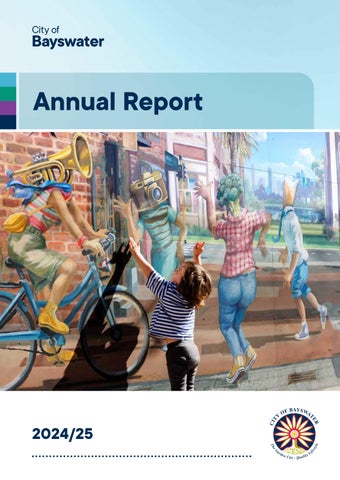
Create a flipbook