STEEL’S COMPOUNDING PAIN AS INTEREST TAKES ITS TOLL
JON STANHOPE & KHALID AHMED reveal how Labor’s borrowing to pay interest is stunting the ACT’s growth


Well written, well read
Castley’s move gives Labor minority choices
MICHAEL MOORE Pokemon? That would be a Rastafarian proctologist
CLIVE WILLIAMS
Big thumbs up for the King prawns
WENDY JOHNSON
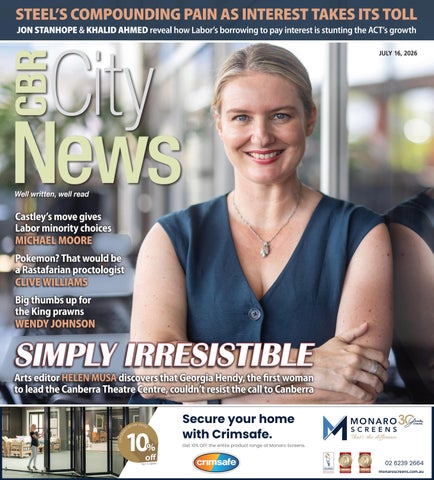
SIMPLY IRRESISTIBLE
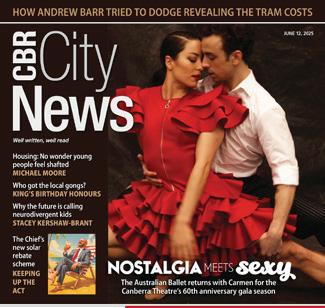
Arts editor HELEN MUSA discovers that Georgia Hendy, the first woman to lead the Canberra Theatre Centre, couldn’t resist the call to Canberra





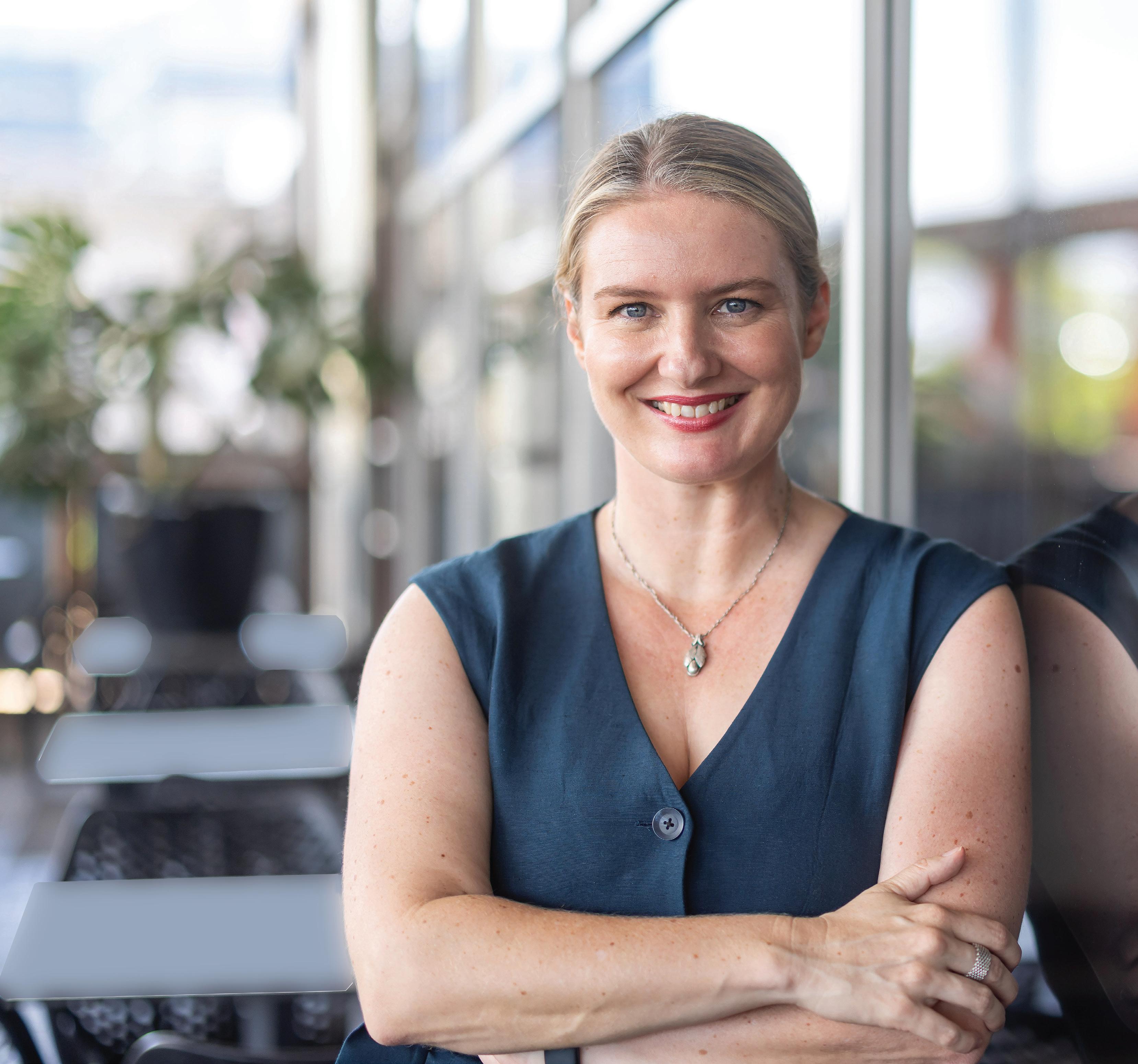
COVER STORY / Georgia Hendy
Theatre boss celebrates Canberra’s ‘arts ecology’

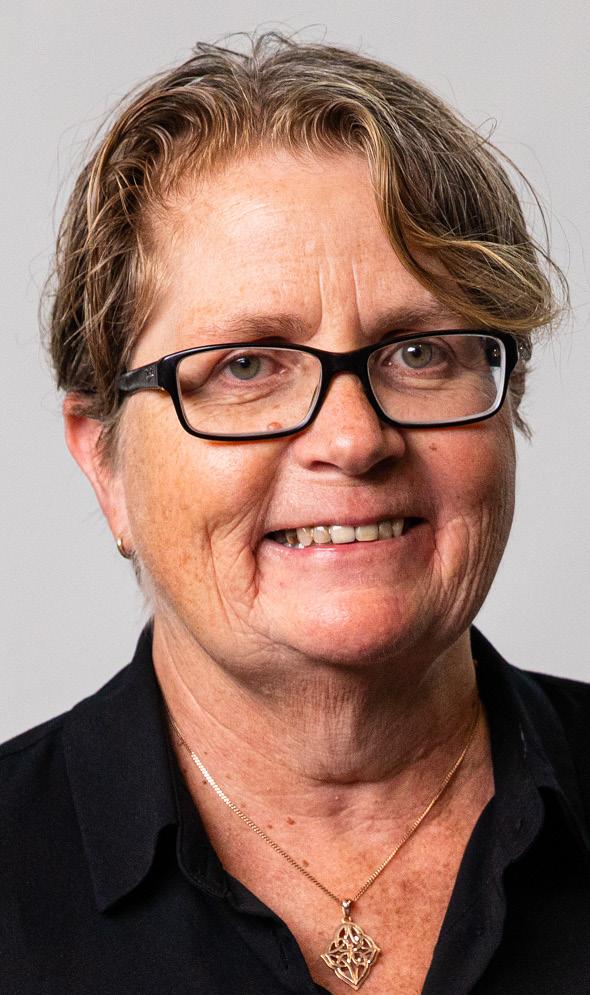
“Georgia Hendy has a talent for getting herself into rooms where things are happening.” Arts editor HELEN MUSA meets the new boss of the Canberra Theatre Centre.
A formidable, multiskilled performing arts manager, Georgia Hendy is the first woman to lead the Canberra Theatre Centre venue in its 60-year history.
When I catch up with the centre’s new executive director, she arrives with the kind of convivial focus and energy that suggests this role was never accidental.
Raised in Sydney and educated at Wenona, she once wavered between law and the performing arts before choosing the latter.
At Charles Sturt University in Bathurst she studied under the late Bill Blaikie and threw herself into student productions. She also studied the well-honed Bathurst art of beer drinking, and can hold her own.
Hendy has a talent for getting herself into rooms where things are happening.
After graduating, she inveigled her way into work experience on Buddy and The Lion King in London, then returned to Sydney and talked her way, via an old friend who was stage
manager there, into a foothold at the Ensemble Theatre during Sandra Bates’ tenure.
There, she worked everywhere she could, box office, subscriptions, marketing, learning the mechanics of theatre from the inside while also touring nationally with Brainstorm Productions.
Restless, she wrote to 10 organisations she admired. Only two replied, the Sydney Opera House and The Australian Ballet. The advice she received from the Opera House was blunt: “Get in any way you can, then move around.”
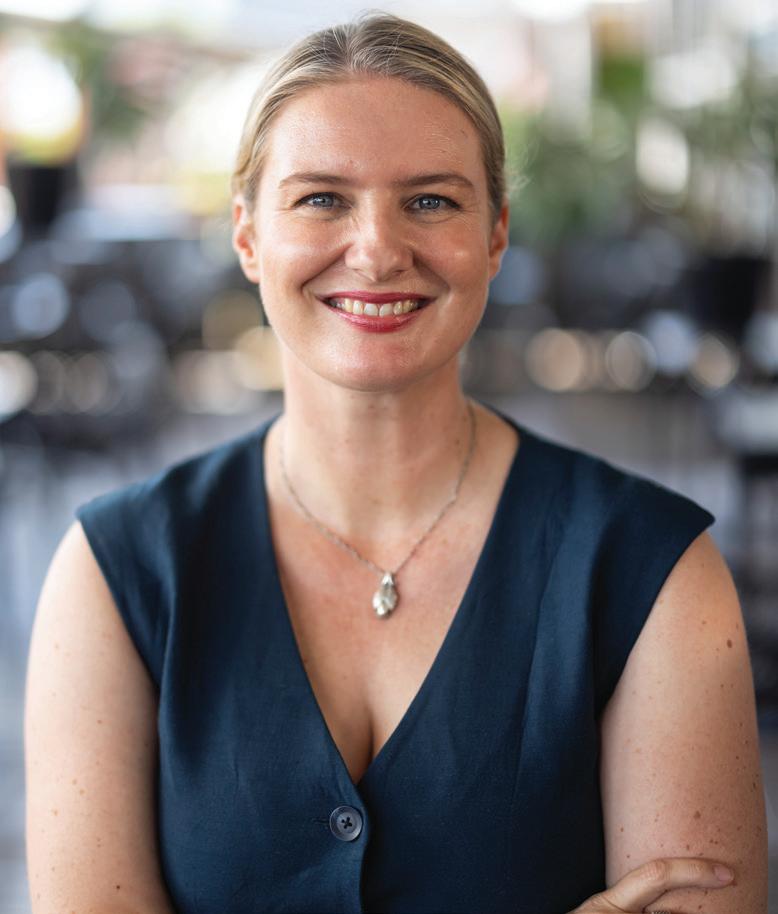
Georgia Hendy… “We want to celebrate Canberra’s arts ecology; to create opportunities for local artists, and at the same time to create major moments of impact by bringing the best productions here.
“I took that advice,” she says. “I saw a job in marketing, went for it and got it.”
Her years at the Opera House became a kind of apprenticeship. She worked across production, particularly in dance, then moved into

children’s and family programming, gaining a broad understanding of audiences while completing a master of management at the University of Technology Sydney. It was there, too, that she met her partner, Josh.
In 2015, the couple moved to Brisbane when Hendy took a role at
General manager: Tracey Avery, tracey@citynews.com.au
Sales & marketing executives: Damien Klemke, 0439 139001
Ashika Nambiar, 0425 149860
Lisa Clarke, 0413 590811
Editor: Ian Meikle, editor@citynews.com.au
Arts editor: Helen Musa, helen@citynews.com.au
Production manager: Janet Ewen
Graphic designer: Mona Ismail
Distribution manager: Penny McCarroll


Queensland Performing Arts Centre, where she spent more than eight years as director of programming, major projects executive producer: commercial programming and venue hire, also working on the centre’s new venue development.
Along the way, she added a graduate certificate in accounting from Southern Cross University, “to prove I had the knowledge,” she says, and undertook leadership training through the Venue Management Association, earning scholarships and completing a US leadership program.
From there came her first chief executive role, leading the Darwin Entertainment Centre and the Darwin Amphitheatre. She expected to stay longer.
“I was very happy there,” she says. “But when the Canberra job came up, I couldn’t resist.”
What drew her south was not just the role, but the city itself. Canberra’s cultural infrastructure, its proximity to national institutions, its galleries and museums, all made an immediate impression.
She describes a weekend walk with autumn leaves turning red, then makes a surprisingly practical observation about fireworks, that a great city is one where you can actually get to them.
“In Sydney they’re magnificent but hard to access. Here, it’s easy,” she says.
There are personal reasons, too. With two young children, she and her partner see Canberra as a place to put down roots. And that word, roots, comes up more than once.
“My time at QPAC showed me how important it is for a venue to become part of a city’s ecology,” she says. “That’s super important. I’m here for the long haul.”
It is early days, but Hendy is already thinking expansively. She talks about relevance and ambition in the same breath, about making the theatre centre a place where the city feels welcome.
A key focus is young audiences, building relationships with schools, educators and families, and giving young people real, hands-on experiences of theatre-making.
“We want to celebrate Canberra’s arts ecology,” she says, “to create opportunities for local artists, and at the same time to create major moments of impact by bringing the best productions here. Canberra deserves that.”
After six decades, the Canberra Theatre Centre has history on its side. Hendy sees that as a foundation, not a limit. She is already thinking about what the opening of the planned new Lyric Theatre will look like. Whatever form it takes, one thing is clear.
“We want Canberrans to know,” she says, “it’s theirs.”

Castley’s move gives Labor minority a choice
On departing the Canberra Liberals, where she had earlier lost her position as Leader of the Opposition, Leanne Castley made claims including “bullying, intimidation, lies and a threat of physical assault”.
Whatever the motivation, her move to the cross bench has changed the workings of the ACT Legislative Assembly.
Whatever the context, it was enough for her to describe “being part of an organisation with such a toxic culture”. Liberal MLA Chaika Barry believed she may have been at the centre of the allegations and explained her stance at a press conference.
Apparently, following a tense interchange in the Assembly, Ms Barry told her colleague: “If you come at me the way you did, I would have no choice but to come back at you”. She argues that her intention was, “if she was to keep verbally embarrassing me, I would verbally embarrass her as well”.
In attempting to clear the air, Opposition Leader Mark Parton, stated he does not “condone bullying, intimidation or inappropriate behaviour of any kind”.
One of Ms Castley’s first chances to indicate that she really had separated
herself was in opposing the censure motion on Education, Sport and Housing Minister Yvette Berry. Her opposition was largely symbolic, as the motion had been posed jointly by the Liberals and the Greens.
Although it does appear that the Liberals will be in a more difficult position gaining support for some of their legislation or motions, they still need the support of the Greens and at least one of the independents (or the government) if they are to be successful.
The Canberra Liberals now have eight members, Labor has 10, the Greens four, and independents three. It takes 13 MLAs to pass any motion or legislation. Unlike some
other parliaments, the Speaker has a deliberative vote. That is, rather than a casting vote, the Liberal Speaker does vote on each motion. If someone is away and a vote is even – it fails. With the Castley change, a combination of Labor and the three independents is now enough to carry a motion. The outcome in any contested vote in the Legislative Assembly can now be achieved by the government with the support of either the Greens or the independents. Being able to rely on independents, rather than always on the Greens, makes a much more interesting minority government. Labor does not need to be dragged further to the left

Being able to rely on independents, rather than always on the Greens, makes a much more interesting minority government. Labor does not need to be dragged further to the left relying almost exclusively on support from the Greens.
relying almost exclusively on support from the Greens.
The return of Rebecca Vassarotti to the Legislative Assembly within the Greens Party will also have an impact. Ms Vassarotti has never served as a crossbench MLA, having been elected last time and thrust directly into being a minister. Now she will have the experience of being on the cross bench and working within the committees.
The make-up of the Legislative Assembly and the way the committees are configured means the groundwork is set to make government much more accountable to the Assembly.
The committees have been a
strength of the ACT Legislative Assembly from the time of selfgovernment. With the new form of minority government, this is even more pronounced. Traditionally, the majority of chairs of committees came from government, as was the case with the Labor/Greens government.
Of all the current Standing and Select Committees, Labor has only one chair and they do not hold a majority in any of the committees. The Liberals chair four Standing Committees and two Select Committees. The Greens chair one Standing and one Select while independent Tom Emerson chairs another Standing Committee. The structure of the Assembly is one thing. However, in the end, it is up to the MLAs to use this to ensure accountability.
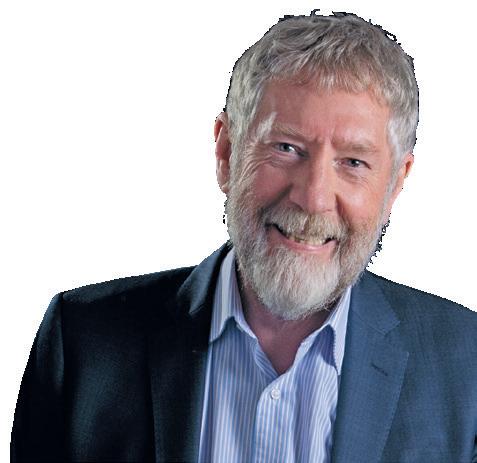
Michael Moore is a former member of the ACT Legislative Assembly and an independent minister for health. He has been a political columnist with “CityNews” since 2006.
Maria Fernanda Cardoso
Spiders ofParadise


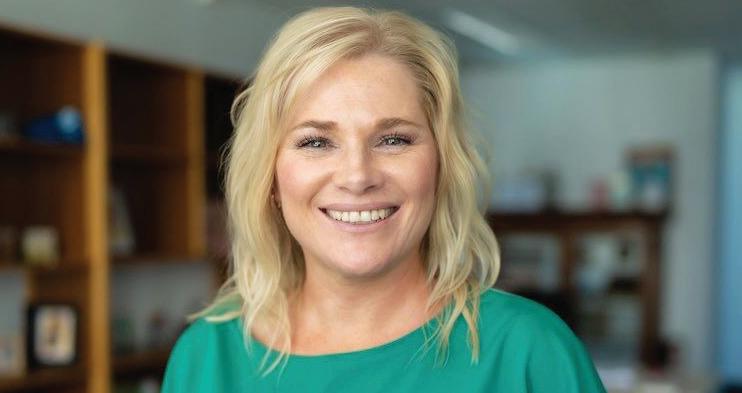
Leanne Castley… now an independent.
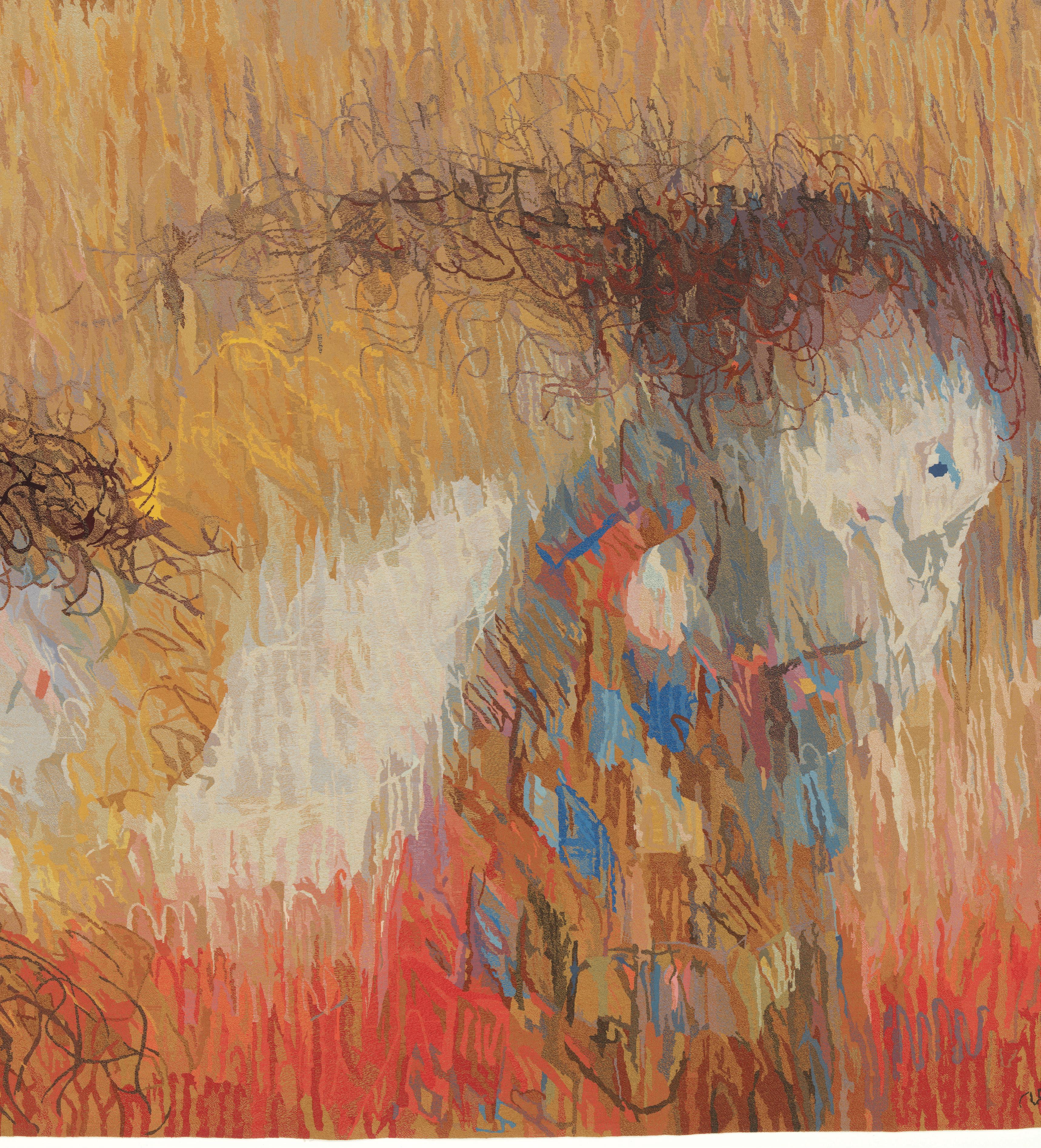
Arthur Boyd, Manufactura de Tapeçarias de Portalegre (tapestry workshop), St Francis when young turning aside (detail), 1972, National Gallery of Australia, Kamberri/ Canberra, purchased 1975, Arthur Boyd’s works reproduced with the permission of Bundanon Trust



More suffer from chronic diseases, says new report
By Zac de Silva in Canberra
Childhood vaccination rates have fallen over the past five years while more Australians are suffering from chronic disease, according to a major report into the health of the nation.
More than 60 per cent of people are living with at least one chronic condition, Australia’s Health 2026 report shows, placing a growing burden on the health care system.
According to most recent data, published in 2022, 38 per cent of Australians were living with two or more chronic conditions, which include a wide range of medical issues such as mental illness, cancer, cardiovascular disease and musculoskeletal conditions.
Doctors say treating patients is becoming increasingly complicated as chronic conditions become more common.
Of concern, the report also found the number of children getting immunised had fallen in recent years, dropping from 95 per cent of one-year-olds in 2020 to 92 per cent in 2025.
Vaccination rates also fell for two-year-olds and five-year-olds.
“While Australia has long maintained high childhood immunisation rates, these recent declines are concerning, particularly given rising notifications rates for measles, diphtheria and whooping cough,” Australian Institute of Health and Welfare spokeswoman Louise Gates said in a statement.
Worryingly, the report found around one third of the nation’s disease burden could be reduced
through lifestyle choices.
In 2022/24, 67 per cent of adults were overweight or obese and 27 per cent of children and adolescents.
But in some promising news, cancer survival rates have shot up dramatically, with 72 per cent of people diagnosed between 2017 and 2021 surviving at least five years, compared to just 50 per cent three decades earlier.
Meanwhile, dementia has overtaken coronary heart disease to become the leading cause of death in Australia.
The number of deaths from dementia rose 39 per cent between 2015 and 2024, driven largely by the ageing population. – AAP
Personalised medicine clinic opens in Canberra
Australia’s first personalised medicine clinic for immune diseases has opened at Canberra Hospital, offering tailored treatment for patients with complex conditions.
The Centre for Personalised Medicine is a partnership between the Australian National University and Canberra Health Services and will treat conditions including inflammatory bowel disease, rheumatological disorders and kidney disease.
The clinic uses genetic, immunological and environmental information to help diagnose patients and develop targeted treatment plans.
The centre will also work with Aboriginal and Torres Strait Islander communities across Australia to identify new treatments for kidney disease.
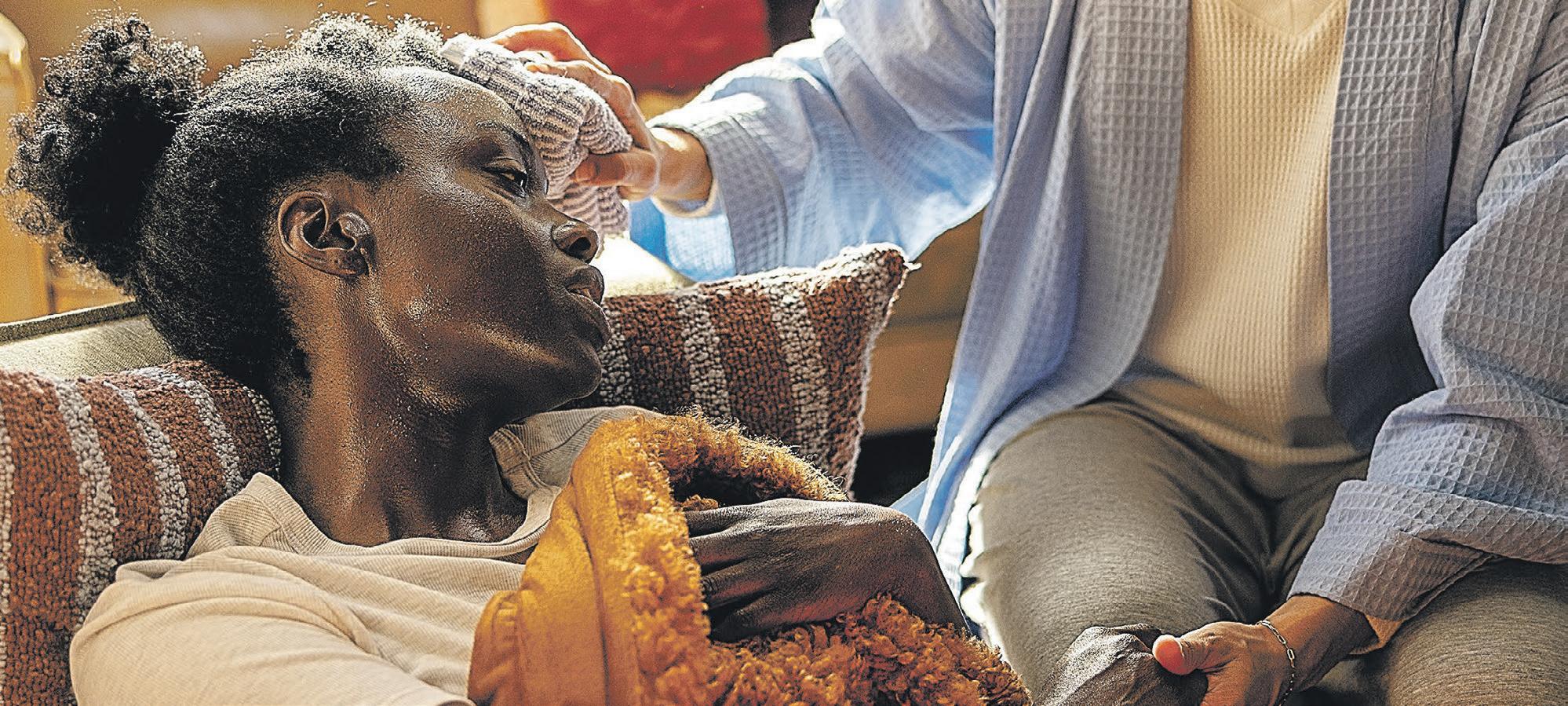

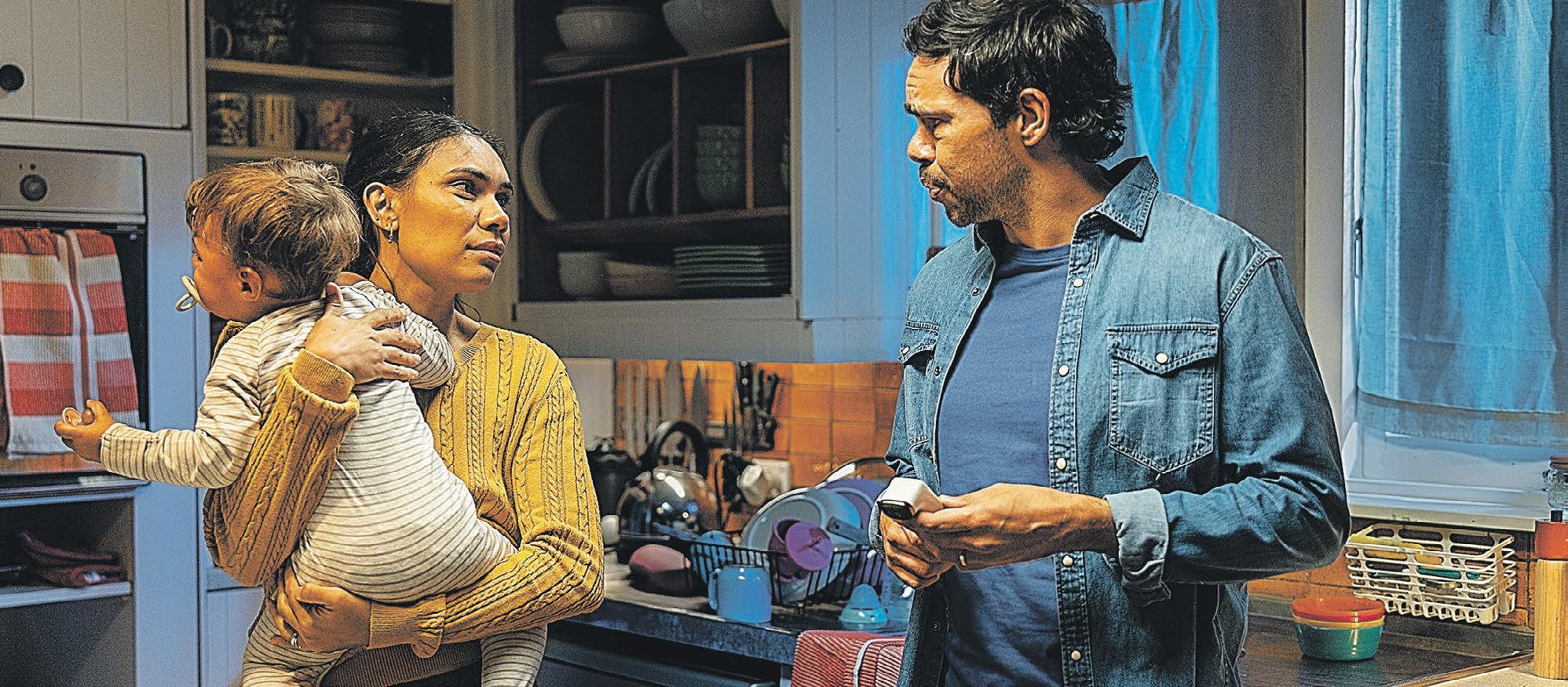
A new report has revealed a fall in childhood vaccination rates in Australia in recent years.
POLITICS / 2026-27 ACT Budget –
‘The increase in interest costs consumes 28 per cent of the new revenue of $842 million, starkly highlighting the erosion of budget flexibility’
Steel’s compounding pain as interest takes its toll

“In 11 of the past 14 years, the ACT Government has borrowed to pay interest on accrued debt.” JON STANHOPE & KHALID AHMED reveal how borrowing to pay interest is stunting the ACT’s growth.
“Compound interest is the eighth wonder of the world. He who understands it, earns it. He who doesn’t, pays it.”
This quote, like many others, is attributed to Einstein. Although it is unlikely Einstein said this, his authority is invoked by financial advisers stressing the perils of a debt trap, and elementary maths teachers explaining the power of exponential growth.
In a recent article, we explained the main drivers of the $1.389 billion increase in expenditure that Treasurer Chris Steel incorporated in the 2026-27 budget, from forecasts that he had published just 12 months ago for the four-year period 2025-26 to 2028-29.
We explained that $1.07 billion of that increase related to employee expenses and commensurate superannuation costs, because these were not fully reflected in the previous budget.
In fact, his previous budget forecast reflected a cut of 0.8 per cent, in nominal terms, (and much more in real terms) in the wages bill for 2026-27, which he corrected in this budget by adding $383 million for this year alone.
We also noted the other single largest increase in expenditure in this budget is in interest payments.
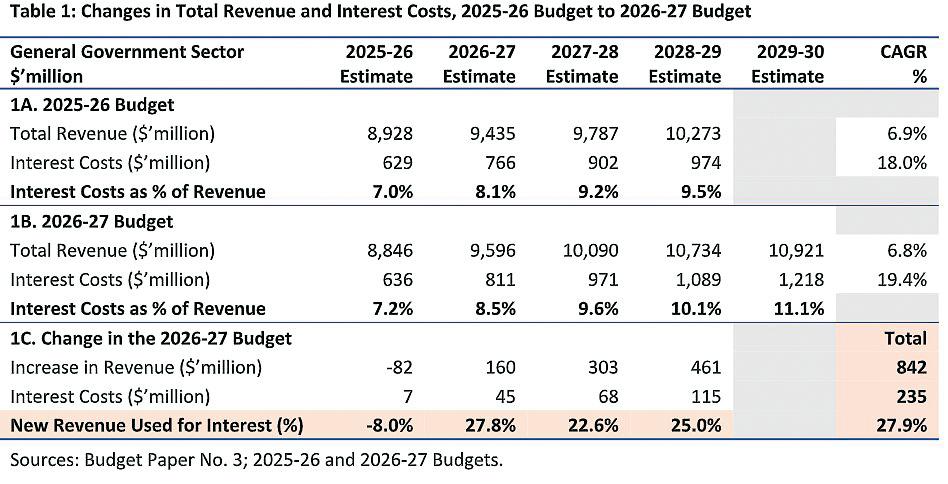
Table 1 details the forecasts of revenue and interest costs incorporated in the 2025-26 budget ( Table 1A), the forecasts in the recently released 2026-27 budget ( Table 1B), and the increases, i.e., the new revenue and the new interest expenditure in this budget ( Table 1C).
The table reveals some genuinely disturbing facts.

the fastest growing cost item for a number of years. The ACT Government has, as we have repeatedly pointed out, been borrowing to pay interest on its past debt, with the effects of this “eighth wonder” now clearly visible.
Over the past 14 years, i.e. before and after the pandemic, the government has, in 11 of these years borrowed to pay interest on accrued debt. Presumably the government has been advised by a professional Treasury that borrowing to meet interest payments inevitably leads to a compounding debt and interest challenge.
Interest costs have accelerated, increasing from 18 per cent per annum in the 2025-26 budget to 19.4 per cent in this (2026-27) budget.
There is a slowdown in revenue growth, albeit small, from the 2025-26 budget (Table 1A) to the 2026-27 budget (Table 1B). That was to be expected given the overly optimistic outlook on revenues in the preceding budget. In fact, there would have been a net decrease in revenue if the Commonwealth Government had not generously provided $702 million, purportedly, largely for health.
Interest costs on the other hand have accelerated, increasing from 18 per cent per annum in the 2025-26 budget to 19.4 per cent in this (2026-27) budget.
In fact, interest on past and new debt has been

In this respect the budget has incorporated an increase of $235 million, for the period 2025-26 to 2028-29, in interest costs over and above the forecasts in the 2025-26 budget.
The increase in interest costs in this budget period consumes, therefore, almost 28 per cent of the new revenue of $842 million, starkly highlighting the erosion of budget flexibility.
While interest payments as a proportion of total base revenue average 9.4 per cent across the budget and forward years to 2028-29, more than a quarter of new revenue needs to be applied to meet the increase in interest costs (Table 1C).
Annual budgets, in general, are about decisions on only the marginal increases in revenue and expenditure. This is because almost all of the existing budget is already committed to services and entitlements.
Zero-based budgeting is resource intensive as well as disruptive, leading to uncertainty and tension for internal and external stakeholders.
It is possible, of course, that a government may decide to redirect some existing expenditure by discontinuing a program/service, or by finding and redirecting genuine efficiencies.
Neither zero-based budgeting, nor a major reform are the norm, and it is only the marginal capacity of the budget that is typically available to a government, when preparing the annual budget, to apply to emerging needs or to address unforeseen problems.
It is obvious that marginal capacity will be increasingly constrained as interest costs consume an increasing portion of the budget. The government no longer needs to make choices between one desirable initiative and another more beneficial policy. Rather, its choices become more and more difficult as the interest costs compound, reaching a point where all the choices available to the government are potentially of a low priority.
On the revenue side, depending upon the incidence of specific measures to extract more revenue, the consequences range from subdued economic growth in the medium term, or unattractiveness of the jurisdiction as a place to do business in the long term, or the immediate social and financial impacts on people who can least afford to pay.
On the expenditure side, the choices change from difficult to impossible: from a balance between addressing the problems of today and avoiding the problems of tomorrow, to a choice between dealing with one critical problem and another.
Ultimately, the government loses the capacity to deal with any of the problems, while creating ethical dilemmas for itself. Budgets then are mere media events, seeking to create a narrative that isn’t grounded in reality.
to use those funds as they see fit, we believe it to be questionable to apply funds provided by the Commonwealth for a specific purpose, for example to address life-threatening shortages in health care, for other purposes. It is surely, for example, unethical to shortchange health of the funds announced and received for that purpose, especially as the ACT Government has deliberately cut the health budget in real terms. As the interest costs as a proportion of revenue (in percentage terms) approach the long-run revenue growth rate, the budget choices become increasingly difficult, reaching the impossible. This aspect is well discussed in literature on public financial management and understood by practitioners. The rating agencies invoke the same concept under a (structurally) related metric of Net Debt to Revenue Ratio.
We note that this critical aspect of budget flexibility and its sustainability have not been considered or addressed in the report (by Saul Eslake) to the Select Committee inquiring into the sustainability of ACT’s finances. Typically, capacity constraints appear as the interest costs reach 5-6 per cent of revenue. If debt must be incurred for short-term needs, careful budgeteers seek to maintain the ratio below 5 per cent. We note the interest costs were forecast to reach 7 per cent when the treasurer made his infamous comment about cheap debt. Notably, in this budget, they are forecast to reach 11 per cent.
It is questionable to apply funds provided by the Commonwealth for a specific purpose, for example to address life-threatening shortages in health care, for other purposes.
However, the trends were visible in the last decade. Since 2012-13, deficits in the primary balance (a metric that we have explained previously) have accumulated to $5.2 billion, and cumulative interest costs are $2.9 billion. Both these amounts contributed to debt. These figures exclude the liabilities associated with public private partnerships, such as the light rail, but include the recurrent annual discharge of liabilities.


This latest budget provides tangible evidence of the progression that we have described.
Consider, for example, that all the new revenue in net terms, as we have explained in our previous articles, has come from the Commonwealth for health care and from NSW as a back payment for hospital services, while other own-source revenue has decreased.
More than a quarter of that revenue will inevitably go towards increases in interest payments. The remainder will go towards a shortfall in the salaries budget that had not been addressed previously.
While a treasurer may be legally entitled
In conclusion it is important to ask: Why have the interest costs in this budget exceeded previous forecasts, despite the debt profile being largely unchanged?
The obvious answer is because of the increase in the cost of debt. Over coming years, the budget forecasts new borrowings as well as the refinancing of existing debt as it matures. The once cheap debt is now more expensive and will become even more so in the coming years.
Treasurer Steel could be feeling the power of compounding. He may also have some regrets about his now infamous advice on borrowing when debt is cheap.
Albert Einstein… his authority is invoked by financial advisers stressing the perils of a debt trap.
A second opinion on hearing loss – you need professional advice, not a sales pitch
A woman came into my clinic for a consultation about her hearing aids, telling me her hearing aids were 4 years old and she had never found them to be of much help. She said the salesperson quoted her $14,000 for a pair of hearing aids, however, the monthly special of 20% discount meant they cost her $11,200. So, she ‘only’ paid $11,200 for hearing aids that did not help her. Sadly, I hear this all too often.
Here are some things to do to avoid this type of problem:
1. Visit your GP. If you or someone you know has a problem with their hearing, visiting your GP to check for wax in the ears, and to get advice is a starting point.
2. Qualifications. Always check the qualifications of the person you are dealing with. A person without professional qualifications has no business advising you about your hearing. They need to belong to a professional association with a Code of Conduct, so you know they are acting in your best interests, not their own.
years. If you are not sure about their advice, then seek a second opinion. The wrong hearing aids can be an expensive waste and could lead you to stop wearing them. You should always have a trial of hearing aids to ensure that they are right for you.
6 Pensioners and eligible DVA card holders often have entitlement to free services. If you are covered by a government concession, then let the clinician know (even though your clinician should ask). Eligible clients may obtain free hearing tests, consultations, and free hearing aids (referred to as fully subsidized hearing aids).
“A person without professional qualifications has no business advising you about your hearing. They need to belong to a professional association with a Code of Conduct, so you know they are acting in your best interests, not their own.”
– Dr Vass
These hearing aids are appropriate for many people, however if you have great difficulty hearing in background noise (for example a restaurant), then you may want to consider partially subsidized hearing aids. This is when the government pays a certain amount, and you pay for additional features and benefits. Your decision should be based on the following:
you are dealing with a qualified clinician, then they belong to a professional association. The best contact is an independent complaints body referred to as Ethics Review Committee. You can email ethics@auderc.org.au and view the website www.auderc.org.au. You can make an anonymous complaint and your complaint will be handled in a confidential and professional manner. If you are in the ACT, contact the ACT Human Rights Commission email human rights@act.gov au and the website www.hrc.act.gov.au
3. Independent advice. You should get independent, professional advice.
4. There are a wide range of hearing aids out there. Finding the right hearing aids for your communication needs can be challenging. Hearing aids vary in price and performance. Bluetooth® connectivity and rechargeable hearing aids are available on most hearing aids, along with apps that allow you to control your hearing aids from your mobile device. Be aware that just because a hearing aid is more expensive, that doesn’t mean they are the best hearing aid for you.
5. Just as hearing aids vary in performance, clinicians may also vary in performance due to training, experience, and skills. Make sure that you are comfortable and confident in their advice. You are likely to be with this clinician for the life of your new hearing aids, typically 4 to 5
(a) Can you afford the more expensive hearing aids? Don’t go into financial stress if you can’t afford them. (b) Are you clear on the free vs partially subsidized features & benefits? Never believe someone who tells you the free hearings are not good or of poor performance, this is simply not true. (c) If you try the partially subsidized hearing aids and are not happy, then return them. Do not keep hearing aids because you think the failure is yours or that you will improve over time. If the hearing aids are not working for you in the trial period, then they will not work for you in a year or two.
7. If you have a complaint, then seek help. Your clinician should be able to help you through most of your needs. Sometimes, a problem may be beyond the expertise of even the best clinician. However, if you have a complaint there are things you can do. If


When will minister get police to police their own?
Over recent weeks, I have been reading, thanks to the ABC, about a violent assault against an Aboriginal man in March 2024 (known as “Shane” in the court documents), by officers at the ACT Police Watch House.
Following Shane’s arrest, he was taken to the watch house where he was stripped naked and, I believe, unlawfully strip searched, with a female police officer witnessing the incident.
Apart from those acts, it is reported that he was also subject to vicious assaults by several officers.
I’ve seen nothing that suggests Shane had acted in any way to require the use of force or being strip searched.
An identified police officer “blew the whistle” and an investigation confirmed police misconduct.
The alleged primary attacker, a sergeant, was not charged with any offences, and has since left the AFP.
So, one has to ask, “Why have criminal charges not been laid?”, not just against the former police officer, but also against those others who took part.
Why is Police Minister Marisa Paterson silent about the appalling behaviour of these ACT police officers? There needs to be accountability for the actions by the police officers involved before the community loses complete faith in ACT Policing.
I’m waiting; three plus years is too long to realise justice, Dr Paterson.
Janine Haskins, Cook
Say you won’t and move on, Pauline
If Senator Pauline Hanson doesn’t think that a Welcome to or Acknowledgement of Country is appropriate, then fine, she could’ve just not done one. Why try to demonise it? Why not just state a One Nation government wouldn’t support it and move on?
Mark Rendall, Duffy
Facts that go over the heads of Barr fans
I write about the waste of taxpayer’s money by the Barr Government and the more than a decade of deficits he has imposed on us.
As an economist, what worries me is that the forecast deficit for 2026-27 is now $612 million or 6 per cent of the budget which is $234 million more than that forecast in the last budget.
More importantly, for those areas starved of funds such as health and education, we will now have to pay an extra $175 million on interest on the debt instead of on those more important issues.
So let’s look at how Barr’s debt has been going. The gross interest expense has risen from less than $200 million per annum
or 3-3.5 per cent of total revenue in the latter years of 2010s, to $519 million or 6.2 per cent of total revenues in 2025 and is projected to increase to over $1 billion or 9.8 per cent of total revenues by 2028.
In a period of cost of living pressures, our chief minister has been imploring people to spend more in Canberra, while at the same time reducing our spending power by increasing taxes and charges, rates, registration costs as well as lazy, regressive charges such as the Fire and Emergency Services Levy and the Safer Families Levy.
CityNews columnists Jon Stanhope and Khalid Ahmed have raised these financial issues numerous times, but it appears that the economics escape those electorates supporting Barr and Steel.
The same would apply to Saul Eslake’s report to the Legislative Assembly (The Fiscal Sustainably of the ACT) which shows that the ACT has incurred larger than average cash deficits since 2022-23 and is forecast to continue doing so through 2026-27 and the ACT general government net debt is larger, as a percentage of Gross State Product, than the all-states-and-territories average since 2015-16 and will continue to widen through to to 2026-27. No wonder our credit rating was reduced by S&P Global which increases interest on the debt.
No doubt these facts, including those by published Stanhope/Ahmed, will go over the heads of the Barr supporters, and perhaps those Barr-supporting electorates should get some private tuition in
economics and financial management from Saul Eslake.
I would love it if the taxes and charges in those electorates could be increased by more than those in other electorates who do not support Barr and his cronies, as compensation for the increases the rest of us taxpayers are forced to pay.
Ric Hingee, Duffy
It’s land that’s crippling affordability
An analysis of house prices in new estates reveals that it’s the retail land component that’s crippling affordability.
Profits are massive. Blocks are familyunfriendly. Trees and soil profiles go. Local authorities won’t challenge the situation, because rates are their main income source.
“Up-zoning” existing suburbs is not about precipitating housing affordability, but the latest form of rates maximisation. Land developers and local governments chant “it’s the market” – theirs.
Time for the Commonwealth to comprehensively nationalise the (compulsory if necessary) acquisition, and responsible planning and development of new suburban and satellite-town land, to maintain supply, to sell good-sized blocks only to bona fide owner-occupiers at the verifiable cost plus a small margin reflecting the block’s characteristics, to provide assistance to proven negative equity sufferers for a time, and to replace rates with
a modest GST increase, with distribution extended to local governments.
Jack Kershaw, Kambah
The risk of taking Trump at his word
Herman van de Brug (letters, CN July 2) was taking Donald Trump at his word when Trump said Israel destroys a whole apartment to kill one militant.
As we know, Trump is very prone to hyperbole and often doesn’t intend to be taken literally. This is one of those times. Israel has demonstrated that when it targets a single person in an apartment block, it hits only the room the target is in. It may demolish a whole building when there are multiple targets, or when it is a terrorist headquarters or office complex, like the buildings it demolished in Beirut, or totally permeated with military infrastructure and booby traps, like much of Gaza. These attacks are proportionate and legal under international law, especially as Israel regularly evacuates civilians before such attacks.
Of course, if the terrorists didn’t illegally embed themselves among the civilian population, as Herman acknowledges they do, vastly fewer civilians would be killed.
Alan Shroot, Forrest


Come to the court and watch me whinge
I nominate myself for Canberra’s Whinger in Chief.
I whinge about the need to invest more in healthy walking and cycling, and about Canberrans having one of the world’s highest per capita carbon footprints.
I whinge about a so-called Conservation Council that said: “Canberrans are proud we are leaders when it comes to climate action,” that told me in 2023 that it expelled me from its transport working group because I argued in the CityNews for bus rapid transit, that lost its first court case against me, and that recently admitted to the court that the original reason it expelled me was that I had told some people that (as Pedal Power confirmed) a constitution change had made Pedal Power ineligible to remain as a council member. The council subsequently reversed that change to its constitution.
I invite CityNews readers to watch me whinge in the Magistrates Court on August 21, when case WPO 70 of 2025 resumes.
Leon Arundell, Downer
Local Labor pollies kept their heads down
Very demeaning, and disappointing (“Bonking revelations demean the office of PM”, citynews.com.au July 6).
The cosy podcast interview provided the prime minister with three clear opportunities to shut down an unnecessary topic of quicksand-laden conversation and he chose not to.
The debacle was made worse afterwards by the usual inner-cabinet ministers lining up to dish out deflecting blather and lamely grasp at bland snippets of Labor policy positions as cover up for obvious leadership deficits.
And our local federal Labor representatives kept their heads down as usual.
After the PM’s apology, some short sharp honest opinions and reactions should have been offered up by at least a few in the large army of female government members.
Such views would have been appreciated more by half the population that the PM conveniently forgot about while presumably trying to show he is “a man
of the people”, and also by those looking for more evidence of integrity and honesty from a government that normally prefers to govern and communicate from a strict media management and poll-driven cocoon.
Hopefully, our Labor representatives will at least deliver some sharp words of advice to their boss on behalf of their head-shaking constituents, and mention use of such feedback processes in their online newsletters. This big fail in public relations and communications certainly raises questions in the minds of taxpayers about the purpose and value of the many highly paid media and engagement advisers, manipulators and controllers in the PM’s office.
Newer wood heaters not the answer
Sue Dyer, Downer
As Canberra endures another winter, the wood-heating industry has launched its latest campaign claiming the best way to reduce residential wood smoke pollution is for households to spend thousands of dollars upgrading to newer wood heaters.
Emissions testing for new wood heaters is conducted by industry engineers in controlled conditions, not in people’s homes. These tests do not reflect everyday use. Australian and international research has found that even modern, “low-emission” wood heaters can produce significant pollution once installed.
The industry also points to a town in Denmark where it claims wood-smoke pollution was reduced by an average of 40 per cent after residents upgraded their heaters. However, Denmark also offers an important warning.
The Danish Consumer Ombudsman recently ruled that marketing wood heaters, firewood and pellets as environmentally friendly or carbon neutral was misleading.
Perhaps Canberrans should follow this lead and recognise that reducing neighbourhood wood-smoke pollution requires more than replacing old polluting heaters with newer ones.
Darryl Johnston, Tuggeranong Write
PM’s shocking bonking revelations demean women
In 1867, Walter Bagehot, the prodigious essayist on government, monarchy and science, published The English Constitution.
He argued Britain’s unwritten constitution had two parts: “dignified” elements that inspire public reverence; and “efficient” ones that make government work. In his view, the Crown provided the dignity that complemented the efficiency of government.
It’s just as well this conceptual formulation does not require members of the government to act with dignity. Or propriety. Or even decorum. Because our PM, Anthony Albanese, recently acted in a way that made even me, a grizzled former bureaucrat from PM&C who has seen more than his fair share of indecorous behaviour, blink.
In short, Albanese’s behaviour was nothing short of vulgar and embarrassing.
In a recent interview with a social media influencer for a podcast, Albanese was asked about his sex life. Readers of this column may, at this point, feel the necessity to put down CityNews and go and fetch a cup of tea. Green will not do. Black and strong will be needed.
Now that you’re suitably fortified, let us resume. Albanese was asked

in the “interview” whether he and his new wife were still “bonking like rabbits”. To which our PM responded: “When we have time. After the footy. It’s always a good aphrodisiac, a Souths win”.
Mr Albanese was then asked to play a game, commonly played at parties or in drinking sessions: shag, marry, date. He was then posed the following options: “Shag, marry, date: Kylie Minogue, Nicole Kidman or Rhonda Burchmore?”
Instead of demurring in the interests of propriety, Albanese chose his paramour: “Oh Kylie, clearly.” Not content to leave any of any romantic options on the table, he clarified: “All of the above.
By the PM’s behaviour, he has arguably demeaned women by subjecting them to judgment about whom he was willing to “shag, marry or date”. Whether they had a view on it or not.
She’s terrific.”
The interview then moved to the Japanese Prime Minister’s recent visit to Australia, during which she presented Albanese with royal melons to mark a trade pact.
Cupping his hands at chest level, Albanese remarked: “She’d brought two, as you do”, to which the interviewer then suggested the leader of our major ally had “brought two, looking like Pamela Anderson”. Albanese retorted: “And they’re beautiful!”
No longer are PMs able just to issue a press release popped into Canberra Press Gallery pigeonholes or to give a press conference, confident information will reach voters.
These days, politicians must modify their message to meet their
audience. While in the days of John Howard, that amounted to participating in occasional talk-back radio segments, it has more recently moved to where the eyeballs and ears reside: podcasts, FM radio and self-produced TikTok and Instagram posts, often involving politicians performing ridiculous stunts to attract attention.
But Albanese’s recent interview went a good deal further. He is our national leader. Our head of government. Responsible for representing our nation domestically and internationally. It is therefore incumbent upon the prime minister to exercise decorum and to avoid vulgarity in his conduct and communication. Especially in an official capacity involving international affairs.
This critique is not some prudish tut-tutting of a PM who has exercised poor judgment in striving to make himself relatable to younger voters. By the PM’s behaviour, he has arguably demeaned women by subjecting them to judgment who he was willing to “shag, marry or date”. Whether they had a view on it or not.
But there was something much more sinister at play – which I am not suggesting the PM or his office know-
ingly promulgated by participating in this sordid little game. The original derivation of the “shag, marry, date” game was one called “f**k, marry, kill”. Quite aside from the vulgarity and sexism of using women as unknowing participants in a game, the PM’s office seriously erred in allowing him to take part in something whose origins are far more menacing.
Before Albanese flew out on an international visit to advance Australia’s interests in the Pacific, he issued an “unequivocal apology” for his comments. As well he might – because this interview was a most egregious misjudgment by the prime minister and his office, demeaning women and embarrassing Australia in the eyes of a major ally. What the hell was he thinking?
Dr Robert McMahon PSM is a visiting fellow at the Australian National University, adjunct professor at the University of Canberra, and former assistant secretary of the Department of the Prime Minister and Cabinet.


Cartoon: Paul Dorin
Census offers a chance to rethink the future PLANNING
From its inception Canberra’s planning has had to respond to changing transport, communication, social, economic and environmental parameters.
A major current challenge is how best to respond to changes in transport and communication technologies that are allowing greater freedom about where to live and work and when and how to travel to work.
The home-work relationship is a major influence on how cities function – time taken on the commute has a major impact on a household’s quality of life.
Employment location was a major component of the Y-Plan’s “Jobs to the people” strategy and compact city policy.
Changes in transport technology, notably the rapid improvement in electric vehicle technology, including buses and the likely future high use of automated vehicles, will also affect transport choices and the level and type of road, public transport, car parking, cycling and pedestrian infrastructure required.
Greatly increased working from home (WFH) during, and subsequent to, the 2020 COVID19 pandemic, was enabled by improvements in information technology.
In the ACT, the proportion of WFH

WFH is most available to knowledgeeconomy workers who have a greater capacity to choose where they live.
increased from 3 per cent to almost 11 per cent between the 2016 and 2021 Census’.
The WFH share in the ACT was substantially lower than Sydney, Melbourne and Brisbane, possibly reflecting the dominant role of Commonwealth office employment in the economy and the relative ease of travel.
Some 68 per cent of respondents to the 2025 APS Employee Census reported they worked away from the office at least some of the time, up from 53 per cent in 2020. Those with caring responsibilities had a higher incidence of regular hybrid arrangements compared to employees without caring responsibilities.
In response, property owners are constructing premium, less formal worker-friendly office spaces and
The increasing electrification of the car and bus fleets will reduce the need for work-related car parking and the road and public transport capacity required. Light rail may no longer be justified.
repurposing lower-grade space for residential and mixed use development.
The distribution of remote work varies across the city. Working outside the office is most available to knowledgeeconomy workers who have a greater capacity to choose where they live and work. Workers in industrial establishments, hospitals, aged care, schools and service industries have limited scope to work remotely.
In 2021 the WFH share was highest at 15 to 21 per cent in the inner Canberra (Red Hill, Forrest, Griffith, Yarralumla, Ainslie, Braddon, Turner) and lowest, 5 to 9 per cent, in outer Tuggeranong, Gungahlin and Belconnen.
Responding to Change
The attractiveness of hybrid work is likely to continue given the benefits it provides including the reduced cost and time of commuting, especially to households with child and caring

responsibilities.
By lowering peak employment, it reduces the transport and other infrastructure needed at major office centres. Increased co-ordination between the ACT and Commonwealth would increase the level of infrastructure savings possible.
Hybrid work reduces demand for businesses such as cafes and restaurants at major office centres while increasing demand for such services and infrastructure upgrades (public spaces, roads, public transport, car-parking, pedestrian and cycle networks) at centres near preferred hybrid work locations.
Increased WFH also increases the demand for dwellings with larger living spaces. It could improve housing affordability by reducing the demand for dwellings near and density required at major employment centres.
The increasing electrification of the car and bus fleets, the advent of driverless vehicles and improved bus technology will reduce the need for work-related car parking and the road and public transport capacity required. Light rail may no longer be justified.
The implications for the workers unable to work remotely and low-mobility groups, currently depend-
ent on public transport, will need to be addressed.
Changing technology provides greater choice, especially for knowledge workers, about where to live. Canberra is competing with other regions in Australia and cities around the world for such workers. The challenge will be to continue to provide high-quality living and housing environments to retain and attract such workers.
The upcoming 2026 Census will provide information on the city’s demography, housing and transport choices. Journey to work information, for example, will provide information on how and where Canberrans travel to work and the level of WFH.
The Census may identify trends that require modifications to the planning and transport strategies. Let’s hope the ACT Government takes the opportunity to interrogate the Census to inform its decisions more than it has in the past.
Mike Quirk is a former NCDC and ACT govern ment planner.



Pokemon? A Rastafarian proctologist?
“The trouble with words is that you never know whose mouths they’ve been in” – Dennis Potter
Once again, The Washington Post has published the winning submissions to its yearly neologism contest in which readers are asked to supply alternative meanings for common words.
A neologism is a newly coined word or expression.
The winners were:
Abdicate (v.), to give up all hope of ever having a flat stomach.
Balderdash (n.), a rapidly receding hairline.
Circumvent (n.), an opening in the front of boxer shorts worn by Jewish men.
Coffee (n.), the person upon whom one coughs.
Esplanade (v.), to attempt an explanation while drunk.
Flabbergasted (adj.), appalled over how much weight you have gained.
Flatulence (n.), emergency vehicle that picks you up after you are run over by a steamroller.
Frisbeetarianism (n.),

Pokemon, as a neologism, could be defined as a Rastafarian proctologist, according to The Washington Post.
the belief that, when you die, your soul flies up on to the roof and gets stuck there.
Gargoyle, olive-flavoured mouthwash.
Lymph (v.), to walk with a lisp.
Negligent (adj.), describes a condition in which you absentmindedly answer the door in your nightgown.
Oyster (n.), a person who sprinkles his conversation with Yiddishisms.
Pokemon, a Rastafarian proctologist.
Rectitude (n.), the formal, dignified bearing adopted by proctologists.
Testicle (n.), a humorous question on an exam.
Willy-nilly (adj.), impotent.
The Style Invitational
The Washington Post’s Style Invitational also asked readers to take any word from the dictionary, alter it by adding, subtracting, or changing one letter, and supply a new definition.
The winners were:
Arachnoleptic fit (n.): The frantic dance performed just after you’ve accidentally walked through a spider web.
Bozone (n.): The substance surrounding stupid people that stops bright ideas from penetrating.
Cashtration (n.): The act of buying a house, which renders the subject financially impotent for an indefinite period.
Caterpallor (n.): The

SECURE YOUR SUCCESS
The Importance of Servicing and Security in IT Solutions
In today’s digital world, security is crucial for all businesses, big or small. Without proper security measures, organisations face various risks like regulatory penalties, potential lawsuits from clients due to data breaches, and significant downtime or loss of valuable data. These risks can lead to financial losses and damage to the reputation of your company.
The cyberthreat landscape has evolved rapidly over the past few years, becoming more complex and sophisticated. This means that businesses need to stay ahead of potential threats to protect their sensitive information and systems from cyberattacks. Investing in robust security measures is not just a precautionary step; it’s a necessity to safeguard against ever-evolving cyber threats.
At BluePackets, we understand the importance of proactive security measures. We’ve observed a phenomenon we call the “Security Dividend,” where clients who invest in security experience fewer issues and require less reactive support. By prioritising security, our clients not only save money in the long run but
colour you turn after finding half a grub in the fruit you’re eating.
Glibido (v): All talk and no action.
Ignoranus (n): A person who’s both stupid and an asshole. [Excuse my American English.]
Inoculate (v): To take coffee intravenously when you are running late.
Karmageddon (n): It’s like, when everybody is sending off all these really bad vibes, right? And then, like, the Earth explodes…
Osteopornosis (n): A degenerative disease.
Sarchasm (n): The gulf between the author of sarcastic wit and the person who doesn’t get it.
My contribution is Albodextrous (n) – being able to juggle two contradictory political positions at the same time.
On a lighter note: Young female gorilla Elsie has been down in the dumps ever since male gorilla Hugo was

moved to another zoo.
However, she’s clearly fond of Fred the keeper who cleans out her enclosure every day.
The zoo manager thinks of an unorthodox way to cheer her up. He approaches Fred and says: “For $500 would you be prepared to make love to Elsie?”
Fred says: “I’ll have to think about that.”
The next day Fred meets with the manager and says: “Look, I’m prepared to do it on three conditions. One: that nobody else knows about it. Two: I don’t have to kiss Elsie on the lips. And three: I get to pay the $500 in installments.”
Clive Williams is a Canberra columnist.
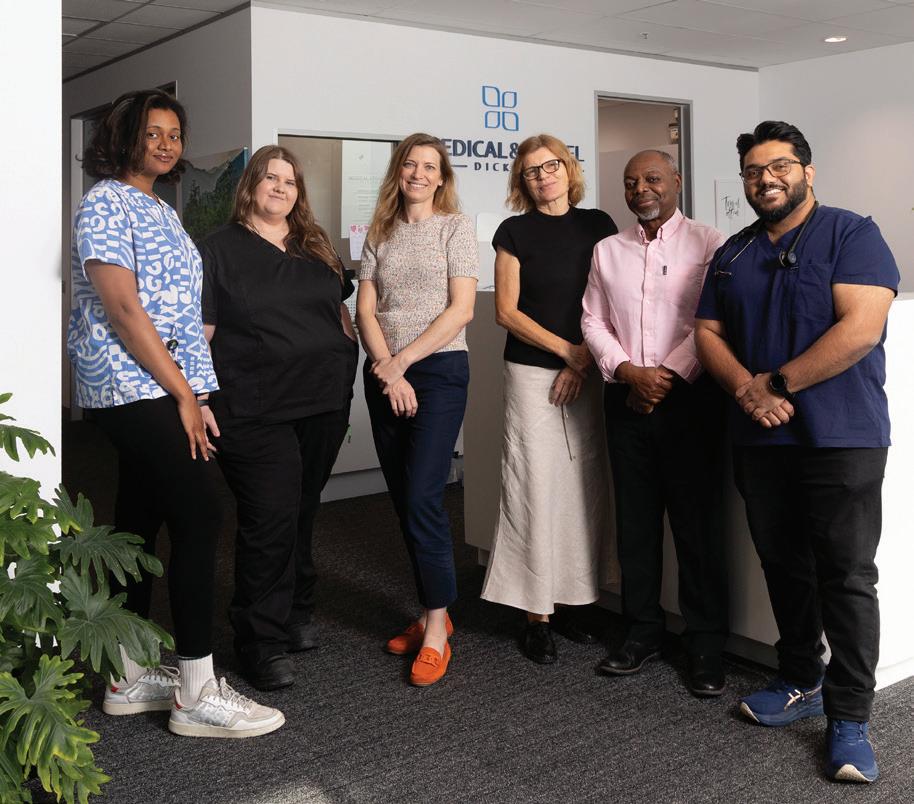
EXPERIENCED FEMALE GP IN CANBERRA
ACCEPTING NEW PATIENTS
Located in the heart of Canberra’s medical precinct in Deakin
At Canberra Family Health Centre, we are dedicated to providing comprehensive, patient-focused healthcare for individuals and families. Located centrally in Deakin, our centre offers a wide range of medical services designed to meet your health needs at every stage of life.

Diplomat and linguist dies
Diplomat and scholar Kyle Ralph Wilson has died at Clare Holland House after living for eight years with neuroendocrine cancer. He was 76.
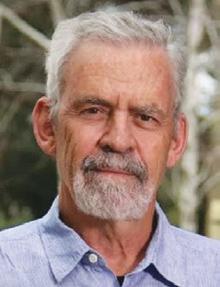
He was Australia’s foremost specialist on Russia, a distinguished diplomat, intelligence analyst and linguist whose expertise on the Soviet Union and post-Soviet Russia shaped Australian foreign policy for more than three decades.
Born the son of famous Canberra theatre director Ralph Campbell Wilson and his wife Antonia (Toni), Wilson was raised in Canberra’s theatre community. His commanding voice led to his casting as the youthful King Lear.
Wilson served in Moscow from 1988 to 1992 during the years that witnessed the collapse of the Soviet Union.
He remained an active participant in choral singing with the Canberra Community Chorale and as a member of a poetry-reading group. Wilson is survived by his wife, Judy Loy, his sister Harriette, his children Sophie and Sam, and his grandchildren Ishani and Kailash.
–Helen Musa Kyle Wilson.

Associate Professor Maryse Badawy MB/ BS Degree, FRACGP, FHKAM (Family Medicine), Grad Dip Fam Med, Master Family Medicine, Member Australasian Menopause Society
National and International Family Medicine and Academic experience.
Celebrating Seniors
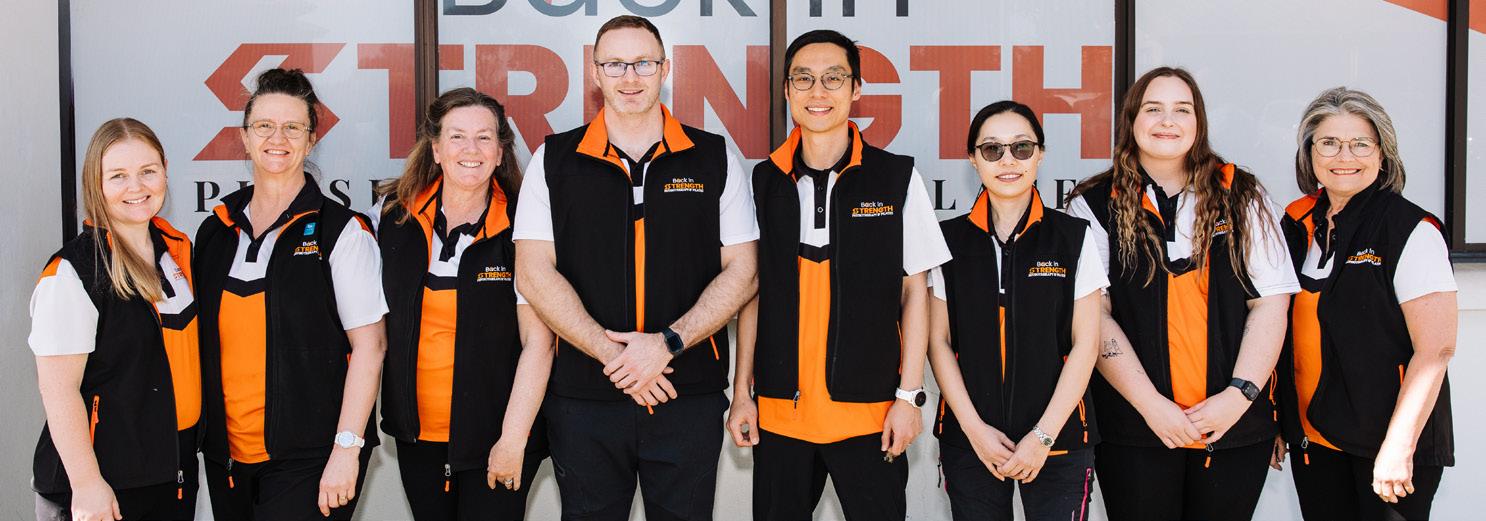
The team at Back in Strength Physiotherapy & Pilates.
Combatting Osteoporosis: Back In Strength brings evidence-based ONERO to Canberra
For many Canberrans, maintaining strength and independence in later life is paramount, and Back In Strength Physiotherapy & Pilates is at the forefront of targeted senior care.
This trusted local clinic offers traditional physiotherapy, Women’s & Men’s Health, and group exercise classes, fostering a strong community where clients stay strong and connected.
The clinic has offered the ONERO® program since 2022, a supervised, evidence-based exercise solution for clients with low bone mass. As the longest provider of this program in Canberra, Back In Strength dedicates itself to comprehensive care, expertise and lifelong well-being.
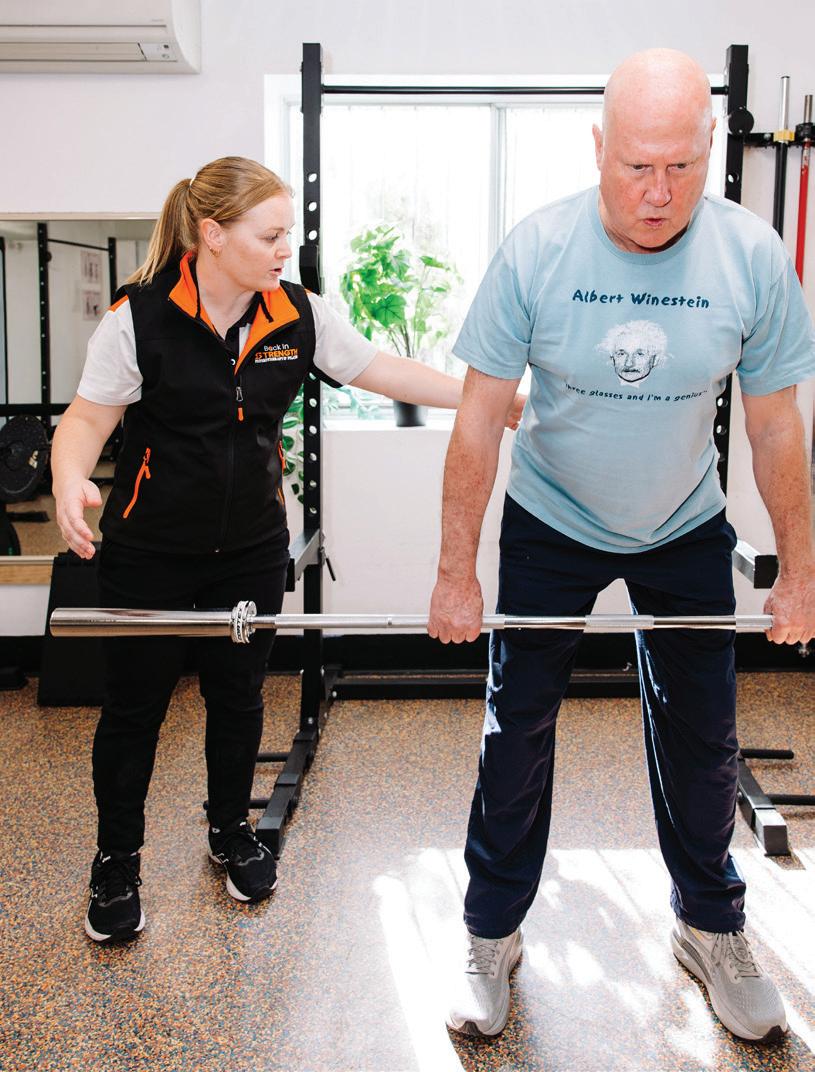
ONERO® was developed by The Bone Clinic in Brisbane, in partnership with Osteoporosis Australia (OA), and is specifically designed to combat osteopenia and osteoporosis. It is a high-intensity resistance and impact training program with the key goals of increasing bone density, strengthening muscle, and critically, reducing the risk of falls.
Classes at Back In Strength are run and supervised exclusively by fully trained and qualified physiotherapists and exercise physiologists. Class sizes are capped at just eight people to ensure optimal safety and personalised supervision. Participants engage in structured high-intensity resistance and impact training using weights, alongside balance and fall prevention exercises.
With 36 classes running Monday through Friday each week, the clinic offers flexible options and recommends attending twice weekly to maximise results. The Back In Strength team is committed to helping clients live well and stay strong by combating osteoporosis. If you have low bone mass or osteoporosis, the team invites you to ask whether this supervised program is appropriate for you.
Back In Strength Physiotherapy & Pilates 1/14 Hannah Place, Deakin. Call 02 6282 9992 or visit backinstrength.com.au
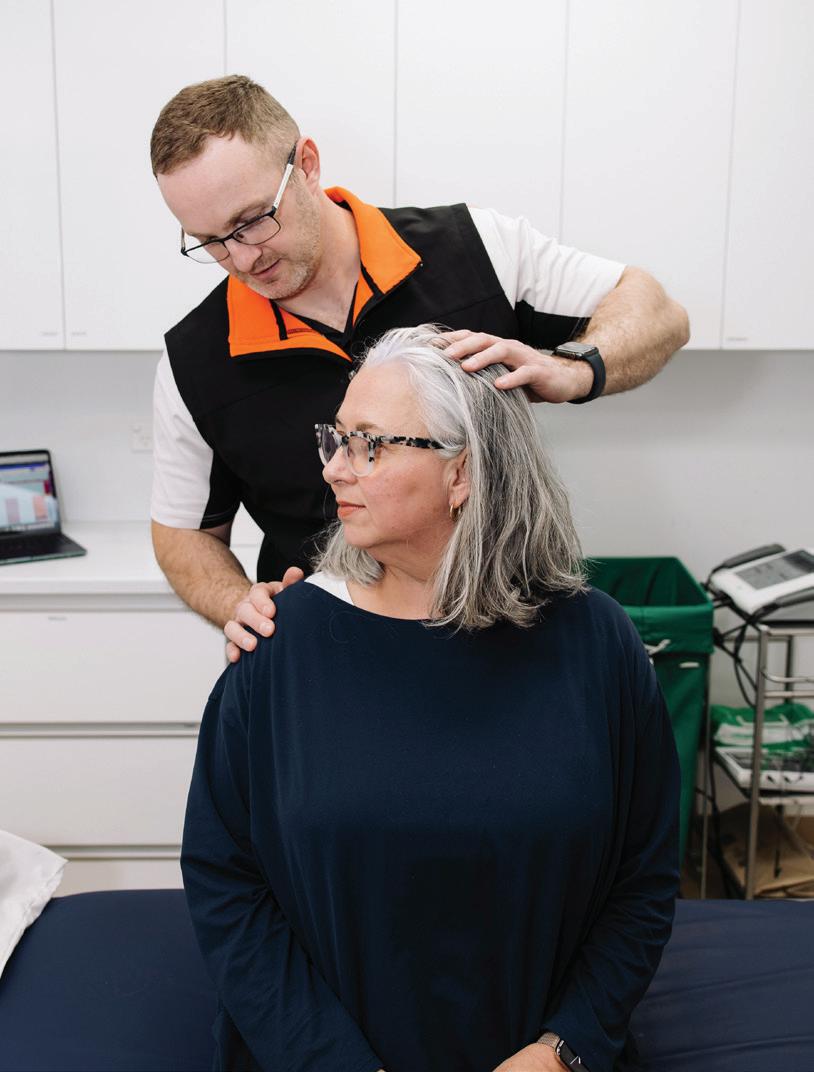
Preventing hip and knee surgery: a proactive program for older adults
Osteoarthritis is the most common single type of arthritis, affecting any joint, but commonly understood in the community as affecting the knees and hips, leading to the majority of joint replacements that occur in Australia.
Holding two educational sessions and 12 supervised exercise classes over a six-week period, Arthritis ACT’s GLA:D program is designed to reduce the need for a hip and knee replacement or to reduce the symptoms of hip and/or knee osteoarthritis.
Initially introduced in Denmark based on research for people with osteoarthritis, GLA:D collects research data from participants to improve access to care.
“This program is a conservative management of osteoarthritis that can be used as both a prevention and prehabilitation method of exercise to reduce pain and increase mobility,” says Arthritis ACT CEO Rebecca Davey.
Targeting joint stability, muscle strength and confidence with movement, Rebecca says the program also offers helpful tips, tricks and education from their physio who run the sessions.
“These exercises could stave off a hip and knee replacements, which is a very big deal,” she says.
Arthritis ACT has also recently welcomed a new hydrotherapy pool in Tuggeranong that Rebecca says will immensely benefit the community by expanding their services to the southside of Canberra.
“The health benefits of hydrotherapy aren’t just limited to what the pool can offer,” she says.
“Many people attending any of our classes have become close friends and bond over shared experiences.”
Arthritis ACT 170 Haydon Drive, Bruce. Call 1800 011 041 or visit arthritisact.org.au
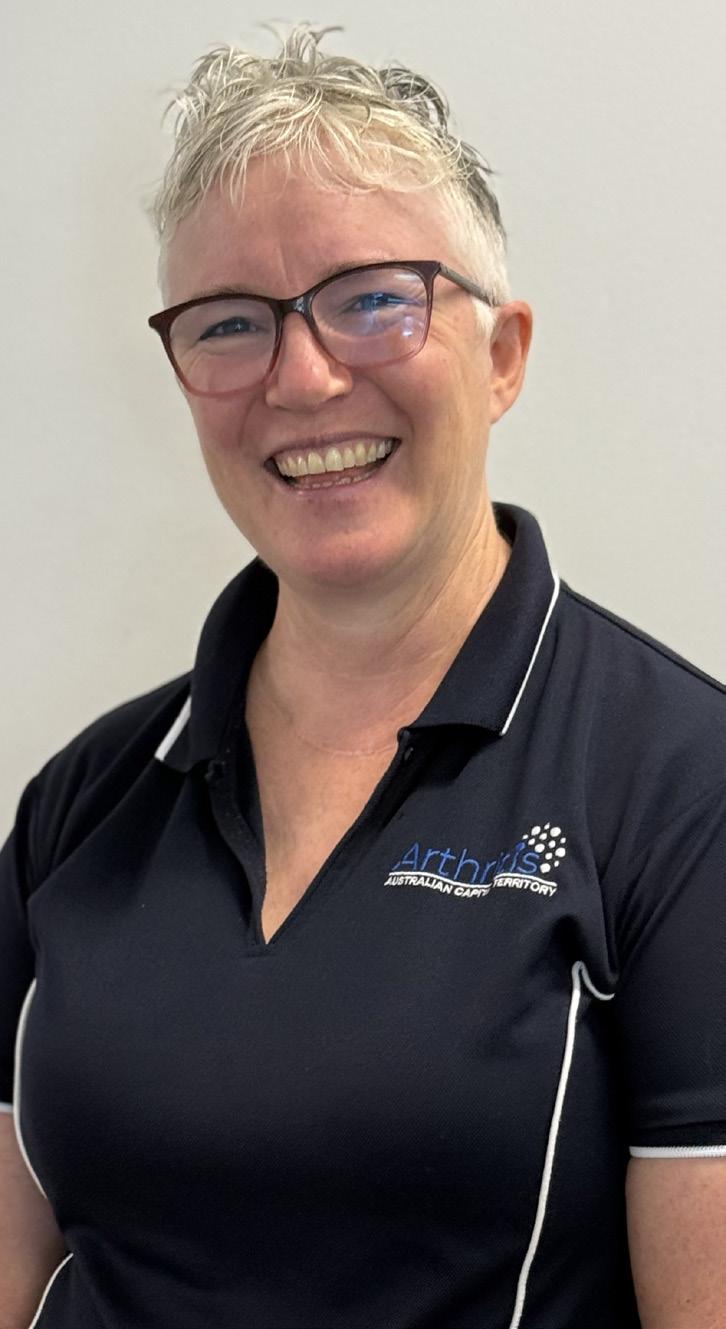
Arthritis ACT CEO Rebecca Davey.
SOLVING SCIATICA
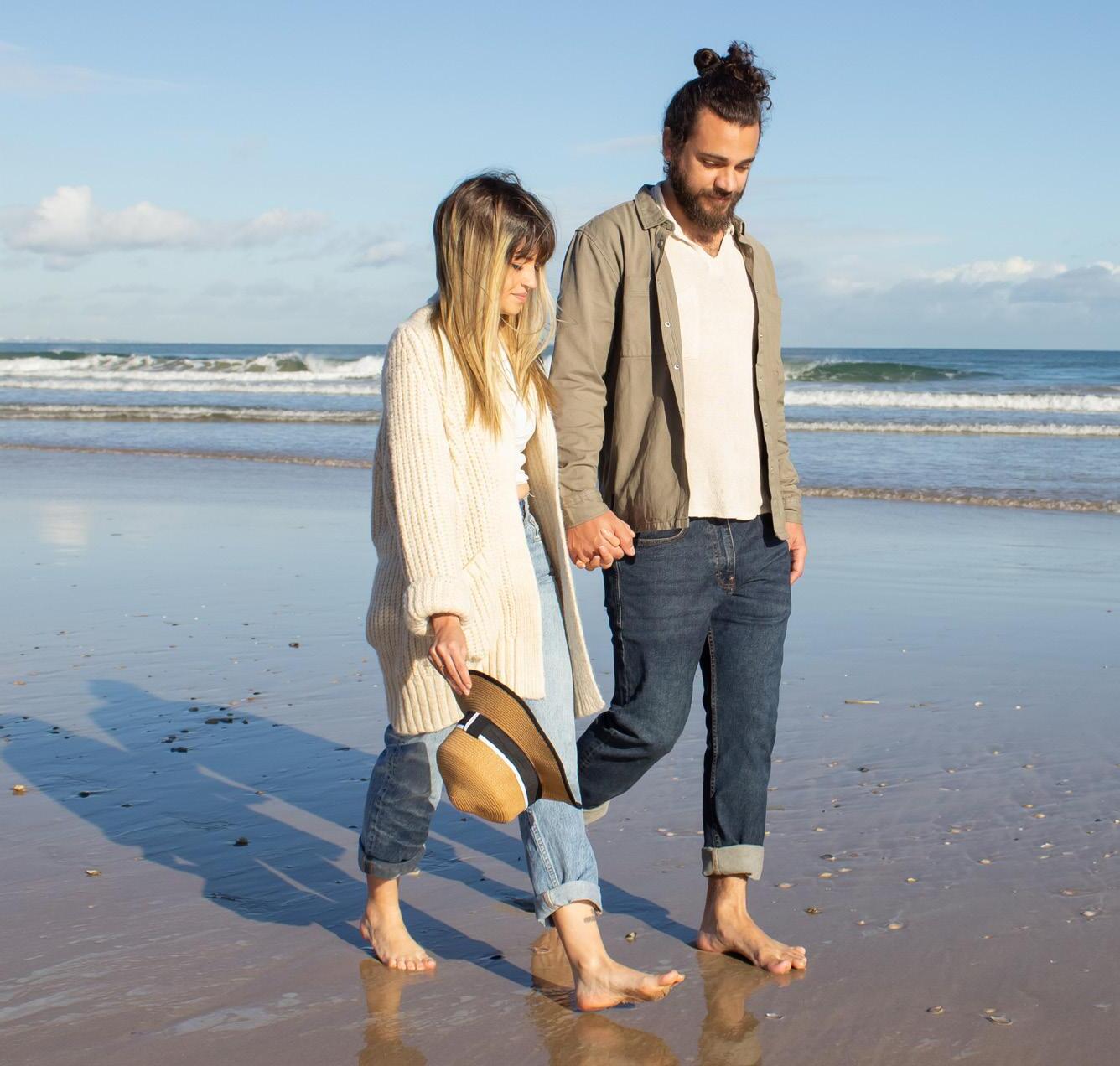
Sciatica is caused by nerve pain that originates from the lower back and can cause pain from the point, right down through your bottom and down one leg to your calf.
Not the entire area may be causing you pain at any one time, but what the pain will certainly do is cause you frequent extreme discomfort that is often not relieved by pain medication. Exercise is a key to dealing with sciatica. People who have lived with sciatica for some time will generally have some weakness of the
muscles, tendons and ligaments surrounding the joints and bones that support the sciatic nerve. This is largely due to not having used their body to the fullest extent due to the sciatic pain.
Sciatic pain will generally respond well to rebuilding the support structures surrounding the sciatic nerve. For some people surgery may be the only solution, but in most cases, even if surgery is required, building up the support structures either prior to or following surgery will still be necessary.
Arthritis ACT has a team of exercise physiologists that can improve your quality of life in relation to your sciatica. Both hydrotherapy and land based exercise techniques are useful, and for those who do not like water exercise, land based exercise is just as effective.
Do you want to solve your sciatica?
Call us today on 1800 011 041 and book your appointment with one of our exercise physiologists and scientists to solve your sciatica.
MEET OUR EXERCISE PHYSIOLOGISTS


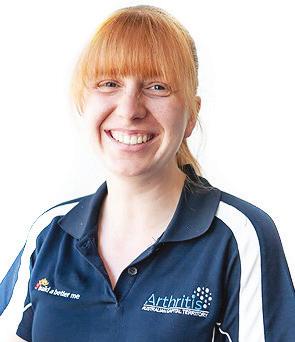

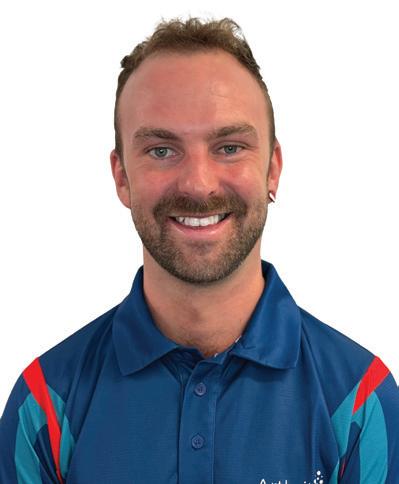

Blake Dean Holly Hazlewood Sophie Bullock Sarah Solano Nick van Diemen
Celebrating Seniors
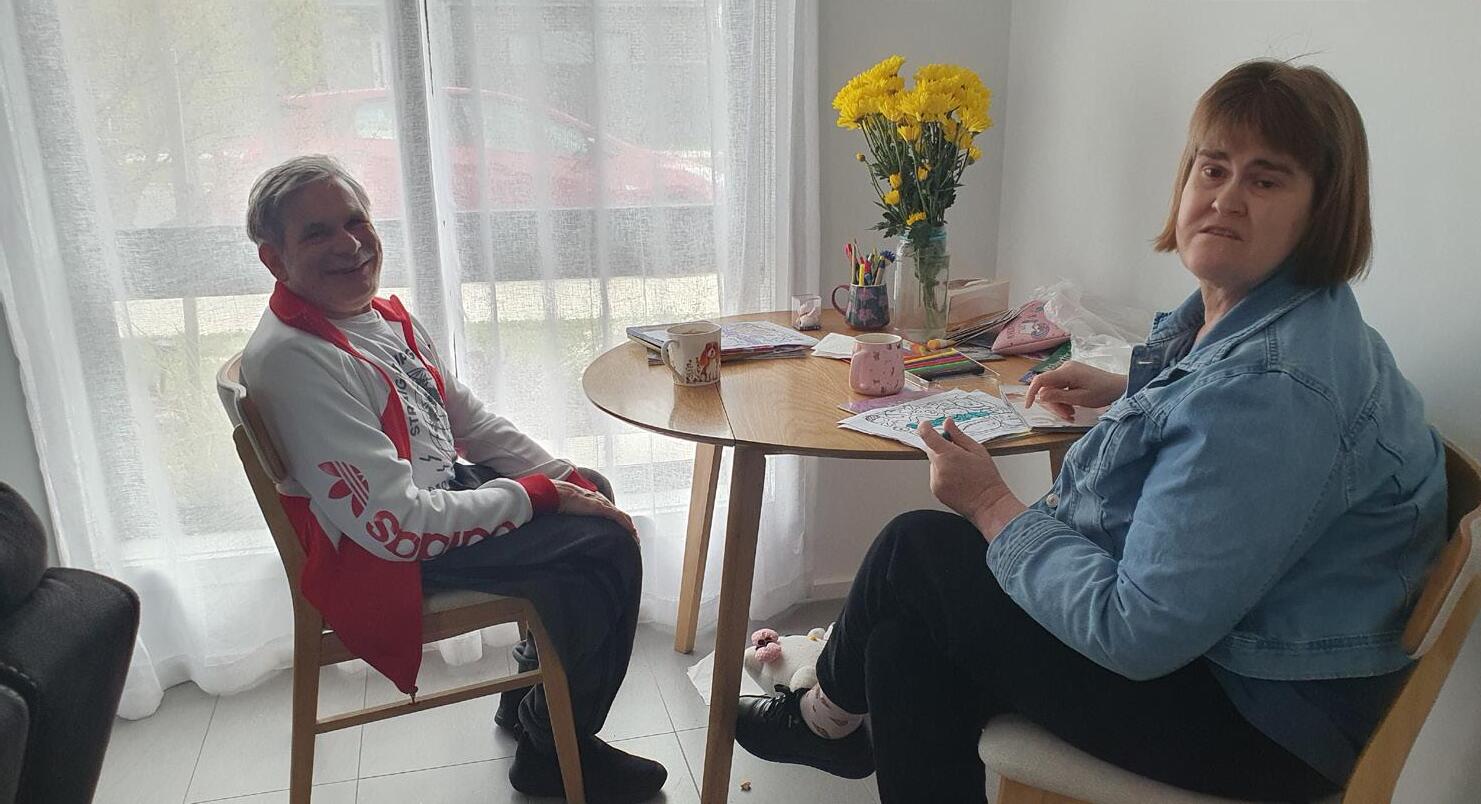
A safe and empowering place to call home
Are you or someone you support looking for a safe, welcoming and empowering long term home?
For more than 60 years, Hartley Lifecare has delivered trusted disability support across the ACT. As an NDIS registered provider since the scheme began, Hartley combines experience with a strong focus on quality, safety and person centred support.
Supported Independent Living is about more than accommodation. It is about creating a stable home where a person with disability can live as independently as possible, with the right supports in place. Hartley works closely with each person and their family to understand what matters most, building support around individual goals, daily living skills and connection to community.
Family wealth and estate planning secures your legacy
For many Canberrans, financial planning extends beyond retirement, it’s about ensuring wealth is passed on efficiently and according to their wishes.
Steve Wang says estate planning provides clarity and protection for future generations.
“Estate planning ensures your wealth is transferred in the most effective and tax-efficient way,” he says.
This includes structuring assets, reviewing superannuation nominations and coordinating with legal advisers.
“It’s about protecting your family and ensuring your legacy reflects your intentions,” Steve explains.
Importantly, estate planning also reduces stress for loved ones during difficult times.
“Clear planning provides certainty and peace of mind for everyone involved,” he says.
Families want confidence that their loved one is supported by a secure, well governed and values led organisation. Hartley’s long standing presence in the ACT provides that reassurance.
For adults with disability seeking long term accommodation with tailored support, Hartley offers a safe and supportive place to call home.
Hartley Lifecare
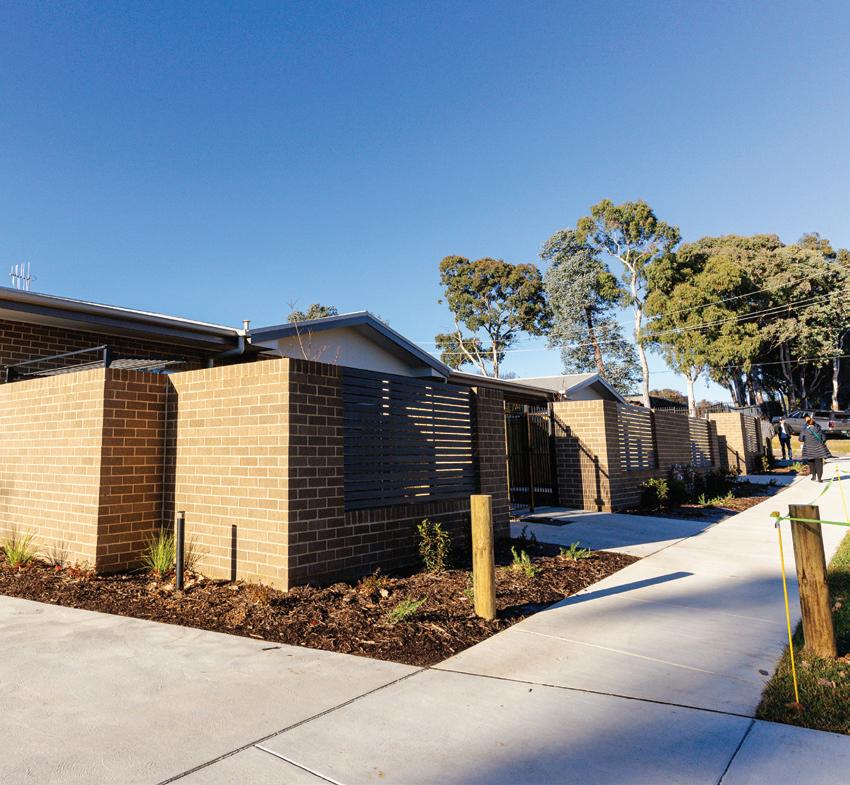
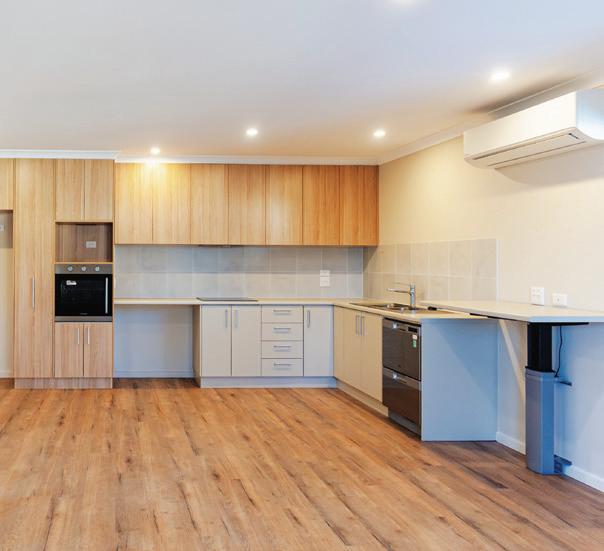
Hartley currently has vacancies in a small number of Supported Independent Living homes across Canberra. These homes provide shared living with 24 hour support from professional, compassionate staff. Every enquiry is assessed individually to ensure the right fit for both the person and the household.
Call 02 6282 4411 or visit hartley.org.au
With careful guidance, clients can ensure their wealth continues to benefit their family long into the future.
DW Private Wealth Level 1, Unit 6-8 / 45 Novar Street, Yarralumla Call 02 6154 6150, email info@dwprivatewealth.com.au or visit dwprivatewealth.com.au

Accommodation Vacancies for People with Disability SUPPORTED INDEPENDENT LIVING (SIL)
Are you or someone you support looking for a safe, welcoming, and empowering long‑term home?
Hartley has been an NDIS-registered provider in the ACT since the scheme began, building on more than 60 years’ experience in disability support.
We work with each person and their family to understand what matters to them and provide support that builds skills, confidence and connection to community.
Hartley Lifecare currently has openings in a selection of our Supported Independent Living (SIL) homes. These vacancies may be suitable for adults with disability seeking a supportive shared living environment with 24-hour support.
Each enquiry is considered individually to ensure the right fit for the person and the household.
Enquiries and expressions of interest:
DW Private Wealth principal and financial adviser Steve Wang.






“ My first meeting with Steve was an eye-opener. My friend who recommended Steve to me was correct, Steve knew what questions to ask as I really had no idea. He then directed me along a pathway, but kept checking that I understand what he was suggesting and why. I have been delighted with Steve’s manner and approach to teaching me about finance. He has been positive and encouraging. I am learning more on each visit. I do enjoy talking with Steve at each session. I am no longer frightened that I will have no money to furnish my old age. Steve has explained to me how my money is working for me and I do not have to worry about my old age.”



Gabrielle - ACT
Celebrating Seniors
Protecting the rights of older Canberrans
Are you concerned about how you’ve been treated? Or are you concerned about an older person who is a friend, relative, client or neighbour?
The ACT Human Rights Commission helps older Canberrans with concerns and complaints about:
• retirement villages and in-home support services
• health services and health practitioners
• age discrimination
• discrimination when accessing services or accommodation
• mistreatment, neglect or exploitation of a person 60+ years or a person with a disability
• ACT government services.
“Senior Canberrans are protected from discrimination and unfair treatment under ACT law,” said ACT Discrimination Commissioner, Karen Toohey.
“This means that you don’t have to put up with discrimination or unfair treatment because of your age, disability or any family or carer responsibilities.”
“You can talk to us confidentially while we work out the best way to address your concern.
“We can also help in cases where there is abuse, neglect or financial exploitation. We know that some older people do not want to report abuse because they are concerned about the impact on family relationships, or the care they receive.
“Anyone can contact us anonymously and we will work with an older person for the outcome they want,” Ms Toohey said.
ACT Human Rights Commission
Call 02 6205 2222 or email human.rights@act.gov.au

Preparing for a move can quickly become overwhelming, but working with House to Home makes the process far more manageable and effective. Pre-pack and decluttering services are not just about tidying up; they create a clear, organised space that allows your property to present at its very best to potential buyers.
By removing excess items and thoughtfully packing what matters most, House to Home streamlines your move while enhancing your home’s appeal. A well-presented, clutter-free property often feels larger, cleaner, and more inviting, all key factors that influence
buyer perception and ultimately the sale price. Their experienced team understands the emotional and practical challenges of moving, offering a supportive, efficient approach that saves time and reduces stress. For Canberra homeowners looking to simplify their move and maximise results, House to Home delivers a smart, professional solution.
House to Home Call 0457 456 76, email info@house-to-home.com.au or visit house-to-home.com.au


Services for Older People




Whether you are preparing for sale, renovations, or making your home safe our expert packing specialists can pack and clear rooms or whole houses quickly and efficiently.
We can organise and provide all packing materials to complete these clearing tasks for those who are busy and unable to complete these tasks in a short time frame. house-to-home.com.au info@house-to-home.com.au
Discrimination Commissioner, Karen Toohey.
Winter in the Southern Highlands
Discover the magic of the Southern Highlands this winter
Only an easy hour-and-a-half drive from Canberra, the Southern Highlands is the perfect winter destination for anyone looking to escape the city and enjoy crisp country air, cosy fires and spectacular scenery. Whether you’re planning a relaxing day trip or a leisurely weekend away, the region offers the ideal combination of natural beauty, boutique shopping, fine food and warm country hospitality.
Winter transforms the Highlands into one of New South Wales’ most inviting destinations. Wander through charming villages, browse unique boutiques and galleries, enjoy long lunches in welcoming cafés and restaurants, or simply soak up the relaxed pace that makes the region so appealing. With rolling green hills, historic towns and breathtaking landscapes, there’s always something new to discover.
Adventure seekers can experience the stunning treetop walks and panoramic views at Illawarra Fly,
while those searching for something truly special will appreciate the exceptional craftsmanship and personalised service offered by Bowral Fine Jewellery.
If your idea of the perfect getaway includes indulgence and relaxation, Ardour at Milton Park provides an elegant retreat where luxurious surroundings, exceptional dining and attentive service create a memorable winter escape.
Throughout this feature, we’ll showcase some of the Southern Highlands’ finest experiences, inspiring you to discover why this beautiful region remains one of Canberra’s favourite winter destinations close enough for a spontaneous getaway, yet far enough away to feel like a true escape.
Looking for more?
Southern Highlands Visitor Information Centre Call 1300 680 888
Illawarra Fly: a Southern Highlands experience above the ordinary
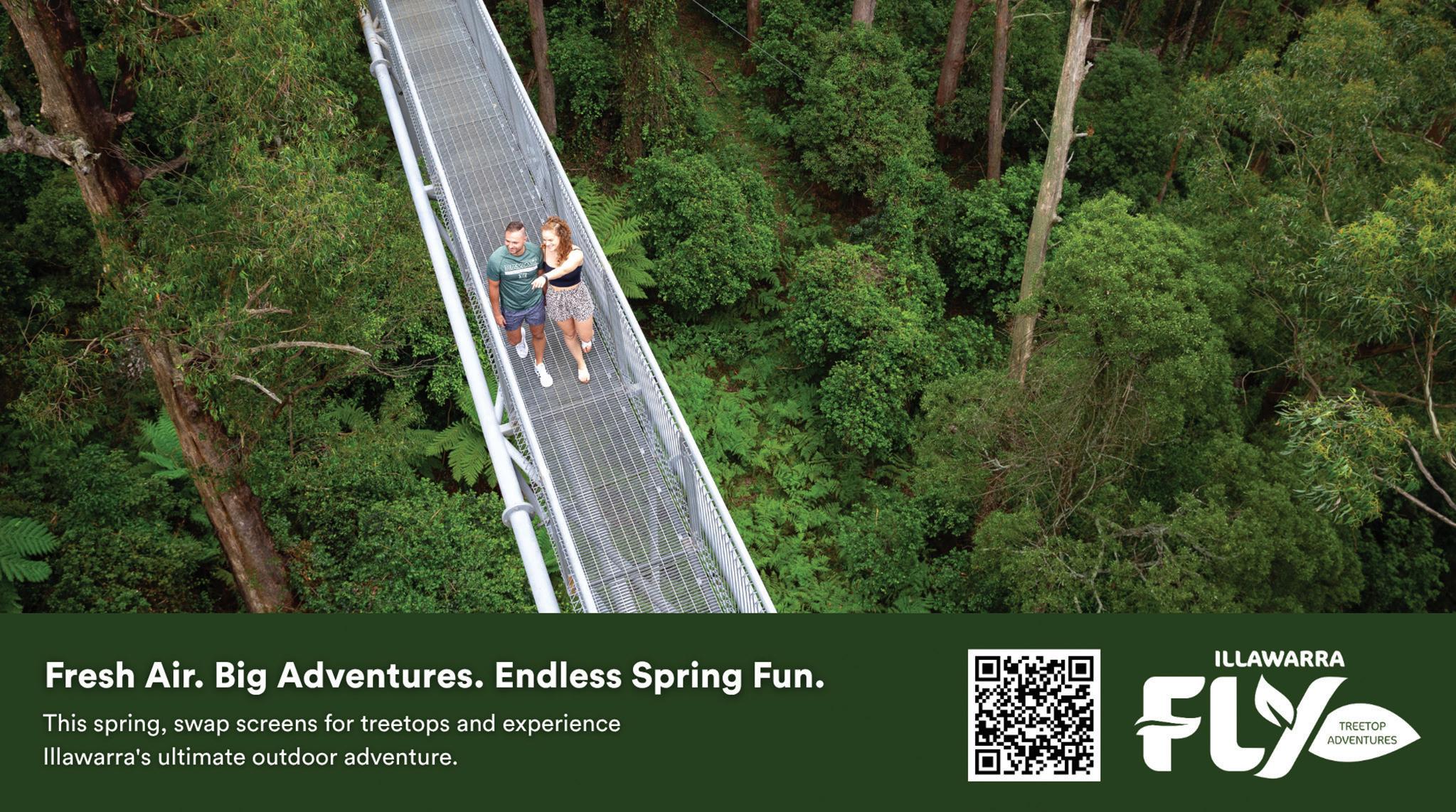
For visitors exploring the Southern Highlands, few attractions capture the region’s natural beauty quite like Illawarra Fly Treetop Adventures. Nestled within the lush Illawarra rainforest, this award-worthy destination offers a unique opportunity to experience nature from an entirely different perspective – high above the forest floor.
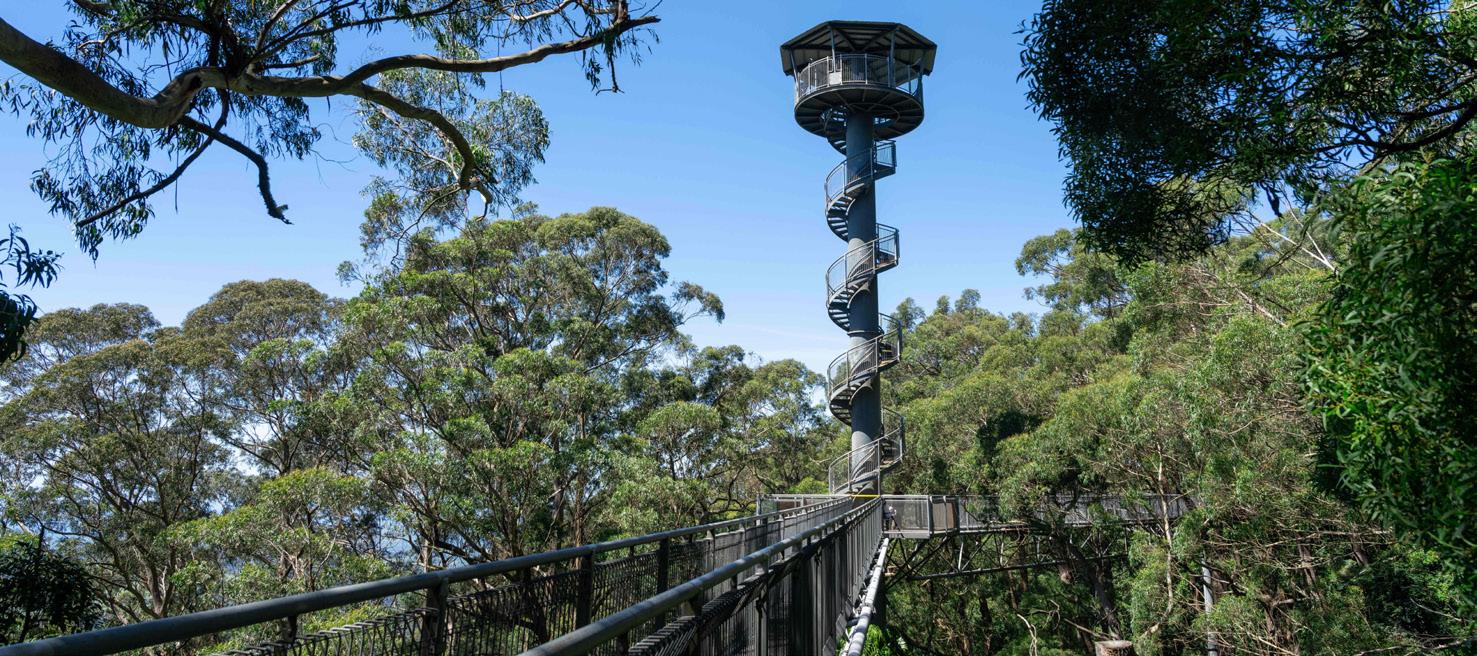
The centrepiece is the spectacular Treetop Walk, a gentle 1.5-kilometre journey featuring 500 metres of elevated steel walkway suspended 20-30 metres within the rainforest canopy.
Visitors can enjoy sweeping views of the Illawarra Escarpment and surrounding landscape, while the impressive Knights Tower rises 46 metres above the forest floor, delivering unforgettable panoramic vistas.
Families will appreciate the attraction’s accessibility and all-ages appeal, with the enchanting Enchanted Forest adding a touch of magic through whimsical fairy villages and imaginative installations.
Nature lovers can immerse themselves in the rich flora and fauna of this pristine environment, while adventure seekers can take things to new heights on the Illawarra Fly Zipline Tour – officially Australia’s highest zipline experience.
Conveniently located within easy reach of the Southern Highlands, Illawarra Fly combines eco-tourism, adventure and breathtaking scenery in one unforgettable destination.
Whether it’s a family day out, a romantic escape, or an adventure-filled weekend, visitors leave with a deeper appreciation of the region’s natural wonders. For those seeking an experience that truly elevates their Southern Highlands visit, Illawarra Fly Treetop Adventures deserves a place at the top of the itinerary.
Illawarra Fly Treetop Adventures 182 Knights Hill Road, Knights Hill NSW. illawarrafly.com.au
Winter in the Southern Highlands
Award-winning business with exceptional jewellery
Nestled in the heart of Bowral, Bowral Fine Jewellery is renowned not only for creating exceptional jewellery but for preserving the traditional art of handmade goldsmithing.
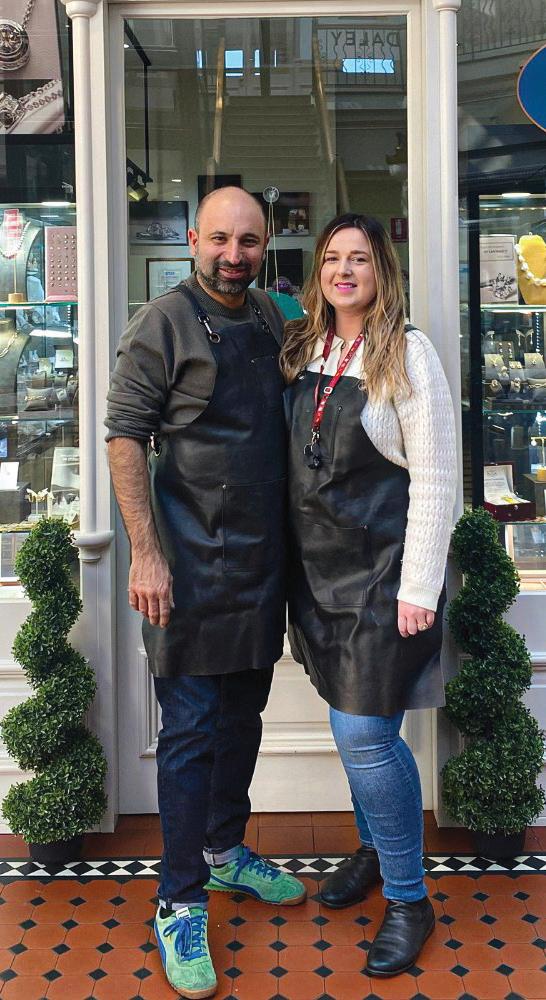
Owned by husband-and-wife goldsmiths George and Rebecca Karvounis, the boutique combines a carefully curated jewellery collection with an in-house workshop dedicated to crafting bespoke pieces using time-honoured techniques. Every custom creation is handmade on-site, from alloying precious metals to forging, fabrication and finishing.
“To us, jewellery should be made to last generations,” says Rebecca. “Every decision we make is guided by quality. We don’t look for shortcuts – we focus on creating pieces that will be cherished for decades.”
Whether designing engagement rings, remodelling treasured heirlooms or restoring well-loved jewellery, every commission receives the same care and precision.
Bowral Fine Jewellery has earned a loyal following across the Southern Highlands and beyond, with clients travelling from around Australia.
The business has also received local business awards and more than 100 five-star reviews, reflecting its commitment to craftsmanship and personalised service.
Rebecca believes traditional hand-forging remains unmatched for its strength, durability and character. “It’s worth preserving because a truly handmade piece simply cannot be replicated through mass production.”
More than a jewellery store, Bowral Fine Jewellery creates future heirlooms while keeping one of the world’s oldest jewellery-making traditions alive.
Appointments are recommended, as the workshop is often booked well in advance.
Bowral Fine Jewellery
7B Grand Arcade, 295 Bong Bong Street, Bowral. bowralfinejewellery.com.au
Ardour Milton Park Bowral – the place to be
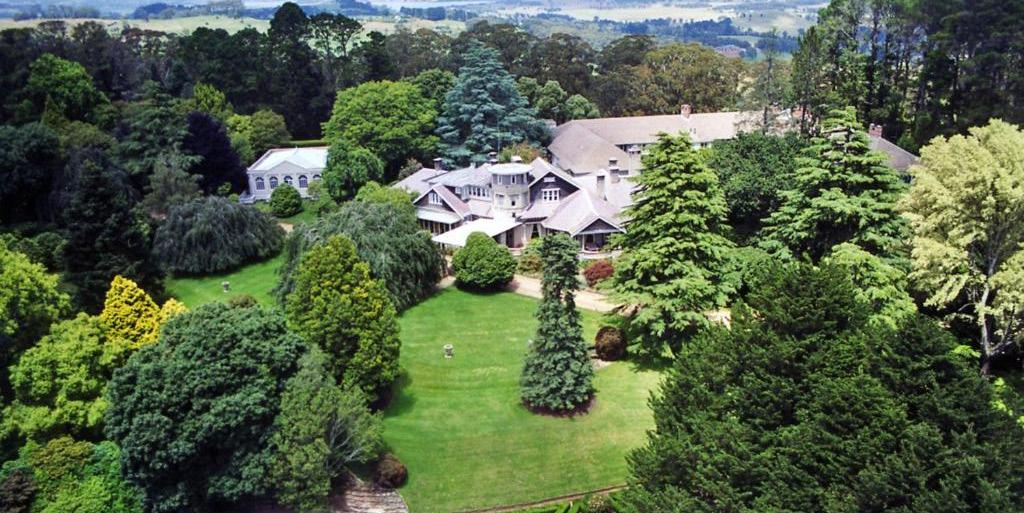
With Bowral enjoying a fresh wave of attention as one of NSW’s favourite regional escapes, there’s never been a better time to experience the Southern Highlands. From its renowned manicured gardens to charming country hospitality, the region is firmly back on travellers’ lists – and Milton Park is at the heart of its revival.
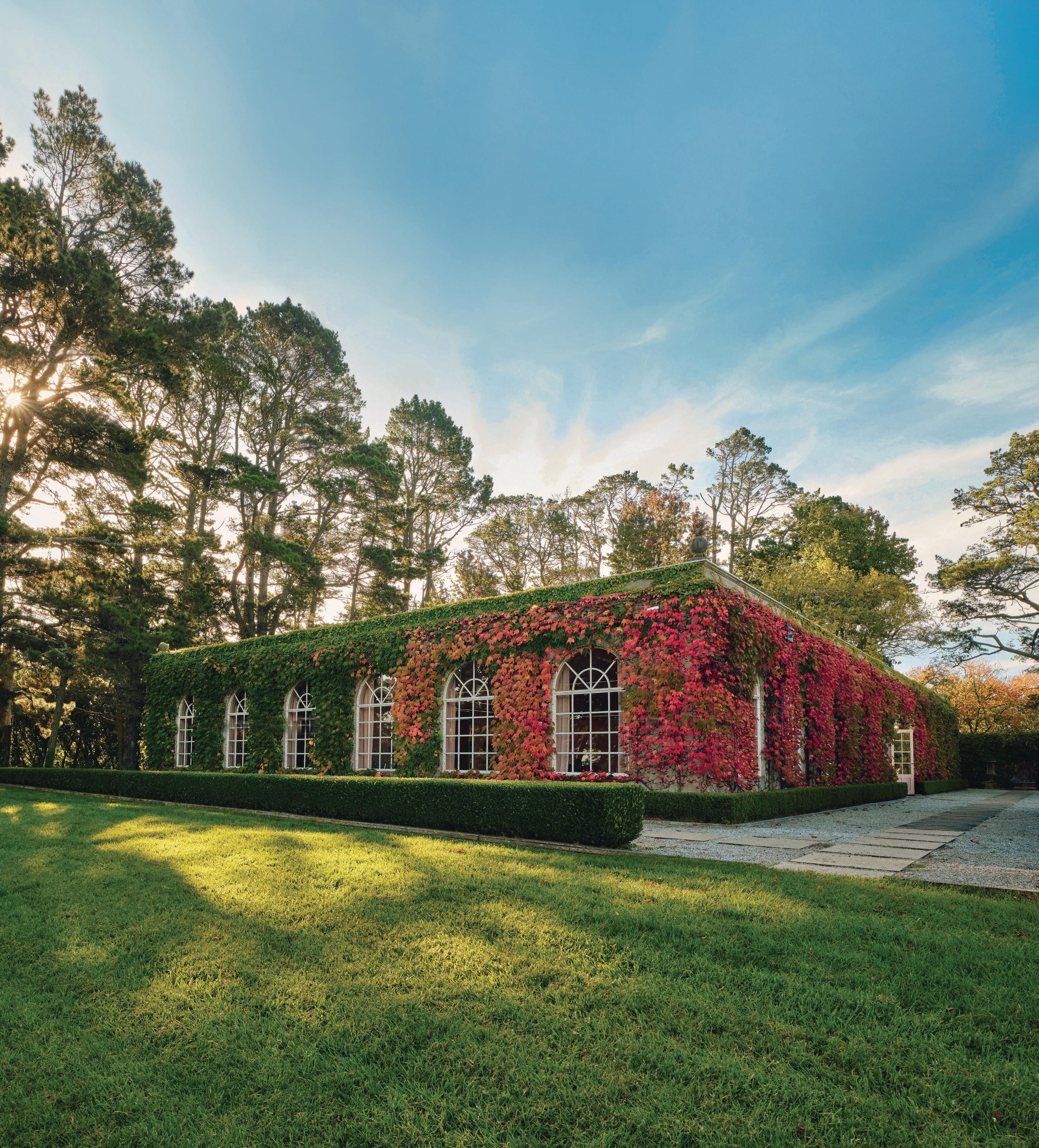
Originally established in 1910 as the private country estate of retailer Anthony Hordern, Milton Park has been woven into the fabric of the Southern Highlands for more than a century. Once a celebrated pastoral property, the estate has evolved into one of Australia’s best-known country hotels, preserving the natural beauty and timeless elegance that have defined it for generations.
Following a multimillion-dollar restoration, Ardour Milton Park Bowral reopened in February this year, marking the beginning of an exciting new chapter.
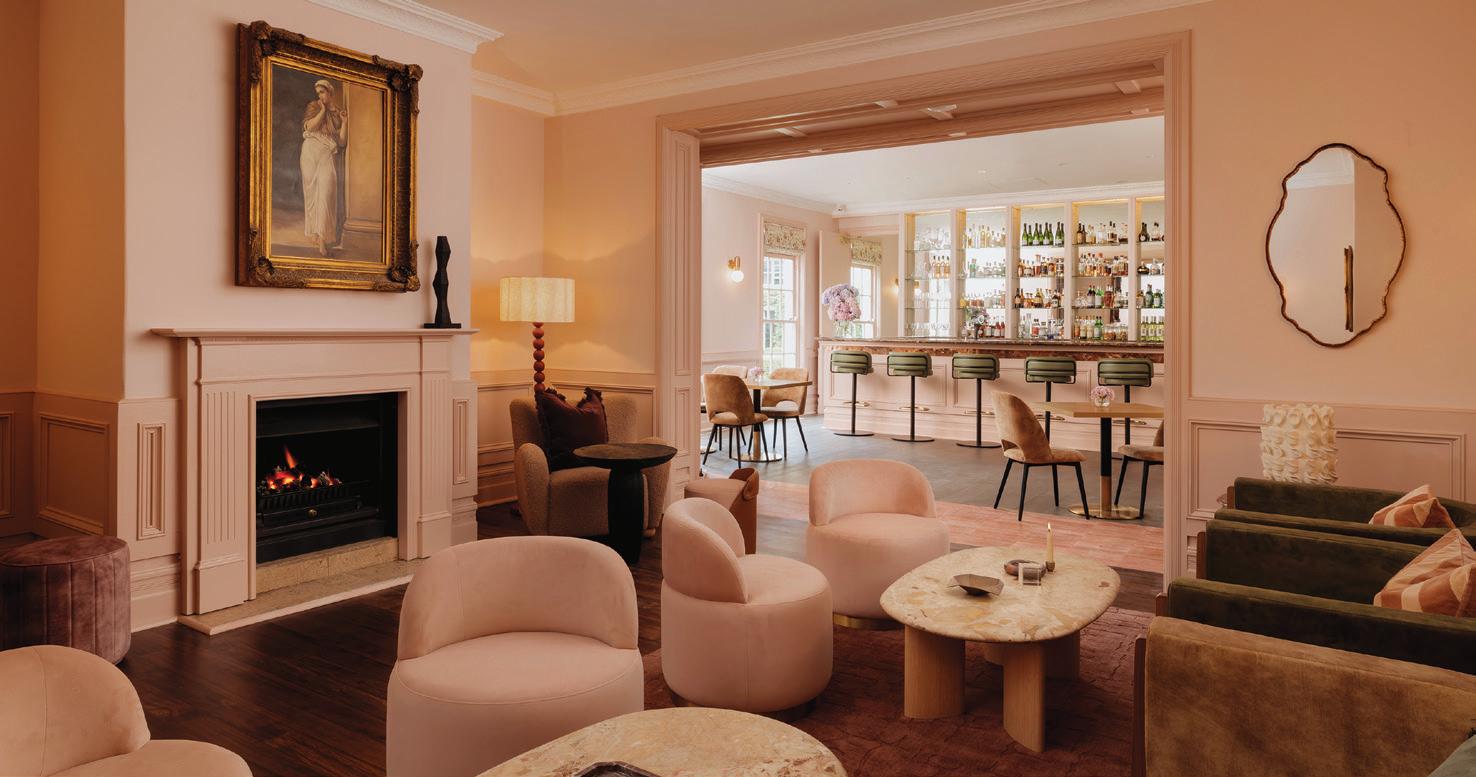
The thoughtful refurbishment honoured Milton Park’s remarkable heritage while introducing a refined contemporary experience. Guestrooms were elegantly redesigned, with many original furnishings carefully restored, the new Horderns Restaurant and The Polo Bar showcase the best of the region’s produce and hospitality, and the estate’s on-site Èliva Spa & Wellness provides the ultimate spot of relaxation.
Since reopening its famous gates, hundreds of first-time and return guests have visited, while locals rediscovered one of the Highlands’ most enduring landmarks. Its next chapter is now well underway – and just under a 2-hour drive from Canberra – Milton Park is a must-visit destination for Bowral charm.
Ardour Milton Park Bowral ardourhotelsandestates.com

Owners George and Rebecca Karvounis.
CHARTERED ACCOUNTANT
Payday super comes with some questions
Payday super started on July 1. For employers, this means that every time staff are paid, so is their superannuation. It doesn’t cost any more than it did when super was paid quarterly, but it represents a change in cash flow timing, which may create problems for some businesses.
I have been testing payday super for the last six months and generally find it straightforward. The payroll program does the calculations and provides a file for you to send money to the relevant funds. However, there are some questions that arise from time to time.
In the case of high-income earners, the maximum contributions base is now $270,830. This equates to the new maximum contribution of $32,500.
If you are employed by the one employer only that employer ceases to contribute once $32,500 has been paid to the superannuation fund. However, if you have multiple employers, the situation is different. You must apply for a superannuation guarantee opt-out exemption certificate.
To do this you nominate one or more of your employers who will pay your superannuation guarantee and the ATO will exempt the other employers from paying it. It is prudent to apply for this exemption in good time to ensure that the amount paid does not exceed the maximum.
Any employer who makes a mistake when paying super should contact their payroll company for help to fix it.
When I finished paying super last week, the super file was not there for me to make the payment. I rang the payroll provider and it appeared that there had been a problem at the ATO.
The payroll provider was able to walk me through the program so that I could pay it on time. It was nothing I'd done, the file was sitting there, but I was unable to access it.
If the problem is accidentally overpaying an employee’s super, do not pay less next time. Pay the correct amount next time and talk to the payroll provider about the process to obtain the refund of overpaid contributions.
For anyone with a total super balance (that is all superannuation balances when added together) exceeding $3 million, there is now an additional 15 per cent tax on the proportion of earnings that exceeds the threshold.
The ATO calculates it, known as division 296, when returns are lodged. It is levied on the person and not on the fund. Although they can elect to have the tax paid from the superannuation balance. For a balance that exceeds $10 million, there's an extra 25 per cent tax on the earnings.
Anyone with more than $3 million in superannuation, I recommend that they contact an adviser as quickly as possible to take any relevant steps. The $3 million and the $10 million figure are both indexed annually in line with inflation.
If your total superannuation balance is less than $500,000 on July 1 2026 there is a carry forward concessional contribution up to a maximum figure advised by the ATO that represents the amount of superannuation cap not used in the last five years. This can provide a tax deduction and help grow super faster. Once the super exceeds $500,000 on July 1, this option is closed.
If you need any information on superannuation or taxation, contact the expert team at Gail Freeman & Co Pty Ltd on 02 6295 2844.
Freeman & Co Pty Ltd 02 6295 2844 Unit 9, 71 Leichhardt Street, Kingston ABN 57 008 653 683
(Chartered accountant, SMSF specialist advisor and Authorised Representative of Lifespan Financial Planning Pty Ltd AFS Lic No. 229892) info@gailfreeman.com.au | www.gailfreeman.com.au


HOROSCOPE PUZZLES

By Joanne Madeline Moore
July 20-26, 2026
ARIES (Mar 21 – Apr 20)
With the Sun and Jupiter in your joy and creativity zones, the key to happiness and fulfilment this week is expressing your colourful inner child. Karma and destiny are also around, as Saturn and Neptune (both in Aries) link up with powerful Pluto and your ruler, Mars. So, it’s time to be disciplined, follow your dreams and transform your life in positive ways. As actress (and birthday great) Helen Mirren reminds us: “We write our life story by the choices we make.”
TAURUS (Apr 21 – May 21)
When it comes to a financial issue, Saturn encourages you to take your time and look at all sides of the situation, particularly the ones that are less obvious. And things are about to get busy at home (via DIY projects, professional renovations or an influx of unexpected guests?) as the Sun and Jupiter jump through your domestic zone. A misunderstanding or a problem with a car, computer or phone should start to clear up after Mercury moves forward on Friday.
GEMINI (May 22 – June 21)
Proactive Mars and independent Uranus are both dashing through your sign, so this week will work best if you keep your nose out of other people’s business and concentrate on pursuing personal projects. Tuesday’s terrific link between Jupiter and Uranus (in Gemini) encourages fiery bursts of inspiration. However – with Saturn aspecting Mars (in your sign) – good ideas on their own won’t get you far. You must combine creativity with plenty of hard work and practical productivity.
CANCER (June 22 – July 23)
It’s a good week for Crabs. After three weeks in retrograde mode, Mercury starts moving forwards in your sign on Friday (at 9 am, Sydney time). Yeah! So, plans, projects and relationships that have been stalled and stymied should gradually start to pick up pace, particularly at work. And the current planetary aspects are especially good for professional and financial matters. Monday is a wonderful day to write down your wish list and make your dreams come true.
LEO (July 24 – Aug 23)
Have you been waiting in the wings or sulking on the sidelines, Lions? Remember that expansive Jupiter is now transiting through your sign (which only happens every 12 years). So, spring into action – wake up, explore, experiment, take a calculated risk and make some noise! Be inspired by fellow Leo, birthday great Helen Mirren (who was born on July 26, 1945): “If you want to go make your mark in the world, you’ve got to go out and do it. Don’t be shy, be adventurous.”
VIRGO (Aug 24 – Sept 23)
Mercury (your patron planet) is still in retrograde mode (until Friday), and the Sun and Jupiter are transiting through your solitude zone. So, this week is a time for meditation, contemplation, rumination and relaxation, as you reboot and refresh from within. Clever Virgos will have a digital detox, reschedule work appointments and/or postpone social plans. Your motto for the moment is from birthday great, Carl Jung: “Solitude is for me a fount of healing which makes my life worth living.”
LIBRA (Sept 24 – Oct 23)
Monday’s Jupiter/Neptune trine is terrific news for loved-up Librans, as you romance your long-term partner, or sparks fly with a glamorous new sweetheart. It’s also a wonderful week to express yourself creatively. And thank goodness Mercury finally turns direct in your career zone on Friday morning (Sydney time) after three weeks of confusion. So, a professional problem, work challenge or complicated relationship with a colleague, client or customer should gradually improve.
SCORPIO (Oct 24 – Nov 22)
There could be friction early in the week, when the Jupiter/Pluto opposition amplifies a workplace problem or exaggerates a domestic drama. Aim to calm troubled waters with a dash of charm and a double dose of diplomacy. Then Mercury charges forward in your travel zone on Friday, so plan a fabulous getaway for sometime soon. Motivation for the moment is from fellow Scorpio, writer Albert Camus: “Charm is a way of getting the answer yes, without asking a clear question.”
SAGITTARIUS (Nov 23 – Dec 21)
With the Sun and Jupiter (your patron planet) visiting your wanderlust zone, many restless Sagittarians will be feeling cooped up, housebound and a bit stir-crazy. Thank goodness Mercury finally moves forwards on Friday morning (Sydney time). So, the weekend is the time to dream big dreams and make connections with folk from foreign shores. Plus, pull on your travelling shoes and escape on a short getaway – or plan a longer trip to faraway places for sometime soon.
CAPRICORN (Dec 22 – Jan 20)
Do you have a frustrating problem that needs fixing? Have you asked numerous other people for advice but still can’t find a satisfactory solution? This week, the Sun, Jupiter, Uranus and Neptune all activate your trust and wisdom zones. So, listen to your inner voice and pay close attention to symbolic messages and intuitive insights. Your motto for the moment is from birthday great, Carl Jung: “The person who looks outward dreams, the person who looks inward awakens.”
AQUARIUS (Jan 21 – Feb 19)
A close partnership (of the romantic, platonic or business variety) should gradually improve as the Sun, Jupiter and Uranus all rev up your relationship zone. The more proactive you are about communicating clearly and contributing generously, the better. Four planets also stimulate your conversation, education and neighbourhood zones. So, it’s a fabulous week to focus, plan, study, organise and strategise, especially involving neighbours and projects within your local community.

PISCES (Feb 20 – Mar 20)
Physical energy and mental enthusiasm are higher than usual, as the Sun and Jupiter fire up your health-and-wellbeing zone. So, get moving, mingling, walking and talking! The focus is also on self-expression, entertainment and friendship, as Mercury moves forward in your creativity and social activity zones on Friday morning. So, the weekend is a good time to plan a party, book a massage, attend a concert, see an exhibition, enjoy a lunch date or a night at the movies with friends.
Copyright Joanne Madeline Moore 2026
19
20
2 Name a period of
3 What are honeycombs constructed from? (7)
4 That which is the noisiest, is the what? (7)
5 Who mends shoes? (7)
6 To be highly excitable, is to be what? (7)
11 What is a small flavoured cake, often medicated? (7)
12 Name a French car manufacturing company. (7)
13 To be louder, is to be what? (7)
14 What is a hot, dry, dust-laden wind? (7)
15 To be slanting or sloping, is to be what? (7)
16 Name a person of eminence. (7)
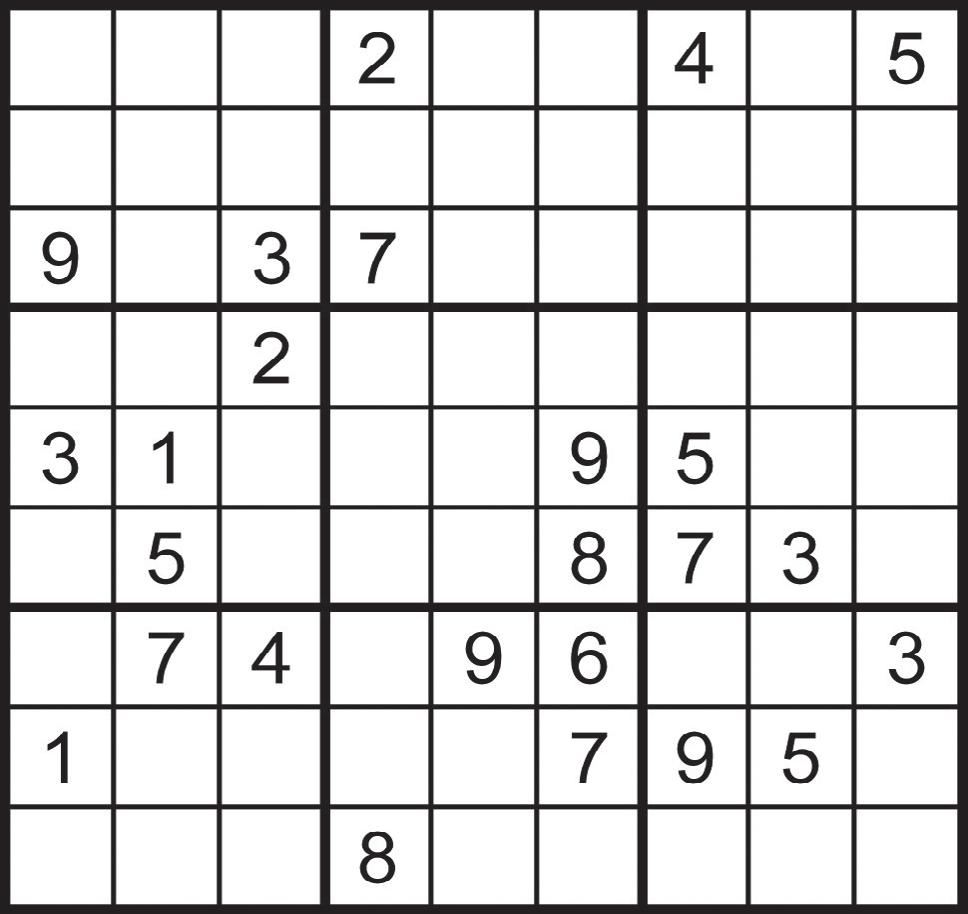
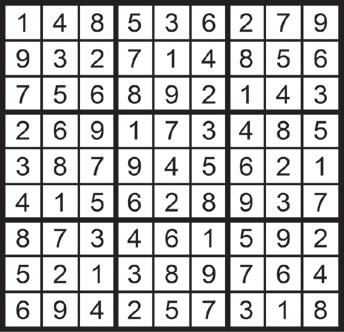
ARTS & ENTERTAINMENT
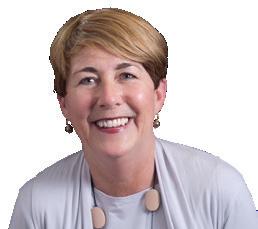
Izzard takes to the tragedy of Hamlet all alone
By Helen MUSA

Comedian Suzy Eddie Izzard
is happy to admit she’s only got half a brain, the full brain belonging to her clever brother Mark, or so she says she’s been told since childhood.
She’s equally happy to say: “I’m a complete boy plus half a girl”, and since then has used the name Suzy in addition to Eddie, explaining that she had wanted to use that name since she was 10 years old.
Izzard will be at The Playhouse soon with her sensational production, The Tragedy of Hamlet – yes, that’s Shakespeare’s Hamlet.
Taking a leaf out of the book of Elizabethan staging, Izzard performs on a bare stage, letting Shakespeare’s words and storytelling take the spotlight.
Adapted by her brainy brother Mark Izzard and directed by Selina Cadell, it sees Izzard play all 23 characters in what is possibly the world’s most famous drama.
As Prince Hamlet determines to take revenge for the death of her father, Old Hamlet, she portrays men, women, a ghost, scholars, a tyrant, courtiers, lovers, fools and poets.
The production has been touring since
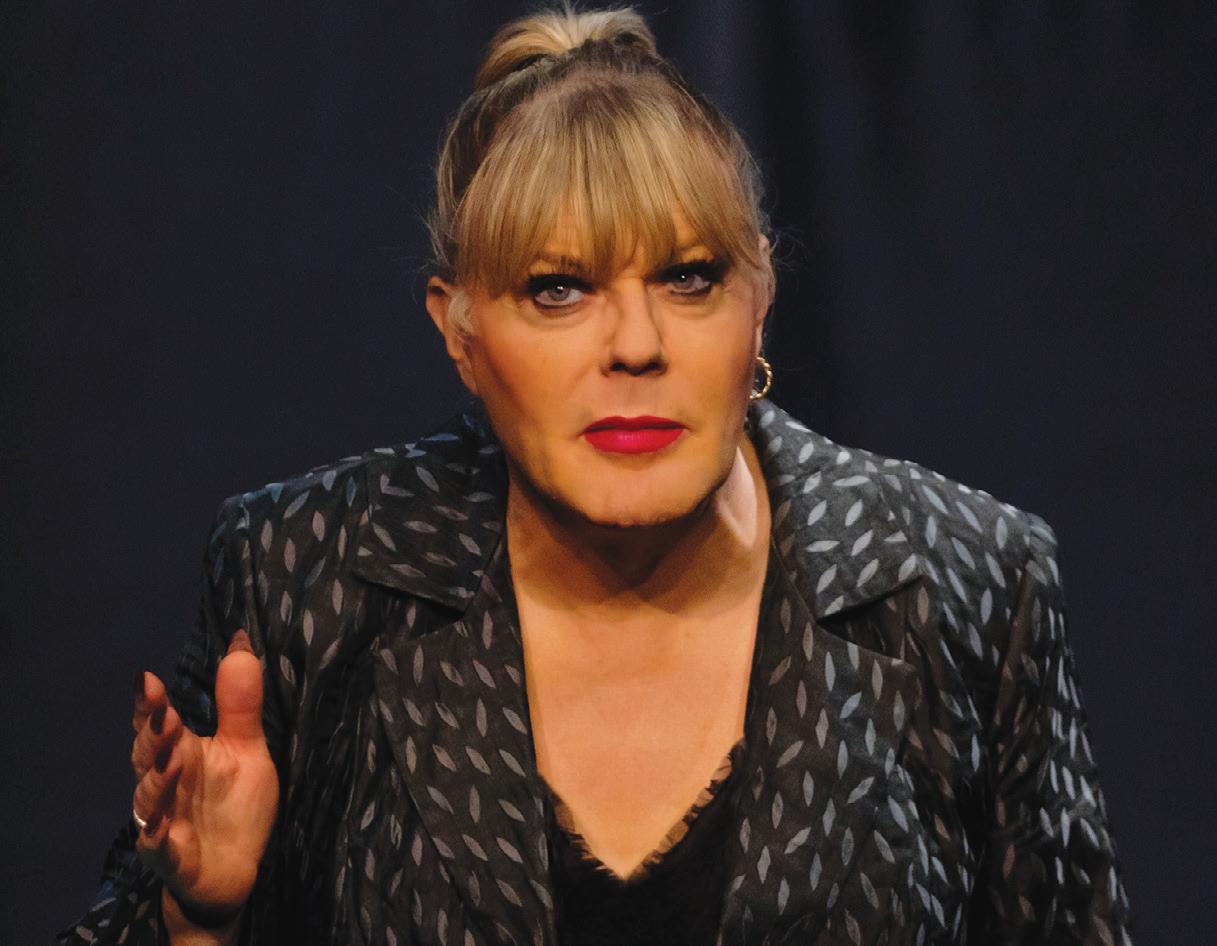
2024 and is Izzard’s second solo production, following her smash-hit version of Charles Dickens’ Great Expectations.
Mark, armed with the three extant versions of Hamlet – the First Quarto, the Second Quarto and the First Folio – simply
chose what he wanted to keep. Presumably not the First Quarto’s notorious line, “To be, or not to be – ay, there’s the point”.
“I said, let my brother choose it and then I acted it,” Izzard tells me.
Izzard lost her mother Dorothy at the age
Inspired by Machiavelli

of six, but found an emotional connection through theatre.
“I pushed in a single-minded way to be an actor... you have to connect well with an audience, but when at school, where we used to read out plays in class, it was pretty hard.”
Not to worry. Determination paid off and, after enrolling at the University of Sheffield, she turned to drama, regularly performing at the university’s drama studio. She eventually received an honorary doctorate from the university in 2006.
An illustrious career followed, in which Izzard perfected her talent for connecting with audiences, starring in celebrated standup shows including Live at the Ambassadors, Dress to Kill, Circle, Force Majeure and Wunderbar.
Beyond comedy, she has starred in the television series The Riches, appeared in films including the Ocean’s series, Valkyrie, Absolutely Anything and Six Minutes to Midnight.
It should also be said that Izzard is a very public personality in Britain. In 2009 she completed 43 marathons in 51 days for Sport Relief. She has performed stand-up in Arabic, French, German, Russian and Spanish, and is an active supporter of Europeanism and the European Union. A dedicated Labour Party activist, she twice ran unsuccessfully for the party’s National Executive Committee before joining it as the highest-polling unelected candidate in 2018.
After the huge success of Great Expectations, Izzard announced that she was going to do Hamlet.
“It was semi-controversial, but the audiences loved it,” she tells me, adding that by now, well over 100,000 people have seen The Tragedy of Hamlet.
“In theatre you don’t tell a story, you have to show it, so I look at what Shakespeare has written. As an actor you have to make your own choices, you have to make it your Hamlet and, after many tries, I realised I was getting to that place where I could convey the emotion.”
Of course, she was hardly going to do the five-hour version of Hamlet, but she does have some favourite scenes, especially the “O, what a rogue and peasant slave am I!” soliloquy. “So many changes of gear, where you get applause for doing what you do.”
In another coup de théâtre, Hamlet’s old schoolfellows Rosencrantz and Guildenstern are represented by two hand puppets. Given that they are the puppets of King Claudius, it’s not a bad idea, she figures.
Another favourite scene is when Hamlet comes across Claudius attempting to pray and pulls back. “I get to play both Hamlet and the King and I have adjusted it so that I’m always fine with that,” she says.
“It keeps it alive all the time.”
The Tragedy of Hamlet, at The Playhouse, July 31-August 1.



Suzy Eddie Izzard… “In theatre you don’t tell a story, you have to show it, so I look at what Shakespeare has written.”
Photo: Amanda Searle
STREAMING
‘Sky King’s’ doomed flight into social media fame
“I think I’m going to try to do a barrel roll, and if that goes good I’ll go nose down and call it a night.”
Those were the famous and tragic last words of Richard Russell, a seemingly ordinary 28-year-old airport ground employee who in 2018 made international news when he stole an empty passenger aircraft in Seattle and took it on a dramatic joy ride.
Not only did he fly the plane with essentially no piloting experience, he performed a remarkable set of acrobatic manoeuvres before intentionally crashing it into an island, killing only himself.
The audio of his final conversation before hitting the ground has become mythologised by the internet.
“Man I’m sorry about this I hope it doesn’t ruin your day,” he told air traffic controllers as they tried to get him back down to earth.
“I wouldn’t know how to land it. I wasn’t really planning on landing it.”
Posted and reposted on social media channels, Russell’s daring final act resonated with people around the world, who gave him the name “Sky King”.
That’s also the title of a new documentary streaming on Disney Plus which recounts this strange and remarkable story.
Given the huge amount of attention from clips of his final flight circulating online in recent years it’s surprising it’s taken this long to be turned into one.
While many around the globe will only

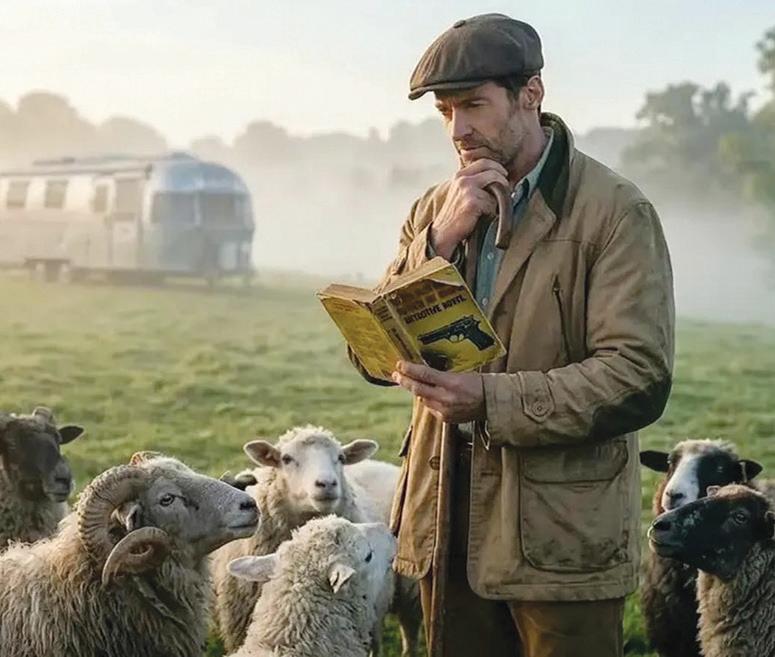
know “Sky King” from the infamous black box recording that went viral, this doco now explores the life of the man behind it. It includes interviews with his mum and siblings, former colleagues at Horizon Air, and the air traffic controllers who had that last, crazy conversation with him, finally peeling back the mystery of what led to Russell’s dramatic final decision.
If you’re looking for a doco with a truly unique topic, it can definitely be found here. Clocking in at 90 minutes, this story is undeniably a sad one and yet, for millions around the world, it’s also sent spirits soaring.
BECOMING an unexpected box office hit, The Sheep Detectives starring Aussie icon Hugh Jackman has now made its way to the streaming world.
Available on Amazon Prime Video, this film is a murder mystery with a wooly twist. It’s not moody detectives solving the crime this time round, but a pack of sheep. Yes, you read that right.
When a shepherd who loves to read crime stories to his flock is found dead, it’s up to his well-fleeced followers to use their knowledge to solve the case.
It all sounds ludicrous on paper, but this

cosy film, based on a novel by German author Leonie Swann, has become a breakout around the world.
That’s thanks to some genuine, heartfelt writing that has audiences leaving the cinema feeling better than when they went in, making it a major circuit breaker in an industry so bogged down in dark and depressing.
ARTS IN THE CITY
Recent up-beat hits such as last year’s Superman and Apple TV’s Ted Lasso prove feel-good is still a great way to go. It’s thanks to this approach The Sheep Detectives comes out as one well spun yarn.
THOSE who do like things darker and more dystopian though will have plenty to find in Apple TV Plus’s sci-fi drama series Silo. It has just come back for its third season. This series hypothesises a future reduced to a toxic wasteland, with humanity having to retreat underground as it clings to survival.
The story follows skilled engineer Juliette Nicholls (Rebecca Ferguson), who lives in the lower rungs of a huge silo acting as a cradle for what remains of humankind.
Soon though Juliette learns what lies outside this oppressive, cylindrical existence may just be very different to what those in control are telling the masses, sending her on a journey to uncover the truth of what exists beyond.
Tense, well-written and pulled together with the sci-fi sheen that Apple’s bottomless wallet allows, Silo maintains the momentum with its third season.

The sound of River Bank on stage
ArtSound Radio Theatre returns with a live radio play adaptation of The Wind in the Willows, adapted by Bart Meehan from the classic novel by Kenneth Grahame and directed by Lexi Sekuless. Audiences can watch actors perform at microphones while live Foley artists and sound effects create the world of the River Bank and Wild Wood in real time. Mill Theatre, Fyshwick, July 24-August 1.
Quantum Leap Australia (formerly QL2 Dance) presents Mettle, a new dance work by choreographers Alice Lee Holland and Jack Ziesing with 13 young dance artists. Costumes by Aleisa Jelbart, a soundscape by Sascha Budimski and visuals from Creswick Collective, the work explores transformation through the pressures of life’s darkest moments. The Vault, Fyshwick, July 24-26.
Canberra actor Pippin Carroll has been cast in the pop-rock, dark comedy murder mystery musical We Are the Tigers, playing Clarke, the devoted boyfriend of one of the cheerleaders. Directed by Chiara Assetta, with Kim Gilbert as musical director, the production opens at Sydney’s Hayes Theatre in October.
Artist-curator Alexander Boynes has been appointed the new curatorial adviser to the ACT Legislative Assembly, replacing long-time curator Merryn Gates. He
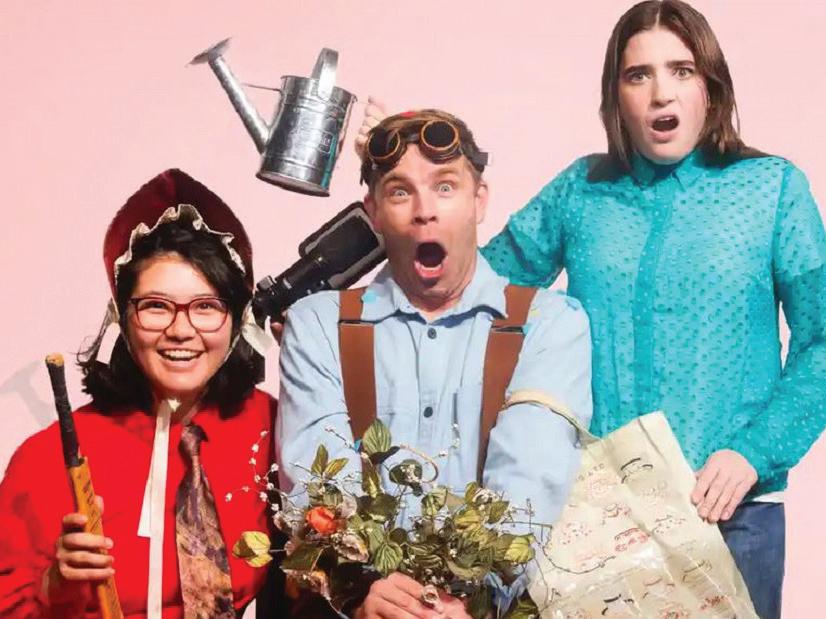
Wind in the Willows, ArtSound
July 24-August 1.
will oversee the care of, and new acquisitions for, the Assembly’s growing collection of Canberrarelated art.
A new portrait of Australian drag icon Courtney Act by contemporary artist Paul Yore will be unveiled in October, celebrating the performer’s more than two decades of influence on queer culture.
The Australian Chamber
Orchestra’s From Winter’s Stillness brings together artistic director Richard Tognetti, vocal ensemble Trio Mediæval and Norwegian jazz trumpeter Arve Henriksen for a program inspired by ancient Nordic landscapes. Llewellyn Hall, July 25.
Radio Theatre... The Mill Theatre,
Doomed “Sky King” Richard Russell… his sad story has sent spirits soaring.
The Sheep Detectives, starring Hugh Jackman… a murder mystery with a wooly twist.
A big thumbs up for the King prawns
Canberra restaurants, bars and cafés affected by the light rail construction project are facing mega challenges, including lack of accessibility, noise and limited parking.
Queanbeyan venues affected by the major six-month or more Monaro Street refresh are also feeling the pinch in a big way.
For Eleven on Monaro, positioned right on Queanbeyan’s main drag, the disruptive works haven’t stopped them – as a relatively new business – from investing in success.
Improvements include smartening up the back alfresco dining space, making it comfy in time for the cooler weather. Diners can access this sunny, protected and quiet space through Morisset Street, avoiding the chaos on Monaro altogether.
Eleven on Monaro is owned by the former head chef of Pronto Italian, Aleksandar Trpkovski, and his wife Melissa. We visited to lend a touch of support.
We began with two glasses of light and zesty Balliamo Italian prosecco ($24 each) while studying the menu.
Sharing is our style and lunch began with calamari fritti ($18 and a generous serve). The batter was light and crispy… the seafood soft and tender… and the side of aioli super creamy. We squirted fresh lemon on top before diving in.
It’s a big thumbs up to Eleven on Monaro for its King prawns ($24 for four),


cooked in the massive wood fire oven at the back of the restaurant. They were sweet and scrumptious.
Also deserving a thumb’s up were the zucchini fries ($16). Thick slices were coated, perfectly seasoned and then deep fried to perfection. We dipped them in more of that super creamy aioli.
Pizzas with red tomato base and Fior Di Latte white base are on the menu and the Rustic was delicious. Chunks of Italian sausage added spice, thin slices of red onion sweetness and basil leaves herb-tones (indeed, we would have loved even more). Plenty of parmesan was sprinkled about and overall the pizza hit the spot ($25).
MUSIC / Casey Donovan
My only suggestions would be to vary the side garden salad, which was the same across three of our dishes. This might be fine for those not sharing but for us, it was a bit tedious.
Mains include Italian classics such as veal marsala ($34) and chicken parmigiana ($30). Eleven on Monaro offers a pan-seared salmon and a pan-seared barramundi, both with fried Tuscan potatoes ($36 each).
The wine list is far from extensive,
but covers the bases. Prices are super reasonable, including with our Dal Zotto, an easy-drinking style pinot grigio ($55 a bottle; $14 by the glass).
Eleven on Monaro’s décor is clean, smart and simple, with framed Italianstyle posters adding a belissimo vibe. Some tableware is from local Bisonhome adding a touch of class.
A showcase of Casey’s music
By Helen Musa
One of the deadliest First Nations acts of all is heading to the Canberra Southern Cross Club in Woden.
Casey Donovan, probably best known to readers as the youngest winner of Australian Idol, taking out the second season in 2004 at just 16, will be on tour with her latest show, This Is Me.
A household name known for her powerful vocals and riveting stage presence, it is probably less well known that, as a Gumbaynggirr and Dunghutti First Nations artist, she is also a strong advocate for literacy and music. She serves as an ambassador for the Australian Literacy & Numeracy Foundation, Support Act, R U OK?, Camp Quality and AusMusic T-Shirt Day.
After spending the past six years involved mainly in musical theatre, Donovan has pulled together what she calls “a culmination of music, theatre and performances from the past 21 years.”
Audiences can expect to hear Australian Idol classics, showstoppers from musicals such as The Sapphires and Chicago, favourites from her ABC TV New Year’s Eve and Australia Day performances, and some new original songs. Her theatre credits also include As

Donovan…
You Like It, The Flowerchildren, Opera Yarrabah, Rent, We Will Rock You, 9 to 5 The Musical, & Juliet and Sister Act The Musical, where she played the on-the-run parolee Aunt Debra. Apart from winning two major reality shows, Australian Idol and I’m A Celebrity... Get Me Out Of Here!, Donovan can also claim an ARIA No. 1 single and multiple platinum certifications. On screen, she’s been seen in Streetsmart (SBS), How To Stay Married (Network 10), What Does
Australia Really Think? (SBS), and as a host of the NAIDOC Awards (ABC TV). She was the runner-up behind Montaigne in the 2020 edition of Eurovision – Australia Decides, performing her original track Proud, and her mindfulness podcast The Space has achieved more than three million downloads on Nova Entertainment.
July 24.





Wood-fired King prawns… cooked in the massive wood fire oven.
Rustica white based pizza… Italian sausage, thin slices of red onion and basil leaves. Photos: Wendy Johnson
Casey Donovan, Canberra Southern Cross Club, Woden,
Casey
the youngest winner of Australian Idol, taking out the second season in 2004 at just 16.


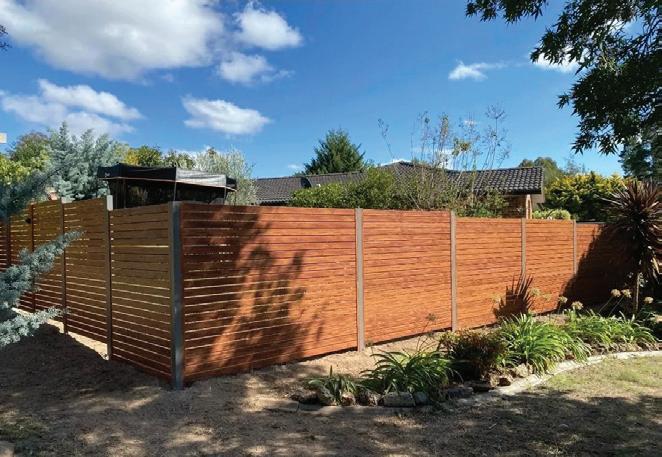
NSW | www.gnbfencingandexcavation.com.au

•
•
•
•
•
•
•


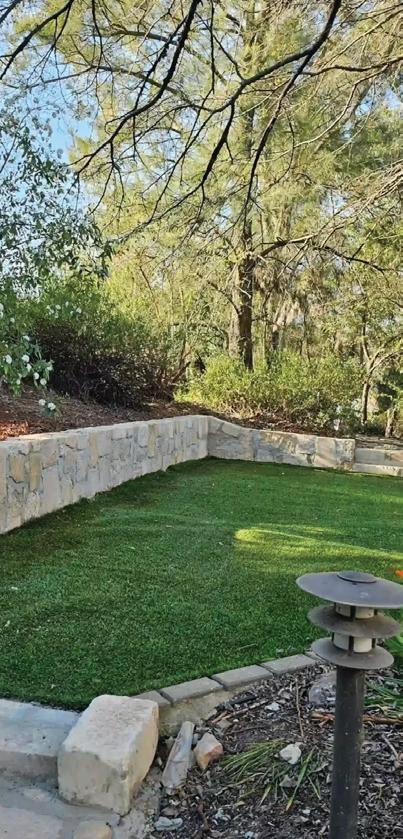
GARDENING
Silk tassel catkins with wow
By Jackie WARBURTON
There is one evergreen shrub grown in Canberra that I believe should be used more often.
Whether as a hedge or espaliered against a wall, it is the winter catkins, flowering in the depths of winter, that give this plant its wow factor.
Commonly known as the silk tassel bush (Garrya elliptica), it is a tough shrub once established and belongs to the olive family.
Growing up to three metres tall, it needs little more than a clip after flowering and is otherwise a no-fuss plant. It is rarely troubled by pests or diseases and, when planted in a sheltered position, can be long lived. It is adaptable to most soils but, because of its longevity, benefits from good organic soil with excellent drainage. Supplementary watering through summer will help it cope with the heat.
Garrya elliptica is dioecious, meaning there are male and female plants. Planting a male cultivar such as James Roof will produce much longer catkins than the female plants and generally forms a better, more compact shrub.
For a low-maintenance hedge, space plants 1.2 metres apart, mulch well and water consistently
to encourage even growth.
WINTER garden jobs continue with hand-pulling chickweed, winter grass and sticky weed. These bright green annual weeds grow, flower and set seed within one year. Removing them before they flower will save years of future weeding. If the weeds have not yet flowered, they can be composted or steeped in a drum of water inside a breathable bag until they dissolve over several weeks to make a weed tea. Dilute one part tea to 10 parts water before using it as a foliar feed





on all plants. A well-balanced weed tea should not smell. In the cooler months it will take longer to brew.
Manures can also be steeped using the same method, making them useful where weed seeds are present. Once the material is no longer recognisable, add it to the compost, use the liquid in the garden, then start another fresh bucket.
The more often a compost pile is turned, the faster it breaks down.
A little aeration with a garden fork and a few litres of water will speed decomposition. The higher the pile, the hotter it becomes, helping it break down more quickly so it is ready for use in the garden by the end of winter.
A SPECIES I am slowly coming to appreciate more is hebe. They are small evergreen shrubs from NZ that now come in many flower colours and have proved to be tough plants.
Hebes were very popular during the drought years. For some 60 years Canberra has tried unsuccessfully to grow them in front of the War Memorial, but in suburban gardens, where their roots have adequate moisture, they can be long lived.
They benefit from a light clip
after flowering and naturally form a compact, rounded shape. They generally flower throughout the year except during the hottest months. Flowers are borne on the tips of the growth, while the foliage is attractive in its own right. The main flower colours are blue, white and pink. An old favourite, Pretty n Pink, has lovely purplegreen foliage.
Some hebes also have variegated leaves, making them excellent additions beside pathways or in garden corners. They grow well in pots and, under the right conditions, can flower for many months.
Hebes prefer alkaline soils, so keep them away from camellias, azaleas and other acid-loving plants. Sprinkle a little dolomite lime around them and water it in.
jackwar@home.netspeed.com.au
Jottings…
• Maintenance – sharpen tools, replace mower blades.
• Do not prune roses until August.
• Buy grevilleas while they are in flower.


The silk tassel bush… from the olive family, a tough plant once established.
Photo: Jackie Warburton
Hebe… with moisture around the roots it can be a long-lived plant.
Photo: Jackie Warburton
GARDENING / cold-weather colour


Shrubs that put on a winter show
By Jackie Warburton
THERE are quite a few winterflowering shrubs that put on a show this time of year.
Among my favourites is Witch Hazel (Hamamelis virginiana), with flowers that resemble yellow spiders on bare branches. They can grow into a large shrub or a small tree and are suitable for larger gardens where there’s room to put on a winter show.
There are several types of Witch Hazel to choose from. The plant likes full sun to part shade.
Another favourite is Wintersweet (Chimonanthus praecox), a multi-stemmed deciduous shrub with glossy oval leaves. In winter it produces pendulous yellow flowers with a delicious honey/spice scent that can be enjoyed from quite a distance. The flowers will last on the stem for at least three weeks and can be brought indoors to fill the house with that gorgeous aroma.
They grow three metres by three metres, make a great hedge and are suitable for growing under powerlines. Once established, Wintersweet is a really tough plant that copes with dry conditions in summer.
A CONE bush can be a real feature in a
winter garden that colours up with vivid red bracts and flowers.
Unbothered by our frosts and cold winters, the Leucadendron salignum has thin leathery leaves and is great for windy and exposed sites.
Its long stems make terrific cut flowers, fresh or dried.
They are dioecious, meaning they have separate male and female specimens. More commonly grown, the male plant has a “branched-out” growth, larger flowers,






like the same low-phosphorus soils.
A COUSIN of the cone bush is the South African protea (or sugarbush), which also has long-lasting flowers, with colours ranging from whites, pinks to reds.
The most common hardy protea that does well in Canberra is “pink ice” (Protea neriifolia). It grows up to three metres tall, attracts birds and is a perfect plant for under power lines or screening.
Another striking variety that grows well locally is the king protea (P. cynaroides) Its white or pink flowers have the largest heads of all the proteas.
Proteas can be difficult to propagate and can take a few years to flower. King proteas can take up to six years to flower, so a little patience will be needed for this terrific plant for a water-wise garden.

and smaller leaves and cones.
Cone bushes are evergreen and can grow up to about 1.5 metres in full sun. Once established, they don’t need a lot of water or care. Use only native fertiliser.
The only pruning required is tip pruning to keep the bush in shape. Hard pruning means the branches will not regrow, so only cut back to four-six stems maximum.
They like a little space and grow well alongside Australian native plants such as banksia, hakea and grevillea because they
ATTRACTING bees to the garden in winter can be a challenge as there are fewer flowering plants around, but a native to try is Happy Wanderer (Hardenbergia violacea), which is relatively easy to grow.
It’s an evergreen climber or ground cover and, in the right spot, can flower for many months through winter.
The endemic variety is purple, but now there are white flowering varieties available. A mix of the two colours flowers well and, importantly, a great way to attract bees.

Witch Hazel… flowers resemble yellow spiders on bare branches.
Photo: Jackie Warburton
Cone bushes… do not seem to be bothered by frosts and cold winters.
Photo: Jackie Warburton
Happy Wanderer… a winter bee magnet. Photo: Jackie Warburton