Is responsibility a lost cause with Labor ministers?
MICHAEL MOORE
Hold the arts, we’re pivoting to more apartments
RICHARD JOHNSTON
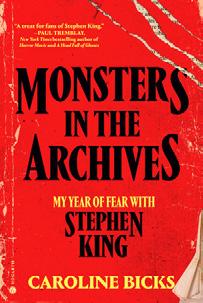
There’s macabre and there’s this shocker
NICK OVERALL
SOUNDS OF SUCCESS
‘Sound guy’ BEVAN NOBLE shares his random journey
to the mixing desk
Come along and see the friendly free-flying birds that can be photographed and fed. Walk amongst over 500 birds from 60 species from Australia and around the world!
Open 7 days a week from 10am to 4pm with the last admission 3.30pm
NEWS / Recycle for Sight
Ava’s turning a focus for compassion into action
By Dhwani PATHAK
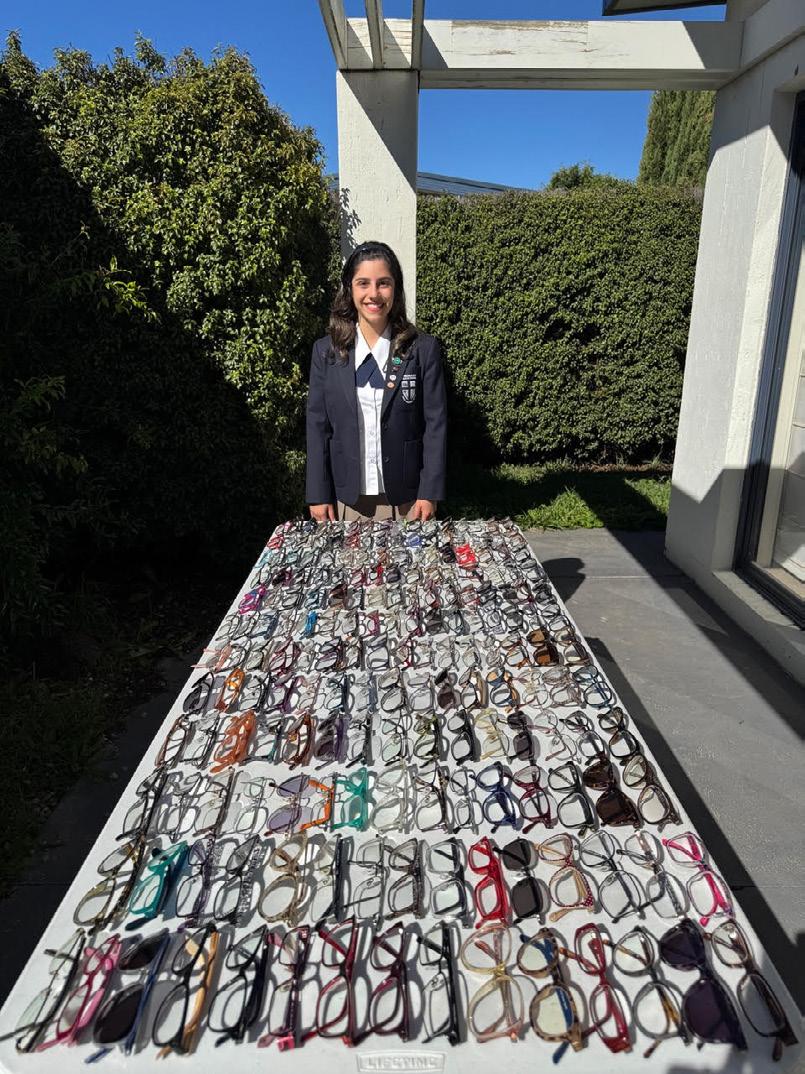
Inspired by a family story of blindness, 17-year-old Ava Jazayeri is turning compassion into action, one pair of glasses at a time.
At an age when most students are focused on exams and weekend plans, Ava Jazayeri is quietly reshaping how the community thinks about sight.
The Burgmann Anglican School student has launched a glasses drive, collecting more than 250 pairs of prescription spectacles for reuse in developing countries.
For Ava, the project is not about numbers. It is about something far more personal.
Her inspiration comes from her great grandmother.
“It was when I heard the story that she lost her sight as a teenager due to trachoma after missing out on timely medical care. It could have been prevented.
“Despite the challenges of blindness, she raised four children and lived to the age of 95.
“That story really stayed with me; it made me realise how different someone’s life can be depending on whether they have access to some -
thing as simple as eye care.”
It is a realisation that has shaped years of quiet advocacy.
In 2020, when she was in Year 6, Ava designed a multi-sensory greeting card for people with vision impairment, an attempt to make everyday experiences more inclusive.
While it was a school assignment, it initiated her journey into “doing something” for the differently abled.
More recently, her involvement with the Lions Club of Canberra helped turn that interest into action. Volunteering in junior school eyescreening programs exposed her to the practical side of vision care and the gaps that still exist.
“It made me want to do more than just help on the day,” she says. “I wanted to create something that could keep giving.”
That idea became her Recycle for Sight campaign.
Launched within Burgmann Anglican School, the initiative encouraged students, staff and families to donate unused prescription glasses. With strong support from the school community, Ava promoted the drive through assemblies, posters and daily announcements, building momentum across all three subschools.
“It was really a whole-school effort,” she says. “Once people understood where the glasses were
going, they were very willing to contribute.”
The response exceeded expectations.
“I’m very lucky and blessed to be surrounded by a lot of wonderful people in my community and thankfully I didn’t have any negative experiences when I was raising awareness or asking for donations,” says Ava.
More than 250 pairs have already been collected. These glasses will be refurbished and distributed to people in developing regions.
Ava is quick to emphasise that the impact extends beyond the act of donation.
“It is also about awareness,” she says. “A lot of people do not realise how big the issue is globally. Something we take for granted can completely change someone else’s life.”
That awareness is now spreading beyond the school gates.
Ava has begun reaching out to community centres, churches, optometry clinics and recycling hubs across Canberra, working to establish permanent collection points and expand the program’s reach. Her goal is to make donating glasses a simple, everyday habit.
“It is about making it easy for people to help,” she says. So what would she say to other
students who want to act on some thing they care about?
“Don’t wait until you have every thing figured out,” Ava says.
“Don’t think that you need clarity or a full plan, or just overthink it. I think most people overlook the fact that community projects begin with a simple idea, and that you don’t have to change the world overnight.”
“You just start small. And then you build from there.”
In the coming weeks, Ava will host a formal handover event at her school, bringing together Lions representatives and community supporters to mark the next stage of the project.
For Ava, this is not a one-off initia tive. “It is something I want to keep growing,” she says.
“Every time I see glasses, they mean something different to me.
“For lots of people they’re just sit ting unused in a drawer, maybe their prescription has changed or their style has changed. But for someone without access to eye care, they can be transformative and really effective.”
And when she thinks of the woman who inspired it all, the impact feels even more personal.
“I hope she would feel proud,” Ava says. “Her story began with a lack of access to eye care, but I hope this project helps to rewrite the story for someone else.”
General manager: Tracey Avery, tracey@citynews.com.au
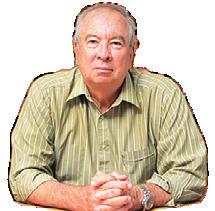
Responsibility, a lost cause with Labor ministers?
It is a sad state of affairs when a chief minister does not understand ministerial responsibility.
No wonder the administration of the ACT is in dire need of a shake-up. After nearly a quarter of a century in power, Canberrans should expect that Labor ministers would understand their responsibilities and their leader ship role.
Ministers are responsible. If a portfolio area is performing badly, it is the responsibility of the minister to provide the leadership to turn it around. No matter how badly a portfolio has been handled in the past – the appointed minister sits in the hot seat and has an obligation to improve the situation.
Liberal leader Mark Parton and Greens leader Jo Clay censured Education and Housing Minister Yvette Berry. In doing so, they relied on “the role that the Assembly plays in holding the government to account, particularly in the context of the Westminster conventions on ministerial accountability in our system of responsible government”.
Andrew Barr explained his view: “Ministers are accountable to the Assembly. They must answer questions, explain decisions, be transparent about shortcomings, and accept scrutiny”.
However, he followed up by point-
ing to “what ministerial responsibility does not extend to (as) ministers do not personally administer large and complex directorates”.
In his explanation: “Directorates and agencies are led by officials with delegated authority and professional responsibility for operational matters.
“The reality, which is well understood in Westminster systems, is that ministers are responsible for oversight, policy direction and response, not the day-to-day execution of every function within their portfolios.
“On that measure, Minister Berry is discharging her responsibilities”. Maybe… under that measure.
If this is the test by which his government is measured, no minister can ever be held accountable for anything.
Just throw some public servants under the bus when things go wrong.
If this is the test by which the Barr government is measured, no minister can ever be held accountable for anything. Just throw some public servants under the bus when things go wrong.
There is an irony in the approach of the chief minister, as it was Labor – with the support of a couple of independents – who used an individual public servant’s failure on an administrative matter to force Kate Carnell into a position where, on October 17, 2000, she had little choice but to resign as chief minister.
When an area of the public service has been failing through systemic issues (rather than an individual’s decisions) and a minister has not acted to rectify it, the minister must be held responsible.
Fortunately, we now have a minority government that must answer to the Assembly. And the current Assembly is unlikely to accept the chief minister’s approach of the flick pass to public servants.
Early in his speech on the no-confidence motion, Parton emphasised that “ministers must be responsible for outcomes, be they good or bad”.
The system of directorates that
was introduced by Jon Stanhope introduced a system of split responsibilities for heads of the directorates (are they directors?). These directors answer to their minister, but they also answer directly to the head of the Chief Minister’s Directorate.
Sections 13 and 14 of the Public Sector Management Act need amending. They simply put too much power in the hands of the administrative units and chief executives.
It is time to review the Public Sector Management Act and recognise that the system of directorates and the split decision-making processes adds to confusion. This undermines the Westminster traditions upon which the ACT parliament and government are based.
On the one hand, this process means that a minister remains responsible for their portfolios. However, through the bureaucrats, the chief minister must also be responsible to a significant degree.
A successful censure (or even more challenging) a successful no-confidence motion in a minister therefore has significant ramifications for the chief minister.
The Greens have been put in a
slightly awkward position. Minister Tara Cheyne reflected on the Greens time in government and particularly regarding former MLA and Education Minister, Shane Rattenbury. Ms Cheyne argued: “Westminster conventions are not a coat that you check at the cabinet-room door and collect again on your way back to the crossbench”.
She went on in an attempt to defend her colleague, arguing that the ACT education system has been in decline since the 1970s. She attempted to blame the poor performance on every minister, federal and local, since that time.
Ministers are responsible for turning things around. Trying their best is not good enough. It is the outcome that counts for a successful minister.
Michael Moore is a former member of the ACT Legislative Assembly and an independent minister for health. He has been a political columnist with CityNews since 2006.
THE YACHT CLUB RESTAURANT
Open Wednesday to Sunday 11:30am – 10pm
Winter Menu
Savour the best of the season with our two-course and threecourse menus.
Available Wednesday to Friday.
Weekend Buffet
Enjoy a seasonal buffet with all your winter favourites.
Available Saturday and Sunday.
Pricing: M $49 | NM $59
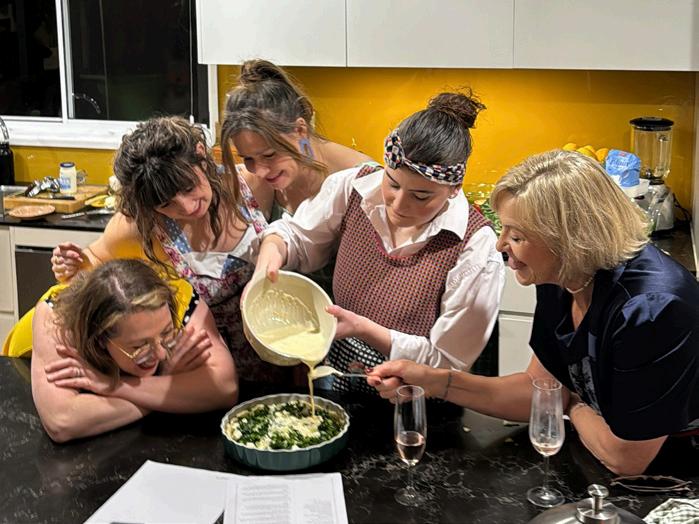
Enjoy a cosy afternoon by the fire sipping mulled wine, seasonal cocktails and bottomless Prosecco. A generous grazing station rounds out the experience with hearty finger foods, including quiche, cauliflower cappuccino and warm chocolate pudding.
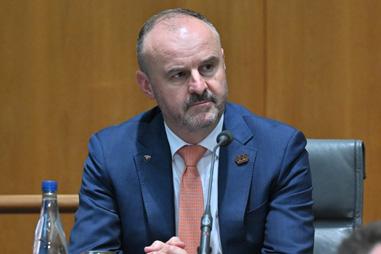
Andrew Barr… sad state of affairs when a chief minister doesn’t understand ministerial responsibility.
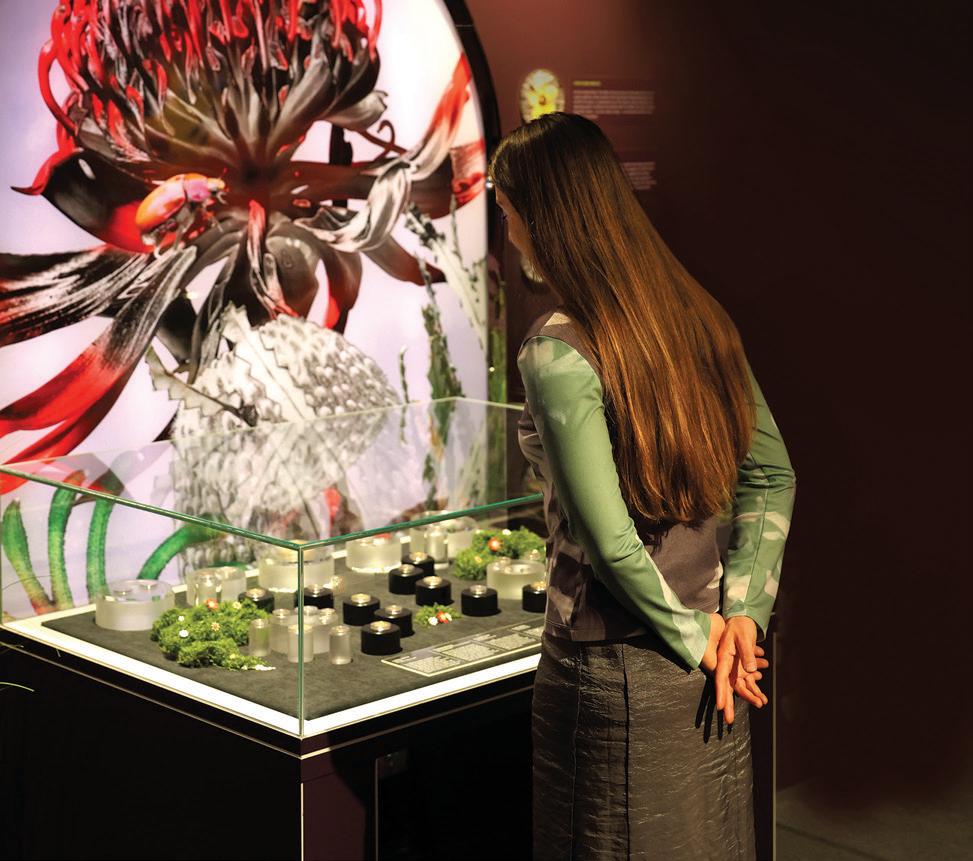
Arthur Boyd, Manufactura de Tapeçarias de Portalegre (tapestry workshop), St Francis when young dreaming of fine clothes and armour (detail), 1973, National Gallery of Australia, Kamberri/ Canberra, purchased 1975, Arthur Boyd’s works reproduced with the permission of Bundanon Trust
Random events that opened sound guy’s dream
“To
us, a mixing desk is a flat, rectangular box covered by an incomprehensible confusion of knobs, sliders and buttons; to Bevan Noble it’s a delicate instrument.”
DAVID TURNBULL continues his series of stories of remarkable Canberrans.
Bevan Noble is into sound. Technically, he’s what you call a sound engineer, but musicians generally call him “the sound guy”.
He works at Smith’s Alternative in Civic, and if you’ve ever been there for a musical performance, he’s the person who set the sound system up to ensure the artist’s talents were on show for all to hear.
To us, a mixing desk is a flat, rectangular box covered by an incomprehensible confusion of knobs, sliders and buttons; to Bevan it’s a delicate instrument.
As a child, he says, he was always fascinated by recording equipment and amplifiers.
“To me it was magic,” he says. “The way you could press a button and hear something back.
“I started playing with my dad’s reel-to-reel tape recorder when I was in primary school.
“My brother and I used to record ourselves reciting nursery rhymes and play it back. Sometimes we’d hold the microphone in front of the speaker to make it squeal – so I learnt very early what causes feedback.”
Bevan wasn’t in the inner-city where he could go into shops and see the latest technology.
He grew up on a dairy farm near a little village called Eureka, in the Northern Rivers, about 30 kilometres from Lismore in a conservative Methodist family that went to church on
Sundays. His older brother and two younger sisters were all expected to work on the farm.
“My brother and I rode horses to a one-teacher school where almost all the students were off dairy farms,” Bevan says.
“When we got home, we’d help finish in the dairy, feed the pigs and wash up for dinner.
“It was a small world where kids made their own fun. My great, great grandfather was one of the original guys who cleared the land and lots of the people around us were relatives.”
And music was everywhere he went.
“We always had music on the radio, including in the dairy. It was just a part of our routine.”
Bevan’s mother played piano, and his father was an excellent bass/baritone singer. They performed at church and community halls, and his father won numerous trophies at the Lismore Eisteddfod.
Following in their footsteps, Bevan learnt classical piano, then played clarinet in the Richmond River High School orchestra, and later taught himself to play guitar.
“All sorts of music interested me. I just
didn’t know how to go about it.
“The dream job for me would have been an audio cadetship with the ABC, I just didn’t think it could happen to a kid like me from the country, so I enrolled at university to do psychology.”
After doing psychology for a year, he changed to social work.
He met his wife Karen at a church youth group and they had two daughters.
Out of university, his first job involved helping adults with a disability to gain more independence, but with a young family to support he joined the Commonwealth Rehabilitation Service and eventually became a regional manager.
In 1993, he was offered a position in the head office that brought him to Canberra where he started to get involved with IT work with CRS and the broader department.
For the next 20 years, Bevan was focused on raising his girls and paying the mortgage.
“All my life I had been going to concerts wondering how you get to be the person behind the mixing desk. I never thought it would happen.
“Then a series of random events opened the door.”
Random Event # 1
While picking up his daughter from a birth-
day party he met a parent who’d transitioned from working in the Tax Office to being the audio engineer at Tilley’s.
“This ignited a spark in me that it might still be possible,” he says.
Random Event # 2
In conversation with a colleague about the movie Singin’ in the Rain, he learnt the Queanbeyan Players had just done a “live” performance of the show, and they needed a sound guy for an upcoming production of The Music Man.
Random Event #3
While working on a sound desk at the 2009 multicultural festival, someone called in sick, and the replacement happened to work at the Tuggeranong Arts centre and asked whether Bevan would be able to do some sound for them. He grabbed it with both hands, of course.
Random Event #4
The director of the Tuggeranong Arts Centre, Dominic Mico, bought Smith’s Alternative Bookshop and turned it into a café, bar and performance venue. The first thing he did was hire Bevan.
In March 2014, less than 11 years after his first night as a volunteer behind the sound desk for Queanbeyan Players, Bevan “retired” from the public service and has listed “sound engineer” as his occupation ever since.
“One of the things I say semi-jokingly is: ‘When you get the chance to do the thing you’ve always wanted to – it’s an enormous relief to find out that you don’t suck at it’.”
Today, he’s done countless gigs for performers from all over the world, but one stands out.
“One of the first memorable gigs was Ross Ryan doing a gig to mark the 40th anniversary of Pegasus,” Bevan says.
“Ross had been one of the artists I had heard on the radio in the dairy while helping with the milking after school and I would never have dreamed that one day I would get to work with him.
“I am also lucky enough to have worked with Keith Potger from The Seekers, and the fabulous Mike McLelland
“It might sound corny, but I’ve really got to thank Nigel and Beth (the proprietors at Smith’s) for increasing the variety of performances at Smith’s.
“To me, every gig – for pros or amateurs, is a learning opportunity.
“I love it.”
Journalist David Turnbull is writing a series of profiles about interesting Canberrans. Do you know someone who deserves a moment in the spotlight? Share the name in an email to David via editor@citynews.com.au
Sound guy Bevan Noble… “I started playing with my dad’s reel-toreel tape recorder when I was in primary school.” Photo: Andrew Campbell
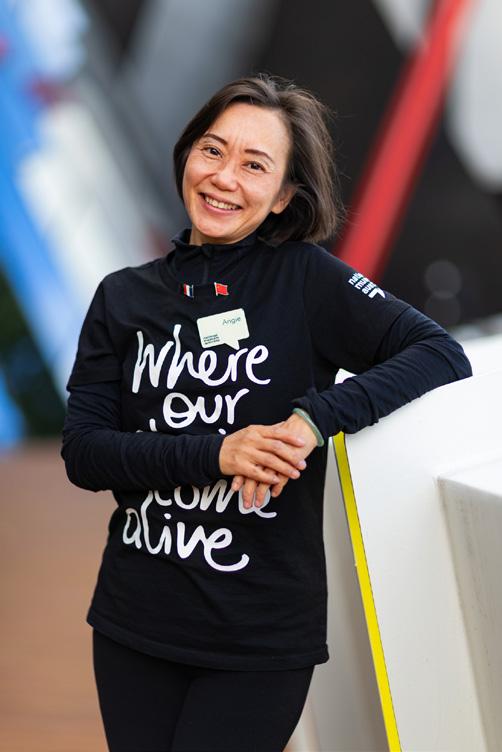
The award, made by the Canberra Region Tourism Industry Council (CRTIC), recognises excellence in tour guiding across the Canberra region and highlights the contribution guides make to the visitor experience.
Ms Ouyang joined the National Museum as a host in 2023 and has become one of its leading guides for VIP tours. Fluent in English, French and Chinese, she leads tours for visitors from Australia and overseas.
She will now represent the Canberra region at the Australian Top Tour Guide Awards, to be held at Parliament House in September.
CRTIC managing director Debra Beetham said the new award recognised the important role tour guides played in showcasing the region.
“Our tour guides are among the region’s greatest ambassadors,” she said.
“They share our stories, our culture and our unique attractions with visitors every day, helping create memorable experiences that encourage people to stay longer, explore more and recommend Canberra to others.”
RSV cases remain high among seniors
Despite a push for immunisation, respiratory syncytial virus (RSV) cases among older Canberrans remain largely unchanged to last year, according to AMA ACT.
However, infections of ACT children aged under five are about 40 per cent lower than this time last year. ACT Health has recorded 712 laboratory-confirmed RSV cases so far this year, including 97 in the week ending June 25.
AMA ACT said notifications among children aged 0-4 had fallen significantly compared with 2025,
of serious illness and urged eligible Canberrans to speak with their GP about RSV vaccination.
Under the National Immunisation Program, RSV vaccination is free for eligible pregnant women, adults aged 75 and over, and Aboriginal and Torres Strait Islander people aged 60 and over.
The ACT Government also provides free RSV protection for eligible newborns, infants and children.
Teddies looking for new homes
The Bold Bandannas, a Relay for Life team raising funds for cancer research, prevention and support services, are holding a stall at the Belco F&V Markets, 9am-4pm, on Saturday, July 11. They’ll be selling their “trademark” jams, marmalades, lemon butter, chutneys, pickles and sugar-reduced varieties. Apart from warm adult and children’s beanies, scarves, ear warmers and mittens, the organisers say there are lots of teddies looking for new homes.
A look at Niagra Therapy
Maryanne Kent will be telling the next meeting of the Narrabundah Probus Club all about a global organisation that has been in existence for more than 70 years called Niagara Therapy. The company has been involved with teaching hospitals, medical universities, research institutes and clinics since 1949. The meeting is at the Harmonie German Club, Narrabundah,from 11.15am on Tuesday, July 14. Probus is a network of social clubs that provide retirees with the opportunity to connect socially. It’s not-for-profit and is not affiliated with any religious or political organisation. Visitors are welcome.
‘Concerningly, the Commonwealth’s generous grant funding has helped camouflage the parlous state of the ACT’s
Budget misery as the chickens come home to roost
“Increasing the budget deficit by $547 million is worryingly imprudent – unless, of course, the government simply had no choice.” And it had no choice, say JON STANHOPE & KHALID AHMED.
The ACT budget is going backwards by $547 million and the Labor government will be forced to borrow to pay all or part of the interest bill over the four years to 2028-29.
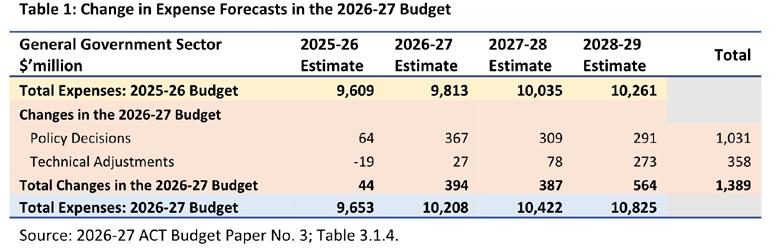
In previous articles on the current (2026-27) budget, we highlighted that from 2025-26 to 2028-29, expenses were forecast to increase by $1.389 billion above the 2025-26 budget forecasts.
We also said this increase would be only partly funded by increased revenue of $842 million. In other words, the budget is going backwards (ie, additional operating deficits) by $547 million.
Cash deficits total $2.3 billion over this period and the government will be forced to borrow to pay all or part of the interest.
The additional revenue ($842 million) comprises a windfall of $702 million from increased Commonwealth grants (Specific Purpose Payments and National Partnership Payments), and a net $140 million increase from other sources including taxation, GST revenue and fees and charges.
This figure is boosted by another windfall of $381 million in crossborder payments from NSW for health services.
However, taxation revenue will decrease from the previous forecasts. Clearly, without the increased federal grants and cross-border payments for health services, the overall revenue take would have been reduced.
The reason the government could not hold the forward estimates at the level declared in the 2025-26 budget is in part, because of the overly optimistic revenue forecasts, that we have previously noted, and in addition
because of the need to abandon previously unprincipled and now untenable measures (such as the health levy).
It’s a vivid example of the chickens coming home to roost.
There are also new policy measures on tax breaks for developers that the government has sought to offset through arbitrary increases in flat taxes and levies – which while apparently small for some, undoubtedly severely impact those for whom every dollar counts.
Table 1 details the changes to expenditure forecasts in the 2026-27 budget, aggregated into impacts of policy decisions and technical adjustments, as presented in the budget papers.
It is unreasonable for a government that asserts that a budget is “reasonable”, to add more than $1 billion in additional expenditure, when it has accrued a deficit of more than $7 billion, has mounting debt, and spiralling interest costs that have precipitated successive ratings downgrades.
Increasing the budget deficit by $547 million, as the government has done, is worryingly imprudent – unless, of course, the government simply had no choice.
Of particular note is the $564 million increase in the expenditure forecast for 2028-29.
That’s the year in which the budget was forecast, with great fanfare just four months ago, in the Budget Review, to return to surplus. We ask the question, why did the Treasurer not adhere to that forecast surplus, instead deferring it, as always, to next year? The answer is, of course, because he had no choice.
The differentiation between policy decisions and technical adjustments
Labor’s election promises for 800 more nurses, more specialists and more doctors... They’re not apparent from the staffing tables or the expenditure tables in the budget papers.
is moot. In principle, the forward estimates should present fairly and accurately, to the extent possible, the cost of current policy decisions in the budget and forward years.
Unless there is a change in service standards or targets, for example, wait times in hospitals or learning outcomes in schools or smaller class sizes, an increase in expenditure reflects an underestimation of the cost of an existing policy in the previous budget.
It may, of course, be packaged as policy decision(s) and new initiative(s), as indeed we have noted previously. Stark examples of this are the budget blowouts of more than $200 million in each of the past two years, which were presented because of new initiatives.
Similarly, technical adjustments, unless arising due to changes in accounting standards/policies or unforeseen changes in forecasting parameters, reflect a technical deficiency in forecasting, or inadequate provisioning – that is, just poor budgeting.
For example, a “technical adjustment” reflecting the ongoing cost of enterprise agreements negotiated during the year simply reflects an inadequate provision in the budget for an increase in wages.
Accordingly, a significant proportion of the technical adjust-
ments appear to reflect the impact of past policies not reflected in previous budget estimates. For example, technical adjustments include (Table 3.1.5, Budget Paper 3):
• Increase in expenditure of $35.3 million, attributed to “finance leases”, with $11.3 million of that expenditure incurred in 2025-26.
• Increase in interest costs of $71.6 million, with the profound explanation that higher expenses are “primarily due to the impact of borrowings”.
These are quite clearly the impact of policy decisions in previous years that were either not included in the budget or were not properly provisioned.
In July 2025, in our comments on the 2025-26 budget, we observed:
“Expenditure growth is an ‘anaemic’ 2.6 per cent per annum, which is not even enough to cover inflation and wage growth.
“Unless some magic efficiencies have been found in this budget, it is impossible to accept that service levels can be maintained with the budgeted funding growth.”
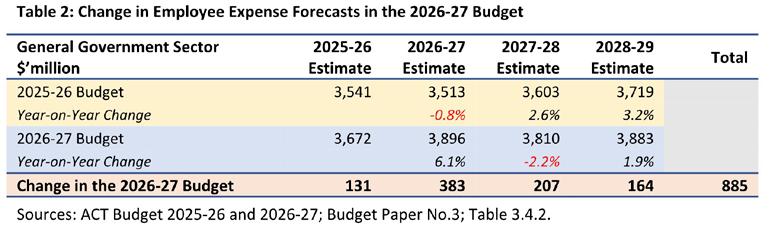
Table 2 reveals the change in employee expenses in this budget compared to the 2025-26 budget.
The table highlights that the expenditure forecasts and profile in the 2025-26 budget could not be sustained with an actual decrease (-0.8 per cent) in 2026-27. Accordingly, this budget adds $383 million to employee expenses in 2026-27.
However, the budget does not address the problem we highlighted, instead pushing it out. While the budget now provides for a 6.1 per cent growth in employee expenses in 202627, it forecasts a decrease of 2.2 per
cent in the following year (2027-28), which would require a “fix” in the next budget, presumably packaged as new initiatives.
Across the four-year period, the budgeted increase in employee expenses totals $885 million, constituting 64 per cent of the total increase in expenditure of $1.389 billion. Increased superannuation costs commensurate with wages add a further $185 million, taking the employee-related expenses to $1.07 billion.
An increase in interest costs is the next significant contributor to the expenditure increase in the budget. We will discuss this in a separate article.
It is not clear if the increased employee costs relate to the additional Commonwealth grants revenue being utilised for health services, in other words, more nurses and doctors? However, this isn’t apparent from the staffing tables or the expenditure tables in the budget papers.
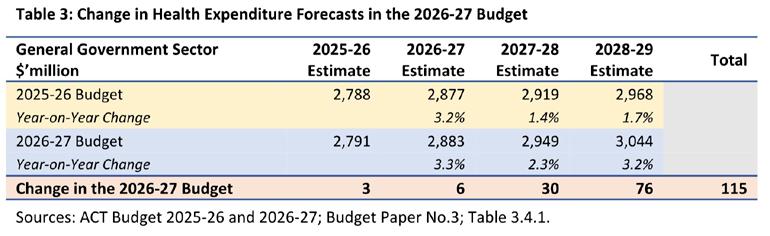
Table 3 reflects the change in health expenditure incorporated in the budget.
The budget has provided for only $115 million in additional health spending over the period 2025-26 to 2028-29. In reality, the nominal growth in health expenditure, averaging only 2.9 per cent annually, as reflected in the above table, is in fact a cut in real terms when health inflation, population increase and growth in demand are considered.
It is reasonable to conclude that a large proportion of the grants funding will not be utilised for the stated purpose, but rather to improve a bottom line that would otherwise have been much worse.
So, what is the real story on the expenditure side? It is clear that the chickens have again come home to roost, as with previous untenable and fanciful expenditure forecasts in previous budgets, with the likelihood of the pattern being repeated next year.
Notably – and concerningly – the Commonwealth’s generous grant funding has assisted in camouflaging the parlous state of the ACT’s finances.
It’s provided a measure of support, without which some services (health in particular) would be worse than they are.
The deficit and level of debt, already out of control and in a tie as the highest in Australia, would also be even more perilous.
Jon Stanhope is a former chief minister of the ACT and Dr Khalid Ahmed a former senior ACT Treasury official.
/ The Phantom of the Assembly
Frequently cited, the phantom that was never seen
Labor’s “Aquatic Strategy” promises that “options to deliver a new public 50-metre outdoor pool in Woden will be progressed”. But progressing options differ from a commitment, says BEATRICE BODART-BAILEY.
Who would have thought that a phantom would be discovered in our Assembly?
Since the Assembly’s stars somewhat lack the charisma and energy of those of the opera, the Assembly’s phantom is, accordingly, described as a bit thin and flat.
However, we hear it has had close encounters and is claimed to have been inspected by at least one minister and a number of senior bureaucrats.
Who would have imagined that what apparently had been reliably sighted was a mere phantom, though one so attractive that it beguiled even the minister.
It required the auditor-general and one of our trustworthy independents to point out that the sightings of a rigorous analysis of future community needs permitting changes for the requirements of a site were mere fictions of the imagination.
Pity our bureaucrats are apparently not trained to discover them. Or did someone discover that the touted report was a mere phantom, but was
afraid to act as whistleblower since it might upset the minister’s plans to have the present 50-metre pool in Woden replaced by one half its size?
As it turned out, the minister’s plans were totally unacceptable to the electorate, even though he promised to have the other half of the pool built elsewhere.
Yet it must be appreciated that the chief minister is somewhat in a bind, because the half-sized pool is part of a project providing more shoebox accommodation piled up high, producing a large amount of rates on a relatively small strip of land and thus, together with the developer, occupies a special place in the heart of our government.
Unfortunately, the discovery that the frequently cited report is nonexistent, changed little with regard to keeping the 50-metre pool.
Within its new “Aquatic Strategy”, the government states that what “will continue to support the local community” will be “the planned 25-metre public pool and splash play areas as part of the future private development
in the Woden Town Centre”.
As to the present pool, we learn that “options to deliver a new public 50-metre outdoor pool in Woden will be progressed.”
Progressing options differ from a commitment. Moreover, since “Woden” refers either to the town centre or the Woden Valley comprising 12 suburbs, the chances that a 50-metre outdoor pool will be built anywhere near the soon-to-be-demolished one are slim. Hopefully the intervention of the ACT Integrity Commissioner will make a difference.
Unfortunately, opaque decisionmaking seems to be a hallmark of our local government. When it affects generations to come, such as the investment in a public transport system, it is unacceptable.
The decision to invest in a
Do you want to:
• feel warm in winter and cool in summer?
• lower your energy bills?
• reduce outside noise?
• improve security and the value of your property?
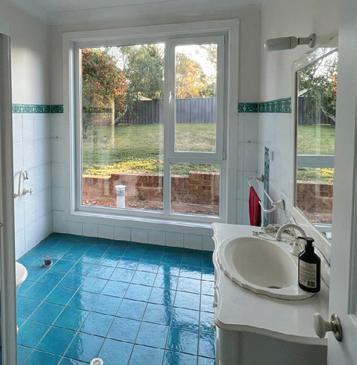
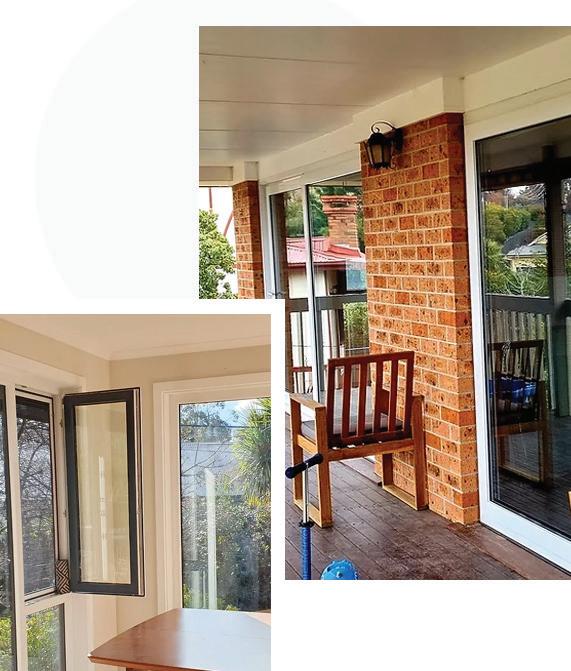
These are just some of the many benefits that home and business owners can achieve with our uPVC double and triple glazed windows and doors.
Windotek Australia is a leading provider of double and triple glazed uPVC window and door systems for the Canberra region. We help you achieve a higher EER rating, with 100% customised solutions that meet your needs and complement the style of your home.
costly Light Rail Transit (LRT) system rather than incorporate the existing buses in a Bus Rapid Transit (BRT) system (with roughly twice the benefit-cost-ratio) was taken at a time when the advanced technology of electric buses made LRT with its tracks and overhead wiring redundant.
In 2010, the Chinese company BYD rolled out its BYD K9, a new type of electric bus that, with its 250-kilometre range lithium batteries, was so successful that it was soon produced in the US.
Yet a 2012 Canberra comparison of LRT and BRT studiously ignored the new technology while it was being trialled worldwide.
Sydney Airport began a trial of the BYD electric bus in partnership with the Australian company Carbridge in 2014. In 2016, when Canberra signed the agreement with the present Metro operator for a package including a tram shipped from Spain (which, unfortunately, cannot climb Canberra’s hills) Sydney Airport began using the BYD “Electric Blu” buses for its seven-kilometre shuttle.
The year the 12-kilometre Canberra Metro between Gungahlin and Civic was inaugurated, BYD buses joined the NSW transit network operating on four lines.
What could have been the reason for Canberra’s failure to consider the latest technology when deciding on a
transport network shaping the city for generations to come?
Especially as LRT is not climatechange resilient, the extension to Woden will take nearly twice as long as any bus and destroy the unique bush atmosphere around Parliament House. Moreover, absurdly it is claimed that LRT is a “green” policy while producing large amounts of CO2 as the infrastructure is being built and carriages are shipped from the other end of the world.
An Environmental Impact Statement (EIS) will provide information for the final Parliamentary and Works Approval of the LRT extension to Woden. While the scoping document of the EIS requires “that the proponent engage a suitable qualified independent consultant to prepare an EIS, OR submits… an independent review… undertaken by a suitably qualified consultant”, these rules have not been observed. Cui bono – who stands to benefit?
The former chief minister Jon Stanhope and his senior treasury official Dr Khalid Ahmed have questioned under this masthead discussing the LRT extension.
Could the auditor-general and the integrity commissioner in this case also search for an answer?
Historian Beatrice Bodart-Bailey is an honorary professor at the ANU School of Culture, History and Language.
Unlike the opera, the Assembly’s phantom is described as a bit thin and flat.
That rumoured ‘third way’ is still to come forth
Just after the 2025 election drubbing of the Liberals, I started to hear more and more talk of a centre-left party being founded. The supposed third way.
Rumours were of wealthy backers prepared to contribute around $10 million to get the party up and running with a team of around 20-30 professional staff and, of course, money for campaigns, initially focused on areas with proportional representation so they could stand a better chance of being elected.
These rumours have never gone away, and with the demise of the Liberal primary vote and the rise of One Nation more and more I hear that they are still there. Even now extending to targeted rural and regional seats where there is a substantial urban population, such as Farrer, which makes sense if you look at how well centre-left independents are doing in the regions.
Labor has become the leading centre right party now identification wise in the electorate. The Liberals are too focused on wars/battles/ dramas with One Nation and have largely forgotten the cities, so identification there is waning significantly. They have effectively wedged themselves between Labor to the centre right and One Nation to the hard
right, which is a very tight space of around 10-15 per cent primary vote. Or minor party level.
This leads me to what I think many of us have missed, is One Nation’s growth partly down to a lack of centrist options, less the rise of the conservative vote?
To the numbers. Primary votes don’t necessarily win you elections any more, but they can lose them. So let’s compare primary votes from the last three federal elections by rough identification of ideology and where I think they are all at now. Yes, yes, my thoughts only, get the pile of rocks ready.
Politics has changed at a national level in a decade, especially the slow rise of One Nation, the only significant party to have grown its primary
every single federal election.
Around two thirds of voters are middle. That middle lives in large urban centres (+20k pop) where cost-of-living is our number one issue. The only offerings in the centre were Labor and the Liberals to those two thirds.
Remove one and there is space. A lot of it. Have dissatisfaction with the other, and where does that middle (and 2026 angry) voter go?
There is no centre offering, so they go to the party that matches their emotions, not their ideology.
If there was a party that could offer both, then I believe that they would currently be between 16-22 per cent primary right now, comprising some disenchanted Labor voters and most of the urban moderate base.
One Nation would be looking at a
I think many of us have missed that One Nation’s growth is partly down to a lack of centrist options and less the rise of the conservative vote.
low teens level for its primary and be nowhere near the voice and share it is now.
So why hasn’t this happened? Why isn’t there a Teals party?
The big three structures of a modern party; leader, party and policy, aren’t there. If they were then we’d be talking.
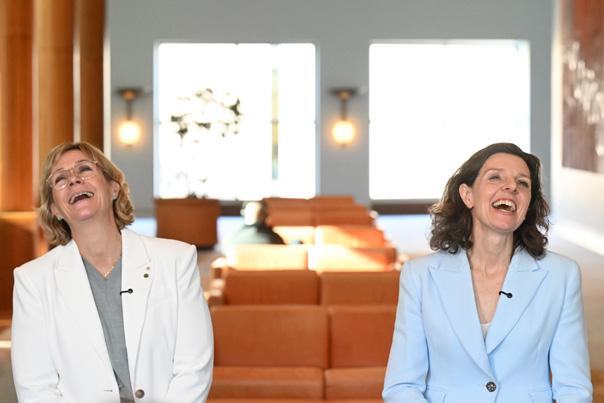
Example. The Community Strong Australia party recently set up by Allegra Spender and Zali Steggall couldn’t decide on a clear leader. That matters because building campaigns is done around the leader’s profile. Without a clear one then resonance/ connection at a broader level fails. So they are stuck right now.
Next, the party itself. We have a teal movement right now, but not a party. That means those associated with the movement don’t agree enough to get that party up and
running. They still have differences in specifics, not necessarily ideology.
Those subtle differences are enough to stop the movement from getting past the friendly zone and into the formality of a party and serious contenders at the next election.
Not to mention of course that many of the independents want to stay independent, even if backed by the same people.
Finally, policy. As noted above on policy, without a party to enable unity and consistency on the policy front then it is a handful of people who agree on ideology but not policy. There is no Labor solidarity. There are subtle differences. Differences matter in campaigns. So scratch that, too.
So does this mean the third way will remain a myth in Australian politics? For now, maybe, but I think if someone builds it, they will come.
Dr Andrew Hughes lectures at the ANU Research School of Management, where he special ises in political marketing.
The Community Strong Australia party, recently set up by Zali Steggall, left and Allegra Spender, couldn’t decide on a clear leader. Photo: Lukas Coch
Break the law: what sort of democracy is this?
I attended the Woden Valley Council meeting on July 1 and asked a question of the Labor MLA for Murrumbidgee and government minister, Dr Marisa Paterson, about the Phillip Pool contract.
I asked if the ACT Integrity Commission reported that due process hadn’t been fol lowed with regard to changing the territory plan from a 50-metre pool to a 25-metre pool would the ACT Government go back to the drawing board. The answer was a resounding NO.
So this would mean the ACT Government can break the law, give false information, not listen to the community and all’s good.
What sort of democracy do we call this?! I await with interest the findings.
An opportunity to learn from best is lost
Thank you, Lauchlan McIntosh (“Put the community safety grants back on the road!”, CN July 2). You have made an important contribution to road safety policy in the ACT.
In addition to the pause of the road safety grants program, the ACT has recently declined opportunities to work with external road safety stakeholders on at least two occasions: firstly, to hold a forum into the enforcement of e-devices and secondly to support holding Australasia’s major road safety conference in Canberra.
It is pleasing to see in the media that there is now a focus on enforcement around e-devices although this is apparently more in response to desecration of playing fields than a concern for safety.
The hosting of the Australasian Road Safety Conference would be an opportunity to learn from best practice and to stimulate the local economy through hosting the largest road safety conference in the southern hemisphere. Disappointing!
Rod Katz, via citynews.com.au
Revealed: what light rail is really costing us
Smart Canberra Transport has updated its independent cost estimates for ACT light rail Stages 1, 2A and 2B, prompted by an announcement by Chief Minister Andrew Barr “to rein-in capital expenditure on infrastructure” and that a decision to progress Stage 2B to Woden would not be taken until after the 2028 ACT election.
This decision followed the Eslake review in 2026 of ACT finances, commissioned by the ACT Legislative Assembly, which, among other things, criticised the funds being spent on infrastructure instead of on more important projects for the community.
The report estimates the whole-of-life costs – construction plus 20 years of Operations & Maintenance (O&M) – expressed in 2026 dollars for: Stage 1 (Gungahlin-Civic), $1.9 billion; Stage 2A (Civic-Regatta Point) $2.285 billion; Stage 2B (Regatta PointWoden) $6.893 billion; Stage 2A+2B $9.178 billion; and all three stages $11.078 billion.
Of particular concern is the extent of interest payable on the capital cost of Stages 1 and 2A, which has never been made public by the government.
These have been estimated as follows, paid for over the 20-year O&M phases: for
1943 election and formed the Liberal Party. It only took five years for the new Liberal Party in coalition with the Country Party to win government and serve for 23 years.
It is clear that the anti-Hanson brigade are rattled by the rise of ON, as it emerges as
CN letter writers Ray Peck with his limericks and Sue Dyer’s analogy with Kath and Kim attempt to satirise a political shift across Australia that does not suit their view
Paul Temby, via email
Letter writer Mike Rendall rambled on endlessly about the word “divisive” as used
I look forward to his analysis of the other phrase he quoted from Pauline’s speech: “This beautiful country belongs to all Australians born here and those who have
Vili Kemenes, Cook
pa), so incurring a cost of $300 million over 20 years, paid for by additional ACT debt forever. Although a decision to proceed on Stage 2B is now postponed until after the 2028 election, it is still edifying for ACT taxpayers to know the probable, huge cost of this stage and the impact it could have on ACT finances, especially given that all of light rail costs, for all stages are and would be financed by ACT debt, which is already at a serious level.
The report may be read on alogstudycentre.com.au
Max Flint, co-ordinator, Smart Canberra Transport, and principal, Australian Logistics Study Centre
Hanson a calculated merchant of division
Letter writer Sue Dyer’s call for new episodes of Kath and Kim to explain some Hansonisms and One Nation “policies” is insightful (“Kath and Kim needed to explain policy”, CN, July 2).
With her unique way of “explaining” things, Hanson is a natural for a major role. The image of Kath imploring Hanson to “Look at moy! Pauline look at mooyyy” when trying to explain the meaning of “monoculchure” would be priceless. And even Kim would get the need to reduce emissions, although there may be some confusion with the bodily sort.
But in hindsight, Kath and Kim were funny and made us laugh at the bogan within us. Hanson is definitely not funny and is way beyond simple boganism. She is a real threat to a rational and cohesive society, a calculated merchant of division. Our task is not to parody her politics, but to confront it with evidence, clarity, and civic seriousness. We owe it to our democracy.
Ray Peck, Hawthorn, Victoria
Anti-Hanson brigade rattled by One Nation rise
William Gin in his letter “Australians want a government that listens” (CN July 2) is correct to question columnist Andrew Hughes, who dismisses One Nation because they don’t possess the organisational machinery that Labor and the Liberals possess.
Ginn also rightly says history shows that new parties can rapidly get organised. In 1944 Menzies rapidly organised fractured conservative parties that were smashed in the
dioxide (CO2) is beneficial (“Ignoring physics, biology and engineering”, letters, CN June 25).
He accuses others of ignoring physics, but ignores it himself.
Simply put, CO2 molecules trap heat. The excess CO2 we have dumped into the atmosphere and oceans since the beginning of the industrial revolution means the planet is warming faster than it has for thousands of years.
It’s fine that he is not worried, but it would be good if he stopped arguing against the findings of all the major scientific bodies in the world who have unequivocally accepted that the CO2 from burning fossil fuels is the primary cause of the unprecedented global warming we are experiencing.
Anne O’Hara, Wanniassa
Wildlife cull causes community distress
White fragility rather than white racism?
Gwyn Rees presented an argument that the tragic death of the young Englishman, Henry Nowak was directedly as a result of white racism (“How the ‘race card’ threatens fairness”, CN June 25).
It is possible that Mr Rees has thoroughly investigated the circumstances around this case, which leads him to no other conclusion. However, he did not mention the tragedy of this case is that the police arrested the young man based on a complaint and failed to respond to his pleas for medical attention.
Unfortunately, this is a situation that has occurred on many occasions to people in custody including in the AMC.
Mr Rees quotes the sentence given to the complainant who was later revealed to be the attacker and the comments from the judge at his trial. None of this was known by the police at the time of the arrest and it was a mistake that tragically cost a life.
It was, however, a mistake, not a vexatious attack by police on a white man because he was white, unlike, for instance, the Rodney King attack in Los Angeles in 1992.
He was beaten to death like so many black Americans, because he was black. The police officer who killed Floyd was convicted of murder.
Riots ensued as a result of Mr Nowak’s death, despite calls from his father that his son’s death not be used to create further division, hatred or tension within the community and he condemned the violence.
Mr Rees has clearly been offended by the comments made by Australia’s Race Discrimination Commissioner and his article seems to ironically display a grievance against a perceived loss of white privilege. His distortion of the situation comes across more as white fragility than white racism (the book, White Fragility, by Robin Di Angelo will explain this concept in detail).
Tricia Richardson, Duffy
Warming comes from carbon, Anthony
Anthony Hordern makes the common mistake of assuming that because life on Earth is “carbon-based” more carbon
linked, we would expect hospitals to sell only highly nutritious food and drinks around the clock.
The cost of keeping a cafeteria always open while selling highly nutritious food and drinks (preferably at cost) should be totally justified by having healthier patients, visitors and staff.
While dietician-recommended food is not a cure-all, optimally-fed people tend to require less expensive medical interventions.
Importantly, the dictum attributed to Hippocrates (460-370 BCE), “Let food be thy medicine and medicine be thy food”, is still valid and worth upholding and implementing.
George Gapella, Kaleen
Are we plunging down a sinkhole?
Canberra’s natural spaces provide for an ecological interconnectedness between its human and native wildlife inhabitants. But right now, kangaroos, wallabies and their joeys are being shot and killed every night, practically in our own backyards. This is normalising violence towards our native wildlife and sends the message that they are essentially disposable, and cruelty against them acceptable.
Kangaroos play a fundamental role in maintaining the health of Australian ecosystems by shaping vegetation structure, dispersing seeds, and creating microhabitats.
The ACT Government’s kangaroo culling is inhumane, ecologically flawed and causes widespread community distress. We must stop treating our native wildlife as disposable and restore local nature reserves to the genuine sanctuaries they were meant to be.
Blanca Furze, via email
Salute to the standout writers
I continue to be impressed by the enormous talent pool of writers around the ACT.
In your CityNews edition of June 25 alone, among those who contribute or are mentioned and stand out are Andrew Hughes, Michael Moore, Clive Williams, Anthony Hordern and Helen Musa.
The Overalls, John L Smith, Leon Arundel, Jack Kershaw, Phil Potterton, Mike Quirk, the late Robert Macklin and Janine Haskins also come to mind.
Regular readers will know the important contributions these people make and have made to the debates we need to have and to the local community.
I particularly enjoy Andrew Hughes’ insightful columns. All parliamentarians, especially local, should read them.
Herman van de Brug, Holt
Shouldn’t hospitals offer healthy food?
The Emergency Department at North Canberra Hospital lacks an overnight cafeteria.
While vending machines are available 24/7, the food and drinks on offer are of limited nutritional value.
Since
and health are fundamentally
My fear is we have become disconnected from continual improvement and better government. Our poor financial balance sheet, destroyed AAA credit rating and embarrassing economic record seems to support this concern.
As do CityNews’ excellent opinion pieces of Jon Stanhope and Khalid Ahmed and many other competent people who have looked closely and reported on the Barr government’s stumbling and our lost, ineffective opposition.
Are we plunging down a sinkhole?
John Lawrence via email
The slippery slope warning not heeded
Early in my role as president of ACT Right to Life, I presented a submission to the Select Committee on Voluntary Assisted Dying Bill 2023.
I gained an early impression that the level of openness might be low and it was possibly a fait accompli that the Bill would pass possibly with some modifications. As I look back at what happened with the introduction of VAD (euthanasia), I wonder what the government really researched or listened to.
The warning about the “slippery slope” in a thorough submission from the Australian Care Alliance was not heeded.
The Catholic Church presented the clear moral position from a Christian perspective opposing the further expansion of “a culture of death”.
Culture is built upon the foundation of morality and this was clearly once the case. It has been replaced by a fluid and uncertain substitute that now includes the offer of death as a solution to suffering. It often appeals to a false sense of mercy in good people.
Humans grow until death and this includes embracing the mysterious journey of suffering. The best is discovered in the part that loved ones offer as they accompany them through this process ensuring that the best care is provided including an enduring love.
Eugenics have no legitimate part in our society. Every life is of value and has intrinsic dignity which as a society we should protect.
John Kennedy, president, ACT Right to Life
PLANNING / Kingston Arts Precinct
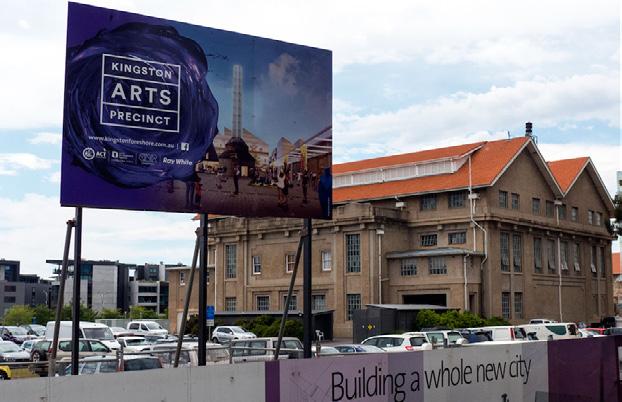
Hold the arts, we’re pivoting to more apartments
With tenders called, with ‘indecent haste’, RICHARD JOHNSTON says we’re back pretty much at square one again, after 15 years of fruitless effort around the moribund Kingston Arts Precinct.
Local residents have been engaged for more than 15 years in consultations over the Kingston Arts Precinct.
It was supposed to be a vibrant hub of the foreshore, a home for arts groups with gallery space and a theatre, some retail space and housing, while conserving the important heritage assets of the former Powerhouse (now Glassworks), Fitters Workshop and others.
The first phase involved extensive investigations and reports by consultants to the ACT Government leading to adoption by the Government of the Kingston Section 49 Indicative Master Plan in 2014. The then Land Development Agency (LDA) put out a “Request for Proposals for the Sale and Development of The Kingston Arts Precinct” in 2015, which resulted in Geocon being declared the successful tenderer in 2019.
Unfortunately, it became clear that Geocon and its architects were not interested in the government’s 2014 Master Plan or the local community’s views, and came up with their own,
very dense development proposal, completely surrounding the important former Powerhouse building and screening it from external view.
After two years of fruitless argument, Geocon and the government parted ways. The LDA was abolished and the (now) Suburban Land Agency (SLA) took back control of the development in 2021.
There was then a period of good community involvement leading up to the production of a place brief (a vague but “feel-good” document) that was supposed to lead into the production of a “Concept Estate Development Plan”.
However, interaction with the community seemed to cease in 2023 and the project fell into a proverbial black hole until it was announced last year that delivery of the arts facilities was now to be the responsibility of Infrastructure Canberra (iCBR), while the SLA would handle the release of the mixed-uses part.
Then, late last year a subdivision design application (SDA), with about 70 supporting documents including an estate development plan, was put out for public comment. This resulted in 25 representations, particularly about
development.
In response the SDA was “amended” to only relate to the new block boundaries, many of the supporting documents were removed and the issues raised in the representations were kicked down the road to be dealt with in subsequent development applications. The only planning controls retained in the amended SDA were:
• A “setback zone” on the mixeduse site (to preserve a view of the Powerhouse).
• A “mid-block link” (Trevillian Quay “extension”).
• Emergency service vehicle access easements.
• An “urban grain” requirement – that
Not much to show for 15 years of effort.
The Territory Planning Authority (TPA) subsequently approved this version of the SDA.
In response to the Kingston & Barton Residents Group’s complaint that this process was not meaningful consultation (as per section 11 of the Planning Act 2023), the TPA said: “Consideration under this section and the Planning (Good Consultation) Guidelines 2023 is not a consideration in the DA process.”
(Or anywhere else apparently!)
The TPA “also noted that development impacts from future development proposals are considered once applied for” (presumably by iCBR
and the private developer). All of the representations (including another seven on the second-stage “consultation”) were not relevant to the TPA’s considerations of the SDA.
Then, just before the recent ACT Budget, the chief minister announced that the arts facilities to be delivered by iCBR would be put on the backburner as one of the “savings” of infrastructure expenditure.
Only the mixed-uses component (ie, the money-making part) would proceed, together with a new public car park – size and access arrangements to be negotiated with the private developers.
The SLA then proceeded, with indecent haste, to put out another request for tenders. Apparently, they were under some pressure to do this before the end of the financial year.
So we’re back pretty much at square one again, after 15 years of fruitless effort. Is this an example of the wonderful new “outcomesfocused” planning system?
Key features of that seem to be minimising any upfront controls on what developers can do and downgrading community involvement in planning matters.
Richard Johnston is a life fellow of the Planning Institute of Australia and president of the Kingston & Barton Residents Group Inc.
OPINION / Australia needs better, not bigger
How the obsession with growth holds us back
“As another financial year begins, the national conversation should move beyond the assumption that bigger is always better.” CLIVE WILLIAMS says the question is not how to make the economy bigger, but how to make Australians better off.
As another financial year begins, Australians will again be told that economic growth, population growth through migration, more housing construction, greater consumption, and higher government revenue are the keys to our brighter future.
Economists and politicians often speak as though a larger economy is automatically a better one – as though more people, more buildings and more activity must mean national progress and higher living standards.
However, for Australia this obsession with quantitative growth has become a liability. The real question is not how to make the economy bigger, but how to make Australians better off. By that measure, the case for endless growth is far weaker than its advocates claim.
Recent experience illustrates the problem. GDP may rise, but when the population grows almost as quickly, living standards per person stagnate.
Politicians celebrate economic expansion, while ordinary Austral-
ians face unaffordable housing, longer commutes, crowded hospitals, overstretched schools and declining confidence that their children will enjoy the same opportunities as they did.
That is not progress. It is expansion without improvement.
Housing provides the clearest example. Rapid population growth adds demand faster than supply can respond, producing not shared prosperity but intergenerational inequality.
Existing homeowners may benefit from rising values, while younger Australians confront impossible mortgages or lifelong renting. A nation that cannot house its citizens affordably should be cautious about celebrating growth.
Infrastructure tells a similar story. Every additional million people requires more roads, rail, hospitals, schools, water and energy. Yet governments too often approve growth first and struggle to provide the supporting infrastructure later. Congestion increases, services come under strain and quality of life gradually declines.
Rapid population growth adds demand faster than supply can respond
Australia also faces physical limits that economic rhetoric often ignores. Although geographically vast, much of the continent is arid and environmentally fragile.
Most Australians live within 50 kilometres of the coast, where land, water and infrastructure are already under pressure. Endless population and consumption growth inevitably place further stress on farmland, biodiversity, water security and urban liveability.
This does not mean rejecting economic development. It means distinguishing between quantitative growth and qualitative sustainment.
Quantitative growth asks: How do we make the economy bigger?
Qualitative sustainment asks: How do we make Australians better off?
The latter prioritises productivity, innovation, education, health,
housing affordability, environmental resilience and rising living standards per person. The quality of economic activity matters more than its sheer volume. A modest increase in GDP is more valuable if it delivers higher real wages, better public services, affordable housing, and a healthier environment.
A mature economy should not rely on population growth to conceal weak productivity. When businesses can expand simply by adding more workers and customers, the incentive to invest in technology, skills and efficiency diminishes. Australia needs a smarter economy, not simply a larger one.
Governments, meanwhile, have their own incentives to favour growth. More people generate more tax revenue, more GST, more stamp duty, and higher land values. That may strengthen government finances, but public policy should ultimately be judged by outcomes per person, not by the size of the aggregate economy.
The better model for Australia is durable national wellbeing. That means asking tougher questions. Can young Australians afford homes? Are real wages rising? Are hospitals and schools improving? Is infrastructure keeping pace? Are cities becoming more liveable? Is productivity increasing? Are our natural systems being protected?
These are more meaningful
measures of success than GDP alone.
Australia does not need a bigger economy at any cost. It needs to become more productive, resilient, liveable and fair.
Growth that genuinely improves living standards is welcome. Growth that merely inflates GDP while worsening housing affordability, increasing social inequality, and degrading the environment is not progress.
As another financial year begins, the national conversation should move beyond the assumption that bigger is always better.
For a country with finite land, water, infrastructure and social capacity, qualitative sustainment is not anti-growth. It is the kind of growth that makes sense.
Canberra illustrates the point. When I arrived at the Australian National University, it was said half-seriously that economists rarely needed to change their examination questions because every year the answers changed.
Four decades later, Canberra is far larger by almost every measure. Yet many long-term residents, me included, would argue that it was a far more liveable city a generation ago. Our lived experience may well reflect a broader Australian reality.
Prof Clive Williams MG has lived in Canberra since 1980.
KINGS AVENUE, PARKES ACT
National Pain Week
Raising awareness, improving lives
Pain affects millions of Australians every day, yet it is often misunderstood, under recognised and accepted as something people simply have to live with.
National Pain Week shines a spotlight on the impact persistent pain has on individuals, families and workplaces, while encouraging greater understanding of the many treatment options now available.
Unlike short term pain that signals injury or illness, persistent pain can continue for months or even years, affecting mobility, sleep, mental wellbeing, employment and overall quality of life.
It can occur at any age and may result from injury, surgery, arthritis, nerve conditions or other chronic health issues.
The good news is that advances in pain manage -
ment mean many people no longer need to accept pain as an unavoidable part of life.
A personalised approach, combining medical care, physical therapies, exercise, lifestyle changes and education, can help reduce pain, improve function and restore confidence. Early assessment is often the key to achieving the best outcomes.
This special feature highlights the importance of understanding pain and the professionals working across a range of disciplines to help people manage it effectively.
Whether your pain is recent or has been present for years, seeking expert advice can be the first step towards regaining independence, improving wellbeing and returning to the activities that matter most.
A practical resource for health and wellbeing
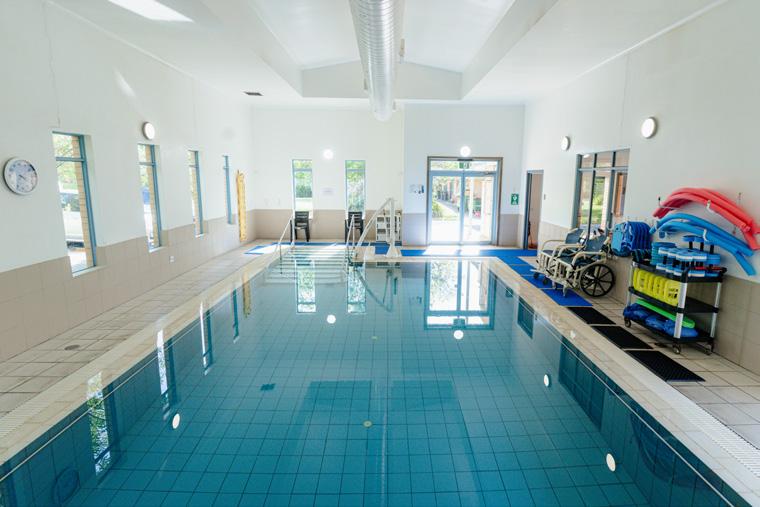
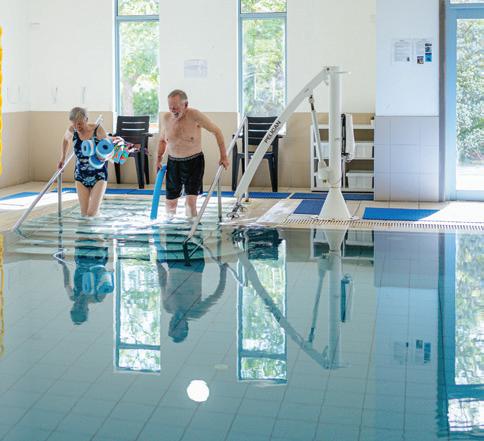
Owned and operated by Hartley Lifecare, the Hartley Hydrotherapy Pool is one of the few dedicated hydrotherapy facilities in Canberra that is both fully accessible and open to the wider community.
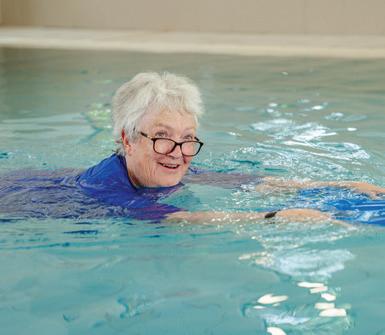
Based in Hughes, the pool provides a consistent 34 degree environment designed to support rehabilitation, pain management and improved mobility. For people recovering from injury, living with disability, managing arthritis or other chronic conditions, water based therapy can enable movement that is difficult on land.
What sets this facility apart is its accessibility and flexibility. It can be booked for self managed sessions or exclusive use, making it suitable for individuals, allied health professionals and small groups. The setting is practical and community focused rather than
commercial or high traffic.
Importantly, community based hydrotherapy expands access beyond acute care settings and short term treatment plans. It gives people a local, reliable option to continue therapy at their own pace. They also create opportunities for preventative health, particularly for older Canberrans seeking low impact exercise. As demand grows for inclusive health infrastructure, facilities that are affordable, accessible, and centrally located play a critical role. The Hartley Hydrotherapy Pool is a straightforward example of community focused design meeting real need.
Hartley Hydrotherapy Pool
Call 02 6185 1653 or visit www.hartley.org.au/hartley-hydrotherapy
Hartley Hydrotherapy Pool
Located centrally in Hughes, our pool is available to everyone in the Canberra community and surrounding areas, with flexible options for self managed or exclusive use.
Hydrotherapy is a gentle, water-based therapy designed to improve movement, reduce pain, and support recovery.
National Pain Week
Understanding menstrual disorders and menopause when your body is telling you something
For many women, menstrual symptoms are accepted as simply “part of life”. However, heavy bleeding, severe period pain, irregular cycles or bleeding between periods are not always normal and may signal an underlying condition that deserves medical attention.
Menstrual disorders can affect women of all ages and may stem from conditions such as Endometriosis, Adenomyosis, Fibroids, Polyendocrine-metabolicovarian-syndrome (PMOS), hormonal imbalances or Thyroid disorders. Left untreated, these conditions can impact fertility, iron levels, mental wellbeing and overall quality of life.
Dr Shiamala Suntharalingam at Canberra Family Planning has a special interest in women’s health and provides personalised assessment and management of menstrual concerns in a respectful and supportive environment. Every woman’s experience is different; therefore, treatment begins with carefully listening to symptoms, understanding individual health goals and developing a tailored management plan.
Canberra Family Planning also offers dedicated Perimenopause and Menopause Health Assessments, providing a comprehensive review of this important stage of a woman’s life. The assessment includes a 30-minute consultation with a women’s health nurse, followed by a 15-minute appointment with a GP to discuss symptoms, overall health and personalised management options. This collaborative approach helps women better understand hormonal changes and develop strategies to manage symptoms while supporting long-term health and wellbeing.
Pain service with a difference
Those living with chronic pain or a disability shouldn’t find themselves stuck without access to reliable help, says Arthritis ACT CEO Rebecca
required. Early diagnosis often leads to more effective treatment and better long-term health outcomes. No woman should feel she has to live with debilitating periods, unexplained menstrual changes or disruptive menopause symptoms. Seeking medical advice can provide reassurance, answers and access to effective treatment, empowering women to regain confidence and improve their quality of life.
“Arthritis ACT offers ongoing programs for people who need any type of support with their chronic pain or debilitating fatigue conditions,”
Ahead of the upcoming National Pain Week, Rebecca says they will be hosting a selection of free seminars that will be open to the com munity to attend. ‘We are also launching our new recorded self-paced pain program to assist people to manage their pain conditions’.
Providing support and helping people in a practical way with lower cost programs, Rebecca says it’s a rewarding experience to know that the work they do helps people in their day-to-day lives.
“These kinds of services make such a big difference in people’s lives, assisting them to make connections and realise they are not alone with their struggles.” she says.
“We want to provide them with the support they need so they can participate fully in the community.”
An allied health practice with a difference, Rebecca says they have physios and exercise physiologists available, as well as a team of peer workers, many of whom have lived experience of the conditions they support others with.
RSVP for the pain program or information sessions at info@arthritisact.org.au or call 1800 011041.
Treatment options vary depending on the underlying cause and may include lifestyle advice, hormonal therapies, long-acting contraception, medical management or referral for specialist investigations when
Canberra Family Planning Dr Shiamala Suntharalingam Molonglo Valley Medical Centre. Call 02 5110 3155 or visit canberrafamilyplanning.com.au
• Womens Health – from Menarche to Menopause and beyond
• Fertility Investigations and referrals
• Antenatal and PostNatal Care
• Child Health Checks/Immunisations and acute and chronic presentations
• Mental Health and Eating Disorders Management
• Men’s Health
Chronic disease management
Eating Disorder Plans -for Obesity Management
Travel Health
Immunisations – child and adult
Sexual Health
Contraception – Implant and hormone/copper
IUD insertions and removals
• Unplanned Pregnancy Management
• Medical Termination of Pregnancy
• Referrals for Surgical Termination of Pregnancy
• Travel Medicine
• Preventative Care
• 30+ year Heart Health Checks
• 45-49 year Health Checks
• 75+ year Health Checks
Diabetes Screening
Osteoporosis Screening
Overweight and Obesity Management
Iron Infusions
Workers Compensation Claims
Biopsy and Excision of Skin Lesions/Cryotherapy
– not head and neck
Arthritis ACT CEO Rebecca Davey.
Dr Shiamala Suntharalingam.
MEET OUR EXERCISE EXPERTS
Holly Hazelwood – Exercise Physiologist
Holly is a former sports journalist who believed so strongly in the power of exercise to heal and nurture that she undertook her 4 year degree in Exercise Physiology. Holly is be able to work with people directly to support them through their pain journey and regain independence and a joy for living again. Holly provides one on one and group exercise classes both on land and at our hydrotherapy centres to support people to gain freedom from chronic pain.
Sophie Bullock – Exercise Physiologist
Sophie has post graduate qualifications in hydrotherapy, and as a non-sports centred Exercise Physiologist, helps clients who struggle with engaging in exercise due to a lack of sports participation. Sophie’s goal is to improve clients health via our hydrotherapy program, gym instruction and in-home visits. Sophie also is known for her passion for working with children.
Nick van Diemen – Physiotherapist
Nick (they/them, he/him) has returned to Canberra after completing a Master’s in Physiotherapy at the University of Queensland. Their passion comes from a love of science and helping people. With eight years in disability support, Nick brings broad experience and enjoys working with clients across a wide range of needs.
Liam Barber – Exercise Physiologist
Liam has a passion for working with paediatric and mental health conditions, as well as supporting people to pursue a better quality of life. He has experience working across a wide range of musculoskeletal, neurological and cardiovascular conditions across all age groups.
Blake Dean – Exercise Physiologist
Blake has expertise in improving clients mobility and decreasing their pain through appropriate exercise. Blake delivers our ‘My Exercise’ program, targeting the relief of lower back and sciatic pain, shoulder and upper body concerns as well as leg, hip and ankle interventions – for those who do not qualify for physiotherapy-led GLAD programs. Blake provides individual & group exercise for younger people with a disability. Blake treats clients in-clinic or via our hydrotherapy program as well as attending your gym with you.
Sarah Solano – Exercise Physiologist
Sarah believes that exercise is the best medicine. She is an Accredited Exercise Physiologist with her degree in exercise physiology and rehabilitation. Previously Sarah was a swim teacher, personal trainer and an allied health assistant in the hydrotherapy field.
Natasha Elword – Exercise Scientist
Tash discovered her passion for exercise after completing her Certificate IV in Personal Training in 2015, later earning a Sport and Exercise Science degree from the University of Canberra. She joined Arthritis ACT in 2019 and now supports group classes, exercise programs and administration. Outside work, she enjoys family time, running, hiking and cooking.
Nat & Grace – Allied Health Assistants
Nat has recently completed studies as an Allied Health Assistant and has returned from a hiatus, during which she worked with us in administration, to provide more hands-on support. Grace is a student exercise physiologist who brings enthusiasm and care to supporting our clients to achieve their health and wellbeing goals.
• GLA:D® Program for hip and knee osteoarthritis.
• Education and supervised group sessions to build strength and confidence.
• Pain management strategies to reduce medication use Tailored support including preparation for or avoiding joint replacement.
As we recognise National Pain Week, it’s important to remember that not all pain appears without warning. Dental problems often develop silently, with little or no discomfort until they become more serious.
Regular dental check-ups and professional cleans are one of the best ways to prevent pain before it starts.
During a routine examination, your dentist can identify early signs of tooth decay, gum disease, cracked teeth, worn fillings and oral cancer. Detecting these issues early often means treatment is simpler, less invasive and more affordable.
A professional clean removes plaque and hardened tartar that brushing and flossing alone cannot eliminate. At My Dentist Canberra, we also offer Airflow® Guided Biofilm Therapy (GBT), an advanced cleaning system that uses warm water, air and fine powder to gently remove harmful biofilm, stains and plaque. It provides a thorough yet comfortable clean and is particularly beneficial for patients with sensitive
teeth, braces, implants or gum disease.
Many people postpone visiting the dentist because they are not in pain. Unfortunately, once a tooth begins to hurt, the problem may already require more extensive treatment. Preventive dental care helps avoid unnecessary discomfort while supporting long-term oral and overall health.
This National Pain Week, consider making your dental health a priority. A simple check-up and professional clean can help keep your teeth and gums healthy, reduce the risk of future dental pain and give you confidence in your smile.
At My Dentist Canberra, we’re committed to helping patients stay healthy through prevention, education and gentle, personalised care.
My Dentist Canberra 36/21 Thynne Street, Bruce. Call 02 6225 2855 or visit mydentistcanberra.com.au
The Future of Dental Cleaning is Here.
Say goodbye to traditional scraping! My Dentist Canberra advanced Scale & Clean with EMS AIRFLOW® technology uses warm water, gentle air, and fine powder to give you: Improved gum health with guided Biofilm Theraphy
During National Pain Week, the focus often turns to treatment, but prevention and everyday support matter too. For many Canberrans, physical discomfort has an impact on the ability and confidence to exercise and stay active.
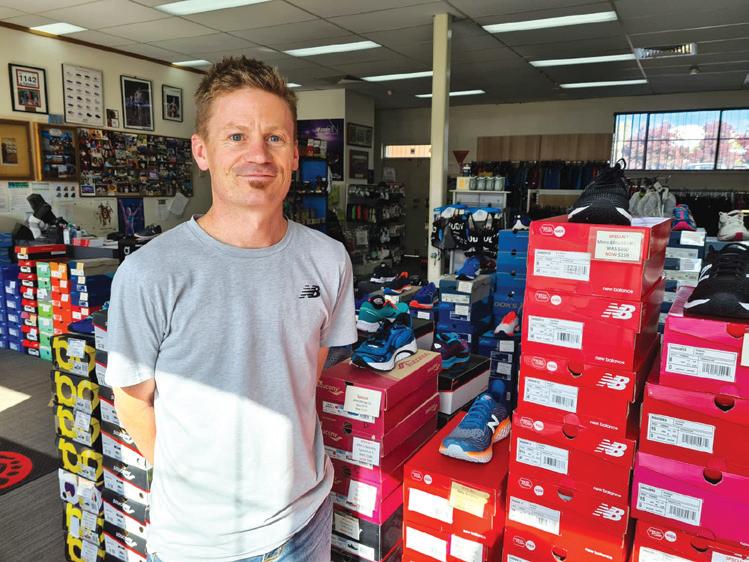
The Runners Shop in Phillip will help you find footwear and gear that helps you exercise more comfortably. As an Australian family-owned business, the team is passionate about helping the community get on their feet and stay active, whether they are runners, walkers or gym enthusiasts.
The right shoe can make a meaningful difference to how you move! Adequate support and cushioning along with the correct fit will give you confidence to
keep you exercising.
The Runners Shop offers a great range of shoes suitable for running, walking or going to the gym along with apparel, plus all your accessories like socks, and nutrition.
With their team of running enthusiasts, they also bring a first hand knowledge of the products they sell, and will take their time to guide customers in finding the right pair of shoes.
The Runners Shop 76 Dundas Court, Phillip. Call 6285 3508, or visit therunnersshop.com.au
The Runners Shop owner, Nick Walshe.
Supporting patients through complex and ongoing health challenges
Canberra Family Health Centre’s founder, Associate Professor Dr Maryse Badawy, is the principal practitioner at her Deakin clinic, where she manages the clinical responsibilities of a practitioner and oversees the day-to-day operations of the practice.
“There is no small amount of joy to be had from daily interactions with patients,” she says.
“I’ve had the privilege of rejoicing with my patients whilst sharing their happiness and successes, and crying with them when sharing their sadnesses and crises.”
A Fellow of the Royal Australian College of General Practitioners and of the Hong Kong Academy of Medicine in the Discipline of Family Medicine, Dr Badawy also holds a Master in Family Medicine and a Graduate Diploma in Family Medicine to complement her Bachelor Medicine/Bachelor Surgery degree.
She is also a Member of the Australasian Menopause Society.
Dr Badawy says she is committed to providing a patient-centred approach by taking the time to listen to her patients, understanding their concerns to develop personalised treatment plans with one-hour appointments.
“I believe in being thorough and taking the time to get to know my patients and their needs,” she says.
“Trust is a key foundation and it is a privilege knowing you’re trusted and that patients can come to you.
“At Canberra Family Health Centre, we treat the whole person and cater to their entire needs.”
Canberra Family Health Centre is accepting new patients.
Canberra Family Health Centre
Peter Yorke Building, Suite 6, Level 3, 173 Strickland Crescent, Deakin. Call 5133 7112 or visit cfhc.com.au
Canberra Region Neurology and Pain Centre
Canberra Region Neurology and Pain Day Hospital
A MAJOR STEP FORWARD IN ALZHEIMER’S CARE, NOW IN CANBERRA
Local access to advanced treatment, without the need to travel to Sydney
Canberra Region Neurology & Pain Centre is now offering Donanemab (Kisunla™) for early Alzheimer’s disease, giving patients access to this advanced treatment locally.
Delivered through a fully accredited day hospital, specialist neurologists and an experienced multidisciplinary team support patients, ensuring care is thorough, safe and personalised.
Advanced Alzheimer’s and pain care, now available in Canberra
For many older Australians, managing health conditions like chronic pain or early cognitive decline can significantly impact independence and quality of life. At Canberra Region Neurology & Pain Centre, patients now have access to advanced, specialist-led care right here in Canberra.
The centre is the only facility in the ACT offering Donanemab (Kisunla™), a new generation therapy for early Alzheimer’s disease. This treatment targets amyloid plaques in the brain, aiming to slow cognitive decline and help patients maintain independence for longer.
Alongside this, Dr Roopa Gawarikar, a specialist in pain medicine, focuses on managing pain in older patients. Her expertise includes joint pain (knee, hip, shoulder and ankle), back and neck pain, carpal tunnel syndrome, neuropathic pain and chronic headaches.
With a fully accredited day hospital and infusion centre, patients receive care from a multidisciplinary team of neurologists, pain specialists and allied health professionals, all under one roof. This allows for a more coordinated and personalised approach to treatment. The goal is simple, to help patients stay mobile, reduce discomfort and maintain independence for as long as possible. With advanced treatments now available locally, Canberra families no longer need to travel interstate for specialised care.
Canberra Region Neurology and Pain Centre Unit 2, 3, 4 Corrina Chambers, 36-38 Corrina Street, Phillip. “Ives Complex”, Unit 35, 21 Thynne Street, Bruce. Call 02 6253 0066 or visit crneurologyandpain.com.au
MBBS, FRANZCR,
Specialist Pain Medicine, Physician and Radiation
Oncologist, VMO at Calvary Private Hospital
(Med),
Dr Maryse Badawy.
Dr Roopa Gawarikar
FFPMANZCA
Dr Yash Gawarikar
Dr Yash Gawarikar and Dr Roopa Gawarikar of Canberra Region Neurology and Pain Centre.
ACCEPTING NEW PATIENTS
Located in the heart of Canberra’s medical precinct in Deakin
At Canberra Family Health Centre, we are dedicated to providing comprehensive, patient-focused healthcare for individuals and families. Located centrally in Deakin, our centre offers a wide range of medical services designed to meet your health needs at every stage of life.
Associate Professor Maryse Badawy
MB/ BS Degree, FRACGP, FHKAM (Family Medicine), Grad Dip Fam Med, Master Family Medicine, Member Australasian Menopause Society
National and International Family Medicine and Academic experience.
National Pain Week
Gentle massage support for pain, recovery and wellbeing 5133 7112
• Extensive range of shoes for Runners, Joggers, Walkers and Gym enthusiasts of all ages
• Brands include Asics, Brooks, Hoka, Saucony, Altra, New Balance, Nike and On
• Great range of technical running apparel which breathes (wicks moisture) all year round
• Extensive range of nutrition products including Tailwind, Huma, Gu and Pure Sports Nutrition
• Come in and speak to our staff of Runners, Triathletes and Orienteers with a passion and a first-hand knowledge of our entire product range!
For many people, pain is not just physical. It can affect
deakinwellbeinghouse.com.au
Meet Nim Osborne of Canberra’s Few Accredited Lymphoedema Practitioners
Nim brings over 15 years of massage therapy experience with a strong focus on supporting people undergoing cancer treatment, living with anxiety, or in recovery. Her gentle, skilled approach helps restore comfort, flow, and connection to the body especially for those navigating life after diagnosis.
As an Accredited Lymphoedema Practitioner and member of both the Australasian Lymphology Association (ALA) and Australian Massage Therapists Association (AMT) Nim offers a rare level of expertise in this highly specialised area.
Opening Hours: Monday to Friday 9:00am to 3:00pm & after hour by appointment
To make a booking please call Nim on 0412 885 804
Scan to book an
Funerals and Estate Planning
hall and Indigo lounge are now open
The new Memorial Hall and Indigo Lounge supports meaningful and inclusive memorial services for people of all faiths, beliefs and cultural backgrounds.
Key features include:
• capacity for up to 150 people, including overflow space
• sky lit internal courtyard with a circular roof opening
• tranquil garden setting that creates a calm and reflective atmosphere.
The flexible design allows the space to be arranged in different layouts and orientations to suit individual preferences and traditions.
A catafalque (a raised stand for a coffin) is available, allowing families and communities to set up the hall in a way that best reflects their loved one’s life.
Weather protected arrival and gathering
The facility includes a porte cochère, which is a covered driveway large enough to accommodate
a hearse. This allows for dignified arrivals that are protected from the elements.
This sheltered area also provides a comfortable space for guests to gather upon arrival before the service begins.
Modern facilities and technology
The Memorial Hall is equipped with modern audio visual facilities, allowing families to:
• share photos, videos and music
• play tribute presentations and memories
• broadcast ceremonies, if desired.
Dedicated lounge for post-service refreshments
The Indigo Lounge provides a space for families to gather following a service with options for fully catered food and beverage service, or to self-cater.
Canberra Memorial Parks Call 02 6207 0000 or visit canberramemorialparks.act.gov.au
Planning ahead to protect the people you love
A Will is a quiet act of care. It’s about making sure the people you leave behind aren’t left guessing – or worse, left in conflict – at a time when they’re already grieving.
In our work as lawyers, we often see how a well-prepared Will can ease that burden, and how an outdated or missing Will can increase it.
Life changes, and Wills need to change with it. A separation, a new relationship, a blended family, the arrival of grandchildren: each of these is a good reason to revisit what you have put in place.
We are also finding more families need to think through newer questions, like how digital accounts and assets are handled, or how to fairly provide for children from an earlier relationship.
Alongside Wills and powers of attorney, our team also supports Canberra families through separation, parenting arrangements, property settlement and mediation.
We understand that these matters rarely exist in isolation from one another, or from the wider story of a family.
If you haven’t looked at your Will in some time, there’s no need to feel behind. It’s simply a good time to start the conversation, whenever you’re ready.
The Gungahlin Memorial Hall and Indigo Lounge supports meaningful and inclusive memorial services for people of all faiths, beliefs and cultural backgrounds.
Key features include:
• capacity for up to 150 people, including overflow space
• tranquil sky lit internal courtyard with a circular roof opening
• in-house catering team or self-catering kitchen available
• experienced specialist staff to support you with care, respect and attention to detail. Our dedicated team is here to help. Contact us to learn more about the space or arrange a visit.
Skilled stonemason celebrates 22 years of restorations and is still going strong
Celebrating 22 years in business, Karen Doyle says she continues to love working as a qualified stonemason and grave restorer. Backed by a strong team and her own sons, Karen says she’s grateful for the ongoing support she’s received from the surrounding cemeteries and other stonemasons.
“Anyone can hit a stone,” she says. “But there aren’t enough qualified stonemasons.
”It took her four years to learn and train in putting lettering back into stones, a skill she continues to master. Karen says it’s important that the art of restoration isn’t lost forever. “It’s honouring and remember ing our past while protecting our future generations,” she says. Time and environmental damage can take their
toll on a gravesite, which is where Karen and her crew come in. “Graves aren’t equipped to last 50 years down the track without some help,” she says.
Specialising in bronze restoration for brass gravestone plaques, where the elements have turned the metal green, Karen says there are few who are qualified to do the work she does. From arranging flowers to grave restoration, she says it’s important to provide peace of mind for families to know that the graves are being cared for.
Grave Keepers Call 0448 329 200 or visit gravekeepers.com.au
Now Celebrating 22 Years in Service
• Cleaning and maintenance of grave sites
• Gold leafing and re-lettering of headstones • Refurbish brass plaques • Monthly packages including flowers • Before and after photos with reports
• Find us on Facebook
Memorial specialists dedicated to listening and creating lasting tributes
Choosing a memorial is about far more than marking a place. It is about creating a lasting tribute that honours a life and memories and provides a place for reflection for generations to come.
For Canberra families, Avalon Memorials has built a reputa tion for exceptional craftsmanship, personalised service and genuine care throughout every stage of the memorial process.
Co-owner Tony Larobina believes every memorial should be as individual as the person it represents.
“No two lives are the same, and every memorial deserves thoughtful attention,” he says. “We take the time to understand each family’s wishes and create something truly personal.”
Avalon Memorials offers a comprehensive range of granite and monumental masonry services, from elegant headstones and plaques through to fully custom-designed memorials that reflect individual lives, traditions and personal stories.
“Many families come to us with ideas or special requests,” Tony says. “Creating a unique memorial that captures a loved one’s story is one of the most rewarding parts of our work.”
In addition, Avalon specialises in restoring ageing memori als, including cleaning, repairs and re- lettering, helping to preserve important family history.
“A memorial becomes part of a family’s history, so every detail matters,” Tony says.
Using premium materials and traditional craftsmanship, Avalon Memorials is committed to producing memorials that stand the test of time.
“Quality workmanship lasts for generations, and that’s the standard we bring to every memorial we create,” Tony says.
Liam Doyle and Paul Murphy, staff at Grave Keepers.
Separation, parenting arrangements, property settlements and family law disputes can feel overwhelming. At Mazengarb Arora Family Lawyers, clients are supported with clear advice, calm guidance and practical legal solutions during some of life’s most difficult transitions.
Based in Canberra City, the firm provides professional and compassionate support across family law, including separation and divorce, parenting matters, property and financial settlements, family violence matters, mediation, court proceedings, wills and powers of attorney.
Meet the team
Aarti Arora leads the firm with a practical, strategic and compassionate approach. She supports clients through complex family law matters with clear advice, strong judgment and a focus on achieving sensible outcomes.
Muhamed Mehmedbasic brings experience across family law, family violence, care and protection, and court matters. His thoughtful and prepared approach helps clients feel supported through sensitive and challenging legal issues.
Scarlett Song assists clients with family law matters, mediations and property settlements. Fluent in English and Mandarin, she provides careful, culturally aware and supportive legal assistance.
Scarlett Song | Lawyer
Muhamed Mehmedbasic | Senior Lawyer
Aarti Arora | Principal
Funerals and Estate Planning
Cremation and chapel services for the ACT, Southwest, and
South Coast of NSW
At Norwood Park we provide cremation and chapel services for the ACT and the wider community of the southwest and south coast of NSW.
We offer a large indoor chapel with full media and livestreaming facilities. We also offer catering services for a wake to be held after funerals that take place at Norwood Park.
In the warmer months, our outdoor chapel is also available for funeral services to be held with a view of Mount Ainslie.
We work closely with funeral directors to ensure services are delivered with compassion and empathy for families.
Our Memorial Gardens are a peaceful place to have
your loved one remembered with a personalised plaque to create a meaningful memorial. Our family service advisors can help you choose a fitting location within our grounds, and discuss options for interment of your loved one.
We welcome you to book a time for a tour of the gardens, whether it be to arrange a memorial for someone who has passed, or for pre-planning purposes for yourselves.
Norwood Park Crematorium & Memorial Gardens 65 Sandford Street, Mitchell. Call 02 6241 3177 or visit norwoodpark.com.au
NORWOOD PARK
GARDENS
Leave a legacy that lasts
Australians are known for their generosity and many choose to support the causes they care about through a gift in their Will. These bequests make a valuable contribution to charities and the communities they serve.
But what if your gift could continue making a difference forever?
GreaterGood is a perpetual charitable fund that enables individuals and families to create their own tax-effective charitable fund, either during their lifetime or through their estate. Instead of providing a one-off donation, your contribution is invested and managed to generate ongoing income, creating a permanent source of support for your charitable causes.
This means your generosity can continue to benefit the organisations and community initiatives you care
about for generations to come. Whether your passion is education, health, the environment, the arts, animal welfare or community services, a GreaterGood fund can help turn your values into a lasting legacy. Establishing a charitable fund through GreaterGood offers a meaningful way to support the future of your community while creating enduring positive impact. It is a simple and effective way to ensure your giving continues long after you are gone.
The set up process is quick and easy. To learn more about leaving a lasting legacy through GreaterGood, contact greatergood@act.gov.au or visit www. greatergood.com.au.
GreaterGood Call 02 6207 9800 or visit greatergood.org.au
ALICIA Prest
Why Estate Planning Shouldn’t Be Left for “One Day”
For many Australians, writing a Will or putting an estate plan in place is something that sits firmly in the “I’ll get around to it one day” basket. Yet life rarely waits for the perfect time, and failing to plan ahead can leave loved ones facing unnecessary stress, uncertainty, legal complications and additional costs during what is already an emotional time.
At GPG Lawyers, the Wills and Estate Planning team is encouraging people of all ages and life stages to view estate planning as an essential part of protecting their family, their wishes and the legacy they leave behind.
Leading the firm’s Wills and Estate Planning practice is lawyer and director, Alicia Prest, who works with individuals, couples and families to create practical, tailored estate plans that reflect their unique circumstances.
“Estate planning isn’t just about deciding who receives your assets,” Alicia says. “It’s about making important decisions while you can, so that if something unexpected happens, the people you trust have clear guidance and the legal authority to act on your behalf.”
While many people associate Wills with older Australians, Alicia says significant life events often provide the ideal opportunity to review or establish an estate plan.
“Buying a home, getting married, entering a blended family, having children, receiving an inheritance or starting a business are all milestones that should prompt people to consider their estate planning.”
GPG Lawyers assists clients with every aspect of estate planning, from straightforward Wills through to more complex arrangements involving blended families, testamentary trusts, disability trusts and international assets.
The firm’s services also include Enduring Powers of Attorney, Advanced Health Care Directives, Appointments of Enduring Guardians for New South Wales clients, Probate, Letters of Administration and Estate Administration.
One of the most overlooked but important documents is an Enduring Power of Attorney. Unlike a Will, which takes effect after death, an Enduring Power of Attorney allows a trusted person to make financial, property and personal decisions if someone loses the capacity to make those decisions themselves.
“Many people don’t realise that a Will alone isn’t enough,” Alicia explains. “If you become seriously ill or lose capacity, your family may face significant
difficulties if an Enduring Power of Attorney isn’t already in place.”
Similarly, an Advanced Health Care Directive can provide valuable guidance to family members, attorneys and healthcare professionals about a person’s wishes regarding future medical treatment and personal care.
Modern estate planning has also evolved beyond simply dividing property.
Today’s estate planning needs to consider superannuation, digital assets such as social media and email accounts, protecting inheritances for young children, appointing guardians, and ensuring beneficiaries receive assets in the most appropriate way. For blended families in particular, careful planning can help minimise disputes and provide greater certainty for everyone involved.
Importantly, GPG Lawyers understands that accessing legal services isn’t always easy. The firm welcomes clients to its Canberra city office but also offers appointments at clients’ homes where appropriate, particularly for elderly or unwell clients who are unable to travel.
Recognising Canberra’s diverse community, the firm also has access to professional interpreters and translators to ensure language is never a barrier to obtaining quality legal advice.
To make estate planning more accessible, GPG Lawyers offers fixed-fee packages for standard Wills and Enduring Power of Attorney documents, with tailored pricing available for more complex estate planning matters.
For Alicia, the most rewarding part of the work is giving clients confidence that their affairs are in order.
“Having these conversations can sometimes feel confronting,” she says, “but clients almost always leave feeling relieved. Knowing your loved ones will have clarity and support when they need it most provides real peace of mind.”
As more Australians recognise the importance of planning ahead, estate planning is increasingly being seen not as something reserved for later in life, but as an important investment in protecting family, preserving wishes and providing certainty for the future.
For anyone who has been meaning to organise their affairs “one day”, perhaps today is the right time to start.
Contact GPG Lawyers on 02 6185 7007 or visit our website www.gpglawyers.com.au to get your estate planning in order.
Lawyer & Director, GPG Lawyers
Keep bamboo under control
By Jackie WARBURTON
Bamboo grows well in Canberra gardens and, in many cases, too well. In my opinion, it should not be planted in the ground.
There are two main types of bamboo: running bamboo and clumping bamboo. Running bamboo will spread as far and as fast as it can, travelling several metres in a single season. Clumping bamboo gradually becomes larger over time and can eventually require machinery to remove.
All bamboos shed leaves, with their main leaf drop occurring in autumn and spring. This can make them very messy plants in small spaces. If a tall privacy hedge is
needed, I recommend growing bamboo only in pots.
The varieties I know grow well in Canberra containers are Himalayan weeping bamboo, with its soft, small leaves, and the golden or black-stemmed bamboos, which add decorative colour to the garden.
Bamboos need regular watering during the hotter months. Clumps should be divided every few years and repotted using normal potting mix.
Early spring is the time to tidy bamboo by cutting dead stems to ground level, allowing light into the crown to encourage more culms. Yellowing leaves are a sign of nutrient deficiency, so a little camellia food in early spring will help stimulate new growth.
All bamboos are shallow-rooted plants, growing to a depth of about 500mm. To eradicate a bamboo problem, all soil must be removed to that depth because any remaining
root fragments will reshoot. Do not compost bamboo; place it in the green bin instead.
A fun fact: bamboo is the largest grass plant in the world, belonging to the Poaceae family.
IN winter, when very little is flowering in our region, Erica darleyensis puts on a colourful display. The flowers are pink, white, or a combination of both, and a mass planting creates a wonderful winter show.
It can be used as a low border, growing to about 60cm tall, with fine, evergreen foliage. It is a good habitat plant for birds and wildlife.
Once flowering has finished, it benefits from a light clip. Provide some water through the warmer months and it will remain a longlived garden plant. It prefers acidic soil and good drainage.
RHUBARB and asparagus crowns should be planted in rich, organically improved soil with their necks above ground level. Prepare the soil several weeks beforehand.
Add a little garden lime to the area where asparagus is to be grown. It grows well alongside peas, beans and brassicas. Rhubarb prefers a lower pH and is suited to planting with other acid-loving crops such as strawberries, thyme
and rosemary.
A WINTER spray of copper oxychloride can be applied to stone fruit trees now and then repeated every month or so until the flower buds burst in spring. Copper sprays help prevent peach leaf curl, shot hole and other fungal diseases. Once fruit trees become affected by these diseases, recovery can take many years and, in some cases, the damage can be permanent. Fungal diseases are often most damaging before they can be seen, so prevention is far better than cure. Treat trees throughout winter, but do not spray apricots with lime sulphur, as it can cause severe branch dieback and may kill the tree.
jackwar@home.netspeed.com.au
Jottings…
• Divide herbs such as thyme, oregano and mint.
• Aerate lawn to help with drainage.
• Remove all mummified fruit and leaves and put them in the bin.
• Water indoor plants with tepid water only.
Bamboo… grows well, but should not be planted in
Photos: Jackie Warburton
ARTS & ENTERTAINMENT
Theatrical truth in ‘pleasant disguise of illusion’
By Helen Musa
Canberra Repertory is about to embark on its most ambitious show of the 2026 season, The Glass Menagerie, and it has a world expert on Tennessee Williams at the helm of the production.
That expert is Geoff Borny, former reader and head of theatre studies at ANU and co-founder, with Tony Turner, of Papermoon Productions.
Borny, who wrote his PhD thesis on Williams, is one of the world’s most quoted scholars on the subject and his essay, The Two Glass Menageries: Reading Edition and Acting Edition, was featured in Harold Bloom’s Modern Critical Interpretations volume in 1988, dedicated to the play.
Not a piece of mawkish realism, there is, Borny perceives, an element of existential exploration in the work, Williams’ first great success in the theatre.
to escape and have adventures, Amanda’s (Victoria Tyrell Dixon) vision of herself as a southern belle or Laura’s (Jamie Johnston) retreat into the world of little glass animals.
“The published version we are using is a bit different from the one that made him famous,” Borny says.
“What Williams is trying for is not a tearjerker, but a magical world, and he uses every theatrical device he can to achieve
Borny admits that a substantial amount of The Glass Menagerie is autobiographical, but believes the audience doesn’t necessarily need to know that. It’s clear that Amanda knows her son Tom, like Williams, is gay but being 1944, “It’s not talked about, but it’s hinted at strongly in the script.”
For the record, Williams was born Thomas Lanier Williams and his sister Rose underwent, in his absence, a lobotomy, for which he never forgave himself. He used the proceeds of his plays to care for her.
“There’s a sense in this play that the characters are all waiting for something to happen,” Borny says.
“As the events run through Tom’s mind, he is, in a way, trying to make sense of a world where, when you take God out of the equation, you’re in an absurd world. Tom’s memory play is an attempt at giving meaning.”
The Gentleman Caller represents hope; he is the long-awaited one. But it is a false hope. Jim, after foolishly kissing Laura and getting her romantic hopes up, berates himself as a “stumble-john”, recognising what his ineptitude will do to her.
Audiences need not fear excessive doom and gloom, Borny says. There’s quite a bit of laughter, as when Tom tells Laura a story about a man nailed into a coffin and quips: “There is a trick that would come in handy for me – get me out of this two-by-four situation!”
While, to many people, the lasting memory of the play is of the faded southern belle mother and her fragile daughter Laura, he is clear that The Glass Menagerie is a memory play. All those memories belong to Tom Wingfield, an adult merchant seaman looking back on the life he escaped in St Louis.
For this reason, daringly, Borny has cast
a mature actor, Rob de Fries, for the pivotal role of Tom and it puzzles that Tom is often played by actors as young as 19.
He acts as both the narrator and a younger character, in the opening scene warning the audience that his memory is subjective, saying: “Yes, I have tricks in my pocket, I have things up my sleeve. But I am the opposite of a stage magician... I give you truth in the pleasant disguise of illusion.”
ARTS IN THE CITY
Borny sees Tom acting as the director, sometimes addressing the audience directly and sometimes stepping back into the action. He sets the scenes, introduces the characters and, by inviting an old school friend, Jim (John Whinfield), to dinner, sets the plot in motion.
If not exactly Theatre of the Absurd, it is a play about how humans make meaning of their lives, whether through Tom’s need
What’s funny about being a nurse?
Georgie Carroll returns with her latest show, Infectious, a high-energy celebration of nursing and modern life. One of Australia’s most popular comedians, Carroll, a registered nurse born in the UK and now settled in Australia, draws on her experiences in the healthcare sector to deliver sharp observations and relatable humour. Canberra Theatre, July 18.
Child Players ACT presents Dr Seuss’s The Cat in the Hat, an adaptation of the children’s classic, originally produced by the National Theatre in the UK. Created in collaboration with circus artist Jeff Young, the production combines lively storytelling with juggling, acrobatics and energetic performances from young cast members, bringing the favourite feline’s adventures vividly to life. Belconnen Community Theatre, July 10-18.
Off the Ledge Theatre presents Kerosene, Benjamin Nichol’s debut play exploring love, loneliness and obsession in suburban Australia. Millie’s yearning for acceptance drives her into an intense attachment to her best friend Annie, creating a story that burns with emotional intensity. Following her performance last year in The Almighty Sometimes, Winsome Ogilvie reunites with director Lachlan Houen for the work’s first production outside Melbourne. Courtyard Studio, July 16-19.
The ANU Community Music Centre has welcomed two young First Nations singer-songwriters, Yuin woman Lillian Fromyhr and Wiradjuri Year 11 student Molly Jae, into its Recording First Nations program. Funded by artsACT, the initiative provides training in recording, mixing and mastering, with participants selected by Indigenous Engagement and Impact officer Emily Thornton to develop professional music production skills. ANU Community Music Centre, June-July.
material, audiences can expect favourite interpretations of songs such as Boys of Summer, Twist in My Sobriety, Mockingbirds, The Last Goodbye, Life on Mars? and Max Q’s Way of the World. The Playhouse, July 17.
Borny shows me sketches that clearly divide parts of the set among the characters. Downstage left, for instance, is the domain of Laura and her glass animals, while downstage right is Tom’s territory. Upstage is the family dining table and the more naturalistic world.
A multimedia approach will support the idea of memories, with images projected on to the backdrop, perhaps evoking the feeling of a silent movie.
The play opens with Tom introducing us, hanging his jacket up and going into the action. It ends with Tom quite literally controlling what happens as he instructs: “Blow out your candles, Laura. And so, goodbye”. She does, followed by an immediate black out.
“Williams knew how to structure a play,” Borny says.
The Glass Menagerie, Canberra Rep Theatre, July 23 (preview) to August 8.
Victoria Tyrrell Dixon, left, as Amanda, and Jamie Johnston, as Laura, with director Geoffrey Borny.
Photo: Tasha Mhishi
Comedian Georgie Carroll… Canberra Theatre, July 18.
STREAMING There’s macabre and then there’s this shocker
Sometimes it feels like Netflix is trying to dig around for the most macabre concept it can possibly find to push into a streaming doco hit.
Well, they might have just found it with Maternal Instinct.
This disturbing true crime film follows the case of Texas woman Taylor Parker, who not only faked a pregnancy but committed murder to keep her secret.
The monstrous lie, as Netflix’s doco explores, extended to shocking extremes.
Fake doctors’ appointments, a sham gender-reveal party, an ultrasound bought online, even using a silicone belly to deceive her partner and her family.
Then came the truly horrific part of Parker’s plan.
I won’t reveal what happened so as not to spoil it for those interested to watch, but so extreme was it that right now she’s on death row.
For many, such a reception might turn them off. For others it’s undoubtedly a morbidly intriguing invite.
The director of the film, Jessica Dimmock, said she wanted to make sure the focus remained on the victims of the crime and how it impacted their lives, making the conscious decision to not interview the perpetrator herself.
One X (formerly Twitter) user summed it up pretty well: “After watching it, I felt like I needed an hour of silence.”
Or this review, also on social media: “I’ve watched a lot of crime and serial killers, but man, this was something else.”
This is a hard watch even for true-crime junkies, but the sympathetic approach in an age of exploitative streaming hits is commendable.
IN a time where crime mysteries are a dime a dozen thanks to streaming oversaturation, a show that truly does something bold is hard to come by.
But with Sugar, now streaming its second season on Apple TV Plus, viewers definitely get something different, for some even more than they’re bargaining for.
This slick, neo-noir series is set in LA and
stars Colin Farrell as private investigator John Sugar.
Also a major film buff, this soft-spoken sleuth combines his biggest skills when he’s tasked with investigating the disappearance of the granddaughter of a major Hollywood producer.
A little by the books in its premise, but around halfway through the first season Sugar took a dramatic story pivot that transforms its genre entirely.
Some loved it. Others hated it. This humble columnist personally found the change came just before getting the itch to change to another show and re-hooked me entirely.
I feel like I’m almost spoiling it via mere
mention of this formula twist, but it’s worth talking about to get viewers intrigued.
On its surface the series has everything it needs to be a perfectly serviceable crime drama that would have done well for Apple.
But in an age where these scripts are so common they feel like they’ve been copied and pasted, Sugar takes a turn that truly proves a sweet surprise.
NETFLIX has doubled down on the glitter and pom-poms in its third season of hit
BOOK REVIEWS
reality show America’s Sweethearts.
Adding to the platform’s extensive catalogue of sport documentaries, this one explores the world of competitive cheerleading – following the squad for the Dallas Cowboys NFL team.
While glamorous on its exterior, it turns out the grind can be brutal.
Days-long rehearsals, constant injury management and a relentless pressure to move with perfect precision make cheerleading at the elite level an intense feat.
The documentary has unsurprisingly proven a hit, bringing in more viewers with each season.
One of the biggest talking points when the show first released was how little the cheerleaders were paid despite their efforts.
Converted to the Aussie dollar, it worked out to be the equivalent of around $25 an hour for rehearsals and around $700 for game day.
After Netflix’s doco hit the platform though, the team managed to negotiate a whopping 400 per cent pay rise for the 2025 season.
Now that’s something for them to cheer about.
A famous writer and a
Two cultural icons of the 20th century – Marilyn Monroe and Stephen King – have been assessed through their books. In Monroe’s case, the books she read or owned; in King’s, the books he wrote early in his career. COLIN STEELE reviews them.
Gail Crowther’s Marilyn and her Books (Corsair, $34.99), published to coincide with Marilyn Monroe’s 100th birthday, reveals the literary side of Monroe through the books in her personal library and her literary contacts.
Caroline Bicks, in Monsters in the Archives: My Year of Fear with Stephen King (Hodder & Stoughton, $34.99) spent a year in King’s extensive archive located in his house in Maine, analysing his early novels Carrie, Salem’s Lot, The Shining, Night Shift and Pet Sematary.
Monroe, who died in 1962, did not graduate from high school but was always keen on self-education, which included reading. Monroe’s character Lorelei Lee in the 1953 comedy musical, Gentlemen Prefer Blondes, famously said: “I can be smart when it matters, but most men don’t like it”. That comment segues to Crowther’s chapter, “Why is Marilyn Monroe’s reading ability doubted?”
Crowther notes, Monroe suffered from a “poisonous cocktail of patri -
archy, industry decisions, cultural stereotypes, social expectations and Marilyn’s unwitting complicity”.
Reading, for Marilyn, “was a safe space”, enabling her to be “somewhere away from the judgements and assumptions” made about her dumb-blonde image.
Crowther lists, in an appendix, Monroe’s 400 books, which were sold in a 1999 Christies auction.
Crowther also lists books that Monroe had read or owned, but were not included in the sale.
Authors in her library included DH Lawrence, Albert Camus, Jean-
Crowther notes: “The scope of Marilyn’s personal library and the number of genres it contained was impressive. She read literature from all around the world, America, England, France, Germany, but certainly favored Russian novels.
Taylor Parker… not only faked a pregnancy, but committed murder to keep her secret.
Colin Farrell as private investigator John Sugar… takes a turn that proves a sweet surprise.
Queer play’s ‘delicious discoveries’
By Helen MUSA
A play titled 5 Lesbians Eating a Quiche is not the obvious choice for a company called Everyman Theatre, but there’s method in the madness of director Jarrad West, who’s staging the cult comedy at ACT Hub soon.
Written by Evan Linder and Andrew Hobgood, the co-artistic directors of the New Colony Theatre in Chicago, and named Best Overall Production at the 2012 New York International Fringe Festival, the play catapults us into 1956, where the Susan B Anthony Society for the Sisters of Gertrude Stein has gathered for its annual breakfast and quiche.
Oh, yes, and regardless of gender, audi ence members are co-opted as honorary members of the society and given sisterly names.
Billed as “a tasty recipe of hysterical laughs, sexual innuendos, unsuccessful repressions and delicious discoveries”, it’s filled with idiosyncratic characters: Vern Schultz, the facilities manager; Ginny Cadbury, the secretary; Wren Robin, the events chairwoman; Dale Prist, the historian; and Lulie Stanwyck, the president, a feast for five clever actors.
West tells me he was first alerted to the script a couple of years ago when former Canberra actor Hannah Ley, who now lives in England, told him about the riotous production she’d seen there.
“I got a script, it was really hilarious,” West says. “It’s silly and fun, just as theatre
at the moment needs to be.” He tried it out at ACT Hub’s 24-hour Hub-THON in May.
“It very much plays to the period, 1956. It could be anywhere in the USA,” he says, adding that in those days of the Cold War, reds under the beds and suburban niceness, such a group of women meeting
reader and their books
She subsequently commented: “I couldn’t believe it. The man responsible for terrifying generations of readers – including me – was so … nice”.
Bicks used her sabbatical year to examine King’s manuscripts of his early books with their handwritten marginalia, in-text edits, correspondence with copy editors and proofs.
Bicks juxtaposes detailed textual analysis of the books with more general biographical data gleaned from her conversations with the King, both in person and via email.
Owning a book doesn’t necessarily mean that one has read it, but the Monroe marginalia and annotations in some of the books reflect her close reading.
Crowther notes Marilyn’s copy of Tennessee Williams’, A Streetcar Named Desire (1947), “contained annotations and notes as she studied the play closely”.
Crowther makes parallels between Monroe and Blanche DuBois ,”a moth that is fluttering too near the flame”.
There are numerous photos of Monroe reading, including a 1955 photo of Monroe reading James Joyce’s Ulysses, which was wrongly interpreted as a publicity stunt.
Crowther, however, indicates that Monroe owned a rare 1934 edition of Ulysses and Monroe was
much taken with Molly Bloom. Crowther pads out the book with chapters like, “How did Marilyn’s reading compared to that of her contemporaries”, such as Marlon Brando and Elizabeth Taylor. Nonetheless, Marilyn and her Books reveals Monroe was “definitely smart”.
STEPHEN King, now 78, who has global sales of more than 400 million books, studied American literature at the University of Maine. Caroline Bicks, a Shakespeare scholar, was appointed the inaugural Stephen E King chair in literature at the University of Maine in 2017. However, Bicks was told not to contact King, but four years after her appointment, she received a phone call from “Steve King”.
Bicks reminds readers of King’s early writing failures. In the early 1970s, the Kings were living in a trailer, with King, a high school instructor, drinking heavily, while his wife Tabitha worked nights in a fast food outlet. King wrote five unpublished novels before Carrie was accepted by a publisher in 1974, the paperback rights selling for $400,000. Within a year, Carrie had sold more than a million copies.
Bicks, who makes numerous Shakespearean plot and character cross references, for example, links to Lady Macbeth in Carrie, includes lots of fascinating King tidbits. Salem’s Lot, was originally titled Second Coming, but Tabitha rejected the title saying it “sounded like a sex manual”, while King thought Jack Nicholson was miscast in Stanley
would have been called “widows”, but of course they all have a big secret.
“The secret is in the title,” he points out.
When an atomic bomb alarm sounds just as the society’s prize-winning quiche is about to be announced, they are all stuck in the dining room where the five ladies come to the realisation that they are all lesbians and that, faced with the possible end of the world, they can be honest at last.
Each of the characters has her own individual coming-out sequence, all played to the hilt by an all-star cast of Steph Roberts, Ylaria Rogers, Meaghan Stewart, Sian Harrington and Crystal Mahon, who, West says, “all work so well together.”
“Everyman Theatre always likes to look at queer stories where we can, but we’ve never done a play that is specifically a lesbian story, although there was a lesbian relationship in Rent years ago,” West says. “I thought it was about time.”
And the important question: will there be a lot of quiche involved?
An enormous amount, he assures me, but it’ll be eaten by the cast and not the audience, although some American productions have included catering.
5 Lesbians Eating a Quiche, ACT Hub, Kingston, July 17-August 1.
Local Fencing Company in Canberra
Offering a range of fencing, custom gates, excavation services, modular walls, and retaining walls. 0431 539 221 | Queanbeyan, NSW | www.gnbfencingandexcavation.com.au
The cast of 5 Lesbians Eating a Quiche, from left, Sian Harrington, Ylaria Rogers, Steph Roberts, Meaghan Stewart and Crystal Mahon. Photo: Karina Hudsons
Kubrick’s film of The Shining. An essential guide for King fans.
Marilyn Monroe pictured reading Leaves of Grass in 1952. Photo: John Florea
Whether it’s trenching, site preparation, post holes, drainage, light demolition, landscaping, or general earthworks, you’ll get precision digging with minimal disruption to your property.
Reliable, efficient, and operated with care, we deliver quality results while keeping your project on time and on budget.
Big enough to get the job done. Small enough to access the tricky spots. Professional results you can count on. Our 1.7-tonne excavator is the perfect solution for tight-access sites, backyards, landscaping projects, and detailed excavation work where larger machines simply can’t reach.
DINING / Gryphons Caffe and Bar, Griffith
Lunch began with a bang, but...
A true local with a solid following, Gryphons Caffe Bar has held a prime possie on the dining scene at Griffith shops since 2012.
It has a beautiful corner position beside Blaxland Park and plenty of outdoor tables, surrounded by greenery.
Although not our first visit, we headed that way on the recom mendation of a foodie friend who frequents Gryphons to enjoy a glass of vino and plates from the menu’s bar and snack section.
Our lunch began with a bang. The Peking roast duck pancakes were fabulous, with the meat tender and the shallots and cucumber textural (three for $20). They featured just the right amount of tangy hoisin sauce.
Also from the bar and snack plates section, came amazingly tasty Asian prawn tacos (three for $21). The rice paper taco shells were crispy, the prawns spicy and perfectly grilled, and the bang bang sauce a statement in its own right. To be honest, I could have munched on them all afternoon.
Two of us ordered mains from the Chef’s Specials.
My friend ordered the winning dish of the day, with the generously sized, grilled John Dory fillet lovely and moist ($38). The fish was topped with a lemon butter sauce and vibrant caper herb salad. It was placed on top of roasted Kipfler potatoes, broccolini with a nice bite,
the dish was well executed.
Sadly, my grilled lamb souvlaki was a letdown ($32). The marinade on the lamb was a hit, but only some pieces of skewered meat were beautifully pink and tender.
The Greek salad was perky and then there were the chips… I put my hand on my heart and admit I didn’t pay enough attention to the description “tossed with crumbled feta, lemon and oregano” (a Greek take on poutine). The chips were soggy, the dried oregano
WINE / acquavit
the dish alone.
Our last main was a large chicken schnitzel, crunchy on the outside with panko crumbs. The breast fillet was relatively juicy and the gravy decent enough. It arrived with the promised side salad, which was overloaded with thick slices of red onion. Although the menu didn’t specify, the chips were flavoured.
Gryphons Caffe and Bar offers an extensive menu that includes pizzas, burgers, items from the grill, salads as mains, kids meals and
breakfast.
The wine list is solid and reasonably priced. Our Marc Brédif Vouvray Classic from France (2023) was $62.
Tips from our visit? It would be a nice touch if Gryphons cleaned up the dead plants alongside the outdoor tables. Staff also need to clear tables more efficiently so diners aren’t uncomfortably surrounded by messy plates.
Where the government sells the booze
Scandinavian countries are highly regulated especially when it comes to sales of alcohol of all
In my holiday travels in the Nordic region, I discovered that four of the five Nordic countries have a government retail monopoly on retail sales of alcoholic beverages – Norway, Sweden, Finland and Iceland.
Only mainland Denmark, excluding the Danish territory of the Faroe Islands, relies on private retail sales of alcohol.
The prices in Nordic countries for wine are eye-watering. I’m currently in Iceland, the most expensive destination. Here an average glass of white wine (an unimpressive pinot grigio) was $28 a glass.
I’ve been drinking small glasses of beer with my evening meal instead of wine. Even so, in Norway I paid more for a large pilsner than for a T-shirt I’d bought.
The Intrepid guide in Norway said that the monopoly, the Vinmonopolet, was firmly grounded in public health concerns.
It works to reduce total consumption via pricing and other restrictions so as
have strict operating hours.
When the group I was with intended to join local celebrations for the midsummer solstice in Sweden the guide said on the day before the
holiday that if we wanted to drink we should buy our supplies the day before and to “remember the government shop will be crowded”. It was packed.
The traditional drink for the midsummer festival is schnapps or nubbe. It’s generally consumed shot by shot and described as aquavit, the water of life. It is generally distilled from grain or potatoes and is high in alcohol. The one our guide shared was flavoured with fennel and was like licorice.
Outside the Swedish town of Mora we watched as the locals sang, drank and erected a maypole in the ancient way: with manpower and wooden poles. We danced with them. For me, one shot was enough as the drink is liquid fire.
Despite the light-hearted celebrations, the Scandies take drinking seriously. The following is a story I was told.
A Swede and a Finn are sitting together at a rustic table deep in the forest. No one is around for miles and there is no small talk just silence and a bottle of acquavit on the table.
The two drink in silence a shot at a time until the bottle is three quarters empty. At that point the Swede picks up his glass and says “skal” or cheers to his companion.
The Finn shakes his head: “Are we going to talk or drink?”
That story also fits with the image of the Finns explained to me by a Norwegian having a dig: “ You will see that Finnish people are like Norwegian people, only we are not drunk.”
Asian prawn tacos.
Grilled John Dory fillet. Photos: Wendy Johnson
Swedish revellers erect a maypole in Mora to celebrate the northern midsummer solstice.
Photo: Richard Calver
HOROSCOPE PUZZLES
By Joanne Madeline Moore
ARIES (Mar 21 – Apr 20)
This week the New Moon and retrograde Mercury (both in Cancer) stimulate your home zone. So you can expect some domestic dramas, household hiccups and/or family frustrations. An extra pinch of patience and a wider perspective will get you through. Your motto for the moment comes from birthday great Nelson Mandela (who was born on July 18, 1919) “If you want the cooperation of humans around you, you must make them feel they are important.”
TAURUS (Apr 21 – May 21)
Mercury is reversing through your communication zone (until July 24) so it’s not a good time to do important tasks involving the internet and social media. If you can’t avoid doing these things, then expect some of the following – dodgy deadlines, stressful delays, disruptions, mixups, misunderstandings, reversals and recalls. Mercury retrograde IS a good time to do things with a ‘re’ in front of them… revise, rehearse, review, remember and reconnect.
GEMINI (May 22 – June 21)
This week – with dynamic Mars visiting your sign and Mercury (your patron planet) in retrograde mode – it’s time to be proactive about doing things with a ‘re’ in front. Revise, rehearse, remember, return, recover, reconnect, recommit – especially in areas involving personal projects and financial matters. Energy, confidence, enthusiasm and motivation will take you far, but you also need to relax, review old dreams and practice plenty of patience!
CANCER (June 22 – July 23)
Retrograde Mercury and the New Moon stir up your sign, so Crab confidence levels may be low, a loved one could let you down or an old resentment might resurface. If you don’t feel like apologising, then don’t. And if you don’t feel comfortable asking someone for help, then don’t. It is a good time to brainstorm some original, creative ideas at work, but don’t put them into action until after July 24. Saturday favours taking a deep dive into your fertile imagination.
LEO (July 24 – Aug 23)
Have you been questioning your dreams? Do you want to branch out in a brand-new direction? Take a step back and review things from a wider and more philosophical perspective. Doing good deeds will also leave you with a warm inner glow, so think up creative new ways you can help those who are less fortunate. Your motto is from birthday great, Nelson Mandela: “There can be no greater gift than that of giving one’s time and energy to help others.”
VIRGO (Aug 24 – Sept 23)
Mercury is reversing through your networking/peer group zone until July 24. So do your best to surround yourself with dependable, sensible, unflappable family members and close friends. And make sure you double-check all texts (before you press send) and all appointment times (before you leave home). It’s also a good idea to reset boundaries and expectations in a romantic, platonic or business relationship. Keep flexible because things are constantly changing!
LIBRA (Sept 24 – Oct 23)
Things could get tricky at work, as Mercury continues reversing through your career zone. Some possible scenarios? Your boss gives you extra work with short (and stressful) deadlines; a colleague becomes very difficult to work with; or some staff are sick or take holiday leave, which increases your workload. Also, if you’re looking for employment (or want to change jobs) then don’t start sending applications out until after Mercury goes direct on July 24.
SCORPIO (Oct 24 – Nov 22)
Expect delays, travel problems, holiday hitches and/or communication glitches this week as Mercury reverses through your aspirations and adventure zones. Avoid over-committing and promising more than you can realistically deliver. The more cooperative and consultative you are, the better. Your motto for the week is from birthday great, Nelson Mandela (who was born on July 18, 1919): “May your choices reflect your hopes, not your fears.”
SAGITTARIUS (Nov 23 – Dec 21)
The week starts with a disruptive Venus/Uranus square, which could shake up an already unpredictable relationship (at home or work). And Mercury is in retrograde mode (until July 24) so financial partnerships, tax matters and deep, dark secrets must be handled with extra tact and care. Smart Sagittarians will double-check everything twice! The weekend is wonderful for sharing exciting times with faithful old friends and bohemian new acquaintances.
CAPRICORN (Dec 22 – Jan 20)
There’s changeable, disruptive energy around, as the New Moon and retrograde Mercury activate up your relationship zone. Communication with a lover, relative, close friend, neighbour or work colleague could veer off in a confusing direction. Or something you say, text or post on social media could receive a disappointing response. So, think before you speak, and pause before you post! You’ll find the more proactive you are at work, the better the week will be.
AQUARIUS (Jan 21 – Feb 19)
Consider reviewing and renewing your diet and revising your fitness routine, as retrograde Mercury and the New Moon rev up your health-and-wellbeing zone. It’s important to choose nutritious food and regular exercise that you enjoy, so you can maintain healthy habits in the future. Your daily work schedule could be disrupted (and feel like it’s going backwards) or you could find yourself out of step with a colleague, client or customer.
PISCES (Feb 20 – Mar 20)
The New Moon (and retro Mercury) activate your love, children and friendship zones. So, a problem with a child could return, a romantic complication could resurface, or a controversial new friend could stir up your established peer group. Try to be extra understanding and patient until July 24, when Mercury turns direct. Courtesy of the terrific Uranus/Neptune link, a financial problem could suddenly be resolved when a relative comes to the rescue.
Copyright Joanne Madeline Moore
(8)
What were known as wirelesses? (6)
1 What are supplements to wills? (8)
2 Which term means free of cost? (6)
3 Name another word for a deputy. (8)
4 Which encrustation forms over a sore during healing? (4)
5 To play merrily, is to do what? (6)
6 To stick together, is to do what? (6)
12 What do we call a soldier who runs away from duty? (8)