THERE’S NEVER BEEN A BETTER TIME TO BE MARK PARTON
ANDREW HUGHES says Parton’s engagement on the rising youth crime in Canberra, ovals being trashed, and use of social media, are all good to see.
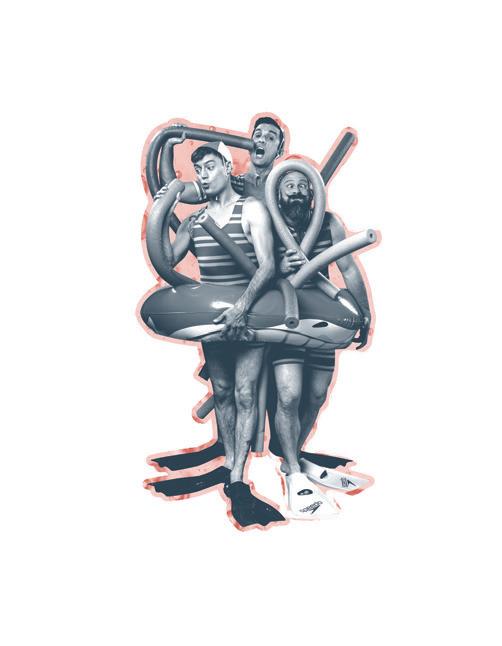
You really want to swim the Strait of Hormuz?
CLIVE WILLIAMS
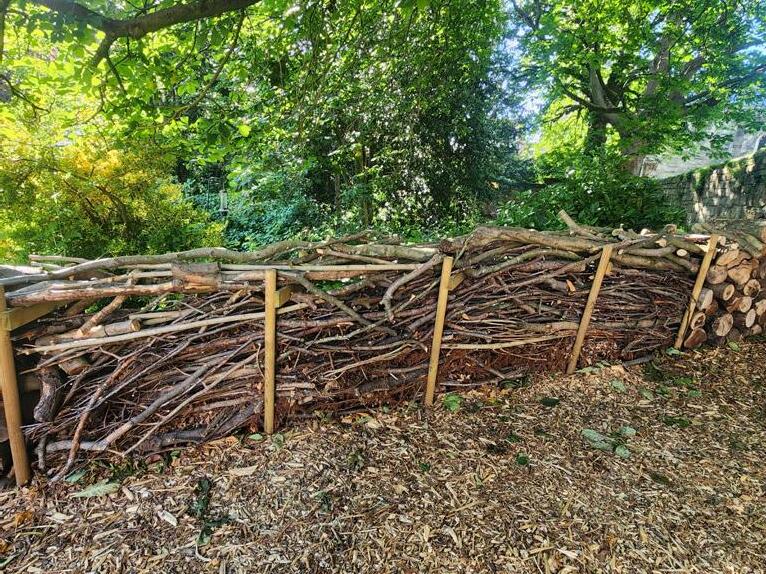
Here’s how to build a dead hedge
JACKIE WARBURTON
This ‘Donald’ won’t have a bar of One Nation KEEPING UP THE ACT
CELEBRATING DIVERSITY
The AusIndia Fair is bringing multiculturalism to South.Point
As the new financial year begins, let the experienced team at Hussey & Hussey take the stress out of your tax return. With over four decades of helping Canberra individuals and businesses, we’re ready to support you through another successful tax season.
Our Services Include:
• Accounting
• Business Advisory
• Bookkeeping
• Taxation
• SMSF
• Company Secretarial Services
• Management Consulting
NEWS / Reesha Stefak
Force behind Woden’s ‘little people’ steps away
Childcare director Reesha Stefek is leaving a legacy shaped by instinct, grief, and an unshakeable belief that early childhood care can and should be better. She talks to DHWANI PATHAK .
She calls them “little people”. It slips out naturally, midconversation, the way it must have for years. Then she stops.
A family stands at the glass window overlooking her office, waiting. Woden Early Childhood Centre’s director Reesha Stefek excuses herself and walks out.
There is nothing performative about it. Just a quiet exchange, a few words, and then the child steps forward and wraps their arms around her, holding on longer than expected. It is not a goodbye that needs explaining.
Back in her chair, she lets the moment settle.
“Thirty-five years is a long time,” she says.
It began, as she tells it, not with ambition but with dissatisfaction.
“My son was 10 months old, and I put him into family daycare. And the care was really substandard.”
The frustration lingered until it became a decision.
“I complained to my auntie. I can do better than that. And she said, ‘why don’t you?’” So she did. She left
Arts & Entertainment
Crossword & Sudoku
Dining & Wine Gardening
Letters
News 3-16
Politics 4, 10
Streaming 28
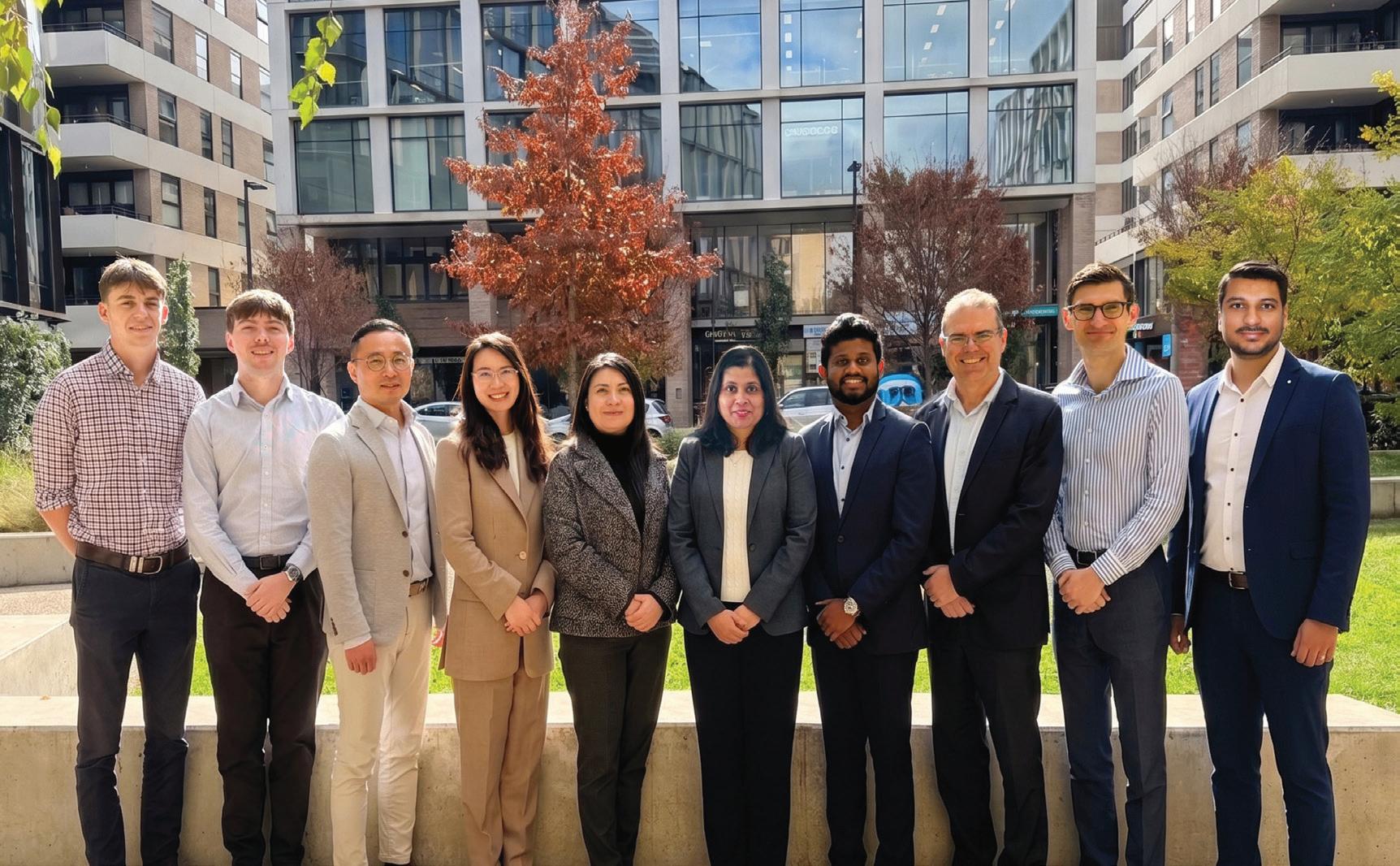
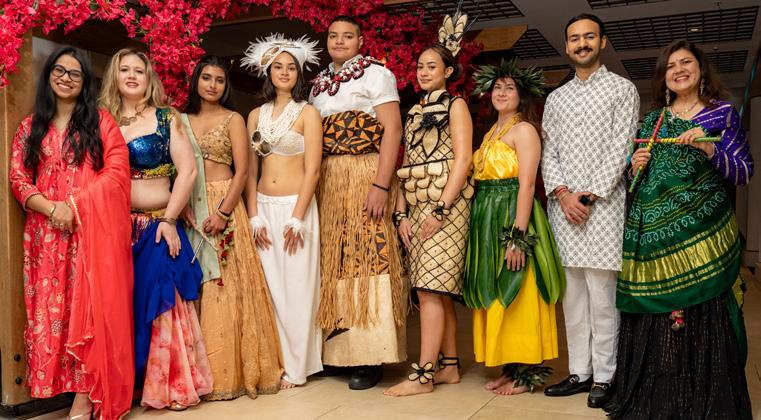
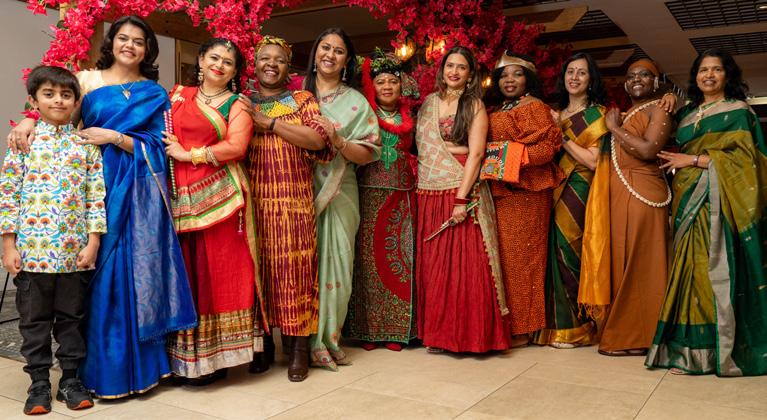
President of FINACT Divya Ravikumar flanked by the Kokoloco dancers. Story Page 8.
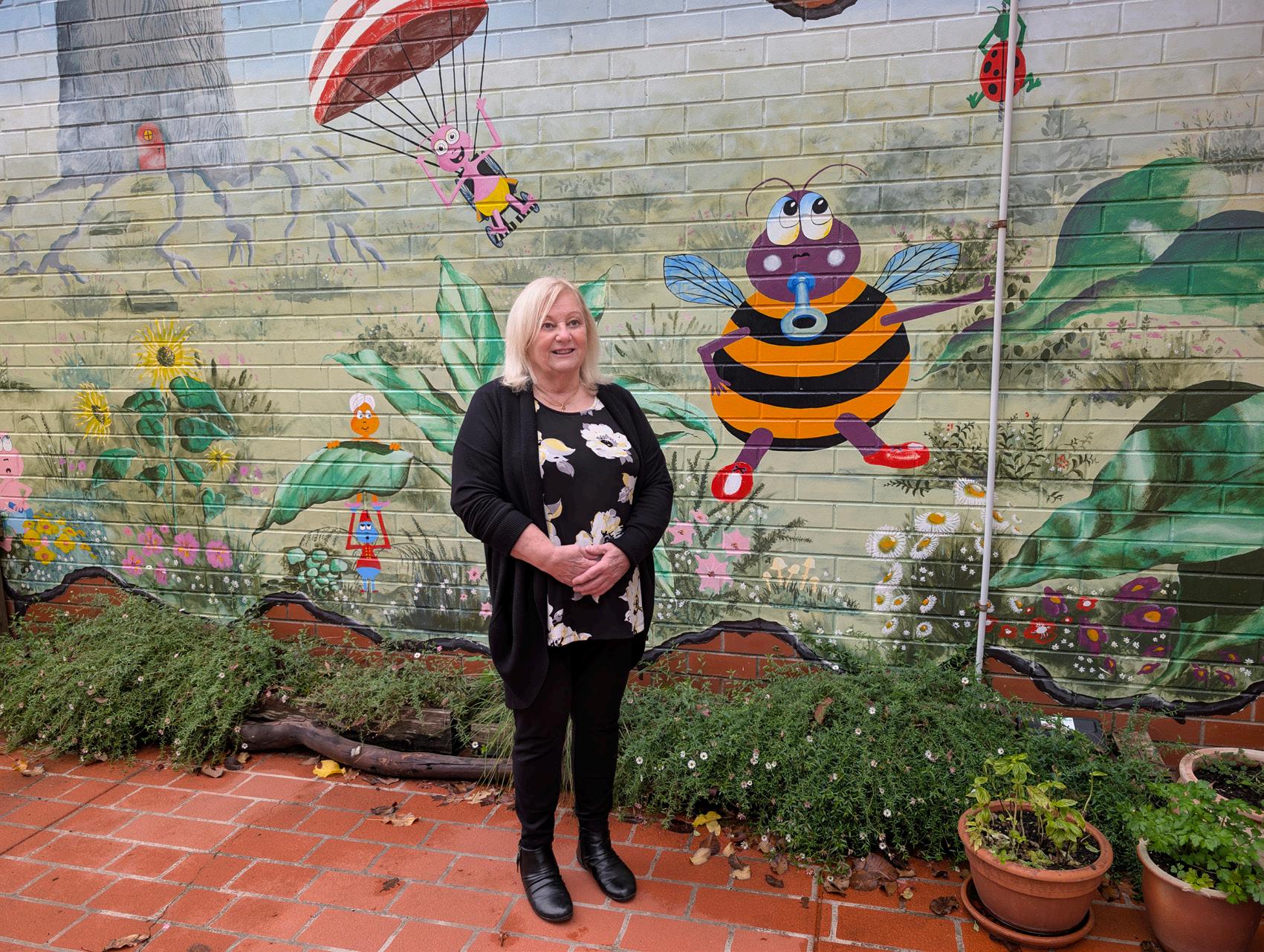
Reesha Stefek… “The pain was always there… but the thing was that at least I got joy from the children. They fill your cup.”
Editor: Ian Meikle, editor@citynews.com.au
Arts editor: Helen Musa, helen@citynews.com.au
Production manager: Janet Ewen
Graphic designer: Mona Ismail
Distribution manager:
There’s never been a better time to be Mark Parton
So here we are, near mid-term in local politics. And the weather of late seems to have matched the political mood, extended periods of heat followed by some mild cooling off.
There’s definitely been a bit going on. The sombre Eslake report, Budget shenanigans, Shane’s long goodbye and Leanne Castley becoming the third independent in the Assembly this term.
Incredibly, the gap between Labor and the Liberals is now two. Without an election. Or eight all up for the ACT Liberals.
Eight is a number with some interesting cultural connotations, too. Fans of Quentin Tarantino may remember one of his more recent movies was the Hateful 8. A movie where, without giving too much away, nearly every character wants to kill nearly every other character.
Hmmm...sound familiar?
The ACT Liberals have the unenviable record of having more leaders, current and former, sitting in a parliament than anywhere else in Australia this century. Likely last century, too. There are four.
Does this mean they are a mess? Or that Mark Parton is just keeping the seat warm for someone else? No and no. But there is room for improvement.
Parton has done a solid job on the retail side of politics, that is talking to us. His engagement on the rising youth crime in Canberra, ovals being trashed, and use of social media, are all good to see. hits.
Parton though is overall doing a solid job and will lead the party to the election in 2028.
Why? Let’s look at the good. He’s starting to unite the team publicly.
Ed Cocks, the ranking conservative faction member, is coming into his own in this term as the shadow treasurer and is starting to apply some pressure to Labor on the economy. Both seem to get along well.
Although this year’s ACT Budget was strategic by Labor, providing less ability to land big hits through lots of smaller spends, other than a desperately needed northside major hospital and stage 2B of light rail.
On the economics front, the Liberals will need to work hard to get points on Labor but it does appear that Cocks has been reading the work of Stanhope and Ahmed in CityNews to guide him on where to start. Smart thinking, Ed.
Then there’s Elizabeth Lee. The respected senior moderate is reinvigorated and enjoying her portfolios, especially education with the move to censure Yvette Berry over the teachers’ strikes, a clear sign of a return to form. Good to see you back in the game, Elizabeth.
Next, the noise. It’s gone really quiet. Canberra’s infamous loud bangs, which actually came from the Liberal Party doing something they shouldn’t, have stopped.
No more leaks. No more hits. No more big moves. As Castley’s resignation showed, it doesn’t mean an absence of action, just that it isn’t public any more.
Even Leanne’s resignation was handled as good as it could be expected for a matter so sensitive. Mark was as open and transparent as possible considering what had occurred and the context it had occurred in. Another positive sign.
Do you want to:
• feel warm in winter and cool in summer?
• lower your energy bills?
• reduce outside noise?
• improve security and the value of your property?
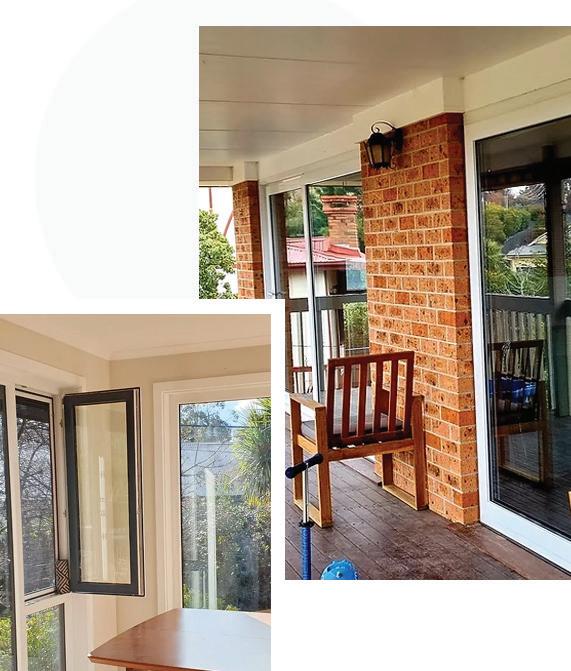
These are just some of the many benefits that home and business owners can achieve with our uPVC double and triple glazed windows and doors.
Windotek Australia is a leading provider of double and triple glazed uPVC window and door systems for the Canberra region. We help you achieve a higher EER rating, with 100% customised solutions that meet your needs and complement the style of your home
The potential deal with the Greens showed a leader who wants to be the chief minister. Ambition and hunger are great attributes for a leader in politics, if it is tempered by reality. And innovation like this wakes everyone up to the fact that you are indeed serious about governing.
Parton has also done a solid job on the retail side of politics, that is talking to us. His engagement on the rising youth crime in Canberra, ovals being trashed, and use of social media, are all good to see.
While these are good signs, they still seem to be just short of being seen as a viable alternative government in the key areas of policy, party, and leader.
And this brings me to improvements.
Policy awareness. If anyone out there, not a political junkie, can remember a Liberal policy, then you are doing well. What is their policy on those caught trashing ovals? Or on smashing up staff and shops alike across Canberra to now where many retail workers seem to fear going to work? Or etcetera...
Maybe it’s there. Who would know because the comms front is quiet.
Yet independent Tom Emerson isn’t. The contrast is damaging as policy is
what ultimately tells people how well you’ve been listening.
Brand belief. Censure motion? If you want to show others how much you believe in the brand, and for others to believe likewise, then go for the no confidence motion, even if it fails.
During a recent Question Time that man again, Emerson, asked Mark Parton a question, with the whole exchange thereafter on social media. That’s brand proud.
As for the leader himself? If anything, time to read Dr Jim Chalmers thesis on Keating and leadership. Brawler Statesman. To learn more about the finesse and fight required to be a leader of a party of government, not just the main spokesperson for it. Yes, it is going to take time. But that time is now. Not 2028. Because there’s never been a better time to be Mark Parton.
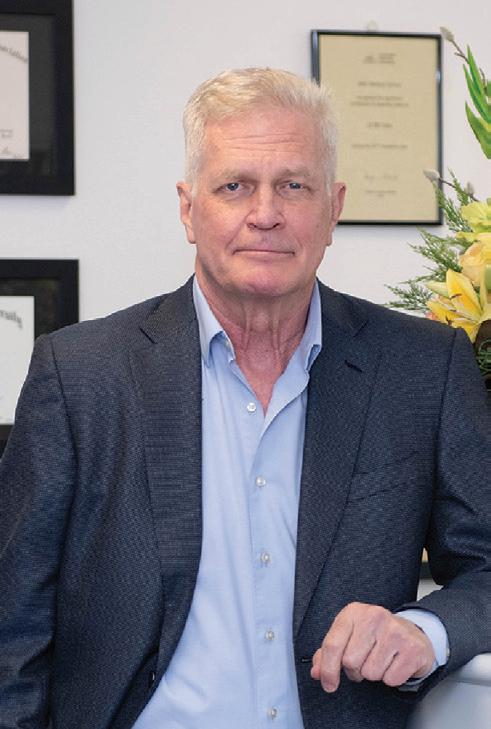
Dr Andrew Hughes lectures at the ANU Research School of Management, where he special ises in political marketing.
Arthur Boyd, Manufactura de Tapeçarias de Portalegre (tapestry workshop), St Francis when young turning aside (detail), 1972, National Gallery of Australia, Kamberri/ Canberra, purchased 1975, Arthur Boyd’s works reproduced with the permission of Bundanon Trust
The day my dad sang with Vera Lynn, for a pound
By Barry York
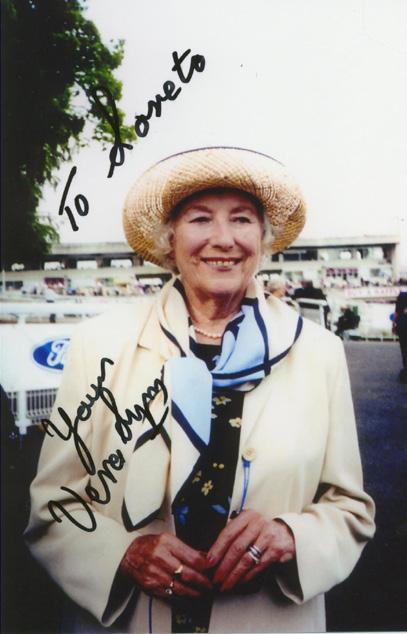
The autographed photograph was sent by Dame Vera Lynn in 2009 during the final months of my father’s life.
I had written to her in the hope that a personal message connected to one of his happiest post-wartime memories might lift his spirits as he faced terminal cancer.
My dad, Loreto York, once stood in a London recording studio among a crowd of servicemen singing beside Vera Lynn.
They were not professional performers, just Royal Air Force airmen and soldiers gathered to provide the warm, cheerful chorus for a song called Auf Wiederseh’n, Sweetheart.
The session took place at Decca Records’ studios in Broadhurst Gardens, London, in 1952. The song was released that year and became a major international hit. It reached No. 1 on the U.S. Billboard chart in July 1952, making Vera Lynn the first British artist to top the US charts.
The song itself was originally a German composition by Eberhard Storch, first recorded in German in 1950. Vera Lynn heard the tune while holidaying in Switzerland, liked it, and arranged for English lyrics to be written before recording her version.
Dad always remembered the
ished. What they wanted was something rougher and more spontaneous –the sound of servicemen singing around a piano after a few drinks.
“They had to make us sound worse,” dad laughed years later.
The record’s B-side was From the Time You Say Goodbye (The Parting Song). Dad enjoyed telling me that while Auf Wiederseh’n, Sweetheart became famous throughout much of the world, including Australia, American listeners were particularly fond of From the Time You Say Goodbye (The Parting Song).
The record proved such a success that the servicemen were invited back for another recording session. One of the songs recorded was When Swallows Say Goodbye, though dad recalled that it never achieved much success.
recording, the men received some brief coaching from the vocal group Johnny Johnston Singers and sang so well on the first take that the producers stopped them.
The performance sounded too pol-
For several hours of recording, the men received a cup of tea, two biscuits and one pound each. There were no contracts, no royalties and no thought that they were contributing to a recording that would still be
remembered generations later.
Dad spoke warmly of Vera Lynn. He remembered her moving easily among the servicemen, chatting, smiling and asking where they had served during the war. Having spent much of the conflict entertaining troops while her husband served overseas, she seemed genuinely at ease in their company.
Whenever I hear Auf Wiederseh’n, Sweetheart today, I think not only of the courage and endurance of those who fought against fascism, but also of my father and his small place in that history. Somewhere among those backing voices is the unmistakable sound of ordinary servicemen who had lived through extraordinary times – and among them is dad’s voice.
Loreto was born Loreto Meilak in Sliema, Malta, in 1918, to a family whose roots were in Gozo. He volunteered for the RAF in Malta in 1940 and served in Malta, Egypt, Sudan, Ethiopia, Libya, Palestine and France before later being posted to Scotland and London.
In 1947 he anglicised his surname to York while living in England. In 1954 he migrated to Melbourne with his wife Olive and young son Barry (yours truly), settling in Brunswick.
He would become mayor of Brunswick in 1972 and again in 1976. In the early 1990s he moved to Canberra, where I was living and working.
However, by mid-2009, the energetic man I had always known was fading rapidly. Pancreatic cancer had brought him to a nursing home in Garran, and each week his world grew smaller.
Hoping to reconnect him with a cherished memory from his youth, I wrote to Dame Vera Lynn, telling her about his wartime service and his recollection of singing on that famous recording.
She responded with characteristic kindness and sent the signed photograph.
But it arrived too late.
My father died on October 5 2009 before it reached him.
When the photograph arrived a few weeks later, I wrote again to thank her and explain what had happened. She replied with a letter expressing her condolences.
I often wish dad had lived long enough to hold that photograph in his hands. Yet there is something fitting about it, too.
Vera Lynn represented memory, resilience and hope for a generation shaped by war. Her gesture, though delayed, was a final acknowledgement of a young Maltese airman who had once joined a group of servicemen in a London studio and unknowingly left a small trace of himself in musical history.
Dame Vera herself died in 2020, at the ripe old age of 103.
The 2009 autographed photo to Loreto York from Dame Vera Lynn. Inset: Loreto John York c1946.
A second opinion on hearing loss – you need professional advice, not a sales pitch
A woman came into my clinic for a consultation about her hearing aids, telling me her hearing aids were 4 years old and she had never found them to be of much help. She said the salesperson quoted her $14,000 for a pair of hearing aids, however, the monthly special of 20% discount meant they cost her $11,200. So, she ‘only’ paid $11,200 for hearing aids that did not help her. Sadly, I hear this all too often.
Here are some things to do to avoid this type of problem:
1. Visit your GP. If you or someone you know has a problem with their hearing, visiting your GP to check for wax in the ears, and to get advice is a starting point.
2. Qualifications. Always check the qualifications of the person you are dealing with. A person without professional qualifications has no business advising you about your hearing. They need to belong to a professional association with a Code of Conduct, so you know they are acting in your best interests, not their own.
years. If you are not sure about their advice, then seek a second opinion. The wrong hearing aids can be an expensive waste and could lead you to stop wearing them. You should always have a trial of hearing aids to ensure that they are right for you.
6 Pensioners and eligible DVA card holders often have entitlement to free services. If you are covered by a government concession, then let the clinician know (even though your clinician should ask). Eligible clients may obtain free hearing tests, consultations, and free hearing aids (referred to as fully subsidized hearing aids).
“A person without professional qualifications has no business advising you about your hearing. They need to belong to a professional association with a Code of Conduct, so you know they are acting in your best interests, not their own.”
– Dr Vass
These hearing aids are appropriate for many people, however if you have great difficulty hearing in background noise (for example a restaurant), then you may want to consider partially subsidized hearing aids. This is when the government pays a certain amount, and you pay for additional features and benefits. Your decision should be based on the following:
you are dealing with a qualified clinician, then they belong to a professional association. The best contact is an independent complaints body referred to as Ethics Review Committee. You can email ethics@auderc.org.au and view the website www.auderc.org.au. You can make an anonymous complaint and your complaint will be handled in a confidential and professional manner. If you are in the ACT, contact the ACT Human Rights Commission email human rights@act.gov au and the website www.hrc.act.gov.au
3. Independent advice. You should get independent, professional advice.
4. There are a wide range of hearing aids out there. Finding the right hearing aids for your communication needs can be challenging. Hearing aids vary in price and performance. Bluetooth® connectivity and rechargeable hearing aids are available on most hearing aids, along with apps that allow you to control your hearing aids from your mobile device. Be aware that just because a hearing aid is more expensive, that doesn’t mean they are the best hearing aid for you.
5. Just as hearing aids vary in performance, clinicians may also vary in performance due to training, experience, and skills. Make sure that you are comfortable and confident in their advice. You are likely to be with this clinician for the life of your new hearing aids, typically 4 to 5
(a) Can you afford the more expensive hearing aids? Don’t go into financial stress if you can’t afford them. (b) Are you clear on the free vs partially subsidized features & benefits? Never believe someone who tells you the free hearings are not good or of poor performance, this is simply not true. (c) If you try the partially subsidized hearing aids and are not happy, then return them. Do not keep hearing aids because you think the failure is yours or that you will improve over time. If the hearing aids are not working for you in the trial period, then they will not work for you in a year or two.
7. If you have a complaint, then seek help. Your clinician should be able to help you through most of your needs. Sometimes, a problem may be beyond the expertise of even the best clinician. However, if you have a complaint there are things you can do. If
South.Point celebrates Canberra’s diversity with AUSINDIA Fair
South.Point is continuing its commitment to bringing communities together with the return of another major multicultural celebration for Canberra’s south.
Following the success of its Harmony Day celebrations earlier this year, the shopping centre will host the AUSINDIA Fair from 10am to 3pm on Saturday, June 27, transforming Centre Court into a vibrant showcase of culture, music, dance and community spirit.
Presented by the Federation of Indian Associations of ACT Inc (FINACT) in partnership with South.Point and Fair Canberra , the event will feature traditional Indian performances, multicultural displays, community stalls and familyfriendly activities designed to celebrate the rich diversity of Canberra.
South.Point marketing manager Carole Arulantu says creating opportunities for cultural connection is an important part of the centre’s role within the community.
“South.Point thrives on enriching the community with events such as AUSINDIA Fair,” she says.
“Celebrating multiculturalism and bringing it to the south is a responsibility of South.Point as a community hub.”
Carole says the centre was overwhelmed by the response to Harmony Day in March and wanted to build on that momentum for the Canberra community.
“Beyond major cultural celebrations, South.Point remains committed to delivering a diverse calendar of free events, activities and promotions throughout the year. From family entertainment and school holiday activities to community festivals and cultural celebrations, the centre aims to create welcoming opportunities for people of all ages and backgrounds to come together, connect and enjoy shared experiences in a safe, inclusive and accessible environment.“ Carole says.
“After the tremendous success of Harmony Day and following the wonderful responses and feedback from the Canberra community, South.Point brings another colourful, vibrant and culturally diverse event in AUSINDIA Fair,” she says.
“The aim is to bring the entire Canberra community together in one place where they are able to learn and share with everyone.”
The centre has worked closely with FINACT and Fair Canberra to develop a program that showcases Indian culture while also welcoming participation from the Pacific Islands, African, Chinese, Middle Eastern, Thai and Brazilian community groups.
FINACT president Divya Ravikumar says the partnership provides an opportunity to share cultural traditions and strengthen community connections.
“FINACT is delighted to support an exciting program of performances that will showcase Indian culture, supported by several other local multicultural community groups,” she says.
According to the 2021 Census, more than 17,000 ACT residents were born in India, making it one of Canberra’s largest and fastest-growing cultural communities.
Divya says events such as AUSINDIA Fair help foster understanding and connection across Canberra’s many cultures.
“FINACT is keen to ensure that Canberrans born in India settle smoothly in our community, network with other community groups and contribute to our wonderful city’s community life,” she says.
Carole says South.Point is proud to provide a platform for community groups to share their culture and traditions with a wider audience.
“As Canberra continues to grow and diversify, events like AUSINDIA Fair create opportunities for people from all backgrounds to come together, learn from one another and celebrate what makes our community so special,” she says.
With colourful performances, cultural displays, food, stalls and activities planned throughout the day, AUSINDIA Fair promises to be one of South.Point’s most vibrant community events of the year.
Spend
Berry’s ‘yellow card’ comes with a serious warning
The ACT Legislative Assembly has issued Minister Yvette Berry with a yellow card.
The widespread support for a censure motion should serve as a serious warning to her and to the government.
Dissatisfaction with Ms Berry’s handling of the education and hous ing portfolios provided fertile ground for the Liberals and Greens to work together with the support of the two Independent MLAs. This highlights two major issues.
The first is exposing the disappointing knee-jerk reaction by the Greens Party and the Canberra Liberal Party to efforts by Mark Parton and Shane Rattenbury to frame the most effective way the non-Labor government members might work together. The second is determining the most effective way to handle ministerial failures.
Party hacks came out blasting the efforts by the leaders of the Greens and the Liberals in the Assembly to work towards an alternative to the Labor government. The alternative may never have been developed. However, sensible discussion would have been in the interest of the community rather than the ignorant reaction of these hacks.
The motion of censure put by Mark Parton and supported by the Greens illustrates that the parties in the Assembly can work together. It is not
the first example. It is common in Assembly committees for the range of MLAs across all parties to find ways to work together and to compromise.
The censure motion put by Parton together with the Greens’ Jo Clay identified a range of issues in education and housing. Parton described an education “system plagued by confusion, inconsistency and poor communication” along with “a growing administrative burden pulling teachers away from classrooms”.
A major concern was that “despite repeated warnings from teachers, learning support assistants, principals, students and parents, the Minister for Education repeatedly claimed the system was performing strongly and dismissed calls for
The most disturbing response came from Chief Minister Andrew Barr, who argued: ‘Ministers do not personally administer large and complex directorates.’ It seems the government missed the point.”
reform for years”.
Berry pointed out, the ACT Public School System Resourcing Review that exposed these issues was conducted on her initiative. She also argued that the reforms are now being put in place to move administrative burdens from the schools into the department.
However, as Parton said in the Assembly: “Ministers must be responsible for outcomes” and, with regard to Ms Berry, “so many of the outcomes… are monumentally bad. They just are”.
He added that Berry has a “damning record” in her other portfolio area of housing, citing the outcomes of Auditor-General investigations, and “a Supreme Court finding that human rights were breached”.
The joint sponsor of the motion, Greens leader Jo Clay, acknowledged the “minister has begun to take steps” but said “the minister has been
telling us for a decade that the system is performing strongly. She has been denying the problem in the face of evidence for years, and it is not good enough. Our kids have suffered”.
The annual school NATSEM reports reflect the deterioration of outcomes in our education system over the time that Labor has been in power.
Clay also identified a series of “serious findings” about the inadequacy of public housing. Pointing out that only 71 per cent of public housing is of an acceptable standard. And the figure is 65 per cent for people with a disability. And this is after more than two decades of Labor governments.
In a fiery speech, she posed a series of rhetorical questions: “How many years do our tenants have to wait in substandard living conditions before their basic rights and needs are met? Will it be in another three years or another six years or another nine years? How many reports does it need before the minister will take action?”
Independent Fiona Carrick acknowledged “no one is suggesting these challenges are easy. They are complex”. She argued, “it requires driving solutions, advocating strongly, and responding with
urgency when patterns become clear” rather than “a pattern of missed opportunities”.
In response, Berry argued: “I always own it when it goes wrong. I am not perfect by any means, but I turn up and I accept responsibility when I have got it wrong”.
However, the most disturbing response came from Chief Minister Andrew Barr, who argued: “Ministers do not personally administer large and complex directorates. They do not make every operational decision, manage every case or oversee every transaction personally”.
It seems the government missed the point. Ministers are responsible for the outcomes of their portfolios, including systemic failures. This is why there is a red card pending.
Michael Moore is a former member of the ACT Legislative Assembly and an independent minister for health. He has been a political columnist with “CityNews” since 2006.
RETIREMENT ON
•
•
•
• Centrelink advice and implementation.
• Is a redundancy right for you at this time?
Yvette Berry… The widespread support for a censure motion should serve as a serious warning to her and to the government.
How fear of the ‘race card’ threatens fairness
“If racial prejudice, hostility, stereotyping and assumptions can only ever travel in one direction, then we have ceased talking about racism as most ordinary Australians understand it,” writes GWYN REES.
Last year Australia’s race discrimination commissioner made headlines at the National Press Club when he argued that anti-white racism does not exist.
In speeches and public commentary, he has spoken of white privilege, settler colonialism, structural racism and the need to centre anti-racism efforts around First Nations experiences.
Whether you agree with those views or not, they are now deeply embedded within Australia’s political and institutional class.
The language of equity, diversity, inclusion and anti-racism has become deeply embedded throughout the Western world. Many Australians support these efforts. Many others believe they have already gone far enough. But wherever you sit, one fact remains – change is happening rapidly.
In his recent speech, the race discrimination commissioner argued that Australian institutions were built to ensure white privilege. That’s about as strong an ideological claim as one could make. One could equally
argue that many institutions were built for reasons of governance, law, commerce, security and administration; while acknowledging they may have disadvantaged indigenous people and migrant groups.
He cites structural racism as pervasive throughout Australian institutions. Whether racism exists is one question. But I put it to the commissioner, if anti-white racism does not exist, perhaps he can explain the tragedy that unfolded in Southampton in the UK.
Henry Nowak, an 18-year-old young man, is dead.
Unarmed, sober and walking home after a night out, he was stabbed multiple times by Vickrum Digwa, who has now been convicted of his murder.
In sentencing, the judge described Henry as a much-loved, kind and ambitious young man with a bright future ahead.
But what makes the case so unsettling is not simply the violence itself, it is what followed. Race entered the narrative.
In recent years we have seen politicians, activists, media organisations
and public institutions react with extraordinary intensity to incidents that fit broader narratives about race and discrimination.
The death of George Floyd became a global cause and the race discrimination commissioner himself referenced Black Lives Matter in his National Anti-Racism Framework speech.
Again, people can debate whether that response was justified or excessive but that is not the point. The point is consistency.
According to the sentencing judge, Digwa falsely claimed that Henry had called him a “Paki”. The judge concluded that such a remark was completely at odds with Henry’s character.
The judge also found that these lies misled attending police officers and influenced their decision to arrest and handcuff Henry.
Digwa received a minimum term of 21 years, a sentence now referred by the attorney-general as potentially unduly lenient.
So where is the outrage? Where is the national conversation?
More importantly, how are Australians expected to reconcile the claim that anti-white racism does not exist with a case in which false allegations of racism against a white victim influenced how events were perceived in the immediate aftermath of a murder?
If racial prejudice, hostility, stereotyping and assumptions can only ever travel in one direction, then we have ceased talking about racism as most ordinary Australians understand it. Instead, we will be on the same path as the UK, creating political and social definitions that protect some groups while excluding others.
That should concern everyone because justice depends on consistency. The credibility of anti-racism efforts rests on the public believing that the same principles apply to everyone.
The moment people begin to suspect that race matters more than truth or that some victims attract greater sympathy because they fit a preferred narrative, public confidence will inevitably erode.
Perhaps that is the real lesson of Henry Nowak, if we can at all make sense of his death. Not that racism is unimportant or that inequality does not exist. But that a society genuinely committed to fairness cannot pick and choose when race matters.
If anti-white racism doesn’t exist, how can false accusations of racism against a white teenager be used to influence perceptions, shift sympathy and alter the way people understand a violent crime? It is a contradiction that deserves a better explanation than we have been given.
And perhaps one more lesson for Australia. The UK National Police Chiefs’ Council now states that anti-racism “does not mean treating everyone the same”.
Britain’s institutions did not arrive there overnight. The grooming gangs scandal, the Southport murders and now the death of Henry Nowak all reveal institutions increasingly fearful of the race card and increasingly reluctant to apply the same standards to everyone.
Australia should take notice. Because equal treatment under the law and colour blindness were once considered virtues.
Henry Nowak’s parents might reasonably ask what changed.
Gwyn Rees is a Canberra-based business and social advocate.
People protest outside Southampton police station at the fatal stabbing of Henry Nowak, a British teenager who was handcuffed despite claiming he was the crime victim. Photo: Gareth Fuller/PA
The ‘compact city’ plan is on a shaky foundation PLANNING / Housing Supply and Land Release Program
The recently released Housing Supply and Land Release Program outlines land releases to support the development of 26,000 new homes.
Eleven per cent of dwellings identi fied for release are single dwellings. Forty per cent of the proposed releases are government infill, 27 per cent private sector infill and 33 per cent are in greenfield areas.
The 2026-27 to 2030-31program, prepared in the context of the 2018 Planning Strategy, is a continuation of compact city policies in operation since the 1990s, aimed at increasing housing choice and supply in existing suburbs and reducing travel, environmental and infrastructure costs.
While the compact city is the appropriate strategic direction, there has been little assessment of the level of benefit it is delivering. Recent refinements, including the increased infill target of 70 per cent and the limiting of detached dwellings to around 10 per cent of land releases, have not been justified.
Consequently, the program is on a shaky foundation.
Land for detached dwellings: The 2018 Planning Strategy did not comprehensively assess the suitability of potential greenfield areas for resi-
a potential area. Indicative assessments in the early 2000s found it was relatively expensive to service, but it had few environmental constraints and was close to the city.
The restriction in the supply of land for detached dwellings was introduced without reference to housing preferences. Its undersupply is reflected in the relative increase in prices of detached houses and unit prices across Canberra.
Since 2011 the median price of houses increased from $552,000 to $985,000 while unit prices increased from $405,000 to $600,000.
The restriction in the supply has led to increased car-dependent development in surrounding NSW. If the
Development priorities are too often determined by opinion not evidence. The approach has led to misplaced priorities and the community not receiving the best value from limited infrastructure funds.
access to public transport and the ACT would have received greater land sales and rates revenue, albeit while incurring higher infrastructure costs. No analysis has been undertaken of the net environmental, financial and social sustainability of the constraint of detached housing supply in the ACT. Infrastructure priorities: Will there be sufficient resources available to develop the level of housing required?
The ACT will be competing with other cities, including the Olympic city Brisbane, for resources. In this resource-limited future, the uber-expensive light rail stage 2B is unlikely to be a sensible choice given there is as effective and less resource-intensive electric bus technology available and the increased ability to work at noncentral locations. The development of light rail Stages 1 and 2A was an odd priority given its cost and the major undersupply of public housing.
Policy review: Development priorities are too often determined by opinion not evidence. The approach has led to misplaced priorities and the community not receiving the best value from limited infrastructure funds.
Long overdue is the program’s commitment to increase the provision of social housing to 13,200 dwellings by 2030, up from 11,996 dwellings currently.
The supply of social housing has not kept pace with population growth. The ACT population increased by 120,000 between 2012 and 2026 while the social housing stock increased by about 1000.
There was a sale of 1288 government housing properties along Northbourne Avenue to help fund the light rail.
The major government infill releases are at the town centres, the Acton waterfront, north Curtin, Hume Circle, East Lake and north Weston.
The government’s reforms to facilitate infill, which include stamp duty and lease-variation concessions, allowing subdivision and unit titling in lower-density zones, the streamlining of approvals processes, will be assisted by capital gains tax changes, limiting the concessions to new, multidwelling developments.
While the initiatives will enable the possible development of thousands of new homes, the market
BRIEFLY
‘No
and community acceptability (there were widespread objections to dual occupancy development in the early 2000s) will determine the actual level of development.
High interest rates, labour and material shortages have contributed to housing targets not being met. For example, the Suburban Land Authority in 2022-23 and 2024-25 did not meet its targets for land release or revenue.
There is an urgent need to better understand and manage demographic, technological, social and environmental changes. These changes influence the demand for housing, transport, health, education, commercial and recreation facilities.
The government, prodded by the Assembly if necessary, should instigate a transparent and independent review of the city’s planning and associated infrastructure plans.
Are our politicians capable of placing the future development of our city on a sound foundation?
Mike Quirk is a former NCDC and ACT govern ment planner.
rigorous analysis’ in pool decision
The ACT Auditor-General has found there was no rigorous analysis supporting a decision to reduce pool requirements at the Phillip Swimming and Ice-Skating Centre redevelopment site from a 50-metre outdoor pool to a 25-metre indoor pool.
Auditor-General Ajay Sharma has found government agencies did not undertake a specific assessment of future needs for the Phillip pool site before changing planning requirements under the new Territory Plan.
The audit also found a consultation report incorrectly stated that a sport and recreation needs analysis had determined a 25-metre pool would meet community requirements.
Mr Sharma said no such analysis had been undertaken as described and that the statement misrepresented the extent of work used to justify the change.
The Territory Plan changes, adopted in 2023, allow a redeveloped Phillip Swimming and Ice-Skating Centre site to include a 25-metre indoor pool instead of the previously required 50-metre outdoor pool.
The report recommends the Chief Minister, Treasury and Economic Development Directorate ensure any future changes to Territory Plan requirements for sport and recreation facilities are supported by documented assessments of community needs and interests.
It also recommends the City and Environment Directorate develop guidance to ensure public responses to planning consultation accurately reflect the analysis undertaken.
Looking at ‘better’ political system
The Canberra Alliance for Participatory Democracy (CAPaD), together with Active Democracy Bean, is in the throes of hosting a five-part Re-imagining Govern -
ance for the ACT series across winter and spring. CAPaD convener Peter Tait said the initiative was prompted by a sense among some Canberrans that the ACT government is tired and the Territory’s political system requires renewal.
The series will explore the operation of the ACT Legislative Assembly, the role of community councils, whether increasing the number of MLAs would improve government, and the potential establishment of a standing citizens’ assembly.
The next event will bring community members together for a co-design workshop aimed at developing proposals for democratic and governance. It’s at the Woden Valley (formerly St James) Uniting Church, Gillies Street, Curtin, 2pm-3.30pm on Sunday, June 28. The remaining events are scheduled for August, October and November, focusing on community councils, the size of the Legislative Assembly and citizens’ assemblies.
Information about the events, registrations and the online poll is available through the CAPaD website, canberra-alliance.org.au
All kinds of tools for sale
Tools from the garden shed are the focus of the next St Ninian’s Market. Organisers say there will be vintage hand tools, power tools, planes, clamps and tools of all kinds on sale. And there will be the white elephant stall, jewellery, pre-loved clothing/coats, books, plants, DVD’s and vinyl records. St Ninian’s Uniting Church, cnr Mouat and Brigalow streets, Lyneham, 9.30am-1pm, June 26 and 27.
A look at banking scams
Scams are the theme of Westpac’s George Der Matossian’s talk at the next lunchtime meeting of the Weston Creek VIEW Club at the Canberra Southern Cross Club, Woden, from 11.30am on July 7. RSVP to 0408 864616 by 5pm July 1.
It is unclear why Kowen was dismissed. While relatively expensive to service, it had few environmental constraints and was close to the city. Photo: ACT Parks
For marathon swimmers, the Strait of Hormuz represents one of openwater sea swimming’s most unusual challenges, writes CLIVE WILLIAMS.
Thanks to Trump, much of the world has become familiar with the Strait of Hormuz – the strategically vital waterway that links the Persian Gulf with the Gulf of Oman.
However, for marathon swimmers, the Strait represents something entirely different: one of open-water sea swimming’s most unusual challenges.
At its narrowest point, the Strait measures roughly 39 kilometres across, but any swim across is likely to cover significantly more distance due to strong tidal flows, complex currents, and navigation adjustments during the swim.
For marathon swimmers the natural comparison is with the English Channel, still regarded as the benchmark in marathon swimming. Since Captain Matthew Webb’s pioneering crossing in 1875, the Channel has become the sport’s defining test of endurance, cold water tolerance, and navigational skill. More than 1700 solo crossings have been officially recorded.
The Channel’s shortest straight-line distance is about 34 kilometres, but swimmers are typically carried far off-
course by tides and drift, often covering 40-50 kilometres or more.
Swim attempts are governed by the Channel Swimming Association, which permits only a standard swimsuit, cap and goggles. Escort boats are mandatory in one of the world’s busiest shipping lanes. A fully supported Channel attempt typically costs around $10,000.
unique achievement.
For a swimmer, the English Channel and Strait of Hormuz differ dramatically in character.
The Strait of Hormuz supports a richer warm-water ecosystem that may include dolphins, turtles, reef fish, sea snakes and several shark species. Swimmers must also contend with oil pollution and the complexities of military activity.
The English Channel has earned its status as marathon swimming’s most recognised achievement, with records ranging from elite sub-seven-hour crossings to extraordinary multi-way swims by athletes such as Gertrude Ederle and Sarah Thomas. Hundreds of swimmers attempt it each year. The longest recorded crossing took just over 29 hours.
The Strait of Hormuz presents a very different challenge. While the narrowest crossing is about 39 kilometres, the distance swum could stretch much beyond that.
In April 2026, American marathon swimmer Marcia Cleveland became the first person to complete a solo swim across the Strait.
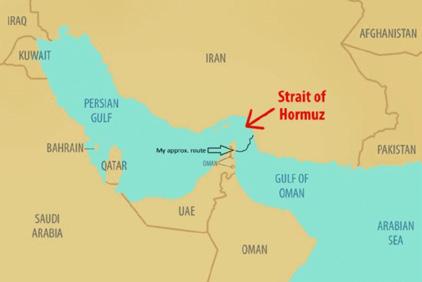
Starting from Oman and heading toward Iran, she covered about 42 kilometres in 5 hours 57 minutes, taking full advantage of favourable tidal flows.
Earlier Iranian endurance swims in the region had taken place over longer distances, not across the Strait, making Cleveland’s crossing a
The English Channel is defined by cold water, powerful tides, and notoriously changeable weather. Tidal currents can exceed 4-6 knots, creating currents that push swimmers off course. Success depends heavily on precise timing around slack water and neap tides. Even so, Atlantic weather systems can quickly generate steep chop and difficult swells.
The Strait of Hormuz combines strong tidal movements with complex underwater topography inside one of the world’s busiest maritime corridors, busier even than the English Channel.
While natural swells and chop are less of a problem, commercial tankers
wake turbulence. Surface conditions can also shift rapidly where the waters of the Gulf of Oman meet the highly saline Persian Gulf.
Water temperatures are the sharpest contrast. English Channel swimmers typically face 15-18°C temperatures during the traditional July-September season, requiring extensive cold-water acclimatisation to avoid hypothermia. Hormuz waters are far warmer – often 24-30°C –which eliminates cold-related risks, but heightens the dangers of dehydration, overheating and fatigue.
Marine life also differs markedly. The Channel features jellyfish, seals, and occasional porpoises, with sharks rarely regarded as a serious threat.
By contrast, the Strait of Hormuz remains a new frontier. Any crossing will require extensive logistical planning, including permissions from both Oman and Iran, organisation of an escort vessel and careful consideration of the prevailing security situation. While the Strait of Hormuz lacks the English Channel’s 150-year tradition, it presents its own formidable mix of powerful currents, intense heat, extreme shipping density, rich and potentially hazardous marine life, and military-related dangers.
Clive Williams’ past marathon swims include the Hong Kong Tolo Channel, Rip swim in Victoria and Bosphorus swim from Asia to Europe. Hormuz is on his bucket list.
The approximate route of Marcia Cleveland’s 42-kilometre swim. It took her 5 hours 57 minutes.
American marathon swimmer Marcia Cleveland became the first person to complete a solo swim across the Hormuz Strait in April. Photo: Marcia Cleveland
I’m with Julie: more meaningful job data, please
Like Julie Tongs, I also question the utility of the ACT’s prison employment numbers in the Productivity Commission’s Report on Government Services 2026 (ROGS).
They shows that the Alexander Maconochie Centre has the highest rate of non-indigenous employment and the second highest rate of Aboriginal and Torres Strait Island employment of any Australian prison. (“Jarring revelations in new justice report”, CN June 18).
In December, my office published our latest Healthy Prison Review, a comprehensive independent analysis of the performance of the AMC. We concluded that until ACTCS converts detained people job numbers to “Full Time Equivalent” numbers, ROGS data on prison employment is fairly meaningless.
In my view, very few employment roles at the AMC are improving prospects of employment on release or contributing to a reduction in reoffending.
There are 40 distinct types of roles for men and 12 distinct roles for women, of which most occupy just a few hours a week and do not develop skills or align with vocational competencies.
For example, being a “sweeper” on an accommodation unit requires as little as an hour or two of work per week. In comparison, some roles (eg commercial kitchen, bakery, bulk stores) are six-hour shifts a day on 3-5 days a week and are highly valued. But these opportunities are limited with few resulting in training qualifications or competencies.
I support Julie Tongs’ request for ACT Corrective Services to provide more information, particularly meaningful data about employment rates at the AMC.
Rebecca Minty, ACT Custodial Inspector
Low-cost solution for our electric fire engines?
On a recent visit overseas I came across a fire engine at the hotel I stayed at that could solve the problems of the ACT’s electric fire engines, which have spent most of their time out of service. They seem to need endless repairs, are too heavy because of the batteries, cannot carry as much water, require more time to charge than to fuel, have a shortage of charging points, fire brigade personnel find them too noisy and uncomfortable and they cost twice as much as normal fire engines.
The hotel model is cheap, not heavy, has no electric or diesel motor, the only moving parts are its wheels, stores easily, requires little maintenance and repairs and helps keep its operators fit and healthy moving it about.
Ric Hingee, Duffy
Dragging their heels on footpaths
How ironic that Michael Moore’s article, “Planned city ‘bombed’ by complacent government”, (CN June 18) was accompanied by a photo of a suburban street with a footpath.
Governments took 90 years to build a footpath to the entrance to the Northbourne Oval.
Only three quarters of Canberra’s streets have footpaths. That started to improve from about 2012, when the Territory Plan was amended to require every new street to have a footpath. That requirement was removed in 2023.
Leon Arundell, Downer
Hanson doesn’t fit the news media’s model
Andrew Hughes (“Here’s why Pauline Hanson will never ever be PM”, CN June 11), the real reason why Pauline Hanson will never be PM is because that is not the role the news media wants her for.
For one thing, she doesn’t quite fit the Trump “bogey man” role the media here have auditioned for, “Love yah work Clive but hey, sorry, the twerking didn’t quite do it for our audience numbers”. Also, she could never deliver such one-liners as, “This is going to be great television” with as much authority as The Donald.
No, those media owners who want to fully embrace the infotainment model of news delivery should be looking for someone who knows how to work the outrage industrial complex for full effect. Someone like Kyle Sandilands, perhaps?
Michael A Crowe, Hawker
The government does need courage
It is interesting looking back at Michael Moore’s column from early April headed “Looking for the courage to right the tax wrongs”.
He notes that, currently, our tax system transfers wealth from those who can least afford it to those already seriously wealthy.
He asks, will the government have the courage in the next budget to introduce a fairer system.
Given the extraordinary cries from the investor class with the government’s proposed small readjustments in the tax system, it seems that the government does need courage to redress the system to support wage earners and hopefully lead to better housing affordability.
Adele Stevens, via email
University funding models need reform
Prof Clive Williams’ critique of universities, “Where universities have gone wrong” (CN June 18), hits the nail squarely on the head in his assessment of the problems facing the university sector and the structural incentives within.
Among his insightful observations, I would add that these structural distortions are not necessarily a function of individual universities running amok or being poorly run.
Rather, successive governments’ funding models have caused universities to nudge academics into these behaviours to
optimise funding, promotions and mobility to other universities.
The results are perverse: excellent minds spending their time writing articles and chapters few read at the expense of sharing that knowledge with young, inquisitive minds desperate for knowledge.
To fix the problem, we need to reform university funding models, including by allowing domestic fee-paying students, curbing the over-reliance on fee-paying foreign students and rewarding academics for both excellent teaching and research.
Robert McMahon, Forrest
It’s
all about the numbers
When is a journalist going to point out that a little over 1500 Australians were asked which party they would vote for if an election was held now?
When I studied statistics we were encouraged to use samples of at least 30 per cent of the total population to get a safely significant outcome. Fifteen hundred is 0.01 per cent of 18 million Australian voters.
Bryant Allen, via email
Safer pastimes than spearfishing
Another spearfisherman has been killed in a shark attack off Michaelmas Island – the second in WA in the last few weeks. A third spearfisherman was killed off the Great Barrier Reef on May 24.
As well as leaving families and friends distraught, these tragedies put other swimmers at risk.
Sharks do not instinctively hunt humans, but it is well known that they are naturally drawn to the low-frequency vibrations and blood of struggling, speared fish.
In fact, the International Shark Attack File, the world’s only scientifically documented, comprehensive database of all known shark attacks, classifies the majority of spearfishing incidents as “provoked”, in that fishermen are invading the shark’s territory and stealing their food, as well as spreading blood in the water.
There are far better, safer and kinder pastimes that do not include violent and agonising deaths of humans and other animals alike.
Dr Desmond Bellamy, PETA Australia, Sydney
Amazed at the generosity of people
At my local shopping centre St Johns were doing a non-perishable grocery drive. I was amazed, when everyone is doing it tough, the generosity of people. Good work, St Johns.
Meryl Morgan, Macquarie
I won’t be voting Labor, Liberal or the Greens
I am writing to express my strong opposition to the killing of kangaroos in Canberra.
Kangaroos are an important part of our natural heritage and play a vital role in maintaining ecological balance.
Many kangaroos are killed each year in Canberra’s culling program. While some argue that population control is necessary, I believe that non-lethal methods should be explored wherever possible.
Killing these animals causes suffering and can disrupt ecosystems. Cold-blooded
murder is no way to manage wildlife in nature reserves.
Kangaroos are unique wildlife species that attract tourists from around the world and symbolise Australia’s rich biodiversity. As responsible citizens, we should protect and conserve them rather than rely on widespread killing as a solution.
I urge the authorities to invest in humane wildlife management practices, support scientific research, and strengthen conservation efforts to ensure the long-term survival and welfare of kangaroos.
I will not be voting for Labor, Liberal or the Greens in any Canberra elections and urge others to do the same.
Brenda Davis, via email
The real reason for killing kangaroos
The ACT Government’s “conservation cull” is a well orchestrated sham. The so-called science used to justify killing thousands of kangaroos on Canberra’s urban nature reserves was debunked by CSIRO in 2014.
A 2021 citizen science project counting kangaroo numbers also exposed the errors in the methodology used by the government.
In 2025 a doctoral thesis uncovered the real reason for killing kangaroos every year –urban development.
Therefore, the government’s “conservation cull” is merely a smokescreen that helps developers.
Alex Kucharska, via email
A word from Queenie’s proud dad
A Canberra-born performer is returning home, not just with a new theatre production, but with a story that began here more than 50 years ago.
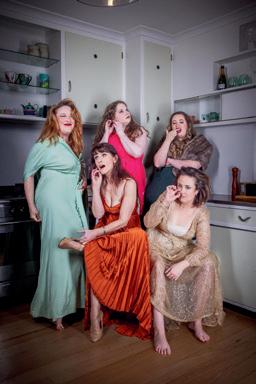
My daughter, Queenie van de Zandt, is bringing her new Australian musical Middle Raged: A Musical Meltdown to the Canberra Theatre Centre in July.
The show celebrates women in midlife with honesty, humour and heart, but behind the production is also a very Canberra story: a young girl who discovered performing through local schools, community theatre and Canberra stages, and who has gone on to build a remarkable career across Australia and overseas.
As a Canberran of 56 years, and as Queenie’s proud father, I have watched with pride as this journey comes full circle, from those early Canberra stages to a major Australian production returning home.
It is about family, perseverance, community and the way Canberra helps people find their voice.
Hans van de Zandt, via email
Ignoring physics, biology and engineering
Sorry, Mike Quirk (letters, CN June 4), but stories about intermittent versus nuclear electricity generation ignore physics, biology and engineering.
Weather-dependent intermittent solar panels and windmills don’t work at night, when overcast or raining, or during calms.
Nuclear power plants simply replace a coal furnace with a nuclear reactor to raise steam. They need no more water than any coal-fired plant.
Regretfully, CSIRO GenCost Reports have misled politicians about nuclear power costs (refer my letter, CN June 4).
We humans are carbon-based life forms living in a carbon-based world, like all other living creatures. Demonising CO2 is akin to demonising life.
Biomass increase from increased atmospheric CO2, measured by specialist NASA satellites in the past decade or so, includes greater crop growth for a growing world population. And more trees to build its homes. Canberra trams have increased rates while seeing a one per cent fall in public transport patronage! Snowy 2.0 pumped hydro cost has blown out from $2 billion to $42 billion! The Alice Springs to Darwin railway has reduced container shipping times from Asia to southern Australia by a week. Whoops. However, Australia has exported most of its industry to China these days, so maybe intermittent electricity will suffice after all.
Anthony Hordern, Jamison
I like wood heaters, but not in suburbs
There’s been much debate about the pros and cons of wood heaters in the ACT.
Take an evening walk around your neighbourhood and you’ll soon find out where they are.
A recent letterbox flyer provided good advice to owners. One point being to buy/ use seasoned wood. Good advice, but therein lies the problem, as most suppliers in the ACT region don’t sell properly seasoned wood. It takes nearly a year for wood to truly season after its cut. In that time it shrinks in size as it dries out, takes on a silver/grey look and will ring like iron bars when knocked together. Fresh-cut wood is full of colour and moisture, which affects the burn quality and will have a heavy thud sound when knocked. I lived on a country property before moving to Canberra. I was lucky to have the space to have wood delivered and piled in a paddock for next year’s use, with the previous year’s delivery silvered off. Most Canberrans don’t have this luxury in their yards, so there’s no scope for seasoning delivered wood.
Unseasoned wood produces a lessefficient burn with more emissions. I actually like wood heaters, but not in a suburban setting.
Just as the ACT Government is promoting the move away from the use of gas in homes, so too should new build codes not permit wood heating.
Murray Parker, via email
As poll looms, Hanson will appear shallow
Andrew Hughes enumerated the obstacles facing One Nation becoming a major force in Australian politics (“Why Pauline Hanson will never ever be PM”, CN, June 11), including the party’s likely lack of party management, full-time teams in every state/territory, lack of diversity and above all the timing of its tilt for power, ie a lot of water will go under the bridge before the next election.
One Nation’s shallow “policies” cut through now but, closer to the federal poll, are likely to be seen as lacking in depth and populist.
During the Joh for Canberra campaign, Joh Bjelke-Petersen referred to the media as “feeding the chooks” – shades of Pauline Hanson?
Herman van de Brug, Holt
Ric Hingee’s hotel fire engine… keep its operators fit and healthy moving it about.
Home support services
are built and independence is maintained.
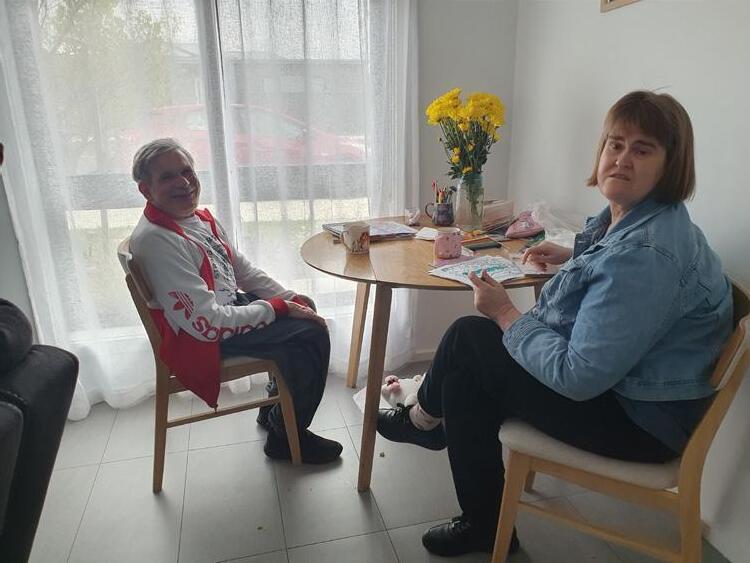
Across Canberra and Queanbeyan, a growing range of home support services is helping older residents, people living with disability and people managing ongoing health conditions continue living safely and independently in their own homes.
The services available today extend well beyond traditional home care. Many organisations now provide personal care, domestic assistance, meal preparation, transport services, social support and help with everyday activities that allow people to remain connected to their communities.
Health and wellbeing programs also play an important role. Allied health services, exercise programs, hydrotherapy, rehabilitation and chronic disease support are helping people maintain mobility, improve confidence and manage their health while remaining in familiar surroundings.
participation, skill development and programs that encourage greater independence and inclusion.
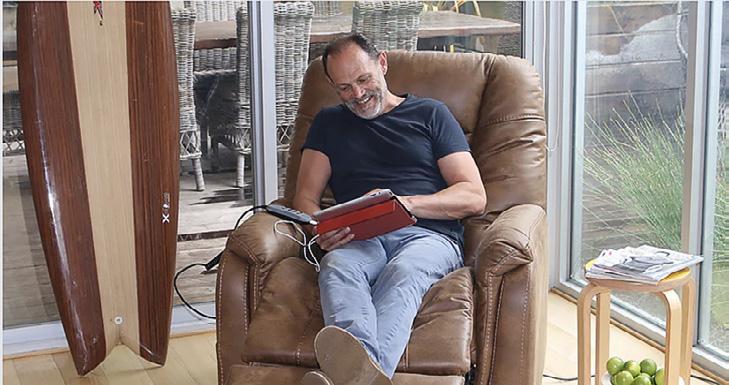
Mobility aids, equipment solutions and home modifications are also becoming increasingly important as more people choose to remain at home longer.
These services can make everyday tasks easier and improve safety and confidence.
Importantly, home support is no longer just for older Australians. Families, carers, people recovering from illness or injury and those living with disability are increasingly accessing services designed to improve quality of life.
As demand continues to grow across the ACT and Queanbeyan region, local support organisations are helping residents stay connected, maintain independence and continue living safely in the homes and communities they know best.
welcoming and empowering long term home?
For more than 60 years, Hartley Lifecare has delivered trusted disability support across the ACT. As an NDIS registered provider since the scheme began, Hartley combines experience with a strong focus on quality, safety and person centred support.
Supported Independent Living is about more than accommodation. It is about creating a stable home where a person with disability can live as independently as possible, with the right supports in place. Hartley works closely with each person and their family to understand what matters most, building support around individual goals, daily living skills and connection to community.
Hartley currently has vacancies in a small number
Canberra. These homes provide shared living with 24 hour support from professional, compassionate staff. Every enquiry is assessed individually to ensure the right fit for both the person and the household.
Families want confidence that their loved one is supported by a secure, well governed and values led organisation. Hartley’s long standing presence in the ACT provides that reassurance.
For adults with disability seeking long term accommodation with tailored support, Hartley offers a safe and supportive place to call home.
Hartley Lifecare
Call 02 6282 4411 or visit hartley.org.au
Accommodation Vacancies
Are you or someone you support looking for a safe, welcoming, and empowering long‑term home?
Hartley has been an NDIS-registered provider in the ACT since the scheme began, building on more than 60 years’ experience in disability support.
We work with each person and their family to understand what matters to them and provide support that builds skills, confidence and connection to community.
Hartley Lifecare currently has openings in a selection of our Supported Independent Living (SIL) homes. These vacancies may be suitable for adults with disability seeking a supportive shared living environment with 24-hour support.
Each enquiry is considered individually to ensure the right fit for the person and the household.
Enquiries and expressions of interest: Kathy Le Mesurier, Senior
Home support services
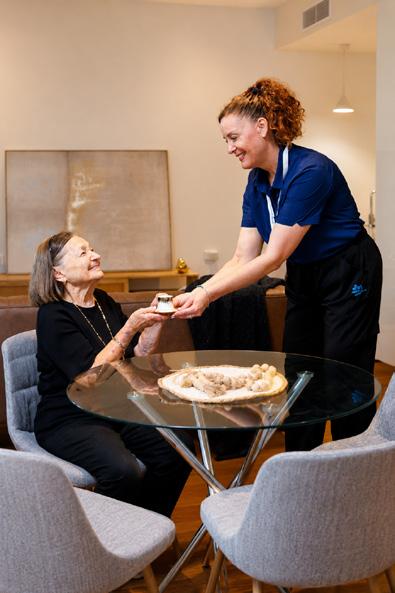
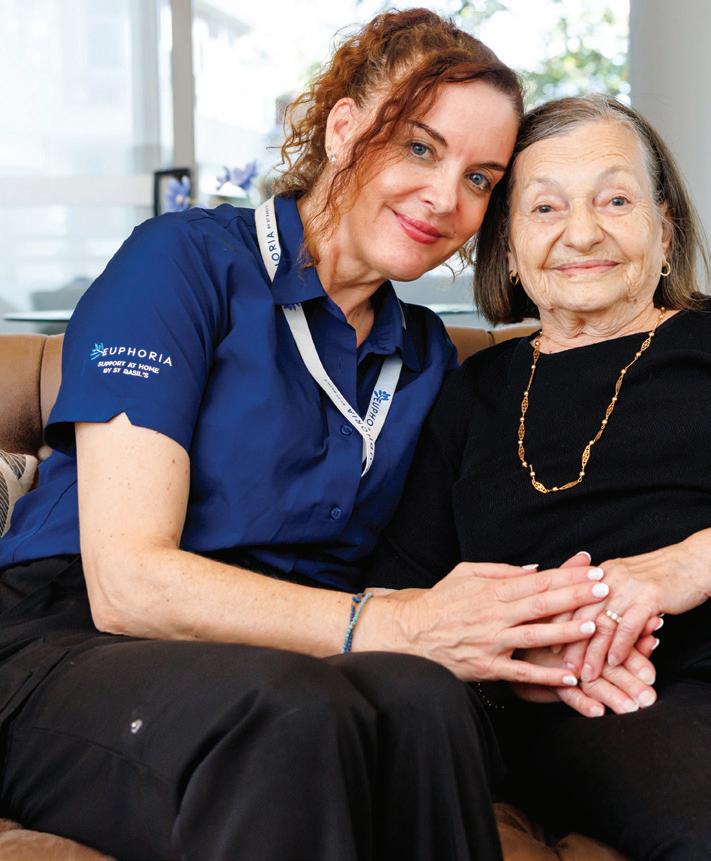
Euphoria Support at Home helps seniors stay where they belong
For many older Australians, remaining at home is about far more than comfort. It is about maintaining independence, staying connected to the community and continuing life on their own terms.
As demand for in-home aged care continues to grow, Euphoria Support at Home is helping seniors access personalised support while remaining in the place they know and love most.
Delivered by the trusted team at St Basil’s Homes, Euphoria Support at Home provides tailored services designed to support everyday living. From personal care and domestic assistance to transport, social support and wellbeing services, the focus is on helping people remain safe, independent and confident at home.
Unlike a one-size-fits-all approach, Euphoria works closely with clients and their families to understand individual needs, preferences and goals.
“People want choice and control over how they live as they age,” the team says. “Our role is to provide the right support so they can continue enjoying their independence while maintaining the lifestyle they value.”
The benefits extend beyond practical assistance. Research consistently shows that remaining connected to familiar surroundings, routines, friends and community networks can have a positive impact on wellbeing and quality of life.
Backed by decades of aged-care experience, Euphoria Support at Home combines professional expertise with genuine compassion, giving clients and families confidence that support is available when needed.
For seniors looking to remain independent at home, and families seeking trusted care for their loved
ones, Euphoria Support at Home offers a personalised solution designed around the individual. To learn more, visit stbasils.org.au/service/ support-at-home
St Basil’s stbasils.org.au
and independence across the region
For more than two decades, Open Mobility has been helping Canberra and surrounding communities stay active, independent and connected through a wide range of mobility and healthcare equipment solutions. The locally owned business has built a strong reputation for providing practical advice, personalised service and quality products that support people living with disability, injury or age related mobility challenges.
Open Mobility offers an extensive range of products including mobility scooters, wheelchairs, walkers, lift chairs, adjustable beds, daily living aids and homecare equipment. Their experienced team works closely with customers, carers and health professionals to ensure every individual receives the right solution for their needs.
What sets Open Mobility apart is its commitment to service. Staff take the time to understand each customer’s circumstances, helping them maintain confidence and independence both at home and in
the community. The company also provides product demonstrations, servicing and ongoing support, giving families peace of mind long after a purchase is made.
As demand for mobility and independent living solutions continues to grow across the region, Open Mobility remains focused on helping people live safely, comfortably and with greater freedom.
The business has recently expanded with a new Queanbeyan location, making it easier for residents in the NSW region to access expert advice and a wide range of mobility products closer to home. The new showroom strengthens Open Mobility’s commitment to supporting customers on both sides of the border and provides convenient access to trusted local service.
Open Mobility Tuggeranong, Belconnen and Queanbeyan. Email: info@openmobility.com.au Visit openmobility.com.au
Home support services advertising
How personalised exercise restores home independence
Some people have always incorporated exercise into their lives, and for others, purposeful exercise is something that fell by the wayside as family, career and health challenges intervened.
At Arthritis, Pain Support and Emerge ACT we understand. “Often chronic pain or debilitating fatigue makes exercise seem counterintuitive,” says Rebecca Davey, CEO. “I know personally, I wasn’t a sporty kid, then children, work pressure and just life got in the way. I have had to learn myself just how much I need to make sure I exercise daily to ensure I can keep doing what I need to do.”
As we age or are affected by chronic health condi tions and disability our level of fitness declines quickly. It can affect every element of our lives.
“We get in a vicious circle when we’re struggling. We drop the exercise to focus on doing the things we need to do, but then we find we can’t do the simple things in life like doing our personal grooming, cook ing, cleaning and getting out into the community”. Rebecca says by engaging in well structured and individually designed exercise programs, many people find they can actually start doing things for themselves again, and can become much more independent.
Another side affect of being part of an exercise program is it becomes a social outlet. “We have clients who say going to hydrotherapy or coming in to a strength and balance class is the only social contact they have outside of the home,” says Rebecca. “Often we find the jaw and tongue get the greatest workout,” she laughs.
The exercise professionals made up of physi otherapists and exercise physiologists at Arthritis, Pain Support & Emerge ACT will design a program tailored just for you. Programs can be taken home, or classes can be joined at their gyms at Bruce or the fantastic
Arthritis ACT, Pain Support & ME/CFS ACT 170 Haydon Drive, Bruce. Call 1800 011 041 or visit arthritispainsupportemergeact.org.au
LIVE WELL WITH DIABETES.
With Diabetes Australia’s telehealth clinic, you can speak to a credentialled diabetes educator or dietitian from the comfort of your own home.
We offer:
M Blood glucose monitoring and management
M Medication reviews
M Guidance on accessing and using technology and tools
M Diet and nutrition guidance for optimal health
M Sustainable lifestyle change strategies
M Understanding and preventing complications
Book your telehealth appointment today.
The health professionals keeping you on top of diabetes
The effects of diabetes on adults over the age of 65 can differ vastly from younger people due to physiological, psychological and social changes associated with ageing, says credentialed diabetes educator at the Diabetes Australia Telehealth Clinic, Karen Jameson.
“Once you are diagnosed with diabetes, I always suggest using a multidisciplinary approach First, see your GP, as they are essential for holistic, long-term management and they screen for potential issues to keep you healthy.
“Then it is best practice to see a Credentialed Diabetes Educator/nurse practitioner every 6-12 months, and a dietitian every 12 months.”
Diabetes Australia offers a Telehealth Clinic, where people can access professional diabetes care from the comfort of their own home via a video call or over the phone.
“We also offer 1800PREVENT, which helps people take proactive steps to improve health,” says Karen.
“Diabetes Australia has a range of information and services that support people living with diabetes, as well as their families and carers.”
Treatment goals should be tailored to personal needs to ensure quality of life is maintained, says Karen.
“You can do this by working with a diabetes care team to ensure your blood glucose levels are within target range reduce the risk of hypoglycaemia or impair quality of life.
“I recommend regular check-ups every three to six months, including annual review with other health professionals to prevent complications.
“Until we find a cure for diabetes, we will continue to provide customised support, while advocating for our patients with new equipment, programs, education and research,” she says.
Diabetes Australia Telehealth Clinic 19-23 Moore Street, Turner. Call 1800 177 055 (Option 5) or visit diabetesaustralia.com.au/diabetes-australia-clinic
Credentialed diabetes educator at the Diabetes Australia Telehealth Clinic, Karen Jameson.
Arthritis ACT CEO Rebecca Davey.
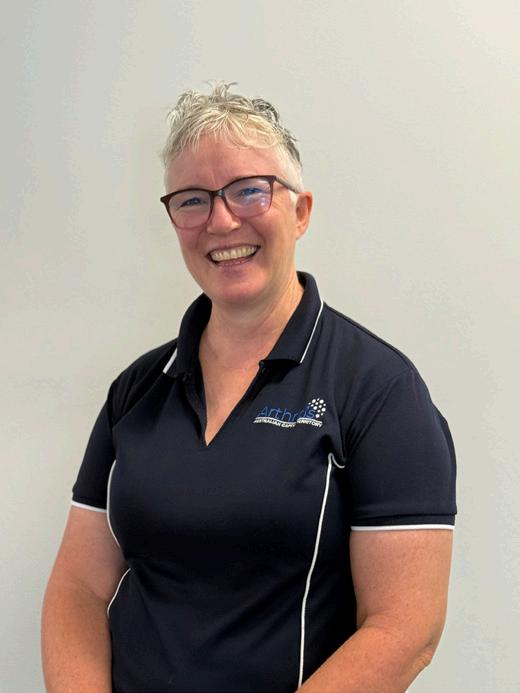
MEET OUR EXERCISE EXPERTS
Holly Hazelwood – Exercise Physiologist
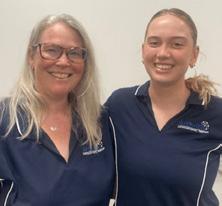
Holly is a former sports journalist who believed so strongly in the power of exercise to heal and nurture that she undertook her 4 year degree in Exercise Physiology. Holly is be able to work with people directly to support them through their pain journey and regain independence and a joy for living again. Holly provides one on one and group exercise classes both on land and at our hydrotherapy centres to support people to gain freedom from chronic pain.
Sophie Bullock – Exercise Physiologist
Sophie has post graduate qualifications in hydrotherapy, and as a non-sports centred Exercise Physiologist, helps clients who struggle with engaging in exercise due to a lack of sports participation. Sophie’s goal is to improve clients health via our hydrotherapy program, gym instruction and in-home visits. Sophie also is known for her passion for working with children.
Nick van Diemen – Physiotherapist
Nick (they/them, he/him) has returned to Canberra after completing a Master’s in Physiotherapy at the University of Queensland. Their passion comes from a love of science and helping people. With eight years in disability support, Nick brings broad experience and enjoys working with clients across a wide range of needs.
Liam Barber – Exercise Physiologist
Liam has a passion for working with paediatric and mental health conditions, as well as supporting people to pursue a better quality of life. He has experience working across a wide range of musculoskeletal, neurological and cardiovascular conditions across all age groups.
Blake Dean – Exercise Physiologist
Blake has expertise in improving clients mobility and decreasing their pain through appropriate exercise. Blake delivers our ‘My Exercise’ program, targeting the relief of lower back and sciatic pain, shoulder and upper body concerns as well as leg, hip and ankle interventions – for those who do not qualify for physiotherapy-led GLAD programs. Blake provides individual & group exercise for younger people with a disability. Blake treats clients in-clinic or via our hydrotherapy program as well as attending your gym with you.
Sarah Solano – Exercise Physiologist
Sarah believes that exercise is the best medicine. She is an Accredited Exercise Physiologist with her degree in exercise physiology and rehabilitation. Previously Sarah was a swim teacher, personal trainer and an allied health assistant in the hydrotherapy field.
Natasha Elword – Exercise Scientist
Tash discovered her passion for exercise after completing her Certificate IV in Personal Training in 2015, later earning a Sport and Exercise Science degree from the University of Canberra. She joined Arthritis ACT in 2019 and now supports group classes, exercise programs and administration. Outside work, she enjoys family time, running, hiking and cooking.
Nat & Grace – Allied Health Assistants
Nat has recently completed studies as an Allied Health Assistant and has returned from a hiatus, during which she worked with us in administration, to provide more hands-on support. Grace is a student exercise physiologist who brings enthusiasm and care to supporting our clients to achieve their health and wellbeing goals.
• GLA:D® Program for hip and knee osteoarthritis.
• Education and supervised group sessions to build strength and confidence.
• Pain management strategies to reduce medication use Tailored support including preparation for or avoiding joint replacement.
A
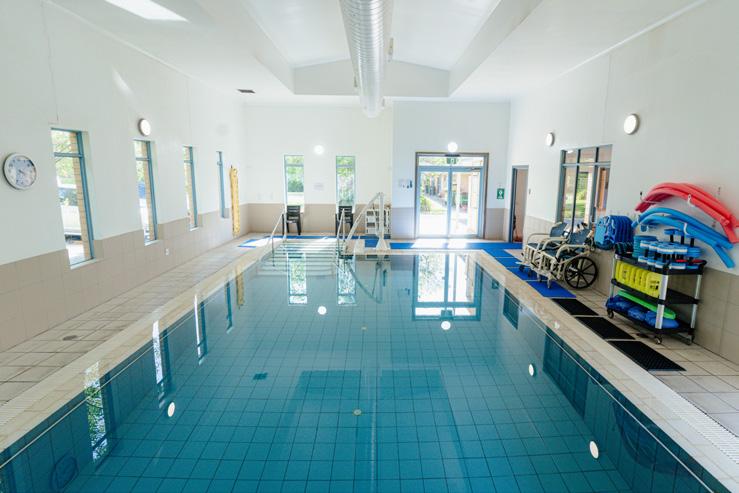
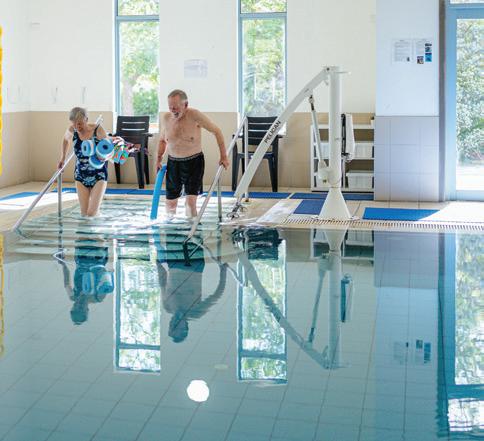
Owned and operated by Hartley Lifecare, the Hartley Hydrotherapy Pool is one of the few dedicated hydrotherapy facilities in Canberra that is both fully accessible and open to the wider community.
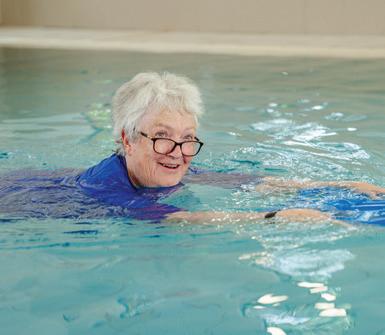
Based in Hughes, the pool provides a consistent 34 degree environment designed to support rehabilitation, pain management and improved mobility. For people recovering from injury, living with disability, managing arthritis or other chronic conditions, water based therapy can enable movement that is difficult on land.
What sets this facility apart is its accessibility and flexibility. It can be booked for self managed sessions or exclusive use, making it suitable for individuals, allied health professionals and small groups. The setting is practical and community focused rather than
commercial or high traffic.
Importantly, community based hydrotherapy expands access beyond acute care settings and short term treatment plans. It gives people a local, reliable option to continue therapy at their own pace. They also create opportunities for preventative health, particularly for older Canberrans seeking low impact exercise. As demand grows for inclusive health infrastructure, facilities that are affordable, accessible, and centrally located play a critical role. The Hartley Hydrotherapy Pool is a straightforward example of community focused design meeting real need.
Hartley Hydrotherapy Pool
Call 02 6185 1653 or visit www.hartley.org.au/hartley-hydrotherapy
What’s on for kids? advertising feature
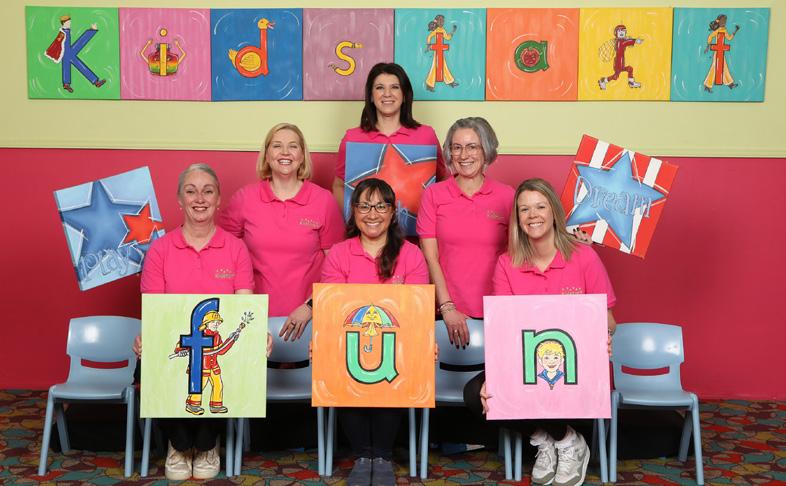
Kidstart is celebrating its 30th year working with children and owner Kristen O’Connor says it’s a privilege to allow parents and carers to have “all the educational fun with children without having to make the fun, just join in!”
“We are not a childcare centre, but provide classes with opportunities for each child to develop socially, physically, emotionally and intellectually through sequential programs full of fun, structured and stimulating activities,” she says.
“We bring families together to create relationships and connections within the Canberra community.”
With classes available for children aged five months to five years, Kristen says Kidstart has a program to suit all children before they start school.
“If you want to assist your child to develop a lifelong love of learning, give them the headstart they deserve at Kidstart,” she says.
Operating since 1996, Kristen says Kidstart offers five different age-based programs, for children form 5 months to 5 years of age. From babies learning to crawl, toddlers jumping, 2 year olds doing craft and learning how to socialise, our 3 and 4 years starting their formal literacy journey and finishing off with our Preschoolers heading full steam ahead in their school readiness program! According to Kristen, it’s a privilege to see the children thrive each day!
“There’s a special bond with teaching children, from when they are babies and seeing them grow and develop before heading off to school.
Kidstart is now accepting enrolments of new students for Term 3 commencing the July 20.
Kidstart Southside Education and Activity Centre 65 Sternberg Crescent, Wanniassa. Visit kidstart.com.au
Learn to swim before summer
While summer is often when families think most about swimming, the foundations for safe and confident swimmers are built throughout winter. Consistent year-round participation allows children to retain skills, build confidence and continue progressing, ensuring they are better prepared for the increased time spent around water during the warmer months.
Swimming offers far more than water safety benefits. It is one of the few activities that supports the development of the whole child, improving strength, coordination, balance, cardiovascular fitness and body awareness while also enhancing cognitive development, confidence, resilience and emotional wellbeing. The unique sensory properties of water provide valuable learning experiences that contribute to healthy physical and mental development from infancy through to adolescence.
For more than 24 years, Aquatots has proudly been helping create safer swimmers across Canberra and the surrounding region. Through a structured progression pathway and a strong focus on child development, Aquatots continues to support thousands of local families in building lifelong skills both in and out of the water.
“Swimming is one of the greatest gifts we can give a child. It develops stronger bodies, growing minds and the confidence needed to stay safer around water for life,” says Alena Sarri, Owner and Operator of Aquatots. As the saying goes, great summer swimmers are made in winter. The lessons children attend today help create safer summers tomorrow
Aquatots
Forde, Gold Creek, Black Mountain and Googong. Visit aquatots.com.au
★ Classes for children 5 months to 5 years
★ Independent pre-preschool program for 3 and 4 year olds
★ Preschool PLUS for 4 and over
★ Emphasis on development of motor skills, academic and social skills
★ Preparing children for formal schooling by introducing structure and routines in a play based fun and creative atmosphere
The team at Kidstart Southside.
The club’s philosophy is simple: rehearse like a choir, vibe like a musical and rock like a band. Unlike traditional choirs, Canberra Glee Club combines singing with movement, staging and performance, creating an experience focused as much on confidence and connection as on music.
Importantly, there are no auditions and no requirement for previous performance experience. Members are encouraged to participate at their own pace in an environment designed to be inclusive, encouraging and fun.
that welcomes everyone from primary school students to adults rediscovering their passion for music.
Participants build friendships, improve their singing abilities and develop confidence both on and off the stage. For many members, the social connections become just as important as the music itself.
Canberra Glee Club proves that singing together creates a genuine sense of belonging.
Canberra Glee Club Visit canberragleeclub.com.au
Music Theatre Classes for All Ages
Join Luminescence children’s choir holiday program 2026!
Luminescence Children’s Choir Holiday Program is a five-day workshop for young people aged 7–12 who love to sing. There is no application or audition requirement for our holiday programs – all young singers are welcome!
Led by composer and pianist Sally Whitwell and Luminescence Chamber Singers bass-baritone Alasdair Stretch the Luminescence Holiday Program invites young singers to explore their voices and the magic of singing together over five glorious days.
Learn new songs, meet new friends, and discover music through games and play.
The program runs from Monday July 6 to Friday July 10 between 9am-3pm at the Australian Centre for Christianity and Culture. Supervision is available from 8.30am-5.00pm at additional cost.
Luminescence Visit luminescence.org.au
LUMINESCENCE CHILDREN’S CHOIR
Visitors are greeted by a beautifully restored 48-215 (FX) Holden, owned by Canberra enthusiasts June and Tony Pryce.
The exhibition also features the first and last engines produced by Holden, along with rare memorabilia, design samples, photographs and factory artefacts.
National Archives curator Anna Edmundson says the Canberra exhibition has been expanded to include
significant part of the workforce during this period and Australian culture through stories connected to figures such as Albert Namatjira and Jimmy Barnes.
More than a car exhibition, Rear Vision reflects the memories, communities and working lives that helped shape modern Australia.
Rear Vision: the Holden Collection National Archives of Australia, daily until October 11. Free admission.
Coin adventures await at the Mint
School holiday fun is set to roll into Canberra as the Royal Australian Mint invites families to discover the fascinating world of coins through a series of hands-on activities for children.
The Mint’s winter school holiday program combines creativity, storytelling and exploration, giving young visitors the chance to investigate hidden details on coins, design their own currency and even crack secret codes.
Mini-Minties sessions, designed for children aged 4 to 6, include activities such as coin spotting with magnifying glasses, designing commemorative coins and discovering the animals that appear on Australian currency, from dolphins and dingoes to sharks and snakes.
For older children aged 7 to 12, Mintventures sessions delve deeper into the art and history of coin design. Participants can explore the stories behind
Australia’s decimal coins, learn about celebrated designer Stuart Devlin, uncover hidden codes and discover remarkable animal heroes commemorated on coins.
Families looking for a relaxed activity can also enjoy free Crafternoon sessions, held daily from 2pm to 4pm throughout the school holidays, with no bookings required.
Visitors can further explore the Mint’s museum and factory viewing areas using children’s activity guides available from the Welcome Desk.
Programs cost $10 per child plus booking fees. For bookings and program details visit: www.ramint.gov.au
Royal Australian Mint Denison Street, Deakin. Visit ramint.gov.au
exhibition developed by the State Library of South Australia, in partnership with Adelaide University.
NAA curator Anna Edmundson with a Holden 48-215 (FX). Photo: Peter Hislop
Build a dead hedge this winter
•
•
•
•
•
•
•
By Jackie WARBURTON
Winter pruning of most deciduous trees and shrubs can begin once all the leaves have fallen and plants have entered dormancy.
Rather than sending prunings to the green bin, consider using them to build a dead hedge, which offers both practical and ecological benefits.
To build a dead hedge, start by clearing a weed-free area where the hedge is to be located. Use strong branches as the framework, staking them about 50cm apart in two parallel rows of whatever length you require. Fill the space between the stakes with branches, logs, twigs, sticks or other organic material.
For stability, place the heaviest green waste at the base, then build up in layers, firming the material down as you go. During winter, some of the material will decompose, so
topping it up periodically will help maintain its structure. Once the desired height is reached, weave binder branches through the tops of the stakes to keep everything upright and improve stability.
Dead hedges have many uses. They provide habitat for wildlife, screen off areas of the garden and offer an easy way to dispose of woody material. Wood-inhabiting fungi (saprophytes) colonise the hedge, creating a natural ecosystem that helps break down the material over time.
A GROUNDCOVER that is relatively new to our gardens is Japanese grass (Hakonechloa macra). This perennial dies down in winter before re-emerging in spring. It tolerates dry soils and grows well beneath trees where little else will thrive.
Several yellow-foliaged varieties are available, although these benefit from extra shade during summer to prevent leaf scorch. Plants spread slowly by rhizomes and can be divided over time to create more plants. Frost-damaged foliage should be left in place through winter, then trimmed back in late
spring as new growth appears. Japanese grass is best planted in spring to establish well before winter. Avoid planting it too deeply. Once established, it is very much a set-and-forget plant that requires little water.
ALTHOUGH there is not much to plant in the garden over the next few months, now is an excellent time to browse seed catalogues and prepare for raising seedlings indoors or on a heat mat, ready for planting in October when the soil has warmed.
Seeds can be sown in any container that allows water to drain freely. The growing medium should be light and fluffy so roots can develop easily. Sifted potting mix can be used if seed-raising mix is unavailable, but avoid media containing fertiliser, as seedlings do not require feeding until after germination and the development of several sets of leaves.
Sow seeds into punnets and cover lightly with sand or potting mix to keep them in place. Water from below to prevent seeds being dislodged or overwatered.
NOW is also the time to take hardwood cuttings of hydrangeas, roses, figs and other deciduous trees or shrubs. Hardwood cuttings are longer than softwood cuttings and should be at least 20cm long with three to four nodes, or growth points.
Take cuttings from the current year’s growth before branches become too woody. Place several cuttings around the edge of a small pot to improve drainage, water them in, then position the pot on an unheated bench or windowsill. In two to three months they should be ready for potting.
jackwar@home.netspeed.com.au
Jottings…
• Remove all hellebore leaves off all plants.
• Liquid feed all foliage plants to keep them strong.
• Plant Grevilleas.winter-flowering
• Prune kiwi fruit and kiwi berries.
Japanese grass groundcover… perennial plant that dies down in winter and remerges in spring.
A dead hedge… has functionality as well as ecological benefits. Photos: Jackie Warburton
ARTS & ENTERTAINMENT
Sky’s the limit for Archer’s mighty burst of brass
By Helen Musa
Blues troubadour and folk musician Archer Shepherd, simply known as Archer, is due to descend on Belconnen Arts Centre in early July with a 28-strong brass band.
Performing a blend of pre-war country blues and contemporary folk, he’s known as a walking encyclopedia of human experiences in regional Australia.
When I catch up with Archer by phone at his home in Smeaton, near Ballarat, I’m expecting to hear a North Carolina accent, since he was born there, but the twang is distinctly Australian and I find that he’s not much interested in the US aspect of his life.
“I’ve lived there a few different times, but mostly in Australia,” he tells me, although he admits to a bit of American influence in his musical tastes, having taken inspiration from Woody Guthrie and Lead Belly, but just as much, he asserts, from the Australian indigenous world and from swag people from all over the world.
One critic has described him as having “the sound of an Australian cattle rustler you might find camped out next to a dam entertaining himself with his songs about death, travelling and bushrangers”.
Although Archer has a reputation for being
of severe silence as well, and I don’t talk that much; I live with a bunch of animals.”
Most notable among those is Seamus, his rescued black Angus bull, born with a rare neurological palsy, who became a celebrity
Because his condition prevented him from nursing as a calf, he was raised on human food (vegetarian) by Archer, who discovered in him a world-class palate.
The project he’s bringing to Belconnen is
fourth time they’ve done it.
Behind the exercise is Melbourne conductor Philippa Edwards, described by Archer as “a phenomenon, she can do anything”, as well as music producers Mark Grose and Mi -
chael Hohnen, and virtuoso jazz trumpeter Eugene Ball, who did all the arrangements to conjure up the old-time dance halls of Saturday nights gone by. He will himself be performing here with Open Sky.
You wouldn’t immediately think of Archer as a match with brass, but he describes it as “an amazing community… They all know each other.
“They all swap into each other and help each other out and they sometimes do it just for the love of music.”
Besides which, he does like the brassy sound, saying: “I’ve definitely got a thirst for community and the brass band is the ultimate community organisation.”
For Open Sky, all the songs will be Archer originals, arranged by Ball for a band of 28 brass players, sourced by Edwards from local brass bands wherever he goes.
For the gig at Belco Arts, Archer will be accompanied by Canberra Brass, formerly known as the Hall Village Brass Band.
“These community bands we’ve played with around the country are all really professional,” he says.
“All these people coming together to do their thing, it’s probably happening less in our current society, so it’s beautiful to be a part of.”
It’s a concert, Archer says, that promises to make everyone feel hopeful.
Smith’s@Belco: Archer and The Open Sky Big Brass Band, Belconnen Arts Centre, July 4.
STREAMING Dragon’s drumming up its fans
By Nick OVERALL
The biggest show on television has returned for its third blockbuster season.
House of The Dragon, the spin-off to HBO’s epic fantasy series Game of Thrones, is finally back and has, once again, drummed up an army of fans to tune in.
They remain incredibly loyal to this franchise that is arguably the king of streaming television, despite the final season of Thrones being widely considered a disaster that dropped the ball at a climax people had waited years for.
crown and damn if they don’t make for some pretty addictive TV while doing it.
House of The Dragon, streaming on HBO Max, focuses on the family of Daenerys Targaryen, winding back the clock 200 years before the events of Game of Thrones when her blonde-haired, dragon-hoarding ancestors sat on the Iron Throne and ruled Westeros.
But back then the threats to their power didn’t come from opposing noble houses. They came from within.
These incestuous pack of backstabbers can’t wait to knife one another for their chance to wear the
Game of Thrones is certainly back on a hot streak at the moment.
Earlier this year A Knight of the Seven Kingdoms hit HBO Max to glowing reviews.
While that story focused on a more quiet, contained side of life in the world of Westeros, House of The Dragon is the bombastic opposite, filled with dragon battles made from what is perhaps the most impressive CGI currently on TV.
When season one dropped in 2022, HBO reportedly spent $US100 million on marketing alone, the
biggest advertising investment in the network’s history.
It seems Game of Thrones’ grip on the streaming crown isn’t slipping yet.
I WILL Find You is the latest action thriller to hit Netflix and, despite its title, no, it’s not a spin-off to Taken with Liam Neeson.
This series actually features Aussie star Sam Worthington front and centre as David Burroughs, a man imprisoned for life over the murder of his young son.
The catch? David says he never did it. The plot kicks off when he
receives evidence his boy may actually be alive, prompting him to try anything he can to escape, uncover the truth and prove his innocence. What he eventually discovers is a family conspiracy far deeper and more entangled than he could ever have imagined.
Harlan Coben’s 2023 novel serves as the inspiration for this eight-part series that’s now streaming. Worthington brings his usual moody charisma to this main character in what is a formulaic, but entertaining eight-hour watch. Feeling a little more like a TV show from the 2000s, this new series delivers all the thrills a breakout from behind bars should contain. Lock it down.
SUDDENLY, ice hockey has become more popular. Why?
Well that would be due to none other than Off Campus, a steamy romance series on Amazon Prime Video that has scored itself an absurdly large audience.
In just the first 12 days of streaming the show racked up 36 million viewers, outperforming some of the platform’s biggest shows and even getting close to the success of its Lord of The Rings spin-off series.
What’s the draw?
Off Campus follows Hannah Wells (Ella Bright) and her romantic quest to score the attention of the captain of the university hockey team Garrett Graham (Belmont Cameli).
And, well, that’s about it.
If one could tick almost every box on the list of romantic cliches that a show can serve up then Off Campus is what they’d end up with.
But here’s the thing. The show makes no apologies for that.
Audiences seem to have found the show’s unashamedly smutty style appealing, calling it some good old-fashioned TV escapism.
Based on a book by Elle Kennedy, the story has proven it cannot only fly off shelves but bring on millions of streaming subscribers.
With that sort of success it’s clear a second season of this hockey romp won’t be put on ice for long.
Songs of hope and heartbreak ARTS IN THE CITY
By Helen MUSA
The Strangeways Cabaret, created by Merrigong Theatre Company’s permanent ensemble of neurodiverse actors and musicians, brings together original songs about online dating, loneliness, heartbreak and hope. Performed by a colourful cast of characters and backed by a band, the show promises a joyful and uplifting celebration of life and love. The Q, July 4.
The future of the SoundOut Festival of experimental music has been thrown into doubt after director Richard Johnson announced that the event had missed out on funding from Arts ACT and Creative Australia for 2027. As a result, there will be no festival in 2027, but SoundOut will continue to present events throughout the year.
Albert Camus’ classic play Caligula, brainchild of Isaiah Prichard, will be presented by the newly formed Performative Theatre Company. The drama follows the notorious Roman emperor as he grapples with the meaninglessness of existence and attempts to
EXHIBITION
impose his philosophy on those around him. ACT Hub, July 1-4.
Up-and-coming Queanbeyan musician Ruby Holden has secured the opening-act spot for acclaimed country singer-songwriter Beccy Cole. Holder of 11 Golden Guitars and one of Australia’s most decorated country performers, Cole will present her latest show, Through The Haze, celebrating music from her newest album. The Royal Hotel, Queanbeyan, July 3.
Canberra Choral Society and National Capital Orchestra will jointly perform two major choral masterpieces, Francis Poulenc’s Gloria and Carl Orff’s Carmina Burana. Conducted by Louis Sharpe, the performance will showcase soprano Rachel Mink, tenor Tobias Cole and baritone Sitiveni Talei. Llewellyn Hall, July 4.
Uncommon Ground brings together internationally recognised ceramic artists and 2026 Canberra Potters artists-in-residence Jacqueline Clayton and Paul Davis, who also collaborate as StudioJam. The exhibition draws on shared experiences of training in Japan. Canberra Potters Gallery, Watson, until July 19.
Immersive look at
By Helen Musa
The National Museum’s new winter blockbuster, simply titled Antarctica, promises to take visitors on a journey into a stage set for adventure.
Design-wise, the exhibition is awash in cold blues and whites, allowing visitors to “feel a blast”.
The exhibition focuses on 14 personalities associated with Antarctica, from explorer Cecil Madigan to Diana Patterson, the first woman to manage an entire Australian Antarctic research station.
There are videos to help visitors connect with the stories but there are also remarkable artefacts, including embroidered skis, dresses reinforced with whalebone and taxidermy specimens.
A key feature is a huge 10-minute looped video recreation of an Antarctic blizzard projected on to the museum’s enormous curved screen.
“We want it to be overwhelming. We want it to be immersive,” senior curator Laura Cook says, adding that the plummeting temperatures in Canberra at this time of year may help with that.
Visitors will discover that Australia and Antarctica were once linked as part of the superconti -
nent Gondwanaland. Fossils of the Glossopteris tree found across Antarctica, Australia and India provide evidence of that ancient connection, while the skull of an extinct toothless dolphin demonstrates how species adapted to increasingly cold conditions. Curator Jono Lineen points out that human beings were never intended to live in Antarctica, but he also reminds me that Antarctica was once lush and verdant. As it split from Gondwanaland and drifted south, fewer species were able to survive.
That is a deep-time connection, to be sure, but the exhibition also introduces visitors to more recent sub-Antarctic experiences. Captain James Cook’s second voyage crossed the Antarctic Circle in 1773, while the clipper ships charging through the Roaring Forties, Furious Fifties and Screaming Sixties of the 19th century gave many early migrants their first sub-Antarctic experience.
Although Cook, no relation to the exhibition’s curator, never sighted Antarctica itself, his detailed reports of whales helped establish the fledgling whaling industry. Sydney, Lineen notes, was built as much on the whale’s back as on the sheep’s. The related industry of extracting oil from penguins is also explored.
Cook says the exhibition
House of the Dragon’s back.
Off Campus… a steamy romance series.
Gripping crime fiction from across the ditch BOOK REVIEWS /
“NZ crime fiction is characterised by its distinctive rural and urban settings as well as its often gritty realism,” says books reviewer ANNA CREER .
NZ crime fiction is characterised by its distinctive rural and urban settings as well as its often gritty realism.
Both Slash (Allen & Unwin) by Gavin Strawhan and Lucky Thing (Text) by Tom Baragwanath prove how gripping NZ crime fiction can be.
Gavin Strawhan is one of the most experienced scriptwriters working in NZ television. His debut novel The Call (2024), featuring Detective Sergeant Honey Chalmers, won the 2023 Allen & Unwin Fiction Prize and was shortlisted for best novel in the 2025 Ngaio Marsh Awards.
Honey Chalmers returns in Slash. She’s still traumatised by the events that ended The Call, has left the police and now works for a dubious firm of private investigators.
On assignment in Napier, she’s approached by Vinnie Wright who wants her to find his missing son Nick. In 2023, just before the devastation of Cyclone Gabrielle, Nick and an accomplice, Oliver Haughton, using a stolen car and rifle, robbed shops and a petrol station down the east coast. Nick was 19, Haughton 16. Haughton was arrested and pleaded guilty to aggravated robbery, but Nick hasn’t been seen since. Now, on social media, Nick is being accused of murdering the owners of the stolen car.
Vinnie’s other son Steve, a policeman, sends Honey the police files on the case and they convince her that Nick’s disappearance needs investigating.
The Wrights live in Bergeton where Rauku Forestry is the town’s biggest employer. Most of the local farmers have sold their land for pine plantations.
Honey is told: “When forestry came to town everyone thought it was a godsend – jobs, kept the school open”. But the jobs don’t eventuate and the town has died. Then Cyclone Gabrielle washes away the small younger pines and as a result “stacks of silvery slash dotted the hills among yawning slips… slash is a good word for it, Honey thought. Slashing the land, slashing lives.”
Honey’s investigation becomes more complex when she’s asked by Chucky, a forestry worker, to find one of his crew who had left without warning at the time of the cyclone. Rumours suggest that Timi returned to his native Fiji but Chucky is worried.
Slash is a fast paced story about a fearless female detective uncovering a web of deceit,
illicit drugs and corruption in high places reaching from Fiji to NZ and Australia.
ALTHOUGH he now lives in Paris, Tom Baragwanath was born and raised in Masterton in NZ’s North Island and that’s where he set his debut, prize-winning novel, Paper Cage (2022).
In it he introduced a remarkable woman, Lorraine Henry, strong, principled and loyal. Lorraine has been a widow for 26 years. She grows her own vegetables, admits she’s shaped “like a marrow”, and has a bad hip.
Lorraine works at the local police station
adventures in Antarctica
examines the Antarctic experience through more than 250 objects, saying: “There’s a lot going on.” The basis of the show, augmented by existing National Museum holdings, is the collection of the Australian Antarctic Division, which in 2023 transferred holdings to the National Museum and the National Archives.
Politically, Australia is one of seven nations that lay claim to parts of Antarctica, but Lineen and Cook stress that under the Antarctic Treaty all activity is restricted to peaceful scientific research, which the show canvases.
Nonetheless, Australia claims sovereignty over roughly 42 per cent of the continent’s land area through the Australian Antarctic Territory, administered by the
Australian Antarctic Division.
This exhibition shines a light on Australian explorers such as Mawson and Edgeworth David, both distinguished geologists who made major contributions to scientific knowledge.
David’s granddaughter, the late Anne Godfrey-Smith, also known as Anne Edgeworth, trained as a scientist before becoming a celebrated Canberra poet and theatre identity. Letters written by David during his expeditions have been loaned to the museum by her family.
Even as I’m talking to Lineen and Cook, I find myself quoting Capt Lawrence Oates’ famous last words,
“I am just going outside and may be some time”, spoken during Capt Robert Falcon Scott’s doomed 1912 expedition to Antarctica.
I knew that from Douglas Stewart’s play Fire on the Snow, just as I knew about dodgy rumours of cannibalism from Thomas Keneally’s 1969 novel The Survivor, which tells of an Antarctic explorer with striking similarities to Australia’s Douglas Mawson.
I wouldn’t be alone, Lineen suggests, most Australians have an Antarctic story, sometimes of heroism, unfolding at the very beginning of the Australian nation, before Gallipoli and at a time when the country was searching for heroes.
Artefacts on display help evoke the hardships of the Mawson expedition, which suffered when a sledge carrying most of the party’s food supplies fell into a crevasse. The disaster forced expedition members to eat their dogs, but not, the curators stressed, each other.
“Mawson was bigger than Ben Hur,” Lineen says, but so too was legendary photographer Frank Hurley, whose Antarctic film Home of the Blizzard was screened throughout Australia and helped shape public understanding of Antarctica.
Preparing Antarctica has been an epic journey for Lineen and Cook, who have spent three years working out how best to tell the story.
“Our premise is that Antarctica affects us all,” they say.
Antarctica, National Museum of Australia, July 1 to October 11. Free.
in the basement file room, surrounded by stacks of paper and files, her “paper cage”. But her instincts as a detective make her invaluable to her police colleagues, Chief Ambrose and the young and inexperienced Dion. Lorraine returns in Lucky Thing which begins with two Finn -
ish backpackers discovering a badly injured teenage girl in the nearby forest.
“A long slender shape, ginger haired, wearing stubbies and an eggshell-blue hoodie. She’s in a hollow, spread out across the leaves, the thick trunks of mattei and beech beyond her”.
The chief of police calls her a “lucky thing” to have survived the night.
The “lucky thing” is Jessie Mowbrie, of Maori descent, who lives near Lorraine, in the poorer part of town.
Jessie is clever and had recently been selected for the Interschool Debating Team, beating girls from St Aquinas. The team is dominated by boys from the exclusive private school, Langsford.
The night of her assault, Jessie and her cousin Michaela went to a woolshed party at Longbush on the Kelsons’ property.
Stu Kelson is the star of the debating team and the school hockey team.
Lorraine has bitter memories of the powerful, entitled Kelsons and how they tricked her father into selling them his farm, adjacent to Longbush, many years earlier.
The police in Masterton are underresourced and struggle to investigate against evasive witnesses and powerful vested interests. Lorraine again trusts her own instincts and pursues the truth, despite the dangerous situations it leads her into.
Lucky Thing is a tragic story of privilege, anger and long hidden secrets written in often exquisite prose. It stands as an example of literary crime against those who declare such a concept a paradox.
Explorer Douglas Mawson… “bigger than Ben Hur”.
Author Gavin Strawhan is one of the most experienced scriptwriters working in NZ television.
Monarch Window Cleaning
Pasta that’s Knot too pricey
If you love digging into a massive serve of pasta, in a no-nonsense eatery and not spending a fortune for the experience, an option is Knot Just Pasta.
A local for those living in Campbell, Knot Just Pasta opened in early 2023. Today, a major part of its trade is take-away.
The place, as its name implies, is “not just pasta”. Also on offer are burgers, big-stack sandwiches, schnitzels, wraps, salads and more. Be aware that there’s no pizza, even though the overriding theme is Italian (might be because Pizza Hut is next door).
We wanted outdoor seating, but it was cold and rainy. We lucked into a seat away from the front door and near a window, feeling we were dining more in a takeaway shop than a café.
and olives.
To start, we shared hot, thick slices of garlic bread ($8 for four slices). Other starters include arancini balls (eight for $16) and mozzarella sticks (six for $12).
Pasta is about building your own. Choose from one of 11 sauces. Next, choose a pasta (fettuccine, penne, spaghetti, rigatoni, ravioli). If you fancy something extra, add goodies such as Italian sausage, prawns, anchovies, mushrooms… you get the drill.
The Puttanesca penne was al dente. The generous serving of salty olives and rich anchovies added a welcoming flavour boost. The dish, not short on Napolitana sauce, was piping hot ($23).
The fettuccine Amatriciana was also al dente and piping hot ($23). It featured the same Napolitana sauce and heaps of bacon, chilli
Both pasta dishes were decent, but not inspiring. We found them overly salty. While portions are ginormous, the good news is that Knot for Pasta is happy to package up leftovers.
Salads can easily be converted into a protein bowl with seven options available ($4 each), such as southern fried chicken, chorizo, and lamb kafta.
Our Caesar salad was loaded with bacon bits, crunchy croutons, and a mound of Parmesan. It was smothered with dressing ($15), and we simply couldn’t plough through it.
Those with a sweet tooth will celebrate desserts such as the oven-baked chocolate brownie.
It’s so big it’s cut into eight slices (a bargain at $13 and obviously a group or family option).
Nutella fans can get their fix with a puff pastry calzone filled with the creamy chocolatehazelnut spread. It’s dusted with powdered sugar and Nutella swirl ($15).
Knot for Pasta’s interior features a forest green and white colour scheme. Big, lit-up takeaway signs are positioned high on the wall above the big open kitchen. Order and pay at the front counter, grab a number and settle in until grub’s up.
Staff were polite but not overly welcoming.
WINE / changing landscape for vineyards
Wine’s flight to eco-tourism
I recently read in Knight Frank’s Wealth Report 2026 a fascinating section entitled “Glass half full: the changing landscape of vineyards and wine”.
It argues that, despite significant disruption in the global wine industry, there are emerging opportunities for adaptable producers, investors and regions.
The report adopts a cautiously optimistic view: while traditional wine markets are under pressure from climate change, changing consumer habits and declining overall consumption, these forces are reshaping the industry in ways that favour innovation, as well as rewarding a move to premium wines.
A central theme is the impact of climate change on viticulture. Rising temperatures and unpredictable weather patterns are affecting traditional wine regions in southern Europe by reducing yields and altering grape quality.
In response, producers are experimenting with different grape varieties, new growing methods and cooler-climate locations.
The report suggests that cooler regions are increasingly attractive because they can produce lighter wines that align with changing consumer preferences.
Regions identified as likely beneficiaries include Germany’s Mosel and Rheingau, England’s southern counties, Tasmania, Marlborough in NZ and Oregon’s Willamette Valley. From my own experience, Tasmanian wines are especially improving in quality and this analysis resonates with the growing success of that region.
The report also highlights a ma-
jor shift towards premium wine production, a noticeable trend in the Australian domestic and export markets.
Although local and global wine consumption is falling in volume terms, consumers are spending more on higher-quality wines.
The report says that wealthier consumers increasingly value craftsmanship and terroir over mass production.
As a result, regions known for premium products, including the Barossa Valley in SA, are expected to remain resilient.
The report argues that vineyards able to tell compelling stories about heritage, sustainability and place will stand out in a crowded market. Stories matter.
Changing generational tastes form another important trend. Younger consumers are drinking differently from previous generations. They are less attached to formal wine culture and, where they do drink wine, favour lighter, fresher and more approachable styles, including reds that are meant to be drunk chilled (shudder).
Sustainability is presented not as a niche concern but as an essential business requirement.
Consumers increasingly expect evidence of environmentally responsible production, including organic and biodynamic practices.
Finally, the report observes that wine is increasingly part of the “experience economy”.
Consumers are seeking immersive hospitality experiences rather than simply purchasing bottles; that conclusion sits sympathetically with the growth of Australia’s wine tourism.
Successful vineyard businesses are therefore evolving into tourism and lifestyle destinations offering restaurants, accommodation, education, events and curated experiences. Where’s my invitation?
Puttanesca penne… with salty olives and rich anchovies. Photos: Wendy Johnson Caesar salad… loaded with bacon bits, crunchy croutons and a mound of Parmesan.
HOROSCOPE PUZZLES
By Joanne Madeline Moore
ARIES (Mar 21 – Apr 20)
This week Mercury reverses through your home zone from Tuesday morning until July 24. So, expect some domestic disruptions (like plumbing problems or appliances breaking down) and/or family friction (like arguments or misunderstandings). But you can still have an enjoyable week, as Mars (your boss planet) makes positive aspects to Uranus, Neptune and Pluto. Slow down, Rams! An innovative, creative and patient approach will get you through.
TAURUS (Apr 21 – May 21)
On Tuesday, prosperity planet Jupiter transits into your domestic zone. So –sometime over the next 12 months – you could redecorate, renovate, build an extension, sell property, buy a new home, relocate or start a home-based business. Good fortune could also come via a loved one, distant relative or family friend. Plus, Mercury reverses through your communication and transport zones, until July 24. So, take extra care when talking, writing and driving.
GEMINI (May 22 – June 21)
Expect a rather chaotic and disruptive week, as Mercury (your ruling planet) turns retrograde on Tuesday. And then impulsive Mars and reckless Uranus link up in your sign on Saturday. The good news? On Tuesday, Jupiter jumps into your neighbourhood and local travel zones. So – over the coming year – you’ll make some exciting new connections within your local community. Short trips (especially interstate) are also likely in the months ahead.
CANCER (June 22 – July 23)
With Mercury reversing through your sign (from Tuesday until July 24) resist the urge to over-analyse, over-worry, overstress and overreact – especially involving personal matters, close relationships (romantic and platonic) plus joint ventures. Think things through, but avoid getting caught up in an endless, obsessive loop. Try to relax and go with the flow. Jupiter jumps into your financial zone, which is good for money matters over the coming year.
LEO (July 24 – Aug 23)
Mercury Retrograde season starts on Tuesday. So – if you stir up grievances with an old adversary – you could find you’ve bitten off more than you can comfortably chew! When it comes to relationship problems, avoid quick fixes (especially with relatives). You’ll come up with a satisfactory solution if you think things through and act on your hunches. With peaceful Venus and generous Jupiter visiting your sign, learn to smile sweetly, forgive and forget.
VIRGO (Aug 24 – Sept 23)
Are people aware of the substantial amount of work you’re doing behind the scenes? Don’t be disappointed if others aren’t showing their appreciation at the moment. Your efforts will be applauded (and rewarded) further down the track. In the meantime, focus your attention on helping others (family, friends, colleagues and acquaintances) in creative ways. As birthday great Princess Diana said: “Everyone has the potential to give something back.”
LIBRA (Sept 24 – Oct 23)
Communication planet Mercury reverses through your career zone (until July 24), so relations with a boss, business partner, work colleague, client or customer could be challenging. So do your best to pick your battles very carefully, choose your words very wisely, plus check all meetings and appointment times thoroughly. The next three weeks is a good time to do things with an ‘re’ in front… revise, remember, rehearse, revisit, rethink and reboot.
SCORPIO (Oct 24 – Nov 22)
The week starts with Mercury reversing through your travel and adventure zones. If you are going away in the next three weeks (especially interstate or overseas) make sure you double-check your itinerary. And (if possible) avoid signing important contracts and legal documents (and making expensive purchases) until after July 24. Then Jupiter jumps into your career zone on Tuesday, so make the most of any professional good fortune that comes your way.
SAGITTARIUS (Nov 23 – Dec 21)
Mercury begins reversing through your secrets and joint finances zones on Tuesday morning. So, keep your lips zipped and be very clear when making financial transactions with others. Then Jupiter (planet of expansion and exploration) transits into your travel zone on Tuesday afternoon, so foreign shores beckon over the next 12 months. Smart Sagittarians will start planning your itinerary now – and make sure you keep up to date with your international contacts.
CAPRICORN (Dec 22 – Jan 20)
Conscientious Capricorns can easily become preoccupied with the busy distractions of daily life, full of noisy notifications and endless work. This week Venus and Jupiter light up your intuition and secrets zones (in the creative sign of Leo), so aim to spend some quality time on your own. Slow down, meditate, contemplate, ruminate and listen to the quiet voice within. Your motto is from birthday great Princess Diana: “I work on instinct. It’s my best advisor.”
AQUARIUS (Jan 21 – Feb 19)
Expect the unexpected this week – especially involving children, teenagers, friends or lovers. Hasty Mars hooks up with unruly Uranus (your patron planet) on Saturday, when you’re inclined to unpredictable behaviour, like starting a radical new project or falling in love very fast. Don’t throw the baby out with the bathwater, though! Your mantra is from birthday great Princess Diana: “I don’t go by the rule book… I lead from the heart, not the head.”
PISCES (Feb 20 – Mar 20)
Mercury turns retrograde early on Tuesday. It’s the planet of clear thinking, communication (talking, texting and writing), transport, travel, commuting, commerce, computers, media and the internet. So, it’s not a good time to: gossip; sign contracts; start a job or business; buy a phone, computer, car or home; launch a website; install new software; go on an important business trip or embark on a big holiday. Instead, be patient and wait until after July 24.
Copyright Joanne Madeline Moore
2026
2 Name a purplish-black dried fruit. (5)
3 Name a renowned Australian explorer, Charles ... (5)
4 What is the seventh day of the week? (8)
5 Name the third largest of the Hawaiian Islands. (4)
6 Name another term for bullocks. (6)
7 To guide, is to do what? (6)
12 To be without clothing, is to be what? (4)
14 Name those who are under medical treatment. (8)
15 What is an admired stereotype? (4)
17 What took place on the Bounty? (6)
18 Name some large, carnivorous felines. (6)
(6)
25 To be the most wrathful, is to be the what? (8)
Which planet has an extensive ring system? (6)
20 Which term can mean should? (5)
21 To bury, is to do what? (5)
23 What are gorillas also called? (4)
NO MORE BOONDAH Tackling Indigenous Smoking
Your journey to better health starts here.
At Winnunga Nimmityjah Aboriginal Health and Community Services, we stand with you on your journey to quit smoking — for yourself, for your family, and for future generations. Smoking is one of the biggest health challenges in our community, but you are stronger than the smokes. Every cigarette not smoked is a step toward a longer, healthier life.
YOU’RE NOT ALONE
Winnunga offers culturally safe, free, and confidential support:
• Quit plans tailored for you
Why Quit?
Stronger lungs, stronger heart, stronger you
More money in your pocket — save thousands every year
Healthy bubbas — quitting before or during pregnancy helps babies grow strong
Be a role model for your kids, your mob, your community
It’s Never Too Late
Whether it’s your first time trying or your fifth, Winnunga is here to walk with you. Every day smoke-free is a win.
• Yarn with our friendly Aboriginal Health Workers