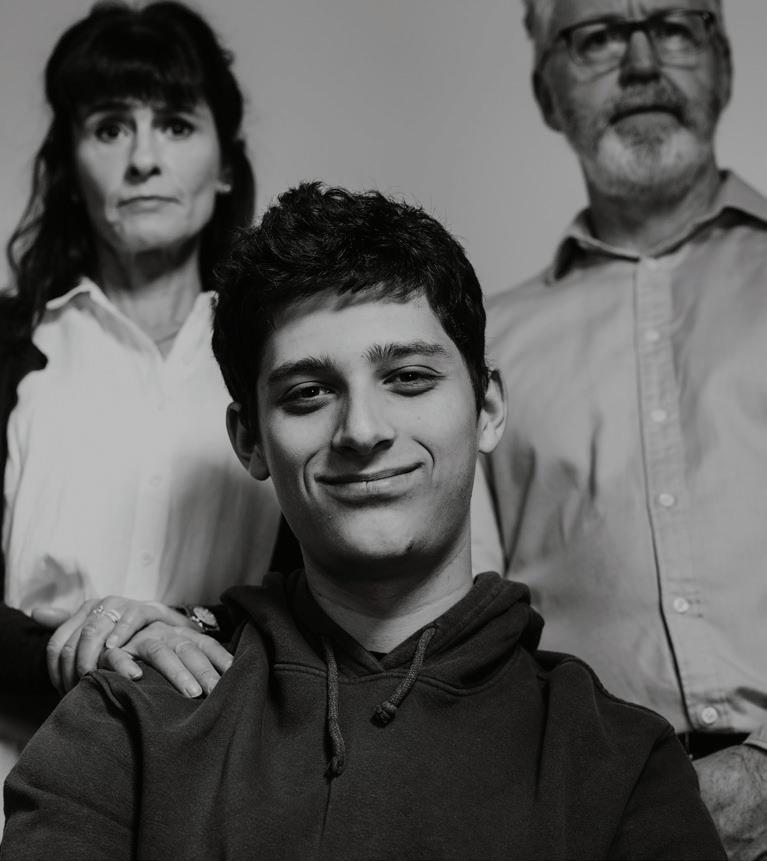
‘Eslake’s final report confirms everything we have written about for years – persistent deficits, mounting debt and interest impacting on social services,’ say JON STANHOPE & KHALID AHMED
Why Pauline Hanson will never ever be PM ANDREW HUGHES
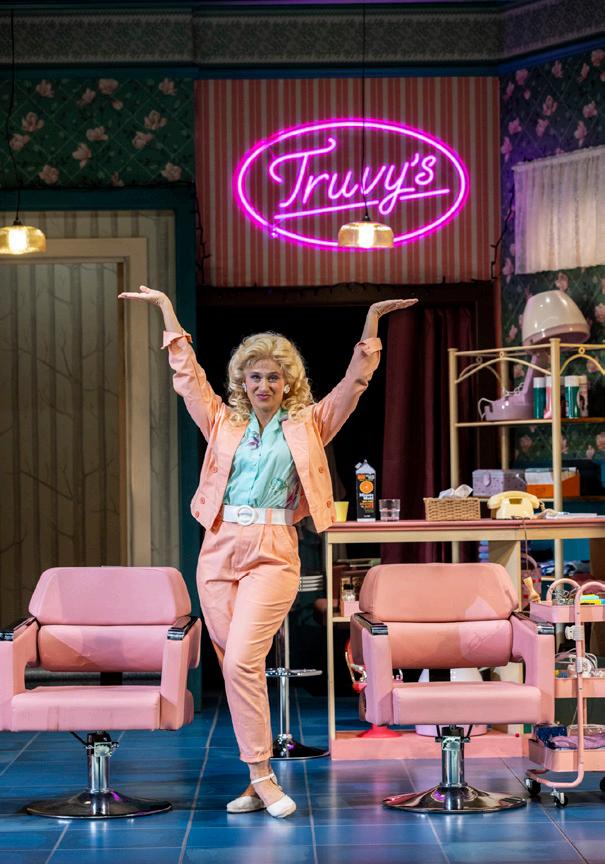
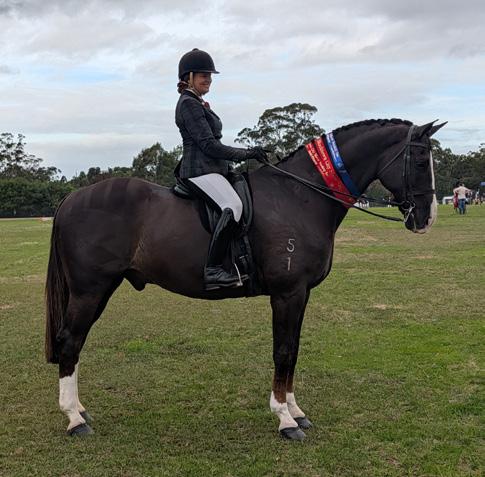
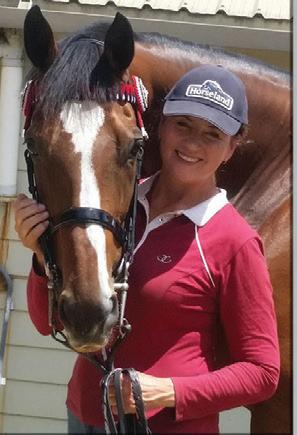
Amanda’s back doing what she knows best
HELEN MUSA
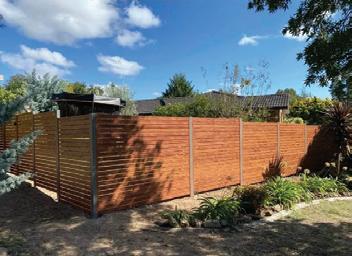
Mystery furcraea defies the frost
JACKIE
WARBURTON
Have these boys got a deal for you!
KEEPING UP
THE ACT
As the new financial year begins, let the experienced team at Hussey & Hussey take the stress out of your tax return. With over four decades of helping Canberra individuals and businesses, we’re ready to support you through another successful tax season.
Our Services Include:
• Accounting
• Business Advisory
• Bookkeeping
• Taxation
• SMSF
• Financial Planning
• Management Consulting
Let us take care of your tax, so you can focus on what matters most.
Learning struggle taught Andrew a way to learn
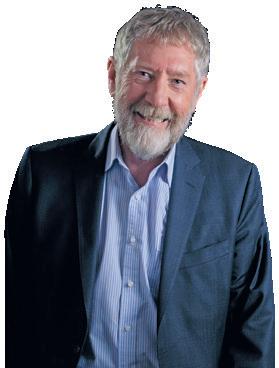
Andrew Lawson says school was a constant struggle, and that reading and retaining information required him to work much harder than his peers. And yet, he’s just won a national learning award, reports DHWANI PATHAK .
Not everyone fits how they’re taught to learn. Andrew Lawson didn’t.
Yet, he’s just been named Australia’s Learning & Development Professional of the Year at the Australian Institute of Training and Development Excellence Awards.
The Canberra-based facilitator was recognised for a 20-year career designing workplace learning across government, corporate and not-forprofit organisations.
But the ideas behind his work began much earlier.
He says school was a constant struggle, and that reading and retaining information required him to work much harder than his peers. He describes a mainstream education system that didn’t accommodate different learning styles, leaving those outside the “standard” model unsupported.
While he found confidence in areas like sport and social life, the academic challenge remained difficult.
“I just learned differently,” he says. “You had to kind-of fit the main-
stream model of learning.”
He didn’t.
That perspective has taken on add ed weight in his personal life. Andrew is raising neurodiverse children, and says watching them move through the school system has reinforced what he experienced growing up. He sees similar challenges in how learning is structured, particularly for students who don’t immediately fit traditional models.
“It’s not a capability issue,” he says. “It’s how the learning is being delivered.”
It wasn’t a single turning point. The shift came later, at university, where he was studying education. There, he began studying how learning and memory actually work, which helped him understand his own learning differences, leading him to develop a long-term interest in better learning strategies and more inclusive approaches.
“We were looking at how people actually learn,” he says. “How do we encode information into memory?”
Andrew says that an adolescent
Andrew Lawson… “We should be challenging the norm as to how we learn.”
strategies I’d been looking for,” sparking a lasting fascination with learning.
He went on to teach in high schools for around eight years before starting his own business, where he applied brain-based strategies in learning programs.
“They’ve been honed over the last 20 years, and I’ve got a model that helps people apply what they learn,” he says.
Andrew works with organisations to design and deliver training. The sector changed quickly during COVID-19, when organisations were forced to
General manager: Tracey Avery, tracey@citynews.com.au
Many organisations still treat learning as something that can be delivered in fixed blocks of time. He says that this does not reflect how people actually absorb information.
“They kind of make the assumption because the workday is eight hours, therefore learning should be eight
He points instead to a much shorter
He cites research suggesting most people can only absorb information in shorter bursts – around 90 minutes at a time – before attention and retention start to drop. Beyond that, he says, “we can’t form memories.”
“We should be challenging the norm as to how we learn,” he says.
He recalls getting pushback from some clients who felt short-form learning did not have “the right optics”, arguing shorter sessions did not look substantial enough.
He sees similar issues in education systems, where consistency is often prioritised over flexibility.
“Some people miss out,” he says.
He remembers thinking the same thing as a student.
“Why didn’t they teach this earlier?”
Now working across organisations, he sees how those gaps continue into
professional life.
He is cautious about the growing reliance on technology in learning environments. While digital tools have become more common, he believes they are not always helping – particularly for people who already struggle.
“For some learners, especially neurodiverse learners, it can be detrimental,” he says.
He says technology has made training more accessible, but not always more effective. The issue is not the tool, but the assumption behind it – that one format can work for everyone.
Schools, he suggests, often prioritise structure over individual interest, leaving little room for students who do not immediately fit the expected way of learning.
Andrew believes the challenge is not individual effort, but system design. He argues that learning environments still too often prioritise uniform delivery over flexibility. For him, the question is no longer whether change is needed but how quickly institutions are willing to adapt.
The award he’s received is recognition of that work. But it doesn’t seem to change how he talks about it. If anything, it reinforces the same point he started with.
There isn’t one way.
Here’s why Pauline Hanson will never ever be PM
So many times in the last month that I’ve now lost count, I’ve been asked: will Pauline Hanson become prime minister one day?
The answer is no. Opposition Leader, maybe, but even then it could be perhaps for just one term.
Why no? Firstly, the calendar. We are mid-2026, barely past the one year mark since the last federal election. If Labor goes full term, it puts May 20 2028, as the last possible date for a half Senate, full House election.
That’s more than 700 days away. Two more budgets. A lot of water under the bridge. We can’t yet see the actual way our lives will be by then, but I’m guessing interest rates falling, demand steady and a housing market recovering. Things will be a lot different to now, especially economically.
That difference, just in time alone, is One Nation’s biggest foe. How can they convince us by 2028 that they are an alternative government in all the ways important in how a government engages with us? They are a long, long, way from there.
Okay, a second point. Party management . The Liberal Party Review of the 2025 election noted that a significant issue in their failings was due to party management issues. Political parties are now significant
organisations, with Labor and the Liberal parties employing hundreds nationally. Each has turnovers in election years in nine figures.
To be a party of government you need full-time teams in every state and territory, people who have spent likely decades learning about politics.
Take Labor, the number one player in Australian politics, as an example.
A traditional party official in Labor will have started young, usually in late teens either at university or as a shop steward for their union for the job they worked. Sometimes it is both.
Then, if seen as having potential
The next election is more than 700 days away. Two more budgets. A lot of water under the bridge. Things will be a lot different to now, especially economically. That difference, just in time alone, is One Nation’s biggest foe.
and getting tapped on the shoulder by a factional heavy, it’s becoming an organiser. Learning the ropes of engaging with people, sometimes in hard campaigns where ugly things are said to you and by you in the furnace of industrial issues. And you don’t win all the time, so you get to feel what it tastes like to lose and see good people hurt.
In addition, you attend Labor branch and faction meetings, experiencing what solidarity really means. Again, loss. Again, sometimes seeing bad triumph over good.
By your late twenties/early thirties,
if not chasing a parliamentary career, you are ready to run the party machine at a state election or assist federally.
You organise thousands, are adept at using databases, making content, and long ago gave up weekends and most weeknights. Family, if you have any, are all too often alone on the couch while you run numbers and wars at branch meetings or community events.
It is a pyramid hierarchy and it ain’t changing because it has worked for decades. It is also a reminder of who and what you are, and the history of the party and those before you.
This is what is required just for party management to be in a position to govern. One Nation’s getting there, but are still years away from being at Labor’s level.
Third, anger. Column after column in this publication have discussed one key theme in their own contexts: anger and frustration at government, institutions and organisations. We have put up with this because what other choice did we have? Blue or red?
Turns out more than what we thought: teals, independents, Greens, Family First, and so on. Even micro
parties such as Legalise Cannabis and the Animal Justice Party have the kind of passion and dedication that has seen their bases growing steadily after every election.
Our anger and frustration will find a home to where we fill it most closely. We are as emotionally diverse as we are politically in 2026.
Talking of diversity. Diversity is the strongest in our cities. And cities are where One Nation is the weakest. If you can’t win the cities, then you can’t win government. That’s just a numerical fact.
And One Nation will not win a large Australian city.
But they will damage a lot of careers in Australian politics in the next couple of years because while they won’t win government, they will win seats and influence a lot of people. And isn’t influence real power?
Dr Andrew Hughes lectures at the ANU Research School of Management, where he special ises in political marketing.
KINGS AVENUE, PARKES ACT
Cartoon: Paul Dorin
RETIREMENT ON
Stepping away from a regular salary can be scary, and there are so many choices to consider. Where do you start? Add to this unfamiliar and complicated legislation, it really can be difficult to see your opportunities.
• Make the rules work for you, to enjoy retirement on your terms.
• I have 23 years of experience in advising retirees in the Canberra region.
• Extensive experience in government super such as CSS and PSS.
• Centrelink advice and implementation.
• Is a redundancy right for you at this time?
For an experienced, straight forward and consistent advice relationship Call David for an appointment.
Kermit’s right: not easy being Greens in Canberra
Kermit the frog showed amazing insight on Sesame Street when he sang: “It’s not easy bein’ green”.
The challenge for Greens in the ACT, and internationally, is that decisions that might appear to be environmentally friendly so often have other implications.
According to Kermit:
When I think it could be nicer Bein’ red or yellow or gold Or something much more colourful like that.
The reality is that decisions made by environmentalists are not red, yellow or gold, but so often fit into the grey areas of life. A few examples are illustrative.
Canberra faces a particular challenge with the regular explosion of the kangaroo population. Consider the many letters in CityNews condemning kangaroo culling.
The thought of slaughtering kangaroos for no reason is appalling. However, there is also the awful potential of allowing the numbers to blow out so much that animals will slowly starve to death as the food supply diminishes.
This might explain why it was that the cull continued a few years ago –even under the oversight of a Greens party minister.
Tesla was keen to advertise its cars
as having “vegan leather”. At first blush this will mean that the use of leather following the slaughter of animals, popular in equivalent cars, will be avoided in their models.
The downside is that “vegan leather” is a side-product of the fossil-fuel industry as it is primarily composed of polyurethane (PU) and thermoplastic polyurethane (TPU) layered over a fabric backing such as polyester or nylon.
Whereas leather will break down and become part of the natural environment, the plastics used on the seats and other parts of this vehicle might break up to a certain extent. However, the residual plastics will remain an environmental challenge for centuries even as tiny particles. Evidence is mounting about the dam-
Dictating to others what would be best for the environment is no longer as easy as was once the case. Being flexible enough to compromise is challenging but is the reality of effective politics.
age of microplastics to the environment and human health.
Maybe, while so much beef is consumed around the world, it might be better to stick to leather… at least until plant-based plastics reach the stage that they can be used.
The Greens in the ACT have pushed very hard for urban consolidation to counter urban sprawl. The early planners specifically designed Canberra as a series of city centres to minimise the need to travel to a centralised city centre. Over the years various governments have undermined this intention.
The outcome is tall concrete buildings that form heat banks, wind tunnels and leave minimal room for trees, gardens and play areas.
There are also quite good examples
of intense developments that suit some people.
Planning and development decisions by the government regularly allow little choice for residents as they dictate a particular style of living governed by budgetary or ideological decisions.
One of the valid environmental objections to the development of more suburbia, and even an additional city centre, has been concerns regarding increased use of fossil fuels.
However, things change. In a normal house block it is now possible to use solar energy to not only meet all household needs, but to also charge an electric car.
In the meantime, those living in high-rise buildings do not have access to the same energy from the sun. They are dependent on the grid for heating, cooling and charging electric bikes and cars.
Decisions that seemed sensible a few years ago do not necessarily apply today.
Dictating to others what would be best for the environment is no longer as easy as was once the case. Being flexible enough to compromise is challenging but is the reality of effective politics.
The resignation of Greens Leader Shane Rattenbury from the Assembly follows rejection by the party of his discussions with Liberal Leader Mark Parton. They were considering some type of co-ordinated arrangement that might oust the Labor Party after nearly a quarter century in government.
Former Deputy Leader Rebecca Vassarotti, who lost her seat in the last election, has indicated a return to the Assembly if she wins the countback in Kurrajong. Ms Vassarotti resigned from a senior position in the Greens Party as an objection to those discussions.
Mr Rattenbury was working in the grey areas of policy and politics. It will be interesting to see how the Greens Party copes over the next few years. Will they see things in black and white… or green?
Michael Moore is a former member of the ACT Legislative Assembly and an in dependent minister for health. He has been a political columnist with “CityNews” since 2006.
Feel amazing about your oral health
Kermit the Frog... amazing insight!
A touch of Europe arrives in Canberra
In a city where contemporary designs and minimalist architecture have dominated many new suburbs, a striking ‘French Provincial’ display home in Taylor is proving there is still strong demand for timeless elegance.
Sunny Homes has unveiled what it describes as Canberra’s first European-inspired display home, bringing the charm and grandeur of French Provincial architecture to the capital while adapting it for modern Australian living.
Officially opening to the public on June 14, the home immediately commands attention. Decorative double doors, elegant lantern lighting, sculptural façade details and classic architectural features create a sophisticated street presence rarely seen in Canberra’s newer suburbs.
For Sunny Homes director Sunny Malhotra, the project was about creating a home that combines enduring design principles with the needs of contemporary families.
“We wanted to create something that celebrates timeless design while embracing the way Australians live today,” he says. “The inspiration comes from Europe, but the home has been designed specifically for our climate, lifestyle and families.”
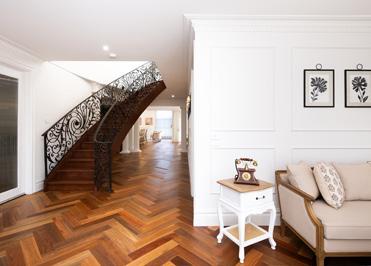
The influence of classic European architecture continues throughout the interior. Visitors are greeted by soaring ceilings, herringbone flooring, elegant wainscoting, decorative fountains and a dramatic curved staircase that forms the centrepiece of the home.
Every detail has been carefully considered, creating a sense of luxury while maintaining warmth and comfort.
“There is a reason these architectural styles have stood the test of time,” Sunny says. “Their beauty isn’t tied to trends. They continue to resonate because they feel elegant, welcoming and lasting.”
The home features four bedrooms, 3.5 bathrooms, multiple living areas, a dedicated library and an
entertaining space complete with a piano. At its heart is a spacious kitchen featuring a generous island bench and walk-in pantry that flows seamlessly into the open-plan living and dining areas.
Natural light plays a central role throughout the design. Large windows and thoughtfully planned living spaces create bright interiors while preserving the character and charm synonymous with European-inspired homes.
The bathrooms continue the theme of refined luxury, incorporating curved architectural elements, premium finishes and carefully selected fixtures designed to elevate everyday living.
While homes inspired by European architecture have long been popular in Sydney and Melbourne, Sunny believes Canberra buyers are increasingly seeking homes that combine individuality, quality and timeless appeal.
“We have seen strong interest from people who
The display home at 75 Robin Boyd Crescent, Taylor, opens officially on Sunday, June 14, from 10am.
appreciate classic architecture and want something distinctive,” he says. “What has been particularly rewarding is seeing how many visitors simply enjoy experiencing the home. Many describe it as a work of art, which is incredibly humbling.”
For Sunny Homes, the display home represents more than just another showcase property. It is a celebration of craftsmanship, enduring design and attention to detail.
The display home at 75 Robin Boyd Crescent, Taylor, opens officially on Sunday, June 14, from 10am and offers visitors the opportunity to experience a style of architecture that demonstrates how timeless European design can be successfully adapted for modern Australian living.
Whether planning a dream home, searching for design inspiration or simply appreciating exceptional craftsmanship, visitors are likely to discover why some architectural styles never go out of fashion.
Saul’s call confirms years of bad policy choices
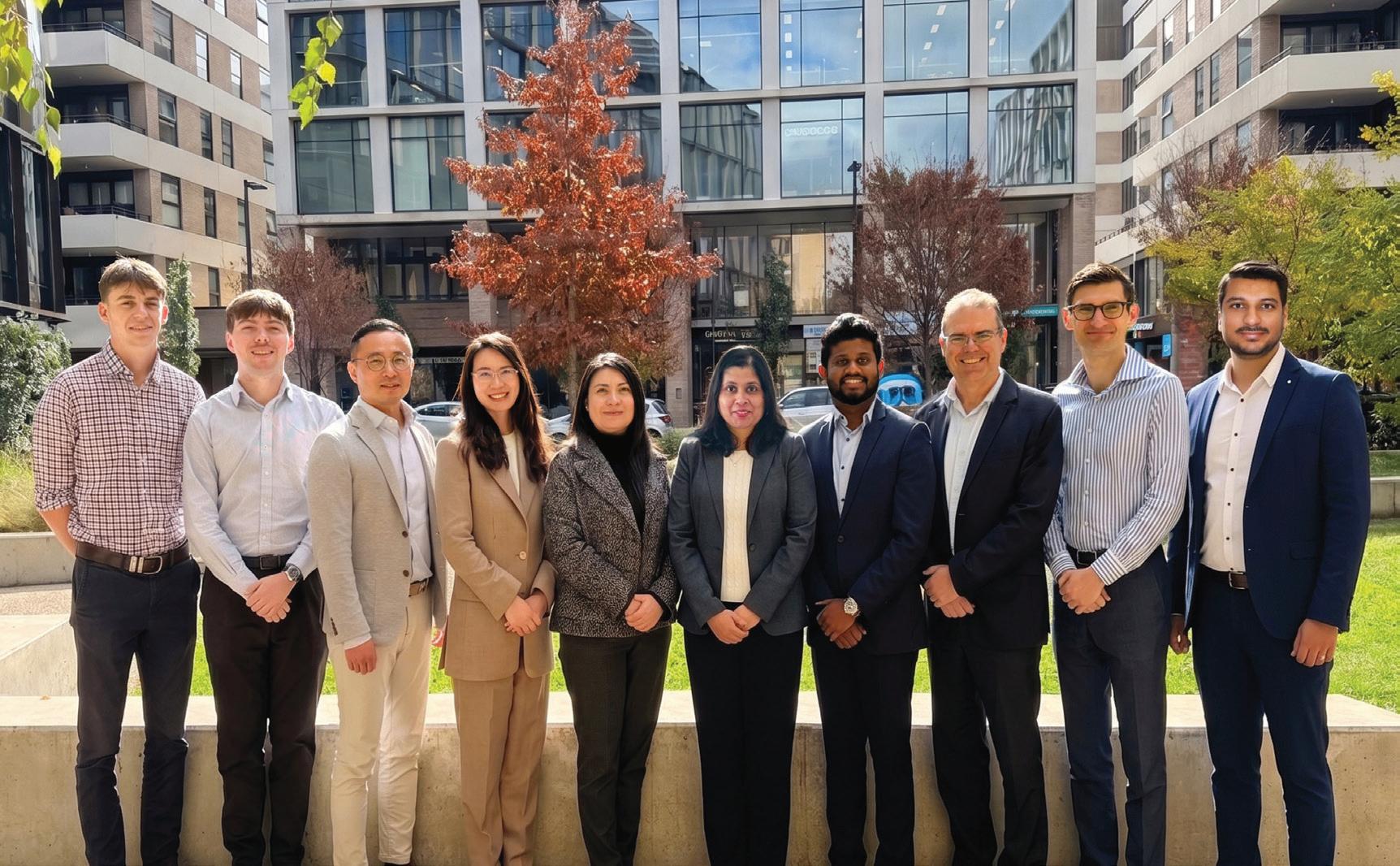
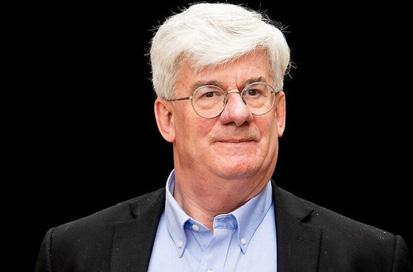
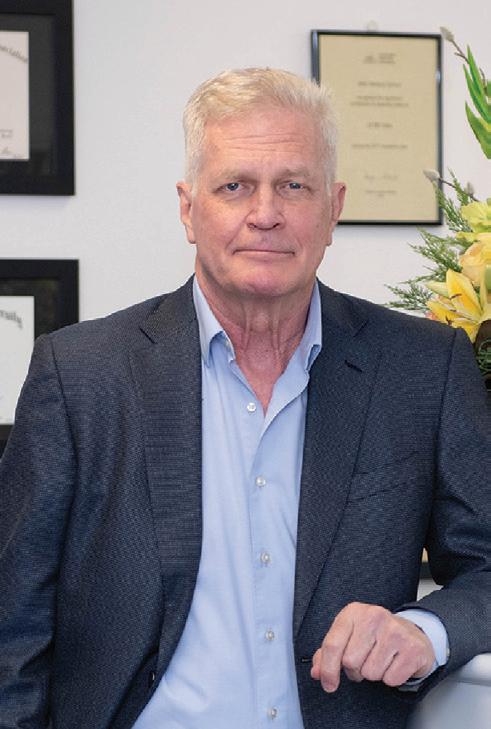
“Eslake’s final report confirms everything we have written in these columns for years – persistent deficits, mounting debt and interest impacting on social services.” JON STANHOPE & KHALID AHMED critique the independent economist’s review.
Independent economist Saul Eslake’s headline conclusion in his interim report to the Select Committee on the Fiscal Sustainability of the ACT that the deficit, totalling more than $7 billion, is due to the ACT Government’s policy decisions, has remained unchanged.
However, the final report includes more data and discussion on the various aspects of the territory’s finances over time, and in comparison, to other jurisdictions.
Overall, the final report confirms everything we have been saying in these columns for many years regarding persistent deficits, mounting debt, and interest costs consuming an everincreasing proportion of expenditure, thereby impacting expenditure on key social services.
The final report notes that the Auditor-General cast doubt on the 2025-26 budget projections, which raises questions about the reasonableness of the forward estimates in the 2025-26 budget, albeit, in more moderate terms than we have used, pointing to the “challenges” of maintaining expenditure growth at less than half of CPI.
This is not just an issue specific to the 2025-26 budget; rather it has persisted for more than a decade as we have repeatedly pointed out in our
analysis of successive annual budgets, notably that the estimates were fanciful and that the government’s forecasts lacked credibility.
This column, however, is not about claiming vin dication. Our purpose is, apart from highlighting some of the key conclusions as above, to elaborate, clarify some parts and to seek to ensure that the report is not misinterpreted or misrepresented.
Fiscal Sustainability – what does it mean?
Independent economist Saul Eslake… the deficit, totalling more than $7 billion, is due to the ACT Government’s policy decisions, he confirms.
This is the mistake the government has made over the past decade, for example, in selling off public housing for investment or cutting the health budget to finance light rail.
Appropriate and relevant measures
Mr Eslake has highlighted the vagueness of the ACT Government’s fiscal strategy and suggested adopting specific measures and targets on operating balance, cash surplus, debt and interest costs. We endorse this as a principle, having raised this issue in our columns on numerous occasions.
The report states that “financial or fiscal ‘sustainability’ is an elusive concept”, and that “one can only be absolutely sure that a government’s financial position is “unsustainable” when it is faced with a crisis that it cannot deal with in the absence of external financial assistance”.
We do not subscribe to this view, or the operational definition proffered in the report, which we believe is not applicable to state and territory governments in Australia.
Fiscal sustainability is no more elusive than “environmental sustainability” and certainly less elusive than the principle of “fairness” – principles that have been anchors of public policy. However, if this view is accepted, does that mean that governments cannot operationalise and implement this principle as an objective? Does that mean that the ACT Government should not be held responsible for the current dire
financial position?
We will address this important matter and its potential legislative implications separately. Suffice to say, the ACT’s finances were clearly on an unsustainable path years before the pandemic.
Problem predates pandemic
The Executive Summary of the report states that there has been “a significant deterioration in the financial position of the ACT public sector over the past decade, and in particular during the past five years, as a result both of the COVID-19 pandemic in the early years of the current decade, and of decisions taken during the years immediately after the end of the pandemic.”
Reading the full report with the data as well as the accompanying discussion, does not, in our opinion, support the conclusion that the current state of the ACT’s finances, which the report characterises as unsustainable, can be attributed to the pandemic.
In fact, as reported in the media, the report attributes it to policy and expenditure decisions of the Government.
The ACT’s finances were clearly on an unsustainable path years before the pandemic, with annual deficits averaging almost 6 per cent and net debt growing at a compounding rate of 20 per cent annually since 2013.
Existence of disadvantage and poverty
While discussing the socio-economic circumstances, the report concludes that the ACT has the most socially and economically advantaged population of the states and territories, with less than 8 per cent of the population in the lowest two, and almost 51 per cent of the population in the highest socioeconomic status quintiles, respectively.
It is important to note that this data relates to the national population. It therefore masks the relative disadvantage within the ACT population and is in fact misleading.
The ACT’s high average incomes are driven by a cohort of double income households in the public sector. The inter-quintile disparity between the highest and lowest income quintiles within the ACT is quite similar to that in the Australian population.
Survey reports from non-government and charitable organisations such as the St Vincent de Paul Society indicate that around 10 per cent of the Canberra population lives in poverty.
In our columns, we have repeatedly highlighted the housing and rental stress and long wait times endured by many Canberrans, as regularly reported by the Productivity Commission and the Australian Bureau of Statistics.
It would be a mistake to think, based on aggregated statistics and national comparisons, that there is no poverty or disadvantage in the ACT, and that the government can increase taxation and/or cut universal access to public services such as health without serious social impacts.
Any measure so adopted should, however, be relevant and meaningful. As an example, the report states that the ACT’s net debt to Gross State Product (GSP) ratio is lower than both Victoria and the Northern Territory. It also notes that while economists (as in the report) measure debt and deficits in reference to the size of the economy, the rating agencies measure it in reference to revenue.
On that measure – the Net Debt to Revenue ratio that we regularly utilise in our commentary – the ACT has the second highest level of debt in Australia after Victoria. However, the ACT was downgraded to the same rating as Victoria because the rating agencies refer to this ratio as an indicator of debt-servicing capacity.
Reference to the size of the economy when assessing the financial position and management of a specific jurisdiction may have some relevance in relation to the states, but is misleading if applied to the ACT for interjurisdictional comparison.
That is because around half (more than 45 per cent) of the economic output of the ACT relates to Commonwealth Government activity, which is exempt from state taxation.
As a further example, the report observes that the ACT’s revenue to GSP ratio is the lowest of all states and territories.
The ABS data reporting shows that the ACT, despite having a lower-than-average capacity for taxation due to the absence of major revenue bases available to the states, is an above-average taxing jurisdiction. The Commonwealth Grants Commission’s assessment places the ACT’s taxation effort relative to its capacity as the highest of all the states and territories.
However, it would be a mistake to think that the ACT has the capacity to increase its taxation effort to achieve the average of the states – a mistake based on a wrong measure.
Mr Eslake has, quite appropriately, left the specific budget decisions to address the fiscal problems to the government as policy choices, however, in addition to the revenue side, he has indicated some areas of higher-than-average expenditure.
Again, it is important to use appropriate measures when assessing unit cost of service. We will address potential policy choices in a future article.
In conclusion, we did note the rather bizarre response to the interim report from the thenGreens leader Shane Rattenbury. The Greens’ reported response to the final report was equally perplexing, calling on the ACT Government to seek a waiver of its historic housing debt.
While Mr Eslake has observed that the ACT has a strong case in arguing for a waiver, the outstanding debt is less than 1 per cent of the debt accumulated under the Greens-Labor coalition through their policy choices.
We would, of course, support any effort to have the debt waived but do think it more than a tad hypocritical of the Greens and Labor to seek the waiver of the housing debt in light of their joint decision to sell off thousands of units of public housing in order to finance the tram.
Jon Stanhope is a former chief minister of the ACT and Dr Khalid Ahmed a former senior ACT Treasury official.
KING’S BIRTHDAY HONOURS / ACT recipients
Take pride in nation’s honours recipients, says GG
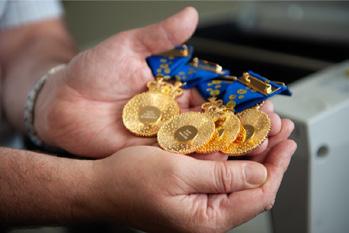
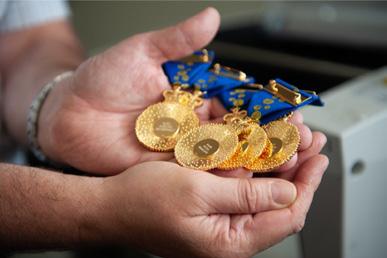
Here is the ACT recipient list for the 2026 King’s Birthday Honours list, drawn from almost 950 fellow citizens nationwide who have been recognised with Order of Australia awards.
Governor-General Sam Mostyn says Australians should take pride in the achievements and service of the recipients, who embody the values, commitment and contributions that help shape the nation.
“The work of our award recipients, and the contributions of the thousands of Australians who have been nominated and recognised throughout the history of our honours system, is something we can take great pride in celebrating,” she said.
The 2026 King’s Birthday Honours List recognises 949 Australians through awards in the Order of Australia, as well as meritorious and conspicuous service honours. Recipients include community volunteers, public servants, academics, scientists, artists, sporting figures, military personnel and emergency service workers.
Among those recognised are 702 recipients in the General Division of the Order of Australia, including five Companions (AC), 40 Officers (AO), 183 Members (AM) and 475 Medals of the Order of Australia (OAM). The list also includes 34 awards in the Military Division, 149 meritorious awards and 63 conspicuous service awards.
Here are the ACT recipients:
Dr Gordon John de Brouwer PSM , Braddon – distinguished service to public administration, policy and reform, to diversity, to environmental conservation, and to education.
Member of the Order of Australia (AM)
Emeritus Professor Prema-Chandra Athukorala , Red Hill – For significant service to tertiary education, and to international trade and development economics.
The Honourable Dr Kenneth John Crispin KC , South Coast, NSW – For significant service to the judiciary, to the law, and to the community of the ACT.
Ms Bronwyn Kate Fagan, ACT – For significant service to sports administration, to broadcast media, and to the community.
Mr Gerard Bradbury Gillespie, Queanbeyan – For significant service to conservation, to organic waste management, and to the community.
Mr Matthew Lewis Higgins, NSW border district – For significant service to heritage conservation, and to the environment.
Dr Mark Lintermans, Bungendore – For significant service to freshwater conservation and the environment, and to fisheries ecology.
Dr Helen Mackie, ACT – For significant service to rehabilitation medicine, and to research and treatment of lymphoedema.
Mr Ewen Neil McDonald , ACT – For significant service to international relations, to public administration, and to the community.
Mr Barry Sandison, ACT – For significant service to public administration, particularly in health and welfare.
Mr Anthony John Sheehan, ACT – For significant service to Australia’s national security, and to public administration.
Medal of the Order of Australia (OAM)
Mr Mohammed Ali, Franklin – For service to the community of the ACT.
Mr Stephen Andrew Carter, Higgins –For service to community health.
Mrs Carol Frances Cartwright , ACT –For service to the museums and galleries sector.
Dr Wesley Cormick , ACT – For service to ultrasound and general practice.
Ms Sharon Mun-Foong Ding , Holt – For service to people with disability.
Dr William Francis Donovan, Weetangera – For service to secondary education, and to the community.
Mrs Vicki Dunne, Evatt – For service to the people and parliament of the ACT.
Lieutenant Commander Kym Desmond Fisher, ACT – For service to
rowing as a coach.
Mrs Margaret Leigh Freeman, Garran –For service to the church.
Mrs Lorna May Gamble, Gowrie – For service to music through the church.
Mrs Sandra Goldstraw, Gungahlin district – For service to the community through a range of roles.
Dr Peter Henderson, ACT – For service to obstetrics and gynaecology.
Mr Geoffrey Joy, ACT – For service to education.
Ms Elizabeth McKenzie, ACT – For service to the community through music.
Air Commodore Ian Murray Pearson (Retd), Barton – For service to veterans’ welfare.
Mr Duncan John Perryman CSM RAN, Deakin – For service to history preservation.
Dr Richard Ekenhead Reid, Farrer – For service to medicine and the community.
Mr Andrew Peter Satsia , Forrest – For service to the community of Canberra. Chair, Independent Liquor Retailers, since 2023.
Dr Stephen Eric Utick , Stirling – For service to conservation, and to the community.
Public Service Medal (PSM) Federal
Ms Kylie Leigh Barber, ACT – For outstanding public service in leadership and strategic influence in safeguarding and preserving government institutions.
Mr Simon Duggan, Mawson – For outstanding public service in delivering policy initiatives in complex government environments.
Dr Jared Greenville, ACT – For outstanding public service to the Australian Bureau of Agriculture and Resource Economics and Sciences, and to research and agriculture, economics and food security policy.
Mr Michael John Hickey, Queanbeyan – For outstanding public service to youth development, youth safety and protection with the Australian Army Cadets and broader Defence.
Ms Kassandra May Hobbs, ACT – For outstanding public service to the Australian War Memorial’s National Collection.
Mrs Bo Robertson, ACT – For outstanding service in reforms and government services to the Australian community.
Australian Fire Service Medal (AFSM)
Mr David John Pennock , Isabella Plains – more than 30 years of volunteer service with the ACT Rural Fire Service and leadership of the Southern Districts Brigade.
Mr Matthew Nelson Shonk , Garran –distinguished service with ACT Fire & Rescue and enhancement of emergency service capability.
Emergency Services Medal (ESM)
Dr Wayne Andrew Beswick , Weston Creek – For outstanding public service in systemic change to government practices and changes aimed at improving outcomes for First Nations people.
Mr Patrick John Coffey, Macgregor –ACT State Emergency Service leadership and service to the ACT community. We
Berry and Housing ACT are out of their depth
The May 28 cover story and accompanying article about the incompetence of (Minister Yvette Berry-led) Housing ACT tells it all.
As an NDIS provider, I can relate to, and unequivocally endorse, the remarks of authors Jon Stanhope and Khalid Ahmed on Housing ACT stock particularly that stock used for tenants with a disability.
I most certainly subscribe to the view that both Minister Berry and Housing ACT are completely out of their depth.
Having about one third of accommodation below one’s own national standards cannot be far short of breaching tenants’ human rights.
Whilst I believe that heads must roll, both at government and Housing ACT level, the priority must be for a major refurbishment activity for Housing ACT tenants with a disability, those most in need of help in our community. The current situation cannot be allowed to continue.
Michael Doyle, Fraser
Now my daughter sleeps in the bath
I am the mother and advocate for my daughter who has lived in her Housing ACT home for nearly 15 years.
She has paid her rent and seldom asked for repairs to be done. We have landscaped the yards and made the interior a wonderfully
warm home.
Eighteen months ago, we wrote to Housing ACT because an electrician working in the roof found splintered beams, mouldy insulation, a sagging roofline and serious electrical issues that do not conform with standards. We brought these issues (along with the fact that the shower drains into the hallway... and it rains through the skylight when it storms!) to Housing ACT and have all but been ignored.
They did bring in a building inspector last month, who found little wrong with the house, despite a private building inspector I
dose of dorin
Shut the door on three blinkered men
New Liberal Party president, Tony Abbott, fantasises about the party leg-roping around 200,000 more members to help make the Liberals a “patriot party” (“Abbott’s rallying call to the ‘patriot party’”, citynews.com.au, May 30).
This additional number would be four times the number of members now, based on the party’s reborn preacher using an assessment of 50,000 current members that he did admit is most likely a bit optimistic.
At any other time, this starry-eyed vision could be an argument for “lock up your wives and daughters” lest they be snaffled as part of the party’s crusading drive to counter the president’s beliefs about our “spiritual malaise”.
hired the previous week finding significant structural issues.
Now my daughter sleeps in her bath as it is the only place she feels safe.
I have written to many politicians in the past months, with varying responses. My sincere thanks to those who have responded.
Yet still we wait. Minister Ms Berry, where is the communication? Where is the action? Does someone have to die before issues such as these are seriously addressed?
Lynette Bruce, via email
But this proselytiser has already proved that he has little respect for or interest in the intelligence, needs, and expectations of women in modern Australia.
Consequently, armed with knowledge of Abbott’s previous nationalistic “Team Australia” exhortations, broken promises, policy mishaps and regular gender faux pas, women have the strength and fortitude to shut the door on the three blinkered men now at the top of the Liberal pile – Abbott, Taylor and Downer.
This trio is guaranteed to huff and puff while floundering around and delivering more misleading lectures about the virtues of what Abbott has also trumpeted as the
country’s only “freedom party” and source of “better government”.
This latest “do-or-die” mission should attract more hard-right Liberal candidates and create more voter turn off.
The loud posturing so far also suggests that the new president and the rest of the Liberal hierarchy are making themselves more subservient to the conservative directions and messaging of the well-heeled lobbying contingent at Advance, and the MAGA devotees who currently reside in the Coalition’s parliamentary ranks and party membership.
Sue Dyer, Downer
Smoke and mirror power pricing
ACT power prices are to rise 2.7 per cent from July 1. Got this email from ActewAGL: “Your ActewAGL energy plan is changing. Current benefit: 16% less than the electricity reference price.
“The new plan will be 12% less than the electricity reference price as of 1 July.” So the new price will actually go up by 6.7 per cent.
Energy Minister Chris Bowen frequently uses the catchphrase “The sun doesn’t send a bill, the wind doesn’t send a bill” to argue that investing in renewable energy sources like solar and wind power will naturally drive down wholesale electricity prices. It’s just smoke and mirrors.
Gordon Buckley, via email
A word from your captain, touch nothing
Good morning crew, this is your captain speaking and welcome to your new RAN vessel, the USS Codfish.
Well, maybe not new but pre-loved and not, repeat not, second hand, which reminds me that naturally we are repulsed by someone else’s germs but as you settle in that’s no reason to go mad with the Glen 20 around sophisticated equipment that might have seen better days but can still wipe out a nation state in the blink of an eye.
Nuclear-power propulsion is quiet so, to help those of you transitioning from the Collins Class line of submersibles, random bangs and clatters will be transmitted on the PA system at all times of the day.
As you have probably already gathered, our American cousins love their chewing gum. Do not remove any gum from bulkheads without the express permission of our executive officer in case they are plugging holes in the hull.
I am already aware of considerable discontent in the ranks and have acted quickly to ensure the same executive officer always carries a supply of dimes so you can use any of the 214 vending machines on board.
The lettering/symbols on most of the press buttons on the vessel’s electronic consoles have been well worn away. Do not, repeat not, press any of them until you, in consultation with the executive officer and the chief systems engineer, have consulted the 845-volume manual.
Noting there are 57 convenience coffee stations all over the boat, do not, repeat not, consume coffee anywhere near said manual.
Finally, until the very day of the RAN’s Unconditional Acceptance of and Assumption of Full Responsibility for the USS Codfish, it remains strict protocol for all passing crew members to salute the wooden framed picture in the wardroom of the Codfish’s Inaugural Captain, Bob Newhart, and the gilt inlay framed portrait in oils of US President For Life Trump located in the heads.
Vince Condon, Kingston
Cancel attacks subs for defence
All three nuclear submarines are now second hand ones: accept or not?
That is the wrong question! The question is: if both parties agreed that the best defence of Australia is attack, then accept these attack submarines. End of story. If, as most people understand, defending is just that – defending and it is different from attacking – cancel this expensive order of second hand attack submarines, which need depth and cannot operate in Australia’s inshore coastal waters and defend us.
Order the many times cheaper compact defence submarines that can. For the cost of one nuclear attack submarine we can get four compact defence submarines that can fire torpedoes and do all other things except fire ICBMs – and in the process run a chance of being discovered and depth-charged.
Nick Standish, Macquarie
Don’t do it, David Pocock
Well, that’s a pity. David Pocock is turning into a politician – (Michael Moore, “Will a party of independents fix the frustration?” CN May 28).
“Our political system’s not working for Australians” seems as good a way as any to announce change to his business model.
Perhaps no longer content with being just a voice from the neutral corner, he seems to be contemplating party power – teal party power…
Don’t do it, David Pocock.
Independence is/was (you choose) his greatest asset. He and other independent members have become valuable parts of our political system. Their voices resonate somewhere in the community and temper the decisions of the government.
Party politics is always “party-before-principle” and will inevitably mute those voices. The AEC lists 140-odd de-registered parties. It’s likely most of those seemed perfect solutions at the time. Like a teal party does now.
Dick Bauch, Latham
Nature reserves supposed to conserve wildlife
If the ACT Government is to be a genuine steward of Canberra’s nature reserves, it must manage them with care, respect and accountability.
Stewardship is not simply control over land; it is a responsibility to protect biodiversity, habitat and ecological values for future generations. Decisions should be evidence-based, transparent and focused on the long-term health of ecosystems.
That responsibility is difficult to reconcile with the government’s annual kangaroo and wallaby cull. This year, the ACT Government has authorised the shooting of 3633 adult kangaroos and wallabies, together with their dependent joeys, in nature reserves.
Nature reserves exist to conserve wildlife and ecological communities, yet the government continues to rely on lethal population control within areas established for protection.
A government genuinely committed to stewardship should place conservation, coexistence and careful management at the centre of its approach, particularly in land set aside for nature conservation. Authorising the routine killing of native animals in protected areas risks undermining the very purpose of those reserves and weakening public confidence in the government’s role as their steward.
If stewardship means protecting what is of lasting value, Canberra’s nature reserves should be managed in ways that honour
If
that responsibility and protect all species within those ecosystems.
Natalie
Owen, Deakin
Dingoes deserve better than aerial culling
I am deeply concerned to hear suggestions that dingoes in the ACT will be aerially culled.
Dingoes are native animals that play an important ecological role in regulating ecosystems.
It seems contradictory for the ACT Government to use aerial shooting, on top of traps and baiting, while also expressing a commitment to recognising dingoes as controlled native animals.
As a supposedly environmentally progressive jurisdiction, the ACT should be leading with science-based and ethical wildlife management. Non-lethal approaches –such as improved fencing, guardian animals, better livestock management and targeted responses to problem animals – should be genuinely explored before resorting to lethal control of a native apex predator.
Aerial culling risks unintended ecological consequences and raises significant animal welfare concerns. We can support farmers while also recognising the important place dingoes hold in Australia’s environment.
The ACT has an opportunity to pursue a more balanced and forward-thinking approach.
Whitney
Anders Richardson, via email
Abbott’s the answer, the question’s
The Liberal Party has created history by electing Rhodes Scholars to head both their political and administrative wings. However, if Tony Abbott is the answer to saving the Liberal Party from extinction, they must be asking the wrong question.
The electors of Warringah got it right in 2019, ending his parliamentary career, and the party’s decision to go further down the One Nation road, as seems to be the intention, then the “experiment” will inevitably end in tears.
Securing the top job unopposed, says much about why the Liberal Party finds itself in such a malaise. There appears to be no clear path for them to return to the government benches, other than to mimic One Nation, and there’s little indication that this strategy will have the desired result.
Liberals I know are saying that Abbott’s role is only “organisational”. While this might be true in normal times, by his own admission, the party is facing an existential threat to its very survival. With his well exposed “Messiah Complex”, there is no way Abbott is going to be satisfied with an organisational role.
Evidence Abbott has not yet given up his desire to be back at the centre of politics, is the recent floating of the suggestion that he was actively looking to re-enter parliament. Interestingly, Warringah was not one of the seats under consideration.
Ian De Landelles, Murrays Beach, NSW Harbinger of the dog’s breakfast to come
The threats posed by the radical RZ1 reforms for new housing developments in the ACT are well discussed in the June 4 CityNews issue.
Ron Edgecombe’s lead letter flags likely substantial rises in home owners’ rates, and the destruction of suburban streetscapes.
This latter issue is explored in more detail in Richard Johnston’s article “Heaven help our cherished ‘Garden City’”. The incongruous mixture of housing types shown in the drawing taken from the Missing Middle Housing Design Guide is a harbinger of the dog’s breakfast to come.
Demonisation of One Nation is in full swing
All the Lefties including the ABC are now getting nervous with the meteoric rise in popularity of the One Nation party and the demonisation is in full swing that they are racist, denialist, bigots etcetera.
Oh, the indignation that anyone could vote for these people!!
Well, I am afraid that the voting public has finally seen through all the woke, diversity, equity and inclusion nonsense being promoted by the Labor/Green mob, and are opting for commonsense as has been espoused by One Nation (for many years) and the now catching up Coalition under new management.
Pray tell me what is racist about wanting to limit immigration and only to those who share our values, not for example the radical Muslims who are hellbent on trying to change the country to suit their warped way of life, not to mention their antisemetic outlook?
I will tell you something that is racist, and that’s having to sit through a whole special welcome to any Aboriginals who happen to be in the audiences at places such as Llewellyn Hall and The Q at Queanbeyan, prior to performances.
And, surely the majority of women voters cannot agree with the idiocy of allowing biological men identifying as women to share biological women-only spaces?
And what takes the cake is the so-called sex discrimination commissioner talking
wrong
The implications for residents’ quality of life are significant indeed. Think about the additional noise pollution arising from cheek-by-jowl development, more cars packed into the streetscape, light pollution, loss of solar access, and loss of green vegetation spaces that are vital from a visual perspective and for preventing urban heat islands.
With Planning Minister Steel already having form on issues such as the failed rollout of the MyWay+ public transport system, assurances from the government on addressing the above issues can be taken with a grain of salt.
Murray May, Cook
Batteries are not a negative technology
Thanks to Anthony Hordern for reminding us of CSIRO’s leading work in decarbonising the economy and adding value to Australia’s resources (“Batteries ‘essential’ piece of puzzle”, CN June 4).
CSIRO is actively researching green iron and green steel pathways, including hydrogen-based direct reduction, electric smelting, biomass substitution for coal, ore beneficiation and renewable energy integration, with the aim of positioning Australia as a major exporter of low-emissions iron and steel.
A practical pathway is already emerging through electric arc furnace (EAF) steelmaking powered by renewable electricity, supported by large-scale battery storage to firm variable wind and solar generation.
In South Australia, the GFG Alliance’s Whyalla Steelworks is also pursuing an EAF-based transition, increasingly reliant on renewable electricity as blast furnace operations are phased down.
Nationally, Australia has become the world’s thirdlargest utility-scale battery market, behind only China and the US, and leads on a per-capita basis. This rapid expansion is delivering the firming capacity required for high-renewable grids and energy-intensive industries such as green steel.
Batteries are now an essential enabling technology for 21st-century industrial decarbonisation. They are not the negative technology Mr Hordern suggests.
Chris Cook, Essendon, Victoria
about potential pregnancies in biological men identifying as females. You can’t make this sort of rubbish up.
Is it any wonder that One Nation has soared in popularity. Bring on the next federal election.
Rod Smith, Belconnen
Dedicated limerick to Pauline
A little limerick I wrote for Pauline Hanson… There once was a leader named Pauline The most popular on the political scene. Taking her cues from Trump And with the Liberals in the dump, Many Aussies were suddenly quite keen!
Joel Pearce, via email
Angry and frustrated voters are defecting
Sue Dyer says in her letter “Angus decides to ignore the promises” (CN June 4) that during the campaign for the Farrer by-election, Angus Taylor ignored his own promises and pleas from well-meaning “unnamed” Liberal stalwarts who had been urging the Liberals to move left to the middle ground.
Dyer says that the Libs should have preferenced the teal ahead of One Nation.
In the by-election ON preferenced the Libs/ Nats and the Libs/Nats preferenced ON, which is why ON won by a large margin.
Dyer’s expecting Libs/Nats voters to preference a left-wing teal, financed by Climate
200 ahead of ON is difficult to understand. It is like expecting a Labor voter to preference the Libs ahead of the Greens or teals.
It is the Coalition’s lurch to the left (the so-called middle ground) over recent years, which Dyer has been calling for, that has led to the rise of ON, which is filling the void once occupied by the conservative Coalition. Angry and frustrated Coalition and Labor voters are defecting by their millions to the ON juggernaut.
Paul Temby, via email
Not much has happened since 1887!
The recent announcements of Commonwealth funding for improvements to the Canberra-Sydney passenger train service are much overdue.
The railway from Goulburn to Queanbeyan opened on September 8 1887.
Minimal improvements have been effected since then, although all can be thankful for some new concrete bridges and sleepers, also electric signalling installed recently.
Primitive construction methods dictated that tracks follow contours of the hills and riverbanks, which nowadays limits speed of existing rolling stock and increases travel times.
Some curve easing and reconstruction along the Molonglo Gorge will assist the goal of sustained fast running and achieve improved services.
William J Fraser, Holder
SCRIBBLES
/ ‘What did you get up to all afternoon?’
Scrambling home when the streetlights came on
By Paul Dorin
Remember a time in suburbia when parents exercised a truly astonishing level of confidence.
Children vanished straight after school on their bikes, roaming the neighbourhood for hours with no tracking and no particular concern from anyone.
The main universal rule was to be home before the streetlights switched on, and you were simply expected to know when that was, no matter how far from home you had drifted.
You and your mates would be ambitiously constructing a bike ramp out of borrowed milk crates from the corner shop and fence palings someone had “found” leaning against a rickety fence. Structural engineering standards were simple in those days. If the ramp looked vaguely stable, it was considered safe enough.
And if you were still out the moment the streetlights flicked on, everyone would suddenly be dashing home as fast as they could. Because if your mother had to stand on the front path and yell your full name across the neighbourhood, your chances of being allowed to do it all again the following afternoon dropped dramatically.
We all spent our childhood
Cartoon:
Paul Dorin
outdoors. Entire neighbourhoods of kids emptied into the streets every afternoon, not as part of some modern parenting philosophy encouraging “unstructured outdoor play,” but because staying home carried the genuine risk of being asked to do homework or help bring the washing in.
Besides, home was boring. It mainly functioned as a refuelling station for Milo and sandwiches. Parents knew approximately where you were in much the same way early Google Maps tracked your location.
Summer afternoons meant playing backyard cricket until somebody cracked a window and more often
Moonbear Kung Fu (Kids & All Ages)
Build confidence, strength and practical self-defence skills in a fun, family style martial arts program that blends traditional Kung Fu with dynamic drills and partner work.
UC Stars Kung Fu (University & Adult Training)
Join UC Stars Kung Fu to train in authentic Kung Fu and cultural performance arts with students and community members, perfect for beginners through to advanced practitioners.
Dragon & Lion Dance
Experience the thrill of Dragon and Lion Dance, a vibrant, performance-based extension of kung fu that builds teamwork, coordination and cultural pride for festivals and events.
www.moonbearkungfu.com
We didn’t wear watches and we didn’t have phones so there was no way for parents to tell us it was time to come home. Streetlights were a curfew warning you to be home in time for tea.
than not, I was the culprit.
Our beautiful neighbours Joe and Maria eventually had aluminium security grills installed on their downstairs windows purely as a defensive measure against my wildly inaccurate legside sweep shots. In hindsight, I was probably singlehandedly keeping the local glazier in business.
If we weren’t destroying suburban property values with cricket balls, we were rolling down sandhills wedged inside old truck tubes with absolutely no understanding of concussion or spinal safety.
During nesting season, local plovers effectively declared war on neighbourhood children, yet we continued teasing them despite repeated dive-bombing and escalating fear. Australian childhood in the suburbs was essentially a long-running experiment in poor judgment and
minor injuries.
We didn’t wear watches and we didn’t have phones so there was no way for parents to tell us it was time to come home.
Streetlights weren’t just pieces of suburban infrastructure; they were a curfew warning you to be home in time for tea. The second those lights flickered on; you were late. As fast as your legs could pedal, bike tyres screeched, kids dropped whatever they were doing and disappeared down driveways at full speed, as if the suburbs had suddenly issued an evacuation order.
You’d come bursting through the back door, nearly tearing the flyscreen off its hinges in the process, almost out of breath as you raced to wash your hands, as if dinner might be cancelled if you didn’t make it to the table on time.
Sitting there, still mentally outside and trying to get my breath back, mum would calmly ask: “What did you get up to all afternoon?”
And without even thinking, you’d answer with the universal word kids use for everything: “Nothing”. Not because nothing happened, but because there wasn’t enough energy left to explain everything that did.
Paul Dorin is the CityNews cartoonist.
10:30 am Wednesday 10 June 2026
2:00 pm Sunday 21 June 2026
Across June, AusAlert testing is happening in Duffy, and the
If you're near these locations or in the Canberra or Queanbeyan area at the time of either test, you may receive a test alert on your mobile device.
If you don't receive one, you don't need to do anything. You might not be in the test area, your device might not be compatible or maybe it wasn't connected to a mobile tower at the time of the test.
EXPERTS IN HEALTH & WELLBEING
Holistic services looking after the mind and body
An allied health practice with a difference, Arthritis ACT CEO Rebecca Davey says their mission is to show those living with chronic pain or a disability that they are not alone and are not without access to reliable help.
Alongside a team of physios, exercise physiologists and occupational therapists, as well as a team of peer workers, many of Rebecca’s crew (herself included) have lived experience of the conditions they support others with.
This, Rebecca says, is important, as it creates empathetic relationships between the professionals and their clientele.
“It’s hard to have an outside perspective on some chronic conditions,” she says.
“That’s why we are here to make a difference by provid ing quality care and support for the community.”
Social connection is another point of pride for Rebecca.
“Arthritis ACT offers ongoing programs for people who need any type of support with their chronic pain or debilitating fatigue conditions,” she says.
Many of these programs have created a community, with members now meeting outside of their programs for coffees.
non-clinical, safe space that people 16 and over can freely go to if they are experiencing suicidal thoughts, emotional distress, mental health concerns, isolation or loneliness and are seeking connection and support.
Recent data from ACT shows that 25% of adults in the community experienced mental illness in the past year, and 45.7% have experienced mental illness at some point in their lifetime.
This underscores the critical local role of local services like Safe Haven Belconnen who provide a welcoming, non-clinical space for people aged 16 and over, seeking support.
gaps in traditional health systems. Both staff with lived experience and service users report these spaces as highly responsive and relevant.
Services like this also help overcome a major barrier to care: around 50% of people delay or avoid seeking help due to cost, up from 39% in 2022 to 46% in 2025. Their service operates six days a week Monday to Saturday, from 2 pm to 10 pm.
Every day, Rebecca says she hears people say: “You’ve changed my life”.
“At Arthritis ACT, we provide holistic services to look after your mind and body.”
Arthritis ACT has also recently welcomed a new hydrotherapy pool in Tuggeranong that Rebecca says will immensely benefit the community by expanding their services to the southside of Canberra.
“Many people attending any of our classes have become close friends and bond over shared experiences.”
Arthritis ACT
170 Haydon Drive, Bruce.
Call 1800 011041 or visit arthritisact.org.au
Safe Haven Belconnen is a free walk in safe space for people aged 16+, providing warm non clinical support for emotional distress , suicidal thoughts, mental health concerns, loneliness or isolation, supported by Peer Workers who offer connection and understanding through lived experience.
Genea Canberra brings complete fertility care under one roof
For many women and couples, the hardest part of fertility care is simply knowing where to start. Questions about cycles, ovulation, age, previous loss, PMOS or endometriosis can pile up quickly, and when the path ahead feels unclear, it can be hard to take any step at all.
Genea Canberra has been helping people across the ACT and surrounding region navigate that uncertainty for more than two decades.
Based in Deakin, the clinic offers a broad range of fertility services designed around individual circumstances, because no two fertility journeys look the same.
For those not yet ready to commit to treatment, bulk-billed fertility assessments and ovulation tracking offer a practical starting point.
Understanding your fertility health before deciding what comes next can make a significant difference, both in terms of clarity and confidence. When treatment is the right path, the clinic offers IVF, IUI, ovulation induction and fertility preservation including egg, sperm and embryo freezing, along with genetic testing and a personalised donor program.
One of the things patients consistently value is being able to access coordinated care in one place. With onsite pathology, sonography and a dedicated day surgery, the Deakin clinic is set up to reduce the logistical load that often comes with fertility treatment.
The specialist team, including Dr Felicity Brims, Dr Tween Low, Dr Sumi Saha and Dr Anna Dalton, consults from the same building, supporting continuity through each stage of care.
For anyone who has been sitting with questions and wondering whether now is the right time to ask them, a bulk-billed fertility assessment is a straightforward first step. No referral required, no commitment to treatment, just a clearer picture of where things stand.
Genea Canberra Ground floor, Unit 17b/2 King Street, Deakin. Call 02 6260 3400 or visit genea.com.au
The diabetes professionals for 88 years
Established as a support service for those living with diabetes within the ACT and NSW in 1938 (then known as the Diabetes Association of Australia), Diabetes Australia has evolved into the national peak body.
Diabetes Australia National Manager, Diabetes Programs and Services, Natalie Smith says it is their role and personal ethos to help those diagnosed diabetes, to live their best life.
Since the establishment of the service in the late ’30s, management of the condition has improved, although Natalie says it’s always easier with the support of a healthcare team.
“Diabetes Australia offers telehealth appointments via video or a phone call, or in person at our Turner office, with a diabetes educator or dietician,” she says.
“I recommend those living with Type 1 diabetes to also see an endocrinologist and those living with Type 2 to regularly see a GP.
“Anyone living with diabetes should have a multidisciplinary team available to encourage anyone living with diabetes to reach out for help and guidance on how to self-manage their condition.”
Natalie says the association is something of a “care navigator”, as it helps people living with diabetes to find the right support or information to meet their needs.
“Until we find a cure for diabetes, we will continue to provide customised support, while advocating for our patients with new equipment, programs, education and research,” she says.
Diabetes Australia 19 Moore Street, Turner. Call 1800 177 055 or visit diabetesaustralia.com.au/ diabetes-australia-clinic/
LIVE WELL WITH DIABETES.
With Diabetes Australia’s telehealth clinic, you can speak to a credentialled diabetes educator or dietitian from the comfort of your own home.
We offer:
M Blood glucose monitoring and management
M Medication reviews
M Guidance on accessing and using technology and tools
M Diet and nutrition guidance for optimal health
M Sustainable lifestyle change strategies
M Understanding and preventing complications
Book your telehealth appointment today.
Diabetes Australia National Manager, Diabetes Programs and Services, Natalie Smith.
Genea Canberra: meet the specialists supporting fertility care across the ACT
Genea Canberra is delighted to welcome Dr Anna Dalton to the specialist team.
Anna is known for her warm, clear and evidence-based approach, taking the time to make sure patients feel genuinely informed and supported at every stage of their fertility journey.
Choosing a fertility specialist is one of the most personal decisions you’ll make. The team at Genea Canberra brings together four experienced fertility specialists, each committed to understanding your individual situation and exploring every option before recommending a path forward.
For more than two decades, Genea Canberra has been supporting people across the ACT and surrounding region with the full range of fertility care. From bulk-billed fertility assessments and ovulation tracking as a first step, through to IVF, ICSI, IUI, ovulation induction, fertility preservation including egg, sperm and embryo freezing, genetic testing and a personalised donor program, every service is available from the one location.
All four specialists consult from the same Genea Canberra location, supported by onsite pathology, sonography, andrology diagnostic services and a dedicated day surgery with specialist nursing staff. That means your care is coordinated from the very first appointment, with no need to travel between providers.
Every patient receives a tailored care plan, with the team taking the time to explore every diagnostic and treatment avenue before recommending a path forward. Genea Canberra is here to help you take the next step.
To find out more about fertility care at Genea Canberra, scan the QR code or call (02) 6260 3400.
Scan the QR code to learn more.
Genea Canberra
Ground Floor, 2 King Street, Deakin ACT 2600
EXPERTS IN HEALTH & WELLBEING
strong commitment to the local community.
Located within the DKSN Health Hub at 484
Northbourne Avenue, Dickson, the practice is open seven days a week from 8am to 6pm, providing patients with greater flexibility to access healthcare outside traditional weekday schedules. The clinic also offers on-the-day emergency appointments, helping patients receive timely medical attention when unexpected health concerns arise.
“We love being an integral part of this vibrant and growing community,” the team says. “Our focus is on providing accessible, high-quality healthcare for individuals and families at every stage of life.”
A recognised leader in travel medicine, Dickson Medical & Travel Clinic is a Yellow Fever-accredited vaccination centre for both adults and children. The clinic provides travel immunisations, personalised
The clinic also offers a broad range of general prac tice services, including children’s health, men’s health, women’s health (including IUD insertions), skin checks and the management of ongoing medical conditions. Patients also benefit from convenient access to onsite Allergy Specialist, pathology and medical imaging services within the health hub.
By combining experienced healthcare profession als, extended opening hours, same-day emergency appointments and a patient-focused approach, Dickson Medical & Travel Clinic continues to provide trusted, ac cessible healthcare for Canberra’s growing community.
Dickson Medical & Travel Clinic Unit 29/484 Northbourne Avenue. Call 02 6257 3853 or visit dicksonmedical.com.au
Principal Dr William Vass.
A second opinion on hearing loss – you need professional advice, not a sales pitch
A woman came into my clinic for a consultation about her hearing aids, telling me her hearing aids were 4 years old and she had never found them to be of much help. She said the salesperson quoted her $14,000 for a pair of hearing aids, however, the monthly special of 20% discount meant they cost her $11,200. So, she ‘only’ paid $11,200 for hearing aids that did not help her. Sadly, I hear this all too often.
Here are some things to do to avoid this type of problem:
1. Visit your GP. If you or someone you know has a problem with their hearing, visiting your GP to check for wax in the ears, and to get advice is a starting point.
2. Qualifications. Always check the qualifications of the person you are dealing with. A person without professional qualifications has no business advising you about your hearing. They need to belong to a professional association with a Code of Conduct, so you know they are acting in your best interests, not their own.
years. If you are not sure about their advice, then seek a second opinion. The wrong hearing aids can be an expensive waste and could lead you to stop wearing them. You should always have a trial of hearing aids to ensure that they are right for you.
6 Pensioners and eligible DVA card holders often have entitlement to free services. If you are covered by a government concession, then let the clinician know (even though your clinician should ask). Eligible clients may obtain free hearing tests, consultations, and free hearing aids (referred to as fully subsidized hearing aids).
“A person without professional qualifications has no business advising you about your hearing. They need to belong to a professional association with a Code of Conduct, so you know they are acting in your best interests, not their own.”
– Dr Vass
These hearing aids are appropriate for many people, however if you have great difficulty hearing in background noise (for example a restaurant), then you may want to consider partially subsidized hearing aids. This is when the government pays a certain amount, and you pay for additional features and benefits. Your decision should be based on the following:
you are dealing with a qualified clinician, then they belong to a professional association. The best contact is an independent complaints body referred to as Ethics Review Committee. You can email ethics@auderc.org.au and view the website www.auderc.org.au. You can make an anonymous complaint and your complaint will be handled in a confidential and professional manner. If you are in the ACT, contact the ACT Human Rights Commission email human rights@act.gov au and the website www.hrc.act.gov.au
3. Independent advice. You should get independent, professional advice.
4. There are a wide range of hearing aids out there. Finding the right hearing aids for your communication needs can be challenging. Hearing aids vary in price and performance. Bluetooth® connectivity and rechargeable hearing aids are available on most hearing aids, along with apps that allow you to control your hearing aids from your mobile device. Be aware that just because a hearing aid is more expensive, that doesn’t mean they are the best hearing aid for you.
5. Just as hearing aids vary in performance, clinicians may also vary in performance due to training, experience, and skills. Make sure that you are comfortable and confident in their advice. You are likely to be with this clinician for the life of your new hearing aids, typically 4 to 5
(a) Can you afford the more expensive hearing aids? Don’t go into financial stress if you can’t afford them. (b) Are you clear on the free vs partially subsidized features & benefits? Never believe someone who tells you the free hearings are not good or of poor performance, this is simply not true. (c) If you try the partially subsidized hearing aids and are not happy, then return them. Do not keep hearing aids because you think the failure is yours or that you will improve over time. If the hearing aids are not working for you in the trial period, then they will not work for you in a year or two.
7. If you have a complaint, then seek help. Your clinician should be able to help you through most of your needs. Sometimes, a problem may be beyond the expertise of even the best clinician. However, if you have a complaint there are things you can do. If
EXPERTS IN HEALTH & WELLBEING
Delivered by the trusted team at St Basil’s Homes, Euphoria Support at Home provides tailored services designed to support everyday living. From personal care and domestic assistance to transport, social support and wellbeing services, the focus is on helping people remain safe, independent and confident at home.
Unlike a one-size-fits-all approach, Euphoria works closely with clients and their families to understand individual needs, preferences and goals.
“People want choice and control over how they live as they age,” the team says. “Our role is to provide the right support so they can continue enjoying their
Euphoria Support at Home combines professional expertise with genuine compassion, giving clients and families confidence that support is available when needed.
For seniors looking to remain independent at home, and families seeking trusted care for their loved ones, Euphoria Support at Home offers a personalised solution designed around the individual.
To learn more, visit stbasils.org.au/service/ support-at-home
St Basil’s stbasils.org.au
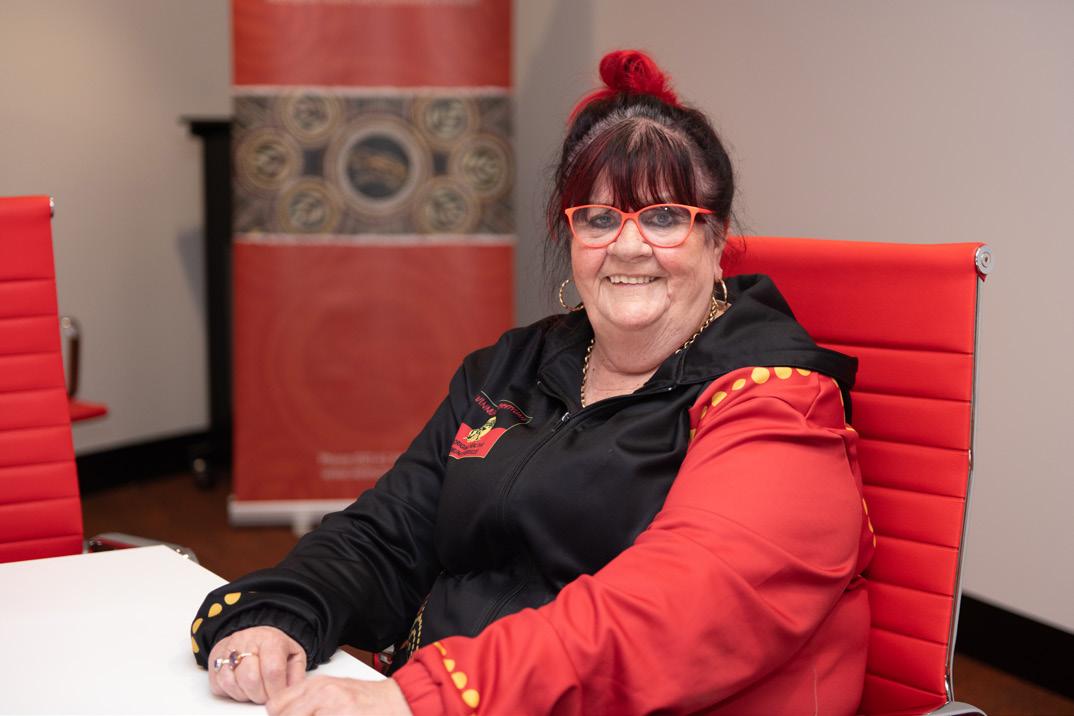
Winnunga Nimmityjah CEO Julie Tongs.
The team at St Basil’s.
STRONG HEALTH, STRONG CULTURE, STRONG COMMUNITY
Winnunga Nimmityjah Aboriginal Health and Community Services is a community-controlled health service
in Narrabundah, providing holistic, culturally safe care to Aboriginal and Torres Strait Islander people across the ACT and surrounding regions.
WINNUNGA OFFERS A WIDE RANGE OF SERVICES, INCLUDING:
Health and Medical Care
• GP and specialist clinics
• Aboriginal Health Workers
• Chronic disease support, pathology, immunisations, dental, optometry, and more
Pregnancy, Parenting and Family Support
• AFPP: Free support for young, first-time Aboriginal mums from pregnancy to bub’s second birthday
• Healthy Pregnancy Group & Childbirth Classes
• Mums and Bubs Clinic
Quit Smoking Support
• Free nicotine replacement therapy, personalised quit plans, and culturally safe support through the Tackling Indigenous Smoking program.
Social and Emotional Wellbeing
• Counselling and mental health support
• Drug and alcohol programs
• NDIS, court and justice support
Community and Justice Programs
• Men’s and women’s groups
• Yarning circles, nutrition and healing programs
• Support for people in custody and post-release
EXPERTS IN HEALTH & WELLBEING
Located in the heart of Canberra’s medical precinct in Deakin
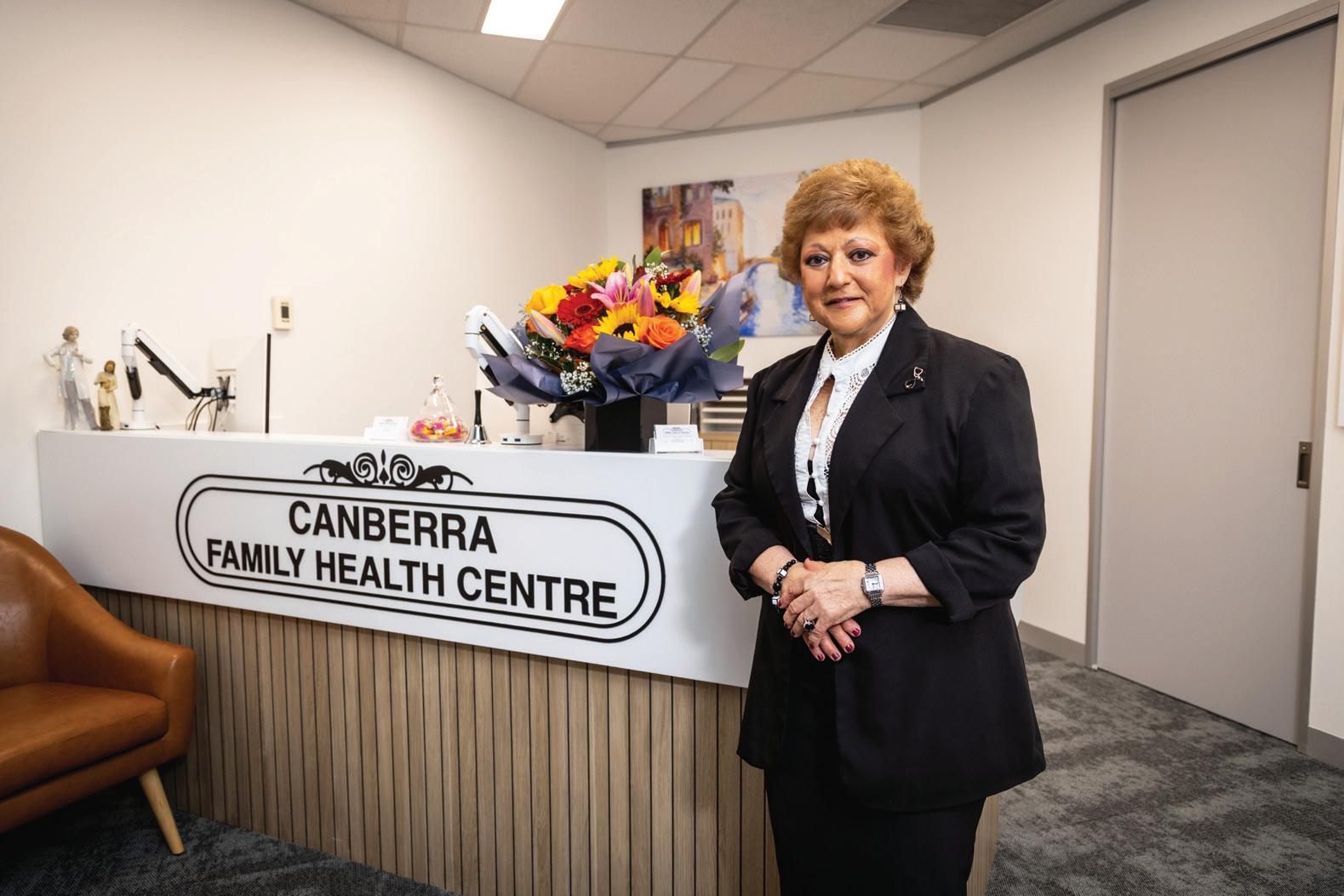
At Canberra Family Health Centre, we are dedicated to providing comprehensive, patient-focused healthcare for individuals and families. Located centrally in Deakin, our centre offers a wide range of medical services designed to meet your health needs at every stage of life.
Associate Professor Maryse Badawy
MB/ BS Degree, FRACGP, FHKAM (Family Medicine), Grad Dip Fam Med, Master Family Medicine, Member Australasian Menopause Society
National and International Family Medicine and Academic experience.
Nim Osborne of Canberra’s Few Accredited Lymphoedema Practitioners
Nim brings over 15 years of massage therapy experience with a strong focus on supporting people undergoing cancer treatment, living with anxiety, or in recovery. Her gentle, skilled approach helps restore comfort, flow, and connection to the body especially for those navigating life after diagnosis.
As an Accredited Lymphoedema Practitioner and member of both the Australasian Lymphology Association (ALA) and Australian Massage Therapists Association (AMT) Nim offers a rare level of expertise in this highly specialised area.
Opening Hours: Monday to Friday 9:00am to 3:00pm & after hour by appointment
To make a booking please call Nim on 0412 885 804
to book an appointment
MEET OUR PAIN MANAGEMENT EXPERTS
Holly Hazelwood – Exercise Physiologist
Holly is a former sports journalist who believed so strongly in the power of exercise to heal and nurture that she undertook her 4 year degree in Exercise Physiology. Holly is be able to work with people directly to support them through their pain journey and regain independence and a joy for living again. Holly provides one on one and group exercise classes both on land and at our hydrotherapy centres to support people to gain freedom from chronic pain.
Sophie Bullock – Exercise Physiologist
Sophie has post graduate qualifications in hydrotherapy, and as a non-sports centred Exercise Physiologist, helps clients who struggle with engaging in exercise due to a lack of sports participation. Sophie’s goal is to improve clients health via our hydrotherapy program, gym instruction and in-home visits. Sophie also is known for her passion for working with children.
Nick van Diemen – Physiotherapist
Nick (they/them, he/him) has returned to Canberra after completing a Master’s in Physiotherapy at the University of Queensland. Their passion comes from a love of science and helping people. With eight years in disability support, Nick brings broad experience and enjoys working with clients across a wide range of needs.
Blake Dean – Exercise Physiologist
Blake has expertise in improving clients mobility and decreasing their pain through appropriate exercise. Blake delivers our ‘My Exercise’ program, targeting the relief of lower back and sciatic pain, shoulder and upper body concerns as well as leg, hip and ankle interventions – for those who do not qualify for physiotherapy-led GLAD programs. Blake provides individual & group exercise for younger people with a disability. Blake treats clients in-clinic or via our hydrotherapy program as well as attending your gym with you.
Sarah Solano – Exercise Physiologist
Sarah believes that exercise is the best medicine. She is an Accredited Exercise Physiologist with her degree in exercise physiology and rehabilitation. Previously Sarah was a swim teacher, personal trainer and an allied health assistant in the hydrotherapy field.
Natasha Elword – Exercise Scientist
Tash discovered her passion for exercise after completing her Certificate IV in Personal Training in 2015, later earning a Sport and Exercise Science degree from the University of Canberra. She joined Arthritis ACT in 2019 and now supports group classes, exercise programs and administration. Outside work, she enjoys family time, running, hiking and cooking.
• GLA:D® Program for hip and knee osteoarthritis.
• Education and supervised group sessions to build strength and confidence.
• Pain management strategies to reduce medication use Tailored support including preparation for or avoiding joint replacement.
QUEANBEYAN & PALERANG REGION
Celebrating the heart of our communities: volunteers in Bungendore
As part of National Volunteer Week recently, I had the privilege of presenting over 100 Certificates of Appreciation to volunteers who had been nominated by their peers for their outstanding contributions.
Bungendore and the surrounding region were particularly well represented, highlighting just how strong the spirit of volunteering is across our local communities.
I would like to sincerely thank these incredible individuals, as well as every volunteer who gives their time so generously. From local sporting clubs and primary schools to service organisations and environmental groups protecting our precious landscapes and wildlife, volunteers play a vital role in keeping our communities thriving.
Among those recognised were Sonja Simmons from Bungendore, a dedicated member of the Lions Club of Bungendore and the Bungendore Seniors Association. Sonja’s commitment to supporting others and fostering community connection is deeply valued.
Michael MacWilliam, also from Bungendore, was honoured for his contributions across multiple organisations. From coaching at the Bungendore United Football Club and serving as a Community Football Coordinator and Data Protection Officer, to his service with the RFS Bungendore Rural Fire Brigade, Michael exemplifies what it means to give back.
Jan Loose from Carwoola and Jeanette Barker from Wamboin were both recognised for their work with the Queanbeyan and District Dog Training Club. Their dedication helps strengthen bonds between people and their pets while supporting a positive and engaged local community.
Here in Eden-Monaro, around 19.3 per cent of people volunteer through an organisation – this is significantly higher than the national average of 14.1 per cent. That
and beyond
statistic speaks volumes about who we are as a region.
Our volunteers are the backbone of our communities. They step up in times of need, bring people together, support local initiatives, and help make regional areas like ours some of the best places in the country to live.
Kristy McBain with volunteer Michael MacWilliam receiving a certificate.
June 10 is Thank a
First Responder Day. Thank you to all the first responders in our community, including local SES, RFS, paramedics, police, and St John first aid officers.
Your work is critical to how we respond to disasters. Your dedication to saving lives, protecting property, and helping communities recover is an essential part of our emergency response, and your local knowledge makes our communities stronger and more resilient. Thank you for everything you do in protecting and supporting our communities in the toughest conditions.
To everyone who volunteers across Eden-Monaro –thank you. Your time, energy and kindness do not go unnoticed, and our communities are stronger because of you.
Kristy McBain – Member for Eden-Monaro 1/21-25 Monaro Street, Queanbeyan. Call 02 6284 2442 or email Kristy.McBain.MP@aph.gov.au
Kristy Mc
with something for everyone
On Saturday 20 June, the award-winning Queanbeyan Park will be transformed by the Queanbeyan Multicultural Festival into a vibrant hub of global diversity. From 10 am to 4 pm, the festival will feature food, music, dance, workshops, and community connections, offering something for everyone to enjoy.
With more than 40 food vendors representing six continents, attendees can savour an array of traditional and contemporary flavours. Indulge in dishes like paella from Latin America, Ghanaian cuisine, Bhutanese dumplings, Tongan desserts, and Jamaican jerk chicken. Foodies can also enjoy unique treats such as Colombian obleas, Italian cannoli, and Argentine alfajores.
But it’s not just about food! Wander through handmade craft and ethnic gift stalls, participate in workshops, or try Henna painting. Connect with local organisations to learn about their impactful work, and
enjoy activities by groups like Te Rere O Te Tarakakao, Kano Jujutsu Institute, and the QPRC Mobile Library. The stage will come alive throughout the day with captivating music and dance performances, including Polish Dancers Wielkopolska, Bollywood routines, Prosperous Mountain Lion Dance, Samba dancers, and Nepalese dance troupes.
Tips for the Day:
Parking: Located at Queanbeyan Showground.
• Pets: The event is pet-free.
Whether you’re tasting global cuisines, enjoying colourful cultural performances, or simply embracing the vibrant diversity of Queanbeyan, this familyfriendly festival promises a day filled with celebration, connection, and joy. Don’t miss out!
Queanbeyan Multicultural Festival Visit qprc.nsw.gov.au/QMCF
Working for our community Member for Eden-Monaro
Kristy.McBain.MP@aph.gov.au
KristyMcBainMP
KristyMcBain
Author sed by Kr sty McBain ALP, 21-25 Monaro Street, Queanbeyan
The Q Performing Arts Centre has become one of the region’s most important cultural assets, delivering a vibrant mix of theatre, music, comedy and community events to Queanbeyan and the wider Canberra region. More than just a venue, The Q is a creative hub that brings people together through storytelling, performance and shared experiences.
The Q continues to prove the value of investing in local culture. Its diverse program supports both established touring productions and emerging local talent, giving audiences access to high-quality entertainment without travelling to larger capital city venues. This accessibility strengthens community connection and encourages broader participation in the arts.
The venue also plays a significant role in arts education, providing opportunities for young performers, schools and community groups to develop skills and
confidence. These experiences often inspire lifelong involvement in the creative industries and help foster the next generation of artists.
Importantly, The Q contributes strongly to the local economy. Visitors attending performances support nearby restaurants, cafés and accommodation providers, creating flow-on benefits for local businesses.
In a rapidly growing region, cultural institutions such as The Q are essential. They enrich community life, celebrate creativity and ensure Queanbeyan remains a dynamic and connected place to live, work and visit.
The Q – Queanbeyan Performing Arts Centre 253 Crawford Street, Queanbeyan NSW. Call 02 6285 6290 or visit theq.net.au
Beautiful Bungendore
Bombay Pavilion brings authentic Indian flavour to Bungendore
Bringing the rich flavours and traditions of India to the region, Bombay Pavilion has established itself as a standout dining destination in Bungendore. Conveniently located on Malbon Street, the restaurant offers a diverse menu of classic Indian favourites alongside contemporary dishes, all crafted using quality ingredients, aromatic spices and time-honoured cooking techniques.
Open seven days a week for lunch and dinner, Bombay Pavilion caters to a wide range of occasions, from casual family meals and takeaway dinners to private functions and catering events. The restaurant’s welcoming atmosphere and attentive service create an experience that keeps locals and visitors returning time and again.
Signature curries, tandoori specialties, freshly baked naan breads and vegetarian options showcase the depth and variety of Indian cuisine, while generous portions and beautifully presented dishes add to the appeal. With its commitment to authentic flavours, warm hospitality and consistently high standards, Bombay Pavilion has become a popular choice for those seeking a memorable dining experience. Whether you’re discovering Indian cuisine for the first time or revisiting familiar favourites, Bombay Pavilion offers a delicious taste of India in the heart of Bungendore.
Bombay Pavilion
40 Malbon Street, Bungendore NSW.
Call 02 6104 6468 or visit bombaypavilion.au
When it comes to buying or selling property in the Bungendore region, local knowledge and proven results matter. That combination has helped PRD Bungendore establish itself as one of the area’s most trusted real estate agencies.
Leading the team is Dan Woodford, Principal and Licensed Stock and Station Agent, who has been recognised as the 2025 Top Agent in Bungendore. This rare recognition across Australia’s major property platforms reflects consistent performance, strong negotiation skills and a proven track record of delivering premium outcomes for clients. With extensive experience across residential, rural and lifestyle properties, Dan and his team are known for their personalised service, strategic marketing and commitment to achieving outstanding results. Their strong understanding of the local market enables them to provide valuable insights for both buyers and sellers, helping clients make informed decisions with confidence.
The agency continues to set the benchmark for real estate in the region. Dan’s dedication to excellence and deep understanding of the Bungendore market has positioned PRD Bungendore as a clear market leader for buyers and sellers alike.
Our policy is that it’s the rider’s job to make the horse happy, not the other way around.
Every horse deserves a balanced and educated rider to enjoy being ridden - be that rider, book lessons at Karelia.
Karelia horses are never over worked, with rostered days off and the absolute best of love and care 24/7.
Therefore they love their job and look forward to seeing you.
Our horses are allowed to be horses, with the freedom and enrichment of running as a herd, enjoying unlimited hay and grazing and lots of playtime galloping around the paddock and splashing in the dam.
We insist on positive energy at Karelia for happy horses and riders, promoting kindness and patience in every lesson.
All ages & all levels always welcome.
To book lessons please text Angela Hayes, EA Level 1 Dressage Coach.
Karelia Riding Instruction
2 Clare Lane, Bywong NSW.
Call 0416 335 217 or visit kareliariding.com.au
Our horses aren’t just lesson horses, they’re part of the family. Horse welfare always comes first at Karelia.
The team at PRD Real Estate Bungendore.
Beautiful Bungendore
Relax, indulge and enjoy
in Bungendore
For more than 17 years, Your Beauty Spot has helped Bungendore locals look and feel their best through a unique combination of professional beauty therapy and boutique hairdressing services. Established in 2008 and locally owned by Rebecca Wheeler and Sarah Cullen, the business has built a loyal following by focusing on personalised service, quality treatments and creating a welcoming environment where clients can truly unwind. From the moment clients walk through the door, the focus is on relaxation and self-care. Whether it’s a fresh new hairstyle, a beauty treatment, preparation for a special event or simply some well-deserved pampering, the team works closely with each client to deliver results tailored to their individual needs.
What sets Your Beauty Spot apart is its ability to offer both qualified beauty therapy and boutique hairdressing services under the one roof. The team prides itself on helping clients enhance their natural features while providing an experience that is both professional and enjoyable. Appointments are available Tuesday to Saturday, making it easy for locals and visitors alike to enjoy a little time out from busy schedules.
Whether you’re preparing for a wedding, special occasion or simply treating yourself, Your Beauty Spot continues to deliver the personalised care and attention that has made it a trusted part of the Bungendore community.
For many local families, quality dental care is about more than healthy teeth – it’s about trust, comfort and long-term relationships. That philosophy sits at the heart of Bungendore Dental Surgery, a privately owned family practice serving the community from Ellendon Street. Established in 2014 and led by husband-and-wife team Dr Ram Kavuri and Dr Srilatha Kavuri, the practice was built on a vision of providing personalised, patient-centred care for people of all ages.
The clinic offers a comprehensive range of services, including preventive, restorative and cosmetic dentistry, orthodontics, teeth whitening, root canal treatment, dentures and custom mouthguards. Patients benefit from modern facilities, contemporary technology and a welcoming environment designed to make dental visits as comfortable and stress-free as possible.
Education and prevention are key priorities for the team, who work closely with patients to develop treatment plans tailored to individual needs and long-term oral health goals. The practice also offers payment plans, helping make quality dental care more accessible for local families. With its commitment to gentle care, clinical excellence and lasting patient relationships, Bungendore Dental Surgery continues to be a trusted choice for residents seeking comprehensive dental care close to home.
Bungendore Dental Surgery
34 Ellendon St Bungendore NSW. Call 02 6238 0778 or visit bungendoredentalsurgery.com.au
A bank for your
community
Palerang Financial Services Ltd (PFSL) which operates the Community Bank branches of Braidwood and Bungendore, under a Franchise Agreement from Bendigo Bank, were recently acknowledged at the 2026 QPRC (Queanbeyan Palerang Regional Council) Business Awards receiving the “Excellence in Professional Services” Award.
This award highlights the work and commitment of current and former staff and volunteer board of directors. It also showcases the partnership and trust that the branches have formed within the community. The model of the Community Bank is simple, yet highly effective. Profits made by the company are split in an equal share between Bendigo Bank and PFSL. Of the funds retained, 80% goes back into the community in the form of sponsorships, grants and donations. To date, over $11m has been handed back to our district which is a remarkable achievement. In essence, it is the community and our customers giving back to the community. On receiving the Award, Chair of PFSL, Mr Garry Cook said “I believe that “service” to our customers by our wonderful staff members is our superpower. People tell me how wonderful the service is that they receive at our branches, friendly, personalised, straightforward and professional”. Of course, the Community Bank can only keep contributing to the community if the community supports the Bank. It’s a simple model and one that we advocate every day.
Bendigo Community Bank Bungendore Call 02 6238 0547.
Mystery furcraea defies the frost
By Jackie WARBURTON
Evergreen shrubs, hedges and trees provide structure through winter, while frosttolerant furcraeas add striking blue-grey foliage to cold-climate gardens.
Furcraeas are a species of succulent that generally do not like the cold and usually need glasshouse protection through winter in our region. However, last winter I found a spectacular evergreen succulent growing on the ANU grounds.
This large plant, with gorgeous blue-grey leaves, was completely unfazed by frost. Many of the plantings were more than two metres tall, growing in a row beneath gum trees.
It may be a furcraea of some type and if there is a sleuth out there
who can provide a botanical name, I would be most obliged.
Some furcraea species are frost tolerant and suitable for pots, providing a tropical look in summer before being brought indoors during winter.
I am currently growing F. quicheensis from seed. It is a smaller variety than my unknown plant and will eventually be planted into a pot for winter protection.
EVERGREEN shrubs and trees show their importance in winter, when other plantings are bare. They can be grown as specimen plants or clipped into hedges to break up space and provide privacy.
If you are new to the area, look around your local neighbourhood to see firsthand what grows successfully in local soils. In many cases, evergreens are low maintenance, periodically dropping leaves as new growth appears.
When planting an evergreen hedge, think carefully about the ma-
ture size of each plant. Shrubs that grow to only two to three metres tall are far easier to maintain than those reaching five or six metres. Hedge spacing can be calculated by deciding on the desired height, dividing it by three, then planting at that distance apart.
Once you have decided what evergreens to plant, it is time to prepare the soil for spring planting. Dig the area over thoroughly and add as much organic matter and manure as possible.
If planting a hedge, trench-style planting benefits the entire root system and helps prevent a single plant from dying in the middle of the hedge in future. Evergreen plants are in the garden for the long haul, so soil preparation is the key to success.
Planting into “new build” virgin soils is much harder and takes time to improve, particularly in our hard clay soils.
NOW that most trees are leafless, some are already beginning to bud and blossom ahead of spring. For winter colour, flowering apricots and almonds will bloom from July before leafing up in spring.
One of Canberra’s most notable early-flowering displays can be seen at the Curtin shops in South Canberra, where ageing flowering apricots have provided a spectacular winter show for many years.
Their flowering often sparks speculation of an early spring, though they are simply winterflowering trees.
If space is limited, Prunus alba is a smaller, white-flowering tree, rather than pink, and should become available over the next month or two.
ALL cherries, apricots and stone fruit species need rich soil with moisture during the warmer months, while requiring little care in winter. Most importantly, only prune stone fruits in summer and pome fruits in winter.
Pome fruit trees can be pruned hard if necessary to reduce their height, but if planting new fruit trees this season, I would recommend dwarf varieties. They grow to only two metres tall, are easier to prune and require far less maintenance.
jackwar@home.netspeed.com.au
Jottings…
• Spray grape vines with copper for blister mite prevention.
• Only light pruning of hedges for the next month.
• Prepare soil for rhubarb and asparagus crowns.
• Liquid feed annuals fortnightly.
One of the most notable early spring flowering trees are at the Curtin shops.
The large plant that was unfazed by frost… is it a furcraea? Can someone help Jackie? Photos: Jackie Warburton
ARTS & ENTERTAINMENT
Amanda’s gone back to what she knows best
By Helen MUSA
One of Canberra’s favourite stage performers, Amanda Bishop, will soon be back here on the stage of The Playhouse, playing Truvy, the owner of the fictional hairdressing salon at the centre of Steel Magnolias.
And, yes, although she has no intention of doing a copycat version of Dolly Parton’s portrayal of Truvy in the 1989 film, she will be wearing a spectacular blonde wig.
Bishop, best known to Canberrans for her 13 years with The Wharf Revue, is cemented in local memories for playing Julia Gillard singing Bizet’s Habanera from Carmen, complete with red wig.
“Not just Julia,” she reminds me when we catch up by phone in Sydney, but also Jacqui Lambie, Tanya Plibersek, Julie Bishop, Katy Gallagher and, more recently, Allegra Spender.
Canberra is her favourite place to go out and spend money – she mentions Fyshwick, Braddon and NewActon.
She has lots of good friends here who work in DFAT, including at least one ambassador, and she loves performing on what she says is the best stage in the country, The Playhouse.
It’s only just over a year since The Wharf Revue officially folded, but she’s very happy to have been associated with it over 13 years, in and out of the show, describing it as “an amazingly rich education ground”.
Especially exciting was working with writer-performer-directors Drew Forsythe, Jonathan Biggins and Phil Scott as they created the show.
“Those boys had such a passion for politics,” she says. It meant eight months of full-on rehearsing, but for the boys, who had to write the scripts, it was more like 11 months between each show.
But all good things come to an end and, she says, actors always have to reinvent themselves and she’s gone back to what she knows best.
Bishop, born in Merriwa in the Upper Hunter, went to boarding school in Sydney, then on to the University of New England in Armidale to study science and arts. But after falling under the influence of the renowned ethnomusicologist Prof Catherine Joan Ellis, inaugural professor of music at UNE, she switched courses and graduated instead
DAVID WILLIAMSON’S
with a Bachelor of Music.
In Armidale she learnt four different musical instruments and took part in packed out local music hall shows with local identities, including politicians.
“I knew music was going to be my career,” she says.
Then she auditioned for John Milson’s new Musical Theatre course at the West Australian Academy of Performing Arts by singing The Last Rose of Summer.
The rest is history.
Lately, she’s been performing in Canberra playwright Mary Rachel Brown’s Chicken in a Biscuit at the Old Fitzroy, on the feature film Fangs, starring Joel Edgerton and Toni Collette, and in the Ensemble Theatre’s premiere of David Williamson’s The Social Ladder.
She’s thrilled to be playing Truvy, but she’s quick to remind me that the 1989 film was based on the 1987 Broadway hit by American writer Robert Harling, who appears twice in the movie as the church minister. Bishop also believes real-life doctors and nurses were used in the film.
Truvy, of course, is the owner of the home hair salon in which Steel Magnolias takes place. The play is set in the late 1980s, at Truvy’s in-home beauty parlour in a fictional Louisiana town, where a group of women, as delicate as magnolias but as tough as
Travelling North
Directed by Cate Clelland
steel, regularly gather.
Truvy, Bishop tells me, makes space for everyone to come and tell their stories.
“It’s hilarious, yet heartfelt,” Bishop says, adding that she’s tickled pink to be performing with fabulous mature actors such as Lisa McCune, Belinda Giblin and Debra Lawrance.
Although some of it is very sad – it’s no secret the play was based on Harling’s experience of his sister’s death – it’s still hilarious.
“The one-liners are such that you could assume it had been written by a modern Shakespeare,” she says, quoting lines like: “I’m not crazy… I’ve just been in a very bad mood for 40 years,” and, “If you don’t have anything nice to say about anybody, come sit by me!”
One of the main themes in Steel Magnolias is time itself, as in Truvy’s line: “Time marches on and eventually you realise it is marchin’ across your face.”
True enough, Bishop says.
The last time the play was seen professionally in Canberra in 2009, Jackie Weaver played Truvy, while in an earlier professional production here in 1988, Maggie Dence took the role.
“I’m following that tradition,” Bishop says.
Steel Magnolias, The Playhouse, June 17-21.
WRITTEN BY PATRICK VERMILLION DIRECTED BY CAITLIN BAKER
Amanda Bishop, blonde wig and all, in Steel Magnolias… “It’s hilarious, yet heartfelt.”
Photo: Brett Boardman
STREAMING
The little boy who held the murderer’s secret
What if the only person who held the answers to a murder was a young child?
That’s the haunting premise at the centre of Netflix’s new drama show The Witness (now streaming).
This three-part mini series is based on the true story of the tragic murder of mother Rachel Nickell in London in 1992. The only person who saw the murder was her twoyear-old son, Alex.
How does a child so young cope with such trauma, let alone articulate to police what they need to find the killer?
Unlike many other true-crime series it’s not the detectives here at the centre of the story.
The Witness focuses on Alex and his father Andre and how they cope with the investigation, the grief and the intense media interest.
In recent years, Netflix has got itself in some hot water for what many call the “exploitative” nature of its true-crime docos.
The families of the victims of the massively popular series on serial killer Jeffrey Dahmer slammed the platform in the wake of its release, saying they weren’t consulted and that the show had “re-traumatised them”.
With The Witness, it’s the opposite.
Alex Hanscombe, the boy at the centre of this case, was actually brought into the production as a consultant to help shape the authenticity and tone. His father Andre has also had his say on the show.
Has Netflix learnt a lesson? The timing is
coincidental.
While it is a drama series, a documentary called The Murder of Rachel Nickell is also being released at the same time to give a more matter-of-fact retelling of the case.
It seems to be something of a new model for Netflix’s true-crime productions, giving audiences the chance to choose how they want to take in the story.
The Hanscome family’s input on both of these shows is what gives them an extra layer in a market already crowded with murder docos.
Who better to help shape the story than those who were in it?
SPEAKING of viewer choice, Spider-Noir has become the hit-of-the-month on Amazon Prime Video.
Set in a moody, monochromatic version of 1930s New York, this story imagines Spider-Man as a vigilante detective almost 100 years ago and plays on all the influences of the period to make it pop.
What’s interesting though is the decision it offers viewers before they press play.
Those watching Spider-Noir can choose to watch it in colour or if they want a more “authentic” experience of the era that inspired it, can choose to watch it in a stylised black and white.
Inspired by Machiavelli whose name sounds prophetically like his own, Raef McAvee forges and follows a set of Rules for Life that elevate him from suburban obscurity to international recognition. His life is a text book for those who crave fame but lack the talent or persistence to achieve it.
This has sparked some heated debate online. Purists say if people aren’t watching Spider-Noir in black and white they’re not watching it properly.
Others say if they’re paying the subscription they should get to enjoy the show exactly how they want to and those watching it in black and white are just “performative”.
There were similar arguments with Better
Call Saul, the spin-off to Breaking Bad, which had whole episodes in black and white to differentiate between past and future. With no choice but to watch it how it is, some viewers were upset they were denied full colour for multiple episodes.
It would be fascinating to see a stats breakdown on where audiences actually gravitate when given the option as with
My humble take? The creators should stick to their vision.
If the story is supposed to be in black and white then do something bold and fully commit to it to stand out. Given a chance, many naysayers might just come round to it.
I must be forgetting this is a Marvel superhero show. Heaven help us if anything too creative might alienate some viewers.
Still, Spider-Noir offers a unique experience in the grand scheme of blockbuster franchise shows.
Nic Cage stars as this take on the famous web-slinger, adding some much-needed levity to a genre that at this point is exhaustingly oversaturated.
Viewers can definitely dial down some of that satura tion here though, if they please.
Alex Nickell as a two-year-old… the only witness to his mother’s 1992 murder.
Spider-Noir… imagines Spider-Man as a vigilante detective almost 100 years ago.
BOOK REVIEWS
Two books about two very famous Cornwells
COLIN STEELE reviews two books that cover the lives and work of two global bestselling authors, who are coincidentally both Cornwells.
The books under review cover the lives and work of two global bestselling authors, who are coincidentally both Cornwells –John le Carré, aka David Cornwell and Patricia Cornwell.
Patricia Cornwell tells her story in True Crime, a Memoir (Sphere, $34.95), which one reviewer has called, “Cornwell takes a scalpel to her own life story”.
Cornwell had a traumatic childhood.
On Christmas Day 1961, her lawyer father walked out on his wife, Patricia (then five) and her two brothers. Her mother subsequently had a breakdown and was twice institutionalised in the 1960s, her three children taken in by an abusive religious foster family, which led Cornwell into severe anorexia in her teenage years.
Cornwell’s account of her early life is based on an unpublished fictional version of her life she wrote when she was 20, studying at Davidson College in North Carolina.
She later married Charles Cornwell, an
ARTS
English literature professor from Davidson, who was 18 years her senior. They later divorced, partly because of his resentment of her commercial success.
Cornwell never had children because, she says, she was afraid they would inherit the “abandonment, loss, fear” that she felt from her parents.
After college, Cornwell became a crime desk reporter at the Charlotte Observer, which brought her into contact with numerous police officers one of whom drugged and raped her. This experience is reflected in her first Kay Scarpetta book, Postmortem (1990), in which a police reporter is raped by a district attorney. In hindsight, she says writing about it was a “therapeutic move”.
Kay Scarpetta was to become the lead character in many of Cornwell’s novels and opened up to readers the world of forensic science.
Cornwell says: “I identify with Scarpetta. Our sensibilities and views on things are similar. Our minds work the same way. But there are plenty of differences, too; I’m not a scientist or a doctor, I’m not Catholic or Italian. If she were exactly like me, I’d get very bored”.
Scarpetta has recently come to the screen with Nicole Kidman portraying the older version of Kay in an Amazon Prime series.
Cornwell recounts the several previous failed attempts, notably long discussions
IN THE CITY
with Demi Moore, which began when Cornwell was in Canberra in 1992 for an ANU Meet the Author event.
Those discussions ended in 1993 after Cornwell crashed her car in Los Angeles and ended up in hospital with injuries and PTSD, which took her into therapy.
Her success with the novels led to personal trauma, including fending off stalkers and a recognition of her bisexuality, Cornwell subsequently travelled in an armoured car or helicopter to events. She has said putting her personal life under a microscope was “unnerving” but “it’s important that you do what you need to do, even if it scares you a little bit”.
SINCE John le Carré died in December 2020, we have learned more from several authors about his life, especially his numerous and complicated love affairs – a secret life in itself.
In Tradecraft, Writers on John le Carré (Bodleian Library Publishing. $59.95), eight authors document their experiences working with le
Latham walks the talk in Greece
Canberra’s Chris Latham is the main talking head in the documentary Elegy, which has won Best Documentary at the Athens Marathon Film Festival. Written by Michael Walsh and directed and filmed by Dan Fordham in Skyros, Greece, the film traces the achievements of life of Australian composer and Olympian Frederick Septimus Kelly as pianist, Olympic gold-medal rower and composer of Elegy for Strings (In Memoriam Rupert Brooke), written while serving at Gallipoli during World War I.
Floral Impressions: Coins in Bloom at the Royal Australian Mint showcases the Mint’s tradition of floral iconography in coin design. Royal Australian Mint, Deakin, until March 31, 2027.
Country music favourite James Blundell returns with The Patience Wins, an intimate live show focused on storytelling and the songs that have shaped his 34-year career. Royal Hotel Queanbeyan, June 17.
Blamey Swings Rock see the popular big band joined by vocalists Jared Newall, Leisa Keen, Steve Amosa and Ashleigh Harris singing songs by the greatest rock artists and bands of all time, including The Rolling Stones, Van Halen, Pink Floyd and Elton John, At The B, Queanbeyan Performing Arts Centre, May 16.
Blundell… Royal Hotel Queanbeyan, June 17.
Rare Bird Ensemble, Ambrosia Lounge and Mill Theatre combine live entertainment with fine dining in an immersive cabaret experience, Love & Forgetting, Tales from a Young Mixer. Performed by a bartender in Ambrosia Lounge at Fyshwick, the production follows the journey of a country kid chasing big dreams from the Riverina to Manhattan. Ambrosia Lounge, June 18-20.
The 12th annual SmartFone Flick Fest, the international film festival dedicated entirely to smartphone filmmaking, is now open for entries. The festival again heads to the Sydney Opera House in November after attracting more than 450 entries from around the world last year. Entries are now open at sf3.com.au
Queanbeyan Multicultural Festival, postponed because of poor weather, will now coincide with World Refugee Day at Queanbeyan Park, June 20.
Carré. “Tradecraft” is a word le Carré used to describe the techniques of espionage, but it can also be applied to le Carré’s tradecraft of writing, which as several authors demonstrate was underpinned by meticulous research.
The volume’s editor, Prof Federico Varese, an expert on the Russian Mafia, began assisting le Carré when he was a doctoral student at Oxford in the 1990s, providing background information for the novel Our Game and then Our Kind of Traitor.
On the other side of the Cold War ledger, Russian investigative journalist Andrei Soldatov reveals how le Carré’s books were widely read by the KGB’s leadership. International relations scholar Andrea Ruggeri analyses le Carré’s work from a geopolitical perspective, while Lawrence Osborne documents how le Carré captured the geography and atmosphere of Phnom Penh and Hong Kong in The Honourable Schoolboy.
Oscar-winning scriptwriter and director Hossein Amini describes his experience in taking Our Kind of Traitor from page to screen.
One of of le Carré’s four sons, Nicholas Cornwell, explains why he continued the George Smiley narrative under the pen name Nick Harkaway,
Tradecraft is a beautifully produced book with numerous illustrations of previously unseen family photographs, original sketches, annotated manuscripts, film stills and correspondence. The end result is a multi-faceted portrait with new insights into a complex man and acclaimed writer.
Country singer James
Author Patricia Cornwell… “I identify with Scarpetta. Our sensibilities and views on things are similar. Our minds work the same way.” Photo: Patrick Ecclesine
Offering
DINING
/ Hunter and Barrell, Civic
Smoky, charred, powerful and primal
There’s something so primal about a premier steak experience.
Hunter and Barrell has been smoking and sizzling since its May opening at Scotts Crossing. It specialises in exceptional meats cooked by open fire over white, hot coals. The result? Dishes that are smoky, charred and powerful.
At Hunter and Barrell, our fabulous waiter Kane, knew his stuff and was charming and engaging without being overly familiar. He spoke passionately about Hunter and Barrell cocktails, curated to celebrate spirits matured in barrels for flavour depth and complexity. Trust me, they’re worth trying.
My mojito was the best I’ve ever had, a perfect mix of barrel-aged rum, mint, sugar and lime ($23). My friend was impressed with his Negroni – barrel-aged beefeater gin, Campari, and Cinzano 1757 Rosso ($23). Mocktails delight the palate, including the Go Coco made with a tequila alternative, cream coconut, lime, orange and hickory smoke ($18).
Our feast began with buttermilk calamari, so soft and tender ($18). We adored the Szechuan marinade, and the lightly fried calamari was a hit with chilli jam.
We were in for a real treat with the smoked bone marrow and raw beef tartare starter ($32). The diced rump – mixed with wild herbs and smoked pickle onion (to cut through the richness) – was presented in a half hollowed
out bone. We eagerly spooned it over chargrilled sourdough toast.
One friend, not in the mood for beef, ordered the lamb pot pie ($44). The presentation was stunning. The fluffy puff pastry was golden, and the pie formed around a round marrow bone and served in a cast-iron skillet. The pie was chock-a-block with tender lamb roast shoulder and leg.
Two of us shared the fire-grilled, grain-fed New Yorker ,300 grams and MB2+($73). It was basted with a slightly sweet signature sauce (warning for those who want a cleaner approach). It was high on taste and cooked with skill.
Kane recommended the beef fat chimichurri sauce
WINE / pinot and pies
($6) to cut through the richness of the meat and the glaze.
We selected the mixed-leaf salad, but would have preferred it without such a healthy dusting of parmesan and, perhaps, a dressing without honey since there was enough sweetness.
Truly decadent were the masterfully double-cooked, crispy whole potatoes with truffle salt, Gruyère and truffle aioli ($16 and worth every bite).
At Hunter and Barrell, order the jaw-dropping, grain fed Tomahawk if
you dare ($220 for 1.1 kilos) or massive skewers served theatrically on a vertical hanger/stand.
We were stuffed but managed to share the creamy Basque cheesecake with macerated strawberries ($19).
Hunter and Barrell’s interior design tied everything together –timber, stone, earthy colours, rich fabrics and ample sound proofing.
Meeting elevates a working-class lunch
It was a meeting of three people who are assisting to establish an industry association in the transport sector, me included.
We were bemused by the need to manually complete a national registration form for the Australian Securities and Investments Commission as we sat around a table at the Artists’ Shed in Fyshwick where mate Chris has a small framing business (for paintings, not criminally related).
We delved into questions such as where each member of the governing committee had been born. It seemed interminable and incapable of completion. If I was ever framed for murder, I’d be flattered that they thought I could finish a project.
Lunch time came around and we decided to grab some food from a nearby pie shop. We received our pies in brown paper bags, and sauce was on hand. This reminded me of the difference between our usual more elaborate lunches and the lunches that most working people, me included, eat every day.
Then treasurer Paul Keating, at the time of the introduction of the Fringe Benefits Tax in the 1990s, railed against those who received a tax-deductible, luxury lunch.
Newspaper columnist Crispin Hull encapsulated this sentiment in his 1994
commentary: “Keating always attacked the Liberals for allowing tax rorts, asking why should pheasant under glass be tax deductible while the pie and sauce is not.”
At the Artists’ Shed we transferred the pies to plates and ate with knives and forks. I then produced a Brown Brothers 2025 Classic Pinot Noir that has recently been released for a very accessible price of $20 a bottle. Meetings always go better with a small glass of wine.
“This will elevate our working-class lunch,” said Chris as he demolished his pie in record time.
“Boarding school?” asked Tom. At my request we then focused on an assessment of the wine and immediately noticed a lovely red fruit bouquet, although the first sip was slightly astringent.
The colour was bright in this young wine. The initial sharpness went away as it breathed. It went well with the chunky steak pie filling, pinot noir being versatile in its food pairing.
I’d recommend it as being sufficiently light to eat with salmon, but complex enough to pair with the rich insides of a meat pie. Through the middle there was a hint of sweet fruit. The fresh acidity on the finish of this wine cut through the fattiness of the meat.
It was an everyday lunch elevated by a glass of reasonably priced wine. I held the bottle of wine up, said to my companions:
“This wine is $20 but some of the world’s most expensive wines are pinot noirs, especially those from Burgundy.
“I recently looked up the world’s most expensive pinot noir. It’s a Domaine de La Romanée-Conti Grand Cru 2019 that sells for over $US72,000 ($100,513) a bottle. It’s grown in a vineyard in Vosne-Romanée part of the Côte-d’Or in Burgundy where the streets should be lined in gold with these sorts of prices.”
There was a pause. Wistfully, we all looked down at our empty plates and got up from the table. We had work to do. And a phrase my father once told me loomed from the distant past: when workers ask for a bigger slice, management agrees to a thinner knife.
Lamb pot pie… fluffy puff pastry with the pie formed around a round marrow bone and served in a cast-iron skillet.
New Yorker… basted with a slightly sweet signature sauce.
Photos: Wendy Johnson
The working-class lunch... a meat pie with sauce, and maybe a glass of pinot noir?
HOROSCOPE PUZZLES
By Joanne Madeline Moore
ARIES (Mar 21 – Apr 20)
Monday’s sparky New Moon highlights a fresh start involving travel or education, plus talk of an exciting new project in your local community. Then the Sun transits into your home zone on Sunday, when it’s a good time to focus on home and hearth, domestic matters and your blood relatives or family of choice. Whatever projects you tackle this week, make sure you complete tasks properly (and patiently) before embarking on exciting new ventures.
TAURUS (Apr 21 – May 21)
The New Moon (on Monday) signals a fresh approach to money, financial planning and business. But many Bulls will feel rather edgy this week, as Mars and Uranus activate your restless gene. So, it’s a suitable time to ditch your usual routine and go travelling for fun or work (especially interstate). Plus, plan plenty of mental challenges and physical activities to prevent yourself from being bored. When it comes to love, jump out of your comfort zone.
GEMINI (May 22 – June 21)
This week’s New Moon is in Gemini (on Monday), so it’s the perfect time for an updated look, a different hairstyle, a hot new outfit, a positive new belief or an adventurous new attitude. Expect the unexpected! Tuesday and Wednesday favour communication, conversation, education, creative projects and networking. Your motto is from birthday great Nicole Kidman: “Life has got all those twists and turns. You’ve got to hold on tight and off you go.”
CANCER (June 22 – July 23)
Monday’s New Moon puts you in a reflective mood that suits meditating, contemplating and daydreaming. A professional matter, volunteer project or work relationship is taking up a lot of your time and attention. If you are patient then it will pay off in the long run, but there are no quick fixes to finding the right job (or business partner) for you. On the weekend the Sun, Mercury and Jupiter encourage you to maintain enthusiasm, curiosity and momentum.
LEO (July 24 – Aug 23)
Venus in Leo highlights love, romance, companionship, consultation and creative joint ventures. And the New Moon lights up your peer group zone – which favours socialising and networking. But try to avoid getting into a power struggle midweek. Then it’s the Solstice on Sunday – the shortest day of the year (in the southern hemisphere) and the longest day (in the northern hemisphere). So, spend quality time sharing the day with someone special.
VIRGO (Aug 24 – Sept 23)
Uranus and the New Moon rev up your reputation zone, so don’t hide your versatile Virgo talents! Show the world what you are truly capable of. And is a friend or colleague testing your mettle and your patience? Habitual thinking and old solutions won’t help. The stars encourage you to change your attitude and look at the situation from a fresh perspective. It may take a few false starts but (with a positive and persistent approach) you’ll get there in the end.
LIBRA (Sept 24 – Oct 23)
The sparky New Moon (on Monday) activates your adventure zone, so don’t sit on the sidelines being meek and mild. Librans are clever and capable but are you confident (and adventurous) enough for big-time success? The Sun joins Mercury and Jupiter in your career zone on Sunday. So, prepare to step up and assume a leadership role as you network with your extended peer group and mix business with plenty of pleasure. Fortune favours the brave.
SCORPIO (Oct 24 – Nov 22)
Monday’s New Moon lights up your mystery and manifestation zones, so it’s the perfect time to dream, imagine, contemplate and create. But be careful with secrets from the past and issues involving trust, especially on Wednesday and Thursday, when the Venus/Pluto opposition could stir up old resentments and new jealousies. Smart Scorpios will obsess less and forgive more. It’s a good weekend for a local adventure or an interstate getaway.
SAGITTARIUS (Nov 23 – Dec 21)
It’s not all about you this week, Sagittarius! Monday’s New Moon stimulates your partnership zone, so the focus is firmly on relationships of the romantic, platonic and business variety. It’s time to walk around in the shoes of others for a while as you reach out and help family, friends and/or work colleagues. If you put other people first, then you’ll be rewarded in satisfying ways. Wednesday is wonderful for creative projects and international connections.
CAPRICORN (Dec 22 – Jan 20)
Have you been feeling like a listless, grumpy Goat? The focus is on your physical and mental health this week, as Monday’s New Moon stimulates your wellbeing zone. It’s time to shake up your daily routine, improve your diet, plus find fun ways to boost your fitness levels and relax your worried mind. Dial up the romance with your partner on Wednesday. Unhappily single? You could meet your sweetheart via study, travel or on an online dating site.
AQUARIUS (Jan 21 – Feb 19)
This week, as the sparky New Moon lights up your creativity and romance zones, you’re in the mood for avant-garde adventures, bohemian friendships or falling in love very fast! But slow down (just a little) and remember there’s a very fine line between being spontaneously successful and being hastily foolhardy. When it comes to a close partnership, what you want might clash with what the other person needs. Cooperation and compromise are the keys.
PISCES (Feb 20 – Mar 20)
Monday’s New Moon highlights your home zone, so it’s a good week to spruce up your living space via cleaning, tidying and decluttering. You could also get a shaky relationship (with a relative, friend or work colleague) back on track. On Tuesday, don’t let a charmingly persuasive person lead you astray – or let self-doubt stymie your confidence and derail your dreams. Wednesday is wonderful for creative projects and spiritual pursuits.
Copyright Joanne Madeline Moore
originated in Newfoundland? (8)
23 What is a set of articles for any purpose? (6)
24 Which gaseous element forms about four-fifths of the earth’s atmosphere? (8)
25 Which plot of ground is devoted to the cultivation of flowers? (6)
2 What are spotted, leopard-like cats? (7)
3 What is a picture, as of a scene? (7)
4 To be of little breadth, is to be what? (6)
5 What do we call bedding, rolled up so as to be easily carried? (7)
6 Which term describes the greatest amount? (7)
7 Name a scale of temperature. (7)
13 Reykjavik is the capital of which island republic? (7)
14 What is a day of rest and worship? (7)
15 Name the great circle of the earth. (7)
17 Who examines accounts? (7)
18 Which fire was set alight on cracker night? (7)
20 Name another term for a crowd. (6)
WHITE CARD, ASBESTOS AND SILICA*
CPCWHS1001 – Prepare to Work Safely in the Construction Industry (White Card); 11084NAT – Course in Asbestos Awareness; 10830NAT – Course in Crystalline Silica Exposure Prevention
CERTIFICATE IV IN BUILDING AND CONSTRUCTION
CPC40120
CERTIFICATE III IN CARPENTRY
CPC30220
WORK HEALTH AND
SAFETY
Book training by 30 June to lock in current rates. SCAN TO BOOK