RICHARD JOHNSTON despairs of the ‘missing middle’ housing reforms
Why it matters when the PM breaks his word
ROBERT McMAHON
On your marks, get set, go… backwards!
CLIVE WILLIAMS
KEEPING UP THE ACT
Be taken for a ride, marvel at the spin
THE INNOVATORS
Three Proptech award finalists who are improving the property buying and ownership journey
Quality care for you and your family
Your local, trusted GP practice in the heart of Belconnen.
NOW OPEN AND ACCEPTING NEW PATIENTS
6 days a week
opens doors New local practice
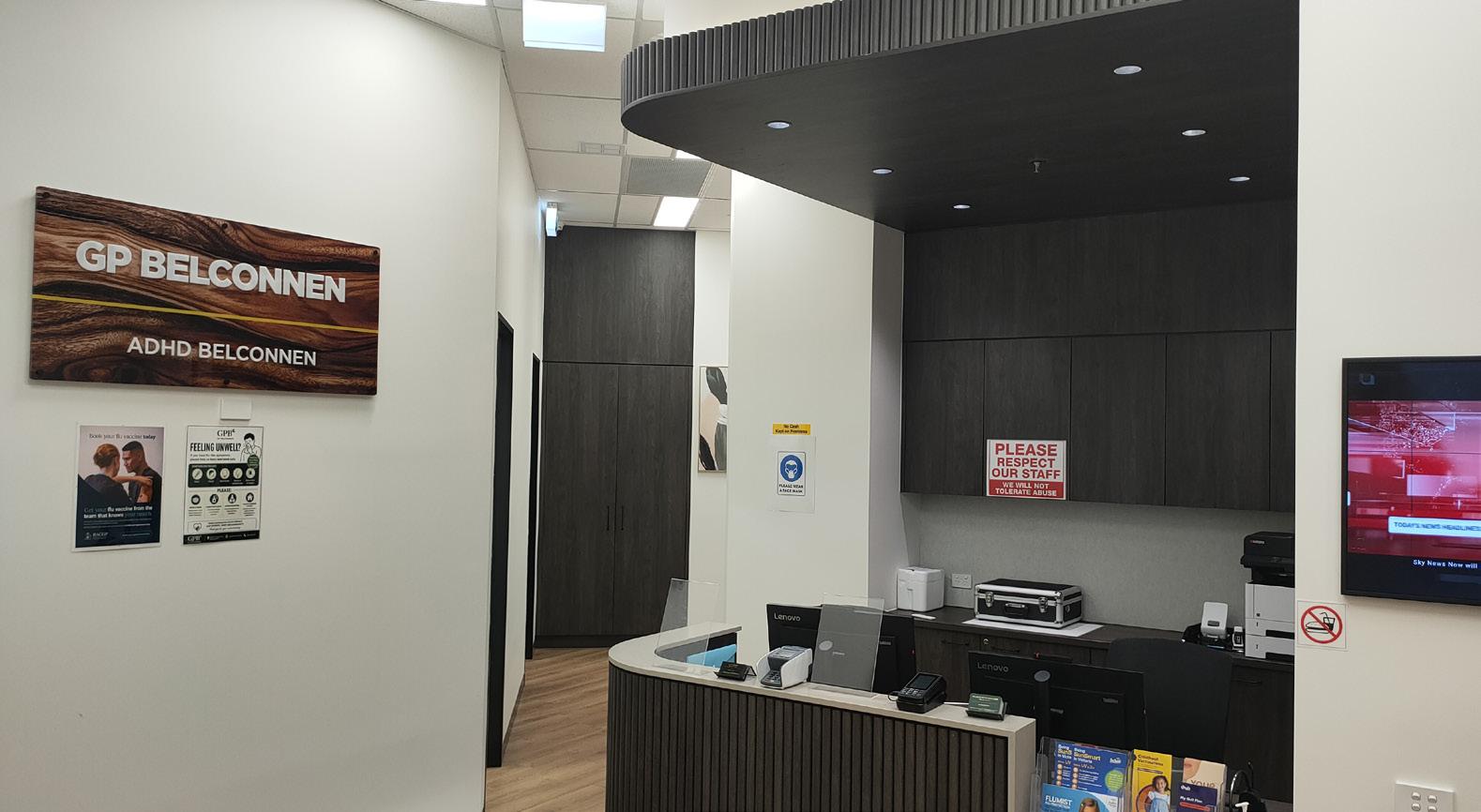
Residents in Canberra’s North now have access to a new local healthcare provider with the opening of GP Belconnen, a Medical Practice at Grazier Lane, Belconnen.
Focused on accessible, family-friendly healthcare, the new practice is now welcoming patients and offering a broad range of general medical services for individuals and families across the region.
The practice provides bulk billing for Medicare card holders and aims to deliver convenient, community-focused healthcare close to home.
Located in the growing Belconnen precinct, GP Belconnen offers services including general health checks, children’s health, women’s health, immunisations, chronic disease management, mental health support, skin checks, ADHD management and travel medicine.
Practice representatives say the goal is to create a modern and approachable medical environment where patients feel comfort-
Opening
GP Belconnen reflects our commitment to improving access to local healthcare and creating a welcoming environment where patients and families feel supported, the practice said.
able, supported and able to access quality healthcare when they need it.
The opening comes as demand continues to grow for accessible GP services across Canberra’s expanding northern suburbs.
Open six days a week the practice has been designed to provide flexibility for busy families, professionals and older residents seeking reliable local healthcare.
The practice is also accepting new patients, helping improve access to general practice services within the Belconnen community.
Conveniently located at C08, 2 Grazier Lane, the practice is positioned close to shopping, transport and residential areas, making appointments easier for local residents.
GP Belconnen says its focus remains on providing patient-centred care with an emphasis on preventative health, ongoing support and long-term community wellbeing.
Practice Principal for GP Belconnen, Dr Kelechi Nnajide
NEWS / epilepsy
Brave little Max is back to living life… to the max!
By Tia PRIEST-WILLIMOTT
Canberra boy Max seems like every other four-year-old – he loves playing with Lego, jumping in leaves and riding his bike.
But his life hasn’t always been like this. Fifteen months ago, Max was having seizures, at times up to seven a day.
“It started when he was two and a half and we had no indication that this was possible,” Max’s mum Amy Dunn says.
“We were playing on the floor in the loungeroom and he ran towards me and I thought he was just coming to give me a cuddle, but he may have sensed that something was not right,” she says.
“Then he just collapsed and started having an atonic chronic seizure. I had the paramedics on the phone and they were talking me through CPR because he wasn’t really breathing properly and the seizure had gone on for more than five minutes.
“Luckily he came out of that seizure and fell asleep on the floor and we went to hospital… Max had three more seizures in the next 24 hours in hospital.”
They were sent home with Max on
medications.
That’s when their dietitian at the hospital introduced them to the Ketogenic diet.
The Ketogenic diet was used by modern physicians as a treatment for epilepsy in the 1920s, but its use has declined as medicine progressed.
“At that stage, we were ready to try anything because the outlook for Max was really bad,” she says.
The diet worked wonders and Max is now 15 months seizure free.
Max is currently on the modified Atkins Keto diet, which means he can have as much protein as he wants, but he can’t have any fruit, bread, rice, pasta, legumes, beans or potatoes.
Thanks to the diet, Max has been weaned off most of his medications.
He is still on one form of medication, with their doctor advising Max won’t come off it until he’s been free of seizures for at least two years.
a week and can do things without wearing his seizure helmet.”
While the Ketogenic diet was successful for Max, it isn’t effective for all children with epilepsy.
The diet is only suitable for children who have seizures that aren’t controlled by medication and works best for children with specific types of seizures, including myoclonic-atonic seizures.
The Sydney Children’s Hospital Network says studies show that around half of the children on the diet have more than 50 per cent fewer seizures, while about one in three children have around 90 per cent less seizures.
Thanks to the Keto diet, Max is loving life.
Amy Dunn and her son Max… “Because he hasn’t been having seizures and he’s not on so many medications, he’s like a normal boy again.”
one form of medication, but two weeks later it started getting worse.
This was the start of a very long six months for Amy and Max.
“On bad days, he was having seven plus seizures at all times of the day and night in clusters,” Amy says.
“He would have clusters of four to five a day for about five days in a row and then he’d get more stable, so
Photo: Tia Priest-Willimott
every time that happened we had to go to hospital,” she says.
A month later, Max started having two more different types of seizures –drop attacks and jerk seizures.
Eventually, he was diagnosed with myoclonic atonic epilepsy, a rare and severe form of childhood epilepsy that affects about one in 10,000 children. By this point, Max was on seven
“As Max gets older, we’re slowly reducing his medication so that the brain gets used to not having as much as it needs,” Amy says.
“For a little boy like Max, being on seven medications twice a day, there were some really intense side effects that could’ve impacted his whole life and brain development,” she says.
“Now, because he hasn’t been having seizures and he’s not on so many medications he’s like a normal boy again – he’s at preschool two days
“The first time we went to the Treetops Adventure, Max was three and we were just watching Ellie, his sister, do it and he fell down in the middle of the pine forest and had a massive seizure,” Amy says.
“When we went there recently, he did it for the first time. He put his helmet on, he got his little carabiner and he took himself along the high ropes course. His little legs were shaking because he was working so hard, but he did it,” she says.
“It was so momentous.”
Epilepsy ACT can be contacted via 6287 4555. Support is at epilepsyact.org.au
General manager: Tracey Avery, tracey@citynews.com.au
“Trust me!” How often do we hear this term, exhorted to invite our confidence in circumstances ranging from the everyday banal to matters’ solemn?
On the one hand, it is a term deployed by salesmen with such casual airiness as to lack much credibility. On the other, we provide great trust to lawyers to protect our rights and to doctors to safeguard our health.
Because “trust” is contextual, framed by the relationship of the parties to the assurance and the importance of the issue at hand.
That’s why the prime minister’s recent broken promises to axe negative gearing for existing homes bought after Budget night and to increase capital gains tax may well deal a fatal blow to Australians’ trust in whatever promise he makes again.
Because, put bluntly, our prime minister has wilfully and knowingly misled Australians about some of the most important aspects of their livelihoods – their investments and retirement savings.
This harsh assessment is factually warranted because these promises, given before the 2022 election and again before the election last year, were uttered in unambiguous terms. And when asked whether he was considering breaking these commitments, the
PM chided those who dared challenge the veracity of his assurances.
To justify my charge, let’s re-cap some history. On May 9 2025 – just before Australians cast their ballot last year delivering Labor a landslide victory – the following exchange took place between the PM and a journalist:
Journalist: PM, you bounced around answers on this question before. Can you just be really clear – can you rule out any changes to negative gearing and capital gains tax settings if re-elected?
PM: Yes. How hard is it? For the 50th time.
Scripture tells us Peter denied Christ thrice before the rooster crowed. St Peter surely had nothing on Prime Minister Albanese, who clocked
Put bluntly, our prime minister has wilfully and knowingly misled Australians about some of the most important aspects of their livelihoods – their investments and retirement savings.
up 47 more denials that a re-elected Labor government would not change negative gearing or increase CGT.
This also from the man who, on July 10 2022 on the Seven Network’s Spotlight program, solemnly and mistily-eyed assured voters: “My word is my bond. I’ve always been a man of my word, and I believe that when you go to an election and you make commitments, you should stick to them.”
So, in good faith, people went on to make decisions affecting their livelihoods, their businesses and their investments based on his promises. Which he then broke.
And this is why the PM could now be in so much trouble.
Much of the noise since these promises were broken has inevitably gone to their effect on taxpayers’ investment arrangements, on entrepreneurial behaviour for new “start-up” ventures and on so-called “death tax” testamentary trusts.
While these are valid policy responses, something much larger is at play here. And that is now the prime minister’s inherent credibility and the impact it may have on his government for the remainder of this term and into the future.
Put simply, the prime minister has now created the very real risk that we can no longer believe promises and undertakings he makes. More broadly, this may undermine our confidence in him and his judgment –our trust in him
Because this was not some flippant “trust me” exhortation by a 22-year old at Good Guys assuring that an air-fryer will cook chips crispily well; it was a promise from our prime minister – our national leader – on matters affecting Australians’ livelihoods and investments.
Yet, such broken promises may also be symptomatic of a gradual and continued decline of Australians’ trust in politics over the last 20 years, as demonstrated in ongoing academic research and surveys.
So when the prime minister so blatantly breaks his word to us, it not only affects our confidence in him, it may also undermine our confidence
in broader democratic institutions. It erodes the social compact between citizens and politicians – the understanding that when we elect leaders, we can trust them to do as they say. That we trust them to govern us. This is fundamental to the very tenets of democracy and the confidence with which we hold those institutions – and our precious role in them as voters.
The negative gearing and CGT broken promises may well shore up the federal Budget by acquiring extra revenue, but they may come at a very high price indeed; a high political price for the PM, but perhaps a bigger civic price for us as citizens in the exacerbated fracturing of our confidence in our political institutions now and into the future.
Dr Robert McMahon PSM is a visiting fellow at the Australian National University, adjunct professor at the University of Canberra, and a former as sistant secretary of the Department of the Prime Minister and Cabinet.
Prime Minister Anthony Albanese… “My word is my bond.” Photo: Lukas Coch/AAP
Come along and see the friendly free-flying birds that can be photographed and fed. Walk amongst over 500 birds from 60 species from Australia and around the world!
Open 7 days a week from 10am to 4pm with the last admission 3.30pm
POLITICS / Delay on dying with dignity
Make a decision, there’s enough information!
The art of being seen to act while deliberately obfuscating has been taken to a new level by the ACT Government.
The government deserves recognition for introducing and following through on voluntary assisted dying legislation. However, now is not the time for delay.
In politics there are always three prime choices – support, oppose or delay. Delay is used to avoid decision making. The establishment of a two-year Citizens’ Jury at the cost of $3.1million simply introduces a new level of the delay tactic.
Although the concept of the Citizens’ Jury has been shown internationally to be an effective consultation tool, there is already enough evidence to make a sensible decision. Instead, there is another two-year delay. And introducing seriously restricted terms of reference.
The Citizens’ Jury will be asked to consider “what should happen if a person loses decision-making capacity after the final assessment stage of the voluntary assisted dying process”. This question has already been extensively considered.
It is not too late for government ministers. There really is enough information. Make a decision! Granted, these are complex issues, but look at
the lengthy processes that have been implemented to date.
Over a year ago ministers Rachel Stephen-Smith and Tara Cheyne published a joint media statement that included: “The ACT Government has released the findings of an extensive consultation into one of the most complex and sensitive issues in voluntary assisted dying (VAD): what happens when a person approved for VAD loses decision-making capacity before the process is completed”.
Okay, ministers, that was a year ago. If you can’t come to a decision, and considering the inherently long delays and the expenditure of another $3.1million, at least modify the terms of reference. Make the consultation worthwhile.
Sam Delaney, the president of Dying with Dignity ACT, responded to the announcement of the Citizens’
In politics, delay is used to avoid decision making. The establishment of a two-year Citizens’ Jury at the cost of $3.1million simply introduces a new level of the delay tactic.
Jury approach arguing: “While we welcome any move to widen access to voluntary assisted dying in the ACT, this initiative is far too narrow in scope”.
He called on the Minister “to widen the remit of the citizens jury to allow a much wider consideration of the use of advance care directives or similar instruments to give access to voluntary assisted dying”.
This legislation has been the subject of debate and consultation in the ACT Legislative Assembly for more than 30 years. The legislation works effectively for some. This was effectively illustrated by the wellpublicised case of the dignified death of CityNews columnist and author Robert Macklin in January.
However, as was understood when the legislation passed the Legislative Assembly on June 5 2024, there are real challenges for others. So much so, that a motion was put by Labor’s Dr Marisa Paterson on the following
day and was passed in the Assembly.
It called for consultation on a range of details in the new legislation, even prior to it coming into effect in November 2025.
By mid-2025 ACT Government ministers reported that the ACT Health Directorate had “engaged with more than 100 stakeholders across the health, legal, ethical and community sectors, including clinicians, academics, oversight boards, and international experts.”
The consultation focused on a specific scenario – where a person who has already been approved for VAD loses decision-making capacity after final approval but before the VAD medication is administered, making them ineligible under current law.
According to Minister StephenSmith: “This issue touches on deeply held values about dignity, autonomy, and compassion at the end of life,” and “this is not a conversation we take lightly. But we are committed to engaging deeply and respectfully with our community to ensure our laws continue to reflect our values – compassion, safety and respect for personal choice”.
Although the language used is
designed to appeal to sympathy, it is also used to extend the delay.
Mr Delaney pointed out the futility of the delay by extrapolating from Canada where experience indicates “fewer than five people a year in the ACT are likely to benefit from allowing access for a person assessed as eligible for voluntary assisted dying but who then lost decision-making capacity.”
He suggested the government could open the consultation process to consider “people who lose decisionmaking capacity in other circumstances, who are not able to access voluntary assisted dying: such as those who are only part way through the VAD process, people who have a stroke, or other major health event, or accident”.
Michael Moore is a former member of the ACT Legislative Assembly and an independent minister for health. He has been a political columnist with “CityNews” since 2006.
Robert Macklin… a dignified death.
Forgotten generation is coping, not thriving
Generation X, which sits between Baby Boomers and Millennials, are the subject of a new Australian study into how they feel about their financial future, reports KAAREN MORRISSEY
A third of the so-called “forgotten generation” fear they’ll retire with mortgage debt, despite being one of the key cohorts to have entered the housing market relatively early in life.
Generation X, which sits between Baby Boomers and Millennials, has earned the moniker as a smaller and less vocal demographic than the other two.
Now these 46 to 60-year-olds are the subject of a new Australian study into how they feel about their financial future.
“This generation is resilient and capable, but tired, underrecognised and coping rather than thriving,” according to Toby Ellis, head of the community rewards platform Citro, which commissioned the research.
The study of just over 1000 people found that 51 per cent felt they were mostly or completely invisible in the national debate, despite many government leaders themselves being Gen X.
Some 30 per cent expect to retire with a mortgage, 98 per cent say they’re exhausted most of the time, and up to 70 per cent are caring for children and/or parents, which leaves them financially or emotionally stretched.
“Generation X is holding a lot together in Australia right now – families, workplaces and communities – but they’re doing it quietly and often at personal cost,” Mr Ellis said.
According to the most recent federal budget, between 65 and 80 per cent of Gen Xers own or are buying their own home, compared to less than 50 per cent of those aged under 40.
But Gen X has been taking the brunt of an uptick in inflation in the years since the covid pandemic, just as they head into some of the most
expensive or financially vulnerable years of their lives.
“The surge in inflation following the pandemic significantly eroded purchasing power, and it will take many years for that lost ground to be fully recovered,” said Shane Oliver, chief economist at AMP, which is a Citro backer.
“These are peak expense years – when mortgages are largest, children are still financially dependent, and caring responsibilities extend simultaneously to ageing parents and family members.
“The result has been sustained financial compression, not temporary adjustment.”
Pilot and Gen Xer John Pavlov agrees.
“Our salaries and wages might be a bit higher, but our spending power has unquestionably gone backwards,” he said.
“We’re doing the heavy lifting at the moment, it could be argued… but I think each generation has its challenges.”
Given high housing prices, Mr Oliver said people are taking on mortgages later in life, and borrowings tend to be larger.
“So we are now seeing more Australians taking their mortgages into retirement,” he said.
At the same time, many Gen Xers stand to inherit from their Baby Boomer parents, “and I suspect that, for some, that will alleviate the tension around having a mortgage going into retirement,” Mr Oliver said.
According to demographers,
Gen Z were born between 1996 and 2011, Millennials between 1981 and 1995, Gen X between 1966 and 1980 and Baby Boomers between 1946 and 1965, the statistics bureau says.
Gen Z make up 18.2 per cent of the population, Millennials and Baby Boomers 21.5 per cent each and Gen X 19.3 per cent, the 2021 census shows. –AAP
Australia’s middle generation often must take up financial and care burdens for kids and parents. Photo: Julian Smith/AAP
PLANNING / missing-middle reforms BRIEFLY
Heaven help our cherished ‘Garden City’
By Richard JOHNSTON
“For too long, the planning system has effectively prevented building anything in-between high-rise apartments or a freestanding house on most blocks in Canberra,” says Planning Minister Chris Steel.
This is, of course, untrue.
He was announcing the approval of “missing middle” housing developments.
The previously applying controls on RZ1 were brought in under the new Territory Plan 2008 by a Labor government and were a reaction to the relatively unconstrained development occurring on suburban blocks under the former Liberal government.
The previous controls always allowed secondary dwellings or dual occupancies on single blocks in RZ1, but they focused higher-density development in more accessible areas around shopping centres (RZ2).
In his media statement, the minister said he had approved Major Plan Amendment 04 to the Territory Plan with “landmark reforms… designed to enable more missing middle homes to be built within existing residential areas.”
The statement says missing middle housing includes multi-occupancy
housing, townhouses, terraces and low-rise apartments. The changes apply to all suburban (RZ1) residential zones and also RZ2 (typically around shopping centres). The maximum building height for RZ2 goes up to three storeys (plus attic).
What this government is now doing is abandoning any effective control on residential densities in suburban areas, including controls over block subdivision, and at the same time reducing standards for on-site car parking, planting area and private open space.
No attempt has been made to identify appropriate locations for increased density or deal with the impacts on infrastructure, which will inevitably follow unplanned redevelopment occurring anywhere across Canberra’s suburban areas.
“Landmark reforms” indeed. They are more likely to be a tombstone for this government, replaying in even more dramatic fashion events of about a quarter of a century ago that have clearly been forgotten by those now in charge of the ACT planning system.
It is notable that there is only one
brief mention in the media release of the Legislative Assembly’s Standing Committee on Transport and Planning [actually Environment and Planning] Inquiry into DPA-04 whose report was only released on April 30 after six months of scrutiny including public hearings into the missing middle proposals.
It took the minister and his officials a breath-taking three weeks to approve a final version of DPA-04, with very little indication of specific responses to the committee’s 112-page report and its 18 recommendations.
I note one of these recommendations in particular:
15. The Committee recommends that the ACT Government amend the District Strategies to include:
• statements on local/neighbourhood/streetscape character, heritage character and relationship to the National Capital Plan to establish the context within which greater densities in RZ1 and RZ2 suburban zones, which is especially important for block consolidations;
• assessment of individual develop -
What this government is now doing is abandoning any effective control on residential densities in suburban areas… at the same time reducing standards for on-site car parking.
ments as well as allow consideration of cumulative impacts; and
• a requirement that Development Assessment Outcome reports respond to the character statements and amendments to the District Policy.
This recommendation is a critical recognition that the proposed openslather changes will have impacts on established local/neighbourhood/ streetscape and heritage character.
The drawing accompanying this article is taken from the government’s new “Missing Middle Housing Design Guide, page 82” and purports to show “Missing middle development integrating into and becoming a part of the streetscape”.
If that’s what the Territory Planning Authority regards as a good example of appropriate contextual design, then heaven help our established and cherished residential environment and its “Garden City” character.
Richard Johnston, Life Fellow, Planning Institute of Australia.
ACT power prices to rise from July
Canberra households on regulated electricity tariffs will pay more for power from July 1, with the ACT’s independent regulator approving an average 2.7 per cent increase in standing offer prices.
The Independent Competition and Regulatory Commission said the rise would add about $64 a year to the bill of an average residential customer using 6500 kilowatt-hours of electricity annually.
Senior Commissioner Richard Owens said falling wholesale electricity costs had been outweighed by higher network charges and increased costs linked to government policies.
Talking law on retirement villages
Lawyer Joanne Twible will speak to the ladies of the Yerrabi View Club about legal issues around retirement villages at their next meeting at the Eastlake Gungahlin Club, from 11am on June 18. New members welcome. More from chanily3@bigpond.com
Winter coats and clothing sale
There’s an indoor, mid-year sale of winter coats and clothing, craft, books, plants, toys, jams and relishes at St Ninian’s, in Lyneham, 9.30am1pm. June 12 and 13. Plus a warming morning tea and a sausage sizzle.
From the Missing Middle Housing Design Guide.
WHIMSY / back to the future
Right, on your marks, get set, go… backwards!
I’m walking backwards for Christmas; Across the Irish Sea;
I’m walking backwards for Christmas; It’s the only thing for me;
I’ve tried walking sideways and walking to the front;
But people just look at me and say it’s a publicity stunt;
I’m walking backwards for Christmas; To prove that I love you.
– song lyrics by Spike Milligan
My grandniece recently won a single scull rowing race, adding another chapter to what appears to be a family tradition of excelling while going backwards.
Her father, my nephew, was also a rowing champion in his youth. Thinking back further, I recalled I too had competed in reverse – as a backstroke swimmer. It seems that going backwards is in our family’s genes.
That led me to ponder how many sports truly require athletes to move backwards as the core of the activity. Most sports involve occasional backward movement – tennis players backpedal to meet a lob and boxers retreat strategically to avoid a punch. But these are techniques, not the sport’s defining direction of travel.
When you sift through the sporting world, only two widely recognised disciplines stand out as requiring competitors to move backwards for the entire race: rowing and backstroke swimming.
Beyond these two, it might seem that the world of backwards sports ends. But then a faint memory from my visit to Olympia resurfaced: I recalled that the ancient Greeks, who practically invented sports competition, also experimented with running backwards. It was a novelty even then, but it did exist –and surprisingly, still does today.
Backward running, often referred to as retro-running, is a modern competitive sport with its own organised events, dedicated athletes, and even world championships. Over the past few decades, official retro-running world championships have been held in places as diverse as the US, Germany, Italy, Austria, and the Czech Republic.
The events span the full range of traditional distances: 100, 200, 400, 800, 1500, and 5000 metres, and even 10-kilometre cross-country courses. The first widely recognised modern championships took place in the 1990s and the sport continues to hold national and international meets.
Performances are remarkably fast. Elite athletes have clocked the
When you sift through the sporting world, only two widely recognised disciplines stand out as requiring competitors to move backwards for the entire race: rowing and backstroke swimming.
100 metres backwards in 13 seconds – only a few seconds slower than forward sprinting. The backwards marathon world record is an astonishing 3 hours 42 minutes. These are official verified achievements recognised by the International Retro Running Association (IRRA). This unusual sport invites natural questions – the first being: how do runners avoid crashing into obstacles when running backwards? The answer lies in a combination of technique and course design. Retro-runners typically swivel their head or shoulders slightly to maintain a backward-angled field of vision, checking frequently over one shoulder. Organisers also minimise hazards with wide, closed-road courses, clear track markings, and a strong emphasis on safety. Just as rowers rely on a coxswain or mirrors, retro-runners
rely on awareness and controlled technique.
Mirrored spectacles are not used in serious retro-running because they distort depth perception, delay visual input, reduce peripheral awareness, and make running at speed more dangerous.
Another obvious question is: “Would it help if human knees folded backwards, like a dog’s hind legs? Surprisingly, no. Dogs’ hind legs do not actually fold backwards; their joints are simply arranged differently along the limb.
Human locomotion depends on our knees folding forward for stability and shock absorption.
Reverse-running athletes train their bodies to adapt, strengthening calves, hamstrings, and balance systems that we normally neglect.
While “fun-run” is clearly a contradiction in terms, I can see merit in Canberra introducing Australia’s only retro-running fun-run to raise revenue and help pay for the Gungahlin to Commonwealth Park tram – which, of course, is our chief minister’s famous contribution to backward public transport engineering.
On a lighter note: Billy rides into town and stops at the saloon. Unfortunately, the locals always pick on strangers. When he finishes his drink, he finds his horse has disappeared.
He goes back into the bar, flips his pistol in the air, catches it above his head and without even looking fires a shot into the ceiling.
“Which sidewinder stole my horse?!” he yells.
No one answers. “Alright, I’m gonna have me another beer, and if my horse ain’t back outside by the time I finish it, I’m gonna do what I dun in Texas!”
The locals shift restlessly. The horse is soon back outside. After his beer, Billy saddles up to ride out of town.
A bystander asks: “Say, partner, afore you go... what did you dun in Texas?” Billy turns back and says: “I had to walk home.”
Clive Williams is a Canberra columnist.
Experience compelling stories
Why do some folk recall dreams and others don’t? WELLBEING / dreams
With age, the capacity to recall dreams decreases. Some studies suggest women are more likely to remember dreams than men.
By Yaqoot Fatima, Dainelle Wilson and Nisreen Aouria
Some mornings, you wake up and the dream is right there. Clear and vivid. You might still feel the emotion in your chest, and it can take a few minutes to remember where you are and what was real.
Other mornings, you open your eyes and there is nothing. Just a quiet sense of having slept.
You might know people who think they do not dream. However, the reality is we all do. Sometimes we have many in one night. What varies is whether people remember their dreams and how often they remember them.
During the night, we cycle through periods of light sleep, deep sleep and rapid-eyemovement (REM) sleep. A full cycle takes about 90 minutes. People generally spend more
time in deep sleep in the first half of the night and more time in REM sleep in the second half.
The main function of deep sleep is restorative: to replenish energy, repair our bodies and help store memories.
REM sleep is important for memory consolidation and emotional processing. Later in the night, REM sleep becomes longer. This is the stage most closely linked to vivid, emotional dreaming.
If you wake up during or just after REM sleep, you are much more likely to remember a dream. If you wake from deep sleep, you probably will not, even though you were dreaming earlier. It isn’t a sign something is wrong; it’s simply how the sleeping brain works.
Another myth is dreams only happen in REM sleep. While REM dreams tend to be more intense and story-like, dreaming can happen in other stages, too; they are just often quieter and harder to recall. So if you wake up some
People
mornings with a clear recollection of your dream, and other mornings with nothing at all, that is completely normal. It doesn’t mean you didn’t dream. It just means you woke up at a different point in your sleep cycle.
Remembering dreams
Several factors affect whether you recall dreams. As you get older, your capacity to recall dreams decreases. Some studies suggest women
who are more likely to wake up from REM sleep, often report remembering more dreams. How you wake up also matters. If someone jolts you awake, the dream can vanish in an instant. But if you are woken gently, someone softly calling your name, there is a better chance the dream lingers long enough for you to remember.
Some people are naturally “high recallers” and are just better at capturing their dreams before they fade. And therefore, they consistently remember dreams.
Some dreams feel intense
are more likely to remember dreams than men. Some medications, such as antidepressants and sedatives, can affect your dream recall.
Timing plays a big role. We spend more time in REM sleep later in the night, so dreams that happen closer to morning are easier to remember. Waking up briefly during the night offers a chance to remember dreams before they fade. That’s why parents of young children and light sleepers,
Dreams can sometimes feel highly emotional, dramatic or unusually vivid. This is largely because REM sleep, the stage most associated with dreaming, involves increased activation of regions of the brain that control our emotions, such as the amygdala and limbic system.
This occurs alongside relatively reduced activity in parts of the prefrontal cortex that regulate logic and emotional control.
Stress, life changes or heightened emotions can make
EXPERIENCED FEMALE GP IN CANBERRA
ACCEPTING NEW PATIENTS
Located in the heart of Canberra’s medical precinct in Deakin
At Canberra Family Health Centre, we are dedicated to providing comprehensive, patient-focused healthcare for individuals and families. Located centrally in Deakin, our centre offers a wide range of medical services designed to meet your health needs at every stage of life.
dreams feel more intense. Dreams often reflect elements of real-life experiences as the brain tries to process events from the day and consolidate them into long-term memory.
In most cases, having intense dreams is entirely normal and part of healthy emotional processing. Is dreaming good sleep?
Remembering your dreams does not automatically mean you had poor sleep, and forgetting them does not mean your sleep was perfect.
Rather than using dream recall as an indicator of sleep quality, it is more helpful to focus on how you feel during the day. Indicators such as feeling rested on waking and daytime energy provide a more meaningful indicator of your sleep health.
Yaqoot Fatima, professor of Sleep Health, Danielle Wilson, research fellow and sleep scientist at the Thompson Institute and Nisreen Aouira, research program manager, Let’s Yarn About Sleep, Thompson Institute, all from the University of the Sunshine Coast. Republished from The Conversation.
Associate Professor Maryse Badawy MB/ BS Degree, FRACGP, FHKAM (Family Medicine), Grad Dip Fam Med, Master Family Medicine, Member Australasian Menopause Society INITIAL ONE-HOUR APPOINTMENTS AVAILABLE
National and International Family Medicine and Academic experience.
generally spend more time in deep sleep in the first half of the night and more time in REM sleep in the second half.
Photo: Dmitriy Ganin/Pexels
Steel and Barr hellbent on ruining streetscapes
Planning Minister Steel’s announcement that the Barr government will fully adopt the radical RZ1 reforms for new housing developments will go down in ACT history as the day when Canberra lost its most desirable characteristic as the bush capital of Australia.
Not content with destroying the future financial prosperity of Canberrans through the need to cover the burgeoning increasing debt, deficit and interest payments in the ACT budget (as so tellingly exposed in the searing Stanhope/Ahmed forensic assessments in numerous CN articles), and the destruction of Canberra’s main thoroughfare historic and cherished public streetscape through the construction of light rail phase 2A and 2B, Steel and Barr are now also hellbent on destroying the most quintessential suburban streetscape fabric of the majority of Canberra’s established middle-ring suburbs.
Existing RZ1 home owners should be under no illusions that these changes will not substantially financially impact them. There is no way, given its critical budgetary situation, that the Barr/Steel government will implement the RZ1 reforms in a budgetneutral manner.
The government will obviously intend to maximise revenue yields from the RZ1
redevelopments.
This will be like the Mr Fluffy redevelopment scheme, but this time on steroids.
Minister Steel specifically stated in his announcement that the government is looking at making changes to the existing taxation regime arrangements for property.
This is presumably to ensure that prospective developers are not discouraged to purchase RZ1 blocks, through changes to the existing lease variation charges.
It will not be the developers who will lose financially with these changes; and, of course, the other principal client in this business transaction will be the existing home owner.
One might reasonably assume that existing land valuations and household rates for all RZ1 home owners will be substantially increased, (over and above the annual increases to the existing levels imposed by Barr’s 2012 revised taxation policy framework).
ACT Opposition Leader Mark Parton has indicated his in-principle endorsement of the government’s RZ1 policy changes, subject to necessary guidelines and standards being established to ensure that the existing streetscape and amenity of middle-ring suburbs is not affected.
The government is due to conclude community consultation and respond to the existing Legislative Assembly inquiry examining these reforms by July.
I would encourage all Canberrans who still have any concerns about these
proposed reforms to contact or lobby their local Assembly members to ensure that the best outcome is obtained for their own existing suburbs from these landmark changes.
Ron Edgecombe, Evatt
Why do Greens want to increase emissions?
Construction of light rail stage 2B is expected to cause a 100,000 tonnes of greenhouse emissions.
The government expects that Stage 2B will result in an extra 12 million kilometres of annual car travel. Assuming that all cars are zero emissions by 2050, that will increase emissions by a total of about 20,000 tonnes.
On the plus side, stage 2 will reduce emissions from Canberra’s buses by about one quarter. All of our buses will be zero emissions by 2040. By then, stage 2 will have reduced bus emissions by about 60,000 tonnes.
So the net impact of light rail stage 2 will be an increase of about 60,000 tonnes of greenhouse emissions, compared with keeping Adelaide Avenue’s faster transit lanes.
The ACT Greens have made a reasonable call for a dedicated bus lane to Belconnen. But why do they want to increase greenhouse emissions by faster extension of light rail to Woden and then to Mawson?
Leon Arundell,
Downer
Who’s for a nuclear dump next door?
Can I assume that those advocating for nuclear power would be happy to host a nuclear waste dump in their neighbourhood?
I didn’t think so, either. Nimbyism combined with an inclination to push the problem on to others (traditionally the indigenous) speaks ill of those people. Nuclear is just another shortcut for which others will pay.
Bob Howden, via email
Let’s not be fooled again
Ian Pilsner (letters, CN May 21) agrees government responses to energy issues should be based on evidence.
It is consequently puzzling that he supports nuclear energy despite an absence of a sound basis for its adoption in Australia, especially now, when batteries can provide baseload power.
Perhaps he has been misled by misinformation from the fossil-fuel industry, which by prolonging the use of coal, benefits economically from slowing the adoption of solar and wind technologies.
There are multiple reasons why nuclear energy is unlikely to be a solution to our future energy needs. They include:
(a) Analyses by CSIRO and the Australian Energy Market Operator have found renewables to be the cheapest option for new electricity generation;
Careful,
It appears that Senator David Pocock has commenced a campaign to have every seat in the House of Representatives occupied by an independent.
Speaking on Insiders, Pocock expressed a desire for high-profile, local-community independents to campaign in all 150 House of Representative seats across the country.
Following that to its logical conclusion, should the respective campaigns be successful, all vestiges of the existing parties would be eliminated.
The consequence of this would be utter legislative chaos.
As we have recently observed, even long-standing coalitions between parties are not necessarily stable.
Imagine if there were to be 150 independents, each with their own agenda, all lobbying each other for support of their individual projects.
It would make “herding cats” seem like child’s play.
I would urge Senator Pocock to be careful about what he’s wishing for.
Ian De Landelles, McMasters Beach, NSW
One Nation is a vote for chaos
Your recent article with polling showing One Nation has greater primary support than Labor is disturbing (“One Nation’s polling could herald messy hung parliament”, citynews.com.au, May 23).
Do people really think Pauline Hanson and Barnaby Joyce have the capacity to develop credible policies?
Does Australia really want an opposition even more divisive and climate denying? Sure, voters are disappointed with the major parties, especially the Coalition, but how does voting for an unstable, unproven party with a history of imploding and dismissing climate science make it better?
There are alternative pathways. One is meeting, talking and pressuring major party MPs to listen to the community and lift their game. It takes time and is beyond many.
Another is to vote for an intelligent, hardworking, community independent or a Green.
(b) CSIRO also estimated nuclear couldn’t play a role in Australia’s energy grid for at least 15 years; real responses to worsening climate change are needed now;
(c) Unresolved safely (e.g. Chernobyl and Fukushima), waste storage and water requirement issues;
(d) Nuclear power stations often take longer to build and have cost blow outs, as demonstrated by the UK’s Hinkley Point where construction is running 14 years late and costs are three times more than initially estimated;
(e) While small modular reactors have been proposed, none are operating commercially; and
(f) There is no certainty that the skilled workforce needed to build a large-scale nuclear reactor can be trained or obtained.
It is therefore hard to see a rational government adopting nuclear energy.
We have been fooled before as demonstrated by the development of inland rail, Snowy 2.0, the Alice Springs-toDarwin railway, Canberra light rail, despite analyses indicating they would perform poorly.
Too many advocates of nuclear energy are boosters of the fossil-fuel industry. Let’s not be fooled again.
Mike Quirk, Garran
Senator David
is a fine example of the former. There are several Greens and other independents who are smart, informed and committed with the runs on the board. A vote for One Nation is a vote for chaos.
Ray Peck, Hawthorn, Victoria
Batteries ‘essential’ piece of puzzle
I’m pleased Fiona Colin (letters, CN April 30) agrees with me that attempting to power a steelworks with “green” hydrogen is impractical.
Regretfully, Fiona quotes CSIRO’s 2025-26 GenCost Report, suggesting reduced-cost battery technology may facilitate future battery-powered steelworks. Unfortunately, CSIRO GenCost Reports have a record of distorting engineering facts to suit their taxpayerfunded story in 2023-24 claiming that nuclear power is “too expensive”, choosing to sample just one particular project of one particular reactor design (a novel design), of one particular scale (small) in one country (the US) that was never built and subsequently abandoned. Politicians swallowed that furphy!
Fiona overlooks how batteries rely on relatively slow, cold-chemical reactions to store and release energy, orders of magnitude slower than combustion reactions.
Smelting iron ore to pig-iron, converting pig-iron to steel or heating steel billets to roll-forming temperature requires substantial and rapid energy release, currently available from metallurgical coke (from metallurgical coal) and coke-oven or natural gas.
Even should banks of batteries together store sufficient energy, transmitting it at sufficiently high amperage for extended periods through their internal and connective networks is likely to be problematic due to electrical resistance.
Using such battery banks to produce hydrogen for combustion energy ignores the low thermal content of hydrogen at atmospheric pressure. Hydrogen would require additional substantial energy-consuming high pressure and cryogenic storage to produce a sufficient volume of the gas to smelt or melt iron.
Anthony Hordern, Jamison
Pocock
Do ADHD offenders get an easier time in court?
Should we fear people diagnosed with ADHD? Recent comments and decisions in the ACT Supreme Court seem to imply that message.
Last month there were media reports of two separate incidents where the same presiding judge downplayed the criminal culpability of each offender for the reasons they had ADHD.
In the first case two men were assaulted and repeatedly punched by a 19-year-old man in a nightclub. One victim required surgery for serious injuries to his face and a metal plate having to be inserted. And what was the punishment? The offender was issued with a suspended prison sentence after the court determined that a diagnosis of ADHD and “provisional autism” had a direct impact on the offender’s “impulse control” and provided some “some context” for the crimes.
In the second case, a female teenager at the time (now aged 20) had created a sophisticated drug-dealing enterprise which the judge described as “grave offending”. But during sentencing, he took into account “that the girl had been previously diagnosed with ADHD, but was not receiving treatment at the time of the crimes”.
More astonishing was that the judge found that “while the drug dealer knew her actions were wrong, a combination of youth and untreated ADHD meant that she did not fully appreciate the harm her crimes
could cause to herself and others”. And the punishment? Another suspended prison sentence.
I am surprised and astonished that a diagnosis of ADHD can be the reason that some criminals are given lighter sentences.
Tony Falla, Ngunnawal
Vested interests always leave a trail
Michael Moore rightly concludes that “political donations are a blight on any democracy” (“Pauline’s political donation blight in plane sight”, CN May 15).
Via the “sexy” plane and millions in donations, One Nation is clearly beholden to the influence of Gina Rinehart. Likewise, both the Liberal and Labor parties remain tied to donations and lobbying from the gambling and fossil-fuel industries.
Why else are we not seeing meaningful gambling-advertising reform from the Albanese government, or policies that would genuinely reduce Australia’s climatepolluting coal and gas exports? Follow the money. Vested interests always leave a trail.
Josephine Shevchenko, Rivett
Pay as much tax as you can, Ian!
Letter writer Ian De Landelles (CN May 21) complains about the tax treatment of superannuation. Dick Smith (businessman
and aviator) made similar observations a few years ago.
I don’t know whether Dick and Mr De Landelles have an accountant but, if they do, they might review their relationship.
It is my understanding that fulfilling age and condition of release aspects, they are free to take all their money out of superannuation.
So, Mr De Landelles, close your superannuation and pay as much tax as you possibly can!
I am sure Mr De Landelles will write again when he has taken action to maximise his tax payable.
Greg Jeffs, via email
When do we ask: where does it stop?
The ACT Government will soon announce plans to kill thousands of kangaroos as part of its annual cull. But kangaroos are no longer the only native wildlife in the firing line.
Wombats may soon be reclassified as a “controlled native species”, opening the door to lethal management, while dingoes are already being aerially shot and baited.
At what point do we ask: where does it stop?
Canberra proudly calls itself the Bush Capital – a city supposedly committed to protecting nature and living alongside wildlife. But is the increasing use of culling, baiting and shooting really what residents
Little’s changed, it’s the same old story
In the CityNews, May14, my letter “Seriously, we need better people to represent us” was printed. Fortuitously (perhaps), our local paper printed supporting information on May 19 referring to an article it printed on May 19 1991 that shows little has changed in 35 years.
Opinion polls at that time showed that out of then 12 members of the Legislative Assembly, only Labor leader Rosemary Follett escaped a dismal rating being scored as “nearly mediocre” by voters. On a scale of 1 for very bad to 5 for very good she achieved 2.95.
The Chief Minister at the time, Trevor Kaine, was even worse at 2.21 and Deputy Chief Minister Bernard Collaery was 2.06 with 68 per cent of respondents criticising his work.
So, as I said in my letter, we really need better representation in the ACT as we are definitely not getting value for money from the bulk of our current representatives at either local or federal level. What we need are more people like Senator Pocock, Fiona Carrick, Tom Emerson and Jessie Price who have community concerns, rather than party politics, at heart.
Ric Hingee, Duffy
‘Co-ordinating’ calls
Bridget to Tassie
Some recent expenditure record revelations about former “sports rorts” minister Senator Bridget McKenzie show that she continued to play a deft financial gain game that effectively topped up her well-above-average parliamentary salary while a minister, and then as shadow minister after the 2022 election.
She managed to dredge up two sets of apparently inflexible yet necessary work tasks that coincided with two family weekend commitments in Tasmania and so travelled there at taxpayers’ expense. The timeframes for her son’s engagement party and later his wedding would have been known about for quite some time beforehand.
Work tasks offered as justification for the 2023 trip to Tasmania over the wedding weekend were “coordinating a national media announcement and holding a press conference”.
Senator McKenzie’s senior Coalition colleague, shadow treasurer Tim Wilson, publicly questioned the optics of her use of public funds for the flights booked around the private family events. Will this senator continue to excuse or bluff her way along the expenditure record pathways she chooses to create for herself?
Sue Dyer, Downer
Canberra Raiders, name’s the game
Sports clubs have quirky names for their teams, most relating to their locations, for example, Manly Sea Eagles, Cronulla Sharks and Redcliffe Dolphins – all very beachy. Melbourne Storm – “variable” weather, and North Queensland Cowboys – “regional” Queenslanders. Now to the Canberra Raiders. This club shares locale with both the federal and ACT governments, both are prodigious “raiders” of our bank balances and assets. Aptly named.
Rosemary Harrison, via email
There’s bad news and bad news
My apologies for being the carrier of bad news, but for those just waking, the message is in the ACT we are going broke. The Barr government is central to this catastrophic failing.
There are many reasons, but the main one has to be the massive debt load we are carrying and the crippling amounts being blown in meeting loan obligations.
The other bad news is the Liberal Party, our gatekeepers, appear to be asleep at the wheel, leaving us to fend for ourselves.
In regard to leadership, yesterday’s media men are thought to be challenged even though they might be sincere and trying hard.
John Lawrence via e-mail
expect from a place that values its natural heritage?
Before reaching for lethal control, governments should be investing more seriously in non-lethal solutions, coexistence strategies and habitat management.
Our native wildlife should not face an ever-growing list of reasons to be killed. Is this truly the legacy we want for the Bush Capital?
Whitney Anders Richardson, via email
Kindness to animals, kindness to others?
In a world of increasing aggression, greater kindness is needed. Why can’t we take steps to object to cruelty to animals?
Perhaps we should start by being accountable for exposed cruelty enacted on our wildlife during the annual Canberra “humane kangaroo cull”. Doesn’t kindness to animals translate to kindness to others?
Ilona Crabb, via email
‘Hidden’ greenhouse gas emissions
A new report from non-profit Changing Markets Foundation says that the huge amounts of greenhouse gas emissions produced by meat and dairy are being kept off the climate agenda due to “hidden” partnerships with international climate bodies.
The report states that, although climate
change is a real threat to food security, the narrative of groups such as COP30 is reframed and exploited by meat and dairy industry corporations to justify the continued growth of animal agriculture.
Scientists agree that we cannot stay close to a 1.5°C temperature increase, as stipulated by the Paris Agreement, if we do not significantly cut methane emissions and reduce consumption of animal products –yet both are projected to increase.
This matters even more in Australia, with meteorologists predicting a “super El Niño” developing this year and into 2027. This is likely to produce severe droughts, extreme temperatures, and the risk of catastrophic bushfires.
In Australia, cattle and sheep farming accounts for about 70 per cent of Australian agricultural emissions, largely from methane (CH₄) emitted from enteric fermentation.
These animals are all unique, feeling individuals, who suffer horrendous cruelty that includes branding, dehorning and castration without anaesthesia.
The best way to combat disastrous climate change, and the accompanying suffering, is with your knife and fork – by switching to vegan meals.
Dr Desmond Bellamy, PETA Australia, Sydney
Mulching garden beds can be done now to keep the moisture in the ground and prevent weeds from seeding.
It’s also a good time to prune winter pome fruits such as apples, pears and quinces, and spray with lime sulphur for fungal diseases at the same time to guard against aphids and coddling moths.
Spray all the branches and bark in the morning and allow it to dry before night time. Don’t spray lime sulphur on apricots as it causes severe dieback and won’t fruit.
In the orchard, if there’s room for hazelnuts, give them a go. They are a terrific long-living shrub or small tree. There are two main species of hazelnuts that grow well in our region and Corylus avellana is more suited to the orchard and Corylus maxima is better in a large park-like garden. They both are deciduous and like cool moist soil in winter and a pH of around 6 to 6.5 with good drainage and lots of organic matter.
Hazelnuts ripen around February and March and fall to the ground at maturity. They can be eaten raw or roasted.
Pruning hazelnut trees in late winter –when the tree is dormant – will encourage rapid spring growth. Spring and summer pruning will not produce growth as vigorous.
A rule of thumb is to never remove more than 30 per cent of the canopy at one time.
But make the most of bloomin’ winter
Despite the first month of winter being upon us, the Canberra garden can still be in bloom with shrubs such as camellias, winter sweet and viburnums.
They create interest and fragrance and generally need less water in the cooler months.
Camellias can flower from autumn to spring. There are three varieties of camellias – sasanqua, japonica and reticulata.
Sasanquas, with much smaller leaves, have a more upright and compact growth habit and are great for hedging. They flower as early as April. White flowering “early pearly” is one of the first and flowers well into winter.
The japonica is a larger plant with a more branching habit and larger leaves. Some people say it’s more spectacular with symmetry in the flower formation.
The reticulata, with flowers the size of dinner plates, is the slowest to grow of the three.
The soil conditions are all the same, acidic soil with a low pH is preferred; they like it moist but not waterlogged and they grow well in a semi-shaded garden.
They can be large
The waratah camellia… its flowers are the deepest red. The colour intensity can be deeper if it is grown in shade.
evergreen shrubs or a cascading ground cover, slow growing and long lived and their flowers come in a variety of colours and different shaped petals.
The oldest Australian species of camellia was introduced to Camden Park in Sydney in 1831 from China and called “anemonflora” or waratah camellia. Astonishingly, the original plant is still alive today.
It has an open habit, with spreading branches. Its flowers are the deepest red.
The colour intensity can be deeper if it is grown in shade.
From this species of camellia there have
been many genetic mutations grown from it and some of the popular varieties include, elegans, Margaret Davis and strawberry blonde.
The best time to buy them is when they are in flower, but don’t plant them in the garden until the soil has warmed in spring.
Hazelnuts… give them a go, they grow well in our climate.
Photo: Jackie Warburton
/ 2
Time
By Jackie WARBURTON
At this time of year there’s very little on the growing calendar, but peas and spinach can be planted this
Planting will need some shelter from winter conditions and a little nurturing through the colder months, yet the yield is well worth the wait.
Prepare the soil first by sprinkling a little lime and installing a trellis or support structure before planting. Sow peas directly into tilled, weedfree soil, pushing the seed just below the surface in a full sun position. I grow mine on the western side of the house, where morning sun avoids frost burn while still allowing warmth through the day.
All pea varieties should be picked as soon as pods begin to form. The
plant peas and spinach
more regularly you pick, the more the plants will produce.
As legumes, peas generally don’t require heavy fertilising, but a little potash will encourage strong flowering. Rotate crops by planting peas where root vegetables such as onions, garlic, carrots or beetroot were grown the previous season, and avoid planting near alliums such as onions, leeks and chives, as well as potatoes.
SPINACH is a reliable year-round vegetable for Canberra gardens. There are many types of spinach and chard; they can be used interchangeably in the kitchen but grow differently.
Spinach is smaller and best suited to cool seasons and can be grown in pots. Chard is larger, with thicker growth, and needs deeper soil to perform well.
Both spinach and chard are biennial. If harvested regularly, they may continue beyond two seasons.
Once plants mature and flower, allow seed heads to turn brown,
then bend the stalks so seed can drop naturally for self-sowing the following season. Lightly cover with soil or mulch; seeds will germinate when conditions are right. When seedlings reach the two-leaf stage, thin or transplant to give stronger plants space to develop. Self-sown seedlings are often more resilient and provide a very cost-effective way to expand plantings.
NOW is also the time for harvesting olives, which should be picked at full size.
For table olives, fruit can be harvested at any stage, though darker olives require longer brining and curing before they are edible. For oil, green olives are preferred. Choosing the right variety is important in our climate. Kalamata is a reliable eating olive. For dualpurpose production, Frantoio and Manzanillo are strong choices. While both are self-fertile, they benefit from cross-pollination and produce well for both eating and oil.
Olive growing is a long-term commitment, with trees taking several years to bear fruit. Once established, they will produce annually.
Prune at the end of winter after severe frosts have passed. Remove suckers, broken branches and any that cross to improve airflow. Maintain an open canopy and encourage new fruiting growth on one-year-old wood. Dwarf varieties are also available for smaller gardens and easier maintenance.
jackwar@home.netspeed.com.au
Jottings…
• Prune crepe myrtles once they have lost their leaves.
• Prepare soil for planting asparagus next month.
• Prune autumn fruiting berries to the ground.
• Prune wisteria to create flowering spurs.
Photos: Jackie Warburton
CANBERRA PROPTECH
FINALISTS 2026
Leading a new era of property innovation
The national recognition is fantastic for the three ambitious companies. Canberra has an emerging cluster of high-trust property technology, built for parts of the sector where accuracy, security and transparency matter most.
Together, the three finalists combined to improve the property buying and ownership journey.
Lystr is rethinking how homes are bought and sold. A finalist in Sales & Marketing, the Canberra-founded platform gives sellers more visibility and control through a co-selling model that combines technology, transparent pricing and expert support. It is designed for homeowners who want to stay closely involved in the sale, without being left to navigate the process alone.
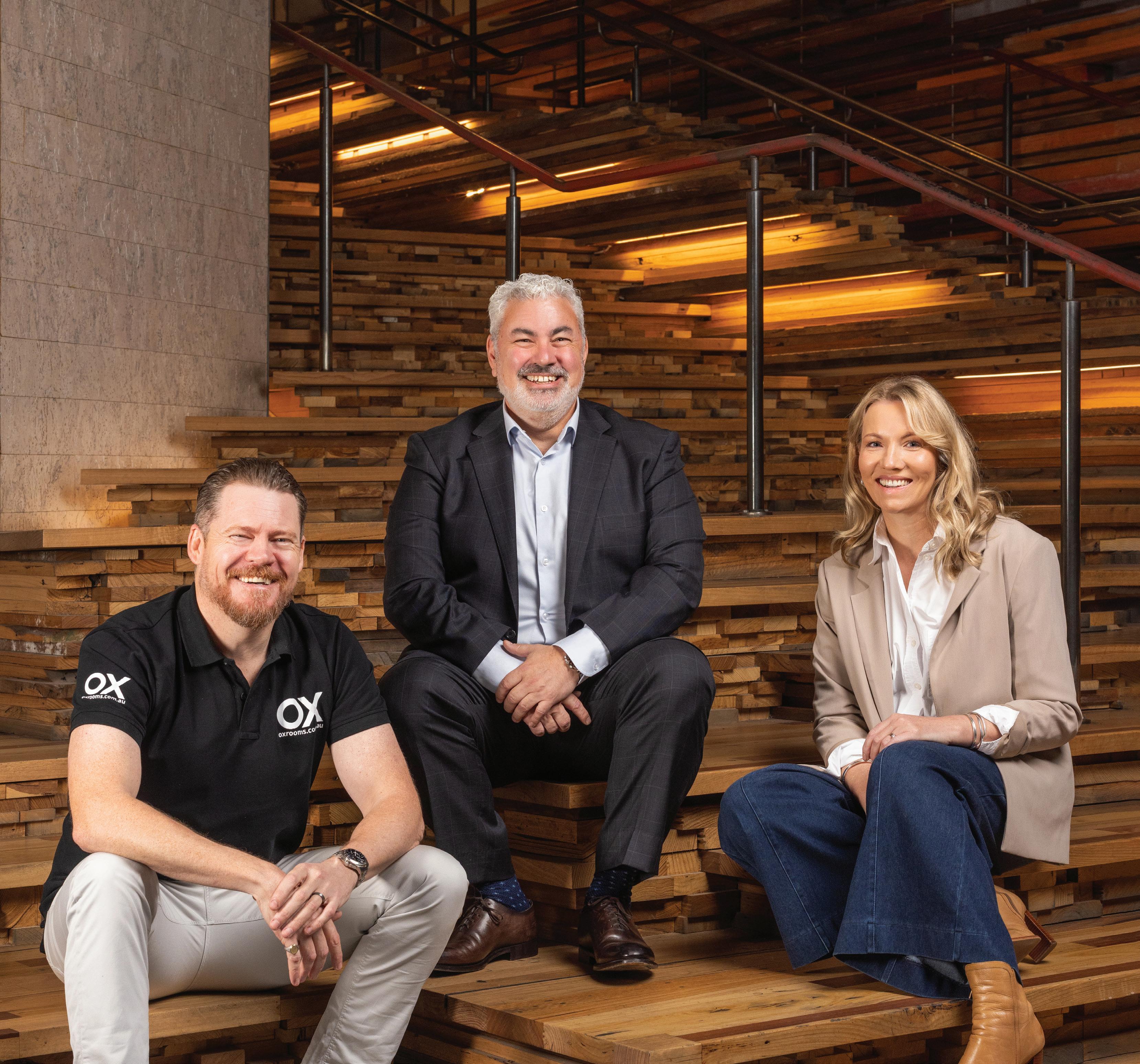
OX Rooms is focused on what happens next providing a secure communication platform for conveyancing transactions. A finalist in Workflow & Transactions, OX Rooms creates secure online rooms where agents, lawyers, conveyancers, buyers and sellers can collaborate, share documents, sign contracts and track progress in one place. OX Rooms takes property transactions out of inboxes, phone tag and fragmented paperwork, and into a safer, clearer digital environment. With scammers netting $43 million from real estate transactions in 2024, it’s a long overdue solution to a rapidly growing threat.
Arcsite extends that thinking into the life of the building itself. A finalist in Property Management & Maintenance, Arcsite is an owner-centric building intelligence and compliance platform for strata and multi-unit properties. The platform is
designed to keep a permanent, evolving building record with the Owners Corporation, centralising maintenance history, compliance records, inspections, contractor activity, defects, capital works planning and communications.
These Canberra companies are tackling the moments where property can become most stressful: preparing to sell, exchanging contracts, and managing a complex building long after settlement.
All three deliver practical innovation for complex systems. The ACT property market brings together sophisticated buyers and sellers, high-value transactions, a strong legal and professional-services base, active apartment and strata communities, and a population comfortable with digital services. That makes Canberra an ideal test bed for tools that work in the real world, not just in a pitch deck.
These three finalists signal sector maturity for Canberra.
Far from being a novelty, these tools are infrastructure for better property decisions: helping buyers and sellers understand the process, helping transaction teams reduce risk and delay, and helping owners protect building data for the long term.
As the property sector faces rising costs, increasing compliance obligations and higher expectations from consumers, Canberra’s PropTech finalists show the capital is not waiting for innovation to arrive from Sydney or Melbourne. It is building its own and taking it to the national stage.
CHRIS SCULLIN
CO-FOUNDER
Rethinking the Way Australians Sell Property
Selling a home is often one of the biggest financial decisions people make, but for many Australians it can also be one of the most stressful and complicated experiences.
Canberra-based Lystr was launched to simplify that process through a technology-led co-selling model designed to give homeowners more control, transparency and support.
Unlike purely DIY platforms, Lystr combines digital technology with professional real estate guidance, supporting sellers and buyers from appraisal through to settlement.
Lystr’s fixed-fee model helps sellers reduce traditional selling expenses while still accessing professional support throughout the transaction.
“Selling a home is personal,” says Chris. “You still need trust, guidance and experience alongside the technology.”
lystr.com.au
MATT
CARMODY KELLY HILL
GENERAL MANAGER CEO
Property scams cost Australians $43 million in 2024, exposing the risks of relying on email during high-value property transactions.
Canberra-founded OX Rooms was created to address that risk, providing a secure, multi-factor authenticated platform where lawyers, conveyancers, agents, buyers and sellers can collaborate without exchanging sensitive information by email.
“Secure communication platforms are the future of property transactions,” says OX Rooms Co-founder Matthew Carmody.
Named a finalist in the 2026 Proptech of the Year Awards, OX Rooms is helping make property transactions safer, clearer and more secure from first instruction through to settlement.
oxrooms.com.au
While much of the property industry focuses on buying and selling, Arcsite is built for what comes next: the long-term life of a building.
The portal is a permanent and evolving building record that remains connected to the property for life, creating lasting value for both existing buildings and new developments following construction handover. Arcsite centralises maintenance history, compliance documentation, service activity, communications and defect management into one secure ecosystem, ensuring critical building knowledge is accessible and continuously built upon over time.
“Buildings generate enormous amounts of information throughout their lifecycle,” says Kelly Hill. “Centralising building knowledge and keeping it with its rightful owners is the future of smarter building management, reducing costs and protecting long-term value.” Arcsite has been recognised as a finalist in the Property Management & Maintenance category of the 2026 Proptech of the Year Awards.
arcsite.com.au
HOME IMPROVEMENTS
Window solution for energy efficient homes
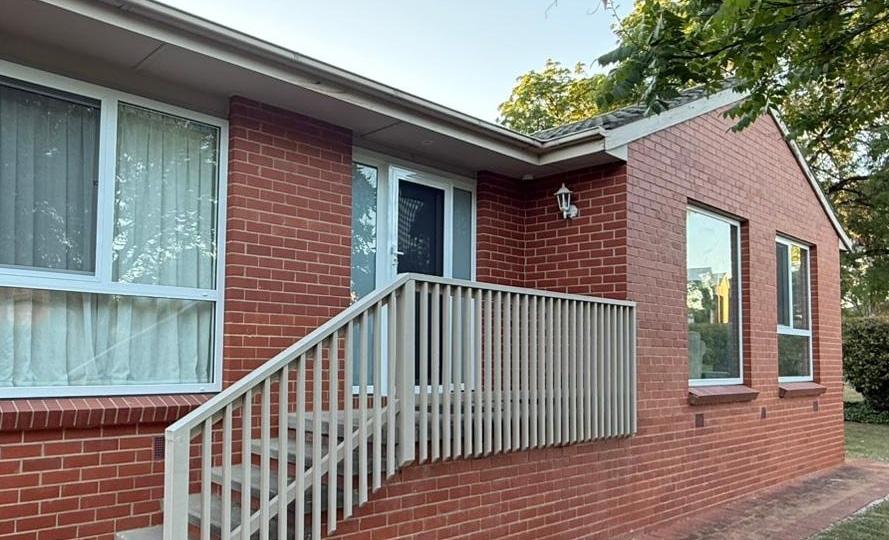
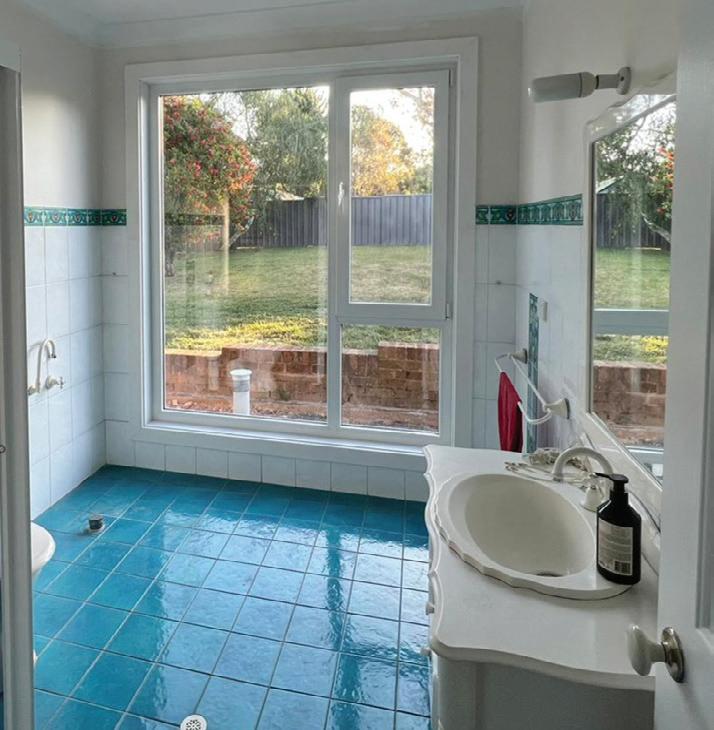
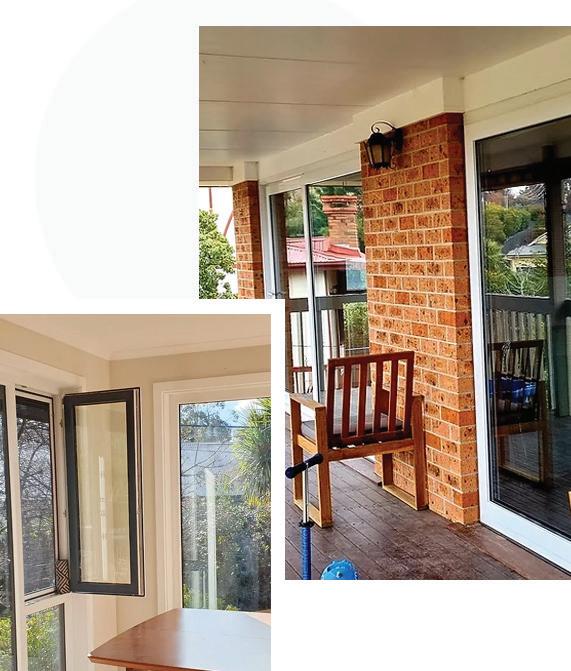
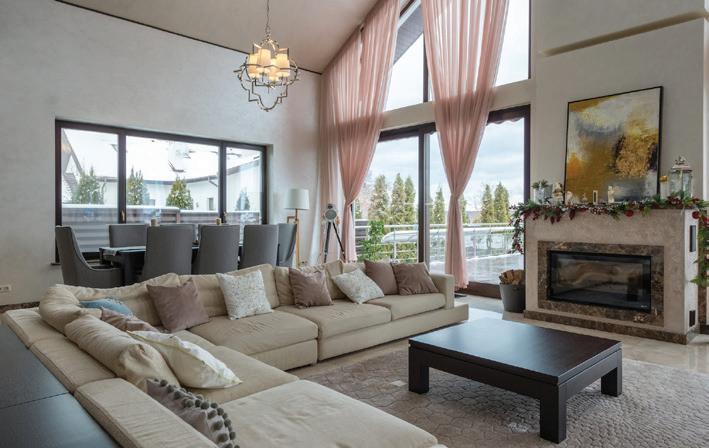
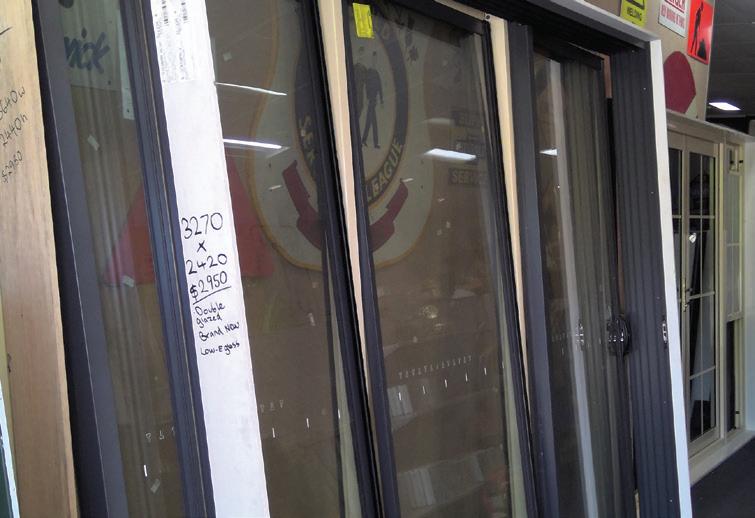
Windotek manufactures, supplies and installs uPVC, double-glazed windows and doors to maximise home energy efficiency, says director Yu Tee.
With more than 15 years of experience in the industry, Yu says customers can rely on Windotek for the best quality and service.
“We don’t do single glazes, it’s all double glazed in order to reduce noise and also improve energy efficiency and reduce the cost of bills,” he says. “Customers go to us because their existing homes have single-glazed windows and they’re complaining about the noise and also about the loss of heat in winter.
Most of Windotek’s customer base is homeowners, Yu says, but they also do supply and installation work for new builds.
All the manufacturing at Windotek is done locally, says Yu, meaning they can be flexible with design and aesthetics, making sure the work suits exactly what the customer wants.
Finding space for household items during a renovation can be stressful.
The local team at House to Home are experienced packers who have been helping Canberrans get their property ready for sales, renovations, insurance work, downsizing and relocating for more than 12 years, says co-owner Renee Le Grande.
Offering a pack-and-store solution for anyone renovating, Renee says it’s the perfect option to get rid of clutter around the house until the work is done.
“With meticulous planning and years of expertise in the moving industry, House to Home takes the stress out of relocation or renovation by handling every aspect,” she says.
“Our expert team will save you hours of time and stress by packing all your personal belongings, household items, right through to packing up the shed,” she says.
“Our team offers a personalised service and recognises every client is unique and has different needs and expectations.
“Some people want the kitchen, bathroom and wardrobes packed, others want absolutely everything including the garden pots at the front door.”
Charging a weekly fee for offsite storage, Renee says it’s the perfect solution for anyone needing a quick, temporary solution for storage during renovation work.
“People can store items for as short as a week to as long as a few years,” she says.
“We can pack up excess items and store it separately to take the stress out of fixing up a house.” House to Home Call 0457 456 767. house-to-home.com.au
Do you want to:
• feel warm in winter and cool in summer?
• lower your energy bills?
• reduce outside noise?
• improve security and the value of your property?
These are just some of the many benefits that home and business owners can achieve with our uPVC double and triple glazed windows and doors.
Windotek Australia is a leading provider of double and triple glazed uPVC window and door systems for the Canberra region. We help you achieve a higher EER rating, with 100% customised solutions that meet your needs and complement the style of your home.
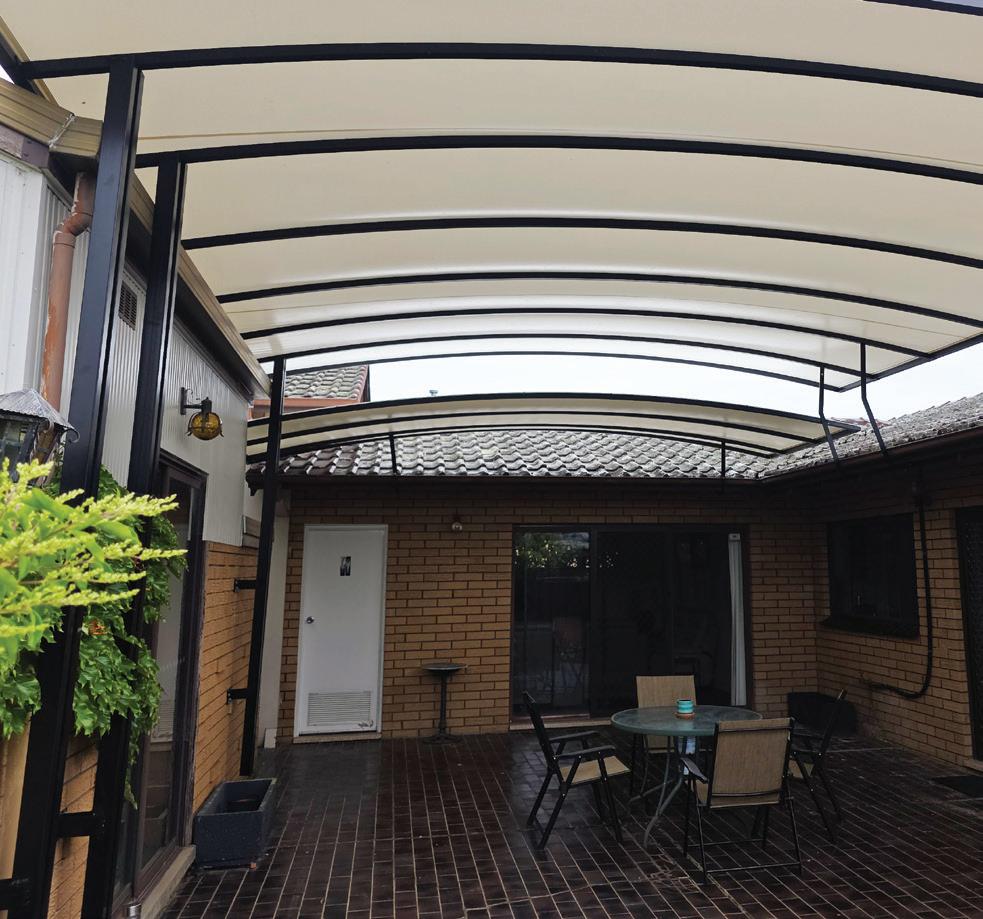
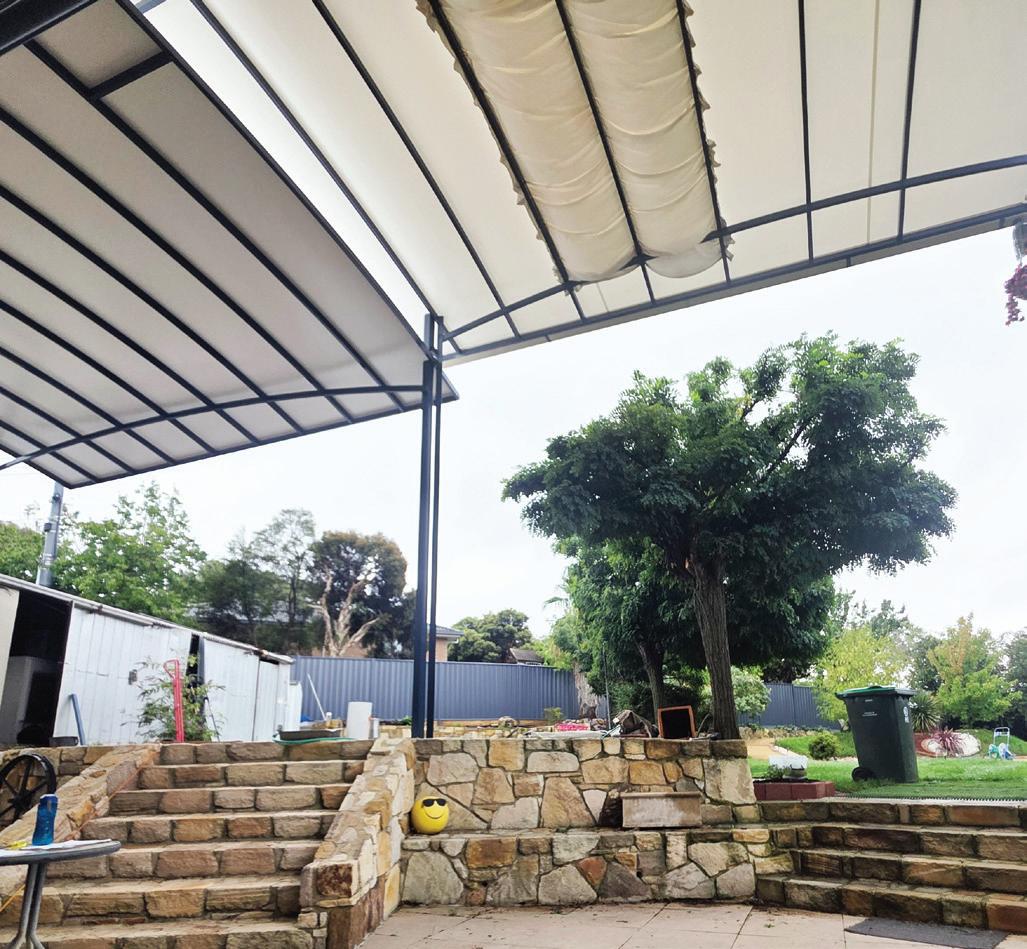
No two Canberra homes are the same, and according to CBR Pergolas Director and Engineer Andy Stodulka, no two pergola projects should be either.
While many outdoor structures are built from standard designs, Andy believes the best results come from creating something tailored to the property, the lifestyle of the homeowner and the way they want to use their space.
“We don’t work from a catalogue of set designs,” Andy says. “Every project starts with a conversation about what the client wants to achieve. From there, we develop a solution that works specifically for that property and those objectives.”
That philosophy has helped CBR Pergolas build a strong reputation across Canberra, with many clients returning for additional projects after experiencing the difference a custom-designed structure can make.
One of those clients is the owner of a property in Tuggeranong, who initially engaged Andy to design a large rear pergola before later commissioning a second project at the front of the home. So successful were the first two projects that a third structure is now being designed to cover the property’s swimming pool.
“The first project was quite unique because the client wanted to be heavily involved in the construction process,” Andy says. “He contributed labour on site and took a genuine interest in understanding the engineering and design principles behind the structure.”
The homeowner says the collaborative approach was one of the reasons they returned.
“Andy listened to what we wanted, explained every stage of he process and came up with ideas we hadn’t evenconsidered. The finished pergola exceeded our expectations.”
Rather than following a rigid construction process, the project evolved through ongoing collaboration between the client, contractor and designer.
“As construction progressed, we were able to refine certain elements and make improvements based on what we were seeing on site,” Andy says. “That’s one of the advantages of a custom project. You’re not locked into a standard solution.”
The experience created a level of trust that carried through to future projects.
“By the time we started designing the front pergola, we already understood how the client used the property and what outcomes he was looking for,” Andy says.
“That knowledge allowed us to push the design further and create something even better.”
According to Andy, some of the most rewarding projects are those where the relationship continues long after the first structure is completed.
“When a client comes back for a second or third project, that’s probably the strongest endorsement we can receive,” he says.
Another recent client praised the company’s attention
to detail, saying: “The professionalism, communication and quality of workmanship were outstanding. The pergola has completely transformed how we use our outdoor space and has become the most popular area of our home.”
The upcoming pool cover project will feature an impressive barrel-vault structure spanning approximately 18.5 metres, demonstrating once again how every project presents its own engineering and design challenges.
“Every site is different, every client is different and every solution is different,” Andy says.
“We enjoy finding creative ways to achieve outcomes that wouldn’t be possible with an off-the-shelf design.
”For Andy, the most satisfying part of the job isn’t simply building pergolas.
“It’s helping people create spaces they’ll enjoy for years to come,” he says. “The structures are important, but the long-term relationships we build with our clients are what we’re most proud of.”
HOME IMPROVEMENTS
Add colour and comfort to your home this winter
As the weather cools and more time is spent indoors, winter is the perfect time to refresh your home with furniture that adds both comfort and personality.
From colourful seating to stylish furniture and home office solutions, small changes can make a big difference to how a space looks and feels.
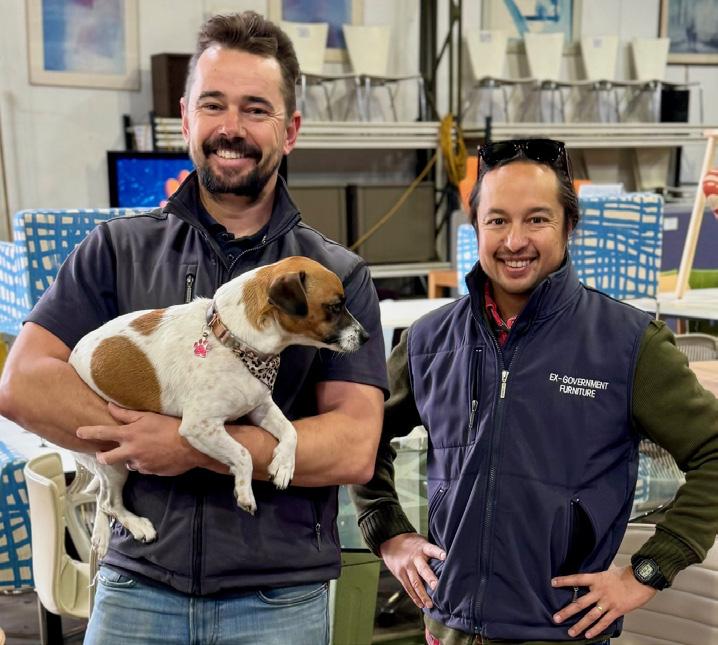
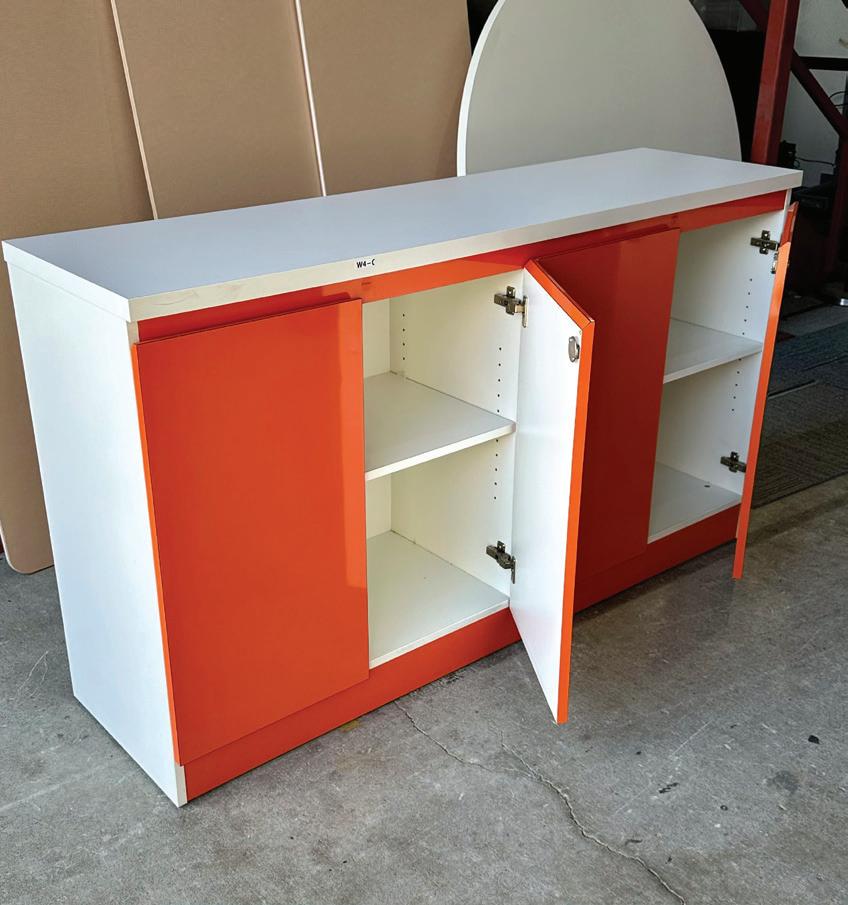
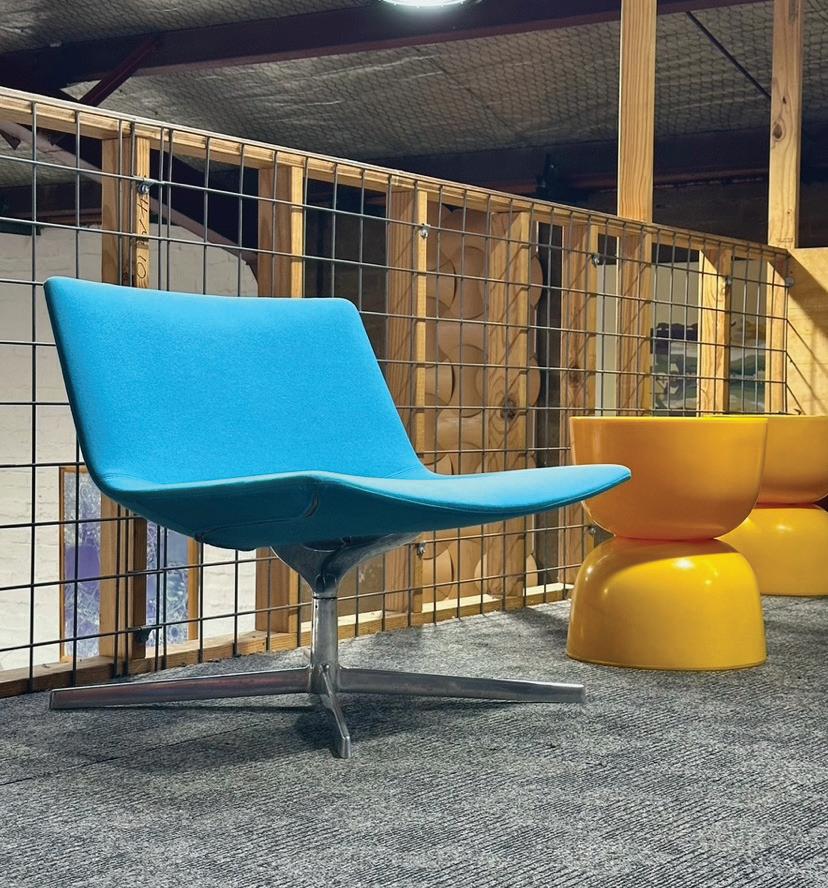
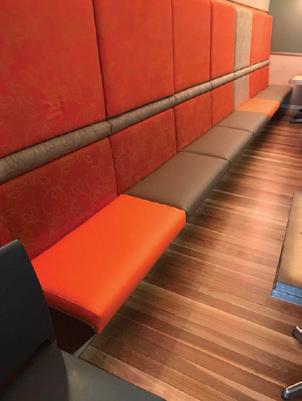
At Ex-Government Furniture in Fyshwick, there’s been growing interest in colourful furniture and designer brands that help bring warmth and style into the home. Co-owner James Fullerton says winter is often when people start paying closer attention to the spaces they use every day.
“Winter is when people really start looking at the spaces they spend the most time in,” James says. “Adding colour through furniture is one of the easiest ways to make a room feel more inviting and comfortable.”
From colourful chairs and stools to sought-after designer brands, there are plenty of simple ways to refresh a space without undertaking a major renovation.
“We’re seeing people gravitate towards furniture that stands out,” co-owner Taylor Radnell says. “A colourful stool, chair or feature piece can completely change the feel of a room without a major renovation.”
Designer brands also remain popular, offering homeowners the opportunity to bring high-quality pieces into their homes at a fraction of their original retail price.
“People are often surprised by the designer brands that come through our showroom,” James says. “You can find really well-designed furniture that would normally cost much more. It’s a great way to achieve a premium look without the premium price tag.”
For those working from home over winter, sit-stand desks remain a practical option.
“They give people flexibility throughout the
day and can make a real difference to comfort and productivity,” Taylor says.
New stock arrives regularly, with a constantly changing mix of colourful furniture, designer brands and practical office solutions.
“There’s always something new arriving, whether it’s a colourful statement piece, a designer brand or something practical for the home office,” Taylor says.
With unique finds, quality furniture and exceptional value, Ex-Government Furniture offers plenty of inspiration for refreshing your home this winter.
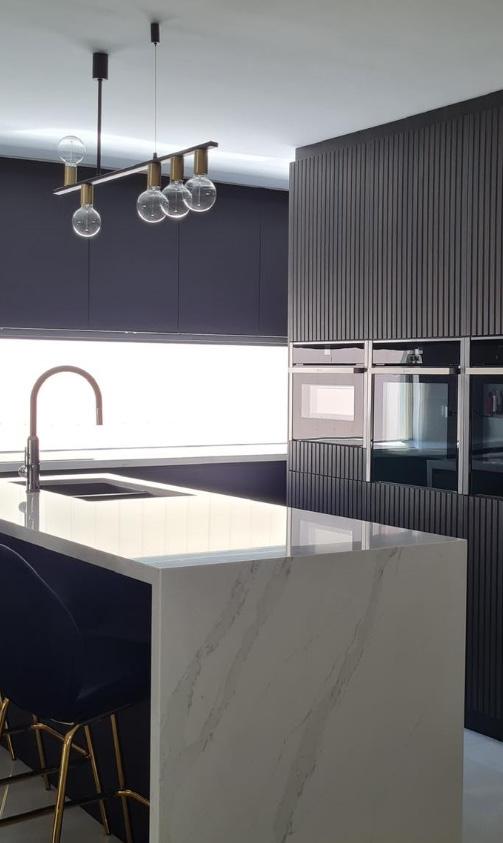
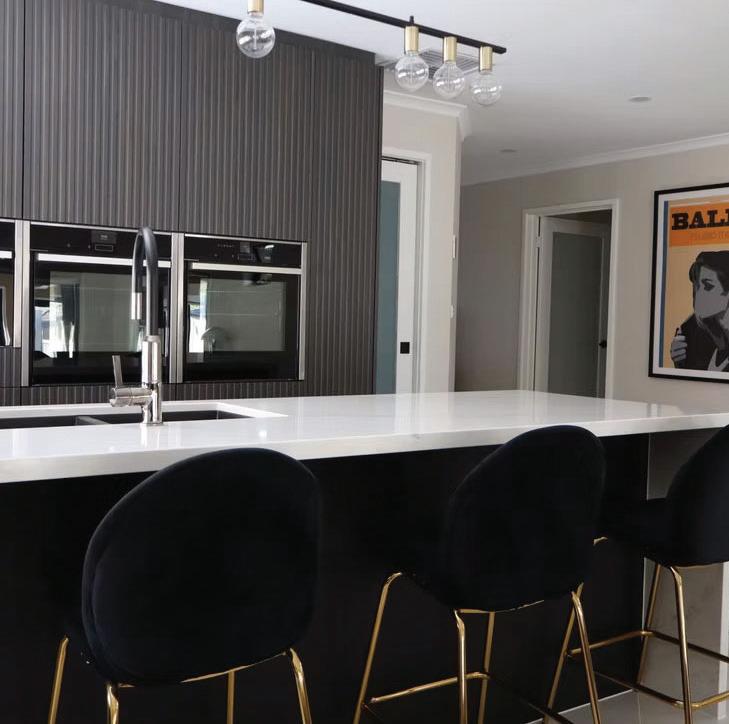
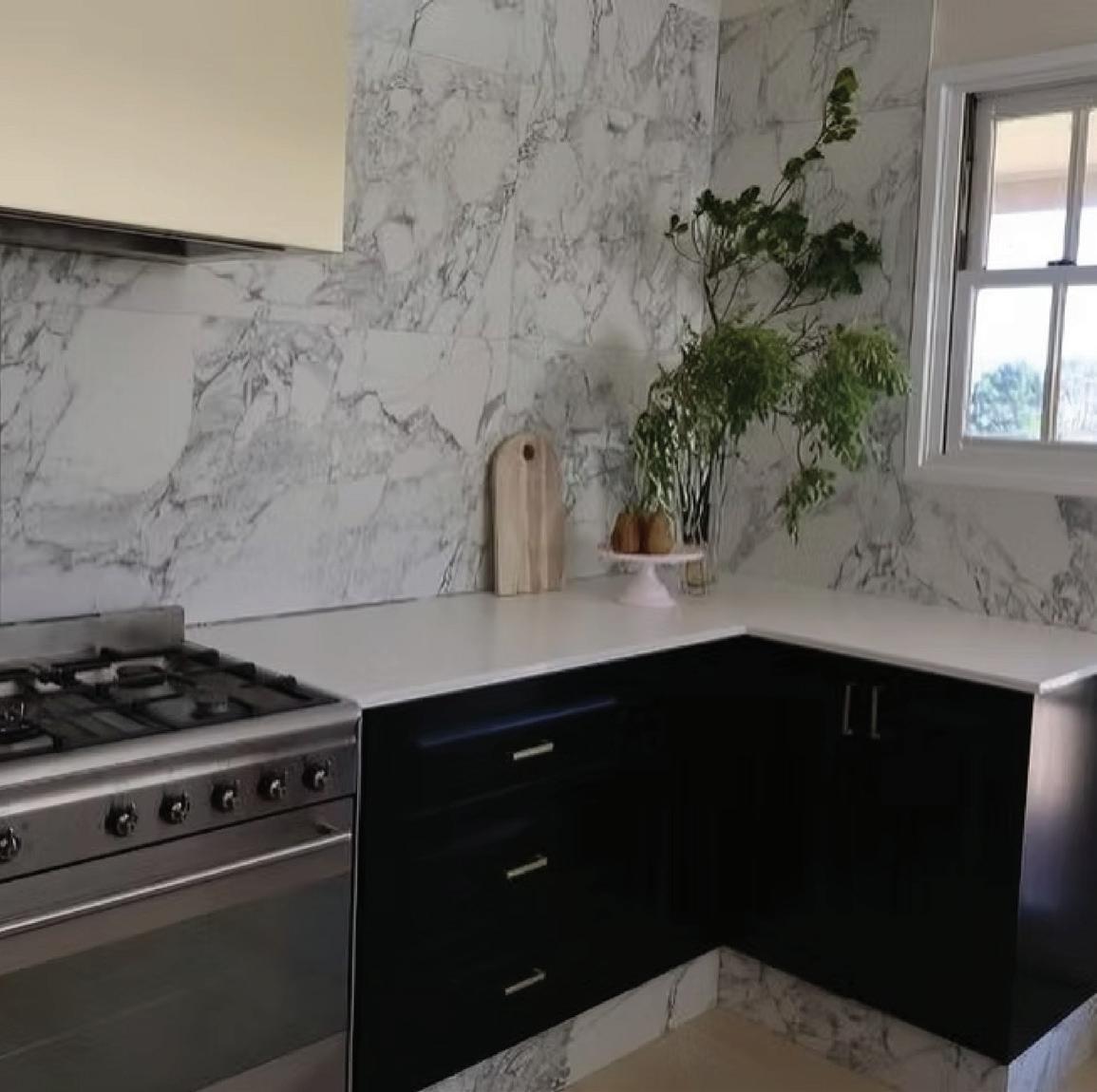
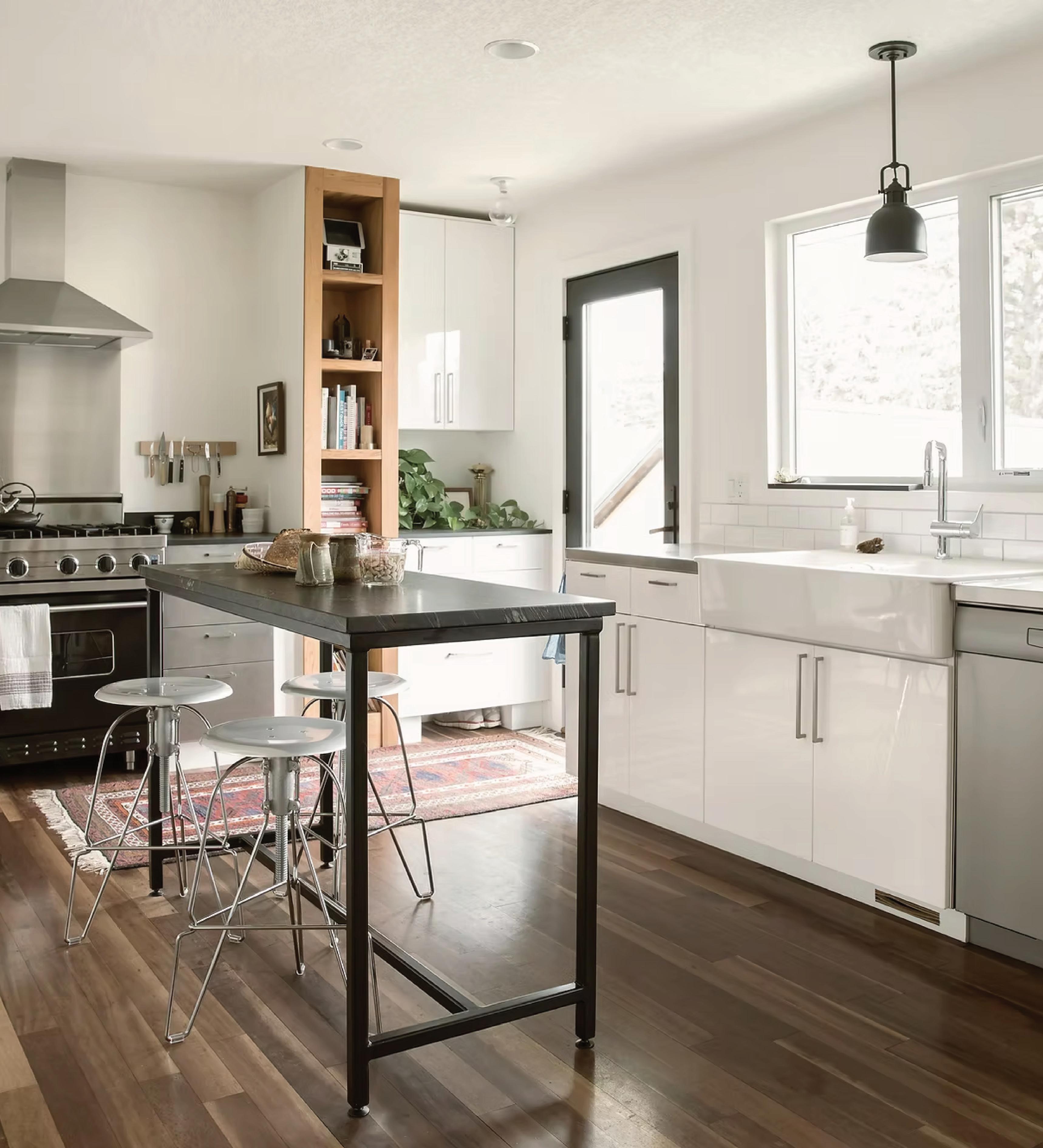
Renovation Matters takes the stress out of transforming homes
Renovating doesn’t need to be stressful or overwhelming, says Renovation Matters owner Kim Persson.
“With the right guidance, planning and team behind you, renovating can be an exciting and rewarding experience,” Kim says.
“At Renovation Matters, we manage the entire process from start to finish, helping clients feel supported every step of the way.”
Working with a trusted network of experienced tradespeople, Kim delivers high-quality renovations efficiently, within budget and with strong attention to detail.
Whether clients are renovating to sell, stay, or prepare an investment property, Kim says the goal is to maximise value, appeal and functionality.
Renovation Matters also offers flexible solutions for homeowners renovating before selling, including funding options until settlement for eligible clients.
Kim also assists clients preparing homes for ageing in place, including installing support rails or designing bathrooms, showers and toilets so future supports can be easily added.
Taking a hands-on approach, Kim works full-time in the business and visits renovation sites daily to oversee progress, communicate with trades and ensure each project runs smoothly.
“I don’t believe in handing projects over to someone else,” she says.
“It’s my responsibility to oversee each renovation personally, and that’s what sets my approach apart.”
With more than 110 successful renovations completed across Canberra, Kim has built a strong reputation for honest advice, clear communication
and simplifying the renovation process.
“My aim is always to take the stress away from clients and make sure they feel confident throughout the journey,” Kim says.
Renovation Matters Call 0427 696 662 or visit renovationmatters.com.au
Ex-Government Furniture co-owners Taylor Radnell, left, with Tilly, and James Fullerton.
Kim Persson, managing director, Renovation Matters.
HOME IMPROVEMENTS
Renovate now, pay later for bathrooms, kitchens and laundries
Specialising in quality bathroom, kitchen and laundry transformations, Tap & Tile director Nino Arena says the company delivers expert craftsmanship, modern designs and seamless project management at an accessible price.
“We start with your vision by guiding you through material choices, layouts and finishes which our in-house designer will bring to life,” says Nino.
“This shows you exactly what your new bathroom, kitchen and laundry will look like before we’ve even changed a tap or laid a tile!”
Canberra’s first bathroom and kitchen specialists to offer a “renovate now, pay later” solution, Nino says it allows customers the ability to create their dream space without the financial burden up-front.
“We want to help people renovate without the financial stress, and our flexible payment option allows you to transform your home now and pay over time,” he says.
“Whether you’re looking for a sleek, contemporary upgrade, or a timeless classic design, we make the process stress-free, efficient and tailored to your needs.”
Locally owned and family run, Nino says Tap & Tile is committed to providing customers with stylish, functional kitchens and bathrooms.
“We are redefining home renovations by combining premium quality with affordability, ensuring a seamless and transparent process.”
“We love seeing the homeowner’s vision come to life and have had many happy clients whose expectations have been exceeded,” he says.
Tap & Tile
Call 1300 430827 or visit tapandtile.com.au
Upgrading a home shouldn’t be expensive, says John
Upgrading or improving a home shouldn’t have to be an expensive adventure, says store-owner John Rivers.
“At Handyman’s Trading Post, people can find a great range of new, factory used and used parts and pieces at half the price,” he says.
Currently overstocked with many second-hand materials, including windows, glass sliding doors and timber panel (swinging) doors, John says CityNews readers can get a further 10 per cent off the prices of all second-hand items by mentioning this article. This excludes never-used, factory-seconds and items that have already been discounted by more than 10 per cent.
A leading supplier of factory-second and used windows and doors, John says they are also the experts in delivering purchased windows and doors safely to homes or job sites.
Offering to take “want lists” from customers, John says they can alert customers when products from their list have arrived in store.
John says customers can save hundreds, or even thousands, by buying second hand windows and doors. Items that he says are often the key feature of renovations.
“For more than 42 years, Handyman’s Trading Post has supplied Canberrans with quality and affordable home and commercial building materials,” says John.
The Handyman’s Trading Post 167 Newcastle Street, Fyshwick.
Call 02 6280 4036.
On facebook.com/p/Handymans-Trading-Post or Instagram.com/htpcanberra
DOORS, WINDOWS & MORE!
At Tap & Tile, we specialise in transforming bathrooms, ensuites and laundries into beautiful, functional spaces. With over 15 years’ local experience, our team delivers:
• Custom floor & wall tiling tailored to your style
• Designer feature walls & mosaic accents
• Premium tapware & shower fittings
• Underfloor heating & heated towel rails
• Complete wet-area waterproofing
• Full bathroom & laundry renovations Why Canberra Chooses Tap & Tile
• 5-Star Google Reviews from delighted homeowners
• Licensed & Insured tradespeople committed to quality
• Free On-Site Design Consultation, we bring samples to you
• Transparent, Fixed-Price Quotes, no hidden costs
HOME IMPROVEMENTS
Great design is a dialogue
With more than 27 years of experience across residential, commercial and bespoke design projects, Arkitex founder and director, Alessandro (Alex) D’Ambrosio says they don’t just deliver drawings, they craft spaces that improve how people live, work and connect.
“At Arkitex, we approach each project as an opportunity to blend creativity with functionality,” he says.
“What sets us apart is our commitment to thoughtful, client-focused design where innovation, sustainability and context all play a central role.”
Bringing a deep understanding of architectural principles, planning regulations and project delivery, Alex says they strive to stay at the forefront of design trends and technologies.
With a masters in architecture and an unrestricted A Class builders licence, Alex says the most rewarding part of his job is seeing their clients’ visions come to life.
“From that first sketch to the final reveal, we love the collaborative journey transforming ideas into tangible spaces that truly reflect our clients’ goals, lifestyle and personality,” he says.
Whether a client is building from scratch, renovating or reimagining a space, Alex says they will be there from start to finish.
“At Arkitex, we believe great design is a dialogue,” he says.
“We are passionate about creating architecture that feels purposeful and personal.
“We welcome projects of all sizes and stages, and are always excited to explore new ideas.”
Arkitex
Unit 5/24 Torrens Place Torrens. Call 0413 570599 or visit arkitex.com.au
Building smarter, healthier homes
As energy prices continue to rise and sustainability becomes a priority for more households, demand for high-performance homes is growing across Canberra and the surrounding region.
That growing interest is driving demand for Your PassivHaus, which specialises in energy-efficient building design, airtightness testing and Passivhaus construction principles that deliver healthier, more comfortable and lower-energy homes.
Using internationally recognised Passivhaus standards, the company works with homeowners, builders and developers to create buildings that maintain stable indoor temperatures year-round while significantly reducing heating and cooling requirements.
Services include airtightness testing, thermal performance consulting, high-performance glazing advice and off-site construction solutions. Your PassivHaus also supplies and installs Heat Recovery Ventilation (HRV) systems, a key component of high-performance homes. HRV systems continuously bring fresh filtered air into the home while recovering heat from outgoing stale air, improving indoor air
quality, reducing condensation and helping maintain comfortable temperatures with minimal energy loss.
Canberra’s climate, characterised by hot summers and cold winters, makes energy-efficient housing an increasingly important consideration. Many homeowners are seeking ways to improve comfort while reducing ongoing energy costs.
Passivhaus principles focus on high levels of insulation, airtight construction, controlled ventilation and minimising thermal leakage throughout the building envelope. Together, these elements create homes that are healthier, quieter and more energy efficient.
Your PassivHaus also assists homeowners seeking to improve the performance of existing properties through retrofits and energy-efficiency upgrades, helping deliver lasting comfort and lower energy consumption.
Your Passivhaus hello@yourpassivhaus.com.au Call 0439 924 660 Visit yourpassivhaus.com.au
Senator Pocock on site learning what PassivHaus can achieve so we don’t need gas.
HOME IMPROVEMENTS
Sustainable and custom joinery services
“The kitchen really is the heart of the home and when you have a kitchen that is not only functional but is really beautiful to look at, it’s a great joy,” says Robyn Monteleone, partner at Select Custom Joinery.
Operating since 2000, Select Custom Joinery is known for creating sustainable kitchens and joinery.
“We are a niche business and specialise in using timber and other solid materials,” she says. Their commitment goes beyond just using sustainable materials, and Robyn says they always think about longevity, with everything they design meant to last for a long time.
Robyn’s husband Gino Monteleone, the primary cabinet maker and partner of the business, trained as a furniture maker.
“Gino’s training started with building custom furniture,” she says.
“Our kitchens and custom pieces are built to
furniture-making standards, so they are pieces of furniture that people will love for many years to come.
With the aim of creating pieces that are customised for each client’s lifestyle and personality, Robyn says they often design a feature in each person’s home which is unique to them.
“The satisfaction that clients get something that really suits their lifestyle and them, something they’re proud of and really enjoy using is the most rewarding thing,” she says.
“We are only a small team, so client meetings are by appointment.”
Are you interested in using plywood, recycled timber and other sustainable materials? We’ll work with you to design a kitchen that’s innovative, unique, sustainable and durable.
Kitchens, internal joinery & furniture.
Landscapes designed to inspire, built to last
No two Canberra homes are the same, and according to Realityscapes Pty Ltd owner Mitch Tilbrook, no two landscapes should be either.
Specialising exclusively in landscape design and landscaping construction, Realityscapes works closely with homeowners to create outdoor spaces that reflect their lifestyle, complement their home and add lasting value to their property.
From complete backyard transformations and functional family spaces to stylish entertaining areas and premium landscaping solutions, Mitch and his team take pride in delivering tailored outcomes that are as practical as they are beautiful.
“At Realityscapes, we believe great landscaping starts with understanding how people want to live and enjoy their outdoor space,” says Mitch.
“We take the time to listen, understand our clients’ vision and then bring it to life with quality workmanship and attention to detail.”
It’s that commitment to getting the little things right that has become a hallmark of the Realityscapes approach.
“Like the one-percenters, we focus on the details that others can overlook,” Mitch says.
“From the initial design through to the final clean-up, we want every project to exceed expectations. We treat every property as if it were our own and take genuine pride in the finished result.”
Known for their professionalism, craftsmanship and personalised service, Realityscapes has built a strong reputation across Canberra for creating outdoor environments that homeowners can enjoy for years to come.
Fully insured and accredited with Working with Vulnerable People (WWVP), Realityscapes delivers landscaping solutions with confidence, care and a commitment to quality.
Owner Mitch Tilbrook with his trusty workmate Keith Urban.
Showcasing homes for stronger buyer appeal
First impressions matter in property, and increasingly, homeowners across Canberra are turning to professional styling to maximise buyer interest and showcase their home’s full potential.
That growing demand is driving interest in Salient Property Styling, a Canberra-based business that specialises in creating beautifully presented spaces designed to connect with buyers from the moment they walk through the door.
When preparing a property for sale, Salient Property Styling works closely with homeowners and real estate professionals to highlight a property’s best features and create an inviting atmosphere that resonates with prospective purchasers.
The business offers a range of services including full property styling and pre-sale consultations. Each project is tailored to the home’s architecture, target market and individual character.
Professional styling can play an important role in helping buyers visualise how a space can be lived in and enjoyed. Carefully selected furniture, artwork, soft furnishings and accessories work together to create warmth, balance and a sense of lifestyle that photographs well and leaves a lasting impression during inspections. In a competitive property market, presentation can often influence buyer engagement and perceived value. Well-styled homes typically attract stronger interest online and provide a more memorable experience during open homes.
Salient Property Styling believes every home has a story to tell, and through thoughtful design and presentation, helps homeowners showcase that story while positioning their property to achieve the best possible result.
Salient Property Styling
Call 0408 155 362 or visit salientpropertystyling.com.au
First impressions sell homes
Panacea Landscapes founder Shannon Blackbourn is making her mark, earning first prize at the Melbourne International Flower & Garden Show Balcony Garden Competition in 2024 and third place in 2025.
Having worked in landscaping since the age of 16, Shannon describes running her own business as “a rollercoaster, but one I wouldn’t have any other way”.
“My introduction to horticulture was as a young child, in my Grandma Shirley’s garden,” she says. “Every home she lived in was filled with beautiful flowers. I didn’t realise it then, but it would shape my future.”
Today, Shannon works across projects ranging from compact courtyards to expansive estates, bringing creativity and practical expertise to every space. As
Canberra’s property market becomes increasingly presentation-driven, Shannon says well-planned landscaping and ongoing garden maintenance can play a critical role in maximising sale price and reducing time on market.
“First impressions start at the street,” she says. “A clean, well-maintained garden helps buyers immediately connect with a home. Simple updates, seasonal planting and tidy outdoor spaces can make a real difference when it comes to attracting interest and achieving a strong result.”
Panacea Landscapes Call 0498 287 789 or visit panacealandscapes.com
PANACEA LANDSCAPES
CANBERRA & EAST COAST LANDSCAPING EXPERTS
• Led by a qualified horticulturist and landscape designer with over 20 years of experience
• Specialising in landscape design, garden transformations and ongoing maintenance programs
• Serving residential, commercial, strata and real-estate clients with friendly, reliable service
• A family-owned local business committed to the highest quality workmanship and tailored solutions
From left, Chloe and Tara from Salient Property Styling.
CHARTERED ACCOUNTANT
Generous Wendy wants to share her 'windfall gain'
HOROSCOPE PUZZLES
Wendy's done well from selling a house in Brisbane and wants to share the love with some tax-deductible donations to charity. Chartered accountant GAIL FREEMAN gets her on the right track. Your
Wendy has just sold her Brisbane house for $1.8 million and is worried about how much capital gains tax she's up for.
She came to see me about it and I told her I needed information such as how much the property cost, when it was bought, were there renovations and whether Wendy had lived there.
Wendy said she bought the house in 1997 for $220,000.
"It was new, although I put in carpets, a stove and a dishwasher," Wendy said. "Nothing was spent on renovations and I lived there for four years before coming to Canberra.
"It looks to me as if this gain is substantial and I remember you mentioning that if I made a large donation. It could reduce my tax considerably.”
I told Wendy we'd look at the capital gains tax issues first, then the donation situation.
"At first glance you appear to have made a capital gain of about $1,580,000," I said.
"This gain is reduced by such things as stamp duty, legal fees, both on purchase and sale and all your costs of selling. It is increased by the building depreciation you have claimed.
For ease of arithmetic, I will assume that the taxable capital gain is $1.5 million. The tax on this would be about $350,000."
Wendy said that was a lot less than she had expected. However, she still wanted to support some local charities with some of this "windfall gain".
"I know in the current economy, there are a lot of people in need of assistance and would like to choose a charity or charities where I know the money is spent locally in Canberra and I know that it will go directly to the people who need it without being swallowed up in big administration costs,” she said.
I told Wendy that to ensure a tax deduction, the charity she selected must be a deductible gift recipient (DGR). To double check whether a chosen charity is a deductible gift recipient, you can search ABN Lookup.
"I must add that it is very generous and I’m sure the donation will be welcomed by the charity of your choice," I said.
"It is the perfect time of year to donate as we are coming into winter and I understand that there is more call on charities currently. The end of the financial year is always a good time to take stock of your financial position and look at making those lastminute donations.”
Wendy said: "Thank you, Gail. I’m excited to see how I can help our local community."
If you need advice on capital gains tax, making donations or any other tax related matter contact the experts at Gail Freeman & Co Pty Ltd on 02 6295 2844.
Gail Freeman & Co Pty Ltd 02 6295 2844 Unit 9, 71 Leichhardt Street, Kingston ABN 57 008 653 683
Rambunctious Rams can appear confident on the outside but – with Saturn and Neptune visiting your sign – the main dangers at the moment are self-criticism and self-doubt. Be kind to yourself this week. Fortunately – on Tuesday and Wednesday – Venus and Jupiter (the two lucky planets) hook up in your home zone. So, look out for some good news via a relative, housemate or family friend. And the weekend is wonderful for social events and creative projects.
TAURUS (Apr 21 – May 21)
Venus (your patron planet) links up with Jupiter (planet of prosperity and joy) on Tuesday and Wednesday, when you’re at your charismatic and generous best. Make the most of it as you turn on the Taurus charm, dazzle the doubters and call in a few old favours! They link up in your neighbourhood zone so prepare to make some lucky connections within your local community. Short trips (especially interstate) are also likely in the weeks ahead.
GEMINI (May 22 – June 21)
This week – courtesy of Wednesday’s Mercury/Saturn square – work or finances look rather stressful, and you won’t have the patience to put up with annoying people or tedious explanations. So, strive to extricate yourself from negative situations in tactful ways. Communication and conversation are the buzzwords on the weekend as you circulate in your local community, discuss current affairs, learn a new skill or share some exciting news.
CANCER (June 22 – July 23)
Lucky Venus and prosperous Jupiter join up in your sign, and conscientious Saturn is visiting your career zone. So, make sure you have done all the hard work that’s required so you can take advantage of good fortune when it comes along. Your motto for the week is ‘Preparation + Opportunity = Success’. There are lessons to be learned on Wednesday (especially at work), so make sure you learn them quickly and don’t keep on repeating the same mistakes.
LEO (July 24 – Aug 23)
Tuesday and Wednesday are the best days to relax, meditate and/or contemplate your life and where you are going, as Venus and philosophical Jupiter link up in your spirituality and solitude zones. Then the weekend is the time to mix and mingle, socialise, party and let your hair down when vivacious Venus races into your sign. So, your motto for the week is from His Holiness the Dalai Lama: “Happiness is not something ready-made. It comes from your own actions.”
VIRGO (Aug 24 – Sept 23)
Virgos love to feel productive, but does it seem as if you’re treading water at work or a close relationship is going backwards? This week Saturn slows things down and increases frustrations. But lucky Venus also hooks up with prosperous Jupiter, which encourages you to pair up with a creative colleague and make your professional dreams come true. If you are flexible and open to new ideas, then a flash of brilliance could suddenly turn things around.
LIBRA (Sept 24 – Oct 23)
Many Librans will feel unusually restless, as the Sun and Uranus activate your freedom zone. Exercise and outdoor activities are favoured as you channel energy into physical pursuits, go on a grand adventure or connect with friends from far away. Just make sure you nurture relationships with people who support your aspirations. Tuesday and Wednesday are lucky days (especially at work) as Jupiter (planet of good fortune) links up with your ruler, Venus.
SCORPIO (Oct 24 – Nov 22)
You’re determined to complete a project with creative panache and loads of Scorpio style. But there are some frustrating planetary patterns so expect power plays, disruptions or delays. Patience and compromise are required. When it comes to work projects and your daily routine, the big lesson to learn is how to delegate. No-one (not even a super-organised Scorpio) is indispensable! On Tuesday and Wednesday, dream big dreams and follow your heart.
SAGITTARIUS (Nov 23 – Dec 21)
This week, if you’re argumentative with a family member, close friend or work colleague, then they will be in the mood to fight back! So – if you want to avoid fiery clashes – do your best to be more tolerant and understanding towards others. Plus, try to view a troubled close relationship from a much more philosophical perspective. The winning formula for smooth Sagittarian communication is conversation + cooperation + generosity = joy.
CAPRICORN (Dec 22 – Jan 20)
Taskmaster Saturn (your ruling planet) squares Mercury on Wednesday, so expect a stressful day of frustrations and challenges (especially involving your partner, a family member or a close friend). And a work colleague could say or do something that makes you gasp. Writer Joyce Carol Oates (who turns 88 on June 16) reminds us: “Sometimes people surprise us. People we believe we know.” A flexible, philosophical approach will get you through.
AQUARIUS (Jan 21 – Feb 19)
You’re in the mood to party as the Sun and Uranus (your patron planet) activate your entertainment zone. But Saturn squares Mercury (on Wednesday), so avoid skimming over important details – and remember there’s a fine line between making snap decisions and making messy mistakes. If you don’t pace yourself, then you’ll be exhausted by the end of the week. Astute Aquarians will slow down, enjoy the ride and practice the gentle art of patience.
PISCES (Feb 20 – Mar 20)
The planets encourage you to express your compassion and creativity, so don’t undervalue your kind heart and creative talents. It’s a wonderful week to enjoy a romantic interlude with your partner, fix a floundering friendship or find your soulmate. But don’t sit around hoping Lady Luck and Cupid’s arrow will strike. With Venus and Jupiter in your romance and good fortune zones, you need to consciously attract more love and abundance into your life.
Copyright Joanne Madeline Moore 2026
To
6 What is a sunshade called? (7) 11 Name pulpy nutritious pieces of fruit. (7)
12 To be covetous, is to be what? (7)
13 What is a skirt-like garment? (7)
14 What are young cats called? (7)
15 Name the dark patches in the sky. (7)
16 When one tolerates, one does what? (7)
ARTS & ENTERTAINMENT Good Boy Game anything but innocent
By Helen MUSA
The first Q The Locals show of 2026 coming up at the Queanbeyan Performing Arts Centre sounds like it’s fun, but what we’ll see on stage is anything but an innocent game.
The Good Boy Game, by American playwright Patrick Vermillion, is billed as part satire, part warning and part catharsis. As a dark comedy, it is bound to be entertaining, but it’s also of the here and now as it looks at one of the serious issues of our time, the radicalisation of youth.
The production is entirely the brainchild of director/producer Caitlin Baker, known for Lord of the Flies at Canberra Rep in 2024, ACT Hub’s Seagull in 2024 and Julius Caesar in 2025. By day she works as artistic associate, development and communications at Canberra Youth Theatre.
When I catch up with Baker, I find, amazingly, that the production will be a world premiere. I say amazingly because New York playwright Patrick Vermillion has seen his plays performed at Ensemble Studio Theatre, MirrorBox, Alchemical Lab, Soho Playhouse and IRT, and The Good Boy Game was a finalist in the 2020 Eugene O’Neill awards. That shortlisted version in 2020, Baker tells me, was one of several drafts, but in fact the play has never been produced. She found it on the New Play Exchange website, primarily
intended for American playwrights to share plays at pre-publication stage.
“As a director part of my work is reading as much as I can,” Baker says. “I came across this in 2022 and I was hooked.”
Baker hasn’t met Vermillion, but she has corresponded with him extensively and is very excited that he may make it to Australia for this production.
The show, which will run just under two hours, is deeply funny yet no laughing matter, but as she says: “This is the type of thing where if you do not laugh, you will cry, so let’s laugh… Isn’t laughter a pressure valve, the tension making it easier for us to confront issues?
“My most favourite thing in theatre is where the audience is worked into a massive cackle by the scene, but then, as it goes on, the laughter turns into regret.”
Briefly, it opens with two parents, MaryBeth and Sam (Giuliana Baggoley and Bruce Hardie), sitting at dinner when they find their son James’ (Alistair McKenzie) diary in which there are plans to shoot up his school.
Both mother and father are liberal “thinking people” who are stunned to find that their son has been taken in by ideas he finds online in the “manosphere”.
“We begin with shock. They are so stunned that James has these thoughts that they’re trying to figure out where they come from.
The universal parental fear that on paper you can do everything right but things can go wrong is the base of the play,” Baker explains.
Mary-Beth and Sam decide not to call the authorities but to de-radicalise him on their own using a rewards-based points system. But they must reckon with the part they played in having created his hatred.
“As well as mother, father and son, there’s things can go wrong is the base of the play,” Baker says.
Mary-Beth’s therapist, played by Elaine Noon, hyper-protective of the mother and wellintentioned, who comes up with the system.
The play is heavy with dialogue, rather like that of Irish playwright Martin McDonagh –lightning-fast, Baker says, but bordering on the absurd except that it’s real.
In fact, Baker has heard that authorities in the US are starting to charge the parents of school shooters.
Confronting the play may be, but it’s also really fun to do, she says. It deals with a young man and his interactions with the world around him and the slow process of radicalisation.
“To watch a young man tell his mother that he hates all women, when without women he wouldn’t exist, you could cry.
Laughter lets you ask, how the hell did we get to this point?” she says.
“It’s an utterly insane play, but then again I have always loved theatre that is invested in the extremes of human existence.
“When we love our hardest, we hate our hardest.”
The Good Boy Game, The Q, Queanbeyan, June 18-20.
Helping Hand to performance art
By Helen Musa
In an intimate event at Tuggeranong Arts Centre in late May, an educational initiative of great significance to the performing arts in Canberra was launched.
The elephant in the room was the black hole in Canberra’s arts scene, which is blessed with university schools of music and art, but not performance.
The new Hand to Hand Academy is an initiative of Warehouse Circus, now celebrating its 35th year in Canberra and ready to get behind Registered Training Organisation training certificates recognised by the Vocational Education and Training (VET) sector, helping put the ACT on the national map alongside training offered elsewhere.
This new enterprise involves a collaboration with Tuggeranong Arts Centre, where many of the training courses will take place.
Although Warehouse Circus began in Belconnen during 1990, it now operates in Chifley, much closer to Tuggeranong and, according to CEO Aleshia Johnson and artistic director Tom Davis, the move meant they were on the cusp of something big, both locally and nationally.
In what Johnson described as “a ground-up endeavour”, Hand to Hand Academy will allow specialist theatre and circus practitioners to stay at home if they want and get their formal qualifications here in Canberra, without moving interstate or overseas.
Johnson emphasised that both Warehouse and TAC were providing safety training in the performing arts, explaining that they had now partnered for this purpose with Showtech Australia, the industry leader in entertainment rigging, staging, automation, flying effects, performer flying and stage lifts.
“Parents often pause before letting kids get into circus, but in practice the risks are outweighed by the skills they gain,” she said, adding that Hand to Hand would not be competing with other organisations in the sector, but would instead provide training in acting for screen, musical theatre, backstage technical skills, working safely at heights, and what is described as Canberra’s first nationally accredited circus training.
8-11 JULY
Georgia Briggs, deputy chair of Tuggeranong Arts Centre, described it as “an interesting and quirky thing to do at TAC, among all of the cool and unique things we do.”
She praised the venture, which would allow talented students to leave school at Year 10, complete their certificate course and then later go on to bachelor’s degrees elsewhere.
PRESENTED BY CANBERRA THEATRE CENTRE, WOMEN WITH POCKETS AND ANDREW KAY & ASSOCIATES
Troubled James (played by Alistair McKenzie) hugs his mother Mary-Beth, (Giuliana Baggoley).
Photo: Caitlin Baker
Circus performer Annabel Carberry.
STREAMING Relentless Duttons are back in the saddle again
The Duttons just won’t die. Well, figuratively speaking, anyway.
Streaming’s favourite pack of ranchers made famous from Taylor Sheridan’s epic drama series Yellowstone are back on screens yet again with another spin-off. What number is this now?
It’s easy to lose track but Dutton Ranch (streaming on Paramount Plus) is the fourth Yellowstone spin-off show. Yes, the fourth.
For those unfamiliar with the modern western hit that is Yellowstone, the show follows the infamous Dutton family and their iron grip on the biggest and most profitable cattle ranch in America, a coveted stretch of land that has been passed down their bloodline for decades.
Patriarch John Dutton (Kevin Costner) leads a ruthless existence as he tries to protect his family’s way of life from land developers, oil tycoons, politicians and an Indian reservation that all lay claim to what’s beneath their feet.
After wrapping up its fifth and final season in 2024 it seems fans still couldn’t get enough.
More than 11 million people tuned in on the night the finale first streamed. That’s almost more than double the number that watched the show in its first season, which started in 2018. Producers knew this horse had plenty of race still to run.
Since then, Yellowstone spin-offs have gone as far back as 140 years before the events of the main show to tell the story of the Dutton family from generations past.
However, this new series is set in the future. Dutton Ranch follows Beth Dutton and Rip Wheeler as they leave behind their bloody past in Montana to try and start a new life in south Texas.
Still trying to come to terms with the events of Yellowstone, they attempt to spark success with a new cattle ranch.
But when they discover dark secrets lying beneath their chosen piece of land, it brings uninvited guests that threatens the way of life they’ve fought hard to carve out.
Look, it’s essentially the same deal.
Kelly Reilly and Cole Hauser are back in the leading roles here, bringing the rugged charisma over from the original series.
Big fans of Yellowstone will find more of the same here and, it seems, the producers are galloping away with more seasons and spin-offs yet.
At this stage it’s approaching Star Wars levels of spin-off content.
Maybe Straw Wars would be more appropriate here though.
A MORE offbeat choice on Netflix this month, best-picture nominee Bugonia has
just started its streaming run.
This bizarre comedy-drama comes from Yorgos Lanthimos, the lauded director behind Poor Things and The Favourite.
Like those two that came before it, Bugonia stars Emma Stone in a role she once again is absurdly committed to.
A scene in this film where her head is
ARTS IN THE CITY
shaved by two crazy captors is actually real. Wouldn’t want stuff that take up.
I’m getting ahead of myself though.
In Bugonia Stone plays Michele Fuller, the CEO of a mega pharmaceutical company that dominates America’s medical landscape.
She’s rich, powerful and controversial, particularly in the eyes of conspiracy theorist Teddy Gatz (Jesse Plemmoms) who believes Fuller is actually an alien in human disguise who has come to take over the world.
Enlisting the help of his brother, Gatz devises a plot to kidnap the big pharma boss and reveal who she truly is.
Fuller’s only way out? To play along with Gatzs’ bizarre delusions until the right moment to flee.
There’s an amusing focus on the language of corporate speak and its awkward attempts to sound natural yet at the same time sounding anything but human.
Gatz, an amateur beekeeper, believes Fuller’s talk of “streamlining processes” and “hitting KPI’s” as all but the dialect of an extra terrestrial trying to brainwash the masses.
One moment hilarious, the next edge of your seat, it’s a surreal ride but worth the entry ticket.
A bright burst of Afterlight at Belco
AusAlert is being tested in
10:30 am Wednesday 10 June 2026
The premiere commission for Belconnen Arts Centre’s new lakeside projection program, Afterlight, is Language Moves Here, an eight-minute silent animated film by Wiradyuri artists Rechelle Turner and Marissa McDowell. Projected on to the west facing theatre façade above the café and bar seating, the work will be looping nightly from sundown until 9pm as part of a season of digital artworks illuminating the lakeside. Belconnen Arts Centre, until July 5.
2:00 pm Sunday 21 June 2026
Across June, AusAlert testing is happening in Duffy, and the area between Yass Road, Silva Avenue, Faunce Street and Aurora Avenue in Queanbeyan.
If you're near these locations or in the Canberra or Queanbeyan area at the time of either test, you may receive a test alert on your mobile device.
If you don't receive one, you don't need to do anything. You might not be in the test area, your device might not be compatible or maybe it wasn't connected to a mobile tower at the time of the test.
New South Wales To find out more, visit ausalert.gov.au
David Williamson’s popular play, Travelling North, now directed by Cate Clelland, follows Frank and Frances as they pursue a late-life romance and a sea change dream in the tropics, only to confront family tensions, ageing and mortality. Canberra Rep Theatre, Acton, June 11-27.
Concert pianist, author and incoming Australian National Academy of Music artistic director Anna Goldsworthy will join Andrew Leigh in conversation about her new Quarterly Essay, The God We Made: The Threat and Promise of Artificial Intelligence, examining how AI is reshaping ideas of humanity and creativity. ANU Meet The Author, Lowitja O’Donoghue Cultural Centre, ANU, June 10.
Apeiron Baroque’s The Afternoon Hours aims to evoke calm, warmth and nostalgia in a winter concert for traverso and baroque ensemble, featuring music by Brentner, Sammartini, Pandolfi, Graupner, Vivaldi, Telemann and Boismortier. Wesley Music Centre, June 7.
The 2026 Spanish & Latin American Film Festival will bring more than 30 films from Spain, Colombia, Argentina and beyond to Canberra screens this winter, with stories ranging from culinary journeys in Peru and São Paulo to thrillers, romances, salsa documentaries and an uplifting tale of the young women who transformed Spanish football. Palace Electric Cinemas, June 10-July 5.
Harmonic Curves’ Resonance pairs celebrated guitarist Timothy Kain with harpist Alice Giles
afternoon of music for harp and guitar, from
and a Canberra
June 7.
Salut! Baroque’s Bohemian Rhapsody celebrates the splendour of 18th century Bohemian music inspired by the lavish 1723 coronation festivities for Charles VI in Prague, drawing on Charles Burney’s famous praise of Bohemian musicians. Wesley Church, Forrest, June 12.
Beth Dutton (Kelly Reilly) and Rip Wheeler (Cole Hauser) leave behind their bloody past in Montana to try and start a new life in south Texas.
Emma Stone as Michele Fuller, the CEO of a mega pharmaceutical company, in the bizarre comedy-drama Bugonia.
in an
O’Carolan favourites
premiere by Márian Budoš to Máximo Diego Pujol’s vibrant Suite Mágica. Wesley Music Centre,
Afterlight, is Language Moves Here artists Marissa McDowell and Rechelle Turner.
Photo: Andrew Sikorski
DINING / Champi Express, Woden
‘Little sister’ turns on the flavours
Lovers of Laotian food should visit Champi Express in Woden, baby sister to the hugely popular original and more formal Champi in Kingston.
Vibrant flavours abound with breakfast, brunch and lunch and Matcha lovers are thrilled with a dozen options to choose from.
Chef Aiden Xindavong and wife Bianca Fong are devoted to an authentic cultural food experience, including faves created in Aiden’s grandmother’s kitchen and packed full of love. Don’t be fooled, however, this couple is not afraid to innovate and modernise.
We popped by for lunch and, first up, ordered drinks. My iced Matcha strawberry ($10) was as pretty as a picture. I loved the creaminess and earthy, savoury tones. The strawberry added sweetness, but just a touch which I appreciated. My friend selected from the “specialty drinks” line-up and loved his pistachio latte ($8.90).
Our food adventure was based around sharing. We kickstarted our experience with chargrilled Moo ping pork skewers (find the recipe in Chefs Eat Canberra). The overnight marinade featured palm sugar, oyster sauce, fish sauce, garlic, and coriander root stem. Super tender, the chunks of meat married well with a tangy tamarind dipping sauce (three for $12.90).
Champi Express, in addition to its regular menu, has a seasonal specials list. We fell in love with the Yaki
Udon and prawn cakes. The cakes were crispy on the outside and the prawns lovely and juicy. Saucy, stir-fried Udon noodles offered just the right bite and hit the spot. These slippery numbers were created with garlic, creamy sauce, black pepper, and black sesame seeds ($26.90).
Kra Pao chicken rice had a solid chilli hit, and Thai basil added freshness. The tender chicken mince was loaded with garlic and other seasonings… the rice super fluffy and comforting ($22.90) Portions are generous at Champi Express, and the kitchen takes time
with plating (each dish a feast for the eyes).
I’ll be back to try dishes from the all-day breaky menu, intrigued by Laos favourites such as Khao Tom Congee ($19.90), and Kus Mee noodles ($18.90) and chilli scrambled eggs ($19.90). Standard breakfast fare includes smashed avo on toast ($22.80), a wrap ($16.90), bacon and egg roll ($14.90) and eggs on toast ($14.90). Champi Express’s coffee line-up impresses.
A big, glass display case is the go-to for customers short on time who want something yum to take
WINE / but no stomping
away. On display are goodies such as ham and cheese croissants, bagels, sandwiches and toasties. Also banana bread and a selection of other sweets.
Champi Express’s fitout is clean and no-nonsense. The bright, airy space is enhanced with wooden features. Smiling staff are bursting with enthusiasm and never miss a beat, even when the place is pumping (which it often is).
Seeing home through a visitor’s eyes
An old friend was visiting from Melbourne, not having been here since she was 14.
She’d never set foot in the National Gallery of Australia. It was the weekend of the Stomp festival, which coincides with the April harvest time in the Canberra wine region. There were events we could have attended, even gone out to Murrumbateman for a relaxed tasting at one or more of many wineries that opened their doors on that weekend.
But with limited time, we didn’t want to drive, especially when tasting wine. It’s a funny thing about drink driving: the only thing quicker than the car is how fast your options disappear. I’m not going to make that mistake.
We went to the NGA and the Portrait Gallery and I marvelled at how lucky we are to have these free and jam-packed art spaces of world-class quality: it is good to step back and see your own hometown through the eyes of a visitor.
The galleries hadn’t changed, just the story I’d been telling myself about them. When I walk bridge to bridge, at least twice a week, they are just there, jewels that need a closer examination to see their worth. I think I failed when I told my friend this joke: how many surrealist painters does it take to change a lightbulb? A fish!
After the art immersion, we walked part of the loop of the lake to the Canberra Visitor’s centre where Emma Shaw, the general manager of Collector Wines, offers a taste of Canberra District wines as part of her Canberra Cellar Door business.
This is a well-priced experience: for a $10 tasting fee you get to taste a range of Canberra District wines and you get back the fee if you buy a bottle of wine. There were six wines on offer on the day we visited.
My friend is a lover of sauvignon blanc and on taste was a Kosciusko 2024 of this variety. Grown from fruit from Tumbarumba, this was an easy drinking savvy b. My friend said that it was more herbaceous than the NZ savvy bs that she normally drank and she was taken with that element.
Another noteworthy wine was the Sapling Yard 2025 The Four Pinots. This wine is steeped in the local area. It contains pinot gris from Boorowa, pinot noir from Tumbarumba, pinot meunier from Lake George and pinot blanc from the Sapling Yard Vineyard in Braidwood.
It is a wine that has plenty of mouthfeel, textural and has been blended well by the winemaker. At first taste, you scratch your head a little because of the wine’s complexity and then, as it settles in the glass, there’s a taste of strawberry and the influence of oak. Intriguing.
The other wine worthy of mention was one of some age: a Collector 2011 Marked Tree Red shiraz. This is a wine in its tertiary stage. In red wines, at this stage of development, fruit often becomes “jammy” or stewed. Tertiary aromas of tobacco, forest floor and mushroom may also be present.
This wine had a pleasant earthiness and a medium-bodied structure that was engaging and it had clearly aged well. It is my kind of wine.
The day was a success: my friend departed Canberra with an experience of our best art and a range of wines as part of something as prosaic as a Saturday lake walk.
“How we spend our days is, of course, how we spend our lives.” – Annie Dillard
Yaki Udon and prawn cakes… stir-fried Udon noodles created with garlic, creamy sauce, black pepper, and black sesame seeds.
Kra Pao chicken rice… tender chicken mince loaded with garlic and other seasonings. Photos: Wendy Johnson