ARE WE REALLY GOING TO PUSH TRAM RAILS INTO PARLIAMENT HOUSE BUSH?
‘The parlimentary bushland ring is a central element of the original design,’ says GEORGE WILSON
Cocaine consumption hits new highs
CLIVE WILLIAMS
Will a party of independents fix the frustration?
MICHAEL MOORE
Pomegranates good for autumn colour
JACKIE WARBURTON
Saul comes face-to-face with the Lone Arranger
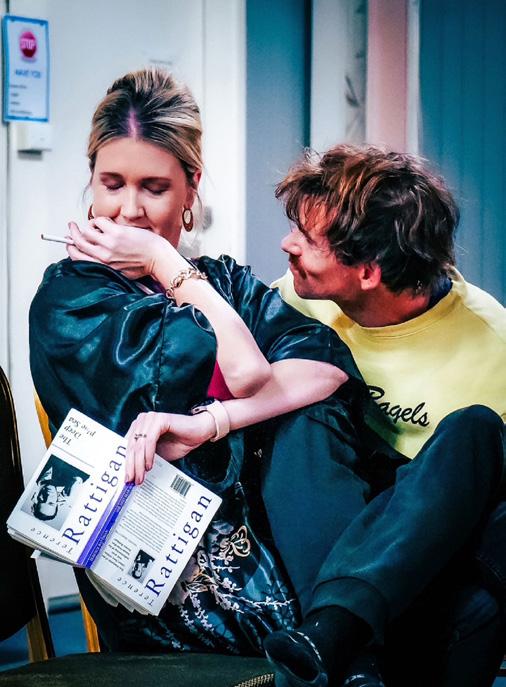
KEEPING UP THE ACT
INCOMPETENT, FAILED TO UNDERSTAND…
That was Housing Minister Berry’s bizarre defence of her department after they fumbled access to Commonwealth millions to help vulnerable people, say JON STANHOPE & KHALID AHMED
EX-GOVERNMENT FURNITURE
TRUCK LOADS OF FURNITURE
Quality care for you and your family
Your local, trusted GP practice in the heart of Belconnen.
NOW OPEN AND ACCEPTING NEW PATIENTS
6 days a week
opens doors New local practice
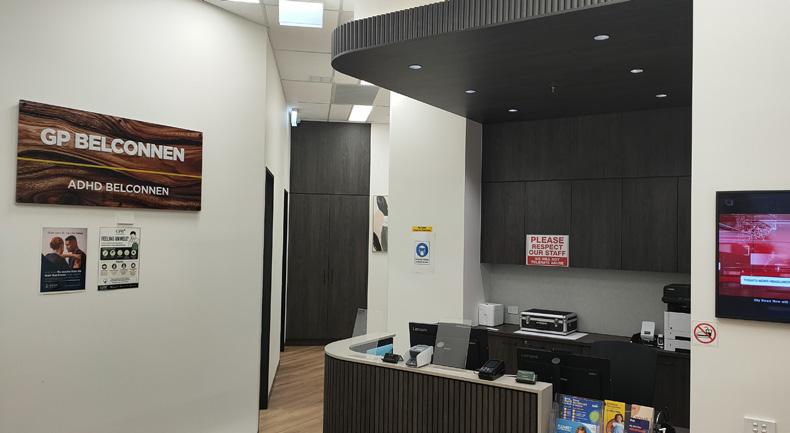
Residents in Canberra’s North now have access to a new local healthcare provider with the opening of GP Belconnen, a Medical Practice at Grazier Lane, Belconnen.
Focused on accessible, family-friendly healthcare, the new practice is now welcoming patients and offering a broad range of general medical services for individuals and families across the region.
The practice provides bulk billing for Medicare card holders and aims to deliver convenient, community-focused healthcare close to home.
Located in the growing Belconnen precinct, GP Belconnen offers services including general health checks, children’s health, women’s health, immunisations, chronic disease management, mental health support, skin checks, ADHD management and travel medicine.
Practice representatives say the goal is to create a modern and approachable medical environment where patients feel comfort-
Opening
GP Belconnen reflects our commitment to improving access to local healthcare and creating a welcoming environment where patients and families feel supported, the practice said.
able, supported and able to access quality healthcare when they need it.
The opening comes as demand continues to grow for accessible GP services across Canberra’s expanding northern suburbs.
Open six days a week the practice has been designed to provide flexibility for busy families, professionals and older residents seeking reliable local healthcare.
The practice is also accepting new patients, helping improve access to general practice services within the Belconnen community.
Conveniently located at C08, 2 Grazier Lane, the practice is positioned close to shopping, transport and residential areas, making appointments easier for local residents.
GP Belconnen says its focus remains on providing patient-centred care with an emphasis on preventative health, ongoing support and long-term community wellbeing.
Practice Principal for GP Belconnen, Dr Kelechi Nnajide
NEWS / Old Canberrans Hockey Club turns 90
Here’s the scoop, hockey’s
By Tia PRIEST-WILLIMOTT
A passion for hockey and the dedication of hundreds of volunteers has culminated in the Old Canberrans Hockey Club celebrating its 90th anniversary this year.
Based at Hockey ACT in Lyneham, the club, affectionately known as Checks, has welcomed people of all ages over the nine decades.
Catriona Bailey-Price, a long-term member of Checks, was drawn into the world of hockey through her older brothers.
“I joined when I was five years old,” she says. “My three older brothers were playing hockey and I was dragged along to everything they do… and I just wanted to join in and I haven’t looked back,” Catriona says.
During this time, Catriona has represented Australia in the Hockeyroos three times, as well as playing in the first-grade women’s team with Checks.
The local star is one of many who started playing with Checks when she was young. But this wouldn’t have been possible were it not for two boys in 1936 at Telopea Park School who wanted to play hockey, which was considered “a girl’s game”. Boys had the option of Australian Rules Football or rugby.
Max Hill, a future founding member of Checks, had begun playing hockey with the Kingston Club in late 1933 and by the next autumn-winter season was captivated by the game.
He and another student approached their sports master, Jack Lenihan, and asked to practice hockey on sports afternoons instead of the usual boys’ sports.
Initially shocked, the sports master gave in.
Through rough times and good times, the club has rallied around its members, building a strong network.
“It just feels like an extended family to me,”
Catriona says.
“We’ve also been really progressive with initiating some more inclusive rounds like the Pride Round, which I think is a true testament to the values the club holds.
“The club just wants you to be there to have fun, play hockey and try your best.”
The club continues to draw in future stars, through its popular kids’ program, Hook In2 Hockey.
Katie Reid started playing hockey when she was seven, after a friend invited her to come along to a Hook In2 Hockey session.
“We were not a hockey family,” her dad David says.
“I had never watched a game of field hockey before in my life, but she absolutely
loved it and really grew with the club and it’s become a big part of her identity.”
David was quickly assimilated into the club, becoming junior co-ordinator.
“I think there’s something
quite special when you have that strong sense of community within a club that’s been around for so long,” he says “It’s forever finding out connections with people and how they’ve been involved
with the club and why they’re so dedicated to giving up their time to help run it.
“I think having those deep roots in the community really helps make it a rich environment for the culture of the club and of Canberra as well.” The club has thrived over its 90 years, with numerous teams reaching first-grade finals, and teams in every division and age
Catriona also credits the club’s longevity to the generos -
“I think we have some of the best people that are willing to go above and beyond to keep it running and moving,” she
David agrees, highlighting the effort members put into making Checks the best it can
“I know that there’s been periods in their history… where member numbers have dipped or there’s been some challenges, but I think because the club has been such a positive influence on so many of its members they want to put in the work and fight to build the culture of the club,” David says. ochc.com.au
Hockey champion Catriona Bailey-Price in full flight (Photo: Rodney Huckstadt) and as a five-year-old player… “It’s amazing, I love the sport. There’s a reason why I’ve played it for 30 years.”
David Reid and daughter Katie.
Nerdy grrrl’s story of surviving in technology
By Dhwani PATHAK
Carol Wapshere still remembers what it felt like to finally find her people.
After years of severe bullying in primary school, high school shifted something. “I found other nerdy girls,” she says. “Girls I could talk about books with and I wasn’t going to get beaten up for it.” It was small, but it changed everything.
That instinct, she says, is what led her to her first break. A programming class, one of the first her school had ever run, caught her attention. She kept asking for more.
“I’d get all excited about something and start having a big discussion with the teacher,” she says. In 1985, when Apple came calling, that same teacher thought of her.
Carol Wapshere… “It’s okay to just stand there and say, no, I am going to be here.”
For a time, it pushed her away. She returned to it later on her own terms. At university, she joined a band. The violin was the only instrument she had, so she made it work. “I fell in love with the whole process,” she says. That idea, of building something together, carried over into her work in IT. “I get that in IT as well,” she says. “Having a project, something we’re making together.”
“There were no older women I could look to,” she says. “None staying technical.” The pressure to move out of hands-on work was constant. She ignored it.
An identity and access security specialist, she continues to work in IT in a hands-on technical role, a path she says remains rare, while also turning her focus to storytelling through her book.
Her career also unfolded alongside raising a family, a balance she admits was not always straightforward.
At one point in London, with a six-month-old child and a job she found unfulfilling, she came close to leaving the industry altogether. “I was basically working just to pay a childminder,” she says. “It didn’t feel worthwhile.”
Still, the challenges never fully disappeared. She describes sexism in the industry not as overt moments, but something quieter and more persistent.
“Death by a thousand paper cuts,” she says.
It is the small assumptions. The offhand comments. The times someone asks when the “technician” is arriving, not realising she is the tech lead. Or when a colleague assumes a man must have set something up for her.
“Those little things… it erodes your confidence,” she says.
Over time, those moments add up. And for many women, they become a reason to leave.
“I want women to know there is this kind of career,” she says.
She grew up in Sydney and attended Sydney Girls High School, but her career and family life took her across continents, living and working in Australia, London, Brussels and Geneva as her husband’s work led the family overseas, before they eventually settled in Canberra.
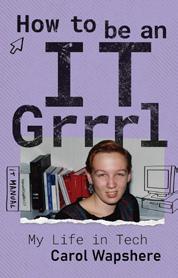
Carol’s memoir, How to be an IT Grrrl, traces a career that spans decades, countries, and a tech industry
that was not built with people like her in mind. But it is just as much a story about identity, creativity, and staying the course.
Music runs quietly but firmly through that story.
“I’ve always been very drawn to music,” she says. “It’s been a constant.” Her father, a classical music enthusiast, introduced her to the violin early on, though not always gently. Practice came with pressure.
In the absence of role models in tech, Carol looked elsewhere. In the early ‘90s, it was women in alternative music, especially the “Riot Grrrl” movement, that stood out; women who took up space loudly and unapologetically in male-dominated scenes. “I learned something from that,” she says. “It’s okay to just stand there and say, no, I am going to be here.”
That mindset stayed with her as she built a long technical career, something she points out is still uncommon for women.
Instead, she took her husband’s advice. She returned to Australia briefly and negotiated a part-time role. “I could build a server in London from my living room in Brussels,” she says.
At the time, she was working around 10 to 15 hours a week while raising young children. It was enough to stay connected. “I got to keep my brain engaged… that satisfaction of fixing something.”
For Carol, that flexibility is one of tech’s most overlooked strengths. “What other career could have given me that?” she says.
On what’s next, she says, “I feel like I’ve told my story, and now I want to hear from other women,” as she plans a podcast by the same name. She says she already has “half a dozen volunteers” and wants to focus on “that difficult 30s period” where many consider leaving.
“Here’s some women who’ve done it… everyone’s going to have their own way,” she says.
How to Be an IT Grrrl by Carol Wapshere is available as a book (rrp $35) and an e-book online, and from the National Library bookshop, and Paperchain.
Canberra Liberals leader Mark Parton… “Eslake’s final report should be the end of Labor’s deflection and denial.”
ACT budget position ‘not sustainable’
An independent report into the ACT’s finances has found the Territory’s budget position is not sustainable, warning that rising debt and ongoing deficits stem from deliberate policy choices rather than external economic pressures.
The final report by independent economist Saul Eslake, prepared for the ACT Legislative Assembly Select Committee on the Fiscal Sustainability of the ACT, finds the Territory’s financial position “cannot be characterised as sustainable” and attributes the deterioration in the budget largely to “conscious policy decisions taken by the ACT Government”.
It also warns that the cumulative impact of borrowing is increasingly being shifted onto younger Canberrans and future generations.
While noting the Territory is not insolvent and that the fiscal position remains manageable in the short term, the report cautions that continued deficits and rising liabilities are placing pressure on the budget outlook, particularly as households face higher rates, taxes and broader cost-of-living pressures.
Canberra Liberals Leader Mark Parton said: “Saul Eslake’s interim report was a wake-up call. His final report should be the end of Labor’s deflection and denial.
“Labor has made conscious decisions to increase net debt tenfold in a decade, with half of that happening in the last three years. It was never bad luck. It was their conscious choice.”
New crossing on Canberra Avenue
Construction has begun on a new signalised pedestrian crossing on Canberra Avenue, in a move the ACT Government says will improve safety for students crossing the busy arterial road near nearby schools.
The crossing comes after a crash on March 28, 2025 when
two schoolboys were seriously injured on Canberra Avenue near St Edmund’s College.
During construction, temporary lane closures and traffic adjustments will be in place along Canberra Avenue. The new crossing is expected to be operational by early August, with full completion of surrounding works scheduled for September, weather permitting.
Petition to save fitness programs
Organisers are calling members of the public to sign a Legislative Assembly e-petition to oppose the cutting back of long-standing senior fitness programs at CIT Fit & Well Centre at Bruce. They say the programs enjoy strong demand and have supported the health, rehabilitation and social wellbeing of hundreds of older Canberrans for more than a decade. Sign before June 9 at epetitions.parliament.act. gov.au/details/e-pet-045-26
How old is that rock?
How old is that rock? And how do we know? Geoff Fraser, director, Geochronology & Stratigraphy, at Geoscience Australia, will talk about how geological time – the age of rocks – is measured at the next meeting of the Narrabundah Probus Club, at the Harmonie German Club, Narrabundah, from 11.15am on June 9. Visitors are always welcome. Probus is a network of social clubs that provide retirees with the opportunity to connect socially. It is not affiliated with any religious or political organisation.
“The bushland ring surrounding Parliament House was a central element of the original design... Any substantial intrusion into this perimeter warrants careful public examination”. GEORGE WILSON has concerns about the tram route to Woden.
The “dog-leg” alignment on the eastern side of Parliament House has dominated debate around the proposed Light Rail Stage 2B route, particularly in relation to tunnelling and its approach to the parliamentary precinct.
However, this focus has tended to obscure potentially significant impacts on the western side of the precinct, including the nationally significant bushland perimeter surrounding Parliament House.
The Deakin Residents Association (DRA) recently led a public walking tour around State Circle and Parliament House to examine the route on the ground and highlight aspects of the proposal that, in our view, have received insufficient public scrutiny.
Participants were struck by the extent of native vegetation that could be affected, and by the scale of bridge and engineering works likely to be required beneath Federation Mall and across State Circle. Many commented
that they had not previously understood the full scope of the proposal until seeing the site firsthand.
The DRA’s concerns include:
• Impacts on the heritage and environmental values of the parliamentary precinct.
• Damage to the circular bushland perimeter that is a defining feature of the original award-winning Parliament House design.
• Additional traffic lights at the top of Adelaide Avenue and on State Circle, with consequent increases in travel delays.
• Major construction disruption in one of Canberra’s most important national landscapes.
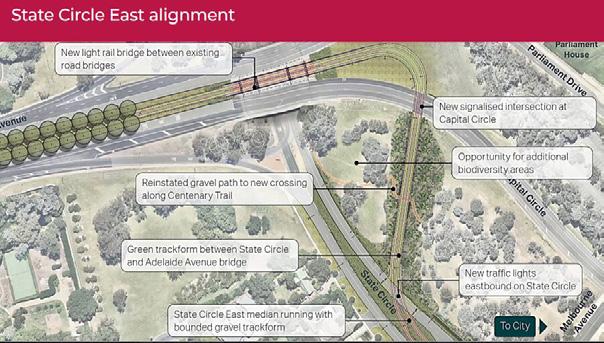
Recent ACT Government statements have added to these concerns. In particular, we question references to proposals for “an inner-running track between Sydney and Adelaide Avenues to keep light rail off median strips” and whether this implies construction through the bushland perimeter itself.
The parliamentary landscape was
not accidental. The bushland ring surrounding Parliament House was a central element of the original design concept, intended to visually connect Capital Hill with the surrounding landscape and frame the national institutions within a natural setting. Any substantial intrusion into this perimeter warrants careful public examination.
The financial implications are also becoming harder to ignore.
Stage 2B may ultimately cost in the order of $5 billion or more, driven by tunnelling, bridge reconstruction, a crossing of Lake Burley Griffin, and extensive modifications to existing infrastructure.
This is very different from Stage 1, which was largely constructed on flat ground with limited bridge works.
Stage 2A alone is already approaching $1 billion. Each extension beyond Commonwealth Park becomes progressively more complex and expensive.
Supporters of the project argue that Adelaide Avenue could evolve into a high-density corridor similar to Northbourne Avenue or Flemington Road.
However, Adelaide Avenue is fundamentally different. It is a six-lane arterial road without traffic lights, bordered by embassies, schools, established institutions, protected open space and The Lodge.
Unlike Northbourne Avenue, there are limited opportunities for redevelopment and only a small number of proposed stops servicing Deakin and Yarralumla.
The DRA strongly supports improved public transport and active travel infrastructure. However, we believe Canberra residents deserve a clearer understanding of the costs, impacts and alternatives before irreversible decisions are made affecting the parliamentary precinct.
In response to strong public interest, the DRA is planning further inspection walks and hopes federal and ACT politicians will attend. We would particularly welcome members of the Joint Standing Committee on the National Capital and External Territories, including Senator David Pocock and committee chair Alicia Payne MP. Senator Katy Gallagher and relevant ACT Ministers would also be welcome to inspect the site directly.
The committee has the capacity to inquire into matters affecting the Parliamentary Zone and amendments to the National Capital Plan. The DRA believes the proposed route and its impacts warrant such an inquiry.
To participate in future walks, register via the Deakin Residents Association website.
George Wilson AM is president of the Deakin Residents Association.
Light rail will climb through the bushland near The Lodge to traffic lights on Capital Circle before entering Adelaide Avenue and crossing State Circle via a new bridge.
A second opinion on hearing loss – you need professional advice, not a sales pitch
A woman came into my clinic for a consultation about her hearing aids, telling me her hearing aids were 4 years old and she had never found them to be of much help. She said the salesperson quoted her $14,000 for a pair of hearing aids, however, the monthly special of 20% discount meant they cost her $11,200. So, she ‘only’ paid $11,200 for hearing aids that did not help her. Sadly, I hear this all too often.
Here are some things to do to avoid this type of problem:
1. Visit your GP. If you or someone you know has a problem with their hearing, visiting your GP to check for wax in the ears, and to get advice is a starting point.
2. Qualifications. Always check the qualifications of the person you are dealing with. A person without professional qualifications has no business advising you about your hearing. They need to belong to a professional association with a Code of Conduct, so you know they are acting in your best interests, not their own.
years. If you are not sure about their advice, then seek a second opinion. The wrong hearing aids can be an expensive waste and could lead you to stop wearing them. You should always have a trial of hearing aids to ensure that they are right for you.
6 Pensioners and eligible DVA card holders often have entitlement to free services. If you are covered by a government concession, then let the clinician know (even though your clinician should ask). Eligible clients may obtain free hearing tests, consultations, and free hearing aids (referred to as fully subsidized hearing aids).
“A person without professional qualifications has no business advising you about your hearing. They need to belong to a professional association with a Code of Conduct, so you know they are acting in your best interests, not their own.”
– Dr Vass
These hearing aids are appropriate for many people, however if you have great difficulty hearing in background noise (for example a restaurant), then you may want to consider partially subsidized hearing aids. This is when the government pays a certain amount, and you pay for additional features and benefits. Your decision should be based on the following:
you are dealing with a qualified clinician, then they belong to a professional association. The best contact is an independent complaints body referred to as Ethics Review Committee. You can email ethics@auderc.org.au and view the website www.auderc.org.au. You can make an anonymous complaint and your complaint will be handled in a confidential and professional manner. If you are in the ACT, contact the ACT Human Rights Commission email human rights@act.gov au and the website www.hrc.act.gov.au
3. Independent advice. You should get independent, professional advice.
4. There are a wide range of hearing aids out there. Finding the right hearing aids for your communication needs can be challenging. Hearing aids vary in price and performance. Bluetooth® connectivity and rechargeable hearing aids are available on most hearing aids, along with apps that allow you to control your hearing aids from your mobile device. Be aware that just because a hearing aid is more expensive, that doesn’t mean they are the best hearing aid for you.
5. Just as hearing aids vary in performance, clinicians may also vary in performance due to training, experience, and skills. Make sure that you are comfortable and confident in their advice. You are likely to be with this clinician for the life of your new hearing aids, typically 4 to 5
(a) Can you afford the more expensive hearing aids? Don’t go into financial stress if you can’t afford them. (b) Are you clear on the free vs partially subsidized features & benefits? Never believe someone who tells you the free hearings are not good or of poor performance, this is simply not true. (c) If you try the partially subsidized hearing aids and are not happy, then return them. Do not keep hearing aids because you think the failure is yours or that you will improve over time. If the hearing aids are not working for you in the trial period, then they will not work for you in a year or two.
7. If you have a complaint, then seek help. Your clinician should be able to help you through most of your needs. Sometimes, a problem may be beyond the expertise of even the best clinician. However, if you have a complaint there are things you can do. If
Canberra cocaine consumption hits new highs
“Australia’s cocaine trade illustrates how strong domestic demand, exceptionally high prices and globalised criminal supply chains can sustain a resilient illicit market,” writes CLIVE WILLIAMS.
As of this month, cocaine use in the ACT appears to be at or near
Nationally, Australia has one of the highest reported rates of cocaine use among developed countries.
According to the latest National Drug Strategy Household Survey, 4.5 per cent of Australians aged 14 and over – around one million people – used cocaine in the previous 12 months, making it the third most commonly used illicit drug after cannabis and methamphetamine. Who then are the consumers?
Cocaine users are mainly young adults aged 18-34. While men have always used more, the gender gap is narrowing, with notable rises among young women, particularly those aged 18-24.
Use is significantly higher among employed individuals, those in higher socioeconomic groups, and people with tertiary education, especially in professional or whitecollar occupations.
Use is far more prevalent in Australia’s capital cities than in
regional or rural areas, with elevated rates in NSW and Queensland. Many users are polydrug consum ers who combine cocaine with alcohol, cannabis, or MDMA, often in binge pat terns at parties, festivals, or social settings.
This profile – urban, employed, and relatively affluent – distinguishes cocaine from methamphetamine, which has a broader demographic reach including more disadvantaged and regional users.
This Australian cocaine demand supports a large and growing domestic market.
Recent wastewater monitoring indicates cocaine consumption has continued to rise to record levels in 2024-25. High street prices – commonly hundreds of dollars per gram – generate billions in illicit market value and continue to attract transnational organised crime.
Cocaine primarily originates from coca cultivation in Colombia, with Brazil and other South Ameri-
can countries serving as key transit points. It reaches Australia via long maritime routes across the Pacific. Traffickers employ commercial shipping containers, yachts, fishing vessels, “mother ships” and semisubmersible vessels.
Air cargo, mail and smaller vessels supplement bulk maritime shipments.
Pacific islands such as French Polynesia, Fiji and Vanuatu have emerged as important transshipment hubs.
Recent law enforcement operations have intercepted vessels carrying multi-tonne shipments routed toward Australia.
In January, authorities in French
Polynesia intercepted about 4.87 tonnes of cocaine believed destined for the Australian market.
Brazilian crime groups such as the Primeiro Comando da Capital (PCC), Mexican cartels, and Balkan criminal networks often co-operate with Australian retailers.
Australian law enforcement –including the AFP, ABF, and ACIC – has recorded major seizures in recent years.
In 2025, authorities seized about 7.8 tonnes of cocaine, a significant increase on previous years, with an estimated street value of about $2.5 billion.
In May 2025 alone, authorities intercepted more than one tonne of cocaine aboard a vessel off the NSW coast near Nambucca Heads. Large multi-tonne maritime interceptions and hundreds of smaller detections now occur annually.
How much doesn’t get intercepted remains difficult to determine because of the covert nature of the trade. However, adequate supply continues to reach the domestic market, as indicated by wastewater data, sustained availability and stable prices.
No single Mr Big dominates the trade. Instead, cocaine trafficking into Australia involves transnational syndicates rather than rigid hierarchical empires.
Australian-based facilitators, including networks linked to outlaw motorcycle gangs, such as the Comancheros, often manage local logistics, distribution, debt collection and money laundering. International partners from South America, the Balkans and elsewhere supply product and co-ordinate transportation.
While global drug trafficking can intersect with terrorism financing in some source regions, terrorist organisations do not play a meaningful operational role in the networks supplying cocaine to Australia. The trade is overwhelmingly driven by profit-seeking organised crime.
Australia’s cocaine trade illustrates how strong domestic demand, exceptionally high prices and globalised criminal supply chains can sustain a resilient illicit market. Despite increasingly sophisticated interdiction efforts by authorities, consumption continues to rise. Effective responses therefore require not only a continuing focus on supply interdiction but also on strategies to reduce the Australian demand for cocaine.
Prof Clive Williams MG is a criminologist and director of the Terrorism Research Centre (clive. williams@terrint.org)
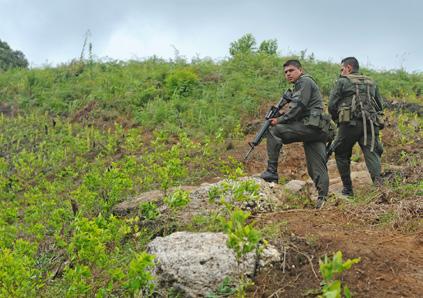
Columbian police swoop on an illegal coca harvest. Photo: Policia Nacional
SOLVING SCIATICA
Sciatica is caused by nerve pain that originates from the lower back and can cause pain from the point, right down through your bottom and down one leg to your calf.
Not the entire area may be causing you pain at any one time, but what the pain will certainly do is cause you frequent extreme discomfort that is often not relieved by pain medication. Exercise is a key to dealing with sciatica. People who have lived with sciatica for some time will generally have some weakness of the
muscles, tendons and ligaments surrounding the joints and bones that support the sciatic nerve. This is largely due to not having used their body to the fullest extent due to the sciatic pain.
Sciatic pain will generally respond well to rebuilding the support structures surrounding the sciatic nerve. For some people surgery may be the only solution, but in most cases, even if surgery is required, building up the support structures either prior to or following surgery will still be necessary.
Arthritis ACT has a team of exercise physiologists that can improve your quality of life in relation to your sciatica. Both hydrotherapy and land based exercise techniques are useful, and for those who do not like water exercise, land based exercise is just as effective.
Do you want to solve your sciatica?
Call us today on 1800 011 041 and book your appointment with one of our exercise physiologists and scientists to solve your sciatica.
MEET OUR EXERCISE PHYSIOLOGISTS
Blake Dean Holly Hazlewood Sophie Bullock Sarah Solano Nick van Diemen
Mad as hell and not going to take this anymore!
Anger has always been a useful tool for messaging of brand and narrative in politics.
Why? Mainly for its simplicity and cut-through factor, and how it can also be integrated into different strategic narratives such as party, leader and policy. If done right.
Cut-through is a critical factor in the modern messaging era where we have competing “noise” from several sources every single day: family, life admin, jobs, hobbies, and whatever else you do with the three minutes remaining.
Anger can get that cut-through and then some. Even if irritating, it stays in our minds longer than a positive message.
Historically, anger has been used primarily more with what I call softanger strategies – think frustration. Why? Because any centrist party wants to be seen as moderate. The soft-anger emotional fit usually aligns perfectly with party, leader and policy.
However, this decade is fast becoming known for something else: angertainment or hard anger.
Hard anger is nearly always used by those parties on the fringes of the political spectrum. Hard left, hard right, even medium versions of those, all open up the hard-anger toolbox to gain awareness, momen -
tum, and followers.
Hard anger can also allow for an effective alignment with the party, leader and policy. It can be used as part of splinter strategies in narrative and brand as well. So why doesn’t everyone use it then?
Hard anger is political dynamite: used correctly it achieves the nigh impossible quickly. Like going from 6 per cent to 23 per cent of a primary vote in one year. Used clumsily and it’s mushroom clouds for those in close proximity.
Right now we are seeing contrasts on the strategic use of anger as part of establishing narrative and brand positions for the remainder of this year, and for the long, slow build to
Anger can get that cutthrough and then some. Even if irritating, it stays in our minds longer than a positive message.
the next election.
So, let’s take a look at some examples of different anger strategies being used right now.
The Hard
One Nation and the Greens use hard anger well. One Nation’s hard-anger strategy is fairly straightforward. Pauline Hanson has no fear at all of offending whoever. Because to her, and her rapidly increasing conservative followers, she is doing this for the (one) nation.
She isn’t frustrated, she’s angry. Very angry. This is consistent with the policies offered. Aimed at pleasing the base and offending the opposites. Opposites attract but they also help open wallets and attract volunteers. Greens? Similar strategy, same objectives.
So they get angry back at the hard conservatives and their backers. Younger Greens, inspired by Extinction Rebellion, Sea Shepherd, PETA and others who figured enough was enough and fire needed to be fought with fire, love this. Activism represents money, awareness, and content has flowed fairly constantly since. But…
The Balance
The but is the need for the Greens to not lose the half of their base who are older voters, the ones who believe in soft-power. They must balance hard with soft. Renters Party with Climate Party with Refugee Action Party. This allows the Greens a chance to widen their narrative appeal in the inner-urban areas of big cities. And it’s worked. So far. But… if that balance drifts, then narratives get confusing, messaging contradictory, and they could lose a part of the base. More than ever, the Greens will need this balance to be spot on because they will be fighting for sixth Senate spots with everyone else. Off centre is where the Liberals’ balance is right now. Are they going for hard anger on immigration to compete against One Nation? Or are
they going for soft anger with frustration over Labor’s budget policies? It can be both but it doesn’t seem to be. Party, leader and policy are all over the place.
So using anger looks like desperation, not representation of a broad church whose members have given up on listening to the sermons by its leader.
Labor? Labor has the balance near right. For now. One wrong move and you are going to be seen as either falling to the right, or too far to the left.
But all of this is still about the game. And the game itself is making more and more of us voters angrier that it’s even being played in the first place when so much balance is lacking in society.
Dr Andrew Hughes lectures at the ANU Research School of Management, where he specialises in political marketing.
LOLLY SWAGMAN
THURSDAY - MONDAY 10AM - 4PM and every day
One Nation’s Pauline Hanson… “This decade is fast becoming known for something else: ‘angertainment’ or hard anger.” writes Andrew Hughes. Photo: Lukas Coch/AAP
‘Just 65.1 per cent of public housing with a member with a disability met the acceptable minimum standard, a very low bar’
Berry’s bizarre ‘gotcha’ defence of funding fumble
With the budget in deep deficit, you’d think the government would jump at accessing a pot of federal funding to fix the accommodation problems for the most vulnerable people in public housing. Wrong! says JON STANHOPE & KHALID AHMED.
“The ACT Government is committed to an accessible and inclusive ACT, where people with disability can fully participate in all aspects of community life.
“A key component of this commitment is ensuring people with disability have access to safe, suitable and affordable housing.”
That’s the opening statement of the ACT Government’s submission to the Standing Committee on Public Accounts and Administration’s Inquiry into Specialist Disability Accommodation service delivery by Housing ACT.
Unfortunately, the government has apparently not seen fit to spare a Legislative Assembly Committee from its dodgy propaganda.
The government’s own data and actions are simply not consistent with its submission. We will come to the story of the inquiry and what it highlights later, but first to the government’s record.
The relevant data, which is sourced from all jurisdictions, is published by the Productivity Commission in its annual Report on Government Services. The dataset we refer to is comparable across jurisdictions and over time.
In 2025, 71 per cent of the housing stock in the
ACT met the acceptable minimum standard, the second lowest rate in the nation, ahead of only NSW. Tasmania had the highest level of stock meeting the minimum standard at 84.4 per cent.
The “acceptable minimum standard” does not mean an ordinary average dwelling but is one with a minimum of four functioning facilities and no more than two major structural problems. The functioning services that count towards a dwelling being of acceptable standard are for (a) washing people; (b) washing clothes; (c) storing and preparing food; and (d) sewerage. The measurement is a very low bar, well below the social norm of acceptable housing.
For households with a member with a disability, the commission reports that just 65.1 per cent of households were in a dwelling that met this minimum standard. This again is the second lowest of all jurisdictions with Tasmania the highest at 82.3 per cent.
The repeated claim by the ACT Government of a commitment to ensuring people with a disability have access to safe and suitable accommodation is hollow and indeed risible when a third of the households which support a person with a disability are living in a dwelling that does not meet the accepted minimum national standard.
Notably, the other identified disadvantaged group, Aboriginal and Torres Strait Islander people, do not fare any better with just 64.9 per cent of dwellings in Canberra occupied by them meeting the minimum accepted standard.
The overall poor condition of housing stock compared to other jurisdictions, and the relatively poor condition of the stock allocated to households with a disability were not unexpected and could not have come as a surprise to the Chief Minister Andrew Barr or Housing Minister Yvette Berry.
One is entitled to think that with the budget in deep deficit, and notwithstanding the skewed priority afforded to trams and theatres, that the government would jump at the opportunity of accessing a pot of federal funding to fix the accommodation problems for the most vulnerable people in public housing and our community. Wrong!
It emerged during the 2024-25 annual report hearings in November 2025, that people with a disability and disability advocates had raised concerns about their ability to have modifications made to Housing ACT properties despite funding being available in their individual NDIS plans.
Ms Berry advised the committee, inter alia, that certain “issues” had been identified in the management of disability accommodation modifications by Housing ACT and that she had referred the matter to the Auditor-General.
From the information publicly available, Housing ACT registered as a Specialist Disability Accommodation (SDA) provider in 2017, and 112 people were registered for the SDA program. The registration expired in December 2025 without any funds having been accessed or utilised by Housing ACT.
supported the motion for such an inquiry by an Assembly Standing Committee. Notably the government’s support followed the revelation, during the debate on the motion, that the Auditor-General had declined to conduct such an inquiry.
Interestingly, there are several damning reports by the Auditor-General, on various issues, which ordinarily would see a minister or even a government lose the confidence of the legislature, that have gone unnoticed.
The inquiry was told during hearings in early May of uninhabitable dwellings with mushrooms growing in spaces where water has seeped into the walls along with leaks through light fixtures. On the other hand, the Territory may have lost up to $10 million in unused funding.
Minister Berry appearing before the committee reportedly said: “I get all trying to find a gotcha moment and make all kinds of allegations against us and I’d say, in this circumstance, there may have been some opportunities that we would still have been unable to unpack on accessing funding.”
She also advised the committee that Housing ACT signed up to the program probably not completely understanding the challenges behind it.
With respect to the minister, no one needs to try for a gotcha moment when she has stumbled from one faux pas to the next, and from one scandal to another.
One does not need to look further than her denial that the proceeds of the sale of public housing were directed to tram fund, or the claimed investment of $700 million in public housing that did not occur, or the scandalous public housing renewal programs that she later claimed were not meant to grow the stock, or the forced evictions of elderly women and disabled tenants that were found to breach their human rights.
The minister’s evidence before the committee is remarkable in that she, in effect, asserts that her officials were incompetent and failed to understand the program they signed up to. It is also a matter of record that having signed, they failed to implement the program. That failure is, however, ultimately attributable to the minister.
With respect to the minister, no one needs to try for a gotcha moment when she has stumbled from one faux pas to the next, and from one scandal to another.
The minister’s response to the failing suggests that they would not have signed up if they knew the complexity of the program. While that may have saved her from the embarrassment of not having drawn on a dollar of the funds available in the program, it would still not improve the living conditions of the disabled tenants with mushrooms growing throughout their home.
We are at a loss to understand why NDIS funding set aside for accommodation support was not accessed by the ACT Government especially given the pathetic state of the dwellings available to the numerous Canberrans with a disability. We refer below to Minister Berry’s position, which we find quite bizarre.
Chiaka Barry, Liberal Shadow Minister for Community Services moved a motion on December 3 calling for an inquiry by an appropriate committee, arguing that the minister had not provided details of the referral to the Auditor-General to members of the Legislative Assembly, and that any inquiry by the auditor would be limited in its scope if it did not provide affected tenants an opportunity to highlight their concerns.
To the surprise of some, the government
Seriously, how hard can it be to identify how many and which of the Housing ACT tenants with a disability are eligible for NDIS, and of those tenants eligible for SDA? It is surely a simple and low-level exercise without any policy complexities.
Notably, Greens MLA Laura Nuttall was able to determine how many of her constituents were eligible but had not been able to access funding. Ms Berry has a whole directorate at her disposal.
We await with interest the committee’s assessment of the bizarre position taken by the minister in relation to this distressing failure.
Jon Stanhope is a former chief minister of the ACT and Dr Khalid Ahmed a former senior ACT Treasury official.
Minister Yvette Berry says Housing ACT signed up to a program not completely understanding the challenges behind it. Photo: Lukas Coch/AAP
POLITICS / major parties on the nose
Will a party of independents fix the frustration?
Australia’s major political parties are on the nose.
Despite many good people who work within Labor and Liberal to improve the lot of ordinary Austral ians, the success of One Nation at the Farrer by-election has shaken the foundations of these parties.
According to independent ACT sena tor David Pocock: “There is a lot of frustration and anger out there in the community that our political system is not working for Australians”.
A range of polls support his contention.
MPs Allegra Spender and Zali Steggall have been leading the push for the possibility of a much more co-ordinated approach by independents to the federal parliament. This push includes Pocock, who suggested on the ABC Insiders that all seats should be contested by community independents.
Despite party discipline being a key tenant of the major parties, it is still a major challenge to achieve a co-ordinated approach to policy decisions and governing. Recent experiences of co-ordination between different political parties also provides some sobering lessons.
Ian De Landelles, in a letter to CityNews says the Pocock idea to campaign in all 150 House of Representative seats across the country
would have dire consequences if followed to its logical conclusion.
“The outcome”, he argues “would be utter legislative chaos… as all vestiges of the existing parties would be eliminated”.
He does have a valid point. The political parties have enough trouble, despite their decades of practice. The fiasco of the discussion between the ACT Liberals and the Greens to hold Labor better to account is a minor demonstration. Having a parliament of independents, De Landelles argues “would make ‘herding cats’ seem like child’s play”.
Reality check! The chances of suddenly changing the parliament to even a majority of independents would take quite a few elections.
Considering Senator Pocock’s stellar
Pocock’s greatest concern is regarding the untoward and blatant influence of vested interests on political parties, particularly the fossil fuel and gambling industries.
performance, it is not difficult to project one of the House of Representatives seats in the ACT going to an independent. However, there is Buckley’s chance that Labor could lose all three of those seats and it is hard to believe there is a risk to Katy Gallagher’s Senate position.
Co-ordinated decisions of the major parties to undermine independents may have come back to bite them. Political donations for independents have been severely curtailed compared to the major parties. There are advantages to forming a political party.
Discussions amongst the “teal” independents have already shown some of the challenges. Already independents Monique Ryan and Kate Cheney have distanced themselves arguing they will “remain as a community independent”.
MPs Helen Haines and other crossbenchers, including Bob Katter, former National Andrew Gee and Centre Alliance’s Rebekha Sharkie, said they would also remain independent. However, this does not exclude some kind of grouping of
some independents rather than a formal political party.
Rather than a political party, the independent MP for Bradfield, Nicolette Boele, framed the issue as “a formal alliance of community independents”. However, there are motivations for forming into a political party.
While the independents have a cap on spending, about a third less than candidates from political parties, there are opportunities for political parties to accept donations more broadly and tackle independent candidates by focusing very large expenditure on more vulnerable seats.
Pocock’s greatest concern is regarding the untoward and blatant influence of vested interests on political parties, particularly the fossil fuel and gambling industries.
“There’s this recognition that on so many of these big challenges we are facing, it’s not necessarily left versus right, it’s actually vested interests and their stranglehold on the major parties versus the Australian people,” he says.
There is already co-ordination between many of the federally elected independents. Support from Climate 200 has identified similar platforms of
stronger climate action, environmental protection and political integrity. Additionally, similar to the major parties, the like-minded MPs and senators meet on Tuesday mornings of parliamentary sitting weeks.
Within the ACT Legislative Assembly there are constant discussions and strong relationships between the local Greens and independents Fiona Carrick and Thomas Emerson. However, it remains to be seen how the community would react to having even some of the current federal independents and minor parties adopt more formal co-ordination.
Voters often make the “least-worst decision” as they cast their ballot. Considering such frustrations with the major political parties, and One Nation being too hard right for many, it would not be surprising to see a significant surge for independent candidates across Australia.
Michael Moore is a former member of the ACT Legislative Assembly and an independent minis ter for health.
Senator David Pocock… “There is a lot of frustration and anger… that our political system is not working for Australians”.
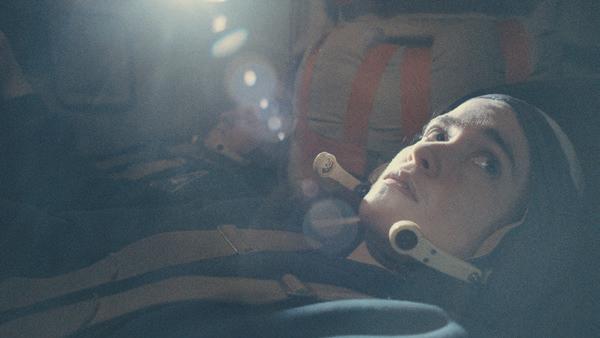
Out of this world, epic it was and Epic it wasn’t
An ever youthful and always engaging Prof Brian Cox spoke for over two hours, electrifying (sometimes stupefying) an audience of around 3500 fellow Canberrans, the majority of whom were young.
From the nanosphere of the building blocks of life (as we know it) to the barely imaginable possibility of a multiverse (noting that apparently there are over a trillion galaxies in our local universe), at rockstar ticket prices such was his gravitational power. He started with Keppler’s snowflake, which became a metaphor for scientific observations. Over about 400 years scientists have been able to verify them. Patterns observed in space are replicated in the natural world. He asserts they are connected. What a privilege it was to have been present to hear one of the world’s great scientific gurus.
His talk was interspersed with dramatic visuals on a massive screen behind him.
The venue was Exhibition Park called EPIC, originally built as an agricultural pavilion for the Canberra show, but it was anything but epic. As a Canberran I was ashamed to think that this venue was the best on offer for such scientific royalty.
Why our federal and territory governments haven’t prioritised the building of a world-class Convention Centre for such events is beyond stratospheric comprehension.
Everyone was seated on a flat auditorium floor. There were no side screens to be able to view Brian Cox and the visuals and graphics on the screen.
We were about one third the way from the stage and because of the bobbing heads of those similarly compromised in front of us we barely saw him and the graphics. Goodness knows how anyone seated behind us saw him at all.
Bouquets for exposing us to this modern scientific genius.
Brickbats, however, for the venue.
And though the subject for another letter with so much congestion getting to and from the venue, desultory planning was on display with no traffic control on the road or in the car parks. The few trams observed going in both directions had barely a soul on them.
Come on, Canberra, we can do far better than this. The nation’s capital warrants it.
Dennis Martin, Deakin
Greens ‘support’ Metro shareholders
Light rail Stage 2B will probably increase the ACT’s greenhouse emissions.
The draft Environmental Impact Statement for Stage 2B identifies two major emissions sources.
First, construction of Stage 2B will cause 100,000 tonnes of CO2-e emissions.
Second, Stage 2B will increase annual car travel by about 12 million kilometres. That extra car travel would currently cause about
3000 tonnes of annual CO2-e emissions. Those emissions will fall as electric cars replace petrol and diesel cars.
The total emissions increase from cars, from commencement of Stage 2B to the year 2050, would be of the order of 20,000 tonnes CO2-e.
The biggest plus for Stage 2B is that it would reduce emissions from buses. Stage 1 temporarily reduced annual bus emissions by a few hundred tonnes CO2-e. Stage 2B will have a similar initial impact. Bus emissions will in any case fall to zero by 2040, when all our buses will be zero emissions.
ACT Greens Transport spokesman Andrew Braddock is reportedly calling on ACT Senator Katy Gallagher, and ACT MPs Dr Andrew Leigh, Alicia Payne and David Smith, to publicly back Light Rail Stage 2B.
The ACT Greens seem to be supporting Canberra Metro’s shareholders, at the expense of the environment.
Leon Arundell, Downer
Breaking news that wasn’t
I was gobsmacked watching the news: there was “breaking news”. The war in Iran? The war in Ukraine? The ongoing war between Israel and Palestine?
The “breaking news” was Ivan Cleary’s decision to step down from coaching the Penrith Panthers following next year’s NRL season.
Never mind the budget that was just
handed down, nor the inquest into Clare Nowland’s death, nor the stories about the wars where people, including innocent adults and children are being killed, and the impact on countries and communities on a global level, physically,psychologically and fiscally.
All of that was as nothing when the great Ivan gave notice about an event far into the future.
Let’s just hope that it all works out for the Penrith Panthers.
Meanwhile, go you Mighty Tigers (Richmond); if we win another game this season, perhaps it will make breaking news. Got to get our priorities right.
Janine Haskins, Cook
There’s Eric at the table, but why?
As a long-time political tragic, with a voracious appetite for “traditional” media, I have not seen, read or heard any mention of the significant role his son, Eric, appeared to play in the recent visit to China by the US President.
While there has been considerable vision of the younger Trump accompanying his father to official functions, no mention at all about why Eric was there.
The most significant event of any highlevel visit was always the state banquet. Here, Eric sat at the head table, close to his father, and next to Wang Yi, the Chinese Foreign Minister, and arguably
the most powerful man in the CCP after President Xi.
Given that Secretary of State Marco Rubio was in the visiting delegation, I would have thought that protocol would deem that he would have been seated with his Chinese equivalent.
Is it too Machiavellian to ponder that Trump is positioning Eric as the “chosen one” and anointing him as his successor.
Given Trump has long been infatuated with British royalty, perhaps it’s his attempt to emulate this heredity process.
Ian De Landelles, Murray’s Beach, NSW
I like cats, but they should be indoors
Re the letter from Robyn Soxsmith (CN May 7) about feral cats: feral cats are now at home in all of Australia, including the most challenging of our biotopes, eg the deserts. They have had and are still having extremely destructive effects on our wildlife, which evolved without these very efficient predators.
They have almost certainly caused some extinctions.
All Australian cats should be indoors only. It was humans (Europeans) who introduced cats here. By the way, I like cats, but Australian cats should always live indoors. I have known some indoor cats and they were perfectly happy.
Angela Giblin
We’re stuffed, welcome to the club
Just when I was beginning to despair about the poor job our generation has done in advancing democracy, I am reminded that the wind did actually change a bit.
Jim Fraser WAS a model for elected representatives in a democracy. He did not appear to be intimidated by other people associated with the political party with which he was associated. He also did not appear to be in Parliament to get himself a better job than merely representing an electorate.
Which takes me to letter writer Ric Hingee’s observation that we need better people to represent us. I think the real situation is that we need to elect people who are looking to represent us and not their pre-selection standing, personal career aspirations and the like.
One way of starting the push for some proper democracy, might be to prohibit our elected representatives from holding any office other than the one they applied for and were elected to perform.
Surely there is more talent in the community which does not wish to represent a political party, than we are ever likely to get a chance to elect through the existing processes.
The ACT, like Tasmania and – I argue – the Senate, have voting systems that provide for even less than 20 per cent of the electorate to choose a representative who they feel is willing to be part of the political process, to represent their interests.
It never ceases to amaze me that in the ACT, with such a high level of education, the voters are still choosing by significant margins to vote for candidates on the basis of their assumed capacity to RULE the territory.
Instead of working to get their own snouts into the troughs of office, elected representatives in a democratic government situation, could work as a team to support accountable, skilled managers, in the business of running the business of the ACT for the population of the ACT.
I don’t really care that much if the population of
the ACT cannot be bothered using the opportunity they have. I live over the border and we are stuffed anyway. Welcome to the club.
Lawrie Nock via email
There’s that old saying, you get what you vote for!
John Lawrence in his letter “London Circuit Club Med needs a shake up” (CN May14) is rightfully concerned about the ACT Government’s poor economic performance.
He mentions light rail, the debt, the past AAA rating and then he implores voters to show their disappointment and shout, “enough of this nonsense”.
John is disappointed with the government, but he is a little more disappointed with the opposition who he calls “radio static and Hare Clark Hoover free-for-alls”. There’s an old saying – you get what you vote for. Maybe some of those rusted-on voters could show their disappointment at the next election, but somehow I don’t think so.
Paul Temby via email
Is light rail just Barr’s vanity project?
The ACTION bus fleet currently numbers 106 electric buses. Job well in hand, environmentally. And they can service every route and suburb needed in the ACT.
Nevertheless the ACT Government is intent on building a massive concrete rail track bed and overhead catenary on a fixed-route extension to Woden with staggeringly unnecessary higher construction costs. And on a route that is fixed and widely condemned, which will only service 10 per cent of public transport needs. Is the entire ACT community really in favour of Light Rail Stage 2B or is it just a vanity project of Chief Minister Barr?
The ACT Legislative Assembly Petition opposing Light Rail Stage 2B speaks for itself: epetitions.parliament.act. gov.au/details/e-pet-025-26 Alec Gray, via email
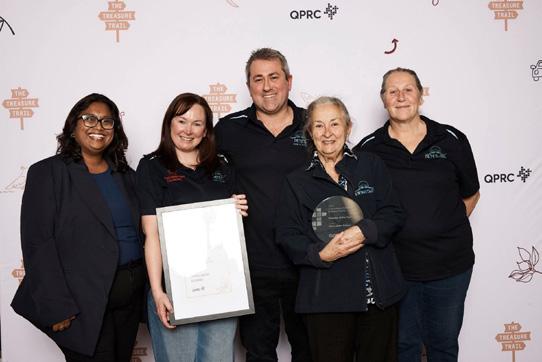
Queanbeyan Palerang Business Awards 2026
Celebrating local business success
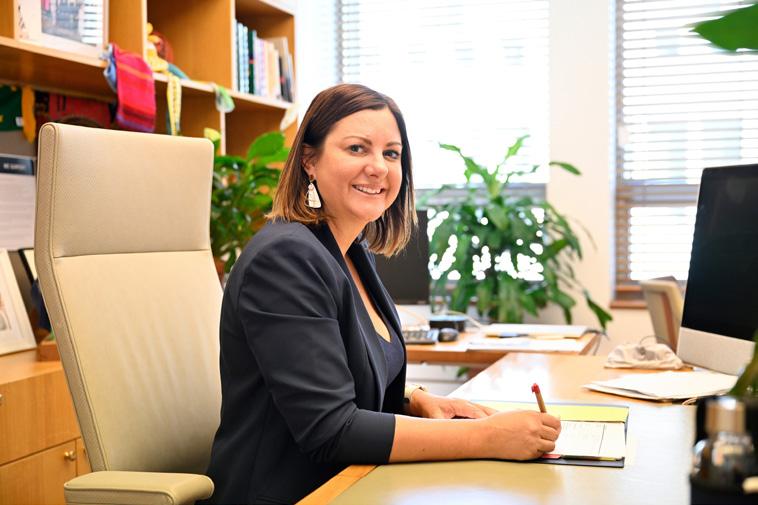
Member for Eden-Monaro, Kristy McBain has congratulated the businesses recognised at the recent Queanbeyan-Palerang Business Awards, describing the region’s small business community as the backbone of local jobs, growth and community connection.
Kristy said the awards were an important oppor tunity to acknowledge the dedication and resilience shown by businesses across Queanbeyan, Bungendore and the surrounding region.
“Being recognised through these awards is a significant achievement and a credit to the hard work, professionalism and commitment local businesses bring to their customers, staff and the wider com munity,” says Kristy.
“Every nominee and winner should feel incredibly proud of the contribution they make to our region.”
Kristy said the strength of the QueanbeyanPalerang economy continues to be driven by local operators willing to invest in their communities and support local families.
“As a small business owner myself, I understand firsthand how important local businesses are to communities like ours,” says Kristy.
“They create jobs, train apprentices, sponsor sporting clubs, support community events, and provide the everyday services families rely on.”
She said the awards also highlighted the diversity of businesses operating throughout the region, from trades and hospitality to tourism, retail and professional services.
“These businesses are part of what makes our region such a great place to live, work and raise a family,” says Kristy.
Member for Eden-Monaro, Kristy McBain.
Kristy also acknowledged the work of QueanbeyanPalerang Regional Council for continuing to champion local enterprise and celebrate business success across the region.
“These Awards have not been held for some time and I am very pleased to see them return.
“Recognising local success matters because it shines a light on the people who continue investing in their communities and creating opportunities for others,” says Kristy.
Kristy McBain – Member for Eden-Monaro 1/21-25 Monaro Street, Queanbeyan. Call 02 6284 2442 or email Kristy.McBain.MP@aph.gov.au
pressures, questions and feelings,” Kim said. “The pressure to prove yourself, uncertainty about your value, fear of failure when the stakes are high, and that feeling of impostor syndrome that so many people experience early in their careers.”
Through weekly articles, practical tools, live learning sessions and professional development resources, Consultant Café aims to help members build both confidence and real world capability.
Its reach has already expanded well beyond the region, attracting members and subscribers across Australia, the United States, the United Kingdom,
ate specialising in UX/UI design.
Reflecting on the award win, Kim said the recognition was both humbling and encouraging.
“Consultant Café might serve a global audience, but it was built here,” he said. “I’m incredibly proud to represent the QPRC region.”
Readers interested in professional growth and consulting insights can learn more or join the growing community at ConsultantCafé.com
Consultant Café Visit www.consultantcafe.com
Working for our community Member for Eden-Monaro
Kristy Mc Here to
1/21-25 Monaro St, Queanbeyan
KristyMcBainMP
KristyMcBain
Kristy.McBain.MP@aph.gov.au 02 6284 2442
Author sed by Kr sty McBain ALP, 21-25 Monaro Street, Queanbeyan
Awards
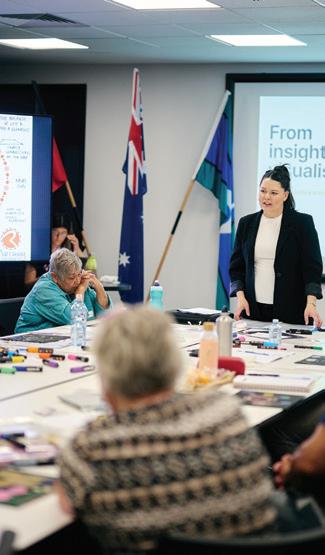
supporting leaders and teams to improve clarity, focus and sustainable performance through the Marrawuy Productivity Pathway. The business also creates commissioned artworks and creative experiences that help organisations reflect their values, stories and ways of working visually.
Receiving the Outstanding First Nations Business Award at the 2026 Queanbeyan-Palerang Business Awards was an incredibly special moment for Marrawuy Journeys. I’m very grateful to the clients, collaborators, community and family who have supported the journey so far. This recognition means a great deal, and I’m excited for what lies ahead once I return in July following the arrival of our second daughter earlier this month.
In the meantime, follow the journey, explore the online gallery, or learn more about upcoming workshops and programs at www.mjourneys.com.au
Marrawuy Journeys
Visit mjourneys.com.au
to improve strength, mobility, and overall wellbeing.
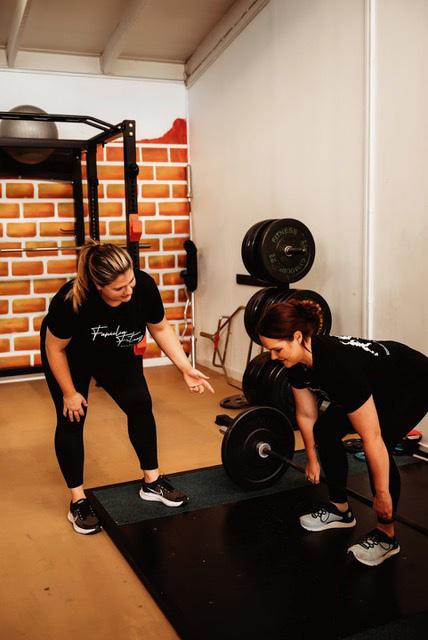
Familia Fitness received the 2026 QPRC Diversity, Inclusion & Leadership Award for its commitment to accessibility, community engagement, and personalised coaching. Our multidisciplinary team, including strength coaches, exercise physiologists, nutrition professionals, and rehabilitation specialists, bridges the gap between rehabilitation and real-world strength training through collaborations with allied health professionals.
Beyond the gym, Familia Fitness actively supports the local community through educational workshops, rehabilitation clinics, charity events, youth development programs, seniors initiatives, and participation in events such as Parkrun and regional collaborations.
Our mission is to help people move better, feel stronger, reduce pain, and live healthier lives within a supportive community.
Familia Fitness
Unit 1/30 Ellendon St, Bungendore NSW. Call 0498 989 127
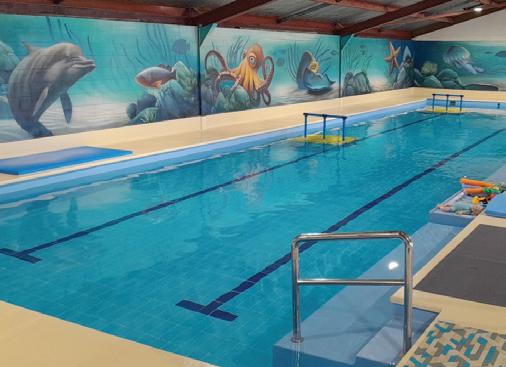
skills in the water.
That contribution has now been recognised with the swim school being named Business of the Year as well as Excellence in Personal Services at the recent QPRC Business Awards.
The award acknowledges not only the business’s success but also the strong connection Pete’s Swim School has built within the Queanbeyan community over many years.
The business says helping students feel comfortable in the water is just as important as developing strong swimming ability.
For many parents, swimming lessons are viewed as one of the most valuable life skills a child can learn, particularly in Australia where pools, rivers and waterways are a major part of everyday life.
Pete’s Swim School has built a strong reputation for patient instruction, experienced teachers and creating a welcoming environment for families of all experience levels.
The Business of the Year recognition also highlights the important role small businesses continue to play across the Queanbeyan-Palerang region through local employment, community support and providing essential services to families.mThis recognition reinforces Pete’s Swim School as one of the region’s most respected and community-focused local businesses, reflecting ongoing support of staff, students and broader local community.
Pete’s Swim School
Visit swimstart.com.au
without burning them out.
For many people, going to the dentist is simply another appointment on the calendar. But at My Dentist Canberra, the experience is designed to feel very different – welcoming, personal, and genuinely focused on patient care. Conveniently located in Canberra, this modern dental clinic has built a strong reputation within the local community for providing high-quality dental services with a friendly and compassionate approach.
The experienced team at My Dentist Canberra believes that great dental care starts with trust and communication. From the moment patients walk through the door, they are welcomed into a calm and comfortable environment where their concerns are heard, and their treatment options are clearly explained. Whether it’s a routine check-up, preventative care, cosmetic dentistry, restorative treatment, or emergency dental care, every patient receives tailored treatment designed around their individual needs and goals. What truly sets the clinic apart is its commitment to
making dental care accessible and stress-free for patients of all ages. The team combines modern technology with gentle techniques to ensure every visit is as comfortable and efficient as possible. Their patient-first philosophy has helped create long-lasting relationships with families and individuals throughout the Canberra region.
Beyond clinical excellence, My Dentist Canberra is passionate about supporting the health and wellbeing of the local community. The clinic’s caring approach, experienced practitioners, and dedication to personalised care continue to make it a trusted choice for locals seeking reliable and professional dental services.
At My Dentist Canberra, healthy smiles are more than just a service – they are a commitment to the community they proudly serve.
My Dentist Canberra 36/21 Thynne Street, Bruce. Call 02 6225 2855 or visit mydentistcanberra.com.au
The Future of Dental Cleaning is Here.
Say goodbye to traditional scraping! My Dentist Canberra advanced Scale & Clean with EMS AIRFLOW® technology uses warm water, gentle air, and fine powder to give you:
Deb Carroll helps clients move with confidence, ease and strength
For Deb Carroll, movement therapy is not just about exercise. It is about helping people understand their bod ies, rebuild confidence and move with greater freedom.
A Somatic Movement Therapist, Pilates Practitioner and Remedial Massage Therapist, Deb brings close to 30 years of personal practice and teaching to her work. Her path began with her own rehabilitation from injury, supported by a background in dance, yoga and athletics. That experience shaped her deep interest in recovery, prevention and the way thoughtful movement can support long-term wellbeing.
Deb works with people seeking injury rehabilitation, injury prevention, osteoporosis management, improved balance, chronic illness support and general conditioning. She also has valuable experience supporting people living with ME/CFS, FND and osteoporosis.
Her sessions draw on Somatic Movement Therapy, Pilates, vestibular play and allied movement practices. These approaches help clients explore how they move, gently re-educate unhelpful movement patterns and build strength, coordination, flexibility and awareness without forcing the body.
Somatic Movement Therapy is a gentle, internally focused approach that can assist with pain management and chronic conditions. Pilates supports posture, tone, stability and controlled strength, while vestibular play uses research-based movement to improve balance and coordination.
Deb offers in-person and online lessons, or a combina tion of both, with private sessions, duo lessons and small classes of up to eight participants.
Book your session with Deb Carroll today!
Deb Carroll Call 0414 865 430. pilates.deb@live.com.au
Deb Carroll.
Winter hats for every style
As Canberra’s cooler weather settles in, HeadsUp Kippax is showcasing one of the city’s widest ranges of winter hats, with a colourful new collec tion now available both in-store and online.
The charity organisation has become well known for stylish, practical and specialist headwear, offering everything from timeless wool hats and elegant occasion pieces to soft everyday winter styles designed for warmth and comfort.
Founder Sue Owen says the latest collection has been selected to suit all ages, personalities and fashion tastes.
“We wanted this range to be about style, colour and confidence,” Sue says. “People love finding hats that not only keep them warm, but also help them feel good when they put them on.”
The collection features bold statement pieces, classic neutral tones and soft winter fabrics ideal for Canberra’s colder months.
“There’s something very personal about hats,” Sue says. “For some people it’s fashion, for others it’s comfort, and for many it’s simply about feeling confident and comfortable every day.”
Sue says customers are often surprised by the size and variety of the range available at HeadsUp Kippax.
“We see people of all ages coming in to explore the collection,” Sue says. “Many customers tell us they haven’t enjoyed wearing hats before, then leave with something they absolutely love and can’t wait to wear through winter.”
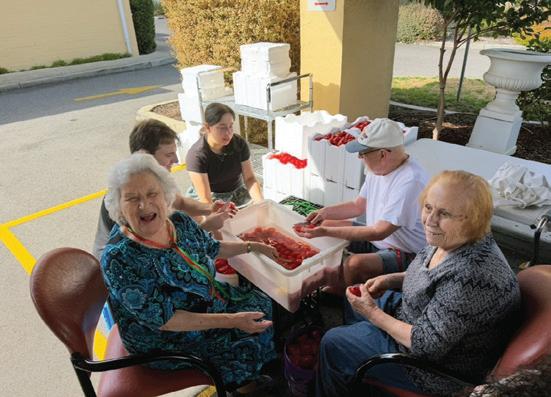
At Villaggio Sant’ Antonio, aged care is about so much more than support — it’s about family, friendship, faith and living life with joy.
Founded by Canberra’s Italian community, our village in Belconnen brings together the warmth of tradition with exceptional modern care. From making fresh pasta together to dancing, gardening and sharing laughter over coffee, every day is filled with connection, culture and heart.
We are proud to offer one of the largest wellbeing teams in the Canberra region, creating meaningful experiences that nurture mind, body and spirit. Our residents are never just a number — we know every resident by name and by heart.
Villaggio Sant’ Antonio is designed to feel like home. Residents enjoy beautiful gardens, welcom ing community spaces and personalised courtyards attached to every room, providing peaceful places to relax with loved ones. Families and friends are always welcome, with many inviting spaces to spend quality time together, and an onsite café opening soon.
At Villaggio Sant’ Antonio, everyone is welcomed with the same warmth, dignity and exceptional care, regardless of their financial circumstances.
Our community is built on the values of care, dignity and belonging. Whether it’s sharing a meal, celebrating faith and culture, or simply enjoying companionship, Villaggio Sant’ Antonio offers the very best of family-oriented living.
Enquire today and discover the warmth of village life at Villaggio Sant’ Antonio in Belconnen. Email reception@villaggio.com.au today for an info pack!
Villaggio Sant’ Antonio
Visit villaggio.com.au
Benvenuto a casa
At Villaggio Sant’ Antonio, aged care feels like family
Inspired by rich Italian tradition, our community is built on faith, food, connection, and belonging.
From shared meals to laughter across generations, every day is filled with warmth, care, and heart
Come home to Villaggio Sant’ Antonio - where Italian heritage meets compassionate care
with others who understand the caring journey. Are you caring for someone who is ageing and frail or living with dementia? Carers ACT offers supportive services that provide carers with time to rest and recharge, while ensuring the person they care for is supported in a safe, welcoming and community-
Our Crace Respite Cottage offers overnight, short-stay and emergency respite in a comfortable, home-like setting, supporting carers who may need extended time away, overnight assistance or greater flexibility in their caring role. For daytime support, our Day Respite Centre in Spence provides a structured and engaging program designed to support wellbeing, social connection and independence through meaningful activities and shared experiences.
Carers ACT also delivers the Staying at Home
practical strategies to help maintain positive caring relationships at home.
The program concludes with an overnight getaway for carers and the person they care for, providing an opportunity to reconnect, relax and build connections with others in similar situations.
Guided by the 5 Ways to Wellbeing framework, Carers ACT also offers yoga and tai chi, walking groups, nutrition workshops, creative art activities, retreats, peer support groups and social outings.
To learn more about support available, call Carer Gateway on 1800 422 737 or email carers@carersact.org.au
Carers ACT
Call Carer Gateway on 1800 422 737 or email carers@carersact.org.au
Canberra to the Snow
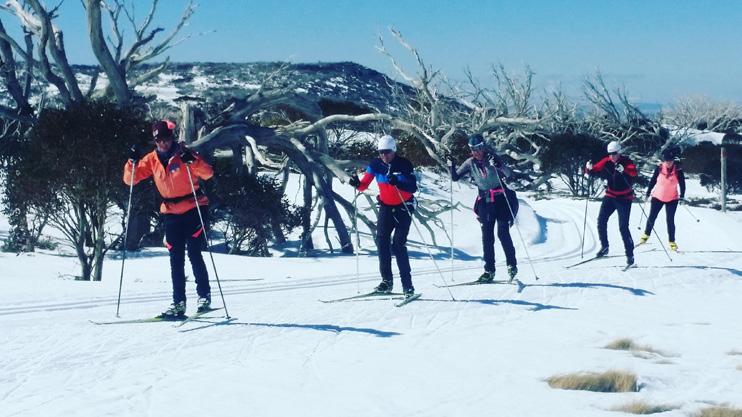
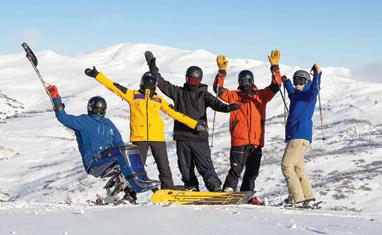
Experience the serenity of the Kosciuszko National Park on cross country skis
K7 Ski School is the market leader in providing quality cross country (XC) ski instruction on the groomed trails at Perisher. We only employ qualified instructors who are passionate about the sport.
XC Skiing is a great way to have fun and get fit at the same time. It is like going for a bush walk, only more fun! You will be gliding on your skis on the XC trails, whilst passing snow gums in a beautiful, serene environment.
One of the best aspects of XC skiing is that you are away from the crowded resort and you can enjoy the peace and tranquillity of the Kosciuszko National Park safely on trails specially prepared for XC skiing. No lift passes are required.
We offer 1hr, 1.5hr or 2hr XC skills lessons in either
classic or skating technique for adults and children from beginners to advanced skill levels. We recommend a 1.5hr classic lesson for beginner skiers.
For the more energetic, or experienced skier, there is the option of a 3hr combination of lesson and short tour on the trails.
For those wanting to progress their skiing skills more quickly, we have the Faster Masters Skills Improvement Programs catering to skiers 30 plus years old. They run once per week for 5 consecutive weeks.
For more information or to book a lesson please visit www.k7skischool.com.au/book-online
K7 Ski School Visit k7skischool.com.au
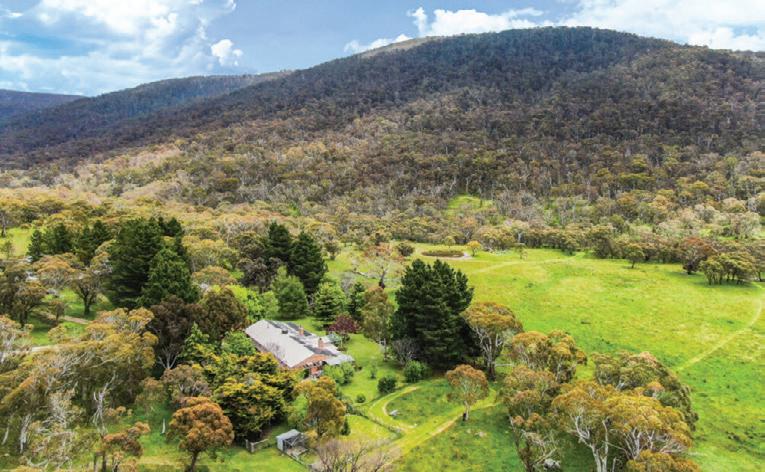
gion’s signature snow gums and bordering Kosciuszko National Park and Mowamba River, Big Yard Farm is an easy trip from Canberra for a premium stay on a working Snowy Mountains cattle farm.
Around 15 minutes’ drive from Jindabyne and 40 minutes from Perisher and Thredbo, Big Yard Farm is a tranquil home base from which to enjoy the region’s great range of snow sports.
The three-bedroom house sleeps a maximum of six guests with king, queen and single bed options – plus a cot available.
Guests can ‘live like a local’ with a well-equipped kitchen for keen cooks, two open fires and a pool room, a lounge and dining room with long outdoor verandahs.
Big Yard Farm is ideally suited to couples and families, multi-generational families and friends
ease into evenings cooking up a storm and relaxing by the fire.
Big Yard Farm is pup-friendly based on preapproval and a wonderful chance for dogs to enjoy the farm’s free open spaces and dams.
A stay at Big Yard Farm is an environmentally sustainable choice, with power generated via rooftop solar panels, fresh water pumped from the river and a generous store of firewood collected from around the farm.
Make Big Yard Farm your Snowy Mountains home this season!
Big Yard Farm
696 Big Yard Road, Moonbah, NSW. Call 0425 318 966 or visit bigyardfarm.com.au
GARDENING
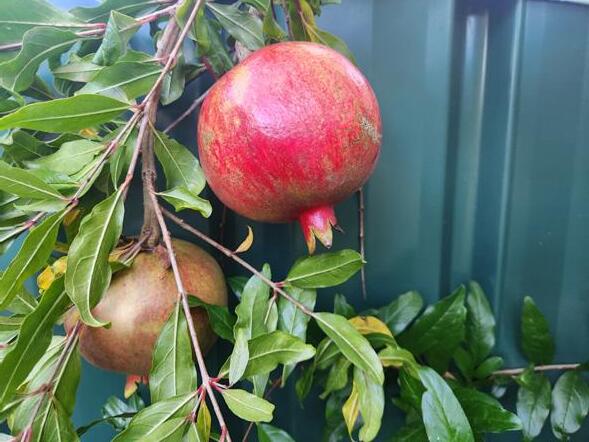
Pomegranates for autumn colour
By Jackie WARBURTON
Pomegranate
winter, when bare-rooted plants are usually available.
Pomegranates can be expensive and take time to come into production – generally five to six years to flower and fruit. Grafted varieties may crop earlier than non-grafted plants, and where space is limited, a grafted pomegranate grown in a pot will help keep the plant compact and manageable.
Older varieties were often grown as untidy shrubs or left unpruned, but shaping them into a small tree suits courtyards, compact spaces, or a hot, sheltered wall that holds summer warmth.
Planting pomegranates is best done in winter. Soil preparation can begin now by digging in compost and any manures available. Mulch the area well and allow the soil to settle until planting time in late
They are self-fertile and do not require a second plant for fruit set.
Pomegranates prefer a slightly acidic soil and benefit from light moisture during fruiting. Pine needles can be used as mulch beneath the plants, or they may be fed with camellia and azalea fertiliser. However, overfeeding encourages leafy growth at the expense of fruit, so fertiliser should be used sparingly.
Pruning needs are minimal. Pomegranates flower on old wood
from the previous season’s growth and do not respond well to heavy cutting. In spring, once new growth has appeared, a light tidy-up is sufficient. With consistent watering during fruit development and good mulching, they will live for many years.
For our climate, good varieties include Elche, a Spanish selection with mid-sized fruit and pink flesh, and Wonderful, known for its red flesh.
A CHARMING, old-fashioned perennial that returns each year, often self-seeding and signalling spring, is Bellis perennis. Although exotic, it is widely used here as a lawn or common daisy. In spring, its small button-like flowers can create a striking display across a lawn. Newer varieties offer larger blooms and a broader colour range. They can be difficult to find as seedlings, but are easy to grow from seed. Use a quality seedraising mix and maintain a warm environment of around 21-23°C through winter. If conditions are right, germination occurs in about 20 days.
A variety being trialled this year is Pomponette Mix (Bellis perennis), producing tight blooms in pink,
scarlet red and white, ideal for pots.
THE ornamental garden moves into winter mode, but the work continues. Winter is the ideal time for pruning, when the structure of trees, shrubs, and plants is clearly visible with less foliage to remove. Soil improvement is also important at this time. Keep beds weed-free and lightly cultivate where needed. This is an ideal period to add organic matter such as compost or well-rotted manures. Pelletised fertilisers can still be used for winter-flowering plants and annuals, as they break down quickly. Synthetic fertilisers, however, should be avoided in cooler months as they rely on temperature to activate.
jackwar@home.netspeed.com.au
Jottings…
• Continue to rake leaves and compost.
• Water under trees and shrubs in winter.
• Dig over soil for new fruit trees.
• Remove all fallen and mummified fruit.
Bellis perennis… a common daisy or a lawn daisy.
Photos: Jackie Warburton
ARTS & ENTERTAINMENT Awesome spiders really up close and personal INSIDE
By Helen MUSA
The male Maratus spider may well be the sexiest insect in the world, if viewed properly, far sexier than the peacock after whom the tiny arachnid has been nicknamed.
The peacock merely struts his stuff, but the Maratus spider, opening his glorious fan tail to attract the attention of his camouflaged yet more powerful female counterpart, actually dances his way into her affections.
So says leading Colombian-Australian artist Maria Fernanda Cardoso, who posits the idea that spiders were creative artists millennia before the human species was even thought of.
Cardoso’s theories are being put to the test in her photographic exhibition Spiders of Paradise at Canberra Museum + Gallery. The show has been developed and toured by the Museum of Contemporary Art Australia.
The exhibition is specific to the Maratus spiders endemic to this region, with Maratus harrisi having been discovered in Namadgi National Park.
Audiences will be able to view videos of a real spider’s tantalising dance.
Alongside the exhibition, veteran dance teacher Jane Ingall will conduct workshops where under-fours can imagine dance movements drawn from spiders, leg and arm movements, maybe even a finger dance, and another inspired by spiders making homes in leaves.
Cardoso has lived in Sydney since 1997. Her work is held in the Museum of Modern Art and the Tate. Noted installations include While I Live I Will Grow (2018), commissioned by the City of Sydney Council as part of the Green Square Public Art Program, and
Cemetery: Vertical Garden (1999), com missioned by the Museum of Modern Art, New York, for the exhibition Modern Starts: People, Places, Things.
Cardoso is not at all afraid of spiders. As a child in Bogotá, she tells me, her father
New home for circus training ARTS IN THE CITY
Warehouse Circus Inc has set up a new home for circus, acting, physical theatre and technical safety training with the launch of Hand to Hand Academy.
CEO Aleshia Johnson says the academy gives local performers access to nationally recognised qualifica tions without needing to move interstate or overseas. Courses include acting for screen, musical theatre, backstage technical skills, working safely at heights, and what is described as Canberra’s first nationally accredited circus training.
The 42nd Artshow@Radford, hosted by the Radford College Parents & Friends Association, returns with works by established and emerging artists. Student artworks inspired by the theme “Sense of Belonging” will also feature in the exhibition. Radford College, May 29-31.
On the cusp of its 20th anniversary, the noted French and Norwegian ensemble Dans les Arbres is heading to Canberra. Featuring French clarinettist Xavier Charles alongside Norwegian musicians Ivar Grydeland, Christian Wallumrød, and Ingar Zach, the quartet has earned an international reputation for minimalist, improvisation-based performances. Tuggeranong Arts Centre, June 5.
Tessa Morris-Suzuki will discuss her latest book, Nature, War and the Art of the Detmold Twins: Orientalist Dreams, Modernity’s Nightmares, at Asia Bookroom. The talk will explore the lives and art of Edward Julius Detmold and his twin, Charles Maurice Detmold, whose illustrations appeared in classics including The Jungle Book and The Arabian Nights.
Governor-General Sam Mostyn’s daughter, Lotte Beckett, will play the shy Annelle Dupuy-Desoto in the forthcoming production of Steel Magnolias. Canberra Theatre Centre, June 17.
The Elegy Project brings together music by Henry Purcell, Frédéric Chopin, Megan Washington, and Joni Mitchell in a performance featuring 15 musicians across a vocal sextet, jazz quartet, and solo piano. Directed by Kimberly Steele with Christopher Pound and Rachael Thoms, it is at Wesley Music Centre, June 10; All Saints Anglican Church, June 14; and Wesley Music Centre again, June 13.
The Austrian Harmonie Choir will present a winter concert with guest performers including the Canberra Harmony Chorus, while accompanist Linus Lee will also perform a piano recital. Harmonie German Club, June 14.
“When you look at them, they are magnificent, sophisticated and beautiful as their fans change,” she says. “It’s fascinating how the male spiders use their patterns to seduce the female of the species.
“My idea is to put them on an equal footing with humans so that they can look each other in the eyes.”
Of course, the spiders have a great advantage over humans because most of them have eight eyes, so even though they are only between one and four millimetres long, they are highly visual animals and, in her view, true artists, “deliberate in the use of gesture, form, colour and pattern”.
“It’s common for the males to have a tail that opens up like a fan, risking their lives to be flamboyant, while the female is more cautious.”
Quick to defend the species, Cardoso says it’s a myth that female spiders always eat the males, unless, of course, people forget to feed them.
collected egg sacs from spiderwebs from around the house and fed them to the fish.
Besides which, her favourite Maratus spiders, commonly called Peacock Spiders because of their brilliant fans, are so small she believes they surely can’t terrify anybody.
The exhibition, on which she has worked for 10 years, consists of 17 1.57-metre x 1.57-metre, large-scale photographs showing one female and 16 males. The challenging technique involved using more than 1000 individual photos to make every detail come to life, focus-stacking under a microscopic lens. It came out mostly perfect except for the hairs, which she spent months touching up manually.
Continued on Page 25...
ELSEWHERE - LIZ PRIESTLEY
UNTIL 7 JUNE
OPEN WEDNESDAY TO SUNDAY 11AM TO 5PM 1/34 GEELONG ST, FYSHWICK
The Hand to Hand Academy… Canberra’s first nationally accredited circus training.
Leading Colombian-Australian artist Maria Fernanda Cardoso.
Maria Fernanda Cardoso’s, large-scale photo-stacked look at Maratus Volans
STREAMING True crime booms with two, top-rating shockers
One can’t help but question the state of modern relationships when the two shows trending at the top of Netflix’s streaming charts this month are Worst Ex Ever and, a tad more disconcerting, Should I Marry a Murderer?
Well, that’s what the streaming giant has served up, and audiences are loving it.
Starting with the former, Worst Ex Ever features four hour-long episodes, each telling the story of a relationship going down a sinister spiral.
The true-crime docuseries (now in its second season) follows the cases of some very unfortunate significant others who discovered their ex-partners to be murderers, manipulators, kidnappers, and all sorts of the worst of humanity.
Some slight red flags there.
It follows on from the huge success of Netflix’s 2022 documentary Worst Roommate Ever, and it doesn’t exactly take atom-splitting insight to work out what that show was about.
Should I Marry a Murderer? also ticks those true-crime boxes that subscribers can’t get enough of.
It’s focused on an infamous case in the UK where a cyclist bizarrely vanished in the Scottish Highlands.
The disappearance baffled detectives for years and had all but gone cold. Then, in
main series set in America, Star City has a colder atmosphere, one fuelled by Cold War paranoia, espionage, and surveillance in a speculative reality where the USSR was emboldened by reaching our lunar neighbour first.
Perhaps the creators of For All Mankind found they couldn’t quite pack in all the story they wanted to tell before the series wraps up and decided an entirely new show was the way to go.
It’s one of Apple’s most critically lauded shows, but also one of its most underrated, making it a curious choice for a spin-off.
For those who haven’t heard of it before, this new entry to the story could be a great excuse to give the series a try.
Not exactly casual viewing, For All Mankind is going to appeal mainly to those fascinated with the particular area of history it explores.
2020, police had an unlikely breakthrough that would finally see them move closer to solving the mystery: a tip from none other than the man’s fiancée.
Clocking in at three roughly 50-minute episodes, this series makes for more of a binge than an episode-a-night type deal.
The fact that not one but two shows of this subject matter can hold a place in Netflix’s top 10 at the same time proves the sheer popularity true crime continues to hold, especially when an element of poisoned romance is mixed right in.
APPLE TV+ has proven itself to sling
some of the best sci-fi on streaming, and this month an unusual spin-off to one of its flagship shows launches on the platform.
Star City is the newest story branching from the lauded drama series For All Mankind, a show which imagines an alternate history where the space race never ended.
In this universe, it was actually the Soviet Union that got to the Moon first, sparking a desperate attempt from the US to catch up and outdo its cosmonaut competitors.
Each season of the show jumps around a decade in time, giving the audience a look at how technology, culture, and politics might have evolved in a very different world.
For All Mankind has run for five seasons, and a sixth is on the way, but this new spinoff series tells a different side of the story.
While the original show focuses heavily on the cosmic contest from the perspective of the Americans, Star City explores the Russian side, going deep into the lives of astronauts, scientists, and politicians fighting for space supremacy.
Unlike the more optimistic tone of the
Think the pacing and writing calibre of Mad Men with a space theme.
It will be interesting to see whether this spin-off is what For All Mankind really needs to take off.
THEATRE / The Deep Blue Sea
Trapped in the aftermath
By Helen Musa
Terence Rattigan is not a name often heard in theatre circles these days, but ACT Hub is about to set that to rights with its coming production of his play The Deep Blue Sea.
In his heyday, Rattigan was celebrated for his actor-friendly plays, including The Winslow Boy, The Browning Version and Separate Tables, but The Deep Blue Sea is especially remarkable for what producer Karen Vickery describes as “a central role that is stunning for a woman”.
Set in 1950s London, the play follows Hester Collyer, a woman trapped in the aftermath of a passionate affair with Freddie Page, a troubled ex-RAF pilot for whom she left her husband, a respected High Court judge.
After surviving an attempt to gas herself, Hester is forced to confront the collapse of her relationship as Freddie prepares to leave for South America.
Through conversations with her neighbours and the quiet support of Mr. Miller, she faces the difficult decision to keep living.
Canberra performer Jenna Roberts will take on the tour de force role of Hester, made famous
a first encounter with the play, although he thinks they did The Winslow Boy when he was a pupil at Sydney Grammar.
“Rattigan is a beautiful writer,”
Knight says, noting how skilled he is at dealing with the sensitive subject
twist to the ending… we are doing something a bit different.”
As the play progresses, we see Hester finding a friend in Miller in an asexual relationship. Miller is a figure of mystery, never married, a former doctor who has been
Worst Ex Ever, left, and Should I Marry a Murderer?... two shows like this holding a place in Netflix’s top 10 at the same time proves the popularity of true-crime programs.
Star City... branching from the drama series For All Mankind, a show which imagines an alternate history where the space race never ended.
Jenna Roberts as Hester and Sol Mason as Freddie rehearsing for The Deep Blue Sea.
Photo: Tony Knight
Bailey’s ‘dark plot’ of misogyny and brutal men
ANNA CREER reviews new, gripping novels by two Melbourne-based, female crime writers.
Multi award-winning, Melbourne based author Sarah Bailey has a background in advertising and communications.
She is currently the managing director of the advertising group JML and the founder of the podcast He Read, She Read.
Click (Allen & Unwin) is the second in her series featuring Olive (“Oli”) Groves, an investigative journalist.
It’s a harrowing story of violence against women and begins with a photo of a dead woman sent to Melbourne’s largest newspaper, Melbourne Today, with the message: “Please find attached a photo of victim #2 just after her death at 9.40pm yesterday”.
A month earlier, Marta Hom, a Swedish backpacker had been found in the Treasury Gardens, stabbed to death. Under her body was a polaroid photo and the message #1.
At the same time, the police are searching for two missing women, Lyta Makis, who failed to come home from a party and Mackenzie Jackson, thought to be a victim of domestic violence.
Oli Groves now works at Newsday, an online news site, with her partner Timothy (“TJ”) Jack. She is determined
of affair
deregistered and once interned on the Isle of Man.
“It’s very much a play about adult love among the ruins,” Vickery says. “Virtually everybody suffers from lost love, quite different from plays about young love.
“He touches the sublime in the play… we see characters caught between the devil and the deep blue sea, asking: ‘What options do I have?’”
The play takes place in one room and in real time, over 24 hours and three acts, although I am assured it will run for only about two hours.
To be sure, it’s a period piece, set in the early 1950s, and yes, class comes into it. Hester is beginning to recognise that grand passions do not last. She is still technically married to High Court judge Sir William Collyer (Sparks), who remains in love with her, but no character is a villain.
Other characters include Freddie, played by Mason, his friend Jackie Jackson, played by Blue Hyslop, and the nosy landlady Mrs Elton, played by Kate Blackhurst.
Knight reports that he is thoroughly enjoying the rehearsal process so far, partly because “Rattigan’s language is so precise and he writes for the eloquently anguished.” And fear not, he says, it is not a tragedy. The characters all survive.
to expose the growing scourge of domestic violence.
“She spent the past few months developing a six-part investigative series on the issue that will combine audio episodes and online content”. To conclude the series, she hopes to interview the Premier, Clarissa Dunkley, who has publicly declared that “domestic violence is an issue close to my heart, and I’m pledging to do more to put a stop to it”.
Bailey tells her story in alternating chapters between Oli and her partner keeping track of the developing story and the police investigation from the perspective of a young female detective, Penelope Kibbs.
Bailey in her acknowledgements reveals that “the central plot idea of Click came to me as I was contemplating how hard it is to write crime novels these days, what with all the mobile phones, CCTV and social media”.
Initially she thought she would set the story in the 1990s but instead started researching the dark web and investigat-
ing how to doctor images.
The result is what Bailey calls “a dark plot” about misogyny, brutal men and the distortion of reality online. Click is also a damning indictment of the voracious appetite of the 24-hour news cycle and the journalists who feed it.
Oli after a press conference considers her peers “vampiric, eyes glowing and teeth bared, saliva dripping from their mouths as they feast on the juicy story”.
LAURA McClusky is also Melbourne based but The Cursed Road is her second crime novel set in Scotland featuring Detective Inspector Georgina (“Georgie”) Lennox and Detective
Inspector Richie Stewart. Georgie has a reputation as both clever and reckless while Richie is kind and dependable. Together they make a formidable team. However, as The Cursed Road (HarperCollins) begins they are both still suffering trauma after the horrific conclusion of their case in the previous novel, The Wolf Tree (2025).
Despite this, Superintendent Kylie Cole decides to send them north to Kirkcree, a village that is one of the
up-close look
Awesome spiders really up close and personal
Continued from page 23...
As well, Cardoso tells me there is a large-format video, On the Origins of Art¸ in which viewers will be able to feel the vibrations of sounds travelling through the ground when the spiders dance, yet another way of getting humans to feel what the spiders feel.
Fascinated ever since her husband showed her a YouTube video of Maratus spiders, it is more than display that intrigues her, it is the movement.
She had seen some spiders performing the rare courtship
Highland Gateways to the Cairngorms National Park.
A young woman has been found dead by a remote road, shot in an apparent hunting accident. Without identification she has been named Bambi by the press.
There are only two estates nearby. Fladhain Lodge offers expensive “exclusive experiences” in deer stalking.
The owners have influential friends and the police have been told to keep their distance.
The bordering estate belongs to the Fairgrieves who have lived there for generations but their fortified mansion is now in a ruinous state and the rather eccentric family is in financial difficulties.
The locals tell Lennox and Stewart that the road where the body was found is called An Rathad Damante, the Cursed Road because of feuding landowners which led to a massacre at a wedding centuries before.
The bride, who haunts the road, is regularly heard and seen.
“Even though the road is supposed to be off limits” Geogie is told, “there’s loads of stories about people seeing her out there. Apparently she haunts the border between the two families, trapped by her grief… or by her guilt at being the reason they came together that day.”
What begins as a standard police procedural eventually makes a dramatic shift in pace, tone and style into a full-blown atmospheric and intense story of gothic horror. It’s compelling reading.
dance at a museum and also noticed that the Maratus are hunter spiders, not web builders, so they have to navigate space in quick jumps.
“They are visual artists and they are true performing artists… and they know how to sing and gesticulate in choreography where each dance is slightly different from the others,” she says.
“So who says that humans invented art?”
The Deep Blue Sea, Chaika Theatre, ACT Hub Causeway Hall, Kingston, June 12-17.
Maria Fernanda Cardoso: Spiders of Paradise, Canberra Museum + Gallery, May 29-August 23, free entry.
An
at a Maratus Bubo by Maria Fernanda Cardoso.
DINING / Lua, Sydney Fish Markets
Luke brings fire to new fish markets
Luke Nguyen is no stranger to Australians who are passionate about food.
His smiling face pops up on television shows. His inspirational cookbooks are sought after, and his restaurants are major drawcards. He is, indeed, one of this country’s best-loved chefs.
So when I heard about Luke’s newest restaurant at the relatively new Sydney Fish Markets, I made it a mission to get there.
Lua is a classy, vibrant, but warm establishment, sitting right on the waterfront at Blackwattle Bay. It has so much to offer and, if you’re lucky, you’ll see Luke wandering about saying hello to guests (we did!).
Lua means “fire” in Vietnamese, and the seafood-led menu is inspired by Luke’s Vietnamese heritage, Thai roots and Australian upbringing. The result is as impressive as the mighty Mekong – the longest river in southeast Asia and a source of inspiration for Luke and Lua. Being right at the markets means fresh seafood and fish on tap daily. From the raw bar, arrived freshly shucked, creamy, decadent oysters with finger lime and tamarind fish sauce ($42 half dozen; $79 a dozen). They were absolutely delicious.
Luke is famous for his artisan dumplings, and both the coral trout, calamari and prawn version, and spanner crab, lemongrass and tomato version were mouth-watering ($27 for three). Each silky,
hand-made dumpling was packed with divine flavours.
Lua mastered the banana leaf Mahi Mahi featuring coriander seeds and fragrant, sharp Vietnamese mint ($54). The firm and meaty fish was cooked to perfection and picked up the flavours beautifully.
Another masterpiece was the sizzling King prawn claypot in a marvellous bisque ($38). It was heart-warming, and who doesn’t love fluffy ST24 premium Vietnamese fragrant rice?
Dessert was a cooling coconut sorbet with a stunning fish-sauce caramel ($14). I bet that the Vietnamese coffee tiramisu with salted coconut
cream is to-die-for ($21).
Next, it was time to sit back and relax over Mua craft pineapple and chilli sake ($80 for 90 ml). Lua’s extensive sake list has been curated by a certified sake sommelier. The wine list is a statement in itself.
For those keen on cold seafood, Lua offers a platter ($150) with highly prized Oscietra caviar (10 grams $65). Banquet options include one featuring land and sea produce ($119 per person, minimum 4) and another a feast of all of Luke’s seafood favourites ($185 per person).
Lua is a massive establishment, with plenty of indoor and outdoor dining. Despite its size, the staff are inviting, attentive and a whole lot of fun. They excel at making everyone feel super special. Take time to wander through the Sydney Fish Market itself. Check out the stunning architecture, ginormous fish tanks, specialty retail shops and eateries present ing multicultural cuisine.
WINE / Kangaroo Island
Winery that drove visitors to drinking gin
Wine tourism is growing. Tourism Research
Australia estimates there were 7.5 million visits to wineries from domestic and international travellers in 2024.
So, as a tourist visiting Kangaroo Island in SA recently I was looking forward to sampling some of the local wines and adding to those visitor numbers. I’m in agreement with the school of thought that says tourists want “real life”, provided it comes with a menu.
Kangaroo Island is a splendid place, well recovered from the devastating bushfires that burnt 46 per cent of its land area in the summer of 2019-20.
For example, Islander Estate lost all of its vines in those fires and has come back strongly. Alas, I only tasted a glass of the Bordeaux-style red with one of the five dinners we enjoyed, a mellow shiraz, cabernet franc blend. The group didn’t make it to the Islander estate cellar door. We tasted gin
made by Kangaroo Island Spirits instead.
The group voted not to go to any other wineries after an experience at the Bay of Shoals winery that was underwhelming. When we arrived, there was a lot of construction going on but the tasting room was not affected, was well laid out and Julie the cellar door attendant was welcoming.
Our guide told us that new owners would likely convert the place to a restaurant rather than continue it as a winery. We had great views of the bay and Reeves Point. For $15 we were offered a taste of four wines.
The first was a non-vintage sparkling. It was poured into our large tasting glasses and soon lost its bubbles. We told this to Julie who apologised and we were given another taste in flutes.
The first taste as the bubbles faded showed some stone fruit elements in a wine of acceptable length. But when served so that the bubbles didn’t fade easily, a lovely brioche finish was discernible.
Next was a 2020 riesling from vines that weren’t affected by the fires, as they are located close to the sea front. This was a wine that had developed a petroleum aftertaste
that occurs with some older rieslings. It also had a citrusy lemon peel flavour, but the petroleum influence made it not the drink of choice.
Third was a 2023 rose’ that was derived from cabernet sauvignon grapes: the wine was, according to Julie, on skins for eight hours. It had capsicum on the nose and was dry and rather metallic in the finish. Not a wine that the group enjoyed. The last wine was a 2020 cabernet sauvignon. The winemaker had decided to produce a wine from smoke-tainted grapes. That smokiness was evident and the flavour of capsicum was mixed in with a deep plum taste. It was a very unusual wine. One of our number wanted to buy a bottle of the sparkling. It was $55 a bottle, but the tasting fee would only be deducted if two bottles of wine were purchased so she said, “no thanks”. I said, trying not to be a smartarse (perhaps failing) for $55 you can get a vintage 2021 Pirie sparkling from Tasmania that has a bold finish, brioche and lime present with great mouth feel. I received bemused stares.
The next day the guide asked all 10 of us whether it was a gin tasting or another wine tasting at Islander Estate that should form part of the itinerary. Nine voted for gin, I abstained. That let down reminds me I just bought a book entitled “101 mating positions” and was very disappointed that it’s about chess.
Spanner crab, lemongrass and tomato artisan dumplings.
Photos: Wendy Johnson
Sizzling King prawn claypot in a bisque.
shiraz, cabernet franc blend.”
HOROSCOPE PUZZLES TECHNOLOGY
By Joanne Madeline Moore
June 1-7, 2026
ARIES (Mar 21 – Apr 20)
Can you keep your impatient side under control? If you can, then you’ll astound and amaze others with your can-do attitude, natural personal authority, networking skills, creative ideas and talent for leadership. Courtesy of Saturn in Aries, you’re ready, willing and able to work hard and help others. Just make sure you are crystal clear in the way you communicate, otherwise there could be misunderstandings (especially with housemates or family members).
TAURUS (Apr 21 – May 21)
Proactive Mars is moving through your sign (until June 29), and Venus (your patron planet) is in your communication and interstate travel zone. So, motivation, charm and exploration will really take you places, as you call in a few old favours and make some dynamic decisions. Avoid getting stuck in a boring rut. This week, fortune definitely favours the bold and the brave. It’s time for adventurous Bulls to explore fresh pastures and follow big dreams.
GEMINI (May 22 – June 21)
Daring, innovative Uranus is visiting your sign, so make the most of this powerful placement that only happens every 84 years. A confident attitude, an adventurous spirit and an inquiring mind will take you far in the years ahead. Be inspired by actress and director Angelina Jolie (who turns 51 on Thursday): “Life is a giant adventure, so much to do, to see.” But beware of making assumptions and believing fake news, especially on Wednesday and Thursday.
CANCER (June 22 – July 23)
When it comes to your career and/or life direction, are you feeling uncharacteristically impatient? Saturn (transiting through your professional zone) cautions you to be less hasty and a lot more strategic, as you steer clear of quick-fixes and, instead, plan for the long-term. Good things will eventually come to clever Crabs who learn to wait. As birthday great Prince noted: “Sometimes it takes years for a person to become an overnight success.”
LEO (July 24 – Aug 23)
This week mighty Mars boosts professional confidence and motivation, so it’s time to think big (especially when it comes to your job and life direction). The Sun/ Saturn link also helps you power ahead with ambitious dreams, goal setting and future planning. You must be persistent though! Your mantra for the moment is from fellow Leo, actress and producer Lucille Ball: “Keeping busy and making optimism a way of life can restore your faith in yourself.”
VIRGO (Aug 24 – Sept 23)
Virgos are clever and capable – but are you confident enough for big time success? The Sun, Mercury and Uranus are activating your career zone – but you won’t get ahead if you waste time making mountains out of molehills. Networking is favoured, as you expand your international connections. A wonderful opportunity is heading in your direction, but you must grab it when it appears or it will pass you by. Stop overthinking and, instead, start doing!
LIBRA (Sept 24 – Oct 23)
This week, no less than six planets are activating your partnership and aspirations zones. So, it’s a good time to go on a first date, snuggle up close with your sweetheart or dream up some ambitious goals for the future. You’ll find passion and purpose will take you far. But stern Saturn could stir up relationship issues, and you may feel temporarily stuck in the past. Keep moving forward, Libra – inch by inch and step by step – towards a beautiful, brand-new day.
SCORPIO (Oct 24 – Nov 22)
The Sun, Mercury and Uranus boost your business brain, and you’ll feel more positive about your financial and professional future. But resist the urge to be precious about possessions and possessive of loved ones. Give family and friends plenty of freedom to do their own thing. Coupled Scorpio – resist the temptation to keep a big secret from your sweetheart. Unhappily single? Mighty Mars encourages you to be more proactive about finding a partner.
SAGITTARIUS (Nov 23 – Dec 21)
The stars amp up your need for freedom and avant-garde adventures but don’t feel you have to tackle a project or problem on your own. There are plenty of people around who are happy to help and are keen to offer innovative alternatives. And don’t let current restrictions stop you from taking on challenges in creative and inventive ways. Be inspired by birthday great, actress and humanitarian Angelina Jolie: “Make bold choices and make mistakes.”
CAPRICORN (Dec 22 – Jan 20)
Avoid being a gullible Goat. A partner, friend or family member could try to pull the wool over your eyes, so stay alert, ask plenty of questions and double-check everything. Tuesday and Wednesday are terrific for planning a work project or completing a domestic task, as your organisational skills reach new heights. Sick of being single? With Venus and Jupiter jumping through your relationship zone, look for a partner from another country or culture.
AQUARIUS (Jan 21 – Feb 19)
Quirky Aquarians are talented creatures with inventive, fertile imaginations, and this week the Sun, Mercury and Uranus (your ruling planet) are visiting your creativity zone. So, it’s time to show the world how fabulously creative you can be. Dig deep, connect with your inner muse and express yourself! Be inspired by music icon (and birthday great) Prince: “To create something from nothing is one of the greatest feelings. I wish it upon everybody. It’s heaven.”
PISCES (Feb 20 – Mar 20)
The Sun and Saturn make a positive connection, which is good for self-esteem and family matters. But a financial matter requires a reality check – and much more planning than you originally thought. Don’t believe everything you hear and don’t rush. Relax, take your time and concentrate on the long and winding journey, rather than just focusing on the final destination. And be proactive about connecting with like-minded people in your local community.
Copyright Joanne Madeline Moore
2026
1 Which game of chance is played at a table? (8)
2 What is a subject for an essay? (6)
3 Countrywide implies which term? (8)
4 Columbus is the capital of which US state? (4)
5 Which institution is for the care of the insane, etc? (6)
6 What is a way for entrance into a place? (6)
12 What are sacristies? (8)
13 Name another term for umpires. (8)
15 What is near-sightedness known as? (6)
16 What, in India, are kings or princes? (6)
17 Name a concealed marksman. (6)
20 Which chess piece is a castle? (4)
Musicians vanishing from major shows
By Kat Wong
Musicians are disappearing from Australia’s biggest stage shows as technology usurps their roles.
The world’s highest grossing musical returned to Sydney in April with a smaller orchestra after Disney cut all four string parts from the 2026 season of The Lion King.
The string section has been replaced by KeyComp, a program developed in Germany that allows a single keyboard player to replicate entire sections of an orchestra by using a synthesiser.
This has left live musicians out of a job, their musicality and expressiveness supplanted by recordings from Hamburg.
“The Lion King is the highest grossing musical of all time, and despite that, they’re still deciding to cut jobs,” the Media, Entertainment and Arts Alliance’s federal musicians president James Steendam told a NSW parliamentary inquiry into live music.
“Musicians are earning around 25 per cent less now – adjusted for inflation – than when Disney first brought Lion King here in 2003, so we are not the reason for any expenses that are blowing out.
“(But) I now find myself largely unemployed, in some part due to Disney’s decision.”
Mr Steendam has played the violin and viola for Opera Australia, Orchestra Victoria, and most recently performed almost 1000 shows with the Australian
production of Hamilton.
The music team that put on Hamilton is the same one doing The Lion King and it is likely Mr Steendam would have been working on this production if the string parts had not been cut, he said.
KeyComp is increasingly encroaching on the world’s most watched musicals, with Disney also deploying the technology for Beauty and the Beast and Frozen, and could spread to other live music sectors including opera and ballet.
“As musicians start to disappear from our orchestra pits and music theatres… there will be downstream implications,” Mr Steendam said.
“The music industry is an ecosystem, it doesn’t exist in a bubble.
“One thing will always affect another and economies that rely on live music will also be affected: there’s no music industry without musicians.”
But many productions that use live musicians, including The Lion King, travel to Australia with funding from the state governments.
The demise of live music has also extended to dance, with the West Australian Ballet’s recent production of Dracula in Adelaide using a recording by the WA Symphony Orchestra, instead of hiring musicians to play live.
The MEAA has urged the NSW government to introduce rules establishing minimum orchestra requirements for performances that receive funding or tax incentives from states or state-based agencies. Disney was contacted for comment.
The Lion King is the highest grossing musical of all time, but they’ve ditched the string section. Photo: Dean Lewins/AAP