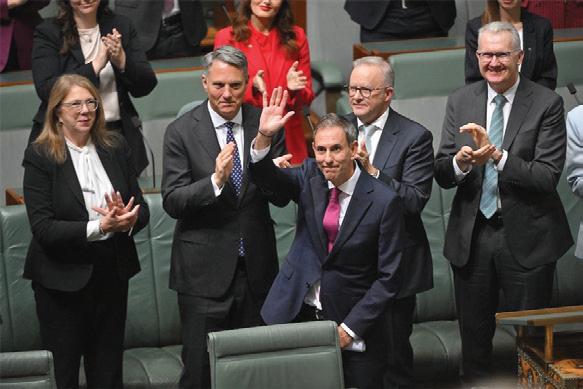
In the federal budget, the Albanese government is effectively abusing older Australians, says ROSS FITZGERALD
Shhh… no-one mention intergenerational debt
ROBERT McMAHON
Candy is dandy, but liquor is quicker!
CLIVE WILLIAMS
We’re saved! Here come Labor’s Justice Warriors KEEPING UP THE ACT
COME.SOUTH
That would be fresh fish, leading fishmonger John Fragopoulos tells DAVID TURNBULL
Come along and see the friendly free-flying birds that can be photographed and fed. Walk amongst over 500 birds from 60 species from Australia and around the world!
Open 7 days a week from 10am to 4pm with the last admission 3.30pm
COVER STORY / John Fragopoulos
The best fish is fresh fish, and John should know
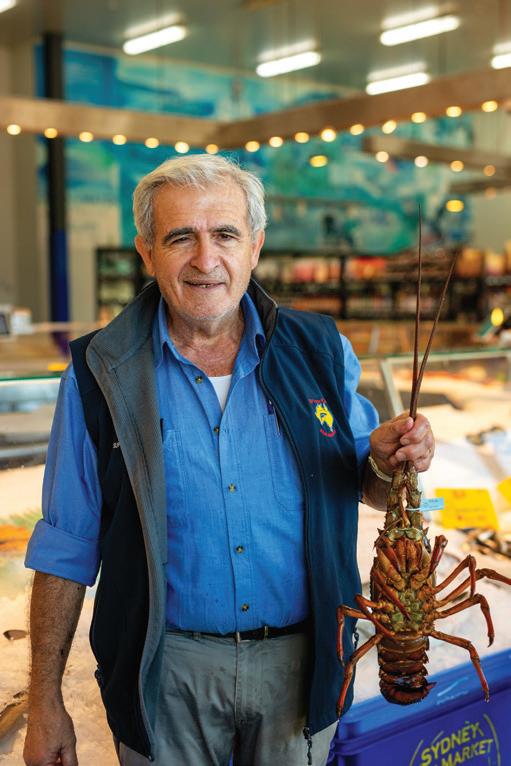
John Fragopoulos is no ordinary fishmonger. He is passionate about the product he sells. Yes, it is fresh, he tells DAVID TURNBULL , but he also knows where it comes from, who caught it and how it was farmed.
When John Fragopoulos was a child, he’d go fishing at the wharf near his home in Piraeus – the port of Athens.
Even then he was an entrepreneur.
He’d ride his bike to the wharf, buy a bucket of sardines, and sell them on the way home.
“Many of my customers were relatives,” John says. “It was pocket money.”
From a young age, he fished with a handline off the wharf and loved chatting to the old fishermen when they docked.
When he was eight, John recalls asking one of them: “What is the best fish?”
And the answer he got has shaped his life: “He looked up at me and said: ‘Fresh fish is the best. Fresh fish’.”
More than 60 years later,
knows where it comes from, who caught it and how it was farmed.
Why? Because he cares about the quality and about the environment.
“Don’t get me wrong. I’m not a crusader. I don’t know the exact numbers, but it is obvious the fishing industry is under a lot of pressure,” he says.
“There’s just not as many fish as there used to be.”
Born in the early ‘50s, John came to Australia with his parents at age nine. He went to school in St Albans, in those days an outer-western suburb, disconnected from Melbourne.
His conservative father, worried by the teenagers he encountered in the streets, sent John back to Athens to live with his grandparents and complete his education at a private school.
Before he’d left school, he teamed up with Anthoula, a young girl attending the same school. They were subsequently married, and had their first
After studying accountancy, John enlisted in the army to do his national service. Still in his early twenties, he worked multiple jobs to make ends meet, before the family moved to Australia in 1978 with their baby daughter and new son.
Back in St Albans, John’s father presumed he would follow in his footsteps as a carpenter, and didn’t take it well when John had different
“I said: ‘Dad you educated me already; I’m a qualified accountant and that’s what I plan to do’.”
father stopped talking to him. But John remained upbeat. Within a few weeks he noticed the local council was inviting tenders to run the canteen at a new swimming pool.
They wanted a minimum $100 a month rent.
“The room was packed with Greeks and Italians. One guy made an offer of $120, but everyone’s jaw dropped when I stood up and said: ‘I’ll give you $200 a month’,” says John.
He’d done his homework. He knew the St Albans summers were sizzlers, and the closest pool was way off in Sunshine.
With electricity and water part of the deal, he was on a winner. The first month’s takings were $10,000.
The lease was only for two years and by then he and Anthoula had decided to branch out on their own.
The couple drove to the Gold Coast, dropping into
visit a cousin.
They fell in love with the beauty, cleanliness and people of Canberra – a far cry from the busy port of Piraeus!
Their cousin ran a supermarket and John was given a job stacking shelves.
One night, the young family were buying fish and chips in O’Connor when they learnt that the little shop was up for sale.
Of course, John jumped at the chance to own his own business again, and Trata Takeaway was born.
However, it was just a basic takeaway and the fish was frozen Hake from Argentina.
Back then it was hard to find fresh fish and that was something John wanted to change. He explored the Sydney Fish Markets, bought a secondhand Bedford van, and started bringing fresh fish and seafood to Canberra.
A little cardboard sign on the shop window was all it took to get the business booming.
Eventually the demand to supply fresh fish and seafood grew so much that the inevitable happened – the family moved into the fresh fish and seafood industry.
Within a few years at Belconnen Markets, they had a second shop at Fyshwick Markets, a supply-chain that included buying direct from Ulladulla, Bermagui, Eden and as far
south as Lakes Entrance, and they supplied to restaurants.
John himself would make the trip to the south coast once or twice a week, which is how he almost missed the birth of his third child when Anthoula went into labour shortly after he’d left late at night for Bermagui. There were no mobile phones back then.
What began with a tiny shop in 1984, has grown into the largest fresh fish and seafood retailer and wholesaler in the ACT, FishCo Fish Market, a purpose-built, fully refrigerated store, with fresh produce arriving every day.
And it’s still very much a family business with all children still working for the shop, as well as partners and grandchildren!
John laughs at the idea of retiring but admits he would probably spend it “down the South Coast, fishing”.
Journalist David Turnbull is writing a series of profiles about interesting Canberrans. Do you know someone who deserves a shot in the spotlight?
Share the name and a number in an email to David via editor@citynews.com.au
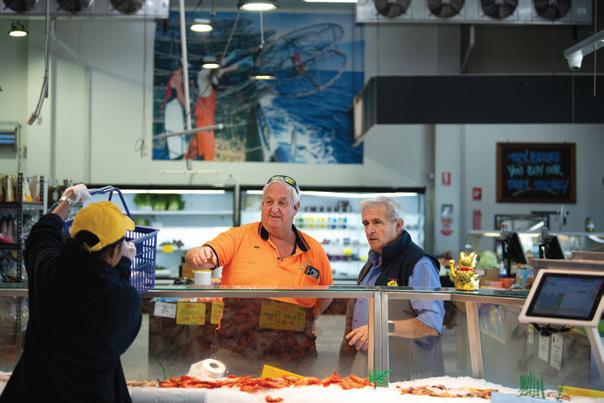
Fishmonger John Fragopoulos in his Fyshwick store.
Shhh… no-one mention intergenerational debt
Treasurer Jim Chalmers drew heavily on “intergenerational equity” to frame last Tuesday’s Budget – his fifth since Labor took office in 2022.
So relentless was his use of this term or slight variations that a quan titative data review shows he used it 10 times in his Budget speech and supporting papers, and a staggering 104 times since the beginning of 2026 in the lead-up to Budget night.
The frequency of these references is such that one might ponder whether, in addition to his doctoral research on Paul Keating’s political leadership, the treasurer might also have studied 19th-century marketing theory –particularly its emphasis on message repetition!
Something struck me as I watched Jim Chalmers deliver his Budget speech… he failed to mention another type of intergenerational equity: government debt, which is now approaching $1 trillion.
lating further since 2022 under the Albanese government, particularly on social programs.
As a percentage of GDP, net government debt has gone from zero to around 35 per cent in the space of just 20 years.
If anyone missed that this Budget was about “intergenerational equity”, they were surely living under a rock.
This narrative underpinned the government justifying breaking previous promises to the electorate – made in both 2022 and 2025 elections – to not modify Capital Gains Tax or negative gearing tax breaks for non-business investors.
Now, through the lens of intergenerational equity, these tax breaks are now cast as unacceptably unfair to young Australians doing it tough, whose tax contributions are, in part,
uity has worsened in the year since Anthony Albanese and Jim Chalmers both promised a re-elected Labor government would not change CGT or negative gearing, debate can reasonably be had about whether these breaks – concessions, as economists call them – advantage those on higher incomes disproportionately.
While it’s true such tax breaks aren’t triggered until a taxpayer hits incomes that attract higher taxes, it’s equally true these breaks can distort investment decisions across the economy.
But something struck me as I watched Jim Chalmers deliver his Budget speech. While he justified the removal of these tax breaks on grounds of re-balancing the economic opportunities of older, more successful generations (think Boomers and
Gen X) against those of younger and future cohorts (Millennials and Gen Z), he failed to mention another type of intergenerational equity: government debt.
Government debt is now approaching $1 trillion. That’s 1000 billion dollars. Or, for more numerallyminded readers, $1,000,000,000,000. Have you ever seen so many zeroes? It’s almost like a child got to their parent’s calculator and kept pressing the zero button. But it is such a large figure that most modern calculators cannot even display it. Yet, we owe it. Each and every one of us.
It is unthinkable that, in the two decades since net government debt was eliminated in the final years of the Howard government, it has crept up again under successive governments – rising during the GFC stimulus of the Rudd years, surging with pandemic-era subsidies under the Morrison government, and esca-
To make matters even more stark, this figure does not take into account what’s called off-budget debt. It is a relatively new phenomenon – or perhaps just more popular with governments in recent years – used by the federal government to finance the NBN, renewables infrastructure conversion, manufacturing subsidies and housing funds.
Including the NBN, it now exceeds $100 billion; although it is extremely difficult to get clear information about the size of these funds and their debt (which I rather suppose is one of the attractions to the government in using them).
Just like our home loans – or what might be a more fitting analogy, credit cards – these borrowings have to be re-paid. With interest. And so, Australian governments across the board are now dedicating massive amounts of their annual expenditure to servicing past debt.
In our little jurisdiction of the ACT, former chief minister Jon Stanhope and treasury official Khalid Ahmed have detailed in these pages in recent weeks that this debt servicing is now approaching 10 per cent of the entire annual ACT budget. Every year. And growing year on year.
But this is only likely to get worse. Because governments are evincing no sudden spike in fiscal rectitude and citizens no reduced expectation for government services. And so, spending will climb and debt to fund it. To be re-paid by future generations in future high taxes and reduced services.
So when the treasurer opines about “intergenerational equity”, it would be useful for him to also fess up to the intergenerational debt inequity he and other politicians are bequeathing to young Australians – and those not even yet born. And that strikes me as less an inequity than a profound travesty.
Dr Robert McMahon is a visiting fellow at the Australian Na tional University, adjunct professor at the University of Canberra.
/ elder abuse in the budget
Being punished for the temerity of working hard!
“In
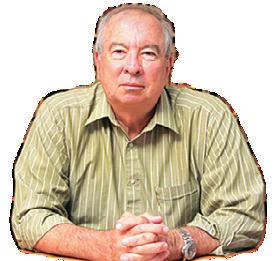
Labor’s intergenerational equity-obsession budget, the boomer generation in particular is being punished for the temerity of working hard, and taking risks in buying properties,” writes ROSS FITZGERALD.
In the recent federal budget, the Albanese government is effectively abusing older Australians.
People who have worked hard during their lives, have bought their own home and often an investment property are being financially penalised.
They are also emotionally abused by being blamed for the government’s problems.
In Treasurer Jim Chalmer’s intergenerational equity-obsession budget, the boomer generation in particular is being punished for the temerity of working hard, and taking risks in buying properties!
As a widowed, sometimes lonely 81-year-old with multiple health problems, I am one of the vulnerable old in Australia who are open to the possibility of personal abuse and financial exploitation.
Unlike many older Australians, I am lucky to have a loyal network of support in the wider community. What is not so often discussed is the way in which the older generation is systematically exploited, discriminated against and scapegoated by
governments and private organisations.
Underlying, and seem ingly justifying, policies and practices applied to the elderly is a pernicious yet persistent attitude that Australia’s older people are a repository of untapped wealth.
Over the past few decades, the phrase “cashed-up baby boomers” has been widely bandied about, but this is a misconception. Given that compulsory superannuation contributions only came about in the 1990s, many Australians born in the postwar period do not have enough super to see them through their retirements. Indeed, some elderly Australians have almost none. Nevertheless, our super funds are eyed enviously, even though they are not held privately but held in trusts that invest them. It’s worth remembering that the superannuation scheme was not just set up to provide for people in retirement but to create a pool of capital that would be
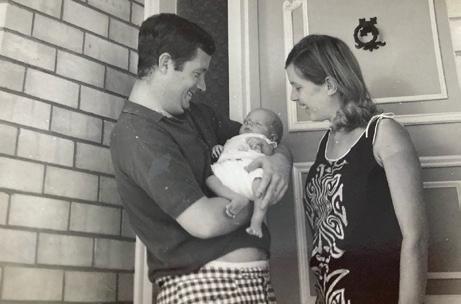
Young homebuyers Robert and Wendy Macklin at the front door of their first home in Pearce in the early ‘70s… “We’ve had a pretty good run, but now, it seems, we’re the bad guys in the great housing debate. It’s punishment time: end negative gearing; pay capital gains on the family home; skyrocket rates; and badmouth the boomers,” our late columnist prophetically wrote in 2023.
available to Australian industry.
Most of all, envious eyes are also cast on homes of the elderly, which have exponentially risen in value over the past few decades due to massive inflation in the housing market.
Many commentators have blamed retirees for selfishly clinging to the homes they spent 25 years paying off and not downsizing to a flat, or a retirement village.
At the same time, because of the
zooming cost of caring for people in nursing homes, governments are now anxious to keep Australians in their own homes as long as possible, which is a direct contradiction to wanting them to sell up.
A further contradiction is that the aged-care industry benefits from the price of homes rising as much of their income comes from interest on the bonds derived from the sale of homes.
The federal government has also implemented various policies and practices to minimise pension payments to the elderly.
These include means-testing pensions based on a partner’s income, deeming investments as income-producing even when no actual income is received, and factoring in unrealised capital gains on investments.
Perhaps the worst is the plan to progressively raise the age of eligibility for the age pension, eventually to 70. This is not seen by people who work in offices as a problem. They see it as retaining the skills of experienced workers.
But are we really contemplating forcing people who work in physically strenuous jobs to keep working till they are 69? When their bodies can’t handle it anymore, older Australians will end up on a disability payment or whatever they call the dole at the time, so there will be no gain to the government.
People are prone to many forms of denialism, including the denialism that one day you will be old, if you’re lucky.
It is very hard for young people, even middle-aged people to look at someone who is old and think: “One day that will be me”.
If they did, they would realise that whatever practices and policies are currently applied to the elderly will someday be applied to them, possibly even worse in the future. They might then give more consideration to respecting older people.
Overall, the one thing that everyone agrees upon is that people are living longer and so the proportion of people who are more that three quarters of a century old is going to increase.
What has to happen is for Australians to realise that they are going to spend more time as a member of that cohort than any previous generation. So it is in their interests to put in place NOW policies, practices and, most of all, principles that will make those years of their lives enjoyable.
Ross Fitzgerald AM is an emeritus professor of history and politics at Griffith University. His widely-praised novel –co-written with Ian McFadyen – Chalk and Cheese: A Fabrication deals, in a comic way, with many of the problems now facing older Australians.
“So sublime you want to cry”
Everywhere you look, heads are down
Humans once carried entire microcosms of our lives in leather wallets and purses, with crumpled receipts, expired coupons and loyalty cards all jostling for space.
The once-proud purse, stuffed to the brim, has been quietly demoted. The once-bulky wallet, threatening to throw your spine out, didn’t die dramatically; it simply thinned.
First the loyalty cards disap peared, then the photos tucked into plastic sleeves, and eventually, even the notes themselves vanished.
Much of that chaos has migrated into our phones. Once, standing at a checkout counter was an archaeo logical expedition: you dug through your pockets, carefully extracting the correct coins, praying that the fragile tower of change didn’t collapse. Coins clinked, slid, and tumbled in a jangling symphony of small economies.
access to help, and getting lost has become almost impossible with maps guiding every turn.
We no longer memorise phone numbers or passwords, emergencies no longer feel as risky with instant access to help, and getting lost has become almost impossible with maps guiding every turn.
I can’t be reached. No way to pay, no maps, no messages, no music, no way to take a selfie and prove you bumped into a celebrity.
Our ancestors crossed oceans with less anxiety, and here we are, stranded at the end of the driveway.
And now, the tether isn’t just in our pockets. Our wrists buzz a subtle vibration, someone needing our attention. Watches pay for things, alert us to messages, track heart rates and steps, and much more, all without lifting a finger.
Well-known ‘Salvo Man’ passes on
Alan Frederick Jessop, best known to Canberrans as the “Salvo Man”, has died peacefully at Canberra Hospital. He was 95.
Despite bouts of ill health, including cancer and heart disease, Jessop could still be found collecting donations outside what was then the Monaro Mall, now the Canberra Centre, three days a week up until the COVID-19 pandemic brought an end to his collecting.
Over 30 years, Jessop raised more than $4 million for The Salvation Army.
He is survived by his wife Joy, daughter Wendy, and grandchildren Emma and James Batchelor. –Helen Musa
Beloved restaurant closes
Well-loved for its Cantonese-style Chinese cuisine, Portia’s Place, which opened on Kennedy Street, Kingston, on October 8, 1996, has cleared out the furniture and locked the door.
Now, it’s instantaneous, tap-and-go: almost magical. The ritual of reaching, rifling and counting is gone, replaced by a sleek, frictionless convenience. We’ve traded the satisfying chaos of coins for digital order, and perhaps a slightly looser grip on what anything actually costs.
And yet, even as our pockets grow lighter, our minds bear a different kind of lightness. We no longer memorise phone numbers or passwords, emergencies no longer feel as risky with instant
Even as we gain time, we’ve lost it. Access to multiple apps brings a constant parade of notifications, dings, buzzes or pings, each demanding our attention and training us to check our pockets every few minutes.
Everywhere you look, heads are down, absorbed in their phones, answering messages, scrolling. Meanwhile, somewhere out there, someone is still waiting for a “like”… and we’re making sure they don’t have to wait long.
Let’s not forget the modern panic: leaving the house without your phone. I don’t even exist if
Emails are efficient, cheap and instant, but the buzz of a notification just doesn’t compare to the quiet excitement of the postie delivering the day’s mail. The biggest benefit, I suppose, is that nothing piles up on the kitchen table any more –just my inbox, a little less visibly judgmental.
Maybe that’s the trade we’ve made without really noticing: less weight to carry, more weight on our attention.
Everything is faster, easier, smoother and yet somehow thinner. And while I wouldn’t give up the convenience, I can’t help but wonder if, in clearing the clutter, we’ve also cleared away something we didn’t mean to lose.
Paul Dorin is the CityNews cartoonist.
Original owner Portia Young sold the restaurant around 2011. The current owners are closing for a combination of family priorities and landlord-related issues, including the need to have the roof repaired at one point over a 10-week period. –Wendy Johnson
Fundraiser for rare cancer
The Canberra branch of the Country Women’s Association will host an afternoon tea of “delicious treats and fun” to raise funds for rare cancer research. The event will be at the CWA Canberra Rooms, Barry Drive, Civic, 2pm-4pm, on Saturday June 6.
The cost is $25 at the door. RSVP by June 1 to cwacanberra@gmail.com
individually tailored solutions for each client.
backed by expert qualifications, we ensure
is up-to-date and in compliance with the law.
love
and expertise.
we do, and it shows in every detail.
every year.
with us today!
Using human brains to help AI cars see danger
Self- driving cars struggle to see at night or in fog – but imitating the human brain can make them safe, writes PABLO CAMARA .
Picture this: you’re driving on a
when you suddenly hit a thick patch of fog. You respond instinctively. Your vision sharpens, and you narrow your eyes to make out the shape of any oncoming cars.
Human beings handle these quick changes very well, but if it were a self-driving car – at least one with a current artificial intelligence (AI) system behind the wheel – things could easily end in disaster.
Today’s AI vision systems are extremely accurate when visibility is good. On a clear, sunny day a selfdriving car can recognise pedestrians, road signs and other vehicles with precision. However, they are extremely vulnerable to environmental changes. If it rains, or gets dark or foggy, standard AI systems become blind, incapable of detecting obstacles that a human driver would spot with ease.
Our research at the University of Valencia proposes a possible solution: instead of exposing AI models to millions of images of every possible road condition, we decided to imitate biology. But biologically speaking, why can humans see so well under
such a wide range of conditions?
The brain’s ‘volume control’
In our brains, neurons do not work alone. They use a truly fascinating form of adaptation that neuroscientists call divisive normalisation.
To understand this (without getting into mathematics) we can picture it as an automated “volume control” system, with neurons working in a team. Let’s say one neuron is looking at a very dark area of the field of vision, such as a black car at night.
The neighbouring neurons turn up the “volume” of this weak signal, amplifying the small details to make them more visible.
If we look at a bright light, the same thing happens in reverse. The brain turns down the volume to prevent us from being dazzled.
This mechanism is what allows us to adapt and see clearly in a very wide range of conditions. But in the search for speed and accuracy, modern AI systems have neglected this biological inspiration.
AI in the driving simulator
In our study, we processed images using some of the most widely used AI models, adding layers to simulate the brain’s “volume control” mecha-
nism. In basic terms, we forced their neurons to communicate with one another and adapt to their environment, just as our own brains do.
We wanted to see if imitating biology would make cars safer. To do this, we submitted both standard AI models and our brain-inspired modification to a series of tests.
Using databases from real driving in European cities, night driving images from Switzerland, and several different virtual driving simulators, we were able to compare responses to different levels of fog, darkness and light variation.
The results showed that imitating our own brains worked. After being
Photo: Samuele Errico Piccarini/Unsplash
trained, the two types of AI models could drive perfectly well, but once fog and darkness came into the equation, the unmodified one began to fail. It lost the ability to distinguish cars from buildings, and even from the road itself.
The AI system that was equipped with our brain-inspired mechanism, on the other hand, was robust. Even in fog or complete darkness, it performed more than 20 per cent better than its unaltered counterpart.
We analysed, from the inside, how this new system perceived the world and found that it was doing exactly what we expected. It was capturing and enhancing the details
of vehicles hidden in the fog that would otherwise be invisible. As a result, its performance became more stable in the face of changing weather conditions.
Learning from nature
Getting society as a whole to trust AI poses major challenges, and the safety of passengers and pedestrians in self-driving cars is a major aspect of this. It is not enough for smart systems to work under ideal conditions. We need them to be completely safe in the real world, and to safeguard the lives of all road users in all weather conditions.
Our research shows that the key to making artificial intelligence safer, more robust and more adaptable may be closer than it seems. There is no need for more powerful computers or vastly greater amounts of data. Sometimes, all we need is to look at the millions of years of evolution that have shaped our own brains. In many cases, nature has already solved some of the problems that artificial intelligence faces today. We just need to learn from it.
Pablo Hernández Cámara, professor and researcher, Department of Electronic Engineering & Image Processing Laboratory, Universitat de València. Republished from The Conversation.
Tomorrow’s calling but we’re not funded for it
Future proofing our community may see some very different budget priorities.
The federal government has been keen on the idea of intergenerational equity and has injected money to address the issue. However, future proofing challenges remain.
Three examples illustrate these challenges. Our scientific organisa tions such as the CSIRO and the Australian Centre for Disease Preparedness (ACDP) did receive a significant boost of funding, but so much more remains to be done.
The crisis faced by the Australian National University is not dissimilar to other universities in Australia. And, like recent actions at the ANU, the CSIRO is now in the process of cutting 350 jobs despite the injection of funds.
All our universities are a key element of future proofing and intergenerational equity. Universities have been expanding over the years, but they have done so by becoming exponentially dependent on foreign students financing their expansion.
Scientific and medical research along with strong support for research and teaching in our universities prepares future generations for the challenges that they will have to face in a changing world.
The wide range of courses that are available at the ANU, the University
of Canberra and other university campuses in Canberra provide examples of the sort of research and education that is needed for all of society to thrive into the future.
The strife faced by tertiary institutions, as the example of the ANU has shown, indicates that there is something terribly wrong. The resignation of the chancellor, the vice-chancellor and a number of the University Council members will not solve the problems.
There must be a significant shift in thinking within the universities – but also across the broader society.
The efforts regarding ANU that were led by independent Senator David Pocock and supported by our federal ACT representatives and members of the Legislative Assembly illustrate that it is time to consider these issues much more seriously.
The Australian Centre for Disease
The strife faced by tertiary institutions, as the example of the ANU has shown, indicates that there is something terribly wrong. The resignation of the chancellor, the vicechancellor and University Council members will not solve the problems.
Preparedness (ACDP) is a highcontainment laboratory in Geelong, Victoria, dedicated to protecting Australia’s livestock, wildlife, and public health from emerging infectious diseases.
We have seen the impact of bird flu, swine flu and covid on humans and should understand the risks of any future pandemic.
In the latest budget, the government injected ongoing funding of $38 million a year from 2030-31 for investment in the second stage of critical modernisation and refurbishment work for the facility.
It is not good enough to start the funding in the outyears rather than making a commitment for commencing sooner. Labor may well not be in government in 2030!
The government also made a
commitment of an additional $387.4 million for CSIRO over the forward estimates, announced in the 2026-27 federal budget. This funding is on top of CSIRO’s existing annual appropriation of about $1 billion and the $278 million received from the government through 2025.
CSIRO responded arguing it will have the necessary funding over the next three financial years to support its sustainability and provide greater stability for its workforce. Why then is it still pursuing the cuts to around 350 jobs in the organisation?
The CSIRO argued as positively as it could by announcing “the funding increase will support investment in safe and fit-for-purpose sites, as well as the research equipment, infrastructure, cyber protection and technology that will best enable CSIRO’s talented researchers to make discoveries and turn them into real-world impact”.
Putting on a brave face when the government has just promised significant funds makes sense. However, the reality is that the CSIRO and the ACDP ought not have to make any comment. The approach the government has taken to increasing the defence budget
is what should be expected of the research and education sectors.
In the early 1970s the Whitlam government was able to inject full funding for universities without the burden of HECS loans. This is an approach that has been adopted by the Scandinavian countries.
Budgets are about priorities. However, they are also about raising money. Comparing the Norwegian approach to the fossil fuel industry and that of Australia would have the government leaping at the opportunity to appropriately tax the fossil fuel industry. This is nowhere more important than stamping a revenueraising measure on natural gas.
Framing a budget around how to best look after Australians in the future may well deliver some interesting insights. However, such a budget would also have to address conflicting interests within the major parties.
Michael Moore is a former member of the ACT Legisla tive Assembly and an independent minister for health.
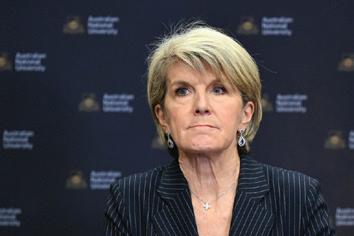
Outgoing ANU Chancellor Julie Bishop.
Photo: Lukas Coch/AAP
WHIMSY / My poetic licence recently expired
A quatrain: Candy is dandy, but liquor is quicker
“A quatrain is a stanza or verse in poetry that has four lines. It often follows a rhyming formula of ‘couplets’, ‘alternating rhymes’ and ‘enclosed rhymes’,” writes Whimsy columnist CLIVE WILLIAMS
“TS Eliot’s face had deep lines. I cannot say the same for his poetry.” – Melville Cane
Not many people know what a quatrain is, but I’m about to tell you. A quatrain is a stanza or verse in poetry that has four lines.
It often follows a rhyming formula of “couplets”, “alternating rhymes” and “enclosed rhymes”.
In a couplet, the first and second lines rhyme, as do the third and fourth lines.
In alternating rhymes, the first and third lines rhyme, as do the second and fourth lines.
In enclosed rhymes, the first and fourth lines rhyme, as do the second and third lines. There are two other variations – where only two of the four lines rhyme, or
none of them rhyme.
I personally like my poetry to rhyme; I’m not much into poetry that doesn’t. Some of my favourite quatrains are below:
Poet Edna St. Vincent Millay:
My candle burns at both ends;
It will not last the night; But ah, my foes, and oh, my friends –
It gives a lovely light!
This quatrain means that the speaker lives intensely and passionately, knowing it shortens her life. Despite its brevity, her life shines brilliantly, admired by both friends and foes. It could describe the life of someone such as Marilyn Monroe. The poem is quoted in the 2025 movie My Oxford Year when student Anna attends her first poetry seminar at Oxford.
“He knows not where he’s going, for the ocean will decide”... Zen Dog, portrayed floating serenely on the ocean in a tub.
Poet Emily Dickinson:
Because I could not stop for Death –
He kindly stopped for me –
The Carriage held but just Ourselves –And Immortality.
This quatrain means that death comes inevitably and gently – not violently. The speaker is taken on a journey by Death, suggesting a calm, inevitable passage from life to eternity.
Author Edward Monckton on the Zen Dog (portrayed floating serenely on the ocean in a tub):
OPEN THURSDAY - MONDAY 10AM - 4PM and every day during school holidays
is pleasant, liquor acts faster – implying it more quickly affects people’s behaviour or judgment.
Some quatrains are structured unconventionally.
Leo Marks, renowned for his cryptographic work during World War II, also composed poignant poetry.
One of his notable poems is The Life That I Have, written on Christmas Eve in 1943. It was crafted in memory of his girlfriend, Ruth, who tragically died in a plane crash in Canada.
He knows not where he’s going
For the ocean will decide It’s not the destination, It’s the glory of the ride.
This quatrain emphasises that it’s the journey through life that’s important, not the final destination. In other words, enjoy the moment.
Poet Ogden Nash wrote one of the shortest quatrains: Candy Is dandy, But liquor Is quicker.
The meaning of this quatrain is obvious. While candy
Marks later provided the poem to Violette Szabo, a British Special Operations Executive agent, to use as a cipher during her mission in occupied France.
The poem is structured in four quatrains. This structure contributes to the poem’s rhythmic flow and memorability, which was crucial for its use as a cipher.
The life that I have Is all that I have
And the life that I have Is yours.
The love that I have
Of the life that I have Is yours and yours and yours.
A sleep I shall have A rest I shall have
Yet death will be but a pause. For the peace of my years In the long green grass Will be yours and yours and yours.
As a postscript, Violette Szabo was captured by the Germans in 1944 after her mission was compromised. She was imprisoned, interrogated and eventually sent to Ravensbrück concentration camp, where she was executed at the age of 23.
On a happier note: Stanley the snail slides into a car dealership and picks out a sporty subcompact. While dealing with the salesperson, Stanley says: “I want a large ‘S’ painted on the sides and bonnet of the car.” The puzzled salesperson asks “Why would you want large S’s painted on a brand-new car? Is it because your name is Stanley?” Stanley replies: “Not at all. When I’m driving down the road, I just want everyone to say, “Look at that S car go! ”
Clive Williams is a Canberra columnist.
Fish oil capsules: does science support the hype?
Should I take a fish oil supplement for my heart, joints or mood?
MARY BUSHELL , from the University of Canberra, shares the science…
Fish oil, also known as omega-3, is one of the most popular dietary supplements. It’s often promoted to protect the heart, boost mood, reduce inflammation and support overall health.
But how much of this is backed by science, and when might fish oil supplements actually be worth taking?
Fish oil comes from oily fish such as salmon, sardines, tuna, herring and mackerel. It’s rich in a special type of fat called omega-3 polyunsaturated fatty acids (PUFAs), mainly EPA (eicosapentaenoic acid) and DHA (docosahexaenoic acid).
These omega-3s play an important role in how our cells function. Every cell in the body is surrounded by a thin, flexible layer called a cell membrane. This membrane works like a protective skin: it keeps the cell’s contents safe, controls what moves in and out, and helps cells communicate with one another.
Omega-3s don’t build the membrane itself, but they slot into it, becoming part of its structure. This helps the membrane stay fluid and flexible,
allowing it to work more efficiently, especially in tissue that relies on fast, precise signalling, such as in the brain and eyes.
Because we can’t make enough omega-3s on our own, we need to get them from food or, sometimes, supplements.
Fish oil and heart health
Omega-3 fatty acids are best known for their role in heart health, particu larly for lowering triglycerides, a type of fat in the blood that, when elevated, can increase the risk of heart disease.
standard capsules contain only about 300 mg of combined EPA and DHA the rest is other fats.
Australia as Vazkepa, a prescriptiononly medicine. It was added to the Pharmaceutical Benefits Scheme (PBS) in October 2024, making it more accessible for high-risk patients.
For otherwise healthy people, the evidence that standard fish oil supplements prevent heart attacks or strokes is much less convincing.
Arthritis and joint pain?
Fish oil has mild anti-inflammatory
In people with inflammatory arthritis (such as rheumatoid arthritis), omega-3s can reduce joint tenderness and morning stiffness.
That doesn’t mean fish oil is a mood booster for everyone. For people without diagnosed depression, omega-3 supplements haven’t been shown to reliably lift mood or prevent depression.
How much can you take?
Up to three grams a day of combined EPA and DHA from supplements is generally considered safe for most adults.
Higher doses for specific medical conditions should be taken under medical supervision.
A 2023 paper pooled 90 clinical trials with more than 72,000 participants and found a near linear relationship between dose and effect. That doesn’t mean “more is always better”, but higher doses tended to produce bigger improvements in heart-related risk factors.
It found you need more than two grams a day of EPA and DHA combined to meaningfully lower triglycerides (by 15 to 30 per cent). This is most relevant for people with existing heart disease, high triglycerides, or obesity.
But it’s important to read the label.
A “1000 mg” fish oil capsule usually refers to the total oil weight of the oil,
A 2018 trial tested a high-strength purified EPA product (four grams a day) in people already taking statins to lower their cholesterol. Over five years, it prevented one major heart event (heart attack, stroke or urgent procedure) for every 21 people treated. However, this was a prescription-only pharmaceutical-grade EPA, not a standard fish-oil capsule.
In Australia, fish oils are sold in pharmacies, health food stores and supermarkets. Some concentrated products are available as “practitioner-only” supplements via health professionals.
The same purified EPA used in the 2018 trial is now available in
These benefits, however, require higher consistent doses, usually around 2.7g of EPA and DHA a day.
This is the equivalent of around nine standard 1000mg fish oil capsules (containing 300 mg of EPA and DHA) daily for at least eight to 12 weeks.
Can fish oil improve mood?
Some studies suggest omega-3s, particularly those higher in EPA, can modestly reduce symptoms of clinical depression when taken alongside antidepressants.
A 2019 review of 26 trials (involving more than 2000 people) found a small overall benefit, mainly for EPA-rich formulations at doses up to about 1 gram a day. DHA-only products didn’t show clear effects.
The Heart Foundation recommends Australians eat two to three serves of oily fish a week. This would provide 250-500 mg of EPA and DHA a day.
If you don’t eat fish, a fish oil supplement (or algal oil if you’re vegetarian or vegan) can help you meet your omega-3 needs.
If you have heart disease (with high triglycerides) or inflammatory arthritis, fish oil may offer extra benefits. But dose and product type matter, so speak with a health professional. For most people, though, two or three serves of oily fish each week remain the simplest, safest and most nutritious way to get omega-3s.
Mary Bushell, clinical associate professor in pharmacy, University of Canberra. Republished from The Conversation.
Absurd amount to upgrade Sydney rail service
Does nobody else consider it absurd that the Federal Budget provides a mere $50 million to upgrade a rail service between Sydney and Canberra where daily some 3000 people travel by either coach or air plus tens of thousands more commute by car on the Federal Highway?
A 2016 study for a fast (NOT very fast) train estimated that there would be demand from 10.68 million passengers a year, or 29,273 a day. With the population increase in the last decade that number would be considerably higher. Not just the CO2 but, more importantly, the lives saved by a fast train as an alternative to using the accident-prone highway would be significant.
Compare this sum with the $6 billion estimated to bring a non-climate-resilient tram from Civic to Woden with the required bridges and tunnels, destroying the uniqueness of our parliamentary triangle. Passenger numbers will be low, regardless of whether the rapid bus (taking about half the time of the proposed tram extension) is continued or not.
Few commuters will put up with doubling the time of their commute and the use of private, shared cars (in a few years’ time, driverless) will increase if the rapid bus is discontinued.
If it is not, who – except the few residing within an easy walk to a tram stop (even
fewer during the extreme weather events of climate change) – will want to daily ramble around Parliament House?
Moreover, buses around the parliamentary triangle are not well patronised with free parking for those working in Parliament House and most others earning sufficient to not want to waste their precious time on public transport.
Of course, the required odd $6 billion for the extension of the tram will have to come out of the ACT budget where, as Jon Stanhope and Khalid Ahmed have repeatedly shown, the debt has already mounted to crushing proportions.
Any amounts from the Federal Budget are later equalised, that is, are subtracted from the GST the ACT would otherwise receive; a fact some politicians seem to be blissfully unaware of.
A fraction of the money saved by not extending the tram to Woden could be used turning the Kingston Railway Station compound into a welcoming and convenient environment for tourists and business travellers alike, with direct, rapid bus connections to the airport, Woden, Tuggeranong, Gungahlin and beyond in addition to the existing ones.
The increase of tourists at Canberra’s innumerable festivals, sporting and cultural events plus visitors to national institutions might even make it profitable for the ACT to offer more than the proposed $25 million to the project.
Prof Beatrice Bodart-Bailey, via citynews.com.au
Better rail connection to the airport, please Federal Budget funding to upgrade the Canberra-Sydney rail service is very welcome news, long overdue, but welcomed.
As part of the upgrade, the NSW Government should expand the platform at Wolli Creek Station to allow stops for the Canberra service. This would enable passengers travelling from Canberra and other southern centres to easily connect with Sydney’s airport line.
At present, travellers must either change to a suburban service at Campbelltown or backtrack from Central Station, adding unnecessary inconvenience and travel time.
There is no question the Canberra-Sydney rail journey is one of Australia’s most scenic train trips, traversing beautiful countryside and attracting international attention through overseas documentaries. I have hosted friends from England who specifically wanted to experience the journey after seeing it featured on British television.
As a regular passenger, I only hope the NSW, ACT and federal governments now follow through on their commitment to improve this important rail link.
Darryl Johnston, Tuggeranong
There were community consultations, of course
I see the ACT government, in its infinite mercy and wisdom, has decided to dig a
ditch for its train through the heart of the parliamentary triangle – rather than moving the thing sideways along a less unsightly and more useful route.
There were community consultations, of course.
Gentle readers: can anyone remember an instance where community consultations in this town led the government to change its pre-determined mind?
A quip attributed to a young Jo Stalin comes to mind: “I don’t care what the committee decides as long as I take the minutes.”
John Griffin, via email
Faster, cheaper rapid bus to Woden
I agree with columnist Richard Johnston (CN May, 7) that the ACT Government should “forget the nonsensical Stage 2B tram”.
The ACT Auditor-General found Stages 1 and 2A to be a poor use of funds with returns of less than 50 cents for every dollar spent.
The government’s analysis for Stage 1 found bus rapid transport (BRT) operating on its own right of way could be provided at half the cost while delivering a similar level of benefit.
The EIS for Stage 2B is expected next month. Let’s hope it is an improvement on the draft EIS released in 2025 that failed to genuinely assess alternative
strategies to light rail.
It should assess the impacts on transport demand from increased working from home and improving bus technology, including carrying capacity, on the need for light rail.
It’s hard to see Stage 2B having a positive benefit to cost ratio (BCR) as it will have very high costs given engineering challenges, including the need for a new lake crossing.
In response to poor BCRs, light rail advocates argue it stimulates higher density development along its route. While this is true, it is likely a high-quality bus service could have produced similar increases in density.
The demand for higher-density development at Kingston and the Woden, Belconnen and Tuggeranong town centres in the absence of light rail, demonstrates demand is strongly influenced by accessibility not only by transport technology.
Abandoning the light rail extension in favour of BRT would free funds for other purposes including social housing, education, health and an improved bus network.
The extension should not proceed unless it is found to be financially, socially and environmentally superior to alternatives.
Mike Quirk, Garran
Write to us
Let loose to: editor@citynews.com.au
Calling for a commission of enquiry
I could not help noticing during a recent trip to Spain a glaring disparity between what’s on the rails there in comparison with the imported material from Spain that we’ve signed off on.
Their light rail was ultra-modern, travelling beautifully on landscaped tracks, apparently driverless, while connecting nicely with their 300km/h high-speed rail network.
What we have, in comparison, seems to be like comparing a used Mazda with a Bugatti.
When looking at quality and efficiency, common sense says electric buses should have been more seriously considered.
Even Singapore’s light rail is far superior as anyone who has travelled on it will attest.
A commission of enquiry into the ACT Government’s decision to rush inappropriately ahead with this project needs to occur because the path ahead is bleak.
Such an enquiry should be judicial, at arms length from influence and prejudice, and open to public submission and participation.
John Lawrence via email
The government isn’t listening to us
I refer to Ric Hingee’s letter (“Seriously, we need better people to represent us”, CN May 12). I think he summed up the situation with our local politicians aptly.
We certainly are not getting value for money. In particular, proper planning processes are lacking in terms of information and transparency.
The ACT Government is not into communicating or listening to what the community would like or their ideas.
We rely on our two independent members, Fiona Carrick and Tom Emmerson, to keep us informed. They earn their salaries!
Yes, we need a balance-of-power group of independents.
Penny Moyes, via email
Fashion makers have got a lot to answer for
Big thanks to Caroline Swee Lin Tan and Saniyat Islam for exposing the wasteful truth behind recycled polyester clothing (“Polyester clothes are on a one-way trip to landfill”, CN May 7).
In short, plastic bottles turned into clothing go to landfill next – while bottles recycled back into bottles can be recycled and reused several times over.
The fashion industry needs to work out how to recycle its own fabric rather than shifting the problem downstream. And all of it needs to be made by something other than climate-polluting crude oil.
Fashion companies have got a lot to answer for – it’s high time they threaded more carefully.
Amy Hiller, Kew, Victoria
Out of step with our community’s values
While the ACT Government has always maintained that its annual “cull” of kangaroos and wallabies is “humane”, the reality is that it is beyond cruel and that it amounts to sadistic violence.
During last year’s cull at Gungaderra Grasslands, a group of kangaroos was shot, then I heard one of them get stabbed twice and then hit. I will never forget those terrible sounds.
Alarmingly, this is not an isolated incident. An autopsy report on a young male kangaroo who was interred from a burial pit after the 2012 cull found that it was shot through the jaw, bludgeoned on the head, stabbed in the neck and had its throat cut. It died from exsanguination (severe blood loss) or asphyxiation. The vet concluded that it suffered “severe pain and distress” during the attack before finally dying.
There are other examples of unthinkable cruelty. Treating any animal in this way is simply unacceptable, and completely out of step with our community’s values.
Rebecca Marks, via email
Chalmers didn’t seize the superannuation nettle
While I recognise that Treasurer Jim Chalmers has done much to undo the damage created by Howard and Costello in housing affordability, he has totally squibbed it in making changes to the ongoing issue of unsustainable superannuation benefits.
As a long-term, self-funded retiree, I continue to benefit from the largess that Howard and Costello lavished on us baby boomers.
Prior to retirement, I was able to make contributions to my super fund which were taxed at 15 per cent. In addition, my wife was also able to salary sacrifice up to $50,000 annually.
Now that we are in the “pension” phase, we pay no tax on the withdrawals from the fund, nor do we pay the Medicare levy, even though at our age, we are major users of health services.
Additionally, we qualify for the Commonwealth Seniors Health Card, entitling us to receive pharmaceuticals at the heavily subsidised rate available to those who have concession cards.
I was hoping that Dr Chalmers would “seize the nettle” and at least attempt to rectify this egregious situation.
To keep the current policy settings is only continuing to add to the ballooning deficit that will further burden our children,
grandchildren, and great grandchildren, long into the future.
To quote Dr Chalmers from his speech: “We can’t continue to kick the can down the road”. However, that’s exactly what he’s done in this instance.
If having a thumping majority, and up to two years out from the next election, isn’t the right time to make changes to this totally inequitable and unsustainable superannuation model, then when will be a good time?
Ian De Landelles, Murrays Beach, NSW
Truer words were never spoken!
Two letters (CN May 7) from Mike Quirk and Sue Retcher in calling for clean energy, strangely neither mentioned nuclear energy. Emissions-free, baseload power and new transmission lines destroying the countryside are not needed for this modern technology that is increasingly being used around the world by other smart countries.
Scientists have told us we can’t get to net zero without the use of nuclear energy.
Mr Quirk tells us China, Japan and South Korea are seeking to reduce their dependence on gas and oil, but doesn’t say all three countries are significantly increasing their nuclear production, driven by the need for energy security, decarbonisation targets and rising electricity demands.
Ms Rechter tells us Sweden, Canada, Portugal, US and Brazil have begun using green
hydrogen but not that all of those countries except Portugal use nuclear power with it being a major part of their energy mix in Sweden, Canada and the US.
US technology companies are turning to nuclear energy to power the massive demands required for artificial intelligence and cloud-computing data centres.
This stupid current government won’t even entertain the thought of nuclear energy with its leaders particularly Albanese and Bowen burying their heads in the sand at the mention of it.
If Australia delays this clean, green form of energy we will fall even further back then we already are with regards to the energy crisis.
As Ms Rechter states: “Big picture thinking, backed by timely action, is needed now.” Or as Mr Quirk states: “To reduce our reliance on fossil fuels, the government’s response has to be based on evidence and free from undue influences.”
Truer words were never spoken.
Ian Pilsner, Weston
Drilling won’t bring energy independence
Mike Quirk is right. The US war on Iran has exposed our dangerous dependence on fossil fuels (“Iran lesson is up the incentives for renewables”, CN 7/5).
Extracting more Australian oil and gas would be a costly backward step, increasing greenhouse emissions while slowing the
A lynch mob is still a lynch mob
The abduction and subsequent alleged murder of Kumanjayi Little Baby was a heinous and evil act, but the shameful behaviour we in Australia, and the rest of the world witnessed afterwards, took depravity to a whole new level.
Random looting, a crazed mob burning police vehicles, attacking and injuring police and first responders, all allegedly, in the pursuit of “justice”.
But what justice and for who?
We, Australians citizens all, irrespective of creed, race or colour are subject to and benefit from the systems of a democratic society: a progressive public health system, comprehensive social services and a robust criminal justice system.
These systems, particularly the criminal justice system, cannot and should not be superseded by unwritten laws based on archaic tribal practices.
Yes, this was a highly emotive crime, and the mood was tense in Alice Springs after the police had found the body of the five-year-old girl, following an intensive search, which led to the arrest of the alleged perpetrator.
But a lynch mob is still a lynch mob in whatever cultural norm you choose to disguise it.
Of course there is a much greater ill inherent in this horrific murder and it’s not just the condition of town camps around the outskirts of Alice Springs, it’s the scourge of domestic violence that continues to haunt all Australian families across all demographics and one that we need to address united, not divided.
Declan McGrath, via email
Angus decided to ignore the promises
On his election as leader of the Liberals in February, Angus Taylor promised he would work hard to reform the party, end “politics of convenience”, and regain voter trust via a “change or die” strategy. He never admitted that he and his party executive would assume that voters have the memory of a gnat.
It is clear from the Liberals’ Farrer by-election
campaigning and genuflections to the noisy yet hollow One Nation brigade that Taylor and Co decided to ignore the promises, and the continuing pleas from some wellrespected Liberal stalwarts about moving the party to what they called the “sensible” or “civilised” middle ground.
Both Coalition parties unashamedly preferenced an unashamed “party shopping”, One Nation candidate in Farrer over a more trustworthy and policy oriented community-backed independent.
While criticising One Nation and its candidate, and resorting to insidious dog whistling to attract potential One Nation voters, the Liberal Party also relied on its customary lazy approaches to promote ad hoc policy thought bubbles.
The Liberals sought to excuse the preferencing order as making a choice about “the least worst option”. When hinting before the by-election that these latest party shenanigans were just a political strategy to help a Liberal more easily wrest back Farrer in 2028 should One Nation win it in 2026, did the party consider the risks of a preferencing strategy possibly turning the seat into a safe one for One Nation?
Any earnest, hand-on-heart claims made by individual federal Liberal candidates, including those standing in the ACT, about listening, valuing and building trust and committing to substantial change in the public interest, will simply ring hollow as long as Liberal leaders continue to grovel to One Nation.
Sue Dyer,
Downer
Where will these Belconnen houses be located?
Re May 2026 “Our CBR”, aka The Barr Bugle. Page 3 has an article on more affordable homes for Belconnen – 420 to be precise. No specifics on location. I scanned the QR code as directed. No reference to this particular article was revealed. Why won’t the Barr government tell us where this housing will be located?
Are they once again seeking to prevent community groups from lodging reasonable protest?
Bill Brown, via email
shift to cleaner, cheaper renewable energy.
The most sensible solution comes from Tony Wood, Energy Program Director at the Grattan Institute. His plan includes accelerating electric transport and machinery while rejecting government support for new oil exploration and refineries.
Wood notes that “the energy to run electric cars, buses, trucks and mine equipment can be made locally using renewables and storage, with backup gas plants.”
Such independent advice is invaluable because it is devoid of political point scoring or party obligations to fossil fuel companies who make large political donations.
Energy independence in the 21st century will come not from drilling deeper, but from electrifying smarter.
Ray Peck, Hawthorn, Victoria
Figures warrant open, respectful conversation
I am writing to express deep concern regarding recent figures obtained under a Freedom of Information request from the ACT Maternal and Perinatal Data Collection.
They show a troubling number of babies being born alive following attempted abortions.
According to the data, there were 19 neonatal deaths recorded between 2016-2018, 20 between 2019-2021, and 27 between 2022-2024.
This upward trend raises serious ethical and medical questions that deserve far
greater public attention.
A baby born alive, regardless of the circumstances of their birth, is a patient deserving of the same care as any other baby.
The increasing number of neonatal deaths in this context suggests that we must examine whether adequate medical care and legal protections are being provided to these babies born after an abortion.
This issue transcends political lines and speaks to our shared humanity. What protocols are in place to ensure that babies born alive receive appropriate medical intervention? Are healthcare professionals supported and guided to prioritise the wellbeing of these infants? And why is there so little transparency and public discussion about these outcomes?
At the very least, these figures warrant an open and respectful conversation within our community. Greater accountability, clearer reporting, and a reaffirmation of the duty of care owed to every newborn are essential steps forward.
Regardless of one’s position on abortion, surely we can agree that any child born alive deserves compassion and medical care. We urge policymakers, medical authorities, and the public to reflect seriously on these findings and to ensure that no child is denied the basic right to life-saving treatment. Finally, it is important to add that ACT Right to Life promotes the value and dignity of life from conception until natural death.
John Kennedy, president, ACT Right to Life
Festival celebrates with music
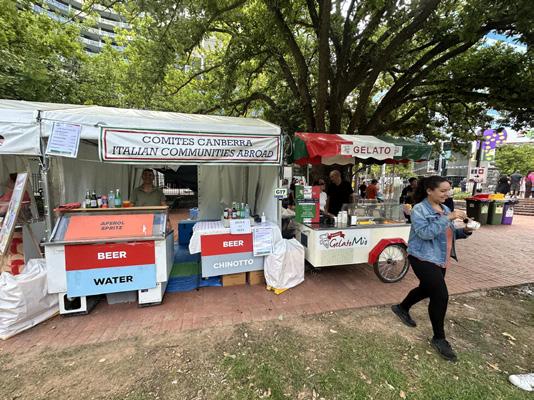
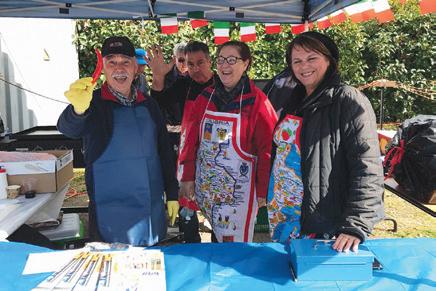
Celebrating the 80th Italian National Day, Festa Della Repubblica will return to the Italian Cultural Centre on Sunday, May 24, bringing together authentic Italian food, music, culture and community in one of Canberra’s most vibrant multicultural celebrations.
Hosted by Com.It.Es Canberra, Festa Della Repubblica commemorates the 1946 vote that saw Italy become a republic, replacing the monarchy with a democratically elected parliament and president.
Over the past 15 years, the event has grown into far more than a historical commemoration, becoming a much-loved celebration of Italian heritage, migration history and community spirit, says Com.It.Es Canberra president Franco Barilaro.
The festival’s enduring popularity comes from the way it welcomes both the Italian community and the wider Canberra public.
“Festa Della Repubblica is an opportunity to celebrate not only Italy’s National Day, but also the cultural traditions, family values and strong sense of community that remain central to Italian life,” he says.
“We are proud to open this celebration to the wider Canberra community each year because
Italian culture is built around sharing food, music, hospitality and time together.”
Entry to the event is free, something Franco says reflects the inclusive atmosphere organisers want to create.
“We want this to be an event that everyone can enjoy regardless of age or background,” he says.
“The day is about bringing people together, sharing culture and creating a welcoming environment where families can experience a little piece of Italy here in Canberra.”
The festival will feature Italian street food, sweets, chestnuts, gelato and coffee stalls alongside live entertainment and family activities throughout the day.
New this year will be a spaghetti-eating
competition, expected to bring plenty of laughter and friendly rivalry as participants battle their way through bowls of pasta in true Italian style.
“There is always a wonderful energy throughout the day and this year we wanted to introduce something a little different that encourages people to participate and have fun together,” Franco says.
“At its heart, Festa Della Repubblica is about creating memories, celebrating culture and ensuring these traditions continue to be shared with future generations.”
Visitors can also enjoy displays of Italian cars and motorbikes, performances by the Viva Italia Band and the Dante Alighieri Choir, plus face painting and a jumping castle for younger visitors.
Franco says events celebrating Italian culture continue to thrive because they create genuine connections to heritage, identity and community.
“These celebrations are important because they help preserve culture while also creating understanding and connection within the wider Australian community,” he says.
“The success of Festa Della Repubblica comes from the commitment of our volunteers, regional associations and the many families who continue to support the event year after year.”
Festa Della Repubblica, Italian Cultural Centre, Forrest, 10am-3.30pm on Sunday May 24, free entry.
Food, music and hospitality.
Displays of Italian cars.
Spaghetti-eating competition.
The festival features Italian street food and family activities throughout the day.
culture and food
Italy’s peaceful revolution to a democratic republic
Festa Della Repubblica commemorates one of the most significant moments in modern Italian history. The 1946 referendum transformed Italy from a monarchy into a democratic republic.
Held on June 2, 1946, the national vote asked Italians whether they wished to continue under a king or adopt a republican system with an elected parliament and president.
The referendum followed years of political turmoil, including the rise of Fascism under Benito Mussolini and the devastation of World War II.
Importantly, it was also the first national election in Italy in which women were allowed to vote, marking a major milestone for democracy and equality in the country.
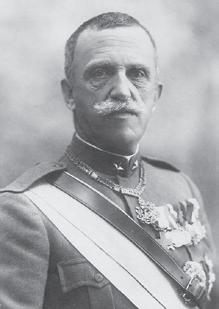
At the time, King Victor Emmanuel III attempted to preserve the monarchy by abdicating in favour of his son, Umberto II, shortly before the referendum.
Despite the move, Italians narrowly voted in favour of becoming a republic, with about 54 per cent supporting the change.
The result brought an end to the royal family’s rule, which had existed since Italy’s unification in the 19th century, and both Victor Emmanuel III and Umberto II later went into exile.
While Italy already had parliamentary traditions before the referendum, many Italians blamed the
monarchy for supporting Mussolini’s Fascist government during the 1920s and 1930s.
Under Mussolini’s rule, parliament gradually lost its authority as the dictatorship tightened control over the country. The 1946 vote was therefore seen not only as a constitutional change, but also as a symbolic break from Fascism and the political failures that led Italy into war.
Italy’s earlier democratic foundations date back to 1848 with the signing of the Statuto Albertino by Charles Albert, a constitution that later became central to the formation of modern Italy.
For decades, the anniversary of that constitution served as Italy’s national day before eventually being replaced by Festa Della Repubblica.
Today, the occasion is celebrated throughout Italy and in Italian communities around the world, recognising both the nation’s democratic history and the enduring strength of Italian culture and identity.
FAST FACTS ON ITALY
• Italy has more UNESCO World Heritage Sites than almost any other country in the world, with famous locations including Colosseum, Venice and Pompeii.
• The modern pizza was born in Naples. The classic Margherita pizza was reportedly created in 1889 using tomato, mozzarella and basil to represent the colours of the Italian flag.
• Italians consume around 14 billion espressos every year, and ordering a cappuccino after lunch or dinner is considered unusual in traditional Italian culture.
• Italy is home to Europe’s only three active volcanoes: Mount Etna, Mount Vesuvius and Stromboli.
• Italians are passionate about pasta, and there are believed to be more than 350 different pasta shapes across the country, with many regions proudly claiming their own traditional varieties and recipes.
• Italy produces more wine than almost any other country in the world, making billions of bottles annually from more than 500 native grape varieties.
Benvenuto a casa
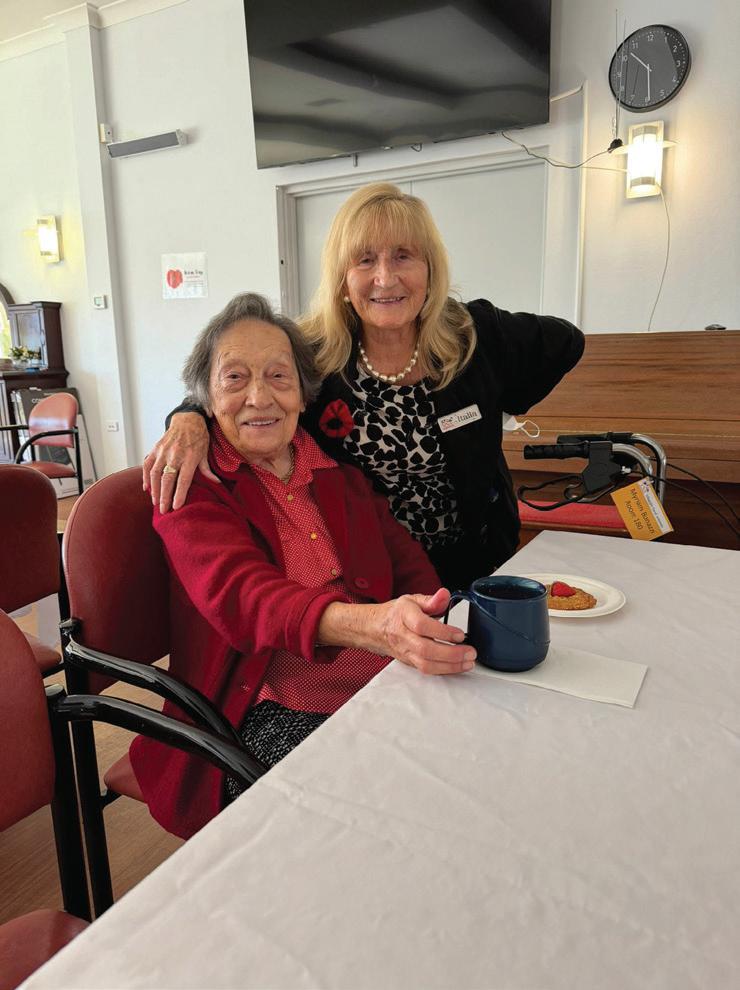
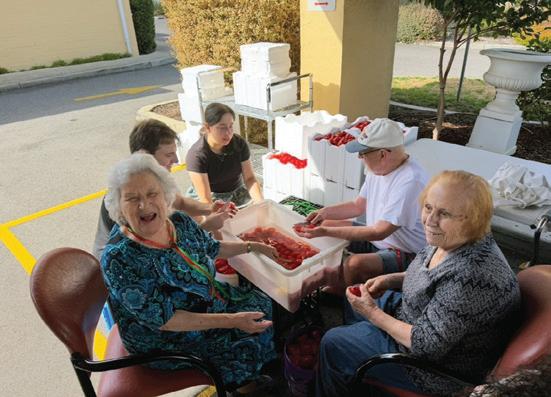
At Villaggio Sant’ Antonio, aged care feels like family
Inspired by rich Italian tradition, our community is built on faith, food, connection, and belonging.
From shared meals to laughter across generations, every day is filled with warmth, care, and heart
Come home to Villaggio Sant’ Antonio - where Italian heritage meets compassionate care
King Victor Emmanuel III.
BUSINESS SUPERSTARS
DAVE SMITH Director
Capital Medical
Logistics
Helping Canberra healthcare move when every minute matters
When a medical delivery is urgent, it is never just a parcel. It can be a surgical instrument needed before a procedure, paediatric nutrition required without delay, pharmaceuticals, biomedical equipment, specialist consumables, or even something as precious as donor corneas, medical leeches or mother’s milk travelling interstate.
That is where Capital Medical Logistics plays a quiet but vital role in Canberra’s healthcare network.
Led by Dave Smith, this family-owned medical courier business understands that timing, care and reliability can directly affect patient outcomes. Their work supports hospitals, clinics, surgeons, suppliers and healthcare teams when ordinary transport simply is not good enough.
From time-critical dispatches for in-progress surgical procedures to priority deliveries needed before surgery begins, Capital Medical Logistics is built around urgency and trust. The team provides local, regional and interstate courier support, including Canberra, regional NSW, capital cities and
needs, public holidays, air freight and international requirements. They also have access to restricted medi cal areas, which means they can support healthcare teams where precision and process matter.
As a family business, every delivery reflects their name, their standards and their understanding of how important medical logistics can be. In healthcare, the work behind the scenes often matters most. Capital Medical Logistics helps keep that work moving, safely, urgently and with care.
A new chapter for ACT strata law: Kerin Strata Lawyers launches
Christopher Kerin has announced the launch of Kerin Strata Lawyers, following the dissolution of Kerin Benson Lawyers the specialist strata practice he co-founded in 2014.
The new firm carries forward more than a decade of hard-won expertise in ACT and NSW strata law, with a renewed focus and a dedicated team behind it.
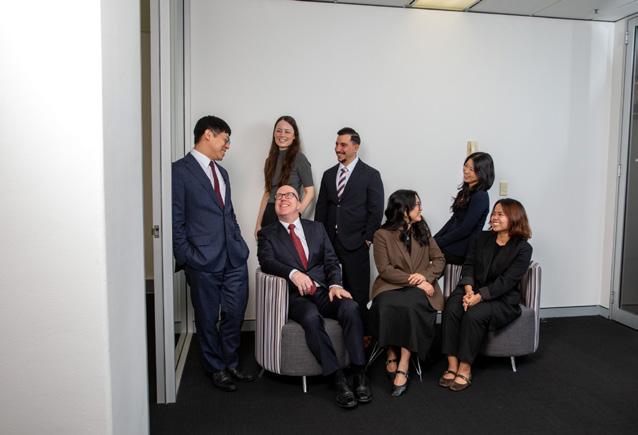
Christopher is joined by Partner Matthew Lo, Associate John-Paul Panarello, Solicitor Mary Tabaco, and a strong team of paralegals. The firm acts exclusively in strata and community title law, serving owners corporations, strata managing agents, individual lot owners and community associations across the ACT and NSW.
Big enough to deliver. Small enough to care Christopher is the author of the Guide to ACT Strata Law, the Territory’s leading strata reference text, regularly cited by ACAT members in ACT decisions.
He has been invited to appear and make submissions before multiple ACT Legislative Assembly committees, including the Standing Committee on
Legal Affairs, the Standing Committee on Planning, Transport and City Services, as well as the Standing Committee on Economic Development and Tourism. As a recognised voice in strata law, Christopher has appeared on Four Corners, Today Tonight and ABC Radio Canberra.
Christopher has regularly appeared in ACAT and ACT Supreme Court in a range of strata disputes.
The firm is committed to empowering the strata community through education and ongoing engagement with strata stakeholders.
Five years into owning her own business, Panacea Landscapes owner, Shannon Blackbourn, is an award-winning landscaper, recently taking out gold for her garden design at this year’s CIT Floriade display competition.
Inspired by the Science and Nature theme, Shannon’s design, ‘“The Ponder Pond”, is a space to reflect and connect with the landscape while giving the opportunity to “explore the limitless possibilities of scientific discovery”.
Featuring the geometric renditions of the Fibonacci sequence, kinetic energy, molecular structures, DNA and the atom, Shannon says the garden blends natives with herbs and annuals, inspiring viewers to wonder and learn.
Shannon also won bronze at the 2025 Melbourne International Flower & Garden Show in the Balcony Garden Competitions, following her first place prize the year earlier.
Now leading her team of six other landscapers, as well as other contractors, what had initially started as an opportunity to work flexibly to accommodate a young family, has expanded into working more than an average nine-to-five. Luckily, Shannon says, she loves it.
“This is my calling,” she says. “It’s a lot of work, and you’ve really got to love what you do, but the more that I keep at it, the more that it all falls into place.”
Being her own boss has given Shannon the opportunity to seamlessly slot her two passions together.
“I’m still able to be a mum and go support my kids,” she says.
“I’m lucky to have a great team helping me out.”
Panacea Landscapes Call 0498 287 789 or visit panacealandscapes.com
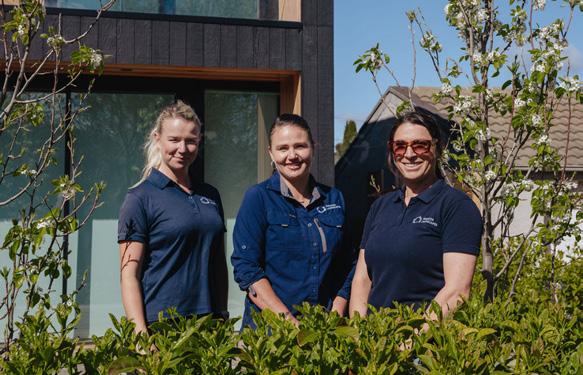
From left, Jessica McCann, Kaleah Pesenhofer and Shannon Blackbourn of Panacea Landscapes.
Trusted, Award-Winning Automotive Experts in Canberra
For nearly two decades, Car Mechanical Services has been a trusted name in Canberra, offering top-quality automotive care with a strong community focus. Familyowned and operated, Car Mechanical Services stands out not just for its mechanical expertise, but for its commitment to sustainability, inclusivity, and nurturing the next generation of technicians.
Originally established in 1982, Car Mechanical Services has built its reputation on a foundation of honesty, technical excellence, and deep local engagement. Directors Raffy and Charlie Sgroi have led a wellqualified and dedicated team through the business’s growth, guided by a strong belief in quality service and meaningful customer connections.
“Our decision to establish in Canberra was driven by the family-oriented nature of the community and the region’s steady growth,” says Director Raffy Sgroi. “Being part of a region with such strong local spirit has allowed us to connect with residents and offer services tailored to their needs.”
Car Mechanical Services has grown alongside Canberra’s expanding suburbs, adapting to a vibrant and evolving city. “We’ve seen a lot of change – new homes, more businesses, and a strong focus on sustainability,” says Charlie. “That aligns perfectly with our values and has helped us grow with the community.”
Exceptional Automotive Services
From logbook servicing and diagnostics to mechanical repairs, brakes, suspension, and air conditioning, Car Mechanical Services offers comprehensive automotive care for both private and fleet vehicles. The workshop is known for its “no surprises” approach – all work is clearly explained and approved before anything is done, giving customers confidence and peace of mind.
“We treat every car like it’s our own,” says Charlie. “People come to us because they know they’ll get honest advice and excellent workmanship. Trust is everything in this business.”
Green Practices and Forward Thinking
In a traditionally resource-heavy industry, Car Mechanical Services is setting the bar with its ecoconscious initiatives. The workshop is Cleanawaycertified, adheres to stringent environmental standards, and is proactive in recycling used oil, parts, and materials. They also offer servicing for hybrid and electric vehicles – a growing field the team is passionate about.
“We’ve made sustainability a core part of our operation,” says Raffy. “We’re constantly improving how we work to minimise waste and support environmentally friendly solutions for our customers.”
Looking ahead, Car Mechanical Services plans to expand its electric vehicle repair services while continuing to implement greener workshop practices.
Investing in People and the Community
Training the next generation is central to the business’s mission. Car Mechanical Services partners with local schools to offer work experience — particularly for students with disabilities or who are neurodivergent. Through mentoring and apprenticeships, the team helps young people build meaningful careers in automotive repair.
“We want our workshop to be a place where everyone feels welcome and supported,” says Raffy. “Giving students and apprentices a real chance to grow and learn is incredibly rewarding — they’re the future of our industry.”
Car Mechanical Services also supports the broader Canberra community through sponsorship of local sports clubs, involvement in community events, and partnerships with inclusive organisations. “Supporting local causes isn’t just good business – it strengthens our neighbourhood and reflects who we are,” says Charlie.
Award-Winning Excellence
Car Mechanical Services’ commitment to quality and community has earned it high praise, including winning many local and national business awards in automotive services and management. Raffy currently holds the title of National Businesswoman of the Year, along with international awards for management. The business has also been recognised for outstanding customer service and leadership in sustainable practices.
What’s Next?
Looking ahead, Car Mechanical Services is set to launch new career discovery programs in partnership with local schools, with a focus on underrepresented groups. The team also plans to host workshops to raise awareness about electric vehicle servicing and green automotive careers.
For the team at Car Mechanical Services, it all comes down to people – customers, staff, and community.
“We’ve always believed in doing things properly, treating people with respect, and giving back where we can,” says Raffy.
Charlie Sgroi Director Car Mechanical Services
BUSINESS SUPERSTARS
CHRIS SCULLIN & CHRIS COOK
Co-founders
Lystr Canberra
Canberra founders changing how Australia sells homes
When Chris Scullin and Chris Cook launched Lystr, it was not their first step into PropTech. The Canberra co-founders have spent the past 15 years working together at the intersection of real estate, technology and customer experience, building practical solutions for a market they know well.
Their track record includes a Real Estate Institute National Innovation Award for a previous Canberra PropTech startup, recognition that reflected their long-standing focus on making property transactions simpler, smarter and more transparent.
Lystr is the next evolution of that work. Created in Canberra and built for home sellers nationally, the platform gives owners a more flexible way to sell, with expert agent support, clear guidance and a straightforward flat-fee model. It is designed for people who want more control than the traditional commission model offers, without being left to manage the process alone.
For Chris and Chris, the opportunity is not just to disrupt real estate, but to improve the experience for everyday sellers.
They believe the best property technology should
remove friction, reduce uncertainty and give people confidence at one of the biggest financial moments in their lives.
Their 15-year partnership gives Lystr a clear advantage. They understand the industry, they understand the technology, and they understand the importance of trust.
Canberra remains central to the story. It is where the founders built their partnership, proved out their ideas and are now set to launch Lystr’s national ambition: to deliver a better, fairer and more empowering home-selling experience for Australians.
Lystr Call 02 6127 9600 or visit lystr.com.au
JAN BROWNE Co-Director Bridge Strata
Jan recognised for service to strata management
Recipient of the 2024 Australasia Leadership Award from SCA National, Bridge Strata co-director Jan Browne says she has seen many changes in her 38 years in the industry.
As an authorised strata management trainer, Jan says she gets satisfaction from training and mentoring.
Managing some strata and community plans for more than 30 years, Jan says she’s developed a rapport with committee and owners over that time.
“Quality service means knowing the legislation and providing the correct information and service to our clients. The strata industry is going through a tough time at the moment with majority of managers working above and beyond. It is a rewarding industry when you can work with the committees to achieve outcomes.
Within NSW, there are close to 1.4 million people living with strata, and it is predicted that 50 per cent of the population within the ACT and NSW will be living in strata over the next couple decades.
With more work-life balance available with flexible work arrangements and supportive policies to assist women in the strata workforce, Jan says it is incredibly important to see female representation in
Originally working for Woodgers’s Real Estate many years ago, Jan has found herself back working in the same building she started in at Bridge’s Queanbeyan office in the centre of town. She sees it as a sign this career “chose” her. She says it’s important to know when to switch off at times and regularly coaches basketball and volunteers on various community committees. Including the much needed newly formed Queanbeyan Regional Business Chamber.
Petr Adámek helping Canberra’s innovators turn ideas into growth
Petr Adámek, CEO of the Canberra Innovation Network, brings more than 25 years of international experience in building innovation ecosystems that help businesses innovate, grow and commercialise ideas. Before moving to Australia in 2014, Petr co-founded a successful European innovation consultancy, served as Business Growth Manager and later CEO of a business incubator in New Zealand, and co-authored practical startup tools for emerging founders.
With a Master of Computer Science and an MBA, Petr’s background brings together technology, artificial intelligence, business strategy and practical venture support. Over his career, he has worked with more than 100 start-up companies across Europe, New Zealand and Australia as a mentor, adviser and business growth specialist.
At the Canberra Innovation Network, Petr leads an organisation that connects entrepreneurs, researchers, students, investors, mentors, government and industry. His work supports Canberra’s innovation ecosystem by helping ideas move from early concept to prototype, market testing,
ship and business growth, while giving founders practical pathways to turn ambition into sustainable, investable ventures with real market potential locally and beyond.
Canberra Innovation Network Level 5/1 Moore St, Canberra Call 02 6183 6812 or visit cbrin.com.au/events
SME BUSINESS ACCELERATOR
Unlock the next stage of growth for your business. Join a cohort of business peers for a full-day intensive with CBRIN’s Growth Team. You’ll evaluate growth opportunities, challenge your plans, refine your strategy and apply practical entrepreneurial methods to accelerate your business growth.
Canberra & East Coast Soft-Landscaping Experts
Led by a qualified horticulturist and landscape designer with over 15 years of experience
Specialising in soft-landscape design, garden transformations and ongoing maintenance programs
Serving residential, commercial, strata and real-estate clients with friendly, reliable service
A family-owned local business committed to the highest quality workmanship and tailored solutions
Shannon Blackbourn 0498 287 789
STRATA MANAGEMENT
QUEANBEYAN - CANBERRA REGION
BRIDGE STRATA IS THE SOLUTION
Led by Principals Jan Browne and Craig Bowditch with 70 years combined experience in Strata and Community Association Management.
Experts in overcoming the complex issues of legislation, maintenance and finances.
Tailored personalised solutions for your circumstances.
For a proactive service at a competitive price, call 6109 7700 NSW/ACT
QUEANBEYAN: Level 1, 20C Monaro Street DICKSON: 4/55 Woolley Street
QUEANBEYAN: Level 1, 95-97 Monaro Street DICKSON: 4/55 Woolley Street
Women’s HEALTH
For anyone trying to conceive, uncertainty can be one of the hardest parts of the journey. Questions about cycles, ovulation, age, previous loss, PMOS, endometriosis or how long to keep trying can quickly become overwhelming.
Genea Canberra is helping women and couples take that first step with complete fertility care in the heart of Deakin. For two decades, the clinic has supported patients across the ACT and surrounding region with care that begins with answers, not assumptions.
Importantly, Genea Canberra offers more than IVF. Patients can access bulk-billed fertility assessments and ovulation tracking to better understand their fertility health before deciding what comes next.
Every patient receives a tailored care plan, with the team exploring diagnostic and treatment options before recommending a path forward. When treatment is needed, services include IVF, ICSI, IUI and ovulation induction, along with fertility preservation
options such as egg, sperm and embryo freezing.
The clinic also offers genetic testing, including PGTM, PGT-A and PGT-SR, as well as a personalised donor program. Andrology diagnostic services are available onsite, with comfortable collection rooms designed to put patients at ease.
With onsite pathology, sonography, dedicated day surgery and specialist nursing staff, patients can ac cess coordinated care in one place. Genea Canberra’s specialist team consults from the same building, helping create continuity through each stage of care. For anyone wondering whether now is the time to ask questions, Genea Canberra offers a clear, practical and reassuring place to begin for fertility support close to home in Canberra.
Genea Canberra Ground Floor, Unit 17b, 2 King Street, Deakin Call 02 6260 3400 or visit genea.com.au
Winnunga Nimmityjah CEO Julie Tongs.
Genea Canberra Clinic.
Building strength, confidence and wellbeing
For many women, finding the confidence to start exercising again can be one of the hardest steps. Whether returning after injury, rebuilding strength later in life or simply wanting to improve overall wellbeing, the idea of walking into a fitness environment can often feel intimidating.
At Red District Studio in Fyshwick, the focus is on changing that experience by creating a supportive and welcoming environment where women of all ages and fitness levels can feel comfortable building strength, improving mobility and reconnecting with confidence.
Owner Amanda Delaney, known as Red, says the studio’s strength and conditioning classes are designed to be approachable, achievable and empowering rather than intimidating.
“We want women to feel comfortable walking through the door regardless of their age, fitness level or experience,” says Red.
“A lot of women come to us because they want to feel stronger, move better and improve their confidence, not because they see themselves as traditionally ‘fit’.”
A major focus of the studio is helping women improve both physical and mental wellbeing through movement, with classes designed to support confidence, empowerment and long-term health.
return to exercise after time away or simply rebuild confidence in a safe and encouraging space.
“Many women are nervous before their first class because they assume they need to already be flexible or strong,” she says.
“But Pole Virgin is designed specifically for beginners. The whole point is to help people build strength and confidence over time.”
The studio also places a strong emphasis on safety and professional guidance, with classes run by qualified fitness instructors alongside a qualified physiotherapy instructor.
That combination helps ensure exercises can be modified for different fitness levels, physical limitations and recovery needs.
“Our classes are about far more than appearance,” Red says.
“They’re about helping women feel capable, strong and comfortable in their own bodies again.”
Among the studio’s most accessible classes is Pole Virgin, specifically designed for complete beginners with no prior experience or fitness level required.
Importantly, the class is structured to gradually build strength and mobility in a supportive environment without pressure or unrealistic expectations.
The sessions combine cardio-based flows, body weight exercises and light weights to help participants improve endurance, flexibility and hip mobility while also building confidence and body awareness.
Red says the class is particularly popular with women looking to regain strength after injury,
“We focus on functional strength, mobility and helping women move well,” says Red.
“It’s not about pushing people beyond their limits. It’s about helping them feel stronger safely and sustainably.”
Alongside the physical benefits, Red says many women experience significant improvements in mental wellbeing, confidence and self-esteem through regular movement and supportive community connection.
“Exercise should never feel punishing or intimidating,” she says.
“It should help people feel empowered and proud of themselves.”
The studio offers a range of strength and conditioning classes catering to beginners through to more experienced participants, with a strong focus on creating an inclusive atmosphere where women feel encouraged rather than judged.
For many women, particularly those over 45, maintaining strength, mobility and balance becomes increasingly important for long-term health and independence, something Red says the studio actively supports through its practical and accessible approach to fitness.
“We genuinely want women to feel stronger not just in class, but in everyday life,” she says.
“That confidence carries into everything.”
Red District Studio 6B/52 Wollongong Street, Fyshwick.
Pole Virgin – Beginner intro, no experience needed. Beginner Baddies – Build spin foundations and confidence.
Intermediate Spin – Develop control, combos and flow.
Advanced Spin – Tricks, transitions and power. Beginner Sexy Static – Intro to static flow and control.
ongoing health condition, who is ageing or frail, or in a kinship or foster care arrangement, you are a carer. Recognition is the first step in accessing support and well-being opportunities.
Caring requires balancing multiple responsibilities alongside work, parenting, relationships and daily life. Many women put their own well-being last. That’s why access to support, social connections and opportunities to recharge are vital.
At Carers ACT, we understand that caring affects all parts of life. Guided by the Five Ways to Wellbeing framework, our programs create opportunities for
tops Adventures outing, enjoying the opportunity to connect, recharge and step away from their daily caring responsibilities.
It is just one example of the many wellbeing activities available to carers throughout the year. Reaching out for support can help carers feel more connected and confident in their caring role.
To learn more about support available, call Carer Gateway on 1800 422 737.
Carers ACT carersact.org.au
The relentless pace of modern life requires a dedicated escape, and in the heart of Braddon’s Midnight Precinct, The Scalp Spa offers exactly that: a true, high-end sanctuary without leaving Canberra. Opened in 2024, The Scalp Spa is Canberra’s First Head Spa, created to combat the effects of a high-stress city lifestyle.
The Scalp Spa is dedicated to promoting optimal scalp health and profound stress relief. Services are designed to address common problematic scalp concerns, including dandruff, inflammation, and itchiness, with a speciality in hair loss.
Their comprehensive service menu extends far beyond signature head spa treatments, incorporating hair growth solutions, luxurious skin treatments, relaxing spa services, and deeply relaxing body treatments.
For those seeking added wellness benefits, the clinic also features an infrared Sauna for detoxing. Every experience at The Scalp Spa is designed to be a complete reset, focusing on holistic well-being. This indulgent escape makes a perfect Mother’s Day gift for those needing a moment of serenity.
Claim your calm. Visit The Scalp Spa for your ultimate reset. You can also take advantage of their weekly special: Facial Fridays, offering $50 off your favourite facials every Friday.
The Scalp Spa G01/1 Elouera Street, Braddon (located in the Midnight Precinct). Call 0416 005 298 or email info@thescalpspa.com.au
Carer panelists during the International Women’s Day event March 2026
ACCEPTING NEW PATIENTS
Located in the heart of Canberra’s medical precinct in Deakin
At Canberra Family Health Centre, we are dedicated to providing comprehensive, patient-focused healthcare for individuals and families. Located centrally in Deakin, our centre offers a wide range of medical services designed to meet your health needs at every stage of life.
Associate Professor Maryse Badawy
MB/ BS Degree, FRACGP, FHKAM (Family Medicine), Grad Dip Fam Med, Master Family Medicine, Member Australasian Menopause Society
National and International Family Medicine and Academic experience.
women’s health through Naturopathy, Counselling, Kinesiology, Craniosacral and Myofascial Release, and Functional Breathwork. These therapies support women through life from stress, anxiety, and burnout to hormonal imbalance, emotional healing, and reconnecting beyond the demands of everyday life.
Naturopathy supports women with targeted nutrition, herbal medicine, and lifestyle guidance to restore balance, energy, digestion, sleep, and hormone health. Fiona Joiner is especially interest in fertility, endometriosis, PCOS, and vaginal health.
Counselling offers a safe and supportive space to navigate life’s transitions, understand relationships and manage stress, anxiety, grief, and the mental load women carry silently each day. Britt McDonald-Hall is passionate about helping women reconnect with
Kinesiology and Mind-Body Medicine work with the body’s innate intelligence to release, emotional blockages, limiting beliefs, and old trauma patterns
wellbeing. Jodie Evans supports women to reconnect and restore balance across the body, mind, emotions, and spirit.
Functional Breathwork, Myofascial and Craniosacral Therapy, ease physical tension, calm the nervous system, and improve mobility. These therapies reduce pain, encourage relaxation, and restore balance within the body. Theona Spurr integrates these modalities to support women’s health.
Many women spend years putting themselves last, caring for everyone around them while ignoring the quiet signs from their own body and mind. When women are supported, every aspect of life begins to flourish. We’re here to help you.
Woden Wellness Centre Ground floor, Unit 2 Gadal Chambers, 48 Corinna Street, Woden. Call 02 6281 5494 or visit wodenwellness.com.au
Woden Wellness Centre practitioners, from left, Britt McDonald-Hall, Jodie Evans, Theona Spurr and
Women’s HEALTH
Accessible, expert contraception – bulk-billed IUD and Implanon procedures
Canberra Family Planning, located within Molonglo Valley Medical Centre in Coombs, provides accessible, respectful, and comprehensive family healthcare across the ACT.
The practice is led by Dr. Shiamala Suntharal ingam, an experienced General Practitioner with over 20 years’ experience, highly respected for her compassionate approach to women’s health and family planning.
Services include contraception advice, sexual health screening, pregnancy care, and menopause support, as well as general medical services like chronic disease and mental health care.
A cornerstone of their offering is specialised long-acting reversible contraception (LARC), including the essential services of Implanon and IUD insertion and removal. In a key commitment to accessibility, Canberra Family Planning offers bulk billing (BB) for all IUD and Implanon procedure appointments.
These specialised, bulk-billed appointments are available from 9:00 am to 5:00 pm, Monday to Friday, ensuring patients can manage their health confidently and affordably.
The practice also participates in the ACT Government’s Reproductive Health Data Incentive Program, enabling eligible ACT residents – includ ing international students and people without Medicare – to access free abortion services and selected reproductive healthcare. Operating from the Molonglo Valley Medical Centre, the clinic focuses on dignity, privacy, and continuity of care.
To secure your bulk billed procedure appointment or for general inquiries, contact Canberra
Dr Suntharalingam has more than 20 years’ experience in general practice.
Canberra Family Planning Molonglo Valley Medical Centre, 110 Woodberry Avenue, Coombs. Call 02 5110 3155 or book online at canberrafamilyplanning.com.au
Fibromyalgia affects more women. Support can make a difference.
the chance to connect with others who understand the experience of living with fibromyalgia.
For further information, call 1800 011 041, email info@arthritisact.org.au, or visit www.arthritisact.org.au
Get your free ‘Taking control of your Fibromyalgia’ booklet.
Arthritis ACT Call 1800 011 041 or visit arthritisact.org.au
CANBERRA FAMILY PLANNING
• Womens Health – from Menarche to Menopause and beyond
• Fertility Investigations and referrals
• Antenatal and PostNatal Care
• Child Health Checks/Immunisations and acute and chronic presentations
• Mental Health and Eating Disorders Management
• Men’s Health
Chronic disease management
Eating Disorder Plans -for Obesity Management
Travel Health
Immunisations – child and adult
Sexual Health
Contraception – Implant and hormone/copper
IUD insertions and removals
• Unplanned Pregnancy Management
• Medical Termination of Pregnancy
• Referrals for Surgical Termination of Pregnancy
• Travel Medicine
• Preventative Care
• 30+ year Heart Health Checks
• 45-49 year Health Checks
• 75+ year Health Checks
Diabetes Screening
Osteoporosis Screening
Overweight and Obesity Management
Iron Infusions
Workers Compensation Claims
Biopsy and Excision of Skin Lesions/Cryotherapy
– not head and neck
Support, information and practical help for people living with persistent pain, fatigue and fibro fog. Fibromyalgia can be hard to diagnose, with few proven treatments available. It affects more women than men, but is painful and debilitating for anyone living with it.
Arthritis, Pain Support & Emerge ACT can help you take the next step with trusted information, self-help courses, physiotherapy, exercise physiology and support groups for people living with fibromyalgia, ME/ CFS, persistent pain and Long COVID.
TAKING CONTROL OF YOUR FIBROMYALGIA
Pick up a free copy of Taking Control of Your Fibromyalgia from our Bruce office, or download it online.
Women’s HEALTH
“I’m passionate about women feeling comfortable in a safe environment and having a really good health care service to address issues such as pregnancy, menopause and fertility,” she says.
“Women have a specific set of challenges that the other 50 per cent of the population don’t have, and I think women need a safe space to be able to talk to other women.”
Specialising in menstrual problems, contraceptive choices, PCOS and endometriosis, pelvic pain,
“Being in the clinic is more than just going to get an illness fixed,” she says.
“It’s about what we can work on together. It’s a journey to better health.”
Open Tuesday, Wednesday and Friday from 9am to 5pm.
Queenbee Women’s Health 69-71 Monaro Street, Queanbeyan. Visit queenbeewomenshealth.com
Making access to eyewear easy
Curtin Optical stocks a wide range of eyewear and accessories, says owner Corey Nicholls.
Having been a part of the Curtin com munity for 30 years, he says Curtin Optical has three experienced optometrists available for appointments from Mondays to Fridays.
“We cater to all tastes – from budget to well-known brands,” says Corey.
Curtin Optical also offers mobile optical dispensing services – spectacle selections and deliveries to the elderly or people unable to come into the store due to disability, he says.
“This includes spectacle repairs and adjustments, and an after-hours service,” says Corey.
“In addition, Curtin Optical offers an express service for those who have lost or broken their spectacles (Rx dependent).
“Curtin Optical’s in-store services can offer a same-day turnaround and its mobile jobs have a 24-hour turnaround.”
Corey says its independence from large chains gives customers a more personalised service.
He says they are also providers to the ACT pension scheme and DVA, with Curtin Optical offering a 10 per cent discount to ACT Seniors Card holders on complete spectacles, when their card is presented at ordering.
The Queenbee Women’s Health team… from left, admin officer Emily Sander, Dr Jeannie Ellis and admin manager Tricia Chacos.
Curtin Optical owner Corey Nicholls.
Strong Mums, Strong Families, Strong Communities – Support for Your Journey at Winnunga
Winnunga Nimmityjah Aboriginal Health and Community Services is proud to walk beside Aboriginal and Torres Strait Islander women during pregnancy and early parenting, offering wraparound support through programs designed to empower, educate and connect.
Australian Family Partnership Program (AFPP)
The AFPP is a free, voluntary program for young Aboriginal and Torres Strait Islander women (under 25) who are pregnant with their first baby. Through ongoing home visits from specially trained nurses and Aboriginal Family Partnership Workers, the program offers support from early pregnancy through to the child’s second birthday.
AFPP helps with:
• Understanding pregnancy and preparing for birth
• Building strong bonds with bub
• Setting goals for the future
• Navigating health, parenting, housing and relationships
It’s all about empowering young mums to give their babies the best start in life — culturally safe, non-judgemental, and all about you.
Healthy Pregnancy Group and Childbirth Education Classes
Winnunga’s Healthy Pregnancy Group is a welcoming, women-only space for expecting mums to come together, learn and yarn. Facilitated by our caring health team, it’s a place to ask questions, connect with other women, and feel strong in your journey.
Topics include:
• Healthy eating for you and bub
• What to expect during labour and birth
• Pain relief and birthing options
• Breastfeeding and baby care
• Emotional wellbeing during pregnancy
Classes are free, culturally safe, and designed to make sure you feel supported, informed and confident.
Winter wattles brighten gardens
By Jackie WARBURTON
Wattles are now coming into bloom in the garden, and one of the first to flower is the Woolly Wattle (Acacia lanigera).
This is a tough little plant, much smaller than its cousins, growing to about one metre. It has a messy growth habit that provides shelter for wildlife.
The flowers are the brightest globular heads on long stems, a showstopper in any native garden. It is good for erosion control and does not mind poor virgin soil.
To keep the growth compact, prune after flowering in early spring. This plant is endemic to our region and can be seen at the Southern Tablelands Ecosystems Park (STEP) at the National Arboretum in Forest 20.
Wattles belong to the Fabaceae family and are valuable for improving our soils by adding nitrogen to poor natural soils.
There are many wattles that grow well, most identifiable is Australia’s national floral emblem, symbolising unity, resilience, the nation in green and gold. The Golden Wattle (Acacia pycnantha), grows into a large, five-metre tree in no time.
Golden wattles can be seen in nature reserves around Canberra, though they are best suited to larger suburban blocks. For local native plant stock, Cool Country Natives at Pialligo is a good place to start.
NOW the cool of the season is upon us, some plants move from ordinary to extraordinary. My favourite that can withstand Canberra’s climate is Christmas Cheer (Pieris japonica). This small-leaved shrub is long lived and tough once established.
From autumn the flowers begin
to form, slowly opening through winter. Bees are attracted to the dainty bell-like blooms.
It grows slowly with horizontal branching and, in the right conditions, it reaches about two metres. Low maintenance once established, it prefers full sun with light afternoon shade and doesn’t like wet feet.
Christmas Cheer is useful as a filler in a corner where little else will grow and prefers the same soil conditions as rhododendrons, camellias and azaleas.
RHODODENDRONS, camellias and azaleas should be fertilised now, along with an organic insecticide to control azalea lace bug and thrips, which are not visible to the eye. Spray once a month through winter in the cool of the day. Leaves will be glossy and healthy in spring.
Rhododendrons are in bud now. Water should be maintained through the colder months. In spring, the floral display will be the reward.
Camellias are flowering now. With suitable varieties, they can flower for seven to eight months. They are evergreen and grow well in this climate. Though slow growing, they develop into substantial evergreen shrubs.
Azaleas are also mostly evergreen and tough once established. Their profuse spring display is striking.
IN the vegetable patch, sanitation is important for preventing pest and disease problems next year. All leaves from stone fruit should be removed and placed in the green bin. Fungicides can be applied for shot hole and peach leaf curl. Ripe pome fruit should be picked to prevent fruit fly overwintering and reappearing when the weather warms. Lightly dig over the soil, keeping areas under fruit trees weed-free and mulched.
Grape vines can be pruned now that leaves have fallen. If timing is incorrect, vines will bleed, so further pruning should wait until sap flow stops. A spray of copper oxychloride will help manage fungal issues in grapes.
jackwar@home.netspeed.com.au
Jottings…
• Deadhead chrysanthemums for continual flowering.
• Fertilise hellebores and winter flowering bulbs.
• Cut fronds off asparagus and sprinkle with lime.
• Increase indirect light for indoor plants.
• Secateurs should be cleaned with metho and water.
Christmas Cheer… slow-growing shrub that needs little care when established.
The Woolly Wattle… a tough little plant with a messy growth habit. Photos: Jackie Warburton
ARTS & ENTERTAINMENT
‘Unauthorised’ Playback delivers a shot at Scott
By Helen MUSA
“Definitely not authorised by Scott Morrison,” says The Street Theatre of a new play inspired by the former prime minister.
In brief: Deborah has her own podcast. On the day of Morrison’s valedictory speech, she plans to interview him and make sure he doesn’t get away with anything. An enigmatic young man helps her search for the one defining question, but each has an agenda.
The action is set mostly in Deborah’s podcasting studio rather than in Parliament House.
Playback (or, a Play About But Not Starring A Famous Politician) is by Tom Glassey, a working journalist and on-and-off Press Gallery member, who has been developing the play through the Resident Street program, with dramaturg Ross Mueller assigned to the development process.
Glassey, who now works as a video lead for Schwartz Media and was a podcast producer for political journalist Michelle Grattan during Morrison’s reign, is something of a technology whizkid.
It is therefore no surprise that he uses multimedia techniques in a show partly
inspired by Peter Morgan’s play Frost/Nixon, which examined the 1977 interviews that forever changed public perceptions of former US president Richard Nixon. When I catch up with Glassey and director Craig Alexander at The Street, I discover that sheer anger was one of the driving forces behind the writing.
“I was in the Press Gallery when Morrison
was serving,” Glassey says, “and I was angry the whole time. Then I came back and it was the same. But after he left, a shadow lifted and everyone seemed happier.”
Glassey is nothing if not qualified to comment on the world of politics. He was once media adviser to ACT senate aspirant Kim Rubenstein, though he admits he was not particularly happy working on what
journalists call “the dark side”, describing it as “a bad fit for the soul”.
He also has form in theatre, having seen plenty of productions at the Empire Theatre while studying at University of Southern Queensland.
In 2014, he won Queensland Theatre Company’s Young Playwright Award and later participated in the Playlab Theatre Incubator program, where he wrote the one-act play Incubator.
“Playwriting is my favourite way to write,” he says. “As a kid, I thought of it as being akin to becoming an astronaut. Dialogue is so much fun, even though in this play I push past the fun to make it really good.”
Unpicking Morrison wasn’t all that hard, he says.
“The way I felt about him, he was almost already a character in a play. There are several personas there, like the daggy dad and ‘Scotty from Marketing’. I felt quite comfortable interrogating these.”
He started out with just one character, but by making it a two-hander, one actor could become the devil’s advocate. “The tussle between them is the essence of the play,” he says. Then he added a couple more.
Glassey also had in mind David Foster Wallace’s definition of “Lynchian irony” and Hannah Arendt’s famous phrase “the banality of evil”, since Morrison’s claim to be “ordinary” could not disguise the hurt he caused. The play zooms in particularly on
Robodebt and asylum-seeker policy.
He has nothing but praise for The Street, having initially undertaken six dramaturgical sessions with Mueller, who has remained involved through to what Glassey estimates is now draft 17 or 18.
Alexander joined the production earlier this year and points out that, as a videographer and filmmaker, he has much in common with Glassey, whose script contains a strong multimedia element.
Alexander says casting Andrea Close as Deborah was a “no-brainer”. Not only had she been involved in the development process, but the respected actor is also well known to Canberra audiences as a former local ABC broadcaster.
Tyler Jenkins in the younger role, by contrast, is relatively new to the Canberra theatre scene, and comes from a comedy background, well-suited to the duplicitous nature of certain politicians, Glassey thinks. He frames elements of the story through a young man retelling events, with live video projected on to surfaces within the set. The character speaks directly to the audience throughout, somewhat like Tom in Tennessee Williams’s The Glass Menagerie, Glassey’s favourite play.
And Glassey is quick to point out the caveat that the work is subtitled A Play About But Not Starring A Famous Politician.
Playback, at The Street Theatre, May 23-31.
Paradise
Andrea Close and Tyler Jenkins in Playback.
Photo: Shelly Higgs
THEATRE / Jane Austen
Mr Darcy’s niece (sort of) has the word on Jane
By Helen Musa
The fascination with allthings Jane Austen continues unabated as Canberrans look forward to at least two Austeninspired shows this year.
The first is the solo musical, Promise and Promiscuity, described by the Irish Times as “a posthumous collaboration with Jane Austen”.
The show is the brainchild of actor Penny Ashton, who has represented NZ in Theatresports and Performance Poetry and has performed by invitation at The Glastonbury Festival and Jane Austen Festival in Bath.
Ashton can claim to be the fifth greatniece – via her Australian mother – of Thomas Langlois Lefroy, Austen’s youthful flirtation and the man often said to have inspired Mr Darcy, a subject canvassed in Jon Spence’s biography and the film, Becoming Jane Austen.
As well as performing the show, Ashton will give a talk at The Street Theatre titled How I’m Related to Mr Darcy, in which she predicts she will rail against Austen being dismissed as “silly women’s stuff”.
On the contrary, Ashton argues, Austen was a proto-feminist literary star who invented a new style of narrative and remains hugely engaging and sharply satirical.
When I catch up with Penny Ashton via WhatsApp in Auckland, I discover she has now performed the show more than 600 times. The last time she brought it to Canberra, every performance sold out – and The Street Theatre is already advertising extra shows.
Ashton weaves classic songs, including
Greensleeves, into the production, accompanying herself on the ukulele. She also dons semi-historical costumes involving corsets and a bonnet she made herself with a hot-glue gun – a prop, she notes proudly, that has “stood the distance”.
A comedian by inclination with a love of literary themes, Ashton has also created a Charles Dickens show and a comedy poetry performance which, she says with understatement, “does not sell as well as Jane Austen”.
“I did well in English at school and started an English degree,” she says. “But I had a horrendously boring lecturer, so I swapped to drama and Classics, and ended up with a Classics degree.”
Researching Jane Austen’s life proved so fascinating that when somebody suggested she turn it into an improvised show in 2008, Ashton jumped at the chance.
“It was so much fun, and it sold out,” she says. “So then I wrote the solo show initially to be a bit silly – a bit of a nudge-nudge, wink-wink.”
“As the title suggests, it’s a little bit saucy and full of Jane Austen quotes invested with double entendre.”
When I ask Ashton what she means by describing Austen as a proto-feminist, she explains that Austen negotiated her own publication terms at a time when women could not openly publish under their own names because it was considered unseemly for a gentlewoman. Austen’s gravestone, she points out, does not even mention her novels.
“People say silly things about Jane Austen, but I say she wrote about the world she knew,” Ashton says. “She did it for the women who had no agency in her world, where all people cared about was getting married. It was the only thing that gave
Chilling, sci-fi
set in a retirement
Like Stranger Things, but with seniors. That’s how Netflix’s new sci-fi mystery series is being described as it hits the platform this week.
It’s called The Boroughs and it’s produced by Matt and Ross Duffer, the brothers behind Stranger Things.
The setting here though is far flung from the nostalgia of ‘80s suburbia.
Instead, The Boroughs takes place in a retirement home in Albuquerque, New Mexico.
The story follows Sam Cooper (Alfred Molina), a new resident at the seemingly quiet, leafy village who plans to spend his senior years living quietly.
women freedom.”
But, Ashton adds, Austen made it funny.
The search for love at the heart of many Austen novels is also what keeps them relevant today.
On the whole, Ashton says Austen avoids politics. But she admired the abolitionist William Wilberforce and loved the radical poet William Cowper.
Ashton is particularly knowledgeable about Austen’s struggles with publishers over her Gothic novel Northanger Abbey, the rights to which Austen eventually bought back herself.
Austen never married, though she did flirt with Ashton’s ancestor, Thomas Langlois Lefroy, even if nothing ultimately came of it.
Austen’s sister, Cassandra Austen, meanwhile, was once engaged, but her fiancé died of yellow fever. Ashton says Cassandra devoted her life to caring for their mother so that Austen could write.
“If not for Cassandra, we might not have had the books.”
In the show, the heroine Elspeth writes novels under a male pseudonym while encountering characters resembling Mr Bingley, Mr Darcy, Lady Catherine de Bourgh and Mr Collins.
But there were limits. Austen’s world still observes rigid moral standards, where the principle that “a fallen woman can never stand again” is constantly reinforced.
“That’s the world she lived in. That moral ridiculousness reflects the society she grew up in,” Ashton says.
“She was indeed a very exemplary gentlewoman.”
But when strange, supernatural anomalies begin to disturb the peace, Sam is forced to investigate, eventually becoming convinced something sinister is stalking the neighbourhood.
When the authorities refuse to believe him, he teams up with fellow residents Judy (Alfre Woodward) and Wally (Denis O’Hare) to uncover what lies beneath the retirement home.
What they discover, it turns out, might just be threatening the one thing this trio of misfit retirees values most: time.
Bill Pullman and Geena Davis are also amongst the charismatic cast here for the eight-episode series that’s now available to watch.
Exploring grief and resilience while wrapped up in a chilling, sci-fi mystery, The Boroughs is ultimately a story about ageing that seems to have all the right elements to age well itself.
MURDER, blackmail, youth soccer. It’s the deadly mix at the centre of Apple TV Plus’ new, dark comedy, thriller show.
Maximum Pleasure Guaranteed stars Tatiana Maslany as Paula, a newly divorced mother who’s already trying to navigate a messy custody battle and an identity crisis when her life gets thrown into even more turmoil.
After witnessing a crime online, she’s pulled into a chaotic conspiracy where she becomes the chief detective, soon learning this dangerous puzzle may also hold the keys to getting her own life back on track.
Maslany, a Canadian actress perhaps best known for her role in the sci-fi series hit Orphan Black, is the linchpin of this
10-episode show, bringing a funny yet endearing charisma to this character whose life is falling apart.
The first two, half-hour episodes launch on Apple TV Plus this week with one following every week afterwards.
Here’s hoping Maximum Pleasure Guaranteed is one that lives up to its title. IT may be the most controversial adaptation of a classic ever.
Wuthering Heights, starring Margot Robbie and Jacob Elordi, is now streaming on HBO Max.
Loosely (and I mean very loosely) based on the novel by Emily Bronte, this two-hour romp is considered by director Emerald Fennell to be a “reinterpretation” of the book that “recreates the feeling of a teenage girl reading it for the first time.”
With its star duo and huge marketing push, Wuthering Heights proved a box-office hit, raking in a quarter of a billion dollars at the movies.
Reviews were certainly more mixed, though. Literature purists hated it. Others say it’s already a modern cult classic. One thing that can’t be denied. The film is visually stunning.
From the grandiose, foggy landscapes of northern Yorkshire to the ostentatious halls of the country estates that punctuate them, the sets, costumes and scenery are all treats for the eyes.
They form the backdrop for this gothic love story about the daughter of a wealthy landowner who falls in love with a poor orphan her father brings home.
Their class differences though make this romance forbidden, sending the star-crossed lovers down a life-long path of obsession and revenge.
Eye-roll-inducing dialogue and smutty melodrama can make the film a test of endurance, but stylistically Fennell has created something truly special here. There’s an appeal to the audacity of its reinvention of the novel, even if it does miss many of the core emotional elements that made Brotne’s work the masterpiece its still known as today.
Wuthering Heights is a film that will continue to split opinion, but, like it did in the cinema, its bold, bombastic approach is sure to woo streaming audiences as well.
Penny Ashton…
“It’s a little bit saucy and full of Jane Austen quotes invested with double entendre.”
Promise and Promiscuity: A New Musical by Jane Austen and Penny Ashton, Street Two, May 23–24.
The Boroughs… from left, Wally (played by Denis O’Hare), Sam (Alfred Molina) and Judy (Alfre Woodward).
MUSIC
Going Into The Woods alone
By Helen Musa
In what promises to be a tour de force performance, Canberra pianist
Caleb Campbell will be the solo accompanist and musical director in a production of Stephen Sondheim’s Into The Woods, coming up for just two nights as an ACT Hub fundraiser.
“No grand sets, no spectacle, just the truth behind the fairytales,” director Jarrad West promises of their “unplugged” version of Sondheim’s wry take on tales such as Cinderella, Red Riding Hood, Jack and The Beanstalk and Rapunzel.
The complex story follows a baker and his wife, who want a child; Cinderella, who wishes to attend the King’s Festival; and Jack, who wishes his cow would give milk. When the Baker and his wife learn that they can’t have a child because of a witch’s curse, the two set off on a journey to break the curse. So far so good, but in Act II, things unravel.
Replacing an entire orchestra is no mean feat as I find when I catch up with Campbell, who tells me it’s always difficult to play a reduction (that’s an arrangement for fewer instruments).
“An instrument like the flute, being a flute, means you have to somehow make that work on a piano,” he says, adding that in this show the hardest of all is the trumpet fanfare that signals Cinderella and Rapunzel’s princes.
“Piano can’t be bold and brassy, so I have to make a more delicate signalling for the characters,” he says.
In recent years, Campbell has played in shows
Canberra pianist Caleb Campbell… “The score may be stripped back, but I still have 350 pages to work through.”
that are either folky or jazzy, but Sondheim definitely falls into the classical world.
“The score may be stripped back,” he says, “but I still have 350 pages to work through.” The Into the Woods opening prologue alone occupies 99 pages of the score.
This reduction, of course, is not done by just anyone. There are officially licensed reductions for different instruments and in this case it is stipulated that its musical director must be a professional.
Campbell is just that. A graduate in jazz piano from the ANU School of music, he teaches music at Burgmann Anglican School, but by night has been music director for many shows in town,
ARTS IN THE CITY
not least Dramatic Productions’ 2025 staging of Come From Away.
The production will feature a local cast of identities, including director West and Louiza Blomfield as the Baker and his Wife, Kara Murphy as Cinderella, Deb O’Toole as the Witch, Katie Lis as Red Riding Hood, Dave Collins as Jack, and Pippin Carroll as both the Wolf and Cinderella’s Prince.
The vision for the production is stripped back, but not to the point where it becomes a concert. There’ll still be costumes, supervised by Carroll, and West himself is looking after sets and props.
Into The Woods, ACT Hub, Kingston, May 29-30.
Tempo takes to a telephone thriller
Tempo Theatre has forsaken Agatha Christie this year for Frederick Knott’s thriller Dial ‘M’ For Murder, made famous in a movie by Alfred Hitchcock. The story follows the scheming Tony, whose greed and desire for revenge drive him to plot the murder of his wealthy wife Margot, using the phone as an instrument of death. Belconnen Community Theatre, May 29-June 6.
After more than 40 years living and working side by side, painter Kerry McInnis and sculptor Mike MacGregor are joining forces in an exhibition, Of Ravens and Rivers, that reflects their shared fascination with landscape, wildlife and waterways. Pivot Gallery, Belconnen Arts Centre, May 22-July 5.
Governor-General Sam Mostyn, the patron of Artsound radio, recently visited the station, where she opened Studio 1, recorded a half hour interview with Bart Meehan about her childhood in Canberra, spoke to a group of volunteers and took a selfie.
The National Film and Sound Archive will mark Reconciliation Week with two Australian film screenings accompanied by filmmaker Q&As. One Mind, One Heart explores the rediscovery of the 1963 Yirrkala Bark Petitions, and in High Ground, a former soldier and a young Aboriginal man forge an uneasy alliance while tracking a warrior accused of attacking settlers. At the Arc Cinema, May 28 and May 31.
Alasdair Stretch, resident bass with Luminescence Chamber Singers, is making his debut for Art Song Canberra. From Thomas Morley to Tim Minchin, his recital with Zac Hamilton-Russell on piano will explore song writing from its early Elizabethan roots all the way to the riffs of song writers here and now. Wesley Music Centre, May 24.
Madcap comedy duo Lano & Woodley are bringing their latest intergalactic adventure to Canberra for two performances. Since reunit-
Dial ‘M’ For Murder… Belconnen Community Theatre, May 29-June 6.
ing in 2016, the pair have been treating audiences to tributes to the Wright Brothers and Herman Melville’s Moby Dick. This time it’s Lano & Woodley in Space. Canberra Theatre, May 30.
Guaranteed to send a shiver up many a spine, Maria Fernanda Cardoso’s Spiders of Paradise presents new works from Cardoso’s Spiders of Paradise photographic series alongside her video work On the Origins of Art I-II. The exhibition also shows large-scale photographs of Australian peacock spiders. Canberra Museum and Gallery, May 30-August 23.
Aarwun Gallery’s annual art auction promises a showcase of works from Austral ian artists, spanning painting, sculpture and mixed media. Aarwun Gallery, Gold Creek, Canberra, May 24.
The Radford College Parents & Friends Association
Join us this upcoming long weekend for the 42nd annual Artshow@Radford Exhibition, showcasing a diverse collection of contemporary artworks from established, emerging and student artists.
Presented by the Radford College Parents & Friends Association, the much-loved exhibition celebrates creativity and community through the visual arts and attracts collectors, enthusiasts and visitors from across Canberra each year. Canberra artist and curator Kacy Grainger, co-founder of Grainger Gallery, will return as guest judge for the 2026 exhibition.
Visitors can enjoy a Gala Opening event on Friday evening, followed by public exhibition days across the weekend.
LOCATION:
T.B. Millar Hall
Radford College 1 College Street, Bruce ACT
ELSEWHERE - LIZ PRIESTLEY
UNTIL 7 JUNE
OPEN WEDNESDAY TO SUNDAY 11AM TO 5PM 1/34 GEELONG ST, FYSHWICK
DINING / Eightysix, Braddon
Eightysix is unapologetically itself
Thirteen years ago, a restaurant in Braddon opened with unbridled enthusiasm and a determination to make a
Last month, on April 18, Eightysix celebrated its birthday proclaiming: “We’ve served thousands upon thousands of you, rolled more tortellini that we care to count, dished up an unbelievable number of banoffee pies…”
Eightysix is unapologetically itself and in many ways, little has changed since its exciting entrance on to the dining scene.
The fitout holds strong, the massive open kitchen/bar is still a focal point, and the knowledgeable, energetic waitstaff a major strength.
Our first dish was a newbie for us.
The salt and vinegar potato scallop ($7 each) was a flavour bomb – crispy on the outside, soft on the inside with real potato, and a perfect balance of salt and vinegar.
A winner share dish is the fragrant crispy eggplant, which even those who don’t like aubergine should try ($28).
The Sichuan chilli tingled and caramel added a sweetness without overloading. Thick slices of eggplant were cooked so they held shape and weren’t mushy. Fresh coriander perched on top added a welcome herby element. Delish.
Next up was the heirloom tomato with stracciatella ($28). Key to Eightysix’s success is its commitment to quality ingre -
were married with plum for sweetness. The soft stracciatella was creamy, mild and luscious.
Eightysix offers a compact menu, but there wasn’t a dish we wouldn’t have eagerly ordered. Although challenging to decide, we next enjoyed the curry leaf king salmon ($46). Salmon selection can be tricky these days, with salmon farming facing intense scrutiny in some parts of the world, so we asked about the source and were told Eightysix has a reputable supplier that can pinpoint where salmon is sourced.
This salad-type dish was refreshing, vibrant and wowfactor. The salmon is served
Frederick Knott
with green mango, watercress, avo, slices of red onion and coriander. It looks as beautiful as it tastes and the salmon was silky on the tongue.
Eightysix wouldn’t dare take certain dishes off its menu. They are far too popular and fans would riot. That includes the famous pumpkin and mascarpone tortellini (which we had the first time when the Woden sister restaurant was open). It’s a wonderful creation with a sexy brown butter sauce, crispy pieces of sage and crunchy hazelnuts ($40).
Another dish Eightysix is well-known for is the banoffee pie with pretzels ($20). We were a bit full for that dish of decadence and so shared the three-way chocolate dessert ($20).
Eightysix’s wine list is impressive, and the cocktail list is inviting. Service was spot on and super engag ing and fun. Happy birthday, Eightysix!
WINE / Anything But F!!!!ng Chardonnay
Cold truths about a good chardonnay
Alanis Morissette’s song
Ironic was released in 1996 as a single from the 1995 album Jagged Little Pill.
I was living in Melbourne then and found myself yelling at the radio: “Rain on your wedding day isn’t bloomin’ irony, just bad luck!”
Irony involves a contrast between expectation and reality in a way that has some kind of twist or reversal.
It is this concept that Duncan Cook, of Cooks’ Lot wines in Orange has put on display in marketing his Anything But F!!!!ng Chardonnay chardonnay.
At the tasting he presented recently at the Strange Alchemy bottle shop on the Kingston Foreshore, I sampled four of his wines.
It was his 2023 barrel-aged chardonnay that evoked a lively debate about this varietal.
Duncan told me that he made this wine in a “consumer friendly” way after I’d remarked that it had citrus characteristics, noticeably lime on the
nose and grapefruit on the palate and had stepped away from the “big” chardonnays of the past.
It was a new-style chardonnay with very little butter and the oak flavours subtle. It was a pleasant drink.
But, I said to Duncan: “I love a good balance of butter and oak, one of the more traditional chardonnays, but the sort of wine that has led to some people I know saying, ‘I’ll drink any white except chardonnay’ because they have ignored how, with good balance, the butter and
oak wrap themselves around some stronger food flavours.”
Duncan understood and said: “Chardonnay is the number one white grape variety planted in this country. I know exactly what you mean and I’ve made a wine that you describe.”
An article produced by one of the Halliday authors/tasters in 2024 laments that too much of Australia’s extensive planting of this varietal has occurred in regions not entirely suited to producing premium quality fruit.
“It is not a warm or hot climate variety so having it inland, in irrigated regions the likes of the Murray Darling, the Riverland and the Riverina does no one any favours.
“Tellingly, 75 per cent of Australia’s entire crush fell to the 20 largest wineries. Much of the chardonnay produced in these regions is cheap, rarely cheerful, usually one-dimensional – and often sweet.”
Thank goodness we have wine makers such as Duncan Cook from the cooler areas of Australia who know how to make a good chardonnay.
He disappeared outside to his van and came back a short while later, gifting me a bottle of the Anything But F!!!!ng Chardonnay 2023 from fruit purchased from Orange growers. It certainly is a bold wine with oak and butter as well as a lemony flavour balanced with a crisp acidity on the finish. Excellent wine, priced at $35 on the Cooks’ Lot website. Chardonnay is best produced in colder climes such as Orange with its elevated landscape dominated by Mount Canobolas, 1395 metres above sea level.
And to “finish” an ironic statement about an ageing wine critic: “The critic praised the wine’s ‘long finish’ but never saw his own coming.”
Fragrant crispy eggplant… with Sichuan chilli tingled and thick slices of eggplant. Photos: Wendy Johnson
Curry leaf king salmon… served with green mango, watercress, avo, slices of red onion and coriander.
Cook’s Lot vineyard… chardonnay is best produced in colder climes such as Orange with its elevated landscape. Photo: Cook’s Lot
HOROSCOPE PUZZLES
By Joanne Madeline Moore
ARIES (Mar 21 – Apr 20)
Sunday’s Full Moon encourages you to be more adventurous, as it activates your travel and exploration zones. With ambitious Saturn and intuitive Neptune transiting through your sign, it’s imperative to listen to your inner voice and pursue opportunities when they appear. Be inspired by music pioneer (and fellow Aries) Diana Ross: “You can’t just sit there and wait for people to give you that golden dream. You’ve got to get out there and make it happen for yourself.”
TAURUS (Apr 21 – May 21)
Expect a relationship hiccup or a financial challenge this week, as Saturn squares Venus (your patron planet). With mighty Mars transiting through Taurus (until June 28), it’s nothing you can’t handle as you bolster your Bullish, proactive side. Passionate persistence is the key! Draw inspiration from birthday great Stevie Nicks (who turns 78 on Tuesday): “My life is a testament to believing that if you want something, you can make it happen.”
GEMINI (May 22 – June 21)
With the Sun, Mercury and Uranus visiting your sign, you’re primed to be the most creative and inventive Gemini you can be. Monday is the best day to dream a big dream. Then the Full Moon revs up your relationship zone, so it’s a good weekend to go on a first date, fall in love, do something special with your sweetheart or party with your best friends. Be inspired by Gemini birthday great Stevie Nicks: “I live in the realm of romantic possibility.”
CANCER (June 22 – July 23)
Venus and Jupiter are both jumping through Cancer, so you’re feeling more fortunate and buoyant than usual. However – with Saturn and Neptune transiting through your career and life direction zones – there will still be challenges and disappointments along the way. Don’t give up – keep going! Be inspired by birthday great Kylie Minogue (who’s had a successful career for over 40 years): “I didn’t want to fizzle out. I had to keep going, like a little Shetland pony.”
LEO (July 24 – Aug 23)
During the first half of the week, the Sun (your patron planet) forms fabulous aspects with Neptune and Pluto. So, you’re keen to talk about your grandiose goals, divine dreams and spectacular schemes for the future. But don’t get lost in a quagmire of possibilities. Make sure you walk your talk and put those abstract plans into productive action. Then on Sunday, the fiery Full Moon activates your self-expression zone. So, fortune favours proactive, creative Cats.
VIRGO (Aug 24 – Sept 23)
The Sun, Mercury (your ruling planet) and Uranus are moving through your career zone. So, the focus is on creativity, communication and innovation at work, especially from Monday through until Wednesday. Then the Full Moon lights up your domestic zone on Sunday, when there could be some domestic dramas when a housemate or family member gets fired up and over-emotional. Keep things in perspective and try to maintain your earthy Virgo equilibrium.
LIBRA (Sept 24 – Oct 23)
Classy Librans are the diplomatic divas of the zodiac. And this week – with Venus and Jupiter jumping through your career zone – it’s time to dazzle colleagues, clients and/or customers with your effortless charm, creative talent and natural enthusiasm. If you encounter major hurdles or minor hiccups, use tact and consultation to soothe tempers and build bridges. As birthday great Stevie Nicks observes: “If you are gracious, you have won the game.”
SCORPIO (Oct 24 – Nov 22)
Tuesday’s tricky Mars/Pluto square could stir up friction with your partner or a relative, so try to avoid doing anything that inflames an already volatile situation. Then the terrific Sun/Pluto trine brings the opportunity for healing and transformation, especially at home. Sunday’s Full Moon fires up your finance zone, which could bring money matters to a head. So, the essential qualities you need to get through the week are plenty of patience and diplomacy!
SAGITTARIUS (Nov 23 – Dec 21)
It’s a big week for bold and boisterous Sagittarians! Midweek looks fabulous as the creative Sun links up with powerful Pluto. So, make sure you are ready, willing and able to capitalise on Lady Luck and Good Karma when they come along, especially in your local community. Then the Full Moon (in your sign) promises a positive, passionate and action-packed weekend. Motivation and energy levels are set on high… and so is your hot-headed impatience.
CAPRICORN (Dec 22 – Jan 20)
Your ruler, Saturn, squares Venus (on Friday), and then the Full Moon stimulates your solitude zone (on Sunday). So, self-doubt and your vocal inner critic could cause some frustration and loneliness this week, especially involving a romantic relationship or a family member. Remember – you are loveable for who you are, not what you do. And no one can make you feel bad about yourself without your consent. A double dose of self-belief will see you through.
AQUARIUS (Jan 21 – Feb 19)
The fiery Full Moon activates your bohemian side, plus the Sun, Mercury and Uranus stimulate your self-expression zone. So don’t play it too safe – it’s time to do your own thing, in your own highly individual way! Forge your own path and follow your unique dreams. The more adventurous and inventive you are, the luckier you’ll be! Draw inspiration from birthday great, Stevie Nicks (who turns 78 on Tuesday): “I believe in magic and I believe in myself.”
PISCES (Feb 20 – Mar 20)
Is your professional life progressing well? Are you overdue to retrain or keen to apply for voluntary work? Is it time to take on a second job or even change vocation? Avoid resting on your lovely laurels. With the fiery Full Moon energising your career zone, look for practical ways to streamline tasks and manage stress levels. Your mantra is from birthday great, Stevie Nicks: “Dreams do come true, but not without hard work, determination and a little bit of magic.”
Copyright Joanne Madeline Moore
2026
2 What are goods wagons? (6)
3 Name a downfall of anything. (4)
4 What are hollows in a surface? (5)
5 To be clear or transparent, is to be what? (6)
6 What is confident expectation of something? (5)
9 To be open to all the people, is to be what? (6)
10 What is an alternative name for a corpse? (7)
12 To have remained, is to have done what? (6)
14 Name the 28th president of the US, Woodrow ... (6)
16 Which term relates to a year? (6)
18 What is the nautical term for at or towards the stern? (5)
19 What is a rank, class, or order? (5)
21 To be underdone, is to be what? (4)
22 What are extremities? (4)
CHARTERED ACCOUNTANT
Ollie and Taylor were confused about the Medicare Levy and the Medicare Levy Surcharge and called by seeking my help.
“I haven't been in a health fund previously, but Taylor is," Ollie said. "Now it seems that, as we are a de facto couple, Taylor's premiums are ignored for our tax returns. We are both treated as if we do not have health cover.”
I told them the Medicare Levy was a little difficult to understand. "You are correct that the Income Tax Assessment Act requires every family member to have adequate health cover for the Medicare Levy Surcharge," I said.
"That is there must be, as a minimum, hospital cover with an excess of $750 or less for a single person or $1500 or less for all other policies.
"De facto couples and married couples are treated the same. If you have children under 21, they must also have cover.
"Occasionally we see people who have singles' cover for each parent, but no cover for children. This means they cannot answer the question as to whether they have adequate cover for all family members and are then subject to the Medicare Levy Surcharge.”
I told Ollie and Taylor the Medicare Levy is charged at two per cent of their taxable income and charged on top of their income tax.
"In addition to the levy, there is a Medicare Levy Surcharge if you don't have adequate health cover," I explained.
"If all your family members are covered by hospital cover as defined above, then you are exempt from the Medicare Levy Surcharge.
"However, as in your case, where one of you is not insured you are both treated as if you’re not insured. Then you are both up for the Medicare Levy Surcharge.
was not. This is quite scary. How can I rectify it?”
I told Ollie he could join a health fund.
"You're 37 and the lifetime health cover rules specify that, based on your age, you will have to pay a premium of 14 per cent for the next 10 years for your cover. After 10 years the cover reverts to the normal rate.
"Based on your incomes and the Surcharge level. It is cheaper for you to join a health fund, than it is to be charged the Medicare Levy Surcharge.
"If you have children in the future. You will also have to remember to insure them. If you and Taylor each have a single cover that doesn't cover your children – you will need family cover.”
I added that there was a Medicare Levy reduction for low-income earners.
"So, if your joint income goes below $57,383 then you may be entitled to a Medicare Levy reduction. Obviously, this is not the case currently,” I said.
Taylor said the couple had had no idea how the Medicare Levy Surcharge worked and were off to sign Ollie up for a health fund.
If you need assistance with the Medicare Levy Surcharge or any other tax-related matter contact the expert team at Gail Freeman & Co Pty Ltd on 02 6295 2844.