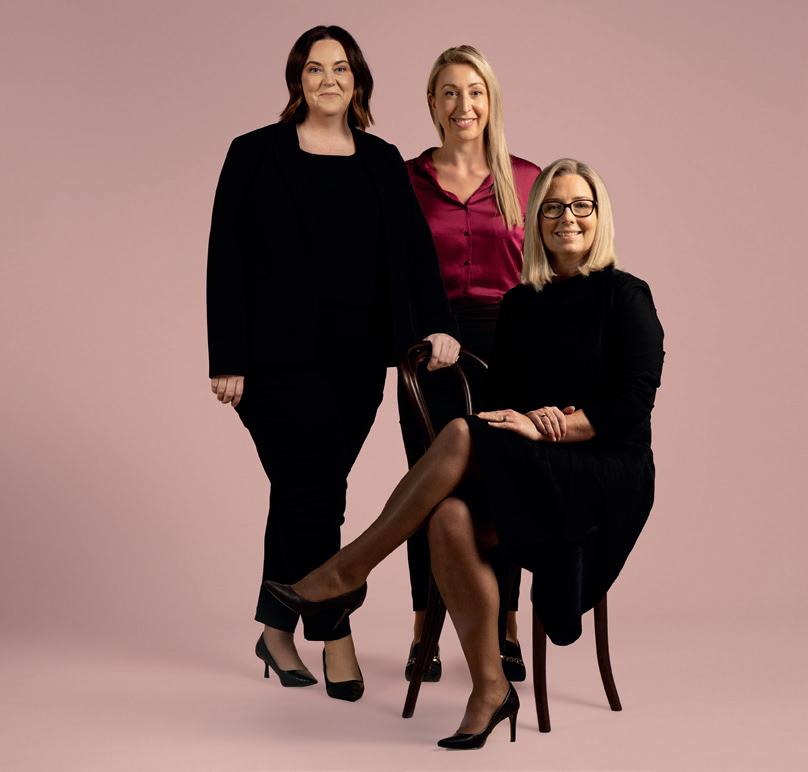
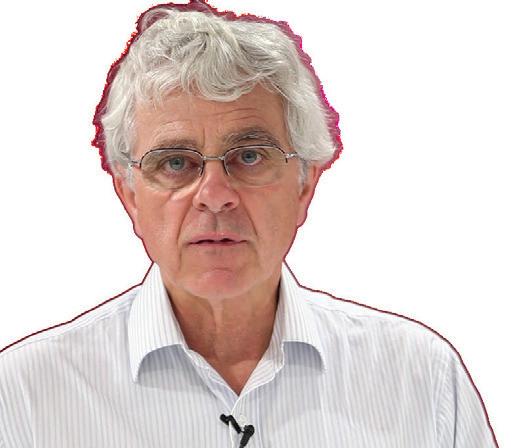
JON STANHOPE & KHALID AHMED reveal the figures the treasurer won’t
Well written, well read
Pauline’s donation blight in plane sight
MICHAEL MOORE
Hear these people sing the song of angry men
HELEN MUSA
Ornamental cabbages for winter colour
JACKIE WARBURTON
THE KALEEN CRUSADER
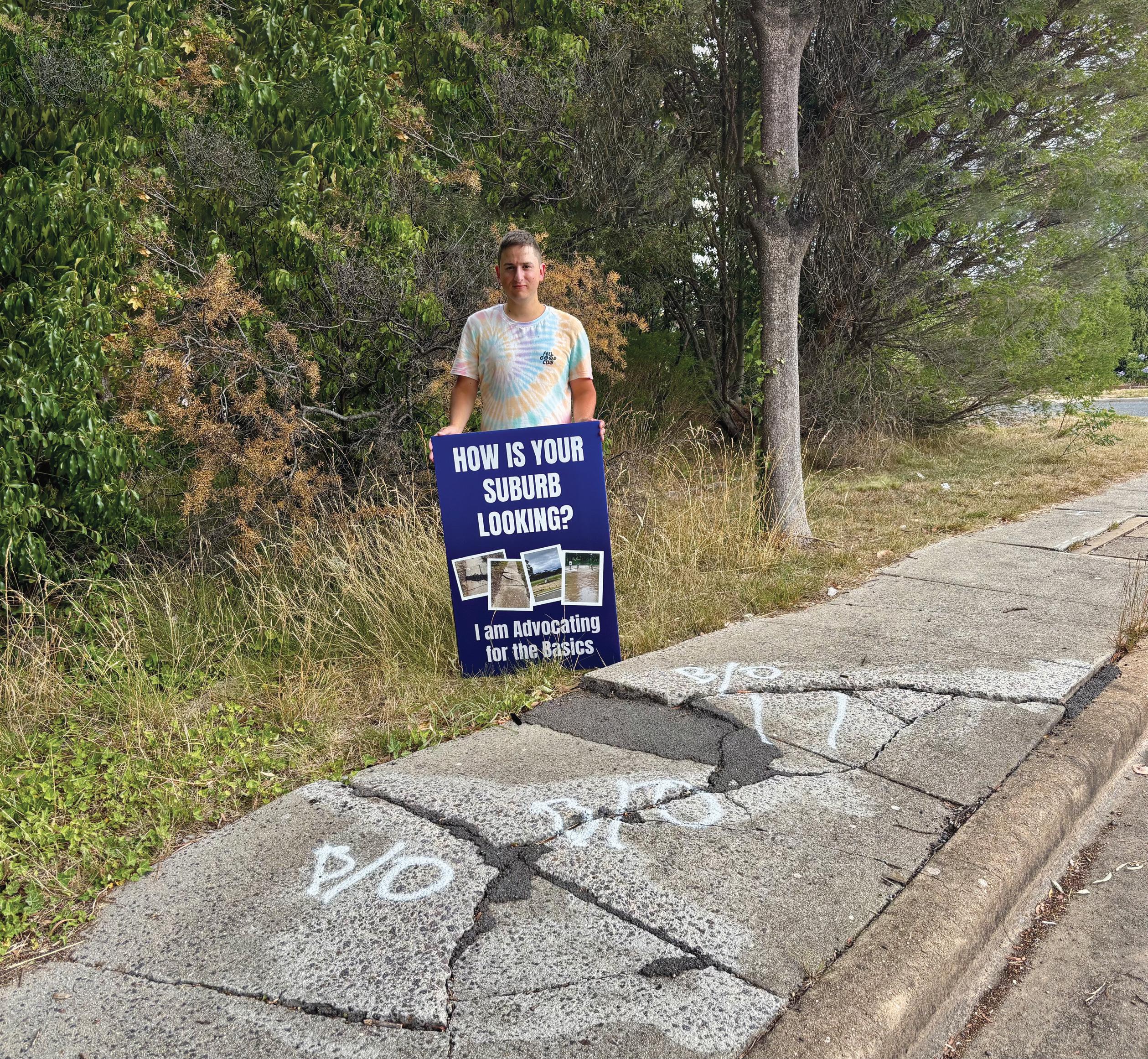
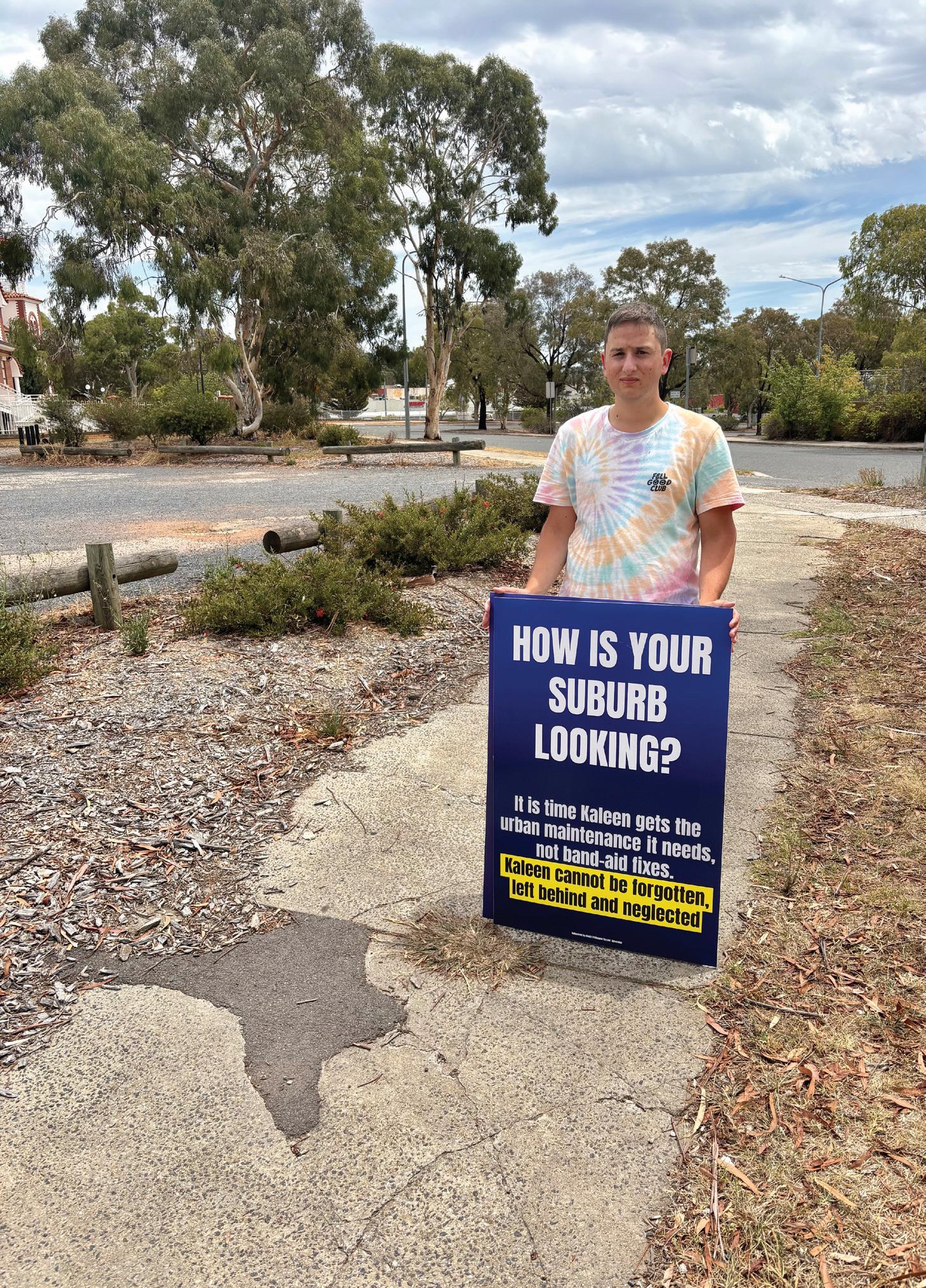
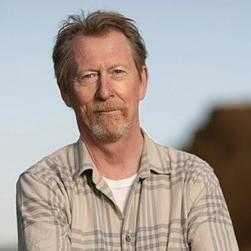
Tireless DIMIRI PSIHOBIOS is on a mission to make Kaleen great again!
Come along and see the friendly free-flying birds that can be photographed and fed. Walk amongst over 500 birds from 60 species from Australia and around the world!
Open 7 days a week from 10am to 4pm with the last admission 3.30pm
No stopping for Dimitri until Kaleen’s great again
By Tia PRIEST-WILLIMOTT
While he doesn’t mind being Kaleen’s advocate, Dimitri believes the government and local MLAs need to start doing more.
Kaleen is in the seat of Yerrabi and represented by Labor ministers Michael Pettersson and Suzanne Orr; Canberra Liberals, Leanne Castley and James Milligan; and ACT Greens member Andrew Braddock.
“I’ve raised a lot of constituent matters [with the government], whether it’s a footpath that hasn’t been fixed in a long time or the Kaleen community hall car park that hasn’t been fixed… I think the government’s response is somewhat poor,” Dimitri says.
“This coming ACT budget, this suburb needs a funding injection in
Dimitri regularly reaches out to his local MLAs, asking for action, but feels let down by their responses.
“I’m transparent, upfront, honest, and blunt. I’ve been that to them [the local MLAs] as well. If they can’t represent us, then rack off, get out, do not come back and give Kaleen residents their ratepayer money
Since he’s started advocating for more upgrades, Dimitri has logged 234 Fix My Street requests for Kaleen, and more than 300 for
The majority of these requests are
General manager: Tracey Avery, tracey@citynews.com.au
“I don’t call it Fix My Street, I call it ‘Ignore My Street’ or ‘Band-Aid Fix My Street’,” Dimitri says.
White markings decorate the footpaths throughout the suburb – a sign that a representative has assessed the claim, and confirmed work needs to be done.
However, many of these markings are fading away with no work completed.
“The major problem is that Kaleen is forgotten, left behind and neglected,” Dimitri says.
But Dimitri isn’t one to give up.
In July, Kaleen received four weeks of footpath maintenance, with many locals commenting it was the biggest work they’d seen in years.
This win for the suburb was further inspiration for Dimitri to keep pushing for change, despite the setbacks he’s faced.
“I’ve said to the people that I can’t guarantee that there will be action, I’m only advocating… but if there is no adequate action I will step in and I will follow through and I will try my absolute best to get an outcome.”
With an ever-growing list of streets that need attention, Dimitri isn’t slowing down on his mission to restore Kaleen to its glory days.
Will 2026 see Kaleen given the attention Dimitri is campaigning for?
Only time will tell.
Kaleen’s crusader Dimitri Psihogios… “The major problem is that Kaleen is forgotten, left behind and neglected.” Photo: Tia Priest-Willimott
Pauline’s
blight in plane sight. Story Page 11.
/ ‘Budget messaging can’t win elections alone, but it can cost them.’
We know what’s
The federal budget is by far the single most important annual piece of legislation for the government. It is our State of the Union, and usually the only time many of us will watch parliament for anything longer than 30 seconds.
For this reason, the messaging of a budget can’t win elections alone, but it can cost them.
As is the current dominant strategy in messaging in politics right now, Labor has been relying upon narratives and storytelling to help market and brand the budget.
The storylines and narratives are needed, though as some excellent insights and analysis underline, where we really are financially right now. A good example is the press conference given by RBA Governor Michele Bullock when she announced the most recent increase in interest rates. Sobering, but it needed to be.
But she also noted how inflation had been rising before the MiddleEast conflict started. That’s a very implicit nod to government spending at all levels.
Yet the contrasting narrative Labor has been trying to use is that the Middle-East conflict is the main reason why inflation is increasing. And, yes, it has had a significant role,
coming next if we’re not careful
but as Bullock pointed out, we are in a tight spot in areas beyond her scope.
Productivity is at record lows, wage growth is slow and increases aren’t linked to productivity, which is leading to capacity and supply constraints, in turn leading to slowing demand in a high-price environment. We all know what is coming next if we’re not careful.
Careful means austerity. Austerity means governments have to cut back on spending, or have it matched by
The perception gap is big between what Labor wants us to believe and what living is like in 2026. Cost of living has been a pressure for most of this decade.
equal increases in revenue aka tax increases. Yet government debt is climbing as per leading economist Chris Richardson and his analysis of the budget’s table of truth, or the table that shows total government debt.
So the government is now caught between an inflation rock and a slowing hard place. With limited choices the government had few options but to brand this year’s Budget around a narrative theme that helps obfuscate the reality: inter-generational wealth equality.
This narrative allows them space to start making slow changes to fulfill what is emerging as the single biggest economic reform idea of this decade, the move to lessen taxes on people and move it to capital.
In other words, messaging consistent with the Labor brand overall, of being about equality, fairness and social justice.
What is undoing this messaging is reality. The perception gap is big between what Labor wants us to
believe and what living is like in 2026. Cost of living has been a pressure for most of this decade.
The reality is clear. For some, even doing second jobs is no longer enough to keep up. Working people are relying on charity as much as those without jobs. Having kids is a burden far too high for many and our natural growth rate is slowing.
Sub-30 and single? Home ownership is either a dream or a renovator’s special an hour commute away. Added into working long enough hours in a job you hope won’t get wiped out by AI. Even just being single in Australia is getting to be unaffordable for many. As new CityNews columnist Robert McMahon wrote recently, we are just meeting our needs and dreaming about our wants.
This is the dilemma for Labor on the messaging front – they can’t spend their way to greatness, they can’t cut as ways of reforms, they have to be austerity overlords and that hurts messaging of being the party of natural (Albanese) government.
Austerity will lead to aspiration, though by mid-to late 2027, just in time for guess what? Aspiration is perhaps one of the most important
brand attributes for any centrist political party to have; to be seen as a government, natural or otherwise. It is a core plank of any messaging in an election.
Labor has already been leaning heavily on the austerity to aspiration connection. Treasurer Dr Jim Chalmers has been talking up the tax relief heading our way in the years to come.
The messaging here is not just about delivery of brand, but also stopping any chance of a resurgent Coalition from taking back seats at the next election. Yet it also needs policies at street level that allow for aspiration.
Federally 2026 is shaping up as the most formative of the Albanese government. However, this budget has to be the one in this term that sends the message that they are listening to us, not just each other
Dr Andrew Hughes lectures at the ANU Research School of Management, where he special ises in political marketing.
Treasurer Jim Chalmers. Caricature: Paul Dorin
SKETCHING / A brief guide to irritating and being irritated
People stare in fear when I cut tomatoes!
Humans are irrationally irritated by each other. It starts small. A trolley left in the middle of a car park.
Not just metal and wheels drifting aimlessly, but a quiet announcement: I have interacted with society and chosen not to complete the final step in the social trolley laws.
The same logic applies everywhere: the way someone loads a dishwasher, plates facing the wrong direction, forks placed with optimism rather than logic.
Eating loudly is not eating, but performing; a full surround-sound experience no one asked for. Or the way someone cuts a carrot like they’re defusing a bomb… or worse, like they’re not
Then there’s the small domestic crime: the one who leaves the toilet seat up, or who doesn’t flush. Actions that eventually unsettle the entire household. Somehow, irritations feel like character references.
“People watch me like it’s a live demonstration of poor decisionmaking.” Cartoon: Paul Dorin
Then there are the rituals we’ve collectively decided matter more than they should. Tea, for instance where civilisation collapses if it’s not water first, milk last. There is a sequence. Everyone knows it. And yet someone, somewhere, is pouring milk first like it’s an independent decision rather than a rule-bound event. I’m just saying I notice. I notice these things more than I should. Which is unfortunate, because I also contribute to the problem. I slice tomatoes in a way that makes onlookers stare in fear, questioning my safety and my life insurance policy.
People watch me like it’s a live demonstration of poor decisionmaking. I understand their concern. It is, admittedly, a dangerous way to slice a tomato.
Modern life has only increased the opportunities for judgment. We arrive at mobile phone behaviour, the modern frontier of irritation where basic social norms quietly give up. Someone checks a notification midconversation and suddenly you’re competing for their attention. Public phone calls in bathrooms create an accidental shared experience no one consented to.
Food photography: suddenly you’re part of a documentary shoot for a plate of pasta. Yes, I’m guilty of this. It’s annoying when people are waiting to eat while you angle your plate like it’s applying for a magazine cover [And your problem is? – Ed].
Then there are the small textual irritations. Spelling mistakes, clumsy phrasing that break the flow of a sentence. I call them cognitive speed bumps. I say this as someone who isn’t the strongest speller, which creates a strange mix of professional pride and mild paranoia, especially when I’m doing cartoons with cap -
tions. Naturally, this makes me hyper-aware of everyone else’s little mistakes.
It’s not judgment. It’s… vigilance. No laws are broken by someone who butters only the middle of the toast like they’ve given up halfway through, or floods an entire plate with tomato sauce as if restraint were a personal failing. And yet it feels like there should be a law.
And of course, the irony is that everyone is both observer and offender.
I’m just as guilty of the behaviours I notice in others, only arranged in a different pattern.
Our quirks are harmless, unless you’re cutting a tomato like me. In theory, we accept everyone’s differences. In practice, we quietly catalogue them and move on.
And for the sake of what’s left of civilisation… return the trolley!
Paul Dorin is
Chris Hammer’s life of crime
Celebrated Canberra crime-fiction writer Chris Hammer, pictured, is the guest speaker at the next lunch meeting of the Gungahlin Day View Club at The Lakes Golf Club from 11.30am on Wednesday May 27. Lunch costs $35 and visitors and interested ladies are welcome. RSVP by phone or text to 0413 923933 by May 24.
A view of the world
Travel agent Angelina Busco is the guest speaker at the next meeting of the Yerrabi View Club at the Eastlake Gungahlin Club, from 11.30 on May 21. New members are always welcome. RSVP to chanily3@bigpond.com
Jam for money
The Bold Bandannas, a Relay for Life fundraising team, will sell jam, marmalade, pickles, chutney and lemon butter at its Fyshwick Market stall inside Ziggy’s fruit shop on Saturday, May 30, 8.30am-4.30pm. Proceeds help the work of the Cancer Council ACT.
A second opinion on hearing loss – you need professional advice, not a sales pitch
A woman came into my clinic for a consultation about her hearing aids, telling me her hearing aids were 4 years old and she had never found them to be of much help. She said the salesperson quoted her $14,000 for a pair of hearing aids, however, the monthly special of 20% discount meant they cost her $11,200. So, she ‘only’ paid $11,200 for hearing aids that did not help her. Sadly, I hear this all too often.
Here are some things to do to avoid this type of problem:
1. Visit your GP. If you or someone you know has a problem with their hearing, visiting your GP to check for wax in the ears, and to get advice is a starting point.
2. Qualifications. Always check the qualifications of the person you are dealing with. A person without professional qualifications has no business advising you about your hearing. They need to belong to a professional association with a Code of Conduct, so you know they are acting in your best interests, not their own.
years. If you are not sure about their advice, then seek a second opinion. The wrong hearing aids can be an expensive waste and could lead you to stop wearing them. You should always have a trial of hearing aids to ensure that they are right for you.
6 Pensioners and eligible DVA card holders often have entitlement to free services. If you are covered by a government concession, then let the clinician know (even though your clinician should ask). Eligible clients may obtain free hearing tests, consultations, and free hearing aids (referred to as fully subsidized hearing aids).
“A person without professional qualifications has no business advising you about your hearing. They need to belong to a professional association with a Code of Conduct, so you know they are acting in your best interests, not their own.”
– Dr Vass
These hearing aids are appropriate for many people, however if you have great difficulty hearing in background noise (for example a restaurant), then you may want to consider partially subsidized hearing aids. This is when the government pays a certain amount, and you pay for additional features and benefits. Your decision should be based on the following:
you are dealing with a qualified clinician, then they belong to a professional association. The best contact is an independent complaints body referred to as Ethics Review Committee. You can email ethics@auderc.org.au and view the website www.auderc.org.au. You can make an anonymous complaint and your complaint will be handled in a confidential and professional manner. If you are in the ACT, contact the ACT Human Rights Commission email human rights@act.gov au and the website www.hrc.act.gov.au
3. Independent advice. You should get independent, professional advice.
4. There are a wide range of hearing aids out there. Finding the right hearing aids for your communication needs can be challenging. Hearing aids vary in price and performance. Bluetooth® connectivity and rechargeable hearing aids are available on most hearing aids, along with apps that allow you to control your hearing aids from your mobile device. Be aware that just because a hearing aid is more expensive, that doesn’t mean they are the best hearing aid for you.
5. Just as hearing aids vary in performance, clinicians may also vary in performance due to training, experience, and skills. Make sure that you are comfortable and confident in their advice. You are likely to be with this clinician for the life of your new hearing aids, typically 4 to 5
(a) Can you afford the more expensive hearing aids? Don’t go into financial stress if you can’t afford them. (b) Are you clear on the free vs partially subsidized features & benefits? Never believe someone who tells you the free hearings are not good or of poor performance, this is simply not true. (c) If you try the partially subsidized hearing aids and are not happy, then return them. Do not keep hearing aids because you think the failure is yours or that you will improve over time. If the hearing aids are not working for you in the trial period, then they will not work for you in a year or two.
7. If you have a complaint, then seek help. Your clinician should be able to help you through most of your needs. Sometimes, a problem may be beyond the expertise of even the best clinician. However, if you have a complaint there are things you can do. If
Steel yourself for another billion-dollar deficit
“To the end of December, expenses exceeded revenues by $736 million. That is, the ACT Government exceeded the full year deficit forecast of $681 million in a mere six months.” JON & KHALID AHMED reveal what the treasurer won’t.
Remember Treasurer Chris Steel trumpeting a $632 million turnaround in the budget in February?
His claim came after the 2025-26 Mid-Year Budget Review, and was based on the first two quarters’ results, ie, as at the end of December.
We wondered at the time whether this was an early April Fool’s joke perpetrated by, or perhaps even played on, the mainstream media.
As we noted at the time the government’s published document, revealed that the budget had in fact gone backwards by $101 million in just six months.
Data from the ABS to December 2025 is now available and it reveals that the outcome for the full year (2025-26) is likely to be worse than the government has forecast, in a repeat of its flawed forecast in the previous year.
The data we are referring to is from the ABS report on Government Finance Statistics released in March, which provides the results for the first two quarters of this financial year across all jurisdictions.
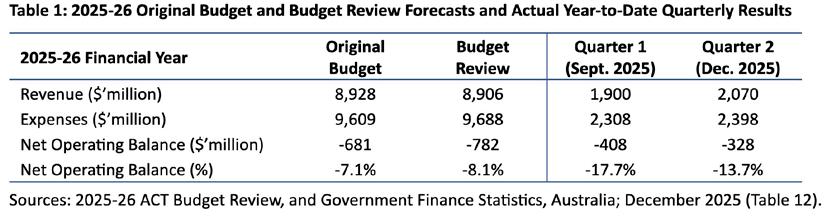
Table 1 details the forecasts of revenue, expenses and the Net Operating Balance (NOB) in the original ACT budget and the Budget Review update, and the quarterly year-to-date results for the September and December quarters of 2025.
The first two columns of figures (original Budget and Budget Review)
were published in the 2025-26 Budget Review. The last two columns of quarterly results are from the ABS publication referenced above.
The ABS advises that the quarterly figures reported by jurisdictions are unaudited, and as such could be subject to changes once the full year audited results are compiled and reported in its annual publication.
The year-to-date figures are never theless relevant, and one is entitled to rely on their authenticity. They also, of course, form the basis of revisions to the full year forecasts as in the ACT Government’s Budget Review.
The table highlights that the government had posted a deficit of 17.7 per cent in the first quarter of 2025-26, and one of 13.7 per cent in the second quarter of the financial year.
Cumulative to the end of December 2025, expenses exceeded revenues by $736 million. In other words, the ACT Government exceeded the full year deficit forecast of $681 million in a mere six months.
Steel’s Budget Review increased the deficit forecast by $101 million to $782 million, under an implicit assumption that, having incurred a deficit of $736 million in the first six months of the year, he will contain the deficit in the remaining six months to just $46 million – an improvement of 94 per cent!
It is possible that the treasurer may achieve his forecast if he is able to collect around a billion dollars more in revenue in the second half of the year
compared to the first half – which might, of course, occur if budgeted revenues come in late in the year. Or, as we noted previously, if he can get a special dispensation from the Commonwealth to redirect federal health funding to budget repair – albeit shortchanging health services. He could, in principle, also have greater control over spending in the second half of the year.
While all that is possible, it is more likely that we will see a repeat of the previous year.
In 2024-25, the original
budget forecast a deficit of $855 million. That forecast had been reached, in fact exceeded, in the first two quarters, to a deficit of $887 million.
A further $512 million was added to the deficit in the second half (January
to June 2025), of the financial year, with the final deficit being a record
Based on this precedent, the ACT is very likely heading for another billion-dollar deficit.
As deficits became a norm for the ACT, the government has often argued that all jurisdictions’ budgets are in trouble, and that the ACT is in the same boat as others. This is a fallacy of false equivalence as we have previously highlighted through interjurisdictional comparisons.
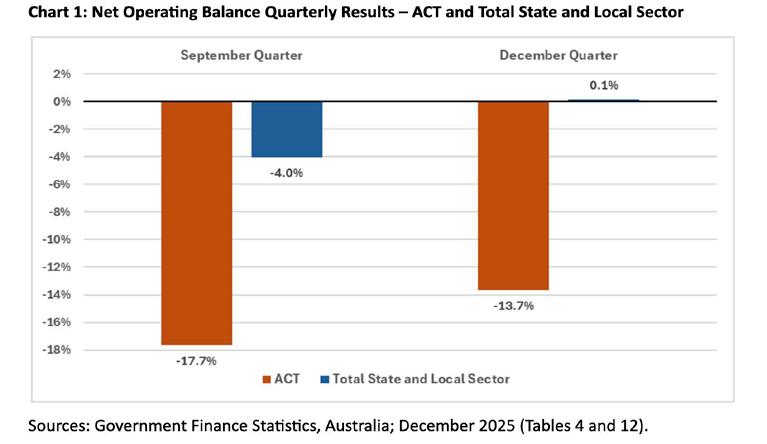
There are indeed jurisdictions that are not performing well, however, the ACT remains an outlier as Chart 1 shows, which compares the first two quarter’s results for the ACT and the total state and local government
Across both quarters, the ACT’s deficit is about 14 per cent greater than the weighted average of all jurisdictions. In fact, in the December quarter, the total state and local sector is essentially in balance (0.1 per cent surplus), while the ACT posted a deficit of 13.7 per cent.
The rest of Australia, while in the same water, appears to be in a different boat.
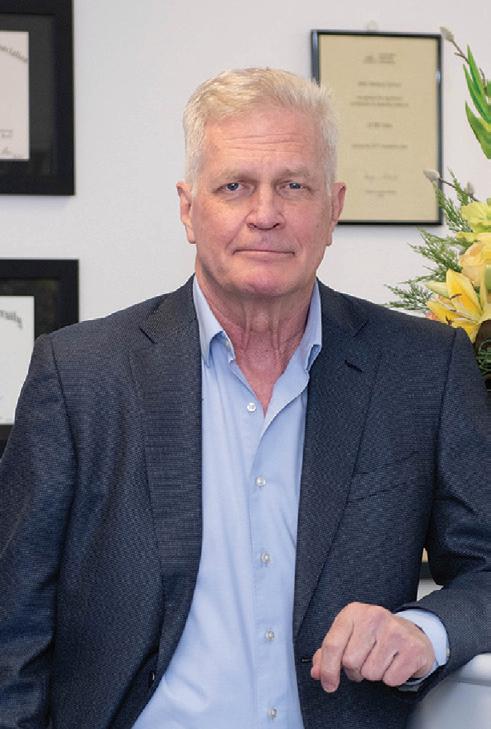
Jon Stanhope is a former chief minister of the ACT and Dr Khalid Ahmed a former senior ACT Treasury official.
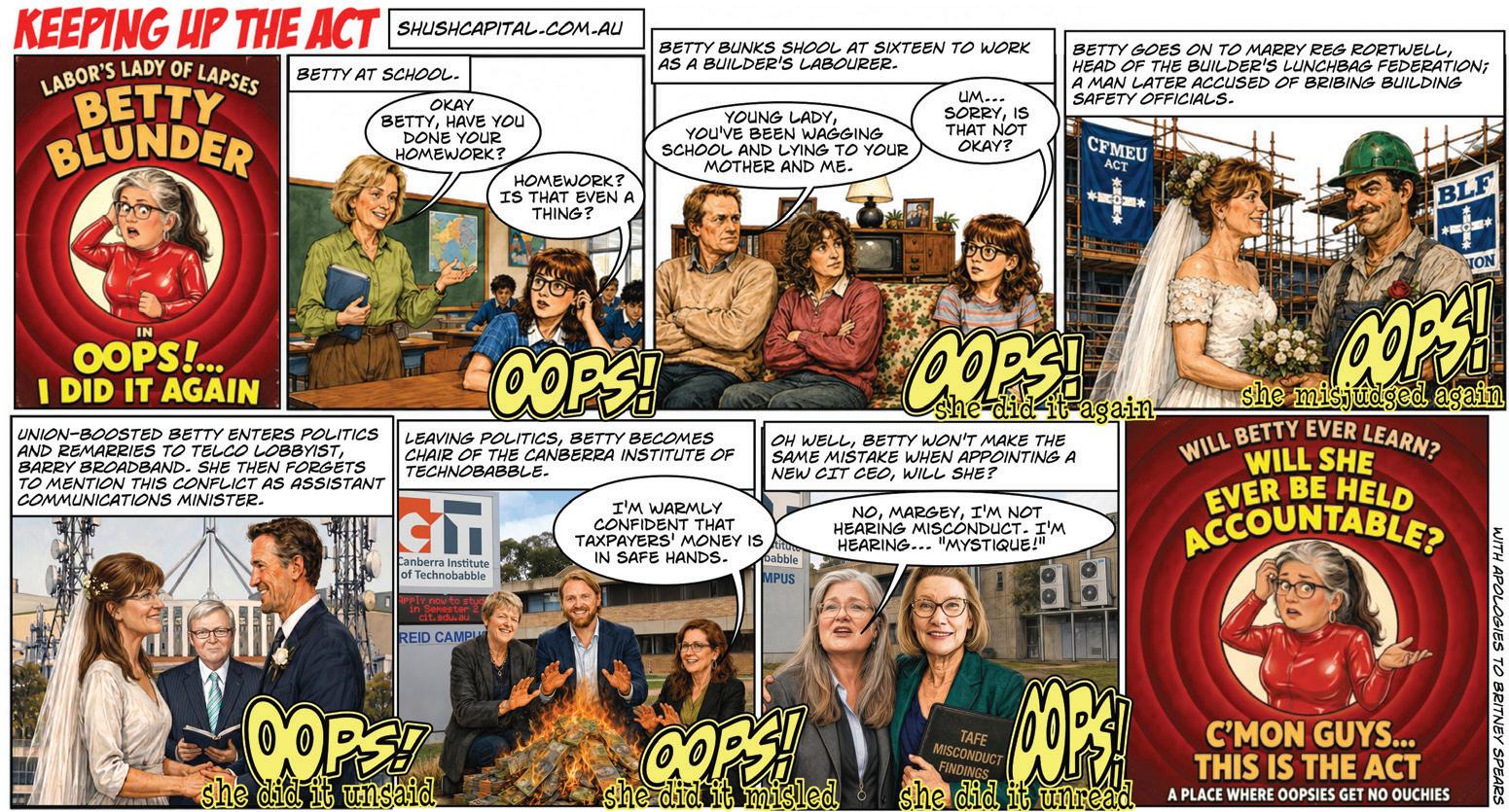
“Spinocchio” by KEEPING UP THE ACT.
Table 1: 2025-26 Original Budget and Budget Review Forecasts and Actual Year-to-Date Quarterly Results
Chart 1: Net Operating Balance Quarterly Results – ACT and Total State and Local Sector
Sources: 2025-26 ACT Budget Review, and Government Finance Statistics, Australia; December 2025 (Table 12).
Sources: Government Finance Statistics, Australia; December 2025 (Tables 4 and 12).
Remembering Russell, the freakish Geelong Flyer
Russell Mockridge’s amazing cycling prowess made him a household name here and overseas. Russell who? ROSS FITZGERALD & DICK WHITAKER share the history of this forgotten Australian hero.
Russell Mockridge (1928-1958), a champion cyclist of the late ‘40s and ‘50s, was one of Australia’s greatest sportsmen with a remarkable record of both track and road racing.
Largely unknown these days, but 75 years ago it was a different story when he became a household name across Australia. He was internationally famous as well and his cycling record still stands as among the best ever for an Australian.
At age 18, Mockridge was a skinny, unco-ordinated lad who lived in Geelong in Victoria. He didn’t play sport, was teetotal, retiring and introspective. He was also chronically short sighted and wore thick, steel-rimmed spectacles, which prevented him from playing competitive cricket or football.
One Saturday afternoon in September 1946, Mockridge decided, on the spur of the moment, to enter a local bike race, organised by the Geelong Amateur Cycling Club. The race was 38 kilometres (24 miles), run on a handicap system where the best riders started last, on “scratch”, and
the less skilled were given “starts” that varied according to the ability of the rider.
His battered old roadster bicycle was anything but a racer, but he turned the handlebars down and dressed in drill shorts, sandshoes and an open-necked shirt.
He was given a generous handicap, an 11-minute start on the scratch men.
The official timekeeper, Alex McPherson, travelling in a car, checked off each cyclist at the halfway mark and then headed off to the finish line to record the times of those who had completed the race. He was surprised to find Mockridge already
there, waiting for him, the winner but his time was not recorded.
Mockridge raced the next weekend’s race, but with a smaller handicap. Again he won. He entered a third race a week later, winning this too, but this time starting off scratch.
The cycling club gradually began to realise that despite appearances Mockridge was something special.
This was the beginning of what the famous sportswriter Harry Gordon would later describe as “the most fantastic cycling career Australia ever saw ”.
He knew nothing about such racing basics as repairing punctures, fixing
broken chains and race tactics. But as soon as these issues were addressed and after purchasing a real racing machine, there was no stopping him.
Although he looked and sounded “professorial”, with his glasses, longish neck and refined, almost English accent, he also filled out physically, and his legs, in particular, were bulging with muscle that became the powerhouse of his cycling.
Because of his vision impairment he didn’t like to “mix it” with other cyclists and preferred events such as time trials where he raced alone, against the clock. Because of his apparent fragility, he was nicknamed “The China Doll”, but before long became better known as the “The Geelong Flyer”.
All through the ‘50s, Mockridge won major cycling events both in Australia and overseas, including the 1000-metre sprint and time trial in the 1950 Empire Games and then two gold medals at the 1952 Olympic Games in Helsinki.
In July that year he competed, as an amateur, in the Paris Grand Prix, winning both the amateur and professional sprints, the first cyclist to do so.
In 1953 Mockridge turned professional and on September 26 married Tasmanian Irene Pritchard in south London. The two became inseparable soulmates. Irene was the only romantic relationship of his life, and she always followed him during his road races in their small car.
A major feature of Mockridge’s career was his freakish versatility – he was equally at home on the velodrome and the road.
But on Saturday, September 13, 1958, at the height of his powers, aged 30, tragedy struck. While competing in the Tour of Gippsland he collided with a bus in Clayton North, and was killed instantly.
Irene, travelling behind in the family car, saw the entire incident and was understandably traumatised.
As one of Australia’s best-known athletes of the time, the tragedy rapidly became a major news story, and thousands of mourners lined the streets for his funeral, en route to Springvale Crematorium.
As Australia’s first cycling superstar, at the time of his death he was the Australian National Champion in the 125-mile (201 kilometres) professional road race, the 1000-metre sprint and the five mile (eight kilometre) pursuit.
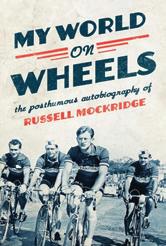
He was also in the process of writing his autobiography My World on Wheels, which was later completed by his friend John Burrowes. Published in 1960, it is still regarded as a cycling classic.
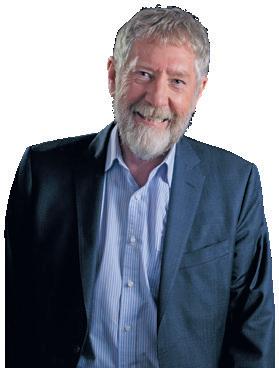
Ross Fitzgerald AM is emeritus professor of history and politics at Griffith University. Dick Whitaker is a widely published author and lecturer in Australian history.
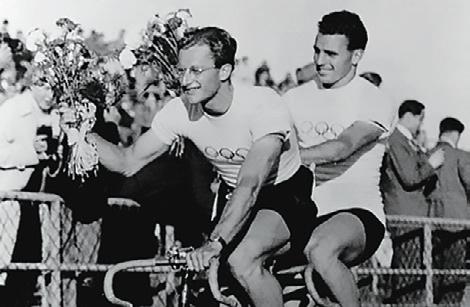
Russell Mockridge, left, and Lionel Cox win gold in the 2000-metre tandem at the 1952 Olympic Games in Helsinki.
The cover of My World on Wheels.
Pauline’s political donation blight in plane sight
The donation of an aeroplane by Gina Rinehart to Pauline Hanson’s One Nation Party raises the hoary question of the role of political donations. Where do “donations” end and where does corruption start?
The Cirrus G7 aircraft costs about $2.1 million, and this one was donated by a company owned by Gina Rinehart, who is Australia’s richest person and a loyal supporter of Pauline Hanson’s One Nation Party.
It is not as though Ms Hanson does not understand the implications.
“Yes, it’s going to annoy the Guardian” was one of her comments on the announcement of the donation.
Let’s hope that the National Anti-Corruption Commission (NACC) investigates this issue. Political donations are a blight on any democracy.
As the Human Rights Law Centre has pointed out, “the free flow of money into Australia’s political system threatens the integrity of our democracy”.
There are some jurisdictions working to improve transparency and accountability, including SA and the ACT.
Gift “caps” under federal legislation come into effect in January 2027. Depending on the circumstances, donations will be limited to a cumula-
tive $50,000 to $1.6million. It is a start, but federally there is a long way to go.
In November 2020 I outlined how the Electoral Legislation Amendment (Miscellaneous Measures) Bill 2020 came under fire from a range of crossbench members.
It allowed developers in Queensland, NSW and the ACT, for example, to ignore anti-corruption laws in those jurisdictions and make undisclosed donations of up to $14,300. These donations had to be made “for federal purposes”.
Independent MP Andrew Wilkie at the time levelled the accusation of “state sanctioned money laundering” and identified how political donations undermine our democracy.
The members of the two big parties, he argued, were so wedded to their
Political donations are a blight on any democracy.
As the Human Rights Law Centre has pointed out, ‘the free flow of money into Australia’s political system threatens the integrity of our democracy’.
donations from big corporations that they were prepared to make it much easier for donations to go undeclared.
The donation of the aeroplane by Gina Rinehart might well be declared. It would be hard to hide. However, the happy face of Senator Hanson, as she sat in the pilot’s seat, had me wondering about the system of declarations of conflict of interest. Of course, the plane went to the party – not to her personally.
Developer donations by federal law were challenged and over-ridden in the past by the High Court. Luke Beck, of Monash University, explained in The Conversation: “The High Court also struck down a 2018 federal law that said property developers could ignore state laws banning them from making general donations to political
parties (yes – federal parliament really did pass a law overriding state anti-corruption powers!).”
In late 2022 things changed with the NACC legislation passing through the Federal parliament. The NACC is charged with investigating matters involving serious or systemic corrupt conduct.
Under the NACC Act, the NACC can investigate public officials if they:
• adversely affect their own, or another public official’s honesty or impartiality in the way they carry out their official duties
• breach public trust
• abuse their office as a public official
• misuse information they have gained in their capacity as a public official.
MPs and senators are public officials. Some do not seem to understand these concepts.
A relatively new defector from the Nationals to One Nation, Barnaby Joyce MP, defended Senator Hanson’s decision to accept the private plane arguing: “I’m always flummoxed how travelling on the taxpayer’s dime is morally correct, but on a supporter’s dime covers for a maligned purpose.”
It is simple, Barnaby. One system buys influence and favours – the
other does not.
I was impressed with the reaction of Treasurer Jim Chalmers who said:
“Pauline Hanson is a wholly owned subsidiary of Gina Rinehart.
“Whether it is in industrial relations, whether it is in cost-of-living relief… what we have seen again and again from One Nation is they typically vote the way Gina Rinehart wants them to, rather than how the workers and battlers need them to.”
This answers Barnaby Joyce.
However, the Labor Party could also use a mirror to consider the influence on their own party when they receive large donations from such industries as alcohol and gambling.
The real sting in the tail is that businesses associated with Gina Rinehart have tipped around $4 million into One Nation’s bucket (including the plane) just before donation caps come into effect at the start of 2027.
Michael Moore is a former member of the ACT Legisla tive Assembly and an independent minister for health.
Why can’t you have world-class jewels, Custom-made at the perfect price?
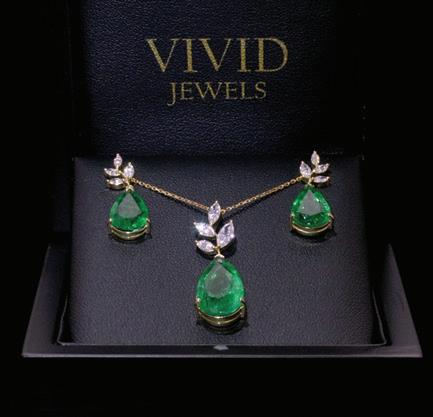
At Vivid Jewels, we pride ourselves on providing our clients with the ultimate destination for acquiring premium jewellery and loose gemstones.
Vivid Jewels is your personal jewellery buyers agent. We don’t try to sell you anything but rather act on your behalf to source you far superior gems through our global gem trade networks. You will be purchasing at wholesale prices so when you value your jewellery they will be worth much more than you paid for them.
We’re here to help you acquire jewels that you will love and your grandkids will cherish.
One Nation’s Pauline Hanson settles into the party’s new “sexy” Cirrus G7 plane, a gift from Gina Rinehart. Photo: Facebook
Tram construction work is killing Civic restaurant
Recently, a friend and I decided to dine out at Little Steamer Chinese restaurant located on London Circuit in Civic.
The food was nothing short of exceptional quality, especially the Peking Duck and many other delicious Chinese cuisines.
However, business patronage and trade were exceptionally slow, almost nonexistent, due to the ongoing and prolonged excavation work for the light rail on the London Circuit.
I have dined there before in 2025 and it would seem that much delay and not much progress in said construction works is KILLING Little Steamer and no doubt many other businesses within the same precinct. I enquired with the owners just how they are handling loss of trade. Their response was heartbreaking, and I could see the anguish, the sadness and teary eyes.
As explained, foot traffic has almost ground to a halt due to the obstacle coursetype barriers along London Circuit.
Chief Minister Barr, what you are achieving with your light rail and massive excavation along London Circuit from city to south Canberra is heart wrenching to witness this establishment and other businesses go under!
Little Steamer Chinese restaurant does not deserve to as they are exceptionally hard-working Canberra citizens and are at loss financially!
Fellow citizens, despite the footpath
obstacles, I suggest you check out Little Steamer’s great Chinese menu and friendly owners Wei He and wife Kim. You will not be disappointed.
Ross
E. Smith, OAM, JP
King credited with trumping Donald
Although I am neither a monarchist or royal watcher, King Charles deserves much credit for his visit to the US, addressing Congress and emphasising the importance of alliances
• jazzercise & dancing classes
• yoga classes
• computer classes & bookclubs
• mahjong, cards & table tennis
• craft, art & porcelain painting (02) 6248 9509
10 Watson St Turner 2612 ops@canberraseniors.org.au www.canberraseniors.org.au
dose of dorin
such as NATO and the AUKUS submarine deal, particularly in the context of current global challenges.
The one downside to Charles’ visit, is that it has added more puff to Trump’s already over-inflated ego, that the king and queen would grace him with their presence.
Donald and Melania have always held the deluded idea that they are American Royalty with the White House even posting a picture of Trump and King Charles captioned, “two kings”.
Charles gave a diplomacy lesson that would make the world’ s top leaders proud, although his eloquent, yet strategically charged statements, would have been lost on Trump, who is rapidly losing touch with reality.
An April poll showed that Trump’s approval rating has plummeted to the lowest level of his current term with only 34 per cent of Americans approving his job performance, largely due to the nation’s cost-of-living crisis and the Trump-initiated, ongoing war with Iran.
In January 2025, when Trump took office for his second term, 47 per cent of Americans approved his work in the White House.
Declan McGrath, via email
Brothers amid our local political history
Thanks for Nichole Overall’s column “Vocal champion Chapman spoke up for Canberra” (CN May 7). This was a well-merited look at our local history and those who made Canberra happen in its very early days.
Its reference to Allan Fraser suggests a new topic, in considering two brothers who contributed to our local political history
According to Wikipedia, in 1974, Fraser won a seat in Fraser (named after his brother Jim) as an independent in the original ACT Legislative Assembly and was, in consequence, expelled from the Labor Party.
He died at Royal Canberra Hospital on December 12 1977, two days after the 1977 federal election, following several years of
heart trouble. He was survived by his wife and son.
His brother, Jim Fraser, was MP for the adjoining seat of Australian Capital Territory from 1951 to 1970. Given the current debate about the numbers of our senators, it’s extraordinary to note: Jim Fraser did not have full voting rights until 1966; until then he could only vote on matters relating to the territory.
Our suburb of Fraser is named after Jim (not Malcolm).
Peter Graves, via citynews.com.au
We wonder why clippings pollute waterways
The knee-high African Love grass growing along the median strip in Curran Drive, Nicholls, has now been mown. The seeded offcuts that have not blown away to infest other areas remain in the gutters. We wait for the first rain to move the seeds into our drains and waterways. We will then wonder why the grass clippings are polluting our waterways and into the river causing algae blooms.
Warwick Sainsbery, Nicholls
If we swept our streets…
If we swept our streets weekly like other cities the blue-green algae problem would probably disappear.
Chris Emery, via citynews.com.au
Seriously, we need better people to represent us
It is time we all had a look at the performance of our local MLAs and MPs to see whether we are actually getting value for money from their performances.
Unfortunately, I see little evidence of this except for a couple of notable exceptions.
Canberra voters really need to show more than lip service in looking for better people to represent us. I speak as someone whose qualifications are in economics, political science and business management with personal experience in the political process including addressing students at the ANU and the University of Canberra.
So who are the main under achievers, apart from the obvious ones of Chief Minister Andrew Barr and his Treasurer Chris Steel who threaten to have our children and grandchildren paying off a decade of debts?
MP Katy Gallagher spends the bulk of her time as a party machine person cosying up to the PM with little time for addressing ACT issues because of her Finance portfolio.
When Albo made the ridiculous claim that reducing the loan component for a home to five per cent would not result in a rise in house prices, she was silent as she was about the “jobs-for-mates” report that sat around for a year.
Member for Bean David Smith has been practically invisible and, in my view, we need an active, energetic independent like Jessie Price in his place.
And finally, Assembly minister Marisa
Paterson has been a great disappointment to me. She is now a creature of the Labor Party Machine after being made a minister.
One of her first roles for the party machine was to defend the multi-million purchase of electric fire engines, which are double the cost of normal ones and spend much of their time off the road because of faults.
Furthermore, fire brigade members reportedly hate them and no cost/benefit analysis was done, which the auditor-general then had to step in and do. I was also advised that electric fire engines must be accompanied by a normal fire engine when attending emergencies.
As a born and bred Canberran, whose civil engineer father helped build Canberra, I feel for those who have suffered years of mismanagement by the Barr government which, in management theory, is far too long. What is needed is a balance-of-power group of independents in the absence of an effective opposition.
Ric Hingee, Duffy
London Circuit Club Med needs a shake up
There has been extensive negative comment on the Barr government’s economic and financial performance and the black hole they have created as a result of the light rail project that’s crippling this city because of its cost and poor economic return.
It’s time for voters to express their disappointment because the Canberra Liberals
are radio static at best and other people in the opposition ranks are Hare Clark “Hoover” free-for-alls.
It’s time to shout “enough of this nonsense”, let’s find some adults to get on with the job – we want the debt dramatically reduced, our AAA credit rating restored and economic common sense restored.
The average mother/family in this place runs their personal affairs better than Barr and his crew run the government. The London Circuit Club Med needs a shake up.
John Lawrence, via email
Moore column omitted Rattenbury’s downsides
I write in response to Michael Moore’s political column (“An open letter to Shane Rattenbury”, April 30), which offered a strongly positive account of Shane Rattenbury’s political career.
While it is entirely appropriate to recognise achievements, the absence of any meaningful discussion of the downsides of his policies presents an incomplete picture to the public.
For many in the ACT community, there are legitimate questions that remain unanswered. For example, the continued promotion of light rail as a major environmental solution is often accepted without scrutiny. Some residents question whether its impact meaningfully reduces
emissions relative to its cost, particularly when broader transport behaviours remain largely unchanged.
To some, it feels less like a transformative environmental policy and more like a symbolic gesture in the face of a much larger problem.
Similarly, the decision to raise the age of criminal responsibility to 14 has been framed as progressive reform, yet it raises difficult concerns.
A younger child is still capable of serious harm, and victims of such incidents may feel that justice and accountability are being overlooked. This is not a simple issue, and it deserves a more balanced public discussion than it often receives.
Housing policy is another area where outcomes appear mixed at best. While intended to improve affordability and supply, many would argue that these policies have disproportionately benefited developers, with little tangible relief for everyday residents struggling with rising costs and limited availability.
These are not fringe concerns – they are widely discussed within the community.
A fair and responsible public discourse should acknowledge both achievements and shortcomings, allowing readers to form informed opinions based on the full picture.
I encourage your publication to present a more balanced assessment of our elected representatives in future coverage.
Errol Good, Macgregor
No pass for Parliament House? No worries
Watching the coverage of the latest attempted assassination on President Trump reminded me of a day I spent at Parliament House, supporting a NDIS client who was appearing at a standing committee inquiry.
I was required to transport my wheelchairbound client to Parliament House and support him for the duration of his appearance at the inquiry, including purchasing food and drinks for him, running errands etcetera.
When we arrived at Parliament House, we were taken through the bowels of the building, with the security staff being remiss in issuing us with visitors passes, let alone checking either of us for possessing any weapons.
However, that didn’t seem to be a concern, as I cruised around the building, rubbing shoulders with politicians at the “not for public” café and other areas that are off limits to the public. I was even getting to know some of the security folk quite well, sharing some banter as I walked the corridors, making my way to and from the committee room on several occasions. It wasn’t until about my sixth trip back to the committee room that I was stopped by a security guard I hadn’t met during the day. I was advised in no uncertain terms that I was not permitted in the area I had spent much of my day. Fortunately, I was saved by one of my newly acquainted security guards, who vouched for my authorised presence, even though I wasn’t authorised. Go figure.
Janine Haskins, Cook
ACCEPTING NEW PATIENTS
Located in the heart of Canberra’s medical precinct in Deakin
At Canberra Family Health Centre, we are dedicated to providing comprehensive, patient-focused healthcare for individuals and families. Located centrally in Deakin, our centre offers a wide range of medical services designed to meet your health needs at every stage of life.
Associate Professor Maryse Badawy
MB/ BS Degree, FRACGP, FHKAM (Family Medicine), Grad Dip Fam Med, Master Family Medicine, Member Australasian Menopause Society
National and International Family Medicine and Academic experience.
Trusted legal support across NSW and the ACT
Commenced by Peter Bevan in 2006, Bevan & Co Lawyers & Conveyancers specialises in Criminal Law, Property Law, Family Law, Wills and Estates and Commercial Law.
In contrast to other Queanbeyan lawyers, we commit to offering our legal services at an affordable price and even a fixed fee where possible. Because of this client-first mindset, we have earned a reputation as one of the most trustworthy law firms in Queanbeyan.
At Bevan & Co Lawyers & Conveyancers, our team strives to provide practical, reliable legal advice tailored to your needs. As a dedicated local team, we pride ourselves on delivering personalised service and strong results for every client.
Rachel Bevan, a lifetime Queanbeyan local, was the first licensed conveyancer in the Queanbeyan region. She brings extensive experience in all conveyancing matters, particularly specialising in rural property transactions and is a fierce advocate for all of her clients.
Our litigation leader, Chloe Pagan, appears regularly in NSW and ACT Courts, providing strong and dedicated representation for her clients in criminal, family law, wills & estates and commercial matters. Call today on 02 6298 1333 to speak with our team.
Bevan & Co Lawyers & Conveyancers Suite 1, City Arcade, 69-71 Monaro Street, Queanbeyan. Visit bevanco.com.au
Working through a difficult time with dignity
Operating since September 2023, Anna Wynne and Associates provides family law legal services and family law mediation services.
“We focus on helping families work through a difficult time or relationship breakdown with dignity and respect,” says owner Anna Wynne.
“Our focus is on helping families work through difficult times – such as relationship breakdowns – with dignity.
“We encourage our clients to focus on the future and what is the best outcome for children and families involved.”
Specialising in family law and family mediation services, Anna says she chose to study law as she’s always been passionate about helping people who may be going through a difficult time.
“Our organisation is focused on helping families move forward in their lives by keeping legal fees low,” she says.
“Our primary focus is ensuring our services are accessible and affordable to the community to ensure our clients get the best outcomes possible.
“It’s all about the best interests of any children involved.”
Anna says it’s a privilege to be trusted by people to support them when they’re trying to work through what is a huge crisis and tipping point in their life.
“I love working with my clients to help and support them by figuring out the best way forward for themselves and their children,” she says.
Anna Wynne and Associates 7 Neptune Street, Phillip. Call 6190 6159, or visit awynnelegal.com.au
Rachel Bevan, Director & Licensed Conveyancer, right, and Chloe Pagan, Solicitor Director, left.
Anna Wynne of Anna Wynne and Associates.
When families break apart or lives take an unexpected turn, the next call people make can change everything. For many in Canberra, that call is to GPG Lawyers, a firm known for doing the hard work of family, estate and property law with empathy rather than legal theatrics.
Between them, directors Alicia, Mark and Andrea bring decades of experience across family law, wills and estates, conveyancing, employment, and criminal and traffic matters. They have seen every kind of matter, from complex emotional parenting and family arrangements, multimillion-dollar property splits and transfers in intergenerational wealth, and yet their guiding principle remains simple: every client deserves to be heard.
“People come to us at their lowest point,” says Alicia. “They don’t need jargon. They need clarity, a plan, and someone on their side.”
That philosophy underpins everything the firm does. GPG’s lawyers focus on finding practical, workable solutions first, often settling matters through mediation or negotiation rather than the courtroom. But when court is unavoidable, they don’t hesitate to step in with calm, strategic advocacy.
One of their initiatives, ‘Late Night Lawyers’, gives separating parents a chance to speak to a lawyer after hours, free of charge. It’s a small but meaningful way to reach those unsure where to start. “We want people to feel they can pick up the phone and find out where to get help for free before things spiral,” says Mark.
Outside of family law, Alicia’s practice covers wills, estates and employment law, while Mark regularly appears in criminal and traffic matters across ACT and NSW. Andrea (Drea) Raymond, their senior conveyancer, brings more than 25 years of experience in property law, helping clients buy, sell and settle with ease.
It’s not a loud firm, and that’s deliberate. “Clients don’t need noise,” Andrea says. “They need someone who listens and delivers.”
Visit www.gpglawyers.com.au, call (02) 6185 7007, or email admin@gpglawyers.com.au
MEJ are the legal specialists in personal injury and understand the complexity of the laws that govern compensation in the ACT.
Being injured can have a traumatic effect on your life and on your family and it is important that you act quickly after an injury has occurred.
The experienced team know that without the right legal advice and representation, you can miss out on fair compensation and incur unnecessary costs.
MEJ’s philosophy is simple—if you’ve been injured
quickly to achieve the best possible result. They offer a free initial consultation and work on a ‘no win – no fee’ basis.
You deserve better.
Don’t delay, call MEJ or visit mej.com.au
Maliganis Edwards Johnson Call 02 6257 2999 or email mail@mej.com.au or visit mej.com.au
SETTING THE STANDARD FOR FAMILY LAW
We pride ourselves on tailored and clientfocused advice, never one-size-fits-all. Wherever possible, we work to resolve matters outside court. When court is unavoidable, we are specialist advocates who provide strong, strategic representation.
Talk to us today or visit our website www.fgd.com.au
Compassionate support when families need it most
When families face separation, and have parenting or property disputes, having the right legal team beside you can make all the difference. Farrar Gesini & Dunn has earned a reputation as one of Canberra’s leading specialist family law firms, combining expert legal advice with compassion, understanding and practical support.
With decades of experience in family law, the Canberra-based team understands clients are often navigating one of the most stressful periods of their lives.
Partner Kirsty McLeod says the firm focuses on helping people feel informed and supported from the very beginning.
“Family law is not just about legal outcomes. It’s about helping people move forward with confidence and dignity.”
The firm assists clients with parenting arrangements, property settlements, mediation, financial agreements and complex family law matters, tailoring advice to every individual situation. Kirsty also specialises in surrogacy and donor conception matters.
Kirsty says clear communication is a key reason clients continue to recommend the firm to family and friends.
“We understand these matters can feel overwhelming, so we focus on practical solutions and straightforward advice clients can genuinely understand.”
Known for resolving matters efficiently wherever possible, FGD also provides strong representation when court action is required.
Importantly, Kirsty says the team never loses sight of the human side of family law.
“Our goal is to help clients feel supported from the first meeting through to the final outcome.”
For Canberra families seeking trusted legal support, Farrar Gesini & Dunn continues to set the standard in family law.
Farrar Gesini & Dunn
Call 02 6115 9000, email welcome@fgd.com.au or visit fgd.com.au
Kirsty McLeod, Partner Farrar Gesini & Dunn.
If you’re injured in a motor vehicle accident or at work, you could face time off work, loss of income and mounting medical costs.
Maliganis Edwards Johnson help families protect their rights and get fair compensation. And if you don’t win you don’t pay us anything.
Dispute Resolution Experts - Fostering Resolutions Through Mediation
At Anna Wynne & Associates we recognize that each family’s circumstances are unique, and we approach every mediation session with empathy, integrity, and professionalism.
Our goal is to empower individuals to find amicable resolutions that enable them to move forward with confidence and peace of mind.
Our services include:
• Family Law Mediation
• Wills & Estates Mediation
• Family Dispute Resolution Services
• Property Settlement Mediation
• Parenting Mediation
Contact us today to learn more about how our mediation services can help you navigate challenging transitions with clarity and compassion
Firm balances empathy with fierce advocacy Law Week
For over 100 years, Commins Hendriks has stood beside people during some of the hardest moments of their lives. We act for clients across a range of practice areas, including personal injury and compensation matters, as well as all aspects of family law matters.
In our personal injury matters, including birth trauma, medical negligence, workplace injuries, historical abuse and public liability claims, we offer no win, no fee arrangements, with no upfront legal costs while we investigate your claim.
For our family law clients, we understand that separation and parenting disputes can be emotionally and financially challenging. We provide clear, practical advice, supporting you through property settlements, parenting matters and related disputes with empathy and experience.
We combine compassion and expertise to offer clear guidance and unwavering support when you need it most.
Commins Hendriks Solicitors director Alison McNamara.
Director of Commins Hendriks Solicitors Alison
AMP building, Suite 4, Level 4/1 Hobart Place, Canberra. Call 6191 7000 or visit comminshendriks.com.au
When Legal Matters
Feel Overwhelming, NBC Law Helps Make the Next Step Clear
Legal issues can quickly become stressful, especially when they involve your home, business, livelihood, family or future in Australia. At NBC Law, clients are supported by a Canberrabased team that combines legal experience, practical guidance and careful attention to detail.
Led by Noreen Babur Choudhary, Principal Solicitor and Director, NBC Law provides advice across ACT and NSW conveyancing, commercial leasing, business sales and purchases, property conveyancing, wills, powers of attorney, probate, criminal matters and traffic matters. Noreen also assists with sale and purchase of business agreements, including leases, joint ventures, franchise arrangements and licensing matters.
Her approach is clear, practical and focused on helping clients understand their position before making important decisions. Whether a client is buying property, selling a business, preparing legal documents or dealing with a criminal or traffic matter, NBC Law aims to provide steady advice from the first conversation through to resolution.
The firm is also supported by Bill Stefaniak, Senior Solicitor whose experience spans criminal matters, traffic matters, domestic violence matters, family law and tribunal matters, including ACAT reviews. His involvement strengthens the firm’s ability to support clients dealing with serious and time-sensitive legal issues.
Behind the legal work is a team focused on organisation, communication and client service. Muhammad Adnan Khan, IT & Administration, supports NBC Law across IT and systems support, practice management systems administration, staff technical support and training, office operations coordination, client relations, legal office administration and business development. His work helps ensure the firm’s operations run smoothly and clients receive timely communication throughout their matter.
Nadiya Khan, Paralegal and Legal Compliance, assists with property conveyancing, legal research, file management, legal administration, regulatory compliance monitoring and reporting, coordination with external regulators and broader client support. Her role is central to helping matters progress carefully and efficiently. Together, the team at NBC Law brings a practical and personal approach to legal service. Clients are not treated like file numbers. They are guided with clear advice, responsive communication and a genuine understanding of the pressure that legal issues can place on everyday life.
For Canberrans seeking trusted legal support, NBC Law provides practical guidance across property, business, criminal, traffic, probate, wills, powers of attorney, domestic violence and tribunal matters. The firm is committed to helping clients navigate legal issues with clear advice, responsive communication and a personalised approach.
Combining legal experience with organised client support, NBC Law assists individuals and businesses across a wide range of matters. With a focus on practical outcomes and attention to detail, the team aims to provide reliable support when clients need it most.
Nadiya
Paralegal / Legal Compliance
Law Week
When it’s a legal matter…
When courtroom dramas look complex, CityNews readers turn to former barrister HUGH SELBY for clear explanation, perspective and (occasionally) a little levity.
Exclusively the CityNews legal columnist, his sharp opinions and wry observations are read all around Canberra and all around Australia.
Stay up with Selby in CityNews and on citynews.com.au
Family Law complexities need specialist lawyers
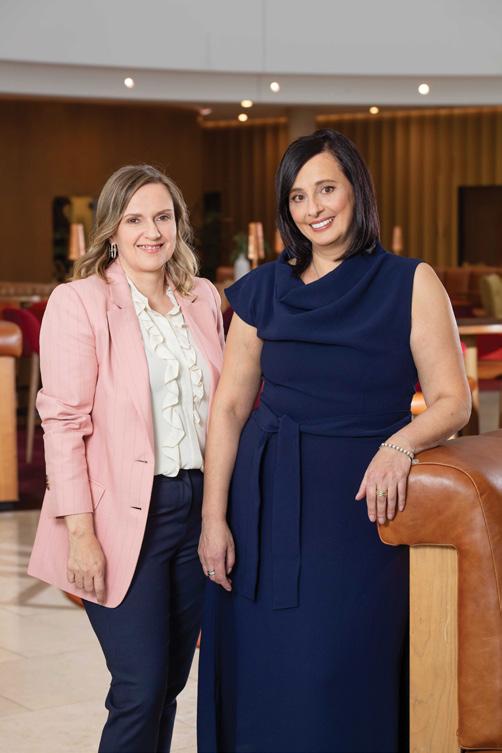
Legal disputes between separated couples can be difficult and emotionally challenging, says co-director and family lawyer Anna Neilan.
“That’s why the lawyers involved must specialise in family law.”
Neilan Stramandinoli Family Law handles a range of disputes within family law, whether through a separa tion, negotiating parenting or financial arrangements, or preparing an agreement with a former partner.
Anna Neilan and Lucy Stramandinoli have more than 40 years of combined experience working exclusively in family law.
“It can be quite overwhelming for those who have never had to talk to a lawyer about what happens when you separate,” says co-director and family lawyer Lucy Stramandinoli.
“For parents, their top priority is the kids and couples without kids still have to grapple with that parting.
“First and foremost we are committed to helping our clients resolve disputes out of court and have strong relationships with mediators, accountants, counsellors and other experts to give holistic support for people going through difficult and vulnerable times.”
According to Anna, when the time calls, they are strong litigators, advocating for clients in court.
Giving back to the community remains at the forefront of the team’s mind.
“We regularly volunteer at advice clinics, undertake legal aid work and donate/fundraise to support causes helping vulnerable people”, says Lucy.
The firm has been nominated in the ACT as a leading family law firm for nine years running by Doyle’s Guide, which recommends based on peer review.
Neilan Stramandinoli Family Law Suite 1, Ground Floor/5 Farrell Place, Canberra. Call 6152 0493 or visit nsfamilylaw.com.au
Working for the best possible solution
At Neilan Stramandinoli Family Law, we pride ourselves in our proven track record, our commitment to excellence, and expert knowledge of family law. We understand how difficult and emotional family law matters can be; we are compassionate and empathetic, guiding you towards the best possible solution.
For separating couples:
• Parenting arrangements
• Dividing property and superannuation
• Family violence matters
New or existing relationships:
• Best arrangements for your children
• Protecting assets and yourself
• Preserving entitlements
Anna Neilan Family Lawyer
Lucy Stramandinoli Family Lawyer
Neilan Stramindinoli Family Law co-directors Anna Neilan, left, and Lucy Stramandinoli.
The lives of slowing Alan and restless Lulu COLIN STEELE
ARTS & ENTERTAINMENT Hear people sing the song of angry men
Our Patrick is winning envy and accolades
ARTS IN THE CITY
By Helen Musa
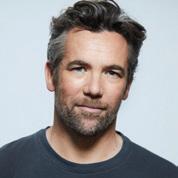
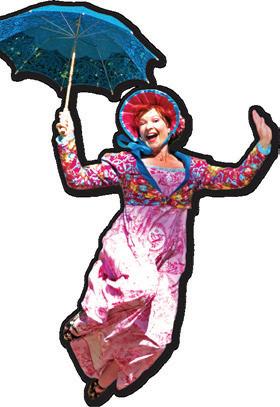
Canberraraised actor Patrick Brammall is winning accolades, and a fair bit of envy, in his role as Anne Hathaway’s new beau in The Devil Wears Prada 2, now out in cinemas. And he was allowed to keep his Aussie accent.
Bangarra Dance Theatre presents a triple bill featuring Keeping Grounded, Brown Boys and Sheoak, exploring identity, connection to country and cultural resilience, while honouring the legacy of composer David Page. Canberra Theatre, May 23.
The German Film Festival features true stories, family films, comedy and new drama from Germany’s top filmmakers and actors, opening with Wolfgang Becker’s final film Berlin Hero and closing with Wolfgang Petersen’s Das Boot. At Palace Electric, NewActon, May 6-27.
Canberra author Maura Pierlot will mark the publication of her fifth picture book Our Family Zoo, with a launch celebration inviting readers and families to join the festivities at The Book Cow, Kingston, May 31.
Popular stage and screen identities Paulini and Tim Campbell bring their national tour Electrifying 80s to Canberra with synth-pop hits, ballads and movie anthems from artists such as Madonna, Lionel Richie, Whitney Houston, Bon Jovi, Prince and INXS, promising dazzling vocals and irresistible charisma at Canberra Theatre, May 16.
The Llewellyn Series presents Gershwin’s Rhapsody in Blue, with pianist Tamara-Anna Cislowska joining the Canberra Symphony Orchestra under conductor Jessica Cottis, alongside works by Deborah Cheetham Fraillon and Debussy. Llewellyn Hall, ANU School of Music, May 20-21.
Singer-songwriter Ami Williamson returns with her acclaimed onewoman show, blending folk, classical and storytelling traditions. Smith’s Alternative, May 23.
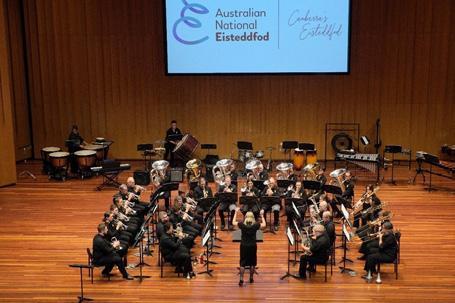
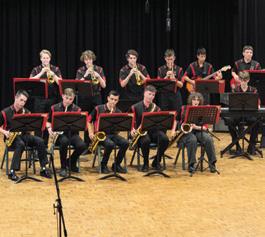
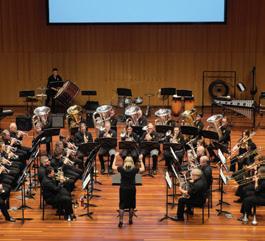
The Australian National Eisteddfod features bands and orchestras across multiple days, highlighting jazz bands, brass ensembles, youth concert bands and school orchestras in a vibrant celebration of young musical talent at Melba Copland Secondary School College Theatre and Llewellyn Hall, ANU, May 21-24.
Further to our previous report that Taiwanese-Australian singer-songwriter Kim Yang has returned to town, news is that she will launch her new album Turn On The Lights in a concert performance at The Street Theatre, May 16.
By Helen Musa
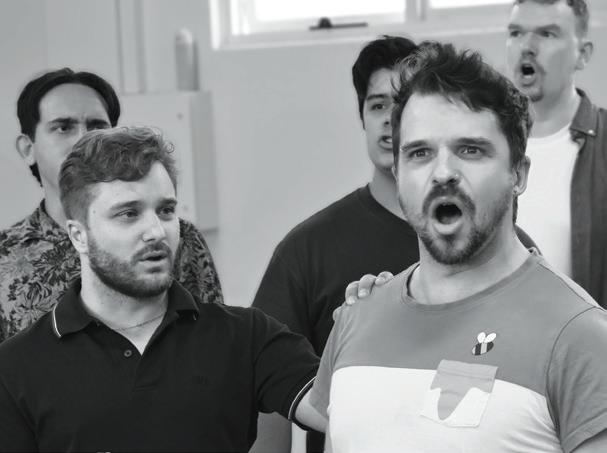
A burst of energy is what always greets me when I rock up to a Queanbeyan Players rehearsal, and a recent visit to a local church hall as they prepared for their coming production of Les Misérables, proved no exception.
Adapted from Victor Hugo’s famous novel, Les Misérables by Boublil and Schönberg follows Jean Valjean, an ex-convict who, after serving 19 years for stealing a loaf of bread, breaks parole to start a new life, pursued by the relentless, morally driven but blinkered Javert.
On hand is the charismatic Max Gambale performing an athletic range of notes as the main antagonist, Inspector Javert, who jokes with me that he’s always typecast as the villain. When I observe that he’s singing in a very high register, he responds: “I can sing tenor or bass as required,” adding, “I can even sing soprano.”
Gambale tells how the cast had enjoyed an early workshop with famed musical theatre exponent Phil Quast, who played Javert in the original 1987 Australian production.
Elsewhere, another vocal virtuoso, William (Wally) Allington, is seen stirring up the revolutionary students as the fiery Enjolras, leading the chorus in a bolshie version of The ABC Café/Red and Black, followed by the revolutionary anthem, Do You Hear the People Sing?
Small matter that Helen McIntyre and her battalion of costumiers were still hard
at work, I could already imagine the life, the colour, the debris and those flags at the barricades.
Another scene already coming fully to life was the unusual love duet, A Heart Full of Love, between young hero Marius, played by Alex Unikowski, and the innocent Cosette, played by Sophie Hope-White, interestingly overseen by Éponine, who realises she doesn’t stand a chance of winning Marius’ affections.
Though a relatively small but significant part, Éponine, who is here played by a member of Canberra music royalty, India Cornwell, is one of great complexity, she tells me, adding an extra layer to the more conventional romance between Marius and Cosette.
On hand, in a moon boot and bravely
hobbling among the large cast, is director Dale Rheynolds, who reports that they’ve been rehearsing since January, apart from the sheer logistical challenge of having to assemble a cast from 3000 eager auditionees.
The overall musical director is Brigid Cummins, while Queanbeyan Players vicepresident Jen Hinton will conduct.
According to Hinton, everything about the show is big – it is a big sing with a big band of 15, and the demands are huge. Being a sung-through musical, there is no let-up. With no pun intended, she adds: “There are a lot of moving pieces.”
The choreography by movement director Belinda Hassall is obviously well underway and, as the director said, the whole thing,
which has been in rehearsal since January, has required an almost military effort to pull off. With this in mind and taking no chances, Rheynolds and associate director Sarah Powell have been careful to arrange for every part to be understudied, with no fewer than three Gavroches – Ricky Best, Harlan Blazeski and Jude Gambale as the little boy at the barricades who gives rise to the popular media images of Les Misérables in the room, alternating.
The tremendous hard work in learning the roles of Valjean and Javert has been recognised and, whatever else may happen, the two understudies will get a turn: Christopher Bennie will sing Javert on May 30, and Nathanael Patterson will play Valjean on June 6.
Meantime, the stirring strains of Victor Hugo’s hero insinuate themselves throughout. Jean Valjean is played by Dave Smith, the grin on his face as he nodded to me showing just how pleased he is to take on this mammoth part.
You can be sure there won’t be a dry eye in the house at the affecting scene in the forest where Valjean rescues the innocent young Cosette from her hypocritical captors, the Thénardiers – Hugo’s ultimate cockroach-like survivors – played by Greg Sollis and Tina Robinson.
This is a huge undertaking for the increasingly ambitious Queanbeyan Players, who have been bringing us mostly very new musicals in the last couple of years but have now decided to indulge in a bit of stirring heroism. You’d better rush to get a ticket to this one.
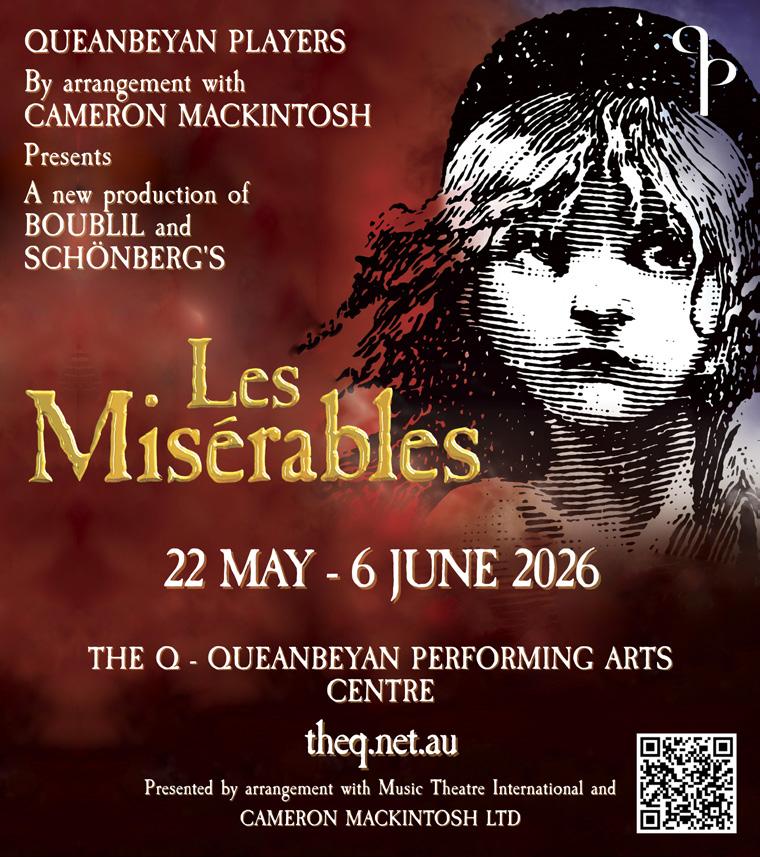
Les Misérables, Queanbeyan Players, at The Q, Queanbeyan, May 22-June 6.
From left, in rehearsal, Alex Unikowski, as Marius, and William Allington as Enjolras.
Patrick Brammall.
MUSIC / The Australian String Quartet
The very new, the old with a splash of romance
By Helen Musa
The Australian String Quartet is busy working up a program that combines the very new, the very old, some exciting Russian virtuosity and a dash of the romantic through the works of Elizabeth Younan, Joseph Haydn, Sergei Prokofiev and Clara Schumann.
When I catch up with first violinist of the eminent Adelaide-based quartet, Dale Bartrop, I find that the musicians are preparing for their concert Interwoven, which they will bring to Canberra’s Gandel Hall as part of a nationwide tour.
Bartrop describes the quartet to me as an “unprecedented model of self-presentation”, with all four musicians working as equal co-directors.
“The four of us make all of our decisions together as a team and we try to present accessible programs. Every program is an evolution. We often come to our decisions, many weeks of juggling, trial and error playing with different combinations.”
At the centre of the coming program, designed as a tapestry of voices across centuries, is String Quartet No. 1, Interwoven, by Australian composer Elizabeth Younan, which opens the concert.
The work also gives its name to the program. It draws together different musical
traditions and reflects Younan’s understand ing of the string quartet as a form in which all four voices carry equal weight.
It’s not a world premiere. Younan composed part of it in 2016 when she was an undergraduate at the Sydney Conservatorium, completing it in 2019 and seeing the Goldner String Quartet play the premiere of the first movement.
But then the ASQ members got hold of a video showing a young ensemble at the Curtis Institute in Philadelphia playing the work and, as Bartrop puts it: “We were bowled over by a really wonderful piece of music… we said, let’s program it in.”
He’s pretty sure it’s never been recorded, but they will put that right this year.
Bartrop believes the young composer’s
Shostakovich when they wrote their string quartets.”
Younan, 32, and now studying at the Juilliard School in New York, is recognised as one of Australia’s rising composers. Her music has been performed internationally, including her violin solo… your heart dreams of spring, featured on Jennifer Koh’s 2021 Grammy Award-winning album Alone Together. She has also written for the Sydney Symphony Orchestra and for the podcast Lost Women of Science.
It made sense to follow with Joseph Haydn’s String Quartet in A Major, Op. 20 No. 6. Bartrop says that the Op. 20 quartets, by
Joseph Haydn, “father of the string quartet”, are different from the old tradition where the first violin provided the melodies and the others gave harmonic support.
The shift in style continues with Russian giant Sergei Prokofiev’s String Quartet No. 2 in F major, Op. 92.
Despite Prokofiev’s popularity, his string quartets are not often heard in live performance so, Bartrop says: “This is an opportunity to perform work by Prokofiev which is full of folk music and rhythmic energy and beating harmonies with at times a really rustic aspect to it – very satisfying to play.”
Prokofiev would have approved. Listening to it in Moscow just after a Nazi air raid in 1942, he pronounced it “an extremely
turbulent success”.
With all that Russian fire, the ASQ quadrumvirate realised there was nothing romantic in the program, so they chose an arrangement by Éric Mouret of Clara Schumann’s Variations on a Theme by Robert Schumann.
Composed in 1853 as a 43rd birthday gift for her husband, the work provides what Bartrop describes as an opportunity “to reflect and to be soothed by the touch of such a tender, intimate musical sense of intimacy and reflection.”
“Like dessert. Something to leave a sweet taste in the mouth.”
Interwoven, The Australian String Quartet, Gandel Hall, NGA, May 17.
Composer Elizabeth Younan.
Photo: Louie Douvie The Australian String Quartet, from left, Michael Dahlenburg, Chris Cartlidge, Dale Barltrop and Francesca Hiew.
Photo: Laura Manariti
STREAMING
There’s a psychopath in the outback, fair dinkum
It can be a fascinating and amusing experience to hear a foreign actor try to take on the Aussie accent.
In Apex, Netflix’s newest horror thriller flick, Welsh talent Taron Egerton does a pretty pretty ripper job though, mate.
Far from perfect but entertaining in an almost caricature kind of way, the Kingsman star here plays a psychopathic outdoorsman who hunts people in the outback for sport. How friendly. Think Wolf Creek meets Predator.
The plot follows Sasha (Charlize Theron), an extreme climber who after the death of her partner travels out into the Australian wilderness in an attempt to start a fresh chapter.
When she meets Ben (Egerton) at first she’s charmed by his charismatic exterior and knowledge of the land, not knowing she is the target of his newest hunt.
The film was shot across Victoria and NSW in some of Australia’s most stunning national parks including the Grampians and Yarra ranges.
There’s something unnerving about seeing a more familiar landscape form the backdrop of a thriller film.
Apex certainly doesn’t reinvent the wheel but it does make for 90 minutes of fair dinkum thrills.
FOR one of the most popular streaming platforms on the market, one has to hand it to Apple TV Plus for pushing some of the boldest
and most original concepts out there.
Widow’s Bay is the newest series to hit the catalogue, a comedy horror series about a mayor who takes on the job of running a small town that might be cursed.
Star of The Americans Matthew Rhys plays the leader of the populace on a tiny island off the coast of New England.
The community is thrown into chaos when a well-known local boat captain mysteriously vanishes.
Fear spreads when some of the townsfolk begin to speculate the man has been taken by a supernatural fog.
Is it all nonsense or is there something unearthly actually afoot? It’s the mayor’s job to find out.
Much of the comedy here comes from a slew of references to classic horror films, parodying some of the greats without losing its creep factor.
Despite being heavily inspired by the scary canon before it, Widow’s Bay manages to stir all that in together to make itself something truly entertaining.
IT being 2026 and all, everything with a sliver of popularity must have a whole
universe of spin-offs attached to it.
Such is now the case for The Handmaid’s Tale, the confronting dystopian show based on Margaret Atwood’s best-selling novel.
The last season of this excellent drama hit screens just last year, but now a new show has picked up the story.
The Testaments (on Disney Plus) follows a new generation fighting to escape the
control of the republic of Gilead, a brutal regime that strips women of their rights and keeps its people under crushing surveillance.
The story follows three new characters whose perspectives give deeper insight into the leadership of Gilead as it begins to crack.
The Testaments comes from another book by Atwood that was published in 2019, so there’s a strong story to be told here.
The problem is that it’s made The Handmaids tale show suffer from what one might call “spin-off-itis”.
After the series ran for six seasons, many found the ending far too open and inconclusive.
When you bring an audience on a journey for eight years and tell them it’s coming to an end you owe them a definitive conclusion.
Why was the end of this hugely popular series, which long ago went beyond the source material of Atwood’s original novel, so anti-climactic? Well the answer is The Testaments.
It’s a trend more and more shows are starting to suffer from. Compromise the story and its ending in order to keep it going.
What is it they say?
The show must go on?
Maybe in this context, it’s better off.
Taron Egerton and Charlize Theron in Apex.
Matthew Rhys as the mayor in Widow’s Bay.
The lives of slowing Alan and restless Lulu
Book reviewer COLIN STEELE looks at the autobiographical accounts of the disparate lives of two British celebrities.
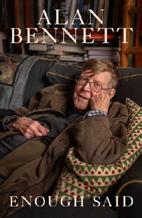
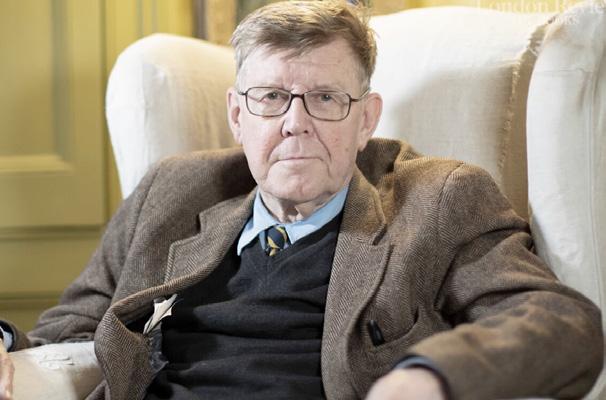
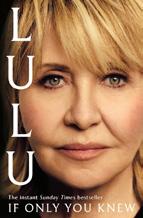
The personal lives of two British celebrities are to the fore in Alan Bennett’s Enough Said, the fourth instalment of his diaries, and Scottish pop legend Lulu’s memoir, If Only You Knew.
Bennett’s diaries, which cover the years 2016 to 2024, a year in which Bennett reaches 90, understandably contain a lot of health issues. Bennett reflects on ageing: “One’s ears get longer and one’s dick gets smaller.”
On his increasing immobility, Bennett comments: “I’ve joined the limping proletariat.”
Fortunately, Bennett’s partner for more than three decades, the much younger Rupert Thomas, a distinguished magazine editor, carries a lot of the domestic load.
Far from being “a chronicler of the toasted teacake”, Enough Said (Faber. $59.95), is a perceptive, contemplative and often funny view of life, both personal and political.
On the political front, the diaries cover the covid lockdown, Brexit, political leaders such as Boris Johnson and Donald Trump, both of whom Bennett detests, and the death of the Queen. Bennett may now regret his comment on Keir Starmer’s election victory that Starmer’s “plainness… is a relief”.
On the personal front, there is much nostalgia looking back to childhood and family life in Leeds. Then in the 1950s National Service, an Oxford education and satirical success in Beyond the Fringe. His ambivalent relationship with fellow Fringe member and neighbour Jonathan Miller continued through the diaries.
When Miller says his production of The Mikado has been performed 300 times around the world, Bennett reflects that The History Boys has had 2000 outings. “I say nothing, but without feeling any better for not doing so”.
Bennett’s creativity continues, as documented in the diaries, including the 2018 NHS stage play Allelujah, subsequently filmed, and The Choral, set in small-town Yorkshire during World War I, currently streaming in Australia.
LULU’s memoir If Only You Knew (Hodder, $34 95), written with the help of ghostwriter Megan Lloyd Davies, lays bare the downside of success.
Born in Glasgow in 1948 as Marie McDon-
Dial ‘M’ For Murder
By Frederick Knott
Belcon nen Com mun ity Theatre
May 29th to Jun e 6th
Bookings: Canb erraticke ting.co m.au
P h 62752700
A Tempo Theatre P roduction .
ald McLaughlin Lawrie, the book opens with the words: “I was born Marie and I will die Lulu. This book is about the journey between those two people… And all the many shapes I bent myself into over 60 years in the music business”.
Lulu escaped materially from the grim Glasgow tenements, a dysfunctional family and an alcoholic father when her debut single, Shout, reached the UK top 10 singles chart in 1964.
She gained international prominence after appearing in and singing the theme song of the film To Sir, With Love, which became
America’s biggest-selling single of 1967.
Lulu has recorded, performed, including the Glastonbury Festival last year, and starred in TV series over six decades. She has received an OBE and an CBE.
On the surface a huge success, but Lulu reveals completing her memoir, told in 76 chapters, reflecting her age, was “very cathartic”, a story that includes “the lows of addiction, divorce, and failure”.
Lulu recalls the hedonistic “Swinging
Lulu comments frankly on her two marriages. Her first, with the Bee Gees’ Maurice Gibb, only lasted four years: “We had two problems. One was the amount Maurice drank . . . The other was his often complex relationship with the truth”, including revealing an affair with Barbara Windsor. They divorced when Lulu was 24. Then Lulu drifted into a relationship with a London “junior hairdresser” named John Frieda, who has since developed a multimillion hairstyling global business. They were married for 14 years and had one child, Jordan, but their increasingly busy lives drove them apart, with Frieda recently commenting that “I did not want to be ‘Mr Lulu’”.
Lulu fills the pages with many names she met during her career, but the success masked a workaholic nature, not lessened by the relentless drive of her early managers, and an increasing dependence on alcohol. “I was the child and the grandchild of an alcoholic”, which led to six weeks of rehab in an American clinic in 2013. Lulu notes she has been sober ever since.
Lulu concludes: “This is the story of being a fallible, imperfect human. A woman. I hope that parts of it resonate”. They certainly do in a candid memoir with a last chapter titled One Lucky Girl.
Massive weekend of community music
The Australian National Eisteddfod is about to launch its 2026 season with Bands & Orchestras.
It brings more than 2500 performers together across 76 ensembles in one of Canberra’s biggest annual community music events.
Bands & Orchestras will be followed by Choirs in August after a six-year hiatus, then Singing, Piano and Speech and Drama events later in the year.
Opening at Melba Copland Secondary School College with jazz bands, it will then shift to Llewellyn Hall for three days of concert bands, orchestras and the major Open Band sections.
A standout of the program is Friday night’s Open Concert and Brass Band sections, featuring 12 community bands from Canberra, Sydney and the Hunter Valley performing major repertoire at the highest level.
Among the headline ensembles is Canberra Brass, which will perform Mussorgsky’s Night on Bare Mountain in a demanding brass arrangement, alongside a tribute to long-serving tenor horn player Russell Smidt with his solo performance of A Time for Peace by Peter Graham.
Canberra City Band will premiere Ouroboros, a new work by Sydney composer Zoe Gougousidis. Ginninderra Wind Orchestra will present the
celebratory Exultate by Samuel Hazo and the cinematic Jidai by Stephen Melillo, while Sydney’s Cameraygal Wind Symphony travels to Canberra to perform works including Danzon No. 2 and Grainger’s Colonial Song.
Throughout the weekend, audiences can expect a musical mix spanning jazz standard, film scores, classical favourites and contemporary hits. All sections are non-competitive, with ensembles receiving gold, silver or bronze attainment awards, while a select number of platinum awards recognise exceptional performances, but the Eisteddfod’s mission is to encourage participation in the performing arts and foster confidence and creativity in performers of all ages.
The Australian National Eisteddfod Bands & Orchestras, May 21-24. Full schedule at nationaleisteddfod.org.au –Helen Musa
Alan Bennett…“I’ve joined the limping proletariat.”
Canberra Brass in full swing in 2025.
Photo: Peter Hislop
Welcome to the house of fun
It’s loud, boisterous and full of personality. Lager House, recently opened in the new East Traders Hall precinct, Campbell, features a U-shaped bar, open kitchen, woodfired grill, massive, shiny 1500-litre tanks, and plenty of seating inside and out.
Presented by Capital Brewing Co, the Lager House opened at the end of March. It’s been pumping since, building a reputation as a “house of good times”.
The menu is divided into small stuff (all day), pub classics, salads, wood-fire dishes, woodfire feasts (such as the 12-hour, slow-cooked lamb shoulder for $120), kid’s dishes and desserts. Share or don’t share… we certainly did.
The mini prawn brioche roll ($9 each), meant to be on the lighter side, featured small, sweet prawns mixed with tabasco mayo, lumpfish caviar and dill.
Our taste buds danced with the pan-fried, crispy haloumi ($20), gorgeous with wildflower honey, but not overly sweet. Fresh grapes, crunchy pistachio and springs of thyme rounded matters out.
The cauliflower wings are fun ($18) – big florets crisped up nicely and enhanced with sesame dressing. Tiny bits of kale added some greenery (don’t expect kale chips… more crisps).
Moving to mains, we shared the steak frites ($34, for 200 grams). It’s only served medium rare, but it was lovely and tender. We smothered it with whipped tarragon butter. The fries were slightly soggy from the meat being placed on top.
While the glazed, charred house lager-brined half chicken smacked of flavour, it was too dry in parts ($32). Thumb’s up to the vibrant rojo sauce and punchy peppers.
WINE / Francophilia
The pan-fried, crispy haloumi… with wildflower honey, grapes, crunchy pistachio and springs of thyme. Photos: Wendy Johnson
The tasty chickpea tabbouleh salad was pretty on the plate ($24). A mound of whole chickpeas was placed on a generous smear of creamy hummus, and the salad was topped with fresh tomatoes (not the heirloom promised), crunchy cucumber, parsley and more.
While we also enjoyed the “baby leaf salad”, what arrived didn’t match the menu description. Absent were olives and pickled red onions. Making an appearance were cucumber and tomato ($9).
The beer line-up is impressive – as one would expect – and the wine list is pretty darn good, with local labels showcased.
On our visit, the heavy-style rock music was
Mini prawn brioche roll… featured small, sweet prawns mixed with tabasco mayo, lumpfish caviar and dill.
super loud, causing everyone to raise their voices when talking. However, staff kindly turned it down when asked.
The new, all-day dining precinct at East Traders Hall precinct covers more than 800 square metres of space, and the first wave of retailers also includes Lava Coffee, cult pizza fave Sliceria, and Chairman Group’s new restaurant World. Lager House can seat more than 470 customers. Free parking is available in the basement off Wendourie Drive (validate ticket at the bar). Mobile reception isn’t great, says Lager House, so there’s free wi-fi.
Another lover of French food (and wine)
The 20th book I’ve read this year is an excellent memoir based around an author’s Francophilia, especially her love of French food.
Inspired by Julia Child’s iconic work that introduced English and American people to the basics of French cooking, Ann Mah called her 2013 book Mastering the Art of French Eating. Child’s book was Mastering the Art of French Cooking.
I read Child’s book about 20 years ago. I remember when my jokes weren’t just about nostalgia: those were the days.
Child was engaging in writing and television presentation. While filming an episode of The French Chef in 1963, she accidentally dropped a potato pancake on to the stove.
Without hesitation, she picked it up, brushed it off, and said to the audience: “You can always pick it up if you’re alone in the kitchen”, then carried on cooking as if nothing had happened. An endearing attitude that’s also a characteristic of Mah’s memoir.
In each chapter Mah focuses on a city or region of France, weaves a personal narrative about her time spent there and ends with a recipe of the
region’s signature dish.
Her stories are engaging in large part because of her interactions with others, who are also people who love to eat.
The chapters that spoke to me most were ones where wine was discussed, the chapter about the Savoie and Haute-Savoie regions, the birthplace of fondue and the chapter on Burgundy, where the two products that best illustrate that region, wine and beef, come together in Boeuf Bourguignon. But with all of the recipes, sacre bleu, I think that it would be possible to substitute local products.
I was back in my 1970s bell bottoms (purple!) reading about the plat de pauvre, that is fondue, a way the French use up bits of hard, cracked or unattractive cheese.
At that time in New Zealand, we used up whatever cheese was available, making a slurry of cheese mixed with a cheap white wine to get a gooey melted pot full of molten liquid that could
be scooped up on semi-stale bread and drunk with more of the white wine, usually a Ben Ean moselle.
Mah remarks that, of course, the quality of your fondue depends on the quality of the cheese. The recipe that she shares at the end of the chapter combines cheeses from Jura and Savoy in France and Gruyere from Switzerland.
With this sophisticated fondue she suggests drinking a dry white wine, such as an Apremont from Savoy. This area is high altitude. The Savoy geographical denomination Apremont dates from 1973 and is one of the most famous white wines of Savoy, predominantly made from the Jacquere varietal.
You can expect a light wine with minerality and a sweetish, lychee-like finish in this wine. But, I say, use whatever wine you believe goes well with melted cheese.
The chapter on Burgundy is based around Mah following in the footsteps of Thomas Jefferson when he made a 1787 journey through the vineyards of Burgundy.
Here Mah aligns her narrative with that journey but also acknowledges that Child launched her cooking show with the wine-rich beef stew of the region.
The recipe that appears at the end of the chapter calls for the beef, in this case beef-cheeks, to be cooked with 750 millilitres of a “full-bodied” wine. She suggests “a sturdy pinot noir, Cotes du Rhone or similar”. A good Aussie shiraz, I think, does much better.
“It is not a failure to readjust my sails to fit the waters I find myself in.” –Mackenzi Lee
Ann Mah, left, and Julia Child.
Ornamental cabbages for colour
By Jackie WARBURTON
Ornamental cabbages and kale can be grown in the winter garden to fill a space and add a little colour.
They are among the few plants that continue to grow as the season moves into winter. In many cases, the colder the conditions, the stronger the foliage colour.
Ornamental cabbages form a round rosette, making them highly decorative in mass plantings or pots. As annuals, they will lose their shape when spring returns.
Like all brassicas, they attract white cabbage moths, though this is less of a problem in winter when pests prefer warmer weather.
Caterpillars can be handpicked in the morning or controlled with a light dusting of diatomaceous earth. Another option is to plant land cress (Barbarea verna) nearby as a deadend crop, encouraging pests to lay eggs on the cress instead. As a bonus, land cress thrives in cold conditions and makes a useful winter salad. It can be sown outdoors most of the year, except July and August. Grow it in full sun and, with moisture, it can be ready to harvest in as little as eight weeks. It is also a reliable cut-and-come-again crop.
BROAD beans can be planted now
and throughout the colder months, either in garden beds or the vegetable patch. As a legume, they return nitrogen to the soil, supporting spring growth. They also flower in late winter, coinciding with fruit tree blossom and attracting bees.
The beans have a double skin and can be fiddly to prepare, but there are plenty of simple recipes, especially when there is a glut.
WHILE autumn brings a show of foliage colour, there are still flowers appearing each week. An old-fashioned shrub worth revisiting is the fuchsia, which grows well in a dark corner and often goes unnoticed until it blooms.
Fuchsias prefer moist soil but need little care once established. Many hybrids offer striking, contrasting flower colours. Canberra’s cold soils can make in-ground growing difficult, but they are well suited to protected spots or hanging baskets, which help keep roots warmer.
They are long flowering and respond well to pruning. A firm cut back in spring, followed by a light tidy in summer, along with some
fertiliser, will keep them blooming for months.
As they flower on new wood, regular trimming is beneficial. Plant in a sheltered sunny position; too much shade can limit flowering. Keep roots mulched and apply dynamic lifter to improve soil and provide nutrients.
For more information, the Canberra Geranium and Fuchsia Society has been a local resource since 1968, with a website (cgfs.org. au) full of useful advice.
KEEP adding leaves and twigs to compost piles to help them break down, ready for use in spring.
jackwar@home.netspeed.com.au
Jottings…
• Tulips are the last spring bulbs to be planted.
• Pick apples before the birds do.
• Pick kiwi fruit and ripen indoors.
• Keep water up to citrus while they are flowering.
Old-fashioned fuchsias… like moist soil but once they are established, they need very little care. Photos: Jackie Warburton
Ornamental cabbages… the colder the winter the more the colours are displayed in their foliage.
HOROSCOPE PUZZLES HEALTH
Your
By Joanne Madeline Moore
May 18-24,
2026
ARIES (Mar 21 – Apr 20)
You’re in the mood for self-love, romance and/or friendship, as Venus makes a lovely link to Mars (your ruling planet). So, it’s a wonderful week to get your hair done, buy a fabulous outfit, enjoy an indulgent facial, manicure, pedicure or massage, plus eat delicious food as you socialise with close old friends or exciting bohemian new acquaintances. The weekend stars favour short trips, controversial conversations and local community connections.
TAURUS (Apr 21 – May 21)
The Sun’s spending the last days in your sign (until Thursday) which provides a golden opportunity to fine-tune who you are and where you’re going. And make the most of the next three weeks, as proactive Mars charges through Taurus (until June 29). Explore, experiment and enthuse – here, there and everywhere. Quick smart! Your motto for the moment is from birthday great Bob Dylan (who turns 85 on Sunday): “There is nothing so stable as change.”
GEMINI (May 22 – June 21)
This week Mercury (your patron planet) makes lovely links to Neptune, Pluto and Saturn. So, it’s a wonderful week to throw superficiality and procrastination out the window and, instead, focus on being more creative, profound and productive. The Sun, Mercury and Uranus also hook up in your sign, which encourages you to think outside the box. Be inspired by entertainer Cher (who turns 80 on Wednesday): “If you can’t go straight ahead, go around the corner.”
CANCER (June 22 – July 23)
Have you been burning the midnight oil and now you’re suffering from burnout? Or have you been running around on autopilot, making careless mistakes? This week four planets activate your solitude zone, so slip into hermit Crab mode as you slow down, simplify your life, prune projects or organise a digital detox. Meditation, contemplation and relaxation are a must. You could also receive creative ideas or an important message via a vivid dream.
LEO (July 24 – Aug 23)
It’s your time to shine, as the powerful Sun/Uranus conjunction favours dazzling dreams and innovative ideas. Plus, mighty Mars (in your career zone) helps you combine dazzling creativity with powerful determination. Use your fertile imagination to help manifest your preferred future via goal setting and a practical plan. Your mantra is from civil rights activist Malcolm X (who was born on May 19, 1925): “The future belongs to those who prepare for it today.”
VIRGO (Aug 24 – Sept 23)
On Monday your ruling planet, Mercury, hooks up with Uranus, so you’re in the mood to question, philosophise, explore and innovate as you throw out the old rule book and try something new, especially at work. Be inspired by music great Bob Dylan (who turns 85 on Sunday): “Gonna change my way of thinking, make myself a different set of rules.” On Thursday, the Sun powers into your career zone, so the next month is your time to really shine and at work.
LIBRA (Sept 24 – Oct 23)
Venus (your patron planet) moves into Cancer (in your career zone) and links up with Mars. So, the focus is on being proactive at work as you nurture colleagues, clients and/or customers, and start transforming your professional dreams into robust reality. Plus – with the Sun, Mercury and Uranus linking up in your adventure zone – don’t be afraid to take risks. As birthday great Cher says: “I’ve always taken risks; you have to if you want to get anywhere in life.”
SCORPIO (Oct 24 – Nov 22)
Transformation is the name of the game this week, Scorpio, as the planets push you to rise Phoenix-like from the ashes of a difficult situation. A challenging close relationship has the potential to be reborn into a much more positive partnership. The mid-week Mercury/Pluto trine will also help you release old grudges, let go of the past, forgive and forget, and finally move on. But expect some surprising secrets and unexpected hi-jinks along the way!
SAGITTARIUS (Nov 23 – Dec 21)
Mercury and the Sun hook up with Uranus in your partnership zone. So – when it comes to close relationships – it’s time to be creative, attentive, adventurous and generous. And expect the unexpected! Attached Archers – pamper your partner and show them they are still Number One. Unhappily single? You could fall for someone who is way outside your comfort zone. The weekend is wonderful for creative projects, pleasure, leisure, romance and friendship.
CAPRICORN (Dec 22 – Jan 20)
With Venus and Jupiter both visiting your relationship zone (and busy Mars moving into your entertainment zone) it’s a wonderful week for partnerships, parties, birthdays, engagements, weddings and anniversaries! So, love, romance, friendship, socialising and celebrating are all favoured as you mix and mingle, socialize and fraternize. Then the positive Mercury/Saturn link (on Friday and Saturday) is good for goal setting, planning and problem-solving.
AQUARIUS (Jan 21 – Feb 19)
Courtesy of the Sun/Mercury/Uranus links and Mercury trining Pluto (in your sign), the buzz words this week are change and transformation. But don’t worry about trying to change (or control) those around you. Focus on yourself first. Can you be more proactive in relationships, pivot professionally or transform your physical appearance? Your motto is from birthday great, Cher: “The only thing in the world you can change is yourself and that makes all the difference.”
PISCES (Feb 20 – Mar 20)
Saturn is now transiting through your self-esteem zone (until 2028), so it’s a good time to be focused, disciplined and patient. But don’t listen to your inner critic, as it tries to undermine your confidence and shake your self-belief! Be inspired by singer-actress Cher (who turns 80 on Wednesday): “If you’re waiting for someone to believe in you, you’ll be waiting forever. You must believe in yourself.” On Saturday, share a special dream with a close friend.
Copyright Joanne Madeline Moore 2026
1 Name a Polish-French pianist and composer, Frederic ... (6)
8 What is something that implies that something is uncanny? (8)
9 What is the climatic weather that causes surface warming of the Southern Pacific Ocean? (2,4)
10 Name the US Defence Department building. (8)
11 To disclose, is to do what? (6)
13 To have loathed, is to have done what? (8)
16 When one supposes, one does what? (8)
19 What are standards of perfection? (6)
22 Which term describes a conscientious objector? (8)
24 Name a long-haired variety of domestic rabbit. (6)
25 What was once a specialist in mental diseases? (8) 26 How many players are there in a hockey team? (6)
2 To share equally, is to do what? (5)
3 What is a reward for victory? (5)
4 What is a tumour called? (8)
5 To smile broadly, is to do what? (4)
6 To be biassed or partial, is to be what? (6)
7 To be on dry land, is to be where? (6)
12 What is a particular form of depravity? (4)
14 To pause, is to do what? (8)
15 Which town in south-eastern Queensland is known for its natural gas fields? (4)
17 Name another term for actually. (6)
18 To have grasped, is to have done what? (6)
20 What, in golf, is a score of two below par? (5)
21 To be of great scope, is to be what? (5)
23 Name the Egyptian goddess of fertility and nature. (4)
Pulling the reins on excessive specialists’ fees
Specialist doctors are charging too much. ANTHONY SCOTT has four options to rein in excessive fees… Federal Health Minister
Mark Butler has declared reducing specialists’ fees will be his next key focus of health policy reform.
Doctors are currently free to set their own fees and many have rapidly increased them over the past 15 years. The average out-of-pocket cost for a non-bulk billed specialist consultation increased from $46 in 2009-10 to $126 in 2024-25, or 11.9 per cent per year.
As a result, non-GP specialists have the highest incomes in the country and run the most profitable businesses.
So what has the government done to get specialist fees under control?
This year the government introduced legislation to enable the publication of fees for individual specialists. The Medical Cost Finder website will show what individual specialists charge, rather than regional averages.
A Senate committee has also been set up to investigate access to and affordability of medical specialists, which will report in late 2026. Each year, almost 1 million people report avoiding seeing specialists because of the cost.
Four options for reining in fees
1. Legally enforceable price caps
Doctors have traditionally relied on a clause in the constitution to argue against direct regulation of fees. But the minister seems willing to legally test this. And doctors have lost previous legal tests of this clause.
Direct fee controls could make it illegal to charge above a certain amount, and caps could vary by individual Medicare items or by episode of care.
An independent body could be established to set these caps and Medicare rebates, based on submitted evidence on how costs vary across regions and patients’ needs. However, doctors with fees below the caps could increase them.
2. Pay Medicare rebates only if fees are below a certain cap
An alternative to testing the constitution is to make the payment of Medicare rebates conditional on doctors charging a fee below a certain cap.
If doctors charged above the cap, this would remove the Medicare rebate for patients so could potentially increase out-of-pocket costs for patients.
Since some patients regard higher fees as an indicator of high quality, this increased out-of-pocket
cost might not reduce demand for everyone.
3. Increase Medicare rebates
Doctors’ groups argue that Medicare rebates should be increased, as this would lower fees charged.
However, previous experience with the Medicare Safety Net found strong evidence doctors may not reduce fees but, rather, take the extra rebate, or a proportion of it, as extra income.
This could reduce the growth of fees but discretion remains with the doctor on what to charge and the out-of-pocket cost.
This could be combined with fee caps or rules that prevent doctors from increasing fees if they accept the higher rebate.
This would guarantee that the rebate increase would reduce out-ofpocket costs.
4. Standardising gap cover arrangements across health insurers
For services provided in private hospitals (and to private patients in public hospitals), health insurers use gap cover arrangements to help keep out-of-pocket costs down. Doctors who choose to have an agreement with a health insurer can then choose whether a patient pays any out-of-pocket costs if their fee is equal to or less than the fee schedule determined by health insurers.
Patients can pay no out-of-pocket cost (“no gap” cover) or a known out-of-pocket cost (“known gap” cover) or pay the full out-of-pocket cost if the fee is above the known gap amount.
Each insurer uses a different fee schedule which adds to the variation in out-of-pocket costs.
This scheme could be strengthened and fee variations reduced by requiring all insurers to use the same fee schedule.
It could also be mandated that all doctors accept the insurers’ fee as full payment.
Where to next?
These options require careful thought to determine which might be more effective in reducing fees and out-of-pocket costs. Some involve further government spending or impose costs on health insurers, while others involve changes in legislation and rules.
Some combination of both is likely to make this work. But reducing out-of-pocket costs while maintaining doctors’ earnings is likely to be expensive.
Prof Anthony Scott, director, Centre for Health Economics, Monash Business School, Monash University. Republished from The Conversation.
NO MORE BOONDAH Tackling Indigenous Smoking
Your journey to better health starts here.
At Winnunga Nimmityjah Aboriginal Health and Community Services, we stand with you on your journey to quit smoking — for yourself, for your family, and for future generations. Smoking is one of the biggest health challenges in our community, but you are stronger than the smokes. Every cigarette not smoked is a step toward a longer, healthier life.
YOU’RE NOT ALONE
Winnunga offers culturally safe, free, and confidential support:
• Quit plans tailored for you
Why Quit?
Stronger lungs, stronger heart, stronger you
More money in your pocket — save thousands every year
Healthy bubbas — quitting before or during pregnancy helps babies grow strong
Be a role model for your kids, your mob, your community
It’s Never Too Late
Whether it’s your first time trying or your fifth, Winnunga is here to walk with you. Every day smoke-free is a win.
• Yarn with our friendly Aboriginal Health Workers