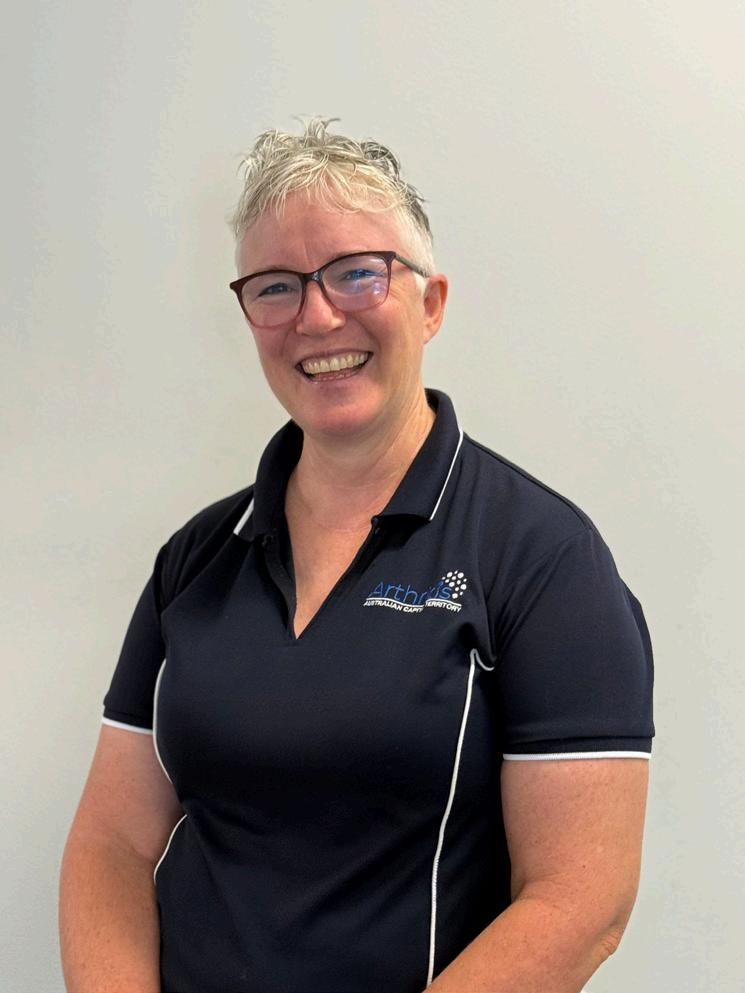
New columnist ROBERT McMAHON sees cost-of-living dangers in the choices we’re making.
We’re two-faced when looking at war crimes
MICHAEL MOORE
East to West, there’s a world of opposites
CLIVE WILLIAMS
‘Cancel’ threat for play’s immoral characters
HELEN MUSA
Nerines light up an autumn garden
GARDENING
How Barr handles cranky people
KEEPING UP THE ACT
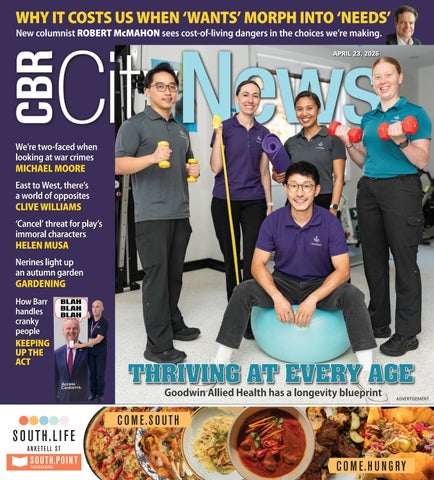
THRIVING AT EVERY AGE
Goodwin Allied Health has a longevity blueprint
‘Secret gem’: Women walking the mentoring talk
By Tia PRIEST-WILLIMOTT
For the past seven years, nearly 900 Canberra women have been walking and talking with a mentor, thanks to Mentor Walks – a not-for-profit group connecting locals with inspiring female leaders.
“It was set up in Canberra seven years ago by Nadine White, and I joined Nadine in 2019,” says Jenet Connell.
Jenet’s one of the co-leads of Can berra’s Mentor Walks, as well as being a mentor herself, with more than 21 years in senior roles within the APS, including as a Deputy Australian Stat istician and chief operating officer at the Australian Bureau of Statistics.
“We help organise it – it’s a national program and we co-ordinate the local chapter,” Jenet says.
Mentor Walks was established in Australia by Bobbi Mahlab and Adina Jacobs, after they attended one of the walks in China.
“I love hearing the stories from the mentees and then reflecting on those periods in my own career and being able to relate,” Jenet says.
“I get so many mentees that come along so stressed and wound up and I
love being able to provide something of real value. That’s what keeps me coming back each time.
“Most of our mentees come looking at career progression and making the next step. That’s a common theme, but every conversation is different
because everybody’s different.
“It’s a little secret gem of all these different women who don’t know each other but get together to support women,” Jenet says.
“It’s just this wow factor because then when you’re listening to all these
Rotary calls for award nominations
The Rotary district that covers the ACT and much of southern NSW, is calling for nominations for the Rotary Emergency Services Awards, recognising police, firefighters and paramedics, including both paid staff and volunteers.
Community members are encouraged to nominate colleagues, neighbours or volunteers who have gone above and beyond in their roles.
Nominations also support fundraising efforts for emergency services training overseas and a Rotary scholarship focused on post-traumatic stress among emergency workers.
Nominations close on May 31, with finalists announced on June 15.
More information and nomination forms are available at www.act.rescawards.org.au
Dragons say come and see
Dragons Abreast Canberra will host a come-and-try session at Grevillea Park, Barton, 9am-11am, on Saturday, May 2.
The session is aimed at people recovering from breast cancer, offering a chance to reconnect with physical activity, meet others with shared experiences and try dragon boating. No prior experience required. More from comeandtry@dragonsabreastcanberra.org.au or 0407 250651.
A view on downsizing
Sarah Crewdson, from The Bears that Cares – a company that assists with downsizing – is the guest speaker at the next lunch meeting of the Weston Creek View Club, to be held at the Canberra Southern Cross Club, Woden, from 11.30am on May 5.
General manager: Tracey Avery, tracey@citynews.com.au
women – both mentors and mentees –you can’t help but go: ‘Wow, all these women I wouldn’t have met before are just so impressive’.”
Phillipa Leggo is also a mentor, coming with experience from her role as the co-founder and commercial director of Canberra-based Australian landscape photography business, Scott Leggo Gallery.
Phillipa says Mentor Walks are a no-strings-attached situation, with participants signing up for one walk at a time.
“I find lots of women are busy, from full-time jobs to kids to puppies to other different commitments, so lots of people have said to me: ‘I don’t think I can commit’, and I’m like: ‘It’s literally come for an hour and walk and then you can go’,” she says.
“It’s not an ongoing thing, the mums in particular are a bit worried about overcommitting and even some of the senior execs because they’re already busy, but they need that space.”
For just $33 a ticket, the team at Mentor Walks help take away the awkward challenge of finding a mentor, by working away in the background before the event.
“We ask mentees when they sign up, what’s on your mind, what sort of thing would you like to talk about? And they’re not committed to that, but it gives us a sense,” Jenet says.
“So, we then try to pull little groups
together per mentor that have a similar vibe or a similar question. If you’re walking for a second time, we won’t match you with the same person.”
Phillipa thinks this is part of the appeal for mentees who come along.
“It’s really quite tailored… so the mentors can really have an impact in the hour they have with mentees,” Phillipa says.
Jenet stresses that Mentor Walks is not competing with pre-existing support programs, instead it’s complementary.
“It’s a complex message to get across – it’s a not-for-profit, complementary way of tapping into networks you wouldn’t otherwise have access to,” Jenet says.
“Particularly in the public sector, which can be such a closed shop and so formal and structured that for young women trying to navigate it, particularly those coming from outside, it’s pretty tricky.”
The Canberra team take into account the territory’s climate, and pause the walks over winter and start up again in spring.
At the heart of it all, both Jenet and Phillipa agree that the chance for women to come together and help each other grow is what makes the Mentor Walks so special.
The next Mentor Walk is on Friday, May 22, book at mentorwalks.org
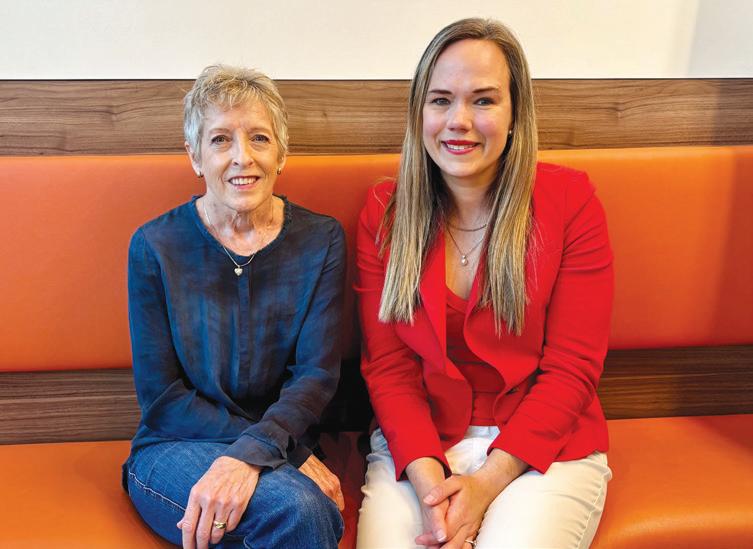
Mentors Jenet Connell, left, and Phillipa Leggo… “It’s a little secret gem of all these different women who don’t know each other but get together to support women,” Jenet says.
Photo: Tia Priest-Willimott
Why it costs us when ‘wants’ morph
Years ago, studying high school economics, my teacher, Miss Jackson, taught me the distinction between needs and wants in economic theory.
In simple terms, she explained, a need was a good or service essential to survival and basic everyday func tion, such as food and water, shelter, clothing and healthcare.
A want, on the other hand, was a mere nice-to-have: something that made life enjoyable, a reward for effort.
So economists posit, people work harder, produce more, to always satisfy their needs; but to also satisfy some wants. The harder you work, the more you produce, the more wants you can have.
Needs or wants? We have come to take for granted that our desires, can be satisfied as and when they arise.
Something strange has happened in the last decade or two in Western societies. Wants have increasingly become regarded as needs.
ever-escalating inter-temporal Ponzi scheme of sorts; of which individual consumers are the only members selling themselves today’s (and tomorrow’s) must-haves.
At the same time, consumers are complaining, with much justification, they can’t afford everyday items to live. That the cost of living – their needs – has become burdensome, even unaffordable. Anyone who has done a weekly household shop and comes out of it any lighter than $300 knows the feeling.
Perhaps as a society we need to re-visit what we regard as needs. Perhaps we need to return to previous notions that desirable wants are not always our needs, they are not actually necessary for living.
And perhaps, as consumers, we ought to re-visit our own consumption patterns and moderate our expectations of government to intervene in our everyday lives.
After all, marmalade can surely withstand a few latent mould spores!
Something strange has happened in the last decade or two in Western societies. Wants have increasingly become regarded as needs.
Partly this is a function of our success economically following the wave of reforms from the 1970s onwards where trade liberalisation, deregulation and monetary policy changes – neoliberal economic reforms – have underpinned economic growth and, in turn, our prosperity.
In simple terms, as the economic tide has risen, so too have the boats that sail upon it (some boats being luckier than others).
But it’s something more than that. As a function of our prosperity, members of Western societies – ours included – have become somewhat complacent. We have come to take for granted our prosperity. We have come to take for granted that our wants, our desires, can be satisfied as and when they arise. And more and more of those wants have, in our more prosperous lives, become regarded as needs; a necessity for living. Unfortunately, for many of us, we are funding our wants not just through cash but through borrowings, or what economists call dissaving. This manifests as debt. Whereas our national household debt is mammoth – something in the
order of $3.5 trillion – the majority of this is mortgage debt to fund housing. While our housing choices have certainly become more opulent (for example, an ensuite is now regarded by many as a need versus a mere want), mortgages are for housing; a legitimate need.
But worryingly, consumer debt – as a function of our household debt – is also at near record levels nationally.
In other words, many of us are funding our wants by borrowing money from tomorrow to pay for them today. With a big whack of interest in the meantime to service the borrowings. And, of course, our wants are no less likely to be as compelling in the future as they are today. Hence an
On top of this, there are transport (and exorbitant) fuel costs, rent or mortgage payments, electricity, water and gas, and (for home owners in the ACT) our ever-increasing rates.
No wonder households are under record financial stress – and financial counselling is one of the fastestgrowing job markets.
Former UK prime minister Theresa May was much maligned for her advocacy of “austerity measures” and became a figure of fun for apparently telling her cabinet that she picked mould off the top of marmalade to keep it edible longer.
But just maybe, there was something in what Ms May clumsily exhorted.
[This column is dedicated to Miss Jackson, my public high school economics teacher, whose skilful economic education sustained throughout my government service. Our society is fortunate to have teachers like her.]
Dr Robert McMahon PSM is a visiting fellow at the Australian National University, adjunct professor of government at the University of Canberra, and former assistant secretary of the Department of the Prime Minister and Cabinet.
Two-faced when looking away from war crimes
How can the Australian government pursue charges against an Australian soldier at the same time as supporting a world leader convicted of genocide?
And another who provides the weapons and assists in the slaughter of innocents. The hypocrisy is mind blowing.
The fundamental question for the government is whether they support Australian and international law regarding war crimes or not. Or do we just throw our hands up and say, “war is war”.
Victoria Cross winner Ben RobertsSmith has been charged with murder. It is alleged that the victims were detained, unarmed and were under the control of ADF members when they were killed.
Although charged with war crimes, it is a fundamental Australian right that he be considered innocent until his day in court.
The assertion is that Roberts-Smith shot some of the alleged victims himself and, in other cases, ordered subordinates to do so.
The Canberra Times editorialised after Roberts-Smith was arrested that “looking the other way on alleged war crimes would be profound hypocrisy”. The editorial correctly emphasised
that the “presumption of innocence must be front and centre in any commentary about these matters. People must step back, take a deep breath, and wait for due process”.
“The people who first raised these matters were not members of the media or outsiders. They were soldiers who had fought alongside the accused and who had also experienced the ‘fog of war’.”
An alternative view was put by Coalition spokesperson on Veterans Affairs Michael McCormack, who argued, “nobody who hasn’t worn a uniform, nobody who hasn’t been sent to war... understands what he’s gone through,” and added that such people do not understand “the
To look the other way when serious and credible allegations of war crimes come to light would be profound hypocrisy that would reflect poorly on the national character. Yet this is exactly what our government has done.
complexities of war.”
Similar sentiments were expressed by his colleagues including Opposition Leader Angus Taylor and Defence Spokesperson James Paterson. At least they were not the ones being hypocritical. They have vigorously defended the actions of the Israeli Prime Minister Benjamin Netenyahu and the US President, Donald Trump even though these leaders of Israel and the US played a key role in wreaking devastation on a range of civilians in Gaza, Iran and Lebanon.
Where was the editorialising when one of the initial attacks by US forces on Iran killed more than 100 schoolchildren?
Why is it that Australia must not look the other way when it comes to a person who has received the highest decoration possible for bravery, but we can look the other way at even worse crimes when it comes to actions of the government of Israel?
Prime Minister Anthony Albanese has shown respect for the presumption of innocence by refusing any commentary on the arrest and charges of Ben Roberts-Smith. The appropriate time for the Prime Minister to comment is when the court has established innocence or guilt.
The International Court of Justice has been very clear in declaring Benjamin Netenyahu a war criminal who has oversighted a genocide. It is way past time for comment and action.
Why is it that we can look the other way when President Trump announces that killing a few civilians is not enough? He is willing, he has said, to bomb Iran back to the Stone Ages. Is it okay to kill tens of thousands of civilians when the weapons are bombs and missiles – but not okay when in close quarters?
How is that we can still tolerate allowing Israel to have an embassy in Australia? Why would the government invite President Herzog here to Australia? Why fete him in visiting Government House, ASIO and other official functions when he represents a country whose prime minister has been found guilty of genocide? Not charged with an offence – found guilty.
As a country we are oozing hypocrisy.
To look the other way when serious and credible allegations of war crimes come to light would be an act of profound hypocrisy that would reflect very poorly on the national character. And yet this is exactly what our government has done regarding the conflict in the Middle East.
Australia needs to live up to its strict ethical codes. Until a verdict arrives, the presumption of innocence remains paramount. However, it also requires us to take action on the other front.
To avoid hypocrisy, it is time to expel the Israeli ambassador from Australia and to step away from our close alliance with the US under Donald Trump.
Michael Moore is a former member of the ACT Legislative Assembly and an independent minister for health. He has been a political columnist with “CityNews” since 2006.
Time to step away from our close alliance with the US under Donald Trump. Photo: Lukas Coch/AAP
Despite the science, we don’t go out with wet hair
I’m educated and a fan of science. So why do I follow superstitions? MICAH GOLDWATER ponders the resilience of what used to be called old wives’ tales.
As kids, many of us are told that if we go outside with wet hair, we’ll catch a cold. And as adults, we might spend an extra few minutes drying our hair before stepping out.
Many tall buildings in Anglo countries don’t label the 13th floor, while buildings in East Asia often skip floor four.
If a player I barrack for is having a winning streak, and a commentator mentions it, I might feel like the player is “jinxed” and their winning streak will end.
These are all common superstitious and traditional beliefs (that used to be called “old wives’ tales”). And no matter how science-literate our society is, they persist.
The belief about catching a cold from wet hair has roots in ancient Greek and Chinese medicine. Health was based on balance and harmony, with the temperature of our bodies and our environment playing important roles.
Now we know viral exposure is the crucial factor.
Some recent research does show
the respiratory tracts of mice appear more vulnerable to viruses in colder environments. But even if we’re more vulnerable to viruses when cold, it doesn’t mean wet hair is specifi cally risky.
The psychology of “sense making” – how we make sense of the world and our lives – helps explain our behaviour. Throughout human history, people have come up with explanations for the origins of the universe, their lives, and why things are the way they are.
backs of our minds.
Some claim the drive for sense making is a fundamental motivation, similar to hunger or loneliness. But having a drive to explain the world doesn’t guarantee our explanations will be accurate.
The knowledge we draw on at any moment typically isn’t rigorously based on evidence and sound logic. It’s more like little puzzle pieces, stored in disorganised piles in the
We may keep some pieces from science class in one corner, alongside a pile of information passed down from our grandparents. When we need to explain something, we quickly try to put those pieces together.
We can be quite creative in how we assemble information, in ways that are totally incompatible with science.
Research from rural South Africa a few years after the peak of the AIDS crisis revealed how human minds do
this. Before public health education to fight the spread of the HIV virus, people often believed AIDS was caused by witchcraft.
After these education programs, the idea of a sexually transmitted virus did not supplant the role of bewitchment. Instead the two fit
Someone might believe witchcraft caused the attraction that lead to sex with someone carrying the virus, for
The researchers called this “explanatory co-existence” because scientific explanations (the virus) and supernatural explanations (here, witchcraft) happily coexist in our
Sometimes science-ish explanations sound plausible because our knowledge is very shallow and a “pseudoscientific” claim may be based on some scientific components.
When it comes to catching colds, while I know a virus causes the cold, my knowledge doesn’t go much deeper. So it may not be too hard to convince me of some phoney but science-ish explanation or treatment.
Early in the covid pandemic, for instance, people took the idea that bleach and sunlight can kill bugs and wrongly applied this to covid. Myths that drinking bleach or sitting in the sun could clear a covid infection spread among family and friendship
groups, as well as social media.
We trust others to form our beliefs because we believe they may know more about that topic than we do, whether they be doctors or our grandparents. Anecdotes have a big influence on our judgments, even when we are presented with evidence to the contrary.
There’s no harm drying your hair before going outside or getting mad at a sports broadcaster after your team blows their lead. There may be safety benefits in avoiding walking under ladders, or opening umbrellas indoors.
If it’s just a bit of fun, like doing tarot readings at a party, it’s not something you need to worry about. But if you won’t go on a date with someone you really like because you’re a Scorpio and they’re a Gemini, it might be worth rethinking your position.
Interrogating your beliefs – and why you believe something – is a good way to start. By understanding what you don’t know and trying to fill your knowledge gaps with credible sources, you will improve your collection of puzzle pieces, and develop better ways of fitting them together.
Micah Goldwater, associate professor, School of Psychology, Faculty of Science, University of Sydney. Republished from The Conversation.
Superstitions... Anecdotes have a big influence on our judgments, even when we are presented with evidence to the contrary. Photo: Andrea Piacquadio/Pexels
We’ve never been ‘here’ before, but
“It is an open question whether the Legislative Assembly will be able to hold the government to account and force it to return to the fundamentals of public financial management.” JON STANHOPE & KHALID AHMED return to excesses of the fiscally failing ACT Government. We’ve never been ‘here’ before, but here we are.
The array of excuses regularly proffered by the ACT Government to justify the precarious state of the ACT’s finances are wrong, irrelevant or immaterial.
Notably, the independent expert engaged by the Select Committee conducting the inquiry into finances, Saul Eslake, in his interim report, concludes that the deficit totalling more than $7 billion was due to the ACT Government’s policy decisions.
While Eslake is yet to provide specific recommendations on how best to repair the ACT’s parlous finances, the response from Chief Minister Andrew Barr was predictable but deeply disappointing, reportedly saying there are no “simple solutions”.
This pearl of wisdom follows his earlier comment when the inquiry was established, that there are no “silver bullets”, which prompted us to ask if the government will be either inclined or equipped to act on any recommendations proffered by the inquiry.
Barr’s latest comments also raise the question whether he has confidence in his Treasurer Chris Steel’s claims that he has put the budget on track to surplus, albeit and as always, in a few years’ time.
cial management – first of its kind in Australia – rather than looking for simple solutions. The financial management legislation that requires budgets be on a sustainable basis and plans to address any departure from prudent financial management were developed under that reform.
The 2007 Strategic and Functional Review stated, as indeed referenced by Eslake, that there was [at that time] no crisis, but that there would be one if action was not taken. In 2006, the operating budget was in surplus ($120 million) and net debt was negative (-$344 million).
The budget papers and the review document reveal that the major restructure of government functions and departments at that time was aimed at addressing the challenges of ageing, increasing demand for healthcare, and a major renewal and investment in public education system. The health budget was also put on a realistic but sustainable path with certainty for clinical managers to plan for services and workforce.
It is to Carnell’s credit that she opted for a fundamental and far-reaching change in financial management – first of its kind in Australia – rather than looking for simple solutions.
We have noted that earlier ACT administrations, both Liberal and Labor, were able to maintain balanced or surplus budgets while delivering above-average services without excessive taxation or debt.
The approach adopted by those administrations was, without taking away any credit from them, standard textbook public financial management that would be expected of any responsible government.
However, it is important to stress, and not understate, the significance of the task at hand for the current government. Eslake observed in his interim report that this is not the first time the ACT has been here, citing the 2007 Strategic and Functional Review.
In fact, the ACT has never been “here” before. The major financial reforms undertaken previously (by Carnell-Humphries and Stanhope-Gallagher governments) were under quite different circumstances.
Following self-government, and after an initial period of instability, the Liberal government under Carnell needed to transition the ACT to state-like funding arrangements.
The magnitude of the budget adjustment required was significant, being almost at par with the current deficit. However, there was very little debt transferred to the ACT and the Territory inherited excellent infrastructure and high-quality services.
It is to Carnell’s credit that she opted for a fundamental and far-reaching change in finan-
The ACT’s Government’s two-headed amphisbaena of deficit and debt. The monster has also devoured fiscal capacity and degraded essential public services.
• Underfunding of key services, both in the base as well as in growth across the budget horizon.
• A high tax system with some of the highest taxation levels in the country on some bases.
The previous reforms and restructures, of course significant and challenging at the time, were different. Neither of them had to deal with the amphisbaena (Greek mythology’s twin-headed, winged viper) of deficit and debt. To add to the problems currently being experienced, the monster has devoured fiscal capacity and degraded essential public services.
For example, in the 2013-14 budget, health growth was funded at a rate of 6.5 per cent. In the 2016-17 budget, this had been cut down to 4.1 per cent. What may appear to be a small “shave”, compounded year on year to more than $200 million before the pandemic.
It was no accident, therefore, that waiting times had deteriorated to the worst in the country, and the health system did not have adequate capacity to deal with the demands of the pandemic.
In the 2025-26 budget, the health portfolio is funded at a growth rate of just 1.5 per cent – a cut in real terms every year over the next four years when, in fact, the budget needs to be boosted.
It is to the credit of frontline professionals that the system has functioned under such constraints, but undoubtedly with significant personal costs to them
We could similarly go in detail through other areas of the budget, for example, education, public housing, corrections, social services. However, a broad-brush picture of the challenge is already clear:
• A structural deficit with $1.4 billion (15 per cent of the budget) in deficit in the last audited statements.
• $9.2 billion in net debt, forecast to grow to $13 billion.
• A $500 million interest bill, forecast to grow to $1 billion consuming 10 per cent of the budget.
• No fiscal space with the forward estimates not fully reflecting the parametric drivers of costs, and some of the key policy commitments, implying unidentified savings or cuts to services.
There are three points worth highlighting:
1. There is no room to move. The 1995 reform had scope to sharpen some comfortable budgets – inefficient expenditures – under a previous federal departmental administration. The 2007 reform could refocus and boost expenditure in health and education because of the budget capacity as well as revenue options, since the Territory was a below-average taxing jurisdiction at that time.
2. Reform is unlikely to be driven internally.
Both the previous reforms were responses to external factors – transition from self-government in 1995; and the emerging challenges from demographic shift and technological changes and a change in standards in 2007.
coalition or guaranteed support on the floor of the Assembly – and capacity in the mainstream media as relevant factors.
We acknowledge that the current inquiry by the Select Committee could not have been established without the support of the Greens. However, their objectives are unclear, ie, whether they are seeking to put the Territory’s finances and services on a sustainable footing, or simply seeking some fiscal space for their obsession project.
Either way, it is ironic that the predecessors of the current Greens were instrumental in introducing the principle of prudent financial management. Clearly, under any real commitment to that principle, they would abandon that passion project in favour of higherpriority services.
As such, it is an open question whether or to what extent the Legislative Assembly will be able to hold the current government to account and force it to return to the fundamentals of public financial management. In short: where will the leadership come from?
It is ironic that the predecessors of the current Greens were instrumental in introducing the principle of prudent financial management.
The existing problem is of the current government’s own making, and as such there are natural barriers to confronting it and working out solutions. These are quite evident in the government blaming everything else, from the global financial crisis to the federal government, the Grants Commission, the pandemic and even Canberrans for daring to seek to access services.
3. It is uncertain if the reform or change could be driven externally. The normal accountability mechanisms in a democracy have failed while the problem has festered for well over three terms. We have previously noted a permanent majority – whether in a power-sharing
But here’s a positive suggestion: the government could commit in the budget papers to some tangible and specific financial objectives and targets, such as, “no new borrowings for the General Government Sector” or “maintaining the Net Debt to Revenue Ratio within the range of AAA rated jurisdictions” or “achieve an operating surplus by [year]”.
Such were the targets adopted by previous administrations, which were abandoned by the current government in favour of vague statements more suited to a media release or re-election pamphlet.
A good start would be to explain how these targets will be achieved, and to deliver on those targets.
Jon Stanhope is a former chief minister of the ACT and Dr Khalid Ahmed a former senior ACT Treasury official.
A second opinion on hearing loss – you need professional advice, not a sales pitch
A woman came into my clinic for a consultation about her hearing aids, telling me her hearing aids were 4 years old and she had never found them to be of much help. She said the salesperson quoted her $14,000 for a pair of hearing aids, however, the monthly special of 20% discount meant they cost her $11,200. So, she ‘only’ paid $11,200 for hearing aids that did not help her. Sadly, I hear this all too often.
Here are some things to do to avoid this type of problem:
1. Visit your GP. If you or someone you know has a problem with their hearing, visiting your GP to check for wax in the ears, and to get advice is a starting point.
2. Qualifications. Always check the qualifications of the person you are dealing with. A person without professional qualifications has no business advising you about your hearing. They need to belong to a professional association with a Code of Conduct, so you know they are acting in your best interests, not their own.
years. If you are not sure about their advice, then seek a second opinion. The wrong hearing aids can be an expensive waste and could lead you to stop wearing them. You should always have a trial of hearing aids to ensure that they are right for you.
6 Pensioners and eligible DVA card holders often have entitlement to free services. If you are covered by a government concession, then let the clinician know (even though your clinician should ask). Eligible clients may obtain free hearing tests, consultations, and free hearing aids (referred to as fully subsidized hearing aids).
“A person without professional qualifications has no business advising you about your hearing. They need to belong to a professional association with a Code of Conduct, so you know they are acting in your best interests, not their own.”
– Dr Vass
These hearing aids are appropriate for many people, however if you have great difficulty hearing in background noise (for example a restaurant), then you may want to consider partially subsidized hearing aids. This is when the government pays a certain amount, and you pay for additional features and benefits. Your decision should be based on the following:
you are dealing with a qualified clinician, then they belong to a professional association. The best contact is an independent complaints body referred to as Ethics Review Committee. You can email ethics@auderc.org.au and view the website www.auderc.org.au. You can make an anonymous complaint and your complaint will be handled in a confidential and professional manner. If you are in the ACT, contact the ACT Human Rights Commission email human rights@act.gov au and the website www.hrc.act.gov.au
3. Independent advice. You should get independent, professional advice.
4. There are a wide range of hearing aids out there. Finding the right hearing aids for your communication needs can be challenging. Hearing aids vary in price and performance. Bluetooth® connectivity and rechargeable hearing aids are available on most hearing aids, along with apps that allow you to control your hearing aids from your mobile device. Be aware that just because a hearing aid is more expensive, that doesn’t mean they are the best hearing aid for you.
5. Just as hearing aids vary in performance, clinicians may also vary in performance due to training, experience, and skills. Make sure that you are comfortable and confident in their advice. You are likely to be with this clinician for the life of your new hearing aids, typically 4 to 5
(a) Can you afford the more expensive hearing aids? Don’t go into financial stress if you can’t afford them. (b) Are you clear on the free vs partially subsidized features & benefits? Never believe someone who tells you the free hearings are not good or of poor performance, this is simply not true. (c) If you try the partially subsidized hearing aids and are not happy, then return them. Do not keep hearing aids because you think the failure is yours or that you will improve over time. If the hearing aids are not working for you in the trial period, then they will not work for you in a year or two.
7. If you have a complaint, then seek help. Your clinician should be able to help you through most of your needs. Sometimes, a problem may be beyond the expertise of even the best clinician. However, if you have a complaint there are things you can do. If
Some bus drivers ‘better suited’ to driving trucks
Many readers will be familiar with using the trains in Japan, in particular the Bullet Train.
On a very recent trip to China and Japan, we had the opportunity to use local buses in Yokohama. The contrast with the appearance and presentation of the bus drivers in Canberra could not be more marked.
The drivers in Yokohama all wore ties, some coats, were very friendly and polite and keen to help, even with limited English. However, no ticket meant no travel!
Many of the drivers in Canberra are poorly presented, clearly no standard expected. Also, displaying a courteous and friendly approach to passengers is purely optional as many drivers would be better suited to truck driving where none of these attributes matter.
It should be acknowledged nevertheless, that many others display a very good customer service approach. Surely an important aspect of driver recruitment should include training in and insistence on customer service.
What impression does this attitude in Canberra convey to foreign or even interstate tourists?
Finally, in Canberra, pay if you feel like it, but not expected. The transport enforcement officers appear to be a case of “all dressed up but nothing to do”. They certainly have little impact on the extent of fare evasion in Canberra.
Colin
Lyons, Weetangera
Solar panel waffle ignores the elephant
All the waffle about how much land or how many rooftops that solar panels need ignores the great big elephant in the room – solar panels produce no energy at all for 60 per cent of the time.
It appears your correspondents Fiona
Colin (Malvern East, Victoria) or Ray Peck (Hawthorn, Victoria) or Nick Standish don’t understand that.
No matter where on Earth solar panels are installed, it is dark for half the year,
EXPERIENCED FEMALE GP IN CANBERRA
ACCEPTING NEW PATIENTS
Located in the heart of Canberra’s medical precinct in Deakin
At Canberra Family Health Centre, we are dedicated to providing comprehensive, patient-focused healthcare for individuals and families. Located centrally in Deakin, our centre offers a wide range of medical services designed to meet your health needs at every stage of life.
when solar panels produce nothing.
For an hour at dawn and an hour at dusk the sun is so low in the sky that solar panels produce only half their rated output. Those are astronomical facts.
For a further 10 per cent of the year it is cloudy, overcast or raining in most places, when solar panels produce nothing. Those are meteorological facts.
Attempting to run a “green” hydrogen steelworks from solar panel powered electrolysers only 40 per cent of the time would be foolish. “Twiggy” Forest worked that out – after spending $300 million of taxpayers’
Associate Professor Maryse Badawy MB/ BS Degree, FRACGP, FHKAM (Family Medicine), Grad Dip Fam Med, Master Family Medicine, Member Australasian Menopause Society
National and International Family Medicine and Academic experience.
Suite 6, Level 3, Peter Yorke Building, 173 Strickland Crescent, Deakin ACT
money. That’s an accounting fact.
Batteries capable of running a “green” hydrogen steelworks for the other 60 per cent of the time, often for days and nights on end, would be prohibitively costly. Steel furnaces cannot afford to go cold, when they turn solid. That’s a metallurgical fact.
Solar panels and batteries are a con created by climate catastrophists and politicians having no technical qualifications. There are other more reliable generating systems.
Anthony Hordern, Jamison
Toora says thanks to Tim Minchin
Tim Minchin recently announced his donation of $300,000 to domestic violence charities around Australia, which was raised during his 2025 Songs the World Will Never Hear tour.
Canberra, thankfully, was included on his tour map where he performed at five sold out shows at the Canberra Theatre in November, and Toora Women was his chosen charity for the city.
As the CEO of Toora, I am so incredibly grateful to Tim for his extraordinarily generous donation of $50,000. This donation will have a real and immediate impact for women and children in the ACT who are escaping domestic and family violence, supporting safe housing, recovery, and the opportunity to rebuild their lives with dignity.
What makes this contribution especially
powerful is not only its scale, but the values behind it.
Tim Minchin has consistently used his platform to speak boldly about gendered violence, inequality and the responsibility we all share to stand up for those too often silenced. Advocacy matters and helps shift culture, challenge complacency, and remind us that violence against women and children is not inevitable and not acceptable.
I am deeply grateful to Tim and to all Canberrans who supported his charitable tour initiative. His generosity reflects the best of our Canberra community spirit.
Kellie Friend, CEO, Toora Women
Left see right and right see left
Paul Temby (letters, cn March 16) is dissatisfied with the classification of journalists as being left or right wing. It is a relative thing.
Someone who is on the extreme right wing sees all others as left wing, whether they are centrist or extreme left or even right of centre.
Paul demonstrates this in his letter by including Laura Tingle and Sarah Ferguson as left-wing journalists.
For clarification Laura Tingle is one of the best and most objective journalists in the country. Sarah Ferguson is often perceived as right leaning by many from the left of politics. They are by no means the same.
Ross Hudson, Mount Martha, Victoria
Trump’s AI slop bucket overflows
Just when you think Donald Trump could not get any worse, he surpasses himself.
A week after Easter he unleashed a long vindictive rant on social media against the Pope and his recent views on the Iran war.
This unhinged narcissistic US president continued his petty one-upmanship pursuits by then posting a copycat 1950s children’s Bible illustration that depicted him as a golden-haired and flowing-robed Christ-like figure healing the sick, with the American flag and war planes flying in the background.
When considerable negative reaction to this Jesus impersonation caused the president to withdraw his AI-generated imagery, he disingenuously claimed that he was meant to be perceived as a doctor or perhaps a Red Cross worker.
He also blamed the media for drumming up “fake news” by allowing the public to interpret this self-centred promotion as highly inappropriate or even blasphemous.
To paraphrase Socrates, this wannabe physician should commit to healing himself first. The rest of the increasingly damaged and fed-up world would then be able to do the same, free of his deluded messianic and megalomaniacal hallucinations and erratic, selfindulgent military missions.
Miracles can’t be relied on to assist this, but perhaps members of
Trump as a golden-haired and flowing-robed Christ-like figure healing the sick. A doctor, he says.
the American Psychiatric Association and the American Psychological Association could create a suitable treatment and prevention plan that would help not just one overly powerful person, but would also save many innocent lives, livelihoods and societies beyond US borders.
Sue Dyer, Downer
Say no to Barr’s legacy tram folly
Barely a week passes without a feature article or letter to the editor opposing that white elephant/legacy project known as Light Rail Stage 2B. This monolithic, inflexible,
outdated, overpriced transport system was never the choice of the ACT community. It was only the choice of Chief Minister Barr as one of his “legacy” projects. This is regardless of its unfavorable Benefit Cost analysis, massive cost, downgrading of ACT credit rating and higher-priority community needs.
The comprehensive and learned 2024 study 21st Century Public Transport Option for Canberra concluded that, “there is simply no justification for the ACT Government to be spending massive amounts of money on Light Rail Stage 2A and 2B, to service less than 10% of Canberra’s commuting public. That is why Light Rail Stage 2B must not proceed”. Those opposed to Light Rail Stage 2B now have the opportunity to express their opposition to Light Rail Stage 2B via the ACT Legislative Assembly e-Petition E-PET-025-26.
Alec Gray, via email
The tofu principle
The current Middle-East war can largely be explained by the TOFU principle: Trump Often F#cks Up. Mike Quirk, Garran
dose of dorin
WHIMSY / The World of Opposites
East to west, there’s a whole world of opposites
Sometimes I lie awake at night, and I ask: “Where have I gone wrong?” Then a voice says to me: “This is going to take more than one night.”
– Charlie Brown
They say that opposites attract, but I’ve found in the human world it’s seldom so.
Cognitive dissonance theory suggests that people are actually more attracted to others who think and look like them. (That often seems to extend to their choice of dog as well.)
Opposite directions… “Where the West tends to frame opposites as a struggle, the East tends to see them as a balance.”
Humans have always turned to opposites to make sense of their world. From the earliest myths to modern thought, we have relied on contrasts: good and bad, yes and no, light and dark, life and death.
example, the West’s adversarial view of the world with China’s go-with-the-flow and let-time-bethe-decider outlook.
It also means that when you go for a job interview, you’re more likely to get the job if you dress like the members of the interview panel – and echo their personal likes and dislikes.
I also learned that you never apply for a job via phone interview when other applicants are appearing in person as you can’t easily build rapport over the phone. Be that as it may, humans have always turned to opposites to make sense of their world. From the earliest myths to modern thought, we have relied on contrasts: good and bad, yes and no, light and dark, life and death. These opposites form the structure of language and morality. Opposites may provide parameters,
but they rarely tell the whole story.
To say something is “good” implies that “bad” exists; to say “yes” presupposes the possibility of “no.” This dual structure gives us orientation.
We understand joy because we know sorrow; we recognise courage in contrast to fear. Without such contrasts, many experiences would lose their meaning. Imagine a world without death: life would be endless, but would we value it as much?
Philosophers in the West have long wrestled with this paradox. Heraclitus famously said that “strife is justice”, suggesting that conflict between opposites is
LIVE WELL WITH DIABETES.
what holds the cosmos together. Centuries later, Hegel claimed that history advances through the clash of opposites – thesis and antithesis leading to synthesis. In this view, the tension between contrary forces is not destructive, but creative.
By contrast, Eastern traditions highlight the complementarity of opposites. Taoism speaks of yin and yang: dark and light, passive and active, feminine and masculine. These are not in conflict; rather, they are interdependent states.
This perspective softens the harshness of duality. Instead of needing us to choose between extremes, it invites us to recognise the relationship between them. Where the West tends to frame opposites as a struggle, the East tends to see them as a balance.
This also affects our view of international affairs. Contrast, for
The reality, of course, is that life cannot always be captured in binary terms. Between yes and no lies hesitation, ambiguity and conditional agreement. Between black and white are countless shades of grey. Good and bad are rarely absolute, but often situational, cultural and relative. What is considered virtuous in one context may be unacceptable in another. Still, opposites are indispensable to human growth. We know strength because we’ve faced weakness. By moving between extremes, we discover balance – just as a tightrope walker must sway left and right to remain upright, so too must human beings navigate between the poles of their life experience.
On a lighter note: A vicar dies and is waiting in line at the Pearly Gates. Ahead of him is a man wearing sunglasses, a loud shirt, a leather jacket, and jeans.
St Peter addresses him thus: “Who are you, that I may know whether or not to admit you to the
Kingdom of Heaven?”
The man replies: “I’m Joe Cohen, taxi driver, of Noo Yawk City.”
St Peter consults his list, smiles and says to the taxi driver: “Take this silken robe and golden staff and enter the Kingdom of Heaven.”
The taxi driver goes into Heaven with his robe and staff, and it’s the vicar’s turn.
He stands erect and booms out: “I am Joseph Snow, vicar of Calvary for the last 43 years.”
St Peter consults his list. He says to the vicar: “Take this cotton robe and wooden staff and enter the Kingdom of Heaven.”
“Just a cotton-picking minute,” says the vicar. “That man was a taxi driver, and he gets a silken robe and golden staff, and all I get is a cotton robe and wooden staff. How can this be?!”
“Up here, we pay by results.” says St Peter. “While you preached, people slept; while he drove, people prayed.”
Clive Williams is a Canberra columnist.
With Diabetes Australia’s telehealth clinic, you can speak to a credentialled diabetes educator or dietitian from the comfort of your own home.
We offer:
M Blood glucose monitoring and management
M Medication reviews
M Guidance on accessing and using technology and tools
M Diet and nutrition guidance for optimal health
M Sustainable lifestyle change strategies
M Understanding and preventing complications
Book your telehealth appointment today.
Photo: Pixabay
OPINION / Commission affirms poor government services
ACT leads the nation in jailing indigenous kids
The annual Productivity Commission Reports on Government Services have now been released.
The series of detailed reports reveal, once again, the extremely poor outcomes being delivered, across the board, by the ACT Government. This is particularly the case in respect of the local Aboriginal and Torres Strait Islander community of which the most disturbing data set is that which details the number of young people aged 10-17 years in detention, by indigenous status.
The commission has included in the relevant tables the rate per 10,000 young people who were Aboriginal and Torres Strait Islander and the rate of those that were non-indigenous.
Here are the rates of detention of Aboriginal and non-Aboriginal children in the ACT over the past five years:
2023-24: Indigenous rate 39.2, third highest in Australia. Non-indigenous rate was 2.7.
2024-25: Indigenous rate 51.9,
the highest rate in Australia. Nonindigenous rate, 3.5.
While the data speaks for itself in terms of the dramatic over-representation of Aboriginal children in touch with the criminal justice system and imprisoned, it is deeply troubling that in the last five years the number of Aboriginal children being incarcerated in Canberra has almost tripled and is now the highest rate in Australia.
I am concerned that this latest raft of Productivity Commission reports has not received the degree of coverage in local media that I believe is warranted.
It is in light of that concern that I have prepared the following summaries of a few of the latest outcomes reported on by the commission.
The ACT health system
The latest Productivity Commission report on health raises very concerning questions about the ACT health system.
Under the heading “Affordability of primary healthcare services” (Page 26), the commission reports that not only did the ACT have the highest rate in Australia of people (about 12 per cent) who did not, in 2024-25 see a GP due to cost but also had the highest rate of people (about 10 per cent) who did not get prescription medication when needed, due to cost.
It is deeply troubling that in the last five years the number of Aboriginal children being incarcerated in Canberra has almost tripled and is now the highest rate in Australia.
Thank goodness we’re such a progressive community that, hopefully, none of our fellow citizens who cannot afford to see a doctor or buy medication have died as a result.
Justice
About 40 per cent of adults discharged from prison in the ACT in 2022-23 returned to prison or corrective services within two years.
The number of deaths from apparent unnatural causes for Aboriginal and Torres Strait Islander people in prison across Australia increased to a 10-year high of 10 in 2024-25.
Nationally, in 2023-24, 97.2 per cent of Magistrate Court decisions resulted in a guilty outcome for defendants – a figure unchanged over the past four years.
Interestingly, however, in the ACT in 2023-24 only about 65 per cent of Magistrates Court decisions resulted in a guilty outcome, that is about 30 per cent fewer than the
national average.
This raises the question of what possible explanation can there be for why ACT Policing got it wrong so often and charged so many apparently innocent people with a crime that the court determined they did not commit.
It is perhaps relevant to the arrest/ conviction rate in the ACT that only about 50 per cent of Canberrans, when asked if they agreed with the statement that: “Police treat people fairly and equally,” said that they agreed.
Crude imprisonment rate
The national age-standardised imprisonment rate per 100,000 Aboriginal and Torres Strait Islander people in 2024-25 was 2112.6 compared with a corresponding rate of 146 for the nonindigenous population. The national imprisonment rate for Aboriginal and Torres Strait Islander populations is, therefore 14.5 times greater than that for the non-indigenous population.
Community corrections
The national crude community corrections rate in 2024-25 for the Aboriginal and Torres Strait Islander population was 3440 offenders per 100,000 relevant adult population compared with 281 offenders for the
non-indigenous population. In other words, the national Aboriginal and Torres Strait Islander community corrections rate is 12.2 times greater than the non-indigenous population.
Provision of police services
In 2024-25, the ACT had the lowest real recurrent expenditure in Australia on policing, per person, of the population.
Youth diversion
The ACT had, in 2024-25, by far the lowest rate of diversion of Aboriginal and Torres Strait Islander youth offenders from court to a non-court action with only 7.6 per cent of Aboriginal youth offenders so diverted. For comparison sake, the diversion rate of indigenous youth in WA, Queensland, NT and Victoria was more than 50 per cent.
Julie Tongs is CEO of the Winnunga Nimmityjah Aboriginal Health and Community Services.
OPEN EXTENDED HOURS
Health, wellness & fitness
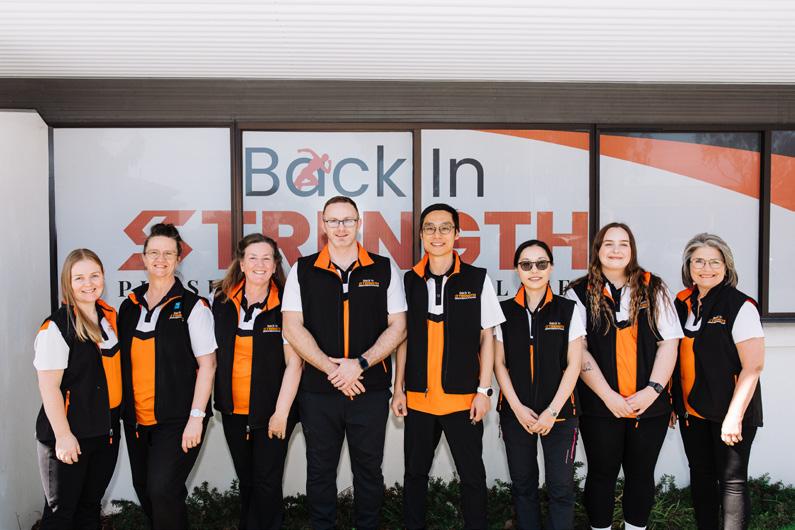
The team at Back In Strength Physiotherapy and Pilates.
balance and lifelong wellbeing
For many Canberrans, staying active and independent is central to enjoying life’s later years, and that’s where Back In Strength Physiotherapy & Pilates has built its reputation.
Founded in 2010 by Anne Waithman, Back In Strength has grown into one of Canberra’s most respected allied health clinics, known not only for its clinical expertise but for its genuine sense of community.
“We’ve always believed physiotherapy is about more than treating pain,” says Anne Waithman, Founder, Director and Physiotherapist. “It’s about helping people stay strong, confident and connected as they move through different stages of life.”
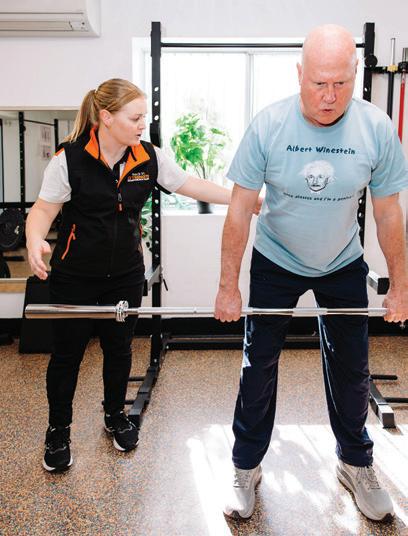
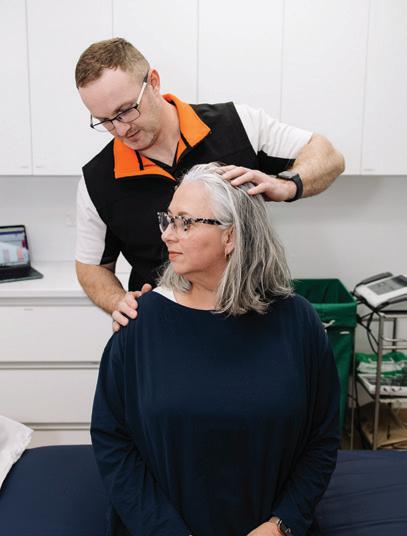
The clinic offers traditional physiotherapy treatments alongside specialised Women’s and Men’s Health services, massage therapy, and tailored exercise programs. For seniors in particular, group classes such as Pilates, Strength & Conditioning, osteoporosis programs and falls prevention classes provide targeted
support in a safe, supervised environment.
“Our falls prevention and osteoporosis programs are designed to give people practical strength and balance strategies they can use every day,” Anne says. “But just as importantly, they create a welcoming space where friendships form.”
That social connection is a defining feature. Many clients stay for coffee after class, building friendships alongside strength and mobility.
With a multidisciplinary team of physiotherapists, exercise physiologists, massage therapists and allied health assistants, Back In Strength Physio continues to support Canberra’s seniors to live well and stay strong, at every age.
Back In Strength Physiotherapy & Pilates 1/14 Hannah Place, Deakin and 1/81 MacGregor Street, Deakin. Call 02 6282 9992 or visit backinstrength.com.au
advertising feature
Supporting people to live well with chronic pain
Living with chronic pain or a long-term condi tion can make everyday life challenging, but the right support can make a meaningful difference, says Arthritis ACT CEO Rebecca Davey.
“At Arthritis ACT, our focus is on helping people manage their condition so they can stay active, independent and connected to their community,” she says.
Arthritis ACT brings together a multidiscipli nary team including physiotherapists, exercise physiologists and occupational therapists, alongside peer workers with lived experience. This approach provides both clinical support and practical understanding.
“Having people who understand what you’re going through can build confidence and help individuals take positive steps towards improv ing their health,” Rebecca says.
The organisation offers a range of ongoing programs for people living with arthritis, chronic pain and fatigue-related conditions. These programs focus on movement, education and long-term management, helping individuals build sustainable routines rather than relying on short-term solutions.
Arthritis ACT also supports people in navigat ing services such as the NDIS, ensuring they can access the care and resources they need.
“Our goal is to make sure people feel supported and equipped to manage their condition,” Rebecca says.
Now stocking the La Vida collection in addition to our wide range and offering natural, comfortable styles to help you feel like yourself again.
Visit our welcoming environment and explore options with people who truly understand.
Opening hours: Tuesday-Friday 10am- 4pm
Dr Maryse takes the time to listen to her patients
Canberra Family Health Centre’s founder, Associate Professor Dr Maryse Badawy, is the principal practitioner at her Deakin clinic, where she manages the clinical responsibilities of a practitioner and oversees the day-today operations of the practice.
“There is no small amount of joy to be had from daily interactions with patients,” she says.
“I’ve had the privilege of rejoicing with my patients whilst sharing their happiness and successes, and crying with them when sharing their sadnesses and crises.”
A Fellow of the Royal Australian College of General Practitioners and of the Hong Kong Academy of Medicine in the Discipline of Family Medicine, Dr Badawy also holds a Master in Family Medicine and a Graduate Diploma in Family Medicine to complement her Bachelor Medicine/ Bachelor Surgery degree.
She is also a member of the Australasian Menopause Society.
Dr Badawy says she is committed to providing a patient-centred approach by taking the time to listen to her patients, understanding their concerns to develop personalised treatment plans with one-hour appointments.
“I believe in being thorough and taking the time to get to know my patients and their needs,” she says.
“Trust is a key foundation and it is a privilege knowing you’re trusted and that patients can come to you.
“At Canberra Family Health Centre, we treat the whole person and cater to their entire needs.”
Canberra Family Health Centre is accepting new patients.
Canberra Family Health Centre Peter Yorke Building, Suite 6, Level 3, 173 Strickland Crescent, Deakin. Call 5133 7112 or visit cfhc.com.au
Dr Maryse Badawy.
The longevity blueprint:
at
age with Goodwin Allied Health
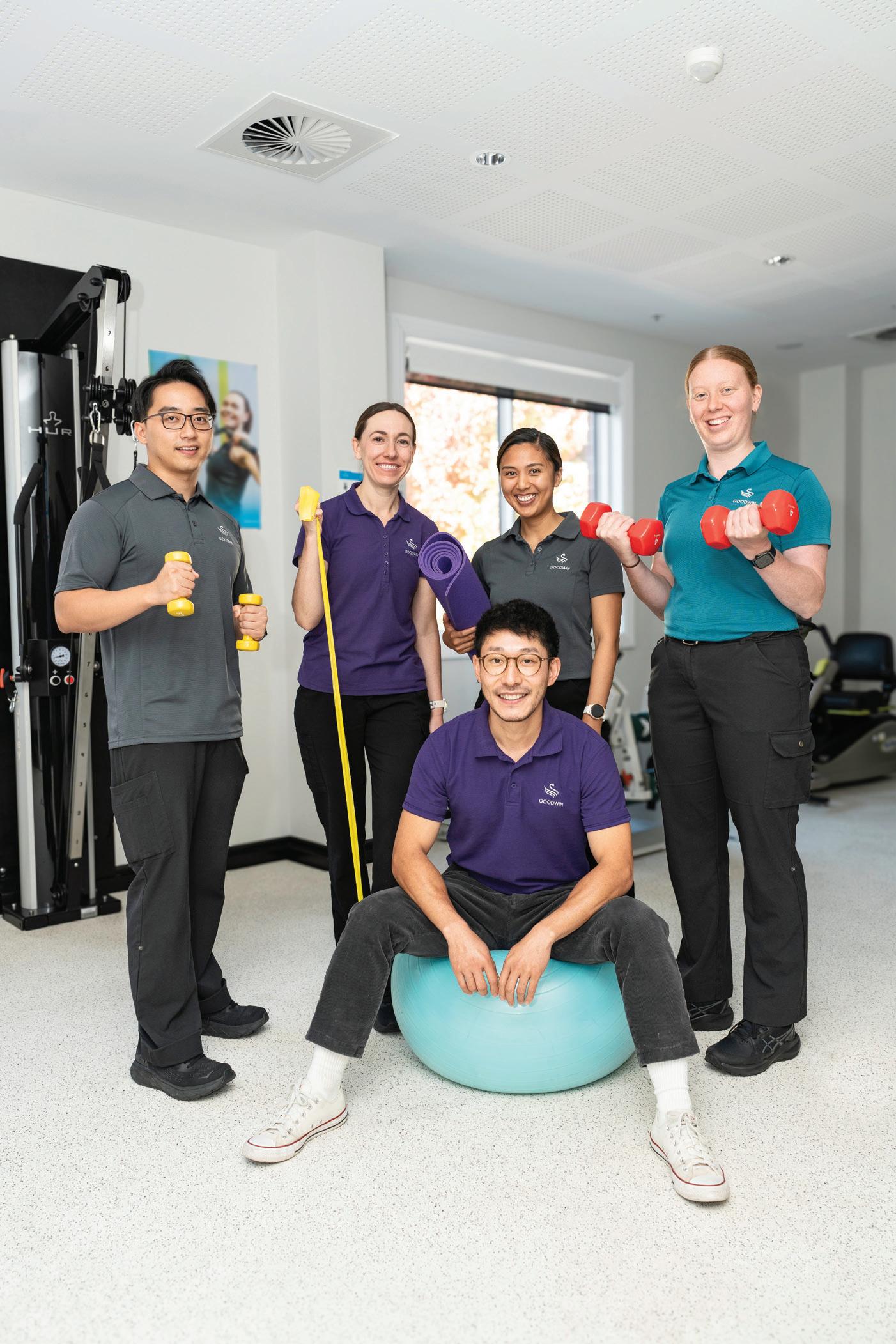
As Canberra’s senior population continues to expand, the demand for specialised support that prioritises independence and quality of life has never been higher. Goodwin Aged Care Services, Canberra’s leading aged care provider, is meeting this need by offering comprehensive allied health services tailored specifically to the unique requirements of older Canberrans. In the modern era, aging is increasingly defined by “longevity” – the pursuit of adding life to years by ensuring our bodies and minds remain resilient through proactive, lifestyleoriented health choices.
The Foundation of Longevity
Remaining fit and healthy as we age is the most effective way to manage chronic conditions and maintain the functional capacity needed for an independent life. Goodwin Allied Health leads the way in this space, providing essential services that address both the physical and cognitive challenges older Australians face. By focusing on personalised care, Goodwin helps seniors live more comfortably in their own homes, which in turn reduces the overall strain on caregivers and the broader healthcare system.
Katelyn Caro, Allied Health Manager at Goodwin, notes that these specialised interventions are vital for managing conditions such as arthritis, Parkinson’s
Disease, or recovery from a stroke. The goal is simple: promote independence and delay the need for long-term residential care through expert, evidence-based support.
State-of-the-Art Wellness Infrastructure
To support these health goals, Goodwin provides world-class facilities designed with the safety and progression of seniors in mind.
Goodwin’s Wellness Centres with state-ofthe-art HUR gym equipment and treatment rooms for a range of wellness services support healthy lifestyles, contributing to the organisation’s overarching commitment to
fostering an active and enriching lifestyle for its residents and clients.
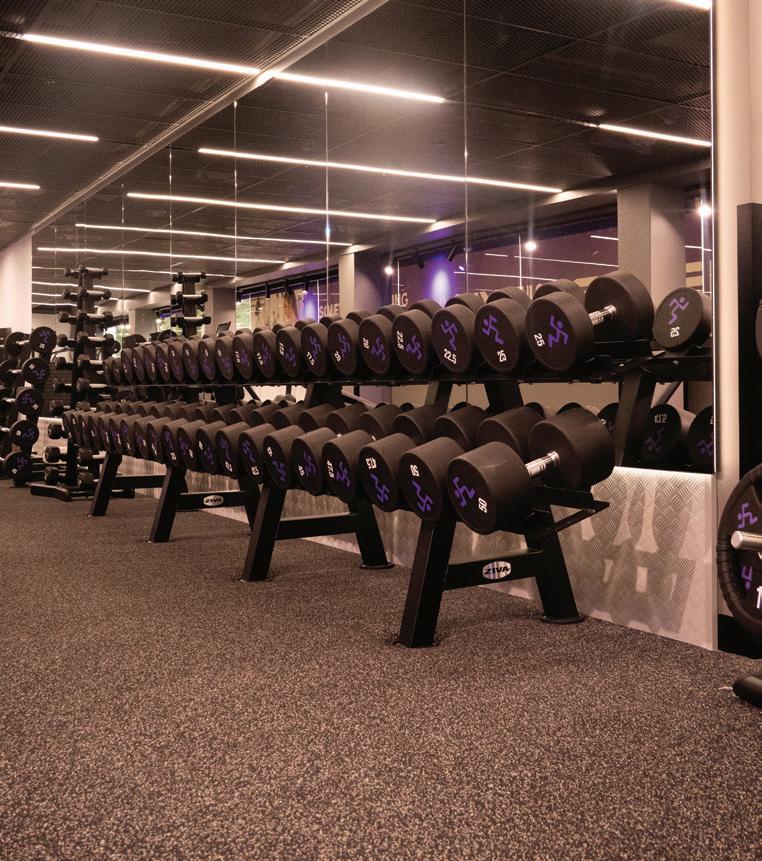
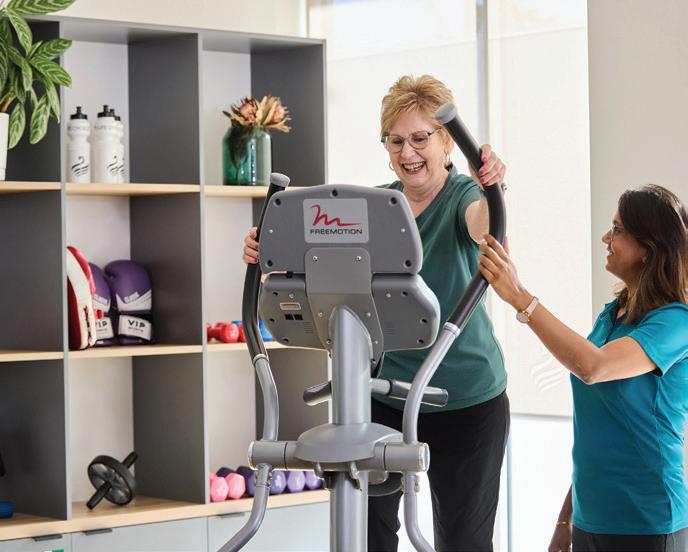
The HUR gym equipment, available at Goodwin’s George Sautelle House in Farrer, the Crace Wellness Centre and the brand-new gym at Goodwin Village Downer, is a cornerstone of this offering. Unlike traditional gym gear, this equipment features a unique isokinetic design that uses air pressure to provide smooth, controlled resistance. This technology safely enhances strength, balance, and coordination while minimising injury risk These gyms are open to all Canberra seniors by appointment, offering a supervised environment for those looking to take their wellness to the next level.
Goodwin Allied Health
A Holistic Suite of Specialised Services
Longevity requires a multifaceted approach, which is why Goodwin Allied Health offers a diverse range of services to care for the “whole person”. Their experienced team works collaboratively to ensure every aspect of a client’s wellbeing is addressed:
• Physiotherapy: Critical for managing pain, improving mobility, and providing specialised rehabilitation after illness or surgery.
• Exercise Physiology: Specialised programs that use safe, evidence-based movement to target specific medical conditions.
• Group Therapy: Programs designed to foster social engagement while simultaneously improving physical health outcomes.
An Established Partnership for Restorative Care
Staying “ahead of the curve” is a core tenet of Goodwin’s philosophy. Since last November, Goodwin’s partnership with Guide Healthcare has provided goaloriented restorative care aligned with new reforms. Available in-home or clinic-based, this collaboration combines expertise and technology to empower independence, proving it is never too late to prioritise longevity and thrive at every age.
The Goodwin Allied Health team helping older Canberrans to stay active and healthy.
Health, wellness & fitness
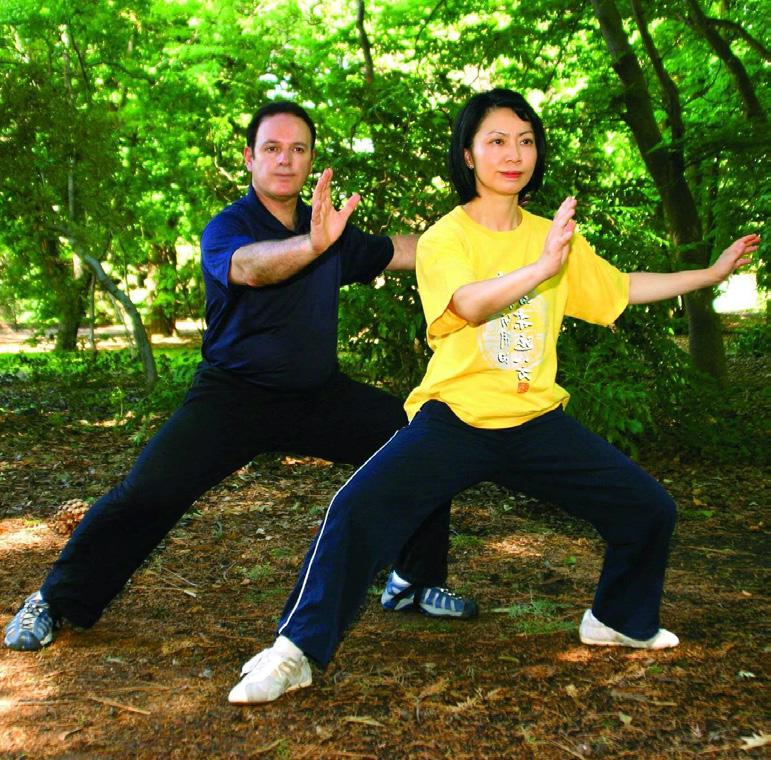
Wu Dao Gong: developing fitness, power, and inner strength
In China, martial arts have long extended beyond physical training into a holistic approach to mind, body, and spirit. Traditional systems combine movement, philosophy, Chinese medicine, meditation, and strategic principles to support personal development on many levels.
For many who begin training, the change is not only physical. George, one of the participants, shared that what stood out for him most was not the strength and conditioning side of it, but the internal shift over time – feeling calmer under pressure and more confident in daily life. Situa tions that once felt challenging gradually became easier to manage, through steady, consistent training that builds change without force or strain
tension. Joints and muscles loosen and gradually regain strength, while internally, the organs are gently stimulated.
Equally important is its effect on the nervous
system. At a time when stress is constant, Tai Chi offers
well-being through a proven approach that supports a
Tai Chi Academy (since 1982) Call 02 6296 1357 or visit taichiacademy.com.au
At its core, Wu Dao Gong supports this kind of development. Wu refers to the inspiration gained through training, moving from limitation toward strength and confidence. Dao reflects guiding principles that encourage a more relaxed, flexible, and balanced way of moving and thinking. Gong refers to the skill developed through sincere, steady training over time.
Together, Wu Dao Gong develops strength, coordination, power, and practical self-defence skills, while also supporting greater inner stability and clarity.
Try an obligation-free introductory lesson and see how it feels for yourself. No booking is required.
Canberra Kung Fu Academy Call 02 6296 1357 or visit canberrakungfuacademy.com.au www.youtube.com/@canberrakungfuacademy
• Experience stress relief
• Feel relaxed & calm
• Sleep better & deeper
• Move more freely & comfortably
• Improve balance & posture
• Promote healthy circulation
• Recharge with more energy
• Enhance mental clarity
•
•
•
•
& friendly learning environment
From NOW up to 2nd July
Online Courses are also Available. Start Anytime, Anywhere!
Forrest: Tues 5:30pm (to 7pm)
Wesley Centre Gym, behind Rydges Hotel, corner National Circt & Fitzroy St
Canberra Kung Fu Academy Chief Instructor Brett Wagland.
Strength, style and self-expression at
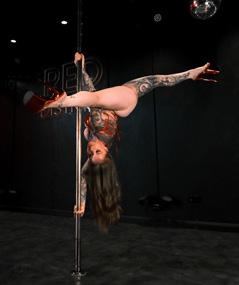
In an industrial pocket of Fyshwick, a new studio is quietly reshaping perceptions of pole dance in Canberra, not by toning it down, but by bringing it back to its roots with confidence, respect and purpose.
Red District, founded by industry professional Amanda, known simply as “Red”, positions itself as a space where movement meets empowerment through the art of striptease. It is, she says, about far more than just tricks or dance.
“People often walk in thinking it’s just about pole,” Red explains, “but what they discover is confidence, presence, and a side of themselves they didn’t expect.”
As Canberra’s first pole dance studio owned and operated by someone with deep industry experience, Red District blends technical training with striptease, stage presence and creative expression. Classes range from beginner sessions like “Pole Virgin” through to advanced spin and static work, alongside strength and conditioning, chair routines and weekly flow classes designed to build fluidity, confidence and command on stage.
For newcomers, the entry point is deliberately accessible.
“You don’t need strength or experience to start,” Red says.
“We build that together. It’s about meeting people where they are and guiding them into their confidence.”
That growth is both physical and personal. The studio’s approach places equal emphasis on technique and self-expression, encouraging students to explore sensual movement in a supportive, judgement-free environment.
“Strong is sexy,” Red says. “But strength isn’t just physical, it’s how you hold yourself, how you walk into a room, how you own your space.”
The class structure reflects that philosophy. Technical progression is complemented by creative sessions such as “Floor Whore”, a floorwork class rooted in striptease, and a series of signature flow classes, each shaped by the style of its instructor.
From “Slow Burn” to “Bad Kitty”, the names reflect individuality, attitude and expression.
“It’s important that every instructor brings their own voice,” Red says. “That’s how students connect to the style and find what feels natural to them.”
strip club culture, its focus remains on education, empowerment and authentic expression.
Workshops with visiting national and international strippers and performers further broaden the offering, exposing students to a wide range of styles, skills and lived industry experience.
“We’re rooted in respect for where this art comes from,” Red says, “and that means honouring the strippers who built it, while creating a space that feels inclusive, empowering and real.”
Inclusivity is central to the Red District ethos. The studio welcomes participants from all backgrounds, whether they are looking to build confidence, explore their sensuality, or try something outside the traditional gym space.
“I wanted to create a space where people feel safe to explore this side of themselves without judgement,” Red says. “That kind of freedom is powerful.”
It’s a sentiment echoed by the growing community forming around the studio, a mix of first timers, returning dancers, industry professionals and sex workers, all finding connection through movement and shared respect for the craft.
“What we’re building here is more than classes,” Red says. “It’s a community that uplifts each other and celebrates individuality.”
That community focus extends to the studio’s teaching philosophy, which balances discipline with enjoyment. Even the more technical classes maintain a sense of playfulness and self-expression.
“Learning should feel good,” Red says. “That’s when people really step into it and that’s where the magic happens.”
In a city known for its strong arts and fitness culture, Red District offers something distinct: a space where striptease, movement and confidence come together, and where people are encouraged to take up space unapologetically.
“At the end of the day, it’s about how people feel when they leave,” Red says. “If they walk out feeling confident, powerful, and a little more themselves, then we’ve done what we came to do.”
Classes
While the studio celebrates the origins of pole in
For those curious to try, more information can be found at reddistrict.com.au or via the studio’s social channels where the message is simple: step in, own it, and discover a side of yourself you’ve been holding back.
Pole Virgin – Beginner intro, no experience needed. Beginner Baddies – Build spin foundations and confidence.
Intermediate Spin – Develop control, combos and flow.
Advanced Spin – Tricks, transitions and power. Beginner Sexy Static – Intro to static flow and control.
Strip Chair – Chair dance, striptease and stage presence.
Strength & Conditioning – Build strength for pole and movement.
Money Moves – Showgirl-inspired routines, tricks of the trade.
Red District founder Amanda.
Health, wellness & fitness
advice, busy schedules, and the challenge of staying consistent.
More Canberrans are realising that lasting results don’t come from quick fixes, but from a co-ordinated, personalised approach to wellbeing.
At Woden Wellness Centre, we bring together a team of health professionals working collaboratively to support each client’s goals.
We offer support across injury recovery and spinal and muscular health through chiropractic care and massage therapy, nutritional guidance and supplementation through naturopathy, and mental wellbeing support through counselling and kinesiology. You can choose what suits your needs, and we are always here to guide you.
For example, someone returning to exercise after injury may benefit from both chiropractic care and massage therapy, while nutritional support can aid recovery.
overlooked but essential for long-term success.
Importantly, our team meets you where you are. You don’t need to be an athlete or already “fit” to begin.
Whether you’re starting from scratch, returning after a break, or looking to optimise your routine, the right support makes the journey more achievable and sustainable. It’s never too late to improve your health and wellbeing.
Health and fitness isn’t just about the gym It’s about how you move, think, eat, recover, and live. With the right support, that journey becomes more effective and empowering.
And that’s a goal worth investing in.
Woden Wellness Centre Unit 2 Gadal Chambers, 48 Corinna Street, Woden. Call 02 6281 5494 or visit wodenwellness.com.au
Carers ACT supporting health and wellbeing through everyday movement
Staying active plays an important role in maintaining physical and mental wellbeing at every stage of life, especially for carers who balance the needs of others alongside their own.
At Carers ACT, health and wellbeing programs are guided by the 5 Ways to Wellbeing framework, which includes Be Active as a key pillar. Being active doesn’t need to be intense or expensive - small, consistent movement can improve mood, support brain health, build strength and help prevent or delay a range of health conditions.
Carers ACT offers a range of accessible group activities designed to support carers to stay active in ways that feel achievable and enjoyable. Regular Tai Chi and yoga sessions provide gentle movement and relaxation, while walking groups offer an opportunity to get outdoors, build routine and connect with others who understand the caring role.
For carers looking to build healthier habits, nutrition sessions focus on practical, sustainable approaches to eat ing well. These sessions explore simple behaviour changes, easy food swaps and realistic goal setting, helping carers feel more confident in their choices.
Carers ACT has partnered with OzHarvest to deliver the NEST (Nutrition Education Skills Training) program - a sixweek course combining cooking, nutrition education and shared meals to support lasting changes for better health. These programs recognise that supporting your own health is not separate from caring, it is an essential part of it.
If you’re a carer and looking for ways to support your own health and wellbeing, we encourage you to connect with Carers ACT.
Carers ACT
Call 02 6296 9900 or email carers@carersact.org.au
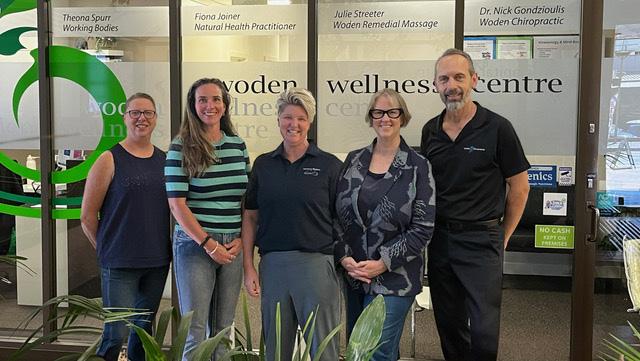
The Woden Wellness Centre team, from left, Brit, Jodie, Thee, Fiona and Nick.
MEET OUR PAIN MANAGEMENT EXPERTS
Holly Hazelwood – Exercise Physiologist
Holly is a former sports journalist who believed so strongly in the power of exercise to heal and nurture that she undertook her 4 year degree in Exercise Physiology. Holly is be able to work with people directly to support them through their pain journey and regain independence and a joy for living again. Holly provides one on one and group exercise classes both on land and at our hydrotherapy centres to support people to gain freedom from chronic pain.
Sophie Bullock – Exercise Physiologist
Sophie has post graduate qualifications in hydrotherapy, and as a non-sports centred Exercise Physiologist, helps clients who struggle with engaging in exercise due to a lack of sports participation. Sophie’s goal is to improve clients health via our hydrotherapy program, gym instruction and in-home visits. Sophie also is known for her passion for working with children.
Nick van Diemen – Physiotherapist
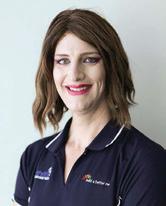
Nick (they/them, he/him) has returned to Canberra after completing a Master’s in Physiotherapy at the University of Queensland. Their passion comes from a love of science and helping people. With eight years in disability support, Nick brings broad experience and enjoys working with clients across a wide range of needs.
Blake Dean – Exercise Physiologist
Blake has expertise in improving clients mobility and decreasing their pain through appropriate exercise. Blake delivers our ‘My Exercise’ program, targeting the relief of lower back and sciatic pain, shoulder and upper body concerns as well as leg, hip and ankle interventions – for those who do not qualify for physiotherapy-led GLAD programs. Blake provides individual & group exercise for younger people with a disability. Blake treats clients in-clinic or via our hydrotherapy program as well as attending your gym with you.
Sarah Solano – Exercise Physiologist
Sarah believes that exercise is the best medicine. She is an Accredited Exercise Physiologist with her degree in exercise physiology and rehabilitation. Previously Sarah was a swim teacher, personal trainer and an allied health assistant in the hydrotherapy field.
Natasha Elword – Exercise Scientist
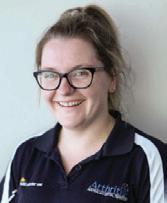
Tash discovered her passion for exercise after completing her Certificate IV in Personal Training in 2015, later earning a Sport and Exercise Science degree from the University of Canberra. She joined Arthritis ACT in 2019 and now supports group classes, exercise programs and administration. Outside work, she enjoys family time, running, hiking and cooking.
• GLA:D® Program for hip and knee osteoarthritis.
• Education and supervised group sessions to build strength and confidence.
• Pain management strategies to reduce medication use Tailored support including preparation for or avoiding joint replacement.
Health, wellness & fitness
Menopause is a whole-body experience – it’s time we treated it that way
For most women, perimenopause and menopause arrive with far less information than they deserve. The conversation tends to start and stop at hot flushes and mood swings, but the reality is much broader than that. Declining oestrogen affects nearly every system in the body. Your heart health changes. Your bone density decreases. Your metabolism shifts. Brain fog is real. So is disrupted sleep, changes to gut health, pelvic floor function, and muscle composition. These aren’t separate, unrelated problems, they are connected and manageable.
That’s the thinking behind The Menopause Project. As an accredited exercise physiologist with a spe cialist focus on women’s health, I created this program because I kept seeing the same thing; women who were capable, motivated, and ready to do something, but who simply didn’t have the information they needed to take action.
The Menopause Project is a 10-week face-to-face program for women aged approximately 45–55 navigating perimenopause and menopause. Each week covers a different health topic in depth, from heart and bone health to brain fog, gut health, sleep, and pelvic floor, we are combining clinical education with honest group discussion with exercise specifically designed for your changing body.
This isn’t about quick fixes. It’s about understanding what is happening, building genuine strength, and setting yourself up to age well.
We’re taking a small group of eight women for our first intake.
CLEAR EP – The Menopause Project
Call 02 6254 5909 or visit clearep.com.au/the-menopause-project
Winnunga Nimmityjah Aboriginal Health and Community Services is a community-controlled health service
in Narrabundah, providing holistic, culturally safe care to Aboriginal and Torres Strait Islander people across the ACT and surrounding regions.
WINNUNGA OFFERS A WIDE RANGE OF SERVICES, INCLUDING:
Health and Medical Care
• GP and specialist clinics
• Aboriginal Health Workers
• Chronic disease support, pathology, immunisations, dental, optometry, and more
Pregnancy, Parenting and Family Support
• AFPP: Free support for young, first-time Aboriginal mums from pregnancy to bub’s second birthday
• Healthy Pregnancy Group & Childbirth Classes
• Mums and Bubs Clinic
Quit Smoking Support
• Free nicotine replacement therapy, personalised quit plans, and culturally safe support through the Tackling Indigenous Smoking program.
Social and Emotional Wellbeing
• Counselling and mental health support
• Drug and alcohol programs
• NDIS, court and justice support
Community and Justice Programs
• Men’s and women’s groups
• Yarning circles, nutrition and healing programs
• Support for people in custody and post-release
Work health & safety
Creating an educational change in workplace safety
Specialising in training and industry consultation, Creative Safety Initiatives (CSI general manager), Brian Vernon says the organisation aims to reduce the number and severity of accidents in the workplace.
“CSI is an ACT-based training provider committed to a continuing focus on improving safety standards in the building, construction, demolition, mining industry as well as other sectors.
We offer nationally recognised accredited training courses ACTGovernment approved courses, and non-accredited industry training. We also offer WHS products and quantitative face-fit testing services. With courses ranging from asbestos and silica exposure awareness, workplace impairment, safe and respectful workplaces, white card, bullying and harassment to heat awareness and HSR training.
Creative Safety Initiatives represents a group of dedicated people committed to creating safe work environments, safe communities for workers & through education, they aim to encourage harm reduction and attitudinal change in safety in the workplace”, Brian says.
Creative Safety Initiatives Unit 7/10, 8 Cape Street, Dickson. Call 02 6230 1320 or visit csisafety.com.au
workwear industry.
“It’s extremely important that we provide the right equipment and the best safety products to our clients,” says Pat.
“We want to get it right the first time so that we build long-term relationships with our clients.”
Providing clothing and safety items for a wide variety of industries, Pat says they can help labourers, chefs, blue and white-collar workers all the way to government departments, such as Defence, and hospitals.
Your partner in safety, compliance & innovation
At Creative Safety Initiatives, we don’t just provide safety solutionswe build lasting partnerships based on trust, expertise, & results. With decades of industry experience, we deliver customised safety systems & compliance services that protect your people, your business, & your peace of mind. Discover how our commitment to excellence is reshaping workplace safety acrosås Australia.
NON-ACCREDITED TRAINING COURSES
• Bullying, harassment & racial vilification training
• Chemical awareness training
• Chemical suit training
• Domestic & family violence awareness training
• Electrical safety awareness training
• Environmental awareness training
• Hazardous manual tasks training
• Healthy eating & nutrition awareness training
• Heat awareness training
• Height safety awareness refresher training
• Ladder safety awareness training
• NSW asbestos & silica awareness training
• SA asbestos & silica awareness training
• WA asbestos & silica awareness training
• Onsite fire & emergency procedure awareness training
• Personal protective equipment (PPE) awareness training
• Preliminary impairment assessor training
• Safe & respectful workplaces workshop
• Safe talk suicide prevention awareness training
• Safe use of hand & power tools training
• Sun smart training
• WHS committee member training
• WHS hazard identification training
• WHS managers & supervisors training
• Workplace mental health awareness training
delivery service, Pat says they also provide a full embroidery and screen printing service.
“We are competitively priced and are prepared to negotiate on bulk orders,” he says.
“These are just some factors on why we believe Seears Workwear has become a household name.”
• ACT Health & Safety Representative refresher training (1 day)
• ACT Health & Safety Representative training (5 days)
PRODUCTS & SERVICES
• Quantitative face fit testing, masks & filters
• Dust particle monitors & accessories
To enquire or book training, please contact our friendly staff by: phone: 02 62301320 email: info@csisafety.com.au or visit www.csisafety.com.au
Creative Safety Initiatives general manager Brian Vernon.
Seears Workwear owners Pat Seears, right, with son Shane.
A nationally recognised White Card course is now avail able 100% online for residents across the Australian Capital Territory.
Anyone planning to work on a construction site in the ACT is legally required to hold a White Card – and getting certified has never been more straightforward.
Under WorkSafe ACT regulations, the White Card (formally known as General Construction Induction Training, unit code CPCWHS1001) is mandatory for all workers who enter or operate on a construction site.
This includes tradespeople, apprentices, contractors, labourers, supervisors, and even site visitors. It is also required when applying for an owner-builder permit through your local council.
White Card Webinars, in partnership with registered training organisation The Careers Academy (RTO 46244), now offers a fully online White Card course for ACT residents – no classroom, no travel, and no upfront payment required.
The process takes just three steps: complete a selfpaced online assessment, attend a short 30-minute Zoom session with an accredited trainer to verify your ID, and receive your Statement of Attainment for CPCWHS1001 the same day. That certificate can then be taken or uploaded to any Access Canberra service centre to obtain your official WorkSafe ACT White Card.
The course is available to residents across Canberra, Belconnen, Tuggeranong, Gungahlin, Woden Valley, and Weston Creek – anywhere in the territory with a reliable internet connection.
Contact us for more information.
White Card Webinars
Call 1300 335 011 or visit
whitecardwebinars.com.au/white-card-act
Nerines light up autumn garden
By Jackie WARBURTON
These bulbs
gap in the winter garden.
When planting, keep the neck of the bulb proud of the soil and avoid wet feet. If flowering declines, lift and divide clumps after blooming, then replant and feed with a goodquality, all-purpose fertiliser.
Other autumn-flowering bulbs worth growing include colchicums, haemanthus and belladonna lilies.
All prefer good drainage and regular feeding while in active growth.
Plant autumn bulbs in full sun; they also perform well in pots or small garden spaces. Bulbs that flower in spring can be planted now.
Among spring bulbs for our climate, daffodils, tulips and fragrant hyacinths remain the most popular.
Daffodils are more complex than they appear, with 13 divisions based on shape and form, as well as a wide range of colours. For more detail, contact the Daffodil Association of NSW/ACT Inc.
Tulips and hyacinths are the last spring bulbs to plant. Tulips should go deep into the soil, pointy end up, where they enjoy cooler conditions. Hyacinths can be planted the same way or grown indoors in an hourglass-shaped vase with water.
In flower, they fill a room with a rich honey scent. Once flowering finishes, plant the bulbs out in the garden for the following season.
FOR damp areas that are slow to dry, consider pitcher plants. Sarracenias, also known as carnivorous trumpet pitchers, are easier to grow than you might expect.
They may be evergreen or herbaceous, with rhizomes that increase over time. Provide some shelter from frost and they will reward you with unusual flowers in spring.
They also grow well in shallow pots, either outdoors or on indoor windowsills. Use a mix of peat and sharp, washed sand. Avoid fertiliser, and water with rainwater. Keep them wet rather than just moist. They trap flies and insects, which provide all the nutrients they need. Their leaves, known as phyllodes, lure in their prey.
Native species can be seen while bushwalking at this time of year; sightings can be added to naturemapr.org.
Another indoor option is Pinguicula emarginata x weser, a hardy, easy plant with light green
leaves and delicate pink to purple flowers. Its sticky foliage traps fungus gnats and whitefly, making it useful near African violets or other indoor plants.
FINALLY, clear fallen autumn leaves from hedges and lawns to prevent rot. Spread them thinly over garden beds or add them to compost. Once broken down, compost can be used around plants or sifted for potting mix. Keep it moist to prevent it drying out and becoming hydrophobic.
jackwar@home.netspeed.com.au
Jottings…
• Hard prune winter iris for winter flowering display.
• Remove all fallen fruit from the ground to keep fruit flies at bay.
• Fertilise camellias that are coming into flower.
• Plant broad beans every few weeks to extend yield.
Nerines… they grow in the cooler months of the year and can fill a space in the winter garden.
Photos: Jackie Warburton
Carnivorous pitcher plants… with a little shelter from the winter frost, produce unusual flowers in the spring.
ARTS & ENTERTAINMENT
‘Cancel’ threat for seductive, immoral characters
By Helen MUSA
“Sexy-disturbing” is how director Lainie Hart describes Les Liaisons Dangereuses, Christopher Hampton’s adaptation of Pierre Choderlos de Laclos’ 1782 novel, coming up at Canberra Rep Theatre.
Her cast spans the generations, with veteran Ros Engeldow returning to the Rep stage as Madame de Rosemonde, the elderly, wise and kind-hearted aunt of the Vicomte de Valmont, “probably the wisest character in the play,” as Hart tells me when we catch up.
The production stars husband-and-wife duo Jordan Best as the Marquise de Merteuil and Jim Adamik as the Vicomte de Valmont, the manipulative former lovers whose immoral machinations drive the drama.
“They’re apex predators, highly successful, kindred spirits,” Hart says. “Two peas in a pod and deeply attracted to one another.”
Casting a married couple, she says, is “a great privilege because they are so comfortable with one another, and there’s a lot we can do with that.”
That sense of trust is particularly important in staging what is widely regarded as an amoral play. Hart has engaged intimacy co-ordinator Jill Young to help create a
Map reveals bard’s house
By JILL LAWLESS in London.
A newly discovered 17th-century map sheds light on playwright William Shakespeare’s life in London, where he made his name and worked.
Few traces of him remain in the British capital, but the map pinpoints for the first time the exact location of the only home Shakespeare bought in the city, and where he may have worked on his final plays.
Shakespeare scholar Prof Lucy Munro, who found the document, said it supplied “extra bits of the jigsaw puzzle” of Shakespeare’s life. And as with so many discoveries, it was partly due to luck.
“I came across it in the London Archives when I was looking for other things,” Munro said.
Historians have long known Shakespeare bought property in 1613 near the Blackfriars Theatre, but the exact location was a mystery. A plaque on a 19th-century building records only that the playwright had lodgings “near this site.”
A plan of the Blackfriars precinct found by Munro shows in detail Shakespeare’s house, a substantial L-shaped dwelling carved from a former medieval monastery, including its gatehouse.
The precinct included the Blackfriars playhouse, which Shakespeare part-owned.
Shakespeare used the profits of his plays to build a fine family house, now demolished, in Stratford Upon Avon, about 160 kilometres northwest of London. He died there in 1616 at the age of 52. -AAP
progress and champagne-fuelled excess.
However, as the narrative unfolds, both the seasons and the moral climate darken, culminating on New Year’s Eve, when the two arch-conspirators become enemies and their world begins to collapse.
She sees clear contemporary parallels as this house of cards falls and its narcissistic, blinkered characters face a bleak future.
Still, Hart is quick to emphasise theatre’s role in presenting difficult stories rather than prescribing moral lessons, acknowledging that some scenes may be overtly titillating for some audiences.
“As entertainment, it moves and amuses, yet to be socially responsible we are not making light of the immorality,” she says.
And while Jim Adamik is best known for comic roles, Hart notes that Valmont demands both comic and dramatic range, as well as a capacity for menace. Audiences may recall his performance as Salieri in Amadeus at Rep a few years ago.
“Jim is working so hard – he’s in 17 of the 18 scenes – so it’s a real challenge for him to show both the dark and the light,” she says.
tion, when such figures would ultimately face
Hart believes these signals are embedded
Hart has assembled a line-up of well-known Rep identities in her creative team, with Russell Brown co-ordinating the set designed by young artist Kayla Ciceran, costumes by Helen Drum, lighting by Nathan Sciberras and sound design by Paris Sharkie, who has also composed music to suggest the movement from Parisian salon to country estate.
Les Liaisons Dangereuses, Canberra Rep Theatre, April 23-May 9.
Jordan Best as Marquise de Merteuil and Jim Adamik as the Vicomte de Valmont in Les Liaisons Dangereuses.
MUSIC
One formidable woman’s war set around song
By Helen Musa
With Anzac Day approaching, Polifemy is embarking on something it has never done before, blending slideshow, spoken word and music into its usual performance format.
Polifemy is a small all-women vocal ensemble (its name a pun on “polyphony”), was founded by Joan Milner in 2008 and has been directed for the past 12 years by Robyn Mellor.
The group typically performs a wide range of repertoire, from medieval and Renaissance madrigals and motets to contemporary classical works.
This time, inspired by letters, reports, photographs and memorabilia collected by her grandmother, Sister Ada Priscilla Smith, Mellor has created a multimedia presentation.
Having initially scheduled the concert for April 26, she realised the proximity to Anzac Day and has picked up on the obvious connection.
Founding member of Polifemy and director of Wesley Music Centre Liz McKenzie will read from Smith’s letters and reports, while the ensemble performs a cappella against a backdrop of photographic from her wartime experience, tracing her journey from Warwick in Queensland to Egypt, France, England and returning home to Australia in the early 1920s.
When I catch up with Mellor, she describes her grandmother as “a formidable old lady.”
You can say that again. For around five years, Smith worked as a nurse behind the lines in Gallipoli and France. At one point, stationed in Boulogne in northeastern France, she was close enough to hear bombing in London, 150 kilometres away across the English Channel.
Her letters recount nursing on a beach where cabins were used to house infectious patients, later working in Boulogne and then in a clearing station where wounded soldiers
were brought. Conditions were harsh, she lived in tents, worked in rough wooden buildings and endured freezing temperatures, so cold that eggs froze solid.
“I thought it would be interesting to hear the story of one woman, what it was like,” Mellor says, noting some unexpected details.
“She writes that she was actually well resourced and had all the nursing equipment she needed.
“We usually just do a concert, but I try to build a story through the music, and in this
Inspired by Machiavelli whose name sounds prophetically like his own, Raef McAvee forges and follows a set of Rules for Life that elevate him from suburban obscurity to international recognition. His life is a text book for those who crave fame but lack the talent or persistence to achieve it.
the daughter of Polifemy member Caroline Downer.
The musical program features motets by Cristóbal de Morales, Giovanni Pierluigi da Palestrina, Orlande de Lassus, Tomás Luis de Victoria and others.
The highlight will be the ensemble’s a cappella performance of Missa L’homme armé by Francisco Guerrero, based on a
shall arm himself with a coat of iron mail. The armed man should be feared.”
Written in 1540, the melody became widely used during the Renaissance as the basis for many masses. It is, Mellor reports, “a wonderful piece of music.”
One Woman’s War: An Anzac concert, Wesley Uniting Church, April 26.
Photo: Peter Hislop
STREAMING
Life’s unfair as Macolm gets back to the middle
Malcolm in the Middle was always a show about trying to carve out one’s own identity.
Frankie Muniz’s beloved teenage misfit trying to survive the chaos of his early 2000s suburban life made the show a cult classic and a noughties television staple.
It’s fitting then, that a new “sequel” to the popular sitcom is now to carve out its own identity in a new era, one of remakes, revivals, and binge-worthy comedy series pumped out on streaming platforms by the day.
Malcolm in the Middle: Life’s Still Unfair (Disney Plus) brings the titular character back for four new episodes that show what life is like for him 20 years later.
Grown up and shockingly normal, Malcolm has succeeded academically, finding his way into a decent career and, with a teenage daughter, is now a long way away from the dysfunctional family viewers know and love.
But with his parents’ 40th anniversary coming up a reunion is in store and so is all the mayhem that comes with it.
Almost all of the cast have returned including Bryan Cranston as Hal, an absurdly funny juxtaposition to his role in Breaking Bad that cemented him as an actor of his generation.
What’s refreshing about this reboot is that it’s condensed the story into just four episodes and decides to leave it at that.
It’s enough time to get fans reacquainted with all their favourites while not dragging things out and cashing in on brand recognition like so many other of its sitcom reboot counterparts.
And with that, Malcolm once again finds a unique and hilarious identity in a totally new era.
THE final season of The Boys is now streaming on Amazon Prime Video.
This superhero satire parodies all the caped crusaders of modern pop culture and society’s relentless obsession with them.
In this universe though the “supes” as they’re affectionately referred to are the bad guys, projecting a thin veneer of heroism while behind the scenes using their powers for sadistic and absurd pleasures.
Not for the faint of heart, The Boys is unapologetically gory, gross and gutsy in its takedown of modern pop culture and politics.
ARTS IN THE CITY
Its schtick is to be “in your face”, some times veering into cringeworthy territory but more often than not landing the punches it wants to.
The fun here is just never knowing what’s going to happen scene-by-scene. After 30 episodes since 2019 there are still many, many twisted surprises to enjoy.
Antony Starr, who plays the egomaniacal Homelander (a hyper-patriotic, evil version of Superman), is still the best thing about it.
He’s become a fascinating and now iconic villain, thanks to the internet transforming many of his funniest scenes into memes that advertise the show on their own far better than a marketing team ever could.
Despite a fantastic first and second season
Burlesque and drag parody
The Shrek-inspired burlesque and drag parody Swamplesque, billing itself as coming from Far Far Away, promises an irreverent night of entertainment steeped in fantasy and satire, Canberra Theatre, April 29.
Georgia Pike-Rowney, curator of the ANU Classics Museum, has been honoured with the Consortium of Humanities Centers and Institutes Award for Leadership in the Public Humanities for helping turn an interna tional repatriation case into a global public education initiative, shifting the common view of repatriation as one of blame and secrecy to that of cultural exchange and transparency.
The Llewellyn Choir presents the East Coast premiere of Lachlan Skipworth’s Mass for Easter Sunday, complemented by works from Latvian composer Ēriks Ešenvalds, including Stars, O Magnum Mysterium and Passion and Resurrection, with sopranos Sonia Anfiloff and Elsa Huber joined by brass octet and timpani, Duntroon Chapel, May 2.
The National Library of Australia reveals the depth of its vast letter collections in the new book Postscript: Life, Love and Loss in Australian Letters, with publisher Lauren Smith and the NLA Publishing team uncovering correspondence spanning from literary notables such as Jane Austen, Judith Wright, Henry Lawson and Mem Fox to contemporary voices including Kate Forsyth, Maggie Mackellar and Robert Skinner.
Canberra musician Matt Dent brings a tribute to Anzac Day with his blokey folk and rock single Beers & Tears on Anzac Day, recorded at Pendragon Studios and released across streaming platforms, honouring fallen soldiers and their loved ones.
Despite artist Rosalie Gascoigne’s deep connection to Canberra, the Canberra Museum and Gallery has yet to hold a major original work
The star of the Shrek-inspired Swampesque… Canberra Theatre, April 29.
by her, and now seeks donations at cmag.com.au to acquire her 1995 piece, Wool Clip, a significant work from her final decade that the gallery believes it is uniquely placed to preserve and study.
The Wesley Lunchtime Concert series will showcase clarinettist Ollie Wong and pianist Hilda Visser Scott in a program featuring Wolfgang Amadeus Mozart’s Clarinet Concerto and Fantasia in D minor, alongside Giampieri’s Carnival of Venice, Wesley Music Centre, April 29.
Spearheading the films A Star is Born and more recently Maestro, Cooper now looks to the story of another struggling talent and their pursuit of greatness.
It’s not music this time though, but comedy. Is This Thing On? follows a stand-up comedian trying to make it big in New York’s
It’s Apple TV Plus that snapped up this star-studded script.
Will Arnett features in the leading role as comedian Alex Novak. Desperate for purpose and on the edge of divorce with his wife Tess (Laura Dern), he finds a new lease on life after being unable to pay to get into a bar
In an attempt to cover the door charge, Alex signs up for an open mic evening, sending him on a new chase for comedy
makes it so addictive during the third and fourth installments.
So far, season five is firing on all cylinders, meaning the creators may have just saved their best for last.
Here’s hoping this superhero hit can soar its way towards the explosive finale it needs to cement itself as one of the greats.
IN recent years Bradley Cooper has shown off not just his acting talent but also his
Things get awkward though when Tess coincidentally rocks up to the same club hoping to enjoy a laugh with a new date.
Despite its subject matter, this one does feel more drama than comedy at times, but some solid writing here keeps the jokes land ing and makes the price of admission worth it.
AN EXTRAORDINARY JOURNEY FROM SOUTH SUDAN TO THE AUSTRALIAN STAGE!
Frankie Muniz reprises his title role in Malcolm in the Middle: Life’s Still Unfair… back for four new episodes that show what life is like 20 years later.
Will Arnett features in the leading role as comedian Alex Novakin in Is This Thing On?
DINING / L’épi, Griffith
New kid on Griffith food front
For a small village-style strip, there are big offerings on the food front at the Griffith shops.
Lotus Indian is in full swing. Gryphons Caffe and Bar has extensive indoor and outdoor dining. Recess Coffee is pumping. Sweet Little Café welcomes customers with light meals, Rubicon continues its tradition of fine dining, and Sonamu Korean Restaurant covers those craving Asian flavours.
The newest kid on the block is L’épi. Its owners have taken over Mountain Creek Wholefoods, transforming part of the space into a compact bakery, and delighting fans who worship sweet and savoury bites of goodness. Griffith shops is L’épi’s fourth Canberra location and likely not its last.
I’ve been several times to this artisan French bakery – for takeaway and to enjoy dining on site (comfy tables and chairs outside).
Presentation is key with bakeries, and L’épi has nailed it with a wall of freshly baked organic sourdough baguettes, loaves and giant, soft, chewy baked bretzels (pretzels) with toppings.
with fresh blueberries ($9.50).
Raspberry and strawberry tarts were also on display and – for those who want something tiny – the mini tarts are a fabulous option ($3.80 and six types on my first visit). So, too, are the macarons ($3.50).
twinstitch.upholstery Like
on Facebook Call or email us today! 0422 073 665 61813511 toni@twinstitchupholstery.com.au
A big coffee bar is at the back with baristas using quality coffee beans roasted to perfection by Ona.
Also on display are yummy tarts, pastries, cakes, croissants and éclairs. On the savoury side, quiches, pies, rolls and freshly made sandwiches. Where does one begin?
On my first visit, I enjoyed a pie loaded with tender chunks of chicken and featuring leek ($8.70 and worth every bite). The pastry was light and flaky, and L’épi doesn’t skimp on ingredients. My Moorish pie was packed with flavour.
With dessert items, do not hesitate to dig into a slice of Basque cheesecake, super creamy but not at all super sweet ($8.80) or a fruit tart loaded
WINE / Patricia
On another occasion, I joined a group of friends and shared three specialty desserts, celebrating L’épi’s motto that life is too short to resist fresh French delights.
The apple and yuzu tart is intriguing – lovely and light ($9.60). More decadent but, again, not overly sweet, is the caramel and chocolate tart, a winning combination ($7.70). The mixed berry
The key, for L’épi – in all that it does – is using the finest ingredients, traditional baking techniques and operating with loads of love. When visiting, check out the monthly specials.
The retail side of Mountain Creek Wholefoods remains well stocked. On the bakery side, L’épi sells bags of Jasper coffee, wonderful teas, quality chai, hot chocolate mixes, cookies, jams, crackers and more.
A ‘bloody good drop’ from the matriarch
Brown Brothers has recently released the 2022 Patricia series and kindly sent me three bottles for review, a cabernet sauvignon, a sparkling and a shiraz.
My son and I enjoyed the 2022 Patricia Shiraz at a recent dinner where we celebrated his return from an overseas holiday.
As a treat in these increasingly financially constrained times, I’d bought eye fillet steaks to ensure we had an agreeable food and wine match. I’m not saying I’m hard up, but if money talked, mine would just whisper: “Goodbye”. Plus, with the rate at which my superannuation savings are dropping because of Trump’s Gulf war, my super account and I have something in common: we both avoid looking at each other.
So, an examination of the wine was a good distraction and a welcome way to celebrate the return of the prodigal son.
I asked him why he hadn’t returned the camouflage jacket that I’d lent him and his excuse was that he couldn’t find it.
making family… honoured with the launch of the premium Patricia range.
In 2003, the then winemaker decided to name some of the best wines after his mother, Patricia Brown (1915-2004). Apparently, he was very surprised when she said: “Well, boys, it better be bloody good.”
So, here we were in the warm embrace of the Brown Brothers’ matriarch; the Patricia range of wine in part celebrates the winery’s matriarchal heritage.
And it is, with each bottle inscribed with her signature.
The shiraz, which retails for about $70, could probably have been stored for at least three to five years to reach its peak but it is drinking well now.
It is dark red in colour with a purplish hue,
aromatic with, on first opening, a good clout of blackberry on the nose.
On first taste, it is intense and mouth filling, a good balance of fruit and alcohol and it maintained its length over the course of the hour the bottle was open.
The blurb on the back label promised white pepper and spice. I didn’t get the peppery flavour, but that was most likely because, with the food, the peppery element of the wine didn’t
As anticipated it was a great match with fillet steak cooked medium rare with a red wine sauce that also featured garlic and rosemary, bold flavours that needed a big red.
This wine was aged in oak and where a wine is aged in oak barrels, especially new oak, it can pick up compounds that smell like baking spices, often clove or vanilla. There was a tiny hint of clove in this wine.
In addition, the “white pepper” flavour in wine is very closely linked to the same compound that gives black pepper its aroma: rotundone. This is a chemical found in grape skins and its levels are affected by the length of ripening, with very ripe grapes having a much greater chance of tasting of black pepper. But, as I said, that peppery note was missing.
I asked my son what score he’d give to the wine but he declined to allocate a number, just saying “great wine for steak”. A good decision re the points as a matriarch doesn’t keep score. She is the score.
cheesecake is well executed ($9.50). All desserts transported us to the streets of Paris with every bite.
Chicken and leek pie. Photos: Wendy Johnson A trio of treats.
Richard Calver has written the CityNews column since 2016.
HOROSCOPE PUZZLES
By Joanne Madeline Moore
ARIES (Mar 21 – Apr 20)
Have you been shopping up a storm when you should have been saving or paying off debt? If the answer is YES, then expect a financial hiccup this week as Mercury and the Full Moon highlight money matters and issues involving your personal values and self-esteem. The less you base your core self-worth on money, possessions, status, physical appearance and unrealistic media expectations of what beauty is, the healthier and happier you’ll be.
TAURUS (Apr 21 – May 21)
The Sun and Mercury are visiting your sign, and the Full Moon stimulates your partnership zone. So, this week is all about the delicate dance of relationships: how to balance personal desires with the needs of others; independence with togetherness; solo projects with joint ventures. And with Venus making positive aspects to Pluto, Saturn and Neptune, a combination of passion, patience and compassion will improve partnerships in leaps and bounds.
GEMINI (May 22 – June 21)
Watch what you say this week, Gemini. Hasty comments, garrulous gossip and spilling secrets could land you in hot water with family, friends, colleagues, your peer group – everyone! Instead of thoughtless chatter, concentrate on nutritious food, invigorating exercise and regular relaxation. Yep… a healthy dose of discipline will help the week run more smoothly. Be inspired by birthday great, writer Harper Lee: “It’s not necessary to tell all you know.”
CANCER (June 22 – July 23)
This week, a fabulous work opportunity could come your way as Venus, Neptune and Saturn boost creativity and reward hard work. Then the weekend Full Moon encourages you to express your inner muse, celebrate friendships, set goals and reach for the stars. Your motto for the moment is from actress and birthday great Michelle Pfeiffer (who turns 68 on Wednesday): “The most important thing is to be true to yourself and those you love and to work hard.”
LEO (July 24 – Aug 23)
Calling all Lions - sitting on the sidelines being a scaredy-cat will get you nowhere fast. This week dynamic Mars and ambitious Saturn are transiting through your adventure zone, plus Mercury and the Sun (your patron planet) are revving up your career zone. So, it’s time to be a bold, brave, proactive, creative leader! Then the weekend Full Moon activates your family zone, so expect some full moon shenanigans and domestic dramas at Casa Leo.
VIRGO (Aug 24 – Sept 23)
This week the Sun, Full Moon and Mercury (your ruling planet) all activate your travel, education and adventure zones, which encourages you to explore exciting new horizons. You’ll find the wider your circle of friends and acquaintances, and the more knowledge you acquire, the more influence you will have in the big world outside your door. Being curious and confident are the keys. The weekend is a good time to explore, experiment and enthuse.
LIBRA (Sept 24 – Oct 23)
The buzzword is transformation. Librans possess a natural talent for creating beauty… in the way you speak, sing, write, dance, dress, draw, decorate, cook or just generally create. So that’s what you must do. In a world full of stress and uncertainty, you can divert attention to a more beautiful and magical place. Be inspired by birthday great, comedian Jerry Seinfeld: “When someone does a small task beautifully, their whole environment is affected by it.”
SCORPIO (Oct 24 – Nov 22)
Expect an intense week, leading up to the Full Moon in Scorpio on Saturday. So, partnerships will be unpredictable and family dramas will keep you on your toes. Maybe it’s time to simplify your life, cull some of your relationship commitments or give a fair-weather friend the flick? Look for creative, transformative solutions that suit you and please others. Some strategic compromise may be necessary, and you may have to eat some humble pie!
SAGITTARIUS (Nov 23 – Dec 21)
A romantic, platonic or business relationship looks rather complicated. You think you know the person well, but you need to walk a mile in their shoes before you really know how they are feeling. As writer (and birthday great) Harper Lee observed: “You never really understand a person until you consider things from their point of view.” Uranus and Venus encourage you to approach partnership problems in an innovative and cooperative way.
CAPRICORN (Dec 22 – Jan 20)
This week’s Full Moon shines a bright spotlight on friendships, as you strive to get the ratio right between romantic, platonic and family relationships. Mercury, fiery Mars, Saturn and Neptune are all transiting through your domestic zone, so there may be some foot stamping and angry words before you get the balance right! On the weekend you’re feeling sociable and are keen to catch up with friends, watch a movie, attend a concert or go to a fancy restaurant.
AQUARIUS (Jan 21 – Feb 19)
With powerful Pluto now transiting through your sign, old rules have flown out the window. Change, elimination and transformation are the new norms in your life. So, businesses need to innovate, communities need to be creative, people need to pivot and astute Aquarians need to be very adaptable. So, your motto is from comedian (and birthday great) Jerry Seinfeld: “If life boils down to one thing, it’s movement. To live is to keep moving.”
PISCES (Feb 20 – Mar 20)
The Full Moon shines a bright spotlight on travel, communication and education. So, it’s a good week to plan a holiday, catch up with international friends or complete a study project. And your financial future looks promising, as proactive Mars stimulates your money zone until May 19. So – whether you get a pay rise, take on a second job, cash in some investments, organise a garage sale or sell an important asset - it’s time to make hay while the Sun shines! Copyright Joanne Madeline Moore 2026
1 What might we call one who leaps or springs? (7)
2 To depart in a sudden and secret manner, is to do what? (7)
3 What is a frame used as a support? (7)
4 Which term describes an early settler? (7)
5 Name an Australian pop and folk group. (7)
6 To fulfil desires, is to do what? (7)
11 Which commoner holds the lowest hereditary title of honour? (7)
12 To contain, is to do what? (7)
13 Which coverings are worn over the shoes? (7)
14 Who are responsible for cultivating land? (7)
15 Which fellow rows a boat? (7)
16 What are dinner jackets known as? (7)
CHARTERED ACCOUNTANT
Pain keeps mounting for small businesses
Long service leave originated in Australia in the 1860s. It was originally designed so public servants could travel back to Britain.
It was calculated as five weeks to get there, three weeks holiday and five weeks to get back.
In the 1940s and 1950s it was expanded to the private sector through industrial awards and state legislation. Based on history, it might now be outdated.
The reason I start with this is that from July 1, the portable long service scheme in the ACT is expanding to include workers in hairdressing, accommodation and hospitality.
From the employer’s perspective, this means an extra 1.07 per cent on the gross staff payroll at a time when small business is already seriously hurting.
The portable long service scheme has been in the building construction industry, the community sector and the security industry for some time. It was recently introduced into the contract cleaning industry. Employers will need to register for the scheme and there are penalties for not registering and for paying late.
The Fair Work Commission has also announced changes to junior wages. That is, changes to staff pay rates for those aged between 18 and 21. While staff under 18 will continue to be paid a percentage of the adult rate, those over 18 will be paid the full adult rate in some industries from December 1.
I have written before about payday super, which starts on July 1 and is a big change in the superannuation payment area. From that date, employers will have to pay staff super when paying wages. This will impact cash flow. It means finding an extra 12 per cent every pay period – weekly, fortnightly or monthly – to cover this. Historically, employers only needed to pay superannuation quarterly.
Most payroll programs that I've looked at do have provision for payday super and it's a relatively easy process to start doing it, even from now.
As I look at the above changes and at the local economy, I am fearful of the impact of these changes on our local small businesses.
We are already starting to see surcharges and price increases. There is no indication this will go away soon and the likely outcome, particularly in hospitality where people tend not to stay in the industry long enough to earn long service leave, will be increased prices.
Already I see people on social media complaining about increased prices without necessarily understanding the pressures on small businesses.
I recently saw a plea for delaying payday super. It does not appear this will happen. Perhaps it's time the unions, the employers, the small businesses and the policymakers all sat down together to have a look at the impact of these "small" decisions on the small business sector, which after all, is the largest employer in Australia. I don't want to see any more small businesses driven to the wall in Canberra because of these additional imposts. Life in small business is hard enough.
If you run a small business or you need guidance on the above changes or any other tax-related matter, contact the experts at Gail Freeman & Co Pty Ltd on 02 6295 2844.