Everything you need to know about this year’s flu strain and how to avoid it.
Suddenly the stadium joke started to snowball
MICHAEL MOORE
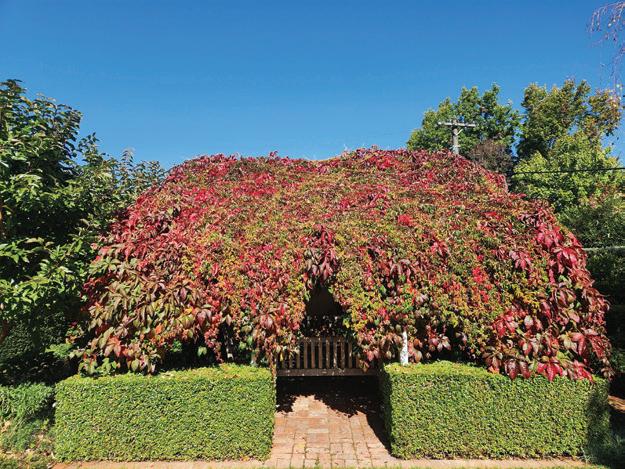
Prepare the garden for garlic, greens and vines
JACKIE WARBURTON
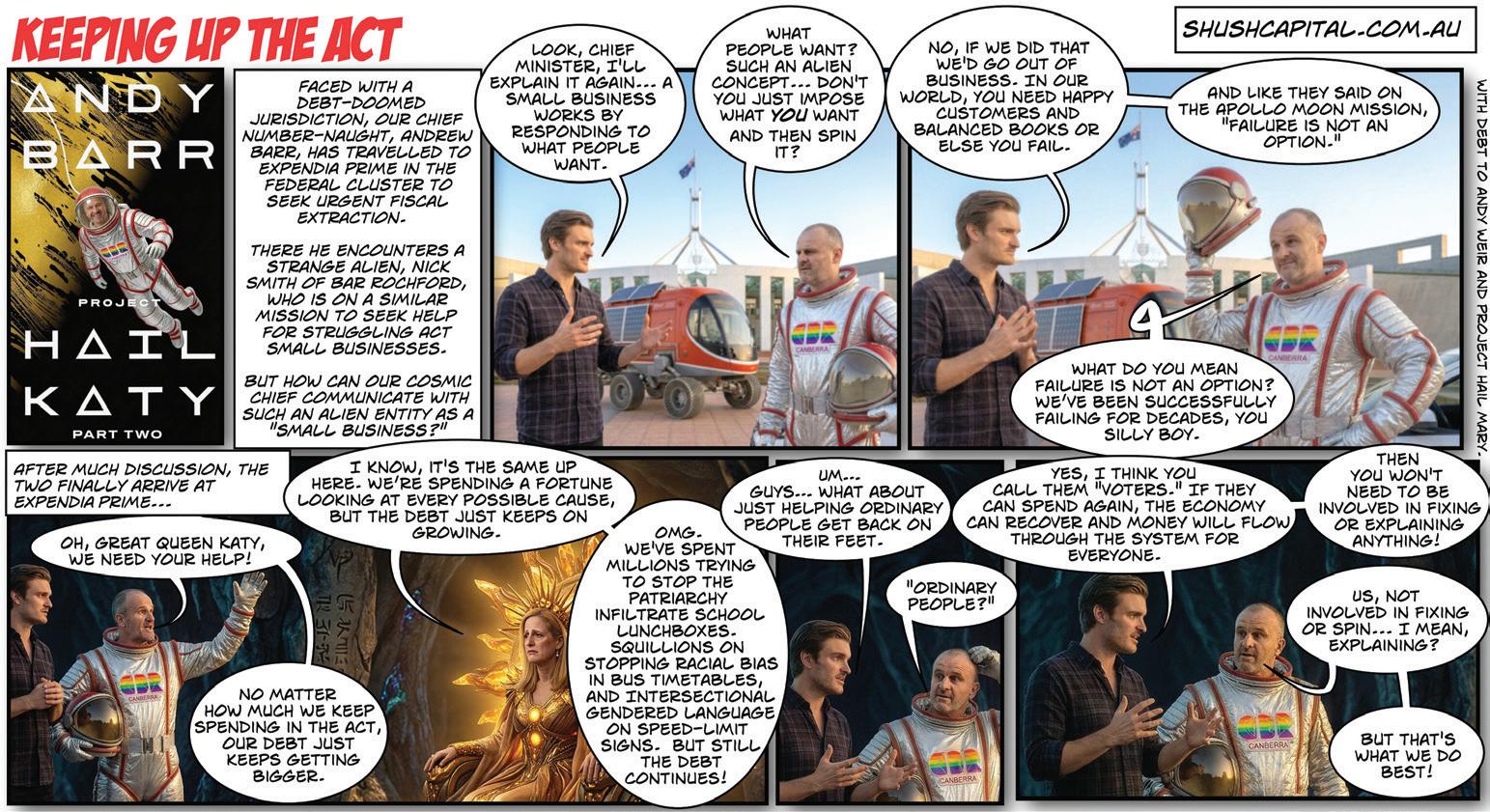
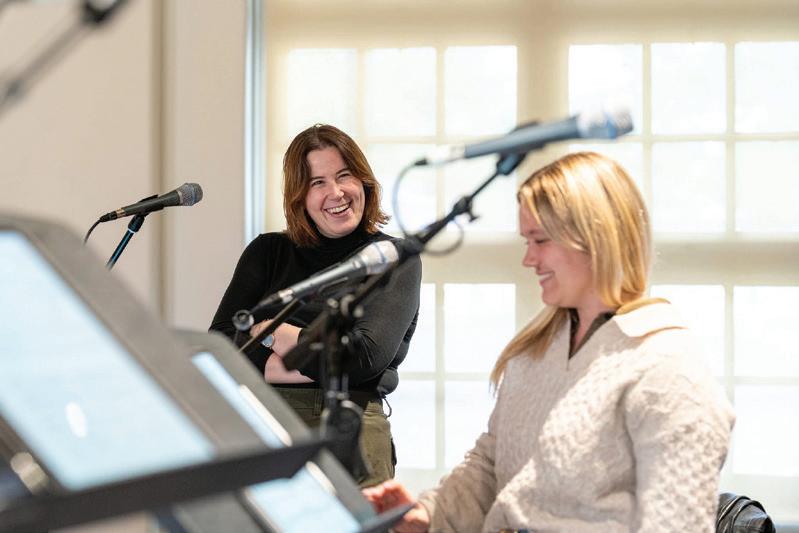
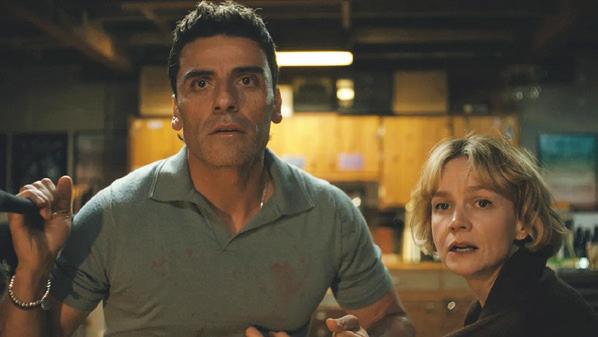
Project Hail Katy finds Andy among the aliens KEEPING UP THE ACT
A FRESH LEGAL VOICE
JSP Legal has launched in Canberra offering commercial, property, construction and
HEALTH / flu vaccination
What’s new with flu, when’s best to get a shot?
When’s the best time to get a flu shot? Infectious diseases experts MERU SHEEL and ALLEN CHENG explain…
We usually have to wait until winter approaches before we see an increase in cases of influenza, or the flu. But we have already seen a lot of flu this year, with 25,000 cases reported from January to March – and that’s only a fraction of actual case numbers.
Most people with the flu recover without treatment. But it can cause serious complications in older people, young children, pregnant women and those with underlying chronic diseases such as asthma or heart disease. Influenza kills around 3500 Australians a year and lands 18,000 in hospital.
Vaccination is the best way to protect against flu and is recommended for everyone over the age of six months.
Flu vaccines are free for certain risk groups. Others can access them (usually for a fee) at pharmacies, GP clinics and local council clinics in some states and territories. Some employers also offer vaccinations for staff.
Influenza has been unpredictable since the covid pandemic, with off-season circulation. There are also concerns protection might lag at the
end of winter. So when is the best time to get vaccinated?
What are the symptoms?
Flu symptoms include a cough, sore throat, fever, body aches and fatigue.
Flu spreads via small respiratory droplets when you talk, cough and sneeze. It may also spread by touching a surface or object where infected droplets have landed, but this is less common.
Flu spreads more in winter months due to increased contact between people and time spent indoors.
What strains are around this year?
Typically, human flu cases are caused by four virus strains, A(H3N2), A(H1N1), B/Victoria and B/ Yamagata.
So far this year in Australia, almost 98 per cent of cases have been influenza A(H3N2) and the remaining have been influenza B/Victoria.
In late 2025, a new variant of the H3N2 strain known as subclade K or “super-K” emerged in the northern hemisphere winter.
Super-K contributed to the unusual increase in flu numbers over summer in Australia. But there is no evidence to suggest it’s more severe than other H3N2 strains.
What does this year’s vaccine protect against?
Each year, the flu vaccine is designed to protect against a mix of different virus strains, depending on what strains are currently circulating.
This year’s flu vaccine contains two new strains for the influenza A(H1N1) pdm09 and A(H3N2) subtype virus components and an existing B strain:
• an A/Missouri/11/2025 (H1N1) pdm09-like virus
1993: Volume 32, Number: 15
General manager: Tracey Avery, tracey@citynews.com.au
a B/Austria/1359417/2021 (B/Victoria lineage)-like virus.
The Singapore strain in the vaccine is closely related to the super-K strains that have been circulating, so should provide better protection than the vaccine used last year in the northern and southern hemispheres.
How effective will this year’s vaccine be?
It’s too early to know how well the vaccine will work against preventing infection and severe disease.
Preliminary Australian data suggests people who received the flu vaccine in 2025 were 53 per cent less likely to be hospitalised with influenza or visit a GP for flu symptoms compared with unvaccinated people.
In the UK, during the 2025–26 winter, influenza vaccines were 72–75 per cent effective at protecting against flu cases needing medical attention in children and adolescents, including infections caused by super-K.
When does the flu season peak?
While we see flu cases throughout the year, the “flu season” in temperate Australia typically lasts from May to October, peaking in June to July.
Theoretically, the best time to get the flu vaccine is about two weeks
before flu cases start to rise.
However, this is difficult to predict and the rise can start anywhere between April and July in temperate Australia, and even earlier in tropical northern Australia.
How long does the vaccine last?
There is some evidence the protection provided by influenza vaccines falls over six months. Immunity to flu is optimal for three to four months after you are vaccinated.
Other factors may also be important. Waning protection may be more prominent in older people and may also depend on the degree to which mutations in circulating influenza strains accumulate during the season.
Best time to get vaccinated?
When working out when is the best time to get your flu vaccine, you might be balancing a theoretical benefit by waiting, against a chance of actually getting the flu before you get vaccinated.
Our advice is to get the vaccine when it’s available and convenient, sometime around April or May.
Meru Sheel, professor of infectious diseases and global health, University of Sydney and Allen Cheng, professor of infectious diseases, Monash University. Republished from The Conversation.
People who received the flu vaccine in 2025 were 53 per cent less likely to be hospitalised with influenza or visit a GP.
Photo: Frank Merino
Suddenly, the stadium joke started to snowball
A stadium on City Hill started as an April Fool’s joke. And then some fools took it seriously. It was a joke. A joke!
April Fool’s Day jokes are supposed to stop at midday. Otherwise, the tradition goes, the joke is on you.
Going back many years, an April Fool prank by The Canberra Times suggested it was time to drain Lake Burley Griffin. I am surprised some wag did not suggest a combination. What about if we drain the lake and build a stadium in West Basin? But the joke continued to snowball.
In 2024 Canberrans were asked by the ACT Government to contribute ideas on what City Hill should look like following the extension of the tram network to the edge of the lake.
The idea was sold as “an exciting opportunity to reimagine City Hill as a city park befitting of its significant location.”
City Hill is a key point of the Parliamentary Triangle. This iconic aspect of the Griffin Plan ought not be taken lightly. And we ought not be frightened of having public spaces that are maintained as green environmental sanctuaries.
That the City Hill was allowed to deteriorate and become one big rabbit warren ought not diminish its role in maintaining the Parliamentary
Triangle concept.
The approach by the government through the City Renewal Authority ought not be dominated by the debate around the need for a new stadium in the ACT.
Just because sport is important, does not mean it should overwhelm the significance of Canberra’s planning heritage.
Even a quick look on the internet identifies the value of City Hill: “The hill was planted in 1921. The design, supervised by Charles Weston, Canberra’s first superintendent of Parks and Gardens, was to emphasise the vistas along the six avenues radiating from the hill and reinforce the focus
that Griffin placed on the hill as forming part of the Parliamentary Triangle”.
Times’ sports editor Chris Dutton argued: “City Hill stadium idea might actually work”. Of course he did. The sports element of this newspaper has been pursuing the idea for a quite a while.
As part of a transition from April 1, Dutton commented: “Nothing surprises Canberrans when it comes to the 17-year stadium saga that is still in an embryonic phase”.
He added, it is “an idea the ACT government should look at seriously” before picturing ourselves “slinking out of the stadium and into one of the
That the City Hill was allowed to deteriorate and become one big rabbit warren ought not diminish its role in maintaining the Parliamentary Triangle concept.
city’s bars to drown our sorrows after a Brumbies defeat”.
A headline a few days later blared: “It might not be as crazy as you think”, as the foolish idea snowballed with support from developers relying on an architectural design that was intended as part of the joke. But then, the majority of big developers in Canberra have never really been supportive of the Griffin vision of Canberra if it gets in the way of profits.
The advantage of the hoax is that it does highlight the desperate need for Canberra to have a national-standard stadium.
As an advocacy tool, using this sort of left-field trickery has proved an excellent springboard to have the stadium debate front and centre.
A range of codes in the ACT have proven that they compete outstandingly at the national level and deserve
an appropriate venue.
It is not just league, union and football. As the Canberra Brave have demonstrated in ice-hockey, Canberra can have dominant teams on a range of codes. The support that The Brave has received at the Canberra Institute of Sport illustrates the level of backing the sport has in the ACT.
Yes! A new stadium is needed in the ACT. There should be an appropriate long-term vision for size and capability. Further development ought not be restricted to Baja’s drawings that would contain the stadium to 30,000.
A stadium on City Hill works well as an April Fool’s joke – but hopefully the decision makers are not so foolish that they would leave us with what would be dubbed “The Fools Stadium”.
Michael Moore is a former member of the ACT Legislative Assembly and an independent minister for health. He has been a political columnist with “CityNews” since 2006.
The concept image of a stadium on City Hill by Aj Bala, of DNA Architects... an April Fool’s Day joke that took off. Photo: Facebook
SOLVING SCIATICA
Sciatica is caused by nerve pain that originates from the lower back and can cause pain from the point, right down through your bottom and down one leg to your calf.
Not the entire area may be causing you pain at any one time, but what the pain will certainly do is cause you frequent extreme discomfort that is often not relieved by pain medication. Exercise is a key to dealing with sciatica. People who have lived with sciatica for some time will generally have some weakness of the
muscles, tendons and ligaments surrounding the joints and bones that support the sciatic nerve. This is largely due to not having used their body to the fullest extent due to the sciatic pain.
Sciatic pain will generally respond well to rebuilding the support structures surrounding the sciatic nerve. For some people surgery may be the only solution, but in most cases, even if surgery is required, building up the support structures either prior to or following surgery will still be necessary.
Arthritis ACT has a team of exercise physiologists that can improve your quality of life in relation to your sciatica. Both hydrotherapy and land based exercise techniques are useful, and for those who do not like water exercise, land based exercise is just as effective.
Do you want to solve your sciatica?
Call us today on 1800 011 041 and book your appointment with one of our exercise physiologists and scientists to solve your sciatica.
MEET OUR EXERCISE PHYSIOLOGISTS
Blake Dean Holly Hazlewood Sophie Bullock Sarah Solano Nick van Diemen
“The decision to close our natural gas network doesn’t make sense. It diminishes household energy and heating security by effectively forcing residents to throw all their energy eggs into one basket with electricity,” writes JOE PREVEDELLO.
Imagine this, we’re 10 years into the future, it’s 2036. Two years ago, you were forced to disconnect your home’s natural gas connection as part of the ACT Government’s push to shut down the gas network by 2045.
Your home’s only energy source now is electricity. It’s the middle of July, it’s freezing cold and there’s a lengthy blackout caused by some wild storms.
Your family is getting sick because of the cold and your elderly neighbour, who also has no other power source, has been rushed to hospital with hypothermia.
Last year you removed your wood heater, because the government made you do that, too. You end up using your barbecue and its gas bottle to generate the very little heat you can and you’re in line to borrow the diesel generator from the bloke across the road.
The handful of people in the street
with solar panels are faring just slightly better. Your electric reversecycle air conditioning had been struggling anyway, as many do in cold temperatures.
Dramatic? Yes, but it’s an entirely probable scenario looking ahead from where we stand now. The last couple of weeks on the global stage has again reminded us of the disruption that is possible.
Gas… who pays to decommission the network?
The ACT Government’s decision to close our natural gas network doesn’t make sense. It diminishes household energy and heating security, along with consumer choice, by effectively forcing residents to throw all their energy eggs into one basket with electricity. It’s just not a smart move for the ACT, a place that gets very cold in winter.
Of course, technology will change and present new energy opportunities, but the ACT Government is clearly putting the cart before the horse in pursuing a gas network shutdown.
I also don’t accept that natural
gas needs to be a sacrificial lamb to pursue climate change mitigation targets. Other states have net-zero targets in place and have no plans to get rid of household gas supply.
The transition cost for ACT consumers is likely to be enormous. The WA town of Esperance had its piped gas switched off in 2023. The state’s regional energy provider, Horizon Power, estimated the cost at $15,000 to electrify each home.
As time goes on, it will only get more expensive here, collectively running into the billions of dollars for residents and the government to pay.
Of course, this massive change in Canberra’s energy mix will have an unprecedented impact on our local
plumbing and gasfitting industry. When you take away up to half of what the typical local plumber does, such as safely fitting gas heaters, hot water units and cooktops, it can’t not.
The ACT Master Plumbers Association would much prefer the natural gas shutdown be reversed, so it was good to see the Canberra Liberals signal support recently to keep the
However, we respect that the government has its right to make and implement policy decisions, so if they stay the course to phase out gas by 2045, the plumbing sector needs a government-led plan to transition effectively.
We will have to ensure there are enough locally based gasfitters to carry out works associated with an accelerated shutdown as the 2045 end date gets closer.
Unfortunately, some budding plumbing apprentices are already questioning whether it’s worth getting qualified in gasfitting because they don’t see a future with it.
Our existing industry will need support through retraining, upskilling and business transitioning, and the community needs to be better prepared.
I believe many people across Canberra have no idea the shutdown is coming at all.
Inevitably, the use of bottled liquid
petroleum gas or LPG will only become greater as more residents realise that they can’t get the piped stuff, something that’s already proving very popular in Canberra’s newest suburbs without gas lines.
The government needs to make sure people are aware of “do-ityourself” risks with bottles and LPG. We have properly trained and licensed gasfitters for a reason. Like electricity, it can be very dangerous if not handled properly.
There are also other questions that need to be resolved, such as what will happen to natural gas supply in Queanbeyan? Without an active ACT network how will Queanbeyan and Jerrabomberra customers be served? Who will pay the potentially hundreds of millions of dollars in decommissioning costs of the $400 million network asset?
Canberra’s gas utility Evoenergy counts more than 140,000 gas customers, proving it’s still a very popular form of energy for many Canberrans.
As the nights start to get cooler, think for a minute about what the ACT will be giving up if the full decommission of our natural gas network goes ahead. There is still time to reconsider this proposed shutdown.
Joe Prevedello is CEO of Master Plumbers ACT.
A fresh legal voice for Canberra
JSP Legal has launched in Canberra, bringing together three experienced directors and a growing team, offering expertise across commercial, property, construction and litigation matters.
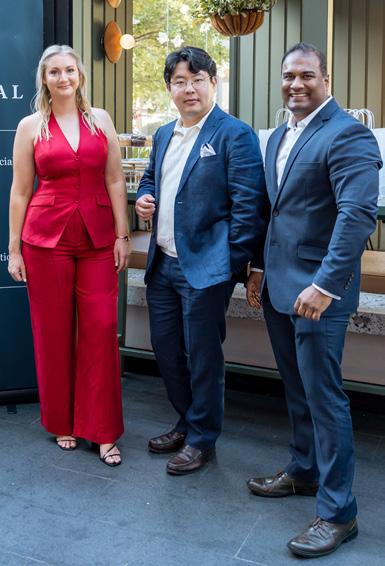
Canberra’s legal sector has welcomed a new firm with the launch of JSP Legal, a practice founded by Jin Jung, Rebecca Pritzler and Shaviv Singh
While the firm officially celebrated its launch in February, JSP Legal quietly opened its doors in November, building early momentum before marking the milestone with a formal launch event. Bringing together extensive experience across commercial, property and construction law, the directors have established the firm with a clear focus, delivering legal advice that is practical, accessible and aligned with the needs of modern clients.
JSP Legal provides services across a broad range of areas including commercial and corporate law, property and conveyancing, construction law, commercial litigation, contract drafting and business transactions, supporting both individuals and businesses at every stage of growth.
The firm launched with a team of six, including law graduate Sam, associate Mina and paralegal Sachi, with law graduate Haylie joining the practice in January, reflecting early growth and demand for its services.
A practical approach to legal advice
“Our vision for JSP Legal was to create a firm where clients feel genuinely supported,” says director Jin Jung. “Legal advice should not feel complicated or inaccessible. Our goal is to make the process clear, practical and focused on helping clients move forward with confidence.” Jin, who specialises in corporate and commercial law, works closely with businesses, investors and developers on transactions, contracts and strategic legal matters.
“Many of our clients are making significant business or investment decisions,” he says. “Our role is to provide advice that is not only legally sound but also commercially practical.”
Supporting clients through property decisions
Alongside Jin, director Rebecca Pritzler leads the firm’s property and commercial law practice, assisting clients across residential and commercial transactions.
From first-home buyers through to large-scale developments, Rebecca says clarity and communication are central to delivering strong outcomes.
“Buying or selling property is often one of the biggest financial decisions people make,” she says. “Our role is to guide clients through the process with clarity and care so they feel confident at every stage.”
Her work also extends to supporting business clients with commercial leasing, acquisitions and property-related transactions, ensuring matters are handled efficiently and with attention to detail.
“We believe good legal advice should always be easy to understand,” she says. “Clients should feel comfortable asking questions and confident that they are receiving advice that is truly in their best interests.”
Expertise in construction and litigation
Completing the director team is Shaviv Singh, who leads JSP Legal’s construction law and commercial litigation practice.
Working with builders, contractors and developers, Shaviv advises on contract negotiation, risk management, dispute resolution
and project-related legal matters,areas that continue to grow in importance as Canberra’s development sector expands.
“Construction projects involve many moving parts and multiple stakeholders,” Shaviv says. “Our focus is helping clients manage risk early so potential disputes can be avoided wherever possible.”
While prevention is always the preferred outcome, Shaviv says disputes can arise in complex projects.
“When conflicts do occur, it’s important to approach them with a clear strategy and a practical mindset,” he says.
“Our role is to guide clients through those situations and work towards solutions that allow them to move forward.”
Built on relationships, focused on outcomes
Together, the directors say their complementary areas of expertise allow JSP Legal to offer a comprehensive legal service while maintaining a personalised and responsive approach.
With offices in both Canberra and Sydney, the firm services clients across the ACT and NSW,
positioning itself to support a broad and growing client base.
For Jin, the focus is firmly on building long-term relationships and delivering consistent, highquality advice.
“Canberra has a vibrant business community and a growing property and development sector,” he says.
“We’re proud to be part of that and look forward to supporting our clients as they grow.”
For Rebecca, the firm’s direction is grounded in the same values that brought the directors together.
“At the end of the day, law is about people,” she says. “If we can provide clear advice, strong support and positive outcomes for our clients, then we know we’re doing our job well.”
With an experienced leadership team, a growing team of legal professionals and a clear vision, JSP Legal is positioning itself as a strong new presence in Canberra’s legal landscape.
Above: The team at JSP Legal, from left, Mina Kim, Sam Melhuish, Shaviv Singh, Rebecca Pritzler, Jin Jung, Haylie Chesterton and Sachi Rajamuni.
Right: JSP Legal partners, from left, Rebecca Pritzler, Jin Jung and Shaviv Singh.
Pollies need reality check to play with perceptions
Perceptions matter a lot in politics. One of the biggest ways perceptions matter is that they inform the reality gap.
What is the reality gap? Simply, the gap between our perception and our reality.
The reality gap directly impacts our trust and confidence in the politician or party. That lack of trust and confidence means we are less likely to listen to messages from them, which then means they fail to get the engagement and cut-through necessary to be competitive.
The bigger the gap, the longer and harder it is to close it, and the easier for a smart and strategic party to walk through it if they have theirs under control.
End of the line? Light rail Stage 2B to Woden should be shelved in favour of a new or re-developed Canberra Stadium. Illustration: ACT government
ibility takes a hit.
For most of us we have a rough flexible range on where that gap should sit. For example, an issue-based gap might be public transport. A late bus now and again is par for the course, so if a politician says we have reliable public transport, even though the last time they actually got on a bus was on a school excursion, then we’ll likely believe them based on our reality.
But, if there is a difference, let’s say Chris Steel saying that there is nothing wrong with MyWay+ when there is from the user perspective. Then there’s an issue gap. His cred-
But issue-based gaps feed into overall gaps, which impacts that of the party and government. If there starts to open too many issue-based reality gaps, then the government starts to have dramas on the overall gap.
That is, it is no longer effective, we lose trust and faith in it and, boom, no matter how much it tries to convince us that the perception is reality, we know different.
This is where Chief Minister Andrew Barr and Labor need to be more careful because the gaps are growing.
Examples? The economy is under
Chief Minister Andrew Barr and Labor need to be more careful because the reality gaps are growing – in the economy, health, education, crime, small business, MyWay+, trams, a stadium…
control in the ACT is the constant message. Yet reality is the Saul Eslake report. And the credit rating of AA, the same as debt ridden Victoria. Or the columns in this publication by Jon Stanhope and Khalid Ahmed.
But the reality at the street level is what’s really doing the damage for ACT Labor. We are a city of small and medium-sized enterprises and they are doing it tough, even accounting for the national cost-of-living dramas. Many I know are doing second gigs to get through and feel the government isn’t listening to them, symbolically represented by the London Circuit works. Other gaps are starting to open up
on issues. Canberra Stadium is one. Light rail Stage 2B to Woden should be shelved in favour of a new or re-developed Canberra Stadium.
A new stadium is not going to make money. Stadiums in most places don’t. Just ask Tasmania. That is reality.
But to us, perceptions of being a city, and not a town, matter. A new stadium means so much more from a cultural and societal perspective. Concerts, events, culture, vibe, a gathering place for us.
Then there are the other issues emerging as gaps. Health? Health has always been there but so many now sadly accept the system for what it is, so the gap isn’t as big. Same for education, with recent NAPLAN scores underpinning the need for overhauls and investment.
Crime is rising in gap size. Despite numerous Labor ministers saying the recent release of crime statistics showing a fall in crime rates, for many our reality is different. More stories of minor crime going unreported, or if reported, taking months to get any resolution. Just because a crime is minor also does not mean it has major consequences for the victims of it. This grows the gap.
The sheer number of growing reality gaps are changing our voting choices. More and more of us are growing wearisome of the perception marketing being done by political brands when reality is completely different.
It isn’t just One Nation benefitting from this. Independents, Greens, and other minor parties are all picking up votes. We are now seeing consistent polls from different polling companies that show more than half of us no longer have as our first preference either Labor or Liberal. At the start of this decade that wasn’t even close to being so.
In the age of digital and social media, perceptions matter. But so does demonstrating that political reality matches suburban reality. And in 2026 so few parties are showing us they have that gap closed.
Dr Andrew Hughes lectures at the ANU Research School of Management, where he special ises in political marketing.
Services
But there’s more to housing supply than zoning PLANNING / missing middle
Encouraging the provision of housing in established areas has been the focus of Canberra’s planning since the early 1990s.
The strategy was adopted to widen housing choice, reduce the level of travel and the environmental impacts of development, to respond to the reduced ability of the ACT government to influence employment location and demographic changes leading to the underutilisation of infrastructure.
The current policies have been successful in increasing the population in existing areas primarily through the provision of apartments in high accessibility areas including Civic; the Belconnen, Woden and Tuggeranong town centres; along Northbourne Avenue and at Kingston.
However, few affordable townhouses, terraces and low-rise apartments (missing middle housing) have been constructed. Less than 10 per cent of land in RZ2 areas adjacent centres, identified for medium-density dwellings in 2008, has been developed.
The policies were also resulting in redevelopments that did not address the needs of households of various ages, incomes and types especially those with children and of low-tomoderate incomes.
Additionally, many resulted in the loss of vegetation and privacy, solar
Current policies have been successful primarily through the provision of apartments in high accessibility areas.
access, increased stormwater run-off, congestion and parking blight.
Furthermore, the dwellings in most medium-density projects were highly priced as the projects could not provide as many opportunities for construction efficiencies as higher-density projects. This limited the housing options of low-to-middle income households, downsizers and those wishing to age in place.
The Missing Middle Housing Reforms (DPA-04) to the Territory Plan and the Planning (Missing Middle Housing) Amendment Bill 2026 , are responses to the deficiencies in the existing redevelopment policies.
They aim to deliver a more diverse range of housing in established areas and improve housing affordability.
The proposed reforms include an increased ability to unit title/subdivide, reduced parking requirements, increased tree canopy and solar access
Few affordable townhouses, terraces and low-rise apartments (missing middle housing) have been constructed. Less than 10 per cent of land in RZ2 areas adjacent centres, identified for medium-density dwellings in 2008, has been developed.
protections, faster approval times (from reduced appeal rights and the use of design guides and pattern books) and the availability of a lease variation charge discount. The reforms are expected to be approved mid year.
The reforms may result in improvements to housing supply primarily from a greater ability to subdivide, unit title and faster approval times.
Any increase is likely to be modest as housing supply is determined not just by zoning, but the interaction between the cost of finance, labour and materials; design and construction quality; price, land values and household characteristics including age, income, wealth, mobility, ethnicity and size.
Many of the blocks in the RZ1 areas will not be developed because of the siting of the existing dwelling, access and slope issues and preferences of
homeowners for a large backyard.
There is considerable uncertainty that upzoning will translate into an increase in the supply of social and affordable housing. A more effective strategy would be to fund and construct well designed, affordable and well-located apartments.
Planning Strategy Review: In 2028, to implement its commitment to develop a more sustainable, affordable and liveable city, the ACT government should review Canberra’s Planning Strategy.
The timing would allow the interrogation of 2026 Census data and an evaluation of whether the missing-middle reforms are increasing the supply of affordable, environmentally sensitive, well-located and well-designed dwellings.
The review would also explore the link between transport technology (eg, light rail and bus rapid transport) and housing density; the extent to which the existing strategy is reducing travel, producing infrastructure and environmental savings, improving affordability and meeting housing preferences.
It, for example, would investigate if the infrastructure savings from redevelopment are being offset by the the need for major infrastructure augmentation such as the $100m redevelopment of the Garran primary
school; if the benefits of reduced habitat loss and lower travel from reduced greenfield development are being offset by the creation of heat islands, vegetation loss, increased congestion and car-dependent development in surrounding NSW.
In regards to affordability, it would consider (a) if increasing the release of sites for additional detached dwellings could improve affordability. Restrictions on the supply of detached dwellings contributed to the 91 per cent increase in the price of separate houses compared to 48 per cent for other dwellings between 2010 and 2024, and (b) if the dispersal of employment and investment in transport infrastructure would increase the number of affordable well-located properties.
Successful city development requires substantial infrastructure funding and the reform of taxation, housing, immigration, labour force, climate and employment location policies. The review provides the context for determining priorities. Will the ACT commit to it?
How Barr builds the numbers with tax and debt
‘Should
Canberrans celebrate the highest growth in the economy or worry more about the highest rates of taxation and an increase in debt of almost $4000 for every man, woman and child,’ ask JON STANHOPE & KHALID AHMED, as they ponder the chief minister’s latest ‘elitist’ utterances.
Chief Minister Andrew Barr recently claimed that “Canberra is continuing to evolve into a diverse, dynamic city with a strong public and private sector, a growing innovation ecosystem and city-shaping infrastructure”.
He also reportedly claimed: “Forecasts for future growth are robust with continued strength expected in public demand and services – and a resilient and growing building sector, alongside a gradual pick-up in private investment”.
Barr’s commentary on the economy appeared soon after the release of the report by the expert appointed by the Assembly select committee inquiring into the state of the ACT’s finances, Saul Eslake, that cumulative deficits totalling more than $7 billion and the mountain of debt that has been accumulated are entirely due to the ACT Government’s policy decisions. If Barr’s intention was designed to direct attention away from these damning findings, it instead brought
it into focus, as we shall explain.
However, first we can confirm that the economy, as measured by Gross State Product grew by 3.5 per cent in 2024-25, over and above the previous year – the largest growth of all states and territories.
Notably, about two thirds of the gross value added came from a single industry, namely, Public Administration and Safety
Both the Commonwealth and the ACT governments contribute to this industry, and their consumption increased by 7.8 per cent and 2.9 per cent respectively, in real terms.
Eslake... says the mountain of debt is entirely due to the ACT Government’s policy decisions.
taxation and debt.
Household consumption, typically, the engine room of any economy, grew by just 1 per cent. A significant part of this growth was related to rents and dwelling costs, which increased by 1.2 per cent in real terms.
ment, non-dwelling construction and business investment) also decreased by 1.4 per cent in real terms.
A critical input to dwelling construction is obviously the availability of land. The 2024-25 activity levels would therefore depend on land released in previous years.
For over a decade, the government’s delivery arm, the Suburban Land Agency (SLA) has set low annual release targets, which it has nevertheless regularly failed to meet.
In 2022-23, the SLA released only 2473 residential sites against a budget target of 3918, an underperformance of 37 per cent. In 2023-24, it set a release target of 1883 sites, a third of the target in 2011, and failed to achieve even this meagre target.
of million-dollar things”.
We could not find any evidence of $100-million “things” in the ABS data. The total value of exported goods in international trade was just $25 million.
Figuratively, if it was intended as such, the view is elitist and disturbing coming from a Labor chief minister. We should of course celebrate those making $100 million “things” – the high value, hi-tech outputs – but there are also tens of thousands of people who make “$5 things”.
Those are, for example, labourers, retail workers, cleaners and administrative staff. In the retail industry alone, total employee incomes are in the order of $1 billion. There was zero growth in this sector in 2024-25.
As Canberrans, we welcome the federal government’s spending. As for the ACT, in this same year, ie, 2024-25:
• the government blew its expenditure budget by $369 million (4.1 per cent) and posted a deficit of $1.4 billion.
• increased taxation revenue by 5.4 per cent; and
• increased net debt by a staggering $1.858 billion.
That part of the economic growth attributable to the ACT Government, therefore, was fuelled by higher
Should Canberrans celebrate the highest economic growth in the economy or worry more about the highest rates of taxation and an increase in debt of almost $4000 for every man, woman and child?
We could not find any evidence to support Barr’s claims about “a resilient and growing building sector” and a “pick up in private investment”.
Quite the contrary; according to the ABS, dwelling investment in the ACT decreased by 4.1 per cent in real terms and private capital investment in the economy (comprising dwelling invest-
In a detailed analysis of the 2024-25 release program, we earlier identified a shortfall of 24 per cent in the release of residential sites and a 100 per cent shortfall (ie, zero achievement) each in mixed use, commercial use, affordable housing and public housing land release targets.
The effects of this pathetic performance are likely to impact the activity in dwelling and commercial construction sectors in coming years.
One reported comment from Barr left us seriously perplexed as he advised local media we are “not making millions and millions of $5 things in the ACT, but we are making hundreds
Saturday, 9th May at
The service will be held in the peaceful White Lady Chapel, 101 Nettlefold Street, Belconnen. Family, friends and community members are warmly invited to attend and share in a moment of reflection and remembrance.
To assist with planning, please RSVP to actoperations@invocare.com.au
In the same week, data released by the Commonwealth Grants Commission highlighted that the ACT’s payroll tax is 121 per cent, and land tax is 165 per cent of the national average.
We should be thankful not just for the stability and resilience the Commonwealth’s presence brings, but also for the extent to which it has protected the economy from the impacts of the ACT Government’s regressive policies on taxation, land supply and essential services.
Jon Stanhope is a former chief minister of the ACT and Dr Khalid Ahmed a former senior ACT Treasury official.
This is why community petitions matter, Mr Barr
On March 25, I attended the ACT Legislative Assembly to hear the reading of two community petitions.
One related to the forthcoming closure of the Kaleen Sports Club, the other dealing with the long-abandoned Hawker Tennis Courts.
Many thanks to Andrew Braddock (Greens) and Peter Cain (Liberals) respectively for sponsoring these petitions.
Petition sessions provide elected members with an insight into what matters to their communities and a vehicle to give voice to them. Petitions are a key democratic mechanism for people to have a voice to their elected members and for members to understand what is really important in their electorate.
It was therefore incredibly disappointing to find only 13 out of the 25 elected members in attendance and the Minister for Sports was notable for his absence.
During the reading of the petitions, nine members were constantly on their phone or computer. However, thanks to Fiona Carrick (Independent) and Jo Clay (Greens) for speaking in support of them.
Jo Clay raised the community’s strong concerns that the proposed Development Application for the Kaleen Sports Club site, substituted the current recreational space of 3823sqm with only 733sqm, which somehow included the underground carpark.
Our Chief Minister, Andrew Barr, lifted
his eyes from his phone to comment along the lines that the car park was probably a “drive through”, and that in the ACT weren’t car parks used as recreational areas? Then laughed at his own joke.
Ms Clay replied that for the ACT people the loss of sporting facilities was definitely not a joke!
I was sitting next to a man who was going to lose a business he had developed for over three decades; a popular hub for the Yerrabi and wider Canberran community providing sports competitions for about 1500 people a week over that time.
Three other successful businesses at the club are also going to be wiped out. So, no Mr Barr, it is certainly nothing to joke about and demonstrates your disdain for the people of Canberra.
Dianne Deane, via email
CIT Bruce ditches active seniors
A group of long-standing, senior-aged members of the CIT Fit & Well Centre at Bruce are campaigning against proposed changes by the CIT that will restrict their access to a higher intensity level of exercise class that provides distinctive health, fitness, and social connection benefits to the group.
Removing these classes is removing a unique health maintenance and improvement service to the over-60s community. There are virtually no fitness class op -
tions outside of CIT that offer the same level of physical intensity for specifically over-60s in a group environment, during the day and at a reasonable cost.
The CIT fitness program provides safe and appropriate access for older people who may not be similarly catered for in a commercial gym or may not feel comfortable in such a venue.
The health and social wellbeing benefits the classes provided to people in this group far outweighs the small cost for CIT to deliver the classes.
We are asking CIT management to reconsider their decision and for the ACT Government to recognise the social value and health benefits these classes provide to active seniors in the community and support their continuation.
David Maplesden, via email
Budget should herald a fair go on tax
Columnist Michael Moore is right about the inequities in Australia’s tax system (“Looking for the courage to right the tax wrongs”, CN April 2). As he notes, current settings enable a transfer of wealth from those who can least afford it to those who are already wealthy.
In 2008, former Treasury Secretary Ken Henry led the “root and branch” review of the tax system and has since continued to argue for reform to address intergenerational unfairness.
A key recommendation was a stronger
framework for taxing mining profits, ensuring the nation receives a fair return from its natural resources rather than relying on a shrinking base of income taxpayers in an ageing population.
More recently, economists Ross Garnaut and Rod Sims have proposed two new levies on fossil fuel companies: a Polluter Pays Levy on fuels consumed domestically and a Fair Share Levy on gas producers’ cashflow, similar to Norway’s system. Together, these could raise about $35 billion annually between 2026 and 2050.
Industry opposition is unsurprising, but the evidence is clear. Analysis by The Australia Institute shows that some of the largest oil and gas companies have paid no Petroleum Resource Rent Tax on nearly $300 billion in income since 2013–14.
With the May budget approaching, there is a clear opportunity to correct this imbalance and ensure Australians receive a fair return.
John Godfrey, Cape Paterson, Victoria
Goodbye to views of Black Mountain
I am writing with an open invitation to mark the glorious completion of an era of development for Canberra.
Ever since height restrictions on Northbourne Avenue developments were freed up, the unimpeded view from the centre of the basin between Black Mountain and Mount Ainslie has been progressively walled off. This glorious wall of magnificent
development is approaching a stage of wonderful completion!
As I write, a unit block north of Haig Park is being prepared, which will finally, some might say “mercifully”, restrict the view of the long slopes of Black Mountain, which Australians have had for countless millennia, to glimpses between the tower blocks. No more will Black Mountain tower, once a proud symbol of technical prowess, loom like an impotent ghost over us, soon only to be viewed by the owners of high-level apartments.
Canberra has finally grown up, realised that its imposition upon the visual experience of landscape can know no bounds, and has redirected the attention of anyone looking south on Northbourne to the masterly flagpole of Parliament House in the distance. This is fitting for the national capital city, and must be enthusiastically applauded!
This redefinition of the history of Canberra to emphasise the machinery of political power over the natural amenities so ably underexploited for millennia is hereafter undeniable.
The government must be congratulated for choosing this development route – a statue or at least a commemorative plaque is perhaps fitting for the visionaries.
This is a glorious moment for Canberra, and the residents who have so competently stabilised the political environment and thus made the conservation of development momentum possible can justifiably be proud of themselves.
Peter Anderson, via email
The ANU’s silence is still deafening
The ANU deserved to feature prominently in the damning ABC Four Corners program Campus Chaos on March 30.
I AM _ the ultimate fact. WHO AM I? _ the ultimate question. WHAT AM I? _ the ultimate discovery.
The School for Self Knowledge presents a nine week introductory course in Advaita Vedanta, for those seeking deeper understanding of life and a level of Self Awareness beyond transient world appearances.
Self Knowledge, being the highest form of knowledge, offers profound answers to fundamental questions of life. It integrates our inner and outer worlds, revealing Truth within, and the Unity of Existence underlying diversity. This practical course gives guidance for clear thought, mindful and effective action in life, through direct personal experience.
What is the meaning and purpose of my life?
Canberra City Suite 9, 1st Floor, 131 London Circuit (Bailey’s Corner) Starts: Wednesday, 29 April 2026 – 6.30 pm FIRST NIGHT FREE
Course fee is $190, payable by cash or EFT.
The unacceptability of this university’s handling of its major restructuring plans since 2024 and its entrenchment of chronic on-campus destabilisation was reinforced by revelations about its likely reliance on exaggerated claims of a financial crisis to justify the whole Renew ANU debacle.
Despite more insights into poor governance issues and the hefty use of consultants who seek to corner contracts and also infiltrate decision-making structures of universities, ANU’s top leadership declined to participate in the program.
Fortunately a final report on ANU finances from the Commonwealth Audit office should be available mid-year.
ANU’s lack of public engagement became a reminder about how, over the past few months, it has not bothered to communicate with the broader community, let alone its donor cohort, about its new curriculum structures, academic priorities and staffing arrangements across the whole humanities/arts spectrum, including the performing arts.
Neither the website for the Renew ANU juggernaut nor ANU’s general site provide any up-to-date facts or direction about what is being offered, what was remodelled and what academic disciplines and study pathways have been scrapped since October last year.
Those on and off campus deserve more clarity about what is now happening at the national institution that is also a critical part of our local knowledge economy.
Hopefully Senator David Pocock can continue to extract basic information out of ANU in Senate Estimates and other committee hearing processes.
Four Corners showed that the governance and operational issues he has been pursuing since late 2024 about ANU’s questionable decision-making and restructuring program are valid and require urgent and significant rectification action, not just by ANU but also by other universities, federal and state governments, the tertiary sector regulator and the planned independent Australian Tertiary Education Commission.
Sue Dyer, Downer
What was the plan for kangaroo culling?
Many thanks to CityNews for publishing Robyn Soxsmith’s concise summary of the main findings of Dr Varvaro’s doctoral thesis regarding the ACT government’s kangaroo killing program (letters, CN April 2). This thesis scrutinises the ACT government’s systematic suppression of all options for challenging the killing program. It also reveals that there was never any plausible conservation justification for the slaughter.
We already knew from Freedom of Information documents released after the ACT government’s first slaughter at Googong Dam Reserve in 2004 that the slaughter was initiated not on the basis of any conservation argument but at the behest of local sheep farmers complaining about kangaroos eating grass.
Varvaro’s thesis confirms that there was still no conservation research supporting the killing when the ACT government drafted its first Kangaroo Management Plan (KMP) in 2010. From Varvaro’s findings, we assume that any studies published since that time, suggesting that kangaroos might have negative environmental impacts, are most likely to be partisan or commercially motivated. Meanwhile, the one study (by CSIRO in 2014) that did examine the relationship between kangaroos and biodiversity found not only that kangaroos on ACT reserves appear to have no negative impact on biodiversity, but that biodiversity is better off where kangaroos are present than where they are not.
Frankie Seymour, Queanbeyan
The rail line to Goulburn does have a real future
Mike Quirk (“High speed rail arrives again, but will it ever leave?”, Letters, CN April 2) says that once Canberra-to-Sydney high-speed rail arrives, the Canberra-Goulburn section of the existing rail line could become redundant.
It could, but it might not as well. The ACT, NSW and Commonwealth governments should be open to both possibilities in their current consideration of what improvements to make to the existing rail service.
The purpose of high-speed rail is to decentralise future employment growth and future population growth to regional centres. Between Canberra and Sydney that’s Bowral-Mittagong and Goulburn.
The overseas record is that it’s the inbetween places that grow fastest under the impact of rapid, convenient connections in both directions. Examples are Nagoya between Tokyo and Osaka in Japan and Montabaur and Siegburg between Cologne and Frankfurt in Germany, two villages that have turned into employment hubs. Who’s to say that with HSR in place Goulburn won’t see dramatic growth, whether residentially based or job-driven or both? In which case there could be many more people wanting to live in a Canberra-Bungendore-Goulburn corridor that could be well serviced by a Canberra-
There’s
a
silver
Goulburn rail shuttle.
And who’s to say also that a future, much larger Canberra region won’t benefit from a better functioning rail corridor that could once again see freight trains?
The reason a positive or neutral – rather than negative – attitude to the future of the rail line matters now is that modest improvements to the Canberra-Goulburn infrastructure are needed urgently. That’s not because the current service is slow, even though it is, but because the trains are full and the single track line can’t readily accommodate higher train frequency.
Over the past two years, as air travel has plummeted amid high fares and flight cancellations, publicly available NSW TrainLink patronage data show CanberraSydney rail has recorded seat utilisation of over 90 per cent.
What the ACT government can do is offer to fund, or part fund, a couple of passing loops between Queanbeyan and Tarago that would allow trains travelling in different directions on the single track to cross. This would be in return for NSW increasing the number of daily trains from three to say five.
What the ACT shouldn’t let NSW and the Commonwealth get away with is any argument that the Canberra-Goulburn section can have no place in a high-speed rail world and that even limited infrastructure spend now will be a waste of money.
Phil Potterton, director, Grove Transport Economics
Fixed-rail doesn’t work in the garden city
Re Richard Johnston’s column “Secret tram plan to Woden makes no sense” (CN March 26).
When the Gungahlin tram was proposed I analysed its published business case, finding the ACT Government only made it “stack up” by including the “value” of a community health benefit if passengers walked to the tram stops.
Since building that billion dollar tram, Canberra public transport journeys have fallen from six per cent to five per cent. Hardly planet-saving numbers.
Fixed-rail transport is not practical in Canberra’s extensive garden city layout. Most commuters live and work in varied places that are not on any direct public transport route, so they commute by car. They save so much time by doing that, they are willing to bear the cost.
As planning expert Richard Johnston rightly states, bus routes can be varied at any time without the need for costly track work and wiring changes. Canberra’s use of time-dependent unique school bus routes each day demonstrates that clearly.
The capital cost of the tram to Woden ensures that Canberra rates will keep rising and the budget will stay in the red for our grandchildren to pay off. The proposed first stage to Commonwealth Park is a real white elephant if ever there was.
However, I must question Mr Johnston’s idea of electrifying Canberra’s buses.
lining to the fuel crunch
The article on fuel types was timely (“Fuel for thought: E10, the facts and the figures”, CN 8/4).
However, while switching to the cheaper ethanol blend E10 may save regular fuel in a shortage, as Prof Aman explains, because E10 contains less energy than other fuels you must burn more to travel the same distance.
And while E10 is generally safe for engines made after 2000, there are important exceptions, including all vehicles that require premium fuel.
The silver lining in the fuel crunch is rising interest in electric vehicles. A 2017 Australian Automobile Association report, Benefits of Reducing the Age of Australia’s Light Vehicle Fleet, found Australia’s passenger and light commercial vehicles were older than those in comparable OECD countries, and that a younger fleet would deliver safety gains, lower emissions, and health benefits. With modern electric vehicles now widely available, those findings are even more relevant.
While the ACT has the youngest fleet and the highest EV uptake, only around four per cent of vehicles are battery electric, so there is still ample scope for modernisation.
The current push by a coalition of 30 organisations across the energy, automotive, finance, disability, environmental and consumer sectors to retain the EV discount in the Albanese government’s May budget should be heeded
Anne
O’Hara, Wanniassa
Three ways the ACT Government can cut fuel use
Here are three ways the ACT Government can cut fuel use, traffic congestion, pollution and health costs, and increase public transport, walking and cycling.
1. Increase parking fees. When the federal government introduced pay parking in the Parliamentary Triangle it reduced car travel, generated ongoing revenue, and increased walking and cycling. Bus trips to and from the Parliamentary Triangle increased by 47 per cent.
2. Convert under-utilised bus lanes to transit
lanes, to get more people to work, more quickly, in fewer cars. The government estimates that replacing Adelaide Avenue’s transit lanes with light rail would reduce network-wide public transport travel by 5 per cent.
3. Expand the Sustainable Household Scheme to cover practical, reliable non-electric bikes, and make our bikes more practical and more reliable.
Each extra kilometre we cycle generates about $3 worth of health benefits. Savings in health system costs might exceed the cost of expanding the Sustainable Household Scheme.
I would like to provide this advice to the government-funded Conservation Council. Because the council provided false and misleading information in an application for a court order, I can’t do that until the case goes to court.
Leon Arundell, Downer
Some people have no concept of left wing
Ian Pilsner shares a frustration held by many conservatives and letter writers to CN in his letter of April 9 when he refers to a column written by John Minns headed “Does dawn of the far right bring a new dark age”. Ian raises the point that there is never a mention of the far left, only of the far right.
This could be because non-conservative voters and commentators see themselves as of the centre or mainstream. They have no concept of left wing, and everyone with an opposing view must be right wing or extreme.
Most mainstream media including the ABC and most social-media platforms, including Google, espouse this philosophy.
For example, Google describes journalists such as Andrew Bolt and Paul Murray as conservative or rightwing commentators, but commentators such as Laura Tingle and Sarah Ferguson are described as Australian journalists – not left-wing or non-conservative journalists.
Paul Temby, via email
Canberra’s new battery buses carry three to three-and-a-half tonnes of battery all the time, far heavier than a tank of diesel (that can be filled in a matter of minutes), which equates to 30 or 35 passengers. This increases their operating cost and wear over that of lighter diesel buses.
Diesel bus “emissions” can be reduced with inexpensive retro-fitted AdBlue urea exhaust conditioning. I expect Canberra buses may have been, retaining all their route flexibility benefits, and servicing their measly five per cent of passenger traffic without burdening mug ratepayers with further rate extortion.
Alternatively, all Canberra citizens could live in 20-storey Shanghai towers, along the tram routes, where the kids can play on the one-metre by five-metre balcony, rather than having a backyard. Mr Barr might take up that idea. He could just keep aspidistras on his balcony.
Anthony Hordern, Jamison
Tram critics ignore land-value capture
Local expert correspondents criticising ACT light rail, and favouring buses, appear to concentrate on poor cost-benefit outcomes based on projected tram usage. They appear to overlook the “land-value capture” that trams provide, and as espoused by Perth academics, Newman and Kenworthy in their 1991 study, Towards a More Sustainable Canberra, accepted by
the National Capital Planning Authority. Trams run on fixed tracks, forever enhancing the value (and hence the rates income) of residential and commercial land at or near the stops.
Buses, even those travelling in dedicated lanes, can, and do have their routes summarily changed or cancelled, upsetting land values etc.
In the Central National Area, trams on the optimum Stage 2B (Commonwealth Park to Woden) tram route should serve and enhance visitation to the many national attractions there, and precipitate more of them.
So, the route should include Acton Peninsula, more of the National Triangle and Barton. This symbiosis of trams and places, and their optics, would clearly deliver significant economic benefits, and enhance pride in the national capital, while saving Commonwealth Avenue’s important bridges and trees.
Jack Kershaw, Kambah
Remind you of anyone?
Re the article on citynews.com.au about the ex-Bangladeshi PM, under International Crimes Tribunal death sentence for ordering the killing of protesters against her regime, says she “was seen as a champion of democracy when she first assumed power”, but “her second coming… marked the beginning of her transition into an autocrat” and “have since morphed into something that demonstrates all the ‘hallmarks of fascism’.” Remind you of anyone?
Richard Johnston, Kingston
Nim brings over 15 years of massage therapy experience with a strong focus on supporting people undergoing cancer treatment, living with anxiety, or in recovery. Her gentle, skilled approach helps restore comfort, flow, and connection to the body especially for those navigating life after diagnosis.
As an Accredited Lymphoedema Practitioner and member of both the Australasian Lymphology Association (ALA) and Australian Massage Therapists Association (AMT) Nim offers a rare level of expertise in this highly specialised area.
Opening Hours: Monday to Friday 9:00am to 3:00pm & after hour by appointment
To make a booking please call Nim on 0412 885 804
Tuggeranong
Where exceptional food and genuine hospitality come together
“Discover Canberra’s nationally awarded dining destination. Winner of the 2025 Restaurant and Catering Specialty Category, two-time ACT winner, and Australian Good Food Guide Readers’ Choice Award, Anatolia is a hidden oasis in the heart of Erindale.
Step inside and experience a warm, inviting space where exceptional food and genuine hospitality come together.
With decades of experience in the local dining scene, our passion is reflected in every dish we serve. From smoky charcoal grill favourites to fresh seafood, handmade pasta, pizzas, vibrant salads, and generous sharing platters, our menu offers something for everyone.
Inspired by Mediterranean flavours and crafted with the freshest ingredients, Anatolia invites you to relax, indulge, and enjoy an unforgettable dining experience.”
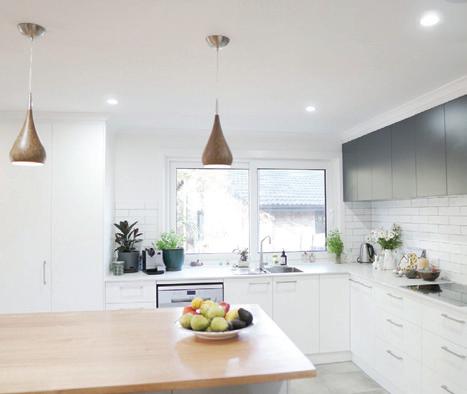
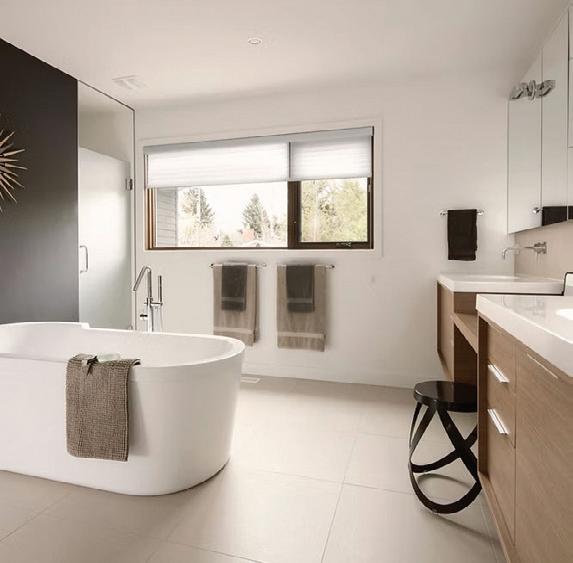
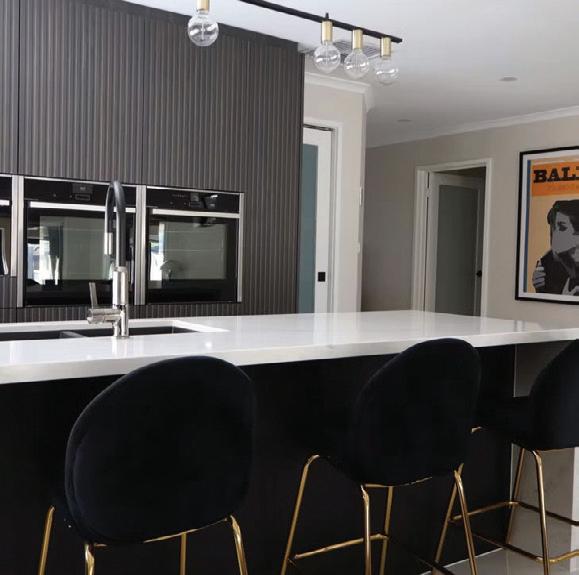
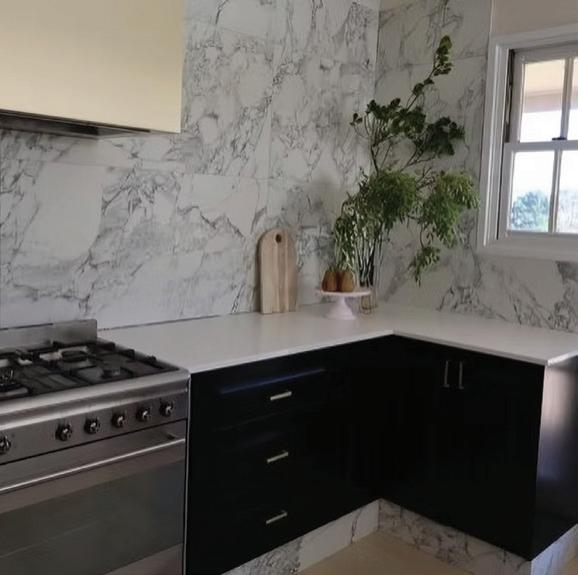
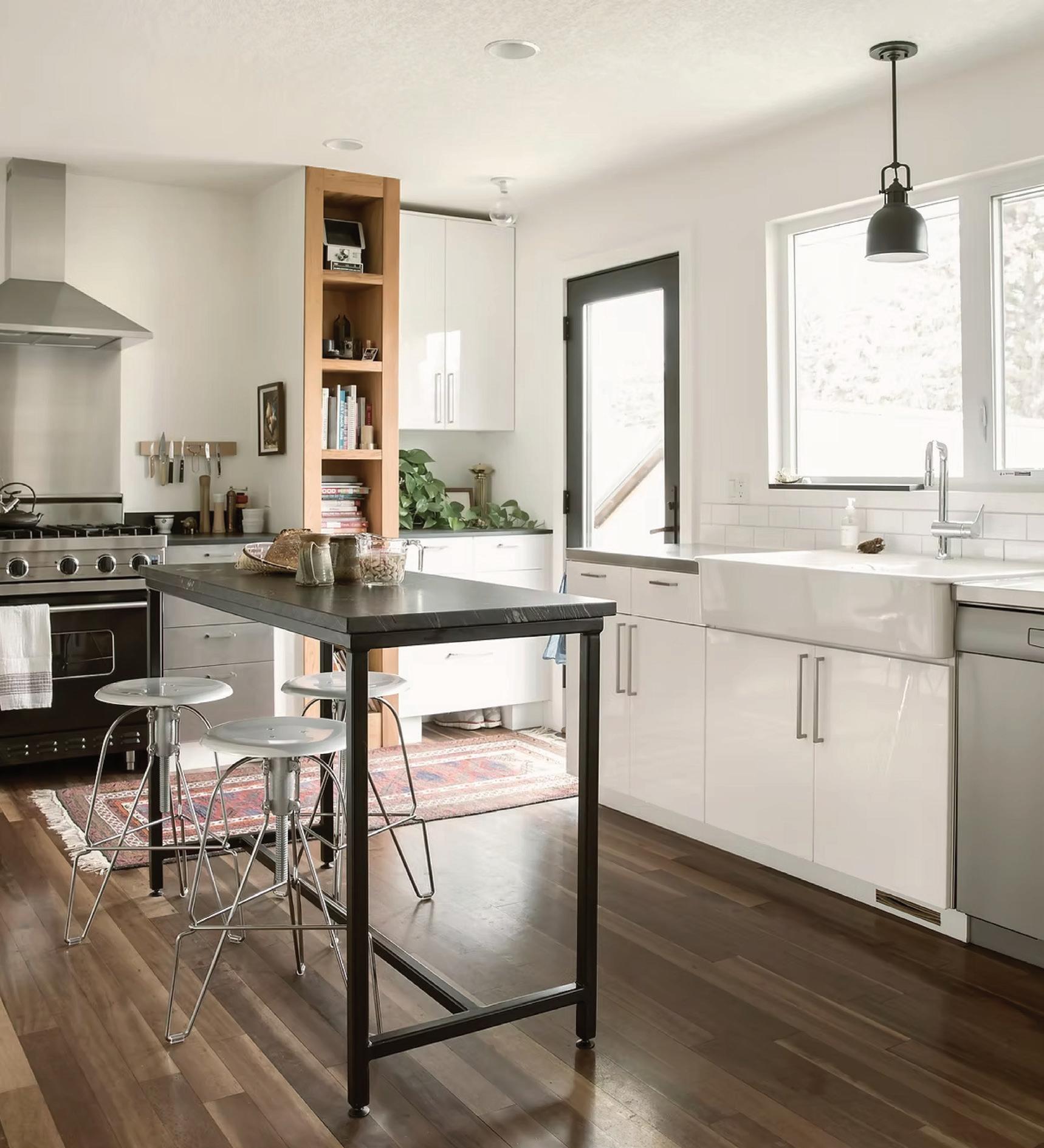
Established in 2015, Canberra-based TradeWise Renovations is quickly becoming the go-to company for home renovations, says owner Angelo Nardi.
The business specialises in all aspects of interior renovations including custom-built kitchens, bathrooms and laundries.
“We also offer a comprehensive design and drafting service,” he says.
With a complete team of qualified tradespeople at their disposal and strong working relationships with some of Canberra’s largest suppliers, Angelo says “there is not much we can’t handle”.
The business is family owned and operated, and has more than 30 years of experience building and renovating in the Canberra area.
Angelo says that TradeWise Renovations prides itself on achieving high-quality results by working collaboratively with clients to ensure their vision is understood and delivered.
“We believe our success comes down to three things: excellent service, excellent communication and excellent product,” he says.
“It’s all about the customer experience.” The business also offers obligation-free quotes.
TradeWise Renovations
Call 5112 2969 or visit tradewiserenovations.com
RENOVATION EXCELLENCE
Sandy’s got the perfect gifts for pet lovers
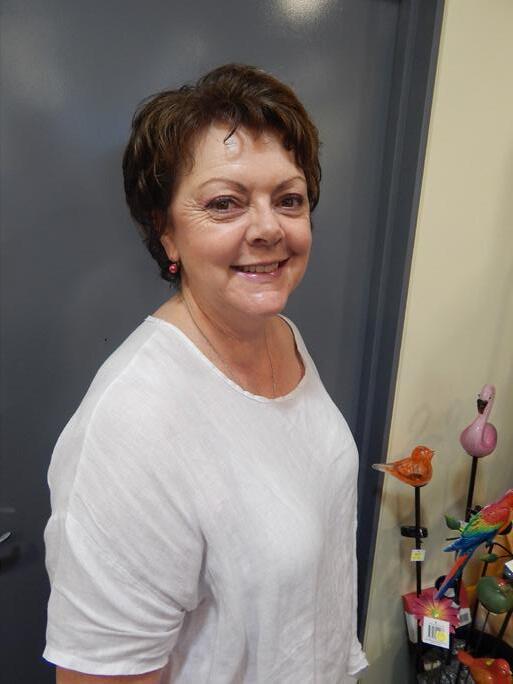
For Sandy Borgo, owner of Charlie & Chums, her business only exists due to her deep love of dogs and other animals.
“Dogs are always there for me and I for them,” she says. “My dogs are my solace in life and I’m not the only one, many people find their pets are their best friends. They keep you active and give you happiness in life.”
Although Sandy doesn’t have a physical store, she ships nationwide and says she has plenty of items that are perfect for the pet enthusiast.
“We’ve got so many lovely ornaments of animals and flowers to stick in your garden to brighten it up,” she says.
Sandy also stocks a selection of animal statuettes, which she says have been hugely popular. Also available is giftware, including spec holders, ladies’ ponchos, scarves and brooches, says Sandy.
Sandy says she has sculptures of dogs and cats made from old 44-gallon metal drums, from the company Think Outside.
Charlie & Chums
Call 0402 097580 or visit charlieandchums.com.au
TradeWise Renovations is a family-owned business in Canberra, boasts over 30 years of construction experience. We excel in collaborating with clients to achieve top-notch results, guiding them through every step of the renovation process from design to completion. Our expertise encompasses coordinating trusted tradespeople such as plumbers, electricians, plasterers, painters, tilers, and carpenters.
Antipasto / Meze platter.
Charlie & Chums owner, Sandy Borgo.
Enrolments
a wealth of experience to help build on the College’s reputation within the educational community.
Mrs Jacqueline Heffernan joined MacKillop at the start of the 2026 school year after spending 21 years as a principal across three schools on the NSW South Coast.
“It is a privilege to lead such a dynamic and nurturing community, and I am grateful for the opportunity to build upon the outstanding legacy of the previous Principal, Michael Lee,” Mrs Heffernan said.
“His leadership, together with the dedication of our talented staff, has laid a strong foundation for the College’s continued growth and success.
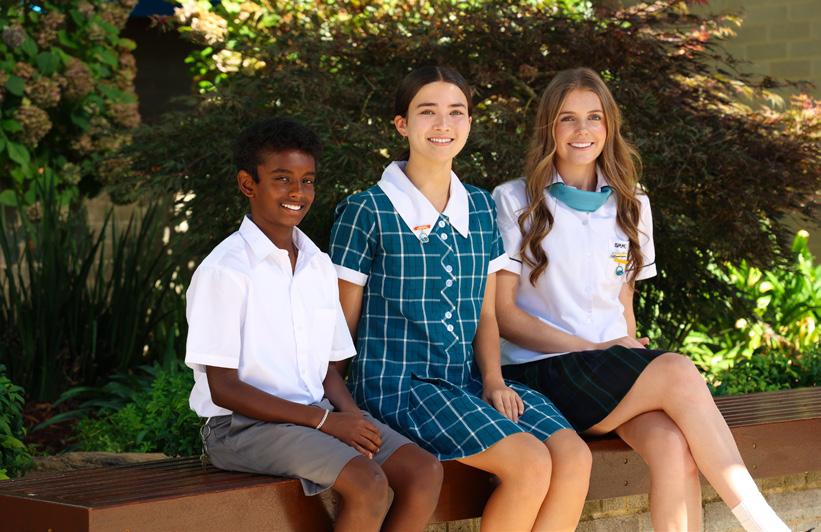
“As Canberra’s largest secondary college, we are proud to be a school of choice, renowned for our welcoming culture, extensive range of opportunities,
“We are committed to providing the very best outcomes for every learner and we are honoured to partner with our families in this shared mission.”
Mrs Heffernan joined MacKillop on the back of MacKillop’s strong academic success in 2025, with five Year 12 students receiving an ATAR above 99 and the College Dux, Alex Kwiatkowski, achieving 99.90.
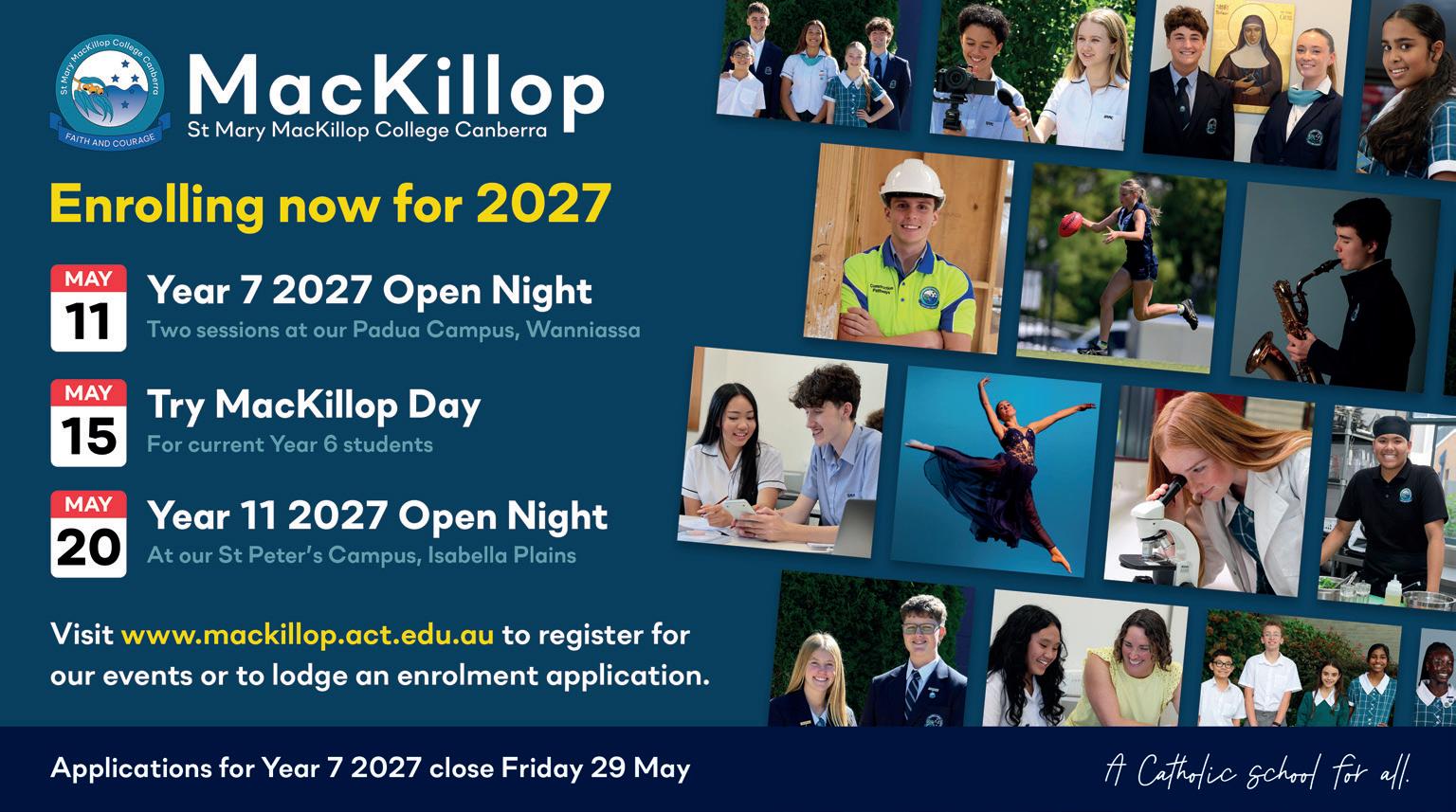
MacKillop is now accepting enrolments for 2027 and will hold an Open Night on 11 May and Try MacKillop Day on 15 May. For information or to register visit www. mackillop.act.edu.au
St Mary MacKillop College Canberra Call 02 6209 0100 or visit mackillop.act.edu.au
Welcome to ELITE – where dancing begins
At Elite Dance Studio Canberra, we believe every dancer’s journey should start with confidence, fun and a love of movement.
Our preschool programs are designed especially for our tiniest dancers, with classes available for 2–3 year olds (Playgroup) and 4–5 year olds (Tiny Dancers).
With options running on both weekdays and weekends, there’s something to suit every family.
Our Playgroup classes focus on imagination, music and movement, helping build coordination, social skills and confidence in a supportive and nurturing environment. It’s the perfect introduction to the world of dance.
Our Tiny Dancer classes expand on this foundation, introducing Jazz, Ballet, Tap, Acro and Hip Hop
in a fun and engaging way.
Dancers begin to develop technique while still keeping the magic and excitement of dance alive.
At Elite, we pride ourselves on creating a welcoming, family-focused community where every child feels valued and supported.
Our experienced and passionate teachers ensure each dancer is encouraged to grow at their own pace, while building friendships and confidence that extend far beyond the studio.
Join the ELITE family and watch your little one shine.
Elite Dance Studio Canberra elitedancestudiocanberra.com
Building futures through belonging and learning
At Burgmann Anglican School, building futures begins with a simple foundation: every child is known, respected and supported to grow.
Principal Leonie Harwood says a student’s experience is shaped not only by what they learn, but how they feel each day.
“Students need to feel that they belong before they can take risks in their learning,” she says. “When they feel safe and connected, they are willing to ask questions, to try and to grow.”
From the early years, children are encouraged to explore their curiosity and develop confidence through play-based learning. Small moments often become powerful learning experiences, whether investigating a discovery in the garden or working together to solve a problem.
As students move through the school, that curiosity is supported by strong foundations in literacy, numeracy and critical thinking, alongside a shared language of learning across every stage.
Learning environments are designed to support each stage of development, from early childhood through to the senior years, where students are guided to think deeply and prepare for life beyond school.
For those beginning to explore schooling options, there is no substitute for experiencing a school firsthand.
Burgmann Anglican School welcomes families to book a tour led by the Principal and experience our school in action.
Burgmann Anglican School Enrolments call 02 6204 3207 burgmann.act.edu.au
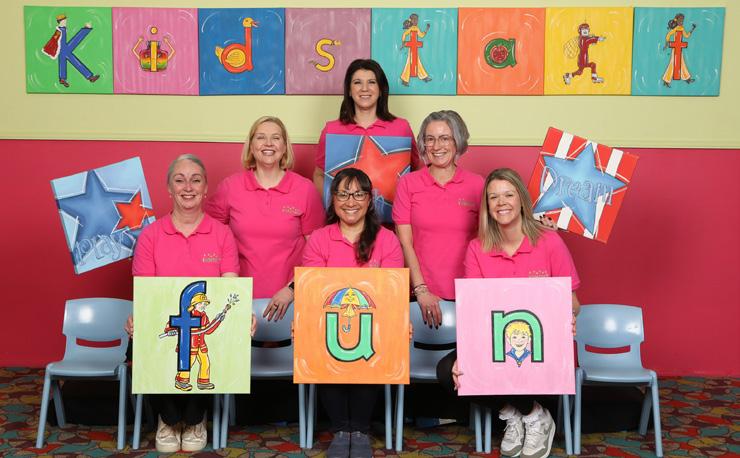
“We are not a childcare centre, but provide classes with opportunities for each child to develop socially, physically, emotionally and intellectually through sequential programs full of fun, structured and stimulating activities,” she says.
“We bring families together to create relationships and connections within the Canberra community.”
With classes available for children aged five months to five years, Kristen says Kidstart has a program to suit all children before they start school.
“If you want to assist your child to develop a lifelong love of learning, give them the headstart they deserve at Kidstart,” she says.
Operating since 1996, Kristen says Kidstart offers five different age-based programs, for children form 5 months to 5 years of age. From babies learning to
readiness program! According to Kristen, it’s a privilege to see the children thrive each day!
“We’re fortunate to have long-serving staff members dedicated to providing the optimum learning environment for all our children at Kidstart.
“There’s a special bond with teaching children, from when they are babies and seeing them grow and develop before heading off to school.
Kidstart is now accepting enrolments of new students for Term 2 commencing the 20th April. “If you wish to assist your child to develop a lifelong love of learning, give them the headstart they deserve at Kidstart!”
Kidstart Southside Education and Activity Centre 65 Sternberg Crescent, Wanniassa. Visit kidstart.com.au
ENROLMENTS NOW OPEN
COME ON A GROUP TOUR
Empowering Independence. Inspiring Excellence.
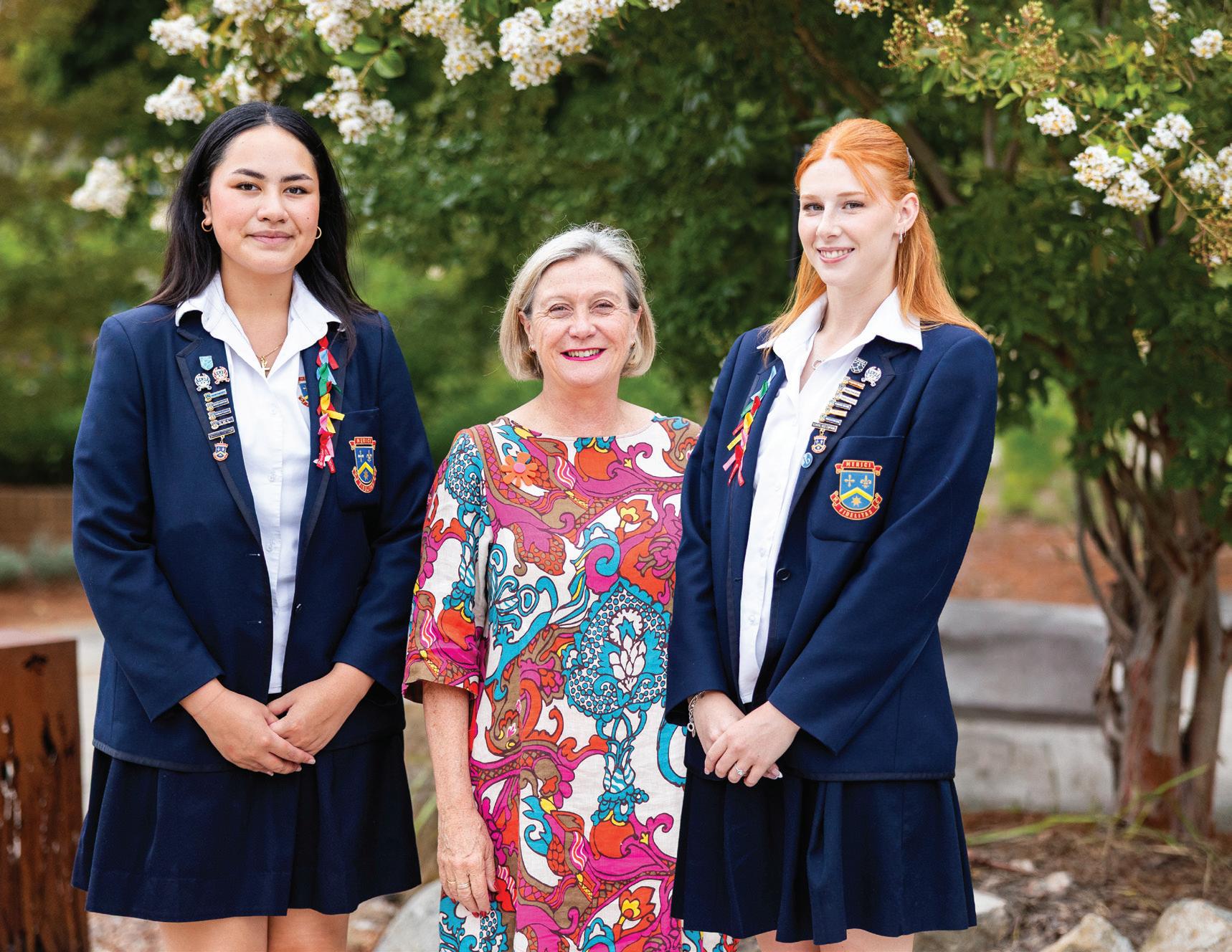
Merici is a Catholic College for young women in Years 7 to 12, which was established in 1959. We are an authorised IB World School for the Middle Years Programme and the Diploma Programme.
IB World Schools share a common philosophy – a commitment to high-quality, challenging, international education- that we believe is important for our students.
The MYP is mapped to the Australian Curriculum and the College also offers BSSS certifications. We provide an engaging educational environment, designed to challenge our students to take risks within and beyond the classroom to achieve individual academic excellence.
Merici College is a welcoming community, where authentic relationships are nurtured, and where
each young woman is given the opportunity to grow spiritually, physically, emotionally and intellectually in order to make a positive contribution to society.
Our excellent outcomes for students are a culmination of striving to live out our mission: ‘Merici empowers women to love life, have hope, be faithful and build futures more wondrous than they dare to dream’.
Merici College is proudly the highest ranked Catholic school in the ACT for Year 12 2025 academic results.
Visit us on Open Day, Wednesday 6 May, so that we can introduce you to life at Merici College.
Merici College Wise Street, Braddon.
New Anglican school opens in Wright
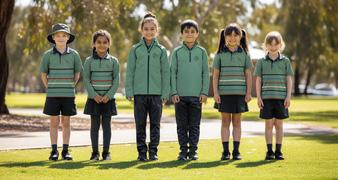
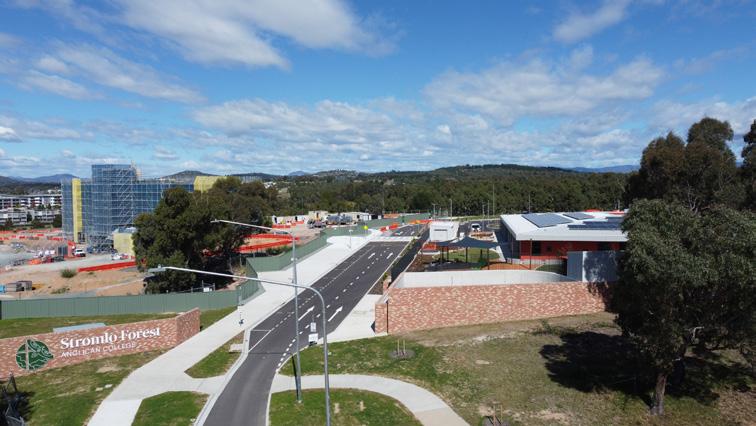
This year, Stromlo Forest Anglican College officially opened in Wright, welcoming its first families and marking the first new Anglican school in Canberra in more than twenty years.
Opening in the fast growing Weston Molonglo region, the College has launched an Early Education School that includes a long day care from six months to Pre-Kindergarten and Primary School classes from Kindergarten to Year Two. It will continue to expand with Years 3 to 8 opening in 2027, followed by Years 9 and 10 in 2028, creating a complete pathway from early childhood to Year 12.
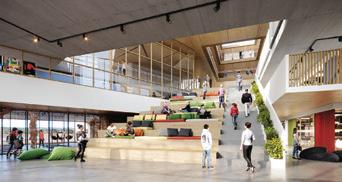
Purpose built for modern learning, the campus has been designed as a vertical environment inspired by the layers of a forest, with shared community spaces at the ground level and upper learning areas designed to support growth, independence and connection.
The College responds to growing demand from families moving into Canberra’s western corridor, many of whom are seeking strong academic foundations alongside genuine pastoral care and community connection.
Foundation Principal Andy Gordon said the opening
represented an important moment for education in the capital.
“Stromlo Forest Anglican College has been created to serve the families of this growing region with a learning environment grounded in courage, love and character. From the beginning, our vision has been to create a place where children are known, challenged and inspired, and where families feel a real sense of belonging.”
The College’s approach combines explicit teaching and inquiry learning to build strong foundations in literacy, numeracy and curiosity, supported by a culture of high expectations and deep care.
The foundation leadership team brings extensive experience, including Jo O’Brien as Head of Early Education, bringing more than two decades of expertise across leading schools.
For more information, visit www.stromlo.act.edu.au
Stromlo Forest Anglican College 1 Admiral Place, Wright. Call 02 5134 1414 or visit stromlo.act.edu.au
Enrolments advertising feature
Founded for girls. Focused on girls. Experts in girls’ education.
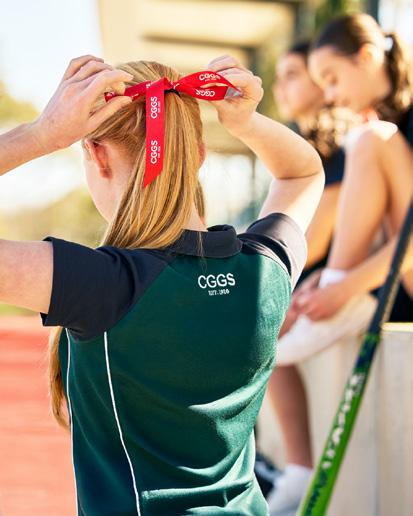
For over a century, Canberra Girls Grammar School (CGGS) has led the way in female-focused education. With the most established and authentic track record of girls’ schooling in the capital region, we have built a powerful legacy – graduating young women defined by purpose, passion and proven capability.
At CGGS, it’s not about keeping girls apart – it’s about setting them apart.
Whether she’s a dreamer, doer or disrupter, our students thrive in an environment designed for and with them.
Learning without limits, backed by research. CGGS students learn free from conscious and unconscious gender biases and deeply engage in their educational experiences.
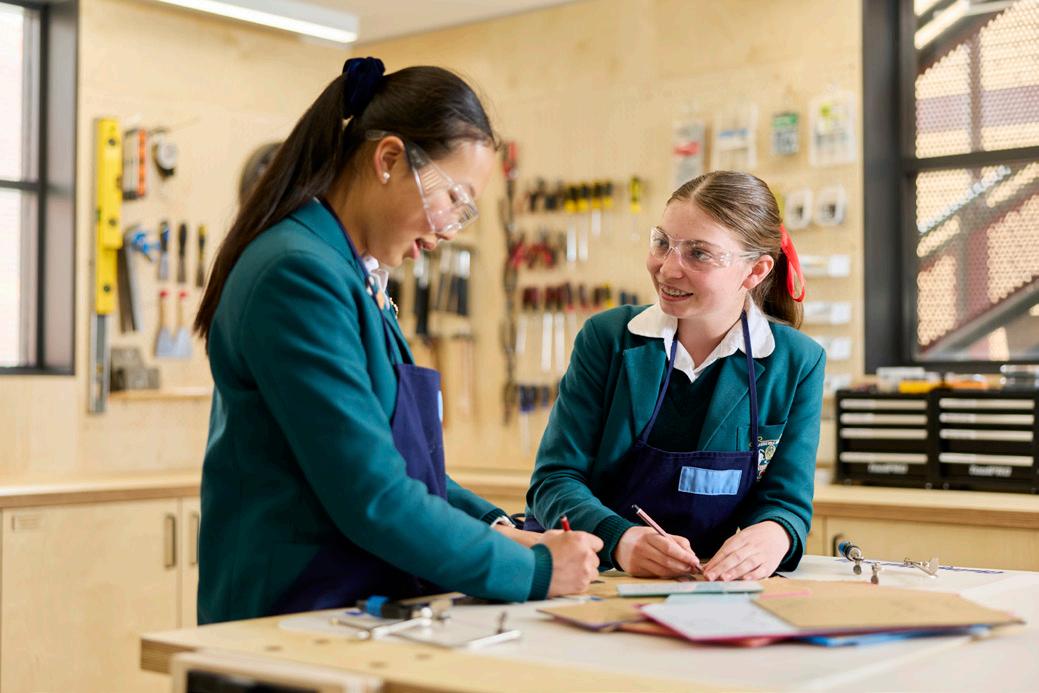
Experts in the art and science of girls’ education. Together, we actively challenge stereotypes and forge pathways in science, technology, engineering and mathematics – it’s part of our DNA. When girls learn without limits, they lead without hesitation.
Every student steps forward as the captain, the spokesperson or the innovator, and goes out into the world expecting nothing less.
We see her. We hear her. We empower her to realise her dreams.
Our culture is clear – this is a place where it is cool to learn, curiosity is celebrated and achievement is encouraged.
Where she begins. Where she’s going. Where she belongs.
Our diverse and highly qualified teachers know how to bring out the best in girls. A rigorous academic curriculum prepares students to pursue opportunities anywhere in the world.
For every girl. Every possibility.
Discover the difference a century of female-focused education makes. Visit us at our Open Day on Thursday 30 April: cggs.act.edu.au/visit-us
Canberra Girls Grammar School 48 Melbourne Avenue, Deakin. Call 02 6202 6400 or visit cggs.act.edu.au
PLAYGROUP & TINY DANCE CLASSES
Is Orana Steiner School the right fit for
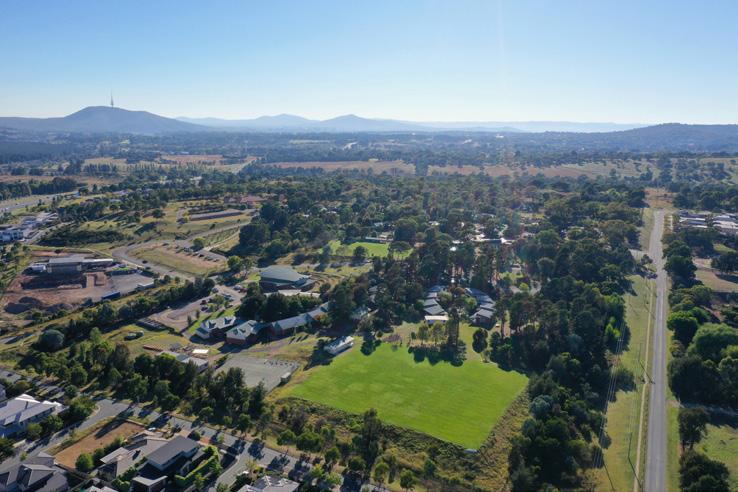
In a rapidly changing world, Canberra families are seeking an education that is both academically rigorous and deeply human. Orana Steiner School is set on a spacious, nature-filled campus in Weston, and offers a balanced and inspiring approach to learning.
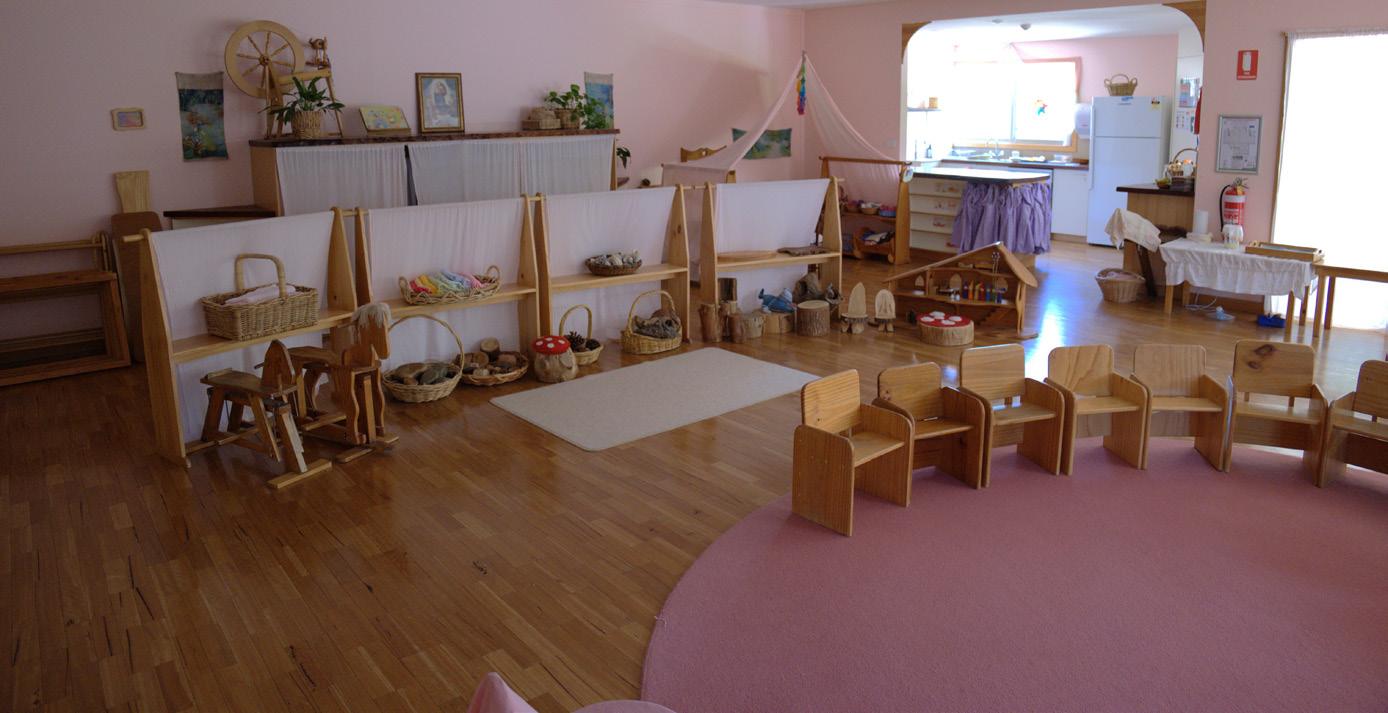
Founded in 1981, Orana has grown into a thriving, accredited school from Early Childhood to Senior College. Guided by the philosophy of Rudolf Steiner, the school delivers a structured group learning curriculum across literacy, numeracy, science, humanities, and the arts, designed to meet each stage of child development.
Learning at Orana is both purposeful and engaging. Early years emphasise play, imagination, and strong foundations, while later years build academic depth, critical thinking, and independence.
Technology is introduced thoughtfully, supporting focus and long-term learning. Rich experiences,
festivals, camps, music, and outdoor education all foster confidence, resilience, and a strong sense of belonging.
Families who value a holistic, community-centred education will find Orana a place where children grow into confident, capable graduates prepared for further study and life beyond the classroom.
We warmly invite you to experience the difference firsthand. Information evenings and guided school tours provide a genuine insight into daily rhythms, curriculum, and community spirit.
To book a tour visit www.oranaschool.com or call (02) 6288 4283.
Orana Steiner School Unwin Place, Weston. Call 02 6288 4283 or visit oranaschool.com
Discover Orana Steiner School
no booking required Overture Hall Cnr Hickey Ct & Dargie St, Weston PRIMARY Tues 28 April
6.30 - 8.30pm
Thurs 7 May 6 - 7.30pm YEAR 7 Thurs 28 May 6 - 7.30pm
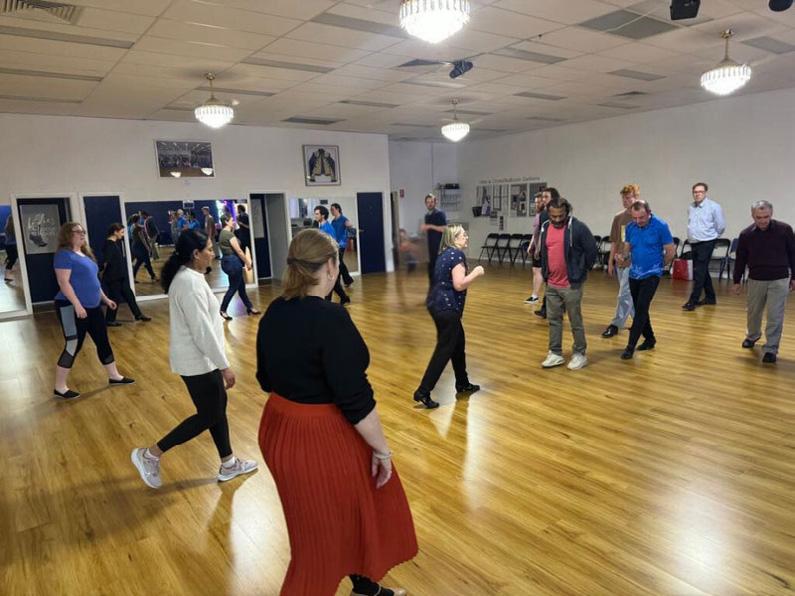
Learn to dance classes for all ages.
Dale’s Dance Classes are good for all ages
From a waltz to a samba, Dale’s Ballroom Dancing has been offering dance classes for more than 25 years. With more than 30 years of experience, Dale Harris says dancing is for everyone.
“Our adult classes are open to anyone and we are happy to adapt to suit the needs of our audience,” she says.
Currently, Dale offers two levels of expertise in her adult classes on Wednesday nights. Her beginner classes go from 7pm-8pm and cover the basics of a variety of dances, her intermediate/advanced class level, from 8pm-9pm, tackle the harder dance skills to learn. Dale says dancing is a great exercise for any age.
“Dancing is 10 times better than doing a crossword puzzle at the table or taking the dog for a walk,” she
says. “It keeps your brain and body active while you think about the steps and move.”
Moving to the Weston Neighbourhood Hall to host her adult beginner classes, Dale offers seven-week courses, although she says it’s also okay to “just turn up”.
Dale’s Medal Classes are on Thursday 5pm for under 12 years and 12 and over from 5.30pm at the Pearce Community Centre, Collett Place, Pearce. Anyone is welcome to join in, just drop past to have a look.
As Term 2 begins, families looking to broaden their children’s horizons might find the answer lies in language, culture and connection at the Dante Alighieri Society of Canberra.
Dante ACT has long been a quiet achiever in Canberra’s cultural landscape, offering Italian language classes that go well beyond vocabulary and grammar. For children, the focus is on engagement – learning through songs, games, storytelling and shared discovery.
As an added bonus, thanks to generous financial support from the Italian Ministry of Foreign Affairs, enrolment fees are very modest.
President Franco Papandrea says the early years are the ideal time to introduce a second language. “Children have a natural capacity to absorb language,” he says.
“When learning is interactive and enjoyable, it becomes something they look forward to each week.”
Programs are tailored across age groups, from preschool through to primary school, ensuring lessons are both accessible and appropriately challenging. Just as importantly, they create a sense of community.
“Language is about connection,” says Professor Papandrea. “Our classes help children build friendships while also gaining an appreciation of Italian culture.” Parents, too, are seeing the long-term value. “Learning another language at a young age supports cognitive development and confidence,” he says. “It’s a skill that stays with them for life.”
With experienced teachers and a welcoming environment, Dante ACT’s Term 2 classes offer more than an extracurricular activity – they provide a foundation for lifelong learning, curiosity and cultural awareness.
Dante Alighieri Society of Canberra Call 02 5117 3996 or visit danteact.org.au
Come and see why
families choose St Monica’s Primary School
St Monica’s Primary School is an inclusive Catholic learning community, serving families in North Belconnen. The students at St Monica’s are at the forefront of everything we do and the highly professional and dedicated staff, are driven by a desire to ensure the spiritual, social, emotional and academic needs of all students can be met.
The education opportunities offered at St Monica’s, equips students with the skills they need to become active, responsible and engaged citizens.
Our parent community is highly engaged and works in strong partnership with the school.
The school has well-resourced learning facilities and these assist students to develop their strengths both inside and outside of the classroom.
With an incredibly strong focus on positive behaviour and student well - being, St Monica’s ensures students are supported holistically through the expertise of our School Counsellor, Student Well - being Officer and the comforting presence of Monty, our well - being support dog. All members of our school community are committed to living out the St Monica’s footsteps of Respect, Resilience, Engagement and Growth.
Join us for a student-led tour of the school at our Open Days: Tuesday 5 May, 2026: 9:30am-11am and 3:45pm-5:45pm. Thursday 7 May, 2026: 9:30am-11am and 3:45pm-5:45pm
A Parent Information Session will also be held: Tuesday 5 May, 2026: 6pm-7pm
The Anglican School Googong: Inspiring growth and authentic learning
As the burgeoning Googong township continues to attract young families, The Anglican School Googong (TASG) stands as a vital cornerstone of the community, committed to delivering exceptional, future-focused education.
Situated on Gorman Drive, TASG has rapidly evolved from its foundation, which began with just 33 students in its first year.
The only K-12 school in Googong, the school is guided by its Anglican approach to holistic education.
At the heart of TASG’s philosophy is authentic learning, which empowers students to become life-long learners within a supportive, Anglican community.
The school encourages students to Dream – to dare to imagine ‘what if’, Discover – to explore the wonder in the world around them, and Grow – to use their God-given gifts to make a difference.
To support this vision, TASG invested in its most
significant project to date, completing a state-of-theart Senior School building in 2021 and celebrating its first Year 12 graduates in 2023. Now a fully K–12 school, it offers a place where every student can find their sense of belonging.
This purposeful and contemporary environment fosters an engaged and connected student experience, nurturing active thinkers and a community of inspired contributors. By valuing relationships, adaptability, and student-centred learning,
The Anglican School Googong is dedicated to serving the region – cultivating adventurous minds and compassionate hearts.
The Anglican School Googong 136 Gorman Drive, Googong NSW Call 02 6154 9400 googongschool.nsw.edu.au
The only K-12 school in Googong, guided by our Anglican approach to holistic
By Jackie WARBURTON
Garlic, shallots, silverbeet and spinach all benefit from being planted into well-prepared soil.
Garlic performs best in rich, weed-free ground with no root competition. Break bulbs into individual cloves before planting and choose only the largest cloves for the best harvest. Smaller cloves can be grown in pots for their foliage, then
planted out in spring once they have developed. As a rule, the larger the clove at planting time, the larger the bulb at harvest.
Shallots are sometimes labelled as spring onions in grocery stores, though true shallots form small, teardrop clusters of bulbs. They can be harvested annually, but are naturally biennial, growing in the first year and flowering in the second.
If left in the ground, they will multiply over time. Plant them as you would garlic, spacing about 15cm apart for a spring harvest. Their mild flavour makes them a useful substitute for brown or white onions in most dishes.
Silverbeet and spinach are reliable fillers for the winter garden. If established before the cold sets in, they will continue to grow steadily. However, planting into soil that is already too cold can cause them to stall, only
to bolt to seed quickly once the weather warms. Timing is key.
AUTUMN interest in the garden is not limited to trees. Many vines and climbers also deliver striking seasonal colour while providing practical benefits such as shade, screening and habitat for pollinators.
Before planting, consider whether you want an evergreen or deciduous climber, and understand how it grows – whether by tendrils that cling to surfaces or by scrambling over a support structure.
One reliable performer in our climate is Parthenocissus quinquefolia Its lush green foliage offers cooling shade through summer, then transforms into brilliant red-orange tones as nights cool in autumn, creating a standout display.
Members of the Vitaceae family, including grapevines, are also worth considering. Edible grapevines (Vitis vinifera) are grown primarily for fruit, though their autumn colour is less impressive. Ornamental grape varieties, however, provide far more vibrant seasonal colour. Take care when pruning: edible grapes should not be hard pruned, as this can remove the fruiting spurs needed for the following season.
Climbers from this family are best planted in winter while dormant. Prepare planting areas now by incorporating compost and manure so the soil is ready in the coming months.
For something a little different, consider the shrimp plant (Justicia brandegeeana). It forms a small shrub in our region and benefits from protection against heavy frost.It flowers well in warm conditions and comes in shades of orange and red.
The yellow form, known as the golden shrimp plant (Pachystachys lutea), is a related species with a similar flower shape. Both prefer full sun with some shelter from hot winds. Regular tip pruning will help maintain a compact shape and encourage more blooms.
jackwar@home.netspeed.com.au
Jottings…
• Prune hedges before cold weather sets in.
• Plant coriander and winter kitchen herbs now.
• Remove all helleborus leaves and fertilise.
• Pot cyclamen for winter cheer.
The golden shrimp plant… needs protection from the hot winds, but doesn’t mind full sun. Photos: Jackie Warburton
Parthenocissus quinquefolia… a go-to climber that grows well in our climate.
ARTS & ENTERTAINMENT Ensemble gives voice to the ‘opposite direction’
When Luminescence Chamber Singers step on to the stage for Luminescence and the Machine, they won’t just be singing – they’ll be revamping what a vocal ensemble can be, writes HELEN MUSA .
Premiering in partnership with The Street Theatre, Luminescence and the Machine takes the a cappella ensemble in the “opposite direction” to something far more radical than amplification.
Each singer will be performing with a custom-built electronic system that allows them to manipulate their voice in real time.
The singers remain fully autonomous, yet are also embedded in a web of live processing that reshapes their sound as they perform.
“Singing is a human, bodily thing,” says artistic director AJ America. “We’ve spent years exploring a cappella music – no machines, no accompaniment. This is the opposite direction.
“It’s not an add-on. The machine is part of the performance. We control it – but it also pushes back. It’s a very provocative encounter.”
Unveiling 12 world premieres, America says the project is the ensemble’s most ambitious undertaking.
Two years in the making, it brings
together a rich mix of collaborators in Melbourne-based sound artist Tilman Rob inson, Grammy award-winning Americans William Brittelle, of New Amsterdam, and Cameron Beauchamp, from Roomful of Teeth, with a cohort of Australian composers, Damien Ricketson, Olivia Davies, Dan Walker, Jessica O’Donoghue, Sam Weiss, Marcus Whale and Jess Green.
For America, the project began as a conceptual provocation.
She had been following the US ensemble Roomful of Teeth for some time and was curious to find out about the relationship of machine to human.
She emailed co-founder Brad Wells saying:
“We’d love to work with you” and asking him to be their art mentor.
To her amazement, Wells got back to her straight away, leading to remote collaboration, then live sessions at The Street Theatre for which, on Wells’ suggestion, Brittelle and Beauchamp travelled to Canberra twice for extended development periods. Their presence, alongside Robinson’s technical and compositional input, made all the difference.
Luminescence artistic director and mezzo-soprano AJ America, left, and soprano Rachel Mink… “We’ve spent years exploring a cappella music – no machines, no accompaniment. This is the opposite direction.”
“When we met Tilman, we just clicked,” America says. “He built the system with us; it’s exceeded anything we imagined.”
That process was not without uncertainty. Even late into development, the ensemble didn’t know if the technology would cohere.
“In August, we were still testing the limits,” she says. “It was a wonderful challenge – no fear, just exploration.”
What has emerged is a performance environment in which the human voice is
Ida to perform a rare treat ARTS IN THE CITY
Celebrated Italo-Croatian pianist Ida Pelliccioli returns to Australia with a program spanning Baroque to early Romantic works, guiding audiences musically from southern Europe to Vienna through composers including Scarlatti, Mozart and Schubert, as well as the rarely performed Blasco de Nebra. Wesley Music Centre, April 22 and 24.
Nine significant recordings have been newly added to the National Film and Sound Archive’s Sounds of Australia collection, celebrating moments that have shaped the nation’s cultural memory. Highlights include Rosie Batty’s 2015 address, Marcia Hines’ song You, Missy Higgins’ Scar, and Joe Dolce’s iconic Shaddap You Face, alongside the instantly recognisable sound of the PB/5 pedestrian crossing button, preserved on a newly launched website.
Finalists for the 2026 Gallipoli Art Prize have been announced, including familiar local names Margaret Hadfield for My Father’s Secret, Luke Cornish for No Rest (The Vandalism of Deir Al Balah) and Ross Townsend for Beaches of Liberation. The winner will be decided ahead of Anzac Day.
Italo-Croatian pianist Ida Pelliccioli… Wesley Music Centre, April 22 and 24.
The global dance phenomenon The Next Step brings its Legacy World Tour to life on stage, translating the excitement of the TV series into live theatre. Canberra Theatre, April, 19.
A new acquisition on show at the National Portrait Gallery is the portrait by Lisa Reid of Jason Donovan, reimagining the cover of his 1989 hit Sealed with a Kiss. Singer, songwriter and producer Richard Marx, about to start filming on The Voice, brings his After Hours Australian tour to the stage, offering an evening of hits and storytelling. Royal Theatre April 20.
First Nations pop artist Mitch Tambo takes to the
Luminescence’s roots in early and unamplified music. Instead, it expands them.
“This is an electric turn for us,” America says. “It opens up entirely new sound colours.”
There is also a strong sense of place underpinning the project. Luminescence and the Machine has been developed entirely in Canberra, a fact America is keen to emphasise.
“People always assume work like this would happen in Sydney or Melbourne,” she says. “But it’s been built here. The Street Theatre has given us the time, space and technical support to realise a really bold vision.”
“It’s a statement,” America says. “Our most ambitious work can and should happen
stage for Smith’s@Belco with a blend of contemporary sounds and traditional Gamilaraay language and culture, joined by Voice of Lele and local support act Call Me Sugarplum. Belco Arts, April, 25.
Craft + Design Canberra presents STAUNCH, an exhibition by seven Blak artists, showcasing works that explore cultural strength. Craft + Design Canberra, until May 23.
stretched, layered and refracted in real time, creating a sonic world that is at once organic and electronic.
A vocal ensemble, America suggests, is already a kind of machine, interdependent parts working together. This project simply extends that idea into the digital age, which evidently they do not fear.
Importantly, the work does not abandon
As the premiere approaches, there is a palpable sense that the ensemble – AJ America, as mezzo soprano; Lucien Fisher, baritone; Rachel Mink and Josephine Brereton, sopranos; Alasdair Stretch, bassbaritone, and Dan Walker, tenor – is standing at a threshold.
“I feel like this body of work is on the brink of something… It’s no exaggeration to say that this is our hot take,” she says.
“It sounds completely different – but it’s still us.
Luminescence and the Machine, The Street Theatre, April 30 and May 3.
An ANZAC concert remembering those lost in action through a program of music from 1450-1650, centred around Missa L’Homme armé - Mass for the Armed Man (Francisco Guerrero), and featuring readings from the letters of Ada Priscilla Smith, Australian Army Nursing Service Sister, 1915-1920
Polifemy Women’s vocal ensemble directed by
Sunday 26 April 3 pm
Wesley Uniting Church, 20 National Circuit, Forrest Tickets: $30 ($25 concession, $15 full time students, under 12 free)
Enquiries: 0406 377 762
Bookings: https://www.trybooking.com/DKMSK
Robyn Mellor
Photo: Wilk
STREAMING Beef’s back with a new season of full-blown biff
Beef is back on Netflix, returning with a sizzling second season this month.
The peculiar comedy-drama series proved a breakout hit in 2023 with its rapid fire pace and intriguing premise. The entire plot ignites with a simple car ding.
Danny Cho (Steven Yeun) is a struggling contractor whose life spirals out of control when his car bumps into Amy Lau’s (Ali Wong), a bougie business owner.
A simple exchange of details is all that’s needed, right?
Wrong.
This seemingly innocuous incident is the catalyst that sparks an obsession and hatred that neither of these very different people can let go. Both of them proceed to try and bring the other undone in this increasingly bizarre, suburban feud.
In season two it’s a new set of characters who become locked in a similarly strange duel.
Like its predecessor, the plot of this new set of episodes starts with one simple moment that explodes into something absurd.
This time it kicks off when a newly engaged couple working at a country club accidentally see their boss locked in a heated fight with his wife.
What should probably be a case of “none of your business” soon descends into a master plan of manipulation, blackmail and secret spilling.
The cast is packed. Oscar Isaac and Carey Mulligan play the rich managers of the club while Cailee Spaney and Charles Melton play
the humble staff thrown into the turmoil of their own making.
Like season one, the core heat of Beef comes from the class differences of its characters.
This seemingly petty squabble in season two soon becomes a full-blown biff between the ultra-rich bosses of the country club and the underpaid workers that keep it running.
Easy to watch and easy to get addicted to, the social satire here is well cooked.
IN an age where it feels more and more like big tech is controlling what we see, scroll and buy it’s nice to be able to at least have a laugh about it.
Well, that’s basically the idea behind the
news series The Audacity, anyway.
This dark comedy streaming on SBS On Demand dives into the ethically murky waters of Silicon Valley, following the millionaires and billionaires behind social media, artificial intelligence and those all encompassing algorithms designed to keep people glued to their screens.
The eight-episode story follows a charming but unstable CEO named Duncan Park (Billy Magnussen) who has pioneered AI software able to estimate and influence people’s next online click.
Park’s pristine world begins crashing down around him though when a data leak exposes just how much influence the
software is having, not just on shopping but on politics, markets and even people’s day-to-day lives.
Now Park has to contend with journalists snooping around his company, politicians trying to distance themselves from the fallout and a therapist with an agenda of her own who is strangely curious about Park’s power.
The show is created by Jonathan Glatzer who has writing and producing credits on
MUSIC / Sally Walker
HBO Max’s hit series Succession and Better Call Saul.
If he’s put that pen prowess to work in this newest series he may just have another hit on his hands.
MARK Wahlberg’s new comedy movie arrives on Amazon Prime Video this month. It’s called Balls Up and it stars Wahlberg as Brad Lewison, an advertising executive with a bold pitch: a condom sponsorship for the Football World Cup.
Somehow getting it actually on the pitch, Brad travels to Brazil for the major event where, after a drunken night out with a rival advertising executive, accidentally stops one of the teams from scoring the tournament’s winning goal.
That sparks all-out chaos as the duo are chased across the country by angry football fans, dodgy government officials and drug smugglers.
There’s not much more to say about this one than it being standard Wahlberg comedy fodder.
With his track record that means it could go two ways: prove a major hit or be not much more than its title suggests it is.
Sally takes to a quieter, but
By Helen Musa
As the ANU School of Music enters a new chapter, many of the musicians who have long called Canberra home are reassessing their lives and careers in its wake.
Among them is flautist Sally Walker, who recently made the tough decision to step away from her contracted role after eight years.
She continues to teach a small cohort of flute students on a casual basis, but the shift marks a significant turning point.
Walker’s departure comes despite a career of remarkable recognition, including, earlier this year, People’s Choice runner-up for Limelight Artist of the Year, for which she was described as “a powerful advocate of Australian music” and credited with “thrilling audiences on stage and on disc.”
Now, her life looks quite different.
She and her husband, engineer-musician Jose, have settled in a 1.2-hectare property in Murrumbateman, where for Jose, who grew up in Patagonia, Argentina, the wide-open spaces feel like home. For Walker, it has been an adventurous adjustment, but one she has embraced.
Rural life comes with unexpected companions. Neighbours include Max the stallion and Dorothy the sheep, but it has also offered something increasingly rare: space to think, reflect, and create.
“It’s a quieter life,” she suggests, “but not a slower one.”
Far from retreating, Walker’s schedule remains both local and international.
Locally, for instance, she performed last year for the Yass Music Club with pianist Simon Tedeschi, a long-time friend dating back to their SBS Radio and Television Youth Orchestra days. And in late March there was the world premiere of a flutes-only version of
Miguel Del Aguíla’s Submerged at Smith’s Alternative. She continues to teach as a guest artist at the Australian National Academy of Music, also maintaining strong ties to Europe after a distinguished academic career in Germany, where she lived for many years, touring with the Berlin Philharmonic and Leipzig Gewandhaus Orchestra and serving as principal flute with the Deutsche Kammerakademie Neuss.
But her connection to Canberra remains personal. Born and educated in the city, she returned after years away to be closer to her late parents and to help with medical appointments.
“There is a permanent place in my heart for Canberra,” she says.
That connection makes the events surrounding the School of Music particularly poignant.
“There’s a deep grief,” she reflects, “but also a lasting fondness. It’s where I began.”
Recent years have also brought personal loss, prompting Walker to reassess priorities.
A major highlight on the horizon is the public release of her recording with the Canberra Symphony Orchestra made last year while she was Artist in Focus for CSO’s 75th anniversary season and featuring a program of Australian flute concertos, three of which were written specifically for her.
Among them is a new work by acting head of the School of Music, Chris Sainsbury, which is widely regarded as the first indigenous Australian flute concerto.
The piece draws on Sainsbury’s cultural heritage, including a word from his mother tongue, Dharug, relating to dolphins, an animal Walker admits she is “mad” about. The concerto evokes dolphin song and movement across three sections, blending acoustic instruments into a vivid, immersive sound world and involving some delicious glissandos.
This connection to the natural world extends beyond the stage.
Oscar Issac and Carrie Mulligan in Beef season two… like season one, the core heat comes from the class differences of its characters.
The Audacity… a dark comedy that dives into the ethically murky waters of Silicon Valley.
Living with books and looking out for them BOOK REVIEWS
To read books or not to read?
That is the question. The huge crowds at the Lifeline book fairs each year in Canberra certainly don’t give the impression that print books and book reading are dead.
Indeed, according to the 2025 NielsenIQ BookScan, 70 million print books were sold in Australia last year.
According to the 2024 National Reading Survey, however, 25 per cent of the general Australian adult population had not read or listened to a book in the previous year.
According to the survey, those who do can be divided into general and engaged readers, the latter reading one book at least a fortnight Paperbacks are the most popular format (75.8 per cent). Female readers are more prevalent than male across all age groups. Young Australians, delineated between 15 and 24, are more likely to read graphic novels/comics and e-books over print books. Crime fiction and “romantasy” are the most popular categories.
The cited Nielsen figures don’t include audiobooks, which constitute the fastestgrowing book format.
A significant proportion (39 per cent) of Australian readers don’t have enough room to keep books. Indeed, John Updike once said: “Books are heavy freight… They make us think twice about changing addresses.” But if you do have space and are a book
badly especially through literary betrayals, insults and feuds.
Gore Vidal, who delivered many sharp words of his literary and political contemporaries, said on the death of Truman Capote – “A brilliant career move”. Virginia Woolf believed James Joyce’s Ulysses was “the book of a self-taught, working-class man and we all know how distressing they are”.
200th birthday in 2026. This is celebrated in The Library That Made Me (New South. $49.99), edited by Richard Neville and Phillipa McGuinness, a beautifully produced and well-priced book with numerous illustrations,
The book begins with Damien Webb providing an indigenous reflection through an examination of the Mitchell library’s bronze portico doors. Neville provides a short history of the library, while colour photographs recount a day in the life of the library.
enthusiast, then turn to Looking After Your Books (Bodleian Library Publishing, $34.99) by Francesca Galligan, deputy head of rare books at Oxford’s Bodleian Library, Topics covered by Galligan include how to house and organise books, whether they be paperback editions of Agatha Christie or rare books or first editions; how and where to buy books and how to list, repair, conserve and even dispose of them. She also examines the psychology of book collecting with personal asides and historical examples.
Galligan mentions how some collectors
seek to match editions, although she doesn’t go as far as the British firm Curated Books, who will sell you books arranged by subject, date, size or colour for your house. Background books regularly feature in the background for TV interviews and Tik-Tok presentations, but one wonders whether the books have actually been read.
In When Books Go Bad (British Library, $29.99) – with a subtitle, Tales of Literary Feuds, Publishing Errors and Withering Reviews –author Alex Johnson delivers, in 13 subject chapters, a wonderful selection of authors, mostly men, behaving
no slower performance life
to Sataya in the
The coming months are
projects: curating performances for the
and a new commission for Richard Tognetti. If the past year has been marked by upheaval, it has also opened unexpected doors and while the institutional landscape around her may be changing, her direction feels clear. She recalls the words of Swedish conductor Herbert Blomstedt: “Let music be your compass and your home.” Music, as ever, remains both her compass, and her home.
and
Meanwhile, projects
Literary feuds covered include those of JeanPaul Sartre and Albert Camus and Julian Barnes and Martin Amis. The long-standing feud between VS Naipaul and Paul Theroux began when Theroux noticed that books that he had personally inscribed and donated to Naipaul were on sale in a bookshop for $1500 each. You can sometimes have too many books. Galligan documents how a Hong Kong bookseller, who ran the Green Text Book Store, was killed in 2008 when a bookcase packed with boxes of books fell on top of him. The house of renowned Canberra book collector Alan Ives was one in which its owner was almost booked out of the house as those who visited well remember. The sorting and reallocation of the books after his death in 2017 was apparently a mammoth operation by his bibliophilic friends
Galligan comments that books constitute memory and those memories should be preserved in our major libraries. One outstanding Australian library with many such memories is the State Library of NSW, which has its
A major section of the book contains reflections from a wide range of Australians including Annabel Crabb, Thomas Keneally and Markus Zusak on what libraries have meant and mean to them.
The Library That Made Me also reminds us that libraries are also vibrant cultural and community hubs, open to all and provid ing digital access to a wide range of resources in an era of increasing inequality.
The State Library of NSW… celebrates its 200th anniversary this year.
Red Sea, where she will swim with and play music to a pod of around 300 dolphins, part of her evolving project Living Poems of the Sea, which has seen her swimming and playing with dolphins in Australian settings.
filled with similarly ambitious
inaugural Wagga Weekender Music Festival; intimate concerts for palliative care patients; touring Europe; collaborating in London with Royal College of Music researchers;
performing in Japan with long-time colleague, flautist Kazuko Ihara.
continue apace, including that
Sally Walker will appear at the Wagga Weekender Music Festival, April 17–19, followed by Invitation to the Dance presented by Salut! Baroque at Wesley Church, April 24.
Flautist Sally Walker… “There is a permanent place in my heart for Canberra.”
It’s common to watch staff groovin’ and movin’ while making coffees at Cesar’s Café, Florey shops.
Known for its Latin vibes, good beans and big smiles, Cesar’s Café makes it a mission to warmly welcome customers.
Cesar’s humble beginnings were as a coffee van, but when a space became available across the way, it transformed into a buzzing café.
Now the place pumps, and if you don’t get in early, you’ll likely find shelves mostly bare, with food having sold out. We didn’t get in early, but luckily found simple lunch items to munch on.
Cesar’s Café is famous for its Argentinian and Chileaninspired empanadas (which, unlike traditional Colombian ones, are not deep-fried). They’re inexpensive ($8), so hunger pangs are managed without breaking the bank.
When Cesar’s Café says the pork chorizo empanada is spicy, they mean it. The baked empanada pastry is sturdy enough to hold all the goodies inside, but still flaky and soul-satisfying. The filling was ramped up with smoky, spicy and heavily seasoned chorizo (yum). It made a real statement.
Sold out by the time we arrived at
Argentinian and Chilean-inspired empanadas… the baked pastry is sturdy enough to hold all the goodies inside. Photos: Wendy
1 pm were many of the other types of empanadas, including guava and cheese, chicken and jalapeno, pumpkin and chickpea curry, and portobello chicken.
Two types of toasted sandwiches are on the menu (surprise, surprise … one was sold out). The Machoman was delish ($10). The smoked ham was super tasty, and we loved the Swiss cheese, fresh tomatoes and spinach. Whole-grain mustard
WINE / cork or screw cap?
topped the sandwich off.
A brekkie burrito pops up on the menu ($13), as does a chicken salad wrap (also $13) and a Cubano sandwich (non-toasted and $13).
The café has also built a loyal following of coffee aficionados, with two blends of roasted coffee available – Cesar’s Cafe House Blend (Colombia 50 per cent, Ethiopia 50 per cent) and Cesar’s Cafe Premium (Colombia, 100 per cent).
Brothers Cesar and Sergio, who started the café, have always been committed to quality coffee and state-of-the-art equipment, and cutting-edge software is used to ensure a consistent flavour and aroma.
Craving a pastry with your coffee? The display cabinet is loaded with the usual – muffins, banana bread, croissants, Danish pastries and raisin scrolls.
The drinks line-up includes a berry smoothie, milkshakes, iced coffee, iced chocolate and affogato. Cold beverages are available from a fridge at the end of the counter and include bottled Wild One options. Australian-made, Wild One is committed to organic, alternative drinks that are healthy and never sickly sweet.
Fun facts, according to Facebook: Sergio took over the business at just 20 years old, speaking no English and learning the language on the job in just six months. Cesar now lives back home in Colombia.
But not everyone is doing the ‘twist’
Surprisingly, 10 years ago 90 per cent of Australian wine was bottled using a screw cap rather than cork, according to the Australian Wine Research Institute.
While there is still a debate about the most appropriate closure for wine, it seems Australian winemakers and consumers have backed the “twist-off” top.
Some of the wine exports headed overseas though, notably to China, still favour cork as that country (and France) have not embraced the screw cap. Like the invention of the shovel, the screw cap is groundbreaking.
Screw caps offer convenience that cork-sealed bottles can’t match. They are easy to open and (occasionally, on my part) reclose.
If only the screw cap had been available in the ‘70s (cue lights dimming and fade into reminiscence). In a house on a hill in Wellington, NZ, that I shared with four others, a friend had brought around an Australian bottle of red wine for us to consume with dinner.
derived from a smelly chemical known as TCA, or trichloroanisole.
It makes the wine smell of mouldy cardboard or wet dog and infects the wine with the same taste, depending on the levels of its presence. It is a virulent chemical and some wineries have had to be refurbished where TCA has affected wine barrels, drainpipes, wooden pallets and beams or rubber hoses.
It occurs when fungi or mould that is naturally present in the cork or wood comes into contact with chlorophenols that are formed through the combination of phenols in the wood and contaminants containing chlorine. The fungi then converts the chlorophenols into TCA which spoils the wine. Screw caps don’t suffer from this problem.
I recall that Australian red wines were often labelled “claret” if they were primarily from cabernet sauvignon grapes and “burgundy” if they were shiraz based. This was before the French started to litigate worldwide to protect the names of the wines produced in specific localities through the system known as Appellation d’Origine Contrôlée. The French have
now successfully eliminated the “theft” of their important wine regions’ names.
But back to NZ and the red wine, I believe a “burgundy”: it had a cork and our household did not own a corkscrew.
This was a household of young professionals absent tradie skills. So one of our number decided to pierce the cork with a skewer. This was not very successful with the constant skewering shredding the cork and a cork-filled dribble happening when it was time to pour the wine. Eventually we strained the wine through a sieve into a bowl and from there into glasses. It didn’t matter though; even having regard to its troubled passage into the glass, it was as rough as could be.
It wasn’t that the wine was contaminated by the cork (in pieces in the sieve with tiny pieces floating in the wine bottle). Cork taint is usually
But there is intense debate still about whether screw caps contribute to what is known as “reductive” flavours in wine.
The argument goes that a properly applied screw cap totally seals out oxygen. But a cork permits some to pass. Hence, reductive characteristics, such as the build-up of sulphide aromas, are diminished in cork-finished wines through the chemical mechanism of aeration.
Hence some wineries, like Burge Family Winemakers in the Barossa, use cork on its premium-grade wines for export and because in transit if a screw cap is knocked the cap’s integrity may be lost.
Libbi, cellar-door manager at BFW told me: “For us, there just wasn’t enough research on what our wines were going to do under screw cap over a period of time and for logistics, with our A-grade corks, they travel better than screw caps.
“For reds they also love that little bit of breathing that screw caps can’t do.”
Johnson
Richard Calver has written the CityNews column since 2016.
Screw caps offer convenience that corksealed bottles can’t match. They are easy to open and reclose.
HOROSCOPE PUZZLES
By Joanne Madeline Moore
ARIES (Mar 21 – Apr 20)
Calling all red-hot Rams! The week starts with a fiery bang as Mercury, Mars and Saturn hook up in your sign. Ideas, action and determination will take you places. Lucky Venus and inventive Uranus also activate your cash zone. So – when it comes to money matters – being creative and innovative could pay off. On the other hand, don’t be too hasty. Your motto for the moment is from birthday great, writer Charlotte Bronte: “Look twice before you leap.”
TAURUS (Apr 21 – May 21)
This week you’ll feel the positive effects of the Sun, Venus and Uranus in Taurus plus four planets in proactive Aries. So, avoid getting stuck in a static way of thinking and a routine way of behaving. A current situation (or ongoing problem) has more creative options and exciting possibilities than you previously thought. Wisdom for the week is from movie star (and birthday great) Barbra Streisand: “I just don’t want to be hampered by my own limitations.”
GEMINI (May 22 – June 21)
Uranus transits into your sign on the weekend, where it stays until 2033. So, it’s a good time to update your computer skills, experiment with innovative ideas, learn something radically new, and/or travel somewhere you’ve never been before. Uranus and Gemini both stimulate the nervous system. So, a regular form of relaxation – like meditation, yoga, chanting or Tai Chi – will help to settle your overstimulated brain and nervous system in the years ahead.
CANCER (June 22 – July 23)
This week, with Mercury, Neptune, Mars and Saturn all transiting through your career zone, it’s time to be clever, creative, proactive and disciplined at work. Then there’s the powerful Sun/Pluto square on the weekend, when you could become drawn into a heated argument over money, possessions, an inheritance or a friend. Or you could find yourself consumed by obsessive love, secret desires or jealous thoughts. So calm down and tread carefully, Crabs!
LEO (July 24 – Aug 23)
Many lively Lions are independent operators, fiery communicators and masters at juggling multiple projects. But things could go haywire this week, as the Sun/Pluto square complicates personal and professional relationships. Don’t let it deter you. Think things through carefully, consult widely – and then grab opportunities with both hands! Your motto is from birthday great, Barbra Streisand: “Every setback is an opportunity to come back stronger.”
VIRGO (Aug 24 – Sept 23)
The Sun shifts into fellow earth sign Taurus, so it’s time for steady Virgos to step up and be the calm voice of reason, as you find creative ways to work with others. If you collaborate and are prepared to pivot, then it will help steer you onto more solid ground in these uncertain times. Be inspired by birthday great, the late Queen Elizabeth: “Whatever life throws at us, our individual responses will be all the stronger for working together and sharing the load.”
LIBRA (Sept 24 – Oct 23)
Calling all love-hungry Librans! The week starts with a fiery bang as Mercury, Mars and Saturn all link up in your relationship zone. If you want to improve your love life, then you’ll have to be creative, proactive and persistent. Lucky Venus and inventive Uranus also activate one of your finance zones. So – when it comes to money matters – being cooperative and innovative could pay off, especially involving business partnerships and joint finances.
SCORPIO (Oct 24 – Nov 22)
Prepare for a rather explosive and intense week, Scorpio! Five planets in fiery Aries amp up your bossy and controlling side, especially at work. And then the powerful weekend Sun/Pluto square stirs up a tricky relationship with a romantic partner or a family member. So make sure you confiscate all sharp implements and choose your words wisely, as many people (including you) will be quick to anger and liable to make mountains out of molehills.
SAGITTARIUS (Nov 23 – Dec 21)
With four planets visiting fellow fire sign Aries, this week you’ll be at your sociable, gregarious Sagittarian best – especially with friends and at work. You’re keen to have fun but, when it comes to close relationships, resist the tendency to be superficial. Jupiter (your patron planet) is transiting through your secrets-andintrigue zone, so there’s more going on beneath the surface than meets the eye. Smart Sagittarians will slow down, observe, listen and learn.
CAPRICORN (Dec 22 – Jan 20)
This week’s tricky Sun/Pluto square could reactivate a festering friendship or money issue that’s been brewing and stewing. A large dollop of diplomacy – and a heap of humility – will get you through. The good news? Destiny is around you, and fate could lead you to a special new contact at work. Be proactive and adventurous. As actress (and birthday great) Shirley MacLaine observed: “Don’t be afraid to go out on a limb. It’s where all the fruit is.”
AQUARIUS (Jan 21 – Feb 19)
Pluto (in Aquarius) squares the Sun (in your domestic zone), which could lead to some uncomfortable home truths about how you relate to your nearest and dearest. Don’t blame other people for challenges and roadblocks! Take a close look at what you’re doing – perhaps you are the problem? Look within for the answers. Be inspired by actress (and birthday great) Shirley Maclaine: “The most profound relationship we will ever have is the one with ourselves.”
PISCES (Feb 20 – Mar 20)
Expect an up and down kind of week. Venus could make you feel attractive, lucky and loved, especially at home. While Saturn could amplify feelings of doubt and low self-esteem. Don’t stress and procrastinate, Pisces! Wisdom for the week comes from birthday great Barbra Streisand, who turns 84 on Friday: “Doubt can motivate you, so don’t be afraid of it. Confidence and doubt are at two ends of the scale, and you need both. They balance each other out.”
Copyright Joanne Madeline Moore 2026
1 Name a scurf that forms on the scalp. (8)
2 What is a quality of being true? (6)
3 To refresh physically, is to do what? (8)
4 What is a musical composition? (4)
5 What do we call those persons who give blood, etc? (6)
6 Who is granted a lease? (6)
12 What are non-SI units of heat measurements? (8)
13 To be depressed, is to be what? (8)
15 Name the longest river in the South America. (6)
16 What is a cure-all? (6)
17 Name an instrument for use in attack or defence. (6)
20 What is hard and continuous work? (4)
At Tap & Tile, we specialise in transforming bathrooms, ensuites and laundries into beautiful, functional spaces. With over 15 years’ local experience, our team delivers:
• Custom floor & wall tiling tailored to your style
• Designer feature walls & mosaic accents
• Premium tapware & shower fittings
• Underfloor heating & heated towel rails
• Complete wet-area waterproofing
• Full bathroom & laundry renovations Why Canberra Chooses Tap & Tile
• 5-Star Google Reviews from delighted homeowners
• Licensed & Insured tradespeople committed to quality
• Free On-Site Design Consultation, we bring samples to you
• Transparent, Fixed-Price Quotes, no hidden costs