IF YOU CAN’T MAKE CONTENT, DON’T GET


We’re mugs, our energy wealth flows overseas
MICHAEL MOORE
Did the appeal panel prejudge widow’s eviction?
JON STANHOPE
More work in the garden comes with cooler nights
JACKIE WARBURTON

KEEPING UP THE ACT











We’re mugs, our energy wealth flows overseas
MICHAEL MOORE
Did the appeal panel prejudge widow’s eviction?
JON STANHOPE
More work in the garden comes with cooler nights
JACKIE WARBURTON
KEEPING UP THE ACT

“The audio and visual recordings reveal disturbing and deeply concerning aspects of the Housing ACT appeal process – it appears the panel resolved, prior to the hearing, that the decision to evict Yvette van Loo should stand,” writes JON STANHOPE .
The ACT Supreme Court has finally released its judgment in the matter brought by three elderly and courageous Canberra women, each of whom had been issued with eviction notices by the ACT government under its now infamous, money-grubbing public housing cleansing program.
I should acknowledge that it was me who first approached Ken Cush and Associates, the legal firm that represented the three plaintiffs, with a request that they take up the case.
My initial involvement arose when I was contacted by one of the more than 300 public housing residents who had received an eviction notice from Housing ACT with a request that I assist her in preparing a case for the withdrawal of the Housing ACT eviction notice.
The thrust of the case was that the ACT government had, in seeking to evict the plaintiffs, breached their human rights.
The judge agreed and found that the ACT government had clearly breached the human rights of the three plaintiffs.
A serious aspect of this matter is the nature of the appeals process that the ACT government instituted following the initial public outrage that greeted the announcement that the government was planning the program of evictions.
Housing ACT introduced a formal appeals process that enabled those the subject of eviction to lodge an appeal.
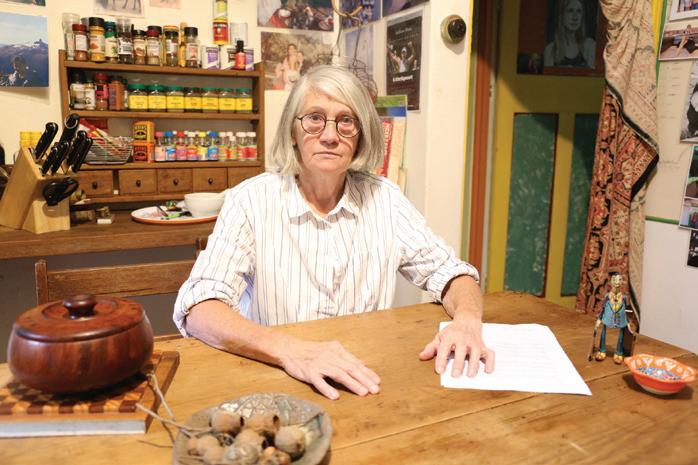
One of the plaintiffs, Yvette van Loo (a widow), lodged such an appeal and asked me to accompany her to the hearing to, in effect, provide her with moral support.
I was happy to do so and we reported to the offices of Housing ACT where the appeal was heard, I understand, by four senior members of Housing ACT and two community representatives, who were introduced as senior members of communitybased organisations.
The appeal was held during the time of the covid epidemic and, not

separate room, and the hearing was conducted via video link.
Unfortunately, the appeal was unsuccessful, which provided the catalyst for the initial approach to Ken Cush and Associates.
An intriguing outcome of the engagement of the law firm is that they did what lawyers do and subpoenaed all documents and other relevant materials (eg, videos or recordings etcetera) related to the appellant and her eviction from her home.
Among the materials provided, consistent with the subpoena, were audio and visual recordings relevant
General manager: Tracey Avery, tracey@citynews.com.au
Sales & marketing executives: Damien Klemke, 0439 139001
Ashika Nambiar, 0425 149860
Lisa Clarke, 0413 590811
Editor: Ian Meikle, editor@citynews.com.au
Arts editor: Helen Musa, helen@citynews.com.au
Production manager: Janet Ewen
Graphic designer: Mona Ismail
Distribution manager: Penny McCarroll
ACT of the application by the evictee for the decision to evict her from her home to be reversed.
The audio and visual recordings duly released by the ACT government reveal disturbing and deeply concerning aspects of the appeal process.
In short, it appears that the panel may have resolved, prior to the hearing, that the decision to evict Yvette van Loo should stand.
Her lawyers described the situation to the court in the following terms:
“Ms van Loo gives evidence about her experience with the program, and I just want to take your honour to
paragraph 48, so after the events that your honour has just seen depicted on the video, she receives the letter and she felt insulted that they showed such contempt for her.
“So, we put it in our submissions that there was pre-judgment of the issue, but what then followed was a sham consultation and the expression of the right not to be subjected to degrading treatment.
“Now we say that its open to your honour to find that the process was cynical, superficial and dismissive...
“It was very much a, let’s just knock this over, make the decision. We will leave it the 14 days. Send her the letter. We know that’s what we’re going to do.
“So, your honour will see initially the defendants who convened to have a discussion and then the camera will pan to Ms van Loo and a support person. She doesn’t know what is going to happen.”
(I was the support person, and I, too, did not know that that was what was going to happen).
It would be appropriate, subject to the views of the plaintiffs, for the video referred to above to be made public.
Columnist Jon Stanhope was ACT chief minister from 2001 to 2011 and the only chief minister to have governed with a majority in the Assembly.
With
Linda
•
•
•
•
•



Evans
Planning Senior


At a time when democracy is under threat internationally, there are people working hard to improve our systems and to make them more receptive to
interests and needs.
At the same time, it is hard to avoid the populists who seek to tap into dissatisfaction, racism and personal grievance.
Finding sensible ways to have our representatives understand needs and interests can be challenging.
Debate was rife on the concept of Citizen Initiated Referenda in the early days of self-government in the ACT. The arguments seem sensible at a surface level. However, the price of this type of referendum is dominance of majority views when the challenge for governments is protecting minor ity views, opinions and rights. Democracy is derived from the Greek – the “cracy” of the “demos”. The rule of the people. Who are the “people”? Those who favour plebiscites perceive the “people” as a unified oneness with its own wisdom and understanding that gives a mandate to rule.
majority decisions contestable to ensure that they are also fair to individuals and minorities.
For a democracy looking to ensure ‘a fair go’, it becomes important to understand and listen to the individuals while, at the same time, being cognisant of the will of the majority.
representative role through “ordinary, everyday individuals” is The Canberra Alliance for Participatory
An online poll resulted in a list of 127 proposals that was then considered and voted upon. A total of more than 9000 votes were received.
The top five results from this poll
Tax the fossil fuel industry
Address the perverse tax incentives that push housing to wealth creation rather than accommodation
running a “Community Assembly”.
Through this process they were able to narrow the request to the federal parliamentarians down to two final asks.
Twenty-two people participated in this deliberative process and narrowed the above proposals into two issues they would like the MPs to take to government for action in 2026.
They are:
• Implement a gas export levy in line with the ‘fair share’ levy (as proposed by the Superpower Institute)
• Implement all the recommendations of the Murphy Report You win some, you lose more, (the report of its inquiry into online gambling and its impacts on those experiencing gambling harm).
Regarding a gas export levy, the Superpower Institute stated: “Australia captures only a small share of these profits.
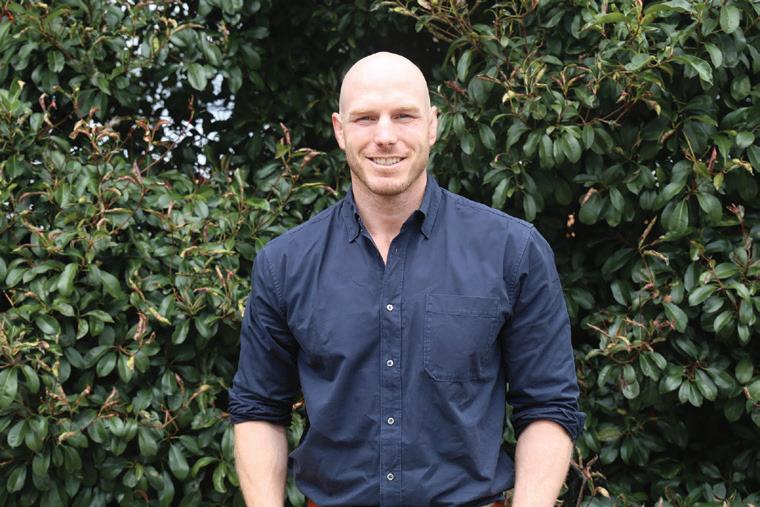
Independent senator David Pocock has already described the situation as Australians “being conned”. He attempted to set up a Select Committee on Why Gas Companies Pay Less for Offshore Liquid Natural Gas than Australians Pay in Beer Excise. He pointed out that the Norwegian Sovereign Wealth fund has now reached around the $3 trillion mark. Australia has little to show for its own natural resources.
Unfortunately, both major parties have declined to support his call for this inquiry.
The CAPaD process should put pressure on the other four representatives to implement a levy. After all, Senator Katy Gallagher and MPs Andrew Leigh, Alicia Payne and David Smith are members of the Labor government.
However, when “people” is considered as a group of individuals rather than as an abstract and unified collective agent, individual rights and independence need to be respected.
In a 1997 article published with Prof Philip Pettit, we concluded: “The appeal of citizen-initiated referenda is based on the mistake of understanding democracy as the rule of the collective people, not by the control of government by ordinary, everyday individuals”.
Seeking to assist our federal elected representatives to fulfil their
• Stop subsidising the fossil fuel industries and divert these resources to a just transition
• Work with First Nations to develop a national truth-telling process
• Ban all forms of gambling advertising CityNews readers will not be surprised by these findings. These five results will be passed on to the senators and MPs. However, CAPaD took an extra step to engage the community in more depth by
“Countries like Norway and the UK return most of the value from their fossil fuel exports to the public.
“In Australia, much of that wealth flows offshore to foreign shareholders – even when export revenues soar. It’s a bad deal for Australians, and it’s one we can change”.
Michael Moore is a former member of the ACT Legislative Assembly and an in dependent minister for health. He has been a political columnist with “CityNews” since 2006.

What’s working from home doing to your mental
JAN KABATEK and FERDI BOTHA tracked 16,000 Australians to find out...
Working from home has become a fixture of Australian work culture, but its effect on mental health is still widely debated.
Can working from home boost your mental health? If so, how many days a week are best? Whose wellbeing benefits the most? And is that because there’s no commute?
These are among questions we answered in our new study, based on long-term survey data from more than 16,000 Australian workers.
We found working from home boosts women’s mental health more than men’s.
We analysed 20 years of data from the national Household, Income and Labour Dynamics in Australia (HILDA) Survey, which allowed us to track the work and mental health of more than 16,000 employees.
We didn’t include two years of the covid pandemic (2020 and 2021), because people’s mental health then could have been shaped by factors unrelated to working from home.
The data allowed us to track people over time and examine how their mental health changed alongside their commuting patterns and work-
ing from home arrangements.
Our statistical models removed any changes driven by major life events (for example, job moves or the arrival of children).
We focused on two things to see if there was any effect on mental health: commuting time and working from home. We also examined whether these effects differed between people with good and poor mental health, a novel feature of our study.
For women, commuting time had no detectable effect on mental health. But for men, longer commutes were tied to poorer mental health for those who already had strained mental health.

The effect was modest. For a man near the middle of the mental health distribution (close to the median), adding half an hour to his one-way commute reduced reported mental health by roughly the same amount as a 2 per cent drop in household income.
Working from home had a strong positive effect on women’s mental health, but only in certain circumstances.
The biggest gains were recorded when women worked mainly from home while still spending some time (one to two days) in the office or
either positive or negative.
on-site each week.
For women with poor mental health, this arrangement led to better mental health than working exclusively on-site. Gains were comparable to those from a 15 per cent rise in household income.
This finding echoes an earlier study, which found the same type of hybrid work arrangements led to improved job satisfaction and productivity.
The mental health benefits for women were not just a result of saving time on commuting. Because our analysis accounted for commuting




Moonbear Kung Fu (Kids & All Ages)
Build confidence, strength and practical self-defence skills in a fun, family style martial arts program that blends traditional Kung Fu with dynamic drills and partner work.
UC Stars Kung Fu (University & Adult Training)
Join UC Stars Kung Fu to train in authentic Kung Fu and cultural performance arts with students and community members, perfect for beginners through to advanced practitioners.
Dragon & Lion Dance
Experience the thrill of Dragon and Lion Dance, a vibrant, performance-based extension of kung fu that builds teamwork, coordination and cultural pride for festivals and events.

Photo: Vlada Karpovich/Pexels
separately, these benefits reflected other positive aspects of working from home. These include less work stress or helping them to juggle work and family life.
Light or occasional working from home had no clear effect on women’s mental health. The evidence for fulltime home working from home was less definitive, largely because we saw relatively few women doing this.
For men, working from home had no statistically reliable effect on mental health, either positive or negative, regardless of how many days they
worked from home or on-site.
This may reflect the gendered distribution of tasks in Australian households, as well as the fact that men’s social and friendship networks tend to be more work-based.
Workers with poorer mental health are the most sensitive to long commutes and the most likely to benefit from substantial working from home arrangements. This is partly because people with poor mental health already have more limited capacity to deal with stressful events.
For women with poor mental health, working from home can represent a major boost to wellbeing. For men with poor mental health, the resulting reduction of commute times can help too.
However, workers with strong mental health appear less sensitive to both commuting and workingfrom-home patterns. They may still value flexibility, but the mental health implications of their work arrangements are smaller.
Jan Kabatek, Research Fellow, and Ferdi Botha, Senior Research Fellow, both from the Melbourne Institute of Applied Economic and Social Research, The University of Melbourne. Republished from The Conversation. Jordy Meekes and Roger Wilkins also co-authored the research study mentioned in this article.



One of the more significant documents to be leaked in re cent weeks was tabled in federal parliament by none other than the prime minister himself.
In a rough week for the new opposi tion leader, the document was slid across the table to Angus Taylor after he had claimed it would never see the public light of day.
Both the PM and the leaker would have enjoyed that moment as much as the other.
For mine, this review is what was required for the Liberal Party. For supporters it shows that there are people in the party who care, who see a future, who want it to be competi tive. They bleed blue. That is a sign of optimism.

Politics aside, it reveals a good checklist of how not to run a campaign in the 2020s, at any level. Being just 64 pages long, it’s brief, blunt and brave in context and recommendations. Any aspiring political candidate or campaigner should have a good read of it, regardless of belief.
One of the more interesting parts of the document was on communications and marketing. And, no, I wasn’t asked to help with the review, a question some have asked in the last few weeks.
There are four critical aspects to
any campaign in 2026. They are:
1. Leader/Candidate
2. Party/Ideology
3. Policy Offering
4. Marketing, Comms/Advertising and Branding.
There are several aspects to each of these, but I don’t have the word count today to delve into those in more detail.
It is in the content creation area I want to focus on, noting that comms effectiveness is also correlated to the three areas before it.
The Liberal post-election report reveals a good checklist of how not to run a campaign in the 2020s… Any aspiring political candidate or campaigner should have a good read of it, regardless of belief.
Firstly, what is clear is this: if you can’t make content, don’t get into politics. You. Not AI. AI stuff is fine to a point, but you need to make content yourself. Can’t do it, then politics maybe isn’t for you.
This is the instant era, love it or hate it. People have far less patience and tolerance than ever, it’s either now or never. Just ask any shop assistant or check your rear-view mirror as we seem now to be the tail-gating capital.
I heard a story a few years ago of how a certain media outlet had told all staff at its Canberra bureau that they had three weeks to learn how to make all types of content (video/audio/ visuals) or it was bye-bye time. One old hand laughed and said: “Not me, I’m too valuable, you won’t let me go”. I hear they like the south coast when it isn’t so touristy.
In other words, two hours is now
a long time in politics. A week is a lifetime.
Content has to be made regularly and consistently, specifically formatted for each platform it lands on, and be able to be spliced up for sharing by other users on other content platforms. It needs to be as authentic as possible without detracting from the quality too much. So handheld with a few shakes here and there is fine now and again.
Why is this really important?
Aren’t we then making content creators/influencers as a prereq for entry into politics?
Yes, it is important because in the modern era more and more of us are on digital and social media. It has become our first and most critical contact point in many areas of our lives. It is where many of us live. So having a presence, and one that is authentic and pays respect to us watching it, is important.
One Nation realised this years ago and the Please Explain series has had a significant role in their success with younger male voters.
As for content-creating skills being a prereq: well, that’s no bad thing. Influencers and creators are usually

very good at communication with an audience, something we all want our politicians to be better at, right?
One of the earliest examples of someone who made the transition from good communicator to good politician lives right here: Tara Cheyne.
I used to read Tara’s blogs as someone like myself: a Queenslander trying to make a new life in the nation’s capital. It was good content and it was only a matter of time before a party saw the talent she had to talk to people from all walks of life.
The Liberals have a chance in 2026 to fix their ways. That report shows they know how. I’ll be watching, reading, and listening to their socials to see if they all have got the message, or if they are still divided in strategy, method, and application.
Dr Andrew Hughes lectures at the ANU Research School of Management, where he special ises in political marketing.



SUNDAY, MARCH 22 – 11AM-3PM
South.Point Tuggeranong will come alive with rodeo spirit this month when a mechanical bull takes centre stage for a lively community event designed to bring a little country action into the heart of South.Point Tuggeranong.
“A Bucking Good Time” will be held in Centre Court on Sunday, March 22 from 11am to 3pm, inviting visitors to test their balance, bravery and stamina on a mechanical bull challenge, all in the name of fun and shared community experience.
Presented in collaboration with The Stable Door at South.Point, a proud sponsor of both the Queanbeyan and Yass Rodeos, the free event will see participants attempt to last the classic rodeo benchmark of eight seconds on the bucking bull.
Shoppers keen to take on the challenge will need to register at the concierge desk on the day. The first 50 riders to sign up will receive a $25 voucher to spend at The Stable Door, adding an extra incentive for those ready to saddle up.
South.Point Canberra Marketing Manager Carole Arulantu said the event is designed to create something a little unexpected and memorable for visitors to the centre.
“We wanted to bring a unique experience into South.Point that people might not normally get the opportunity to try,” Ms Arulantu said. “Riding a mechanical bull is something most people associate with country rodeos, so bringing that excitement into South.Point creates a fun and surprising experience for our customers.
Adding to the atmosphere, a professional rodeo MC will host the event throughout the afternoon, keeping the crowd entertained and cheering on competitors as they attempt to master the mechanical ride.
A special half-time performance will also feature a seasoned mechanical bull rider demonstrating the skills and techniques behind staying in the saddle, offering both entertainment and tips for those brave enough to give it a go.
The challenge is open to participants aged 18 years and over, with a special prize awaiting those who manage to hold on for at least eight seconds.
“The prize for anyone who lasts the full eight seconds is a family pass to the Yass Rodeo on March 28,” said South.Point Canberra Marketing Manager Carole Arulantu.
Ms Arulantu said the event reflected South.Point’s ongoing focus on creating engaging experiences for the local community.
“Events like this are about more than shopping, they’re about bringing people together and creating memorable moments,” she said.
“We love being able to partner with local businesses like The Stable Door and connect with community events such as the Queanbeyan and Yass Rodeos.”
“This really is community engagement at its best, and we’re looking forward to seeing who can last the full eight seconds.”
South.Point Shopping Centre Cnr Anketell and Reed Streets, Tuggeranong. Call 02 6293 1000. southpointcanberra.com.au


Polls showing that around a quarter of Australians intend to vote for One Nation and that just over half would consider voting for them have shocked many political observers.
The research shows the question of immigration has been central to this. But perhaps we are simply catching up to a global trend.
This century – and especially over the last 10 years – far-right parties have either joined or propped up governments in Austria, Den mark, Finland, Greece, Italy, the Netherlands, Norway, Sweden and Switzerland.
In addition, they are the second highest polling parties in the UK, France and Germany. It is the greatest resurgence of the far-right since World War II. And, of course, Donald Trump is the most important of them all.
While there are local peculiarities in each of these movements, they have a few things in common. The first is the idea that they represent “the people” – a virtuous and homogenous group who are the heart of the nation and constitute its true greatness. They are the dominant racial, ethnic or religious group – the “real” Americans, French, Australians etcetera. The “people” are hardworking, lawabiding, family-oriented, nationalist
and extremely proud of their country, not overly intellectual – but endowed with abundant “common sense”. They are not dependent on state support and are heteronormative.
A second category is “the elite” – who have disdain for “the people” and undermine them. The definition of this group is fluid. Academics, some journalists, public servants, scientists and other intellectuals are often part of it, but it can also include more vague characteristics such as cosmopolitan and “woke” types and even inner-city dwellers.
The most restrictive refugee policies anywhere – including being the only country to incarcerate people in offshore camps – have not stopped One Nation from becoming the most popular Australian conservative force at the moment.
The third and crucial category of people in this far-right mindset are “the other”. This is a group either already present or who are attempting to enter the nation. The “other” does not share the historic culture and values of the “people”. Indeed, they are a threat to it – to “Australian values”.
To the supporters of the far-right, the “other” are given privileges and benefits that are not available to the ordinary “people”.
The “others” are usually largely defined by ethnicity, nationality or religion – as foreigners. But there can be exceptions. The “undeserving” poor sometimes appear in this category and indigenous people do as well. The “other” is a scapegoat for all the ills of society and all the complaints coming from “the people”.
This “other” as the source of social
problems – high housing prices, cost-of-living problems, cultural insecurity, crime and even potential terrorism can also be fluid.
When One Nation’s Pauline Hanson first ran for federal parliament in 1996, her first speech in parliament claimed that we were being swamped by Asians. When she returned to the parliament in 2016, her first speech claimed that we were being swamped by Muslims. The dangerous “other” had changed, but the venom directed at them had not.
All the far-right parties of Europe have had anti-immigrant and antirefugee policies at the heart of their politics. The issue used to build their base has not been simply the number of immigrants allowed – but their ethnic, cultural and religious origins.
Here too, the real political question being raised by One Nation – and now by the Liberal and National Parties as well – is not just the number of immigrants we should have but whether they, as Opposition Leader Angus Taylor says, are “good” migrants or whether they share “Australian values” – whatever these are and however that could be determined.
In Europe, the influx of refugees from the Middle East in 2015 and 2016 was the point at which far-right parties started to form or to grow.
But being “tough on refugees” by the centre-right and centre-left parties

did not undermine the far-right; it simply legitimised them and brought them into the mainstream.
The most restrictive refugee policies anywhere – including being the only country to incarcerate people in offshore camps such as in Nauru – have not stopped One Nation from becoming the most popular Australian conservative force at the moment.
But there is also considerable resistance to the far-right anti-immigrant, anti-refugee push. The small UK Greens party recently won a by-election in Manchester that was expected to be won by Nigel Farage’s anti-immigrant Reform. Trump’s Immigration and Customs Enforcement (ICE) has been almost driven out of Minnesota by popular protest.
Here in Canberra, a wide range of organisations including the Anglican Diocese of Canberra and Goulburn, the United Church, Vinnies, Unions ACT and many other unions and community groups have endorsed this year’s Palm Sunday rally under the straightforward slogan “Refugees and Migrants Welcome Here”. Perhaps the dark age can be avoided.
The Palm Sunday Rally will be held at Civic Square, 1pm, Sunday, March 29. John Minns is emeritus professor in Politics and International Relations at the ANU and a member of the Refugee Action Campaign.

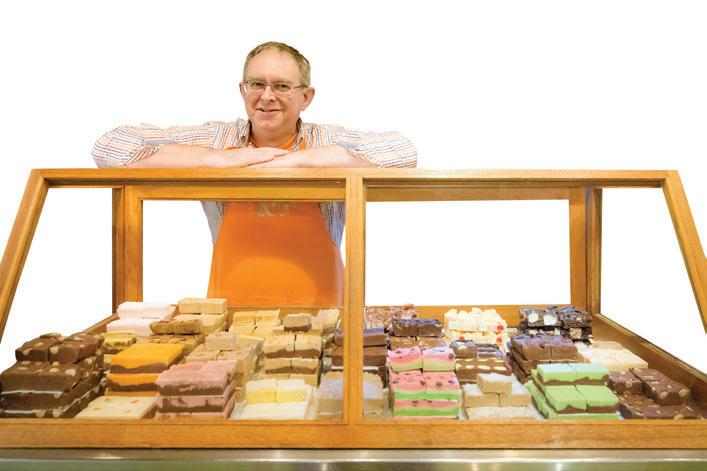








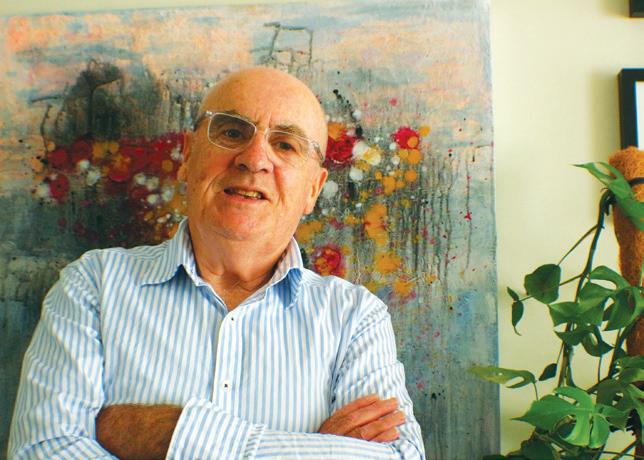
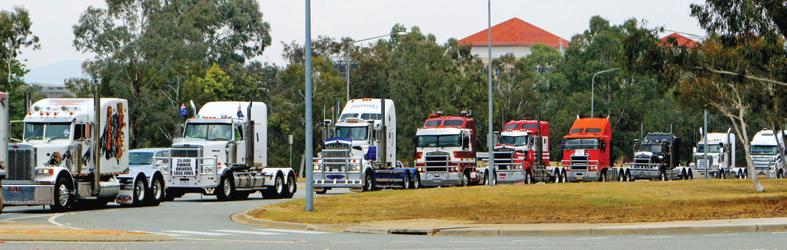
Journalist Mike Welsh can’t seem to resist a good protest, preferably at Parliament House.
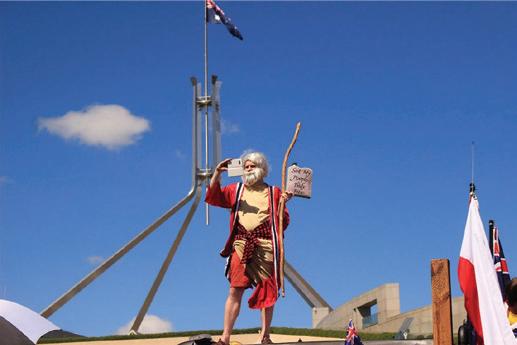
Since 2010, the former long-time drive-show presenter on 2CC has been photographing the many characters and causes that front up to make their opinions known and voices heard on Capital Hill.
“Originally I was seeking audio content for the radio show,” Mike says. “We’d single out and interview some of the more outrageous or eccentric at tendees and get photos for our website. And I never could resist the urge to correct the appalling incorrect usage of the apostrophe on placards!”
Even after stepping back from radio some years ago, Mike still turns up with his camera, always believ ing that protests matter, “for the simple reason it confirms we can still actually march and give voice to our issues and concerns without fear.”
Murray Darling Basin plan, they left little doubt that they meant business and would not be ignored.

changed the protest scene in Can-
“Plenty of placards remained but large flags were unfurled in abundance,” he says.
And some of the highlights from all those protests?
“The Convoy of No Confidence made a big splash in December 2011 thanks to right-wing media – 2GB broadcast live from the site – and drew plenty of MPs from the conservative side of politics out for photo ops with the big rigs,” Mike says.
“And when the farmers and their families came to town (some bringing
“South Australian teenager Ned Richards was joined by his father Adam and a few dozen others in a march from Adelaide to the Capital in February 2017 calling for the end to offshore detention on Manus Island.
“There are, of course, many smaller protests made on the seat of power.
Adrienne Carpenter wheeled a pram containing her dog Phoebe from Collector to Canberra in 2019 to rally for press freedom and climate change.”
Mike says the COVID-19 pandemic
“A relatively new concept of fluoro signwritten, old Holden station wagons making a wide range of conspiracy claims, which became the core of an emerging mob of skeptics we now know as Sovereign Citizens.
“The more radical of this radical mob even camped in Canberra for several months after the rally, causing serious headaches for the AFP.
“It seemed the angrier the crowd, the greater number of large flags was employed to drive home the message.

And always directed at ‘those inside that building up there’, even when Parliament wasn’t sitting!”
But being in the middle of protests with unpredictable people must bring some personal risks?
“I never felt unsafe or threatened until the anti-vaxxer’s march in February 2022,” Mike says.
“I stood out that day, being one of a very few – mostly media and police –wearing a mask, but because I had a camera slung around my neck I may have avoided the serious mob violence, which had been creeping into protests.
Mike says the most memorable of all the protests he’s seen over 16 years of photographing social history was
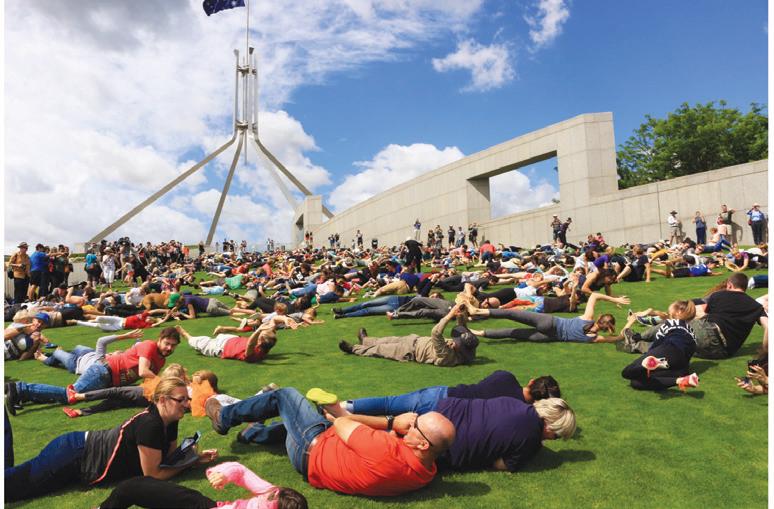
the March for Justice on International Women’s Day 2021, when the lawns of Parliament House filled almost to capacity with irate protesters, angry at the way Brittany Higgins was treated after alleging rape by a fellow staffer in Parliament House.
“Star power was at every turn, with the controversial TV host Lisa Wilkinson taking centre stage,” says Mike.
“Anthony Albanese was even spotted in the crowd, along with other opposition front benchers, urging PM Scott Morrison, who was not in attendance, to ‘listen to women’.”
Mike says protests, particularly recent Pro Palestine rallies, have taken on a vastly more dangerous complexion for marchers.
“There seems to be a stronger resolve among participants to double down on their efforts,” Mike says.
And favourite photos?
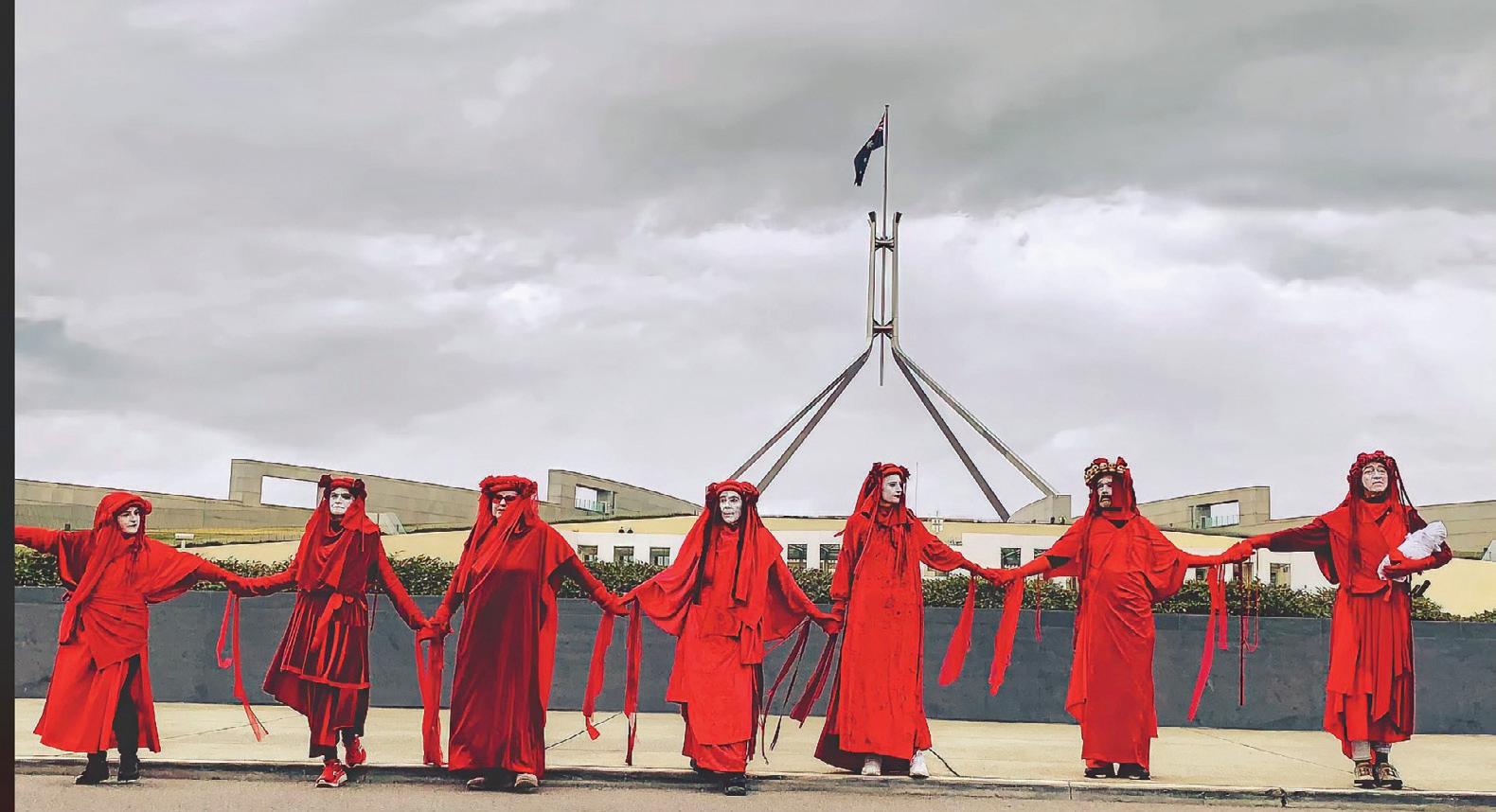
“Mine is of the silent performance activist troupe, the Red Rebels, lined up at the National Day of Action Pro Palestine rally in July 2025,” says Mike.
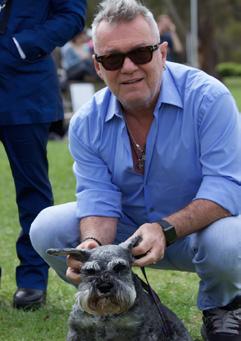
“I also love the picture I got at the rally calling for the removal of children and their families from indefinite detention on Nauru in 2018. I noticed a cute dog in the throng and asked the man holding its lead if it was okay to take a photo. The dog’s master, rock legend Jimmy Barnes, happily said yes.”







Vi Evans is right to be concerned about materials going unnecessarily to landfill (“What about waste from renewables?” CN March 3). But her concern about solar panels and wind turbines needs to be kept in context.
According to the latest National Waste and Recovery Report, during 2022–23 Australia generated an estimated 26.8 million tonnes (Mt) of building and demolition materials, 14.6 Mt of organics, 10.3 Mt of ash, 6.5 Mt of hazardous wastes, 6 Mt of metals, 4.9 Mt of paper and cardboard and 3 Mt of plastics. Vi should note that the ash is the toxic residue of coal-fired electricity generation.
In comparison, annual solar-panel waste in Australia is only around 60,000 tonnes (0.06 Mt) and projected to rise to around 100,000 tonnes (0.1 Mt) by 2030. Australia must get better at recycling in general.
It is good to know that the Department of Climate Change, Energy, the Environment and Water is currently working to redesign the National Television and Computer Recycling Scheme to include solar photovoltaic (PV) systems.
This scheme will require solar manufacturers, importers, and all stakeholders in the solar-panel supply chain to take responsibility for the end-of-life management of panels, helping to reduce landfill waste and promote recycling.

Meanwhile, some solar panels and wind generators are already being recycled and repurposed, but many Australians seem unaware of it.
Anne O’Hara, Wanniassa
John L Smith, (Letters, 4/3) appears to misunderstand the forces behind our high power prices.
Firstly, the wholesale power price is set by the most expensive component. That is
dose of dorin
high levels of renewables.
The second thing that is driving up householders’ bills is loyalty to their retailers. The Australian Competition and Consumer Commission finds that households that have been on the same electricity plan for more than three years are paying on average $221 per year more than customers on new plans. Almost three quarters of households are paying more for power than they might if they switched plans.
Lesley Walker, via email
There has been quite an interest and followup of my original letter. I am now replying to those in CN March 5.
My answers to the letters are:
currently gas power. In 2022 experts found that gas set the wholesale price 50-90 per cent of the time.
Add to expensive gas power, the unreliability of our old coal stations. Over 12 months NSW and Queensland had, on average, around one quarter of their coalpowered electricity generation unavailable. This unreliability isn’t cheap. Fortunately, the impact of gas and coal on our power prices might soon weaken. Over the 2025 December quarter, average wholesale power prices were down 44 per cent down on the previous year’s – thanks to


John L Smith you are correct. TheVictorian Big Battery was $170 million and this figure was used in the arithmetical calculations to come up with the $1.4 trillion for the conditions shown.
Fiona Collin, I agree with everything you say about renewables and about SA leading the way. But it seems you still have not read my paper I referred to in my original letter.
Australia makes 5.3 million tonnes of steel a year. No matter how you make it, dirty as now, or green with renewables it takes about 2.5 MWh/tonne of steel – and it has to be 24/7 because stoppages are hugely expensive.
If you multiply 2.5MWh/t by 5.3 million
tons you get 13.25 million MWh, meaning each hour 24/7 you have to provide this amount of power.
To do that with renewables you will need to cover all the free land in Victoria with solar panels, wind turbines and batteries. And to use your wording: “This is not modelling, this is real-time experience.”
Vi Evans, I agree with you. Advocates of renewables never mention their waste in making the renewables, nor waste at the end of their life, but you may be pleased to know that nowadays all of it can be recycled in India.
Nick Standish, Macquarie
Although I scorn long-term economic/ political predictions, I can’t resist imagining the unhappy end game for Woke prestige if either side establishes supremacy in this extraordinary period of Middle Eastern flux.
If the mullahs fall, Iran prospers, Hamas and Hezbollah dry up, and post-war reconstruction begins – Woke gallantry on behalf of the murderous Islamist dregs will be rendered passé and exposed for its folly.
If, on the other hand, the mullahs’ recent fatwa call (apparently, we’re all Salman Rushdie now) lights an existential firestorm in a death-thrown West, the Woke will bolt in fear of the zealots they abetted homing in on them.
Peter Robinson, Ainslie
Zone Bowling Tuggeranong will close on May 3. I’m a member of the 55+Club Bowling Group who bowl there on Wednesdays and have done for some years.
Lip service is paid to keeping older folk active and connected, but this action goes against that sentiment.
I am aged 85 and look forward to Wednesday bowling and catching up with the friends I’ve made there.
There are several other groups who use the bowling alley, including a group of disabled people and bowling presents a valuable outlet for them.
We’re told that the building has been purchased by private investors and the lease by Zone Bowling expires on May 3, after which the rent has been increased to an amount which would make it financially unviable for Zone Bowling to continue at Tuggeranong.
We surmise that the lease will then be changed to allow yet more apartments to be built.
Jean Smyth, Conder
Clive Williams’ Whimsy column (“Where do horses go when cameras stop rolling?”, CN February 26) raises familiar concerns about the fate of racehorses once their careers end.
Animal welfare is an important issue and deserves scrutiny. However, horse racing has become the subject for criticism from some left-leaning commentators and the Australian Greens.
A more balanced perspective might look at:
Industry reform: Racing bodies across Australia have strengthened traceability, rehoming programs and retirement pathways in recent years.
Economic contribution: The thoroughbred industry supports thousands of jobs in regional communities, from trainers and vets to stable hands and feed suppliers.
Post-racing careers: Many retired racehorses successfully transition into equestrian, therapy and recreational roles.
Regulation and oversight: Welfare standards are subject to state regulation and ongoing review.
And questions worth asking might include: Why is
racing singled out when other animal-based industries face similar welfare challenges? Are improvements within the industry being acknowledged? Does constant public vilification help animal welfare – or risk undermining co-operation and reform?
Constructive reform requires collaboration, not caricature. If the aim is better outcomes for horses, then balanced reporting and engagement with industry initiatives would seem more productive than framing racing as inherently damaging.
Debate is healthy. But it should recognise progress as well as problems – and avoid turning complex industries into political trophies.
Errol Good, Macgregor
Nuclear power has been used for more than 70 years around the world and at Lucas Heights, and the waste has been safely stored usually on site and more than a third of it is reprocessed.
The same can’t be said for wind and solar farms, which Ray has championed in letters to CN, which on reaching the end of their shelf life are decommissioned and fenced off, only to cause fires and other environmental problems. Many dismantled wind turbines and solar panels have been found dumped in the bush. Where are Ray and the Greens, who are mute, while virgin forests and agricultural land is being destroyed by the construction of 30,000kms of poles and wires?
Paul Temby, via email
I’m visiting Canberra from Gold Coast and picked up a copy of CityNews that I have to say, was a very enjoyable read!
I was impressed at the relevance and unbiased nature of the big articles. Seriously well presented with a tolerable quantity of advertising.
Thank you so much, from a person that gave up reading papers and magazines years ago.
Andrew Fish, via email
Ain’t it grand how some people tell us to love and support everybody, then articulate a long list of people they judge unworthy, excluding them from their “universal” love.
Ages ago I showed up to work and my supervisor, a whole year older than me, showed me an X-ray and asked: “What’s this shadow here sunshine?”
Clever little me said: “It’s Fortensky’s sign” (not its real name but Liz Taylor’s eighth and greatest coiffed husband deserves a mention). Correct, he smiled, then asked: “And what is the significance of this sign?”
Rapidly I explained that it can signify something pretty bad and needs urgent review.
“Right again!” he smiled and wandered off for us to start seeing the morning’s patients.
”Why do you ask?” said I, basking in the glory of having got something right for once.
“You ordered that X-ray last night, you moron” he said, “and you forgot to check it. Would you like to know if the person is still alive?”
I’ve never felt so heartsick or useless. Luckily, the patient was fine, I learned a great lesson, and the shame and humiliation was only directed at me by me. It made me better at my

Most errors I’ve found in any job are made by good people doing their best. No one wakes up in the morning and thinks: ‘I can’t wait to get to work today and damage somebody’.
job and a better person, and 35 years later I’m still plugging away at it.
Doctors have some remarkable stats – every year about seven per cent of us get a complaint made about us to the authorities, and it is often the most stressful experience people can describe. Of those complaints, 76 per cent result in “no further action” and 97 per cent of them result in no restrictions being placed on the person’s practice.
The medical boards and the regulator regularly state that their interest is the safety of the community, and they wish at every opportunity for the health professionals they see to return and contribute to their community and enjoy their professional
careers. And the experience so often improves them.
I like that a lot. Most errors I’ve found in any job are made by good people doing their best. Folks who call someone the wrong name or pronoun, deliver mail to the wrong address, fall over while making your coffee, write illegibly or incorrectly an instruction – whatever – do not set out deliberately to harm anyone. No one wakes up in the morning and thinks: “I can’t wait to get to work today and damage somebody”. And yet, everywhere it seems a phalanx of cruel keyboards stand ready to crush anyone who’s erred. Our private and public workplaces have benefited in recent years from a

push to ethics and values. Our charities swell proudly to the extent that in Australia most people who suffer from a given condition will have a number of agencies and advocacy groups supporting them.
Yet there remains a group with no name, no unity, no voice and each with a lonely journey ahead, and that is – for want of a better word – the shamed.
People who have publicly been found wanting in some aspect of their role, or a (usually temporary) character fault they have brought to their role. And so many, it seems, are perfectly comfortable to rub it in.
The thing is, if you stand in someone’s shoes, really try, think about it for even five minutes – do you know what kind of day they were having? What was the context of their error? What they’d done before? What the “pass mark” should be in their profession?
If a lawyer is found to have erred and failed to properly defend an innocent person, is she to be the subject of contempt forever? What if she’s magnificently defended hundreds of innocent people (or prosecuted hundreds of guilty ones) over 40 years
already – does that not matter any more? What’s the ledger supposed to look like?
Does one error cancel a thousand good things? You know who has the third most ducks in Australian Men’s Test cricket history? Steve Waugh, an all-time great. Failure is part of greatness, and it is part of life.
Many folk who know nothing of someone’s context or character, situation or circumstance, seem terribly firm in their judgments of them. I think humans share these things – most of them are lovely, and almost all of them improve and learn from painful errors to become better people. I dream of a coalition of the publicly shamed, if forgiven and given another chance, contributing mightily to the world. If we were kind enough to let them.
Antonio Di Dio is a local GP, medical leader and nerd. There are many more of his Kind ness columns at citynews.com.au



Weston Cruise & Travel is proud to announce its recognition as a Scenic Cruises Diamond Agency along with achieving Gold Agency status within the Travel lers Choice network – two significant honours that highlight the agency’s ongoing commitment to service excellence and premium travel experiences.
The Scenic Diamond Agency recognition is awarded to a select group of travel professionals who demonstrate exceptional knowledge, strong sales performance and a genuine passion for delivering luxury cruise and tour experiences. Scenic is globally recognised for its all-inclusive river and ocean cruising, and this status reflects Weston Cruise & Travel’s expertise in matching clients with the right high quality journeys.
In addition, the agency has once again achieved Gold Agency status with Travellers Choice, one of Australia’s leading travel buying groups. This recogni tion acknowledges consistent growth, strong client relationships and dedication to professional standards within the travel industry.
Manager Sonaii Witchard said these achievements are a reflection of the team’s focus on personalised service and creating meaningful travel memories for clients.
“Our clients trust us with some of the most impor tant experiences of their lives. These awards recognise the hard work of our team and the strong partnerships we have built with respected travel brands,”
Weston Cruise & Travel continues to support local travellers with expert advice, tailored holiday planning and ongoing support before, during and after their journey. Contact the team and let them start planning your next holiday.

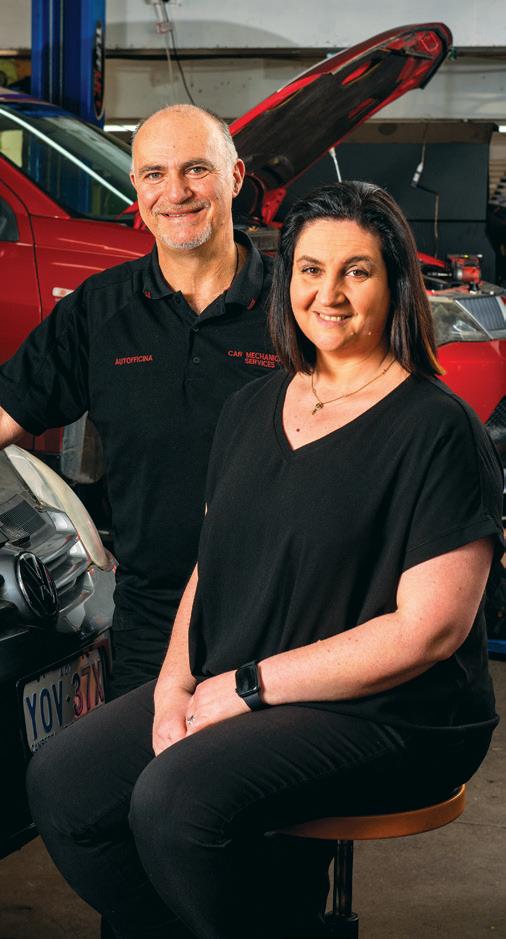
For nearly 20 years, Car Mechanical Services (CMS) has delivered top-quality automotive care across Canberra, building a trusted reputation as a multi-award-win ning, family-owned business with a strong focus on reliability, sustainability and community connection, says director Raffy Sgroi.
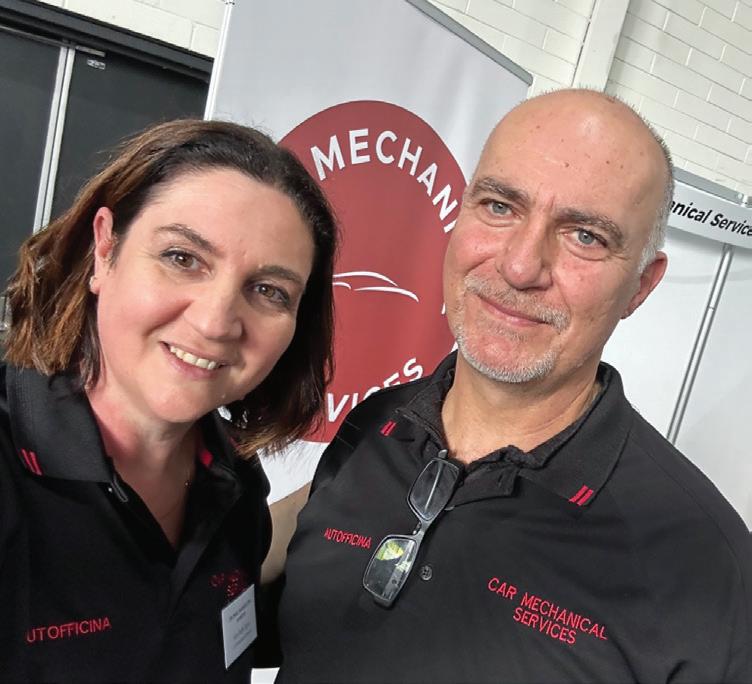
says the business has grown by staying true to its values – offering professional, personalised vehicle services while actively contributing to a stronger, more inclusive Canberra.
The company also provides training programs for young mechanics, as there is always a training shortage in the automobile industry, Raffy says.
“Our Skills and Inclusion Programs and My Career Portfolio, which are ongoing programs, blend mentorship, practical experience and hands-on learning to equip students,” she says.
“We’re leading by example, and when you’ve got an inclusive workplace, there is harmony.”
Exclusive cruise and holiday packages
Flights, tours, travel insurance and more
Local experts with global connections
Support before, during and after your trip

the Sustainability Leadership Award in Asia, Australia and NZ at the International Business Awards, and a silver in the Excellence in Diversity and Inclusion category.
These awards follow on from Car Mechanical Services being one of the first automobile repair companies in Canberra to win a sustainable small business of the year award, in 2023.
Car Mechanical Services 82 Kalgoorlie Crescent, Fisher. Call 6162 4111 or visit carmechanicalservices.com.au

For nearly two decades, Car Mechanical Services has been a trusted name in Canberra, offering top-quality automotive care with a strong community focus. Familyowned and operated, Car Mechanical Services stands out not just for its mechanical expertise, but for its commitment to sustainability, inclusivity, and nurturing the next generation of technicians.
Originally established in 1982, Car Mechanical Services has built its reputation on a foundation of honesty, technical excellence, and deep local engagement. Directors Raffy and Charlie Sgroi have led a wellqualified and dedicated team through the business’s growth, guided by a strong belief in quality service and meaningful customer connections.
“Our decision to establish in Canberra was driven by the family-oriented nature of the community and the region’s steady growth,” says Director Raffy Sgroi. “Being part of a region with such strong local spirit has allowed us to connect with residents and offer services tailored to their needs.”
Car Mechanical Services has grown alongside Canberra’s expanding suburbs, adapting to a vibrant and evolving city. “We’ve seen a lot of change – new homes, more businesses, and a strong focus on sustainability,” says Charlie. “That aligns perfectly with our values and has helped us grow with the community.”
From logbook servicing and diagnostics to mechanical repairs, brakes, suspension, and air conditioning, Car Mechanical Services offers comprehensive automotive care for both private and fleet vehicles. The workshop is known for its “no surprises” approach – all work is clearly explained and approved before anything is done, giving customers confidence and peace of mind.
“We treat every car like it’s our own,” says Charlie. “People come to us because they know they’ll get honest advice and excellent workmanship. Trust is everything in this business.”
In a traditionally resource-heavy industry, Car Mechanical Services is setting the bar with its ecoconscious initiatives. The workshop is Cleanawaycertified, adheres to stringent environmental standards, and is proactive in recycling used oil, parts, and materials. They also offer servicing for hybrid and electric vehicles – a growing field the team is passionate about.
“We’ve made sustainability a core part of our operation,” says Raffy. “We’re constantly improving how we work to minimise waste and support environmentally friendly solutions for our customers.”
Looking ahead, Car Mechanical Services plans to expand its electric vehicle repair services while continuing to implement greener workshop practices.
Training the next generation is central to the business’s mission. Car Mechanical Services partners with local schools to offer work experience — particularly for students with disabilities or who are neurodivergent. Through mentoring and apprenticeships, the team helps young people build meaningful careers in automotive repair.
“We want our workshop to be a place where everyone feels welcome and supported,” says Raffy. “Giving students and apprentices a real chance to grow and learn is incredibly rewarding — they’re the future of our industry.”
Car Mechanical Services also supports the broader Canberra community through sponsorship of local sports clubs, involvement in community events, and partnerships with inclusive organisations. “Supporting local causes isn’t just good business – it strengthens our neighbourhood and reflects who we are,” says Charlie.
Car Mechanical Services’ commitment to quality and community has earned it high praise, including winning many local and national business awards in automotive services and management. Raffy currently holds the title of National Businesswoman of the Year, along with international awards for management. The business has also been recognised for outstanding customer service and leadership in sustainable practices.
Looking ahead, Car Mechanical Services is set to launch new career discovery programs in partnership with local schools, with a focus on underrepresented groups. The team also plans to host workshops to raise awareness about electric vehicle servicing and green automotive careers.
For the team at Car Mechanical Services, it all comes down to people – customers, staff, and community.
“We’ve always believed in doing things properly, treating people with respect, and giving back where we can,” says Raffy.

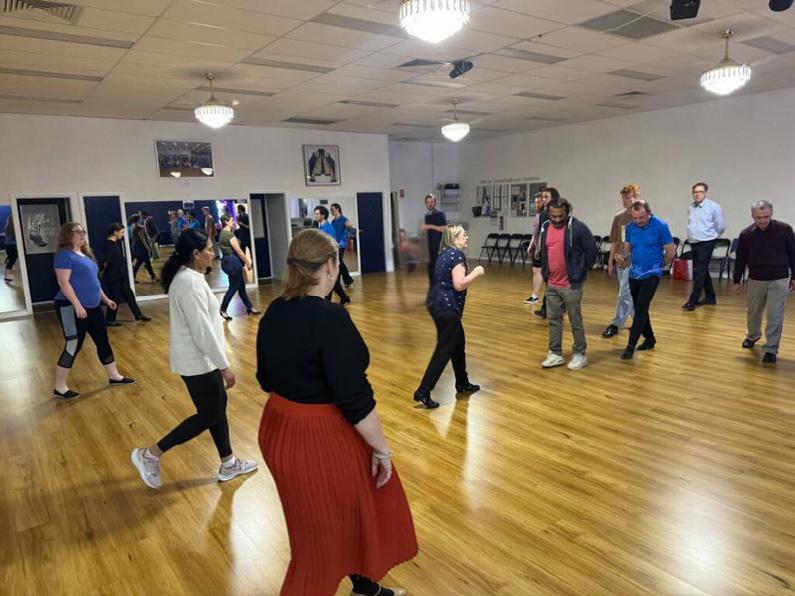
From a waltz to a samba, Dale’s Ballroom Dancing has been offering dance classes for more than 25 years.
With more than 30 years of experience, Dale Harris says dancing is for everyone.
“Our adult classes are open to anyone and we are happy to adapt to suit the needs of our audience,” she says.
Currently, Dale offers two levels of expertise in her adult classes on Wednesday nights.
Her beginner classes go from 7pm-8pm and cover the basics of a variety of dances, her intermediate/ advanced class level, from 8pm-9pm, tackle the harder dance skills to learn.
Dale says dancing is a great exercise for any age.
“Dancing is 10 times better than doing a crossword puzzle at the table or taking the dog for a walk,” she says.
“It keeps your brain and body active while you think about the steps and move.
Moving to the Weston Neighbourhood Hall to host her adult beginner classes, Dale offers seven-week courses, although she says it’s also okay to “just turn up”.
Dale’s next seven-week course starts on March 25 for anyone wishing to start from the beginning.
A new selection of kids’ medal classes for students up to 19 years old are also available to book.
Dale’s Ballroom Dancing Weston Neighbourhood Hall, Hilder Street, Weston. Call 0407 066 110. dalesballroomdancing.com

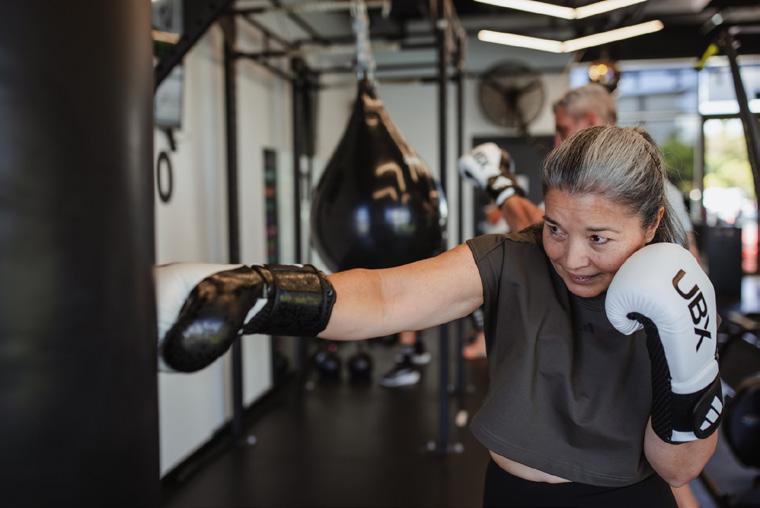
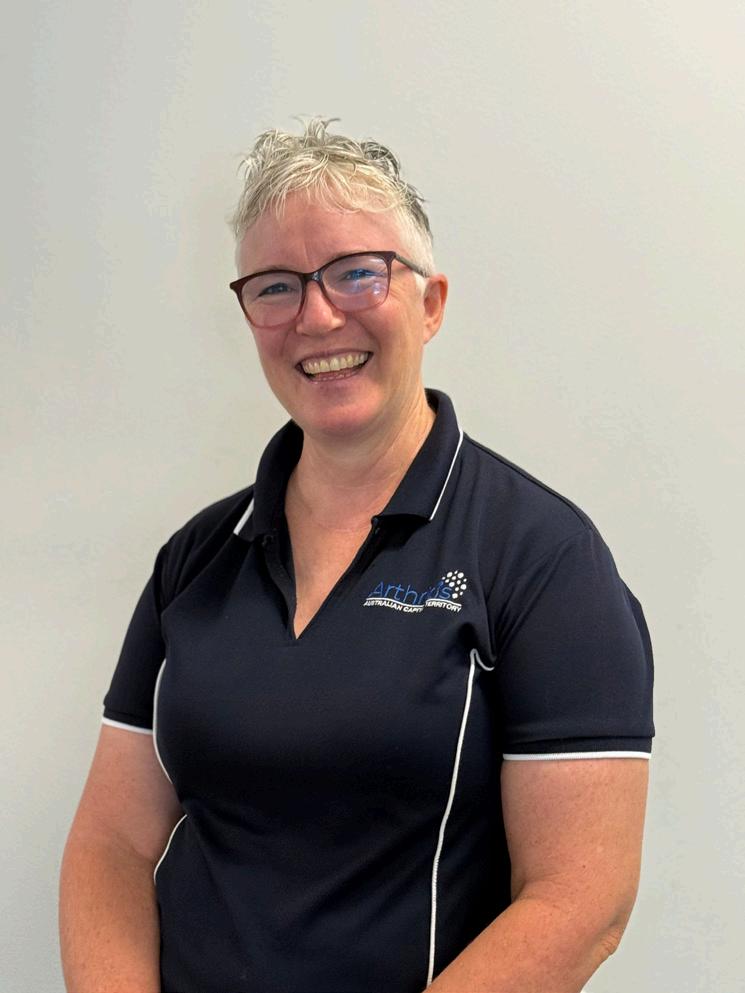
No matter what type of chronic pain condition people may have, Arthritis ACT can offer support, says CEO Rebecca Davey.
“We run strength and balance classes at the Weston Creek Community Centre on Whitney Place, every Tuesday from 10am to 11am,” she says.
“It’s important to remain active at all ages, and particularly as we age, we need to ensure we maintain our balance and strength.
“For something different, for those that don’t like structured classes, we offer Nordic Walking instruction. We’re teaching people how to walk with poles, which is a great, low-impact aerobic activity for everyone.”
Rebecca says it’s also important to build strength in different areas of the body.
“We now run Pilates from both of our locations, Pearce and Bruce,” and, as an added benefit for Arthritis ACT members, “we have free, online exercise classes every week from Tuesday to Thursday.”
She says Arthritis ACT also offers services such as exercise physiology, disability support and meal planning to help people in managing their pain.
“People come to us because we know the condition. About 50 per cent of our staff live with chronic pain, so we understand how chronic pain can affect all parts of a person’s life,” she says.
“No task or question is too big or small for us.”
Arthritis ACT
170 Haydon Drive, Bruce. Call 1800 011 041 or visit arthritisact.org.au
• PRIVATE DANCING LESSONS
– Individuals or Groups
– Perfect for Wedding Parties BY APPOINTMENT
• KIDS MEDAL CLASSES Thursdays from 5pm at the Pearce Community Centre, building 2, Collett Place Pearce.
• ADULT BEGINNER CLASSES
Wednesday 7pm - 8pm
• ADULT INTERMEDIATE & ADVANCED
Wednesday 8pm - 9pm
ADULT CLASSES NOW AT: WESTON NEIGHBOURHOOD HALL, HILDER STREET, WESTON
Phone: 0407 066 110
Email: dale_harris@bigpond.com
Web: dalesballroomdancing.com
Principal: Dale Harris


Starting as a single pizzeria in Enmore, Ooshman is now a thriving business with 18 locations across NSW and the ACT, says founder Charlie Hoyek.
And Samir Patel, owner of the Weston store in Trenerry Street, invites Weston Creek locals to find out why it is so popular.
Charlie renamed and rebranded the chain settling on a distinctive identity for the future.
“The rebranding effort was guided by customers’ involvement, with Ooshman emerging as the top choice from a poll,” he says.
“The name resonates deeply with the brand’s history and community engagement.”
Charlie says Ooshman’s new logo and look introduced a vibrant colour scheme, focusing on green, symbolising the cedar tree, which is a nod to his Lebanese heritage.
Charlie says his vision for Ooshman is not only to honour the past, but to embrace the future with enthusiasm and a commitment to providing the same great food that defines the brand.
Ooshman Shop 1/19-27 Trenerry Street, Weston. Call 02 6189 8979 or visit ooshman.au

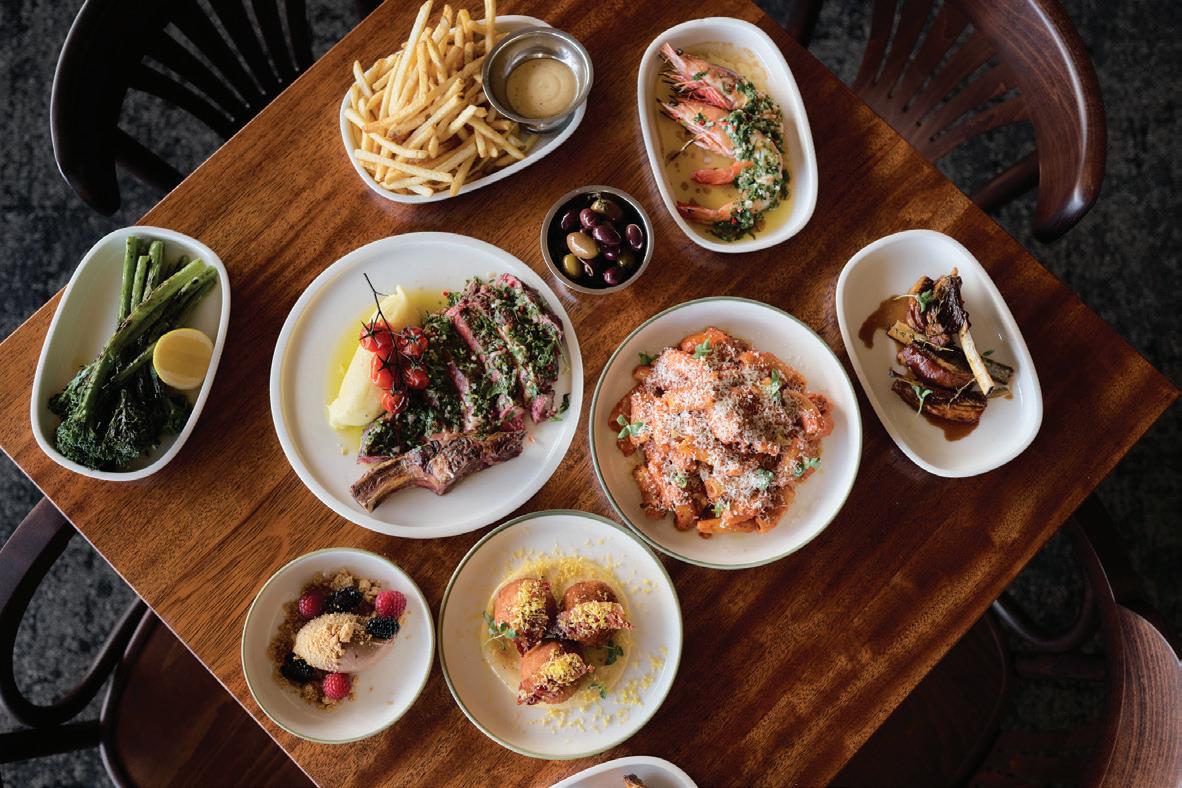
Andre’s Osteria is a suburban Mediterranean dining room and bar in Weston Creek, led by hospitality young gun Andre Wilks and his father Bruce.
In just a year the restaurant has made a notable mark on Canberra’s dining scene, drawing locals for a menu that celebrates antipasti, snacks, house made pasta and succulent meats designed for flavour, generosity and good times.
As the weather cools, the cosy dining room and lively bar come into their own, offering a warm
neighbourhood atmosphere that pairs perfectly with the food and drinks on offer.
Signature dishes include the Wagyu short rib lasagne with pangrattato and carbonara arancini finished with crispy guanciale and cured egg yolk. Open for lunch and dinner Wednesday to Monday.
Andre’s Osteria 35 Brierly Street, Weston Creek. andresosteria.com.au

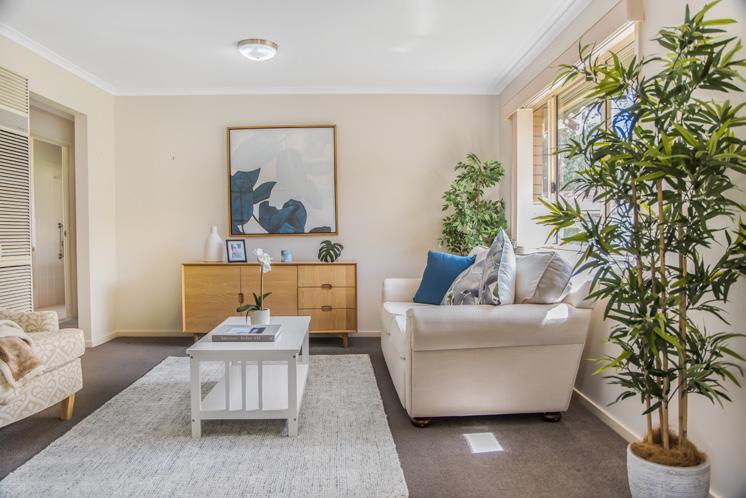
Adria Care combines access to important facilities with a feel of privacy, making it the perfect place for retirement, says village spokesperson Malia Taione.
“There’s close access to Cooleman Court and Woden Westfield, but we are surrounded by reserves and parklands making it a very peaceful atmosphere for residents,” says Malia.
Located in the heart of Weston Creek, Adria Care, which has two dedicated respite rooms and a special care unit, offers residential care for 42 residents. The village also contains 36 independent living units.
It offers residents a wide range of things to do, and that they can get involved as little or as much as they’d like.
“We have an active residents’ committee who
organise lots of get-togethers. Residents can play cards, go to morning teas and happy hours, enjoy exercise, and much more,” says Malia.
Established in 1994 by volunteers of the Croatian community of Canberra and Queanbeyan, the village is home to a multicultural group of people.
“We have residents [from] Australia, Croatia, China, France, Macedonia, Hungary and more,” says Malia.
“There are great residents and great staff committed to the best outcomes for the community.”
Adria Care
89 Fremantle Drive, Stirling. Call 02 6288 0198 or visit adria.org.au

&
Set amongst beautiful grounds, Adria Care in Stirling is a warm and welcoming community. Cultural diversity is celebrated providing care for Croatian and all other nationalities. We offer a range of activities to cater for all cultures and interests.
Fostering individuality and independence, we offer care and support for residents to live comfortably and securely.
Adria Care offers:

• 42 residential care single rooms with ensuite
• 2 respite single rooms with special care with ensuite
• 36 independent two bedroom villas including courtyard & garden

Come & enjoy a peaceful and welcoming home-like atmosphere!
Enquire about vacancies & tours today! 6288 0198
Email: admin@adria.org.au | 89 Fremantle Drive, Stirling, ACT

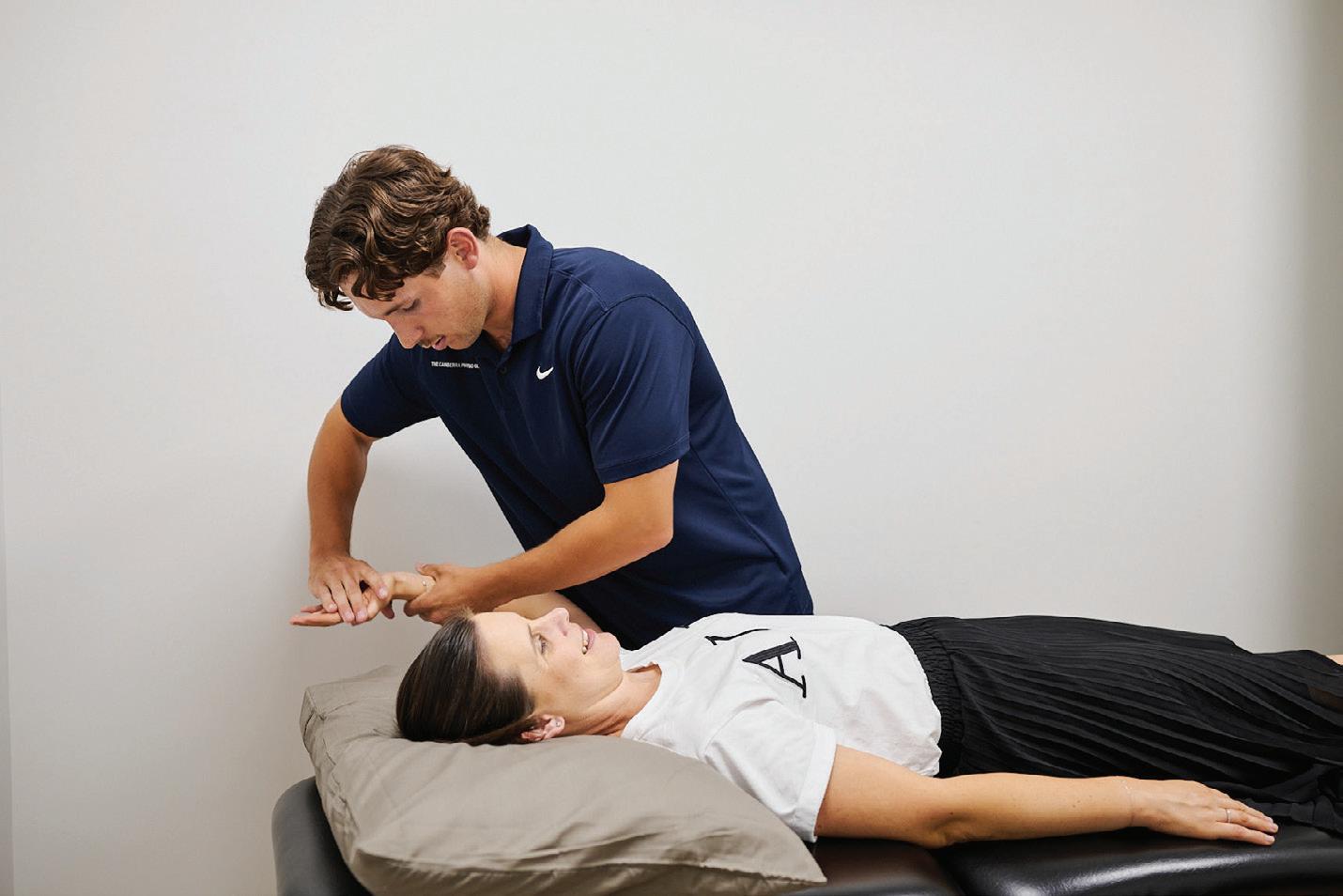
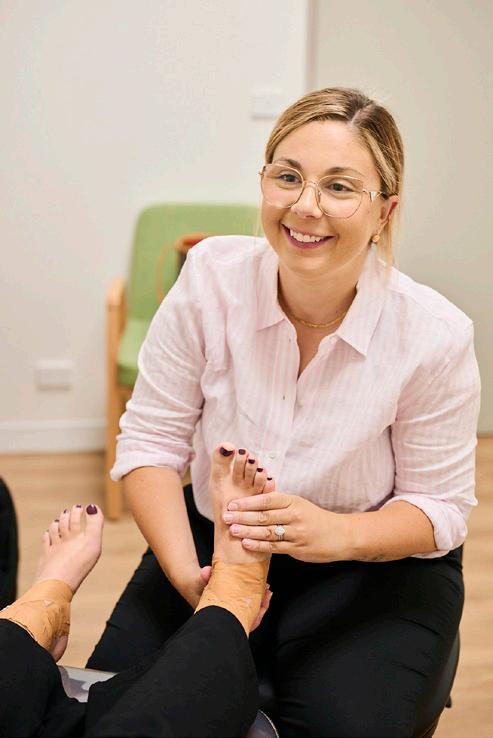
The Walking Clinic and The Canberra Physio Clinic are redefining how people can stay mobile, independent and active as we age. Through a genuinely multidisci plinary model of care, their podiatrists, physiothera pists and exercise physiologists work together to address the complex changes that occur with ageing, from reduced strength and balance to joint stiffness, circulation changes and chronic pain.
The Walking Clinic provides comprehensive foot and lower-limb care, with a strong focus on aged care. Services include diabetic foot assessments, arthritis management, wound care, nail and skin treatment, footwear advice, custom orthotics and detailed gait analysis. Fall-risk screening and balance assessment form a key part of care, helping to prevent avoidable injuries and maintain confidence with walking.
Complementing this, The Canberra Physio Clinic delivers evidence-based physiotherapy and exercise physiology programs tailored to older adults. These include targeted strength and balance training, joint and soft-tissue therapy, post-surgical rehabilitation and structured programs such as GLA:D, along with bone-strengthening interventions for osteopenia and osteoporosis.
By coordinating care across disciplines, the two clinics provide individualised management plans that prioritise safety, function and long-term independ ence, supporting senior Canberrans to move well and age with confidence.
Visit The Walking Clinic and The Canberra Physio Clinic at their combined locations in Manuka and Belconnen, or go to www.walkingclinic.com.au or www.canberraphysioclinic.com.au to learn more.
The Walking Clinic and The Canberra Physio www.walkingclinic.com.au www.canberraphysioclinic.com.au

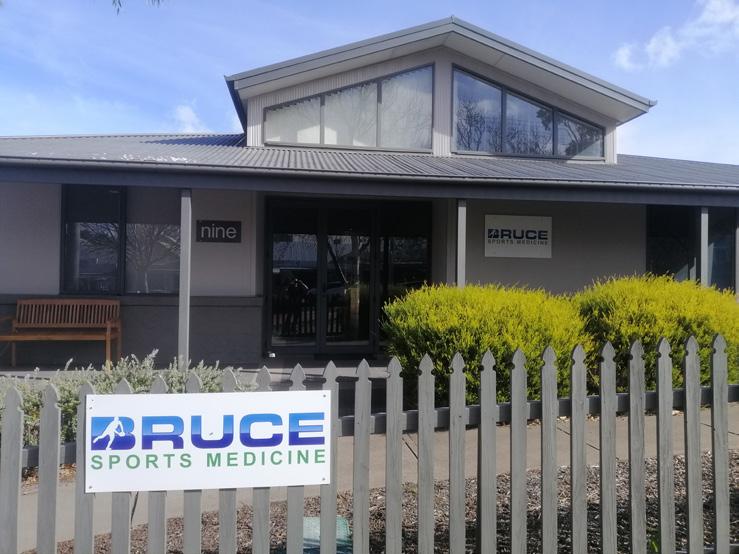
Bruce Sports Medicine has become a trusted name for comprehensive injury care and performance support in Canberra. By combining a broad range of specialties within one practice, the clinic gives patients access to streamlined treatment and a more connected path to recovery, rehabilitation and ongoing wellbeing.
Owner Dr. Wilson Lo says this model is what sets the clinic apart. “We are the only multidisciplinary sports medicine team in Canberra led by sports doctors,” he says. “It allows us to provide expert medical oversight while working closely with a wide range of allied health professionals to achieve the best outcomes for patients.”
The team includes sports doctors, physiotherapy, osteopathy, sports podiatry and biomechanical assessments, acupuncture, nutrition, counselling and orthopaedic surgery. This breadth of services means patients can access tailored care whether they are elite athletes, weekend competitors or simply wanting to
stay active and well.
Bruce Sports Medicine is also deeply connected to Canberra’s sporting community. The clinic looks after the Canberra Raiders NRLW side and all four junior teams, Gungahlin Jets AFL men’s, women’s and junior teams, Belconnen United men’s and boys’ soccer teams, and Canberra United in the A-League Women competition.
“We are proud to support so many local teams across different sports,” says Dr Lo. “Just as importantly, we are here for the broader community, helping people recover well, move better and continue doing the things they love.”
Bruce Sports Medicine 9 Victoria Street, Hall. Call 02 6253 5386 or visit brucesportsmedicine.com.au




Capital Diabetes Collective is bringing a fresh, personalised approach to diabetes care in Canberra, led by Nurse Practitioner and Credentialled Diabetes Educator Emma Matthews. Based in Kingston, the practice focuses on supporting people of all ages to better understand and manage their condition with confidence, offering tailored guidance, medication management and ongoing education.
At the heart of the service is a commitment to meeting patients wherever they are in their journey. “I created Capital Diabetes Collective to provide compas sionate, practical diabetes education and support,” Emma says, reflecting a philosophy grounded in both clinical expertise and genuine care.
Living with diabetes can be complex, but Emma’s approach simplifies the process through one-on-one support and clear, achievable strategies. From newly diagnosed patients to those managing long-term conditions, the focus is on building confidence and independence. “Our goal is simple: to help people feel confident managing their diabetes every day,” she says.
What sets Capital Diabetes Collective apart is its combination of specialist knowledge and a highly personalised model of care. Emma works closely with each patient, ensuring treatment plans are not only clinically sound but realistic and sustainable in everyday life.
For Canberra locals seeking a more supportive and individualised pathway to diabetes management, Capital Diabetes Collective offers a reassuring and expert-led option close to home.
Capital Diabetes Collective capitaldiabetescollective.com.au


Arthritis ACT is an allied health practice with a difference, says CEO Rebecca Davey.
There are physios, exercise physiologists and an oc cupational therapist available, but Rebecca says they also have a team of peer workers, people with lived experience of the conditions they support people with.
“The issue with chronic conditions is often that until you’ve lived with it, you don’t have an innate understand ing of what it is to walk that walk,” says Rebecca, who is very open with the community about her journey with inflammatory arthritis and the associated chronic pain.
“It’s often just the practical ideas that you can share, and you can honestly say: ‘This works for me, you might like to try it, or you might not.’
“Everyone that works in the health arena is passionate. It’s the reason why people choose these careers.
“I think the difference with us is that we have all the added extras to support the community, especially in terms of community education and linkages to a wide range of experiences within [the] team who are there to support clients that come to our service.
Arthritis ACT offers ongoing programs for people who need any type of support with their chronic pain or debilitating fatigue conditions, and Rebecca says there are a range of low-cost group exercise classes, and lowercost private access to one-on-one physiotherapy, exercise physiology and occupational therapy.
There is also access to free education programs and support groups every week, which Rebecca says helps clients build their own community of people that can really support them and understand.
Arthritis ACT, Pain Support & ME/CFS ACT 170 Haydon Drive, Bruce. Call 1800 011041 or visit arthritisact.org.au
Providing trusted, personalised eye care to the Canberra community, Corey Nicholls is at the centre of Curtin Optical’s commitment to quality allied health services.
Known for his approachable manner and clinical expertise, Corey takes pride in deliver ing tailored solutions that support both vision and overall wellbeing.
“At Curtin Optical, we take the time to really understand our patients’ needs, not just their prescription,” Corey says.
“Good vision is about comfort, clarity and confidence in your day-to-day activities.”
Curtin Optical offers comprehensive eye examinations, along with customised vision solutions and a carefully selected range of eyewear to suit different lifestyles and budgets.
•
•
•
•
•
•
•






From children’s vision care to complex prescriptions and ongoing eye health monitoring, the practice supports patients at every stage of life.
Corey emphasises the importance of prevention and early detection.
“Regular eye tests allow us to identify changes early and manage conditions before they become more serious,” he explains.
Working within the broader allied health network, Curtin Optical collaborates with other healthcare providers to ensure a holistic approach to patient care.
This integrated model helps deliver better long-term outcomes for patients.
With a reputation for friendly service and professional advice, Curtin Optical remains a trusted destination for those seeking expert eye care and quality eyewear in Canberra and the surrounding areas.
Curtin Optical Shop 1B Curtin Place, Curtin. Call 02 6281 1220 or visit curtinoptical.com.au

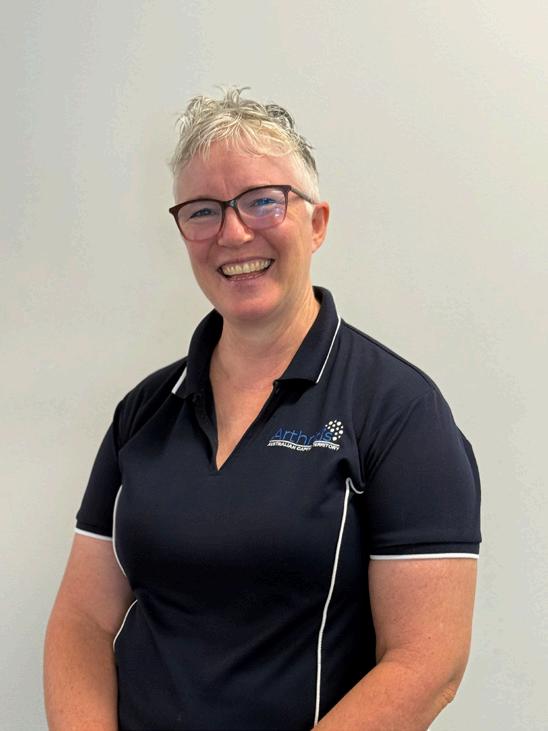
Holly is a former sports journalist who believed so strongly in the power of exercise to heal and nurture that she undertook her 4 year degree in Exercise Physiology. Holly is be able to work with people directly to support them through their pain journey and regain independence and a joy for living again. Holly provides one on one and group exercise classes both on land and at our hydrotherapy centres to support people to gain freedom from chronic pain.

Sophie has post graduate qualifications in hydrotherapy, and as a non-sports centred Exercise Physiologist, helps clients who struggle with engaging in exercise due to a lack of sports participation. Sophie’s goal is to improve clients health via our hydrotherapy program, gym instruction and in-home visits. Sophie also is known for her passion for working with children.

Nick (they/them, he/him) has returned to Canberra after completing a Master’s in Physiotherapy at the University of Queensland. Their passion comes from a love of science and helping people. With eight years in disability support, Nick brings broad experience and enjoys working with clients across a wide range of needs.

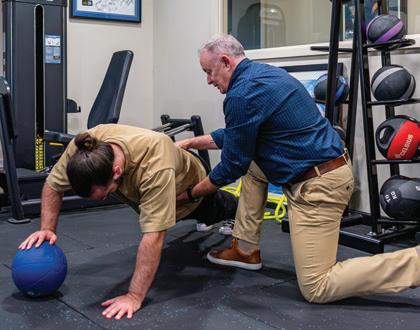
Blake has expertise in improving clients mobility and decreasing their pain through appropriate exercise. Blake delivers our ‘My Exercise’ program, targeting the relief of lower back and sciatic pain, shoulder and upper body concerns as well as leg, hip and ankle interventions – for those who do not qualify for physiotherapy-led GLAD programs. Blake provides individual & group exercise for younger people with a disability. Blake treats clients in-clinic or via our hydrotherapy program as well as attending your gym with you.

Sarah believes that exercise is the best medicine. She is an Accredited Exercise Physiologist with her degree in exercise physiology and rehabilitation. Previously Sarah was a swim teacher, personal trainer and an allied health assistant in the hydrotherapy field.
Tash discovered her passion for exercise after completing her Certificate IV in Personal Training in 2015, later earning a Sport and Exercise Science degree from the University of Canberra. She joined Arthritis ACT in 2019 and now supports group classes, exercise programs and administration. Outside work, she enjoys family time, running, hiking and cooking.
• GLA:D® Program for hip and knee osteoarthritis.
• Education and supervised group sessions to build strength and confidence.
• Pain management strategies to reduce medication use Tailored support including preparation for or avoiding joint replacement.






By Jackie WARBURTON

As the nights begin to cool, the last of the summer annuals and vegetable seedlings should now be in the ground or planted into containers.
March marks the beginning of autumn, when attention turns to improving the soil for the seasons ahead.
Over the next few months an abundance of leaf litter will fall into the garden. These leaves are extremely useful and make excellent compost.



Lightly spread them over garden beds, just enough to suppress weeds. In time the leaves will break down, enriching the soil and providing nutrients that support strong plant growth next spring. Good soil
leads to healthy plants.
If there is a large quantity of leaves, they can be chopped with a lawn mower.
Larger leaves take longer to decompose, though the process can be accelerated over winter by adding other materials to enrich the soil. Products such as dynamic lifter, blood and bone, and most types of animal manures are suitable. A green manure crop can also be sown this month as a vegan alternative.
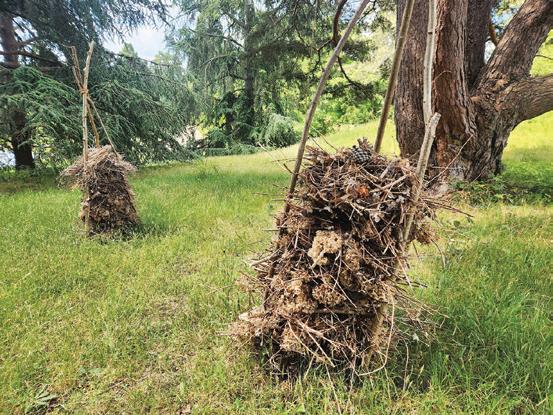
Where space is limited, a compost tower can be created, which also provides a small habitat for insects during winter. Any materials can be used to form a simple structure.
Stack leaf litter, twigs, branches and spent flowers inside. This sustainable approach gradually produces compost and, once the structure breaks down, it collapses back into the bed, adding valuable nutrients to the soil.
ONE of the most important jobs for March is sowing sweet peas. They

take time to grow, so plant them near a path where their unusual, spicy scent can be enjoyed in late winter and early spring.
Sweet peas also make excellent small vase arrangements, with a fragrance that quickly fills a room.

To encourage even germination, seeds can be soaked overnight in tepid water with a little seaweed solution. When sowing, gently press the seed into the soil and lightly cover. Water in well, then wait until signs of growth appear before watering again.
Sweet peas grow well alongside nasturtiums, beans, sage and carrots, making them suitable for the vegetable patch. They flower in spring when pome and stone fruit trees are also in bloom.
Growth continues through winter, although it may slow once the soil becomes very cold, before surging again in spring to produce a mass of flowers.
Dwarf varieties such as Bijou do not require a trellis, though they benefit from light support or being kept off the ground.
ANOTHER plant suitable for planting now is Aquilegia, commonly known as Columbine or Granny Bonnet. This short-lived perennial tolerates frost well.
Aquilegia caerulea forms a small shrub that requires little water or care once established.
The flowers appear in a wide
range of colours, including many striking multi-coloured forms. Foliage spreads to cover the ground during winter, while flower spikes rise above the leaves in spring. Removing spent flowers encourages further blooms. Some aquilegias self-seed and fill gaps in the garden. If too many appear, small seedlings can be removed by hand. Larger plants may be divided and replanted or transferred to containers to give away. They can also be grown from seed. Sprinkle seed lightly over seed-raising mix, then water gently. Keep the mix moist during germination. Once seedlings are large enough, plant them out in the garden. They prefer acid soil and pair well with camellias and azaleas.
OPEN Gardens Canberra’s autumn gardens are open and this time there’s an opportunity to see the hard work of gardeners in Yass, Calwell and Hawker. More information at opengardencanberra.org.au
jackwar@home.netspeed.com.au
• Cut winter iris to the ground.
• Remove old leaves from hellebores.
• Spray stone fruit as the leaves fall.




By Helen MUSA

If there’s one thing almost everyone knows about the story of Romeo and Juliet it is that they both die.
Or do they?
That’s the question Anne Hathaway poses to her husband William Shakespeare in the musical & Juliet, when the playwright’s wife interrupts his famous tragedy with a domestic challenge: what if Juliet didn’t die? What if she lived, and went on to have a life of her own?
The result is a joyous theatrical remix of Shakespeare’s best-known love story of star-crossed lovers, with a witty script by writer David West Read (Schitt’s Creek).
Set somewhere between Elizabethan England and the 21st century, & Juliet is a jukebox musical packed with pop hits by artists such as Katy Perry, Britney Spears and Bon Jovi. Instead of ending in tragedy, the show imagines a new story for Juliet, one built on independence, friendship and self-discovery.
When I catch up with the show’s young stars, Chloe Stevenson as Juliet and McKinley Brown as Romeo, over coffee in Manuka, they’re determined to convert me to the

idea. By the end of our conversation, they’ve pretty well succeeded.
Both arrive with infectious enthusiasm and impressive credentials.
Brown, a Canberra local and product of Burgmann Anglican School in Gungahlin, graduated from the powerhouse of musical theatre training, the Queensland Conservatorium. After finishing his studies he decided Canberra’s creative scene was where he wanted to be and returned home, completing postgraduate study at the University of Canberra. These days the 25-year-old balances rehearsal with
teaching at Fraser Primary School.
“I reckon most of the musical theatre people I know are teachers as well,” Stevenson cuts in.
She’s at the very start of her career. An 18-year-old recent graduate of St Clare’s College, she grew up on a farm outside Bungendore and admits she had never seen & Juliet before being cast.
One of the show’s co-directors, Charlotte Morphett, had actually been her performing arts teacher at school.
Like Brown, she has already secured a
place at the Queensland Conservatorium, though she has deferred for a year while pursuing opportunities closer to home.
She’s currently working on a music project in Sydney as a singer-songwriter.
Brown is quick to praise her performance.
She’s got a powerhouse voice, she brings the house down, he says, clearly still a little astonished by it.
The casting also echoes the original Shakespearean pairing more closely than audiences might expect. Juliet in Shakespeare’s play was only 14, while Romeo was a few years older. Updated for modern sensibilities, an 18-year-old Juliet and a mid-twenties Romeo seem almost perfectly matched, especially, the pair joke, given the general belief that boys mature more slowly than girls.
The plot of & Juliet springs from that imagined domestic argument between Shakespeare and Anne Hathaway. In the show, the playwright’s actors mostly side with Anne, prompting Shakespeare to rewrite his own play as the action unfolds.
The show takes Romeo and Juliet and flips it on its head, Brown says.
Some of the Elizabethan characters speak in iambic pentameter, but the modern ones definitely don’t. Instead, they burst into a string of pop anthems including… Baby One More Time, I Kissed a Girl and It’s My Life.
The musical is built around the songs of Swedish pop mastermind Max Martin, whose catalogue forms the backbone of the score.

The creators, Brown says, are trying to appeal both to Shakespeare lovers and to younger audiences – turning a story about doomed love into a celebration of life.
In this version, Juliet refuses to be defined by tragedy. She runs away to Paris with her friends April and May (yes, the months) and her faithful nurse. There she encounters François, known as Frankie, the owner of a nightclub where romance sparks during a wild night out. But complications soon emerge when secrets about Frankie are revealed.
Meanwhile, Shakespeare and Anne continue to argue over how the story should unfold.
Since Shakespeare still holds the quill, he manages a theatrical surprise: he brings Romeo back to life just before the end of Act One, just as Juliet is beginning to think she might manage perfectly well without a man. It makes for a spectacular act-one curtain.
And, here’s a spoiler, she might be still in love with Romeo. You’ll have to see the show.
Behind the scenes, the production boasts a formidable creative team, with co-directors and co-choreographers Charlotte Morphett and James Tolhurst-Close leading the staging, and Callum Tolhurst-Close as musical director. The show’s complex dance sequences even require two dance captains, Melissa Markos and Charlotte Jackson. & Juliet, Free-Rain Theatre Company, The Q, Queanbeyan, March 31-April 26.
www.graingergallery.com.au
By Helen Musa
Imagine a ballerina who smokes too much, tells dirty jokes, and sometimes sprouts feathers.
That’s the strange world of SWAN?, a oneperson theatre show created and performed by Canadian artist Lauren Brady.
Part parody, part dark romantic comedy, the show twists the famous ballet Swan Lake into something altogether wilder.
Brady plays a chain-smoking half swan, half ballerina who retells the tragic tale while wrestling with the big questions.
For anyone rusty on the plot, the original story goes like this. Odette and her companions have been transformed into swans by the sorcerer Von Rothbart. They can only become human at night. When Prince Siegfried falls in love with Odette in her human form, the villain intervenes, disguising his daughter Odile (The Black Swan) as Odette. The prince is fooled and tragedy ensues.
When I catch up with Brady by WhatsApp to Edmonton, Alberta, it quickly becomes clear that ballet was her first love.
She began training as a ballerina in Calgary and continued in jazz, contemporary dance and ballet. Ballet remained her main focus until something unexpected happened. She took a few acting classes and discovered theatre.
That discovery changed everything.
“I started learning about the Canadian clowning style of performance,” she tells me.

Driven by movement and imagination, the form gave her a new way to create. Instead of simply performing choreography, she could invent her own physical language and use movement as a tool for storytelling while
devising her own shows.
Canadian clowning, she explains, is a little different from the better-known European traditions.
Most clowning styles can be traced back


to famous teachers in France or the UK. One well-known figure is Philippe Gaulier, whose work focuses on technique and training.
Canada developed its own approach through the pioneering work of Richard Pochinko.
Deeply emotional and often tragicomic, it encourages performers to draw on their own feelings and imagination.
“It’s 100 per cent imagination based,” Brady says. “In Europe the acting can be more technical. Canadian clowning is more about connection with the audience.”
That approach shapes SWAN?. Brady often breaks the invisible barrier between performer and audience, sharing the space with them rather than performing at a distance.
“What’s meaningful is that you’re sharing the stage with an audience that understands you’re holding that space together,” she says. “Every show is different. It’s a 100 per cent unique experience each time.”
The source material also carries a special weight. For dancers, Swan Lake is a cornerstone of the ballet world, famous not only for its choreography but for its dual central character. Odette is the White Swan, delicate and tragic, while Odile, the Black Swan, is seductive and dangerous.
Brady later noticed echoes of another interpretation of that duality when she saw the film Black Swan starring Natalie Portman.
Although she only watched it after creating her own work, she recognised a similar idea. Both explore the tension between two identities inside one ballerina.
“I go back and forth,” she says. “At one moment I’m the young romantic excited
about the art. At another, I’m a woman with experience. The show really comes from those two contrasting sides.”
Despite all the comedy and storytelling, ballet remains front and centre. In fact, Brady says the show could not be performed by someone who was not a trained dancer.
“The whole time I’m literally going on and off pointe,” she explains, referring to the trademark technique where ballerinas dance on the tips of their toes. “I use pointe almost like punctuation, a way to get attention.”
Throughout the show she breaks into several wordless dance sequences, reminding the audience that beneath the feathers and satire is a professional ballerina.
One thing viewers will not see, however, is the famous series of turns known as fouettés, the dazzling whipping spins that Odile performs in traditional productions.
“They’re so hard to do and then talk afterwards,” Brady tells me.
Brady is no stranger to Australian audiences. She performed at the Adelaide Fringe in 2024 and again in 2025. There the show caught the attention of Jordan Best, director of The Q, who invited her to bring it to Queanbeyan.
Australian audiences, she says, have been wonderfully curious.
“They were so excited and so keen to talk after the show,” she says. “Many told me they’d never seen a style of clowning like this before.”
SWAN? is at The B, Queanbeyan Performing Arts Centre, March 25.
The latest novels by Australian authors Tim Ayliffe and Ashley Kalagian Blunt reflect darker elements of our contemporary world.
Ayliffe was a journalist for 25 years, including managing editor of Television and Video for ABC News and the former executive producer of News Breakfast.
He puts that news background to good effect in his latest novel Dark Desert Road (Echo Publishing, $34.99), noting help from authorities in “tracing the links between global extremist groups, and how they recruit vulnerable people to violent causes”.
Ayliffe’s main character is a 29-year-old female detective Kit McCarthy, who, like many of her crime fictional counterparts, has a troubled back story.
Her violent, extremist father is in Goulburn jail for murder, her abused mother is on drugs and her estranged twin sister, Billie, whom she has not seen for over a decade, is living with her American war-veteran husband, Danny-Lee, in a small militant group of sovereign citizens in a remote part of the NSW Riverina.
Kit, burnt out from a successful undercover, dark web, child exploitation investigation, immediately embarks on a desperate quest to find Billie, now on the run through rural NSW from the leader of the Street Kings, a drug-running bikie gang, who had earlier tried to rape her.
Ayliffe captures the desperation and poverty of the drought-stricken small towns where Billie seeks
refuge, not realising that the regional police sergeant is in the pay of the bikie gang.
Meanwhile, the sovereign citizen group is launching murderous attacks on judges and MPs in Sydney and Melbourne. They see themselves as, “the only ones brave enough to do something”, saving “the world that God built for us… People will never understand what it means to be a soldier of the Cross”.
Ayliffe ramps up the tension as the two sides of the narrative come together through the stories of Kit and Billie.
Kit’s search for her sister becomes a race against time and a reckoning with their past before the inevitable violent denouement. Dark Desert Road is a fast-moving, compulsive thriller that juxtaposes extremist convictions and family love.
ASHLEY Kalagian Blunt’s, Like, Follow, Die (Ultimo Press, $34.95) is a dark psychological thriller, with similarities to the recent British award-winning TV drama Adolescence and the toxic internet radicalisation of young men.
Single mother Corinne Gray becomes ”the most hated woman in Australia” after her 19-year-old son, Ben commits an unthinkable violent act in Sydney.
Corinne tracks back on those who influenced her son Ben and seeks to reframe the media narrative.
Ben’s changing viewpoint is seen in his diary entries, which document how a 12-year-old normal child is radicalised by the age of 19 by male influencers, “promoting their ideology through algorithms on Instagram, Tik-Tok and You-Tube” . Australian-Armenian probationary detective Kyle
For around three decades now British-American broadcaster Louis Theroux has managed to keep himself in the zeitgeist.
Starting with a simple satire series that ran on NBC in the ‘90s, the now 55-year-old has gone on to make dozens of documentary programs that continue to spark conversa tion today as well as a podcast that’s become a Spotify hit.
Now he’s collaborated with Netflix on his newest project, an up-close look at the “manosphere”.
For those unfamiliar with this hot-topic term, it’s used to describe an online, malecentric culture obsessed with dating and gender dynamics.
This includes men’s rights activists, focused on the ways men are disadvantaged in society, as well as pick-up artists and “red-pill” communities, claiming they have “woken up” to the reality of how the genders interact.

Will Inside the Manosphere, like his other docos, spark real discourse on this increasingly controversial subject?
That’ll be up to the viewers.
“Red pill” being a reference to the film The Matrix in which the main character is shown “the real world”.
Critics call this hypermasculine subculture that has become fodder for social media algorithms a hotbed of misogyny. Andrew Tate is perhaps the most commonly used name to describe the worst of the “manosphere”.
Theroux, who has built a career diving deep into strange subcultures that are often hard or awkward to talk about, now seeks to pull back the curtain on this one.
STEVE Carell has become one of the most recognisable comedic actors of the streaming age.
His portrayal of the irritating yet endearing manager of a struggling paper company in The Office made the show one of the biggest hits of the last decade.
But for the last few years now Carell has shown off his dramatic acting chops.
In Rooster though, a new series on HBO Max, Carell returns to his comedic roots and he has not lost any of his timing.

Here he plays Greg Russo, a low-brow but successful novelist who has to drop his own career when the life of his daughter, a university professor, begins to implode.
Greg makes a move to the campus to help her out and soon finds himself getting pulled deeper and deeper into a college life he never had himself, going to parties, joining strange social groups and spending late nights studying.
The premise sounds simple on paper but a lot of the comedic tension comes from Carell’s mismatched age with the rest of his university company.
Greg’s connection with his daughter, Katie (Charly Clive) also gives the show a heartfelt dynamic that brings it home.

pursuit of justice, particularly when his career might be on the line. Blunt brings it all together in a remark able conclusion with a final dramatic twist.
Claudia Karvan, who plays Corinne, in the Audible recording has said, “Like, Follow, Die is not only a story about the dark side of the web. It’s also about the unwavering strength of a mother’s love… Her son had been drawn into something dark online. He kept it hidden, and no one saw it”.
Blunt, in her author’s notes, reflects that, for many people drawn into extremist thinking, “membership in the group and its ideology


WHAT is the reality behind the person we project to the rest of the world?
That is the question at the centre of Apple TV Plus’ new psychological thriller series, Imperfect Women.
It follows three friends living in a cashed up enclave in California who were once college friends.
Eleanor (Kerry Washington), Nancy (Kate Mara) and Mary (Elizabeth Moss) have a relationship that seems perfect from the
outside. They’re wealthy, successful and they believe their bond is unbreakable.
But when a murder shakes their Golden State existence, the secrets of their pasts and who they really are come to the surface.
Addictive and moody, these eight episodes now streaming are quick to get
ANOTHER week, another classic film
This time it’s actually pretty good though. Liam Neeson is the star of The Naked Gun
Neeson is on the shoulders of a comedic
Leslie Nielsen’s hilarious performance as the incompetent detective Frank Drebin may have hit cinemas in the 1980s but even today still makes viral rounds on social media.
Producers must have spotted the popularity, casting Neeson as a new iteration of the detective.
My hopes were pretty low for this one but Neeson actually manages to pull it off with enough laughs to make the watch worth it.
Almost 40 years later and The Naked Gun is, somehow, still on the beat.

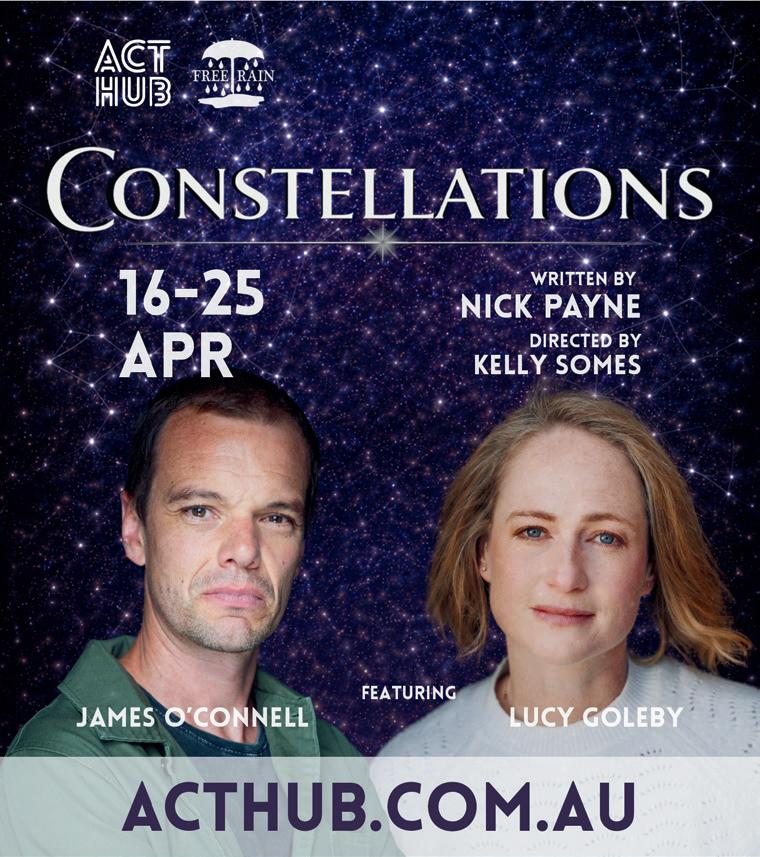

One-hat, fine dining Waters Edge has introduced high tea and created a new share menu.
Domes are now a permanent fixture, offering private or shared dining experiences, at lunch, sunset and after dark. On our last visit, we were told that Waters Edge is thinking about some short-term, internal refresh renovations during
Our three-course lunch was exceptional value at $77 and included an amuse-bouche, warm breads and – at the appropriate point – a refreshing palette cleanser.
The plating of each dish is as beautiful as the views of the lake, and Waters Edge holds a prime position beside the International Flag Display.
By Helen MUSA

Singer and actor Nikki Nouveau conjures the spirit of Parisian legend Édith Piaf in No Regrets: The Edith Piaf Story, a cabaret delivered in French and English weaving the singer’s turbulent life through chansons including La Vie en Rose, Padam and Non, Je Ne Regrette Rien. Belconnen Arts Centre, March 28.
The inaugural Upstageing Canberra Festival, presented by the Council on the Ageing ACT, celebrates the artistic vitality of older Australians. Designed to show that creativity never retires, the festival highlights older Canberrans working across music, theatre, storytelling, visual arts and craft, while encouraging intergenerational exchange and community participation. Canberra, March 20–29.
Highlights of Upstageing include Canberra Choral Society’s Our Stories, directed by Dan Walker with soloists Rachel Mink and Alasdair Stretch and the choir explores memory, identity and belonging from across generations, National Gallery of Australia, March 29; and The Makers Showcase, craft and visual arts displays in the Fitters’ Workshop, March 22, 29.
The inaugural Dante Oration explores the life and legacy of

Talking to the names making news.

Dante Alighieri, with lecturer Simona Martorana speaking on Dante’s relationship with classical poetry and its influence within the Divine Comedy; the evening opens with the choir of the Dante Alighieri Society. Italian Cultural Centre, Forrest, March 26.
Canberra Symphony Orchestra hops into Hallyu! The Korean Wave with Spark, Bloom!, an evening beginning with lakeside drinks before unfolding into a performance in the atrium, where percussionist Claire Edwardes joins Korean jazz vocalist Sunny Kim and CSO percussionists in blending K-pop sparkle with contemporary Australian sounds. Audiences will be invited to an after-hours opening. National Museum of Australia, March 26.
Virtuoso violinist Ilya Gringolts reunites with the Australian Chamber Orchestra for The Devil’s Violin, tackling Giuseppe Tartini’s fiendishly difficult Devil’s Trill Sonata. The Russian-born prodigy directs the ensemble in a daring program. Llewellyn Hall, March 28.
Irish queer folk singer-songwriter Gráinne Hunt arrives in Canberra as part of her Australian tour, performing with San Diego drummer and vocalist Jules Stewart to create harmonies and storytelling that has drawn comparisons with Indigo Girls and Brandi Carlile. Smith’s Alternative, March 16.

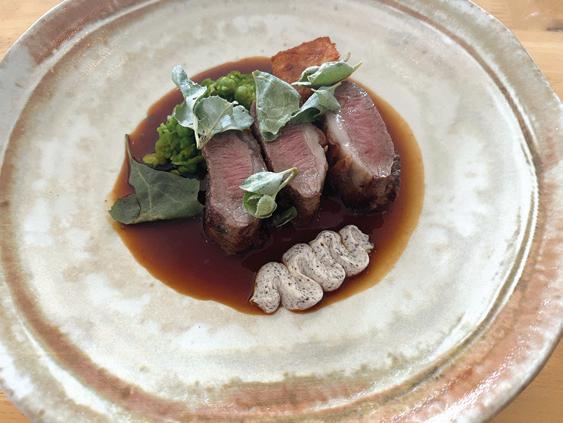
Native, Asian and international ingredients from tropical parts of the globe are imaginatively used to heighten dishes, including the cured sashimi salmon we shared. The dish is created with finger lime, ponzu, wasabi Katsuobushi and Furikake. Intense umami flavors combined beautifully with tangy, refreshing and intensely citrusy finger lime. My taste buds performed a lively cha-cha.
Panfried haloumi is always a fave dish of mine. At Waters Edge, the thick slice of firm cheese married well with red wine and honey emulsion, fig, mashed peas, mint and asparagus salad.
Kangaroo can be challenging to cook, but this fillet was as tender as could be. The dish featured pepper berry emulsion, mustard, crispy shallots and pickled beetroot. Wonderfully executed was the potato galette.
White Pyrenees lamb backstrap was a chef’s recommendation, and with good reason. This premium, succulent, pasture-fed lamb is sourced directly from the foothills of Central West Victoria’s Pyrenees region. The quality is up there with the best, and the lamb was super tender and
White Pyrenees lamb backstrap… pasturefed lamb sourced directly from the foothills of Central West Victoria’s Pyrenees region.
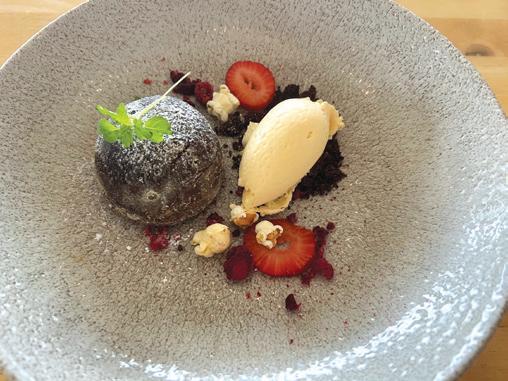
super tasty. Elevating the dish was black garlic and salt bush. Once more, the potato galette was wonderfully executed.
Waters Edge marinated its spatchcock in achiote, a vibrant, colourful spice native to tropical regions of the Americas. The native peppery berry mayo glaze couldn’t be faulted, and the slice of gem lettuce on the side added visual interest and texture.
We shared two dynamite desserts and a cheese upgrade ($10) for a memorable ending to our meal.
Truly decadent was the molten chocolate cake ($26). It was rich, but not overly so, and featured a warm, liquid centre that flowed out of the warm
cake. The quenelle of homemade vanilla ice cream was perfectly formed.
Refreshing was the Yuzu mousse ($23) with meringue, raspberry coulis, strawberries, coconut and peppermint ice cream. A winning dish all round.
Wines are carefully selected at Waters Edge. We enjoyed the Apricus Hill Semillon (WA, $92 a bottle) and the Risky Business pinot noir rosé (WA, $72 a bottle).
The service at Waters Edge is attentive and detailed.
Customers rank number one.
A friend hounded me about going to the Gundog Estate winery in Gundaroo for Sunday lunch until I finally barked back: “Yes, yes, let’s do it fur real”.
We drove to this small town, only 45 minutes from Canberra, on a hot and intermittently rainy day.
Kieran, the cellar door hand who looked after us, unleashed an array of wines to taste and we ordered food that’s prepared at the adjacent Grazing restaurant.
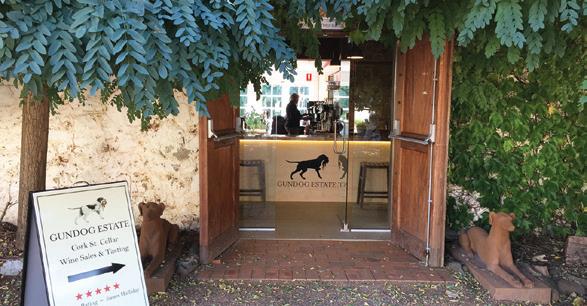
The cellar door is in the stables that are part of the historic Royal Hotel, from which the restaurant operates.
The cellar door area is exposed wood and old stone, comforting and welcoming. There was no equestrian that this was a renovated space. The cellar door is, of course, dog friendly.

The winery has another
outlet in Pokolbin, in the Hunter Valley, and the wines that are made by Matt Burton are from grapes sourced not only locally (Canberra District and Hilltops) but from the Hunter and the Yarra Valley.
There is a separate range of wines marketed under the name Burton McMahon that are the result of a collaboration with another winemaker, Dylan McMahon, produced from Yarra Valley fruit.
The winery produces more
than 30 wines from at least six vineyards, one of which is owned by the winemaker, with the Canberra vineyard owned by his parents.
We tried a large array of table wines on the day, as well as a delightful fortified, a muscat, that was intense and went very well with coffee providing a nutty, toffee-like contrast to the slightly bitter but very well made cappuccino that rounded off the day.
Leaving aside the muscat, my two favourite wines were very different in taste.
The first was a young semillon, The
Chase 2025. This is from Hunter Valley fruit, with the Hunter being a great place to grow this varietal.
The Chase exhibits the essence of young Hunter Valley grapes of this kind: taut and refreshing with a clean citric character.

In my view, semillon should be drunk young or after at least six to seven years when the wine should become multi-layered and complex. For now, in its youth this is a wine that goes well with fish and that was demonstrated when we paired the taste with the fish croquette we ordered. It costs $35 a bottle at the winery.
The outstanding wine of the day is a premium wine, priced at $80. We were lucky enough to get a taste of the 2022 Gundog Estate Rare Game shiraz.
Again, this wine is made from Hunter Valley fruit that is obviously of excellent quality. The wine is dark red in colour, with a nose of liquorice, slightly earthy. On taste there’s a light tobacco flavour with deep plum and a peppery finish. From the flavour profile, you would think that this is a high alcohol wine, like a Rutherglen Warrabilla for example. But it achieves a great depth of flavour with an alcohol by volume of only 13.5 per cent.
It was a great way to spend a rainy Sunday, and I’ll be bark, uh, back.

By Joanne Madeline Moore
ARIES (Mar 21 – Apr 20)
On Wednesday, the fiery Aries Sun hooks up with taskmaster Saturn in your sign, so it’s the start of a new cycle of hard work, achievement and responsibility. Which is likely to bring success and stress in equal measure. A confident yet cautious approach is the best way for Rams to proceed. Be inspired by birthday great, soul singer Aretha Franklin (who was born on March 25, 1942): “Be your own person and always be confident in what you’re doing.”
TAURUS (Apr 21 – May 21)
The Sun and Saturn link up in your solitude, spirituality and dreaming zones on Wednesday. So, it’s important to find some ‘me time’ in your busy week, where you can meditate, contemplate, pray or chant, as you relax and wind down in a way that suits you. And it’s also a good time to write your dreams down on your phone, computer or in your diary. As birthday great, feminist and activist Gloria Steinem observes: “Dreaming, after all, is a form of planning.”
GEMINI (May 22 – June 21)
Dynamic Mars and Mercury (your ruling planet) are both charging through your career zone, so it’s time to be more proactive and communicative at work. If there’s a problem, come up with a solution. If a colleague is being difficult, get talking. Plus – with the Sun and Saturn activating your friendship and peer group zonesstrive to be more strategic about the company you keep. Perhaps it’s time to give a fake friend or a meddling acquaintance the flick?
CANCER (June 22 – July 23)
Roll up your sleeves because the Sun and Saturn pair up in your professional zone, so there’s important and challenging work to be done! With Mercury and Mars both transiting through your aspirations zone, it’s also a suitable time for dreaming, setting ambitious goals, researching and planning. Be inspired by birthday great, writer, feminist and activist Gloria Steinem: “Without leaps of imagination, or dreaming, we lose the excitement of possibilities.”
LEO (July 24 – Aug 23)
This week the Sun (your power planet) links up with Saturn and Pluto, so try to get the balance right between the status quo and change, between stability and transformation – especially involving relationships (of the romantic, platonic and business variety), plus personal beliefs. You could also make an important decision concerning publishing, teaching, a new course of study or an overseas trip. The weekend is wonderful for travelling and socialising.
VIRGO (Aug 24 – Sept 23)
Expect a rather complicated week, Virgo, as Mercury and Mars visit your relationship zone, and Saturn links up with the Sun in your money/intimacy zone. So, aim to be super patient with your partner, extra kind to your family, oh-so cooperative with your work colleagues and uber disciplined with deadlines. And try to keep spending to an absolute minimum, as you curb shopaholic tendencies, stick to a strict weekly budget, and put any extra cash into savings.
LIBRA (Sept 24 – Oct 23)
On Wednesday, the Sun and Saturn pair up in your partnership zone. So, aim to get the balance right between personal needs and relationship responsibilities, between individual projects and joint ventures. You could also find yourself having deep conversations with a close friend, or a new acquaintance could dazzle you with their magnetic personality. The weekend favours passionate feelings and/or making a serious, long-term commitment.
SCORPIO (Oct 24 – Nov 22)
Wednesday’s powerful Sun/Saturn conjunction is good for reorganising your daily schedule, sorting out overdue paperwork, planning a new diet and/or restructuring your exercise program. A combination of enthusiasm and discipline will take you far. Mercury and Mars are both activating your creativity zone, which encourages you to be proactive about expressing yourself as you perform, sing, dance, draw, write, publish, paint or play a musical instrument.
SAGITTARIUS (Nov 23 – Dec 21)
This week’s stars highlight romance, entertainment, friendships, family, children, creative pursuits and DIY projects. With your sparky Sagittarian mojo and momentum running on high, you’re ready to rock and roll and get things done! But the planets caution you to slow down. You need to take your foot out of your mouth and communicate with more care and consideration, especially in matters involving relationships (of the romantic, platonic and domestic variety).
CAPRICORN (Dec 22 – Jan 20)
On Wednesday, the Sun and Saturn (your patron planet) hook up in your home zone, so extra domestic chores and/or family responsibilities could add to your already overloaded schedule. Calm down and pace yourself, Capricorn. Then the fabulous Saturn/Pluto link could send a financial opportunity your way or someone could say something that boosts your confidence and buoys your self-esteem. The weekend favours DIY projects and family get-togethers.
AQUARIUS (Jan 21 – Feb 19)
The Sun and Saturn link up with Pluto (in your sign) which boosts personal magnetism, professional influence, communication and education opportunities. It’s also a good week to explore your neighbourhood and introduce yourself to some new members of your local community. Your motto for the moment is from birthday great, feminist and activist Gloria Steinem (who was born on March 25, 1934): “A good friendship is a conversation that never ends.”
PISCES (Feb 20 – Mar 20)
Mercury and Mars are both transiting through your sign, so it’s time to think creatively and respond proactively. As birthday great Lady Gaga observes: “Creativity is my favourite thing about life.” When it comes to money matters, the Sun/Saturn conjunction urges you to think conservatively and plan for the long term. So spontaneous spending sprees are (temporarily) off the menu. The weekend favours doing something special that makes your heart sing. Copyright Joanne Madeline Moore

2 What was an earlier name for clothing? (7)
3 What are labels or tags? (7)
4 Name another term for bombs. (6)
5 What are pumas also known as? (7)
6 What is a lodger called? (7)
7 Name some facial expressions. (7)
13 What is the world of celebrities? (7)
14 To be in pieces, is to be what? (7)
15 What is a title or caption of a page, chapter, etc? (7)
17 Name the English actor, producer and director, Laurence ... (7)
18 Which colourless liquid hydrocarbon is used as a solvent, etc? (7)
20 Name some particular male singers. (6)



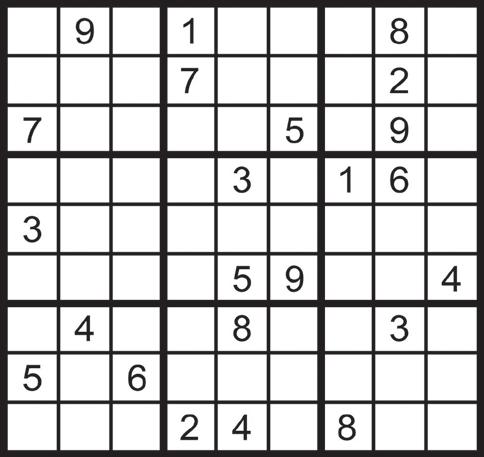



Winnunga Nimmityjah Aboriginal Health and Community Services is a community-controlled health service
in Narrabundah, providing holistic, culturally safe care to Aboriginal and Torres Strait Islander people across the ACT and surrounding regions.
WINNUNGA OFFERS A WIDE RANGE OF SERVICES, INCLUDING:
Health and Medical Care
• GP and specialist clinics
• Aboriginal Health Workers
• Chronic disease support, pathology, immunisations, dental, optometry, and more
Pregnancy, Parenting and Family Support
• AFPP: Free support for young, first-time Aboriginal mums from pregnancy to bub’s second birthday
• Healthy Pregnancy Group & Childbirth Classes
• Mums and Bubs Clinic
Quit Smoking Support
• Free nicotine replacement therapy, personalised quit plans, and culturally safe support through the Tackling Indigenous Smoking program.
Social and Emotional Wellbeing
• Counselling and mental health support
• Drug and alcohol programs
• NDIS, court and justice support
Community and Justice Programs
• Men’s and women’s groups
• Yarning circles, nutrition and healing programs
• Support for people in custody and post-release