BUDGET ‘SILVER BULLET’ MEANS COMPLYING WITH THE LAW
JON STANHOPE & KHALID AHMED urge the ACT government to fall in line and cop the consequences
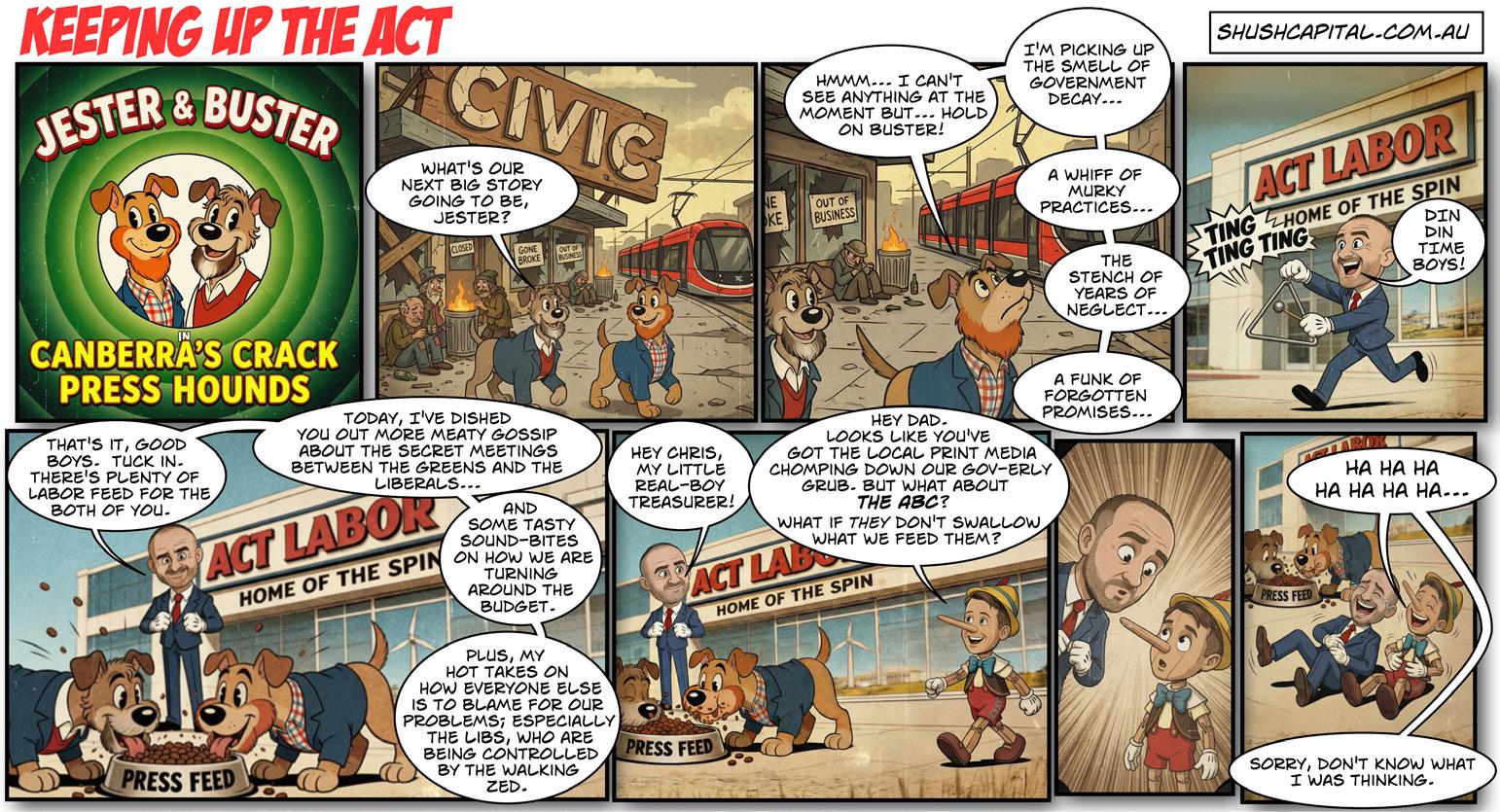
The Chief shows how he feeds Canberra’s crack press hounds KEEPING UP THE ACT
Now’s the last chance to plant for winter
JACKIE WARBURTON
CELEBRATING SENIORS
10 BIG PAGES
BUILDING A ROLE FOR EVERYONE
Meet the skilled women in construction building Canberra
NOW OPEN IN QUEANBEYAN
Precision haircuts by master stylist Luke Whittle, with over 20 years’ industry experience and elite international training. A short hair expert, specialising in tailored, exceptional cutting for men and women.
Find Luke and discover craftsmanship, confidence and style at Blondish. Book now at lukewhittlehair.com.au
An image capturing the central 650 light-years of the Milky Way in extraordinary detail has given astronomers their clearest view yet of the dense, chaotic heart of our galaxy.
Produced using the Atacama Large Millimeter/submillimeter Array (ALMA) in northern Chile, the mosaic is the largest image ever created by the observatory.
It reveals an intricate network of cold molecular gas filaments surrounding the Milky Way’s supermassive black hole within a region known as the Central Molecular Zone (CMZ).
The international effort – involving more than 160 scientists from more than 70 institutions – includes researchers from The Australian National University, where Professor Christoph Federrath is helping analyse the extreme turbulence shaping star formation near the Galactic Centre.
“The gas that ACES is targeting is cold molecular gas – the raw fuel from which stars form and that ultimately powers them,” Prof Federrath said.
The dataset, produced by the ALMA CMZ Exploration Survey
(ACES), shows structures on every scale, from vast gas formations stretching tens of light-years to compact clouds clustered around individual newborn stars. In the sky, the completed image spans a length equivalent to three full moons placed side by side.
Prof Federrath said turbulence is a defining characteristic of star-forming regions, but near the Galactic Centre it becomes far more intense.
“A defining feature of all starforming clouds is their highly turbulent, chaotic flows of gas and dust,” he said. “Near the Galactic Centre, this turbulence becomes extreme, weaving a dense, tangled web of filaments that ultimately collapse to form new stars.”
Despite its importance, the origin of this turbulence remains one of astro physics’ biggest open questions. Prof Federrath’s group at ANU is investi gating its driving forces by combining supercomputer simulations with the new ACES observations.
“By combining cutting-edge supercomputer simulations with observational datasets like ACES, we can finally begin to unravel the mysteries of the extreme, chaotic conditions under which stars are born,” he said.
1993: Volume 32, Number: 9
General manager: Tracey Avery, tracey@citynews.com.au
The largest ALMA image ever shows the molecular gas in the centre of the Milky Way.
POLITICS / Operation Kingfisher
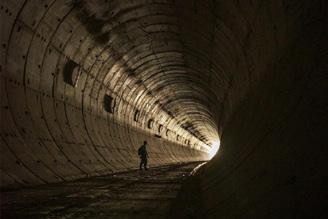
Is that glint of light at the end of a long tunnel?
The light is finally at the end of a long tunnel. The ACT Integrity Commission has identified that the last legal hurdle preventing the publication of the Kingfisher investigation has finally dissipated. Well, almost the last legal hurdle!
The breakthrough came with David Ferguson dropping his lawsuit to prevent the examination of 1.4 million documents that had been downloaded from his mobile phone. Ferguson was working for Deputy Chief Minister Yvette Berry at the time, which is the focus of the investigation.
The Integrity Commission announced that the impact of this action has allowed the release of the report. Don’t hold your breath! It will not yet be released to the public. The law requires that the report first be released to “affected parties”.
According to the Commission’s website: “As part of the procedural fairness process, the Integrity Commission Act requires that a minimum of six weeks is given to the affected parties to respond to the proposed report.
“The Commission must then consider any comments received, including any requests from relevant parties seeking additional time to respond”. Those who have received a
copy are bound under the law to non-disclosure until the Operation Kingfisher is tabled in the ACT Legislative Assembly.
According to the Commission’s website: “Operation Kingfisher is an investigation into whether public officials within the ACT Education Directorate failed to exercise their official functions honestly and/or impartially when making recommendations and decisions regarding the Campbell Primary School Modernisation Project between 2019 and 2020”.
Lendlease won the contract (which has since been completed) despite the tender evaluation teams recommending, on two occasions, that the rival firm Manteena had a superior and cheaper bid.
When Minister Berry, as education minister, was called to appear before the Integrity Commission in September 2023, she denied telling her staff to ensure the bid was to go to Lendlease. She was the first
Any commission of inquiry that has taken more than five years to be completed needs to be investigated… It should consider adequate funding, attempts of political interference and where a shake up is needed.
ACT minister to appear before the Integrity Commission.
The investigation is also considering the influence of the CFMEU as to whether this union exerted influence that undermined public servants and was not in the best interest of taxpayers.
The announcement of the release of the reports by the Integrity Commission was followed rapidly with debate in the Assembly.
A motion put forward by the Liberal Party in the Assembly called for an investigation into the Integrity Commission to determine what were the delays and what ought to be done to avoid similar delays in the future.
“This is not about pre-empting the outcome of the Campbell Primary School investigation,” said Opposition Leader Mark Parton.
“It’s not about political point scor-
ing, it’s about ensuring that the ACT’s integrity framework is functioning as the public expects and deserves.”
The Liberals are not the only ones buying in on Operation Kingfisher.
The Greens recently criticised Chief Minister Andrew Barr for allowing Ms Berry to remain in cabinet for two years despite having appeared before the Integrity Commission.
When asked in question time if any member of his government had “engaged in conduct that may result in an adverse finding by the ACT Integrity Commissioner or the ACT Auditor-General”, Mr Barr’s response was “ministers operate under the ministerial code of conduct”.
Additionally, the chief minister pointed out that his government has, “always given serious consideration to budget funding requests particularly for particular projects or the base workload of the commission”.
Any commission of inquiry that has taken more than five years to be completed does need to be investigated. There is a parliamentary committee that is charged with the oversight of the commission and must now follow through to ensure there are no blocks in the way of the Integrity Commis -
sion carrying out its work.
Examination of the conduct of Operation Kingfisher should consider adequate public funding, attempts of political interference, do the administrative or investigative arms of the Integrity Commission need a shake-up.
Additionally, was litigation deliberately designed to slow the inquiry to ensure the report was not submitted before an election.
It is time to consider if changes to legislation are needed to facilitate a more effective investigative organisation.
Operation Kingfisher has yet to report. The light at the end of the tunnel still requires patience. The hope is that the final report will be to the Assembly speaker before the end of the financial year.
Michael Moore is a former member of the ACT Legislative Assembly and an in dependent minister for health. He has been a political columnist with “CityNews” since 2006.
Set amongst beautiful grounds, Adria Care in Stirling is a warm and welcoming community. Cultural diversity is celebrated providing care for Croatian and all other nationalities. We offer a range of activities to cater for all cultures and interests.
Fostering individuality and independence, we offer care and support for residents to live comfortably and securely.
Adria Care offers:
• 42 residential care single rooms with ensuite
• 2 respite single rooms with special care with ensuite
•
and unwavering commitment to excellence, we aim to be trusted advisors, guiding our clients through intricate financial landscapes, optimising resources and assisting them in achieving their financial objectives.
We’ve changed, but the parties are slow to follow
From the north or south? How about sport – a traditionalist (rugby, AFL, real football, cricket) or maybe something else? Is it a flat white or bubble tea? Apple or Android?
The list goes on. But it defines who we are. And brands depend on it for survival and viability in the short, medium and long term.
Politics is no different. Parties depend on identification for their survival electorally and financially. Polling gives us an idea on where we are on identification. What it shows in 2026 is that party identification has moved but ideological identification is moving its needle slightly in favour of the right across the board.
Identification in politics is complex. So let’s look at just two big factors that influence it politically: geography and performance.
Geography
Broadly speaking, the further we get from an urban centre, even if that urban centre is a town like say Jindabyne or Yass, the more right we become. Which then means that the closer we live to an urban centre, the more centrist we are.
So we seek out part of our political identification geographically with those who are similar. Andrew Barr?
Centrist and urban for sure, and hence why he polls so well in his electorate. Go south to Tuggeranong and the identification changes in us, and so it does with how we identify with our politicians. Isn’t that right, Jessie Price?
This is just part of the story though in 2026. Just ask the Nationals, who in one recent poll were at two per cent federally. That’s in the margin of error for polling companies, so who
Parties depend on identification for their survival. Polling in 2026 shows that party identification has moved but ideological identification is moving its needle slightly in favour of the right across the board.
knows if it could even be lower.
Their strategy of rural and regional identification once was near spot on: leader, policy and party nearly always aligned with the identification of the voters of the seats they held.
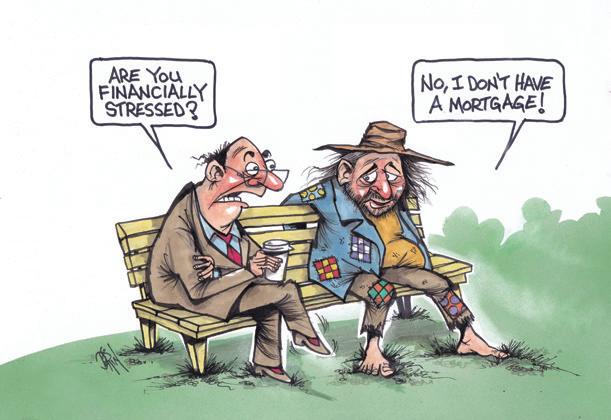
Now, with our cities becoming overpriced mortgage prisons, people are being pushed to regional areas in record numbers. But we still identify as urban, even though we may live in a rural area.
A more diverse market opens up the door for other political players, and closes the door more on the Nationals.
I heard persistent rumours of a regional Voice-style movement putting together candidates and funds (in the magnitude of multiple millions) early last year to have a run at the 2025 election.
They left it too late, but from what I heard they were more likely to be
Do you want to:
• feel warm in winter and cool in summer?
• lower your energy bills?
• reduce outside noise?
• improve security and the value of your property?
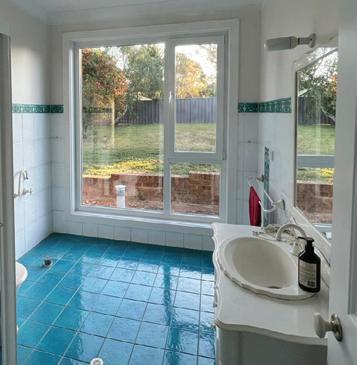
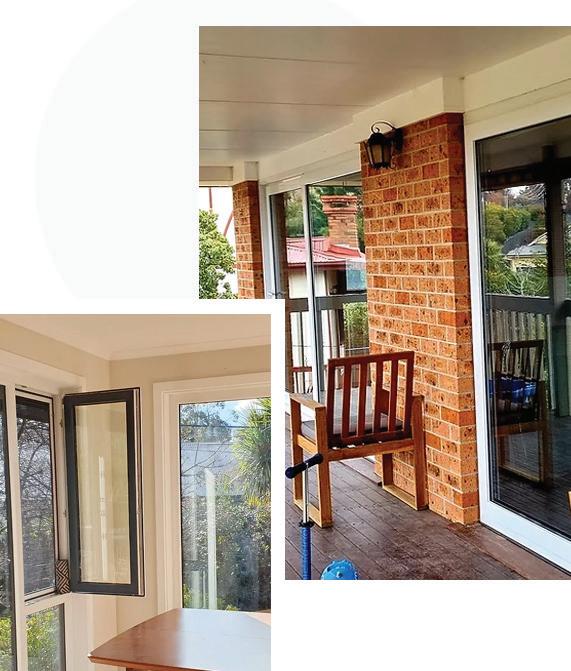
These are just some of the many benefits that home and business owners can achieve with our uPVC double and triple glazed windows and doors.
Windotek Australia is a leading provider of double and triple glazed uPVC window and door systems for the Canberra region. We help you achieve a higher EER rating, with 100% customised solutions that meet your needs and complement the style of your home.
reflective of regional voters living in urban centres, like Yass, than the Nationals.
Similar things have already happened in this space in urban areas: teals are what the moderate Liberals should be in 2026. The Greens (aka the Renters Party) are going after seats once seen as solid Labor working class. The independents are taking them all on.
While our geographic identification has changed in our minds, most parties have been too slow at recognising and responding to it. They’ve been more analogue, less digital you could say.
Performance
That slowness of change then becomes another symptom of another critical identification factor in 2026: performance.
The world we are in is changing fast. Just look at the speed of AI. It will fundamentally change so many occupations. You have to be quick.
Is this populist politics? I actually think it’s more about performance. Are your policies, people and party reflective of 2026? Even in your own particular ideology? Or are they 1986?
Nationals Leader David Littleproud once said people expect performance number one from politicians. Why would I identify with a person, party or policy if it wasn’t reflective of 2026?
This is what hurts the major parties the most on identification. They seem slow to react. Minor parties and independents can move dynamically, efficiently and remain reflective of their base. It’s a significant advantage in the modern era and one the polls are picking up on.
Will we go back? Have we ever? No. The right has splintered. It lies on a spectrum from soft right (Labor/ Teals) to hard right (One Nation).
The real reason we won’t go back though is who we see ourselves as being has changed for so many. Until parties get that, we won’t identify with, or vote, for them.
Dr Andrew Hughes lectures at the ANU Research School of Management, where he special ises in political marketing.
The further we get from an urban centre, the more right we become. Photo: Jake Norris
MyWay+ rollout
The ACT Government will refer the rollout of the MyWay+ ticketing system to the Auditor-General following a Legislative Assembly inquiry that found the project was not ready for launch and “did not work properly”.
The government tabled its response to the inquiry in the Assembly, agreeing to several recommendations, including a formal examination of the project by the Auditor-General.
The inquiry made a series of findings about the handling of MyWay+, concluding the system was “clearly not ready for launch” and attributing its failures to poor project management, flawed decision-making, weak design and inadequate community testing.
In October, the Assembly censured Transport Minister Chris Steel over the handling of the rollout. While Mr Steel accepted responsibility for the issues with MyWay+, he did not resign.
Canberra Liberals Leader Mark Parton said independent oversight was necessary and again called on the minister to step aside.
Why we’ll all get same text message
Almost all mobile phones in Australia will receive a test emergency alert in late July as the federal government prepares to roll out a new warning system for bushfires, floods, storms and biosecurity hazards.
The long-awaited AusAlert system will undergo a national test on Monday, July 27, before it officially comes online in October.
The $132 million communications network allows emergency messages to be targeted to within 160 metres, meaning individual streets can be told to evacuate or prepare.
Local tests will first be conducted in all states and territories over June, with messages to be sent to residents of Majura, ACT; Launceston, Tasmania; Port Douglas, Queensland; Liverpool, NSW; Geelong, Victoria; Tennant Creek, NT; Goomalling, WA; Port Lincoln, South Australia; and a cross-border test around Queanbeyan, on the NSW-ACT border.
Two levels of alerts can be sent –a critical alert which will warn of imminent threat to life and property, and a priority alert for watch and act or advice warnings.
Officials believe around 90 per cent of all phones will be compatible. –AAP
Omar wins big fiction prize
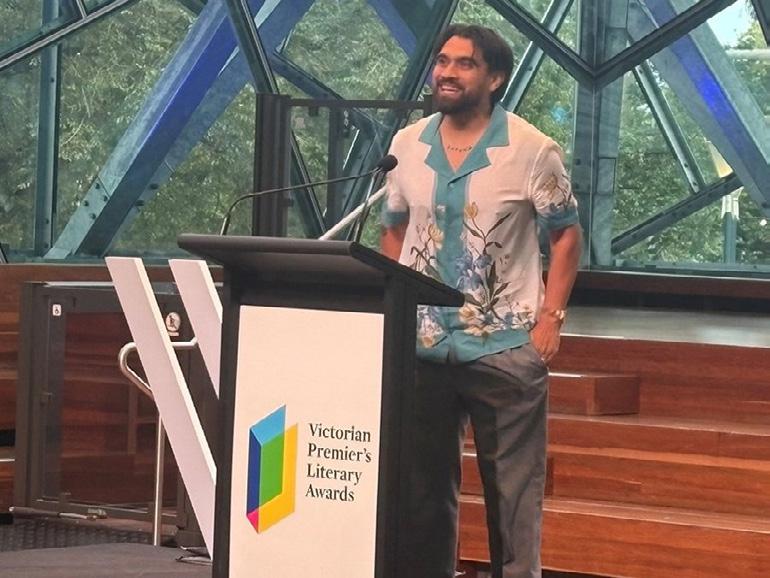
Queanbeyan author Omar Musa has won the 2026 Victorian Premier’s Award for Fiction for his novel Fierceland.
The $25,000 prize was announced in Melbourne, with judges describing Fierceland as “in turns expansive and tenderly intimate” and “a searing excoriation of colonialism and inheritance”. Musa, a Bornean-Australian author, visual artist and poet from Queanbeyan, has released four poetry books, five hip-hop records and several novels. He has also held a number of solo exhibitions, including The Hurt Business, currently showing at Megalo Print Studio in Canberra. –Len Power
Auction marks third anniversary
Yerrabi View Club members will celebrate the club’s third anniversary with the annual Fun Auction at its next meeting at the Eastlake Gungahlin Club, 11:30am, on March 19.
New members welcome. More from chanily3@bigpond.com
Omar Musa collects his prize for fiction at the Victorian Premier’s Awards.
A place for everyone in construction, says Anna MASTER BUILDERS ASSOCIATION /
On worksites across Canberra, from suburban infill builds to major civil projects shaping new
That role might be on a residential build in Taylor, overseeing a civil package in Molonglo, co-ordinating sub-contractors in Fyshwick, or managing budgets and compliance from
Her message to women is not about
“Women who are interested in a dynamic and challenging career should consider
“There is a huge opportunity for women to make their mark in the industry. If you’re capable, practical, resilient and enjoy problem solving, find an open door and
, project engineer with Complex Co., believes exposure is key.
“Many young women simply don’t see the breadth of roles available,” she says.
“I believe early and greater exposure to the benefits of working in this field is
“Providing young women with information about the vast number of roles within the civil sector can spark their interest and walls.
“Construction is no longer just about physical strength; it’s about communication, complex problem-solving, and a high level of detail, areas where women naturally excel.”
She believes diversity strengthens both culture and outcomes.
“When we ‘balance the scales’ by bringing more women into the industry, we aren’t just filling a labour shortage; we are improving the culture and the output of the entire sector.”
And for Ruby Mitchell, the reward remains refreshingly tangible.
“If you are a creative person and like more hands-on work, it’s a great industry to work in,” she says.
“Few careers allow you to point to a finished structure and say, ‘I built that’.”
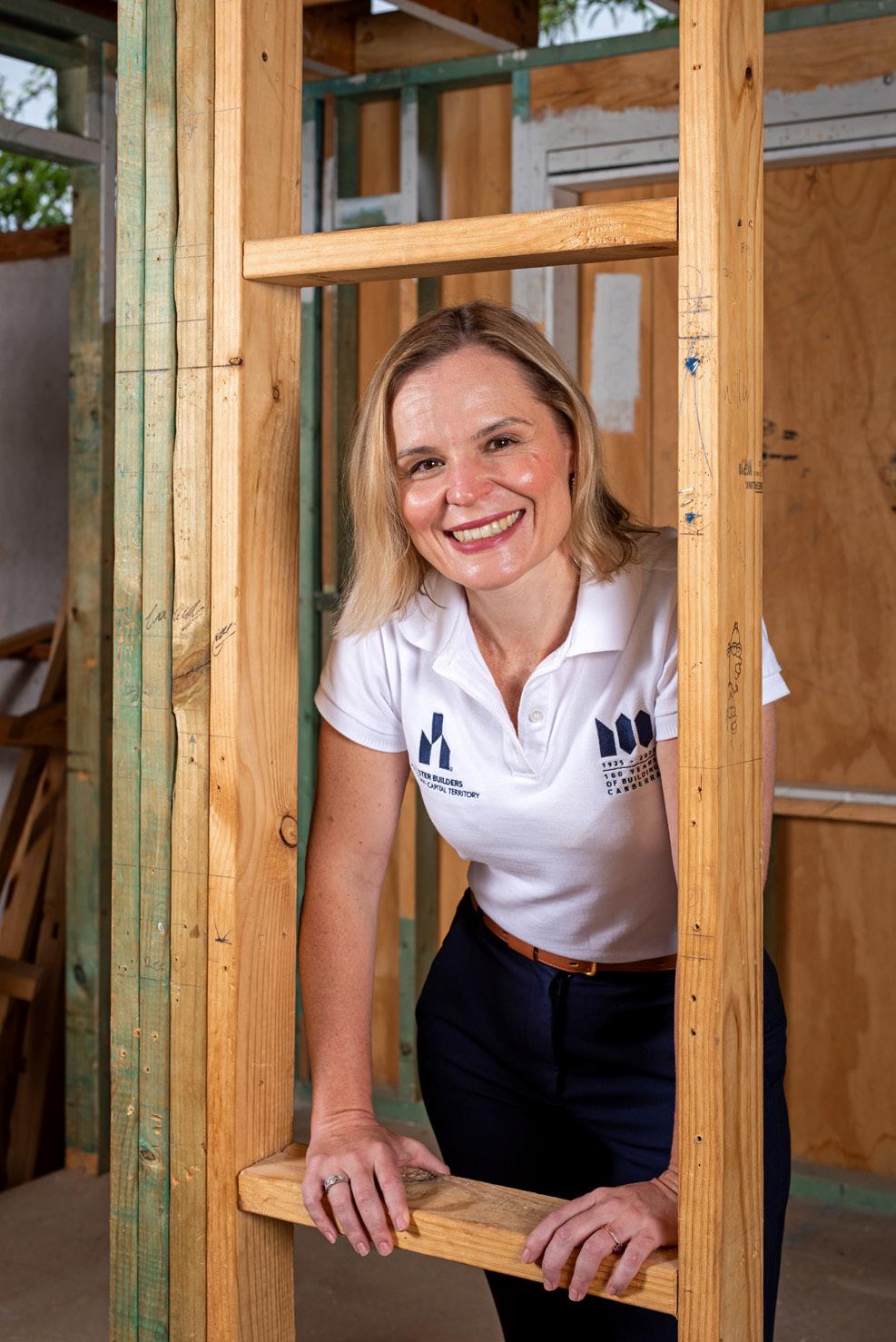
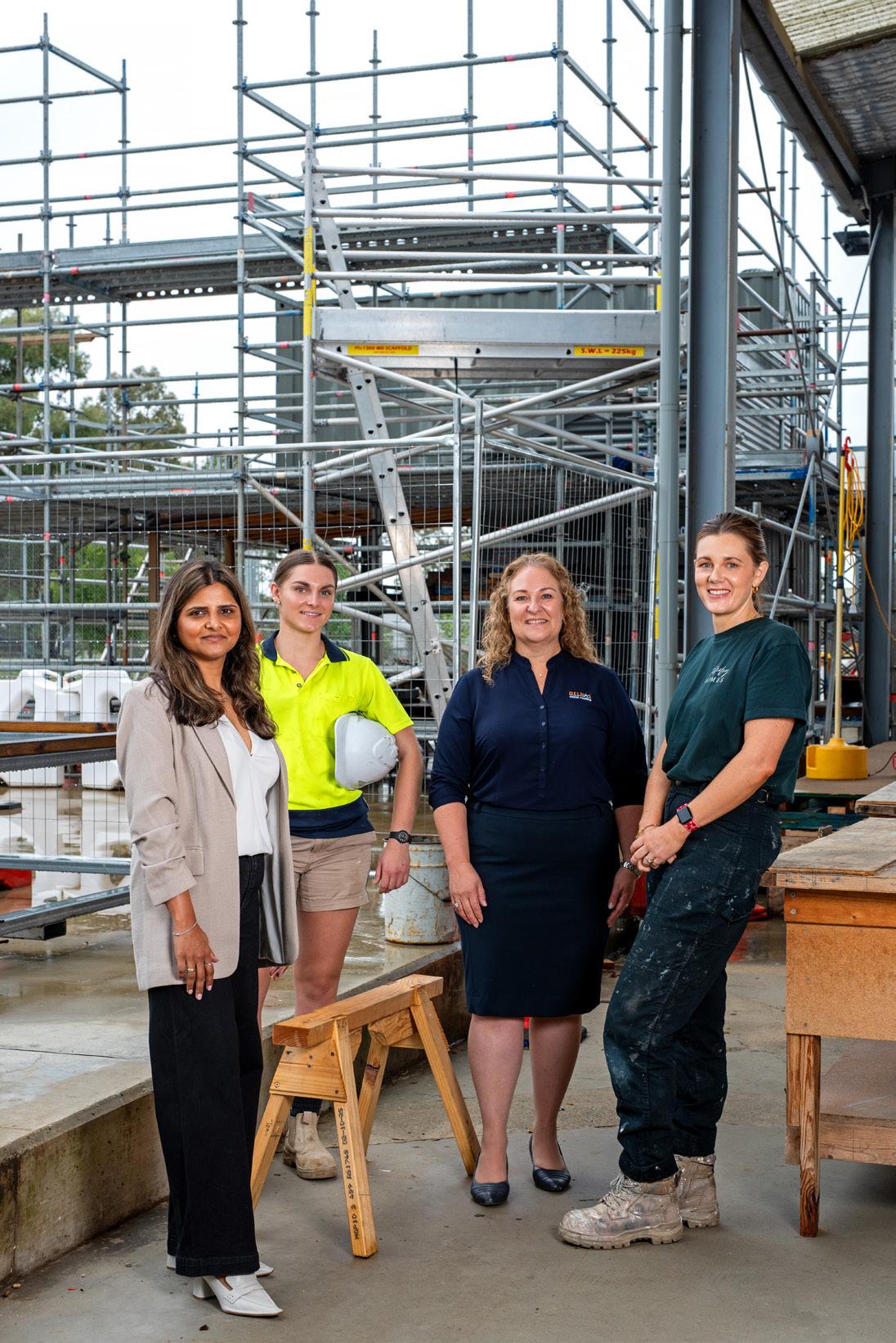
Master Builders ACT CEO Anna Neelagama… “Building and construction is an industry where women are not only welcome but essential.”
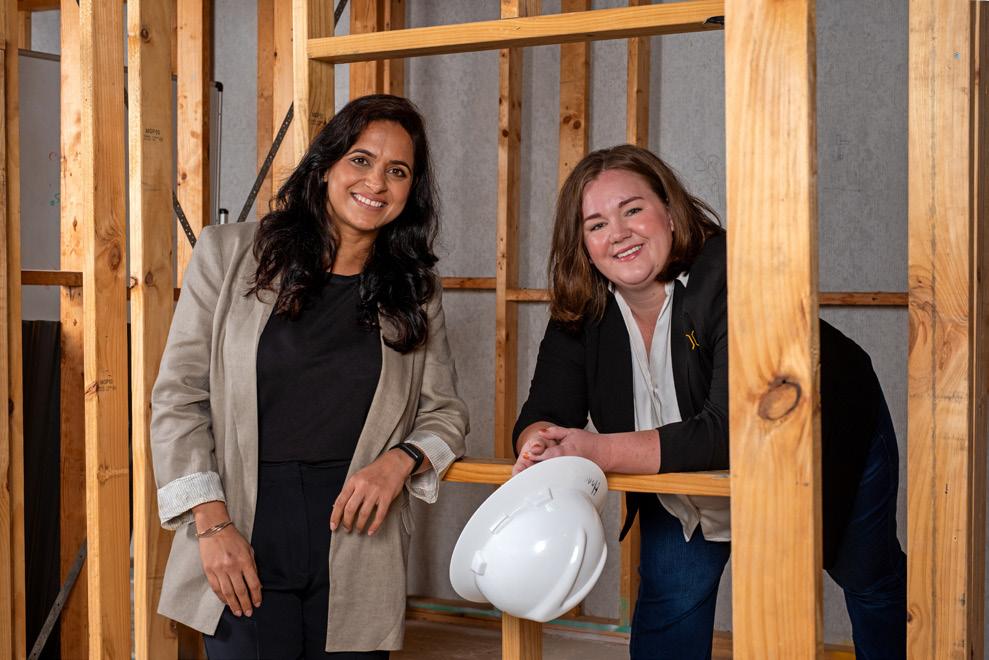
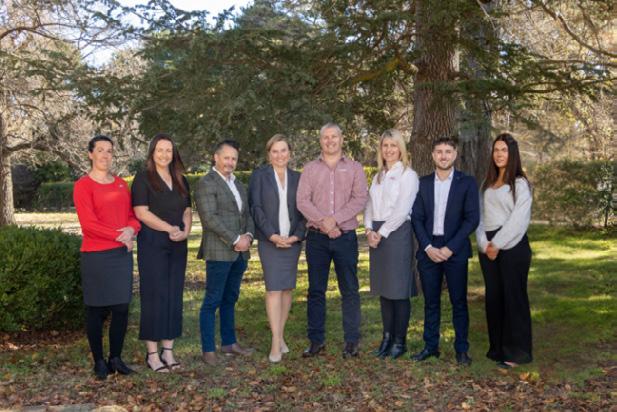
From left, Anisha Sachdeva, Nicole Leishman, Anna Neelagama, Carly Dewey, Ruby Mitchell, Hannah Pearce and Kiara Shah.
It’s about removing barriers, building balance
While individual stories are powerful, structural change is essential.
The Master Builders Australia State of the Workforce Report 2024 highlights the need to enhance mentoring and networking programs, promote safe and respectful site culture, provide unbiased careers education, and remove entrenched bias toward university pathways when trade apprenticeships may be equally valuable.
“Master Builders ACT is committed to removing barriers and creating clear pathways for women to succeed in trades and construction careers,” Anna Neelagama says.
Cultural change also matters. A safe, inclusive environment is non-negotiable.
construction also creates strong role models,” she says.
“Visible female leaders and tradespeople help break outdated stereotypes and show young girls that construction is a viable and rewarding career path.”
In the ACT, support mechanisms are already in place. The Master Builders ACT Women in Construction group, formed in 2018, has grown into a 600-strong network. The Level the Site mentoring program provides structured, one-onone mentoring relationships for women at every stage of their careers.
Every woman who steps into the industry helps challenge outdated stereotypes about ‘who belongs on a job site’ and reshape perceptions. Visibility matters.”
Nicole Leishman, business owner and office manager at Delnas Metal Roofing, entered the industry through family, but stayed because of what she saw on site.
“I fell in love and married a tradesman,” she says.
“The more I saw the skill, problem-solving and pride that goes into every project, the more I grew to love the industry and appreciate the craftsmanship.
“Every woman who steps into the industry helps challenge outdated stereotypes about ‘who belongs on a job site’ and reshape perceptions. Visibility matters.”
Anisha Sachdeva agrees that representation shifts expectations for the next generation.
“Increasing the number of women in
MBA Training offers man datory white card, asbestos and silica awareness training, alongside Certificate III in Carpentry and Certificate IV in Building and Construction qualifications, practical pathways into long-term careers.
The message this International Women’s Day is not symbolic. It is strategic.
As Canberra faces the dual challenge of workforce shortages and ambitious housing targets, the industry cannot afford to overlook half the population.
Whether on the tools, in civil engineering, project management, interior design, adminis tration or business leadership, there is a place for women in building and construction.
And as Canberra builds its next 30,000 homes, the foundations will be stronger, in every sense, when more women help lay them.
Careers start with a conversation: training@mba.org.au or call 02 6175 5900.
Kiara Shah, Ruby Mitchell, Nicole Leishman and Carly Dewey… “Women who are interested in a dynamic and challenging career should consider working in construction,” says Carly.
Anisha Sachdeva, left, and Hannah Pearce… “Many young women simply don’t see the breadth of roles available,” says Hannah.
Introducing Our New Lawyer
Senior Associate
Exclusive introductory offer FREE 45-minute initial consultation Your trusted Family Law Adviser
‘Silver bullet’ starts with complying with the law
JON STANHOPE & KHALID AHMED offer the government a “silver bullet” to budget success: end the dysfunction by complying with the financial management laws and copping the consequences.
“Annual income twenty pounds, annual expenditure nineteen and six, result happiness. Annual income twenty pounds, annual expenditure twenty pounds ought and six, result misery.”
We have written previously about the importance of the Micawber Principle – living within one’s means – and its relevance, in particular, to public finances.
While our discussion referred in the main to the operating budget, the principle also applies to the capital budget, that is infrastructure spending.
There is a view that has become entrenched over the last decade that state and territory governments not only need to, but must, borrow for infrastructure investment. This has serious consequences.
It is clear that if the entire capital works program is funded from borrowings on an ongoing basis, debt will spiral and interest costs will consume an increasing proportion of the operating budget.
That is, unless the existing borrowings are repaid at or at a faster rate than the new spending, in which case debt is not a funding source but merely a mechanism for managing cashflow.
But discipline was abandoned – for reasons that require a separate discussion – resulting in skyrocketing debt in the state/territory sector with the ACT and Victoria spearheading the race.
By way of comparison, take the 1999-2000 budget presented by then chief minister Kate Carnell. It provided an investment of $134 million in capital, all of which was funded from a cash surplus of $146 million in an operating budget of $1.6 billion.
The 2008-09 budget brought down by then treasurer Katy Gallagher funded $570 million of capital works from $300 million of asset sales and the remainder from a strong cash surplus of $488 million in an operating budget of $3.5 billion. It was the strength of the operating budget that enabled the ACT to remain in a negative net debt position through the global financial crisis.
By comparison, under Chief Minister Andrew Barr and Treasurer Chris Steel, relatively smaller capital programs have been funded through borrowings because the operating budget has been in deficit, with the deeply concerning result that there is no prospect of retiring that debt for decades to come and well past the life of the relevant assets.
The legislation governing financial management in the Territory, namely the Financial Management Act 1996 (FMA), recognises the possibility that a proposed budget may depart from the principles of responsible fiscal management.
However, it stipulates that any departure must be temporary, the government must provide reasons to the Legislative Assembly for the departure, the approach it intends to take to return to the principles, and when the principle of fiscal responsibility will be reinstated.
The ACT’s run of deficits have not only persisted for the last 13 years, but they have also grown, averaging 5.7 per cent before the pandemic and 13.6 per cent per annum post
The budget papers presented over these years, with forecasts of a surplus in the future, cannot be reasonably considered as a statement required under the FMA in substance or form. It is clearly the case that there has been a serious failure of compliance with the financial management legislation and an absence of accountability for that failure.
We can therefore offer the first “silver bullet” for both the executive and the legislature: namely the need for compliance with the financial management legislation and accountability for non-compliance.
The persistent deficits and spiralling debts, and the extent in duration and magnitude, while not conceived in the financial management legislation, are symptoms of a deeper malaise and dysfunction.
Practical actions will be required to:
• Enhance forecasting skills and budget development and management capacity within the ACT Treasury.
• Establish independent review processes, to assure the Legislative Assembly and the community that the forward estimates properly reflect the cost of, and revenue from, current government policies, and that the budget papers correctly explain those policies.
• Establish rigorous project development and assessment processes with external review and oversight to ensure the realisation of benefits and value for money.
• Strengthen contract/project management capacity within the public sector to avoid cost overruns and project failures.
• Develop and adopt a set of Budget Rules for recurrent and capital expenditures that ensure fiscal discipline and allocation of resources to the best social, environmental and economic outcomes.
Each of these and many other necessary tasks will be major undertakings. The question is whether the government is ready or even willing to go down this path?
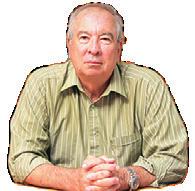
Jon Stanhope is a former chief minister of the ACT and Dr Khalid Ahmed a former senior ACT Treasury official. A fuller version of this column is at citynews.com.au
The Charles Dickens character Wilkins Micawber from David Copperfield. Image: Frank Reynolds, 1910.
/ death of Jeffrey Epstein
The doubts that shroud Epstein’s cause of death
As the shockwaves from the death of Jeffrey Epstein rock high-profile reputations around the world, intelligence expert CLIVE WILLIAMS focuses on the circumstances of the sex offender’s demise in a New York prison cell.
When Jeffrey Epstein was found dead in a Manhattan jail cell on August 10 2019, the official determination was suicide by hanging.
Yet the convenient timing of his death – weeks before a major federal sex trafficking trial that threatened to expose powerful figures – has ensured that doubt persists about the cause of death.
The legal question is whether the failures that preceded his death amounted to negligence – or something more deliberate. But in any system governed by the rule of law, suspicion is insufficient. Determinations must rest on substantive evidence.
Motive is also relevant, as is the background to Epstein’s death.
Epstein was a convicted sex offender. In 2008, he pleaded guilty in Florida to soliciting prostitution from a minor under a plea agreement that curtailed a broader federal investigation and resulted in a notably lenient sentence. That agreement remains one of the most criticised prosecutorial decisions in recent American legal history.
In 2019, federal prosecutors in
New York charged him with sex trafficking and conspiracy to traffic minors, relying on conduct beyond the earlier deal. Bail was refused. For the first time, Epstein faced a public trial, sworn testimony and crossexamination. His legal jeopardy was immediate and substantial.
Court records, flight manifests and depositions linked him to prominent political, academic and business figures. Association does not establish criminality. But reputational exposure extended beyond Epstein himself. That reality supplies theoretical motive, but it does not establish causation.
Before his death, on July 23 2019, Epstein was found injured in his cell in an incident initially treated as a possible suicide attempt. He was placed on suicide watch – a status involving continuous observation – and then removed from that classification about six days later. He returned to the Special Housing Unit under periodic monitoring rather than constant supervision.
On the night of his death, his cellmate had been transferred. The
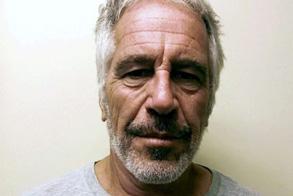
Jeffrey Epstein.
required 30-minute observation checks were not conducted. Some surveillance cameras in the unit were either not recording properly or produced unusable footage. The facility also had significant staffing and management deficiencies.
Two correctional officers were later charged with falsifying records relating to the required observation checks. Those charges were ultimately resolved without custodial penalties after deferred prosecution arrangements. None of those facts proves homicide. They do, however, disclose serious custodial failures.
In Australia, a death in custody would trigger a mandatory coronial inquest. The inquiry would examine not only the medical cause of death but also systemic factors: risk assessments, classification decisions, supervision protocols, staffing adequacy and compliance with procedure. The focus would be institutional responsi-
bility grounded in evidence.
In both Australia and the US, the state assumes a non-delegable duty of care over those it detains. That duty is heightened where a prisoner is on remand, faces grave charges and has recently been assessed as a potential suicide risk. Safeguards exist to mitigate foreseeable harm. Where they fail, legal accountability arises irrespective of whether the ultimate finding is suicide or homicide.
Suicide in custodial settings is not uncommon. Rates among incarcerated populations exceed those in the general community. Imprisonment, public disgrace and the prospect of lengthy sentences are recognised risk factors. From that perspective, Epstein’s death fitted within an established pattern.
But was suicide consistent with his background? There was no publicly documented history of serious mental illness prior to his incarceration. He was raised in an observant Jewish household, and traditional Jewish law strictly prohibits suicide.
Religious doctrine, however, cannot substitute for forensic proof. Suicide still occurs across faith traditions. Character analysis may inform probability; it does not meet a legal standard of proof.
The official investigations – including a comprehensive 2023 report by the US Department of Justice’s
Inspector-General – reaffirmed that Epstein died by suicide. They found no evidence of homicide while identifying extensive negligence and systemic failure within the facility. The rule of law depends not only on prosecuting offences, but on maintaining control and accountability within custodial institutions. A detainee awaiting trial remains entitled to protection by the state. When that protection fails, the issue is institutional competence and legal responsibility.
Whether Epstein jumped or was pushed may never be satisfactorily resolved. If he took his own life, the breakdown reflects serious administrative failure. If he did not, the implications would extend to criminal liability – and possible homicide.
The enduring legal question is this: how did a high-profile remand prisoner, recently assessed as a suicide risk, die in a facility designed to prevent precisely that outcome? Epstein’s death continues to invite scrutiny not because conspiracy has been proved, but because the safeguards meant to protect the detainee were demonstrably absent.
Professor Clive Williams MG is Director of the Terrorism Research Centre and was formerly an Honorary Professor at the ANU’s Law Faculty (clive.williams@terrint.org).
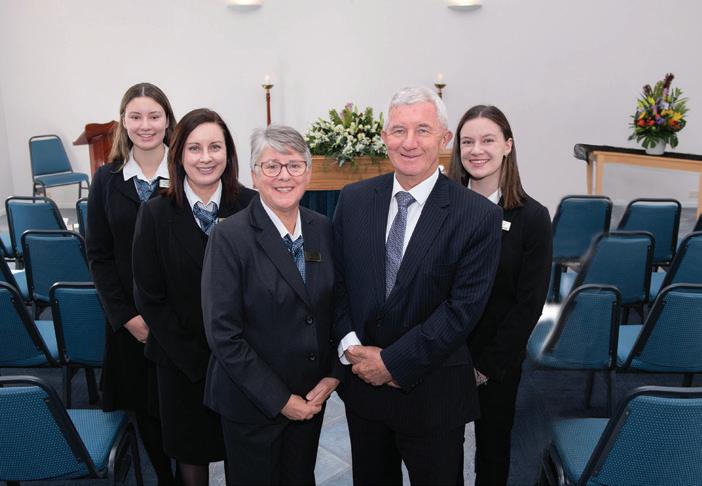
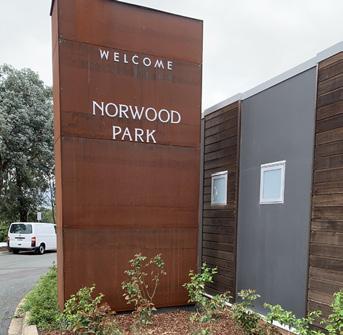
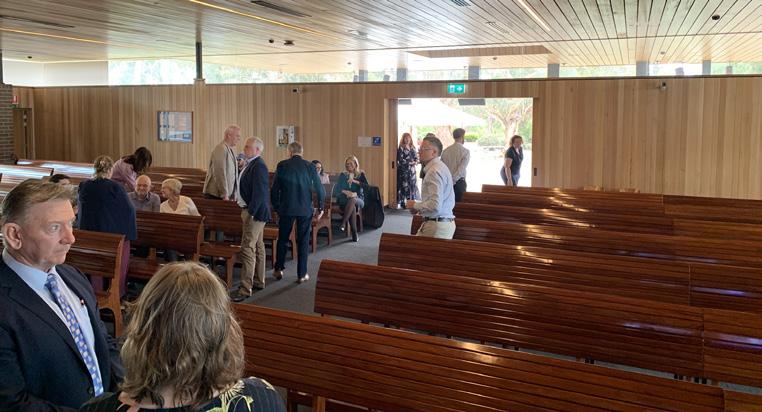
Norwood Park Crematorium has long held a quiet but significant place in Canberra’s civic life.
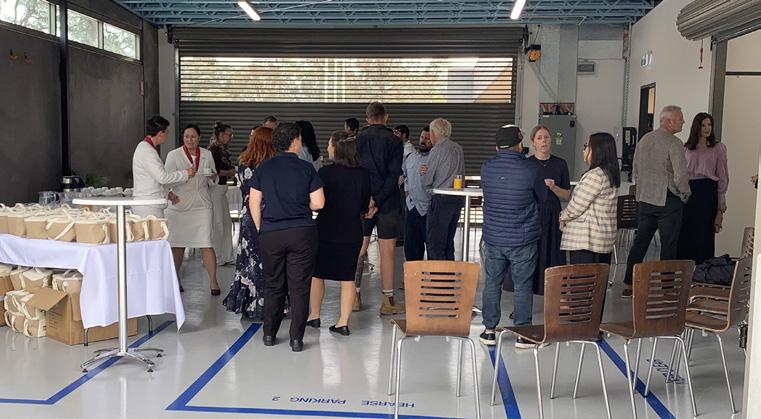
Last week, community leaders, staff and invited guests gathered in Mitchell to mark the completion of substantial upgrades to the facility, improvements that strengthen its role as one of the capital’s most important spaces for remembrance.
The ceremony was respectful and measured, reflecting the nature of the work undertaken. Michael Bridges, General Manager of Norwood Park Crematorium, spoke candidly about the growing need for upgraded facilities as Canberra’s population increases in both size and average age.
“The facility will assist in futureproofing Canberra as the population grows into an older community,” Mr Bridges said. “Death rates across Canberra and the surrounding areas are anticipated to escalate rapidly in the next 30 to 40 years.”
He noted that community preference is also shifting.
“With two in three Australians now preferring cremation over burial, in the
main due to cost and a lack of burial sites, crown land for burial is expected to be exhausted in 20 to 30 years,” he said. “Canberra’s population is expected to reach 650,000 by 2050.”
Part of the Propel group, which operates more than 41 sites nationally and internationally, Norwood Park Crematorium has invested significantly in infrastructure designed to meet that demand.
Central to the upgrade is a new state-of-the-art furnace. “The new furnace, now operational, is more environmentally friendly and capable of running on biogas rather than LPG,” Mr Bridges said.
“It decreases the environmental impact footprint on our environment and is designed to meet the needs of our growing community.”
The facility has also been designed with capacity for a second furnace in the future, and allows the two original furnaces to be decommissioned shortly. According to Mr Bridges, the works blend contemporary capability with respect for the site’s heritage.
“The new facilities blend seamlessly with the heritage nature of the original
site,” he said. “As a privately owned facility, Norwood Park Crematorium is nimble in the way we work. This facility is the latest and greatest.”
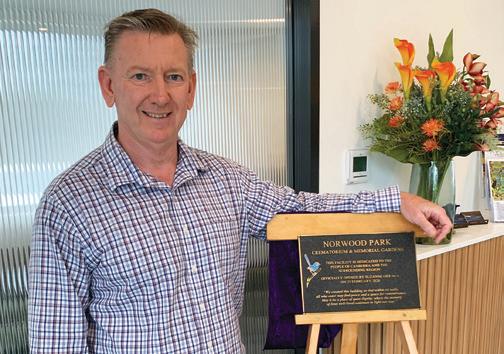
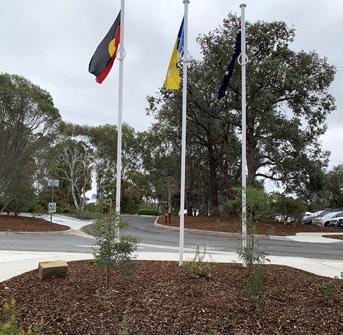
The official opening on February 27 was marked by the unveiling of a commemorative plaque by ACT MLA Suzanne Orr.
Minister Orr said the redevelopment reflected a forward-thinking approach to essential community infrastructure.
The new facility demonstrated how modern technology could deliver environmental responsibility alongside high-performing operational capacity. She also said that she was pleased to be attending Norwood Park for a happier event.
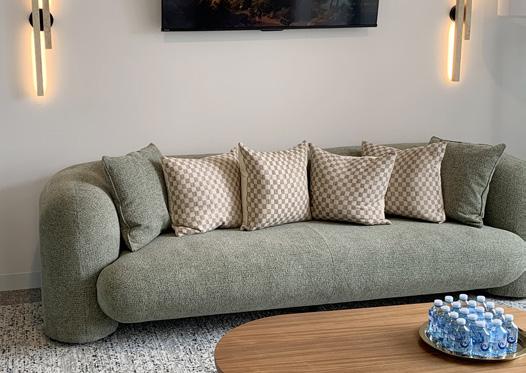
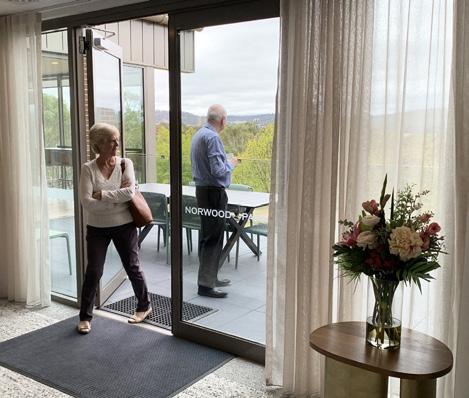
Beyond the technical upgrades, the redevelopment includes respectful and private meeting spaces, state-ofthe-art offices, catering facilities and beautifully maintained grounds.
Funeral directors and undertakers now have 24-hour access to the facility, including kitchen and shower amenities, while Norwood Park provides transportation support for regional funeral homes and undertakers.
The upgrades focus equally on the
experience of families. Chapel interiors have been refreshed with a lighter, contemporary feel, complemented by improved acoustics and enhanced audiovisual capability.
Livestreaming and multimedia tributes are now standard components of many services, allowing geographically dispersed families to participate meaningfully in farewells.
Seating configurations and layout adjustments offer flexibility for services of varying sizes, while improved accessibility ensures older attendees and those living with disability can move comfortably and safely throughout the space.
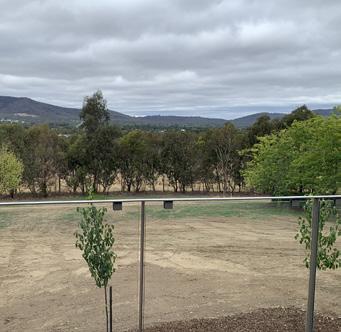
Outside, the landscaped grounds, long regarded as a quiet strength of Norwood Park, have been enhanced with upgraded pathways, refreshed planting and improved memorial areas.
Mature trees and open lawns continue to provide a sense of calm within Mitchell’s industrial precinct, reinforcing the crematorium as a place of reflection and return.
Speakers at the ceremony acknowledged that while Canberra’s growth often centres on housing and transport,
civic facilities such as crematoria form an equally important part of the city’s infrastructure.
They support families at life’s most vulnerable moments and reflect the values of care and dignity that underpin the community.
Staff were recognised for their compassion and professionalism, qualities that are essential in a role that requires resilience and empathy every day.
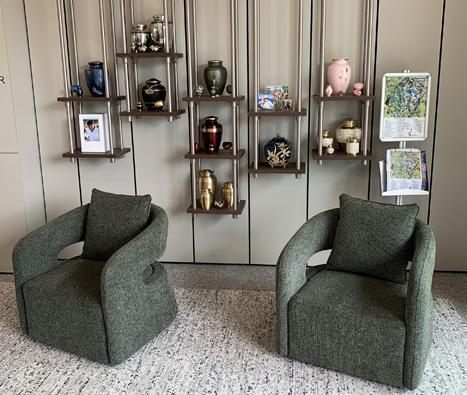
Norwood Park Crematorium remains, above all, a community space, one that holds countless personal stories of quiet lives and public figures alike.
As Canberra evolves, facilities such as this will continue to anchor the rituals that bind families and communities together.
The ceremony marked more than the completion of building works. It signalled a commitment to thoughtful planning, environmental responsibility and the understanding that how we farewell our loved ones speaks volumes about who we are as a city.
Norwood Park Crematorium, 65 Sandford Street, Mitchell. Call 02 6241 3177 or visit norwoodpark.com.au
NORWOOD PARK
CREMATORIUM & MEMORIAL
GARDENS
Since 1966, Norwood Park has provided a beautiful and tranquil setting for memorials and ceremonies in the ACT. The landscaped grounds sit elevated above Canberra and are one of Australia’s most established memorial parks.
Norwood Park General Manager, Michael Bridges.
The convict who built valley’s first public school
I refer to your article about Irish convicts who were actually political prisoners (“Convict rebels cast as first political protesters”, CN February 19).
My great great grandfather Martin Pike, a member of the White Boy movement, was convicted with 10 of his colleagues of swearing an oath to somebody other than the British Oath of Allegiance.
He was transported aboard the Java, arriving in Sydney Cove. He marched up through the Domain to Hyde Park Barracks where he was allocated to the Surveyor of Roads for the colony of NSW. He was in chains as part of an iron’d gang for 10 years before receiving a ticket of leave to reside at Tuggeranong Homestead as a shepherd. He later married Mary Blackburn and had a family.
A man with a social conscience, he built the first public school in the Tuggeranong Valley with his own hand on his land. He was never able to return to his native Ireland. I have walked in his footsteps from the cove to Hyde Park Barracks and I’ve written to Prime Minister Keir Starmer seeking an apology from the British government for the transportation of Irish freedom fighters. I’m yet to receive a reply.
Rohan Goyne, Evatt
… and most famous convict who became an editor
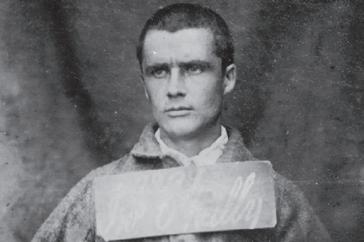
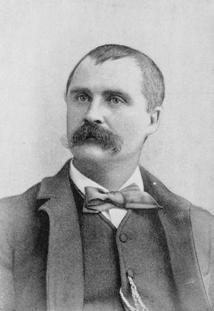
The feature article “Convict rebels recast as first political protestors” (CN February 19) contained the photograph of an anonymous Irish political prisoner, one of “at least 3600 political prisoners landed in NSW, convicted for protest, unionism and resistance”.
In fact, he is perhaps the most famous political convict transported – to WA – and he will be remembered in celebrations in Perth and Bunbury between March 23 and 29.
John Boyle O’Reilly was an Irish poet, journalist, author and activist political prisoner, transported on the last convict ship to our shores, the Hougomont, which arrived in the Swan River Colony in 1869. He managed a daredevil escape from the “escape-proof” Fremantle Prison the follow-
ing year and, from the US, was a lead organiser of the rescue of the other six political prisoners in 1876 in what’s known as the Catalpa Escape.
The Irish in the US raised enough funds to buy a whaling ship, the Catalpa, with the secret mission of rescuing them.
After whaling en route to WA, it picked up the remaining six political prisoners who had escaped from their work gangs to be collected by a horse-drawn cart to get them to Rockingham Beach to be rowed out to the Catalpa, which remained in international waters.
A terrible storm broke out and they rowed for 28 hours in wild seas, chased by a police cutter and a commandeered coalship. It fired over the Catalpa after the men scrambled on board.
With the brave captain raising the American flag and claiming over the loud speaker that if they fired again they would be declaring war on America, they managed to set sail to New Bedford, to a heroes’ welcome.
They had succeeded at what the daring American captain described as one of the most boldly conceived and audacious expeditions against the British government ever planned.
John Boyle O’Reilly became a prominent
spokesperson for the Irish diaspora community and culture through his editorship of the Boston Globe newspaper and The Pilot, in addition to personal writings and lecture tours – his true self over the photo of the prisoner you published.
This Easter is the 150th anniversary of the Catalpa Escape. Information on the celebrations at fremantlefenians.com.au/ fenians-festival/
Estelle Blackburn, Swinger Hill
There’s no going back on power technology
However “real” your data, Nick Standish, any projections of future electricity costs involve modelling (“My costs come from ABS data, Fiona”, letters, CN February 24).
Despite what the Coalition and others may wish, there is no going back to 20th century power generation technology.
Australia is currently generating around 43 per cent renewable electricity. South Australia leads the way: in 2025, renewables provided only half the electricity in the week starting July 21 but in the week starting November 24 they provided all of it.
This is not modelling, this is real-time experience.
We need flexible generation to fill the gaps. Nuclear is not flexible.
As for nuclear waste, it is true most nuclear waste can be managed. It is the remaining three per cent that is deadly and remains so for hundreds of thousands of years.
Finland is the only country to have a purpose-built storage facility deep underground, with establishment costs of around $3-5 billion.
Vitrification has been employed in several countries looking to safely store large amounts of nuclear waste. It is also a hugely expensive process.
Fiona Colin, Malvern East, Victoria
What about waste from renewables?
Re letter from Bob Howden (CN February 19). He asked: “Why is it that advocates of nuclear energy never mention the waste”. I ask, when do the advocates of the so-called renewables never mention the waste?
The wind turbines and solar panels, contrary to popular pushing from Labor, are in most cases not renewable and do not last as long as nuclear generation, which can last 80 years.
The one we already have at Lucas heights was built between 1955 and 1958, and there have been no complaints.
The working life of wind turbines and solar panels vary depending on who you talk to, but in general they last about 15 years. In most cases, they cannot be recycled, so they have to be buried.
There are toxins in both turbines and solar panels and the toxins will probably leech into the soil and watertable, but we are never told about this.
Vi Evans, via email
Angus and his engagement with the ACT
Over dinner in Woolley Street, Dickson, in August 2018, Liberal “numbers man” Angus Taylor MP plotted with close Liberal hard-right faction colleagues Senator Zed Seselja and MPs Michael Sukkar, Andrew Hastie and Tony Pasin, to replace Malcolm Turnbull with Peter Dutton as prime minister.
The destabilisation led to Scott Morrison as prime minister for too many enervating years.
In early 2022 Coalition ministers Taylor and Michaelia Cash came to Canberra during the federal election campaign, to engage with voters in support of their close factional friend, Senator Seselja.
This fellow minister needed help as he flailed around while voters warmed to the policies, principles and hard-work ethos of a new progressive independent Senate candidate for the territory.
At the end of 2022, then shadow minister Taylor, and most of the right-wing MPs who survived the Coalition’s election loss (and are also now in his current shadow ministry) voted “No” to overturning the controversial 1997 legislation that prevented the ACT and the NT governments from considering, legislating and putting in place voluntary assisted dying options for their residents.
In contrast, the new ACT independent Senate candidate had openly campaigned on the injustice of this contentious 1997 legal restriction. Once elected, Senator David Pocock worked hard to ensure that what territory voters wanted happened sooner rather than later.
The 1997 legislation was finally revised in the territories’ favour in December 2022.
So far, now Liberal leader Taylor and the company he still prefers to keep and reward would not have left a positive mark or made a good impression on many ACT voters.
No one in the latest line up has given any convincing indication that the Liberal Party will become more progressive and inclusive from now on. Rather, the Liberals look like they will continue to be overinfluenced by the more conservative Nationals, and by the odious inflammatory racist and hate-inducing commentary rolled out by One Nation (“Taylor pulled between good policy and populist politics”, citynews.com.au February 20).
Blinkered, both Coalition parties appear to be digging their own party-political graves along the way. New candidates for 2028 will end up flailing around like Senator Seselja in 2022 and Jacob Vadakkedathu in 2025, and for the same reasons. Vale, Coalition. Sue Dyer, Downer
Opportunity for globalscale nuclear waste dump
I am sure Nick Standish (letters, CN February 26) would agree that the cost of the Victorian Big Battery was $170,000,000 and not $170,000.
I would agree that there is an opportunity for Australia to profit by developing and operating a global-scale nuclear waste dump.
Having had our manufacturing industries crippled by the cost of renewable energy, and having an education system bent on educating children as activist protestors rather than with the numeracy talent that is essential to the development of scientists and engineers, but with vast experience in digging holes in the ground, nuclear waste disposal seems to be one of our few opportunities.
If we committed to a waste-disposal facility, we could proceed to building nuclear power plants and rescue Minister Bowen from his ridiculous ideas of powering data centres and aluminium smelters from renewables.
John L Smith, Farrer
As we stumble on, does anyone care?
Those following the press cannot help notice the barrage of negative opinion pieces about Canberra’s appalling debt and unforgivable loss of credit rating. A brief respite occurred following the election of a new Liberal opposition leader, but little else since. We seem to be stumbling on with minimal interest in our economic demise. Does anyone really care? It would be tragic if the answer is no!
John Lawrence via e-mail
John Boyle O’Reilly… as a prisoner, left, and as a successful man in the US.
Saddened by granddaughter’s school setback
Our granddaughter, now 17, was assaulted by a teacher at her high school 18 months ago and was then subjected to ongoing bullying, humiliation, intimidation and threat by the same teacher.
She had experienced multiple suspensions based, we believe, on confected allegations resulting in her expulsion from school.
A good, intelligent, respectful, well-liked girl, whose desire to complete a sound education has been devastated.
Had she been a trouble maker, disobedient or a threat in any way, we might have said her treatment was deserved. But she was not, and it was not!
Despite taking up this matter with the NSW police and the NSW education minister, the teacher concerned remains at the school posing, we believe, a threat to other students.
The matter will go to the NSW Ombudsman, but given the lengthy timeframe to conduct investigations, her completion of year 12 and attainment of a good ATAR are now well out of reach. We are dismayed, nay, disgusted, that this could occur.
Philip and Teresa Bewley, Barton Editor’s note: The letter writers provided the name of the high school, but CityNews has decided not to publish it at this stage.
Time to nationalise land sales
An analysis of house prices in new estates reveals that the retail land component is crippling affordability for most families.
Profits are massive. Blocks are familyunfriendly. Trees and soil profiles go.
Local authorities won’t challenge the situation, because rates are their main income source. Land developers chant “it’s the market” – theirs.
Time for the Commonwealth to comprehensively nationalise the acquisition, and responsible (functionally, socially, and environmentally) planning and development, of new suburban and satellite-town land, to maintain supply, to sell good-sized
verifiable cost.
A contribution to First Nation people would be made from each land sale. It is considered vital that the Commonwealth runs and funds these reforms.
Any hint of resultant construction profiteering can be dealt with by the ACCC. The suggested reforms would have flow-on effects to all housing typologies in all locations, and are not so new – remember Tom Uren in the Whitlam government.
Jack Kershaw, Kambah
Minister Orr’s been asleep at the wheel
While Karen Lamb’s letter (CN, February 26)
There’s no comparison between antisemite attacks
In his February 19 column, Michael Moore bizarrely contrasts Australia’s reaction to the Bondi massacre to Israel’s response to Hamas’ October 7 atrocities. There’s no comparison between the attacks. Apart from the scale, Bondi was perpetrated by two Australian individuals. October 7 was carried out by Gaza’s government. The Bondi perpetrators were immediately neutralised. Israel needed to fight a war to try to neutralise the October 7 perpetrators.
Moore accuses Israel of killing 70,000 Palestinians in Gaza, but that total death toll includes around 10-12,000 who died of natural causes, and thousands more killed by misfiring terrorist rockets or deliberately by Hamas gunmen.
Of the rest, around 25,000 were fighters, meaning it was a ratio of around one fighter killed for every civilian, unprecedentedly good in a modern urban war, especially given Hamas’ pervasive human shield strategy.
This was achieved through selective targeting, and warning and evacuating civilians away from fighting.
All that makes Moore’s description of the Gaza war as the “Gaza Holocaust” almost as ridiculous as it is offensive. There’s a good reason why the International Holocaust Remembrance Alliance definition of antisemitism includes, as an example of antisemitism, “drawing comparisons of contemporary Israeli policy to that of the Nazis.”
Moore accuses Herzog of incitement, but a comment Herzog made in a press conference was cherry-picked and misrepresented, while other answers he gave at the same presser saying Israel must obey international law and that targeting civilians is never acceptable were ignored.
Finally, Moore wrongly says “many” Jews recognise that the Herzog visit increased antisemitism. That was a tiny few on the extreme fringe of the Jewish community. The overwhelming majority welcomed the visit, while recognising that antisemites and haters used it to stir division and that the only people who should ever be blamed for antisemitism are antisemites.
Jamie Hyams, director of Public Affairs, Australia/Israel & Jewish Affairs Council
Moore’s pro-Palestine views are ‘out of touch’
Political columnist Michael Moore blames visiting Israeli President Herzog for antisemitism and social division (“Why the Herzog visit made antisemitism worse”, CN February 19). Where has Moore been for the last two and a half years?
More than 1200 innocent Israeli music goers were gunned down in cold blood and murdered, while others were raped, assaulted and held hostage for months.
Before the Israeli Defence Force had a chance to respond, radical Islamists were chanting anti-Israel and Jewish slurs, on the steps of our own Opera House, while a Muslim cleric in western Sydney was gleefully celebrating with his followers. Not a thing was done by our so-called leaders about these disgusting acts, which led to a huge increase in antisemiticism in Australia.
In December, 15 Jewish Australians were gunned down in cold blood while others who survived
suffered horrific injuries.
Pro-Hamas and anti-Israel protests were allowed to continue. Moore states most protestors are there to express their disgust at Herzog. How does he know this and where is the evidence?
Most of the protestors I have witnessed have been chanting anti-Israel chants, holding up signs and photos supporting Islamic terrorism and have defied police to protest in a specific place.
If Australians had been murdered overseas in cold blood by terrorists acting under a radical religion, we would expect a representative from the country to go over there and show support just as Herzog has done for the innocent Jewish Australians from the Bondi massacre.
Moore’s views are out of touch with regular Australians and his anti-Israel, pro-Palestine is unbecoming of a columnist with a platform such as his.
Ian Pilsner, Weston
on old air polluting technologies was useful as far as it went, it failed to mention the elephant in the room across the cooler months in Canberra, namely wood heaters.
These produce hazardous smoke pollution observable using the real-time PurpleAir monitoring system, which is accessible on the web. The latter covers many more sites than the three government stations, and shows fine particulate PM2.5 levels across Canberra.
Wood smoke from wood heaters has been estimated to result in annual health costs in Canberra of the order of $100 to $300 million.
The previous ACT Commissioner for Sustainability and the Environment spelt out the facts and recommended progressive policy change in an excellent 2023 report entitled Can Canberra ‘Burn Right Tonight’ or is there ‘no safe level of air pollution’?
Then ACT Environment Minister Rebecca Vassarotti drove progressive policy change following the Commissioner’s call for change to protect public health.
Since then, the current ACT Environment Minister Suzanne Orr has been asleep at the wheel. Equally, in a Legislative Assembly committee meeting, the ACT Health Minister Rachel Stephen-Smith subscribed to the simplistic notion that Canberra has “clean air”.
Both these ministers perform poorly on this issue, and don’t appear to be across the detailed policy work done by the previous Commissioner for the Environment.
We need rational and humane reversals
Public anxiety over Islam can’t be spun out of existence by pointing at Pauline Hanson’s clumsy excesses.
Even without the litany of Islamist massacre, Islam retains considerable historic severity compared to other faiths.
The Islamophobia smokescreen can’t hide Islam’s status as the least feminist religion by a country mile with the Taliban showing how hard Islamic interpretation combined with local custom can hit.
Bullying zealotry has no place in a society that has already found an effective short circuit to centuries of religious fracture: a secular State umbrella protecting religious freedom – the polar opposite of an Islamist Caliphate.
Sadly, in the wake of Bondi, the Australian National Imams’ Council (ANIC) and related bodies denied the connection of Islamism to Islam. With equally shifty footwork, our federal government eschews responsibility for Australian ISIS widows and their children in Syria. These political reflexes do nothing to solve the problem of Islamism. We need rational and humane reversals by both parties.
Our government should process the fatherless families and address any criminality. The ANIC should concede Islamism falls within Islam’s historic purview just as Christianity owns its ugly variants like the Ku Klux Klan and Inquisition.
While an Albanese volte-face is in the realm of remote possibility, a concerted propaganda attack on Islam’s violent zealotry from Australian Islamic leaders and celebrities would be revolutionary. I’m dubbing that fantasy Ozlam.
Peter Robinson, Ainslie
The Greens MLA Laura Nuttall has valiantly continued the good work of Ms Vassarotti. When will the relevant ACT government ministers get their heads out of the sand? Wood smoke from wood heaters continues to harm many in the ACT community.
Murray May, Cook
Thanks for the Memory Walk support
I extend my sincere thanks and congratulations to the community of Canberra for their participation and support of our 2026 Memory Walk & Jog.
Our 2026 event on February 22 in Commonwealth Park was a resounding success, with community efforts helping to raise more than $304,000.
These funds will help Dementia Australia provide invaluable support services, education and resources for Australians impacted by dementia, including the estimated 6300 people living with dementia in the ACT. It was also heartening to see everyone lacing up and getting active for their brain health – one of the key things we can all do to help lower our risk of dementia.
To all those who walked, ran, jogged, donated and volunteered, thank you. This event would not have been possible without your generous support.
Merran Kelsall AO, chair, Dementia Australia
dose of dorin
Seniors
Upcoming educational forum to focus on retirement villages
Choose your best life in Canberra’s top retirement communities
Retirement Village Educational Forum 2026
Transitioning into & Experiencing Retirement Village Living
We choose to start our weekends on Thursdays, sometimes Wednesdays
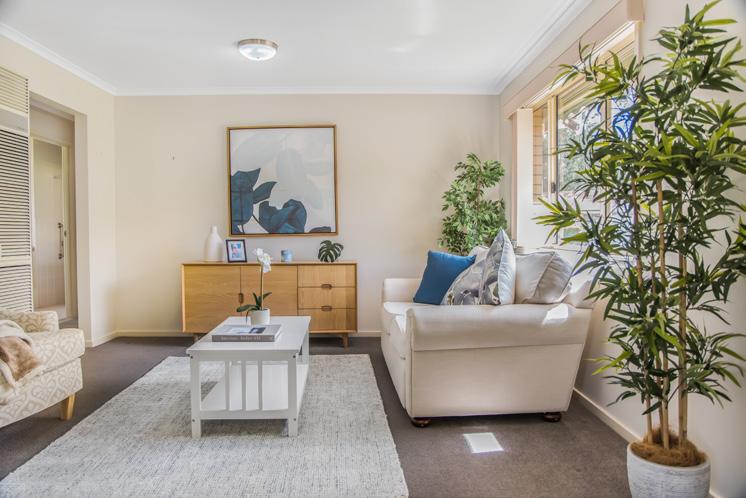
You’ll find three warm and welcoming Keyton retirement communities in Canberra — Isabella Gardens in Isabella Plains, The Aerie at Narrabundah, and The Grove Ngunnawal — each with its own unique charm, set among beautifully maintained gardens and friendly, connected neighbourhoods.
Perfectly located across Canberra, each village o ers modern, low-maintenance homes and resort-style spaces that make it easy to live life your way.
Whether you’re after convenience, community or a quiet retreat, our villages help make your next step a confident choice, naturally.
Currawang Boambolo
The Grove Ngunnawal
The Aerie at Narrabundah
Isabella Gardens
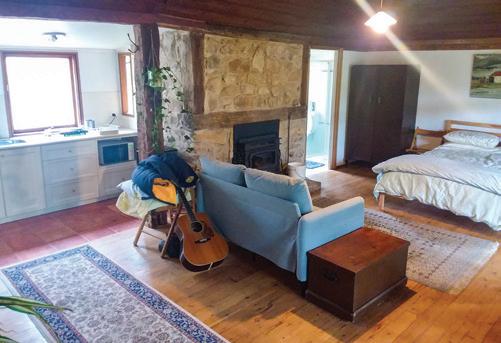
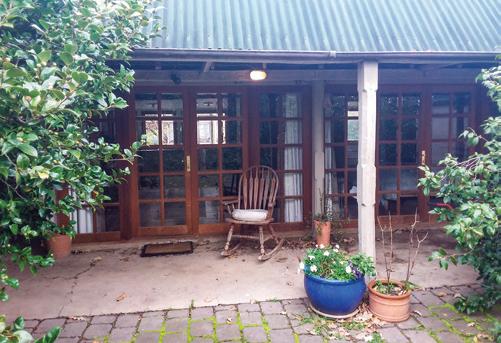
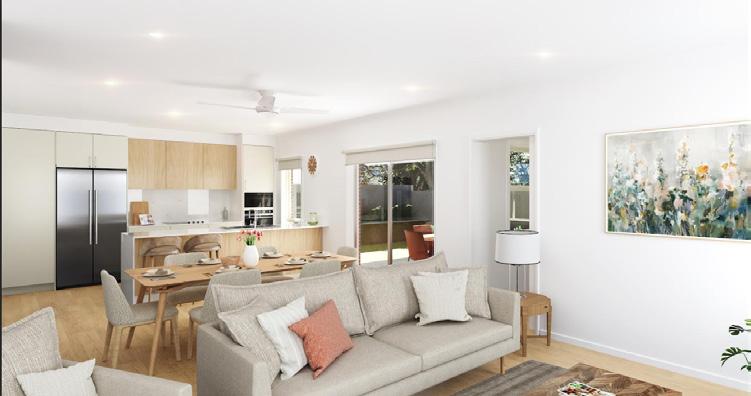
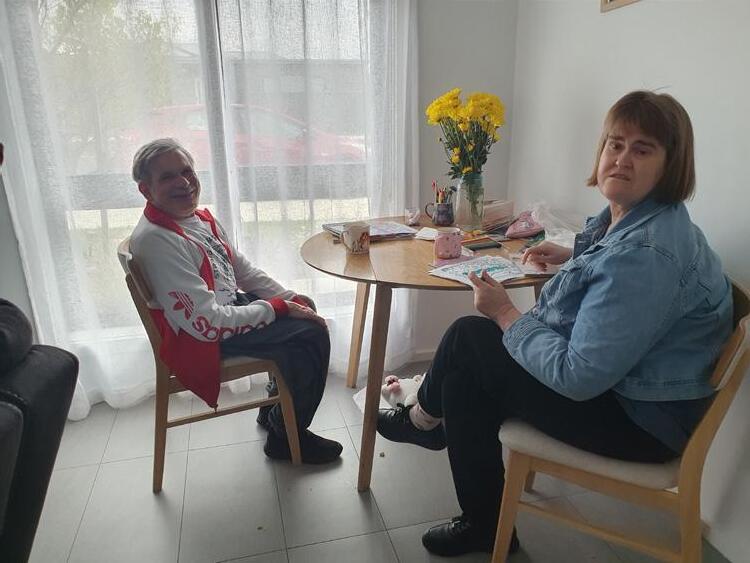
For more than 60 years, Hartley Lifecare has delivered trusted disability support across the ACT. As an NDIS registered provider since the scheme began, Hartley combines experience with a strong focus on quality, safety and person centred support.
Supported Independent Living is about more than accommodation. It is about creating a stable home where a person with disability can live as independently as possible, with the right supports in place. Hartley works closely with each person and their family to understand what matters most, building support around individual goals, daily living skills and connection to community.
Hartley currently has vacancies in a small number
hour support from professional, compassionate staff. Every enquiry is assessed individually to ensure the right fit for both the person and the household.
Families want confidence that their loved one is supported by a secure, well governed and values led organisation. Hartley’s long standing presence in the ACT provides that reassurance.
For adults with disability seeking long term accommodation with tailored support, Hartley offers a safe and supportive place to call home.
Hartley Lifecare Call 02 6282 4411 or visit hartley.org.au
Supporting through multidisciplinary care
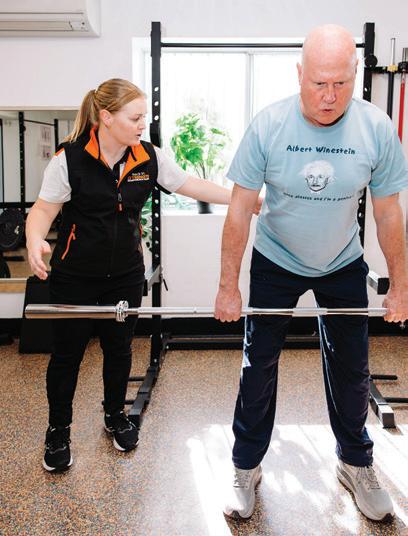
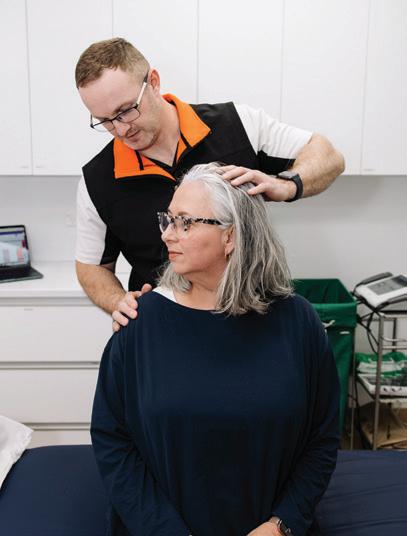
The Walking Clinic and The Canberra Physio Clinic are redefining how people can stay mobile, independent and active as we age. Through a genuinely multidisci plinary model of care, their podiatrists, physiothera pists and exercise physiologists work together to address the complex changes that occur with ageing, from reduced strength and balance to joint stiffness, circulation changes and chronic pain.
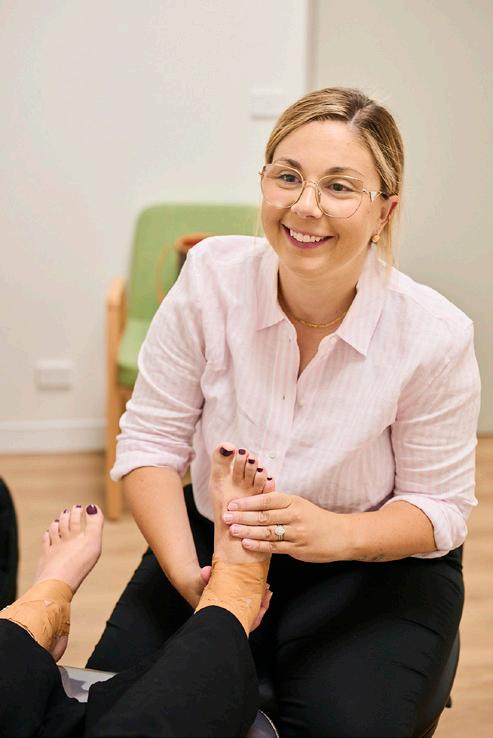
The Walking Clinic provides comprehensive foot and lower-limb care, with a strong focus on aged care. Services include diabetic foot assessments, arthritis management, wound care, nail and skin treatment, footwear advice, custom orthotics and detailed gait analysis. Fall-risk screening and balance assessment form a key part of care, helping to prevent avoidable injuries and maintain confidence with walking.
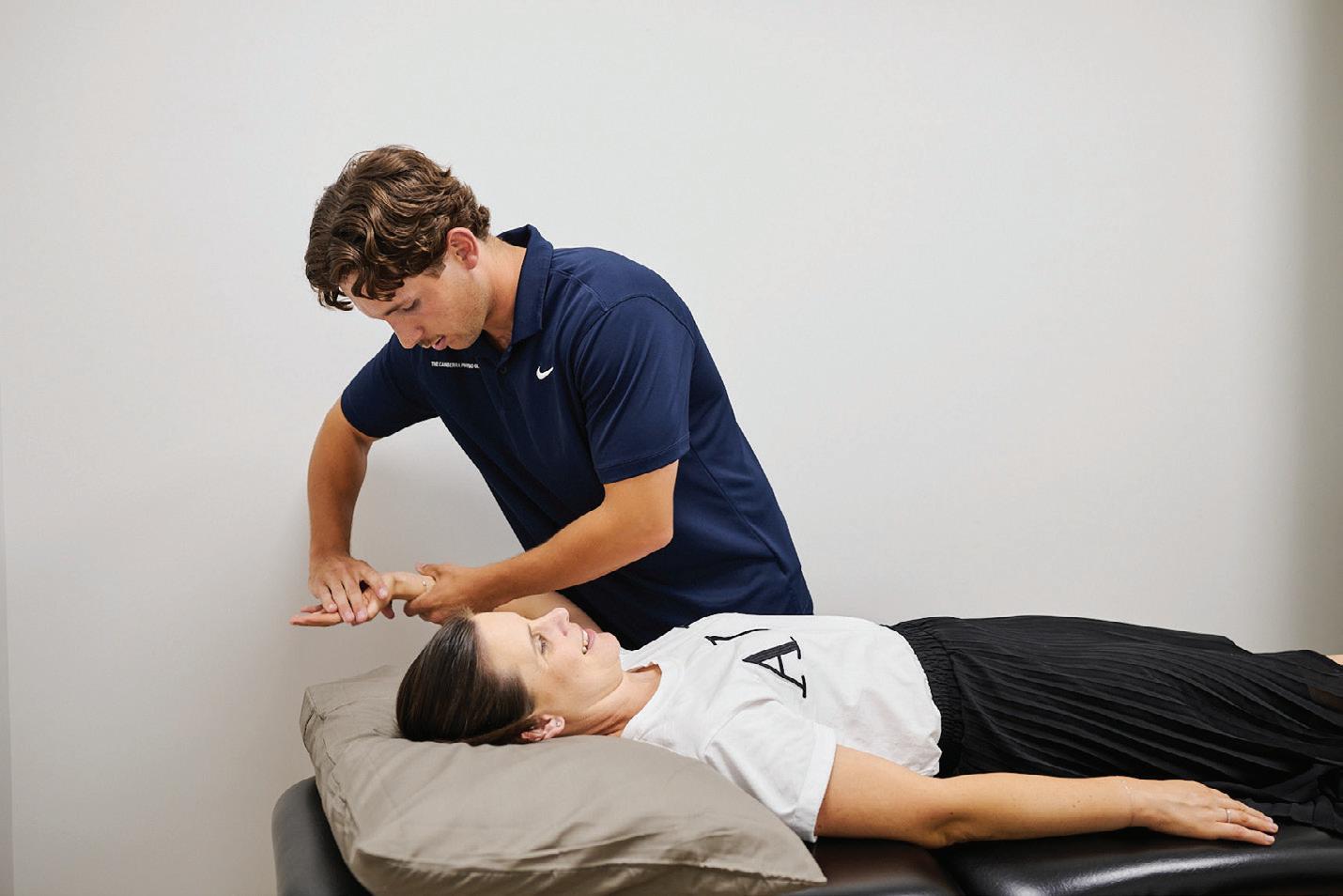
Complementing this, The Canberra Physio Clinic delivers evidence-based physiotherapy and exercise physiology programs tailored to older adults. These include targeted strength and balance training, joint and soft-tissue therapy, post-surgical rehabilitation and structured programs such as GLA:D, along with bone-strengthening interventions for osteopenia and osteoporosis.
By coordinating care across disciplines, the two clinics provide individualised management plans that prioritise safety, function and long-term independ ence, supporting senior Canberrans to move well and age with confidence.
Visit The Walking Clinic and The Canberra Physio Clinic at their combined locations in Manuka and Belconnen, or go to www.walkingclinic.com.au or www.canberraphysioclinic.com.au to learn more.
The Walking Clinic and The Canberra Physio www.walkingclinic.com.au www.canberraphysioclinic.com.au
Accommodation Vacancies for People with Disability
Are you or someone you support looking for a safe, welcoming, and empowering long‑term home?
Hartley has been an NDIS-registered provider in the ACT since the scheme began, building on more than 60 years’ experience in disability support.
We work with each person and their family to understand what matters to them and provide support that builds skills, confidence and connection to community.
Hartley Lifecare currently has openings in a selection of our Supported Independent Living (SIL) homes. These vacancies may be suitable for adults with disability seeking a supportive shared living environment with 24-hour support.
Each enquiry is considered individually to ensure the right fit for the person and the household.
Enquiries and expressions of interest: Kathy Le Mesurier, Senior Manager – NDIS and Service Development
Adelaide Deura Podiatrist at Garran and Manuka.
Celebrating the Women of Goodwin: A Legacy of Giving
Goodwin Women Doing Good
As International Women’s Day (IWD) approaches on March 8, 2026, Canberra reflects on the collective effort required to drive progress.
This year’s theme, #GiveToGain, resonates deeply with Goodwin Aged Care Services, an organisation founded on the power of women’s advocacy.
The foundation of Goodwin was laid on May 17, 1954, when the National Council of Women united to address a critical shortage of housing for older Canberrans. Today, that spirit of purpose is carried forward by the women who lead and care across the organisation.
“I am proud to be part of an organisation committed to empowering women,” says Pauline Hugler, Executive Manager Development People & Culture. “The #GiveToGain theme of this year’s International Women’s Day reflects a legacy that began in 1954 for Goodwin. When we invest in women, we honour those foundations and strengthen the future for those we serve”.
Goodwin Board Chair Fiona Jolly echoes this, celebrating the “vibrant spirit” of Goodwin’s residents and staff. “At Goodwin, we celebrate the remarkable women in the Canberra community who established Goodwin and our residents, clients, and dedicated staff and volunteers who have shaped our history and guide our future. Together, we commit to a future of justice, safety and equity for all women in the ACT and across our community.”
Leading with Resilience and Vision
In Home Care, General Manager Jo Latimer and
Operations Manager Jessica Cowie exemplify leadership through transformation. Latimer has been instrumental in navigating complex reforms with “steady leadership”, while Cowie recently led an 18-month system implementation, focusing on building team confidence.
Breaking Barriers
Erin Aveyard, Property Contracts Manager, is a standout example of women thriving in traditionally male-dominated industries. By managing inspections and contractors with high accountability, she highlights the vital
role women play in operational spaces.
In Retirement Living, Village Manager Leanne Thompson represents the “poster child” for internal growth.
Starting 24 years ago as an Activities Coordinator, her leadership saw the Net Promoter Score at Goodwin Village Crace soar to a +70 in 2025, well above the national average of +43.
Compassion in Action
The “Give to Gain” ethos is perhaps most visible in those providing direct care.
Leonie Smith, a Home Care Support Worker, was recently recognised with an Annual Award for Care. Beyond her clinical excellence, she serves as a trusted mentor and “buddy” to other carers. Within the Residential Aged Care Facilities (RACF), Rainyzami Padona, Acting Residential Care General Manager is noted for her “genuine authenticity,” placing residents at the centre of her leadership. Meanwhile, the duo of Bev Webb and Gaki Zangmo, Leisure and Lifestyle Coordinators, bring the community to life by developing innovative and inclusive programs that reflect the diverse cultures of their residents.
International Women’s Day is powered by the collective efforts of all. From the trailblazing spirit of its 1954 founders to the visionary women leading the way in 2026, Goodwin remains a masterclass in what happens when women advocate for one another. By embracing the #GiveToGain ethos, these leaders prove that a compassionate future isn’t just a goal, it is a legacy built through every hand extended and every barrier broken.
A Message from the CEO
Goodwin CEO Stephen Holmes concludes: “At Goodwin, the scale isn’t just being balanced; it is being redefined by a community where every woman’s contribution is the heartbeat of our success. By championing these diverse voices, we are sustaining a 70-year legacy of excellence and ensuring that our commitment to community remains the hallmark of our future”.
Find out how you can make a difference at Goodwin. goodwin.org.au
On International Women’s Day, we celebrate the vibrant spirit of the women of Goodwin!
To Balance the Scales is to ensure every woman is safe, heard and free to shape her own future.
At Goodwin, we celebrate the remarkable women in the Canberra community who established Goodwin and our residents, clients, and dedicated sta and volunteers who have shaped our history and guide our future. Together, we commit to a future of justice, safety and equity for all women in the ACT and across our community.
Fiona Jolly, Board Chair, Goodwin Aged Care Services
Goodwin women doing good. Embodying the #GiveToGain spirit, carrying forward a 70-year legacy of empowerment and care that began with Goodwin’s women founders in 1954.
Preventing hip and knee surgery: A proactive program for older adults
Osteoarthritis is the most common single type of arthritis, affecting any joint, but commonly understood in the commu nity as affecting the knees and hips, leading to the majority of joint replacements that occur in Australia.
Holding two educational sessions and 12 supervised exercise classes over a six-week period, Arthritis ACT’s GLA:D program is designed to reduce the need for a hip and knee replacement or to reduce the symptoms of hip and/or knee osteoarthritis.
Initially introduced in Denmark based on research for people with osteoarthritis, GLA:D collects research data from participants to improve access to care.
“This program is a conservative management of osteoar thritis that can be used as both a prevention and prehabilita tion method of exercise to reduce pain and increase mobility,” says Arthritis ACT CEO Rebecca Davey.
Targeting joint stability, muscle strength and confidence with movement, Rebecca says the program also offers helpful tips, tricks and education from their physios who run the sessions.
“These exercises could stave off a hip and knee replace ments, which is a very big deal,” she says.
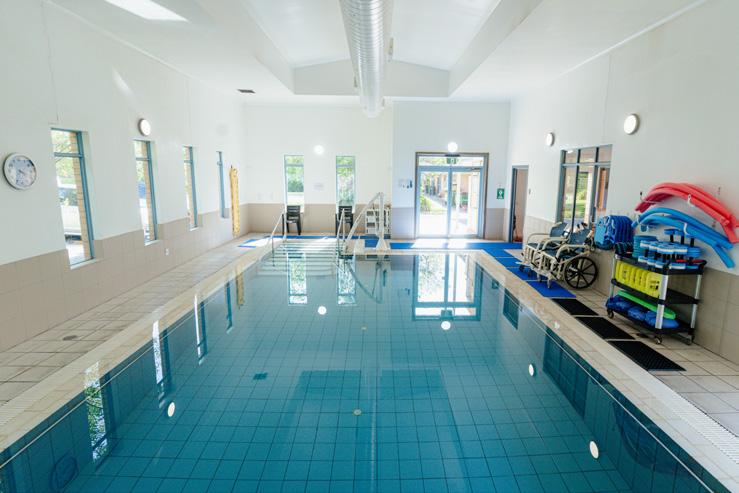
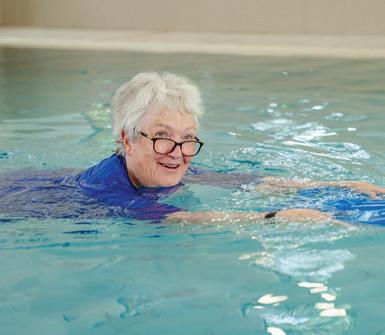
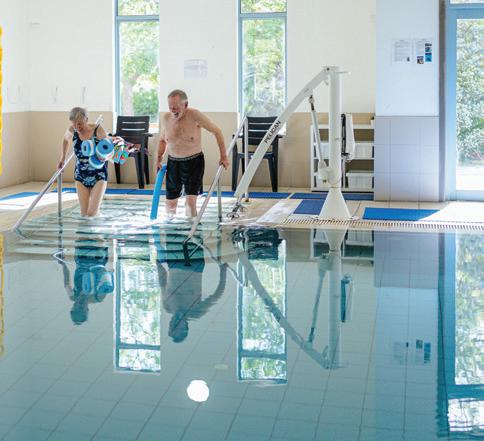
Arthritis ACT has also recently welcomed a new hydrother apy pool in Tuggeranong that Rebecca says will immensely benefit the community by expanding their services to the southside of Canberra.
“The health benefits of hydrotherapy aren’t just limited to what the pool can offer,” she says.
“Many people attending any of our classes have become close friends and bond over shared experiences.”
Arthritis ACT
170 Haydon Drive, Bruce.
Call 1800 011 041, or visit arthritisact.org.au
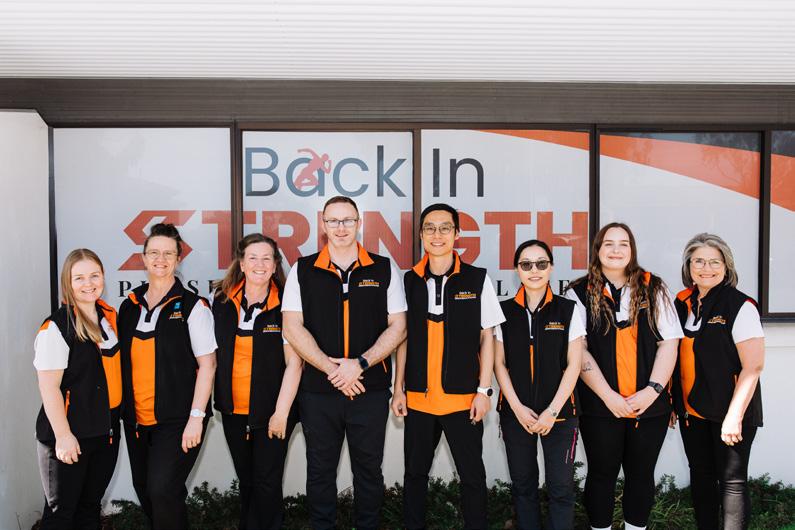
The team at Back In Strength Physiotherapy and Pilates.
Comprehensive care for strength, balance and lifelong wellbeing
For many Canberrans, staying active and independent is central to enjoying life’s later years, and that’s where Back In Strength Physiotherapy & Pilates has built its reputation.
Founded in 2010 by Anne Waithman, Back In Strength has grown into one of Canberra’s most respected allied health clinics, known not only for its clinical expertise but for its genuine sense of community.
“We’ve always believed physiotherapy is about more than treating pain,” says Anne Waithman, Founder, Director and Physiotherapist. “It’s about helping people stay strong, confident and connected as they move through different stages of life.”
The clinic offers traditional physiotherapy treatments alongside specialised Women’s and Men’s Health services, massage therapy, and tailored exercise programs. For seniors in particular, group classes such as Pilates, Strength & Conditioning, osteoporosis programs and falls prevention classes provide targeted
support in a safe, supervised environment.
“Our falls prevention and osteoporosis programs are designed to give people practical strength and balance strategies they can use every day,” Anne says. “But just as importantly, they create a welcoming space where friendships form.”
That social connection is a defining feature. Many clients stay for coffee after class, building friendships alongside strength and mobility.
With a multidisciplinary team of physiotherapists, exercise physiologists, massage therapists and allied health assistants, Back In Strength Physio continues to support Canberra’s seniors to live well and stay strong, at every age.
Back In Strength Physiotherapy & Pilates 1/14 Hannah Place, Deakin and 1/81 MacGregor Street, Deakin. Call 02 6282 9992 or visit backinstrength.com.au
Arthritis ACT CEO Rebecca Davey.
MEET OUR PAIN MANAGEMENT EXPERTS
Holly Hazelwood – Exercise Physiologist
Holly is a former sports journalist who believed so strongly in the power of exercise to heal and nurture that she undertook her 4 year degree in Exercise Physiology. Holly is be able to work with people directly to support them through their pain journey and regain independence and a joy for living again. Holly provides one on one and group exercise classes both on land and at our hydrotherapy centres to support people to gain freedom from chronic pain.
Sophie Bullock – Exercise Physiologist
Sophie has post graduate qualifications in hydrotherapy, and as a non-sports centred Exercise Physiologist, helps clients who struggle with engaging in exercise due to a lack of sports participation. Sophie’s goal is to improve clients health via our hydrotherapy program, gym instruction and in-home visits. Sophie also is known for her passion for working with children.
Nick van Diemen – Physiotherapist
Nick (they/them, he/him) has returned to Canberra after completing a Master’s in Physiotherapy at the University of Queensland. Their passion comes from a love of science and helping people. With eight years in disability support, Nick brings broad experience and enjoys working with clients across a wide range of needs.
Blake Dean – Exercise Physiologist
Blake has expertise in improving clients mobility and decreasing their pain through appropriate exercise. Blake delivers our ‘My Exercise’ program, targeting the relief of lower back and sciatic pain, shoulder and upper body concerns as well as leg, hip and ankle interventions – for those who do not qualify for physiotherapy-led GLAD programs. Blake provides individual & group exercise for younger people with a disability. Blake treats clients in-clinic or via our hydrotherapy program as well as attending your gym with you.
Sarah Solano – Exercise Physiologist
Sarah believes that exercise is the best medicine. She is an Accredited Exercise Physiologist with her degree in exercise physiology and rehabilitation. Previously Sarah was a swim teacher, personal trainer and an allied health assistant in the hydrotherapy field.
Natasha Elword – Exercise Scientist
Tash discovered her passion for exercise after completing her Certificate IV in Personal Training in 2015, later earning a Sport and Exercise Science degree from the University of Canberra. She joined Arthritis ACT in 2019 and now supports group classes, exercise programs and administration. Outside work, she enjoys family time, running, hiking and cooking.
• GLA:D® Program for hip and knee osteoarthritis.
• Education and supervised group sessions to build strength and confidence.
• Pain management strategies to reduce medication use Tailored support including preparation for or avoiding joint replacement.
Seniors advertising feature
Financial planning brings clarity to life’s next chapter
For many Canberrans approaching their 60s, financial planning shifts from wealth accumulation to wealth stewardship, ensuring that decades of hard work translate into freedom, security and choice.
According to Steve Wang, principal of DW Private Wealth, the transition requires a deliberate and tailored approach.
“Financial planning isn’t just about numbers, it’s about helping people create the lifestyle they want, with confidence and clarity,” he says.
With competing priorities such as retirement timing, asset allocation, tax efficiency and legacy planning, having an integrated strategy becomes essential. DW Private Wealth works closely with clients to understand their goals, whether that’s travel, supporting family, or simply enjoying a secure retirement.
“We start by understanding what financial freedom means to each client,” Steve says. “From there, we build a structured roadmap that aligns their wealth with their personal values.”
Importantly, effective planning also provides peace of mind. Rather than reacting to market changes or life events, clients benefit from proactive, ongoing advice designed to protect and enhance their financial position.
“Good planning removes uncertainty,” Steve says. “It allows people to focus on living well, knowing their financial future is being carefully managed.”
For those approaching retirement, professional guidance can transform uncertainty into confidence and possibility.
Memory issues – why a good night’s sleep matters more than you think
If you’ve been feeling forgetful, foggy or simply struggling to stay focused, poor sleep may be playing a bigger role than you think. Sleep is where the magic happens that allows for building, strengthening and protecting your memory.
Memory works in three key parts: learning, storing and recalling, and sleep supports each one. Deep non-REM sleep acts like the brain’s filing system.
During this stage, new information from the day is organised and stabilised so it can be remembered later. It also clears out unimportant details so your brain can focus on what matters.
REM sleep plays a different but equally vital role. In this dream-heavy stage, the brain connects ideas, processes emotions and creatively reorganises information.
This is why “sleeping on it” often brings clarity the next morning. REM sleep helps you better under stand, integrate and apply what you’ve learned. When sleep quality is disturbed, we lose the ability to store new information or recall it. The first night of sleep after any learning is vital for locking in those memories properly.
Common disrupters of sleep quality that can lead to brain fog and the inability to learn and remember important information are alcohol, caffeine and untreated sleep apnea.
The good news is that improving sleep quality can have a powerful impact on memory, focus and overall wellbeing. If you snore or think you may have sleep apnea, CPAP Direct is ready to help.
Visit cpap.com.au or drop into your nearest store to talk to our experts about what you can do sleep better and wak-ing up refreshed.
CPAP Direct 42 Townshend Street, Phillip. Call 02 6189 1256 or visit cpap.com.au
DW Private Wealth principal and financial adviser Steve Wang.
“ My first meeting with Steve was an eye-opener. My friend who recommended Steve to me was correct, Steve knew what questions to ask as I really had no idea. He then directed me along a pathway, but kept checking that I understand what he was suggesting and why. I have been delighted with Steve’s manner and approach to teaching me about finance. He has been positive and encouraging. I am learning more on each visit. I do enjoy talking with Steve at each session. I am no longer frightened that I will have no money to furnish my old age. Steve has explained to me how my money is working for me and I do not have to worry about my old age.”
Gabrielle - ACT
Adria Care combines access to important facilities with a feel of privacy, making it the perfect place for retirement, says village spokesperson Malia Taione.
“There’s close access to Cooleman Court and Woden Westfield, but we are surrounded by reserves and parklands making it a very peaceful atmosphere for residents,” says Malia.
Located in the heart of Weston Creek, Adria Care, which has two dedicated respite rooms and a special care unit, offers residential care for 42 residents. The village also contains 36 independent living units.
It offers residents a wide range of things to do, and that they can get involved as little or as much as they’d like.
“We have an active residents’ committee who
organise lots of get-togethers. Residents can play cards, go to morning teas and happy hours, enjoy exercise, and much more,” says Malia.
Established in 1994 by volunteers of the Croatian community of Canberra and Queanbeyan, the village is home to a multicultural group of people.
“We have residents [from] Australia, Croatia, China, France, Macedonia, Hungary and more,” says Malia.
“There are great residents and great staff committed to the best outcomes for the community.”
Owned and operated by Hartley Lifecare, the Hartley Hydrotherapy Pool is one of the few dedicated hydrotherapy facilities in Canberra that is both fully accessible and open to the wider community.
Based in Hughes, the pool provides a consistent 34 degree environment designed to support rehabilitation, pain management and improved mobility. For people recovering from injury, living with disability, managing arthritis or other chronic conditions, water based therapy can enable movement that is difficult on land.
What sets this facility apart is its accessibility and flexibility. It can be booked for self managed sessions or exclusive use, making it suitable for individuals, allied health professionals and small groups. The setting is practical and community focused rather than
commercial or high traffic.
Importantly, community based hydrotherapy expands access beyond acute care settings and short term treatment plans. It gives people a local, reliable option to continue therapy at their own pace. They also create opportunities for preventative health, particularly for older Canberrans seeking low impact exercise. As demand grows for inclusive health infrastructure, facilities that are affordable, accessible, and centrally located play a critical role. The Hartley Hydrotherapy Pool is a straightforward example of community focused design meeting real need.
Hartley Hydrotherapy Pool
Call 02 6185 1653 or visit www.hartley.org.au/hartley-hydrotherapy
independence and wellbeing as we age. For many Canberra seniors, maintaining healthy teeth and gums is not simply about appearance, it supports overall health, proper nutrition, clear speech and everyday comfort. At Yarralumla Dental Care, the team understands that dental care in later life requires both clinical expertise and a thoughtful, personalised approach.
Research continues to highlight the connection between gum disease and systemic conditions such as heart disease, diabetes and stroke. Inflammation in the gums can influence other areas of the body, while poorly controlled diabetes can increase the risk and severity of periodontal disease. Regular dental care therefore plays an important role in a broader health plan.
Comfort and nutrition are equally important. Missing teeth, sore gums, dry mouth or ill-fitting dentures can make eating difficult, often leading to reduced intake of fresh, nutritious foods. Maintaining
to continue enjoying a balanced diet and remain confident in social situations.
Common concerns later in life include gum recession, root decay, worn teeth, ageing crowns and medication-related dry mouth. Many develop quietly, without pain in the early stages, which is why routine check-ups remain essential.
Oral health is not separate from general health, it is an integral part of it. By prioritising dental care, seniors invest in their overall well-being, confidence, and quality of life.
At Yarralumla Dental Care, seniors are supported with gentle, patient-focused care, because a healthy smile truly is lifelong.
Yarralumla Dental Care Call 02 6102 4257 Email reception@yarralumladental.com.au yarralumladental.com.au
Kim says renovation is more than bricks and mortar
More than just “bricks and mortar”, Renovation Matters owner, Kim Persson, says her work is about people, trust and meaningful results.
“I wanted to create a service that truly takes the stress out of renovating and selling,” she says.
Seeing too many situations where people in difficult circumstances were taken advantage of, Kim says there was a clear gap for a service that offered genuine support, trustworthy advice and reliable trades.
“Renovation Matters was born from my passion to help clients not only achieve the best possible results when selling, but to also improve and enjoy their own homes if they choose to stay,” she says.
Every client that Kim sees is different, making each renovation project individualised.
“I enjoy shaping each project to meet goals and bring out the best in every property,” she says.
Kim’s reward comes in seeing the transforma tion of not just the home, but of her client’s outlook.
“Watching someone walk into their freshly renovated space and knowing that my work directly helps people sell faster, for more, or simply enjoy their homes more, makes it all worthwhile,” she says.
Traditionally a male-dominated field, Kim says she’s proud to represent women in the industry and show that they can deliver high-quality work, manage complex projects and build trusted relationships with both clients and trades.
“My goal is not just to complete renovations, but to create a community where people feel supported, educated and empowered throughout the process,” she says.
Renovation Matters
Call 0427 696 662 or visit renovationmatters.com.au
Dr Natasha Pajnigara and Dr Vidhi Patel of Yarralumla Dental Care.
Kim Persson, owner of Renovation Matters.
MAXIMISE YOUR SALES PRICE OR LOVE WHERE YOU LIVE
We specialise in high-impact renovations that add real value and make your home stand out when selling or staying.
Seniors
Carers ACT - staying at home Dementia program
For many older Canberrans living with dementia, staying at home is about more than independence. It is about remaining in a familiar place shaped by years of memories, relationships, and daily routines. Often, walking alongside them is a carer - a family member, friend or neighbour providing steady support each day.
The Staying at Home Program at Carers ACT is designed to support carers and those they care for living with mild to moderate dementia.
Through small group sessions, carers come together to learn practical strategies, share experiences, and build confidence in their caring role. Conversations focus on navigating change, strengthening communication, and finding ways to make daily life feel more manageable while maintaining a positive caring relationship.
The program also invites care recipients to take part in structured activities that encourage connection and support memory and wellbeing, including visits to local landmarks, shared meals and virtual reality travel experiences that spark conversation and storytelling
in a warm and welcoming setting.
The program concludes with an optional shared retreat, giving carers and those they support the opportunity to experience respite together in a supportive environment.
Carers who participate in the program often say they feel more confident, less alone, and better supported in their caring journey.
“Really well thought out and well-prepared program. I would recommend without hesitation.” The program is fully funded by the Australian Government and provided at no cost to eligible carers in the ACT.
Carers ACT Call 02 6296 9922 or email stayingathome@carersact.org.au
Helping students in ACT public schools to succeed for the last 21 years
In 2005 the School Volunteer Program started in just a couple of schools in Canberra with funding support from The Rotary Club of Canberra-Weston Creek. Twenty-one years later our program continues to operate. We now have about 180 volunteers and about half of them are involved in supporting students with their school work.
We now run a special training workshop to enable our volunteers to assist students, who have been having difficulty learning to read.
In 2026 we still have large numbers of students in the education system who struggle to read the printed word, many of whom have no other learning problems.
“I have had the joy of being a volunteer with the School Volunteer Program for the past ten years and it is so rewarding to see the students gain selfconfidence and enjoy their school experience more once they master reading,” said Nola Shoring who has volunteered with the School Volunteer Program for many years.
Reading is such an important skill. Once you can read the world becomes much easier to navigate.
Every year we need to recruit new volunteers. Each We offer Information sessions to potential mentors so that they can find out all about what is required to volunteer with us. We have two events coming up in March. To find out more go to our website svpact.org.au
The School Volunteer Program ACT Call 0434 537 555 or visit svpact.org.au
Senior
volunteers
needed for supporting students at school
School Volunteer Program ACT is celebrating over 20 years of mentoring students
Build relationships with students, teachers & other volunteers
Mentor vulnerable students while increasing your own well being
To find out more contact Nola Shoring on 0434 537 555
Please check out the website today svpact.org.au to view the simple steps to become a volunteer Connecting generations. Connecting communities. Connect with us.
PRD Bungendore is a dedicated real estate agency committed to connecting the right buyers and sellers to achieve outstanding results. With deep local market knowledge and a genuine understanding of both vendor and buyer needs, our team delivers a strategic, personalised approach to every property we represent.
As a long-standing and trusted presence across rural NSW including Bywong, Sutton and Gundaroo in the Yass Valley, we take great pride in supporting our local community and building lasting relationships based on transparency, communication and results. Real estate is not just about transactions — it’s about guiding people through significant
decisions with confidence and care.
Leading the office is Dan Woodford, recognised as the 2025 Top Agent in Bungendore on realestate. com.au, Allhomes and Domain.
This recognition across Australia’s major property platforms reflects consistent performance, strong negotiation skills and a proven track record of premium outcomes.
Dan’s dedication to excellence, combined with his deep understanding of the local market, has positioned PRD Bungendore as a clear market leader.
Set high above the plains of the Southern Tablelands, Highclere in Yass Valley is a property that effortlessly blends history, scale and contemporary luxury, all less than an hour from Canberra.
Positioned on an elevated plateau 670 metres above sea level, the former 60,000-acre sheep station was once prized for its prime wool growing country. Today, it offers something equally rare: space, privacy and architectural grandeur on a remarkable scale.
The 36-room, steel-framed Homestead is an architectural marvel of its era, constructed in classic English Bond brickwork and crowned by a four-storey Belvedere Tower. From its rooftop terrace, sweeping views take in rolling parkland, established trees and the lake below, flanked by magnificent 100 year old English Elms at the foot of the eastern hillside. Now operating as a 10-bedroom
luxury escape, Highclere has evolved into one of the region’s most distinctive destinations for stays, weddings, corporate retreats and private events. Its grand Italianate design provides a dramatic backdrop for celebrations, while the expansive grounds invite guests to slow down and immerse themselves in the quiet beauty of the countryside.
For Canberrans seeking a refined rural experience without venturing far from home, Highclere delivers a sense of occasion from the moment you arrive, it’s a place where heritage architecture, sweeping landscapes and modern hospitality meet in memorable fashion.
Highclere Farm Bango, New South Wales. Call Edward 0413 521 871 or Lee 0414 300 810. info@highclerefarm.com.au www.highclerefarm.com.au
It’s always camel time at Bushfield Farm
Just an hour from Canberra, a unique rural attraction is drawing families, schools and community groups looking for something memorable and as the team proudly says, it’s always “Camel Time”. At the heart of the experience are gentle, curious camels offering immersive on-farm encounters. Guests can book the ultimate camel farm ride, meet-and-greet sessions, school excursions and tailored disability sensory experiences.
Children’s birthday parties are a standout feature, with dedicated on-farm party packages designed to create unforgettable celebrations surrounded by camels and friendly farm animals. Birthday party package details are available on the website, making planning easy for parents looking for something truly different.
Visitors can also meet miniature donkeys, a little white pony, cheeky goats and curious emus, before enjoying a picnic overlooking the farm’s peaceful waterhole, home to 17 species of frogs and abundant birdlife.
Education underpins every visit, sharing the story of how camels helped open up Australia’s interior in the late 1800s by building railways, transporting wool and mail and served in World War I. All experiences are pre-booked via the website, ensuring each visit is personal, safe and truly “Camel Time”.
Camel Riding at Bushfield Farm 490 Back Creek Road, Gundaroo. Call 0419 208 172. Bookings: bushfieldfarmcamels.com.au
giants at Bushfield Farm.
Less than an hour’s drive from the center of Canberra lies Yass Valley. The region is full of boutique wineries, colonial architecture, country bakeries and cafes, natural waterparks, award winning restaurants, friendly animal encounters and an array of regional events. The perfect restorative escape from city pace.
SEE & DO
Your itinerary will never be empty with so many things to see and do in Yass Valley! For the adventurous types, you can follow in the footsteps of explorers Hume and Hovell on the Hume and Hovell track, hire an electric bike and ride and sip your way through the wineries or visit historical sites where bushrangers once roamed. Not the adventures type? Then make a new furry friend at one of the regions up close and personal animal encounter
experiences. Or simply disconnect and relax in nature, with a range of outdoor experiences.
FOOD & WINE
In Yass Valley the food and wine options reflect the magic of the region! With everything from fine dining restaurants, cozy bakeries and cafes, classic country pubs, chocolatiers and awardwinning wineries the options are endless to taste the region.
STAY
Can’t fit everything in? Yass Valley offers an assortment of accommodation options, from tiny houses nestled among the vines of a local winery and pet friendly hotels, to historic homesteads or camping under the stars, there are accommodation to suit everyone’s style and budget!
Curious? Why not come and explore it for yourself! Drop into the Yass Valley Information Center and speak with our friendly staff or follow us on social media.
Last chance for winter plants
By Jackie WARBURTON
As the warm soils begin to cool, it’s crucial to plant the last winter flowering plants in the upcoming weeks.
Timing is vital; if you plant too late in cold soil, your plants may struggle to grow during winter and could bolt to seed come spring. However, if they establish themselves before the cold settles in, they’ll thrive throughout the winter months, providing essential
color to your garden.
Recommended for winter
• Flowers: Pansies, poppies, primulas, and polyanthus
• Herbs: Parsley, spinach, and lettuce
THIS past hot summer offers us an opportunity to prepare our gardens for next season.
Implementing moisture-retaining techniques can make a significant difference.
Understanding the slope and contours of your garden helps capture water and slow runoff.
Water-harvesting tips
• Swales: These can be effective even
in small backyards. They slow down water flow, allowing it to soak into the ground instead of running off.
• Berms and swales: Even a slight grade of five per cent can help retain water, fostering a healthier garden and reducing future erosion.
THIS year, I’ve successfully grown Banjo Pumpkins along a Colorbond fence. I sourced my seedlings from the Canberra Organic Growers Open Day last spring.
This new variety, a cross between Iron Bark and Buttercup, features deep orange flesh, dark green skin, and excellent storage capabilities.
Pumpkin-growing tips
Water the stem, not the leaves, to prevent fungal issues.
• Use cardboard or dry mulch under the pumpkins to keep them off the soil.
• Wait for the first frost to strengthen the skin before harvesting; cut the stem, leaving
an inch or two attached.
• Store pumpkins in a dark, dry place, rotating them monthly for air circulation.
LASTLY, the popularity of salvias continues to rise, particularly the compact varieties that thrive in small spaces.
My top pick this season is Salvia Salvator Blue (Salvia nemorosa), which flourishes in full sun and blooms from spring through autumn. Taking cuttings now can also help propagate these resilient perennials. jackwar@home.netspeed.com.au
Jottings…
• Deadhead roses and dahlia for repeat blooming.
• Prune the last of the stonefruit and spray with copper.
• Get compost bins ready for autumn leaves.
• Sprinkle dolomite lime on asparagus.
Banjo Pumpkins… a cross with Iron Bark and Buttercup.
Photos: Jackie Warburton
Salvia Salvator Blue… will flower from spring to autumn.
ARTS & ENTERTAINMENT
Now’s the time, but show’s no swansong for Sollis
By Helen MUSA
Composer and founder of the Griffyn Ensemble, mandolin player Michael Sollis is taking stock of a remarkable musical life in a free concert at Llewellyn on March 15.
But he is adamant about one thing.
“This is not a farewell,” he says firmly. “The main thing I don’t want is for people to think I’m giving up.
“We never know what’s around the corner with new treatments, or what my body can handle. I haven’t given up for almost five years and I won’t stop.”
There’s no easy way to say it, in 2021, Sollis was diagnosed with advanced bowel cancer. Initially given between three months and a year to live, he has since seen the disease spread to his lungs and bones.
Yet here he is – still composing, still programming festivals, still leading creative bush walks along the Murrumbidgee and still dancing.
Only recently he was spotted dancing exuberantly with the Indonesian Suara Dance Group at the launch of this year’s
Michael Sollis… “If I’m going to do this concert, now is the time it has to be done, but it’s not a swansong. There’s no sense that this is the end. It’s up to my body to fight it.”
“If I’m going to do this concert, now is the time it has to be done,” he says simply. “But it’s not a swansong. There’s no sense that this is the end. It’s up to my body to fight it.”
Instead, he describes the concert as a celebration of community and of place.
“I want to celebrate a life of creativity with the Canberra community,” he says.
has been an amazing place.”
Many of the works in the coming concert carry deep personal resonance, reflections on life, what lies before it and beyond it, and the mysterious territory in between.
“From the time I was diagnosed, I’ve been preparing this program,” he says.
“There are some really important works in
it… looking at life, what it could be, trying to celebrate an uplifting life. I’ve been so lucky.”
Music connecting to the stars threads through the program. There are major works evoking southern skies, and pieces created with Ngunnawal custodian Ritchie Allan that honour birdlife and the land beneath
“We always have our heads in the stars and the dirt beneath our feet,” Sollis says.
“We’re always there, before life, during life
The idea of the stars, he says, is meaningful, though “not in a wacky way”, he says, speaking gently about mortality, acknowledging that to stage such a concert is, in part, about confronting it.
“People will read between the lines,” he
But self-pity is not in his vocabulary. If anything, gratitude dominates.
Central to that gratitude is his extended family, his “brilliant” wife Kiri, and their two sons, Bryn, seven, and Lyle, four, who was born the day after Sollis began chemotherapy. The boys have grown up with their father’s illness as part of daily life – but also with music as an equal presence.
“They’re just normal boys, getting into things,” he says, “but it’s been a joy to teach them music,” including a song in the program Mimi in the Sky by Stephen Pigram, a song that connects to ancestors and the stars.”
The concert will also be something of a gathering of the clan. Musicians are flying in from across the country: harpist Meriel Owen from Hobart, soprano Susan Ellis from Brisbane, fellow Folk Festival directors Chris Stone and Holly Downes from Melbourne, along with Wyana and Matt O’Keeffe. Sollis’ career has been richly layered. In addition to founding the Griffyn Ensemble and his long association with the National Folk Festival, he has served as music artistic director of education for Musica Viva Australia, shaping programs for young musicians nationally. His involvement as a convenor of the Canberra Arts Action Group reflects a commitment not only to making art, but to advocating for it.
He’s also a lifelong devotee of the rugby league team, the Gungahlin Bulls.
Meanwhile, creative bush walks along the Murrumbidgee have become another strand of his late work – blending composition, landscape and community in an expression of connection to country.
Through it all, he continues to defy the timeline first handed to him.
“The easiest way to put it is – if I’m going to do this concert, now is the time,” he says. “But there’s no sense of finality. No sense that this is the last thing.”
Griffyn Ensemble concert, Llewellyn Hall, March 15. Free concert. Confirm attendance at griffyn@griffynensemble.com
Photo: Keith Saunders
BOOK REVIEWS / crime
There’s cosy crime and
There are many sub-genres of crime fiction and the most popular of recent years has been cosy crime, which surged in popularity after the publication of Richard Osman’s Thursday Murder Club in 2020.
Tim Sullivan published his first contribu tion to the genre in the same year with The Dentist, in which he introduced his extraordinary creation, DS George Cross, of the Major Crimes Unit of the Avon and Somerset Police.
Cross has autism spectrum disorder. He has no sense of humour and “is averse to small talk as well as being completely inept at it”. However, his colleagues understand his need for his own space and his literal interpretation of any conversation because he has the highest conviction rate in the force.
The Bookseller (Bloomsbury) is the seventh in the series and, as well as a murder case, Cross has to cope with two personal challenges. His father has been diagnosed with cancer and his partner Josie Ottey has been promoted to inspector.
Cross “wasn’t given to pondering over personal relationships… but he’d realised… that his working relationship with Ottey was the most successful he’s ever had”.
She tolerates him and his behaviour as others haven’t, but her promotion could change everything.
The Bookseller of the title is Edward Squire who, with his father Torquil, owns
Squires Rare Books in a listed Georgian building in Bristol. Squire’s body is discovered in the antiquarian section on the first floor. He has been fatally stabbed.
Cross and Ottey’s investigation reveal tensions among the staff in Squire’s Rare Books as well as the challenges of the modern book trade. Edward and Torquil have argued about the future of the shop, as well as about libraries and collections to buy.
Edward has not been as honest about valuations as his father and, as a result, he
has enemies, including a powerful Russian oligarch.
The Bookseller is another gently humorous exploration of the societal challenges faced by DS Cross.
However, Sullivan also reveals some of the secrets of the rare book trade, particularly how certain prominent booksellers allegedly engage in the anti-competitive practice of cornering the market in an author to artificially inflate prices. And then there’s the forgers of signatures. It’s fascinating bibliophilic reading.
AUSTRALIAN author Iain Ryan, however, derides what he calls “quiet” crime fiction.
In his novels set on the Gold Coast in the 1980s, he aims to redress the balance with gritty, pessimistic Australian “hardboiled” crime noir.
The result was The Strip (2023), The Dream (2024) and now the latest in the series The Casino (Ultimo).
The first casino on the Gold Coast was Conrad Jupiters in Broadbeach, which opened in November 1985. Ryan sets his novel in 1986 and his fictional casino is The Saturn run by Queensland crime boss Colleen Vinton.
The Gold Coast in the 1980s is a dangerous place. A severed hand is found on the beach, “palm up… slender with thin fingers… white woman. No ring… Red nail polish.”
A week later the head and torso of a white male is discovered on the same beach, but this time it’s booby trapped and the bomb kills two police officers and the police medical examiner. Five other police officers are injured in the blast.
Meanwhile, detective Lana Cohen who, when initially transferred to the Gold Coast, saw it as “a gleaming, golden paradise” is secretly investigating corruption in the Gold Coast Criminal Investigations Branch.
For her, “this is the real case. This is the work that matters”. She likes living on the Coast. “So, if she’s going to live here, the crooked coppers have to go”.
However, when “Miami”
Vince Walters arrives
from Internal Investigations, Lana is directed by the detectives from Brisbane North to be his partner and keep an eye on him.
Walters, from a wealthy family, has had a stellar career, disrupted by persistent substance abuse. But, using his contacts, he’s identified the torso of the man buried with the bomb, a down-and-out gambler, Herb Fleming.
Ewan Hayes, a private detective from Melbourne is also searching for Fleming. Hayes is staying at The Saturn while protecting the daughter of a Melbourne journalist who has been involved with the son of a bikie gang leader.
The Casino is complicated but the convoluted strands of the plot do eventually merge. Ryan’s punchy prose adds to the sleaze that hides behind the glittering bars and swimming pools of the Saturn and the desperate people hoping to make their fortune there.
STAND UP / Queer PowerPoint
By Helen Musa
Canberra is about to get a dose of queer brilliance as Queer PowerPoint rolls into town for a three-night takeover of The Q, Tuggeranong Arts Centre and Belconnen Arts Centre.
Part lecture, part stand-up, part community gathering, Queer PowerPoint takes the driest format imaginable – the corporate slideshow – and queers it.
Co-hosts Harriet Gillies and Xanthe Dobbie first dreamed it up while living in different towns (Gillies in Sydney, Dobbie in Melbourne) during the long isolation of covid lockdowns.
At a time when queer nightlife was shuttered and “being packed in like sardines into a sweaty club didn’t seem like a good option,” they wanted to create something social, safe and unthreatening.
“Queer PowerPoint was born out of the covid lockdowns,” Gillies says. “We wanted to create an event where the queer community could come together and have some fun amidst the general gloominess of the pandemic.”
The concept is simple. In each city, the hosts put out a public call for speakers – largely, though not exclusively, queer people – inviting them to prepare a 10-12 minute PowerPoint presentation on something personal or niche.
“It’s not about careers,” they say. “It’s about real stories and real experiences.”
Creative producer Thom Smyth, speaking from Sydney, says the idea gained traction when postlockdown creative funding began flowing.
“During covid, almost everybody depended on the internet,” he says. “We thought – why not give people an opportunity to try out their ideas and then come
back together in a social way?”
It’s not theatre, not quite comedy, not exactly a talk. “The closest thing would be stand-up,” Smyth says. “But it’s its own thing.”
Smyth admits he was initially “bullied” lovingly into helping make it a standalone event.
Five years on, that labour of love has toured across Australia and even to NZ and Taiwan. This will be its first visit to the ACT, leaving Tasmania as the only state yet to experience the phenomenon.
Each Canberra-region night will feature a completely different line-up of local speakers, ensuring three distinct shows. The team works hard to source local content wherever they go, using venue networks, community organisations and word of mouth to find presenters.
When a scheduling hiccup forced the postponement of November’s planned visit, the producers opted to reschedule rather than dilute the local flavour.
“That’s important to us,” Smyth says. “We want each show to reflect the community it’s in.”
And what communities produce is wildly varied.
In a recent first, Queer PowerPoint staged a Sydney Festival run inside a queer-run funeral home. Unsurprisingly, the theme veered toward mortality, including what happens to Hollywood stars after they die. In the US, Smyth says, commemoration can become “insane”, with celebrities laid to rest at places such as the Hollywood Forever Cemetery, “it’s like Disneyland”.
“Doing it in a funeral home was quite fun,” he says. “It’s an unassuming format, which actually provides a way into that space without challenging people too much.”
Other presentations have explored human composting, the possibility of uploading your consciousness to the internet to extend longevity and, in Brisbane, a tongue-in-cheek examination of an alleged “gender conspiracy” against Diet Coke that supposedly led to the creation of the more masculine-sounding Coke Zero.
“It’s a real thing,” Smyth insists.
Author Tim Sullivan… reveals some of the secrets of the rare book trade.
STREAMING
Now for the dark past of hit model reality show
Behind all the glitz and glam of one of the most successful reality shows in modern history lies a much darker past that Netflix has sought to expose.
Their new doco, Reality Check: Inside America’s Next Top Model, is a three-part series that examines the culture behind this cultural juggernaut of the 2000s.
The success of the franchise is hard to overstate. At its peak, America’s Next Top Model had 100 million viewers across 170 countries and spawned dozens of interna tional spin-offs.
And yet when viewed through a modern lens, many of the production decisions, all in that insatiable pursuit of “good TV”, seem gobsmacking.
Former contestants who appeared on the show throughout its 24 seasons are interviewed for the documentary, explaining a culture of body shaming, bullying and harassment on the set.
Many of the producers on Top Model argue this was all in the name of the show being “a documentary”. One rule, for example, stipulated that camera operators wouldn’t follow contestants into the bathroom if they were on their own but if it was more than one person going in then it was open season for the crew.
To her credit, famous model Tyra Banks who created the reality hit, actually fronts up for the documentary and answers questions about these claims without any editorial control.
Much like the popularity of the show back
in the day, this new documentary has become a huge talking point and hit Netflix’s number one spot for February shows.
Only months ago Netflix also released a documentary which takes a look at another reality show phenomenon, The Biggest Loser.
Despite that series also being a huge success in the 2000s, looking back on it now reveals yet another string of production decisions that just would not fly today.
With the success of both of these docos, Netflix must have realised it’s on to some pretty good TV here itself.
What show will it set in its sights next? Is MasterChef cooked? Or could Survivor potentially not live up to its name?
IT took out the Emmy for best drama series of 2025 and already The Pitt (HBO Max) has exploded back on to screens for another season that will get viewers gripping arm rests round the world.
This series follows a day in the life of hospital staff working in the emergency department of a Pittsburgh hospital. What sets The Pitt apart is the way it
operates in real time. One season follows the characters throughout the course of only one day, each episode taking place over the course of an hour.
The show also carries this “realistic approach” into its script writing. The medical emergencies are unflinchingly authentic and reveal the frightening implications of a health
system under strain.
Intense enough to make one feel like they’ll need their vitals checked after an episode.
ONE of the leading producers of Netflix’s drama hit Adolescence is spear-heading a new show series that also takes a dark, deep dive into youth violence.
Lord of the Flies (Stan) is a new take on the hugely influential novel of the same name written in 1954 by William Golding and which has become a classroom staple.
It tells the story of a group of schoolboys who become stranded on an island after a plane crash.
Left to their own devices to survive, the boys form a hierarchical community in an attempt to organise themselves but the fear, hunger and isolation soon awaken something far more primal within them.
The famous novel has already had two screen adaptations before, one in 1963 and one in 1990, as well as a number of stage and radio versions.
How to keep it still fresh?
The show’s developer, Jack Thorne, argues that in a vicious age of social media, the messages of this story are resonant now more than ever. Lord of the Likes?
Famous model Tyra Banks, who created the reality hit, fronts up for the documentary and answers questions.
The Pitt, which follows a day in the life of staff working in the emergency department of a Pittsburgh hospital, has exploded back on to screens.
Queer PowerPoint hosts Harriet Gillies, left, and Xanthe Dobbie… “We wanted to create an event where the queer community could come together and have some fun,” says Gillies.
Queer PowerPoint plays, The Q, Queanbeyan, March 11; Tuggeranong Arts Centre, March 12, and at Belconnen Arts Centre on March 13.
DINING / Azuma Den, Kingston
Cuisines combine, magic happens
When Japanese and Korean cuisines combine, magic happens.
Chef Koh and chef Kim, at Azuma Den, worship the hibachi grill, which requires special skill to manage the flames.
They also worship simple but bold flavours, elegant plating and well-balanced seasonal ingredients.
These two creative chefs and their team are on a mission at Azuma Den, bringing a unique offering to the suite of eateries at East Hotel in Kingston.
Housed where Muse used to be, the overall structure of the restaurant is similar in some ways, but the décor transformed with layers and textures, inviting fabrics, intriguing art and gorgeous lighting. It’s all very earthy and warm.
Dining is primarily
share-style, which we love. Our taste buds danced with delight as we polished off a generous bowl of fire-flamed edamame, tossed in seaweed and dusted with a smoky shichimi spice blend ($10). One word describes this dish: Addicting.
Equally delicious were our flamed scallops with yuzu butter and salmon roe (two for $16). They were succulent and rightly commanded a high score.
Although still relatively new, Azuma Den has solidified its reputation for wagyu beef tartare tacos ($24). The beef was melt-in-the-mouth, the tacos crunchy, and the nashi pear and cucumber refreshing. This is a “think outside the box” creation.
House-made dumplings are cooked fresh to order. They take 10 to 15 minutes to arrive, but it’s worth the wait.
With full commitment to sourcing from premium suppliers, the pork in the pan-fried dumplings with ginger hails from Byron Bay Berkshire Pork. It’s moist and high on taste. These dumplings feature soy oil made from shishito peppers and peanuts
(three pieces, $13; six pieces, $24, single dumplings can be added for $4 each).
There was no way we were going to pass by the “KFC”. Azuma Den’s Korean Fried Chicken is masterful and demonstrates the skill applied in balancing spices and flavours (small $22, large $30). Each piece was juicy and packed a punch. Cubes of pink, pickled radish cut through the heat.
For a different texture, we taste-tested the whole piece of silken spicy tofu ($18). It is steamed with chilli and decorated with shredded pieces of aromatic perilla leaf (from the mint family). It was smooth and soul-satisfying.
To top off our experience, we shared a superblyexecuted mandarin and ginger brûlée ($18), which was brilliant, including the crunch on top.
Azuma Den’s staff are highly knowledgeable about dishes and ingredients. For those who can’t decide, head to the “fire feast” section of the menu (minimum two guests/$110 a person).
Cocktails, mocktails and a smart, compact, regular wine list are available. Cellar selections are too.
We thoroughly enjoyed the 2024 Les Cotilles Chardonnay Burgundy from France ($17 a glass; $80 a bottle).
Rhone Valley
ARTS IN THE CITY
German chamber players return to Canberra
Germany’s Chamber Philharmonia Cologne returns to Australia with a program featuring works by Vivaldi, Mozart, Handel and Boccherini. St Christopher’s Cathedral, March 10.
At Deakin University Art Gallery until May 1 is a major survey of stencil artist Luke Cornish, also known as ELK. It charts the rise of a trailblazer who begåan his art journey in Canberra, later helping propel photorealistic stencil into the Australian mainstream.
The premiere screening of a new documentary straightens the record on the life and artistry of Geoffrey Tozer promising a portrait of a formidable musical mind. Palace Cinemas, March 10. Cooked will see the razor-sharp wit of Dave Hughes skewering the absurdities of modern life. The Playhouse, March 13.
Part of the Canberra Comedy Festival, Makedonka and Marie bring Aerobics: Wog Style to the stage through tales of family, identity and perseverance. Courtyard Studio, March 14. Luminescence plunges into the world of Carlo Gesualdo with the Tenebrae Responsories, directed by Roland Peelman. ANZAC Memorial Chapel of St Paul, Duntroon, March 14.
The Mill Theatre’s 2026 season promises a live radio revival of The Dear Departed, a gender-flipped take on David Mamet’s Speed the Plow, the absurdist bite of Eugene Ionesco’s Exit the King, and the Pulitzer Prize-winning Sunday in the Park with George by Stephen Sondheim and James Lapine.
Canberra Museum + Gallery celebrates half a century of creative community with Stitching Stories: 50 Years of Canberra Quilters. Founded in 1976, the group has grown to a 350-member strong institution. Until May 24.
With a savoury finish, the Rhone Valley calls, a bottle at a time
It was the normal Sunday dinner with my son, but I decided to elevate the meal by making Gratin Dauphinois, a recipe from the book I recently reviewed, At the Table in Paris.
This is a dish heavy on dairy products: milk, butter and cream. The potatoes must be preboiled in milk and cream and then cooked in the oven until a golden brown colour is achieved.
These potatoes go well with any meat dish and I served them with lamb that had been marinated in balsamic vinegar and rosemary. In the first instance I offered my son a Château Mont-Redon Lirac 2022, one of the few French wines I have in my collection.
This is a mid-weight grenache, shiraz mourvèdre blend that is sourced from vineyards located near Chateauneuf du Pape in the Southern Rhone Valley.
drinking; he was giving his liver a rest.
Hence, I decided not to open what is a $60 wine for my own consumption but to still go with a French wine – a 2022 Chateau Mont-Redon Cotes du Rhone, which is well made and affordable at around $25 a bottle.
wines from the Rhone Valley of a higher category (there are four levels of wine with grand cru the best).
It went very well with the lamb and, in order to keep the half bottle left over, I’ve stored it in the fridge. It remains my belief that in this country we serve white wine too cold and red wines too warm. Room temperature of the mid-to-high 20Cs is too hot for red wines.
Johnson’s description of the region (1985!) I’ve wanted to visit, but have yet to do so. Listen to what he says: “Who cannot picture the vast engineering of the Romans. Lizards alert on its slumbering stones, patches of early vegetables screened around against the wind, the pines and almonds yielding to olive groves as you go south –and always, on a hillside or plain, sand or chalk, the cross-stitch of vines.”
I tasted the wine at a function last year and noticed then that it is a perfumed and supple wine with a subtle cherry flavour enhanced by oak. But alas, my son was not
The Mont-Redon Cotes du Rhone is a blend of grenache and syrah (shiraz). It’s well balanced with a little grip from the tannins, but not overly fruit-forward like some Australian grenache blends or varietals.
This Cote du Rhone has a savoury finish although it is not as mouth filling as many
The Cote du Rhone wines are an integral part of the ancient Rhone Valley. It is a very large appellation: according to one of the first wine tomes I bought some time ago, Hugh Johnson’s World Atlas of Wine, it covers 33,500 hectares.
The famous Châteauneuf-du-Pape is the heart of the region. Ever since I first read
I’m planning a trip in 2027. And that reminds me of the story of the German who was visiting the south of France. When asked: “Occupation?”, he replied: “No, no, just visiting.”
Château Mont-Redon… its Cote du Rhone wines – blend of grenache and syrah – are an integral part of the ancient Rhone Valley.
Crunchy Wagyu beef tartare tacos with nashi pear and cucumber.
Photo: Wendy Johnson
Azuma Den’s Korean Fried Chicken with cubes of pink, pickled radish.
Photo: Wendy Johnson
Chamber Philharmonia Cologne… St Christopher’s Cathedral, March 10.
HOROSCOPE PUZZLES
By Joanne Madeline Moore
ARIES (Mar 21 – Apr 20)
With Saturn and Neptune both transiting through your sign, many Rams will be reminiscing about the past, mulling over lessons learned, and dreaming new dreams for the future. It’s important to keep things in perspective and see your life as a meaningful and connected continuum, not just a sequence of separate, random incidents. As singer-songwriter (and birthday great) James Taylor observes: “The secret of life is enjoying the passage of time.”
TAURUS (Apr 21 – May 21)
Are you confused about which path to follow? This week, pay close attention to your nightly dreams. They are full of creative ideas and symbolic wisdom that can lead you in the right direction. Painters, artists, writers, musicians, and performers will feel particularly inspired as Venus, Saturn and Neptune boost creativity and productivity. Some Bulls will bump into a lover from the past. But do you really want to travel down that rocky road again?
GEMINI (May 22 – June 21)
With Mercury (your ruling planet) reversing through your work/professional zone until March 21, communication, study and travel (especially involving career and business) will be affected. So it’s not a good time to start a new job, launch a big project or sign a work contract. If you can’t avoid doing these things during this period, then expect some of the following – dodgy deadlines, delays, disruptions, mix-ups, misunderstandings, reversals and/or recalls.
CANCER (June 22 – July 23)
No less than six planets are activating your career and aspirations zones, so it’s time to have ambitious dreams and set humongous goals. However – with Mercury in retrograde mode – stop procrastinating and start asking yourself, “Do I need to tweak my dreams to make them a more honest reflection of the real me?” Your motto for the moment is from entertainer (and birthday great) Liza Minnelli: “Don’t listen to anyone who doesn’t know how to dream.”
LEO (July 24 – Aug 23)
Leos love to be the Top Cat but if you power ahead without considering other people, then you’ll just create unnecessary drama and disruption. So this week, do your very best to accommodate the needs of those around you. And with retrograde Mercury stirring up one of your money zones, financial surprises and dramas are likely unless you can find a more sustainable way to manage cash flow. Extra work, less spending and more saving may be required.
VIRGO (Aug 24 – Sept 23)
The Sun, Mars and retrograde Mercury are transiting through your partnership zone. So it’s time to patch up a relationship problem or revisit a joint venture that’s been on the backburner. Which will require plenty of patience, diplomacy and discretion! With Venus, Saturn and Neptune in your dream zone, it’s also time to imagine your future into reality. Wisdom for the week is from birthday great, Albert Einstein: “Imagination is more important than knowledge.”
LIBRA (Sept 24 – Oct 23)
With Mercury in retrograde mode (until March 21) you may feel anxious as your daily routine is disrupted in some way. Or your enthusiasm for a work project could overtake your ability to knuckle down and get the job done. If you promise more than you can realistically deliver, then other people will just end up feeling disappointed. So slow down, try to relax and listen to the wisdom of your inner voice. It will point you in the direction that’s right for you.
SCORPIO (Oct 24 – Nov 22)
Tuesday’s lovely Venus/Pluto link is wonderful for work reviews, researching family history, deep feelings and intense interactions. But remember Mercury is reversing through your peer group zone, so be careful in the way you communicate with friends. And steer clear of a fake friend or a new acquaintance who may be leading you astray. It is a good week to re-read your favourite book, rewatch your favourite movie or revisit your favourite place.
SAGITTARIUS (Nov 23 – Dec 21)
Mercury trines your ruler Jupiter (yeah!) but Mercury is retrograde (boo!) so guard against the tendency to be impulsive and tactless. You’ll feel more inspired than usual as Venus, Saturn and Neptune stimulate your self-expression zone. Use the power of your imagination to solve problems and soar into higher realms of creativity. Your motto is from birthday great Albert Einstein: “Logic will get you from A to B. Imagination will take you everywhere.”
CAPRICORN (Dec 22 – Jan 20)
Calling all Capricorns! This week the Sun, Mercury and Mars all activate your communication zone. So stop avoiding issues and start discussing what you really want and need. Be proactive and creative in the way you communicate and in the conversations you initiate. But remember Mercury is retrograde (until March 21) so do your best to convey your ideas clearly and concisely. You can’t expect other people to magically read your mind.
AQUARIUS (Jan 21 – Feb 19)
The Sun, Mars and retrograde Mercury are all stimulating your cash zone. Letting finances take their own course seems tempting but you need to keep up to speed with money matters. Review, research and then reboot. If you increase your financial literacy then it will pay off handsomely further down the track, as you replace short-term whims with long-term strategies. Venus aspects Pluto (in your sign) which encourages a personal image update.
PISCES (Feb 20 – Mar 20)
Expect a rather complicated week, as Mercury continues reversing through your sign. Perceptive Pisceans - aim to be super patient with your partner, extra kind to your family, oh-so cooperative with your work colleagues and uber disciplined with deadlines. And try to keep spending to an absolute minimum, as you curb shopaholic tendencies, stick to a strict weekly budget, and put any extra cash into savings. It is a good time to remember, revise and revisit.
Copyright Joanne Madeline
Moore 2026
1 Where was Napoleon decisively defeated? (8)
2 Name the class below the nobility. (6)
3 What is another term for a wire? (8)
4 Not any, is described by which word? (4)
5 Which silver-white metallic element has the symbol Co? (6)
6 What are pins, upon which things rotate? (6)
12 Which musicians play in brass orchestras? (8)
13 What are objects or weapons that can be thrown? (8)
15 What might we call a customer of a shop? (6)
16 Name a light, finger-shaped cake. (6)
17 Which paint is applied to a surface as a base? (6)