JON STANHOPE & KHALID AHMED despair at the government’s farfetched, hollow promises.
Thanks, Angus, the local Liberals must be thrilled
MICHAEL MOORE
Every so often a reader asks for the impossible HUGH SELBY
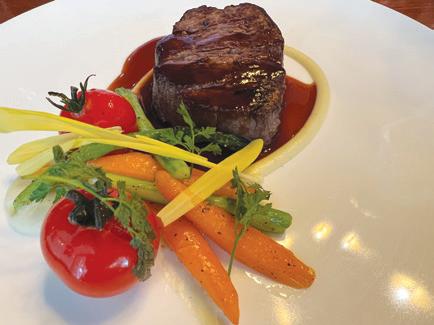
Dining column’s back: A French chef on a roll WENDY JOHNSON
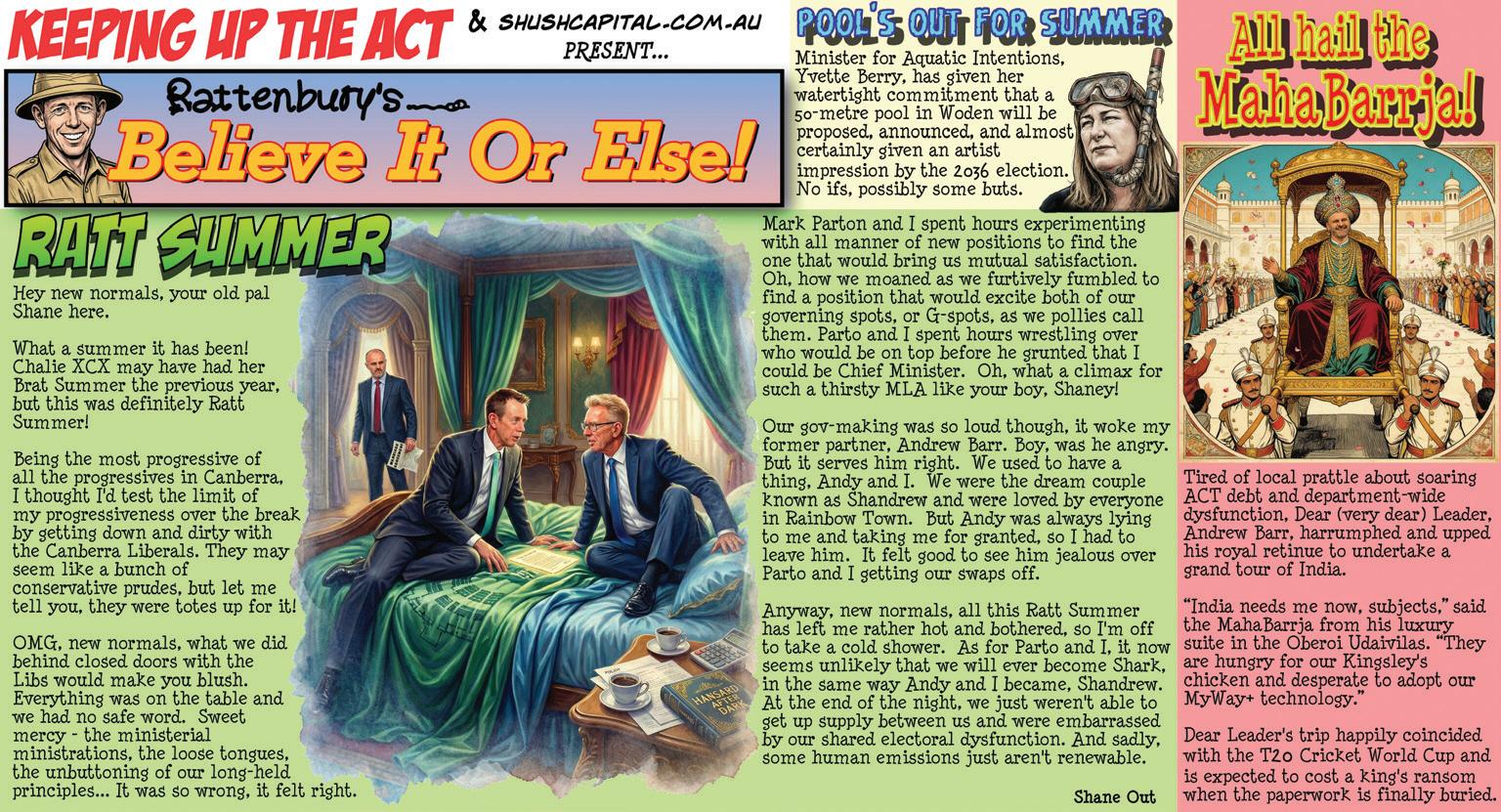
All hail the MahaBarraja! KEEPING UP THE ACT is back
FEBRUARY 26, 2026
Meet Travis the horse as South.Point celebrates the Year of the Horse
Delivering world-class medical imaging, in the heart of Canberra
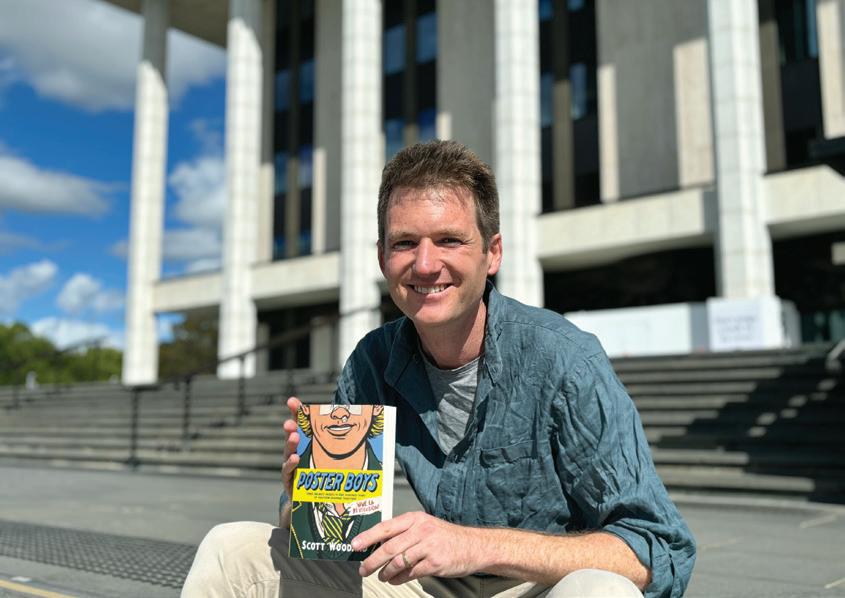
NEWS / Scott Woodard
When schoolboys tried to challenge the system
“Being published is amazing, but I treated it as a bonus – all I wanted was to write something that I could look at and go: ‘I’m really proud of what I’ve created’.”
TIA PRIEST-WILLIMOTT
meets excited new author Scott Woodard.
It was in a dingy, dark, 19thcentury printing press room, with few windows, a mismatch of chairs and a small stage, that Scott Woodard had an idea.
“At the time I was living in Ballarat, and Ballarat has a really exciting, fun art scene and I got involved with Ballarat writers and their monthly reading nights at the printing press,” Scott says.
That’s where his coming-of-age novel, Poster Boys, started as something for those reading nights.
“It was just a sketch about two characters that kind of got out of control. It just kept expanding and expanding until it became a novel,” he says.
Seven years later, Poster Boys is officially out in the world.
It follows an unlikely trio of private schoolboys as they try to take down their school’s archaic traditions, rules and culture. Things quickly get out of hand, leaving Edward Heffernan, Nolan Li and James Crombie to deal with the consequences of their revolution.
The characters were formed deep in
a Ballarat winter, when Scott decided to “comfort read” Winnie the Pooh in a tough period of his life.
“When you re-read it as an adult [the stories] are really funny in a way you don’t remember as a kid. I loved the character of Pooh because he had such a kind heart, but he was also entirely self-interested,” Scott says.
“And I thought, what would this character be like in a high school setting? And so that became the very bare-bones basics of the character Nolan.”
It’s been a lifelong dream of Scott’s to write a novel, growing up with a love of stories and a keen imagination.
“When I was a little kid, probably three or four, my parents brought home this big cardboard fridge box and they drew some knobs on the side, cut a flap in it and called it The Gachine,” Scott says.
“I would sit inside and they’d feed paper in and I’d draw pictures and come up with stories and feed it back out to them. I loved it in there.”
This passion for writing saw him through high school all the way to RMIT, where he completed a Bachelor
With
Linda
•
•
•
•
•
of Creative Writing.
But Poster Boys didn’t come directly after that.
After graduating, Scott moved to Port Augusta to work for a radio station, before relocating to Ballarat to work for Power FM.
“Then in 2019, I met this amazing girl from Canberra,” he says.
“I thought she’s the one – I’m going to make the leap. I quit my job, had nothing lined up, and moved to
1993: Volume 32, Number: 8
General manager: Tracey Avery, tracey@citynews.com.au
Once in Canberra, Scott joined the public service and hosted a radio show on Hit 1047 on Saturday mornings.
In the background of all this, he was working on the novel.
“When this idea came along… I just started writing and writing. I used all my lunch breaks in the Ballarat library under the heater working on this book. Then in Canberra it was every morning, every evening, every
lunch break working away,” he says.
“I was trying to write something that I was proud of. Being published is amazing, but I treated it as a bonus – all I wanted was to write something that I could look at and go: ‘I’m really proud of what I’ve created’.
“And I’m so proud of this book.”
Coming from a private school background, Scott is all too familiar with the notion of school pride and trying to fit the expectations given to each student.
“The school in the book is fictional, but I did draw a lot from the culture of [my] school, which I think is common across a lot of private schools – those traditional values and the idea of exceptionalism, success, being leaders and being the top of the pack,” Scott says.
“That culture of always trying to be the poster boy isn’t very healthy. I think it encourages kids to compare themselves and creates the groundwork for bullying,” he says.
“Writing this book, I wanted to address that culture and encourage kids to see it for what it is, which is this is the school’s vision of success, it doesn’t have to be your vision of success.
“It’s been so personal for such a long time, to think it’s out there in the world, with people reading it is a dream come true.”
Poster Boys (Hachette, 19.99).
Evans
Author Scott Woodard… “That culture of always trying to be the poster boy isn’t very healthy. I think it encourages kids to compare themselves and creates the groundwork for bullying.” Photo: Tia Priest-Willimott
BRIEFLY ACT lags nation in early childhood development
The ACT is lagging behind most of the country on early childhood development, according to the latest Australian Early Development Census (AEDC) data.
The territory sits at second-lowest nationally for children’s physical health and wellbeing.
While outcomes across Australia have remained relatively stable, the ACT is trending downwards, raising concerns about gaps between government policy goals and on-the-ground support for families.
Nutrition Australia ACT CEO Leanne Elliston said the data highlighted a lack of co-ordinated and funded action on early childhood nutrition, despite strong evidence of its importance in the first five years of life.
“The importance of nutrition in the first five years of life to children’s physical health, brain development and lifelong wellbeing is well established, yet even in a small, highly educated and well-resourced jurisdiction, the ACT lacks a clear, co-ordinated and funded framework to support early childhood nutrition,” Ms Elliston said.
The findings come despite the ACT Government’s Best Start for Canberra’s Children: The First 1000 Days Strategy, which recognises the critical role early life plays in long-term health and development.
Ms Elliston said without funded and coordinated nutrition support, this window of opportunity was being missed, contributing
to declining outcomes.
“A government-funded ACT Early Childhood Nutrition Hub would help bridge the gap between strategic intent and coordinated implementation of public health nutrition programs and services,” she said.
Nutrition Australia has a budget bid for $1.1 million over three years before the ACT Government.
More than half of ACT children aged up to five attended early childhood education and care (ECEC) settings, which Ms Elliston said played a significant role in shaping food exposure, learning and habits.
“These settings provide a valuable opportunity to bring together evidence, education and early intervention in a more co-ordinated way,” she said.
Ms Elliston said strong sector support and evidence showed investing in nutrition during the first five years of life was one of the most effective ways to improve children’s health and long-term outcomes.
“Acting early is both a public health imperative and a smart investment in the future wellbeing of Canberra’s population,” she said.
Buddy with a message
Heather Jackson, from Bosom Buddies, will be speaking at the next lunch meeting of the ladies of the Weston Creek VIEW Club at the Canberra Southern Cross Club, Woden, from 11.30am on March 3.
Lunch is $40. RSVP to 0408 864616.
Open days at community gardens
Open Gardens Canberra says two community gardens will be open to the public, 10am-4pm on Saturday, February 28: Canberra City Care, 20 Cartwright Street: A community outreach mission of Life Unlimited Church, established a harvest garden in 2016 managed by volunteers to provide seasonal organic produce for its kitchen and clients as part of the Canberra circular economy. Drinks and barbecue available. Free entry.
Charnwood Community Garden, adjacent to Sports Way, off Lhotsky Street: Established in 1991, about 7500 sqm, has more than 50 gardeners of all ages and backgrounds working over 60 allotmentstyle plots. Entry by donation.
More information at opengardenscanberra.org.au
Monaro Street to close for six months
Construction on the $17.25 million Monaro Street Refresh in Queanbeyan will begin on March 12, with the main street closed to vehicle traffic for six months.
Mayor Kenrick Winchester said council had opted for a full road closure between the Atkinson Street roundabout and Lowe Street to reduce the overall construction period.
“We were considering a plan to do one lane at a time, but this would have meant
a construction time of at least 18 months,”
Mayor Winchester said.
Pedestrian access will remain along both sides of the street, including Queens Bridge, and businesses will stay open throughout the works.
The project includes replacing the road surface, updating underground infrastructure, modifying medians, upgrading footpaths and lowering gutter heights. Existing travel lanes and parking will remain in the same layout.
The broader upgrade will extend from Lowe Street to Collett Street as part of the council’s CBD Transformation Strategy, Queanbeyan CBD Spatial Masterplan and Queanbeyan Place Plan.
Mayor Winchester said council would continue its business support package during construction, including a Shop Front Improvement Program delivering façade renovations for 20 Monaro Street businesses. The project is funded by the NSW Government and council.
Alternative routes and traffic management details are at qprc.nsw.gov.au/Monaro-Street
“The
King’s Singers ooze class …” THE TIMES SATURDAY 7 MARCH
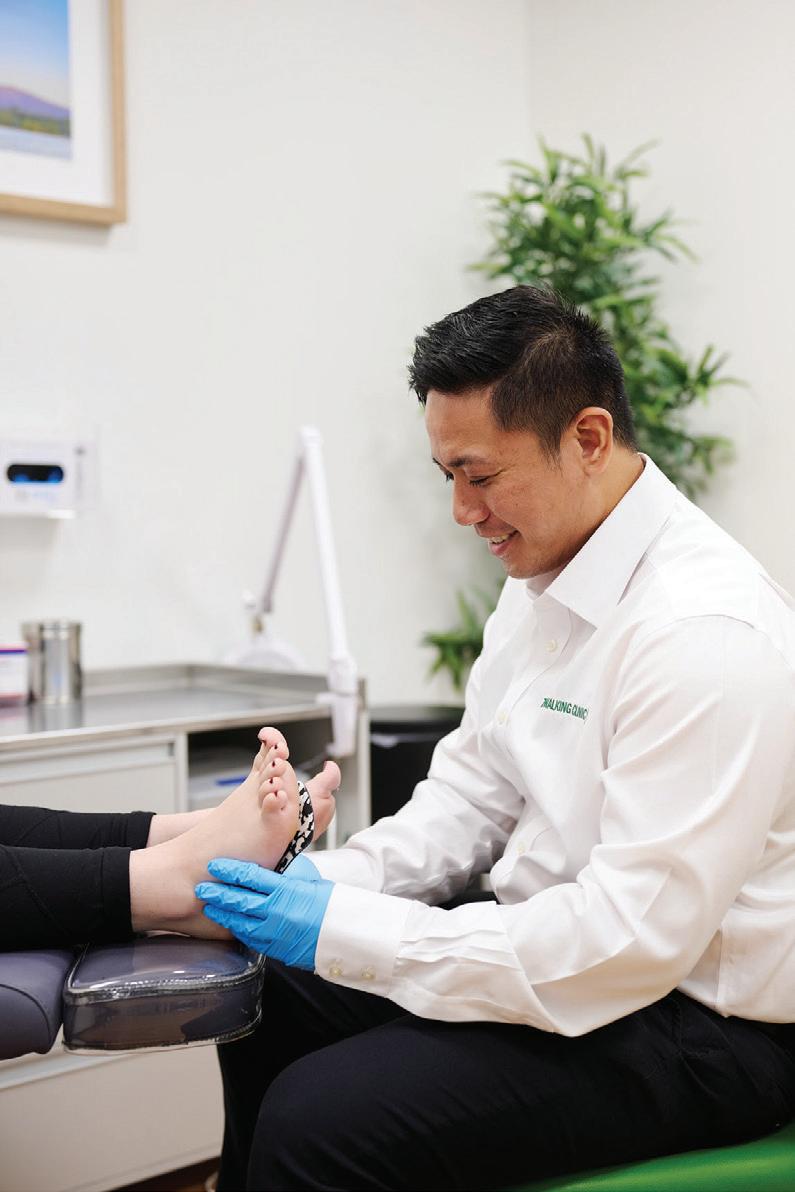
A second opinion on hearing loss – you need professional advice, not a sales pitch
A woman came into my clinic for a consultation about her hearing aids, telling me her hearing aids were 4 years old and she had never found them to be of much help. She said the salesperson quoted her $14,000 for a pair of hearing aids, however, the monthly special of 20% discount meant they cost her $11,200. So, she ‘only’ paid $11,200 for hearing aids that did not help her. Sadly, I hear this all too often.
Here are some things to do to avoid this type of problem:
1. Visit your GP. If you or someone you know has a problem with their hearing, visiting your GP to check for wax in the ears, and to get advice is a starting point.
2. Qualifications. Always check the qualifications of the person you are dealing with. A person without professional qualifications has no business advising you about your hearing. They need to belong to a professional association with a Code of Conduct, so you know they are acting in your best interests, not their own.
years. If you are not sure about their advice, then seek a second opinion. The wrong hearing aids can be an expensive waste and could lead you to stop wearing them. You should always have a trial of hearing aids to ensure that they are right for you.
6 Pensioners and eligible DVA card holders often have entitlement to free services. If you are covered by a government concession, then let the clinician know (even though your clinician should ask). Eligible clients may obtain free hearing tests, consultations, and free hearing aids (referred to as fully subsidized hearing aids).
“A person without professional qualifications has no business advising you about your hearing. They need to belong to a professional association with a Code of Conduct, so you know they are acting in your best interests, not their own.”
– Dr Vass
These hearing aids are appropriate for many people, however if you have great difficulty hearing in background noise (for example a restaurant), then you may want to consider partially subsidized hearing aids. This is when the government pays a certain amount, and you pay for additional features and benefits. Your decision should be based on the following:
you are dealing with a qualified clinician, then they belong to a professional association. The best contact is an independent complaints body referred to as Ethics Review Committee. You can email ethics@auderc.org.au and view the website www.auderc.org.au. You can make an anonymous complaint and your complaint will be handled in a confidential and professional manner. If you are in the ACT, contact the ACT Human Rights Commission email human rights@act.gov au and the website www.hrc.act.gov.au
3. Independent advice. You should get independent, professional advice.
4. There are a wide range of hearing aids out there. Finding the right hearing aids for your communication needs can be challenging. Hearing aids vary in price and performance. Bluetooth® connectivity and rechargeable hearing aids are available on most hearing aids, along with apps that allow you to control your hearing aids from your mobile device. Be aware that just because a hearing aid is more expensive, that doesn’t mean they are the best hearing aid for you.
5. Just as hearing aids vary in performance, clinicians may also vary in performance due to training, experience, and skills. Make sure that you are comfortable and confident in their advice. You are likely to be with this clinician for the life of your new hearing aids, typically 4 to 5
(a) Can you afford the more expensive hearing aids? Don’t go into financial stress if you can’t afford them. (b) Are you clear on the free vs partially subsidized features & benefits? Never believe someone who tells you the free hearings are not good or of poor performance, this is simply not true. (c) If you try the partially subsidized hearing aids and are not happy, then return them. Do not keep hearing aids because you think the failure is yours or that you will improve over time. If the hearing aids are not working for you in the trial period, then they will not work for you in a year or two.
7. If you have a complaint, then seek help. Your clinician should be able to help you through most of your needs. Sometimes, a problem may be beyond the expertise of even the best clinician. However, if you have a complaint there are things you can do. If
Thanks, Angus, the local Liberals must be thrilled
“At a national level, Senator Waters believes that the Australian Greens need to be a strong, independent voice fighting for climate and economic justice.”
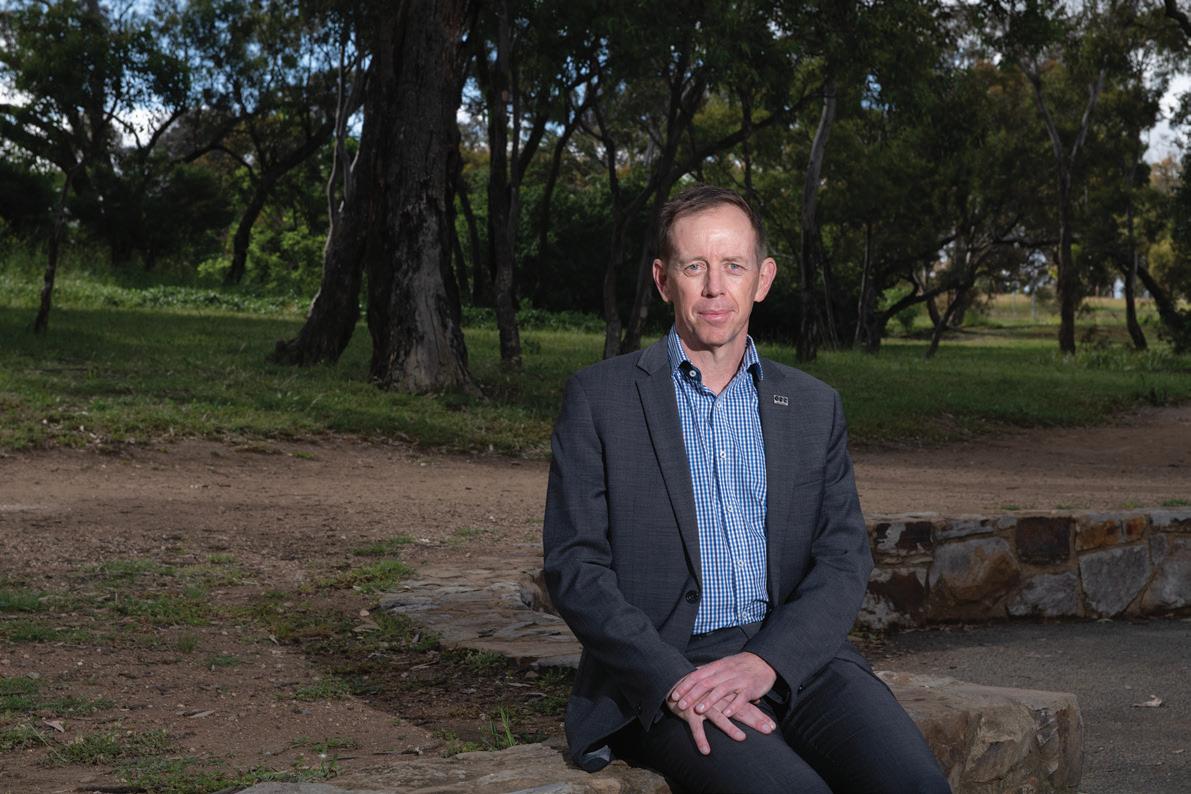
ACT Greens leader Shane Rattenbury was open to exploring new ideas that just might provide a better outcome for Canberrans.
However, he has been prevented in several ways from even considering how to work more effectively with other non-government members of the Assembly.
The notion of the Greens taking a governing role in the ACT seems to frighten those who just want the party to be free to object rather than to considering all possibilities to hold governments accountable. This is an important role, but not the only one.
However, Rattenbury and his colleagues were looking beyond climate and economic justice while attempting to understand if there were other roles for the Greens.
At a time when both major parties are polling so poorly and Canberra has been under Labor rule for a quarter of a century, it is appropriate to at least consider alternatives.
Since self-government in 1989 the
ACT legislature has been prepared to experiment with innovative policies and innovative ways of governing. As a former Speaker, Attorney General and a long-term minister, Rattenbury understands possibilities far better than someone, such as Larissa Waters, who has never held such roles or responsibilities.
While some are willing to explore different possibilities, others find it is easier to sit on the sidelines and snipe.
Looking inwardly and focusing on the self-interest of the party at a national level is bound to have voters looking for alternative independent candidates who will focus on local interests without national interference.
Michael Moore is a former member of the ACT Legislative Assembly and an independent minister for health. He has been a political columnist with “CityNews” since 2006.
I suspect it is a similar story in other states.
The appearance of the federal Liberal men undermining their first
nificant differences, of course. Mark Parton was the speaker of the ACT Legislative Assembly at the time of the local coup.
best interests of Greens priorities in Canberra, or anywhere across the country. She does not resile from that position.
GOVERNMENT
Shane Rattenbury… open to exploring new ideas that just might provide a better outcome for Canberrans.
Come along and see the friendly free-flying birds that can be photographed and fed. Walk amongst over 500 birds from 60 species from Australia and around the world!
Open 7 days a week from 10am to 5pm with the last admission 4.30pm
SATURDAY, FEBRUARY 28 – 10AM-12PM
South.Point brings Lunar New Year to life
South.Point will come alive with colour, culture and celebration this Lunar New Year, offering Canberrans a rare opportunity to experience authentic traditions and unforgettable moments at a free community event on Saturday, February 28.
Celebrating the Year of the Horse, the centre has curated a lively program designed to captivate families and visitors from across the capital.
The highlight of the morning will be the special appearance of Travis, a full-sized horse, and Finnigan, an adorable pony, welcoming visitors in Centre Court from 10am to 12pm. Set against a vibrant Chinese-themed backdrop, families can meet the animals up close and capture memorable photos — a unique experience rarely seen inside a shopping centre.
“The horse is such an important symbol in Lunar New Year, representing strength, confidence and prosperity,” says South. Point Marketing Manager Carole Arulantu. “To be able to bring that symbol to life and give families the chance to interact with these beautiful animals is something truly special.”
From 10.30am, the unmistakable beat of drums will signal the start of traditional Lion Dancing by Moonbear Kung Fu Academy. The Lion Dance, a powerful and energetic performance, is steeped in tradition and believed to bring good fortune and positive energy for the year ahead. Visitors can expect a dynamic and colourful display as performers move through the centre, creating an electric atmosphere.
Elegant Chinese dance performances by the Red Cedar Dance Group will follow, showcasing graceful choreography, traditional costumes and storytelling that
reflects centuries of cultural heritage.
For younger visitors, Arts Lounge will host free craft workshops throughout the event, where children can create horsethemed jewellery and keepsake ornaments. These hands-on activities provide a fun and meaningful way for families to engage with the celebration while creating something to take home.
“We wanted to create an event that is immersive and interactive, not just something to watch but something to truly experience,” Carole says. “From the Lion Dance to the craft activities, every part of the celebration has been designed to bring joy and connection.”
Importantly, Carole says the event is open to everyone, regardless of cultural background.
“This celebration is about bringing the community together,” she says. “Whether you’re deeply connected to Lunar New Year traditions or experiencing it for the first time, South.Point is a welcoming place for everyone.”
With easy access, ample parking and a vibrant mix of retailers and cafés, South. Point offers the perfect destination for a family outing.
Running from 10am to 12pm, the free event provides a compelling reason for Canberrans from all corners of the city to make the trip south and be part of a meaningful cultural celebration.
“This is a chance for Canberrans to experience something unique and memorable,” Carole adds. “We’re proud to offer an event that celebrates culture, community and the spirit of Lunar New Year.”
South.Point Shopping Centre Cnr Anketell and Reed Streets, Tuggeranong. Call 02 6293 1000. southpointcanberra.com.au
Empire Park riding experiences – www.empirepark.com.au
BUDGET UPDATE / hollow promises
A surplus in two years? And, yes, pigs may fly!
“Canberrans are being asked again to believe that in two years’ time there will be a surplus. And, yes, pigs may fly.” JON STANHOPE & KHALID AHMED despair at the government’s farfetched, hollow promises.
We’re confused by media comments from Treasurer Chris Steel and Health Minister Rachel StephenSmith on the 2025-26 Budget.
She says the budget update doesn’t include the additional $557 million over four years from the Commonwealth, and that the extra funding for ACT hospitals from the Commonwealth would free up ACT government funds, which could therefore be used for other purposes.
He says the agreement “will be reflected in the budget in June and that will provide some upside to the figures forecast in the budget review”.
As for the Budget Review, he says the reduced deficit is a result of the government’s sensible fiscal strategy and efficiencies made within government directorates.
Stephen-Smith is correct when she says that the federal funding will ease pressure on the budget. However, Steel’s assertion that health funding would provide an upside to the Budget Review figures could surely not be correct, unless he expects a special dispensation from the Commonwealth to use the funds to boost his budget bottom line, rather than spending them as intended – an unlikely outcome.
We will return to the treasurer’s claim about the improvement in the budget later in this article.
Stephen-Smith’s comment must also be of concern to the Commonwealth as well as Canberrans, in that it does not make mention of an increase in health services or improvement in performance – merely that she will not need to go to Cabinet asking for more money – ie, the federal funding will fill a budget hole.
Readers may recall that immediately after the October 2024 election, Stephen-
there was a blowout of more than $200 million in the health budget in 2024-25.
A similar blowout of more than $200 million in the health budget also occurred in the year 2023-24, which was plugged through one-off funding.
It was disappointing that the Pre-Election Budget Update by the Treasury, supposedly independent of the government, did not pick up the potential blowout, because for those in the health system and observers of the budget, it was hardly a surprise.
Needless to say, the minister must surely have known because of her role in the budgeting process.
Despite knowing full well of the hole in the health portfolio budget, in the 2025-26 budget, the government incorporated a cut of 0.1 per cent in nominal and much larger in real terms.
Across the forward estimates the budget provided for 1.5 per cent per annum growth, which is below the CPI and wage growth. We noted at the time the massive challenge for the Canberra Health Services in both maintaining activity at previous years’ levels and paying existing staff.
The shortfall in the health budget is not a recent occurrence, and while the Commonwealth funding will fill it – albeit, only in part as we explain below – the responsibility for the budget hole rests squarely with the ACT Government.
It is the only government in Australia that, according to Productivity Commission data, cut health funding in real terms when the demand for services was increasing and has, from 2015-16 onwards closed hospital beds.
We have estimated that by 2018-19 the hospital system was being underfunded by $175 million compared to the 2015-16 levels and up to $238 million when compared to national average growth.
past two completed years.
Based on past blowouts, we estimate the shortfall in the health budget over the next four years (having grown over time) is in the order of $950 million to $1 billion. With Commonwealth funding covering about half of this amount, the challenges for Canberra Health Services, that we have previously highlighted, will remain. That is, unless the health minister is able to secure additional funding from the budget.
We welcome the increase in funding from the Commonwealth Government, which in our opinion, should also prioritise their policies towards Australians who depend on public services such as health, education and housing.
We also hope that Stephen-Smith can now focus on addressing the capacity issues and the serious inequities in the ACT health system. She may, for example, improve access
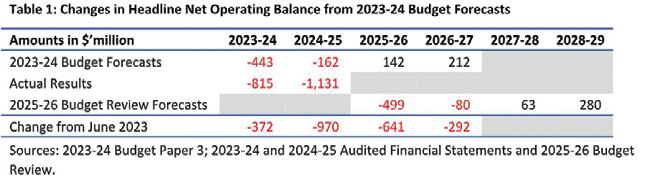
Sources: 2023-24 Budget Paper 3; 2023-24 and 2024-25 Audited Financial Statements and 2025-26 Budget Review.
vealed in the latest Productivity Commission report wait 38 per cent longer than their non-indigenous Canberra peers for elective surgery.
Treasurer Steel’s statements following the Budget Review, while studiously ignoring the changes he incorporated in the estimates just eight months after the 2025-26 Budget, take us to the forward estimates.
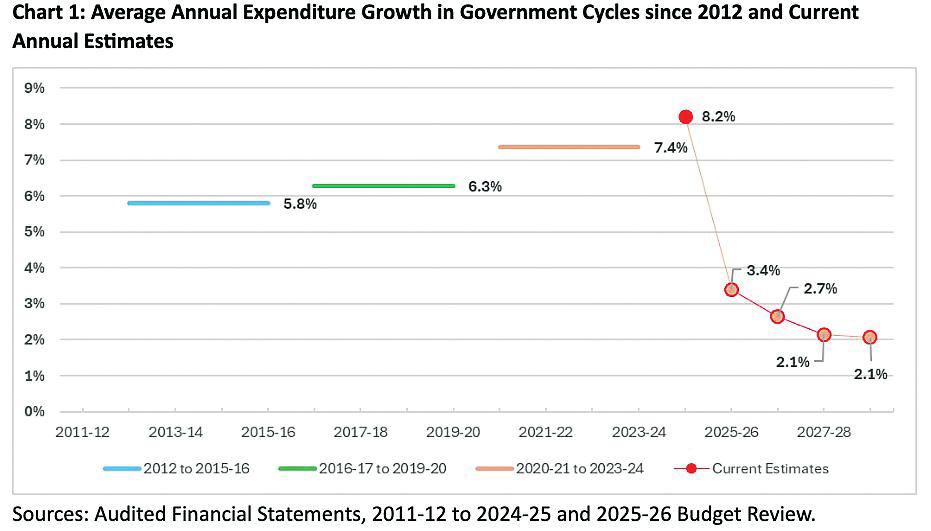
Sources: Audited Financial Statements, 2011-12 to 2024-25 and 2025-26 Budget Review.
In a previous article we provided an analysis of the Budget Review update, which in summary has increased the deficit by $100 million in the current year and $150 million over the forward estimates, while the cash deficit has increased, and total borrowings have increased by more than $500 million. Stunningly, since the budget was brought down, net debt has been increasing by an extra million dollars a day.
As for the forward estimates returning the budget to surplus, we provide just two exhibits to show how farfetched that claim is.
Table 1 provides the forecasts of Headline Net Operating Balance in the 2023-24 Budget, the audited results for the completed years since then, and the 2025-26 Budget Review forecasts. We have presented the government’s own measure, which no other government in Australia uses, to highlight how its promise of a surplus vanishes but then reappears again in the distance.
Just two budgets ago, the government promised a surplus of $142 million in 2025-26. The Budget Review now forecasts a deficit of $499 million, a deterioration of $641 million – and the year is not yet complete. As revealed in the table, the 2024-25 actual result was wrong
by $970 million from the forecast just one year earlier.
We could produce a dozen such tables that prompt the question, again and again, how do you explain that? Canberrans are now being asked again to believe that in two years’ time there will be a surplus. And, yes, pigs may fly.
Chart 1 provides the average annual expenditure growth over the four-year cycles since 2012-13, and the current estimates in the Budget Review.
Expenditure growth increased from 5.8 per cent annually over the 2012-16 period to 7.4 per cent over the 2020-24 cycle. Expenditure grew by 8.2 per cent in 2024-25 and is now forecast to grow by 2.6 per cent over the estimates period and a mere 2.1 per cent over each of the last two forward years. We have highlighted above similar and totally unrealistic expenditure forecasts in previous budgets.
Short text in the budget papers on savings claims that employee expenditure (other than in health and schools) will be restricted to 0.86 per cent annual growth over the next four years. In other words, a cut in wages in real terms or a cut in employees.
For the sake of current Canberrans and those yet to be born, we do wish Chris Steel every success in restraining expenditure and returning the budget to balance, but through genuine efficiencies and reprioritisation rather than cuts and hollow promises.
Jon Stanhope is a former chief minister of the ACT and Dr Khalid Ahmed a former senior ACT Treasury official.
Chart 1: Average Annual Expenditure Growth in Government Cycles since 2012 and Current Annual Estimates
A surplus in two years time? And, yes, pigs may fly.
FAMILY MATTERS
Every so often a reader asks for the impossible…
“In family breakdowns, grandchildren can grow up deprived of ready warmth, encouragement, presents and shared experiences. They, along with the cast-out grandparents, are victims,” writes HUGH SELBY.
Every so often a reader asks for the impossible. Like last week, when I was asked to write about the causes and remedies when a daughter-in-law induces the son to cut off any access by his parents to the grandchildren.
It was a blinkered request, reflecting the grief experience of the requester. Who doesn’t have a friend or family member who is alienated from a sibling, an adult child or parent?
The omission of grandchildren in the above list was no oversight. Leaving aside predatory sexual deviance towards a grandchild, untoward violence, substance abuse or mental illness, their separation from grandparents is more likely to be the result of a real or imagined slight by those grandparents of one of the kid’s parents.
Which just goes to show that the admonition, “sticks and stones can hurt my bones but names will never hurt me” is more honoured in the breach than the observance.
And so the grandchild or grand-
children grow up deprived of ready warmth, encouragement, presents, shared experiences. They, along with the cast-out grandparents, are victims.
Whether they are separated by a couple of streets or the tyranny of distance makes no difference.
Letters, email, phone calls, texts – all blocked.
Along with the cast-out grandparents, grandchildren are victims of family breakdowns.
I have heard of presents being returned unopened. Which leads in some cases to conversations years later between grandparents and adult grandchildren where the grandparent needs to decide which is the lesser of two evils: leave the vengeful past alone, or tell some of the truth.
The separation can last for weeks, months, years. It can even intrude its ugliness into disputes about inheritance. There are fierce contests that pit, “you cast us aside and now you come back for money” against, “you contributed to poisoning the relationship and now you want to add injury and keep what was never yours”.
This is a lawyer’s paradise, a paral-
lel track (albeit usually later in life) to relationship breakdowns that end up in bitter fights about the division of property in which I include children.
The courts must look to the least bad outcome for the children, while the competing adults fight both for the affection of the children and revenge upon the person with whom, in most cases, they very pleasantly conceived those now tangible barter pieces.
Sometimes a person chooses alienation. It’s a voluntary choice that reflects their assessment of the person or people they are casting aside. The core of those beliefs, however wrong they might be, is not susceptible to a rational discussion.
To even raise the issue with them is to provoke a strong defensive reaction.
Which is why the preferred course is to “stay right out of it”.
Here’s an example. Three siblings who, despite very different life courses, have got by with each other over the decades. Two of them have a disagreement and say or write things better not done.
The third sibling values the relationship with both of them. If she or he attempts to mend fences between them then the most likely result is that either or both of the alienated siblings will cast number three aside as being biased, insensitive, misinformed.
Why go from being able to talk freely with each of the alienated pair (with some topics being off limits) to having no contact?
Isn’t this an instance where number three should follow theologian Niebuhr’s Serenity Prayer?
God, grant me the serenity to accept the things I cannot change, Courage to change the things I can, And the wisdom to know the difference.
To take another example, this time within a long-term relationship. If one of the two is slighted (whether real or imagined) by the other’s parents then it’s simple enough to put the way forward as: “Choose me or choose your parents. Both is not an option”.
This is Hobson’s choice. It’s presented as a free choice but it’s no choice at all. If the person presented with this no choice is still invested in the relationship, then their parents are thrown overboard. That’s the rational choice.
And if the relationship continues then so does that choice. After all, why stir up a hornet’s nest by raising the issue again?
If the above situations ring true (and that’s a matter for the reader) then attempts to rebuild relationships by cast aside siblings, adult children, parents are doomed.
Does it follow that a willingness to re-establish a relationship has to come from the instigator of its past failure?
To answer that question, where else can we go than Dr AI? I asked it: “How can family feuds be resolved?” I suggest you ask the same or a similar question.
The answer that I got assumed a rational response by everyone involved to an irrational situation. That’s just daft.
If you are a reader who has instigated an alienation within your family, reach out before it’s too late. Have the courage to change the things you can. It’s all on you.
Hugh Selby is a former barrister and CityNews legal affairs columnist.
WHIMSY / away from the trackside glamour
Where do horses go when cameras stop rolling?
“No horse can go as fast as the money you put on it.” – Earl Wilson
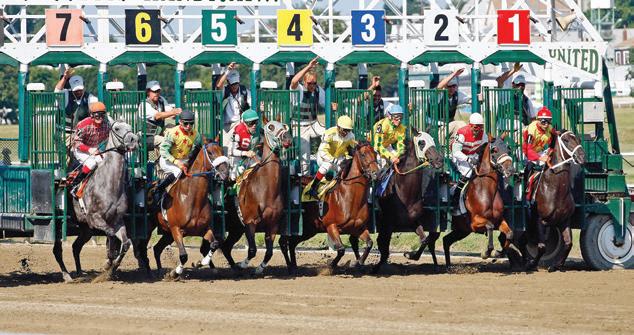
Horse racing is sometimes called “the sport of kings”. A vision of elegance and tradition: fashionable ladies, gents in fine suits, the pop of champagne corks, and a flutter on the favourite.
It’s all about style, excitement, and the romance of the turf – or so the marketing tells us. But behind the silks and smiles lies a different picture, one that the cameras and bookmakers would prefer you didn’t see.
The industry has spent decades perfecting its image. Events such as the Melbourne Cup, Royal Ascot, the Kentucky Derby – and here in Canberra, the Black Opal Stakes – are sold as high society at full gallop: celebrity, spectacle and sport all in one neat package.
We’re fed a story of devotion and partnership – the noble horse, the caring trainer, the thrilling finish. But away from the trackside glamour, the picture changes. The racing industry runs on numbers, and not all horses finish the race. Horses are bred in bulk to produce a handful of champions, and those that don’t measure up quietly disappear. In Australia, thousands of
thoroughbreds vanish from official records each year.
Even the lucky ones pay a price. Training starts when they’re still very young – just 18 months old – long before their bones have finished hardening. Broken legs, bleeding lungs and sudden collapses aren’t freak accidents; they’re occupational hazards. When a horse “breaks down” mid-race, the phrase “euthanised on track” translates to a bullet or injection behind a hastily raised screen. The show must go on. Then there’s the chemical side of the business. Some trainers push the horses’ limits with cocktails of painkillers and stimulants
designed to keep horses running when they shouldn’t be. The rules differ from state to state, and penalties can be light. A horse that ought to be resting can be patched up and sent out again.
And what happens when the racing stops? For most horses, there’s no lush, green retirement paddock. Rehoming programs exist, but they can’t absorb the sheer volume of unwanted horses. Once they stop making money, many find themselves at knackeries or abattoirs.
There are about 30 knackeries in Australia that slaughter horses for pet food, and two abattoirs that kill horses for human consumption. A conservative estimate is that 10,000
Behind the silks and smiles lies a different picture of horse racing, one the cameras and bookmakers would prefer you didn’t see.
horses are slaughtered each year in Australia (although one estimate is as high as 32,000). Many are ex-racehorses.
Defenders of the sport point out the jobs it provides, the breeding traditions it sustains, and the supposed love horse owners have for their animals.
It’s true that track surfaces are safer, vets more vigilant, and welfare programs more visible than they once were. But these are Band-Aids on a deeper wound. The system still treats horses as expendable units in an industry built around gambling.
Still, the tide may be turning. Documentaries, protests, and social media campaigns have stripped some gloss from the “race that stops a nation”. Crowds are thinner, and more people are asking awkward questions about where the horses
go when the cameras stop rolling. Calls for reform are growing louder: no whips, no underage training and lifetime traceability for every registered horse. Such reforms might soften the edges, but they can’t fix the core contradiction: a sport that celebrates the beauty of the horse while profiting from its suffering. The “sport of kings” still has its champagne moments – but behind the hats, hooves and hype, the reality is rather different.
On a lighter note, an anecdote from Cambridge: “While working on the till in my local Oxfam for 19 years I always tried to elicit a smile. On one occasion, a young man bought a sex manual and a copy of Teach Yourself German. He then asked for a bag for his purchases.
‘A wise decision,’ I commented, ‘You don’t want everyone on the bus to know you’re learning German.’ Alas, I thought it was funnier than he did.”
Clive Williams is a Canberra columnist.
Worrying words from the world of weaselling
Weasel words are the ‘art of ambiguity’, they’re words that suck the meaning out of a statement, similar to how a weasel sucks the contents from an egg, say ROSS FITZGERALD and DON WHITAKER
According to artificial intelligence (AI) weasel words are “intentionally ambiguous, vague phrases used in advertising, politics and writing to create an illusion of substance while avoiding concrete, defensible claims.”
They are part of the broader cohort of an endeavour described, again by AI, as “the art of ambiguity”, that employs “vague modifiers, unverified authorities, or generalisations that cannot be proven or disproven”.
Examples include such phrases as “some say”, “many experts agree”, and “studies suggest” that are intended to create the illusion of authenticity without any real substance.
Weasel words are not new. The term “weasel words” was first used in 1900 by the American author Stewart Chaplin who described them as “words that suck the meaning out of a statement, similar to how a weasel sucks the contents from an egg”.
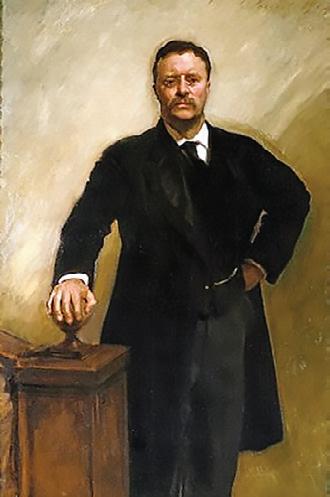
Theodore Roosevelt, Republican US President (1901-1909), took the concept further. In a 1916 public speech he made in St Louis, titled America for Americans, he said: “One of our
defects as a nation is a tendency to use what have been called weasel words. When a weasel sucks eggs it sucks the meat out of the egg and leaves it an empty shell.
“They are part of intentionally ambiguous, deceptive, or evasive language used by politicians to avoid responsibility”.
Whereas Roosevelt used the term in connection with politics and politicians, weasel words have morphed across a much larger arena that includes advertising and marketing, corporate language (corporate speak) and “psychobabble”, a type of communication non-experts use to describe psychological conditions that they know little about.
These days they are not just “words”, but phrases and entire sentences that are all designed to promote the impression of knowledge where there is little or none.
This broader phenomenon can be described by the verb “weaselling” that includes the use of weasel words, grandiose titles, jargon, clichés, and many other forms of insincere communication.
The corporate world in particular, has become a breeding ground for
they include “paradigm shifts”, “synergy”, “rightsizing”, “uptick”, “leveraging our core competencies”, “thinking outside the box”, “drilling down”, “using our bandwidth”, “circling back”, “picking the lowhanging fruit”, “going offline” and the dreadful “moving forward”.
In order to encourage the use in public discourse of meaningful, precise language, Watson’s Dictionary of Weasel Words – Contemporary
Cliches, Cant and Management Jargon, published in 2004, highlights the increasing use of corporate and government jargon.
In doing so, Don Watson draws attention to some corporate clangers such as “an involuntary career event” (being fired), “a negative patient outcome” (dying) and the classic “event empowerment tool” (a diary).
Then we have emails that begin with “I hope you are well”, inflated job descriptions such as “environment presentation manager” (cleaner) and “unplanned in-flight manoeuvre” (out-of-control aircraft)
Advertising has long used weaselling to reinforce dubious claims, such as “50% off”, “controls dandruff”, “kills up to 99% of household germs” and “half price”, all attempting to convey a level of precision that does not exist.
Weaselling in politics includes “copayment” (an extra tax), “evidence suggests”, “it is said” and “the polls show”. AI summarises this type of weaselling as “words or phases that are deliberately ambiguous, vague or misleading, used to create an impression of substance while allowing politicians to avoid accountability, hedge bets, or break promises”.
Another subclass of weaselling is “psychobabble” – namely the ruse of psychological jargon, buzzwords and therapeutic language in
everyday conversation.
Four common examples highlighted by AI are “high-energy experience”, “getting in touch with yourself”, “go with the feeling” and “re-parenting your inner child”. Examples identified by Watson are: “At the end of the day”, “game plan”, “no brainer”, “key deliverables” and “leveraged”.
As he says, “I’d like your buy-in on this” really means “I want someone else to blame when this thing bombs”.
Sadly, our experience of PowerPoint presentations coincides with Watson’s: “Bullet points and slides have an appearance of truth that is largely illusory.”
Apart from the amusement that uncovering weaselling provides by highlighting jargon, clichés and corporate speak that destroy meaningful language and obscure truth, we could do well to follow his advice: “When the words are suspicious, go after them, insist they tell us what they mean. Go after the meaning of the words.”
Ross Fitzgerald AM iis Emeritus Professor of History and Politics at Griffith University. His most recent book is Chalk and Cheese: A Fabrication, coauthored with Ian McFadyen and published by Hybrid in Melbourne. Dick Whitaker is a widely published author and lecturer in the fields of meteorology and Australian history.
Produced by
Theodore Roosevelt, Republican US President (1901-1909).
Has Labor the humility to see a need for change?
I agree with Albert Oberdorf (CN, February 12) of the need to unlock Labor’s grip on power given its poor governance.
However, even if a coalition of nonLabor Assembly members were to occur, two glaring examples of poor governance, light rail and the low level of greenfield land release, are unlikely to be addressed. Both are decisions based on rhetoric, not analysis and the consequence of the alliance between Labor and the Greens. Calls to provide the analysis justifying the policies have been resisted. The analysis may not exist.
The adoption of light rail has probably unnecessarily already cost the ACT community hundreds of millions, money that could have been used to address unmet community needs including housing, health, sport, recreation, education and reducing debt.
Similarly, the land release program, which aims for 90 per cent of housing supply to be met by multi-unit dwellings, lacks an analytical base, ignores housing preferences and is contributing to increased house prices and car-dependent development in the region.
Labor, if it sought Assembly agreement to independent reviews of both policies, including a commitment not to approve light rail Stage 2B before the next election, would signal to the community it is aware of its shortcomings and is taking action.
If they are part of wider actions to address its deficiencies, Labor’s vulnerability to a coalition between the Liberals, Greens and independents would reduce as would the likelihood of a hemorrhaging of votes at the next election.
The Liberals would benefit as they would be seen as acting to achieve the best outcomes for the Canberra community. Green opposition to the reviews would raise questions about their commitment to sound policy.
The fundamental question is whether
Labor has the humility and insight to see the need for change.
Mike
Quirk, Garran
If they can’t, how can we manage waste?
Interestingly, two correspondents point the finger at the waste associated with the nuclear power industries (Letters, CN February 19).
The countries with the largest unresolved waste inventories are the US, France and
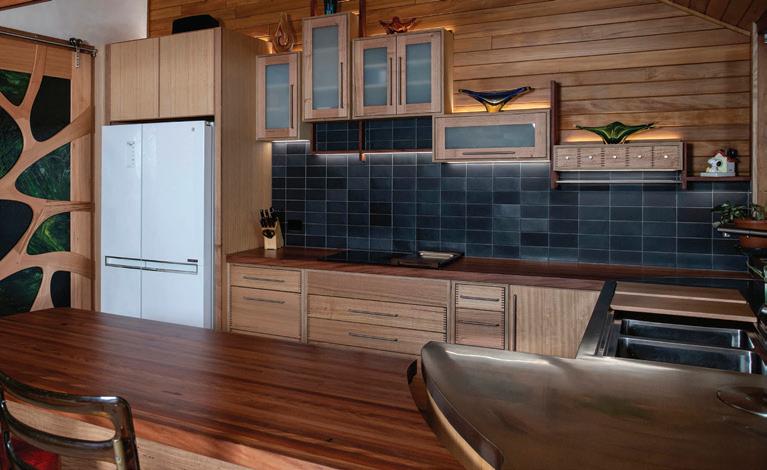
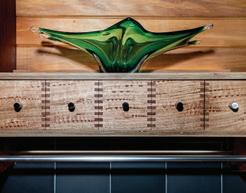
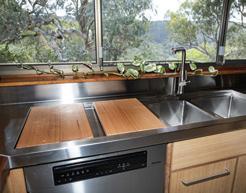
LOOKING FOR A SUSTAINABLE KITCHEN?
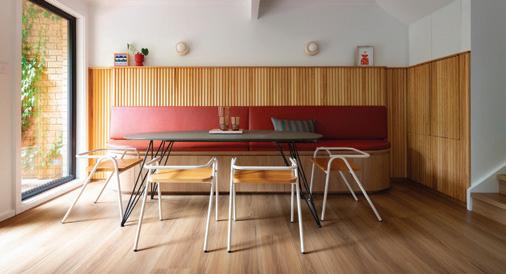
Are you interested in using plywood, recycled timber and other sustainable materials? We’ll work with you to design a kitchen that’s innovative, unique, sustainable and durable.
Kitchens, internal joinery & furniture.
the UK. Despite over 60 years of use, these countries have been unable to reach internal agreement about how to safely store the radioactive waste.
In the US, disagreement has led to about 90,000-100,000 tonnes of spent nuclear fuel stored in pools and casks for decades.
And while the UK and France employ vitrification, there is still no agreement on permanent repositories.
In Australia, the Barngarla traditional owners successfully challenged a proposed nuclear waste dump at Kimba in SA because there was bias in the decision-making process.
If countries with significant nuclear industries and greater GDPs than Australia have not yet resolved the location of permanent waste dumps, it shows just how expensive and unappealing they are.
While Finland is building an underground repository it has been described as the “world’s costliest tomb” at around $US7.8 billion ($A11 billion).
Clearly, nuclear power is more than just an “expensive way to boil water”.
Anne O’Hara, Wanniassa
My costs come from ABS data, Fiona
Fiona Collin (letters, CN February 19) claims without evidence that “my cost of nuclear power does not match up with much of the research”. As much of the research relies on
modelling with which – as with statistics – you can prove anything, I am not surprised.
My costs are not modelling. They are real and come from the ABS data. As Fiona is a Victorian I invite her to do the arithmetic for “Victorian Big Battery” which the government proudly announced, “will power one million homes for 30 minutes” and costs $170,000.
Using only ABS data for numbers of homes, other buildings, plants and factories, etcetera and their use of power, do the arithmetic for no wind and sun for eight hours and for 24 hours, which can often happen in winter – NOTING that there must be two batteries, one for the daytime of no wind and sun and the other for night time.
My arithmetic says $1.4 trillion! Or with other costs, not that far from 10 times the nuclear power.
Fiona should not make fun of “impossible” meltdown, without reading my paper as referenced in my letter.
Also, her claim that “nuclear waste is a critical problem humans have not solved” is not true. Humans have solved it as evidenced from many years of spent nuclear fuel reprocessing in France of which 96 per cent becomes reusable and the remaining 4 per cent is vitrified for long-term disposal.
The strongest case in my book for nuclear power in Australia was given by Dr Adi Patterson, the recently retired chief of ANSTO in his speech on receiving an AM last month. He was particularly advocating what he called a “pebble reactor” and I called HTGR in my letter.
Nick Standish, Macquarie
Ending old technologies leads to clean air
Thanks to Clive Williams for reminding us about the composition of the air we breathe (“A big gulp, with breathing there’s a lot to take in”, CN February 12).
He’s right we take air for granted, unless it’s polluted.
Australia’s real-time Air Quality Index map is worth exploring. In the ACT, monitoring stations at Civic, Florey and Monash report current and historical levels of ozone, nitrogen dioxide, carbon monoxide, PM10 and PM2.5 – the latter two being fine particles that pose serious health risks. In January 2020, Florey recorded three days when PM2.5 from bushfire smoke exceeded hazardous levels, and seven more when air quality was poor.
But our cars are also contributors. While the ACT leads on EVs, more than 90 per cent still run on petrol or diesel. These fuels emit nitrogen dioxide and carbon monoxide directly from their tailpipes, and concentrations can build up in places such as shopping-centre car parks. A health risk for car-park workers.
These five key pollutants all arise from burning fossil fuels. The sooner we replace these old technologies, the cleaner the air we will breathe.
Karen Lamb, North Geelong, Victoria
Grace may trigger exodus of wobbly warriors
The Islamist grip on Woke/Left sensibility should loosen thanks to Grace Tame’s spectacular re-entry to public gaze.
By exhorting more violence against Jews, despite the overriding revulsion produced by the Bondi massacre (including unequivocal condemnation from The Australian National Imams Council), an unwitting Grace may trigger an exodus of wobbly Woke warriors for whom “virtue signalling” might require a modicum of virtue.
If Islamists answer Grace’s call with more bloodshed, hard-core Woke will be forced to bulwark their ideological trench each time with more intense demonisation and threats pointed at Jews, Israel, and their sympathisers.
Peter Robinson, Ainslie
insufficiently patronised
Kudos to columnist Hugh Selby for his paean to the park bench (“A place to sit and a time to engage our senses”, CN February 19) – a necessary public asset so often ignored, under-appreciated, neglected and sometimes abused.
There’s one a couple hundred metres up the hill from my home. I sit up there each time I walk that path, it’s easy to sit there for half an hour, appreciate the view, consider the meaning of life. A simple treasure insufficiently patronised.
Ray Atkin, Ngunnawal
There may be something in the water
As Labor is unlikely to field a candidate in the Farrer by election, it’s likely the high-profile independent Michelle Milthorpe, who polled 20 per cent of the primary vote at the last general election in May and has already hit the ground running, will be the seat’s next representative in federal parliament. Should that occur, those who live on either side of the Murray will be represented by independent women. Could there be something in the water?
Ian De Landelles, Murrays Beach, NSW
This socially disastrous feedback loop is fuelled by absurd logic: high status in the Woke identity hierarchy excuses ugly behaviour and exalts myopia.
Master Builders ACT
Apprentices who are shaping Canberra’s future
Canberra’s construction industry paused to recognise its future leaders last week, with Master Builders ACT announcing the winners of the 2025 Apprentice Awards during National Apprentice Week.
Fourteen carpentry apprentices were honoured, continuing a proud tradition that has celebrated emerging talent since the awards began in 1982.
At the top of this year’s cohort was Jay Botterill, named 2025 Apprentice of the Year. A mature-age apprentice who transitioned from landscaping at age 32, Botterill’s determination and career change highlight the evolving pathways into the building trades. His goal is clear: to build homes and contribute to Canberra’s growing residential sector.
Master Builders ACT CEO Anna Neelagama said the awards represent more than individual success stories, they reflect the future strength of the industry itself.
“The building and construction sector is vital to our economy, and it is crucial that we attract young people into this field,” she said. “With all 26 construction trades in the ACT in shortage, investing in skills is not only a ‘nice to have’, it is
essential for the future of our industry.”
not only current achievements but the legacy of apprentices who have gone on to become business owners, builders and industry leaders.
were apprentices already contributing to Canberra’s residential building landscape through respected local companies.
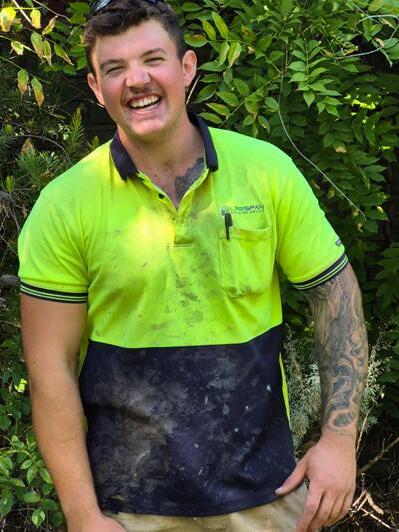
Samuel Ross, of Group One Residential, was named Carpentry Stage 2 (2C) Class Winner. Group One Residential has established itself as a trusted name in high-quality custom homes and renova tions, delivering projects that reflect prioritise skill development alongside professional growth within its team.
Group One Residential is a Canberra builder specialising in high-end custom homes delivered with a deeply personal approach. Working closely with each client from concept through to completion, we combine architectural collaboration, premium craftsmanship and uncompromising attention to detail to create refined homes that are considered, enduring and truly one of a kind.
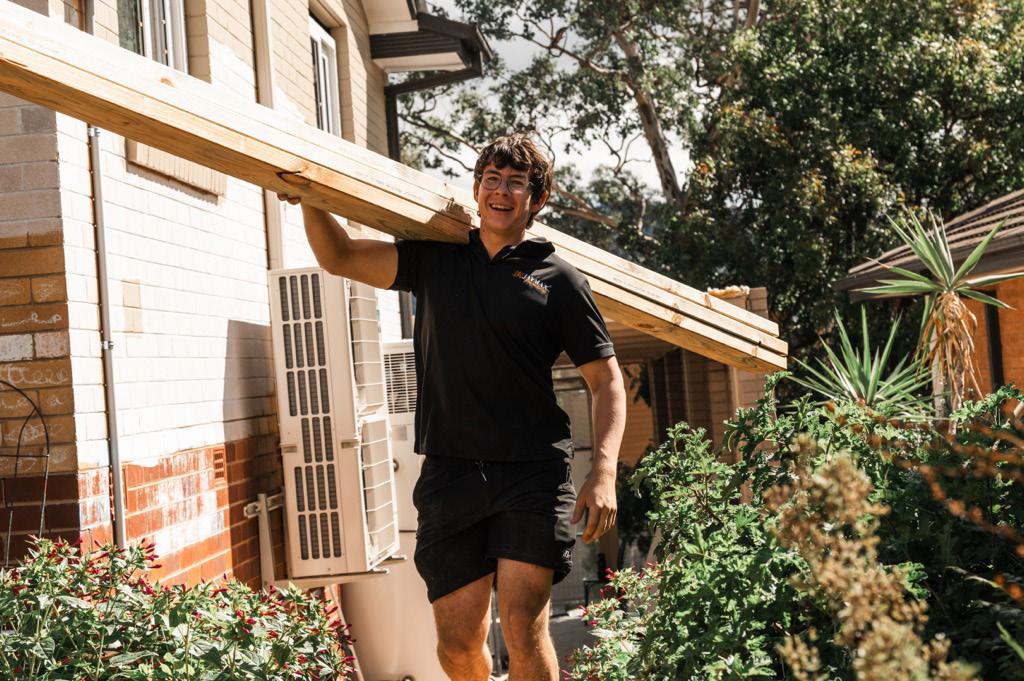
Construction has built a strong reputation for dependable, high-quality residential construction across Canberra and surrounding regions. Known for their professionalism and skilled workmanship, Jaymax Construction specialises in delivering projects on time and with outstanding attention to detail, ensuring homes that combine functionality, comfort and enduring value.
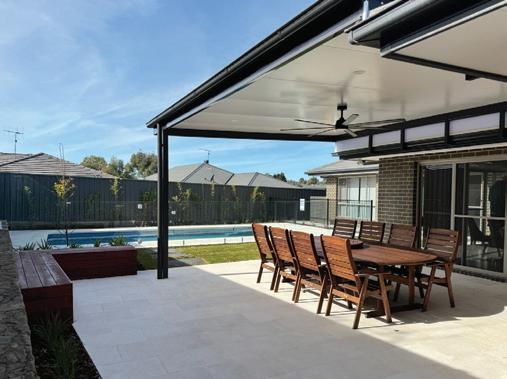
Lifespan creates beautiful, high quality patios and carports using Apollo Patios roofing and products, transforming your outdoor areas into spaces made for connection all year round.
Thoughtfully custom designed for Canberra’s weather, each patio and carport offers lasting protection while adding comfort, value and a place where life’s best moments can unfold.
Anna Neelagama said the awards serve tomorrow.
Samuel Ross – Group One Residential. Jake Dawes – Jaymax Constructions.
International Women’s Day
Breakfast to balance the scales for Canberra women
Canberra will take centre stage in a national conversation about women’s economic security, safety and access to justice when leading economist Cherelle Murphy delivers the keynote address at the International Women’s Day Breakfast at the Hyatt Hotel on March 4.
Hosted by law firm Parker Coles Curtis, the annual event has become a cornerstone of Canberra’s International Women’s Day calendar, bringing together business lead ers, policymakers, professionals and com munity advocates committed to advancing gender equality. This year’s theme, c aligns with the UN Women Australia International Women’s Day 2026 focus, highlighting the urgent need to address structural inequities that continue to affect women’s financial independence and long-term wellbeing.
As EY Oceania chief economist, Ms Murphy brings a powerful and informed perspective to the discussion. Her keynote address will examine the economic forces shaping women’s financial security, from wage inequality and workforce participation to retirement savings gaps and cost-of-living pressures.
In a city like Canberra, where women play critical roles across government, business, education and community sectors, the issue of economic independence is not abstract, it is deeply personal and directly tied to opportunity, safety and choice.
Economic vulnerability remains one of
Murphy,
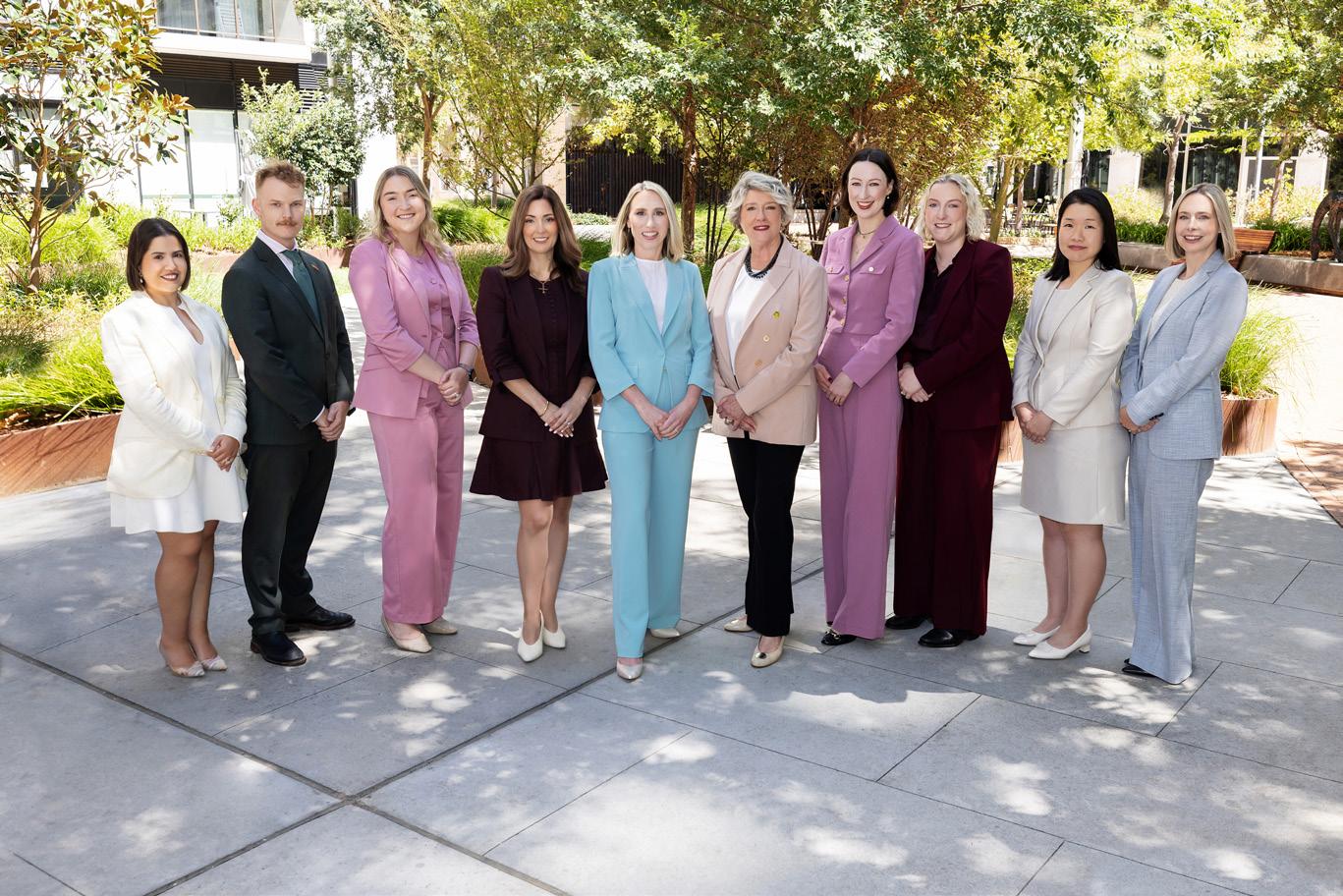
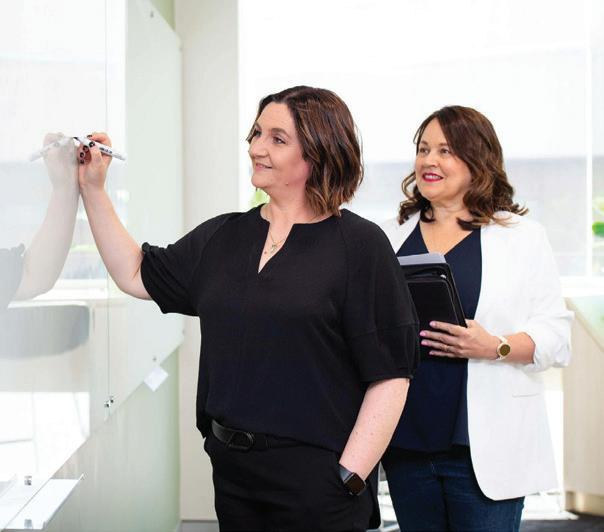
The team at Parker Coles Curtis.
A safe space for women’s wellbeing
A new women-only studio in Fyshwick is creating a safe and welcoming environment where Canberra women can explore their health, wellbeing and sexual confidence with dignity and privacy.
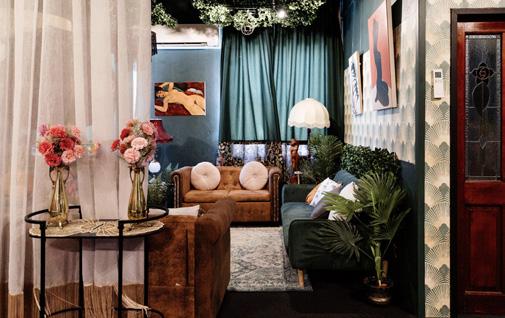
Now open, The Salon CBR is the vision of founder Phoebe Morrison, who has created the space to support women seeking education, connection and access to thoughtfully curated sexual wellness products. Designed exclusively for women, the studio offers a calm, respectful setting where conversations around sex and wellbeing can take place openly and without judgement.
Phoebe says the creation of The Salon CBR was driven by a clear gap in the market, a lack of spaces where women felt genuinely comfortable exploring their sexual health and wellbeing.
“I created The Salon CBR because women deserve a space that feels safe, private and completely free of judgement,” Phoebe says. “Sexual wellbeing is an essential part of overall health, yet so many women have never had access to a place where they can learn, explore and ask questions in a supportive environment.”
The Salon CBR combines retail, education and community, allowing women to explore products and resources that support sexual wellbeing, intimacy and confidence. Women can visit the Fyshwick studio or shop online, offering flexibility and privacy for those who prefer to explore from home.
Importantly, the studio is about far more than retail. Phoebe has built The Salon CBR around education and empowerment, recognising that many women have had limited access to reliable information about their own sexual wellbeing.
“Women have spent far too long feeling uncomfortable or embarrassed talking about sex,” Phoebe says. “This space exists to normalise those conversations and give women access to education and resources that support their confidence and wellbeing.”
Education plays a central role in that mission.
The Salon CBR provides access to coaching through Her Pleasure Studio, along with
educational content designed to help women better understand their bodies, relationships and overall wellbeing. This approach reflects Phoebe’s belief that knowledge and confidence are key to empowering women.
Equally important is the sense of community the studio creates. The Salon CBR offers a welcoming environment where women can connect, share experiences and support one another in a safe and respectful setting.
“There’s something incredibly powerful about women coming together in a space where they feel understood and supported,” Phoebe says. “It’s about creating a sense of community where women can prioritise themselves and their wellbeing.”
The studio’s events program reflects that focus on connection and education. Upcoming events include a DIY Sexy Selfie Workshop on 12 April encourages confidence, creativity and positive self-image.
These events are designed to foster open conversations about sex, wellbeing and confidence in a safe and supportive environment, helping women feel more informed, comfortable and empowered.
By creating a women-only space, Phoebe has ensured The Salon CBR remains focused on its core purpose: supporting women’s health, sexual wellbeing and confidence. Visitors can explore resources, learn through education and access curated products in a setting that prioritises privacy and respect.
As Canberra continues to embrace more open conversations around women’s health and wellbeing, The Salon CBR represents an important step forward. Through retail, education and community, Phoebe has created a space where women can explore their sexual wellbeing with confidence, safety and support.
In doing so, The Salon CBR is not just a retail studio, it is a dedicated community space where women’s health, confidence and wellbeing are placed firmly at the centre of the conversation.
www.thesaloncbr.com.au
The Salon CBR founder, Phoebe.
International Women’s Day
Property management team sets high standards
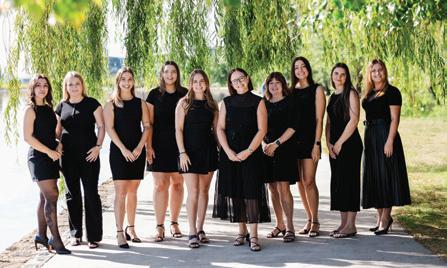
Built on a foundation of specialist knowledge, unwavering compliance and a strong culture of care and consistency, Little Bird Properties’ director, Heidi Rosin, says the company continues to stand out as Canberra’s largest property management-only agency proudly celebrating 10 years in business in 2026.
Heidi says her all-women team of dedicated property managers brings a depth of experience and professionalism that has earned the agency a reputa tion for excellence across the Canberra region.
“Our strength lies in focus,” she says. “We don’t do sales, only property management and for the past decade we have refined our systems, service and expertise to deliver it exceptionally well.
“As we celebrate 10 years as Little Birdies” in 2026, I am incredibly proud to still be leading the way for property management in Canberra.”
Heidi says the agency has built a close-knit team of specialist property managers who are fully compliant, highly experienced and genuinely passionate about their roles.
“We’ve created a supportive, values-driven workplace, and that’s reflected in one of the lowest staff turnover rates in the industry,” she says.
“When our team genuinely enjoys coming to work, it directly translates into better communication, consistency and care for our owners and tenants.”
With a consistent record of 100 per cent legislative compliance, Heidi says Little Bird Properties has proven its ability to stay ahead of regulatory changes while safeguarding clients’ investments.
“It’s about being proactive and prepared,” she says. “We’ve invested in the right systems, ongoing training and technology to ensure every property we manage is in safe, capable hands.”
Now marking a decade of specialist service, Little
Little Bird Properties 4/16 Bougainville Street, Manuka. Call 02 6153 3173 or visit littlebirdproperties.com.au
Bird Properties continues to set the benchmark in the Canberra region dedicated, knowledgeable and ready to lead the future of property management.
Little Bird Properties director Heidi Rosin.
Women With Cents Visit womenwithcents.com.au
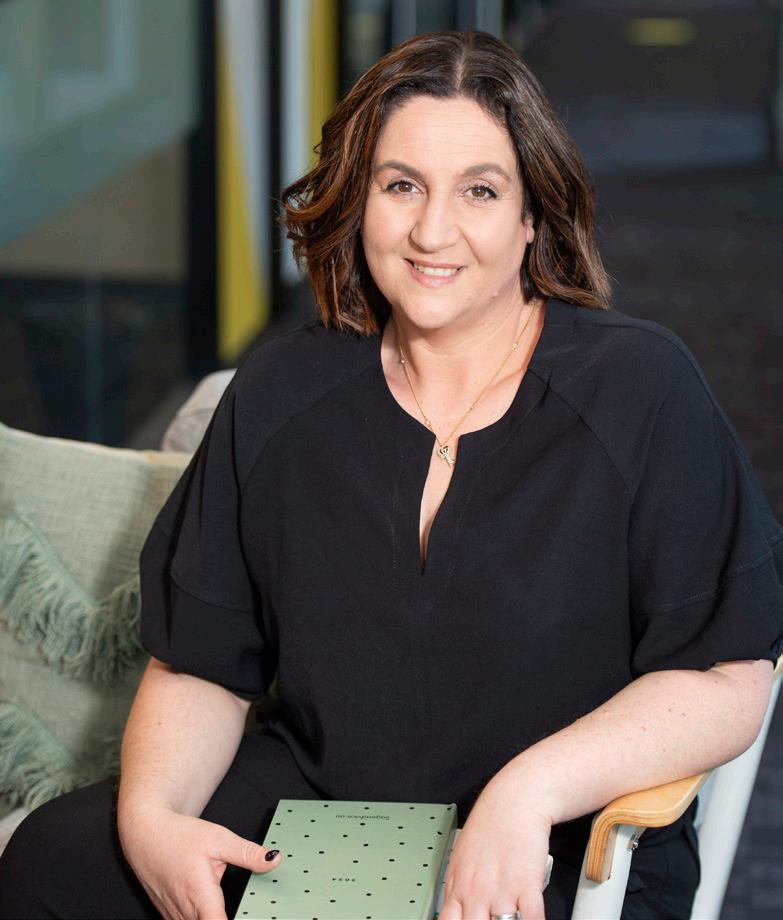
Women With Cents money coach Natasha Janssens.
Breaking the glass ceiling: paving the way for future leaders
This powerful quote encapsulates the mission of Raffy Sgroi, founder and CEO of Car Mechanical Services (CMS) and the visionary behind Sage Advice and Zest.
With over two decades of experience as a business strategist, leadership consultant, and staunch advocate for inclusion, Raffy has dedicated her career to transforming industries and fostering inclusive leadership practices. Through her work, she’s shattering glass ceilings and paving the way for the next generation of leaders to rise, thrive, and lead in business.
Raffy is also the founder of Sage Advice, a business created from her deep commitment to supporting and empowering small business owners. As someone who understands firsthand the challenges faced by entrepreneurs, Raffy is a passionate advocate for small business sustainability, growth and leadership development. Through Sage Advice, she works closely with business owners to strengthen their strategic direction, build inclusive cultures and ensure their businesses are positioned for long-term success.
Raffy has made a significant impact in the automotive industry as an entrepreneur, where she has worked tirelessly to create an inclusive workplace environment. CMS, an award-winning auto repair centre in Canberra, sees a remarkable 40% of female trainees going through her My Career Portfolio program, a reflection of the big cultural change that has taken place within the organisation. This achievement is a testament to Raffy’s commitment to diversity, inclusion, and women’s empowerment in the workforce.
Beyond her entrepreneurial success, Raffy is an industry advisor, advocating for a cultural shift in the automotive sector. She has dedicated her time and energy to creating inclusive opportunities for women and marginalised communities in a historically male-dominated field. As an advocate, she doesn’t just speak about change, she actively drives it.
Sage Advice, a leadership coaching and business consulting firm focused on helping organisations create inclusive and sustainable workplaces, is at the core of her work. Through Sage Advice, Raffy delivers the ToDEI Model, a strategic approach designed to help businesses embed inclusion, equity, and
diversity into their organisational culture. Unlike traditional diversity programs that merely check boxes for compliance, Raffy’s approach focuses on systemic change and creating genuine opportunities for all employees, regardless of their gender, race, ability or background.
Raffy’s work is driven by the belief that inclusion isn’t just about meeting quotas or creating policies – it’s about changing an organisation’s culture from the ground up. She has long advocated for a workplace culture that embraces equity and diversity as core values, empowering employees to thrive and succeed without facing systemic barriers.
Her passion extends to mentoring and coaching the next generation of leaders. Through Sage Advice and her work with hundreds of women in business, Raffy continues to inspire and guide future leaders. She helps them break down barriers, build confidence, and develop the skills they need to succeed in leadership roles. Her mission is clear: to create pathways for underrepresented groups and empower individuals to achieve their full potential.
Through her efforts, Raffy has proven that inclusive leadership and cultural change are possible and essential for long-term success. By fostering inclusive work environments, businesses enhance employee satisfaction and retention and drive innovation and creativity, ultimately leading to greater profitability and sustainability. As a business strategist and industry advocate, Raffy Sgroi remains steadfast in her commitment to breaking down barriers and creating equal opportunities for all. Her vision is to continue empowering leaders, transforming industries, and building workplaces where diversity and inclusion are no longer just goals, they are the foundation for success.
Raffy’s work has already significantly impacted, but she is not stopping there. She remains committed to driving change, one step at a time, and inspiring others to do the same. By challenging the status quo and leading by example, Raffy Sgroi is creating a legacy of inclusive leadership that will shape future generations.
For more information about Sage Advice Canberra, email raffy on raffy@sageadvice.au visit sageadvice. au or social media pages on Facebook: Sage Advice Canberra
Our comprehensive range of services is designed to guide you on your journey toward personal and professional growth, transformation, and success. With a team of experienced coaches and experts, we are committed to providing tailored solutions that meet your unique needs and aspirations:
• Personal Coaching
• Business Development
• Career Coaching
• Workshops and Training
• Community Engagement
Bringing purpose-led businesses and community leaders together to build relationships for positive change in business and the world.
raffy@sageadvice.au
sageadvice.au
Sage Advice Canberra founder Raffy Sgroi.
Photo: Grace Costa Photography
International Women’s Day
Rebecca strengthens care through lived experience
For more than a decade, Rebecca Davey has been leading Arthritis ACT with one clear purpose: to ensure that chronic pain does not define a person’s life.
As CEO for 11 years, Rebecca has championed practical support, accessible services and genuine understanding for people living with chronic conditions. Her message is direct and empowering. Life is not over because of chronic pain. It simply requires new tools.
What sets Arthritis ACT apart is lived experience. More than half of Rebecca’s team manage chronic pain them selves. That perspective matters. Clients are supported by people who understand the daily realities, the frustration and the resilience required to move forward.
Rebecca’s background in nursing and midwifery shaped her approach to care. Clinical knowledge combined with empathy allows her to meet people where they are. Having navigated chronic pain herself, she knows how isolating it can feel. She also knows that change, while difficult, does not diminish a person’s value or potential.
“People come in feeling lost,” she says. “We help them unpack everything and give them a path forward.”
That path is practical. Education, movement programs, pain management strategies and peer support form what Rebecca calls a “toolbox” for living well. Success is measured in everyday victories: a client returning to work, playing with grandchildren or simply saying, “I can do this now.”
This International Women’s Day, Rebecca’s leadership is a reminder that strength is not always loud. Sometimes, it is the quiet determination to turn pain into possibility.
Artemis Partners was established in 2019 with a clear ambition: to reshape the consulting landscape through a model that is both female-founded and female-led, and unapologetically values-driven.
Based in Canberra, the firm challenges traditional consulting structures by combining strategic rigour with authenticity, equity and genuine partnership. Its work spans strategy, transformation and culture, helping organisations navigate complexity while staying anchored to purpose.
At the heart of Artemis Partners’ model is a deliberate commitment to senior expertise.
Clients work directly with expert consultants who bring decades of leadership across government, private enterprise and the not-for-profit sector.
By working alongside executives and teams, rather than operating at arm’s length, the firm builds trusted relationships grounded in accountability and respect.
This approach not only delivers practical, sustainable outcomes, but also strengthens internal capability and confidence long after an engagement concludes.
The firm’s commitment to women’s leadership extends beyond its own structure. Artemis Partners proudly sponsors the WNBL UC Capitals, champion ing women in elite sport and reinforcing its belief in visibility, opportunity and excellence.
Through its social impact initiatives, the firm also supports Toora Women, providing pro bono strategic guidance to assist women and children experiencing crisis.
In elevating female leadership while delivering seniorled consulting services, Artemis Partners is not simply participating in the consulting industry, it is redefining it.
Artemis Partners artemispartners.com.au
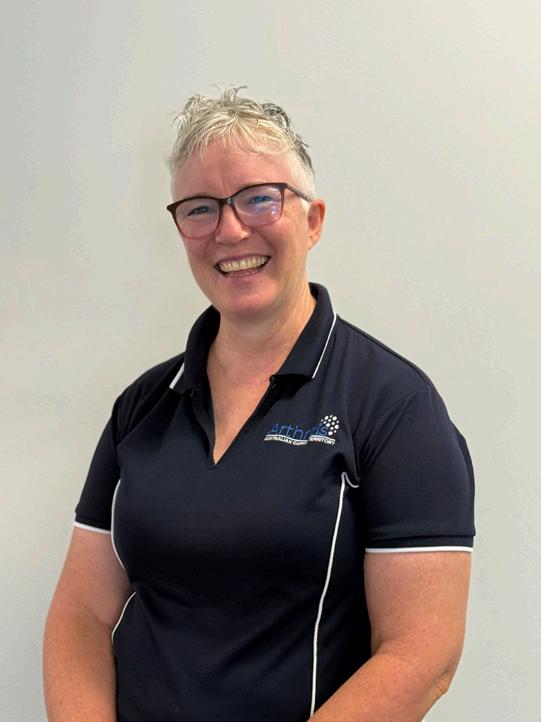
Rebecca Davey, CEO of Arthritis ACT.
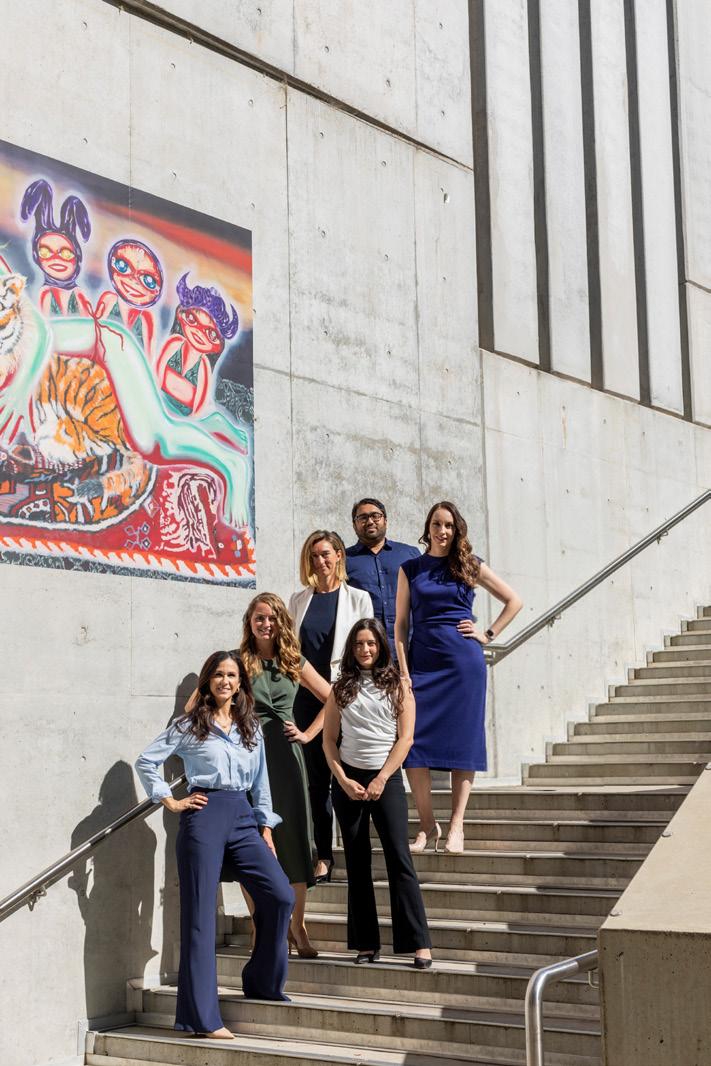
The team at Artemis Partners.
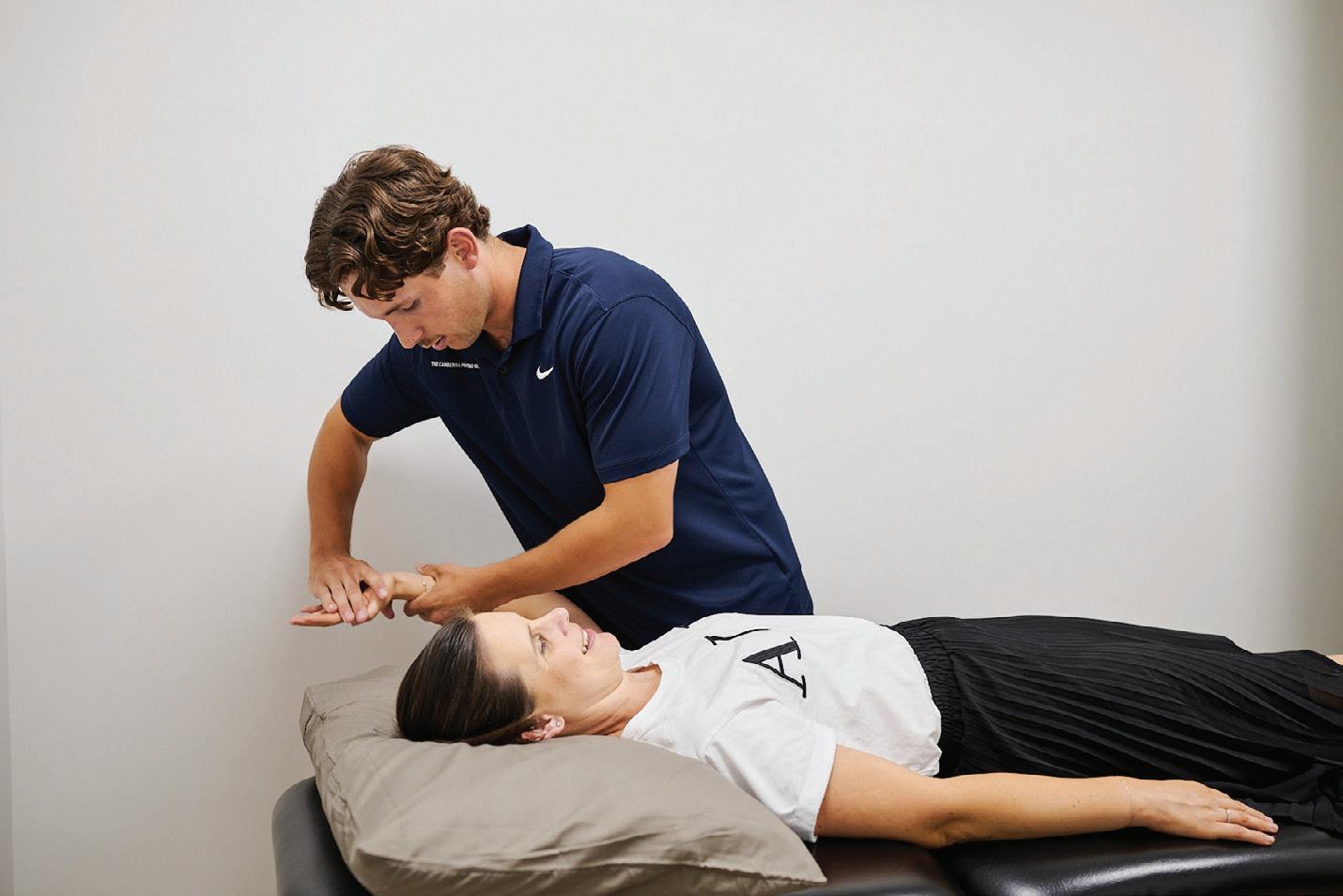
MEET OUR PAIN MANAGEMENT EXPERTS
Holly Hazelwood – Exercise Physiologist
Holly is a former sports journalist who believed so strongly in the power of exercise to heal and nurture that she undertook her 4 year degree in Exercise Physiology. Holly is be able to work with people directly to support them through their pain journey and regain independence and a joy for living again. Holly provides one on one and group exercise classes both on land and at our hydrotherapy centres to support people to gain freedom from chronic pain.
Sophie Bullock – Exercise Physiologist
Sophie has post graduate qualifications in hydrotherapy, and as a non-sports centred Exercise Physiologist, helps clients who struggle with engaging in exercise due to a lack of sports participation. Sophie’s goal is to improve clients health via our hydrotherapy program, gym instruction and in-home visits. Sophie also is known for her passion for working with children.
Nick van Diemen – Physiotherapist
Nick (they/them, he/him) has returned to Canberra after completing a Master’s in Physiotherapy at the University of Queensland. Their passion comes from a love of science and helping people. With eight years in disability support, Nick brings broad experience and enjoys working with clients across a wide range of needs.
Blake Dean – Exercise Physiologist
Blake has expertise in improving clients mobility and decreasing their pain through appropriate exercise. Blake delivers our ‘My Exercise’ program, targeting the relief of lower back and sciatic pain, shoulder and upper body concerns as well as leg, hip and ankle interventions – for those who do not qualify for physiotherapy-led GLAD programs. Blake provides individual & group exercise for younger people with a disability. Blake treats clients in-clinic or via our hydrotherapy program as well as attending your gym with you.
Sarah Solano – Exercise Physiologist
Sarah believes that exercise is the best medicine. She is an Accredited Exercise Physiologist with her degree in exercise physiology and rehabilitation. Previously Sarah was a swim teacher, personal trainer and an allied health assistant in the hydrotherapy field.
Natasha Elword – Exercise Scientist
Tash discovered her passion for exercise after completing her Certificate IV in Personal Training in 2015, later earning a Sport and Exercise Science degree from the University of Canberra. She joined Arthritis ACT in 2019 and now supports group classes, exercise programs and administration. Outside work, she enjoys family time, running, hiking and cooking.
• GLA:D® Program for hip and knee osteoarthritis.
• Education and supervised group sessions to build strength and confidence.
• Pain management strategies to reduce medication use Tailored support including preparation for or avoiding joint replacement.
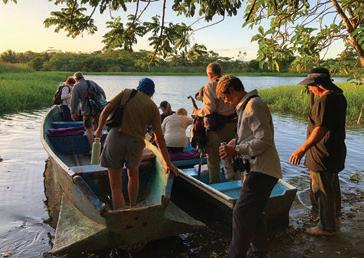
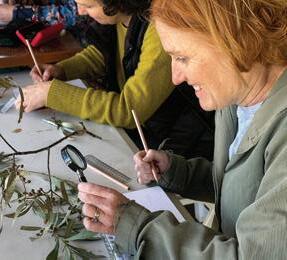
Unleash your creativity with NatureArt Lab
We are excited & grateful to win the ‘Building Communities’ category in the 2024 Telstra Business Awards ACT. We love making a difference to people’s lives through our inspiring courses, workshops & tours.
Build your creative skills, meet like minded people & connect with nature through:
• Nature photography • Nature journaling
• Bird watching • Art workshops
• Nature tours & much more!
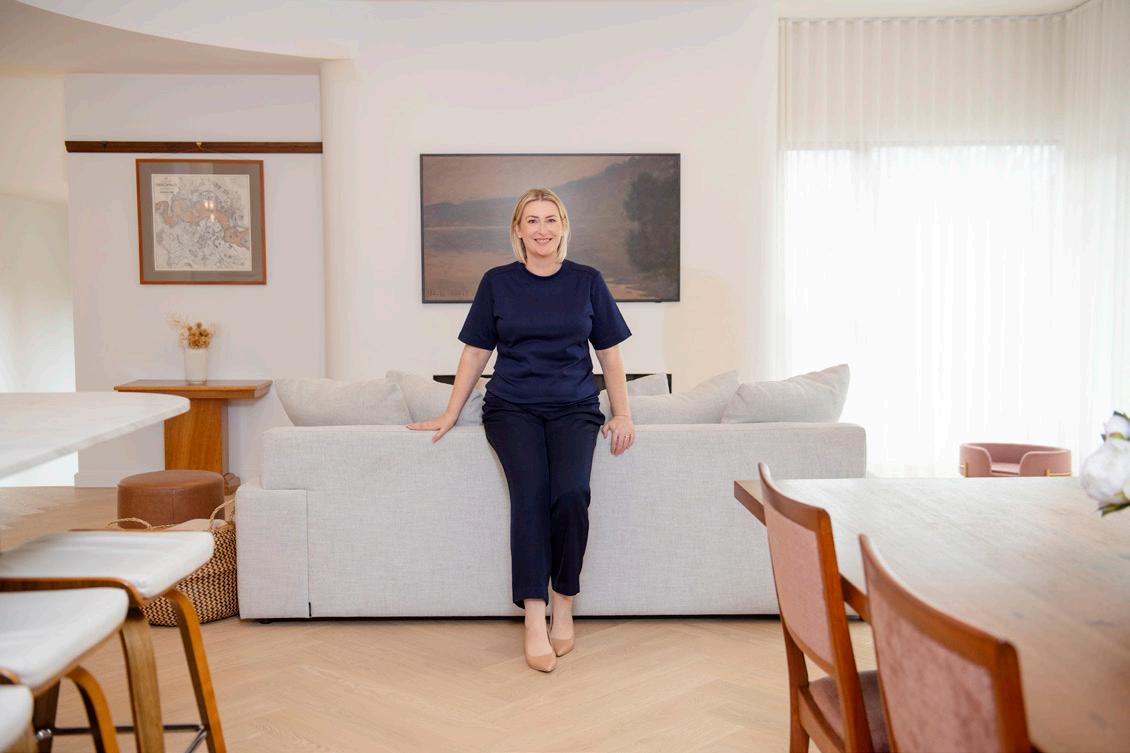
Claire Corby sets national standard
Claire Corby has earned her place among Australia’s most respected buyers agents, combining national award-winning expertise with a boutique, clientfocused approach that redefines how property is purchased in Canberra and beyond.
closely with both local and international clients, guiding them through complex property searches and international transactions using focused, advanced technology. Her ability to provide real-time insights, virtual inspections and detailed analysis ensures clients can make confident, informed decisions from anywhere in the world.
strategic adviser,” says Claire. “Whether they are based in Canberra, interstate or overseas, our role is to deliver clarity, confidence and exceptional results.”
of the buying journey, including auction bidding, offmarket purchases and strategic property negotiation, services that are increasingly essential in Canberra’s competitive market.
tion to detail have earned her outstanding Google reviews and recognition, including the national Buyers Agent of the Year (REIA) and REB Women in Real Estate Buyers Agent of the Year, among other categories. Claire was inducted into the REIACT Hall of Fame in 2023.
commitment,” Claire says. “My goal is to ensure each client secures the right property, on the right terms, with complete confidence.”
Readers can also stay informed by subscribing to Claire’s free monthly buyers newsletter, offering valuable market insights and expert guidance. To
Capital Buyers Agency www.capitalbuyersagency.com.au
advocacy, Claire Corby and her team at Capital Buyers Agency continue to set the benchmark for buyers agency services.
Capital Buyers Agency founder, Claire Corby.
SCAN ME
Women leading with numbers, insight and integrity
Chartered accountants delivering clarity for life and business
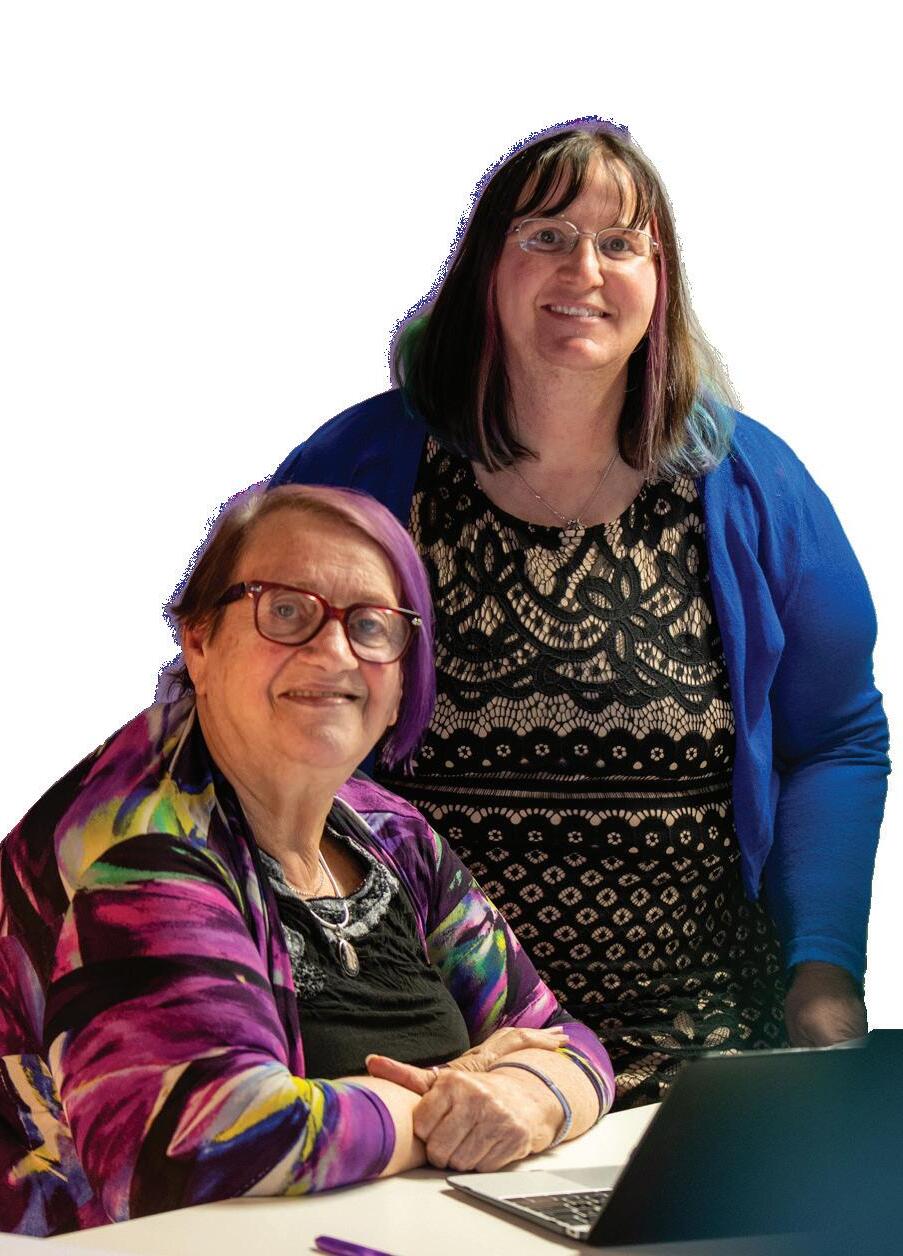
In Canberra’s sophisticated financial landscape, where business decisions carry weight and personal wealth strategies demand precision, the value of trusted professional advice has never been greater. At Gail Freeman & Co, Gail Freeman, Chartered Accountant (Fellow), SMSF Specialist Adviser, Registered Tax Agent, and financial planner and Bethany Freeman-Chandler, CPA-qualified accountant and Registered Tax Agent represent a powerful example of leadership grounded in almost 40 years expertise, integrity and an unwavering commitment to their clients’ success.
As a founder and respected voice in Canberra’s accounting profession, Gail Freeman has built a practice defined by its depth of knowledge and personalised approach. Her daughter, Bethany Freeman-Chandler, brings contemporary insight and technical expertise, ensuring the firm continues to evolve alongside changing legislation and the needs of modern professionals and business owners.
Together, their mother-and-daughterled team is dedicated to providing individually tailored solutions for every client. With specialised knowledge in taxation and superannuation, backed by expert qualifications, they ensure financial structures remain current, compliant and strategically sound. Their clients benefit from stability, certainty and the reassurance that comes from working with highly experienced professionals who genuinely understand their financial position.
“Accounting is not just about compliance,” says Gail Freeman. “It’s about helping clients understand their position, identify opportunities and plan for the future with certainty.”
This philosophy resonates strongly with Canberans, where professionals, executives and business owners require advice that is both technically robust and commercially relevant. Gail Freeman & Co specialise in taxation
planning, business advisory, structuring, financial reporting and superannuation strategies. Likewise, the team provides expert guidance on personal financial matters, ensuring clients benefit from a complete and integrated suite of accounting and advisory services. Their proactive approach helps clients avoid unexpected liabilities while positioning them for long-term success.
Bethany Freeman-Chandler says consistency and relationships are at the core of the firm’s service. “Our clients value knowing they will deal with the same trusted professionals each year. That continuity allows us to provide deeper insight and more meaningful advice over time.”
This long-term partnership model is particularly valuable for business owners navigating growth, succession planning or structural change. Strategic accounting advice can directly influence profitability, efficiency and sustainability, while individuals benefit from proactive planning that protects and enhances personal wealth. What distinguishes Gail Freeman & Co is not only their technical excellence, but their genuine passion for what they do. Their personalised service, attention to detail and commitment to building enduring client relationships have earned them a reputation for first-class service within Canberra’s community.
As International Women’s Day celebrates leadership and achievement, Gail Freeman and Bethany FreemanChandler exemplify the strength of women leading in professional services combining experience, innovation and integrity to guide clients toward financial clarity and confidence.
For Canberra’s professionals and business leaders, engaging Gail Freeman & Co is more than meeting obligations, it is gaining a trusted partner dedicated to delivering stability, expertise and a different approach to financial success.
International Women’s Day
advertising feature
Executive Central supports women to lead with clarity
As International Women’s Day approaches, this year’s theme, Balancing the Scales, invites reflection not only on fairness within our institutions, but also on how women experience leadership within themselves.
Executive Central is deeply engaged in this conversation, supporting women to develop the clarity, confidence and grounded authority needed to lead authentically. Through specialised coaching and development programs, including the Women Leading Program, Executive Central provides space for reflection and growth, particularly for highly capable women navigating complex professional environments. The program isn’t about changing who women are, but strengthening how they lead. This year, we partnered with various federal government departments in Canberra to extend this work even further.
Senior Associate Lisa Wells observes that many women carry unseen pressures in leadership roles. “We often see highly capable women questioning themselves, holding back their voice or carrying more than they should,” she explains. “The work we do helps them pause, recognise their strengths and lead with greater clarity and alignment.”
“This program gave me the confidence to lead with authenticity and gain clarity around what I want in my career. Understanding my strengths has helped me lead with intention, clarity and purpose.”
– Women Leading Program Participant
One of the greatest advantages of the Women Leading Program is the strong, supportive connections participants build with each other. These relationships often continue well beyond the program, creating networks that reinforce confidence, collaboration and long -term professional growth.
Executive Central’s approach recognises that sustainable leadership isn’t about pushing harder; it’s
Julia makes a ‘creative difference’ to people’s lives
about leading with intention. Drawing on behavioural science and evidence - based frameworks, the organisation supports women to understand their patterns, strengthen their authority and navigate complexity with confidence.
Meaningful change starts from within. Balancing the scales isn’t only about structures and systems, it’s about women owning their authority and leading as themselves.
As organisations evolve, Executive Central is championing a new generation of leadership, empowering women to lead more grounded and fully aligned with who they are.
Executive Central www.executivecentral.com.au
Australia’s Leading Leadership Program for Women
Transform your leadership through expert coaching, strengths-based development, and a powerful community of female leaders
The Women Leading Program is Australia’s premier leadership experience for women ready to step up with confidence, clarity, and impact. Over six transformative months, participants dive into dynamic workshops, personalised executive coaching, and powerful networking that accelerates their growth and influence. Grounded in contemporary research and starting with the Gallup® CliftonStrengths® Assessment, the program helps women identify their natural talents and develop the leadership capabilities needed in today’s rapidly evolving landscape.
• 6-Month Journey
• Expert-Led Workshops
• Personalised Executive Coaching
Available as a bespoke in-house program or as a public offering, Women Leading creates a supportive and energising environment where participants learn from experienced female thought leaders and connect with women across diverse industries.
By the end, women emerge with renewed confidence, strategic vision, and the ability to lead authentically and purposefully, driving meaningful change within their organisations and communities.
Enrol now for our 2026 programs.
• Gallup CliftonStrengths® Assessment
• Career Mapping & Personal Branding
Julia Landford says, as a “nature lover, artist and environmentalist”, she’s honoured to have her business NatureArt Lab win the 2024 Telstra Best of Business Award for Building Communities.
“NatureArt Lab is a unique, purpose-led arts and environmental education business that, over the past seven years, has made a significant difference to many people’s lives,” she says.
“We are contributing to environmental sustainability, building communities and championing health through our connections with nature and creativity.
“We now have a talented team of around 30 artists teaching a range of high-quality art and photography courses, all inspired by nature.
“We have created communities that are local, national and international to nurture creative connections with nature.
“Next year we are looking forward to sharing some of our amazing nature experiences in Australia and around the world. We are leading tours to Heron Island to see an extraordinary array of marine and bird life with guest artists teaching bird and marine illustration, as well as to wildlife hotspots in Borneo to see orangutan, birds and towering rainforests, among many other nature experiences.
“I’m also passionate about environmental sustainability and ensuring that all businesses in the Canberra region are thinking about how their business can minimise its impact on the environment and biodiversity loss.”
NatureArt Lab www.natureartlab.com.au
Lisa Wells, Senior Associate & Consultant.
Atelier Medical Aesthetics expands
with new Yarralumla clinic
Canberra’s trusted name in refined, natural aesthetics is growing.
Atelier Medical Aesthetics, well established in Kingston, has expanded its footprint with the opening of a second boutique clinic in Yarralumla, bringing its signature blend of medical precision and personalised care to the inner south.
Founded by respected cosmetic doctor Hollie Berghofer, Atelier has built a loyal following in Kingston for its calm, discreet environment and results driven treatments tailored to each individual. The Kingston clinic offers a comprehensive suite of advanced aesthetic services including anti-wrinkle treatments, volume replacement, skin rejuvenation, collagen stimulating treatments, PRP (platelet-rich plasma), medical grade skin therapies and bespoke treatment plans designed to enhance, not alter, natural beauty.
Now, Atelier’s new Yarralumla location will be led by Registered Nurse Olivia Hamill, a cosmetic injector known for her meticulous technique and warm, consultative style. Having practised alongside Hollie in the Kingston clinic, Olivia has refined her skills under the same clinical standards and aesthetic philosophy that have defined Atelier Medical Aesthetics from the beginning.
RN Olivia says the expansion reflects growing demand for high-quality, medically led aesthetic services in Canberra.
Sharing Hollie’s commitment to harmonised results, Olivia brings the same safety first approach and personalised consultation process that Kingston clients have come to expect. Her eye for facial harmony, deep understanding of anatomy and calm, reassuring manner ensure clients at the Yarralumla
clinic receive the same level of care, expertise and beautifully balanced outcomes that have made Atelier a trusted name in Canberra cosmetic medicine. The Yarralumla clinic will offer masseter injections for jaw tension and bruxism, hyperhydrosis (sweating) treatments, injectable skin boosters, prescription micro needling, bio-remodelling and Rejuran injections. Conveniently, the new Yarralumla clinic shares premises with Yarralumla Dental Care, offering clients a discreet, professional medical setting with easy access and parking in the heart of the inner south.
“Clients are looking for natural results delivered in a professional setting where safety and integrity come first,” Olivia says. “Our approach is always tailored. No two faces or treatment plans are the same.”
With two locations now operating, Atelier Medical Aesthetics continues to set a benchmark for cosmetic medicine in the capital combining medical expertise, thoughtful consultation and refined aesthetic outcomes.
Appointments are available at both the Kingston and Yarralumla clinics, with consultations tailored to first-time clients and those seeking ongoing skin and facial rejuvenation support.
To book a consultation at either the new Yarralumla clinic or the established Kingston clinic call 0493 281 557 or visit www.atelieraesthetics.com.au
Atelier Medical Aesthetics
Atelier Yarralumla is located at Yarralumla Dental Care, 1/18 Bentham Street, Yarralumla. Atelier Kingston is located at Skin Society, 125/25 Eastlake Parade, Kingston.
Atelier Medical Aesthetics, led by Dr Hollie Berghofer and RN Olivia Hamill, combines medical expertise with artistry to deliver subtle, natural results. Every treatment begins with a full-face consultation using the Art-Codes framework to design a plan tailored to you.
Services include UltraClear® laser, scar management, wrinkle and volume treatments, skin boosters, facial and eye rejuvenation, PRP/PRF therapies, advanced skin needling, Rejuran treatments and more – helping you look refreshed, confident, and authentically yourself.
NEW CLIENTS
With many years of experience and a compassionate approach, Associate Professor Maryse Badawy has a firm commitment in the delivery of medical care.
OFFERING ONE-HOUR APPOINTMENT
Our initial 1-hour appointment includes a complete medical history, a thorough examination, any necessary tests, and a personalised care plan focused on prevention and proactive health.
BOOK YOUR FIRST APPOINTMENT TODAY AND TAKE CONTROL OF YOUR HEALTH
We are here to support women at every stage of life, offering care that is compassionate, confidential, and comprehensive.
Generational Family Care: With a career spanning leadership roles and academic accomplishments, Dr. Badawy has even provided family care for up to four generations of the same family.
Dr. Badawy is committed to providing personalised, evidence based care tailored to your needs.
Consulting Hours: Monday to Friday: 8:30am–5:00pm.
As a female GP in Canberra, Dr. Badawy understands the unique medical needs of women. Our services include:
• Routine and preventative women’s health checks
• Support for hormonal and reproductive health issues
• Management of women’s chronic conditions
• Mental health support
• Pre-pregnancy and postnatal care
Canberra Family Health Centre founder, Associate Professor Dr Maryse Badawy
Dr Maryse Badawy.
About Face Beauty & Anti Aging team, from left, Jessica, Suzy, Renee, Chelsea and Jess.
More than just “bricks and mortar”, Renovation Matters owner, Kim Persson, says her work is about people, trust and meaningful results.
“I wanted to create a service that truly takes the stress out of renovating and selling,” she says.
Seeing too many situations where people in diffi cult circumstances were taken advantage of, Kim says there was a clear gap for a service that offered genuine support, trustworthy advice and reliable trades.
“Renovation Matters was born from my passion to help clients not only achieve the best possible results when selling, but to also improve and enjoy their own homes if they choose to stay,” she says.
Every client that Kim sees is different, making each renovation project individualised.
“I enjoy shaping each project to meet goals and bring out the best in every property,” she says.
Kim’s reward comes in seeing the transformation of not just the home, but of her client’s outlook.
“Watching someone walk into their freshly renovated space and knowing that my work directly helps people sell faster, for more, or simply enjoy their homes more, makes it all worthwhile,” she says.
Traditionally a male-dominated field, Kim says she’s proud to represent women in the industry and show that they can deliver high-quality work, manage complex projects and build trusted relationships with both clients and trades.
“My goal is not just to complete renovations, but to create a community where people feel supported, educated and empowered throughout the process,” she says.
Renovation Matters
Call 0427 696 662 or visit renovationmatters.com.au
NOW IS THE TIME…
Kim Persson, owner of Renovation Matters.
International Women’s Day
Female founders – entrepreneurial journey of Belinda Newham
Connect with and be inspired by female founders shaping Canberra’s innovation ecosystem, over lunch.
Join us for an intimate panel discussion where women founders share their entrepreneurial journeys firsthand. Hear how they navigate challenges, draw on their experience and build ventures that make a real difference. Connect with fellow founders over lunch in a welcoming space that celebrates women-led businesses across our community.
Meet our speaker: Belinda Newham brings over 20 years of experience across strategy, policy, media, communications and transformation. She has held senior roles as a political adviser to federal ministers and the Chief of Army, and as Chief of Strategy for a national not-for-profit.
In 2022, Belinda joined The Mill House Ventures’ GRIST accelerator program, which laid the foundation for Decision Revolution. Her social enterprise supports leaders and teams to make robust, inclusive decisions and build alignment across public, private and community sectors.
Belinda is a committed member of Canberra’s inno vation community. She serves on CBRIN’s Stakeholder Advisory Committee, mentors across several programs and recently evaluated ACT Government Innovation Connect Grants.
She is currently finalising a web app, partly funded through an ICON Grant, designed to help individuals and teams make decisions aligned to their mission, values and purpose.
This event is open to all women founders, aspiring entrepreneurs and allies across the Canberra region. Come along, share a meal and leave feeling connected and inspired.
Just 30 minutes from Canberra’s inner north and even closer for Queanbeyan locals, Bungendore has quietly become one of the region’s most loved lifestyle destinations and once you visit, it’s easy to see why.
Home to around 4500 residents, Bungendore blends small-town warmth with a creative, food-loving spirit that feels worlds away from city pace yet remains effortlessly connected.
A scenic drive past rolling paddocks and granite country delivers you straight into a historic village where cafés hum on weekends, local shops know your name, and community events fill the calendar.
For day-trippers, Bungendore punches well above its weight. The nationally recognised galleries, boutique stores, heritage streetscapes and proximity to Lake George make it a perfect escape for Canberrans craving a slower afternoon or long lunch.
Add nearby wineries, country pubs and walking trails, and it’s no surprise Bungendore has become a favourite for weekend wandering.
But for many, a visit quickly turns into something more permanent. Increasing
numbers of Canberrans are choosing to relocate or retire to Bungendore, drawn by larger blocks, character homes, and a genuine sense of belonging that’s harder to find in growing urban centres.
The town appeals equally to families seeking space and connection, Defence personnel wanting an easy commute, and retirees looking for community without compromise.
That confidence in Bungendore’s future is reflected in its property market leadership. Dan Woodford, principal and licensed stock and station agent leading the team at PRD Bungendore has been recognised as 2025 Top Agent in Bungendore.
This rare recognition across Australia’s
Selling Teams:
Dan Woodford, Principal
Rachael Fowler, Licensed Agent
Alyssa Brown, Sales & Office Administrator
Rentals:
Sharon Tutt-Lyons, Senior Property Manager
Renee Argaet, Property Manager
major property platforms reflects consist ent performance, strong negotiation skills and a proven track record of premium outcomes.
Dan’s dedication to excellence, combined with his deep understanding of the local market, has positioned PRD Bungendore as a clear market leader for buyers and sellers alike.
Equally important is the strength of Bungendore’s professional and community services. Elmslea Legal offers a comprehensive range of legal services, including family law, wills, probate, dispute resolution and mediation. Deeply committed to delivering professional legal services to Bungendore and the surrounding region, Elmslea Legal proudly
supports Bungendore’s elder community, Defence personnel, farming families and locals at every stage of life.
Community spirit is perhaps best embodied by Bendigo Bank Bungendore, whose support for local projects and organisations now exceeds an extraordinary $11 million.
For more than 23 years, the Community Bank has helped build a resilient, sustainable and thriving Bungendore through grants, sponsorships and scholarships.
That commitment shines each year through events like the 2026 Community Bank Bungendore Preschool Fair, February 28, 9am-2pm at Mick Sherd Oval.
This year’s fair will feature pig
races, now in its fourth year and firmly established as a keystone of the town’s social calendar, made possible by steadfast Community Bank support since its inception.
Whether you’re visiting for the day, considering a move, or dreaming of a tree change retirement that keeps Canberra and the coast within easy reach, Bungendore has a way of winning hearts. Come for the charm, stay for the community and don’t be surprised if you find yourself planning a return before you’ve even left.
For more information: www.queanbeyanpalerang.com.au/ places/bungendore-surrounds/
Suburb’s strong sense of community and exclusivity
Deakin is widely regarded as one of Canberra’s most prestigious and established inner-south suburbs, combining quiet residential streets with a strong professional presence.
Located just minutes from Parliament House and the CBD, Deakin offers residents a rare balance of convenience, privacy and enduring appeal.
Its leafy streets, established homes and proximity to Manuka and Kingston make it one of the capital’s most desirable addresses.
Property values in Deakin reflect its status as a premium suburb. Median house prices sit at around $1.8 million, with larger or architect-designed homes often exceeding $2.5 million.
Many residences occupy generous blocks and have been extensively renovated or rebuilt, reflecting the suburb’s evolution while retaining its established character.
With a high proportion of owner-occupied homes, Deakin attracts professionals, senior public servants, diplomats and business leaders seeking both lifestyle and long-term investment.
Deakin’s relatively small population of fewer than 3,000 residents contributes
to its strong sense of community and exclusivity.
Household incomes are significantly higher than national averages, reflecting the suburb’s professional demographic. Its location near the Parliamentary Triangle, Barton and Civic makes it particularly attractive to those working in government, law, consulting and healthcare.
Education is a key part of Deakin’s
appeal. The suburb is home to highly regarded private and public schools.
Nearby early learning centres and proximity to major universities make it ideal for families.
Deakin is also recognised as a centre for professional and specialist services. Turco and Associates , an award-winning architectural practice, based in Deakin and known for delivering innovative, high-quality design across residential and
commercial projects.
Their work reflects Canberra’s growing appreciation for thoughtful architecture that enhances both lifestyle and built form, and their presence reinforces Deakin’s reputation as a hub for design excellence.
Healthcare remains a cornerstone of the suburb’s professional community.
National Capital Paediatrics provides specialist medical care for children, supporting families with expert diagnosis
and ongoing care in a professional and welcoming environment.
Their presence reflects Deakin’s importance as a destination for trusted healthcare services.
Legal expertise is also strongly represented through firms such as David Healey Solicitors
Known for their professional integrity and practical approach, the firm provides legal advice and representation to individuals and businesses across Canberra, assisting clients through important life and business decisions.
Capital Smiles Orthodontic Excellence further strengthens Deakin’s healthcare offering. The specialist orthodontic practice provides personalised treatment for children, teenagers and adults, combining advanced technology with a patient-focused approach.
Their commitment to achieving excellent long-term outcomes reflects the high professional standards associated with the suburb.
Ultimately, Deakin represents the best of Canberra living, a suburb defined by prestige, professional excellence and lifestyle.
Its combination of premium homes, strong incomes, established community and trusted professional services ensures Deakin remains one of the capital’s most sought-after and respected addresses.
Deakin Orthodontist, Dr Jasprit Singh
Canberra’s enduring village of prestige and lifestyle
Manuka stands as one of Canberra’s most prestigious and recognisable lifestyle precincts, a place where history, elegance and modern living converge.
Located in the capital’s Inner South, just minutes from Parliament House and Lake Burley Griffin, Manuka has long been regarded as a centre of commerce, culture and community.
Established in the 1920s as part of Walter Burley Griffin’s master plan for Canberra, Manuka was designed to serve as a vibrant commercial village supporting the growing national capital.
The Manuka shopping precinct was one of the first retail centres developed in Canberra, with its distinctive circular layout and surrounding avenues reflecting Griffin’s vision of accessible, community-focused urban design.
Over the past century, Manuka has evolved into one of the city’s most soughtafter destinations while retaining its unique charm and architectural character.
Today, Manuka is home to a thriving population drawn by its exceptional lifestyle and central location.
The broader Inner South district has more than 30,000 residents, characterised by high levels of education, professional employment and strong household incomes.
Many residents work in senior roles across government, business, law and professional services, reflecting Manuka’s proximity to Canberra’s political and commercial heart.
The lifestyle on offer is one of both
convenience and refinement. Manuka’s tree-lined streets are home to boutique retailers, cafés, award-winning restaurants and essential services, creating a walkable village atmosphere rarely found in modern
urban centres.
From morning coffee and weekend brunch to evening dining and cultural events, Manuka offers a sense of connection and vibrancy that continues to attract new
generations of residents.
Manuka Oval remains a defining feature of the precinct, hosting international cricket, AFL matches and community events that bring people together year-round.
The presence of this historic venue adds to the area’s identity, reinforcing Manuka’s role not only as a commercial centre but also as a gathering place for the wider Canberra community.
Its proximity to Parliament House, national institutions and Lake Burley Griffin further enhances its appeal. Residents and visitors enjoy easy access to parklands, walking trails and cultural attractions, all while remaining within a precinct that maintains a strong village feel.
What sets Manuka apart is its rare balance of heritage and modernity. Historic buildings sit comfortably alongside contemporary developments, while long-established businesses operate alongside new ventures, ensuring the precinct remains dynamic while preserving its character.
More than a century after its establishment, Manuka remains true to its original purpose – a place where people gather, connect and thrive.
Its rich history, vibrant lifestyle and enduring prestige ensure Manuka continues to represent some of the very best of Canberra living, offering a timeless sense of place in the heart of the national capital.
the last 33 years
Manuka Oval, a defining feature of the precinct.
Heritage, lifestyle and lakeside living in Kingston
Kingston remains one of Canberra’s most established and quietly confident suburbs, a place where the character of Old Kingston and the vibrancy of the foreshore sit comfortably side by side.
The older streets continue to reflect the capital’s early planning, with mature trees, restored cottages and a strong neighbourhood feel that has endured for generations. Just beyond, the Kingston Foreshore has become embedded in everyday Canberra life. Locals circle Lake Burley Griffin at sunrise, meet for coffee along the promenade or gather waterside as the day winds down. Dining along the waterfront has become part of that lifestyle. Black Salt Dining, overlooking Lake Burley Griffin, offers a setting that captures the relaxed sophistication Kingston is known for.
The restaurant strikes a balance between casual comfort and refined dining, with a menu built around fresh, thoughtfully prepared dishes from entrées through to mains and desserts.
Whether meeting friends, sharing a family meal or marking a special occasion, the combination of attentive service and uninterrupted lake views creates an experience that feels distinctly connected to the
foreshore. It is a reminder that Kingston’s appeal often lies in the simple pleasure of good food in a beautiful setting.
Wellbeing is equally woven into daily life. @Pilates 24/7 Kingston, is a proudly female-led studio owned by Nikkita
Podplesky and reflects the suburb’s modern, flexible approach to health.
After discovering reformer Pilates during her own personal health journey, Nikkita introduced the Melbourne-founded 24/7 concept to Kingston, making movement accessible around the clock.
The studio offers both reformer and
mat Pilates, alongside recovery services including infrared sauna and red-light therapy, allowing members to support strength, recovery and overall wellbeing in one location.
With more than 550 classes across 22 categories, members can tailor their sessions to suit individual goals, schedules and experience levels.
Qualified instructors provide guidance during staffed hours, ensuring a welcoming and supportive environment for beginners through to experienced participants.
The flexible access reflects the reality of
modern Canberra life, where health and balance must fit around work, family and daily commitments.
Supporting daily life in Kingston are the essential services that have long underpinned the suburb’s strong sense of community. Capital Chemist Kingston, recently named ACT Pharmacy of the Year 2026, has been a familiar and trusted presence for more than 27 years.
Open seven days a week, the pharmacy provides a wide range of health services alongside its dispensing role, including vaccinations, medication reviews and travel
health advice.
Private consult rooms allow pharmacists to work directly with patients on matters such as sleep apnoea support and women’s health consultations, reflecting the increasingly personalised nature of modern pharmacy care.
Partner Sandra Ferrington says the recognition reflects the commitment of a team that sees its role as extending beyond prescriptions.
“We are proud to be recognised for our excellence in community care,” she says. “Our team takes the time to support each person, and we are proud to work closely with the Kingston community.”
As Kingston has evolved, the pharmacy has remained a constant, providing professional advice, continuity of care and a local point of contact for residents managing their health and wellbeing.
This combination of lifestyle, wellbeing and trusted local services continues to define Kingston. Whether enjoying a lakeside meal, prioritising personal health, or accessing essential community care, Kingston offers a level of amenity and connection that has stood the test of time.
Kingston remains a suburb where Canberra’s established character and modern lifestyle come together naturally, shaped by its history, its location and the people who continue to make it one of the capital’s most sought-after destinations.
The Kingston Foreshore promenade.
GARDENING
Summer’s cool tropical colours
By Jackie WARBURTON
While the summer warmth lingers, there are tropical plants that thrive outdoors, then can be moved inside when cool weather arrives or simply treated as annuals.
One of the most vibrant choices is the Siam tulip (Curcuma alismatifolia). Despite its name, it is not a tulip but a non-edible ornamental ginger that dies back each year to a rhizome. Once considered rare, ginger tulips are now widely available.
Their bold blooms appear in
shades from purple through to white, though the rich magenta form remains the most striking. Flowers rise on long stems throughout summer, making excellent cut blooms. Plants can tolerate dry conditions, surviving with minimal water if necessary.
They grow well in pots filled with quality indoor mix, positioned in bright, indirect light with consistent watering for strong growth.
FOR a compact flowering hedge, ground cover or potted feature, the fairy rose is a reliable choice. It is low maintenance, flowers profusely over a long period and is well suited to small gardens. Double pink blooms appear in clusters, ideal for a posy or small vase.
Bred in the 1940s, The Fairy remains popular today. Classified as
a Polyantha rose, it grows to about 60 centimetres, making it perfect for confined spaces or container colour.
Other polyantha varieties are available in white, cream, peach and red. For brighter tones, the Jewel range offers vivid orange, purple, violet flowers. These grow to a similar height and are equally hardy.
Both types are easy to propagate without grafting. Take 10-centimetre stem cuttings in autumn, remove lower leaves, dip into propagating gel, honey or a little Vegemite. Place in a small pot in the shade, protect over winter, then plant out in spring.
NOW is the time to order garlic for autumn planting. Choose organic Australian bulbs rather than imported garlic, which may have been fumigated with methyl bromide for quarantine purposes.
Although banned for general use in Australia, it is applied to imported products to prevent pests, fungi, weeds, insects entering the country.
Whenever possible, grow locally sourced bulbs.
Prepare the soil with plenty of
compost, avoiding heavy applications of manure or high-nitrogen products. Do not plant garlic in the same position as the previous year. Use crop rotation, selecting beds where brassicas have grown, avoiding areas used for root vegetables this summer.
Garlic prefers weed-free, welltilled soil with a higher pH; if soil is acidic, lightly dust with dolomite lime a few weeks before planting cloves.
In the past, I have planted garlic among roses to make use of winter space, as both prefer similar soil conditions.
Keep plants well watered but never waterlogged.
jackwar@home.netspeed.com.au
Jottings…
• Remove summer crops that have finished their yield.
• Keep watering apples and pears as they ripen.
• Sow or transplant broc- coli and brussel sprouts in propagation trays.
• Fertilise roses for a burst of autumnal blooms.
A Siam Tulip… not a tulip, but a non-edible
Photos: Jackie Warburton
ARTS & ENTERTAINMENT
The King’s: Six voices making ‘a special sound’
By Helen MUSA
Famed a cappella ensemble The King’s Singers will soon be in Canberra, appearing at Snow Concert Hall.
The six-strong ensemble of male voices has been universally praised for its flawless precision, British charm and vocal brilliance. While here, they will also offer a special workshop for local singers.
Appearing across Europe, the US and East Asia and recently adding China to their reach, The King’s Singers have performed at the Royal Albert Hall Proms, the Three Choirs Festival and the City of London Festival.
When I catch up with Patrick Dunachie, first countertenor of the singers, he’s speaking to me from midtown New York, having just arrived for the opening leg of their US tour.
It’s a peripatetic lifestyle. After New York they travel to Washington DC, South Carolina, Minnesota, Illinois and Wisconsin. Then there’s a quick week at home in the UK before heading off for four performances in South Korea and then straight on to Australia.
Spiritually, Dunachie says, the home of The King’s Singers is Cambridge, where the ensemble was founded in 1968. Practically
register,” he says. “It’s an important part of our sound and allows us to perform right at the top of the tenor range.”
speaking voice sits in a normal bass range.”
There is little time for side projects.
The King’s Singers perform well over 120
Exhibition runs until 1 March www.graingergallery.com.au
1/34 Geelong St, Fyshwick
Wed to Sun 11am to 5pm
Boys, Billy Joel and Randy Newman. Later, in Something Borrowed, the singers will select songs with strong local resonance.
After interval comes newer work, including recent commissions. A local flavour is important, something audiences can recognise and perhaps hum along to. In Australia, that will mean their version of I Still Call Australia Home.
New York is simpler to program. “Think George Gershwin and Cole Porter,” Dunachie says. The American Songbook will feature heavily, and the final part of the concert is often left open.
“We’ll make a bespoke selection of three or four songs to finish,” he says. “It’s always good fun to mix it up with something fresh or seasonal.”
Possible fresh inclusions include songs by Jacob Collier, Laura Mvula and Ed Sheeran, and maybe even Disney numbers.
But there’s more. In Sing with the King’s Singers, a special treat for Canberrans, the ensemble will lead a workshop day on March 8, teaching their craft to amateur singers. The day culminates in a showcase concert on the Snow stage, where participants perform for friends and family.
Places are strictly limited to 150 singers, all required to attend the Saturday concert.
voices to make a special sound,” he says. There’ll be a taste of Lennon and McCartney, Brian Wilson and The Beach
The King’s Singers, Snow Concert Hall, March 7. Workshop, March 8. Details at snowconcerthall.com
The King’s Singers, from left, Patrick Dunachie, Edward Button, Nick Ashby, Christopher Bruerton, Julian Gregory and Piers Connor Kennedy.
Talking to the names making
MUSIC Star sax player’s got a new gig
By Helen Musa
What adjectives come to mind when you think of jazz players? Cool, relaxed, laid-back, perhaps?
Now how about real estate agents? Pushy, cunning, hard-bargaining, maybe?
They’re easy stereotypes to reach for. But they dissolve quickly over a coffee with eminent jazz saxophonist John Mackey, who, after departing the ANU School of Music in June, has retrained and transformed himself into a real estate agent on the Sapphire Coast.
Mackey, of course, is not about to trade in his instrument. Come rain or shine, he’s still playing. Canberra audiences have seen him perform for years with top local artists, but he’s probably best known as a longtime member of the Vince Jones Quintet, touring up and down Australia’s east coast.
Right now, he’s looking for the silver lining in a move made after 25 years of teaching jazz at the ANU. He’s adamant we won’t dwell on that chapter – enough’s enough – but he is keen to point out that there’s more in common between musicians and real estate agents than one might think.
“I love helping people,” Mackey says. “I’m a good listener and I like problem-solving and negotiating, that’s part of jazz, too.”
He sees a clear connection between selling property and performing music.
“Ethics are important in real estate, and they’re important in music, too, so there are a lot of things both industries share. I help people get to their next destination. I receive a base salary plus commissions.”
“It would be good if it were the same for
living in Sydney from 1994 to 1999, before moving to Canberra in 2000 to join the ANU’s jazz department, where he remained for a quarter of a century.
These are chancy times in the arts world, with academic institutions across the country scaling back their arts programs. It’s no surprise Mackey has chosen to diversify. What is surprising is that the new direction is real estate.There’s method in the apparent madness.
He has been based on the Sapphire Coast for about 18 months, drawn by a desire to live closer to the water. After a gruelling search, he and his partner found a renovator’s dream – a house they are steadily restoring, while coaxing the local wildlife out.
musicians and for artists in general.” It’s a subject he’s been advocating for over many years.
player. As a youngster he was handy with bat and ball and even played AFL, but he began on the clarinet at age 10 and was performing profes sionally by 14.
As a teenager, he won a scholarship to study classical saxophone at Churchlands Senior High School’s elite music program before graduating from Edith Cowan University’s Western Australian Academy of Performing Arts. There he met fellow student Hugh Jackman.
“I would’ve had more coffee with him if I’d known what he would become,” Mackey jokes.
After graduating, he spent three years based in Sweden, travelling and performing throughout Scandinavia, Europe and the US. Along the way, he shared stages with jazz and blues greats including BB King, Ray Charles and Kurt Elling. He returned to Australia in the mid-1990s,
Although students he mentored and audiences who have long enjoyed his performances might be startled by the career shift, Mackey actually has a background in property. He previously worked for Canberra agency Sadil Quinlan for four years.
“You don’t just jump into real estate,” he says. “It’s all official now – but there’s ongoing study.” If music and real estate still seem unlikely companions, Mackey’s broader interests offer clues.
“I’m a frustrated architect,” he confesses. “I love Frank Lloyd Wright – he’s my favourite – and Glenn Murcutt, too. I’m genuinely interested in houses.”
There’s more. He once trained seriously in golf, and harbours a quiet fascination with golf course design. Recently, he even managed a few rounds with Vince Jones – an image jazz fans may struggle to reconcile.
“I’m still playing,” he says. “But I’m going to become much more selective.”
Jazz saxophonist John Mackey.
STREAMING Innocent misfits in a world where dishonour rules
It may be a spin-off to Game of Thrones, but A Knight of The Seven Kingdoms (HBO Max) is not quite the tale of regal backstabbing and ruthless politicking that fans have come to expect.
This new prequel series on HBO Max, set around 100 years before the events of the fantasy epic, is instead more interested in what the brutal, day-to-day life is like in the land of Westeros for the “normal people” that inhabit it.
While audiences are used to seeing kings and queens of the noble houses sip from gold-laced goblets while plotting their schemes, this show follows a humble knight trying to eke out an existence in a world that is mercilessly cruel to those without coin.
Ser Duncan the Tall (played by Peter Claffey) is a “hedge knight”, one without a castle, a master or an income. He does not wander the land in shining armour, instead with mere rags on his back. He’s more likely to bump his head on his way out the door than make a dramatic exit with a cape flowing behind him.
Most unlike the other dwellers of Westeros, though, Duncan is actually a good person.
Trying to follow the stoic principles of knighthood he learned from a man who took him in as an orphan, Duncan stands up for the innocent and defends the vulnerable.
And, boy, is he punished for it.
What all of this means is A Knight of The Seven Kingdoms has essentially flipped Game of Thrones on its head.
It’s a look at what life is like in this grimy, broken world for those just trying to survive and Duncan is an effortlessly likeable underdog who is easy to root for.
When he encounters a mysterious young boy without any hair who he takes under his wing, his destiny changes forever.
With each episode clocking in at under 30 minutes it makes for a much lighter and
easier viewing affair than the show that inspired it.
It’s also the funniest Game of Thrones has ever been. The dynamic between Duncan and his young companion (played by Dexter Sol Ansell) are endlessly entertaining.
Two misfits trying to hold their heads up with an innocent sense of honour in a world where dishonour rules.
There’s something almost Shrek-like in this duo’s noble quest. Strong disclaimer: That is not an endorsement to let kids watch it.
Fans of Game of Thrones should know
Aimee steps up to lead glassworks ARTS IN THE CITY
Canberra announced Aimee Frodsham is the new chief executive of ficer of the Canberra Glassworks, uniting CEO and artistic director responsibilities. With more than 25 years’ experience working with artists and craftspeople, including 12 years at the Victoria and Albert Museum and Tate in London, Frod sham has been artistic director of the Glassworks since 2018.
Quincy Houghton, deputy director for exhibitions and inter national initiatives at New York’s Metropolitan Museum of Art will deliver the 2026 Betty Churcher AO Memorial Oration, examining the role of cultural institutions in an interconnected world. The free event is presented both onsite and via livestream, National Gallery, March 11.
Enlighten is not just light, it’s music too, with nightly live music celebrating Australian artists, featuring Murray and the Movers alongside indigenous artists Tjaka and Lemonise and local favourites Koebi Faumui, Archie and Divine Devilles.
Symphony in the Park returns as a free outdoor concert uniting Mark Seymour with the Canberra Symphony Orchestra, Commonwealth Park, March 8.
My Brilliant Career was always a feminist novel, but now showbiz
ary heroine Sybylla into a defiant singer-songwriter. This Melbourne Theatre Company’s production, starring Kala Gare, will be at Canberra Theatre, March 7-15.
Phoenix Collective opens its 2026 season with Heartstrings, a chamber concert celebrating love, romance and loss through Borodin’s String Quartet No. 2, Ella Macens’ contemporary elegy and traditional Scandinavian wedding music. Wesley Music Centre, March 1.
literary and visual arts gathering will see poet Jen Webb launch Sarah Rice’s poetry collection, Alight on All Things Precious, which weaves ekphrastic verse with her well-recognised artworks and a discussion on the intersection of poetry and art, hosted by Rose Lucas, National
International Women’s Day Roundtable will hold a timely conversation celebrating Hispanic migrant women. Moderated by Prof Catherine Travis, the Englishlanguage discussion explores identity, dual nationality and intergenerational impact. ANU,
Contemporary on the Lakeside celebrates summer with two exhibitions: Amy Claire Mills’ Deep End reimagines accessible third spaces through a multisensory installation, while Water by Hands On Studio examines water as material, system and lived experience, Both open until April 12.
of the streaming year.
That would be season four of Bridgerton, a series that’s come to carry the unique description of “delightful trash”.
Set in England’s regency era, this soapy period-piece follows eight well-to-do siblings in the quest for love, replete with eye-roll inducing dialogue and steamy romance scenes carefully crafted to set social media on fire.
The intriguing thing about Bridgerton is that fans all seem to openly acknowledge it as not much more than a soap-opera in fancy costume and yet still they can’t look
Season three alone managed to rake in more than 100 million views and season four has confidently strutted its way to the top of Netflix’s charts in just days.
Netflix is well aware of the money to be made out of the Bridgerton siblings yet.
Season five and season six have already got the go ahead, so it seems like the creators are in no haste to wrap things up.
what they’re signing up for here. It may not gel with some, but for me this is the freshest the franchise has felt in a while.
By getting down in the dirt, Westeros has never felt more real and alive.
NETFLIX has also brought back one of its flagship shows to try and dominate the start
The show is therefore in an interesting position where it may just carve out a legacy as perhaps the ultimate prestige TV guilty pleasure. Now there’s a feather in Netflix’s cap.
Ser Duncan the Tall (played by Peter Claffey) and his young companion (Dexter Sol Ansell)... A Knight of The Seven Kingdoms has essentially flipped Game of Thrones on its head.
Bridgerton… a series that’s come to carry the unique description of “delightful trash”.
Aimee Frodsham… new CEO of the Canberra Glassworks.
twinstitch.upholstery Like us on Facebook Call or email us today! 0422 073 665 61813511 toni@twinstitchupholstery.com.au
Chef Clément
It was a wild ride for Clément Chauvin, of Les Bistronomes, in 2025 and this year promises even greater excitement.
Clément and his dynamic team stacked up the awards, for his beloved Les Bistronomes and newly acquired Montrachet in Brisbane. He scored a Chef’s Hat, Australian Good Food Guide and claimed the top award at the National Restaurant and Catering Association Awards. He was also the big winner at the ACT Restaurant and Catering Association Awards for Excellence picking up three gongs – Restaurant of the Year, European Restaurant and Premium Dining.
•
•
If that’s not enough, Clément received the Order of Agriculture Merit from the French ambassador. On a roll, he published Bistronomie, a cookbook celebrating the soul of French bistro cooking, which has itself won an award. Worth the purchase, the cookbook isn’t simply a collection of recipes, it’s the intriguing story of farm-to-table. In 2025, Clément LAO became a member of Chaîne des Rôtisseurs, an International Association of Gastronomy, now growing its food and wine club chapter in Canberra. Whew.
But now, let’s lunch.
Les Bistronomes officially opened in 2014 in Braddon but has lived in Campbell since 2019.
As owner and executive chef, Clément is passionate about high-quality food, carefully crafted and beautifully plated. We love the Saturday lunch degustation, which is great value at $85 each. Dishes change regularly to the delight of those who dine often.
Our visit began with salted round brandade croquette – creamy rich and savoury – complemented with a tiny dollop of horseradish cream
and pretty as a picture with micro, edible flowers.
The zucchini soup was sensational, vibrant green, super smooth and decorated with fresh herbs and toasted pine nuts.
Next up was the round of super sexy beetroot-cured salmon, art on a plate. It featured cool cucumber, black olive puree, potato crumb for crunch, and a vibrant nasturtium oil. On top?
More stunning, edible flowers.
The main was a superb, tender eye fillet, masterfully plated with vanilla puree, asparagus, gorgeous tomatoes, carrots, asparagus and perfectly balanced pink peppercorn jus. The beef was melt-in-the-mouth.
La grande finale was a cheeky Bombe Alaska created with fresh pineapple and coconut and
Tender eye fillet… with vanilla puree, asparagus, tomatoes, carrots, asparagus and pink peppercorn jus.
dramatically flamed with rum. Delicious.
Les Bistronomes is known for its wines, which rarely disappoint and highly knowledgeable staff are happy to discuss options and share stories about them.
The wine list features a selection of “last chance” labels… a collection of bottles Les Bistronomes can’t source any more. This includes vintage last bottles and special bottles. Also on the menu is a “half-bottles” page, a great option for those who want to do indulge in more than one variety.
Last but not least is the service. Smart. Attentive. Fun.
WINE / but what cheese?
Managing stress of the Paris Syndrome
Another trip to the Kingston library and another book about French food and wine. This one is entitled At the Table in Paris.
It contains recipes from what it says are the best cafes and bistros in Paris. It is an English translation of a German book that was published in 2022 and the text’s copyright is vested in Jan Thorbecke Verlag, although no author attribution is provided in the text. The English version was published in 2024.
The recipes spark memories of the trips to France that I have been lucky enough to undertake in the last 40 years, including one trip in the 1980s to Paris that was excellent with memorable Croque Monsieur and Croque Madame that wonderfully elevate cheese on toast.
But the visit in the 2000s was marred by arrogant service, overcrowding (people six deep on the Champs Elysee) and filthy pavements where people had obviously not picked up their pooch’s waste. Which raises the question: “How arrogant do you need to be as a French model?” Answer: “Pretty.”
The tendency to romanticise Paris is noted in this book and the psychological hit of finding that the city does not meet the heightened expectations of visitors is articulated.
Paris
the
The gap between the reality of Paris and the romantic notions that people around the world have been fed about the place that is known as the City of Light is discussed.
That gap, the confrontation with the reality of the city’s dirt, noise and other stressors, leads to many people seeking medical treatment: “Each year the Paris hospitals register patients in a distraught state as a result of this shock, and the malaise has been dubbed Paris Syndrome.”
The book contained a shock for me, albeit not at the level of the Paris Syndrome. In the discussion about “the perfect cheese board” it is quite declaratory, saying that wines to go with cheese “should be on the fresh and sweet side”.
The author indicates that sauvignon blanc and
gewurztraminer should be the accompanying wines. In the alternative, it is suggested that sweet muscat wines such as Muscat de Rivesaltes and Muscat de Beaumes de Venise should accompany cheese.
I found these recommendations a bit too broad, as the variety of cheeses that are said to comprise the perfect cheese board range from goats’ cheese, a hard cheese such as Comte’, a blue cheese such as Roquefort, a cheese in the style of Chaumes or Langres (soft and creamy) and another soft cheese such as brie or camembert.
It has been my experience that for some fattier cheeses, particularly those that have aged, it is best to have a wine that is slightly acidic, say a riesling, in order to cut through the fat.
The two muscats that are mentioned are on the opposite scale to a young, acidic riesling. The latter nominated muscat, I’ve tried. Muscat de Beaumes de Venise is made from Rhone Valley muscat à petits grains grapes.
Part way through fermentation, the winemaker adds neutral grape spirit, a process that stops the yeast’s conversion of sugar to alcohol.
This process, known as “mutage”, produces a fortified wine of around 15% ABV. The muscat has an intense floral bouquet and concentrated fruit flavours and a real belt of sweetness: around 120g of sugar per litre of wine is usual.
In my view, a sweet wine of this kind is best paired with a salty cheese such as a blue that has a contrasting salty or spicy flavour rather than all the choices on an extensive cheese platter.
Like in all things wine, pair whatever wine you prefer with cheese. The wine doesn’t need to be, as recommended, sweet or fresh. French arrogance?
Beetroot-cured salmon… with cucumber, black olive puree, and a vibrant nasturtium oil.
Photos: Wendy Johnson
and
psychological hit of finding the city doesn’t meet the heightened expectations. Photo: Antonio Miralles Andorra
HOROSCOPE PUZZLES
By Joanne Madeline Moore
ARIES (Mar 21 – Apr 20)
Rams can be feisty folk, but on Tuesday there’s a Lunar Eclipse so don’t allow yourself to be drawn into an intense argument. It would be better to stay on the sidelines. With four planets in your privacy zone, life will also run more smoothly if you incorporate a spiritual ritual into your daily routine. Something like yoga, tai chi, prayer, chanting, meditation or contemplation. After some quality ‘me time’ you’ll start to see things from a refreshing new perspective.
TAURUS (Apr 21 – May 21)
This week’s Lunar Eclipse and Sun/Jupiter trine stimulate your peer group and networking zones, so you could meet a fabulous new friend, or a work colleague (or neighbour) from the past could boomerang back into your world! Whatever happens, surround yourself with positive people who encourage your talents and support your dreams. Midweek is good for socialising, while Saturday is super for creative projects and spiritual pursuits.
GEMINI (May 22 – June 21)
On Tuesday the Lunar Eclipse (in earthy Virgo) falls in your home zone, so get your house in order and tackle domestic chores with extra Gemini gusto. But, if you spread gossip or jump to conclusions, you could end up in hot water. And avoid the temptation to take shortcuts. A slapdash attitude will only mean you have to do everything twice. With a more methodical and practical approach, you can accomplish tasks and still have plenty of time to play.
CANCER (June 22 – July 23)
Expect some emotional discussions as the Lunar Eclipse stirs up your communication zone. And are you spending too many hours cruising on your Crab posterior? The Sun/Jupiter trine boosts your energy levels and activates your aspirations/ adventure zone. So get your body moving and start exploring! Your motto for the week is from birthday great, Dr Seuss: “You’re off to Great Places, today is your day! Your mountain is waiting, so get on your way!”
LEO (July 24 – Aug 23)
Tuesday’s Lunar Eclipse (in earthy Virgo) illuminates your self-esteem and money zones, so it’s a good time for self-reflection and self-improvement: to limit self-indulgence, pare back spending and increase saving; to be more financially disciplined and more emotionally self-aware. Then the mood changes on Thursday and Friday when prosperity planet Jupiter trines the Sun (your ruling planet) and a lucky opportunity comes along.
VIRGO (Aug 24 – Sept 23)
Self-belief and self-motivation are the keys to Virgo success and satisfaction at the moment, as Tuesday’s Lunar Eclipse lights up your sign. Don’t let annoying disruptions, minor matters or other people rattle you! Keep going on your chosen path, with confidence and determination. Your motto for the week is from birthday great, Dr Seuss: “You have brains in your head. You have feet in your shoes. You can steer yourself in any direction you choose.”
LIBRA (Sept 24 – Oct 23)
This week Venus (your patron planet) makes lovely links to Uranus and Neptune, plus it also transits into independent Aries. So it’s time to experiment and explore, be creative and compassionate, while carving out some ‘me time’ as you look after loved ones. It’s a tricky juggle but if anyone can manage, it’s a well-balanced Libran like you (after all, the symbol for your sign is the Scales of Justice). Saturday is fabulous for art, beauty, romance and daydreaming.
SCORPIO (Oct 24 – Nov 22)
A child, teenager, friend or lover could shock you by making a surprise move, or a group project could suddenly veer off in an unexpected direction. If you keep your adaptability muscles well-flexed, then you’ll adjust to the constantly changing landscape accordingly. With peace planet Venus visiting your friendship and work zones, stop sulking and stewing over a perceived slight from a colleague or friend. This week, it’s time to compromise and sympathise!
SAGITTARIUS (Nov 23 – Dec 21)
When it comes to work projects and professional prospects, this week’s Lunar Eclipse is in efficient, no-nonsense Virgo. So, people don’t care how funny, friendly and fabulous you are - they just want to know you can do your job promptly and competently. With the Sun, Mercury, Venus and Mars transiting through your family zone, don’t neglect the needs of your home and loved ones. Accept your domestic responsibilities with a sunny Sagittarian smile!
CAPRICORN (Dec 22 – Jan 20)
Put on your problem-solving hat, Capricorn! The Sun, Mercury, Venus and Mars reignite your desire to help a friend, neighbour or family member in a creative and hands-on fashion. You’re keen to tackle a problem (at home or within your local community) in a creative, strategic and compassionate way. Tuesday’s Lunar Eclipse activates your travel and adventure zones, so start planning a business trip or much-needed holiday for sometime this year.
AQUARIUS (Jan 21 – Feb 19)
Many Aquarians are (or were) rebels at heart including Mozart, Bob Marley, Germaine Greer and Yoko Ono. But remember there’s a fine line between being rebellious and just plain reckless. You’re impatient for change but don’t be too hasty and throw the baby out with the bathwater! With impulsive Mars leaving your sign, and a Lunar Eclipse in cautious analytical Virgo, slow down and think things through carefully before you act and/or speak out.
PISCES (Feb 20 – Mar 20)
This week the Sun, Mercury, Venus and Mars are all transiting through your sign. So it’s time to be the most creative, communicative, compassionate and proactive Piscean you can possibly be. Your motto for the moment is from writer (and birthday great) Dr Seuss: “Today you are You, that is truer than true. There is no one alive who is Youer than You.” Tuesday’s Lunar Eclipse shines the spotlight on partnerships of the romantic and platonic kind.
Copyright Joanne Madeline Moore 2026
General knowledge crossword No. 1051
CHARTERED ACCOUNTANT
Viraj and Annie came to see me about their retirement arrangements.
“I'm about to retire in a couple of weeks and I'm puzzled about my PSS pension and some of the terms," he said. "I went to see an adviser, but I am still confused.
“I understood that preservation age was when I could draw my pension, so I believed I could retire at 60, but due to some PSS rules I was able to retire earlier provided I drew a full pension and didn’t take a lump sum. "Annie turned 60, but she doesn’t seem eligible to draw a pension, we would like to understand the rules that apply to her, too."
I told Viraj preservation age was 60 and after June 30 2025 everyone would retire after their preservation age of 60.
"Preservation age is simply defined as the age you must reach to access your super," I said.
4 To rinse the throat with a liquid, is to
what? (6)
7 To be lower in degree, is to be what? (8)
8 Which term relates
To cleave or cling, is to do what? (6)
1 Name a unit of length in the imperial system. (4)
2 What do we call a person living in seclusion? (6)
3 Name a flightless bird of New Zealand. (4)
4 Alexander Archibald Leach was known as Cary ...? (5)
5 To do, perform, or furnish, is to do what? (6)
6 To have sprung through air, is to have done what? (5)
9 What are persons undergoing training in the armed services, etc? (6)
10 Which people take care of the horses, especially at inns? (7)
12 Name a more common term for a matelot. (6)
14 What is a passage to a distant place? (6)
16 What is the redemption of a prisoner, for a price? (6)
18 To be in front, is to be what? (5)
19 Name another term for a passageway. (5)
21 What is good fortune known as? (4)
22 To be simple, is to be what? (4)
"In your case you resigned before you reached 60. So, although the PSS rules allowed you to draw a pension at that time, the taxation of that pension is different until you reach the age of 60.
"When you receive a pension under preservation age. It is simply taxed at your marginal tax rate on each component other than the tax-free. The tax-free is always tax-free because it comes from your personal contributions, for which no tax deduction was available.
"Further, there is no offset against that pension until you reach preservation age.
“When you reach 60 the taxation changes, but your tax-free component is still tax-free. The taxable component becomes tax-free and you are taxed on the untaxed component at your marginal rate, less a 10 per cent tax offset.
"That 10 per cent is calculated on the amount of the pension. So if your pension is $50,000, you receive a $5000 reduction in your tax. So, after your 60th birthday, you can expect that the way you receive your pension will change as the 10 per cent offset comes into play.
"I should point out, however, that if your pension exceeds a certain figure, then the offset is reduced. As the figure is indexed annually, it is recalculated each year.”
Viraj said he was wondering why he wasn’t getting a reduction in his tax, but now he understood why.
Annie is in a different type of fund and the rules are very different. I told her: "To start receiving a pension, you need to satisfy a condition of release.
"The conditions of release are firstly that you’ve retired from your job after age 60. You can continue to work in another job after that if you wish.
"So, if you are continuing to work in the same job, you are not eligible to draw your pension. Secondly, if you are still working at age 65, turning 65 allows you to draw your pension and you can continue to work.
"Death also allows your nominated beneficiaries to receive their after-tax shares of your superannuation balance.
“Annie, your superannuation balance is quite small, which means that it may be able to be topped up by a Centrelink pension. However, you cannot receive a Centrelink pension until you are 67. So, you may be wise to continue to work until either 65 or 67, depending on your circumstances at the time.”
Annie said she loved her job and would carry on working while Viraj managed the house.
If you need advice on superannuation or taxation or any businessrelated accounting matter contact the expert team at Gail Freeman & Co Pty Ltd on 02 6295 2844.
Disclaimer
This column contains general advice, please do not rely on it. If you require specific advice on this topic please contact Gail Freeman or your professional adviser. Authorised Representative of Lifespan Financial Planning Pty Ltd AFS