
BRACE FOR LABOR’S BILLION-DOLLAR INTEREST BILL
JON STANHOPE & KHALID AHMED return to Treasurer Steel’s furtive Budget Review
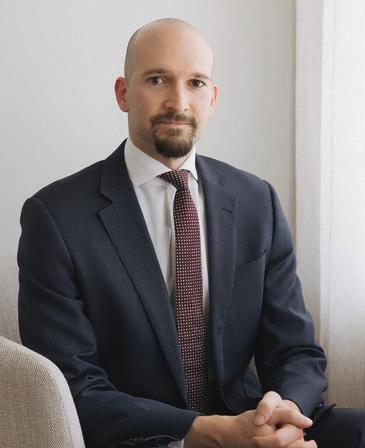
Is this the first page of the Liberals’ last chapter?
ANDREW HUGHES

Here’s how to grow productive fig trees
JACKIE WARBURTON

Sorry, papa, but John Wayne was terrible at this ANTONIO DI DIO



HELPING hands
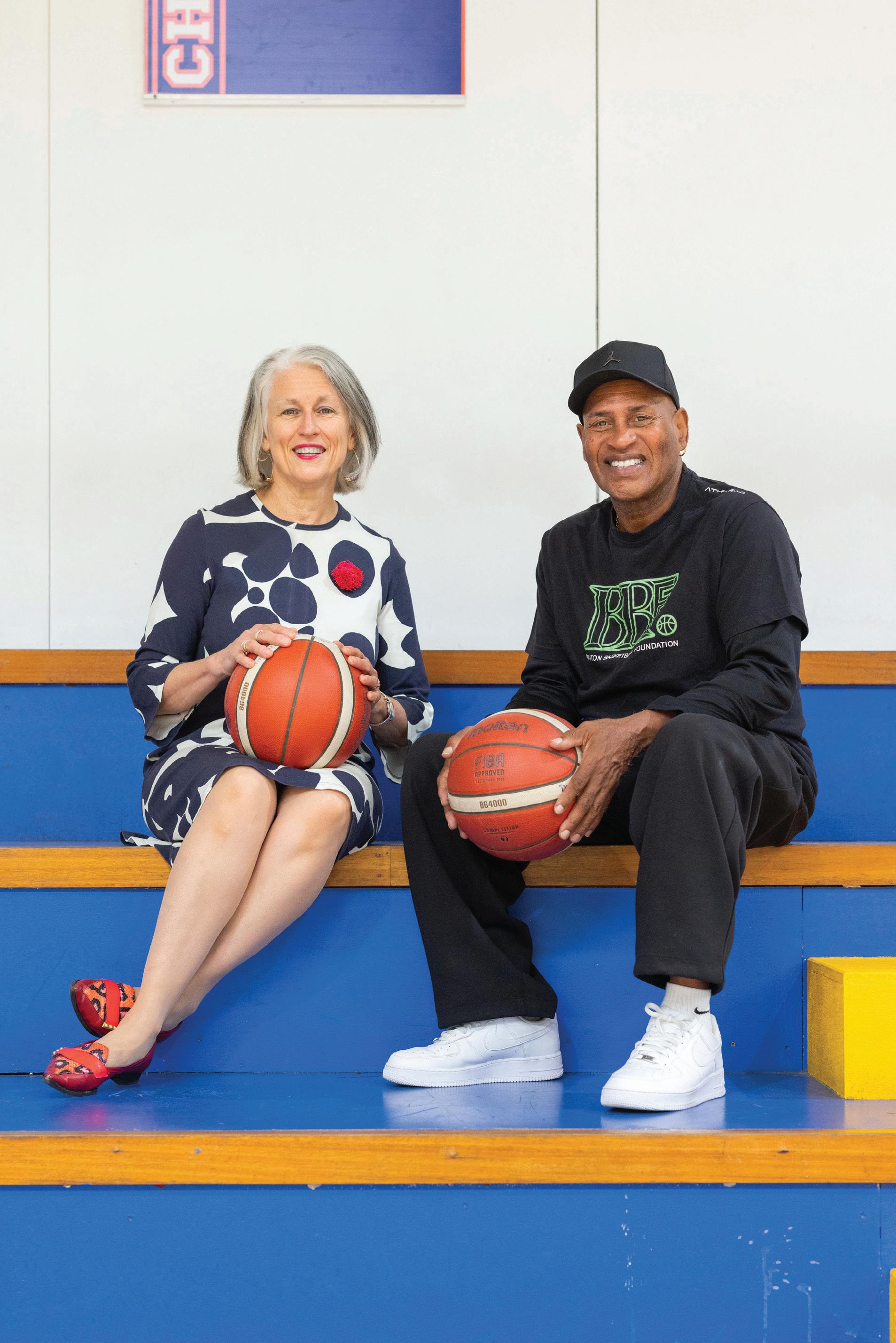
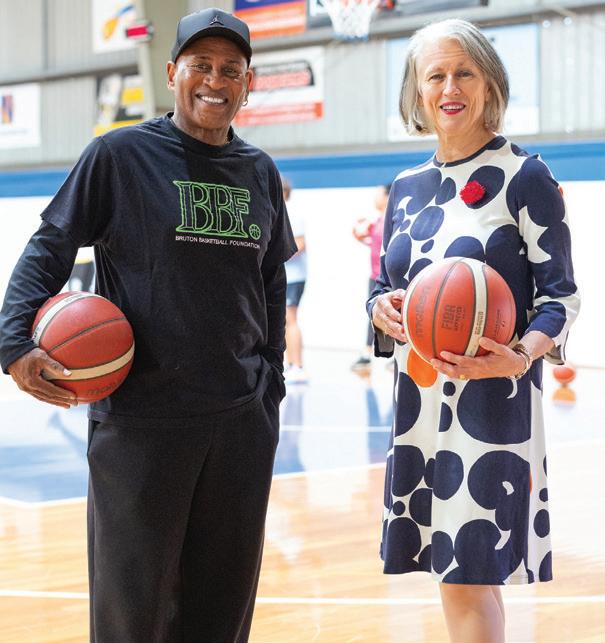
CAL BRUTON’S basketball foundation is just one of the scores of local charities helped by Hands Across Canberra and its major Canberra Day Appeal, led by CEO GENEVIEVE JACOBS




NEWS / Menslink at 25
Unfazed, coach Ben takes on a different team

“I get stopped all the time; a bloke just has a bit of a chat, says thank you and shakes your hand… That’s your success right there. One young fella at a time.” TIA PRIEST-WILLIMOTT meets Menslink’s Ben Gathercole.
For 25 years, young blokes around Canberra have had access to a little bit of extra support in reaching their full potential.
It’s all thanks to Menslink, a non-profit organisation that provides free counselling, volunteer mentoring and education programs to assist young men aged between 10 and 25 in becoming the great adult men they want to be.
Leading the team is Ben Gathercole, a humble and selfless individual, enjoying his time at the helm.
“I’m just a custodian of Menslink, I’m not going to be there forever, I’m just trying to continue to build Menslink and leave a legacy that will continue,” Ben says.
Ben grew up loving the world of sports and took every opportunity he could to play.
“I was very lucky to grow up in a household where sport and education were quite a big thing and I was able to gain my education through my sport,” Ben says.
This encouragement saw him
travel from Sydney to the US where he studied for his university degree.
After returning to Australia, he “fell into triathlons” and found a pathway in coaching.
“I spent close to 30 years of my career coaching triathlons, and I was fortunate enough to get to the 2004 Olympic games with a young Canber ran – Simon Thompson,” Ben says.
They worked together until 2010, where Ben was able to develop his professional skillset and work with the ACT Brumbies as their team manager for three and a half years.
“That then morphed into a totally different sport – motor racing with Cameron Hill, another young Canber ran. Cam Hill asked me to be on board and help him with his journey, which I was very fortunate to be part of from 2018 to the covid years.”
While it may appear there’s not much of a crossover in skills from sports coaching to being the CEO of Menslink, Ben believes it all comes down to some core traits.
“At the end of the day, it’s really just about people. So, if you just treat people the way you like to be treated,

get out and do the work,” Ben says.
“If you stick to those fairly simple things, you’ll find that you’re fairly successful as you go.”
Menslink is now entering its 25th year, with Ben excited about the opportunity to keep growing the programs supporting young men.
“For us, it’s about the maturing of our services. We’ll always continue
General manager: Tracey Avery, tracey@citynews.com.au
Sales & marketing executives: Damien Klemke, 0439 139001
Ashika Nambiar, 0425 149860
Lisa Clarke, 0413 590811
Editor: Ian Meikle, editor@citynews.com.au
Arts editor: Helen Musa, helen@citynews.com.au
Production manager: Janet Ewen
Graphic designer: Mona Ismail
Distribution manager: Penny McCarroll
Thanks to the Silence is Deadly, Unplugged, and Tribe programs offered by Menslink, more than 10,000 young boys and men in Canberra last year received support in growing into their best selves.
While the stats are impressive, Ben defines success in a more local way.
“I get stopped all the time; a bloke just has a bit of a chat, says thank you
and shakes your hand,” he says.
“That’s your success right there. One young fella at a time.”
While the team at Menslink are often confronted with reports about domestic violence and deal with some serious situations, Ben finds optimism by looking at the community in
“The truth is, there’s more good than there are guys that may not be going so well. It’s very easy to look around your local community and realise there’s guys that are quite silent about what they do and they’re
It’s all about putting it into perspective, without diminishing the reality.
“The poor behaviour of blokes and certainly the domestic violence picture is never acceptable and is devastating and terrible for all involved and we never condone that.”
As for Ben’s advice to those going through a bit of a rough patch? It all starts with reaching out.
“It doesn’t matter what service, but if you’re not going that well and you’re not feeling yourself, just reach out. Have a chat to somebody, and if a mate is reaching out to you, just listen. That’s all it is.”
If you or someone you know needs immediate support, call Lifeline on 131114, or Menslink for non-immediate care on 6287 2226.
With decades of experience, Linda will help you create a Will and Estate plan stipulating all your wishes and concerns.
Linda assists with:
• Wills and Testamentary Wills
• Power of Attorney
• Self-managed super funds
• Advice on potential claims against estates
• Advice for blended families





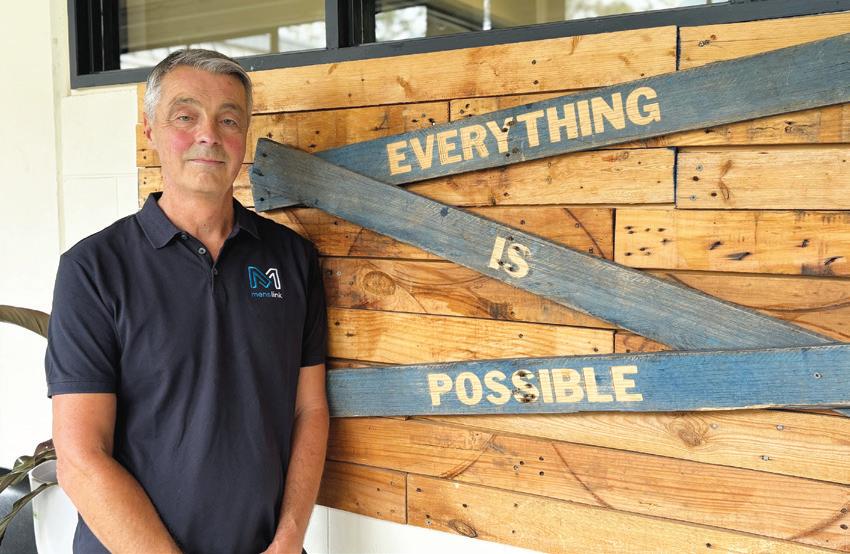
Menslink leader Ben Gathercole… “It doesn’t matter what service, but if you’re not going that well and you’re not feeling yourself, just reach out.” Photo: Tia Priest-Willimott
Why the Herzog visit made antisemitism worse
The restrictions placed on protests by NSW Premier Chris Minns and the way they have been policed, is yet another step towards authoritarianism.
Ironically, in many ways it is being driven by Israel, a country that in 2023 saw massive protests when Prime Minister Netenyahu attempted to curtail the power of the Supreme Court.
Former Prime Minister Tony Abbott illustrated how power can slide towards authoritarianism in a democratic society. “We are on a slippery slope”, he said, “when unelected judges start making political judgments”. His comments were “misconceived”.
The community is on a slippery slope when elected politicians misunderstand the importance of separation of powers.
Elected MPs in a democracy are effective at looking after the majority. A key role of constitutions in democratic systems is to protect the rights of minorities. This highlights the importance of the separation of powers, along with the Executive branch of government being accountable to the parliament.
Abbott’s challenge to the decision of Justice Belinda Rigg regarding a protest held on the Sydney Harbour Bridge was ill-founded. He argued the

decision to allow protests, “should be made by elected and accountable ministers – who, as it happens, think the march should not go ahead”.
The Chief Justice of NSW, Andrew Bell, defended the role of the court in a speech to the legal profession, labelling Abbott’s comments as “misconceived”.
He pointed out that the decision by Justice Rigg “was not a ‘political’ judgment, but involved the careful weighing of the common law and constitutionally protected right to free speech and public assembly with considerations such as public safety”.
The chief justice went on to infer that statements such as the one from the former prime minister could be considered irresponsible. Why?
The
community is on a slippery slope when elected politicians misunderstand the importance of separation of powers.
Because they undermine trust in the very institutions that have served Australia so well since Federation.
Ironically, in response to questions from the ABC, Abbott identified the debate with the chief justice as “a separation-ofpowers issue”. That part was correct. However, he misunderstood the point when he added: “Whether a political protest goes ahead or not should be a question for the executive government not for judges”.
In his speech, Justice Bell also addressed the issue of social cohesion, pointing out that it was not enhanced when judicial decisions were attacked in a way that betrayed an “ignorance” of the law and the judge’s reasoning.
The protesters that have turned up in Sydney, Canberra and across Australia have not been hood-winked by Prime Minister Anthony Albanese’s suggestion that the visit of Israeli
President, Isaac Herzog, will enhance social cohesion. It has undermined social cohesion and aggravated the risk of antisemitism.
The thinly veiled excuse that this visit is to support the grieving families of the horrific Bondi shootings in December is difficult to accept.
All sensible Australians were appalled at the events that took place on that day. However, we did not expect an Israeli-style reaction that our government would, in turn, launch an attack on all Muslim citizens in Australia. Instead, Islamic leaders condemned the attacks, and the prime minister called for calm.
Compare the reaction here to the reaction in Israel after the October 7 attacks by Hamas militants that left 1200 dead. There are now more than 70,000 Palestinian men, women and children who have died in the attacks launched by Israel. Disproportionately, for every Israeli who died, 60 Palestinians have paid the ultimate price.
The mainstream media in Australia has been labelling the Herzog protests as “Pro-Palestinian”.
Israel and its acolytes would love this framing. Most protesters are there to express their disgust at Herzog
and the role he played in inciting the appalling actions of Israel as they carried out the “Gazan Holocaust”.
The Herzog visit has not enhanced social cohesion. It ought to have been obvious to all those who defended the visit.
The many Jewish people who opposed the visit recognised that the presence of such a senior Israeli government member being feted around Australia by Labor and Coalition MPs alike would increase antisemitism, rather than decrease it.
Recognition of a Palestinian state by Australia was a sensible decision. However, it is inexplicable that the government fails to condemn Israel as it flouts international law, carries out a genocidal holocaust of Palestinian men, women and children, and continues its illegal expansion into the West Bank and Gaza.
Michael Moore is a former member of the ACT Legislative Assembly and an independent minis ter for health.

Canberra protesters “have not been hoodwinked by the PM’s suggestion that the visit of Israeli President Herzog, would enhance social cohesion.” Photo: Mike Welsh
SOLVING SCIATICA

Sciatica is caused by nerve pain that originates from the lower back and can cause pain from the point, right down through your bottom and down one leg to your calf.
Not the entire area may be causing you pain at any one time, but what the pain will certainly do is cause you frequent extreme discomfort that is often not relieved by pain medication. Exercise is a key to dealing with sciatica. People who have lived with sciatica for some time will generally have some weakness of the
muscles, tendons and ligaments surrounding the joints and bones that support the sciatic nerve. This is largely due to not having used their body to the fullest extent due to the sciatic pain.
Sciatic pain will generally respond well to rebuilding the support structures surrounding the sciatic nerve. For some people surgery may be the only solution, but in most cases, even if surgery is required, building up the support structures either prior to or following surgery will still be necessary.
Arthritis ACT has a team of exercise physiologists that can improve your quality of life in relation to your sciatica. Both hydrotherapy and land based exercise techniques are useful, and for those who do not like water exercise, land based exercise is just as effective.
Do you want to solve your sciatica?
Call us today on 1800 011 041 and book your appointment with one of our exercise physiologists and scientists to solve your sciatica.
MEET OUR EXERCISE PHYSIOLOGISTS






Blake Dean Holly Hazlewood Sophie Bullock Sarah Solano Nick van Diemen
BRIEFLY Researchers reintroduce bell frogs after 50 years
Locally extinct green and golden bell frogs have been returned to Mawson Ponds after disappearing from the region in the early 1980s.
have released the first cohort of green and golden bell frogs, marking a pivotal step in a four-year project tackling the deadly chytrid fungus, a pathogen responsible for the decline and extinctions of hundreds of amphibian species worldwide.
and Professor Richard Duncan from UC’s Centre for Conservation Ecology and Genomics, together with Dr Ben Scheele from the ANU, the project is a world-first landscape-scale intervention designed to counter the deadly chytrid threat.
dollars in ARC Discovery Project funding as well as support from the ACT Government.
Dr Clulow said. “First, we developed habitat interventions around wetlands that combine salted satellite ponds with hotspot structures to create conditions that suppress the fungus but are ideal for the frogs.

population establishment.
Focus on women’s economic security
“At the same time, we bred the green and golden bell frogs in captivity and immunised them against the fungus – these frogs will now be released into the specially modified wetland habitats, marking a return to the region after almost 50 years.”
Citizen scientists and community
EY Oceania Chief Economist Cherelle Murphy, pictured, will be the keynote speaker at Canberra’s International Women’s Day Breakfast 2026,
theme, Balance the Scales.
Ms Murphy will speak on the economic factors influencing women’s financial security, independence and long-term wellbeing.

A panel discussion titled Balancing the Scales: Economic Security, Safety and Justice for Women will examine the relationship between economic vulnerability, safety and access to justice. The panel will include Senator the Hon Katy Gallagher, Minister for Finance and Women; Ms Murphy; and Natasha Janssens, founder of Women With
Cents. The discussion will be facilitated by Hands Across Canberra chief executive
Proceeds from the event, hosted by law firm Parker Coles Curtis, will be donated to Fearless Women, which supports women across the
First steps to a family history
A beginner-level family history course on Sunday, March 8, 2pm-5pm, will introduce participants to basic research techniques, key historical records and tools used to build
Titled Beginning Family History, the session will cover navigating archives, using online databases and assembling ancestral information, with options to attend in person at the Family History ACT education room, Cook Community Hub, Templeton Street, or online via Zoom. Registration through the FHACT website is required and a $50 fee applies. More at familyhistoryact.org.au
Rotary backs youth health van
The Rotary Club of Aurora Gungahlin has donated an eight-seater van to Directions Health Services to support the T25 Clinic, a free, nurse-led health and wellbeing pop-up service for people aged 14-25 across the Canberra region.
The service provides free primary health

and wellbeing support for young people, including access to a GP and nurses, as well as mental health, alcohol and other drug clinicians, a peer support worker and a youth worker.
T25 operates on a walk-in basis at multiple locations each week, with additional school and community outreach during school terms, including visits to Jerrabomberra High School, Erindale College and Galilee School.
Directions Health Services Nurse Practitioner Sandy Lendrum said: “We aim to provide a local and trusted primary healthcare and wellbeing service that meets young people where they are at to help them get where they want to be.”
The Rotary Club of Aurora Gungahlin said the project reflects its focus on supporting young people and those in need within the local community.
The donation was delivered in partnership with the Rotary Club of Hall, the Rotary Club of Gungahlin, the Snow Foundation, the John James Foundation and Lennock Motors.




HANDS ACROSS CANBERRA / Canberra Day Appeal advertising feature
‘Help brilliant people like Cal Bruton and so many others build a better, fairer and more resilient Canberra for all of us’
For Cal, charity truly begins and stays at home
Canberrans are a generous lot, but 85 per cent of our donated funds never reach locals, going instead to national and international charities. What if we started our giving at home first, asks Hands Across Canberra CEO GENEVIEVE JACOBS.
When Cal Bruton spins a basketball and shoots, it’s easy to narrow your eyes and travel back in time, to imagine him moving at lightning speed across the court.
The kid from the tough streets of Queens, New York, won a scholarship to Wichita State University and played four seasons of elite college basketball, missing NBA selection by a whisker.
Fate stepped in when David “Doc” Adkins recruited Bruton for the National Basketball League’s first season in 1979 with the Brisbane Bullets.
A point guard who brought drama and razzamatazz to the court, he won NBL championships as both a coach and player, eventually becoming a naturalised citizen, one of the first NBL Hall of Famers, and receiving an Order of Australia in 2021.
But these days Cal’s focus is mostly on helping others grow, both on and off the court.
His own early years were tough: his dad was stabbed to death during an armed robbery when Cal was seven and his mother struggled alone, battling the demons of addiction.
Cal cared for his younger sisters, one of whom is intellectually handicapped, at a time when racial tensions in the US were often at boiling point.
He knew from his own experience that basketball could be a way out, and not just for high achievers.
And so the Bruton Basketball Foundation was established, helping young people develop not just as basketballers but well-rounded human beings, too.
The Foundation’s Basketball Lessons 4Life program offers mentoring for disadvantaged high school students to build confidence and succeed in education and in the workplace.
Basketball provides the framework, enabling coaches to engage kids by using issues that arise to teach life skills like teamwork, positivity, respect, overcoming adversity, goal setting and hard work.
The program is structured across the high school years and by the end, kids know how to set, structure, and focus on achieving their goals and engage positively with the world around them.
The Bruton Basketball Foundation is one of more than 80 charities participating in this year’s Canberra Day Appeal, an event that spurs our community to give locally.
And the need is real. While many Canberrans have secure incomes and comfortable lives, it’s a long way to the bottom when someone falls off the “Canberra cliff”.
If you’re coping with family breakdown, disability, mental health issues or a host of other complicating factors, the struggle becomes very real.
Forty thousand Canberrans live in poverty and, sadly, 10,000 of them are children. Many people battling with high living costs are working several jobs to
keep a roof over their kids’ heads.
The good news is that Canberrans are a generous lot. We’re among the highest donors per capita in Australia and we top volunteering rates by a clear margin.
But 85 per cent of those donated funds from Canberra never reach locals, going instead to national and international charities.
What if we started our giving at home
first? What if we began with people you see down at the shops, or whose kids are at school with yours?
All the charities we partner with at Hands Across Canberra are local and all their projects support people here in our hometown.
Many are small organisations doing outstanding work on the frontlines of need, so participating in the Appeal significantly boosts their fundraising capacity and profile.
Donations through our portal to the cause of your choice will be matched up to $2500 per charity during the campaign period, doubling your dollar and creating a huge boost for small organisations.
Whether the cause close to your heart is mental health, homelessness, family support, education or social inclusion, there’s a local charity doing important work here in Canberra.
And if you can’t decide, donate to Hands Across Canberra and we’ll share your donation equally to all participating charities through matched funding.
The Appeal runs throughout February and March and includes the Canberra Day Fun Run on March 9, where all registration fees go to the Appeal.
The beauty of the Appeal is that you choose how to take part. You can donate, run or walk, support a friend, or simply pick a charity and give locally.
When you do, you’re helping brilliant people like Cal Bruton and so many others build a better, fairer and more resilient Canberra for all of us.
More information or donate at canberraday.org.au


Produced by
Basketballer Cal Bruton, of the Bruton Basketball Foundation, and Hands Across Canberra CEO Genevieve Jacobs… “All the charities we partner with at Hands Across Canberra are local and all their projects support people here in our hometown.”
Photo: Ben Appleton
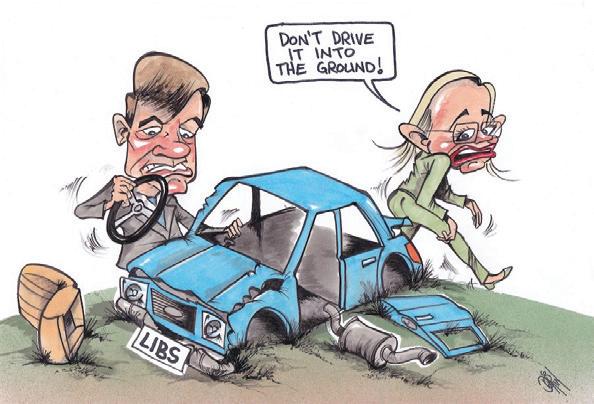
Is this the first page of the Liberals’ last chapter?
Here we are in early 2026. Federally, the Liberal Party is over the cliff and currently in freefall, with a paper napkin for a parachute and no pillow factory in sight for a soft landing.
All thanks to leadership and policy dramas.
Labor has its own issues though with a primary vote barely clinging to life in the 30 per cent range. Try as it might, few are buying the costof-living and inflation dramas that ultimately have hurt many of us. And yet there are always winners in times of division and uncertainty. The combined total for minor parties are now regularly outpolling those of Labor and the Coalition.
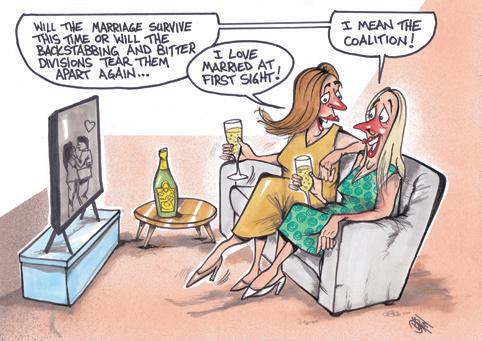
Have we changed that much so quickly since May 2025? Or is something else at play here? Or is it the combo special that was all the rage at many stalls during the Multicultural Festival?
For me, I think it’s the combo special.
The rise of One Nation is similar to that seen in other Western democracies: Italy has the Northern League, France the National Front, the UK the Reform Party, Germany the AfD, and so on. Here are two big reasons why they are doing so well right now.
1. Authenticity and clarity
What so many of these parties do so well is offer clarity on a narrow policy offering designed directly for their base, but with some polish from marketing and brand. Immigration? All are nearly the same in wanting restrictions, not necessarily a full reduction. No tricky policy here for the consumer to understand in an information-dense environment. Climate change? Again, clearly most are against the headline climate-change policies such as carbon taxes and net zero commitments. Do you know their actual policy? No, but all their market cares about

The rise of One Nation is similar to that seen in other Western democracies. Here are two big reasons why they are doing so well right now…
is that they are against it. Identification and patriotism? Clearly, parties to the right are all over this. Some more blatant than others, but there is appeal here because again they are clear and uncompromising on this. Economics? As some who I have talked to from these parties tell me, they are now the true conservatives. They believe their policies such as flat tax rates and very investor friendly offerings on capital gains tax and negative gearing are reflections of that. These parties rarely vary from these core policy platforms. If you don’t like it, then that’s because you are a woke wallflower and over there is a lake.
This authenticity to the brand is rare in politics as usually it is a highrisk, high-reward strategy and makes it difficult to change policy position.
Which is exactly what they want you to think and know.
Leaders? No nonsense with the right. You know exactly what they stand for. Never ending consistency with the policies above. Brand proud. Unashamedly and unapologetically. Name three things any Liberal leader of the last three years stood for? How about just one? And are they brand proud?
2. The Sensible Right collapse
The middle, the actual middle, has been deserted by the Liberals. A lack of policies specifically reflecting the needs of those who are wondering why they are holding down full-time gigs, slowly burning out from the life juggle, but only seeing marginal reductions in their net debt levels. They aspire to be the generation just ahead. The ones who retired early and are now doing whatever with whoever with not a thought in
the world about money or kids. It’s not just about financial wealth, it’s also about social and time wealth which is creating a sense of loss.
Yet the only party here in a big way is Labor. That’s why even with a 30 per cent primary they do so well. It’s been staggering to see the Liberals gift this area, literally wrapped up with bows, to Labor. There should have been and there still needs to be policy offerings reflecting the middle. Most of the Lib voters here rightly feel let down by the major parties.
So if the middle hate Labor, and don’t like the Libs, then where does that vote go? You guessed it.
The Liberals have options though. Either embrace 2026 as one of modernisation, or as the first page in the last chapter of their federal history. I know which one I’d prefer to see.
Dr Andrew Hughes lectures at the ANU Research School of Management, where he special ises in political marketing.



Cartoon: Paul Dorin


Sorry, papa, but John Wayne was terrible at this
The most important lessons in life often come without warning, without instructions, and with little attention paid to our carefully crafted plans.
Opportunities, roles, meeting the right person at the wrong time, barbies and babies and bugger all you can control.
Dad had been buffeted by the waves of history through deaths, depriva tion, war, prison, poverty and follies of his own but always maintained two things – one, if you laughed and smiled the buggers couldn’t hurt you and two, relentlessly doing right was the best insurance you could ever have. He couldn’t afford many other kinds.
were always impeccably shaved?)
We watched enough John Wayne shows together to know that the tall bloke in the lighter-coloured hat was generally the good guy, especially if he copped a kiss from the rancher’s daughter for shooting the evil dudes in black, especially if it was Maureen O’Hara!
How were we to know Alan Ladd was even shorter than Tom Cruise – Hollywood lied to us but we didn’t care. It was just too good to see the stubbled bad guys get theirs (ever notice how the good guys, even in Grimy Gulch, population 37 with not a single convenience store to be found,
This philosophy was crystallised in Les Miserables, which we occasionally watched on a black-and-white Sunday arvo on a black-and-white TV in a tin-roof country fibro home held together with equal parts asbestos and love.
Dad adored the hero Valjean, and how, once inspired by love and being trusted by the old priest, never again wavered in his following a life of caring for his team, fighting for his workers, defending his adopted daughter, pursuing his dream of living the life he’d been given.
All true and lovely, and when they wrote a musical about it in the ‘80s (you may have heard of it – it’s not too shabby) a somewhat wider audi-
Australia needs to stay one and free, and this will not come from the shapes of our wallets or weapons, but the size of our hearts.
ence saw this steely pursuit of one’s values against every possible challenge, even Eddie Redmayne’s dodgy high notes.
I saw a beautiful speech by Dr Stephen Kennedy yesterday in which he noted the implacable determination of The Terminator, in which nothing could possibly stand in the way of his programming to find and destroy that which he had to find and destroy.
And I realised right there, after so many years, that Javert, the French policeman who pursued Valjean in Les Mis for those decades, most recently in a steely eyed Russell Crowe baritone, was both the original Terminator and… a good guy, too. Well, at least in his own mind, and if you define “good” as “possessing integrity”.
Javert doggedly and without pause or pity pursued the man he consid-

ered a villain – “I am the law and the law is not mocked,” he advised before a fairly ambitious key change – and his life was devoted to justice.
In another time, another context, his whole life was heroic. He was Elliot Ness or Batman or a relentless modern-day, true-crime podcaster plodding slowly but without stopping, to bring the villain to justice.
Yet audiences for a couple of hundred years saw Victor Hugo’s point.
Javert’s wholly consistent world view – of justice, the rule of law, fairness, and diligently serving God and country – of doing everything right, was completely wrong because it was without kindness.
One of the key ingredients of kindness is (and I’m sorry, papa, but John Wayne was pretty terrible at this) an ability to see the other person’s point of view.
Our amazing Governor-General, Sam Mostyn, should rule the world for this reason alone, for the many occasions at which she says seeing the other’s point of view is the key that unlocks understanding 2.0 that, in turn, might lead us to peace 3.0, if only we are humble enough, smart enough, vulnerable enough, to let go
of dumb simplistic programming 1.0. Australia needs to stay one and free, and this will not come from the shapes of our wallets or weapons, but the size of our hearts.
Thirty-five years ago, in a huge youth hostel dormitory in London, I read the 1500th and final page of Les Mis and started weeping. Who wouldn’t?
Thinking I was homesick, the bloke in the bunk below me reached up a hand and in a sweet foreign voice that cut through my ‘80s homophobia said: “Does someone need a hug?”
Surreal, yes, but looking back, that guy’s constant attitude of reaching out a loving hand to any scenario will serve humanity better than Clint Eastwood’s guns or Javert’s integrity without kindness that made him what he was.
Antonio Di Dio is a local GP, medical leader and nerd. There is more of his Kindness on citynews.com.au





Governor-General Sam Mostyn chats to Canberra schoolchildren... she should rule the world, says Dr Di Dio.
Photo: Dom Northcott
Whooping cough cases
Whooping cough cases are at their highest level in 35 years – so why the surge, asks ARCHANA KOIRALA .
Australia is battling its biggest rise in whooping cough cases in 35 years.
During 2024 and 2025 Australia recorded 82,513 whooping cough cases – the highest number since monitoring began in 1991.
Also known as pertussis or the “100-day cough”, whooping cough is a potentially fatal respiratory illness that causes severe coughing episodes. It spreads from one person to another and is particularly deadly among infants.
Whooping cough is a respiratory infection caused by the bacteria Bordetella pertussis. Transmission occurs through close contact with infected people such as via coughing and sneezing.
Early symptoms include a runny nose or sore throat. This is called the “catarrhal phase” and can look similar to a common cold.
A persistent cough comes next, and typically lasts between six and 10 weeks.
This leads to intense bouts of coughing, with babies and children often making high-pitched “whoop” sounds when they breathe in. This is where the term “whooping cough”
comes from.
Whooping cough can be very severe in new born babies and infants. About one in 125 babies with whooping cough aged below six months dies from pneumonia or brain damage.
Household contacts and carers often pass the illness on to infants, with parents the source of infection in more than 50 per cent of cases. Infants can also pick up an infection from siblings and health-care workers.

Household
given as a combination vaccine with diphtheria and tetanus.
Complications in older children and adults include interrupted sleep and pneumonia, a lung infection which can require hospitalisation. Patients can even sustain rib fractures from coughing so hard.
Antibiotics, when given early, can stop disease progression.
However after the cough is established, which is when most people realise they are infected, antibiotics have little effect on the disease’s progression.
But, there’s a vaccine for it? Yes. The whooping cough vaccine is
In Australia, this vaccine is part of routine infant and childhood immunisation schedules. A booster dose is also given to Year 7 students.
Pregnant women are advised to vaccinate every pregnancy to boost the production and transfer of antibodies to their unborn baby. This also helps protect infants who are too young to be immunised.
A 2025 study from Denmark found vaccination during pregnancy to be 72 per cent effective against laboratory confirmed whooping cough.
Although infants are most

OPEN EXTENDED HOURS
Monday to Sunday 8.00am to 6.00pm
vulnerable to whooping cough, it can cause infection across all ages and put a large strain on the health-care system, especially for adults aged over 50.
To protect themselves and limit spread of the disease, adults should get vaccinated every 10 years.
Australia’s national vaccine regulator checks the safety of whooping cough vaccines each year. Ongoing monitoring over many years shows these vaccines are safe and continue to protect people of all ages.
But low immunisation rates among children and adolescents remain a concern, with new data showing Australia’s 2024-25 childhood immunisation rate was the lowest in a decade.
Only about one-fifth of adults 50 years and older are up to date with the whooping cough vaccine. This means they have had a booster within the last 10 years.
So, why are there so many cases right now?
Whooping cough is a challenging disease to control because immunity, acquired through immunisation or natural infection, wanes over time. This gives rise to whooping cough epidemics every two to three years.
Whooping cough is most commonly diagnosed using PCR testing of a throat swab. This usually involves visiting a GP to get the swab sent to a
lab, and then waiting for the results. This method has been routinely used since the early 2000s.
In 2024, 57,257 whooping cough cases were detected in Australia. This represents the highest notification rate since records began in 1991. And it reflects a true increase in the prevalence, as well as awareness and testing, of whooping cough.
The 2024 surge in cases was likely due, at least in part, to covid public health restrictions, which disrupted the usual epidemic cycle.
During this time, many children didn’t get the normal immune “boost” after being vaccinated and exposed to the bacteria. This left them more vulnerable to infection, particularly when authorities lifted social-distancing restrictions.
Whooping cough was also widespread in 2025 with 25,256 cases reported that year. All age groups were affected, but notification rates were highest among school-aged and preschool-aged children.
Unfortunately, whooping cough isn’t going away anytime soon. However, timely vaccination across all ages is vital to curb its spread and protect vulnerable populations.
Archana Koirala, pediatrician and infectious diseases specialist; clinical researcher, University of Sydney. Republished from The Conversation.

contacts and carers often pass whooping cough on to infants, with parents the source of infection in more than 50 per cent of cases.
BUDGET UPDATE 2 / going backwards
Not hard to see, we’ve gone backwards by $100m

“Interest increases by $179 million and is forecast to rise beyond a billion dollars in 2028-29, growing at an astounding rate of 20.4 per cent a year.”

JON STANHOPE & KHALID AHMED return to Treasurer Steel’s furtive Budget Review.
Following the release of the 2025-26 Budget Review, we noted media reporting avoided the impact of the mid-year update on the budget position.
What is most surprising about that omission is that even a cursory glance at the summary table in the Budget Review document reveals that the budget had gone backwards – by around $100 million – in the current year.
The reporting, by an unquestioning media, appeared to reflect the government spin that the budget was on track to return to surplus. However, nowhere was it reported that the financial statements incorporated a cut of more than a billion dollars in capital expenditure in the last two years!
A return to surplus, based on a measure that only the ACT Government, of all govern ments in Australia uses, should not really have been news at all. It was forecast in the 2025-26 Budget eight months ago.
A similar forecast, always for the last forward year, had been made a dozen times previously by then Treasurer Andrew Barr, only to be postponed for every one of those 12 years.
We have provided a detailed analysis of the 2025-26 Budget (“Unrealistic budget: brace for another blowout”, CN July 23) to point out that the budget estimates of revenue and expenses were unrealistic, and that the ACT’s debt and interest costs were growing at an alarming rate.
The current Budget Review has confirmed many of the concerns we raised at that time.
While the changes in estimates for the current year (2025-26) are readily discernible in the Budget Review document, for changes to the forward estimates one needs to refer back to the original document. It is no surprise the government has not been open about those changes, but has tried to spin a different picture. In the accompanying tables we provide a comparison of the forecasts in the 2025-26 Budget and the revised figures in the
Could Your Swelling Be Lymphoedema?

Meet Nim Osborne of Canberra’s Few Accredited Lymphoedema Practitioners
Nim brings over 15 years of massage therapy experience with a strong focus on supporting people undergoing cancer treatment, living with anxiety, or in recovery. Her gentle, skilled approach helps restore comfort, flow, and connection to the body especially for those navigating life after diagnosis.
As an Accredited Lymphoedema Practitioner and member of both the Australasian Lymphology Association (ALA) and Australian Massage Therapists Association (AMT) Nim offers a rare level of expertise in this highly specialised area.
Opening Hours: Monday to Friday 9:00am to 3:00pm & after hour by appointment
To make a booking please call Nim on 0412 885 804
Scan to book an appointment



Budget Review, and leave it to you to decide if the budget position has improved.
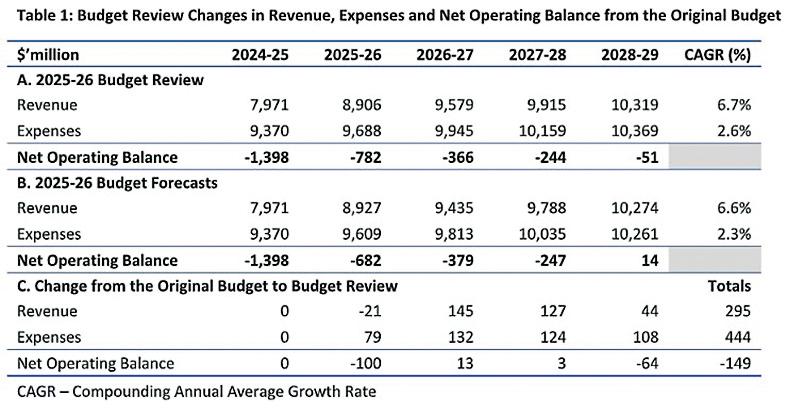
The Budget Review estimates reflect a drop of $21 million in the current year but a total increase in revenue of $295 million over the estimates period, lifting the revenue trajectory to 6.7 per cent, which is more than double the growth rate of the economy, or the wages or the Consumer Price Index.
The Budget Review lifts expenditure growth to 2.6 per cent a year, with an increase of $79 million in the current year and a total of $444 million over the estimates period.
The expenditure growth of 2.3 per cent in the original budget was below the forecast wage growth or CPI, and that it was unrealistic to expect that expenditure could be held at that level.



It would be a miracle if Treasurer Chris Steel can even hold expenditure growth at this new level (ie, below wage growth) without affecting the quantity or quality of services.
The nominal surplus in the original budget for 2028-29 was illusory, as indeed we had noted, now turning into a deficit of $64 million on the national measure. We would welcome this, if it could be achieved, compared to what the government is expected to deliver in that year. Overall, the Budget Review adds $149 million to the deficits across the estimates period, which now totals $1.443 billion.
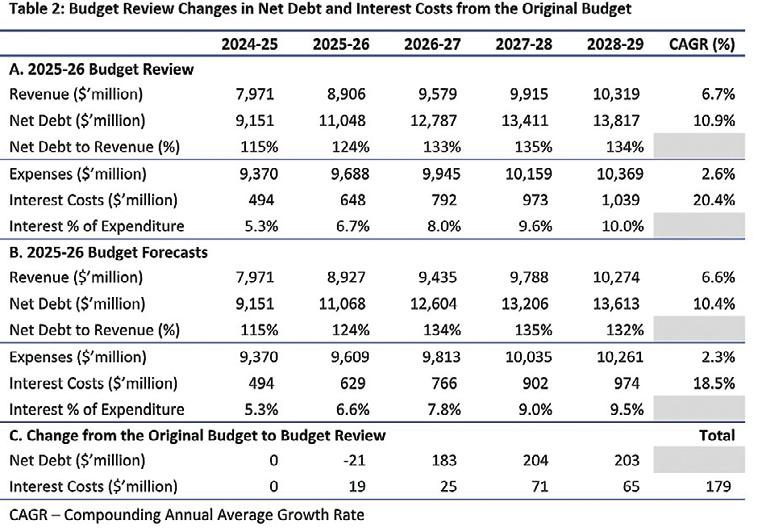
The Budget Review forecasts an increase in net debt of more than $200 million, which now is forecast to grow at a compounding rate of 10.9 per cent a year.
For Andrew Barr’s infamous debt management strategy to be successful – not mentioned since we pointed it out – the economy would need to grow at a greater rate year on year.
Interest costs increase by $179 million over the estimate period, and are forecast to increase beyond a billion dollars in 2028-29, growing at an astounding rate of 20.4 per cent a year compared to the
original budget forecast of 18.5 per cent.
The increase in interest costs consumes 40 per cent of the additional spending incorporated in the Budget Review.
For space considerations, we are unable to present Table 2 at the total Territory level. Notably, total borrowings increase by $546 million reaching $22.5 billion. The debt-to-revenue ratio reaches 215 per cent in 2028.
Notwithstanding the above financial information, the Budget Review document includes the following perplexing statement in three different places:
“Progressive improvements in the operating cash surpluses will provide the capacity to reduce borrowings and fund a greater proportion of the ongoing capital investment requirements from these cash surpluses.”
And, of course, pigs may fly.
Jon Stanhope is a former chief minister of the ACT and Dr Khalid Ahmed a former senior ACT Treasury official.
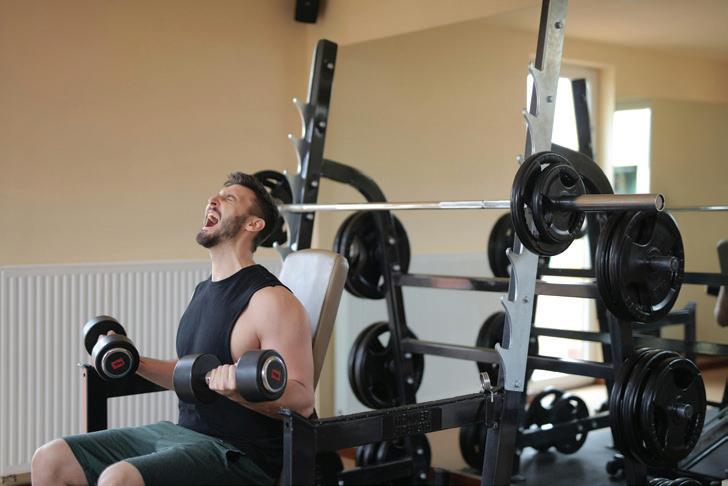
Boy, you’ve got to carry that weight... heading to a billion dollars a year. Photo: Andrea Piacquadio
Table 1: Budget Review changes in revenue, expenses and net operating balance from original Budget.
Table 2: Budget Review changes in net debt and interest costs from the original Budget.
When Barbie’s honour was put to the legal test
In what surely must be the only time a toymaker has sued a record company, historians ROSS FITZGERALD and DICK WHITAKER recall the time when Barbie’s owner set out to defend her honour.
With little doubt, the most successful commercial toy doll ever made is the celebrated Barbie Doll, first launched by the American company Mattel in 1959.
Barbie also had a male companion called Ken and the entire arrangement was marketed as a sparkling and wholesome experience for young girls, typically in the age group from 3 to 12.
The enormous success of the Barbie brand also attracted attention in other ways. In 1997, the Norwegian dance music group Aqua, in conjunction with Universal Music and MCA Records, put together a novelty song, Barbie Girl, which was a parody of a day in the life of Barbie and Ken.
Aqua consists of four artists, guitarist Claus Norreen, Søren Rasted on keyboards, and vocalists René Dif and Lene Nystrøm. In addition to their on-stage skills they were talented musicians and composers, and they combined with producers Johnny Jam and Delgado, to write Barbie Girl in 1997.
The inspiration came from Søren Rasted when he attended a kitsch-
themed Danish exhibition that was largely centred on Barbie Dolls and their impact on the toy market.
It was centred on a catchy tune, loaded with raunchy double-entendre lyrics and accompanied by a video that depicted Nystrøm as Barbie and Dif as Ken.
As with most novelty pop songs it was expected to achieve modest success. But against all expectations, Barbie Girl rocketed up the charts, becoming a number one hit for three weeks in a row in both the UK and Australia.
It also reached number seven in the US Billboard Hot 100, thereby joining the big league of pop music and ultimately selling more than eight million copies.
The lyrics were clever, but raised a few eyebrows with their content:
I’m a Barbie girl in a Barbie world
Life in plastic, it’s fantastic
You can brush my hair, undress me everywhere
Imagination, life is your creation
Come on Barbie, let’s go party
I’m a blonde bimbo girl in a fantasy world
Dress me up, make it tight,

I’m your dolly
You’re my doll, rock and roll, feel the glamour in pink
Kiss me here, touch me there, hanky-panky
The song received rave reviews from the industry and some of these are noted in Wikipedia.
Kevin Courtney, from the Irish Times, named Barbie Girl the Single of the Week, calling it “a supreme slice of cheese”.
British magazine Music Week gave Barbie Girl a full score of five out of five and also named it Single of the Week, concluding: “Bleached and blonde, this bouncy Europop tune may be, but dumb it isn’t. Its mix of perky vocals, barbed lyrics and infectious energy has already brought it success

in Scandinavia and the US. The video is irresistible.”
A reviewer from People Magazine called it “the year’s best novelty record, a cartoonish anthem you’ll need surgery to remove from your head”.
There were a few negative reviews as well, with some critics labelling the song as “childish, silly and boring”, with the lyrics inappropriate for the target audience of young girls.
Barbie’s maker Mattel were greatly agitated by the perceived undesirable images of Barbie and Ken that were promoted by the song and the accompanying video clip.
Mattel alleged that the song portrayed Barbie as a sex object (referred to as “a blonde bimbo girl” in the song) and that her image was
tarnished by the inferences contained. Mattel maintained that these references undermined the Barbie brand and devalued her commercial value. They likened MCA Records to a “bank robber”, piggybacking on Barbie’s fame to sell their record.
Soon after the release of Barbie Girl, in September 1997, Mattel filed a lawsuit against MCA, with the record company then countersuing for defamation over the “bank robber” inference.
The two cashed-up corporate heavyweights began to slug it out through the US court system.
After lengthy proceedings, in 2002 Mattel’s claim was dismissed with Judge Alex Kozinsky ruling the song was a parody protected by the First Amendment.
Showing signs of exasperation, Kozinsky again dismissed Mattel’s suit together with MCA’s countersuit for defamation, and at the same time advised both parties to “chill out”. The whole fabulously expensive legal battle then ground down into a sort of bloodstained draw, ending what surely must be the only time a toymaker has sued a record company.
Ross Fitzgerald AM is emeritus professor of history and politics at Griffith University. Dick Whitaker is a lecturer in the fields of meteorology and Australian history.




Lene Nystrøm as Barbie in Aqua’s video version of Barbie Girl.
MUSINGS / the park bench
A place to sit and a time to engage our senses

“They are there, silent custodians, in all weathers: the beating sun, drizzle and torrential rains, ice and snow, quiet breezes and stormy winds.”
HUGH SELBY writes in praise of the humble park bench.
Can you imagine us years from today Sharing a park bench quietly?
How terribly strange to be 70. – Old Friends, Simon and Garfunkel, 1968
I’ve never seen them standing close together, not like the solid seats in classrooms or meeting places.
They have solitary lives, rarely will there be two, even three of them gathered together, but always separate, never touching, as fixed and silent as the statues on Easter Island.
Such optimists, always looking out to the view, whether that be from beach sand to the crashing waves, garden splendour of murmuring trees or a lake backed by mountains. They are there, silent custodians, in all weathers: the beating sun, drizzle and torrential rains, ice and snow, quiet breezes and stormy winds.
In their youth they are sturdy and bright, gleaming with newness. The timbers are straight, true, and unmarked. The metal shines, its cast patterns are timeless. These days those made from recycled rubber and
plastics send the message, “We’re here for the long haul”.
In their middle age the timbers are splintering and greying, the metal ends are dented with bits missing, the concrete bases are cracked, and, alas, often the talentless carriers of spray paint have daubed crude slogans on the seat or back rails.
In their old age they are as rickety, gnarled and misshapen as those who wonder if the risk of injury from sitting down warrants the attraction to ease their aches and pains and rest awhile.

Children don’t use them. They rush to the edge of whatever, or the fence, or the wet line on the sand, eager to be active. Their parents, if they sit down, can do so for only a moment before they must keep their children safe.
Parenting and enjoying the view don’t go together.
Teenagers may sit briefly to take breath, down a can and some takeaway, and if the time is right, get close. The distant view is secondary, at best.
Young adults sit on the wall or loll against the car or bike.
Spies exchange information and
leave important information near or underneath them.
Dog walkers sit down, then attach the lead firmly to an end frame or a slat.
But when both we and the benches are old then we have common cause.
As grandparents we can take in the view as we see the young’uns on the play equipment: climbing the rope ladders, squirming through the tunnel pipes, pushing down the slippery dip, and squealing on the monkey bars.
As retirees we can sit and watch the sailboats and the paddle wheeler on Burley Griffin, the hustle and bustle on Sydney Harbour, the changing
seasons in the botanical gardens, the rowing crews on the rivers, the wonder of the cliffs and gorges around Katoomba, the view of the coast and ships from the scenic spot above Bulli, and share with the sightless interred the timeless views from the headland cemetery at Gerringong.
As travellers near and far, we can sit quietly in city squares, in gardens old and new, outside museums and galleries and ancient tombs and monuments. We are quiet observers of past and present lives.
If churches, meeting halls, temples, shrines, synagogues and mosques are made for contemplation, then the
humble park bench opens the natural and man-made wonders of our world. It gives us time to engage our senses.
One can sit on a park bench alone or in the company of one or two others. It can be a time of silence, gazing at the view, or a time for reminiscence and conversation.
One can sit, the other uses the sitter as a pillow, four eyes engaged, seeing
On a park bench the living can sit and talk for ages with the departed about what was, what was planned, what brought laughter and what brought tears. No one interrupts.
With two seniors sitting on a park bench there is room in between for what passes for a meal in our dotage.
While chatting about the long before and recent past some food and drink can be shared, not only with each other, but also the thieving kookaburra that swoops in with nothing and leaves with a meal.
I’ve heard tell that the grieving have brought the urn of a recent dear departed and placed it between them on the bench until the coast is clear. Then the urn is emptied on the waters, or the garden bed or even a hallowed sports ground.
The ways of the world need not be noisy or showy. The bywords for a park bench are memories, peace, serenity.
Hugh Selby is a CityNews columnist.




Convict rebels recast as first political protestors
A new exhibition explores how the convicts who landed on Australian shores 250 years ago set the tone for political activism forevermore, reports KATELYN CATANZARITI
Long before ballots were cast and parliaments built, political protest in Australia was forged in chains by the men and women banished here.
A new digital exhibition explores how the nation’s earliest convicts were not simply passive victims of a brutal penal system but among Australia’s first political demonstrators – organised, ideological and prepared to resist what they saw as unjust.
Unshackled: The True Convict Story, launched at the UNESCO-listed Woolmers Estate in northern Tasmania, brings together newly digitised records, historical research and immersive storytelling to recast the role of convicts in shaping Australia’s democratic traditions.
Led by Monash University academics, the exhibition contends transportation to Australia functioned as a tool of political repression across the British Empire, sweeping up rebels, radicals and reformers alongside petty criminals.
In doing so, it exported unrest to the colonies.
Resistance was a defining feature of convict life from the earliest days of settlement, says Associate Professor Tony Moore in one of the exhibition’s films.
“Rebellions by the United Irish convicts at Castle Hill in 1804 and the Eureka Stockade rebellion in 1854 are linked by the battle cry ‘Death or Liberty’,” Dr Moore says.
“They both show a preparedness to resist unfair treatment and unfair rules by which people were governed.”
The exhibition investigates those uprisings within a broader pattern of protest, ranging from organised revolts, work stoppages and hunger strikes to mass absconding, all the while arguing no punishments meted out could extinguish collective action.
Maura Cronin.

“Irish prisoners were not prepared to simply be victims of passive or overt cruelty… in fact they took it into their own hands to resist,” Dr Moore says.
Those who challenged authority faced harsh reprisals under a system designed to crush resistance, as one first-hand account describes.
“Two dozen lashes – which was a light sentence – always left the victim’s back a jelly of bruised flesh and congealed blood,” the video describes.
“A pool of blood and a piece of flesh were no uncommon sight after two dozen had been flogged.”
One of the figures investigated in the exhibition is Phillip Cunningham, a veteran of the failed United Irish uprising of 1798 transported to NSW after being convicted of sedition.
In 1804, Cunningham emerged as a leader of the Castle Hill rebellion, as convicts seized weapons in Sydney’s northwest and planned to march on Parramatta and Port Jackson, echoing tactics used during the Irish revolt.
The uprising was betrayed and crushed by the NSW Corps, prompting the first declaration of martial law in Australia’s history.
Cunningham was hanged and his body left on display as a warning to others – an early example of how colonial authorities responded to organised dissent.
Rebellion wasn’t the original aim of many transported radicals, according to senior lecturer and oral historian
“The reality of open rebellion was something that almost came as a surprise in the late 1790s,” Dr Cronin says about the lead-up to the Castle
“The United Irishmen had originally intended to meet their aims through political means (but) they were going nowhere.”
The exhibition looks at convict resistance within the international context of imperialism, tracing unrest driven by political exclusion, economic upheaval and land dispossession across Britain and Ireland before examining how those forces were intensified in colonial Australia.
It also explores the intersection between the convict system and frontier violence, arguing that transported labour was central to the dispossession of First Nations people.
At the same time, the exhibition highlights instances of co-operation and solidarity between Aboriginal people and European convicts in the early decades of settlement.
More than 160,000 convicts were transported to Australia, including at least 3600 political prisoners convicted for protest, unionism, media freedom and resistance to imperial rule.
The project’s researchers argue that the politically active convicts contributed profoundly to advances in democratic and workplace rights in Australia and abroad.
While the exhibition avoids drawing direct lines between past
and present, its creators say revisiting Australia’s convict story offers context for contemporary debates about protest, punishment and state power.
Around the world, political demonstrations – some peaceful, others violently suppressed – continue to test the limits of authority, from the mass protests in Iran to deaths of protesters on the streets of the US.
The exhibition suggests resistance rather than compliance has often been a catalyst for political change, even when met with overwhelming force.
Novelist Thomas Keneally, who appears in the exhibition’s video material, offers a more reflective reading of the transported Irish rebels.
“I look at those United Irishmen in early NSW as – despite their drinking habits – angels of enlightenment,” he says.
“This was not a bad set of forebears to lay down for an Australian populace.”
The exhibition’s creators stress that Unshackled is not about romanticising violence or rebellion but expanding a national narrative that has long framed convicts as either victims or villains.
Instead, they argue, Australia’s democratic culture was shaped in part by people who challenged authority under extreme constraint.
It’s surely a legacy that complicates the nation’s understanding of protest, dissent and political participation. -AAP


Transportation to Australia swept up rebels, radicals and reformers alongside petty criminals. Image: supplied
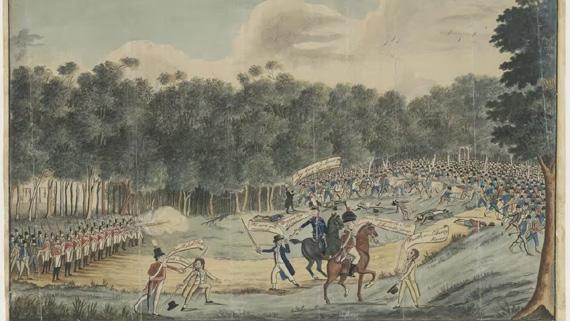
The Castle Hill rebellion or Battle of Vinegar Hill took place in Sydney in 1804. Image: supplied
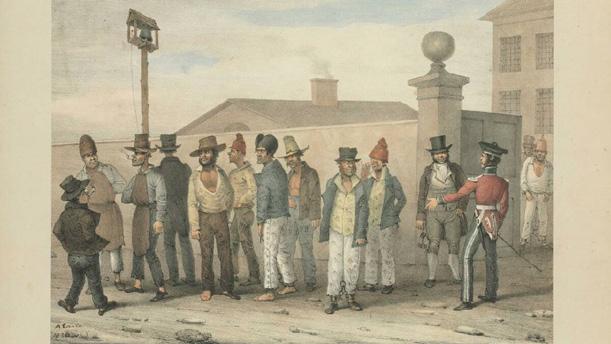
Convicts who challenged authority faced harsh reprisals under a system designed to crush resistance. Image: supplied
At least 3600 political prisoners landed in NSW, convicted for protest, unionism and resistance. Image: supplied

Saved by the Grand Wizard and his magic paint
This morning, as she does each morning, my dog walked me around the streets of Wanniassa.
Again, we noted the abominable state of the footpaths in that suburb. Cracked, completely broken, raised, sunken or simply weed-infested.
Each morning is less like a daily exercise and more like a cross-country competition.
We know though, that the ACT government cares for those of us who live southside, so periodically high-order magicians are dispatched to solve the problem.
In a government vehicle, a Grand Wizard, adorned in a high-visibility vest (an indication of the powerful magic about to be unleashed), arrives to wield a spray can of magic white paint.
The pavement is bedecked with mysterious ACToglyphs; dots, arrows and square brackets.
These symbols surrounding damaged pavement are obviously intended to ward off trips, falls or other calamities. The magic performed, the Grand Wizard departs, unlikely to be seen for another four years.
Unfortunately, years of Canberra weather cause these symbols to fade and the magic wanes.
As the government isn’t likely to actually fix the paths, perhaps they could at least apply new magic paint. Surely our rates could cover a couple of spray cans.
Henry Moulds, Wanniassa
Disapproval rises among Trump demographics
Is it possible that unbeknownst to us all, the assassin’s bullet, diverted by President Trump’s ear, shot him in the foot instead, where it now stays, permanently lodged?
This may partly explain Trump’s ongoing unpredictable and erratic behaviour.
His threat on Greenland has severely weakened the 75-year-old NATO alliance, and further damaged major European trading deals.
The president and his allies continue to battle the Congress, the bureaucracy, universities, the courts and the media.
Recent US polls show Trump’s disapproval is on the rise among his key demographics: Hispanic Voters 76 per cent disapproval, Asian Voters 73 per cent disapproval, and voters aged 18-29, 69 per cent disapproval.
Only 66 per cent of Republicans believe Trump has the “mental fitness” needed to be president and only 42 per cent believe he acts ethically in office.
Meanwhile, Melania Trump’s foray on to “the big screen” has bombed dramatically, with her movie/documentary Melania being
Experience Modern Indian Dining in Griffith
Step into The Lotus Indian, where bold spices meet contemporary flair
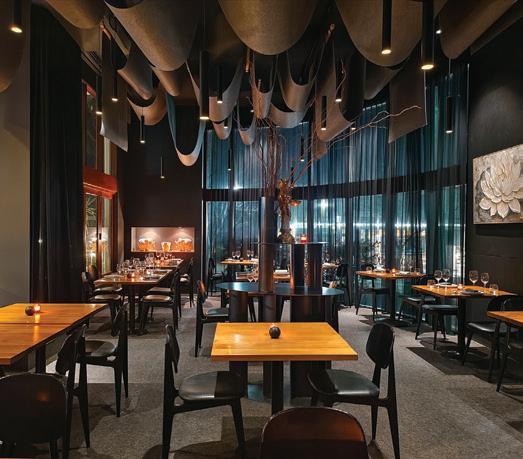
Enjoy refined Indian cuisine crafted by expert chefs, from aromatic curries and classic tandoori to fresh street-food favourites and elegant desserts. Whether it’s a relaxed dinner, a special celebration or a night out with friends, every dish is designed to delight.
Dine in, order takeaway or book your next event with bespoke catering and flawless service.




lambasted by critics.
Empire gave the documentary just one star, Variety called it “a cheeseball infomercial “and The Guardian “an elaborate piece of designer taxidermy”.
DJ Trump said he thought it was” really great”.
Melania director Brett Ratner’s career was derailed by sexual assault allegations in 2017. He denied the allegations and no criminal charges were filed.
Ratner also appears in recent unsealed Epstein files showing him with the disgraced financier and an unidentified woman.
The plot thickens.
Declan McGrath, via email
It was hard to digest the spin
Hard to digest the carefully crafted reunification spin that the federal Liberal and Nationals leaders dished up to an already disbelieving public on February 8.
I wasn’t impressed by David Littleproud’s brazen yet desperate attempt to blame the prime minister and Labor for the Coalition parties’ break up and divisions.
Unable to see how the application of more skimpy Band-Aids will restore trust in the Liberal Party while it kowtows to the tunnel-visioned, One Nation-leaning and overbearing National Party rump.
Easy to imagine more young, urban and female voters being totally turned off the Liberal Party if it allows its very conserva -

tive, yet barely capable, right faction to grasp the reins and cosy up more closely to the newly emboldened Nationals (“Liberals desperate for a path out of purgatory”, citynews.com.au, February 10).
Concerned and disgusted still about how 12 months ago federal Labor, Liberals and Nationals conspired to pass legislation that makes it much harder for good quality, hard-working community-based independent candidates to stand for, and win elections in future.
Sue Dyer, Downer
A ‘dishonest’ account of net zero
The ACT government’s legislated climate targets apply only to emissions “in the ACT.”
The Commissioner for Sustainability and the Environment concluded that those emissions account for only six per cent of the ACT’s carbon footprint.
ACT Greenhouse Gas Emissions Inventory Reports confirm that we have caused more than 50 million tonnes of local CO2e emissions since 1989.
Our target is “to reduce greenhouse gas emissions in the ACT to achieve zero net emissions by 30 June 2045”.
By 2045 our net local emissions since 1990 will grow to about 70 million tonnes.
The government’s draft climate change strategy discussion paper dishonestly describes that 70 million tonnes as “net zero”.
Leon Arundell, Convenor, Climate Action Canberra, Downer


His armed militia, ICE, is guilty of gunning down and murdering two American citizens in full view of bystanders.
dose of dorin
Creek water ‘bottleneck’ threatens development
I was a hydraulic engineer working for the Department of Works in January 1971 when a super cell thunderstorm 1-in500-year event dumped over several hundreds of millimetres of rain in one hour, causing several people to tragically lose their lives.
The water in the Yarralumla Creek topped the Curtin/Hughes overpass over the creek as well over the culverts on Hindmarsh Drive; so you can imagine the devastation.
Unfortunately, the Ivy apartment complex is situated downstream of the confluence of the creek from Mawson and Isaacs so it bottlenecks just upstream from the second-level underground carpark of the Ivy.
Although the roundabout has been upgraded since 1971, the dimensions of the channels are the same as in 1971. In fact, the culverts were not blocked and the surge topped the roundabout by several metres.
It doesn’t take much imagination to have a scenario in the current extreme climate events where, with all the built up development that did not exist in 1970, the floodwaters could previously spread over to the hospital etcetera would now bank up and possible double in height adjacent to the underground carpark and

roller door and the lifts, so trapping the occupants (and the cars).
The carpark entry faces the confluence and is a little above embankment level. This scenario was clearly not contemplated in the original design.
To avoid this or at least minimise the potential disaster, I suggest that a battery operated barrage or caisson be constructed across the entry to the driveway of the Ivy

underground carpark, which would be an excellent investment considering potentially about $10 million of cars being destroyed! The potential flooding also impacts any planned development of the light rail and the proposed unit development north of the interchange.
Andy Stodulka, via email
Ultra-left Josh the public face?
Islamists leading the Woke by the nose is bad enough, but how did ultra-Left Josh Lees become the public face of the Palestinian Action Group?
Are all middle-class Woke comfortable with this wing of the cause? There’s evidence that autocratic Islamic countries can deliver prosperity, but The Socialist Alternative?
For everyone’s sake I hope it’s Josh’s protesting passion that landed him the gig and not his economic know-how.
Peter Robinson, Ainslie
With renewables, it’s all about capacity
While Nick Standish’s arithmetic on the cost of nuclear power does not match up with much of the research (CN letters February 5), there is another common misconception about nuclear that may be just as important to look into: its capacity.
A traditional reactor has a capacity
of around 1GW. The much-touted small modular reactor (SMR), not yet commercially available, has a generating capacity of around 300MW. How does this compare with our renewables?
The Clean Energy Regulator estimates that close to 7GW of renewable generation was added to Australia’s main grid in 2025. A record 7.5GW was added in 2024.
By the time one nuclear reactor could be built in Australia, renewables will be supplying most of our electricity.
As for safety, experts predict that given the number of nuclear reactors operating by 2050, the chances of a serious accident (human error) are extremely high.
I wouldn’t be in a hurry for one in my backyard; “impossible” meltdowns and leaks are one thing, toxic nuclear waste is also a critical problem humans have not solved.
Fiona Colin, Malvern East, Victoria
A wasted argument
Why is it that advocates of nuclear energy never mention the waste?
Bob Howden, via email
I agree, newsreaders need a chair
Ben Geeshon (letters, CN February wonders whether we need to have a “fund me” collection for a chair for our ABC newsreaders (letters, CN, February 5). I agree.
While it is heartening to see that Greg Jen-
net has bought a more fitting suit, I think a mix of standing and sitting would be more appropriate.
Herman van de Brug, Holt
Plea to make future meals animal-free
Scientists say bird flu is now “completely out of control,” spreading across continents at an unprecedented scale, devastating wildlife, and – in the US – establishing itself in dairy cattle, creating the risk of igniting a human pandemic as early as this year.
Experts have been warning for years that animal agriculture creates the perfect conditions for viruses. Crowded barns, stressed bodies, weakened immune systems and constant human contact turn farms into factories for the next global health crisis. Bird flu is simply the latest proof.
Every factory farm increases the likelihood that a virus will adapt, reassort, and learn how to move efficiently into and between human bodies. At the same time, the animals caught in this system – gentle cows, pigs, sheep and chickens – suffer intensely, treated as “products” instead of sentient beings who have families, feelings, and a will to live.
If we truly want to prevent the next pandemic – and live compassionately – we must address the disease incubators hiding in plain sight and stop raising animals for food. So please, make future meals animal-free.
Dr Desmond Bellamy, PETA Australia, Sydney
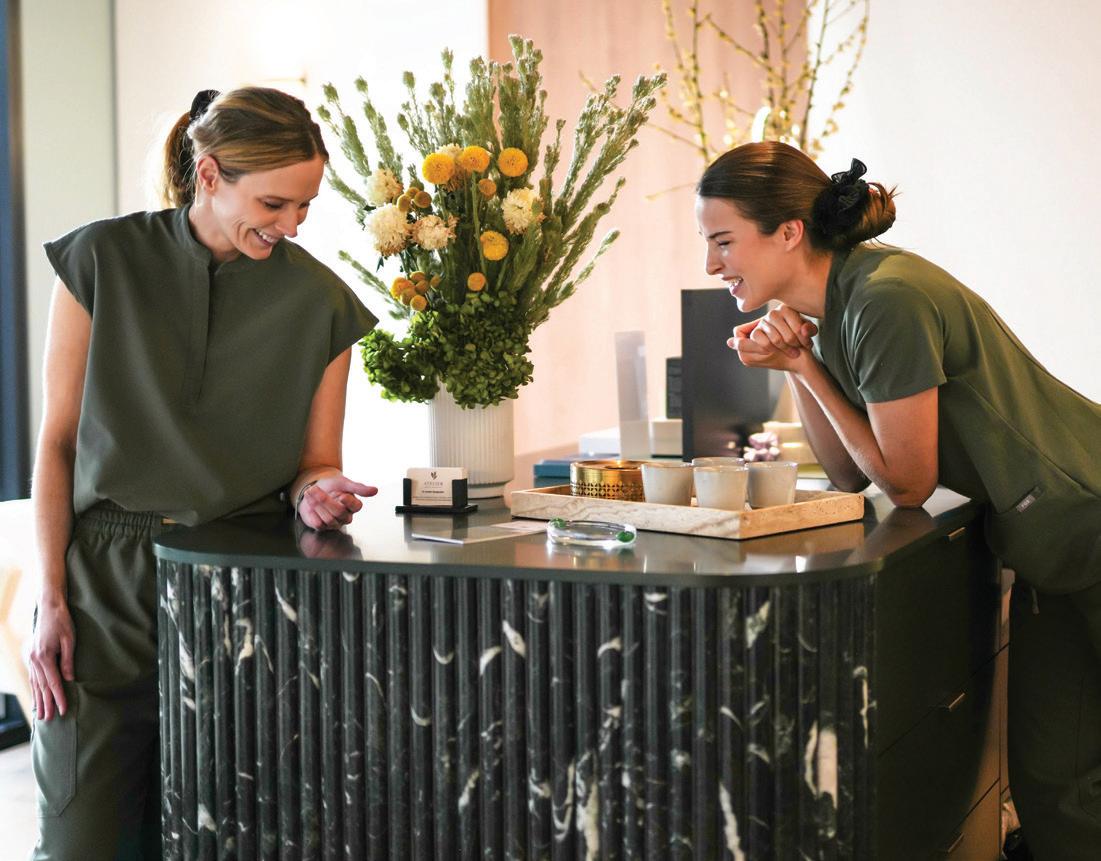
Photo: Andy Stodulka

Turning conflict into resolution: helping Canberra families move forward
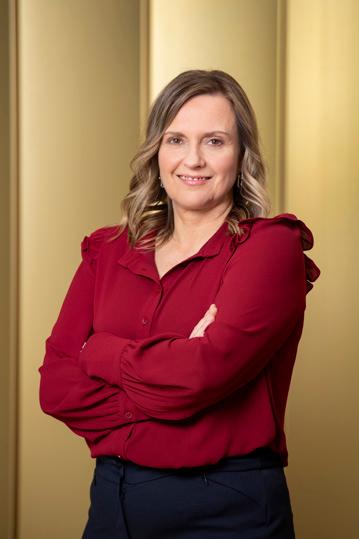
professionals, the team provides holistic support to guide clients through separation with empathy and structure.
When litigation is required, the firm acts with confidence and determination. “We’re strong in court when the time calls for it,” Anna says.
settlements, binding agreements and property division.
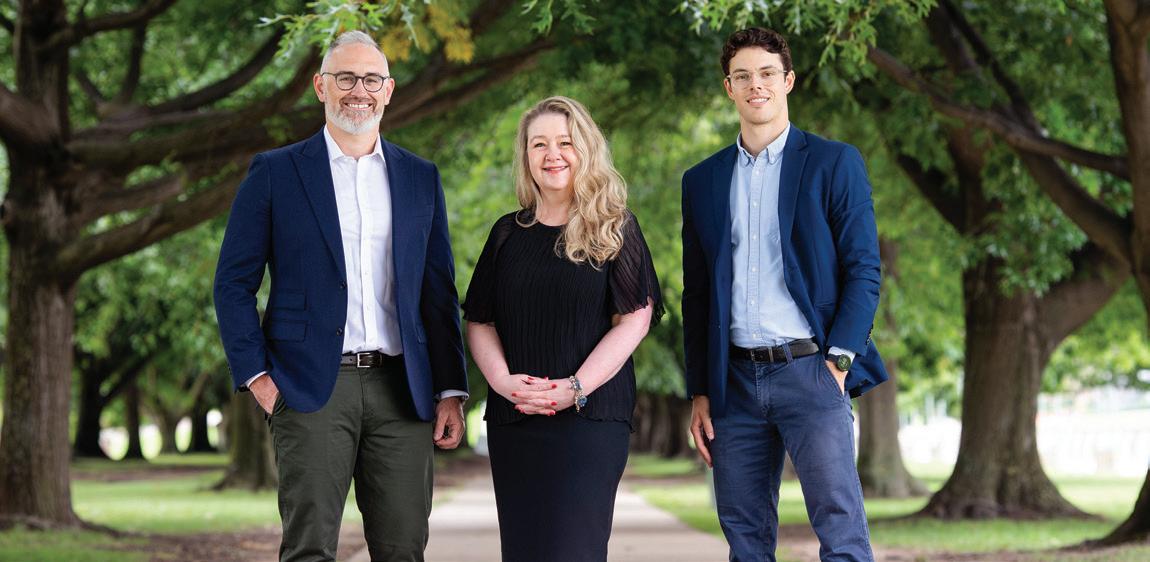
Co-directors Anna Neilan and Lucy Stramandinoli bring more than 40 years of combined experience working solely in family law, offering clients both depth of expertise and a compassionate, practical approach.
“For parents, their top priority is always the children, and for couples without children, it’s about navigating that transition respectfully and fairly,” says Lucy Stramandinoli.
Recognised for excellence, Neilan Stramandinoli Family Law has been listed as a leading ACT family law firm for ten consecutive years by Doyle’s Guide, based on peer recommendations within the legal industry.
Neilan Stramandinoli Family Law Suite 1, Ground Floor, 5 Farrell Place, Canberra. Call 02 6152 0493 or visit nsfamilylaw.com.au
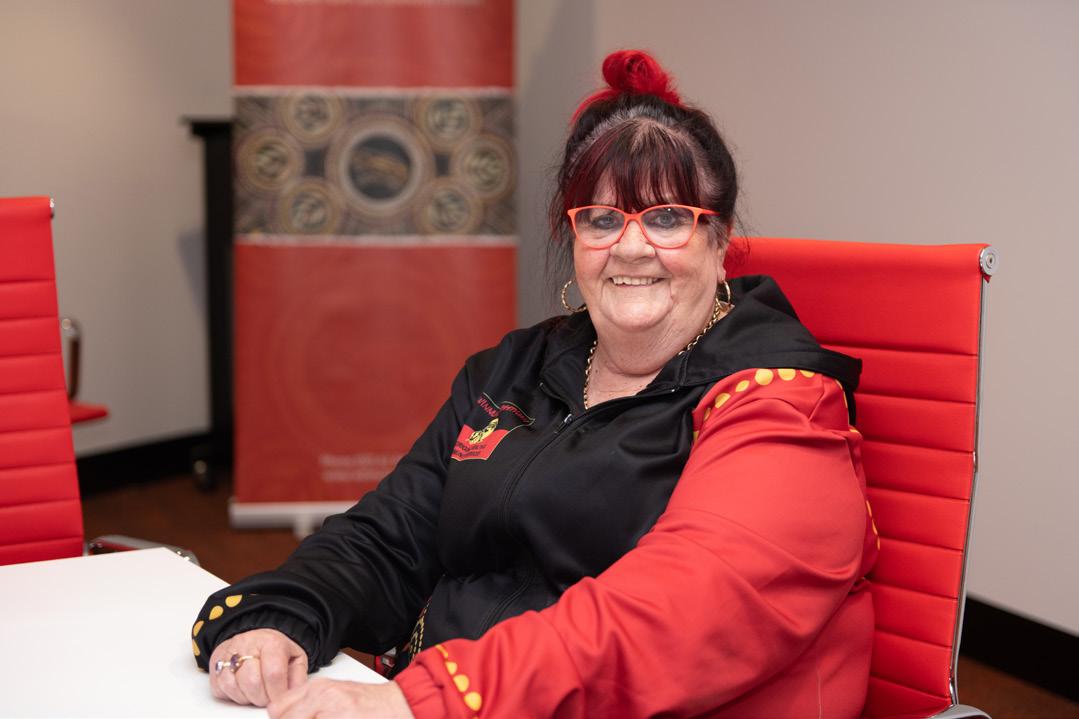
winnunga.org.au
Working for the best possible solution
At Neilan Stramandinoli Family Law, we pride ourselves in our proven track record, our commitment to excellence, and expert knowledge of family law. We understand how difficult and emotional family law matters can be; we are compassionate and empathetic, guiding you towards the best possible solution.
For separating couples:
• Parenting arrangements
• Dividing property and superannuation
• Family violence matters
New or existing relationships:
• Best arrangements for your children
• Protecting assets and yourself
• Preserving entitlements






Anna Neilan Family Lawyer
Lucy Stramandinoli Family Lawyer
Lucy Stramandinoli. Anna Neilan.
Winnunga Nimmityjah CEO Julie Tongs.
Financial Planning Without Conflicts of Interest
When Canberra residents think about planning for their financial future, the conversation often starts with uncertainty. Super funds, investments, tax planning, insurance, retirement and wealth preservation can feel overwhelming for even the most organised households.
That’s where Andrew Saikal-Skea, an independent financial adviser based here in Canberra, steps in, transforming complexity into clarity with a personalised approach that prioritises people over products.
“Good, trusted, financial advice can make a huge difference in people’s lives,” Andrew says. “Being independent means that we don’t charge commissions, receive kickbacks or have anything that makes our advice biased toward a particular strategy or product”. This philosophy sits at the heart of Saikal-Skea Independent Financial Advice, a practice that has quickly earned trust across the community for its unbiased advice supporting professionals, public servants, retirees and military personnel. Independence matters. Only around 1% of financial advisers in Australia can call themselves independent and it means that Andrew and his team are focused on delivering the best strategies for their clients, not somebody else. “Our role is to advise what makes sense for you” he explains. “We look at the whole picture: your goals, your values, where you’re at now and where you want to be. Then we build a comprehensive plan that gives clarity and supports your journey.”
An area where this clarity pays dividends is wealth accumulation. Australia’s evolving legislative and superannuation landscape can be daunting, with rules and thresholds that shift regularly. “I see too many people that have been trying to navigate this on their own and aren’t sure if they are doing the right things,” Andrew says. “But when you have a structured plan that’s optimised for your goals and objectives, you have the confidence that you’re on the right path”. This shift in mindset is one of the biggest rewards his clients report, the peace of mind of knowing they are on track rather than simply hoping they are.
Tax planning and risk management are other key pillars of SaikalSkea’s approach. By eliminating
unnecessary costs and identifying smarter ways to structure finances, Andrew helps clients keep more of what they earn while remaining protected against life’s uncertainties. “Good advice saves time, stress and money,” he says. “And it gives people the freedom to focus on what matters most to them.”
Importantly, communication doesn’t stop after a strategy is put in place. Saikal-Skea clients benefit from ongoing reviews and updates that ensure their plan evolves with changes in their life or in the broader financial environment. This continuity builds relationships that last years and, in many cases, generations.
“I want people to feel secure in their decisions,” Andrew says.
“Not just informed, but confident.” That combination of expertise and empathy is precisely what sets Saikal-Skea apart in Canberra’s financial landscape.
For residents looking for unbiased financial advice that genuinely reflects their goals and values, Saikal-Skea offers a local, trusted and transparent path forward. In a world where financial noise can cloud judgement, having a partner who listens first and strategises second makes all the difference.
Andrew’s team offer
complimentary introductory phone calls to see if they might be a good fit for clients. Visit saikal-skea. com.au to learn more about if they can help you achieve clarity and confidence in your financial journey.

Saikal-Skea Independent Financial Advice – Canberra Team
Experts who know what locals need
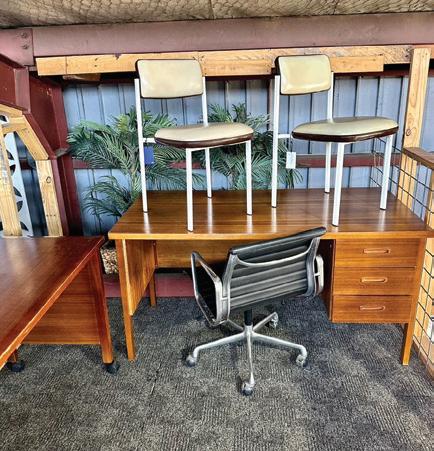
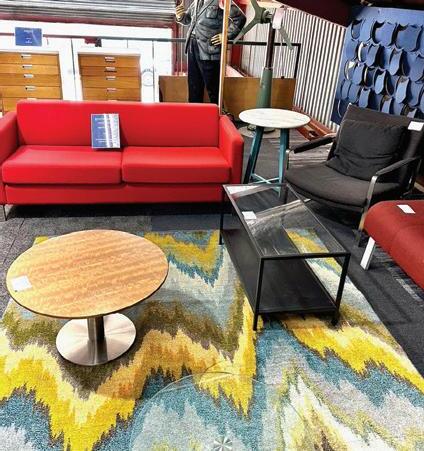
Canberra homes and workplaces are changing – and the experts at Ex-Government Furniture know exactly what locals need to make their spaces functional, comfortable and stylish.
Co-owners James Fullerton and Taylor Radnell bring more than six decades of combined experience sourcing and curating premium pre-owned furniture. “We’re out on the road every week – we literally handle thousands of pieces each year,” says James. “We’ve learned how to instantly assess quality and value – and we pass that knowledge on to our customers.” That expertise sets them apart in a market crowded with lookalike products and mixed price points.
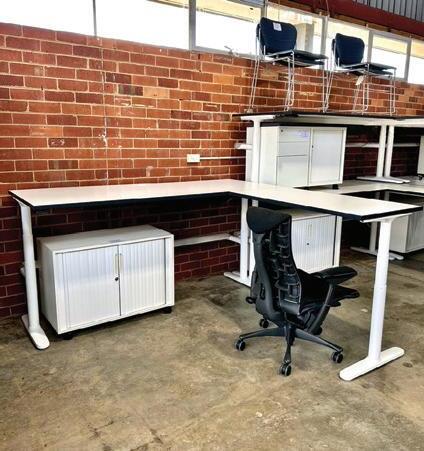
The warehouse offers more than second-hand stock – it delivers trusted commercial-grade performance. From sit-stand desks and ergonomic office chairs to timber pieces and unique finds, every item is checked for quality and longevity. Whether upgrading a home office or furnishing a business, James and Taylor help customers find the right fit for their needs and budget.
“Our goal is simple,” Taylor says. “Help every customer make a smart choice – not just a quick purchase.”
Choosing pre-owned furniture also supports sustainability, keeping quality pieces out of landfill while delivering genuine value.
Now located at 26 Molonglo Mall, Fyshwick, Ex-Government Furniture welcomes customers to visit and ask questions.
“Don’t be afraid to ask,” says James. “Most of the time, we can make it work.”
Ex-Government Furniture
26 Molonglo Mall, Fyshwick. Call 02 6280 6490 or visit exgovfurniture.com
Memory issues – why a good night’s sleep matters more than you think
If you’ve been feeling forgetful, foggy or simply struggling to stay focused, poor sleep may be playing a bigger role than you think. Sleep is where the magic happens that allows for building, strengthening and protecting your memory.
Memory works in three key parts: learning, storing and recalling, and sleep supports each one. Deep non-REM sleep acts like the brain’s filing system.
During this stage, new information from the day is organised and stabilised so it can be remembered later. It also clears out unimportant details so your brain can focus on what matters.
REM sleep plays a different but equally vital role.
In this dream-heavy stage, the brain connects ideas, processes emotions and creatively reorganises information.
This is why “sleeping on it” often brings clarity the next morning. REM sleep helps you better under stand, integrate and apply what you’ve learned.
When sleep quality is disturbed, we lose the ability to store new information or recall it. The first night of sleep after any learning is vital for locking in those memories properly.
Common disrupters of sleep quality that can lead to brain fog and the inability to learn and remember important information are alcohol, caffeine and untreated sleep apnea.
The good news is that improving sleep quality can have a powerful impact on memory, focus and overall wellbeing. If you snore or think you may have sleep apnea, CPAP Direct is ready to help.

CPAP
Visit cpap.com.au or drop into your nearest store to talk to our experts about what you can do sleep better and wak-ing up refreshed.

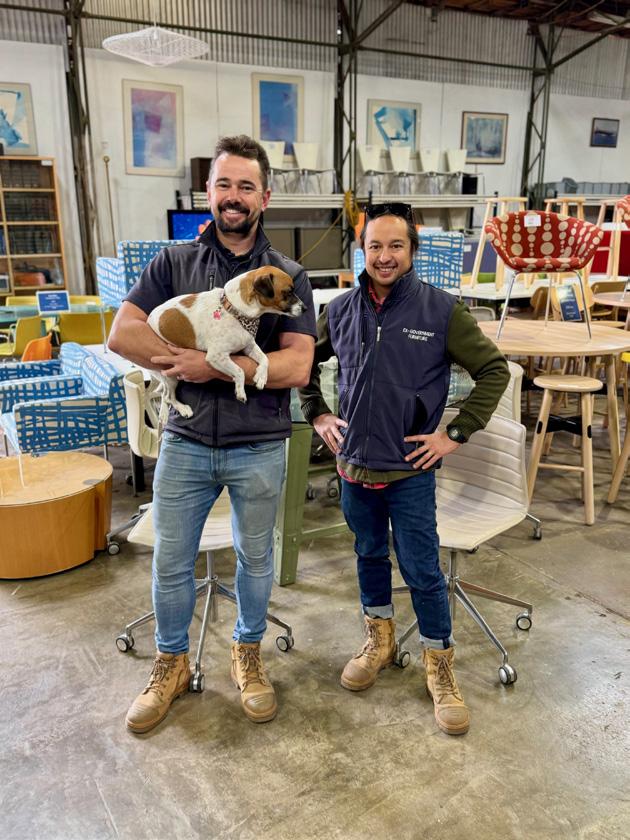
Ex-Government Furniture co-owners Taylor Radnell, left, with Tilly, and James Fullerton.








Making Home Renovations Simple Again and Stress-Free
Renovation Matters is changing the way homeowners across the ACT experience renovations, delivering projects that are clear, well-managed and genuinely stress-free.
Led by owner Kim Persson, a finalist for Business Woman of the Year, the Canberra-based business specialises in smart, considered renovations that improve both everyday liveability and property value. With more than 100 successful projects completed, including over 50 renovate-to-sell transformations, Renovation Matters has earned a strong reputation among homeowners at every stage.
From small upgrades to full home transformations, each project is carefully planned and professionally managed, with clear communication guiding clients from start to finish.
“Renovating doesn’t need to feel overwhelming,” Kim says. “Our role is to remove the pressure by managing every detail with honesty, care and experience.”
Renovation Matters works exclusively with trusted local trades and suppliers, selected for their quality workmanship and reliable communication. This ensures smooth coordination on site and projects delivered to dependable timelines.
At the heart of every project is a simple focus: creating comfortable, functional and stylish homes that make everyday living easier.
“We treat every home as if it were our own,” Kim says.
Renovation Matters is located in Canberra, ACT.
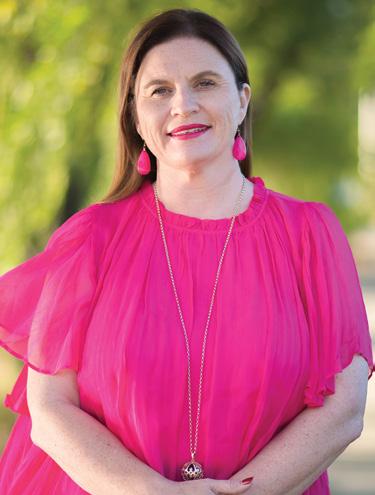

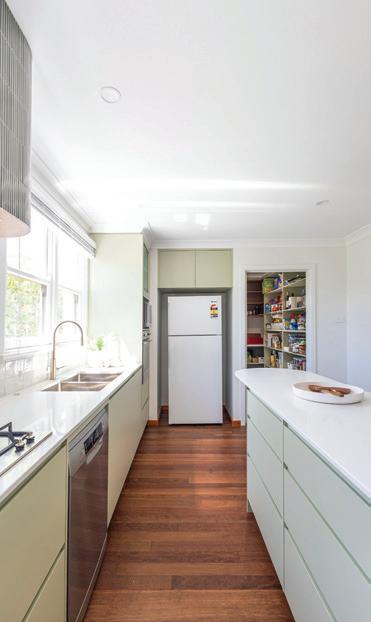
YOUR SALES RESULTS OR RENOVATE TO
STAY!
Matters offers transformational renovations that add the biggest impact and value when selling your property.
you are not selling, we can help you renovate to meet your specific requirements!



Kim Persson, owner of Renovation Matters. Before. After.
STRONG HEALTH, STRONG CULTURE, STRONG COMMUNITY
Winnunga Nimmityjah Aboriginal Health and Community Services is a community-controlled health service
in Narrabundah, providing holistic, culturally safe care to Aboriginal and Torres Strait Islander people across the ACT and surrounding regions.
WINNUNGA OFFERS A WIDE RANGE OF SERVICES, INCLUDING:
Health and Medical Care
• GP and specialist clinics
• Aboriginal Health Workers
• Chronic disease support, pathology, immunisations, dental, optometry, and more
Pregnancy, Parenting and Family Support
• AFPP: Free support for young, first-time Aboriginal mums from pregnancy to bub’s second birthday
• Healthy Pregnancy Group & Childbirth Classes
• Mums and Bubs Clinic
Quit Smoking Support
• Free nicotine replacement therapy, personalised quit plans, and culturally safe support through the Tackling Indigenous Smoking program.
Social and Emotional Wellbeing
• Counselling and mental health support
• Drug and alcohol programs
• NDIS, court and justice support
Community and Justice Programs
• Men’s and women’s groups
• Yarning circles, nutrition and healing programs
• Support for people in custody and post-release


Trusted, Award-Winning Automotive Experts in Canberra
For nearly two decades, Car Mechanical Services has been a trusted name in Canberra, offering top-quality automotive care with a strong community focus. Familyowned and operated, Car Mechanical Services stands out not just for its mechanical expertise, but for its commitment to sustainability, inclusivity, and nurturing the next generation of technicians.
Originally established in 1982, Car Mechanical Services has built its reputation on a foundation of honesty, technical excellence, and deep local engagement. Directors Raffy and Charlie Sgroi have led a wellqualified and dedicated team through the business’s growth, guided by a strong belief in quality service and meaningful customer connections.
“Our decision to establish in Canberra was driven by the family-oriented nature of the community and the region’s steady growth,” says Director Raffy Sgroi. “Being part of a region with such strong local spirit has allowed us to connect with residents and offer services tailored to their needs.”
Car Mechanical Services has grown alongside Canberra’s expanding suburbs, adapting to a vibrant and evolving city. “We’ve seen a lot of change – new homes, more businesses, and a strong focus on sustainability,” says Charlie. “That aligns perfectly with our values and has helped us grow with the community.”
Exceptional Automotive Services
From logbook servicing and diagnostics to mechanical repairs, brakes, suspension, and air conditioning, Car Mechanical Services offers comprehensive automotive care for both private and fleet vehicles. The workshop is known for its “no surprises” approach – all work is clearly explained and approved before anything is done, giving customers confidence and peace of mind.
“We treat every car like it’s our own,” says Charlie. “People come to us because they know they’ll get honest advice and excellent workmanship. Trust is everything in this business.”
Green Practices and Forward Thinking
In a traditionally resource-heavy industry, Car Mechanical Services is setting the bar with its ecoconscious initiatives. The workshop is Cleanawaycertified, adheres to stringent environmental standards, and is proactive in recycling used oil, parts, and materials. They also offer servicing for hybrid and electric vehicles – a growing field the team is passionate about.
“We’ve made sustainability a core part of our operation,” says Raffy. “We’re constantly improving how we work to minimise waste and support environmentally friendly solutions for our customers.”
Looking ahead, Car Mechanical Services plans to expand its electric vehicle repair services while continuing to implement greener workshop practices.
Investing in People and the Community
Training the next generation is central to the business’s mission. Car Mechanical Services partners with local schools to offer work experience — particularly for students with disabilities or who are neurodivergent. Through mentoring and apprenticeships, the team helps young people build meaningful careers in automotive repair.
“We want our workshop to be a place where everyone feels welcome and supported,” says Raffy. “Giving students and apprentices a real chance to grow and learn is incredibly rewarding — they’re the future of our industry.”
Car Mechanical Services also supports the broader Canberra community through sponsorship of local sports clubs, involvement in community events, and partnerships with inclusive organisations. “Supporting local causes isn’t just good business – it strengthens our neighbourhood and reflects who we are,” says Charlie.
Award-Winning Excellence
Car Mechanical Services’ commitment to quality and community has earned it high praise, including winning many local and national business awards in automotive services and management. Raffy currently holds the title of National Businesswoman of the Year, along with international awards for management. The business has also been recognised for outstanding customer service and leadership in sustainable practices.
What’s Next?
Looking ahead, Car Mechanical Services is set to launch new career discovery programs in partnership with local schools, with a focus on underrepresented groups. The team also plans to host workshops to raise awareness about electric vehicle servicing and green automotive careers.
For the team at Car Mechanical Services, it all comes down to people – customers, staff, and community.
“We’ve always believed in doing things properly, treating people with respect, and giving back where we can,” says Raffy.
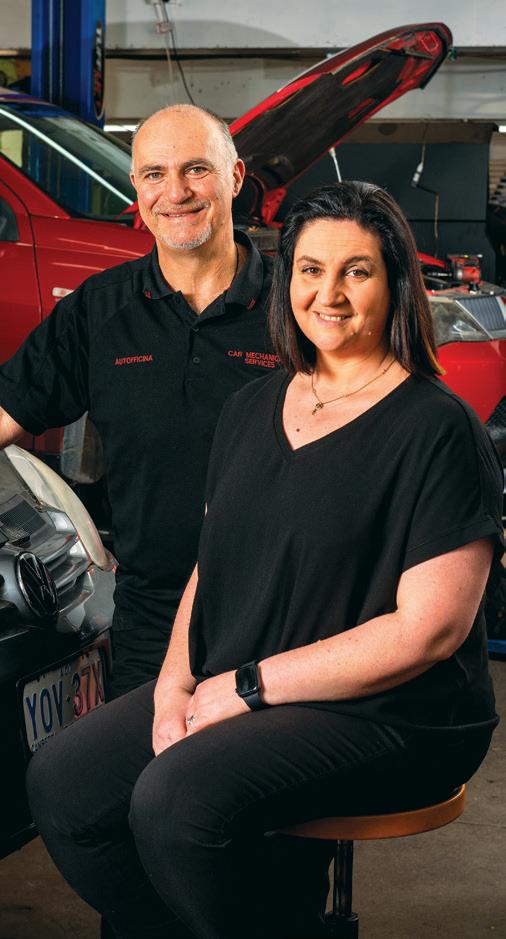
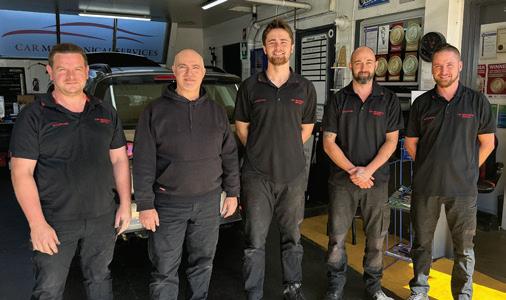
Charlie & Raffy Sgroi
‘FleetCrew expands into Canberra to service growing ACT and Southern NSW Markets.’
Leading 4WD hire specialist comes home to Canberra
FleetCrew, one of Australia’s largest specialist 4WD hire companies, has expanded into Canberra to meet increasing demand from clients operating across southern NSW and the nation’s capital.
Founded 15 years ago with just five vehicles in a Brisbane workshop, FleetCrew has grown into one of Australia’s largest 4WD hire providers by identifying a gap in the market and focusing on vehicles configured to meet the strict safety requirements of mining and major work sites, backed by a rigorous maintenance philosophy.
Along with a new branch in Dubbo, the southern expansion marks a significant milestone for FleetCrew, opening its first branches outside of Queensland – a strategic step driven by strong existing
client demand and continued growth in infrastructure and renewable energy projects across Eastern Australia.
FleetCrew Director and Co-Founder
Ben Harris said the Canberra agency will play a key role in supporting projects such as HumeLink and Snowy 2.0, along with a range of renewable, civil, construction and mining developments throughout the ACT and southern NSW.
“Canberra is a natural next step for FleetCrew,” said Harris.
“There’s substantial growth happening across the ACT and southern NSW, particularly with large-scale renewable and civil infrastructure projects. Many of our existing clients are already operating in this region, so it made sense to establish a local presence that allows us to deliver the same reliable, compliant 4WD hire solutions they expect.”
Harris, who was born and raised in Canberra, said the decision also carries personal significance.
“Having grown up here, I know Canberra and its surrounding areas well. It’s exciting to bring the FleetCrew brand to my hometown and to be represented locally by someone I’ve known and respected for many years,” he said.
The new FleetCrew Canberra agency will be led by Sean Hunt. Hunt will manage vehicle delivery services, logistics, customer service, as well as maintenance and detailing for FleetCrew vehicles throughout the ACT and surrounding NSW regions.
“Sean is a great fit to represent the FleetCrew product and brand in our nation’s capital,” Harris said. “He’s deeply embedded in the local automotive community and understands what customers need when it comes to reliability, safety and service. We’re confident he’ll deliver the same quality FleetCrew experience our clients rely on.”
Hunt said he is proud to take on the role and excited to bring FleetCrew’s high
standard of service to Canberra and beyond.
“FleetCrew has built a reputation for quality vehicles and exceptional service — values that align perfectly with how I’ve approached my work in the motor industry,” Hunt said. “Our Canberra base means clients working on infrastructure projects throughout the region can now access a high standard of site-ready 4WDs locally, supported by a team that understands their operational needs.”
The Canberra agency will enable FleetCrew to support current clients who have embraced the company’s vehicle delivery and network maintenance services in the past, as well as new local clients seeking fully compliant, ready-for-site 4WD hire vehicles. The fleet will include mine-andcivil-spec vehicles, configured with the latest safety and compliance technology, available for short- and long-term hire.
FleetCrew Director and Co-Founder Mary-Ann Strelow said the company is
excited by the expansion.
“We’re thrilled to be opening in the ACT. We identified the need for a specialist 4WD hire provider in the market, and this new branch will allow us to better support our existing clients already working in the region, while also providing quick access to locally based vehicles.”
“We look forward to supporting major infrastructure and energy projects while continuing to provide the flexible, customer-focused service that defines our brand,” Strelow said. “This expansion is about growing with our clients and helping them keep their projects moving – safely and efficiently.”
With a predominantly Toyota fleet, FleetCrew offers a range of late model wagons, tray backs, trucks and buses for commercial and recreational hire from Canberra and their branches across Eastern Australia.
www.fleetcrew.com.au/location/canberra

Canberra branch manager Sean Hunt with FleetCrew Director Ben Harris.
FleetCrew’s 4WD mine spec Hilux hire vehicle.
Small delays can lead to big problems for drivers
It starts with something small. A reminder sticker that’s overdue by a few weeks. A faint vibration through the steering wheel. A warning light that flickers on, then off again.
For many Canberra motorists, it’s easy to convince themselves it can wait. But new research shows this quiet trend of delaying servicing and repairs is becoming increasingly common, and potentially dangerous.
A national survey by comparison service iSelect found 49 per cent of Australian drivers have delayed servicing their vehicle. Some were only weeks behind, but others admitted putting it off for six months or more, well beyond manufacturer recommendations.
Many drivers said they were most likely to ignore air-conditioning faults, cracked windscreens, damaged mirrors, worn tyres, and minor engine concerns in an effort to save money.

But automotive professionals warn that what appears minor today can quickly become a serious safety issue tomorrow.
Routine servicing is designed to identify problems early, before they escalate.
At Car Mechanical Services in Fisher,
technicians regularly perform logbook servicing, brake inspections, suspen sion checks and diagnostic scans that detect wear long before a driver notices anything wrong. Ignoring those service intervals can allow brake pads to wear dangerously thin, fluids to deteriorate, or suspension components to weaken, all of which affect how safely a vehicle stops and handles.
Similarly, workshops such as Automotive where warning lights or performance issues were ignored for months.
Modern cars rely heavily on electronic systems, and early diagnostic checks can identify faults with engines, batteries, emissions systems and sensors.
Left unchecked, these small faults can develop into breakdowns, expensive repairs, or sudden failures on the road.
Tyres and wheels are another commonly overlooked area.
Wheel Repairs in repairing cracked, bent or damaged wheels, often caused by potholes, kerb impacts, or gradual wear.

Even minor wheel damage can affect steering, tyre wear and braking performance. Drivers may not realise the impact until vibrations worsen or tyres fail prematurely, putting safety at risk.


iSelect comparison expert Sophie Ryan says delaying maintenance is a growing concern.
“Vehicle safety is another victim of cost-of-living pressures and compla -
cency,” she said. “These issues may seem minor, but they can worsen over time without attention and cost more money to fix.”
There are also financial implications




beyond repair costs. Missing scheduled servicing can void manufacturer warranties, leaving owners responsible for expensive repairs. Insurance claims may also be denied if a vehicle is found to be unroadworthy due to neglected maintenance.
Canberra’s driving conditions place additional demands on vehicles. Daily commuting, fluctuating temperatures, and stop-start traffic all contribute to wear on brakes, tyres, batteries and cooling systems.
Regular servicing provides certainty. It ensures brakes respond when needed, tyres grip safely, and engines operate efficiently. Most importantly, it gives drivers confidence their vehicle will perform reliably when it matters most.
Delaying a service may feel like a short-term saving, but it often leads to greater costs, increased risks, and avoidable stress.
When it comes to vehicle maintenance, staying on schedule isn’t just good practice, it’s essential for safety on Canberra’s roads.
www.iselect.com.au/car-insurance
Canberra Wheel Repairs 0404 822 669. Jaws Automotive 02 6285 3455. Car Mechanical Services 02 6162 4111.


New research shows the trend of delaying servicing and repairs is becoming increasingly common and potentially dangerous.

ARTS & ENTERTAINMENT Leonardo da Vinci... enjoying genius on a big scale
By Helen MUSA

Leonardo da Vinci – 500 Years of Genius, a huge immersive exhibition is coming to Canberra during the Enlighten Festival in a new outdoor setting and, it is said, some new content.
Brought to the ACT by Happen Group, Alter Place and Copper Live, and created by Grande Experiences in collaboration with the Museo Leonardo da Vinci in Rome, the largescale projection exhibition will be installed at the former Federation Centenary Fountain site, adjacent to the Parkes Place lawns near Old Parliament House.
Grande Experiences was the company behind Van Gogh Alive, which immersed visitors inside some of the world’s most recognisable paintings.
When I catch up with Daniel “Macca” McFadyen, director of Happen Group, I learn that the very same approach has turned to Leonardo da Vinci, presenting masterpieces, including the Mona Lisa, in a way not possible within traditional museum walls.
McFadyen says the Canberra site was carefully chosen. Speaking from Melbourne, where he is based when not travelling


for work, he recalls a recent trip through Canberra to inspect potential locations, guided by local collaborator and mate, Stu Thompson of events managers Copper Live.
“We landed on the perfect spot,” he says, describing the former fountain site, recently
“refreshed” by the National Capital Authority. The fountain pools have been reimagined as garden beds, with the central area now functioning as a plaza.
“There’s no water anymore,” McFadyen says, although the NCA officially says its
Exhibition runs until 1 March
www.graingergallery.com.au
1/34 Geelong St, Fyshwick
Wed to Sun 11am to 5pm
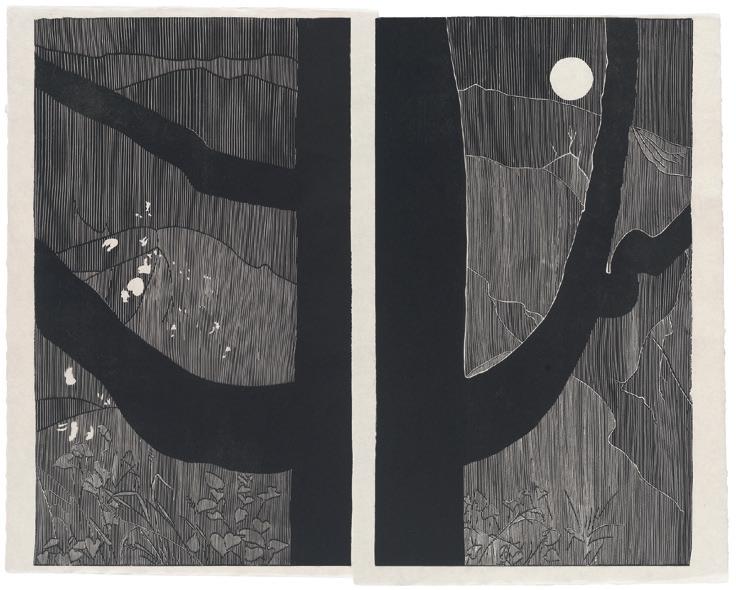
long-term plan is to retain a water element.
“It’s essentially a flat space now, with beautiful garden beds at either end, which makes it ideal for a temporary installation.”
Two large, luxury marquee-style structures will be installed on the site, connected by an outdoor area incorporating a champagne bar and gift shop.
Inside, visitors will encounter Leonardo not only as a painter, but as an inventor, scientist, philosopher and musician.
“Leonardo da Vinci was not just a painter, not just an inventor or an innovator,” McFadyen says. “He was all of those things, and this exhibition celebrates 500 years of that genius.”
The experience begins with displays of drawings and replicas of Leonardo’s inventions, including flying machines and early military designs, with interactive elements allowing visitors to explore how the ideas worked.
“As you move through, it becomes very clear just how far ahead of his time Leonardo was,” McFadyen says.
From there, audiences enter the immersive projection space, where images surround visitors on all sides. Masterworks unfold at monumental scale, culminating in a focus on the world’s most famous portrait, Mona Lisa, La Gioconda.
“And, yes,” McFadyen says, “there’s also the chance for people to grab a great photo with her, which younger audiences love.”
As for The Last Supper, McFadyen says that’s still under consideration, as its scale could be daunting, but he expects it will feature prominently in the projection component.
Seating will be available on a needs basis, but the exhibition has been designed primarily as a walk-through experience.
“If we find people really want to sit and stay longer, we’ll adapt, 100 per cent,” McFadyen says, assuring me that seats are at the ready.
Based on audience response to Van Gogh Alive and the Leonardo exhibition’s long run in Melbourne, McFadyen expects a broad demographic.
“It’s remarkably even, from very young children right through to people in their 80s and 90s,” he says. “Teenagers might come for an Instagram moment, serious art lovers will see one of history’s greatest minds brought to life, and others might just be looking for something special to do.”
For Canberrans, the exhibition offers a rare chance to encounter one of the great figures of Western art and thought in an accessible format. With most of Enlighten’s projections starting when the sun goes down, this indoor exhibition could well be the first destination on a visit to Canberra festival of light.
Leonardo da Vinci – 500 Years of Genius, Parliamentary Triangle, February 27-March 29.


- 15





The immersive Mona Lisa in the Leonardo da Vinci – 500 Years of Genius exhibition… “There’s the chance for people to grab a great photo with her, which younger audiences love,” says Daniel “Macca” McFadyen.
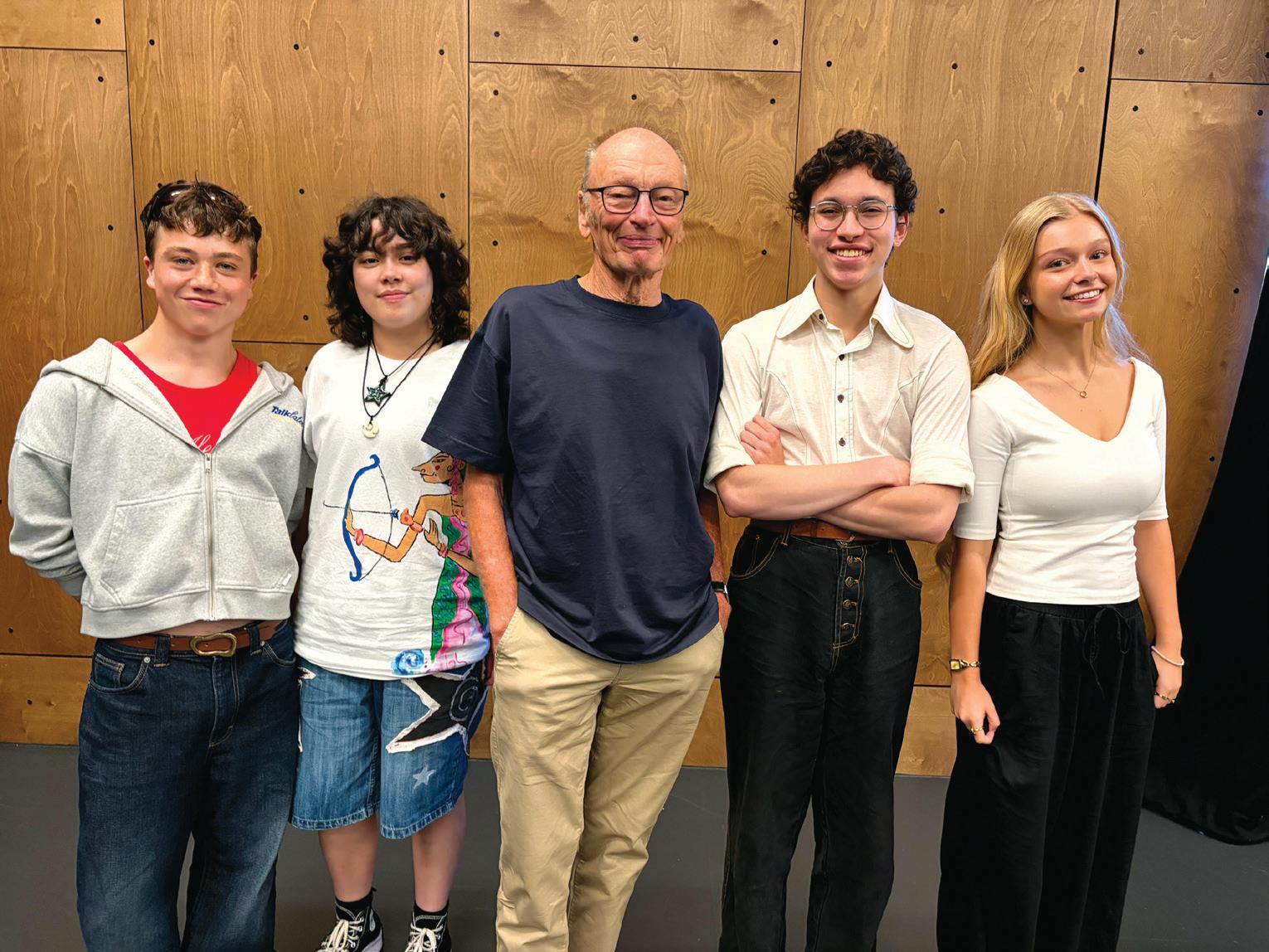
Young actor in awe of scholarship experience
director of Bell Shakespeare.
“It was really cool to see the actors working with the director developing scenes, starting with Act One, Scene One, a street scene where Julius Caesar has just returned from slaughter. It was so interesting to see how knowledgeable the actors are about their roles and how they fit themselves into the work,” Donohue says.
“The big thing I learned was that although they’re working with traditional material because it’s Shakespeare, they still hold themselves to account so they can relate to the stories and bring their own lives into them. It was so cool.”
Bell Shakespeare’s strong focus on education also made an impression.
“The way they deal with text is really interesting. I was doubtful about this because of the way Shakespeare is often taught in schools,” although at Narrabundah they studied text through acting, which put them one step ahead.
As a performer, Donohue finds it difficult to fully understand and feel a text without seeing it on stage, especially Shakespeare.
“The interaction between the characters means you need a deep understanding of detail. That’s not to say I haven’t enjoyed studying Shakespeare,” Donohue says.
“I feel really grateful for the experience Bell Shakespeare has given me.
“The biggest thing was feeling some recognition for the work I’ve been putting into my craft, and getting to meet a bunch of amazing people who are so passionate about what they do.”





WINE / Drinking French
A book to beat those post-vacation blues
After returning to the day-to-day following a holiday, a feeling of dissatisfaction can set in.
Back from my December/January New Zealand sojourn, getting into the regular routine seemed more difficult than anticipated.
I read a few articles on the internet that suggested ways to shrug off what the Americans call “post-vacation blues”.
One resonated: “As meaningful as it can be to get away from everyday realities, it can be equally powerful to reflect on and appreciate the life you’ve created.”
I reflected on how lucky I am with family and friends, and how I eat and drink very well.
I also reflected on the fact that in semiretirement I have sufficient time to do a great deal of reading that my earlier, busy professional life didn’t allow. Getting inside the world of a book creates a different reality that is often more compelling than the everyday yet is now woven with the quotidian.
One such book, entitled Drinking French, took me back to France. It is a charming work by David Lebovitz, a Californian chef and author living in Paris.
This book is full of inventive recipes for café drinks, aperitifs, cocktails and singularly French snacks, as well as many charming stories that enliven the recipes.
The references to wine are small but notable, with the author acknowledging “no drink is more associated with France than wine”.
Having said that, he highlights a decline in consumption of wine from a high of 53 litres (nearly 71 bottles) per person per year in 2003 to 40 litres “nowadays”. The book was published in 2020. A number of sources I consulted confirmed that this trend has continued.

Shifting focus, I was impressed by Lebovitz’s discussion of my favourite cocktail, the Kir Royal and its humbler cousin the Kir.
The Kir is dry white wine with crème de cassis whereas a Kir Royal is where champagne is used instead of white wine.
In this context, the stories inserted with the recipes add to the book’s charm. The author notes that the liqueur is named after a French Catholic priest, resistance fighter and politician Felix Kir (1876-1968), who was the mayor of Dijon, the capital of Burgundy.
Those sources also confirmed an observation by Lebovitz that one wine that has bucked the trend is rose’.
He notes that when he first arrived in Paris (2004) “no one in Paris would touch it”. He notes that this trend has not only reversed but that one in every three bottles of wine sold in France is rose’. Annoyingly, he does not give a rationale for this trend.
An article in an online magazine confirmed the numbers: “French wine is in the pink – people here drink more rosé than any other country, consuming 35 per cent of the world’s production.”
This trend was attributed to the result of 30 years of hard work in Provence, “where the quality of the wine, vineyards and the price of land suitable for growing these grapes has transformed”.
Kir heavily promoted the local liqueur, crème de cassis, sales of which brought the region’s economy back to life after World War II, with the mayor becoming famous: “The blanc-casse’ (‘broken white wine), as it was previously called, was renamed Kir and the drink became a worldwide legend.”
I’d recommend this book as capturing many recipes for food and drink that are quintessentially French.
Reading it also reminded me of the oftburied feeling that I have when it comes to the perceived superiority of French food and wine. Growing up in NZ and working in hospitality bespoke the French produce as eminently better than the local. Post-holiday reflection continues.
“Egotist: A person of low taste, more interested in him self than in me.” –Ambrose Bierce

Felix Kir… the mayor of Dijon who helped bring Burgundy’s economy back to life after World War II.
Deeply personal story as Malala finds her way BOOKS REVIEWS

Book reviewer COLIN STEELE
looks at the lives of two very different people.
Finding My Way by Malala Yousafzai is a very different book from her 2013 book, I Am Malala, which recounted the aftermath of her having been shot in the head by a Taliban assassin in 2012.
In 2013, Malala and her father co-founded the Malala Fund to bring awareness to the importance of girls’ education and the empowerment of young women. In 2014 she was awarded the Nobel Peace Prize, the youngest ever recipient.
Finding My Way (Orion, $34.99) picks up the story of her life as she navigates, with many personal and political challenges, her teenage years and then three years at Oxford University studying PPE (philosophy, politics and economics).
Malala, still has to have final operations on her face in New York and is treated for PTSD, but, in many ways, greater challenges come from trying to grow up in the public sphere as a “mythical heroine, virtuous and dutiful”, always accompanied by bodyguards, while at the same time being trolled on social media for actions deemed un-Islamic.
She says: “I could stand behind a

podium all day, calling out the worst abuses perpetrated by men, and it would never stir up the level of media attention that wearing jeans did.”
At Oxford, she makes up for a lack of social activity when living with her parents in Birmingham. She joins a plethora of clubs, stays out late dancing, escaping her security guards, and continues with international speaking commitments, which are the main source of income for her family in Birmingham and Pakistan, so much so that she falls behind with her studies until she is
ARTS IN THE CITY

surprisingly uplifting memoir of a person finding herself, while commenting on topics such as mental health and cultural differences (especially girls’ education), it concludes with the sentiment: when I think about “what is happening today to millions of Afghan women and girls, my body tears itself apart with grief”.
AND now for something completely different, although there are also elements of darkness in Robert Ross’s biography, Seriously Silly. The Life of Terry Jones (Coronet, $34.99). An aside, when I was writing this review Big W was selling Ross’ book for $12, a loss leader for them.
Big W, with its stock of 100 bestsellers, puts immense pressures on independent bookshops.
Monty Python member Jones was a multi-talented actor, writer and director, although he could be a very naughty boy at times, in terms of his extramarital relationships.
taken to task by her tutors.
Then after a platonic relationship with an alleged drug-running older student, she slowly falls in love with and eventually marries Asser, a young cricket executive from Lahore.
But initially, major family and cultural (#Shame on Malala) problems arise, including a strict mother who insists that Malala “must marry a Pashtun man… Your father and I will come up with a list of options and you can choose from those”.
Finding My Way is a deeply personal and
Storyteller shares love of history
Sir Tony Robinson, beloved for his part in Blackadder and widely admired as a historian and storyteller, brings his lifelong love of history to Australia and NZ in a tour that shares laughs, reflections and behind-the-scenes tales from a remarkable career. The Playhouse, February 23.
Enlighten Festival will shine across Canberra from February 28 with its signature blend of art, light and ideas, transforming the city with large-scale projections, performances and public events; highlights include Luminous Ideas at the Canberra Theatre Centre; Leonardo da Vinci, 500 Years of Genius; Lights! Canberra! Action! and Symphony in the Park, alongside the Enlighten Beyond program.
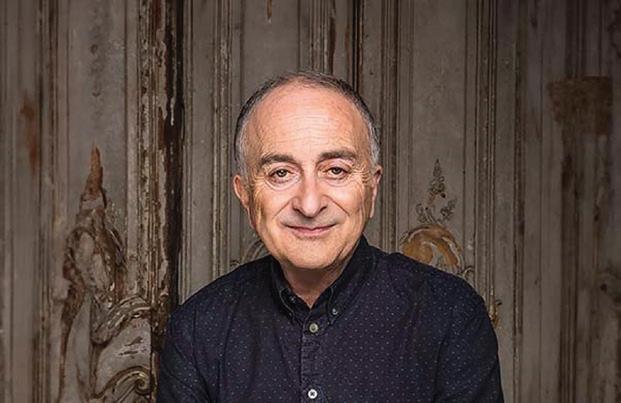
and a gala night Paint and Sip event. Artists are encouraged to participate, demonstrate, teach or propose new creative activities to canberraartfair@gmail.com
Musica Viva Australia presents A Winter’s Journey, a performance that merges music, storytelling and visual art. Olivier Awardwinning tenor Allan Clayton and pianist Kate Golla are joined by director Lindy Hume and videographer David Bergman, whose animated screens draw on works by the late Fred Williams. Llewellyn Hall, February 27.
The 2026 Canberra Art Fair invites working artists to dive into a weekend in May of making, learning and spectacle, featuring the city’s biggest Paint Party, live portraiture,
You Are Here celebrates the opening of its new Civic headquarters, located above King O’Malley’s Irish pub, establishing a shared space for exhibitions, events and collaborative projects. The City Walk base builds on earlier pop-up successes and signals an expanded future for artist-led programming in the city.
Prelude is a two-day immersive workshop led by visual artist
and Elizabeth Cameron Dalman. The program invites participants of all experience levels. At Mirramu Creative Arts Centre, 849 Lake Road, Bungendore, February 21-22.
Rising Tide, a new exhibition in Kiama by Canberra artist Alexander Boynes, brings together paintings, drawings and a moving image collaboration with an original score by cellist and composer Tristen Parr. Sevenmarks Gallery, February 14-March 14.

Jones was co-director with Terry Gilliam of Monty Python and the Holy Grail film, but Ross glosses over some of the criticisms of his other productions, such as The Saga of Erik the Viking and Absolutely Anything.

On the personal front, Jones had met in 2003 a young Scandinavian, Anna Soderstrom, then studying at Oxford University. Jones eventually left his wife Alison to marry Anna in 2012.
Comedy historian Robert Ross, who knew Jones well in later life, delivers a conventional, chronological account of Jones life from his birth in 1942 in Colwyn Bay to his death in 2020.
The gaining of a scholarship in 1961 to Oxford University was the making of Jones. Here, he gained his love of medieval literature – his first published book was a scholarly reinterpretation of Chaucer’s Knight’s Tale – and his meeting up with Michael Palin and the beginning of their long friendship and writing partnership.
Ross notes that Jones had always had what Michael Palin called ”dalliances” with women throughout his marriage. He was not the only Python in this regard. Eric Idle reflected in his memoir on the hedonism of the 1970s Monty Python fame.
Soon after the marriage, Jones was diagnosed with a rare form of dementia, an illness that was publicly evident, as Ross documents, in the massive Monty Python London O2 concerts in 2014. After his death in 2020 Jones’s brain was flash frozen for medical research
Ross is certainly a passionate advocate, sometimes overly so, for Jones, but overall he comprehensively captures Terry’s multifaceted creative achievements.

Anthea da Silva, poet Kathy Kituai
Sir Tony Robinson… The Playhouse, February 23.
Photo: Paul Marc Mitchell
memoir.
Photo: Loey Felipe/UN
Seriously Silly. The Life of Terry Jones.








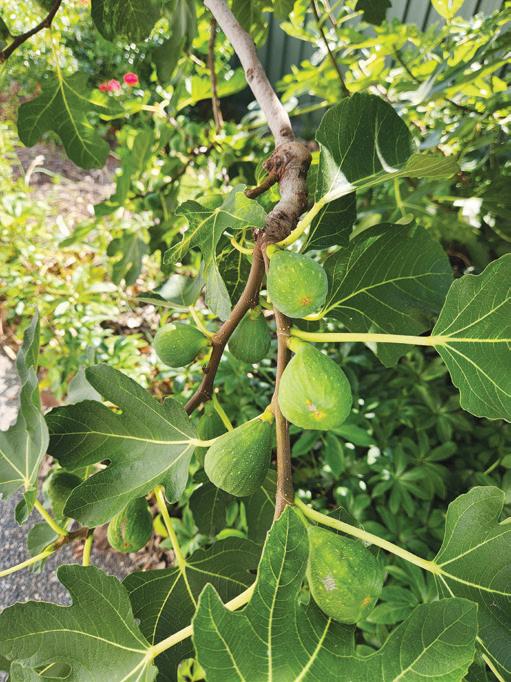
How to grow productive fig trees
By Jackie WARBURTON

They need as much light and
While even a neglected fig can sometimes produce an abundance of fruit, others may grow plenty of leaves but little or no fruit at all.
One of the first issues to consider is mosaic virus, which inhibits leaf and fruit growth. It is easy to identify, with yellow-mottled leaves, deep green stunted growth, and small, deformed fruit. If your tree has this virus there is no cure, and it is best to start again with a disease-free, grafted plant.

There are many other reasons a fig tree may fail to fruit, including overwatering, over-fertilising, or growing a cutting taken from a poor-cropping tree. This can be frustrating, especially when figs are described as easy to grow.
Once fig trees come out of winter dormancy, they produce leaves and new stem growth.
The first harvest of figs is produced on old wood in late spring and early summer. These figs are known as the breba crop and are produced before the main edible crop, which ripens in autumn.
Breba figs are sometimes large, dry, and not very tasty. To add to the confusion, some fig varieties do not produce a breba crop at all. These are known as unifera fig trees and produce one large crop instead.
If you are after a tree that produces medium to large, tasty figs in autumn, buying a grafted tree will ensure your years of growing a fig tree are not wasted.

The two best varieties for our region and climate are Black Genoa and Brown Turkey. Both are selffertile and do not require wasps for fertilisation.
Fig trees do not like wet feet, so plant them in raised beds with good compost and excellent drainage. They prefer a higher pH, so add a little lime when trees come out of dormancy, or use a fertiliser high in nitrogen and potassium to support fruiting.
BLUE-tongue lizards are local native skinks that are slow-moving and large enough to be easily seen in the garden.
Their blue tongue is visible when they feel threatened, but they are harmless and non-venomous. They should not be touched and are best left alone.
Blue-tongues mind their own business and live under rocks, logs, and small plants in the garden. They are often seen sunbaking during the day, as they are diurnal creatures.
They appear in backyards and gardens during the warmer months, and in our colder region these skinks give birth to live young, whereas in warmer climates skinks lay eggs.
An individual blue-tongue can live up to 20 years and is beneficial for controlling snails, slugs and
insects. However, they also enjoy strawberries, leafy greens, fruit, and flowers. Leaving a shallow dish of water in the garden is beneficial for them.
Other skinks found in our region include shinglebacks, commonly called bobtails. These are dark brown with yellow spots and have a stumpy tail. They can bite, but are not venomous. While a bite may cause bruising, it rarely breaks the skin.
Shinglebacks are mainly found in the northern parts of Canberra, can live up to 20 years, and mate for life. All blue-tongue lizards are protected and are not permitted to be kept in captivity.
jackwar@home.netspeed.com.au
Jottings…
• The Horticultural Society Autumn Flower Show, Fitzroy Pavilion EPIC, March 7-8. Doors open at 10am and entry is $5, free for members.
• Spray powdery mildew with a fungicide.
• Feed citrus with citrus fertiliser and remove old fruit.
• Trim summer growth on wisteria.
• Apply liquid fertiliser to all vegetables.




HOROSCOPE PUZZLES

By Joanne Madeline Moore
ARIES (Mar 21 – Apr 20)
Don’t become so focused on the busyness and minutiae of daily life that you lose sight of the bigger picture. Look to the horizon! Reviewing and resetting long-term goals, dreaming big dreams, and making time for meditation, contemplation and relaxation are the secrets to a successful week. But be extra careful and cautious on Friday and Saturday, when the unpredictable Mars/Uranus square could stir up your restless, reckless, accident-prone side.
TAURUS (Apr 21 – May 21)
Slow-moving Bulls prefer things to proceed smoothly, with no sudden surprises. However, with Uranus still transiting through your sign, life continues to be a series of ups and downs. Particularly this week, as unpredictable Uranus squares Mars, and Mercury goes retrograde. Don’t be afraid of change! Your motto comes from movie star (and birthday great) Elizabeth Taylor: “There are so many doors to be opened, and I’m not afraid to look behind them.”
GEMINI (May 22 – June 21)
Mercury starts reversing through your career zone on Thursday, so relations with a boss, work colleague, client or customer could be challenging. Over the next few weeks, do your best to pick your battles very carefully, choose your words very wisely, plus check all meetings and appointment times thoroughly. The period from Thursday until March 21 is a good time to do things with an ‘re’ in front … revise, remember, rehearse, revisit, rethink and reboot.
CANCER (June 22 – July 23)
On Monday, lucky Jupiter (in your sign) makes a lovely aspect with pleasure planet Venus, so make the most of any good fortune and fun times that come your way. On Thursday, Mercury starts reversing through your travel and adventure zones. If you are going away (especially interstate or overseas) make sure you double-check your itinerary. And (if possible) avoid signing contracts and legal documents (and making expensive purchases) until after March 21.
LEO (July 24 – Aug 23)
Hey Lions… Mercury Retrograde season starts on Thursday. So – if you stir up grievances with an old adversary – you could find you’ve bitten off more than you can comfortably chew! When it comes to relationship problems, avoid quick fixes (especially with relatives). You’ll come up with a satisfactory solution if you think things through and act on your hunches. Tune into the peace-loving influence of Venus as you learn to smile sweetly, forgive and forget.
VIRGO (Aug 24 – Sept 23)
Monday’s terrific for socialising and setting long-term goals. With Mercury (your ruling planet) in retrograde mode (from Thursday until March 21), resist the urge to over-analyse, over-worry, overstress and overreact. Especially involving close relationships (of the romantic and platonic variety) plus joint ventures. By all means think things through, but avoid getting caught up in an endless, obsessive loop. Try to relax and go with the flow.
LIBRA (Sept 24 – Oct 23)
The week starts well with a happy, welcoming Venus/Jupiter trine. But then – on Thursday – Mercury starts reversing through your daily routine and wellbeing zones, which encourages you to revise and reboot your diet and fitness habits, plus streamline your work output. Nutritious food, regular exercise and careful planning will help you through the week with extra pep in your step. But if you don’t communicate clearly, misunderstandings are likely.
SCORPIO (Oct 24 – Nov 22)
Mars, Uranus and retrograde Mercury are stirring up your domestic and friendship zones. Which could rattle your composure, fire up your frustrations, and amplify any relationship problems you’re facing at the moment. But don’t waste your time (and everyone else’s) with endless sulking and complaining. Instead, be inspired by movie legend (and birthday great) Elizabeth Taylor: “Pour yourself a drink, put on some lipstick, and pull yourself together.”
SAGITTARIUS (Nov 23 – Dec 21)
Most Sagittarians are happy, glass-half-full kind of folk, so Mercury Retrograde doesn’t usually throw you. You’re used to being disorganised and love it when plans change at the last minute! And you prefer to focus on the positives. This Mercury retrograde period (from Thursday until March 21) is a good time to do anything with an ‘re’ in front of it… revise, rehearse, review, remember and reconnect. Especially involving family members and domestic projects.
CAPRICORN (Dec 22 – Jan 20)
Mercury turns retrograde on Thursday. It’s the planet of clear thinking, communication (talking, texting and writing), transport, travel, commuting, commerce, computers, media and the internet. So it’s not a good time: to gossip; sign contracts; start a job or business; buy a phone, computer, car or home; launch a website; install new software; go on an important business trip or embark on a big holiday. Instead, be extra patient and wait until after March 21.
AQUARIUS (Jan 21 – Feb 19)
Is an ongoing financial problem bugging you big time? A combination of clever research and old-fashioned hard work will lead to a smart solution that ticks all the boxes. From Thursday onwards, retrograde Mercury challenges you to reboot your thinking, revise your money goals and devise a practical plan. With Mars and Pluto both visiting Aquarius, it’s time to be proactive and strategic as you charm the cynics, persuade the critics and dazzle the doubters.
PISCES (Feb 20 – Mar 20)
Monday is fabulous for fortuitous meetings, as lucky Jupiter trines sociable Venus (in your sign). On Thursday, Mercury turns retrograde (in Pisces) and – for you – health, personal projects, communication, computers and travel could be affected. So expect some of the following – fatigue, dodgy deadlines and delays, misunderstandings and mix-ups, backflips and breakdowns, reversals and recalls. A calm, patient Piscean approach will see you through.
Copyright Joanne Madeline Moore 2026
THE SIMPSONS

(6) 22 What is a pit for retaining the sediment of a drain? (8) 24 To devise something new, is to do what? (6)
2 Which musical direction suggests in a slow and solemn manner? (5)
3 Name a fictitious prose narrative. (5)
4 Which police officer ranks between a constable and an inspector? (8)
5 To turn around rapidly, is to do what? (4)
6 Which venomous snakes can assume a hood-like form? (6)
7 Name an article that is posted. (6)
12 Which term means plenty? (4)
14 To be more huggable, is to be what? (8)
15 Which term suggests wickedness? (4)
17 When one builds, one does what? (6)
18 To make certain, is to do what? (6)
20 To be angry or enraged, is to appear how? (5)
21 To abolish laws, is to do what? (5)
23 What, perhaps, is a level playing field? (4)
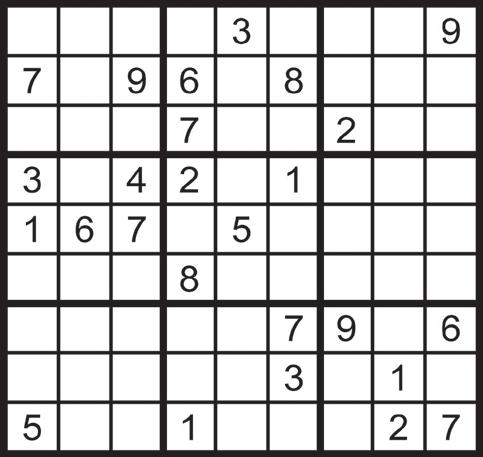

Los Angeles – Eight hundred episodes, 37 seasons, and one four-fingered family that refuses to age.
As The Simpsons hits a milestone few series have ever glimpsed this weekend, the architects behind Springfield are reflecting on the choices that turned crude 1987 shorts from The Tracey Ullman Show into a cultural juggernaut.
“We’ve done 800 episodes, and I’m really glad we didn’t do a big overarching story,” said Al Jean, executive producer and former showrunner.
“You always return to square one at the end of the show. And there’s no question that was a big influence on the longevity.”
For Matt Selman, the current showrunner, The Simpsons’ refusal to age is a liberation that simultaneously raises questions about the weight of their long history: “Do these characters have the emotional memory of the 800 things that have happened to them? … I don’t really know the answer to that.”
Meanwhile, show creator Matt Groening views reaching nearly four decades’ worth of production as a triumph tinged with perfectionism.
“I’ve spent 38 years now trying to get them to draw the characters correctly,” Groening said.
“We’ve got to figure out how to shift perspective and do it more cinematically and we’re always trying to improve.”
Episode 800, Irrational Treasure, has just aired in the US.
Nancy Cartwright arrived at her 1987 audition expecting to read for Lisa Simpson. She had other ideas.
“Hi Matt. Nice to meet you. I was out there and I noticed that there’s Lisa, that’s fine, eight-year-old middle child, but then there’s this Bart,” Cartwright recalled saying.
“I’d kind of like to do him.”
Groening agreed to the “switcheroo” immediately.
“She completely channelled him,” he said.
Nearly four decades later, Cartwright notes that “there are still people that yet don’t know that it’s a woman that does the voice.”
Lisa Simpson’s defining characteristic emerged just as spontaneously. Animator David Silverman, who drew the original outline for the show’s iconic opening sequence,
recalled a production meeting where the middle Simpson child lacked a signature moment.
“We don’t have a gag for Lisa, we have a gag for everybody else. What should we do for Lisa?” Silverman reflects.
“Jim (James L Brooks) said, ‘What if she played the baritone saxophone? In fact, what if she played it really well? That could be her character, she could be the genius kid of the family that nobody appreciates’.”
The show’s path to becoming a global institution was paved with early outrage. Groening remembers when Bart Simpson was deemed a threat to American classrooms – he relished every moment of it.
“That was the best move ever when the culture decided The Simpsons was too outrageous,” Groening said.
“And if you wear a Bart Simpson ‘Underachiever’ T-shirt to school, you got kicked out. That was the best thing for us.”
When Fox executives asked whether the show targeted kids or adults, Groening said the creative team made an immediate choice that defined everything that followed.
“We said it’s for adults,” he recalled.
“And that was the best instantaneous decision that we made because it meant that we could do a wide range of jokes.”
Guest stars have become a hallmark of the series, from Michael Jackson to Lady Gaga to the Rolling Stones.
“The ones that never said yes were US presidents and I don’t think we’re ever going to do that,” Jean said.
However, they have made appearances. In a 2000 episode, Lisa famously inherits the presidency from “President Trump” – one of several times The Simpsons has been credited with having prophetic qualities.
Jean offered a simple explanation: “Well, the predictions are accidental. We’re not from the future.”
Groening’s prediction for the show’s future carries characteristic sarcasm.
“Well, I can tell you this because we are time travellers,” Groening joked.
“The Simpsons will be on in a thousand years. Still on. Unfortunately, fans are going to say the show’s been going downhill for the last 500 years.”
As The Simpsons marks its 800th episode, its creators reflect on its success.
Photo: Fox Broadcasting