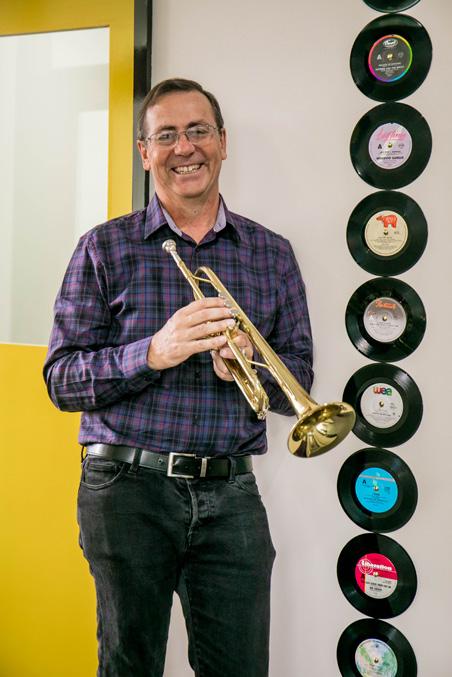
Singer BILLY BOURCHIER is about to step into a serious spotlight in Sydney
NEWS / Men’s Kitchen
Right, lads, it’s time you learnt how to cook
By Katarina LLOYD JONES
“My dad outlived two wives,” says Peter Watson, president of the Men’s Kitchen Association.
“When he passed away, he was in his 80s and he’d never been in the kitchen.
“He was just skin and bones, but not because he was ill, because he didn’t feed himself well enough, and he was too stubborn to get out and learn how to cook or do anything else.
“I think that’s what pushed me to realise that I don’t want to go down that route.”
From this experience, Peter formed the Men’s Kitchen Association, a place for men over 60 to learn basic cooking skills in a social and supportive envi ronment.
“What a lot of guys do, is they come to the Men’s Kitchen for nutrition and hygiene and cooking reasons, but they very quickly realise that that’s not why they keep coming back,” says Peter.
“They keep coming back because they just love the company and the fun.
“It is really a very holistic way of guys staying socially connected.”
Thanks to the help and support of the Woden Community Service, this year Men’s Kitchen is expanding from its base in the northern beaches of
INDEX
Arts & Entertainment 23-26
Crossword & Sudoku 27
Dining & Wine 25
Gardening 22
Keeping Up the ACT 9
Letters 13-14
News 3-14
Politics 8, 12
“They come to the Men’s Kitchen for nutrition and hygiene and cooking reasons, but quickly realise that’s not why they keep coming back.”
Kitchen in particular because she thought it would have been a great program for her dad to have participated in.
which is the target demographic for the program.
amount of interest for participation, they are still looking for volunteers and there are a few key roles they still
“Sam’s the only one in town at the moment, so we need a bevy of other people to come along and help us, to be cooking instructors, and also to take on some leadership roles, to help organise things and the logistics of each cooking session,” says Peter.
“We’re looking for a Canberra treasurer, so anyone with book-keeping skills or an accounting background, also someone to do a lot of the admin work, coming here and helping with registration, taking calls, providing information,” Sam says.
Sam says that they are looking for anyone that has the time and commitment to help, irrespective of their age, gender or background.
association after looking for volunteer opportunities following her retirement from the public service. She says she was drawn to Men’s
“I just thought it would be fantastic for him to have done something like that and not just the practical side of learning how to cook, but to meet other men, people in the same situation who have lost a partner and are living alone and they don’t know how to cook,” she says.
The Woden and Tuggeranong area has more than 10,000 men over 60,
“Men of that generation are not big talkers, but when they work in pairs side by side and chat about things, their story comes up and it’s in a really safe environment,” says Sam.
“It’s not the first thing you think of, but they cook together then sit down and share a meal, so it is a very social activity.”
While the new Men’s Kitchen program in Woden has seen a positive
They’re also keen to hear from any organisations interested in sponsoring the program, as they currently rely on the small membership fees of participants, Peter says.
There will be a meeting at the Woden Valley Uniting Church Hall, 11am, March 27. Anyone interested in volunteering should register their interest before then.
Register with Sam on 0456 408003, or email info.cn@menskitchen.org.au. Information about the association’s history at menskitchen.org.au
Since 1993: Volume 30, Number: 8
General manager: Tracey Avery, tracey@citynews.com.au
Senior advertising account executive: David Cusack, 0435 380656
Streaming 24 Cover: Singer Billy Bourchier. Story Page 7. Photo: David Duketis.
Journalist: Katarina Lloyd Jones, katarina@citynews.com.au
Arts editor: Helen Musa, helen@citynews.com.au
Production manager: Janet Ewen
Graphic Designer: Mona Ismail
Distribution manager: Penny McCarroll
With decades of experience, Kerstin will help you create a Will and Estate plan stipulating all your wishes and concerns.
Kerstin assists with:
• Wills and Testamentary Wills
• Power of Attorney
• Self-managed super funds
• Advice on potential claims against estates
• Advice for blended families
Woden
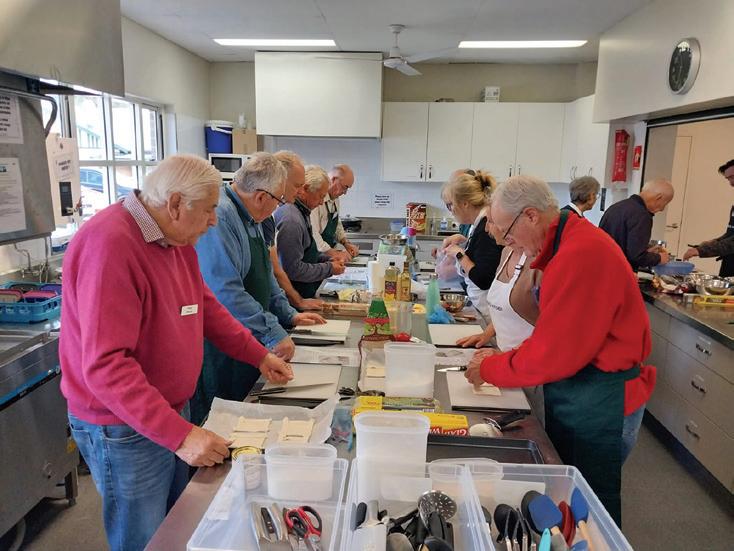
Sam Silver, lead volunteer for Men’s Kitchen Association, Canberra, at their new kitchen site, Woden Valley Uniting Church.
Photo: Katarina Lloyd Jones
Trenches dug as bomb panic sweeps Canberra
“Men and women of Australia… we are at war with Japan. This is the grav est hour of our history. We Australians have imperishable traditions. We shall maintain them. We shall vindicate them. We shall hold this country…” Prime Minister John Curtin, December 8, 1941.
It was widely seen as a precursor to a national “invasion”: the bombing of Darwin on February 19, 1942, shocking the country with our “largest single attack ever mounted by a foreign power”.
It is often declared Australia’s equivalent of the devastating Japanese aerial attack on the American naval base at Pearl Harbor, Hawaii, 10 weeks earlier on December 7, 1941. That awoke a “sleeping giant”, drawing a reluctant US into World War II.
In the face of current global unrest and concerns of a lack of critical support for the Australian Defence Forces, the 82nd anniversary of the “Battle for Australia” makes for a timely reflection.
As sirens belatedly blared across the landscape, some 240 Japanese aircraft terrorised the defencecritical NT centre over two raids and more than three hours.
In excess of 680 bombs – some 220 more than in the US experience –“raining like hailstones”, wreaked havoc. Ships were sent to the bottom
of the harbour, airfields and hospitals left as burnt-out wreckage and many of the unprepared populace fled, most never to return (though reports of widespread “panic” are another much-debated point).
With final figures of those killed contested – and many a theory on “government censorship” circulated – estimates range from the more accepted 250 to urban legends citing as many as 1000 casualties. Better agreed upon is that up to 400 people suffered injury.
As newspapers detailed, Aussies took a degree of comfort that our isolated island insulated us from a home-based war. However, part of the reasoning for the positioning of the nation’s capital – including being 222-kilometres distant from its port at Jervis Bay on the south coast – was to be far enough inland to offer a level of military protection.
In the wake of the dramatic events in the Top End, a 1942 newsreel solemnly pronounced to a national audience: “Now who will doubt that war has come to Australia?”
Over the course of more than a year, the idea that the security of the nation was perhaps more precarious
more pronounced.
Darwin continued to be a focus as “a vital asset in Australia’s defences against an increasingly aggressive Japanese Empire”.
Well into 1943, it and the country’s mainland, extending to WA and Queensland, was subjected to at least 100 more air raids, causing operational damage, compounding paranoia and killing perhaps another 1700 more.
Then, on the evening of May 31, 1942, an underwater offensive began with three Japanese midget submarines silently gliding into our very centre: Sydney Harbour itself.
One was self-imploded, another
crippled. A torpedo from “Midget A” sank the depot ship Kuttabul, killing 21 (it escaped, discovered in 2006 wrecked off the northern beaches).
HMAS Canberra, the first Australian warship fitted out with radar, was one of those present, recording she “may” have been fired upon.
Two short months on, HMAS Canberra was targeted by 19 Japanese torpedoes in the “Ironbottom Sound”. Struck by a stray, 84 died and the ship was scuttled.
Further crystallising fears, 1943 Anzac Day commemorations including at the new Australian War Memorial were curtailed due to a potential attack.
Evidence of the degree of alarm is also still to be found as far away as modern Canberra. In the backyards of long-standing homes such as Calthorpes House (1927) on Mugga Way, what might now be used as wine cellars were bomb shelters.
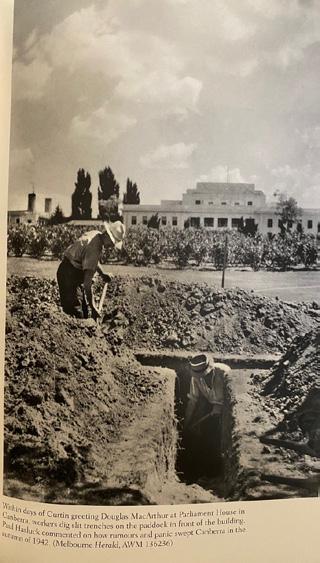
And in the rose garden of Parliament House, trenches were dug as “rumours and panic swept Canberra in the autumn of 1942”.
A “sweeping” inquiry had been implemented by the Curtin government shortly after the initial national trauma. Three years passed before it
was presented to parliament by the new Prime Minister, Ben Chifley, following Curtin’s death in July, 1945. Historian Peter Stanley in his 2008 book “Invading Australia” asserts the Labor leadership was by then aware the Japanese had “considered and rejected” the prospect of setting boots on these shores.
Curtin’s proclamation though, just after the “date which will live in infamy” as described by US President Roosevelt, had elevated underlying unease that was never effectively dispelled.
If, as Stanley holds, that keeping the “invasion myth” alive was about encouraging the public to continue to “work, fight and save”, 82 years on and given current challenging circumstances, would Australia be well served to heed the history of that rallying cry?
Nichole Overall is a social historian and journalist. She can be heard co-hosting the CityNews Sunday Roast program, 9am-noon, on 2CC.
ROY DANIELL
Senior clinician. Roy’s clinical interests include complex spinal pain, running injuries, and hypermobility disorders.
Experienced with hypermobility and Ehlers Danlos syndrome. Will is also an accredited and experienced Clinical Pilates instructor.
Passionate about helping people move better without pain. Special interest in climbing and kayaking injuries, as well as hypermobility spectrum disorders.
The gaping donation hole that corrupts elections
There is a gaping hole at the centre of our democracy that is distorting – if not corrupting –our elections.
It sucks in the big money to political parties which repay in kind, whatever the cost to those of us who vote on the issues at play.
It makes a mockery of the true test of governance – one vote, one value. The parties use Socratic arguments to muddy the waters, but it is not only a blot on our system, it is fixable. And here’s the rub – it would be greatly to Prime Minister Anthony Albanese’s advantage to fix it… and I suspect he will.
The ideal, of course, is public financing of elections with a fair distribution of funds to candidates.
The most obvious example of the problem has been the big consulting firms – Deloitte, EY, KPMG and PwC – who collectively raked in more that $4 billion in federal government contracts over the past decade after an outlay of a mere fraction of their investment to the major parties.
This revealed a conflict of interest which resulted in a PwC partner being booted off the Tax Practitioners Board. And they quickly broke off the tentacle of their operation that dealt directly with government and expected us to believe that gaping
hole was closed, for them at least.
Truth is, the damage was done.
According to the Centre for Public Integrity: “A peculiar feature of the Big Four’s donations is that they are largely party indiscriminate.
Between 2012-13 and 2020-22, some 47.8 per cent were to the Labor Party, whereas 52.19 per cent were to the Coalition.
“[This] shows that their donations are unrelated to any ideological goal or end sought but are rather focused on currying favour with whoever may
be in power. This trend in bipartisan donations has been observed among other large industries in Australia and characterised as a form of ‘state capture’.”
The Albanese government, through Katy Gallagher as Finance Minister, is embarked on the long, tedious task of returning some of the expensive expertise provided by the big four to the APS. Such is the speed of IT research, there will always be a gap between the multiple private frontiers and the public application. But at least
Albanese has the chance to cut those union financial ties as a quid pro quo while cracking down on the chief Coalition source to distorting – not to say corrupting – our electoral system.
that gaping hole can be minimised.
Traditionally, business big and small has backed the Coalition while the trade unions have been the mainstay of Labor. While private funding by businesses and connected individuals (such as developers) may be simply banned outright, Labor has claimed – correctly, if historically – that its members are exclusively the parliamentary expression of the unions’ ambitions.
That is no longer true, as the Big Four funding illustrated. More importantly, selective funding is now employed piecemeal by affiliated unions to particular factions of Labor, thereby giving them extra power within the party, often to the detri-
ment of good policy, and always to the cost of unity within Labor leadership.
Albanese, on the left of the party suffers from the threat of the wellfunded right wing, the bailiwick of his long-term opponent Bill Shorten whose eager leadership ambitions are still unrequited.
This provides Albanese with the chance to adopt a statesmanlike position that cuts those union ties as a quid pro quo while cracking down on the chief Coalition source to distorting – not to say corrupting – our electoral system.
Does he have the courage and the political finesse to pull it off? Well, If the neat way he dealt with Peter Dutton on the Stage 3 tax issue is any guide, I suspect that gaping hole at the centre of our democracy has an appointment with a political “shrink”. robert@robertmacklin.com
The big consulting firms Deloitte, EY, KPMG and PwC collectively raked in more that $4 billion in federal government contracts over the past decade.
Billy steps confidently into the serious spotlight
By arts editor Helen Musa
Billy Bourchier’s is almost the perfect story about a Canberra boy made good.
He’s scored the lead role of Tony in Opera Australia’s coming production of West Side Story for Handa Opera on the Harbour 2024.
When I catch up with him, he’s also just been cast in Opera Aus tralia’s planned production of Sunset Boulevard with Sarah Brightman in August, covering the role of doomed hero, Joe Gillis.
Bourchier is a Canberra boy through and through. Born at Calvary Hospital in 1994, he was schooled at Garran Primary then Marist College from grades 4 to 12, benefitting from the latter’s famed drama and music courses.
He studied piano from about age eight, then in years 11 and 12, armed with Marist’s Roma Flynn Music Bursary, he completed a double major in music under Margaret Smith, head of music and choir instructor, Gemma Heath.
“They made me audition for the boys’ choir and found out I could sing so they plucked me out for vocal tuition,” he says.
Locally, Bourchier’s name is familiar because he’s been appearing as a guest artist at the CAT awards for
years, beginning around 2005 after he performed in Camelot at the Bicentennial Hall in Queanbeyan.
CATs founder Coralie Wood and judge, Stephen Pike, singled him out and got him to audition for the lead in a production of Joseph and His Amazing Technicolour Dreamcoat.
Describing himself as “overjoyed that someone gave me such an opportunity,” he says Pike and Wood offered him “a well of support”, which meant more awards, including one in 2009 for playing Judas in Jesus Christ Superstar.
One of the lucky few to make it
straight from school into Queensland Conservatorium, he moved north to
“The preparation I had at Marist helped me to be at the right level at university, where I studied for a bachelor’s in musical theatre… it was a content-heavy course that very much prepared me for the industry,” he says.
It meant studying 8am to 5pm, Monday to Friday and appearing in shows on weekends, as Jack in Into the Woods, Young Tim in The Wishing Well and, hand-picked, in Queensland Performing Arts Centre’s Spirit of Christmas concert.
In first year, he says, he got a good theoretical grounding, placing him ahead of the game, but he notes that it’s not altogether uncommon for singers who can’t read music to learn
While at The Con, he got training in dancing and acting as well and says, “It stood me in good stead for my future… now I can call myself a singer-actor who can dance.”
Since graduating, he has been in constant demand as an ensemble performer in musicals, also covering the lead role of Chris in the Opera Australia’s Miss Saigon last year and in 2020 developing and performing his own cabaret show The Corner of Brisbane & Broadway.
As an ensemble performer in The Book of Mormon, he says, his jazz bal-
let skills were pushed to extremes, so he’s happy to hear that they’ve built a slip-proof surface on the harbour so that Jerome Robbins’ challenging choreography can be performed in the rain.
His family, including his in-laws, are still in Canberra, but with a two-and-a-half-year-old daughter, he and his wife are finding out all about life on the road.
“I feel like it’s very much my time, I feel I’ve got that momentum,” he adds, “Tony is a dream role.”
Trained as a boy soprano and graduating to becoming a lyric tenor, his register is considered perfect for the part.
The most challenging moment in West Side Story for him is likely to be hitting the top note in the number, Maria, belting it out at every show and at the mercy of the elements.
Bourchier is thrilled to be performing with rising First Nations soprano Nina Korbe, and believes that although West Side Story was first premiered on Broadway in 1957, the Romeo and Juliet story has, if anything, even more resonance than before.
Besides which, he says, “bringing it to a unique setting on the harbour, it’s like a dream.”
West Side Story, Sydney Harbour, March 22-April 21.
Photo: David Duketis
Auditor exposes Barr’s major financial failings
“The ACT government’s budget forecasts are simply not credible – and, indeed, they have not been credible for almost a decade,” write JON STANHOPE & KHALID AHMED.
The ACT’s current financial management framework was established in 1996 under the Liberal government of Kate Carnell.
As a consequence the ACT became a national leader in public financial management reform. Indeed, the reforms introduced by Carnell were subsequently adopted across Australia.
Over the past 24 years, while there have been changes and updates to the Financial Management Act 1996 , the broad framework is virtually unchanged and, in addition to prescribing controls on public monies, it requires adherence to the principles of prudent fiscal management, sustainability and intergenerational equity.
This may seem highfalutin or esoteric, but it was designed to ensure confidence in the integrity of the system and its accountability.
While it’s the budget that attracts most attention, annual reports and audits by statutory office holders provide an independent assessment of performance by government agencies that receive little coverage for reasons that go beyond the timing
of their release.
It is not uncommon for such reports to be released during the festive season. For example, the auditor-general’s most recent Financial Audit Report, namely No 11/23, was released by the government on December 19.
It provides an objective and independent assessment of the ACT’s financial position, free from the rhetoric and spin that has found its way into the budget papers in recent years.
In addition, the report provides results and findings on individual reporting entities. In any event, the public is poorly served by the release of such a fundamentally important report at a time the media and the community are otherwise distracted.
In relation to the operating budget, the audit concludes: “A net operating balance deficit of $892 million was incurred by the Territory in 2022-23 as the cost of services delivered by the ACT government ($8,496 million) exceeded its revenue ($7,604 million).
“The net operating balance deficit ($892 million) was greater than the budgeted deficit ($863 million) by $29 million (3 per cent) mainly due
to higher than expected employee expenses and lower than expected revenue from land sales.
“The territory estimates that net operating balance deficits will continue to be incurred over the next four years, however, they are anticipated to steadily decline from $794 million in 2023-24 to $214 million by 2026-27.
“This means that the costs of delivering public services are expected to continue to exceed projected revenue over this period.”
The last sentence sums it all up – deficits across all the forward estimates and, almost certainly, until well beyond the 2028 election.
To clarify, the audit is discussing the results at the total territory level, which includes government businesses such as the Suburban Land Agency. It is important to remember, when discussing the “net operating balance” that it is the budget reporting measure agreed by all jurisdictions in Australia, including the Commonwealth.
We have previously provided a comprehensive analysis of the ACT budget forecasts over many years and concluded that the government’s forecasts are simply not credible – and, indeed, they have not been credible for almost a decade.
Turning to individual agencies, the ACT Health Directorate received from the auditor-general a notice -
ably limited assurance report on its performance statement because it was simply unable to measure the results for four of its accountability indicators as required by the Financial Management Act.
Canberra Health Service was similarly unable to measure results for seven of its accountability indicators as required by the act. The ACT Local Hospital Network was also unable to measure the results of all of its accountability indicators.
In all these instances, the necessary data was not available from the Digital Health Record system. In short, none of these three health agencies met their legal obligations – a damning and shameful outcome for them and the responsible minister – Rachel Stephen-Smith.
In relation to the Chief Minister, Treasury and Economic Development Directorate, the auditor-general found that the interim results reported for two accountability indicators in the statement of performance, had been calculated on a basis that was not consistent with the method prescribed in the Budget Papers.
There was a similar audit finding in relation to the Environment, Planning and Sustainable Development Directorate with the auditor bluntly observing: “When results for accountability indicators included in the budget papers are incorrectly
measured or misinterpreted, there is a risk that the readers of the directorate’s statement of performance being misled on the actual performance of the directorate. The directorate corrected its statement of performance to accurately reflect the results.”
Audit findings on Chief Minister Andrew Barr’s own directorate have, of course, an added significance noting that the chief minister is also the treasurer.
Worryingly, the current audit report reveals that his directorate has not resolved an audit finding that was first reported in 2013-14, relating to the timely review of fortnightly salary reports. It observed that the lack of a timely review of salary reports increases the risk that incorrect, including fraudulent employee payments, will not be promptly detected and addressed.
The auditor-general has, in this report, exposed major failings in financial management by the ACT government.
One possible reform we consider may improve the budget’s credibility is for the budget estimates to be subjected to either a formal audit, or as a minimum, for an assurance report from the auditor-general be provided to the Legislative Assembly validating the claims made by the government about the estimates and the state of the budget.
BRIEFLY
How to trace family history
Family History ACT is conducting its annual course, Beginning Family History, over three Saturday afternoons from March 2. Participants can attend in person or via Zoom. Reserve a seat at familyhistoryact.org.au
Ukuleles for lunch
The Canberra Ukulele Band will entertain the ladies of the Weston Creek VIEW Club at their next monthly lunch meeting at the Woden Southern Cross Club from 11.30am on March 5. Guests are welcome. RSVP to 0408 864616 by February 29.
Councillor for dinner
Frances Turner, a new national councillor for VIEW clubs, is dinner speaker at the Tuggeranong Evening VIEW Club’s next meeting at the Town Centre Vikings Club, Greenway, from 6.30pm on February 28. Interested ladies welcome. RSVP to tuggeven@gmail.com
Team effort for charity
Relay for Life Team, the Bold Bandannas, is fundraising for the ACT Cancer Council with a stall at the fruit and vegetable markets in Belconnen, 8am-5pm, on March 2. They’ll be selling a range of hand-sewn items, including children’s dress-up clothes and handknitted dolls’ clothes and baby items. More information from 6231 0761.
LEGAL OPINION / suppression orders
How open justice can be needlessly damaged
When making decisions affecting others, the exercise of the power should be the minimum necessary for the circumstances.
How and why it is the minimum that needs to be explained by the decision maker.
To fail to explain or to overreach when imposing a decision upon others is to undermine public trust in the source and exercise of that power.
Recent events in Sydney illustrate how easy it is to go awry.
What follows is an example of how open justice (the notion that so far as possible what happens in our courts and tribunals is open to all to see and hear) can be needlessly damaged.
The background is straightforward. Around May 2023 a NSW police officer, member of some special group, is alleged to have got plastered at a couple of work functions, then driven the work car homeward, but crashed it and left the scene. Hence no testing for alcohol.
It is also alleged that their insurance report on the accident omitted to mention alcohol.
Criminal charges were laid last November, just within the six-month limitation period.
The NSW Police then applied in the Local Court (the equivalent of the ACT Magistrates Court) for the
To write this article I applied for a copy of the magistrate’s reasons for decision for the 40-year order for AB. Despite setting out my career experience and my article plan, my application was quickly refused.
identity of the allegedly errant officer “AB” to be suppressed.
Two Sydney Morning Herald journalists pointed out in midNovember that, “AB has appeared in media stories in recent years without police raising any concerns”. So what changed?
There’s an easy-to-follow 2010 NSW Law that covers “suppression”, the Court Suppression and Non-Publications Orders Act (the Act).
On December 1, a magistrate made an order that the identity of police officer AB (by which s/he is to be known) is suppressed, not for a few months, or a few years, but for 40 years.
That’s much longer than the 20 to 30 years claimed for secrecy with federal cabinet documents.
There is a proper way in which these applications are to be made and dealt with. An instructive, short example is the decision last year of the NSW Court of Criminal Appeal in O’Dell (a pseudonym) v R
The positive features of this decision are that the background circumstances, the reasons for sup -
pressing the identity of the offender, and the attention to there being “exceptional circumstances” are all clearly set out.
Any court making a suppression order must make clear how the facts and the order are linked so that there is no apparent “overreach” in the order (section 9.5).
Among the reasons (section 6) for making a suppression order are the need to protect the safety of any person.
The “person” (O’Dell) had given assistance to authorities (ie. implicated others) and was therefore at long-term risk of a revenge attack.
Importantly, the Act states that any order is to operate for no longer than is reasonably necessary to achieve the purpose for which it is made (section 12.2).
The court in O’Dell fixed a 30-year term. The bases for that period are not disclosed. Hence, we have no way of knowing how “reasonably necessary” it was. That is an omission in the disclosed reasoning.
These two 2023 cases, O’Dell in the Court of Criminal Appeal, and AB in the Local Court, demonstrate a flaw
in the Act.
“Media” has a right to appear and be heard on these applications; however, it is unlikely that it/they will have sufficient information to put a good argument.
It is difficult to know how to persuade a court when the court and other side have shared information – such as information handed up by police to the judge – that is withheld from you.
The Act needs to be amended to set up a panel of “contradictors”, that is experienced advocates who can be called on to assist a court about the competing arguments when these suppression applications are made.
Such “contradictors” need to be able to test and respond to the evidence and the submissions relied upon by police and/or prosecuting authorities. Hence, they need to be cleared to look at secret information.
These “contradictors” must also have a right to initiate an appeal against a suppression order.
The Act’s list of those that may now appeal is too limited. For example, “any other person with a sufficient interest” may appeal. That phrase does not include well-
intentioned busybodies.
To write this article I applied for a copy of the magistrate’s reasons for decision for the 40-year order for AB. Despite setting out my career experience and my article plan, my application was quickly refused. Were I to attempt to appeal the Local Court decision I would expect to fail as having “insufficient interest”.
Returning to the opening point of this article, what is “necessary” cannot be predicted with any certainty. Orders for 20 or 30 plus years are, on their face, beyond “necessary”. The speculation about an unknowable future is too broad.
The Act, therefore, should specify a maximum period, say 10 years, but permit a fresh application to be made if there are facts to support it.
Legal affairs columnist Hugh Selby is a former barrister. His free podcasts on “Witness Essentials” and “Advocacy in court: preparation and performance” can be heard on the best known podcast sites.
‘Minnesota nice’ shines in face of Fargo horrors
Fargo has become cult viewing but for those who came in late, the following is a brief explanatory history.
Fargo is an American dark comedy crime drama television series created and primarily written by Noah Hawley.
Fargo is mostly set in Minnesota and North Dakota. The show was inspired by the 1996 film of the same name, written and directed by the American filmmakers, brothers Joel and Ethan Coen.
The TV series premiered on April 15 2014 and follows an anthology format, with each season set in a different era and location, with a different story and mostly new characters and cast, although there are minor overlaps.
Each season is heavily influenced by various Coen brothers’ films, with each containing references to them.
Fargo is in particular known for its distinctive word patterns, which contribute to the series’ unique linguistic charm. The characters’ long vowels and sentence structure originate from the Norwegian, Swedish and German-influenced English spoken by late 1800s settlers.
Here are some key elements of Fargo, with examples:
Repetition of format: We are told
at the beginning of each fictional episode: “This is a true story. The events depicted in this film took place in [location] in [year]. At the request of the survivors, the names have been changed. Out of respect for the dead, the rest has been told exactly as it occurred”.
“Minnesota nice” is a cultural descriptor for the behaviour of people from Minnesota, implying polite friendliness, an aversion to open confrontation, a tendency toward understatement, a disinclination to make a fuss, the exercise of emotional
restraint, and self-deprecation.
Fargo characters often use excessively polite language, such as Lester Nygaard’s frequent use of “oh, geez” and “you betcha”. This mild language persists even in the face of horrendous crimes and extreme violence.
Regional accents: The midwest elongation of vowels and unique pronunciation is evident in phrases such as “you’re darn tootin’” or “dontcha know”.
Colloquialisms: Characters frequently use colloquial expressions, such as Lou Solverson’s “That’s a
Fargo’s cult status and success is in capturing the essence of the American Midwest, while telling darkly humorous tales.
heck of a thing” or Molly Solverson’s “yah, sure, you betcha”. Characters also use folksy expressions such as “oh, for Pete’s sake” or “you’re talking crazy now”. These expressions contribute to the down-to-earth and regional nature of the dialogue.
Dark humour: Humour often arises from characters making light of serious situations. Lorne Malvo’s deadpan response, “Well, that’s debatable”, when asked if he’s the devil, exemplifies the show’s use of dark humour.
Moral ambiguity: Characters use polite language to discuss morally complex situations. For instance, when Lester Nygaard says, “I’m just not sure I’m comfortable with it”, regarding murdering someone.
Cultural references: The series incorporates references to midwestern culture, as seen when characters make references to local customs.
Distinctive character voices: Each eccentric character has a unique way of speaking. Malvo’s concise and cryptic dialogue contrasts sharply with the verbose and bumbling speech of Deputy Bill Oswalt – known for his long-winded and elaborate speeches, such as his explanation of the fictional “Sioux Falls Massacre”.
The combination of all these elements contributes to the series’ cult status and success in capturing the essence of the American Midwest, while telling darkly humorous tales. It all results in compelling viewing!
On a lighter note:
• Ted was squatting at the gym until someone opened his locker.
• A hole in one is a great achievement – unless of course you’re the CEO of Boeing.
• My wife says I never buy her jewellery. I have to say in all honesty, that I didn’t know she was selling it.
Clive Williams is a Canberra columnist.
Martin Freeman as Lester Nygaard in Fargo… frequent use of “oh, geez” and “you betcha” mild language persists even in the face of horrendous crimes and extreme violence.
Doggy Day Care at Central Bark, Mitchell
Why
our MLAs like answering their phones?
All of the Greens MLAs, and most of the Labor MLAs do not like answering their phones. Just leave a message!
In marked contrast, the majority of Liberal MLAs do have someone who answers the phone and is helpful.
Only one of the ministers in the ACT had someone answer their phone. The rest relied on their answering machine to screen phone calls.
To assess the position of MLAs on the Voluntary and Assisted Dying Bill 2023, each office in the Legislative Assembly was phoned to assess their position regarding the “in principle” stage of the bill.
The Liberals made clear that there would be a conscience vote. I could not get this simple piece of information over the phone from Labor.
It was even more confronting from the Greens. The answering machine responded in each of the offices. The phone of new MLA, Laura Nuttall, rang out. As she was new, an hour later I attempted a second time. Rang out!
Although I have personal numbers of some of the MLAs, I did not use these as I became more interested in who would answer their phone than the substantive question on Voluntary Assisted Dying.
Only one of the ministers in the ACT had someone answer their phone. The rest relied on their answering machine to screen phone calls.
Only one of the ministers in the ACT had someone answer their phone. The rest relied on their answering machine to screen phone calls.
Health Minister, Rachel StephenSmith’s phone was answered. However, rather than put me through to the media adviser, or someone who understood the legislation, I was asked to put my question in an email.
An email! No thanks! I rang because I wanted to speak to a real, live person. That is the point of using the phone to make calls.
Two thirds of the Assembly, 15 of the 25 members, apparently believe that it is okay to screen calls with an answering machine. In a representative democracy, I think that this is simply not good enough.
Elizabeth Lee’s office was helpful. They
could not give me an immediate answer and, not too long after, I was phoned by a staffer to see what they could do to assist. The Liberals do have a conscience vote on Voluntary Assisted Dying. However, they are awaiting the tabling of the report of the Select Committee on the legislation to form a final view. It was a similar story for Nicole Lawder, Mark Parton, Elizabeth Kikkert, James Milligan, Peter Cain and Leanne Castley. I was hoping to count the numbers to determine if the legislation will pass when it comes before the Assembly. However, the Liberals will not make their personal position public until they read the findings of the Select Committee. This position may be annoying – but it is logical.
This is an election year. Granted, the election for the ACT Legislative Assembly is not until October 19. Even so, if MLAs are not prepared to listen this year – what chance is there of effective engagement over the period of the next government? Roads, rates and rubbish are probably the highest amongst the concerns that constituents wish to raise with the appropriate minister. But they will also
CONDITIONS
want the MLAs from their own electorate to pay attention to ensuring that civic amenity is to the highest possible standards.
In this respect, it is interesting to see the website of Independents for Canberra spruiking their approach for their public meetings: “Share your views on what needs to be done differently in your neighbourhood, what you’d like to see changed (or kept the same!) in your suburb and what your top priorities are for the ACT more generally”.
At the meeting of Independents for Canberra in early February, potential candidates and supporters were of one mind in complaining about accessing their MLAs. Thomas Emerson, joint founder of the group and likely candidate, pointed out that this was a key issue for him. Access to political representatives should be one of the key drivers in a vibrant democracy.
Mr Emerson said: “I’ve been speaking with community leaders representing diverse groups of people across the ACT and there’s a big appetite for a community-led independent movement at this year’s election”.
“This government has been in power for 22 years. More community involvement in how decisions are made is well overdue”.
Independents have sensed a weakness in the approach of two thirds of the current MLAs. No wonder they are now in the political business of exploiting that vulnerability.
Michael Moore is a former member of the ACT Legislative Assembly and an independent minister for health. He has been a political columnist with “CityNews” since 2006.
Arrogant Barr government is living in la-la land
I share the concerns of John Quinn (Letters, CN February 15) about the performance of the Barr government. The arrogant, tired government is living in la-la land having deceived itself into believing its overall performance is meritorious.
Its ongoing failures – the insufficient supply of social housing and greenfields land, the tram fiasco, the reduction in bus services, poor procurement (think HR upgrades, buses, CIT contracts), stadium paralysis, poorly managed redevelopment, the sick health system, ballooning debt, inadequate city maintenance and a failure to justify it actions – would be terminal for governments in most jurisdictions. It is having a deleterious impact on the quality of life of Canberrans, especially those of limited means.
The government is oblivious of the need to maximise the benefits from limited infrastructure funds, as its cavalier expenditure on the light rail money-pit is a prime example. Its poor priority setting is a result of ideology and inadequate analysis.
After serving Labor/Green governments since 2001, is the public service capable of providing frank, honest and timely advice based on the best available evidence; or does it simply implement government policy, no matter how half-baked?
The community deserves better. Can alternative voices, including emerging
independents, convince a largely disengaged community it is time for a change or will the community continue to consume the government’s baloney and suffer the consequences of living in Barr-Barr land?
Mike Quirk, Garran
Is the chief minister our Wizard of Aus?
Am I becoming delusional when I see a colourful, artist impression of tram stops near Parliament House, without any mention of cost?
And reportage of the ACT budget blow out ($340 million) that apparently, was not Treasurer Barr’s fault. It was the lower-thanexpected tax revenue, stupid!
Is our Wizard of Aus now conjuring up another illusion for Canberrans to dream of what’s to come on the road to the emerald city of Woden?
Canberrans will enjoy a slow, relaxing tourist ride, in a gold-plated tram, gliding smoothly on gold-plated tracks, around the “Big House” and around the picturesque streets of Barton.
Workers to/from Woden, wishing to get to work quickly, can just relax and be enthralled with that scenery, every morning and afternoon, enjoying their slow and expensive tram.
But I may be mistaken, he may be our “Dorothy” and Minister Steel, our “Tin Man”, metaphorically speaking, embarking on the “Yellow Brick Road” to enlightenment and
a deeper understanding of such mundane things as fiscal responsibility, budgetary constraints, accountability, transparency and compassion for Canberrans, struggling with cost-of-living issues, unaffordable housing, high rental costs and the like. Who knows? I might be dreaming or am I being “derailed” by a recurring nightmare?
Anthony Senti, via email
Housing crisis: building outside the box
Thank you to Jon Stanhope and Khalid Ahmed for the insightful analysis of the housing crisis in Canberra (“What a mess Barr’s made of housing”, CN February 8).
This crisis is of the ACT government’s own making. Undersupply is the main problem with an ever-widening gap between supply and demand. This lack of supply puts a floor under the price of existing houses and ensures that prices grow rapidly when housing finance is cheaper (interest rates).
The current construction slowdown reflects the high cost and unaffordability of housing. Homeowners cannot afford the massive mortgage burden and the construction industry can’t build efficiently with the high cost of land and limited supply of sites.
The chief minister continues to claim that supply of land has been adequate but feels the need for an additional $50 million of taxpayer’s money be given to the monopoly
land provider, Suburban Land Agency in the next budget to release more land.
The CM says he’s going to err on the side of land oversupply. The analysis published in CityNews shows the increasing undersupply compared with population growth for the last decade.
The two other important factors that need to be considered are the cost of land and the type of house being produced.
The ACT has the second most expensive residential land in Australia (per square metre) and is producing the highest proportion of units to detached houses in Australia, demonstrated by the current five-year program of 16935 dwelling sites aiming to produce 13620 multi-unit sites and 3315 sites for single dwellings. Too few and the wrong type.
The demand for houses over a million dollars is being met, but not the market for affordable housing.
There is a lot of focus on price gouging. Land in the ACT provides an example. The solution is not to release more land for unit developments.
The recent land ballots highlight an undersupply of affordable detached threebedroom house blocks. This is the housing type that Canberrans want.
Hopefully, the $50 million will go to releasing 500sqm blocks at $250,000. This is done in other jurisdictions. A house-andland package at around $550,000.
I suggest starting with an additional 1000 blocks annually pitched at this price will go a long way to addressing Canberra’s
housing crisis.
ACT Treasury has the talent to do a market analysis to find the price point for housing that’s affordable for the average household. Hint: it’s not close to $1 million.
Unfortunately, the current government is good at telling you what you want and not listening to what you need.
Ian Hubbard, via email
Beware the Liberal ‘progressive’ claims
Canberrans have been wary of the Canberra Liberals, in view of the party’s right-wing stance on many issues.
Clare Carnell, daughter of former Liberal Chief Minister Kate Carnell, is a disaffected former Liberal in response to the party’s attitude to the Yes vote last year (“Powerful start to election-year Assembly race”, CN February 8).
Yet another example of the LIberals’ retrograde policies is their commitment to wind back the phasing out of wood heaters in the ACT. This is despite the conclusive evidence of the damaging health impacts of wood heaters and wood smoke. I recently contacted two independents planning to run in 2024, namely Peter Strong and Ann Bray. They are both supportive of the ACT government’s decision to phase out wood heaters. Voters need to examine carefully any “progressive” claims
Woke runs amok on community noticeboards
It appears that prevalence of “woke” is now starting to affect even Community Noticeboards such as the Weston Creek Community Noticeboard (WCCN).
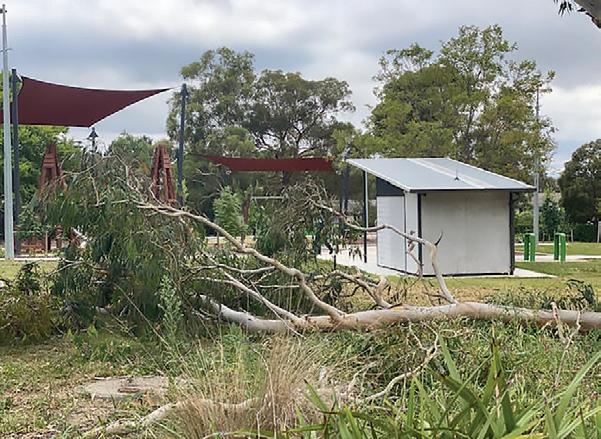
Recently, I reported to the WCCN that a very large branch from a eucalyptus tree had fallen next to the Duffy shops, where I was walking at the time, and also within the grounds of the new children’s playground which was established there.
I commented that parents should be aware of such a problem and that maybe the government should not allow plantings of large gums in playgrounds or at least have them checked regularly.
I also noted that I was aware that there were people in the community who felt that gumtrees were no more dangerous than many other trees. The existence of such people is a matter of fact as can be seen by their correspondence from time to time, but the WCC Noticeboard decided not to publish my notification, presumably because it contravened its “woke” standards.
They finally published it when I removed any reference to alternate positions held by others on the dangers of gumtrees in particular.
However, they now appear to have put a ban on me because a letter complimenting the government on removing the offending branch within 24 hours was also not published when first tendered, along with another mentioning that there as another McCarthy in upper Duffy who could possibly
of the local noticeboard and will inform its membership of that if, in fact, the noticeboard actually deigns to publish my notice.
Ric Hingee, Duffy
No to Mates’ Day, July 9 for me!
I agree with almost everything Richard Johnston says (“Australia Day date will have to wait”, Letters, CN February 8).
But his preferred Australia Day on May 8 (Mates’ Day) is not appropriate at all.
May 8 is the date of the UK Bank Holiday last year for the Coronation of King Charles III.
It’s also the date in 1660 when the English Parliament asked Charles Stuart II “please come back from Holland and be king again – sorry about your dad losing his head like that”.
However, July 9 is good. It’s the date in 1900 when Queen Victoria cut the apron-strings by signing the Australian Constitution into effect from the following New Year’s Day.
It solves the argy about 26 January. Too many holidays? Drop the foreign King’s Birthday in June and make July 9 Australia Day.
Move WA Day from June to their present King’s Birthday in September.
If a January beach holiday is still needed, NSW (including fellow colonies Queensland, Victoria and Tasmania) could re-establish Foundation Day. Call it Barbie Day and invite WA and SA as late starters.
Tady Carroll, Dickson
thought Wikipedia was so reliable!) but does not refute my statement that January 26 was only selected to be Australia Day in 1935, and it has been contentious ever since.
But never fear, I have another suggestion! Apparently Indonesia has declared their national polling day to be a public holiday, celebrating their nation.
Why don’t we take a leaf out of their book and declare federal polling day to be a public holiday and Australia Day, whenever it might occur?
Richard Johnston, Kingston
Those complaining will never be satisfied
If columnist Robert Macklin believes the British stole the land from the people who occupied it for 60,000 years, then is he not complicit in living here on stolen land? (“We are not yest a nation that embraces its past”, CN February 1).
He makes the comment: “They and the thousands of unique creatures of the land and waterways with whom they interacted fell to the guns of the pale strangers in their fancy dress” (a bit dramatic don’t you think?).
The creatures of the land and waterways were getting killed long before the white man arrived. What do you think the Aboriginals lived on?
The two thirds vote against the Voice was not against the Aboriginals, it was against
the lies being told by the PM and the true consequences of The Voice.
I do not agree that Australians do not embrace their past. Until recently Australians that I know were very proud, now we are being told we are bad people.
If we need to become a republic to mature it does not say much for us. When does the monarchy interfere with the running of Australia? Changing the date of Australia Day will do nothing, it will still be Australia Day. Also, changing the date won’t solve anything – the words of the complaints will evolve, but they will not cease because those complaining will never be satisfied.
Vi Evans, via email
Peer reviewing must come with care
Columnist Robert Macklin (“Peering into the science of Australian reality”, CN February 8) praises the peer review system, which is used by the publishers of all scientific research papers.
Having spent many years having my published work reviewed by fellow scientists, I feel I can write this with some authority.
When a paper is submitted to a selected suitable journal (“Nature” being the pinnacle), the journal selects the reviewers from a list of experts in the subject of the paper.
The identity of the reviewers is unknown to the author, which helps to ensure
impartiality and objectivity. It is also an important reason why the public can trust the opinions and advice of published scientists in fields such as medical research and climate change.
However, it is not always smooth sailing. My own PhD thesis, which, unknown to me at the time, was never read by my supervisor (the late Prof John Lovering), was rejected by one of the examiners, forcing me to revise and resubmit. I was subsequently informed that the rejection was by an elderly (and possibly a little “out of touch”) geologist who simply disagreed with the basic premise of my thesis. Reviewers, including of theses, must be chosen with care.
Dr Douglas Mackenzie, Deakin
Government drags its heels on active travel
A year ago the City News published my article, “Let’s build bus rapid transit to Woden”.
The president of the governmentfunded Conservation Council responded by expelling me from the council’s transport working group.
The 2004 ACT Sustainable Transport Plan set a target for walking to increase, from 4 per cent of journeys to work in 2001 to 7 per cent in 2026. In 2021 it reached 5 per cent. Cycling was to increase from 2 per cent to 7 per cent. In 2021 it reached 3 per cent.
The government’s new Active Travel Plan abandons those targets. Pedal Power, which is a member of the Conservation Council, says that the plan lacks budgets. Active travel is healthier and less polluting than public transport. We make five active travel trips for each trip we make by public transport. We travel two thirds as far by active travel as we travel by public transport.
The government is serious about funding public transport. It subsidises public transport operating costs by $10 a trip. It has committed more than $800 million to light rail Stage 2A, even though it expects it to produce only $150 million worth of benefits.
If the government is equally serious about funding active travel, its 2024 budget will include well over $500 million of active travel funding over the next four years.
Leon Arundell, Downer
A fallen gum tree bench near a children’s playground near the Duffy shops. Photo: Ric Hingee
Fyshwick not only represents one of the biggest and busiest business hubs in the capital, but it’s also one of the most diverse, offering art, gastronomy, shopping and more.
This week CityNews speaks to some of Fyshwick’s successful business owners who thrive on sharing their skills and services with the region.
Free-lesson week at Canberra Music Tuition
Canberra’s largest independent music educator, Canberra Music Tuition, has been committed to music education for more than 27 years and has expanded across three locations, with centres in Fyshwick, Belconnen and Weston Creek.
Founder Nick Pearson says each Canberra Music Tuition centre is located centrally so parents and carers can run errands while children are being taught, with Belconnen located on Walder Street, Weston next to Cooleman Court and Fyshwick across from Canberra Outlet Centre.
Canberra Music Tuition emphasises the importance of music appreciation, which Nick says brings an understanding of the arts and an understanding of expression in life and emotion.
“Most people don’t want to be profes sional musicians, they want to enjoy the music and love it, and that’s what we want to foster.”
Canberra Music Tuition specialises in oneon-one tuition, allowing lessons to progress based on the needs of any individual.
To celebrate new-starters in the music world, all three locations will open their doors for a “free-lesson week”, where anyone think ing about taking that step into music can try instruments from February 26 to March 2.
Canberra Music Tuition, Unit 1/24 Iron Knob Street, Fyshwick. Call 6299 9154 or visit canberramusictuition.com.au
situation is being rectified, so there is an indirect cost of losing productivity for days, weeks or even longer.
“The other cost is reputation, if an email account is compromised and sending spam email out to your clients, it is embarrassing.
“The third cost is that you have to pay your IT people or someone to clean up the mess after the fact.
“All up, it can be quite an expensive
In strengthening IT systems, Andrew says BluePackets can review what’s in place and offer clients technical advice on what needs to be implemented, as well as providing general user security help. It also offers end-user training and product-specific training, he says. BluePackets. Call 1300 664262, or visit bluepackets.com.au
• All Brass & Woodwind
• Piano • Guitar • Drums
• Voice • Strings
Canberra Music Tuition founder Nick Pearson.
BluePackets managing director Andrew Donehue.
European brands in a convenient location
Alan Arab, co-owner and creative director at Things of Desire, has been in the fashion game for a long time.
Alan says he and Angela Nichol, co-owner and art director at Things of Desire, had a store in Manuka for 25 years.
After a brief attempt at retiring, Alan says he and Angela decided to turn their warehouse space in Fyshwick into the new Things of Desire retail space.
“The new Things of Desire warehouse is in this unassuming Fyshwick area where it’s such a surprise, one comes through those doors to find an oasis in the desert of fashion in Canberra where everything is looking the same and uninteresting,” says Alan.
“We do very exclusive, bespoke items, items that no one else in Canberra, as far as I can tell, carries.”
Alan says there’s ample parking and without the worry of parking fines, customers can shop stress free.
“About 80 per cent of our stock is European imports,” he says.
“We’ve been to 13 countries attending fashion trade fairs, for instance, Paris, Milan, New York, Hong Kong, India, Japan and Korea.
“So we compose a lot of buying experiences, and we bring it back to Canberra.”
Alan says that Things of Desire also has a constant 50 per cent off rack in store, so customers will always be able to buy an exclusive, bespoke item for a bargain price.
Things of Desire, 23/8 Gladstone Street, Fyshwick. Call 6260 8844 or visit todesire.com.au
ALL ABOUT FYSHWICK advertising
Quality office furniture at an affordable price
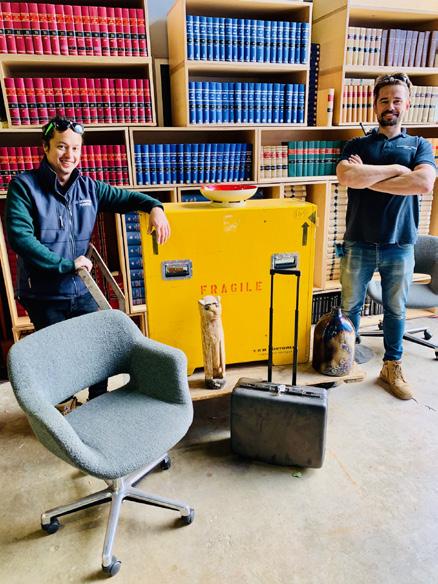
Co-owner of Ex-Government furniture James Fullerton says now’s a great time to get designer-brand furniture at a fraction of the retail price.
“We offer a wide range of quality and designer second-hand products, meaning that customers get the top Australian and global brands without breaking the bank,” he says.
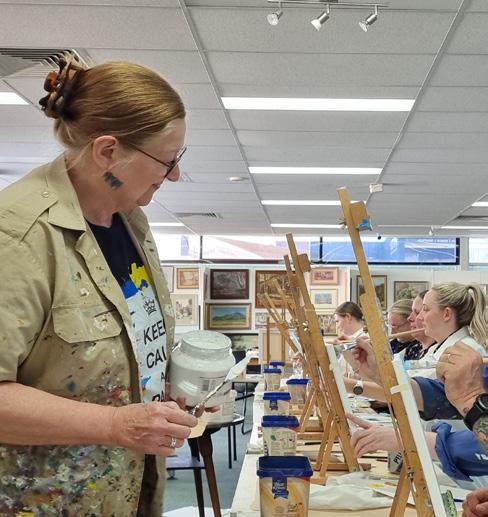
The Artists Shed is a privately run creative enterprise that’s a gallery, art school, art store and studio, says principal artist Margaret Hadfield.
Margaret has been a working artist in the Canberra/Queanbeyan area since 1990.
Although not formally trained, Margaret says she honed her skills and became a self-supporting artist.
She is an inaugural winner of the Gallipoli Art Prize and finalist in major art prizes, as well as completing many significant commissions.
Margaret says she developed her art practice through versatility and following her passion, which she loves to share with others.
“The Art School caters for most
“The Artists Shed is currently undergoing expansion, which will include two new artists to have their studio and gallery as a part of the space.”
The gallery includes Margaret’s nature and history inspired paintings as well as a space for “Friends of The Shed” to exhibit.
“The Art Store has quality art materials and hampers of art materials for art gifts,” says Margaret.
Margaret Hadfield Gallery, the Artists Shed, unit 1-3, 88 Wollongong Street. Call 0418 237766, or visit artistshed.com.au
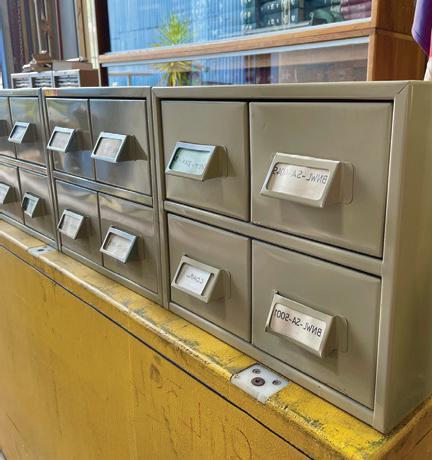
With new stock arriving every week, Ex-Government Furniture, a leading dealer in surplus office furniture, always has new items coming through the door such as chairs, tables, bookcases and desks, James says.
And, to help businesses from sending surplus office supplies to the tip, James and the team take on any furniture from offices that are upgrading, downsizing or moving.
“If you’ve got office stuff that needs to go, we can get it done,” he says.
The service helps businesses recycle unwanted furniture but also allows customers to come in and buy affordable second-hand or repurposed items, he says.
“Make a stop on your day in Fyshwick and come see our wide range of furniture,” says James.
James says they have recently received second-hand sit-stand desks in stock, and
“And with it all being second-hand, you can help the environment and you can save cash,” he says.
If the second-hand sit-stand desks aren’t suitable, James says not to worry, they also make new custom ones in house.
Ex-Government Furniture, 6 Yallourn Street. Call 6280 6490 or visit exgovfurniture.com or facebook.com/exgovfurniture
Principal artist Margaret Hadfield.
Ex-Government co-owners James Fullerton, left, and Taylor Radnell.
IT Infrastructure Support and Cloud Services
SECURE YOUR SUCCESS
The Importance of Servicing and Security in IT Solutions
In today’s digital world, security is crucial for all businesses, big or small. Without proper security measures, organisations face various risks like regulatory penalties, potential lawsuits from clients due to data breaches, and significant downtime or loss of valuable data. These risks can lead to financial losses and damage to the reputation of your company.
The cyberthreat landscape has evolved rapidly over the past few years, becoming more complex and sophisticated. This means that businesses need to stay ahead of potential threats to protect their sensitive information and systems from cyberattacks. Investing in robust security measures is not just a precautionary step; it’s a necessity to safeguard against ever-evolving cyber threats.
At BluePackets, we understand the importance of proactive security measures. We’ve observed a phenomenon we call the “Security Dividend,” where clients who invest in security experience fewer issues and require less reactive support. By prioritising security, our clients not only save money in the long run but also avoid costly outages caused by security vulnerabilities. Plus, the cost of implementing security measures with us is often lower than what competitors charge for reactive servicing alone, providing a win-win situation for our clients. Investing in security with us means investing in long-term savings and peace of mind.
the best quality from the best manufacturers”.
Located on Barrier Street, he says their stock includes safety work boots, leather shoes and steel-toed canvas shoes, from brands including Puma, Rockport and Dunlop.
It also has workwear for chefs, paramedics and firefighters, says Pat, who runs the business with his
Seears Workwear also has stores in NSW and Queensland, and Pat says they deliver all over the country.
Seears Workwear owners Pat Seears, right, with son Shane.
Experts who take time to get the training right CONFERENCES & TRAINING
Some of the best venues and providers in training and education are right on Canberra’s doorstep.
Tailored emergency training services
During 2007, amidst a landscape where the unpredictability of emergencies loomed large, a pioneering venture was born, says Gary Cheeseman, chief executive officer, Ferst.
“Our Fire and Emergency Response S afety Training business emerged not just as a service provider, but as a beacon of resilience and safety within our community,” says Gary.
“Driven by the core belief that people’s safety transcends the value of property, we have dedicated ourselves to crafting a safer future for all.
“Today, we stand as a testament to the power of preparedness, expertise, and unwavering commitment to safeguarding lives.”
Under the mandates of the WHS Act 2011 and based on the structure of AS3745-2010, Gary says their services have evolved beyond a basic offering and have become a crucial requirement for facilities nationwide.
“This regulatory backbone complements our ethical framework, ensuring that every organisation we touch not only meets but exceeds the standards of safety and preparedness,” he says.
“Our approach is holistic and people-centric.”
Gary says training programs at Ferst are meticulously tailored to address the specific needs of each client, ensuring a comprehensive coverage of all potential emergencies.
“From fire safety to natural disaster preparedness, from medical emergencies to evacuation protocols, our curriculum is expansive and all-encompassing,” says Gary.
“We believe in empowering individuals with the knowledge and skills to not only protect themselves but also to be vigilant guardians of their peers.”
Ferst, 1/2 Yallourn Street Fyshwick. Call 1300 333 778 or visit www.ferst.com.au
Over the last decade, FERST have provided emergency response training and solutions dedicated to keeping your workplace safe. Adhering to industry standards, WHS regulations and saving lives in the event of an emergency is our passion at FERST. We provide leading support tools and
training for emergency response, risk, and security assessments. We put people first.
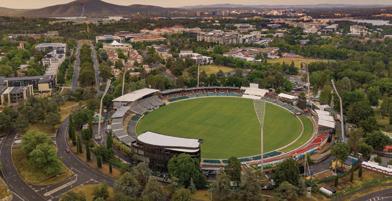
Established in the late 1920s as Canberra’s original cricket ground, historic Manuka Oval now boasts a contemporary events facility, where GEMA Group offer their services, says events manager Laura Van Rees.
“A multitude of catering options are available at Manuka Oval,” she says.
“Choose from one of our daydelegate packages, cocktail packages or gala dinners.
“Otherwise, you can work with your dedicated event manager to create a bespoke menu best suited for your event.
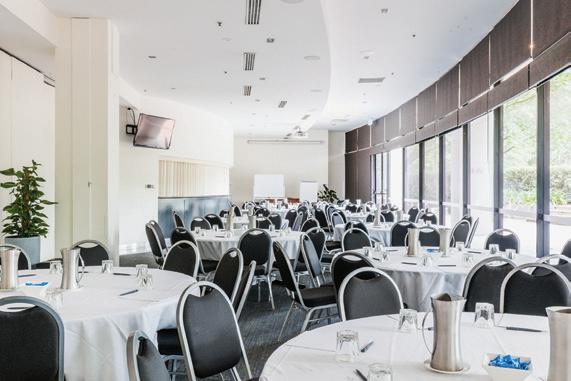
“Function rooms have large windows with views of the field and extensive natural light.
“It’s located in the Parliamentary Triangle, close to the CBD, and there are a range of hospitality and accommodation options nearby with Manuka Oval being within walking distance of the Kingston and Manuka precincts.”
The Crowne Plaza Canberra stands as a premier meeting venue and deluxe hotel accommodation, says Tim Bruen, director of sales and marketing.
“Established in 1989, the hotel has proudly carried the Crowne Plaza brand for over two decades. Boasting eight meeting spaces, six of which are bathed in natural light, it proves ideal for hosting education and training seminars, workshops, and board meetings,” he says.
“With a total of 296 rooms, it holds the distinction of having Canberra’s largest single-hotel inventory, ensuring ample accommodation for visiting delegates and facilitators.”
The commitment to excellence extends to various aspects of the venue, including quality food with a focus on a healthy-menu ethos, says cluster marketing manager Laura-Jane Hawkins.
“Break-out spaces feature natural light, while Redsalt restaurant offers a picturesque setting overlooking Glebe Park for hot buffet lunches,” she says.
“The venue is equipped with video conferencing,
high-quality audio-visual products and services, and secure undercover parking for delegates and attendees.”
For those looking to make a booking, Laura-Jane says Crowne Plaza has an enticing offer.
“Bookings with a minimum spend of $2000 will enjoy a 10 per cent discount if the event takes place between April 1 and July 31,” she says.
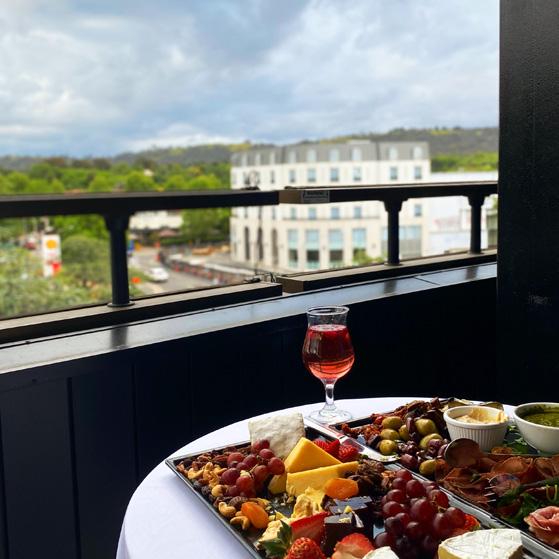
“The hotel presents a new menu featuring grazing boards or tables, full-day delegate menu packages, and canapé packages.
“The menu is designed to be allergy-friendly and can be customised to suit diverse dietary needs.”
“With its comprehensive offerings and commitment to customer satisfaction, the Crowne Plaza Canberra stands as a top choice for discerning business travellers and event organisers alike.”
This season’s wet weather has put tremendous growth on rhubarb and, if unpicked, clumps can grow to more than a metre wide and collapse.
Although winter’s the best time to lift and divide rhubarb, if it needs doing now, do it. It will only set it back a little, but not kill it.
Dividing rhizomes can be done using a fork to dig around the clump and remove from the soil. Cut it up into segments and plant into a deep hole, double the size of the crown, with added organic compost and plant with their necks proud out of the ground. Water in well.
Rhubarb needs good drainage to prevent fungal diseases, such as downy mildew or root rot. Like all fungal diseases, prevention is better than cure, and as soon as lesions appear, remove infected leaves and put them into the green bin.
Keep the leaves off the ground by planting rhubarb on a mound with good drainage. Some rhubarb will send up large flowering shoots and go to seed. The flower spikes are about a metre tall and are quite spectacular.
Some varieties will flower more than others, but generally a mature clump will seed. This means it’s to start dividing the rhubarb and replenishing the plant.
With oversized rhubarb, “tear” the stems from the base of the plant near the ground. Most importantly, to improve longevity, remove no more than a third of the foliage from the crown at one time.
I dehydrate rhubarb pulp in my dehydrator machine and have rhubarb leather (lollies) for snacks.
THE outdoor growing season for coleus in our region is very short, but it packs a punch with its vibrant array of foliage as potted colour to brighten a path or small garden.
It’s an old-fashioned plant from the Victorian era and has made a comeback with what its foliage has to offer small gardens and limited spaces.
It’s generally a small plant suited to pots that can be moved around to suit the climate. A glasshouse will get it growing through the colder months.
It needs lots of humidity and moist soil, but not wet. As an indoor plant, misting with a spray bottle will increase the humidity or place the plant on a shallow dish with water and rocks. It needs bright indirect sunlight. Outdoors, it does best with dappled light.
Regular tip pruning and pinching of stem growth will promote bushy plants. The flowers are insignificant compared to the foliage, but they have pretty racemes that sit about the plant and can be removed to encourage new growth.
Coleus is easy to propagate. Cut a stem with at least three to four nodes and place it in a little water on the window sill. Replace the water every few days and, in a week or so, there should be roots forming at the base of the stem, which can gently be placed into a potting mix and kept moist.
There are many new varieties available with velvet-textured foliage and in the brightest mix of colours. It can be used as a filler in the garden, a hanging basket or an annual display. Keep the foliage dry and water only at the base of the plant to prevent fungal diseases..
jackwar@home.netspeed.com.au
Jottings…
• Deadhead all flowers to encour- age new growth.
• Place lime in the soil where winter peas are to be sown.
• Net all apple and pear trees as fruit begins to ripen.
• Place diatomaceous earth around young seedlings.
SUNDAY ROAST
Rhubarb… needs good drainage to prevent fungal diseases.
Coleus… packs a punch with its vibrant array of foliage.
Photos: Jackie Warburton
ARTS & ENTERTAINMENT
Singing, acting, dancing, cheering, bring it on!
By Helen MUSA
Hamilton: the Musical is a worldwide phenomenon and now Canberra Philharmonic Society is staging a show partly written by its creator, Lin-Manuel Miranda.
Bring It On: The Musical is roughly based on the 2000 movie written by Jessica Bendinger. With music by Miranda and Tom Kitt, lyrics by Miranda and Amanda Green, it’s built around the American culture of cheerleading.
When I catch up with in-demand musical director Alex Unikowski, an avowed fan of musical theatre’s golden oldies, I find that he had only a vague idea about the show until recently, so has been on a steep learning curve, getting together with experts in cheerleading and hip-hop to create exactly the right sound for Bring It On.
Easy converts, we both agree that the title reverberates with the kind of adrenalin we associate with dance and music of the streets.
President of Philo Jonathan Rush joins our cheer squad, saying of the young cast: “They’re truly quadruple threats – singing, acting, dancing and cheering.”
Acknowledging that the show nods
towards a young demographic, Unikowski is keen to have it presented as something for the entire family, believing that there are no language problems or unsuitable issues but that it’s probably more relevant to people over age 13.
So, what’s it all about?
Briefly, a school cheerleader at the more privileged Truman High finds herself unexpectedly “redistricted” to the inner-city
one Unikowski believes might even be more pronounced since this show was first staged in 2011, delineating as it does the difference between the haves and the have nots and the need for understanding of diversity.
And while the narrative might depict a privileged girl showing the kids from the
she has led quite an insular life and that she has a lot to learn.
Questions of diversity are hardwired into the show, Unikowski tells me.
Kavitha Sivasamy, who has been cast to play a trans woman of colour at Jackson, La Cienega, says that in this musical, the
Blamey Street
character is never mocked for being trans.
Many cast members come from an on-musical theatre background, Unikowski says and because cheerleading is specialised, local expertise has been sought from “cheer consultant” Belinda Dawson, of Sirens Studio in Gungahlin, who often takes her troupes to the US to compete and win.
The show’s choreographer, Charlotte Morphett, is performing arts head at St Clare’s College, but she’s on a learning curve, too, saying: “I have had so much fun learning in this space and being able to fuse stunts with various styles of dance throughout the production.”
“Charlotte has created a hybrid genre, which is challenging and very exciting,” Unikowski says.
All the while down in the pit conducting and playing keyboard, he’s been overseeing an exotic mixture of instruments and a drummer who has to manage a regular drum kit and various drum pads as the balance between acoustic and recorded conventions in rap is met in a live show.
Unikowski recognises the sheer excitement that the rap and hip-hop sequences will bring, especially in the key rap “breaks: where the rappers will be downstage, backed by hip-hop dancers, cheerleaders and the full ensemble”.
Bring it on, I say.
Bring It On: The Musical, Erindale Theatre, February 29-March 16.
Cast members, from left, Charlotte Jackson, Jessica Gowing and Ashleigh Maynard.
New space thriller might defy Gravity
As streaming continues to dominate the way people watch television, the boundaries of what can be put on the small screen are being pushed further and further.
There’s perhaps no platform trying to bring the cinematic experience to people’s lounge rooms more than Apple TV Plus. What it lacks in quantity of content, it certainly makes up for in sheer quality of spectacle.
Take the recently released Masters of the Sky from Steven Spielberg and Tom Hanks, which feels like an epic war film of old brought to a laptop or phone screen.
Now the platform is trying to make the next giant leap with Constellation, a blockbuster space thriller that might just be streaming’s answer to Gravity.
Noomi Rapace stars in this moody sci-fi series about an astronaut whose life changes forever after disaster strikes the International Space Station.
While conducting an experiment on board, Jo (Rapace) and her crew are hit by space debris, forcing them to make a dangerous and death-defying return to Earth.
The catch? Upon returning to her home planet Jo finds reality isn’t as she remembered it.
At first these distortions in her memory start small: the colour of her car is different or old friends are now strangers but as the show goes things only get more bizarre and eventually frightening when Jo begins to question whether her own daughter Alice is even real.
Has her mind been afflicted with some kind of post traumatic stress from her narrow escape from death? Has some sinister force altered her memories?
The conceit of Constellation is to keep its audience guessing right up until its final plot twist unfolds.
It’s like if you took Gravity, dialled up the sci-fi and stretched it out over eight, hour-long episodes. The first three (released together) chart the emergency return to Earth before the following five (released weekly) dive into the conspiracy at play here.
It’s certainly those first three episodes that are strongest. The special effects and production values are some of the most impressive ever put to a streaming show.
Unfortunately, the same can’t be said for the remaining episodes which, though at times interesting, tend to outstay their welcome.
Ironically, it’s a plot that probably would have worked better as a film but there’s still a lot to love here for those willing to get caught up in the psychological drama that follows the show’s far more compelling survival story set in space.
While Constellation certainly has cinematic movement that warrants giving it a try, when it comes to the show’s more philosophical elements, unfortunately it’s reach for the stars is often well beyond its grasp.
HITTING Netflix this week is one of the year’s most anticipated releases: Avatar: The Last Airbender.
Not to be confused with James Cameron’s blockbuster saga about blue people, The Last Airbender is a live action adaptation of the popular animated series which tells the tale of Aang, a young boy who must harness the power of Earth’s elements to save a world being torn apart by war.
Fans of Avatar will remember the last time someone disastrously tried to turn the beloved animated series into the real deal.
That was M Night. Shyamalan’s 2010 film version that, to this day, is still considered one of the worst movies ever put to screen.
These days the debacle is streamable on Stan, though to say it should be avoided like the plague might be an understatement.
Now Netflix is offering a live-action version of Avatar the chance at redemption in the form of a new eight-part series.
Will it live up to the hype? Recently Netflix was able to pull off the live-action adaptation of another popular animated series – One Piece – with flying colours.
The show attracted 50 million worldwide viewers in its first month alone, and if it’s anything to go by, it puts “The Last Airbender” in good stead indeed.
Netflix might even have a new record breaker on its hands.
ARTS IN THE CITY
The
By Helen Musa
Somali, Samoan, Singhalese, Serbian – these are just a few of the more than 90 mother tongue languages spoken in Canberra, according to the 2021 Census.
That makes the ACT one of the most linguistically diverse places in the country and the natural home for the International Mother Language Movement, which every year celebrates the UNESCO-designated Mother Language Day on February 21. The 2024 Mother Language Day Walk around Lake Burley Griffin will be held on Sunday, February 25.
With a linguistically diverse bunch of Bengali, Welsh, Benin, Telugu, Indonesian and Portuguese speakers heading up the committee, the plan is to have a fun family day.
The event has grown in popularity since its inception in 2014, with community groups, diplomats, UN reps and politicians walking around the lake.
The march starts at 10.30am at the international flag display at Commonwealth Place and finishes near the police memorial, adjacent to the Kings Avenue Bridge with a picnic, barbecue and language games for children on February 25.
circus with an African beat
Afrique en Cirque, billed as perfect for all ages, draws on the West African Nyamakala tradition of cir cus. It is a blend of acrobatics, music and choreography – think daring acrobats, skilled musicians and authentic choreography, all to the rhythm of the djembes (drums) of Guinea. Canberra Theatre, March 1-2.
Visions of desert landscapes carpeted in flowers is the inspiration for Superbloom, The Song Company’s musical exploration of aridity and lushness. Works include Rebecca Saunders’ Soliloquy, Katherine Balch’s Forgetting, Jane Sheldon’s Flowermuscle, Michael Whiticker’s As Water Bears Salt and Hildegard von Bingen’s O Nobilissima Viriditas. Wesley Music Centre, Forrest, March 3.
Deborah Conway’s memoir, Songs from the Book of Life, comes to life in a musical story of rebellion and love. Performed by longtime partners Conway and Willy Zygier, the show traverses their four-decade-long careers. The Playhouse, February 29.
Meandering around the Murray is Canberra painter Val Johnson’s tribute to the mighty river, the result of time spent painting and following the Murray and its surrounds at Mildura and later from Tintaldra to Corowa. Strathnairn Homestead Gallery, February 28-March 24 .
is a fully-staged evening of songs over the piano and stars pianist Michael Curtain and mezzo soprano Anna Dowsley. It looks at
March 1.
Pulitzer prize-winning composer William Bolcom and Arnold Weinstein’s Cabaret Songs. The Playhouse,
Afrique en Cirque… Canberra Theatre, March 1-2.
Noomi Rapace stars in Constellation, a moody sci-fi series about an astronaut whose life changes forever after disaster strikes the International Space Station.
DINING / Bada Bing Dining
Club, Civic
Traditional with a modern flair
It’s worth heading to Bada Bing Dining Club in Civic just to indulge in the zucchini flower fritti with beautifully creamy, lemon-coloured saffron mayo ($20).
They are addicting. Super light. Super crunchy. Super salty and a sensational way to start a meal (my taste buds told me so).
Located in the Sydney Building Bada Bing is relatively new on the Canberra dining scene and it’s smashing it. The décor, with touches of retro, is warm and cosy by night, but bright and airy by day. The overall feel is traditional Italian but the dishes, created under head chef Brian Kelly, present with modern flair.
The menu kickstarts with antipasti and then moves to pizza, pasta, il secondi and contorni. Meals are designed to share, which is precisely what we did.
We fell in love with the crudo ($25), which looked as stunning as it tasted. Carefully separated sections of bright orange mandarin, celebrating all things citrus, were set among square pieces of raw tuna and scallop. Scattered on top, for more colour and contrasting taste, were tiny pieces of eschalot ($25).
Our magnificent main ($45) was handmade tortellini, stuffed with prawns and scallops. This impressive dish featured cavolo nero and a light rose sauce. Nestled into the crevices of some tortellini was roe, which popped with flavour. The pasta was a perfect thickness and perfectly cooked – not too soft but rather firm and slightly chewy.
To cut through we ordered the bitter leaf
WINE
salad ($15) with pine nuts, walnuts and burnt mandarin. Vibrant in colour, and showcasing pieces of white-veined red radicchio, the salad was zippy. It’s wonderful how a few ingredients tossed in a simple but refined dressing can make such a statement, although we agreed the salad would have benefited from a bit more dressing.
Six pizzas are on the menu, which we’ll road test next visit, ranging from $26 to $32. Pastas include an intriguing-sounding risotto with Balmain bug ($38) and a hearty lamb ragu ($36).
Mains include a veal parmigiana ($45), swordfish cutlet ($38) and a one-kilogram Bistecca (45 minutes needed to cook the steak just so, $120).
We felt full but not overly so and didn’t want
to overstep the mark with dessert. The line-up, however, includes pistachio gelato with cherry liqueur ($20), lemon and ricotta cannoli ($12) and tiramisu ($18).
Bada Bing’s wine list has been thoughtfully curated by sommelier Brady Scholes and staff are attentive (some still learning the ropes on our visit, but proud to be doing so).
We dined at a table near the window. Bada Bing has plenty of bench seating. An open bar area is on the second level (when it’s super busy the noise bounces about a fair bit).
So what goes best with smoke?
I’m hazy about why I very much like foods flavoured with smoke.
It has nothing to do with the fact that my oven needs cleaning so badly that the fumes when it’s opened often set off my smoke alarm.
I am partial to the evocation of wood smoke that is subtle yet flavoursome rather than the taste you get when you’ve left the potatoes on the stove for too long.
To be clear, I’m not talking about the nasty medical condition called dysgeusia where a variety of causes including sinusitis and a rogue virus leave the poor victims with a condition where they constantly suffer from a persistent taste of ugly smoke or metal, a path even further down the pleasure ladder than getting anosmia from the COVID-19 virus.
I’m talking about that extra piquant flavour kick you get from foods that have been smoked. It is really difficult to describe because it is so unlike the taste that is left in your mouth when the campfire makes your eyes water after the wind changes direction in the middle of Kumbaya. It’s a world away better.
Remember it’s all just a fireplace without the fire: the smoke is entirely for flavour. As Ricky Gribling in his 1997 book Smoking Food reminds us, before the invention of refrigeration “the sole purpose of smoking food was to preserve surplus quantities against leaner times.”
Forget taste first as a principle – “when it’s been successfully brined and then smoked, we have enough food for the winter otherwise we die” brings a different perspective.
This current crush isn’t about death or destruction but the elevation of the taste buds through a punch of brine or salt and spice combined.
Death may be accelerated by ingesting too much salt, but the expense of most smoked foods now means that the budget is a natural
limit to the over-indulgence of this corner of the fancy food world.
But what of wine with smoked salmon or smoked duck breast, two favourite examples of the benefits to taste of the smoking process? Some assertively framed answers were provided by a January 2023 article entitled “Idiot’s guide to wine pairing with smoked foods”.
The main proposition is that smoked foods have intense flavours that “tend to suppress the wine, making it taste flat and boring. If acidic wine is paired with intensely flavored (sic) smoked food, then the war of both flavors (sic) can make the pairing pungent.”
Agreed, but from that mainstay there follows a list of grape varietals and an assertion about their predominant characteristics that therefore mean they match with a specific smoked food; I didn’t agree with many of the statements. An example: “Chardonnay and sauvignon blanc: These light flavored (sic) wines have a sour fruity taste which pairs best with smoked fish or poultry.”
I’d never serve a sauvignon blanc with smoked fish. Rarely is this varietal “sour” and often, especially if French, is not fruit forward. Similarly, chardonnay can vary from the fantastic minerality of a chablis (which does go well with smoked salmon) or a punchy, oaky buttery style that, in my view, doesn’t suit smoked salmon or other smoked fish.
For smoked salmon, consider a local rose’, especially a dry Vintner’s Daughter that marries with this fish perfectly. For smoked duck, I must recommend a good NZ (Otago) pinot noir that has both boldness of flavour and a delicate finish. No more advice: I’m burnt out.
Zucchini flower fritti… with creamy, lemoncoloured saffron mayo. Photo: Wendy Johnson
Books: the trophies and tragic victims of war
Andrew Pettegree, professor of Modern History at the University of St Andrews reveals in The Book at War how “print in all its manifestations”, which includes books, newspapers, scientific papers, maps, letters, diaries and leaflets, has shaped the course of war throughout history.
The book explores the weaponisation of book culture under six main headings: building a fighting nation; libraries as munitions of war; books on the homefront; providing books for troops: book plunder and destruction in wartime; reconstruction of book stocks and the war for ideological supremacy in the Cold War.
Pettegree demonstrates that, throughout history, the content of books can be used for good or evil. They can stimulate patriotism but also spread misinformation as “vectors of poisonous ideologies”.
Pettegree asks: “Was the bombing of libraries, the destruction of books, always a tragedy… Should we lament the loss of the nine million copies of Hitler’s Mein Kampf circulating in Germany by 1945, or the 100 million
20th centuries were “fought between the world’s most bookish nations”. Throughout history, books have provided military strategic frameworks, Pettegree highlights Sun Tzu’s sixth century BCE classic The Art of War; Machiavelli’s similarly titled The Art of War (1521) and Carl von Clausewitz’s On War (1832). Other publications were either implicitly or explicitly intended for influencing a particular cause.
in books, while library associations and publishers provided books to frontline troops, particularly notable were the US Armed Services small paperbacks. In total, 122 million copies of more than 1300 titles were delivered to armed forces personnel. The accessibility of print and the low unit cost of books proved essential in war.
In a different kind of war, we see libraries today, especially in America, under threat from groups such as creationists and school library “parents’ rights” groups seeking to remove or destroy books, thereby restricting free speech and attacking democracy.
electronic infrastructure databases and digital content.
The British Library was effectively “technologically immobilised” with rebuilding the database and new cyber defences expected to take up to 12 months and cost between six and seven million pounds.
copies of Mao’s Little Red Book destroyed when his cult receded?”
In that context, while the Nazi book burnings of the 1930s are to be absolutely abhorred, we forget that significant numbers of German books were burnt in America during World War I.
Books have always been trophies or victims of war. Pettegree, in the first chapter, references the Roman general Sulla “parading through Rome with Aristotle’s library as a looted spoil of war”. The Spanish deliberately destroyed the records of the Aztecs and Mayan civilisations
and propagated Catholic texts, while in the 17th century Swedish forces ransacked the libraries of central Europe in order to stock Swedish libraries and to limit the spread of Catholic texts.
During World War II, Poland lost 90 per cent of the contents of its public and school libraries and in 1992 Serbian troops deliberately targeted the National and University Library of Bosnia-Herzegovina. Destroying libraries has over the centuries been seen as “a thrust at the heart of an enemy society”. Pettegree ironically notes the major wars of the 19th and
Harriet Beecher Stowe’s Uncle Tom’s Cabin, for example, proved influential in shaping Union support for the Civil War. George Orwell’s Animal Farm was especially popular in the Cold War. Pettegree reflects that the best works of propaganda were never originally intended as such. Books can also provide relief in times of war. Anne Frank, hiding from the Germans in Amsterdam during World War II, found solace
Pettegree, while recognising “the domination of new technologies of war-making and information gathering”, as reflected in the RussiaUkraine war, does not go into detail in this respect.
When the internet goes down so does society. The major cyber attack in late October 2023 on the British Library in London represents a different kind of war on the book and its digital fragility. The ransom attack on the British Library totally dismantled access to the library’s
Pettegree’s concluding remarks on the continued importance of the printed book resonate here. Many university libraries, including in Australia, have, in recent years, deaccessioned hundreds of thousands of physical books on the premise that digital copies are available. Pettegree sums up “the library is far from dead, and its contents will continue to be a subject of social and political importance”.
The Book at War: Libraries and Readers in an Age of Conflict by Andrew Pettegree. Profile Books. Rrp: $55.
The bombed library at Holland House, London, in 1940 with readers apparently choosing books regardless of the damage. The spectacle was believed to have been staged for propaganda purposes.
Photo: Central Press/Hulton Archive/Getty Images
HOROSCOPE PUZZLES
By Joanne Madeline Moore
ARIES (Mar 21 – Apr 20)
Impulsive, feisty planets Mars and Jupiter are stirring up your horoscope, so prepare for a challenging week full of inconvenient disruptions and dramatic surprises. Being a hot-headed, rambunctious (or rude) Ram will just land you in a heap of trouble… especially involving friendships or financial matters. Simmer down, before you say or do something that you later regret. You’ll find cool cooperation will get you a lot further than fiery confrontation.
TAURUS (Apr 21 – May 21)
With so many planets in Pisces and Aquarius, being flexible is the key to a successful week. If you are too stubborn and unyielding in your opinions, then others will just stop listening to what you have to say. And if you are too slow off the mark (and hesitant to take action) then others will streak ahead of you, especially at work. So your motto is from fellow Taurean, actress Shirley MacLaine: “Don’t be afraid to go out on a limb. It’s where all the fruit is.”
GEMINI (May 22 – June 21)
You’re keen to connect with others as four planets activate your career zone. It’s a terrific time to converse and communicate, text and tweet. People are waiting to hear what you’ve got to say as you brainstorm your creative ideas. Mercury (your ruling planet) makes positive links with the Sun, Saturn and Jupiter, so stop procrastinating and start delivering! Be inspired by birthday great, writer and illustrator Dr Seuss: “Only you can control your future.”
CANCER (June 22 – July 23)
Cancer folk can be super cautious … spending too much time at home in your cosy comfort zone. But this week – with the Sun, Mercury, Saturn, Neptune and Jupiter all activating your travel-and-adventure zone – it’s time to crawl out of your Crab cave and be much more adventurous. Be inspired by Hollywood movie star (and birthday great) Elizabeth Taylor: “There are so many doors to be opened, and I’m not afraid to look behind them.”
LEO (July 24 – Aug 23)
This week’s spontaneous stars increase your restless side and your independent streak. Work projects are particularly favoured, as you connect with influential friends and creative colleagues. Clever Cats will resist the urge to be bossy and self-indulgent. You’re in the mood to take a professional risk or go on a grand adventure but avoid saying the first thing that pops into your head. Sometimes silence is golden, and some things are best left unsaid.
VIRGO (Aug 24 – Sept 23)
Don’t be too set in the way you think the week should develop. With Mars and Uranus shaking things up, expect last-minute delays or disruptions that will keep you on your toes! Attached Virgos – take the time to talk through problems with your sweetheart. Singles – look beyond the exterior package that a potential partner presents. Killer curves or bulging biceps may seem enticing but – if the two of you can’t communicate well – it’s just not going to last.
LIBRA (Sept 24 – Oct 23)
Librans long for peace and harmony. You want everything to run smoothly this week, but it may not happen! Relationships will be unpredictable and loved ones disruptive, so revise your expectations and just take things as they come. With four planets activating your daily routine zone, look for exciting ways to expand your influence in the world around you. You’ll find the more you extend yourself and encourage others, the more successful you’ll be.
SCORPIO (Oct 24 – Nov 22)
The stars favour decorating, redesigning or renovating your home environment, and some Scorpios will move house. But are you brooding on the past… and kicking yourself for romantic or career opportunities you’ve missed along the way? It’s time to learn from your mistakes and move on. Your motto for the moment is from birthday great Johnny Cash: “Close the door on the past. You don’t forget the mistakes, but you don’t dwell on them.”
SAGITTARIUS (Nov 23 – Dec 21)
Four planets (including Saturn) are stirring up your domestic zone, and disruptive Mars squares your ruler, Jupiter. Which could rattle your composure, fire up your frustrations, and amplify any family problems you’re facing at the moment. But don’t waste your time (and everyone else’s) with endless complaining. Instead, be inspired by movie legend (and birthday great) Elizabeth Taylor: “Pour yourself a drink, put on some lipstick, and pull yourself together.”
CAPRICORN (Dec 22 – Jan 20)
This week the Sun, Mercury and Saturn encourage you to listen to loved ones closely and keep the channels of communication open. Is a family member going through a rough patch? Don’t lecture them! Strive to help them in compassionate and generous ways. But it may be time to be more proactive about money matters and reformulate your financial plans. When it comes to work and business, it’s much better to under-promise and then over-deliver.
AQUARIUS (Jan 21 – Feb 19)
Jupiter and Uranus send disruptions in your direction (especially involving domestic and family matters), plus Mars demands that you stop being stubborn and start being more adventurous. The only certainty at the moment is change! You’re feeling ridiculously restless but try to modify your reactions, otherwise it will be a long and tiring week. Just because you’re in the process of shaking up your life doesn’t mean you have to unsettle everyone around you.
PISCES (Feb 20 – Mar 20)
The Sun, Mercury, Saturn and Neptune are transiting through your sign. So you’re emanating some serious charisma this week! Make sure you celebrate the creative and compassionate Piscean within via writing, singing, dancing, drawing, painting, playing music or helping others. But resist the temptation to spill secrets and blurt out something inappropriate – especially to a relative or neighbour. Friday favours short trips and fun community connections.
Copyright Joanne Madeline Moore 2024
Across
1 To begin hostilities, is to do what? (6)
7 What is a right held by one person to make use of the land of another? (8)
8 What might we call a person of no importance? (6)
9 Name the Scarlet Pimpernel, Sir Percy ... (8)
10 Which term describes stereophonic sound reproduction? (6)
11 What is a tuft of feathers arranged as a head ornament? (8)
14 Name an earlier Christian involved in the recovery of the Holy Land. (8)
18 Who wrote “On the Origin of Species”, Charles ...? (6)
19 What is a recognition of merit, as an award, honour, or public tribute? (8)
21 Napoli is an alternative name for which SW Italian seaport? (6)
22 Name a British fighter aircraft much used in World War II. (8)
23 To lose weight is to do what? (6)
February 26-March 3, 2024 Sudoku hard No.
1 Which person suffers from loss of memory? (8)
2 To be in or on a ship, is to be what? (6)
3 What do we call the set of keys on a typewriter, etc? (8)
4 Name the world’s largest continent. (4)
5 What is the base unit of electric current? (6)
6 To which animal group does a centipede belong? (6)
12 Who looks after a plot of flowers or the like? (8)
13 To disappear gradually, is to do what? (8)
15 What is a formula for preparing a dish in cooker? (6)
16 Name another term for ermines. (6)
17 What is a three-legged stool? (6)
20 What is an elaborate melody for a single voice? (4)
LUNCH INVITATION
Vintage Reds celebrate a decade of activism
The Vintage Reds will celebrate a remarkable first decade of social and political activism with a special lunch at the Ainslie Football Club on Tuesday, February 27.
Vintage Reds of the Canberra Region is a group of retired unionists. They’ll be joined at the lunch by leaders and members of the trade union movement and other guests with whom they have campaigned over the last 10 years.
The lunch will be an opportunity for Vintage Reds members and guests to look back on the last 10 years of activism as well as ahead to further adventures.
“Over 10 years, they have become a new force for positive social change using the experience and wisdom of their combined working lives,” says Garrett Purtill, convenor of the Vintage Reds. Formed in 2013, the Vintage Reds is affiliated to UnionsACT and is a member of the ACTU Retired Unionist Network.
“Our members have all been members of their workplace unions (as paid officers, delegates, negotiators, workplace health and safety representatives and rank and file) and we saw no reason why our skills should be ‘retired’ simply because we ourselves have reached that milestone,” says Garrett.
“We saw that our interests and skills could still be useful in advocating for the interests of seniors and as unionists we saw that the best way to do that was to join together.
“Our members have many interests and the choice of guest speakers at our monthly meetings reflects those.
“However, we try to keep a focus on those things where our members might benefit from a united voice, such as aged care and retirement village living.”
Co-convenor Jane Timbrell says: “We are not party political, but we do get involved in union campaigns such as the recent Voice referendum and supporting their campaigns on behalf of their members at election times.
“Although slower than we once were, we choose our workload carefully so our members not only usefully participate in the issues that interest them, but also enjoy themselves doing so.”
Vintage Reds meets on the third Tuesday of the month at the Tradies, Dickson. Please contact Garrett on 0407 254 994 or Jane on 0418 403 407.