COVID SURGES AGAIN AS VACCINE BOOSTING FALTERS
JANUARY 18, 2024

Modest hero of Canberra’s untold story


JANUARY 18, 2024
Modest hero of Canberra’s untold story
‘Fireworks are great but they’re over in a minute and you can’t tell a story’







By Helen MUSA

When the skies above the parliamentary triangle explode into life with imagery of the great wedge-tailed eagle Maliyan from January 25-27, it’ll be more than an act of human intervention, for the main performers are drones.
The Flight performance will pre sent a trilogy of stories each night over three evenings, with night markets, food and drink vendors, musicians and live performers roving the na tional triangle.
It is at once aimed at inspiring Can berrans and showing off the dazzling potential of technology.

Each 12-minute show will be played at intervals over the three nights in Commonwealth Place but will also be visible from Lake Burley Griffin and Mount Ainslie.
Behind every successful drone there’s a clever human being, and when I catch up with Anthony Bastic, of AGB Enterprises, in Dubai, I find out just what’s involved.
Bastic is busy preparing “Dhai (Emirati for light) Dubai,” the Gulf
He’s been going there for five years and says he’ll be joining a local curator to showcase Emirati artists to the world.
His company AGB was born in his hometown Sydney, where he’s been a creative director for many years, after he’d worked in programming at Sydney Opera house then headed up the 2000 Olympics Sydney Olympic & Paralympic Games live sites.
He’s also one of the three people who
First and foremost,” he tells me, “I see drones as an interesting way to use technology to convey a narrative… It’s always a question of fireworks or drones, drones or fireworks?
“Fireworks are great, but they’re over in a minute, and you can’t tell a story.
“In a country like ours I believe drones are the way we should be telling our stories in the skies, as a vehicle to celebrate.”
Since 1993: Volume 30, Number: 3
Arts & Entertainment 23-26
Best of Dorin cartoons 16
Books 25
Crossword & Sudoku 27
Letters 14-15
News 3-16
Streaming 24
The Gadfly 6 Can cold water be bad for your health? Story Page 11.

General manager: Tracey Avery, tracey@citynews.com.au
Senior advertising account executive: David Cusack, 0435 380656
Advertising account executives: Damien Klemke, 0439 139001
Editor: Ian Meikle, editor@citynews.com.au
Journalist: Katarina Lloyd Jones, katarina@citynews.com.au
Arts editor: Helen Musa, helen@citynews.com.au
Production manager: Janet Ewen
Graphic Designer: Mona Ismail
Distribution manager: Penny McCarroll penny@citynews.com.au
to assist in negotiations and/or represent you in:
• Matrimonial Property settlements
• Parenting Arrangements for Children
• Divorce
• Binding Financial Agreements
• De Facto relationship breakdowns



In designing a light show for Canberra, he’s had to take into account the fact that the lifespan of a drone is about 10 minutes.
“They can go up, but then they need to come down again to get recharged, so the trick is to tell three stories which link together to become a trilogy – a really great narrative technique that leaves people hanging.”
The three acts are titled, respectively Welcome, Rejoice and One and Free, with distinct overtones of Advance Australia Fair.
As a regular traveller to places that don’t have democracy, he’s been reflecting on the good things in our system that he senses whenever he comes back home – “The things that really drag you back here.”
Maliyan, familiar to many Canberrans from Welcome to Country ceremonies and dances, is depicted as a mother figure.
“She is our guide, she has personality, she welcomes us to Country, and then, representing wisdom, timelessness and the spirit of Canberra, she asks people to listen to her as she sings of the country, rejoicing in its diversity of plants and animals,” he says.
That pretty well takes care of the first two acts, but in the third, One and Free, Maliyan sings about the great things in our democracy.
Naturally, Bastic reminds me, the skyshow acknowledges 65,000 years
of continual culture of our indigenous people, so he has consulted with Ngunnawal Elder Caroline Hughes.
But it also sings of Federation, our role in giving women the vote and the introduction of the 40-hour week.
How on earth do you show that with drones, I ask, eliciting the age-old showbiz response that I’ll “just have to wait and see”.
AGB is responsible for all the logistical things such as contacting CASA regarding airspace but they don’t have to worry about the night markets and the entertainment – that’s the job of the National Capital Authority – but he is responsible for the two drone “pilots” who have to reconfigure the 600 drones and keep them up in the air – naturally, it’s all programmed.
Apart from light, there’s sound, too – the songs of Maliyan, the drums of democracy and, most important, the recorded voices of former Prime Ministers.
“I’m still working on it,” he admits. “Oh, yes, and don’t forget there’ll be the soundtrack of the drones,” he adds. “You’ll hear them all buzzing their little propellers, and with 600 of them, they’re quite loud”.
Flight: 2024 Drone SkyShow, Commonwealth Place, Lake Burley Griffin, 5pm-11pm, January 25-27, with drone shows at 8.30pm, 9.30pm and 10.30pm. Entry free.


• Extensive range of shoes for Runners, Joggers, Walkers and Gym enthusiasts of all ages
• Brands include Asics, Brooks, Nike, New Balance, Mizuno, Saucony, Hoka and On
• Great range of technical running apparel which breathes (wicks moisture) all year round
• Extensive range of nutrition products from Endura, GU, Hammer and Tailwind



































as our little hideaway.
In the 1990s we both wrote for the “Canberra Times” while I steadily added to the books recording my fascination with Australian history and politics. And after John B Fairfax in 2003 saw the talented Crispin Hull and myself made redundant, I was privileged to accept the “Gadfly” role with Ian Meikle’s splendid “CityNews”.
But until this past year I had lived on – but not within – the Canberra that began its life in the early days of the 20th century. I simply relished its convenience, its magnificent research sources at the NLA, the AWM, the AIATSIS treasure trove, and the generous professorial expertise at the ANU.
That changed dramatically when
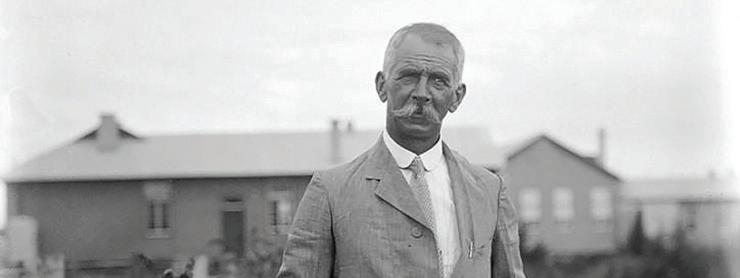
Horticulturist Charles Weston… from his humble British upbringing to his embrace of Australia’s biggest and most progressive “garden city” project.
early this year two blokes appeared from the blue – Trevor Lipscombe and Tony Maple, of the Canberra and Region Heritage Researchers – and asked if I was interested in writing a biography of the horticulturist Charles Weston.
By then we were living in the suburb of that surname, though I quickly learned it was unconnected to the great man celebrated in Yarralumla’s Weston Park. That was the first of literally thousands of facts, figures and fabulous stories that would come my way in the months ahead.
The research has astonished me
The research has astonished me as week by week I have been guided by a multitude of enthusiasts to an exploration of the real, untold story of Canberra’s
as week by week I have been guided by a multitude of enthusiasts to an exploration of the real, untold story of
They range from Weston’s descendants, John Gray’s meticulous doctoral thesis, Max Bourke’s broad expertise, the NCA’s Sally Barnes, the ACT Heritage Library’s Antoinette Buchanan and the dedication – and generosity – of Canberra’s various horticultural and arboreal volunteer groups.
It is a saga as exciting and surprising as any of the stories of my 28 earlier books. Here are just a few of the highlights that transformed my perception to that of a true Canberran – some positive, some not so much:
• The anger towards the settlers’ racist ravaging – through their occupation, ringbarking and rabbits – of the wonderful meeting place of coastal, mountainous and neighbouring Aboriginal people;
• The misplaced pride we attribute to Mt Ainslie, after a man who should
be expunged from our favourite outlook and replaced with the daughter he abandoned.
• The sad fate of the brilliant town planner, Walter Griffin whose fragile personality threatened to turn the execution of his grand, if imperfect, vision into a tragic farce.
• The chaotic political imbroglio in the first two decades of Federation – with Billy Hughes at his most mercurial.
• The calamitous role of the American parliamentary imposter King O’Malley.
• The amazing “rescue team” of John Sulman, Littleton Groom and John Butters.
• And, most of all, the global journey of Charles Weston, from his humble British upbringing, an amazing rise through that country’s massive gardening industry, and his embrace of Australia’s biggest and most progressive “garden city” project.
Until now, Weston has been the unsung hero of the Canberra we love like no other city in the Commonwealth for its amenities, its convenience and the unique mantle of arboreal protection from the worst effects of climate change. It had
been a yawning gap in our published heritage.
Canberra is a great work in progress, but the magnificent foresight of Weston – and later Lindsay Pryor, who built brilliantly on his foundations – have been appreciated by a cohort of enthusiasts. In seeking my lifelong training to tell that story, they have done me the greatest favour and privilege.
It has inspired me, through indifferent health, to embrace the project seven days of every week to compress it into 60,000 words and a photographic outlay over two continents.
The manuscript is currently with Melbourne University Press, Hardie Grant and the NLA’s publishing arm so depending on them (and other potential publishers who might wish to be part of the great adventure) it will appear in 2024. When it does, I promise, it will add a new and fascinating dimension to the city that all of us should proudly call home. robert@ robertmacklin. com
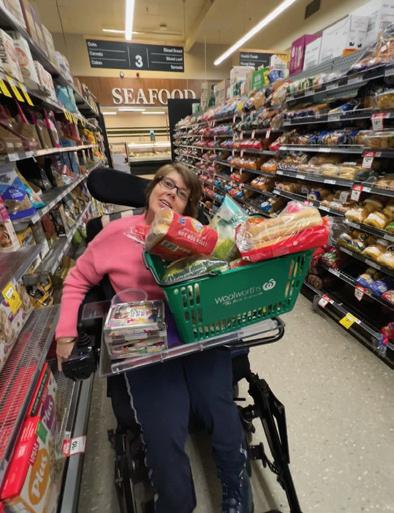

Our experienced staff support people to pursue interests and hobbies, make friends, plan holidays and participate in the community. Whether living alone or with other people with disability, we support people to maintain their home and complete day-to-day household activities including meal planning and cooking, washing or even maintaining a vegetable garden.
Whether you have your own home and would like Hartley to support you, or you would like to live with others with a disability in a home already supported by Hartley Lifecare, please contact the Senior Manager of NDIS and Service Development on 02 6282 4411.
Hartley provides short term accommodation to people with disability. Residential respite care is 24/7 care in specialist disability accommodation for a short period of time.
If you are interested in discussing STA options please contact our Disability Programs Manager:
T: 02 6282 4411 E: enquiriesSTA@hartley.org.au www.hartley.org.au
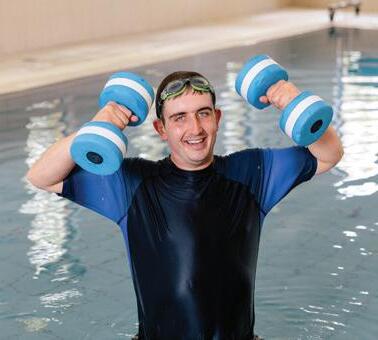
The Hartley Hydrotherapy Pool is an all abilities accessible heated pool which operates 5 days per week at a temperature of 34oC. The pool is available for hire to all members of the Canberra community and surrounds. For bookings:
T: 02 6185 1653 | E: hydrotherapy@hartley.org.au

OCCUPATIONAL THERAPISTS HELP MAKE YOUR EVERY DAY TASKS EASIER
We assist you with:
Planning and design of custom builds or modification to your home
Workplace modifications to make working easier, efficient and less painful
Car modifications and driving assessments - if you have been told you need this Applications to the NDIS and other schemes e.g Housing and Disability Support Pensions
We work closely with our team of physiotherapists, exercise physiologists, art therapy and dietetics at Build a Better Me: Arthritis, Pain Support & ME/CFS ACT to provide you with the best support possible!
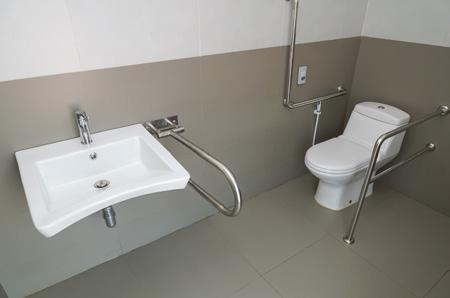

You do not need to have any particular condition to utilise our services, just a desire to ‘Build a Better You’.

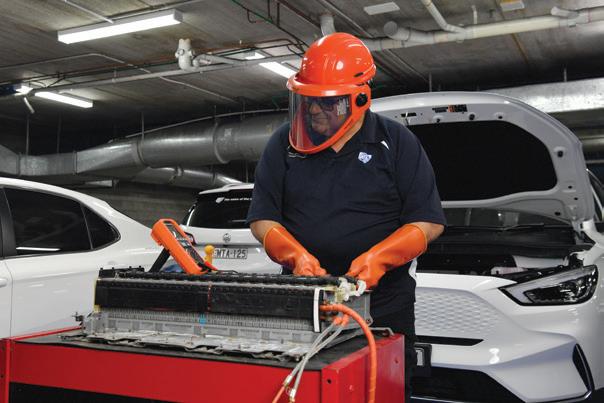
The question of what to do with electric car batteries when they reach the end of their useful lives is being discussed in Australia as a deadline looms, reports JENNIFER DUDLEY-NICHOLSON.
LESS than five years from now, one million metric tons of electric car batteries will need new jobs.
Some will be good enough to power new vehicles, others will be reused in power storage and some will be too damaged to function as batteries again.
But where some see the risk of amassing a “paddock full of dead batteries”, enterprising Australian recycling firms and start-ups are investigating ways to extract their valuable metals, reduce the need to mine new minerals, and turn a profit.
Researchers will investigate how local companies can retrieve value from damaged electric cars, and the Battery Stewardship Council is holding talks about a national EV battery recycling scheme.
Experts say any scheme would be complex and could face speed bumps but may ultimately prove a model example of the circular economy.
The latest study into batteries recovered from hybrid and electric cars will be undertaken at Edith Cowan University, in research overseen by the iMove co-operative research centre and launched with insurance giant iAG.

iMove managing director Ian
Christensen says the company is driving the study to work out what value, if any, it can extract from electric vehicles written off in accidents.
“The battery is often the largest value component in the car,” he said.
“As we get more and more EVs into the country, sooner or later we’re going to build a big pile of exhausted batteries and we need to work out what to do with them.”
But Mr Christensen says there are plenty of ways car batteries could have a second life.
Those no longer up to the demands of being used in an electric vehicle could be used for household or commercial energy storage, he says, while damaged batteries or those at the end of their lives could be ground down and “reprocessed”.
But the case for recycling batteries is not guaranteed as “a battery made from virgin materials” is still cheaper to produce, meaning government regulations or subsidies could be necessary.
“We have to plan for this now because otherwise you start to build stockpiles of batteries that somebody has to be responsible for,” Mr
Christensen said.
“Everybody wants to try to identify the value opportunity before they’re lumbered with a paddock full of dead batteries.”
Association for the Battery Recycling Industry chief executive Katharine Hole says many local recycling firms are already trying to work out how to extract lithium, cobalt, nickel, manganese and profits from expired electric car batteries.
Car manufacturers are also recognising their value, she says, with many tying up local deals to ensure the batteries are not simply ditched.
“The manufacturers are contract-
ing with recyclers and there’s also lots of work happening in battery reuse and repurposing,” she said.
“One of the hybrid car companies will even give (owners) a rebate if they return the battery to them, which is an interesting trend.”
Recent deals include a partnership between Kia and Melbourne-based Infinitev that will see electric vehicle batteries tested to determine if they can be reused or whether they need to be recycled.
But challenges remain, including transporting the batteries safely, processing “black mass” that comes from shredded battery cells, and
retrieving 100 per cent of the batteries no longer in use.
“From a pure capacity point of view, Australia is in a really good position and we’re building capacity to be scalable,” Ms Hole said.
“The challenge will be when recyclers can get enough commercial volume through and that’s hard to predict because it will depend on things like a fuel standard and what happens in the energy space.”
The number of new electric cars purchased in Australia has tripled this past year, according to figures from the Federal Chamber of Automotive Industries. The Electric Vehicle Council estimates this at more than 180,000 on roads.
Battery Stewardship Council chief executive Libby Chaplin says the industry still has time to plan how it will tackle the battery issue, but the deadline is looming.
“We have a little bit of time but not too much,” she said.
“I am absolutely certain that reuse will play an important role but there is quite a bit of work to do there to make sure we have safety and quality standards in place.”
Whether the industry decides a national scheme is necessary or whether it can be handled by individual manufacturers will be determined as part of the process, but the clock is ticking as sales grow. –AAP

Just one in four new cars sold in Australia will be electric by 2030, according to new forecasts that experts say should inspire urgent change, reports JENNIFER DUDLEY-NICHOLSON.
BY the end of the decade, the sale of new petrol cars will be banned in at least seven countries from Singapore to Sweden and Israel to Iceland.
But that same year, fossil fuel vehicles will make up almost most of the new passenger cars sold in Australia, according to new figures.
By 2035, when the ban expands to another 13 nations, including the UK, Japan and Canada, petrol and diesel vehicles will still represent almost half of all new cars sold locally.
The forecasts have been revealed in a report on Australia’s future emissions and, according to experts, show the nation is on a dangerous trajectory that will see it miss its climate targets without changes in the transport sector.
Adoption of electric cars, they say, should be at least double the current projections and urgent changes are needed to help Australia and its motorists catch up to the rest of the world.
The transport predictions were revealed in a report from the federal department of climate change and energy last week, which estimated the
nation’s greenhouse gas emissions up to 2035.
It found transport pollution had risen to make up 21 per cent of Australia’s total emissions this year and, without additional measures, would rise even further by 2030.
The main contributors to transport pollution, the report noted, will be cars and light commercial vehicles which are expected to have a bigger impact due to a growing population and the rising popularity of large SUVs.
Without changes to Australia’s automotive industry, emissionssaving electric vehicles will make up just 13 per cent of new car sales by 2026, 26 per cent by 2030 and 51 per cent by 2035.
Expectations are even lower for sales of electric utes and vans, which the report’s authors say will make up nine per cent of new vehicle sales by 2030 and 29 per cent in 2035.
Greenpeace Australia Pacific campaigner Lindsay Soutar says the forecasts prove the nation is not switching to low-emission technology fast enough and motorists will be left behind if the status quo is allowed to continue.







“It’s simply not good enough to expect Australians will still be buying millions of fossil-fuelled vehicles decades from now when clean, electric vehicles powered by homegrown wind and solar are fast becoming the norm in most parts of the world,” she says.
“Making these vehicles cheaper and more accessible should be the number one priority of the transport minister.”
Electric Vehicle Council chief executive Behyad Jafari says the prediction that only one in four new cars will be electric in 2030 is
particularly concerning as it should be twice as high.
“By 2030, well over half of the new cars sold should be electric,” he says.
“Markets like the US are aiming for something like 62 per cent of new cars sold being electric… and anything short (of 50 per cent) would be letting Australian consumers down.”
But Mr Jafari says Australians should still have hope the transport transition will succeed as the forecasts don’t include the impact of a fuel-efficiency standard.
Promised as part of the National Electric Vehicle Strategy in April,
the standard would put a cap on emissions across a car maker’s fleet, encouraging them to bring more low-emission vehicles to Australia.
Transport Minister Catherine King promised to introduce a legal draft of the standard before the end of the year but has walked back from the timing, saying the government will take “the time to get the design right”.
Mr Jafari says the lack of an emissions cap on new cars means Australians are still missing out on models sold overseas or enough electric cars to meet demand.
“We know every year Australians are sitting on waiting lists for electric vehicles they want to buy and that consumers in other countries … get to enjoy and save money on petrol by driving them,” he says.
“These figures acknowledge there is a problem that needs to be fixed. The pressure is on for the government to very quickly introduce those standards.”
Energy Minister Chris Bowen says the federal government remains committed to introducing a standard and meeting its pledge to cut emissions by 43 per cent in 2030.
“We will have a fuel-efficiency standard and we are delivering one,” he says.
“We’ll have more to say about the details of that in the near future.”





There are still months of hot weather ahead – why is Australia so unprepared, asks SUSAN RIMMER .
SHATTERED climate records last year, accompanied by extreme weather, have left a trail of devastation and despair, according to the World Meteorological Organization.
Some of the most significant extreme heat events were in southern Europe and North Africa, especially in the second half of July. Temperatures in Italy reached 48.2°C, and record-high temperatures were reported in Tunis (Tunisia) 49.0°C, Agadir (Morocco) 50.4°C and Algiers (Algeria) 49.2°C.
Heat-related deaths are on the rise globally. In 2019, a study in “The Lancet” attributed 356,000 deaths to extreme heat. A recent study puts the excess deaths due to last year’s heatwaves in Europe at more than 70,000. The death toll of this year’s heat waves is as yet unknown, but likely to be much worse.
Extreme heat events are without doubt the greatest risk to the right to life caused by climate change. And this has major implications for those providing key social services to lessen inequality.
An extreme heat event occurs when temperatures sit at roughly 5°C above average for three days or more – and particularly when this is coupled with
high levels of humidity. These conditions pose serious health risks for older people, outdoor workers, people with chronic conditions, pregnant women, children, people living in poorly insulated housing or remote communities, people with reduced mobility, culturally and linguistically diverse communities, refugees, and people experiencing energy poverty and/or social isolation.
Australia finally has a national climate health strategy, launched on December 3, and not a moment too soon. It points to the development of a National Heat Health Action Plan that we needed in place at least five years ago. Some states also have strategies.

countries that had “already taken significant strides in preparing their cities, industries and people for the threat of extreme heat”. There will be more lessons from this summer, too.
Heatwaves worsen mental health?
Increased heatwaves have implications for mental health in terms of social connectedness, particularly among vulnerable groups. But extreme heat also affects mental health more broadly: it is already known to lead to increased aggression and increased suicide rates.
in ambulance call outs, emergency department presentations as well as heat-related deaths to indicate additional pressures on the health system during hotter months.
Melbourne has two Chief Heat Officers, one of six cities globally that are participating in an international movement to improve how cities handle heat in a warming world.
But we still haven’t done the deep thinking and planning required to get communities ready – and the next El Nino-driven southern summer is here. We need to take a human rights approach to assessing its potential impact.
Will access to health be affected?
In 2016, a Climate Council report used existing data from the 2009 heatwaves in Australia to map increases
This report found emergency call-outs jumped by 46 per cent; cases involving heat-related illness jumped 34-fold; and cardiac arrests almost tripled in Victoria. In total, 374 excess deaths were recorded, a 62 per cent increase on the previous year.
It also reported that “although many states have taken significant steps to upgrade their heat and health warning systems since the deadly heatwaves of 2009, strategies vary considerably from state to state and focus primarily on reactive rather than long-term planning”.
However, there are things we can learn from various Western European

And what about the mental health of those responding to these crises? Ongoing emergencies, placing evergrowing pressure on stretched social service responders, pushes people and systems to breaking point.
What about electricity bills?
Should utility companies be able to cut off power during an extreme heat event – even if all processes have been followed?
This has been hotly debated in the US. While many US states have policies preventing power shutdown during the colder months, there are fewer clear policies in place in terms of summer.
In Australia, there is no accurate picture of just what the lack of any coherent cooling strategy costs the public. Some low-income consumers have to choose between turning on
Restore wellbeing, independence and quality of life with exercise that is safe, functional, and provides social connection.
Tailored exercise to improve your ability to move with confidence and a reduced risk of falls or other injury in every day activities.
Over 50’s Community Group Exercise classes and BungyPumpNordic Walking training available from 15th Jan 2024.

Call Duncan TODAY on 0404 373 157 or email: info@boomeraabs.com.au
the air-conditioning or buying food. For some, it means utilities have cut off their power for falling behind on an unpaid bill, even in life-threatening heat.
Renters, who cannot easily install, upgrade or fix air-conditioning are also at threat. And should people be evicted during a heatwave?
Crucially, we need to have these debates now, not during a heatwave. A right to air-conditioning?
Should the state bear the cost of air-conditioning for early childcare centres, aged-care homes, prisons and schools? Should swimming pools be free in towns without free air-conditioned spaces?
We know that green spaces can significantly reduce heat, especially in cities. Do we have a right to green space and shade in our streets and towns?
Finally, will there be parts of Australia that are already difficult places to live and work in the summer months that tip over to become uninhabitable on a seasonal basis? Governments need to think carefully about all these issues now and – most importantly – take action.
Prof Susan Harris Rimmer, director of the Policy Innovation Hub, Griffith Business School, Griffith University. Republished from “The Converversation”.
Is cold water bad for you? What about drinking from the hose or tap? OLIVER JONES reveals the facts behind five water myths
We know the importance of staying hydrated, especially in hot weather. But even for something as simple as a drink of water, conflicting advice and urban myths abound.
Is cold water really bad for your health? What about hot water from the tap? And what is “raw water”? Let’s dive in and find out.
Myth 1: Cold water is bad for you
Some recent TikToks have suggested cold water causes health problems by somehow “contracting blood vessels” and “restricting digestion”. There is little evidence for this.
While a 2001 study found 51 out of 669 women tested (7.6 per cent) got a headache after drinking cold water, most of them already suffered from migraines and the work hasn’t been repeated since.
Cold drinks were shown to cause discomfort in people with achalasia (a rare swallowing disorder) in 2012 but the study only had 12 participants. For most people, the temperature you drink your water is down to personal preference and circumstances. Cold water after exercise in summer
or hot water to relax in winter won’t make any difference to your overall health.
Myth 2: You shouldn’t drink hot tap water
This belief has a grain of scientific truth behind it. Hot water is generally a better solvent than cold water, so may dissolve metals and minerals from pipes better. Hot water is also often stored in tanks and may be heated and cooled many times. Bacteria and other disease-causing microorganisms tend to grow better in warm water and can build up over time.
It’s better to fill your cup from the cold tap and get hot water for drinks from the kettle.
Myth 3: Bottled water is better
While bottled water might be safer in certain parts of the world due to pol lution of source water, there is no real advantage to drinking bottled water in Australia and similar countries.
According to University of Queens land researchers, bottled water is not
Renovation Matters offers transformational renovations that add the biggest impact and value when selling your property.
If you are not selling, we can help you renovate to meet your specific requirements!
Phone Kim on 0427 696 662

old plumbing products, it is unlikely to
While it is true even highly treated drinking water can contain low levels of things like microplastics, unless you live somewhere very remote, the risks of drinking untreated water are far higher as it is more likely to contain pollutants from the surrounding area.
Myth 5: It’s okay to drink directly from hoses
Tempting as it may be, it’s probably best not to drink from the hose when watering the plants. Water might have sat in there, in the warm sun for weeks or more potentially leading to bacterial build-up.
Similarly, while drinking water fountains are generally perfectly safe to use, they can contain a variety of bacteria. It’s useful (though not essential) to run them for a few seconds before you start to drink so as to get fresh water through the system rather than what might have been sitting there for a while.
We are fortunate to be able to take safe drinking water for granted. Billions of people around the world are not so lucky.
There is even a website to help you find
So whether you like it hot or cold, or somewhere in between, feel free to enjoy a glass of water this summer.
Just don’t drink it from the hose.
However, our ancestors also often died

Oliver AH Jones, professor of chemistry, RMIT University. Republished from The Conversation.

By Mike QUIRK

A KEY consideration in city planning is where growth is accommodated.
Compact city policies have been widely adopted in order to widen housing choice, deliver environmental benefits, infrastructure and travel cost savings.
The recently released District Planning Strategies and the District Population Projections 2022-2060 were prepared in the context of such policies. Consistent with the policies, development is assumed to be contained within the existing urban footprint.
The District Strategies identify a need for 100,000 additional dwellings in Canberra by 2050 and a potential supply of between 117,800-148,500 dwellings to meet the demand.
Of this supply, 28,000 to 31,000 dwellings are in Belconnen, 5500-6000 in Gungahlin, 14,500 to 25,500 in north Canberra, 8000-13,500 in south Canberra, 20,000-24,000 in Molonglo, 21,000-23,500 in Woden, 4000-5500 in Weston Creek and 16,300 to 18,500 in Tuggeranong.
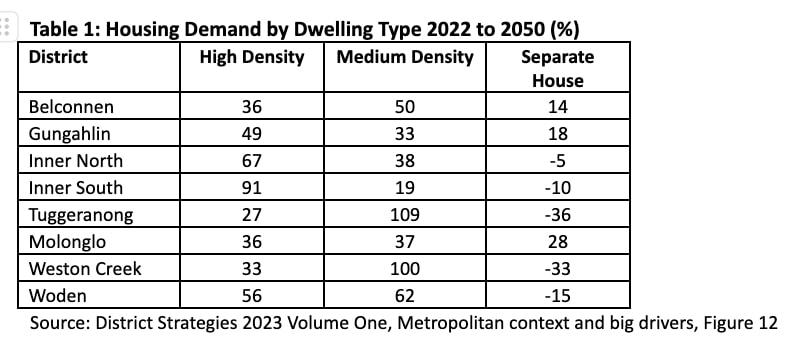
The District Strategies identify the demand for dwellings by dwelling type (see Table 1).
The estimates need explanation, especially assumptions about the propensities of different households to occupy higher-density dwellings. How, for example, was it determined that Tuggeranong required 36 per cent and Weston Creek 33 per cent fewer separate dwellings and south Canberra and north Canberra required 91 per cent and 67 per cent more higher-density dwellings respectively?
The strategies indicate a mismatch between the level of demand and the substantial housing supply opportunities in Tuggeranong. One approach would be to adopt strategies to increase the demand for properties in Tuggeranong that would include encouraging additional employment and improved transport services. This could also result in improved utilisation of infrastructure including schools. Future District Strategies should include Queanbeyan and Yass as the failure to adequately integrate the

region in planning is leading to suboptimal outcomes, as reflected in the increase in car-dependent development in the region, counter to the aims of reducing the environmental impacts Canberra’s development. Such analysis could identify the need to develop additional greenfields land in the ACT.
The District Population Projections project an increase in Canberra’s population from 457,600 in 2022 to 695,700 in 2050 and the population growth by district and suburb to 2050.
It is unclear how the projected populations were determined in the absence of a housing preferences study.
The task is complex as it requires assumptions to be incorporated about intra-city migration (a tough task
given households change location every seven years or so), detailed knowledge of infrastructure requirements and where development is likely to occur by dwelling type, difficult when a substantial level of supply is by privately initiated redevelopment.
The projections can only be described as rubbery, more reliable in the short term (around seven years) when there is greater certainty about where land is likely to be developed and of the overall level of growth, although as the covid pandemic indicates, there can be sudden changes in growth parameters.
Given projections are a key input in the preparation of multi-billion dollar infrastructure programs, it is essential
they have a sound analytical base.
The compact city policies, on which the projections are based, need regular review to ensure the claimed benefits are being realised and the appropriate priorities are being addressed.
Since self government the priorities of largely Labor/Green governments have seen a decline in the share of social housing from 12 per cent to 6 per cent of the total housing stock.
It is no wonder the government has been struggling to justify the priority given to light rail when there has been such underinvestment in social housing and other high priority areas including the health system.
Canberra’s planning and transport strategies are deficient and need review. Too many decisions have been based on rhetoric and superficial analysis.
The major political parties should commit to a review to establish a firm analytical base for decision-making to improve the social, environmental and economic sustainability of the city. A better analytical base alone will not guarantee good decisions, as the decision to develop light rail despite evidence that a busway would deliver a similar level of benefit at half the cost, demonstrates. We need better governance.
Mike Quirk is a former NCA and ACT government planner.

Covid is surging in Australia – and only one in five older adults are up to date with their boosters, ADRIAN ESTERMAN.
NSW is reportedly experiencing its highest levels of covid infections in a year, while Victoria is said to be facing a “double wave” after a surge late last year caused by the JN.1 variant currently circulating in Australia.
But nearly four years into the pandemic, data collection is less comprehensive than it was, and of course, fewer people are testing. So what do we know about the extent of this wave? And importantly, are we adequately protected?
Tracking covid numbers was easier in the first half of last year, when each state and territory provided a weekly update, giving us data on case notifications, hospitalisations, ICU numbers and deaths.
In the second half of the year some states and territories switched to less frequent reporting while others stopped their regular updates. As a result, different jurisdictions now report at different intervals and provide varying statistics.
For example, Victoria still provides weekly reports, while NSW publishes fortnightly updates.
While each offers different metrics, we can gather – particularly from
data on hospitalisations – that both states are experiencing a wave. We’re also seeing high levels of covid in wastewater.
The Department of Health website does provide some other data that gives us clues as to what’s happening. For example, as of one month ago, there were 317 active outbreaks of covid in aged-care homes. This figure has been generally rising since September.
Monthly prescriptions for antivirals on the Pharmaceutical Benefits Scheme were increasing rapidly in November, but we are not given more recent data on this.
It’s also difficult to obtain information about currently circulating strains. Data expert Mike Honey provides a regularly updated snapshot for Australia based on data from GISAID (the Global Initiative on Sharing All Influenza Data) that shows JN.1 rising in prevalence and accounting for about 40 per cent of samples two weeks ago. The proportion is presumably higher now.
Many other countries are currently going through a covid wave, probably driven to a large extent by JN.1. These include NZ, Spain, Greece and the US.
According to cardiologist and scientist Eric Topol, the US is cur- adults aged over 75 should receive an

severely immunocompromised) should recommend additional booster shots






for younger age groups, does this mean they’re not allowed to have one?
In any case, as of December 6, only 19 per cent of people aged 65 and over had received a booster shot in the last six months. For those aged 75 and over, this figure is 23 per cent. Where is the messaging to these at-risk groups explaining why updating their boosters is so important?
It’s highly likely we will see repeated waves of infections over the next 12 months and beyond, mainly caused by waning immunity from previous infection, vaccination or both, and new subvariants.
Unless a new subvariant causes more severe disease (and at this stage, there’s no evidence JN.1 does), we should be able to manage quite well, without our hospitals becoming overwhelmed. However, we should be doing more to protect our vulnerable population. Having only one in five older people up to date with a booster and more than 300 outbreaks in agedcare homes is not acceptable.
For those who are vulnerable, the usual advice applies. Make sure you’re up to date with your booster shots, wear a P2/N95 mask when out and about, and if you do get infected, take antivirals as soon as possible.
Adrian Esterman, professor of biostatistics and epidemiology, University of SA. Republished from The Conversation.


SEEMS like the annual antiAustralia Day whine is alive and well with big corporates such as Woolworths and Aldi refusing to sell Australia Day items.
What is becoming a tiresome waste of time each year is organisations such as Woolies devaluing Australia Day.
January 26 is symbolic because it marks the settlement, modernisation and colonisation of Australia. Eleven old sailing ships made their way peacefully into Sydney Harbour full of convicts and free settlers. Anti-Australia Day advocates like to think there were no free settlers, but a lot of the guards/marines/others had no intention of going back to England.
The first few years were very tough with little success farming in the hot and dry climate. Starvation was an issue and supplies had to be sent from other countries. Perseverance prevailed and we now have a modern, first-world country with a health system that is the envy of the rest of the world.
January 26,1788, was a peaceful and idyllic day (unlike other national days, eg Independence Day and Bastille Day), no Aboriginal people were killed or harmed, some had even ventured down to Sydney Cove to see the fishing pots of Capt Arthur Phillip and his crew the day before. AntiAustralia Day advocates imply racism that it is a white invasion, but neglect the fact there were 12 Africans on board the First Fleet.
If one looks at the anti-Australia Day protests the majority of them are white, fairly young and many do not even know what they are protesting against, confusing Capt Cook with Capt Phillip.
Australia Day is the one and only day of the year where we can all get together and celebrate what a great nation we have become, through thick and thin, good and bad.
Ian Pilsner, Weston
Well done letter writer Ian Pilsner (“What the weird lot write”, CN January 4). We have been fighting this disaster for many years. What about the environmental devastation from wind and solar? Of course, we must destroy to save. Ha! Go nuclear. Stop the wind turbines killing our birds and other critters.
Julie Gray, Tarago, NSW
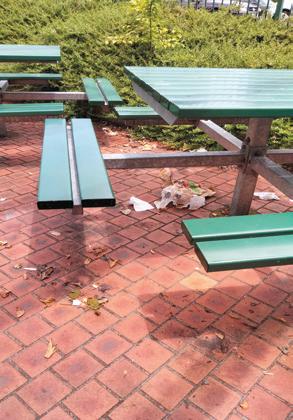
Occasionally, my husband and I treat ourselves to a meal and coffee at Hungry Jacks Burgers Belconnen. We have both been disgusted at the filth and rubbish in the outside/lakeside eating area serving Hungry Jacks and Oporto. This area is filthy.
While we were considering where to sit, two families walked away saying it was disgusting with overgrown shrubs, litter, filth on paving, even rubbish stuck between slats on tables and seating and weeds everywhere. So this is going to be the cleanest/greenest city, oh dear!
Years ago it was an absolute delight to drive into and around Canberra. Not any more. Overgrown nature strips, parks and walkways, it’s really on the nose I am sad to say. Footpaths are a hazard.
I am enclosing photos of the eating
In his article “Smears, secrets and bastardry by which bank?” (CN January 11), Robert Macklin wrote of the battle between the big banks and customers with grievances will continue in 2024, and “we’ll all celebrate when the occasional scandal hits the pages of our news outlets big and small”.
Perhaps we shall celebrate, but I would be mightily surprised if such scandals were published by the News Corp press.
Dr Douglas Mackenzie, Deakin
I had hoped, with sublime optimism, that our well-educated, letter-writing community might start the New Year with a burst of intellectually-based assessments, clothed in respectful acknowledgement of others’ viewpoints.
Sadly, it was not to be. Heading up CN’s first contributory missives for 2024 (January 4), our ever-energetic penman, Ian Pilsner, shows how much he respects his fellow letter writers by describing them as “weird” – just because they speak against nuclear power for Australia.
Never mind the experts’ conclusion that nuclear is an uneconomic and time-short proposition for this country compared with renewables. Conservative Ian is similarly
Claire Eames’ photo of the eating area between Hungry Jack’s and Oporto in Belconnen.
area between Hungry Jack’s and Oporto in Belconnen, see for yourselves. This area has been like this now for a couple of years.
Luke Clews
Visit bookings were unavailable for some visitors/detainees, as the visits officer was apparently not present. Many detainees missed out on Christmas visits due to this issue; clearly this also impacted on their loved ones who had expectations to be able to visit.
This involved limited staff available to induct new detainees ie provide prison clothing, phone calls to loved ones and, in one instance, a newly inducted detainee being unable to make a phone call to the RSPCA to care for his dogs and chickens.
I cannot imagine the overwhelming fear and anxiety for first timers, ie first time being remanded in custody, where there was no one to provide induction booklets to assist them in their navigation of the AMC.
Claire Eames, via email
disparaging of those who vote for parties that happen to be outside his ideological frame of mind.
Ironic really, since Ian and the politically like-minded are always keen to give us the impression they are vigorous supporters of our monarchy-led “liberal democracy” (sic), which supposedly enables freedom of choice and equality for everyone. Happy New Year anyway to all, weird or otherwise.
Eric Hunter, Cook
Re Ross Fitzgerald’s column “The case for vaping as the least worst option” (CN December 14).
Sorry Ross, but plumbing the depths of reason and logic tells me that not vaping at all is the least worst option. And the same for the other drugs.
Colliss Parrett, Barton
Happy New Year to Canberrans, at least those of whom are not locked up at the Alexander Maconochie Centre (AMC) –Canberra’s prison.
While I am unsure who made the gravy (thank you, Paul Kelly), what I do know is that current detainees and new detainees at the AMC were royally let down over the Christmas period.
As I often do, I am scratching my head and wondering just exactly what a “human rights” prison facility means to detainees locked up at the AMC, as well as their loved ones, and the general community.
Human rights are not a privilege; they are legislated, and a breach of human rights is a real-time breach.
Janine Haskins, Cook
As a visitor to Canberra I was delighted to read Katarina Lloyd Jones’ cover story (CN January 4) about Joan Plunkett, of Kambah, who was celebrating her centenary.
I especially noted that her husband contracted scrub typhus and although he survived, it “knocked the stuffing out of him”.
And he went on to have 14 children.
Seems like a good recovery to me!
Ailsa Meehan, via email
A/Insp Mark Richardson, by referring to certain citizens as a “sub-species of the human race” and suggesting IQ testing stations be set up (“Revhead ‘moron tourism, sub-species’ disappoint cops” citynews.com.au, January 8) has proven himself unfit to be in a position of authority within the police force.
The police are there to enforce the law without bias or prejudice, but he has shown an enormously unprofessional bias unbecoming of a police officer, let alone a senior officer. By all means be frustrated with the behaviour which was seen, but express it in a professional manner. The extreme bias in this public statement is unacceptable as it
reduces public confidence that all people will be treated fairly in their dealings with police, and it would be a shame if junior officers followed the leader and believed it to be acceptable to treat certain groups within society as a “sub-species”.
Samuel Gordon-Stewart, Reid
I noticed in my last rates instalment notice that $556 million of the total revenue collected diverts into City Services and this has left me puzzled.
The stolen Fraser suburb sign reported on October 2 and my stolen street sign reported the same day remains inactioned, despite a string of follow-ups emailed to the offices of Steel and Barr. No one seems to give a toss.
The little things do count and voters will remember that at the next election and see through the smoke and mirrors of “vote for us”. May you be sent speeding on your way with joyful hurrumps.
In the meantime, will the fat-cow gang please get off their rumps and replace the frigging signs, or contract it out if it’s beyond your intellectual/technical capacity.
John Lawrence via email
Many are rightly appalled at the eyewateringly high cost of light rail here.
The PPP (“Public Private Partnership”) delivery method, put together by lawyers and giant “can-do” head contractors, is largely to blame.
PPPs are reportedly responsible for the excessive end costs of the new Cotter Dam and ACT Courts projects – and look at where Snowy Hydro 2 is going.
The ACT government has been suckered into this racket, largely abandoned elsewhere. Sub-contractors and suppliers frequently get screwed over. Design is often made expedient, or compromised – take a look at the way that the bulky new ACT Courts building blocks the important University Avenue vista to City Hill.
Scrap PPPs now, and, in the public interest, get back to thorough independent feasibility studies and systems assessments, comprehensive design documentation, watertight contracts and competitive tendering.
Jack Kershaw, Kambah

As 2024 dawns, a picture of Planet Barr and its clapped-out ministerial asteroids, orbiting Yes, Minister bureaucracies and neoliberal gas rings emerges.
Poverty amid plenty, environmental destruction, mistrust of institutions, rampant urban spread, employment uncertainty, disaffected youth and financial chaos.
Swarming Planet Barr, 6000 settlers a year seeking sustenance, shekels and shelter, only to crash-land on government and bureaucratic planning wastelands, packed with superseded billion-dollar transport rattlers and a rainbow roundabout.
Housing scarcity is pushing prices to an average of $1.1 million, units to $700,000 plus, with renters squeezed, 1800 homeless and up to a five-year wait for public housing.
Hospitals are beset by staffing shortages and overcrowded emergency departments, with doctors and nurses suffering from burnout.
Schools struggle to find and retain teachers and support staff to deal with larger class sizes and reduced individual attention.
Green space is being pillaged.
Public housing is proof the Labrals and Greenrals on London Circuit think social justice is a nag running in the fifth at Kembla Grange.
An example.
A southside Housing ACT complex, home to the elderly and disabled, resembles a garbage dump, a tree branch and bark littered fire hazard, a rodent’s playground,
replete with leaking roofs, collapsed brick walls, cracked footpaths, and a sinking roadway swimming pool.
Solution?
Either elect independents, abolish the Legislative Assembly and return Canberra to federal government advisory bodies, or create local councils, say four, two northside, two southside.
Bill O’Connell, Chapman
Since 1975, patronage of our public transport has fallen rapidly such that only 7 per cent of our working population use it. Thirty years ago a bus trip from the outer suburbs to Civic door-to-door took 90 minutes and, as of December 30, that figure is unchanged.
So what? If you keep doing the same thing and nothing changes, perhaps you need to take a different approach. Stage 1 of light rail has cost us nearly $2 billion and, to date, Stage 2A is heading to $900,000. 2B will cost around $3 billion for about 11,000 people. Just crazy.
According to government sources, Stage 2B will be a number of years off but we are all concerned about greenhouse emissions. We could solve that tomorrow by immediately reaching out to industry and buying and replacing our 451 diesel and gas buses with electric right now.
But what we need is a moratorium and cessation of further work on buying trams.
During a moratorium period, we need to talk face-to-face with each catchment and find out what it would take to leave the car at a park and ride. It has never been done.
Clearly, the majority of the commuting public don’t want to use public transport but the government continues to ignore the elephant in the room: waste our money on a project that doesn’t stack up.
Light your candle folks. In 2024 let the government know you will not exchange municipal services, health, education etcetera for a money gobbling tram.
Ryss Morison, via email
Isn’t it about time Chief Minister Barr and Minister Rattenbury dragged themselves out of the 19th century in wanting trams for Canberra’s future public transport.
They need to do away with their threepiece suits and black homburgs that were appropriate for a sedate tram ride through Berlin or Prague in the 1880s and immediately reconsider Stage 2 of the light rail project.
Stage 2 is not only an economic and commercial joke, it is also an environmentally irresponsible option compared with 21st century solar-powered electric buses which do not require permanent steel rails and overhead wires produced from energyintensive industries.
We have all heard the specious argument that light rail will give developers the
certainty to invest in housing developments along the tram lines.
Looking around Canberra, I don’t think developers need much incentive to invest in such a beautiful city. Moreover, it is unlikely that future demographics and associated demand for urban housing will always remain in lockstep with permanent tram tracks – electric buses are a much more flexible option.
Bob Allen, Fadden
My experience at old Calvary hospital recently was the same as columnist Robert Macklin’s at Canberra Hospital last year.
I saw my GP at 5pm due to breathlessness and high pulse rate > 130 (I’m 84) and he called an ambulance and sent me to Calvary.
I did go straight into emergency and a cubicle and bed, but from then on it was slow and, after 11 hours, I discharged myself at 5.30am and got an Uber home.
I had blood tests, a chest X-ray and a CT scan just after midnight. I had a brief discussion with the intern about the blood tests, not much about the X-ray and the CT result wasn’t available after four hours.
No sleep was possible with the beep-beep of monitors, snoring patients, a troubled possibly autistic child (nurses were very good with him). Eventually at 5am Dr Google suggested I had an allergic reaction to the antibiotic cephalexin, breathlessness
and breathing difficulties, so I discharged myself knowing that I wasn’t going to have a heart attack and went home to have a sleep.
The state of the health care system is to be expected, given the bucket load of money being spent on a stupid tram.
Barr and co should go to Stirling in WA and check out the Chinese trackless tram that is being trialled. At about $4 million each, we could have 200 of them, running on all the major roads in Canberra, just for the price of the tram extension to Commonwealth Park.
Of course, they won’t look at a trackless tram as that would mean admitting that they were wrong in the first place.
How Barr et al can lie through their face about the state of the healthcare system, the swimming pools, the roads, basketball halls for Canberra Capitals to play on (Radford has a better facility than the ACT!) is beyond me and most of the ACT population.
Dave Roberts. via email
Columnist Robert Macklin (CN January 4) compares the Chief Minister with the fictional character Rhett Butler (played by Clark Gable) in Gone with the Wind.
A non-fiction comparison could be Emperor Nero, a petulant ruler who is alleged to have planned the destruction of a great city to rebuild it in accordance with his own vision.
John Dowden, via email








Whether it’s learning a language, joining a music group, taking driving lessons or getting into the swing of fitness, here are some interesting options for the new year.
This week “CityNews” has rounded up some of the Canberra region’s best activities that are open for enrolments.
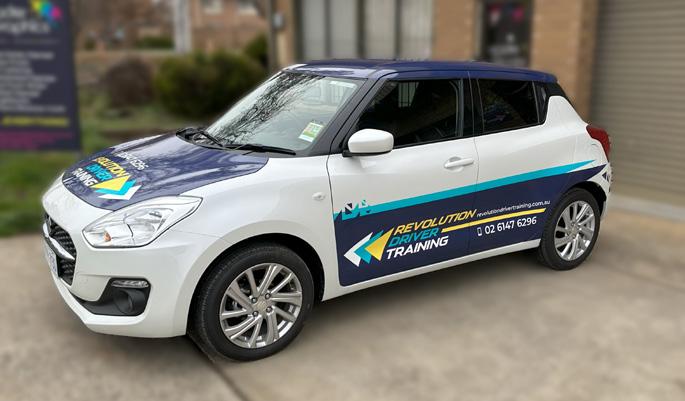
It’s important to learn the most effective and safest methods of driving, including managing the risks as a driver, says Revolution Driver Training CEO Steve Lake.
“First of all, when a learner is taught by a talented instructor, they will be a safer and more skilled driver,” he says.
“This is critical for their first 12 months as a provisional driver, which is the most dangerous time in their driving journey.”
As part of the Road Ready Centre, Steve says Revolution Driver Training is building a strong team of high-quality instructors who are focused on providing the best learning experience and customer service possible.
“While it depends on the learner driver, we estimate that for most learners who have never driven before, eight lessons, spread out over their learner
“Our company was established with the values of trying to reduce the amount of road trauma suffered by our community, in particular the trauma our youth suffer.
“This is everything that our company exists for, we try to achieve this through the best quality education and learning experiences we can offer.
“Driving lessons are an extension of what we have been doing now for 23 years in classroombased courses.
“We have qualified female instructors on staff, and instructors who speak other languages, so that everyone can feel comfortable and supported in their learning to drive journey.”
Revolution Driver Training. Call 6147 6296, or visit revolutiondrivertraining.com.au

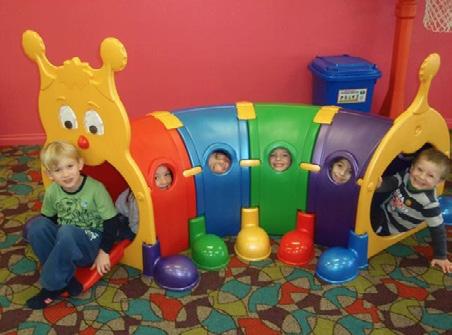
Kidstart Southside Education and Activity Centre understands that the first five years of a child’s life are crucial for development, says owner Kristen O’Connor.
“Kidstart offers classes for children from five months to five years of age to develop them socially, physically, emotionally and intellectually,” she says.
Operating since 1996 and located in Wanniassa, Kristen says Kidstart offers three distinct and age-appropriate programs to ignite a love of learning.
The first program is for children under the age of three, to attend with an adult, and introduces them to music, stories and stimulating equipment.
The second program is a “PrePreschool” program for three and four-year-olds to attend by themselves before starting preschool.
“It has been amazing to see 22 years’ worth kids and their families growing, loving, enjoying and benefiting from the program,” says Kristen.
The third program is Preschool PLUS. It’s designed for children to be involved alongside Preschool. The program is centred on phonics based literacy.
“We use interactive computer sessions to expose the children to the letter sounds, letter identification and letter formation,” says Kristen.
“We are passionate about developing a love of learning in each and every child.
“By allowing them to thrive in an educational setting and experience the joy in exploring and achieving, we hope learning will be a lifelong passion for all our Kidstart kids.”
Kidstart Southside Education and Activity Centre, 65 Sternberg Crescent, Wanniassa. Enrolment enquiries visit kidstart.com.au



Meets every Thursday from 10.00am to 12.00pm (during school terms)
Hughes Community Centre COTA Hall 2 Wisdom Street Hughes - $5 per person
*No prior experience is necessary and no auditions - just a fun-filled morning of singing, sharing and caring.
Please contact us before attending 0402 095 592 or alchemychorus@gmail.com

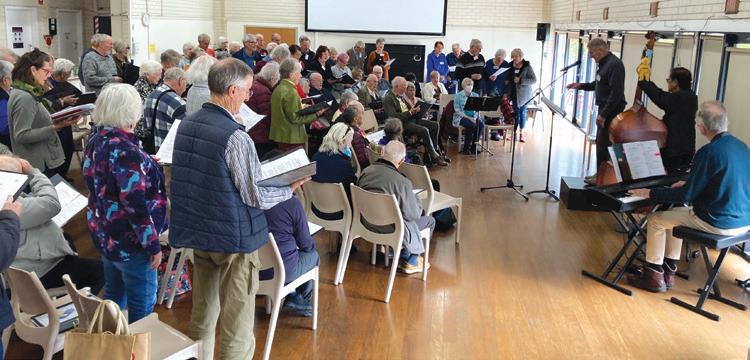
Alchemy Chorus is a dementia inclusive choir that meets every Thursday, 10am-noon during the school term at Council on the Ageing (COTA) Hall at Hughes Community Centre, says Trish Cran, publicity and gig manager.
“As a community choir we cater for and we welcome those who are living with dementia,” she says.
“We are different from dementia choirs and we take great pride in trying to make it clear we are not a dementia choir, we are a dementia-inclusive choir.
“Even though one third of the members actually have dementia, it does not focus on dementia at all.
“It’s for people who are living at home, it’s for couples.
“The couple might be a parent with dementia and a son or daughter, but mostly it tends to be the spouse or the partner.
“The inspiration came from Brian Triblone, he was sent a video clip of the choir in the US called Giving Voice.
“Brian has had a lifelong participation with community choirs, leading choirs, he obviously loves it and he just saw the need.


“With an ageing society, the numbers of people living with dementia are increasing.
“And most of those people live at home for a long, long time with their dementia.
“Their world shrinks as dementia progresses and couples just find that they are marginalised, stuck at home.
“They disengage from normal social and community activities.
“So this is a way to keep people engaged and enjoying music.
“We currently have about 90 members and on any Thursday we get around 70 people turning up.
“It’s just wonderful.”
Trish says Alchemy Chorus always has places available and they never ask people to leave.
“You need to be able to sing and just enjoy singing,” says Trish.
Alchemy Chorus, COTA Hall, Hughes Community Centre, Wisdom Street, Hughes. Visit alchemychorus.com for more information. Expressions of interest to 0402 095592.

★ Emphasis on development of motor skills,
★ Preparing children for formal schooling by introducing structure and routines in a play based fun and creative atmosphere


The Dante Alighieri Society (DAS) of Canberra is a prominent member of the international network of Dante Alighieri Societies dedicated to the promotion of Italian language and Culture throughout the world, says president Franco Papandrea.
“Established in 1957, it has been offering an authentic experience of Italian language and culture to the Canberra community for more than 65 years and is widely regarded as the best place to learn Italian in the national capital,” he says.
“It offers the widest range of adult Italian courses available in Canberra at very competitive prices.
“In addition, fee-paying adult students are able to practice what they learn in the classroom in a welcoming and friendly setting at no extra cost.”
Franco says the DAS is also the only place in the region where non-native Italian speakers can sit exams for the internationally-recognised Plida certificate of Italian competency.
“Thanks to generous assistance by the Italian Ministry of Foreign Affairs and International Cooperation, the DAS employs mother-tongue Italian language assistants to support the teaching of Italian in Canberra’s primary and secondary schools,” he says.
“Membership of the society is open to anyone with an interest in Italian language and culture. Members are provided with an extensive program of cultural and social activities including weekly social conversation groups, special events and social occasions.”
Starting on February 4, Franco says there will be new courses available.
“A special feature of these new courses are the new courses for children after hours in a variety of schools, and on Saturdays,” he says.
The Dante Alighieri Society, call 5117 3996 or visit danteact.org.au
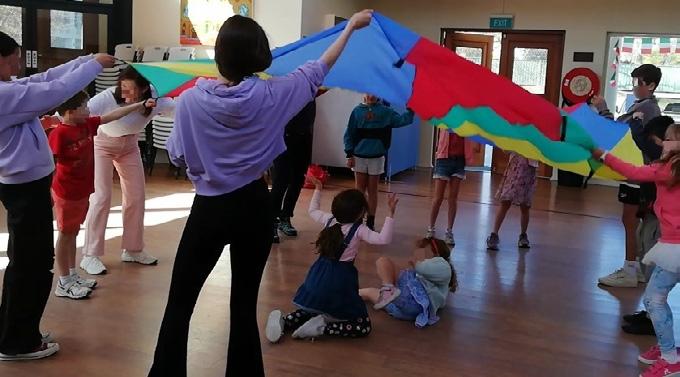
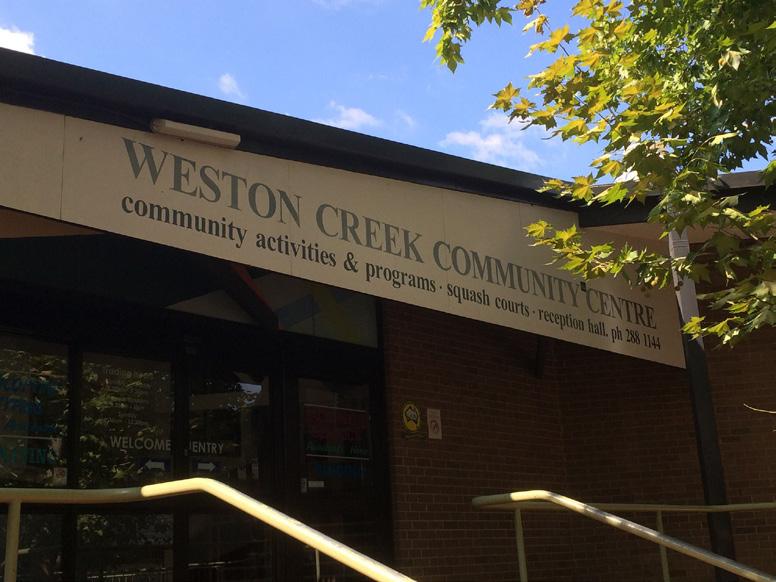
kitchen, two meeting rooms and several offices.
“The centre runs exercise and recreation classes, like ‘Mature Fitness’, ‘Zumba Gold, belly dance and yoga for beginners,” Yung says.
“We also offer printing, photocopying, binding, scanning and the service of a justice of the peace.”
The WCCC houses groups including Stromlo Christian Church, Mountains to Molehills, Solid Rock Defence and Valley Baptist Church, says Yung.
Other regular users include ACT Masters Squash, ACT Miniatures Enthusiasts, Karilee Calisthenics, Canberra Lacemakers, Yoga Enlightenment, Maison Fencing and many others, he says.
Yung says the centre also manages various rooms

Hilder Street, Weston; Flynn Community Hall, a “beautiful space” on Bingle
and
a
Yung says the centre is now also offering free laundry facilities for people who are homeless or in need.
He says this service will be available Monday to Friday, 9am-3pm. Booking a time slot is necessary.
“The centre will provide consumables,” says Yung.
“This facility is made available with the assistance of Mirvac of Cooleman Shopping Centre.”
Weston Creek Community Centre. Call 6288 0144 or visit westoncccentre.org.au
- Friday 9am to 3pm For people in need
‘The four CRCS services offer small, intimate settings that allow for a holistic approach to education and care for your child’
CAPITAL Region Community Services (CRCS), a non-profit organisation providing programs and services to communities, offers four early childhood services across Bruce and Belconnen.
“As a not-for-profit organisation, we are all about community, and our warm and welcoming educators embed that within our early childhood centres,” said executive manager Strategy and Impact Heidi Prowse.
“We provide value-for-money educa tion and care for your child.
“We also understand the demands of modern family life. Our centres offer flexible part-time and full-time programs and extended care options to suit your schedule.”
She said CRCS early childhood educa tion and care services were located in the Belconnen Community Centre, Westfield Belconnen, the CIT Bruce campus and the grounds of North Canberra Hospital.

“Our
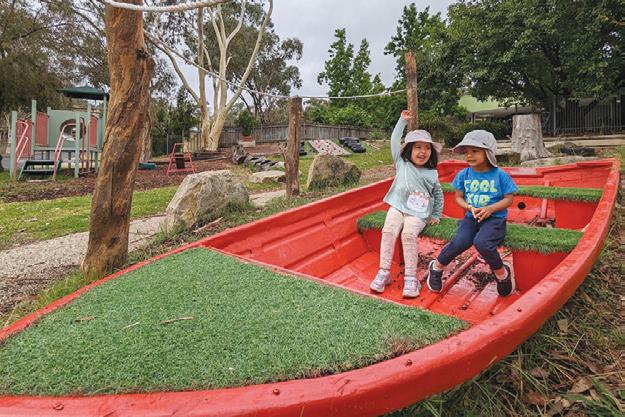
centres offer flexible part-time and full-time programs and extended care options to suit your schedule,”
perfect for parents and carers who want to get it done in peace,” said Heidi.
“Our centre at Westfield Belconnen, Belconnen Early Childhood Centre, can also provide casual care for already enrolled
“The four CRCS services offer small, intimate settings that allow for a holistic approach to education and care for your child.
“In addition to the academic cur-
their social and emotional growth, creativity and physical well-being, to help children become confident, well-rounded individuals.”
The directors and their teams of qualified educators come from varied backgrounds and embed multicultural -
ism and respect for diversity into the curriculum, along with a strong focus on community and sustainability.
“At CRCS, we are proud that two of our four services have been assessed as exceeding the National Quality Framework Standards, a recognition held by under a third of education and care services across
“We currently have availability in our services, so we encourage parents and carers to book a tour and meet our team.”
Capital Region Community Services, Belconnen Community Centre, 23 Swanson Court, Belconnen. Call 6264 0200 or visit crcs.com.au

After the hard year that was, now’s the perfect time to make changes for a healthier and more productive you. This week “CityNews” showcases the places that will help you refresh, whether it’s a new wardrobe, new house or new hobbies.

The local team at House to Home are experienced packers who have been helping Canberrans get their property ready for sales, renovations, insurance work, downsizing and relocating for more than 12 years, says co-owner Renee Le Grande.
“Our expert team will save you hours of time and stress by packing all your personal belongings, household items, right through to packing up the shed,” she says.
“Our team offers a personalised service and recognises every client is unique and has different needs and expectations.
“Some people want the kitchen, bath -

room and wardrobes packed, others want absolutely everything including the garden pots at the front door.”
Renee says her business also offers a full walk-in walk-out service, where clients hand over their keys and the staff completely clear the property, remove the furniture, take necessary items to a charity store, get the old property cleaned, and set everything up again in the new home.
House to Home. Call 0457 456767 or visit house-to-home.com.au
South Pacific Hemp’s manager Sue Booth says the store celebrates the versatile benefits of the plant.
“We support Australian small businesses and producers who work with hemp, an ecofriendly, sustainable material that can be used in a myriad of products,” she says.
“We have branched out to a new clothing wholesaler – Braintree – offering an extended women’s range of dresses, jumpsuits and tank tops.
“Our clothing is designed for wearability and versatility, is breathable, natural and easy to
“For every other $100 you spend, you will go into the draw to win a fabulous hemp hamper valued at $416.”
Sue says the draw will take place on January 31. Senior card holders get a 5 per cent discount on in-store purchases, while all customers can enjoy free postage Australia wide, she says.
Sue says South Pacific Hemp’s selection of products extends to a collection of hemp foods, hemp seed oils, with balms and skin creams, babycare, homewares, bags and accessories, fabrics and pet products.
“Come ask us about what the hemp plant





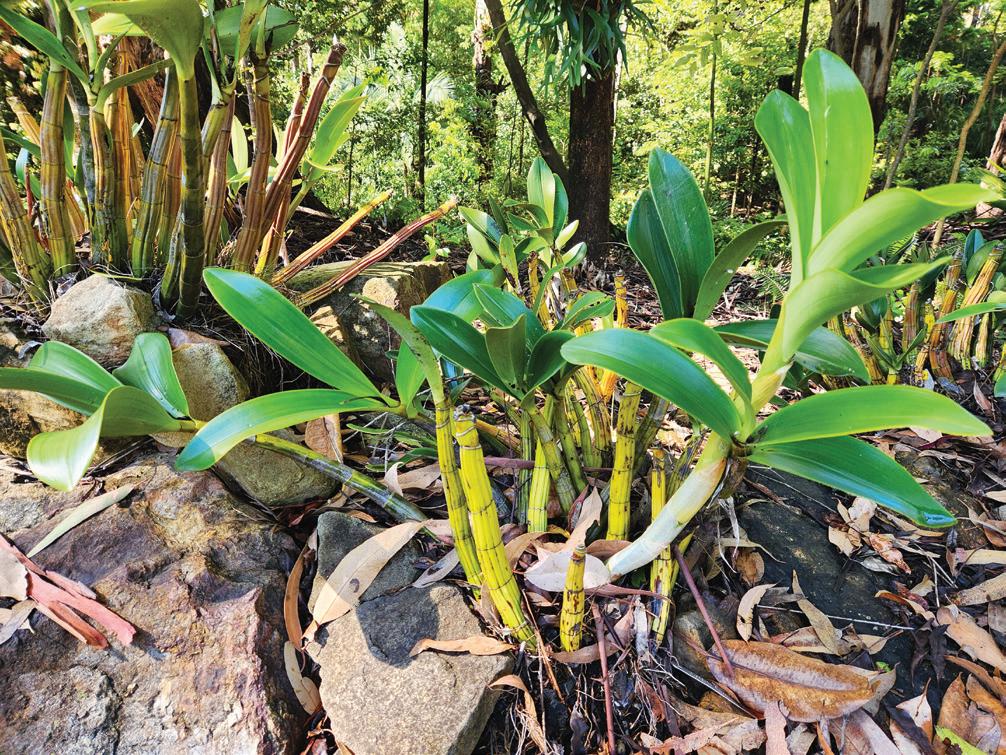




Sydney rock orchids (Dendrobiums speciosum) have finished flowering, but they still make an attractive evergreen to grow as an understorey plant where there is plenty of moisture and protection.
It can be a challenge to grow them through our cold winters and protect the flowering buds coming into spring.
At this time of the year, orchids are in their root-and-growth phase and can be given growth food until early autumn. At that time, switch over to a flowering fertiliser to encourage pups from the base of the plant and produce flowers from late winter to early spring.
Orchids are either sympodial or monopodial.
Sympodial orchids produce new stems (pseudobulbs) at the base of the previous year’s growth. They have multiple growth stems in one season and the pseudobulbs can grow just as big as the flower bulb from the last season. This is the growth point for future flowers and should not be removed from the plant.

Monopodial orchid flowers grow off a
single stem with leaves on either side. The new leaves should be as big as the ones before to grow happily and flower well. The flower stalk comes from the base of the new leaves and opposite where the previous flowers were.
Monopodial orchids need to produce leaves to produce flowers, so the root-and-growth phase is just as important.
Sympodial orchids, such as Cattleya’s and Cymbidium, are the most popular to grow in our climate and can be a long-lived indoor plant in the cooler months and grow outdoors through summer.
They do like to be a little pot bound to force them into flowering as well.
It is best to pot them after flowering and use a specific orchid potting mix. To make your own, use orchid bark, perlite and charcoal.
Orchid fertiliser is sold as two different types, grow food and flower food and both are needed.
FLOWERING now is a hardy plant with cheery yellow flowers called the African bush daisy (Euryops chrysanthemoides). It can flower just about all year round if it’s grown in the right conditions.
This variety grows to about two metres tall and can be clipped to a tight shape or left to form its own natural shape.
The green foliage contrasts well in the garden
and it can happily grow in full sun or part shade but the more sun, the more flowers. They’re not bothered by our winter frosts.
If space is a premium, then a smaller variety to try would be Euryops pectinatus that only grows to a metre tall, is drought tolerant and likes acidic soils.
This plant is one of the easiest to propagate and can be done this time of year with semihardwood cuttings placed in washed river sand and kept moist.
The roots grow quickly, in about two to three weeks. Transplant them to a bigger pot when the root growth is strong and plant out into the garden in autumn or spring.
jackwar@home.netspeed.com.au
• Deadhead roses and prune banksia roses hard after flowering.
• Spray seaweed solution, but minimise fertilising in hot weather.
• Keep planting summer vegetable seedlings for autumn harvest.
• Turn over bare ground to let water in and prevent soil going hard.



By Helen MUSA
Among Australia’s national arts institutions, none is quite so tasked with architectural preservation as the National Film And Sound Archive.
Famous to older readers as the home of the former Australian Institute of Anatomy where children were dragged to view Phar Lap’s Heart and a scary assortment of shrunken heads, since 1984 it’s been home to the NFSA. CEO, Patrick McIntyre, is happy to embrace the duty of caring for such a unique building.
I’m on a walk with McIntyre, whose sense of excitement about a refresh of the heritage-listed building is palpable.
It is well known that his predecessor, Dutch archivist Jan Muller, was busy spearheading a move for the NFSA to have its own building, but that is clearly not McIntyre’s intention, as he draws my attention to the extraordinary architecture – “stripped classical,” he thinks, but with more than a touch of Art Deco thrown in.
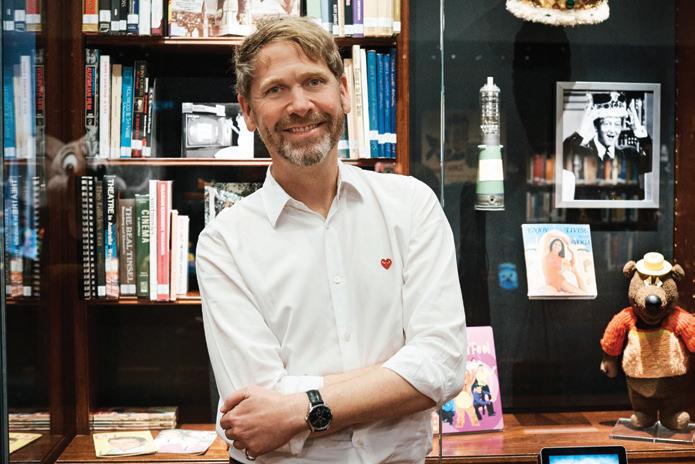
the foyer, which features black marble quarried from Acton Flats, now beneath Lake Burley Griffin.
The intrusive front desk has been removed and a paint job has given focus to some of the magnificent features, not least the platypus stained-glass skylight.
Geometric Art Deco patterns are evident throughout the building, in suspended light fittings in the gallery and even in the quirky heating and air vents.
Sad to say, the identity of the building’s architect, Walter Hayward Morris, has not been so well-preserved, but McIntyre tells me he was only 29 when he got his job with the Federal Capital Commission.



building, McIntyre, who came to the archive from the executive directorship of Sydney Theatre Company in late 2021, is keen to look into the future.
A former music journalist with a communications degree from the University of Technology Sydney in writing and film, he feels he’s come back to his roots.
Research and preservation, he affirms, remain the chief emphases of the archive, and he sees exhibitions as more for larger institutions, such as the National Gallery,
Museum and Portrait Gallery.
Our walk-through is focused on the likely visitor experience.
The 89-seat heritage theatrette has had a lick of paint. It’s home to the monthly Vinyl Lounge night where people share their favourite records over a drink, and while already popular for lectures, launches and symposia, McIntyre is keen to make it, like the other spaces in the original building, more visitor-friendly. Many of them are open to hire by outside organisations.
Open every day during school holidays from 10am to 4pm – Cafe open from 10am to 3pm



The café has new proprietors from a cooler barista generation, the comfortable side room facing it has been turned into The Mediatheque, a lounge where patrons can relax between events, bring a cuppa and watch screen treats from the NFSA’s archives, made possible by the digitalisation of the collection.


Along with the ambience, McIntyre’s mind is on the preservation of objects, so pride of place on our walk-through is given to the refurbished library, just next door to the café.
For decades, the original cabinetry has been obscured behind boards, but those have been removed to reveal the original wood panelling.
The library, he notes, provides a permanent home for objects, and is based on the private library of producer Tony Buckley, which can be seen aloft beneath striking geometric Art Deco patterns in the skylight. But if McIntyre has his way, it’s likely to become a fun location, one where Canberrans can bring friends who come to visit them.
As he shows me around the more than 280 items on show, like the sketchbooks, the flipbook, the gramophone, iPod Shuffle, the music of Kylie and Kamahl, along with artefacts related to Fat Cat and The Aunty Jack Show, he is quick to remind me that it’s just the tip of archival iceberg, so the library showcase can be refreshed as needed.
But apart from all the refurbishing, it’s business as usual at the Arc Cinema, where the ever-changing line-up of movies is now thematically arranged, with one of the first themes to be Nefarious Australia, as part of which the black comedy Judy & Punch will be screened on January 19, followed by a Q&A with director Mirrah Foulkes and actors Mia Wasikowska and Damon Herriman.
NETFLIX is straight out of the gate in 2024 with what could shape up to be one of streaming’s best films of the year.
It’s very early days to be making such a call, but a watch of Society of the Snow will reveal why.
This thriller is about the true story of the 1972 Andes plane crash, in which a Uruguayan rugby team along with their families and supporters had to fight for survival after becoming lost amongst the freezing cold mountain ranges of Argentina.
The plane crashed at an elevation of 3500 metres, where temperatures could plunge to negative 30 degrees celsius overnight. Many of the players on the team, who were en route to a competition in Chile, had never even seen snow before.
Combine the icy, deadly climate with limited food and severe injuries from the crash and the passengers on board Uruguayan Air Force Flight 571 would eventually become part of a story known both as the “disaster” and “miracle” on the Andes.
“Society of the Snow” tells that story.
“Human beings undergo a transformation in cases like this,” a real-life survivor of the disaster
Roberto Canessa told “Time”
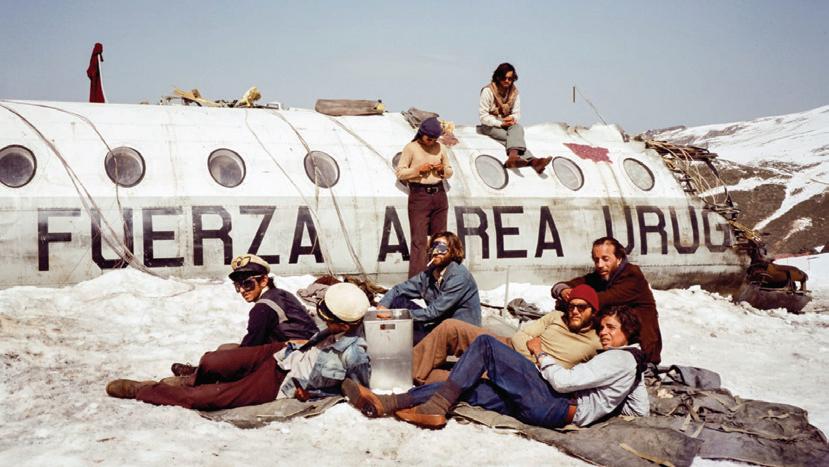
Society of the Snow… the true story of the 1972 Andes plane crash, in which a Uruguayan rugby team, along with their families and supporters, fought for survival.
magazine in a fascinating interview on the film.
“There is a real metamorphosis from being a rugby player to becoming a survivor of a plane crash.
I believe people have that potential.”
The film comes from Spain and features a cast composed of mostly unknown Uruguayan and Argentine
actors who truly sell the terrifying situation the passengers found themselves in.
Viewers have the option of watching the film in its original language with subtitles or with an English dub.
As far as dubs go, this one is pretty convincing but for those who are happy to read subtitles watching

which dived into the gripping survival tale.
That film can be rented on Apple TV Plus and Amazon Prime Video but Netflix’s new version is a deeper, more character-driven exploration of the events, one able to make viewers question just how far they would go to survive.
TWO years ago the true-crime series Dr Death hit screens, piquing morbid curiosity around the world with the haunting true story of Christopher Duntsch, a neurosurgeon who was convicted of murdering his patients.
The series was such a hit that viewers now have a second season on their hands, this one diving into an entirely different, but no less terrifying real-life tale.
ing on dozens of healthy patients without any medical basis, many of whom would later die as a result of his gruesome procedures.
The eight-episode season, now streaming on Stan, tells the story of how this deranged doctor was also able to manipulate the medical world into believing he was a pioneer of research and how his exfiancee, investigative news producer Benita Alexander, would eventually help bring him down.
Venezuelan actor Edgar Ramírez and singer-songwriter Mandy Moore take on these two central roles, together putting on suitably chilling performances that make for a strange and intriguing relationship to watch unfold.
it in Spanish is still the best way to experience it.
Those familiar with the Andes plane crash might know Society of the Snow isn’t the first film to tell this story, either.
In 1993 “Alive” hit cinemas, adapted from the book of the same name,
Enter Paolo Macchiarini, an Italian surgeon and regenerative medicine researcher who became famous after being the first to successfully transplant a synthetic organ – replacing a patient’s windpipe with a plastic tube.
While the achievement made Macchiarini famous, it was later revealed he was illegally experiment-
While not quite hitting the heights of the first season, the new instalment of this creepy anthology series still offers a disturbing story to get caught up in.
For true-crime buffs who can stomach it, it’s just what the doc tor ordered.



We forced book reviewer COLIN STEELE to look up long enough to share his top five books for the past year…
42: The Wildly Improbable Ideas of Douglas Adams, edited by Kevin Davies, is a lavish illustrated book covering the life of The Hitchhiker’s Guide to the Galaxy author Douglas Adams, who died in 2001 at the age of 49. Davies has combed the Adams archive at Cambridge University to compile a comprehensive documentation of Adams life, along with tributes from friends such as Stephen Fry, apparently the only person Adams confided in as to the solution of 42 in regard to the meaning of life, the universe and everything. Davies reproduces school reports, fan letters, family photographs and drafts of Adams’ extensive writing, including the scriptwriting work before The Hitchhiker, which was first broadcast on radio in 1978. That was followed by the Hitchhiker TV series, the five-book trilogy and film success. The Hitchhiker’s popularity and influences
are still reflected today – both Google’s HQ and CERN’s large hadron collider have office complexes named 42. Adams was always an early consumer of computing technology and Davies covers his IT enthusiasms in fact and fiction. Adams’ fans will be delighted with this lavish personal treasure trove, a significant testimonial to Adams writing and his life.
DAVID Marr’s Killing for Country: A Family Story is a powerful indictment of the treatment of indigenous Australians in mid-19th century Queensland, seen through the main prism of Marr’s colonial ancestors and their involvement in the frontier wars.

Marr, building on the work of historians, such as Henry Reynolds, and through intensive archival research, presents a bleak picture of the abuse and murder of indigenous Australians.
It is a searing indictment of Australian society then, but with contemporary resonations. Marr, when he came for an October ANU Meet the Author, signed my copy of his 2018 Collection of Essays, in which he had written in the introduction, the words, “I know my country now”. Marr underlined those words in my copy with an asterix to his writing on the page “bullshit”, reflecting here his dismay at now not knowing his country at all.
ANNA Funder’s Wifedom brings to the forefront, the life of George Orwell’s wife, Eileen O’Shaughnessy. Funder, in a mixture of biography, fiction and autobiography, reveals that Eileen, who died in 1945, provided major intellectual and domestic support of Orwell, but she has been largely airbrushed out of history, which Funder calls a “wicked magic trick”.
Oxford educated, Eileen, who had a particular influence in the writing of Animal Farm, was, as Kathryn Hughes has commented, “Orwell’s editor, agent, secretary, co-conspirator, breadwinner, nurse and lavatory unblocker”. Funder interweaves her own personal
Twenty-four-year-old Turkish pianist Korkmaz Can Sağlam dazzled audiences at the Sydney International Piano Competition last year so much that he won the Rex Hobcroft People’s Choice Award. He’ll be at Wesley Music Centre, in Forrest, on January 30 performing music by Bach, Shostakovich, Chopin and Liszt.
ACT artist Raquel Ormella has been awarded the Creative Australia (formerly Australia Council) Visual Arts and Crafts Strategy Major Commissioning Projects grant totalling $100,000, to help develop an exhibition called Am I in Your Way?, to run at Canberra Contemporary Art Space in 2025. The exhibition and associated digital publishing project with Marni Williams and Power Publishing will explore feminist protest and resistance, with a focus on Canberra.
Director of Ausdance ACT Cathy Adamek has joined her state and national Ausdance counterparts in mounting a strong response to a re -
story of the nature of being a working wife in sections of the book, which sits tonally, sometimes uneasily, with the main narrative of rescuing Eileen from her husband’s Orwellian shadow.
BRUCE Wolpe’s Trump’s Australia is underpinned by a subtitle: “How Trumpism Changed Australia and the Shocking Consequences for Us of a Second Term”.
Wolpe’s long experience with American life and politics, including his time as adviser to President Obama, provides background to his searing analysis of Trump’s ascendancy and influence. He ranges widely over domestic and foreign policies to the eroding of democratic values from Trump’s actions and their impact on Australia.

Wolpe prioritises the need for the maintenance of democratic values in the face of “the actions of billionaire demagogues, tribal media and manipulated social networks enhancing the tyranny of the minority”.
TO end the round up a cheerier note, avid readers will love Alex Johnson’s
The Booklover’s Joke Book , which even has a joke on the title page, “I slipped over in the library this morning. It was the non-friction section”. This gives a flavour of the content in the 25 subject chapters. Here are jokes about books, writers, agents, publishers, bookcases and even cats. In the chapter on authors’ you will find: “Why did Puck cross the road? Because he saw someone he knew Oberon on the other side”. And following the Shakespeare links – “Shakespeare walks into a bar. ‘Not you again’, says the landlady, ‘you’re bard’.” Also in that author chapter: “Doctor, doctor, I keep dreaming I’m writingThe Hobbit… Don’t worry sir, you’ve just been Tolkien in your sleep”.
In the grammar chapter: “What happened when the verb asked the noun to conjugate? The noun declined. Real literary shopping places give us Lord of the Fries, which is an Australian vegetarian fastfood chain; Cash-22, a pawnbroker chain in London; Grate Expectations, a fireplace shop in London and Tequila Mockingbird, a cocktail bar in London.

Turkish pianist Korkmaz Can Sağlam… Wesley Music Centre, January 30.
view of the government’s National Cultural Policy, Revive, which they say primarily emphasises visual arts and music and makes little reference to dance.
Happy news from ANU flautist Sally Walker that on Christmas Day, her album with harpist Emily Granger, Something Like This, was announced as ABC Classic’s “featured album of the week”.
In 2023, Nicholas Burridge undertook a residency at Canberra Glassworks to study geology, time, and industrialisation by developing and exploring naturally formed glass, where heat and pressure
was applied to basalt to form obsidian. The results can be seen in Built Geologies, curated by Aimee Frodsham. At 11 Wentworth Avenue, Kingston, until February 25, with a floor talk by the artist on February 24.
Tuggeranong Arts Centre’s Small Blessings exhibition by Lynne Petersen opened in October and the artist has been working with visitors creating birds, fish, wet-felted flowers, quirky finger puppets, tea-bag cosies and small hearts. On January 25 and 27, the items made will be given away to the public, but in return Petersen asks people to contribute a story about a “small blessing” to add to the project’s online collection. There are still drop-in making sessions on January 23 and 24.

future of classical music. Winner of the Rex Hobcroft People’s Choice Award at the 2023 Sydney International Piano Competition, this electrifying young musician is a must-see performing works by Bach, Shostakovich, Chopin and Liszt.

-
-
TWINSTITCHUPHOLSTERY.COM.AU

twinstitch.upholstery Like us on Facebook

Call or email us today! 0422 073 665 61813511
toni@twinstitchupholstery.com.au



A long-dead soprano has taken to the stage with the Melbourne Symphony Orchestra. Are holograms the future, asks SHELLEY BRUNT.


I WAS recently among a curious Melbourne audience who turned out to see a hologram of the long-dead soprano Maria Callas singing with the Melbourne Symphony Orchestra.
The stage was moodily lit, with 30 musicians in shadows. Loud reverberating footsteps foreshadowed Callas’ entrance and indicated potential humanness. When she eventually appeared centre stage, the audience gasped. Ripples of laughter followed when she and conductor Daniel Schlosberg played out a manufactured exchange of acknowledgement.
The Callas hits were performed, from Bellini’s “Casta Diva” from Norma to Bizet’s “L’amour est un oiseau rebelle” from “Carmen”. But there were limitations to the success. While the live orchestral sounds filled Hamer Hall, the vocals were clearly directed from the speakers, rather than the hologram at centre stage.
I felt an uncomfortable silence lingering before and after each song. The Callas hologram delayed the momentum. She bowed, inviting the audience to clap again, and coyly berated the conductor when he started before she was ready. The audience waited, and it all seemed to drag on.

This is one of the limitations of combining live music and a pre-recorded voice: you can’t respond to the temperament of the audience. You can’t speed it up when required.
Those seated around me did not seem to share my concerns. A version of Callas – the woman known as La Divina, “the divine one” – had been digitally resurrected, and that was enough for now.
Hologram shows across the world
The audience was never fooled by the
technology. Instead, they were awestruck. A phrase I heard murmured over and over was: “How do they do it?”.
“They” are BASE Xperiential, an American media company which also created Roy Orbison, Buddy Holly and Whitney Houston holograms.
But the “how” part of the question can be complex. In simple terms, holograms are created when laser lights project a 3D video of a person on to a transparent yet reflective surface, such as a screen. The projected figure lip-syncs to existing vocal recordings, and the live musicians play along.
This is not a unique phenomenon.
“Callas in Concert” has been performed across the world since 2018. Tupac performed beyond the grave at Coachella in 2012. Elvis Presley duetted posthumously with Celine Dion in front of a studio audience for “American Idol” in 2007. A hologram of the beloved Taiwanese superstar Teresa Teng recently toured Asia.
Artists who are still living are also creating hologram concerts.
Performance-shy Abba can now get back on stage via avatars of their 1979 selves for their lucrative show “Voyage”. Earlier this month, KISS wound up their final live tour and announced they “have been immortalised and reborn as avatars to rock forever” in digital form.
Are hologram concerts a good thing? They are for performers. Possibly.
A hologram can continue to tour long after a singer’s physical body has expired. It keeps them in the public imagination – after all, a star’s image is contingent upon public awareness – and continues to be a lucrative source of income for the copyright holder.
Unlike people, holograms can be in many places at the one time, and aren’t restricted by
travel. Artists can perform with their holographic peers such as Coldplay’s 2021 collaboration with BTW holograms for their single “My Universe” on “The Voice” finale.
For audiences, the benefits are significant.
Hologram performances are also moments of nostalgia for those who want just one more gig. Or it might be the only way you can see a performer who died before you were born, or see a star who never toured Australia, or see a dream line-up of artists who never performed together.
Audiences have high expectations for digital images. Poor-quality holograms fall into the “uncanny valley” – that point when we feel revulsion because they are not quite human.
We’re sceptical about how the images of the dead are used. They have no say or recourse of action. What if Maria Callas never wanted to be performing as a hologram decades after her death?
We’re cynical about greedy copyright holders and gatekeepers in the music industry. Who is making the money from hologram performances? In death, control and power have shifted away from the singer.
And we’re worried about overreach. The enormous progress of AI and the growing public acceptance of virtual singers means more hologram performances will grace our concert halls. And they will be singing songs that they never performed when they were alive. Holograms have been around for a long time, and I think they are here to stay despite these ethical dilemmas. Even though holograms are inherently gimmicky, inquisitive audiences will still flock to see the latest technological developments in music performance.
And judging from the appreciative crowd at the Callas concert, the thrill of seeing La Divina again overrides any human concerns.
Shelley Brunt, associate professor, Music Industry, RMIT University. Republished from The Conversation.

By Joanne Madeline Moore
ARIES (Mar 21 – Apr 20)
The Full Moon fires up your romantic, imaginative side, so you’re in the mood for fun, creativity and lashings of love. As Aries writer Emile Zola declared: “If you ask me what I came into this life to do, I will tell you – I came to live out loud.” But the Sun/Jupiter square boosts your tendency to make hasty remarks and unintentional blunders, especially involving friends and finances. Remember – it takes a short time to burn bridges and a lot longer to mend them!
TAURUS (Apr 21 – May 21)
There could be some conflict between your professional and personal relationships, as the fiery Full Moon highlights the ongoing challenge to achieve balance at work and home. With philosophical Jupiter transiting through your sign, have the confidence to follow your intuition and listen to the wisdom of your inner voice. As birthday great Amadeus Mozart declared: “I pay no attention to anybody’s praise or blame. I simply follow my own feelings.”
GEMINI (May 22 – June 21)
Thursday night’s Full Moon fires up your brain power, so focus your mind, research a subject that has always fascinated you, or enrol in a course of study. Proactive Mars links up with your ruler, Mercury, which pushes you to pursue more adventurous options. You’re feeling impatient and may skip over important details along the way, but don’t worry! Your motto is from birthday great, writer Colette: “You will do foolish things, but do them with enthusiasm.”
CANCER (June 22 – July 23)
On Tuesday, Venus joins the Sun and Mercury in your relationship zone, so focus on communicating with others with more harmony and creativity. Then the fiery Full Moon (on Thursday night) shines a bright spotlight on self-esteem, finances, core values and trust issues. It’s also time to don your Crab detective cap and turn on your x-ray vision, as you zero in on the cause of a lingering problem – and come up with a satisfactory long-term solution.
LEO (July 24 – Aug 23)
Lions love to hog the limelight and be the centre of attention, especially when the Full Moon’s in Leo. And it is a fabulous week to put ideas into action and finish a long-term creative project. However – with the Sun/Jupiter square activating your relationship and work zones – try to get the balance right between your pending needs and those of the significant people in your life. Perhaps it’s time for your lover, best friend or business partner to sparkle and shine?
VIRGO (Aug 24 – Sept 23)
Your days are often organised with military precision. But this week there’s a fiery Full Moon, plus Mercury (your ruling planet) links up with impulsive Mars. So strive to be more spontaneous as you toss your usual timetable out the window and stretch your adaptability muscles in unfamiliar directions. Whatever happens, expect the unexpected and prepare to pivot! Unhappily single? You could meet your soulmate via an introduction from a friend.
LIBRA (Sept 24 – Oct 23)
Courtesy of Mercury, Mars and Venus, good communication skills plus a proactive and diplomatic approach sees a tricky family relationship turn around. Thursday night’s Full Moon highlights your hopes-and-wishes zone, so it’s a suitable time to expand (or revisit) your goals for 2024. Don’t be half-hearted, though. Aim high, go for gold, and make your dreams as big and beautiful as possible! Sunday favours long-term relationships and making business plans.
SCORPIO (Oct 24 – Nov 22)
The fiery Full Moon sees you swing between being sexy and secretive and being passionate and possessive. You could also be thrust into the public spotlight, so make sure you’re putting on a good show. But are you stuck in a career slump? If you resist changes at work, then you’ll just be left behind in the backwash. Look for creative ways to adopt fresh ideas and pivot in your professional life. Aim to include loved ones and colleagues in your plans.
SAGITTARIUS (Nov 23 – Dec 21)
With the fiery Full Moon activating your adventure zone, it’s a terrific week to travel or plan an exotic escape for sometime soon. But there’s a Sun/Jupiter square on Saturday so, if you blurt out something when you’re in a rush or feeling stressed, you may regret it later on! Think things through before you speak (especially with loved ones and work colleagues). Remember Sagittarius – the first thought that jumps into your head isn’t necessarily the best one.
CAPRICORN (Dec 22 – Jan 20)
Venus shifts into your sign where it joins Mercury and Mars, so you’re at your charming, communicative and proactive Capricorn best. But are you worried about your bank balance? Avoid going on a spending spree or lending money to dubious people. You’re (uncharacteristically) liable to make impulsive decisions based purely on your emotions, which are fluctuating, courtesy of the volatile Full Moon. It is a good week for reading, writing and research.
AQUARIUS (Jan 21 – Feb 19)
The stars favour communicating from the heart and saying what’s on your mind. But – with the Full Moon and Jupiter loosening your tongue - resist the urge to tell tall tales and spread salacious gossip. Slow down, think things through and try to speak as tactfully as possible. It’s a wonderful week to promote a joint venture, catch up with a friend or organise a romantic rendezvous. Unhappily single? Sparks could fly with a person who has a mysterious past.
PISCES (Feb 20 – Mar 20)
The Full Moon highlights your ‘being of service’ and ‘helping others’ zones, as you concentrate on the needs of those around you. You’re keen to get involved with a project from behind-the-scenes but be careful you don’t get lost in a fantasy world. With stable Saturn still transiting through your sign, keep your feet firmly planted on the ground. Your motto for the moment is from birthday great, writer Virginia Woolf: “You cannot find peace by avoiding life.”
Copyright Joanne Madeline Moore 2024
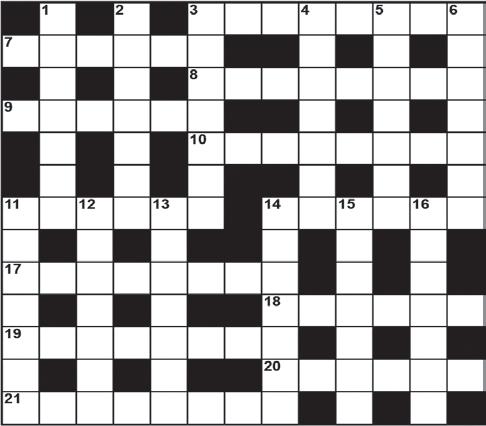
3 What was the given name of Ms Nightingale, the English nurse? (8)
7 Which musical folk instrument is played with a plectrum and the fingertips? (6)
8 Name the 11th sign of the zodiac. (8)
9 Name the host city of the 2012 Olympic Games. (6)
10 When one is presiding over a meeting, one is doing what? (8)
11 Name the fruits of the oak. (6)
14 What are heavy falls of rain, snow or hail? (6)
17 Which road carries the main flow of traffic between large towns? (8)
18 What are lariats also known as? (6)
19 What is a respite from impending punishment? (8)
20 Name the regular lines of passage or travel. (6)
21 What are cold, dry, northerly winds, common in southern France? (8)
1 What is a temporary camp? (7)
2 Name a smooth cheese with a firm texture. (7)
3 Name a Saint of Assisi. (7)
4 What describes one who sees things as they are? (7)
5 To be louder, is to be what? (7)
6 What are flags, as of a nation? (7)
11 Name a transposition of the letters of a word or sentence, to form a new word or sentence. (7)
12 Which animal has eight suckerbearing arms? (7)
13 To be more excitable, is to be what? (7)
14 Name an English comedian and character actor, Peter ... (7)
15 What is a brush-tailed marsupial? (7)
16 To have specialised in a subject, is to have done what? (7)
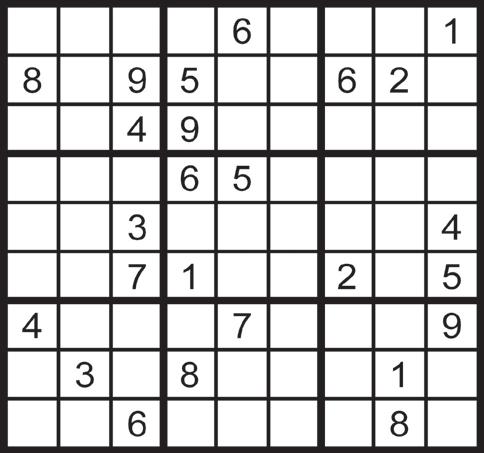

A recent decision by the Administrative Appeals Tribunal (AAT) emphasises how critical it is that record-keeping is correct.
To claim a deduction for expenditure, it needs to be incurred in gaining or producing your assessable income; it must not be of a private or domestic nature and the expenses must be substantiated.
The taxpayer in question was a real estate agent and many of the deductions were disallowed because he could not substantiate them. For example, there was some confusion with the telephone because it was not clear whose name was on the bill. More of this later.
Under the legislation invoices must meet particular requirements. They must be in English and set out the name of the supplier, the amount of the expense, the currency, the nature of the goods or services, the day the expense was incurred and when the invoice was completed.
If the date is not provided it is acceptable to provide a bank statement showing the date of the transaction. If the nature of the goods or services is not specified then you can write in the missing details.
In this particular case, the taxpayer agreed that his logbook was sketchy and he didn't have relevant receipts. In addition, different items were paid out of different accounts, some of which were in different names. This makes it quite difficult to claim.
If you want to make a claim, make sure that you pay it from the right entity and that you have proper records. If you paid it from a different entity, you should reimburse your account from the correct entity so it is clear that the entity has taken responsibility for that expense. Then you have to justify that it is an expense of that entity. It helps if the invoice is in the correct name of the entity.
The taxpayer claimed car expenses but he did not own the car; it was owned by a different entity. Accordingly, the taxpayer could not claim the deduction. It should have been claimed in the entity that owned the vehicle.
His logbook was not completed correctly, according to the legislation and he did not have receipts for fuel. He did have bank accounts showing purchases of fuel, but they were in more than one entity even though he was claiming them in his own name.
The taxpayer had a large claim for credit card interest. However, the AAT said that it was impossible to identify how the expenses had arisen. Accordingly, the interest could not be claimed. It is the purpose of borrowing, even on a credit card, which determines the deductibility of interest.
He had also claimed phone deductions estimating his use at 40-50 per cent. When questioned he said it was probably more like 70-80 per cent. The invoices provided were not in his name, they were in the name of his spouse.
Although his claim was “conservative”, there was no evidence as to the validity of his claim. There was no diary record and no itemised list of calls. The AAT said that, as a real estate agent, he would have required his phone but because he could not demonstrate his use and also whether it was his phone or not, the claims were disallowed.
There were also various other expenses claimed and the taxpayer relied on bank statements as evidence of the expenditure. As the bank statements alone did not comply with the law, those claims were also disallowed.
He claimed for donations and, again, there was no documentation and no evidence that the donations were made to deductible gift recipients. These were also disallowed.
It is very clear from this decision that it is imperative to keep proper records of your expenditure that comply with the requirements of the Income Tax Assessment Act and the documents must be in the name of the correct entity.
If you want information about record-keeping contact the friendly team at Gail Freeman & Co Pty Ltd on 02 6295 2844.
Disclaimer
This column contains general advice, please do not rely on it. If you require specific advice on this topic please contact Gail


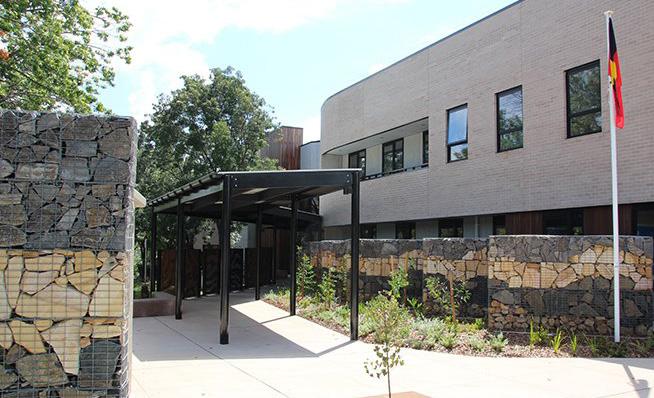
Winnunga Nimmityjah AHCS is an Aboriginal community controlled primary health care service operated by the Aboriginal community of the ACT.
In Wiradjuri language, Winnunga Nimmityjah means Strong Health. The service logo is the Corroboree Frog which is significant to Aboriginal people in the ACT.
Our aim is to provide a culturally safe, holistic health care service for the Aboriginal and Torres Strait Islander people of the ACT and surrounding regions. The holistic health care provided by Winnunga AHCS includes not only medical care, but a range of programs to promote good health and healthy lifestyles.
Our services include:
• GP and Nursing
• Midwifery
• Immunisations
• Health Checks
• Men’s & Women’s Health
• Hearing Health
• Dental
• Physiotherapy
• Podiatry
• Dietician (Nutrition)
• Counselling
• Diabetes Clinic
• Quit Smoking Services / No More Boondah
• Needle Syringe Program
• Mental Health Support
• Healthy Weight Program
• Healthy Cooking Group
• Mums and Bubs Group / Child Health
• Optometry Service
• Psychology and Psychiatrist
• Community Events
• Groups

Winnunga AHCS is a national leader in accreditation, was one of the first Aboriginal community controlled health services to achieve dual accreditation under RACGP and QIC standards. Winnunga AHCS has been at the forefront of setting a national agenda for quality improvement in Aboriginal community controlled health and continues to advocate locally and nationally for best practice standards in operational and governance areas of Aboriginal health services.
CLINIC hours | MONDAY TO FRIDAY 9am-5pm
Ph: 6284 6222 | 63 Boolimba Cres, Narrabundah www.winnunga.org.au