SUMMER GLOW – your skin in summer needs more hydration, moisture and exfoliation to keep it looking healthy and combat the dry heat. At Elements, our team provide a free skin consultation and will advise on the correct skin treatment to keep you looking your best. Our 7-step hydrodermabrasion facial gently cleanses and exfoliates, unclogging pores and removing dry skin build-up leaving you looking fresh and glowing. The treatment uses water, no harsh crystals, and an ultra-hydrating mask to lock in moisture. For those short on time we offer an express hydrodermabrasion treatment too.
FACIAL SPECIAL $140 (valued over $210)
Book our 1 hour 7-Step Hydrodermabrasion Treatment in January or February & receive complimentary
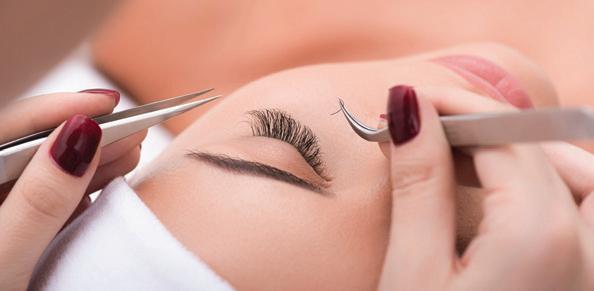
Isabella, our new lash guru, is offering 20% off any full set of extensions booked in January & February 2024
NEWS / dogs
With dog ticks, prevention is cheaper than cure
By Katarina LLOYD JONES
THERE are always a lot of ticks around at this time of year and prevention is really important – and cheaper – for dogs, says veterinarian Clara Wilkins.
Clara says Canberra Vet Hospital has already seen two or three tick cases this season, and that it is likely the emergency hospitals have seen far more.
“It’s such a simple thing, it’s a chew, or a tablet, or a spot on, or something that’s relatively quick and easy to do as opposed to treating tick paralysis, which is expensive and stressful and the outcome is very unpredictable,” she says.
“The way tick prevention works is basically, a lot of them are tablets, so the dog eats the tablet, the tick has to then bite the dog to get a dose.
“So it doesn’t stop the ticks biting, but it poisons them before they start to secrete enough venom into dogs to cause problems.”
Clara, 27, herself owns one dog, River, and two cats Reggie and Rupert, and says signs of tick bites can vary, but the key one to look for is wobbliness.
Arts & Entertainment 20-22
Crossword 22
Gardening 19
Jumbo Crossword 23
News 3-6
Sudoku 22
The Gadfly 6
Wellbeing 7-17
those are the ones we usually get really worried about,” she says.
“They can have changes in breathing, changes in the sound of their
Annuals that bring in the bees. Story Page 19. Photo: Jackie Warburton.
bark, even things like vomiting can be
“Dogs that are not on preventative medicine that have been bitten by a paralysis tick can go on to have full paralysis of their respiratory mus -
Since 1993: Volume 30, Number: 2
General manager: Tracey Avery, tracey@citynews.com.au
Senior advertising account executive: David Cusack, 0435 380656
Journalists: Katarina Lloyd Jones, katarina@citynews.com.au
Arts editor: Helen Musa, helen@citynews.com.au
Production manager: Janet Ewen
Graphic Designer: Mona Ismail
Distribution manager: Penny McCarroll penny@citynews.com.au
cles, and they have to then go on a ventilator.
“They can also have aspirational pneumonia where they’re drooling or vomiting and, as a result, they breathe it in because they don’t have control over those muscles.
“It can be very nasty.
“If your dog is on tick prevention and you see symptoms, keep your dog quiet, you don’t want to excite them or put them in more duress.
“If you find a tick and your dog has no symptoms, I would still call a vet, even if you physically can’t get to one.
“I wouldn’t recommend taking the ticks off your dog, if you find one that has fallen off, which will sometimes happen if they’re on tick prevention, keep it, put it in a little jar and bring it in.”
Clara says that preventative measures are not only critical in protecting a dog’s health, they can also save the owner a significant amount of money when it comes to treatment.
“For those not using preventatives, at a general practice you’re looking at a $2000 starting price just for the first day,” she says.
“As in, you have walked in, we assessed it, ran bloods, stabilised it, gave it the tick anti-serum, it does not include potentially five or six or more days in emergency.
“If they go on a ventilator you’re looking at upwards of several thou-
sands of dollars a day.
“When you’ve got a tablet that costs $70 or $80, there’s a big difference in those prices.”
For Canberrans heading to the coast over the holiday period, Clara says there are few key things to remember.
“I would really encourage people to make sure their tick medication is up to date,” she says.
“Make sure whatever product you’re using is being used according to the packet instructions, because they all vary slightly in terms of how long they last and how long before exposure you have to give them.
“Even if that’s done, make sure you’re doing daily tick searches.
“Just because they’re on anti-tick medication, don’t assume that means they aren’t going to get bitten.
“Check under their collar, in their ears, between their toes, all those warm dark places.
“The other thing that is really important to remember is that giving preventative tick medication when you’re already at the coast is probably not going to help, it’s better than nothing but ideally give it a few days beforehand to work.
“With things like the spot on treatments, you can’t get the dogs wet after, it has to sit for a while and it’s a classic mistake, you’ve put the spot on then let your dog run into the water and that’s not going to work.”
to assist in negotiations and/or represent you in:
• Matrimonial Property settlements
• Parenting Arrangements for Children
• Divorce
• Binding Financial Agreements
• De Facto relationship breakdowns We are
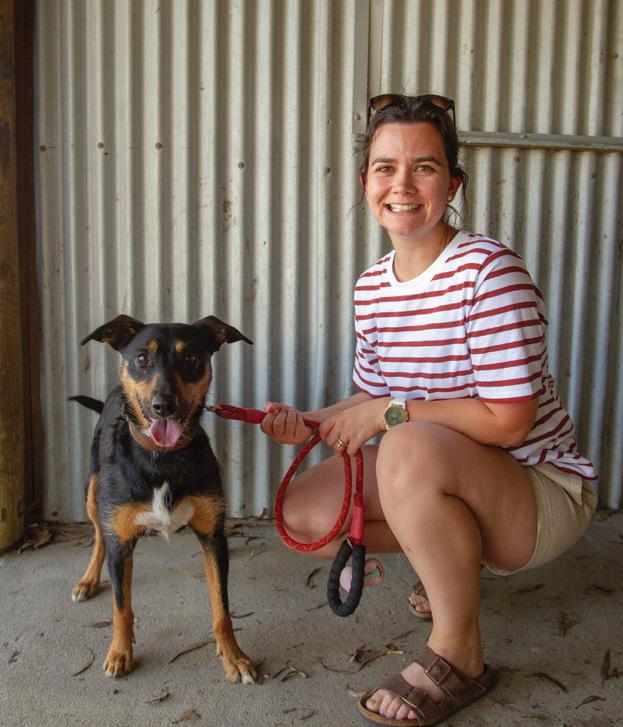
Vet Clara Wilkins and her dog River… “For those not using preventatives, at a general practice you’re looking at a $2000 starting price just for the first day.”
Photo: Katarina Lloyd Jones
Foreign tongues: can dogs tell the difference?
As an ardent owner of two West Highland white terriers ROSS FITZGERALD wonders if dogs can understand different languages and distinguish between them.
I TAUGHT my West Highland terriers Belle and Maddie in English to “sit”, “fetch”, “stay”, “roll over” and “come back”, but what would happen if we went to live in Russia and I spoke to them in Russian? Would they still understand me?
As dogs and humans have lived together for thousands of years, surely people and their dogs can communicate with each other, not merely by gestures, but by speech as well?
Searching for answers, I found a summary of new research, “Dogs Can Distinguish Speech from Gibberish – and Tell Spanish from Hungarian”, published in “Scientific America” in January 2022.
According to Annie Melchor, after neuroscientists Laura Cuaya and Raúl Hernández-Pérez moved from Mexico to Budapest with their border collies, Kun-Kun and Odín, “they realised how different it was to be surrounded by people speaking Hungarian instead of their native Spanish (and) wondered if their
canine companions had noticed this as well”.
As Melchor explains: “Cuaya and Hernández-Pérez work in a research group at Eötvös Loránd University in Budapest. They study the evolution of speech perception in mammals, including dogs. But it was not known if dogs could distinguish if a person was speaking a different language.”
These researchers recruited 18 family dogs, including Kun-Kun and Odín.
According to “Scientific America”: “The dogs were familiar with either Hungarian or Spanish but not both –and they had been previously trained to lie still in an fMRI machine.
“Through a pair of noise-cancelling headphones, the dogs heard passages from Antoine de Saint-Exupéry’s ‘The Little Prince’ in either Spanish or Hungarian.”
From the fMRI scans, the Hungarian researchers “saw the same areas of the brain light up, but with different activation patterns, depending on whether the dogs were hearing the story in their native language or a new one – suggesting they were neurologically processing differences between the two languages.”
Moreover, when dogs heard gibberish, different patterns in brain activity were observed.
In March 2022, this research team published their findings in the journal “NeuroImage”. In summary, their experiments demonstrated that dogs can distinguish familiar languages from unfamiliar ones, and that they can also tell human language from nonsense sounds.
The dogs involved, aged between three and 11, were six Border Collies, including Kun-Kun and Odín; five Golden Retrievers; two Australian Shepherds and one Cocker Spaniel. Two dogs were familiar with Spanish. The other 16 were familiar with Hungarian.
The dogs listened to two female narrators – one a native Hungarian speaker, the other a native Spanish speaker.
As the researchers explained: “Each narrator read the story in an engaging tone of voice to sound as natural as possible. Sometimes the dogs heard a recording in Hungarian, sometimes a recording in Spanish, and sometimes a computer-scrambled recording that no longer resembled human speech at all.”
When the dogs listened to readings from “The Little Prince”, the MRI machine scanned their brains to measure what activity was occurring. Each dog was free to leave the
machine at any time. Moreover, the owners were present in the scanning room “to help each dog feel comfortable”. To understate the case, the passages from Saint-Exupéry’s classic story were not replete with human commands to dogs!
The researchers discovered that all 18 dogs could distinguish speech of any kind from non-speech: “The primary auditory cortex of the canine brains showed distinct activity patterns, depending on whether the subjects heard the scrambled passages or the original recordings.” Amazingly, they concluded that “dogs are the first non-human animal to show this ability to distinguish between languages. And they did it spontaneously. No training was required.”
I’m not sure about gorillas, chimpanzees and elephants. But it seems to me likely that they, too, can differentiate between different languages.
Many owners of older pets will find it intriguing that the brains of older dogs showed more activity in their secondary auditory cortex.
This strongly suggests that they were better able to distinguish between the two languages. Hence the speculation in “NeuroImage”, that “all those additional years spent living with people might have provided them more familiarity with the languages spoken in their home”.
According to an article, by Dr
Stephanie Gibeault, published in 2023 by the American Kennel Club, “Can Dogs Understand Different Languages?”, the answer to this question is “yes”.
It is fascinating to learn that a different team at the Eötvös Loránd university in Budapest, has recently concluded a study on the acoustic bases of human voice identity processing in dogs. These researchers unambiguously stated that dogs “can recognise their owner from voice alone – no visuals or odours were needed.”
Most dedicated dog owners, including myself, constantly talk to our dogs. Many of us believe that our dogs actually listen to us, and that they want to hear what we say to them.
But as the Hungarian researchers (who are world leaders in the field of whether dogs can understand different languages) have suggested: “Future research could explore whether this human language perception is unique to their species.”
Ross Fitzgerald AM is Emeritus Professor in History & Politics at Griffith University. His latest books are a memoir “Fifty Years Sober: An Alcoholics Journey” and the co-authored political satire “Pandemonium”. All books are published by Hybrid and available online.
Sciatica is caused by nerve pain that originates from the lower back and can cause pain from the point, right down through your bottom and down one leg to your calf.
Not the entire area may be causing you pain at any one time, but what the pain will certainly do is cause you frequent extreme discomfort that is often not relieved by pain medication.
Exercise is a key to dealing with sciatica. People who have lived with sciatica for some time will generally have some weakness of the
muscles, tendons and ligaments surrounding the joints and bones that support the sciatic nerve. This is largely due to not having used their body to the fullest extent due to the sciatic pain.
Sciatic pain will generally respond well to rebuilding the support structures surrounding the sciatic nerve. For some people surgery may be the only solution, but in most cases, even if surgery is required, building up the support structures either prior to or following surgery will still be necessary.
Arthritis ACT has a team of exercise physiologists that can improve your quality of life in relation to your sciatica. Both hydrotherapy and land based exercise techniques are useful, and for those who do not like water exercise, land based exercise is just as effective.
Do you want to solve your sciatica?
Call us today on 1800 011 041 and book your appointment with one of our exercise physiologists and scientists to solve your sciatica.
You do not need to have any particular condition to utilise our services, just a desire to ‘Build a Better You.’
Blake Dean Holly Hazelwood Sophie Bullock
Natasha Perry
Smears, secrets and bastardry by which bank?
EVERY time a big scandal breaks my dear wife rejoices: “It just goes to show how lucky we are to have a free press,” she says. Well, maybe…
The recent revelation that PwC, one of the big four consulting firms, had leaked its insider knowledge of new tax arrangements to its private clients and shovelled the payoff into their back pockets, was a case in point. She was only half right. The scam revealed by the Nine group’s “Financial Review” was a coup for Australia’s free press. And for a couple of weeks it became a célèbre.
But then what? A formal from some executive in a suit, the sale of part of the company, a toothless inquiry and a government assertion that the APS will do more specialist research and development currently outsourced.
However, not much has changed, and nor is it likely to. We had hoped that the return of a new government might wipe the slate clean. Instead, like governments and corporations I have known since those ancient days when I was John McEwen’s press secretary, secrecy is the perennial watchword.
Admittedly, it reached a nadir under Scott Morrison and his five
secret ministries. And the eponymous A-G Dreyfus did drop the persecution of Bernard Collaery. But the trial of David McBride is a damned disgrace. So, too, is the shocking ordeal suffered by the journalists Nick McKenzie and Chis Masters that is still playing out after years of the defamation suit brought by the disgraced SAS operative Ben RobertsSmith. Masters, whom I count as a friend, remains under enormous pressure from associates of Roberts-
The most egregious tactics to kill the revelations of corporate wrongdoing have been recently revealed by investigative reporter Adele Ferguson.
Smith, whose case was backed by the VC fanatic, Kerry Stokes. Masters has an unblemished reputation for the highest integrity. He was supportive of my own revelation – the secret trial and jailing of the man I designated “Witness J” – after I breached a tangle of attempted secrecy and attended an obscure court hearing. That led to the publication of his fate in our own “CityNews”.
At the time, Masters and I had been entrusted by the Defence Department and the Australian Strategic Policy Institute (ASPI) to undertake case
studies of major defence procurements. The plan was to develop a compendium of studies – without fear or favour – to show procurement newcomers the potholes to avoid. Nice idea… until the potholed participants objected.
But the most egregious tactics to kill the revelations of corporate wrongdoing have been recently revealed by investigative reporter Adele Ferguson.
Her backgrounder made a single appearance on the ABC newsfeed in late 2023 before being removed to the “archive” file.
It covers 10 pages of utter bastardry by the Commonwealth Bank to kill its shocking secrets from the reporter via whistleblower Jeff Morris.
“Over 12 months, the bank’s PR machine was on a mission to deny, deflect and discredit the stories by constantly attacking the articles and me,” she says.
One phone call, “was from a PR officer for a big legal firm asking if I’d been ringing some of his clients. I hadn’t. But somebody had and they’d been impersonating me.
“Smear campaigns, intimidation, threats, fake identities and
surveillance – this is not how you would expect blue-chip companies to behave when their reputations are threatened.
“But all these tactics were employed by the Commonwealth Bank to shut down a scandal that exposed forgery, fraud and a cover up that culminated in a royal commission into the entire financial services industry.”
No doubt in 2024 the battle will continue, and we’ll all celebrate when the occasional scandal hits the pages of our news outlets big and small.
My dear wife might be right – we’re certainly better than many countries. But for every felonious scheme exposed, you can bet there’s half a dozen burrowing away beyond our sight – no matter who occupies the Treasury benches, the glittering boardrooms… or the stratospheric Defence budget.
robert@robertmacklin.com
Journalist Adele Ferguson… her backgrounder covers 10 pages of utter bastardry by the Commonwealth Bank.
Photo: Keana Naughton/ABC
•
INTELLIGENCE
Dr’s orders: set yourself up for success
By Lily PASS
DR Vivienne Lewis says the most important part of wellbeing is setting achievable goals, and using them all the way through each year.
“Set yourself up for success,” she says.
“Be realistic with the time frame, you don’t have to wait until January 1 to start working towards a goal, nor does it have to be achieved straight away.”
Vivienne has been a clinical psychologist at the University of Canberra for 20 years.
“My role is to help people work towards realistic and achievable goals to improve their mental and physical wellbeing,” she says.
“Health is the absence of disease and illness, whereas wellbeing refers to our physical and mental health.
“Wellbeing is a positive mental state where you’re feeling good about yourself and where you are in life, you have goals and meaningful things you’re working towards.
Vivienne says this can be obtained through positive social connections, being physically well, doing things that are meaningful, having a sense of achievement, looking after physical health, not abusing substances, and doing things that are relaxing and pleasurable.
“I personally try and make sure that I’m moving my body every day, that I’m eating well every day and having a social connection with family and/or friends every day,” she says.
“Then, even when you’re really busy and have a lot on, have an hour a day where you just have down time
and can relax and do something you like doing, but that isn’t very taxing, and don’t feel guilty about it.
“It’s the whole plane analogy, in that you need to put your oxygen mask on first before you can help others, and that’s important for life, too.
“If you’re not looking after yourself and you’re not doing okay, then you can’t help others, whether it’s your children or family, or whether you can’t perform your best at work, whatever the case may be, so you need to look after yourself, all year round.”
Vivienne says people know their wellbeing suffers under stress at the end of the year.
“When we are stressed, we are less likely to take the necessary time to look after ourselves and our self-care goes out the window,” she says.
“That’s why you can’t just focus on your wellbeing occasionally, you need to apply it constantly, particu-
larly focussing on wellbeing as a preventative method rather than only utilising it when you’re already stressed.
“I think it’s such a big issue, people waiting until their next holiday before taking some time for themselves, which leads to stress and burnout, and most holidays don’t give you enough time really to rejuvenate.
“Sure, you want to relax on holiday, and of course that’s a great idea, but you’ll probably also want to go and explore and see people, too, you can’t spend the whole time unwinding.
“Burnout is past the point of stress, when you are completely overwhelmed and can’t function any more, that’s what I’m hoping to help people avoid.
People need to reflect on their achievements, says Vivienne, to see how far they have come, and use their wellbeing time efficiently and often.
“Even if it’s just congratulating
yourself for getting through a tough year,” she says.
“A high level of stress is quite common, unfortunately. At the very least, at any one time, there is one person in five who is feeling stressed.
“So, other important things you can do for your wellbeing include letting others help you, or asking for help.
“Often when people view wellbeing as something to do once they are stressed already, they set unrealistic goals and they lose their motivation and end up feeling deflated and giving up on their goals altogether.
“Try and set up a wellbeing routine, or action plan, for throughout the year, and be consistent with it.
“It’ll absolutely help, you need to be looking after your wellbeing constantly. It makes me happy to see people and help people live happy, meaningful and fulfilling lives, it’s rewarding for everyone in both day-to-day life and in the long term.”
Accessible toilets have inaccessible washbasins: study
More than half of the people using accessible toilets cannot access the washbasins safely and comfortably, reports KATELYN CATANZARITI.
MORE and more businesses, offices and public buildings across Australia offer accessible toilet facilities, but a new study suggests most have inaccessible washbasins.
The Building Code of Australia has very specific guidelines as to the size, height and type of toilet that must be installed, and the size of the room and door required to accommodate the disabled, but there are no such requirements for washbasins.
Most places simply install Australian Standard washbasins, but according to a recent study, as many as half of the people who use these facilities can’t access them.
“These kinds of public spaces should promote the user’s safety, autonomy and dignity, however with the current standards, some of the wheelchair users’ knees would touch the washbasin or the pipework underneath it, preventing their effective use,” says Konstantina Vasilakopoulou, acting director of UNSW’s Home Modifications Clearinghouse (HMInfo) and leader of the Livability Lab.
“The research demonstrates the need to re-evaluate Australian Standards.”
HMInfo conducts and translates research for industry and consumers to promote a more inclusive built environment, while the Livability Lab is focused on biomechanical studies to inform design for improved liveability and useability of the built environment.
The lab uses motion capture and video technologies to record participants’ movements to make their assessments.
Researchers at the Lab interviewed 20 accessible toilet users about their thoughts and experiences before asking them to undertake tasks at a custom-built “test rig”.
They simulated using a washbasin, looking at how easy it was to use the soap dispenser and taps.
“Mirrors, soap dispensers, light switches, automatic hand-dryers are often placed too high for people in a seated position,” Dr Vasilakopoulou said of the findings. –AAP
Dr Vivienne Lewis… “It makes me happy to see people and help people live happy, meaningful and fulfilling lives.”
The AI will see you now: tech for doctors
Job interviews by chat robots
JENNIFER DUDLEY-NICHOLSON
Artificial intelligence is increasingly being used in hospitals and doctors’ offices but one expert says it’s best used keeping doctors away from fax machines, reports
ARTIFICIAL intelligence could prove to be a lifeline for Australian hospitals and GP surgeries, according to a leading medical technology expert who says it could ensure doctors spend less time sending faxes and more time with patients.
But Microsoft Australia’s chief medical officer Dr Simon Kos also warns the technology is not ready to perform the work of doctors and careful controls need to be implemented.
Dr Kos revealed his predictions for the technology after Australian start-up and partner Consultmed launched its latest AI healthcare offering designed to reduce paperwork and administrative tasks performed by doctors.
The company is one of several targeting Australia’s healthcare system, much of which still relies upon paper-based communication.
Dr Kos, a medical professional who has studied the use of generative AI technology, said the technology had huge potential to remove repetitive and unnecessary tasks given to doctors whose time could be better spent.
“People are looking at generative
AI as a way to alleviate some of these chronic and systematic challenges we’ve got in our healthcare system,” he said.
“If we can stop training doctors and nurses but then asking them to use fax machines, if we can free them up for the higher cognitive functions around care co-ordination and refer ral management, that’s really good.”
Dr Kos said AI could help doctors avoid duplication when preparing admission, discharge and refer ral documents, for example, and handling everyday paperwork such as employee leave requests.
Sydney start-up Consultmed employs the technology in its Consultpilot AI service that prepares medical paperwork by scanning documents, recognising information and filling out discharge summaries and notes.
“We can make it easier for them to do their work by removing that repetitive work.”
Founder and practising pediatrician Dr Vikram Palit said the service, which used Microsoft’s Azure Open AI technology, could reduce time taken to write a patient’s referral from 10 minutes to 37 seconds.
“In the context of workplace shortages and workplace burnout, it’s already hard to recruit health workers and retain them,” Dr Palit said.
The service, which could be used throughout the health system, would also allow patients to track referrals and notes, he said.
Other firms offering AI services to the healthcare sector include Melbourne-based Patient Notes and Dr Kos said the technology was being used to refine doctors’ bedside manners in training simulations.
But the use of artificial intelligence to care directly for patients had yet to be proven, Dr Kos said, and providers needed to ensure patient data was stored securely and locally when using AI.
“Many people are quite leery of diagnostic and therapeutic AI that hasn’t gone through rigorous peer review because that falls into regulated territory and we’re talking about .. the wrong decision causing patient harm,” he said. –AAP
ChatGBT is driving one of the biggest shake-ups in the recruitment industry since the arrival of LinkedIn.
Modern job seekers are using artificial intelligence to write their cover letters, while recruiters are using bots to filter candidates long before making direct contact.
For example, first-round candidates in high-volume positions are often interviewed by chat robots before getting to the final stages.
But the technology is nothing to be scared of, says Jas Singh, founder and managing director at Australian recruitment firm SKL Executive, because no robot can fully replace a human recruiter when it comes to making a final selection.
“Chat robots are already being used to interview and screen candidates when the recruitment is done in volume, for graduates, for example,” he said.
The automated process means more candidates are being screened more thoroughly than ever before.
But, of course, there are downsides. While robot-generated cover letters enable candidates to “punch above their weight” in their online applications, set algorithms can miss a brilliant personality. In the end though, once an automated service has screened 100 candidates down to the final 10, the recruiter steps in and balance should be restored.
“The relationship side of recruitment, the judgement, that is always safe… there’s always the human touch,” Mr Singh said. –AAP
Microsoft Australia chief medical officer Dr Simon Kos says AI can help doctors.
‘I was a walking time bomb and could have had a fatal heart attack at any time’
Women put their hearts into hiking challenge
In her 35-year career as a journalist and political correspondent, Louise Maher faced some tough situations.
But little did she know that in her early fifties she would face the most confronting challenge of her life.
“I was relatively fit and healthy, when I started experiencing painful heartburn after eating – particularly if I had bread,” she said.
Being breathless while walking uphill was another sign that things weren’t quite right. While her symptoms seemed relatively benign, given her family history of heart disease, her GP referred her to a cardiologist.
An initial round of tests, including an electrocardiogram (ECG) and stress test, found nothing amiss. Tests for a stomach ulcer were also conducted. Again, Louise was given the all-clear.
“But my partner and I were planning a trip to Central Australia, and he insisted we find out what was wrong before we went.
“So, reluctantly, I went back to the GP and cardiologist and this time he decided on an angiogram mainly, he thought, to rule out any heart issues once and for all.” It proved a lifesaving decision.
“He found three blockages, immediately inserted three stents, and saved my life. He told me I was a walking time bomb and could have had a fatal heart attack at any time.”
Sadly, Louise’s story is not uncommon. In Australia, a woman dies from heart
disease nearly every hour – on average that’s 20 a day and around 7000 a year. And more than 50 women go to hospital due to a heart attack every day.
Like Louise, women don’t usually present with the crushing chest pain experienced by men in the onset of a
COASTREK CANBERRA
heart attack. Their symptoms are more subtle and can include jaw, shoulder or back pain, nausea, dizziness, shortness of breath, indigestion and fatigue.
As a result, women have delays in receiving timely diagnosis – or are misdiagnosed – when compared to men, leading to lower survival rates.
“My advice, especially to women, is to take seriously any symptoms that are out of the norm and get them checked out,”
“I nag my female friends about this often. I am so very grateful that my life wasn’t cut short.”
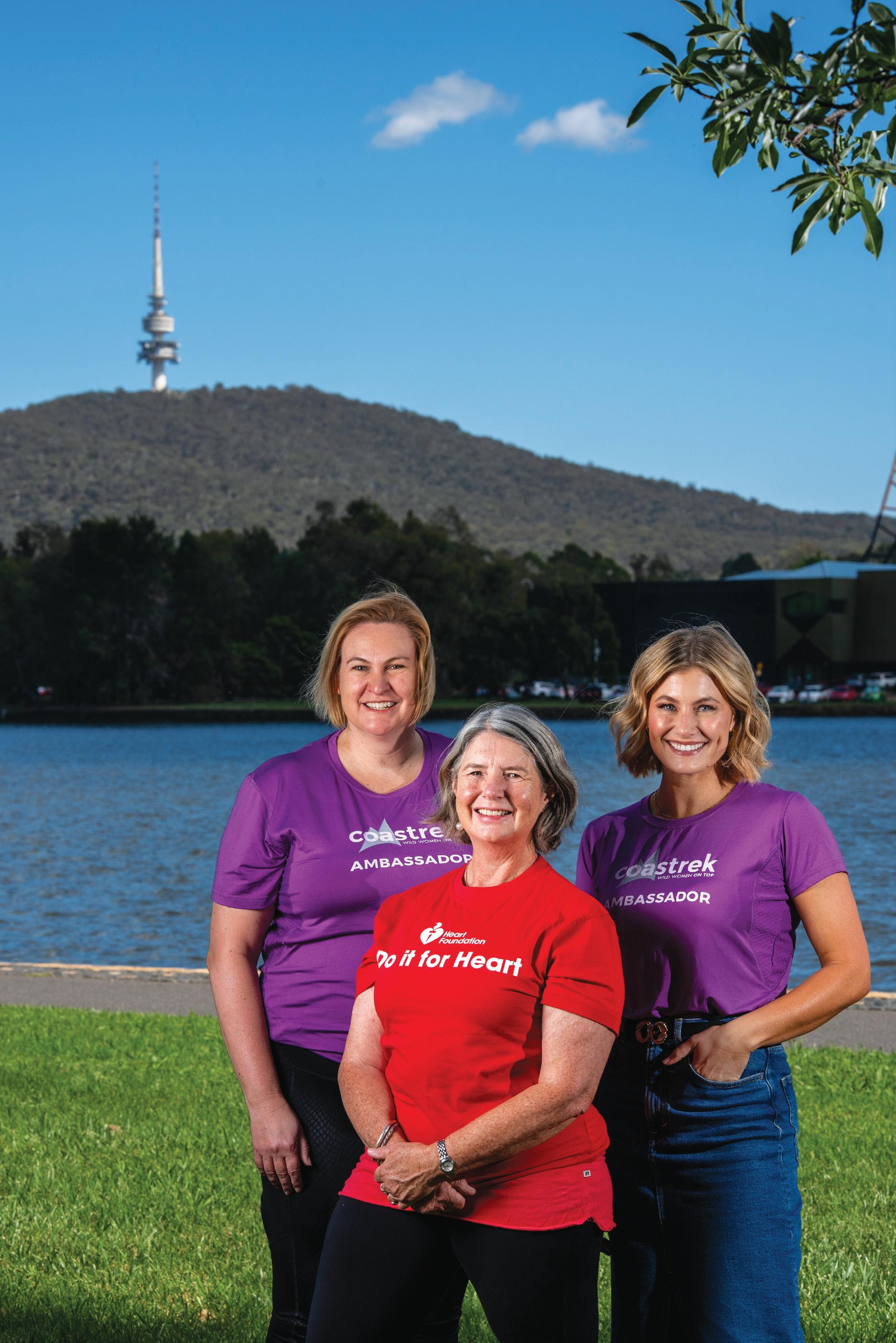
Louise’s experience prompted her to join the ACT Heart Foundation Advisory Board and she will be taking part in the upcoming Coastrek event on March 15 –a charity hiking challenge that primarily attracts women participants – in support of the Heart Foundation.
Historically, women have been excluded from research studies, resulting in two out of three studies focusing primarily on men.
Funds raised from Coastrek will help support women’s heart research that focuses on women-specific risk factors and help close the gender gap in heart health for women in Australia.
Joining Louise is ultra-adventurer and
body positive advocate and Coastrek Ambassador, Cath Wallis.
“The beauty of Coastrek is that being a team event, it combines spending time with friends in nature as you train and prepare for event day, with the benefits this brings to your own health while giving back to a cause that impacts so many Australian women,” says Cath.
Fellow Coastrek Ambassador, Sam McClymont – of the country music band, The McClymonts, fame and presenter on “Getaway” – recently made Canberra her home and jumped at the chance to support the event.
“The training program that Coastrek provides will get me out and about exploring my new backyard with my kids – and get my fitness back on track after Christmas!” she says.
“I’ll be hiking with my sister and some girlfriends on event day and I feel proud to be supporting such a worthy cause.”
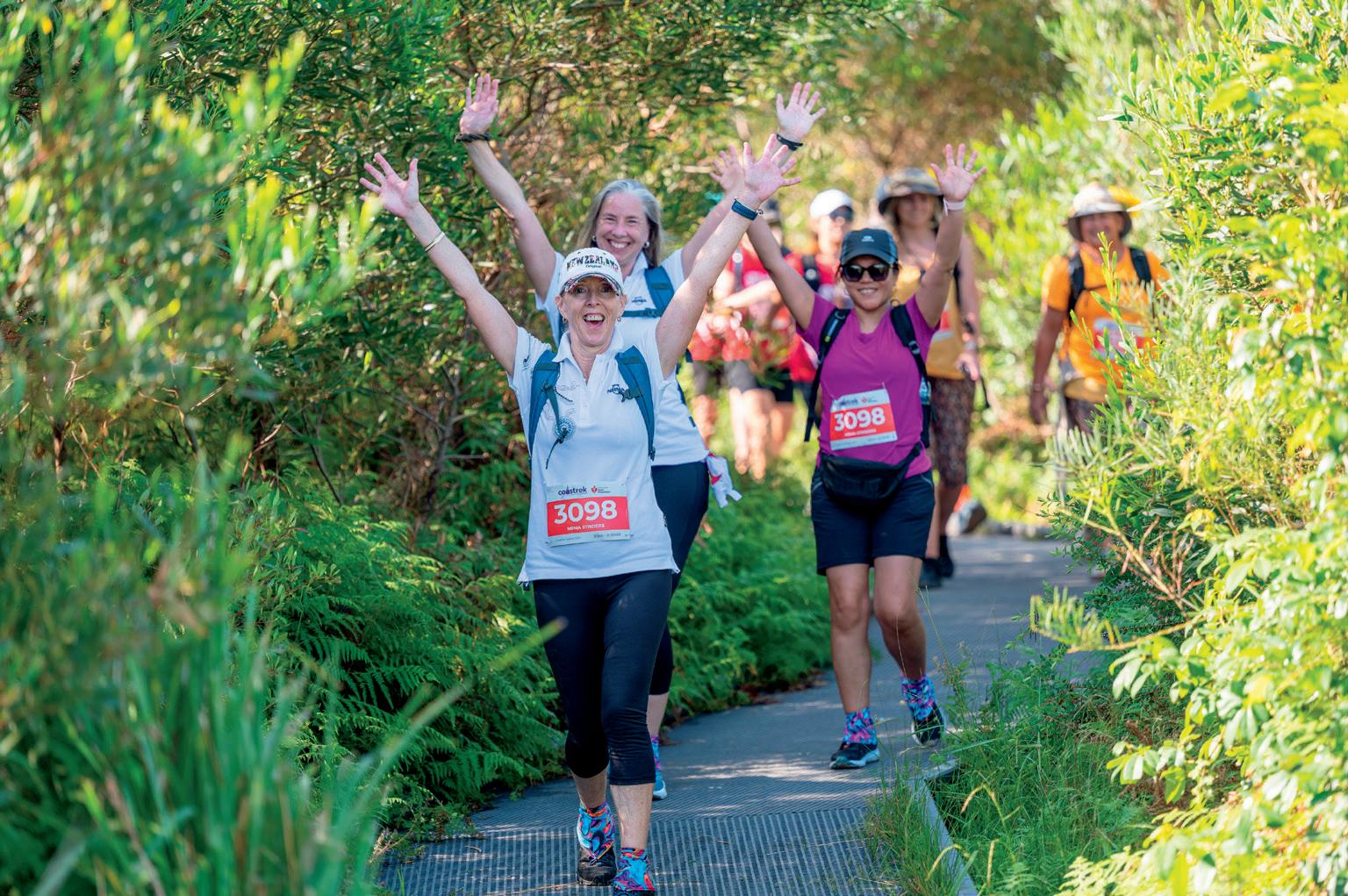
Coastrek offers a 20km or 30km walking challenge, circumnavigating Lake Burley Griffin and into the Jerrabomberra wetlands and surrounds. Register your team of four by February 4 and get training for an epic event day on Friday, March 15.
Visit www.coastrek.com.au
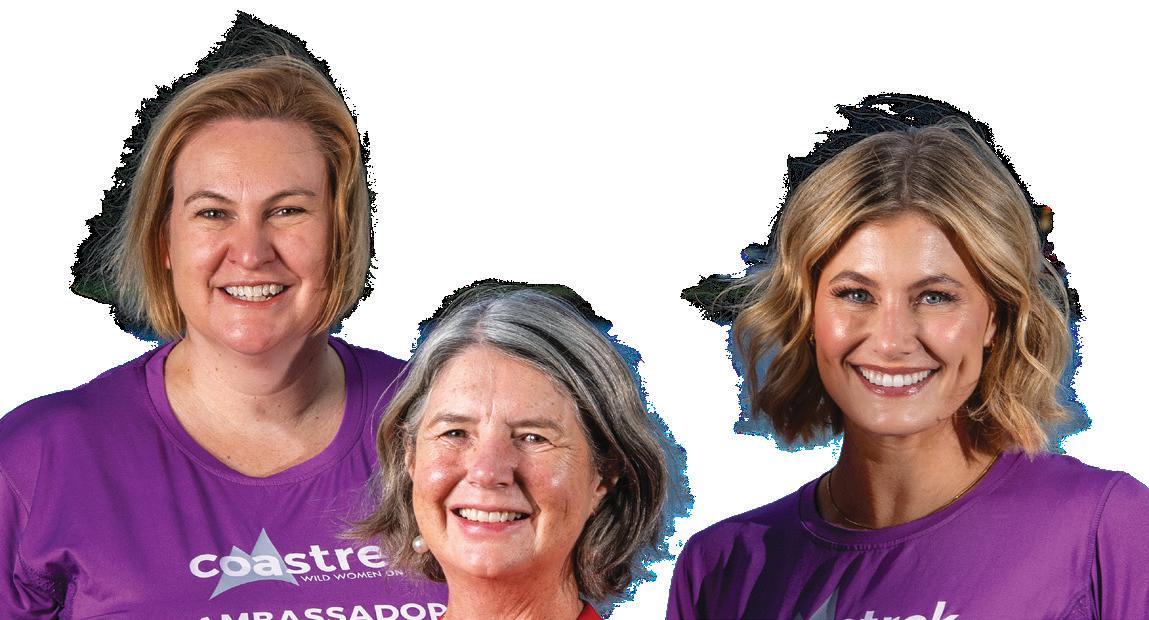
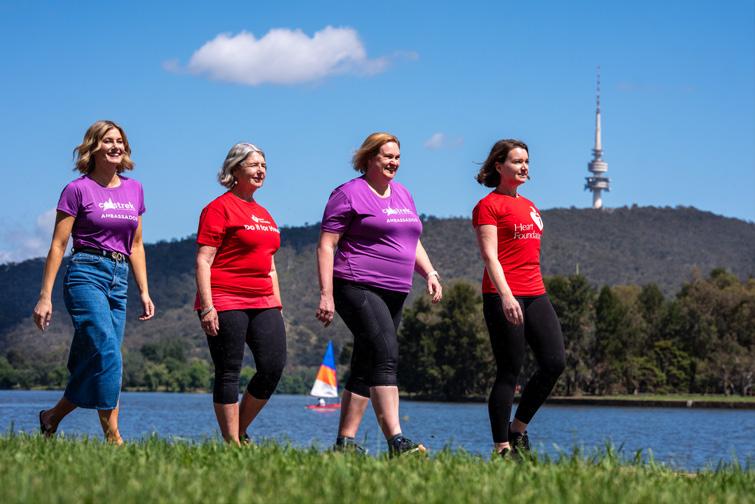
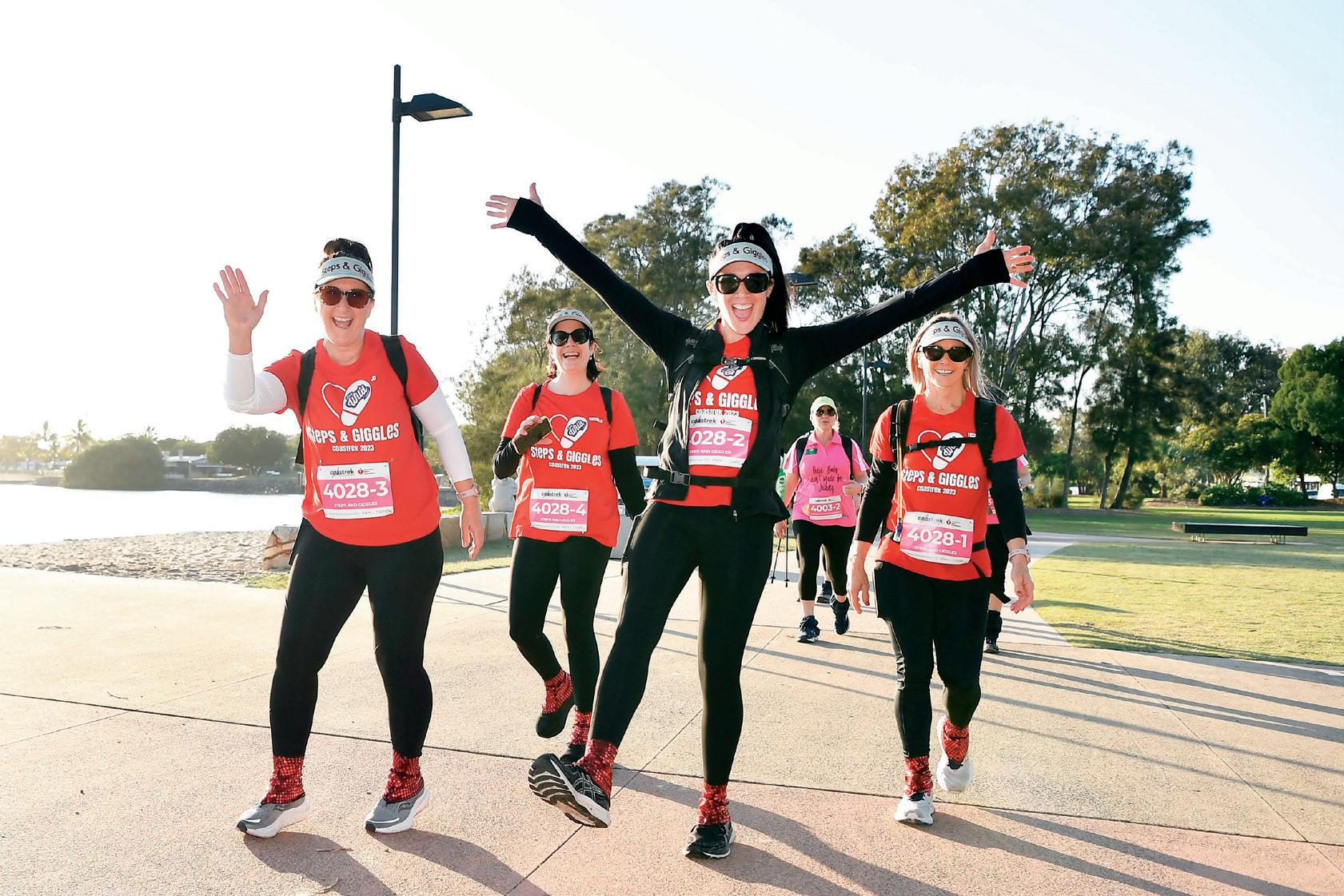
Coastrek walkers from left, Sam McClymont, Louise Maher, Cath Wallis and Clare Sullivan.
WELLBEING / office noise
Shush, please, I’m trying to get some work done
Workers hate office noise – but is using headphones to shut out colleagues the solution, asks LIBBY SANDER .
IS it okay to wear headphones in the office? Do they help get work done, or is wearing them considered rude and damaging to the office vibe.
While it might be easy to dismiss our headphone-wearing colleagues as unfriendly, the increase in usage is symptomatic of another issue entirely.
As staff have returned to the office post-lockdown, they have been confronted with the thing employees dislike most about open plan offices according to research: noise.
Modern knowledge work demands the psychological ability to focus and concentrate for lengthy periods. That is hard to do when colleagues are having impromptu meetings next to your desk, or discussing their weekends as you struggle to hit a looming deadline.
Open-plan office noise has significant implications for both employee wellbeing and performance.
Our research found relatively moderate levels of open-plan office noise caused a 25 per cent increase in negative mood and a 34 per cent increase in physiological stress.
In addition to making employees more stressed and cranky, noisy open-
plan offices reduce performance.
Research shows employees in quieter, one-person offices perform 14 per cent better on a cognitive task than employees in open plan offices.
Wearing headphones all day is likely to signal the office environment is too noisy or distracting. It can also indicate the dynamics of the team’s interaction is ineffective.
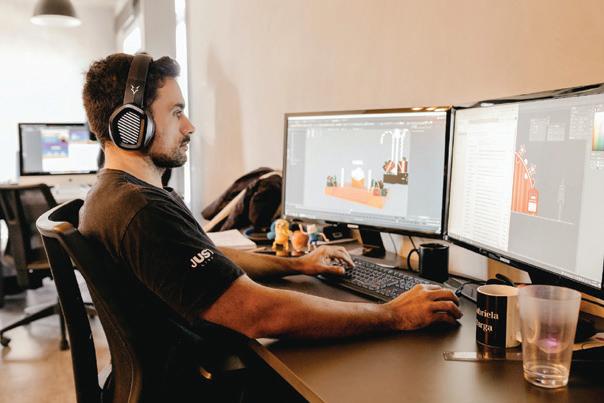
Since most employees no longer have the luxury of closing their office door, headphones have emerged as an alternative. They provide a way for employees to make it clear they don’t want to be interrupted, and to block out noise.
For others, using headphones to listen to music can help reduce anxiety. This was supported in a 2021 workplace discrimination hearing in the UK where the tribunal ruled in favour of an anxious worker who wanted to wear them.
And while noise-cancelling headphones do not improve cognitive performance, they do increase the user’s perceptions of privacy.
This is significant because when employees cannot control noise they feel a loss of privacy, and excessive stimulation can lead to frustration, anger and withdrawal.
In many open-plan offices, the
emotional resources are depleted. The result is increasing stress and errors, undermining performance.
When employees can’t concentrate on their work, their desire to interact and collaborate with others is reduced.
While focused work is important, success in modern workplaces is often driven by how well individuals interact with each other and with the organisation.
Workplaces that provide more frequent and higher-quality contact with others have been shown to have improved communication and collaboration on tasks, job satisfaction and social support.
And our social environment plays
relationships are reduced. But people are still likely to interact more with their colleagues than if they work from home because they can attend meetings and go out for coffee.
With hybrid work – where employees work some of the week at home and the rest in the office – now more widespread, employees are more likely to come to the office for social interaction and face-to-face collaboration with their colleagues.
However, this has to be balanced with the need for focused work.
Organisations can deal with this in several ways. They can provide effective acoustic treatments in the workplace and by ensuring the design and layout of the office provides suf-
ficient spaces for employees to retreat from noise.
Communicating expectations and monitoring behaviour at the team level is also important.
Research shows it takes about 23 minutes to get back on task after an interruption. Being constantly interrupted by impromptu questions and random conversation will not only reduce productivity but can lead to withdrawal.
The frequency and purpose of planned interaction will differ between teams based on individual differences and on the type of work being undertaken.
In some teams this may happen hourly, in others it may be much less frequent. Communicating individual needs amongst the team and setting times for discussions can reduce the number of distracting interruptions.
By establishing effective team communication strategies and providing workers with well-designed spaces that enable focused work, employees may be less likely to use headphones for long periods, therefore enhancing opportunities for knowledge sharing, problem solving and team interaction.
Libby (Elizabeth) Sander, MBA director & assistant professor of organisational behaviour, Bond Business School, Bond University. This article is republished from The Conversation.
WELLBEING / Kindness
So Proust: chlorine meets the Sentimental Bloke
YES, well, it sounded like “Doreen” and, while not CJ Dennis, I am a sentimental fella. Italians weep at almost anything, especially from the ATO.
And so it was, She of the Order of Infinite Patience and I were gardening together. She hollers instructions while I do stupid, and on this occasion she was manning the fandoogles while I was in the pool, cleaning muck off the green bits.
Not so much a pool these days as a water feature with textural notes of the “Amityville Horror” meets “Swamp Thing”. This sort of thing doesn’t happen to other people, what with their organised schedules and Useful Men in the family. But I was giving it a crack, and the alligators and eels were scared of my yellow speedoed butt wiggling below the surface, like a giant blancmange that was keeping time with my top half, humming Chisel tunes and taking instructions from madam.
After the axing of the offending vegetation, the newly homeless reptiles slunk off elsewhere, and I reintroduced the pool to chlorine, slightly less negatively charged than Doreen and Maureen, but higher up on the periodic table and a ripper on algae.
You know the Proust effect – the smell of something can trigger a memory that brings a powerful emotion – in
his case it was the smell of a pastry dipped in tea that reminded him of happy childhood. In my case, chlorine is a reminder of two things – laps up and down in a country town pool with scary, hatted ladies on a microphone announcing that some other kids were behaving very well and had an attention span; and our backyard with the kids still little, throwing endless slips catches.
Those catches peaked when I was about 18 and my friend Marco Polo would come up from Sydney and we would spend hour upon hour in the water at Nambucca, tearing tennis balls into the surf trying to get it to land in a fashion that the other bloke got smacked in the head with an oncoming wave as he took the perfect John Dyson. Such fun, and like licking
an ice cream or watching the Duke whack a bad guy, wonderful just being what it is.
Chlorine’s smell reminded me of past pool catches, when I had the luck and privilege to have lovely healthy kids, a sunny day, a house, a few hours off, no bombs or climate catastrophe, and still I got irritated because one of them wasn’t taking it seriously.
I figure you’ll never be in the best cricket team if you don’t practice these catches seriously. I look back and think, “what a blessed idiot”. Those afternoons kicking a footy, tossing catches, skimming stones, hitting tennis shots, throwdowns in the nets – my goodness, they were wonderful because they happened at all.
Meikle’s Kindness Central stats show 400 plus Aussies go to each of the
SolaX X-Cabinet
I wish I’d been less serious in throwing those balls for hundreds of hours with the kids, but my goodness that regret is dwarfed by the unbelievable gratitude of having had the chance to do so.
recent Olympics. About 450 Australian men IN TOTAL have played Test cricket since 1877. These are Very. Small. Numbers. It’s unlikely that two hours a week behind the school nets will get Cheryl into the Matildas.
I have such a long list of advices to give my younger self that the weight of that emotional baggage will not let me get a ticket on the Bezos/Musk Time Machine.
One will be – enjoy every minute with them, dummy - in five minutes they will grow up – and by the way, they will grow up so wonderful that they will remember all the dumb things you did with joy, not horror that you thought you were God’s gift to coaching the Narrabundah under 12s.
The other, and far more important,
is that kindness to yourself and others is the bedrock of your future self’s gratitude.
Tomorrow morning I will wake up and thank myself for today‘s disciplined effort not to have that 14th taco.
Today I wish I’d been less serious in throwing those balls for hundreds of hours with the kids, but my goodness that regret is dwarfed by the unbelievable gratitude of having had the chance to do so.
These holidays, be gentle with loved ones and yourself – spend time with people and talk and play and argue and swim and eat with them, not with the challenge of trying to improve them in any way, but enjoy the huge gift of just being together.
I miss them that are no longer with us, one important one our family lost last year, but thanks so much to a generous Universe that we had her, and them, at all.
Antonio Di Dio is a local GP, medical leader, and nerd. There is more of his “Kindness” on citynews.com.au
Lottie Lyell and Arthur Tauchert in “The Sentimental Bloke” (1919)... in his case it was the smell of a pastry dipped in tea that reminded him of happy childhood.
Oh, it reminds me of when that happened to me WELLBEING / empathy
‘Oh that happened to me, too!’ Sharing your experiences in conversation is common but sometimes it’s best to just listen, says KIM FELMINGHAM .
DO you have a friend who responds to almost every anecdote you tell with: “Oh, my gosh, me too! This reminds me of when that happened to me.”
Or perhaps you are that friend. Maybe you instinctively aim to bond with others by talking about experiences you’ve had that feel similar to what your friend has just shared.
In psychology, this is called “selfdisclosure” – a habit of disclosing something about yourself to another person, often in an effort to forge a connection.
But while this practice feels incredibly natural to some (more commonly extroverts than introverts), it can rub others the wrong way.
So why does self-disclosure elicit strong reactions? And what can psychology tell us about this habit?
Self-disclosure is a bonding tool – a way of sharing part of yourself. It can deepen intimacy and friendships and makes you a bit vulnerable. That vulnerability can touch other people’s emotions, make them feel you trust them and can forge a connection.
Women typically do it more than
men. Perhaps that is because women tend to be socialised to be allowed to be vulnerable or express they are not coping, whereas men are often socialised not to.
Nuance is important here. Not all self-disclosure is helpful, and likewise I don’t think anyone is arguing a person should just sit there mute while one friend does all the sharing.
The goal is to have a sense of balance; effective self-disclosure is reciprocal. Jumping in too quickly with “Oh, yes, that happened to me” can end up saturating conversation and make your friend feel they were never heard in the first place. It can be inadvertently invalidating and feel unbalanced.
A vast body of psychology research tells us that, fundamentally, humans want to feel heard. If your friend has just told you about some significant thing that happened to them, allow them space to express their feelings and their experience.
Another way a well-meaning self-disclosure can end up worsening imbalance is when one person shares an experience that, to them, feels equivalent – but it’s not. Your experience of the time you almost lost
out of a misplaced effort to “fix” the first person’s problems.”
a loved one is not the same as your friend’s experience of actually losing a loved one.
Sometimes people jump in with advice and what, to them, feel like similar stories out of a misplaced effort to “fix” the first person’s problems. But people’s contexts are different and their capacities are different. Ironically, your effort to “help” may leave your friend with a sense of shame they are not able to solve their problem as easily as you did.
Grief can be a real flashpoint for this clash around self-disclosure. If a friend is talking about grief and your instinct is to jump in with your own experiences, please remember no two
experiences of grief are the same.
Grief can be an incredibly isolating experience. In the acute aftermath people will swarm around you and you can feel very busy, but a few days or weeks later you are stuck with the grief while everyone else gets back to normal life.
Even close friends can panic and not know what to say after the immediate dust has settled. They may try to “help” by talking about their own experiences, or encourage a person to “move on” but this can end up invalidating the grieving person’s experience.
The safest thing is to listen and let a person who is grieving just feel their emotions.
Not every clash over selfdisclosure is about grief, of course. Sometimes it can happen over seemingly banal things. You’re happy about a minor achievement, but after sharing it with a friend they say they did that, too.
If you’re an instinctive selfdiscloser, just be aware sharing your experiences too quickly after your friend can sometimes read as competitiveness (even if unintended). Not all self-disclosure is harmful.
Sharing your lived experiences can form the basis of a great conversation and a meaningful connection. But at the end of the day, we need to let each other have joy, sadness, anger and all the emotions.
Giving each other the space to feel those emotions is key. When your friend tells their story, ask them a few questions about it. Give them time and space to reflect on their experience and how it affected them, before you jump in straight away with your own experience.
And remember that context is key: sometimes self-disclosure will deepen your connection, while other times talking about your experiences may not actually be all that helpful.
Kim Felmingham, Chair of Clinical Psychology, The University of Melbourne. This article is republished from The Conversation.
Study reveals cost of abolishing early closing
A study undertaken by La Trobe and Melbourne universities measures the impacts of early closing times on drunkenness, liver disease and death by injury, reports JOHN KIDMAN.
AS the minute hand on the wall clock raced towards the hour, thirsty men rows deep jostled for final refills before skolling their beers and stumbling into the street, the doors bolting shut behind them.
Known as the six o’clock swill, it was a scenario that played out in pubs across Australia for much of the 20th century.
The hour-long drinking frenzy between the end of the working day and early closing ironically began as a response to a wartime austerity and public morality measure instituted in 1916 to curb intoxication.
Driven by the powerful temperance movement but decried by drinkers as draconian and the work of wowsers, the restricted availability of grog lasted 51 years in SA, half a century in Victoria, 39 years in NSW and 21 in Tasmania.
WA opted for 9pm closing, while Queensland held out until 1923 before agreeing to shut off the taps at 8pm.
The nation finally heard the last of early closing in 1967, with SA premier
Don Dunstan marking the occasion by raising a glass in celebration with the locals at Adelaide’s Challa Gardens Hotel a minute after 6pm on September 28.
Experts agree the practice and the binge-drinking epidemic it inspired are unlikely to make a comeback any time soon.
Yet with licensing rules again open to debate amid Australia’s escalating fight against domestic violence, researchers are only now beginning to grasp their significance.
A study by La Trobe and Melbourne universities has for the first time measured the impact of closing Aussie pubs at 6pm upon alcohol-related harm.
While not proof that one thing causes another, the findings link early closing with lower alcohol consumption, less drunkenness, fewer deaths due to liver disease and diminished rates of fatal injury, namely suicide and homicide including where the victims are women.
“Harmful levels of consumption
continue to produce a major increased risk of chronic disease and premature death by alcoholic liver cirrhosis, injury involving for example, domestic, sexual and other violence, as well as motor vehicle accidents,” the authors say.
In evidence, they cite a 2022 Australian Bureau of Statistics report showing 1559 alcohol-induced deaths (1156 males and 403 females).
According to the research, alcohol consumption per capita in Australia dropped from eight to six litres per year with the advent of early closing and then to less than four litres during the Great Depression.
A HEALTHY DOSE OF DORIN
Some of PAUL DORIN’S best from 2023
As families acquired disposable income in the 1950s, they began stocking their own fridges and liquor cabinets rather than rely solely on the local boozer for a tipple.
By the time early closing was repealed, consumption had climbed to 10 litres per year and peaked in the 1970s at 13 litres before settling at 11 litres in the early 2000s.
Unsurprisingly, mortality rates for liver disease show a similar trajectory, declining with the advent of early closing, rising between the mid-1960s and 1980s and then plateauing.
Convictions for drunkenness, while presumably inflated by the arrest of patrons as they were turfed into the street by publicans having drunk their fill, generally decreased to begin with, rose sharply until the 1950s and have since returned to pre-World War I rates.
The researchers found suicide and homicide both decreased substantially or close to it “in association with early closing”.
“The reputation of early closing, built on collective memories of the community, has become entrenched, decades before it could be challenged with this evidence,” they conclude.
“The evidence presented here suggests that its reputation should be re-evaluated.
“While universal six o’clock closing is no longer feasible or desirable,
opening hours and days are still part of the policy discussion and mix in various circumstances in Australia.”
An extension of late-night trade for NSW bottle shops was also linked last year to a spike in domestic assault.
The state’s Bureau of Crime Statistics and Research associated allowing takeaway sales and home deliveries until 11pm over a period of 38 months with an additional 1120 incidents of household violence.
Notably, the increase was more pronounced after 10pm.
Following the one-punch deaths of teenagers Thomas Kelly and Daniel Christie, controversial lockout laws were instituted in Sydney in 2014, but similarly wound back six years later.
The last of the restrictions were repealed in the city’s once notorious red light district of Kings Cross in March 2021, when an extra two hours drinking time, until 3.30am, was granted in the name of reviving a stagnated night-time economy.
Australian Medical Association NSW head Danielle McMullen lashed the decision as irresponsible, saying the lockout laws had successfully reduced alcohol-related harm.
However, proponents of the softer laws argue the Cross was gentrified to such an extent during the prohibitions it is never again likely to return to the notoriety of its bad old days.
The six o’clock swill was an institution in both Victoria and South Australia for half a century.
Photo: Museums Victoria
How smartphones change how we see the world
By TJ THOMSON & SHEHAB UDDIN
SMARTPHONES are a staple of modern life and are changing how we see the world and show it to others.
Almost 90 per cent of Aussies own one, and we spend an average of 5.6 hours using them each day. Smartphones are also responsible for more than 90 per cent of all the photographs made this year.
But compare the camera roll of a 60-year-old with that of a 13-year-old, as we recently did, and you’ll find some surprising differences. In research published in the “Journal of Visual Literacy”, we looked at how different generations use smartphones for photography as well as broader trends that reveal how these devices change the way we see the world.
Here are five patterns we observed.
1We make images more casually
Before the first smartphone camera was released in 2007, cameras were used more
selectively and for a narrower range of purposes. You might only see them at events like weddings and graduations, or at tourist hotspots on holidays. Now, they’re ubiquitous in everyday life. We use smartphones to document our meals, our daily gym progress, and our classwork as well as the more “special” moments in our lives.
Many middle-aged people use smartphones most for work-related purposes. One of our participants put it this way:
“I often take photos of info I want to save, or of clients’ work when I want to then email it to myself to put on the computer. I feel like I’ve gotten a little slack on socially taking photos of friends… but in the day-to-day, I feel like I use it very practically now for basically work, grabbing a photo to upload it online somewhere.”
2We aren’t as selfieobsessed
Our participants only used their phone’s front “selfie” camera 14 per cent of the time.
They acknowledged the stigma around selfies and didn’t want to be perceived as narcissistic.
3We’re seeing more vertical compositions
In years past, whether you had a bulky DSLR camera or a lightweight disposable, the “default” grip was to hold it with two hands in a horizontal way. This leads to photos in landscape orientation.
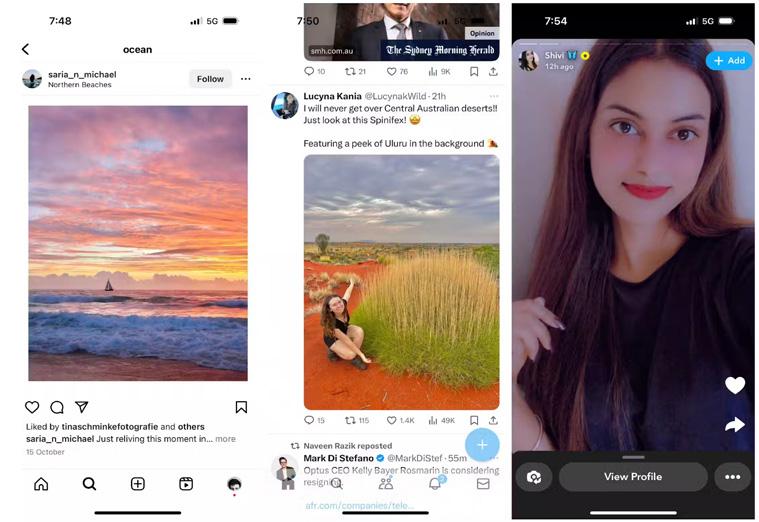
But the vertical design of smartphones and accompanying apps, such as Instagram
Whether you are looking for a round of golf, a delicous meal, or drink with friends, the Braidwood Servicemens Club boasts a wide range of recreational and sporting facilities to cater for every taste.
Why not get a group together and enjoy a game of golf at one of the most picturesque golf courses to be found in inland New South Wales!
Find us On Facebook & Instagram
and Snapchat, are resulting in more photos in portrait orientation. Participants said holding their smartphone cameras this way was more convenient and faster.
4We
like to keep our distance
Participants made more images of people from farther away compared to getting close. Intimate “head and face” framing was only present in fewer than 10 per cent of the images.
In one participant’s words: “I feel like my friends and I get frustrated with parents, when they’re zooming in a photo or they walk in really close. My mom would always get one like right in my face, like this is too close! I don’t want to see this. The zoom in, oh, it’s frustrating!”
5Inspired by what we see online
Teenagers in particular mentioned social media, especially Instagram, as influencing their visual sensibilities.
Older adults were more likely to attribute their sense of aesthetics to physical media,
magazines and posters.
This aesthetic inspiration impacts what we take photos of, and also how we do it.
For example, young people mentioned a centred compositional approach most often.
In contrast, older generations invoked the “rule of thirds” approach more often.
One participant contrasted generational differences like this: “There seems to be a real lack of interest [by younger people] in say, composition, or the use of light or that sort of aesthetic side of getting an image.
“When my partner and I were kids […] our access to different aesthetics and images was actually very limited. You had the four channels on TV, you had magazines, you had the occasional film, you had record covers, and that was it, you know. Whereas, kids these days, they’re saturated with images but the aesthetic aspect doesn’t seem to be that important to them.”
Why the way we make images matters
While technology is changing the way people see the world and make photographs, it’s
we do what we do, and with what effects.
For example, the camera angle we use might either give or take away symbolic power from the subject. Photographing an athlete or politician from below makes them look more strong and heroic, while photographing a refugee from above can make them look less powerful.
Sometimes the camera angles we use are harmless or driven by practicality – think photographing a receipt to get reimbursed later – but other times, the angles we use matter and can reinforce existing inequalities.
As the number of images made each year increases and new ways to make images emerge, being thoughtful about how we use our cameras or other image-making technology becomes more important.The Conversation
TJ Thomson, senior lecturer in Visual Communication & Digital Media, RMIT University and Shehab Uddin, program director, Higher Degree Research, Pathshala South Asian Media Institute. This article is republished from “The Conversation”.
Casual, distant, aesthetically limited: here are five ways smartphone photography is changing how we see the world.
sometimes connotes symbolic power differences.
Photos: Vladislav Todorov (left) and Aleksandr Kadykov
The vertical design of smartphones and associated popular social media apps influences how people use their smartphone cameras. Photos: Instagram / X / Snapchat
WELLBEING / dandruff
What’s dandruff? Why does it keep coming back?
By Lorraine Mackenzie and Sean Mangion
DANDRUFF can be dry, like snowflakes, or greasy, with yellow clumps. Up to half of all adults have had this scalp condition at one point, so you’ll no doubt know about these skin flakes and the itchiness.
Dandruff can be embarrassing. It can affect many aspects of people’s lives, such as how they socialise, how they style their hair, and what clothes they wear.
“Dandruff can be embarrassing. It can affect many aspects of people’s lives, such as how they socialise, how they style their hair, and what clothes they wear.”
range of factors.
These include the quality of your skin barrier. This may mean yeast can penetrate deeper if the skin is damaged in some way, for example, if it’s sunburnt. Other factors include your immunity, and external factors, such as which hair-care products you use.
How Malassezia grows also depends on the balance of other microorganisms that live on your skin, such as bacteria.
How do I get rid of dandruff?
tion of these ingredients.
There is also the risk of making the problem worse by providing more oils that the yeast will enjoy, causing more imbalance to the scalp micro-organisms and leading to more irritation.
So it’s best to stick with commercial products.
Why does my dandruff come back?
drase enzymes. These might target how the yeast grows in a different way to current active ingredients.
Dandruff is not a modern problem. In fact, it has been around for millennia and was described by Greek physicians. We don’t know for sure whether our ancestors were as bothered by it as much as we are today. But they were interested in what causes it.
Dandruff is mainly caused by the yeast Malassezia. The yeast lives on most people’s skin, either on the surface or in the opening of the hair follicle, the structure that surrounds a hair’s root and strand.
The yeast feeds on sebum, the natural moisturiser secreted by your sebaceous glands to stop your skin drying out. These glands are attached to every hair follicle and the hair provides a dark, sheltered micro-environment ideal for the yeast to flourish.
As the yeast grows, it releases molecules that irritate the skin and disrupts how the skin normally renews itself. This causes the cells to cluster together, appearing as white flakes. When there is excess sebum, this can mix with the cells and cause the dandruff to appear yellow.
The link between dandruff and yeast was made nearly 150 years ago. The person who first identified and described this yeast in 1874 was Louis-Charles Malassez (the yeast’s namesake).
Why do I have dandruff?
As Malassezia is found on most people, why do some people get dandruff and others don’t? This depends on a
Dandruff is mostly treated with anti-fungal shampoos and scalp treatments to dampen down growth of Malassezia. The shampoos most commonly contain the anti-fungal agent zinc pyrithione (ZnPT for short). Other common anti-fungals in shampoos include selenium sulfide, ketoconazole and coal tar.
You can also treat dandruff with scalp masks and scrubs that help restore the scalp barrier, by reducing inflammation and irritation. But as these may not have any anti-fungal action, your dandruff is likely to return.
Home remedies include tea tree oil, coconut or other oils, and honey. There is some evidence to support their use, mostly from studies that show extracts from botanical ingredients can reduce growth of the yeast in the lab. But there is great variation in the quality and composi-
Your dandruff is likely to return unless the active ingredients in your shampoo can reach the right spot, at the right concentration, for the right amount of time needed to kill the yeast.
Our research focussing on zinc pyrithione-based products showed these shampoos reached the skin surface. But they less-reliably ended up in the harder-to-reach hair follicles.
We found the zinc pythione seemed to target the top of the follicles rather than deep into the follicles.
So this may explain why dandruff keeps on coming back. Your shampoo’s active ingredient may not reach the yeast that causes your dandruff.
We don’t yet know how we can encourage existing formulations to penetrate deeper into the follicles.
We’ll likely see new formulations of dandruff shampoos and scalp treatments that better deliver the active ingredient to where it’s needed – deeper into the hair follicles.
We can also expect new active ingredients, such as carbonic anhy-
We are also beginning to see the development of creams and lotions that aim to boost the health balance of flora of the skin, much like we see with similar products for the gut. These include pre-biotics (supplements or food for skin flora) or probiotics (products that contain skin flora). However we have much to learn about these types of formulations.
In a nutshell
Dandruff is annoying, treatment helps, but you may need to repeat it. Hopefully, we can develop improved shampoos that better deliver the active ingredient to where it’s needed. But we need to strike a balance. We don’t want to eliminate all microorganisms from our skin.
These are important for our immunity, including preventing more disease-causing microbes (pathogens) from moving in. They also help the skin produce antimicrobial peptides (short proteins) that protect us from pathogens.
Lorraine Mackenzie, Associate Professor, Clinical and Health Sciences, University of South Australia and Sean Mangion, PhD Candidate, University of South Australia. This article is republished from The Conversation.
WELLBEING / volunteers
Why volunteers should have the right to a fair go
PEOPLE believe that “fairness” is a right. It isn’t.
Following an unfair experience they believe there is a legal remedy. There often isn’t.
They think “natural justice” is a catch-all means to right wrongs. It rarely is.
Here is an example, from an early December letter to “CityNews”. Writer Leon Arundell claimed:
“In February, I was told that, because I had written a ‘CityNews’ article [mainly about transit lanes], I had been expelled from the [ACT] Conservation Council’s Transport Working Group and I was no longer permitted to contact any member of any Conservation Council working group, or to enter the council’s premises.
“Contrary to natural justice, that decision had been made without informing me that it was being considered.
“I asked to resolve the dispute. All I was offered was a confidential meeting with a single board member, who was not authorised even to make recommendations to the board.
“I have had no response to my request for an appeal to be decided, in accordance with natural justice, by someone independent of the original decision-maker.”
His earlier article (the one that he
claims was the cause of his expulsion) included the following: “We can convert an existing traffic lane to a T3 or T2 transit lane for the cost of a few road signs.
“Population growth is the biggest cause of increases in Canberra’s transport emissions and traffic congestion. The second biggest cause is car passengers becoming car drivers.
“Transit lanes encourage car drivers to become car passengers. Neither bus rapid transit nor light rail do that.
“Stage one of light rail failed to reduce the proportion of Canberra commuters who drive cars.
“The proportion of Canberra commuters who travelled as car passengers fell from 9 per cent in 2011 to 7.3 per cent in 2016, and to 6.7 per cent in 2021. The proportion who drove cars increased from 73 per cent in 2011 to 74 per cent in 2016, and to 75 per cent in 2021.”
How, if at all, the contents of that article led the Council to expel him is unknown. It is also irrelevant.
What matters is whether Mr Arundell had any legal basis to contest his expulsion.
To find out what, if any, rights of redress he had we must go to the council’s constitution (updated late this year conservationcouncil.org. au/about-us/ ).
Volunteers might be just grist to the mill: here today and expelled tomorrow for good, bad or no reason.
In the current constitution there is no mention of the working groups, nor of the volunteers who serve on them.
The council’s key members are organisations, not individuals. Nevertheless, at its discretion the council can choose to make individuals “associate members”. However, such individuals have “no voting or other rights” of any kind.
By contrast there is a mandated dispute resolution process for member organisations. The “natural justice” process matches the usual requirements of “fair process”, such as no bias by those deciding the dispute, the chance to be heard, as quickly as is reasonable, and the right to seek a review by an outside arbitrator of an adverse decision.
Mr Arundell thought this applied to him. It doesn’t.
There are many in our community who volunteer their time and skills. The organisations must have adequate insurance cover for untoward events. Volunteers may also have protections under the Privacy Act.
Our Civil Law (Wrongs Act) provides: “A volunteer does not incur personal civil liability for an act done or omission made honestly and without recklessness while carrying out community work for a community organisation on a voluntary basis”. That’s a comfort.
But otherwise volunteers might be just grist to the mill: here today and expelled tomorrow for good, bad or no reason.
The ACT’s Emergency Services Agency has a “Volunteer’s Charter”. Its components are laudable. It is worth reading.
Whatever the rights and wrongs in Mr Arundell’s expulsion (that may go to the personalities of one or more of those involved or deep-felt policy differences or some other factor) it’s not a good look to “accept” volunteer effort and then throw the volunteer out, trash like.
It could and should have been better handled. A lawful act flowing from the constitution’s express denial of rights to individuals can be delivered in various ways, ranging from the arrogant brutal to the charming farewell.
The notion that volunteers are
entitled to a ‘grievance procedure’ is reasonable (and mentioned by those who champion the use of volunteers) but it’s not a legal requirement. Volunteers are vital to our community. They are drawn from those with a will to serve, be they young or old. Nevertheless, disputes are inevitable. We do not have a Volunteer’s Act that sets out the rights and obligations of those who use volunteers and those who volunteer.
Rather than burdening many small organisations with having to establish a grievance procedure, such an act could give our tribunal, the ACAT, the jurisdiction to decide disputes. Achieving fairness for all volunteers would have legs. It’s time to get this right – too late for Mr Arundell – but a fair thing for today’s volunteers.
Hugh Selby is a former barrister. His free podcasts on “Witness Essentials” and “Advocacy in court: preparation and performance” can be heard on the best known podcast sites.
Tailored exercise to improve your ability to move with confidence and a reduced risk of falls or other injury in every day activities.
Over 50’s Community Group Exercise classes and BungyPumpNordic Walking training available from 15th Jan 2024.
Neighbours, who needs them? Democracy does
ACROSS the world, democracy is under pressure. According to one set of experts, the world entered a “democratic recession” in 2016 and is yet to recover.
Russia, Peru, Turkey and Myanmar are among the nations whose democracy scores have slumped.
While democracy is down, populism is up. According to a recent study, populism is at an all-time high, with more than 25 per cent of nations now governed by populists.
Populists tend to erode democratic institutions and undermine economic growth. Fifteen years after populists take power, income per person is 10 per cent lower than it would otherwise have been.
Worst yet, populists make catastrophic risks more likely. Confronting dangers such as nuclear war, bioterrorism, climate change and rogue AI requires mobilising our intellectual powers, strengthening institutions, co-operating internationally and remaining calm.
Yet by definition, populists are anti-intellectual, anti-institutional, anti-international and anti-calm.
The populist business model is to sow chaos – which can make it harder to avert catastrophe. Just think about how poorly populists managed covid, and then imagine what might happen
if they were faced with an even worse disaster.
What is to be done? In his book “On Tyranny”, historian Timothy Snyder sets out 20 lessons from the 20th century about how to defend democracy.
Studying how fascism and Communism took over, his lessons include defending truth, strengthening institutions and being wary of paramilitaries. But he also emphasises the value of civil society.
Snyder reminds us that a strong democracy isn’t just about parliaments and elections, but about community.
Czech dissident and poet Vaclav Havel knew a thing or two about resisting autocrats. He knew how important it was for a democracy to have a strong social life. Havel gave the example of citizens who join together in a beer-brewing club.
After the fall of Communism in 1989, Havel became the first democratically elected president of Czechoslovakia (and later, the Czech Republic). He never lost his love for beer-brewing and community building.
Australia today is suffering a crisis of disconnection. The past generation
Proudly stocking the largest range of Australian native plants in Canberra and surrounds
We specialise in local native plant varieties:
• Hardy, cold and frost tolerant natives
• A large range of advanced stock • Tubestock up to 200mm
Australia today is suffering a crisis of disconnection. The past generation has seen Australians become less likely to play a team sport, less likely to join a community group, less likely to volunteer and less likely to donate to charity.
has seen Australians become less likely to play a team sport, less likely to join a community group, less likely to volunteer and less likely to donate to charity.
Compared with the mid-1980s, Australians today have only about half as many close friends. Compared with the era when the television show “Neighbours” first aired, Australians know only about half as many of our neighbours. Building community will make Australians healthier and happier.
Asked about our views of an ideal society, most of us say that we’d like to spend more time with friends and
family and we’d enjoy living in a society where more people know our neighbours.
As a government, we’re doing all we can to strengthen charities.
We’ve set a target to double philanthropic giving by 2030 and we’re working to streamline charitable fundraising laws. We’re holding Australia’s largest ever charity conversation, and making it easier for charities to get tax-deductibility status.
But community building is also something that each of us can do in our own lives.
Consider whether you can do more to connect with those around you. Join a team sport. Attend a community meeting. Volunteer your skills. Donate to a worthy cause. Host a summer street party for your neighbours. Join a beer brewing club. Connecting isn’t just good for your neighbourhood, it’s also vital for our democracy.
Andrew Leigh, the ACT member for Fenner, is Assistant Minister for Compe tition, Charities and Treasury.
Let our expert staff show you a range of plants suitable for your garden soil type, to grow and enjoy an abundance of Australian native plants.
Compared with the era when the television show “Neighbours” first aired in the ‘80s, Australians know only about half as many of our neighbours.
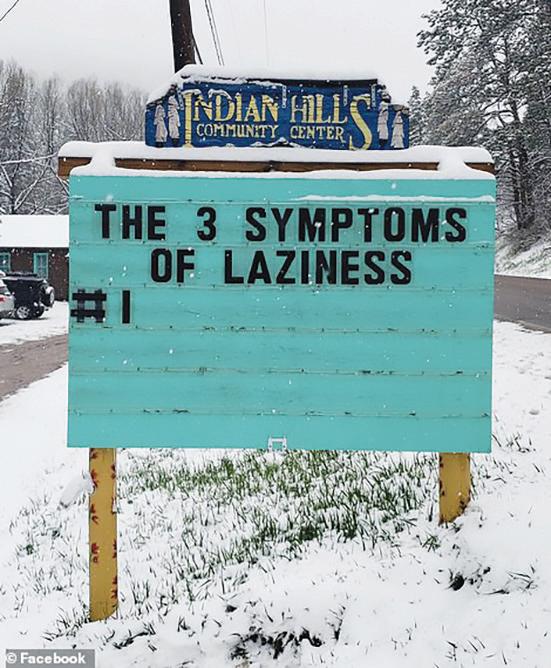
NEVER heard of Vince the sign guy?
Five years ago, Colorado resident Vince Rozmiarek put up an amusing sign near the Indian Hills Community Center as an April Fool’s Day joke. To his surprise, people enjoyed the sign, and he has been regularly updating them ever since.
Some examples of his lighthearted humour or – since he’s American – humor:
Vince sees life as a sign of laughter and fun
• Welcome to the assumption club! I think we all know why we’re here.
• Some people are such treasures you just want to bury them.
• Somebody’s therapist knows all about you.
• Good Moms let you lick the beaters. Great Moms turn them off first.
• To the thief who took my antidepressants, I hope you’re happy.
• Feeling a bit paranoid? Remember… you’re not alone.
can and can what they can’t.
• I was in a band called the Hinges. We opened for the Doors.
• Inspecting mirrors is a job I could really see myself doing.
• My doctor says I have high nitrates so I’m switching to day rates.
• Man in boxers leads police in brief chase.
• To spell the word panda you just need a p and a.
• Boarding school taught me how to get on an airplane.
• Please cancel my subscription to your issues.
• When you dream in color, it’s a pigment of your imagination.
• A tombstone with a typo? Well, that’s a grave mistake.
• It wouldn’t have been Wright if Ford invented the airplane.
• Women’s roofing expo this weekend. All the shingle ladies will be there.
• I have a black eye in karate.
• Larva was a great band before the Beatles emerged.
• My landlord wants to talk about my high heating bills. I told him my door is always open.
• My wife told me to put ketchup on the shopping list. Now I can’t read anything.
• I married my wife for her looks, but not the ones I’m getting lately.
• I made a chicken salad last night. Apparently, they prefer grain.
• To make a long story short I became an editor.
• It doesn’t make any cents, but volunteering is rewarding.
calories and we have the figures to prove it.
• Failure is success in progress.
• Honk if you think geese can understand you.
• There are no such things as vampires. Unless you Count Dracula.
• I’m reading a book on lubrication. It’s non-friction.
• Frankenstein was angry because his doctor was overcharging him.
• I don’t have the faintest idea why I passed out.
• Skinny cows have slimmer calves.
• Common sense is like deodorant. Those who need it most never use it.
• Despite the high cost of living, it remains popular.
• If your cup is only half full you probably need a different bra.
great response ability.
• Acupuncture is a jab well done.
• The hardest thing about learning to ride a horse is the ground.
• Any stairway can be a stairway to heaven if you’re clumsy enough.
• I believe in the hereafter. When I enter a room, I have to recall what I’m hereafter. If you want more of Vince, he now has a website at vincethesignguy.com.
Clive Williams is a Canberra columnist.
Vince the sign guy aka Vince Rozmiarek.
Annuals that bring in the bees
COSMOS are terrific fillers in the cottage garden that not only attract bees and pollinators, but the flower colour range is also forever changing with new varieties released every season.
They are an annual, which means they are sown, grown and flower all in the same year.
However, there is the Chocolate Cosmos (Cosmos atrosanguineus), a perennial cosmos that grows from a tuber called.
This is a highly sought after chocolate-scented plant with deep crimson flowers and is a charming and graceful addition to the garden. It grows in full sun and good moisture is required.
Growing annuals from seed is a very economical way to get a lot of flowers for very little cost. Packets can range from 10 seeds to hundreds and can be as little as a few dollars a packet, but be mindful of the expiry
Seed can be soaked overnight to help with the germination if
needed and sowed in seed-raising mix. Place a little bit of washed river sand over the seed to help with any fungal issues and drainage.
Some easy seeds for beginners would be Iceland Poppies, Corn Flowers and Love in the Mist.
Small critters will need to be kept at bay while the seedlings are young and sprinkle diatomaceous earth around the seedlings and keep moist.
AMONG the annuals that grow well once established and need little water and flower through summer is Angelonia.
A personal favourite, it has delicate flower spikes and, growing to 30 centimetres tall, is great for container plants in a hot location. Its colours range from purple to pinks and whites. Mixed with cosmos, it’s a must-have for a cottage garden.
PASSIONVINE hoppers, which are in abundance this time of the year, do quite a bit of damage to plants and small trees by reducing vigour and yield if not kept in check.
Passionvine hopper (Scolypopa australis) is a native and should only be sprayed at a last resort
(when there is more than 50 per cent damage to a plant) with a mild pyrethrum in the cool of the day.
Vine hoppers eat plants such as sunflowers, rhubarb, cherry trees and in my case, maple trees. They’re easy to see, but hard to spray when they’re hopping away. In their juvenile stage, they are small insects with fluffy bums. At this stage they are easy to see and easier to catch and squash to keep the population from exploding. Its natural enemies are mainly parasitic wasps. To encourage these wasps into the garden, Use flowers such as carrots, fennel and cosmos to encourage wasps into the garden.
jackwar@home.netspeed.com.au
Jottings…
• Make sure there are dishes of water for the birds and lizards.
• Pick fruit as it ripens and put in cold storage immediately.
• Give vegetables liquid fertilis- ers every two weeks.
• Deadhead dahlias for a con- tinual display into autumn.
Cosmos… terrific fillers in the cottage garden.
Passionvine hoppers… in abundance this time of the year
Photos: Jackie Warburton
/ fashion
Fashion failings: what to wear for a climate crisis
Australia has the world’s biggest carbon footprint from fashion, says RACHAEL WALLIS. This is one area where changing our personal clothing choices can make a big difference, just as it did in World War II.
WHEN people move to the country from the city, they need to change their wardrobes, my research on tree-changers in Australia found.
The new context of their lives means the clothes they wore for the city no longer work for their new lives. This is also true in the climate crisis.
Our context has changed. When we decide what clothes to buy, we now need to bring into play a wider range of values than the appearance of a garment, its newness and novelty and whether we like it or not.
As the Intergovernmental Panel on Climate Change (IPCC) states, if we are to have any hope of avoiding a world that is too hot and unpredictable to live in, we need to do everything we possibly can, right now, to cut greenhouse gas emissions into the atmosphere.
The fashion industry contributes up to 10 per cent of global emissions –more than international aviation and shipping combined. It also contributes to biodiversity loss, pollution, landfill issues, unsafe work practices and more.
Australia’s carbon footprint from the consumption and use of fashion
is the world’s biggest, a dubious distinction in a materialistic world.
So this is an area where the choices we make can have big im pacts. While individual action will not solve all of the above problems, it will help as we move towards the structural and systemic change needed to live sustainably.
Lessons from wartime
It’s not the first time people have adapted their clothing in response to the demands of a crisis.
During World War II, cloth ing styles changed in the UK and Australia. To conserve precious resources, shorter skirts, minimal detailing and a focus on utility became the norm.
value system that contributed to the Allied victory.
People adapted their personal aesthetics and appearance because the situation was grave and they wanted to “do their bit” to help with the war effort. This was a collective necessity in dire times.
This wartime response reflected the priorities and values of society as a whole as well as most people in that society. In other words, buying less (rationing meant this was not just a
In novels and other writing from the era, it is clear that at times it was not easy and it could be frustrating. There was, however, a public consensus that it was necessary.
So what can we do today?
In our current context, the most helpful thing we can do is to buy fewer new clothes and wear them for longer. Australians buy a lot of clothes, about 56 items per year on average. That makes Australians the second
highest textiles consumers in the world after the US, and is 60 per cent more than we bought even 15 years ago. The price of clothes has dropped significantly over the past couple of decades, and the number of clothes people have in their closets has
If we begin to shift away from our slavish devotion to newness and novelty – following the dictates of fashion – to a mindset of value-led sufficiency, we can appreciate more fully the feel of lived-in, mended or altered clothes. There is a feeling of comfort in pulling on an old garment that is soft with age and repeated washing. There is joy in extending a garment’s life through creative mending, especially when that aligns with our values.
The Berlin-based Hot or Cool Institute suggests a wardrobe of 74 garments (including shoes but excluding undergarments) is typically sufficient for people who live in a two-season climate (in the tropics) and 85 pieces for those who live in a four-season
ARTS IN THE CITY
climate, as most Australians do. If we buy ten to 12 new items a year, we can replace our entire wardrobe in about seven years.
Buying second-hand instead of new is even better because it doesn’t add to current production emissions.
Choosing clothes to fit our values
To live authentic lives that are fulfilling and satisfying in deep and meaningful ways, we need to be true to ourselves. In the case of clothing, we should evaluate our choices in relation to the values we hold. And if we do care about living sustainably, that means changing those choices we feel are no longer suited to the climate crisis.
Clothes need to reflect a person’s situation as well as their identity to “work” well. This may mean that what we wear changes as we make different buying decisions, just as people did in the second world war and as tree-changers do. We may start to look different, but that change signifies our values in action.
Best of all, clothing choices that align with keeping global warming to less than 1.5 degrees will have a long-term impact as significant as winning the war.
Rachael Wallis, Research Assistant, Youth Community Futures, University of Southern Queensland. This article is republished from The Conversation.
Ambitious exhibition of Gauguin
“GAUGUIN’S World: Tōna Iho, Tōna Ao,” one of the most ambitious exhibitions the National Gallery of Australia has ever staged, will open in winter 2024 and run at the gallery until October.
SONGSTRESS Kate MillerHeidke’s “Catching Diamonds” will see her stripped-back mode, accompanied by her long-term collaborator Keir Nuttall on guitar. She’ll be playing her hits, loved pop songs, tracks from her original musicals “Muriel’s Wedding the Musical” and “Bananaland” and covers, also taking requests and performing new material from her coming sixth studio album.
“I HAVE a fascination with seed pods and seashells,” wood sculptor Hape Kiddle says. “These exquisite chambers of life, holding, hiding, waiting.” Kiddle’s exhibition of new works, “Holding Time”, will be at Bungendore Wood Works Gallery until the end of February.
Gauguin’s art… one of the most ambitious NGA exhibitions.
CREATED by the Museums of History NSW with illustrator James Gulliver Hancock, “On the Move” explores transport in all its forms and offers children and families the hands-on discovery of journeys, unique inventions, amazing vehicles and intrepid explorers. It shows how fuel choices can have a positive impact on the environment and how transport modes have evolved. Canberra Museum and Gallery until January 28.
YOUNG Music Society’s popular Summer Music School is up and running at Canberra Girls’ Grammar School until January 19, with the 2024 theme of “How to Tell a Story with Music”. There are classes in soundscapes, being a “Foley” artist, music, dance, drama, first nations music and dance, theory games and the chance for participants to sing their hearts out in choir and create beautiful sounds in an experimental orchestra.
A change to shorter skirts and minimal detailing conserved precious resources during World War II.
Photo: Imperial War Museum
Is decaf coffee really all it’s cracked
How is decaf coffee made? And is it really caffeine-free?
LAUREN BALL and EMILY BURCH share some answers...
COFFEE is one of the most popular drinks in the world, and its high levels of caffeine are among the main reasons why. It’s a natural stimulant that provides an energy buzz, and we just can’t get enough.
However, some people prefer to limit their caffeine intake for health or other reasons. Decaffeinated or “decaf” coffee is widely available, and its consumption is reported to be on the rise.
Here’s what you need to know about decaf coffee: how it’s made, the flavour, the benefits – and whether it’s actually caffeine-free.
How is decaf made?
Removing caffeine while keeping a coffee bean’s aroma and flavour intact isn’t a simple task. Decaf coffee is made by stripping green, unroasted coffee beans of their caffeine content and relies on the fact that caffeine dissolves in water.
Three main methods are used for removing caffeine: chemical solvents, liquid carbon dioxide (CO ₂ ), or plain water with special filters.
The additional steps required in all of these processing methods are why decaf coffee is often more expensive.
Solvent-based methods
Most decaf coffee is made using solvent-based methods as it’s the cheapest process. This method breaks down into two further types: direct and indirect.
The direct method involves steaming the coffee beans and then repeatedly soaking them in a chemical solvent (usually methylene chloride or ethyl acetate) which binds to the caffeine and extracts it from the beans.
to the beans to reabsorb the coffee flavours and aromas.
Once the caffeine has been extracted, beans are steamed once more to remove any residual chemical solvent.
The indirect method still uses a chemical solvent, but it doesn’t come into direct contact with the coffee beans. Instead, the beans are soaked in hot water, then the water is separated from the beans and treated with the chemical solvent.
The caffeine bonds to the solvent in the water and is evaporated. The caffeine-free water is then returned
ARTS / Dairy Road
The solvent chemicals (particularly methylene chloride) used in these processes are a source of controversy around decaf coffee. This is because methylene chloride is suggested to be mildly carcinogenic in high doses. However, both the Australian and NZ Food Standards Code and the US Food and Drug Administration permit the use of these solvents to process decaf. In reality practically no solvent is left behind.
Non-solvent-based methods
Non-solvent-based methods that use liquid carbon dioxide or water
are becoming increasingly popular as they don’t involve chemical solvents. method, liquid carbon dioxide is pumped into a high-pressure chamber with the beans, where it binds to the caffeine and is then removed through high pressure, leaving behind decaffeinated beans.
The water method is exactly what it sounds like – it involves extracting caffeine from coffee beans using water. There are variations on this method, but the basic steps are as
For an initial batch, green coffee beans are soaked in hot water, creating an extract rich in caffeine and flavour compounds (the flavourless beans are then discarded). This green coffee extract is passed through activated charcoal filters, which trap the caffeine molecules while allowing the flavours to pass through. Once created in this way, the caffeine-free extract can be used to soak a new batch of green coffee beans – since the flavours are already saturating the extract, the only thing that will be dissolved from the beans is the caffeine.
Is caffeine fully removed from decaf?
Switching to decaf may not be as caffeine-free as you think. It is unlikely that 100 per cent of the
Lots of arts doing down Dairy Road
By Helen Musa
THE Dairy Road precinct in Fyshwick is fairly buzzing with arty initiatives.
For those who haven’t been there yet, Dairy Road is located between the Jerrabomberra Wetlands and Fyshwick and is nowadays inhab ited by a community of more than 40 businesses working across art and design, music, theatre, food production, hospitality, printing, industrial design and even boat-building.
Now as the summer heats up, so do the arts, as I found on a scorching Tuesday when I caught up with a group of the movers and shakers behind a new summer program.
On hand was David Caffery from the cultural development company Dionysus, which hosts artistic activities for the Molonglo Group, to assure me that the spacious pond-like water feature emanating from Pezo von Ellrichshausen’s column sculpture “Less” was just one centimetre deep – so no problem for kids.
Splashing around and enjoying giant soap bubbles created by drag artist Lee Maddocks, were two-year-old Miro and four-year-old Sunny from Braidwood, the children of performing artist Michael Simic (Mikelangelo) and his wife Rose Ricketson, who works for Dionysus organising and producing events at Dairy Road.
The couple met when Mikelangelo and the Black Sea Gentlemen were working on “Ghosts in the Scheme”, the 2015 Snowy Scheme opus by theatre company Big hART, for whom Ricketson then worked. The rest is history and Mikelangelo, somewhat to his own surprise, is a family man now living and working out of Braidwood.
In early November, after his performance in “Under the Influence” with Shortis and Simpson at The Q, Simic told me he was thinking of turning into
and place manager for Canberra City, Haig Park and Dickson for City Renewal Authority, was naturally to talk up the 2024 events program, which will include markets, community singing,
a winter market, the
caffeine will be successfully stripped from the coffee beans. Just like the caffeine content of coffee can vary, some small amounts of caffeine are still present in decaf.
However, the amount is quite modest. You would need to drink more than 10 cups of decaf to reach the caffeine level typically present in one cup of caffeinated coffee.
Does decaf coffee taste different?
Some people say decaf tastes different. Depending on how the beans are decaffeinated, some aromatic elements may be co-extracted with the caffeine during the process. Do caffeinated and decaf have benefits?
The health benefits found for drinking decaf coffee are similar to that of caffeinated coffee, including a lower risk of type 2 diabetes, some cancers and overall mortality.
Most of the health benefits have been shown by drinking three cups of decaf per day.
Lauren Ball, professor of Community Health and Wellbeing, The University of Queensland and Emily Burch, dietitian, researcher & lecturer, Southern Cross University. This article is republished from The Conversation.
Cabaret, Bec Reid Dance and Disco, Singing Mamas
ing
Truffle/Harvest festival, RollerFit classes, workshops and roller discos, skateboarding for young people co-ordinated by Big hART.
Dad Band founder Michael Simic (Mikelangelo) performs at the Braidwood preschool party.
ARTS / SoundOut festival
Aiming to move sound mountains
By Helen MUSA
NOW in its 15th year, the SoundOut festival of experimental and improvised music is seen by its founder, Canberra sax and clarinet player, Richard Johnson, as a “gateway, exploratory music-art event”, designed to “move sound mountains, to uplift your ears and replenish the mind”.
Johnson, who won a 2015 ART Music Award for the festival, is not just interested in musical endeavours, but aims to provide an avenue for beyond-the ordinary art, too, in what is otherwise a summit of sometimes notated and sometimes improvised music showcasing 26 artists from Australia, France, Germany and China in around 17 hours of music over 22 sets.
In the line-up, just five artists are from Canberra – guitarist Jamie Lambert, violin/electronics artist Hannah de Feyter, multi-media live drawing artist Nicci Haynes and saxophonists Rhys Butler and Johnson.
A significant coup for the festival is
getting electric and acoustic guitarist Jean-Sébastien Mariage, from France, who has expanded a field largely dominated by rock guitarists to focus on avant-garde guitar-playing centring on improvisation.
For 2024, the performances will be supplemented with workshops conducted by French vocalist Guylaine Cosseron and electronics wizkid Diemo Schwarz, along with a “drawing-sound workshop” featuring Sydney’s Locust Jones and Maria Moles on drums.
Cosseron is a striking vocalist whose voice explores space and its possibilities through triphonic sounds, glissandi, rattles, trills, voice breaks, voice bearing, held and swollen notes, interjections, clicks, crackles, inspires , exhales, cries, rumblings and melodies.
A serious researcher in the field of voice experimentation in jazz, contemporary and improvised music, she has performed with Les Grandes Gueules, Les Babouches Noires, Xavier Charles and others. Schwarz, also from France, is an improvising musician and composer for installations, dance and video, a researcher at the Institute for Research and Coordination in Acoustics/ Music in Paris and a developer in digital arts who plays with electronic materials, exploring bodies of sounds using gesture controllers.
He’s a member of the Orchestra of
space and its possibilities through triphonic sounds, glissandi, rattles, trills and voice breaks.
New Creations, Experimentation and Musical Improvisation, but also plays with Fréderic Blondy, Gaël Mevel, Pascal Marzan, Fred Marty, and “Ensemble Icosikehainagone”.
In one of the highlights of SoundOut 2024, visual artist and performer Locust Jones, who has held more than 25 solo exhibitions in Australia and internationally, will produce a large-scale graphite work in response to the 24-hour news cycle that will be on display until the end of the festival.
During his two 40-minute performances, Jones will be accompanied by Melbourne drummer Maria Moles, who will create rhythms for his drawing.
Moles drew on ideas from the Kulintang music of the Philippines and contemporary electronic production, collaborating on everything from free improvisation and jazz to experimental pop.
SoundOut festival, ANU campus, February 2-4.
Writer scratched over fake ‘review bombs’
New York – A debut author who used fake accounts to “review bomb” other writers on the influential online platform Goodreads has been dropped by her agent and had her book deal cancelled.
Cait Corrain’s novel “Crown of Starlight” had been scheduled to come out next year through Del Rey, a science fiction and fantasy imprint of Penguin Random House.
Both Del Rey and Corrain’s agent, Becca Podos, announced they would no longer work with Corrain, who had a two-book deal.
Days after the scandal broke online among Goodreads users, the author posted an apology on Instagram, blaming her actions in part on struggles with mental health and substance abuse.
“Let me be extremely clear: while I might not have been sober or of sound mind during this time, I accept responsibility for the pain and suffering I caused,” she wrote, “and my delay in posting this is due to spending the last few days offline while going through withdrawal as I sobered up enough to be brutally honest with you and myself.”
Corrain acknowledged using multiple pseudonyms to disparage such novels as Bethany Baptiste’s The Poisons We Drink and Molly X Chang’s To Gaze Upon Wicked Gods, a Del Rey book.
1 What might we call a woman in charge of nursing in a hospital? (6)
7 What tends to prove or disprove something? (8)
8 Name a small unpretentious restaurant. (6)
9 Which term describes one who is kept in custody? (8)
10 To vibrate or quiver, is to do what? (6)
11 Which large merchant ships carry rich cargo? (8)
14 What are family names? (8)
18 Name the situation in which items are piled up behind one another? (6)
19 Which disease is caused by a deficiency in vitamin B? (4-4)
21 Which N American Indians constitute the largest tribal group in the US? (6)
22 When one is guiding one to a theatre seat, what is one doing? (8)
23 What are waistbands known as? (6)
1 What are
2 What is the sale of
quantities? (6)
3 Name another term for a
5 Which term describes convicts? (6)
6 What is an underhand plot? (6)
12 What are young geese called? (8)
13 Which special preparations are used for washing
Guylaine Cosseron, from France… a striking vocalist, whose voice explores