When kindness comes along, try listening ANTONIO DI DIO
Flatfooted funding threatens ballet company MICHELLE POTTER JANUARY
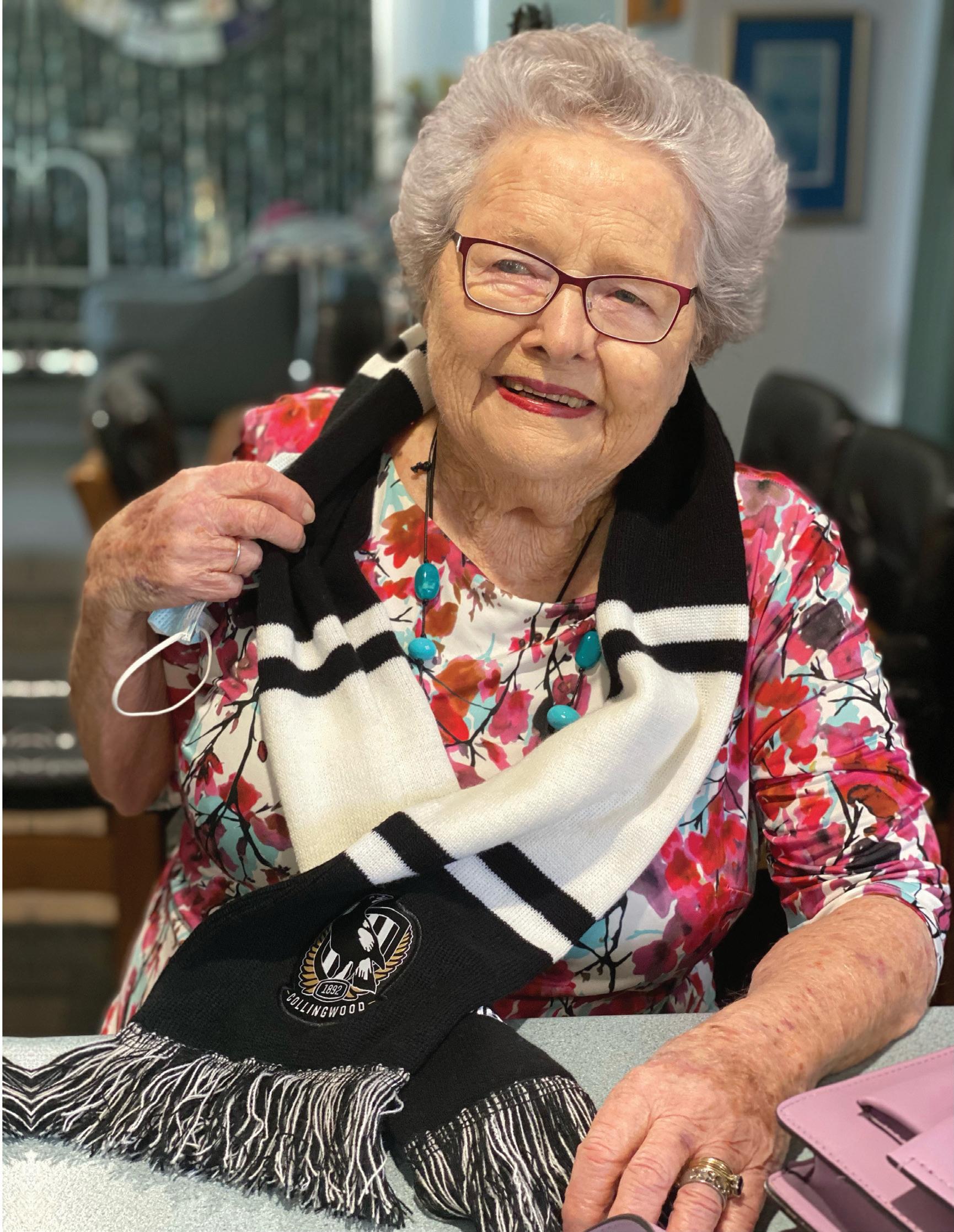
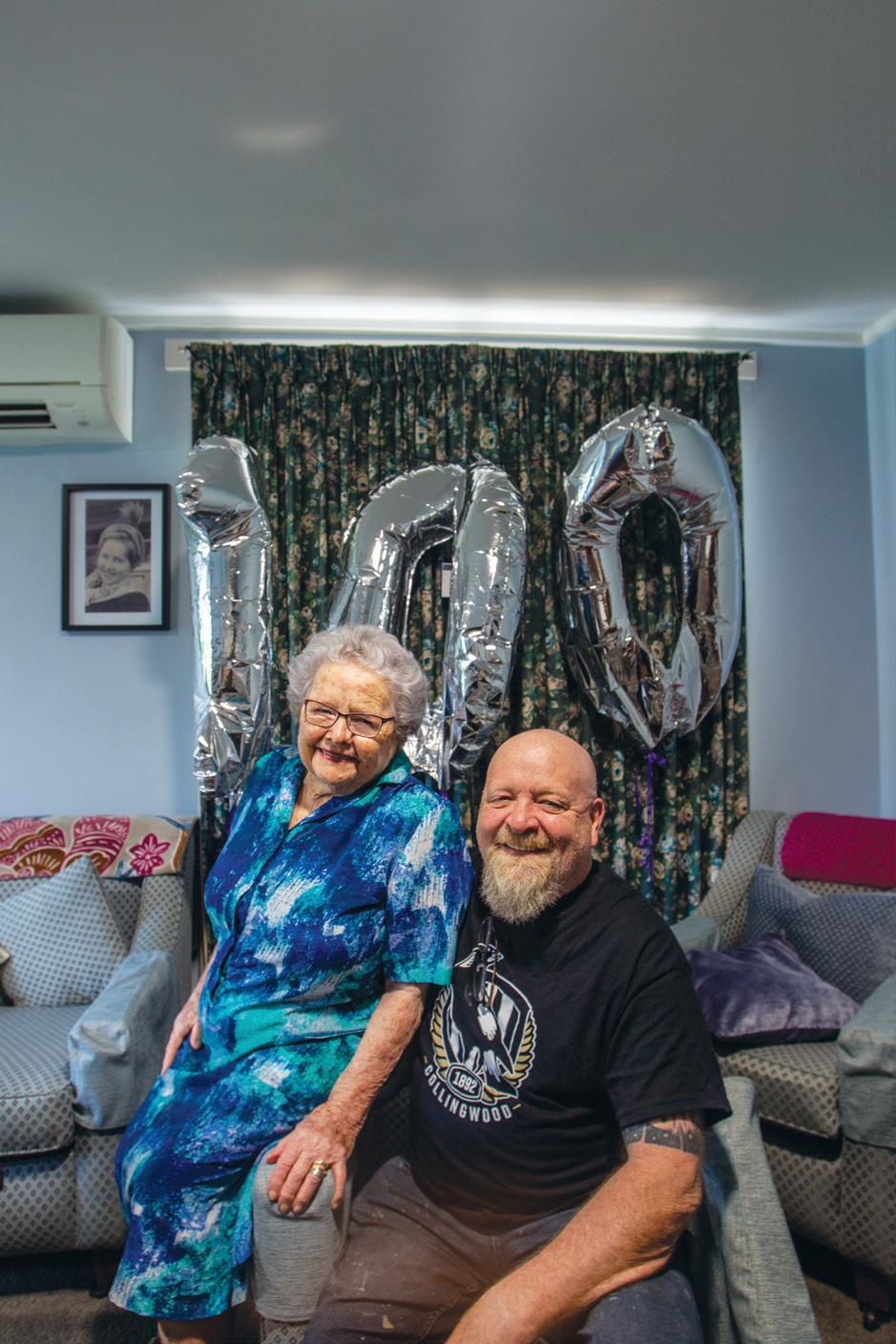
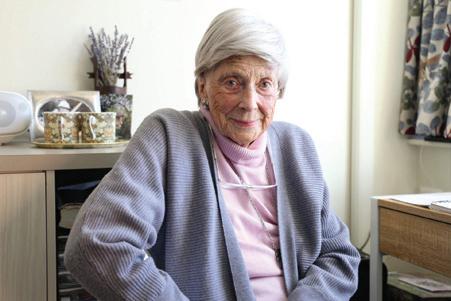
Centenarian JOAN PLUNKETT says country cooking’s her secret. Her son begs to differ
MEET OUR PAIN MANAGEMENT EXPERTS
Linda Clee – Physiotherapist
Linda is an experienced physiotherapist having worked clinically in private practice for over 20 years, in rehabilitation settings and in community based aged care. Having owned and operated her own clinic for over 10 years, Linda offered a range of different therapy options, and has refined her skills and service offerings to ensure a functional focus to therapy; that is holistic and promotes overall wellness. A dancer in a past life, Linda loves to add a bit of fun in her programs, often throwing in rhythm and co-ordination challenges that are good for the body and the mind.
Sophie Bullock – Exercise Physiologist
Sophie has post graduate qualifications in hydrotherapy, and as a non-sports centred Exercise Physiologist, helps clients who struggle with engaging in exercise due to a lack of sports participation. Sophie’s goal is to improve clients health via our hydrotherapy program, gym instruction and in-home visits. Sophie also is known for her passion for working with children.
Emil Terbio – Exercise Physiotherapist
Physiotherapist Emil comes to us with a wealth of physiotherapy experience and knowledge from the public hospital system and also private practice. Emil works closely with our team of Exercise Physiologists on a coordinated approach to improving your pain and overall wellbeing. Emil has a special interest in neurology and improving the lives of people living with neurological conditions. He’s also mad keen on soccer and will support you with all sports related injuries and injury prevention.
DON’T FORGET ABOUT ACCESSING OUR OCCUPATIONAL THERAPISTS WHO HELP MAKE YOUR EVERY DAY TASKS EASIER
Blake Dean – Exercise Physiologist
Blake has expertise in improving clients mobility and decreasing their pain through appropriate exercise. Blake delivers our ‘My Exercise’ program, targeting the relief of lower back and sciatic pain, shoulder and upper body concerns as well as leg, hip and ankle interventions – for those who do not qualify for physiotherapy-led GLAD programs.
Blake provides individual & group exercise for younger people with a disability. Blake treats clients in-clinic or via our hydrotherapy program as well as attending your gym with you.
Jacqui Couldrick – Physiotherapist
Jacqui has a particular interest in hip and knee osteoarthritis. Jacqui delivers the GLAD program designed to reduce the need for joint replacements, or if a joint replacement is unavoidable, to prepare you thoroughly for surgery and recovery for day to day tasks. Jacqui is studying towards a PhD in the outcomes of the GLAD program.
Holly Hazelwood – Exercise Physiologist
Holly is a former sports journalist who believed so strongly in the power of exercise to heal and nurture that she undertook her 4 year degree in Exercise Physiology. Holly is be able to work with people directly to support them through their pain journey and regain independence and a joy for living again. Holly provides one on one and group exercise classes both on land and at our hydrotherapy centres to support people to gain freedom from chronic pain.
CLASSES
Pilates Tai Chi
Strength & Balance GLAD for Hip and Knee
Specialised Small Group Exercise Classes
• Occupational Therapy – Assistance with the planning and modification of your home, workplace or car. Applications for NDIS, the Disability and Housing Support Pension, and also driving assessments.
• Physiotherapy – including the GLAD program for knee and hip osteoarthritis, sports injury prevention and rehabilitation, and pain condition support.
• Exercise Physiology – Individual exercise prescriptions, small group classes to increase strength and improve rehabilitation, strength and balance classes, hydrotherapy support.
“You do not need to have any particular condition to utilise our services, just a desire to ‘Build a Better You.’
COVER STORY
Country cooking’s the secret of Joan’s centenary
By Katarina LLOYD JONES
JOAN Plunkett has 14 children – Frances, David, Adrian, Kay, Jenny, Sue, Bruce, Simon, Reg, Ann, John, Paul, Ruth and Brendan.
JOAN Plunkett has 14 children –Frances, David, Adrian, Kay, Jenny, Sue, Bruce, Simon, Reg, Ann, John, Paul, Ruth and Brendan.
“Then I’ve got 35 grandchildren, something like that, and 10 greatgrandchildren,” says Joan.
Joan became a centenarian in De cember, but she still has plenty of spirit.
“The parish priest presented me with a gift from the Pope, which was a surprise, I didn’t know the Pope was getting involved,” she says.
“I also got a letter from King Charles, then there were all the letters from the Prime Minister and all the local hierarchy.”
Born in regional NSW, Joan says her parents ran a property about 50 kilometres out from Wagga Wagga.
“We would drive the sulky into Yu rong with my two younger sisters and two brothers,” she says.
“There’d be five of us on the sulky to get to primary school.
DOWNSIZING AND DECLUTTERING
the cows for fresh milk and cream, we had chooks for fresh eggs and things
However, son John suspects that her daily glass of wine might have some -
At 18, Joan joined the Australian Army and was sent to Georges Heights in Sydney for training during World
“I did searchlights and Paul, my husband, did media for the army.
“I remember the shock at the end of the war when they dropped the atomic
“I grew up knowing you couldn’t split the atom, it was the smallest pos -
“But then they split it.”
As the war drew to a close, Joan says she decided to return home to work with her father rather than retrain in a new role for the Army.
“In the meantime, Paul had gotten
“He got scrub typhus up in the Atherton Tablelands. Up to then, people who got scrub typhus mostly died.
“Fortunately Paul was treated and he got back on his feet, but it knocked the stuffing out of him for the rest of
The couple then moved to Albury, followed by a brief spell in Berrigan before settling in Kambah, Canberra.
“When we moved to Kambah, there was a group of six or seven houses as
you came down the hill,” she says.
“There were no shops, a bus used to come out every morning and it would sell milk and butter and the newspapers, then about one o’clock it would disappear.”
Joan says she hasn’t paid much attention to how quickly Kambah and the world at large has grown and changed.
“I was too busy raising all the kids to think about it,” she says.
She does have some favourite memories though, one being from the family’s time in Albury, just before the 14th child was born.
“East-West Airlines was offering free flights for children with their parents from Albury to Sydney.
“They said they would take children with their parents, and the children would go free,” she says.
“So I thought I’d give them a stir.
“I rang them up and said ‘is this still on?’ And they said yes, and I said, ‘well, I’ve got 13’, and there was dead silence.
“Anyhow, they rose to the occasion and off we went, we had a lovely time.”
Joan still lives in the same house in Kambah that they moved to 50 years ago.
She says she can usually be found in the living room, keeping herself busy by crocheting beanies that she gifts to friends, family and charity shops around Canberra.
Joan Plunkett with son John… he suspects her daily glass of wine might have something to do with her longevity. Photo: Katarina Lloyd Jones
NEWS FEATURE / bridge Bridge skill always comes up trumps but is it art?
By arts editor Helen MUSA
MAHATMA Gandhi’s prowess as a bridge player is said to have played a role in his strategy of non-violent civil disobedience.
Winston Churchill relied on bridge tactics and strategies to make crucial battlefield decisions during the heat of World War II. Bill Gates thinks it helped grow his intellect early, and Warren Buffett quipped that he wouldn’t mind getting imprisoned but only if he had the company of three cellmates who were decent bridge players.
Yes, we’re talking about one of the world’s most famous intellectual games, which along with its cousin, chess, has entered the language in expressions, such as “performing new tricks”, looking for someone’s “strong suit,” or “coming up trumps”.
But is it art?
This was a challenge thrown down to me by members of Canberra’s oldest and biggest (but by no means its only) bridge organisation, Canberra Bridge Club.
This is not a question with a categorical answer, but with its mixture of mindful observation and creative hunches, it certainly sounds like an
artform, and star bridge champion
Omar Sharif founded the Omar Sharif Bridge Circus, so it’s at least showbiz. Long considered to be a unique blend of art and strategy, the artistic aspect manifests in the intuitive decisions players make during a game –
sensing the room, reading opponents, and making unexpected plays, while the strategic side is grounded in logic and probability.
During World War II, bridge became recognised as a tool to develop critical thinking skills and also became a
symbol of international diplomacy.
With this in mind and as a complete layperson, I head to the venerable society’s headquarters in Deakin as members are finishing a three-hour plus playing session, one of around a dozen such weekly sessions.
Benefiting from technology, the day’s results are posted on a large screen and the cards allocated uniformly around the room, so that everybody plays the same number of games. In the old days, all that would’ve been done by the “director” and the club has more than a dozen of them — today’s is Ian Robinson.
I join a pair of couples – Jennifer and Brett with Morag and Chris, long-time members, who today have been playing three boards against nine other couples.
But you don’t have to be married to play with someone and indeed, not playing with one’s partner has been the preservation of many a marriage.
“Oh, my goodness, you play bridge together and you’re still married,” is a standard quip, they tell me.
I am introduced to the basic principles of contract bridge, to how the cards interact with the other hands, so that a player with a lot of “high” cards (diamonds and clubs are called “minor” suits and worth less than the “major” spades and hearts) is likely to win more “tricks”.
I am told that no secret signals
are allowed, but that even so, it’s a psychological game.
Brett says you can laugh, you can say hello, but you mustn’t cheat and part of the secret is trying to work out why your partner left that card.
At times, he confirms, you may feel as if you’re letting the side down.
Excitement is mounting around the ACT, about the coming Summer Festival of Bridge, which convenor Ian Thomson says has been held in Canberra for 50 years, with the National Open Teams event the high point of Australian bridge’s calendar, likely to attract about 400 from outside the ACT.
The club numbers some of the country’s leading bridge players, such as Robinson himself, but there’ll certainly be scope for novices.
I can see the cards, because I’m walking around the table, but they can’t. Here’s where the intuition comes in through the careful observation of which cards the contractor is proposing, inspiring both calculated and intuitive guesses as to what fellow players have in their hands.
So, in the end, is it art or not? Well, it certainly seems to have that mixture of creativity and intelligence that goes into all the art practices, and it’s a lot of fun.
The Summer Festival of Bridge, the Canberra Rex, January 9-21.
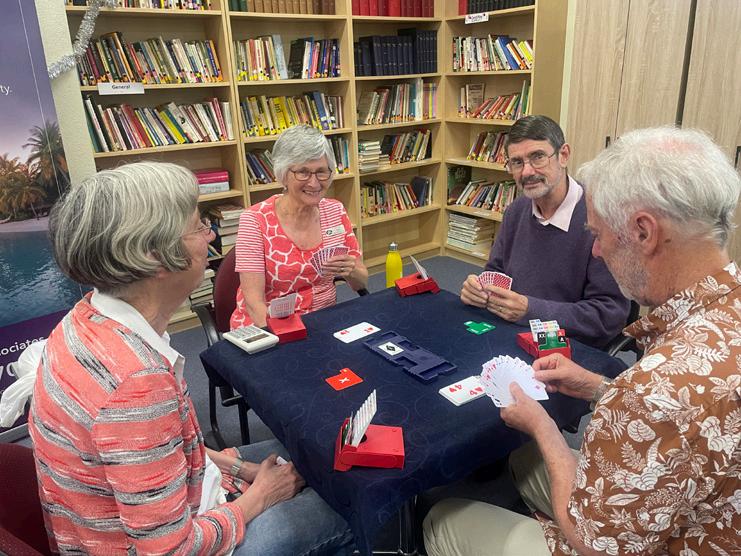
Canberra Bridge Club members from left, Morag, Jennifer, Chris and Brett.
Photo: Helen Musa
YESTERDAYS
Memorial stands tall after a century of service
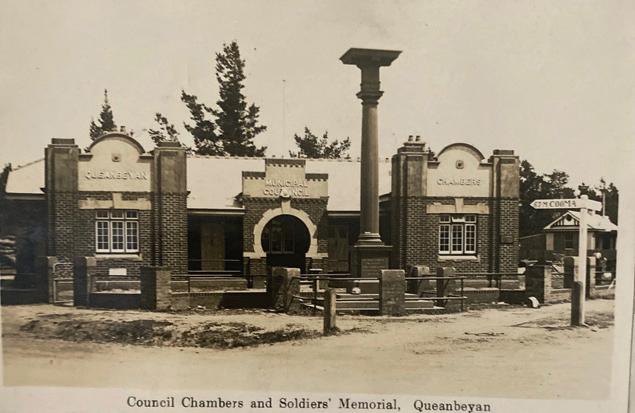
WHEN the towering column of polished volcanic stone was revealed a 100 years ago it was almost one-of-a-kind in the nation.
In 1923, a decade after the declara tion of Canberra as the national capi tal, its almost century-old neighbour Queanbeyan claimed a population of 2632.
The town’s new war memorial, funded through the collective efforts of its community, bore testament to the 524 locals who gave of themselves, including the 66 who died, in the catastrophic cauldron of World War I.
That significant summer Saturday occasion, on December 15, 1923, with the Acting Prime Minister, leader of the Country Party and returned serviceman, Dr Earle (middle name, Christmas) Page performing the honours, also marked the birth of another local icon.
Dawn Calthorpe’s arrival was acknowledged by her proud dad, Harry, to the large crowd gathered around their hometown’s latest centrepiece and which included his business partner, WG Woodger, secretary of the organising committee. The duo would make it into the history books as the first agents to market land leases in Canberra from 1924.
In celebrating her own centenary,
Dawn shared with me that she has fond memories of watching the wider area evolve around the “valuable and beautiful” addition that initially stood alone at the very top of the regional centre’s civic heart.
Known from its inception as the Queanbeyan and District Soldiers’ Memorial, as country town monuments go, at 11 metres (36 feet) high, it’s an impressive one.
It was among the earliest to be erected, just five years on from the official conclusion of the scarring conflict (the first, a simple granite obelisk, was in Adelaide in September, 1915).
Given their various incarnations –from statues to honour rolls, parks to
ians who died (more than 62,000 fatalities in total).
Though each is unique in their own form of commemoration, many of the monuments bear similar designs: one of the most familiar, the lone Digger atop a plinth, often with head bowed, others looking with hope towards the rising sun.
Some of the notably distinctive include the 243km Great Ocean Road built by returned soldiers and referred to as “the world’s largest war memorial”, while Berridale in the Snowy Mountains features a relatively rare crucified Christ, unique for the feet being side-by-side
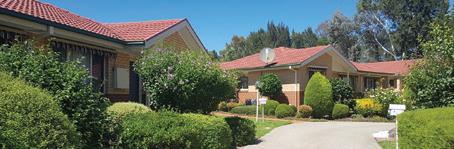
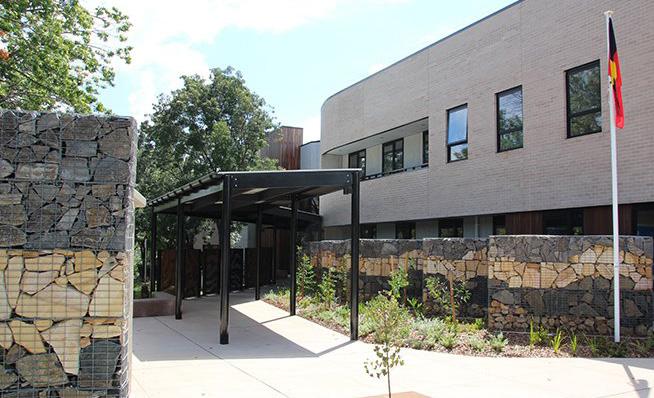
Set amongst landscaped grounds, Adria Care in Stirling is a warm and welcoming community of people from all around the world. We pride ourselves on cultural diversity and celebration, and offer a wide range of activities to cater for all interests. We provide care for Croatian and all other nationalities.
Adria Care fosters individuality and independence, providing support and assistance to enable residents to live in a comfortable and secure environment. It offers residential care for 42 residents, incorporating 2 respite rooms and special care. All rooms are single rooms with ensuite.
The village also contains 36 independent living villas. All villas have 2 bedrooms, a courtyard and a garden, and residents enjoy a peaceful and welcoming community lifestyle.
Our aim is to provide a caring, safe, home-like atmosphere, reflecting your rights to dignity, respect, privacy, safety and the best quality of life.
Contact our friendly staff today to arrange a personal tour.
rather than crossed.
It was the grieving townsfolk who decided – and paid for – their own memorialisations.
There was much debate among Queanbeyanites about how best to offer tribute: a hospital wing, an agricultural hall, perhaps even “swimming baths”? (There’d similarly be discussions following World War II, a swimming pool eventually agreed upon, opened in 1966).
The appointed committee wanted to “make it something really worthy of the town and district… and in deference to the wishes of the mothers and next-of-kin”.
The elaborateness and scale of memorials also offered an indication of local prosperity. In Queanbeyan’s case, the almost 1000-pound cost (more than $90,000 in today’s terms) confirmed its position at the turn of the 20th century as “the wealthiest district in the colony”.
Fundraising efforts included a “monster procession, sports meeting in the park and a big concert” as well as a fancy dress carnival, declared “one of the biggest days Queanbeyan has known”.
In a moment of much anticipation
and another first for the town, the foundation stone was laid on April 14, 1923, by Governor-General Lord Henry Forster, who’d himself lost two sons to the war.
Thereafter, on the solitary site selected for its prominent position (now a “memorial precinct”) – and another year before it would also host the first purpose-built Council Chambers – there arose “one of the finest of its kind in the state”.
Dawn Calthorpe (Waterhouse) is one of the many people who have asked me about our regional version’s “unfinished” appearance and if anything was intended to sit upon it.
While others, such as those at Cronulla, Manly and Burra in SA do have features at their peak, for Queanbeyan it seems simple elegance was always the intention.
There are more of Nichole’s columns at citynews.com. au and more of her historical writing at anoverallview. wixsite.com/ blog
Centenarian Dawn Waterhouse (nee Calthorpe) and the Queanbeyan and District Soldiers’ Memorial pictured in 1925.
JAN 9 JUN
Images (clockwise from left): Steve Holland, Australian Cricketer Shane Warne Holding a Cricket Ball and Stump at the End of the Four th Test of the Ashes Series, at the Melbourne Cricket Ground, 28 December 2006 (detail),
David Moore, Por trait of Dawn Fraser, Melbourne, 1963 (detail),
Serena Ovens, Por trait of Louise Sauvage, 1996 Paralympian
So, how does the judge settle on a sentence?
FOLLOWING the recent sentencing in NSW of a young man whose errant driving when 18 left him alive but five, younger teenage passengers dead, a reader penned the following to the editor:
“A terrible and tragic event for the deceased and their families... Very sad. I… would appreciate if our columnist could explain:
“[One bereaved] father said the judge was guided by legislation and he was not surprised by the sevenyear minimum sentence after talking to victim-support groups.
“No doubt there is a lot to say here, but how and what legislation resulted in the sentencing we saw handed down?
“Furthermore, how does pleading guilty to five counts grant a 25 per cent sentence reduction? – when proving that guilt is a given. Why is that ‘entitlement’ even offered?”
Prompting those concerns was the report of the sentencing and the background.
The purpose of this article is to explore the challenges for any sentencing judicial officer and show how it is impossible to satisfy everyone’s needs and wants. This case provides a good, if tragic, example.
First responses
First responders and police
attending at a serious motor incident are first concerned with possible life saving and then with preserving the scene to gather evidence that explains what happened.
That explanation may have many factors; for example, mechanical failure, road defect, freak weather, a health incident, poor training.
The collected evidence may lead to a reasonable belief that one or more actors broke the law and that such breach contributed to any fatalities.
In this case a P-plate driver exceeded the speed limits, drove on the wrong side of the road, lost control, crashed the utility dual cab into a tree. His actions – for which he alone has responsibility – caused the deaths of others.
The police charged him with causing those deaths.
Early plea of guilty
Following legal advice he pleaded guilty at an early opportunity. To encourage pleas of guilty generally, and as early as possible, there is a sentencing discount which starts at around 25 per cent and reduces to zero if there is a contested trial.
We all benefit from early pleas. The community is saved the expense of trials. Survivors can express their sorrow earlier and move forward. The accused is “rewarded” for their right thinking.
Preparations for the sentencing hearing
In serious cases, such as this one, once a plea of guilty is formally made in open court there are preparations by both sides for the sentencing hearing.
The prosecution prepares a statement of the relevant facts. The court orders a “pre-sentence” report about the offender. The report writer interviews the offender, may interview others, and collects background material.
The offender’s lawyers may gather “evidence of the character” of their client from colleagues, employers, coaches. They may also arrange an additional psychiatric/psychologist report about their client if they believe that the “pre-sentence report” will not be sufficient.
The prosecution and the defence discuss the contents of the “relevant facts” statement. If agreement cannot be reached one or more witnesses may be called at the sentencing hearing to give evidence about disputed facts.
Meanwhile, those closest to the deceased may prepare victim impact statements with the help of the Victims Office.
What formally guides the judge?
The sentencing options open to the judicial officer reflect principles set out in sentencing law passed by
a Parliament/ Legislative Assembly, together with appellate decisions from the Appeal Division of the Supreme Court.
In NSW (where this tragedy occurred) there are some “guideline judgments” from the Court of Criminal Appeal directed at specific offences.
Both prosecution and defence will research similar cases, not too far in the past, to assist the sentencing judge as to the likely range of a jail term, taking into account there being multiple victims, the age and background of the offender, his prospects for rehabilitation, the need to deter others from the same conduct, whether any remorse by the offender is genuine and the community perceptions that there must be punishment.
What informally guides the judge?
Good sentencing reflects a lot more than legal knowledge. It draws upon life experience, acuity in summing up offenders and their prospects, being able to craft written and spoken remarks that are directed not only at the offender but at those suffering from his actions.
Neither the offender nor the survivors should be crushed. There
LETTERS
must always be hope.
Save in those rare instances where it is true evil, not stupidity, that is the root cause of the offending, it is compassion, not vengeance, that should be felt in the courtroom.
There are instructive terms such as “intuitive/instinctual synthesis” and “therapeutic jurisprudence” that are applied to the sentencing task.
Why the outrage after sentencing?
Loss, grief, anger and despair are personal experiences, felt differently by each of us because of personality, upbringing, and life experience. Hence, what seems reasonable to one person is unreasonable to another. Sentencing must never be done in the heat of the moment. The reflections that inform it are a part of the healing.
Former barrister Hugh Selby’s free podcasts on “Witness Essentials” and “Advocacy in court: preparation and performance” can be heard on the best known podcast sites.
What the weird lot write!
MANY of Canberra’s letter-writing fraternity are a weird lot.
They talk about climate change/global warming/ cleaner environment but don’t want to entertain the thought of nuclear power – the cleanest, safest, most affordable and reliable sources of electricity.
Instead, they spruik fossil-fuel-made solar panels and wind turbines that take up much more land than any nuclear, coal or gas power plant and only provide electricity intermittently.
Where are the howls of protest from the greenies for the 10,000km of land needed for the poles and wires the federal Labor government has promised for their renewable fantasy, along with the ridiculous cost; at least $10 billion?
Our own local Labor government spruiks that the ACT is 100 per cent renewable energy. They want you to believe that we get our electricity from solar and wind all the time. In actual fact, we get around 80 per cent of our electricity from coal and gas from NSW. Think of that tonight when you are watching TV in your air-conditioned house.
The weird lot continually vote in Labor/Greens locally who are intent on reducing our green spaces and erecting high-rise apartments and buildings thus creating more heat from all the concrete and fewer trees.
Ian Pilsner, Weston
Abuse of taxpayers’ money
Citynews.com.au reported a contract price for Light Rail Stage 2A of $577M. However, the article did not say what that figure comprised.
It is, in fact, the contract price for the delivery phase only, ie for design and construction.
To this must me added the following costs: Five new trams, battery driven plus retrofitting the existing fleet (14 trams) with batteries, and additional facilities (a known $181 million); raising London Circuit (a
known $100 million) and 20 years of operations and maintenance (an estimated $331 million); for a total of $1189 million for construction plus 20 years of O&M.
Note that there is also around $100 million in offcontract costs for project management and consultancies.
To put this enormous sum into perspective, the equivalent contract price for Stage 1 from Gungahlin to Civic stood at $1149 million in 2022, for 12km of track, ie. $95.6m/km. Stage 2A will cost $699m/km, for each of its 1.7 km – about 7.3 times more per kilometre than for Stage 1.
This wasteful government should have a lot of explaining to do for its wanton abuse of taxpayers’ money. It should at least make public the cost composition of the $577 million for the delivery phase. And let us not forget the probable effect of the long-standing MOU between this government and UnionsACT.
Max Flint, co-ordinator, Smart Canberra Transport
Then police were called…
IN my letter of 5 December I drew attention to some of the practices of the government-funded Conservation Council ACT Region.
The council’s strategic plan says: “We ... ensure ethical, well-informed and transparent governance.” The council’s board refuses to inform council members of board agendas and refuses to allow them to inspect board meeting minutes.
On December 14, I attended the Conservation Council’s premises, in the hope of watching a board meeting conduct ethical, well-informed and transparent governance.
When I politely declined requests that I leave the premises, the police were called and the president adjourned the meeting.
Leon Arundell, Conservation Council board member 2010-2016, Downer
GOOD HEALTH
How to counter holiday body fat gain in children
By Katarina LLOYD JONES
CHILDREN’S body fat increases at a faster pace during school holidays, according to new research by the University of SA.
And those involved in the “Life on Holidays” study were sleeping less, moving less and spending a larger amount of time on screens.
Nutrition Manager and Profession Lead for Nutrition and Dietetics at Canberra Health Services.
While the ACT does not have a specific school-holiday study itself to compare these results with, the ACT compares reasonably well to other jurisdictions, says Dr Tracy Harb.
“They say this is the first time it’s been done in Australia, in the southern hemisphere, in fact,” says the Women, Youth and Children
“We don’t have any other yardstick in terms of that. But, in general, the current statistics from the ACT Health website do indicate roughly one third of children are what is classified as overweight or obese.
“It can be quite confronting for parents to learn that their children do have weight gain that is atypical or higher than expected.”
Dr Harb says that maintaining routine and structure is a good way to combat the school holiday lull.
“During school holiday times, it is about maintaining that structure and routine, planning out their days,” she says.
“Try to provide opportunities and to promote physical activity as a family.
“So, not expecting children to do things on their own, get parents involved, have a whole-family approach to things.
“In terms of nutrition, you want them to have lots of nutritious options available.
is fresh, tinned or frozen vegetables and fruits.
“Things like multigrain crackers with hummus, those kinds of things.
“Lots of chilled water in the fridge, making sure kids have their drink bottles with them at all times.
“It’s a monkey-see, monkey-do approach, parents are young children’s greatest role models.
“If you want your child to make healthy choices, you have to model that.”
Dr Harb has been working in the health industry for more than 20 years, and says she enjoys being able to help families make positive changes to their overall health and lifestyle.
regular habits.
“If you form a habit early on, and particularly a health-promoting habit, or a health-gaining habit, then you’re more likely to continue that habit throughout the life course,” she says.
“There is an excellent website called ‘Nature Play Cbr’.
“They have the most amazing fact sheets on activities you can do for children from infancy to early adolescence.
“They also have wonderful fact sheets on what you can do throughout Canberra seasons.
are nutritious available, whether that
She says one of the most important things in ensuring a child is staying fit and healthy is to ensure nutritious food and physical activity are
Why happy holidays aren’t always
By Katarina Lloyd Jones
PSYCHOLOGIST Debra Rickwood
says there’s often a downturn in people’s mental health during the holiday period.
“There’s quite a few reasons for that,” says the professor of psychology at the University of Canberra.
For a lot of people, if they’ve got family disruption, family separation or if they had lost someone in the last year, the holiday period highlighted loss, loneliness and grief, she said.
This decline in mental health often led to a higher consumption in alcohol.
“In our culture, it is pretty much expected,” Prof Rickwood said.
“There’s umpteen end-of-year parties… then there’s Australia Day.
“We’ve got a good six-weeks of ‘reason’ for drinking.
“I don’t think there is one particular demographic that is affected, I think it’s pretty much across the board.
“Although, there is a positive trend amongst young people of not drinking being more acceptable.”
Debra said this represented a good
people tend to feel depressed, they might feel angry,” she said.
“That often moves into anxiety.
“We talk about ‘hanxiety’, which is how you feel during a hangover, which can
“If you are trying to limit your drinking, which I think is the main thing, set yourself a limit and say ‘I’m going to have three drinks and that’s it’, and count your drinks.
“Make sure you count your drinks and
don’t let people keep topping up your drink.
“You have no idea how much you have drunk if someone keeps topping up your glass with champagne or whatever it is.
“Alternate your drinks with nonalcoholic alternatives or try and sit on one drink for a while.
“Also, you don’t have to just drink water, there are non-alcoholic beers, there is really tasty stuff.
“These can be particularly good if you’re with people who think everybody should be drinking, if you have a drink that looks like an alcoholic drink, they will probably leave you alone because it doesn’t look like you’re just sitting on iced water all night.
Prof Rickwood said there were many things that encourage drinking and make it easy for us to drink alcohol.
“You have to think about the reasons when you drink, who are you with? What are you doing? What is that pattern? What are some ways that you can behave differently?” she said.
“If you really have a problem with alcohol, and are using alcohol to cope, getting professional help is important, so is reaching out, talking to your general practitioner and seeing what professional help you can get.
“It’s difficult to do on your own.”
“And these are simple things, they don’t require money, they don’t require anything other than the love of being outside, or indoor activities with your children, the love of just being with your child.
“I encourage everyone to have a look whether they are a parent or not.
“These are things that aunties, uncles and friends can do.
“It takes a village to raise a child, we know that, so get everyone involved.
“This time of year is a great time for having picnics outdoors, whether it’s in your garden under a tree or at the local greenspace.
“Canberra is so fortunate, we’ve got lots of beautiful green spaces around us.
“We know more and more families are living in apartments, there are still opportunities there for families to get out to the local green space.
“Take a picnic with them, kids love that, eating in that social environment.
“In fact, buffet-style eating and picnics is something that we really do promote, because it also gives the child autonomy.
“Children love that sense of independence and autonomy that they get by being able to choose from a selection of nutritious food.
“Autonomy breeds confidence and confidence breeds healthy eating.
“If you’ve got kids who are curious, let them be autonomous with their choices, providing the food is nutritious.
“Then, they’re confident eaters and they’ll have a great relationship with food going forward.”
Clews
Dr Tracy Harb.
9 signs you have inflammation in your body GOOD HEALTH / inflammation
There’s a lot of health buzz around the term “inflammation” right now,” write and EMILY BURCH. Could an anti-inflammatory diet help?
FROM new scientific discoveries to celebrities and social media influencers, it seems like everyone is talking about the important bodily process of inflammation and its potential impact on our health.
“Inflammaging” is a specific term you may also have seen. It’s an age-related increase in persistent, low-grade inflammation in blood and tissue, which is a strong risk factor for many conditions and diseases.
So, can an anti-inflammatory diet help reduce inflammation? Let’s take a look.
When our body becomes injured or encounters an infection, it activates defence mechanisms to protect itself. It does this by instructing our cells to fight off the invader, which causes inflammation that often presents as swelling, redness and pain.
In the short term, inflammation is a sign your body is healing, whether from a grazed
knee or a cold.
sists for a longer time it’s called “chronic”.
That can indicate a health problem such as arthritis, heart disease, diabetes, dementia or other autoimmune disorders.
symptoms of chronic inflammation may be present from several months to years and include:
• persistent pain
• chronic fatigue or insomnia
• joint stiffness
• skin problems
• elevated blood markers (such as C-reactive protein)
The relationship between food and inflammation is well recognised.
A “pro-inflammatory diet” may increase inflammation in the body over the long term. Such diets are usually low in fresh produce and high in commercially baked goods, fried foods, added sugars and red and processed meats. In contrast, an “antiinflammatory” diet is associated with less inflammation in the
body. There is no single anti-inflammatory diet. Two well-recognised, evidencebacked examples are the Mediterranean diet and the Dietary Approaches to Stop Hypertension (DASH) diet.
Anti-inflammatory diets typically include the following elements:
1. High in antioxidants. These compounds help the body fight free radicals or unstable atoms, that in high quantities are linked to illnesses such as cancer and heart disease. The best way to consume antioxidants is by eating lots of fruits and vegetables. Research shows frozen, dried and canned fruits and vegetables can be just as good as fresh.
2. High in “healthy”, unsaturated fatty acids. Monounsaturated fats and omega-3-fatty acids are found in fish (sardines, mackerel, salmon and tuna), seeds, nuts, and plant-based oils (olive oil and flaxseed oil).
3. High in fibre and prebiotics. Carrots, cauliflower, broccoli and leafy greens are good sources of fibre. Prebiotics promote the growth of beneficial microorganisms
in our intestines and can come from onions, leeks, asparagus, garlic, bananas, lentils and legumes.
4. Low in processed foods. These contain refined carbohydrates (pastries, pies, sugar-sweetened beverages, deep-fried foods and processed meats).
Rheumatoid arthritis, dementia, depression
There is mixed evidence for the role of anti-inflammatory diets in rheumatoid arthritis pain management. A recent 2021 systematic review (where researchers carefully group and examine the available evidence on a topic) found eating an anti-inflammatory diet likely leads to significantly lower pain in people with rheumatoid arthritis when compared with other diets.
However, the 12 studies included in the review had a high risk of bias – likely because people knew they were eating healthy foods – so the confidence in the evidence was low.
Inflammation is strongly implicated in the development of neurodegenerative diseases such as Alzheimer’s disease and related dementia and evidence suggests antiinflammatory diets might help to protect the brain.
A 2016 review showed an anti-inflammatory diet may be protective against cognitive impairment and dementia, but that further large randomised controlled trials are needed. A 2021 study followed 1059 people and observed their diet. They reported those with a greater pro-inflammatory diet had an increased risk of developing dementia.
Inflammation has also been linked with mental health, with people eating a proinflammatory diet reporting more symptoms of depression. Diet is the fundamental element of lifestyle approaches to
managing anxiety and mental health.
More broadly, a 2021 review paper examined recent research related to antiinflammatory diets and their effect on reducing inflammation associated with ageing. It found compounds commonly found in anti-inflammatory diets could help alleviate the inflammatory process derived from diseases and unhealthy diets.
What about turmeric?
A favourite on social media and vitamin shelves, turmeric is promoted as having anti-inflammatory benefits. These are linked to a specific compound called curcumin, which gives turmeric its distinctive yellow colour. Research suggests curcumin might act as an anti-inflammatory agent in the body but high-quality clinical trials in humans are lacking. Most of the existing studies have been conducted in lab settings using cells or in animals. So it’s unclear how much curcumin is needed to see anti-inflammatory benefits or how well we absorb it. Overall, adding turmeric to your food may provide your body with some health benefits, but don’t rely on it to prevent or treat disease on its own.
Eating an anti-inflammatory diet is considered safe, likely to support health and to prevent future chronic conditions. If you are looking for tailored dietary advice or an anti-inflammatory meal plan, it’s best to speak with an accredited practising dietitian.
Lauren Ball, Professor of Community Health and Wellbeing, The University of Queensland and Emily Burch, Dietitian, Researcher and Lecturer, Southern Cross University. This article is republished from The Conversation.
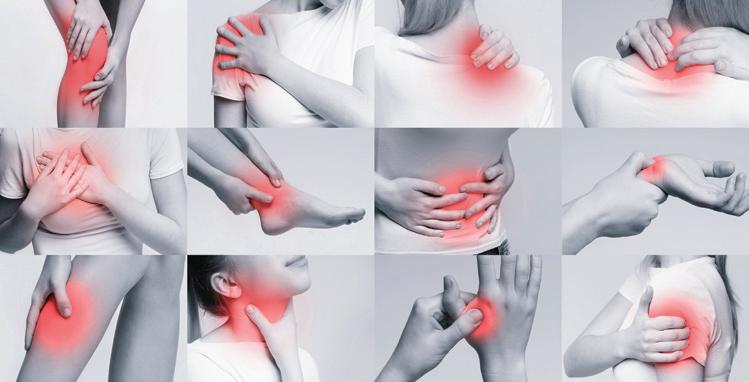
Inflammation often presents as swelling, redness and pain.
dose of dorin
Expensive tram a poor substitute for good health
TO me, it’s a simple choice – the tram or the hospital?
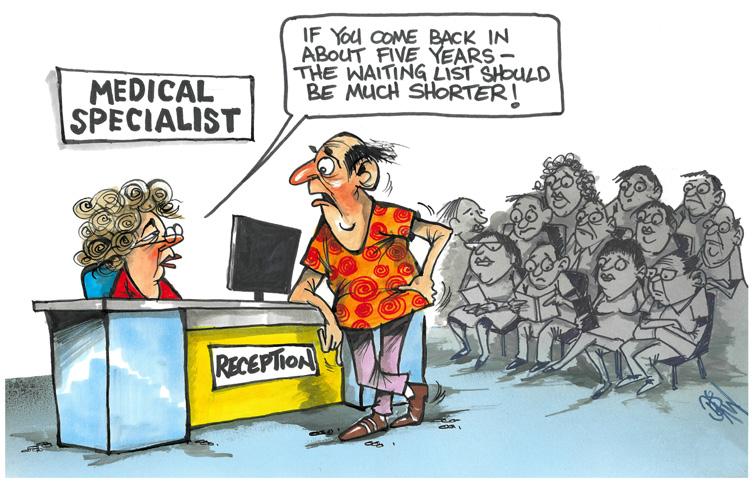
Regular readers will recall those unhappy nine hours I reported in July when advised by my GP to attend the Canberra Hospital’s Emergency Department for a possible clot in the heart. I suspect they’ll know which hand I’ll raise. For the uninitiated, having arrived at 5pm, I waited the usual four hours among the chaos before admission to the ED ward. And there I languished among the plastic cubicles, halfdressed and half-gowned, while the machines that go “ping!” played their torturous chimes, and the neglected woman in the next cubicle gradually dissolved into heart-rending tears.
Time adopts a new identity in an ED ward, especially when the “pings” are out of tune. It staggers forward then stops, reverses, and tries again, this time slipping sideways and spinning till the “pings” unite, then starts the fandango all over again.
By 1am she had reached the end of her tether and escaped untreated. I followed an hour and 15 minutes later when the “bed manager” had still not found a cot for my admission to a treatment ward. And there, I hoped, I could put the experience behind me. Alas, it has proved impossible. It turns out that while my heart
was clot-free the ordeal to my then weakened state – physical and mental – produced a “setback” in my underlying COPD condition. The term describes the progressive descent of the symptoms – breathlessness, exhaustion, depression – toward the almost inevitable heart attack that finally extinguishes our brief candle. One of the indicators became immediately apparent – a swelling of the ankles that signals heart failure, for which the best treatment is
exercise and the occasional diuretic. That’s partly why we bought a unit with its own pool; but it’s not designed for the seemingly endless winter of 2023!
Almost as frustrating was the mental cloud that formed around what had previously been my concept of the caring sanctuary of a hospital. This – in a nicer location – was the source of our greatest joy: the birth of our two sons, Robbie and Ben. And like most Canberrans we mourned its
The anger rises whenever I look back at the hospital starved for funds that could at least have provided treatment for my weeping neighbour in the plastic ED ward, and a bed for myself in the extremis of despair.
tragic passing when Chief Minister Kate Carnell made her one great mistake.
But that terrible implosion is long passed. The Barr-Rattenbury government’s mismanagement of its horrible successor was now a clear and present danger in my mind, even though I knew deep down that its staffers were kindly and conscientious.
The compulsory post-operative visits there loomed like advancing nightmares. The breathlessness, I suspect, was as much mental as physical. But that didn’t make it easier to bear, especially for a loving wife-cum-carer with her own natural concerns in the aging process.
ELECTRICAL SAFETY RECALL
SolaX X-Cabinet
Happily, a lifetime’s devotion to authorship stepped in as two major projects demanded my total dedication – the biography of Charles Weston, the unheralded creator of Canberra’s magnificent horticultural mantle; and the final scenes of my play, “The View from Golgotha”, set in the time and place of a great expectation.
But even they could not still the anger that rose whenever I looked back at the hospital starved for funds that could at least have provided treatment for my weeping neighbour in the plastic ED ward, and a bed for myself in the extremis of despair.
The outdated technology of a wildly expensive tramway seems a very poor substitute. Instead, I have a persistent vision of Mr Barr as Clark Gable in his famous final line of “Gone with the Wind”: “Frankly my dear, I don’t give a damn.” robert@ robertmacklin.com
Robert Macklin has a persistent vision of Andrew Barr as Clark Gable in his famous “Gone with the Wind” final line: “Frankly my dear, I don’t give a damn.”
Bleak warning after setback in antibiotic useage GOOD HEALTH /
There’s a bleak warning to patients and medical workers over fears serious infections are becoming more resistant to antibiotics as prescription rates jump, reports RACHAEL WARD.
PATIENTS have been warned to stop stockpiling antibiotics and think twice about prescriptions for minor illnesses with concerns one of the most serious health challenges is getting worse.
Dangerous bacteria that cause golden staph infections, gastro and gonorrhoea are becoming increasingly resistant to common drugs, according to a report from the Australian Commission on Safety and Quality in Health Care.
In serious cases when antibiotics don’t work patients have no other treatment options.
Prescription rates for the drugs fell 25 per cent at the height of the COVID-19 pandemic but there was a concerning 10 per cent uptick in prescriptions in 2022, the report showed.
It found Australia has one of highest consumption levels of antibiotics in the developed world, as one in three people has at least one drug dispensed last year.
It’s got health experts worried and calling for urgent action to curb the trend before it’s too late.
Senior medical adviser to the commission, Prof John Turnidge said
Australia still has an opportunity to tackle what he described as one of the most serious health challenges of our time.
He said doctors, other healthcare workers and patients all have a role to play in the nation becoming “smarter” about prescribing the medications.
“Let’s all think twice before automatically prescribing and using antibiotics – or having them ‘just in case’,” Prof Turnidge said.
“If we don’t, in the future we may not be able to perform medical procedures such as organ transplants, cancer chemotherapy, diabetes management and major surgery.
“That is a bleak future that none of us wish to contemplate.”
The World Health Organization estimates antimicrobial resistance could result in up to 10 million deaths by 2050.
A study published in the highly respected medical journal “The Lancet” in 2022 found it already contributes to hundreds of deaths in Australia every year.
Infectious diseases expert and commission adviser, Prof Peter Collignon, reminded patients there is no way
•
– Individuals or Groups
– Perfect for Wedding Parties BY APPOINTMENT
• SOCIAL
Returning Monday 8th January
Returning Wednesday 10th January
•
Returning Thursday 1st February
“For a serious infection such as meningitis, pneumonia or sepsis, you will need antibiotics to stay alive and your doctor will help you navigate this,” Prof Collignon said.
“Yet for many people dealing with non-serious illnesses, this is not the case.”
Prof Turnidge also said there was
we should preserve them to treat lifethreatening conditions, but we must not forget that they can also cause significant harm.”
workers follow guidelines on when it’s
infections, chronic obstructive pulmonary disease and other respiratory infections.
It said hospitals needed to pay greater attention to how the drugs are patients, manage bugs already known
Modern bodies need better seats
By Rachael Ward
THERE are calls to redesign plane, bus and train seats to accommodate modern body sizes.
Australia-first research has revealed the nation gains an average of 1.5 to 3.5 kilograms per person per decade which will have an impact on transport efficiency and safety.
Anticipating changes in body size is important to make sure the design and layout of transport remains fit for use, according to University of SA academics who did the study.
The authors cited other research that found airline seat dimensions are problematic and unable to accommodate up to 68 per cent of males and 22 per cent of females because they were based on weight data from the 1950s to 1970s.
The study was conducted for Transport for NSW and Victoria’s Department of Transport and Planning, funded by the iMOVE Cooperative Research Centre.
The issue has gained attention in the US recently after it was revealed United Airlines could save $US80 million a year if passengers shed an average of 4.5kg each because heavier planes burn more fuel.
iMOVE managing director Ian Christensen said the findings would help ensure transport systems were comfortable and safe.
“It’s an opportunity for designers, policymakers and industry leaders to come together and create transport solutions that are inclusive, sustainable, and forward-thinking,” Mr Christensen said.
Incorporating the data into the design process would also add to efficiency, Christina Kirsch from Transport for NSW says.
“Our objective is to gain data specific to the Australian population so we can design public transport that caters specifically to our shapes and sizes,” she said.
“These designs directly impact passenger comfort, safety, accessibility, and overall user experience.”
Research shows airline seat dimensions are based on weight data from the 1950s to 1970s.
Photo: Jamie Wicks/AAP
GOOD HEALTH / kindness
And when kindness comes along, try listening
IT was the best of times, it was the worst of times. Beautiful leaves on stately trees, a cracking Canberra sunset beginning, and a hall of soaring architecture.
All the lovely things a person sees, they say, are sensed so much more in tensely as they walk fearfully towards their execution, and I certainly had a hint of this every time before the Inevitable Interrogation.
It was about 13 years ago, and it was parent teacher night. And the feeling was in no way different to standing outside Mr Bunton’s office at Macks ville High in the early ‘80s, waiting for the cane, the speech and the walk of shame wandering, desperate for the school bullies not to see you cry, back to a classroom that gestated your heinous criminality.
Our loved ones don’t need to be given good grades or score goals to make us happy, and it’s not their job to make us proud. But it’s amazing how often they do.
made Tommy Aquinas hide under the bed clinging to rosary beads rather than face him.
He carried Authority in the palm of his hand, and God better bloody exist because who else could rescue Richard Dawkins in a debate with Chris’ vice-like grasp of the ineffable.
the lobby waiting to get her Premier’s award” kind of way. Not that there’s anything wrong with that either –society needs this.
My little monsters are doing fine from that external view, I guess, but that doesn’t matter much any more. It is the humans they’ve become that thrills me, not at quarterly teacher meetings, but every day. And in ways that matter to me.
And when kindness comes along like Father Chris, listen. It will save you years of worrying about what does not matter, and allow you to enjoy every moment of what does. My parents and I shared a journey a thousand sunsets ago, and I cannot even remember most of the destinations. All I know is that all I have to remember them by is the journey.
In this case, the cane would have been infinitely briefer and merciful, as teacher after teacher in the educator speed-dating ritual struggled bravely to find something nice to say about a year 8 boy who’s attention span was as long as our family dog’s. Seeing my distress, Father Chris, the world’s scariest gentle man, asked what was up. I told him that this was disaster and shame, and could I just swap it for the cane and perhaps a detention.
He smiled seriously in a way that
the kindest men do when they’ve heard something stupid, and said: “Hmmm. Making a decision about someone’s character and conduct at the age of 13? It’s an interesting approach”.
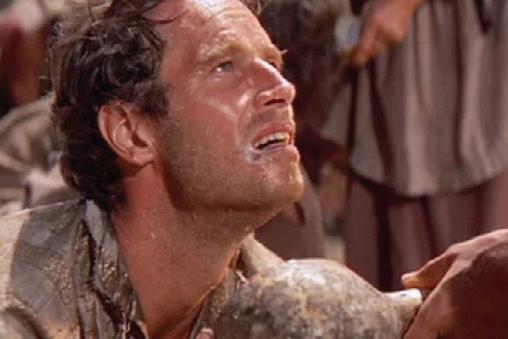
His head of hair trundled off like the mane of the MGM lion before the Roman and cowboy epics of my youth, but it was his smile that lingered longer than Charlton Heston’s after being cured of leprosy.
With a back straighter than Phil the Greek and a voice deeper than Barry White, his intellect would have
And you know what? It didn’t affect me at all. Sure he was school principal, but what would he know – he has some of the smartest, most brilliant offspring anyone ever did, and several of them I knew well enough to confirm this.
What would he know of parental frustration? At least he made me feel becalmed enough not to strangle Charlotte and Karen, gorging on the praise their little Lachlan was getting every 7.5 minutes for being the Greatest Child That Ever There Was.
Fast forward a few years and my batch seemed to have turned out lovely. Not in a competitive “Darius is climbing Everest on his gap year and Cheryl cured cancer last summer in
A HEALTHY DOSE OF DORIN
Some of PAUL DORIN’S best from 2023
“Dad, I’ve learned to use a chainsaw. It’s unreal – and I’ve made you something with it” comes to mind. Not to mention being there for each other and for us (ever been carried home from the pub by one of your children? It’s awesome!), or when they read and paint and play sport for fun, not because they have to, or when they race to each other’s rescue in health crises, or when they take days or hours off to just enjoy each other. Or when they’ve had a terrible day and they have a phalanx of friends to rely on including that perfect little troll Lachie, who despite being brilliant at school, turned out wonderful, too.
Want to know about health? Keep your cholesterol low, your blood pressure average and your relationships spectacular.
Our loved ones don’t need to be given good grades or score goals to make us happy, and it’s not their job to make us proud. But it’s amazing how often they do.
Humans are pretty good, really. And the next time any of us come across life-changing wisdom from someone kind enough to share it, I promise to listen.
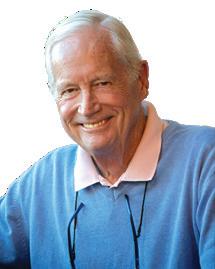
Antonio Di Dio is a local GP, medical leader, and nerd. There is more of his “Kindness” on citynews.com.au
“Ben Hur” (1959)... Father Chris’ smile lingered longer than Charlton Heston’s after being cured of leprosy.
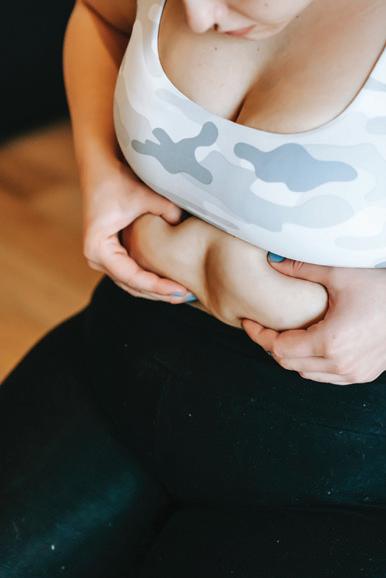
The body mass index can’t tell us if we’re healthy.
RACHAEL JEFFERSON-BUCHANAN outlines what can…
WE’VE known for some time the body mass index (BMI) is an inaccurate measuring stick for assessing someone’s weight and associated health. But it continues to be the go-to tool for medical doctors, population researchers and personal trainers.
Why is such an imperfect tool still being used, and what should we use instead?
BMI is an internationally recognised screening method for sorting people into one of four weight categories: underweight (BMI less than 18.5), normal weight (18.5 to 24.9), overweight (25.0 to 29.9) or obese (30 or greater).
It’s a value calculated by a measure of someone’s mass (weight) divided by the square of their height.
Who invented BMI?
Belgian mathematician Lambert Adolphe Jacques Quetelet (17961874) devised the BMI in 1832, as a mathematical model to chart the average Western European man’s physical characteristics.
It was initially called the Quetelet Index and was never meant to be used as a medical assessment tool.
The Quetelex Index was renamed the “body mass index” in 1972.
What’s wrong with the BMI?
Using a mathematical formula to give a full picture of someone’s health is just not possible.
The BMI does not measure excess body fat, it just measures “excess” weight. It does not distinguish between excess body fat or bone mass or musculature, and does not interpret the distribution of fat (which is a predictor of health, including type 2 diabetes, metabolic disorders, and heart disease).
It also cannot tell the difference between social variables such as sex, age, and ethnicity. Given Quetelet’s formula used only Western European men, the findings are not appropriate for many other groups, including non-European ethnicities, post-meno pausal women and pregnant women.
The medical profession’s over reliance on BMI may be harming patients’ health as it ignores much of what makes us healthy and focuses only on mass.
What should we use instead?
Rather than seeing BMI as the primary diagnostic test for determining a person’s health, it should be used in
ence, waist-to-hip ratio or waistto-height ratio offer more accurate measurements of health.
Waist circumference: is an effective measure of fat distribution, particularly for athletes who
carry less fat and more muscle. It’s most useful as a predictor of health when combined with the BMI. Waist circumference should be less than 94cm for men and 80cm for women for optimal health, as measured from halfway between the bottom of your ribs and your hip bones.
Waist-to-hip ratio: calculates the proportion of your body fat and how much is stored on your waist, hips, and buttocks. It’s the waist measurement divided by hip measurement and according to the World Health Organization it should be 0.85 or less for women, and 0.9 or less in men to reduce health risks.
It’s especially beneficial in predicting health outcomes in older people, as the ageing process alters the body proportions on which BMI is founded. This is because fat mass increases and muscle mass decreases with age.
Waist-to-height ratio: is height divided by waist circumference, and it’s recommended a person’s waist circumference be kept at less than half their height. Some studies have found this measure is most strongly correlated with health predictions.
Body composition and body fat percentage can also be calculated through skinfold measurement tests, by assessing specific locations on the body (such as the abdomen, triceps or quadriceps) with skin callipers.
Additional ways to gauge your
heart health include asking your doctor to monitor your cholesterol and blood pressure. These more formal tests can be combined with a review of lifestyle, diet, physical activity, and family medical history.
What makes us healthy apart from weight?
A diet including whole grains, low-fat protein sources such as fish and legumes, eggs, yoghurt, cheese, milk, nuts, seeds, and plenty of fresh fruit and vegetables reduces our risk of heart and vessel disease.
Limiting processed food and sugary snacks, as well as saturated and trans fats can help us with weight management and ward off diet-related illnesses.
Being physically active most days of the week improves general health. This includes two sessions of strength training per week, and 2.5 to five hours of moderate cardio activity or 1.25 to 2.5 hours of vigorous cardio activity.
Weight is just one aspect of health, and there are much better measurements than BMI.
Rachael Jefferson-Buchanan, Lecturer in Human Movement Studies (Health and PE) and Creative Arts, Charles Sturt University This article is republished from The Conversation.
GOOD HEALTH / bites and stings
Unprepared for nasty summer bites
Too many Australians don’t have the knowledge to prepare for chance summer encounters with snakes, spiders and other venomous animals, reports JOHN KIDMAN
IT’S been revealed many Australians are missing vital first aid knowledge about venomous bites and stings.
Vaccine provider CSL Seqirus commissioned a survey of more than 1000 adults, 670 of them parents: it showed almost one in three people had themselves or knew someone who had been bitten or stung by a venomous critter.
However less than one in 10 have received the necessary first aid training in the past 12 months.
According to the research, more than 3000 Australians are hospitalised each year after being bitten or stung by something venomous.
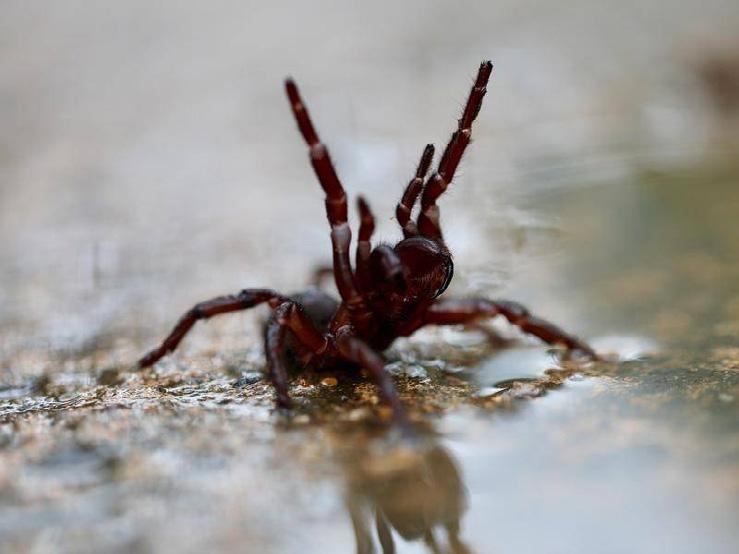
At last count, more than a quarter fall victim to bees or wasps, nearly one in five are attacked by redbacks or other eight-legged nasties, and almost as many are set upon by venomous snakes, of which Australia boasts 20 of the world’s 25 most deadly.
And the most likely places to suffer such an unfortunate encounter?
In their homes for 18 per cent, backyards (40 per cent), toilets (11 per cent) and at the beach (29 per cent).
Even so, Australians rarely think
of taking a first aid kit when they venture out, experts say.
To combat the problem, they’re being urged to download the free Australian Bites and Stings App, which includes a geolocation feature allowing them to share their coordinates with emergency services if they have at least one bar of coverage.
Appropriately, the campaign is be ing backed by the National Basketball League’s Cairns Taipans.
Of those who took the survey, less than a quarter correctly identified the first aid steps for snake or funnelweb bites, and many wrongly thought a tourniquet should be used.
Just four per cent knew what to do if stung by a box jellyfish.
CSL Seqirus medical director Dr Julianne Bayliss says more people are enjoying summer outdoors but a changing climate means greater likelihood of meeting a venomous creature.
“The (federal) government ensures emergency treatments are available for Australians if they are bitten or stung,” he said.
“But knowing what to do in the immediate moments after… could make all the difference.”
exactly what to do if their child was bitten or stung, half the number who did in the same survey three years ago. The latest research shows 40 per cent of mums and dads haven’t spoken to their kids about first aid for venomous bites and stings, many because they’re not sure what to say. One in 10 expected the subject
Maher says its first aid courses teach the essentials for responding to common bites and stings.
“Simple actions like calling triple zero, keeping a person calm and knowing how and when to apply a compression bandage or a cold pack can provide important intervention until further treatment is available,” he said. –AAP
PARENTS are being urged to be extra careful around pools when their kids turn one, with a study finding it to be the most dangerous age for drowning.
During the past 20 years, 222 one-yearolds have drowned, representing about 40 per cent of all drowning deaths for children under the age of five.
“As children become more mobile, they are curious and unpredictable,” Royal Life Saving Australia chief executive Justin Scarr said.
“It is vital you keep constant watch and restrict access to water around the home.”
The figures revealed in research by Royal Life Saving that a total of 549 children under five lost their lives in a swimming pool between 2002 and 2022, with 85 per cent of deaths occurring in a backyard pool.
Drowning rates have decreased 60 per cent during the past 20 years because of regulations around pool fencing and growing awareness of the need for kids to be supervised around pools.
But it is still one of the leading causes of death among children under five, with 27 deaths per year on average.
More than 3000 Australians are hospitalised annually after being bitten or stung by something venomous.
Photo: Australian Reptile Park
Putting the power of protein to work as we age
How much protein do people need as they age? And do they need supplements to get enough? EVANGELINE MANTZIORIS has the answers…
WOMEN around 50 might have seen advice on social media or from influencers saying that protein requirements increase dramatically in midlife.
Such recommendations suggest a 70 kilogram woman needs around 150 grams of protein each day. That’s the equivalent of 25 boiled eggs at 6 grams of protein each.
Can that be right? Firstly, let’s have a look at what protein is and where you get it.
Protein is an essential macronutrient in our diet. It provides us with energy and is used to repair and make muscle, bones, soft tissues and hormones and enzymes. Mostly we associate animal foods (dairy, meat and eggs) as being rich in protein. Plant foods such as bread, grains and legumes provide valuable sources of protein, too.
But what happens to our requirements as we get older?
Ages and stages
Protein requirements change through different life stages. This reflects changes in growth, espe -
cially from babies through to young adulthood. The estimated average requirements by age are:
• 1.43g protein per kg of body weight at birth
• 1.6g per kg of body weight at 6-12 months (when protein requirements are at their highest point)
• protein needs decline from 0.92g down to 0.62g per kg of body weight from 6-18 years.
When we reach adulthood, protein requirements differ for men and women, which reflects the higher muscle mass in men compared to women:
• 0.68g per kg of body weight for men
• 0.6g per kg of body weight for women.
Australian recommendations for people over 70 reflect the increased need for tissue repair and muscle maintenance:
• 0.86g per kg of bodyweight for men
• 0.75g per kg of bodyweight for women.
For a 70kg man this is a difference of 12.6g/protein per day. For a 70kg woman this is an increase of 10.5g per day. You can add 10g of protein by consuming an extra 300ml milk, 60g cheese, 35g chicken, 140g lentils, or 3-4
Protein requirements change through different life stages. This reflects changes in growth, especially from babies through to young adulthood.
slices of bread.
There is emerging evidence higher intakes for people over 70 (up to 0.94–1.3g per kg of bodyweight per day) might reduce age-related decline in muscle mass (known as sarcopenia). But this must be accompanied with increased resistance-based exercise.
But what about in midlife?
So, part of a push for higher protein in midlife might be due to wanting to prevent age-related muscle loss. And it might also be part of a common desire to prevent weight gain that may come with hormonal changes. There have been relatively few
studies specifically looking at protein intake in middle-aged women. One large 2017 observational study (where researchers look for patterns in a population sample) of more than 85,000 middle-aged nurses found higher intake of vegetable protein –but not animal protein or total protein – was linked to a lower incidence of early menopause.
In the same group of women, another study found higher intake of vegetable protein was linked to a lower risk of frailty (meaning a lower risk of falls, disability, hospitalisation and death). Higher intake of animal protein was linked to higher risk of frailty, but total intake of protein had no impact.
Another smaller observational study of 103 postmenopausal women found higher lean muscle mass in middle-aged women with higher protein intake. Yet an intervention study (where researchers test out a specific change) showed no effect of higher protein intake on lean body mass in late post-menopasual women. Increasing protein intake improves satiety (feeling full), which may be responsible for reducing body weight and maintaining muscle mass. The protein intake to improve satiety in studies has been about 1-1.6g per kg of bodyweight per day. However such studies have not been specific to middle-aged women, but across all
ages and in both men and women. What are we actually eating?
If we look at what the average daily intake of protein is, we can see 99 per cent of Australians under the age of 70 meet their protein requirements from food. So most adults won’t need supplements.
Only 14 per cent of men over 70 and 4 per cent of women over 70 do not meet their estimated average protein requirements. This could be for many reasons, including a decline in overall health or an illness or injury.
While they may benefit from increased protein from supplements, opting for a food-first approach is preferable. As well as being more familiar and delicious, it comes with other essential nutrients. For example, red meat also has iron and zinc in it, fish has omega-3 fats, and eggs have vitamin A and D, some iron and omega-3 fats and dairy has calcium. Symptoms of protein deficiency include muscle wasting, poor wound healing, oedema (fluid build-up) and anaemia (when blood doesn’t provide enough oxygen to cells). But the amount of protein in the average Australian diet means deficiency is rare.
Evangeline Mantzioris, program director of Nutrition and Food Sciences, University of SA. This article is republished from The Conversation.
Available until 31st Jan (or until stock runs out)
Dark days beside Britain’s abandoned seaside
Reviewer COLIN STEELE looks at two books that reflect on the political, social and cultural conditions, past and present, in Britain.
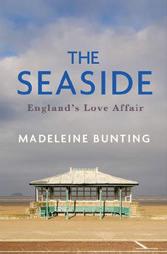
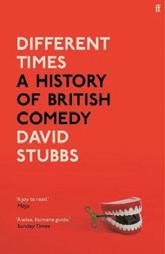
AN initial perusal of the titles of Madeleine Bunting’s “The Seaside: England’s Love Affair” and “Different Times. The History of British Comedy” by David Stubbs would seem fairly straightforward as to their content.
Both, however, have a significant textual undercurrent, reflecting on the political, social and cultural conditions, past and present, in Britain.
Award-winning author Madeleine Bunting takes a trip clockwise around the coast of England from Scarborough to Blackpool covering 40 resorts to reflect on the changing history of the English seaside, from their boom times to contemporary plight.
Golden memories of holidays are juxtaposed with a searing analysis of the current decay of seaside towns reflecting growing inequality, failing public services and a crisis in accessible housing, aggravated by Airbnb short-term lets.
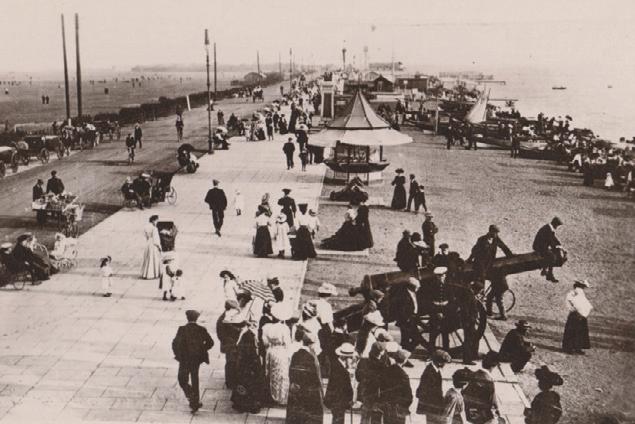
England’s great holiday resorts began in the early 18th century based on the popularity of spas, but with the advent of train travel in the 19th century bringing workers from industrial towns for summer holidays, seaside resorts such as Margate, Southend, Morecambe and Blackpool boomed.
That boom lasted until the 1960s when overseas package holidays, offering guaranteed sunshine, meant “Blackpool moved lock, stock and barrel to Benidorm”.
It is difficult to believe now that Frank Sinatra gave a concert in Blackpool or that Coco Chanel landed her private plane on the beach at Morecambe for a visit. Brits are now more likely to go to Cancún than Clacton.
Bunting explores “ghosts of a better time” when seaside resorts were, “places of pleasure, entertainment, fantasy, magic and adventure”. Now, fast-food outlets, tattoo parlours, charity shops and amusement arcades abound.
Promenade hotels, now often house the unemployed, refugees and those on low-incomes. In “Rick Stein’s Padstow” , where there are three Michelin-starred restaurants, very few of the staff can afford to live in the town. Bunting writes “Padstow has become akin to a colony… for rich Londoners”.
Life expectancy is lower in seaside resorts than the rest of Britain, mental and general health needs are worse, while educational attainment is low and personal debt levels are high.
In Scarborough, where Bunting starts her
journey, the suicide rate is 61 per cent higher than the national average, while Torbay tops the suicide rate in Britain. Brighton has the highest percentage of 15-year-olds who smoke. Blackpool has the highest rate of hospital admissions for alcohol-related conditions and drug abuse.
Now the towns “serve as a metaphor for Englishness… [its] decay, its stoicism”. Bunting blames “entrenched Conservative complacency”, with the decline of the resorts magnifying “the harshness of national policies which assume, manifestly, that some lives don’t matter”. The seaside resorts all had large pro-Brexit majorities.
Bunting superbly juxtaposes past and
nuanced than Bunting.
present, mixing “quintessentially English memories” as “fish and chips, donkey rides, Punch and Judy, the shortcomings of modest, family-run hotels, kiss-me-quick hats, lettered rock and candy floss”, with the citing of YouTube algorithms identifying people watching “vintage Blackpool footage” as the targets for “an advert for independent financial advice from Nigel Farage”.
IT’S no coincidence that “Fawlty Towers” was set in Torquay, which features in David Stubbs’ “Different Times: A History of British Comedy”, another book that uses its subject to explore underlying societal issues although he is much less politically
Stubbs cites the rise of Boris Johnson as “an indictment of the British overemphasis on humour” and that British comedy, for most of the 20th century, “wasn’t about the human condition, but the white male condition”, viewed from a right-wing perspective. He sees comedians such as Les Dawson, Morecambe and Wise, Ken Dodd and Bob Monkhouse, providing comedy which “reinforced piss poor Conservatism”, while the “Carry On” films have a “right-wing political subtext”, which seems another long political bow to draw. Certainly looking backwards, comedy series can be criticised for stereotypes of foreigners, nagging mothers-in-law, the portrayal of women, for example, in the Benny Hill series and gay people.
Stubbs is correct to criticise the occasional racism of Spike Milligan, the implicit racism in it “Ain’t Half Hot Mum” and the explicit racism in “Love Thy Neighbour”. He believes, “Are You Being Served?” “speaks to Britain about Britain, the kind of people we are: sexually repressed, grumpy but not militant, cheeky but not revolutionary”.
Stubbs is happy that comedy has gone from “white bloke” to “woke”. Whatever its flaws, “Different Times” – which covers 70 years of British comedy history – will certainly stimulate, like Bunting, debate on the political and social condition of Britain today.
The Southsea seafront circa 1905... the advent of train travel in the 19th century brought workers from industrial towns for summer holidays.
Anti-hero Everest reaches for dizzying heights
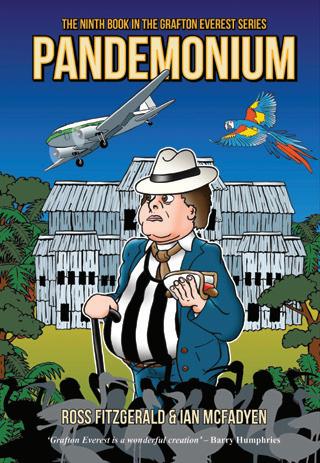
Academic and author ROSS FITZGERALD reflects on the journey to his latest political satire “Pandemonium” and the series’ anti-hero Dr Prof Grafton Everest.
AS some avid “CityNews” readers may know, my latest Grafton Everest political satire “Pandemonium”, co-authored with Ian McFadyen, of “Comedy Company” fame, has just been published.
In it, my anti-hero, Dr Professor Grafton Everest, is the first Australian SecretaryGeneral of the shambolic United Nations.
In its prequel, “The Lowest Depths”, published last year, Russia’s dictatorial president-for-life, Vladimir Putrid, is assassinated. Will life in Russia soon follow fiction? I fervently hope so.
Over the years, academics and critics have claimed to know how Grafton Everest – the bumbling, overweight, teetotal Professor in Life Skills from the University of Mangoland, who is the central character in all my political satires – got his name
One was a professor of linguistics who stated that, after analysing my first four fictions, it was obvious that Grafton Everest was a code for “graft and avarice”.
Another was some mean soul who claimed that my anti-hero’s name obviously
derived from Grafton prison, at which I was allegedly incarcerated.
Wrong.
Apart from the occasional night in the cells for “drunk and disorderly” – in Albury and Echuca, where local police once tied me to a goal post – the only time I was imprisoned was at Boggo Road Jail in Brisbane, in 1966.
This was because, when I was a drunken leader of a huge, illegal, anti-Vietnam War march from the University of Queensland to the city, I was charged with the attempted assault of the assistant commissioner of police.
Bizarrely, a few years later, the copper who arrested me and the lawyer who represented me, both became members of Alcoholics Anonymous – which had enabled me to stop drinking on Australia Day 1970.
But I digress.
In early June 1975, I travelled to South Africa with Jonnie Sheen, an ex-student with whom I played cricket for the University of NSW.
When Jonnie expressed a desire to drive through the Kalahari Desert, I responded:
“It’s dangerous”.
“Instead”, I said, “Let’s drive to Mo -
ARTS IN THE CITY
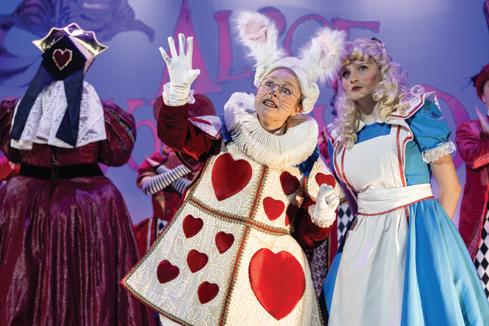
LEWIS Carroll’s classic, “Alice In Wonderland”, directed and adapted by Penny Farrow, will feature favourite characters such as the White Rabbit, the Mad Hatter, the Cheshire Cat, the fearsome Queen of Hearts and a cast of actors bringing more than 20 characters to life. Canberra Theatre, two sessions, January 8.
“STORYTIME” is returning with a new production of “Cinderella”, directed by former artistic director of the Australian Ballet David McAllister. It’s an interactive production created especially for children aged three and up. Canberra Theatre, January 11-14.
zam bique and see how the revolution’s going.”
So, we drove via Swaziland, where we won a motza at the casino, playing poker. When we converted our winnings from South African rand to Portuguese escudos, Jonnie and I were fifthly rich, for a while.
When we stopped at the Mozambique border to drive into Lourenco Marques (now Maputo), I asked a border guard:
CANBERRA featured prominently in the recent Australian Directors’ Guild Awards. Queensland-based Torres Strait Islander John Harvey, won Best Direction in a TV or SVOD Documentary Series Episode or Documentary One-Off Award for “Still We Rise”, the story of the establishment of the Aboriginal Tent Embassy in Canberra, the
world’s longest protest. Canberra’s Patrick Abboud was nominated for his 52-minute film “Kids Raising Kids”, about Canberra College’s special program so young parents can continue their schooling. That’s available via SBS On Demand.
ILLUSIONIST Michael Boyd is back with “Circus of Illusion”, a show that features death-defying escapes, cutting-edge illusions and spectacular magic. Canberra Theatre, January 13-14.
“How are things now that the Portuguese are leaving?”
His response: “It’s the same pile of manure, only the flies are different!”
While we seemed to be the only Europeans driving into Lourenco Marques, loads of Portuguese and others were fleeing the Frelimo guerilla fighters, led by Samora Machel, who soon after became Mozambique’s president.
Jonnie and I observed a number of large vans heading fast for South Africa, via Swaziland. On them all, in bold letters was written GRAFTON EVEREST REMOVALS.
“Grafton Everest”, I said to Jonnie. “What a wonderful name for a character in a novel, whose mother hovers over him like a mountain.”
So that’s the truth of how my woebegone anti-hero got his name.
Although I didn’t know it then, this led to my first Grafton Everest fiction, “Pushed from the Wings”, which savagely lampooned Queensland politics and the parlous state of university life was published in 1986.
But in 1975, Jonnie and I were extremely lucky to escape Lourenco Marques. We vividly remember playing croquet on the manicured lawns of the opulent Hotel Turismo, where we were inhabiting a topfloor suite, hearing the staccato sounds of machine guns firing in the middle distance.
“Pandemonium” is the fourth Grafton Everest adventure that I’ve written with Ian McFadyen.
Our collaboration has been a hoot. At least for me, if not for Ian.
Can you imagine what it’s like having someone like me constantly emailing and ringing at least twice a day for a year – and persistently doing so for the duration of four big books?
What other co-author could cope with someone like me saying, out of the blue:
“When he becomes first president of the IRA (the Inclusive Republic of Australia), I’d like Grafton Everest to have a donkey.”
Plus: “I want the Australian prime minister to be a former lover of Grafton’s who is now a morbidly obese lesbian with a Chinese partner – who at the end of her troubled prime ministership, becomes a werewolf.”
And then for Ian to accommodate me, as was the case with the seventh Grafton Everest adventure, “The Dizzying Heights”, which was published in 2019.
In “Pandemonium”, Dr Professor Grafton Everest, the first Australian SecretaryGeneral of the shambolic United Nations, is an essential part of a plan, implemented by a rough-edged Australian diplomat, to avert a looming global disaster.
This plan, strangely, involves Scandinavian furniture and Australian Rules football – my beloved Collingwood Magpies in particular.
Ross Fitzgerald AM is emeritus Professor of History and Politics at Griffith University. The Grafton Everest political satires “Pandemonium” and “The Lowest Depths” are published by Hybrid in Melbourne and are available online.
The cover of “Pandemonium”.
The Queen of Hearts and Alice… Canberra Theatre, January 8.
GARDENING
summer – and new to me –is Seaside Fleabane (Erigeron glaucus).
it grows just as well here. It is clump forming and does well as a low border or in the rock garden, where it is hot and dry.
PLUMBING
•
PUZZLES
4 Who, in the Old Testament, was a performer of herculean exploits? (6)
7 Name a well-known painting produced by Tom Roberts. (6,2)
8 To reach by continued effort, is to do what? (6)
9 What is the death of a circumscribed piece of tissue? (8)
11 Who composed “The Bartered Bride”, Bedrich ...? (7)
13 What are polite ways of behaving? (7)
daisy (Erigeron Karvinskianus) as a small border plant surrounding my rose garden. It gets a really good chop, once a year in the middle of winter when the roses get their prune, too.
TRY to limit any large pruning of shrubs until autumn, once the summer heat is gone. Cuttings from plants whose stems of spring growth have hardened and gone brown can be taken now.
Classic plants to propagate this way include camelias, climbers, shrubs and trees and, in general, is the main propagation method for most evergreen plants.
Try this at home by snipping small twigs – 10cm-15cm long –with the base being hard and the tip being soft. Choose stems with short internode gaps.
Cut just before a node and dip into hormone gel or organic honey
are doing their best.
Most, if not all, plants of this family need the hot sun to ripen properly and need daily watering to keep them growing fast.
All vegetables will benefit from a fertiliser high in potash and potassium to keep the yield sweet and delicious to eat. Make sure the fertilisers are low in nitrogen, as this will only encourage soft, non-flowering growth and attract insects such as white fly and aphids.
Chillies are from the capsicum family and are hotter in flavour to eat. The smaller the chilli, red or green, the hotter the flavour.
jackwar@home.netspeed.com.au
Jottings…
• Order bulbs for autumn plantings such as Anemone and Ranunculus.
• Mulching keeps moisture in the soil.
• Transplant and sow brussels sprouts for autumn planting.
15 Name a State in the central United States? (7)
17 What is a cavalryman of certain regiments? (7)
20 Which term is often limited to applied plant sciences? (8)
23 What is a poem of 14 lines? (6)
24 What is an agent, sent on a mission? (8)
25 Name an alternative term for compositions. (6)
1 What else is nephrite
2
3 Name the 15th
of March. (4)
4 What is a sudden, abnormal, involuntary muscular contraction? (5)
5 To change, or alter, is to do what? (6)
6 Name a constellation near Canis Major. (5)
9 Which mighty hunter was the great-grandson of Noah? (6)
10 To be putting into circulation, is to be doing what? (7)
12 Name a major port in south-western WA, on King George Sound (6)
14 Kampala is the capital of which eastern African republic. (6)
16 To separate into ions, is to do what? (6)
18 What are the external upper coverings of houses? (5)
19 Name a brave member of Scott’s Antarctic expedition, Lawrence ... (5)
21 Which strap forms part of a harness? (4)
22 Who was the ancient Roman god of war? (4)
Chillies… the smaller, the hotter the flavour.
Seaside Fleabane… a low-growing perennial.
Photos: Jackie Warburton
JUMBO CROSSWORD
HOROSCOPE 2024 / your year in the stars
Expect a year of discoveries, innovations,
“CityNews” weekly astrologer JOANNE MADELINE MOORE shares her predictions for the year ahead.
On January 21, Pluto (the slow-moving planet of powerful transformation) transits from the conservative, status quo, leader-focused sign of Capricorn into the progressive, inventive, groupfocused sign of Aquarius.
Then (apart from a brief stint back in Capricorn from September 1 until November 19) Pluto stays in Aquarius until 2044.
The last time Pluto transited through Aquarius was from 1778 until 1798, a period that included the colonisation of Australia, the Industrial Revolution, the French Revolution, and the (gradual) abolition of the slave trade. So, expect discoveries, innovations, rebellions and revolutions. There’ll also be radical regeneration in areas involving science, space travel and sustainable technologies, plus increasing power/ access/representation for previously under-represented groups in society.
On May 26, prosperity planet Jupiter transits into the sign of Gemini, where it stays for over a year. This heralds a positive period for people and businesses involved in communication, education, academic research, publishing and the media. And the luckiest days of 2024? June 2-3: when Jupiter and Pluto favour political reforms, professional advancement and financial gain.
Here is the personal forecast for your zodiac sign:
March 21-April 20)
LOVE & LUST
Attached Aries – the Lunar Eclipse (on March 25) stirs up hidden tensions, particularly if you’ve been putting work before the relationship. Then expect the sexual sparks to fly in May when fiery Mars lights up your sign. Single Rams – the best time to look for love is in February and March, when Venus and Mars stimulate your peer group/ networking zone, and you could fall for a stylish Libran or an avant-garde Aquarian. But avoid joining a dating site, going on a first date, proposing, or getting married between August 15-28, when Mercury reverses through your romance zone.
LOOT & LUCK
Lady Luck is calling! An unexpected opportunity or sudden windfall could turn your finances around, when Jupiter (planet of prosperity) links up with Uranus (planet of change) in your money zone on April 20-21. So make sure you are ready, willing and able to capitalise on any good fortune that comes along. Then Jupiter transits through Gemini (from May 26 until June 2025) when you could benefit from a sibling, a neighbour, or a fortuitous connection in your local community.
LIFESTYLE
Plan an exciting holiday or weekend escape for some time in early June when Jupiter and Pluto activate your local travel zone. But avoid initiating an ambitious project or going away on a big holiday between November 25 and December 16, when Mercury reverses through your overseas travel and adventure zones. With a Solar Eclipse in your sign, plus Pluto transiting through
your career and goal-setting zones, 2024 is the year to reinvent yourself as you transform into the person you’ve always wanted to be.
NEW YEAR MOTTO
“I can be reborn as many times as I choose throughout my life.” – Lady Gaga
(April 21-May 21)
LOVE & LUST
April 30 through until July 20 are the best months for love, when Venus and Mars transit through your sign. Attached Bulls – plan to pamper your partner, celebrate a major milestone or travel together in style. Singles –you’ll be at your fascinating best and attract admirers like moths to a flame so it’s the ideal time to go on a first date, fall in love, join an online dating site or update your current profile. But a relationship could experience communication problems between August 4-15, when Mercury reverses through your romance zone.
LOOT & LUCK
Finances and luck are linked from May 26 onwards, when Jupiter (planet of prosperity and good fortune) transits through your money zone. So expect a boost to your bank balance via a pay rise, bonus, gift or extra business coming your way. Any windfall won’t last long if you don’t manage it wisely though. November 25 until December 16 is not a good period to apply for a loan, begin a business partnership or sign a major contract, as Mercury reverses through your money-from-others zone. In uncertain economic times, concentrate on smart saving and sustainable living.
LIFESTYLE
For the first five months of 2024, Jupiter and Uranus are both transiting through Taurus, which gives you the courage to take a chance and try things you’ve never considered before. Jump out of your comfort zone … dare to explore and experiment! The best dates to be a brave Bull are April 20-21 (when Jupiter and Uranus activate your adventurous side) and May 23-24 (when Jupiter and Neptune boost your intuition and creativity).
NEW YEAR MOTTO
“It’s not brave to do something that doesn’t scare you.” – Lena Dunham
With Jupiter jumping into your sign, May 26 onwards is the time to explore far horizons and express your ideas with flair, as you head into adventurous new territory mentally and physically. Travel, education and communication are all favoured as you show the world what you are really capable of. But pace yourself around August 19-20 and December 24-25 when restrictions and frustrations could temporarily slow you down.
NEW YEAR MOTTO
“Don’t sit still, don’t ever try to be less than what you are.” – Angelina Jolie
CANCER
(June 22-July 23)
LOVE & LUST
Coupled Crabs – January and February are the most loved-up months of the year so plan something appropriately romantic – like a special gift, a candlelit dinner or a weekend escape. But expect extra stress on the partnership in March or April when the eclipses could stir up problems at home or work. Singles – Cupid’s arrow is most likely to strike in January or February when Venus and Mars both transit through your relationship zone. So it’s a good time to revamp your dating profile, brush up on your flirting technique and practise your seductive one-liners!
LOOT & LUCK
Pluto transits through one of your money zones for most of the year. Which is good news for financial matters involving investments, superannuation, taxes and joint ventures – as long as you are resourceful and adopt a patient, long-term strategy. But take extra care from August 15-28, when Mercury reverses through your cash zone. Clever Crabs will avoid signing important contracts and making big ticket purchases (like a house or car) during this period.
LIFESTYLE
Plan a weekend getaway or a longer holiday during the month of March – somewhere relaxing near a beautiful beach, lake or river would be perfect. With Saturn and Neptune activating your aspirations zone, plus lucky Jupiter and adventurous Uranus hooking up in your hopes-and-wishes zone, April 20-21 and May 23-24 are the best times to set solid goals, make creative plans, and work on manifesting your preferred future. Then spend the rest of the year making your dreams come true!
NEW YEAR MOTTO
“Be fearless in pursuing your dreams, even if they seem impossible. I’ve got big, big dreams for the future.” –
benefit financially from a friend or family member. But steer clear of spending sprees between August 4-15, when Mercury reverses through your money zone.
LIFESTYLE
2024 is the year to change jobs, if you’re not happy, and pursue dreams that capitalise on your natural Leo talents. If you write down your goals and aspirations (and refer to them regularly) then there is a greater chance they will manifest. Many Lions will start a new course of study or embark on a holiday (or business trip) in April, when the Solar Eclipse activates your education and travel zones. But make sure you check your flights, itinerary and appointments extra carefully between April 1-25, when Mercury is retrograde.
NEW YEAR MOTTO
“You have something special and different to offer that nobody else can.” – Jennifer Lopez
(May 22-June 21)
LOVE & LUST
Expect some interpersonal challenges, as two eclipses (and retrograde Mercury) stir up your romance and partnership zones. Attached Twins – romantic vibes are high between August 30 and September 22 when Venus visits your love zone. Singles – you may have to kiss a few frogs before you find your Prince (or Princess) Charming. But don’t give up – each dating disappointment will lead you closer to your soulmate. Brush up on your communication skills between November 25 and December 16 when Mercury reverses through your relationship zone.
LOOT & LUCK
With prosperous Jupiter transiting through your sign (from May 26 onwards) and conscientious Saturn in your career zone (all year), make sure you have done all the hard work that’s required so you can take advantage of good luck when it comes along. Your motto for 2024 is ‘Preparation + Opportunity = Success.’ The best period for financial growth and making business decisions is during the first two weeks of June when the Sun, Venus and Jupiter are all in Gemini, plus wealth planet Jupiter makes a positive link with resourceful Pluto. Smart Twins will strike while the iron is hot!
LIFESTYLE
Confidence and momentum are the buzzwords in 2024.
Margot Robbie
(August 24-September 23)
LOVE & LUST
May and June are the best months to travel somewhere special with your sweetheart. But the relationship could hit a rocky patch in August or December, especially if you work with your partner. Singles – the luckiest months to look for your soulmate are May and June, when Venus and Mars expand your romantic horizons, and you could hit the love jackpot. But have you got ridiculously unrealistic expectations that no mere mortal can possibly meet? Neptune and Saturn urge you to look for someone who is romantic, responsible – and fabulously flawed.
LOOT & LUCK
With three eclipses activating your money zone (in March, April, and October) expect some financial ups and downs in 2024. It could be a case of cash pouring in one month and then slim pickings the next. Things look particularly complicated in April, when Mercury reverses through your $$$ zone and your bank balance could go backwards. So make sure you plan and prepare for a feast and famine kind of year.
LIFESTYLE
There is a rare astrological aspect in 2024, when Jupiter and Uranus link up in your adventure zone. So it’s a good year to expand your mind, explore foreign shores and experiment with innovative ways of doing things. Learn something new or travel somewhere you’ve always wanted to go! But try to stay put between November 25 and December 16, when Mercury reverses through your domestic zone and there’ll be family members who need your help or things that need fixing around your home.
NEW YEAR MOTTO
“It’s better to explore life and make mistakes than to play it safe. Mistakes are part of the dues one pays for a full life.” – Sophia Loren
(July 24-August 23)
LOVE & LUST
With Pluto transiting through your relationship zone for most of the year, plus a Lunar Eclipse in your intimacy zone, it will be a dramatic year for affairs of the heart. Coupled Cats – don’t let jealousy mar an otherwise promising partnership. 2024 is the year to transform your attitudes to love and long-term commitment. Singles – look for love with an amorous Aquarian or a sexy Sagittarian. But an established or burgeoning relationship could temporarily run off the rails between November 25 and December 16 when Mercury reverses through your romance zone.
LOOT & LUCK
When it comes to your career and/or life direction, expect a lucky surprise in the last two weeks of April, when Jupiter (planet of prosperity) hooks up with Uranus (planet of change). Clever Cats will turn a short-term opportunity into a long-term gain. Your other fortunate period is during the first week of June, when you could
(September 24-October 23)
LOVE & LUST
Mercury reverses through your partnership zone from April 1-25, so it’s not a good time to join a singles’ site, go on a first date, propose, get married, renew your wedding vows, or embark on a holiday with your sweetheart. Coupled Libra – passion and attraction are high in May, so plan a sexy getaway. If you’re single, the best month to look for your soulmate is May, when proactive Mars visits your love zone. And don’t be shy about promoting your positive qualities. If you don’t love and respect yourself, why should anyone else?
LOOT & LUCK
A lucky opportunity or a financial boost could come your way around April 20-21, when Jupiter and Uranus hook up
rebellions, revolutions and space travel
in your money-from-others zone. During the first week of June, you’ll find friendship, luck, travel and business are all linked. So it’s a good time to start (and promote) a promising venture, especially with a friend or business partner from another country or culture. When it comes to making a major decision at work, listen to your inner voice in September. It will point you in the right direction
LIFESTYLE
Two eclipses light up your sign, so identity and image are important in 2024. The Lunar Eclipse (on March 25) highlights close relationships and passion projects. The Solar Eclipse (on October 2-3) is a fabulous time to refresh your image via a hot new hairstyle, a makeup makeover or a wardrobe revamp. You have a strong need to assert your independence but that must be blended with good communication skills, personally and professionally. Balance and compromise are the keys.
NEW YEAR MOTTO
“You have to make peace with yourself. The key is to find the harmony in what you have.” – Naomi Watts
LOOT & LUCK
Slow down at the New Year sales (especially between January 1-4) and be careful you don’t make impulsive, expensive purchases that you later regret. Early June is fabulous for investments, superannuation and joint finances and, from May 26 until November 24, you could benefit financially through your partner. But August and December aren’t good months to buy or sell real estate and investments, when penny-pinching Saturn could limit profits and maximise losses. Smart Sagittarians will do some research, be patient and wait for a more opportune time.
LIFESTYLE
The most exciting time of the year? Around April 20-21, when a big surprise comes along – especially involving travel, work, education or health. The most difficult time? Around August 19-20, when Saturn squares your ruling planet, Jupiter. Confidence and energy levels will be low, and you’ll feel particularly vulnerable and sensitive to the criticism of others. So try to surround yourself with positive people who encourage your talents and support your dreams.
NEW YEAR MOTTO
“Never believe anyone who tells you that you don’t deserve what you want.” – Taylor Swift
Someone adventurous who will transform your world.
LOOT & LUCK
Prosperity planet Jupiter jumps into your good fortune zone on May 26. So late May, June and July are lucky months to sell shares or real estate, enter a competition, buy a lottery ticket, win at the casino or launch a lucrative project. But avoid making important financial decisions (like applying for a loan or signing a contract) when Saturn stirs up your money zone in August and December. Friends and finances are also a dodgy mix during this time, so do your best to keep the two separate.
LIFESTYLE
The Solar Eclipses signal a fresh start involving family or local community (in April) and travel or education (in October). Do you want to embark on a dream holiday or live somewhere else? Is it time to upskill or study something new? Think about adjustments you can make and exciting options you can explore. It’s a fabulous year to foster friendships and extend your peer group. You could also welcome a new baby or enjoy improved relations with a child, teenager or friend as you share mutual hobbies, sports and interests
NEW YEAR MOTTO
“The biggest adventure you can take is to live the life of your dreams.” – Oprah Winfrey
could be as close as the boy or girl next door! Attached Pisceans – March is the prime month for love, passion and lashings of romance. But retrograde Mercury rocks the relationship boat from August 4-15, and it will take a while to get things back on an even keel. So it’s not a good time to join a singles’ site, go on a first date, propose, move in together, get married, renew your wedding vows or escape on a romantic holiday.
LOOT & LUCK
Prosperity planet Jupiter transits into your domestic zone. So the period between May 26 and December 31 is a great time to redecorate, renovate, build an extension, sell property, buy a new home, relocate or start a home-based business. Good fortune could also come via a loved one, distant relative or family friend. However –with three eclipses and retrograde Mercury stirring up your money zones – 2024 is also a year when you’ll learn some valuable lessons about being financially organised, responsible and frugal.
LIFESTYLE
(October 24-November 22)
LOVE & LUST
There’s a rare aspect on June 2-3, when Jupiter and Uranus hook up in your relationship zone. Coupled Scorpios – plan a romantic surprise with your sweetheart around this time. Singles – someone special could knock you off your feet. You could also fall in love while you (or they) are travelling, or with someone from another country or culture. The Lunar Eclipse (on September 17-18) brings a rocky romance to a dramatic head. The pressure’s on to make a decision –will you stay, or will you go?!
LOOT & LUCK
Finances and luck are linked from May 26 onwards, when Jupiter (planet of good fortune) transits through your money-from-others zone. So expect a boost to your bank balance via a pay rise, bonus, better job, superannuation payout or extra business coming your way. Any windfall won’t last long if you don’t manage it wisely though. And keep a close eye on incoming bills and your weekly budget between November 25 and December 16 when Mercury reverses through your money zone.
LIFESTYLE
Keep a close eye on your health and stress levels in April, when a Solar Eclipse (and retrograde Mercury) stir up your wellbeing zone. Prosperity planet Jupiter forms a fabulous (rare) aspect with your power planet Pluto on June 2-3. So keep your eyes open for lucky breaks and awesome opportunities around this time, especially involving travel, relatives or real estate. It will also give you a welcome confidence boost, as optimism is high and other people are drawn to you (romantically, platonically, and/or professionally) like moths to a flame.
NEW YEAR MOTTO
“If you present yourself with confidence, you can pull off pretty much anything.” – Katy Perry
(December 22-January 20)
LOVE & LUST
There’s a rare conjunction of Jupiter and Uranus in your love zone, so expect some romantic volatility in 2024. Coupled Capricorn – a solid relationship will endure but a shaky one could experience a few bumps along the way, or even break up. Try to inject some adventure and excitement into the partnership to keep it fresh and interesting. Unhappily single? The best times to meet your soulmate are between January 23-February 16 and June 17-July 11, when Venus sends Cupid in your direction and you’re at your charismatic best.
LOOT & LUCK
During the first two weeks of January, you’re keen to hunt down some fabulous bargains at the New Year sales, in person and online. Your luckiest days of the year are June 2-3, when Jupiter and Pluto increase opportunities and boost financial, work and business acumen. So early June is a fortuitous time to talk business, make moves and do deals. But Lady Luck goes missing in August and December when prosperity planet Jupiter is at odds with your ruling planet Saturn. Over-confidence and inflated expectations could also trip you up during this time.
LIFESTYLE
Jupiter jumps into your work and wellbeing being zones on May 26, which is good news for health matters and job satisfaction for the rest of the year. Then Pluto makes its final transit through your sign from September 1 until November 19, which is a good time to detox, dig deep, dismantle the old and start rebuilding the new. The Solar Eclipse on October 2-3 could prompt you to start an ambitious professional project or head off in a transformative fresh direction.
NEW YEAR MOTTO
“Tomorrow belongs to those who can hear it coming.” –David Bowie
(February 20-March 20)
LOVE & LUST
Singles – get circulating in your local community in March (especially March 12-19) because true love
Expansive Jupiter makes a fabulous aspect to Neptune (your ruling planet) on May 23-24, which favours vast imaginings, idyllic adventures and big, ambitious reveries. But remember Saturn is still sauntering through your sign, so try to get the balance right between realistic plans and gigantic dreams. You could face a crisis of confidence around August 19-20 when Saturn squares Jupiter, and there could be a challenge involving your health, your family or where you live. Avoid over-inflated expectations and taking on too much around this time.
NEW YEAR MOTTO
“Imagination is everything. It is the preview of life’s coming attractions.” – Albert Einstein
Copyright Joanne Madeline Moore 2023
(November 23-December 21)
LOVE & LUST
Relationships will mostly be ‘steady as she goes’ in 2024, which could be an issue for some restless Sagittarians. If you’re attached, do all you can to reinvigorate a stale partnership or fix a frustrating problem. If you allow complacency to set in, then it won’t be long before you’re heading out the door. Singles – you could experience a cosmic connection with an amorous Aries or a generous Gemini. April and May are the prime months to enjoy a weekend escape with your new lover when Venus and Mars fire up your mojo and your libido goes into overdrive.
(January 21-February 19)
LOVE & LUST
The best time for lashings of romance is from February 16 until March 11, when love planet Venus visits your sign. If you’ve been putting up with bad behaviour from your partner, then things could come to a climax between August 4-28, when Mercury reverses through your relationship and intimacy zones. Singles – expect a fiery attraction with someone who works in tourism or education. Or with someone from a different country or culture.
WINNUNGA NIMMITYJAH ABORIGINAL HEALTH
AND COMMUNITY SERVICES
Winnunga Nimmityjah AHCS is an Aboriginal community controlled primary health care service operated by the Aboriginal community of the ACT.
In Wiradjuri language, Winnunga Nimmityjah means Strong Health. The service logo is the Corroboree Frog which is significant to Aboriginal people in the ACT.
Our aim is to provide a culturally safe, holistic health care service for the Aboriginal and Torres Strait Islander people of the ACT and surrounding regions. The holistic health care provided by Winnunga AHCS includes not only medical care, but a range of programs to promote good health and healthy lifestyles.
Our services include:
• GP and Nursing
• Midwifery
• Immunisations
• Health Checks
• Men’s & Women’s Health
• Hearing Health
• Dental
• Physiotherapy
• Podiatry
• Dietician (Nutrition)
• Counselling
• Diabetes Clinic
• Quit Smoking Services / No More Boondah
• Needle Syringe Program
• Mental Health Support
• Healthy Weight Program
• Healthy Cooking Group
• Mums and Bubs Group / Child Health
• Optometry Service
• Psychology and Psychiatrist
• Community Events
• Groups
Winnunga AHCS is a national leader in accreditation, was one of the first Aboriginal community controlled health services to achieve dual accreditation under RACGP and QIC standards. Winnunga AHCS has been at the forefront of setting a national agenda for quality improvement in Aboriginal community controlled health and continues to advocate locally and nationally for best practice standards in operational and governance areas of Aboriginal health services.