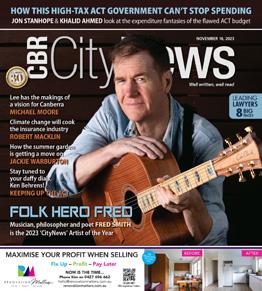
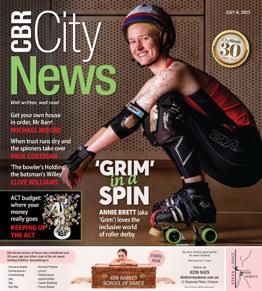
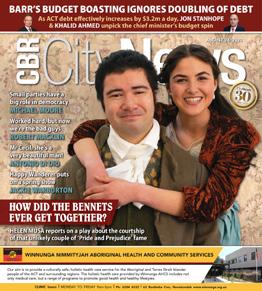
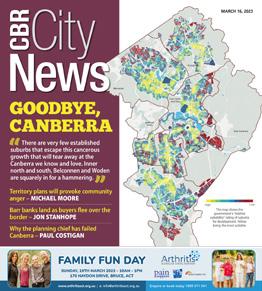
Here local historian and journalist NICHOLE OVERALL completes her eclectic look at the 30th year of “CityNews” that she began in our anniversary edition of June 29.
IF 2023 opened as the year of the unforeseeable, it’s since hit the stratospheric heights of a skywhale’s unusual anatomy…
In marking the 30th anniversary of “CityNews” in June with an overview of some annual highlights and low points since its 1993 inception, we concluded with tensions brewing around an ACT Health “hostile takeover”, “the” trial of the year and a Voice to which people increasingly turned a deaf ear – except in the ACT.
Bringing the world to our door, there’s been “Handsome Boy’s” prime ministerial diplomacy with China,Ukraine has demonstrated the old adage that it’s not the size of the dog in the fight but the fight in the dog, while the heart-rending horror of Hamas continues to confront us.
We also witnessed Qantas and Optus’ showy implosion of the hubris of corporate cabals.
Proving inquiries don’t always go the way those calling for them presume they will, the imbroglio of the Higgins-LerhmannWilkinson-Reynolds-Cash-Gallagher-WongDrumgold-Sofronoff matter is still unfurling.
In other political ructions, from roosters
one day to feather dusters the next, Victoria’s “Dictator Dan” departed and WA’s #IStandWithMark McGowan moved on. They followed Over-the-Ditch’s Jacinda, succeeded by an historic triumvirate of National, Libertarian and NZ First forces.
On the “shock” resignation of “Aunty Anna” in Queensland, seems the ACT’s “Uncle Andy” is the last of the old guard – for now, at any rate.
So if a week’s a long time in politics, how about a potential 27 years?
With the ACT Labor/Greens government heading to an Australian politics “entrenchment” record, “a progressive paradise” is how it’s been described by one masthead this year; a “political aberration” the call from another (go on, have a stab and pick which).
Also producing a bit of potential denturegnashing among those who remember it hasn’t happened in 35 years, the downgrading of the ACT’s AAA+ credit rating.
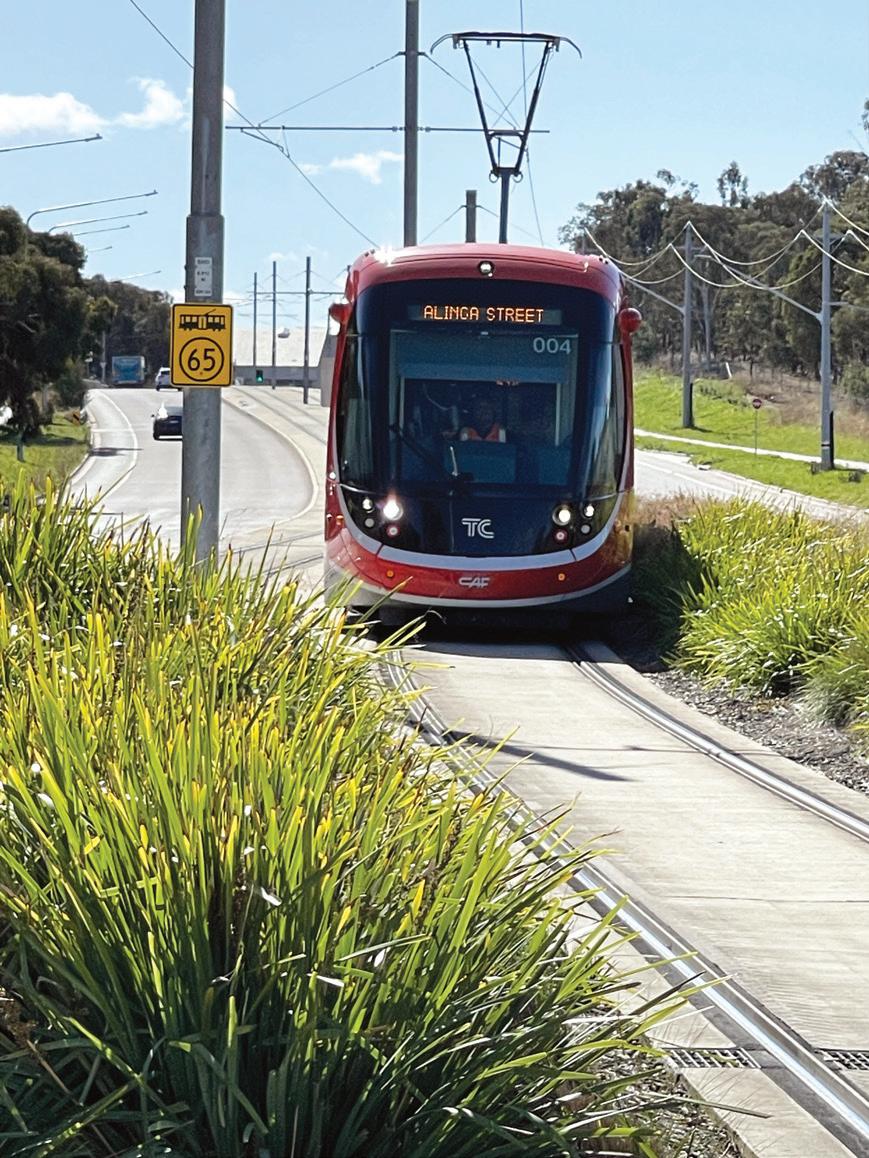
A teaching, policing and debt vortex (a cool mill a day in interest, if you please), but while the Feds are slashing infrastructure spends everywhere, that tram will go on come hell or Liberal petitions.
And in a place where you once couldn’t score a drink for 17 years (prohibition, 19101927), along with the ACT becoming the first jurisdiction where it’s legal to take a toke, this year it “decriminalised” (not “legalised”) personal supplies (apparently that’s as much as five “doses”) of harder drugs including heroin.
Health v clogging up the criminal justice system, federal intervention, territory rights, bikie gangs and NSW police RDT (random drug testing) all trending as a result.
Here’s our ‘greatest hits’ edition
THAT’S a wrap, 2023! That makes it 30 years publishing a weekly paper and 13 years feeding a voracious website.
It’s been a terrific anniversary year and while we honoured the past with a crackajack souvenir edition on June 28 (viewable as a digital edition on citynews. com.au), I couldn’t let this special calendar year slip away without saluting the present.
The article above is Nichole Overall’s unfinished business from the anniversary edition. She masterfully chronicled the paper’s past three decades, so it made tidy sense to ask her to fill in the missing bit – this year. It’s a thoughtful reminder of the 12 months we’ve lived through.
The “CityNews” crew must be the hardest-working media practitioners in Canberra. I have rarely worked with people of such pride, dedication, ethics and ability.
We are able to assist in negotiations and/or represent you in:
• Matrimonial Property settlements
• Parenting Arrangements for Children
• Divorce
• Binding Financial Agreements
• De Facto relationship breakdowns
And where would we be without the brilliance of our many contributors, who bring lived experience to the independence and authority of our voice?
So I have dedicated this edition to being the best of everything “CityNews” in 2023 and, using the popularity of their work on the website, rerun their best columns. They remain essential reading and I couldn’t help but be struck by the importance of what they offer our community.
We do all this without cover charge or a website paywall. Our advertisers are, in the main, small businesses too. Patronise them when you can. Please. And perhaps hit the “support” button on citynews. com.au homepage to make a valued difference to helping the frail flower that is independent journalism in Canberra.
Enjoy our “greatest hits” edition. More next year (election year!)
Ian Meikle, editor
When it comes to the “H-bomb” (housing), it’s just as well Canberra didn’t reach its 1980s target of a million residents as it continues to struggle to provide for the just under half a mill it has now.
There’s also the unexpected exit of a Greens MLA, while former ACT Lib leader and senator “Big Zed” crossed the great Canberra/Queanbeyan divide in an unsuccessful attempt to secure a federal gig (he came third after Dave Sharma and Andrew Constance).
The current ACT Liberals had already landed themselves on the wrong side of Canberra’s equivalent of Ben Fordham, 2CC’s Stephen Cenatiempo. Now with their latest leadership reshuffle, that relationship seems permanently on ice… Covid’s about the only thing that’s down but joining the calamity of interest rates, fuel, electricity and virtually every other
thing, apparently it’s again on the up.
As we await the sound of sleigh bells jingling then, what of a bit of 2024 futurism?
Following the fate of the referendum (the national figures similar to that on same-sex marriage) and a tightening of the polls, there’s two camps on an early election: go before it gets worse or hang on for dear life and the very last curtain call.
Either way, in the face of an impending electoral redistribution and NSW losing a seat, the Libs are cracking on with preselections, including over in Eden-Monaro.
The threat of yet more hefty cost-of-living increases looms large as does the argy-bargy on migration, paramedics, education and renewable energy.
Might it be the ACT though, that really shakes things up next year?
If Canberrans are potentially eyeing off a new captain, could the Greens achieve what many have dismissed as pie-in-the-sky and they’ll get their very first political chief who’ll actually have to answer to the achievability of their world view?
With all those sugar plum fairies dancing in your head, a Merry Christmas to all and here’s hoping Santa brings us a more inspiring 2024!
There’s more of Nichole’s work here, and her complete 30-year collection is on citynews. com.au and in the digital edition of June 29.
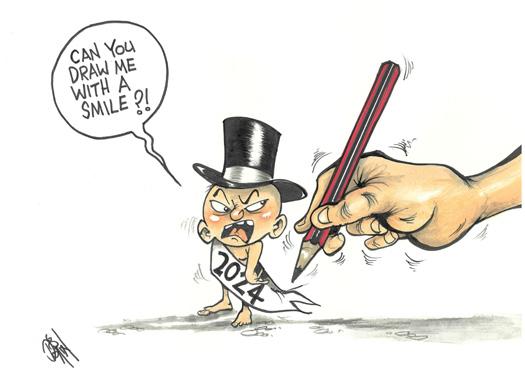
Cartoon: Paul Dorin
NEWS / refugees
Refugee advocate wonders why we’re so unkind
By Katarina LLOYD JONES
AT 78, Jane Keough wonders how she could get to a stage of her life when “my country is not kind and not fair and not open”.
Sister Keough has spent the last 21 years advocating for the rights of refugees, with the help of her Catholic church group, the Brigidine Sisters.
“We used to live off the sheep’s back, then we lived off the gold and minerals and now we’re living off volunteers,” she says.
“I can’t help but feel like Australia has dumped it all on caring donors.
“So many of the refugee supporters are struggling, they’ve been doing it for a long time, and we all need to sup port each other.
“Last year, I got very negative and I thought, this is not who I am. It doesn’t help anybody to be negative and so I got some counselling and some help.”
She works collaboratively with a group of Canadians, engaging with the Refugee Council of Australia and MOSAIC, an authorised resettlement, non-governmental organisation in Vancouver.
tions and raised maybe $20,000 per person, that’s enough to keep them very minimally for the first year.
and traumatised people as we send them as a result of our camps.”
she says.
“Trying to prove that all these violent criminals are out in the community, when the fact is, about threequarters of them have never been tried and found guilty.
“Lots of them are there for traffic offences, if they were white and middle class someone would have gone in and gotten them out.
“Others are in for drugs, but it’s like your own nieces or nephews, they do something wrong for a while, they do their time and then they come out and often they make good in the community, they’re not put in detention indefinitely with no chance for rehabilitation.
“Both major parties make this issue of refugees as if they are different or sub-human, there’s a lot of racism.
“You can see it very starkly in Australia’s response to Ukraine, to the Australian response to Lebanese Christians when they wanted to come, the Australian response to the Vietnamese, and look how wonderfully these people have integrated into the community, they were treated like human beings.
“Somewhere along the line, this thing of ‘boat people’ came along”
be treated as what they are, innocent vulnerable people looking for safety and not be used as political pawns,” she says.
Jane grew up in Canberra, then joined the convent and was away for many years.
“I lived here before the lake; you could walk across and almost not get your feet wet,” she says.
“I was 16 when I decided to join the convent, and I didn’t know what I was doing, but it was the best decision I’ve ever made in my life.
“I think the innate sense of social justice that I got from my father was fostered within the church community that I belong to.
“I’m very much a believer in the gospel message; the doing, the kindness, the reaching out to others, to look to the poor and the needy, that sort of thing.
“When I was at school I didn’t have any of those reasons, I just liked some of the nuns there, they were young and interesting and I thought ‘I want to be like them’.
“So I joined the convent.”
“I do tai-chi three times a week, and it’s wonderful.
“Canada offers to accept them under a community sponsorship,” she says.
“We have put through 150 applica-
“The Canadian groups have been doing this for 30 years, with refugees from all around the world, and they say they have never seen such broken
Jane says she is disheartened by the treatment of refugees by the Australian government, including the recent ex-detainee law changes.
“I think it’s just a political game,”
Jane has spent the last five years sending support packages to the refugees stuck in Papua New Guinea through her group Manus Lives Matter.
“I would just love for refugees to
“I’ve done it for 20 years now, and I belong to GOLD, which is ‘Growing Old Disgracefully’ Canberra Dance Theatre’s elderly group.
“I have lots of things in my life, and my dogs, Patch and Teddy, that help me provide a balance.”
Refugee advocate Sister Jane Keough… “The Canadians say they have never seen such broken and traumatised people as we send them as a result of our camps.”
Photo: Katarina Lloyd Jones
• Specialist SMSF accounting firm who are accessible, honest & timely
• Personalised service to provide value for money & proactive strategies
• Access to your SMSF information in real time for informed decision making
• Local firm who concentrate on being up to date & agile to incorporate change as it occurs
To experience our tailored approach to managing your SMSF contact us on 6273 1066 or send us an email at info@glss.com.au
Author wants to keep fire burning in young eyes
By Katarina LLOYD JONES
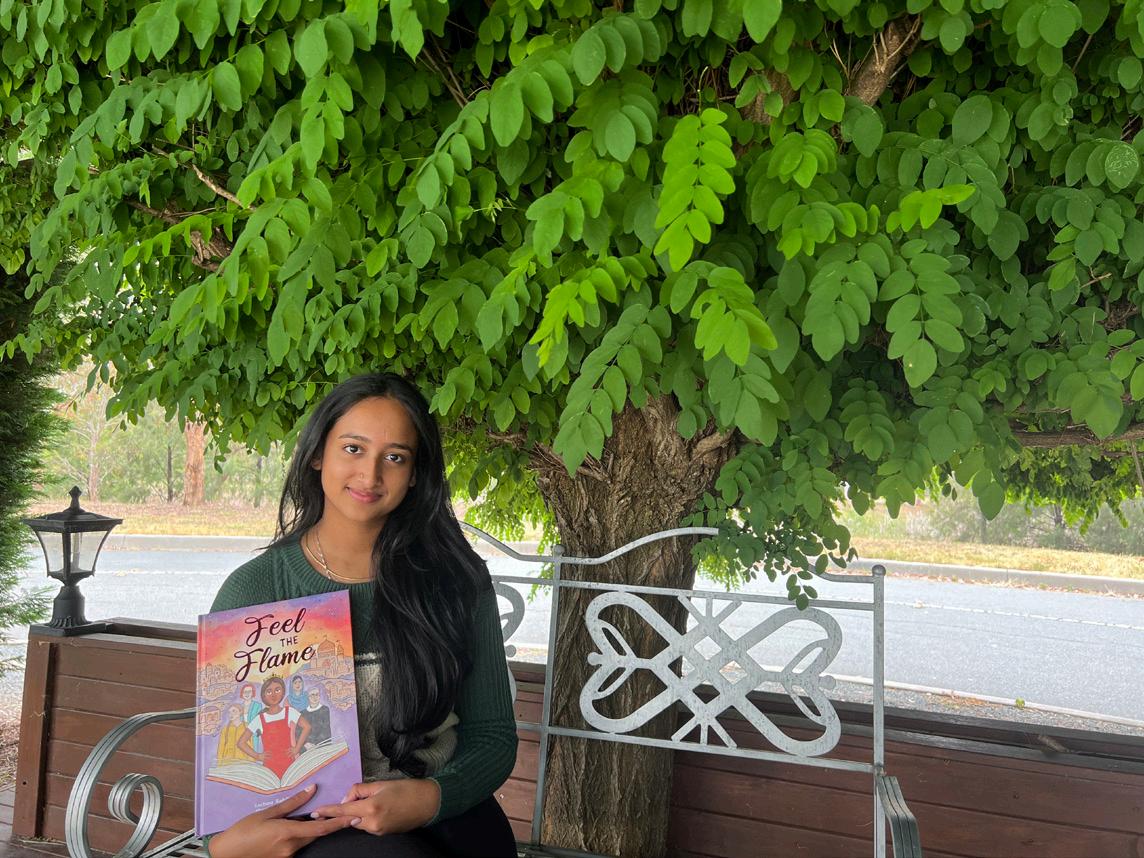
LOCHANA Radaliyagoda
never thought she’d become a published author; in fact, she had never given writing much thought at all.
However, after receiving $2000 from the Audrey Fagan Young Woman’s Enrichment Grant’s program, in 2020 she realised that writing a children’s book would be the perfect way to share her message of empowerment.
Now Lochana’s published work is on bookshop shelves across Canberra.
“It feels great to be published at such a young age, it hasn’t really hit me yet,” says the 17-year-old Burgmann Anglican School student.
“It’s a mixture of feelings because it’s been so long coming.
“It’s been a three-year project, it’s crazy that it’s coming to an end.
“I’m excited to see what opportunities this opens up for me and how it influences and impacts children.”
“Feel the Flame” was inspired by the fire she sees in little kids’ eyes, Lochana says.
“I’m a dance teacher, so I have kids come in all the time and you see the little girls and they have these big
Teenage author Lochana Radaliyagoda… “It feels great to be published at such a young age, it hasn’t really hit me yet.”
dreams,” she says.
“They want to be an astronaut or they want to be a politician, all these big dreams and big ideas, but once they grow up and hit around 13, that fire and drive starts to die down.
“I think a big reason for that is society in general, and how we put limitations on children, sometimes unknowingly.
“‘Feel the Flame’ aims to empower young people to keep that fire and keep those dreams close to their hearts.”
While “Feel the Fame” holds a special place in her heart, Lochana says she doesn’t have any plans to write another book.
“I get a lot of people asking me if I want to write another book, but honestly writing wasn’t something that I
develop a project.
“I read through it and I had no idea what I was going to do, but I knew I wanted to apply,” she says.
“At the beginning it was a bit confusing, I had no idea what to do after I got the grant.
“I talked to a lot of different people, eventually I was introduced to Juliette Dudley who did the illustrations.
“She had a really good knowledge of
the processes involved in publishing a book so that was really helpful, she guided me through it all.
“In ‘Feel the Flame’, there is a princess who has a fire in her, and she goes through and meets significant people like Julia Gillard and Greta Thunberg and people like that who have strong
“She uses that to keep that fire within her burning and uses her flame to ignite the children in her community.”
However, closer to home Lochana says her main inspiration has always been her mother.
“My mum is really strong, in how far she has come in her life thus far and all the things she has faced,” she
“She has always been the person that’s been giving me the fire to keep
To her fellow young Canberrans, Lochana says you are never too young
“I think it’s something that I was worried about a bit as well, am I too young? Is it going to be too difficult? It can be a bit intimidating,” she says.
“No matter how long it takes, keep pushing through, once you start you just have to keep pushing.”
“Feel the Flame” (rrp $26.95) is available through Lochana’s website –lochanaradaliyagoda.com – and in all major bookstores.
Photo: Katarina Lloyd Jones
Come along and see the friendly free-flying birds that can be photographed and fed.
Walk amongst over 500 birds from 50 species from Australia and around the world!
Open 7 days a week from 10am to 5pm, last admission 4.30pm
Closed Christmas Day
Social distancing encouraged
BEST OF CANBERRA MATTERS September’s
Enough! The time has come to finally walk away
AT the end of June, I took time out from writing about local urban political matters.
I was worried that maybe there was a detrimental effect on my way of thinking from focusing almost daily on the atrocious behaviour of this ACT Greenslabor government, its well-trained bureaucracy and compliant support of social and community associations.
Canberra matters have occupied a significant part of my life for over a decade. It was time for a rethink and to return to creative and more pleasant matters. It was time to consider where we would like to spend the next decade as well to be closer to family in Melbourne.
In early August we agreed that there was much to be gained from living in the outer suburbs of metropolitan Melbourne. We have decided to move to Melbourne as soon as possible.
We are now putting energy into decluttering and vacating our home. In theory this could be done before Christmas. This may be overly optimistic – but we are exhausting ourselves giving it a go.
This dramatic decision has come as a bit of a shock to both of us let alone to people close to us.
Several months ago, such a drastic change of life was not a reality for the two of us given our comfortable home
and beautiful gardens here in middle Dickson.
Our focus now is to make our house ready for a sale, to move into a Melbourne rental and to be monitoring the market to buy a smaller house in a suburb we have been researching. It has occurred to us that for a generation that lived reasonably well for decades, we have not exactly set up easily accessible processes and assistance to see people retire, downsize and move house. As a society, our generation forgot to set up peoplefriendly systems to make this huge change easy for our own generation. There are no handbooks on this. The home and the urban areas we will leave behind are a product of wise heads of former urban, social and town planners and designers who
areas of this city.
These visionaries knew that this was a city not like others and they built an urban, social and community infrastructure that others could only envy. The ship of fools that is now the ACT government and its pretend planners have missed the point about the fundamentals that formed the thinking behind this city’s creation.
Thanks to those former urban thinkers, the home we will leave behind for someone else remains well connected and ideally a great place to live. It is a pleasant walk to two shopping centres, chemists, a library, optometrists, doctors, dentists, hairdresser, bakeries, butchers, cafes and restaurants, several schools, green spaces, fabulous trees and the
The Canberra I know and have loved for many decades is now under the influence of self-interested financial forces that have found willing allies and puppets in both Andrew Barr’s neo-liberal Laborlight party and Shane Rattenbury’s greenwash keep-me-in-a-job collective.
Dickson wetlands. Having written that list, why are we leaving! Someone taking away a load of ex-furniture asked that same question.
Logically, it makes sense to stay put and enjoy our surroundings and to carry on having coffee and catch-ups at our favourite cafes. Having lived here for decades we have largely embraced the changes and infills that are now a constant fact of life in a maturing city.
But the Canberra I know and have loved for many decades is now under the influence of self-interested financial forces that have found will-
ing allies and puppets in both Andrew Barr’s neo-liberal Labor-light party and Shane Rattenbury’s greenwash keep-me-in-a-job collective.
I am leaving this city on a high. It still has an urban character that is envied internationally and is fantastic. A special thanks therefore goes out to the city’s former designers and planners. If only their replacements had just a little of the former’s intelligence and humanity and did not denigrate residents who seek good design, biodiversity, greenery and climate readiness as key elements for developments in established and in the new suburbs. Now it is back to working out what to do next, what stays, what goes and sleepless nights trying to predict what happens next. Then there is the worry that maybe we have been too optimistic and the departure for Melbourne may be delayed till early next year. Finally, I’m yet to answer the question being asked whether there are to be more opinion pieces by me before we depart. Maybe a couple more!
Goodbye to beautiful Dickson.
Photo: Paul Costigan
JAN 9 JUN
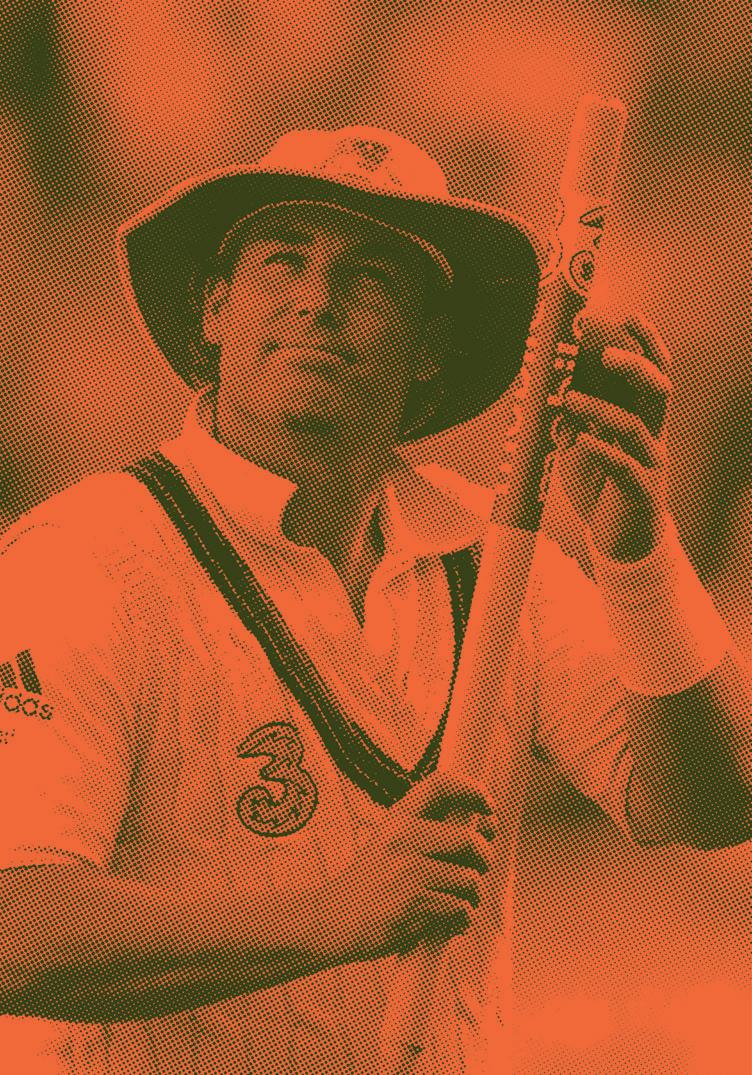
Images (clockwise from left): Steve Holland, Australian Cricketer Shane Warne Holding a Cricket Ball and Stump at the End of the Four th Test of the Ashes Series, at the Melbourne Cricket Ground, 28 December 2006 (detail),
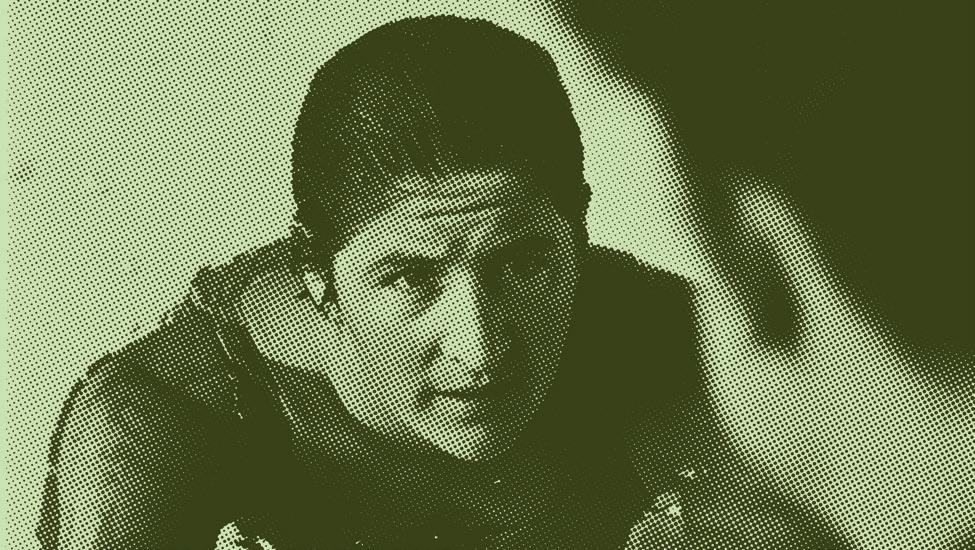
David Moore, Por trait of Dawn Fraser, Melbourne, 1963 (detail),
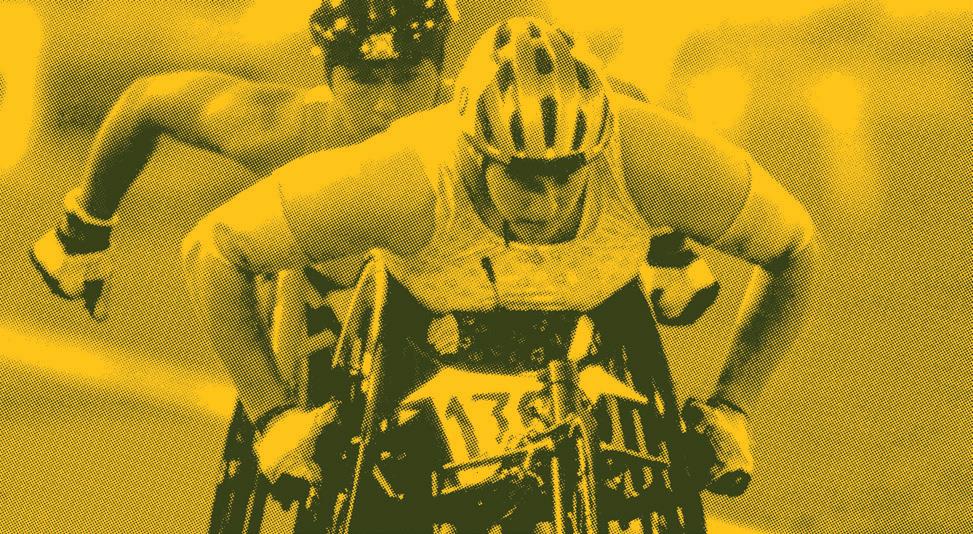
Serena Ovens, Por trait of Louise Sauvage, 1996 Paralympian
BEST OF POLITICS Here’s a staggering repudiation of light rail from May
The tram was a ‘solution’ looking for a problem
JON STANHOPE and AHMED explain how Stage 1 of the light rail project is an economic failure and that Stage 2 is certain to be a greater failure, with serious questions about procurement without a competitive process.
OF the “problems” identified in the business case for ACT Light Rail – Stage 1, that the project was designed to address, Problem 1 was specified as “the need to build future alternative transport capacity”.
The discussion of the problem in Section 4.2.2.1 of the business case referred to:
• Traffic congestion and slow travel times, in particular along the Northbourne Avenue and Federal Highway corridor; and
• Reduced accessibility by individuals who do not own a car, which in turn carries with it social equity issues.
Travel time savings are typically the largest component of the economic benefits of a transport infrastructure project. Time saved in travel is available for productive economic activity, or for leisure
activities with quantifiable social and wellbeing benefits.
Transport infrastructure has a long life, and any such project should involve an assessment of evolving needs and an eye on emerging technologies. While it is unclear what is meant by “alternative transport capac ity” in the problem definition included in the business case, reference to future needs may be a reasonable starting point.
However, we have not been able to find in the business case a single reference to electric vehicles, autonomous guidance or trackless trams – technolo gies that were emerging at the time the business case was prepared.
The total exclusion of future alternative technologies in the business case is, we think, best explained by the terms of the Labor/Greens Parliamentary Agreement for the 8th Leg islative Assembly signed on November 2, 2012. Clause 2.2
“ISN’T IT TIME TO TURN IN YOUR OLD RUNNING SHOES?”
“problem”.
Early lock-in and exclusion of alternatives is not the only concern with the process employed in advancing this project.
Clause 9 in Appendix 4 of
would be created for the procurement and financing of the project. A commitment such as this to the expenditure of unspecified funds without testing the market for procurement and financing, and without any prior public scrutiny of the delivery mechanisms, raises serious questions about both governance arrangements and the probity of the expenditure of
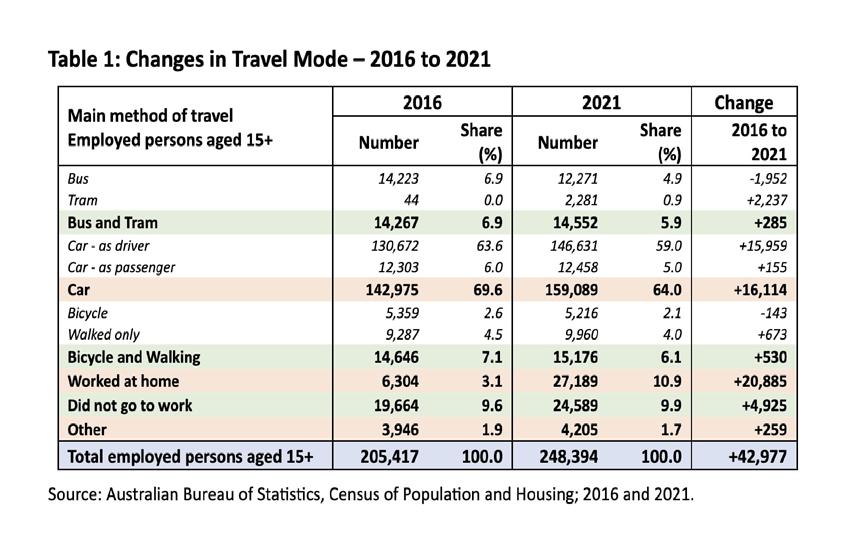
The extent to which the project has addressed “transport problems”, and in particular reduced car use, can be assessed through the travel mode data published by the Australian Bureau of
The table below is drawn from the Census data for 2016 and 2021, shows that of the approximately 43,000 additional employed people, more than 16,000 used cars as their main
The use of public transport, bus and tram combined, remained unchanged as measured by the number of people (a mere increase of 285), with tram patronage being largely offset by a decrease in bus use.
Measuring by share, public transport use dropped from 6.9 per cent in 2016 to 5.9 per cent in 2021 despite the more than $1.7 billion expenditure commitment on tram infrastructure and services.
Car use declined from 69.6 per cent to 64 per cent largely as a result of an increase in the proportion of people working from home, up from 3.1 per cent in 2016 to 10.9 per cent in 2021. The largest change (increase) in proportionate terms as well as in actual numbers was in people working from home, increasing from 3.1 per cent in 2016 to 10.9 per cent in 2021.
Although the lockdowns during the COVID-19 pan-
has been a trend of flexible working arrangements being offered to workers supported by increasing bandwidth and improvements in technology platforms. Along with this trend, at least in some part the steep increase in the proportion of people working from home, is likely to continue.
The transport benefits of the project, assessed by the auditor-general as returning just 49 cents for every dollar spent, are almost certain to be much less in view of the above patronage figures and the additional costs that were not included in the original business case.
Social equity and access benefits envisaged could hardly have been delivered when public housing households were dislocated to meet the densification and financing objectives.
Although an ex-post costbenefit analysis has not been performed, it is clear that Stage 1 of the project is an economic failure.
Stage 2 is certain to be a greater failure due to (a) the technical complexities of the route, which will significantly increase costs, (b) potentially negative transport benefits due to increase (rather than decrease) in journey times; (c) trend increase in flexible work arrangements; (d) any densification benefits along the route being strongly contested by the community, and in any event, not dependent on the project; and (e) alternative technologies maturing further and being much more cost-effective.
The ACT government is apparently locked into a provider for Stage 2, and indeed for further stages should it continue to pursue the network across the city. This raises serious questions about the efficacy and appropriate -
• Extensive range of shoes for Runners, Joggers, Walkers and Gym enthusiasts of all ages
• Brands include Asics, Brooks, Nike, New Balance, Mizuno, Saucony, Hoka and On
• Great range of technical running apparel which breathes (wicks moisture) all year round
• Extensive range of nutrition products from Endura, GU, Hammer and Tailwind
• Come in and speak to our staff of Runners, Triathletes and Orienteers with a passion and a first-hand knowledge of our entire product range!
Table 1: Changes in Travel Mode – 2016 to 2021
Light rail… public transport use dropped from 6.9 per cent in 2016 to 5.9 per cent in 2021 despite the more than $1.7 billion expenditure commitment on tram infrastructure and services.
Closer look at light rail presents a bleak picture
THE ACT’s financial and planning issues have been put under the microscope by the Assembly committees charged with examining the workings of the government.
Despite the committees being government-member dominated, it is a bleak picture. Examination of the light rail project, in particular, conjures up an image of a government drowning in its own ideology.
There is still no reasonable “estimated completion date and cost” for Light Rail Stage 2!
The recommendations of the Inquiry into “Annual and Financial Reports 2021-22” by the Standing Committee on Planning, Transport and City Services are telling. The messages are clear even if the language is relatively soft.
Stronger language would be politically challenging for the committee. The chair is Jo Clay, a member of the Greens; the deputy chair is Suzanne Orr, the Labor Whip. The shadow transport minister, the Liberal’s Mark Parton is the only non-government member on the three-member committee.
Despite this, and it is a credit to the committee members, the report calls on the ACT government to “announce the estimated completion date and
The costs of raising London Circuit on City Hill have been estimated at more than $100 million. But what about a completion date?
as practicable, as well as updating the estimated time frames after contracts are signed”.
The impression is one of a government that is just muddling through and “playing it by ear”. The ideological commitment to more effective public transport is well understood. However, careful planning and budgeting are simply a fundamental part of good government.
The costs of raising London Circuit on City Hill (RLC) have at least been estimated. The Minister responded to a Question Taken on Notice on November 9 saying more than $100million will be spent on this part of the project alone. But what about a completion date?
The committee commented: “The ACT government should provide more information to the people of the ACT, such as a clear expected
X-Cabinet
Examination of the light rail project conjures up an image of a government drowning in its own ideology. There is still no reasonable ‘estimated completion date and cost’ for Light Rail Stage 2!
completion date”.
Any commuter recently heading to Civic or past the city centre area is well aware that the works are underway. Hang in there! There is no indication of when the project will be delivered.
The committee reported on a statement from Duncan Edghill, of Major Projects Canberra, that “the ACT government ‘did not put a date in the contract; rather, that was something for our tenderers to give back to the territory as part of the procurement process’”.
The report is broader than light rail. Twelve electric buses have arrived in Canberra with a commitment to 90 as part of the government’s environmental strategy. This is to be commended. However, the committee once again is forced to rap the knuckles of the government to “consider publishing the procurement date for the 90 electric buses to be acquired in the near future, as soon as practicable”.
Also tabled in this sitting of the Legislative Assembly by the chair of
the Standing Committee on Public Accounts, Liberal Elizabeth Kikkert, was the committee’s report on its “Inquiry into Auditor-General’s Report: 8/2021 – Canberra Light Rail Stage 2A: Economic Analysis”.
Kikkert said: “The committee is of the view that the auditor-general’s audit report was important in identifying gaps in the business case for the project”.
She added, the recommendations made in this report were aimed at providing the community with more information to be able to more accurately assess the business case for Light Rail Stage 2A”.
The committee agreed with all of the recommendations of the auditor-general. Not surprisingly, the government-dominated committee also recommended proceeding with the construction of Light Rail Stage 2A. This was despite doubts by the auditor-general and the committee
about the level of application in government of the benefits to costs ratio in this project.
The auditor-general stated in his report: “I would argue that the concept of wider economic benefit has been introduced into economic analysis to take account of slightly more esoteric, perhaps, benefits to the community which are the responsibility of government and not strict commercial objectives”.
The committee has picked up on this comment and recommended (what ought to be standard process) “that the ACT government ensures that an economic analysis of a citywide network be provided alongside any single-stage analysis for the light rail project”.
The reports reveal a project that simply has had inadequate analysis and will cost ACT taxpayers close to two billion dollars.
Michael Moore is a former member of the ACT Legisla tive Assembly and an independent minister for health.
BEST OF LEGAL OPINION This June column
Best give the taxpayers’ millions back, Brittany
Given what we know now compared to last year, legal affairs columnist HUGH SELBY says there’s an argument of “unjust enrichment” and that Brittany Higgins should give the taxpayers’ money back.
THANKS to the mainstream media coverage of the police investigation, the trial, the decision to not have a second trial, the Sofronoff Inquiry and the recent torrent of information, we are well placed to look both back and forward at the Brittany Higgins saga.
The looking back is to imagine what would have happened if the decision last year had been to have a second trial in which Bruce Lehrmann was the accused. This article aims to help you to make up your mind about how that would have ended.
The looking forward is to imagine how as honest, informed advisers to government, we would set out the next steps to deal with whatever payout of taxpayer funds was made to Ms Higgins. Leaving aside information kept from us
(but possibly known to some police, lawyers, and media) does the available information entail that Ms Higgins should keep or repay the settlement monies that she received?
A second trial
Remember, the prosecution must prove its case against the accused beyond a reasonable doubt.
It is not the job of the defence to prove anything in a case such as this one.
Experienced, competent police, prosecutors, and defence advocates tell their witnesses to stay well clear of media. Why? Because it creates a record that can find its way before the trial fact finder, be that 12 jurors or a judge sitting alone.
If there is such a record, then a skilled prosecutor, properly using the tests to go to trial or not, must consider whether the media reports can be dealt with in chief by “confess and avoid”,
when cross-examined by the defence advocate.
A skilled defence advocate, armed with all the material now shared with us, must decide how to organise it into topics, in what order to present it, and with what tone and pace as they cross-examine.
It’s the answers, not the questions, that are the evidence for the fact finder. However, it is both the question content and the style of the question delivery that build up a feeling in the audience, as surely as film music evokes our emotions as we watch a film.
‘Your treasure trove stop in Cooma’
from romance it’s heroes and villains that draw us in. A criminal trial doesn’t have the energy of “Fast and Furious” or the “how-close-to-death” moments of “sniper” drama.
However, as an audience –be that as jurors or watchers in the public gallery – we are watching a high-stakes fight between a claimed heroine or hero and a possible villain. Who will wear the victim label when it’s all over?
Each of them is helped by a black-robed knight. The referee (judge), also black robed, sits above the fray.
Every person in that courtroom, including us, brings popular sentiment with them to the fight. That sentiment is the background musical score to whatever are the extra tracks played in the trial.
The background score in these trials is loud and somewhat overplayed these days. There is a catchy, hard-to-mute insistence that all complainants are victims, that all accused are villains. To victims and villains let us add “V” for vengeance.
That score can play well in public, but it can be like a scratch on a vinyl record (predigital technology) – ruining everything else that needs to be heard in a courtroom.
The defence team for a second trial now has available to them a rather large selection of materials (larger than in 2022) from which to fashion its cross examination.
Here, lacking sufficient information, I ignore any possibilities that might arise from the timing of publicity, any book deals, any assistance from an experienced media person and health issues for the complainant. We are restricted to the following, widely published information with which to build their possible cross-examination: Complainant’s background (phase 1): a well-educated adult; well informed as to how to respond to unwanted sex: aware of 24/7 help from sexual assault centres, rape crisis service,
police, victims services; aware of a “victim centric” approach – all instantly available – all of them available whether or not the person goes forward with civil and/or criminal proceedings.
The cross examination will focus upon showing the audience that, despite all that knowledge, the complainant chose not to follow it. Moreover, it will bring out that a well-educated complainant would want to make immediate use of these confidential services to prevent an unwanted pregnancy or any sexually transmitted disease.
Complainant’s background (phase 2): a welleducated adult; well-informed as to the need to preserve evidence, especially where there is no other evidence.
The cross examination will focus upon the failure to go promptly to the nearby sexual assault centre where evidence could have been collected; the absence of any scientific evidence that would support the claims if quickly collected – referring to her body, her clothes, the sofa in the office, and possibly phone records.
Presentation of both parties: were either he or she drunk?; is there any evidence that he plied her with drinks or spiked her drink?
The cross examiner will remind everyone of the early assertions that both were drunk and that he plied her with alcohol. It will then show the video record (shown on the Channel 7 interview with Mr Lehrmann) that shows neither of them to be unsteady, and she is well able to take off, put her shoes back on and walk.
The cross examination will also go to his bank records to show that he didn’t spend much on drinks. She will be shown those records and confronted with the gap between her earlier statement/s and what these records reveal.
[Whether and when these records become evidence depends on other issues that we can ignore here.]
The cross examination will draw out that as she was not drunk/hungover there was no impediment to her seeking out security staff asap and making a complaint.
The cross examiner will loop back to the failure to go to the sexual assault centre and then build on that. As she was not drunk/hungover there was no impediment to her going to the nearby hospital sexual assault centre – not necessarily to allege rape – but to take proper precautions against pregnancy and any sexually transmitted disease, which she would do if sex had occurred. That would be so whether such sex was consensual or not.
Then the cross examiner can do a dance. Not being drunk she could and should have carefully secured her clothes for later evidence assessment; not being drunk she would want to carefully keep her phone history; not being drunk, and invested in women’s rights, she would want to involve the work management team – namely the politician she served, and the chief of staff – both of whom are women.
Some will say that she was in fear of losing her job. That would have come out in her examination-in-chief by the prosecutor. It will now be taken apart.
That happens with the coup de grace, wholly in sorrow, never in anger. It would take Ms Fiona Brown’s account (shared in great detail with us in recent days) that the prosecution would have to call as evidence in their case. Let us assume that Ms Brown’s account is persuasive. Then, why did you lie about the chief of staff? Why did you lie about a person who went out of her way to help you?
It’s up to readers to decide what all this means in terms of any doubt.
Negotiated monetary settlement
For undisclosed reasons the federal government negotiated a financial settlement with the complainant shortly before Christmas.
There have been repeated media claims that the sum was around $3 million. The complainant is reported to have said it was less. Attempts to have either party come clean as to how much was paid and why have failed.
Ms Brown’s account (in the “Weekend Australian”), coupled with material shown on Channel 7’s interview with Mr Lehrmann, call into question any factual basis for a payout.
Noting again that there may be compelling material not shared with the public, there is a need for we taxpayers to be assured that the bases leading to that payment have not been upended by the recent revelations.
If the facts, as known last year, have been upended, then the complainant and the government must consider whether all or any part of the payment would now be viewed as “unjust enrichment”.
If so, the complainant had best pay it back.
Hugh Selby’s free podcasts on “Witness Essentials” and “Advocacy in court: preparation and performance” can be heard on the best known podcast sites.
Brittany Higgins leaves the ACT Supreme Court in October.
Photo: Mick Tsikas/AAP
least trusted MP
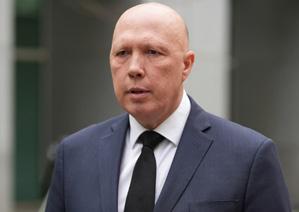
PETER Dutton, pictured, has pipped a former prime minister with a predilection for secret titles to take out the title of Australia’s least trusted politician.
The federal opposition leader heads pollster Roy Morgan’s 2023 distrust list, beating out Scott Morrison for the dubious honour despite Mr Morrison secretly appointing himself to five ministerial positions. But it appears Mr Dutton has a way to go with voters, even though he’s been doing better recently in other voter surveys such as Newspoll and Resolve.
“The very high levels of distrust in Peter Dutton, and others in the opposition make it unlikely they would be able to win government in the current climate,” Roy Morgan chief executive Michele Levine said.
“His scores are moving very close to Scott Morrison’s just weeks before the coalition suffered a disastrous defeat at the 2022 federal election.” –AAP
BEST OF POLITICS A look in March at cruel consequences of delayed land sales
Barr banks land as buyers flee over the border
ONE of the more confusing policies adopted by the ACT government is surely that related to land supply.
The recent hoo-ha about the urgency of extending the ACT border into NSW is a prime example of that confusion.
The message being conveyed by Chief Minister Andrew Barr and Greens Leader Shane Rattenbury is quite explicit, namely: “We are just about out of developable land with few options available to us other than to abandon the construction of detached housing and concentrate on infill and high rise and to expand into NSW by moving the border.”
One has only to visit Jerrabomberra, Googong, Bungendore, Murrumbateman, Collector and Yass etcetera to appreciate the rate at which Canberrans, who have been priced out of the housing market, are opting to live in NSW.
Relevantly, I also understand that there may be as many as 1000 people a day commuting on a daily basis from Goulburn to Canberra, for work.
Thank goodness the greenhouse emissions generated by the thousands of additional kilometres being driven by these thousands of expatriate Canberrans are all attributed to
NSW and not to us.
But I digress. My confusion about land supply policy has recently been compounded by two reports I have waded through.
The first of these was an ACT Auditor-General’s report titled “Assembly of Rural Land West of Canberra”. The auditor-general reports, among other things, that between June 2014 and June 2017, the Land Development Agency, with the active support of Cabinet and pertinently the Treasurer, Andrew Barr, purchased nine rural properties located to the west of Canberra, which had a combined area of 3378 hectares.
To provide some perspective, the auditor noted that these nine properties when considered with other territory owned land that surrounds Stromlo Forest Park are similar in size to the whole of the districts of Woden Valley (2860 hectares) and Weston Creek (1580 hectares). The combined population of these two districts is 63,700.
We the people of Canberra paid a total of $34.6 million for these nine properties. The justification for their purchase and the expenditure of those monies was that they were required for housing and/or to facilitate residential development. Let me be clear, I fully support their purchase and congratulate the LDA
The longer the government delays the sale of the land and exacerbates pent up demand, the greater the return. Or is that being too cynical?
for having done so.
Notably other land purchases, for example the purchase in 2013 of the 227 hectare Glenloch property, for $10 million, again for housing, are not only not included in the audit report but, despite the passing of a decade since their purchase nothing, as is the case with the nine properties reported on by the auditor-general, has been done to ready them for sale to Canberrans desperate to own their own home.
The other report is the portfolio brief prepared by the Environment, Planning and Sustainable Development Directorate (EPSDD) for the incoming Minister for Urban Renewal, following the last election.
It’s a ripper of a report and contains the following gems:
“The Planning and Land Management portfolio will continue projects to implement your priorities to:
• Dedicate at least 15 per cent of residential land releases to affordable, community and public housing;
• Maintain a strong supply of new homes.” (joke, Joyce)
“Molonglo Valley is the newest
★ Classes for children 5 months to 2 years of age ★ Independent Pre-Prschool program for 3 year olds ★ Preschool PLUS for 4 and over
greenfield development front and at capacity, is planned to accommodate approximately 55,000 new residents. Progressing the concept planning for Molonglo is critical to provide for development of new suburbs.”
“When Gungahlin and Molonglo Valley are developed, EPSDD will continue to develop ACT’s next urban development front which is the western edge – almost 10,000 hectares of land bordered by the Murrumbidgee River and the existing areas of Weston Creek, Molonglo Valley and Belconnen.”
In light of the information contained in these reports I am at a loss to understand the basis of the repeated claims from within the ACT government that we have run out of urban-capable land.
One can also, of course, only hazard a guess as to the reasons that the government has not sought to prepare any of the land, the subject of the audit report, or other land it
owns, for sale. To be blunt the land has been banked.
As I note above the auditor-general concluded that the land area covered by the nine blocks purchased six to 10 years ago is similar to that of Woden Valley and Weston Creek together, the combined population of which is more than 63,000 people living, in the main, in detached houses.
On the basis of this one can assume that these nine rural blocks, if sold for detached housing, would provide a yield of a minimum of 30,000 dwellings. If one then further assumes that each of the 30,000 blocks sells for, lets say, only $250,000 then the return to the government will be $7.5 billion. That is, of course, before accounting for infrastructure costs.
The longer the government delays the sale of the land and exacerbates pent up demand, the greater the return. Or is that being too cynical?
Jon Stanhope was ACT chief minister from 2001 to 2011.
BEST OF THE GADFLY Rob Macklin had to ‘escape’ from Canberra Hospital in July
Chaos as Canberra Hospital laughs
Columnist ROBERT MACKLIN finds himself disempowered and struggling amid the condescension bordering on contempt from staff amid the daily chaos that is Canberra Hospital’s emergency department. Until he makes a break for it…
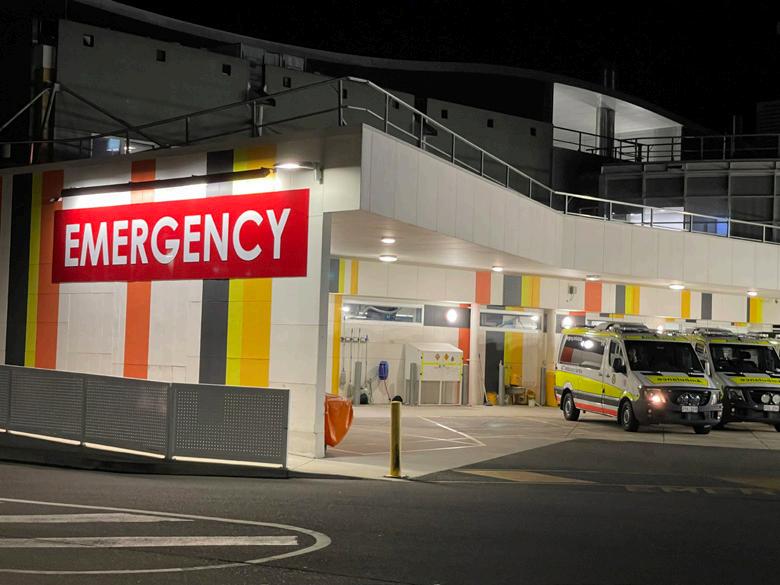
Midnight: A blue plastic curtained cubicle among the “beds” beyond the public reception chaos of Canberra Hospital’s Emergency Department.
THE white light of the vast room has become almost unendurable. The machines that go “ping” are spearing into the brain, as they have for the past three hours.
Suddenly, from the adjoining cubicle, comes a woman’s heart-rending burst of sobs.
My son Ben and I had met her briefly in ED chaos central, a short, slim lady (whom we’ll call Estelle) from Canberra’s inner south, a daily walker who that day had suffered a pain in the chest.
She had followed us an hour later into the emergency “ward” and her story was similar to my own – ordered by a GP to the ED for symptoms of possible pulmonary embolism – that’s a blood clot that can kill you instantly or reach the brain to deliver a stroke that leaves you permanently disabled.
Estelle sobbed again. No staff was available to respond, so kindly Ben went to the gap in the plastic blue curtains and asked if he could help, perhaps find a nurse…”They just left me here,” she wept, “no one has said a word to me; and my husband is away on a fishing trip. I didn’t want to worry him. I just did what my GP told me to do…”
Same here, I thought, though my symptoms followed a “procedure” at Calvary Private the very night it became “Bruce” which tickled
me no end at the time.
Ben and I had reached the ED with my GP’s referral letter at 5pm. We then waited four hours in the Monday chaos before the call to the cubicles and, dressed in work clothes from the waist down with a gown on an otherwise naked top, we inmates occupied the movable bunks that would occasionally ferry me to the various X-ray and scanning installations.
There was no rhyme nor reason given for the wait.
Asking questions is frowned upon by the triage staff, and the nurses are given no information from the all-high panjandrums, the doctors who dispense their opinions only to junior doctors. The juniors very occasionally call by the cubicle and take some pleasure, it seems, in withholding the results of the various tests.
“The doctor (panjandrum) is looking at it now,” they say. But there is no “now” in Canberra Hospital ED.
At least I had Ben to chat with as the minutes turned to hours of tortured pings (in clashing musical keys) and the hours to the very edge of human endurance. Then from the blue cubicle, “I’ve had enough!” Estelle cried. “I’m getting dressed and going home”.
Ben had attracted the attention of a nurse – a kindly Filipino-Australian named Paul who did his best to calm Estelle and promised to get a doctor to at least speak to her.
However, such was the apparent busyness in Panjandrum Land that Estelle had reached the end of her tether. Only the panicked
“It
felt like a scene from ‘One Flew Over The Cuckoo’s Nest. A quick stop at the now deserted reception room to call a cab, then out into the freezing cold just as it arrived.”
decision to stay because they had decided to admit her. The only problem was they didn’t have a bed in any of the wards on the sixth floor where us pulmonary embolism folk were headed. Oh, yes, I had a similar message from a different but equally non-committal emissary.
He said the “Bed Manager” would organise it. But just at the moment there weren’t any available. There is no “moment” at Canberra Hospital ED, only a flat line with no ending. However, said the emissary, “Bed Manager” is doing his (or her) best so… “ping, ping, a-ping, da-ping… ing, ping…da-da-ping…”
My watch said it’s well after midnight. I sent dear Ben home to his own family and the big job he was handling in the APS. On went the pings; on went the minutes until at 1am Estelle cracked. “I don’t care,” she told Paul tearfully, “I’ll find my car in the parking lot and that’s it.”
A shadow passed on the other side of the blue plastic curtains. At least the sobbing stopped. Still, I raised the Bed Manager issue with another
to mention?”
“I wish I could be more helpful,” she said. “But I just don’t know.”
“So really, I could stay here all night with the machines that ping and the white light and the absolute exhaustion that is becoming very bad for my health?” I said.
“I’m afraid so.”
Well, I thought, if Estelle could make a break, so could I.
at the mobile (2am, almost out of charge), I called Paul. And he did his level best to keep me, even promising that the boss panjandrum herself might be along “soon”.
But by then I knew, there is no “soon” at Canberra Hospital ED. And so, I suspect, did he. In fact, kindly chap that he is, he finally put me in a wheelchair and off we went. Marvellous, it felt like a scene from “One Flew
Over The Cuckoo’s Nest”.
A quick stop at the now deserted reception room to call a cab, then out into the freezing cold just as it arrived. Paul promised to have them send the test results to the GP later that morning.
Ten minutes later down empty streets and home. I take a charitable view, that the panjandrums really are terribly important and incredibly busy making life and death decisions.
But does that excuse the condescension bordering on contempt they show to the Canberra folk who, with their Medicare card and a lifetime’s contribution to the Medicare levy, expect a health system worthy of the name?
Sadly, I discovered, there is a great gap between the well-staffed facilities of Bruce Private and the condescending chaos of Canberra Hospital. The British call it the “class” system; we pretend it doesn’t exist. Canberra Hospital ED laughs in our faces.
robert@robertmacklin.com
PAGE 4: Health incompetence? Don’t worry, says minister
BEST OF WHIMSY A lighthearted wander through the history of batteries from March
Battery power to the people, in all sorts
POWER doesn’t only come from the barrel of a gun (with apologies to Mao Zedong). I refer, of course, to batteries.
Tesla drivers might be surprised to learn that electric vehicles (EVs) have been around for nearly two centuries, with the first basic EV developed in 1832.
However, it’s only in recent years that sales of EVs have started to take off – mainly due to concerns about climate change and the impact and cost of fossil fuels. It’s estimated that globally there could be more than 300 million EVs by 2030, with EVs accounting for 60 per cent of new-car sales.
In the past, battery life and weight have been limiting factors. The demand for better performance, safety, and sustainability of batteries has been driven not only by EVs but also by the increasing demand for portable and cordless devices (such as power tools, irons, vacuum cleaners, torches, etcetera) and renewable energy storage systems.
I bought my wife a cordless Sokany steam iron last year.
Now she swears by it.
A major development in battery technology has been the improvement of lithium-ion batteries. These batteries, widely used in portable electronic devices and EVs, have a high energy density and a long lifespan. Lithium-ion batteries are rechargeable, of course, and can provide sustained power for longer. In recent years, researchers have been able to improve the performance of lithium-ion batteries by using new materials for the electrodes and developing more efficient charging and discharging methods.
Last autumn I bought myself a Ryobi electric lawn mower with mulching capability. Brilliant, because I no longer have to buy fuel and mix it or collect the grass clippings. The mower also mulches fallen leaves. It can be a bit tedious recharging the batteries, but two lithium 9.0Ah rechargeable batteries will do several cuttings of a large lawn or nature strip.
Then there’s the convenience of our battery-powered Dyson vacuum cleaner. Ideal I’ve found for hunting flies in the dwelling. Trying to vacuum them in mid-flight improves your balance, dexterity
and reaction time, so it has significant health benefits. A skilled operator at the peak of his (or her) powers can even achieve capture without using maximum suction. A humane option is to release the fly outside after capture.
Another significant development in battery technology has been the emergence of solid-state batteries. These batteries use solid electrodes and electrolytes, which make them safer and more stable than traditional lithium-ion batteries. They also
have a higher energy density, which means they can store more energy in a smaller space. Solid-state batteries are still in the early stages of development but have the potential to revolutionise the way we store and use energy.
Researchers are also working on developing batteries that use materials that are more abundant and less toxic, such as zinc or magnesium. These batteries could potentially be cheaper and more environmentally friendly than batteries that use rare and expensive materials. Additionally, there is a growing interest in recycling used batteries to reduce waste and conserve resources.
Despite these advances, one of the main challenges facing battery technology is the cost of production. Many of the materials used in batteries, such as lithium and cobalt, are expensive and their prices can fluctuate significantly. This makes it difficult for battery manufacturers to predict the
ways
cost of production and affects the price of products that use batteries.
In particular, the cost of batteries is a significant factor in the overall cost of an EV. Battery costs will decrease over time, making the cost of EVs more affordable for consumers. I have always wanted an Aston Martin Vantage and the company plans to offer hybrid and electric versions of all its models by 2025. I expect to buy the tyres and work up. I should perhaps add the disclaimer that I am not gaining any financial advantage from naming the products above.
A final thought – should time-expired batteries at Bunnings be free of charge?
Clive Williams is a Canberra columnist.
Thomas Edison with an electric car in 1913. Photo: National Museum of American History
A 1974 Italian Zagato Zele electric car with a fibreglass body and a 100-kilometre range.
Ah, that Mr Cecil, she’s a very beautiful man! BEST OF KINDNESS
THE best part of all my jobs is listening to how other people interpret each other – how they make sense of the world we live in.
Generally, we have a million daily decisions to make, so many effective people automate as much as they can – that’s why some IT moguls wear the same T-shirt every day, or why my wife has the same breakfast every day. I’m saddened by otherwise sensible people wasting a precious hour of their life every day, deciding what to wear or what to eat.
So we come up with rules for ourselves – inventing our own shortcuts.
When I’m at the supermarket key choices arise quickly by my rules, otherwise I could still be there an hour later, trapped like a fly in amber at the cereal aisle. Tuna Italian, everything else Aussie. Hide the chocolates. You know.
Fascinatingly, most of us have also made our shortcuts about a whole bunch of other things, and they are not always right, and we cannot fix them if we don’t know they are there.
If you’re wandering in a tough part of a US town late at night and a gang of youths appear nearby, you’d quite naturally raise a hackle of anxiety. If you’re a youth in that part of town and a police officer walks by, you might both make each other anxious.
You can’t be fit without perspiring occasionally. You can’t be an ethical person if you race to the shortcut decisions made by others, without using your brain.
Commisario Brunetti is challenged by his mate as to why he wanted to undertake a strange investigation on behalf of a woman he hardly knew. Embarrassed, Brunetti said: “Forty years ago, her mother was once kind to my mother”.
“If you’re wandering in a tough part of a US town late at night and a gang of youths appear nearby, you’d quite naturally raise a hackle of anxiety.”
These emotional shortcuts are what they are, and get embedded, fair or not, over the years into our brain. I get that we have a prime need for self protection, but what about values?
I asked a youngster recently how they assessed an issue and they replied, naturally, that they would assess all sides of an issue, test the evidence, and come up with an informed choice. Sounds great, me too. Except is that what we really do? I asked the same kid the next day what they thought about a book and they said it was bad. Why? Because it had been written by someone who had been cancelled. And you know what? They had not
even read the book. Two legs bad four legs good. Moral choices with shortcuts provided by the crowd. Maybe it was a terrible book – but how would he know?
We must do better. As a society we need to make moral and value-based decisions with care and respect for each other and that means making the effort to think.
You can’t be fit without perspiring occasionally. You can’t be an ethical person if you race to the shortcut decisions made by others, without using your brain. And those shortcuts you create can be reasonably simple too, of course.
In a recent Donna Leon novel,
While desperately thinking further of a better reason, his mate smiles back and says: “Are you trying to think of a better reason? There is none”, and off they went to investigate. Beautiful. Very Italian, I know, but not the worst way to live your life. Moral shortcuts needn’t be complex, just thought out well,
My dad had a cracking reason to do stuff. When he’d say to mum that he had to mow Mr Cecil’s lawn because his own son was away, mum would ask why? We can’t afford anything!
Dad would say: “Mr Cecil, she’s a very
beautiful man”. (Dad would have loved the pronoun festival of today’s world –he terrorised English grammar like a dog with a pizza-stained beanbag). Anyway, mum and dad shared a code – if anybody was a “very beautiful man” it meant that at some point since the early 1950s he (or she – sigh) had said a kind word to a migrant, an indigenous person or a poor farmer or fisherman in the town. That was good enough for mum, and off dad went with his mower. She was a beautiful mower, by the way – two stroke, by the name of Vittorio Emmanuelle the Third. God, I wish I was kidding. Let’s design those shortcuts however we want, no matter how silly – because as long as they are kind, they will be fine. How can you be sure they’re right? Generally, I find wisest answers from mums – yours or anybody else’s. Tell them you need help with a very beautiful man.
Antonio Di Dio is a local GP, medical leader, and nerd. There is more of his “Kindness” on citynews.com.au
Once more, drop speed limit on Canberra Avenue
I WROTE last year about the heavy traffic on Canberra Avenue in Fyshwick and the fact that it had been reported as one of the five top crash locations in Canberra (Letters, CN November 17, 2022, “Running the gauntlet of Canberra Avenue traffic”).
Recent news from insurer AAMI is that Canberra Avenue remains in the top five crash locations in Canberra. So, the ACT government has known about this for at least eight years, but the speed limit on Canberra Avenue, Fyshwick, is still 80kp/h!
According to AAMI, the most common claims from Canberra Avenue crashes result from “nose-to-tail” collisions, with Friday being the most common day, the afternoon being the most common time, and between 35 and 49 years being the most common age range.
and discount percentage applied to obtain the present value of $577 million. The government should be pressed to itemise the contract price.
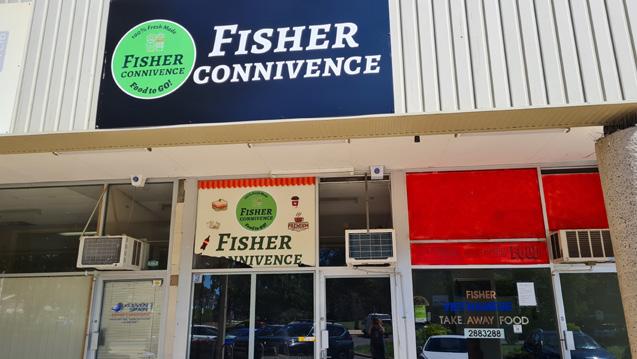
Convenience becomes a sign of ‘connivence’
I THOUGHT readers would be interested in this curiosity in the signage from Fisher, which hasn’t had a grocery or convenience store for several years.
A new store is coming but the signage is curious. I understand, from the owners of the fish and chip shop next door, that it is going to be redone.
John Rogers, Fisher
bureaucratic and medical barriers to receive a few thousand dollars for their incapacity.
The Department of Veterans’ Affairs (DVA) website states it can take on average 571 days from lodgement of a claim to a decision.
Allowing for holidays etcetera, the veteran is looking at almost three years to get a claim resolved. The DVA corporate aim is 100 days. This is despite the extra $67 million allocated in the 2023/24 federal budget to improve DVA service.
Whatever spin from the bureaucracy or politicians concerning veterans’ compensation, Brittany Higgins’ payout and the speed in which it was done, is an example of double standards.
Allan Joyce, via email
FORMER journalist, Eric Hunter (Letters, CN
Anyone who travels on Canberra Avenue, Fyshwick, on a Friday afternoon will know how much the traffic increases compared to other times.
Drivers are obviously less attentive at this time, perhaps having spent a long week at work, perhaps having just picked up children from school or perhaps on their way to the coast.
When is something going to be done? I’m no traffic analyst, but it seems to me that with lower crash statistics due to speed-limit reductions in many other areas as examples, wouldn’t a speed limit drop on Canberra Avenue help to reduce these statistics?
The costs of reducing speed limits and adding red light and speed cameras at the three sets of traffic lights between the Sturt Avenue roundabout and the Monaro Drive overpass might be well justified in terms of “calmer” traffic, fewer, less serious crashes, fewer injuries, and maybe even improved traffic flow.
Jeff Heron, Kingston
$29-a-ride subsidy for Stage 2A!
CityNews.com.au reported a contract price for Light Rail Stage 2A of $577 million. However, the article fails to say whether that figure includes or not several very significant costs, namely the cost of raising London Circuit and crossing Parkes Way (an estimated $200 million) or 20 years of operations and
For an expected generous estimate of one million passengers a year for Stage 2A, the expected subsidy per passenger approaches $29 per boarding. A real bargain.
Max Flint, co-ordinator, Smart Canberra Transport
Option three, ditch public transport
HOW many passengers will Stage 2A of light rail attract when it starts operating in 2028?
How many people will bother to travel by light rail between Civic and Commonwealth Park, if buses continue to operate directly between Civic and the southside?
If southside buses terminate at Commonwealth Park, passengers travelling from the south of the lake will have three options.
Option one will be to disembark at Commonwealth Park and then spend up to 25 minutes waiting for a green pedestrian signal, walking to the middle of the road, waiting for a tram, travelling to Alinga Street, waiting for another green pedestrian signal, and then crossing to the side Northbourne Avenue.
Option two will be to disembark at Commonwealth Park and then spend 18 minutes walking to Civic.
Many will choose option three. They will ditch public transport for the speed and convenience of car travel.
Leon Arundell, Downer
My old-school pedantic side insists that the word “media” (as in Mr Hunter’s “unfettered social media, which allows...”) is the plural of “medium”; and the plural of medium, in the spiritual context, is “mediums”.
On the other hand, journalists and other writers these days use “media” in both the singular and plural, as in Mr Hunter’s “some traditional media”.
Perhaps after all, it just boils down to good, old-fashioned, common sense.
Dr Douglas Mackenzie, Deakin
Crumbs of parsimonious federal government
I FIND the $2.3 million paid to Brittany Higgins for how she was treated by her employer after an alleged rape at Parliament House to be extremely extravagant when compared to the miserly payouts available to veterans and their families.
War veterans are limited to $110,000 for civil action against the Commonwealth for injuries or illness resulting from service. Legal fees, if incurred, are at the veterans’ expense.
This is not a criticism of Ms Higgins, but it highlights the disparity between a person with political awareness, or the ability to embarrass politicians, or who may go to the media, compared to that of a veteran who accepts the crumbs of a parsimonious government.
Veterans injured or ill following service to their country (including sexual assault, rape or bullying) encounter a series of stressful
The wars they dare not speak about
VERY wealthy WA businessman Kerry Stokes, who is also the chairman and biggest shareholder of Seven West Media, appears to pursue big money-making opportunities without concern for the risks or look involved.
Former Liberal staffer Bruce Lehrmann’s defamation court case against Network Ten has revealed that SWM’s Network Seven is providing free and currently expensive Sydney beachside accommodation to Lehrmann in return for two “exclusive” interviews that Lehrmann gave Seven as his side of the story about the Parliament House rape allegation.
In contrast, when chair of the Australian War Memorial council for six years, and a member for 15, Mr Stokes was not interested in raising public awareness, showing bold initiative or risk-taking in the public interest, by addressing the violent 19th and 20th century Frontier Wars within the AWM’s walls. That attitude and role still lingers within some of the council’s membership, which includes Tony Abbott, who was appointed by the Morrison government in 2019, and re-appointed by the current federal government late last year.
Since then, the former conservative and often controversial PM seems to have spent much of his time notching up exclusive northern hemisphere gigs and memberships with multinational, right-wing media outfits, anti-democracy linked clubby groupings and male-heavy organisations such as Hungary’s ultra-right, governmentsupported think tank, the Danube Institute.
Despite still being supported by the pub -
lic purse, promoting truth-telling about the Frontier Wars at a major public institution would not fit in well with his other agendas and carefully cultivated relationships here and overseas.
Sue Dyer, Downer
‘Muffler heroes’ spoil the calm of Emu Bank
WE have just returned to Australia, and live now on Emu Bank in Belconnen.
The big attraction was the calm, and calming view of Lake Ginninderra.
Unfortunately, this calm is constantly broken by selfish and totally inconsiderate “muffler heroes” that insist on revving their bike, and or car engines, only to repeat it 100 metres later on the next set of lights.
These nightly exhaust blasts, mixed with even more disturbing backfires, increased with spring and now, more so in summer.
Surely, an advanced city like Canberra, so concerned with citizen welfare and well-being, should consider a ban if above certain decibels in urban areas.
Bring on EVs!
Rudie Hoess, Belconnen
Council seems to have put itself on show
DEAR me! The ACT Conservation Council seems to have exhibited its ubiquitous mix of paranoia, eco-fascism and lack of independence, in its reported treatment of Leon Arundell (Letters, Dec. 7).
Jack Kershaw, Kambah
Spare us the waffle and litter, chief minister
JUST received my letterbox stuffer “Our Canberra – Belconnen December 2023”.
I thank the chief minister for this and his “pithy” message that, in part, said blah, blah, blah to those great people for keeping our city safe and “cared for”.
Would the Chief Minister like to search out those beavers of action who are still struggling to replace my stolen street sign and the stolen Fraser suburb sign months after these thefts were reported.
The message is simple, if you can’t walk the talk, spare us the waffle and the crippling cost of ratepayer-funded litter.
John Lawrence via email
CHRISTMAS GIFT GIVING
Still time to get in some last-minute gift shopping
Christmas is just around the corner but there’s still time to get that last-minute gift shopping done.
“CityNews” is showcasing some inspired gift ideas that will be warmly received on Christmas Day.
Auditions to be an ‘American Idiot’ are open
“IF you love ‘Green Day’ you will love this show!” says Jenna Hinton, co-director at the Queanbeyan Players.
“Set to the music of ‘Green Day’s’ smash hit 2004 album of the same name, ‘American Idiot’ tells the story of three disaffected young men in early 2000s’ US,” she says.
“Auditions will be held January 20 and 21, with call backs on January 22 if required.”
But, Jenna says tickets are already on sale and can make an excellent gift.
“It is not your typical musical theatre piece and it will appeal to musical theatre fans and non-fans alike,” she says.
“It has been proven that engagement with the arts can help with mental health and overall wellbeing.”
If you want to get involved in the production but are not keen on the idea of being on stage, Jenna says they are always looking for people to help with backstage crew and other behind-thescenes opportunities.
“Community theatre is an amazing way to meet new friends, have new experiences and the opportunity to perform in a professional venue,” she says.
“And we aren’t just putting on ‘American Idiot’.
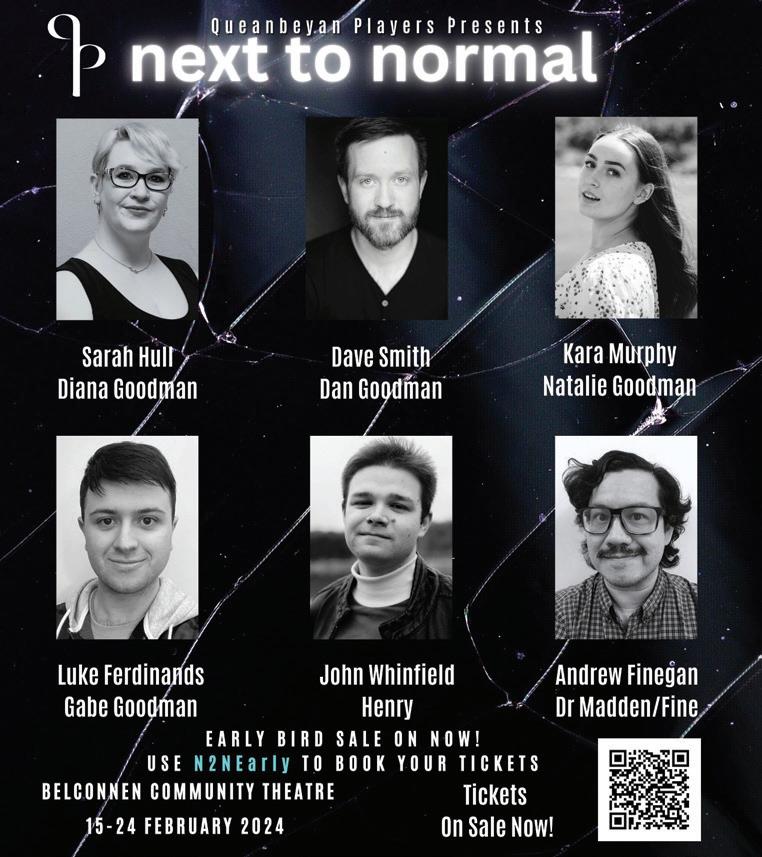
“The Pulitzer Prize and Tony award-winning ‘Next to Normal’ opens in February 2024 at Belconnen Theatre.
“In November we will be opening the Canberra premiere of George and Ira Gershwin’s ‘Nice Work If You Can Get It’ at The Q.
“There is something for everyone.”
“American Idiot!” The Queanbeyan Players, call 0402 353443. Visit queanbeyanplayers/auditions for auditions or theq.american-idiot for tickets.
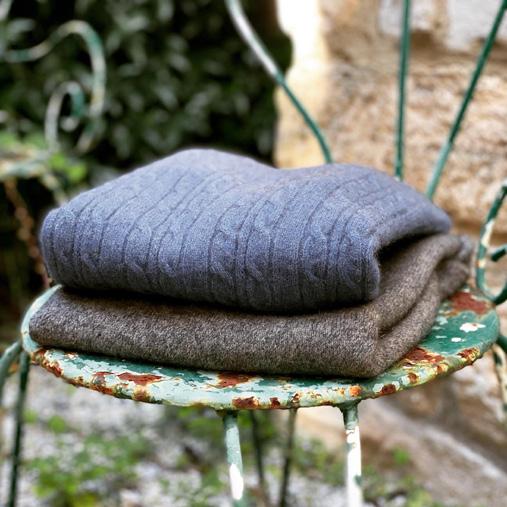
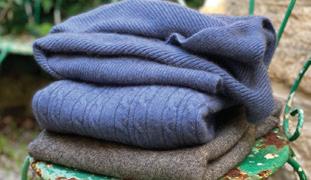
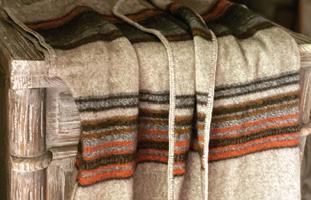
Knitwear made with perfection
BERRIMA’s Natural Australia
promotes the Australian Merino industry by showcasing the highest quality merino knitwear in fashion able garments, says owner Angela Rodgers.
“Berrima’s Natural Australia was opened in 1995 by my parents,” she says.
“My parents were retired sheep graziers from south-west Queens land. In those days all garments in the shop were produced from Australiangrown Merino, and designed and made in Australia.”
Angela joined the business in 1996, excited by the qualities of Merino fibre and garments it created.
Berrima’s Natural Australia has a range of fine Merino knitwear, either made in Australia, NZ or Europe, and Merino, possum and silk garments and accessories from NZ, cashmere from Italy and the UK, and Australian cotton in summer, says Angela.
she says.
“Also, fine cotton, floral printed tops, Australian made silk kaftans which are perfect for a little warm weather, are all 25 per cent off.
“It is a very exciting experience to discover beautiful knitwear made with a passion for perfection and detail. My customers often comment that it is a pleasure to walk into the shop and see such beautiful quality garments, made totally with natural fibres.
“All items are made in ethically operated workshops who employ local staff.
“Quality control is ensured.”
Berrima’s Natural Australia, 11 Old Hume Highway, Berrima. Call 4877 1598, or visit berrimawool.com
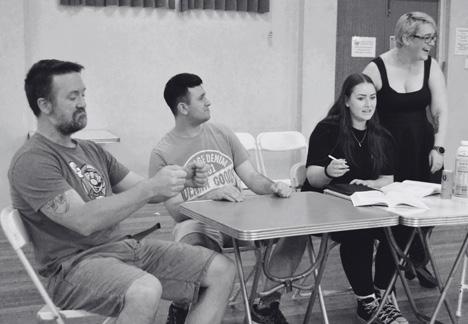
Some of the cast of “Next to Normal”, Queanbeyan Players.
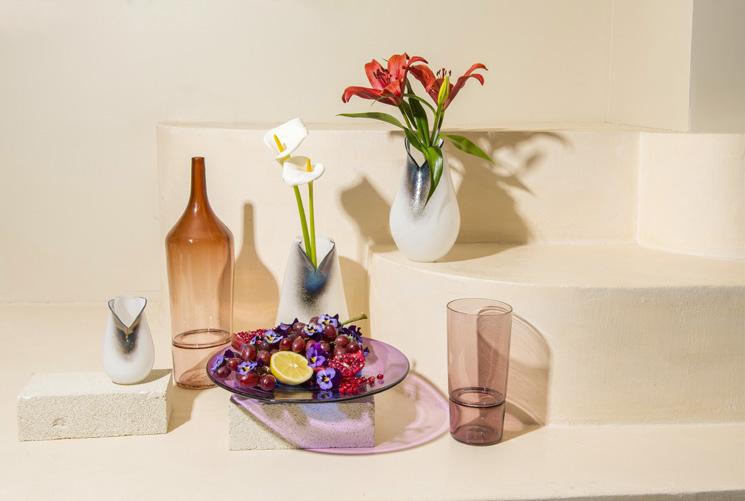
“BY shopping at the Glassworks Gallery Shop, visitors are supporting the artists working here and buying handcrafted glassware and artworks made with love,” says Aimee Frodhsam, artistic director at Canberra Glassworks.
“Whether it’s a decanter set with a previous life as a wine bottle or one of our signature hand-blown baubles, these presents will not only stand out under the Christmas tree but also bring delight and awe to your holiday celebrations,” she says.
Lilith Silva, public programs manager at Canberra Glassworks says the studios and shop will be open again on Thursday January 4 and that there will also be a range of workshops for children during the holiday period.
“We will be offering your kid’s favourite ‘Holiday Tile and Bowl making classes’ between Wednesday 17th and Sunday 21st January,” she says.
Glassware by Canberra Glassworks, Katie-Ann Houghton, and Nadina Geary available at Canberra Glassworks gallery shop.
“With the help of our experienced teaching artists, your kids will design and fuse their very own glass masterpiece during this limited run of summer classes.”
Lilith also says that tours and adult classes will resume on Saturday January 13.
“Show the interstate family around our world class studios and take home something priceless from our Gallery Shop,” she says.
“As for the exhibition program, we will be launching our first exhibition of the year on Saturday 20th January, Nicholas Burridge’s ‘Built Geologies’.
“This is the first of many incredible showcases of studio glass at the Glassworks by leading and emerging artists.”
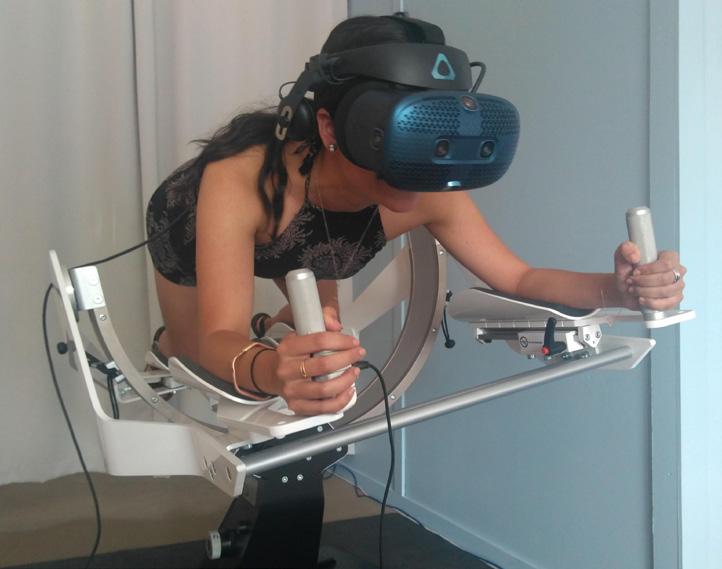
“Our instructor is there to point out what all the buttons and levers do and when to use them, but it’ll be you that’s doing the flying.
“Sometimes people want to fly over where they’ve been on holiday, others want to do things like fly under the Sydney Harbour Bridge – it’s all possible.”
But that’s not the only experience they’re offering, says Trevor.
“Our new VR Paraglider Simulator offers a great way to experience paragliding without leaving the ground,” Trevor says.
“It’s a fantastic experience. You can see how close
just by shifting your body weight it steers you in the virtual world,” he says.
“The sensation is more like flying with a wingsuit or like you’re Superman. It’s a Superman simulator.” Whether it’s flying a 737, paragliding over the coast, or soaring through a virtual world, Trevor says there’s multiple booking options on their website, including gift certificates.
• Made in Australia, Europe and New Zealand in ethically operated workshops, employing local and well trained staff.
Quality control is ensured.
25% off beautiful linen shirts, dresses, wide and straight let pants from Italy. Also, lots of fine cotton floral print tops and silk kaftans.
•
•
•
•
•
•
•
•
•
GARDENING
More sun means more currants
GROWING currants in Canberra is easy. They need protection from the winds, full sun to part shade, but remember the more sun the more fruit.
Native to eastern Europe. Currants are from the gooseberry family and have adapted to our climate very well. They thrive with lots of organic matter around their root zone in the growing season and like an acidic soil of pH of about 6-7. They don’t mind our heavy soils but, importantly, don’t like wet feet and need drainage.
Currants grow well next to other berries as they both like the same conditions. When they are dormant in winter is when most of the pruning should take place. Remove entire canes that have fruited and don’t shorten stems.
Currants are all the same species, Ribes sativum with the exception of Ribes rubrum and Ribes nigrum, the red and black currants.
One plant will feed the family, but for making jams and preserves a few more shrubs will be needed. The fruit of the
pink and white currants are generally less acidic and better for fresh eating than the red ones.
So, the darker the current, the more tart it will be and the lighter, the sweeter it tastes.
Red currants, with their striking red, glossy berries, are my favourite because they’re small and don’t take up much space. They grow to a metre tall and can be used as a small hedge in the vegetable patch. Black currants (Ribes nigrum) grow a little smaller and prefer more sun.
Currants fruit on second and third-year wood and canes that have fruited can be cut down to the ground after harvest. This allows sunlight to get into the centre crown of the plants and promote new canes for future fruiting.
Over time the shrub will get wider and send off suckers. These can be cut and potted up for a new plant in the garden.
Currants flower in spring and mature into ripe, edible fruit right through summer. But when the birds spot them, they can be taken overnight; so netting or mechanical measures with a covering will protect the fruit until it’s ready for picking.
Ripe currants can be stored by freezing on flat trays or using a dehydrator.
THE Arum lily ( Arum italicum) is a pest plant in our gardens. Now its foliage has died down
for the summer, the berries can be seen. They’re green at first before turning to brilliant oranges then reds.
They’re attractive to birds who, unfortunately, eat the seeds and disperse them into bushland.
Remove any green flower stems by hand and place them into the green bin, not the compost as they self-seed as well.
Popular in the floristry trade, this plant can often be seen on old gardens as it grows well in deep shade.
To get rid of it altogether, try placing cardboard and mulch laid over the top to keep light away from the bulb. A grow-me alternative would be Calla Lilies as they look similar in flower shape and foliage, but not as big and not a pest.
jackwar@home.netspeed.com.au
Jottings…
• Deadhead and fertilise roses for an autumn flush.
• Plant the last of the tomatoes for an autumn harvest.
• Keep the mower settings on high in the hot weather.
• keep watering shallow-rooted plants such as maples and azaleas.
Red currants… grow well next to other berries.
Arum lily… a pest plant in our gardens. Photos: Jackie Warburton
ARTS & ENTERTAINMENT
The best: how the arts editor’s saw the year HELEN MUSA
Fred remembers dangerous days in Afghanistan
By Helen MUSA
“IF you want to tell people the truth, make them laugh, otherwise they’ll kill you,”
George Bernard Shaw once said.
That’s a principle 2023 “CityNews” Artist of the Year, Fred Smith, has adhered to throughout his adult life.
But it’s one thing to praise him for his performance skills, his cheeky lyrics and affability and quite another to pay close attention to his recent book, “The Sparrows of Kabul”.
It’s the same title as his music album, shar ing the ongoing theme that “the sparrows of Kabul don’t give a shit”, no matter what happens in war-torn Afghanistan.
Smith, the first Australian diplomat to be sent to work alongside Australian troops in Uruzgan province and the last to leave, returned to Afghanistan in March 2021 to work at the embassy and ended up in August working on makeshift tables at Hamid Karzai International Airport processing evacuees.
He has written a compelling account of our withdrawal from Kabul in late 2021, partly, he says, having been struck with shame, saying: “Quilty [Ben Quilty, the war artist] has been out there, braving the Abbey
Gate… the ‘Schindler’s List’ romance loses its glow when you live it”.
Smith should be a hero among his Department of Foreign Affairs and Trade colleagues, to whom he gives full credit for their part in the operation, for Australia’s part in the withdrawal has been widely reviled.
He puts a human face to both those fleeing violence and the hard-working officers charged with helping them on to the
“freedom birds”.
He also gives us a good idea of the necessary bureaucracy, the frustrations involving family members who didn’t have the right papers and the sheer bravery of people such as the Aussie soldier who helped a little girl who was crying for her “muddhur,” (mother) walking her back out of the airport.
Powerfully influenced by his former DFAT officer father, who once told him: “If
MUSIC / Australian Opera Opera promises best and brightest
By Helen Musa
OPERA lovers are abuzz about the coming Opera Australia summer season at Sydney Opera House, with guest creative director Lindy Hume’s choices under considerable scrutiny.
Hume, previously touted as a desirable appointment to the directorship of the flagship opera company, was invited to put the season together because the final selection as artistic director, Jo Davies, had not yet arrived from the UK.
Aiming to highlight the “virtuosity and scope of Australian talent” while chalking up a respectable list of international guest artists, Hume’s program sets out to follow the current trope of expressing “the potency of opera in contemporary storytelling”.
Of special note in her program is a series of partnerships with Victorian Opera, Pinchgut Opera, Circa and Opera Queensland, as well as a return to the Sydney Festival program from which OA had been missing.
The summer season features four operas written in the 18th century, a “courageous” move as Sir Humphrey Appleby might have said, considering that with the exception of Mozart’s operas, such work has usually been considered to
in doubt, tell the truth”, Smith gives a cleareyed, unsentimental account of withdrawal, but loses none of the larrikin touch seen in his sell-out music performances.
His laconic spelling of “bugga”, the Aussie touches where he likens the makeshift “desk” at the airport to “a lemonade stall at a farmers’ market” or describes himself as “half tourist, half Simpson’s donkey”, all contribute to an easy read, despite the serious subject
“I felt like Davy Crockett at the Alamo running out of ammunition – in my case, the phone battery-charger”, he says of one frustrating moment.
There are insights only a working diplomat could give – the sense of exhaustion, the long tradition of mutual “piss-taking” and banter between DFAT and Defence, the mysterious phenomenon of Tim Tam diplomacy. And who knew of the 31 flavours of Baskin Robbins ice cream at base after the duties were over?
He describes the different reactions of Afghans, some gracious, some furious; “too many people competing for finite resources with no agreed processes or protocols for managing that competition” and rebuts a former embassy security officer who told him, “the corruption ruined everything. It was 100 per cent”, saying: “I beg to differ on this apportionment.”
While he explains the challenges DFAT has faced in telling its own stories, to those
be like caviar to the general public –expensive but not enjoyed.
According to Hume: “Each of the directors has placed a uniquely Australian stamp on each of these operas.”
Audiences will be presented with some of Australia’s best and brightest, such as artistic director and chief conductor of the Canberra Symphony Orchestra Jessica Cottis, Aussie directors Sarah Giles and Yaron Lifschitz, and singers Samantha Clarke, Caitlin Hulcup, Michael Smallwood, Helen Sherman and NZ baritone Phillip Rhodes. First up, Cottis will make her OA debut as conductor, with Australian soprano Samantha Clarke singing Violetta, in Sarah Giles’ production of “La Traviata”, a co-production between Opera Queensland, State Opera of SA and WA Opera, and already seen in Brisbane, Adelaide and Perth.
One surefire success will be the
engagement of Sydney director Kate Gaul, well-known to Canberra audiences from her production of “HMS Pinafore”, who her Sydney Opera House debut will stage a “fantastical” version of “The Magic Flute”, with Austrian-Spanish Teresa Riveiro Böhm conducting. Soprano Stacey Alleaume and musical theatre identity Ben Mingay will
Joining forces with Queensland’s physical theatre company Circa, OA will present Gluck’s “Orpheus and Eurydice” as part of the Sydney Festival. Directed by Circa’s Yaron Lifschitz, it’s a co-production with Opera Queensland. French countertenor Christophe Dumaux and Australian soprano Cathy-Di Zhan will star.
Directed by Hume herself for Victorian Opera with CanadianGerman tenor Michael Schade in the title role, a production of Mozart’s “Idomeneo” will feature projections by video designer David Bergman that draw on the landscape imagery of Tasmanian filmmakers Rummin Productions.
Here’s the caviar. OA will present baroque specialists Pinchgut Opera in its first opera at the Joan Sutherland Theatre performing Handel’s “Theodora” in concert, with American countertenor Christopher Lowrey returning to reprise the role of Didymus for the company.
Opera Australia summer season, January 2-March 15.
who contend that 21st-century diplomacy can be done virtually from home capitals and that we should do away with expensive embassies, Smith has a modest retort – “I’m not so sure, eyes-on matters”, he writes.
All the while his wife Marianna and their daughter Olympia watch for news on TV in Canberra – “much of the time, mercifully, completely in the dark,” he says.
As for the role of music – Smith is, after all, famous for his 2011 CD “Dust of Uruzgan” – he says: “You’d think I’d listen to music all the time, but I don’t. It’s dangerous stuff. It induces a reverie that can diminish one’s alertness to context.”
But that didn’t stop him from having one last gig, a makeshift concert on an out-oftune guitar with plastic ice cream buckets for percussion.
“I hope this book will go some way to help Australians understand why these people chose to leave Afghanistan, what they’ve left behind and what they went through to get out,” he says.
“’Monumental stuff up’ is unfair to the soldiers and public servants, who gave every fibre of their being to make the evacuation work. And work it did.
“In the last two weeks of August. We got 4100 people out, 3300 of whom have come to Australia.”
Fred Smith, “Sparrows of Kabul”, (Puncher and Wattmann).
Fred Smith… “You’d think I’d listen to music all the time, but I don’t. It’s dangerous stuff.
Pinchgut Opera will perform Handel’s “Theodora” in concert.
BOOKS / reviews
Reviewer selects her top five books for the year
Book reviewer ANNA CREER selects her best five books for 2023.
“Act of Oblivion” by Robert Harris.
“The Hitchhiker” by Gerwin van der Werf.
“The Lock-up” by John Banville.
“The
Fire and The Rose” by Robyn Cadwallader
HARRIS’ best-selling novels have been inspired by historical events, most recently “Munich” (2017) and “V2” (2020). In “Act of Oblivion”, he turns his attention to the English Civil War and its aftermath, telling the story of two of the regicides, Col. Edward Whalley, Cromwell’s cousin and confidant and his son-in-law Col. William Goffe, who fled to America.
Harris’ novel is based on the true story of their desperate attempts to evade discovery and capture. There are royal warrants for their arrest and a price on their heads. However, the American colonies are an ideal place to hide, as they are populated by Puritans, with little loyalty to the crown.
“Act of Oblivion” is an extraordinary story of stoicism and persistent self-belief, full of moral nuances, told by a master storyteller.
VAN der Werf is a Dutch musicologist, teacher and journalist.
“The Hitchhiker” is his fourth novel but the first to be translated into English.
Tiddo and his wife Isa have drifted apart and his son Jonathan is quiet and introverted, constantly drawing monsters and fantasy creatures in a sketchbook.
Tiddo has planned a driving holiday in Iceland because Isa has always wanted to go. He believes it will save his marriage and reunite his family.
As they travel the tourist route, they notice lots of hitchhikers. Tiddo considers them a “bunch of freeloaders”.
But Isa persuades him to pick up Svein Sigurdsson “handsome and enormous”, tattooed and charismatic. Svein charms both Isa and Jonathan. But is Svein all that he claims to be? As suspicions grow, the dream holiday becomes a lifethreatening nightmare.
SINCE 2007, using the pseudonym Benjamin Black, Booker prize winner John Banville has written crime novels about an alcoholic pathologist, Quirke, set in 1950s Dublin.
However, in 2020 he decided to “kill off” Black and publish “Snow” under his own name, introducing a new detective, Insp St John Strafford, from the Protestant land-owning class. In “April in Spain” (2021) he brought Strafford and Quirke together.
The third in the series, “The Lock-up”, sees both detectives back in Dublin. Quirke’s wife has been murdered and he’s “faded … reduced in substance. He seemed not entirely there”.
Strafford is investigating the death of Rosa Jacobs, a Jewish student at Trinity College, found dead in her car in a lock-up garage. It would appear to be suicide, but Quirke proves the girl has been murdered.
The mystery of Rosa’s death eventually reveals the extraordinary complicity of the Irish Catholic church in providing a safe haven for Nazi criminals after the war.
IN her award-winning debut novel, “The Anchoress”, set in England in1255, local author Robyn Cadwallader, introduced Eleanor, a child from the village who asks the anchoress to teach her to read and write.
Eleanor returns in “The Fire and The Rose” working as a housemaid for a wool merchant in Lincoln. She dreams of working as a scribe, rejecting a proposal of marriage from an estate bailiff, telling him “I can write… I have skills I want to use”.
Sent to buy spices, Eleanor meets Asher a Jew who works for a spice merchant. Despite being wary of the Jews, in a city where prejudice is entrenched, Eleanor falls in love with Asher and they begin an illicit love affair forbidden by both the law and the church.
“The Fire and the Rose”, however, is more than a love story. It is a beautifully written, ambitious novel spanning 15 years that saw the persecution of the Jews by the English King intensify, culminating in 1290 with the expulsion of all Jews from England.
ARTS IN THE CITY
“The Secret Hours” by Mick Herron.
Mick Herron’s latest, “The Secret Hours” has already been reviewed in “CityNews”. Herron’s incredibly popular and successful Slough House novels have brought him considerable fame and fortune.
Already two of his Slough House spy stories are Apple TV series, with a talented cast including Gary Oldman and Kirsten Scott Thomas.
Although considered John Le Carre’s successor, Herron’s spies ironically are MI5 failures, the Slow Horses, condemned forever to repetitive task of “unfulfilment” and boredom in Slough House, “to look back in disappointment and stare round in dismay” as they live out the aftermath of their professional errors. Herron’s stories are both dark comedy and compel lingly entertaining.
Busy Rebus looks to the
REBUS Theatre has just celebrated its 10th birthday at Gorman Arts Centre. Rebus began in 2013 as a community project to develop theatre-based workplace training to promote disability awareness while providing paid performance opportunities for actors with and without disability. In 2014 it became Rebus Theatre and has won seven awards, developed theatre-based workplace training programs, run more than 47 individual programs with marginalised communities and developed 16 original works with inclusive casts. The future looks bright.
CANBERRA author Zoya Patel, who has three horses of her own, has been working on a young adult novel for horse-loving teens and kids aged 12 and up. The result is “Two Hearts”, in which 15-year-old Ali has never wanted anything more than to compete in the equestrian sport of eventing with her horse, Leo. Patel hopes it’s a “light, fun and thoughtful read”. Available on Amazon.
CRAFT + Design Canberra has something to crow about, with three of its accredited professional members, glass artists Jennifer Kemarre Martiniello and Kirstie Rea and ceramicist Greg Daly, recently honoured with the title of craft master of the Asia Pacific Region by the World Crafts Council, which
future
selected 10 craft masters from the South Pacific region.
CANBERRA playwright
Dylan Van Den Berg is now chair of judges for the Nick Enright Prize for Playwriting, alongside veteran dramaturg Peter Matheson and playwright Alana Valentine. As well, his play “The Flood” was recently announced as a runner-up in the 2023 Rodney Seaborn Playwrights’ Award, which he won in 2022.
“WILLIAM Yang’s Mardi Gras” focuses on Yang’s photography of Sydney Mardi Gras festivals between 1981 and 2003, exploring
the themes of Protest, Community, Art and Remembrance. At the National Library until November.
VISITORS to Sydney might consider a picnic at Glenn Elston’s “The Wind In The Willows” at the Royal Botanic Garden (January 5-28). The musical show celebrates 22 years in the gardens and features Ratty, Mole, Badger, Otter, Portly, Mr Toad and Head Chief Rabbit.
The best: how the arts editor’s
IT’S not all about the big mainstage productions, 2023 has shown, as Canberra’s artistic treasures are often found in smaller venues, writes arts editor HELEN MUSA .
THEATRE
“King Lear” directed by Joel Horwood. At The Q, NovemberDecember.
KAREN Vickery’s King Lear took her audience on a compelling journey from the illusory trappings of power to the discovery of human significance in Joel Horwood’s tight, thrilling production of Shakespeare’s dark tragedy, a milestone for Echo Theatre.
MUSIC
“Apocryphon of Initiation”, Edward Neeman. At the ANU School of Music, September.
IN a performance that put everything else in the shade, Edward “Teddy” Neeman wove musical magic when he performed “Apocryphon of Initiation” by the now 89-year-old Larry Sitsky.
Neeman explored the full capacity of the piano, becoming at once the conductor, soloist and full orchestra as he articulated Sitsky’s finer melodies with delight, ferocity and passion.
STREAMING / the best of 2023
MUSIC THEATRE/JAZZ
“In His Words: Voices of Fatherhood”, Creswick (Liam Budge). At The Street Theatre, June.
IN his magnum opus on fatherhood, jazz singer/ composer Creswick, (Liam Budge) supported by a crack team of Australia’s top jazz instrumentalists investigated the role of fathers in their children’s lives in a verbatim stage work created from transcripts of his interviews with nine fathers.
The best of the best to binge over the holidays
IT’S that time of year when the “best-of” lists come out of the woodwork.
So, of course, after a massive year in the streaming world we’re taking a look back at the best of the best to binge over the holidays. As always, some honourable mentions that absolutely worth checking out: “Black Mirror”, “Jury Duty”, “Planet Earth III”, “Colin From Accounts”, “Reservation Dogs”, “Beef”, “Barry”, “Yellow Jackets”, “The Morning Show” and just missing out on the top five this year “Dead Ringers”. Without further ado:
5. “Ted Lasso”, Apple TV Plus
TELEVISION’S favourite football coach returned this year, kicking a hell of a goal with its third and final season.
This tale of a seemingly incompetent but good-hearted soccer fanatic (Jason Sudekis) who leads an English team to unexpected victory proved once again its ability to make audiences both laugh and cry.
While it was a bit slower off the mark compared to the first two seasons, those who stuck with “Ted Lasso” were rewarded with plenty of thrills by the time the final whistle blew. Some refreshingly feel-good TV.
4. “Fargo”, SBS On Demand
IN a world where crime dramas are a dime a dozen, “Fargo” has carved itself out as one of the most inventive, confounding and utterly addictive offerings in the genre.
The fifth season in this anthology series saw audiences return to Minnesota, where a lawbreaking sheriff (Jon Hamm) had the ultimate face-off with a seemingly ordinary housewife (Juno Temple) who secretly harboured a deadly skill set.
One of its strongest seasons yet, “Fargo” remains as profound as it is puzzling.
3. “The Bear”, Disney Plus
JUST when audiences thought this culinary drama couldn’t get any more intense, the second season well and truly threw things out of the frying pan and into the fire.
Set in a Chicago sandwich shop, “The Bear” stars Jeremy Allen White as a manic chef trying to put his restaurant on the city’s dining map. At first glance a show about sandwich-making might seem rather tame by comparison to what else is out there, but “The Bear” puts the pressures of working in a kitchen on full display. So accurate is this depiction that some chefs have come out saying they actually find it hard to watch. If that’s not the highest compliment I don’t know what is.
2. “The Last of Us”, Binge
VISUAL ART
“Occupied” by Kate Stevens. At Canberra Contemporary Art Space Manuka, February.
IN a prescient exhibition, Kate Stevens created a beautiful suite of oil paintings on an unlikely subject, bombed-out Gaza, put together as a kind of paused frame telling, a story that relentlessly repeats. She’s never been to Gaza, but has spent years seeing disturbing media images of havoc and explosions, so set about capturing the beauty and the terror of Gaza in the way only paint can do.
“Succession”... Who would have thought a boardroom would make for TV’s most captivating battleground this year.
1. “Succession”, Binge
WHO would have thought a boardroom would make for TV’s most captivating battleground this year.
DANCE
“Lucie in the Sky”, Australasian Dance Collective. At The Playhouse, July.
IN a new type of theatrical experience, the interplay between dancers and drones in this edgy production led viewers on a gentle journey of the place and possibilities of AI and of human and technological interaction, opening up the terrifying prospect of robots with emotions and independent thought.
IT was no easy feat turning a video game into prestige television but somehow they pulled it off.
Led by incredible performances from Pedro Pascal and Bella Ramsey, this nine-episode series told the harrowing tale of a man and his surrogate daughter travelling across a postapocalyptic America after it falls to a deadly virus.
On top of stunning cinematography and outof-this-world production design, what made “The Last of Us” so memorable was its twist ending, which turned the idea of “good” and “evil” utterly on its head, leaving audiences with a disturbing and surprisingly pertinent question.
The final season of “Succession” pitted the children of a fictional media mogul against each other in one final showdown for their father’s multi-billion dollar empire.
Hilarious, tragic, one might even go as far as to say Shakespearean, the show was able to put hearts in throats with its bold last episode that dropped the curtain at the perfect moment. When Rupert Murdoch announced he was stepping down from News Corp this year, the story ran around the world as “the real-life Succession”. That says it all.
Karen Vickery in the title role of “King Lear”. Photo: Jenny Wu
Edward Neeman performs “Apocryphon of Initiation”. Photo: Peter Hislop
Liam Budge in “In His Words: Voices of Fatherhood”. Photo: Abby Mackay
Kate Stevens amid her “Occupied” exhibition. Photo: Helen Musa “Lucie in the Sky”, Australasian Dance Collective. Photo: David Kelly
DINING / the best on the capital food scene
Reviewer Wendy’s top five eateries for the year
IT’S always a delicious treat to look over my reviews for the year to cherry pick the best on the capital food scene.
Once again, dozens of new dining establishments (casual to fine dining) popped up, making it hard to keep track. Here are my top five for 2023 (no particular order and note that menus may have changed since reviews were published).
Such and Such (Civic) is bold, brave and it made its mark in the capital in nano-seconds.
Radically different from sister restaurant Pilot, Such and Such is casual and less structured, relaxed but not too carefree. The food is sensational. Relax over a couple of share plates or stay for a full meal. To-die-for?
Smoked beetroot with smooth macadamia cream, and cucumber with smoooooth tahini miso. The wine list is amazing.
Mrs Wang (Civic) is wow-factor. This modern Australian Chinese restaurant, in the heat of the bustling Tiger Lane precinct, guarantees an exciting gastronomic journey. Local chef Gerald Ong puts a contemporary twist on
traditional Chinese flavours. The key to his prawn toast – the best I’ve ever had – is the duck fat. We worshipped all the dumplings and the absolutely delicious duck pancakes. The high-quality hiramasa kingfish is perfection.
Fun, vibrant and exciting is Luna Bar (Civic), with chef Adrianne Davos at the helm, drawing inspiration from her south-east Asian roots. This talented chef creates elevated street food with complex umami flavours. The One Night in Paris gin with house-made lavender and Davidson plum syrup was herbaceous and punchy. The raw bar was sublime. Tacos are fabulous, especially the duck, cherry and
goats cheese version. Don’t forget the miso eggplant with puffed grains, and the satay roasted cauliflower with nut praline.
Sophisticated and elegant is Koto (Parkes), with its Zen gardens, stunning interior and magnificent food and wine list. The Saikyo miso eggplant is an absolute must. Also showcasing the kitchen’s superior skills in arranging food with delicate precision is the Aburi salmon belly (melt-in-the-mouth) and Black Angus beef tataki with tomato yuzu ponzu. Love the crispy sweet potato.
It was oh, yes to Oh No (Manuka) with the team in the kitchen drawing inspiration from
places such as Korea, Japan, Philippines and Nepal. No wonder the tastes at Oh No are memorable. Wild tuna sashimi is beautifully presented, and the dish features paper-thin slices of radish for crunch and honey yaju for sweetness. Sesame prawn donuts are vibrant. The large cubes of tofu with chilli salt, stacked on a sexy sweet sambal are not to be missed.
And for a sweet ending, I can’t resist mentioning some others I thoroughly enjoyed. Each deserves a raucous round of applause – Queenies (now with an all-gluten free menu), Grazing, Inari, Peonee, Louis, The Marion, French Flair and Dada
• PRIVATE DANCING LESSONS
– Individuals or Groups
– Perfect for Wedding Parties BY APPOINTMENT
• SOCIAL DANCING
Returning Monday 8th January
• ADULT BEGINNER CLASSES
Returning Wednesday 10th January
• MEDAL CLASSES
Returning Thursday 1st February
Phone: 0407 066 110 | Email: dale_harris@bigpond.com Web: dalesballroomdancing.com | Principal: Dale Harris All Classes are held at: The Crystal Ballroom Canberra 6/38 Reed Street Nth, Greenway, Tuggeranong
Ballroom Dancing
WINE
Bottles mark wines I love best
THE wines I tried with friends in the lead up to the festive season mark the wines that I love best.
And most importantly, in telling you of these three wines, I express gratitude that I can enjoy the best of wines and long-lasting friendships. Or as the Kiwis say at this time of year: thank ewe.
Recently, a friend I’ve known for nearly 50 years visited from NZ. I’d been to his wedding 30 years ago and it was good to see his wife (same one!) again, too.
It was an early start to the festive season but we know each other very well, to the extent that as a present he’d brought over the ditch a Mount Difficulty Bannockburn Pinot Noir 2021. This is a favourite wine that will keep for at least eight years, maybe 10.
The last time I tried this wine, I believe it was the 2019, I knew it would keep well because as well as the blackberry and plum fruit flavours that are well balanced, there was enough tannin to give a long finish.
In essence, tannins form the backbone of red wines and they’re the main determinant of the longevity of reds. But you could pretty much buy me any Otago-grown pinot noir and I’d be happy.
Central Otago is protected from the
otherwise maritime climate of NZ with mountains on all sides. The summers there are often hot and dry, while winters can be bitterly cold so that it’s likely that snow will cover the vines at least once a year.
Growing grapes and making wine in this region is famously known as living on the edge. It produces sometimes spectacular pinot noirs. And in a spectacular gesture, I put the present in storage.
But to reciprocate with our first dinner together I cracked a Tasmanian sparkling, a Pirie vintage 2019 from the Tamar Valley that won a gold medal at the Melbourne Royal Wine Awards this year.
Tassie as a wine-growing region can only keep getting better; a cold-climate wine region that seems to be growing in success as climate change bites.
This year a Tasmanian red won the coveted Jimmy Watson trophy that this Melbourne show is famous for, the Lowestoft La Maison Pinot Noir, 2022.
The Pirie was fresh and clean, no brioche finish as with French champagne, but with a lighter refreshing flavour at the back of the palate, a great accompaniment to the smoked chicken dish as its acids complemented this Poachers
Pantry delight.
While my friends were in this country, we tasted a local chardonnay from my collection, the 2021 Tiger Tiger from Collector Wines. This wine won the top gold in the 2023 Canberra and Region Wine Show for chardonnay 2022 and older.
In addition, Collector Wines was recently named #57 in the inaugural Halliday Wine Companion Top 100 Wineries 2023. My daughter works at The Boat House and it sells this wine by the glass, where I’d enjoyed it in September as other New Zealanders were visiting. My friends are not usually fond of chardonnay, but liked this drop. The distinctive grapefruit nose and long mouth-filling depth of this wine is exemplary.
My friends said it was a far cry from the chardonnays of old. I agreed that in the past too many wines of this variety had rankled with a belt of oak and butter. Instead the Collector is fresh and flinty, a good food wine.
How do generals show their gratitude to their troops? They give tanks.
Such and Such’s smoked beetroot with smooth macadamia cream, and cucumber with smoooooth tahini miso.
Mrs Wang’s prawn toast – the best I’ve ever had.
Luna Bar’s tacos are fabulous, especially the duck.
Koto’s Saikyo miso eggplant is an absolute must. Oh No’s wild tuna sashimi is beautifully presented. Photos: Wendy Johnson
HOROSCOPE PUZZLES
By Joanne Madeline Moore
ARIES (Mar 21 – Apr 20)
The Full Moon (in your domestic zone) favours traditional Christmas celebrations, surrounded by close family and/or long-time friends. Then the Moon’s in gregarious Leo for most of New Year’s Eve, which is fabulous for socialising and partying. So make sure you enjoy yourself to the max! However, with Mercury Retrograde and Neptune squaring Mars, be careful you’re not viewing people (and situations) through ridiculously rose-coloured glasses.
TAURUS (Apr 21 – May 21)
Prepare to be in a fabulously festive mood, as you let your hair down and enjoy the Yuletide celebrations. But, if you eat and drink and party too much on Christmas Day, then you’ll be a grumpy Bull on Boxing Day. You could feel surprisingly sentimental on New Year’s Eve when you look back over the highs and lows of the closing year. It’s time to let go of the past, as you happily move on to greener and more productive pastures in 2024.
GEMINI (May 22 – June 21)
Choose your words wisely this Christmas as your ruler Mercury reverses through your relationship zone, which could stir up an old family grievance. If you’re not careful, you could blurt out the wrong thing to the wrong person at the wrong time! On New Year’s Eve, you’re in the mood to mix and mingle and party to the max. But once again, you’re also inclined to make insensitive comments. So think before you speak and try to be at your diplomatic best.
CANCER (June 22 – July 23)
It’s Full Moon week so avoid getting carried away and overdoing the festive celebrations, especially eating, drinking, and partying. If you pace yourself, then you (and your sensitive digestive system) will enjoy Christmas Day even more. Simple meals – in small amounts – is the smart and sensible way to go. New Year’s Eve will be an emotional night for sentimental Crabs as you look back over the past year, including your successes and failures.
LEO (July 24 – Aug 23)
Lively Lions love the social side of Yuletide celebrations. Don’t be all talk and no action though. Make sure you’re pulling your weight (with preparations and cleaning up) otherwise you’ll be in the bad books on Boxing Day. Cats thrive on excitement and hate it when life gets too predictable and humdrum. Things certainly won’t be boring on New Year’s Eve, when vivacious Venus (in your entertainment zone) revs up the New Year party atmosphere to the max!
VIRGO (Aug 24 – Sept 23)
Your ruler Mercury is moving backwards, so don’t worry if your carefully made plans are messed up this Christmas. Try to keep things in perspective. It’s OK if the food, presents, decorations and celebrations aren’t 100 per cent perfect. As birthday great Quentin Crisp wisely observed: “Treat all disasters as if they were trivialities, but never treat a triviality as if it were a disaster.” Aim to celebrate New Year’s Eve with your favourite relatives and friends.
LIBRA (Sept 24 – Oct 23)
You’ll need to be extra diplomatic if you want to avoid a fraction too much friction on Christmas Day. With Mercury still retrograde, communication mix-ups are likely so tread carefully. With Venus in your neighbourhood zone on New Year’s Eve, the focus is firmly on local community celebrations. Attached Libra – make sure you lavish your lover with plenty of extra TLC. Unhappily single? Look for a partner who has a generous nature and strong self-esteem.
SCORPIO (Oct 24 – Nov 22)
Joyful Jupiter is transiting through your partnership zone so strive to be more generous towards loved ones, as you view a troubled relationship from a more philosophical perspective. Your Christmas motto is from birthday great, singersongwriter-activist Annie Lennox: “Make kindness your daily modus operandi and change your world.” With Venus visiting your sign, New Year’s Eve is all about socialising with loved ones and having fun.
SAGITTARIUS (Nov 23 – Dec 21)
With Mars and retrograde Mercury visiting your sign, there’s a tendency for you to overdo things. So some Sagittarians will have trouble getting started on Boxing Day, when your body reacts to all the rich treats and alcoholic beverages you enthusiastically consumed on Christmas Day. And you’ll certainly be in the mood to party on New Year’s Eve as you shake out your dancing shoes, shimmy into your favourite party gear, and turn the music up loud!
CAPRICORN (Dec 22 – Jan 20)
Steady Saturn helps to stabilise and conserve your energy throughout a long and hectic Christmas Day. Then you’ll be able to enjoy the Yuletide celebrations… without feeling totally exhausted by bedtime! Many Capricorns will spend a lowkey New Year’s Eve at home, as you reflect on 2023 and look ahead to 2024. So your motto for the week is from birthday great, writer Henry Miller: “One’s destination is never a place but rather a new way of looking at things.”
AQUARIUS (Jan 21 – Feb 19)
The Sun-Saturn connection favours keeping the traditional parts of Christmas. Plus (being an avant-garde Aquarian) you can also add some innovative new festive flourishes of your own. Whatever you decide to do, make sure you enjoy Xmas Day to the max. With Venus visiting your networking zone, you’ll feel extra gregarious on New Year’s Eve. You may surprise yourself – and others – by performing some late-night funky moves on the dancefloor!
PISCES (Feb 20 – Mar 20)
With Venus and Neptune activating your sign, you’re in the mood for a magical, musical and fantasy-filled Christmas week. On Friday you’ll seek out meaningful connections, as Venus and Pluto deepen your feelings and increase your empathy for other people. But a work matter could leave you feeling disappointed or confused. Home is where the heart is on New Year’s Eve, when many Pisceans will enjoy a quiet night at home with family and friends.
Copyright Joanne Madeline Moore 2023
knowledge crossword No. 912
Which straps are used for holding up trousers? (6)
Who was defeated at the Battle of Waterloo? (8)
9 What is a list of matters to be brought before a committee, council, etc? (6)
10 Name a highly seasoned shoulder cut of smoked beef. (8)
11 What are long periods of years? (6)
13 In Latin America, what is a country house? (8)
16 What do we call a person exercising absolute power? (8)
19 Who was a renowned US markswoman, Annie ...? (6)
22 Name the alter ego of Clark Kent. (8)
24 Name a glossy substance applied to a surface for protection, etc. (6)
25 What is an echidna? (8)
26 Which two poles support the feet some distance above the ground? (6)
2 Name a famous English public school, founded in 1567. (5)
3 What is an artificial waterway for navigation, drainage, etc? (5)
4 What is a photograph that is taken quickly? (8)
5 Which musical composition is numbered? (4)
6 Name an Australian long-distance runner who held several world records, Ron ... (6)
7 To be destined to an adverse fate, is to be what? (6)
12 Which term describes that which is stylish? (4)
14 Name those officers whose chief function is to investigate by inquest. (8)
15 Name an alternative term for Christmas. (4)
17 What is a large lizard of tropical America? (6)
18 Name a wigwam of the North American Indians. (6)
20 What is a dull yellowish-brown colour? (5)
21 To force out from a place, is to do what? (5)
23 Name one of the lepidopterous insects. (4)
CHARTERED
Financial resolutions for the New Year
As we face the New Year, why not use your time away from work to make some financial resolutions for 2024.
I've compiled seven important suggestions to get you started.
1. Make a personal budget of your income and expenses and for your business. It can be even more powerful if you make it a cash flow statement setting it out month-by-month to pinpoint the difficult months. Using the month-by-month method also takes seasonal variations into account.
2. Make a plan to pay off your personal, non-tax-deductible debt. This is even more important now that interest rates have increased. Setting up an offset account with regular savings works really well for non-tax deductible debt. An offset account may not be so sensible for tax deductible debt. Before you make these decisions speak to your accountant or financial adviser.
3. Search out lower interest rates for all your debt including your home mortgage. While this may require a fair bit of work and may seem too difficult, it is worth it in the long run. You may even find that if you ask your existing lender that they will agree to give you a lower rate.
4. Update your will and set up an enduring power of attorney if you do not have one. If your will was written 30 years ago now is the time to bring it up to date. I recommend that you take the time and spend the money to use a specialist wills lawyer. Then you can be confident that your estate is dealt with in accordance with your wishes. I have seen many people write their own wills and then their heirs discover that the DIY version didn’t meet the needs of the deceased.
5. Check your binding nomination with your superannuation fund. Your superannuation is not dealt with by the executor of your estate after your death. It is dealt with by the superannuation fund trustees who may never have met you and have no idea of your objectives. I see this often so I cannot emphasise enough how important this is.
6. While we are talking about superannuation, if your superannuation balance is less than $500,000 you may have some catch-up concessional contributions available to you. If you have any attributed to the 2020 financial year these will lapse on July 1 2024 if you have not used them up. Make an appointment to get some advice and then you can claim them as a tax deduction in 2024. By way of example, if you contribute $10,000 to your fund and you earn more than $120,000 you will save tax of $2400 and you will receive an additional refund of about $3900 when you lodge your tax return
7. With these plans in place you should be able to save some money. Make a savings plan so you have an emergency fund. None of us are immune from financial surprises, the car needing repair, the excess required after storm damage, a broken tooth or your baby needing unexpected treatment. That emergency fund will prove very useful.
The experts at Gail Freeman & Co Pty Ltd thank you for your support in 2023 and take this opportunity to wish you compliments of the season. We are taking a break and will be back in early January. If you want a budget or monthly cash flow template please contact info@ gailfreeman.com.au or call 02 6295 2844.
Disclaimer
This column contains general advice, please do not rely on it. If you require specific advice on this topic please contact Gail Freeman or your professional adviser. Authorised Representative of Lifespan Financial Planning Pty Ltd AFS Lic No. 229892.
WINNUNGA NIMMITYJAH ABORIGINAL HEALTH
AND COMMUNITY SERVICES
Winnunga Nimmityjah AHCS is an Aboriginal community controlled primary health care service operated by the Aboriginal community of the ACT.
In Wiradjuri language, Winnunga Nimmityjah means Strong Health. The service logo is the Corroboree Frog which is significant to Aboriginal people in the ACT.
Our aim is to provide a culturally safe, holistic health care service for the Aboriginal and Torres Strait Islander people of the ACT and surrounding regions. The holistic health care provided by Winnunga AHCS includes not only medical care, but a range of programs to promote good health and healthy lifestyles.
Our services include:
• GP and Nursing
• Midwifery
• Immunisations
• Health Checks
• Men’s & Women’s Health
• Hearing Health
• Dental
• Physiotherapy
• Podiatry
• Dietician (Nutrition)
• Counselling
• Diabetes Clinic
• Quit Smoking Services / No More Boondah
• Needle Syringe Program
• Mental Health Support
• Healthy Weight Program
• Healthy Cooking Group
• Mums and Bubs Group / Child Health
• Optometry Service
• Psychology and Psychiatrist
• Community Events
• Groups
Winnunga AHCS is a national leader in accreditation, was one of the first Aboriginal community controlled health services to achieve dual accreditation under RACGP and QIC standards. Winnunga AHCS has been at the forefront of setting a national agenda for quality improvement in Aboriginal community controlled health and continues to advocate locally and nationally for best practice standards in operational and governance areas of Aboriginal health services.