





































By Lily PASS

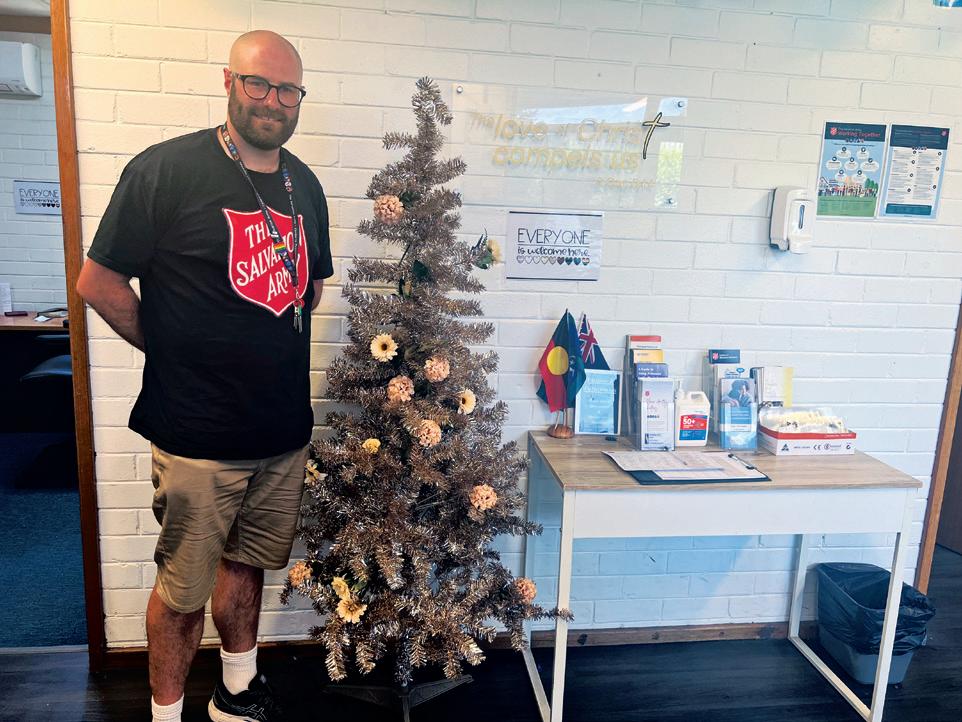
SALVATION Army Capt Mitchell Stevens says there are so many people doing it tough in Canberra in the lead-up to Christmas.
“It gives me joy to help others, but also a bit of compassion to the fact that there are so many people doing it tough at the moment, and more people than I see,” he says.
“People that are living off Centrelink payments, having the extra bills for Christmas, they’re not getting any extra money to help pay for that.
“Christmas can be a hard time for many people, maybe you’ve lost a family member this year, perhaps you’re homeless.
“For others it might be a time of joy and happiness and fun with family, but for those that find it hard, we’re always here for you.
“Not everybody asks for help when they need it, I would love anybody that needs help to be open, to come to us, to ask for it.
“Whether it’s just for a hot meal in a hard time, or to find some Christmas joy, or whether it’s to make some friends and have a regular community outing.
Arts & Entertainment 27-29
Crossword & Sudoku 31
Dining & Wine 29
Up the ACT 14
15
3-16
People from all walks of life are welcome, says Mitchell, especially to the Salvation Army’s Christmas Eve celebrations, which start with carols at 4pm.
“We’re also going to have a nice family-friendly barbecue dinner with lots of yummy meats, salads and desserts for everyone,” he says.
Mitchell says usually 50 to 100 people are expected to attend, but more people may come this year.
“We don’t need people to RSVP, we just allow people to come along,” he says.
“I think, with the cost of living, everything’s going up at the moment.
Some people will have experienced this before, for others it might be the first time and they may feel like they need to come to such an event to experience a nice, hot and free dinner.
“I know for my family, the food prices for three boys is enormously expensive.”
Mitchell says it’s a safe and welcoming environment, and there is absolutely no shame in coming along.
“We even have some people who just come for the community aspect, to feel a sense of Christmas joy,” he says.
“I think one of the biggest social problems in Australia, probably the western world, is loneliness.
“We have lots of people that come along just for the meal, but a lot of people come to spend time with other

4
29 Hugh Selby’s Christmas legal column. Story Page 16.
are
to assist in negotiations and/or represent you in:
• Matrimonial Property settlements
• Parenting Arrangements for Children
• Divorce
• Binding Financial Agreements
• De Facto relationship breakdowns


people, get to know people, and make friends.”
Meanwhile, on Friday, December 22, the Salvation Army at Braddon will be giving out fresh food, vegeta bles, bread and some frozen meals.
“We do that every Monday and Fri day of the year, but this is going to be a special one for Christmas, with extras for people to bring home,” he says.
“It runs from 10am to 2pm, with lunch provided at 12pm.”
Mitchell, 34, of Ainslie, says his favourite aspect of Christmas is com munity.
“I have worked with the Salvation Army for about 15 years,” he says.
“Since January, I have been work ing at Canberra Recovery Services, and I’ve been working at the Braddon Salvation Army since 2019 as well.
“I grew up in the Salvation Army, my parents worked for the Salvation Army. I spent three years in Van couver working in homelessness and addiction, and I got a passion to con tinue, making it a long-term career, helping marginalised people to get their lives back on track and experi ence life to the fullest extent.
“My boys have got some interest too, helping with barbecues especially in the school holidays, and tea or cof fee on community days.”
The Salvation Army Braddon, 6 Fawkner Street.
Since 1993: Volume 29, Number: 50
General manager: Tracey Avery, tracey@citynews.com.au
Senior advertising account executive: David Cusack, 0435 380656
Advertising account executives: Damien Klemke, 0439 139001
Editor: Ian Meikle, editor@citynews.com.au
Journalists: Lily Pass, lily@citynews.com.au
Katarina Lloyd Jones, katarina@citynews.com.au
Arts editor: Helen Musa, helen@citynews.com.au
Production manager: Janet Ewen
Graphic Designer: Mona Ismail
Distribution manager: Penny McCarroll penny@citynews.com.au



Court, has set a personal best for fundrais ing, having just passed over a cheque for $8180 to the RSPCA and held his title of its biggest ACT business donor.
He used to stage a “back-breaking” sale each year on World Record Store Day, but these days he continuously takes donations of records, CDs and DVDs and sells them through a permanent sale spot at the front of the store, where he rotates the donations.
“People drop stuff off nearly every day,” he says.
“With the money we accumulate, we put that into the RSPCA’s annual doublingdown ‘Give to Get Them Home’ promotion. So, this year our $8180 effectively helped create more than $16,000.
“All of the money is used to buy veterinary equipment the animals need. With this year’s donation we’ve helped buy an anaesthetic machine, an ultrasonic cleaner, a pulse oximeter and some air purifiers.”
He has supported the ACT RSPCA for many years.
It’s kitten season ‘crunch time’ for the RSPCA, Page 8.

WHAT a year. My first column for 2023 predicted the Voice would dominate social discussion and politics throughout the year. It did!
It was pleasing that the majority of Canberrans were progressive enough to vote in support, but disappointing that we were the only jurisdiction to do so.
The year ended with the Canberra Liberals in complete disarray. The Liberal Party in the ACT was unable to elect a president at the annual general meeting. Within days Opposi tion Leader, Elizabeth Lee replaced conservative deputy Jeremy Hanson, with the even more conservative Leanne Castley! Attempts to present this as a swing to a more progressive approach were simply disingenuous.

rans paying more taxes! The Chief Minister and Treasurer, Andrew Barr, remained resolute in reassuring everyone that all was well, and the ACT remained in a strong financial position.
The Labor-Greens coalition in the ACT launched into the year with a new Territory Plan. This was in the context of overwhelming demand for more land release and a government determined to restrict choices intent on pushing more people into higherdensity living.
The new Territory Plan would take effect by the end of the year in a climate of increasing demand and commensurate increases in costs.
As the budget would reveal, costs to Canberrans would face increasing taxation, more revenue from fines
Then Standard and Poor demoted the ACT from its AAA+ credit rating for the first time since self-government.
The downgrading of the AAA+ was the most significant financial issue of the year. It demonstrated poor financial management on the part of the government. Poor financial management extended well beyond the Treasurer.
ACT Health has been receiving higher per capita expenditure than other jurisdictions, but health outcomes have been towards the bottom.
The downgrading of the AAA+ was the most significant financial issue of the year. It demonstrated poor financial management on the part of the government.
Apparently, the solution was to take over the Calvary Public Hospital by the ACT Health Directorate that was under constant pressure for better
It is no wonder that the Canberra Liberals have announced the intention to establish a Royal Commission into ACT health.
Since Labor came to power, over 20 years ago, educational outcomes in government schools have declined. Minister Yvette Berry attempted to put a positive spin when the NAPLAN results were released. However, put into social context, the learning outcomes for our kids are sub-optimal. And, speaking of sub-optimal, the ACT Integrity Commission has finally carried out a series of public hearings regarding the probity of the Campbell Primary School redevelopment tender process. Just when it was looking like they were getting their act together, I heard of a complaint that finally received acknowledgement 16 weeks
after submission. Nothing for four months – and then a rejection stating the matter would not be pursued.
COVID-19 hung over our heads throughout the year culminating with the latest wave causing serious community concern. It does seem that previous exposure and high rates of vaccination in the ACT have helped “contain the level of morbidity and mortality” (sickness and death).
Perhaps we could have better predictions on this and other issues by relying more on artificial intelligence (AI). This year AI has really made its presence felt.
Universities and schools and racing to stay ahead of the game by ensuring appropriate use and attempting to maintain checks and balances. Perhaps it ought to have occurred to me to get ChatGPT, or one of the other programs, to write this column for me… but it didn’t!
While the Labor-Greens government was struggling with finances, health and education they were maintaining a progressive agenda. In doing so, they exposed the level of conservatism in the Canberra Liberals. Drug policy, the environment, youth voting, voluntary assisted
dying and the age of criminal consent, for example, have all been on the agenda.
Additionally, the introduction of progressive policies has regularly given exposure to government backbenchers – who otherwise carry a serious workload on constituencies and committees with little recognition or thanks.
Next year is an election year for the ACT. The Labor-Green coalition is looking tired, inept and financially incompetent. The Canberra Liberals continue to demonstrate they are a conservative (rather than liberal) party.
With this background, next year is likely to provide serious opportunities for “teal” style centralist independents to give the ACT Assembly the shake-up it needs.
Michael Moore is a former member of the ACT Legislative Assembly and an in dependent minister for health. He has been a political columnist with “CityNews” since 2006.




Showering
Personal hygiene
Nail trimming
Bowel management
Catheter management
Medication
Supported independent living assistance
Shopping and transport
Photography
Meditation
Fishing
Graphic design
Short term
accommodation

Community activities
Making friends
Skills development in the community
Dog walking
Help with driving

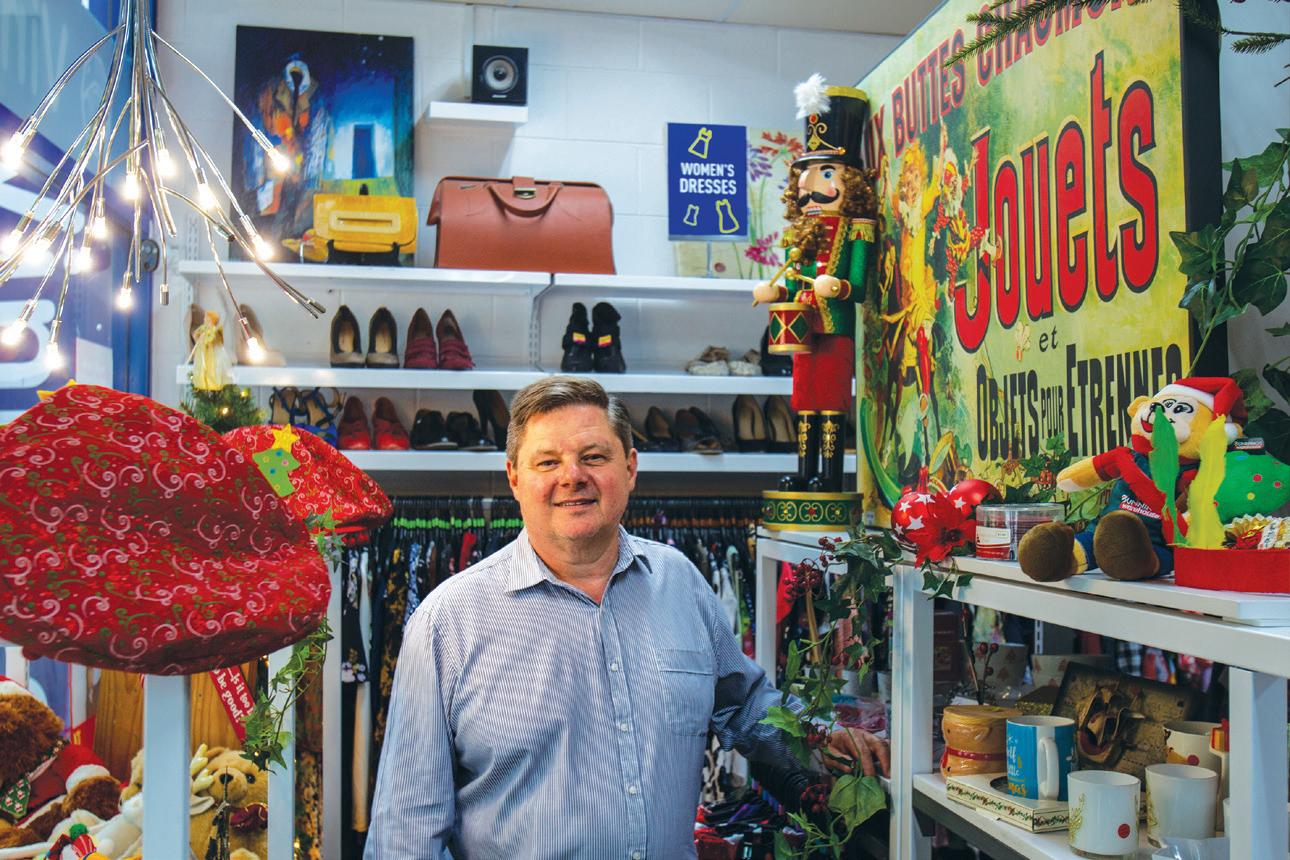
By Katarina LLOYD JONES

giving has taken on new meaning as people are struggling to pay their bills and mortgages.
“There is much less stigma now surrounding thoughtful homemade and second-hand gifts.
“Sustainability has become a big thing, and it’s not just the young people, all generations are interested in sustainability.”
“You’re doubling-up on your giving when you buy from a charity op-shop.”
changed since those days but there are still people who remember the mothball smell and worn-out clothes.
“That’s not what you see any more.
“When I first joined Vinnies, there were people who didn’t even want to be seen here bringing donations into an op-shop, because they were embarrassed. Now you see thousands of people pouring into op-shops on the weekends.”
Lindsay says homewares, knickknacks and home decor are the most popular items that people buy for others.
“Shopping at Vinnies is like shopping in a treasure trove of preloved clothing, accessories and homewares,” he says.
“Every time you pop into one of our shops, you will discover something new and unique.
“My tip is to make a list of who you are shopping for and what type of items you want to find and then come in and keep an open mind.
Although growing in popularity, Lindsay acknowledges that there are still challenges in shifting society’s perceptions on second-hand gifts.
“That stigma has really started to evaporate.
Lindsay believes second-hand gift giving will eventually become as popular as general op-shopping.
“Our pre-loved clothes are very popular, we have everything from collectible vintage pieces to fun, bright kids wear, some items still have tags on them.
“There is still a stigma surrounding second-hand gift giving, there’s no doubt about that, but, five years ago there was a stigma around buying second-hand clothing, too,” he says.
“With all the thousands of people pouring into op-shops across the world, the stigma around receiving a second-hand gift is certainly shrinking back.
“The other thing about second-hand
“There’s still a big percentage of people who don’t go into an op-shop, or, they might have gone when they were at university or something to get an outfit for a fancy dress,” he says.
“The whole op-shopping world has

• Specialist SMSF accounting firm who are accessible, honest & timely
• Personalised service to provide value for money & proactive strategies
• Access to your SMSF information in real time for informed decision making
• Local firm who concentrate on being up to date & agile to incorporate change as it occurs
To experience our tailored approach to managing your SMSF contact us on 6273 1066 or send us an email at info@glss.com.au greenlightsuper.com.au

“Now is definitely the time for more thoughtful gift giving.
“We see the joy every day of people shopping and discovering unique items in Vinnies for themselves and their loved ones.”

By Katarina LLOYD JONES
FOSTERING kittens may seem like a daunting task, but the RSPCA needs help, says Michelle Robertson.
“We are not a federal government department, we are not very well resourced,” says Michelle, the CEO of RSPCA ACT.
“We always need help, every single year we need help, but this time, it really is crunch time.”
Michelle says that traditionally, the RSPCA sees a massive spike in kitten births during the warmer months.
This phenomenon is colloquially known as “kitten season”, she says.
“A few years ago, it would be from December to March and we would know there is a massive spike,” she says.
“Because it’s been really warm over the past two years, we suspect that the volume is going to be more. That concerns us.”
Michelle says the RSPCA has already received 56 kittens over the past three months.
This is compounded by the fact that there is a national shortage of
the F3 vaccine, which protects cats from feline panleukopenia, feline rhinotracheitis virus and feline calicivirus, says Michelle.
“As a shelter, this is really concerning for us, because you have a high volume of animals together in one place,” she says.
“That means there are real biosecurity issues for us.
Michelle says that part of the RSPCA’s response strategy to the vaccine shortage is to increase the number of foster carers.
“The more cats and kittens that we can get out, the healthier they will be, because they won’t be in a highly populated environment,” she says.
“One of the things we did wrong in the past was, when we put out the call for foster carers, we would try and get the foster carers to get inducted in work hours, but, it creates a challenge because people are working and we lose out on a portion of the Canberra population that might be open to fostering.”
Michelle says that the induction process can now be done online.
“We want to make the induction as easy and accessible as possible, to try and get more people to be foster carers,” she says.
For those thinking about fostering pets, Michelle says people need to understand the differences be -
tween owning and fostering.
“The care amount is pretty similar, but if you foster, it’s not yours to keep,” she says.
“The beauty, I think, is you get all of those lovely things about pet ownership, but if you go on holiday, you don’t need to worry about ‘who’s going to look after my pets?’ ‘What am I going to do?’
“Pets are a wonderful joy in our lives, but they are a responsibility.
“With fostering you get companionship, you get all the hugs, snuggles and all of those things, but, you can give them back.”
When looking for foster carers, Michelle says the most important thing the RSPCA looks for is whether foster carers can provide a safe, separated space.
“It is advantageous if people have owned pets before, it does make it easier, but, if you haven’t owned a pet before we’re not going to say no,” she says.
“Right now we have 204 cats in care.
“Some of them are in our foster network, who are wonderful and amazing, we couldn’t do what we do without them.
“On top of that, we have 98 cats that are owned, that people want to surrender.
“And then you look at the kittens being born, they are coming into


this scenario as well.
“Based on the past two-to-three years worth of data, there will prob ably be a three-to-five month period where at any given time, we will have 150 to 200 kittens in care.
“The challenge is big.
“Whatever people can give, now is the time we really need it because I am worried.”
Michelle says that she knows the temporary nature of fostering can be emotionally challenging for some, having fostered kittens and a rabbit herself, but stresses that there are no financial expectations for foster carers.
“We provide food, we provide the pack, we provide the kitten litter,” she says.
“There’s no financial costs that a foster carer will need to bear. We take care of all of that.”
Michelle says fostering is also a great alternative to the emotional animal adopting that occurs during the holiday period, as you can test whether you can make the long-term commitment of being a pet owner.
“Animals can’t look after them selves, we have to commit to their life, and if you can’t do that, then fostering is a great alternative,” she says.
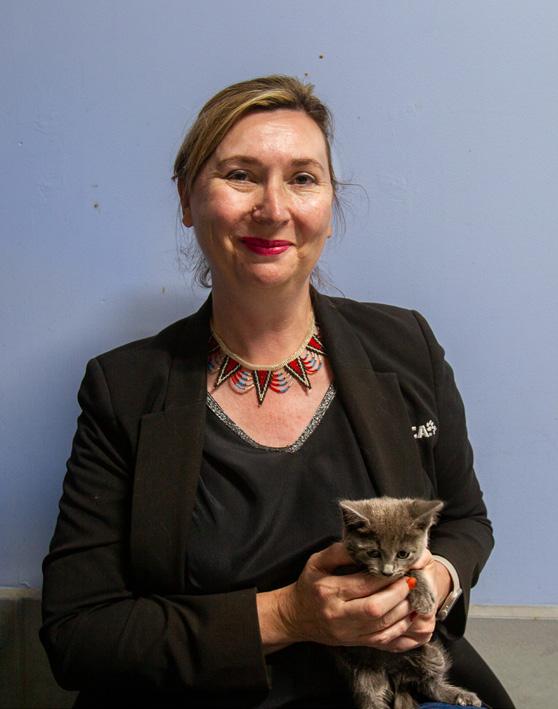
To foster a kitten, call 6287 8100 or via rspca-act.org.au/cat-foster







JAN 9 JUN
By Ross FITZGERALD

HUMAN beings have always used psychoactive drugs. Some animals and birds, such as elephants and parrots, occasionally indulge in intoxication.
But what drives people to continue to consume drugs even though they are aware that their drug use is severely harming themselves and often hurting others?
Is it the demand for drugs, or is it the supply – the fact that drugs are available? Clearly demand can create supply, but supply can also create demand.
When testifying before a US Senate committee before being appointed Secretary of Defence in 2001, Donald Rumsfeld said that drug use is “overwhelmingly a demand problem”. He continued: “If demand persists, it’s going to find ways to get what it wants.”
The international record of severely restricting the supply of drugs, or banning them, is extremely poor. Often, these efforts initially draw strong political support, but as nasty unintended consequences become overwhelming, support soon turns to opposition.
Most men and women don’t
recognise that alcohol is a drug. The prohibition of alcohol in the US in 1920 could not have happened without the strong support of the Women’s Christian Temperance movement.
A few years later, the rise of organised crime caused this movement to campaign for the abolition of alcohol prohibition.
Although the term “prohibition” was used, it was only alcohol manufacture and sale that was prohibited. Consumption and possession of alcohol obtained with the aid of a doctor’s prescription was legal. But demand for alcohol remained strong and when legal supply was severely restricted, Americans who wanted to drink bought alcohol from a rapidly developing black market.
Australian cigarettes are the most expensive in the world, with additional price increases scheduled for 2024 and 2025. Some Australian smokers have responded to the high prices by quitting. But an increasing proportion purchase black-market cigarettes.
Often sold to minors, these cheap, low-quality cigarettes, which primarily originate from China, are being distributed by organised crime groups and outlaw motorcycle gangs.
Turf wars between rival criminal suppliers of black-market cigarettes account for at least 20 recent arson attacks on tobacconist shops in Victoria, Queensland and SA. There have also
ACT citizens can have in their possession personal quantities of heroin, cocaine, amphetamine or home-grown cannabis without legal repercussions, but carrying mangoflavoured nicotine juice for vaping risks up to a two-year prison sentence and a $32,000 fine.
been some execution-style homicides by shooting in public places.
Another major problem is that although selling cigarettes to underage people is illegal, this is rarely enforced by police throughout Australia.
Propelled by sky-high cigarette taxes, this soaring black market for cigarettes is now entrenched in Australia.
In fact, smoking cigarettes currently involves the potentially avoidable loss of 21,000 lives in Australia and eight million lives worldwide, every year.
This is not surprising, because cigarette smoke contains high concentrations of 7000 chemicals, including 70 carcinogens.
Although our governments increasingly benefit from taxing people who purchase cigarettes, they also pay for the treatment of smoking-related diseases. These billion-dollar bills include the massive costs of frequent hospitalisations and palliative care for smokers.
Sadly, the demand for nicotine and

the purchase of cigarettes isn’t going to disappear. This is why, throughout Australia, there is currently a fierce debate about vaping. For example, in the last parliamentary session of this year’s federal parliament, there was vigorous argument about Health Minister Mark Butler’s proposed legislation, which introduced even more restrictions about the capacity for Australians to purchase vapes and vaping products.
Just as it’s well and truly time to take on criminal groups and outlaw motorcycle gangs supplying black-market cigarettes, it’s also time the Australian government started encouraging cigarette smokers to inquire about other options.
As many “CityNews” readers are aware, ACT citizens can have in their possession personal quantities of heroin, cocaine, amphetamine or home-grown cannabis without legal repercussions, but carrying mangoflavoured nicotine juice for vaping risks up to a two-year prison sentence and a $32,000 fine.
Along with leading Australian drug
law reform advocate, Dr Alex Wodak AM, I think this is utterly absurd.
Surely our state and federal public health policy makers should be guided by what will work best to accelerate the decline in smoking.
The 21,000 Australians who die prematurely from smoking every year come from all economic and social groups, but low-income and disadvantaged Australians are overrepresented.
Many Australians with a severe alcohol problem will die from smoking-related causes rather than from the effects of alcohol.
As a sober member of Alcoholics Anonymous for more than 53 years, I am conscious of how common smoking is among alcoholics who have stopped drinking or who are trying to stop drinking alcohol and stay that way.
For decades, I have encouraged AA members (and other friends) to quit smoking, but these days I also encourage them to consider other options. As it happens, in this regard vaping is by far the most effective and least harmful way to do so.
Ross Fitzgerald AM is Emeritus Professor of History and Politics at Griffith University. The author or co-author of 45 books, his most recent book is the co-authored Grafton Everest political satire “Pandemonium”.




SOCIOLOGISTS tell us Christmas is a dangerous time of the year. The stats for December depression show that all over the country there are people feeling left out and teary.
Well, maybe so. What they don’t yet realise is it’s only a fraction of the real collateral disaster of the jolly Santa season. And it’s getting worse every year. But the real snake in the stocking is the pernicious practice of plastic packaging!
It is a worldwide blight. It not only causes millions of cut fingers spilling more rivers of blood than you’d find in a dozen Stanley Kubrick movies of Jack Nicholson going nuts in a deserted hotel, but I can also personally testify that it drives formerly peaceable grandfathers into wild, demented beasts.
It began so innocently. When Wendy and I furnished our first house in the then distant reaches of Pearce in the great Canberra expansion of the 1970s, my bride proudly ordered a small bookcase. To my surprise it arrived in a package of timber bound in soft plastic with another small bag containing four little legs. “This’ll be fun,” I thought, rolling up my sleeves to conquer this DIY challenge to my manhood.
I opened the instructions (in sev-

eral languages). First step, “Take the Allen key…” it said. I was instantly stumped. I searched the plastic bag – nothing even vaguely resembling a key… and who was Allen, anyway? Wendy was no help. She had a cousin named Alan but he was back in Temora and she didn’t know his phone number. Actually, the phone wasn’t even connected so we couldn’t call her dad in Red Hill, either. Undeterred, I saddled up with a few nails and screws and a new product called Super Glue. Three hours later – after I’d finally unstuck myself
from the furniture and the shag pile carpet – we had the only bookcase in Canberra that Picasso would have applauded for its engaging cubist influences. It held its books upright with the iron Wendy discarded from her trousseau after declaring “the end of the iron age”.
What we didn’t realise was that it was the beginning of a terrible trend. In the next decade the plasticpackaging industry took off. Supermarkets started putting more fruit and veggies in packs; and in time they’d price them so you
The real snake in the stocking is the pernicious practice of plastic packaging. It is a worldwide blight. It drives formerly peaceable grandfathers into wild, demented beasts.
always bought more than you needed and they’d spoil before you ate the last of them.
But the real demons were the hardware people. Where once you could buy however many individual nails or screws you needed for a job, now you had to buy a packet containing enough to build a substantial granny flat.
Then they packaged everything in hard plastic – even the tools you needed to open the packaging to get to the other stuff.
And this year, they’ve gone right over the top. They now package women’s cosmetics in such hard plastic that it defies the sharpest scissors to get to the soft, downy powder inside. And here’s the ultimate
Chrissy crusher. The packages of bon-bons with their little Chinese sayings and paper hats are themselves secreted behind hard plastic shells! The solution? Easy – just sharpen the kitchen scissors to such a fine edge that the hard plastic will bare its contents to the celebrators. Trouble is, the scissor sharpener itself is protected by a hard, transparent plastic covering that defies all efforts to remove it.
That’s when the formerly peaceable grandfather begins to feel a tingling at the base of the spine that presages what I call the terminal transformation.
One glance at the dining room mirror, and Mr Peaceable’s facial features are suddenly reminiscent of Jack Nicholson himself. Yes, there’s that unforgettable, lascivious Christmas grin. “Here’s… Johnny!”
robert@robertmacklin.com


THERE is currently debate in Canberra on the newly announced policy permitting a second dwelling on existing housing blocks in RZ1 zones.
However, builders and developers have criticised the 120sqm house size limit stipulated under the new rules.

Responding to the criticism both the chief minister and the planning minister have, based on their personal experience, insisted that a 120sqm house, in someone else’s backyard, is more than adequate for Canberra families.
Permitting a secondary dwelling in RZ1 zones, on blocks larger than 800sqm, appears to be the government’s signature policy for increasing supply and addressing the shortage of housing and hence its affordability, in Canberra.
In our opinion the policy, just like the rent freeze, is not only likely to be ineffective, but also deeply regressive. It has, of course, delivered, with the stroke of a pen, massive windfall gains to the owners of blocks larger than 800sqm. That wealth transfer to the owners of above median-sized homes is hardly likely to deliver a timely increase in land or housing supply to meet the needs of families, particularly those in the lowerincome quintiles, looking to buy or rent an affordable home.
The policy, and the ensuing debate spruiked by the Chief Minister and his ministers, has nevertheless been
“The chief minister and the planning minister, based on their personal experience, insist that a 120sqm house, in someone else’s backyard, is more than adequate for Canberra families.” JON STANHOPE & KHALID AHMED focus on the ACT government’s failure on housing.
a convenient distraction from the government’s abject failure to meet its land-supply targets.
We note, for example, that the recently released annual report of the government’s land monopoly arm, the Suburban Land Agency (SLA), appears to have gone unnoticed by local media and has, hence, sunk like a stone.
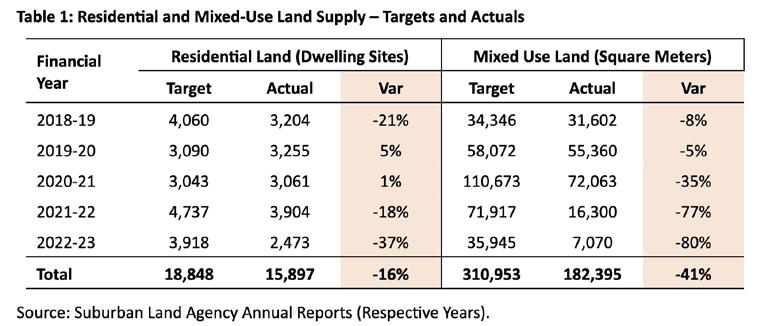
Under the Indicative Land Release Program (ILRP) Obligations the SLA’s 2022-23 annual report reveals that the agency managed to deliver only 2473 residential dwelling sites against a budget target of 3918, an underperformance of 37 per cent.
It is also, in our opinion, unarguable that the budget target was in any event seriously inadequate having regard to the level of pent-up demand for housing in Canberra and population growth.
The reasons (excuses) provided for the shortfall mainly relate to the “necessary planning work” not being completed. However, one explanation that was proffered was that some 30 sites had been released in 2021-22 and reported in that year. We fail to see how that is a justification for the shortfall in 2022-23. Incidentally the

SLA, also failed to meet the 2021-22 program obligations with a resultant shortfall of 18 per cent in that year.
The agency was also set the target, under the program, of supplying 35,945sqm of mixed-use land. The actual result was a mere 7070sqm – a shortfall of 80 per cent against the target.
The annual report provides the following explanation for this shortfall: “The variance is attributed to limited releases, with one block released in Turner (build to rent) in Quarter 2. A Kingston block was scheduled for release outside of 2022-23.”
We are left to presume that this meaningless “explanation” for the 80 per cent shortfall was acceptable to the two responsible ministers, Yvette Berry and Andrew Barr.
Unfortunately, the apparent absence of ministerial oversight is not unique to this agency. The contracting fiasco in the CIT and the failed IT project similarly highlight poor governance and a lack of accountability.
The underperformance in delivering land is unfortunately not limited to 2022-23. Table 1 reveals the serial failure of the ACT government to

meet its land-supply targets over the past five years.
Over the last five years, there has been a 16 per cent shortfall in the delivery of residential dwelling sites, and a 41 per cent shortfall in the release of mixed-use land – that is against the government’s stated targets.
We noted above that the targets are manifestly low. By way of comparison, over the four-year budget cycle 2007-08 to 2010-11, the total land supply site targets totalled 15,222 while the actual delivery was 17,236.
By comparison, the recent budget cycle 2019-20 to 2022-23 land supply target was for 14,788 dwellings but delivered only 12,693 sites. Relevantly, while the annual population growth averaged 1.9 per cent during both periods, the actual population growth was 26,069 people over 2007-08 to 2010-11, and 32,241 over the recent budget cycle.
We propose to discuss the impact of land supply and the extent to which it affects prices and economic growth in a subsequent article. Suffice to note here, not only has the local land supply system become far less responsive to demand but that the ACT’s economy would be larger if the government had not only met its own targets, but had set targets designed to actually meet demand and hence stabilise land and housing prices.
The ACT’s coalition government, most notably the Greens, have expressed a strong commitment to affordable housing, public housing and community housing. Regret-
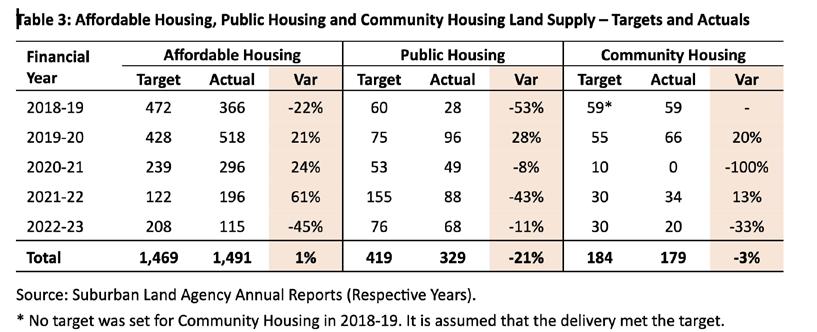
tably, words are cheap and the ACT government’s rhetoric on housing is not reflected in any meaningful way in the obligations being placed on the land-supply agency and/or in the actual delivery of land for these purposes. These failings are starkly illustrated in Table 2
The targets for affordable housing, while met in aggregate, are lower than the government’s policy commitment in its affordability plan. The targets for public housing and community housing are pitifully low, and despite having no relationship to actual demand, the targets have not been met.
The target for public housing supply needed to be in the order of 1300 over the five years in order to simply maintain relative stock numbers, excluding the relative decrease from 2011 to 2018.
In relation to community housing, the target set over a decade ago in an MOU between the ACT government and CHC Community Housing, which the ACT government unilaterally abandoned some years ago, would have been 600 over five years.
In any consideration of the state of housing in Canberra the numbers speak for themselves. The bottom line is quite clear, the ACT government does not, despite its constant baying to the contrary, give a hoot about the housing needs of poor, disadvantaged or working-class Canberrans.
Jon Stanhope is a former chief minister of the ACT and Dr Khalid Ahmed a former senior ACT Treasury official.
Source: Suburban Land Agency Annual Reports (Respective Years).
* No target was set for Community Housing in 2018-19. It is assumed that the delivery met the target.

Best wishes to all of our patients for the festive season

It’s beginning to look a lot like burnout.
SOPHIE SCOTT & GORDON PARKER suggest ways to take care of yourself before
the holidays start.
IT’S getting towards the time of the year when you might feel more overwhelmed than usual.
There are work projects to finish and perhaps exams in the family. Not to mention the pressures of organising holidays or gifts. Burnout is a real possibility.
Burnout is defined by the World Health Organization (WHO) as having three main symptoms – exhaustion, loss of empathy and reduced performance at work.
Australian research argues for a broader model, particularly as the WHO’s third symptom may simply be a consequence of the first two.
So what is burnout really? And how can you avoid it before the holidays hit?
More than being really tired
The Australian research model endorsed exhaustion as the primary burnout symptom but emphasised burnout should not be simply equated with exhaustion.
The second symptom is loss of empathy (or “compassion fatigue”), which can also be experienced as uncharacteristic cynicism or a general loss of feeling. Nothing much provides
pleasure and joie de vivre is only a memory.
The third symptom (cognitive impairment) means sufferers find it difficult to focus and retain information when reading. They tend to scan material – with some women reporting it as akin to “baby brain”.
Research suggests a fourth symptom: insularity. When someone is burnt out, they tend to keep to themselves, not only socialising less but also obtaining little pleasure from interactions.

A potential fifth key feature is an unsettled mood.
And despite feeling exhausted, most individuals report insomnia when they’re burnt out.
Predictably, such features (especially exhaustion and cognitive impairment) do lead to compromised work performance.
Defining burnout is important, as rates have increased in the last few decades.
‘Tis the season
For many, the demands of the
to shop, cook, entertain and socialise more than at other times of year. While burnout was initially defined in those in formal employment, we now recognise the same pattern can be experienced by those meeting the needs of children and/or elderly parents – with such needs typically increasing over Christmas.
Burnout is generally viewed according to a simple stress-response model. Excessive demands lead to burnout, without the individual bringing anything of themselves to its onset and development.
Formal carers, be they health workers, teachers, veterinarians and clergy or parents – are more likely to experience burnout. But some other

professional groups – such as lawyers – are also at high risk.
In essence, “good” people – who are dutiful, diligent, reliable, conscientious and perfectionistic (either by nature or work nurture) – are at the greatest risk of burnout.
Six tips for avoiding burnout
You may not be able to change your personality, but you can change the way you allow it to “shape” activities. Prioritising, avoiding procrastination, decluttering and focusing on the “big picture” are all good things to
Managing your time helps you regain a sense of control, enhances your efficiency, and reduces the likelihood of feeling overwhelmed by responsibilities.
1. Prioritise tasks: Rank tasks based on urgency and importance.
The Eisenhower Matrix, popularised by author Stephen R Covey, puts jobs into one of four categories:
• urgent and important
• important but not urgent
• urgent but not important
• neither urgent nor important.
This helps you see what needs to be top priority and helps overcome the illusion that everything is urgent.
2. Set realistic goals: Break down large goals into smaller, manageable tasks to be achieved each day, week, or month – to prevent feeling over-
whelmed. Use tools such as calendars, planners or digital apps to schedule tasks, deadlines and appointments.
3. Manage distractions: Minimise distractions that hinder productivity and time management. Research finds people complete cognitive tasks better with their phones in another room rather than in their pockets. People with phones on their desks performed the worst.
4. Chunk your time: Group similar tasks together and allocate specific time blocks to focus on them. For example, respond to all outstanding emails in one stint, rather than writing one, then task-switching to making a phone call.
5. Take breaks: A 2022 systematic review of workplace breaks found taking breaks throughout the day improves focus, wellbeing and helps get more work done.
6. Delegate: Whether at home or work, you don’t have to do it all! Identify tasks that can be effectively delegated to others or automated.
To finish the year feeling good, try putting one or more of these techniques into practice and prepare for a restful break.
Sophie Scott, associate professor (adjunct), University of Notre Dame Australia and Prof Gordon Parker, UNSW Sydney. Republished from The Conversation.








I CAN empathise with legal columnist Hugh Selby that the “Presumption of innocence is dead and buried”(CN, November 30).
Hugh provides several examples where governance systems have been “re-arranged” to apparently hasten the redundancy of the legal principle.
But the presumption of innocence does not automatically provide justice to the victim or defendant, especially where there are no witnesses to the alleged crime.
Also, some lawyers are better “performers” than others and a case’s outcome may rest on such courtroom superiority, especially in jury trials. And don’t tell me that judges aren’t sometimes similarly swayed.
Besides, not all legal issues carry a clear cut “presumption of innocent until proved guilty”.
My main legal experience as a journalist centred around defamation. There, the defence (author or publisher) has to prove their “innocence” against the plaintiff’s claims. Not for us the luxury of Horace Rumpole’s oft-stated corollary about “the golden thread of British justice” (the defendant’s right to remain silent).
My journalistic luck was in coming before today’s unfettered social media, which allows people anonymously to make claims with no regard for truth or the presumption of innocence.
Unfortunately, some traditional media today feel the need to emulate such unethical behaviour for purely commercial reasons. It has also increased the clamour for “freedom of speech” untrammelled by any need to be informed and responsible.
Eric Hunter, Cook
COLUMNIST Robert Macklin shows a lack of understanding of the laws of war and of what Israel is doing in Gaza when he accuses it of overreacting and bombing hospitals, schools and refuges sheltering civilians (“The Gadfly”, November 30).
After the Hamas atrocities of October 7, Israel’s right of self-defence extends to making sure Hamas is never in a position to perpetrate similar attacks again. It is entitled to attack any building Hamas is using for military purposes, as long as it only uses the force necessary to destroy that target.

That means that once Hamas uses a building like a hospital, which is a war crime, Israel is entitled to target it. Israel is obliged to try to minimise the loss of civilian life, which it is doing by warning civilians to evacuate en masse, and also by warning when individual buildings or neighbourhoods are about to be hit, and has done so through millions of leaflets, text messages and phone calls.
While Israel has bombed Hamas near refuges, those actually hit have been victims of faulty Palestinian rockets. No staff or patients were even injured when Israel went into al-Shifa Hospital.
Alan Shroot, Forrest
PROF Megan Davis, one of the principal authors of the Uluru Statement from the Heart, writes (“The Monthly”, December) that many people said they supported the Voice but had “absolutely no faith in politicians or parliament to deliver” so they would vote “No”.
As she says: “trust is integral to the legitimacy of political institutions in fully functioning democracies”.
This lack of trust seems to be endemic in Australia, driven by power-hungry political elites, profit-driven private corporations, cynical “consultants” and “thought-leaders”, and obscenely wealthy individuals.What hope do Aboriginal communities or even predominantly white, middle-class communi-


If you voted for them, wear and cop the result, or encourage more people to change their voting behaviour next time! We do not need a mid-term revolt disrupting the brilliant programs of this government. The marijuana plants may wither and the tram could falter!
John Lawrence, via email
Is it poetry?
Is it just doggeral?
Or is it just damn awful?
Is it just verse?
If so, it’s a curse
To ryhme all the time!
Shakespeare it ‘aint
But my it’s quaint.
ties have against these overwhelming forces?
Richard Johnston, Kingston
IN recent years I have noticed arms and feet protruding from car windows.
I wonder whether people have considered the risk of one tiny pebble travelling at only 60 kp/h like a mini bullet, hitting the soft tissue and then splintering bone of a hand, arm or foot.
Granted, it’s not likely, but I can tell you, you will be in a lot of pain!
Such injuries do a lot of damage. Despite the benefits of repaired hands and feet, I will guarantee it will not ever be the same and if you have nerve damage as a result of the injury, it’s even worse.
Please drivers, be careful.
Sue Pittman, via email
IAN Pilsner’s letter (CN November 30) lamenting Chief Minister Andrew Barr’s desire to inflict his style of living on everyday Canberrans seems more confusing than constructive.
A question for you Ian: the majority voted for the ACT government under our democratic process did they not, after everyone did their research on the candidates before polls ?
Elaine Camage, Narrabundah (age 83 and an admirer of Hugh Selby!)
How about $10 billion for a tram to Woden?
IN their analysis of the ACT government’s budget “Deeper in debt, where has the money gone?”, Jon Stanhope and Khalid Ahmed (CN December 7) note that stage 1 of the light rail project from Gungahlin to Civic had a benefit to cost ratio of 0.49. That is, less than half the money spent provided a net benefit to ACT residents. Presumably, more than half went to private designers, engineers and contractors.
In my view, this wasteful sum of money will seem a bargain in comparison with stage 2B from Commonwealth Park to Woden Town Centre.
There are major engineering and construction problems at several locations along the route. These include:
• a ramp from State Circle to Adelaide Avenue,
• the intersection of Adelaide Avenue with Hopetoun Circuit (a long span that may require a central support) and with Cotter Road (a 15-degree slope and a massive pylon),
• the Yarra Glen median near the Royal Australian Mint (a long, three-metrehigh, 400–500 metres-long hump with numerous trees),
• the Yarra Glen intersection with Carruthers Street (a large tree and a massive mid-median pylon;
• and the three-way intersection of Yarra Glen, Yamba Drive and Melrose Drive. The last involves complex vehicle traffic flow and a large concrete drain that is prone to flooding in the heavy rain that will become more common and extreme with the advance of global warming.
Overcoming all of these issues will probably take 10 or more years, including extended disruption traffic, and cost $10 billion or more. The benefit-cost analysis would be horrendous.
Dr Douglas Mackenzie, Deakin
IT was timely and appropriate for columnist Michael Moore to highlight the fact that COVID-19 is still very much with us (CN, December 7).
With highly transmissible virus variants, fewer people being vaccinated, a lack of reliable case numbers, and increases in hospitalisations, there are very real reasons not to be complacent.
Dr Moore notes that new vaccines, which target the currently circulating subvariants, are now available (from early December). However, what is not clear is if the new vaccines will be available to those who received the previous bivalent vaccine within the past six months.
Acknowledging that the bivalent vaccines are less effective against the current dominant virus sub-variants, the policy in the US is that anyone who has had the previous bivalent vaccine within the past two months can receive the new monovalent vaccine. The Australian authorities, however, have been unhelpfully silent on this matter.
Karina Morris, Weetangera
THANK you to regular, irregular and all letter writers for a spirited selection of thoughts and opinions this past year. As we face the new year and the prospect of a territory election, my guess is “Letters” are going to be the liveliest pages in the paper.
To everyone who contributed, Merry Christmas; I know you’ll take care of the New Year!
Ian Meikle, editor
EACH November our editor disarmingly tells us writers the deadline for Christmas and New Year articles.
This year it was 11 days out from that joyous day when presents are expected, eating too much is a given, and a few people remember that the day celebrates the birth more than 2000 years ago of a man who, whatever one’s religious beliefs, lived a life of admirable values.
So admirable that one of his gang betrayed him so that he could be strung up alive as a lesson to those who defied the elite of his times. But that’s the Easter story and today Christmas is our focus.

comedies from the early ‘90s.
To set the scene, let’s recall the stories, with thanks to the everhelpful Wikipedia.
I doubt that you could have any idea how hard it is to find anything uplifting, let alone entertaining, that links the law to Christmas. Thanks to Dickens, I had an easy time of it last year: retelling the story of Scrooge and his lawyer descendants.
But this year, oh dear, the agony of finding a theme. An idea would come, its brilliance so clear, only to be dashed with mis-starts, dead ends, and journeys that began with hope and ended with despair. I came to hate my editor (steady there, Hugh – Ed)
And then, there it was: the first two “Home Alone” films, both very successful American Christmas-season
Eight-year-old Kevin is the youngest of five children who is frequently bullied by his siblings.
He wishes that he had no family when his mother is punishing him. She warns him to be careful what he wishes for. He wakes up the next day to discover that he is the only one left in the house. He thinks his wish came true and that he is finally alone, without his obnoxious family.
His family are on a holiday trip without him. Go figure. So, home alone, he singlehandedly deals with Harry
and Marv, a pair of robbers. Kevin fills the house with a collection of homemade booby traps. He manages to trap the robbers and they get arrested, just as his family returns home.
‘Home Alone 2: Lost in New York’ (1992)
Set one year after the events of the first film, Kevin loses track of his family at the airport when he gets on a plane headed for New York, while the rest of his family fly to Florida. How can this happen?
Alone again, intrepid Kevin cons his way into a room at a top hotel, buys exorbitant amounts of junk food and rents a limousine.
When Kevin discovers that Harry and Marv are on the loose again (they are dedicated, but loser recidivists), he stops them from stealing charity money from Duncan’s Toy Chest on Christmas Eve by using his proven skill set: booby traps.
Neither of these films could be made today: unequivocally they not only normalise family violence and dysfunction, but they put forward as a role model a child – well under the age of “criminal responsibility” – who combines highly developed talents to make injury causing gadgets with a personal resilience that would cause most teenager viewers to feel hopelessly inadequate.
Those traits and outcomes are unacceptable today.
I haven’t checked, but I suppose that current replays of these films on TV or streaming services carry the warning that “some events will be distressing to some viewers. Help and advice can be obtained from… etcetera”.’
That’s just the start of the regulatory and litigation challenges raised by these films.
Since this family can afford annual, distant holidays they are not eligible for legal aid and therefore must pay full freight to eager litigators. They might choose to reduce both their annual living costs and legal fees by acquiescing in Kevin leaving their family.
After all, the child-protection authorities would be investigating the adequacy of the parenting skills shown by young Kevin’s mum and dad.
They show repeated lack of awareness of the whereabouts of their youngest, as do his four older siblings.
The authorities might opt to start proceedings that it is in his best interests to be removed from these blood relatives, one and all.
Alternatively, Kevin, now 10 and
reaching for 11, might decide that he would be better off without his family. There is an American court decision, from 1992, much publicised at the time, in which a 12-year-old boy persuaded a court to sever his ties to his mother and allow him to be adopted by other adults.
But wait, there’s more. An airline allowed Kevin, a child with dangerous know-how, on board alone, aged 9. There’s no sign of an adult carer, no valid identity document or boarding pass.
The airline has been grossly negligent, so much so that some passengers develop not only post-event irreversible trauma but untreatable flight phobia. Naturally, they sue the airline. As they say, the sky’s the limit, and never more so than in class actions.
Truly a bag of big fee opportunities, so a very Happy Christmas to all our litigation lawyers.

We offer
• Self published family history books
• Books & magazine printing
• Corporate stationery
• Banner printing

• Brochures, invitations & business cards
• Graphic design services & MUCH more










It’s almost Christmas, but there’s still time to get that last-minute gift shopping done.
“CityNews” is showcasing some great gift options that will be warmly received on Christmas Day.
“THOMPSON Bespoke Jewellers opened in 2018, but I’ve been in the business for close to 40 years now,” says Diana Thompson, co-partner.
“I’m a gemologist and a valuer, so I really enjoy the beauty of the gems,” she says.
“The coloured gems are superb, and the diamonds are beautiful too, of course.
“There’s always something new and fresh.
“My son Travis, he is our master jeweller, has been in the industry for close to 25 years.
“Travis has won lots of international and Australian design awards.
“It’s a family business.”
Diana says they have a wide range of one-ofa-kind pieces available.
“We have pretty much everything, we keep highly exclusive things like Argyle pink diamonds, we have lots of beautiful, coloured stones, rings and pendants, earrings,” she says.

“We keep Australian, Tahitian and natural gold South Sea pearls.
“There’s also a good range of silver, beautiful Sterling silver in big bangles and chains, diamond rings, earrings and line bracelets.
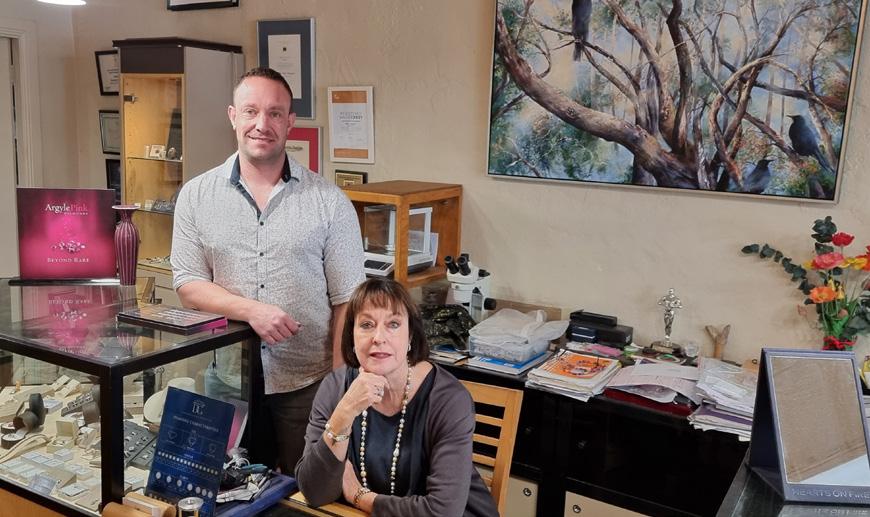
“We have a cupboard of estate and secondhand jewellery, which we are increasing as our pink diamonds sell out, because they cant be replaced, the mines have shut.
“All the pieces are specifically chosen because the stones are fabulous or the design is beautiful.
“We’ve got the high-end items, but we’ve also got the silver so we can cater to any budget.”
Thompson Bespoke Jewellers, 119 Wallace Street, Braidwood. Call 0459 955991 or visit Thompson Bespoke Jewellers on Facebook.
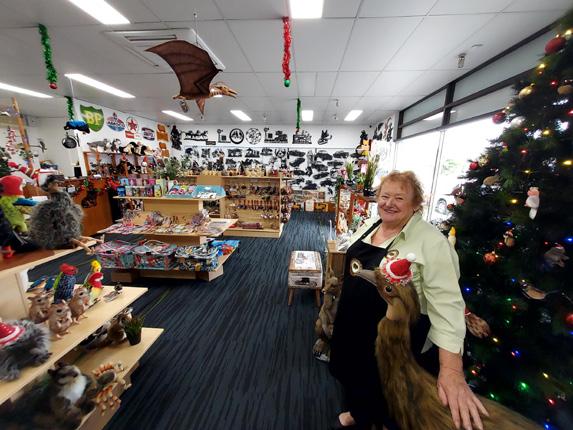
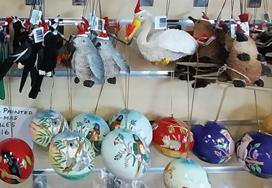
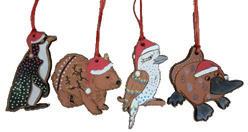
“We have indigenous, dot-painting laser-cut animals that my granddaughter painted,” she says.
“I love the Australian animals, I just think they’re so unique and I love expressing my joy through the store.
Monica says Wombat Cards and Gifts will be open Monday to Friday from 9am to 4.30pm, Saturdays from 9am to 3pm and Sundays 9am to 1pm.
up to Christmas.
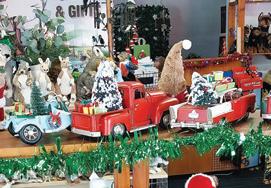
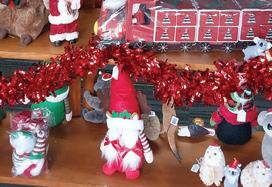
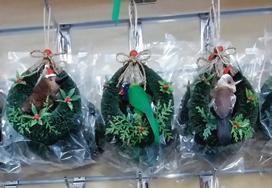
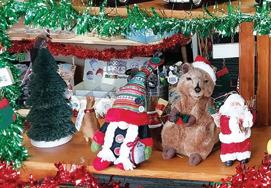
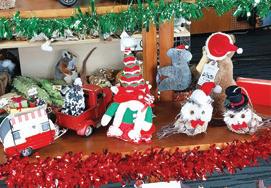
“We have all of the Australian animals with little Christmas hats on, and nativity scenes with Australian animals, too,” she says.
Monica says she loves what she’s doing and loves that she’s achieving something by introducing people to Australian animals.
“We will also be open until midday on Christmas Eve,” she says.
Wombat Cards and Gifts will also have a market stall open at Summernats 2024, January 4-7.
Wombat Cards and Gifts, Shop 2, 31-35 Nettlefold Street, Belconnen. Call 0423 786222, or visit wombatcardsandgifts.com.au








JET Flight Simulator Canberra has the perfect Christmas gift for anyone who’s ever wanted to fly, says owner Trevor Vickers.
“Visitors get to operate a full-size replica of a Boeing 737-800 cockpit and can choose from 24,000 airports around the world to fly in or out of,” he says.
“Our instructor is there to point out what all the buttons and levers do and when to use them, but it’ll be you that’s doing the flying.
“Sometimes people want to fly over where they’ve been on holiday, others want to do things like fly under the Sydney Harbour Bridge – it’s all possible.”
But that’s not the only experience they’re offering, says Trevor.
“Our new VR Paraglider Simulator offers a great way to experience paragliding without leaving the ground,” Trevor says.
“It’s a fantastic experience. You can see how close you can land to the target, or conquer the skies with a tomato gun to fire at other paragliders!”

Visitors also have the opportunity for a more fast-paced, virtual reality experience called “ICAROS” which Trevor says is a “completely different way to fly”.
“The way it works is that you lie on a frame and just by shifting your body weight it steers you in the virtual world,” he says.
“The sensation is more like flying with a wingsuit
or like you’re Superman. It’s a Superman simulator.”
Whether it’s flying a 737, paragliding over the coast, or soaring through a virtual world, Trevor says there’s multiple booking options on their website, including gift certificates.
Jet Flight Simulator Canberra, 4 Montford Crescent, Lyneham. Call 0438 834026, or visit jetflightsimulatorcanberra.com.au
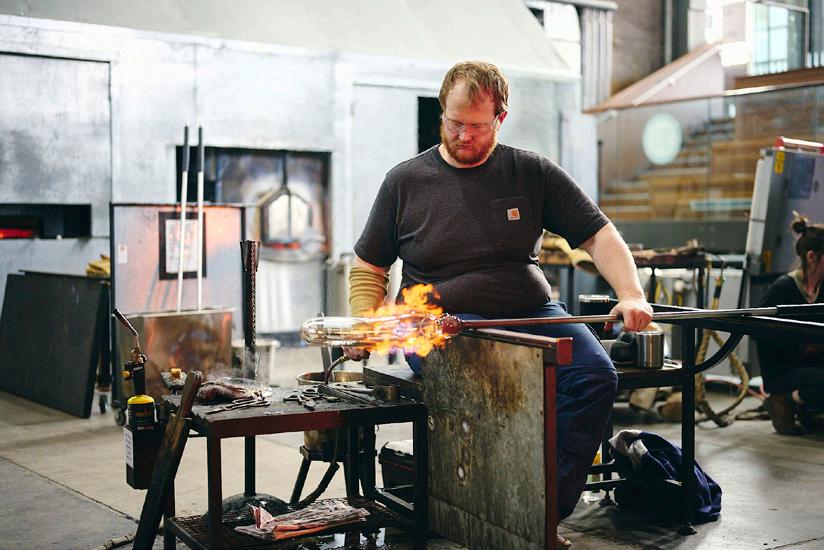
“We’re thrilled to introduce new experiences like glass blowing and flower arranging, couples glass blowing, and sand casting, alongside all-time favourites like ‘make your own bird’ and beginners neon sign making,” says public programs manager Lilith Silva.
“In our state-of-the-art workshops, you’ll have the opportunity to get your hands-on an experience unique to Canberra.
“Our classes are led by artists who are experts in their field, making them suitable for everyone from complete newbie to glass veteran.
“Reserve a spot for you and a friend in these fantastic classes today before they’re full.

Next year Canberra Glassworks will showcase excellence in craft, contemporary art and design through a curated program of exhibitions featuring leading and emerging artists in the field of studio glass, says Aimee Frodsham, Canberra Glassworks artistic director.
“With the appeal of Canberra Glassworks’ worldrenowned facilities, the exhibitions you will see next year will support both expert makers and artists new to glass, fostering a diverse group of creative talents,” she says.
Canberra Glassworks, 11 Wentworth Ave Kingston Canberra. Call 6260 7005 or visit canberraglassworks.com


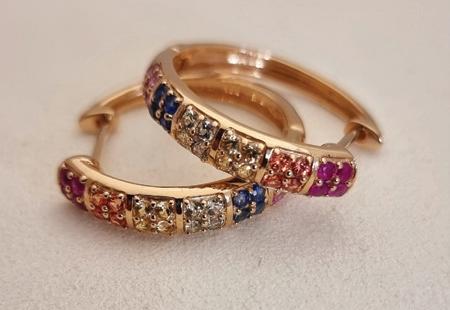












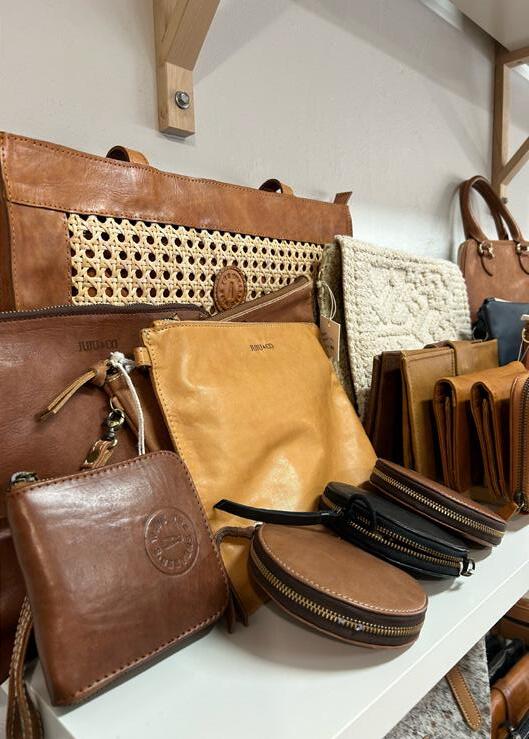
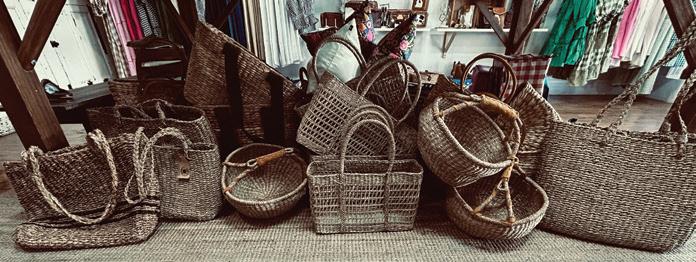
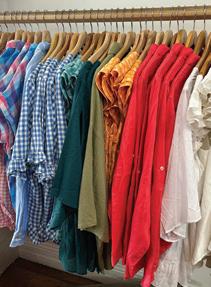
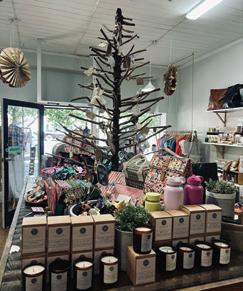
“THE Shearer’s Wife in Cooma is a treasure trove of all things beautiful waiting to be discovered,” says Maddie Banks, owner of The Shearer’s Wife.
“My love for fashion and homewares inspired me to purchase this beautiful shop,” she says.
“I have curated a collection of beautiful brands and creations, from gorgeous home ware pieces to rustic leather accessories to beautiful fashion and bright fun accessories.
“It is a one-stop shop if you’re looking to treat yourself or searching for the perfect gift.
Maddie says the Shearer’s Wife will be offering a one-time discount of 20 per cent off for in-store purchases on Saturday, December 23.
“Until you come inside and explore what we have to offer you don’t know the extent of our products,” she says.
“Customers can expect a welcoming experience, filled with helpful staff and a discovery of beautiful pieces
“It is hard to choose just one product to call my favourite, but I will have to say that our Woven Leather Boots and gorgeous range of TSW candles are two of my favourite products.
“It really is a shop filled with all things wonderful.”
The Shearer’s Wife, 80 Vale Street, Cooma. Call 0436 837511 or visit theshearerswife.com.au

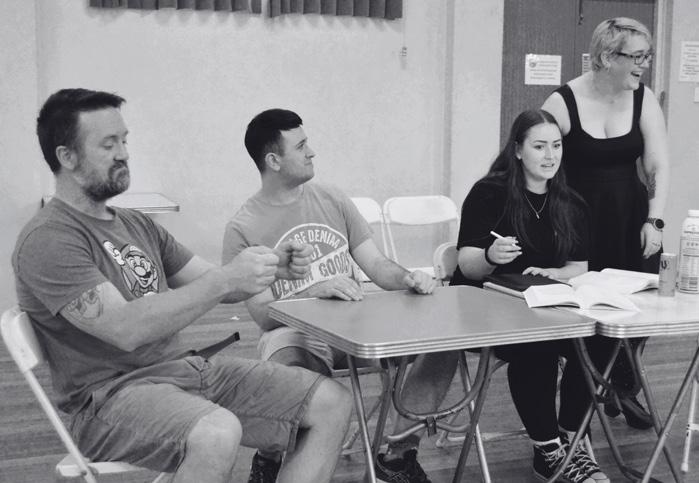
and musical director, Christopher Bennie.
He says “Next to Normal” addresses mental health issues, particularly how not only the individual who is affected by mental health deals with it, but how it affects the family.
“It’s a show that doesn’t shy away from it,” says Chris.
“Local theatre is great because it gives you the opportunity to get out in the community, support local artists and have a great night of entertainment.
“Next to Normal” is a great opportunity for young people to come and explore theatre, says Chris.
“They can also work backstage and be a stage tech, they can learn from the lighting and sound
will work with people who are older, and Quean beyan Players is such a family orientated production company that we like to engage them and teach stagecraft through the process.
“So you don’t only just perform, we work with you to bring out the best performance you can bring.
“We want to work with people as holistically as possible.
“You can put down an expression of interest through the website.”
“Next to Normal”, Queanbeyan Players, Belconnen Community Theatre, February 15-24, call 0402 353443 or visit qplayers.sales.ticketsearch.com

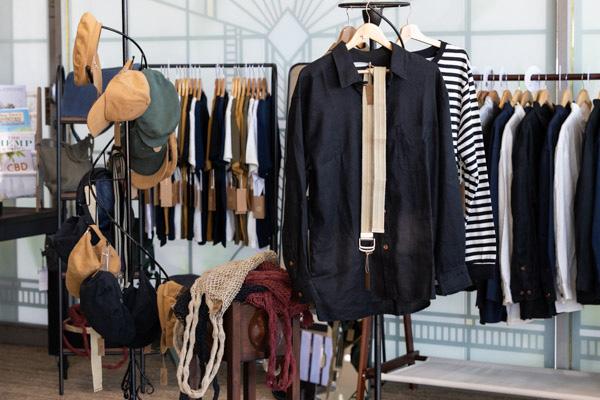
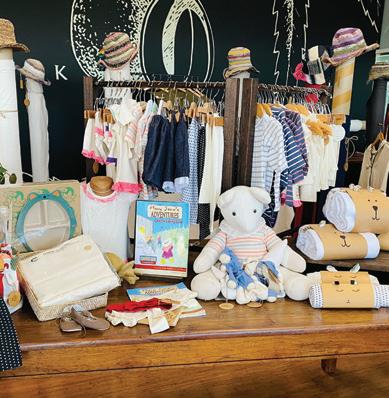
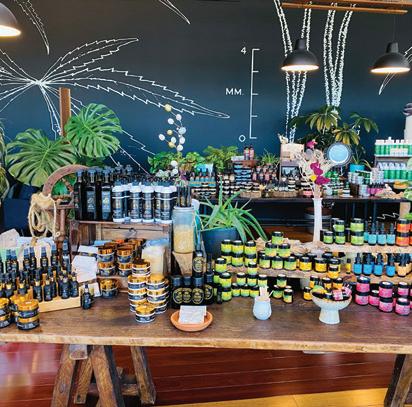
SOUTH Pacific Hemp’s manager Sue Booth says the store celebrates the versatile benefits of the plant.
“We support Australian small businesses and producers who work with hemp, an eco-friendly, sustainable material that can be used in a myriad of products,” she says.
“We have branched out to a new clothing wholesaler – Braintree – offering an extended women’s range of dresses, jumpsuits and tank tops.
“Our clothing is designed for wearability and versatility, is breathable, natural and easy to care for.”
Sue says in the lead up to Christmas, South Pacific Hemp is offering a variety of discounts.
“We have 10 per cent off marked price hats, that’s in store only,” she says.
you get a free T-shirt valued at $70, that’s in store and on the website.
“We also offer free postage Australia wide, and we have gift vouchers available with no expiry dates.”
Sue says South Pacific Hemp’s selection of products extends to a collection of hemp foods, hemp seed oils, with balms and skin creams, babycare, homewares, bags and accessories, fabrics and pet products.
“The team is always excited to help customers explore the extensive range,” she says.
“Come ask us about what the hemp plant offers, from the benefits of CBD oil to the selection of skincare and beauty products.”
South Pacific Hemp, 84 Wollongong Street, Fyshwick.
Spend $250 or more and receive a FREE hemp tee shirt, RRP $70 in your choice of colour and size.

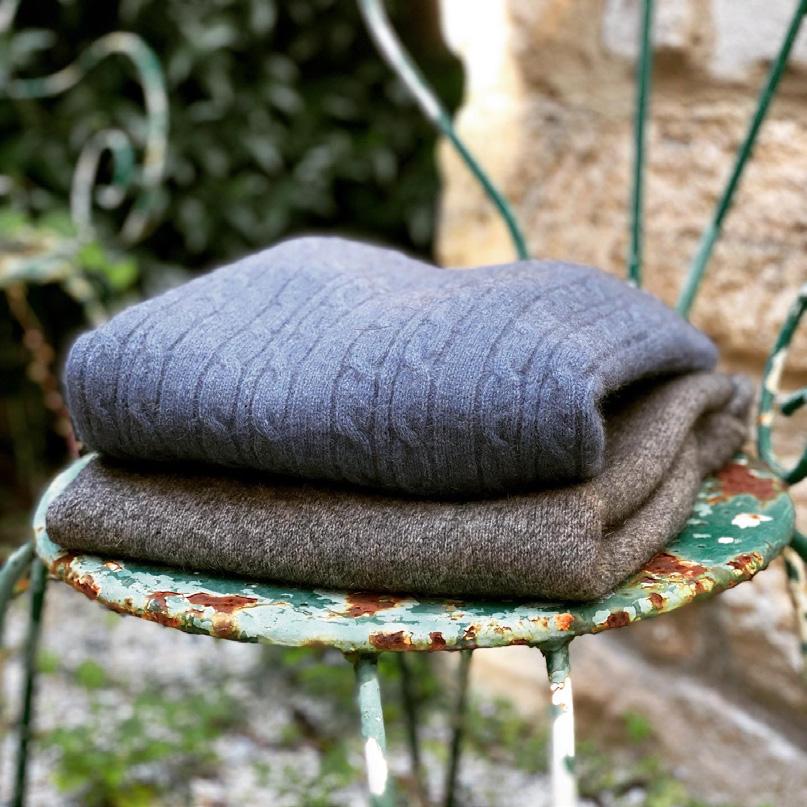
BERRIMA’s Natural Australia promotes the Australian Me rino industry by showcasing the highest quality merino knitwear in fashionable gar ments, says owner Angela Rodgers.
“Berrima’s Natural Australia was opened in 1995 by my parents,” she says.
“My parents were retired sheep graziers from south-west Queensland. In those days all garments in the shop were produced from Australian-grown Merino, and designed and made in Australia.”
Angela joined the business in 1996, excited by the qualities of Merino fibre and garments it created.
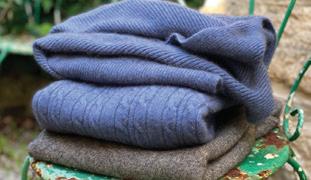
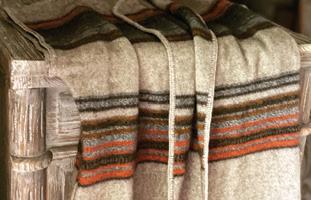
Berrima’s Natural Australia has a range of fine Merino knitwear, either made in Australia, NZ or Europe, and Merino, possum and silk garments and accessories from NZ, cashmere from Italy and the UK, and Australian cotton in summer, says Angela.
“It is a very exciting experience to discover beauti ful knitwear made with a passion for perfection and detail. My customers often comment that it is a pleasure to walk into the shop and see such beautiful quality garments, made totally with natural fibres.
Angela says that Christmas shoppers can enjoy a 50 per cent discount on some items throughout
Berrima’s Natural Australia, 11 Old Hume Highway, Berrima. Call 4877 1598, or visit berrimawool.com
Once you make your online order we will contact you to see men’s/ladies size colour, and post it with your order. ALSO FREE SHIPPING AUSTRALIA WIDE. MERRY CHRISTMAS to all
50% off highest quality knitwear of Merino, Cashmere, and Possum/Merino/ Silk, for December Christmas shopping.
• Made in Australia, Europe and New Zealand in ethically operated workshops, employing local and well trained staff.
Quality control is ensured.
25% off beautiful linen shirts, dresses, wide and straight let pants from Italy. Also, lots of fine cotton floral print tops and silk kaftans.
Cotton


FROM health to fashion, gifts to art and everything in between, the ACT region has experts in almost every field imaginable.
Not only have these skilled locals spent years honing their craft or studying their specialty, they love what they do and they’re passion ate about sharing it with others.
In this special feature, “CityNews” gets to know some of the experts of the Canberra region.
Since then it has grown into a pivotal
and Community Services, 63 Boolimba Crescent, Narrabundah. Call 6284 6222 or visit winnunga.org.au
SIGNUS Legal opened on October 3, and director Brendan Goodger is excited to offer his services to new and existing clients.
transactional lawyer, who can help through the entire life of your company,” he says.
services, property and conveyancing and this area, there is no big parking struggle, it’s the perfect mix of being accessible without being in the centre of the city,” he says.
“I am dedicated to providing a highly personalised level of service and helping clients achieve their objectives by taking the time to understand each deal and its specific nuances.
“This year I was recognised in the Doyles

Your legal issues are dynamic and ever-changing, our goal is to deliver exceptional legal services in an efficient and flexible way.

We provide comprehensive solutions tailored to your specific circumstances. We take the time to understand your needs to ensure your estate plan aligns with your exact intentions.

Looking to make your property dreams a reality? Whether you’re buying or selling residential or commercial property, we’re here to guide you every step of the way.


We work collaboratively with trusted advisors including accountants, financial planners, and insurance brokers to ensure your interests are safeguarded throughout the legal process.

We offer efficient and expert assistance for all your notarising and witnessing needs. Our appointed Notary Public, Brendan Goodger, holds internationallyrecognised authority to witness signatures and notarise documents for overseas use.




ADRIA Care combines access to important facilities with a feel of privacy, making it the perfect place for retirement, a spokesman for the village says.
“There’s close access to Cooleman Court and Woden Westfield, but we are surrounded by reserves and parklands making it a very peaceful atmosphere for residents,” he says.
Located in the heart of Weston Creek, Adria Care, which has two dedicated respite rooms and a special care unit, offers residential care for 42 residents. The village also contains 36 independent living units. It offers residents a wide range of things to do, and that they can get involved as little or as much as they’d like.
“We have an active residents’ committee who organise lots of get-togethers. Residents can play cards, go to morning teas and happy hours, enjoy exercise, and much more,” he says.
Established in 1994 by volunteers of the Croatian community of Canberra and Queanbeyan, the village is home to a multicultural group of people.
“We have residents [from] Australia, Croatia, China, France, Macedonia, Hungary and more,” he says.
“There are great residents and great staff committed to the best outcomes for the community.”
Adria Care, 89 Fremantle Drive, Stirling. Call 6288 0198, or visit adria.org.au

Set amongst landscaped grounds, Adria Care in Stirling is a warm and welcoming community of people from all around the world. We pride ourselves on cultural diversity and celebration, and offer a wide range of activities to cater for all interests. We provide care for Croatian and all other nationalities.
Adria Care fosters individuality and independence, providing support and assistance to enable residents to live in a comfortable and secure environment. It offers residential care for 42 residents, incorporating 2 respite rooms and special care. All rooms are single rooms with ensuite.
The village also contains 36 independent living villas. All villas have 2 bedrooms, a courtyard and a garden, and residents enjoy a peaceful and welcoming community lifestyle.
Our aim is to provide a caring, safe, home-like atmosphere, reflecting your rights to dignity, respect, privacy, safety and the best quality of life.
Contact our friendly staff today to arrange a personal tour.




THE local team at House to Home are experienced packers who have been helping Canberrans get their property ready for sales, renovations, insurance work, downsizing and relocating for more than 12 years, says co-owner Renee Le Grande.
“Our expert team will save you hours of time and stress by packing all your personal belongings, household items, right through to packing up the shed,” she says.
“Our team offers a personalised service and recognises every client is unique and has different needs and expectations.
“Some people want the kitchen, bathroom and wardrobes packed, others want absolutely everything including the garden pots at the front door.”
Renee says her business also offers a full walk-in walk-out service, where clients hand over their keys and the staff completely clear the property, remove the furniture, take necessary items to a charity store, get the old property cleaned, and set everything up again in the new home.
House to Home. Call 0457 456767 or visit house-to-home.com.au




our clients meet their goals.
“We offer speech pathology intervention to children and adults to improve their speech, language and communication.”
Co-director and speech pathologist Myfanwy Austin says many neurodiverse children struggle to initiate, maintain and end conversations, as well as joining a group or asking to play.

build friendships with their peers.
“We work with our clients to find out how their communication difficulties are impacting them, and structure therapy around achieving their goals.
“We pride ourselves at placing the needs of our clients and their families at the centre of our care.
“We offer one-on-one individualised sessions for speech sound disorders and language delays, and social skills groups for children with social communication difficulties.”
My Speech Hub, 1 Macquarie Place, Macquarie. Call 6189 1272 or visit www.myspeechhub.com
Evidence-based approach,
skills for children with
Expert Guidance: Our skilled speech pathologists ensure your child’s success. Boost Confidence: Empowering children for
Supportive Community: Connect with peers and build meaningful friendships.



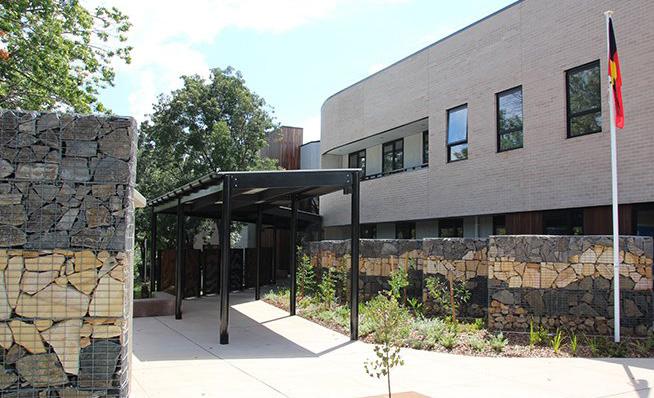
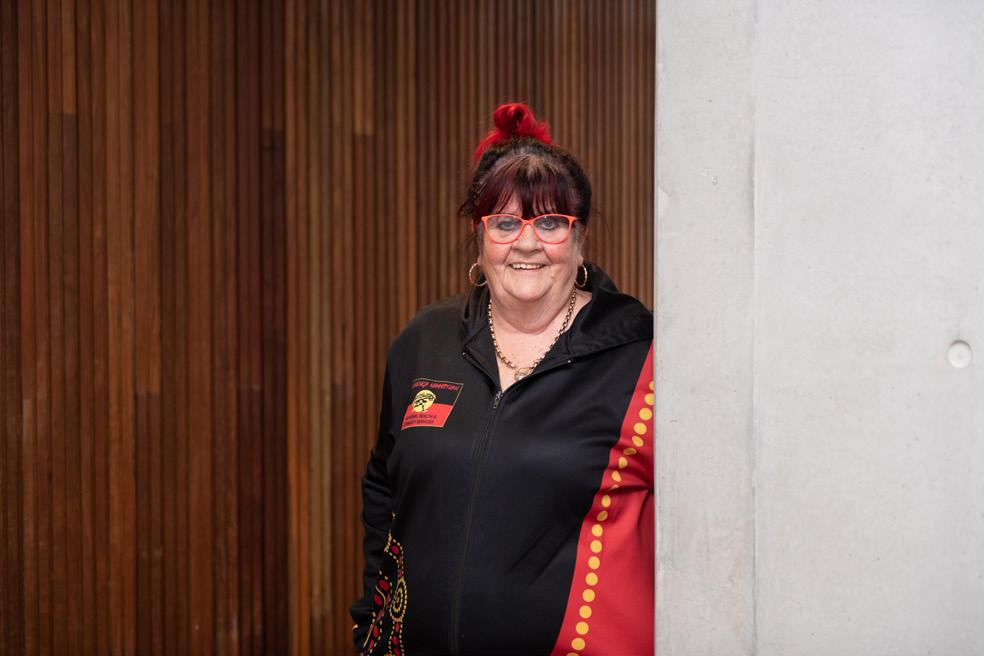
Winnunga Nimmityjah AHCS is an Aboriginal community controlled primary health care service operated by the Aboriginal community of the ACT.
In Wiradjuri language, Winnunga Nimmityjah means Strong Health. The service logo is the Corroboree Frog which is significant to Aboriginal people in the ACT.
Our aim is to provide a culturally safe, holistic health care service for the Aboriginal and Torres Strait Islander people of the ACT and surrounding regions. The holistic health care provided by Winnunga AHCS includes not only medical care, but a range of programs to promote good health and healthy lifestyles.
Our services include:
• GP and Nursing
• Midwifery
• Immunisations
• Health Checks
• Men’s & Women’s Health
• Hearing Health
• Dental
• Physiotherapy
• Podiatry
• Dietician (Nutrition)
• Counselling
• Diabetes Clinic
• Quit Smoking Services / No More Boondah
• Needle Syringe Program
• Mental Health Support
• Healthy Weight Program
• Healthy Cooking Group
• Mums and Bubs Group / Child Health
• Optometry Service
• Psychology and Psychiatrist
• Community Events
• Groups

Winnunga AHCS is a national leader in accreditation, was one of the first Aboriginal community controlled health services to achieve dual accreditation under RACGP and QIC standards. Winnunga AHCS has been at the forefront of setting a national agenda for quality improvement in Aboriginal community controlled health and continues to advocate locally and nationally for best practice standards in operational and governance areas of Aboriginal health services.
CLINIC hours | MONDAY TO FRIDAY 9am-5pm
Ph: 6284 6222 | 63 Boolimba Cres, Narrabundah www.winnunga.org.au


TOTAL Body Contouring has been established in Canberra for a few years now, but new-owner Christy Christensen only recently took over.
“The community and customer base around the brand appealed to me, as we have so much to offer for the next phase of growth and service offerings,” she says, with 15 years of experience backing her up.
“Total Body Contouring is a place to redefine your silhouette. We help people achieve their goals from reducing cellulite and fatty tissue, assisting with muscle growth, through to lymphatic drainage, and facials that reduce acne scars.”
Christy says Total Body Contouring is about building body confidence without surgery.
“We give a personalised experience and journey,
everyone is different,” she says.
“First, we set up a consultation to make sure you get the right specialisation for your needs and wants.
“With industry certification for all our services, your safety comes first.
“We give full transparency to everyone so there are no hidden extras or inflated prices.”
Christy says as a team, satisfaction comes from the results achieved through the Total Body Contouring services.
“But, most of all, it’s the smile on our clients’ faces when they see the results for themselves,” she says.
Total Body Contouring, Shop 3/22 Franklin Street, Griffith. Call 6239 7347, or visit totalbodycontouring.com.au

THE Dante Alighieri Society (DAS) of Canberra is a prominent member of the international network of Dante Alighieri Societies dedicated to the promotion of Italian language and Culture throughout the world, says president Franco Papandrea.
“Established 1957, it has been offering an authentic experience of Italian language and culture to the Canberra community for more than 65 years and is widely regarded as the best place to learn Italian in the national capital,” he says.
“It offers the widest range of adult Italian courses available in Canberra at very competitive prices. In addition, fee-paying adult students are able to practice what they learn in the classroom in a welcoming and friendly setting at no extra cost.”
Franco says the DAS is also the only place in
the region where non-native Italian speakers can sit exams for the internationally-recognised Plida certificate of Italian competency.
“Thanks to generous assistance by the Italian Ministry of Foreign Affairs and International Cooperation, the DAS employs mother tongue Italian language assistants to support the teaching of Italian in Canberra’s primary and secondary schools,” he says.
“Membership of the society is open to anyone with an interest in Italian language and culture. Members are provided with an extensive program of cultural and social activities including weekly social conversation groups, special events and social occasions.”
The Dante Alighieri Society, call 5117 3996 or visit danteact.org.au



By Helen Musa
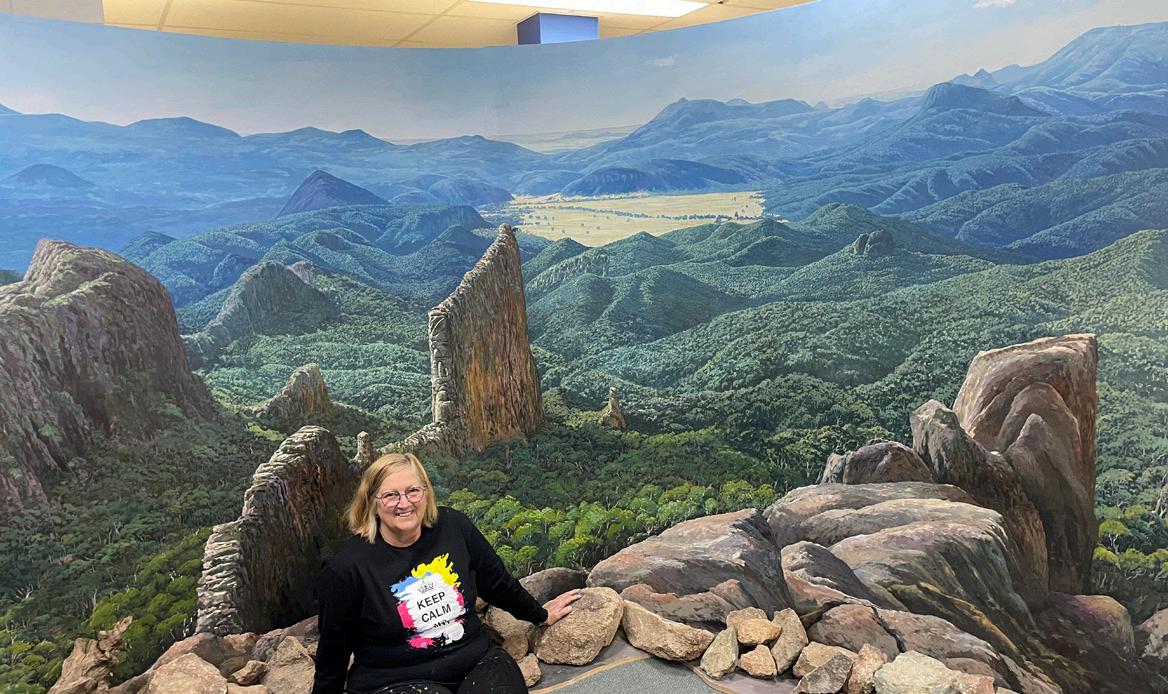
A CANBERRA artist more accustomed to refurbishing other people’s old artworks, has used her skills on one of her own 37-year-old paintings – and she’s sold it.
Margaret Hadfield, founder-owner of the Artists Shed in Fyshwick, is best known as the inaugural winner of the Gallipoli Art Prize in 2006, but has just returned from a road trip to her hometown, Coonabarabran, transporting a large mural to the Crystal Kingdom Museum, a specialty venue that displays minerals and fossils from the region. It was in every way a homecoming journey for the large landscape impression of the “Breadknife” formation in the Grand High Tops of Warrumbungle National Park, which was purchased from Hadfield by the museum for the sum of $15,000.
Although Hadfield left the region for Canberra 33 years ago she has grandchildren there, and when she visits it brings lots of memories, most of the family theme park Miniland, started by her Dutch immigrant artist father, Peter Zorgdrager.
The work was originally painted 37 years ago, shortly after her father’s death when she, her then husband and mother took over management of Miniland, a quirky tourist attraction famous for its maze of dinosaurs made from steel, chicken wire and fibreglass.
Created over a period of six months to fill an empty space, Hadfield says, the idea was to let people see the “Breadknife” which was in a remote and partly inaccessible place.
“You can easily get there if you’re fit, but you have to walk uphill, so my thought was to show it to people who can’t do that,” she says.
“It was done in a half circle to create some magic and I put my heart and soul into it.”
Unlike Michelangelo, Hadfield didn’t have a team of assistants and painted it by herself while running the park and bringing up a family.
Her painting became an attraction in its own right, but the park was abandoned many years ago.
Miniland’s famous brontosaurus (the theme park used to sell “brontosaurus steak sandwiches”) melted during savage bushfires, while the triceratops and Tyrannosaurus rex were passed on to other parks and other items were

sold off.
But over a long period of time, she’d been wondering what happened to the mural and reached out to an old Coonabarabran school friend, who located it in a shed in the Warrumbungle National Park.
“They were more than happy to hand it back,” Hadfield says.
“But it was in a pretty bad way, it had white ants, and it was in five pieces… but I really value old art and restored some work by artists like Judy McConachie when I came to Canberra.”
With the help of her swimming coach, Les Worthington, it was backed, repaired and installed in the Fyshwick premises and she even added in a few real rocks in the foreground to give it veracity.
Then her school friend suggested putting it on Facebook. Six inquiries came within hours, followed by a firm offer in two days.
Worthington helped her dismantle it, get it on to a truck and re-install it in Coonabarabran, where it’s already creating a mini media storm as far afield as Dubbo.
As for Hadfield: “I’m really happy to have it back in Coonabarabran where it started,” she says.


By Helen Musa

NATIONAL Opera has surfaced from the ashes of Peter Coleman-Wright’s departure as artistic direc tor to announce a grand cel ebration of Puccini during the 100th anniversary year of his death in 1924. They’ve scored a huge coup in getting diva Cheryl Barker (actually Coleman-Wright’s wife) to direct “Madama Butterfly” in August at The Q. But first there’ll be “Suor Angelica” (Sister Angelica) in March, starring Emma Mauch and Sonia Anfiloff. Then in July there’ll be a cocktailevening performance featuring Australian soprano Siobhan Stagg with repetiteur Nico de Villiers.

“AYLA’S Christmas Wish”, by author Pamela Jones and illustrator Lucia Masciullo, is a new Australian Christmas picture book from NLA Publishing. For Ayla, a young girl living in a drought-stricken town in Australia, there’s one thing missing at Christmas – a snowman like the ones she’s read about in books. But with no snow in sight, it’s an impossible dream. Or is it? The tale compares European Christmas traditions with the reality of a hot, dry Australian summer. Available at the National Library.
CANBERRA arts-lovers have been saddened to hear of the death, at the age of 91 on November 30, of librarian, scholar, author, actor and theatre director Pamela Rosenberg. She is probably bestknown for her work as director of the Australian Folk Trust and for her many, many productions for Canberra Rep. She was my theatre student at Canberra CAE in 1974.
PHOTOACCESS identity Wouter Van de Voorde, who recently won a Canberra Critics’ Circle Award for his photobook “Death is Not Here” has released a new book with Paris publisher, Area Books. Titled “Nucleo”, the book follows Van de Voorde’s family life, starting with the birth of his son, Felix, and extending to the most recent moments captured during a twilight walk on Cooleman Ridge. Available at PhotoAccess.





the latest crime fiction worth a read these
‘TIS the season to be reading and bookshops are full of new crime fiction ready for Christmas gift giving and the summer holidays to come.
There’s best-selling Canberra author Chris Hammer’s annual offering, “The Seven”, a story of power, privilege and political corruption set in the Riverina.
Homicide detectives Ivan Lucic and Nell Buchanan arrive in Yuwonderie to investigate the murder of Athol Hasluck, a member of the seven founding families of the town, who established their own irrigation authority after World War I.
The rich and powerful seven families control everything in a town that’s “too neat, too perfect, the buildings too well maintained, the lawn on the nature strips always mown to a regulation height … like a movie set, an invented reality.”
Hammer says he based his fictional town on Leeton, which like Canberra was designed by Walter Burley Griffin and Marion Mahony Griffith.
Lucic and Buchanan suspect that Athol’s murder is connected to that of another member of the Seven, Davis Heartwood, 30 years earlier.
Hammer uses multiple timelines, which eventually combine to reveal the criminal underbelly of the Seven families.
OR there’s Richard Osman’s latest adventure of “The Thursday Murder Club”. Osman’s cosy crime novels, which feature the investigative talents of four friends in a retirement complex, are multi-million-copy, record-breaking bestsellers.
“The Last Devil to Die” is the fourth in the series in which Elizabeth, Joyce, Ron and Ibrahim once again combine to investigate the murder of an old friend, Kuldesh Sharma, an antiques dealer.
It’s Christmas at Cooper’s Chase and as always it’s an idyllic and nostalgic occasion with “turkey and stuffing, balloons and streamers. A nice bottle of red . . [and]Christmas pop songs playing in the background”. But the idyll is shattered with the news of the death of their friend and their determination to discover who shot him and why.
The famous four outmanoevre the police, drug dealers and cyber-criminal targeting the old and the lonely. The message as always, underneath the humour, is don’t underestimate or patronise the elderly.
Osman does, however, also sensitively tackles issues of old age, in particular dementia, assisted dying and the acceptance of

of university to join a religious cult in rural Norfolk. He has stopped communicating with his family and his trust fund is being systematically drained.
The Universal Humanitarian Church founded by the charismatic Jonathan Wace, preaches peace and hope for a better world through prayer and meditation.
However, when Robin goes undercover, she discovers a repressed world of enforced discipline, humiliation and torture, where church members are encouraged to engage in unprotected sex called spirit bonding. Inevitably, as Robin investigates, she puts her life in danger.
“The Running Grave” is both sordid and salacious, intensely complex as well as overly long at 945 pages. Galbraith fans will love it.
THE best of this selection, however, is Lenny Bartulin’s “The Unearthed”.
time visit her father, a retired police inspector.
Meanwhile
Tom Pilar learns of an unexpected inheritance.
Slavko Cicak, an old friend of his father, has left him a house in Queenstown, some money and a request that his ashes be buried next to his daughter.
Bartulin’s story shifts back in time to tell Cicak’s story from migration to the tragedy that destroys his life.
mortality. Joyce, comments on “the urgency of old age. There’s nothing that makes you feel more alive than the certainty of death”.
AND then there’s JK Rowling/Robert Galbraith’s latest, “The Running Grave”, the seventh in the series featuring private detectives Cormoran Strike and Robin Ellacott. They are hired by a distraught father, Sir Colin Edensor, whose son Will dropped out

Tasmanian-born Bartulin’s parents emigrated to Tasmania from Yugoslavia. He draws on his migrant inheritance to tell a story of hardship and tragedy in the remote north-west of Tasmania, which he describes as, “ a whole once upon a time, or far, far away” place.
After tourists discover bones in a ravine near Strahan, forensic scientist Antonia Kovacs travels north from Hobart to Queenstown to collect them and at the same
“The Unearthed” is not traditional crime fiction, rather it’s an often violent story of a small community struggling with poverty and alcohol.
Even more, it’s a lyrical love letter to Tasmania’s ancient forests where “the trees towered overhead… and it was as though the car had passed through some portal, arrived somewhere else that felt not hours from where you had started but rather weeks, months, years”.


annual subscription of $33.
Among his Canberra members are Australian Rugby Choir, Brindabella Chorus, Canberra Chordsmen, Canberra Qwire, The Cyrenes, Lady’s Mantle, Pop Up Choir, Rushing Waters, Strange Weather Gospel Choir and The Resonants, but he’d of music teacher, David Russell, who became musical director for St Mary’s Cathedral Choir. At 16, Smith was hooked. He sang with them and remembers playing timpani for a band assembled by John de Luca to mark
read music so he has a Dropbox account that archives sheet music and sound files for all singers and each part – he prepares all that.
IN the mood for a gritty neo-noir crime thriller?
Well Netflix’s newest movie “The Killer” is there to scratch that itch.
This tight, two-hour flick comes from David Fincher, the director of “Flight Club”, “Gone Girl”, “Seven” and many more moody crime delights.
Once again he’s again firing on all cylinders with his newest film now available on the platform.
The simple but aptly titled “The Killer” stars Michael Fassbender as the nameless and nihilistic assassin at the centre of this slick streaming offering.
Mr Smith, Mr Miller, Mr Williams… an endless list of aliases is as close as viewers get to ever knowing the man’s real identity as he travels across the globe tracking down his targets.
Throughout the story the audience will become very familiar with his unsettling inner thoughts that offer a glimpse inside the psyche of a gun-for-hire.
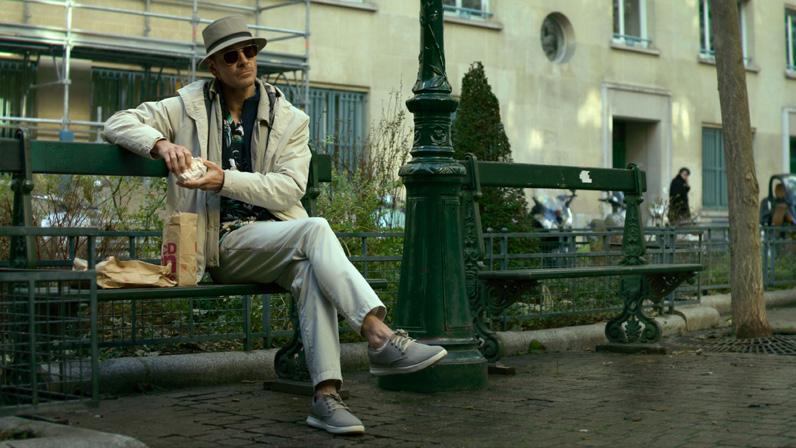
It’s this eerie diatribe that makes up the majority of the film’s dialogue.

THE yachts were sailing, the sun was dancing on the water and the views were as pretty as ever. It was lunchtime at the recently renovated Snapper & Co (Southern Cross Yacht Club).
It was our first visit since the revamp, and this truly is a special spot.
Visitors can still grab boxed food and sit on the lawns in their own chairs, letting kids and pets in on the fun. Food “zone” options now include “The Deck”, an elevated full-service space enclosed by massive windows (bookings recommended), and “The Courtyard”, greatly expanded and for walk-ins only. This includes indoor and outdoor areas, and cute cabanas for between six and 10 (these must be reserved).
All food comes from the same kitchen so it’s a question of choosing what tickles your fancy in terms of a dining space.
We began by sharing the chilled, fresh Australian seafood platter ($85), a feast of fresh oysters, Queensland prawns, Moreton Bay bug, Tasmanian smoked salmon and blue swimmer crab.
You can add half lobster for $30 (which we did) or a full for $60. The feast came with a tangy shallot dressing, a creamy cocktail sauce and fresh lemon wedges (Snapper & Co kindly obliged when we asked for extra). Everything tasted as amazing as it looked. Barramundi was the fish of the day – crumbed or battered, with chips, fresh
Australia and tells the story of the cunning pickpocket of Charles Dickens’ famous novel and what he gets up to in the years following his encounter with the iconic orphan.
Jack Dawson (no, not the “Titanic” one) as the young thief is known, is played by Thomas Brodie-Sangster, who audiences might know as the wise young seer in “Game of Thrones” or that kid who ran through the airport in “Love Actually”.
He’s perfect for the role here, bringing wit and energy to an older version of the beloved character.
But what really spices up the plot is the presence of Fagin, played by “Harry Potter” star David Thewlis.
For those not familiar with Dickens’ famous novel, Fagin was the old crook who turned the poor children of London into thieving riff-raff by teaching them his deceptively crafty ways.
love with Disney Plus’ newest “Oliver Twist” spin-off show “The Artful Dodger”. This eight-episode series is set in 1850s
rocket and tartare sauce ($19). The signature crumb was golden and crunchy, the fish piping hot and the service of chips generous.
One of our party ordered the Tassie salmon (180 grams) with a small side of Greek salad (tossed salad is another option) ($29). She thought the fish was lovely and super moist.
It was sharing time for two who were lunching with us, with the Asian-style, baked, whole baby snapper large enough to fill both tummies ($39). The dish featured chilli (not super-hot but definitely with kick) and a blend of fresh lime, ginger, soy and garlic. It took ages for the dish to arrive.
We shared a lovely roasted pumpkin and feta salad with baby spinach and pinenuts (medium for $10; large for $12). The second salad is Mediterranean vegetables with balsamic vinegar.
For us, Snapper & Co is about the fish and seafood, but the place is smart enough to offer pizzas, burgers (including a Kimchi Butt of pulled pork, kimchee and sriracha mayo for $22), a cheese platter ($31) and a charcuterie board ($45). There’s something for everyone with kids well taken care of and four desserts up for grabs if you have room. Weekend breakfast is available.
Wine is reasonably priced ($47 for a rose with the weekend surcharge). Lovely with Snapper’s live music.

In this new series he tracks Dawson down after many years, pulling the young boy back into a life of crime that he’s desperately attempted to escape.
And what a fun surprise that it’s in Australia, of all places, they’ve landed. “The Artful Dodger” is set in “Port Victory”, a colony existing right in the middle of the Gold Rush at a time when the crooks of the soot-ridden streets of London were shipped off to a new land to begin a new life.
The result here is a darkly amusing spin-off of one of the most famous novels of the 19th century, bringing it to a modern audience with a shrewd script that already has viewers hanging out for a second season.
Please sir, I want some more.

JAMAIS vu enveloped me at Anderson Winery in Rutherglen.
Here I was doing something oft repeated, tasting wine, yet experiencing something for the first time, despite rationally knowing that I’d experienced it before.
Here I was in a must-smelling wine cellar that doubles as the cellar door, which was familiar country, but a welling up of negative subjective recognition contrasted with a strange, positive objective recognition.
This feeling, the opposite of déjà vu, was triggered by my tasting the Saperavi varietal for the first time. It is a red wine. The grape comes from Georgia, the former Soviet State, not the southern US State.
It is in this country where wine making began at least 6000 years ago, according to Howard Anderson, owner and winemaker at Anderson Winery, a matter confirmed by a US website that told me: “If you asked most people where they think the birthplace of wine is, they’d probably get it wrong. The small former Soviet Republic of Georgia holds that distinction.”
The meaning of Saperavi in the Georgian language is “dye” and that suits the intensity of colour, similar to the colour of Durif.
According to Christobelle Anderson, winemaker and daughter of the owner, most red grapes have the colour in the skin but with Saperavi there are red “veins” through the berry so the colour spills out straight away at the crush but there is also colour in the skin.
The 2020 ($25) was on taste and it was, to say the least, a different tasting experience, unique. The wine was matured in French oak and there
was a hint of vanilla but the dominant flavour was of baked beetroot with a herbal finish.
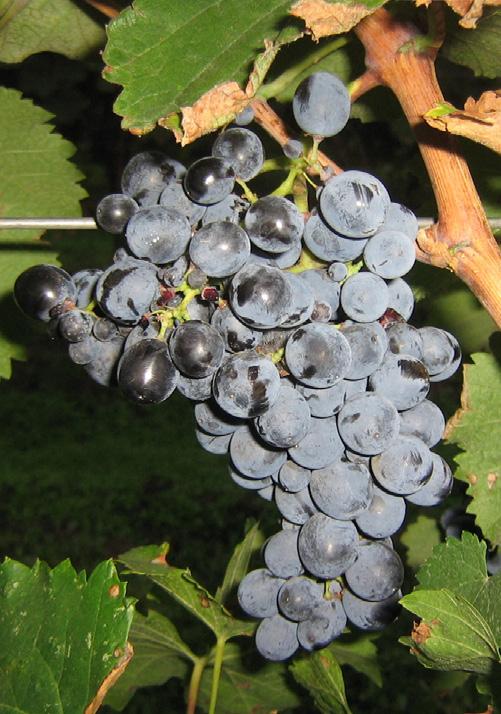
Howard said that this year they were experimenting with maturing Saperavi in an amphora and that he had reached the conclusion that this method is definitely worth exploring further as it allows the natural flavours through and is more in line with the way the wine is grown in Georgia.
I asked Howard how he came to plant Saperavi.
“Back in 1992 I started making contract wine for other vineyards as I was new to owning a winery,” he said.
“I had no direct customers and I was making contract sparkling for
I asked if it was a robust varietal.
“The grapevine in the vineyard is less vigorous than some other varietals,” he said.
“I’ve come to the conclusion that Saperavi is not as vigorous as shiraz or temperanillo. The vines originally were quite brambly, but as they’ve matured they have settled.
“But the fact is that in Georgia they regard Saperavi as a premium variety and I still think it’s awesome,” he said.





•
•
•
•
•
THE NSW Christmas bush (Ceratopetalum) flowers around Christmas time in eastern Australia.
As a cut or dried flower, it can dress up and decorate the Christmas table.
The NSW Christmas bush is a shapely native shrub with cream-white flowers that are borne in spring, followed by red or pink bracts that carry a brilliant colour right through to February.
The most popular variety is the deciduous Alberys Red, which grows to four metres high in our climate.
However, I’ve found it fickle to grow in Canberra. I’m on to my third one this time in a pot that will be brought into the glasshouse in winter to help it survive. I have seen two growing outdoors without a problem in Canberra. I find it frustrating, but a challenge to grow one nonetheless.
It needs really good drainage and protection from the cold winds in winter. It would grow well down the coast or in slightly warmer winter conditions than Canberra.
It can be pruned in autumn to keep the growth compact. Mulch will prevent it from drying out over the warmer months through summer.
The NSW Christmas bush is popular in the dried flower and floristry industry and as a potted plant.
There’s a dwarf variety, suitable for a pot, that’s a little harder to source and is called “Johanna’s Christmas”. It grows only to 1.5 metres. If you manage to get one successfully growing or have one successfully growing, please let me know! ( jackwar@home.netspeed.com.au)
AS we reach the peak of summer, now’s a crucial time to consistently water all fruiting trees.
Daily watering may be required in some cases, but if fruit trees lack water at this time, the fruit will become dry and prob -
ably won’t form well. The tree will go into stress and begin to drop fruit at harvest time. It’s important to water the dripline of the tree and not the trunk; soak with a sprinkler for a few hours to give the plant a deep soak down to its roots.
Try not to water the foliage, keep it dry as possible to prevent fungal diseases.
Cherries are ripe now. Peaches and nectarines should be ready to pick early to mid-January and then it’s time for the apricots.
To prevent a glut of fruit all at once, pick the ripest fruit first thing in the morning and immediately place it in the crisper of the fridge. That way it will keep for two or three months – the quicker picked fruit goes into cold storage, the longer it’ll keep.
If there is a glut of fruit, here’s a recipe for a favourite of mine – fruit soup.
Merry Christmas to you all and happy and safe gardening over the festive period.
jackwar@home.netspeed.com.au
FRUIT SOUP
1 kg stone fruit (peaches, nectarines, apricots, plums, cherries)
Juice of ½ lemon
1 orange , juice and zest
2 cinnamon quills
½ cup of light red wine, if using red fruits
1 cup white wine (riesling)
1 to 2 cups of water
½ cup sugar, or more to taste
1 tbsp cornflour
Greek yoghurt to serve
Pit cherries and remove the stone from the large fruit. There’s no need to peel the fruit, just cut it roughly into pieces.
Combine fruit, orange juice and zest, lemon juice, cinnamon, wine and sugar into a saucepan.
Add 1 cup of water. Partly cover and simmer for 10 minutes or until the fruit is cooked. Remove cinnamon and puree the soup.
Serve in cold in small bowls with a dollop of Greek yoghurt.
• Keep netting secure around fruit trees.
• Continue to pick zucchini when 10cm-15 cm long.
• Plant annual seedlings for a colour display right through to autumn.
• Start looking at catalogues and seed sowing for winter vegetables.





By Joanne Madeline Moore
ARIES (Mar 21 – Apr 20)
Mercury is reversing through your career/reputation zone, so make sure you behave yourself at the office Christmas party. And you also need to think twice about posting controversial comments online (especially about work or colleagues). Plus – with a tricky Venus/Uranus opposition – if you are too impatient, distracted (or even reckless), then you could find yourself involved in an argument or accident. Your Yuletide motto? ‘Act in haste, repent at leisure.’
TAURUS (Apr 21 – May 21)
Hey Bulls… this week Jupiter (which is transiting through your sign) makes a positive connection with Mercury. Which favours communication, education, organisation and productive work. But remember Mercury is in retrograde mode (and it also links up with Saturn) so results won’t be instant, and success won’t be overnight. Don’t be all work and no play, though – make the time to kick up your heels (or should that be hooves?) and have some fun.
GEMINI (May 22 – June 21)
You’re in the mood to let your hair down and party but don’t accept things at face value. With Mercury reversing through your mystery zone, look beneath the surface gloss to discover what’s really going on. And – when you’re buying last-minute presents – Saturn encourages you to choose gifts that are practical and useful. It’s also a good idea to get as much of the food preparation done as you can before Christmas Day. Organisation is the key to a cool Yule.
CANCER (June 22 – July 23)
It’s time for Crabs to get cracking! When it comes to work, habits, health and fitness, the more proactive and organised you are, the better the results will be. However – with Mercury retrograde – a lack of focus, direction (and diplomacy) could temporarily side-track relationships and confuse you. And don’t let a dubious acquaintance lead you down the primrose path to trouble (romantically or professionally). Keep your trusty Truth Detector set on high.
LEO (July 24 – Aug 23)
Curious Jupiter and adventurous Uranus are charging through your career zone, so it’s time to stretch yourself in exciting new professional directions. But Mercury is reversing through your work zone, so you need to prepare carefully and plan thoroughly before you launch exciting projects in the New Year. Your motto for the week is from birthday great, actress and activist Jane Fonda (who turns 86 on Thursday): “Stay curious, keep learning and keep growing.”
VIRGO (Aug 24 – Sept 23)
Courtesy of retro Mercury, you can’t escape close relationships this week. Don’t approach things with the same old stale attitude – it’s time to recalibrate! If there is a problem: fix it. If there is a misunderstanding: sort it out. If there is too much distance between you and a loved one: get closer. The more positive energy and hard work you pour into partnerships, the more beneficial they will be. Xmas Eve is all about connecting with family and friends.
LIBRA (Sept 24 – Oct 23)
The opposition between your ruler, Venus, and Uranus is exact on Tuesday. So the challenge is to get the balance right between your independence and the needs of loved ones; between being cautious and being spontaneous. An impulsive online spending spree on Monday or Tuesday could see you full of regrets later in the week. If you’re planning a weekend getaway, make sure you closely check all travel arrangements, bookings and accommodation – twice!
SCORPIO (Oct 24 – Nov 22)
Expect the unexpected! Many Scorpios are primed for parties and other Yuletide celebrations as sociable, va-voom Venus transits through your sign until December 29. So it’s time to dance, charm, shmooze, shimmy, sparkle and shine! But on Thursday a loved one could hit you with some surprise news. And – with Mercury reversing through your money zone from Saturday – resist the temptation to spend up big over the Christmas/New Year period.
SAGITTARIUS (Nov 23 – Dec 21)
The Sun and Mars are charging through your sign, so you’re raring to bust out of your comfort zone and do something daringly different as you travel, explore and/ or experiment. But retrograde Mercury also moves into Sagittarius, so prudence and patience will take you further than spontaneity and speed. As writer (and fellow Sagittarian) George Eliot wisely observed: “Great things are not done by impulse, but by a series of small things brought together.”
CAPRICORN (Dec 22 – Jan 20)
With Mercury retrograding through Capricorn until Saturday (when it reverses back into Sagittarius), it’s time to reflect, reconsider, re-evaluate, recalibrate and reboot. The Sun transits into your sign on Friday, where it stays until January 20. So it’s also a good week to inspire those around you in positive, powerful, long-lasting ways. As actress (and birthday great) Jane Fonda says: “I want to be inspiring to myself, to my kids, my family, and my friends.”
AQUARIUS (Jan 21 – Feb 19)
The Venus/Uranus opposition suggests a house move, family fiasco, uninvited guests dropping in or some other kind of domestic pre-Christmas drama. And some Aquarians could experience disruptions at work. Whatever happens, strive to get the balance right between your public life and your private responsibilities. Retrograde Mercury also pushes you to revisit and revise an old dream. But don’t get so carried away that you throw the baby out with the bathwater!
PISCES (Feb 20 – Mar 20)
This week the sociable Sun and proactive Mars are both charging through your career zone. So fire up the festive charm as you party with work colleagues and improve relations with clients or customers. However – with Uranus stirring things up and Mercury in retrograde mode – you may find relations with a relative, friend or neighbour become rather strained. So it’s also time to fire up your Piscean diplomacy skills – they are hiding there somewhere!
Copyright Joanne Madeline Moore

1 Name the fifteenth letter of the Greek alphabet. (7)
2 Which part of a house is directly under the roof? (5)
3 What are concealed marksmen? (7)
4 Name a more common term for gasoline. (6)
(7)
(6)
(7)
(7)
(6)
To surpass, is to do what? (7) 22 Name an alternative term for amusement or sport. (7)
23 Which close-fitting one-piece garment is worn by acrobats, dancers, etc? (7)
24 What is the offence of stealing? (7)
5 What is an artificial embankment? (5)
6 Name a dry Italian wine. (7)
7 To be out of practice, is to be what? (5)
13 Name a kitchen sideboard. (7)
15 What is an estate agent known as? (7)
16 What are defensive pieces of armour? (7)
17 To be unfeeling, or merciless, is to be what? (6)
18 Name the expanding and contracting opening in the iris of the eye. (5)
19 What is a prolonged separation from one’s country? (5)
20 What is a brisling also known as? (5)
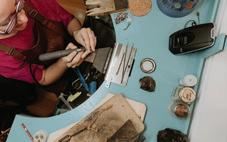
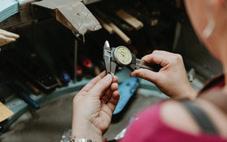
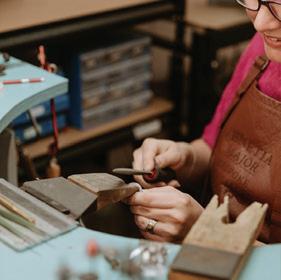



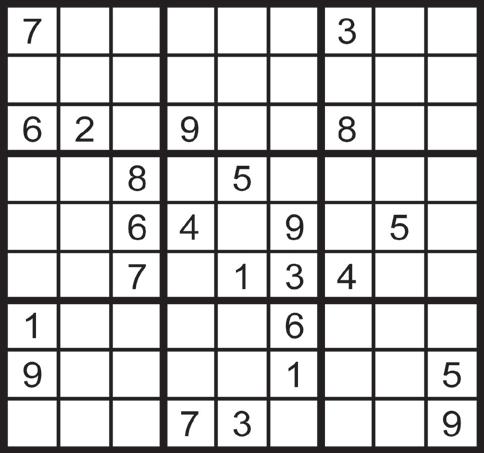
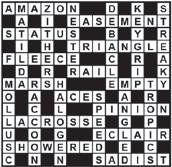
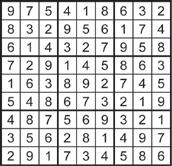


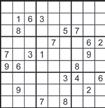
EXPLORE the past, present, and future of Snowy Hydro at one of the Snowy Mountains’ must-see attractions.
DISCOVER the Snowy Scheme’s proud history, learn about renewables, and stay up-to-date with the Snowy 2.0 pumped-hydro expansion mega project.

IMMERSE yourself in the interactive displays, exhibition space, and state-of-the-art theatre.
THE DISCOVERY CENTRE AND CAFE is open daily. Take a break and enjoy a delicious barista-made coffee and light refreshments.