








By Nick OVERALL

CALLS to ban spit hoods in the ACT after police used one to restrain a 16-yearold girl have raised serious concerns for the Australian Federal Police Association (AFPA), who believe the human rights of offenders are being put above police officers.

A spit hood is a bag constructed out of mesh that is placed over the head of a detainee to stop them from spitting or biting, with the aim of preventing injury to or infection of police officers.
A furore over their use in Canberra was sparked after ACT police chief Neil Gaughan told a Budget estimates hearing that police had recently used a spit hood to restrain a teenager.
The 16-year-old had allegedly refused to surrender alcohol, before she bit the inside of her mouth and spat blood at arresting officers.
The incident raised imme -
diate concern from the ACT Greens, who have described the equipment as “degrading devices that restrict breathing.”
The ACT Human Rights Commission (HRC) and indigenous advocacy group Change the Record have also joined calls to ban the devices, saying it “beggars belief why spit hoods would still be in use in a so-called human rights jurisdiction like the ACT”.
But the prospect of a ban has attracted the ire of AFPA president Alex Caruana, who says the safety of offenders is being put before the safety of police

and the community.
“Ultimately, it comes down to this: if you don’t want to have a spit hood put over your head, don’t spit at police officers and break the law,” says Caruana.
“It’s not just the police officers, it’s the community, it’s teachers, it’s first responders, paramedics and firies as well that have all been subject to the foul act.
“I’ve invited both the Greens and the HRC to live the life of a police officer for a week and see how the police officers’ human rights are being degraded, how they are suffering every
Since 1993: Volume 28, Number: 37
day from what they would deem significant human rights breaches, yet nothing is being done to protect them.”
SA banned spit hoods late last year following the death in 2016 of indigenous man Wayne Fella Morrison, who had been restrained with a spit hood while being held on remand in Yatala Labour Prison.
The 29-year-old died at the Royal Adelaide Hospital three days after the incident, leading his family to wage a five-year campaign to see spit hoods criminalised in the state.
The Greens are now calling
on the ACT government to take similar action in banning the device.
“No one should be spat upon while they do their job, but there are more suitable and humane measures for police to use,” says ACT Greens police spokesperson Andrew Braddock.
“Spit hoods are not used in most places in Australia because they are traumatic and potentially lethal devices. They have been implicated in the deaths of Aboriginal and Torres Strait Islander peoples in custody across Australia.”
Braddock says alternative measures include minimising face-to-face contact by placing offenders in a secure area, and utilising divisional vans for transport and personal protection equipment (PPE) such as eye-wear, face shields, masks and gloves.
However, Caruana says many of the alternative measures aren’t tenable.
“PPE doesn’t actually prevent you from getting spit, blood or phlegm on your face, in your mouth or in your eye.
We know that the spit hoods do prevent it,” he says.
“Make no mistake, offenders do it on purpose and take great
joy in it. “There are stories where people have bit the side of their cheek, spat at a police officer and said: ‘Enjoy that, I have Hepatitis C’.
“The grief that police officer then has to go through; six months worth of waiting before they can show love to their kids, to their loved ones while they’re waiting for a test result. It’s unacceptable.”
There are currently around 100 spit hoods in the ACT Police Watchhouse that, according to Gaughan, are used “very seldomly”.
It’s the belief of Caruana that an incident similar to what happened in SA is “highly unlikely” given the processes and type of spit hood now used by the Australian Federal Police and ACT Policing.
“I think it’s important to know that spit hoods aren’t something that’s used every day and it only occurs for those offenders who are not compliant, that need to be protected from themselves,” he says.
“I think the human rights of the people looking after the Canberra community far outweigh the human rights of the people that have decided to commit a vile act.”
Arts & Entertainment 37-42
Canberra Matters 6
Crosswords & Sudoku 43
Cinema & Streaming 42
Dining & Wine 41
Gardening 36
Horoscopes 43
Letters 17, 19
News 3-19
Politics 14
Whimsy 16 It seems incredible, the queen’s no longer here.
Story Page 8. Photo: Silas Brown. Ph
9b/189

Managing director: Kate Meikle, kate@citynews.com.au
Sales director: Tracey Avery, 0477 939999
Senior advertising account executive: David Cusack, 0435 380656
Advertising account executives: Damien Klemke, 0439 139001
Tim Spare, 0423 381691
Editor: Ian Meikle, editor@citynews.com.au
Journalists: Belinda Strahorn, belinda@citynews.com.au; Nick Overall, nick@citynews.com.au; Lily Pass, lily@citynews.com.au
Arts editor: Helen Musa, helen@citynews.com.au
Production manager: Janet Ewen
Graphic Designer: Susanne Boag
Proof reader: Glenda Anderson
Distribution manager: penny@citynews.com.au



“PEOPLE die in hospitals. It is part of delivering a hospital service.” And there, with chilling clinical indifference, the health minister confirmed to the nation the shameful state of emergency care in the ACT.
That line, from Rachel Stephen-Smith’s appearance at the August 23 estimates hearing, was beamed to every corner of our wide, brown land in a damning indictment on the treatment and deaths recently of two young people – first, five-year-old Rozalia Spadafora and more recently Brian Lovelock , 13 – in hospital.
Avoidable deaths? That’s for the coroner to ultimately decide, but the story on “A Current Affair” made for uncomfortable viewing; two sobbing mothers contrasted with Stephen-Smith, virtuously wearing a mask as she strode silently across Civic Square stalked by a persistent “ACA” reporter asking, not unreasonably after four requests for an interview, why the minister wouldn’t talk to her.
To the reporter’s question: “Children are dying, you’re the health minister, what are you doing about it?”. Stephen-Smith, through her mask, had the gall to say: “I would strongly recommend that you think about the way you are presenting this story.”
Guaranteed broadcast and high-fives in the Sydney editing suite, but a revealing
glimpse for wider Australia of an arrogant government minister in an arrogant, tired government too used to compliance from sections of the local media.
Tone deaf, she marched on ignoring the reporter’s insistent questioning until, as she was about to disappear down a staircase, she was asked if she had anything to say to the bereaved families. The mask dropped and there was a tremulous apology. Of sorts.

Two days later, Leon Delaney, on 2CC’s “Canberra Live” drive program, took the minister to the observation of Prof Walter Abhayaratna , AMA ACT president, that there were some changes to the hospital’s early warning pediatric protocols that could be “implemented immediately”.
“I don’t think Walter is right about this. I’m going to be blunt. I don’t think he is reporting this issue fairly,” she said.
Well, of course, what would Walter know, anyway? He only practices at Canberra Hospital and isn’t briefed to any level like the minister is.
“I really would emphasise that there is, in fact, no completed investigation that indicates that the actions of Canberra Hospital resulted… was contributing to the eventual outcome,” she blundered on.
That would be because the coroner is
looking at it and is probably months and months away from forming any view?
Then when Delaney got to the question of empathy, we broadly discovered she hasn’t got any. She sent the grieving family of the five-year-old an email of sympathy. An email, sweet Jesus!
A simple message offering the opportunity of a meeting is not a difficult thing to do, mused Delaney?
“I think it’s very easy to say that in hindsight, but it would not be the normal thing to do [children dying in these circumstances in our hospitals is “normal”, minister?].”
Then it got worse: “The thing that really frustrated me about this is Ms Castley met with the family; she appears to have known they were expecting some senior outreach from me or the CEO or chief operating officer at the Canberra Hospital.”
Ms Castley is Leanne Castley, the opposition health shadow, suddenly dragged into the interview.
“She didn’t tell me that. She waited a week. She didn’t pick up the phone to me to say, hey, the family’s in distress, this family needs support.
“She knew that before it was in the media. She’s got my phone number; she didn’t call me, she didn’t text me; she didn’t send me an email.”

Well, boo-hoo-hoo, Rachel. With all the resources of the Health Directorate, you’re calling out a fellow member of the Legislative Assembly for having the wit to come down from the ivory tower and demonstrate empathy to a grieving family.
At the end of the “ACA” report, anchor Tracy Grimshaw intoned that the chief minister was standing by the health minister and the ACT government would wait for recommendations from the coroner before making any changes to the health service…
Just as Skills Minister Chris Steel won’t do anything about the CIT until the Integrity Commision reports; just as Corrections Minister Mick Gentlemen won’t act on allegations of drug parties among prison staff until the Integrity Commission reports.
AND through all this, Health Minister Stephen-Smith is enjoying a pay rise to $301,070.
Mind you, it took the community weeks, no, months, to discover the political class has been quietly given a pretty tasty pay increase.
Compliments of the media-shy Independent Remuneration Tribunal, members of the ACT Legislative Assembly got a 3.25 per cent lift from July 1.
That means we are now paying a base,
annual salary for backbenchers of $177,100 (up $6000).
Andrew Barr gets a $11.5k leg up as chief minister with his salary now tipping $371,910 and Opposition Leader Elizabeth Lee takes home $301,070.
And while your eyebrows are up: Deputy Chief Minister Yvette Berry is on $318,780 and Deputy Opposition Leader Jeremy Hanson trousers $212,520.
The head of the ACT public service Kathy Leigh , she who – eight years in the job –was unable to answer the Liberals’ question about how many times maladministration, corruption or fraud was reported to her as required under the ACT Public Sector Management Act at the recent estimates hearings, is now enjoying $434,014 a year. That’s $62,104 more than her boss, the chief minister.
Ian Meikle is the editor of “CityNews” and can be heard with Rod Henshaw on the “CityNews Sunday Roast” news and interview program, 2CC, 9am-noon. There are more of his columns on citynews.com.au

Interaction Consulting Group is a leading management consultancy in Canberra.
We recognise the importance of collaborating directly with clients to deliver tailored strategic advisory, facilitation of training, and executive-level coaching.
As trusted partners, we are committed to growing and transforming organisational capability, navigating complex challenges, and empowering future leaders.

AS one of only two doctors in audiology in Canberra, Dr Bill Vass has built his professional career by delivering ethical, patient-centred care for those with hearing loss.
Dr Vass graduated from West Virginia University with a Masters of Science degree in Audiology and his Doctor of Audiology from Central Michigan University, and has been maintaining his education and qualifications ever since.
Located in Deakin, Dr Vass runs his own independent clinic where he provides specialist audiological advice and unbiased options.
“I believe it’s important to give my patients a wide choice of devices, which is why I’m not affiliated with any particular brand,” he says.
Dr Vass says he takes a medical approach to his clients, as opposed to the “white goods” sales model that offers free hearing assessments or giveaways to lure customers in and then sell.
“Professional, independent advice about hearing loss and what may be done to help is more important,” he says.
Dr Vass says that the increase in unqualified people working in the audiology industry is cause for concern.
“There is no licensing of people doing this work in Australia. Anyone can go out and sell hearing aids with no professional qualifications,” he says.
“I think that people with no qualifications have no business advising people on their hearing loss.”
He says that this worrying trend can lead to people being advised to purchase expensive hearing aids that are not appropriate for them or, in other cases, they’re told to get hearing aids when there is no medical need.
“Wearing hearing aids when you do not need them could overdrive the system and could create additional damage to hearing loss,” he says.
Dr Vass says that, in contrast, he puts his patients’ needs before his own and may even turn people away who are not yet ready for a hearing aid.
“It’s rewarding to help people not be so isolated, and help improve their communication with others, especially their loved ones,” he says.
Technology in hearing aids has improved in sophistication dramatically over the past six years, with the introduction of bluetooth connectivity, remote microphones and television connections. With two inbuilt computers and microphones, Dr Vass says there are thousands of possibilities and adjustments
that can be made to a hearing aid to ensure the best results for the patient.
“Hearing aids these days are about clarity not just loudness. They don’t just amplify all sounds,” he says.
Dr Vass says that he helps guide people through a journey – from the initial consulta tion he understands from his patients what is going on and how they feel about their hearing loss before conducting a comprehen sive hearing assessment.
“I will then give advice on the next steps. Sometimes it means looking at hearing-aid options or other times we do nothing… people have to accept and be ready for hearing aids to really be successful for them,” he says.
“We find that those people who put off getting help with their hearing loss for long periods don’t have as successful outcomes as those who seek help earlier.”
Dr Vass encourages people to ask ques tions of their audiologist before seeking their services. Questions include what are their qualifications, commissions and experience which will help to better guide patients to get the best outcome.
Dr Vass Hearing, Suite 14, John James Medical Centre, 175 Strickland Crescent, Deakin. Visit hearingclinic.com.au no business advising people on their hearing loss.”


THE decline of architectural design solutions and the loss of political will to deliver good urban design in Canberra was clearly illustrated through the presentation to the North Canberra Community Council committee.
The August 17 presentation was about the development application for Braddon Place, a former socialhousing block situated between Northbourne Avenue and Henty Street, on the northern edge of Haig Park in Braddon.

In 2011 this site was subject to a design competition with the winner being a proposal titled Weave Design, by John Wardle Architects. This tripled the number of units, offered plenty of open spaces, community facilities, playground, child care, shops – and homes for some of the social-housing tenants of the former complex.
The interface with Haig Park was to be three-storey buildings. The design would have delivered an interesting 21st century architecture and landscape complex of a type not seen along Northbourne since the arrival of the tram. So much was promised, but not delivered.
In 2018 the site was sold by the Suburban Land Agency with the
provision that developers consider the location, its constraints, the interface with adjacent Haig Park, and the 2011 winning Weave Design. The former buildings were demolished despite some of them being repurposed as part of the Weave concept. The inclusion of social housing dropped off the list of requirements.
The August presentation included a series of nine and six-storey ordinary buildings – with the interface nearest Northbourne to Haig Park being the walls of a nine-storey and a six-storey tower.
At the time of presentation, the development was struggling to receive support from the National Capital Authority, the City Renewal Authority and the ACT’s Tree Protection Unit – many large trees on the
The ACT Greenslabor government’s standard is clear. Canberra’s streets have the capacity for bumper to bumper traffic, 24 hours a day.
site will go and some of Haig Park tree root systems will be damaged if the development goes ahead as proposed.
After several sessions with the National Capital Design Review Panel, their support is still on hold. The Weave Design has vanished – along with the playground and other facilities.
As for the local residents (who are novices at this), they have spent many precious volunteer hours navigating the 136 documents that make up the development application.
These Braddon residents appreciate living in apartments (as they do) but are keen to preserve the best of the area – meaning the values of Haig Park and to ensure that future developments enhance facilities and not add to the suburb’s parking and traffic problems.
For them this proposal fails on most issues. Given the questions they have raised, they are now being called NIMBYs because they do not want this massive and questionable development in their cherished suburb.
On the subject of traffic reports, a resident told of questioning another developer’s traffic expert. The story goes something like this: the expert said the traffic generated by the proposed development would result in the traffic on the suburban street being within the capacity of the street. When questioned, the expert agreed that the street’s capacity was as if there was bumper to bumper traffic 24 hours a day. He agreed that there was no street known that operated to this capacity.
The planning authority approved that application. The ACT Greenslabor government’s standard is clear. Canberra’s streets have the capacity for bumper to bumper traffic, 24 hours a day and until that capacity is reached, developments can generate more traffic on to suburban streets.
For the Braddon development, the traffic report was 110 pages and almost inaccessible to residents (not being planning professionals). Why bother!
So here we are in 2022 with residents having to deal with dramatically poorer development concepts when compared with 2011 winning designs that were celebrated by the then ACT government.
Social and affordable housing are no longer considered for this site thanks to the Suburban Land Agency’s 2018 sale conditions. This agency operates with the blessing of ACT Greenslabor politicians.
As with many such dubious development applications, not a word from the ACT Liberals. If approved, six monstrous ordinary structures will detract from the aesthetics and heritage values of Haig Park and Northbourne Avenue. This will be another of Andrew Barr’s and Shane Rattenbury’s development legacies to be puzzled over by future generations. They will be asking – why?
Paul Costigan is a commentator on cultural and urban matters. There are more of his columns at citynews.com.au


C O R K H I L L B R O S M I T C H E L L
B r o w s e o u r e x t e r i o r p o t s a t
3 3 D a r l i n g S t r e e t M i t c h e l l !
6 2 4 1 8 8 6 0
Prince Charles is now king of the UK and Australia, and the Duchess of Cornwall Queen Consort. But it still seems incredible that the woman who has been Australia’s queen for the duration of most Australians’ lives is no longer with us, writes GISELLE
“ELIZABETH the Second, by the Grace of God Queen of Australia and Her other Realms and Territories, Head of the Commonwealth” has died.
Given her advanced years, this has long been expected, yet it still seems incredible that this woman who has been Australia’s queen for the duration of most Australians’ lives is no longer with us.
While the focus of the formalities and ceremony of the passing of Queen Elizabeth II will centre on London and the UK, there is no doubt it will be keenly observed by many Australians.
The queen liked Australia and Australians. She came here 16 times throughout her reign and was, famously, on her way to our shores in 1953 when she learned her father had passed on and she was now queen.
Her visits to Australia – from her first in 1954 through to her last in 2011 – offer a snapshot of the changing relationship Australians have had with their sovereign and with the monarchy.
The queen’s 1954 tour took place during a time described by historian Ben Pimlott as the age of “British Shintoism”. Deference to the Crown was paramount in Britain and the Commonwealth, and many Australians
BASTIN
were madly enthusiastic about their queen.
After her arrival at Farm Cove in Sydney on February 3, 1954, Elizabeth II became the first British monarch to set foot on Australian soil. The royal tour lasted nearly two months and consisted of a gruelling schedule taking in visits to every state and territory apart from the NT.
During the tour, the queen greeted more than 70,000 ex-service men and women; drove in cavalcades that took in massive crowds; attended numerous civic receptions; and opened the Australian Parliament in Canberra. The tour saw Elizabeth travel 16,000 kilometres by air and 3200 kilometres by road – including 207 trips by car and by appointed royal trains.

The 1977 Silver Jubilee and 1988 Australian bicentenary visits perhaps marked the end of a period of royal tours as overt celebrations of Australia’s ties to Britain. On her 10th tour in 1986, the queen returned to sign the Australia Act, which brought to an end the ability of the UK to create laws for Australia.
By the 12th tour in 1992, the cost of the queen’s visits to Australia were increasingly scrutinised by a public feeling largely indifferent about the royal family. The prime minister of the day, Paul Keating, unthinkingly committed an act of lèse-majesté by placing his bare hand on the royal back and waist as he guided her through the crowd.
It is estimated as much as 75 per cent of the population saw the queen and Prince Philip during this tour.
During her first two tours in 1954 and 1963, the Australia laid-out for display for the queen was depicted as having gone from being a small colonial settlement to a thriving economy that had ridden to prosperity “on the sheep’s back”.
The queen was treated to endless displays of sheep shearing, surf carnivals, wood chopping, whip cracking, and mass displays of dancing and singing by school

children. Federal and state dignitaries, mayors and civic leaders from across the political divide jostled to meet and be seen with her; the country’s florists were emptied of flowers for the hundreds of bouquets presented to her by dozens of shy, nervous school children nudged gently forward by awestruck parents.
During the early tours, Aboriginal Australians were kept at a discreet distance. Apart from a demonstration of boomerang and spear throwing, the closest the queen came to experiencing anything of indigenous Australian culture was a ballet performed by the Arts Council Ballet titled “Corroboree”, with no Aboriginal dancers but dancers with blackened faces.
During the 1970 visit, the queen witnessed the re-enactment of Capt James

Cook’s arrival at Botany Bay, with Cook and his crew meeting “the resistance of the Aborigines with a volley of musket fire”.
By 1973, Indigenous Australians were given a more significant role in the royal tours. Aboriginal actor Ben Blakeney, one of Bennelong’s descendants, gave the official welcome during the opening of the Sydney Opera House.
The 1963 tour witnessed smaller crowds and fewer mass public events. When Prime Minister Robert Menzies courted the queen with the now-famous line, “I did but see her passing by, and yet I love her till I die”, the ensuing blushes – including the queen’s own – reflected many Australians’ growing sense of embarrassment at public displays and unquestioning expressions of deference.
The queen made it clear in her last visits to our shores that whether or not Australia should become a republic was a decision for its own citizens to make.
In the last decades of her life, her popularity seemed to grow in line with Australians’ increased disenchantment with their home-grown political leaders: the former prime ministers Malcolm Turnbull and Julia Gillard are right to have sensed that any discussion about an Australian republic would have to wait until after the queen’s death.
Queen Elizabeth II reigned across seven decades as the stalwart, loyal, dutiful, and one we are unlikely ever to see again.
Giselle Bastin, Associate Professor of English, Flinders University. This article is republished from The Conversation.

Photos and property films that sell
You know that saying “You shouldn’t judge a book by it’s cover”?, that’s exactly what prospective buyers and renters are doing when they’re looking for a home or commercial space. Our job is to make sure that your listing is presented in the best way possible. Why us?
Our team are experienced wedding cinematographers and photographers so we bring that same skill and attention to the real estate space.
If you’re looking for a reliable, creative and innovative team, Curated Visuals is the right choice for you.
www.curatedvisuals.com.au/real-estate-photography info@curatedvisuals.com.au | 02 9174 5246


WAITING times at ACT emergency departments continue to deteriorate with less than half of patients seen within clinically-appropriate time frames in 2021-22.
ACT Health’s 2022-23 budget shows that only 48 per cent of emergency department patients were treated on time last financial year, despite almost 10,000 fewer presentations than the previous year.
The government’s target set for 2021-22 was 70 per cent of emergency department patients to be seen on time.
Shadow Health Minister Leanne Castley said: “The Health Minister has been in the job more than three years, yet she has failed to fix our appalling ED wait times like she promised.
“Not only have Canberrans been told to stay away from ED unless absolutely necessary but ED staff are approaching patients and suggesting they go home.” Figures also show that only 56 per cent of Category 2 semi-urgent patients were operated on within 90 days, compared to the government’s target of 80 per cent.
Recent estimates hearings also revealed only 14,031 elective surgeries had been performed compared to the government’s target of 14,800.
“It is no surprise the government is falling way short of its own ED and elective surgery targets when it has been underfunding our health system for years and burnt out staff are leaving in droves,” Castley said.

Mention this ad to receive
15% OFF ALL
excluding Electric bikes T & C's apply
REVEALED
IN recent weeks we have provided comment on competing claims by the ACT government and the opposition about the level of investment by the government in public housing.
We had thought we had said enough on the issue, but our attention has been drawn to the response of an “ACT government spokesperson” to a query by local radio station 2CC about our articles on the public housing renewal program.
The spokesperson asserted that we were “incorrect” and offered the following as proof:
(a) The government had delivered 1200 renewed public homes.
(b) No funding was redirected from the Public Housing Renewal Project to light rail.
(c) The Commonwealth provided $67.14 million as a contribution to Light Rail under the National Partnership Agreement on Asset Recycling (ARI).

Confused? The ACT government pledged to the Commonwealth that cash from public housing land sales was going to fund light rail. The housing minister says, no they didn’t.

The chief minister’s signature says otherwise. JON STANHOPE and

Our earlier articles were in response to claims made by Liberal leader Elizabeth Lee and housing spokesperson Mark Parton that the government had not delivered on promises to invest up to $700 million in public housing, and the response by Housing Minister Yvette Berry to those claims with an assertion that the Public Housing Renewal Program was funded from the Asset Recycling Initiative.
The Minister also advised that public-housing dwellings were purchased by other ACT government directorates and transferred as assets to Housing ACT as opposed to being purchased through the direct appropriation of funds.
In our articles, we pointed out that under the renewal program, while assets worth $457 million were transferred into public housing, the government had taken land from Housing ACT, in prime development sites, with a book value of $222 million.
The net increase of $235 million in public housing assets was, therefore, clearly not only far short of the promised $700 million, but the government has also not disclosed the full financial returns it received from the sale and development of the land taken from Housing ACT.
We also noted that Berry’s claim that the Public Housing Renewal Pro -
with the repeated disclosure, in ACT Budget papers from 2015-16 to 2018-19, that the proceeds of the ARI were spent on Light Rail – Stage 1.
Surely Minister Berry and the government spokesperson are not suggesting that the Budget papers are wrong.
They are, notably, not audited, but their veracity is usually accepted based on the generally acknowledged professionalism of Treasury and its historic (and hopefully continuing) ability to withstand political interference, as well as through public scrutiny by the Legislative Assembly and the media.
Indeed, based on the evidence we have presented, unless the information in the audited financial statements is incorrect, the government’s claim on, for example, Page 188 of 2017-18 Budget Paper 3 that “…total investment in the Public Housing Renewal Program will be $608 million” must also be wrong as must the claimed investments in the preceding years’ Budgets that take the total to $699 million.
In summary, the ACT government has via the Minister for Housing, a spokesperson for the minister, a government spokesperson, and through serial Budget papers made the following categorical claims:
(a) No funding was redirected from the Renewal Project to Light Rail.
(b) Housing renewal was funded by asset recycling.
The proceeds of asset recycling will be directed towards light
Clearly these statements cannot all
In any event it is simply irrefutable that all proceeds of the asset recycling initiative, which included the sale of masses of public housing land, were spent on light rail.
As we noted previously, in 2015, the ACT entered into a National Partnership Agreement with the Commonwealth under which certain specified assets were to be sold by the ACT government to the market with the proceeds of the sales to be applied to purposes agreed by the Common-
equal to 15 per cent of the proceeds of the assets sold.
The “Schedule to the Agreement” signed in 2018 by Andrew Barr, as ACT Treasurer, and the then Commonwealth Treasurer Josh Frydenberg lists the assets which the ACT government agreed to sell off. Apart from assets such as ACTTAB and the Dickson Motor Registry, the following public housing assets were nominated: Dickson Flats, Garden Flats (Dickson), Lyneham Flats, Owen Flats, Northbourne Flats (Braddon and Turner), Bega Court (Braddon), Currong and Allawah Apartments (Braddon), Gowrie Court (Narrabundah), Red Hill Flats, Strathgordon Court (Lyons), and Stuart Flats (Griffith).
The ACT government further committed, under the terms of the agreement (see columns 2 and 4 of the schedule) to apply all proceeds of all sales of all the nominated assets to Capital Metro, ie light rail.
In the event that the full proceeds of the sale of the public housing listed in the National Partnership Agreement were not, as some people associated with the ACT government seem to be suggesting, applied to the construction and operation of light rail then the government has, presumably, breached the agreement.
A final note, the claim by the government “spokesperson” that the government delivered more than 1200 renewed public housing homes is also incorrect. The audited financial statements reveal that the number is in fact 1,194 against the 1,288 disposed of through the Light Rail investment program – a net loss of 194 dwellings.
The “Australian Capital Territory Asset Sales and Projects National Partnership Agreement on Asset Recycling” can be read here: federalfinancialrelations.gov.au/sites/ federalfinancialrelations.gov.au/files/ 2021-01/asset_recycling_initiative_actv2.pdf
Jon Stanhope is a former chief minister of the ACT and Dr Khalid Ahmed a former senior ACT Treasury official.


A section from the “National Partnership Agreement on Asset Recycling” that identifies the ACT asset to be sold and where the proceeds were agreed to be directed.
‘Rather than simply selling a dress, we create an entire experience for our customers’
LOCAL bridal boutique Angelic Inspirations has been named national winner in the Wedding Services category at the Australian Small Business Champion Awards.
Now in its 24th year, the Australian Small Business Champion Awards is the only national-recognition program for Australian small business.
The family owned bridal boutique, located in Federation Square, Nicholls, was feted at the annual awards gala dinner before more than 1000 guests in Sydney earlier this month.
Owner Julie Ross says it was something she will never forget and a career highlight.
“I am privileged to be ‘living my dream’,” says Julie, who credits the win to her team as well as her customers.
Julie says that the success of her business is driven by passion and a “real desire” to deliver a positive experience for her customers.
Angelic Inspirations is one of the most experienced bridal shops in the Canberra region and sells “beautiful, exceptionally well-produced wedding gowns”.
“We sell bridal gowns from quality, reputable and trustworthy designers,” says Julie.
“Each designer has been vetted, trialled and chosen based on their quality, appeal and reliability such as Australian designer, Fox Bridal; American brand, Allure; modern brand Lillian West; high-end Morilee and the elegant Justin Alexander,” she says.
“We also stock a large range of plus-size wedding gowns to cater to this very specific and important market.
“Complementing our range of gowns is a large range of bridal accessories including bridal shoes, which are comfortable, elegant and come in a wonderful range of colours and styles to suit every wedding.
“The boutique also offers a wide range of bridesmaids dresses and other formalwear.
“Additionally, we sell veils, gorgeous hair pieces, beautiful jewellery, belts and garters allowing us to add all the essential ‘finishing touches’ to complete an overall look.”
Julie says her entire team loves what they do and they harness this passion to deliver incredible customer satisfaction.
“This is what drives us to go above and beyond for every single customer, providing unique and personal experiences,” she says.
“Rather than simply selling a dress, we create an entire experience for our customers. Our priority is our customer’s
Established well over 20 years ago, Angelic Inspirations is one of the most experienced bridal shops in the Canberra Region. It has a reputation for professional, personal service, providing individual attention in one of the most intimate and friendly boutique environments in the area. We are confident our brides to be will fall in love with our staff, service and amazing selection of wedding gowns available in store.


LAST week, Wendy returned from a morning trip to town with a “present” – a first edition in mint condition of my book, “The Battle of Brisbane” written with my old school friend Peter Thompson and published in 2000 by ABC Books.
It tells of the “battle” between Aus tralian and American troops in our old home town in 1942 in which an Australian soldier, Edward Webster, was shot to death by a US MP, Private Norbert J Grant; and a riotous Aussie response that put a dozen American servicemen in hospital.

Copies are as rare as hen’s teeth and I was duly grateful… until, that is, she told me she’d bought it for $5 at the local Vinnies.
What troubled me was not the contribution to the religious charity whose profits support the priestly pedophiles (it was her money after all and giving presents is her pride and joy). Instead, it struck home, once again, the blatant injustice of the secondhand book trade.
While collectable shops, market stalls and so-called charities pile up their profits, the authors of the work sold and resold get absolutely nothing.
Indeed, they lose twice over

because instead of buying new from registered booksellers where the publisher pays a royalty on each book sold, they can pick up the same work for a fraction of the price when it eventually – and inevitably – finds its way into the hands of the exploiters.
Some other works of creative art – music, for example – are protected by a system where each time a song is used, a royalty is paid through APRA or AMCOS to the composer and performer.
So why should authors be in any different situation? The same goes for
painters and sculptors. Every time a painting changes hands – perhaps for the usual 70 years after its composition – the artist or her estate should receive a set percentage of the sale. For writers there are some minor offsets. Gough Whitlam introduced Public Lending Right to compensate for the free access to our work through libraries, and to this was added an educational aspect when works are used in school libraries. Add to that the Copyright Agency that theoretically keeps an eye on works copied for whatever use.
But together the annual return to the average Australian author would not pay a single monthly power bill. And the lending/copying area is only a tiny fraction of the massive rip-off from the secondhand trade.
The whole rotten business has been driven home these last few weeks by two good friends presently busting their guts promoting terrific novels they’ve written – Rob Drewe whose brilliant “Nimblefoot” is an absolute corker; and Paul Daley’s “Jesustown”, which kept me riveted, not least because a character is partially based on Donald Thomson whose biography has chained me to the computer for what seems like two lifetimes (his and mine!).
Promoting our work is no fun. We all have stories of the soul-destroying round of radio “hosts” who forget
our names, have only read the back blurb but have firm opinions; and of arts editors who choose reviewers with a book half-written on the same subject. And that’s before penny pinching publishers who pretend that launches – which might cost them a dollar – are “not necessary” since “the book really speaks for itself”. So after all that, to find copies making money for the secondhanders tends to grate more than somewhat.
Perhaps it’s time for the new federal government to devise some measures to protect Australian authors from this exploitation. If so, I have a couple of ideas and would happily put up a hand to join a committee.
robert@robertmacklin.com
Fact and fiction, on an exciting run from the law, Page 39.





CANBERRA modeller Ross Balderson’s
“incredible” model of Newcastle Harbour
1899 is the star attraction at the Canberra Model Shipwrights Expo.
The Newcastle model, 2.5 metres x 2 metres and extremely detailed, has taken Ross 10 years to complete. The background alone took seven months.
He says he researched everything before he started building to be sure his model was historically accurate.
The expo, the first for three years, will also feature museum-quality scale models of many types of ships ranging from historic wooden ships to modern day ships including naval vessels.
The expo is at Mount Rogers School, Melba, 10am-4pm, Saturday, September 17 and 10am-3pm, on Sunday, September 18.
THE fifth Rotary business breakfast will bring together a panel of experts to share practical suggestions in a real-world, small business scenario on how to remain compliant, manage debt and retain vital staff.
The business expert panel includes: Frank Lo Pilato, of RSM Bird Cameron; Aaron Torline, Slaven Torline; Tony Lane, Beacon Advisory and Bernice Ellis, Mills Oakley.
The breakfast is free and will be held at the Raiders Belconnen (Kippax), Holt, from 7.30am on September 28. Registration is essential via eventbrite.com.au


of Canberra modeller Ross Balderson’s model of Newcastle Harbour 1899… 10 years in the making.
THE Kangara Waters community spring market is promising affordable, fresh homemade cakes, handmade greeting cards, pre-loved treasures (including jewellery), crafts, pictures and wall art, homewares and a white elephant stall. Credit cards or cash are welcome. At Kangara Waters, off Aikman Drive, Belconnen, 8.30am-12.30pm on Saturday, September 24.
AKIKO Barkle, from the Smith Family, is the guest speaker at the next luncheon meeting of the Gungahlin Day View Club at the Gungahlin Lakes Golf Club, Nicholls, from 11.30am on September 28. Guests and interested ladies welcome. Call 0407 556460 by 9pm, September 25.


EXPERIENCE wild rhythms, exotic melodies and bold singing when Canberra duo, Alister Price (accordionist) and Desi Gancheva (singer), perform Balkan music and lead dances that everyone can join in. At Folk Dance Canberra Hall, 114 Maitland Street, Hackett, 7.30pm-9pm, Friday, September 23. Entry by donation.
THE UN International Day of Peace
will be observed at the Canberra Rotary Peace Bell, Nara Peace Park, Yarralumla, at 11am on September 21. The Rotary Club of Canberra Burley Griffin in partnership with the UN will host the ceremony, which will include the announcement of the Chief Minister’s Rotary Peace Prize recipient for 2022. Seating is limited and in the event of inclement weather, bring an umbrella as the ceremony is in the open air.
BIFF Ward, author and political feminist in the ‘60s and ‘80s, is the guest speaker at the next lunch meeting of the Weston Creek VIEW Club to be held at the Canberra Southern Cross Club, Woden, from 11.30am on October 4. Interested ladies and visitors welcome. Lunch costs $35. RSVP to 6286 4626 by 5pm, Thursday, September 29.
GREG Bayliss will MC Rotary Canberra Sunrise’s Trivia Night to raise funds for Canteen Australia’s work in the Canberra region helping 12-to-25-year-olds with cancer or kids with close family members with cancer or have lived through the death of a loved one.
Club president Margaret Atkin said the club was hosting the trivia night in honour of a Rotarian who had recently died. The Rotarian helped raise funds for youth services, including children’s participation in Rotary Youth Exchanges, Rotary youth leadership programs, Rotary’s DreamCricket and other community activities.
The trivia night is at the Hellenic Club, Woden, 7.30pm, September 22. Tickets are $35 and available via trybooking.com


FURTHER easing of restrictions around COVID-19 is welcomed by some and seems politically opportune. However, the reality is that many are still suffering or dying.
So what was the advice from the Commonwealth’s chief medical officer along with the chief health officers of the states and territories that motivated national cabinet to lift restrictions even further?
At the federal election, Labor promised to establish a National Centre for Prevention and Disease Control. Advice from this organisation, once established, must be open and transparent.
In contrast to the current system, this would require politicians to explain why they have rejected or modified public health advice.
The impact of COVID-19 in the ACT may have reduced. However, the pandemic has not passed. Epidemiologist Dr Priscilla Robinson, who is a friend and colleague, works out of La Trobe University.
She has been a regular writer in a closed group on COVID-19 clearly explaining the changing situation regarding the pandemic. Her reflections, as at September 7, effectively present just how well Australia is doing.

(over 900,000), South Korea (over 500,000) and China (about a quarter of a million).
“Although case numbers are not necessarily very big, several Pacific Island nations have had big proportional rises (eg Micronesia and Niue).
“In general both new cases and fatalities are down, although in a few countries fatalities (presumably as a result of recent infections) are slightly higher. Interestingly, this seems to be happening in Australia, too.
In the long run the reduction in quarantine time to five days will do absolutely nothing to help the economy. Sick (and dead) people don’t buy much at the shops.
“Worldwide, 7.7 per cent of covid infections have now been notified cases (so the real rate will be higher than that).
“The case fatality rate is continuing its downward movement, now to 1.07 per cent. So it is not surprising that some countries have seen far more of their people being infected, with several mainly European countries having infection rates well over 50 per cent.
“In Australia, we now rank 14th in the world in terms of case numbers –a real feat considering a year ago we were about at the bottom.
“We are still getting about 10,000 cases a day, and nobody really seems to care any more.
“Incidentally the Australian case fatality rate continues to climb slowly, while the worldwide rate is dropping. We are not doing so well, people.”
“The reduction in quarantine time
to five days will, in the long run, cause more grief, as many people are still shedding virus at anything up to a couple of weeks after symptoms begin, so more people will be exposed and become sick.
“In the long run this will do absolutely nothing to help the economy. Sick (and dead) people don’t buy much at the shops.
“About a year ago I drew an analogy between covid restrictions and road safety, and I think the same message needs to be reiterated.
“Road safety works as a package – drivers know they need to stop at red traffic lights and for pedestrians, stay under the speed limit, keep their vehicle in working order, and the local authorities are responsible for maintaining the state of the roads etcetera.
“If you travel to somewhere like PNG you can find out what happens to the roads when this agreement falls over.
“And so it is with covid – there is no attempt to in any way enforce the wearing of masks on transport – the last time I was on a coach a maskless person asked the driver to sell her a mask, which amazed him – ‘No, I sell
bus tickets and drive the bus…’ and I asked a person standing next to me to put a mask on if they were not going to move away (it worked, he did).
“Any attempt to protect people seems to be missing in action – it is sometimes hard for people to even access those famous vaccines, and I am aware that RATs are less available and costly, and covid antiviral treatments are not available for most people”.
The pandemic is still with us. Let’s hope that the introduction of a National Centre for Prevention and Disease Control will mean a change from the times when politics trumps public health advice. But don’t hold your breath.
Michael Moore is a former member of the ACT Legislative Assembly and an independent minister for health. He has been a political columnist with “CityNews” since 2006.


WELL, you can have your balloons and ribbons, heart emojis and smileys.
While entirely guaranteed to make my soppy dad-smile appear, none of those things approach the ultimate symbol of true love – the lawnmower!
Rarely, in this pain-addled difficult world, has the humble two-stroke ever failed in its ability to communicate the depth of connection and meaning between humans, and even with the new battery versions today, their weekend buzz fills my heart anew. A visit to Bunnings remains the pinnacle of our humanity to each other.
When I was 19 and I’d too often spend too many hours paying too much cash for too many drinks at some alliterative bar in the Cross, there was always a special choice open to me.
You see, after some painful years without employment, my papa found himself some casual painting and lawnmowing jobs. When I was at uni, dad would mow lawns for $5 or $10 depending on size, exactly the same complex fee structure I charged in those days for playing the organ in church – $5 for a funeral and

$10 for a wedding!
After accumulating $20, dad would walk to the bank and they’d give him a crisp note, wink at him, and the tellers, both recently having been in my year at school, would then watch him wander to the post office. Then the nice people at the counter would put the note in an envelope and address it to me, and dad would proudly write “your papa” and it would arrive to me a few days later. He never told mum, but the bank manager and postie did and I imagined she had yet another opportunity to reflect
on the gormless foolishness of her menfolk.
Then I’d fold it in the secret compartment of my wallet and forget about it till I was next out at 3am deciding between a taxi home or more carousing.
Dad thought I was Mario Lanza in the “Student Prince” and I would be singing “O Sole Mio” with perfectly teethed choreographed dancers at my side. The reality was a little different but the fun was the same, and I have thanked him every day since.
Love is giving others the experiences and opportunities
Love is giving others the experiences and opportunities you perhaps wished you’d had yourself. Mum and dad needed those banknotes more than my selfish soul ever did, but I’ve never forgotten the giant hearts that went into those gifts.
you perhaps wished you’d had yourself. Mum and dad needed those lobster-coloured banknotes more than my selfish soul ever did, but I’ve never forgotten the giant hearts that went into those gifts, and the involvement of a loving town that embraced them.
While at the university, I remember some tricky interviews with various college leaders, possibly after a little of the amateur carousing, asking my thoughts about how I qualified for a continued invitation to reside in their sandstone walls.
Once a wonderful woman called Sister Mary (a different Sister
Mary to the one who taught me to speak better English and play Beethoven, both with varying degrees of mediocrity) asked if I knew anything about a young, curly haired man found at 3am the previous night, singing “O Sole Mio” in loud Italian while operating the lawnmower on the carpeted walls of the College of the Blessed Virgin, interrupting the sleep of many blessed virgins in said corridors.
While many of my companions over the years had been expelled for less, all Sister M had to say was please don’t do it again, boy, and to clean the mower, and I never did it again, and I cleaned the mower.
It seems I’ve responded better to forgiveness than to expulsion in my life, although I wish I didn’t give my loved ones so many things to forgive. In my next life I don’t care what kind of creature I am, but please let it be one with an attention span.
I loved how Kevin, the sweet natured idiot of “Seachange” on late ‘90s ABC TV, once took
a month off and it was first noted by all the old people in the town having unmown front lawns. He did it for everyone, and never told a soul.
I loved how Billy Lenthall at the shop in Macksville sold dad a mower one day when he came in asking for a chainsaw, because he knew the difference between what dad wanted and what he needed, and cared enough about him to persuade.
Years later, I see grandkids mowing their nannies’ lawns, and see the birth of adult thoughtfulness. When the space program restarts and we send a capsule expressing the best of our species to the planet Koosbain, then alongside the Constitution, a photo of Mother Teresa, and the first couple of Led Zep albums, let’s throw in a ‘70s vintage Victa with a full tank and a couple of spare plugs. They’ll know it signi fies the love we have for each other.







Damien Lonegran Optometrist

Ross Collins Practice Manager
AS we age, there are eye conditions that become more common. Some of them, such as cataracts, are generally able to be surgically corrected.
However, conditions such as glaucoma and macular degeneration (AMD) are not able to be cured.
While very different in what they do, AMD and glaucoma are almost imperceptible to you in their early stages, but can be detected by regular and thorough eye examinations.
At Collins and Lonergan Evolve Optometry, we have access to some of the latest technology for imaging eyes and detecting and monitoring eye conditions in the early stages. And we'll take the time to explain these scans to you, even if they are entirely normal!
This early detection is critical in starting effective management as soon as possible, with the aim of reducing the damage these conditions can cause.
Collins and Lonergan Evolve Optometry is a locally owned, independent optometrist located in Gungahlin Village. We have two sister stores in Ulladulla and Batemans Bay.
Being independent, it allows practice manager Ross Collins to source the spectacle frames and lenses that have the best quality for the price, and the flexibility to improve and adjust when new options become apparent.
With no corporate office to satisfy optician Damien Lonergan can provide the highest standard of eye care to every patient, backed up by Ross and his attention to customer satisfaction.
Ross Collins began his career in optics on the NSW south coast. Here he built his skills and knowledge of spectacle frames and lenses as well as fashion. His high standards of customer care and attention to detail saw him progress to store management and become a key point of contact for suppliers. The next natural step was opening his own store, and Ross identified Gungahlin as the location in which he wanted to take this step.
Damien Lonergan has had a varied career in optics. After time as an optical dispenser and store manager in North Queensland he was inspired by his partner and some of the optometrists he worked with to study optometry and move into the consultation room. Since moving to Canberra in 2014 Damien has worked in different locations, including working closely with general practitioners in a medical centre, and locations in regional locations including Young, Cootamundra, Ulladulla and Batemans Bay. Working with Ross in Batemans Bay provided the opportunity to join with him in the new venture, right here in Gungahlin.

“We’ll share a dream and sing with one voice I am, you are, we are Australian” – The Seekers 1995
THE original meaning of “woke” was to be alert to racial prejudice and discrimination.
It first appeared in the 1930s in relation to African Americans. From around 2010 it came to encompass a range of social inequalities, mainly in the US.
Following the shooting of Michael Brown in Ferguson, Missouri, in 2014, the phrase was popularised by the Black Lives Matter movement seeking to raise awareness about American police shootings of African Americans.
The term “woke capitalism” was coined to describe companies who claimed support for progressive causes as a substitute for genuine reform.
Ironically, the term “woke”
is now seen as reflective of an unrealistic and unreasonable revisionist agenda. By 2020, the term woke was being used to describe in a disparaging way the activities of revisionists trying to change terminology and place names, and rewrite history.
In this pejorative sense, “woke” came to mean “following an intolerant and moralising ideology”. It is commonly used today for a person or organisation whose decision makers are so intent on appearing to be supportive of social justice or being politically correct that any semblance of common sense or critical thinking has been abandoned.
The media has found “wokeness” a source of endless stories related to a range of topics from government departments amending personal sex

Restorations - Repairs - Remakes - Re-Setting Ring Re-sizing - 48hr Service Custom Design - for something Special Pearl and Bead Re-Threading and Knotting
details on government forms (to include “non-binary”, “transgender”, and “intersex” options) to agitation for the removal of statues of philanthropists with past links to slavery. Children’s books are being amended to reflect today’s social values and protect our children’s sensibilities. Even Shakespeare’s plays are not immune.
It
productive for political leaders and revisionists to promote unifying narratives rather than pander to a noisy vocal minority who want to rewrite the past.
would seem more productive for political leaders and revisionists to promote unifying narratives rather than pander to a noisy vocal minority who want to rewrite the past.
It would perhaps make more sense if a school class today comprised mainly “white” children but in Australian and western classrooms they are usually in a minority among a rich blend of children from many cultural backgrounds.
Children make friends not on the basis of colour or religion, but because they like a person; so past stereotypes mean little to them. It would make more sense to leave the past unchanged and explain the reasons for past attitudes. I’m all for national and social change where it makes sense or seems necessary. The extreme end of rewriting the past is loathing one’s own country for its past misdeeds.
But as Republican Ronald Reagan once reminded Democrat Jimmy Carter, most people do not warm to movements that appear to despise their own nation. It would seem more
Meanwhile, on the humour front, “Psychology Today” claims that joking about stereotypes ”is a tool that, when used successfully, can provide important social benefits including impression management and anxiety reduction”. So, a suggestion for frustrated revisionists: when you’re too tired to do all the things on your societal change “To Do” list, try a “To Don’t” list. Simply write down all the things you’re not going to do and then... don’t do them. It provides a huge sense of achievement – with none of the effort.
Clive Williams is a Canberra columnist.


CANBERRA’S most important form of transport is the car. Each day the average Canberran drives 18 kilometres, travels six kilometres as a car passenger, and travels two kilometres by bus.
Local transport accounts for four per cent of the ACT’s total carbon footprint.
The average nine-kilometre car trip takes twenty minutes. A driver who travels alone causes 2.5 kilograms of CO2-e emissions. When a driver and a passenger travel together, they cause 1.25 kilograms of CO2-e emissions each.
The average 10-kilometre public transport trip takes 45 minutes, and causes more than two kilograms of CO2-e emissions per passenger. In 2020-21, the average public transport trip caused 3.5 kilograms of CO2-e emissions.
Increasing public transport patronage does not in itself reduce greenhouse emissions. Many of the extra passengers will be people who would otherwise have walked, cycled or travelled as car passengers.
The government’s planned replacement of Canberra’s fossil-fuelled buses with electric buses will cost a third as much as Stage 2 of light rail, and will cut emissions by 37,000 tonnes per year.
The ACT government estimated that each dollar invested in Stage 1 of light rail would provide $1.20 worth of benefits. That compares with its estimates of $2 to $4 for bus rapid transit, and only 60 cents for stage 2 of light rail.
Strangely, the government’s August 2022 “ACT Transport Recovery Plan Refresh” provides none of the above information.
Leon Arundell, former Conservation Council board member, Downer
Put health ahead of the ‘ruinous’
HAVING heard on Sydney radio about the deleterious state of the ACT health system, especially of the allegedly unnecessary deaths of two children in recent days – it’s time messrs Rattenbury, Barr and Steel, tear up the nonsensical agreements to build the ruinous light rail system.
Our health system and other more important priorities of the city demand it. As for your parties, neither would suffer voter backlash but, rather, receive the grateful thanks of long-suffering taxpayers, seeing
dose of dorin

very little for their contribution being so wilfully wasted for zero effect on climate change. Be statesmen, not serfs to ineffective ideologies.
Max Flint, co-ordinator, Smart Canberra Transport
THANK you to Paul Costigan for speaking out in “CityNews” about our neighbour’s new development at 18 Darke Street, Torrens.
We have been pleased to have support from the media and some politicians but notably NONE from the Labor MLAs or any representatives from ACT Planning.
I want the planners, politicians and developers to know that I support the building of dual occupancy BUT not at the expense of MY privacy and right to quiet enjoyment of MY property.
I don’t think this is too much to ask.
Ros Lockley, Torrens
WHILE I endorse columnist Michael Moore’s concerns about the gambling industry’s TV advertising (“The goal is – like tobacco – to get kids hooked”, CN September 1), there are additional concerns about the gambling industry’s attempts to recruit children.
As Dr Moore points out, there are
similarities with the tobacco industry in getting children hooked. An effective way of doing this – whether it is tobacco, alcohol or gambling – is to create social norms and to expose children to those norms as they grow up, thereby normalising the behaviour.
In the ACT, we have many licensed clubs, with their colourful and noisy poker machine areas, deliberately attracting families to the venue with low-cost meals and even children’s play areas.
As a result, many families think nothing of holding children’s birthday celebrations in these clubs. Once there, children become conditioned to accept gambling as just another activity in the venue that they will be able to do when they are older.
What they see is an activity which is attractive to adults – not an activity which, for so many, results in addiction and harm.
Dr Moore’s point is that “there are things that government can do to regulate the industry”. Yes, licensed clubs should be encouraged to reduce their reliance on poker machine revenue.
However, the reality is that as long as poker machines exist in these venues, there is much more that can and should be done beyond the regulation of advertising.
Karina Morris, Weetangera
IN his latest retreat from the Civic option for a stadium, the chief minister again failed to
publicly acknowledge what a weary swimming public has known from the beginning – that this option would first require the actual provision nearby of a modern, easily accessible public swimming centre.The ACT government would be aware of the need to budget for the latter in Civic anyway, because, like the much-neglected AIS Arena, the current and limited swimming complex has received minimum levels of maintenance for many years.
If there are no secret plans firming up to bulldoze this city block for another 500 revenue-raising apartments, the current pool precinct should at least receive a large, high-quality dose of catch-up TLC now.
However, leaving aside stadium size and siting issues, it is hard not to wonder if the ACT government’s latest stadium position is driven by the hope that most of any additional Commonwealth infrastructure and facilities funding over the next few years can be channelled straight into Canberra’s growing financial “black hole”, namely the increasingly expensive, contentious, and disruptive Stages 2a and 2b of light rail.
Sue Dyer, Downer
I AM concerned about the proliferation of e-scooters and the manner in which they are ridden and parked. With scooters soon to be expanded to many more regions, something has to be done – and soon.
I would suggest that a good start would be to greatly increase infringement fines for riders, also the impounding of scooters deemed to be parked in an obstructive or dangerous manner, only to be released to the providers of the service, Neuron and Beam, upon payment of a very hefty fine. With e-scooter related injuries to both riders and pedestrians rapidly rising, the problem has to be addressed as a matter of urgency .
Mario Stivala, Belconnen
CLIMATOLOGIST Gavin O’Brien’s response (Letters, CN September 1) to my attack on the “Renewable Energy Fantasy” (Letters, CN August 18) has turned the issue of note into the evils of fossil-based energy generation. This is the usual response by the
theoreticians in the climate Industry to avoid discussion on the accuracy of climate modelling etcetera.
My main point was the need for Australia to embrace nuclear power. The irrefutable logic of this course of action was clear even while I studied Civil Engineering in the ‘60s, at UNSW.
At that time vice-chancellor, Sir Philip Baxter, as head of the Atomic Energy Commission, had the Jervis Bay nuclear power station under construction, footings on site! Had it been completed, Australia had the potential then to be a true leader in the nuclear technology industry from mining to storage, in the world’s most stable geology. Then, as only more recently now, the true value of uranium is being re-evaluated as a resource that, if not utilised, would be lost to Asian powers. Sounds familiar!
Australia will eventually regret our embrace of cheap renewable solar and turbine technology. We will become the dumping ground for this toxic waste, while the rest move on.
Nuclear storage is space efficient and ready for future reprocessing to enhance its true value.
AUKUS initiatives will depend on a homebased nuclear industry.
Gavin, unless AUKUS is realised it is likely your descendants will speak a Chinese dialect.
Ken Murtagh, Hughes
RE the letter by Dr Douglas Mackenzie (Letters CN September 1): Dr Mackenzie is right when he says that methane is a “global warming gas 30 times more potent than CO2”.
However, William van Wijngaarden, an atmospheric physicist from York University Canada, in a NZ podcast that I heard recently said we are emitting 300 times more CO2 into the atmosphere than methane. The net effect of increasing methane is 30 divided by 300 or 1/10 that of CO2.
Christopher Rule, Conder


‘The knowledge bank within the firm is a significant resource and gives me confidence that our representation of clients is first class’
WITH 130 years of legal leadership, RMB Lawyers has the size, strength and experience to handle any legal matter, from one of its 17 offices in regional NSW and Sydney.
Lawyer in the Queanbeyan office Peta Tay lor specialises in family law, wills and estates, and property law. Peta says the Queanbeyan team together form a significant pool of legal expertise including business and commercial transactions, conveyancing, compensation and personal injury, criminal defence and more.
“There’s not a legal problem we can’t help with,” she says.
“I have significant education and experience in wills and estates law, which incorporates guardianship, trusts, business succession etcetera.
“This pairs well with my family law practice, as I can help clients reach a resolu tion that ensures a good division of property during their lifetime, but also protects their estate from claims by their former spouses after they die.
“I also offer property law, which again lends itself to both my family law and estates practice. It means I will resolve most aspects of an estate or family law matter for clients personally.”

approach RMB Lawyers offers, which means that they can work with clients to cultivate a strategy that is going to best fit their needs
“The knowledge bank within the firm is a significant resource and gives me confidence that our representation of clients is first
“RMB Lawyers has a ‘David and Goliath’ mentality, and a real drive to look at an issue from all angles to find a smart resolution. We are upfront about fees and the client’s prospects from the start and remain approachable throughout the matter.”
And because RMB Lawyers has 17 offices, they have a breadth of skill and knowledge available that means the client can usually see all their matters managed by the one firm.
Peta has a collaborative approach to family law and enjoys working with her client and the other party or their lawyers to reach a prompt resolution. “In my experience, the law provides a framework for most issues, and it is then up to the lawyer and their client to work together to find a resolution which satisfies the law, but which is also practical for the circumstances of the client and their
“When families separate, there is a real risk that one party will come away worse off than they need to, either because they agree to a settlement that is not in their favour, or because of legal and court fees.
“When interviewing a family lawyer, clients should actively consider whether the lawyer’s proposed approach is likely to reach a swift resolution, or if it is going to unnecessarily antagonise the other party, making a resolution less likely or more expensive.
“You need to ensure that the lawyer you are seeing can work with you to help reach a good result, and that they aren’t merely suggesting a pathway that will see you in court without any negotiation first.”
Peta acknowledges that some situations mean that negotiation will be fruitless, or a matter is particularly urgent.
“In those cases, you are looking for a lawyer that displays in depth knowledge and confidence in relation to the particular urgency for your matter, whether it’s family violence, recovery, or another party who just will not negotiate,” she says.
Peta says that while some level of conflict is pretty normal in family law matters, it is certainly possible to avoid the dispute devolving to the point where the parties end up in court, and instead to work together with the parties to reach a prompt and inexpensive resolution.
“Often the best way to achieve this is for both parties to have a lawyer, and for the lawyers to maintain reasonably regular contact. The parties should also endeavour to promptly provide information when it is requested and be open about what they
need from this process.
Peta recommends that people facing a family law matter should firstly write down what is important to them under two separate headings – parenting and property.
“Try to keep the list to no more than 10 items. Then go through and identify what seven items you can live without on that list, and what are the three non-negotiables,” she says.
“Remember that the key concerns of the law in each are: for parenting, the best interests of the child (not the rights of the parents), and for property, your present and future needs.
“It is easy in a matter to lose sight of what is actually important to you, or to your children, so checking back on this list is important.”
Peta says that RMB Lawyers at Queanbeyan are there any time someone feels that they might have a legal issue, or that they “just want to check”. “They should feel encouraged to call us or make an appointment to come in and chat. It is far better for people to take the time and discover that they do not have a claim than to be left wondering.
“And if someone does have a claim, there are usually strict time frames involved in when steps must be taken, which is important for clients to know.”
RMB Lawyers, 70 Monaro Street, Queanbeyan. Call 6284 2855 or visit rmblawyers.com.au

WITH all due respect to Gavin O’Brien (Letters, CN September 1), his letter would have more credibility if he did not engage in rhetoric.
He is entitled to his belief in manmade climate change. I do not agree with him from my own studies in meteorology, astronomy and science.
His timeline observation of 40 years is incredibly short. He makes no allowance for:
• the effect of volcanic emissions on the Earth’s atmosphere;
• changes in the earth’s orbit;
• changes in the sun’s radiation output;
• shifting of the Earth’s magnetic poles; the “adjustment” of past meteorological readings to suit the current “adopted narrative”.
His arguments that fossil fuels are not “clean” can be equally applied to renewables, perhaps even more so.
Mining of these materials and their by-products can also be very damaging to the environment.
Heavily subsidised renewable energy sources using limited rare earth materials have a very limited lifespan AND, contrary to Mr O’Brien’s beliefs, most materials are not recycled but dumped in landfill!
The limited supply of these materials required in this industry means they will not be able to provide the required power sources for future generations.
However, more importantly renewable energy cannot presently provide a stable reliable baseload power supply.
Disappointingly, Mr O’Brien then trots out the old nuclear-power scare mongering. If he was truly serious about “clean” energy with minimal environmental impact he would not be disregarding this potential resource and the advances made in the nuclear industry so quickly.
Mr O’Brien wants to live in a utopia that is not available without cheap reliable energy. Present indications seem to point to a change to a very expensive lifestyle where only the very rich will be able to afford the energy costs to make their lives bearable.
Fossil fuel energy has improved the lives of billions of people by providing cheap reliable power. Advancements in technology have made this energy even cheaper and more reliable as well as dramatically reducing by-products. Renewables would not be possible without fossil fuels.
Without fossil fuels development and advancement will grind to a halt. The by-products of fossil fuels are in every aspect of life today. These by-products cannot be substituted by renewables. Limiting and making fossil fuels more expensive by various means will stifle scientific advancement and condemn future generations to a much poorer lifestyle in so many ways.
Robert Kerby, Kambah
THE now abandoned Civic site for a new stadium was always a sad compromise, being too cramped, disrespectful, and very expensive, intrusive, and disruptive to build on; and the Civic pool complex would be lost. The not-cheap Bruce Stadium upgrade alternative involves substantial “down time”, and will always be an out-of-date compromise.
Vacant land on Athllon Drive in the Tuggeranong Town Centre, already zoned for the purpose, and right on the future tram line, offers a wide range of synergies for a new, affordable, say, rectangular-style, all-weather stadium. The site, opposite the swimming pool, is plenty large enough, near existing sporting, accommodation, parking, and convention facilities, with room for more.
It’s a quintessentially readily accessible “destination” site, in a beautiful lake and mountain setting. This iconic location would express the classical decentralised character of Canberra, and be readily recognised as such throughout the world.
Make it an ecological architectural and engineering exemplar, with solar energy and batteries, wind turbines, water tanks, and renewable materials. As occurred in the development of Tuggeranong Town Centre itself, any heritage items could be preserved and/or referenced in the development.
The Vikings Rugby Club, for example, could be based there; and its vacated land at Wanniassa would be ideal for much-needed
residential redevelopment, with sales helping to fund the new stadium complex. Extant Bruce Stadium could remain for athletics, and a range of overflow sporting uses, concerts etcetera; with Manuka Oval for cricket and Australian Rules Football.
Jack Kershaw, Kambah
I GET very depressed when I read letters from people, such as those from Vi Evans (CN August 25), who refuse to accept the science around climate change.
Yes, some countries are far too slow to take up the challenges that face us because too many people like Vi demand the maintenance of the status quo. Far easier to paint a grim picture of a future without any of our creature comforts.
What’s worse though is that the “climate denialists” are certainly in denial by refusing to realise that, if we do nothing, there may not even be any habitable caves, and certainly not any people to live in them. But then, who cares about the future, when we are “relaxed and comfortable” today (or some of us are)?
Eric Hunter, Cook
I REFER to “Back to the caves for activists”, a letter from Vi Evans (CN August 25). The author has produced a realistic picture of the
consequence of global warming. Needless to say that it is not forbidden to formulate statements that so far no organisation has been able to truly establish as well as Vi Evans.
M Amar, Mawson
Who knows what other wonders will come?
THE article “Little to show for all that heavenly hope” by Robert Macklin (CN September 8), in particular the accompanying image from the James Webb space telescope, brought to mind the first spectacular image that was received on Earth.
Near the centre of that image was a cluster of galaxies resembling a ball of shiny dust. Not far above that “ball” was a seemingly large pancake-shaped spiral galaxy that appeared to be draped over the cluster like a fried egg. That was the result of the “lensing” phenomenon where light from an object “behind” the cluster is refracted by the enormous gravitational effect of the galaxy cluster. Yet more proof of Albert Einstein’s First Theory of Relativity.
Who knows what other wonders James Webb will reveal?
Dr Douglas Mackenzie, Deakin

• Sports Recovery
• Muscle Cramps & Body
• Supports endurance
• Supports circulation
•
•
• Skin feels
• Supports
• Supports





“He heard at his side the rifles roar, And he heard the bullets crash. But he laughed as he lifted his pistol-hand, And he fired at the rifle-flash.”
AN excerpt from Banjo Paterson’s dramatic poem “How Gilbert Died” recounts the police shootout that killed infamous bushranger Johnny “Flash” Gilbert in 1865 near Binalong.
Gilbert, who for a time served as Ben Hall’s right-hand man, unleashed a wave of crime on the Yass Valley throughout the 19th century and was believed to have been involved in hundreds of armed hold-ups.
Today a mural in Pioneer Park depicts the shootout that killed Gilbert, as told by Paterson in his poem, while the bushranger’s grave lies off the Burley Griffin Way. He’s just one of many bushrangers who famously stalked south-east NSW during the late 1800s.
From Bowning to Binalong to Yass, travelling through the areas that surround the ACT will reveal a past not only rich with the exploits of these notorious outlaws, but one filled with colonial explorers, century-old machinery, and historical architecture.
On your way through, there’s plenty of places to stop that will bring that history to life. In this special feature, “CityNews” discovers some of these spots, even a bar that the poet on the $10 bill himself enjoyed a drink at.
Proud produce store is steeped in history
VISITORS can step into 140 years of history at The Old Produce Store in Binalong, with its original shop front windows, double brick walls and welcoming environment.
Owned by bushwomen entrepreneurs Mikhara Ramsing and Dr Elise Stephenson, the shop tells the story of Flash Johnny Gilbert through the words of renowned Australian poet Banjo Paterson as depicted by Archibald Prize-winning Janet Dawson’s eight-metre mural on the shop’s exterior.
“We stock a variety of jams, marmalades, relishes and sauces,” says Mikhara.
“Made the old-fashioned way, all our produce is locally sourced from regional surrounds and slowly cooked down whilst stories are shared into our extensive range.
“Snatched straight from the wagon and into your swag, our Binalong Bushranger Blends are gourmet, Australian-made, and seriously delicious.
“Some of our best sellers include our fig jam; whiskey marmalade; tomato relish and not to forget our Blazing Hot Saddles hot sauce range. Boiling the billy whilst you’re at it? Check out our Miks Chai range of tea, too!
“All our products support regional Australian business, many women-led, and with a focus on a social enterprise model. Our Miks Chai range donates 50 per cent of its profits to rural suicide prevention.”
While the Old Produce Store was founded in 2018, Mikhara says the building itself first opened

its doors in the 1880s to a wide dirt street as people passed through on horseback to stock up on goods.
“Over the decades, the shop has been home to many businesses including rural traders and more,” she says.
“Today, it is proudly run by two enterprising bushwomen who are committed to stocking quality Australian made produce within a 150 kilometre radius of Binalong.”
The Old Produce Store, 25 Fitzroy Street, Binalong. Visit binalongbushrangerblend.com.au
Friendly service surrounded by history
MARILYN Duffy says her and her husband’s family have been in business for 36 years, running the Motel Royal Tara.
“Our 20-unit motel, 50-seat restaurant and conference and function centre in Binalong offers friendly service and a reputation for fine dining,” she says.
“Some of the attractions for guests are a quaint historic village, quiet surroundings, walking trails and a weekend getaway, 18 hole sand green golf course, local swimming pool and two synthetic tennis courts for the more energetic.
And, Marilyn says, Johnny Gilbert is buried in Binalong.
“He rode with Ben Hall’s gang as they were very active in this area in the late 1800s,” she says.
“They would steal very fast racehorses for a horse stud here to stay ahead of the troopers, and when they had worn them out they would return them and steal some more.
“Johnny Gilbert was responsible for 630 robberies and was shot near Binalong in 1865 by the troopers and is buried here in a marked grave complete with a white picket fence in a cutaway just off the Burley Griffin Way.”
Motel Royal Tara, 27 Stephens Street, Binalong. Call 6227 4310, or visit motelroyaltara.com


The bar Banjo himself drank at
THE Bowning Hotel has been open for more than a century, so old that famous Australian poets Banjo Paterson and Henry Lawson enjoyed a drink there, says owner Chris Clarke.
Previously known as the Commercial Hotel, Chris describes the historic Bowning landmark as a “good old Aussie pub and more”
“The Bowning Hotel is situated 10 minutes from Yass and one hour from Canberra. It offers a warm, friendly and family orientated venue for functions,” he says.
“In 2011 the interior was extensively renovated to include a new dining room, kitchen, bar and all purpose room.”
Chris says that the restaurant is open Wednesday to Saturday nights.
“There are ATM and TAB facilities available. A courtesy bus will pick up from Yass and surrounding areas from Friday-Sunday and other nights on request,” he says.
The Bowning Hotel, 2 Leake Street, Bowning. Call 6227 6008 or bowninghotel.com.au
YAZZBAR has been running for more than nine years, says owner Deb Hamilton, who took over as owner last year.
“I was managing it prior to owning it and it was getting busier and busier, and eventually it was getting too busy,” says Deb.
“I had a vision of expanding it and making the Yazzbar a destination – to make Yass a destination – for Canberrans or customers driving from Sydney to Melbourne.
Deb says Yazzbar has great tapas food and live music two or three nights a week. A lot of musicians come from Canberra and our wine menu is all cool-climate wines from Murrumbateman and Canberra.
“We do our wine menu seasonally and we have whisky tastings; we have two gin tastings coming up in spring and summer,” she says.
“The Irish and Celtic Music Festival is on in Yass and Yazzbar is showcasing it.
“The grand opening is on Thursday night, and then Friday, Saturday and Sunday we’ll have music from blues to Irish to Scottish from 11am through until late.”
Yazzbar also has a courtyard out the back, with two fires, lights and candles, “which creates a nice ambience”.
“The next important event is November 12, the Yass Wine Fest,” says Deb.
“That will showcase 18 local winemakers from Canberra and surrounds as well as distilleries, Tumut beers, and some from Tumbarumba.”

Yazzbar, 81-85 Comur Street, Yass. Call





From looking after their health to getting their affairs in order, these Canberra businesses know the importance of helping the older community. This expertise allows seniors to balance their priorities with ease, making time for both the necessary and the fun.
“CityNews” speaks with the people and services passionate about improving the lives of Canberra’s older community.
AS one of Canberra’s largest independent law firms, MV Law delivers a comprehensive range of specialised legal services. Multiple award-winning MV Law Partner, Tanya Herbertson, and her team offer a wealth of experience in wills and estate planning and disputes.
Tanya says she’s been in the industry for more than 20 years and loves connecting with her clients.
“Personal law is just that: personal. All the expertise in the world doesn’t mean anything if you don’t also have the emotional IQ to truly put yourself in someone else’s shoes,” she says.
Tanya says that their focus is on estate planning, making wills, and organising people’s power of attorney, as well as answering questions about guardianship issues and tribunal issues.
“I love the people side of it, I love hearing people’s stories, hearing their issues or problems and helping them to work out a path forward.
MV Law, Level 2, 121 Marcus Clarke Street, Civic. Call 6279 4444, email info@mvlaw.com.au or visit mvlaw.com.au


those with limited mobility such as the elderly or those recovering from injuries
Tony prides himself on his customer
“I’ve had feedback from seniors, they appreciate old-fashioned, personal customer service,” says Tony.
“I realise the importance of helping people find the right chair.
“People can personalise the colour of their lift chairs, too. They come in both neutral colours and bright colours, and there’s a spring sale across the store
Sears Morton, 167 Newcastle Street, Fyshwick. Call 6280 5587, or visit searsmorton.com.au


Need help with a legal matter?

Have you retired, or are thinking about retiring? Or are you downsizing and moving to a retirement village?
Before you sign off on any important life decisions, it’s crucial to seek specialist legal and financial advice in advance in order to protect your interests. This becomes even more important as you grow older.
Avoid stress and worry in later life by consulting the elder law specialists at MV Law. With an in-depth understanding of the legal issues facing older Australians, we can provide advice and guidance on a range of issues including moving into a retirement village or aged care facility and decisions affecting your financial affairs.
As Canberra’s wills and estate planning specialists, we are the goto experts for providing comprehensive estate planning services that cover all aspects of wills and estate matters.
From the front-end work of preparing wills and powers of attorney for all types of situations and financial circumstances, to administering estates and handling disputes, we have the experience and knowledge to ensure the best possible outcome for our clients.
Because we specialise in wills and estate planning, we have a unique perspective on all the issues that can and do happen. As a result, we’re able to consider every aspect of the law in order to plan for and advocate on your behalf accordingly.


FIVE days a week Arthritis ACT hosts senior exercise classes that CEO Rebecca Davey says are a great way to stay fit and meet new people.
“They’re great exercise for seniors but more importantly they’re a really nice way to meet other people that might be going through some of the same challenges,” says Rebecca.
“Other people living with pain, other people who are not happy with the fact that their body isn’t working quite as well as they are used to anymore. “What most people find is it’s the friendships they make that’s the really special thing – the social connections.”
Rebecca says that the classes have no upper or lower age limit, either.
“Anyone of any age can come,” she says.
“Most of our classes do tend to have people that are retired and are older but there is no age limit.
“Occasionally we have some young people come as well and that gives a nice mix because it’s more like a community.”
Rebecca says the classes cover everything from strength and balance training to chair yoga to tai chi, as well as specially tailored classes for small groups.

in managing their pain.
“No question is too big or small for us,” she says.

That’s only the start, Rebecca says, with Arthritis ACT also offering services such as exercise physiology, disability support and meal planning to help people
Arthritis ACT, Building 18, 170 Haydon Drive, Bruce. Call 1800 011041 or visit arthritisact.org.au


A completed renotation by Your Property Profits. Inset: Before renovation.
YOUR Property Profits is here to make sure people who are physically or financially limited in their ability to renovate their homes are not disadvantaged by their current circumstances, says owner Sophie McLean.
“Our renovations are strategic, we only renovate where we can create an uplift in value,” she says.
“Our most recent sale, at Holt, attracted more than five times the number of visitors to the property than other comparable properties on the market in the area at the time.”
Sophie says the expert team undertakes cosmetic and reconfiguration renovations designed to maximise profit and offer a bespoke service catered to the individual needs of each of their clients, especially seniors who can often face problems when selling their homes.
“They may need or choose to downsize their homes,
or to move into a retirement village. They may have medical issues that leave them physically restricted. They are often on the pension which limits their ability to lend from major financial institutions,” says Sophie.
“We do all the work. We pay all the costs and we make sure they walk away with more money in their pockets than they would have had selling without us. And there’s a lot people can do with that extra cash!
“For some this cash is essential for their ongoing care and medical bills, for others it has a huge impact on their quality of life and independence. Either way, more cash in their pockets gives them greater freedom to choose how they spend their retirement.”
Your Property Profits. Call 1800 225597 or visit yourpropertyprofits.com.au


Your Property Profits offers an exceptional funding system. We renovate, we pay and you profit! No money down and you don’t lift a finger. We have years of experience in helping people achieve stunning home renovations in ACT, NSW and TAS with minimal stress and time. If you want to maximise the sale value of your property and sell it fast, without outlaying a cent. We’re the experts you should call.

Our physiotherapists work closely with our exercise physiologists and excercise scientists so if you need hydrotherapy or other exercise supports, you can keep your care all in the hands of one practice.
Do you want to live better with your osteoarthritis?
Call us today on 1800 011 041 and book your appointment with one of our physiotherapists to discuss your best course of treatment.

Jacqui Couldrick Lead Physiotherapist
Our team of physiotherapists are all trained in delivering the highly evaluated GLA:D® program for osteoarthritis of the hip and knee.
Research from the GLA:D® program in Denmark found symptom progression reduces by 32%. Other outcomes include less pain, reduced use of joint related pain killers, and less people on sick leave.
GLA:D® participants also reported high levels of satisfaction with the program and increased levels of physical activity 12 months after starting the program.
The GLA:D® program involves:
• A first appointment explaining the program and collecting data on your current functional ability·
• Two education sessions which teach you about osteoarthritis and how the GLA:D® Australia exercises improve joint stability, and how to retain this improved joint stability outside of the program·
• Group neuromuscular training sessions twice a week for six weeks to improve muscle control of the joint, aiming to reduce symptoms and improve quality of life. GLA:D® is offered at both our Bruce and Pearce offices.
If GLA:D® is not for you, our team will be able to support you with specialised treatments aimed at improving your quality of life whilst living with osteoarthritis. Our team can also assist you to prepare for and recover from surgery, if this is the best course of action for you.
“You do not need to have any particular condition to utilise our services, just a desire to ‘Build a Better You.’


their wishes are respected, says wills and estateplanning lawyer Ashilpa Khanna.
Ashilpa, who has also recently been made a notary public, says some people don’t have a will, which means their possessions are instead distributed by the “rules of intestacy”.
“This distribution means that someone – your spouse or a family member – will have to apply to the court to be appointed administrator before they can handle your estate,” she says.
This can be costly and time-consuming. Even if they have a will, Ashilpa says it’s important that seniors periodically review it, especially after significant events such as when children get married or the birth of a grandchild.
“At the forefront of people’s minds is making sure
can be provided for as intended,” she says.
Capon and Hubert Lawyers and Mediators has been helping people with their legal matters for more than 34 years and can also help seniors with a range of legal issues in areas such as family law, children’s matters, conveyancing, and power of attorney.
“We are focused on giving honest and expert advice at all times,” she says.
“Our staff are experienced in their fields and we take pride in knowing that they will always use common sense, respect, courtesy and good judgement when dealing with clients.”
Capon and Hubert Lawyers and Mediators, first floor, 32-38 Townshend Street, Phillip. Email enquiries@chsol. com.au, call 6152 9203 or visit chsol.com.au
AS people approach retirement, they start to consider the things that are most important, says Warrigal Aged Care CEO, Mark Sewell.
“It should be time to be excited about what’s next, and with Warrigal’s network of community villages across NSW – including Queanbeyan on the doorstep of the ACT – you have keeping social, connected and cared for, your way, to look forward to,” he says.
“Warrigal’s community villages are carefully designed to foster a caring and connected community of like-minded people looking to enjoy their later years. These spaces nurture the ability to form new friendships over shared hobbies, while boasting modern facilities for a comfortable life.
features and fittings. Depending on your location choice, you can enjoy a one to three-bedroom property with a courtyard, maintained or self-maintained gardens, barbecue areas with car spaces, carports and garages.”
Mark says recreational activities take place in outdoor areas, such as games, hobby clubs, exercise groups, happy hour and many other leisure activities.
“You can also take advantage of on-site libraries, wellness centres including hairdressers, transport assistance, and of course bring your pets along, too, as most Warrigal communities are pet friendly.
“Warrigal regularly takes feedback on-board to upgrade what’s on offer.”


HIGHER Function offers a range of classes that are taught by experienced physiotherapists and exercise physiologists, using evidence-based exercises, says physiotherapist Andrea Rich.
“Strong Bones is a group class designed specifically for people with osteoporosis and osteopenia (low bone density),” she says.
“This class focuses on exercises to safely improve bone density – stomping, holding weights – and incorporates strength training, mobility and balance exercises to improve overall mobility and prevent falls.
“Strength For Life is a class for people over the age of 50 in which you receive your own personalised strength and exercise program and are working towards your own individual goals.
“Golf Fit is great for those who want to play longer
games of golf without pain, prevent injuries and improve mobility, strength, power and speed.”
Andrea says people come to class to work hard, get stronger and reduce their pain, but the atmosphere is still fun and friendly.
“Lots of people have become friends and go for a well-earned coffee after classes,” she says.
“Our small group classes allow for everyone to receive attention from the therapist, ensuring they are performing exercises correctly, safely and can offer modifications where needed.”
“We have a 90-year-old client who attends three classes a week. We have lots of fun but still work hard.”
Higher Function Physio & Pilates, Suite 4, Level 1/23 Petrie Plaza. Call 6262 9664 or visit higherfunction.com.au

There are many benefits of keeping active as you age
Improve your strength, balance & mobility
Improve your bone density
Prevent & manage arthritis, osteoporosis, diabetes, heart disease & more!
Reduce the risk of falls
Keep fit for the activities you enjoy like bushwalking, cycling or golf!
We offer a range of classes to keep you strong and pain free
Matwork Reformer Golf Fit
GLA:D (knee / hip osteoarthritis ) Strength for Life (over 50's)

Strong Bones (osteopenia / osteoporosis)


com au

ORTHOPAEDICS ACT was established in 2013, and provides a complete range of care for patients with orthopedic conditions.
Associate Professor Chris Roberts says they are the largest and most comprehensive orthopedic practice in Canberra.
“Our specialists are experienced orthopedic surgeons,” he says.
The goal at Orthopaedics ACT is to treat patients with musculoskeletal disorders, strive to reduce pain, and improve their patient’s function and quality of life.
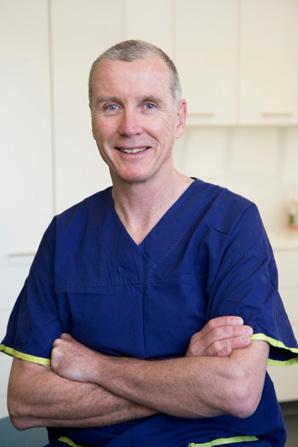
Chris Roberts says this may involve trauma and fractures, sporting injuries, high-speed motor vehicle accidents, overuse injuries, arthritis and disabling pain.
“There is nothing more satisfying than hearing from our patients that there has been a reduction in their pain or that they are pain free and able to get back to activity without restrictions,” he says.
“At Orthopaedics ACT we have all devoted ourselves to caring for our patients and striving to be the best in our field.”
Orthopaedics ACT, Woden Specialist Medical Centre, level 2, 90 Corinna Street, Phillip. Call 6221 9320 or visit orthoact.com.au
VILLAGGIO Sant’ Antonio is a multicultural aged-care facility that feels like home, says general manager Alan Hardie.
“It’s a calm, peaceful place with beautiful gardens and we try to keep that relaxed ambience,” he says.
“We have an activities lifestyle co-ordinator who organises functions, outings and buses for residents.
“Our villa residents also have access to a bus so they organise their own happy hours, travels, visits to galleries and more.”
Alan says the facility, licensed for more than 100 residents, is conveniently located nearby everything that seniors need.
“We’re about one and a half kilometres from shopping, medical centres, main highways and on-site parking,” he says.
He also says Villaggio provides 24-hour nursing care to residents.
“We’ve got visiting doctors, a podiatrist, physiotherapist on-site and more.
“Residents consider it as their own home and we try to make them feel as comfortable as we can and look after their needs as much as possible.”
Villaggio Sant’ Antonio, 35 Burkitt Street, Page. Call 6255 1794 or visit villaggio.com.au

TAKING the first step in estate planning is often an enlighten ing experience, with many people surprised to find out what they’re actually worth, says KJB Law’s estate planning special counsel Kerstin Glomb.
“I have clients who believe they don’t own much, but then when we walk through things like superannuation and life insurance they’re surprised to find out how much they’re actually worth and what they have to organise,” she says.
“After that initial meeting I find people feel a lot of relief and peace of mind that they’ve started the process.”

Although it can be an uncomfortable topic to approach, Kerstin says estate planning is something everyone should think about and KJB takes pride in helping ease the burden and making clients feel comfortable.
“We guide people through what options they have and what they should address so that they can take charge in providing protection for themselves and their loved ones,” says Kerstin.
“It’s about working out with a client who are the right people in their family or broader surroundings and then structuring their document to reflect that. “There’s nothing better than when people say after signing that they’re happy to have it in place, feel comfortable and most importantly that they understand what they’ve signed.”
KJB Law, ground floor, 10 Corinna Street, Woden. Call 6281 0999 or visit kjblaw.com.au




Our Hostel will enable you to enjoy a relaxed and caring community environment with 24hr care. Located within a beautiful garden setting in Page, Villaggio Sant’Antonio offers safe and secure living in both our Aged Care Facility and our Independent Living Retirement Villas.


For all enquires please contact us on 62551794 or reception@villaggio.com.au www.villaggio.com.au

SUNROOM for Seniors is a small, welcoming group providing an opportunity for social interaction and friendship, says program co-ordinator Tegan Johns.
“We provide a program of activities adapted to attendees’ needs and interests,” says Tegan.
“Sunroom for Seniors meets in a specially designed facility at the North Belconnen Uniting Church on Conley Drive, Melba, on Tuesdays, Wednesdays and Thursdays from 10am to 2pm.
KJB Law draws on decades of experience, helping you create a Will and Estate plan that stipulates all your wishes and concerns.
We are able to assist with:
• Wills and Testamentary Wills
• Powers of Attorney
• Self-managed super funds
• Advice on potential claims against estates • Advice for blended families


Tegan says the group offers enjoyable activities in a warm and friendly setting where seniors can meet and get to know each other, all supported by

“Transport is available and provided by our friendly volunteers,” she says.
Sunroom for Seniors, North Belconnen Uniting Church, 30 Conley Drive, Melba. Call 0481 185205 or visit sunroomforseniors.org.au


Sunroom for seniors is a small welcoming group providing an opportunity for social interaction and friendship. We provide a program of activities adapted to attendees' needs and interests. Transport is available and provided by our friendly volunteers.
successful results in a cost


for


“SENIOR Canberrans are protected from discrimination and unfair treatment under ACT law,” says Discrimina tion, Health Services, Disability and Community Services Commissioner at the ACT Human Rights Commission, Karen Toohey.
“This means that you or someone you care for doesn’t have to put up with discrimination or unfair treatment because of age, where you live, disabil ity or family and carer responsibilities.”
The Commission can help seniors with matters relating to discrimination in employment, housing and accommoda tion, provision of health services, issues with residential aged care providers or in-home aged care services, physical or psychological abuse, neglect and financial exploitation.

Discrimination, Health Services, Disability and Community Services Commissioner at the ACT Human Rights Commission, Karen Toohey.
THE local team at House to Home are experienced packers who have been helping Canberrans get their property ready for sales, renovations, insurance work, downsizing and relocating for over 10 years, says co-owner Renee Le Grande.
“Our expert team will save you hours of time and stress by packing all your personal belongings, household items, right through to packing up the shed,” she says.
“The team offers a personalised service and recognises every client is different and has different needs and expectations.
“Some people want the kitchen, bathroom and wardrobes packed, others want everything that is in a cupboard or behind a closed door.”
“We are told that some older people do not want to report abuse or exploitation because they are concerned about the impact on family relationships or the care and support they receive,” says Toohey.
“The benefit of our process is that it can be anonymous. We work towards the outcome the older person is seeking – that might be the return of money or assets, or for a person to move out of their home so they feel safe.
“Where the older person wants the relationship maintained we work with them, and the other people involved, to make arrangements for the ongoing relationship.”
Commissioner Toohey also says that people sometimes think their issue is too small or too individual to make a complaint.
“Or they think a matter would need to go to court or involve the police, so they may prefer not to raise their concerns,” she says.
“We know these types of issues impact on people’s health and wellbeing and their participation in public life so we encourage people to give us a call and talk about their options.”
All services are free and confidential.
ACT Human Rights Commission, call 6205 2222 or visit hrc.act.gov.au
Renee says they also offer a full walk-in walk-out service, where clients hand over their keys and the staff completely clear the property, remove the furniture, take necessary items to a charity store, get the old property cleaned, and set everything up again in the new home.
House to Home. Call 0457 456767 or visit house-to-home.com.au


OPTOMETRIST Damien Lonergan of Collins and Lonergan Evolve Optometry says it’s important for people of all ages to get their eyes checked regularly.
“Both seniors and young people should be getting check-ups every two to three years,” says Damien.
“Because a lot of eye diseases are not curable, early detection is key. We say anyone over the age of 50 should potentially be having more comprehensive testing done.”
Damien, who has been in the optometry industry for more than two decades, says macular degeneration is one of the key issues which affects older people.
“It affects one in four people over the age of 80 and one in seven people between the age of 50 and 80,” he says.

“The earlier we find it the earlier we can put effective measures and strategies in.”
Locally owned and operated, Evolve also offers a large selection of glasses and Damien can also prescribe eye medication.
“When you come in we’ll talk about your experience in the past and anything you’re experiencing that may be a concern,” he says.
“We look forward to the opportunity to care for your eyes and your eyewear with a focus on what you need, accompanied by some good old-fashioned customer service.”
Evolve Optometry, Gungahlin Village (opposite Coles). Call 6189 5891 or visit evolveoptometry.com.au

AS the owner of Renovation Matters, Kim says her love of renovating has seen her take her passion from a hobby to a successful business and with more than 30 renovations under her belt, she’s got the experience and know-how to transform homes to the best effect.
“We can help people renovate to sell or re-tenant as well as renovate to enjoy their home even more,” she says.
Renovation Matters offers a “fix up, profit and pay later” process in which they can cover upfront renovation costs before settlement.
“I’m hearing from some real estate agents that houses that are unrenovated or needing repairs are sitting on the market and not moving,” says Kim.
“People haven’t got the time or energy in the current climate. It’s hard to get trades and supplies.”
Kim says she works with specialised tradespeople who she trusts to bring their expertise and skill to clients’ renovation projects.
“We provide a full service for clients. Some people might need to move interstate or have family responsibilities that means they need to hand over their home renovation totally to us.
“If we are needed to help a client, there’s nothing we can’t do to help make the renova tion a stress-free experience.
“Come and visit us at seniors’ expo on September 28.”

Renovation Matters, visit renovationmatters. com.au or call Kim on 0427 696662. Renovation Matters owner Kim Persson.

•
•
6189 5891 • evolveoptometry.com.au
Shop G17 Gungahlin Village 46-50 Hibberson Street, Gungahlin Located in Gungahlin Village opposite Coles gungahlin@evolveoptometry.com.au


THE Salvation Army Aged Care offers Home Care Services across Canberra. The general manager of Salvos Home Care, Fiona Sanders, says that Home Care (also known as community care, in-home care, home support) is when care workers and nursing staff provide support to enable older people to live independently in their own homes.
“The Home Care team can assist with a wide range of tasks such as bathing, nursing, domestic assistance, gardening, assisted transport, allied health and therapy services, and more, with each care package tailored to the needs of the care recipient,” she says.
“A significant number of older Australians would pre fer to live at home and receive care as they age. There are different types of funding available to support older Australians to remain living safely at home. The system can be difficult to navigate however, and so if you don’t know where to go for help, we’re here to help.”
Fiona says that one of the services that the Salvos provide is to help people navigate the aged-care system. They can try to help speed up the process of being assessed by finding out what funding someone is eligible for and help with the paperwork and application. Salvos Home Care offers this service for free and without any obligations.
“My advice would be to get started on the process before you think you might need it and don’t wait until you realise you are unable to do all those household chores you used to manage easily.”
For more information, contact Salvos Home Care Canberra on 1300 111 227 or visit agedcare.salvos.org.au

• Incontinence supplies, Catheters, and drainage bags, Pads and Pants
• Braces (Back, Knee, Ankle, Wrist, Hernia) Moon Boots Adult and Children
• Crutches and mobility walking aids and frames
• Homecare products for the Bedroom and Bathroom-toilet aids and shower chairs and much more.
• Electric Lift recliner chairs. Scooters, Walkers and mobility products.
• Tracheostomy supplies
• Nutritional Products
• Medical needs Phone: 6174

CAPITAL Rehabilitation Supplies aims to make the day-to-day lives of seniors and people living with disabilities easier and more comfortable, says manager and owner Tim Robinson.
“We have a range of products available for purchase or hire that can help anyone with their needs,” says Tim.
“Just some of these products include electric lift chairs, height-adjustable chairs, pressure care cushions and mattresses, electric hospital beds and home care beds, mobility aids such as walkers, wheelchairs, rollators, crutches and walking sticks.”
A family owned business with more than 40 years of experience in the industry, Tim says Capital Rehabilitation Supplies understands every



individual has their own needs.
“We know that some of these issues are sensitive, and can be uncomfortable to deal with, so we try to be as delicate and helpful as possible. If we do not stock a certain item we will always do everything in our power to locate the product,” he says.
“We pride ourselves on our patience and helpful attitude. People can come discuss what they require with us and we can find what works for them.”
Capital Rehabilitation Supplies, 3/66 Heffernan Street, Mitchell. Visit capitalrehabilitationsupplies. com.au or call 6174 4813.



At The Salvation Army Aged Care, we don’t have clients, only family. We embrace the stories and experiences that each person brings to our family. We learn what makes every person entrusted with our care feel comfortable, included, and happy.
This goes on to enrich our own lives and makes us who we are and what we do – providing care from the heart, since 1880.
SERVICES NEAR YOU:
Salvos Home Care
Servicing all Canberra metro areas
Burrangiri Aged Care Respite Centre – Canberra
Mountain View Aged Care Centre – Narrabundah
Gill Waminda Aged Care Centre – Goulburn
NORTHSIDE Community Service is a not-for-profit organisation that has been supporting the community in North Canberra and beyond since 1976, says care co-ordinator Kate Malone.
This year, Northside has introduced an intergenerational program – “Learn -
spends time with our preschool aged children from one of our four Northside Early Childhood Centres, giving the opportunity for meaningful interactions and relationships to be built over a 10-week period,” says Kate.

“Research into intergenerational learning has shown extensive benefits for both the seniors and children in regards to their mental and emotional health, and overall wellbeing.
“The music and movement focus has been an enjoyable one.”
Kate says they’re looking forward to beginning gardening sessions in the courtyard from next week.
“I cannot wait to see the collaboration of the children and seniors literally come to life,” she says.
“This program has already proved an invaluable one here at Northside, and we are very excited to continue watching the countless positive outcomes
“That’s where Northside stands out and makes that difference in the community, with its people who are here day in, day out with a smile on their face and mission in their hearts.”
Northside Community Service, 2 Rosevear Place, Dickson. Call 6171 8000, email reception@northside.asn.au or visit northside.asn.au Care co-ordinator Kate Malone.
IT’S important to get legal advice before committing to the sale or purchase of property, says Capon and Hubert property and commercial solicitor Daryn Griffiths.
Daryn says the ACT and NSW are unique in that they don’t offer cooling off periods to the same extent as other states.
“Once you’ve committed yourself to the purchase of a residential property, you have a certain period of time to organise some of your affairs and finance and make requests of the seller to go investigate the property a bit more,” he says.
“During that time you have the ability to walk away from the contract, and the impost on you is only .25 per cent of the price.
“In the ACT and NSW our cooling off period is much shorter, generally seven days or five business days. We have a system here where you really can’t do much in that period of time so we need to make sure your ducks are in a row before you commit to that transaction.”

Daryn says it’s also incredibly important to pre-inspect commercial property as there are even less protections in place for a purchase.
He also says that it can be greatly beneficial for older residents looking to move into a retirement home to

ent. We can go through the contract together and if there’s things you need to take into account we can put that in place,” he says.
Capon & Hubert, first floor, 32-38 Townshend Street, Phillip. Call 6152 9203 or visit chsol.com.au
JANE Ingall says she is one of four teaching artists who, as a collective, offer ZEST Dance for Wellbeing classes.
“ZEST Dance for Wellbeing offers move ment classes for adults who want to keep their body and brain active and healthy, regardless of their mobility, skill or age,” she says.

“We start class sitting on chairs, with options to stand and travel in the second part of the class. No previous dance experience is necessary, and you don’t need a partner.
Jane says the classes are a great way to feed their body and spirit with music and movement, to have fun, meet new friends and feel good.
“Classes are enjoyable, social and communal, emphasising expression and creativity,” she says.
“We encourage laughter and support people to move in a way that works for how they are on that particular day.
“Our teaching artists create movement sequences inspired by a wide range of styles of dance and an eclectic selection of music – anything from Beethoven to Elvis, plus music from other cultures, and from musicals and movies.”
Jane says classes are held at various locations in the ACT including Belconnen and Tuggeranong Arts Centres, the COTA Hall, and the newest classes starting in Gungahlin in October.
“Other classes are in some retirement villages and aged-care facilities and in the coming months, with funding from Community Services ACT, ZEST is conducting taster classes for the residents of a number of retirement villages.”
ZEST Dance for Wellbeing, call 0417 417182, or visit zestdwb.blogpost.com

First Floor, 32-38, Townshend Street, Phillip enquiries@chsol.com.au chsol.com.au For the best outcome when it matters how it’s done call Capon & Hubert on 6152

ADRIA Village combines access to important facilities with a feel of privacy, making it the perfect place for retirement, says CEO Stephanie Tyrrell.
“There’s close access to Cooleman Court and Woden Westfield, but we are surrounded by reserves and parklands making it a very peaceful atmosphere for residents,” she says.
Located in the heart of Weston Creek, Adria Village, which has two dedicated respite rooms and a special care unit, offers residential care for 42 residents.
The village also contains 36 independent living units.
Stephanie says the village offers residents a wide range of things to do, and that they can get involved as little or as much as they’d like.
“We have an active residents’ committee who organise lots of get-togethers. Residents can play cards, go to morning teas and happy hours, enjoy exercise and much more,” she says.
Established in 1994 by volunteers of the Croatian community of Canberra and Queanbeyan, Stephanie also says the village is home to a greatly multicultural group of people.
“We have residents [from] Australia, Croatia, China, France, Macedonia, Hungary and more,” she says.
“There are great residents and great staff committed to the best outcomes for the community.”
Adria Village, 89 Fremantle Drive, Stirling. Call 6288 0198, email admin@adria.org.au or visit adria.org.au

Set amongst landscaped grounds, Adria Care in Stirling is a warm and welcoming community of people from all around the world. We pride ourselves on cultural diversity and celebration, and offer a wide range of activities to cater for all interests. We provide care for Croatian and all other nationalities.
Adria Care fosters individuality and independence, providing support and assistance to enable residents to live in a comfortable and secure environment. It offers residential care for 42 residents, incorporating 2 respite rooms and special care. All rooms are single rooms with ensuite.
The village also contains 36 independent living villas. All villas have 2 bedrooms, a courtyard and a garden, and residents enjoy a peaceful and welcoming community lifestyle.
Our aim is to provide a caring, safe, home-like atmosphere, reflecting your rights to dignity, respect, privacy, safety and the best quality of life.
Contact our friendly staff today to arrange a personal tour.



By Jackie WARBURTON

PEONIES are a treasure to the garden, though some say they’re a little hard to grow. But with a few tips you can grow them easily.
Peonies are herbaceous perennials or deciduous shrubs and, in general, like to be planted in the full sun with shelter from the wind and a little shade in the peak of summer. They like rich soil, so add plenty of compost and organic matter now. They also like a high pH soil, so a little lime and potash for flowering can be added as well. Be patient, they will flower.
The two main types of peonies are herbaceous or tree peonies, and


both grow well in Canberra. Herbaceous peonies are best planted in the autumn as barerooted rhizomes with a few buds and eyes and by digging a shallow hole and covering lightly with soil. Give them a little room as they like to spread. They are slow growing, but eventually get to at least 90 centimetres tall.
Tree peonies are sold in pots. Although not true to a “tree shape”, they have multiple stems and can grow much larger than their counterpart.
APPLE trees and pome fruits such as quince and pear trees are about to burst into flower. Good sunshine and compatible trees that flower at the same time will help with a bountiful crop in summer through to autumn. Having flowering plants such as calendulas and daisies under


an apple tree will attract the bees so they can pollinate the flowers.
CODLING moths are a problem pest in the garden, especially when they start eating apples. Codling moth larvae hatch when trees are in bloom and air temperature is more than 15 degrees.
Netting after flowering and spraying neem oil on the bark of the trees will help keep this pest at bay. Alternatively, Diapel can be used at this time of year or pheromone traps are available at the nursery. It’s now or never because when the larvae hatch, they fly and infect fruit and it’s too late to net for this upcoming season.
Codling moth pheromone traps are at their most efficient when the female is about to lay eggs. The traps should be hung in the tree at the beginning of the fruiting season. A home-made remedy can be made with 50/50 molasses and water, sprayed on the tree. Molasses is also effective on sucking insects such as lace bugs, aphids and white flies, but use sparingly.
ASPARAGUS should be starting to shoot from the ground soon. Pick early in the morning using a harvesting knife for cutting.

Asparagus will take several years to grow to an edible size so a little patience will reap the rewards as the crowns are long lived and the clump will get bigger over time. If the spears are small and whippy, leave them alone to put their energy back into growing thicker, stronger spears next year. The fatter the spear the better tasting they are. Male spears are naturally fatter than female spears. Try to remove female plants in the autumn when you see the berries on the stems. After harvest, sprinkle them with a little gardener’s lime and water well.
CABBAGES, leeks, melons, parsley, silver beet, spinach and turnip seeds can be sown now. Sowing seed into punnets gives more control of temperature and water. Use a seed-raising mix without fertiliser, water well and keep moist. There are many local community groups that propagate locally grown plants from home gardens and sell at ridiculously low prices. The plants available within these community groups are different to the run-of-the-mill plants at commercial nurseries and worth looking at buying.
jackwar@home.netspeed.com.au

By Helen MUSA

AN artist whose work is almost impossible to pigeonhole has been chosen by the National Gallery for its next major exhibition, and she’s a woman.
The relevance of that last point is that the show, “Cressida Campbell”, fits into the gallery’s ongoing project “Know My Name” through which the names of significant Australian women artists are given the prominence they merit.
But, art lovers in Sydney and Brisbane may object, everybody knows who Cressida Campbell is, since her 40-year long career has seen her works snaffled up in those two cities and around the country particularly by private buyers, drawn to the intensely personal character of her works.
Incidentally, the NGA has been going strong for 40 years, too, and Campbell was in town to see the Queen open it.

The NGA’s curator of Australian Prints and Drawings, Sarina Noordhuis-Fairfax, says it’s given her a good excuse to call upon lenders from around the country – as many of this as a third of the 100 painted woodblocks and single-edition woodblock prints we’ll see
intellectuals, her mum Ruth was an artist, her sisters Sally, a textile artist and actress/ club-owner Nell (“Little Nell”) and her father Ross Campbell, one of Sydney’s most popular newspaper columnists who often chronicled the lives of his family in the paper.

As for Campbell herself, she’s hardly looked back since. After starting out at the National Art School in Darlinghurst in 1978 in the painting course, she quickly switched to the printmaking section and studied the art of combining print and brush under master printmaker Leonard Matkevich.
In her final year at art school, 1979, she held her first public exhibition and she’s been sought after ever since.
While she admired and studied the Japanese Ukiyo-e woodblock artists such as Hiroshige and Hokusai, she wasn’t interested in doing lots of prints Japanese-style. Using a different block for each colour, she
Wednesday 21 September


preferred to use one block only and painting with a fine brush.
By 1986 she abandoned editioning, carving her images into woodblocks, printing them off just once, then painting and even, like the great Russian icon artists she also admires, cutting into them to produce unique single works.
But from the Ukiyo-e artists she gained her extraordinary sense of composition, especially in her many “view-through-thewindow” artworks, and in her eye for colour – she is rated as one of Australia’s greatest colourists.
Continued on Page 38.
“Francis Street, East Sydney” (2000).


Continued from Page 37.
Of her own devising is Campbell’s attention to texture, seen in bark peeling off trees, the detail of her plants and the occasional mottled effect that comes from the actual print process.
Noordhuis-Fairfax has been fascinated to observe how over her career, she has slowed down as her art becomes more painstaking, meaning that whereas she might produce around 20 works a year through the ‘70s to the ‘90s, now it’s more like five or six.
One of the features of Campbell’s artwork, which has endeared her to critics and buyers alike, is the intensely personal nature of her work.
Completely unaffected by trends in art, she paints what she knows and she likes. Favourite subjects are the interiors of friends’ homes, including those of the late Margaret Olley, intricately represented flowers and foliage in her still lifes and vibrant, even exotic gardens.
The last two decades of Campbell’s life have been fraught with many personal tragedies, including the long illness and death of her first husband, the “Australian Financial Review’s” film critic Peter Crayford.
This year has seen a happier turn, with her marriage in April to fine art and photographic printer Warren Macris, but Campbell has admitted to Noordhuis-Fairfax that many artworks of recent years have been affected by this in the sense of mood and atmosphere, which discerning viewers will observe.
It is not a chronological exhibition, although there is a section devoted to family


photographs, examples of her childhood drawings and materials from her studio that give an understanding of her technique.
The show, Noordhuis-Fairfax explains, is arranged thematically, with different themes for the different rooms in the exhibition — still lifes, a room of interiors, a room about plants and gardens, then moving to the wider world, into the bush and finally to Sydney’s waterways.
This is a retrospective of the here and now, for friends in Sydney have told me that the paint is still wet on one work for display, and Noordhuis-Fairfax confirms this.
“I’ll pick it up a week or so before the exhibition – it sounds lovely,” she says.
“Cressida Campbell,” NGA, September 24-February 19.

By Helen MUSA
THE Royal Czech Ballet will be here with its production of “Swan Lake”, danced by elite artists from Italy, Moldova and Ukraine, following the original storyline with choreographic revisions by Marius Petipa. Canberra Theatre, 7pm, September 18-20.
IT was good to see Canberra violinist Pip Thompson (CSO, SupeRats, Phoenix Quartet, Canberra Strings) stirring up a storm as the onstage fiddler in “Girl From the North Country”. Thompson told us it had been fast learning for her, but that she was made welcome by the touring cast of the Bob Dylan show.
UKRAINIAN pianist Alexey Botvinov makes his Australian concert debut, with all proceeds supporting his home country. The Q, Queanbeyan, September 21.
“EARTH Canvas”, which uses art, by leading Australian artists, to showcase good land management and celebrate the creativity of farmers who practice sustainable
agriculture is at the National Museum until October 22.
CANBERRA Theatre Centre has announced its newest and biggest batch of recipients under the “New Works’’ program: Nick Delatovic with his project, “Body of Work”, Carolyn Eccles with “Glenn Meringuey”, Claire Holland with “Girlboss, Gatekeep, Gaslight” and Mark Salvestro with “The Queen’s City of the South”.
NOTED Canberra weaver Jennifer Robertson and her husband, master craftsman Christopher Robertson, will join designer/makers Timothy Robertson, Tom Skeehan and ceramicist Katherine Mahoney in the exhibition “Coalesce” as part of Sydney Craft week. Sturt Gallery, Range Road, Mittagong, September 18-November 13.
“INSTRUCTIONS for Survival” is the latest in the “Stronger Than Fiction” documentary film festival’s showings. The film follows Sasha as a trans man from Tbilisi, Georgia, where it is not safe for LGBTQ+ people to live openly. In Georgian and Russian with English subtitles. Dendy Cinemas, 3pm, September 18 or 6.30pm, September 23.



Novelists have been mixing fact with fiction since Daniel Defoe picked up the story of the castaway Alexander Selkirk in the grog shops of London’s seafarers and gave the world Robinson Crusoe some 300 years ago, writes ROBERT MACKLIN
“Nimblefoot”, by Robert Drewe (Hamish Hamilton/Penguin Books)
RARELY has the tradition of mixing fact with fiction been so deliciously realised than in Robert Drewe’s romp among the possibilities of the life and times of Johnny Day, the jockey who rode the five-year-old gelding Nimblefoot to victory in the 1870 Melbourne Cup.
By then, the young Day had already achieved world fame as a competitor in the pedestrian feats that drew massive crowds to contests with characters as outlandish as the World Series Wrestlers of the 20th century.
As Drewe says, he was attracted to the story through a photograph discovered in Canberra’s National Portrait Gallery of “The Pedestrian Child Wonder” who, after swapping sporting obsessions, rode the Cup winner at only 14, then disappeared from sight.
“How strange, I thought, that the famous walker and rider had left no cultural footprint… Johnny Day dropped out of sight. People wondered what had happened to him. Wild


stories started up,” says Drewe.
None, I suspect, were quite as wild, or as detailed, as those the novelist invents as Johnny traces an adventurous trail among the worthies of the day – from the visiting Prince Alfred, Duke of Edinburgh to Lola Montez, from Adam Lindsay Gordon to Anthony Trollope.
Johnny is on the run from the law in the person of the corrupt and bibulous Victorian Police commissioner, Capt Standish after a double murder in which the Prince is implicated. It is this headlong dash around much of Victoria and WA that engages us thoroughly for the rest of the book.
It is not just Drewe’s courage in drawing in the figures of history, but the piercing observation and charm of his writing that captures the reader.
“Nimblefoot” has Miles Franklin written all over it.
“Jesustown”, by Paul Daley (Allen @ Unwin)
PAUL Daley’s “Jesustown” is just as courageous in drawing his characters from reality.
He selects elements from such adventurous Aboriginal anthropologists as Donald Thomson, Charles Mountford and Norman Tindale to create his own Nathaniel Renmark.
His “country” is Arnhem Land among the Yolngu people where in 1935 the real Donald Thomson was sent by the federal government on a peace mission when the local Aboriginals had killed both Japanese and Australians over the ravaging of their women and the NT authorities were demanding a “punitive” mission.
The narrator is Renmark’s grandson Patrick who has disgraced himself in London after scaling the literary heights (a kind of Australian Jeffrey Archer) and seeks absolution back in the area of his grandfather’s Yolngu domain. The settlement, Jesustown, is a reference to the missionaries who played a major role in the disruption of

Aboriginal society and culture.
Daley’s courage is expressed in a very different manner from that of Drewe. While he doesn’t have to confront the immensely testing task of combining his creation with well-known figures from history, he has shown no mercy to his narrator as he begins the long road back to redemption. Patrick begins as a thoroughly unpleasant character; but Daley succeeds splendidly in carrying the reader through his journey of atonement.
Just as important, he positions him in that strange no-man’s-land of the whitefella coming to terms with the Aboriginal scene today, not the idealised world that his grandfather experienced and promoted.
Like Drewe, Paul Daley has paid his dues in journalism where the quirky sidelight, the revealing moment and the humorous quip provide flashing insights that no academic treatise could hope to render.
In these days of the great movement to recognise and venerate the Aboriginal contribution to the nurturing of the great south land, “Jesustown” confronts the inherent intergenerational conflicts. It even challenges the notion of western storytelling, where we demand its disparate features be tied together into a neat bundle like a Hollywood movie, replete with a climactic action sequence and a happy ending.









back for those unique flavours, which have been celebrated over centuries, and with good reason.
It was Father’s Day, and the set menu was $95 for two courses and $110 for three.
We started with a sangria, created with Spanish flare ($16). Saint Malo makes its sangria with either red, white or rose and the intensity of citrus fruits, brandy, triple sec and orange juice was gorgeously balanced. We loved the slightly fizzy finish.
For entrée, Saint Malo offered the “Tabla de Embutidos”, a selection of Spanish smallgoods, including thinly sliced, spicy meats, house-made pickles, olives, manchego and more. It certainly stimulated our taste buds.
We opted for the meats for mains, over the vegetarian option. The tender and succulent


There will be museum-quality scale models of many types of ships ranging from historic wooden ships to modern day ships including naval vessels

Mains for the vegetarian section of the menu included Spanish-style vegan meatballs and a paella, which sounded delicious.
The set menu included fabulous “patatas bravas”, tiny round potatoes stuffed with chilli, saffron aioli, chives and citrus salt. A winning dish and creatively different. We also loved the “fioretto” with chunks of pecorino and the vegetable carefully placed on top of a romesco sauce.
Dessert was pretty on the plate and not overwhelmingly sweet. The burnt cheesecake was creamy, and a glass biscuit was set in a dollop of Chantilly cream.
mention of a set menu that I found, so we were surprised on arrival. Confusion took over with seating. I booked to sit in the arches area, but we initially landed in a section of the restaurant at a table large enough to seat 10 near the front door. We asked to move.
Terribly annoying was the staff sorting out cutlery in the open-concept kitchen. It was so loud and disruptive we asked our waiter to have it stopped. Not great for ambience.
Knock, knock. Who’s there?
The doorbell repairman.
I HAVE a mate who is a Mr Fixit. He has developed his spatial intelligence over the years so that he can pull apart most anything and put it back together so that the thing works or works even better.
Contrast that with my ability: my children say I’m hopeless at fixing appliances. Well, they’re in for a shock!
Mr Fixit joins me in Tathra from time to time where I’m lucky enough to have a small cottage that overlooks Whitehorse Bay on the Kianinny side of the town.
Tathra is about a three-hour drive from Canberra on the Sapphire Coast of NSW and is a bustling holiday place. My friend potters and fixes stuff that is often treated with less-than-care by the Airbnb guests.
Kianinny Bay is 1.5 kilometres south of Tathra Head where the Tathra Hotel perches. At the end of a day gardening and fixing stuff, we always venture by shanks’ pony to this charming hostelry for dinner and a bottle of red wine. But not any old red. On the hotel’s wine list is a McLaren Vale 2013 Scarpantoni, Brothers Block
Cabernet Sauvignon for $65. This is a fair price when the posted retail price is $420 a dozen or $35 a bottle direct from the producer.
The important part of this ritual though is that this full-bodied cabernet has come to represent a reward for hard work. It has come to represent what a visit to Tathra means; on the last occasion we were there in early September my friend was insistent that we order this wine with dinner.
It is a wine to have with meat; we usually order the roast of the day or a steak. It is a powerful red with good grip and a burst of blackberry. The 2006 vintage of this wine won the Jimmy Watson Memorial Trophy, presented every year to the producer of the best one or two-year-old, dry, red wine. It carries a great deal of prestige.
Now, the 2013 isn’t of this standard but it is a worthy reward for a good day’s labour and an extremely pleasant accompaniment to the fare at the Tathra Hotel.
It’s interesting that the insistence on ordering this wine was, in part, a response to where we were: “Lad, this wine is about Tathra for me, this place,” he said.
I believe that this striving for connection is something that we all do: frame affinity with palpable attributes, often culinary or wine related.
This phenomenon is a reflection of a French tradi tion that celebrates a deep connection between soil and its produce.

As explained by Amy Trubek in her book “The Taste of Place”: “’Le Cours Gastronomique’, first published in 1808, includes a map of France that outlines the nation’s borders and then charts the inner territory solely with agricultural products.
“Included are the wines of regions such as Bordeaux and the Rhone; Roquefort and Brie are named, with drawings of cheeses; and many charcuterie items such as sausages and cured hams are shown as well.”
This tradition is built on respect for the locals and having a deep-seated belief in the wine and produce that the French have cultivated for centuries. While we can’t yet begin to emulate that historical connection, we can create our own sense of place, our own linkages about what’s important. We’ll be ordering the Scarpantoni again.
Patient: Doctor I’m afraid I’ve broken my arm in three places.
Doctor: Well, don’t go to those three places then.


NETFLIX series “The Crown” will indefinitely pause production following the death of Queen Elizabeth II.
It comes weeks before the highly anticipated fifth season releases on the streaming platform, with a premiere date set for November.
The sixth season, which is currently in production, will pause filming for an undisclosed time in what Netflix has described as its own version of “Operation London Bridge”.
In a statement to “Deadline”, creator of “The Crown” Peter Morgan said the hiatus would be done “out of respect” for the Queen. He described the series as a “love letter” to her.

“I’ve nothing to add for now, just silence and respect,” he said.
The series which swept last year’s Emmy awards with 11 wins is one of the most expensive TV shows ever produced, costing more than $US100 million a season.
It’s not only become one of the most popular shows ever made, but one that has shaped new perceptions around the history of the Royal Family.
While some of the monarchy have

with rumours there were private screenings organised for some members of her inner circle on Saturday nights.
Viewership of the show will undoubtedly increase in the wake of her passing – a time more important than ever to remember much of its depiction of history is embellished.
Morgan himself openly admits he comes at the show from a mix of fact and fiction, in his own words saying that people “don’t want historic regurgitation but acts of imagination”.

The Queen herself was so moved by the performance she personally invited Mirren to Buckingham Palace for dinner.
death, Mirren said she was proud to call herself “of the Elizabethan age”.
“If there was a definition of nobility, Elizabeth Windsor embodied it,” she said.
Since “The Crown” first started in 2016, Queen Elizabeth has been portrayed by three different actresses.
Claire Foy played a young Elizabeth in the first two seasons, much of which were set while she was still a Princess.
Olivia Colman took over the role for the third and fourth seasons which saw a more mature Elizabeth reign throughout Harold Wilson’s and Edward Heath’s time as Britain’s
Come November, Imelda Staunton will step into the role to play the Queen during the 1990s, a dedace which represented one of the most tempestuous times for the monarchy in recent decades.
Netflix is yet to release any footage of the new season. It’s likely that its marketing, and perhaps even the show itself, is undergoing strict tonal editing given much of the world will still be mourning Her Majesty.
For those who are looking for a more
true-to-life account of Queen Elizabeth II’s reign, there are some great documentaries available to stream.
Netflix offers “Elizabeth and Margaret: Love and Loyalty”, an examination of the widely misunderstood relationship between the royal sisters.
Stan has “Elizabeth II: The Making of a Queen”, which takes things back to 1952 when 25-year-old Elizabeth was first crowned and became the most famous person in the world.
Available on ABC iView until September 22 (and searchable on Youtube) is a particularly unique offering called “Elizabeth: The Unseen Queen” – an intimate look at her life through a previously unseen collection of her home movies.
All of this is, of course, only scratching the surface of the screen depictions of Elizabeth II’s life. It’s just one of many signs that the fascination with, and admiration of the royal matriarch will go on long after her passing.
Using a foundation of research, he says
In a statement following the Queen’s


By Dougal MACDONALD

AFTER winning Best Feature Film at this year’s International Film Festivals in Berlin and Dublin Ireland; this film got 10 nominations at the Irish Film and Television Awards, resulting in seven wins, including Best Film, Best Director and Best Actress in a Lead Role.
Writer/director Colm Bairéad’s first fiction feature is an adaptation of Claire Keegan’s novella “Foster”.
In rural Ireland in 1981, her parents have sent quiet, independent, nine-year-old thinker Cait, for whom connecting with family and peers is not easy, to spend summer on the Waterford dairy farm where cousin Eibhlin (Carrie Crowley) and husband Sean (Andrew Bennett) are offsetting a tragedy.
Cait’s time there opens up a completely different world. Kind and motherly, Eibhlín tells her there are secrets in the house, things that are not talked about.
At first, Séan is distant and standoffish. However, as his relationship with the girl grows, we discover a heart that is arguably the biggest of all. It’s a wonderful portrayal. The couple’s story is gradually revealed and explored in a lovely and satisfying way.
One of the best scenes involves a funeral, followed by an entertaining encounter with a neighbour with an inquisitive nose for information and plenty of dirt to dish behind others’ backs. The tears such as might come

might generate are well earned. Playing Cáit, 13-year-old Catherine Clinch’s photogenic face suggests wordless insecurity and stifles emotions that mightn’t speak much but her movements fill the gaps eloquently. She left me wondering optimistically about her future in movies.
At Dendy and Palace Electric
“Flux Gourmet” (MA)
IT has been suggested that filmgoers attuned to writer/director Peter Strickland’s wavelength will find this horror-laced satire a “savoury delight”.
It isn’t for all tastes. Ludicrous but serious, simultaneously high and lowbrow, sensitive folk may find it turning their stomachs. Coprophagy isn’t for everybody!
In the US and Canada, “Flux Gourmet” earned $3780 from 19 theatres in its opening weekend, $1397 from six theatres the following weekend and $4387 in its third.
Those numbers are eloquent. ‘Nuf sed, I reckon. I watched it in an otherwise empty cinema straight after watching “The Quiet Girl” among a very modestly sized audience.
People are still prepared to shell
strangers in a darkened cave, having their senses allayed by all manner of responses brought before them by creative people whom they’ll very unlikely ever actually meet. That’s the movies – thee and me filling our sensory expectations for reasons that sometimes don’t get fulfilled! Wot’s it about, do you ask?
A group takes up residence at a remote artistic institution, run by an enigmatic director. Tasked with recording the day-to-day rituals of experimental performance artists, known for their process of “sonic catering” (where they extract disturbing sounds from various foods (yeash!), an outsider discovers that he is slowly becoming part of their collective himself.
I enjoy my tucker with the best and I’m not the world’s worst cook. I didn’t find “Flux Gourmet” agreeable as either food or cinema. Creating discomfort with persistence, mixing sexual debauchery with defecation, its disturbing images present chaotic horror resulting from its ideas and relationships. I came away from it feeling its beginning had made a promise which its finish had left unfulfilled.
At Dendy

By Joanne Madeline Moore
ARIES (Mar 21 – Apr 20)
This week Mercury is reversing through your relationship zone, so communicating with your sweetheart, boss or best friend could be problematic. Then the weekend looks extra tricky, when nebulous Neptune also scrambles signals and confuses communication (especially involving work or health). So don’t accept information at face value and don’t believe everything you hear. Take the time to do some solid fact checking before you respond.
TAURUS (Apr 21 – May 21)
Are you stuck in a personal rut? This week’s stars shake up your comfort zone… which could make you feel confused and uncomfortable! Try to view any upset positively, as it forces you to view a current situation from a totally different perspective. Also, an ambitious professional project requires much more planning than you originally thought. That’s OK. Concentrate on enjoying the long and winding journey, rather than just focusing on the destination.
GEMINI (May 22 – June 21)
Mercury is retrograde, so delays and disruptions will unsettle your usually genial Gemini demeanour. Circumstances are constantly evolving, so keep your schedule flexible and your mind open to sudden changes. It is a suitable time to do research or revise written work (rather than take a trip or launch a new project). But don’t believe everything a colleague or relative tells you. The buzz words for this week? Adapt, amend, double-check, revise and redo.
CANCER (June 22 – July 23)
It’s going to be a confusing week so try to keep your Crab cool. Avoid spreading unsubstantiated gossip and blurting out things that you’ll later regret. Take the time to check the facts thoroughly. The more discreet and diplomatic you are, the better the week will be. But it’s definitely a delicate balancing act. If you are too obliging and say ‘yes’ to everyone and everything, then you’ll be overwhelmed and find you’ve bitten off more than you can comfortably chew!
LEO (July 24 – Aug 23)
The Sun (your patron planet) links up with retrograde Mercury, so motivation will be low and impatience high. And the more you try to assert your authority and independence, the more stressful and frustrating things will be. Just remember –you can’t be the boss all of the time. Calm down and recalibrate, Lions! If you are more consultative, then the week will run more smoothly. Friday is the best day to catch up with like-minded folk in your local community.
VIRGO (Aug 24 – Sept 23)
Tuesday looks lively, as the Venus/Uranus link propels you into an exciting new world of possibilities. You’re pursuing a challenging personal project with extra creativity, passion and purpose, but a partnership or friendship requires more clarity. Avoiding complex issues won’t make them magically disappear. So it’s important to communicate your intentions clearly and concisely – especially when it comes to a romantic relationship or a joint venture.
LIBRA (Sept 24 – Oct 23)
Librans love things to run smoothly but there’s unpredictable planetary energy about this week. Mercury is reversing through your sign, so life is likely to veer off in an unexpected direction – which could be wonderful or stressful, depending on the circumstances. Whatever happens, drop the perfectly-planned schedule, and go with the flow. When it comes to a work matter or a health issue, peel back the layers of confusion and take a second look.
SCORPIO (Oct 24 – Nov 22)
Monday’s magnetic Sun/Pluto trine boosts personal power and encourages passionate, purposeful transformation. But the overall message this week is patience. Scorpios have been very active but with Mercury reversing through your solitude zone, you’ll find rest, relaxation, reflection and rejuvenation are just what the doctor ordered. If you look to the future with a positive attitude, then fabulous opportunities will manifest – eventually – but you must be extra patient.
SAGITTARIUS (Nov 23 – Dec 21)
You love to hear the sound of your own voice as you chat, converse and communicate. However, sometimes you can confuse TALKING about something with actually DOING it! If you think things through and then act with passion and purpose, then the week will go well. But if you don’t walk your talk, expect problems and delays at every turn. Be inspired by music legend (and birthday great) Bruce Springsteen: “Talk about a dream and then make it real.”
CAPRICORN (Dec 22 – Jan 20)
If you’re not careful, then an unreliable relative or a questionable acquaintance could lead you astray. So, keep your realism radar on high and avoid getting caught up in dubious schemes. You’re learning some hard financial lessons, as Saturn stirs up your money zone. Clever Capricorns will budget wisely, and favour saving over spending. Strive to build your outer material security – as well as your inner emotional security. Both are equally important to future success.
AQUARIUS (Jan 21 – Feb 19)
This week’s restless stars boost your bohemian side and your adventurous nature. But, if you are too recklessly impulsive (especially on Monday and Tuesday), then you could find yourself involved in an argument, accident, financial fiasco or friendship drama. Sensible Saturn (in your sign) encourages you to pace yourself and think things through before you proceed. So astute Aquarians will choose creative problem-solving over unpredictable shenanigans.
PISCES (Feb 20 – Mar 20)
If you daydream the week away, then you’ll just end up feeling dazed and confused. Instead, try channelling your creative energy into relationships, joint ventures, spiritual pursuits or helping others. When it comes to a partnership, you’re keen to pursue a particular course of action. But is a loved one on the same page? Take the time to double-check, otherwise you could find you are veering off in completely different directions. Clear communication is the key.
Copyright Joanne Madeline Moore 2022

1 Name a small, long-haired Chinese dog, prized as a pet. (8)
2 To be close at hand, is to be what? (6)
3 In Australian history, who settled on Crown land, without government permission? (8)
10 What is a banded anteater also known as? (6)
11 Which persons have flaxen or light-coloured hair? (8)
14 For what did Charles Sturt gain notoriety as? (8)
18 Which stage direction indicates that named actors go on or off stage? (6)
19 Name a human being who eats human flesh. (8)
21 What is a name derived from the name of a real or mythical person? (6)
22 Which persons maintain beliefs contrary to established teachings of their church? (8)
23 Which hotel bar has better appointments, and higher prices? (6)
4 How many points are there on the smallest star on the Australian flag? (4)
5 What is another term for a toboggan? (6)
6 To be joined, or brought together, is to be what? (6)
12 Name an alternative term for a radio. (8)
13 What do we call a native of Scotland? (8)
15 To be classified as suitable for adults of 18 years or over is to be what? (1,5)
16 Name a small sharp-pointed surgical instrument. (6)
17 To jerk back, is to do what? (6)
20 Name the compartment of a ship where prisoners are confined. (4)


The positive of being known as the bush capital is that we have none of the traffic congestion of other capital cities. Where else can you be 3km from Civic riding on a bike at Yarralumla and not see a building anywhere?
The practicalities of being a bush capital means we share our homes close to nature – blue tongue lizards, wombats, kangaroos – and those pesky termites.
When the time comes to sell and the building inspector finds a hollow sound in the skirting boards or architraves, it could mean termites.
The universal plea is always “but we get inspections every year!”. This is promptly followed by me saying “pest inspections or heat sensing termite inspections?” It is often “pest inspections” as the answer. Two very different services.
Our pest inspectors in Canberra are great, and provide a brilliant service. However, a termite specialist with heat-sensor equipment is needed to determine if you have termite activity behind the gyprock.
So many of us in our region live near reserves and waterways, and many homes could be near rotten tree stumps that haven’t been stump-ground. The nest could be anywhere up to 50 or 100m away.
To my horror recently an arborist told a client to keep filling the tree stump with water to make the sides collapse over the coming months, instead of paying for the stump grinding. That’s like putting up a “Termites Welcome” sign, as they’re attracted to water and soft timber. My advice is never get a tree taken down unless you can also afford to do the stump grinding.
The mere word “termites” can make buyers run. However, on repeated occasions, I have seen it is how the owner handles the situation that can still result in a good sale price being achieved.
In a recent situation, a building inspector noticed a hollow sound in an architrave. My client was so determined she was not passing on a problem to a future owner, she called Richard at Dr Maks Pest Control to use the heat-sensing equipment throughout the house and yard. The termites were not in the house, but in the fence. My client then paid an additional $5500 for a termite perimeter protection system with an 8 year warranty. Two weeks after Dr Maks visited, we sold prior to the Auction for a very good price.
If you want to protect possibly your most expensive asset, the cost of an annual visit by a termite specialist is minimal.
Feel free to contact Richard at Dr Maks Pest Control on 02 6255 3255 or killbugs@bigpond.net. au – he can spend any amount of time chatting about these pesky termites.