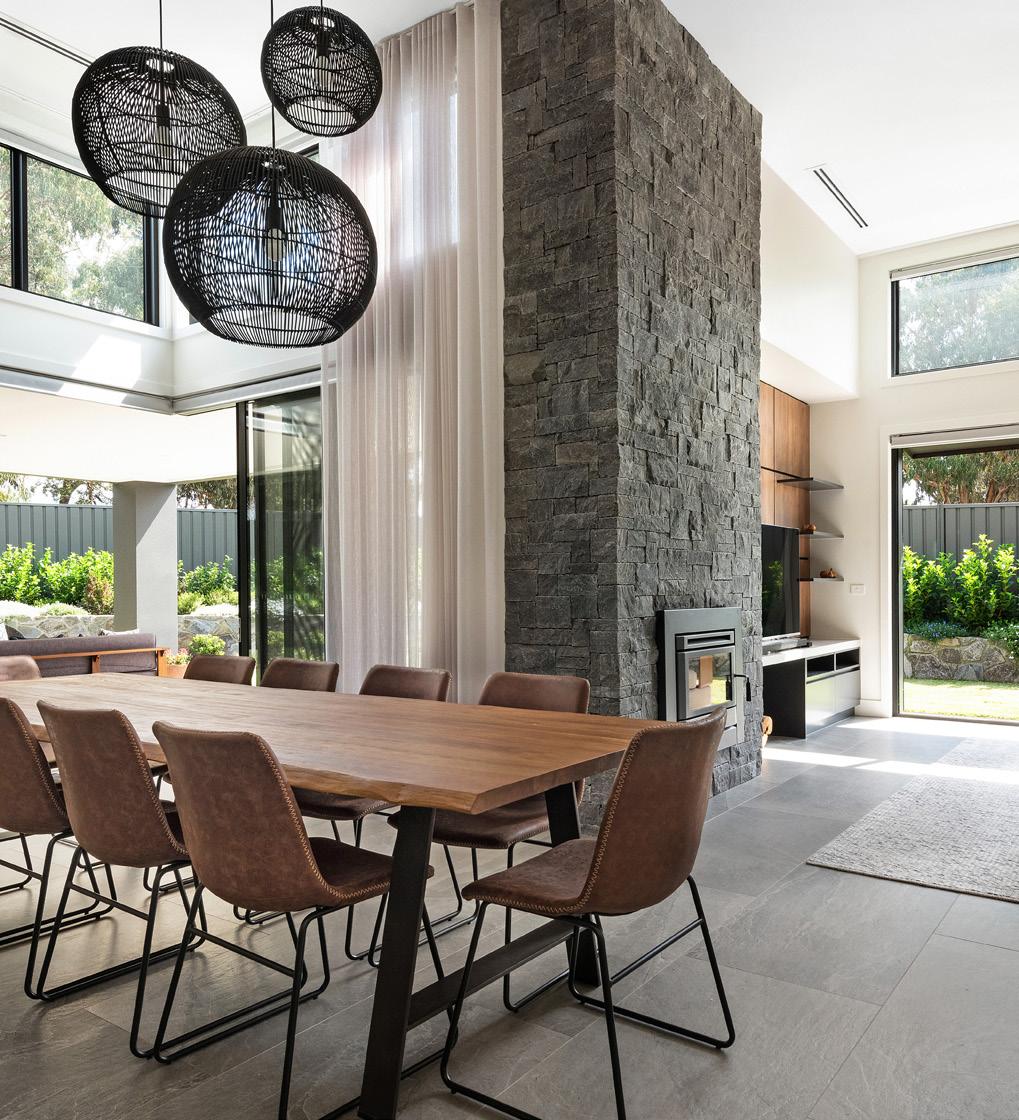
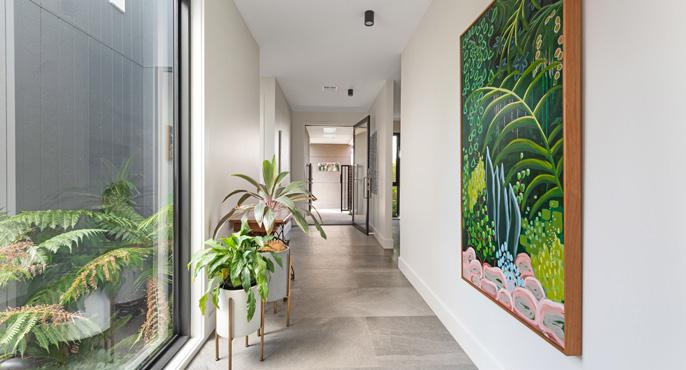
We use a collaborative approach to develop a unique home concept that combines design, style and functionality to perfectly suit your lifestyle. Built. For you.
Contact to secure your fixed price contract, high quality built home.
FORTY eight per cent of Canberra women have experienced some form of sexual harassment in the last year, according to a recently published survey.
The YWCA Canberra’s 2021 “Our lives: women in the ACT” survey, involving 1200 women, revealed that nearly half of women aged 20-24 reported some form of sexual harassment in the last 12 months.
For participants aged 16 to 19, the proportion who were exposed to a degree of sexual harassment was 42 per cent.
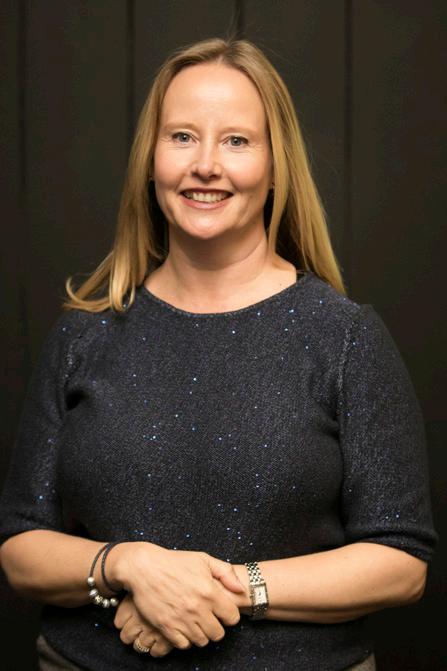
YWCA CEO Frances Crimmins said the survey findings showed Canberra women were experiencing unacceptably high levels of sexual harassment.
“With the national spotlight on sexual harassment in workplaces, our findings just further reinforce the need for urgent action to address this form of gender-based violence,” Ms Crimmins said.
In reflecting on her own experiences encountering inappropriate
INDEX
behaviour in the workplace several decades ago, Ms Crimmins lamented on the lack of significant progress made in this area.
“In my first job in hospitality, it [sexual harassment] was the norm. It was kind of like you just accepted it when you were a young woman working in that sector,” Ms Crimmins said.
“In one job, I actually chose to leave because of significant sexual harassment from bosses.”
The Brittany Higgins and Grace Tame experiences of sexual harassment had helped shine a spotlight on the issue, however there was a lot more to be done.
“We are getting the message out there,” Ms Crimmins said.
“But the change is too slow. We need men to say enough is enough, as well as women.”
Ms Crimmins said the opportunity should not be lost to better educate young women about sexual harassment and how to eliminate it.
“We need to have a rethink about the way we teach respectful relationships in schools,” Ms Crimmins said.
“We should be teaching young people about consent, what it is and how young people can use their voice in consent negotiations. We also need to recog-
Since 1993: Volume 28, Number: 1
Annual horoscope 20-21
Arts & Entertainment 15-19
Canberra Matters 6
Garden 23
Jumbo Crossword 22
Letters 12
News 3-14
Streaming 17
Summer birds 87
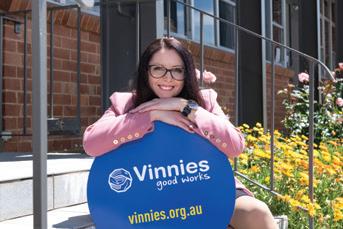
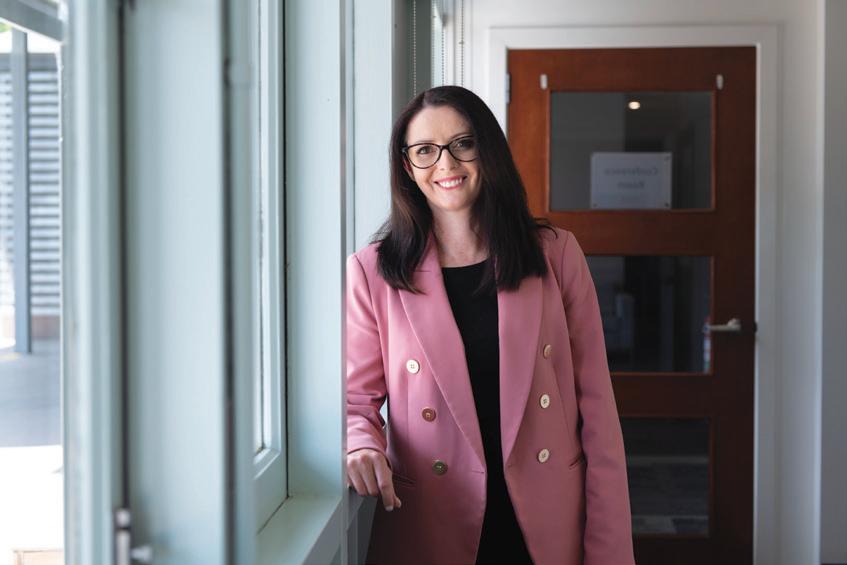
Wine 18 Cover: Vinnies new CEO Michelle Colefax. Photo: Holly Treadaway. Story Page 7.
nise that children will learn from adults, so we need to support the parents, teachers and sporting coaches that are influencing young people.”
The survey, which took place from June to October, asked Canberra women about their experience of housing, financial security, employment, safety and mental health.
Ms Crimmins said the survey findings confirmed that while cost-of-living pressures upon women were considerable before the pandemic, they were noticeably worse following lockdown.
“In 2019, the ‘Our Lives’ survey showed us that women were already struggling to manage living costs and unpaid labour as carers and parents,” Ms Crimmins said.
“Fast forward to the COVID-19 pandemic, and the situation for many is now dire.”
She said many Canberra women reported being “on the brink of housing stress”, with 26 per cent of renters saying they didn’t have sufficient personal savings to manage one payment cycle if they should suddenly lose their income.
“Given we started gathering responses prior to the August lockdown, we can only imagine the stress many faced during the
uncertainty and employment losses that were seen during that time,” Ms Crimmins said.
The survey also revealed that gender inequality was still an issue in the ACT.
“For example, 61 per cent of women who are single parents and who are renting don’t have enough personal savings to manage a single payment cycle with a loss of income,” Ms Crimmins said.
“Similarly, women who are over the age of 45, who have a disability, First Nations women and sexually or gender diverse respondents showed further intersections of inequality.”
Ms Crimmins hoped the survey results would not be ignored, but used in future policy development.
“What we really want to see is this data being used by politicians and policy makers to make policy decisions that will close some of the gender gaps,” she said.
“The ‘Our Lives’ survey shows us how crucial it is to have genderresponsive policy development and an adequate safety net that supports people to achieve a level of dignity as they get back on their feet and to ensure these intersecting factors are considered and applied to measures aimed at addressing inequality.”
Managing Director: James Anderson, 0404 077605, james@citynews.com.au
Director: Kate Meikle, kate@citynews.com.au
Senior advertising account executives: David Cusack, 0435 380656
Journalists: Belinda Strahorn, belinda@citynews.com.au; Nick Overall, nick@citynews.com.au; Lily Pass, lily@citynews.com.au
Arts editor: Helen Musa, helen@citynews.com.au
Production manager: Janet Ewen
Graphic Designer: Douglas Lima
Proof reader: Glenda Anderson
YWCA CEO Frances Crimmins… “We need men to say enough is enough, as well as women.”
The rise and fall of the club that ran Canberra
By Lily PASS
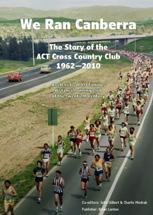
THREE long-term friends and running mates have collaborated on a 1.4-kilogram book, to tell the story of the ACT Cross Country Club.
In 2017, publisher Brian Lenton pitched the project to editors John Gilbert and Charlie Modrak, in their 70s now. All were long-term runners and members of the Cross Country Club, which had been a big part of their sporting and social lives spanning decades.
“It’s a story worth telling for many reasons,” says John Gilbert.
“The transformation from a tiny group of a dozen at most, to a club of over 1000 members and many more participants represents amazing growth,”
In 1957, a small group of Canberrans began meeting up for cross-country races, and the ACT Cross Country Club formed officially in 1962.
John says the book, “We Ran Canberra – The Story of the ACT Cross Country Club 1962-2010”, doesn’t claim to be a definitive history, although it does show the growth of the club and discusses significant milestones.
“We used the term ‘story’ because
most of the words are via the memories of members,” he says.
The book has just been published and John says it has been very well received.
“Since it is so big, 320 A4 pages, and heavy, most early buyers haven’t had time to read it all, but the first impressions have been enthusiastic.”
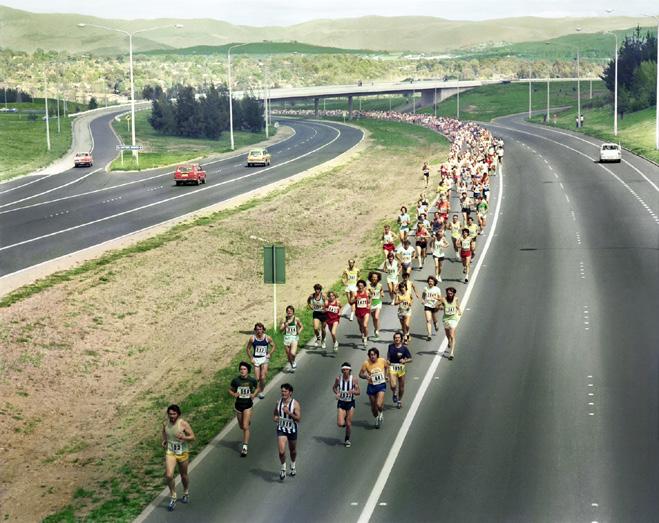
The front cover features an aerial photo of a 1978 fun run making its way down Adelaide Avenue.
John says the hardest part to put ting the book together was getting started, especially because all three collaborators are retired and out of practice at producing documents for public consumption.
“It was time consuming, exacting, sometimes frustrating, but exciting and rewarding in many ways,” he says.
A common first response has been surprise at the quality of the production. The photographs and humorous anecdotes scattered throughout have drawn comment and rekindled memories.
“More than once, during races in farmland, groups of horses joined a pack and ran along with the men,” John says.
“It was potentially quite dangerous as the horses were in an excited state, but they eventually saw the futility of the activity and peeled off to resume grazing. Or perhaps they couldn’t keep up?”
The club promoted and organised
distance running in the ACT for 48 years and there were 37,000 names recorded as having participated in at least one event over that time.
“It’s been a significant contributor to the life of Canberra,” says John.
More significant is the female
growth story. Four female names are recorded in race results for the first 16 years, but by 1993, female participation outnumbered male, and it remained that way for the next 17 years.
“It’s the club’s main claim to fame,” he says.
Unfortunately, the club was forced to dissolve in 2010.
The Canberra Marathon was one of its highest profile events, drawing participants from across Australia and overseas.
“It was always a club-owned event, but the planning and management had been contracted to a specialist running-events company.”
A dispute arose over ownership of the event that could not be resolved amicably and led to court proceedings.
“Judgement went against the club and it was forced to dissolve, much to the distress and disappointment of the membership and leadership.”
John says the club catered for all comers, from “also-rans” to Australian representatives, Olympians and world champions, and it provided support and a network of relationships that went beyond running.
“Contributors used terms including caring, supportive, encouraging, welcoming, accepting, and respectful, irrespective of ability level.”
Available at The Runners Shop, Dundas Court, Phillip, $45.
Fun runners on Adelaide Avenue in 1978. Photo: ACT Heritage Library
WINNUNGA NIMMITYJAH ABORIGINAL HEALTH
AND COMMUNITY SERVICES
Winnunga Nimmityjah AHCS is an Aboriginal community controlled primary health care service operated by the Aboriginal community of the ACT.
In Wiradjuri language, Winnunga Nimmityjah means Strong Health. The service logo is the Corroboree Frog which is significant to Aboriginal people in the ACT.
Our aim is to provide a culturally safe, holistic health care service for the Aboriginal and Torres Strait Islander people of the ACT and surrounding regions. The holistic health care provided by Winnunga AHCS includes not only medical care, but a range of programs to promote good health and healthy lifestyles.
Our services include:
• GP and Nursing
• Midwifery
• Immunisations
• Health Checks
• Men’s & Women’s Health
• Hearing Health
• Dental
• Physiotherapy
• Podiatry
• Dietician (Nutrition)
• Counselling
• Diabetes Clinic
• Quit Smoking Services / No More Boondah
• Needle Syringe Program
• Mental Health Support
• Healthy Weight Program
• Healthy Cooking Group
• Mums and Bubs Group / Child Health
• Optometry Service
• Psychology and Psychiatrist
• Community Events
• Groups
Winnunga AHCS is a national leader in accreditation, was one of the first Aboriginal community controlled health services to achieve dual accreditation under RACGP and QIC standards. Winnunga AHCS has been at the forefront of setting a national agenda for quality improvement in Aboriginal community controlled health and continues to advocate locally and nationally for best practice standards in operational and governance areas of Aboriginal health services.
COVID-19 Vaccinations and Testing for Winnunga Clients
CANBERRA MATTERS / residential gardens
Biodiversity boost begins at home, every home
WELCOME to 2022. While there are many things not yet addressed in planning and development by the elder Andrew Barr and his government, there are some tangible programs to do with biodiversity that are waiting to happen.
There is a lot more that should be done to massively increase the city’s biodiversity, assist in keeping the place cooler, provide safe mental spaces and generally improve the aesthetics of the whole city.
In a follow-up piece to this, the topic will be how we could do better with public spaces, roadsides and parklands. This piece is about residential gardens.
According to our recently departed friend, Cedric Bryant, Canberra has some fabulous gardens but the majority of houses don’t have ample gardens – and, therefore, are deficient in the opportunities for biodiversity.
As with most of the country, many homeowners cling to a dominance of lawns with a token array of plants and shrubbery.
Former governments used to encourage more plantings in Canberra through allocations of shrubs and trees from the government nursery.
New residents had access to these and this largely influenced the generous plantings in established suburbs. The contrast today is what is approved for new suburbs whereby small blocks
have large houses with only a couple of metres at most for gardens.
The lack of care by the planning directorate in how it approves knock down rebuilds in established suburbs has been devastating for the older suburbs. Established plantings continue to be bulldozed with minimal (at best) requirements for equivalent replacements.
Here’s the big ask for 2022 and beyond. The ACT government should take on the leadership role of encouraging an uptake in the household gardens of all suburbs – even those with giant houses and those with apartment towers.
But first a caveat on all this. I am a firm believer in the waste of efforts that people have put into green walls. There have been exceptions, but most of the time these constructions have been a greenwash waste of time and effort.
The concept being suggested is that no matter what the residential condi-
tions, the home environment can be improved where possible with more trees and shrubbery. People in cities much larger than Canberra with a dominance of apartments, have taken the initiative to encourage balcony gardens as well as green spaces and communal gardens between the buildings.
Those in new suburbs with only a metre of two to spare, should be encouraged to be creative and fill those voids with plants of all forms. As for the suburbs where lawns are mowed regularly, the encouragement should be to have these converted (as much as practical) into lush greenery and meadows of flowers to increase the biodiversity as well as assist with cooling.
Each household should be encouraging more insects, lizards, frogs, bees, geckos and all forms of bird life to take up residence within the household’s greenery.
For those who rent, schemes need to be put in place to have people learn how to grow lush gardens in pots – and take them with them when they go.
There was a house sold recently in Ainslie that had a reasonable amount of greenery – much of it well established. It disappeared almost immediately. This sort of event should not be allowed. There are many more
suggestions of what could be done. Not enough space here.
The request is for the establishment of a well-resourced super cell within the bureaucracy to drive a city-wide culture of gardens. The leaders would need to be experienced in getting their hands dirty, know how to encourage a diversity of gardens and to have expertise in the creative side of landscape and garden design.
Dealing with biodiversity and creating climate ready environments requires a whole-of-city approach and commitment to increasing the gardens in all the city’s dwellings. Canberra is a city in a landscape. Often called The Bush Capital. Given the need for cooling and a diversity of biodiversity, it could be The City of Gardens. Gardens are great!
Paul Costigan is an independent commentator and consultant on the visual arts, photography, urban design, envi ronmental issues and everyday matters.
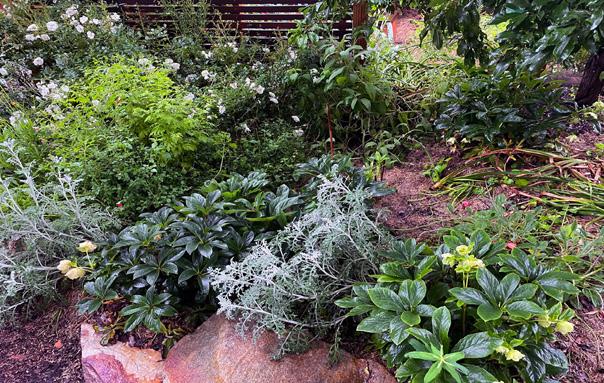
A Canberra garden… the ACT government should take on the leadership role of encouraging an uptake in household gardens in all suburbs. Photo: Paul Costigan
Charity chief has lived on both sides of poverty
By Belinda STRAHORN
chelle faced as a child, it didn’t prevent her from completing tertiary studies at university and building a successful career.
NEW Vinnies boss Michelle Colefax knows what it’s like to live below the poverty line.
Canberra born, Michelle was sevenyears-old when her parents’ separation spiralled the family into financial difficulty.
Her mother juggled three jobs to make ends meet.
But the family were blessed to have Vinnies volunteers as neighbours and through their help were able to break the cycle of poverty.
“Our neighbours were Vincentians and were part of a local conference and they helped us get the support we needed,” Michelle said.
“Mum eventually found a full-time job and we fought our way out of it.”
Michelle, 42, said Vinnies had left a major impact on her life.
Now, as the new CEO of St Vincent de Paul Society Canberra/Goulburn –replacing Barnie van Wyk – she wants to give back to the organisation that helped her family find its feet.
“This is my time to thank Vinnies because without them we could have fallen through the cracks,” Michelle said.
Despite the financial challenges Mi-
Before joining Vinnies – where she served for a time as deputy CEO and chief financial officer – Michelle worked in various roles within the federal government.
But after a short stint as an IT con sultant in the private sector, Michelle was struck by a moment of truth and decided there must be something more valuable she could do with her skills.
“I realised I didn’t like working for a for-profit [organisation] and I needed a purpose,” Michelle said.
“Vinnies has always been a part of my entire life and so by coming back it’s given me a reason to get up every day.”
Michelle has identified some key areas she wants to focus on during her tenure, one of which is continu ing the work Vinnies does addressing the homelessness issue in the nation’s capital.
There were 38,000 Canberrans, including 9000 children, living below the poverty line – more people than before the pandemic began – and the cost of living was increasingly unaffordable for low-income Canberrans, Michelle said.
“The ability to put a roof over your head or feed your family might not be an everyday issue for most people in Canberra, but there are a lot of fami-
said.
But the charity boss takes heart from the success of its Street to Home program that helps find rough sleepers a place to live.
“On average, we could case manage 75 rough sleepers a year, but at the moment we are averaging about 41, so the numbers are down for us, which is great,” Michelle said. Through covid, the program which
government and other community service providers, placed homeless people – at risk of getting covid – into hotel accommodation and eventually into a social housing home.
“There’s still a long way to go to make sure there’s enough social and community housing to meet the need,” she said.
“But what this has shown us is that, during a crisis, the community can
come together and find valuable solutions that work. It’s just unfortunate that it takes a crisis for that to happen.”
Vinnies has had a long history of helping the Canberra community.
An important event on its fundraising calendar is the annual sleep-out which this year exceeded all expectations.
“We had a target of $650,000 and we broke that with over $1 million. It was spectacular,” said Michelle.
“It shows us that the community supports the work that Vinnies does.”
Volunteering has been an important part of Michelle’s life, having spent her adolescence working as a Vinnies volunteer alongside her mother.
“As my family became more selfreliant, both mum and I volunteered with Vinnies. We did bread runs and dropped off grocery hampers to people that Vinnies were supporting,”
The challenging circumstances that Michelle experienced in her early years have given her an insight into the volunteering sector and she’s keen to encourage more young people to engage with the organisation.
“The work that Vinnies does helping those in the community that are less fortunate drives you,” Michelle said.
“If you can help one person, and it puts a smile on their face and creates a relief for them, then that gives you purpose.”
BIRDS / summer birds
Three special birds to bring out best of summer
By Neil HERMES
FOR me, summer is the time of migrant birds from near and far, and the bush and lakes are full of their displays and calls. It is also nesting time for our resident birds.
The feelings of this joyful time of year are captured by Terri Guil lemets’ reference to bird-chirping weather.
So which are Canberra’s standout summer birds? I have searched through the 300 or so species of birds that are known to use Canberra as home and have reduced my summer highlights list down to three that capture summer for me.
then searches the swampy edges of Lake Burley Griffin.
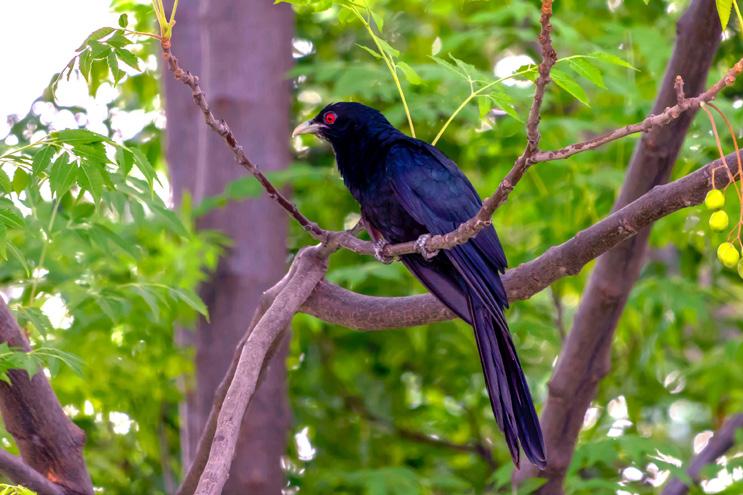
The Eastern Koel… this migrant cuckoo makes its presence felt through summer with its loud and persistent calls.
In Canberra we have dozens of birds that nest in the high latitudes of the northern hemisphere and then migrate thousands of kilometres to Australia for our summer. These remarkable birds have two summers a year and are the ultimate summer birds.
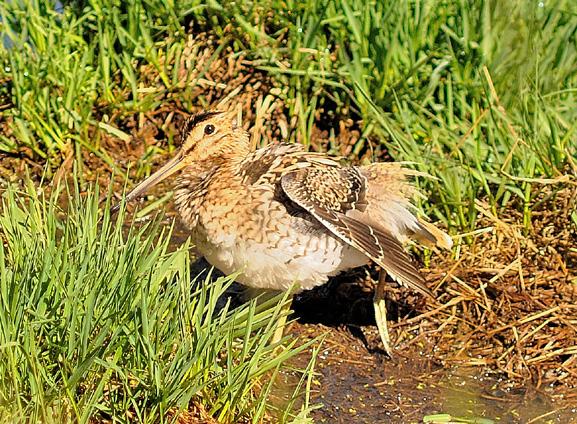
So my first summer bird is the king of these migratory waders, the Latham’s Snipe
The Latham’s Snipe nests in Hokkaido in Japan in the middle of the
year and then searches the swampy edges of Lake Burley Griffin during the summer. Latham’s Snipe never live through a winter. Of course, there is a price. This snipe flies 8000 kilometres from Japan to Canberra every year to enjoy this unending sunshine.
Remarkably, 7000 kilometres of the journey is completed nonstop in three days. Not bad for a bird weighing about as much as an apple.
My second bird of the summer is the Eastern Koel . Hated and loved, this migrant cuckoo makes its presence felt right through summer with its loud and persistent calls. We
visit Canberra forests and gardens every year. They all lay their eggs in other birds’ nests. When they arrive, and right through summer, cuckoos proclaim their territories with distinctive and often mournful songs.
Not recorded here before 1946, koels summer arrivals started in earnest in the ‘80s and have increased virtually every year since. It is now the most common cuckoo in Canberra.
Koels are not so popular with many people because of their monotonous and repeated calls. The most famous
include a rapid “weoo weoo” and loud, shrieking “kik kik”. Koels often call right through the night.
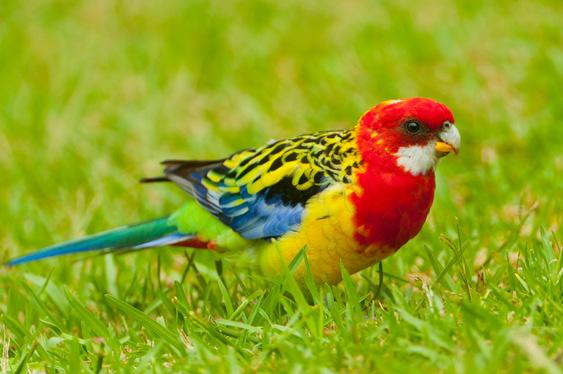
My third and last summer bird is the Eastern Rosella . With us all year, the Eastern Rosella is very familiar to many Canberrans because it nests in tree hollows in our parks and woodlands.
Some Eastern Rosellas take up residence in nest boxes we provide in our gardens. Virtually every Canberra household where records are kept have a pair of these beautiful rosellas using the garden.
Summer for me is when the parent Eastern Rosellas launch their young on their first tentative flight from the nest box in my garden.
So, while none of my top three summer birds really chirp, summer is a time of the return of birds from summers past, intense breeding activity and a new generation of young birds.
Neil Hermes has been an avid birder since childhood. He has had more than 50 years’ association with the Canberra Ornithologists Group and written more than 20 books.
The Latham’s Snipe… nests in Hokkaido in Japan in the middle of the year,
The Eastern Rosella... familiar to many Canberrans because it nests in tree hollows in our parks and woodlands. Photos: Neil Hermes
THE GADFLY
THE anti-vax movement is more troubling than first appears. It’s tempting to see it as simply a reaction to the lockdowns that have caused such financial and emotional hardship to so many in the community.
Add to that a burning resentment against the oppressive hand of authority at a time when the government itself has lost a good deal of the respect it once enjoyed. That might account for a few hundred protestors on the streets.
But it’s much more serious than that. A quick glance at the national news shows thousands carrying anti-vax banners while the international scene reveals the symptoms of a political nervous breakdown, the consequences of which look pretty scary.
COVID-19 deaths are on the rise again in the northern hemisphere and the commitment to action on climate change at the Glasgow meeting was grudging at best. I don’t want to overstate it, but it feels as though we’re in a conflict that decides whether or not we descend into the kind of chaos so beloved of Hollywood dystopians.
Truth itself, it seems, is at the heart of the struggle. And while that
might sound a little strange – something is either true or it isn’t – well, it ain’t necessarily so. And our species is truly expert at muddying the waters.
For example, lots of parents tell their children there’s a Santa Claus who comes sliding down the chimney late on Christmas Eve; and if they’ve been very good he puts lots of presents at the end of the bed. But after a couple of years the kids discover that wasn’t true. So they get another story – Christmas is really the birthday of
a man called Jesus who wasn’t really a man at all but the son of a god who is so powerful and perceptive that he not only created the entire universe but can even hear our thoughts! It takes a little longer to discover that wasn’t true either. In fact, some people never do. They hang on so desperately to the idea that unlike all the other flora and fauna around them, humans don’t actually die; they live on in some spooky consciousness where the bad people are tortured and the good ones – them
Set amongst landscaped grounds, Adria Care in Stirling is a warm and welcoming community of people from all around the world. We pride ourselves on cultural diversity and celebration, and offer a wide range of activities to cater for all interests. We provide care for Croatian and all other nationalities.
Adria Care fosters individuality and independence, providing support and assistance to enable residents to live in a comfortable and secure environment. It offers residential care for 42 residents, incorporating 2 respite rooms and special care. All rooms are single rooms with ensuite.
The village also contains 36 independent living villas. All villas have 2 bedrooms, a courtyard and a garden, and residents enjoy a peaceful and welcoming community lifestyle.
Our aim is to provide a caring, safe, home-like atmosphere, reflecting your rights to dignity, respect, privacy, safety and the best quality of life.
Contact our friendly staff today to arrange a personal tour.
– have a fine old time.
It doesn’t worry them that millions – no, billions – of other equally intelligent folk believe just as fervently in something entirely different.
In fact, the most ghastly wars have been fought between those whose beliefs differ only slightly from each other. And since the election of a TV performer in the most powerful country in the world, that nation is splitting into warring factions that both end their threats with, “God bless America!”
the cure because we can measure it.
Yet we’re so addicted to other “truths” that our Prime Minister refuses to engage with the climate-change cure, refuses to mandate vaccinations and can no longer distinguish between truth and lies… even when he’s the one lying.
I don’t want to overstate it, but it feels as though we’re in a conflict that decides whether or not we descend into the kind of chaos so beloved of Hollywood dystopians.
Little wonder that the very concept of “truth” is not quite as straightforward as we first thought.
But here’s the thing: we can actually measure the amounts of C02, methane and other atmospheric gasses that are causing the world to become uninhabitable. And we know precisely how to substitute “clean” energy to avoid that fate. Same with COVID-19. We know the cause and
This same chap – a proud Pentecostal believer – at 11.32am on Thursday, November 25, personally introduced a Bill into the national parliament “to protect people of religion, of faith, against discrimination”.
And that’s god’s honest truth.
robertmacklin.com
Speeding fines and endless covid tops busy year
Thousands escape city speeding fines
JUNE 23
Topping the list for 2021, the website’s most read story was on drivers getting out of paying fines in the new 40km/h zone along Northbourne Avenue, Barry Drive and through Braddon. The speed limit was reduced to “create a safer environment” for all road users, but there was confusion on when the speed limits came into effect.
WHAT a year for our popular website, citynews.com.au
Our journalists have been tirelessly reporting a year that started with an unvaccinated city battling covid to one more than 98 per cent fully vaccinated. But COVID-19
continued to dominate our news coverage. Somewhere in the middle of that we launched a news website for Canberra and a sister site for Queanbeyan. The public response has been phenomenal, smashing all the previous 11 years’ records.
‘Freedom Friday’: here’s what’s changed
OCTOBER 28
Number two on the “CityNews” most-read list is, unsurprisingly, covid related. In a more positive light though, it’s a list of freedoms for the Canberra community, signalling the end of lockdown and Canberra’s emergence into the new “normal”. It’s filled with simple wording and key information for easy access to what people needed to know at the time.
Two cases of covid detected in Queanbeyan
AUGUST 19
Speed van keeps moving
This is weird… the website’s mostread article this year continues to be a story published in July, 2018 that’s stayed top of our charts since then.
“Revealed: secrets of the speed camera vans” continues to pique the interest of readers looking to find out everything they want to know about white-van speed cameras, but are too afraid to ask.
As the second lockdown began in the ACT, people in Queanbeyan were right to be wary and keep an eye on updates in their local area. As the first few cases arrived in Queanbeyan, readers wanted information, and that places this piece right in the middle of the “CityNews” most-read list for 2021.
Exposure sites of concern continue to grow
AUGUST 24
The importance of staying informed means exposure site updates rated highly on the “CityNews” most-read list, especially early into Canberra’s second lockdown. People were anxious and were monitoring their surroundings closely, so they came to “CityNews” for their information and updates as the case numbers and exposure sites grew.
TOP OF THE COLUMNISTS
“Southside residents, be afraid, be very afraid!”
SEPTEMBER: “It is as if there is a new suburb called Northbourne that includes those living 100 metres either side of the corridor,” writes “Canberra Matters” columnist He continues “what’s just as worrying is the same planners are working on plans for the corridor going south to Woden.”
MICHAEL MOORE
“Why principals have to put student safety first”
OCTOBER: “There is an irony in a school principal resisting mandating. Principals are responsible for a whole range of mandatory behaviours in schools,” wrote political columnist Michael Moore on the Charnwood-Dunlop Principal’s controversial vaccine mandate opinion.
NICHOLE OVERALL
“50 years on, the question echoes: who killed Keren?”
JANUARY: What unfolded along a dark Canberra road on the evening of February 26, 1971, ranks as one of the capital’s oldest unsolved crimes, writes “Yesterdays” columnist Nichole Overall . She spoke to Sgt Adam Rhynehart who is leading the current re-examination of the “perplexing case.”
Canberra Girls Grammar principal resigns
OCTOBER 5
In other news, principal Anna Owen resigned after nearly three years at Canberra Girls Grammar. On her way out, she received high praise from the school community, and from the chair of the Girls Grammar school board, Sue Hart, who she said had “demonstrated a commitment to and promotion of girls’ education, she will be deeply missed.”
ROBERT MACKLIN
“‘Squid Game’: How about execrable, vile, putrid and racist?”
NOVEMBER: “Just imagine if the victims shot to death were not Asians but white Australians. The phone calls of protest would melt the copper wires of the NBN,” writes columnist Robert Macklin , quite controversially.
JON STANHOPE
“Hungry island is Morrison’s scandalous shame”
MARCH: “The situation on Norfolk Island, a part of Australia really is scandalous… [they] are denied the right to vote for those responsible for the governance of their community,” writes columnist Jon Stanhope, who has previously lived as a resident on the island. “This is a matter of national shame.”
IAN MEIKLE
“On yer b-b-bike, says the Disruption Taskforce”
DECEMBER: We face disruption across our city like never before, but the Disruption Taskforce is all over it. The question is: are they for it or against it? Here’s another “Seven Days” with Ian Meikle, talking about a sense of hopelessness, “love bombing,” and a questionable tip for Christmas Day.
PAUL COSTIGAN
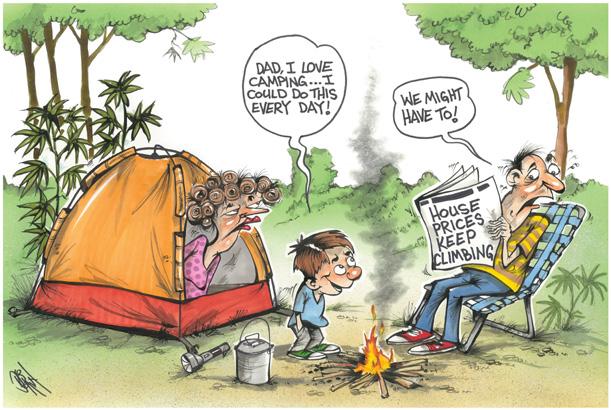
IT’S been a year of lockdowns, corruption inquiries, confounding climatechange plans and soaring house prices, but as they say, sometimes all you can do is laugh about it.
Here’s 2021 wrapped up with some highlights from the wry eye of cartoonist
• Custom community gift hampers
• Country to city handmade and produce
• Local produce & distilleries (tastings available!)
THE “Seven Days” column (CN December 16) outrageously suggests that the government’s “Disruption Taskforce” has been formed to “provide disruption rather than solve it”.
But perhaps that is the only rational explanation for the promised project that will create traffic chaos for years, requires the re-importation of 60,000 cubic metres of fill, possibly from across the border where all the spoil from Light Rail Stage 1 was previously trucked to at great expense, involves the destruction of two substantial road bridges and appears to be totally unnecessary when examined closely, and of little benefit to anyone.
But that’s not all! Yet to come, and extending over many years, will be the digging up of roads to lay massive foundations for the light rail track, a major new bridge over the lake, destroying all the heritage trees on Commonwealth Avenue, stuffing up the express bus services from the south, etcetera, etcetera. Oh, the wonderful disruption! How could they ever top this?
Richard Johnston, Kingston
Why aren’t vets’ prices regulated?
I VERY much agree with letter writer Ross Kelly (“Vets’ business model targeted at mid -
dle class”, CN December 9) that vet services are too expensive and often out of reach of low-income people and pensioners.
I have a long history in this regard and over the years I’ve written twice to the Australian Veterinary Association to ask why vet fees are so high and there’s no other way but to pay upfront whatever they charge.
I was told that each clinic has the prerogative to charge what they think is appropriate for their services. Naturally, I thought this answer wasn’t good enough.
Through other sources I heard that one reason for the high fees is that the industry is not regulated, so I ask why?
Only lately I’ve heard of several pet
insurance companies that would make a difference in providing solutions for the cash hard-ups. So after the shock of encountering a vet clinic that wanted to charge me $900 for an X-ray to my dog’s top-right gum, I’ll be considering pet insurance.
Vivien
Munoz, Holt
Zed does vote in ACT’s interest
LETTER writer Barry Salisbury (“Photo shoots don’t cut it”, CN December 9) says that a senator (obviously referring to Senator Zed Seselja) who does not vote for the interests
of his state or territory has no right to be in the Senate.
I believe he did in fact vote in the interests of his constituents and my reason for alluding to this is that during the same-sex marriage plebiscite, all Labor politicians in the ACT, both local and three federal, voted “yes”, one Liberal voted “no”.
It is also reported that some 70 per cent of Canberrans also voted “yes”. That leaves around 25 per cent of Canberrans who voted “no”.
So, given that the 70 per cent and Labor voted “yes” and 25 per cent voted “no”, then the senator, as a conservative, did in fact vote in the interests of the 25 per cent of Canberrans who voted “no”.
Barry, that’s democracy whether you agree with it or not because people have a choice as has the senator in question.
Ray Zak, Macgregor
A step in the wrong direction
WHILE recently in Civic, I went to the new toilets on Bunda Street on the site of what was the Koko Black café.
While it is always nice to have good new facilities, and they are appreciated, I was so disappointed to see there was a small step to be negotiated to access the toilets once inside the entrance.
Why in these times when we purport to shine a light on providing equality and
access for all in the community wasn’t this made accessible to all?
I am sure they cost a lot of money and I hope that this fault can be rectified by putting in a ramp to replace the step. We must do better on this front.
Anne Stearman, Downer
Treat us with intelligence
MANY female voters, including in the ACT, would also be turned off by the Coalition’s recent loud huffing and puffing over defence and security announcements that appear to be dished up as convenient pre-election sabre-rattling distractions (“Female independents are PM’s latest ‘women problem’ ”, citynews.com.au, December 17).
The strutting men in suits ignore, at their peril, the fact that women take a broader and more practical view of what helps people to feel “safe and secure” and able to control their own lives.
From a federal perspective, the coming decade for ACT voters would be vastly improved by serious national action to address climate change and emissions reduction, the restoration of territory rights regarding end-of-life decision making and the creation of a robust integrity commission that ensures federal priorities and expenditure are set and allocated fairly, transparently and deliver value for money.
Sue Dyer, Downer
Steering
WHIMSY
The Almighty sniffed and said: ‘Jesus,
SOMETIMES a nation has little option other than going to war, but that hasn’t been the case for Australia since World War II.
The main beneficiaries of conflict seem to be ambitious politicians and defence industries.
Amidst the patriotic fervour we forget about the damaged individuals and ruined lives that war produces.
Anyway, what I thought I would share with you at the end of 2021 is a poem I found on a loose piece of paper in an old book I bought at Lifeline.
The poem was probably written during World War I. I haven’t been able to find out who wrote it, but it highlights the hypocrisy of war and deserves wider recognition:
Our day of prayer!
The Almighty sniffed and said: “Jesus, my boy, There’s a smell rising out of the west; Do you see that blue vapour surrounding the earth?
I thought it was their day of rest.
They’re trying to signal. They’re turning out smoke; They’re sending a message across. Tune in the receiver, let’s hear what they say –These birds that nailed You to the Cross.”
So Jesus turned on his latest short wave And nearly had fourteen blue fits.
He said: “That’s no static, it’s bombs and big guns, They’re blowing each other to bits.
But hold on, they’re praying. They’re down on their knees –
The ones that are not making guns –They reckon they want You to give them a hand, They’re fighting a mob called the Huns.
The Huns, too, are praying. They’re telling the world
That God is there, leading them on;
The main beneficiaries of conflict seem to be ambitious politicians and defence industries. Amidst the patriotic fervour we forget about the damaged individuals and ruined lives that war produces.
And both sides are making the sign of the Cross; Their parsons have uniforms on.
With a three-storied crown on his head. He lives in a Palace. He says he is God. And collects a few bob from the dead.
them the Truth,
To value man more than their lands.
To love one another, to give to the poor –
They say, if You help them to slaughter their foes, And keep all the land that they’ve won, They’ll go to their churches at least once a week, And cut out a bit of their fun.
And there’s an archbishop in vestments and lace, Between prayers he’s doing his sums; He’s got to keep up his magnificent church On profits and rents from the slums.
And, oh! Here’s a beauty. He says he’s
They’re sinking their ships. They’re shooting their boys.
They’re bombing their babies as well.”
“Hold on,” said Almighty, “You’d better make sure You’re tuned into Earth and not Hell.”
“Oh, yes, it’s the Earth. I would know it again
By the pomp and the cant of the Church.
They march and parade with the strong and the rich And leave all the poor in the lurch.
Just look at the marks on My hands.”
Then God said: “Switch off, Son, You’re making me cry, They’ve learnt nought from You it appears;
Just leave then to fight we’ll wait and tune in
Again after two thousand years.”
Let’s hope that 2022 does not see Australia dragged into a conflict over Taiwan.
Clive Williams is a Canberra columnist.
ARTS & ENTERTAINMENT
at fetes, birthday parties and nursing homes and went on to mount big shows at casinos, cruise ships and become a finalist in “Australia’s Got Talent”, loves magic and circus in equal measure and says: “I’m combining these two into a family show, but the thing I love most is illusion.”
So far, he reports, there have been a wide range of audiences with grandparents and grandchildren and sophisticated adults enjoying the shows.
For him, showbiz and magic are in the blood. He’s absorbed himself in the history of silent movies with their live piano players and the picture showmen who toured the country in the old days, showing movies
covid lockdowns in several states.
In another lucky twist of fate, in part because of covid, he’s been able to get the best circus acts into his show, with artists from companies such as Cirque du Soleil who would normally be performing all over the world now desperate to get back in front of an audience.
So, the show goes on with showgirls levitating, disappearing and flying, Perth duo Cameo Rascale doing acrobatics, comedy, balancing and juggling, and a giant “teeter board” act drawing gasps. “It’s an old act but it involves a lot of skill,” he says.
Like most artists, Boyd gets coy when you ask about the precise details of his illusions, but talks about an
mind-blowing acts and the sequins, they’ll have some audience members coming on stage in a more intimate moment of interaction.
But the big difference between “Circus of Illusion” and most other circuses is that it takes place in a theatre.
“Our backdrop is a striped wall, like you’re inside a tent under lots of lightbulbs. It allows the space to look massive and it brings back the sawdust and magic effect that I saw when I was a child,” Boyd says.
“Circus of Illusion,” Canberra Theatre, 2pm and 7pm, Sunday, January 16. Book at canberratheatrecentre.com.au or 6275 2700.
ARTS IN THE CITY Wharfies share a little nostalgic fun
THOSE clever clowns from “The Wharf Revue,” Jonathan Biggins, Drew Forsythe and Phillip Scott, have burst into print for the first time with “Much Revue About Nothing”, a compendium of monologues, duologues, sketches, and satirical songs from their madcap 20 years of comedy. They’re hoping that fans will love the nostalgia, while students and community theatres might like to put on their own satirical revue. Available from booknook.com.au
AFTER a covid-related cancellation in September, Melbourne comedians Joe and Carlo Salanitri and Andrew Manfre will be in town at last with their new live show, “Sooshi Mango: Off the Boat,” performing the ethnic dad and mum characters that have made them famous. Canberra Theatre, January 12-14, book at canberratheatrecentre.com.au or 6275 2700.
THIS is surely the best time of the year to pack the family into the car and head for the Sydney Festival, the first directed by Olivia Ansell, which promises to “explode on to (and into) the city’s parks, pools, streets, stages and screens”. Along with the many free, familyfocused events, public art installations and large-scale performances, there’ll be Broadway smash hits and a ballet of BMX bikes, with 33 world premieres and 52 new commissions over 25 days, January 6-30. Book at sydneyfestival.org.au
CHILDREN have not been forgotten in the summer festivities, with Glenn Elston’s popular outdoor production of “The Wind In The Willows” coming to town. Mr Toad, Ratty, Mole, Badger, Otter and Portly will entertain young and old, while the Head Chief Rabbit will transform the whole audience into “little rabbits”. The Royal Botanic Garden, Sydney, until January 23. Book at willowslive.com.au
MEANTIME, visitors to the Sydney Opera House this summer will have the opportunity to enjoy Gale Edwards’ production of Puccini’s “La Bohème” (pictured) for the last time. The first opera artistic director Lyndon Terracini commissioned for the company, it premiered in 2011 and will be replaced by a new production in 2023. At Sydney Opera House until February 4. Book at opera.org.au
Illusionist Michael Boyd… “You think you know what’s happening, but suddenly your jaw is dropping.”
MUSICAL THEATRE / Child Players ACT
Young ‘Pirates’ finally set sail
CHILD Players ACT is one of Canberra’s best-respected youth theatre companies and now its founding director, BJ Anyos, is pulling out all the stops for a big summer production.
She has hired a top professional creative team to produce a new adaptation for young players of that old Gilbert and Sullivan warhorse, “The Pirates of Penzance”.
The director of this new adapta tion is Georgia Pike-Rowney, joined by musical supervisor Susan West and musical director Lauren Davis.
All three have PhDs in music education with decades of professional performance and education experience between them, meaning that the show has been specifically designed to enhance the confidence of all the cast, no matter their level of experience or skill.
Pike-Rowney and West are both connected to universities, where by day they research the benefits of participatory and intergenerational arts for mental health and wellbeing.
Together they say this production will support, encourage and enhance the health of the young cast and, by extension, they are hoping that of the audiences’ – and this show is suitable for all ages.
for Gilbert and Sullivan operettas, which they’ve passed on to the young cast members, who it seems can’t wait to finally stage the production in full, to sing, dance and be merry after COVID-19 lockdowns affected the show for almost two years, with online rehearsals in 2021 when face-to-face rehearsals were no longer possible.
There’s a slick look to this new adaptation created by costume designer and production manager Angela Fewtrell and set designer, Martin Rowney.
According to Pike-Rowney, the production is bursting with good quality and good fun and the live orchestra, led by West and Davis, will bring an authentic experience to audiences, taking us all back in
For readers not in the know, Pike-Rowney recounts the story of young Frederic, “slave of duty”, apprenticed to the Pirate King.
Upon turning 21, Frederic is to be released from his indentures and, as he seeks his freedom, he comes across a “bevy of beautiful maidens” who prove to be the daughters of Major-General Stanley, “the very model of a modern major-general.”
These include Mabel, with whom Frederic instantly falls in love, so much so that he is ready to see his pirate mates captured by the police.
Alas, an obstacle is revealed to him by his former nurse, Ruth, that he was born on February 29, meaning that technically he is not 21 years, but only five!
Frederic pledges to return to
for him for another 63 years, but fear not, a happy ending is in sight. The rambunctious cast is 12-20 years of age and some are very experienced after having performed in musicals with Child Players ACT and other companies for many years, others are new to theatre and singing.
And, the director says, the production sports a “fabulously gender-balanced cast – rare for community theatre.” That means there are equal numbers of boys and girls.
“The Pirates of Penzance: a new adaptation for young players”, at Canberra Repertory Theatre, Acton, January 14-22. Book at canberrarep. org.au
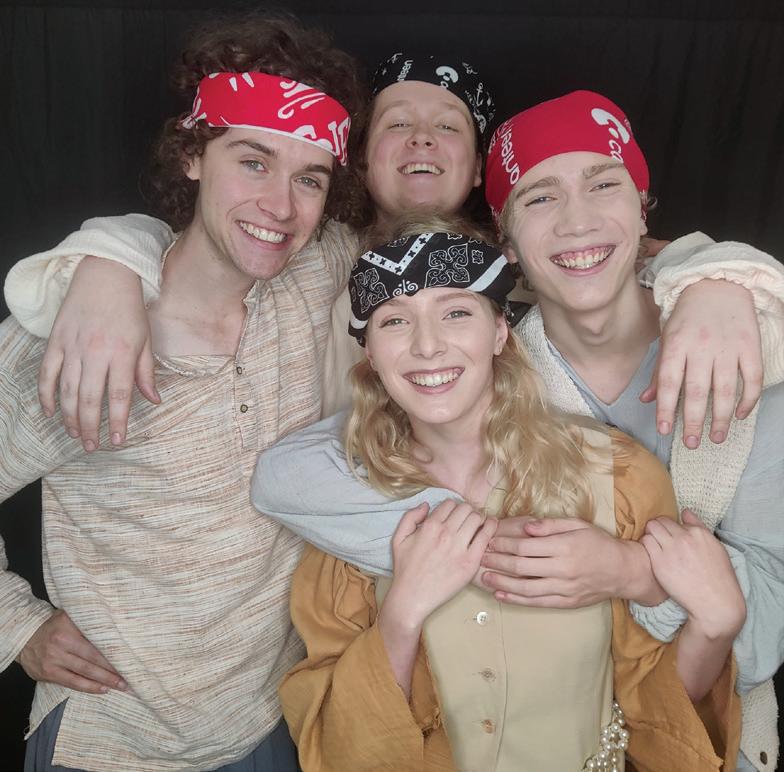
Ahoy, there… cast members of “The Pirates of Penzance”.
It’s Harry’s turn to step up for a big burst of nostalgia
DON Draper from “Mad Men” once likened nostalgia to a liquid, one that’s “delicate, but potent”.
By that analogy, entertainment companies have it securely bottled up, running on conveyor belts, and are selling it en masse to audiences through an endless stream of reboots, reunions and remakes of hugely popular franchises.
There’s been a “Friends” reunion on Binge, Disney+ have given the world more of the iconic “Star Wars” bounty hunter in “The Book of Boba Fett”, Netflix has dropped a fourth season of “Cobra Kai”, which revisits the ‘80s hit “The Karate Kid”, and all this is even more omnipresent in cinemas.
Last year the trailer for “Spider-Man: No Way Home” broke the Guinness World Record for most online views in a day with an absurd 355 million clicks.
That happened when it revealed that characters from the Tobey Maguire and Andrew Garfield Spider-Man films would return for this newest iteration.
It was inundated with comments from people ecstatic that, for just a few precious hours, they’d be able to relive some of that blissful excitement of their childhood.
All that’s not even to mention “The Matrix: Resurrections” also currently in cinemas or Tom Cruise putting the aviators back on for a “Top Gun” reboot next year.
Now, it’s “Harry Potter” that’s got the treatment.
A new documentary streaming on Binge reunites Radcliffe, Grint and Watson, or as they’re better known, Harry, Ron and Hermione, to reflect on their time with the multi-billion dollar franchise.
They’re joined by a batch of other cast members in some of the iconic original sets from the film.
It comes as the first movie in the series, “The Philosopher’s Stone” celebrates 20 years since first hitting cinemas.
It’s no secret these reunions are crowd pleasers, nor that the space they’re taking up in the entertainment world shows no signs of slowing down.
But is that a bad thing?
Don’t get me wrong. I was there on opening day of the new “Spider-Man” film, and even as a casual “Harry Potter” fan enjoyed reliving some childhood in the reunion special.
But how far does it go?
It’s easy to see the trend becoming a creative ouroboros; a ceaseless cycle of rebooting and remaking that leaves little room for investment in unique voices and ideas.
This poses a danger, not only for the stifling of creativity in the industry but also for the merit to be found in some of these nostalgia trips themselves.
Where’s the fun revisiting familiar favourites, if everything else is already a familiar favourite?
There are signs that complete domination by established franchises might not become the norm though. A bright pink, South-Korean one comes to mind.
Netflix’s “Squid Game”, a totally original property, not only became the most watched television show in dozens of countries last year, it did it without being Western.
Within weeks its tracksuit-clad characters had pierced the pop-culture zeitgeist like a hot knife through butter and its signature visual style has become recognisable throughout the world.
Another similar example is “Parasite”, which took the world by storm in 2019 and was awarded
the year’s best picture at the Academy Awards.
“Once you overcome the one-inch tall barrier of subtitles, you will be introduced to so many more amazing films,” said director Bong Joon-ho upon receiving one of his many accolades for the film.
“Parasite” is too unique to get down to a sentence-or-two description.
Self-described as a “family tragicomedy”, it’s a fun, yet darkly sincere examination of the class struggles of South Korea.
It can be streamed on Stan, and as of this month can also be watched for free on SBS On Demand.
“Parasite” pulls off a remarkable balance. It’s a deeply focused exploration of an important topic while not trading out the pacey thrills that general audiences go to the movies for.
And unlike popular franchises, the extent of creativity, and entertainment in a treat such as “Parasite” can’t be understood until audiences take a punt on it.
What it and, more generally, “Squid Game” show hope for though, is that audiences do indeed want the unique, the foreign and the original in large-scale entertainment.
That’s encouraging, because while it’s great to have those big releases to revisit childhood, it’s also important that they don’t come at the expense of productions that have the potential of making entirely new memories as well.
Like Draper said, that nostalgia may be potent, but it’s delicate, and it’s starting to get diluted.
From left, Rupert Grint, Emma Watson and Daniel Radcliffe reunite to reflect on their time in a “Harry Potter” reunion on Binge.
WINE / sparkling ART
ONOMATOPOEIA is the formation of a word from the sound associated with what it is named. It is a word that sounds so foreign… like xenophobia.
But its use is everywhere, even at breakfast. That childhood moment where I awaited a plate of Rice Bubbles with milk and yearned for Snap, Crackle and Pop to start singing remains the epitome of onomatopoeia being used commercially in my world, and where to this day the pouring of that powder-puff cereal is both evocative and compelling.
In the realm of wine, one of the distinctly pleasing parts of opening a bottle of sparkling wine is the sounds that are generated: the pop of the cork, the sizzle of the bubbles as your glass is filled and the clink and cheers when you celebrate with family or friends.
And therefore, the recent ABC Business report that revealed there is a champagne shortage currently hitting Australia felt like another blow dealt by the COVID-19 pandemic, which has sounded like a hammer through all of our lives. This feeling was confirmed when I spoke with Kyri Christodoulou, the import manager for Emperor Champagne.
“There’s definitely a shortage,” he said. “I call it the hangover from covid. What’s happened is that production relies on supply chain parties to be ready and with covid everything slowed down or stopped for a time. As well, there’s been a terrible harvest in 2021. There’s a bigger reliance on reserve wine so the champagne houses are releasing
wines from 2016, 2017 and 2018.”
“Has that affected prices, Kyri?” I asked.
“Definitely, but we are still the biggest per capita consumer of champagne in the world. It’s just that our market is small compared to the US and Europe. During covid we didn’t use our quota and for the next year you get a reduced quota sent. There’s also the increased pressure on prices caused by shipping where people are wanting more consumer goods.
Pre-covid, a 20-foot container cost around $4500 to ship. It’s now $11,000 for the same container with slower delivery times. There are production issues and a shortage of shipping that’s affecting supply.”
To cope, Emperor is moving clients away from the houses that are the most wellknown, such as Bollinger, Billecart Salmon, Veuve Clicquot, Moet et Chandon, Ruinart and Krug, to lesser-known brands like Pol Roger, Louis Roederer and Nicolas Feuillatte. But Kyri foreshadowed more price increases as demand increases with the economy returning to a more even keel. The prestige of champagne will ensure
that demand remains high in this country, even though Australian sparkling wine can compete against the French in terms of quality but especially price.
Tasmania produces some of the world’s best sparkling wines, with the House of Arras a stand out.
I have acquired a Kreglinger Vintage Brut 2016 that, for around $60 a bottle, is as brioche is to bread, rich and remarkable but with a clean flinty finish.
In 2000, Kreglinger Australia (which has historical connections with Belgium) diversified into wine production with the acquisition of the majority ownership of Pipers Brook Vineyard, a Halliday five-star winery that controls the Ninth Island, Pipers Brook and Kreglinger labels.
I can’t wait to hear the pop of the cork and feel the frisson of delight that is the anticipation the sound of a fine sparkling wine delivers (even when it’s not champagne!).
A man walks into a magic forest. He proceeds to where he can hear trees talking and takes out his axe. “You can’t cut me down, I’m a talking tree” the chosen tree exclaims. The lumberjack replies: “You may be a talking tree but you will dialogue.”
Top arts prize for top architect
AUSTRALIA’S most awarded architect, Glenn Murcutt, has been honoured with the esteemed Praemium Imperiale, a global arts prize awarded annually by the Japan
previous domestic and international recognition of Murcutt’s work including having been awarded the 2009 American Institute of Architects Gold Medal, the Pritzker Architecture Prize in 2002, the 2001 Thomas Jefferson Medal for Architecture in America, the 1999 Green Pin International Award for Architecture and Ecology from the Academy of Architects, Demark, the Finnish Alvar Aalto Medal and the Royal Australian Institute of Architects’ Gold Medal in 1992.
“Glenn Murcutt is a giant of the architectural profession whose contribution is truly immense,” national president of the institute Tony Giannone said, adding that he was the first Australian to be named a Praemium Imperiale Laureate of architecture.
The pop of the cork and the frisson of delight that is the anticipation the sound of a fine sparkling wine delivers (even when it’s not champagne!).
Glenn Murcutt.
By George, hundreds of glimpses of colonial art
By Helen Musa
THE National Library of Australia has an exhibition celebrating artistry and enterprise, “Illustrating the Antipodes: George French Angas in Australia and New Zealand 1844-1845”.
Co-presented with the SA Museum, the exhibition draws together nearly 200 artworks, sketches and books by English explorer, naturalist and painter, George French Angas, as well as items relating to his life and travels.
Exhibition curator and the author of a book on Angas, Philip Jones has had a long, scholarly fascination with “GFA”, as his subject was often known, the eldest son of George Fife Angas, the businessman and banker who played a significant part in the formation and establishment of SA.
Jones has spent much of his working life studying the art and science of the man who first came to SA at age 21, but who was to have an enormous impact on promoting the fledgling colony to the wider world. By the time he left Australia in 1846, he’d finished several hundred watercolours, including many made on a side trip to NZ, having journeyed to the Murray River lakes, Barossa Valley, Fleurieu Peninsula, the south-east, and later Port Lincoln. They would be exhibited in 1846 at the Egyptian Hall in London.
Born in Newcastle-on-Tyne, but raised in London and Devon, the young George was something of a child prodigy and the NLA exhibition shows a drawing he did on the wall of his bedroom. He had also produced his own magazine at age 16 and circulated it to family members.
Initially self-taught, eventually he took lessons from the premier watercolourists of the era, and from Benjamin Waterhouse Hawkins, much more famous for the concrete life-size models of dinosaurs displayed in the Crystal Palace.
At just 21, he found himself bound for SA.
GFA’s rich and powerful father George Angas was unable to come to SA until 1851, even though he had helped set it up from afar and had, in the process, inadvertently bought the Barossa Valley.
Instead, he sent his second and more reliable son, John Howard Angas, in 1843, who was followed in 1844 by his older brother George, the latter charged with helping to promote SA as a mercantile venture.
While John Howard Angas succeeded in supervising his land and recovering the family fortunes, GFA had his heart set on being an artist. Despite some family resistance, he mounted the argument that making detailed drawings of SA would help advertise its advantages.
“Benjamin Waterhouse Hawkins had turned him
was able therefore to fulfil his father‘s brief, which was to produce a public image of SA.”
Jones is at pains to emphasise the idealistic approach of George Angas senior, partly explaining his acquiescence in his older son’s artistic intentions.
A non-conformist Protestant, he wanted freedom of expression and religion, free trade and no hint of convict enslavement in the new SA.
He regarded the German Lutheran immigrants he helped bring out here as almost kindred spirits, analogous to the English dissenters like himself who, until 1883, were not allowed to hold public office or attend university in England.
All this, Jones believes, bottled up the spirit of endeavour and progress in dissenters like Angas, but it found itself an outlet in business.
Non-conformity also nurtured the spirit of giving, and both George Fife and John Howard Angas gave away enormous amounts of money, helping to set up a traditional of philanthropy in SA, which is often viewed as different from other states.
But GFA’s focus went in other directions and he was, later in life, to achieve fame as a naturalist and an artist.
Happily, the SA Museum, where Jones is a curator, holds a first-rate collection of George French Angas’ watercolours and that, together with his fascinating family background, captured Jones’ interest.
“As I started studying the question of how George French Angas had pulled together his art in just 18 months, I was struck by the contrast between the original watercolours and the lithographs published, but it was a problem to work out in what sequence his imagery of SA life was assembled,” Jones says.
That was because GFA cannily released the pictures episodically in lots of six to stimulate public interest in and sell his many publications, especially “South Australia Illustrated.”
“He was attracted to the art of making records of the landscape and the people, especially the indigenous people, with the ethnographic idea that if not recorded, they might be lost.”
“It’s a noble ideal, but if you don’t have the facility to do it , it’s all talk,” Jones notes, but GFA had a remarkable aptitude for capturing detail, as the works in the exhibition show.
In publishing the results of his travels, which would later take in places as diverse as South Africa, Turkey and Polynesia, GFA engaged three or four lithographers to help interpret the detail of his watercolours and capture his personal style of presenting ethnographic objects and vignettes, but as Jones says, the way he captured the detail in his original sketches meant the lithographers had less work to do.
GFA’s time in Australia was by no means restricted to the 1840s, although the NLA exhibition focuses on that
daughters, came back to Adelaide during the time of the gold rushes, then went to Ballarat and Bathurst, where he made the first public pictures of the goldfields, which were subsequently exhibited at the 1855 Paris exposition. Ethnography was in fashion and as a documenter of what was going on on the lower Murray River, Jones says Angus‘ name keeps cropping up as a primary reliable source.
In 1853 GFA was appointed to a position at the Australian Museum in Sydney, eventually becoming director and
staying a total of seven years, during which time he recorded Sydney’s rock art.
After returning to Angaston, SA for three years, he returned to England, spending the rest of his life as a specialist in shells.
“It was a remarkable career,” Jones says.
“Illustrating the Antipodes: George French Angas in Australia and New Zealand 1844-1845,” at the National Library of Australia, until January 30.
Experience long lasting relief with ‘The MonaLisa Touch’
Find relief from:
Vaginal itching/burning, dryness & laxity
Incontinence symptoms
Painful sexual intercourse
Key benefits:
Low risk – suitable for most women
Suitable for women who are not able to undergo hormone replacement therapy eg. Breast Cancer Patients
Achieves long lasting improvements
A referral is necessary for an appointment with Dr Gailani
Immediate return to normal daily activities
High success rates after treatment
Minimal maintenance after initial procedure
For other gynaecological treatments visit our website
Canberra Urology and Gynaecology Centre P 6285 1813 | E reception@omargailani.com.au
W omargailani.com.au
Suite 2, Level 2, Equinox 1, 70 Kent Street, Deakin ACT
Dr Omar Gailani
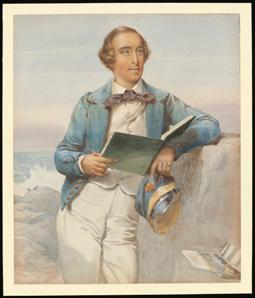
Above: George French Angas, by Charles Baugniet, 1848, watercolour.
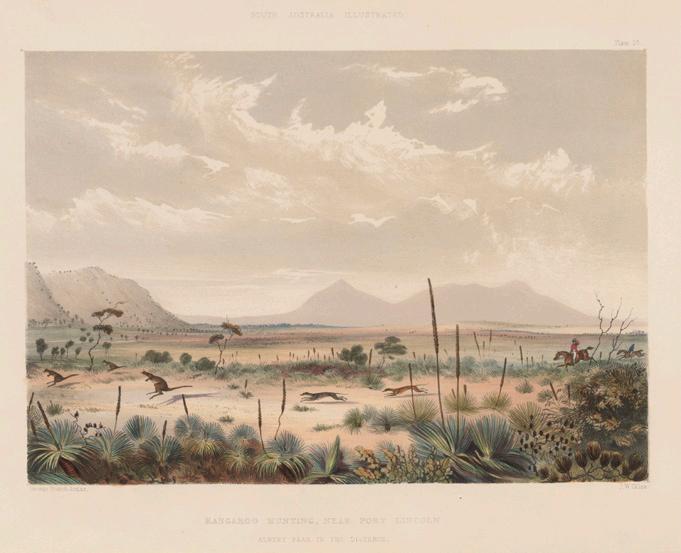
“Kangaroo Hunting near Port Lincoln, 1847,” By George French Angas (artist) & James W. Giles (lithographer), hand-coloured lithograph.
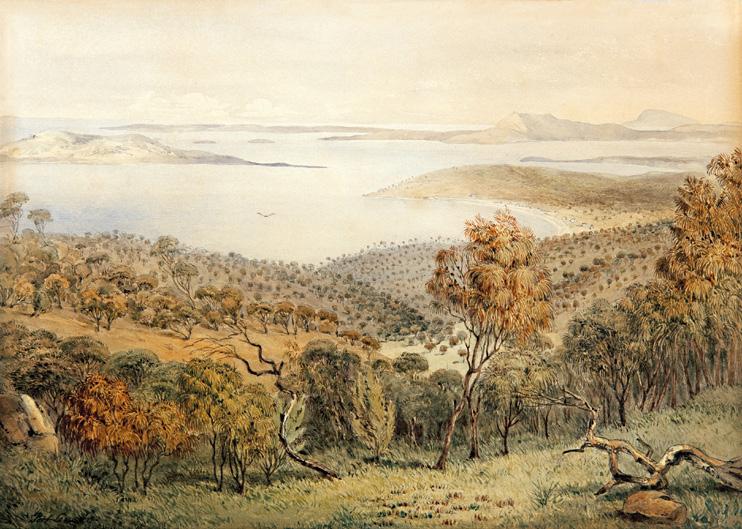
“Port Lincoln from Winter’s Hill”, 1845, by George French Angas.
HOROSCOPE 2022 / your year in the stars
Watch out for a year of good news and exciting
“CityNews” weekly astrologer JOANNE MADELINE MOORE shares her predictions for the year ahead.
DURING 2022, Jupiter journeys through Pisces and Aries so expect exciting advances involving virus-fighting drugs and entrepreneurial ventures.
And watch out for some good news announcements in February, April and/or May, when Jupiter forms positive aspects with Uranus, Neptune, and Pluto. Saturn transits through Aquarius until March 2023. So big business, banking corporations and the aged-care industry will face increased public scrutiny and (hopefully) be restructured in more innovative and accountable ways.
We’ll also do more online: from work, business, and study to shopping, socialising and being entertained. Uranus continues transiting through Taurus. Uranus is the planet of revolution, disruption, and change, while Taurus is the sign associated with Mother Earth. So look out for emerging technologies that will reduce the cost of renewable energy, cut global emissions and slow climate change.
Taurus also rules money, the economy and material possessions so prepare for financial, real estate and stock market volatility in 2022. Countries that innovate, businesses that adapt and people who pivot are the ones that will prosper in the coming year.
(April 21-May 21)
LOVE & LUST
With Venus retrograde and two eclipses in your relationship zone, expect a rollercoaster ride in 2022. January will be a tumultuous month, when it will be tricky to get the balance right between invigorating independence and cosy coupledom. Some optimistic Taureans will revisit an old romance (but do you really want to travel down that rocky road again?). Thank goodness Venus is moving forwards again in February, which brings the opportunity to revitalise a tired old relationship or start a promising new partnership.
LOOT & LUCK
Taskmaster Saturn continues its rare transit through your career zone, so it’s a good time to work hard, set ambitious goals and dress to impress. Luckiest months are June and July, when Venus (your power planet) activates your sign and your cash zone. But there could be a temporary financial setback in November or December when Mars reverses through your money zone. So make sure you are extra cautious and responsible with finances during this period.
LIFESTYLE
With two Eclipses stimulating your sign, 2022 is the year to be the authentic you. Uranus continues transiting through Taurus, which gives you the courage to take a chance and try things you’ve never considered before. Jump out of your comfort zone and dare to explore and experiment! Best dates to be a brave Bull? Feb 17-19 (when Jupiter and Uranus activate your adventurous side), April 30-May 1 (when the Solar Eclipse connects with Uranus in Taurus) and May 3-4 (when Jupiter and Pluto boost your confidence).
NEW YEAR MOTTO
“It’s not brave to do something that doesn’t scare you.”
NEW YEAR MOTTO
“Don’t sit still, don’t ever try to be less than what you are.” (Angelina Jolie)
CANCER
(June 22-July 23)
LOVE & LUST
Venus reverses through your relationship zone until January 29, which could exacerbate an existing problem or create a new conflict. So avoid making major romantic moves in January (like proposing, getting married or initiating a break up). Singles – any dating experiences in January are likely to be disappointing, so be patient and wait until February. Expect that you may have to kiss a few frogs before you finally find your Prince (or Princess) Charming. If you’re attached, April is a wonderful month to escape on a weekend getaway with your sweetheart.
LOOT & LUCK
The more you rely on other people to prop up your financial security, the more problematic 2022 will be, as penny-pinching Saturn transits through your “moneyfrom-others” zone. If someone owes you money, don’t expect it back in a hurry. And – if you make an unwise financial decision and find yourself in difficulties – don’t presume that family or friends will bail you out! A financial boost is likely (via a promotion, bonus, new job, or extra work) when prosperous Jupiter moves through your career zone from May 11 until October 28.
LIFESTYLE
Four eclipses light up your friendship zones (in April, May, October, and November). So it’s important to surround yourself with a peer group where you encourage and support each other. The best months to travel are February, March, and April, when Jupiter jumps through your travel zone. An interstate or international destination with historical significance, fabulous food and a family atmosphere would be ideal.
job or take a trip somewhere off the beaten track? You’re only limited by the size of your dreams! The best period to go on holidays is sometime between June 4 and September 9, when Jupiter’s active and Mercury is not in retrograde mode
NEW YEAR MOTTO
“I’d rather regret the things I’ve done than regret the things I haven’t done.” (Lucille Ball)
March 21-April 20)
LOVE & LUST
Attached Aries: the sexual sparks fly in mid-May when the Lunar Eclipse luminates your lust zone. Issues involving intimacy, power and trust could also arise. Single Rams – avoid getting involved in a workplace romance in January, when Venus reverses through your career zone. The best time to look for love is in March, when Venus and Mars stimulate your peer group and networking zone, and you could fall for a stylish Libran or an avant-garde Aquarian.
LOOT & LUCK
The Solar Eclipse (April 30-May 1) signals a fresh financial cycle as you liquidate assets, start a new job, or reboot your budget. Then prosperity planet Jupiter transits through Aries (for the first time since 2011) from May 11 until October 28, which provides a golden opportunity to reinvent yourself with renewed confidence, energy, and enthusiasm. Lady Luck will knock on your door, but you must be ready, willing, and able to capitalise on good fortune, otherwise it will just pass you by.
LIFESTYLE
The best times to go on holiday are in February (when Jupiter and Uranus rev up your wanderlust) and in June (when Mars and Jupiter transit through Aries and you’re feeling restless and ready for adventure). Mars (your patron planet) is retrograde from October 30 until January 12, 2023, when you’ll feel low on energy, motivation, and confidence. There could also be frustrations and delays involving education, local travel, or community connections, so be patient and plan accordingly.
NEW YEAR MOTTO
“I am my own sanctuary, and I can be reborn as many times as I choose throughout my life.” (Lady Gaga)
(Lena Dunham) (May 22-June 21)
LOVE & LUST
The year starts with some romantic hiccups, as love planet Venus reverses through your trust and intimacy zone until January 29. Attached Twins – you may feel as if your relationship is stalling or even going backwards. Singles – suitable suitors will be thin on the ground. The pace picks up in February, when Venus and Mars heat up your sexuality zone and you’re at your bewitching best. Unhappily single? February, March, and July are the prime months to look for love, especially with a lusty Libran or a sassy Sagittarian
LOOT & LUCK
You need to be extra vigilant with money matters in 2022. The best month to sell services, stock or property and boost cash flow is February, when lucky Venus and proactive Mars move through one of your financial zones. The worst months to finalise financial deals, sign contracts, start a new job or embark on a business trip are January, May, and September when Mercury (your patron planet) is in retrograde mode. Instead, be patient and use these times to revise, review and prepare
LIFESTYLE
Geminis are restless souls who love to roam the globe. The best month to travel is March when Venus and Mars visit your adventure zone. But motivation and energy levels will be low (from October 30 until January 12, 2023) when Mars reverses through your sign. This can be a frustrating time when projects stall and you feel like you’re going backwards. So make sure you slow down, reassess and recalibrate during this period.
NEW YEAR MOTTO
“Every one of us needs to show how much we care for each other and, in the process, care for ourselves.”
(Princess Diana)
(July 24-August 23)
LOVE & LUST
Taskmaster Saturn is still transiting through your relationship zone in 2022, so the secret to a satisfying relationship is plenty of patience and perseverance. Coupled Cats – things could come to a dramatic head in January, when retrograde Venus shines an unforgiving light on a frustrating problem. The key to a satisfying outcome is compromise. Single Lions – expect a few disasters before you find your dream lover. Don’t give up though – each dating disappointment will lead you closer to your soul mate.
LOOT & LUCK
In February, March, or April (courtesy of wealth-planet Jupiter) you could receive a favour, freebie, bonus, inheritance, bumper tax return, legal settlement, or superannuation payout. But steer clear of dodgy financial advice that leaves you out of pocket. When it comes to money matters, stick with established methods and respected professionals. In June, July, or August, you could benefit from a study scholarship, an educational award, a publishing deal, a legal decision or an international connection.
LIFESTYLE
With Jupiter visiting your travel zone and Uranus in your career and life direction zone, 2022 is the year to be bold and adventurous and take a calculated risk. Could you set an ambitious new goal, apply for a challenging
(August 24-September 23)
LOVE & LUST
2022 is a positive year for relationships. If you are attached, you have much to learn from your sweetheart and the more you explore new horizons together, the better the partnership will be. Singles – you could discover your perfect match while travelling, be attracted to someone who is a teacher/mentor, or a long-term platonic friendship could take a surprisingly romantic detour. But there will still be challenges along the way. Make sure you’re not viewing your partner (or potential partner) through ridiculously rose-coloured glasses (especially in April).
LOOT & LUCK
Lady Luck is on your side from May 11 until October 28, when the prosperity planet Jupiter moves through your “money-from-others” zone. You could receive a welcome cash boost via a gift, bequest, pay rise, dividends, divorce settlement or class action payout. But avoid making important financial decisions (like applying for a loan, buying a house or signing a contract) when Mercury (your ruling planet) is retrograde in January, May and September.
LIFESTYLE
In 2022 Mercury, Venus and Mars all have periods when they are retrograde – in January, May, September, November, and December. So things won’t run according to plan and there’ll be mistakes, disruptions, and delays along the way. That’s okay! Strive to be flexible and use these months to reassess your ideas and rejig your plans. The best month to travel is February when Jupiter and Uranus activate your adventure zone. Taking your partner or best friend along will increase the good times and double the fun.
NEW YEAR MOTTO
“If everything was perfect, you would never learn and you would never grow.” (Beyonce)
(September 24-October 23)
LOVE & LUST
Retrograde Venus rocks the relationship boat from January 1-29, and it will take your substantial diplomatic skills to get things back on an even keel. And then there are two eclipses in your intimacy zone (on April 30-May 1 and November 8). So these are not good times to propose, move in together, get married, renew your wedding vows, or escape on a romantic holiday. Singles – with Jupiter visiting your relationship zone, love and travel are linked and you could fall for someone from another country or culture.
LOOT & LUCK
Expect the unexpected in 2022 when Uranus and four eclipses stir up your finance zones. A sudden influx of cash could be followed by a lean period, so you need to put extra funds aside to tide you over when money is tight. Be careful in January, when you could get carried away and overspend at the New Year sales. February and May are good months to tap into your entrepreneurial side and turn an innovative idea into a prosperous venture.
advances in virus fighting and other ventures
LIFESTYLE
In 2022, the secret to an enjoyable lifestyle is getting the balance right between work and home, career and family, personal needs, and relationship responsibilities. Plan an exciting holiday or weekend escape for some time in July or August when Venus and Mars activate your adventure and adrenaline zone. But avoid initiating an ambitious project or going away on a big holiday between October 30 and December 31, when Mars reverses through your travel zone.
NEW YEAR MOTTO
“You have to make peace with yourself. The key is to find the harmony in what you have.” (Naomi Watts)
(November 23-December 21)
LOVE & LUST
Attached Archers – March, June, July, and August are the best months to travel somewhere special with your sweetheart. But the relationship looks rocky in November and December, when Mars reverses through your partnership zone and you may require more emotional and physical space. Singles – the luckiest period to look for your soulmate is between May 11 and October 28, when Jupiter expands your romantic horizons, and you could hit the love jackpot.
LOOT & LUCK
(October 24-November 22)
LOVE & LUST
Unpredictable Uranus and four eclipses shake up your relationship zone in 2022… which can be a good thing! Coupled Scorps – the most damaging thing for your relationship is boredom. So do all you can to reboot the romantic connection between the two of you and keep it fresh and exciting. Singles – look for a lover from outside your comfort zone; someone who is not your usual type. But your libido could take a temporary tumble in November and December when Mars reverses through your sexuality zone.
LOOT & LUCK
Your lucky months are February, March, April and the first 10 days of May, when the prosperity planet Jupiter moves through your good fortune zone. So these are auspicious times to enter a competition, buy a lottery ticket, visit the casino, win at the races, or launch a lucrative project. But avoid making important financial decisions that involve a partner (like buying a house or applying for a business loan) when Mars reverses through your shared finances zone in November and December. Instead, be patient and wait until 2023.
LIFESTYLE
Two eclipses light up your sign in the coming year. The Lunar Eclipse (on May 16) is a wonderful time to complete projects and display your Scorpio talents for the world to see. You’ll find confidence is the rocket fuel that will really take you places in 2022! The Solar Eclipse (on October 25) is a fabulous time to refresh your image via a hot new hairstyle, a makeup makeover, or a wardrobe revamp.
NEW YEAR MOTTO
“If you present yourself with confidence, you can pull off pretty much anything.” (Katy Perry)
Resist the compelling urge to go on a wild spending spree at the New Year sales in January, when extravagant Venus reverses through your money zone and financial common sense flies out the window. In uncertain economic times, business-savvy Sagittarians will concentrate on thrifty shopping, smart saving, and sustainable living. Luckiest dates are February 18 and May 3-4, when prosperity planet Jupiter sends good fortune and opportunity comes calling (especially involving family and friends).
LIFESTYLE
The Jupiter-Neptune connection activates your humanitarian side around April 12, when you’ll feel like sponsoring a child, giving money to a relief fund or helping someone closer to home. February 5 through until May 9 is a good period to buy or sell real estate, move house, get a new housemate, start a business from home or renovate your present place. When Jupiter transits through your friendship zone (from May 11 until October 28) it’s time to add some fresh new faces to your peer group. Look for generous people with inspiring ideas and open minds!
NEW YEAR MOTTO
“My best friends are great musicians. But more than that, they’re great people.” (Taylor Swift)
the same old places. You could be attracted to someone who is much older, much younger, or from a different culture. Whatever happens, expect the unexpected!
LOOT & LUCK
There could be a temporary financial setback in 2022, as penny-pinching Saturn transits through your money zone. You could encounter delayed payments, unexpected extra expenses, budget blow-outs or employment problems. Separating your wants from your needs is a must and smart Capricorns will be thrifty, cut excess consumption, and put extra money aside in an emergency fund. In June or July, you could receive a lucky break via a family member or a local community connection.
LIFESTYLE
The year starts with Venus reversing through your sign in January and ends with Mars reversing through your health zone in November and December. So your total wellbeing – physical, mental, emotional, and spiritual – is a major priority in 2022. Make sure you eat nutritious food, exercise regularly, have the required medical checks and make relaxation a part of your usual routine. A daily dose of meditation, contemplation, yoga, tai chi or walking in nature would be perfect!
NEW YEAR MOTTO
“We must change the way we all talk to each other about mental health.” (Kate Middleton)
LIFESTYLE
With Jupiter, Pluto and retrograde Venus highlighting your humanitarian zone, many Aquarians will become involved in volunteer work as you reach out to help the old, sick, homeless, or disadvantaged within your local community. You’ll feel extra restless in February, when Jupiter and Uranus stir up your gypsy gene and you’re keen to explore local landmarks, go camping or travel interstate. But avoid going on holiday in January, May and September when Mercury is retrograde.
NEW YEAR MOTTO
“Do your best to make a difference. Not only in your own life but also in other people’s lives.” (Oprah Winfrey)
(February 20-March 20)
LOVE & LUST
Singles – Venus and Mars both visit your sign in April, when you’ll be at your fascinating best and attract admirers like moths to a flame. So it’s the perfect time to fall in love, join an online dating site or update your current profile. July and August are also good months to go on a first date or celebrate a major milestone, as Venus stimulates your romance and party zone. If you are attached, 2022 is the year to pamper your partner and travel together in style.
LOOT & LUCK
(January 21-February 19)
LOVE & LUST
Relationships will mostly be “steady as she goes” in 2022, which could be an issue for adrenaline-addicted Aquarians! If you are attached, do all you can to reboot a stale partnership or fix a frustrating problem. If you allow boredom and complacency to set in, then it won’t be long before you’re heading out the door. An established or burgeoning relationship could temporarily run off the rails in November or December when Mars reverses through your romance zone. With some extra diplomacy, patience and understanding, you’ll get things back on track again.
The more you follow your heart in 2022, the happier you’ll be. Just make sure you surround yourself with a positive peer group who celebrate your successes and encourage your dreams. Luckiest days of the year are April 12 and May 3-4, when Jupiter blesses a personal project or a group endeavour. But September is not a good month to apply for a loan, begin a business partnership or sign a major contract, as Mercury reverses through your “money-from-others” zone.
LIFESTYLE
(December 22-January 20)
LOVE & LUST
Disruptive Uranus continues to shake up romantic relationships in 2022. If you’ve been putting up with bad behaviour from your partner, then things could come to a dramatic climax when Venus is retrograde in January or when the eclipses occur in late April and early November. The best month for romance is February when Venus and Mars visit Capricorn. Singles – avoid looking for love in
LOOT & LUCK
In 2022 the fortuitous Jupiter/Neptune connection could send Lady Luck in your direction (especially in April). You’ll find the more creative and altruistic you are, the more successful you’ll be. But avoid gambling, buying shares, real estate speculation and joint financial ventures in January, May, and September, when retrograde Venus and retrograde Mercury scramble and confuse your business brain. Instead, be patient and wait for a more opportune time.
Avoid the Piscean tendency to procrastinate. Lucky Jupiter makes a rare connection with Neptune (your patron planet) in April, which is the best month to dream big dreams, make magical wishes, set ambitious goals, and then pursue them with passion and purpose. Travel planet Jupiter transits through your sign (from January 1 until May 10 and from October 28 until December 20) so 2022 is the year to be adventurous and explore new horizons!
NEW YEAR MOTTO
“I feel very adventurous. There are so many doors to be opened, and I’m not afraid to look behind them.”
EARLY to mid-January is when my peaches and nectarines are ripe and ready for picking, but this season I’ve spotted an initial issue with fruit fly.
I’ve removed the damaged fruit and kept an eye on the rest of the fruit still on the tree.
Around two days before fully ripe, I pick the fruit as early as possible in the morning and when it is well coloured and firm. I put the picked fruit straight into the crisper of the fridge to lower the core temperature as soon as possible because for every two hours above 25C, its shelf-life is reduced by two days.
I take the fruit out of the fridge 24 hours before I want to use it and let it ripen on the bench. This practice keeps my fruit stored for at least two or three months in the fridge and when I am sick of eating it, I make a lovely, cold, fruit soup.
SOWING autumn and winter vegetables can begin now. Sow beetroot, carrots, leeks and turnips directly into the ground. Lightly cover with soil and water in.
THIS summer has been wetter than we are used to and the result of extra rain will show in trees and plants even weeks or months after the damage has occurred.
Our clay soils hold moisture and if garden drainage is not good, water sits around the root zone of the plants, reducing oxygen the plant
needs to grow and suffocating the plant roots into a slow and dying death.
One symptom of wet feet is that the leaves will wilt and sulk. At this stage most people will water more because of the wilting and sad looks, but don’t.
Use a garden fork and gently poke around the drip zone of the plant to get air into the soil and move some ground water so the roots can move and grow.
Other indicators of wet feet are seeing one largish branch dieback on a shrub or all of the leaves of a plant, new or old, are yellow and pale. There are many anti-rot products on the market that work, so it’s just a matter of researching which one is best for the plant that needs reviving.
MUSHROOMS are around now as the weather conditions are perfect for them to grow. They are the fruiting bodies of mycelium under the ground as a result of decomposition of dead material and nature is doing its thing improving the soil.
If there is a ring of mushrooms in the lawn or an abnormal circle of turf growth, it would more than likely be a “fairy ring”, which is commonly found on lawns where there is a high level of organic matter under the turf. Remove them with a turf fungicide, core and aerate the soil.
fruit
Essentially, a rose bush should be a vase shape. Make sure the leaves in the centre of the bush are removed to help with the air flow and keep any fungal diseases away.
Wisteria vines can also have a summer prune, taking back most of this year’s side shoots to about 5-6 buds and then, in winter, cut them back further to 2-3 buds. This pruning will keep their prolific growth at bay.
WITH 2022 being the International Year of Glass, it brings back memories of the wonderful masterworks in glass by Dale Chihuly at Floriade in 1999.
The display in the ponds in Commonwealth Park was breathtaking. Although we might not have the talent of Chihuly, glass can be an artistic addition to the garden and a simple leadlight piece can last many years outdoors.
jackwar@home. netspeed.com.au
Fruit fly damage on peaches.
Photos: Jackie Warburton Chihuly glasswork at Floriade in 1999.
Meet a Cheetah &Cheetah Walk Tree roo Encounter
The National Zoo and Aquarium offers some of the most amazing and diverse animal encounters found anywhere in the world.
Popular encounters include all those shown above plus sun bear, giraffe, white lion and more!
The zoo also offers incredible 90 minute tours including up-close-and-personal experiences with lions, tigers, bears, meerkats and others on the Awesome Roarsome Tour or giraffes, rhino, zebra and lemurs on the African Savannah Safari.
www.nationalzoo.com.au
Who cares about La Nina when you have a free visit*
Visit the National Zoo and Aquarium and if it rains while you are
As an added bonus, the animals are generally more active on cooler (or wetter) days, plus the zoo is less crowded!
*Conditions apply - see our website for details: www.nationalzoo.com.au/raincheck
Tiger encounter Rhino encounter Awesome Roarsome Tour