

FAILING HOSPITALS DAMNED BY POOR GOVERNMENT
“There is no one else to blame. Just after Labor came into government in 2002-03, the ACT waiting times in emergency departments were amongst the best in Australia. They are now the worst.” – MICHAEL MOORE


NOVEMBER 18, 2021

Well written, well read
Here’s a thought, what if they replaced Mick?
PAUL COSTIGAN Does memorial tell the truth about Boer conflict?
CON BOEKEL KEEPING UP THE ACT
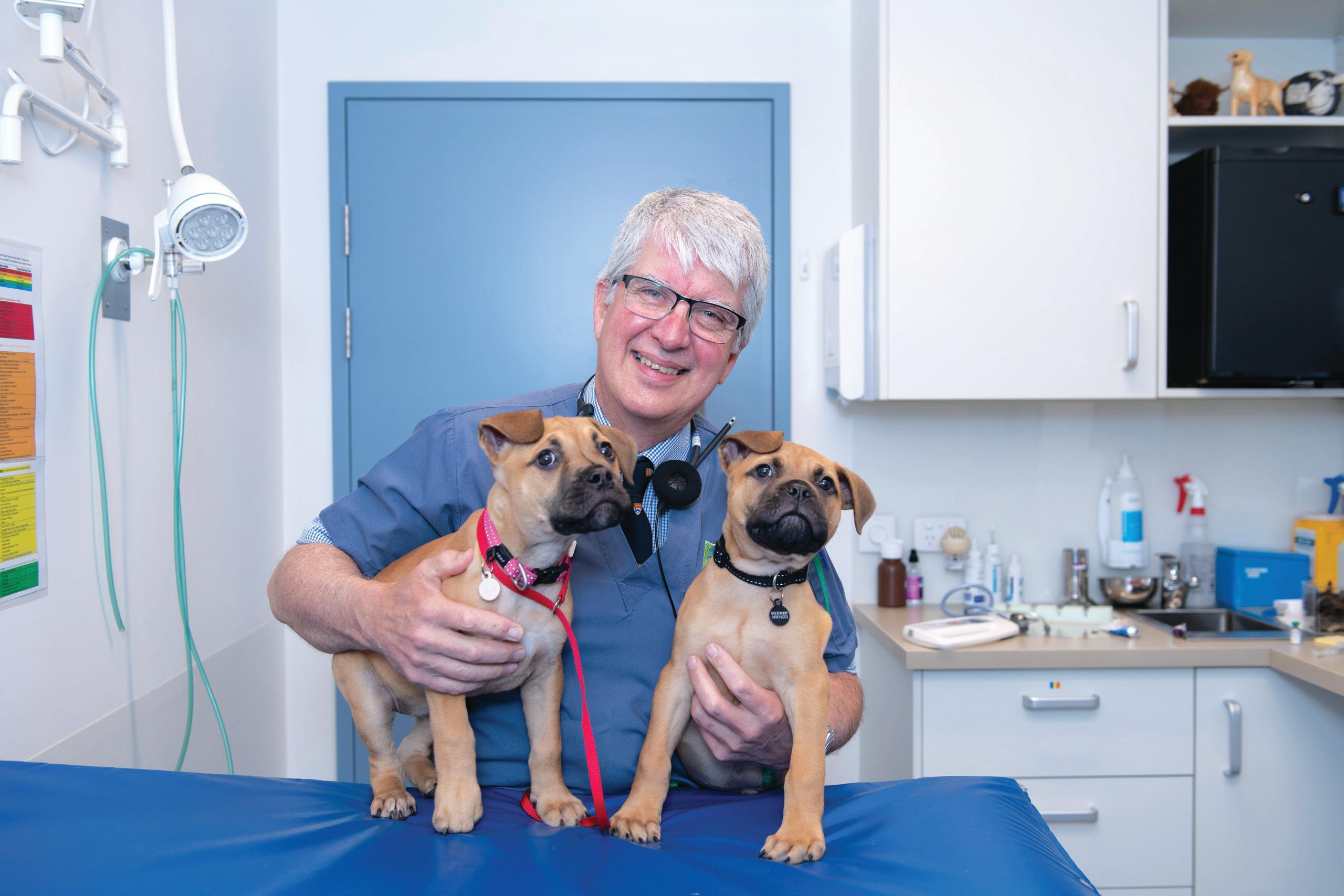
LOVE YOUR VET!
DR MICHAEL HAYWARD worries that patient abuse can drive vets to suicide


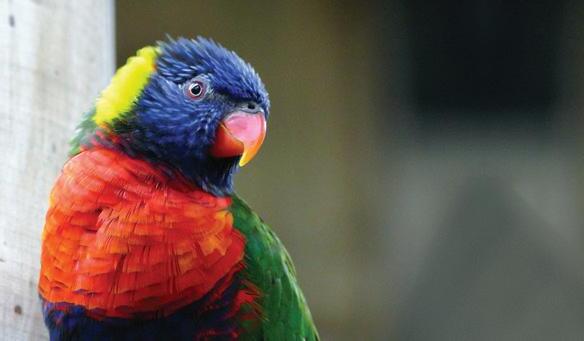
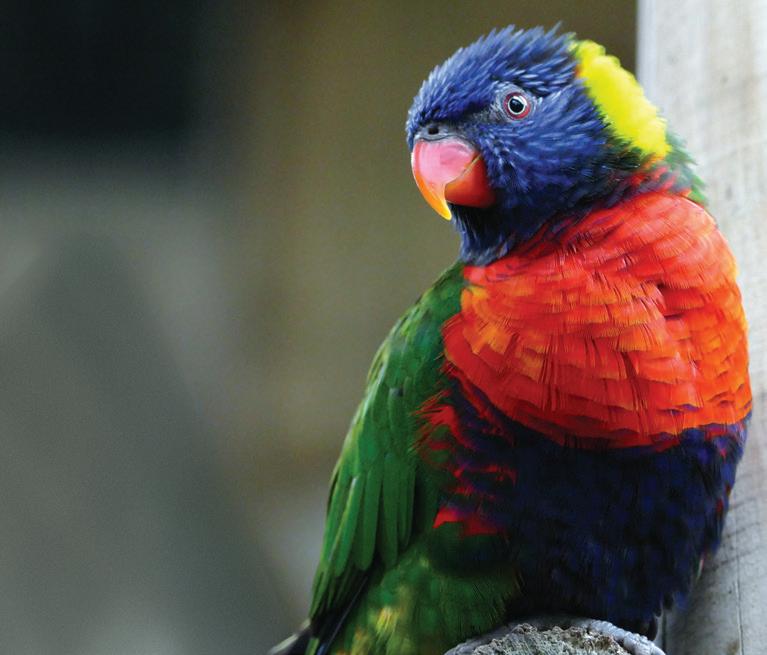
COME OUT & FEED THE BIRDS AT CANBERRA WALK-IN AVIARY Open 7 days a week from 10am to 5pm with the last admission 4.30pm









POLITICS / Canberra’s public hospital disgrace
Failing hospitals damned by poor government
HANG your head in shame, ACT Labor. Hang your head in shame, ACT Health Minister Rachel Stephen-Smith. The latest AMA report card on our hospitals is a damning indictment on poor government and the parlous state of the ACT hospitals.
There is no one else to blame. Just after you came into government in 2002-03, the ACT waiting times in emergency departments were amongst the best in Australia. They are now the worst. In 2002-2003 around 75 per cent of patients were seen within the recommended half hour. This has dropped to less than half of that percentage.
To put this into perspective, 34 per cent of Canberra’s urgent emergency department patients are seen within the half-hour benchmark compared to the national average of 67 per cent. Prof Walter Abhayaratna, ACT president of the AMA, pointed out that the “ACT has been consistently the worst on this measure for the past decade”.
The story with elective surgery waiting times is similar. The situation improved between 2010 and 2015, but has otherwise deteriorated significantly compared to when Labor came to power in late 2001.
Many Canberrans blame the
INDEX
Arts & Entertainment 23-25
Canberra Matters 11
Cinema & Streaming 24
Crossword 27
Dining 25
Garden 26
Horoscopes 27
Letters 13
News 3-15
Politics 3

construction of the tram. Although there are benefits with light rail, government budgeting is about priorities. Amongst the highest priorities for the ACT should be, firstly, about keeping people healthy and, secondly, about looking after those who need care.
The extraordinary, world-leading vaccination rates in the ACT reflect a government and a community that prioritise keeping people healthy. However, the attitude to those who need care in our hospitals has become a lower and lower priority compared to other jurisdictions.
There are positive aspects as outlined by Prof Abhayaratna as illustrated by our community response to the pandemic.
He explained: “The ACT govern-
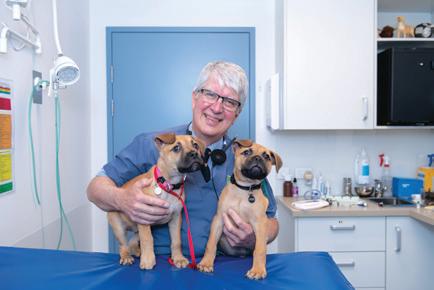
Seven Days 4 Cover: Veterinarian Dr Michael Hayward. Photo: Holly Treadaway. Story Page 9.
Flemington Road, Mitchell.
Rallimax has the latest wheel and rim straightening lathe, enabling us to successfully realign most damaged alloy wheels.
There is no one else to blame. Just after Labor came into government in 2002-03, the ACT waiting times in emergency departments were amongst the best in Australia. They are now the worst.
ment, our community, and our healthcare system rose to the occasion. The committed performance of our doctors, nurses and other healthcare workers has confirmed that our healthcare system can respond in a timely and effective way to major threats”.
The AMA ACT president along with the shadow minister, Giulia Jones, were careful to offer support to the hard-working doctors and nurses at the hospitals and to lay the blame squarely at the foot of the government. Rightly so!
Hospital funding is the main issue. Per capita funding of the public hospitals in the ACT was just over $1600 in 2008-09 and was the same 10 years later. A significant cut in real terms. The Commonwealth contribution increased steadily over the same period.
Following questions to the Health Minister in the Assembly, Ms Jones argued that the minister would not “confront reality”. She dismissed the answer by Rachel Stephen-Smith arguing: “The minister maintained the data moved up and down, but since 2002 the trajectory has only
Managing Director: James Anderson, 0404 077605, james@citynews.com.au
Director: Kate Meikle, kate@citynews.com.au
Senior advertising account executives: David Cusack, 0435 380656
Tracey Avery, 0477 939999
Advertising account executives: Damien Klemke, 0439 139001
Tim Spare, 0423 381691
Editor: Ian Meikle, editor@citynews.com.au
Journalists: Belinda Strahorn, belinda@citynews.com.au; Nick Overall, nick@citynews.com.au; Lily Pass, lily@citynews.com.au
Arts editor: Helen Musa, helen@citynews.com.au
Production manager: Janet Ewen
Graphic Designer: Douglas Lima
Proof reader: Glenda Anderson


been down”.
Perhaps even more frustrating for Ms Jones was that the minister “also refused to say if the elective surgery wait times will improve in 2022”. On her Facebook presence she added: “It is completely unacceptable and Canberra deserves better healthcare”.
In February, responding to a question on a specific case from Ms Jones, Rachel Stephen-Smith said: “One of the questions here is whether this individual was in fact waiting for elective surgery or whether he was waiting for an out-patient’s appointment”.
Waiting for an out-patient’s appointment is still waiting. It is time that this lack of transparency, the “unofficial waiting list” hides the real situation and needs the light of day.
A note at the bottom of page 12 of the AMA report explains the situation (across Australia): “By the time the patient is added to the official elective surgery waiting list, they have
already waited the period between referral from their general practitioner to the date of a consultation with out-patient specialists to assess their surgery urgency/need”.
“The AMA has been calling for the publication of the ‘hidden waitlist’ data for years. Without it, there is no transparency of just how long public patients currently have to wait for treatment. The AMA understands work is underway to publish this data in the next 12-24 months”.
Two decades of Labor governments in the ACT has taught us not to hold our breath on such work being completed within two years. The government fears that the publication of these figures will simply be another damning indictment on the abysmal state of our ACT hospitals compared to the rest of Australia.
Michael Moore is a former member of the ACT Legislative Assembly and an inde pendent minister for health. He has been a political columnist with “CityNews” since 2006.
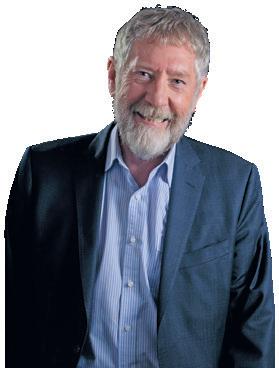

Health Minister Rachel Stephen-Smith… hang your head in shame.
SEVEN DAYS
Of chairs and bears... and one happy ‘family’
WARWICK Smith is no ordinary man. He once gave me a teddy bear. This was no ordinary bear. It had two heads.
It was a lovely bit of self deprecation from the then Tasmanian member for Bass.
Comedian Billy Connolly once observed of Tasmania that that’s where they “roll their own”.

And I was reminded fondly of Warwick’s inbred bear when he was, quite appropriately, appointed by the Federal government to chair the National Museum for the next three years.
But first, a little more in praise of the far-from-ordinary Mr Smith, 67, who was a Liberal MHR 1984-1993 and 1996-1998 during which times he was variously the Minister for Sport, Territories and Local Government and Minister for Family Services during the Howard years.
Even then, he was no stranger to Canberra, having studied law, history and political science at the ANU.
Since politics, he’s been an executive director of Macquarie Bank, chairman of the Australian Sports Commission, chairman of ANZ NSW, and is chairman at Ord Minnett and a director of Estia Health Limited.
Then there’s China, as chairman of the Australia-China Council he’s focused on building closer economic relations – an effort that has earned him, in some circles, the title of “Australia’s Mr China”.
Along this stellar career, a grateful nation


has gonged him an Officer in the Order of Australia.
Since 2006, Warwick Smith AO has been chairman of the advisory board of Australian Capital Equity (ACE), an investment company owned by media mogul (and much admired former boss of mine) Kerry Stokes. That would be Kerry Stokes AC who, in the late ‘90s, chaired the National Gallery of Australia and who, since 2015, has been chairing the Australian War Memorial Council.
His dauphin Ryan Stokes AO is CEO of Seven Group Holdings and CEO of ACE, and 2012-2018 chaired the National Library for two terms. In 2018 he followed his old man into the chairman’s seat at the National Gallery’s Council. In July, he got a second three-year term.
This all reminded me of the longforgotten inbred ted and I couldn’t help but wonder – with no aspersions as to their individual competencies – at the number of members from the same corporate “family” managing so much of the national capital’s cultural capital. Time for a bear with three heads, Warwick?


AND to keep the media theme among the cultural institutions, Rupert Murdoch’s News Limited was not to be outdone with its chair of the Melbourne-based Herald and Weekly Times Penny Fowler starting as chair of the National Portrait Gallery in January.
THE eagle eye of retired Canberra lawyer Ric Lucas spotted that the French Navy La Fayette-class frigates use four diesel engines designed by SEMT Pielstick that, he says, have been developed and greatly improved in France over the last 60 years, and in their naval and submarine forms are amongst the most powerful diesel engines in the world.
Here’s the rub: “The engines have been licensed to two large Chinese manufacturers, which supply Pielstick diesel engines to the Chinese Navy,” he says.
“Following the 1989 Beijing massacre, the EU announced an embargo on sales of military equipment to China, and unsurprisingly that embargo has never been lifted. But we have just now learned there are loopholes, and high-powered diesel engines suitable for frigates and submarines, and designed in the EU, can be sold to the rapidly expanding Chinese Navy.”
In other words, Ric’s saying the Chinese are using French engines.
“Australians remember Pig Iron Bob. It seems we have cause to regret Marine Macron,” he shrugs.
done near Fadden Pines, along a long strip parallel to Coyne Street that caught the eye of Gowrie. She spoke to a worker at the time who told her it was being done by Telstra.
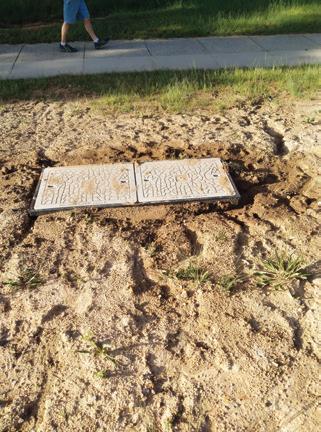
with five pits along the cabling line posing a safety risk for anyone walking across the affected ground.
“I tried unsuccessfully to contact Telstra to discuss the state of the work,” she writes.
“I also contacted Access Canberra, Fix My Street, in June to explain this work.
“In their response on July 5, I was told my
correspondence had been referred to the relevant ACT government business unit and I should expect to be contacted within 10 working days.
“I heard nothing further, despite contacting them again in August to send some photos.”
However, by November 5, Marion reports there had been “rough attempts made very recently to fill in around the pits.” Her photo suggests it’s still “not really acceptable”.
AS Canberra smarts from being named the worst in the nation when it comes to hospital waiting and treatment times, there’s some better news from across the border.
Queanbeyan’s little hospital-on-the-hill has been rated by patients as one of the cleanest in NSW with 89 per cent of respondents rating their room or ward as “very clean”.
Yeh, well, we’ll have the cleanest trams; so there, Queanbeyan.
Ian Meikle is the editor of “CityNews” and can be heard on the “CityNews Sunday Roast” news and interview program, 2CC, 9am-noon.

Warwick Smith AO. Ryan Stokes AO. Kerry Stokes AC. ...and inbred ted.


Last lunch for the Royal Canberra reunion group
By Lily PASS

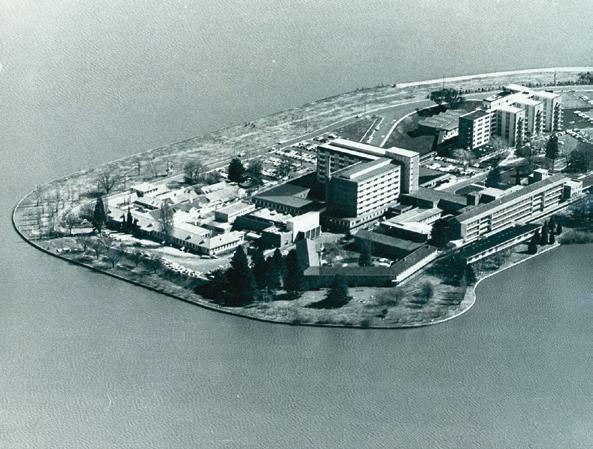
IT’S 30 years since the Royal Canberra Hospital closed its doors and every year since a reunion lunch has been held to reminisce about life on Acton Peninsula.
But the catch-up luncheon this year is to be the final one, say organisers Jon Darvill, Claire Bell and Wanda Lawler, who are encouraging former staff to come along, one last time
“They were certainly amazing days I still consider nursing as the best career I’ve ever had and it’s something that is with you for life, especially the amazing friendships that have been continued,” says Claire.
The hospital was opened in May 1914 as the first hospital in Canberra and between 1940 and 1947 it was used to treat wounded soldiers and Army personnel.
In later years it dealt with the polio epidemic and between 1959 and 1989 the hospital received high praise as a nursing, teaching and community institution. It was controversially closed on November 27, 1991, to make way for the National Museum of Australia.
An estimated 100,000 people lined
the banks of Lake Burley Griffin on July 13, 1997, to watch the implosion of the hospital’s main block. However, the day turned to tragedy when the building exploded, with flying debris killing 12-year-old Katie Bender and injuring nine others.
Former nurse Wanda Lawler remembers when nursing in Canberra moved from apprenticeships and living in the nurses’ home to being a university course. She was in favour of it, but believes the camaraderie was lost.
“We formed very close friendships
during that time because we lived together and we ate and drank coffee together and we debriefed together about things that were quite disturbing. It was a much more intimate environment, we were like a family through the bonds that we forged and we’ve all kept in touch,” she says.
The annual lunch organising committee has never limited who should be invited, but found that usually it’s nurses that make up the majority of attendees, with the occasional doctor or technician.
“There used to be a low number of people coming, it used to be 50 and now it’s gone up. In 2019, we had 125 people come and this one we’ve booked for 150 people and spaces are filling quickly,” says Claire.
“It’s just getting a little bit difficult, we’re all getting on a bit now, it’s just getting too hard and we’ve decided it might be an appropriate time to call a halt to it,” says Wanda.
The reunion had to be postponed earlier in the year, but in an unexpected and “absolutely perfect” coin-
cidence, the Woden Southern Cross Club’s next available day for functions was November 27, which is the exact date that the hospital doors closed for the last time in 1991.
“It was a lovely way to start professional life. We’ve all gone on and done other things and we haven’t all just been stuck in the old rut. It was a happy time and I think everything has got to move on, I think it’s time for us to move on as well,” says Wanda.
Claire feels a bit sad about it this time, and is sure many others feel the same, but it was a decision that had to be made.
“A lot of it is just word of mouth. We have a database that we’ve put together but people change their names, get married, change their address or email account so it’s hard,” says Claire.
“A lot of the older people aren’t computer literate and they find it very difficult, some of them can’t get around as well,” says Wanda.
Claire also wants to acknowledge the huge role nurses are playing right now, the care and support they are giving and the stress they have had with covid.
“I think the community really appreciates and values nurses,” she said. And Wanda agrees, with that sentiment saying: “I think we’re very privileged in the experiences we’ve had.”
Reunion details at rchreunion.squarespace.com

An aerial view of Royal Canberra Hospital on Acton Peninsula, looking west from Hospital Point, 1971. Photo: ACT Heritage Library
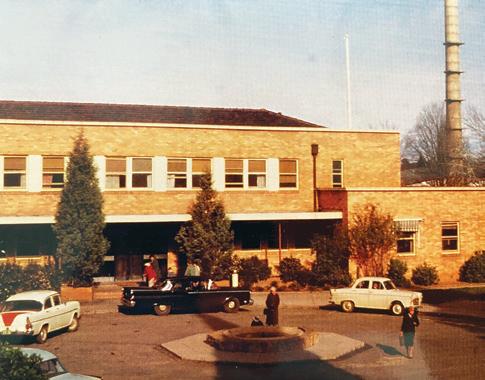
The Canberra Community Hospital entrance in the 1960s. Photo: Nancy Monk







Ashley finds a way to paint himself out of a corner
By Belinda STRAHORN

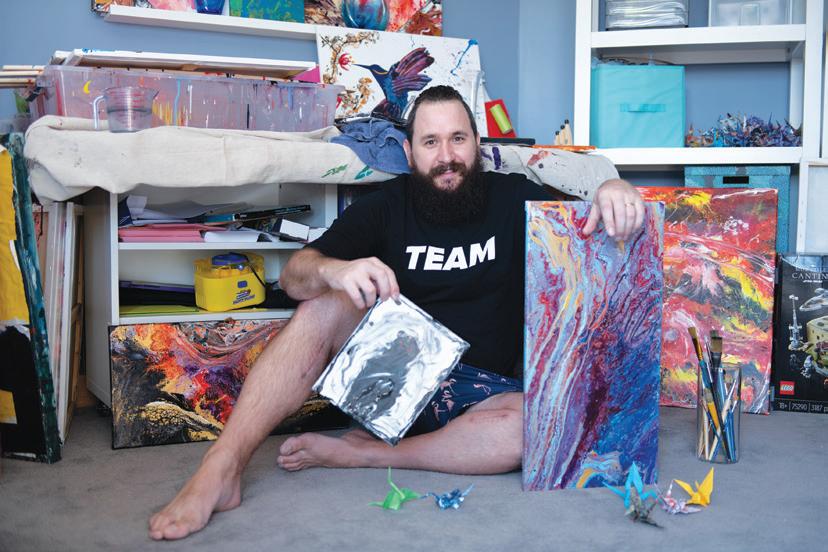
ASHLEY Stoll doesn’t consider himself the “arty type”. But the former Royal Australian Navy veteran is rather good with a paintbrush and believes that art therapy helped change his life.
The 36-year-old from Queanbeyan served in the Navy for 16 years – a job he loved – until service abroad af fected him.
“Things happened in the military that I thought I was tough enough to forget, but eventually they got the bet ter of me because I didn’t share those experiences,” Stoll says.
The ex-marine technician was medically discharged from the mili tary four years ago and spent time in a Wollongong mental hospital suffering from post-traumatic stress and depression.
But when Stoll dipped his brush into art therapy classes being offered at the hospital, he found a creative way to deal with the past.
“I started to fall in love with painting,” Stoll says.
“It was a way I could express my feelings and get out what I was thinking in my head on to the canvas.”
Artist and former serviceman Ashley Stoll… “I just really want to help people, and move some of my art on and in doing so share the experience with others.”
While the emotional scars of the past remain, Stoll says art therapy gave him a “renewed purpose”.
“It allowed me to reflect on the things I was going through and to share them,” Stoll says.
“By sharing my problems and not bottling them up I was able to live a normal life again. I’ll always have
bad days, but I’m in a good place. Art therapy has definitely helped.”
Returning home from hospital, Stoll continued to paint from the comfort of a makeshift art studio set up by his wife – who currently serves in the military – and their three children.
“Whilst in hospital my wife and children cleaned up my study and
turned it into a part-time art studio for my return, as a coming-home present,” Stoll says.
“They are super supportive of me and love helping out sometimes, too.”
Unsure what to do with the large number of artworks piling up in his studio, the self-taught painter approached local Queanbeyan cafe 4th Seed to display his art, with the proceeds from any sales going to charity.
“I have sold five pieces to date and five different charities have benefitted from this,” Stoll says.
There’s no set price, so it’s up to the buyer to decide what they are worth, but they cost between $50 and $150 to make, he says.
“I don’t want to profit from this, so I’m asking the people who buy my art to pick a Queanbeyan charity and the money goes to them,” Stoll says.
“I just really want to help people, and move some of my art on and in doing so share the experience with others.”
Art therapy is a common treatment for people suffering post-traumatic stress disorder (PTSD).
According to Beyond Blue PTSD affects around four per cent of the population. For veterans, that number jumps.
“I would certainly recommend people giving art therapy a go, it’s something you might not think you’ll enjoy or understand, but if you give it a
go it might be just what you need to get that stuff out of your head,” Stoll says.
“Sometimes, as men, we don’t want to talk about our feelings, but slowly I think that’s changing and the stigma around mental health is breaking down.”
Stoll, who uses different materials and techniques to create his “abstract”styled artworks, says a big part of healing is being part of a community.
“My dream would be having a community-run art space that is centred around mental health in Queanbeyan,” Stoll says.
“A lot of people do art so it would be great if there was a space that people could display the art that is helping them and money from sales could go to charity.
“Art therapy has really helped me and I know that it can help others.”
In the meantime, Stoll hopes his art will “shine a light” on mental health and encourage others to reach out for help.
“I’m hoping that by putting my art in a cafe it might start a conversation about mental health and someone might reach out and feel they are not alone,” Stoll says.
“If I can help just one person, through my art, that would be amazing.”
Stoll’s artworks are on display and available to buy at 4th Seed Cafe, Crawford Street, Queanbeyan.

Photo: Holly Treadaway
Vets call for some kindness in the face of suicides
By Danielle NOHRA
A GUNGAHLIN veterinary clinic was forced to send an email to its clients asking for collaboration during the pandemic after some of its staff experienced “negative behaviour”.
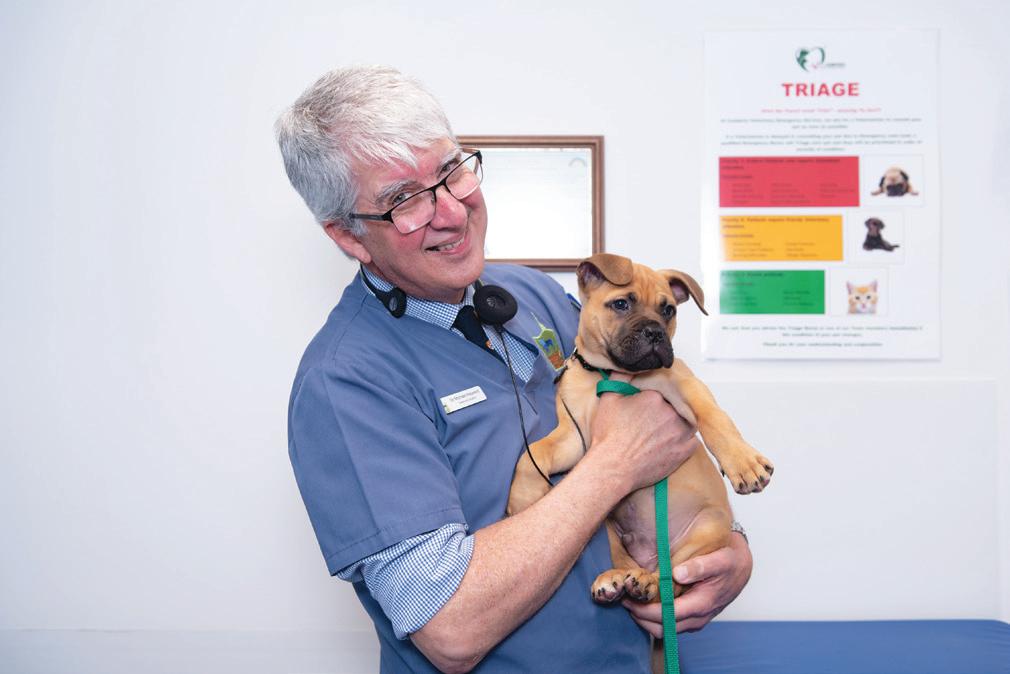
Practice principal and veterinarian Dr Michael Hayward says there have been vets in the past that he’s known or known of in Canberra who have attempted or succeeded in committing suicide.
Michael, who is also the president of the Australian Veterinary Associa tion’s ACT branch, says: “We sent out an email to our current clients remind ing them to be polite and kind to all of our staff because the impact of having even unpleasant phone conversations can be really quite significant.”
Poor mental health and suicide amonst staff in veterinary practices is something that the association’s national president, Dr Warwick Vale, is focusing on.
The horse vet is in his second year as president and has sent the organisation on a pathway to have a reduction of suicide by 50 per cent within the next five years and an improvment in the mental

As the president, he says he also has the task of writing to families, expressing condolences of fellow colleagues that have committed suicide.
“I don’t want to go to any more funerals or write any more letters to the family of young veterinarians that
“It’s embarrassing and an indict ment on the profession that we have such a bad statistic. That’s four times the rate of suicide of any of the general community and we are often singled out as an employment group or a community of professionals that are of the
highest risk of poor mental health and
Warwick’s now on a mission to work with veterinary practices and the community to improve mental health in the workplace but it hasn’t been an easy task, especially since the start of
“We’re seeing reports of up to 30 per cent increases in service demands,” he
Warwick says some practices are trying to get around this increased demand by closing their books or closing to weekend work because “they just
While some people might think that this increase in demand is good for businesses, Warwick says it’s presenting some significant workplace challenges to a profession that’s already poorly paid, short staffed and
“It’s leading to a longer waiting time for the care of animals and we’re concerned for the welfare of those ani-
“That’s leading to customers being upset because they can’t access treatment for their pets in a timely manner and they get frustrated and angry.
“One of the big factors that’s been recognised recently is that aggressive, abusive, trolling behaviour that we’re seeing from clients all too frequently now plays a big role impacting on the mental health of veterinarians and
veterinary staff,” he says.
“That customer abuse, that owner aggression towards staff within the veterinary clinic really is, in some cases, a huge factor in degrading the mental health and wellness of veterinarians, and becoming a factor in why some of these vets suicide.
“We don’t want animals without care and proper veterinary assessment but we do have pressures on us and we just want a bit of courtesy, a bit of consideration and a bit of understanding.
“We just can’t go on any longer having the number of veterinarians unwell and as badly affected by their jobs to the point where they are committing suicide.”
The association runs training courses in mental first aid and has a goal of getting at least one or two staff members in each practice across Australia trained and certified in mental health first aid.
“Those veterinary practice owners and workers are not driving Ferraris and Porsches and holidaying on private yachts every year like some people might think,” he says.
“They often are the lowest income earners in the population and they’re there not for the money. You don’t become a vet to make money, you become a vet because you enjoy the job and the challenge of treating animals and the joy of treating animals.”
Martha Graham
Dr Michael Hayward… “We sent out an email to our current clients reminding them to be polite and kind to our staff. Photo: Holly Treadaway

Looking for peace of mind for your future?
KJB Law draws on decades of experience, helping you create a Will and Estate plan that stipulates all your wishes and concerns.
We are able to assist with:
• Wills and Testamentary Wills
• Powers of Attorney
• Self-managed super funds
• Advice on potential claims against estates
• Advice for blended families
For


Kerstin Glomb Estate Planning Special Counsel
Kids exposed to shocking online content
CHILDREN as young as two are being exposed to explicit and disturbing content online, a new report from the ANU has found.
Experts are calling for a clear duty of care after research conducted with some of society’s most vulnerable children and youth found more than 70 per cent have seen content online that they found concerning, including violent and explicit content.
“Adults and the law are always 10 steps behind. Kids are telling us that they aren’t alright online, yet companies lack transparency and accountability,” said Dr Faith Gordon, a researcher from the ANU College of Law and the author of the report.
“Children also talked about experiencing unwanted contact, often from adults posing as children or being bombarded with scams.
“Young people questioned why companies do not appear to be held to account. They want tech companies and the government to urgently address these issues and they want their voices and suggestions to be heard.”
Experience long lasting relief with ‘The MonaLisa Touch’

Find relief from:
Vaginal itching/burning, dryness & laxity
Incontinence symptoms
Painful sexual intercourse
Key benefits:
Low risk – suitable for most women
Suitable for women who are not able to undergo hormone replacement therapy eg. Breast Cancer Patients
Achieves long lasting improvements
A referral is necessary for an appointment with Dr Gailani


Immediate return to normal daily activities
High success rates after treatment
Minimal maintenance after initial procedure
For other gynaecological treatments visit our website
Canberra Urology and Gynaecology Centre P 6285 1813 | E reception@omargailani.com.au W omargailani.com.au
Suite 2, Level 2, Equinox 1, 70 Kent Street, Deakin ACT


Dr Omar Gailani
CANBERRA MATTERS
Here’s a thought, what if they replaced Mick?
The catalyst this time was the failure to deliver on the 2020 election commitment for overdue community facilities in Molonglo and his failure to deal with over-development in central Gungahlin.
To the Chief Minister, who keeps him in that portfolio, Mick Gentleman is a roaring success. By doing little, he ensures the success of the developer-driven agenda of the ACT Labor/Greens government. He is fabulous at his job!
A way of measuring this minister’s success is the stream of faulty development applications (DAs) that make their way through his Planning Directorate.
As this path to approval is well established, local organisations have become developers to make the best of the laissez-faire minister and ad hoc decision making by the bureaucracy. Community-oriented DAs are nominally proposed to benefit those needing assistance (social housing, aged care, etcetera). But a lot of the emphasis has become the financial benefit to the organisations. Residents confronted with these DAs wonder whether profit from the investment is the priority.
The residents involved with the overturning of the YWCA application for 10 units on a community site on the block that includes Bill Pye Park were left in no doubt about how this
It is now common for developer-driven DAs to include worthy statements about climate, community values and involvement. The reality is that consultation processes involve ticking boxes and tokenistic engagement.
was mishandled.
The comments from the appeals tri bunal included that the proposal was inappropriate for the site, crammed too many units on to the site, tenants would be denied sufficient amenity, trees would be lost and it would impact on Bill Pye Park.
The reaction of the proponent is that everyone else is wrong and that despite the obvious (build them somewhere else), they are to try again for much of the same. Residents report that when questioned about the unit cramming, the YWCA said they needed at least 10 units to return a yield on the investment.
In Downer, Goodwin Homes has proposed a large number of units on the last section of the former school site. In response to the DA, residents
pointed out the solar issues, that trees are to go, biodiversity would be reduced, this is unit cramming and that development is too close to the boundaries. This development would be the final of three stages (the first two being apartments).
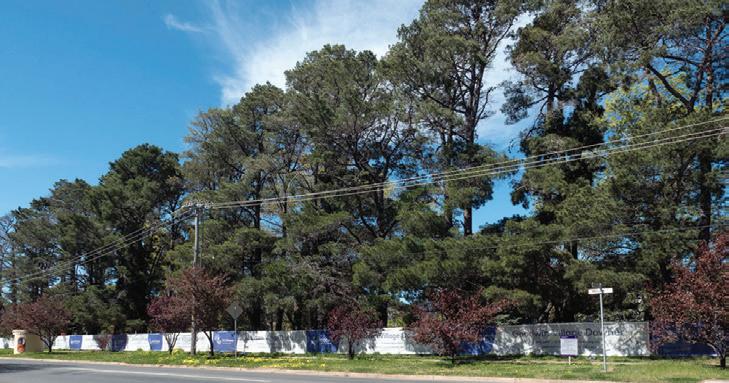
Residents tried in the earlier stages to save the much-loved large pine trees and the associated biodiversity (loads of birds). Promises to have the trees replaced with something significant have not been fulfilled. The proponents are viewed as having a priority of ensuring maximum yield
“SAVE ON COOLING COSTS IN SUMMER!”
• Sleek & slim pelmet system
Energy efficient
Quiet & simple operation • 14 finishes available
Easily cleaned
With the EVO Curtain Tracking System
on their investments at the expense of environmental and neighbourhood values.
All eyes are on how the bureaucracy assesses the Goodwin DA given the serious issues. It is now common for developer-driven DAs to include worthy statements about climate, community values and involvement.
The reality is that consultation
processes involve ticking boxes and tokenistic engagement. This is planning overseen by the Minister for Planning, enabled by the ACT Greens. The Greens have done little to deal with the fact that the faulty planning system is the undoing of other efforts to address climate issues and for Canberra to be a biodiversity-rich, liveable city designed for the later 21st century.
Some final thoughts. If this Planning Minister was to resign, who in this Labor/Greens government has the talent to do the job? Has anyone else noticed the reduction in particular birds across the ACT – for instance the owls and the Gang-Gangs? And why do residents always have to be the unpaid volunteers to highlight the lists of faults in DAs? Isn’t that the job of the Planning Minister’s well-paid planning bureaucracy?
Paul Costigan is an independent commentator and consultant on the visual arts, urban design, environ mental issues and everyday matters.



ALEXANDERS FURNISHINGS

Pine trees destined to be felled in Downer.
Photo: Paul Costigan
WAR STORIES / The Boer War
memorial tell the truth about Boer conflict?
By Con BOEKEL

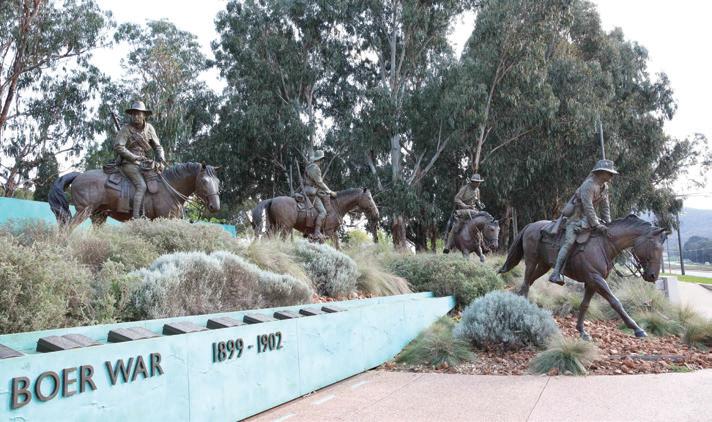
THE Boer War, our first national war, is memorialised on Anzac Parade – a national place.
The memorial consists of a diorama of four mounted men riding through the veldt. Memorial texts include poetry by Banjo Paterson, letters home from Private FH Booth and official interpretation.
The bronze sculptures and the landscape are in the artistic tradition of figurative realism. There is accurate detail with respect to tack, badges, equipment and uniforms. Black patination on the horses’ tails and khaki patination on the uniforms add to the realism. The diorama landscape mimics the veldt. Visual claims to representing realism are complemented by the interpretative texts.
The technical aspects of Louis Laumen’s sculpting and of the bronze casting are excellent. The sure-footed and curved flow of horses and men down a slight slope, along with the distribution of shapes, mass and negative spaces, combine to generate considerable aesthetic appeal. The values exhibited in the diorama are courage, willingness to sacrifice life,
and military skill.
The emphasis on realism raises the question: “What were the realities of the Boer War?” Here, elements of the texts diverge from the diorama. Banjo Paterson wonders whether the war is “worth” the wounded and the dead. Booth refers to the large number of sick soldiers. Booth also expresses disquiet about burning crops and herding women and children away from their homes, but omits the systematic house burning, and the killing and looting of livestock.
The interpretative texts refer to the numerous “civilians” who died in British concentration camps.
The interpretative texts omit mention of domestic Australian civilian opposition to the war and to elements of its conduct. Also missing is the cause of the war, which was the British determination to capture the Rand goldfields. There is no reference to Africans.
The interpretative texts provide three whole-of-war statistics: decorations awarded to Australians (167), Australians who joined (23,000), and Australians who died (1000).
The texts omit the following statistics: Boer fighters killed (6000), Boer women and children deaths in British concentration camps (26,000), African civilian deaths in British concentration camps (20,000), Boer farm houses burned (30,000), Boer sheep killed
(3,500,000), and horse deaths on the Imperial side (300,000).
The Hague Convention of 1899 forbade the killing of enemy combatants who had surrendered, looting and collective punishment.
Thomas Pakenham in his magisterial “The Boer War’’ states: “It was an open secret that some of the irregular colonial forces made it a principle not to take prisoners.”
Breaker Morant’s Bushveldt Carbineers was one such force.



trains, and civilians dying in British concentration camps.
The application of figurative realism, the artistic beauty of the diorama, the limited diorama subjects, the limited statistics, and the limited ambit of the interpretative texts, taken together, do not provide a realistic or representative picture of the Boer War.
This raises a key question: “How should a nation memorialise skill, courage and self-sacrifice delivered in the service of a war that was waged for gold, and the conduct of which included systemic elements that did not meet our then national values?”
Pakenham contrasts this with the military value and good conduct of the regular Australian contingents.
The four horses in the diorama are heroic in scale and magnificently fit. The service life expectancy of a horse was six weeks. Most died from disease, starvation and exhaustion.
The pristine veldt in the diorama lacks burning houses and crops, dead horses, dead sheep, field hospitals choked with soldiers dying of disease, barbed wire, block houses, armoured
We have come a long way. Our values are now expressed in the Rules of Engagement (ROE) of the Australian Defence Force. I believe that the vast majority of ADF personnel observed the ROE with skill, courage and dedication during the two decades of our latest national war, the Afghanistan War. This deserves memorialisation.
How might shortcomings raised by Boer War memorialisation help inform an Australian Afghanistan War Memorial?
Con Boekel majored in history at Monash University in 1968 and has not stopped reading history since. He has an abiding personal interest in how war is presented and mis-represented.



The Boer War memorial on Anzac Parade… It consists of a diorama of four mounted men riding through the veldt. The bronze sculptures and the landscape are in the artistic tradition of figurative realism. Photo: Con Boekel
Worried solar chiefs warn of ‘cowboys’ coming to town
By Belinda STRAHORN
CANBERRA householders are being warned to beware of “dodgy” operators cashing in on the ACT government’s solarpower, no-interest loan scheme.
SOLAR4LIFE, a Mitchell-based, solarpower company, says it’s concerned that interstate companies are taking advantage of Canberra households wanting to access the ACT government’s sustainable household scheme, which offers interest-free loans of up to $15,000 for the purchase of solar products.
The company’s director, Sukhjeet Singh, told “CityNews” that the scheme was attracting businesses from outside of the ACT, some of which are convincing households to commit to expensive solar options.
“The scheme is a disaster,” Mr Singh says.
“Vulnerable and elderly people are easily being ripped off by these outside companies who are cold-calling, running social-media campaigns and door knocking to try and sell solar systems and batteries at high prices in the name of this zero-interest loan scheme.”
The $150 million scheme allows Canberra householders who own their properties to borrow between $2000 and up to $15,000 interest free over 10 years to finance a range of clean-energy products, including rooftop solar, induction cooktops, heat pumps and household batteries.
Loans for the scheme are provided by Australian start-up company Brighte.
As of November, the ACT government says 1362 households have applied for a loan through the scheme, with a total value of $14.6 million in applications. Just over 306 installations have been completed, with the majority of demand for solar and battery systems.
The scheme is open to Clean Energy Council-approved solar retailers from across the country and is not dedicated to businesses registered in the ACT, which is a cause of concern for some lo -
cal solar companies.
has partnered with the ACT government, has brought a lot of other companies into the local market,” Mr Singh says.

“That is very dangerous for Can berra’s economy because the door is open for outside companies in Sydney, Melbourne, Brisbane and Perth to jump in and cash in on this scheme.”
Mr Singh, who set up his solar business in Canberra five years ago, warns would-be solar households to be “cautious” when engaging the services of businesses outside the ACT.
“There are a lot of dodgy companies who are trying to cash in on this scheme by going into people’s houses and trying to sell them a solar system for double the price that it normally sells,” Mr Singh says.
Mr Singh, who acts as president of the Mitchell Traders’ Association, says the one thing the scheme overlooks is making provision for ongoing service and repairs of solar products.
“Seventy per cent of solar systems are likely to have issues in the next 10 years, so you need to have someone local that can come to your house to fix your solar system if needed,” says Mr Singh.
Mr Singh’s comments resonate with Frank Carbone, of Canberra’s Fased Solar, who is also concerned about the long-term impact of rogue operators entering the local marketplace.
“The solar industry has always been one of those industries that gets a really bad rap because you get the cowboys

IT is not just the multiple potholed roads that are neglected throughout Canberra.
Give a thought also to the probable hundreds of streets like Taverner Street, Wanniassa, where gumtrees are half-way across the street and posing a definite hazard from fallen branches.
It is only a matter of time before some poor motorist cops it. The government owes a duty of care to all citizens.
Of course, if we were not wasting millions on ripping up good roads to lay expensive, useless bike tracks on which one rarely sees a bike, let alone the billions to be wasted on useless trams and 60,000 tonnes of dirt from somewhere, there might be money for the most important priorities.
ing the electricity that is used in the ACT. Scope 2 emissions have been zero since we reached 100 per cent renewable electricity.
Scope 3 emissions are all the other emissions that we cause to occur outside the ACT.
When Scope 3 emissions are included, the average Canberran causes 34.7 tonnes of CO2-e emissions a year. That compares with under 30 tonnes in each of the six states, and 45 tonnes in the NT.
the scheme is over.

“What’s also worrying is that you don’t have to be an electrician to own and operate a solar company.”
The ACT government has defended the scheme saying it’s “pleased” with its progress so far.
Despite reports of outside operators cashing in on the scheme, a government spokesperson advised that 80 per cent of installers are from “the ACT and local region suppliers”.
“Suppliers and installers must meet a range of stringent eligibility requirements to be approved to operate under the scheme,” the ACT government spokesperson said.
“Brighte, the scheme’s loan provider assesses their suitability for the scheme, which includes the requirement to be operating for 12 months.”
While the scheme has great potential in promoting solar energy options, Mr Singh and Mr Carbone feel that ACT businesses are not being looked after.
“We tried to lobby the ACT government for the scheme to promote only local Canberra business with a shopfront,” Mr Carbone says.
“They [ACT government] said they would look into it, but we heard nothing.
“The scheme done properly would be a godsend, but the scheme conducted the way it is, is a disaster.”
If Rattenbury and his Greens cohort think that the GHG emissions created in laying bike and tram tracks will ever be offset by the few users, they are kidding themselves.
Untrammelled ideology is a terrible thing, except for those wielding it. Luckily these people get their come-uppance sooner or later. In the meantime, what damage they can cause!
Max Flint, co-ordinator, Smart Canberra Transport
Rethinking our emission targets
THE ACT’s new “Scope 3 Greenhouse Gas Emissions in the ACT” report comes to the stunning conclusion that the average Canberran causes 35 tonnes of CO2-e emissions per year, and that 94 per cent of those emissions occur outside the ACT border.
That means the official ACT Greenhouse Gas Inventory, and the ACT government’s greenhouse emissions targets, address only 6 per cent of the emissions that we cause.
This report will force us all to re-think our approaches to emissions reduction.
The ACT’s “Scope 1” emissions are the emissions that occur within the ACT border. Our “Scope 2” emissions are the emissions caused in generat-
Fifteen per cent of the ACT’s Scope 3 emissions are caused in transport, postal and warehousing. Food and retail trade each account for 12 per cent of those emissions. Construction, manufacturing and public administration each account for 9 per cent of those emissions. Households are responsible for 59 per cent of those emissions, government 33 per cent and business 8 per cent.
Leon Arundell, Downer
We have to trust the experts
CLIMATE models may be incomprehensible, John L Smith (Letters, November 9). But so are many other aspects of life, yet we trust the experts’ advice. None of us would question our heart surgeon when she told us how she was going to perform our bypass, and none of us ask the airline pilot if they’re sure they know how to fly the plane; yet none of us doubts that the surgery is necessary or that the plane will fly. And none of us should doubt that climate change is very real, and that we are in deep trouble if we don’t do something about it.
John might enjoy reading “The Death of Expertise” by Tom Nichols, and stick to speculating on those topics on which he can claim to have any.
John Noble, Braddon


Luke Clews
Sukhjeet Singh… “The scheme is a disaster.” Frank Carbone… “The cowboys come in.”
OPINION / age of criminal responsibility debate
Fix the system first or it’s just a political stunt
AT the request of the ACT government a review has been undertaken of the service system and implementation requirements for raising the minimum age of criminal responsibility in the ACT from 10 to 14.
The review, headed by emeritus professor Morag McArthur has delivered a comprehensive report that has outlined in detail major gaps in the current service system relevant to the meeting of children’s needs as well as implementation issues and alternative models for meeting the needs of 10- to 13-year-old children likely to be affected by a rise in the age of criminal responsibility.
It is reasonable to assume that had these gaps and shortcomings not existed then, likely, many of the 10- to 13-year-old Canberra children who have over the years been held in detention, may never have come into contact with the criminal justice system.
The gaps identified by the review include:
• A lack of co-ordination and integration across the service system, including limited information
sharing; lack of capacity to work with children with multiple needs; limited specialised and generalist programs, service delivery modes that are inflexible; barriers to navigating the system; limited understanding of child-specific familial and cultural needs; and long waiting lists for specialised services.
• Stakeholder consultations revealed that demand outstrips the availability of services. Almost all stakeholders raised the difficulty of accessing mental health and alcohol and other drug services, identifying long waiting lists or narrow eligibility criteria as some of the main reasons.
• One of the major concerns identified was that children aged 10-13 are commonly not eligible for a range of services in the ACT. This is particularly true for children under 12. They are too young to access many of the adolescent services and too unwell or complex for early intervention services, but not complex enough to access specialised services. They may also have comorbidities (eg disability and/or AOD or trauma) that exclude them from key mental health services.
• There are a range of workforce capability issues, including the structure of funding arrangements and tendering in the community services sector. There are also significant workforce shortages in key areas, such as allied health professionals available to support children with trauma experience and mental health challenges.
• More is required to develop a trauma informed workforce.
• A range of stakeholders identified the need for safe accommodation for children. They emphasised that this need will be intensified with the change to the age of criminal responsibility. Key aspects of remedying the lack of safe and secure accommodation include crisis accommodation and a secure therapeutic facility for children in need of mental health treatment and who are at risk of harming themselves or others.
The review also reported that there is a lack of integration across the range of complex and interlinked issues children face and the evidence from stakeholders was of a service system that was siloed and where information sharing was a problem.
Of relevance to the Aboriginal and Torres Strait Islander community the review declared, considering the significant overrepresentation of Aboriginal and Torres Strait Islander children in the youth justice
JULIE TONGS, CEO of Winnunga Nimmityjah Aboriginal Health and Community Services, is all for raising the age of criminal responsibility from 10 to 14, but says that first the ACT government needs to fix the problems with the present system. Open every day during school holidays from 10am to 4pm Cafe open from 10am to 3pm

system and experiencing the ongoing impacts of colonisation, dispossession and alienation from indigenous culture that Aboriginal and Torres Strait Islander people must be strongly involved in the alternative response when the age of criminal responsibility is raised.
While I strongly support the proposal to raise the age of criminal responsibility, I would be most concerned if the government moved to implement the change in age in advance of a detailed and fully funded commitment to address all the gaps and weaknesses in the service system identified by Prof McArthur and the review team. It will also be vital that all recommendations of the Our Booris Our Way review are fully implemented.
Many of the identified gaps are clearly a result of a lack of adequate funding and therefore insufficient capacity in both the government and community service systems to appropriately meet the needs of children at risk and their families.
Therefore, the government must, as recommended by the review, consult with all relevant service
providers about the resources and capacity they will require in order to close the gaps and address the other issues identified by the review.
If these pre-conditions are not met, then I would not resile from advice I have relayed to the Attorney-General Shane Rattenbury and Minister for Families and Community Services Rachel Stephen-Smith that, in my opinion, raising the age of criminal responsibility, by itself, is likely to do no more than delay for a few years an at-risk Aboriginal child’s entry into juvenile detention.
In which case, I advised, the reform will, with justification, be seen as having been little more than a cheap political stunt.
Julie Tongs is the CEO of Winnunga Nimmityjah Aboriginal Health and Community Services.
JULIE TONGS









Weaning government

Retired architect JACK KERSHAW says is the crisis in housing in the ACT and offers some, albeit radical, solutions.
THE housing “industry” is apparently powering on, but telling prospective homeowners:
Look, sorry, forget about housing affordability, along with equitable town planning, local employment opportunities, living amenity, individuality, and a fair go, it’s time to trust us, and do as we say (not as we do) – market forces will iron out any problems for you.
We reject the facts that a place like Canberra is a decentralised city with employment opportunities in well-connected multiple town centres; that home-solar-charged, self-homing electric cars will slash commuting pollution, and parking problems; and that working from home will increase a lot.
We don’t care that the ACT does have plenty of good land to sustainably grow into, and that early planners have arranged that – for instance, by the placing of the Tuggeranong Town Centre on the western edge of the Tuggeranong Valley, where it can also service well-planned expansion across the Murrumbidgee River; and similarly for future Kowen, in the north-east sector of the ACT.
And, who needs backyards, sheds, gardens, trees, a trampoline, privacy, room to expand, bushfire protection,
and sunshine, anyway?
So, if you want a new dwelling, you must now take what we dish up, and live cheek-by-jowl in crap flats, noisy townhouses with poor outlooks or pretentious “mansionettes”.
It’s not really our problem that you’ll have a mortgage and rents that will tie you down for life, and that inevitable rising interest rates could send you to the wall.

For too long, governments have trusted the housing “industry” to deliver on affordability and amenity.
The fact is, industry players* have chipped away at all attempts to maintain those essential qualities, and has all but killed them off, in the avaricious pursuit of walk-away profits, on many fronts – while at the same time looking for hand-outs from government to perpetuate this iniquity.
Government land owners, notably the ACT government, must stop playing that dangerous property game, and pretending that “market forces”, and misguided (mostly inflationary) government grants and concessions etcetera will correct current, outof-control house prices, and eversinking living amenity conditions.
Government must be weaned off

this illusory property cash cow. It must encourage alternative sustainable revenue sources, such as renewable energy, R&D, education, cultural pursuits, tourism, and specialised manufacturing. Above all, government must bite the bullet, and:
• Review its misguided policy of favouring densification, rather than greenfield housing development. Densification has been hijacked by the “industry”, and it is getting away with shoddy, low-grade-amenity development in established areas.
• Resolutely slash its new land prices, back to say publicly ascertainable cost, plus 10 per cent.
• Increase and maintain the supply of land.
• Exclude the private sector from
buying up tracts of new land for subdivisions, and only develop new estates itself.
• Discourage large tract housing development on privately owned land (especially that needing fundamental rezoning).
• Sell new blocks, one each, to deedbonded bona fide owner-occupiers only.
• Increase new block sizes (without necessarily increasing the footprint of new estates – it can be done).
• Utilise steeper land in new estates that would be rejected in current prevalent micro-plot subdivisions.
• Preserve more natural vegetation in new estates, as well as gardens and trees in backyard environments in established suburbs (the latter doesn’t exclude reasonable incre -
mental densification).
Encourage and de-stigmatise “starter homes” that can readily expand with family growth. Get rid of the misguided concept of stipulating a selected number of “affordable” dwellings in larger housing developments (it only encourages low-grade design and construction, stigmatising and disadvantaging the occupiers).
Insist on the phasing out of negative gearing concessions, and the like. Generally improve privacy, safety, amenity, and urban design rules, to benefit occupiers, particularly for multiple-dwelling developments.
• Carry out more public-housing projects itself, through properly commissioned professional design, and competitive tendering.
These changes and improvements for occupiers will have a flow-on effect from new estates into the market for housing in established areas, improving relative affordability and amenity there; and into the rental market generally.
We owe it to future generations to fix this crisis now.
*Including some planners, government land agency officers, bankers, economists, real estate agents, envirozealots, developers, project managers, surveyors, civil engineers/contractors, investors, landlords, faux building designers and project/spec builders.

100’$ for Thousands is a Christmas fundraiser aimed at helping local families in need across Canberra, Queanbeyan, Yass, Cooma and Goulburn. All money raised goes to a local Salvation Army centre of your choice.
Gungahlin • Belconnen • Canberra City • Fyshwick • Woden • Tuggeranong • Queanbeyan • Yass • Cooma • Goulburn
With your help, our goal is to raise $100,000, allowing us to provide 1000 families with a $100 grocery gift voucher to use over the festive season.

So donate today and GIVE WHERE YOU LIVE! DONATE NOW – www.hundredsforthousands.salvationarmy.org.au

CHRISTMAS CELEBRATIONS
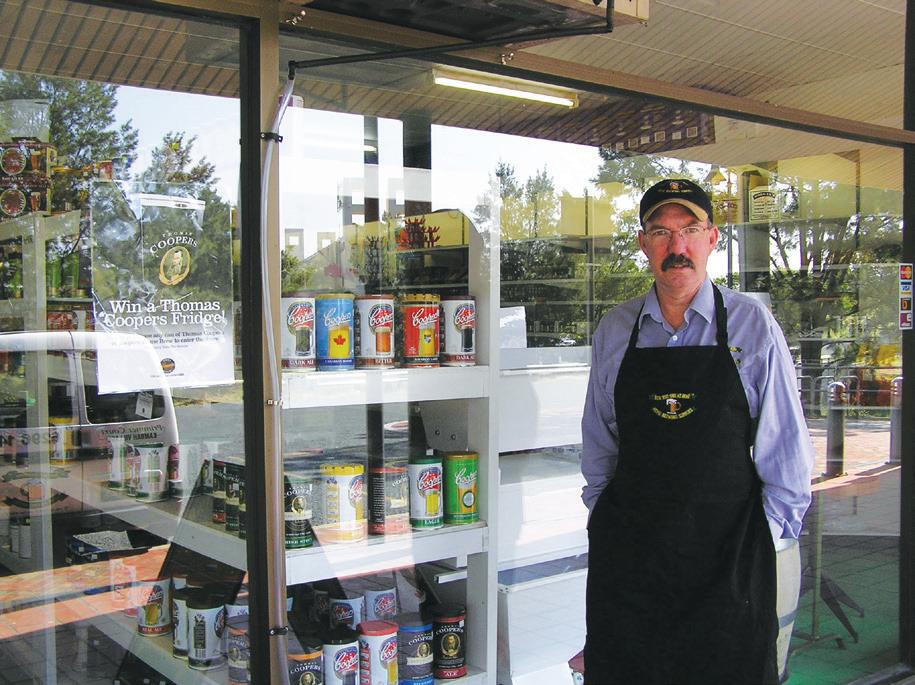
ginger beer yeast.
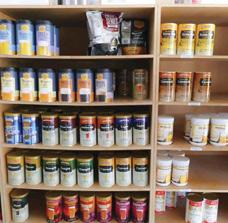
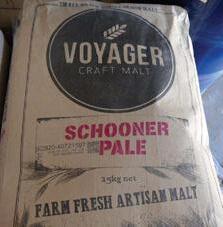
He says they also stock for all-grain brewers, with a supply of 50 malts, local and imported, and cracked or whole.
“We’re doing a special on starter kits, that’s where everybody starts. They’re reduced from $115 to $99 so we’ve got that
you, they are considerably less expensive,” says Colin.
Brew Your Own At Home, Shop 5, Kambah Village. Call 6296 1412 or email colin@ brewyourown.com.au or visit brewyourown.com.au
to feel a lot like Christmas
FUSION City Church is a Canberra-based church
“whose heart is to help people,” says senior pastor Matt McGaw.
He says the aim of Fusion City Church is to provide a space where everyone can come to know and enjoy God, discover their purpose and make a difference to the world.
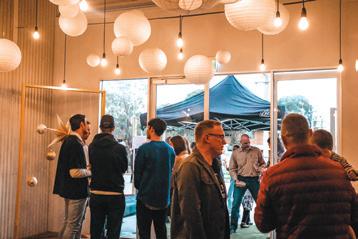
“During this time of year we wish to give people hope and joy,” says Pastor Matt.
The Christmas celebration is an event that welcomes everyone.
“It will be filled with laughs, carols and food,” he says. There will also be an after party with jumping castles and activities.
The Christmas celebration is happening across the whole weekend, December 11 and 12, to ensure that there’s opportunity for everyone to attend.
“After lockdown everyone needs some hope and joy restored. Our Christmas celebration is all about showing people that hope and joy after such a tough few months. Come along and have some family fun!”
Fusion City Church, 2/85 Hoskins Street, Mitchell. Call 6156 2497, email media@fusioncitychurch.com.au or visit fusioncitychurch.com.au or search Fusion City Church on Facebook.
WHETHER regular parishioners or those just coming by to visit, the All Saints Anglican Church in Ainslie welcomes anyone, says parish council member Betsy Dixon.
Having just restarted services in person, Betsy is excited to announce the church will be hosting a Christmas Eve mass at 11pm, a Christmas day mass at 10am and a Boxing Day mass at 10am.

“We’re thrilled to be back,” she says. “We were streaming mass online during lockdown and as much as you can observe something online you miss that special part of being together in person.
“Even being able to see people face-to-face and nod and smile or just touch elbows means a lot.”
With their doors back open in time for the holiday season, Betsy says the church will also be hosting a “Festival of Lessons and Carols” at 6pm on December 5, and will be continuing its regular services at 8am and 10am every Sunday.
“The heritage-listed building has a fascinating history, first being built as a railway station for the Rookwood Cemetery and then being converted to a church in 1954,” says Betsy.
“Anyone is welcome to join in a mass or just to come and see this historic and charming building.”
All Saints Anglican Church, 9-15 Cowper Street, Ainslie. Call 6248 7420, email admin@allsaintsainslie.org.au or visit allsaintsainslie.org.au

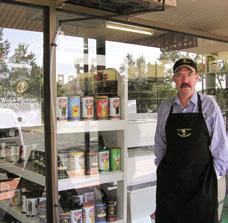


BrewYour Own At Home owner Colin Marshall.


HEALTHY EATING Taking a bite out of lockdown eating habits
AS Canberra emerges from it’s longest lockdown, it’s timely to reflect on the influence of the restrictions on your food patterns and whether some things need to change.
Here are some of the common habits I have noticed emerge:
Alcohol
Without the ability to go out for a social drink, many people have found drinking alcohol at home has become more frequent (or more voluminous).
I absolutely wanted to finish my Wednesday with a glass or two of wine or sit in the sun at lunchtime with a G&T. Luckily, being pregnant during this lockdown was a good deterrent for this urge!
If you have found a little tipple has become a more frequent habit, it might be time to re-evaluate and make some changes so that drinking alcohol is less automatic:

• Store beer and premixed drinks out of the fridge.
• Skip buying mixers and wine in your grocery shop for a few weeks.
• Store bottles of wine at the very top or very bottom of the pantry – out of sight and (mostly) out of mind.
• Pick a particular day to enjoy a particular bottle and write it on the label.
• Stock the fridge with non-alcoholic alternatives. There are a wide range of nonalcoholic beers, wines and cocktails on the market which may help to treat yourself with less impact on your liver and your waistline.
Takeaway

Over lockdown, many people discovered how convenient ordering in can be. However, as restrictions ease and we start to dine out, the take-away habit can stick, resulting in a much higher intake of meals high in salt, sugar and fat (which is what makes take-away taste so good).
Have a look back at the last two or three weeks. How many times did you order takeaway? Is this a pattern you’d be happy to continue with? How often would it be realistic to include takeaway in your household?
Some simple meals to swap for a takeaway might include:
• Barbecue chicken burgers with a prechopped salad.
• Steaming some frozen pork buns or vegetable dumplings with a side of Asian greens.
• Fish tacos made with oven baked fish fillets, pre-chopped slaw and a Mexican aioli.
• A tasting-plate meal with your favourite cheeses, dips, veggie sticks and fruit.
Snacking
Some of my home-bound clients have struggled with constant access to the pantry and mindless snacking, while others have found that they are less prepared for snacks and get to the end of the day ravenously hungry, which can lead to poor food choices at dinner and more home delivery.
Whether it’s better to snack or only have three meals a day is a very individual question and a topic for another article.
Changing your snacking habits is all about recognising when you commonly reach for a processed or convenient food and then planning something healthy to eat for that time. Having a whole-food snack ready and stocked somewhere obvious makes it far more likely that you will make a choice you are happy with.
Here are some whole food snacks to consider planning:
• Chopped mango with yoghurt.
• Roasted chickpeas.
• A packet of popcorn.
• Snow peas and your favourite dip.
• Apple with a bitey cheddar or blue cheese.
Clare Wolski is a dietitian at The Healthy Eating Clinic on 6174 4663.
CLARE WOLSKI




Dietitian CLARE WOLSKI has some clues from getting out of the lockdown eating blues.
Drinking at home… it might be time to make some changes so that reaching for alcohol is less automatic.
CANBERRA REOPENS
Happy to be open for business and eager to serve
IT’S been a tough few months for Canberra businesses trying to navigate the woes of lockdown, but as we head to Christmas, many are again able to open their doors to serve the community with fully stocked shelves and welcoming faces.
To celebrate, “CityNews” spoke with a variety of businesses who are excited to be open again...

Jamison Travel has designed “luxury” tours for clients as travel restrictions ease, says owner Michelle Everson.
“I’m looking forward to people coming back in to start planning their holidays,” she says.
There are two Sydney packages with premier seating, luxury coach travel, 4.5 star accommodation, and a harbour cruise meal – so “Phantom of the Opera” at the Opera House or Dolly Parton’s “9 to 5” musical at the Capitol Theatre?
The third tour is the “experience of a lifetime” in Tasmania.
To begin, there will be a tasting
tour of Bruny Island, savouring local oysters, cheeses and wine, then embark on a panoramic cruise along Freycinet’s Wineglass Bay. Visit World heritage-listed national parks to see ancient rainforests, glacial-carved lakes and furry locals, while staying in legendary lodges. The final course is a spectacular cruise across the serene Gordon River, “providing the perfect end to an unforgettable Tasmanian holiday.”
Jamison Travel, 5/39 Bowman Street, Macquarie. Call 6251 5166, email info@jamisontravel.com.au or visit jamisontravel.com.au
E-scooters and bikes are selling fast
COMING out of lockdown, owner of Cookies
Cycles David Cook says he’s got a great range of electric scooters and electric bikes ready for Christmas.
“We’re very glad to be fully back up and running,” says David, who’s backed with over 35 years of industry experience.
“We’ve got the leading brands in escooters, electric bikes, normal scooters and much more on the floor and we recommend
of the products and their parts.
That expertise is transferred into the store’s fully equipped workshop, which David says offers services and repairs.
“We back up and service all products that we sell with our large range of parts and accessories for all products we sell,” he says.
With Canberrans getting back out and about as lockdown ends, bookings for bike repairs are filling up fast and David recom -
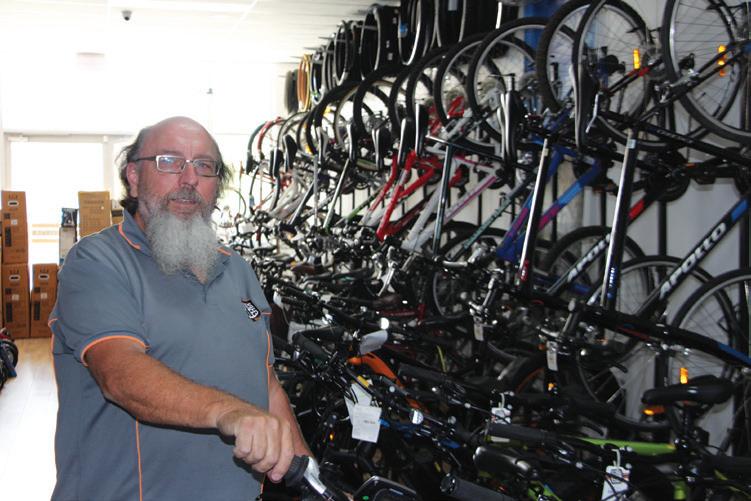




Owner of Cookies Cycles David Cook.
Get close to friendly, free-flying birds
THE birds are back and ready to interact at the Canberra Walk-in Aviary, says owner and manager Mick Logan.
Although they’ll be operating under some covid restrictions, Mick says Canberrans are now able to get up close and personal with more than 500 native and exotic birds representing more than 60 different species.
“Regents, princess parrots, superb parrots, cockatiels, lorikeets, doves, quails, even silkie bantams are just some of the species people can get close to,” says Mick.
“In the wild there are some birds like king parrots and crimson rosellas, which can be quite tame and interactive, but the closest you could get is a couple of metres,” he says.
“Here though, the birds will land on you and take food right from your hand!”
Mick says that upon entry every visitor gets a small plate of food to take in with them to feed the birds.

The aviary also provides heaps of photo opportunities, with visitors always snapping great pictures with the brightly coloured locals, he says.
“It’s great fun for all ages,” says Mick. “We’ve had newborns visit the aviary all the way up to a 101-year-old.
“Some people like to visit for about 30 minutes, others sit for hours enjoying the atmosphere.”
He says the surrounding Gold Creek Village has plenty of other attractions to enjoy including cafes and gift shops. “Come to the aviary and make a day of it in Gold Creek Village,” he says.
Canberra Walk-in Aviary, Unit 13, Federation Square, O’Hanlon Place, Nicholls. Call 6230 2044 or visit canberrawalkinaviary.com.au
“There’s privacy, 99 per cent UV protection, safety and we offer lifetime warranty,” he says.
“Our film will significantly improve your vehicle energy efficiency, reduce energy costs and glare, as well as enhancing overall aesthetics.”
Having operated in Canberra since 2015, Jason says he and the team are thrilled to be back open again after the easing of covid restrictions.
“We are so happy to be back after weeks of shutdown, seeing all our customers again and being able to contribute to our wonderful community,” he says.
Diamond Tints, 38 Parramatta Street, Phillip. Call 0404 284122, visit diamondtints.com.au or email info@diamondtints.com.au


Diamond Window Tints is a small, family owned business with a mission to provide Canberra and surrounds with the highest quality window film and best customer service.
• Reduce heat penetration into cabin space
• Lifetime Warranty
• Filters harmful UV rays
• Reduces glare
• Scratch resistant, dual ply film
• Enhances Vehicle Appearance
• Reduces risk of fabric and vinyl fading
• Ceramic tints
0404 284 122 info@diamondtints.com.au www.diamondtints.com.au



Diamond Tints owner Jason Taylor with his kids Harper and Maverick.
CANBERRA REOPENS
Tailored emergency response plans
FERST
Big sale at furniture store
Alex Robertson has been an
gency response specialist with Ferst for six years.
“The main thing for me is being able to help organisations ensure that they’ve got the best plans and practices in place to keep their people safe,” he says. He explains the difference between Ferst and other, similar companies is that Ferst is a small, family owned business that allows them to provide services quicker and more tailored to the client’s needs.

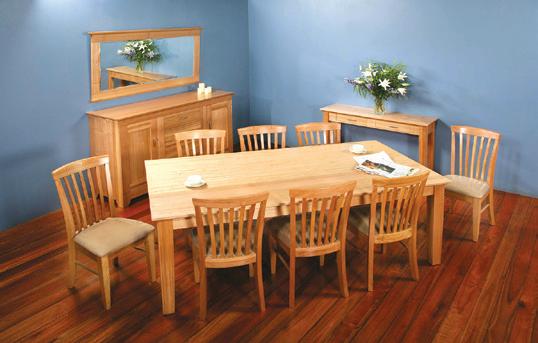
OWNER of Timberland Furniture Tony Purdy says he’s looking forward to people coming in and seeing what’s on offer, and it’s cheap!
“We’ve got to clear a lot. A lot of our floor stock is discounted because our floor space is much smaller,” he says.
There are bedroom settings, dining room suites, TV units, lounge room settings, coffee tables and lounges ready to go at the new location.
“When we say half price, we mean half price,” says Tony.
He is welcoming in friendly faces, excited to be open again and ready to get back to business.
“People won’t buy our furniture online, you have to see it and touch it to judge whether or not it’s good value,” says Tony.
Timberland Furniture, 100 Barrier Street, Fyshwick. Call 6280 7411, email timberlandfyshwick@gmail.com or visit timberlandfurniture.com
Cycling organisation to host an ‘epic’ challenge
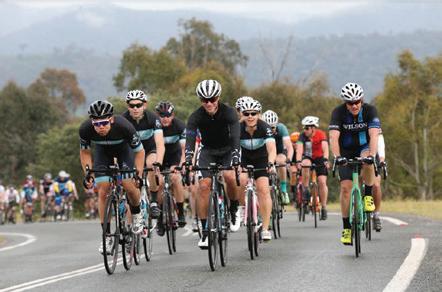
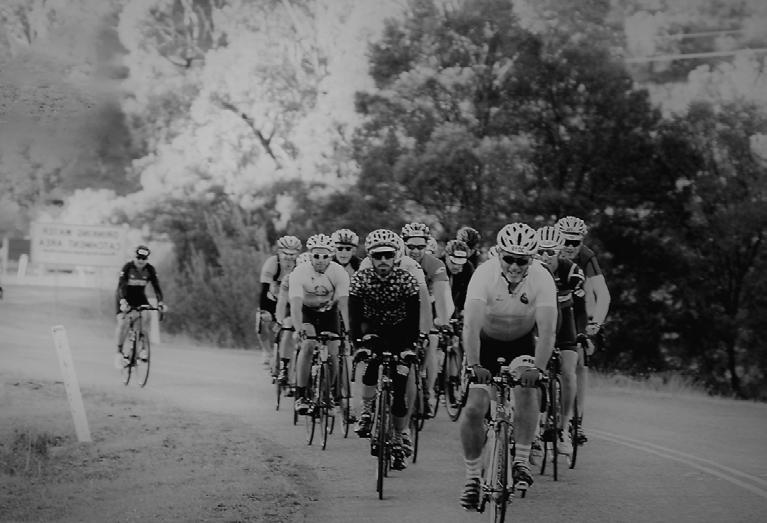
CANBERRA’S oldest and largest cycling organisation Pedal Power is excited to be hosting their “Fitz’s Challenge” event in December –an epic 250-kilometre ride around the Tidbinbilla Nature Reserve, says CEO Ian Ross.
“It’s one of the few events in Canberra to survive the pandemic, and with the borders now open just in time we’re welcoming vaccinated people to come join us at this covid-safe event,” says Ian.
Happiness is… a big, bright yard card
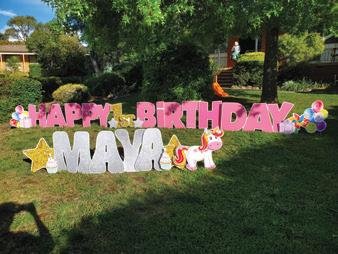
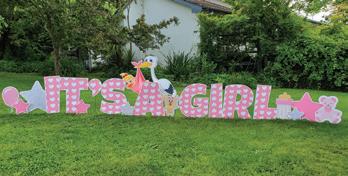
YARD Card is a new way to celebrate and spread joy for all special occasions, says owner Geoff Lang.
Geoff says he was inspired to bring Yard Card to Canberra after seeing its popularity in the US grow online.
“The recent lockdown inspired me to launch the business, to bring fun, creativity and joy to people,” says Geoff.
With large, corflute “cards” available for all types of occasions from birthdays to graduations, anniversaries to new babies, Geoff works with customers to customise the wording and colour schemes and then deliver and set it up in a customer’s front yard at the time of their choosing.
Geoff says Yard Cards work well as a surprise, bringing fun and happiness to the recipient.
“I had one customer tell me it was the best birthday surprise he had ever received!” says Geoff.
“A lot of people come to us because they’ve been with a national company and the company hasn’t been able to provide relevant information and can’t get on site quick enough,” says Alex. Ferst Training Solutions. Visit ferst.com.au or call 1300 333778.
“We have rides around the nature reserve ranging from 50 kilometres all the way up to 250 kilometres – our longest and most extreme challenge.”
But whether you’re an expert rider taking on the challenge or someone who’s never ridden a bike before, Ian says Pedal Power has lessons and events for anyone keen to go for a ride.
“Research shows just swapping your car out for a bike a couple of times a week can make a fundamental difference to your health,”
“That includes reducing the risk of cancer, extending your lifespan and it’s great for your mental health.
“It’s also a great thing for the environment – every kilometre you ride on a bike is a little bit less carbon in the atmosphere.”
Keen to see Canberrans back out riding again, Ian also says Pedal Power is offering a 20 per cent discount on new memberships.
Pedal Power, call 6248 7995, visit pedalpower.org.au or search Pedal Power ACT on Facebook or Instagram.






Geoff says that his website offers great inspiration ideas for the designs and he enjoys working with his customers to create the perfect yard card.
“You can choose how many days you want the card to be in your yard for and we will collect it when the celebration is over. We do all the work, you just sit back and enjoy the smiles!” says Geoff.
Alex Robertson.
“WHY can’t you have the best coffee and the best burger you’ve ever had in the same place?” asked the owner of Lucky Shot with BZ Burgers Paul Eldridge a few years ago.
Having just opened another store in Belconnen, he says he’s tried to give Canberrans an answer to that question: “you can”.
Paul has brought a series of “speciality” burger recipes to Canberra from Benz on Miller in Queensland, which won the award for Brisbane’s best burgers last year in “The Courier-Mail’s” annual poll.
“I had two bites of one of these burgers and I immediately thought I needed to bring them to Canberra,” says Paul.
“They’re meticulously made here by our trained chefs and will blow you out of the park.”

Paul says just some of the range includes a classic cheeseburger, a crowdfavourite fried chicken burger called “The Hick”, and a bacon and egg roll that many have told him is “the best they’ve ever had”.
One of their newest burgers is called the “Sweet Baby Jeebus” and is dunked in a “maple wild turkey glaze” which he says gives a “unique and sweet taste”.
But Paul says it’s not just burgers they specialise in.
“We use specialty coffee beans from the Sydneybased Pablo and Rusty – a brand who source the

most delicious beans in the most sustainable way possible,” he says.
“We also have a range of thick shakes and milkshakes like chocolate, rocky road, caramel and more, each with syrup made here in-store.”
Lucky Shot with BZ Burgers, Hardwick Crescent, Holt and Grazier Lane, Belconnen. Call 0417 783292 for BZ burgers, 0409 200206 for Lucky Shot or search BZ Burgers on Instagram.








The “Sweet Baby Jeebus” burger .
8.30am
Come

CANBERRA REOPENS advertising feature
to nursery
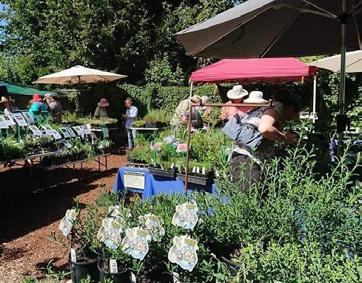
Karen Brien, owner of Cool Country Natives, says she’s excited to start hosting market days again.
Before covid, the market days were happening eight times a year, four in spring and four in autumn.
“We usually have five different growers. They come on to our site and sell their own products and customers can talk to and buy directly from the grower,” she says.
The first market day is on December 4, the next isn’t until February.
“Normally it’s quiet because it’s hot and dry, but we’ve had so much rain and it’s been pretty mild. We haven’t had one for all of lockdown so it should be quite a good day, and there will be people around,” says Karen.
“I didn’t think they were going to happen again until February but the growers are keen to come in December.”
Cool Country Natives, 5A Beltana Road, Pialligo. Call 6257 6666, email retail@ coolcountrynatives.com.au or visit coolcountrynatives.com.au

The one-stop, expert electric-scooter shop
STOCKING only the best, most recognisable and most quality brands in the market, Scooter Hut is the one-stop scooter shop, says national retail operations manager Daniel Abbott. Having operated in Canberra since 2008, Scooter Hut now has 11 stores around Australia, all with fully equipped service centres, including one in Belconnen.
“Our staff is a diverse mix of people that consists of pro-riders, scooter enthusiasts, tech specialists, and retail experts, all of which unite to help our customers to choose the right scooter or accessory,” says Daniel.
“Backed up by our excellent customer service provided by world-class professionals with the best knowledge in the industry, [we’re] here for all your freestyle and electric scooter needs.”
Daniel says the store has a wide range of products that includes protective gear, parts, apparel and accessories and even the world’s number one electric scooter: the Inmotion ‘Lemotion’ S1.
“The innovative features, speed, range and competitive price has positioned it within the space of only a few months as one of the best electric scooters in the market,” he says.
Scooter Hut, Shop 2/31 Nettlefold Street, Belconnen. Call 6176 0565,



ARTS & ENTERTAINMENT
Rep’s Christmas present with a German twist
By Helen MUSA

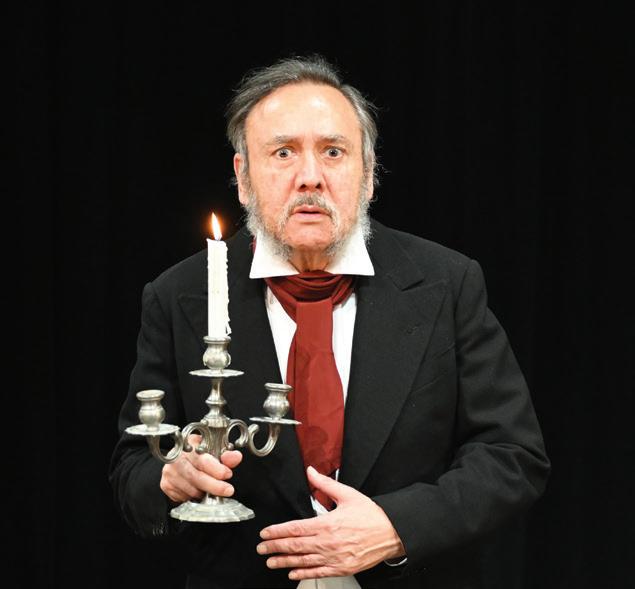
“A CHRISTMAS Carol” is soon coming to the Canberra Rep stage with a German twist fit to warm the hearts of Queen Victoria and Prince Albert.
Directed by Antonia Kitzel, who only came here from Frankfurt in 2015, it’ll be Rep’s first production after lockdown.
I caught up with Kitzel while she and her tight cast of five actors were rehearsing their multiple characters around the clock after getting the go-ahead for the live performance season.
“We thought we should do something entertaining as a final show… It couldn’t be ‘Rosencrantz and Guildenstern are Dead’, which is now postponed to next year, then we thought we might do something rehearsed and streamed, but with the lifting of lockdowns we didn’t have to do that.”
Looking around for something uplifting to do, Kitzel and Rep thought of Dickens’ “A Christmas Carol”, staged as a Christmas present to the public with tickets very cheap – only $20 a head.
And they won’t spend much money, with a simple set and the costumes sourced from
Rep’s extensive wardrobe.
Serendipitously, Kitzel already had a script in mind, an adaptation by American-born comedian and theatre artist Abigail Paul, first staged in 2015 by the Theatre Language Studio
Frankfurt that Kitzel co-founded with Paul.
The script, featuring a narrator and four other actors who play 30 parts, sticks closely to Dickens, Kitzel tells me, with just a few outdated colloquialisms changed for
ease of speaking.
Since arriving here six years ago, Kitzel has been a familiar figure on stage, most recently as the wife in “The Governor’s Family”, where her German ancestry came in handy.
She moved here for personal reasons and her foresighted partner, fearing that she might be like a fish out of water in Canberra if she didn’t find some theatre, signed her up for Rep even before she got here.
She settled into the ACT quickly and says: “I really like Canberra, I know a lot of people don’t like it, but to me it’s not too big and it’s got all the things that I think are important –and the people at Rep have been lovely.”
As well, there could hardly be a better way of getting fluent in spoken Australian English than joining a theatre group, as she found.
Kitzel does not shy away from the almost saccharine, heart-warming content of “A Christmas Carol”.
“It’s a reminder about what is important in life, what we should watch out for and, of course, there’s the ultimate redemption for Scrooge, a miserable old man who has forgotten that you can have fun and enjoy life,” she says.
For those not in the know, the old skinflint John Ebenezer Scrooge is a byword for miserliness, described by Dickens as “a squeezing, wrenching, grasping, scraping, clutching, covetous, old sinner.”
In the play, Scrooge is visited by the spirits of Christmases past, present and future as
well as the ghost of another miserable old man, his late business partner, Jacob Marley, as a reminder that some things that aren’t tangible are more important than money –love, for one.
Kitzel endorses Rep’s description of her actors as a “stellar cast”. She, after all, auditioned them.
She praises Saban Berrell, who plays Scrooge and who was most recently seen in Rep’s “Cat On A Hot Tin Roof” and “Rope”, as well as the narrator, Alexandra Pelvin, who will also be directing “Hotel Sorrento” for the company next year.
Then there are the three remaining versatile ensemble members who play all the other characters – Amy Crawford, last seen in “Brighton Beach Memoirs”, Sally Rynveld, who hasn’t been in a Rep show since “Under Milk Wood” years ago and a younger actor, John Whinfield, all of whom “move seamlessly from one character to another in a blink of an eye.”
Any favourite characters for Kitzel?
Well, there’s Scrooge himself, his fiancé, the three spirits of Christmases, Bob Cratchit the lowly clerk and most important of all, since it is a key moment for Scrooge when he realises that this little boy might die, Bob’s son Tiny Tim, immortalised in his famous line, “God bless us every one!”
“A Christmas Carol”, November 26-December 5, book at canberrarep.org.au or 6257 1950.


Saban Berrell, who plays Scrooge in “A Christmas Carol”… a miserable old man who has forgotten that you can have fun and enjoy life.
/ streaming and stuff
‘The Great’ historical adventure in anti-history
By Nick OVERALL

IN the 1700s a deadly strain of smallpox devastated Europe, at its height killing an estimated 400,000 people across the continent with each passing year.
With a mortality rate of about 30 per cent, global panic erupted as the virus spread.
But in 1768, Russia’s longest ruling female leader, Catherine II, became one of the first people ever to test an invention that would one day become known as a vaccine.
First proposed by Dr Thomas Dimsdale, the procedure involved taking a milder form of smallpox and using it to buffer the immune system against the virus’ far deadlier strain.
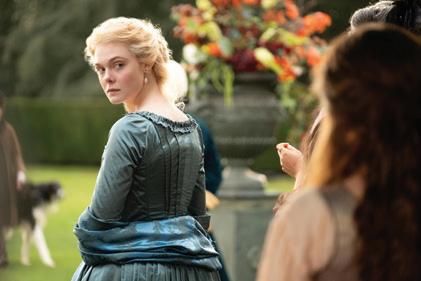
causing utter catastrophe? It seemed insane.
Not only did Russia’s Empress risk this procedure on herself during the height of her nation’s battle with the epidemic, but she did so in front of her royal court to help convince them of an idea widely feared.
But it worked.
Catherine was immune, and not long after two million people had followed her example.
About 200 years later smallpox was declared eradicated entirely.
This was just one of the many feats that earned Catherine the title of “The Great”, and that’s also the name of the series that loosely recounts the history of her rule and one that now has a second season streaming on Stan from November 20.
“The Great” stars Elle Fanning as the vivacious Empress, who takes a witty script and makes this “occasionally true story” an engaging, yet easy watch.
That “occasionally true” part is a product of lead writer Tony McNamara, who places historical accuracy in the back seat of his scripts.
The first episode unreservedly disclaims that “The Great” is only partially true; an “antihistory” as described by the writer himself.
While the most important parts of Catherine’s reign are indeed put to paper, McNamara plays with characters and chronology to produce a product of much
more relevance.
The biggest switch up in this series is that Catherine is brought down to the age of 20, whereas in real life much of the Empress’ achievements, like the vaccination against smallpox, came at a much older age.
The change throws a clever coming-ofage tale in the mix.
Initially, Catherine believes her happilyever-after lies with the marriage to Russian Emperor Peter III, charismatically played by Nicholas Hoult, but soon learns the idyllic world of her dreams is far from reality.
The fact that she would one day stage a coup against Peter to seize his throne sums up how happy that marriage was.
But why write a period piece if historical accuracy is not the priority?
What this “anti-history” approach allows for is the injection of a wicked sense of satire that reframes the story for a modern audience.
The lavish, ostentatious halls of the Russian palace set an absurd tone for an
exploration of trends and beliefs of the time that by today’s standards seem ridiculous.
The enlightenment era of the 18th century serves as the backdrop for this: a philosophical movement where scientific inquiry truly began to take off.
“Can anything be shot from a gun? And if it lives, have we invented a new form of travel?” asks Peter in one scene after becoming riveted by possibilities of the science.
However, “The Great’s” sense of humour never gets in the way of its more heartfelt, serious and even tragic moments, nor does it negate the importance of historical accuracy.
In fact, with any hope, shows such as “The Great’’ will inspire many viewers to learn more about the real-life story.
But it’s the versatility of this approach to history that creates interest for it to be viewed through a modern lens in the first place.
What better way to hook a present-day audience on the importance of learning from the past?
ARTS IN THE CITY CINEMA
The power of Jane Campion’s
By Dougal MACDONALD
“The Power of the Dog” (MA)

IF you’re wondering about the meaning or the origin of this film’s somewhat enigmatic title, look in the Bible, Psalms 22.20.
Writer/director Jane Campion adapted a novel by Thomas Savage telling about two brothers, linked by their shared ownership of a Montana ranch and separated by a collection of irreconcilable personal differences.
The film unfolds around sibling rivalry between brothers Phil (Benedict Cumberbatch) and George (Jesse Plemons). There’s money in the bank and a faded but once elegant rooming house on a lonely part of the prairie managed by Rose (Kirsten Dunst), a widow whose teenage, aspiring medical student son Peter (Kodi Smit-McPhee) speaks with a lisp and makes intricate fake flowers out of paper.
Phil has a university degree but prefers outdoor life and the company of the ranch
new film
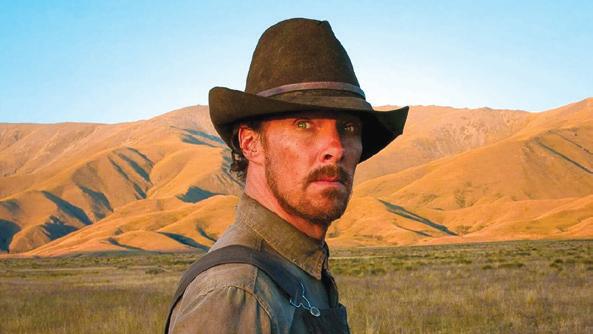
hands. He envies the tranquility that George is enjoying in the sparse local community and in friendship with Rose.
In the ranch environment, Peter’s gentle mien is a prime target for Phil’s aggression.
Campion’s strong yet gently controlled direction guides these four people toward a denouement that avoids sentimentality and matches the visual power of the film’s environment. The film was shot in NZ, which may surprise viewers who have a kinder notion of that country’s landscape.
At Dendy and Palace Electric

“No Time To Die” (M)
IF you’ve seen any of the action thrillers in which various actors have played Ian Fleming’s secret service hero, you’ve really seen them all. Only the villains have changed.
This one, the last in which Daniel Craig wears the Bond mantle, looks expensive and runs longer than comfortable. The situations are impossible. The predictability quotient is high. Novelty is scarce. The denouement is enigmatic.
I left as soon as the closing credits began to roll. So I can’t tell you whether its final final moment warns of another same old same old in the franchise’s pipeline.
At all cinemas
A hot night in the old town
By Helen Musa
THE Q, in Queanbeyan, will swing into summer with “Summertime: a Hot Night of Gershwin Favourites” to be performed by two virtuosi – concert pianist, Simon Tedeschi and jazz vocalist and violinist, George Washingmachine. They’ll play Gershwin favourites and classic jazz standards by Cole Porter, Oscar Peterson and Fats Waller in “The B” (the refurbished Bicentennial Hall) on Friday, December 3. Book at qprc.sales.ticketsearch.com
THE local radio drama program on ArtSound FM, which has celebrated its first birthday, is a 30-minute episode heard on Sundays at 4pm (and repeated on Tuesdays at 4pm). It features one or two short plays, some original works by local playwrights such as Harriet Elvin, Kirsty Budding and John Lombard, and others either sourced from the ArtSound archives or new productions of classics. The program’s producer, Bart Meehan, is keen to hear from writers with plays no longer than 25 minutes, or scripts suitable for serialising. Contact admin@ artsound.fm or 6295 7444.
CANBERRA Art Workshop has chosen painter Sonya Jane Thoms for the inaugural Mavis Hall Arts Trust Grant, which provides materials for a year. Relatively new to
CONVERSION SERVICE



painting, though a graduate in a BA in textiles and printmaking from the ANU, Thoms plans to produce a series in the portraiture genre, a video blog and visual journal during what she calls “my year of living curiously”.
“RE-AWAKENING” is the post-lockdown title of a concert of works by Bach, Saint-Saëns and Morricone to be performed on violin, harp, and oboe by Lucy Macourt, Rowan Phemister, and Zoë Loxley Slump at Wesley Music Centre, Forrest, 12.40pm-1.20pm, on Wednesday, November 24. Book at trybooking.com or 6232 7248.
JAZZ artist Elise Walsh tells us her group, Bella Groove – herself, John Black, James Luke, Matt Lustri and Steve Richards – have released a live EP recorded at Smith’s Alternative just before lockdown. The EP has six original tunes, with co-arrangements by Black. Access the EP via bellagroove. bandcamp.com
AT last, the postponed performances of “The Stranger” by actor Christopher Samuel Carroll will go ahead in early December. The Stranger” is Nobel Prize winner Albert Camus’ masterpiece, adapted for the stage as a oneman tour-de-force by Carroll. At Ralph Wilson Theatre, Gorman Arts Centre, December 8-11. Book at events.humanitix.com

Elle Fanning plays Russian Empress Catherine II in “The Great”.
Benedict Cumberbatch as Phil in “The Power of the Dog”.
THEATRE MEETS FILM
School play in the reel world
By Helen Musa
WHILE Canberra’s schools grappled with the transition from live to online learning, no area was quite so obviously affected as the performing arts departments.
Some schools responded with streamed versions of conventionally staged productions. Others took to the monologue form as a kind of cross between a practical and academic exercise.
But at Daramalan College, Dickson, they decided to make a movie.
“It might seem a bit strange coming from the drama department and not media studies,” says the head of the school’s arts program (and “CityNews” theatre reviewer) Joe Woodward, when I catch up to find out how it came about.
In 2020 he and his colleagues had been dealing with a swag of cancellations, notably a big production of “Saturday Night Fever” and a season of “A Midsummer Night’s Dream”.
In casting around for an alternative approach, the dearth of exciting material in pre-written scripts led him to take a punt and propose a movie instead, as an exercise in what he called “theatre cinema”.
To his relief, the college said yes (“Dara has always tried new things,” he says) and the result will be Daramalan Theatre Company’s first feature movie, “Under The Light”.
It fits perfectly into the company’s policy and procedures manual, which says: “The underlying rationale is that our arts can be harnessed to focus on the very foundations of what it is to be human beings facing realities that both challenge and reinforce our human and spiritual potential.”
Apart from the sheer derring-do of putting on a film in a world where self-styled experts are all around to criticise, the original script raises societal issues to do with mental health and has given its writers a real-life lesson in “having to learn to suck up their egos as people tend to over-write”.
Several years ago, anticipating a move into film, Woodward had taken an industry standard course with American producer Dov Simens, author of “From Reel to Deal: Everything You Need to Create a Successful Independent Film” and the former teacher of Quentin Tarantino and
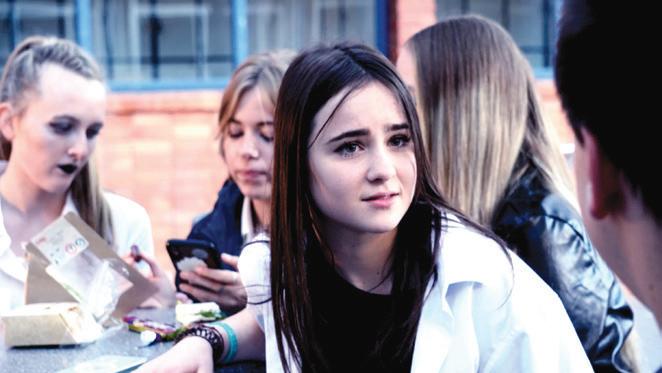
Baz Luhrmann.
Armed with this training and advice from consultant Andrew Scarano, content producer for the Brumbies, he saw a way for students to have more control over their own material.
Charlotte Blackley was line producer and senior students Tim Davies and Isabella Miller were the main writers. Both, he assessed, have a good chance of making it into the Australian Film Television and Radio School next year.
“There were challenges… film is so different… In terms of education, it’s multifaceted and there has been a question about how much to spoon-feed them,” Woodward says.
“Also, film is so expensive and all the different technical matters, personnel and permits make it even more daunting.
“We were like guerrillas, buying things like fluorescent lights cheaply… and we didn’t use sophisticated equipment. Just the Sony Alpha A6400 Mirrorless Camera with Ultra-High-Speed AF [4K video].”
The movie is called “Under The Light”, a title suggested by Davies. “Light” is a pun, partly the lights of theatre that create an artificial world, but also suggesting a darker and more substantive meaning.
The centre of the movie is a struggle between two girls at a fictional school.
One, the exquisite dancer, Eva, likely to make a career, and the other Dana, a streetwise newcomer forced by her parents into what she considers to be a posh school, who causes Eva injury and disability.
Olivia Smith plays Eva and Amy Goedecke plays Dana, with Daramalan staffer Amy (Dunham) Kowalczuk playing Dana’s mum in key scenes. Male actors include Tim Davies and adult actor Simon Aylott.
As is usual in the lead up to a Daramalan Theatre Company production, there was a development camp, this time at Burrill Pines, where actors, scriptwriters and the creative people gathered with Woodward and Scarano.
Woodward’s excited about the end result, which features locations including Daramalan and the Queanbeyan Suspension Bridge. They’re not getting it rated, but will have to put a coarse language warning on it.
The other project with a film component is Shakespeare’s “A Midsummer Night’s Dream” to be filmed and live streamed by Peter van Rijswijk from the Canberra Theatre Centre and performed by years 7 to 10 students in the studio in mid-December.
Inspired by the National Theatre’s hybrid film production of “Romeo and Juliet” streamed on iView this year, “The Dream” will have a Hollywood flavour, so that instead of a forest, there will be the clutter of a sound-stage.
With the lights in their eyes, all this is just the start. Former Daramalan students will be coming back for a future production by Woodward of Euripides’ “The Trojan Women” – Afghanistan-style.
“Under The Light” will be posted on Vimeo in late November, when details will appear at business. facebook.com/DaramalanTheatreCompany
DINING / Bambusa Asian Cuisine, Manuka
Dumpling fans challenged by choice
By Wendy JOHNSON

DURING this last lockdown we had takeaway from Bambusa Asian Cuisine and it reminded us that the food pumped out of the kitchen in this Manuka establishment is pretty delish. When we heard one side of Franklin Street was being closed to traffic so dining could spill out on to the road to boost business post-lockdown, we were inspired to visit and lend some support. The closure is part of the ACT government’s new Outdoor Activation project. It ends up that some in Manuka love the idea and some don’t. We thought it was fun and were there for the food, anyway.
Bambusa has been part of the Manuka dining scene for around a decade. The service was exceptional on our visit. A knowledgeable and friendly waiter treated us like gold.
We are massive dumpling fans and found it challenging what to choose. Eventually we settled on the Pork Xiao Long Bao ($12.50 for six

steam dumplings have a seasoned pork filling and hot, flavourful soup. We wanted more. Just as packed with flavour were the boiled prawn dumplings ($19.20). You can also order them deep fried ($21.20). We lovingly dipped them in soy and a chilli sauce.
For mains we were in for something we all hadn’t tasted before and landed on the rock-salt pork loin ($23.90). The chunks of pork were moist and the rock salt was not overpowering. The thin
slices of chilli sprinkled on top of the dish made sure there was enough bite and added colour.
Our other main was the Shan Tung chicken and we were curious what Bambusa’s take would be on this famous and popular dish. The slices of chicken were crispy on the outside and the meat tender. We found the dish just a tad sweet for our liking but respect there are many, many recipes for Shan Tung chicken.
For our vitamin hit we chose the baby bok choy with garlic, beautifully presented on a colourful art dish. The bok choy was vibrant and crunchy and the garlic subtle enough ($16.20).
During lockdown we scored some great dishes also, including salt and pepper white bait ($23.50), chilli garlic prawns (wonderfully plump, $37.80) and a sensational Yu Xiang eggplant, which we couldn’t fault ($19.60). All dishes travelled well, and delivery was on time.
PS: We returned the following week for another round of divine, addicting dumplings. It was a gorgeous day, but Bambusa wasn’t participating in the Outdoor Activation for some reason. We found a seat in its outdoor dining area on the sidewalk, which was lucky.

Pork Xiao Long Bao… hand-made steam dumplings with a seasoned pork filling and hot, flavourful soup. Photo: Wendy Johnson





GARDENING


Early ideas for Christmas gifts
CHRISTMAS is just around the corner and now’s the last chance to pot any extra plants that you can give as a present.
A bowl of salad herbs or a succulent bowl are cost-effective gifts. I have made many succulent bowls for Christmas presents and ensured most cuttings are from my own garden and when the plants outgrow their bowl they can be added to the garden, really easy for anyone to do and a gift that is personal.
BEFORE summer’s heat sets in, now’s a beautiful time for a bushwalk in and around Canberra to see some endemic wildflowers in habitat after all the rain.
In Canberra, we are blessed that we can be in the bush within 10 minutes from our homes and I plan to get there more in the next few weeks.

THIS month is the perfect time to get as many vegetables as possible and herbs in the ground. Staging a crop will prevent a glut of one vegetable such as zucchinis and pumpkins.
Two zucchini
plants are more than enough for a family at one time. Zucchinis are quick growing and need a space of at least a metre wide to grow well. My favourite is “Black Jack”, which grows easily from seed.
THIS is the right time to give conifers a good prune and feed. Conifers are robust, long lived and a good evergreen shrub or hedge for our climate. There are many sizes available and also there are very few unusual deciduous conifers available. My all-time favourite tree is Dawn Redwood (Metasequoia glyptostroboides). They are magnificent trees and can be seen around the edge of Lake Burley Griffin, with their rustic autumnal colour they are just beautiful but now, in spring, the Dawn Redwoods have lush fern-like leaves and a gorgeous large tree. It’s not for the small garden as it grows to more than 20 metres tall.
There are a few native conifers such as Callitris, which is one of my favourite trees as well; a small-to-medium, evergreen, conical-shaped tree. It is a lovely shade of green and can be used in a large garden.
My home conifer garden is in a hot, westerly site where I had trouble growing anything for a long time. I chose slow-growing dwarf conifers so I could fit more in the space. Conifers are perfect for pots
and, of course, the most popular plant for bonsai.
BEARDED irises are flowering now and are a tough little garden plant that grows with very little care. It grows to about a metre tall and is a good backdrop in a big garden. It comes in many colours, multiplies quickly and can fill a space in the garden that is hot, dry and has full sun.
Irises are a rhizome and are treated a little differently to most other plants. An Iris rhizome only flowers once and it will take several years for the new rhizome to bud and branch, form and grow a new flower. They don’t like to be buried too deep and no mulch is best.
DAHLIAS are one of my favourite vase flowers for summer and autumn and should be planted by now. They need staking and tying, and need room to grow with good ventilation. Their size varies from 30 centimetres to two metres tall and the flowers can be as little as 20 centimetres wide (dinner-plate size) and spectacular.
They have an unusual tuber and can be tricky to grow, but once you learn a little about them, then the addiction for growing these plants has begun.
There’s a lot of information on the internet and there is a lot of local knowledge amongst gardeners to get tips and tricks from.
Sprinkle a little dolomite lime in the area where they are to grow to keep the pH to 6.5-7 and in a raised garden where the tubers don’t rot.
jackwar@home.netspeed.com.au





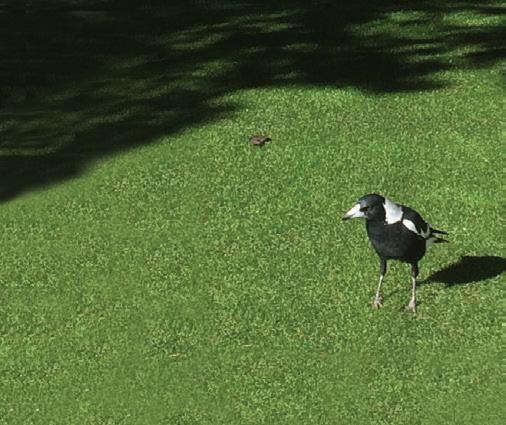
Succulent bowl ideas for Christmas… when the plants outgrow their bowl they can be added to the garden.
Photo: Jackie Warburton
“Pom Pom” dahlia… have an unusual tuber and can be tricky to grow.
Photo: Jackie Warburton
PUZZLES PAGE FREE PUZZLES EVERY DAY AT citynews.com.au

By Joanne Madeline Moore
ARIES (Mar 21 – Apr 20)
Gung-ho Rams are fantastic at starting things but not so good at finishing them. This week’s stars encourage a brilliant light-bulb moment, when you have the enthusiasm to get an ambitious idea off the ground. Then Saturn and Chiron boost your patience and persistence, so you can (hopefully) see the project through to a successful conclusion in the not-too-distant future. The weekend stars favour group projects, spiritual pursuits, volunteer work and helping others.
TAURUS (Apr 21 – May 21)
Venus (your patron planet) and powerful Pluto are both visiting your aspirations zone. So it’s a good time to snuggle up close with your sweetheart, throw yourself into a special creative project or dream up some ambitious goals for the future. Passion and purpose will take you far. When it comes to joint finances, taxes and investments, steer clear of people with dubious advice or unclear motives. Make sure you keep a clear head, stick to the facts and double-check everything!
GEMINI (May 22 – June 21)
There’s plenty of planetary action in your relationship zones, so the more you focus on the needs of loved ones, the happier everyone will be. When it comes to a close relationship – are you frustrated about something? Don’t bottle things up inside. Mercury encourages you to talk about your feelings and discuss difficulties. A problem shared is a problem halved! Your motto is from writer George Eliot (who was born on November 22, 1819): “Go forward with a joyful confidence.”
CANCER (June 22 – July 23)
With the Sun and Mercury both visiting your wellbeing zone, learn to love the things that are good for you. Like nutritious meals, regular exercise, relaxing in nature and lots of rest. (Crabs love curling up in bed and need plenty of good quality sleep.) You’ll find the simple things in life are definitely the best! Like preparing a home-cooked meal, having an early night, enjoying a funny conversation with a child, or picking fresh flowers to put in your home or office.
LEO (July 24 – Aug 23)
This week pleasure-planet Venus is visiting your wellbeing zone, so make sure you choose a healthy diet and exercise program that you actually enjoy. But are you having problems with a child, teenager, lover or friend? Focus your energy on that person and make them your number-one priority. Communicate with passion and compassion. Energy goes where intention flows. If you combine a positive approach with good listening skills, then the relationship will gradually improve.
VIRGO (Aug 24 – Sept 23)
Are you suffering from a crisis of confidence? Is your perfectionist streak running rampant? The more you over-think situations and try to make everything ‘perfect’, the more you will worry and obsess. And don’t waste time comparing yourself (and your talents) with other people. You need to run your own race. Be inspired by actor, martial artist and philosopher Bruce Lee (born on November 27, 1940): “If you spend too much time thinking about a thing, you’ll never get it done.”
LIBRA (Sept 24 – Oct 23)
Are you worrying about money? This week (with impulsive Mars charging through your $$$ zone) avoid being uncharacteristically rash with cash and credit. Mercury urges you to increase your financial literacy, as you swap spending for saving, and nurture your nest egg for the future. Venus (your patron planet) is visiting your domestic zone until March 6. So it’s time to hunker down and enjoy the comforts of home sweet home and the companionship of family members.
SCORPIO (Oct 24 – Nov 22)
The global pandemic continues to be challenging – physically, emotionally, mentally, socially and financially. But that’s no excuse to procrastinate! Proactive Mars is charging through your sign (until December 13). So it’s time to embrace options, kick start projects, roll up your sleeves and power through tasks with renewed enthusiasm. Be inspired by birthday great Bruce Lee (who was born on November 27, 1940): “To hell with circumstances; I create opportunities.”
SAGITTARIUS (Nov 23 – Dec 21)
You’re keen to be in charge, as the Sun and Mercury transit into Sagittarius. But are you being the boss – or just plain bossy? Strive to utilise your leadership skills in clever ways, that bring more creativity to your work situation and more harmony to your home life. You’ll be in freedom-bunny mode on Friday, when you’re keen to do your own thing, without onerous responsibilities and restrictions. It’s also a good day to discuss a diverse range of topics, in person and online.
CAPRICORN (Dec 22 – Jan 20)
With vivacious Venus visiting your sign (until March 6) you’ll feel unusually flirtatious as you charm the cynics and dazzle the doubters. It will be easier to get what you want if you stop being a Capricorn control-freak and try a double dose of diplomacy instead. Under the influence of dynamic Mars, strive to pursue your dreams in a confident and authentic way. Draw inspiration from birthday legend Bruce Lee: “Always be yourself, express yourself, have faith in yourself.”
AQUARIUS (Jan 21 – Feb 19)
Don’t accept things at face value. Venus and Pluto stimulate your mystery zone, so look beneath the surface (and do some background briefing) to discover what’s really going on. Group activities look busy (in person and online) but be careful what you say, especially within your peer group. Avoid spreading secrets and salacious gossip. On the weekend, Jupiter encourages vision and Saturn demands determination, as you follow your destiny and fine-tune your dreams.
PISCES (Feb 20 – Mar 20)
Mercury and Mars are firing up your philosophy zone, so it’s an appropriate time to ask yourself a few important questions. "Where am I heading?” What are my aspirations for the future?” Am I all enthusiastic talk and no productive action?” Food for thought for perceptive Pisceans. Your motto for the week is from actor, director, martial artist and philosopher Bruce Lee (who was born on November 27, 1940): “Knowing is not enough, we must apply. Willing is not enough, we must do.”
Copyright Joanne Madeline Moore 2021
4 What is a sailing vessel built and rigged for speed? (7)
8 Name one of Thomas Gainsborough’s masterpieces, the ... (4,3)
9 Which temperature scale is used in Australia? (7)
10 To endanger, is to do what? (7)
11 What do we call a starter in a race? (7)
12 Which Christian festival is calculated from the first Sunday after the first full moon after March 21? (6)
14 Name an Australian prestigious prize for drawing. (6)
18 To rush, move, or act violently, is to do what? (7)
21 When one is posting a letter, what is one doing? (7)
22 What is a form of pasta, cut into flat sheets? (7)
23 What is a workshop or studio of an artist? (7)
24 Name a cafeteria attached to a factory, office, etc. (7)
Down
1 To be slanting or sloping, is to be what? (7)
2 Name an infectious viral disease characterised by swelling of the salivary glands. (5)
3 To unduly thrust oneself forward, is to do what? (7)
4 What are long periods of years called? (6)
5 What is a narrow passage between islands? (5)
6 Which mammal order includes apes, monkeys, and humans? (7)
7 To put together a broken bone again, is to do what? (5)
13 Who was “the man with the donkey”, John ...? (7)
15 Which person holds a commission in the armed services? (7)
16 Which small sailing vessels are often associated with island trading? (7)
17 To lower in dignity or standing, is to do what? (6)
18 What is a surviving memorial of something past? (5)
19 Which term describes a projecting corner? (5)
20 What is another name for the shinbone? (5)
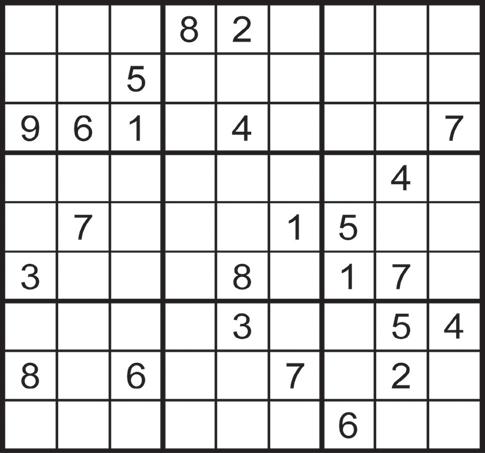
CHARTERED ACCOUNTANT

UNPACKING THE TAX RULES FOR BACKPACKERS
Chelsea and Hong are looking to employ some backpackers, once they can enter the country again, but are concerned that their prospective workers' tax position is not straightforward.
I started the meeting with the news that the decision on this very topic was handed down by the High Court on November 3.
"The taxpayer was a British national who came to work in Australia in 2015," I told them.
"In the 2017 year, she worked as a waitress under a workingholiday visa and returned home to the UK on May 1, 2017.
"It was agreed that she was an Australian tax resident. She was taxed at the backpacker rates that applied at the time.
"This meant that she was charged tax of $3986 whereas if she had been an Australian resident she would have been charged tax of $1591 on the same income. There is a double tax agreement in place between Australia and the UK, which has a clause in it to the effect that a UK national should not be subjected to a higher tax outcome than an Australian national in the same circumstances.
"Interestingly enough, a similar clause only appears in the double tax agreements between Chile, Finland, Japan, Norway, Turkey, the UK and Israel.
“This case has been heard previously in the Federal Court, the Full Federal Court and, in early November, the High Court decided that the taxpayer was being discriminated against and that the double tax agreement had been breached.
"So this changes the situation and means that when your backpackers get here the position may not be clear. We are waiting for the Australian Taxation Office to provide a statement on this decision.”
Chelsea was keen to know what it meant for her and Hong. “What it means for you is that if you employ a backpacker who is an Australian resident and they come from Chile, Finland, Japan, Norway, Turkey, the UK or Israel then you tax them at normal rates," I said.
"To be an Australian resident they need to be in Australia continuously for more than 183 days in the income year. This is not the same as a resident for immigration purposes.
"However, the current position is that if you employ a nonresident backpacker or they come from any country other than those mentioned, the backpacker tax will apply unless the ATO issues a ruling concerning tax residence.
"Therefore, I recommend that if you do employ any backpackers, you contact me for guidance on their tax position so you'll know how much tax you need to deduct and under which tax regime. I know this is messy but we should hear from the ATO soon so that I can provide you with clarity.” Hong said this was trickier than they'd thought and that I could expect their call early next year.
If you require any information on tax rates or tax residence contact the friendly team at Gail Freeman & Co Pty Ltd on 6295 2844.
Disclaimer
This column contains general advice, please do not rely on it. If you require specific advice on this topic please contact Gail Freeman or



NEW STELVIO IS IN STOCK AND AVAILABLE NOW. SPRING INTO GULSON ALFA ROMEO FOR
YEARS FREE SCHEDULED SERVICING