
Indifferent
When










Indifferent
When
By Belinda STRAHORN

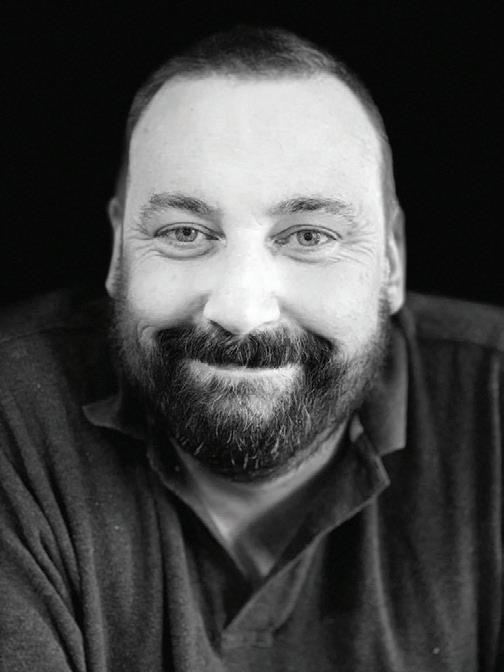
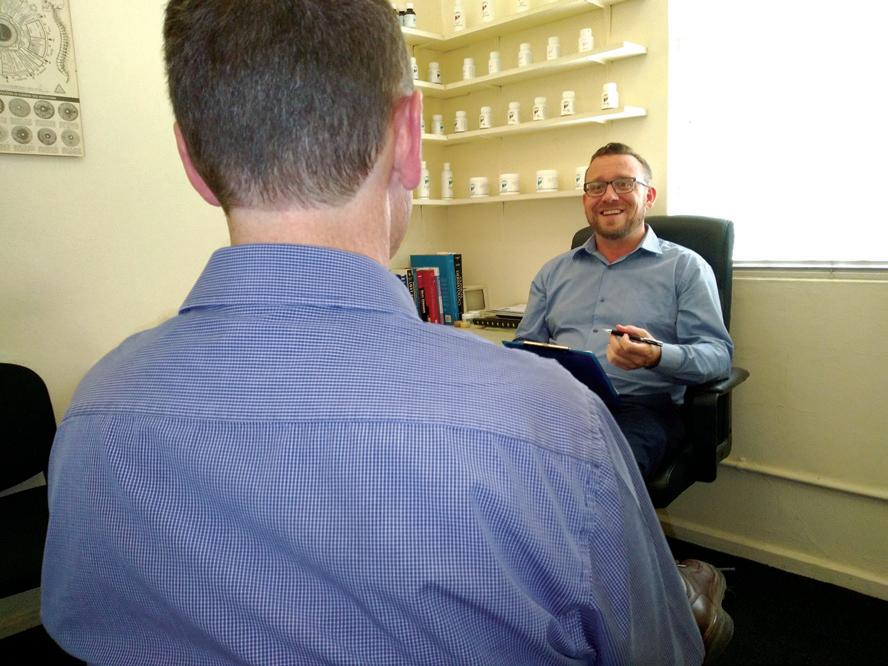
A CANBERRA man who experienced terrible bullying as a child has written a book based on his life that he hopes will help others.
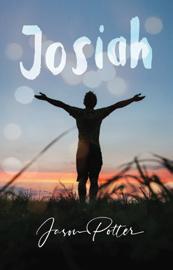
Jason Potter’s book for teenagers and young adults is a coming-of-age story that introduces readers to Josiah, an adventurous boy trying to navigate life and find his place in the world after being severely bullied at school.
“Josiah” is based on Mr Potter’s own childhood experiences of being bullied at schools, mainly in Victoria, during the ‘80s.
In one particularly cruel incident, an 11-year-old Jason was beaten up by teammates after school cricket practise.
“They attacked me physically on my way home from cricket, ” Mr Potter, 48, says. “I had a bloody nose and severe bruises all over me.”
Mr Potter, now a school chaplain, says much of his childhood was spent on the move, settling
violence at school,” Mr Potter says.
“We moved around a lot as kids and I went to six different primary schools and two high schools in SA, Victoria and the ACT.”
The first-time author hopes his book will help other young people, particularly boys, going through similar experiences.
“For the person who is being bullied it can be an entire season of life where they feel anxious and worried every day and at the forefront of their minds they are constantly wondering what is going to happen to them,” Mr Potter says.
“In reading the book, I hope that people who have been bullied can resonate with Josiah, in the sense of feeling powerless, but also find hope that they can experience healing.”
But today bullying continues behind closed doors and well beyond school hours through the use of social media, he says.
“Nowadays you don’t get relief from bullying when you go home because it follows you on social media,” Mr Potter says.
He argues that bullies are becoming less accountable for their actions because it’s harder to prove bullying online.
“Using Snapchat, a child can bully another child by sending messages that disappear so a child can’t show the messages to parents or teachers. All a bully needs to do is deny what they have done, which means it’s one person’s word against another.”
But Mr Potter says more work is being done in schools to help people cope with bullying and to call it out.
“Physical bullying has diminished in schools to a certain extent because we are much better at identifying it in schools than we used to be and we have a much better system to deal with physical violence,” he says.
encounters on his journey.
“In a sense it’s a redemption story,” he says.
“It tells the story of a boy who is anxious, struggles to make friends and is powerless, but by the end of the book when Josiah is older he seeks to make a difference in the world.
“Often boys don’t talk about what’s going on in their world, but hopefully boys can see themselves in Josiah or identify with one of the characters and see their own story.”
Mr Potter, a father of four teenagers, began writing the book during last year’s covidinduced lockdown. He says writing the novel has helped his own healing process.
“Writing the book is something I’ve wanted to do for a long time and the covid lockdown last year provided a good chance to focus on a project that was positive and had a strong purpose to it,” Potter says.
into new neighbourhoods and schools as his parents pursued work.
The constant moving contributed to the challenges of
Since 1993: Volume 27, Number 42
Arts & Entertainment 19-21
Canberra Matters 6
Crossword 23
Dining 21
Garden 22
Horoscopes 23
Letters 16-17
News 3-18
Politics 10, 18
Seven Days 4
Streaming 20 Cover: 2CC program director Chris Beckhouse. Photo by Andrew Campbell. Story Page 8.
fitting in and his school years were punctuated by regular bouts of bullying that have had a profound effect on him.
“I suffered a lot of physical
Managing Director: James Anderson, 0404 077605, james@citynews.com.au
Director: Kate Meikle, kate@citynews.com.au
Senior advertising account executives: David Cusack, 0435 380656
Tracey Avery, 0477 939999
Advertising account executives: Damien Klemke, 0439 139001
Tim Spare, 0423 381691
Editor: Ian Meikle, editor@citynews.com.au
Digital news editor: Danielle Nohra, danielle@citynews.com.au
Journalists: Nick Overall, nick@citynews.com.au
Belinda Strahorn, belinda@citynews.com.au;
Arts editor: Helen Musa, helen@citynews.com.au
Production manager: Janet Ewen
Graphic Designer: Douglas Lima
Proof reader: Glenda Anderson
Accounts: accounts@citynews.com.au


When Mr Potter was growing up the only form of bullying was the physical or verbal variety that happened at school and stopped at the front gate.
“What’s grown exponentially is psychological and emotional bullying.”
In the book, Mr Potter chronicles the bullying Josiah experiences, but also the support he
“I’ve spent many years working through the things I experienced as a child so it’s been good for me to get this down on paper.”
“Josiah”, $21.94 or a Kindle version is $11.99, from amazon. com.au or at jasonpotter.com.au

ELEVENSES just aren’t the same now that the chiefs have abandoned the daily hour of doom and gloom.
No more chief minister; affable, charming, supercilious and snarky. No more chief health officer; polite, friendly, earnest and eager to please.
No more smartass social media commentary on the journos trying to do their job at the daily covid-update press conference. Or the insensitive speculation on how many cases today and the colour of the chief’s tie.
Anyone fully employed, fully paid and working from home with their feet on the old pouf will miss one of the truly entertaining highlights of the last nine-week pandemic lockdown, the morning tea – a Nespresso and a couple of Digestives – with les miserables. Better than Netflix some days.
For those from the private sector surviving off the disaster payment glumly sitting through the daily self-congratulatory shoutouts for (fully paid) public servants doing their jobs, it was confronting.
It’s interesting to watch the political survival instinct at play as the pollies start dodging the daily limelight. It’s a harbinger of bad news.
And it’s coming. Chief health officer Dr Kerryn Coleman told us as much saying there will be more cases, but the totality of the numbers will become less important (tell that to troubled Victoria).
As the case numbers inevitably soar, one
heavy lifting on those new normals will be done via faceless press release from ACT Health rather than the crowd-pleasing bully pulpit of the past nine, long weeks.
THERE was an encore performance to allow the Chief Minister to justifiably crow about the ACT becoming the first Australian jurisdiction to reach 80 per cent of its 12+ population to be fully vaccinated. The territory is well on its way to having close to 99 per cent of the eligible

up to 300 people. But they’re luckier than, say, nightclub owners or newspaper publishers. They’ve got a new ACT government Outdoor Activation Taskforce, specially created to support restaurants, cafes and other businesses
to utilise public outdoor spaces near their premises once the lockdown ends.
The almost invisible Business Minister Tara Cheyne, whose government has shamefully failed small business in Canberra, popped up to tell us: “The new taskforce will look for innovative ways to open up outdoor public space for venues, so that we can continue to help business to safely return to hosting customers.”
Continue?
Master Builders CEO Michael Hopkins had the right idea: “The ACT government should allow businesses in any industry to continue to receive support payments if they are suffering a 30 per cent reduction in income as originally announced by the Chief Minister.”
AND while people in NSW wander the streets maskless, we’re still stuck with them indoors and out until October 29. No change
MRS Mayor Nichole Overall, wife of the outgoing, (very) long-serving and highly regarded mayor of the Queanbeyan Palerang Regional Council Tim Overall, has stepped out of the shadows (I’m kidding) and into the political ring to box her way to claiming the NSW vacant state seat of Monaro.
The impending byelection comes after
the surprise resignation of former NSW Deputy Premier and Queanbeyan local John Barilaro
Nichole has been preselected as the Nationals candidate, confirming to me that she joined the party a few months ago (she knew something?) and that she was a country gal and, therefore one supposes, the surprise choice of party was in her DNA. She seems to be all too progressive for the Nats, but maybe that’s the point.
Barilaro has a large personal following that’s fuelled his continuous re-election and the rookie candidate will be doubtless keen to add some of that to the Overall brand’s stardust in Queanbeyan and beyond.
Is this the end of our star columnist, or will the gentler pace of the back bench on Macquarie Street allow her to scribble out the odd “Yesterdays” opus during Question Time? I fear the nays will have it, Nichole.
Ian Meikle is the editor of “CityNews” and can be heard on the “CityNews Sunday Roast” news and interview program, 2CC, 9am-noon.

Martha Graham

By Belinda Strahorn
WHILE most people her age are still figuring out what they want to do in life, Ebony Gagel is already building an empire.
The 17-year-old Queanbeyan teen, who has her own cupcake business, never imagined her side passion of baking and decorating cakes would turn into a bustling business.
“From the age of 13 I started cake decorating and over the years I’ve developed my own style and technique,” Ebony said.
many residents stocked up with the sweetest of treats during the lockdown weeks.
“It’s been crazy, I’ve baked thousands of cupcakes,” she said.
“I usually sell at markets but since covid business has been all online.”
Once the pandemic hit, Ebony noticed a dip in business, but then things picked up again.
She said she’s noticed that even if people can’t have big gatherings, they are excited to indulge a little on their own.
“I’ve been doing lockdown cupcake boxes and I deliver them all around Queanbeyan, my biggest week was 25 cupcake boxes, that was huge,”

“I just love seeing people


Before we can do the thing we want to do, there’s something we all need to do fi rst.
Book your COVID-19 vaccination. Visit Australia.gov.au or call 1800 020 080.







IN response to my September 8 column on how the ACT Greens have turned their backs on biodiversity, a question popped up asking: “You’re a consistent opponent of higher-density development. Do you not think that urban sprawl is bad for the climate?”
The question is an example of a straw-man fallacy. The original issues are universalised, distorted and exaggerated and replaced with this fallacy argument that is then refuted by those who wish to avoid debating the real issues. Advocates for better urban environments have to constantly deal with straw-man fallacies.
Most residents accept that there will be intensification of Canberra’s established suburbs. The contentious point is how this could happen. What is being questioned is the laissez faire approach to planning and development by the ACT Greens and Labor. As it has been a long time since there has been an ACT Liberal government, residents have little awareness what difference they would make.
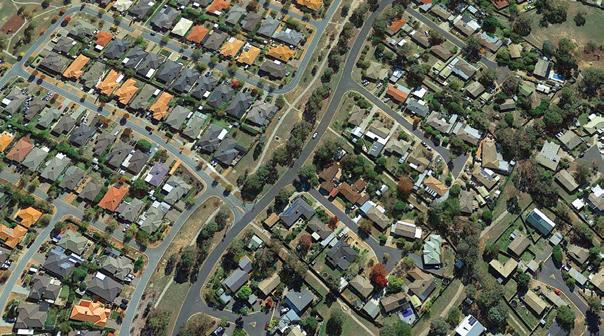
More than a decade ago, a researcher at Griffith University, Queensland, published a study on the disappearance of the Australian backyard that included a special mention of how things had changed in Canberra’s planning and development. Points were made using an aerial view of Charnwood.
On one side was the earlier more
The style and design of towers in Canberra suit developers, but the majority don’t deliver a high enough quality of life. Nor are they designed to effectively deal with the coming climate crisis.
established planned suburb with an abundance of shrubbery and houses with ample private open spaces –gardens etcetera.
Whereas the other side illustrated the change. The houses are on smaller blocks, less room for front and backyard activities, and little chance of there ever being lush greenery and shade.
Pictured is a 2021 version of the same and shows how, after 20-plus years, the limited shrubbery to the left has matured as much as possible. The comparison with more established inner-Canberra suburbs is stark.
In the most recent Gungahlin suburbs, houses are usually larger again and are crammed together even more. They are heat islands waiting to happen.
What is not addressed in the Griffith research is that in the last decades the ACT Greens and Labor have enabled
an explosion of apartment towers. The argument being that to avoid urban sprawl, 70 per cent of new homes must be in the current city footprint and somehow the logic is that these must be apartment towers.
There is plenty of evidence that the current number, style and design of towers in Canberra suit developers, but the majority do not deliver a high enough quality of life. Nor are they designed to effectively deal with the coming climate crisis. Intensification is not about jamming bland and badly designed apartment towers into the town centres and along main avenues.
Survey after survey state that suburban blocks with stand-alone houses or small groups of townhouses or medium-size apartment blocks remain the preferred mode of living
and they do not need to be crammed together with no chance of greenery and shade trees.
If the ACT Greens were interested in dealing with the climate emergency, then all the elements and complexities of good urban design would be a top priority. Instead, they have cherry-picked a couple of the issues and have largely gone missing when it comes to insisting that planning requirements deliver liveable suburbs that are going to efficiently mitigate the dramatic climate effects over the next decades.
Any house built recently should
have already been designed to be passive and should have ample greenery and generous shade cover. While the newer Charnwood houses may one day be partly retro-fitted as the climate dramatically changes, those of the newer Gungahlin suburbs stand little chance of being retro-fitted. Residents optimistically aspire to have a government that works with them to bring about intensification that meets future requirements as well as delivers amenities at least equivalent to what used to be provided.
The Canberra of the 1970s is gone but many of the former benefits remain. Suburbs should be upgraded and maintained as the city infills with welldesigned, climate-ready, human-scale housing and adaptable landscapes with increased biodiversity.
Paul Costigan is an independent commentator and consultant on the visual arts, photography, urban design, environmental is sues and everyday matters.


Dr Omar Gailani offers treatment for


Gynecological


A referral is necessary for an appointment with Dr Gailani
Canberra Urology and Gynaecology Centre | P 6285 1813 E reception@omargailani.com.au | W omargailani.com.au Suite 2, Level 2, Equinox 1, 70 Kent Street, Deakin ACT
The MonaLisa Touch is a comfortable, nonhormonal, minimally invasive and painless 5-minute treatment with zero downtime
Creating longer-lasting relief, the MonaLisa Touch is for women experiencing vaginal itching/burning, vaginal dryness, loss of lubrication, vaginal laxity, incontinence symptoms, or painful sexual intercourse.
Key benefits of The MonaLisa Touch:
Low risk – suitable for most women
Achieves long lasting improvements
Immediate return to normal daily activities
Suitable for women who are not able to undergo hormone replacement therapy eg. Breast Cancer Patients
High success rates after treatment
Minimal maintenance after initial procedure

Dr Omar Gailani

By Belinda STRAHORN
THE idea of holding swimsuit contests today would raise eyebrows, but there was a time when they formed an important part of the Australian summer.
“Bathing beauty” and “bikini parades”, where bathing belles would pose on stage in bathing suits, were popular events staged in Canberra and the region in the aftermath of World War II.
Although the contests went out of fashion some time ago, amateur Queanbeyan historian Phill Hawke says the events provided an opportunity for community groups to raise money for various projects.
Delving into the history of swimsuit contests in the capital, Mr Hawke says the bathing-beauty contest was the highlight of the Canberra Legacy carnival held each year on Australia Day at Cotter Dam from 1948.
In 1949 some 4000 people attended the carnival with Miss Pauline McGarth, of Reid, winning first place in a field of four competitors.
“Eighteen buses and hundreds of cars descended on the reserve for the carnival, which featured a fishing competition, chocolate wheels, hoopla,
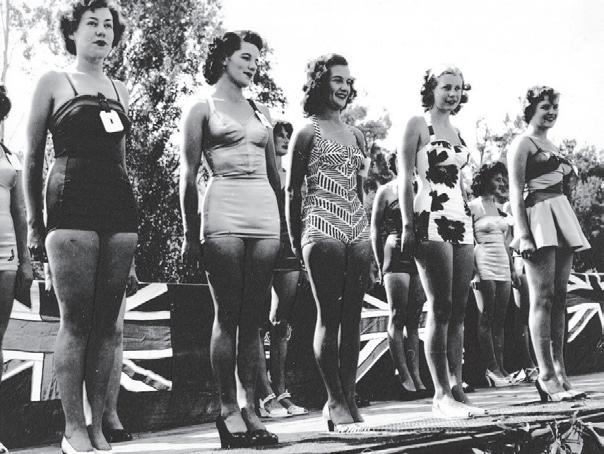
The carnival grew bigger in 1950, Mr Hawke says, with crowds of up to 6000 people. Queanbeyan Legacy Club joined in to help with the running of the event and three entrants from Queanbeyan, each sponsored by local businesses, joined the pageant line up.
It was Canberra Chamber of Commerce nominee Moya Johnson who took the crown and won £20 [$40] and a trip to Sydney with Queanbeyan’s Merle Munns placing second and winning £5 and five shillings [$10.50].
“The carnival raised £1375 [$2750] for the two Legacy clubs that year,”
Twenty-three bathing beauty entrants were on show in 1951 with five police officers stationed at the event to “control the crowds”.
Eight-thousand people attended and 23 buses were hired to shift people from the city to the Cotter and back.
A 17-year old Patricia Munns, from Queanbeyan, won Legacy’s bathing beauty contest in 1952.
Now in her 80s Ms Munns, whose married name is Patricia Walker, looks back on the event with fond memories.
The Brisbane grandmother can
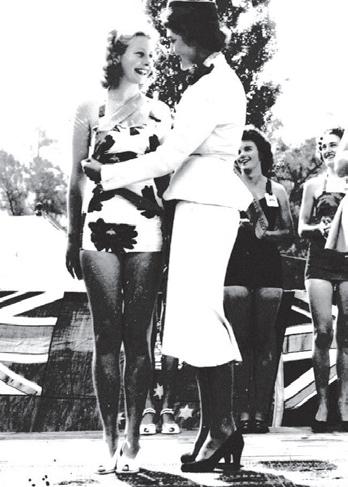
who ran a hardware store in Quean beyan,” Ms Walker says.
“He bought me a bathing suit and sponsored me for the event.
“One of the judges on the day had been a former Miss Australia and the swimsuit I got was a Cole of California sold only by JB Youngs in their Canberra store. It was a wonderful event.
A few weeks later I got a cheque in the mail for £21 [$42] for winning.”
The bathing beauty pageant was a
family affair for the Munns family with Ms Walker’s older sister, Merle Munns, entering the competition in 1950 and placing second.
In 1953, the Legacy carnival moved to the Queanbeyan Showground to reduce the costs of bus transport.
“Twenty-one entrants took part in the contest, with all but four participants from Queanbeyan,” Mr Hawke says.
“Patricia Adams was crowned the winner after entering the competition for three years and coming second in 1952 and third in 1950.
“She received £30 [$60] and £20 in cosmetics.”
In 1954, due to the time and effort required to stage the event, and a fall in profits, Legacy abandoned the bathingbeauty contests.
But in the mid 1960s the Queanbeyan Floral Festival added a Miss Queanbeyan bikini parade to its swimmingcarnival program.
“The festival featured a Queen contest and a Charity Queen for the highest fundraiser with Joan Hudson crowned the winner in 1965,” says Mr Hawke.
“Then in 1966, 27 females entered the Floral Festival bikini competition with schoolteacher Barbara Reid taking the trophy.
“There’s no way a bathing beauty contest or bikini parade would be held today, it’s just not politically correct, but back then they were a big part of the Australian landscape.”


Des Moore
Principal and Solictor
Family & relationship law, by agreement or litigation if necessary:
Matrimonial and De-Facto property settlements
Care and parenting arrangements for children
Binding financial agreements
Kerry White
Family Law Special Counsel
Over 20 years’ experience in Family Law
Dispute Resolution
Family Law Mediator
Laura Dowling
Family Law Associate
Masters in Applied Family Law
Property Settlements and Complex Parenting Matters
Our team would be pleased to help you with your family law needs

By Nick OVERALL

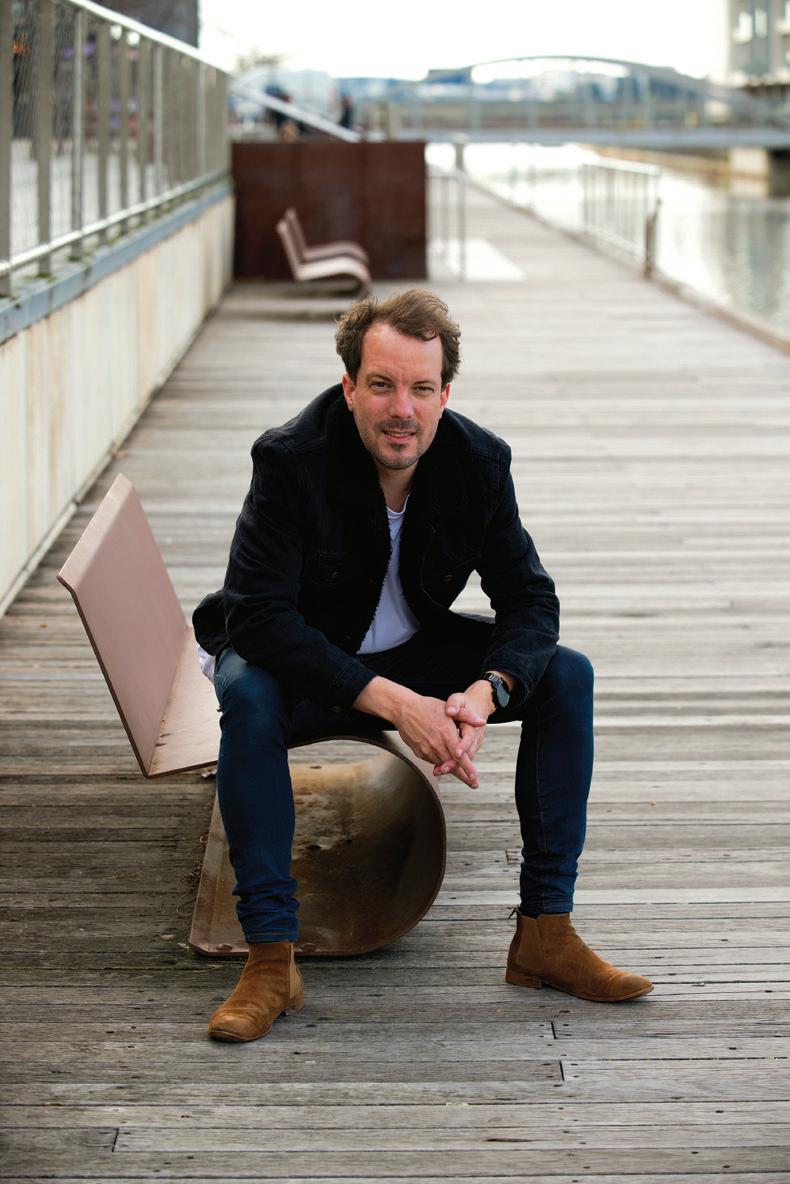
CHRIS “Becko” Beckhouse’s radio career has seen him interview the Rolling Stones, help shape comedy duo Hamish and Andy and play tunes in five capital cities across Australia.
But now, as 2CA’s new program director and announcer, he’s making a return to the airwaves of his home town.
“It’s so good to be back,” says Chris, who’s been on air in the capital since August 30.
“I grew up here and I did my first stint on radio here at 2CA and 2CC for work experience after finishing year 12, so it’s kind of surreal to come home as an adult and as the program director.”
Chris was born into the hard-rock resurgence of the ‘80s, growing up with Bon Jovi, Def Leppard and Phil Collins ringing in his ears.
After growing a passion for radio towards the end of high school, Chris snagged his first
community radio gig with QBN FM.
“I grew up listening to people like Ugly Phil doing the Hot 30 countdown and a guy named Stan Zemanek, who did nights on 2CC, and he was a real entertainer, a real showman and they were part of me wanting to be in radio,” he says.
Chris, sort of bravely, sort of stupidly, as he describes it, introduced himself to the manager of 2CA at a party in Civic when he was still a highschooler, who told him to come and do work experience after he had finished year 12.
“I still remember my first day,” says Chris.
“It was stinking hot, the air conditioner was broken in the old building in 1997 and the DJs that pre-recorded their shows needed someone to sit in the studio and record the news coming down the line via satellite.
“I worked out what button did what, recorded the news and put it on air and I remember calling my dad saying: ‘Check this out, this is the news!’
“It was incredibly exciting.”
Hooked, Chris would soon be reading cricket-score updates from Manuka Oval that went
they grew up with, or that their parents grew up with, and I’m finding that a lot of fun.
“At Triple M I got to play a lot of classic rock, a lot of those incredible bands like Creedence or the Doors or Genesis and I think I can take a lot of that into 2CA.
“One thing I am really appreciating at the moment is the great disco songs of the ‘70s and ‘80s. There are so many great pop songs I haven’t played on the radio in probably two decades.”
As a live music photographer as well, Chris also says he can’t wait for Canberra’s “lively” gig scene to get back into swing when covid restrictions ease.
“I think we’re really yearning for a concert or two and once covid is over there’s going to be a lot happening in Canberra,” he says.
“It will be interesting how we look back on these years and the music we’re listening to during lockdown. Will people shudder like when you hear a break-up song or will they look back on it and have a good feeling about it?”

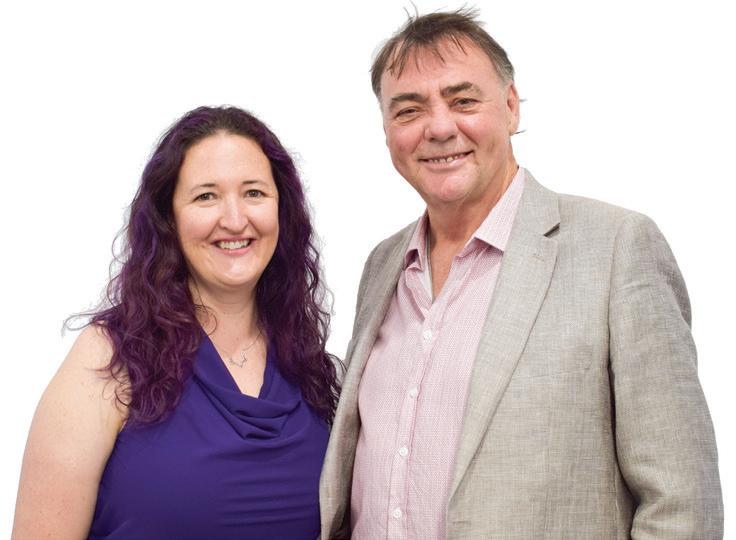

received a spontaneous call to meet and interview the Rolling Stones, his favourite band.
“It was surreal sitting opposite Keith Richards and Charlie Watts, who sadly passed away just a few weeks ago,” he says.
“I got to talk to them about music, and the blues, and their influences.
excited to bring his experi ence from around the country back to Canberra’s oldest commercial radio station.
“The great thing about 2CA’s ‘Forever Classic’ format is that it’s all very upbeat, very uplifting music,” says Chris.
“I think at the moment people are getting very nostalgic and rediscovering old music

Right now though, Chris believes local radio has never been more important.
“People are lonely and people are worried about the future and so at the moment I think it’s so important to be a friend to the listener,” he says.
“We’re trying to find a balance of news and information along with keeping people happy as well as distracting them with some good music and making them laugh.
“I think that’s the big difference between radio and just having a Spotify playlist. Here we’re all local and we’re 100 per cent committed to being here for locals.”
Chris can be heard on 2CA, 9am-2pm weekdays.
IF things look a little different at citynews.com.au, they are
We have rebuilt the popular website from the ground up to give us a (very) modern digital hub designed to meet the fastnews needs of readers in Canberra and Queanbeyan.
It’s getting rave reviews from our thousands of readers who are driving record daily audience numbers, which is pretty cool.
Advertisers are responding positively to the flexibility and costefficiency of being seen by so many people digitally every single day. And that’s pretty cool, too.
Ian Meikle, editor


HEALTH Minister Rachel StephenSmith has outlined the measures ACT Health has taken to prepare for an anticipated increase in covid cases and hospitalisations.
With the lifting of lockdown restrictions, the minister said a “good stock” of ventilators and an increased capacity of beds were available should they be required.
“Canberra Hospital and Calvary Hospital has dedicated covid wards, we are able to scale up capacity if needed, we have a good stock of ventilators on hand and there are 40 negative pressure rooms across the ACT health system,” she said.
The ACT government had also made significant investment in medihood technology, which increased infection protection between patients and staff, Ms Stephen-Smith said.
The health minister admitted it’s an “uncertain” time, but said the territory’s high vaccination rate should help prevent an increase in hospitalisations and ICU requirements, beyond what’s been planned for.
“Our health system has been planning for this for many months now,” she said.
“We are now able to model likely hospital admissions based on active cases and the anticipated growth in new cases.
“Our staff will be modelling this daily so we are ready for what’s happening today, tomorrow and next week and in the months ahead.”
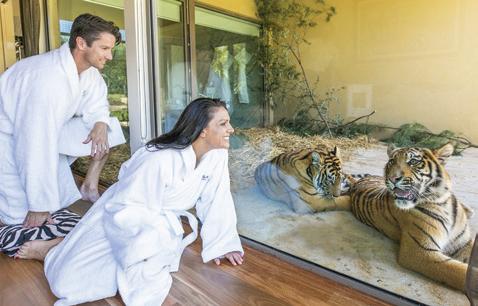
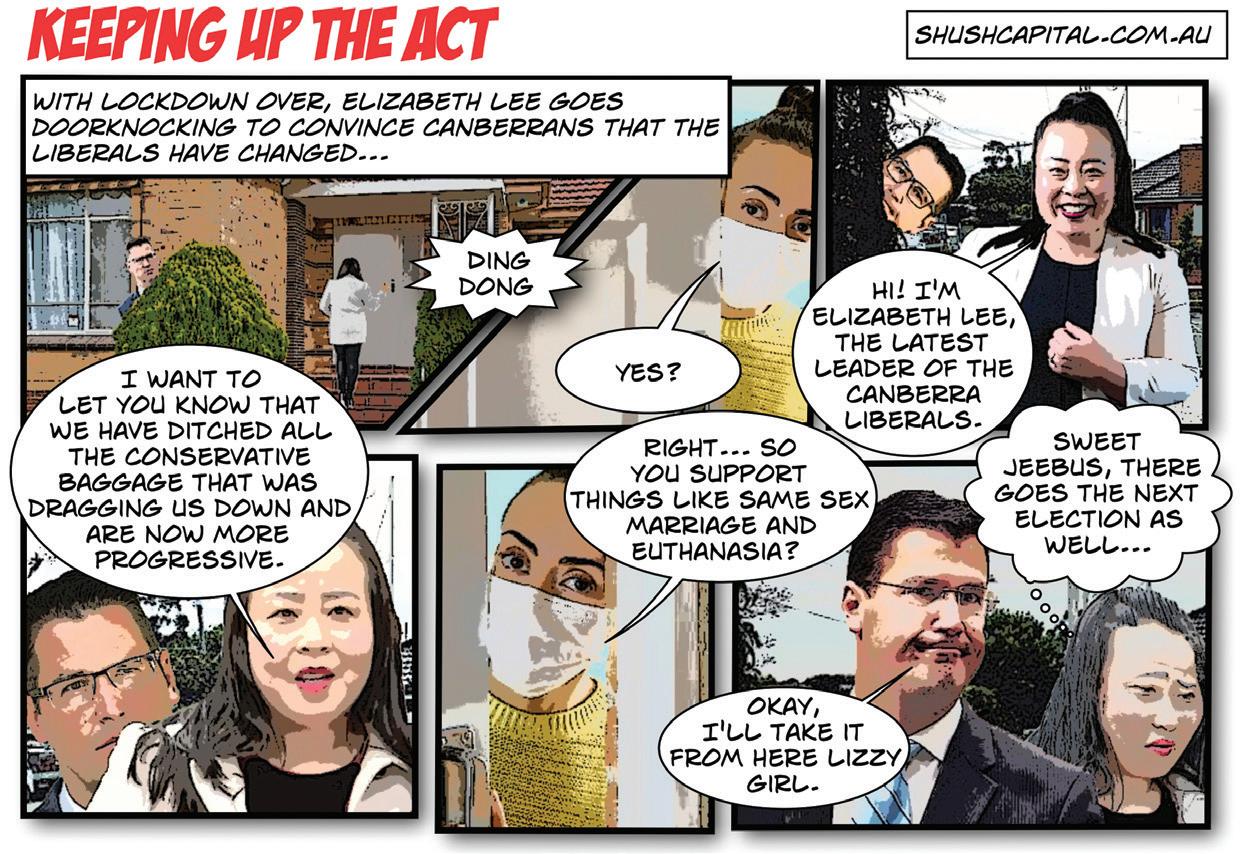
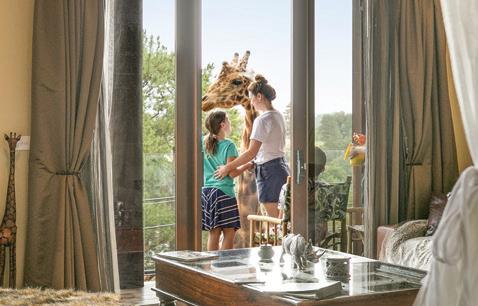
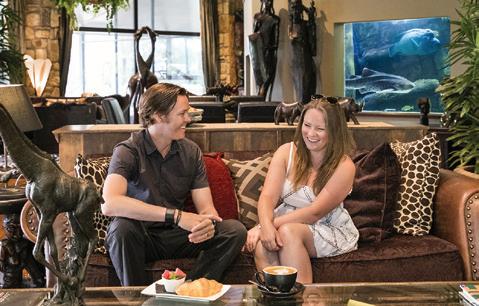
The zoo is still closed to the general public, so hopefully this will be a last chance to stay at Jamala and virtually have the zoo to yourselves. Jamala Wildlife Lodge is an all-inclusive and interactive overnight experience where guests are treated to an exclusive behind the scenes zoo tour. They encounter some of its most popular residents, such as rhinos, lions, tigers, giraffes, monkeys and meerkats for an unprecedented opportunity to connect with and learn about these incredible animals. Truly fine dining with a gourmet African styled dinner and a freshly prepared breakfast completing your stay. During these, you may be visited by some very special visitors which are the perfect complement to this once in a lifetime accommodation adventure.
As we are currently running on reduced staff, we would encourage you to head to our website before


HAVING an ACT Minister fighting for a better deal is excellent. And not just for “Ken Behrens” but for all Australians.
Chris Steel has upped the pressure on all the other transport ministers and on governments around Australia to stop Australia being a “dumping ground” for second-rate cars.
The Transport and City Services Minister pointed out Canberra’s com mitment to “Vision Zero by 2050” in a submission to the federal Joint Select Committee on Road Safety. This approach “means no deaths or serious injuries on our road transport network”. He also identified that part of the challenge is ensuring vehicles sold here meet the highest standards.

To avoid Australia continuing to be a “dumping ground for manufacturers of less-efficient, costly and polluting vehicles,” the government should be adopting the standards Euro VI for heavy vehicles and Euro 6 for light vehicles.
In response, a spokesperson for federal Transport Minister Barnaby Joyce claims that the “government is currently undertaking a review to consider …”. Yes, Minister! Minister Steel pointed out there are currently “thousands of deaths caused by transport pollution every year in Australia that aren’t counted in the national road toll”. Additionally, one figure put the cost of no action to the economy is in the order of $9.2 billion.
Minister Steel pointed out there are currently ‘thousands of deaths caused by transport pollution every year in Australia that aren’t counted in the national road toll’.
The “Safe Systems” approach of the ACT government includes ensuring that dangerous particulates emanating from cars are minimised as quickly as possible. While the federal Transport Minister is reviewing and considering Euro VI and Euro 6 standards – Europe is already preparing to move to Euro VII and Euro 7 by 2025. Failure on the part of Australia to stay in line with these standards simply means Australia gets poorer-quality cars.
A key element for Australia is the need for more-advanced fuels. Joyce, the minister for fossil fuels, needs to act quickly to ensure a reduction in sulphur and other pollutants in our fuels. Modern, lesspolluting cars need appropriate, more refined fuels that are not available in Australia. There is no point for manufacturers to send their up-to-date cars to Australia if the fuels are inappropriate. It is better for them to simply install cheaper, older technology.
Although Minister Steel did not mention electric vehicles in his submission, he did indicate their importance in an interview with the ABC’s Jake Evans. With the number of rooftop solar panels being installed in Canberra – pollution could be seriously reduced with more electric cars being available at a reasonable price. Already Mr Steel has taken action to minimise registration costs on electric vehicles in the ACT. However, there is a big challenge regarding availability
in Australia.
Norway is expecting to have 100 per cent of vehicles sold in that country as hybrid or electric vehicles by early next year. This achievement is in marked contrast to Australia where 6900 fully electric vehicles were sold in 2020. This is less than one per cent of all vehicles sold in that year. And yet, according to surveys conducted by the Electric Vehicle Council, 50 per cent of Australians would consider buying an electric vehicle as their next car.
Mr Steel identified that Australians now have access to 31 electric vehicle models compared to 130 models in the UK. He pointed out that policy inaction at the federal level is seriously disadvantaging Australian consumers.
The sale of electric cars in Europe assists with their mandatory carbon targets that are backed up with heavy fines for car manufacturers. Therefore, it is much more important for them to sell their electric cars in Europe than in Australia. As Prime Minister Scott Morrison works out how to get to net zero by 2050 before the UN COP26 meeting in Glasgow, he might consider such targets. Australian consumers could be the winners. The leadership provided by the ACT Transport Minister is admirable. Some of his state and territory counterparts are already on side. He now needs to lobby the other jurisdictions to increase pressure on the federal Transport Minister and the federal government. The goal is to ensure the least polluting vehicles are available as the transition to 100 per cent electric vehicles, and to net zero emissions by 2050, gets underway.
Michael Moore is a former member of the ACT Legislative Assembly and an independent minister for health. He has been a political column ist with “CityNews” since 2006.
By Robert MACKLIN

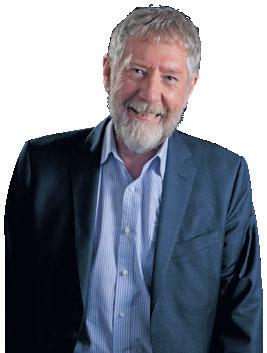
IT’S taken a while to appreciate the full implications of Scott Morrison’s decision to waltz away from the French submarine contract in favour of a quickstep with his “forever partners”, Britain and America.
It was immediately clear that it was a political decision because that’s the only kind that Morrison ever makes. In this case, it served several ends: the $90 billion spend on the 12 French subs was unpopular; and it was a Turnbull decision when Morrison wanted to put his own brand on all big Defence purchases.
The American connection not only fitted his plan to confront China, thereby rousing the racist vote in a country that embraced the White Australia Policy for 90 years.
Throw in the still substantial Anglo-Australian colonial nostalgia and, in the Morrison calculus, that’s a winning formula, especially when it wedged an Opposition that’s afraid of its own shadow.
But when you start to drill down into the realities of the decision, a different picture emerges.
Submarines are said to be useful weapons of war, but to be useful we have to actually go to war. Otherwise it’s just money down the drain. And everyone agrees that the eight American subs will be much more expensive than the French.
But here’s the thing: America regards China as a challenger to its primacy and is more than happy to respond aggressively while France is a major player within the EU, which has a very different attitude. The Europeans would much prefer to incorpo -
Submarines are said to be useful weapons of war, but to be useful we have to actually go to war. Otherwise it’s just money down the drain.
rate China in the big issues of action on climate change and free trade while nudging them firmly towards human rights and diplomatic subtlety.
By contrast, in his quest for a khaki election with China as the enemy, Morrison has raised the ante by permitting his Oxford Boxing Blue predecessor Tony Abbott to enter the ring in the Taiwanese blue corner.
It doesn’t matter a fig that China has 60 submarines with more on order; or that China is our biggest trading partner; or that Australia, the UK and the US all adhere to the One China policy which recognises Taiwan as a province of the People’s Republic.
Then there’s the question of just how “forever” are our “forever partners”. There was a time when Britain famously “ruled the waves”.
Since Brexit they’re on a downward slide to Little England with absolutely no interest in our region or the capacity to influence events – viz Hong Kong.
And they have a clown for a Prime Minister. In America, Joe Biden’s presidency is in trouble; his approval rating is down to 38 per cent; his program is stalled in Congress; and he can’t recall Morrison’s name.
Together they’re the most confused and ineffectual trio since the Lion, the Tin Man and the Scarecrow went dancing down “The Wizard of Oz’s” yellow brick road. No prizes for guessing who’s who.
robert@robertmacklin.com
Luke Clews

HOME is where the heart is (as the famous saying goes), so it makes sense to turn that space into something that the homeowner or renter loves being in. Whether it’s renovating a home to get the best out of a sale, adding some designer furniture, working on the bathroom, kitchen or anything in between, “CityNews” speaks to some of Canberra’s most passionate homeimprovement experts on how to make a place truly “yours”.
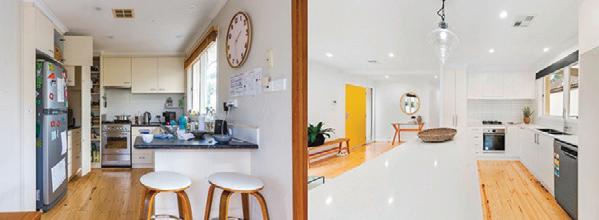
FOR people thinking about selling their home, co-founding director of Your Property Profits Kim Persson says their stress-free home renovations get people the best sale results.
“We can help with all aspects of a renovation with our strategic team of tradespeople, stylists, real estate experts, photographers and more,” she says.
“We know the market and we know what sells. Clients can sit back while we focus on maximising the results for their property.”
Kim says the business is operating as usual at the moment, but they’re also offering flexible options such as Zoom meetings to make sure clients feel comfortable.
She also says that clients don’t need to worry about any up-front cost, as the

renovating team front the cost of clients who then pay after the property has sold.
“We work to budget and timeframe, whether it’s minor repairs or major renovations, all costs are pushed back to settlement,” says Kim.
“We understand people don’t have the time to renovate and want the process to be as quick and easy as possible [which is why we] offer a personally tailored service.
“We can take the keys, organise the cleaning, styling and get it ready for the market.
“It’s so rewarding to help people get the best possible sale.”
Your Property Profits, call 1800 225597, visit yourpropertyprofits.com.au or email hello@ yourpropertyprofits.com.au
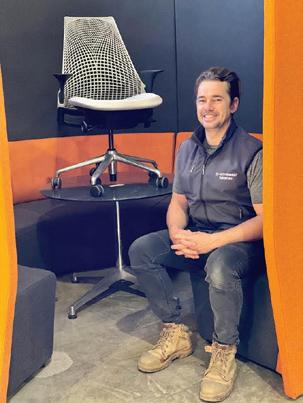
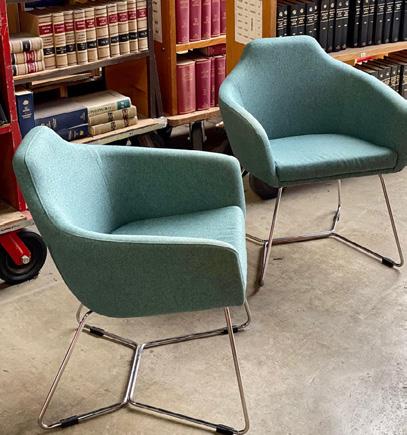
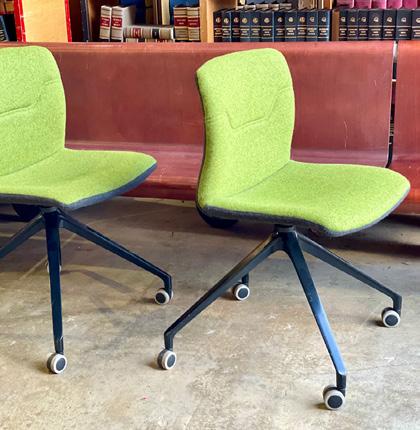
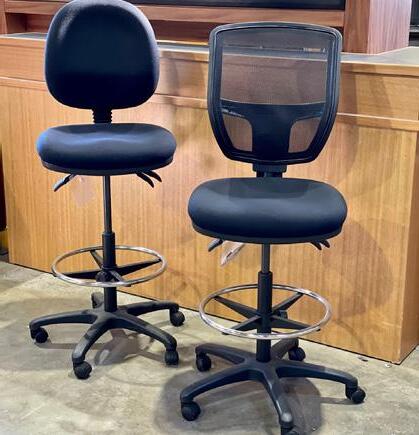
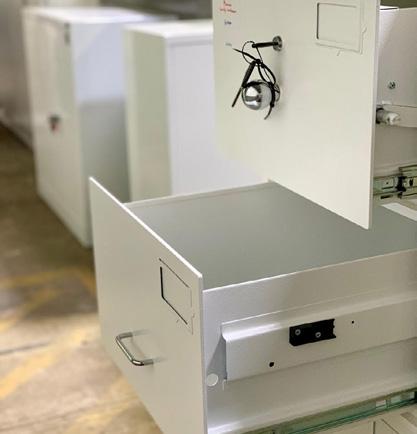
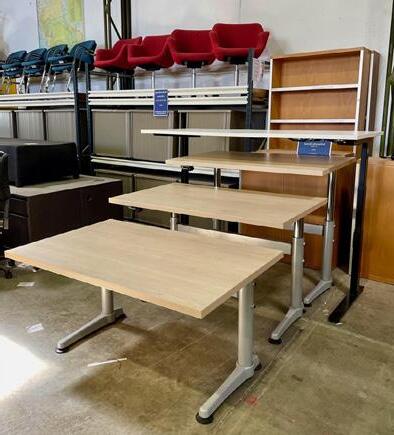
EX-Government Furniture co-owner James Fullerton says they’ve got thousands of new, affordable and quality furniture items in store and it’s got them all the more excited to be re-opening this Friday (October 22).
With one person per four square metres allowed in-store, James recommends calling ahead to make a booking, but there’s more than just one way customers can browse their extensive range.
The team is offering video calls where a customer can be “digitally walked through” the store and can choose the items they would like.
“Just recently we had someone who had moved to Canberra and we decked out the whole house through the video-call service,” says James.
“We gave him a general browse of the store and he chose the items that caught his eye. We did the sale on the phone then he came by to collect right after.”
Whether it’s shopping online or in-store, James says there’s plenty of items that are perfect for the home or office.
“Particularly popular at the moment is a range of manually adjustable sit-stand desks and ergonomic chairs,” says James.
“We’ve got a huge range going all the way from budget items to really nice executive, designer items and everything in between.
“We charge fair prices and are often able to source the best, no-nonsense, quality furniture available. We pride ourselves on our eye for good quality.”
Ex-Government Furniture, 6 Yallourn Street, Fyshwick. Call 6280 6490 or visit exgovfurniture. com or facebook.com/exgovfurniture
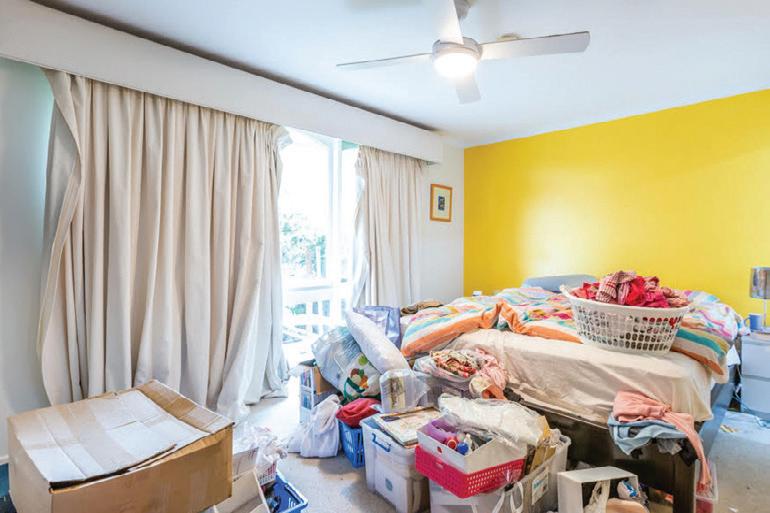
>> BEFORE


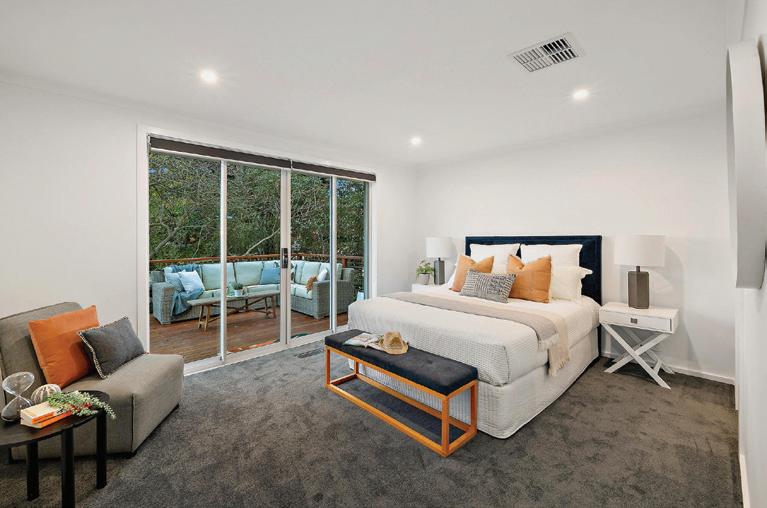
AFTER
We sell your home at the HIGHEST PRICE, in the SHORTEST TIME and with the LEAST INCONVENIENCE with our proven self-funding system.

The land surveyers who have helped Canberra grow
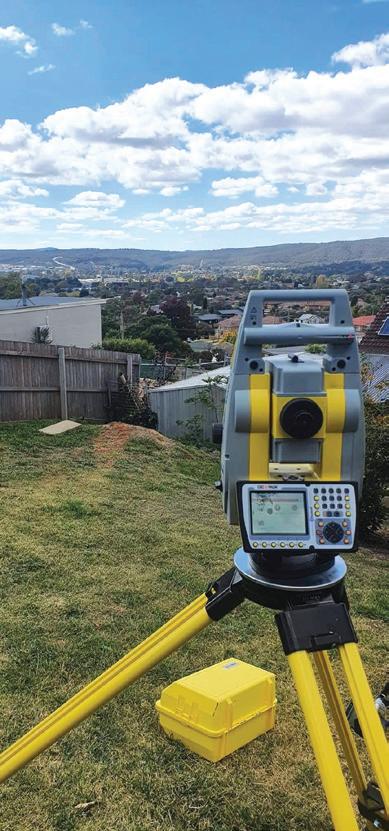
SHAW Surveys is committed to providing professional survey services to not only the general public, but also to government authorities, engineers, developers, solicitors, architects, builders and real estate agents, says director Jim Shaw.
“Part of getting approval from the government to build or extend the home requires an accurate measuring and position of things on the block and that’s where we come in,” says Jim.
“We offer comprehensive surveying services and have expertise in all facets of land and property surveying to make sure you’re not building too high or big.”
Shaw Surveys was first started in 1982 by Jim’s father, Peter, with the business originally called PJ Shaw & Associates.
Over the decades since, Peter says the company has done the subdivisions that created Gordon, Conder, Amaroo, Nicholls, Forde, Palmerston and Jerrabomberra to name a few.
“We’ve seen Canberra grow massively in the last 40 years and I’m really proud to have been a part of that,” says Peter.
“To know that my family is continuing the legacy makes me even more proud.”
Now jointly run by Peter and his children, Jim and Sarah, Shaw Surveys continues to offer their trusted services throughout the ACT and surrounds.
“We work as far as Goulburn, Braidwood, Cooma, Yass and even down the coast on occasions,” says Peter.
Shaw Surveys, 4/10 Kennedy Street, Kingston. Call 6260 7002 or visit pjshawsurveyors.com.au



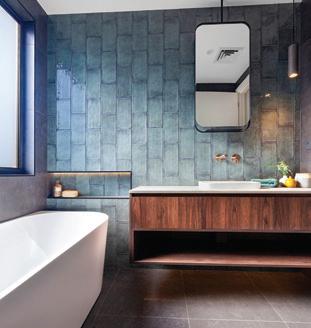
BEING one of the oldest bathroom companies in the region, the community can be confident that The Bathroom Company knows how to do renovations well, says owner Andrew Finn.
Established in 1993, Andrew says they’ve become quite “embedded in Canberra”.
“We’re bricks and mortar and that gives people confidence,” he says.
“Our team are specialists in bathrooms, and sit down with clients to listen to what they want in order to design the bathroom they want.”
Offering a smart, stylish and stress-free experience, Andrew says they can help with all decisions, from colour to tiles and baths.
He also says clients will only have to deal with one staff member who will help them through the whole project.
“We offer a complementary shopping service with our designer to assist in selecting the client’s tiles and bathroom fixtures,” he says.
“We also provide a complementary clean by a professional cleaner as a standard inclusion for every bathroom.”
The Bathroom Company can also custom-make vanities, is available to do stone work and can incorporate modern modicums such as LED shower lighting or full-body showers, says Andrew.
Their designs complement the home, he says, including designs such as art deco.
The Bathroom Company, 7 Murray Crescent, Manuka. Call 0418 628693, email quotes@bathroomcompany.com.au or visit bathroomcompany.com.au








Duck Duck Goose interior design offers beautiful, practical and timeless spaces tailormade for your lifestyle.
0402 054 203 emma@duckduckgoosedesign.com.au
ddg_interior
Duck Duck Goose Design www.duckduckgoosedesign.com.au
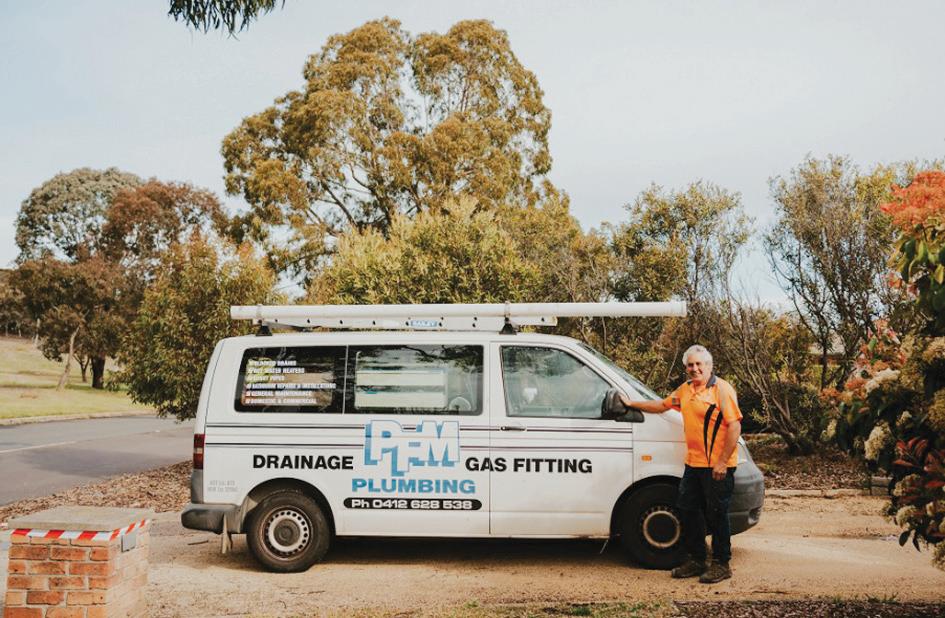
FIRST-founded in 1989, PFM Plumbing has become an established, well-respected, and trusted business by the Canberra community that offers customers reliable service for all types of plumbing, says owner Pat Morella.
“PFM Plumbing is equipped with the right tools to find the cause and correct the issue for blocked drains,” says Pat.


“We specialise in the replacement, installation and maintenance of hot-water services at properties throughout Canberra and the servicing, installation and replacements of gas appliances including hot-water units, cooktops and heaters.
“We also install all manner of appliances like tapware, hot water systems, toilets and more.”
•
•
•
•
•
•
•
•
A licensed plumber and gas fitter, Pat says he prides himself on providing customers with a great experience through his reliability, knowledge and commitment to quality work.
“When tasked with a job you can be assured I will be there working to complete the task from start to finish,” says Pat.
“If required we also have qualified team members to assist.”
Pat says it’s all part of PFM Plumbing’s quality service that they’ve been proudly offering Canberra and the surrounding regions for more than 30 years.
LOCALLY owned and operated (and proud of it!), the family-run Mitchell business, Therma Quilts, has been keeping Canberrans warm since the ‘80s and the team is excited to be reopening on November 1.
Using quality textiles, a Therma Quilts spokeswoman says the seamstresses hand-make every item suited to the customer’s needs and provide a top-up service when quilts and pillows show signs of wear or loss of warmth and fluffiness.
“Servicing of feather and down products is essential for keeping them in optimal condition for comfort,” she says.
“With time and usage, body proteins and lipids (natural oils and perspiration) are absorbed on to quilt casings and into the feather and down inside.
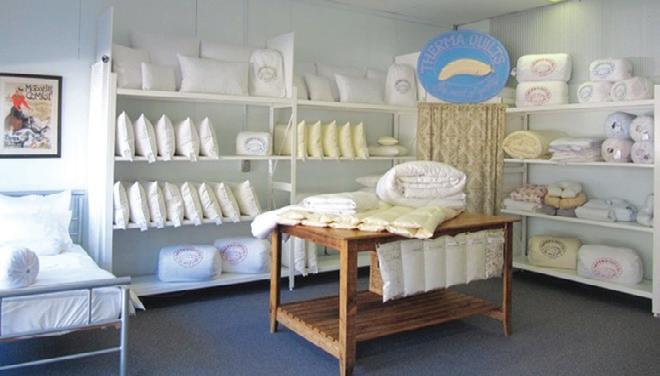
“Over time, this build-up dampens the down, which causes it to lose its thermal resistance. However, regular servicing of your quilts would ensure that your down is fresh and fluffy.
“With time and usage, the fabrics on quilts wear out and get thin, but once holes appear there is no need to throw away your quilt.

•
&
services feather and down products such as sleeping bags and down clothing as well as other textiles such as silk, polyester, cotton and wool quilt underlays.
“Whether you’re wanting to rejuvenate your quilt, customise it or buy a new custom-made one we can look after you,” she says.
Therma Quilts, unit 9, 10-12 Kemble Court, Mitchell. Call 6241 6859 or visit thermaquilts.com.au

• Woollen, silk, polyester and cotton blankets and underlays •

•
OWNER of Duck Duck Goose Design Emma Miles says she’s passionate about improving people’s lives by improving the functionality of their homes.
Leading a team of experienced interior architects and designers, Emma says their team focuses on turning the minor details of homes into major improvements.
“Interior design can sometimes be thought of as just choosing colours or cushions, but it’s much more than that,” says Emma.
“It’s about making the home more liveable and often the small details people might not think of can make such a big difference.”
Emma says she’s particularly interested in “space design”, which helps people to move through their living areas with more ease.
“People often think when they renovate they’re limited to the space they have, but there are ways to make effective use of the space you have so that it’s more functional and more liveable,” she says “We can design around someone’s lifestyle or physical attributes so that their living space is perfect for them.
And, Emma says she’s never afraid to think outside the box to help clients achieve their dream home.
“Of course, we are always happy to offer our advice but ultimately, the client has to love their own space and that’s what we’re driven by – the client’s taste and what they want their home to look like,” she says.
“We work closely with people to make sure they get the results they’re looking for.”
Duck Duck Goose Design, call 0402 054203, visit duckduckgoosedesign.com.au or email emma@duckduckgoosedesign.com.au

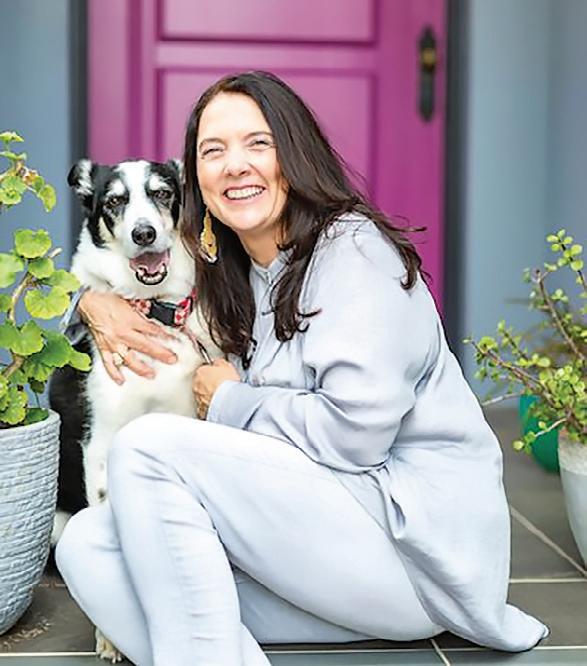
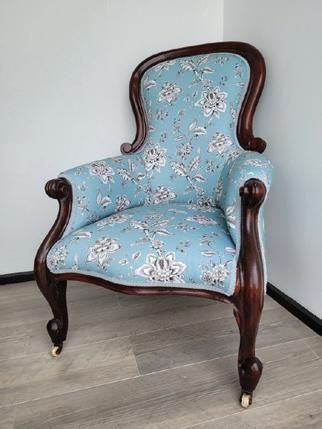
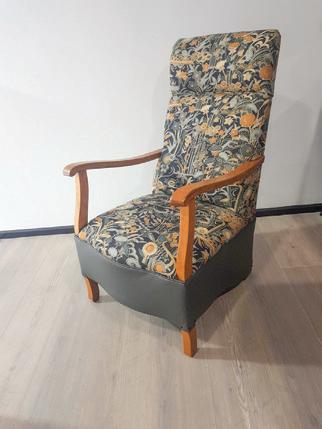
furniture restoration or re-upholstery project, says office manager Robyn Ebsworth.
Robyn operates the business with her husband Mark, a skilled upholsterer with more than 16 years of experience, and together she says they work with designers, timber restorers, metal fabricators and frame makers to deliver attention to detail that’s second to none.
“We often have customers with furniture that once belonged to their grandparents that’s been passed down through generations,” says Robyn.
“When it’s restored for them, there can be a real emotional response. “These heirlooms are often a way to remember loved ones.”
It’s just one of the valued services that Ebsworth Upholstery offers, says Robyn.
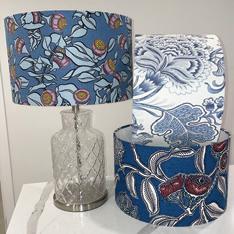
“We’ve got one of the biggest fabric libraries in Canberra that includes soft furnishings, fabrics, upholstery
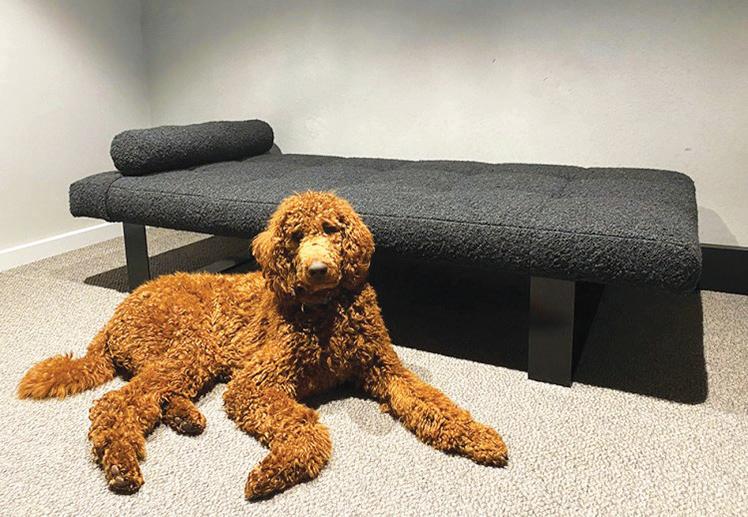
Custom-made daybed by Ebsworth Upholstery.
Choose from our huge selection of fabrics to customise your furnishing to your own personal style.
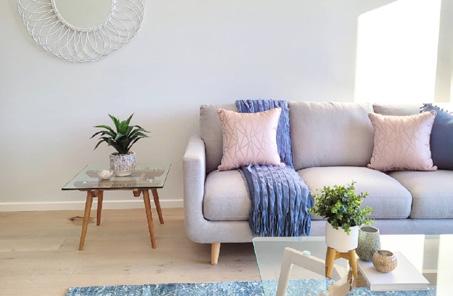
The Art of Frippery offers and eclectic range of soft furnishings ranging from casual in style to luxury designer brands. Many of our products are handmade in our local workshop.


well,” she says.
“We have an interior designer whose services are free that can help you select your fabrics, too.”
They’re also proud to offer custom-made furniture, with the building process all done here in Australia.
“With us, customers can add their own style and flair to their furniture, something you can’t get at the large furniture retailers,” she says.
Under current covid restrictions, customers will have to book an appointment with Ebsworth Upholstery via phone or email, but Robyn and Mark say they’re excited to still be offering their trusted services and to welcome customers in to experience their showroom.
Ebsworth Upholstery, unit 4, 1 Alumina Street, Beard. Call 0434 982708, email mark@ebsworthupholstery.com.au or visit ebsworthupholstery.com.au
Servicing the Canberra and Queanbeyan region, Ebsworth Upholstery can assist you with any furniture restoration or re-upholstery project including repairs, custom made furniture and upholstery for commercial fit outs.
• PICK UP AND DELIVERY
• REUPHOLSTERING AND RESTORATION
• FABRIC SUPPLY AND FURNISHINGS
• MODERN AND TRADITIONAL TECHNIQUES
• DOMESTIC AND COMMERCIAL
• CUSTOM MADE 0434 982 708 ebsworthupholstery.com.au

PURPORTEDLY written by a “trained planning professional”, the article “Stubborn generation that won’t let go of the car” (CN October 7) makes some sense in terms of “car-centric planning of the ‘60s and ‘70s”, but otherwise is idiotic tosh.
Which is probably why he wanted to remain anonymous. He seemed to be suggesting that spending an amount equivalent to the 10 year cost of road trauma in the ACT on Light Rail Stage 2 would miraculously get everyone out of their cars and eliminate the road toll!
How much better to make that investment in greatly enhancing public transport right across the metropolitan area, to increase its attractiveness, convenience and speed over private cars?
I’d strongly suggest he finds another profession or redoes Planning 101, and pays attention this time. Had he read the “Business Case for Light Rail Stage 2A”, he would know there is a table in it that reveals no significant reduction in the amount of “car kilometres” travelled by 2046 due to Light Rail Stage 2.
It is true that us retired public servants have more time to read up on and think about this sort of stuff than younger people still in the workforce. Some of us also have the time to contribute to our local resident groups, with benefits to the whole community. His opening “Almost every argument I hear against investment in mass transit reeks of ignorance and general hostility to change” in itself reeks of his own ignorance and hostility.
I have myself become convinced that Light Rail Stage 2 makes no sense economically, environmentally or socially through extensive reading on the subject. I am a great supporter of investment in mass transit, just not light rail now with much better alternatives becoming available.
As a personal disclaimer, I am a retired senior executive of ACTPLA and maintain an active interest in planning matters. I live in an apartment in the inner south, I use public transport quite often (or did pre-covid) and drive an electric car. I also happen to value the beautiful, established streetscapes of the inner south and do not wish to see them trashed through mindless “urban renewal” when there are plenty of other and more appropriate opportunities for increasing densities.
Richard Johnston, Kingston
CLEARLY, nothing beats the versatility and affordability of electric buses for Canberra’s public transport network as they can use existing bridges and other infrastructure without causing any damage to the environment.
However, the construction of light rail needs a huge amount of funds for cement, rails and overhead electrical wiring etcetera, is very disruptive to traffic, environmentally destructive and will only benefit commuters who live within walking distance to it.
The Gungahlin link has proven to be an exceptionally costly idealistic folly, of no use whatsoever to those who live in that area’s outlying suburbs or in Hall, Belconnen, Watson or Hackett.
It has also proven to be a time-wasting nuisance for those who live in Giralang and Kaleen as they have to get off the bus at Dickson and catch the tram to Civic.
As for the poor souls who live between Dickson and Civic, it was simply tough luck for them in peak hour during pre-COVID-19 times as the trams were usually full and they had to walk to Civic and then catch a bus to Russell Hill, the Parliamentary Triangle and Woden etcetera as all of the bus routes on Northbourne Avenue were cancelled after light rail commenced operating.
If light rail is extended to Woden it will be of no use to those who need to travel to/from the airport, the railway station in Kingston, Canberra Hospital or anywhere in the Fyshwick, Pialligo, Narrabundah, Garran, Weston Creek, Denman Prospect and Tuggeranong Valley areas.
I’ve heard from reliable sources that the huge increases in the ACT’s rates, levies and taxes each and every year are compelling many investors to sell their rental properties and invest elsewhere, thereby worsening the housing crisis for those who can’t afford Canberra’s high rents or buy their own home.
I would like to make the following plea on behalf of Canberra’s over-taxed ratepayers: please, Minister Chris Steel and other lightrail proponents, stop attempting to defend the indefensible! (“The stubborn generation that won’t let go of the car” by “David Jones”, CN October 7).
If you announce that, as a result of recent advances in technology and the huge, adverse impact of COVID-19 on the Budget, the ACT government has decided to introduce a fleet of electric buses instead of extending light rail to Woden, Canberra’s ratepayers will praise you for your common sense and, perhaps, your chances of being voted for at the next election might improve.
Peter Sherman, Aranda
“DAVID Jones” (“The stubborn generation that won’t let go of the car”, CN October 7) displays gold-medal ignorance of Canberra’s housing and transport planning.
He comments favourably on Griffin’s plan of streetcars and terrace dwellings along major roads. While the strategy had merit, it failed to meet the population’s overwhelming preferences for low-density dwellings and the automobile.
Planners following Griffin had to work within these preferences, dominant until about 1990. Until then there was limited demand for higher-density housing even in areas of high accessibility including Civic and the town centres.
The National Capital Development Commission (NCDC) attempted to encourage higher density by the identification of Kingston as a redevelopment area and the development of Swinger Hill as a demonstration medium-density estate.
The Commission in its enthusiasm for higher-density housing occasionally got ahead of the market and had to convert sites identified for higher density to lower-density housing.
To cope with the housing-affordability crisis, “Mr Jones” argues correctly for the building of higher density near mass-transit routes. However, housing strategies also need to respect preferences and the quality and design of housing has to be adequate to address the needs of occupants including

families with children. Unfortunately, this is often not the case. The constraining of detached housing supply in the territory has contributed to house price increases and increased car-dependent development in the region.
He criticises “CityNews” columnist Paul Costigan for suggesting spending on light rail takes away hospital beds. Opposition to light rail is not based on “a general hostility to change” but a reaction to poor policy. He does not acknowledge the opportunity cost of the prioritisation of light rail over other projects. The development of light rail would be acceptable if it had been shown to be a good use of public funds. The opposite is true and it is likely spending on bus rapid transport, improving the frequency and coverage of the bus network and accelerated electrification of the bus fleet would be more cost effective and do more to reduce car use. He also suggests “we need to build mass transit all over this city”, an unachievable aim if based on the extremely costly light rail. Busways have greater scope to achieve this objective.
Car use can be reduced through improved public transport, the direction of employment to locations well served by public transport, reduced parking supply and increased charges but the convenience, flexibility and time savings the car provides means it will remain a key component of any transport strategy.
The increased demand for higher density housing in areas of high accessibility since 1990 demonstrates preferences have changed, a consequence of changing demographics, the inability to direct Commonwealth employment and increased awareness of the environmental and lifestyle benefits provided by higher-density housing.
“David Jones’” ageist, inaccurate and ill-informed rant does little to guide the future development of our city. I find it hard to believe he has a planning qualification.
Mike Quirk, retired ACT strategic planner (40 years) and medium-density resident, Garran
“DAVID Jones” has identified the true costs of the motor car, but failed to offer any convincing alternative (“The stubborn generation that won’t let go of the car”, CN October 7).
“Mass transit all over this city” is a pipe dream, not a realistic plan for our distributed towns. Like most planners, he has failed to foresee the impact of technology, especially the evolution of the car.
It was the car that enabled people around the world to escape from the wretched inner cities of the mid 20th century for green fields and their own space. The NCDC merely responded to this preference, turning Burley Griffin’s grand design into the bush capital that was the envy of the world.
The noted planner Paul Mees advocated a “network planning” approach in which similar service standards are applied across an entire city to create an integrated public transport network that mimics the “go anywhere, anytime” convenience of the car.
While Jones may have correctly identified the real costs of the car, as Mees realised, people will only give it up for something equally convenient. There has never been a realistic plan addressing Mees’ criteria.
The Whitlam era generated a successful spoke-and-hub bus network in Canberra based on frequent direct services from each suburb to its town centre and very frequent express buses between the town-centre hubs. This design was never going to scale to the large urban area and more complex network that is Canberra today.
So, lacking any in-house engineering expertise or vision, advised by a hodgepodge of consultants, persuaded by ideologues who spent too many holidays in European cities, constrained by deals to keep the Labor government in power, and pressured by developers, this unique city is being subject to conventional densification along a light-rail line when blind Freddy can see that busways are far more cost effective and they are adaptable to future technology.
Moreover, the light rail is not rapid transit, and the long time frame for development of the complete network ensures that it will be bypassed by other technology and never completed. But there are more pressing problems and opportunities for the ACT government.
High-rise corridors are the antithesis of the home aspirations of people. Opportunities to flee over the border will become more common and Canberra could be faced with a financial crisis similar to Washington DC a few decades ago.
A significant long-term effect of the covid pandemic will stem from the work-fromhome experience that has happened because
of internet technology. People who live and work on the corridor are likely to be employed in an industry in which they will work from home in the future, so they will put less demand on the light-rail services. This decentralisation dynamic threatens the viability of the Northbourne Avenue precinct.
The federally-funded trackless tram business case study now being conducted in Perth is highly likely to deliver a positive appraisal. Unlike light rail, this type of electric technology offers a realistic option to quickly deploy new mass transit services.
David Jones is only correct in that the urban planning that Canberra needs in today’s circumstances is of a highly distributed nature, something consistent with the bush capital image that is now fast disappearing.
John L Smith, Farrer
IT’S easy to see why the article “The stubborn generation that won’t let go of the car” (CN October 7) was submitted under a pseudonym.
It suggests that opposition to Tram 2A is based on opposition to public transport, while the same edition contains three thoughtful letters that all castigate Tram 2A not because it’s public transport, but because it’s a very inefficient way of providing public transport.
In my case, I am very happy to use public transport from Woden to Civic if my destination is within walking distance of the interchange, or served by a “Civic Circle” bus. I do not see that travelling Woden-Civic by tram, more slowly and with fewer seats and at vastly more community cost is better than the existing bus service, especially if battery-powered buses or rubber-tyred trains were used.
Perhaps “David Jones” is a childless apartment dweller, not conscious that some people need to collect offspring from childcare after work.
I suspect that “David” is a government member or ACT public servant charged with getting tram 2A done regardless of cost-effectiveness.
I would be more impressed if some non-disguised ACT government member, especially from the Greens or indeed anyone other than the responsible Minister, Chris Steel, came out with a rational justification for Stage 2A.
Michael Duffy, Curtin
WITH the prospect in sight of a post-covid future, let’s adopt a positive approach to a better world, if only locally.
Leaving aside any Commonwealth financial expenditure, why can’t the tram, build up our health, education and social welfare sectors (these will provide plenty of construction jobs), encourage small business and send our rapacious big developers to Sydney’s crowded metropolis where they belong.
Allow Canberra to become The Bush Capital again – there’s still time – where all ages can live in comfort free from the “progressive” mania of would-be capitalists and mistake-prone bureaucrats.
Greg Cornwell, Yarralumla
FROM the article “The stubborn generation that won’t let go of the car” (CN October 7), I feel that its author “David Jones” hates cars and wants to live in a small utopian bubble where medium to high-density living and mass transport is the norm with all its associated mental and health risks.
Facing reality is a lot harder. If “Mr Jones” wants to live in such a place, I advise him to go and experience life in places like Hong Kong and if he likes it so much, stay there.
To suggest that it doesn’t matter about the cost of the light-rail project because it equates to the cost of 10 years worth of car crashes is disingenuous. The light-rail project fails because it doesn’t offer a return on investment capital. It doesn’t and can’t provide mass transport to most of Canberra due to terrain and design of suburbs.
The present bus system also doesn’t provide convenient transportation to many Canberrans. It is simpler, easier and more efficient to use your car to achieve your goals rather than waste the whole day, let alone find a car park or walk one or two kilometres to a bus stop.
To lump environmental damage, childhood asthma from pollution, cardiovascular problems from environmental noise pollution all factors in support of the light rail, one wonders where this “Mr Jones” lives, certainly not in Canberra.
“Mr Jones” is avoiding the reality of Canberra today where our health system, as well as other areas, are undermanned and under-staffed and public resources would
be better utilised addressing those needs before “Mr Jones’” medium to high-density utopia redesign of Canberra.
Robert Kerby, via email
IF the author of “The stubborn generation that won’t let go of the car” (CN October 7) will not provide his/her name then how can we be expected to trust them?
The first sentence says “almost every argument I hear against investing in mass transit reeks of ignorance and general hostility to change”. My friends and I are neither ignorant nor reluctant to change but could not see the point in the tram.
Before light rail went ahead, my husband and I were invited to participate in a survey. There were about 20 people in attendance of varying ages, only one was in favour of the light rail going ahead.
For mass transport the need for a tram system was not the only option. If they wanted cars off the road regarding pollution, what was wrong with electric buses?
There are issues here the writer appears to be ignorant of. Most people travelling to the city or Woden are workers. Because they are working, they sometimes need to go out at lunchtime or after work in regard to errands, picking up children after school (or if a child is sick), going to classes or the gym. For this they need their car. This is not ignorance or hostility to change, it is practicality and needs.
Having a light rail system is not flexible. If a tram breaks down, the line is blocked until it is fixed. If we had electric buses and one breaks


down the others could just go around. Whichever way the light rail ends up going (by the standards set by stage one) the traffic chaos around Commonwealth Avenue and the Parliamentary Triangle is going to last many years.
Even if they build a bridge down the middle of the Commonwealth Avenue bridge it will take out parts of the current bridges during construction.
It is a long way around to avoid the chaos, so much for cutting down on pollution. I also object to the possibility of cutting down 100-year-old trees on Commonwealth Avenue if the tram goes that way.
The writer states that the end of an era of the private car is coming. Who are they kidding?
The writer must be living in a dream world.
Vi Evans, MacGregor
AS reported recently, epidemiologist Prof Raywat Deonandan, of University of Western Ontario, has been calling for mandatory COVID-19 vaccination.
When asked by a student journalist what he would say to the 20 per cent or so of polled Ottawa students who complained that the campus’ vaccine requirements are an infringement of the right to free movement his response was: “We already infringe on your movements. You can’t cross the border without a passport. You can’t drive a car without a licence. You can’t ride a bus without a pass. You can’t cross the bloody street unless the light is green. You can’t enter a nightclub unless your ID says you’re over 18. You can’t enter private property… and the university
is private property… unless the owners give you permission.
“Moreover, you can’t inject heroin into your veins because that’s against the public good. You can’t drive your car as fast as you want because that’s against the public good. You can’t defecate on the sidewalk because that’s against the public good. And you can’t come to campus without being vaccinated because that’s against the public good.
“A free society is not an anarchic society. If you don’t want to be vaccinated you have the freedom not to come to campus.”
Anyone still vacillating on vaccination? Make sure you get the one without the microchips.
Paul
Crowhurst, Hawker
IT’S an interesting time when we see people under an unusual situation.
The coronavirus can bring out the best in us and it’s a good time to realise how lucky we are to be residing in Australia.
If we were in Kabul, Syria and many other parts of the world, we could have a good reason to complain and whinge.
Does not our affluent society, generous system and generally stable governments give us reason to be positive?
Please stop complaining about this situation, it was thrust upon us, and make the best of it.
Phillip Frankcombe, O’Connor




THANK you “CityNews” for two heartfelt insights into Cedric Bryant’s life and the significant contribution he made to Canber rans’ gardening hopes and pursuits (“A fond farewell to our beloved Cedric Bryant”, CN October 14). Tomato seedlings can be planted in October now with far less risk, thanks to increased urban heating and climate change, but the rest of Cedric’s advice will no doubt be kept in mind by many as they tend their garden plots and pots across this city for years to come.
Sue Dyer, Downer
MY condolences, I know “CityNews” has lost a dear columnist and friend in Cedric Bryant. I read his column for years and visited his garden, and chatted to him when establishing mine.
Anna Prosser OAM, via email


THE recent report, prepared by the ACT Inspector of Correctional Services into the strip search of an Aboriginal woman in the AMC was, unsurprisingly, the catalyst for a motion of no confidence in Corrections Minister Mick Gentleman.
The motion, moved by shadow minister for Aboriginal Affairs Elizabeth Kikkert, engendered an important debate about the extent to which the human rights of detainees in the prison are increasingly honoured in the breach.
In her speech, Ms Kikkert gave an excellent summation of what our expectations of the AMC should be in respect to the human rights of people in detention and of just how alarmingly short of meeting those expectations we currently fall. Anyone interested in this issue might wish to get hold of the relevant Hansard.
In response to the motion, Minister Gentleman and Deputy Chief Minister Yvette Berry spoke, in the main, about the wonderful staff employed at the prison, and completely ignored the existence of the Aboriginal woman at the centre of what was described, by the Inspector of Correctional Services, as a degrading and traumatising experience. Neither of them acknowledged her existence
nor empathised with her in response to the horrid ordeal she had endured.
They expressed no regret or concern about her treatment or sympathy for the hurt she suffered.
Their attitude to this very serious incident, which struck me as not dissimilar to Scott Morrison’s initial reaction to the Brittany Higgins revelations, was completely at odds with that of their ministerial colleague and Greens leader, Attorney-General
also spoke with genuine compassion and highlighted the need for all of us to remember that at the centre of this controversy is a human being, one of us, a Canberran.
Shane Rattenbury acknowledged the hurt and pain of the Aboriginal woman at the centre of the travesty and tendered, on behalf of the Greens, his regret and sorrow at her treatment.
Shane Rattenbury, who delivered a speech of sensitivity and substance.
Acknowledging his role, and that of his party, as members of the government and hence subjects of the corrections inspector’s damning report, he spoke openly and honestly about the shortcomings exposed in the report and the need for continuing reform in the management of the prison.
Importantly, he acknowledged the hurt and pain of the Aboriginal woman at the centre of the travesty and tendered, on behalf of the Greens, his regret and sorrow at her treatment.
Opposition Leader Elizabeth Lee
To provide some sense of how the debate on the report of this deeply troubling incident unfolded I have extracted a couple of sentences from each of the speakers that I think capture the essence of their respective views and attitudes.
Elizabeth Kikkert: “As we know, this talk of a humanrights compliant prison has just become a way for the Labor-Greens government to push a narrative that they care about vulnerable people. They are preening false feathers.”
“I wish to impress on anyone with a stake in our prison management that this prison is in our city. It is in Canberra. Canberra is our home. Canberrans can be rightfully proud of many aspects of the city. Unfortunately, we have areas where we do not perform well and one of them is the prison.”
She concluded by quoting Gandhi: “The true measure of any society can be found in how it treats its most vulnerable members.”

Mick Gentleman: “Let us be clear this motion is a stunt.”
“I am confident that we are doing a good job and learning from each new hurdle. I thank Corrections staff for their dedication in providing care and support for detainees throughout this time. I am told that over the weekend several staff cancelled leave plans to take on extra shifts.”
Yvette Berry: “Significant work is happening out there to improve the lives of detainees by ensuring that our staff and the officers out at the AMC are properly respected and trained to be able to continue with that work.”
Shane Rattenbury: “The report is difficult and distressing to read. It outlines a traumatic incident involving an Aboriginal female detainee at the AMC.
“I would like to express my concern at both the treatment and the findings in the report and say there is clearly more to do. The report raises a number of issues that require careful consideration by the government”.
“We as a government need to empathise with the individual who was subject to the strip search. Therefore, on behalf of the ACT Greens, I express our sorrow to the
individual. I know this cannot take away the memories or experience, but I hope it can provide some comfort, no matter how small.”
Elizabeth Lee: “Let us think about detainee A. Her name is Julianne. She is not a statistic, Minister. She is a young First Nations’ woman. She is a victim, a survivor of sexual assault. She is a Canberran. She is far from perfect. But who of us is?
“She is someone who needed government support and did not get it. Instead, what she got was another cold, callous, unsympathetic response from this minister. Unlike what this minister has reduced her to, she is not another statistic. She is a human being, just like you and I, and she deserves to be treated with dignity and have her human rights upheld.”
Jon Stanhope was chief minister from 2001 to 2011 and represented Ginninderra for the Labor Party from 1998. He is the only chief minister to have governed with a majority in the Assembly.

By Helen MUSA

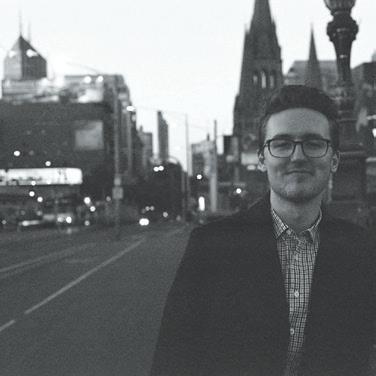
SINCE being given a video camera as a boy, Canberra filmmaker James Hunter has been obsessed with cinema.
A familiar face around the film traps in Canberra for years, he started out with short films such as “School Daze”, which won Best National Film at the Reelife Short Film Festival; “Struggle”, named National Youth Winner at the Canberra Short Film Festival; “Tinman”, selected for the Brisbane International Film Festival and Tropfest, and “The Archive”, a scary film about the famously haunted National Film and Sound Archive.
Now, following its official selection into the Melbourne International Film Festival, his short film, “Nest”, made during lockdown, will have its international premiere in the “Noves Visions” section of the Sitges Film Festival in Spain this month.
“Noves Visions” focuses on films committed to experimentation, but the overall festival is famous for fantasy and horror, and since “Nest” is an Aussie bush story featuring a lyrebird, I wondered how it fitted it in.
I spoke to Hunter by phone to his home in Melbourne, where he and his partner, the film’s producer Faith Guoga, are basking in
the joy of making it into a big international festival while lamenting the fact that they won’t be able to get to Spain.
“Sitges specialises in the fantasy genre and it’s a bush fable with a moral message, a bit of a bushfire yarn – that’s what appealed to the festival,” he says.
“I can’t believe the timing,” he says, “but still we are very excited because Sitges is right up there for filmmakers and we are hoping to get something out of it.”
Hunter and Guoga also have a supernatural feature film, “Unseen”, in the pipeline and the festival will put them in touch with distributors and sales agents.
“It’s supposed to be a great event for mixing and mingling,” he says, “and from a financial standpoint, we could get a return on our investment.”
“‘Unseen’ has been a big focus for the last five years as we developed a story and came up with a 90-page, 90-minute supernatural horror film, like a story you might tell sitting around the family dinner table or around a campfire.”
Hunter is very much a product of Canberra and remembers the support he got here from individuals and through events such as “Lights Canberra Action.”
He even thinks Melbourne is a bit like
Canberra, “full of very grounded people with a love of the arts”.
After leaving the ACT, he first went to Sydney’s now-defunct Metro Screen Film School, located within the Chauvel cinema in Paddington, where students were able to exhibit their films, before moving to Melbourne to make short films and develop features.
It wasn’t easy; one planned feature based on a mystery novel got seed funding from the then ScreenACT and he worked with a script developer in Los Angeles, but it didn’t eventuate probably because it was too ambitious.
His latest feature will be more grounded.
As for “Nest”, scripted by Steve Anthopou -

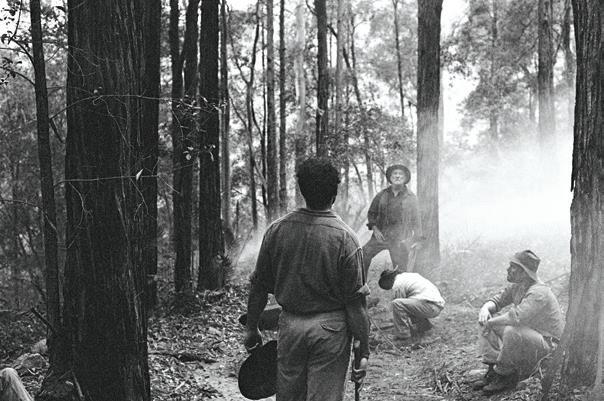
los, it shows an isolated father haunted by his child’s cries of hunger, who takes up work as a timber feller only to be stopped by an alarm ringing from deep in the woods and meets a lone lyrebird. It turns out that the lyrebird can cry like a baby, too.
The father in the film, named with the idea that humans are fouling their own nest, is partly responsible for the destruction of the lyrebird’s nest and he looks at the environment and the commercialisation of the forest industry around him.
It pleases Hunter that recent news features have appeared about the Australian lyrebird’s extraordinary abilities to mimic and that a silhouette of a male lyrebird is the logo of the Australian Film Commission.
Maybe, he thinks, it was the bird itself that appealed to Sitges.
“Some people have asked us whether we were stretching a point in having it located in the fantasy films thing, but Steve [Anthopoulos] and I had been thinking about some of the other great Australian myths and legends and then Steve found this information about the lyrebird and we thought, awesome,” he says.
“It’s in black-and-white and is a 16mm analogue film. I wanted to give it that feeling of something timeless and black-and-white is so beautiful and opens up the more abstract element.”
Sitges may have liked that black-andwhite, too.

AT first glance, Joe Goldberg seems to have it all together. He’s good looking, intelligent, charming and the proud manager of a bookstore in New York.
One small catch, he also happens to be a psychopathic erotomaniac.
Joe’s the “protagonist”, if one can use that word to describe him, of the hit Netflix series “You”, and this month he’s back for a third season.
The first season of “You” dropped viewers into downtown New York with Guinevere, a beautiful, ambitious young woman who, after happening across Joe’s bookstore, catches the eye of the serial stalker.
But unlike what audiences are accustomed to with psychological crime thrillers, it’s not the victim here that the plot follows, nor is it a noirish detective trying to track down the bad guy.
In “You”, the bad guy is the main character and narrates his story with a blow-by-blow rationale explaining his actions and why he does them, and rather disconcertingly, they sometimes almost make sense.
On the outside, he’s Mr Charm, setting up dates and doing all he can to care for Guinevere who quickly becomes besotted with him.
But behind the scenes he’s watching his “true love’s” every move and pulling the strings of their relationship much more closely than she thinks.
It’s Joe’s disturbing and sometimes even

audience gets let in on makes for a great hook, and the show’s tinges of comedy and rapid-fire pacing keep it from collapsing under the weight of its heavy and often frightening premise.
Of course, Joe leans heavily into anti-hero territory and is able to instill a disconcerting amount of sympathy in his audience. In the vein of “Dexter”, he doesn’t hold back on using deadly means to deal with those who hurt his “true loves”.


back from his store as gifts for the young lad to read so as to help him escape a troubled home life.
Having read “Frankenstein”, he comments to Joe: “It’s cool how you get in the monster’s point of view, you understand why he does stuff, almost like it’s justified.”
This is another of Netflix’s most popular shows and the drop of the third season keeps the success rolling while the platform continues to ride the raging success of
material, yet still manage to use its dynamic protagonist to chilling effect.
BUT what about those looking for a love story on the saner side of the fence?
Streaming on Stan is an underrated Irish drama also based on a best-selling book
called “Normal People”, which tells the story of high-school social king Connell and outcast Marianne who try to hold on to a relationship away from the prying eyes of their teenage peers.
Does the premise sound clichéd? Absolutely, but it doesn’t take long for the show to reveal why it’s a standout.
What makes “Normal People” unique is how it manages to maintain a genuine air of authenticity while not sacrificing on entertainment.
That’s certainly aided by the episode’s 30-minute run time, making the show perfect for some easy, evening viewing.
Like its characters, this is a charming, softly spoken story.
It’s not supermodels in the lead roles dishing out juicy drama for the audience. Connell and Marianne feel like people one could have actually met in high school.
Indeed, the show leans into the idea of the romance of two, well, “normal” people but manages to convince that it doesn’t make them any less remarkable.
And if, like me, you’ve just binged another 10 episodes of the madness of Joe Goldberg, a little bit of normalcy is rather therapeutic.

THE opening film in the coming Japanese Film Festival will be “Hokusai”, Hajime Hashimoto’s star-studded biopic about the life of legendary Japanese “ukiyo-e” woodcut artist Katsushika Hokusai. There’ll also be fantasies, thrillers and avant-garde features from contemporary cinema. Palace Electric Cinema and National Film and Sound Archive, October 28-November 2. Book at japanesefilmfestival.net
RACHEL Kent has taken up the position of CEO at Bundanon, on the Shoalhaven. With the launch of the new art museum and bridge for creative learning imminent, chances are we’ll be hearing more of its exhibitions, collection displays, public programs and learning opportunities. As well, the artist-in-residence program will be revitalised for 2022, while the homestead and the Yvonne Boyd studio will reopen before Christmas.

“Hokusai”... opening the Japanese Film Festival.
wright Maura Pierlot has released a book on youth mental health for Mental Health Month. Based on her play, “Fragments”, which premiered at The Street Theatre in 2019, it captures what it’s like to be a teenager in distress as eight young people navigate high school and beyond. For ages 13+.
FINDING a way of keeping the “Come Alive” festival of museum theatre alive has, alas, proved
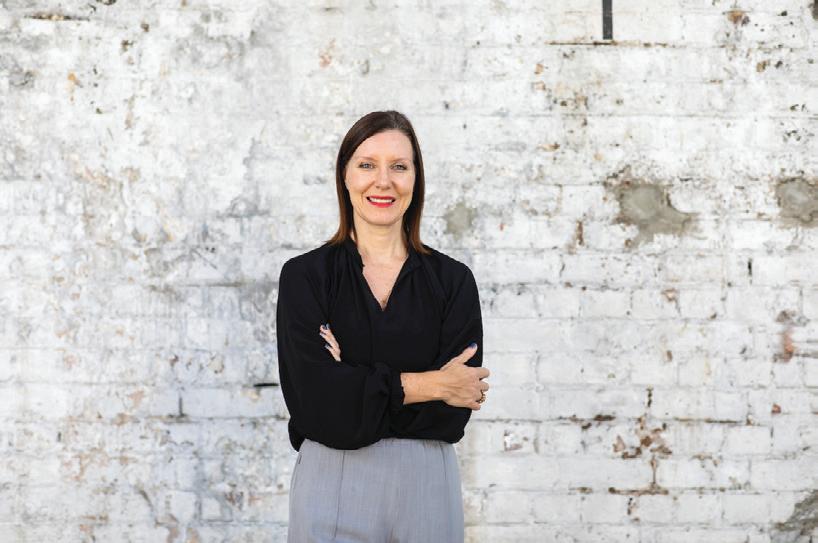
By Helen Musa
ELIZABETH Rogers joined Canberra Glassworks as its new CEO on October 18 after 15 years at the helm of Regional Arts NSW, but she’s no stranger to Canberra.
Indeed, as I found when I caught up with her by phone to, well, Canberra; this is where she’s been, living in a house she built in Wright. This will be the third time she’s lived in Canberra.
A country girl who grew up on a property near Quirindi, Rogers went to school in Armidale before her family moved to Sydney when she was in high school and feels Canberra also has always had a landscape resonant with the same qualities as that of the Liverpool Plains.
“Of course, Sydney is a great place,” she says. “It costs a lot of money to live there and people don’t get around enough.”
As a young wife and mother, she brought her children up in Duffy when you could still go blackberrying, later returning for seven or eight years to run Canberra Arts Marketing before moving to the Sydney Conservatorium of Music and finally to Regional Arts NSW, which, incidentally, doesn’t include Sydney, Newcastle and Wollongong.
She’s happy to be back here, where three of her four children still live and says: “I just think it’s a liveable city and you’re not battling with
noise and traffic – and it’s always had an undervalued arts community.”
Apart from the proximity to national institutions such as the National Gallery and the National Portrait Gallery, she appreciates the town’s diversity, its education system and the accessibility of the arts to the broader community.
“Most kids in Canberra have gone through music studies and it’s an educated audience.”
Rogers is quick to assert that she is new to the world of glass, having in the past worked as a publicist and dogsbody in a small theatre company, as a festival director and most recently as the head of a peak arts organisation.
“Glass is something to which I’m very much looking forward,” she says.
“Of course, there’s always going to be trepidation with a new CEO, but I don’t see that it’s necessary to be an arts practitioner to run an or ganisation… what you do need is to understand the art practice, whether with a glassmaker or a chamber orchestra or small theatre group, it’s the role of the CEO to enable the artists to achieve their goals.”
And with the newly-proclaimed UN International Year of Glass coming up in 2022, there should be plenty of scope for that.
But there’s more than that to keep her busy.
“I think the new Kingston Arts Precinct is very exciting,” she says.
“When I left Canberra, the Glassworks was in its embryonic years and the concept of an arts space on the Kingston Foreshore
“At first, it was a group of talented individuals and gifted amateurs, but now with a stable, well-funded cultural infrastructure, with strong and very diverse organisational
TAKEAWAY / for the last time!
leadership, it meets the needs of the independent organisations in a solid covid challenges.
And what next?
“I’ve been away for 17 years, but I’m back now and I’m not moving again,” she says.
Pre-prepared, this meal makes you the chef
OTIS at Home is all about takeaway, elevated. It’s part of a growing trend in some hospitality quarters, kickstarted by covid.
“CityNews” saw even more restaurants offering cook-at-home dinner experiences during this most recent lockdown.
The idea is that the restaurant does all the shopping, chopping, prepping and packaging. They then provide easy steps for finishing everything off, just like a pro chef. Don’t get me wrong. I’m looking forward to dining in a real restaurant this week, but it’s also been a pleasure to support those in hospitality who braved lockdown by being innovative and staying open to feed us starving Canberrans. But back to Otis at Home.
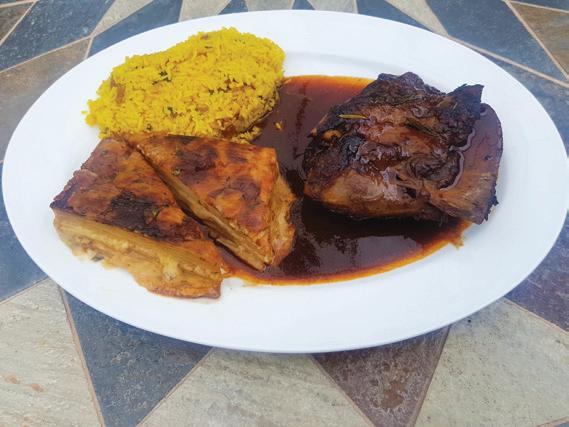
The menu changes weekly and focuses on seasonal, high-quality ingredients. So it’s no surprise, given it’s spring, that lamb was front and centre of our cook-at-home experience.
And stunning lamb it was, from Cowra. The shoulder was slow cooked for 14 hours and arrived with a sexy shiraz jus. All we had to
moist, packed with flavour and fell off the bone.
The menu was Turkish inspired. We began with Turkish flat bread also reheated at 160 degrees. It was accompanied by baba ganoush provided in a round tub. The texture was super smooth and the appetiser super smoky.
The black garlic pressed potato bake ar-
sweetness. However, like the lamb we found the dish slightly salty. Turmeric is such a delightful spice that adds both flavour and a vibrant colour to dishes. Otis at Home delivered a delish service of turmeric rice in a tub. Simply toss in




a pan with one tablespoon of water, stir with a spatula and present as a side.
Also loaded with colour was the Turkish shepherd’s salad, a popular and traditional side dish. Squeeze the fresh lemon over the gorgeous collection of veggies and away you go.
Dessert was decadent and also easy to dish up. Sprinkle the crunchy chocolate crumb on top of the panna cotta in the tub and dig in. Those keen to get fancy can follow Otis’ instructions for turning the dessert on to a pretty plate.
Otis has started a new tradition with the Otis Friday Roast Cook at Home Pack. It’s designed as a grazing session to top off your week, with each celebrating a different culture. Menus can be adjusted to cater for gluten free.
Otis at Home is $150 (for two) and available Friday, Saturday and Sunday. Otis recommends wines to go with meals.






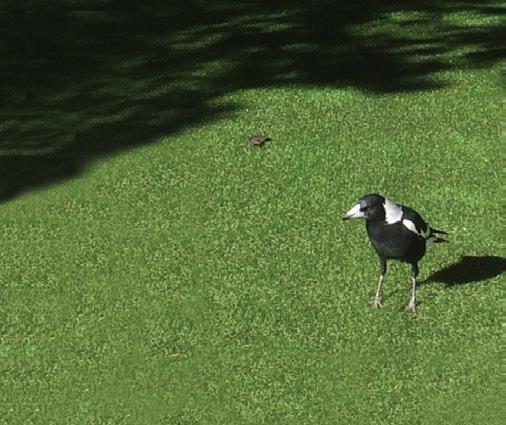

ONE of my all-time favourite natives is the Dicksonia antarctica tree fern. Their fronds uncurl when the weather is warm and grow quite rapidly.
They grow in a shaded side of a garden where not much else grows and in nature as an understory rainforest plant.
There are some really beautiful examples of tree ferns and one of the best examples in Canberra is the Fiona Hall Garden at the National Gallery. Unlike other plants, they can be chopped off at the top and replanted.
Their root system is fibrous and there’s not much of it. They need really good drainage and lots of sand.
Watering tree ferns is done at the top, the crown of the plant. Fertilise with any liquid organic fertilisers and this will give them a burst of growth and will look lush and green for summer.
FOR the first time I am looking forward to my Paulownia tomentosa flowering.
I have read it can take many years to flower and I was doubting myself that I had planted it too close to the chook run and was getting too much nitrogen. Hopefully we don’t get any more frosts from here to see the flowers this year.
FERTILISING with slow-release fertilisers can be done now as they dissolve with warmth and moisture and can last for several months.
There are many general-purpose fertilisers that can be used and remember to use native


fertiliser on natives only.
CITRUS trees can be grown in pots if space is limited. I have citrus in large pots and have lemons, grapefruit, mandarin and limes in large terracotta pots and surprisingly they fruit and grow well on a southern wall in my garden. They grow slower and I am happy with that to keep their size down. Citrus like lots of food and organic pelleted fertiliser is terrific. Feed them now and once more in autumn, and they will grow and flower well. Keep an eye out for black butterflies around citrus trees. They are more than likely the orchard swallowtail butterfly or large citrus butterfly. They are very pretty, but make sure they’re not laying eggs on the citrus leaves. Pick caterpillars off the citrus trees and dispose of them in the bin or squash them.
SOW seeds of tomatoes, capsicums, eggplants (Solanaceae plants) into a good soft propagating mix in punnets ready for planting out in November. Worm-farm castings can also be used as a propagating mix.
For vegetables and herbs already planted in the garden, fertilise with any soluble fertiliser available and it will give a welcome boost to the yield. Using a watering can over the foliage will enable the plants to take up nutrients much quicker. Mulch to preserve water retention and give your tomato
vine some support to climb towards the sun and it should produce fruit right up to autumn.
HELLEBORUS plants are a stalwart of Canberra winter gardens. Pick the flower heads and toss where you want them to self-seed and grow. Helleborus like shade and grow from autumn and die down in the summer. Some of their flowers are really beautiful.
NOW’S the time to clean up the perennial garden of bulb leaves and prepare for summer flowers. Sprinkle some organic fertiliser on the bulbs and this will aid their flowering next year. In the cottage garden I have canna lilies, dahlias, liliums and other summer perennials coming through as the hellebores and bulbs die down for the summer.
THERE will be a glut of insects in the garden this season due to all the rain we’ve had. The overgrown vegetation can cause an abundance of fungal diseases. Make sure there is ventilation and good air flow to help stop fungal and mildew diseases starting and causing damage in the garden.
jackwar@home. netspeed.com.au







By Joanne Madeline Moore
ARIES (Mar 21 – Apr 20)
Promising opportunities are hovering around, and clever Rams will examine all possibilities in a sensible and realistic light. With Jupiter and Saturn both visiting your hopes and wishes zone, it’s important to have an exciting long-term goal that you’re working towards. You need to be patient though, as you focus on bringing your lofty dreams down to earth via a practical plan. Saturday’s Sun/Saturn square will be frustrating, so modify your expectations and pace yourself.
TAURUS (Apr 21 – May 21)
With Venus and Jupiter activating your career zone, find creative ways to inspire others and shine more brightly at work. You’re feeling positive about a challenge but sometimes there’s a fine line between being optimistic and being unrealistic. Wisdom for the week is from birthday great, painter Pablo Picasso (who was born on October 25, 1881): “Our goals can only be reached through the vehicle of a plan, in which we must fervently believe, and upon which we must vigorously act.”
GEMINI (May 22 – June 21)
The Sun and Mars are visiting your wellbeing zone, so be proactive about finding a fitness routine that keeps you motivated. And choose healthy food options that you actually enjoy eating! Attached Twins - are you stuck in a relationship rut? Venus and Jupiter encourage you to be more adventurous with your partner. Unhappily single? Don’t be dazzled by bulging pecs or a substantial bank balance. Look for lasting love with someone who has similar goals and values.
CANCER (June 22 – July 23)
This week’s planetary patterns suggest retiring an outdated friendship so there’s room for a new one. Creativity is high, as you tap into the magical muse within. With Mars and Mercury visiting your domestic zone, strive to be more proactive and communicative about a current family problem. Plus adjust your home/work ratio so it’s much more balanced. Many domestically inclined Crabs are in the mood to clean, de-clutter, decorate, renovate or cook up a storm at Casa Cancer.
LEO (July 24 – Aug 23)
Many Lions will crank up the charisma, as you make family and friends feel extra special. Venus and Jupiter also stimulate your love of the good things in life, as you enjoy convivial company, beautiful surroundings, fine food and stylish fashion. But avoid the tendency to worry and obsess about something that is totally out of your control. Heed the wise words of Mary Engelbreit: “If you don’t like something, change it; if you can’t change it, change the way you think about it.”
VIRGO (Aug 24 – Sept 23)
The Sun/Saturn square could exacerbate problems with a stressed colleague or a neurotic neighbour, as you misunderstand each other’s motives. Make it a priority to communicate your thoughts and feelings in a clear and compassionate way. It’s a suitable week to study financial matters, find something that’s been lost, tackle jobs you’ve previously put on the backburner, and cross tasks off your long to-do list. Family get-togethers and work functions are also favoured.
LIBRA (Sept 24 – Oct 23)
Venus and Jupiter encourage you to contribute more of your time and talent to a worthy cause within your local community. And the planets also prompt you to text, tweet, post or publish your ideas to an appreciative audience. But keep your wits about you and avoid getting side-tracked by unrealistic expectations and dubious dreams. Inspiration for the week is from birthday great, actress Julia Roberts (who was born on October 28, 1967): “Loving what you do is the secret to everything.”
SCORPIO (Oct 24 – Nov 22)
Have you been languishing on the sidelines? This week action-planet Mars joins the Sun in your sign, so sarcasm and sulking are out, and buoyant joie de vivre is in! There’s much to look forward to as you attract good luck, acknowledge a success or celebrate an important milestone. It’s also time to be as proactive and positive as you can manage. So your mantra for the week is from Scorpio birthday great, painter Pablo Picasso: “One must act in painting as in life, directly.”
SAGITTARIUS (Nov 23 – Dec 21)
Are your goals and dreams for the future ambitious enough? Venus and Jupiter encourage ruminating over big-picture ideas. Romantic liaisons are likely and friendships are favoured. But there’s no room for false modesty or passive procrastination as you enjoy talking, texting, posting, promoting, publishing or podcasting. So your motto is from birthday great Katy Perry (who was born on October 25): “If you’re presenting yourself with confidence, you can pull off pretty much anything.”
CAPRICORN (Dec 22 – Jan 20)
With Saturn (your patron planet) and Jupiter both stimulating your wealth zone, tap into the abundance that is all around you – and not just on a financial level. It’s time to combine your outer creativity with your inner strength, so that you shine brightly for all the world to see. Strong self-esteem and self-acceptance are your Capricorn birthright! So your motto for the moment is from entertainer Katy Perry (who turns 37 on October 25): “Self-acceptance is the key to be truly free.”
AQUARIUS (Jan 21 – Feb 19)
Aquarians can expect a rollicking ride, as your motivation levels fluctuate. Is a work colleague or loved one being difficult and demanding? Don’t be too hard on them… they have a lot on their plate. It’s a good week for goals, dreams, financial matters and taking care of business but you’ll feel a bit stir-crazy on the weekend. Try channelling your restless energy into challenging personal projects and adventurous outdoor pursuits, rather than sitting around feeling frustrated.
PISCES (Feb 20 – Mar 20)
When it comes to plans for the future, you’re full of innovative ideas and creative schemes. But can you tell the difference between an inspiring daydream and a dodgy delusion? Realistic Saturn demands that you dig deep and set substantial goals that are worthy of your talents. And strive to get the balance right between being impulsive and taking thoughtful action. Spontaneity works sometimes but, at other times, perceptive Pisceans need to adopt a more measured approach.
Copyright Joanne Madeline Moore
2021
4 Name an alternative term for nevertheless,
8 Name the incorporeal part of man. (6) 9 What is a pyromaniac? (8) 11 What is a narrow strip of land, bordered on both sides by water? (7)
13 Which mythical bird is said to burn itself and rise from its ashes? (7)
15 What is a constituent part of a whole? (7)
17 To breathe, is to do what? (7)
20 Which term describes a permanent cardiac or arterial dilation? (8)
23 What does a wainwright build? (6)
24 Name one of Australia’s monotremes. (8)
25 What are bullocks called? (6)
Down
1 Who directed the films Gallipoli and Dead Poets Society, Peter ...? (4)
2 Which Tuesday is known as Pancake Day? (6)
3 Which acronym describes a cold? (4)
4 Name a renowned NRL team, ... Tigers. (5)
5 Which parts of the legs lie between the hips and the knees? (6)
6 Name another term for goodbye, or farewell. (5)
9 To come into sight, is to do what? (6)
10 Which number is the fourth power of two? (7)
12 What is a coordinated body of methods? (6)
14 To stand in the way of something, is to do what? (6)
16 What describes someone undergoing severe or constant suffering? (6)
18 To be strictly accurate, is to be what? (5)
19 What are coarse forms of files? (5)
21 What is dash, or impetuous ardour? (4)
22 Name the counterfoil of a chequebook. (4)

Maryam said she was looking at her retirement and had discovered she could draw her superannuation out of the fund now so she could use it for future plans. But she wasn't quite right.
“If I am not mistaken, you're 58 and that age is your preservation age – the age that you can take your money out of super provided that you satisfy a condition of release," I told her during our Zoom appointment.
"Under age 60 that condition of release is that you must have permanently retired from the workforce, but you are still working in your business. So you don’t satisfy that condition."
Maryam replied: “Oh dear, that plan's now gone out the window. Is there something else I can do?"
I said we should look at her super statement and see what that told us. "The first thing I notice is that you're paying for death cover, total and permanent disability and income protection insurances. Do you actually need that cover? We should have a good look at that at a later date," I said.
“The next thing I notice, Maryam, is that you have a binding nomination for your two daughters so they each get half of your balance in the fund.
"If you leave your super to a dependant, which includes a spouse and young children, they receive it tax free. As I understand it, your children are both around 30 so they don't satisfy the definition of dependent.
"As your balance is about $400,000 that means that your daughters will have to pay tax of around $68,000 at 17 per cent. That seems a little unnecessary. If instead you leave the money to a surviving spouse then they receive it tax free and they can then gift it to the girls free of tax. Did you get advice about the binding nomination?”
Maryam said she hadn't and believed she could just leave it to her daughters tax free.
“I recommend that you change your beneficiary to your spouse, which will reduce any tax if your spouse predeceases you," I said.
"It may also be possible to do what is called a recontribution strategy. The components of your super are mainly taxable, with about $5000 tax free. The tax-free component does not attract any tax so, until you are 67, you may be able to convert the taxable taxed component into a tax-free component.
"You can withdraw and then recontribute $110,000 a year up to a maximum of $330,000 under age 67. If you can’t do this by the rules of the fund and you are still working after 67 you can still withdraw and recontribute $110,000 a year. This type of contribution is a non-concessional contribution.
"You can also contribute $27,500 as a concessional contribution, which you can salary sacrifice or pay it directly yourself and get a tax deduction if you pay it yourself and a tax reduction of the same amount if you salary sacrifice."
Maryam said she had no idea there were so many potential problems with her super.
If you need help with your superannuation or taxation contact the friendly team at Gail Freeman & Co Pty Ltd on 6295 2844.
Disclaimer
This column contains general advice, please do not rely on it. If you require


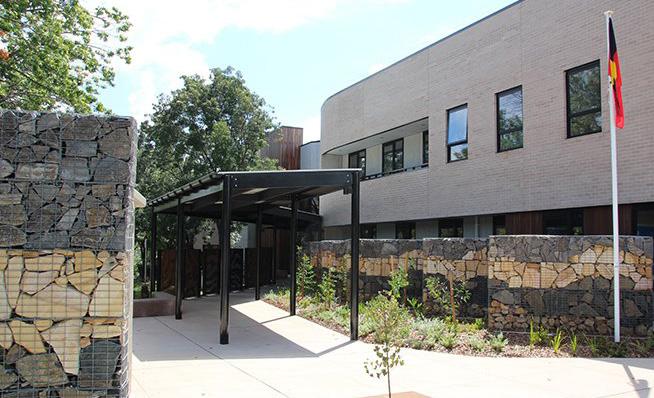
Winnunga Nimmityjah AHCS is an Aboriginal community controlled primary health care service operated by the Aboriginal community of the ACT.
In Wiradjuri language, Winnunga Nimmityjah means Strong Health. The service logo is the Corroboree Frog which is significant to Aboriginal people in the ACT.
Our aim is to provide a culturally safe, holistic health care service for the Aboriginal and Torres Strait Islander people of the ACT and surrounding regions. The holistic health care provided by Winnunga AHCS includes not only medical care, but a range of programs to promote good health and healthy lifestyles.
Our services include:
• GP and Nursing
• Midwifery
• Immunisations
• Health Checks
• Men’s & Women’s Health
• Hearing Health
• Dental
• Physiotherapy
• Podiatry
• Dietician (Nutrition)
• Counselling
• Diabetes Clinic
• Quit Smoking Services / No More Boondah
• Needle Syringe Program
• Mental Health Support
• Healthy Weight Program
• Healthy Cooking Group
• Mums and Bubs Group / Child Health
• Optometry Service
• Psychology and Psychiatrist
• Community Events
• Groups

Winnunga AHCS is a national leader in accreditation, was one of the first Aboriginal community controlled health services to achieve dual accreditation under RACGP and QIC standards. Winnunga AHCS has been at the forefront of setting a national agenda for quality improvement in Aboriginal community controlled health and continues to advocate locally and nationally for best practice standards in operational and governance areas of Aboriginal health services.
CLINIC hours | MONDAY TO FRIDAY 9am-5pm
Ph: 6284 6222 | 63 Boolimba Cres, Narrabundah www.winnunga.org.au