












By Belinda STRAHORN

CANBERRA seniors have expressed anger and disbelief over Sport Australia’s snap decision to stop an exercise class they value.
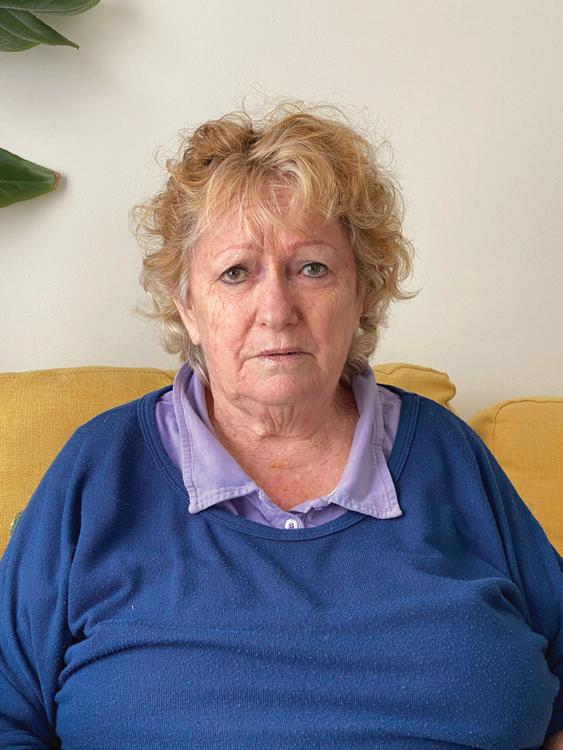
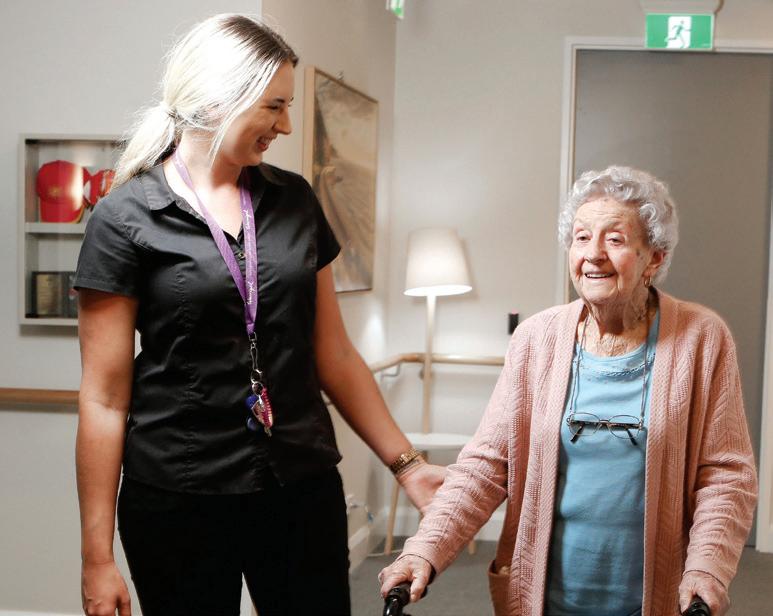
Margaret Woodhams, 76, has been attending aqua aerobics classes at the Australian Institute of Sport (AIS) Fit ness Centre three times a week for 20 years, but learnt by email recently that sessions would not start up again after covid restrictions lifted.
Before covid restrictions, Ms Wood hams who lives in Evatt, says as many as 60 people could attend an aqua aero bic session at one time.
“It’s devastating,” Ms Woodhams says.
“I can’t believe the classes won’t be operating anymore, it’s like slapping someone in the face for something they haven’t done.”
Operated by Sport Australia, the AIS Aquatic and Fitness Centre at Bruce includes a 25-metre and 50-metre pool, a gym and a training pool. The centre also runs a range of fitness classes and programs.
A Sport Australia spokesperson confirmed that the public pool at the AIS will remain open, but the Fitness
impact the gym, personal training sessions, recovery programs, group fitness
Since 1993: Volume 27, Number 39
Arts & Entertainment 19-21
Canberra Matters 8
Crossword 23
Dining 21
Garden 22
Horoscopes 23
Letters 10-11
News 3-18
Politics 6, 17
Seven Days 4
classes and school holiday programs but swimming classes won’t be affected, the spokesperson says, and will resume when permitted.
“The Fitness Centre and programs are no longer commercially viable in an increasingly competitive fitness sector,” the Sport Australia spokesperson
“Members and holiday program participants are being contacted and refunds will be provided for any fees paid and unused from the start of the ACT lockdown.”
Although the Fitness Centre has been closed since the ACT went into lockdown in early August, Ms Woodhams says members feel “neglected” and believe they should have been consulted first.
“No forewarning, no consultation, they [Sport Australia] just made this decision to shut it down without offering alternatives,” Ms Woodhams says.
“The majority of clients using these facilities are aged well into their sixties, and some into their eighties.
“It’s just not fair.”
While some alternatives for classes have been suggested by the AIS, Ms Woodhams says those options are not
“Nowhere in Canberra provides the same level of support and dedication that is provided by the fitness and aqua-aerobics centre at the AIS,” Ms Woodhams says.
Managing Director: James Anderson, 0404 077605, james@citynews.com.au
Streaming 21 Cover: The woes of Woden. Story Pages 13-15.
Director: Kate Meikle, kate@citynews.com.au
Senior advertising account executives: David Cusack, 0435 380656
Tracey Avery, 0477 939999
Advertising account executives: Damien Klemke, 0439 139001
Tim Spare, 0423 381691
Editor: Ian Meikle, editor@citynews.com.au
Digital news editor: Danielle Nohra, danielle@citynews.com.au
Journalists: Nick Overall, nick@citynews.com.au
Belinda Strahorn, belinda@citynews.com.au;
Arts editor: Helen Musa, helen@citynews.com.au
Production manager: Janet Ewen
Graphic Designer: Douglas Lima
Proof reader: Glenda Anderson Accounts: accounts@citynews.com.au
“The aqua-aerobics program, used principally by seniors, focuses not only on fitness but also mobility, flexibility and balance, this is very important for people as they age.”
Ms Woodhams understands that rehabilitation and recovery classes are also set to cease.
The retired teacher-librarian says elderly citizens are about to lose the place that brought them together and kept them fit.
“Something that was there to keep us going and keep us fit has been taken away from us, like a rug has been pulled out from under our feet and we are flat on our backs and we can’t do anything about it,” Ms Woodhams.
“We used to meet after class for coffee, but now we won’t be able to do that.
“Sport Australia is supposed to be about encouraging participation for all Australians, but I feel very let down and disappointed by this decision.”
Ms Woodhams says some Fitness Club members have requested a meeting with Sport Australia in the hope of “turning the decision around” but have had no response to date.
“It’s really devastating.”
A spokesperson for Sport Australia says the Fitness Centre is not used by High Performance Centres of Excellence or by visiting athletes and its closure will have “no impact” on the capabilities of the AIS to support Australia’s High Performance system.
THE ACT lockdown will end at 11.59pm on Thursday, October 14.
With the territory due to hit 80 per cent of the population over the age of 12 fully vaccinated in October – and subject to the public health risk remaining relatively stable – the end to lockdown will trigger a transition to mediumlevel public health measures, says Chief Minister Andrew Barr.
And as the national vaccination average climbs towards 80 per cent in late October, the ACT will continue to gradually reduce the level of public health measures.
“From October 29, subject to public health risk, a number of businesses and activities will move towards more relaxed density and capacity limits,” Mr Barr said.
The requirements for interstate and overseas travel, he says will be considered as the ACT moves through these phases.
But it was important to note that the ability to travel interstate or overseas will be entirely subject to the border decisions of other state and territory governments. International travel would be subject to the federal government.

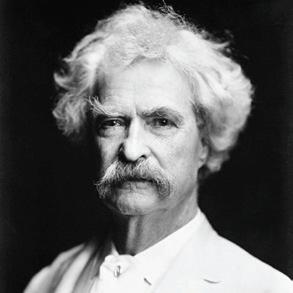
“MARK Twain was undecided whether to be more amused or annoyed when a ‘Journal’ representative informed him today of the report in New York that he was dying in poverty in London.
“The great humorist, while not perhaps very robust, is in the best of health. He said: ‘The report of my death was an exaggeration’.”
That was reportage from the “New York Journal” of May, 1897, and that famous quip of the great American humorist, novelist and social critic still echoes in newspapers today.
Just ask Liberal ACT senator Zed Seselja About this time every time in the federal election cycle reports of his (and the same for his predecessor Gary Humphries) impending political death start circulating.
The latest electoral death rattles started with a survey from the Australia Institute that appeared in “The Canberra Times” this past week.
I’ll get to what Zed thinks about that in a moment, but it’s worth noting that this is the second Australia Institute survey the paper has run in recent days.
The first revealed the tram to Woden was a no-brainer and, oh, millions of people in the ACT supported it. On citynews.com.au “Canberra Matters” columnist Paul Costigan was pilloried for outing the veracity of the survey’s questioning.
“That report on September 19 and the poll it represented were a load of rubbish pretending to be something serious. Very misleading and dangerous stuff,” he harrumphed.
Like Groundhog Day, the other, more recent, poll reported by “The Canberra Times” suggests the ACT Greens have a chance of ousting Senator Seselja when the impending federal election is held.
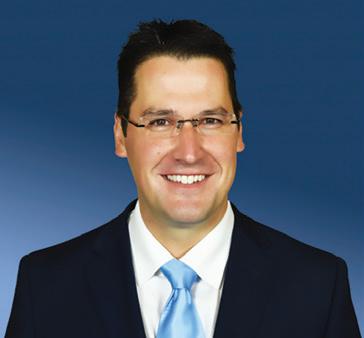
In a personal note to supporters, he outs the Australia Institute as a “left-wing think tank run by a former Greens staff member”.
Then he sinks the slipper: “We have seen this before from the ‘Canberra Times’, where they publish polls put forward by left-wing think tanks, or even the Greens themselves, with the goal of undermining the Liberal campaign in the ACT.
The Australia Institute-commissioned telephone poll across 1057 respondents found that 29 per cent of voters would support Zed, which would have him well short of the 33 per cent quota and relying on preferences. At the last election in 2019, the senator secured 32.38 per cent and relied on preferences.
The poll suggests the Greens would get 21 per cent. Nowhere near a quota.
So, how does Zed feel about the
“During the last term they published a poll from the Greens that underestimated the Liberal vote by 10 per cent.
“While we should take this poll with a healthy grain of salt, we know retaining the Senate seat is always a challenge and unlike our opponents in Labor we never take the seat for granted.”
Unabashedly, he says he’s been working “incredibly hard for the Canberra community” to deliver record infrastructure
spending of $1.8 billion, record health and education investment, individual and small business tax cuts and support for Canberra during the COVID-19 pandemic.
“CityNews” also got up his nose with an open letter last week asking him to try harder to help Canberra’s struggling small businesses, given his position as a Minister in the federal government.
In the argy bargy of his complaint, he gave me an insight into the work he has been doing in pushing the Barr government to support the private sector. His right-of-reply piece is on Page 12.
Polling and exaggerated predictions aside, the senator is not going down without a fight. But if history is to be believed, in all probability, the senator is not going down.
AND back to the Alexander Maconochie Centre, the gift that keeps on giving when it comes to bad news.
Last week readers may recall Corrections Minister Mick Gentleman in the face of a damning report by the ACT inspector of Correctional Services, Neil McAllister, on the shameful, violent strip search earlier this year of a vulnerable Aboriginal woman in the prison, thanked the “committed staff within ACT Corrective Services for their professionalism and dedication”, conceded strip searches “can be stressful and trau -
matising for both detainees and staff” and committed to minimising strip searching, well as much as possible. And, apart from the promise of two body scanners, it was over and out from Mick.
But it’s not that easy to walk away. Former chief minister Jon Stanhope writes in his latest column (on Page 6): “The inspector has formally reported that the law, in fact two laws, the Corrections Management Act and the Human Rights Act have been breached.
“Who, for instance, is to be held accountable for that and for how long and under how many ministers have these laws been broken?
“It is not unusual, where an agency has breached the law or other accepted standards of governance, that the responsible minister or ministers will, consistent with the Westminster conventions, resign or be sacked.”
The government’s silence is deafening.
Ian Meikle is the editor of “CityNews” and can be heard on the “CityNews Sunday Roast” news and interview program, 2CC, 9am-noon.
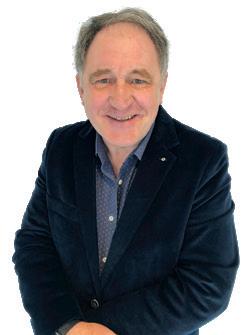





THE silence of every member of the ACT’s Labor/Greens governing majority following the tabling of an excoriating report by the ACT inspector of Correctional Services, Neil McAllister, into the forcible strip search of a young and extremely vulnerable Aboriginal woman, being held on remand in the Alexander Maconochie Centre, evokes Elton John’s famous lyric: “sorry seems to be the hardest word”.
The woman in question, her name is Julianne, lives with multiple and potentially life-threatening illnesses affecting her heart and lungs. She has a pacemaker. She is also a survivor of sexual assault and has mental health issues. At the time she was strip searched she was experiencing deep grief at the recent death of her grandmother whose funeral AMC management had refused her permission to attend.
I have known Julianne for several years. I consider her a friend and unlike the ACT government I have not turned my back on her.
In his damning report, the inspector found, among other things, that Julianne’s treatment was “highly degrading and traumatising” and a clear breach of the ACT’s Human Rights Act. He separately found that the Corrections Management Act had also been breached.
Corrections Minister Mick Gentle -
Left hanging by its silence is how the government proposes to respond to the fact that the inspector of Corrections has formally reported that two laws, the Corrections Management Act and the Human Rights Act, have been breached.
man released a statement on behalf of the government, ie all sitting members of the Labor and Greens parties, following the tabling of the inspector’s report in the Legislative Assembly.
The Minister chose not to comment at all on the treatment meted out to Julianne at the hands of his government. In fact, he did not mention her name or existence let alone what had been done to her. He did not express any contrition or regret at the “highly degrading and traumatising” treatment she was forced to endure or that her human rights were breached. He did not apologise. He did not say sorry. Neither did a single member of the government – Labor or Greens.
They chose instead to congratulate themselves, despite the very public exposure of their appalling treatment of this extremely vulnerable Aboriginal woman, and to boast about their magnanimity in ordering the purchase of a body scanner to minimise the use, in the future, of
strip searches at the AMC.
Mr Gentleman concluded his statement on behalf of his Labor and Greens colleagues not, as one might have expected, with an apology or an expression of regret at the treatment meted out to Julianne and other detainees in the AMC including the breaching of their human rights, but by acknowledging instead AMC staff, including presumably those involved in the issues reported on by the inspector of Corrections. He said: “I’d like to thank the committed staff within ACT Corrective Services for their professionalism and dedication.”
Dedication and commitment to what exactly is not clear, but regardless of the circumstances that necessitated the making of the statement let’s hope the Minister did not mean to strip searching vulnerable Aboriginal women in breach of their human rights.
To be blunt I find it hard to believe that such a callous and tone-deaf response to such a scarifying

report could have originated in the Minister’s office.
An issue left hanging as a result of the government’s silence is how it proposes to respond to the fact that the relevant statutory officer in this matter, the inspector of Corrections has formally reported that the law, in fact two laws, the Corrections Management Act and the Human Rights Act have been breached. Who, for instance, is to be held accountable for that and for how long and under how many Ministers have these laws been broken?
Under the Westminster system of government, which applies in the ACT, there are occasions, for example, when ministers must accept personal responsibility for breaches of the law that occur in organisations or agencies for which they have administrative responsibility.
It is not unusual, where an agency has breached the law or other accepted standards of governance, that the responsible minister or ministers will, consistent with the Westminster conventions, resign or be sacked.
That was certainly the position adopted by the ACT Labor Party
in relation to issues related to the development of Bruce Stadium under then Liberal Chief Minister Kate Carnell when the Liberal Party was last in government, and one assumes it continues to hold to that position. It is also surely relevant in considering how the breaches of the law identified by the inspector of Corrections should be dealt with that the federal Labor leader, Anthony Albanese, has demanded that Christian Porter resign not just from the ministry but from parliament, for allegedly breaching not the law but a non-legally binding ministerial standard.
Jon Stanhope was chief minister from 2001 to 2011 and represented Ginninderra for the Labor Party from 1998. He is the only chief minister to have governed with a majority in the Assembly.
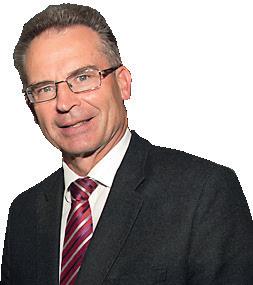
Des Moore
Principal and Solictor
Family & relationship law, by agreement or litigation if necessary:
Matrimonial and De-Facto property settlements
Care and parenting arrangements for children
Binding financial agreements
Kerry White
Family Law Special Counsel
Over 20 years’ experience in Family Law
Dispute Resolution
Family Law Mediator
Laura Dowling
Family Law Associate
Masters in Applied Family Law
Property Settlements and Complex Parenting Matters
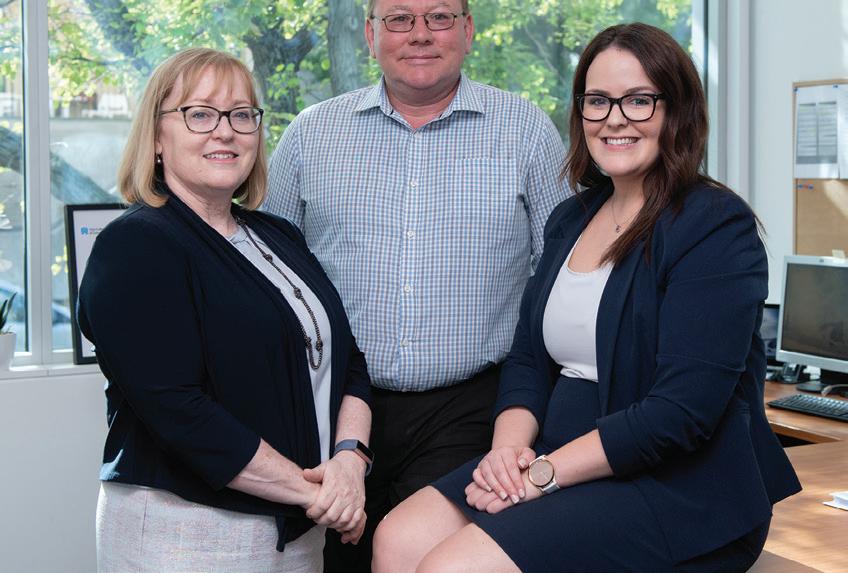
Our team would be pleased to help you with your family law needs

By Nick OVERALL

A GROUP of returned Antarctic explorers are giving one lucky ACT college student the chance to fly above the frozen continent in November and experience the wonders of the largest mass of ice in the world.
Open to year 11 and 12 students, the winner will be chosen based on an essay written about why they wish to go and will get to fly over the continent for four hours witnessing vast frozen cliffs, glaciers, mountains rising out of the ice and, if lucky enough, some of the land’s stunning wildlife.
“There’s no cause more worthy than the college kids coming through the system, they’re the ones going to save the world,” says Malcolm Robertson, co-ordinator of the Australian National Antarctic Research Expeditions (ANARE) club Canberra, which is behind the initiative.
Nationally turning 70 this year, the ANARE club was formed for those returning from the freezing wilderness to share experiences and promote Antarctic endeavours.
As a graduate geophysicist in 1969,
Malcolm would make his own journey to Antarctica, a landscape he de scribes as “cold and lonely but undeni ably stunning.”
“I was at Australia’s Mawson Base for 15 months from November, 1969, through to March, 1971, and the envi ronment was just spectacular, it was an incredible experience,” he says.
Mawson Base is one of only four re search stations belonging to the Aus tralian Antarctic Division on the 14.2 million square kilometre landmass.
It’s named after Australian explorer Douglas Mawson who, in 1907, boarded “Nimrod”, a ship under the command of Anglo-Irish explorer Ernest Shack leton that sailed a crew across the wintry ocean to explore the continent.
On the expedition, Mawson would be among the first people to ever trek to the South Magnetic Pole and climb Mount Erebus, the world’s southern most active volcano and Antarctica’s second highest.

In 1912 he’d return to the continent leading his own expedition to charter more territory and conduct more research, braving “herculean gusts”, as he described them, that could blow up to around 300 km/h.
The trip was marred by the tragic deaths of two members who fell into a crevasse, leaving Mawson alone and forcing him to make an arduous solo trek back to base.
Upon his return home, he would be
knighted for his efforts and became entwined with Australian history.
Thanks to Mawson and many other expeditions, Australia today lays claim to about 42 per cent of Antarctica, or around six million square kilometres, the most of any country.
“If we wish to claim our segment of Antarctica for Australia then we need to be seen to be doing something at the moment that is useful for the conti-
nent,” says Malcolm.
That will indeed be the very thing he and the selection committee are looking for in the essays of students looking to win the flight.
“Climate change and increasing global temperatures are already having a major impact with consequent issues for Antarctic biology and sea levels globally,” says Malcolm.
“As we warm the planet the Ant-
arctic ice is going to melt and if we get to a point that scientists describe as a tipping point you can’t stop it.
“It’s happened in the northern hemisphere, the Arctic ice has retreated so far it doesn’t look like it’ll come back again.”
The ANARE Club Canberra also believes that the continent’s growing human population, with increasing expectations for living standards, is putting pressure on resources and may lead to exploitation in the world’s last natural pristine wilderness.
While this is currently prevented under agreements that form the International Antarctic Treaty System, Malcolm says the system is not absolute, nor robust and may falter at any stage.
“It’s very hard in the space of increasing human occupation of the planet to keep anything in a pristine state,” says Malcolm.
“I think a student flying over Antarctica with that in the back of their mind could be a powerful thing, maybe a humanities student, or a geography student, or someone interested in international relations.
“We are looking for reflection on how the experience would help them make the world a better place.”
Applications close on October 8 and more info is at anareclub.org/ australian-capital-territory

Dr Omar Gailani offers treatment for


Gynecological conditions including Fibroids


A referral is necessary for an appointment with Dr Gailani
Canberra Urology and Gynaecology Centre | P 6285 1813 E reception@omargailani.com.au | W omargailani.com.au
Suite 2, Level 2, Equinox 1, 70 Kent Street, Deakin ACT
The MonaLisa Touch is a comfortable, nonhormonal, minimally invasive and painless 5-minute treatment with zero downtime
Creating longer-lasting relief, the MonaLisa Touch is for women experiencing vaginal itching/burning, vaginal dryness, loss of lubrication, vaginal laxity, incontinence symptoms, or painful sexual intercourse.
Key benefits of The MonaLisa Touch:
Low risk – suitable for most women
Achieves long lasting improvements
Immediate return to normal daily activities
Suitable for women who are not able to undergo hormone replacement therapy eg. Breast Cancer Patients
High success rates after treatment
Minimal maintenance after initial procedure


A LOT has been said about the folly of the ACT government’s Demonstration Housing Projects. The bureaucratic spin has been frequent and blatant.
This program is a trojan horse with one dishonest aim – to undo the most basic residential zone system (RZ1).
These projects are supposed to be about doing something different. Yet these housing options are already known here in Canberra and elsewhere. Most are blocks of units pretending to be something revolutionary. What a load of rubbish! To add insult, these housing styles are allowed for in other residential zones.
Which brings me to a housing development that demonstrates what has already been achieved. In 1974 enlightened architects (remember them) put forward a concept that was a real demonstration housing project. In their first attempts to get this happening, the National Capital Development Commission bureaucrats blocked it completely.
Tom Uren, an intelligent minister (we used to have them) saw the wisdom of the scheme. He told the bureaucrats to get a life and to get it done.
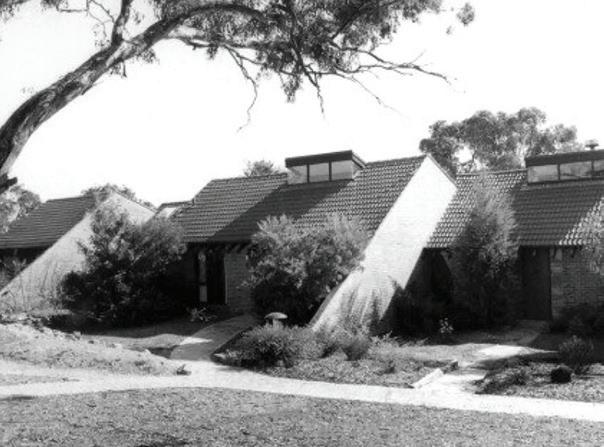
Urambi Village in Tuggeranong (urambivillage.com) has been an amazing success where good architecture addressed the needs of residents.
The place has been cherished for more than 40 years by the residents
It is no longer appropriate for the racing club to be occupying such valuable land. Here’s a chance for some real architecture and landscape design.
old and new. Established in 1976, this successful development is a model that should be pursued with vigour instead of wasting time and money on foolish projects.
There are two opportunities for innovative developments with two inner-north sites. The first, Block 2, Section 76, Watson, is already under consideration and if the residents have their way (fingers crossed), some of what is available at Urambi could underpin this new housing cluster. The other may be a little more controversial.
Conversations started within the inner north when Thoroughbred Park, the Canberra Racing Club, announced that given that they had so much land around their racecourse and that they could do with some new funds, they went public with a proposal to vary their lease to undertake a major housing development on their spare land.
racecourse to be moved out of this central location and the resumed site be used for an innovative housing development complete with parklands and wetlands. Just across the road from this site is another major development proposal for the Yowani Golf Club. More spare land and a club requiring cash.
Local residential groups are totally frustrated by the Planning Directorate’s laissez-faire approach to development – everything is ad hoc and disjointed. There has been no vision, little good architecture and inadequate landscape design.
It is proposed that the whole racing site and Yowani’s spare land be combined and developed as one major site. The successes from Urambi Village
overlays to ensure that the residential buildings more than meet 21st century requirements. Let there be no ugly towers. The site should have low-rise buildings that offer a range of accommodation options. Successful national, local and international models could be incorporated. This could include co-housing models, shared facilities for some, stand-alone townhouses, retirement units, social housing, some multi-story buildings (four-storey maximum) and the list goes on. As the site has the creek to the east, there is the opportunity for
major parklands and wetlands as key features for the area. These would become destination facilities for residents across the inner north and the eastern suburbs of Gungahlin. This racing club was originally positioned on the edge of the city. It is no longer. This site has become centrally placed as suburbs surround it. It is no longer appropriate for a racing club to be occupying this valuable land. Here’s a chance for some real architecture and landscape design. Think triple glazing, solar, biodiversity, green infrastructure, lush gardens, shade and absolutely no heat-island effects. This site presents this government – a call out to the ACT Greens here – to see a major development that is not greenwash, but one that deals with the real housing issues of the 21st century.
Paul Costigan is an independent commentator and consultant on the visual arts, photography, urban design, environmental is sues and everyday matters.


‘We want to show people how to find help when they most need it’
If you’re struggling, reach out... you’re not alone
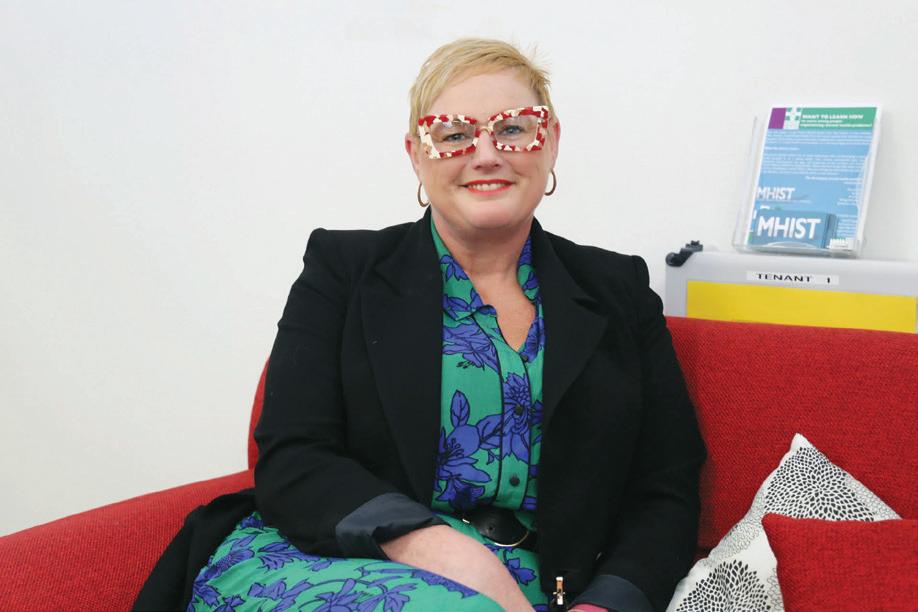
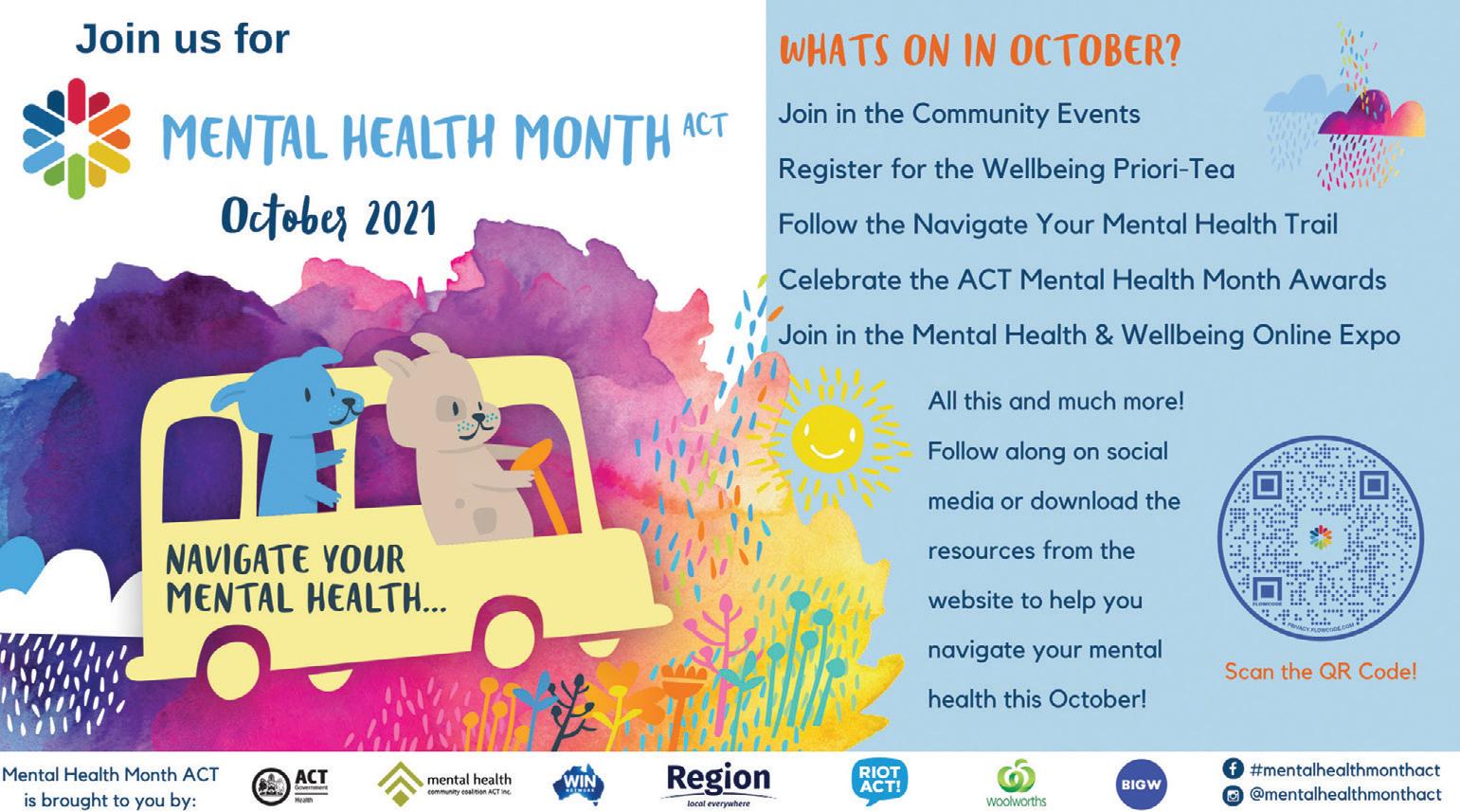
WITH the challenges of lockdown currently facing our community, the role of Mental Health Month of bringing mental health out in the open, improving the understanding of mental health issues and removing stigma has never been more important.
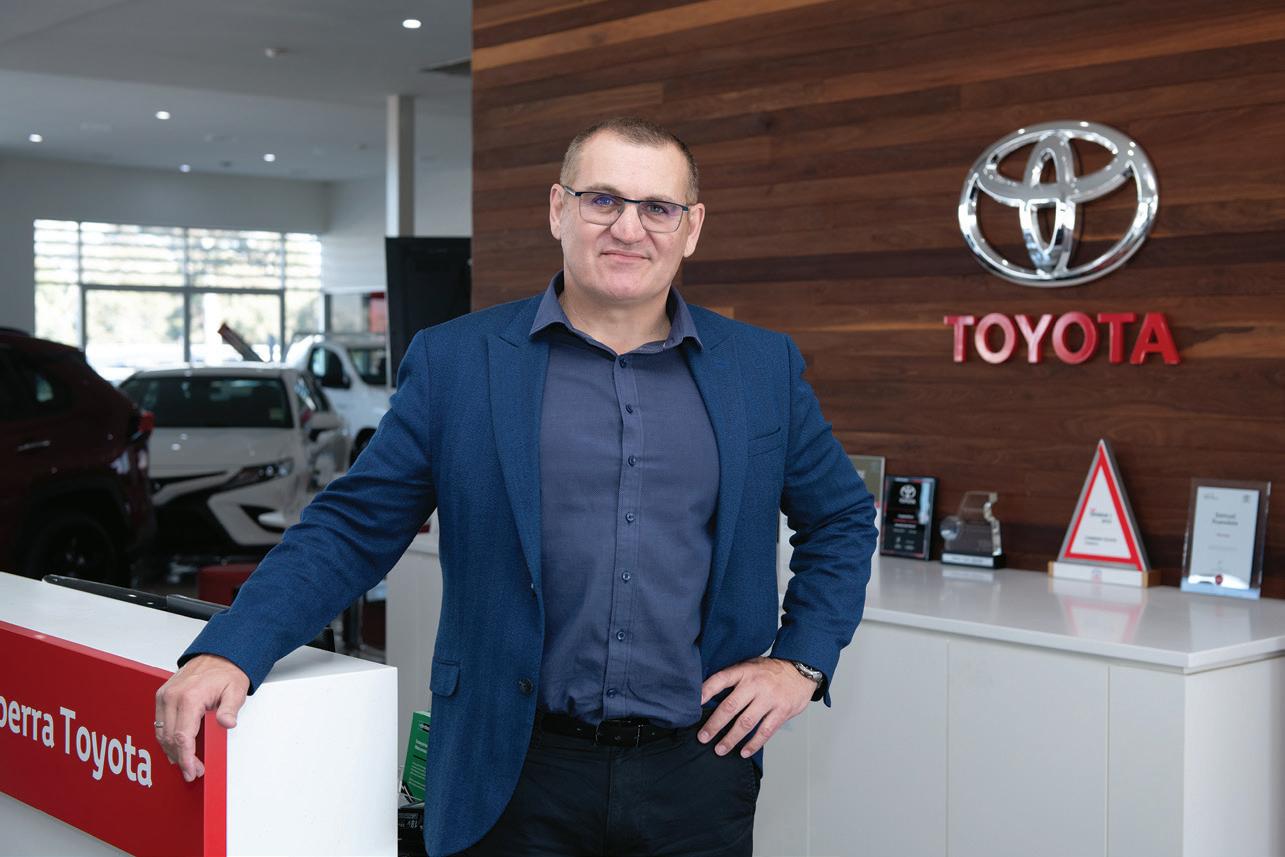
Bec Cody, CEO of the Mental Health Community Coalition (MHCC) ACT says that during the month of October, Mental Health Month will be celebrated in the ACT in a variety of different ways, all aimed at helping people better navigate their mental health.
“We want to show people how to find help when they most need it,” she says.
“A lot of people are struggling right now, and I want them to know they are not alone.”
According to the Mental Health Alliance, each year one in five Australians experience a mental health issue and recent studies suggest this may increase to one quarter of Australians under the impacts of the coronavirus pandemic.
Bec says that COVID-19 has resulted in a big increase in local outreach support services: “We have never experienced anything like this in our recent history. However, one positive is that we are finding that mental-health issues are starting to lose
a chat and reach out to everyone at this time through a phone or video call,” she says.

RATHER than enter the debate on whether or not we should be in lockdown and what freedoms we should have, there are some holes in the way information is being presented to our community that forms the rationale for our lockdown and is worthy of debate.
With a very few exceptions when a concise report has been delivered to the community, such as Tuesday, September 14, we are generally being patted on the head and told to go inside and play.
This reminds me of the Joh BjelkePetersen era and “don’t you worry about that” approach to government. A rather strange approach to a community renowned as one of the more educated in Australia.
So, the issues. Firstly the daily totals of positive tests and the trends that are jumped on by one and all.
Simply, the daily totals are just the sum of those people who are positive and chose to go and get tested on that day. Add asymptomatic people and it is just a number when it comes to relevance in the news sense. Behind the scenes it has value, no doubt, but to the general community it is but a means of painting the picture that is desired at a time.
The people who test positive from the same house distort the numbers. It is like the road toll where a single car crash could kill one or four or more, just the luck of the draw on how many chose to ride in that car at the time.
The statistics look far worse when there are
multiple outcomes but it was only one crash. So, while the household members who catch the virus may be counted, we expect them to catch it and they are not able to be separated from the genuine risks, the real transmission between unconnected members of the community or new instances that have crept in. The apparent fact that household members of a positive case are not immediately in quarantine is mind boggling, but that is what seems to be the case.
What we really need to know is those who initially contract the virus from a venue and those instances where ongoing transmission is not the result of being a household member.
I suggest the results would paint a different picture of the virus in Canberra. Not that it should be seen as less serious but it seems that covid has only been transmitted at some 15 locations in the ACT plus the household locations where it is spreading as expected.
I, for one, am heartened that the hundreds of contact sites around the ACT have in fact not resulted in a transmission. This should be good news that when we are all vaccinated, we can anticipate being able to go out and with a degree of common sense, have very little chance of catching the virus.
If we had reached the NSW situation then all of this would be meaningless. We are fortu nately in the position where the case numbers are still manageable by contact tracers therefore, a picture more accurately painting the ACT situation is not only deserved by the community, it is expected.
Anthony Stein, Melba


When a concise report has been delivered to the community, such as Tuesday, September 14, we are generally being patted on the head and told to go inside and play.
LIBERAL Senator Zed Seselja was quick to make attention-seeking noise about the ACT government’s decision to extend the territory’s lockdown until mid October, calling it “bitterly disappointing news” that “lacked compassion and balance”.
However, the main disappointment at this critical time is Senator Seselja’s inability to show empathy and support for the difficult day-to-day decision making and public health responses that are needed to safeguard his constituents. He knows full well that at this stage of the federal government’s slow and insufficient vaccine rollout there are still many tens of thousands of eligible ACT residents at risk of serious illness and lingering, debilitating health impacts if covid surged Sydney-style across the territory.
Senator Seselja should be careful not to take the slick and easy path of emulating the hapless Opposition Leader in Victoria, whose predictable bleatings and focus on political point scoring during necessary lockdowns finally led to his loss of the leadership earlier this month. Many will be looking for evidence of a far more constructive and co-operative approach from both the senator and ACT Liberal opposition MLAs over the coming months.
Sue Dyer, Downer
If you are experiencing financial hardship due to COVID-19, please be assured you are not alone, and Care is here to provide you with information, support and advice relating to your financial health and well-being.
• Care Consumer Law
• Financial Counselling
• Community Loans
• Care Community education


THE ACT government has done a pretty good job of managing covid and moving Canberra’s electricity to 100 per cent renewable sources.
Unfortunately, it doesn’t seem prepared to rethink its priorities in relation to the next big challenge, reducing transport-sector emissions, which are now around 60 per cent of the total for the ACT.
We are being told it is imperative to take all possible measures to drastically reduce emissions over the next decade, which could be significantly helped by electrifying the bus fleet much more quickly, rather than by 2040, and improving its attractiveness to potential users, thus getting more cars off the road.
But the government seems determined to persist with Light Rail Stage 2 – City to Woden – with limited future benefits to only a small part of the metropolitan area.
The government loves it as a means to advance its and the development industry’s “urban intensification” (aka money-making) agenda.
This is made very clear in the “Business Case for Stage 2A – City to Commonwealth Park”, which is anticipated to “accelerate development at the Acton Waterfront”.
“Stage 2B is anticipated to have a transformational impact on the Woden Town Centre and support urban revitalisation and place-making activities along the corridor,” it says.
All this seems wonderfully aspirational, although unclear when and how it will be achieved and it will no doubt meet a lot of community opposition.
We know Light Rail Stage 2 will cost a huge amount, has poor benefit/cost ratios, is unlikely to be fully operational by 2030 and its construction will be very disruptive and cause massively increased, rather than reduced, emissions. Makes no sense to me.
Richard Johnston, Kingston
SOME ACT residents may think Chief Minister Andrew Barr is overstepping the mark and not weighing up risks properly with an additional four weeks of lockdown, with no end in sight and no roadmap out. Now with possibly tying in national vaccination rates to relaxing of restrictions instead of ACT rates, and seemingly to drag on the lockdown as long as possible, I suggest some interesting reading is found in former ACT Chief Minister Jon Stanhope’s opinion piece (“Barr sullies virus recovery with pokie politics”) from “CityNews” of June 11, 2020 (search citynews. com.au), relating to Barr’s stoush with ClubsACT and the ACT lockdown restrictions at that point of the pandemic are well worth re-reading.
Tim Ledlie, via email

I’M upset at the proposed sale of foreshore land at Lake Ginninderra under the auspices of the Suburban Land Agency. This frontage is alongside the Sea Scouts’ shed.
We now need voices of lakeside users and those with a lake view to please contact our Belconnen politicians, especially MLA Yvette Berry, who has ministerial responsibility for the land agency.
Moreover, this open space so close to the recently built high-rise apartment complex on Emu Bank is needed as a recreation space, including a playground.
A Friends of Lake Ginninderra group is needed to help cherish the lake and its surroundings.
Chris L Watson, Latham
Stefaniak’s comment was ‘completely wrong’
GOOD to see old Bill Stefaniak still actively involved and contributing to the public discourse around this great town of ours. In a recent letter to “CityNews” (Jono needs to do his homework, CN September 9), Bill made reference to his time as a former sports minister and ACTSPORT. He then went on to make an accusation, for me, completely wrong, that it was Shane Rattenbury who was responsible for its abolition.
This very publication in 2015 covered this issue with Jim Roberts, president of ACTSPORT, saying the decision to wind down the organisation had been made following self-examination of the business model in terms of sustainability and the future needs of Canberra sporting organisations.
In another interview, he went on to say it was the “end of an era” and that he believed ACTSPORT’s job “was done” in the capital.
Chris Doyle, Gordon

NYAMUDY-Ngambri Elder Shane Mortimer reports in his letter (CN September 2) that during a national Aboriginal conference live streamed about the Australian War Memorial’s half billion dollar extension plans, the National Capital Authority CEO and the Australian War Memorial director could not answer his request to ”show him the bill of sale to the Crown for the War Memorial site from his Ngambri ancestors, the Allodial Title Holders”.
If Allodial ownership means no more than ownership freed from the oppressive duties of service and fealty, with the accompanying liability to distress, owed to some person with superior interests, such as a superior lord, in the same land one would obviously want to see how Allodial Title was acquired in the first instance in support of any latter day claims of entitlement. Maybe you can show us that.
John Lawrence via email
HOW Michael Stachow (Letters, CN September 9) presumed I was not vaccinated is beyond my comprehension. I was in fact amongst the first to be fully vaccinated with AZ as soon as I was allowed to. I quickly realised that any degree of immunity is better than none. Michael appears not to understand that covid vaccines do not provide full immunity, only partial immunity; they also reduce the severity of infection. That’s why I have given consideration to the status of other people.
He can rest assured that I will not be going anywhere near Giralang any time soon!
Mario Stivala, Belconnen
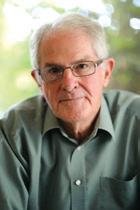
Goodbye to kissing babies and shaking hands. GREG CORNWELL sees a lot to look forward to from a covid-compliant election.
COVID-19 has changed so much of the way we live and with a federal poll looming, why not also how we conduct election campaigns?
Just think, no more door knocks or attendance at shopping centres, annoying the constituents. After all, you can’t get much of a message across wearing a mask and how do you display your honest face to these strangers?
And kissing babies and shaking hands would not be allowed, probably to mutual satisfaction. How-to-vote cards at polling booths would be prohibited, no more running the gauntlet through closely packed, covid-risking campaign workers thrusting paper at you. No more public debates or local stage-managed party launches either, unless by unreliable Zoom meetings where, to a candidate’s relief, questions would be limited.
However, it would not be all gloom and doom for our budding politicians. Pamphlet drops could continue, providing you kept away from dog walkers and people exercising. Annoyingly, telephone canvassing would increase, if only from the privacy of the canvasser’s own home. Postal votes would increase, too, and more paid polling-booth workers would be needed to keep waiting voters 1.5 metres apart.
Where possible, banners on school fences still would be allowed so the midnight battles to erect and remove could continue and A-frames, featuring candidates’ names scattered like tank traps outside polling booths, would be lawful.
Independents and small parties might complain, but it’s doubtful if they would be any worse off than under current rules, where they always struggle for publicity. Their lack of campaign workers would be eased and the major parties’ problem of diminishing number of volunteers would be solved.
Of course, to be really progressive one could institute a “No-Vax, No-Vote” policy, but that would be going too far, wouldn’t it?
Greg Cornwell is a former Speaker and Liberal member of the Legislative Assembly.


Last week, in an open letter to Senator ZED SESELJA , “CityNews” called for more empathic support for local business. In his reply, the senator says he’s doing his bit, but it’s the Chief Minister who’s being parsimonious.
LAST year the entire country was in the same boat. When COVID-19 arrived on our shores, the entire nation was dramatically shut down in response to a virus we knew very little about, other than its ability to spread quickly and cause severe illness.
A nationwide shutdown required nationwide support measures, and the Commonwealth did not hesitate to provide this support across the country, while at the same time working with the states and territories to keep as much of the economy open as possible.
This year we have gone into lockdown again, but as we have become more accustomed to the virus, the lockdowns are state based, where required, rather than broad stroke national measures.
The consequences being rules and restrictions on which businesses can and can’t operate, how they can operate, and what is deemed as essential
are set by our First Ministers and vary across the country depending on the status of the outbreak in their region.
The ACT is well into one of the harshest lockdowns Australia has seen. As the lockdown has been extended time and again, I have been calling for increased flexibility in the rules, to allow businesses who can operate safely to do so.
My argument has always been that what is essential over a period of seven days is very different to what is essential to operate or access when that time frame becomes much longer.
For seven days businesses can struggle through complete closure, and parents can go without buying new clothes for a baby. When that timeframe is extended, what becomes essential for the survival of a business, or to meet the needs of Canberra families, is very different. Issues of isolation and loneliness can be managed for seven days but become increasingly problematic after six, seven or eight weeks.
I have successfully argued for small
businesses to be able to offer contactless click and collect or delivery, and for the safe restarting of construction.
cheque to the states and territories, encouraging never-ending lockdowns to continue across the country.
due to the impact of lockdowns elsewhere on this sector here in Canberra.

Allowing businesses to get back to business safely will always have a greater impact than government support.
Under growing pressure to provide certainty for businesses, the Chief Minister, Andrew Barr, attacked me for daring to stand up for the Canberra business community, in particular our construction industry, saying “sometimes senators can get in the way.”
Ensuring businesses had access to adequate support in response to the lockdown is where the Chief Minister should have gone into bat for Canberra businesses, but failed to show up.
The first plan the Chief Minister brought to the Treasurer was nowhere near enough, but it was something, and the lockdown was only scheduled to last for seven days.
The Commonwealth was ready and willing to do more, but the
My first phone call once the Canberra lockdown was announced was to the Treasurer, Josh Frydenberg, advocating for a substantial package to support Canberra’s business community though the next seven days. Any plan would require the ACT government to come to the table and fund 50 per cent of the package, just as every other jurisdiction has done this year.
I immediately urged the Chief Minister to come to the table with a more generous proposal to support Canberra businesses, which the Commonwealth would co-fund. I’d already heard from hundreds of business owners desperate for more support, knowing the initial package would not be enough if lockdown was extended. The Commonwealth was ready and willing to do more, but the ACT government was stubbornly refusing.
ACT government was stubbornly refusing.
The announcement last week (September 15) of an expanded business support package was a win for Canberra businesses, setting a floor of $5000 a week in support for employing businesses, and up to $20,000 a week for those with larger turnovers.
This tiered package of support was a recognition that for many mediumsized businesses $5000 a week is well short of what is being lost. The ACT government claimed it couldn’t be done, but I raised it with Treasurer Frydenberg, who insisted it be part of the package going forward.
Ultimately, allowing businesses to get back to business will have a greater impact on small businesses in Canberra, and the Canberrans who work for them, than government support ever could.
Importantly, the Commonwealth has also wholly funded $188 million to date in income support for those Canberrans who have lost work due to this lockdown.
As vaccination rates soar in the ACT a much better balance must be found between stopping the spread of covid and protecting people’s livelihoods and freedoms.
A return to JobKeeper is simply not possible – it would be the equivalent of the Commonwealth signing a blank
In addition to that, we delivered a separate package for tourism, hospitality and the arts, something I had championed before the ACT lockdown
Canberrans, including small and medium businesses, urgently need a plan to re-open. I will simultaneously argue for more freedom while working hard to deliver financial lifelines to those who are affected by the ACT government’s lockdown.
Zed Seselja is the Liberal senator for the ACT.


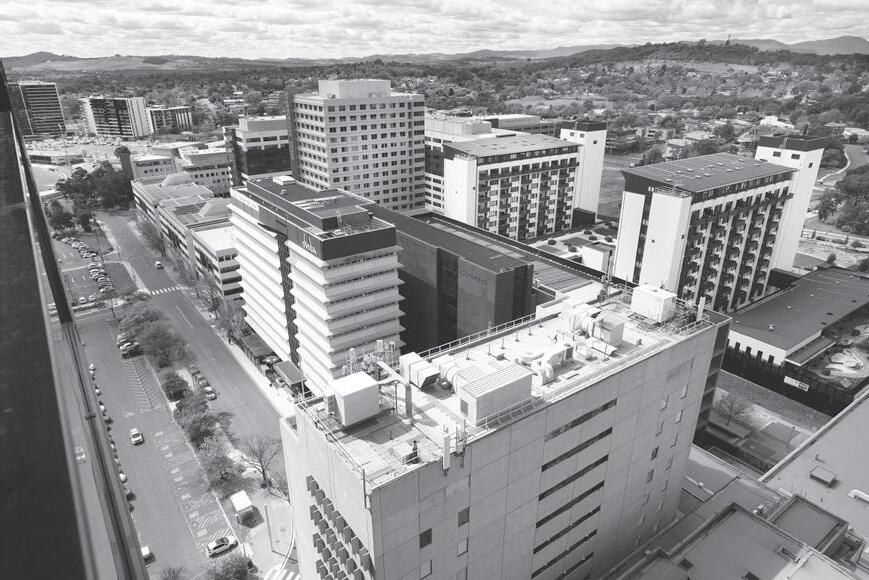
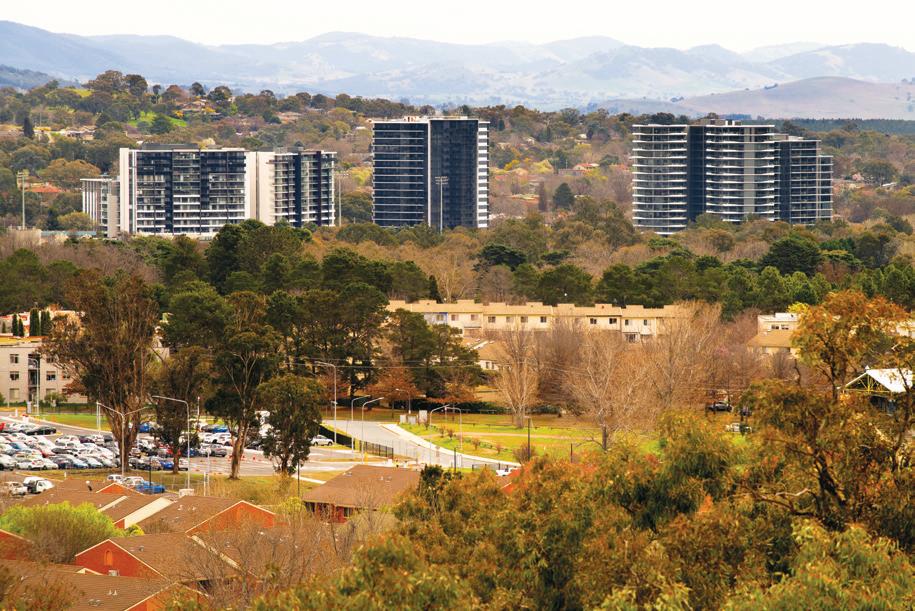
COMMUNITY groups, residents and members of the opposition are calling on the ACT government to explain why Woden Valley has been neglected for so long.
Major districts – Belconnen, Gungahlin, Molonglo Valley, north Canberra, south Canberra and Tuggeranong – have community centres, arts centres, higher education hubs and public sporting grounds, all of them except for Woden Valley and Weston Creek.
Woden Valley Community Council president Fiona Carrick’s lived in the area for more than 50 years and often gets teary from the ACT government’s planning mess in the south, particularly in Woden’s centre.
“Where’s our community centre, where’s our indoor sports stadium, where’s our arts centre, our pool’s on its way out,” she says.
“Where is the planning for the people? Where are the community facilities? Where are the public spaces in our town centre?”
Paul Costigan, an independent planning commentator and “CityNews” columnist , frequently attends council meetings in each ACT district – including Woden – and says he wouldn’t call what’s happening in
Woden “planning”.
you would expect a community to be provided with. Woden hasn’t got them.”
Liberals MLA for Murrumbidgee and former party leader, has been campaigning for a “better deal” for Woden since he was elected to the Legislative Assembly in 2008.
Now in his fourth term, Mr Hanson says there’s no doubt the people of Woden and Weston Creek have been treated as “second-class citizens”.
2016, and in it said: “If Canberra is the most liveable city in the world, then the southside is the most liveable part of the most liveable city in the world.”
It was a big call, and something that the minister still “absolutely” stands by.
“We’ve now really seen it turn a corner as a result of having a masterplan in place and as a result of public investment in the town centre, in public projects like the CIT, light rail, the community centre and other projects.”
When it comes to community
facilities, Mr Steel points to investment going into projects such as a new CIT campus, a new public transport interchange, which will accommodate light rail, a new community centre, as well as upgrades to the Woden library, which would include new spaces for groups to meet and conduct activities such as art.
He also points to the performing arts centre that the government built in the Woden area almost a decade ago.
However, Tony Adams, who has more than 45 years’ experience in urban and regional planning in the public and private sector across all states of Australia, including the ACT, says Woden has copped a triple whammy of bad planning.
A life fellow of the Planning Institute of Australia, Mr Adams is now the principal of his own practice, A T Adams Consulting, which provides advice on planning and property development matters.
He says Woden has been subject to an overreaction of “fashionable” planning, which saw “separating supposedly incompatible land uses, thus cutting it off from its own community”.
It has also been subject to a belief that car transport was the best thing, as well as the commercial pressure that relocated all of Woden’s shopping from high streets into big-box malls, he says.
‘It hasn’t delivered on what most people look for in a town centre’
WODEN’S copped a triple whammy of bad planning, according to Tony Adams, a man with more than 45 years’ experience in urban and regional planning in the public and private sector across all states of Australia, including the ACT.
A life fellow of the Planning Institute of Australia, Mr Adams is now the principal of his own practice, A T Adams Consulting, which provides advice on planning and property development matters.
He says Woden has been subject to an overreaction of “fashionable” planning, which saw it “separating supposedly incompatible land uses, thus cutting it off from its own community”.
It has also been subject to a belief that car transport was the best thing, as well as the commercial pressure that relocated all of Woden’s shopping from high streets into big-box malls. To understand, he goes into the town centre’s history, which was designed by the National Capital Development Commission (NCDC) in
the 1960s.
“At that time the NCDC was follow ing the then very fashionable ‘garden city’ approach to city planning,” he says.
The garden city movement was started by Ebenezer Howard in Eng land in 1902 when he published his book “Garden Cities of Tomorrow”, something Mr Adams calls a response to the unsanitary overcrowding of British 18th century industrial cities where dirty factories and crowded housing were all lumped in together.
“The solution was to separate the various land uses – commercial, industrial, residential – from each other,” he says.
“That is why the Woden commercial centre is separated from the surrounding residential areas.”
Mr Adams says the separation is achieved by four to six-lane arterial roads. “Contrast this with, say, Chapel Street or Lygon Street in Mel bourne where the commercial ‘High Street’ blends into the surrounding residential areas,” he says.
“Both of these are renowned for their life and vibrancy; they are set within, and are part of, their surrounding community, walkability is the key.”
Woden is the opposite, he says.
of the timing of the Woden design.” Being designed in the ‘60s – the age of the car and the shopping mall – Mr Adams says the centrepiece of the town centre was a big blank box shopping mall, which people were expected to travel to by car.
If the goal for Woden town centre was to have life, people, activity and
vibrancy, Mr Adams says Woden got off to a very poor start.
“In fact it was a big negative,” he says.
“It has worked terrifically well as a car-based shopping mall, and generations of Woden folk will attest to this, but it hasn’t delivered on what most people look for in a town centre – some life and vibrancy and a focal point for the community.”
The solution, he says, is to install residents, as many as possible, into the centre itself to generate liveliness and activity, seven days a week and into the nights.
“That is what the masterplanning is trying to do, but inevitably, because it is a retro-fitting exercise (the NCDC never envisaged any residential in the town centre) the results won’t be perfect,” he says.
“A good way to get lots of people into a small space is to go upwards with higher rise residential developments.
“I say ‘higher’ rather than ‘high’ rise because the permissible heights at Woden are not what the world would call ‘high-rise’.
“From my reading of the Territory Plan, the highest possible tower at Woden is 24 storeys, in a limited area, with lower heights elsewhere in the centre.
“The Gold Coast, Sydney and Melbourne boast residential towers of 60 and 70-plus storeys. The World Tower
in Sydney is 75 storeys, designed by Fender Katsalidis, who designed the prize winning Nishi building at New Acton.”
Mr Adams says the residential buildings at Woden will bring (and already are bringing) the muchneeded residential population into the centre.
“This will enliven the centre and benefit everyone in the valley,” he says.
On concerns about the costs of taller buildings that are overshadowing and sometimes cause wind effects, Mr Adams says these can be minimised with good design controls.
“The controls in the Territory Plan will, I am sure, go some way to achieving this,” he says.
But, he says, the benefits go beyond the creation of a better town centre. “We need to remember that for every single person, couple, or family that move into the residential complexes in the town centre, there will be a few more car trips replaced by public transport or walking, there will be less pressure on ‘infill’ residential developments, which cause so much angst in the suburbs, and there will be demand for one less new block in a greenfields development on the fringe of the metropolis,” he says.
“It’s not the life that all of us would choose, but for those who do move into the town centre, they are actually doing the rest of us a favour.”
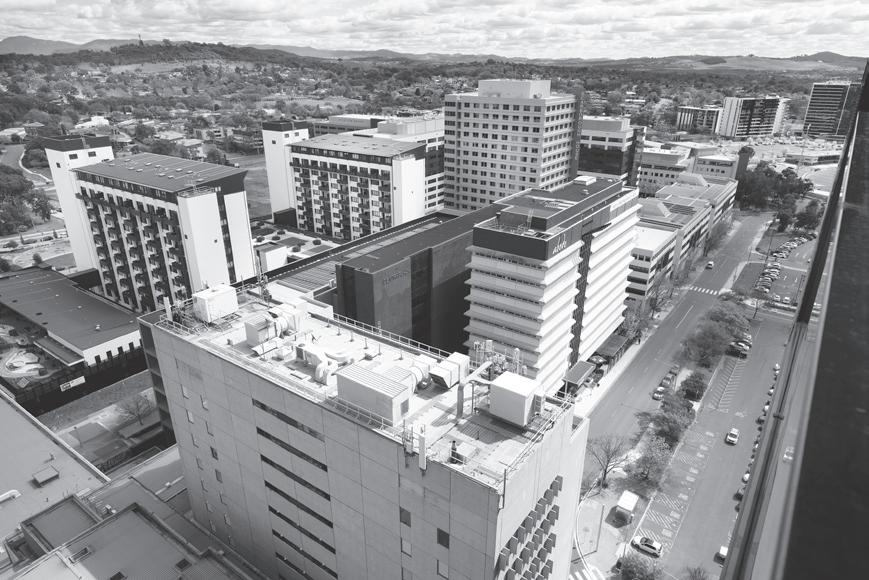
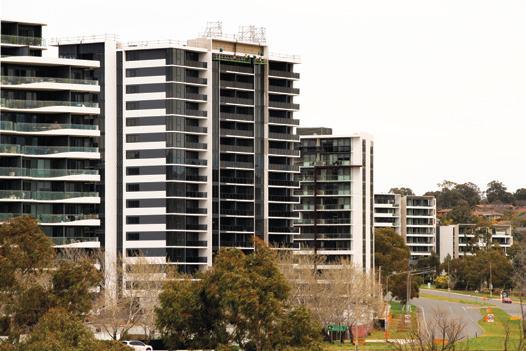

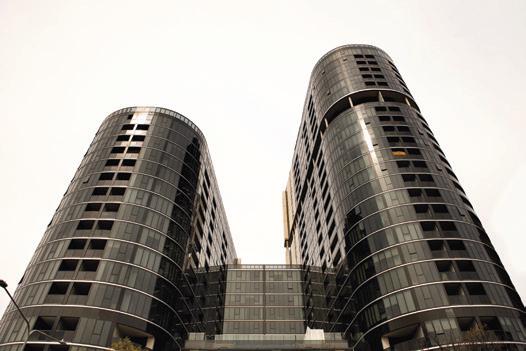
WODEN is a major hub of Canberra’s south, yet it has no arts centre, no community centre and has lost multiple sporting facilities, says Woden Valley Community Council president Carrick
“Where’s our community centre, where’s our indoor sports stadium, where’s our arts centre, our pool’s on its way out,” Ms Carrick says.
“Where is the planning for the people? Where are the community facilities? Where are the public spaces in our town centre?”
When talking of the neglect of the region, Ms Carrick, someone who has lived in the area for more than 50 years, describes the planning of the region as something that continues to get worse and worse.
“We’re not a priority,” she says.
“The Chief Minister’s priorities are Dickson to the lake and he has the City Renewal Author ity to look after that.”
Ms Carrick believes the government should introduce a policy on the equitable distribution of sporting facilities for grassroots sports, arts centres and community centres, and there should be a focus on the main district hubs in the ACT.
“You’re not going to have a multi-purpose sports stadium or an arts centre at every group centre or at every local shop, that’s why you’ve got the four big town centres where the buses hub into,” she says.
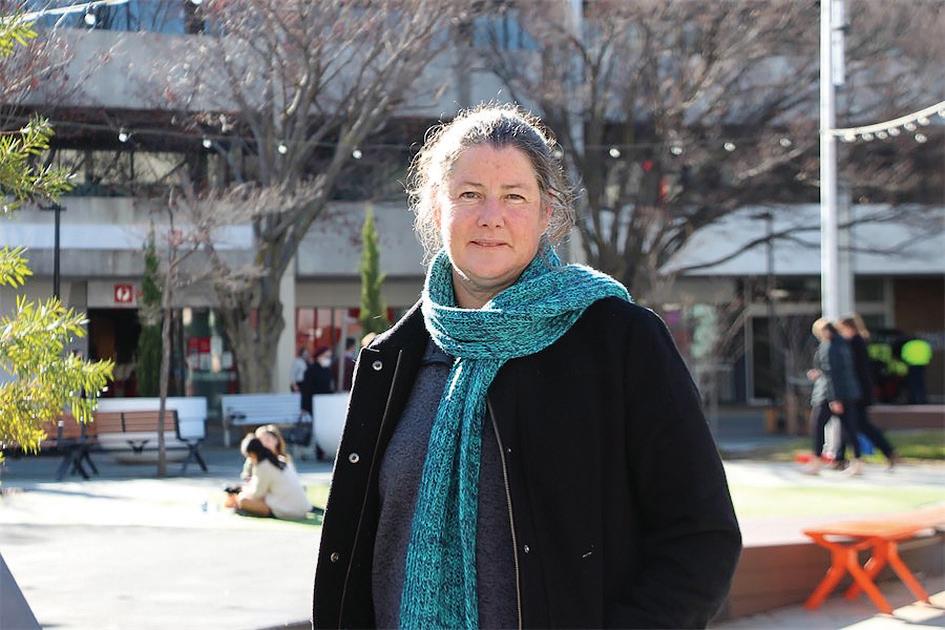
“All the buses from the south hub into Woden, which is why there should be more care into the planning there,” she says.
She believes the town planning needs to go beyond high-rise residential apartments because the residents who live in the existing ones, or will move into the to-be-built residential towers, need community facilities and sports facilities to access.
“All these new people moving in, they didn’t even know that we had a basketball stadium,” she says.
“If you’re going to take it away, replace it. It’s heartbreaking.”
Woden Valley Community Council is not antidevelopment but it is anti bad development.
“There needs to be balance,” she says.
“One of the big issues with planning, particularly around the square,” she says, “is the zoning (up to 28 storeys) for residential towers at the expense of a recreation precinct.”
“The national capital plan has an urban hierarchy in it and it says that each town centre is supposed to be relatively self-contained with jobs and community facilities and you’re supposed to grow the jobs and the community facilities in the town centres and they’re supposed to
Fiona Carrick… “Where is the planning for the people? Where are the community facilities? Where are the public spaces in our town centre?”
Photo: Danielle Nohra
she says.
Ms Carrick says the 28-storey towers have also resulted in the town square becoming over-shadowed and windy.
“The council does not support the building hierarchy that allows 12 to 28-storey buildings across the centre with the town square limited to three hours of sunlight on one quarter of the square in winter,” she says.
When the centre experiences strong westerly winds, Ms Carrick says the wind hits the tower, creating a vacuum where the wind rushes through to the town square.
“For people with mobility issues it is really quite dangerous because the wind gets quite strong,” she says.
“There’s no accountability, who’s responsible for this being a good place?”
While the council understands that there’s a desire to have people in the town centre to help activate it, they’d like to see more jobs created around the town centre as well.
“We don’t want all our office blocks slowly but surely turning into residential buildings. You need that balance,” she says.
“We accept the need for infill and the town centres are doing the heavy lifting for this policy.
“The debate should include the future of our town centres and whether they are being
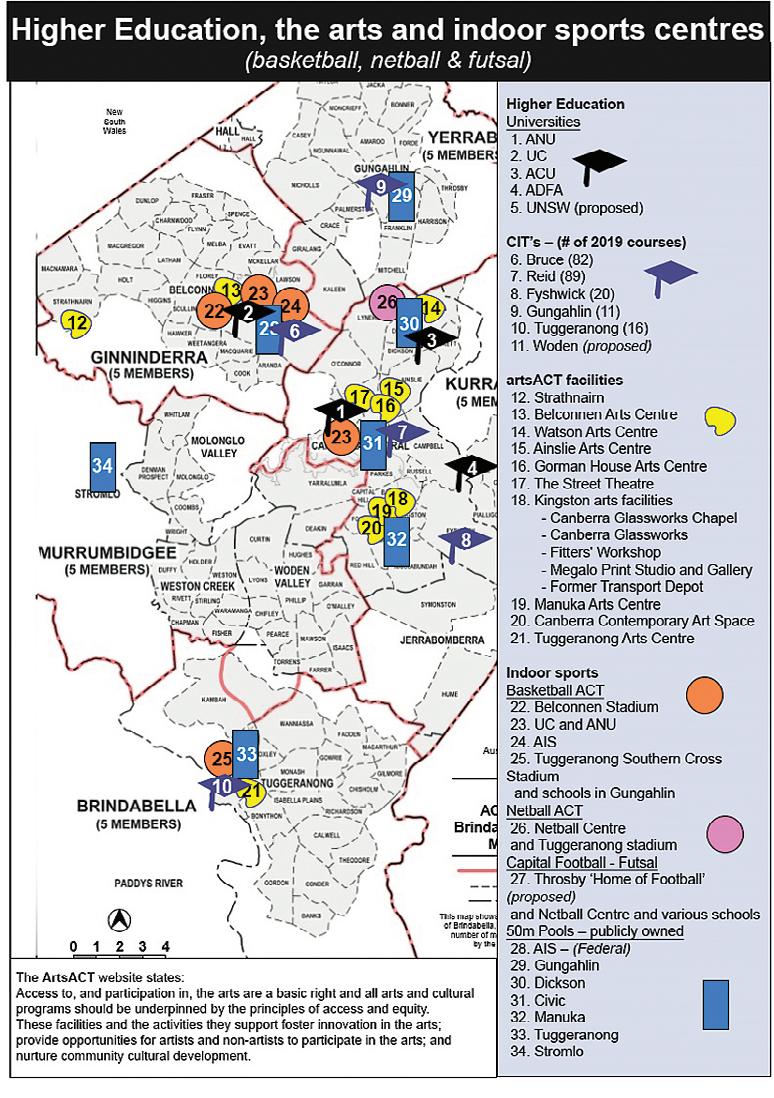
When it comes to higher education, the arts and indoor sports, this map created by Fiona Carrick shows Woden has nothing much to offer.
planned for a balance between homes, jobs, public (green) spaces and community facilities – connecting people to jobs and friends and facilitating physical and mental health outcomes.
“People are not served well by the dormitory, overshadowed, windy concrete jungles where we have to drive to other places for entertainment, culture and recreation.”
‘We’ve really seen the town centre turn a corner’
WHEN it comes to town centres, ACT Labor member for Murrumbidgee Chris Steel says the ACT government is currently making one of its largest investments in Woden.
“Our vision for Woden is to see the town centre become a great place to live, work, to study and to do business,” says Mr Steel, who lives in Kambah but grew up in Torrens.
The 35-year-old continues to call Woden his hometown, and, as part of his inaugural parliamentary speech in 2016, said: “If Canberra is the most liveable city in the world, then the south side is the most liveable part of the most liveable city in the world.”
It was a big call, and something that the minister still “absolutely” stands by.
However, he also acknowledged, in that speech, that there is a lot needed to be done at Woden town centre.
“The regeneration of that town centre has been one of the central things I’ve been working on as a member of the Assembly and as a minister,” he says.
“We’ve now really seen it turn a corner as a result of having a master-
plan in place and as a result of public investment in the town centre, in public projects like the CIT, light rail, the com munity centre and other projects.”
When it comes to community facilities, Mr Steel points to invest ment going into projects such as a new CIT campus, a new public transport interchange, which will accommodate light rail, a new community centre, as well as upgrades to the Woden library, which will include new spaces for groups to meet and conduct activities such as art, and will be available to use after-hours as well, with record ing studios, large community meeting spaces and kitchens available to the community.

He also points to the performing arts centre that the government built in the Woden area in 2014 and Phillip oval.
“This is all public investment, but what we’re seeing in Woden over the last five years, in particular since the Woden town centre masterplan was put in place, is a substantial private-sector investment as well,” Mr Steel says.
“When I came into the Assembly in 2016, a large number of buildings in Woden were empty or derelict.
“Those commercial buildings have now been converted into residential properties supporting the regeneration.
“Just a few years ago Woden had
government is providing a space in the Woden library upgrades that can be used for dirty activities such as artmaking, Mr Steel says.
“We will consult with the community further about how they would like to use the spaces for visual arts and those types of activities as well,” he says.
Chris Steel… “Our vision for Woden is to see the town centre become a great place to live, work, to study and to do business.”
no residential in the town centre and so it was a place that people came to work and then after those working hours the place was dead.
“On a weekend, the only life you used to see in the Woden Town Square was the tumbleweed of a plastic bag floating through the square.
“We had a view through the masterplan that there should be more mixed use development, so both residential and commercial development, but also other uses, like education brought into the town centre, is key to bringing vibrancy to the centre.”
“It’s likely to be a flexible space that can be used for a variety of different activities.”
When it comes to the planning of Woden town centre, Mr Steel says its masterplan, which was made on the basis of community consultation several years ago, guides the development around the town centre.
As for the height of the buildings there, he says Woden has always had large, tall buildings, such as the Lovett Tower (formerly known as the MLC Building), which was built in the 1970s.
“It’s nothing new to Woden,” he says.
Mr Steel’s personal view about these types of developments is that they’re done well and also that town
planning and land-use requirements around the town centre and now we’re getting on with delivering that vision under the masterplan.”
However, Mr Steel does admit that some of the environment in Woden is really challenging to plan for.
“It’s traditionally been a space that has a very low canopy cover [and is] a bit of a concrete jungle,” he says.
“That’s why as part of the planned investment in the town centre, like the new CIT Woden campus, we’re looking at enhancing the canopy cover and introducing new, soft elements to make it a much better place to be for people,” he says.
Overall, Mr Steel believes Woden town centre has come a really long way, and while there’s still a lot of construction work that needs to be done, he says the southside is going to be even more liveable once the enhancement of the centre is complete. He says it’s going to be disruptive for the community during that period, but the enhancements will benefit the whole region when they’re complete.
‘We pay huge amounts in taxes, but very little comes back’
Jeremy Hanson believes population density in Woden town centre is the only way to bring life back into Woden, but it needs to be part of a masterplan and it needs to be thought through.
“At the moment, the town centre is a bleak desolate place where no one goes,” he says.
“What having apartments around the town square can do is create vibrancy and it will mean that there will be cafes, there will be bars, there will be restaurants.
“Once you have sufficient population there, hopefully it will see those businesses open and certainly we should be doing what we can to encourage that but if you were a cafe owner or a bar owner, you’re not going to open a bar where there are no people.”
Mr Hanson’s been campaigning for a “better deal” for Woden since he was elected into parliament in 2008.
Now in his fourth term, Mr Hanson says there is no doubt that the people of Woden and Weston Creek have been treated as “second-class citizens”.
As a town centre, his vision is that Woden becomes “the CBD of the south” but that said, he says it shouldn’t be a “free for all”.
“We’ve still got to have good urban design,” he says.
Mr Hanson believes Woden and Weston Creek deserve better support; from planning to delivery.
“And it should not be tied to remov ing current facilities,” he says.
There is still no certainty for the Phillip ice rink and pool, for example, which has been left in doubt following the government’s commitment to build a new rink in Tuggeranong.
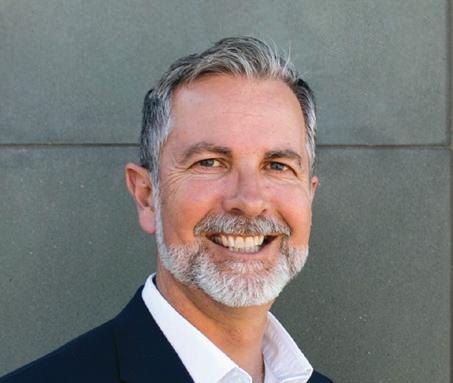
On sporting facilities, Mr Hanson has also campaigned for support for a properly equipped, multi-use sports facility, saying that the remaining “bare” ovals in Woden simply aren’t good enough.
“But there is also a level of local amenity that needs planning, maintenance and support,” he says.
“Not every green space needs to be a full sports field, but they do need to be maintained and functioning.”
While Mr Hanson says Woden’s centre, in particular, has been woefully neglected, he believes that the Phillip business area has been neglected, too.
“I think it’s a lot to do with a
Jeremy Hanson… “The government is using light rail as an excuse for massive development.”
‘north-centred’ government, and local members from the Greens and Labor who have not been able to stand up effectively for local residents.
“I can’t count how many times I have seen a Greens member side with residents when out on the streets, but cave and side with the government once they were back in the Assembly.”
But, whether it’s Woden’s town centre or Phillip, Mr Hanson believes it’s the government’s job to create the environment where businesses can flourish.
“We have had years of business being hit with massive taxes if they wanted to change their lease, enormous increases in commercial rates and huge hikes in charges like land tax,” he says.
“Combine that with neglect and progress becomes near impossible.
“This is all on top of the increases in rates that every single household has had to suffer. Rates have, as we warned, tripled.
“In some suburbs in the area they are going up well over 10 per cent every year. And this is for people whose only main asset is the home they bought in the ‘70s or ‘60s.
“We pay huge amounts in government taxes and charges, but very little is coming back – it’s all been focused on the inner city suburbs north of the lake.”
When it comes to delivering on better planning in Woden, Mr Hanson says it’s important to look at multiple factors, such as attracting local employers, high government charges, the local streetscape and amenity, and proper planning processes need to be in alignment and informed by experts and locals to get the best outcomes.
He welcomes re-energising the area after so many years of neglect but says good planning should always be central to this process.
“You rarely get a chance to fix it afterwards, but you do get a chance to
get it right in the first place,” he says.
“There has been a real failing in this government for a very long time on planning – we’re getting the wrong developments, in the wrong places for the wrong reasons.
“The fact that the Planning Minister recently announced a complete rewrite of the Planning Act shows just how bad the situation has become.”
And when it comes to the region, Mr Hanson can’t look past light rail, saying it’s a major issue.
“It is a mistake to think that this government is using light rail as a transport solution,” he says.
“The government is using light rail as an excuse for massive development.
“Based on the government’s record, I am greatly concerned about what this will mean.
“I am concerned about how up-front the government is going to be. At the last election there was no mention of four years of traffic chaos and delays, there is no detail about how much development will be put on Adelaide Avenue and Yarra Glen and there is still no firm cost.
“[And] I certainly do not support Labor’s position of telling women in Woden they should prepare to get a bus or ride a scooter!”
Mr Hanson says the next stage of the light rail will shape the area for decades to come, which is why it must be done right.
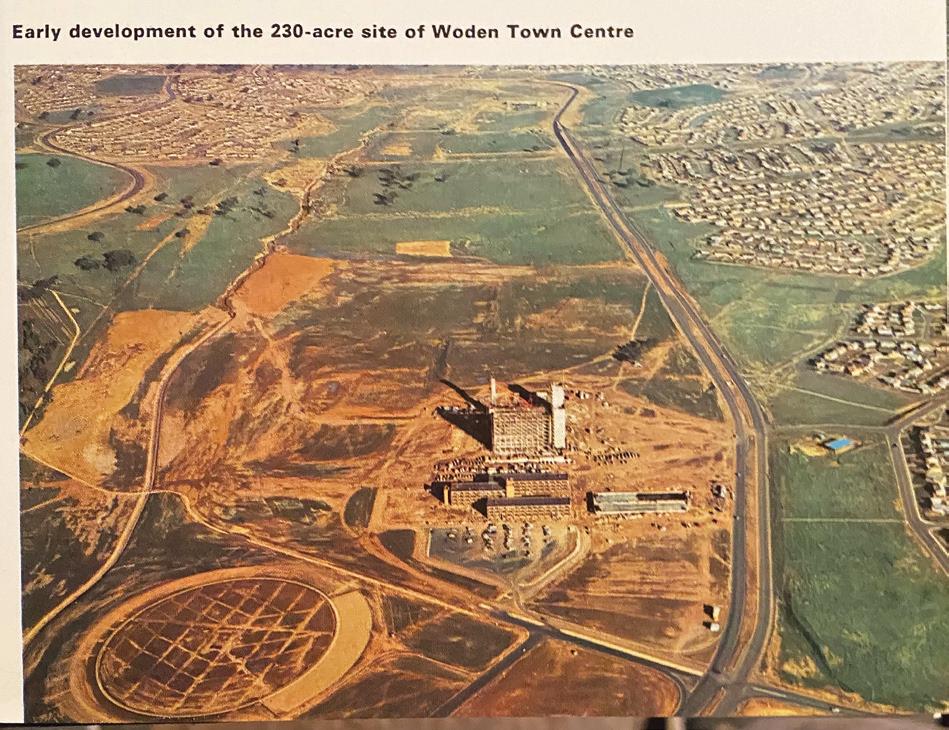

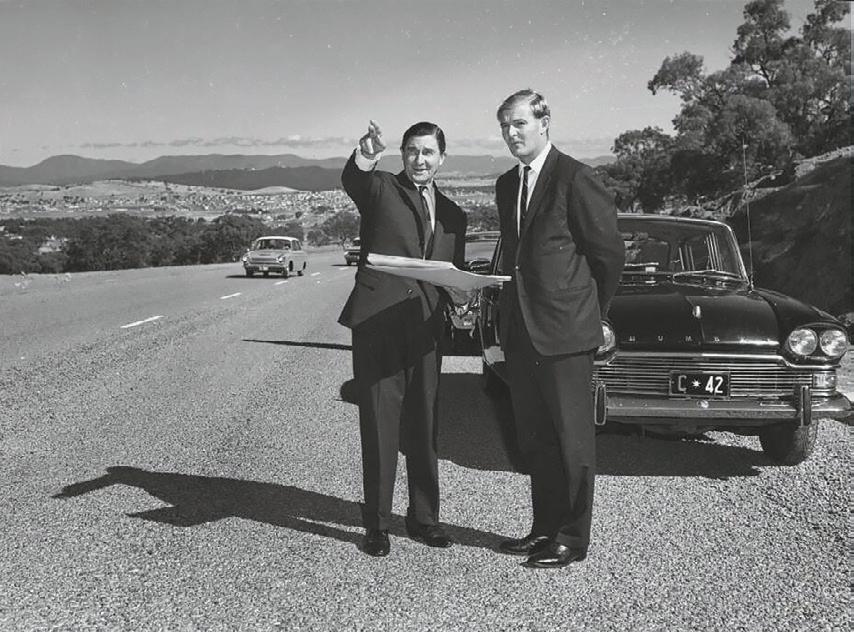
THE middle-aged bureaucrat in a sensible suit and shoes stood atop the elevated rise, looking out on a valley encircled by gently undulating hills.
To the north, Canberra’s Civic Centre was a mere speck. On a ridge to the west, it is possible to make out the Mt Stromlo Observatory, sunlight glinting from the dome of 1911, housing one of the world’s largest astronomical telescopes.
“Right down there, boys. A thriving centre of houses, shops, offices, schools and sports fields!”
The sons of Sir John Overall thought their dad may have lost the plot.
The inaugural commissioner of the National Capital Development Com mission (NCDC), appointed by Prime Minister Robert Menzies in 1957 to see Canberra’s floundering development cemented, was gesticulating at a flood plain dotted with sheep, scrubby trees and a mere handful of dwellings.
It seemed more suited as an exten sion of the only other real sign of life: the gravestones of the Canberra General Cemetery, its first residents in situ from 1936.
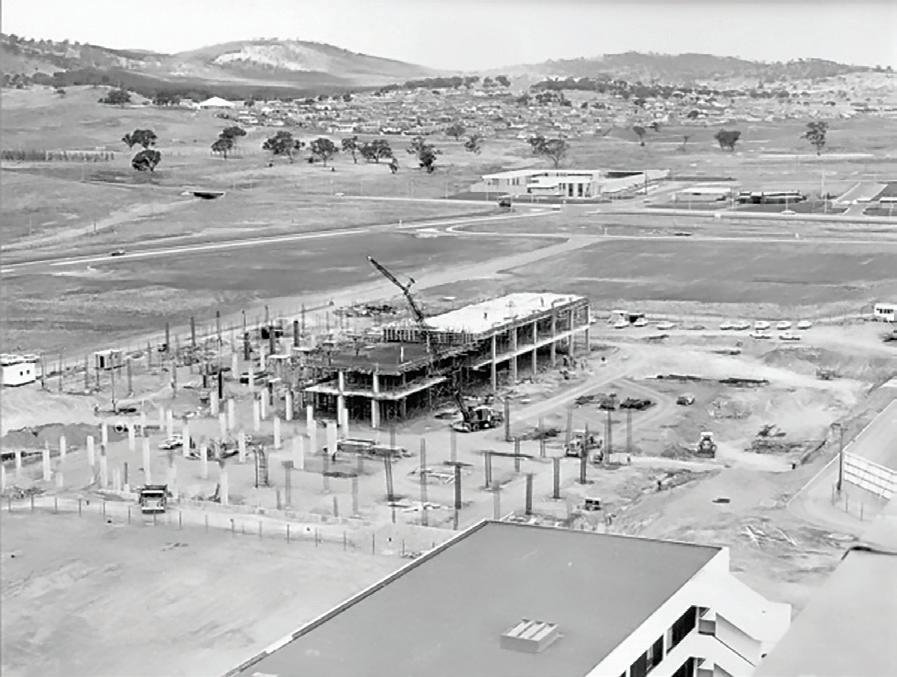
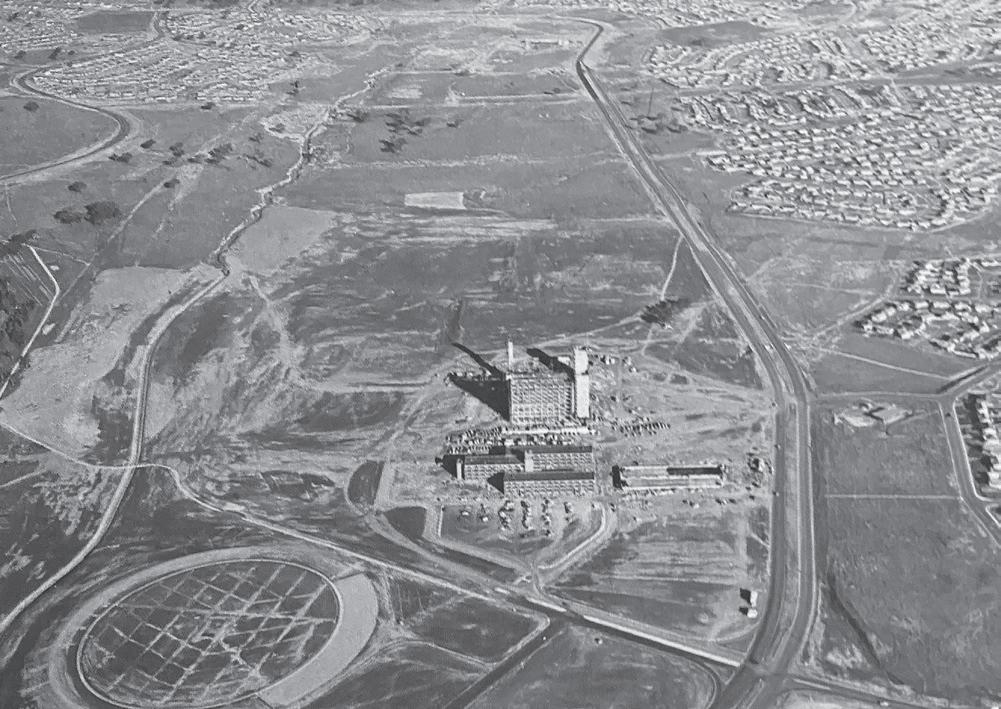
Then in the early 1960s, the Overalls had trooped up Red Hill for a panoramic view of the site of the capital’s first “new town”, declared a “great experiment in decentralised urban planning”.
What was recorded as thousands of acres – population, nine – being foretold as the promising home of the Woden district was yet to see a single sod turned.
On the front page of “The Canberra
Times” of April 14, 1962, Overall noted its beginnings marked a “significant milestone in the history of the National Capital”.
The location was connected with one of the earliest and longestsurviving European properties in the original Land District of Queanbeyan.
The various occupants were a who’s who of the region.
From the late 1820s it was part of a vast area known as “Jerrabomberra”, land grant of John Palmer, purser on the First Fleet’s flagship “Sirius”.
In the 1830s, a substantial southwest portion came into the possession of Irish surgeon, James Fitzgerald Murray.
The good doctor – brother of the first local politician and Yarralumla owner, Terence – was responsible for the convict-built, brick-and-stone homestead and the moniker. Numerous sources suggest his choice was for the king of the Norse gods and Thor’s dad, Odin – in Old English “Woden”.
An alternate assertion is that it’s from an Aboriginal word for possum.
Mrs Anna Bunn also took up residence. She authored what’s believed in the first novel published “on mainland Australia and the first on the continent by a woman” – albeit anonymously –“The Guardian” in 1838.
Thomas Rutledge, squire of Carwoola and Martin Byrne, of Queanbeyan’s Royal Hotel, featured as proprietors before “first family” of Duntroon, the Campbells, took over.
On the creation of the Federal Territory, the house and 1200 acres were shaved off. The wider surrounds, referred to as Yarralumla Creek Valley, were parcelled out as World War I soldier settlements.
One was Yamba: essentially today’s Phillip and Swinger Hill. Rather than a “swinging ‘60s” enclave, the latter was “one of the largest mediumdensity housing projects in Australia” – named for its 1930s surveyor, Louis Swinger.
With the district soon to revert to “Woden”, in 1963 the first house in the first of 12 suburbs, Hughes, was completed. “Woden – V266” was a two-bedroom, less than 11-square construction costing 4600 pounds –around $140,000 today.
Minister for the ACT Doug Anthony was an original resident, keen to encourage reluctant Canberrans to similarly branch out.
Long-time locals confirm very attractive prices for blocks – as low as $600 (less than $10,000 today) – was the real enticement for “moving out to the sticks”.
Much like Canberra generally, after a slow start, Woden progressed apace.
The “Town Centre” commenced in 1967. In short order there’d be the Plaza, a sixth golf course for the
capital and its second major medical facility. Six years on, “Canberra’s tallest high-rise”, the more than 20-storey former MLC Tower, dominated the skyline.
The accelerated growth wasn’t without criticism – and controversy.
On January 26, 1971, a torrential storm saw seven drowned near Yarra Glen.
An inquiry held that the multiplicity of new buildings had outstripped the infrastructure necessary to keep up.
The first of four “satellite cities”, after Woden came Belconnen in 1967, Tuggeranong in 1973 and Gungahlin two years later.
Each was planned as “a substantially self-contained town, physically separated from, but conveniently related to, the main City” with “limits on their growth and retaining the parkland, ridges and open space”.
Given all that history, dispiritingly, an online search of Woden’s “Places of Note and Interest” reveals a small list that includes the Bus Interchange and “the Woden Storm Drain – one of 26 legal graffiti sites within the ACT”.
There’s other ironic quirks.
Like a Canberra pub named for King O’Malley who for 18 long years made it illegal to have a drink in public in the Territory, Woden’s suburb Torrens is for the bloke who created the Land Titles system for freehold ownership of property – the opposite of the way it’s done in the ACT.
Wonder what the god of wisdom would make of that?
* Yes, Nichole’s married to the second of those sons and for more on her work see anoverallview.wixsite/blog.
LOCKDOWN is very inconvenient. Most Canberrans, whether they agree or not, recognise that the reason behind the approach is primarily twofold: to reduce sickness and death, and to ensure our health systems are not overwhelmed.
The single message from across jurisdictions is that coming out of lockdown requires high rates of vaccination. Figures of 70 per cent, 80 per cent and 90 per cent have been bandied about by different interests. Each of those percentages are dependent on a wide range of other preventive activities.
The additional factors that are tied to each of these percentages make it much more difficult to set a concrete path. The political considerations ought not be underestimated. Setting a plan and then not delivering is likely to bring far more criticism and undermine confidence than not having a plan at all.
This might explain why it took until late September, and seven weeks into the lockdown, for Chief Minister Andrew Barr to release his plan for a way out of the lockdown.
It does explain to some extent why Barr came under attack on the government’s approach to COVID-19
If our health system comes under serious pressure from an increase in COVID-19 cases, it can be expected there will be a significant reduction in hospital access and in elective surgery.
by the Liberal Opposition Leader, Elizabeth Lee.
Following Premier Dan Andrews’ announcement of a plan to take Victoria out of lockdown, she raised the question of why the ACT cannot do the same.
have no plan at all as to how Canberra will safely transition out of lockdown is mind boggling.”
are talking about full protection.
At least Andrew Barr has been warning about over-simplified interpretations of the Doherty Institute’s early modelling. The 70 per cent figure, that is so often used by Prime Minister Scott Morrison, would mean a heavily strained ACT Health system and certainly increases in the number of cases and deaths.
If our health system comes under serious pressure from an increase in COVID-19 cases, it can be expected there will be a significant reduction in hospital access and in elective surgery. A substantial increase in waiting times could be expected. Those who are dependent on the public health system would be the most disadvantaged.
possibility of further variants beyond Delta. Such variants could be more infectious and be more devastating.
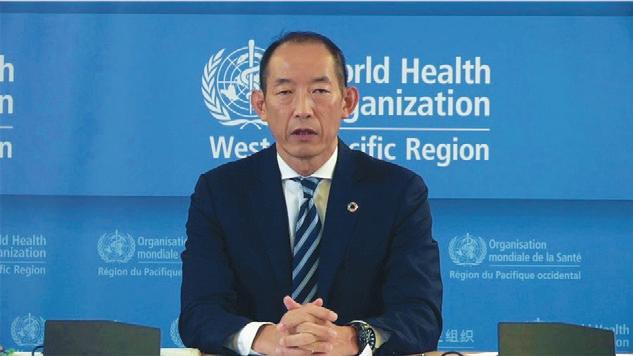
Dr Takeshi did thank Australia for the role that it played in the region. Australian medical emergency teams have been deployed when surges have occurred in places such as Papua New Guinea and Fiji. Additionally, help has been provided with training in the region around such areas as health promotion, disease prevention and contact tracing.
In a recent press release Ms Lee argued: “Canberrans were rightly disappointed at the lack of a plan released by the ACT government”.
She went on to argue that the “Chief Minister and the Health Minister repeatedly said that they cannot provide more details because there are too many uncertainties”.
She did concede, “most Canberrans understand that a plan or roadmap would be influenced by case numbers and vaccination rates and that any plan put in place may need to be adjusted”.
She then tapped into the frustration
Some lessons can be learnt from successful vaccination to control highly infectious measles. In March, 2014, Australia was declared by the World Health Organization to be free of endemic measles. However, non-immune travellers returning to Australia did bring the disease back in 2017 when there were 84 cases. Protection from measles has required vaccination coverage rates of around 95 per cent of the whole population from infants to the elderly. For full protection against the similarly infectious Delta variant of COVID-19, we can expect a comparable story. However, very few governments
There is another consideration regarding the spread of COVID-19. The World Health Organization’s Western Pacific director, Dr Takeshi Kasai, provided a warning when speaking at the Public Health Association of Australia Public Health Conference recently.
He argued that while vaccines are not being distributed widely amongst the most vulnerable in low and middle-income countries, there is a
Focusing on priority groups such as the elderly and health workers will be a key part of dealing with the pandemic. However, access to sufficient vaccines and the willingness of the vast majority of populations to be vaccinated in Australia and across the world will remain the key to success in dealing with the COVID-19 virus.
Michael Moore is a former member of the ACT Legislative Assembly and an in dependent minister for health.He has been a political columnist with “CityNews” since 2006.
“Virtue has a veil, vice a mask” – Victor Hugo MASKS are commonly worn for protection, disguise or entertainment and have been worn since ancient times. But before COVID-19 most of us probably only occasionally wore them – health workers and AMC occupants excepted.
Now most of us wear them daily. Someone recently complained: “Andrew Barr told us to wear a mask to go to the supermarket. I did, but everyone else wore clothes.”
Older Australians will be familiar with the masked Lone Ranger and his faithful native American sidekick Tonto. Not a PC arrangement these days. Anyway, for those who came in late, the Lone Ranger was a former Texas Ranger who wore a mask to conceal his identity as he travelled through the Wild West fighting for law and order.
That seems a fairly flimsy excuse for wearing a mask – after all, Clark Kent managed to conceal his Superman identity by just wearing spectacles, but perhaps Lois Lane was a bit slow on the uptake. Batman’s disguise was a bit more convincing with his more extensive masking that
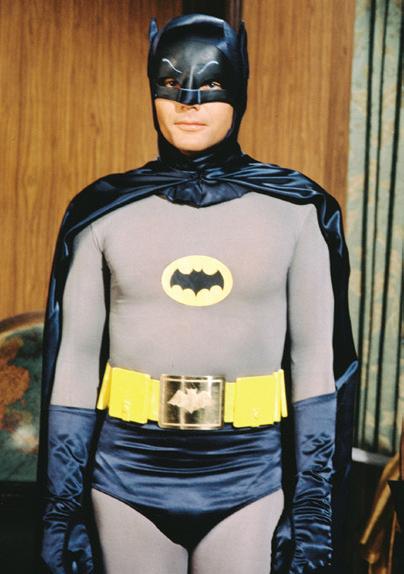
a public area with their hands cuffed behind their back.
Masks are also worn by violent demonstrators to conceal their identity – such as anarchists whose face masks also provide protection against riot-control agents.


Masks are sometimes worn by penitents in religious ceremonies to make the act of penitence more selfless. Masks are also worn by vigilante groups. The cone-shaped mask used by the Ku Klux Klan is intended to hide the clansmen’s personal identity and project a powerful and intimidating image.
Members of the group Anonymous frequently wear Guy Fawkes masks, adopted from V for Vendetta when they attend protests (V for Vendetta in DC Comics is an anarchist wearing a Guy Fawkes mask who conducts a one-man campaign to kill his former captors, bring down the fascist state, and convince people to abandon fascism in favour of anarchy).
Muslim face coverings are not intended to disguise the wearer’s identity but fall foul of some laws introduced to prevent people from disguising their identity – such as the French ban on face coverings. There is some justification for the French measure. France has had many deadly terrorist attacks and terrorists have been known to use burqas to conceal weapons and suicide vests.
Some UK SAS members reportedly wore burqas in Afghanistan to hide
No doubt many have welcomed the anonymity provided by COVID-19
For women it means less time on make-up and men less time shaving. Also, if you’re feeling antisocial you don’t have to stop and talk to people
Most people in Canberra have opted for plain masks but online there are lots of interesting options. However, some consider it offensive to have the national flag as a facemask.
Masks can be disconcerting for pets. Dogs in particular rely on their owner’s facial cues to know how to respond. Cats are unaffected as they’ve yet to notice their owners. Looking to the future, perhaps in 30 years our children will be saying: “You know kids, back in our day we had to wear facemasks everywhere we went – we didn’t have those fancy hazmat suits you all wear today.”
Clive Williams is a Canberra columnist.

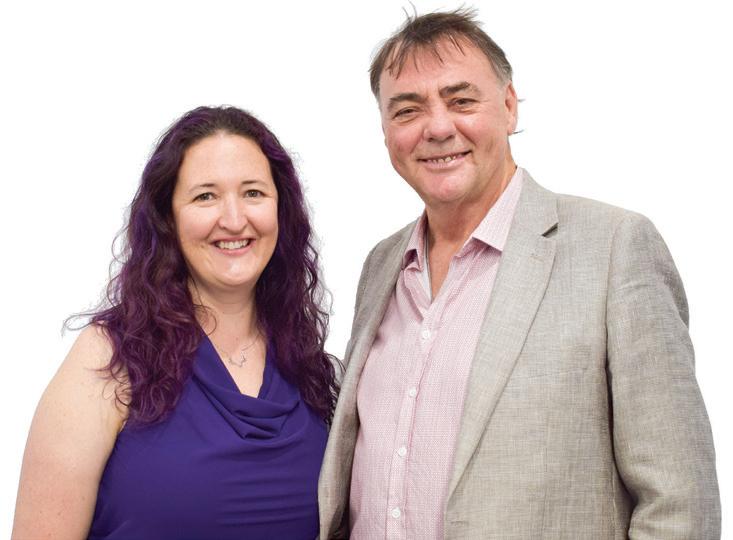

DRAWING on almost two decades of experience,
Comprehensive Genetic Counselling owner Belinda Dopita says the rapidly evolving science of genetic counselling is making a “huge” difference in people’s lives.
“It really comes down to risk assessment and offering guidance to help inform people’s decisions.“Genetic counselling involves talking to anybody about their family history of genetic conditions and their likelihood of either developing a condition or having a child with a genetic condition,” says Belinda.
“It wasn’t that long ago I saw a couple who were both found to be carriers of an incredibly rare condition and had they not gone through reproductive carrier screening they would never have known this condition was in the family until that child was born with it.”
Belinda’s expertise has seen her work for the Centre for Human Genetics in Boston as well as at the Westmead Children’s Hospital in Sydney.
Now working at the Canberra Hospital, she also opened her private practice Comprehensive Genetic Counselling in 2013 to provide greater access to
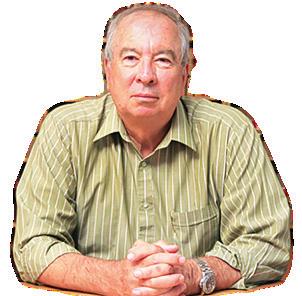

genetic counselling.
“It’s something [that’s] now available relatively inexpensively,” says Belinda.
“In the past we were only able to test one gene at a time but now one sample alone can test for 300 conditions.
“It’s an area of science that’s changing rapidly and one that’s relevant to so many people.”
Belinda says she can also offer genetic counselling through video calling apps such as Zoom, which have opened up possibilities for many more people.
“I can offer consultations to people Australia-wide, especially to rural areas where they may not be able to easily access this information,” she says.
“I even helped one patient living in Brussels in Belgium recently.”
Comprehensive Genetic Counselling. Call 6162 0582, email belinda.dopita@ gmail.com or visit canberragc.com

By Helen MUSA

THE Canberra lockdown has delayed prize announcements for the inaugural annual National Capital Art Prize, but over at Aarwun Gallery in Gold Creek, it sounds as if excitement is still high.
During frequent phone calls to the prize’s founder, Robert Stephens, the sounds of voices, banging and hammering could be heard and as he declared a few days ago: “You wouldn’t recognise the gallery,” which, with a field of 127 finalists, is packed to the rafters. One thing Stephens is particularly proud of is the number of ACT artists shortlisted – 16 of them, with veteran landscape painter Sandra House chalking up two shortlisted entries and Claire Shepherd Primrose, who is defined as ACT/NSW, also chalking up two.
There are also regional artists on the list who are often identified as Canberran, including Kerry McInnis, of Bungendore.
With 46 finalists from NSW, 21 from Victoria, 12 from WA, 10 from Queensland, 8 from the NT, 6 from SA and 3 from Tasmania it tends to confirm the impression that Canberra artists punch above their weight, but, of course, statistics will never be able to predict the outcome.
Judges are critic and author Sasha Grishin; Justice John Sackar; artist and former head of the National Art School, Bernard Ollis; indigenous artist-teacher, Lynnice Church; NGA curator Peter Johnson; head of the ANU School of Art & Design, Rebekah Davis and director of CMAG, Sarah Schmidt.
After getting the numbers down from more than 1000 submissions, their task is now to judge shortlisted artworks for a second time to decide the four category winners – “Open”, “First Nations Prize for Indigenous and Torres Strait Islander Artists”, “Landscape” and “Student”.
The prize pool of $45,000 includes $15,000 each for Open and First Nations artworks, a $5000 landscape prize, a $2500 People’s Choice Award and an art scholarship valued at $5000 available to current ANU students.
While Stephens has spoken of the devastating impact of covid on the arts sector, his vision for what he sees as an ongoing prize is an idealistic one – to promote culturally diverse artistic endeavours, showcase Australian artists, support the artistic endeavours of young people and provide a forum where art can be viewed, studied, critiqued and sold.
All shortlisted works can be viewed at nationalcapitalartprize.com.au
Artists entering the prize were asked to submit an artist’s statement. Here are some thoughts of the ACT’s painters.
1 Samantha Corbett’s painting “We All Waited for It to Pass” explores the moments of intimacy and distance that characterise this technological age. Digital imagery from her social media circles became a creative entry into painting to develop an aesthetic that speaks to the oscillation between figuration and abstraction, imagery and feeling.
2 Blake Edwards writes of his work “Pipuwakirri”, that after visiting the National Gallery and Albert Namatjira’s works he immediately connected with his depictions of a pastoralist landscape of his country.
“Halfway between First Nation Australians and the Sami in Norway”, he explains, his work shares the theme of modern international cultural exchange.
Helen Goodwin’s image, “Gibraltar”, was created from her experience of Gibraltar Falls looking out into the landscape to capture the transition of light moving across forms. She has previously studied and worked in the fashion industry as a textile designer.
3 For more than 45 years Sandra House has painted predominately in oils, and is known for her paintings of the bush and Canberra surrounds. She says of “From William Hovell Drive”: “I travel down this road all the time, especially in the early morning”. Her second shortlisted work, “In the Brindabellas”, was, she says, created to show one of her favourite places.
Solomon Karmel-Shann’s “Still Life” explores the effects of placing a figure in a still life. The resulting dynamism is stark – the feelings of the young man, the notion of journeys and darkness of the unknown. She is a 24-year-old painter who is interested in how strange, unexpected and invisible things are a part of our world.
4 Jack Mather’s portrait “Autumn’s Falling” is based on the theme of autumn and the falling of leaves in the landscape. However, it is the subject that is falling, through the bright colours of autumn not the leaves. “I am a visionary artist and creative,” he says.
In creating “Hear the Music”, Joan McKay, a wildlife carer, used a scalpel, tattoo needles, microfibre pen and an engraving pen to scratch several layers into the Ampersand Scratchboard to depict Mallee and Pebbles, two red-necked wallaby joeys, aiming to capture their personalities, their sense of play, and their excitement.
Thet Naing’s landscape oil painting, “Autumn Bliss” highlights autumn in Canberra, especially the beauty of Lake Ginninderra created by changing seasons.
5 Varvara Naumova studied art at the Abramtsevo industrial arts college in Moscow before moving to Canberra in 2015. “Between Day and Night” was inspired by a spectacular sunset which appeared over the Brindabellas. There are always real stories in her artworks, hidden behind metaphors – visual poetry, she says.
Crystal Prior, whose work “Divergent Reflection” is in the student section, says: “Looking for an unorthodox way to capture my self-portrait, I caught my reflection in a spoon while I was drinking my tea and thought this would push the boundaries of my vanity.”
Also, an accomplished textile artist, she has constructed quilts.
Continued Page 20

While we’re all experiencing these unique times, why not use this opportunity to get together your old videos, slides, records and cassette tapes so Songland can transfer them onto a digital format for you, your family and friends. Then you can relive the memories when you’re all next together!
See you soon at Songland



Continued from Page 19…
6 Artist-curator Claire Shepherd Primrose’s two paintings, “Peripheral Vision” and “Beyond Where We Are”, recreate surfaces, textures and colours evocative of particular places; each work attempting to re-collect layers of the place at once of and from memory melded with specific gatherings.
“Lucy’s Dreams” by Alice Pulvers is a portrait of her youngest sister and fellow artist, Lucy Pulvers. The darkness surrounding Lucy and the random scattering of elements suggests a dream-like reverie. Educated in Japanese schools until she moved to Australia in 2000, Pulvers’ work strongly reflects her early life in Japan and in her compositions she overlays many layers of colour and pattern.
Annette Rennie’s landscape painting, “Dusty Delivery” depicts a load on a hot, dusty day, and asks: “Will this heavy load make delivery time?” “The cloud of yellow dust against the blue sky and grey red road drew me to this scene. I liked it so much I painted it three times,” she says.
7 “Winter Awakening – Kamberri 1820” by Andrew Smith depicts the time many indigenous mobs and clan groups gathered to talk and trade in Kamberri. Throsby recorded many indigenous family groups around the rivers and foothills, hunting the grassy plains, fishing, and harvesting yam daisies, seeds and berries from the land. As a keen bushwalker, Smith says: “The science of capturing colour and light inspires me and when colour, light and emotion come together, you know you have a good painting.”
Janet Thatcher’s artwork “Hear Us” uses realism to lead the viewer on a unique and emotional journey. Passion, love and a life-long affinity with animals is what motivates her photo-realistic works in pastel and velour.
8 Henry Xuning originally studied at the Central Academy of Arts and Crafts in China. In “The Pandemic” he suggests: “Maybe we are still keeping the surface calm, but my paintbrush accidentally touched our inner panic and anxiety.”


ARTISTIC director of the Canberra International Music Festival, Belgium-born Roland Peelman, has emailed from of all places, Flanders Fields, to announce the return of the festival in 2022 under the theme “Pole To Pole”. It refers, he says, not only to the extremes of our planet, “but also the many pathways that hold us together, the ancient song lines that cross the Austral ian continent and the new connections that provide life and new creativity.”
THE annual Capital Arts Patrons’ Organisation auction, scheduled for October 30, has been postponed to March. However, the annual CAPO grants round goes on, with 20 grants amounting to about $32,000 on offer. Applications to capital.artspatrons@gmail.com by midnight, October 4. Application details at capo.org.au
THE National Aboriginal Islander Skills Development Association Dance College has moved this year’s auditions online to protect applicants, families and communities, with plans to provide all four of its curriculum courses in 2022. Applications close November 1, but NAISDA’s audition team is available for a toll-free yarn 8.30am-5pm, weekdays on 1800 117116 or by email at auditions@naisda.com.au
A WALK along the tracks and pathways around Bingie on the south coast during the covid restrictions and the sense of “gratitude that this small patch was not burnt, gratitude that I am still motivated to walk and work outdoors” is among the pleasures captured by painter Stuart Whitelaw in his exhibition at Gallery Bodalla, online at gallerybodalla.com.au
IRISH-Australian poet, Lizz Murphy, who fine-tuned her poetry skills while commuting by bus between Binalong and Canberra, has released her ninth poetry book, “The Wear of My Face” through Spinifex Press. Murphy writes about everyday life, nature, landscape,
suburbia, skies, social issues, world conflict. Her writing can be accessed at lizzmurphypoet.blogspot.com
IRANIAN-born Adelaide artist Hossein Valamanesh is well-known in Canberra for an exhibition in 2003 at the Drill Hall Gallery, for a residency in the ANU’s sculpture workshop and for his theatre designs. Now Valamanesh’s first exhibition in Europe, “This Will Also Pass”, is running until February at the Institut des Cultures d’Islam in Paris.
THE Australian Wind Symphony is working on a series of albums, the first of which will be “Captivating – Live”, featuring newly-mastered and some previously unreleased recordings. The album release is a while away, but there’s a single of an audience favourite, Paul Hart’s “Cartoon”, accessible via open.spotify.com
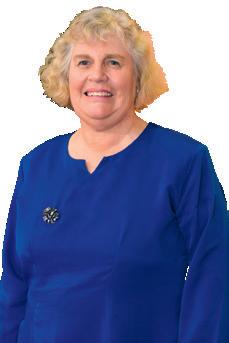
AUSTRALIA’S sunburnt country has many a time played a stunning role in movies, but with “The Dry”, streaming on Amazon Prime from this week (September 30), it’s captured in some of its most haunting detail to date.
In this taut crime drama, federal police officer Aaron Falk returns to his droughtstricken hometown to attend the funeral of his childhood friend who is alleged to have murdered his family before turning the gun on himself.
Falk quickly gets swept into the mystery when locals bring out accusations of his own involvement.
Eric Bana is front and centre here and does a great job playing, well, Eric Bana.
Not that that’s a bad thing, as long as it has nothing to do with the incredible “Hulk”, which is on Netflix, regrettably.
“The Dry” got me in the mood for what other Australian movies are on offer and luckily, there’s heaps of great home-grown films to be streamed.
Perhaps one of the most haunting “Wake in Fright”, can be found on Stan.
Here, a preppy primary school teacher from Sydney is thrown into limbo when he becomes stranded in an Australia desert town known as “The Yabba”.
Losing his money on a gambling spree,
the teacher tries all he can to escape but only becomes more entangled in the culture of the drinking, fighting and kangaroo-hunting locals.
The words of master director Martin Scorsese after seeing the film at the 1971 Cannes Film Festival say it all: “It is a deeply, and I mean deeply, unsettling and disturb -
ing movie. It left me speechless.” Australia’s impressive roster of crime drama doesn’t stop there though.
For those wanting more it’s impossible to go past “Animal Kingdom” on Stan, which tells the story of a crime family and its menacing matriarch played brilliantly by Jacki Weaver, and might as well be “The
Sopranos” in downtown Melbourne.
There’s also “Jindabyne”, a hidden gem about a group of friends whose lives become fractured after they delay reporting the body of a girl found on a fishing trip.
The Australian icon “Mad Max” is also on Stan, but for those looking for the hugely popular, modern take on the franchise, “Mad Max: Fury Road”, they’ll have to find it on Foxtel’s streaming platform Binge, or at least use its two-week free trial.
What about a lighter affair though? Well where better to start than Aussie directing icon Baz Luhrmann.
His classic theatre rom-com “Strictly Ballroom” can be streamed for free on ABC iView and his take on the iconic French cabaret “Moulin Rouge!” and modern Shakespearean spin “Romeo + Juliet” is on Disney Plus.
Netflix also has a line up of a few Aussie classics, old and new, up its sleeve.
One, “The Dish’’, tells the sorta true tale of the responsibility thrust upon a ragtag group of scientists on a sheep farm who became the world’s only hope for successfully transmitting images of the 1969 moon landing.
It all plays out at the Parkes Observatory (but, of course, Canberrans know Honeysuckle Creek Observatory was the
real hero).
Netflix also has the quintessential Australian classic “Walkabout”, which tells the story of a teenage girl and her young brother stranded in the Australian desert. Soon their lives are not only saved but changed forever by an indigenous boy who comes to their rescue.
There’s heaps more I could cover in detail, such as “Muriel’s Wedding” (on Amazon Prime) or “The Babadook” (Netflix), but when it comes to Aussie classics, it would be a sin not to mention the Kerrigan family.
They’re of course the hilarious brood from “The Castle”, a film shot entirely in 10 days yet remains a staple Australian satire and has a home on Stan.
There’s so much to be said about the film, but the words of Dennis Denuto, the Kerrigans’ hopeless yet lovable lawyer, in one of the funniest courtroom scenes of all time probably says a lot more in a lot less: “It’s just the vibe... of the thing.”

COVID or no covid… We can all get tired of cooking at home. And with covid, some of us get tired of takeaway that doesn’t always look like a feast for the eyes when it arrives at the house (fair enough, too).
To solve the problem, The Chairman Group has introduced “CG at Home”.
These three-course meals – ready in just 20 minutes – are designed around comfort and aimed at providing an elevated, at-home dining experience. The new “finish@home” menu is inspired by family dinners in Hong Kong. It’s about making life easy while retaining quality and ensuring the main meal is piping hot when served.
I felt like Christmas had arrived early when I was presented with my CG at Home big white box. Inside, neatly laid out and well packaged, were the individual components needed for our complete comfort meal, all pre-prepared and perfectly labelled. Each meal comes with a charcuterie plate, main course, salad and a dessert. Also tucked neatly in the box was a descrip tion of all menu items and instructions on how to finish off the meal. CG at Home even provides a big foil baking tray.

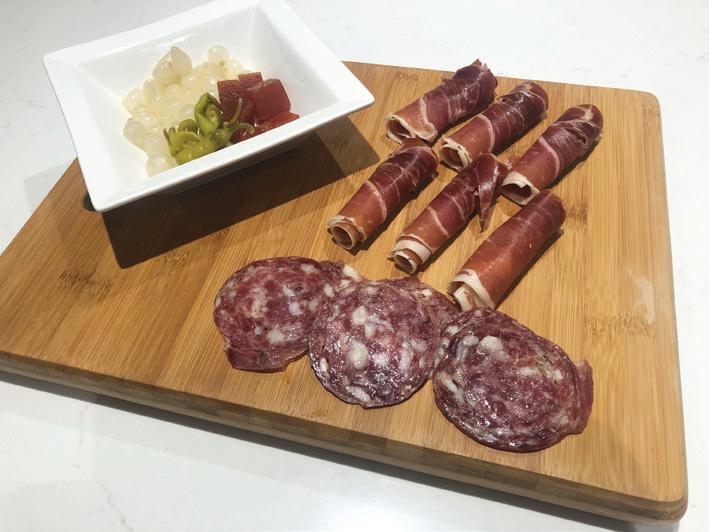
Next we unpackaged and popped the eggfried rice in the microwave for a minute or two.
We then evenly distributed the cheese, semispicy sauce and vegetables (without the beef) on top and popped in the oven for 15 minutes.
Two styles of at-home menus are currently on
The last step was arranging the beef on top and baking for another eight minutes (medium rare)
Rooms (part of the CG), says it’s a nod to the ‘70s and ‘80s dishes often cooked at home in Hong Kong… not quite a formal “East meets West”, but memorable for Hong Kong people nonetheless.
The second CG at Home dinner currently available is the Tea House-style baked seafood rice (with Patagonian Toothfish, Hokkaido scallop and prawn, garlic rice and a bechamel sauce). Both are $110 (for two) and Adrian says CG is even thinking they might make this a permanent offering. Wines are also available to order and there’s quite a lovely selection.





THE soil has warmed and planting of most things into the ground can now be done. It’s a busy, busy time. When planting, make sure the soil is of good quality and has good drainage. Healthy soil equals healthy plants. If the soil is hard, looks boggy and feels heavy then it’s more than likely Canberra’s typical clay soil.
Some additives such as clay breakers can be added to the soil so the plants will grow well. There are powder forms and liquid forms of clay-breaker products on the market. I prefer the latter as it is quicker acting. Clay breaker can be added to the hole before planting a new plant or sprinkled around the garden and watered in.
Clay breaker is calcium and it improves soil structure and boosts root and plant growth. It doesn’t change the Ph of the soils and is useful for natives as well.
SOME of the winter-flowering bulbs have finished and are looking scrappy at the moment. A light fertilise as the leaves are dying back can be done now and this will aid in good flowering for next season.
Try to hold back on cutting any leaves back until at least six weeks after flowering has finished.
LEPTOSPERMUMS (tea tree) are coming into flower and bud. It’s a really good plant for an area that is a little boggy or wet in the garden. Leptospermums are large shrubs up to five metres tall and as small as 50cm tall. They are a tough plant and come in many flowering colours from pink to

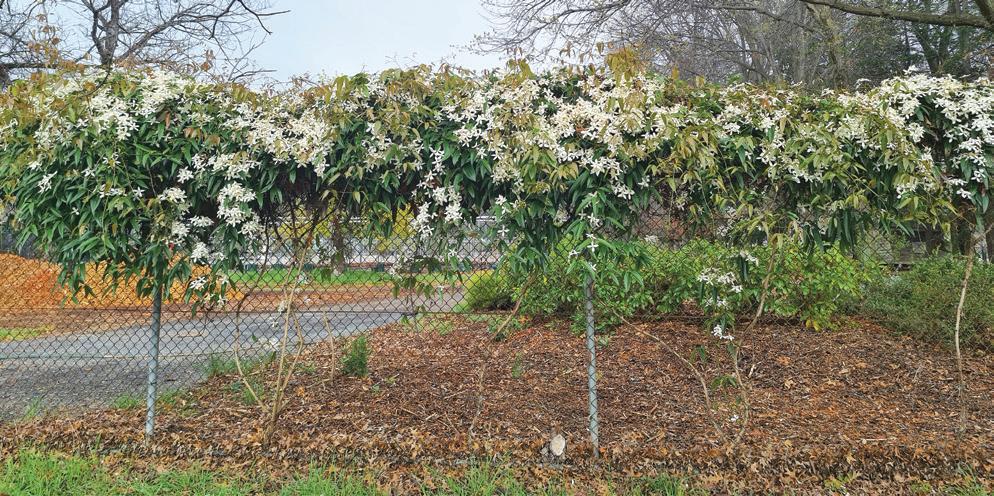
purple to white and every shade in-between. A resilient shrub, it has small leaves and is a terrific habitat plant for small birds.
One of my favourites is Leptospermum “Mesmer Eyes” and a locally bred variety to try is Leptospermum morrisonii “Burgundy”, which grows about three metres high to one and a half metres wide. It has beautiful burgundy foliage with white flowers in the summer and would contrast well in any garden. Fertilise with native organic fertiliser and water well after application.
AS soon as apples have finished flowering and the bees have pollinated the flowers for fruiting, it’s important to net the tree with fly netting to prevent codling moths from entering the fruit and spoiling them.
Other alternatives that can be used for trying to get rid of codling moths are to hang moth traps in the tree and look at websites that sell biological wasps that are predatory insects that target the codling moth.
NOW’S a good time to feed citrus trees and remove old fruit so the tree will put its energy into the new flowers.
This month I have used sheep manure around my citrus trees to give them a boost and covered them with straw mulch.
It’s also a good time to give the trees a good spray with a horticultural oil on the bark and
all over the leaves. This will go a long way to combating bronze – orange bugs in summer. Be sure to keep the water up to citrus that is flowering and trying to produce fruit as the weather warms.
WITH very little chance of frost, tomatoes can go into the ground provided they can be protected at night with a little shelter. If they grow fast enough, there might be some tomatoes for the Christmas table. Tomatoes need at least six hours of direct sunlight to form fruit and there are so many varieties to choose from at the nursery.
Have a look at what tomatoes you prefer, a tomato to slice or cherry tomatoes for salads, red, orange or black ones.
They will need a good trellis or structure to hold them off the ground and there are some new varieties that are suitable for hanging baskets such as grape tomatoes.
There is nothing better than eating a warm, picked, home-grown tomato.
jackwar@home.netspeed. com.au







By Joanne Madeline Moore
ARIES (Mar 21 – Apr 20)
This week a partnership or joint venture could veer off in an unpredictable direction as Mercury reverses through your relationship zone. Or a work colleague could surprise you by making a decision that seems like a backward step. And are you being rather lazy? With Mars (your power planet) and retrograde Mercury both transiting through lackadaisical Libra, you could find your motivation is missing and your adventurous streak has gone AWOL!
TAURUS (Apr 21 – May 21)
You’ll experience the greatest satisfaction if you share your professional dreams with other like-minded people. Collective collaboration is the key. But you need to think long-term and be patient. Do your best to get the balance right between being creative and being thorough; between having inspirational ideas and making practical progress. Mercury is in retrograde motion until October 18, which could disrupt your daily routine or stir up an old health issue.
GEMINI (May 22 – June 21)
With Mercury (your ruling planet) in retrograde mode (until October 18) expect travel disruptions, phone frustrations and/or computer chaos that will test your limited patience. So how can you survive Mercury retro in a reasonably sane state of mind? Make sure you back-up all your computer files; allow plenty of time to get to appointments and catch flights; check and then double-check everything; and be incredibly adaptable. Plus maintain your sense of humour!
CANCER (June 22 – July 23)
If you are crabby with friends or family members this week, then they will be in the mood to fight back! So do your best to be more compassionate and generous towards loved ones. Plus try to view a troubled close relationship from a much more philosophical perspective. As birthday great John Lennon observed: “We’ve got this gift of love but love is like a precious plant. You’ve got to keep watering it. You’ve got to really look after it and nurture it.”
LEO (July 24 – Aug 23)
You’re in the mood to talk, text, tweet, publish and/or podcast as the New Moon, Mercury and Mars activate your communication zone. But with Mercury retrograde, make sure you convey your message clearly and concisely, otherwise misunderstandings are likely. Love planet Venus transits into your friendship and love zone (on Thursday) so Friday, Saturday or Sunday is a good time to organise a catch-up with your bestie or a romantic rendezvous.
VIRGO (Aug 24 – Sept 23)
Does it feel as if your dreams are on hold or your finances are going backwards? This week retrograde Mercury slows things down and increases frustrations. But then lucky Venus swoops in and encourages you to pair up with a loved one and make your combined dreams come true. You’ll need to be patient though! Your motto is from birthday great John Lennon: “A dream you dream alone is only a dream. A dream you dream together is reality.”
LIBRA (Sept 24 – Oct 23)
Stylish Librans have a passion for fashion and Wednesday’s New Moon is in your sign. So it’s the perfect week to refresh your appearance via a hot new hairstyle, a make-up makeover or a creative wardrobe revamp. But with Mercury reversing through your sign (until October 18) and Venus (your patron planet) shifting into extravagant Sagittarius, watch that impulse buys don’t burn a big hole in your budget. Remember – some of the best things in life are free!
SCORPIO (Oct 24 – Nov 22)
Expect a rather intense week as the New Moon, fiery Mars and retrograde Mercury stir up inner compulsions, submerged secrets and hidden resentments. You could also become obsessed about someone from your complicated past. Smart Scorpios will learn from your mistakes, let go and then move on. Inspiration for the week is from birthday great, actress Kate Winslet: “The good and bad things are what form us as people… change makes us grow.”
SAGITTARIUS (Nov 23 – Dec 21)
When it comes to your involvement with a friend, acquaintance, colleague, client, customer, group, club or organisation, this week looks tricky as fiery Mars and retrograde Mercury stimulate your argumentative streak. So do your best to avoid aggravating others, especially from Thursday onwards when Venus transits into your sign. October 7th through until November 5th is the time to smoke the peace pipe as you socialise, compromise and sympathise.
CAPRICORN (Dec 22 – Jan 20)
Impulsive Mars and retrograde Mercury are disrupting your career plans and future aspirations. So Wednesday’s New Moon is the perfect time to revise, reassess and reboot. Think of creative ways that you can navigate the unpredictable covid landscape, adapt professionally and pivot personally. Draw inspiration from birthday great, actress and activist Susan Sarandon: “I take responsibility for the ups and downs of my life, and that is very liberating.”
AQUARIUS (Jan 21 – Feb 19)
Aquarians often feel restless, rebellious and agitated. This week, with the planets illuminating your philosophy zone, you need to slow down and look within as you contemplate, meditate and ruminate. Negotiation planet Venus also encourages you to hold out the olive branch of peace (especially to a stressed friend or colleague). So your motto for the moment is from birthday great, music legend John Lennon: “Turn off your mind, relax and float downstream.”
PISCES (Feb 20 – Mar 20)
Wednesday’s New Moon spotlights close relationships and trust issues. However, with Mercury stuck in retrograde mode, you could suffer from a lack of motivation, low libido or just plain exhaustion. So pace yourself Pisces and don’t take on too much. The weekend stars highlight sensual pleasures, intense negotiations and vivid dreams. But be careful you don’t blurt out something that you later regret. Think (carefully) before you open your mouth and speak!
Copyright Joanne Madeline Moore 2021
22 What is an artificial channel for conducting water from a distance? (8)
23 Name a NSW city, associated with a Victorian city, Wodonga. (6)
24 What do we call a person who acts indecisively? (8)
25 What is an afternoon nap? (6)
Down
2 Name an alternative term for lucerne. (7)
3 What is cartilage also known as? (7)
4 What are flights of steps? (6)
5 Which term describes loss of memory? (7)
6 Which building is occupied by nuns? (7)
7 To be well trained or experienced, is to be what? (7)
13 What are given in return for services rendered? (7)
14 Which Pacific republic was formerly the New Hebrides? (7)
15 What are types of long, narrow pastas? (7)
17 The diameter of a bullet is known as its what? (7)
18 What is a passage taken out of a book, or the like? (7)
20 What, in Christian churches, are the communion tables called? (6)

Are you a 100% buyer? It’s great that you know exactly what you want when you eventually buy. You know that you definitely want a three bedroom, it must have an ensuite, the toilet has to be separated and can’t be in the bathroom, you’ll never put up with a European laundry in a cupboard, it has to be exposed brick never painted, etc. The list of “must” items could be, and often is, a mile long.
When buyers first come to the market, this is a very typical situation. There is zero flexibility, and no matter what, that is the property you are telling us you are going to buy. As agents, we listen to that list, and immediately realise you are a 100% buyer. The chance, and the reality, of finding that 100% “got everything I want” home is simply 0%. Sorry to be brutal.
The reality of life is that even if you build your own home from the ground up with every item that you can think of, I will guarantee about 3 months later, you’re unhappy about one or two aspects of the home. There will be something “wrong” that you didn’t factor in, or never anticipated, at the build stage. For me, during my renovations, it was that pot filler tap with the extendable arm above the cooktop that I didn’t put into the kitchen plans. Plumbing is all done. Lost opportunity.
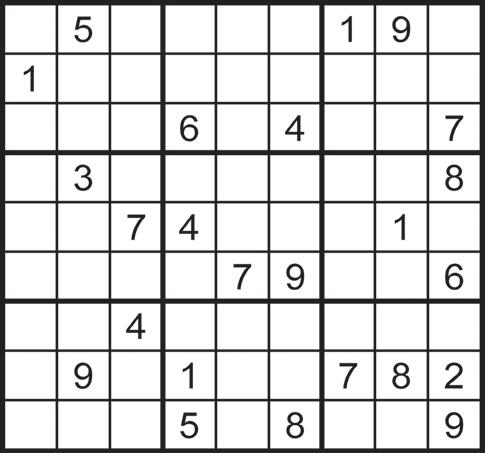
I’ve seen buyers say no to a perfectly good $800,000 home because the fridge space is too small for their current fridge. The mere idea of buying another fridge at $1500 doesn’t even enter their thinking. A buyer arrived at a listing where the owner had green shag pile carpet from the 1960s still in place. Every hardwood floorboard was protected for 50 years – but that didn’t matter. The visitor was so mortified that she never bothered coming into the home, all the while I am trying to get her to go in the garage to look up to see “Jarrah” stamped on all those floorboards. As agents, we know you’ll only ever be a buyer when you are somewhere around the 70%-80% category. Buyers need to compromise, it is as simple as that. Every building report will have something wrong – and that’s where you work out what you can put up with.
At the six month mark of exhaustion, buyers start to realise the error of their thinking. No-one really wants to spend every weekend going to open homes looking for utopia. Getting into the market is the main priority, and as long as you can get many of the things you want – then build-up equity over the years to allow you to modify/improve what you’ve bought. My message to buyers is to please not dismiss a property on what they first see. The only time you will turn into an actual buyer is many months down the track when you’ve realised you need to compromise.
Remember if you are thinking of selling, the earlier I visit for an appraisal, the better.
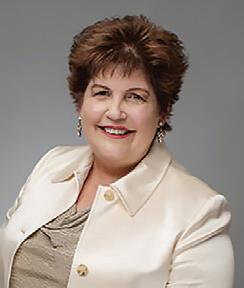

We assist you with:
Planning and design of custom builds or modification to your home
Workplace modifications to make working easier, efficient and less painful
Car modifications and driving assessments - if you have been told you need this Applications to the NDIS and other schemes e.g Housing and Disability Support Pensions
We work closely with our team of physiotherapists, exercise physiologists, art therapy and dietetics at Build a Better Me: Arthritis, Pain Support & ME/CFS ACT to provide you with the best support possible!
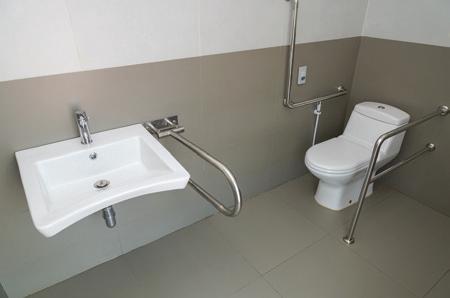
You do not need to have any particular condition to utilise our services, just a desire to ‘Build a Better You. OCCUPATIONAL THERAPISTS HELP MAKE YOUR EVERY DAY TASKS EASIER