PRAISE
Committee
Canberra



Committee
Canberra





By Nick OVERALL

NEW research reveals Canberra drivers are the biggest road-rule breakers in Australia, and CEO of the Australasian College of Road Safety (ACRS) Dr Ingrid Johnston says it’s time to slow down.
The survey, commissioned by Ford, found one in five Canberrans believe driving over the speed limit is okay and 18 per cent admit there are some road rules, of the total 350, that they don’t know.
According to the ACRS, one in three road fatalities are attributable to speeding, making the figures all the more concerning.
“In Canberra we are used to being able to think we can drive faster because we’re not limited by traffic, there’s more of an acceptance of speeding in Canberra than there should be,” says Ingrid.
“We have to be more aware
that even five kilometres over the limit significantly increases the risk. In Canberra we still have more than 10 crashes involving an injury every week.”
Bringing together academics, practitioners, industry players, local government and advocacy organisations, Ingrid says the ACRS has a goal to reduce Australia’s annual road death toll of more than 1100 to zero by 2050.
To achieve this, the college wants speed limits reviewed nationwide, with Ingrid saying Australia only needs to look overseas to see the difference slowing down can make
“When Toronto, Canada, reduced speed limits from 40 to 30 km/h in 2015 they saw a 28 per cent decrease in road crashes, and serious and fatal injuries were cut by two thirds,” she says.
“We have seen reductions in road casualties when speed limits were reduced in many cities and countries, from Tanzania to Colombia, Bogota to Bristol.
“When you’re going slower you’ve got a bigger reaction time. If something happens you’re more able to respond to it, that’s vital for saving lives.”
Since 1993: Volume 27, Number 32
Arts & Entertainment 13-15
Canberra Matters 6
Cinema & Streaming 14
Crossword 23
Dining 15
Garden 22
Horoscopes 23
Letters 12
News 3-12
Politics 9

Seven Days 4 Cover: Francis Owusu, CEO of Kulture Break. Story Page 11. Photo: Holly Treadaway.
Rallimax has the latest wheel and rim straightening lathe, enabling us to successfully realign most damaged alloy wheels.
6280 5967 rallimaxsport.com.au
ing habits have become more erratic – like they’ve forgotten how to drive after being at home.”
Ingrid says it’s part of a bigger problem of drivers becoming complacent.
“Driving is simultaneously
Managing Director: James Anderson, 0404 077605, james@citynews.com.au
Director: Kate Meikle, kate@citynews.com.au
Senior advertising account executives: David Cusack, 0435 380656
Tracey Avery, 0477 939999
Advertising account executives: Damien Klemke, 0439 139001
Tim Spare, 0423 381691
Editor: Ian Meikle, editor@citynews.com.au
Digital news editor: Danielle Nohra, danielle@citynews.com.au
Journalists: Nick Overall, nick@citynews.com.au
Belinda Strahorn, belinda@citynews.com.au; Kathryn Vukovljak, kathryn@citynews.com.au
Arts editor: Helen Musa, helen@citynews.com.au
Production manager: Janet Ewen
Graphic Designer: Douglas Lima
Proof reader: Glenda Anderson
Accounts: accounts@citynews.com.au

fatal crashes on highways, it’s the urban areas where most of the injuries occur.
“It happens when drivers are comfortable, when they’re on autopilot and not expecting it,” she says.
“Serious accidents can happen 500 metres from home when you’re just going down to the shops or even pulling out of your driveway.”
She also says it’s younger drivers who remain the most at risk.
Heading towards the 2050 goal, Ingrid says the ACRS has a “massive challenge” ahead of it, especially with how rapidly vehicle technology is moving.
“Autonomous, self-driving vehicles are coming fast and they’ll be a game changer for safety because human error is the number one cause in crashes,” she says.
something people think about
“You see a child go out in a car and you hope they’re okay, but we don’t really think about that being a big policy issue in Australia.
“Vehicles are lethal weapons, we need to keep that in mind every single time we’re behind the wheel.”
While Ingrid says we typically see more dramatic and
“The chances you can encounter every type of experience while learning to drive like rainy weather, snow and ice, thunderstorms, temperatures so hot that the road is melting, kangaroos jumping out in front of you, there’s no chance you’ll be able to get on to every single one,” she says.
“Sometimes there can be a temptation for parents teaching their kids to let them drive to and from soccer every weekend to rack up hours. That’s great because it’s regular, consistent driving, but it’s not a variety of situations.
“It’s not changing up for day time vs night time, urban vs rural settings and more, and that variety is crucial.”
“But there’s all sorts of infrastructure upgrades required. We have to think about autonomous vehicles on dirt roads for example, where the road and the car can’t talk to each other.
“There’s going to be a long transition period, where you’ve got a mixture of regular vehicles and autonomous vehicles sharing the road at the same time.”
Driving towards this future, Ingrid believes patience is indispensable in achieving zero deaths on our roads.
“Simple courtesy plays such a big role. It’s not going to mean the world comes to an end if you just ease off slightly and let that person in,” she says.
“That might just prevent a crash.”

GARDENING guru Cedric Bryant has been part of the fun and fabric of “CityNews” for more than a decade.
He worked with me when I ran “The Canberra Times” but, after 24 years, was sent packing in a heartbeat by its editor.
“It was a sudden thing, he called me into his office and told me that he likes change and that, as of now, I was terminated,” Cedric candidly told reporter Kathryn Vukovljak in the story announcing his arrival at “CityNews” in February, 2011.
But, as a gardener, he’d know about the silver linings in clouds and I was proud to give him a weekly page. And he’s never missed a week. Not one. Until now.
A horticulturist (“Never horticulturalist, Ian”), he trained with influential gardening expert John Brookes in the UK in 1988, and operated his own commercial nursery and herb garden at Yass. He designed gardens for more than 45 years and numbers among his clients famous Australians, leading locals and national institutions.
Cedric’s not a man given to fads. His gardening writing is clear, simple, straightforward advice on how to make the best of your garden, big or small, whatever the season.
Though (shock, horror), he did break from the traditional advice of pruning roses in late August to advocating a prune-’em-anytime approach. That shook a few leaves.
Through “CityNews” columns, he has worried about the shrinking size of the

suburban block and its inability to grow big trees or offer enough room for kids to play.
He’s been critical of how the Floriade was managed and presented, unhappy that the thinning floral density of the flowerbeds was part of cost cutting and that the flowers were secondary to other entertainment.
He was pretty well a lone voice against the choice of trees lining the tram route, concerned at the dangerous prospect of falling branches. Only time will tell if he was right.
Cedric established his garden design and horticultural consultancy at his home
in Watson in 1991. “They say the taps at a plumber’s house are always dripping, but it’s not the case here.
I work hard to maintain this garden because it’s my demonstration garden,” he told Kathryn.
Charmingly, his columns always refer to it as “our garden”. “Our” to include his beloved wife Gerdina.
Sadly, ill-health has caught up with our cheerful and loyal friend and he finds himself, not lost for words, but unable to usefully keep writing. He leaves an incredible legacy of gardening tips (always searchable at citynews.com.au) and his wise advice is reflected in more gardens across this city than he’ll ever know. As he says: “Gardening is a journey that never finishes”. Thank you, Cedric.
IT’S not just Greens leader Shane Rattenbury making a virtue of not reading the hurtipoo “CityNews”. His government’s Your Say gnomes seem keen to ensure respondents to their latest online panel survey don’t either.
A couple of readers, including Ann Smith, of Curtin, took umbrage when asked “how I got ACT govt news”.
“I selected print media among three

choices, so got directed to a list of local (ha! “Sydney Morning Herald”?) print sources,”
Ann says.
“Strange to say, the list did not include ‘CityNews’. Not only did I select “Other” among my next three choices, but I deliberately asked why ‘CityNews’ had not been included in the list.”
Another reader shared the full list with us. Among the usual local media suspects (except “CityNews”) was a bevy of interstate newspapers.
The reader says: “’CityNews’ addresses important issues which relate to or are directly impacting residents in more than one actual area of this city.”
I see our omission as proof positive of what scores of readers and commentators have asserted in the past and that is, Your Say is a flawed and blinkered research tool. Or is it a prime example of how, after two decades under Labor, the public service is politicised and scared to give fearless feedback?
WE have a shiny, new website (citynews. com.au) that presents our work way better than we’ve been able to in the past. Rebuilt from the ground up, citynews.com.au is a real leader in design and functionality (did I promise some months ago never to use that word? Sorry). And it showcases the valuable and capable work of our reporters and
writers in a beautiful, authoritative, paywallfree environment.
We needed to shakedown mothership to allow for regional, digital growth by having a robust web structure that will take us anywhere. And Queanbeyan is our first true step.
In recent days we have gently launched QBN CityNews (at citynewsqbn.com.au), a new website dedicated to covering the local news and views of Queanbeyan.
It will feature the best of our regular “CityNews” stories, arts and columns, but enriched with local coverage from local journalists living in and reporting from Queanbeyan.
We believe there’s never been a better time to share our old-school journalistic values of balanced, fair and accurate reporting with a community that has been deserted by bigger, Canberra-based media players. Story leads, please, to Belinda Strahorn at belinda@citynews.com.au
Ian Meikle is the editor of “CityNews” and can be heard on the “CityNews Sunday Roast” news and interview program, 2CC, 9am-noon.

Secure your home today to be part of this incredible over 55’s lifestyle
• Brand new architecturally designed spacious homes now selling
• Reserve now for an early 2022 move in
• A variety of floorplans to suit your individual needs
• Single level access
• Exclusive resident clubhouse with quality leisure and community facilities
• A gated and secure village
• Fixed Fees for Life
• Located close to the heart of Canberra and minutes away from Manuka and Red Hill Shops
For more information contact our Sales Manager Rob Rowe on 0438 254 043 or visit us Monday to Friday and by appointment on weekends.
Search www.liveattheaerie.com


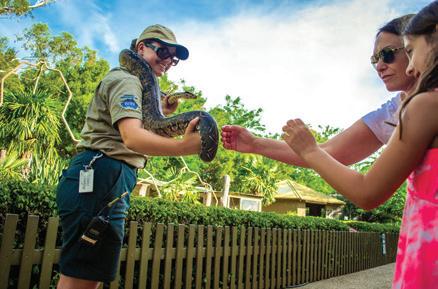

Apart from staying home, “the safest place to be is outside!” Covid Safety measures
The zoo is celebrating Winter - enjoy lots of activities* and children under 5 years get free entry!** Every day someone wins a free night at Jamala Wildlife Lodge***
Due to accommodation cancellations from Sydney, Jamala is offering Canberrans the choice of:
For the first time ever (and for a very limited time) Jamala is offering a ‘taste of Jamala’ by taking ‘dinner-only’ bookings on a few select nights.
Dinner in front of the sharks!
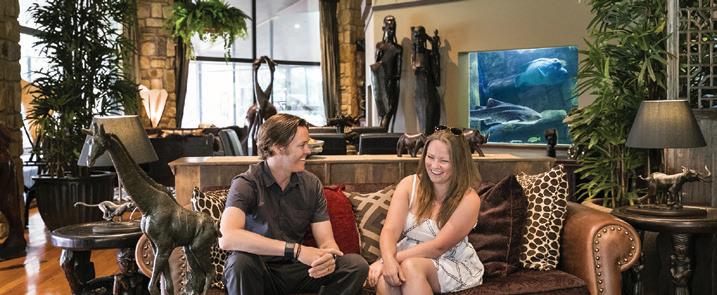
Guests will enjoy pre-dinner drinks on the terrace (generally with the company of our beautiful white lions and our hyenas) and then experience an individual tasting platter, a main course and dessert upstairs around our shark tank in the magnificent uShaka Lodge. An amazing setting with magnificent food - bookings available from 2 to 20 people.
The cost of $275pp incorporates Moet Champagne and fine wines including Penfolds, Cloudy Bay, St Hugo, Torbreck & Petaluma as well as top local wines.
Due to the possibility of future border closures with NSW, Jamala is offering residents of Canberra significant discounts for the next two weeks! Stay 1 night and get 20% off, stay 2 nights (or book two rooms) and get 25% off or book 3 nights (or 3 rooms) and get 30% off! Get a group together now!!
20 - 30% off!
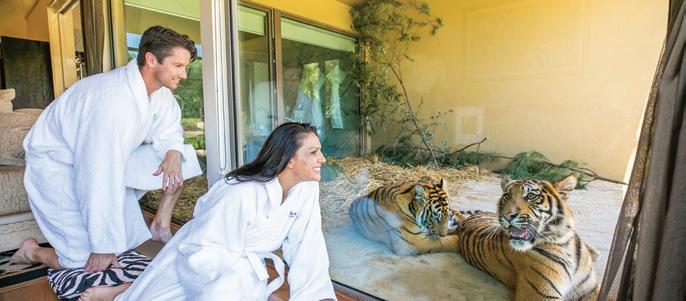
Jamala has won numerous awards including best deluxe accommodation in Australia and top 10% of hotels in the world. As we are normally 100% full, this may be your only chance to obtain a discount!
*Some of these activities are on weekends only **Max 1 child per paying adult ***Conditions apply including accommodation is to be taken within 7 days Visit the website for




WHEN “Seven Days” columnist Ian Meikle remarked in “CityNews” on July 19 that the ACT Legislative Assembly’s Standing Committee on Economy and Gender and Economic Equality is seeking submissions to its inquiry into memorialisation through public commemoration, it did raise an issue or two.
Does the committee really think people understand this bureaucratic claptrap? The first lesson in commu nication for this standing committee is to speak in plain language – not gobbledygook.
Its call was based on a statement that there are too many blokes represented with the current crop of statues. Not realising that the ACT government had commemo rated many people, let alone blokes, I checked the government’s public-art database. This means that my research left out those plonked down by the federal government.
The National Capital Author ity has a problem with equity in its monuments; no surprise given its misguided notion of equity in the treatment of residents.
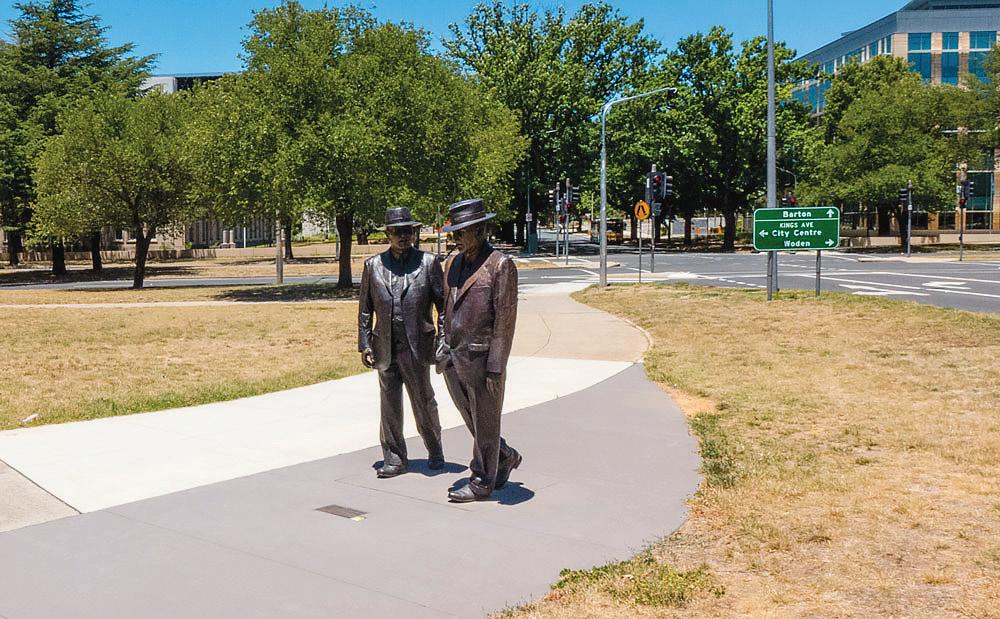
On the ACT list there are a small group of national/international males including La Perouse (Red Hill shops), Gandhi in Glebe Park, Deakin’s head on a plinth at the Deakin shops, a soldier at Duntroon, Mal Meninga, Confucius in Dickson (where wise
Not good! But to say that the city has an overrepresentation of males could be true – but not by much when you take out the national figures. However, equity needs to play a greater part in how artworks are selected – or in this case for monuments to those deemed to be important.
contention. No matter what gender is supposed to be represented, realistic statues selected by well-meaning committees of worthy experts tend to be boring and even a bit of a joke. Despite that, there is usually a community desire to commemorate significant individuals, groups of people and
that provide aesthetic pleasure and quirky stuff is welcomed! Most should be about groups, events or be
artworks to be wondered about and
There’s the need to understand landscape design and the appropriateness of where works are placed. Some present artworks have been spoiled by inappropriate placement and little thought to the surrounding
There’s not enough space in this column to outline the details on how such a program could operate while addressing equity matters. By all means gather names for commemorative stuff if you must – but that initiative should be a subset of a new creative public art/sculpture
Let’s bring back the fun to urban spaces throughout the whole city – not
Paul Costigan is an independent commentator and consultant on the visual
The MonaLisa Touch is a comfortable, nonhormonal, minimally invasive and painless 5-minute treatment with zero downtime
Creating longer-lasting relief, the MonaLisa Touch is for women experiencing vaginal itching/burning, vaginal dryness, loss of lubrication, vaginal laxity, incontinence symptoms, or painful sexual intercourse.

Dr Omar Gailani offers treatment for Gynecological


A referral is necessary for an appointment with Dr Gailani
Canberra Urology and Gynaecology Centre | P 6285 1813 E reception@omargailani.com.au | W omargailani.com.au Suite 2, Level 2, Equinox 1, 70 Kent Street, Deakin ACT
Key benefits of The MonaLisa Touch:
Low risk – suitable for most women
Achieves long lasting improvements
Immediate return to normal daily activities
Suitable for women who are not able to undergo hormone replacement therapy eg. Breast Cancer Patients
High success rates after treatment
Minimal maintenance after initial procedure


By Kathryn VUKOVLJAK

DIANNE Porter’s “season of bereavement” started when her dad keeled over while watering the garden and ended three years later with her mother’s death from cancer.
During that time, Dianne chronicled a “rollercoaster” of close relatives’ deaths, illness, divorces and dramas in her journal, which became her self-published book, “My Mother’s Way of Dying Well”, in 2014.
Dianne, formerly a nurse, has released a revised 2021 version of the book that she describes as a guide for anyone who might be confronting death and “dealing with all the living that also has to be done”.
“In the years from dad’s death to mum’s, the family I’d grown up with died. I lost a life I’d loved. It was a real culling,” Dianne says.
Partly as a tool for processing her own grief, and partly a celebration of her parents, the book also offers support in dealing with emotions, bereavement, funerals and finalising estates – as well as accepting that when it comes to death, things will most definitely not go according to plan.
This was particularly true when her father died suddenly.
Dianne’s parents, Helen and Geoffrey Byrne, had prepared for their deaths but nothing was straightforward when Geoffrey died
in 2007. For one thing, Dianne says no one wanted an autopsy, but her dad’s doctor was on holiday at the time, so couldn’t sign the death certificate until he got back.
“We decided to have the ceremony so that everyone could get on with their lives. Mum didn’t want a fuss. Dad couldn’t be cremated until the death certificate was signed. I mean – he was quite dead! But he wasn’t officially declared dead until after the funeral,” she says.
Dianne says that the way things played out for her dad’s death meant her mum wanted to approach her own death differently.
“With my dad, he just fell down dead, so the hard part was not being able to say goodbye,” she says.
“For mum, the hard part was going through cancer, but she was able to plan and say her farewells.”
Because of the time she had, Dianne says the last month of her mum’s life in a hospice was surprisingly positive.
“The great thing about the hospice is that everyone has accepted that this is end-of-life care. It gave mum great peace of mind,” she says.
“The end of life is a kind of letting go. Mum was able to give away all the things she wanted to, and see the person receive it. She’d say to me, ‘now, so-and-so’s coming today and I want to give them this’, and I’d sort it out for her.”
After her mum died, Dianne found she’d left notes hidden around the house for her to find while clearing things out.
“Mum was highly organised. She thought of everything,” Dianne says.
“She made it easy for me to know what to do
next, and that was a gift.”
Beyond dealing with the practicalities of death, Dianne says that elements of the book create a visceral feeling of the labour of griev ing.
“In parts of the narrative, I’m struggling so the reader will feel that – but I think the struggle is important, like birthing a baby,” she says.
“I want the reader to get a sense of that struggle, to get the benefit of it in their own lives. How emotional it is. And to not be scared of emotions. Find a safe way to release them. I used to go and have a coffee in my local café. I might cry the whole time, but it was my way to release and then get on with things.
“The balance has to be right – sometimes things are funny, too. And when it’s funny, laugh.”
Dianne says she’d like the book to make people think, “when death comes to me, am I going to be ready? Am I prepared enough?”
But at the same time, while it’s a “good start” to have a plan, don’t worry too much if it has to change, she says.
“I suppose the book is about what the plan was in our family, how it all got thrown out the window and how we navigated things as close to the spirit of the plan as we could,” she says.
“I don’t have a problem with dying, I’m comfortable with it, but I’m not nearly as or ganised as mum!”
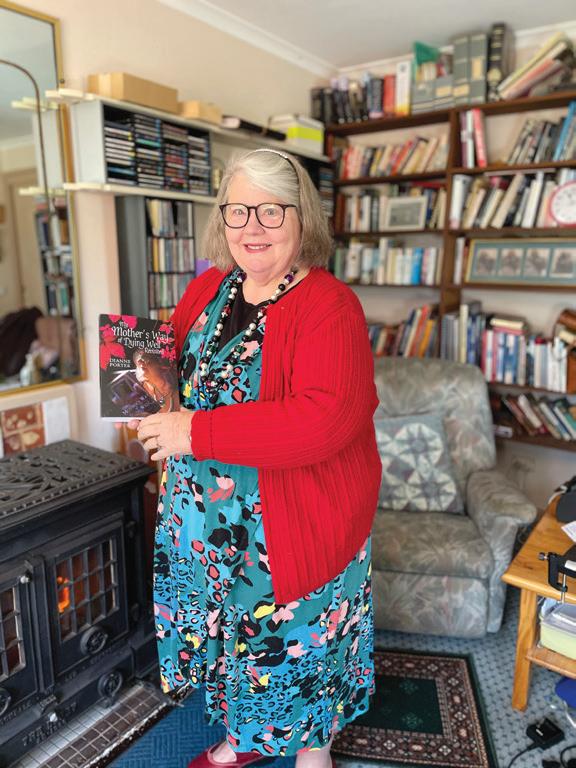
“My Mother’s Way of Dying Well” by Dianne Porter, available via Amazon and other online retailers.
Grasses, ground covers, shrubs and trees suitable for cool climate gardens available year round.
large range of unusual grafted plants and bush food plants also
answer questions.

ON National Aboriginal and Torres Strait Islander Children’s Day (August 4), the Our Booris, Our Way Implementation Oversight Committee (OBOWIOC), released a statement detailing the lack of progress in the implementation of the recommendations of the Our Booris review.
The review involved a forensic assessment of all Aboriginal and Torres Strait Islander children involved in the child-protection system in the ACT.
It was commissioned by the ACT government, with great fanfare, in mid2018, following a vigorous campaign by the Aboriginal community for the massive over-representation of Aboriginal children in touch with the care and protection system to be addressed.
The final report, delivered in 2019, was preceded by a number of interim reports, the first of which was delivered in late 2018, just on three years ago, because of the urgency the Our Booris review members attached to the first tranche of recommendations it developed. The review ultimately resulted in a total of 28 recommendations to government.
The OBOWIOC, which is chaired by Barbara Causon, advises that in mid-2018, when the review was commissioned, there were 227 Aboriginal or Torres Strait Islander children in out-of-home care in the ACT but that number has since increased to 235. It also revealed that while Aboriginal
The over-representation of Aboriginal and Torres Strait Islander children in out-of-home care or in touch with the child protection system is not seen by the government as of particular importance.
children comprise 3 per cent of the local 0-17 age population they make up about 30 per cent of children in out-of-home care in Canberra. This is the third highest rate in Australia.
With admirable restraint, but undisguised impatience, the OBOWIOC included the following observation in its Children’s Day statement: “We are tired and frustrated by the lack of progress and feel disappointed that 18 months after the final report not one recommendation has been fully implemented. We are particularly disappointed that key recommendations from the final report that addressed the need for targeted support programs have not been delivered.”
On reading this I wondered about the meaning of the ACT government’s failure to adopt and/or implement the Our Booris recommendations. The obvious implication is that the over-representation of Aboriginal and Torres Strait Islander children in out-of-home care or in touch with the child protection system is not seen by the government as of particular importance or, in any event, is clearly not a funding priority.

The government’s willingness to let years drag by without moving to fully implement any of the recommendations also confirmed for me one of the potential hazards of raising the age of criminal responsibility. Noting the massive over-representation of Aboriginal and Torres Strait Islander children in the ACT in touch with the child-protection system it is not surprising that they are similarly over-represented in both the juvenile and ultimately adult justice systems.
When, as I am hoping and assuming it will, the ACT government raises the age of criminal responsibility, it will be vital that it assures that those children and their families, who might have come into contact with the criminal-justice system but may no longer do so, because of their age and not because of a change in their behaviours, receive appropriate support.
If that does not happen, their introduction to juvenile detention will probably just be postponed until they turn 14, in which event the change in age may potentially do more harm than good.
In addition, there are a range of other data specific to Aboriginal and Torres Strait Islander children in the ACT that validate the call by OBOWIOC for “radical and urgent” change in support programs designed for Aboriginal children and families.
For example, the ACT government report – “A Picture of Children and Young People in the ACT 2018” –reveals that 13 per cent of Aboriginal children in kindergarten were at a high risk of social and emotional difficulties. A rate that is two and a half times higher than that of nonindigenous children.
In similar vein the most recent Australian Early Development Census, which measures the proportion of kindergarten children who are developmentally on track, developmentally at risk and developmentally vulnerable across five separate domains of the Australian Early Development Index (such as social competence, cognitive skills and emotional maturity), found that Aboriginal children in the ACT are twice as likely to be developmentally vulnerable compared to non-indigenous children. Worryingly, the proportion of Aboriginal children in the ACT deemed to be vulnerable
on one or more of these domains is increasing.
There is also a range of health data that confirms Aboriginal residents of the ACT have a significantly poorer health status than their non-Aboriginal neighbours.
While deeply disappointing, it is perhaps not surprising then that in the ACT government report referenced above, in a number of domains across Years 3, 5 and 7, the gap in mean scores in reading, writing and numeracy for Aboriginal children and non-Aboriginal children increased significantly in the years from 2013 to 2017. To take just one example, in Year 7 reading, the gap in mean scores increased by a staggering 49 per cent between 2013 and 2017. What then must we do?
As a first step, all recommendations of Our Booris, Our Way should be implemented without further delay and in tandem the government should establish a Royal Commission into all aspects of Aboriginal and Torres Strait Islander disadvantage in the ACT.

Have a concern about a disability service, disability discrimination, abuse, neglect or exploitation of a family member, friend or client with a disability?

ACT senator Katy Gallagher has introduced a Bill to the Australian parliament with the aim of reducing “rorts”, “porkbarrelling” and political actions that use taxpayers’ money for political advantage. It is an important step forward.
What is really needed is an Independent Commission Against Corruption. Such bodies have been established in most jurisdictions in Australia and have proven a key element in holding wayward politicians and senior public servants to account.
Attempts to establish such a body federally have failed to gain the support they need from the government despite election promises.
Labor has promised to introduce an anti-corruption commission if elected. The legislation tabled by Senator Gallagher reveals the frustration that she and her Labor colleagues feel as more and more rorts are revealed.
The latest is the “park-barrelling” affair where the $660 million provided clear support for “at risk” candidates.
This follows the sports rorts affair of the previous election that saw Senator Bridget McKenzie resign as

Senator Katy Gallagher… she says ministers have been able to hide their “dodgy decisions” for up to 16 months.
a minister and as deputy leader of the National Party. In that case, the scathing report of the Australian National Audit Office followed by an investigation by the secretary of the Department of Prime Minister and Cabinet revealed her breach of ministerial standards.
There have been a number of other
The legislation tabled by Senator Gallagher reveals the frustration that she and her Labor colleagues feel as more and more rorts are revealed.
examples in recent years.
The Gallagher Bill, that seeks to amend the Public Governance Performance and Accountability Act (2013), aims to “force the Morrison government to clean up its act when it comes to the way it spends taxpayers’ money”.
Gallagher argues it “will improve the transparency and accountability of ministerial decisions within these grant programs that Scott Morrison is addicted to rorting”.
Apart from the Opposition hyperbole, the Bill really does have merit. Most importantly, it shortens the time that ministers have to report to the Finance Minister on grants that apply to their own electorates or grants that have been approved after being rejected by their department.
There will be 30 days to report to the Finance Minister who, in turn, will be required to table the information in parliament within five sitting days.
At the moment, Gallagher points

out, ministers have been able to hide their “dodgy decisions” for up to 16 months.
The shorter timeframe allows much more effective scrutiny from the parliament, the media and the people. It is an important step. But it is not enough.
Helen Haines, independent member for the Victorian seat of Indi, has introduced the Australian Federal Integrity Commission Bill to “create a strong and independent Federal Integrity Commission”.
She says: “This commission will have the power to root out corruption, expose lies and hold our politicians to account.”
Ms Haines points out that Scott Morrison promised to implement an integrity commission.
The exposure draft that he released was widely condemned as totally inadequate. Haines points out that “on September 8 it will be 1000 days since the first promise” and “he is still dragging his feet”.
The Bill, introduced by Haines on October 26 last year, is “neither a star chamber nor a toothless tiger – it is a consensus way forward and has the support of judges, ethicists,
legal academics, law enforcement organisations, civil society leaders, and MPs from across the parliament from all sides of politics”.
This Bill, she argues, “is fully equipped with the powers it needs to do its job.
And it has appropriate checks and safeguards to protect the integrity of its work”.
The steps taken by Katy Gallagher and Helen Haines are not in conflict. However, they illustrate the frustration of non-government members of the parliament who are aware of research illustrating the growing lack of trust in all politicians and are keen to do something about it. They deserve support as every step helps.
Michael Moore is a former member of the ACT Legislative Assembly and an independent minister for health. He has been a political columnist with “CityNews” since 2006.
Des Moore
Principal and Solictor
Family & relationship law, by agreement or litigation if necessary:
Matrimonial and De-Facto property settlements
Care and parenting arrangements for children
Binding financial agreements
Kerry White
Family Law Special Counsel
Over 20 years’ experience in Family Law
Dispute Resolution
Family Law Mediator
Laura Dowling
Family Law Associate
Masters in Applied Family Law
Property Settlements and Complex Parenting Matters
Our team would be pleased to help you with your family law needs

What rights do I have if my child is injured at school?
Alison McNamara | Director | Chamberlains Law Firm
Many parents have faced the situation where their child has suffered an injury at childcare or school. Kids can be unpredictable and bumps, falls, knocks and injuries generally are common. We expect that this will happen from time to time, but it’s a different story if the injuries occur because of the negligence of others.
Schools owe a duty of care to their students to take care of the wellbeing and safety and to avoid students being injured.
For the most part schools do a fantastic job of providing a reasonable standard of care. However, if mistakes happen and the school does not uphold its duty and a child is injured, the school may be liable to pay compensation to the student.
When will a school be found liable?
In order to make a claim you must prove that the school did not uphold their duty of care and that as a result your child suffered an injury.
Generally, a school won’t be found negligent if a child is injured in the normal course of playing. But a school may be liable where the injury has occurred as a result of negligence, such as failing to properly supervise the children, or if there are unsafe buildings or equipment or where a school doesn’t take adequate steps to protect the students.
For example, a NSW school boy was awarded compensation when he fell down an uncovered drain in the playground and suffered injuries to his arm and a psychological condition.
What about bullying at school?
Bullying is a topical issue, and advances in technology and social media means bullying can be relentless and affect children in and out of school. This can be hard to manage, but what about cases where a child was bullied repeatedly and complaints to the school went unheeded?
Generally, a school may be liable for physical or psychological injuries where a school knew or should have known about the bullying and failed to take action within a reasonable timeframe to address the bullying. The school needs to take measures such as implementing a bullying policy, acting upon complaints of bullying and supervising, disciplining and counselling the perpetrators.
If your child has suffered injury at school, whether physical or psychological, please contact us to arrange a no-obligation appointment.
alimac_lawyer

I HAVE been in hospital on only three occasions in my adult life; however, since 2015 my wife has had seven operations in the ACT and Sydney.
She has three excellent doctors (Charlie Moss, Greta Hunter and Desmond Yip) who regularly look after her in Canberra and one in Sydney (Cherry Koh) and without whom I’d be a widower.
An ex-nurse herself, however she dreads going to Accident and Emergency at Canberra Hospital.
A few weeks ago she was suffering badly for well over a week and wanted to get into National Capital Private Hospital at Garran.
We went to A&E at Canberra Hospital because she has to go there first before being able to transfer to a private hospital facility.
It was about 9am when we got there and she was admitted to casualty at 10am (not bad!), but then had to wait until about 9pm to get a transfer to the private hospital.
Had I not rung up one of her specialists, who got on to someone he knew on duty at Canberra Hospital, she may not have got to the National Capital Private Hospital until the next day.
There were a lot of people in A&E, including many on beds in the corridor. Many did not seem to be attended to and no one saw my wife for more than six hours on one occasion.
Now we move to the next incident; my wife knows when she needs to go to hospital and this particular evening, after being in continuous pain for five or six days despite painkillers, she knew it was time to be admitted.
We rang Dr Koh in Sydney, who ensured that there was a bed available at Royal Prince Alfred Hospital and we contemplated driving down, but thought the safest thing was to go to Canberra Hospital.
We got there about 6.30pm. After registering we waited and after three hours a doctor finally saw my wife (again, I had rung one of her specialists who got
on to someone he knew was on duty). This doctor recommended a CT scan, but could not say when my wife could have access to one.
She decided it was pointless waiting for something that was not going to happen anytime soon and opted to go home and get up early the next morning and drive to RPA and be admitted there.
The sad thing was that in the time we spent waiting at Canberra Hospital we could have driven to Sydney.
Our next experience was in late June when my wife’s chemotherapy pump got disconnected while she was showering.
There was a lot of blood, so off we went to Canberra Hospital again. She’d been told if anything like that occured to go straight to A&E and they would tend to it immediately. Well, not at Canberra Hospital where the nurse who saw her said to take a seat. It wasn’t life threatening and she couldn’t do anything about it as she didn’t know what to do.
Indeed, it seemed no one at Canberra Hospital did, so we drove to Calvary where the triage nurse could not have been more helpful.
While she couldn’t change the catheter, she and a colleague, both of whom had some knowledge of chemo treatment, cleaned up the wound, extracted a blood clot, ensured there was no chance of infection overnight and rang around to see if any doctors on duty could treat it (answer, “no”).
However, my wife was sent home in a stable condition so she could report to the Zita Mary Cancer Clinic when it opened at 9am the next morning. Well done and thanks, ladies.
While waiting with my wife, I came up with some possible solutions to the problems, not all of them costing money, but money is important to fund extra beds and staff in A&E and there is already some just sitting there: the stage 2 tram money – $1.9 billion worth!
I would also suggest that if a patient can
and wishes to go straight into a private facility they should not have to go through A&E in the public system, thus freeing up public beds. Maybe something like a private A&E centre could be established. It would make sense investigating a roster of private GPs and other health professionals such as anesthetists and other specialists to ensure that at any one time there are two more doctors in emergency at Canberra Hospital at Woden and Calvary at Bruce.
And let’s have a doctor on duty at each walk-in health centre. It’s pointless going there if the nurse on duty has to refer you to A&E.
My former Assembly colleague Jon Stanhope has estimated that since the deal between the Greens and Labor on the tram in 2014 or whenever it was, about $100 million a year has been ripped from the health budget.
For goodness sake, Andrew Barr and Shane Rattenbury, I don’t care what power-sharing deals you have made, but your public health system is a lot more important than a bloody tram from Civic to Woden and that sort of money will fund a lot of extra doctors and nurses and other improvements at our hospitals.
Health is never cheap and by deferring or scrapping stage 2 of the tram, $1.9 billion could be freed up to fix our ailing health system and other essential services as well – maybe some affordable housing initiatives that work.
Bill Stefaniak is the convenor of the Belco Party, and a former Liberal opposition leader, attorneygeneral, police minister and min ister for children, youth and family services.

By Kathryn VUKOVLJAK
AS a teenager, Francis Owusu’s parents supported his desire to dance, but told him he had to “get a real job” as well.
So when he founded the not-forprofit social enterprise and dance school Kulture Break in 2002, he wanted the focus to be on more than dance and music, extending to men toring and employment programs.
“My parents said: ‘You want to dance, that’s great!’ But they encour aged me to go to university, too, and I’m grateful for that,” he says, credit ing his degree in banking and finance from UC for holding him in good stead in running the organisation.
“For me though, a big part of over coming my anxiety and insecurity as a teenager was getting involved in the arts,” he says.
“While the kids we work with at Kulture Break start out feeling very shy, they end up surprising us by getting on stage in front of a large audience – which can be terrifying! And there they are, showcasing themselves.

“I launched Kulture Break in the first place because I was that shy kid. I was reserved, I struggled with my sense of self and my wellbeing. It was so bad that even reading aloud in class, I’d stutter from embarrassment and self-consciousness.
“All the skills I learned through dancing, which improved my confidence, led me to where I am now. I worked in music as well, singing bass in a boy band for 10 years.
“It all made me want to help the next generation start their own journey. It’s important to me to provide the opportunities I had to others,” he says.
The catch-cry “get a real job” is something so many creatives hear, Francis says, that it became the basis for Kulture Break’s latest offering, the Creative Pathway to Employment initiative, which will provide free nationally recognised training qualifications for high
CEO
school students in years 9 and 10.
It’s offered through the Elevate Academy, a creative training and employment pathway company for young people, also founded by Francis.
“Mentorship has always been an undercurrent at Kulture Break, and I started to think, what’s next for these kids? What skills can they acquire and what future job opportunities can we help them with?” he says.
“As well as dance training and connections to the business industry, young people will learn soft skills – communication, working together, how to lead, problem solve and think critically. These are things employers are looking for, and can be applied to any job across industries.”
Francis, 45, says the 16-week pilot program, offered through high schools and developed in collaboration with the Australian Academy of Media, is “a personalised learning
“It’s important to me to provide the opportunities I had to others,” he says.
journey”, combining face-to-face and online learning through Erindale College, plus practical work experience at hospitality, dance, live entertainment or media businesses.
Once completed, the students will have gained up to four units of competency from the nationally recognised Certificate II in Dance, that can go towards their Year 10 certificate.
“We had a quota for 16 kids for the pilot, and ended up taking 22; plus a waitlist. It’s ongoing, we want to give them a taster and if they’d like to continue next year they can, and get a full qualification,” says Francis.
“The kids will develop skills in working with others, in dance but also in the workplace, and learn to navigate the creative arts industry.”
Under Francis’ leadership as CEO, he says Kulture Break’s mission has been to use “creative expression” to affirm young people’s sense of
belonging, self-confidence and capability, aiming to reduce the risks associated with mental health.
“In the past 18 months with the pandemic, there’s been a constant fear and anxiety of what’s going to happen,” he says.
“And unfortunately with lockdowns there’s been a loss of employment, particularly for young people in the areas of retail, hospitality and entertainment.
“It’s a challenging time. Many young people are isolated, away from their normal activities and their friends, and there can be a sense of hopelessness.
“It’s more important than ever to stand with young people.”
Students wanting to apply for the Creative Pathway to Employment initiative should contact their school. More information via admin@ elevateacademy.com
CALVARY Hospital Auxiliary is holding a book fair in the Main Foyer, 8am-4pm, August 18-19. With nothing over $3, organisers are promising a “great selection” of paperbacks, novels, cookbooks, children’s books, biographies and more. Everything raised goes towards the purchase of equipment for the public hospital.
THE ACT Bilingual Education Alliance is hosting a free seminar and discussion for families, early childhood educators, teachers and others with an interest in bilingual education at the auditorium of the RSSS Building, Ellery Crescent, ANU, 2pm-4pm, Saturday, August 14 or online via Zoom. Bookings are essential via actbilingual. weebly.com
THE ladies of the Yerrabi VIEW Club Interest Group will respond to the challenge “tell us your story by a single object” at their next meeting at Eastlake Gungahlin, from 11.30am, on August 19. Lunch follows. More from june3@iinet.net.au by August 15. Visitors and new members welcome.
DR Sue Packer, a former Senior Australian of the Year, is the guest speaker at the next meeting of the Narrabundah Probus Club, Harmonie German Club, from 11am on August 17 and will speak on the impact of the environment on babies’ development. Lunch follows. Club president John Worcester invites anyone interested to just come along.
JODIE McEwan, AFP co-ordinator for the National Missing Persons Centre, is the guest speaker at the next lunch meeting of the Gungahlin Day View Club at the Gungahlin Lakes Golf Club, Nicholls, from 11.30am on Wednesday, August 25. Cost is $35; guests and interested ladies are welcome. RSVP to 0458 012402 before 9pm on Sunday, August 22.
Results of the Bold Bandannas annual raffle are 1st, Shay Rutherford, handmade quilt (ticket Pink C30); 2nd, Kim MacPherson, cot-sized handmade quilt and a Government House Christmas decoration (Light Blue G200); 3rd, Sean Lowther, crocheted knee rug (Green Heart D46) and 4th, Betty McDermott , goodies basket (Lime Green F77).
The Bold Bandannas will be back raising funds for cancer research at the Belconnen Fruit and Veg Markets over the weekend of August 14-15.

THE series of public toilet stories
(CN July 29) about the dearth of public toilets in Canberra were a timely reminder that places like shopping centres and public parks lack much-needed community facilities.
Your correspondents made the excellent point that, not only are such facilities no longer being built by the ACT government, but those that once existed are gradually being lost.
The curse of Canberra is the ACT government and the constraints it places on the ACT Heritage body (“Seven Days”, CN July 29).
other than by sustained fertility control.
It’s the exact opposite of what happens when you kill slow-breeding animals like kangaroos, where the current scale of killing, if sustained, will certainly lead to extinction.
When you kill fast-breeding animals, every single individual killed empties a niche for another, usually younger individual of the same species. Since younger animals are more fertile than older animals, if you maintain a sustained killing program you are maintaining, in perpetuity, a younger population and therefore a larger population.
This is exactly what the CIMAG has been doing with Indian mynas for several decades.
for decades caring for dying patients. I, like Prof Mitchell, had the privilege of working with and observing these nurses provide an outstanding level of care and compassion.
During my tenure in ICU I advocated for the early involvement of palliative care specialists and services for appropriate ICU patients. I will always be grateful for the insights, compassion and advice on this subject given to me by Pauline Green and medical staff at Clare Holland House. Early intervention by such services, as now confirmed by the research, is vital.
WHO is Jon Stanhope trying to convince in his column “End this ugly political war on asylum seekers” (CN July 29)?
These people are in no way asylum seekers – they are economic migrants. To say they have committed no crime and are innocent victims is incorrect, they arrived here illegally.
In that regard, the saga of the public toilets at Downer (which were not mentioned in your journal) might be of interest.
For many years, there was a public toilet next to the Downer Village. It was used by local residents, visitors to the village, those playing sport or running their dogs on the nearby ovals, and the occasional itinerant (postmen, taxi drivers and so on).
For a very modest weekly outlay by the ACT government, it satisfied an obvious community need.
For reasons that were never made clear, but seemed to be related to the costs of maintenance, the toilets were closed several years ago, and scheduled to be demolished.
After strong representations from Downer residents, the destruction order was eventually rescinded, but no effort was subsequently made to repair or renovate the toilets, which now stand derelict.
The best that the ACT government could offer, when it received complaints about this situation, was to suggest that people use other facilities nearby, that are not normally open to the public.
It was even suggested (in writing) that visitors to the village, and those using the nearby ovals, use the toilets in the local coffee shop. Unsurprisingly, this prompted a riposte from the cafe’s owners!
Over the past few years, numerous representations on this matter have been made to ACT politicians and officials by the Downer Community Association, local residents and others, but to no avail.
Sadly, it seems that, once again, the most basic needs of the community do not attract the same priority as more expensive projects that command a higher public profile.
(Dr) Andrew Selth, Downer
I LIVE in Garran and there is a lack of public toilets at our local shopping strip. There is a toilet in one small group of shops, but that is only available to “paying” customers of those shops.
The medical centre, which was only completed a few years ago, also has toilets but you have to be a “customer” of one of the tenants to use these toilets. Customers to the remaining retail outlets and the general public have no access to a public toilet.
As there is ample space around the various buildings to accommodate a toilet block, the government needs to provide this basic amenity.
With the technology now available they can be time controlled and automatically secured after the close of business in the strip.
The nearby suburbs of Hughes, Deakin and Mawson have public toilets and this only encourages the public to shop at those locations, which is detrimental to our local retail businesses.
Michael Mowat, Garran
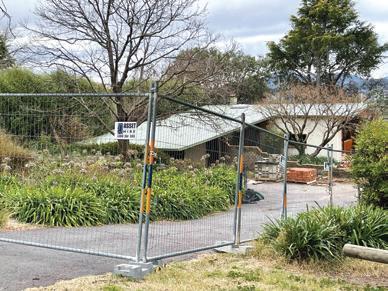
My criticism of the proposed destruction of the house at 22 Brockman Street, Narrabundah, pictured, and the lack of agency of those who make decisions about heritage is based on my knowledge of this property and the people who commissioned the Derek Wrigley designed house.
I knew Heather and Val Paral, having been fortunate to work with both and having visited their house many times.
Yes, now that both Val and Heather are deceased, the inheritors of 22 Brockman Street have the right to pull the house down and build their version of what fits their needs on the site.
The pity is in doing so they destroy one of the rarest examples of good domestic architectural design that is in sympathy with the Canberra landscape. This house, designed by Val and Heather’s friend Derek Wrigley, was the result of a shared aesthetic and a desire to have the dwelling fit seamlessly into the surroundings so it seems a continuation of the hillside.
Val, who came to Australia as an adult, was captivated by the beauty of the Limestone Plain with its ring of blue hills. I did not know Derek except by reputation as an ANU designer of all things beautiful but as a young person, Canberra born and bred, I was always thrilled to hear Val and Heather talk about their love of Canberra and it is their aesthetic that was so instrumental in my own growing appreciation of what constituted good design.
The house, tucked into Knob Hill, was the outcome of three people’s shared love of the landscape and their understanding that man-made structures that dominate the landscape are a blight on the soul of everyone who calls Canberra home.
The pity is that the right to pull places of historical value down, as happens so often in Canberra, is supported by the gutless wonders in the ACT government and in the bureaucracy who ignore aesthetic and cultural values in favour of economic ones.
Averil Ginn, Sutton
I DEPLORE as hypocritical nonsense the Canberra Indian Myna Action Group’s (CIMAG) latest hysterical attempt to get citizens to kill innocent animals pretending that this will address problems that are caused entirely by humans (“Bill leads a major push against a myna problem”, CN July 29).
This article fails to admit that if there is indeed an “estimated 150,000 of them in the ACT” this is a direct, well-known and inevitable result of the CIMAG’s campaign to get members of the public to kill these animals in incredibly high numbers.
Indian mynas (like foxes, cats, rats, rabbits, pigs, pigeons and, in fact, most other naturalised species) are fast-breeding animals that are essentially impossible to eradicate,
The worst of it is that the government knows this. Scapegoating has been a standard tactic of governments down the ages. Focusing the public’s attention on Indian mynas distracts attention from the single most significant cause of all the environmental (and many of the social) problems currently facing the ACT: endless appropriation of green space and wildlife habitat for urban development.
It incites public anger against a totally innocent party, to keep that anger from falling where it is so richly deserved – on the government itself.
Robyn Soxsmith, via citynews.com.au
HAVING to electronically check in everywhere in the ACT ignores the right of residents to keep their old phones or to not have a phone at all. In 2020, businesses had sign in sheets, but these are no longer available to people who cannot digitally check in. Why?
Just leave the sheets at the entrance to your store where people check in near the sanitiser. Not hard really and not a burden, but this has not been considered necessary by the ACT government or the businesses themselves.
Those who make it easy for those without the app to enter their store will attract the business of a whole range of customers while also providing a much needed community service. They will use that business in preference to others that make their lives more difficult, so become dedicated customers.
It has long been obvious that the ACT government makes decisions based on the perspective of a young, fit, well-paid, digitally connected professional, showing no consideration for the rest of the population. They call themselves inclusive, while ignoring and dismissing the needs of a large proportion of ACT residents.
Jennifer Manson, Kingston
I REFER to “Be prepared not surprised when it’s time to die” (CN July 22), an interview by Belinda Strahorn with Prof Imogen Mitchell regarding planning for death and palliative care.
I have worked with Prof Mitchell in my capacity as the CNC L3 charge nurse of the Canberra Hospital ICU during her tenure as medical director.
I was pleased to read that Prof Mitchell has come to such an understanding of the emotional and mental needs of patients facing the end of life, as outlined in the article, as well as their clinical needs.
ICU nurses have been on the front line
Unfortunately, I was unable to convince Prof Mitchell of the benefits of such an initiative to ICU patients, families and staff. I was very pleased to now read that, as a result of her research, Prof Mitchell has now embraced the need for co-ordinated and compassionate end-of-life care for patients.
I congratulate Prof Mitchell on her study and I am so pleased that the seed I planted many years ago is starting to bear fruit.
Anthony Noakes, Florey
THANKS to Paul Costigan and Jon Stanhope for their articles in your magazine, which reliably provide a few minutes of sanity during these otherwise somewhat chaotic times. They can both be assured of my vote if they ever stand for any public office (again).
Regarding Australia’s long-term and continuing detention of asylum seekers (Jon Stanhope, CN July 29), I recommend Jaivet Ealom’s newly released book “Escape from Manus”.
It is a horrific, informative and gripping account that documents, over a decade, his journey from a brutal regime in Myanmar, to Christmas Island then Manus, often finding similarities between Myanmar and our government’s operations. He, and his fellow detainees, were treated unimaginably inhumanely throughout.
Fortunately Jaivet’s journey has a positive resolution; not thanks to our government but thanks to Canada’s more humane treatment of asylum seekers. The contrast is stark.
Marjorie Crombie, Hall
IT’S hard to miss: those speaking, writing and reporting about covid don’t sound, write, or look like me.
In general, those from states and territories giving daily updates appear “white”; those reporting about COVID-19 appear “white”; those reporting from communitiesof-colour appear “white.” Such visual and audio disconnects with non-”white” communities exacerbate feelings of separation, leading to current, disparate results!
Our First Australians are sparsely represented in reporting on their communities and continue to endure coronavirus-related inequality.
For each state-territory reporting, why not include updates by representatives from one or more non-”white” communities?
We claim to value multiculturalism, inclusiveness, among immigrants and First Nations’ peoples, but our reporting does not reflect those values.
Perhaps take-up of vaccines and health guidelines would become more equal were there more equal representation!
Judy Bamberger, O’Connor
Claiming asylum means seeking sanctuary or safe haven and it must be done in the first safe place they arrive at when leaving their homeland. None of these people can claim this. They came to Australia via sometimes several other countries, because it was for a better life. They could have done this by applying through proper channels for immigration status like so many others waiting in the queue – however, they elected to “jump the queue”.
They have been offered the chance to return to their home country but they are refusing.
As an immigrant to Australia nearly 50 years ago, I am well aware what steps have to be taken to prove suitability and these illegal immigrants are no different. To say they are imprisoned is also not correct. They are not in jail, they have the run of the island just like the locals and are being taken care of. They can also leave anytime they like –but not to Australia.
Vi Evans, via email
IN “End this ugly political war on asylum seekers” (CN July 29), columnist Jon Stanhope rants about “Australia’s asylumseeker policies and the manner of their implementation”.
He neglects to add that under the International Refugee Convention, refugees do not have a choice of their country of final settlement.
So Stanhope, undoubtedly knowing full well that no federal government could survive five minutes if it opened the borders to all comers, has his political cake and eats it, too.
He can virtue-signal on the world’s 65 million-plus refugees for all he is worth, knowing full well that he will not be inconvenienced by any consequences.
Ian MacDougall, Farrer
IAN Wallis (Letters, CN July 29) took me to task for my “Whimsy” column on kangaroos, wallaroos and wallabies – and asked me what my sources for their size were. Briefly, they were “Kangaroos – Biology of the Largest Marsupials”, TJ Dawson, 1995, and “The Complete Book of Australian Mammals”, R Strahan (Ed), 1983. I accept that there may be a few exceptions to the Macropodidae size rule, but in a short article one has to generalise.
As for Ian’s practical experience with boxing against wallaroos, I trust he did not have an unfair weight advantage and that they enjoyed it as much as he did.
Clive Williams, via email

By Helen Musa
ONE of the highlights of the winter events season and National Science Week in Canberra this year will be a dance show with a difference, the brainchild of former “CityNews” artist of the year, Liz Lea.
“Stars in 3D”, billed as “a season of dance and technology” is jointly presented by Lea’s mothership Stellar Company (formerly the Australian Talented Youth Project) and ASTRO 3D, who work out of Mt Stromlo combining optical and radio 3D technology with new theoretical supercomputer simulations.
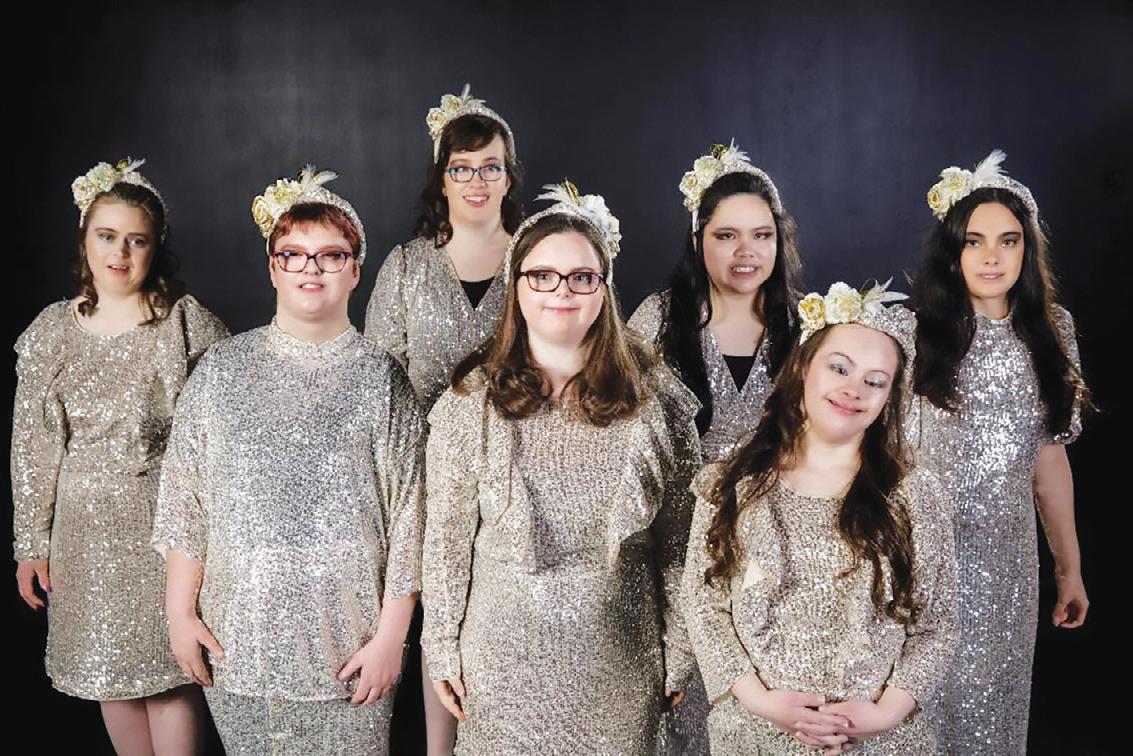
It will also mark the launch of Lea’s newest dance troupe, the inclusive Chameleon Collective, named after both the constellation in the southern sky and the ever-changeable reptile.
Australian performer, director and choreographer Marc Brew, who lives with spinal injury, is the patron of
Chameleon, which is made up of artists living with differing abilities who are taking the next step into professional practice.
“Stars in 3D” will also feature segments from Ballina’s Sprung!! Integrated Dance Theatre and Singapore’s Diverse Abilities Dance Collective (DADC) as well as cameo pieces by Liz Lea, Katie Senior, the Dream Team, CDTribe and Xtreme Stars.
Lea rejects the categorisation of her dancers as “special needs”, since they are so talented and full of beans.
She’s been working in the field on and off for about 25 years, she says, first in the UK, then with Canberra Dance Theatre, which she directed for many years, running weekly classes from which CDTribe grew.
“But the kids are growing up,” she explains and Chameleon, she hopes, will offer them professional development opportunities to perform.
Of them, Katie Senior is the only one so far with professional experience, through Lea, plus Canberra’s mixed ability theatre company Rebus.
But Lea plans to commission SA
contemporary dance theatre artist Matt Shilcock, who was born with a brittle bone disorder, Australian choreographer Melanie Lane, and rapper KAG to give Chameleon the kind of in-depth training that will take them further.
“Working with different professional artists might seem esoteric to them at first but we are right at the very beginning, so we are taking it slowly,” she says.
“There’ll be a lot of talking, I’ll bet, and there’s a lot of repetition with all the dances, so running through is important… it’s about a strong technical focus.”
Her hope is to develop a nationwide reputation for Chameleon, similar to that of Rawcus in Melbourne, or Restless Dance Theatre in SA.
As for what we will see onstage in “Stars in 3D”, it’ll be a combination of film and live performance, working in 3D and 360° in collaboration with Astro 3-D and RecoveryVR.
The show will see Senior and Lea perform a duet, then the Chameleon troupe will perform a sequence inspired by the Fibonacci sequence and “the
science of beauty”, about which there will also be a film.
In the Saturday 4pm show, CDTribe (formerly CDTeens) will stage a fun performance, but then at 7pm Xtreme Stars from Tuggeranong Arts Centre will perform. On the Sunday at 4pm, it’ll be the Dream Team. Drawn from Michelle Heine’s LEGS Dance, each work will have a science aspect and give audiences the chance to play in virtual reality.
“I’ve ordered 500 sets of cardboard VR glasses for audience members and we will take them through the steps showing them how to connect… We’ll be in a theatre but every person will have a separate experience,” Lea says.
“And people will get to see Canberra’s newest dance collective which is cute.”
“Stars in 3D”, Canberra College Theatre, 2 Launceston Street, Phillip, 4pm-5.30pm and 7pm-8.30pm, Saturday, August 21 and 4pm-5.30pm, Sunday, August 22. This event has Auslan interpretation and captioning. Bookings at starsin3d. eventbrite.com
By Helen Musa
CANBERRA’S TraXion Big Band, directed by Jim McMullen, is staging a night of upbeat jazz, with vocalist Lucy Ridge and the band playing jazz standards like “Look For The Silver Lining”, old-school funk with Tower of Power’s “Diggin’ on James Brown” and modern pieces from Gordon Goodwin’s Big Phat Band. White Eagle Polish Club, Turner, 7pm, Friday, August 20. Book via trybooking.com
LAINIE Hart and Josh Wiseman play Hamlet’s schoolmates and two of the most notoriously obscure characters in all theatrical history in Tom Stoppard’s philosophical play, “Rosencrantz and Guildenstern are Dead”. Cate Clelland directs. Canberra REP Theatre, Acton, until August 28. Book at canberrarep.org.au
IN “Dark Euphoria” artists SA Adair and Meredith Hughes have created an installation of poetic, domestic objects cast from ground charcoal that, as remnants of the 2019-20 megafires, invite contemplation and solace. Tuggeranong Arts Centre until September 18.
CANBERRA Sinfonia will present its first-ever concerto gala under the baton of artistic director Leonard Weiss. “Mozart: Concerto Gala” will feature soloists Lucy Macourt on violin, Alison Mountain on flute and Rowan Phemister on harp and the repertoire will include the lesser-played concerti, Violin Concerto No. 4 in D major, K. 218 and the Concerto for Flute, Harp, and Orchestra in C major, K. 299. Wesley Uniting Church, Forrest, 3pm, Saturday, August 21. Book via events.humanitix.com
“GREASE” is the word at Canberra Philharmonic Society, with director Kristy Griffin, musical director Katrina Tang and choreographer Kirsten Smith working with a lively cast to bring the 1950s Rydell High School show to life at Erindale Theatre. Paige Martin plays Sandy and Rourke Puksand plays Danny. August 19 to September 4. Book at philo.org.au
BRILLIANT young pianist Charles Huang will be presenting his fifth recital at Wesley Music Centre, Forrest, when he performs Bach’s Italian Concerto, Haydn’s last Piano Sonata (E-flat Major), Études by Chopin and “Jardins Sous La Pluie” by Debussy. 12.40 to 1.20pm, Wednesday, August 18. Book at trybooking.com or 6232 7248.
THE uplifting Broadway musical hit “Come From Away”, staff say, has become the highest selling musical at the Canberra Theatre Centre. It plays at the big theatre for a four-week season from November 4-21. The show is based on the real-life events in Gander, Newfoundland, following September 11, 2001. Book at canberratheatrecentre.com.au

“The Rose Maker” (M)
THIS horticulture comedy/drama is French director/co-writer Pierre Pinaud’s second feature.
The most comfortable adjective to summarise “The Rose Maker” (La Fine Fleur) turns out to be “likeable”. Movies about growing plants are few and far between. Catherine Frot, with credits for 94 titles since her debut and now in her early sixties, is vigorous and watchable playing Eve, who with her loyal assistant Vera (Olivia Côte) is trying to make a living out of the rose farm she inherited 15 years ago from her father. Her rival Lamarzelle (Vincent Dedienne) has again beaten her at the annual rose festival with a newly created hybrid showing the right qualities – colour, hardiness and above all, fragrance.
Eve knows she has one of the parent plants. And that there’s no way she can afford to buy the other. The film’s primary task is to infiltrate Lamarzelle’s off-limits private nursery, steal it and hope that the hybridising of the two strains will deliver the result she so desperately needs.
In one of those happy happenstances that movies are so good at, the local prison sends Eve a trio of miscreants nearing the end of their incarceration, none of them with any horticultural knowledge. Her task is to rehabilitate them. Samir (Fatsah
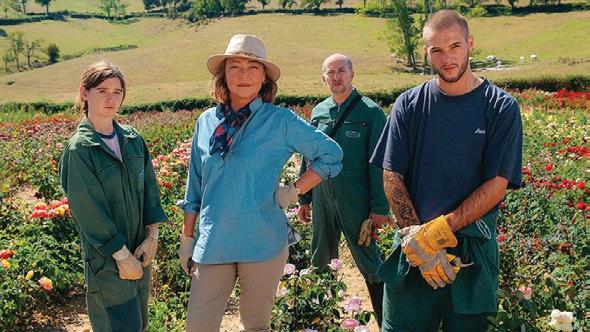
Bouyahmed) is trying to escape his tiny apartment. Nadège (Marie Petiot) is shy and awkward. Fred (Manel Foulgoc) becomes the centrepiece of the film, making the most trouble for the most outcome.
The story unfolds in lovely French scenery, beds of roses stretching over gently rolling hillsides. Its human-interest content is subtle and credible. Eve doesn’t necessarily want or need a man for personal comfort. If you saw “Perfumes” early last month (I gave it four stars), you’ll recognise the skill that she values highly. She has it and so has Fred. The film doesn’t need the anticipated cliché to reach an agreeable and unexpected outcome.
At Dendy and Palace Electric
THE print of the late director Luke Holland’s documentary hadn’t arrived on time for review last week. I am grateful to Dendy management for knowing my eagerness to see it and arranging a viewing.
Here’s a summary provided by the distributors: “An urgent portrait of the last living generation of everyday people to participate in Adolf Hitler’s Third Reich. Over a decade in the making, the film raises vital, timely questions about authority, conformity, complicity and perpetration, national identity, and responsibility, as men and women ranging from former SS members


to civilians in never-before-seen interviews reckon with – in very different ways – their memories, perceptions and personal appraisals of their own roles in the greatest human crimes in history.”
Holland began in 2008 to track down and interrogate the last surviving “witnesses to the crimes of the Third Reich”. He found not just witnesses, but also arguable perpetrators. When I finally caught up with it, I was pleased to see I wasn’t, as is so often the case, the only viewer in the cinema. It’s now over three-quarters of a century since Hitler put a cowardly end to his own life and, soon after, to the war that he started. I regret that he escaped trial.
I believe that “Final Account” deserves universal watching, as does Claude Lanzmann’s monumental “Shoah”, which remains a nonpareil cinematic text on the Holocaust.
At Dendy
“The Suicide Squad” (M) Stars? WOT STARS?
I SPENT close to an hour watching writer/ director James Gunn’s movie before it got
too much for me to bear. Then, overcome by boredom, I walked.
“The Suicide Squad” has been around in one form or other since 1935. This is its third modern iteration. There’s an innate tragic element in the notion of supervillains who aren’t even that good at being bad.
This one is based on a DC Comics title and the tenth film in the DC Extended Universe.
In its 132 minutes, supervillains Harley Quinn, Bloodsport, Peacemaker and a collection of nutty cons at Belle Reve prison join the super-secret, super-shady Task Force X as they are dropped off at the remote, enemy-infused island of Corto Maltese.
I suggest that, unless you are illiterate, you keep clear of this hyper-silly cinematic substitute for what might once upon a time have been the only entertainment that illiterates could understand. In their day, they were called comic books. At their best, in their day, they were neither, as Dr Fredric Wertham observed in “Seduction of the Innocent” (1954), asserting that comic books caused youth to become delinquents.
At Dendy

By Nick OVERALL
IN the last month millions of eyes have been on Amazon CEO Jeff Bezos and Virgin CEO Richard Branson’s journeys into space.
Both billionaires launched the first commercial spacecraft into Earth’s orbit, with some passengers forking out hundreds of thousands of dollars for a ticket aboard the flights.
But for those who didn’t have that sort of change lying around, the next closest thing was streaming the events live as they happened, presentations which at many points seemed more like something out of the Netflix comedy “Space Force” than real life.
That was certainly aided by Bezos’ dress up for the day, which included both a cowboy hat and a space suit and makes one think he was going for either Woody or Buzz Lightyear but somehow landed in the middle.
The streaming events were awkward and of ten surreal attempts to mass market something as exclusive as space travel, a strange blending of entertainment and scientific inquiry.
It provided information, equipment and technology to the film in an attempt to make science sexy and, indeed, many scientists have attested to its accuracy.
NASA also jumped on board Ron Howard’s epic movie recount of the true story of “Apollo 13” (on Netflix), undeniably a source of inspiration for “The Martian”.
The perilous mission saw a crew of astronauts forced to abandon a journey to the moon after the explosion of one of the ship’s fuel tanks, leading to a dangerous and expensive, yet undeniably ingenious plan to get the men safely home.
In 1970 at the time of the event, tens of millions of people watched live the module’s touchdown in the ocean following its 330,000-kilometre return journey creating renewed interest in the Apollo program.
Twenty five years later the Tom Hanks-led film would become a box office hit and remains widely watched today through streaming.

“Apollo 13” (streaming on Netflix).
Regardless, they turned millions of heads and have generated renewed interest and intense debate about humanity’s forays beyond Earth.
It’s not only Virgin and Amazon who are trying to keep voyages to the final frontier in the trending tabs though.
For years NASA has been trying to prop up interest in space travel through getting involved with popular films.
It had a strong hand in the very watchable 2015 flick “The Martian” (on Disney Plus), where Matt Damon plays an intelligent and amusing astronaut stranded alone on Mars after his crew believes him dead.
On top of Damon, the cast is overflowing with household recognition such as Jeff Daniels, Jessica Chastain and Sean Bean, and at the time of its production NASA saw the film as a prime opportunity to get people excited about the first, real-life manned mission to Mars, expected to launch sometime before 2033.
It’s fascinating to think that where humanity’s adventures to the stars were once watched by viewers huddled around TV’s picking up analog signals, today they are streamed through the internet on handheld devices.
Whether it be Bezos and Branson’s launch events or big-blockbuster television such as “For all Mankind” (Apple TV+), entertainment is being used to fuel interest in space travel. Perhaps it’s because entertainment allows humanity’s next big leap to be brought more to the here and now, and its streaming technology that’s made it more accessible than ever before.
Today one can watch a live-streamed view of the International Space Station, orbiting 400 kilometres above Earth and travelling at nearly 30,000km/h an hour, all from the touch of a few buttons on a mobile phone.
It’s technology like this that’s brought people closer to space travel, even if widespread space tourism is still far, far away yet.
But if history is anything to go by, the next giant leap may be closer than we think. In 1903 “The New York Times” postulated it would take mankind up to 10 million years to build a working flying machine.
Two months later the Wright Brothers launched the first successful test flight of an aircraft.
THIS week, our double-Italian food adventure began with a shopping excursion.
That was to The Italian Place Providore and Bottega in Braddon to explore shelf after shelf of quality continental food. This massive Italian deli and market is a visual extravaganza worth exploring. Aside from fresh fruit and veggies, there’s a decadent range of cured meats, cheeses, dried goods, takeaway meals (made in-house), paninis and sweets for a quick bite on site (add a beautiful coffee, of course).
The Providore and Bottega feeds Canberra’s true love of Italian fare and, trust me, the warehouse-style space is packed to the rafters.
After buying Capriccio anchovy fillets from Sicily, Sugo Pronto with truffle and red onion from Calabria, and chocolate caramel and lemon tarts, the gang headed for lunch to The Italian Place (two doors down).
We were keen on true winter meals but nothing run-of-the-mill. We craved innovative, heart-warming dishes, like the ox tongue with pickled salad and salsa verde ($26) that cried out from the specials board. The thought of ox tongue would make some uncomfortable but there’s no need when it’s done well, which this was. It was visually attractive, especially with the bright pickled carrots and fresh greens. The tongue was beautifully prepared, tender and not super strong in flavour.

We also shared fresh sardines, lightly crumbed with herbs ($30). They were stunning and we worshipped the rich and colourful Sicilian sunmaking the most of fresh ingredients.
From the traditional side was the house-made pasta with pork neck and fennel ragout ($30), perfectly executed and an intriguing combo of flavours. Also from this side of the menu was a plate of thinly sliced veal backstrap served with creamy and decadent mash ($40).
From the seasonal side was ravioli stuffed with
honey to take away the sharpness ($10).
The Italian Place (and the operation next door) offers an extensive range of high-quality wines, many from smaller producers. Canberra specialty wines are






Month Sapphire Coast, running until August 31 from Bermagui in the north to Eden in the south, via Cobargo, Candelo and Brown Mountain, won’t remain a secret for long.
It’s already up and running, kicking off with the eccentric Motel Art Fair, where 19 artists each took over a kitsch room in the Norfolk Pine Motel to create a personal space to hang their works – it was a sell-out.
There’s plenty more to come, with live music, open studios, film nights, dance classes, cabaret, theatre, poetry and comedy.
ON the trip down, for instance, there’s “Cobargo! Live in the Courtyard” at Via Luna Tiny Kitchen and Valiant Vintage Coffee Caravan, 56 Princes Highway, on Saturdays in August, with Stitch Duo on August
in painting their own acrylic landscapes inspired by Biamanga (Mumbulla Mountain) and the scenery at North of Eden Gin Distillery, where the drinks will be flowing. All materials are provided and no experience is necessary. 13594 Princes Highway, Stony Creek, 12.30pm-3.30pm, Thursday, August 19. Book at eventbrite.com.au
EASILY the most eccentric item is the free Burlesque Chair Dance workshop, where patrons over the age of 16 will be introduced to a bit of bump and grind, then learn a chair-dance routine with an opportunity to incorporate some of their own moves and ideas into the choreography. The workshop is run by cabaret artist Delia Silvan. Bermagui Country Club, from 2pm
when homosexuality was illegal as uni lecturer, William O’Halloran, is dismissed from his probationary position when he’s outed. The student union production of “Romeo and Juliet” gives Will cause for reflection. Bega Uniting Church, 125 Gipps St, Bega, 7.30pm-8.30pm, August 27, book at artmonthsapphirecoast.com.au
BUT without doubt, the crowning glory will be the Far South Film Festival, focusing on stories told by regional filmmakers from around Australia.
A huge success when it kicked off last year, it’s run by an association of filmmakers and digital whizz kids living in south east regional NSW, who invited filmmakers from regional and remote areas of
From Belbora-Bulahdelah in NSW comes “Nanna Power”, directed by Anne Keen and Pete White about the famous Gloucester “Knitting Nannas”, formed during the town’s fight against AGL, which made national headlines.
“Yuwinj Dhari-Bulwal” (Yuin Stand Strong) directed by Warren Ngarrae Foster and Hiromi Matsuoka, is the result of a collaboration between the National Museum of Australia and Eurobodalla Council which looks at the impact of James Cook’s voyage up the east coast of Australia 250 years ago.
The Far South Film Festival, book at farsouthfilmfestival.com, Art Month Sapphire Coast, until August 31, artmonthsapphirecoast.com.au



WITH an abundance of businesses
passionate about sharing their skills with the ACT region, there’s no shortage of experts in Canberra and Queanbeyan.
Whether it’s treating pain, choosing furniture, building a home or selling horse riding equipment, “CityNews” speaks to the local professionals who are at the top of their fields of expertise.
USING a personalised and holistic model of care, Kenolta Medical Centre is excited to contribute uniquely to the health of Canberrans at its readily accessible location in Nicholls, says practice principal Dr Joe Oguns.
Having opened this year, Dr Oguns and his wife Dr Taiye Oguns bring their combined medical experience of more than 30 years to the centre, which they say is driven by a commitment to optimising clinical care and patient experience.
“Our doctors have skill sets that cater for healthcare needs for all age groups,” he says.
“These range from child and adolescent health to women’s health, men’s health, geriatrics, sports medicine, chronic disease management, occupational health, minor surgeries, and many more in between.”
BORDEAUX Construction and Management’s team of trained professionals can help with any building project from design to handover, says project manager Michael Milutinovic.
“We’re a one-stop-shop for construction, renovations, extensions, residential and commercial projects,” says Michael, who holds an unrestricted “A” class builder’s licence and has more than 15 years of industry experience.
“We understand a lot of people, especially career professionals, can be time poor so we can manage the entire project from start to finish and simplify it for our clients.”
Originally established as Bordeaux Kitchens in 1983, Michael says the family business has grown over the decades to offer large building
own quality assurance system and we’re really proud to offer a personal service where clients have a point of contact throughout the entire project,” he says.
“One of our recent clients was building a new home and they weren’t quite sure where to begin, but they had an idea of what they wanted to achieve and we’ve worked closely with them throughout the entire process.
“Communication is key for us.”
He says Bordeaux Construction and Management also has an in-house joinery shop, another advantage of their committed projects.
Bordeaux Construction and Management,
a comfortable and sizeable waiting area that caters for physical distancing and consulting rooms laid out similarly.
“We believe that timely access to a good GP goes a long way in making a difference for individual patients and this inevitably flows on to impact overall community health outcomes,” he says.
“Our model of care looks beyond just diagnosis and treatment. Rather, we provide holistic care that is tailored to individual patient needs.”
Kenolta Medical Centre, 9-11/ 34-38 O’Hanlon Place, Nicholls. Call 5104 3966, email reception@ kenolta.com.au or visit kenolta.com.au



BORDEAUX CONSTRUCTION & MANAGEMENT PTY LTD

Total Design Consultancy and Project Management
• Home • Office • Extensions • Renovation • Granny flats • Sun room addition
• Build your new dream home • Commercial premises • Retail
BORDEAUX BATHROOMS
• Designed with you with your budget in mind • High standard of workmanship
• High quality finish • Completed on time, every time
BORDEAUX KITCHENS (Associated with Capital Cabinetmaking)
Specialise in custom-built design and joinery • Kitchens
• Vanity and laundry units • Commercial Joinery
• Shop/office • Home office • Experienced tradesmen and full trade co-ordination available
Showroom Hours: Mon-Fri: 9.00am to 4.00pm, Sat: 9.00am to 12pm, or by appointment


KENOLTA MEDICAL CENTRE IS TAKING NEW PATIENTS
At KENOLTA Medical Centre Nicholls, we are committed to providing you with a personalised, holistic care delivered with empathy and excellence. We aim to optimise your experience as we partner with you towards achieving the best possible health outcome for you.




Conveniently located:
• Immediately off Barton highway
• 7km from Gungahlin Town Centre
• 9km from Belconnen Town Centre
• 10km from Civic
Bus route with bus stop nearby Next door to drive-through Discount Pharmacy 120 free car parking spaces available on-site

OUR SERVICES INCLUDE
DR JOE OGUNS
Special interest in Family medicine, Men’s health, Geriatrics/Seniors, Minor surgical procedures and Occupational health

DR TAIYE OGUNS
Special interest in Women’s health, Antenatal and Postnatal care, Contraceptives ( including IUDS ), Children’s health, and Obesity management.

WITH a trained team of physiotherapists, exercise physiologists, dietitians, nurses, mental health supports and an occupational therapist, Arthritis ACT has the expertise to help people living with pain, says CEO Rebecca Davey.
“You don’t have to have arthritis to see us, we treat any type of pain or fatiguing condition,” she says.
“It’s our goal to help people remain at work, help them to keep doing the things they want to do in their life and keep them connected to the community and the people in their life that are important.”
Having worked as a midwife and a nurse, Rebecca has a long background in treating pain, but for a long time she’s also suffered from severe arthritis.
“I completely understand what people are living with,” she says.
“I’ve had to go through those difficult choices and leave careers behind that I’ve loved because of the condition.
“But this work allows me to keep working with people and helping them to achieve their goals and feel more certain in their life.”
Rebecca says it’s incredibly rewarding to work with a team who help change people’s lives.
“We aim to keep you happy, healthy and
living the fullest possible life regardless of the limitations you might have,” she says.
Arthritis ACT, 170 Haydon Drive, Bruce. Call 1800 011041, email info@arthritisact.org.au or visit arthritisact.org.au
HORSELAND Canberra has recently taken out the Horseland store of the year award, chosen for their expertise in all things equestrian out of 51 stores nationally, says manager Kelsey Young.
“We live and breathe horses,” she says.
“Being nationally recognised for our expertise and excellence is a result of our team’s passion and skill and is an achievement that we’re really proud of.”
Stocking the world’s leading equestrian brands, Kelsey says they have the biggest range in the Canberra region to suit all budgets.
“It doesn’t stop at saddles and bridles, but includes horse health, stylish casual wear, dog rugs, toys, boots and more,” she says.
Like many of the staff, Kelsey started horse riding from a young age and says she “never looked back”.
“Several of the team get out regularly to compete across disciplines like showjumping, dressage, endurance and eventing,” she says.
Kelsey says she and the team are always excited to help riders that are starting out.
“[It] can be such an exciting time, but it can also be daunting — I love being able to share in their journey and provide them with all the advice they need,” she says.
Horseland Canberra, unit 3, 14 Ipswich Street, Fyshwick. Call 6280 6657 or visit facebook.com/horslandcanberra
FOR GENERATIONS YOU HAVE LIVED HORSES... WE HAVE TOO. WE HAVE GROWN FROM ONE STORE IN 1978 TO OVER 50 STORES AUSTRALIA WIDE TODAY TO BECOME AUSTRALIA’S LEADING RETAIL EQUESTRIAN BRAND, BY RIDERS FOR RIDERS
COME SEE US IN-STORE TODAY FOR THE BEST ADVICE IN TOWN.

fyshwick@horseland.net.au www.facebook.com/horselandcanberra @horseland_canberra

Gwen instructs Tai Chi for our Falls Prevention program and also supports people to meet their exercise goals within our gym or hydrotherapy program.
Gwen works with individuals, groups, and also leads our LGBTI program.
Gwen has a four-year degree as well as extensive industry experience working with people with chronic pain conditions.
Sophie has post graduate qualifications in hydrotherapy, and as a non-sports centred Exercise Physiologist-helps clients who struggle with engaging in exercise due to a lack of sports participation. Sophies goal is to improve clients health via our hydrotherapy program, gym instruction and in-home visits. Sophie also is known for her passion for working with children.

At Build a Better Me we see many people who are struggling to manage their chronic conditions. Richard is passionate about helping people to live better and more comfortable livesachieving their goals through exercise, education and manual therapies.
Richard is fully trained in the GLAD program.

Blake has expertise in improving clients mobility and decreasing their pain through appropriate exercise. Blake delivers our ‘My Exercise’ program, targeting the relief of lower back and sciatic pain, shoulder and upper body concerns as well as leg, hip and and ankle interventions – for those who do not qualify for physiotherapy-led GLAD programs.
Blake provides individual & group exercise for younger people with a disability. Blake treats clients in-clinic or via our hydrotherapy program as well as attending your gym with you.
Jacqui has a particular interest in hip and knee osteoarthritis. Jacqui delivers the GLAD program designed to reduce the need for joint replacements, or if a joint replacement is unavoidable, to prepare you thoroughly for surgery and recovery for day to day tasks. Jacqui is studying towards a PhD in the outcomes of the GLAD program.

Kwong is trained as a GLAD instructor, his focus is in treating sports injuries early to avoid arthritis forming later. Kwong is a passionate sportsman, playing both Aussie Rules and Soccer. Kwong will assist you with maintenance of your sports injuries, back pain and all general musculoskeletal issues.
• Physiotherapy – including the GLAD program for knee and hip osteoarthritis, sports injury prevention and rehabilitation, and pain condition support.
• Exercise Physiology – Individual exercise prescriptions, small group classes to increase strength and improve rehabilitation, strength and balance classes, hydrotherapy support.
• Occupational Therapy – access reports for NDIS and Disability Support Pensions, home modifications, equipment prescriptions.
• Dietetics – meal planning, weight management support, food intolerance support.
www.arthritisact.org.au




Book with Courtney & SAVE Lash lift, tint & brow sculpt
Specialist Salon | Hybrid & Henna Brows Hot Waxing for Body | Organic & Mechanical Facials




SPECIAL OFFER is valid until September 30
Just mentioned this Ad when booking!
0431 446 196 www.beautymattersbysarah.com | beautyneedsmatter@gmail.com @beautymatterscanberra | unit 12B, 41-45 Tennant Street, Fyshwick

HAVING gone from working Saturday afternoon jobs in high school together to running their own business, co-owners of Ex-Government Furniture James Fullerton and Taylor Radnell are experts in all things furniture.
With more than 40 years of combined industry experience, James says they’re proud to sell quality second-hand furniture at an affordable price.
“Office chairs are certainly the number one thing at the moment and we’re expecting a lot of new ones coming through that will sell fast,” he says.


“We’re always happy to give recommendations but if we don’t have what they’re looking for and we think we know someone who does, we can send people in the right direction,” he says.
And for people looking to get rid of furniture they no longer need, James says that Ex-Government Furniture is the “go-to” place to take it.
“If you’re moving offices or houses and you’ve got a lot of furniture you don’t know what to do with, we can be the first point of contact with a free removal service,” he says.

BEAUTY Matters prides itself on providing the ultimate client experience, says owner Sarah Hadley.
The boutique beauty salon, which celebrates its fifth anniversary in November, offers services such as waxing, facials and full body tans, Sarah says.
“We’ve put a lot of effort into finding the best of the best in the industry, from therapists right through to the products and services we are providing in the salon,” she says.
Sarah has more than 15 years’ experience in the industry and says it’s the creativity she loves most about her work.
“I think you can change people’s lives, make people feel better about themselves and really show people what they’ve got to offer,” she says.
“I love being able to make people feel good, make them feel more confident.”
Sarah’s also welcomed Courtney on board, a new team member who she describes as having all the skills to be a great therapist.
“We’re currently offering a promotion in salon with Courtney, which is a lash lift, a tint and a brow sculpt for only $117 valid until the end of September,” she says.
“Please feel free to run all your beauty needs and questions by us as we are more than happy to help you with any concerns you may have.”
Beauty Matters, unit 12B, 41-45 Tennant Street, Fyshwick. Call 0431 446196, visit beautymattersbysarah.com or search @beautymatterscanberra on facebook or instagram.
Ex-Government Furniture, 6 Yallourn Street, Fyshwick. Call 6280 6490, visit exgovfurniture.com or email sales@exgovfurniture.com
HAVING started almost four decades ago, Shaw Surveys has grown to provide professional survey services to not only the individual consumer, but also to government authorities, civil engineers, developers, solicitors, architects, builders and real estate agents, says director Jim Shaw.
Jim, who has more than 15 years’ industry experience, says it was his father Peter that started the business in 1982 as P.J. Shaw & Associates.
“My sister Sarah and I took over as directors in 2019 and renamed it to Shaw Surveys but after 40 years my father is still working with us,” he says.
“It’s great to have that experience as part of our
Jim says they have expertise in all facets of land and property surveying to make sure clients aren’t building too high or big.
“There’s also certain solar envelopes that have to be measured so you don’t block the sun from the neighbours and we can assist with that, too,” he says.


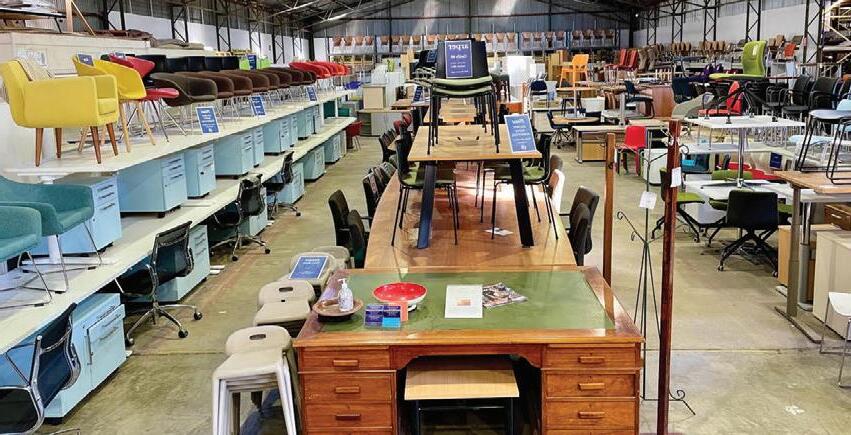
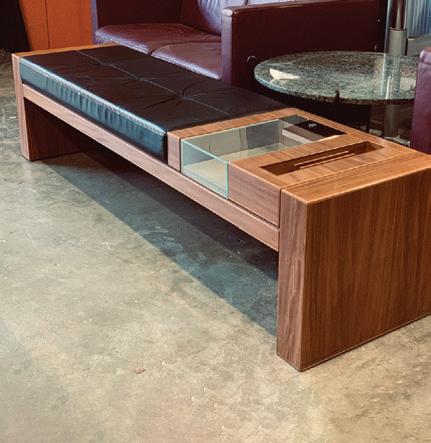








• SKYLIGHTS
• VERANDAS & PATIO ROOFS
• GUTTER GUARD CALL RORY ON 0431 556 307 or email rorymartens13@gmail.com


ERICAS or heaths make a spectacular swath of purple, beloved by visitors to Scotland.
They are also indigenous throughout the Mediterranean region and Southern Europe. They like the same growing conditions as other acid-loving plants such as daphne, azaleas, rhododendrons and most native plants.
Ericas grow happily either in full sun or filtered shade and, like most plants, prefer a well-drained soil. They will not tolerate heavy clay or water logging.
Here are some suggestions. I say some



know will grow well locally, starting with the longtime favourite Erica darleyensis pink form, that I used at the front entrance when I designed the gardens at the National Film and Sound Archive. It’s very compact and ideal for growing as a low hedge along the edge of paths. This makes a colourful alternative to the ubiquitous box hedging. I find the pink flowers much better than the white.
Other varieties include Erica cerinthoides with long stems topped with soft-pink flowers. This grows to 60cm high with a similar spread. E. carnea “Pink Pearl” is also of a similar size and colour, and looks superb in a bold group combined with E. carnea “Ruby Glow”. By bold, as with all shrubs, I mean that they look most effective in groups of three, five or seven.
The name of E. “Raspberry Ripple” was influenced by one of Britain’s favourite ice creams of the same name. In flower, it looks good enough to eat!
Possibly one of the most floriferous is E. melanthera that, when covered in its rich purple flowers, hardly a green leaf can be seen. Certainly one of my favourites, but do not let that influence you, check it out at the garden centres.
POLYANTHUS is one of the great winners for a floral display in winter and is not affected by frost. Planted in groups, it can make a colourful display that will last well into early summer.
WE have had some wicked frosts of late,





which are capable of killing the flowers on fruit trees with the result of no fruit next season. But, please, don’t cut the frost-affected leaves on evergreen shrubs and trees – they are protecting the softer leaves underneath. Wait until all frosts are over.
ALL stone fruits, such as apricots, peaches, plums and nectarines, only require one variety of tree to produce fruit. However, apples and pears require two different varieties of trees to produce fruit, such as two apples or two pears that flower at exactly the same time for the bees to carry out cross pollination.
Anyone with a small amount of space could consider two varieties of fruit grafted on the one tree but, of course, if one of the duo dies then there’s no cross pollinator.
In addition, the two varieties will often grow at a different rate, resulting in a lop-sided tree. Unless the gardener is familiar with pruning, the different growth rates can present, albeit minor, difficulties.
And, incidentally, dwarf fruit trees do not have dwarf fruit, it is only the trunk of the tree that is small.
This is a “best-of” compilation of Cedric’s columns over the past 10 years.
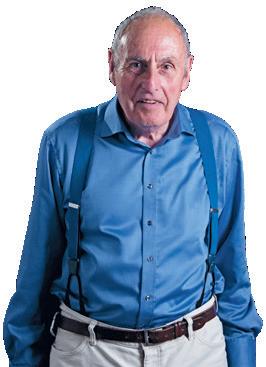
By Joanne Madeline Moore
ARIES (Mar 21 – Apr 20)

This week peace-loving Venus encourages diplomacy in relationships, while Mars and Uranus boost energy, initiative, innovative ideas and dynamic leadership. Then the Full Blue Moon favours friendship, creativity and following your dreams. You’re feeling impatient but avoid rushing business and financial matters. With Mercury and Mars linking up in meticulous Virgo in your job zone, do your best to be mentally focused and unusually fastidious at work.
TAURUS (Apr 21 – May 21)
The week starts with Venus (your power planet) shifting into your job zone, which bodes well for improved relations with a colleague, client and/or customer. Looking for employment? Don’t under-estimate the promising contacts you have within your professional peer group. An unexpected opportunity could also land in your lap via a friend or former lover, so start networking now. On the weekend a domestic project or work matter comes to a surprising conclusion.
GEMINI (May 22 – June 21)
On Friday your ruler Mercury (planet of intelligence and communication) forms a positive aspect with wildly adventurous Uranus. So it’s a wonderful week to exercise your brain cells via study, debate, teaching, reading, writing, public speaking and generally expanding your mind in all sorts of exciting new directions. Your motto for the moment is from witty Leo writer (and birthday great) Dorothy Parker: “The cure for boredom is curiosity. There is no cure for curiosity.”
CANCER (June 22 – July 23)
If you’ve been burying your head in the sand, then a problem could come to a head and demand to be addressed. The planets encourage you to be direct about dealing with challenges, especially involving finances, intimacy and trust. Definitely no side-stepping allowed! Do your best to avoid being a snappy Crab on the weekend, when the unpredictable Full Moon magnifies mood swings and heightens your emotional sensitivity. Clear communication is the key.
LEO (July 24 – Aug 23)
With the fiery Sun still charging through your sign, it’s time for larger-than-life Leos to let your hair down, express yourself and indulge your senses. Be inspired by movie star Mae West (born on August 17, 1892): “Too much of a good thing can be wonderful.” But this week there’s also a Sun-Jupiter opposition and a Full Blue Moon. So avoid the temptation to exaggerate, over-promise and under-deliverespecially involving personal relationships and business partnerships.
VIRGO (Aug 24 – Sept 23)
You won’t solve problems if you’re procrastinating. Many Virgos will be full of vim and vigour this week as you analyse, strategise and mobilise! With proactive Mars and clever Mercury (your patron planet) linking up in your sign, it’s also a good time to redefine the persona you are presenting to the world. Be inspired by birthday great, fashion designer and business-woman, Coco Chanel: “How many cares one loses when one decides not to be something but to be someone.”
LIBRA (Sept 24 – Oct 23)
Venus vamps into your sign on Monday, which boosts your natural Libran charisma. But it also amps up your preoccupation with perfection. So try to focus on the evolving journey, rather than the final destination. On the weekend, the Full Blue Moon encourages you to focus on friendships and make a wish list of your goals for the future. Be inspired by birthday great, Madonna: “I stand for freedom of expression, doing what you believe in, and going after your dreams.”
SCORPIO (Oct 24 – Nov 22)
This week there may be some conflict between domestic responsibilities and professional expectations. You’re keen to plunge into a personal project ASAP but make sure you do your homework first and don’t promise more than you can actually deliver. You could also experience problems with a work colleague or family member who is jealous of what you are achieving. Don’t let it deter you! Just flash them a warm Scorpio smile and encourage them to follow their dreams.
SAGITTARIUS (Nov 23 – Dec 21)
The Sun/Jupiter opposition and the Full Moon in Aquarius rev up your restless side. Sagittarians are free spirits and you could still feel frustrated by ongoing social distancing rules and/or travel restrictions. Don’t let it stop you from being adventurous and taking on challenges in creative and covid-appropriate ways. Draw inspiration from birthday great, Madonna: “If I can’t be daring in my work or the way I live my life, then I don’t really see the point of being on this planet.”
CAPRICORN (Dec 22 – Jan 20)
Slow down, cool down and calm down Capricorn! Don’t make major mountains out of minor molehills, and waste precious time worrying about inconsequential problems this week. Things should run reasonably smoothly and, if there are complications, then clever communication will help you sail through any temporary turbulence. The weekend Mars/Uranus trine is terrific for education, learning, teaching, creative projects and cosmopolitan friendships.
AQUARIUS (Jan 21 – Feb 19)
Prepare for a Blue Moon… the second Full Moon in Aquarius in a month! Which will amp up your need for freedom, independence and avant-garde adventures. But don’t feel you have to tackle a current project or problem on your own. There are plenty of people around who are happy to help. All you have to do is sum up the courage to ask. But too much reckless haste could lead to an argument or accident, so slow down and pace yourself (especially on the weekend).
PISCES (Feb 20 – Mar 20)
It’s time to retreat, review and restore as the Full Blue Moon activates your contemplation and seclusion zone. Enjoy solo activities like meditation, yoga, spiritual pursuits, journal writing and long walks in nature. You’ll also be surrounded by innuendo and intrigue. What others say won’t necessarily be what they mean, so make sure you read between the lines to uncover what’s really going on. The weekend is wonderful for a relationship refresh or a social media surprise.
Copyright Joanne Madeline Moore 2021
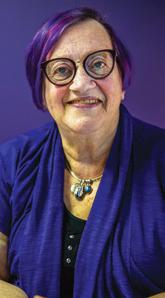
Nick and Aya have just bought 10 dorper sheep and want to know how to set themselves up as primary producers.
“Firstly, you have to show the Australian Taxation Office (ATO) that the farm can become profitable and I don't believe that you can do that with only 10 sheep," I told them.
Nick told me they had 200 hectares of land and were planning to raise cattle, and maybe increase the number of sheep.
"I come from a farm, so I have plenty of experience with cattle and sheep,” he said.
I told him this was comforting.
"As I am sure you know, initially you will probably have losses that you will want to offset against your other income," I said.
3 What is a wicket-keeper known as? (8)
7 Name a paroxysmal disorder of respiration. (6)
8 What do we call a person with an affected attitude? (8)
9 Name a town and shire in NE Victoria, on the Ovens River. (6)
10 To be immature, is to be what? (8)
11 Name a NSW city, north-west of Bathurst. (6)
14 Which items of cutlery are used for stirring, etc? (6)
17 To be diplomatic, is to be what? (8)
18 Name a type of unarmed combat. (6)
19 What, in Australia, do we call a catapult? (8)
20 What is a colloquial name for a raw recruit? (6)
21 Name an alternative term for a backpack. (8) Down
1 What do we call a person who commits forcible seizure of an office? (7)
2 What is a feeling of vexation and disappointment? (7)
3 To ceremonially immerse in water, is to do what? (7)
4 What, in the US, do they call tomato sauce? (7)
5 What is a violent whirlwind? (7)
6 Which ships’ officers are charged with keeping accounts, etc? (7)
11 To be thicker, is to be what? (7)
12 Which term describes that which is no longer used in ordinary speech or writing? (7)
13 What do Spanish-Americans call foreigners, especially Anglo-Saxons? (7)
14 Who was the supposed prototype of Robinson Crusoe, Alexander ...? (7)
15 What is the Australian Under 23 football team commonly known as? (7)
16 Name one of the external openings of the nose. (7)
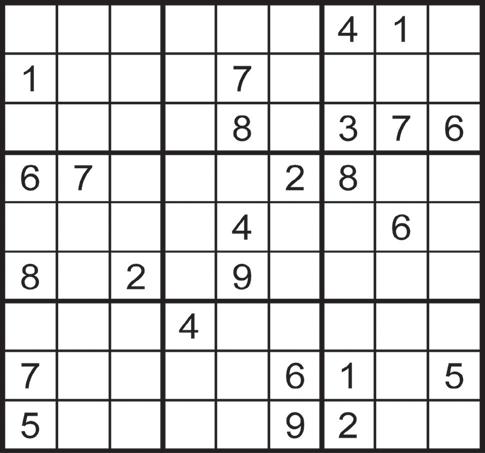

"If that's the case the ATO has requirements that you must follow.
First of all, if you earn less than $40,000 you can automatically claim your losses against your other income. You must be carrying on a business as a primary producer.
"Provided you have sufficient livestock and they are for the purpose of selling either the cattle or their natural increase then you are a primary producer.
"As to carrying on a business, your activities would have to be on a sufficient scale. However, you cannot claim the losses if your adjusted taxable income exceeds $250,000.”
Nick said he was thinking of raising about 70 cattle and maybe 50 dorper sheep and that both he and Aya earn more than $40,000 and less than $250,000.
“Well, if that's the case and based on our discussions, the next step is to apply for the 'Commissioner’s Discretion' to claim your non-commercial losses," I said.
"The first thing I recommend you do is consult an agronomist so that you can produce an independent expert’s report to confirm that your venture will be financially viable in the future.”
"Then you need a business plan that references the agronomist’s report and indicates when you expect the venture to become profitable.
"Also remember the cost of the livestock is not a deduction and you should register for GST so you can claim the GST back on your expenses.
"You also need to prepare a cash flow showing the losses you expect to claim and when you will make a profit. It will probably be two to three years. If you don’t know how to do a cash flow there are plenty of templates on the internet. You then need to complete a private binding ruling application for the commissioner to exercise his discretion to allow you to claim noncommercial losses.”
Nick was daunted at the time it might take to prepare it.
“Yes, it will take time, but if your application is good and contains all the required information it should sail straight through," I said.
"I have a lot of experience preparing applications for the commissioner’s discretion so I will ensure that everything is there for you.”
If you need help with understanding primary production or any other tax matter, contact the friendly team at Gail Freeman & Co on 6295 2844.
Disclaimer
This column contains general advice, please do not rely on it. If you require specific advice on this topic please contact Gail Freeman or your professional adviser. Authorised Representative of Lifespan Financial Planning


30% OFF* gas usage PLUS 15% OFF* electricity usage. Our hottest winter deal is back. Get set to sizzle and save.


Get spicier! It’s online only at actewagl.com.au/chilly-season