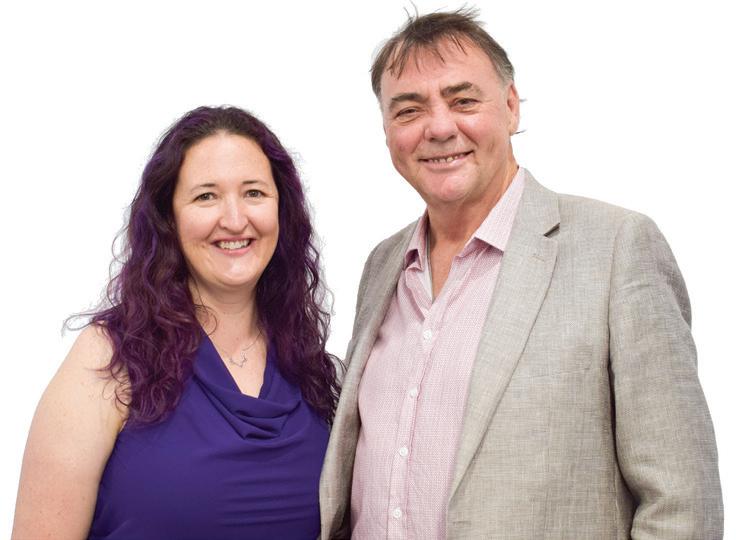
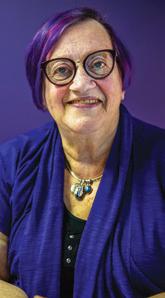
End this ugly political war on asylum seekers JON STANHOPE
Pork barrelling, another word for corruption
MICHAEL MOORE
The online pollies not always on message
PAUL COSTIGAN
A boost to get spring flowers popping
CEDRIC BRYANT
Toilet talk
DANIELLE NOHRA lifts the lid on the state of Canberra’s public toilets
NEWS / myna birds
Bill leads a major push against a myna problem
By Nick OVERALL
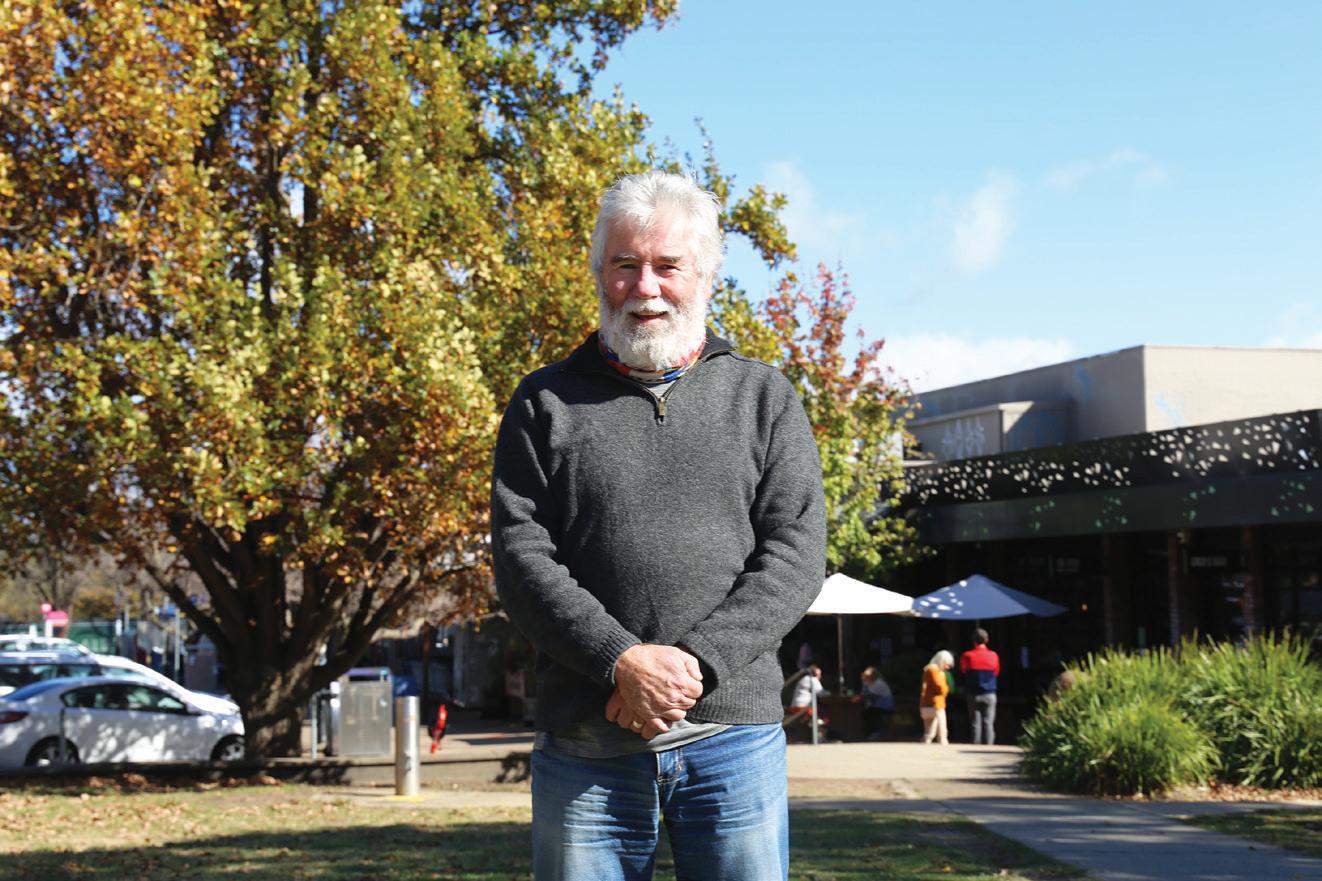
COMMONLY known as “cane toads of the sky”, Indian myna birds have been deemed one of the 100 most invasive species in the world and Canberra man Bill Handke is calling on the community to help reduce the estimated 150,000 of them in the ACT.
A keen birdwatcher and president of the Canberra Indian Myna Action Group (CIMAG), Bill described the ACT government’s recent declaration of the bird as a pest species as a “profound decision”.
But he also says it’s only the first step in tackling the issue.
“Our worry is that the government might see the declaration as an end in itself,” he says.
“Mynas are very intelligent and very adaptable animals. Unless there’s on-the-ground, practical activity to actually control the birds then we’ll just see this problem continue.”
Bill says he started the Action Group in 2006 after seeing first hand how destructive the species can be.
“Research has shown that as Indian
INDEX
myna numbers go up, native bird num bers go down,” he says.
“Indian mynas aggressively evict native birds such as kookaburras and parrots from their nests, dumping out their eggs and even killing their chicks.
“Because they can be heavily infest ed with bird mites, their droppings can contain viruses and pathogens so they also represent a human health risk.”
Native to the Indian subcontinent, the species was introduced to Aus tralia in the late 1800s to reduce the numbers of insects feeding on gardens and vineyards around Melbourne.
Before this children were engaged to pick insects off the plants, but when Victoria established mandatory schooling in 1872 a new system was required, a system that would explode in numbers.
“The mynas didn’t eat the insects, they preferred the grapes,” says Bill.
“Their numbers skyrocketed throughout Australia and around 100 years later they arrived in Canberra.
“That was due to a misguided newcomer from Sydney who released a dozen birds because he missed hearing their call.”
Since CIMAG’s founding 15 years ago, Bill says they’ve removed a minimum of 74,900 mynas from Canberra through 2660 members setting traps in their backyards.
Since 1993: Volume 27, Number 30
Arts & Entertainment 19-21
Canberra Matters 6
Cinema & Streaming 20
Crossword 22
Dining 21
Garden 22
Horoscopes 23
Letters 18
News 3-13
Politics 9, 11
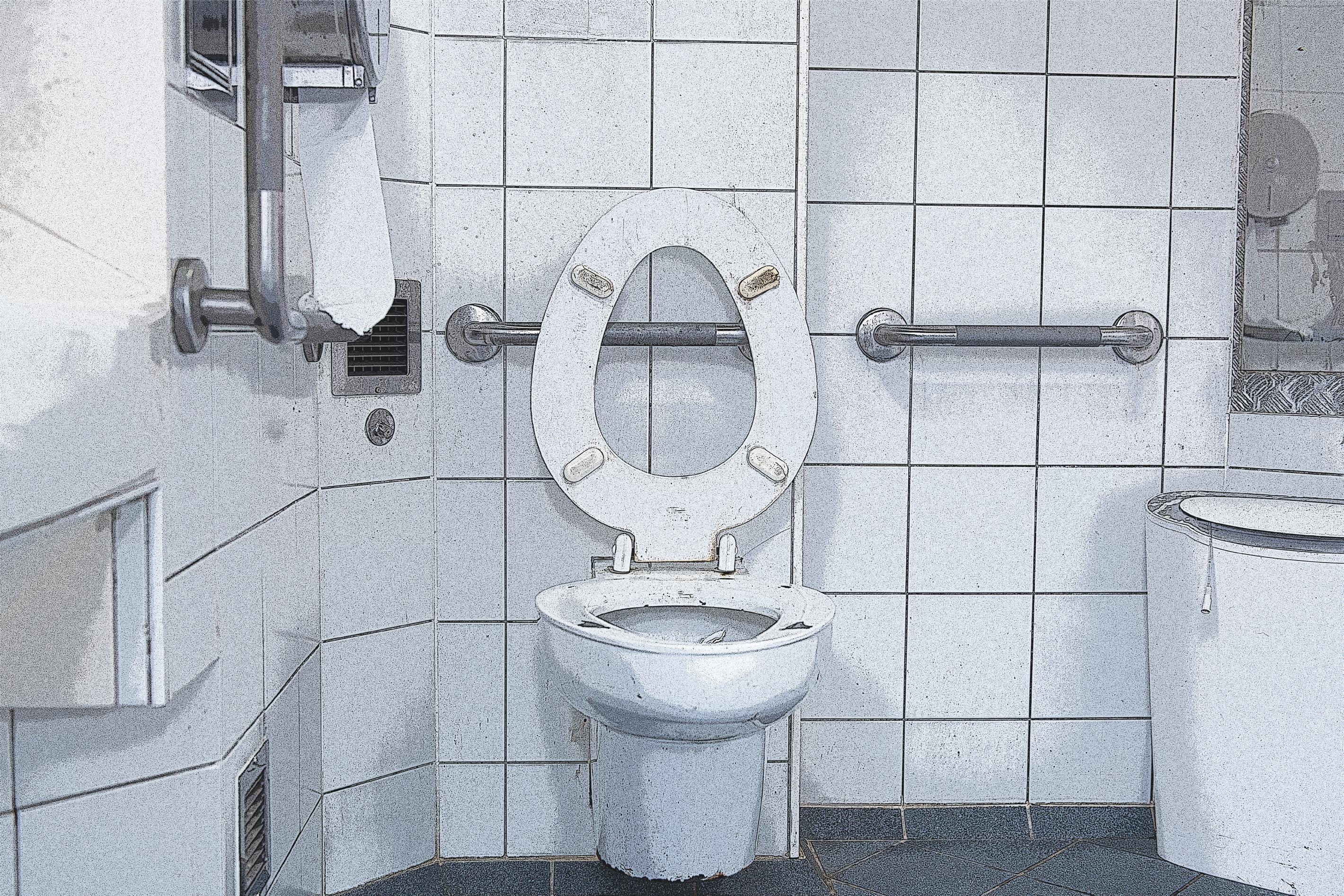
Seven Days 4 Cover: Mystery of the disappearing toilets. Story Pages 12-13. Original photo: Holly Treadaway.
“The trap has an entrance tunnel and it’s shaped so that it narrows and slopes down meaning birds like magpies, currawongs and crows don’t get caught,” he says.
“We also use cat food as bait so we don’t get seed eaters like rosellas, so it discriminates for mynas very well.”
After the mynas are trapped, Bill says they are killed using carbon monoxide, a method he describes as the most humane, painless and stress-free
Managing Director: James Anderson, 0404 077605, james@citynews.com.au
Director: Kate Meikle, kate@citynews.com.au
Senior advertising account executives: David Cusack, 0435 380656
made by inmates of the Alexander Maconochie Centre with materials provided by the action group, but production stopped after the prison’s
“What we’d really like is for [Corrections Minister] Mick Gentleman to ask the jail to resume trap making,”
With more traps set in myna hotspots, Bill says there’s still a chance to reduce the impact the species has on
“Schools, shopping centres, horse stables, the airport, the zoo, there are key areas where we see mynas, due to scraps and waste laying around,” he
“In the occasions where schools let us set traps during holidays it has been very successful. Just four or five days in one school they caught 70 mynas.”
means of doing so.
Despite the species going from the third most common bird in Canberra to the 24th through the work of the group, he says the region has started to see a resurgence in numbers.
“It comes down to a good breeding season and, as we haven’t been able to provide traps to people who want them, we’ve missed an opportunity to get on top of them,” he says.
In previous years, the traps were
While Bill believes it’s now too late to eradicate the species, he says there is still a chance of keeping its numbers low with the right steps.
“It’s all going to depend on the government’s response from here. We want to work with them on this issue,” he says.
“I dont know of anybody who likes to kill animals, but if the only way to protect our wildlife is by active culling then that’s what you have to do.”
More at indianmynaaction.org.au
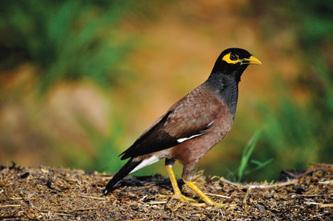
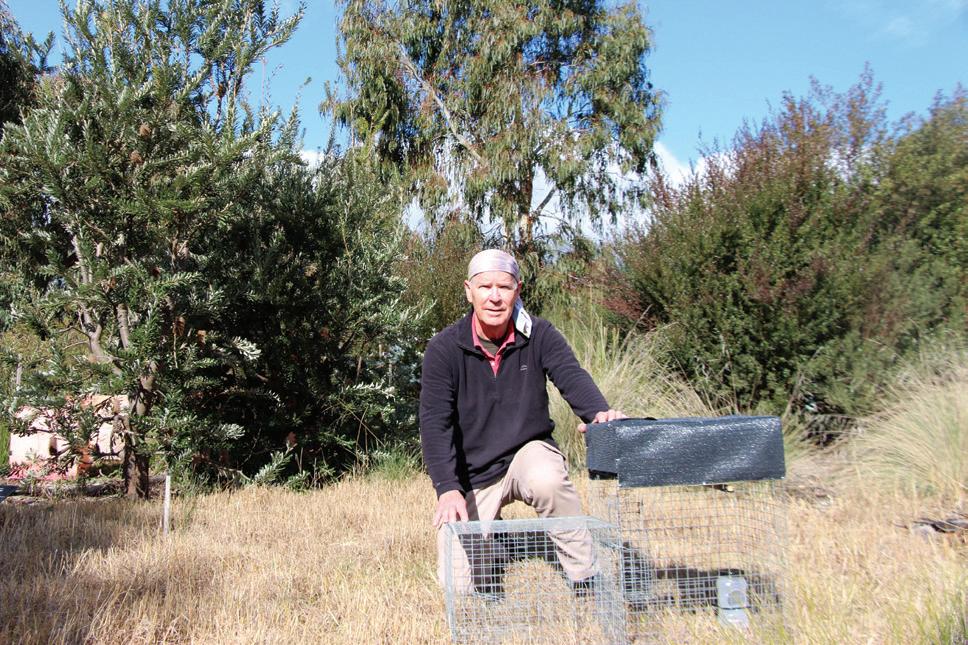
Canberra Indian Myna Action Group president Bill Handke with an Indian Myna trap. Inset: An Indian myna bird, also known as the common myna. Photo: Nick Overall
Rebecca fiddles as the dozers threaten heritage
REBECCA Vassarotti
latter-day Nero. For as Rome burns, the inexperienced Heritage Minister fiddles.
A captive of her bureaucracy, the Greens MLA cannot muster the nerve to stand up for anything and hides behind the weasel words of her advisers.
That’s the only conclusion I can draw from events of recent days when “Canberra Matters” columnist Paul Costigan an urgent, open letter to the minister on citynews.com.au pleading with her to halt the demolition of a house with heritage potential in Narrabundah.
He noted that it has been but weeks since the community paid tribute to designer Derek Wrigley (February, 1924-June, 2021) and his achievements, from his employment at the ANU, his role in establishing design groups to his many design contributions to the city.
One of these was his 1959 Paral House at 22 Brockman Street, Narrabundah.
“This gem is a beautiful low-rise house situated quietly beside Narrabundah Park (Rocky Knob). If you did not know where the borders were, you would be thinking it was part of Red Hill – being perched up on the hill,” says Costigan.
But now, he says, the property is being demolished. He legged it around to Narrabundah and took photos to prove the point.
“The owners, being descendants of the owner who has also died recently, now
bigger,” writes Costigan.
“Several people have tried to lodge whatever paperwork is necessary to stop this happening, but are being blocked by that infamous one-stop black hole – called Access Canberra.
“Dear Minister, people have tried the bureaucratic processes and they are failing. Your urgent assistance would be appreciated. Please help.”
How about no? In a letter to me, clotheared Vassarotti effectively admitted she was an impotent bystander in the process, copping out with this wiffle-waffle: “While it might be tempting to call on ministers to intervene in these processes, the ACT (like
expert heritage body to maintain maximum integrity in decision-making and to protect against political interference.”
Sometimes political power is about courageous interference. What was needed here was a halt to allow the heritage process to be completed. As Costigan says: “If this is not treated as an urgent matter – now – the issue will quickly become irrelevant as the bulldozers will soon be on site.”
Undaunted, the minister signed off with this patronising flourish: “Your local MLAs are here to help you navigate government systems, provide information and hear about the issues that matter to you. You are always welcome to contact us. Please reach out!”
Honestly, Rebecca, is that really the best
OLDER people without smartphones are struggling to check-in to local businesses, Jenny Mobbs, CEO of Council on the
“Lots of older people don’t have a smartphone, and we’re hearing that they’re being made to feel like an inconvenience to businesses,” she says.
She was echoing the comments of Jeanne in last week’s “Seven Days”, who wrote complaining of the loneliness of facing “an electronic wall of resistance” in managing the mandatory covid app sign-in.
According to ACT Health, businesses are to use their business account to check-in people who can’t do so electronically for any reason. Greg Cornwell, of Yarralumla, wrote asking if someone could explain how the Check In CBR app works on public transport if you don’t have a mobile.
“While there are stickers beside each seat, there is no provision for the driver to take your name if you don’t have a cellphone (imagine the delays if they did!). How about the elderly users?” he asks.
HOORAY for us, more than 43 per cent of the ACT adult population has had their first covid jab and almost 20 per cent (almost
twice the national average) are fully vaccinated. Not that it can take us anywhere yet.
However, Health Minister Rachel Stephen-Smith is entitled to skite about the success of the Garran and airport massvaccination clinics, which have been revved up to 4000 vaccine appointments a week. The Health Minister noted a strong level of people aged 30-39 registering to get the vaccination, with more than 8500 people signing up in 24 hours. They’ll get jabbed once supply becomes available, she said.
AND in a plaintive missive from the Deakin Residents Association, haplessly bemoaning the tram plans south: “We can’t help thinking that $200 million per kilometre could be better spent. It will lead to a service that is twice as long as the existing bus. Imagine the benefit of such expenditure on alternatives such as electric buses for all of Canberra, free public transport, or a world-class bike network.”
Ian Meikle is the editor of “CityNews” and can be heard on the “CityNews Sunday Roast” news and interview program, 2CC, 9am-noon.
The MonaLisa Touch is a comfortable, nonhormonal, minimally invasive and painless 5-minute treatment with zero downtime
Creating longer-lasting relief, the MonaLisa Touch is for women experiencing vaginal itching/burning, vaginal dryness, loss of lubrication, vaginal laxity, incontinence symptoms, or painful sexual intercourse.
Dr Omar Gailani offers treatment for
Gynecological
A referral is necessary for an appointment with Dr Gailani
Canberra Urology and Gynaecology Centre | P 6285 1813 E reception@omargailani.com.au | W omargailani.com.au
Suite 2, Level 2, Equinox 1, 70 Kent Street, Deakin ACT
Key benefits of The MonaLisa Touch:
Low risk – suitable for most women
Achieves long lasting improvements
Immediate return to normal daily activities
Suitable for women who are not able to undergo hormone replacement therapy eg. Breast Cancer Patients
High success rates after treatment
Minimal maintenance after initial procedure
Dr Omar Gailani
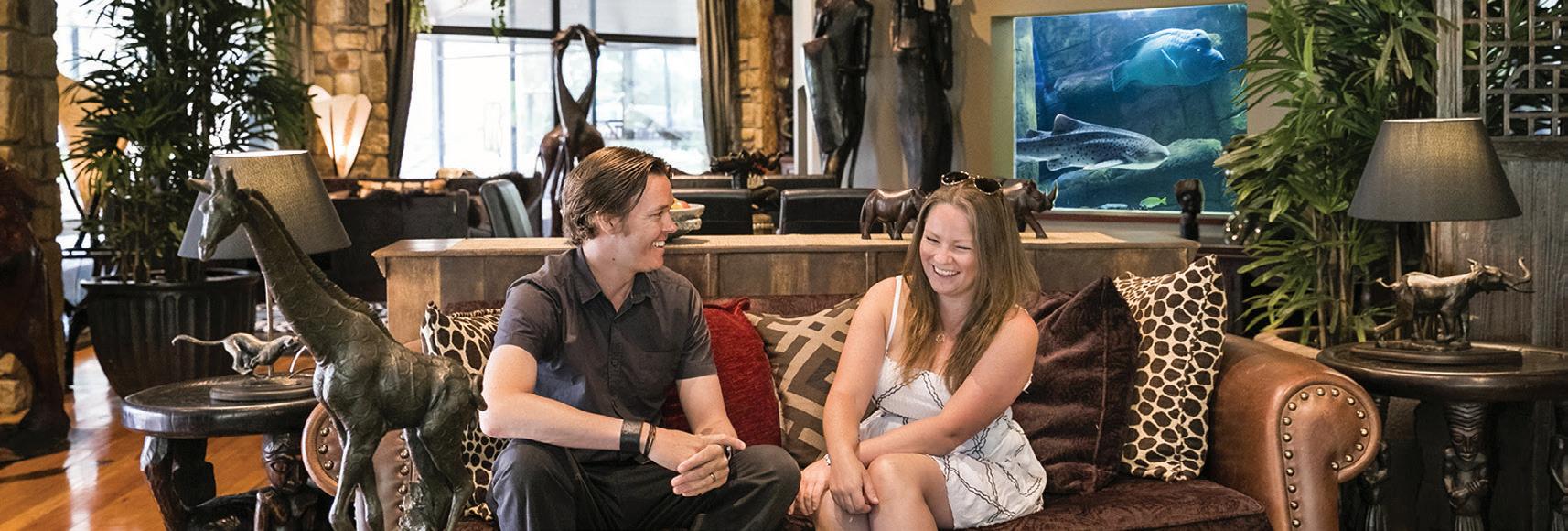
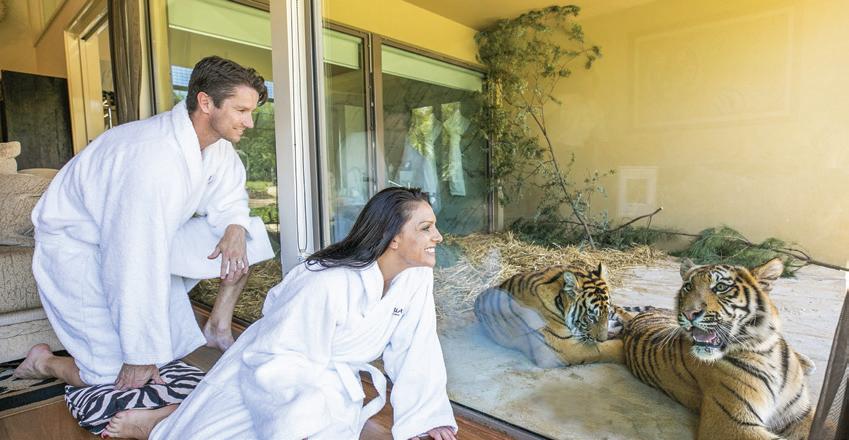
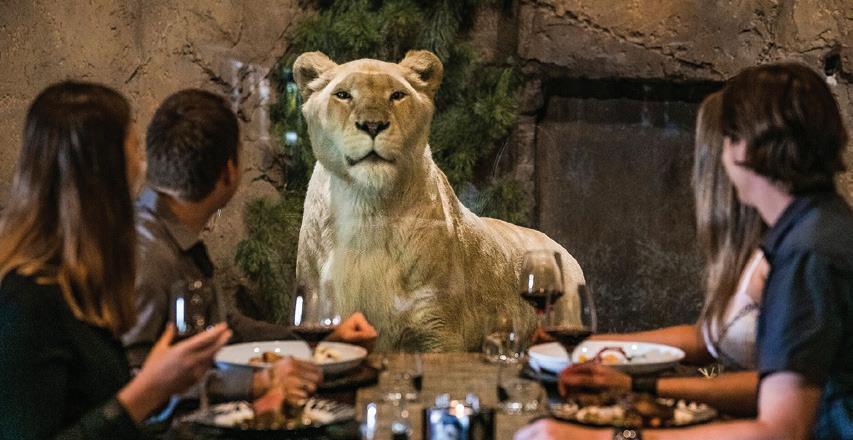
Jamala Wildlife Lodge was virtually fully booked from September last year until September this year! The recent outbreak in Sydney has resulted in a number of short-term booking deferrals, freeing up some rooms.
Due to the possibility of future border closures with NSW, Jamala is offering residents of Canberra significant discounts for the next two weeks!
Stay 1 night and get 20% off!
Stay 2 nights (or book two rooms on the same night) and get 25% off! Book 3 nights (or book 3 rooms on the same night) and get 30% off! Get a group together now!! Check availability on our website shown below, but you need to ring Jamala on 62878444 to get the discount!
Jungle Bungalow Jamala Dining
THE GADFLY BRIEFLY
Yes, sir, those Army guys know the drill
THE sudden appearance of an Australian Army general in the Morrison government’s COVID-19 imbroglio was not only troubling, it was entirely predictable.
The coalition these days has a predilection for militarising any operations of government that the electorate finds problematic.
No doubt Lt-Gen John Frewen knows quite a lot about army logistics. However, he is not dealing with the army but a system of civilian government, state and federal, with a very long experience in procuring and distributing vaccines across the Australian community.
If some additions to the rollout are required – such as showgrounds and car parks for mass vaccination – the states and territories don’t need a military outsider to get the job done.
In short, Lt-Gen Frewen is window dressing in the Morrison marketing plan; and in a country with such a militarist
Anzac attitude, it’s a very clever
One of the reasons military figures are so useful is that… they can be relied upon to take orders respectfully and even to have their own decisions countermanded by a prime minister such as Morrison.
trick. It’s one ScoMo learned at the feet of the master, John Winston Howard. It was Howard who in August, 2001, when confronted with the Norwegian ship “MV Tampa” carrying 433 rescued refugees seeking to land them at Christmas Island, sent out a squadron of SAS operatives to take over the vessel, thereby militarising Australia’s refugee program and assuring the coalition of victory in the forthcoming election.
Morrison, as Immigration Minister in the Abbott government, eagerly picked up the military chalice and developed Operation Sovereign Borders with the then deputy chief of Army, General Angus Campbell prominently by his side. And while Campbell was not particularly suited to the “selling”
civilian government.
They can be relied upon to take orders respectfully and even to have their own decisions countermanded by a prime minister such as Morrison.
Indeed, Morrison and Defence Minister Peter Dutton had no qualms in “correcting” General Campbell –now chief of the Defence Force – when he withdrew the Meritorious Citation from an SAS unit accused of war crimes. Campbell took it on the chin.
Equally, it was Howard who chose Maj-Gen Michael Jeffery as GovernorGeneral in 2003, the first military man
ST BENEDICT’S PRIMARY SCHOOL
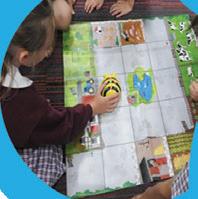
We are a connected community, guiding students to be independent and creative thinkers for a future world.
A school community where every student builds confidence, character, independence and leadership.
OUR SCHOOL PROVIDES…
• Student Centered, Inquiry focused Learning.
• A BYOD program and mobile technologies integrated throughout the curriculum.
• Student leadership opportunities.
• A Wellbeing Focus for all students.
• Before and After School and Holiday Care Programs are available.
since William Slim in 1953.
Tony Abbott as PM chose General Peter Cosgrove; and Morrison followed the lead with General David Hurley in 2019.
While they are all no doubt splendid fellows, their great advantage to the government of the day is their absolute reluctance to say anything in public which might ruffle the political feathers.
Indeed, these days Frewen has begun to sound more like a showground barker than a logistics expert. Asked by a reporter on “Sunrise” about our relegation to the OECD’s “bottom four” in vaccinations, he leapt to the fray.
“Now, just the other day,” he said, “I released the supply planning parameters out until the end of the year…
“So, we have got the amount of vaccines coming that we need this year. We have got a comprehensive system in place right now about how we are administering the vaccines…
“But from here to the end of the year we’re going to have to make sure that people are turning up increasingly in droves…
“AZ has been a really important workhorse in our vaccine rollout. I know that you and Kochie had it. I’ve had it myself. My mum’s due to get her second next week…”
Yep, ScoMo himself couldn’t have put it better.
robert@robertmacklin.com
Breast cancer survival rates improve in ACT
BREAST cancer survival rates have “significantly improved” in the ACT and its surrounding region over the past 20 years, according to a long-term study.
The study, titled “The ACT and South East NSW Breast Cancer Treatment Group Quality Assurance Project Report”, which summarised data collected from July 1997 to June 2017, found that the risk of a woman getting a recurring cancer after an operation and treatment for an invasive breast cancer has dropped 61 per cent.
A troubled history
LOCAL author and “CityNews” columnist Robert Macklin will give a talk to the Australia China Friendship Society titled “Dragon and Kangaroo – a troubled history”, at 7.30pm, Tuesday, August 3, Southern Cross Club, Jamison. All welcome; $2 donation at the door.
Big book fair is back
THE Woden Seniors’ “Big Book Fair” is back. Organisers say the club, at 12 Corinna Street, Woden, will be filled with a huge range of pre-loved, quality books, as well as magazines, games, puzzles, vinyl records and watercolour paintings. Children’s books, CDs and DVDs will all be $1 each. Open 10am-4pm, August 5-8.
Lt-Gen John Frewen.
End this ugly political war on asylum seekers
I CLEARLY remember where I was and what I was doing eight years ago this past week.
I was living and working on Christmas Island. I was, in fact, the administrator of Christmas Island and of the Cocos (Keeling) Islands. In that role I had no responsibility for or formal interaction with asylum seekers or asylum-seeker policy.
In fact, as administrator, I had very little responsibility for anything, but that is another story for another day.
However, I did have strong, albeit mainly negative, views about Australia’s asylum-seeker policies and the manner of their implementation. Views I was wont, to the chagrin of my masters and others, to express if ever invited to do so. Views that I retain to this day.
The reason, of course, that I have memories of this week from eight years ago is because that was when Australia’s policy of offshore and indefinite mandatory detention was formally announced and put into immediate effect by the Rudd/Albanese Labor government.
The policy was, of course, kept in place by the Liberals following Labor’s defeat at the hands of Tony Abbott and has been retained by us, ie Australia, for the last, long eight years.
In the two years that my wife
Ashilpa Khanna
A sentence of nine years’ imprisonment is reserved for crimes such as rape, aggravated robbery and manslaughter, but the hundreds of asylum seekers we’ve imprisoned for that same length of time have committed no crime.
Robyn and I lived on Christmas Island more than 600 asylum boats and more than 20,000 asylum seekers arrived on Christmas and the Cocos Islands. Both my office and our home were adjacent to Flying Fish Cove, which was where asylum-seeker boats arriving at Christmas Island were moored and their human cargoes landed before being transported to the detention centre and the boats taken out to sea and scuttled.
I made a habit of attending at the wharf whenever asylum seekers were landed. I always sought to make eye contact with those coming ashore, but could do little more than smile, as a sign of welcome, as I did so.
I clearly remember the expressions on the faces of those coming ashore.
More often than not the men are striving to put on a brave face, the women anxious and nervous, holding their babies tightly to their chest and their children by hand, and the children themselves excited and smiling.
Incidentally, I have photographs of hundreds, if not thousands, of asylum
seekers entering Australia at Flying Fish Cove that constitute, I think, an important record of this black chapter in Australia’s history that needs a good and secure home and I would welcome suggestions on where that might be.
They are photographs that I am sure our grandchildren and great grandchildren will use when, sometime down the track, there will be demands for the establishment of a Truth and Reconciliation Commission to seek to ensure that Australia confronts and atones for this awful chapter in our history.
My point in this long meandering introduction is that as I strive to understand the seeming disinterest in and lack of apparent concern about or widespread acceptance of our individual responsibility for the way in which we have, for eight years, treated the thousands of people that risked their lives in coming to Australia to seek protection and a better and safe life, I am reduced to thinking that it is in the main because
Collectively, we seem to be unable to empathise with them as fellow humans worthy of not just our empathy but our care and protection.
How else can we explain the lack of any broad sense of outrage that there are still hundreds of people in detention, ie locked up, in our names, some of whom are entering their ninth year as prisoners.
It is sobering to reflect that a sentence of nine years’ imprisonment in courts across Australia is reserved for crimes such as rape, aggravated (armed) robbery and manslaughter but of course the hundreds of asylum
seekers that we have imprisoned for that same length of time have committed no crime. They are the innocent victims of an ugly political war. We need to end the war and release all asylum seekers who remain in detention into the community. I would like to think that as a first step the Labor Party (my party), which introduced the policy, could acknowledge that it was wrong. That it admits that, in the heat of a political campaign and behind in the polls, it made a dreadful mistake. I feel sure that not only would the people of Australia reward them for doing so, but it would force the Liberal Party alone to own this heinous policy and hopefully bring it to an end.
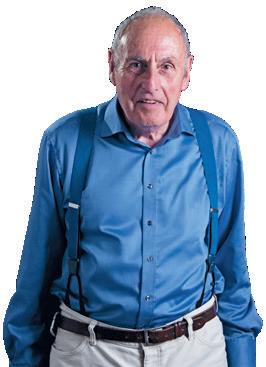
Jon Stanhope was chief minister from 2001 to 2011 and represented Ginninderra for the Labor Party from 1998. He is the only chief minister to have governed with a majority in the Assembly.
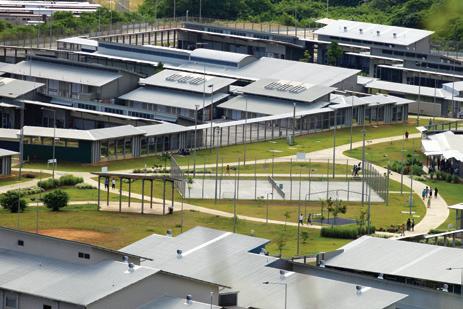
The Christmas Island detention centre.
Onward Christian soldiers and their prayer book
Reporter BELINDA STRAHORN follows the amazing journey of a prayer book that journeyed to World War 1’s Western Front; two decades later it comforted a prisoner of the Japanese and ended up in the hands of a soldier bound for Vietnam.
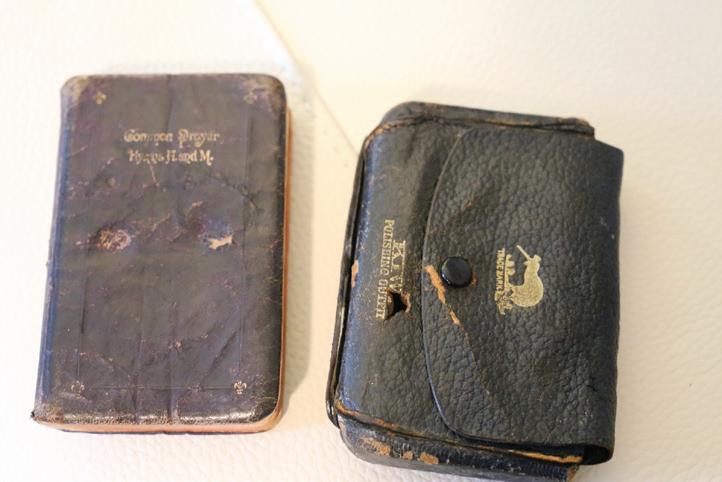
PINT-SIZED and perforated by bullets, one family’s little prayer book was carried into combat by three generations of soldiers across three theatres of war over half a century.
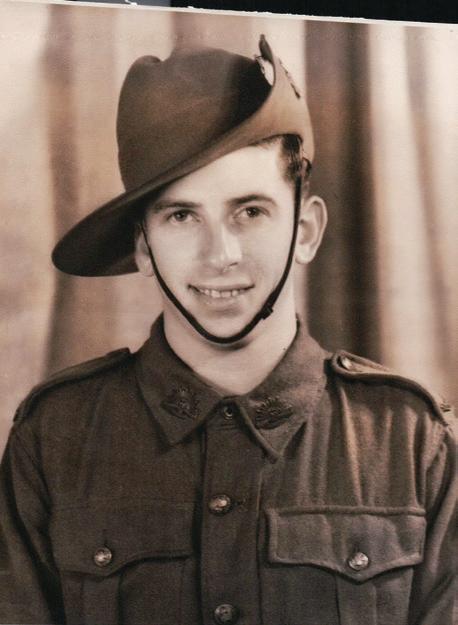
No bigger than a cigarette packet, the combined Church of England prayer book and hymnal was carried to the front by 20-year-old Raymond Nelson Taylor, a cheesemaker from Bega, shipped off to World War I.
Kept inside a leather Kiwi shoe-shine case, the prayer book was treasured through Ray’s service with the 54th Australian Infantry Battalion.
Amid the horrors of the trenches on the Western Front in France and Belgium, Ray’s prayer book remained tucked inside the left breast pocket of his uniform.
A gift from his mother upon sailing to Egypt in 1916, she hoped it would keep him safe. It did.
Ray survived the war, along with the prayer book which is now the prized possession of Ray’s son, Warren Taylor, of Richardson.
Warren, 75, is a bookbinder by trade and has made repairs to it over the years.
“It was in a bad way,” War ren said, showing how spent bullets left marks on the front of the thick volume, but didn’t penetrate it.
“It’s very precious.”
Thumbing through the book’s fine pages, which were said to have made “good cigarette paper”, Warren explained that after returning to Australia, his father moved to Queanbeyan, married Amy Daniel in 1932 and raised a family of seven in Hirst Avenue.
“But dad never spoke about the war,” Warren said. “He would have gone through hell and back, but he never said anything; they didn’t back then.”
Two decades later, the prayer book went back into action with Ray’s nephew Gordon “Gus”
Henry Bell, a builder from Queanbeyan, who served with the 2nd AIF (Australian Imperial Force) during World War II.
When the Japanese army invaded Timor in 1942, Gus and a small band of Australians known as the “Sparrow Force” took to the hills to fight a guer-
rilla war.
Eventually, with little ammunition, the exhaustion of the men and the growing number of casualties, the force was captured and Gus spent the remainder of the war as a prisoner.
On arrival at the POW camp, the Australian prisoners were ordered to strip off and throw their belongings into a pile, Warren said.
Fearing the cherished prayer book would be lost forever, Gus pleaded with a Japanese soldier to let him keep the prayer book saying: “Christian, Christian.”
Expecting to feel the brunt of his rifle, the guard pulled out a crucifix and replied: “Me Christian, too”.
“He let him keep the book,” Warren said. “Incredible. What are the chances of that happening?”
“It must have been a terrible ordeal. He was listed as missing for two years. It wasn’t until the prisoners were freed from the camp, once the war was finished, that his family received information that he was alive,” said Warren.
“Despite all the trauma, he was the happiest, funniest, most liveliest fella. He had an MG sports car but died suddenly in the 2000s.”
The prayer book made its way from father to son.
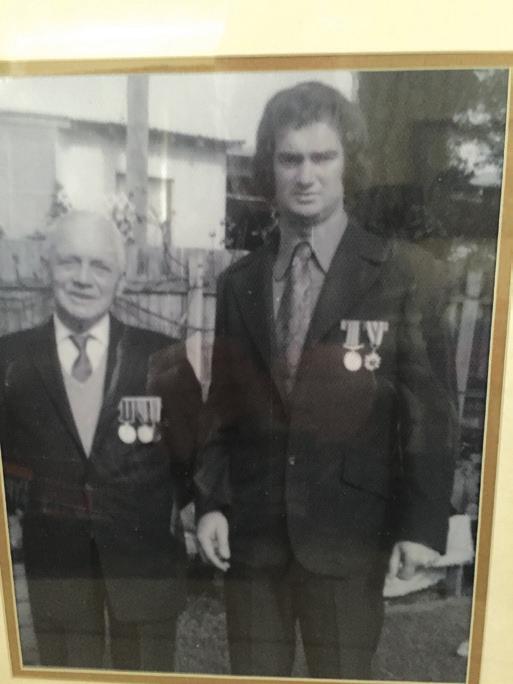
In 1967, Ray handed the prayer book to Warren who was 21 at the time and conscripted for the Vietnam War.
“On the day I was leaving to go, dad gave me the book,” Warren said.
“It was a lovely gesture and I kept it close to me.”
Well-known in Queanbeyan as a sportsman, Warren served at Nui Dat, Vung Tau and Bein
Warren resumed his work as a bookbinder.
But the full impact of his Vietnam war experience wasn’t felt until many years later, when he found himself suffering mental health issues that required hospitalisation.
“I was going to the pub at 10am and I had bad anxiety,” Warren said.
“I kept having really bad dreams; it all got too much.”
Having made peace with his past, Warren went on to march in every Anzac Day service alongside his father until his death in 1985 at the age of 89.
“We were great mates,” Warren said.
Warren still finds it amazing that something as seemingly insignificant as a small prayer book, survived three wars, and has linked generations of his family.
“I used to carry it in the glove box of my car, but not anymore, it’s too precious,” Warren said. “It will be loved and cherished forever.”
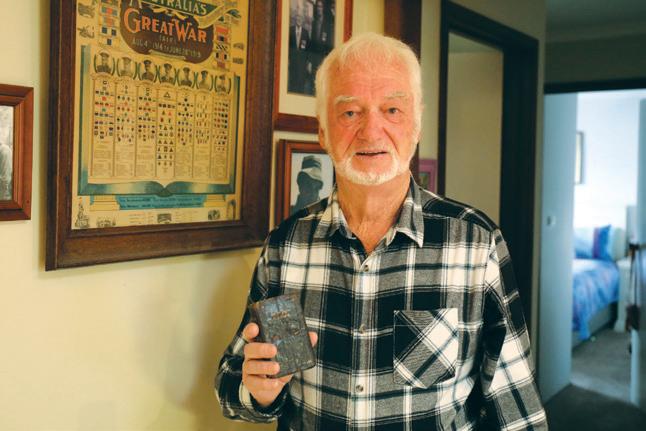
Bookbinder Warren Taylor with the prayer book, which he took to fight in Vietnam. Photo: Belinda Strahorn
The prayer book and the leather Kiwi shoe-shine case Ray Taylor took to World War I.
The prayer book’s first owner Ray Taylor, with son Warren, pictured on Anzac Day, 1970… a gift from his mother given with the hope of keeping him safe on the Western Front.
Gordon “Gus” Bell, of Queanbeyan, who carried the prayer book with him during World War II.
Pork-barrelling, a way to say corruption
“PORK-barrelling” is a euphemism for corruption and undermines our democracy, poor governance and shady behaviour.
Governments are taking some action, but there are more things to be done to reduce corruption.
The “park-and-ride” scheme currently under close examination as “pork-barrelling” should be seen for what it is – corruption. It might be the case that no money is going to personally enhance the coffers of decision makers who made the announcements during the last election. However, there was a clear advantage for the government and the Liberal Party in aiming the largesse at marginal seats.
Using taxpayers’ money to bring about advantage to a sitting MP, potential MPs and a political party is immoral and unacceptable. The Australian National Audit Office (ANAO) has exposed major issues with the $660 million of taxpayers’ money that was part of a pre-election campaign planned and executed by Liberal government ministers.
“Not demonstrably merit-based” was the description of the ANAO and concluded with: “Not designed to be open or transparent”. The shadow minister for cities in the Federal parliament was correct in stating: “It shows an
The Australian National Audit Office has exposed major issues with the $660 million of taxpayers’ money that was part of a pre-election campaign planned and executed by Liberal government ministers.
absolute contempt for due process, an absolute contempt for the public, and a real contempt for taxpayers’ money.”
The minister at the time was Alan Tudge – who now has responsibility for education. The current minister, Paul Fletcher, argues that he has ordered a review into the allocation of the funds and that the department is responding positively to all of the recommendations of the ANAO report. It is a step in the right direction, but will hardly put an end to this sort of scam.
What is needed to stop corruption? How can it be nipped in the bud? What tools are available to address any form of corruption? There are some current approaches that have an impact. But complex problems required multilayered solutions. Some, such as the ANAO and parliamentary inquiries are already in place.
In the short term, there ought to be a Royal Commission into this particular issue. Governments do not like calling Royal Commissions over which they have no control. A Royal Commission also implies some admission of guilt. A serious consideration for such a Royal Commission would be whether or not
there was any financial advantage to individuals through links to the Liberal Party.
An Independent Commission Against Corruption is one of the key elements in any solution. Such bodies, where they have been established with appropriate teeth, have made a considerable difference. The Federal parliament has declined again and again to establish such a body. In March, in this column, I pointed to the need for such a body regarding political donations.
Another consideration regarding “pork-barrelling” is the impact of single-member electorates. The largesse handed out in such a targeted way in the park-and-ride scandal was to assist Liberal Party candidates to win specific seats. A more transparent process would have been to identify real need and go through a non-political process to address the greatest need first.
Proportional representation, as it applies in the ACT and Tasmania, delivers
five or more members in one electorate.
Munificence in such circumstances may be helpful to the electorate as a whole, but does not have the same impact in supporting a particular candidate to be elected. As such, it is harder for a political party to put pressure on the government to provide “pork-barrel” assistance to candidates.
Adoption of proportional representation for lower-house elections is hardly likely to happen in the future. However, if it assists in solving this issue, it is worth putting on the table. No doubt, there are also many more ways to ensure transparency and good governance as a means of countering corruption.
No system is perfect in wrestling with greed and human nature.
However, the more checks and balances in place, the more likely it is that corruption will be minimised.
Michael Moore is a former member of the ACT Legislative Assembly and an independent minister for health.
BRIEFLY
Jeans for Genes Day fundraiser
THE Canberra Committee of the Children’s Medical Research Institute is hosting a Jeans for Genes Day dinner at the Hellenic Club, Woden, on Friday, August 6. The institute helps advance the treatment and prevention of childhood diseases and, since 1960, has been supported by the Canberra committee in helping raise funds for the one in 20 children worldwide born with a birth defect or genetic disease. Tickets via trybooking.com
Festival
for ‘future’
RADFORD College will host guest speakers, live entertainment, market stalls and a clothes exchange at its Dirrum Festival 2021, with an aim to “create stepping stones for a better tomorrow”. Speakers include former PM Kevin Rudd and Olympic Gold medalist Stephanie Rice. At the Morison Centre from 4.30pm, August 6 and 7. Book via dirrumfestival.org/cbr21
Language studies
THE Canberra Academy of Languages is holding an information evening about senior secondary programs for 2022 at Ainslie School, Donaldson Street, Braddon, 6pm-7pm, on September 16. The session will cover programs in French, German, Japanese, Spanish and Tamil, and learning languages in years 11-12. Register via email at info@cal.act.edu.au
The mystery of the disappearing public toilets
Public toilets. Who hasn’t had the call? But in Canberra they seem to be getting harder to find. Reporter
DANIELLE NOHRA has been trying to find out why...
LOCAL community groups and residents are calling on the ACT government to explain why public toilets, more and more often, are disappearing, being privatised or being excluded from neighbourhood shops.
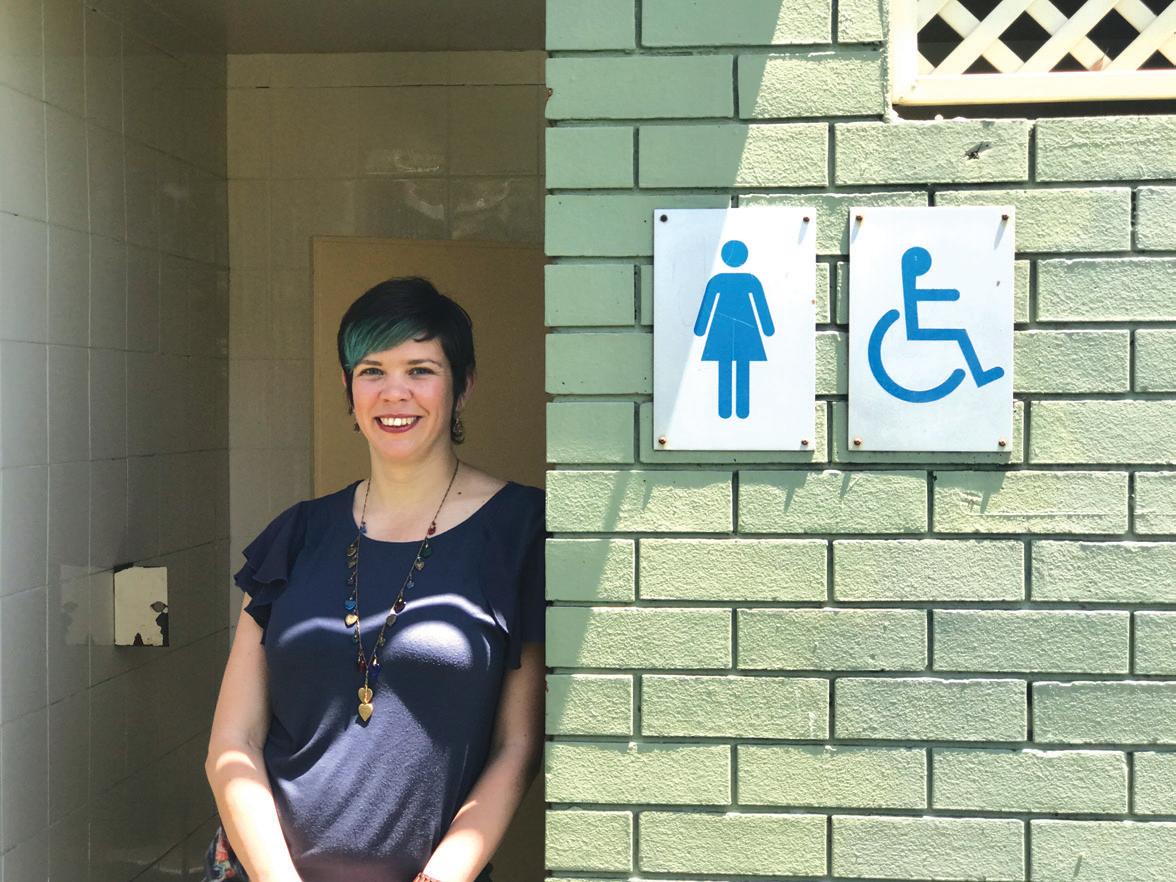
Townplanner Jane Goffman, convenor of the Dickson Residents Group says stripping public toilets out of parks in the older parts of Canberra causes parents to avoid taking small children regularly to local playgrounds.
“In my view the community should be demanding clean, safe public toilets with good surveillance at all the local shops, all the interchanges, all the sports grounds and all neighbourhood parks with basic playgrounds,” she says.
There’s no public toilet in Watson, which sends local residents to other places to do their shopping, says the head of the Watson Community Council’s planning working group, Simon
Clark.
He says Watson is a suburb in tran sition, a mixture of residents who have been there since the ‘60s and, as the size of the suburb has doubled, young families with children.
“Both of them are of an age and a family structure that needs toilets.
“When you get older you need a toilet available, when you’ve got young children you need a toilet available.”
At Curtin shops, the public toilets were demolished and the ACT govern ment handed over the land they were on to a developer to make way for a commercial/residential development.
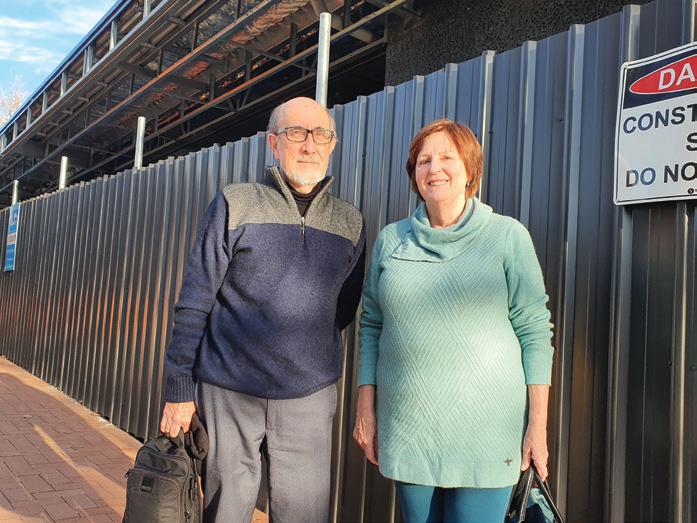
The five toilets that used to be at the shops – three public, two private – will be replaced with two toilets but Curtin Residents’ Association president Chris Johnson wants assurance that the toilets will be available to the public.
“We’ve had no sight of any agreements and we have no knowledge of
legal provisions which would ensure that we do have a toilet,” he says.
In Canberra’s south, there’s a need for public toilets in Farrer, Torrens, Lyons, at the Woden Town Square
People are just having to ‘make do’, says group convenor
DICKSON Residents Group has urged the ACT government to build a public toilet as part of its submission during the public consultation period for the Woolley Street upgrades.
While Dickson has a public toilet facility on Cowper Street, opposite Dickson Aquatic Centre, practising town planner and Dickson Residents Group convenor Jane Goffman says there’s a need for public toilets to be provided in a better location such as near the interchange.
The bus interchange has no public toilets at all and is a long distance away from the Cowper Street toilet block if someone is at the interchange and needs to use them, she says.
“As far as I know, every other bus interchange does have public toilets so it’s really bizarre that Dickson doesn’t,” she says.
“Without a toilet facility there, it means that if somebody is sitting and waiting for a while for a bus to come, it can become a real problem, especially if they’re older or they have a small child.
“Then if they walk along Woolley Street trying to find a toilet, there’s nothing there, either.”
Jane says people are often forced to hike over to McDonald’s or the library but both are meant for people who are actually using those facilities or for paying customers.
“It’s no good if they’re students because they may not have any money to go in and buy a cup of coffee and sit there. It really creates problems for people,” she says.
“The trend to strip out toilet facilities operates to privatise, by cost shifting to the private sector what was originally a government-run service.
“The big problem with doing that is it excludes anyone who can’t afford to pay to enter or feels uncomfortable entering a premises such as a pub, and many restaurants and cafes are closed at times when someone might be trying to find a toilet [such as] late at night, early in the morning or on their way home from work.”
The residents group would like to see clean,
Jane Goffman… “Really important to put public toilets where there are eyes on the street.”
safe, 24-hour toilet facilities built that are not outsourced to private operators.
If the ACT government is unwilling to provide toilets in the area (because of maintenance/clean ing or perceptions of safety), then the submission suggests that the toilets on Cowper Street be closed and that the government provide new ones in a better location that also serves passengers for the bus interchange.
It’s important for the facility to have good surveillance and not be tucked away in a dark place that could become dangerous to access, Jane says.
“[It’s] really important to put public toilets where there are eyes on the street,” she says.
“[However], the feedback we got with the pro ject team working on the Woolley Street upgrade is that there’s a resistance by the government to putting in public toilets because they’re perceived as attracting undesirable behaviour.
“That’s really a denial of justice for people who are struggling or doing it tough.
“It seems like we’ve gone down the route of denying people services so that they have to just make do [but] that assumes that everybody is in
“Public toilets serve the public as a whole, not just people sleeping rough or dealing with drug problems, so having safe, clean accessible public toilets benefits everyone and should be compul sory social infrastructure.”
But, even though they should be an essential social infrastructure, they are a subject that plan ners tend to shy away from, according to Jane.
Stripping them out of parks in the older parts of Canberra causes parents to avoid taking small children regularly to local playgrounds, she says.
“That’s a really negative pattern from an early childhood perspective,” she says.
“In my view the community should be demand ing clean, safe public toilets with good surveillance at all the local shops, all the interchanges, all the sports grounds, and all neighbourhood parks with basic playgrounds.
While she accepts that it’s not possible to have toilets at every single local playground in a greenbelt, but where there’s playgrounds at shops and main community hubs, there should be access to toilets, she says.
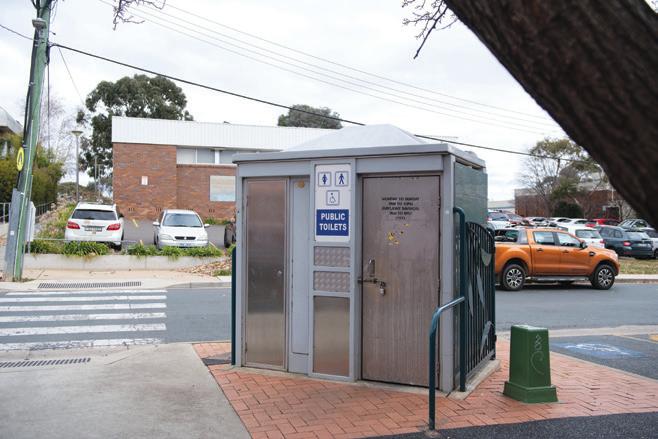
There’s public toilets in the inner , however, the issue is that some seem to never be open and others, like the public toilets in Manuka , are hidden away, says Inner South Canberra Community Council chair Gary Kent.
He’s also concerned about the wetlands that are being developed in Nar, which don’t have public toilets included in its plans.
“The closest public toilet is at the Narrabundah shops,” he says.
“While there are actually two toilets not far from the wetlands on Matina Street, both are locked up.
“One apparently belongs to Transport Canberra and was for the bus drivers. The second one is marked as a public toilet on Google maps, but looks as if it has been locked up for quite some time.”
and the incoming light rail and bus interchange in Woden Woden Valley Community Council president Fiona Carrick says there should be public toilets so that people can feel confident about participating in the community.
No toilets, so people shop elsewhere
DICKSON
WATSON
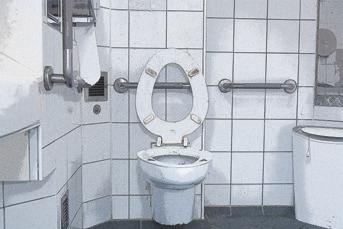
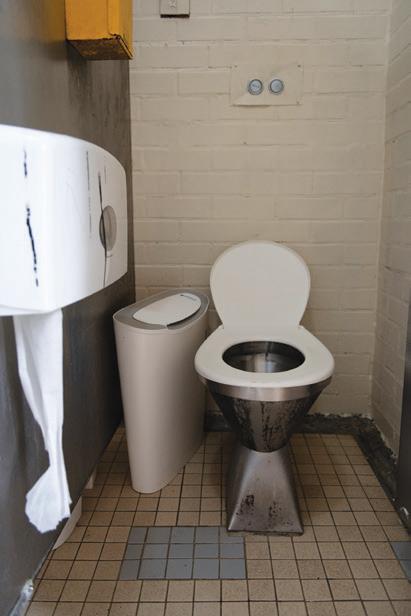
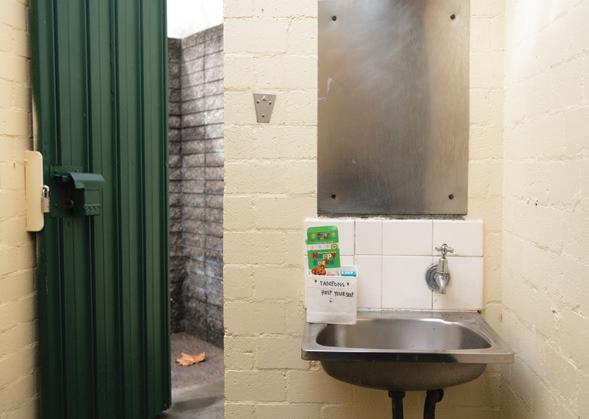
Public toilets at Eddison Park, Woden, left, and Narrabundah shops.
Simon Clark.
Everyone has a public-toilet story, says expert
“WE all use them. Everyone has a public-toilet story,” says Churchill Fellowship recipient and public-toilet enthusiast Katherine Webber.
“If we’re lucky we can laugh about it, but for some people they can’t laugh about it because there can be really serious consequences for not being able to access a toilet.”
Passionate about how people access public spaces, Katherine looked at the lack of public toilets in community spaces in Australia as part of her fellowship, which saw her on a global tour in 2019 to study how other countries manage public “loos”.
She says public toilets are essential to support the access and participation of people in their communities, whether that be going to the shops and spending money at their local shops, participating in government activities, socialising and participating in physical activities.
It also helps to improve public health and personal health and hy-
CURTIN
“There’s a variety of different types of toilets that we often need to be providing across our cities and suburbs.”
She says most governments don’t take responsibility for public toilets,
Based in Queensland, Katherine says she’d like to see legislation illustrate the need for public toilets nationwide and make someone responsible for them (for example, local governments).
“There is not the legislative requirement for local governments to provide public toilets and so there’s not a requirement to look across a whole suburb, a whole city or local government area to say: ‘Where are our public toilets provided and where are the
She’d also like to see governmentfunded infrastructure projects include the requirement to undertake a
“If you think about new infrastructure being built – whether it be roads, community facilities [or] town centres, if each of them had a toilet-needs assessment, we’d be seeing more toilets
Public toilets lost to a private developer Toilets help people take part, says Fiona
THE Curtin Residents Association is concerned that plans to replace five toilets – three public, two private – with only two privately-owned toilets, won’t meet the needs of the community that uses Curtin shops.
The three public toilets were demolished more than a year ago after the ACT government forfeited the government-owned, public land that they were located on over to a developer to make way for a fivestorey commercial/residential development (where the two private toilets were) that was expected to be completed last year.
Building is still underway and association president Chris Johnson is worried that once it’s complete, the two toilets being built as part of the development may not be available to the public, or may only be available for a limited amount of time rather than 24 hours.
According to the president, City Services Minister Chris Steel advised that under the agreement for the sale of the toilet block area, the developer is required to provide “like for like public toilet facilities”, however, Chris’ wife, Ann Parkinson, a member of the association, says they’ve asked to see the finalised plans and they’ve heard nothing.
The development was pitched as a way to bring more people to the shopping centre, so Chris believes they need more toilets, not less.
Woden Valley Community Council president Fiona Carrick says there should be public toilets so that people can feel confident about participating in the community.
Fiona’s lived in the area for more than 50 years and often gets teary by the ACT government’s “planning mess” in the south, particularly in Woden’s
“Where’s our community centre, where’s our indoor sports stadium, where’s our arts centre, our pool’s on it’s way out,” she says.
For Fiona, it’s about wholesome planning and ideally, she’d like to see a community centre and art centre built into one of the buildings bordering Woden Town Square toilet in it, activating the area through activities, events and facilities.
“The new light rail/ bus interchange in must have public toilets for people to feel comfort able to use public transport, [too],” she says.
“The bus interchange is the major transport hub for Canberra’s south. All the buses hub in here and that’s where the Woden tram will end up.
there’s no toilets there either and Fiona says people are asking cafe owners to use their toilets.
“We can’t be sure because we haven’t seen the final plans,” she says.
The association would like some assurance from the minister and would like to know the nature of the agreement between the government and the developer, Chris says.
“We’ve had no sight of any agreements and we have no knowledge of legal provisions which would ensure that we do have a toilet,” he says.
The association is also concerned that cutting the toilet facilities down from three to two, will not be enough to meet the needs of the community.
After being promised “like for like” facilities, Chris says they’ve never had a justification why three goes down to two.
The only response they had was from Minister Steel, who said that it was determined by officers of
Currently there are temporary toilets in the carpark at the centre and when one of them sometimes breaks down, Chris says it causes a queue of people waiting.
Chris also raised concerns around them being privately-owned, asking who they contact if they need to talk to someone about the toilets.
“Once it goes private you can’t even use Fix My Street as a way to complain,” he says.
“Whether it is for Canberra’s ageing but active population, or for our youngest new people, or just for everyone – public life requires public toilets. We all have to go sometimes.
“The cost of providing toilets and keeping them clean and maintained is just part of the cost of being a civilised city, and it should not be skimped on.
“Disregarding the needs of people who actually use public spaces is just bad policy. Having no toilets will reduce active use of spaces.”
“So for people to feel comfortable to use public transport they need to be able to access public toilets and they need to be close to the bus interchange because people won’t be running up the stairs from Callum Street into Westfield to go to the toilet and then back and missing connections particularly on your way home when there’s less frequent buses going to the suburban runs.
“It’s too risky to miss your bus and then you have to wait too long for the next one.”
People want public toilets, Fiona says, and while the bus interchange is a big issue people also want public toilets at local shops where the main hubs are.
“For example, Farrer has a new playground [and] where you have a playground and the shops connected, you need public toilets because you’re asking people to participate in the community,” she says.
“They’re not customers of the cafe, they’re the public using the playground yet they’ve got nowhere to go to the toilet so they’re asking the cafes if they can use their toilets and the cafes aren’t pleased about that,” she says.
“It’s not fair for local cafes to have to provide toilets for people using playgrounds.
Lyons shops is another shopping centre that Fiona says could benefit from toilet facilities and a playground.
Fiona understands it’s not possible to have toilets at every single local playground in a greenbelt but where there’s playgrounds at shops and main community hubs, there should be access to toilets, she says. In Canberra’s south, there’s a need for public toilets in Farrer, Torrens, Lyons, at the Woden Town Square and the incoming light rail and bus interchange in Woden, according to the Woden Valley Community Council.
Chris Johnson and Ann Parkinson.
Fiona Carrick… “To be inclusive, people need to be confident that they can go to the toilet to be able to participate in the community.”
TRADIES NATIONAL HEALTH MONTH
The importance of keeping tradies safe at work
THREE in five serious workplace injuries involve a tradesperson, according to the Australian Physiotherapy Association. That’s despite them making up 35 per cent of the workforce.
These alarming statistics are why the Australian Physiotherapy Association runs the Tradies National Health Month initiative every August.
The aim of the initiative is to raise awareness of the health and injury risks affecting those who work in trade occupations, as well as the flow-on effects to families, employers and the wider community.
In the lead-up to the month, “CityNews” speaks to businesses who have the knowledge, skills and equipment that can help keep tradies safe.
Improving mental health on the worksite
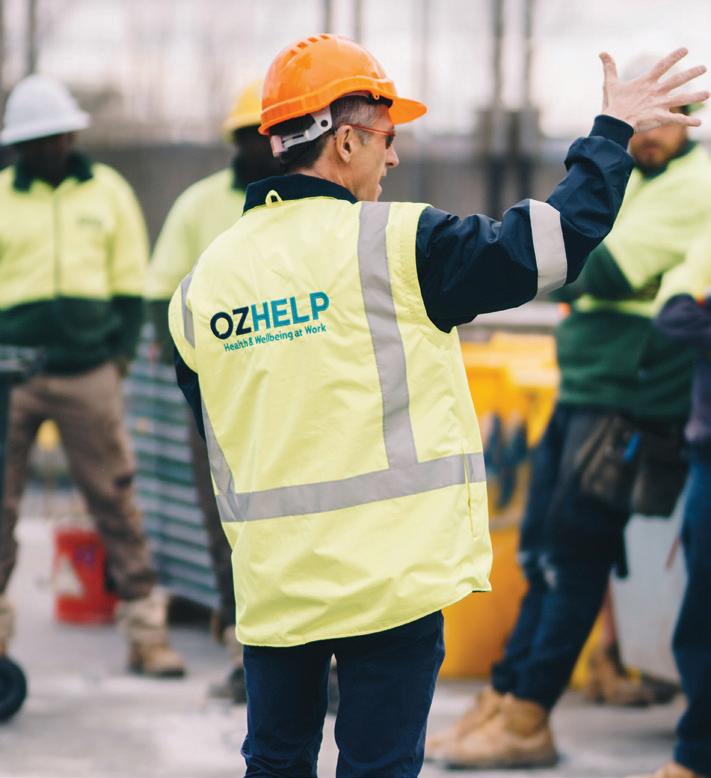
THIS National Tradies Health Month, the OzHelp Foundation wants to emphasise that mental health at any time, but especially now during the latest COVID-19 outbreak, is equally as important as physi cal health, says CEO Darren Black.
Established 20 years ago, Darren says the organisation provides ongoing sup port, counselling and education programs for the building and construction industry both within the ACT and nationally.
“OzHelp was established in 2001 after David O’Bryan, a young building apprentice from Canberra, took his own life,” says Darren.
“That same year, three others who were connected to the ACT building and construction industry died by suicide within a three-month period.
“These events brought together David’s mother and industry representatives who sought action to address the wellbeing and care of industry apprentices.”
Today, Darren says the organisation delivers workplace programs to improve worksite culture and reduce stigmas.
“Each week we visit worksites across the region to provide onsite health checks (referred to as Tradie Tune Ups) and deliver mental health and suicide prevention education,” he says.
“We also provide free counselling to ACT building and construction industry employees and apprentices, and their immediate family members.
“We can all play a part in seeing the signs that someone may be experiencing a tough time and this is where OzHelp is making a difference.”
THE health and wellbeing of employees is strongly valued within the culture of AMA Projects, which is why it says it’s chosen the OzHelp Foundation, a pro vider of workplace wellbeing programs, as its charity partner for 2021.
As part of the partnership, AMA Projects, a provider of construction and project management services, is launching an annual Charity Golf Day to help raise funds to support suicide prevention initiatives and health promo tion programs led by OzHelp.
The charity day will be held at the Federal Golf Club, from 11.30am-7pm on October 21.
In the lead up to the day, AMA Projects is seeking teams of four for 18 rounds of golf. The 18-hole Charity Golf Day will include a pre-round lunch, on-course drinks for the duration of the round, participation in on-course fundraising games and activities, post-round canapes and a networking function, which will include a silent auction and raffle. There will also be sponsorship opportunities available.
AMA Projects national commercial manager Mitchell Flynn (pictured) says he’s excited to partner with a charity that shares such a strong organisational alignment.
people-first culture, to foster a positive and engaging work environment for our employees,” he says.
“We actively implement a number of initiatives and procedures in the workplace directly focused to support the mental health and wellbeing of our staff.
“We believe the partnership with OzHelp directly aligns with our company values and are excited at the opportunity to support a charity that does such fantastic work nationally.”
AMA Projects, unit 6, level 1, 18 Lonsdale Street, Braddon. Call 6257 0536 or visit amaprojects.com.au
OzHelp CEO Darren Black.
Jacqui Couldrick:
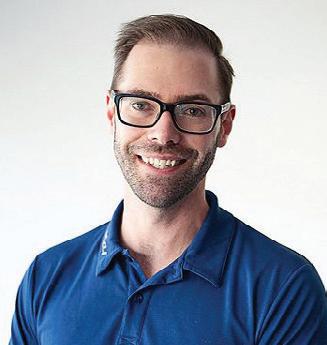
Jacqui is known as the osteoarthritis queen at Arthritis ACT. With a particular interest in hip and knee osteoarthritis, Jacqui delivers the GLAD program designed to reduce the need for joint replacements in particular, or if a joint replacement is unavoidable, to prepare you thoroughly for surgery so that you get the most out of your new joint. Jacqui is currently also studying towards a PhD in the outcomes of this program. Jacqui works exclusively at our Bruce offices.
Richard Costin:
At Build a Better Me we see many people from all walks of life who might be struggling to manage their chronic conditions. Richard is passionate about helping people to live better, take control and get back on track with achieving their goals through exercise, education and manual therapies. Richard is fully trained in GLAD and works exclusively at our Pearce offices.
Kwong yan Cheung:
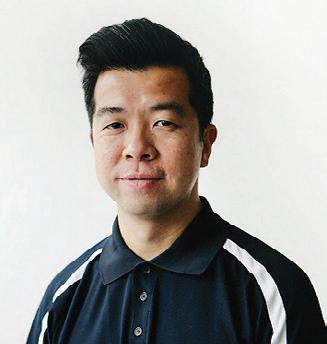
Kwong is trained as a GLAD instructor, he has a passion in treating sports injuries early to avoid arthritis forming later. Kwong is a passionate sportsman engaging especially in Aussie Rules and Soccer. Kwong works at both Pearce and Bruce, assisting you with sports injuries, back pain and all general musculoskeletal complaints.
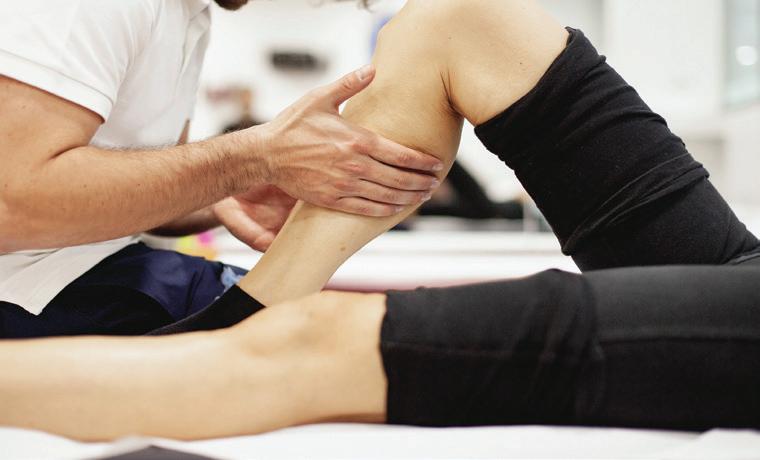
Physiotherapy – including the GLAD program for knee and hip osteoarthritis, sports injury prevention and rehabilitation, and pain condition support.
Exercise Physiology – Individual exercise prescriptions, small group classes to increase strength and improve rehabilitation, strength and balance classes, hydrotherapy support.
Occupational Therapy – access reports for NDIS and Disability Support Pensions, home modifications, equipment prescriptions.
ARTHRITIS ACT’s team of specialists not only help tradies with existing injuries, they also help them prevent future ones, too, says CEO Rebecca Davey.
“We’re really aware of the wear and tear that many difficult trades have on workers’ bodies, particularly on their knees and backs,” Rebecca says.
“Our physiotherapists are great with treating injuries and our exercise physiologists very importantly can provide exercises that help tradies avoid injury so that they can continue to work.”
Another area where Arthritis ACT can support tradies is through surgery, Rebecca says.
“We can help to build up all the surrounding structures and hopefully keep you out of hospital, but if surgery is needed we can support you in getting ready
for it and assist you afterwards,” she says.
Arthritis ACT also sees higher levels of obesity in many trade workers, another condition they say they can assist with.
“Because tradies are working so actively and expelling the energy they may be eating more,” Rebecca says.
“That’s especially the case with some of the older tradies. They’re eating at the rate they were eating when they were younger and much more fit so it’s easy for weight to increase.
“We have the resources to help prevent and assist with this as well.”
SEEARS Workwear’s team – backed with more than 90 years’ combined industry experience – has been providing quality work clothes to the region for more than three decades, and knows what working people are after, says owner Pat Seears.
“We have a large range of work boots, safety equipment, high-visibility clothing and outdoor equipment,” he says.
“Everything is the best quality from the best manufacturers.”
Seears Workwear recently extended its floor space to cater for its largest range of winter workwear stock ever – the biggest in the region, says Pat.
The store has workwear for chefs, paramedics and firefighters, says Pat, who knows the needs of local
businesses and supplies many Fyshwick businesses with their work uniforms.
Located on Barrier Street, he says their stock includes safety work boots, leather shoes and steel-toed canvas shoes, from brands such as Puma, Rockport and Dunlop.
Seears Workwear can also assist companies through their corporate uniform services, which provide customised embroidery services for promotional clothing and business uniforms.
Seears Workwear also has stores in NSW and Queensland, and Pat says they deliver all over the country.
Registration and Sponsorship now open 21 October 2021 - Federal Golf Club, ACT
AMA Projects are pleased to announce the OzHelp Foundation as our charity partner for 2021. Health and wellbeing of employees is strongly valued within the culture of AMA Projects. OzHelp’s suicide prevention initiatives and health promotion programs rely on fundraising and donations to further its work in reaching Australia’s most at risk workers. Through this partnership, AMA Projects aims to reduce the stigma around mental ill-health, promote the benefits of health and wellbeing, encourage employees to look out for each other and to reach out if they need support.
We are seeking teams of four (4) players, to play 18 rounds of golf, complete with food and beverages for the duration of the day.
Date: Thursday 21 October, 2021 | Location: Federal Golf Club Red Hill ACT | Time: 11:30am – 7pm
Details: 18 holes walking or with carts, pre-round lunch, on-course drinks for duration of round, participation in on-course fundraising games and activities, post-round canapes and networking function, silent auction and raffle. Sponsorship opportunities available. For information visit: amaprojects.com.au/charity-golf-day
‘Make the Move’... in anything but your own car
THE ACT government funds the Conservation Council’s “Make the Move” program and website.
The rationale of the program seems to be: “If you travel in a fossil-fuelled vehicle, it should be owned by somebody else”.
The program promotes walking, cycling, e-scooters and electric and hydrogen cars. These “zero emissions” modes of travel cause no direct greenhouse emissions and have the added benefits of providing healthy exercise.
It promotes car rentals and shared cars, which cause the same emissions as driving your own equivalent car.
It promotes taxi and “rideshare” services. They cause more emissions than driving your own car, because they involve extra driving between jobs.
It doesn’t promote travelling in a car that you own.
It promotes public transport. When covid travel restrictions commenced, Transport Canberra’s emissions increased from two to five kilograms of carbon dioxide per passenger journey.
It doesn’t promote travelling by car with friends or family members. For a typical 10-kilometre journey, a car with one passenger emits only about one and a half kilograms of carbon dioxide per person.
Nor does it promote motorcycling, which also emits about one and a half kilograms of carbon dioxide per journey.
At the Conservation Council-hosted “Make the move into active commuting” seminar, I asked: “How can the government encourage people to reduce emissions by travelling as car passengers?”
Transport Canberra’s representative told the seminar that the program’s focus has been on “encouraging the uptake of other modalities”.
Leon Arundell, Downer
Not a matter of size, Clive
“CITYNEWS” claims to be “well written”. Alas, columnist Clive Williams (“Living with the ups and downs of kangaroos”, CN July 15), in one short paragraph, demonstrates that he knows next to nothing about Australia’s large, hopping marsupials.
Furthermore, assuming that he researched the topic, what were his sources?
Wallabies cannot be distinguished from kangaroos simply on size. Large male wallabies of species such as red-necked
wallabies and whiptail wallabies are often larger than female kangaroos.
With regard to wallaroos, I say to Clive: “Step into the ring with a jet black, 60-kilogram male wallaroo as I have”. There is nothing intermediate about these kangaroos. The males of the common wallaroo and the antilopine wallaroo often weigh 45-50 kilograms while the third species, the black wallaroo of Arnhem Land, is much smaller – 13-22 kilograms. Shouldn’t it be a wallaby? The remainder of his article is little better.
Ian Wallis, O’Connor
Collisions not adequately addressed
HAVING lived in the “bush capital” for nearly 40 years, it astounds me that collisions with wildlife have still not adequately been addressed, ultimately leaving the cost to be borne by motorists through increased insurance premiums.
Experience from overseas clearly shows that the construction of wildlife bypasses, fencing and speed limits with flashing lights at wildlife crossing zones do work to reduce accidents.
When it comes to saving thousands in potential damages, motorists who live in and around wildlife crossing zones should consider aftermarket add-on collision warning systems. The systems work using either infrared or forward-looking radar systems that detect not only other vehicles and people, but animals ahead.
It’s worth noting that reports by insurance companies show that single-vehicle accidents including those involving wildlife are mainly due to vehicle speed. As they say, the best defence is a good offence. Drivers should stay alert, avoid hot spots and reduce
speed at dawn, shortly before dusk and hours after sunset are simple and effective ways to reduce the chance of a collision.
If Canberrans want to continue to enjoy the benefits of living in the “bush capital” then the ACT government needs to seriously and urgently implement wildlife crossing structures, together with introducing driver awareness, as a means to reduce the impact of wildlife collisions and thereby saving lives (human and animal).
Robyn Soxsmith, Kambah
Irritated by DFAT appointment
I AM intensely irritated that the appointment of Kathryn Campbell to head DFAT could be publicised by our local paper without any mention of her involvement in the illegal Robodebt saga, which she helped administer, along with her denial of allegations of its links to suicide.
To be rewarded by being appointed to head of department on two separate occasions since, just shows how politicised our public service has now become.
Ric Hingee, Duffy
Come on folks, play the game!
AMAZING the number of visually challenged people there are in the community when it comes to using their ever-present smartphones to check in on entering business premises and tourist venues.
This despite the fact that there are usually a number of notices and hand-gel stations in evidence.
The efficacy of contact tracing has been proven. At the very least, it’s the best system we have right now.
So, come on folks, play the game! If you’re going to be out and about in Canberra, use the Check in CBR app when visiting tourist venues and businesses.
To not bother to do so could earn you a hefty fine if you are dobbed in. Apart from which, you owe it to the business proprietors who are doing their best to comply, under very difficult circumstances, with the current mandate.
Patricia Watson, Red Hill
So long as there’s a quid in it
IT seems that the ACT government will approve practically anything if there’s a quid in it. The likely “Manor-House” multipledwelling development on a single-dwellingzoned (RZ1) block in Griffith, is an example.
Maybe the government is basing it on its own thin-end-of-the-wedge precedent of allowing dual (and more) occupancies in RZ1, on cleared asbestos-affected blocks, with only perfunctory planning-control restrictions; thus enabling huge restricted-trade-practice profits to itself – often at the expense of the local environment and amenity, notably the characteristically fine green swathe of interconnecting suburban backyards.
Sensibly quantitative-restricted secondary dwelling, or “granny flat” development is all that should be permitted in RZ1, maybe with separate utilities metering (currently not allowed with secondary dwellings).
Jack Kershaw, Kambah
There must be limit to consumption
IN his column (“How much gilding on the hand-out lily?”, CN July 15), Michael Moore mentions the soaring cost of houses in Canberra, which seems to be following the Sydney trend towards total unaffordability. This got me thinking about persistent growth: not just of house prices, but also the growth of population and the growth of its consumption.
Growth in demand for food is probably the most important component of that consumption, especially in a country such as Australia, where large tracts of the most productive agricultural land are being swallowed up by urban expansion.
More than 66 per cent of our population
lives in the eight capital cities, and 85 per cent live within 50 kilometres of the coast – the vast majority on the east and south-east coasts. Our burgeoning population and its demand for free-standing houses on the average 650 square-metre block is the most visible manifestation of expanding human demand. It is now obvious that there must be a limit to the demand placed on the land resources of a finite planet that has been described as a “pale blue dot” in the infinite darkness of space.
Dr Douglas Mackenzie, Deakin
The purpose is humiliation
I WAS interested in the column “Shame: woman a day stripped naked by guards” (“Seven Days”, CN July 8) because I have been reading Cardinal George Pell’s “Prison Journal, Volume 1”, in which he describes being regularly strip searched and drug tested in prison in Victoria. Racism by the guards? I very much doubt it, but we don’t know the guards’ racial composition. A drug user? Nonsense. A shiv hidden somewhere on his body? Nonsense.
The purpose is humiliation. Where was the Melbourne-based Human Rights Legal Centre when this shameful activity was occurring under their noses?
Strip-searching women and men for humiliation is wrong in Canberra’s AMC and it is wrong in Victoria’s prisons, too.
John Farrands, via email
Bright songs not speaking in tongues
SCOTT Morrison does not “speak in the meaningless babble of tongues to some Pentecostal god” as Robert Macklin claimed in his “CityNews” column on July 1.
Mr Morrison has said he does not speak in tongues. I attended his church, the Horizon Church, on numerous occasions when I lived in the Sutherland Shire and found it favours bright songs of worship, not speaking in tongues.
A journalist researches his subjects. He doesn’t just vent his fury and print it as fact.
When he was young, my father was a reporter for “The Sydney Morning Herald”, then half owner of the “Balmain Observer”. He ensured all journalism was factual.
Rewa Bate, Coombs
Suffering of Mr & Mrs Average
AS I watch, read and listen to the news on a daily basis, the only issue that seems to be addressed is COVID-19. Sadly, what has become evident is:
• Like in all conflicts/disasters, it’s Mr & Mrs Average doing the hard work and suffering the most. Every time a restriction is placed on ALL of us, out come the different industry/business groups demanding special privileges for them and bugger everyone else.
• The big end of town is first in line for any government aid and last to help the broader community. Funny how many of the CEO’s of the Big End of Town collected rather large bonuses over the last year despite what has happened.
• The Public Service – state, territory and federal – has gone missing. My mother-in-law is 90 years old and blind. She wanted to vote in the last ACT election. We rang up the electoral commission and were told to refer to the internet. When we
asked the lady what part of my mother-in-law being blind she didn’t understand, we finally got some answers.
• Our state and territory politicians seem unable to actually solve the covid problem. They cannot consider our country’s needs as well as their state or territory’s.
• Finally, our news media treats politicians like gods and rarely goes after the Big End of Town let alone our public service mandarins.
Eventually a solution to COVID-19 will be found, but it will be despite the arrogance and contempt of the business community, despite the incompetence of the Public Service and despite the incompetence of our politicians. The saddest part will be the suffering of Mr & Mrs Average while those mentioned above will strut around claiming they resolved the issue.
Roger Laws, Bonython
dose of dorin
ARTS & ENTERTAINMENT
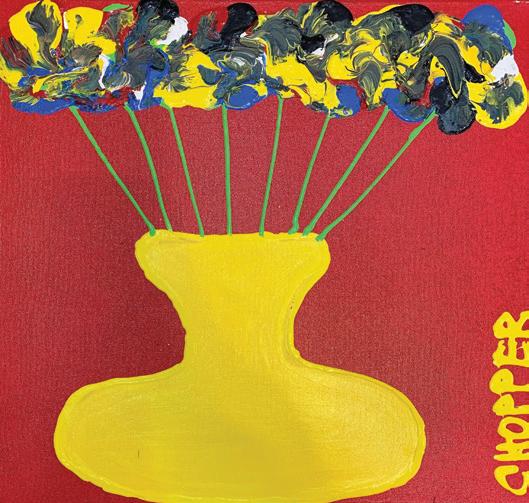
Defiant Chopper’s art tells a story
By Helen MUSA
“I REGRET nothing”, Mark “Chopper” Read said in 2013 in an uncanny echo of singer Edith Piaf’s call-cry, “Je Ne Regrette Rien”.
Now in a surprise move by the normally respectable Aarwun Gallery, its director Robert Stephens is presenting an exhibition of works and memorabilia by the late Melbourne criminal and media personality, titled, “I Regret Nothing”.
A total of 41 paintings and memorabilia, as well as a coffin turned into a coffee table, will be on display and for sale – all from a collector who was formerly in Chopper’s security team.
Although, Stephens hastens to remind us, Chopper was no van Gogh, da Vinci or Ken Done, he believes his art
“can certainly tell some stories”.
The exhibition is part of Stephens’ rebranding program aimed at making the venue a centre of “art for everyone… I’m looking to the future and part of the process is bringing art from very different people, people you wouldn’t think were artists”.
For “different people”, you could hardly go past Chopper, who turned to art later in life after being released from jail.
Rarely, the pundits say, has an Australian criminal enjoyed such public adulation as the gangland figure who claimed to have spent only 13 months out of prison between the ages of 20 and 38, who studied how to read and write in jail.
In 1990, Chopper began corresponding with Melbourne journalist John Silvester, who has said that through the 1970s and 1980s he was considered to have been one of the most dangerous men in Australia.
But before his death in 2013 aged 59 of liver cancer, he had become a bestselling author and the subject of the 2000
film “Chopper”, starring Eric Bana. His books included “Chopper, From the Inside: The Confessions of Mark Brandon Read”, crime fiction works, children’s books and a rap album, but he also appeared in public service advertisements warning against drink-driving and domestic violence, a curious move from a hardened criminal known for acts of violence and mutilation.
According to one obituarist, Chopper blended a “swaggering Australian ‘good bloke’ persona while developing the narrative of righteous violence”, though it was widely acknowledged that Chopper never let the truth get in the way of a good yarn.
Stephens, who has founded the new National Capital Art Prize and a recent salon exhibition of artists from all around Australia, and installed sculptures depicting former Australian prime ministers in front of the gallery, is also a well-known philanthropist who has supported Geraldine Cox’s school in Cambodia and, with artist Mark Waller, schools on Santa Isabel in the Solomon Islands.
Aesthetically, he is struck by how reminiscent of the late artist Adam Cullen Chopper’s art is – “bold and confronting and it tells a story”.
Cullen, who painted Chopper for the 2002 Archibald and was best man at his wedding, was also known for his controversial subjects and his distinctive style, partially emulated by Chopper, who, Stephens says, was obsessed with women’s bodies.
“I’m really interested in the fact that Ned Kelly was Chopper’s hero,” Stephens adds.
“He likened himself to Ned Kelly quite frequently and saw himself as a sort of a Robin Hood.”
And is Chopper’s work any good?
“It’s better than I thought it would be,” Stephens says.
“His pictures vibrate and most of them have stories associated with them, inscribed on the backs of the paintings.”
“I Regret Nothing”, Aarwun Gallery, Gold Creek, O’Hanlon Place, shop 11, Nicholls, until Sunday, August 8.
CONVERSION SERVICE
Would you like to watch those old family videos once again, or listen to your favourite records on CD?
We can take your vinyl records or cassette tapes and put them onto CD and we transfer VHS tapes onto DVD.
ARTS IN THE CITY Orchestra turns to the silver screen
By Helen Musa
CANBERRA Symphony Orchestra turns its eyes to the silver screen in “CSO at the Cinema” with selections from “Psycho”, “Star Wars”, “Schindler’s List” and other films, performed under the baton of Jessica Gethin, previously chief conductor of the Perth Symphony Orchestra. Llewellyn Hall, 7.30pm, Saturday, August 7. Book at cso.org.au or 6262 6772.
CANBERRA photographer Ian Skinner has won the Australian Photographic Society’s $10,000 Mullins Conceptual Photography Prize for the second year in a row, it was announced by judge Judith Nangala Crispin at Muswellbrook Regional Arts Centre recently. Skinner’s winning series, “Ashscapes 01-04”, captures the debris released into the ocean from devastating bushfires.
“WAYFARING: Photography in 1970s-80s” is a collaboration with the National Taiwan Museum of Fine Arts that looks into the work of photographers under the authoritarian martial law era from 1949 to 1987, little known in Australia. Australian Centre on China in the World Gallery, Building 188, Fellows Lane, ANU, 9am-5pm on weekdays, and on certain weekends until October 28.
ACT ALTERNATIVE creative arts initiative “You Are Here” turns 10 this year. The first eight years concentrated on an annual festival format largely in underused or unused spaces in Civic, but from 2018 the focus turned to artist development through residency programs, while still presenting work through the “Cahoots” program’s live season. “Time flies when you’re having fun,” they say.
ALONGSIDE the 100-year-old Archibald Prize exhibition at the Art Gallery of NSW is the Young Archie competition, now in its ninth year, where more than 2100 entries from children aged 5-18 came in from all around Australia. Among the finalists in the 16-18-year-old category is Cassandra Johanson, 17, from Garran.
“RE-STORYING: The Resilience Project”, supported by ACT Health, is a six-module program being delivered online and live at The Street Theatre until October for artists in the ACT and region offering support to those whose livelihood and mental health have been affected and/or disrupted by the COVID-19 crisis, led by theatre-maker and bodywork therapist Zsuzsi Soboslay.
THE Australian String Quartet has announced its new violist, Tasmanian Christopher Cartlidge. The engagement comes as ASQ violist of nearly 10 years, Canberra-raised Stephen King, has stepped into the new role of director of learning and engagement.
Chopper Read’s “Flowers for van Gogh”… and his “Mrs Kelly with a bit of boob or one titted Kelly on a bad day, call it what you will”.
•
•
•
•
•
Restorations - Repairs - Remakes - Re-Setting Ring Re-sizing - 48hr Service Custom Design - for something Special Pearl and Bead Re-Threading and Knotting
Advance Jewellers
A Family Business: 55 years experience Southlands Shopping Centre – Mawson (about 50 metres South of the Post Office) 0408 310 063
Your Precious ‘Old’ Jewellery - well it used to be... now maybe... It’s just old - and a bit worn out, or costs too much to fix... probably never be worn again... You keep the memories - perhaps, we could buy the goods?
Warm glow as Rosa goes it alone
By Dougal MACDONALD
“Rosa’s Wedding” (M)
FROM Spain comes writer/director Iciar Bollain’s warm-hearted and perceptive movie about Rosa (Candela Peña), who works in the wardrobe department of a TV movie production house in Valencia.
Everybody loves Rosa. Why shouldn’t they? Her father, her siblings, her children and even her grandpa dump their little chores on her.
Today, she has decided to stop being their whipping girl. She walks out of her job with plans to re-open her late mother’s small seamstress business lying idle in the coastal town of Benicassim.
Most of all, she decides that she will get married. But her wedding plans are unorthodox.
Family and friends expect that she intends to marry Rafa. But she’s not. She plans a ceremony at which she will vow to herself that she is going to become independent of other people’s impositions. And until the day of the wedding, she’s not saying who she’s marrying.
The film is a delicious journey as it accompanies Rosa through all the cliches and expectations that family and close friends form in their minds about someone else’s marriage. It’s complicated. It involves many people who presume without a skerrick of justification or invitation that they will have a role in the arrangements.
For us in the audience, being privy to Rosa’s
plan is a privilege generating a warm glow not shared with anybody else as the tension builds and we wait to see how it will work out.
Trust me. When it comes, resolution is worth the wait.
At Palace Electric
“Old” (M)
THE filmography of Indian-born (in 1970) and Pennsylvania (US)-raised M Night Shyamalan lists 17 titles as writer/director. His style is best described as contemporary supernatural. Several of them are clever. “Old” is not.
“Old” unfolds on an idyllic island, perhaps in the Caribbean Sea, where several families (moms, pops, kids of various ages) of well-heeled Yanks and Poms, hitherto unknown to each other, have come for a day at the beach.
Little do they know that today, strange events are unfolding.
WATCH IT! / streaming and stuff
People on the beach are ageing at a rate much higher than normal. And none of their attempts to escape back to the hotel is working. Which is pretty weird by any measure, emphasised by the academic and professional qualifications that many of the adults find it necessary to proclaim as the day progresses. These are high flyers, as they’re quick to remind each other.
Shyamalan found the plot for his movie in a graphic novel “Sandcastle” by Pierre-Oscar Lévy and Frederick Peeters. “Graphic novel” is an escape mechanism, story-telling for people who need to see pictures rather than read words. People of all ages will be enjoying fantasy stories by the great story-tellers long after graphic novels have gone out of fashion.
The actors playing characters in “Old” move about the screen like marionettes or, when stationary, form groups like rookies waiting to learn how to stand like soldiers. Their dialogue lacks rigour, expressing conclusions not supported by rational enquiry then acting on them as though they show the path to salvation. Kid stuff.
On a cold, wet morning, I was delayed reaching the cinema and missed about the first eight or 10 minutes of “Old”. If those minutes introduced the people hiding in the shrubbery on top of the hill who were observing events on the beach, what followed after I arrived may have made more sense. In any event, I didn’t see them close up until what in a live-theatre performance would have been Act 3.
Spoiler alert? Not really.
At Dendy
When history’s drama is told by television
By Nick OVERALL
NOW, more than ever, modern history is told through television drama and made accessible to millions through streaming.
Last year’s “The Comey Rule” (on Stan) caused a fuss when, toupee and all, Donald Trump was played by Brendan Gleeson in a take on the FBI’s investigation of the 2016 election.
There was also controversy when the fourth season of Netflix’s regal hit “The Crown” was released, a show which retells the modern history of the monarchy and one that Prince Harry himself wants ended before it reaches the present day.
But a year before that there was “The Loudest Voice” (on Stan), where Aussie star Russell Crowe played American media tycoon Roger Ailes, the man who concocted Fox News.
An infamous figurehead of conservative politics, Ailes made Fox the most watched news channel in the US, a record it still holds today, and was pivotal in its spread to what is now 86 countries.
News Corp, Rupert Murdoch, who appointed Ailes as head honcho of Fox News.
It’s a strange depiction of Murdoch, one more subdued compared to other portrayals where he’s presented as a commandeering puppet master of media.
He certainly has more rein of the strings in the voguish HBO series “Succession” (available on Binge), which has a third season on the way before the year is out.
It’s about a fictional billionaire family called the “Roys” who battle and bicker over the media throne sat on by its patriarch.
While not directly about the Murdochs, the fact that the original script of “Succession” was a film about Rupert is just one of many “coincidences” that let the cat out of the bag.
Despite left-wing critics chastising the channel for its conservative slant, especially over the last decade, Ailes relentlessly defended his creation with the catch cry of “fair and balanced”.
Layers of make-up, prosthetics and just damn good acting make Russell Crowe near impossible to recognise in his portrayal of the mogul. He’s completely immersed in the role, which spans 20 years of Ailes’ life throughout the series’ seven episodes.
But make no mistake, the show depicts Ailes as the villain.
It spares him nothing short of evil mastermind, with stark confrontation of the multiple sexualharassment claims made against him amidst the explosion of the “#metoo” movement.
“We don’t break the news, we make the news,” says Ailes in one of the show’s early episodes.
He’s a mix of both detestable and fascinating, and while I found the takedown to be justified, there’s something to be considered in just how consuming these shows can be.
Television with this calibre of production is armed with incredible realism, especially when led by talent such as Crowe who so vividly realise their characters, and it’s the writers and producers who get to wield that realism in their political messaging.
As captivating as it is convincing, television such as “The Loudest Voice” has the power entirely in and of itself to steer political opinion.
The show also features a portrayal of a figure slightly closer to home, the Australian owner of
Entertainment and dramatisation of real-world politics and history will continue to play a part in the way audiences form their opinion, especially as they become more accessible and readily produced through streaming.
While shows such as “The Loudest Voice” plead with viewers to more carefully consider how news is trying to sway them, it also reveals something about the way scripted television has the power to do the very same thing.
Television drama has emerged as a powerful new medium of information dissemination and while it’s only a few taps on a screen away, so too is access to endless information that can support, refute or inform what’s presented in them.
The importance of doing one’s own research has never been more important.
“There’s a certain element of the melding with show business or entertainment,” Ailes told “Broadcasting & Cable” magazine in 2003.
“Entertainment and news should always be separate, but you should walk right up to the line and get your toe on it.”
Russell Crowe as former Fox News CEO Roger Ailes in “The Loudest Voice”.
Candela Peña as Rosa… she decides to marry, but her wedding plans are unorthodox.
‘I Weave What I Have Seen: The War Rugs of Afghanistan’
Terrible beauty of the extraordinary rugs of war
By Helen Musa
A TERRIBLE beauty is revealed in one of the most extraordinary exhibitions ever to have gone on show at the ANU Drill Hall Gallery – and it’s there until August 15.
In “I Weave What I Have Seen: The War Rugs of Afghanistan” – the title of which is taken from a remark by Hazara rug-maker Safer Ali – curators Tim Bonyhady and Nigel Lendon have assembled and hung what they called “a testimony to the creativity and resilience of Afghan weavers who have faced the devastating effects of war for more than 40 years”.
But while the 20th century stands apart as one of the grimmest eras for the landlocked country, there’s much more than 40 years of plunder if you look at the history of a country that has been traversed and invaded countless times because of its geographical position.
Bonyhady’s new book “Two Afternoons in the Kabul Stadium: A History of Afghanistan Through Clothes, Carpets and the Camera”, is due for release on August 3 and suggests a new way of seeing Afghanistan through textiles.
Lendon, former deputy head of the ANU School of Art, has become Australia’s leading collector of Afghan war rugs.
in the depiction of Kalashnikovs, helicopters and tanks, others feature delicate geometrical representations of the hardware of war so subtly woven in silk and wool that they suggest the Kufic script of Arabic calligraphy.
Other rugs on show are more pictorial in the Persian tradition, with a charming and mystical depiction of the famous lovers of Islamic tradition, Layla and Majnun, and even a poster-like activist rug, but if you look closely, you’ll find the tools of combat.
Bonyhady says Afghan weavers had long been free to depict those people and animals, so long
It’s a must-see show, full of surprises, for although several of the rugs are explicit and bold
Markets that Bonyhady walked in and spotted a Twin Towers rug – now pretty well priceless.
Meantime, Lendon had encountered the rugs
DINING / Bui’s Restaurant, Kingston
through a friend in Adelaide and began collecting seriously from 2002 when Bonyhady showed him his war rug.
He went on to hold his first exhibition, “The Rugs of War”, at the ANU School of Art in 2003 and then at Adelaide’s Nexus gallery in 2004 during the Adelaide Festival.
Bonyhady is fascinated by the weavers’ distinctive response to conflict, and describes how, from the 1960s they begin weaving new subjects reflecting what was going on, even weaving rugs made portraying Afghanistan’s leaders.
Some of the rugs were crude, some refined, but either way by the late 1980s art critics were using the term “war rugs”.
The attacks of 9/11, he says, prompted new designs and from the start of 2015 there were even “drone rugs” – you can’t get much more contemporary than that.
“I Weave What I Have Seen: The War Rugs of Afghanistan”, ANU Drill Hall Gallery until August 15. A
A new taste of Vietnamese
By Wendy JOHNSON
WHAT do I love about Vietnamese food? So much. The freshness, vibrancy, clever use of herbs and spices, the balance between sweet and salty.
The new Vietnamese restaurant in “old Kingston”, Bui’s, delivers on all fronts. Owned by Nam and Thanh Bui (siblings), who have been in the food game for yonks, Bui’s Restaurant has a great menu. It has loads of variety and extends beyond traditional Vietnamese cuisine.
Where Madam Woo’s used to be, Bui’s has smartened up the restaurant’s interior with Vietnamese flair, including a feature wall of bright and colourful straw cone hats on one side and other Vietnamese décor perfectly positioned on the other. We all adore duck – indeed are totally in love with duck – and devoured the roasted duck rice paper rolls ($8 for two pieces). The meat was succulent and the dipping sauce jammed with flavour, topped with crunchy bits of peanuts. This dish is a great way to put your taste buds on high alert for what’s coming next.
Veggies were in order and we chose the tofu stir-fried with lemongrass and chilli ($16.90), asking if additional vegetables could be included. They already come with the dish, which is great. The chilli was the right level and the tofu cooked beautifully (sometimes it can be too squishy).
It’s always intriguing to go for house specials and Bui’s Restaurant’s line-up includes crispy pork belly ($25.90), three-hour, slow-cooked lamb curry ($25.90 and a great winter dish) and sizzling eye fillet steak ($26.90).
The Vietnamese crusted calamari ($26.90) was one house special we chose. We squeezed and squirted the two slices of juicy lemon on top of the calamari and dug in. The dish featured lovely flavours, but a few pieces of the calamari were just slightly tough (the others perfect).
Another house special was the crispy soft-shelled crab with chilli salt ($27.90). One of our party isn’t entirely enamoured with crab but quickly changed her mind with Bui’s version.
Two of our party had already been to Bui’s and had road-tested the stir-fried chicken, also with lemongrass and chilli ($18.90). They recommended we try it and were glad we did. The chicken was super moist and the combo of flavours perfectly balanced in that special Vietnamese way.
Banquets for a minimum of four are available (excluding house specials) – $30 per person or $40 per person.
Bui’s, although it hadn’t been open long when we visited, was packed. Staff were stretched but didn’t let that influence the quality of service. Lots of smiles and a genuine desire, when we paid the bill, to seek feedback. Nice touch. By the way, corkage is only $2 per person.
Twin Towers rug... now pretty well priceless. Photo: Rob Little
A war rug while in Peshawar, Pakistan.
Roast duck rice paper rolls… the meat was succulent and the dipping sauce jammed with flavour, topped with crunchy bits of peanuts.
Photo: Wendy Johnson
Time for trees, if there’s space
SPRING is just around the corner and we’re all looking forward to the splash of colour from all the bulbs.
The leaves of daffodils, Dutch iris and other bulbs are already more than 30cm out of the ground. It is a good idea to give them a feed at this time for a final boost before they burst into flower. I still recommend liquid seaweed, as with the ground beautifully moist, this will soak right down to the bulb itself.
It has been a miserable winter with constant cold winds and rain. Following the bulb riot of colour, blossom trees will brighten our streets. I will keep pushing our local, dull government for more blossom trees. Walk along any street or through our green spaces to see the lack of colour. The range of flower colours through all the seasons is endless, plus we have a huge range of autumn leaf colour. Some may think that leaf colours are boring and yet views from the top of Mt Ainslie, Black Mountain or the Arboretum show this couldn’t be further from the truth.
ONE of the largest growers of advanced trees, if not the largest, is Fleming’s Nurseries in Victoria. These grow in those magnificent rich, volcanic soils of the Dandenong Ranges, where incidentally the Dutch grow most of their bulbs. I recommend any of the following if you have a reasonable-sized garden.
• Cercis chinensis “Avondale” with apple-green leaves and deep-pink flowers in spring. A medium size tree at 3m x 2m.
• Cornus “Indian Summer”, a variety of dogwood with a spectacular display of reddish-magenta flowers in late summer, which can last up to 100 days. There are a number of cultivars and the flower colours can vary. 4m x 4m.
Malus ioensis “Plena”, personally my favourite crabapple. Often referred to as the “grandma” of crabapples, with masses of pink-tinged white flowers. A slightly larger one at 6m x 6m.
• Malus “Tom Matthews”, suitable for the smaller garden, grows to 3m x 3m with vivid, scarlet-red flowers and bronze-red leaves in spring.
• Malus “Kojo-no-mai” has a pride of place at our house in a large, terracotta pot that we treat as a bonsai. It is the first plant we see when we open the bedroom curtains in the morning, with a variety of pale-pink cherry borders on white flowers. This grows to just 1.5 x 1.5m and makes a perfect pot specimen on a balcony.
• Prunus “Snow Fountain” presents a simply sensational weeping display of single white flowers that literally cover the tree. Fleming’s terms this a knockout from the day it’s planted. It’s grown as a standard with the main trunk a short 1.2m, suitable for a large pot, to a taller stem of 1.8m of which you would need a considerably larger container and displayed in
a position where it’s not subject to too much wind.
• If you want a real show-stopper – and for this you will need the space – plant Pyrus calleryana “Chanticleer” as it will grow 11m high x 6m with clusters of white flowers. During summer it has white, shiny leaves followed by the equally show-stopping, brilliant gold-red autumn leaves that make it the most popular ornamental pear worldwide.
All the trees listed above are available at most garden outlets in Canberra. A reminder: the Bunnings garden outlet is fully operational at Majura Park at the airport.
AND, an important note from Fleming’s Nurseries: always read the label to ensure you plant your tree in the ideal location.
For example, a flowering tree may require full sun and won’t achieve its best results if overshadowed by other trees or buildings.
Now is still the ideal time for tree planting, until the end of September.
The daffodils are on their way – give them a feed at this time for a final boost before they burst into flower.
Crabapples give one of the best blossom shows.
PUZZLES PAGE FREE PUZZLES EVERY DAY AT citynews.com.au
By Joanne Madeline Moore
ARIES (Mar 21 – Apr 20)
Monday looks frustrating, as plans proceed slowly. The weekend New Moon highlights your leisure, entertainment and happiness zone. So it’s a wonderful week to catch up with friends, see the latest movie or pick up a hobby you’ve always been interested in. Just make sure you do something that makes your heart sing! Be inspired by actress/comedienne/producer (and birthday great) Lucille Ball: “It’s a helluva start, being able to recognise what makes you happy.”
TAURUS (Apr 21 – May 21)
This week’s stars favour home and hearth, as the New Moon and Mercury highlight your domestic zone. It’s a good time to clean and de-clutter your living space or tackle an overdue DIY project. Venus (your patron planet) links up with Uranus, so Bulls can expect a busy and bamboozling time. Relationships will be unpredictable and life will certainly speed up. You don’t work well when others try to hurry you, so have the confidence to cruise at your preferred pace.
GEMINI (May 22 – June 21)
Mercury and the New Moon activate your neighbourhood zone, so find fresh ways to connect with those around you (at home, at work, at play or in your local community). Short trips and education are highlighted, plus expect plenty of phone calls, snail mail, texts, tweets and emails. You could also benefit financially from an innovative idea, a creative friend, a social media post or an online promotion. Use your Gemini versatility to venture into exciting new territory.
CANCER (June 22 – July 23)
You’ve been talking about saving for something big (like a car, holiday, home deposit or renovations) for a while. This week, with Mercury and the New Moon firing up your finance zone (and impulsive Uranus aspects) resist the urge to be extravagant with cash and careless with credit. In this uncertain pandemic climate, be a canny Crab who is cautious with money. Plus do an inventory on your inner wealth, as you nurture your self-esteem and consolidate your core values.
LEO (July 24 – Aug 23)
This week you could pivot professionally, fall in love very fast or lightning flashes of inspiration could suddenly strike. But make sure you communicate clearly or there’ll be some crazy chaos along the way. The New Moon and Mercury light up your sign so it’s a fabulous time to initiate a pet project, refresh your physical appearance, review your personal belief system or embark on a covid appropriate adventure. Don’t just dream about it – get out there and do it!
VIRGO (Aug 24 – Sept 23)
Have you been selling yourself short? This week your ruler Mercury links up with Saturn and Uranus, so stop being a critical fusspot who engages in negative self-talk and sabotages success. With Mars and Venus in your sign, it’s time to be the bold and beautiful Virgo you were born to be. Your motto is from birthday great, actress and producer Lucille Ball: “I have an everyday religion that works for me. Love yourself first, and everything else falls into line.”
LIBRA (Sept 24 – Oct 23)
Prepare to be pleasantly surprised! The fiery New Moon reignites a special dream that’s been languishing on the sidelines. Plus the lively Venus-Uranus link turbocharges creativity or speeds up a romantic connection. If you are stuck in a professional or relationship rut, don’t dwell on the negatives. It’s time to innovate and re-calibrate. Be inspired by Libran actress Kate Winslet: “The good and bad things are what form us as people. Change makes us grow.”
SCORPIO (Oct 24 – Nov 22)
Tuesday’s Venus/Uranus trine brings a rush of energy and a fresh perspective to a stale romance or a floundering friendship. There’s no denying you’re a smart Scorpion but are you making the most of your cerebral talents? This week it’s time to don your thinking cap and give yourself a vigorous mental workout, connect with work mates and keep them up-to-date with your professional plans. When it comes to a friend or colleague, expect the unexpected!
SAGITTARIUS (Nov 23 – Dec 21)
Be careful your spontaneous spirit doesn’t land you in unexpected trouble! You’re keen to communicate but, if you say the first thing on your mind (especially at work) then you could find yourself regretting your haste. With the New Moon and Mercury activating your adventure zone, many Archers are keen to head off on an overseas trip, an interstate interlude or a weekend getaway. But COVID-19 is still causing travel and aviation chaos, so you’ll have to be super patient.
CAPRICORN (Dec 22 – Jan 20)
Monday is the most challenging day of the week, when Saturn frustrates plans and stymies progress. Then the weekend New Moon stimulates your intrigue zone, so no secret is safe as you uncover clues and pick up on cues that other people miss. Be careful what you unearth because you could stir up issues from your own less-than-perfect past. Lust and loot also loom large, as you work through issues involving trust, intimacy, shared possessions or joint finances.
AQUARIUS (Jan 21 – Feb 19)
Aquarian author Lewis Carroll wrote: “I can’t go back to yesterday because I was a different person then.” And that’s you this week… consistently inconsistent! Love, loyalty, cooperation and compromise are the New Moon buzz words, as one half of you wants to snuggle up close with someone special. While the other half longs to be footloose, fancy-free and spontaneously solo. So try to find the sweet spot between cosy companionship and invigorating independence.
PISCES (Feb 20 – Mar 20)
New Moon week is the ideal time to ditch bad daily habits and start afresh. Work, health, fitness and food choices are the main areas where you need to make some long-overdue changes and adjustments – the sooner the better. Try to release pent-up Piscean frustrations via a chat with a close confidante or a trusted family member. Spending some quality time with your favourite four-legged friend (in the great outdoors) will also help to lift your spirits.
Copyright Joanne Madeline Moore 2021
General knowledge crossword No. 792
4 Who assists a boxer
Who
8 Name the mythological god of darkness. (6)
9 To illustrate something, is to do what? (8)
11 That which opposes one’s interests or desires is considered to be what? (7)
13 Name a renowned ballroom dance. (7)
15 Name the king of Scotland 1040-57. (7)
17 To move about the court while bouncing the basketball, is to do what? (7)
20 Which term is descriptive of honourable descent? (8)
23 What are common European vipers? (6)
24 What is a concluding part, added to a literary work? (8)
25 Who is employed to carry luggage at a hotel? (6)
Down
1 How many different athletic events are there in a pentathlon? (4)
2 What do we call a person, animal or thing supposed to bring good luck? (6)
3 Name the capital of East Timor? (4)
4 What is a high-spirited horse? (5)
5 To be mentally bright, is to be what? (6)
6 Name particular parts of speech. (5)
9 To guard against assault is to do what? (6)
10 Don Bradman, Brian Lara and Ricky Ponting have excelled as what? (7)
12 To become an octogenarian, one must reach which age? (6)
14 To be away, is to be what? (6)
16 What is a mitre-shaped chess piece? (6)
18 What is an exhibition of the skills of cowboys, riding horses, etc? (5)
19 Which device produces a high-intensity beam of radiation? (5)
21 What is a child’s bed known as? (4)
22 Name another term for a debauchee or a rake. (4)
Tran and Jan came to see me wanting to look at their business for the 2022 financial year, but uncertain about where to start.
"A business plan is a good starting place," I told them.
"I use the Mindshop one-page plan, which is a straightforward way to collect all your thoughts; however, given the current covid situation, these are unpredictable and challenging times, and if you are looking at growing the business in the immediate future I'd suggest a different process.”
Jan said they had been thinking about growing the business, but with the covid uncertainty were unsure that was the right way to go.
I agreed it was a challenge at the moment, but that many businesses had pivoted and been very successful. I suggested they follow the process and see where it takes them.
“We start with a simple diagnostic which should take about five minutes to complete," I said.
"You can either do this on your own or I can work with you. This will allow us to discover the strengths of the business and yourselves, which you can then build on to grow the business.
"It also looks at the vulnerabilities of the business while looking at your market, the environment and the success factors that relate to scaling up the business. As a result of this, you should be able to identify the issues and opportunities for your business in this growth phase.”
Tran said the one-page plan seemed like a good place to start, which would provide some clarity about what they both wanted to achieve.
“The one-page plan is based on the ‘now/where/how’ business analysis," I said.
"We start with the 'now' analysis. We ask the question: 'Where are you now?' and we look at this in relation to the key elements of your business including sales, customers, products, and pricing. This provides a clear, current picture of the business.
“The next part of the analysis asks: where would you like to be in relation to the issues that you raised in the 'now' analysis in the future? So you could do a plan for 12 months, another for three years and another for five or whatever timeframes you choose.
"The analysis of 'now' and 'where' is not usually too hard or time consuming. If you wish you can involve your staff at this stage or you could just do it yourselves and involve the staff later.
“The hardest part is the 'how' analysis. This is where you set out the strategies that will help you move from ‘now’ to ‘where’. As you set out a strategy you also devise action plans that will help you achieve your goals and you also include who is going to be responsible for that action plan and the timing of when it will be done.
"The great thing about these one-page plans is that they can be updated weekly or fortnightly. You should also set in place some key performance indicators so that you can monitor your plans.”
Tran and Jan were pleased with the concept and said they were looking forward to starting the process.
If you need help with your business plans and strategies contact the friendly team at Gail Freeman & Co Pty Ltd on 6295 2844.
Disclaimer
This column contains general advice, please do not rely on it. If
30% OFF* gas usage PLUS 15% OFF* electricity usage. Our hottest winter deal is back. Get set to sizzle and save.
Get spicier! It’s online only at actewagl.com.au/chilly-season