
ROBERT MACKLIN
JUNE 17, 2021
Failing Greens fall into Labor’s line
PAUL COSTIGAN
New laws reign in developers
MICHAEL MOORE
Lone sharks… and avoiding them CLIVE WILLIAMS
WHO GOT THE GONGS?
The list of locals honoured















NEWS / refugee cooks
Cooks turn a taste of home into a taste
By Belinda STRAHORN

THE smell of simmering garlic, onion and spice have escaped through the cracks in the door, luring passers-by into the cafe.
Bright tablecloths in red, blue, and yellow enhance the warm and easygoing atmosphere inside.
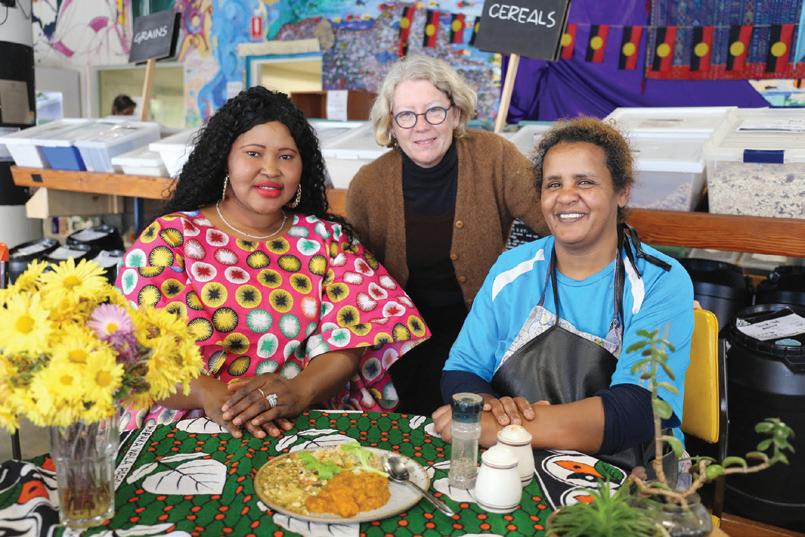
But it’s the women in the kitchen who are the soul of ANU’s Food Co-op.
Here, the refugee women, an Ethiopian, a South Sudanese, a Tamil and another woman from Sierra Leone, are employed to cook lunchtime meals at the co-op’s cafe, six days a week.
The opportunity to showcase their passion for cooking has allowed the women to gain confidence, sharpen their English-speaking skills and settle into Australia’s working culture.
Kadi Sesay, 29, from Sierra Leone, works part time at the food co-op and her peanut soup is a crowd pleaser.
For Kadi, the simple task of cooking helps her stay connected to her past while nurturing hope for her future.
“When I cook, I cook with passion, I put a lot of love into the food I prepare because cooking reminds me of home,” Kadi said.
“I cook a lot of traditional dishes with rice, then there’s my okra stew,
INDEX
cholo fries, cassava leaf dishes and peanut butter soup.
“I also love making sesame seed snaps and traditional biscuits.”
Kadi’s journey to Australia and eventually Canberra was not an easy one.
When war broke out in Sierra Leone, her family fled to neighbour ing Guinea-Conakry, where they remained for 13 years as refugees.
Through UNICEF and the Austral ian government, Kadi and her family settled in Canberra in 2010.
“It’s beautiful here… I love it,” Kadi said.
“I was a baby when we fled Si erra Leone, so I grew up in the refugee camp and that was hard.
“Life in the camp wasn’t like living in an actual home, you can’t socialise with other people, you can’t move freely around, it was hard for me and my family.”
Saba Gidey, 40, didn’t know anyone when she arrived in Canberra from Ethiopia with her husband in 2009.
The couple met in Sudan, where her husband was a refugee.
“Life in Australia is good, this country is the number one place to be, if you live here you will be happy,” Saba said.
Saba’s been cooking at the co-op for five years and her traditional East African dishes are capable of drawing hordes.
“Today I’ve cooked a traditional
Since 1993: Volume 27, Number 24
Arts & Entertainment 23-25
Canberra Matters 7
Cinema & Streaming 24
Crossword 27
Dining 25
Garden 26
Horoscopes 27
Letters 13
News 3-13
Politics 10
Seven Days 4 Cover: Speedcuber Alan Ranie. Story Page 6. Photo: Holly Treadaway. Ph


pumpkin and kidney bean stew,” Saba said.
“Cooking makes me happy; I have special memories of cooking with my mother growing up.”
Trish McEwan, who employed the women, said the co-op’s mission is to empower refugees to tap into their culinary heritage while helping them find work.
Managing Director: James Anderson, 0404 077605, james@citynews.com.au
Director: Kate Meikle, kate@citynews.com.au
Senior advertising account executives: David Cusack, 0435 380656
Tracey Avery, 0477 939999
Advertising account executives: Damien Klemke, 0439 139001
Karen Davis, 0427 410442
Editor: Ian Meikle, editor@citynews.com.au
Digital news editor: Danielle Nohra, danielle@citynews.com.au
Journalists:
Andrew Mathieson, andrew@citynews.com.au
Nick Overall, nick@citynews.com.au
Belinda Strahorn, belinda@citynews.com.au; Kathryn Vukovljak, kathryn@citynews.com.au
Arts editor: Helen Musa, helen@citynews.com.au
Production manager: Janet Ewen
Graphic Designer: Douglas Lima
Proof reader: Glenda Anderson






Data released recently by the Australian Bureau of Statistics showed that, among recent migrants, women were less likely to find employment than men.
Without a confident command of English or formal education, navigating job applications and interviews can be near impossible.
“We are giving these women an
opportunity to improve their cooking skills, to learn how to cook for large groups and engage in the community,”
“As an example, Saba started cooking here on a Saturday, she now works with us permanently and she’s an absolute superstar, she has a huge following for her meals.
“It’s also about the community engaging with us and showcasing different types of cuisine for people to
Meals served through the week are vegan and gluten free, but on the weekend, the menu grows.
“Every Saturday between 12pm and 2pm we have a “Global-Feast” where one of the four refugee women will showcase traditional cuisine from their country,” Trish said.
“It’s amazing, they cook salads, stews, dumplings, soups, it’s all about celebrating where they come from.
“During the week most of the customers we get are students, but on Saturday we get a lot of the general public coming in for lunch.
“It’s really lovely to see the community engaging with us and trying new cuisine.”
The Food Co-op is at 3 Kingsley Street, Acton, and serves lunch from noon2pm on weekdays and Saturday. Most lunches are $8 for co-op members and $11 for non-members.

Kadi Sesay, left, Trish McEwan and Saba Gidey of the ANU’s Food Co-op.
Photo: Belinda Strahorn
SEVEN DAYS Power to the people, coming at a higher price
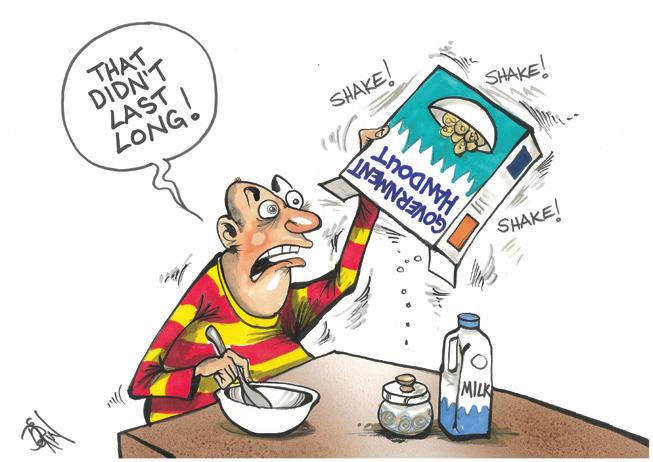
AT the very minute, the very minute, the Independent Competition and Regulatory Commission gave the thumbs up to a daunting 12 per cent rise in electricity prices, the government made an instant offer to help people scratching to find the extra $3.76 a week needed to stay warm from July 1.
And why the sudden benevolence? Because it was the ACT government’s large-scale feed-in tariff scheme (part of its 100 per cent renewable energy target) that’s inflicted 13.13 per cent to the price increase.
Network costs added 2.70 per cent, but falling wholesale energy prices took 4.72 per cent off the price jump. Without the government impost, the price of electricity might have fallen by a couple of per cent. So little wonder
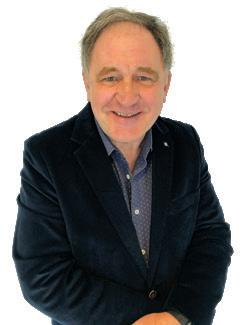
Chief Minister Andrew Barr (annual salary around $350,000) and Energy
Minister Shane Rattenbury
($280,000) were rushing to “help soften the upcoming blow to lower-income households” by increasing and widened eligibility of the annual $750 utilities concession and tipping a lazy million (over four years) into the Utilities Hardship Fund.
Small business was slugged an estimated $14.45 a week, another $750 to the annual overheads.
And for the rest of us? “I encourage consumers to contact their retailer and ask if they have a better offer that could save them money,” said senior commissioner Dimasi. That should fix it. Thanks, Joe.
Reader Phil commented to au: “What a rort, a 12 per cent rise in a year versus my pay rise of 1 per cent! And the ACT government just says we can buy our own solar system to mitigate these costs? Do they think everyone has a spare few thousand to buy a solar system?”
And coming soon, the rising rates…
IN his quieter moments, does really, honestly, sincerely believe that a $41 discount on a second-stage provisional driving licence makes a scrap of difference to the driving habits of P-platers?
Spinning the move as a “big licence-fee discount” for provisional drivers who “do the right thing”, the Transport Minister revealed that P-platers were involved in more than 10
per cent of crashes despite their being just 5 per cent of licensed drivers.
Ready to Move in Homes
Now Selling

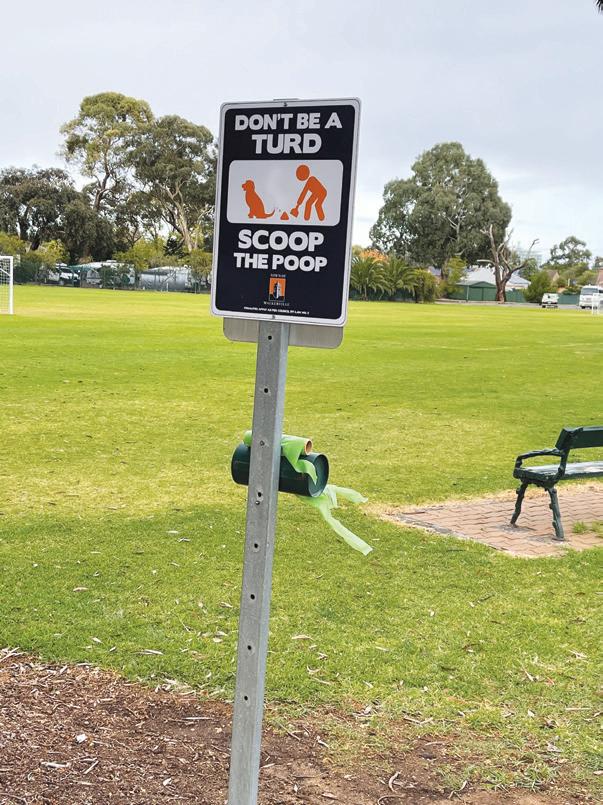
polite enquiry to the ACT bureaucracy, came the news that after months of logging and closure, the “ACT government has commit ted to opening the Yarralumla Dog Park by June 30”, save for a shade sail (because they took down the trees) that will be fitted
In an earlier enquiry, the responding public servant said the government had “taken on board community feedback about the dog park being a dusty and muddy area and want[ed] to provide dog-friendly grass”. Dog-friendly grass? Pity about the
IN a swanky Campbell housing tower, the gardening club president had the idea of applying for bulbs and plants as part of the continuing share-the-love Floriade Reimagined program. The club, which numbers 40 residents, thought it a great idea so off went the application. And back came approval: 2400 bulbs and 2400 plants. But when it came to planting 4800 specimens the call for garden club volunteers drew out 15 people including the president’s family and friends to get the lot into the street soil around the building and into some display wheelbarrows. Come spring, he’ll enjoy
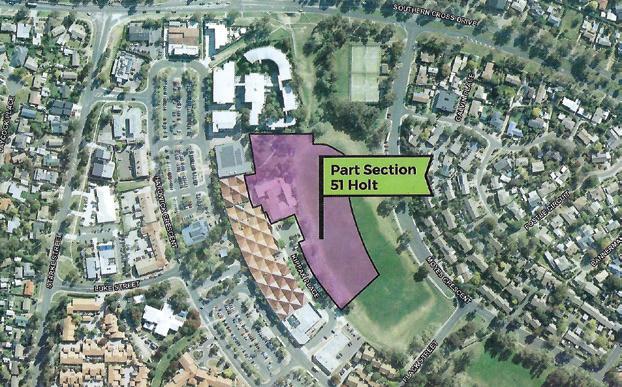
Going, going… the government’s playing fields for sale at Holt.
Trouble was the illustration is in its paid newspaper advertisement seeking tenders for the redevelopment of the playing fields for retail expansion and housing.
AN inner-north snout has written grateful to the ACT planning directorate for so clearly illustrating why local residents are upset at the impending loss of a large area of community and recreational open space next to the Kippax shopping centre in Holt.
“This is why residents elsewhere should be very alert to the ready handover of public suburban land banks to intensive commercial and residential development, when little or no priority is given to simultaneously meeting broader public amenity needs that arise when planning policies increase the population of a suburb,” she lamented.
Ian Meikle is the editor of “CityNews” and can be heard on the “CityNews Sunday Roast” news and interview program, 2CC, 9am-noon.
• Brand new architecturally designed spacious 2 & 3 bedroom homes now selling from $720k*
• A variety of floorplans to suit your individual needs
• Single level access
• Exclusive resident clubhouse with quality leisure and community facilities
• A gated and secure village offering mountain and golf course views
• Fixed Fees for Life
• Located close to the heart of Canberra and minutes away from Manuka and Red Hill Shops
For more information contact our Sales Manager Rob Rowe on 0438 254 043 or visit us Monday to Friday and by appointment on weekends.
Search www.liveattheaerie.com
Pricing and availability advertised are correct at the time




COVER STORY / speedcubing
Speed thrills the fleet-fingered master
By Belinda STRAHORN
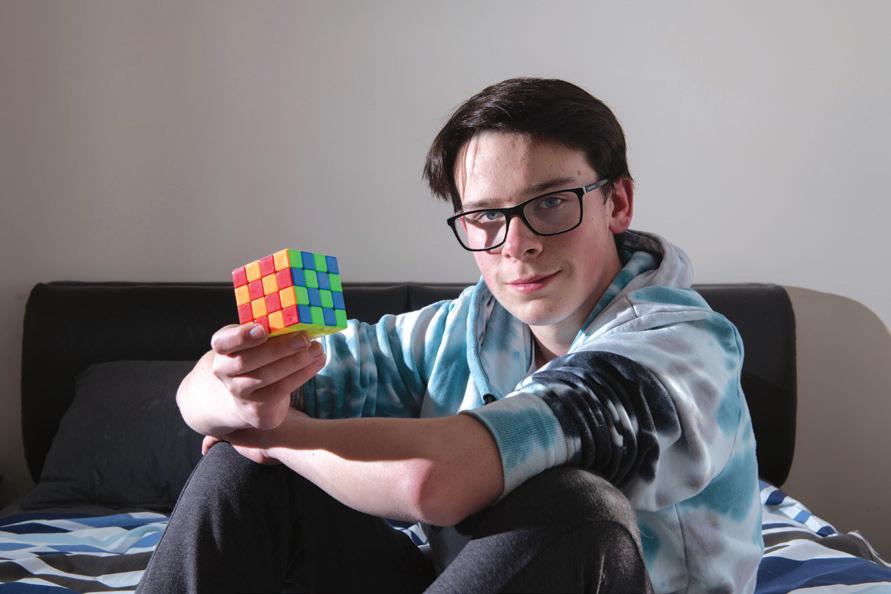
FOR Canberra’s Alan Ranie, there’s nothing quite like the click-clacking, slip-slapping sound of a Rubik’s cube switching into shape.
The fleet-fingered cubing extraordinaire can master the 3x3 rotating puzzle in an impressive 18 seconds.
“It’s a real brain teaser,” said Alan.
“When I look at the Rubik’s cube, I see patterns, and then it’s a race against myself to master a solution quickly… it’s so much fun.”
With one correct answer out of 43 quintillion possible combinations, it’s no wonder people try for days, if not months, to solve the Rubik’s cube.
But don’t tell that to Alan.
“It took me under an hour to master my first 2x2 and it kind of blew up from there,” he said.
The Lake Tuggeranong college student is warming up his fingers and focusing his mind for the Australian speedcubing championships, on the Gold Coast in September, where he’ll join the best Rubik’s speedcubers across the country.
Alan, 16, who loves puzzles, took up speedcubing three years ago.
He is currently ranked in the top 200 in the world for his 18-second solve of the Rubik’s cube, a spot he claimed at the world championships in Adelaide in 2019.
But at the nationals, Alan hopes to reach his next goal, unscrambling the Rubik’s cube in less than 15 seconds.
For this aspiring robotics techni cian, it’s all about algorithms and the recognition of patterns.
“I’ve got about 24 different Rubik’s cubes,” Alan said.
“I can spend hours in my room try ing to figure it out, I just love it.”
Speedcubing events are a race against the clock to solve all the differ ent types of Rubik’s puzzles, plus dif ferent categories for how the solving is done, for instance, solving several cubes, or doing it blindfolded, with one hand or with your feet.
The current record held for the fast est solve of the Rubik’s cube is 3.47 sec onds by Chinese speedcuber Yusheng Du, who beat the record of Australian Rubik’s cube speedsolver Feliks Zemdegs by 0.75 seconds, in 2018.
Short-lived records are common in speedcubing.
At the first world tournament held in 1982, competitors took up to a minute to solve the cube.
By 2009, the quickest competi-
scrambled to solved in a little over 10 seconds.
Today, the top 10 speedcubers on earth come in below six seconds.
“I’m certainly not the best, but I’m getting faster,” Alan said.
“For me, it’s a race against myself, no-one else.”
It was Alan’s mum, Tracy Waterson,
up a Rubik’s cube.
“Alan is not very good at maths, funnily enough, but he’s always loved patterns and he plays chess very well,” she said.
“Alan also has horrendous handwriting so we thought a Rubik’s cube might help develop his fine motor skills.”
It hasn’t, Tracy said, but Alan’s confidence has grown since taking up
“As a parent of a kid that can be socially awkward, at times, and finds it difficult to maintain friendships, seeing Alan thrive in an environment where he feels comfortable, is just
What started out as a puzzle created by Hungarian professor Ernó Rubik to teach architectural students, has evolved into the world’s most successful single toy, perceived globally as a symbol of intelligence.
Nearly half a billion Rubik’s cubes have been sold since being introduced to the world in 1980.
The most popular Rubik’s cube has 9 (3×3) squares on each of its six sides, other cubes include 2×2, 4×4, 5×5, 6×6
While Alan is hard at work honing his pattern-recognition skills, he’s also selling potted succulents, from mum’s garden, to help get him to na-
“Something I wanted to instil in him was you have to work for things you want, they don’t just get handed to you, it’s important to learn the value of money,” Tracy said.
Alan’s plants are for sale at the Queanbeyan markets, held in the Town Park, on Lowe Street, on the third Sunday of each month.





Jo Twible Solicitor Kertstin Glomb Special Council
CANBERRA MATTERS
Failing Greens fall into line for Labor land sales
I START this piece with recognition of the many community members who made submissions over many years that consistently emphasise that greenery, trees, biodiversity and open spaces are a priority.
As the government undertakes the town cramming in Woden, has any notice been taken of these community voices. Nope!
Fearing the same treatment, the Gungahlin residents recently decided that they had better not allow town cramming in their town centre to be as bad as Woden.
A petition was initiated to request a pause to looming land sales. People were asking that a rethink needed to happen to ensure that the Gungahlin centre had more mixed use and not become a dormitory suburb crammed with high-rise residential towers.
Gungahlin residents had hoped that politicians would share the view that development infill requires a proportional amount of green spaces, community facilities and opportunities for employment.
At first the local ACT Greens agreed to back the petition. Then out of the woodwork came all the ACT Greens with worthy words why they were onside for this pause on development.
Then came Labor lords such as

The ACT Greens keep failing on crucial planning and urban climate issues.
The ACT Liberals are starting to make the right noises. As for Labor, in order to be polite – better to say no more.
Yvette Berry calling for the Greens to stick to their power-sharing agreement and that the town cramming must go ahead as this development was to deliver much-wanted social housing.
For ACT Labor what was being requested by residents and the Greens was impossible – and the sales proceeded. There’s talk that talks may continue – but that may just be talk.
That so-called “power-sharing” agreement has overridden what the ACT Greens said they stood for going into the last election. It has also meant that Yvette Berry agrees that people in social housing, like the rest of this central area, should be denied access to green spaces, facilities and work opportunities.
This sort of thing happens too often with the ACT Greens. Key urban issues are sacrificed in the name of their power-sharing agreement.
Before the next election, the ACT Greens should be very clear what parts of their policies and their values will be devalued and bargained away in order for some of them to take up better-paid positions within a possible 2024-2028 coalition. People need to know whether they are voting for a party (green) that combines with Labor (red) to form an on-the-nose brown coalition party.
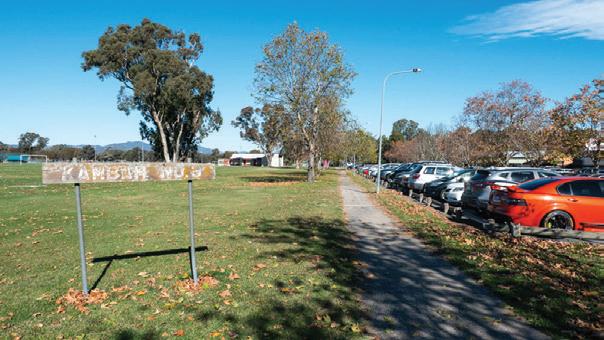
MEANWHILE, over in Kambah the ACT Liberal Nicole Lawder took a stand to defend a possible incursion into a well-used set of playing fields. The adjacent Burns Club would like their visitors to park close to the front door and had launched a development application to take over some of the parklands across the road.
Photo: Paul Costigan
On a Sunday visit it was obvious that it is very competitive to get a car spot near the front of the building. Meanwhile, around the rear there were heaps of spaces. This proposed taking over of the side of the playing fields was accurately described by Ms Lawder as being something that should be thrown out as an unnecessary land grab by the club. Why are our parklands always seen as development opportunities?
The Liberals have shown their colours to take a stand for green spaces. Did we hear anything from the local
ACT Greens on this one? Maybe that power-sharing agreement was again causing some painful blockages.
The frustrating efforts by so many in Canberra to keep green spaces, to get more trees, to increase biodiversity remains a clear sign that this coalition government is in denial over its stewardship of this city in a landscape. At the last election the ACT Liberals did not convince the electorate that they would do a better job with our urban environments.
The ACT Greens keep failing on crucial planning and urban climate issues. The ACT Liberals are starting to make the right noises. As for Labor, in order to be polite – better to say no more. Let’s hope they all realise that climate change is not waiting for politicians to get off their backsides and to be relevant.
Paul Costigan is an independent commentator and consultant on the visual arts, photography, urban design, environmental issues and everyday matters.
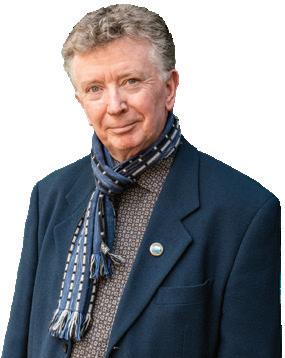

THE GADFLY
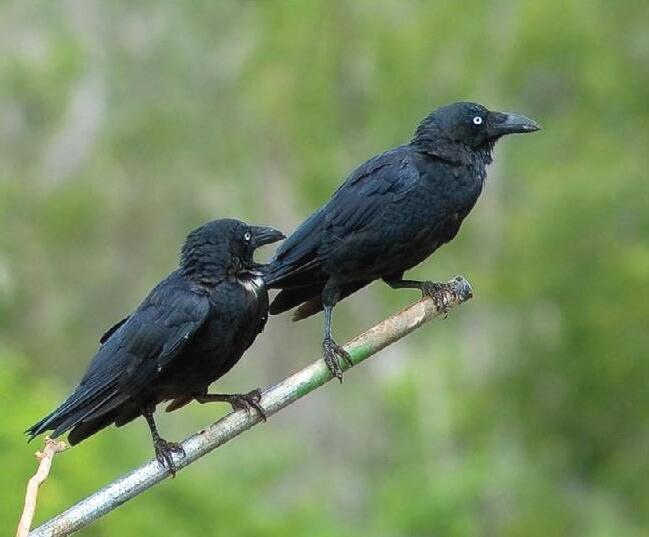
Stone (shoot, gas or trap) the crows…
WERE I religious, I’d say they were Scott Morrison’s “evil ones” incarnate. We don’t call their gathering a “murder of crows” for nothing. The time has come to fight back against these killers of the birds whose songs used to bring such joy to the national capital.
Stone them, as the old Aussie exclamation would have it or shoot them, trap them or gas them, I really don’t care, just as long as we do what we did with those invading Indian mynas in the 1990s – eliminate the vile predators and stop them despoiling our city with their snarling, mournful, cries.
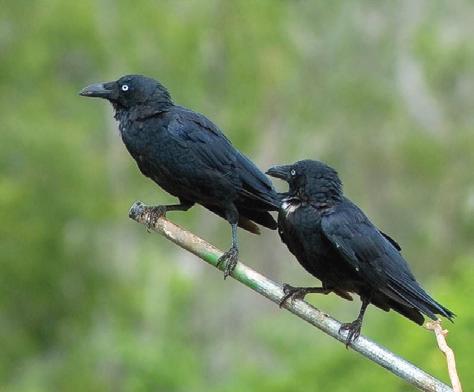
Like the myna, the crow is an invader, from Papua down through the Torres Strait. It’s known to science as the Toresian crow, but it’s far more vicious than the sprightly myna.
I’ve hated them since my jackarooing days in western Queensland. During a drought they gathered round sheep stuck in the boggy mud of a dam and pecked their eyes out while they lived. They did the same to the manager’s dear old horse, Belle, a retired veteran of 26 years who got bogged in a gully in one of the holding paddocks. She was still alive when we found her. We put her down to end her pain. It broke the boss’ heart.
My mate Neil had a good idea. He set up a trap near the gallows where
Crows actively kill the beautiful little finches, wrens and any other they can bully and destroy. No wonder they hide and stay quiet.
each afternoon during shearing we killed an old wether for the shearers’ cook. He put some guts under a box he’d elevated with a stick; and when a crow finally went for the guts, he pulled the string holding the stick and trapped it.
Then he got some whitewash and I helped him paint the crow with it. When we let it go it flew towards its gang – the “murder” – and off they flew like bats out of hell, screaming at this white apparition heading their way.
We cheered it on!
Years later I found myself producing documentary films for the Asian Development Bank. Every six months I’d make a new doco about a group of countries that were building up their
economies with big cheap loans from the ADB.
One year the countries were Sri Lanka, India, Nepal, Pakistan and Bangladesh in that order. And from the moment we arrived in Colombo we were surrounded by the harsh and horrible cawing of crows until many weeks later we finally departed Dhaka. For all that time I couldn’t get old Belle out of my mind.

Then in the 1990s when the myna invasion was destroying the native birdlife I became a supporter of CSIRO scientist Dr Chris Tidemann
who not only campaigned against them but invented a painless trap to capture and kill hundreds of them. The mynas just forced the others out with their aggression. The crows actively kill the beautiful little finches, wrens and any other they can bully and destroy. No wonder they hide and stay quiet.
Today, the crows’ monotonous caws are the first thing we hear each morning and the last call of the afternoon. The neighbourhood is bereft of that glorious dawn chorus that greets the morn when we take a break at our Tuross bolthole.
But then last week at the coast, just as it reached its orchestral peak, suddenly came that single, snarling, mournful cry. The Murderers had found Arcadia.
It was a call to arms.
We either fight back or surrender our native birdlife to their grisly fate.
Dr Tidemann, sir, we need you now.
robert@ robertmacklin. com
BRIEFLY Parking
spots closed for work
ABOUT 120 parking spaces will be unavailable at the Jamison Group Centre, Macquarie, at different stages over the next two months while the government constructs tree pits and plants more trees as part of a trial. Eighty parking spaces are already closed. The work is expected to be completed by the end of July.
An uplifting story
GUEST speaker Kerri Cargill will share the uplifting story of her double lung and heart transplant at the next lunch meeting of the Gungahlin Day VIEW Club, Gungahlin Lakes Golf Club, Nicholls, from 11.30am, Wednesday, June 23. RSVP to 0458 012402 by 9pm, Sunday, June 20.
Warm clothes on sale
PRE-loved winter clothing is on sale at St Ninian’s, Lyneham, 9am-1pm, Friday, June 25, and Saturday, June 26. The clothing caters for all ages and sizes, plus there will be linen, doonas, blankets and footwear. Morning tea and lunch available. Scones baked on the premises.
Fiona talks Woden
ACT election candidate Fiona Carrick will talk about “Plans for Woden” at the next lunch meeting of the Weston Creek VIEW Club, Southern Cross Club, Woden, from 11.30am, Tuesday, July 6. Interested ladies and guests are welcome. The cost is $35 and RSVP to 6286 4626 by 5pm, Thursday, July 1.





The Torresian crow… far more vicious than the sprightly myna.
Spare a smile for homeless people, says Barnie
By Belinda STRAHORN
IF you see somebody sleeping rough, it can be tempting to avert your gaze, but don’t, says St Vincent de Paul CEO Barnie van Wyk, because a warm greeting, a smile and a word or two can make all the difference.
“Most of us don’t know how to engage with homeless people so we don’t, we just walk past,” Mr van Wyk says.
“Instead, look the person in the eye and ask them how they are.
“By doing that you are acknowledging them as a human being, you have given them value, because a lot of homeless people think they have no value.”
It’s timely advice given Mr van Wyk has endured, for the fifth time, a cold and uncomfortable night, between a piece of cardboard, supporting the latest Vinnies CEO sleepout.
The 60-year-old, South Africanborn charity boss says: “You can never replace the experience of a homeless person but it’s important to experience what it’s really like for a person sleeping rough.”
Four years into the role as Vinnies’
Canberra/Goulburn CEO, Mr van Wyk says the nation’s capital lacks a proper plan to tackle the number of people living below the poverty line.
“Whilst Canberra has some of the best support available for people experiencing homelessness in Aus tralia, it’s a two-edged sword, because Canberra also hides poverty,” Mr van Wyk says.
“We have a reactionary approach. We are not focused on the proactive ness of making sure that people at risk are not falling into poverty. There is piecemeal support, but we need to do much more in this space.”
One problem is that many people are not aware how quickly and easily people can slip through the cracks, he says.
That’s why it’s important for the entire community to understand how difficult it is to “pull yourself up” when there are no more bootstraps.
“If you see someone sleeping under a bridge they are there for a reason,” Mr van Wyk says.
“It can be very easy to say why don’t you ‘pull your socks up’ and ‘get your self a job’, but to actually get ready for a job interview when you sleep rough is more difficult than you think.
“Imagine how tough it would be to pull your clothes out of a plastic bag and get ready for a job interview in a public toilet.”
“With figures like that, how does part of Mr van Wyk’s life.
Growing up in the north-west province of South Africa, Mr Van Wyk said his parents’ selfless approach to life instilled in him strong values of family and community service, from
“We lived in a small, three-bedroom home and often through my childhood I’d be ushered to sleep in the living room and a family would live in my room until such times they were settled in their own house,” he says.
It’s a humble upbringing that gave Mr van Wyk the empathy needed to
“You just don’t know what happens in a person’s life 10 minutes before they walk into your office, so you need to be very careful how you treat them because you just don’t know what they have been through,” says Mr van Wyk. Mr van Wyk, a qualified barrister, had worked in financial institutions in
In 2003, he emigrated to Australia with his family, and spent nine years on the Royal Australian Navy’s Central Canteen Board, looking after the
Mr van Wyk also held an integral position in rolling out the first 15 trial sites of the National Disability Insurance Agency (NDIA) and has worked in the transition of property management for the Department of Human Services.

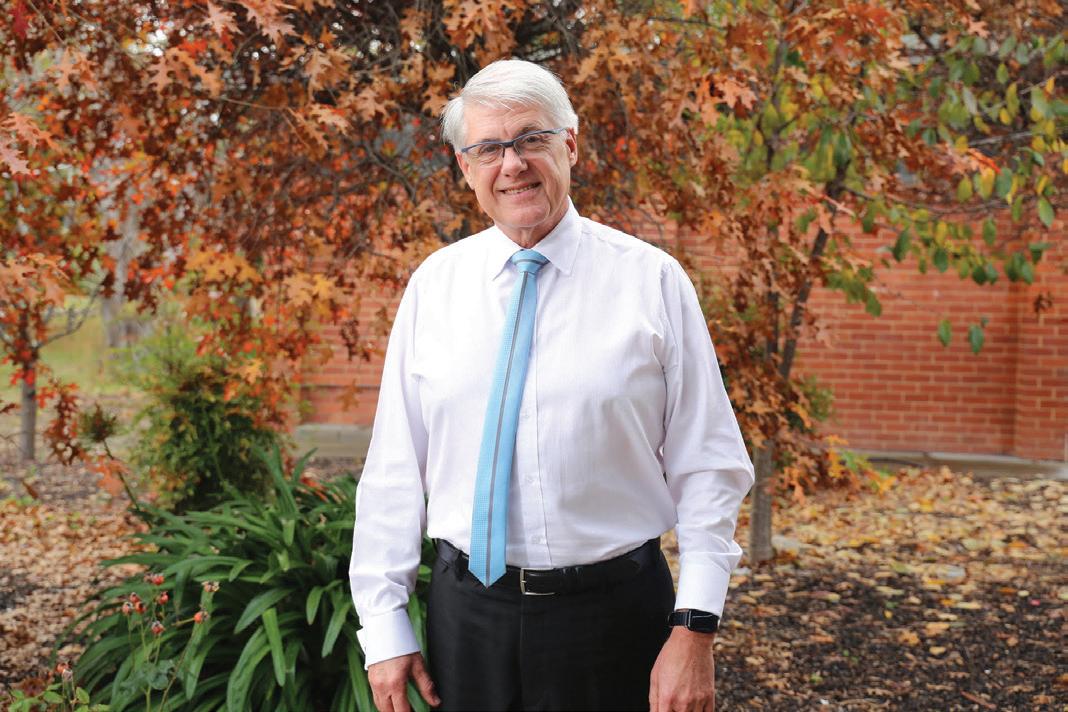
St Vincent de Paul CEO Barnie van Wyk… “Imagine how tough it would be to pull your clothes out of a plastic bag and get ready for a job interview in a public toilet.”
Photo: Belinda Strahorn
POLITICS / power to the corporatocracy
New law reins in developer donations
THERE is truth in the old saying “there is no such thing as a free lunch”.
Legislation passed in the ACT Assembly in August, and coming into full effect on July 1, is set to deal with some of the concerns around inappropriate political donations.
The focus of this legislation is property developers.
Apart from individuals making small donations to political parties to support their own ideological views, there is no place in our democracy for political donations.
By and large, donations have a viral effect undermining the power of “one value, one vote” and handing power to the corporatocracy. These are not donations to support ideology, they are effectively payments looking for future favourable treatment.
The impact is insidious. Again and again political party representatives argue that such donations have no direct influence on decision making.
The impact of taking decisions that fly in the face of big donors and putting at risk further contributions does take courageous decision making.
However, there is an even more insidious impact. The influence of positive-relationship building is well understood in the field of advocacy. Listening in an active and receptive way to someone who is a well-known and trusted donor is so much easier
Big donors do not just rely on their donations. They also build strong relationships through invitations to the box at the footy games and the like, quiet dinners at up-market restaurants and other social engagements.
than paying attention to a constituent who has a problem.
Or even worse, someone who is not well known and is seeking a change in policy or approach – even when it is for the public good.
Big donors do not just rely on their donations. They also build strong relationships through invitations to the box at the footy games and the like, quiet dinners at up-market restaurants and other social engagements.
In this manner they gain totally disproportionate power and turn governments from democracy to corporatocracy. Politicians do not like to decline such “harmless” invitations from big donors.
The legislation to restrict donations from property developers follows similar laws pioneered in NSW when the corruption associated with such donations was very public.
It is an excellent first step. All the parties in the ACT Assembly also refuse to take donations from tobacco companies. The National Party and some of the smaller parties federally have not taken this step.
The challenge throughout Australian jurisdictions is not just property developers. The corporatocracy seeking to influence governments includes: alcohol companies, banks, the mining industry, fossil fuel companies, weapons manufacturers, junk food companies, big tobacco and the gambling industry, to name just a few. Industries that want no government regulation or control are well represented in those who donate to political parties.
In the vast majority of cases such industries donate to both major political parties and across the political spectrum. Such donations reveal the importance of being seen positively by whoever is in government, or might be in government in the not-too-distant future.
The long-term goal of the sort of legislation coming into effect on July 1 ought to be restricting donations to limited amounts for a single donation and to only be from an individual on the

electoral roll. This would also provide a more equitable power at election time.
Limits on election spending by parties and individuals have been put in place by the ACT Legislative Assembly. It is a credit to Canberra’s MLAs and political parties that they have supported this approach.
The Hare-Clark electoral system, as used in the ACT, is amongst the fairest in the world for delivering “one value, one vote”. This is a great start. However, if untainted decision making is to be the norm, there is still a long way to go. Democracy will be best served when our politicians are able to make unfettered decisions that rely on the best available research and scientific evidence along with the clear advice of the bureaucracy.
The political ramifications of such decisions will always be an important factor. However, this should largely be about paying attention to the general will of the people and not the narrow, selfinterested wishes of the corporatocracy.
Sharing ancient tales
VOLUNTARY museum guides are offering a program of presentations on themes related to the ANU Classics Museum’s collection of ancient Greek and Roman artefacts over two Monday mornings (10am-12.30pm, July 5 and 12) during the university’s upcoming semester break. It’s free, (donations to the museum are appreciated), places are limited and it’s not considered as a children’s event. Book via email to pfinley@webone.com.au by Friday, June 25.
Free money course
MONEY coach Robert Ardill is hosting another free community budgeting and money management course on behalf of Christians Against Poverty at the Tuggeranong Baptist Church, 23 Garratt Street, Wanniassa, over two Saturday mornings (9.15am-12.45pm) on July 17 and 31. He says: “Covid has alerted us to more efficiently handling our finances and the CAP Money Course helps develop skills to manage debt, budget, save and have more control of our finances.” Register at capmoney. org.au or email to capmoney@ tbcchurch.com.au or call 0402 007551.









QUEEN’S BIRTHDAY HONOURS 2021

Two Canberrans top the national list for Order of Australia awards
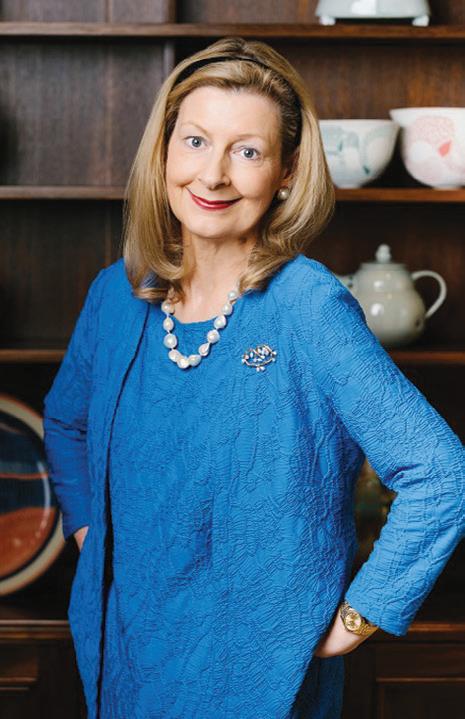
AUSTRALIA’S first female secretary of the Department of Foreign Affairs and Trade (DFAT), Canberran Ms Frances ADAMSON and Hughes resident
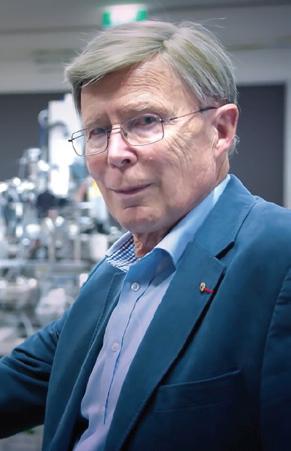
Emeritus Prof KURT LAMBECK are two of five people across the nation to be recognised with the highest honour – Companion of the Order of Australia.
Ms Adamson received the honour for eminent service to public administration through the advancement of Australia’s diplomatic, trade and cultural interests, particularly with the People’s Republic of China and the Indo-Pacific region, to innovative foreign policy development and high level program delivery, and as the 36th Governor appointed in SA.
Prof Lambeck was recognised for eminent service to science, particularly to geophysics and geodesy, through research roles at the national and international level, to professional scientific organisations, and to education.
He is part of a cohort of 1190 Australians included in the Queen’s Birthday Honours 2021, of which women received 416, men were given 530 and one person chose not to specify.
Governor-General David Hurley congratulated all recipients, saying: “Each of these individuals are unique and their story deserves to be shared widely and celebrated.
“Collectively, they speak to who we are as a nation. There are countless examples of selflessness, commitment and dedication. There is diversity and there are examples of exceptional achievement in almost every field imaginable.”
Here are other local people honoured in the latest awards:
OFFICER (AO) IN THE GENERAL DIVISION
Dr Evans LAGUDAH, Ngunnawal, for distinguished service to agriculture and food science as a researcher in the area of wheat genetics.
Dr Suzanne Mary PACKER AM , Lyons, for distinguished service to children through roles in health, welfare and protection initiatives.
Emeritus Prof James Stanislaus WILLIAMS AM , Holder, for distinguished service to the physical sciences, to tertiary education, and to professional scientific organisations.
MEMBER (AM) IN THE GENERAL DIVISION
Dr Brian Keith BABINGTON, Yarralumla, for significant service to children through safety and well-being initiatives.
Mr Michael Ronald BRENNAN, Campbell, for
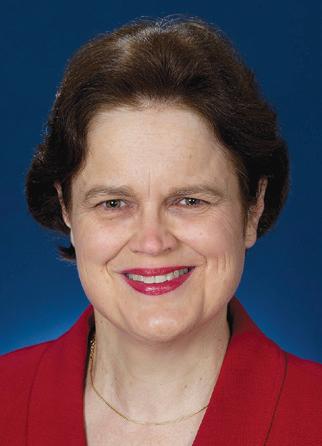
significant service to the law, and to community organisations.
Ms Stephanie COPUS-CAMPBELL , Campbell, for significant service to aid and development initiatives in PNG.
Prof Lawrence Edward CRAM , Forrest, for significant service to tertiary education, and to astronomy and astrophysics.
Mr Julian Hillary CRIBB, Franklin, for significant service to science communication.
Ms Harriet Claire ELVIN, Forrest, for significant service to arts administration in the ACT and to the community.
Dr Sarah Anne RYAN, Watson, for significant service to the environment, to education and to the community.
Mr Ricky STUART, for significant service to rugby league, and to the community.
Ms Joan WARHURST, Reid, for significant service to education, and to research and curriculum development.
Dr George WILSON, Deakin, for significant service to wildlife conservation, to veterinary science, and to the community.
Mr Robert David YALLOP, Hall, for significant service to international humanitarian aid organisations.
Prof Peter Shane YU, for significant service to the community, particularly to indigenous cultural and political organisations.
MEDAL (OAM) IN THE GENERAL DIVISION
Mr Roger Blair ALLAN, for service to primary education, and to disability sports.
Mr Les BARCLAY, Weston, for service to swimming.
The late Mrs Ethel Emily BAXTER , formerly
of Narrabundah, for service to the indigenous community of Queanbeyan.
Dr Diane Robin BELL , for service to literature.
Mrs Jean Isabel BENNETT, Cook, for service to the community of Canberra.
Dr Craig CORMICK , for service to science, and to the community.
Mr Peter John COX , Mawson, for service to rugby league.
Lt-Commander Leo Francis FARRELLY (Retd), Kaleen, for service to youth, and to the community.
Mrs Lyn FULLER, Googong, for service to music.
Rev Gayl Katrina MILLS, Deakin, for service to chaplaincy, and to the Anglican Church of Australia.
Ms Roxanne Marsha MISSINGHAM , Kambah, for service to the library and information sciences.
Mrs Mary Anne NEILSEN, Red Hill, for service to the community as a church organist.
Dr David Peter O’ROURKE , Garran, for service to medicine, and to the international community of West Timor.
Mrs Catherine PARSONS, for service to choral music.
Ms Robyn Lee PORTER , for service to science, and the community.
Mr James Archibald RICE , Monash, for service to the community through social welfare organisations.
Ms Jennifer Dingena TARRANT, Curtin, for service to the hair industry, and to humanitarian initiatives.
Ms Hannah Louise WANDEL , Queanbeyan, for service to women’s affairs, and the community.
Mrs Gwenyth Doreen WARMINGTON, Yass, for service to the community of Yass.
Mrs Allison Dawn WATERHOUSE , Deakin, for service to community history.
Ms Rosslyn Joy WILLIAMS, Holder, for service to community health.
Mr Brett YEATS, Yarralumla, for service to the community of the ACT.
PUBLIC SERVICE MEDAL
Mr Shane Andrew BENNETT, Narrabundah.
Dr Sarah Jane BENSON, Pearce.
Ms Elisabeth Mae BOWES, Kingston.
Mr James BUTTIGIEG , Kingston.
Mr Shane Patrick CARMODY, Yarralumla.
Mrs Belinda Jane FRASER , Fraser.
Mr Paul John GRIGSON, Torrens.
Ms Anastasia (Anna) HARMER , Torrens.
Ms Rachel Jasmine JOLLY
Ms Debbie MITCHELL , Amaroo.
Ms Ann Elizabeth REDMOND, Curtin.
Mr Michael RYAN, Fisher.
Ms Rebecca Lee SKINNER , Griffith.
Ms Celia STREET, Cook.
Nervous system problems such as anxiety, depression, mood swings and insomnia are rampant today.
The obvious and common triggers include stressors such as relationships, finances, work, health and family issues. Chronic stress can lead to people feeling helpless about their condition. In fact, the symptoms can be treated very effectively provided the approach addresses the multi-faceted nature of these problems.
Naturopathy is a safe and comprehensive approach which results in better outcomes, and we also gain information about how to ensure better health into the future.
The information that is needed can be gained from a detailed and comprehensive consultation. This will identify the areas that need improving such as biochemical deficiencies, glandular disruption (e.g. adrenals, pancreas, thyroid), or changed stress hormones and neurotransmitter levels. When these and other areas are addressed in the therapy, acute symptoms improve, but importantly the stronger, more resilient nervous system leads to a greater resistance to the stressors of life.
Therapies used include vitamins, minerals, optimum nutrition aimed specifically at the nervous system, amino acids, herbal medicine, allergy and sensitivity detection and perhaps soft tissue therapy, because these problems can result in headaches, migraines or aches and pains.
Each patient presents with a unique health challenge, and we take the time to treat patients as individuals.
A TYPICAL PATIENT: Angie presented with symptoms of anxiety, depression and panic attacks. She was also experiencing very low energy levels and problems with insomnia. She had been diagnosed as pre-diabetic and suffered with intestinal bloating.
Her nutrition was poor with the main problem being she ate very little and certainly never ate breakfast.
The first treatment addressed the acute symptoms of anxiety, depression, panic episodes, insomnia and low energy levels. Angie complied with my nutritional advice which resulted in better blood sugar control and energy levels improving. Herbal and key nutrients aimed at the nervous system resulted in her feeling more relaxed with improvements in her sleeping pattern.
I explained to her that the chronic nature of her problems would require her to continue this treatment in the shortterm. Having seen Angie three times her treatment has been scaled back to a few remedies which has maintained her improvement.
We have been able to discontinue this treatment. Angie has been advised to continue to take a few remedies which, to date, have successfully increased her tolerance of stress and given her a much better quality of life.
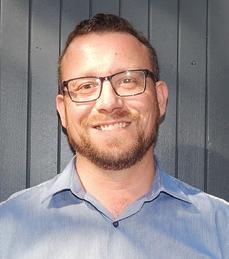

GUY CLEWS LUKE CLEWS
Kurt Lambeck AC.
Dr Suzanne Mary Packer AO. Harriet Claire Elvin AM. Ricky Stuart AM.
Frances Adamson.
Lone sharks... and why it’s best to avoid them
I SPEND quite a lot of time swimming in the sea and am aware that Canberra beachgoers seem fascinated by and scared of sharks in equal measure.
As apex predators, sharks play an important role in the health of the marine ecosystem. Fortunately for humans, we are not part of the shark food chain.
Sharks have evolved over more than 420 million years and there are some 500 species. They range in size from the small dwarf lantern shark only 17 centimetres long, to the whale shark, the largest fish in the world, which reaches 12 metres in length. Sharks have amazing senses:
• They have scent detectors in each nostril that can locate an injured fish from the chemicals in fish intestines.
• Their eyes are specially adapted for hunting in the dark.
• They may be able to hear prey from many kilometres away.
• They have receptors that can detect electromagnetic fields; these help them detect prey and navigate over long distances using the earth’s electromagnetic fields.
• They have a tactile sensory system able to detect water speed and pressure changes. This helps them
navigate and detect injured prey.
Sharks have had an undeserved bad reputation since the movie “Jaws”, and of course in some circumstances they can be dangerous to humans. Bull sharks are more likely to charge and bite, while Great Whites may tentatively bite a human to see what it is. Clearly an inquisitive bite from a Great White can prove fatal, as was sadly the case on May 18 with a surfer off Tuncurry Beach on the NSW north coast.
However, basic precautions should keep you safe: don’t swim in the sea after dark – or at dusk or dawn; avoid large shoals of fish that might attract sharks; don’t swim or surf where Great Whites migrate or breed; don’t swim where the water is less saline (Bull shark habitat); don’t swim off a boat that’s fishing, and don’t spearfish – because wounded fish attract sharks.
I have been privileged to see a great many sharks over the years, both when swimming on the surface and when scuba diving and have never had a problem with them being aggressive.
I often swim at Manly beach where there is a two-metre, Grey Nurse shark popularly named Bruce living in the marine reserve. Bruce has never shown any interest in the many people that swim over him (or her) every day
between Manly and Shelly Beach. Wobbegong sharks are also common there, but they are the labradors of the shark world and would normally only bite if someone pulls their tails. In fact, the last fatal shark attack at Manly was way back in 1936.
In 2005, I went on an organised shark-feeding trip in the Bahamas. We scuba dived to the seabed from a boat and an Esky-sized bait box was roped down to the guide.
Sharks are quite intelligent and, as soon as they saw the bait box, started

circling our group in large numbers. The guide gave each of us a stick about 30 centimetres long and stuck a filet of fish on the end. When you held it out, a shark would come and take the fish. Once the bait box was empty and the open box shown to the sharks, they all left. The guide told us that there had only been one incident in 26
years and that was when one excited diver forgot to use the stick.
Sharks clearly have far more to fear from humans than vice versa. Since 1970, global shark populations have plummeted by 90 per cent – mainly due to overfishing for the Chinese shark-fin market.
Australian politicians past and present have a dismal record when it comes to protecting the environment.
Some Australian fish shops still sell shark meat as “flake” despite the International Union for Conservation of Nature in 2019 listing school sharks as critically endangered.
In the face of government inaction, the Australian Marine Conservation Society has urged Australian seafood consumers to take it on themselves to stop buying flake.
Equally concerning is the government’s ongoing failure to prohibit the export of Australian shark-fin products.
Clive Williams is a Canberra columnist.
OPINION / road trips
Road trips and why they’re not what they used to be

SARA MILNE pines for the simpler life, the sepia-tinted days of the late 1980s… and maps, remember them?
BACK in the day, when dinosaurs roamed the earth and navigation was by way of the stars, my husband and I went on a road trip around Australia and NZ.
It was the sepia-tinted days of the late 1980s. Picture the scene. Our rented car puttering along deserted highways, my husband driving, one hand on the steering wheel, the other holding a cigarette out the window.
Me sitting with my feet up on the dashboard, eating a bag of crisps, bopping along to some Van Halen anthem blaring from the radio. The only point of contention was one of those enormous unwieldy pieces of paper called a map. Remember them? Remember trying to fold them back into their neat squares?
Let me now fast forward to 2021. Not a cigarette in sight, and the same couple, alas a little greyer around the temples, hanging on for dear life as we travel along the Pacific Highway to the Blue Mountains outside Sydney.
In our naivety, we thought it would also be an amble along sylvan roads, waving to passing hay wagons and tractors and stopping to allow a flock of sheep pass by. Instead, welcome dear friends to Dante’s Seventh Circle of Hell. Screaming traffic, roaring juggernauts closing in on all sides about to crush us. A seething mass of hot metal. Cars and lorries tailgating us, threatening to tip us over the edge. Sixty tonne monster trucks opening their maws to devour us and make our children orphans. Me screaming at my husband: “GODALMIGHT YSLOWDOWNDON’TTRYTOPASSSTAYINYOURLANEWA
TCHOUTFORTHATCARONTHERIGHT”, which, strangely enough, does nothing to help the situation.
And as for when it was my turn, I’m afraid I held the steering wheel with the grip of a drowning man, shut my eyes, put my foot to the floor and repeated: “In God We Trust”, over and over again.
I’m ashamed to say that as the trip progressed I traded my turn for everything I had in my possession, food, clothes, jewellery, money. I’m still waking up in a cold sweat at night. Last night’s dream was about me driving a Murray’s bus, like Sandra Bullock in “Speed” but for some reason, not looking as good. So much for the achingly pretty villages of the Blue Mountains, the stunning sea vistas of the Central Coast, the bucolic pastoral towns of the NSW hinterland. Don’t be fooled by names such as Roosters’ Rest, Oxen Crossing or Paddling Creek. These places can only be reached by highways to hell!

May I suggest Carnage Corner, Rabid Roundabout and Hades Highway instead. So unless I can be airdropped by helicopter, I’m not venturing out again. One unexpected bonus is that it has cured me of my fear of flying. Bring on your turbulence, your air pockets, your bird strikes. The pilot’s in charge! Let him deal with it! Let the dogfights rage outside my cabin window, I don’t care, just serve the chicken korma and leave me out of it.
Sara
three years.
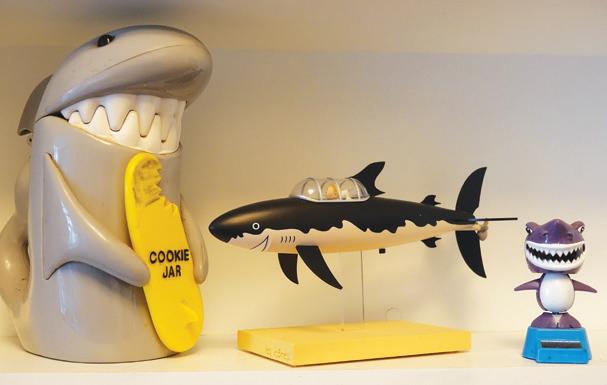
Some shark memorabilia: a shark cookie jar, Tintin’s shark submarine and solarpowered dancing shark. Photo: Clive Williams
Milne has come to Canberra from overseas with her husband and daughter. She has lived in Canberra for the past
I tried but an electric car was beyond my reach
I RECENTLY needed to buy a new car. I was determined to make my contribution to cleaner air and to purchase a fully electric car.
I researched the available options and was totally dismayed. They were far too expensive for my budget or had limited travel distances per charge and, in any case, there is still very limited charging infrastructure. Then the ACT government proposed a future tax-per-kilometre on electric cars. Is that supposed to encourage us?
What’s more, I am told that some manufacturers are holding off on importing new electric models here, because Australia is known to be way behind elsewhere on its commitment to climate control.
I bailed on my ideals. I bought a petrol car instead, which will be fine until electric options become practicable.
Then, the ACT government introduced free registration for two years on electric cars, but too late for me! Besides, who will buy if the charging infrastructure and reasonable car prices are not available?
Jane Allen, Watson
We write to ministers, but nothing is ever done
In response to the government announcement (“1500 kangaroos in yearly cull”), we sent an email to Environment Minister Vassarotti on May 17 and a follow up one to Chief Minister Barr and Ms Vassarotti on May 25, but haven’t yet received a reply.
We explained we had been monitoring Farrer Ridge since 2000 and that over this time kangaroo numbers had remained static.
Of the more than 200 native species of plants we have recorded, only two had disappeared during this time. There are many delicate terrestrial orchids, lilies and forbs that happily exist with the kangaroos who provide nutrients to support them. Why is it necessary to cull?
After the good summer rains there is an abundance of food. In fact the grass will be a fire hazard next summer as it’s drying out now.
There are a lot of rabbits, foxes and weeds that should have been controlled, but nothing ever gets done. Why kill the kangaroos when these pests are left to multiply and have been for many years.
Over the past years we have written to minister after minister about the neglect of the southside reserves, but nothing is
ever done.
An overhaul of the management of Canberra’s nature reserves should be seriously considered by allowing the traditional owners to manage the reserves. Due to their innate and historical knowledge of the land they are far better placed to understand the complexity and diversity than the one-dimensional approach of the current managers.
Anton and Julie Lindner, Farrer
Realistic role for hydrogen
RE Ray Peck’s letter (“It’s still electricity for cars”, CN May 27). I don’t dispute his broad vision for a future with many electric vehicles, be they conventional EVs or the much more complex (and somewhat less efficient) hydrogen fuel cell electric vehicles — FCEVs.
As I see it, battery-electric vehicles, with their enormous torque, on all wheels if needed, are ideal for mining equipment such as ore trucks. Developing solid-state battery technology will increase the range of EVs and batteries will become more affordable as the volume of production increases.
But Mr Peck apparently overlooked the last two paragraphs of my May 13 letter. To recap: The ACT generates so much energy from rooftop solar panels that there is often a surplus. Rather than dumping that surplus this energy could be used to generate
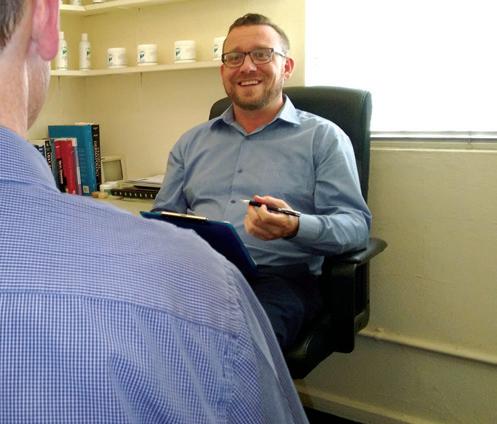
Luke Clews
hydrogen by electrolysis of water. The hydrogen (in liquid form) could be used – with minimal injector adjustments – to fuel vehicles with internal combustion engines. Liquid hydrogen is much lighter than petrol or diesel, increasing both the range and carrying capacity of vehicles, and making it a realistic and attractive option for long-distance driving or haulage.
Douglas Mackenzie, Deakin
Make time, oldies can’t do it all
HOW often do I read of grandparents writing letters to protect their children or grandchildren’s future or see a photograph of an elderly group fighting to save the latest government desecration proposal.
Where are these younger people? Why aren’t they involved? Too busy working? Then make time, you’re the ones who will suffer and we oldies can’t do it all.
Greg Cornwell, Yarralumla
Don’t trust City Hill to developers
LAND on the southern slopes of the City Hill precinct clearly cannot be entrusted to developers, even under a government control plan, a doubtful version of which, prepared by consultants to the ACT City
Renewal Authority, is currently out for public comment.
The control plan is compelled to reflect an existing (many say, anachronistic) National Capital Authority plan for the area.
As with other developments here these days, money talks, control plans get ripped up, and we end up with excessive, ugly, dross.
In the national interest, the City Hill spaces (and emerging land at West Basin) need to be kept predominantly free of development, to preserve the iconic civilengineering, landscape and other heritage characteristics of the place; as well as views in and out of the precincts, especially to and from Capital Hill (notably Parliament House’s publicly accessible roof), City Hilltop itself, and the West Basin/lake areas and beyond.
The plan sadly acknowledges the proposed light rail from Civic to Commonwealth Park, which also expensively involves destruction of the above characteristics.
City Hill development needs at least the same care and attention given to the albeit slightly constipated Russell development, at the other northern apex of the national triangle.
Land to the south-east of City Hill between London Circuit and lower Allara Street could be developed to reflect the scale and form of the crescent-shaped Capital Tower, the Lakeside Hotel, and parts of New Acton, in the corresponding south-west precinct.
Jack Kershaw, Kambah
‘Obscenity’ is free kick for criminals
they had reached a crisis point and that a piecemeal approach was not feasible and would not be effective and that only a Royal Commission-style inquiry would suffice.
One is left wondering why at this March 24 meeting were senior experienced officers from the Australian Federal Police excluded from attending and contributing to discussions on Aboriginal criminal activity. Could it be that it would be too difficult to load them up with guilt and that they are thought to be less gullible than hand wringing, lip-biting elected officials, including now Jon Stanhope who (in CN May 27) moans: “The ACT’s rate of Aboriginal imprisonment is an obscenity that we, as a community, have calmly and without protest taken in our stride”.

INDIGENOUS leader Julie Tongs writes in her opinion piece (CN May 13) that we have to face the awful truth that the worstperforming government in Australia, when it comes to locking up Aboriginal peoples, is the ACT government. And, she adds, that enough is enough.
She states that in the last eight years there has been a 279 per cent increase in Aboriginal incarceration and adds that the Minister for Corrections has advised that 90 per cent of Aboriginal detainees in the AMC have a prior conviction.
Ms Tongs convened a round table on March 24, meeting with everyone except the drovers dog, but including Messrs Rattenbury, Stephen-Smith, Gentleman, Davidson and representatives of the Aboriginal and Torres Strait Islander community. At the meeting Ms Tongs said she insisted that
Let me protest. It’s time that those commenting on Aboriginals in custody and the police/legal system started to apply the word criminal/s after the word Aboriginal which correctly reflects the situation and avoids distortion of fact. The reality is if you do the crime you may end up doing the time. It’s called living in an munity so get used to it and stop the guilt trip and trying to re-engineer give criminals a free kick because that’s the obscenity, along with the collapse of Aboriginal society and their ineffectiveness to manage their own exploding problems, not the fact that it’s an Aboriginal in custody at the AMC where he/she belongs.
All this moaning is indefensible, designed to split the community. Prove to the community that innocent people are being wrongly imprisoned, or brought before the courts and you will find any number of litigating lawyers ready to take on your case with the promise of a big-bucks settlement. Oh, there’s none, why am I not surprised? Could it be that the judge and legal system got it right? Thank you also AFP for your excellent work.
John Lawrence via email



dose
Jon Stanhope.
Connecting people with disabilities to employers
THIS June 30, Feros Care is hosting the “Step 2 Disability Employment Expo”, an opportunity to connect with employers and get an insight into what working life looks like for people with disability.
Located in the Apollo Room at the Hellenic Club of Canberra, guests will be able to learn about life after school, volunteering and social enterprises, discover skill-building ideas and connect with disability and school leaver employment services.
Running from 10am-3pm, the event will feature guest speakers sharing their expertise and knowledge from 11am to 2pm.
“Even though employment is a key element to gain independence, for people with disability, the pathway to employment and retaining a job can be complicated,” says community development coordinator Matthew Bush.
“This year, in the first week of the ACT school holidays, Feros Care has coordinated the Step 2 Expo to bring together all of the information, resources, services, and more to ensure people can connect and engage face-toface and source the information they need.”
Outside of the expo Feros Care helps link people with disabilities to the NDIS, and to community services and activities to support them to live the life they want.
Matthew says it’s about helping people live bolder lives.
“Feros Care has seen firsthand the difference that’s made to everyday lives of participants,” he says.
“Everyone has different aspirations and we want to help people achieve theirs.”
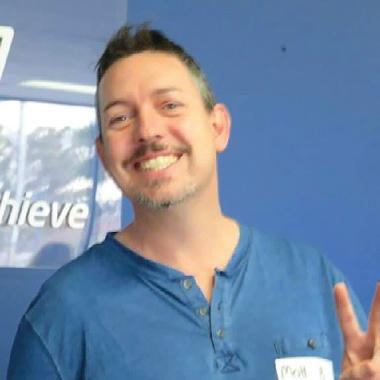
Matthew says Feros Care is the NDIS local area coordination partner in the community for the ACT and has been operating since 2017.
“Our mission is to truly understand what is important to our clients, to create and deliver an experience that goes above and beyond expectations,” says Matthew.
“We encourage people to dream big and work together to help others realise their dreams, no matter how big or small.
“Every individual plays an important role in contributing to our mission. At Feros Care everyone matters.”
Disability Employment Expo, at the Hellenic Club of Canberra, 10am-3pm, June 30. Call Feros Care on 1300 986970, email feroslac@ndis.gov.au or visit feroscare.com.au
Finding people jobs to care about
SELF++ supports people on the autism spectrum and those with other mental and physical disabilities to find employment they’re passionate about, says CEO Jonathan Laloz.
“We dig deep to find their core values and what drives them so that they can find work they enjoy,” he says.
He says he’s certainly seen this with Ethan, a young man with level three Autism Spectrum Disorder who came and worked in his Lego shop.
“He started off doing very simple stuff and gradually built his skills up to the point where he runs the day-to-day operations of the business,” says Jonathan.
“His attention to detail is very high. After employing him the number of errors in orders went significantly down and customer service went up.
“He’s increased in confidence, has come out of his shell, and he’s now teaching others how to do what he does.”
Jonathan says there’s a lot of stigmatism around hiring people with disabilities and it’s something Self++ aims to break down.
“We want to help employers see the advantages in hiring someone with a disability,” he says.
“Everyone has that special talent, it’s just about finding and tapping into it.”
Self++, call 5104 3356 or visit selfplus.plus
STEP 2 DISABILITY
EMPLOYMENT EXPO
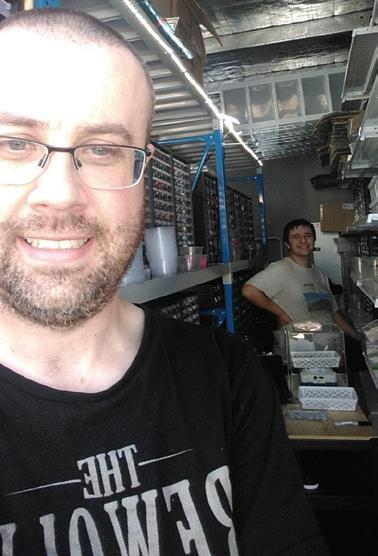
Come along and;
• prepare for life after school
• discover skill-building ideas and community programs
• learn about volunteering and job opportunities
• hear about micro enterprises
• connect with Disability and School Leaver Employment Services
Feros Care community development coordinator Matthew Bush.
CEO Jonathan Laloz… “We want to help employers see the advantages in hiring someone with a disability.”
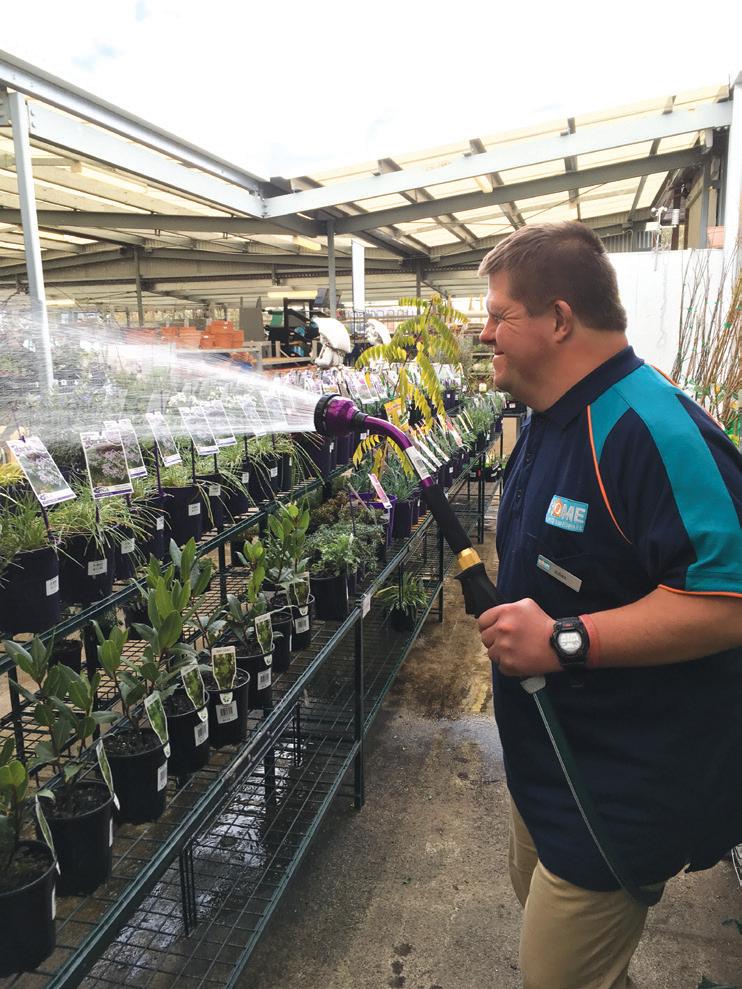

BUILD THE LIFE YOU WANT
Are you a self or plan managed NDIS participant who wants to get the most out of life?
We help you set goals and build the skills to meet those goals in the followind areas:
• Employment • Housing • Social • General living
• And more...
EMPLOYMENT OPTIONS

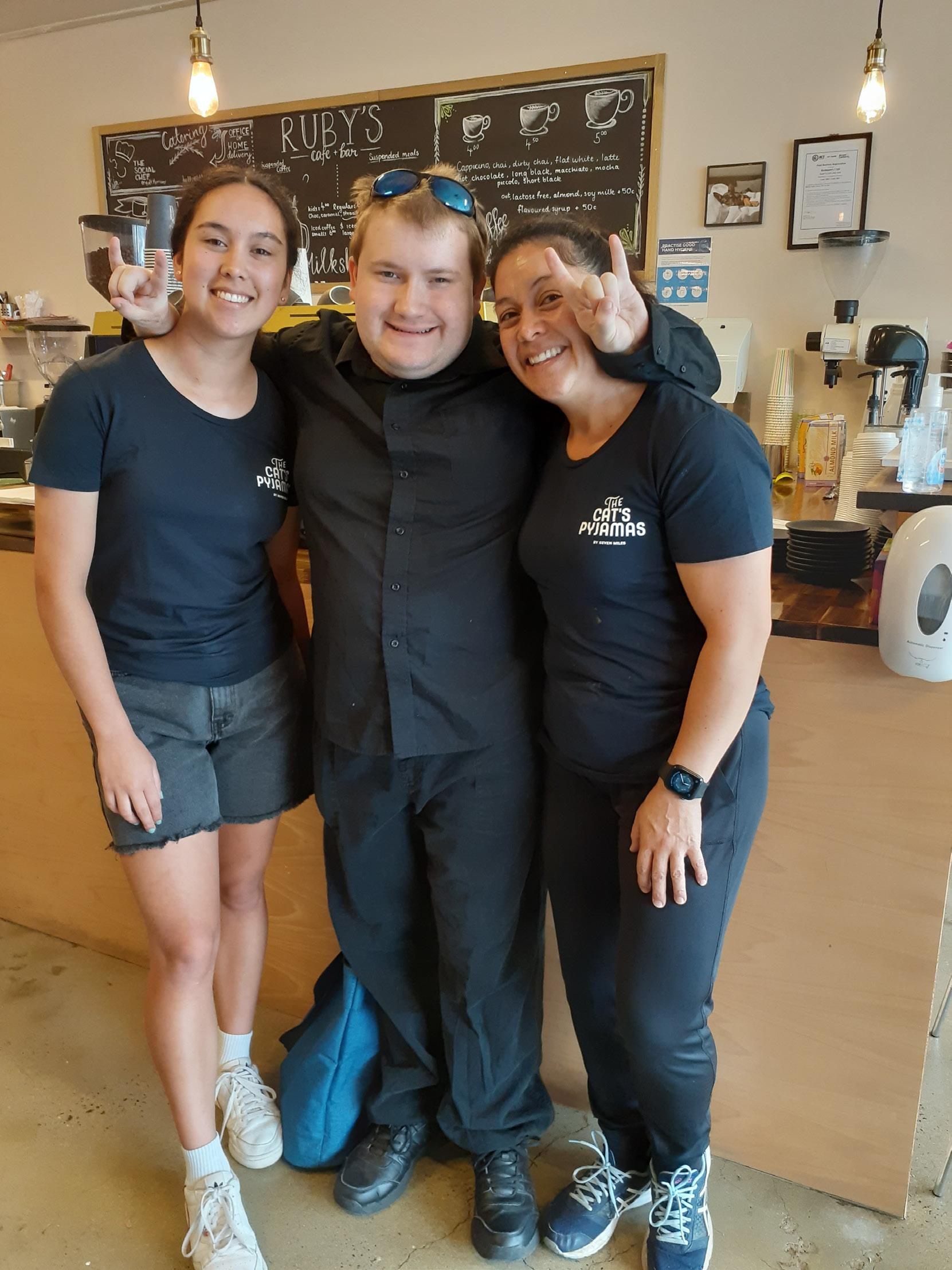
One of Koomarri’s participants at their work experience.
DISABILITY EMPLOYMENT EXPO DISABILITY SERVICES
Building confidence through coaching
HAVING operated in Canberra for 26 years, Nexus Human Services has the contacts and connections to help people with disability and mental illness find employment, says CEO Lisa McPherson.
“People with disabilities can do all kinds of different
resumes to self-confidence training to assisting with interviews, and they also talk to businesses about the benefits of employing people,” she says.
“We’ll have a few coaches and a manager at the Disability Employment Expo to give people information
Lisa says Nexus also has employers coming to them for


Services lead to healthier, happier lives
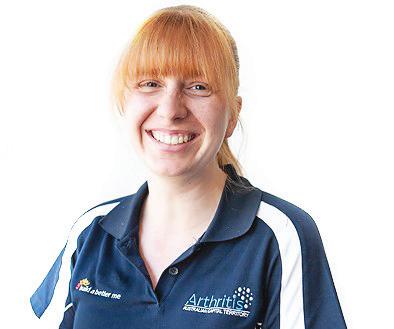
ARTHRITIS ACT can help people with physical and mental disabilities find the pathways they need to lead happier and healthier lives, says CEO Rebecca Davey.
“We have an occupational therapist who can assist people particularly with their assistive technology needs,” says Rebecca.
“That includes wheelchairs, scooters, home modification and he can also do driving assessments for people with disabilities who need them.”
Rebecca says it’s incredibly rewarding to see the difference Arthritis ACT’s services make in the day-to-day lives of those who require them.
Their art therapy program, for example, makes a big difference to people who do it, she says.
Disability Employment and NDIS Services
Connect with Nexus
We specialise in Disability Employment Services for people who have a disability or a mental health condition. We deliver the “Early School Leaver support” for young people and are a registered NDIS Provider.
Client Development
At Nexus we are passionate about helping people on their journey by providing professional recruitment advice. We offer tailored support in all areas of recruitment including looking for employment, workplace support and career development.
Support for Employers
Develop your business workplace culture and social responsibility by recruiting employees with a disability or mental health condition. Once in the job, they build strong connections with customers and enhance workplace cultures. We take pride in getting to know your business employment needs, find the right candidate, and support your business with approved government funding at no extra cost to you.
To find out more on how you could be part of this journey. Call us today on 1800 163 987 or visit nexushumanservices.com.au
“[Throughout the therapy] our fully trained therapists help individuals find and understand their triggers, so that they can be targeted with practical treatments,” she says.
And Rebecca says Arthritis ACT helps people access important services such as the NDIS and the disability support pension.
“These kinds of services make such a big difference in people’s lives, and help open up doors,” says Rebecca.
“We want to provide them the support they need so they can participate fully in the community. ”
Arthritis ACT, 170 Haydon Drive, Bruce. Call 1800 011041, email info@arthritisact.org.au or visit arthritisact.org.au



Gwen Estigoy
Gwen Estigoy has a passion for working for people from diverse backgrounds.
Gwen instructs Tai Chi for our Falls Prevention program as well as regularly supporting people to meet their exercise goals in our hydrotherapy program and within our own gyms.
Gwen works with individuals, groups, and also leads our LGBTI program.
As with all our Exercise Physiologists Gwen has a four-year university degree as well as extensive industry experience working with people with chronic pain conditions.

Sophie Bullock
Sophie Bullock has post graduate qualifications in hydrotherapy, making her unique in Canberra.
Full of enthusaism, Sophie is a non-sports centred Exercise Physiologist, meaning she does not have an intensive sports background herself, so she understands those who struggle with engaging in exercise due to a lack of participation in organised sport.
Sophie works with anyone needing to improve their health, whether one on one or in group exercise.
Sophie works with clients in our popular hydrotherapy program, in our gyms and through home visits, and has a passion for working with children.
Physiotherapy – including the GLAD program for knee and hip osteoarthritis, sports injury prevention and rehabilitation, and pain condition support.
Exercise Physiology – Individual exercise prescriptions, small group classes to increase strength and improve rehabilitation, strength and balance classes, hydrotherapy support.
Occupational Therapy – access reports for NDIS and Disability Support Pensions, home modifications, equipment prescriptions.
Dietetics – meal planning, weight management support, food intolerance support.
Blake Dean
Blake Dean is a walking encyclopaedia of exercise, with a passion for helping clients improve their mobility and decrease their pain through appropriate exercise intervention.
Blake has been instrumental in delivering our ‘My Exercise’ program, which targets the relief of lower back pain, sciatic pain, shoulder and upper body concerns as well as leg, hip and and ankle interventions – for those who do not qualify for physiotherapy-led GLAD programs.
Blake provides individual and group exercise, including for teens and young adults with disability.
Blake can deliver programs in the clinic or through our hydrotherapy program as well as attending your gym with you.



www.orthoACT.com.au




Professor David Little
World renowned expert in hip and lower extremity conditions in children.
To make an appointment call: 02 8072 1384
Dr Samya Lakis
Expertise in paediatric spine and deformity plus general paediatric orthopaedics.
To make an appointment call: 02 9580 6066
Associate Professor Tillman Boesel
Expertise in pain management services, including advanced neuromodulation therapies.
To make an appointment call: 02 9517 1764
DISABILITY SERVICES
level 2, 90 Corinna Street, Phillip. Call 6221 9320 or visit orthoact.com.au

NEW SHOWROOM 3/66 Heffernan Street Mitchell. ACT 2911
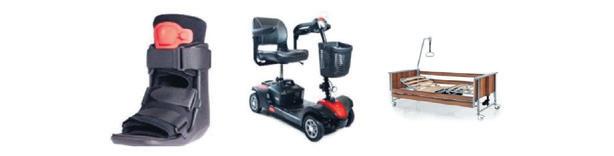

• Incontinence supplies, Catheters, and drainage bags, Pads and Pants
• Braces (Back, Knee, Ankle, Wrist, Hernia) Moon Boots Adult and Children
• Crutches and mobility walking aids and frames
• Homecare products for the Bedroom and Bathroom-toilet aids and shower chairs and much more.
• Electric Lift recliner chairs. Scooters, Walkers and mobility products.

Carers that share your interests
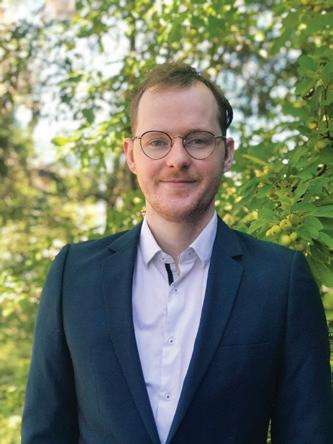
YELLOW Mountain Disability and Ageing Support Services wants to build personal connections between clients and carers, says marketing and communications officer Peter Grimmett.
Peter says the organisation is creating a new, dynamic type of care that gives people the tools to get out and experience the community.
“With new clients we have a look at what’s in their care plan and their basic needs but then we aim to form a more personal connection,” says Peter.
“From there we try to pair people up with carers that match their interests. “For example, if there’s an individual who really likes cooking
we match them up with a carer who likes to cook so that they can share and engage through these activities together.”
A big focus of Yellow Mountain Disability and Ageing Support Services is also the culturally and linguistically diverse community, Peter says.
“You could have people from different backgrounds who don’t speak a lot of English. We want to have a support care worker who can speak their language and communicate with them on a much deeper level,” he says.
Marketing and communications officer
“We want to cater to a wide range of people and make sure everybody in the community is taken care of.” Call 1800 957023 or visit yellowmountain.com.au

Disability Support Services
Ageing Support Services
Carpet & Window Cleaning
Supported Independent Living Gardening & Lawn Maintenance
Transportation
Domestic Assistance
Peter Grimmett.
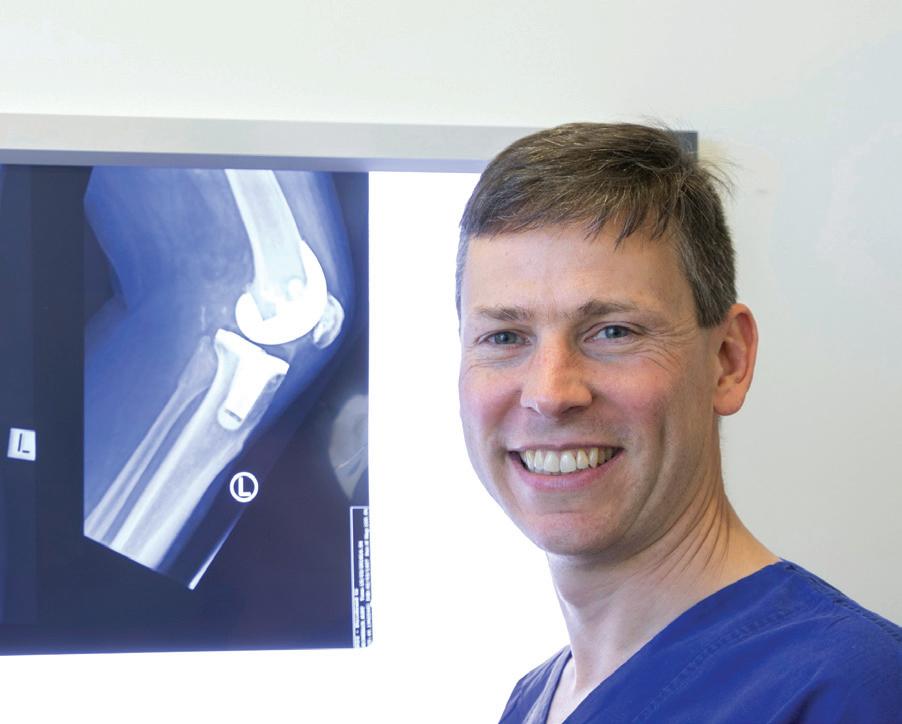
Orthopaedics ACT surgeon Dr Phil Aubin.
Supplies that make daily living easier
CAPITAL Rehabilitation Supplies aims to make the day-to-day lives of people living with disabilities easier and more comfortable, says manager and owner Tim Robinson.
“We have a range of products available for purchase or hire that can help anyone with their needs,” says Tim.
“Some of these products include electric lift chairs, height-adjustable chairs, pressure care cushions and mattresses, electric hospital beds and home care beds, and mobility aids such as walkers, wheelchairs, rollators, crutches and walking sticks.”
A family-owned business with more than 40 years’ experience in the industry, Tim says Capital
Rehabilitation Supplies understands every individual has their own needs.
“We know that some of these issues are sensitive and can be uncomfortable to deal with, so we try to be as delicate and helpful as possible,” he says.
“If we do not stock a certain item we will always do everything in our power to locate the product.
“We pride ourselves on our patience and helpful attitude. People can come and discuss what they require with us and we can find what works for them.”
Capital Rehabilitation Supplies, 3/66 Heffernan Street, Mitchell. Visit capitalrehabilitationsupplies.com.au or call 6174 4813.

“We believe people with a disability should have the ability to live in a home that meets their needs and allows them to actively participate in the community,”
“We’re a specialist disability accommodation provider under the NDIS, and we try to be a pioneer and a pathfinder of housing for people with disabilities.”
Queenie says the NDIS assumes 28,000 Australians with disability require a housing solution, often with specialist modifications and requirements to ensure they can live comfortably.
“We purchase apartments off-the-plan from some of the best builders and developers in the country and we negotiate with those developers and their architects

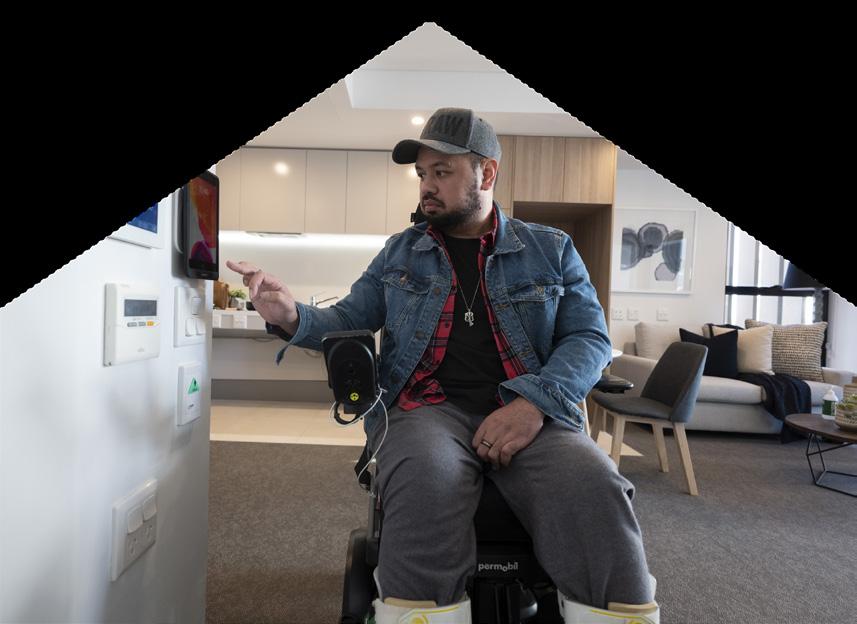
our properties has those options.
“We then work with them and occupational therapists to then do additional modifications to really customise the apartment for their needs and experience.”
And Queenie says Summer Housing works hard to create a strong support network for the people who require their services.
“Being able to provide housing their families and friends can come and spend time at, that makes a huge difference,” she says.
Summer Housing. Call 9916 7939, email info@ summerhousing.org.au or visit summerhousing.org.au
Take control of where
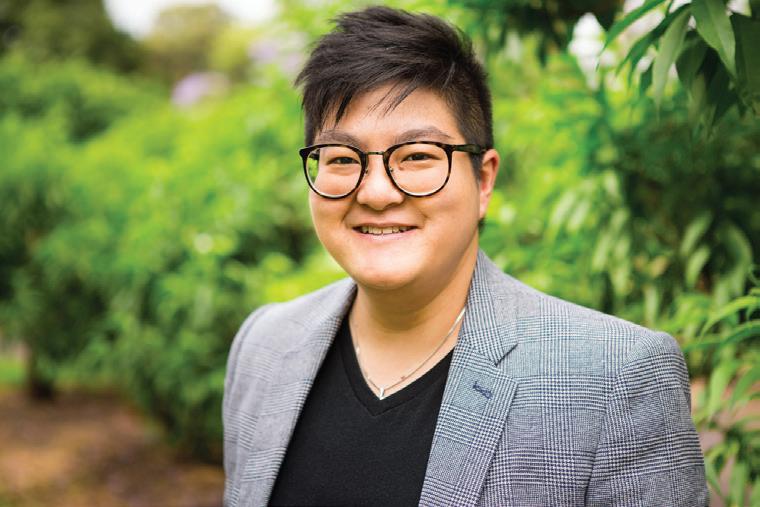
Summer Housing chief operating officer Queenie Tran.
CONFERENCES AND TRAINING
Making an impact with the right venue and food
HOSTING a conference or training session that leave an impact means having a venue and catering options that leave an impact.
Whether it needs to have specialised audio and visual capabilities, take place in a beautiful open space or include options for dining and drinks, a great location for an event can make it one that’s remembered.
For all that and more, here’s the “CityNews” guide to the Canberra region’s premier locations for conferences, training sessions and functions.
Hotel’s praised for its issue-free technology

LOCATED in the heart of Queanbeyan and only 15 minutes from the centre of Canberra, the Royal Hotel is the region’s “hidden gem” for functions and conferences, says events and marketing manager Bianca Paquay.
Renovated in late 2018, Bianca says the Royal Hotel features three stylish upstairs rooms that offer flexible options for events.
“The Manhattan Room is our biggest, hosting up to around 80 guests, but we also have the Menzies Room and our smallest and most private is the Beadman Room,” says Bianca.
“All the event spaces flow out into the atrium and courtyard area giving them a stylish and contemporary feel.”
Bianca says all of the rooms feature audio-visual capabilities perfect for conferences and functions.
plug their own devices right into,” she says.
“There’s also the lectern microphone and handheld microphone options for speaking. One of the biggest comments we get from our feedback says our in-house technology is made problem free.”
And with an upstairs kitchen designed purely for functions, Bianca says the Royal Hotel offers an extensive choice of dining and drinks packages to add flavour to any event being hosted.
Royal Hotel Queanbeyan, 85 Monaro Street, Queanbeyan. Call 6297 1444, email functions@royalhotelqbn.com.au or visit royalhotelqbn.com.au

Where the views extend to the mountains
THOROUGHBRED Park offers a relaxing environment with the privacy that each event deserves, says events and membership manager Elizabeth Francis.
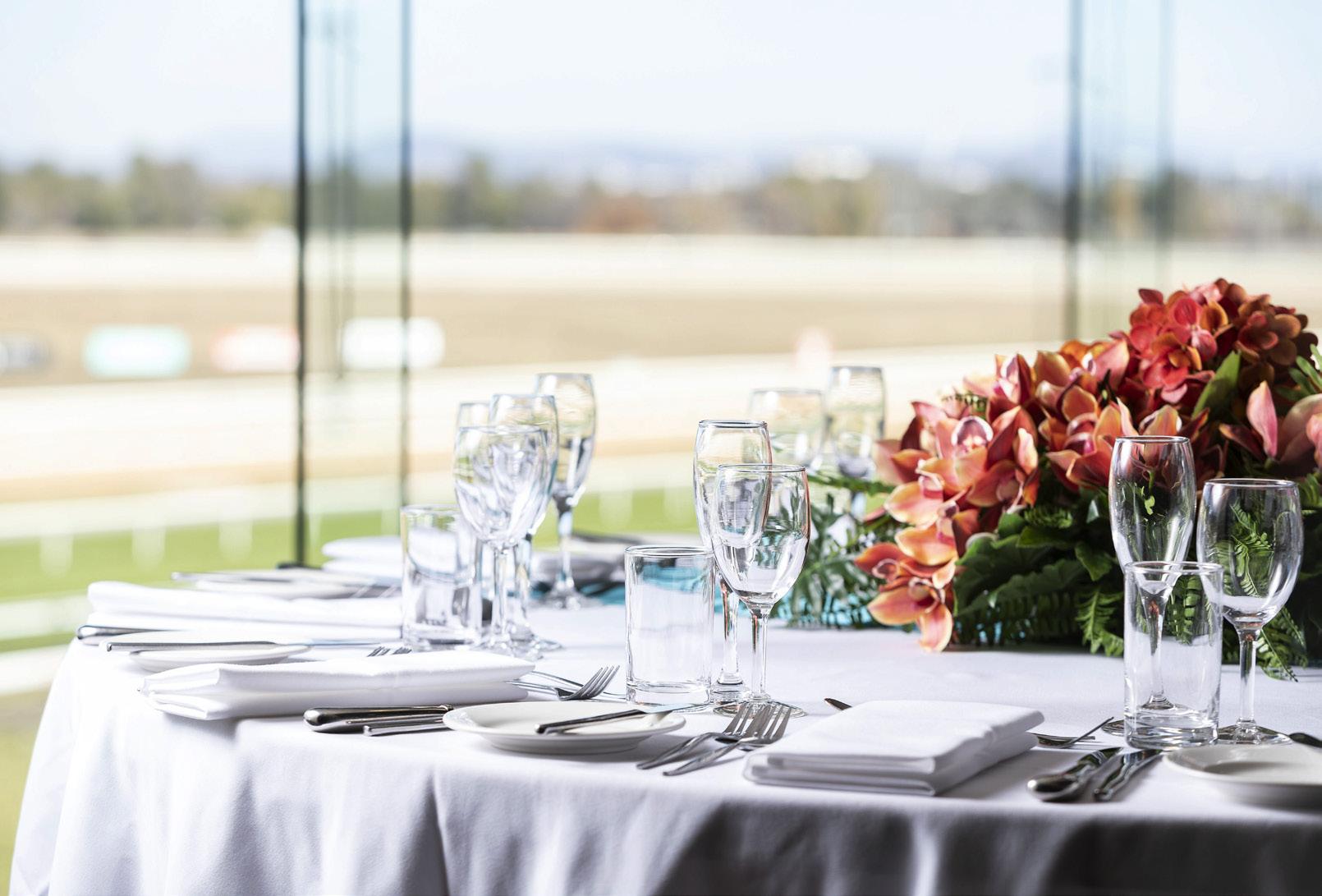
“We have a number of rooms avail able to host a conference or function with sweeping views of the race course through to the Brindabella mountains,” says Elizabeth.
“The Black Opal Room can host 250 people, the Rich Reward Room can host 132 people and the Silks Room can host 240.
“Each room has floor-to-ceiling glass windows overlooking the race course, private amenities and grandstands.”
The Silks and Rich Rewards Rooms also have their own PA systems with handheld or lectern microphones, large-screen televisions and music capabilities built into the room for no additional cost, she says.
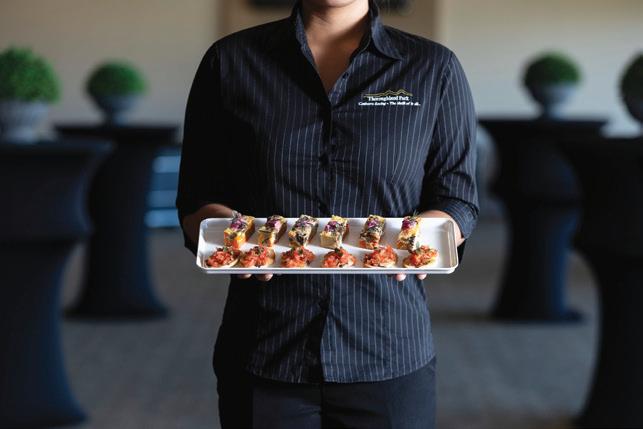
“We can also provide a small handheld PA system suitable for the Black Opal Room along with portable large-screen TV’s,” she says.
Thoroughbred Park is conveniently located along the light rail route, 15
“[And] with our private chef there’s a large variety of menus tailored to all types of events and dietaries. Our menu changes with the seasons and can be tailored upon request,” says Elizabeth.
Thoroughbred Park, Randwick Road, Lyneham. Call 6204 0000 or visit thoroughbredpark.com.au
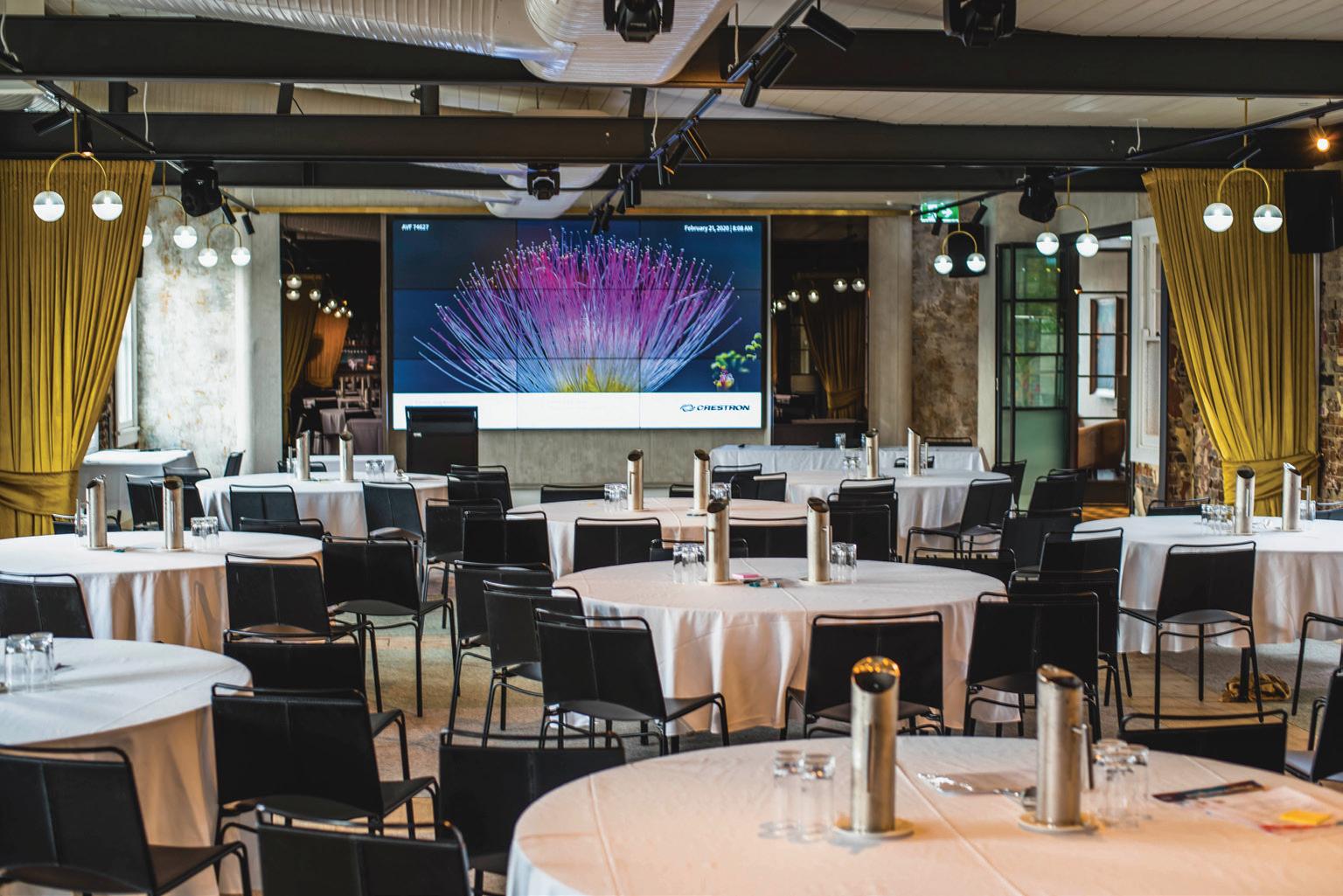




The Royal Hotel Queanbeyan’s Upper House boasts a collaboration of contemporary comforts and amenities, integrated with the original architecture; offering unique and memorable settings. All are complemented by a beautiful atrium overflowing into an open courtyard, allowing an abundance of natural light, to create the perfect ambiance for any event.
Only 10 minutes from Canberra airport.
From boardroom meetings of 24 guests to Half Day & Full Day Conferences for 80 cabaret, our Upper House venues are the perfect choice for your next meeting.
With the option of a post-conference cocktail for 150 guests, or presentation dinners for 120 guests, the Manhattan Room has the versatility to suit all types of events.
Our event spaces all flow into the outdoor courtyard and atrium to be enjoyed during your breaks or with the setting of the sun over a glass of wine.
Contact one of our events team for more information and to organise a site visit to see why this venue is the best kept secret in Queanbeyan!
CONFERENCES AND TRAINING advertising
Estate turns any event into a reality
WHEN hosting an event at Pialligo Estate, events are only limited by people’s imaginations, says corporate sales manager Saral Ghimire.
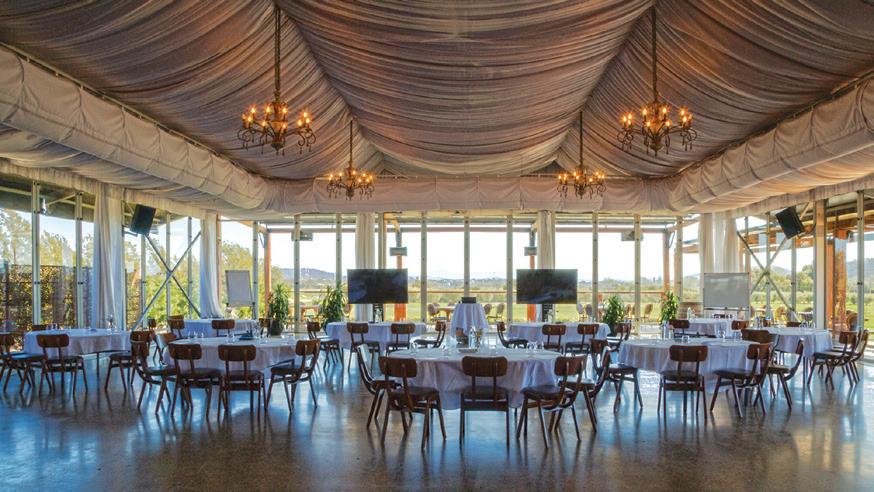
Located on one of Canberra’s first working farm properties with a backdrop of the Parliamentary Triangle, Saral says Pialligo Estate offers guests beautiful views and a totally unique conference or function experience.
“We have a few different event spaces that can cater for small groups of 10 people all the way through to 200 people. Our large open spaces can be set up for 1000 or 2000 people,” says Saral.
“We are located 15 minutes away from the city but we are right next to the airport making it a great destination for business travellers coming for meetings and conferences.”
Saral says the experienced events team can make anyone’s vision for an event a reality with Pialligo Estate’s flexible range of packages and options.
“Our seasonal menus are driven by our ‘paddock to plate experience’,” says Saral.
“That includes wine from our vineyard, greens and veggies from our markets and smoked meat from our Pialligo Estate Smokehouse.
“It’s an organic, fresh and different dining experience that brings guests out of those four walls and gets them closer to the surrounding nature.”
Pialligo Estate, 18 Kallaroo Road, Pialligo. Call 6247 6060 or visit pialligoestate.com.au
Options that are perfect for training
ONLY a few hundred metres from both the Canberra Centre and the Convention Centre, Crowne Plaza offers conference and training facilities right in the middle of the city, says director of sales and marketing Tim Bruen.
“The hotel is right next to Glebe Park so guests can get that relaxing feeling of being close to nature even though they’re in the CBD,” says Tim.
“There’s eight rooms perfect for workshop style events with boardroom or video conferencing
the safety of guests.
“We have our IHG safe promise, which involves globally mandated covid-safe meeting practices,” he says.
“We strive to ensure people have confidence they’re in a safe environment, whether they’re meeting or staying with us.”
Tim says it’s the feedback that Crowne Plaza gets from clients that most reflects the quality of the function spaces available.
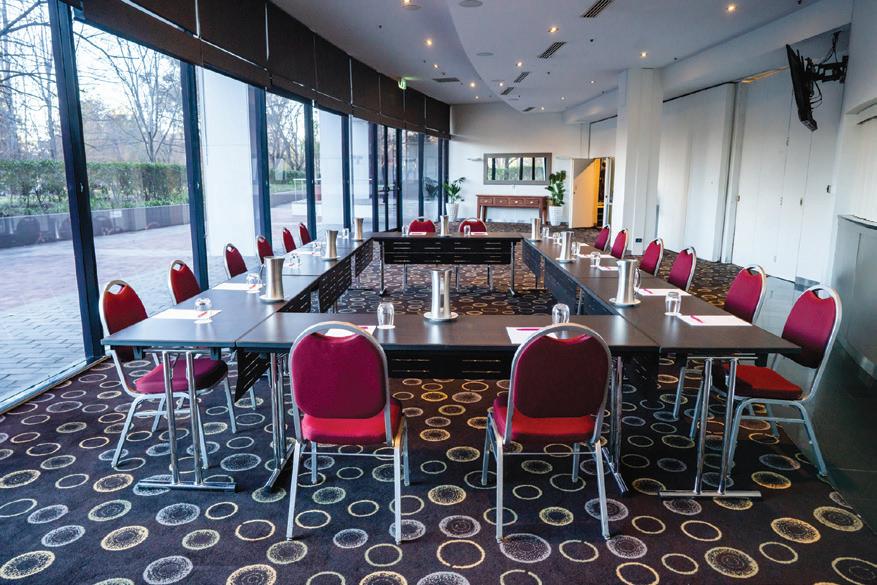

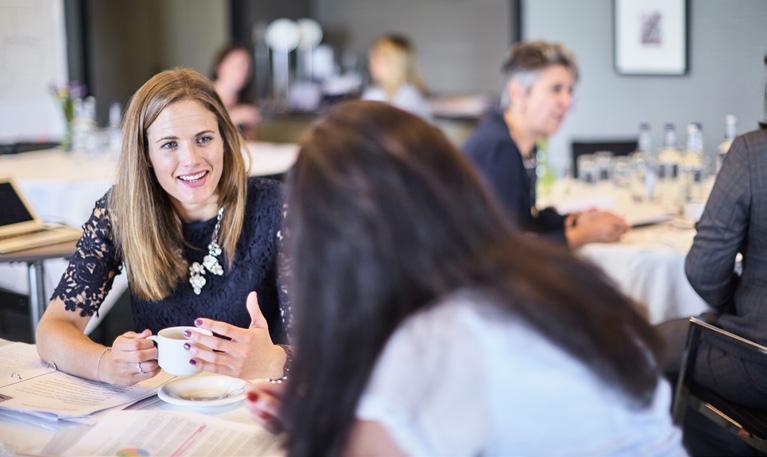

ARTS & ENTERTAINMENT

Forgiveness comes hard in Crombie’s ‘Grief’
By Helen MUSA

WHEN Elaine Crombie steps on stage at The Playhouse to perform in “The 7 Stages of Grieving”, there’ll be a strong element of déjà vu, but a clear look into the future, too.
For the one-woman play, co-written by Wesley Enoch and Deborah Mailman, was one of the big hits here at the National Festival of Australia in October, 1996, but as far as Crombie was concerned, it could’ve been written yesterday.
First staged in 1995, the play, whose content is often compared to the SwissAmerican psychiatrist Elisabeth Kubler-Ross’ model of the five stages of grief, traces seven phases of Aboriginal history – Dreaming, Invasion, Genocide, Protection, Assimilation, Self-Determination and Reconciliation.
A light reveals a woman, Crombie, alone in her grief, but she breaks down the “fourth wall” of theatrical illusion as she draws the audience into the plot.

“The brilliance is that this play holds up 26 years later in First Nations’ issues we’re still dealing with, like deaths in custody and
removal of children… it’s not stopping, it’s continuous,” Crombie tells me by phone from the Sydney Theatre Company‘s offices.
Taking no chances however, director Shari Sebbens, making her directorial debut as the
STC’s Richard Wherrett fellow and familiar to readers from her role in “The Sapphires”, is updating some of the text and songs in the show.
“She’s fresh, she’s young, her ideas are
alive in her head,” Crombie says.
“She’s also very strong in her stance on decolonising in theatre and in life and I really respect and admire her for that.”
The show was put off from 2020, so it gave the company a year of thinking about it creatively.
Some of the work in updating has already been done. For instance, the Walk for Reconciliation across Sydney Harbour Bridge in 2008 was long ago incorporated into the play, but now, Crombie says, “we’ve been given blessings by Deborah and Wesley to put our own elements into the show, so when people come to see it, they will be pleasantly surprised and energised.”
Crombie is the daughter of pioneering actor Lillian Crombie, a member of the stolen generations from SA and, as an actor, singer, songwriter and writer, is exactly the right person to bring this seminal play to life for audiences in 2021.
Known for her powerful acting performances, she was last seen in Canberra in “Barbara and the Camp Dogs”, for which she won a Helpmann Award.
She’s just as well-known for her wicked sense of humour.
“I get that from my mother,” she says, so the evening is by no means doom and gloom. “You get to see the brilliant side that is me,” she laughs.
Crombie will perform on a set designed by STC’s resident designer Elizabeth Gadsby
in consultation with installation artist Megan Cope, whose work is now on show at Canberra Glassworks. The middens – or mounds of shells, bones and other materials – that scatter the stage in this production were inspired by Cope’s works.
In a way, Crombie becomes “Everywoman” as she tells her stories of grief and discrimination, so the intention of Gadsby and Sebbens is to universalise the experience.
“I am in the middle of the universe standing with my ancestors,” Crombie says.
To her, the highest part and the hardest part of her performance is the “forgiveness” part, made especially difficult because of some deeply private experiences in the last several years.
“It was a great grief, and I had to get myself to a point where I forgave what was done unto me, but you never forget that it has been done,” she says.
Another element in the play that touches her is the “great sense of hurt” when she tells of people passing.
“Within the show there’s a specific scene where I talk about this young fellow who dies in custody… it’s really sad to go there every night, but I always think, his spirit is free, I’m constantly talking to him and sharing with him that I’m telling his story.”
“The 7 Stages of Grieving”, The Playhouse, June 23-26. Book at canberratheatrecentre.com.au or 6275 2700.

Photo: Joseph Mayers
CINEMA / reviews
Sins and virtues and the world of Maori women
“Cousins” (M)
THE closing frames of this emotionally-intense NZ drama include a dedication to three inspirational Māori women – Merata Mita, Irihapeti Ramsden and Nancy Brunning.
Mita was a pioneering Māori filmmaker who wanted to turn Māori writer Patricia Grace’s 1992 novel into a movie. Ramsden was a nurse, anthropologist and writer who worked to improve health outcomes for Māori people. Brunning was an influential actor, writer and director taken by cancer in 2019.
Co-directors Ainsley Gardiner and Briar Grace Smith (who also adapted the novel and plays one of the film’s principal women) have given their film an intensity that examines the status of Māori women from, in one case, kindergarten to old age.
That brief summation covers many sins and many virtues on the part of Māoris and the descendants of the Europeans who came two centuries ago, settled and in 1840 made a treaty (of Waitangi) with the country’s indigenous people.
The film’s plot combines simple behaviours of characters with complex relationships, during the years between the 20th century’s inter-bellum and when Patricia Grace wrote the book. I came away from it feeling that despite the treaty, there is still a palpable similarity between how the countries on the eastern and western sides of the ditch govern the co-existence of the two countries’ indigenous races. This is not to say that watching the film is hard work. It’s visually beautiful. While it’s fiction, it projects an admirable authenticity.
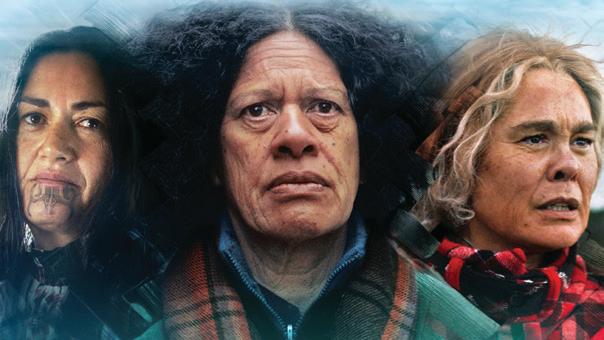
“Cousins”... While fiction, it projects an admirable authenticity. I came away from it regretting my NZ-born wife’s inability to have seen it with me.
At Dendy and Palace Electric
“Heroic Losers” (M)
FROM Argentina comes a movie that combines form and style with content and ticks the basic boxes of story-telling with brio and, above all, credibility.
“Heroic Losers” was Argentina’s entry at the 2020 Oscars, that glitzy navel-gazing night of film-industry excess where there are no second prizes but the mere fact of nomination carries an enduring cachet. It travels into dramatic territory where Hollywood used to be masterly but lately seems to have lost its way.
In 2001, Argentina was hitting the lowest point in its great depression. Retired
CONVERSION SERVICE
Would you like to watch those old family videos once again, or listen to your favourite records on CD?
We can take your vinyl records or cassette tapes and put them onto CD and we transfer VHS tapes onto DVD.



Cooleman Court, Weston Creek | 6293 4677 | songland.com.au

smile, but laughing really has to work hard to reach me; which the screenplay, by director Sebastián Borensztein (adapting a novel by Eduardo Sacheri) did time and again during “Heroic Loser’s” 116 minutes.
As well as delivering intelligent comedy, the film builds tensions as valid as they are palpable. The cast of characters is comprehensive and convincing. And by showing us who the actors playing them are, the closing credits provide a really useful function!
At Palace Electric
“Percy vs Goliath” (PG)
soccer star Fermín (Ricardo Darín) who runs a service station in a sleepy provincial town, convinces friends to contribute their savings into a co-operative to restore some abandoned silos and create jobs.
He deposits the cash into a savings account just as the government freezes the banks, rendering their money valueless and quashing their plans.
Things seem only to get worse for the community until rumours spread of a secret depository where Manzi (Andrés Parra) has paid local currency to buy the cash and hidden it in an underground strong room. The group’s going to need resolve, inspiration, and luck to steal it back. Revenge has never felt so satisfying – or ironic. It takes a lot to make me laugh outright at a movie. Perhaps an occasional
IN this Canadian drama, Christopher Walken plays 73-year-old Percy Schmeiser, the Saskatchewan farmer whom Monsanto took to court from 1998 for stealing its intellectual property, namely a strain of glyphosate, aka Roundup, that can control weeds in a field without harming the canola crop.
So what’s so good about a movie that lays out the legal and economic plight of the little man against a chemical giant? Well, as Percy speaks out against the company’s business practices, he realises that farmers around the world are fighting the same battle.
Suddenly, he becomes an unsuspecting folk hero in a war to protect farmers’ rights and the world’s food supply against what they rightly perceive to be corporate greed.
How does Percy get thrust into the limelight? To answer that, it’s necessary to bring into the frame his wife Louise (Roberta Maxwell), his lawyer Jackson Weaver (Zach Braff) and environmental activist Rebecca Salcau (Christina Ricci), on the journey through lower courts to the eventual determination of his case in the Supreme Court of Canada. These characters are real people, fundamental to the telling of the story.
Director Clark Johnson, together with writers Garfield Lindsay Miller and Hilary Pryor, have taken an important stance in exposing Percy’s predicament. With a producer’s credit tucked away in the closing credits, Walken has more to do with the production than merely playing the title character.
Genetic modification on food plants can ignite pro-and-con dispute without much effort harder than it does in “Percy vs Goliath”. So Roundup, if used without careful attention to safety protocols, can indeed be as dangerous to people as to plants.
Variations in the story’s tensions are somewhat restrained and it may bypass emphasis in the safety issue, but for a civil, as opposed to criminal, lawsuit movie, by and large, this one works well enough.
At Palace Electric
WATCH IT! / streaming and stuff Scoop that makes sub-cub reporter
DOES a nine-year-old girl investigating a murder mystery seem far fetched?
Well the Apple TV+ series “Home Before Dark”, with that very premise, draws inspiration from a real-life story that proves truth really is stranger than fiction.
Now streaming its second season, the show is based on the true story of Hilde Lysiak who, at only nine years of age, broke news of a violent murder case in her own self-published newspaper in Pennsylvania.
Inspired by her father, who was also a journal ist, Lysiak started “Orange Street News” at age seven with the catch cry of “The ONLY Newspaper Devoted to Selinsgrove” – her home town.
Hot off the crayon, Lysiak originally wrote the paper all by herself but, with the help of her sister, it would eventually grow to include a Facebook page, YouTube channel and a website that erupted in popularity.
It’d be 2016 when she got her breakthrough.
While chasing a local vandalism case, she overheard the police chief leaving the station to attend a murder scene a few blocks from her house, one which she also rushed to.
She compiled a report on the scene that cried out “EXCLUSIVE: MURDER ON NINTH STREET” and made a video featuring quotes from police and neighbours.
All of Hilde’s reporting was factually correct, but that didn’t stop backlash firing up, telling her she should be playing with dolls and teacups, and that her parents should not be letting her “pretend to be a journalist”, especially at a violent crime scene.
Hilde quickly fired back.
“I don’t think people should be able to decide for me who I should be and what I should be doing,” she said in a follow up Youtube video.
“I never began my newspaper so that people would think I was cute. I started the ‘Orange Street News’ to give people the information they need to know... I want to be taken seriously. There, is that cute enough for you?”
Of course, the whole thing made Lysiak and her family internationally famous.
She’s the youngest member of the Society of Professional Journalists, likely the youngest person to ever give a college commencement speech, has multiple book deals and now, of course, a polished Apple TV+ series that jumps on the fame train.
And while the show borrows heavily from the real-life details, the murder case in the plot is fictionally embellished to squeeze more episodes out of the winning premise.
Regardless, both the series and the real-life story make a full-course meal of food for thought on modern journalism and news circulation.
TO another streaming highlight this month, over on Amazon Prime Video is “Whiplash”, a film that’d be easy to mistake for a horror movie when reading the instructions that director Damien Chazelle gave to star JK Simmons during the
“I want you to take it past what you think the normal limit would be. I don’t want to see a human being on-screen any more. I want to see a monster, a gargoyle, an animal,” said Chazelle.
But “Whiplash” is a story about a music teacher, a brutal yet brilliant artist who is willing to push a young drumming prodigy (Miles Teller) to his emotional and psychological extremes in order to unlock his true talent.
As if the acting wasn’t amazing enough as it is, the young Teller was actually playing the drums in many of the incredibly difficult and technical songs.
Talk about some young achievers this week. A teenage musical prodigy and a nine-year-old journalist. When I was nine I think I was still chasing my dream to become a dinosaur.

Brooklynn Prince in “Home Before Dark”, inspired by Hilde Lysiak.
ARTS IN THE CITY
Silver linings ring true Celebrating China’s musical heritage
A man walks into a bar with an alligator on a leash.
“Do you serve lawyers here?” he asks.
“Yes”, says the barman.
“Great”, says the man, “I’ll have a glass of red and a lawyer for my alligator, please.”
I THOUGHT the Australian wine industry was up to its ears in alligators caused by drought, the 2020 bushfires and resultant crop losses because of smoke taint, as well as topsy turvy outcomes in sales and marketing wrought by COVID-19.
But it seems that the old cliché about clouds and silver linings may ring true.
A recent edition of “Daily Wine News” reported: “Australian wine sales during 2019 to 2020 exceeded supply for the third year in a row impacted by drought conditions and bushfires in some regions of the country. This has led to the lowest stock-to-sales ratio in nine years and strengthening wine grape prices.”
At the macro-level, this news item was summarising the Wine Australia report from March, which shows that Australian wine production in 2019-20 was just under 1.1 billion litres, 9 per cent below the previous year’s production and 10 per cent below the 10-year average.
The good news was that the total
volume of Australian wine sales in the same period was 1.2 billion litres. Just 40 per cent of that was sold on the domestic market.
With 60 per cent being exported and a high percentage of exports going to Asia (just under a quarter) especially China, the emergence of the alligators in this financial year can’t be denied.
That’s especially the case as it now appears that China is not just putting up fiscal barriers. In February, more than 11,000 litres of wine from two Australian producers were stopped in Shenzhen for alleged poor labelling and excessive use of additives.
At the micro level, stock-to-sales basically measures how quickly inventory is sold and then replenished during a period of time. The stock or inventory-to-sales ratio shows how much inventory you are converting to sales.
Managing wine sales is like every other product: there is a balancing act between making enough sales and stocking enough inventory to meet customers’ requirements.
So, I asked John Ings, proprietor of Canberra Wine and Spirit Merchants, a retailer in Civic since 2019 who specialises in this district’s wine, about whether the macro-indicators translated to his business or his experience in selling Canberra wines.
“Our experience is that our stock levels are similar to where they were last year, but
sales are substantially better,” he said.
“I place orders every day and see them filled in about three days so I can keep a low stock-to-sales level. Online makes up about 30 per cent of our sales, which went from nothing this time last year. We decided to go online when covid hit.
“A lot of the Canberra places have had to buy grapes from other places. For example Mada Wines and Mallaluka bought from the Riverland and others from all sorts of places to make wines in substantially the same style. For example, Mount Majura bought pinot gris grapes and others have supplemented their lack of fruit from other places.
“People have been very inventive to keep their cash flow going. We’ve got a few holes where some didn’t buy in but obviously this pattern has increased the cost of grapes. Retail prices are directly affected by the wholesale price and there have been some price increases, but it hasn’t nudged up that much.
“The quality of the local wine is sensational at around the $25-30 price mark for artisan wines. I suspect that it’s going to get better in size and reputation.”
“If you are in it up to your ears, keep your mouth shut.” – Anon

DINING / The Bowral Brasserie
Where every dish is ‘délicieux’
It’s French through-andthrough and the food is fine indeed.
The Bowral Brasserie was our destination on a quick getaway from the capital and, my-oh-my, every dish was délicieux

The brasserie specialises in traditional-inspired classics and puts tremendous effort into making you feel like you’re dining in France. Images of the busy streets of Paris adorn the walls, including one featuring the Eiffel Tower, and the white linen tablecloths are crisp. Intricate chandeliers, candles, vases and decorative items fill every available space. The décor is eclectic but in its own way très chic. The music was lovely and the right level for good conversation.

The restaurant does “Destination Southern Highlands” proud and we struggled with what to select. Everything sounded so delish. We began with a sensational smoked trout and horseradish pâté ($16). The smoke element added intrigue without overpowering and the petite cornichons were, well, perfectly pickled.
The steak frites were equally sensational ($36). The melt-in-themouth sirloin arrived rare, just as
just the right size. The quality eye fillet was wrapped in magical filo pastry, which always transforms a dish. The sauce au poivre was a statement in its own right and masterfully made. Other mains include coq au vin ($34) and trout en papillote, which was served to a neighbouring table and caused instant food envy ($37). Who can go wrong with boned Snowy Mountains rainbow trout with white wine, lemon and herbs?
We don’t normally indulge in dessert but several on the list shouted “pick me, pick me”. We shared the orange and chocolate mousse ($15), decorated with bright berries and
the profiteroles au chocolat ($16).
The Bowral Brasserie’s wine list is intriguing and carefully curated. It’s also reasonably priced, considering the quality of wines selected. We toasted the Southern Highlands with the Dawning Day chardonnay which was absolutely delicious.
Dawning Day is a small vineyard that gives 10 per cent of all sales revenue to help those in need.
Service was fine although we couldn’t grab anyone’s attention to get the bill, so got up to pay cash.
With covid still clouding our lives, it’s lovely to head out on little adventures. Bowral… we will be back.
By Helen Musa
IN “East Meets West”, Guy Noble will conduct a 50-piece orchestra comprising musicians from leading symphony orchestras, including the CSO, with guest artists including pianist Tony Lee, violinist Sun Yi, Guzheng musician Angie Liu, mezzo soprano Victoria Lambourn and soprano Sharon Zhai. An Australian tribute to China’s rich cultural and musical heritage, a highlight will be the heartbreaking love story, “Butterfly Lovers Violin Concerto”. At Llewellyn Hall, ANU, Saturday, June 26. Book at premier.ticketek. com.au
MUSICACT has appointed Billy Bianchini as its new program manager. Already known through his artist management agency Warm Water, which oversaw the rise of Canberra bands ARCHIE and Sputnik Sweetheart, Bianchini says he will focus on strengthening our scene’s capabilities, while fostering connections between the ACT, national and international music scenes.
THE Phoenix Collective, Dan Russell, Andrew Wilson, Ella Brinch and Yuhki Mayne, return with a musical exploration of “turmoil, tension, destruction and death” in “Tales of War” string quartets by Shostakovich, Barber and Joe Hisaishi’s “Princess Mononoke”. Wesley Music Centre, June 25, book at phoenixcollective.com.au
FLEUR Millar’s “Finding Your Voice” cabaret
is back at Smith’s for its third year running, with inspirational singing from students in her Fleur-de-Lys vocal talent studio. Smith’s Alternative, 26 Alinga St, City, 4pm, June 20, book at smithsalternative.com
CANBERRA composer Sally Greenaway’s music is often heard on ABC Classic radio and in concert venues around the country. Now she’s spearheading an ambitious audio and video recording project featuring Luminescence Chamber Singers, with Roland Peelman at the helm. Greenaway says funding bodies don’t always get the balance right in supporting full-time arts practitioners and is now seeking financial backing from 1000 supporters at $40 each to employ 21 professional arts practitioners, comprising musicians, film crew and audio. Donations to tinyurl.com/new-music-greenaway
REHEARSALS are in full flight for National Opera director Peter Coleman-Wright’s next ‘pocket opera’ venture, Mozart’s crowdpleaser “Die Zauberflöte” (The Magic Flute), featuring ANU baritone Thomas Nolte-Crimp as Papageno. Albert Hall, June 27, book at nationalopera.org.au/flute/
JAZZ musicians, Mike Nock, Hamish Stuart, Julien Wilson and Jonathan Zwartz performed free for fire-ravished Braidwood in February 2020 and are coming back with music from their brand-new album, “Out Of This World”. Braidwood Uniting Church, Saturday, June 26, book at events.humanitix.com
Peppered eye fillet Wellington… wrapped in magical filo pastry.
Photo: Wendy Johnson
By Wendy JOHNSON

GARDENING

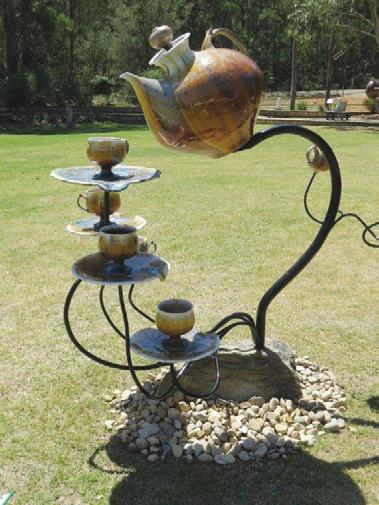
When nature provides living art
GARDENERS often use ornaments or sculptures to enhance or add interest to their gardens.

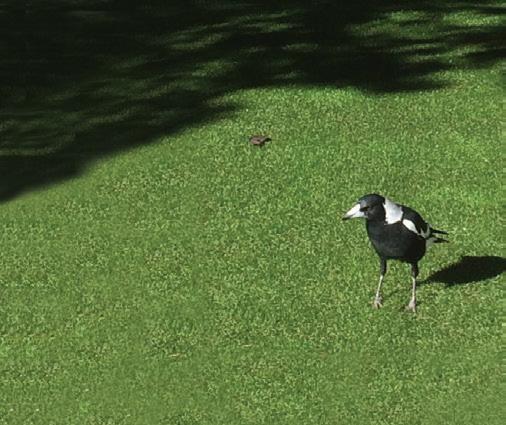
Large country estates in Britain and Europe spend millions on their statuary and spectacular water features. And in one district garden, I saw a magnificent, full-size bronze horse and foal. Nature can provide its own living art. I have a group of three Hibiscus syriacus that have lost their leaves, leaving long, bare, upright canes. To encourage more branches and autumn flowers, I generally recommend giving these a hard prune in winter, reducing each cane to a mere 30cm. However, I’m going to leave this task until spring,
enjoying a living sculpture until then.
For those with an interest in the history of large country estates in Britain, it’s worth reading about Ellen Ann Willmott (1858-1934), and the 20-hectare garden she had at her country home, Warley Place, not far from London.
At its peak she employed 104 uniformed gardeners to tend the staggering 100,000 different plant species and cultivars. She financed plant hunters, such as the famous E H Wilson, to go on three trips to China looking for rare plants.
We are indebted to her for introducing many plants that are now available here, brought via early colonial settlers from Britain.
More than 50 plants are named after her, including the low-growing, open-branched deciduous shrub Willmotts Blue, or Chinese plumbago (Ceratostigma willmottianum)
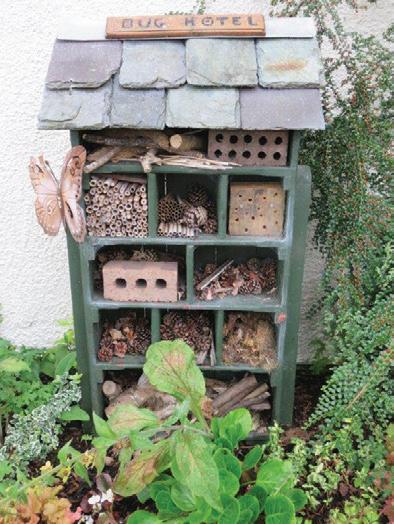

This is just one of hers that was given the prestigious Award of Garden Merit by the RHS. The story goes, she would patrol her gardens at night with a revolver looking for plant thieves!
Willmott is responsible for the establishment of the famous and first Royal Horticultural Society’s garden at Wisley, in the English county of Surrey, south of London, by persuading her friend Sir Thomas Hanbury to donate the land to the Society.
DON’T miss a visit to the Eurobodalla and Regional Botanic Gardens, if you’re down the

south coast. Large areas were affected by the 2020 fires getting too close, and one of the buildings was scorched.
The saving of these buildings was vital, as a whole new development of the site had only just been completed.
A new café, book shop, meeting room, plant nursery and shop were all part of this development. The super playground has now been completely restored.
What they have achieved between the staff and a large number of Friends of the Gardens is nothing short of remarkable.
It’s also worth having a look at their newsletter, which shows the amazing scope of the gardens.
THERE’S no better way to meet people than to join a garden club. The Horticultural Society of Canberra was the first club founded in 1929. Its aim was to foster the spirit of gardening and friendship with those of a common interest in the new national capital.
Visit hsoc.org.au details.
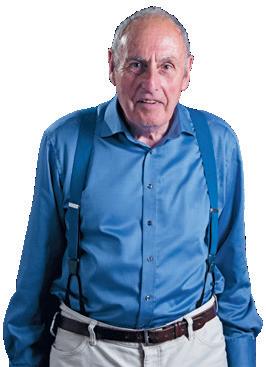

Cedric plans to leave this particular pruning task until spring, enjoying a living sculpture until then.
Use the imagination for garden art.
Even bugs need somewhere to go in winter.
PUZZLES PAGE FREE PUZZLES EVERY DAY AT citynews.com.au
By Joanne Madeline Moore
ARIES (Mar 21 – Apr 20)

Resist the overwhelming urge to be an impulsive and impetuous Ram! Under the influence of retrograde Mercury turning direct and the full supermoon, you need to apply the brakes and think before you speak and act. Otherwise, you could upset others with your hasty words and reckless actions. When it comes to your career ambitions, the main quality you need to cultivate is patience. So your motto for the week is: “Good things come to those who wait.”
TAURUS (Apr 21 – May 21)
You’re keen to exercise your Bullish brain as you talk, text, tweet, post, publish and converse in increasingly creative ways. If communication problems arise then take the time to discuss and dissect issues with the people involved. Then you’ll start to see the current situation from a much more balanced perspective. It’s also time to put aside preconceived concepts (that aren’t working) and examine old beliefs in a progressive and philosophical new light.
GEMINI (May 22 – June 21)
Communication looks strained on Monday and Tuesday so be careful you’re not drawn into a disagreement, either in person or online. Things should gradually improve from Wednesday onwards, when Mercury’s moving forwards. Then Thursday night’s Full Supermoon shines a spotlight on money, business, property, investments, taxes and joint finances so make sure they are all in practical working order. A professional opportunity could really take flight.
CANCER (June 22 – July 23)
With the Sun transiting into Cancer, look for a creative or humanitarian project that you can really sink your teeth into. Thursday night’s Full Supermoon lights up your relationship zone so resist the temptation to be a moody and clingy Crab. Helping other people – and putting their wellbeing first – is the key to a satisfying week. Be inspired by actress Meryl Streep (who turns 72 on Tuesday): “The great gift of human beings is that we have the power of empathy.”
LEO (July 24 – Aug 23)
Don’t be a wall-flower Leo! Mars is marching through your sign (until July 29) and there’s a morale-boosting Sun-Jupiter trine (on Wednesday). So do your best to promote yourself big time, as you push forward in positive and proactive ways. You also have much to gain from sharing ideas with a compatible colleague or a creative friend, as Mercury moves forwards in your peer group zone. Confidence is the rocket fuel that will take you to exciting new places!
VIRGO (Aug 24 – Sept 23)
The main prerequisite you need is plenty of patience! Expect frustrations involving work, when retrograde Mercury slows things down on Monday and Tuesday. Then the Sun and Jupiter fire up partnerships (of the romantic and platonic variety). So do your best to get the relationship balance right between spontaneity and planning; between independence and intimacy. Self-expression is also favoured, as the Full Supermoon activates your Virgo creativity zone.
LIBRA (Sept 24 – Oct 23)
Polite Librans are the peacemakers of the zodiac. And you’ll definitely need your diplomacy skills this week, as the Full Supermoon stimulates your home zone and you feel as if you’re stuck in an episode of Family Feud! So do your best to build firm foundations and foster affection at Villa Libra. Courtesy of Mercury moving forward, Wednesday onwards is a good time to educate your mind, expand your peer group and make creative new connections.
SCORPIO (Oct 24 – Nov 22)
Be careful that possessive attitudes and jealous behaviour don’t derail a close relationship. Channel your intense energy into a creative or educational project. Draw inspiration from singer-songwriter Carly Simon (who was born on June 25, 1945): “There’s always a creative side to me, even when it’s quiet musically… like painting, decorating or planting a garden.” Plus aim to be more proactive about protecting your neighbourhood and local environment.
SAGITTARIUS (Nov 23 – Dec 21)
Is it always appropriate to be fearlessly frank? And is honesty always the best policy? Your natural inclination is to be incredibly blunt but is everyone ready for your special brand of Sagittarian truth serum? This week the planets stir up your secrets zone, so a dollop of discretion and a pinch of diplomacy will smooth troubled waters. If you’re smart, then you’ll talk a lot less and listen a lot more, as you hold your tongue and uncover a mystery (or two).
CAPRICORN (Dec 22 – Jan 20)
Venus opposes Pluto (in Capricorn) and there’s a Full Supermoon in your sign, which boosts your drive and ambition. But it will also fan your control-freak tendencies, which could end up alienating others. Remember – the only person you can control is yourself! So turbo-charge your personal evolution, as you tap into your leadership skills and steer your life in a positive new direction. Mercury moves forwards, so Wednesday onwards is the time to power through paperwork.
AQUARIUS (Jan 21 – Feb 19)
Courtesy of Pluto and the Full Supermoon, you’re keen to follow humanitarian or spiritual pursuits. You’ll seek out the wise counsel of a trusted mentor or play that role yourself to someone who is looking for judicious guidance. You’ll also question your inner motivations, which can be confronting. But a soulful examination of your interior life will give you the self-knowledge and confidence to let your quintessential Aquarian nature and unique talents shine.
PISCES (Feb 20 – Mar 20)
Monday’s Venus/Neptune trine favours art, music, beauty and romance. Friday, Saturday and Sunday are good days to spend quality time with friends and relatives, as the Full Supermoon lights up your peer group zone and Mercury moves forwards in your domestic zone. Loved ones will appreciate your kind heart and tender loving care. Be inspired by birthday great, Meryl Streep: “My family really does come first. It always has and always will.”
Copyright Joanne Madeline Moore 2021
General
In which place is clerical work performed? (6)
9 What is another term for brothers? (8)
11 What describes that which is the most scant of flesh? (7)
13 Name a term that suggests an insatiable greed for riches. (7)
15 Which person furnishes betting information? (7)
17 What do we call one who flees for safety to a foreign country? (7)
20 Which military staff officer assists the commanding officer? (8)
23 In the comic strip, which pseudonym did the Phantom use, Kit ...? (6)
24 Name a type of humorous verse of five lines. (8)
25 What is another term for resources? (6)
Down
1 The modern Olympic Games are usually held every how many years? (4)
2 Name the wind that blows to Perth after a hot day, the Fremantle ... (6)
3 What is another name for a jetty? (4)
4 To ring up, is to do what? (5)
5 To free from impurities, is to do what? (6)
6 What are devices for securing doors, etc? (5)
9 Which amphibious rodent dams up streams with branches, stones and the like? (6)
10 To have voted for someone, is to have done what? (7)
12 What is a small tower, usually one forming part of a larger structure? (6)
14 What is a clasp used for fastening loose ends of a belt? (6)
16 Which planet is sixth in order from the sun? (6)
18 Name the Australian explorer who traversed the Blue Mountains and Bathurst districts of NSW, George ... (5)
19 What are British noblemen known as? (5)
21 What is a vertical piece forming the side of a doorway or window? (4)
22 Name a coastal resort in France, on the Riviera. (4)
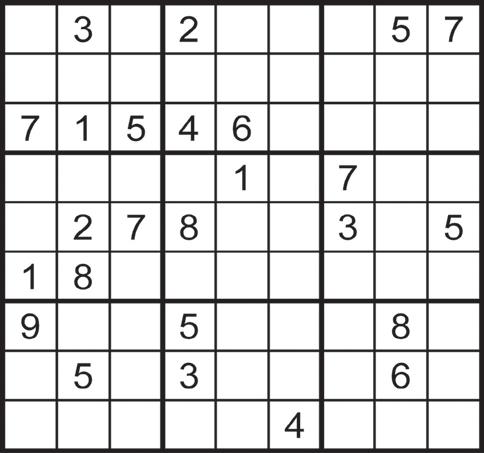

Making a Claim for Institutional Abuse
Reports of the sexual and institutional abuse of children in Australia have dominated headlines in recent years. The Royal Commission into Institutional Responses to Child Sexual Abuse made shocking findings of abuse of children who suffered ongoing physical and sexual abuse at the hands of various institutions such as schools, churches and orphanages. More recently we have seen allegations emerge in sporting organisations such as Gymnastics Australia and Swimming Australia and more and more survivors of abuse are coming forward.
It is an incredibly challenging time for survivors of abuse but there are avenues available to help such as compensation for any injuries caused by the abuse, which includes physical injuries or psychological injuries such as anxiety, depression or PTSD. While no amount of money can repair the trauma of abuse, it can assist with day-today living costs and ongoing medical or psychological assistance to help victims on the road to long term recovery.
What are the time limits for making a claim?
The previous time limits for making a claim for compensation have been removed, so survivors of abuse can now make a claim regardless of how long ago the abuse occurred.
The removal of the barrier of time constraints is an important step towards achieving justice for survivors who are quite often not ready to address what has happened to them until many years after the abuse has taken place.
What can a claim cover?
Compensation may include damages for the pain and suffering a survivor has endured, treatment costs, including past and future treatment, as well as lost income when the abuse has affected the survivor’s ability to participate in education and work. A survivor of abuse is also able to claim compensation for care and domestic assistance provided, whether paid or unpaid.
Most of the time compensation involves money, but it can also involve an apology or admission of guilt which may help providing closure to survivors of abuse in a way money just cannot.
Who is the claim brought against?
A claim is brought against the institution where your abuse took place and is handled by their insurer. It is helpful to note that it may still be possible to make a claim even if the institution no longer exists.
Being the victim of institutional abuse is a traumatic experience not many people will ever be able to understand. If you are the victim of institutional abuse we strongly recommend that you seek advice from an experienced lawyer about your options for making a claim.
Alison McNamara | Director | Chamberlains Law Firm