Green power trounces Steel’s stupid park plan

More

Trouble








DEVELOPED BY


Green power trounces Steel’s stupid park plan
More
Trouble
DEVELOPED BY
By Nick OVERALL

SITTING behind the huge concrete dams of Canberra right now is around 270 billion litres of water, or the equivalent of 100,000 Olympic-sized swimming pools.
Three of the four main dams of Canberra, the Cotter, Corin, and Bendora are all sitting at 100 per cent capacity.
Googong Dam, upstream from Queanbeyan, is the only one holding below its full capacity at 95 per cent.
It’s a remarkable difference when compared to this time last year.
Icon Water, the ACT government company that owns and operates the dams, says that following a hot summer and two of the driest years on record, last February saw the dams below 45 per cent.
So where’s all this water coming from?
According to the Bureau of Meteorology (BOM), over the last 12 months Canberra has experienced above average rainfall.
That’s been topped off by the La Niña weather event that brings warm water to the surface of the Pacific Ocean and creates more clouds and subsequently more rain.
age for the month of 59.5mm.
Icon says the last time the dams were at 100 per cent capacity was November, 2016. Before this it was in 2012, spurring an upgrade to the Cotter Dam, which would see its capacity increase to hold 76 gigalitres, about 20 times its original size.
For reference, a gigalitre consists of one billion litres.
Since 1993: Volume 27, Number 9
Arts & Entertainment 23-26
Canberra Matters 14
Cinema & Streaming 26
Crossword 27
Dining & Wine 24
Garden 22
Horoscopes 27
Letters 18
News 3-19
Politics 16

Starting its spill from the Corin Dam, the water stops off at Bendora and Cotter dams on its way down to the Murrumbidgee River, the second longest river in the country.
When the Googong Dam is at capacity, it spills into the Queanbeyan River and then flows down on to the Molonglo River upstream of Lake
Managing Director: James Anderson, 0404 077605, james@citynews.com.au

Seven Days 4 Cover: Hands-up help for local charities doing it tough.
Photo by Holly Treadaway. Story Page 6.
Ph 02 6189
2911
Burley Griffin, which also eventually makes its way into the Murrumbidgee.
And somewhere along the journey that water has to get turned into the renowned, tasteless liquid Canberra has become famous, and even won national awards for (yes, water-tasting awards are a thing).
That’s done by four storage reservoirs sitting along the Cotter and Queanbeyan rivers that catch raw water then extracted by Icon.
The water is made drinkable
through either the Mount Stromlo or Googong water-treatment plants. It then travels through an intricate network of pipes stretching over 3000km, and to one of 48 service reservoir sites throughout the region. From there, it finally makes its way into a glass to be drunk when the tap is turned on.
Although the gigantic concrete walls are the only thing sitting between Canberra and hundreds of billions of litres of water, Icon says the dam system isn’t for flood mitigation, but rather to provide secure drinking water to Canberra and Queanbeyan.
However, Icon says that simply by being dams upstream of the city areas, they help prevent the severity of floods if such events are to occur. The 2010 floods of Queanbeyan, which saw the city centre submerged in 8.4 metres of water and caused over $1 million of damage, could have been much worse if not for the Googong Dam.
“When they are full, our dams can significantly reduce the risk because water typically leaves the reservoir at a slower rate than it enters. This reduction in peak flow mitigates flood damage downstream,” says Icon. According to Icon, Canberra currently uses around 150 million litres of water a day, and much of that adds up from places many people might not realise.
A dripping tap alone can use between 30-150 litres per day. A sprinkler can use 1000 litres an hour.
Director: Kate Meikle, kate@citynews.com.au
Senior advertising account executives: David Cusack, 0435 380656
Tracey Avery, 0477 939999
Advertising account executives:
Damien Klemke, 0439 139001
Karen Davis, 0427 410442
Editor: Ian Meikle, editor@citynews.com.au
Digital news editor: Danielle Nohra, danielle@citynews.com.au
Journalists: Andrew Mathieson, andrew@citynews.com.au
Nick Overall, nick@citynews.com.au
Belinda Strahorn, belinda@citynews.com.au; Nathan Schmidt, nathan@citynews.com.au
Kathryn Vukovljak, kathryn@citynews.com.au
Arts editor: Helen Musa, helen@citynews.com.au
Production manager: Janet Ewen
Proof reader: Glenda Anderson


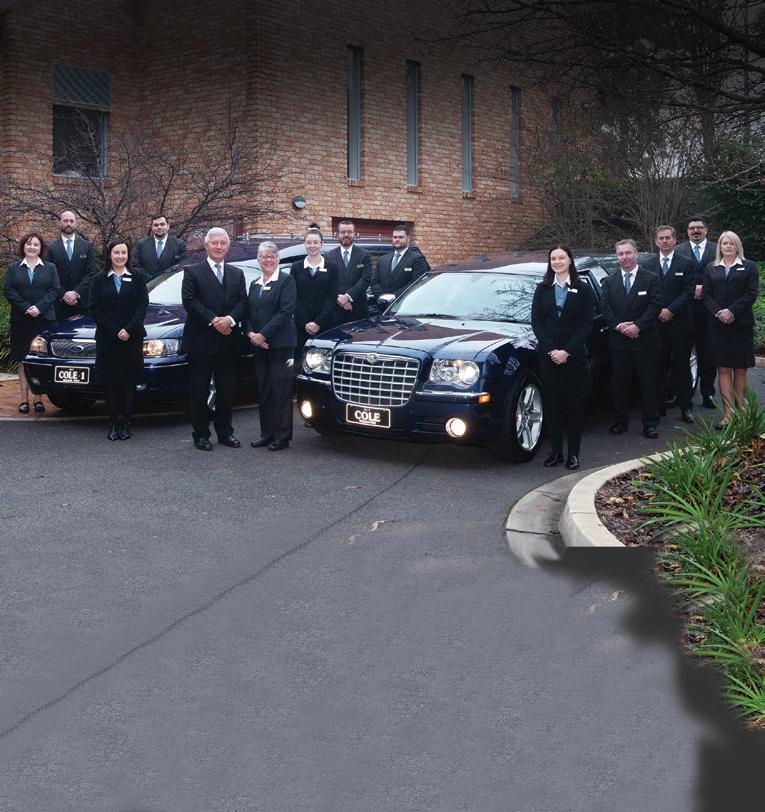

IS Canberra the cocaine-snorting capital of Australia? According to the latest analysis of the city’s sewage we’re right up there.
The drug-monitoring program results, pub lished by the Australian Criminal Intelligence Commission, says that Canberra is now one of Australia’s most lucrative cocaine markets with an estimated consumption exceeding 880 milligrams per 1000 people per day.
“The ACT, NSW and [parts of] Queensland had the highest capital city [cocaine] consumption figures in the nation,” the report says.
“With the easing of [COVID-19] restrictions in the ACT and Tasmania, it [cocaine use] has increased sharply.”
Doubtless, this comes as good news for illicit drug distributors waiting to capitalise on Labor MLA Michael Pettersson’s private member’s bill, which seeks to decriminalise possession of (among other hard drugs) up to two grams of cocaine.
I’m guessing, but two grams is good for maybe somewhere between 16 and 20 lines of coke, certainly enough to get the party started.
SOMEONE ought to tell Liberal newbie Leanne Castley, pictured, there is still another 44 months to the next ACT election. She laid some

Then this past week Business Minister Tara Cheyne was obliged in Estimates to tell the world that only 336 of Canberra’s 30,000 small businesses signed up to the trial ChooseCBR discount coupon scheme and that administration costs were an eyebrowraising $123,000.
Up pops business shadow Leanne, pasting it a “joke” and saying: “I am staggered that $123,000 was spent on admin costs with only $370,000 worth of vouchers redeemed.
“Canberra’s struggling small businesses
Minister Cheyne was philosophical, saying the 336 figure was “not a bad starting point” and “I’d like to see it grow”.
THE covid vaccinations began nationally and in the ACT a Canberra nurse got the first jab to cheers and applause at the Garran COVID-19 Surge Centre.
An accompanying media throng and the federal Health Minister Greg Hunt were there as smiling Maddy Williams sat patiently for the cameras.
“I will have to tell my kids... when I have them,” she said.

“When you have a normal vaccination for your flu shots, it just feels no different.
“I actually felt it was better than my normal vaccine.”
THERE was a buzz of another kind with the news the aggressive European wasp nests in the ACT increased six-fold in the past six weeks, with the City Services Directorate arriving at the unsurprising conclusion that it’s going to be an above-average season.
Normally, in the season from October to the end of April about 500 nests are reported, but since mid-January, there have already been 400 sightings.
So far, Kambah has recorded the highest number of European wasp nests for south Canberra with 24, while Weetangera tops the north with 17.

A LOCAL radio identity with an obsessive Tommy Hilfiger (go figure) ordered some red TH bed sheets on the web the other day. Sheets of his dreams arrive and are excitedly dumped in the washing machine in anticipation of nights in red fashion, tucked up in his queen-size
It was not to be. The red Tommies were double-bedders. With no interest from the seller to refund, our friend was left with only one choice. He bought a smaller bed!
I GOT a nudge from reader Cynthia White correcting my geography for a recent mention of the Italian Brothers restaurant, the one that says it has no fixed opening hours. The eatery is in Manuka not Braddon. Scusa!
Ian Meikle is the “CityNews” editor and can be heard weekly on the “CityNews Sunday Roast” on 2CC, 9am-noon.






By Nick OVERALL
NINETY seven per cent of charities in the ACT were impacted by the difficult year that was 2020.
“Hands up for Canberra”, the biggest fundraising event in the region, is looking to turn that around.
Pegasus ACT, an organisation that helps physically and mentally disabled children through therapeutic horse riding, lost two of its three yearly fundraising events.
Kulture Break, which uses the performing arts to give children a safe haven and a way to express themselves, had to go completely online.
Palliative Care ACT, looking after people at the end of their life, had to use phones to check up on its patients rather than their regular, important face-to-face services.
These are just three of the 55 charities banding together in the “Hands up for Canberra” giving day initiative, which will kick off on March 9 and over the following 48 hours attempt to raise $500,000 for good causes throughout the city.
Behind the day is Hands Across Canberra, a group established in 2010 that CEO Peter Gordon says is about getting
people to “give where they live”.
“About 10 years ago myself and a few others realised that the government can’t do everything,” says Peter.
“It’s up to us, as the people, to work together to lift our city up, too.
“That’s especially now, more than ever, after last year we saw charities’ ability to raise money go down, and demand for their services go up.”
Peter believes Canberrans are the most generous people in Australia, saying that an average of $400 is donated a person a year. However, he also says much of the community’s donations leave the capital.
“If you look at Canberra’s headline stats: rising median house prices, rental demand and high median in come, it’s easy to believe that Canberra doesn’t face the same level of poverty, homelessness and social disadvantage as other areas,” says Peter.
“Sadly, this is not the case, with many of our local people doing it tough and in need of our help.
“We want to reshape this misconception. We are not asking people to donate more, nor to stop donating to these causes, but we do hope Canberrans consider allocating some of their generosity to local charities.”
Last year, “Hands up for Canberra” raised $226,000, an incredible effort for what was its first year. In 2021, they want to more than double it with a goal

Canberrans they can continue to offer a place of self validation and expression for the youth of Canberra.
“We want to continue to provide a place where young people feel like they matter and are valued, no matter where they come from. Every dollar
President of Palliative Care ACT Louise Mayo says that 70 per cent of Australians wish to die at home, but only 14 per cent get that chance.
“Additional funding means we can continue our vision to allow more people to spend their last moments at home with their families, rather than in hospital,” she says.
Whatever cause speaks to Canberrans’ hearts, it can be found on the Hands Across Canberra website, the home of the appeal where visitors can see the plethora of generous work that runs throughout their city and choose what they’d like to donate to.
of $500,000.
Craig Wallace, the acting CEO of the ACT Council of Social Service (ACTCOSS), another cause partnered with the initiative, says that it’s about “turning intention into action”.
“Canberrans pride themselves on being generous people, concerned for their fellow community members,” says Craig.
“With ‘Hands up for Canberra’ we can amplify the voices of those in the
community who aren’t heard, and turn our generous spirit into real change.”
For Matt Watson, CEO of charity Pegasus ACT, the initiative means so much to him and his organisation.
“We wouldn’t be able to get the exposure we do without it,” he says.
“There’s so many in Canberra doing it tough out there, Hands Across Canberra helps them get noticed.”
CEO of Kulture Break Francis Owusu says that with the generosity of
Being the day after Canberra Day, Peter hopes that it will make people all the more proud to help out their city.
“Canberra truly is a great place, one that’s been so good to so many of us,” he says.
“This year we hope people will celebrate calling Canberra home, then look out their window and ask what they can give back.”
Donate at handsacrosscanberra.org.au





An elderly woman with hearing loss came to my clinic for a second opinion, after she had recently been to a hearing aid sales person. I found the cause of her hearing loss was simply the fact that she had build-up of wax in her ears, the salesperson had failed to inspect them. You might be surprised how often this happens!
Here are some things to do to avoid getting ripped off:
1. A visit to the GP may save you from being ‘sold’ something when your only problem is wax in your ears.
Recently I was told by two different patients that they were quoted $16,000 for a pair of hearing aids. This seems a ridiculous amount of money to pay and is most likely not appropriate for the majority of people (or possibly anyone).
5. If you are a pensioner or partpensioner, or a DVA gold or white card holder, you should carefully consider if you want to use the free-to-client government hearing aids or if you’d like to top-up to a different hearing aid.
“In an unregulated market there is a lot of opportunity to take advantage of people. Yes you have read correctly, there is no licensing of people who sell hearing aids.”
2. Look for someone who is independent and can offer you unbiased advice, not just give you a sales pitch.
– Dr Vass
3. There are a range of hearing aid prices. Finding the right hearing aid might save you money and it will also give you the best chance of success.
4. Hearing aids can be expensive.
The free-to-client hearing aids are appropriate for many people, however if you have great difficulty hearing background noise (for example in restaurants) then you might trial the top-up hearing aids, but only if you can afford them. There are a range of top up options and prices, if you are disappointed after a trial, you should return them and trial the free-toclient hearing aids.
If you get the feeling the person you’re dealing with is just trying to sell you something, then take a step back and get a second opinion.
By Nick OVERALL
INTRINSIC to Australia’s culture and heart is the working dog, and the National Sheep Dog Trial Championships held in Canberra puts the abilities of these loyal, fast and intelligent animals to the ultimate test.
Dog and master must communicate in an extraordinary example of team work to guide three sheep through a series of difficult obstacles and into a pen to finish, all within 15 minutes.
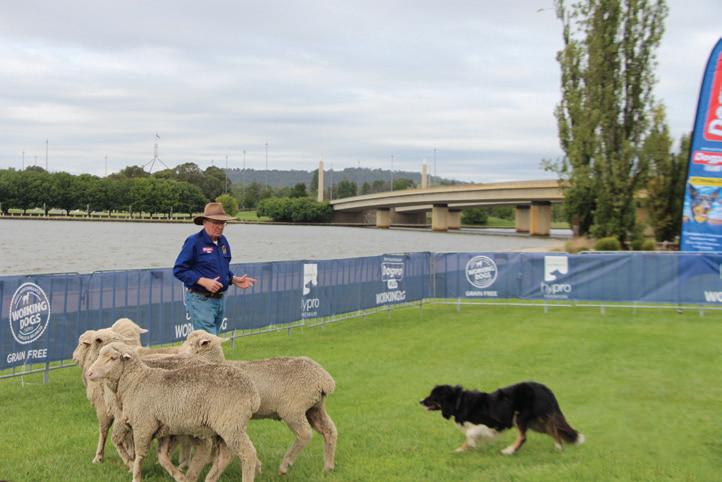
Every handler has their own technique, a system of instruction revealing the bond between them and their canine companion. Some shout, some speak gently, some whistle. Some use only gestures.
“The art of sheep dog trialling is balancing those sheep between fight or flight,” says Charlie Cover, a sheep dog handler since he was 10 years of age and this year a competitor with his dog Brack.
“There’s a relationship that the dog and sheep form in about a split second. It must be a dominant relationship, but one that doesn’t make the sheep panic.
“Each competitor starts on a perfect score. If the sheep stray too far from

sure”, where a dog’s movements are carefully placed closer and further away from the sheep in accordance with their obedience.
“It’s a nail-biting spectator experience and one that brings in people from all over the country,” says Sarah.
This year the championships are all about celebrating the contribution of working dogs to Australia.
“There’s around 270,000 dogs that contribute to the economy of rural Australia,” says Sarah.
“It’s an immense contribution, with the average working dog delivering more than $44,000 worth of work over
It’s not only the stock working dogs the event wants to highlight, but also the countless dogs who make the lives of Australians easier every day.
the path, refuse obstacles or fail to be penned in time, points are lost.”
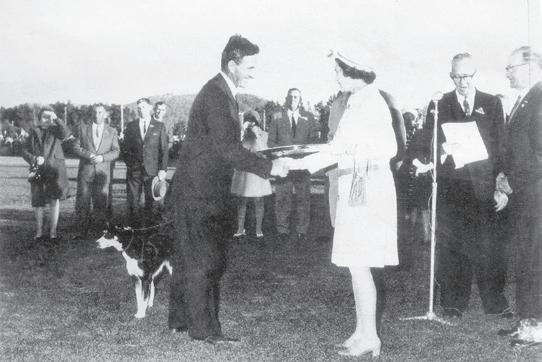
However handlers tackle the challenge, all compete for the prestigious Duke of Gloucester sash, an historic, velvet embroidery of the Royal House of Windsor’s coat of arms, this year presented to the winner by GovernorGeneral David Hurley.
The sash, much like the championships themselves, is steeped in history.
The trials, which began 78 years ago, in 1943, and held throughout a single day at Manuka Oval, served as a fund-
raiser for Legacy during World War II.
In 1945 Prince Henry, Duke of Gloucester, younger brother of King George VI and uncle of the Queen, presented the National Sheep Dog Trial Association with the sash that would become iconic to the competition.
In 1970 the Queen presented the sash to the winner of the national open trial, Mr Bob Ross and his dog Yulong Russ. By then the event was being held at the Canberra Showground, what’s now Exhibition Park in Mitchell. By 1978 it moved to the Hall Village Show-
ground where they’re still held, this year taking place over six days from March 9-14.
“It’s the Melbourne Cup of sheep dog trialling,” says president of the Championships Sarah Sydrych.
“The amount of preparation that goes in is extraordinary. Some handlers will train for two hours a day, some will go all afternoon and well into the night.”
The handlers work hard to perfect a delicate equilibrium, one described as the “application and release of pres -
“It’s the guide and assistance dogs, who enable people to live more independent and productive lives, the dogs that help maintain law and order, and bio detector dogs who help protect Australia from exotic pests and disease,” she says.
Of course, any dog is also welcome to come enjoy the championships too, as long as they’re leashed.
“It’s exciting and unique to see a sport like this played out right here in a capital city,” says Sarah.
“The championships provide an important, enduring link between the bush capital and rural Australia.”
1954







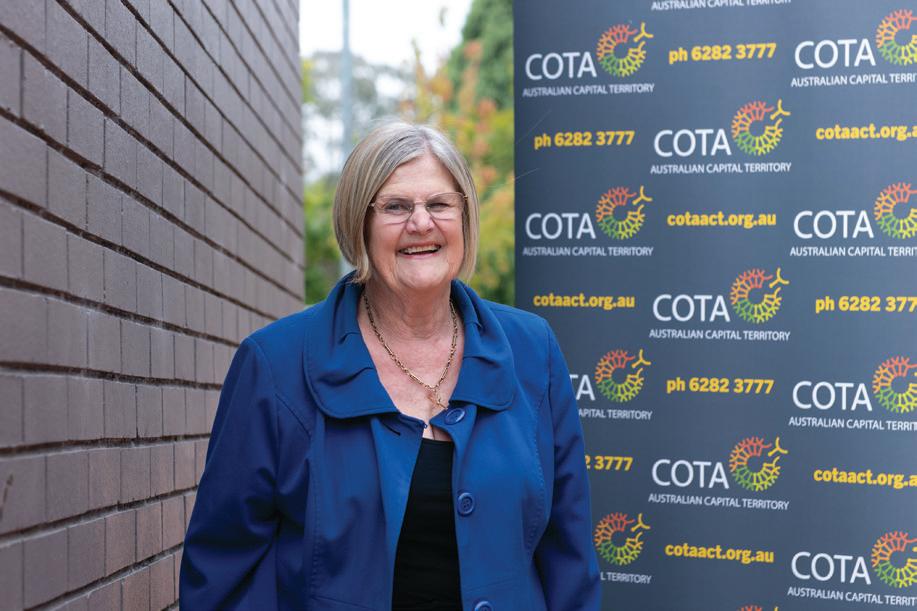
ACT Seniors Week is to change with its organisers, the Council on the Ageing (COTA) ACT, revealing a new name for a year-long concept of events.
It’s to be called the “Silver is Gold Festival” – sparking connection and re-imagining ageing”, says COTA ACT CEO Jenny Mobbs.
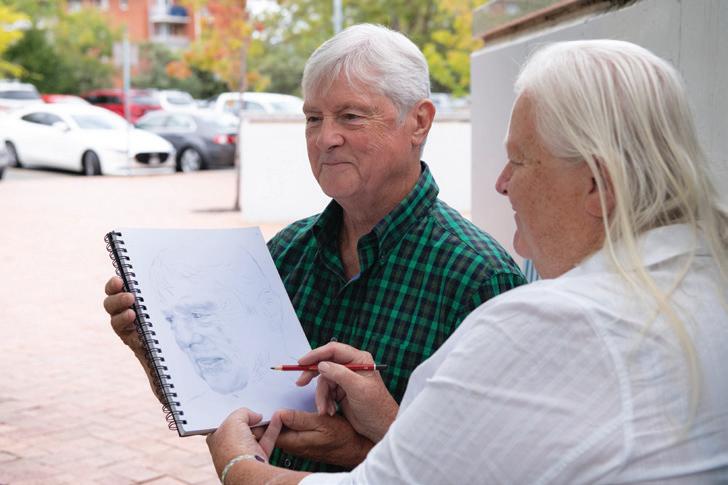
A community component of the “Silver is Gold Festival” is the community art and photographic competitions and Ms Mobbs is inviting the Canberra community – every one in the ACT and region – to take part.
“We want to begin our ‘Silver is Gold Festival’ by involving the community in re-imagining ageing through the expression of art and photography,” she says.
“The competition guidelines ask the com munity, young and old, to spark a connection when creating an art or photographic piece for this competition and exhibition.”
Selected finalists will be displayed at shopping centres and malls across the ACT and the judges will look for works that capture a moment or tell a story about older people and their lives.
Ms Mobbs says COTA ACT is open to having a discussion with interested parties in how they might want to sponsor the many “Silver is Gold Festival” events and activities throughout the year.
They can do so through the launch of COTA ACT’s sponsorship prospectus, which invites businesses and organisations to participate and support COTA ACT’s vision to spark connections and re-imagine ageing within the community.
Council on the Ageing (COTA) ACT invites you to participate in our Art and Photographic Competitions.
Judges will be looking for a photograph or a piece of artwork that captures a moment or tells a story about an older person’s life or older people’s lives.
We welcome entries that embrace a little fun, humour or show a dimension or aspect of the separation that some seniors have felt during the COVID pandemic.
All photographs and artworks must be submitted by Friday, 16 April 2021.
To read the full terms and conditions and categories, to enter or for more information visit the COTA ACT website cotaact.org.au or phone 6282 3777.
“We want to begin our ‘Silver is Gold Festival’ by involving the community in re-imagining ageing through the expression of art and photography,” Ms Mobbs says.
“We are keen to see the whole community take responsibility in reaching out and building a co-operative spirit, particularly with our older folk,” Ms Mobbs says.
“Many people in our society have a negative opinion of older people, ageing and the
aged. We are all living longer, seniors are active and they contribute hugely to society, be this through volunteering, looking after grandchildren or being in the workforce.
“It’s time for everyone to re-imagine older people and ageing. Contributing to a
community that embraces and nurtures our seniors is a far better place for everyone.”
The “Silver is Gold Festival” launch, Community Art and Photographic Exhibition Opening and Award Ceremony will be on Wednesday, April 28, followed on April 29 by the Chief Minister’s Concert at the Canberra Theatre Centre.
The Silver is Gold Seniors Awards will take place on Tuesday, September 14 and the Silver is Gold Expo (previously the ACT Seniors Expo) will be on Thursday, September 16.
COTA ACT will also host a picnic and performance day for grandparents and grandchildren called the Silver is Gold Grandparents’ Day, on October 31.
“COTA ACT invites all seniors and their families to save the dates for the ‘Silver is Gold Festival’ and take this opportunity to spark a connection and re-imagine ageing,” Ms Mobbs says.
“Help us in our active campaign to broaden the community’s perspective on improving society for our older Canberrans and support us to actively create connections between people of all ages and to re-imagine a community that shares, respects and integrates fully with its senior community.”
For more information visit cotaact.org.au or call 6282 3777.



I HAVE been deeply affected by recent claims made by an Aboriginal woman detained, on remand, in the Alexander Maconochie Centre about her treatment in the prison and by the nature of the response of the government and the Canberra community to her situation.
The woman, who I met and know well through my employment at Winnunga Nimmityjah Aboriginal Health and Community Service, claims to have been forcibly strip searched in front of male prison officers and male detainees.
While relatively young she has serious health issues affecting her heart and lungs. She has a pacemaker and has also revealed that she has a diagnosed personality disorder and that she is a survivor of rape. She also asserts that at the time that she was stripped naked she was menstruating, which she explains, in excruciating detail, exacerbated her deep distress and humiliation.
She has written a detailed account of the alleged incident, which I have read. Her letter contains explicit allegations of racism in the AMC.
In light of the claims by the woman, who is a long-time client of Winnunga Nimmityjah, its CEO Ms Julie Tongs, called on the ACT government, through the Minister for Corrections, Mr Mick Gentleman, to initiate an independent and external inquiry into
I was not really surprised by the actions of Labor and the Greens in so shamelessly putting politics before principle... I found the puerile rationale conjured up by them for opposing the twin inquiries an insult to the intelligence.
all aspects of the woman’s treatment including her claims of racism.
It should be noted that the Minister also has a copy of the woman’s letter and, one assumes, that he and his colleagues in the Assembly have read for themselves her heart-rending account of how she was treated.
Mr Gentleman nevertheless responded to the calls for an inquiry by asserting, in effect, that all staff at the AMC had his full support and confidence and that he did not believe the allegations of racism.
He accordingly rejected the need for an independent inquiry. The Minister, it appears, has apparently chosen to not believe the woman’s claims about her treatment including, it would seem, her belief that racism is an issue within the AMC.
The Liberal Party shadow minister, Ms Elizabeth Kikkert nevertheless responded to the call by Ms Tongs, which was incidentally also supported by Dr Emma Campbell, the CEO of ACTCOSS, for the allegations to be independently investigated and
moved a motion to that effect in the Legislative Assembly.
The Liberal Party separately moved, in the same week, a motion for the establishment of a taskforce to enquire into poverty in the ACT, which was also something that Ms Tongs had, on behalf of the Aboriginal community, been calling on the ACT government, without success, to commission for at least the last five years.
As we all now know the ALP and the Greens’ members of the Assembly voted unanimously to negate both of the Liberal Party motions.
While I was not really surprised by the actions of Labor and the Greens in so shamelessly putting politics before principle I was certainly disappointed. I found, in particular, the puerile rationale conjured up by them for opposing the twin inquiries an insult to the intelligence but, more pertinently, a devastating renunciation of the claims of a vulnerable Aboriginal woman to have been treated in a most despicable way while in the care of the ACT government and also of the broader




Aboriginal community who called for and fully supported an inquiry.
Corrections Minister Gentleman, as spokesperson for the ALP and the Greens, has in both words and actions effectively conveyed that they don’t believe her. They don’t believe that she is telling the truth or alternatively they don’t think her experience, or the concerns expressed by Julie Tongs and the broader Aboriginal community about the pernicious presence of institutional racism in the ACT are serious enough to warrant a detailed and independent response.
The only reasonable alternative is, of course, that they don’t care.
Not content with dismissing Aboriginal community concerns about racism, the ALP and the Greens doubled down and, as mentioned above, also opposed the Liberals call for a broadly focused inquiry into poverty in the ACT.
Again, I assume, Labor and the Greens opposed the inquiry for political reasons. They were simply not prepared to risk the Liberal Party being recognised for championing a progressive cause.
As with the Labor and Greens’ opposition to an inquiry into racism I was again not particularly surprised.
Their rationale, when asked to explain why they were opposed to an inquiry designed to determine how best to combat poverty in the ACT did, however, strike me as eerily similar to Donald Trump’s prescription for combatting COVID-19, namely first deny that it exists and do nothing and when that position is exposed insist that it will simply disappear, like magic and, in any event, it is not your responsibility so blame someone else, preferably another government.
An associated issue that I believe we Canberrans need to confront is what it says about us that revelations of a vulnerable Aboriginal woman being stripped naked in the AMC in front of a group of men held the media’s attention for one day while, to all appearances, the broader Canberra community simply ignored the issue altogether.
Heaven forbid that colour or politics has anything to do with our apparent indifference to the woman’s suffering.



JUNIC Eye Care, a new community optometry practice offering comprehensive eye care services, has launched at the Junic Specialist Centre in Coombs.
Delivering personalised, full-scope optometry consultations with expert advice and state-of-the-art equipment, low-vision optometrist and orthoptist Juliet Menakaya says they’re now offering tailored low-vision assessment and rehabilitation services to support Canberrans who face daily vision challenges.
She says the new low-vision services and programs have been designed to address a gap in standard eye care services.
Junic Eye Care, a member of the Eye Care Plus group, is a supplier of low-vision devices such as hand-held optical and electronic magnifiers for day-to-day use, and powerful digital magnifiers for use in offices and education, she says.
Junic Eye Care’s low-vision services include a detailed vision assessment and an in-depth evaluation to identify which of their programs would best suit the patient.
Juliet says they offer a low-vision rehabilitation program using evidence-based strategies that can maximise or substitute for diminished sight, so that anyone with low vision can maintain independence and a sense of self-worth.
“We liken these principles to the kind of physical therapy provided for someone who has lost a limb,” she says.
“Rehabilitation for patients with low vision
is so important. Research has shown that people with low vision tend to have more emotional difficulties and a higher risk of accidents than normal sighted individuals.”
Juliet says patients who have undergone rehabilitation have reported significant improvements in their functional abilities, a high rate of continued use of low-vision devices, improvement in reading and distance vision, and a general increased satisfaction with their quality of life.
“This rebuilding and reinforcement of the visual foundation is achieved through a process of evaluation and definition of individual goals, identification of potential assistive devices and training in using these devices,” she says.
Juliet says their goal is to maximise patients’ visual potential, so those with conditions like macular degeneration or diabetic retinopathy can benefit not only from the medical interventions provided by highly qualified ophthalmologists, but also their low-vision rehabilitation program.
Junic Eye Care offers this expert service at its primary eye health clinic which opened in September and operates out of the Junic Specialist Centre in the Molonglo Health Hub.

Part of the service is a technique called eccentric viewing training, which can optimise vision when central vision is lost due to macular degeneration, or for patients with scotoma (an area of partial alteration in the field of vision).
It enables a person to look slightly off-centre to make use of an unaffected area of the retina to be able to see, Juliet says.
“This is achieved through a guided training session, once or twice a week for six weeks, with each session lasting one or two
hours,” Juliet says.
“The first session will give us a list of personal visual goals that direct the training and help with independent living skills.”
But Juliet cautions that rehabilitation is more than simply an introduction to low-vision devices.
“We only introduce devices after the patient has gone through the evaluation and sometimes after eccentric viewing training. Only then can appropriate recommendations for devices be made,” says Juliet.
“We take the time to really understand our
patients’ vision and how it affects their life, from getting a full picture of their current difficulties and what they want to achieve.
“It might be anything from being able to read a newspaper independently, or to shop in the supermarket and be able to clearly see ingredient lists. “Once we know the patient’s goals, we can help with improving their quality of life.”
As vision is such a personal and complex area of everyday life, optometrist Dr Thomas Morton says it requires a “sophisticated approach in a clinical context”.
“We love seeing patients of all ages and encourage parents to bring their kids in early for an eye examination – children of any age can be assessed, and a good time for a first routine eye examination is age three,” he says. “The holy grail of healthcare is early detection and prevention of disease, and this is something that optometry can do very well.”
Junic Eye Care, Junic Specialist Centre, Molonglo Health Hub, 110 Woodberry Avenue, Coombs. Call 6178 0470, email eyecare@ junic.net.au or visit juniceyecare.com.au

• State-of-the-art diagnostic and imaging equipment
• Vision aids for daily tasks and study
• Quality and fashionable eyewear
• Highly tailored personalised care
• Expert advice from clinically focused optometrists

By Belinda STRAHORN

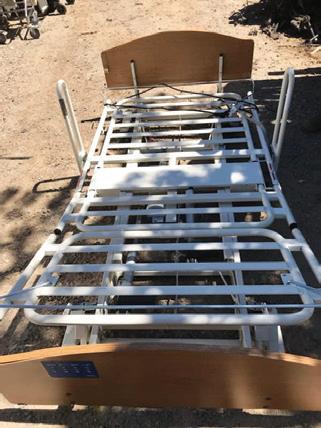
DEFUNCT Canberra Hospital beds, destined for the tip, are making their way to struggling overseas hospitals – often in developing countries – that have few supplies and little equipment.
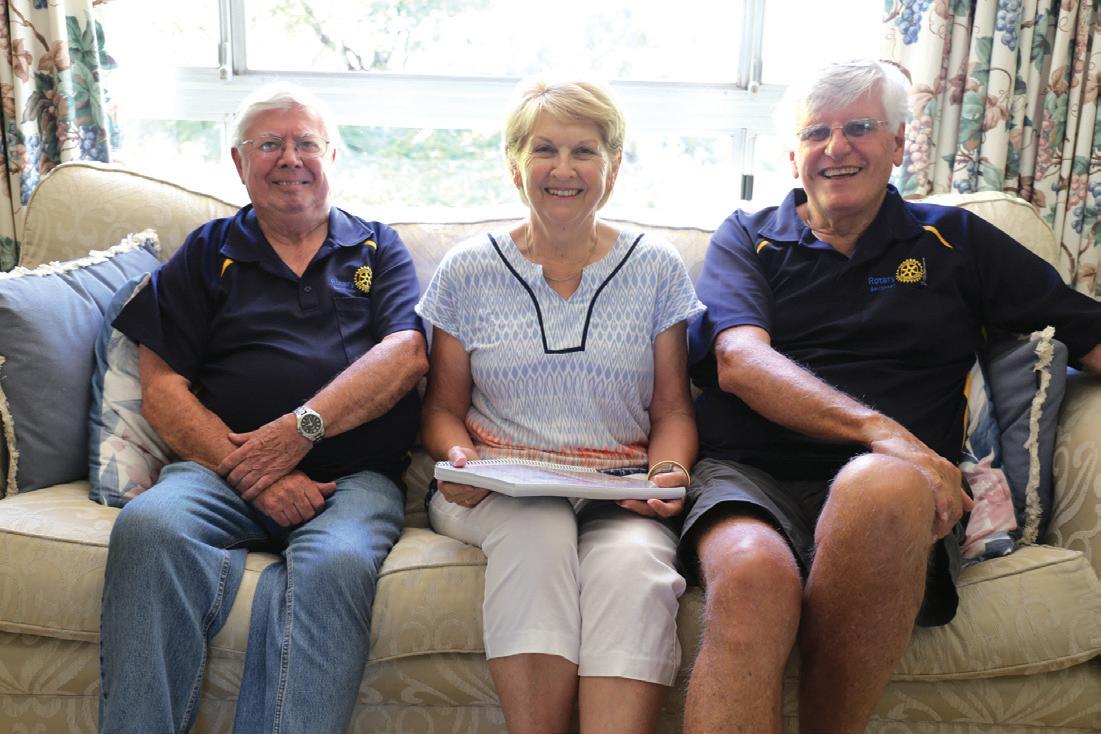
The enterprising idea is that of the Belconnen Rotary Club and is one of 100 projects the club has undertaken in its 50-year-history.
Some 40 obsolete – but still usable – beds along with other medical equipment such as crutches, wheelchairs, walkers and shower chairs have already been shipped overseas and are helping to save lives in poverty stricken countries.
“It gets to a point where hospitals can’t maintain equipment anymore so they buy new stuff and the old equipment ends up being dumped,” said Belconnen Rotarian Peter Kain.
“The project is called Triple R or Recover, Rehab, Re-use and it’s run by club member Fred
Fawke, in conjunction with other clubs in Canberra. “Fred’s a retired policeman and has his ear to the ground rescuing old medical equipment, fixing it up and rehoming it. There’s a shipment about to head to Light ning Ridge and another to Sri Lanka,” Mr Kain said.
It is a special year for Belcon nen Rotarians.
In April, the 38-member club will celebrate 50 years of “doing good” in the Canberra commu nity.
This year also marks the cen tenary of Rotary in Australia and NZ.
Despite declining member ship numbers worldwide, Ro tary district governor Michael Moore argued the organisation is still “relevant” and is achiev ing incredible things, such as supporting education in Africa and PNG, working on clean-wa ter systems in Nepal and elimi nating worldwide polio.
“Rotarians have contributed more than $2.1 billion to protect nearly three billion children, in 122 countries, from the paralys ing disease… in fact it was an Australian Rotary president who kick-started the project,” Mr Moore said. In its 100th year, despite its 50 years.”
Chartered in 1971 with 20

to help support many inter national, national and local projects including Rotary Cottage at Calvary Hospital and the Shepherd Centre for deaf children.
“Back in the early 2000s parents of children with hearing disabilities were having to go to Sydney for Cochlear implants,” Mr Kain said.
“One of our members had profoundly deaf children and floated the idea of setting up a Shepherd Centre. Our club sowed the seed and got the ball rolling and the next thing we know a Shepherd Centre was established here in Canberra.”
It was another of the club’s ingenious ideas that helped fire-ravaged communities get back on their feet.
Last year, Belconnen Rotarians rolled up their sleeves rescuing scrapped, hail-damaged roof panels from the tip and
materials to rebuild,” said Belconnen Rotarian Linda Baldwin.
“A lady that sells Batlow apples at our market lost all of her machinery and storage sheds in the bushfires. We helped her with money but she also used the galvanised iron sheeting to rebuild sheds on her farm.”
Ms Baldwin, 66, joined Rotary eight years ago. She’s one of a handful of women in the club, and said it feels “good” to give back.
“Wherever there is a need we try to help, it’s what we do.”
A sentiment shared by Mr Kain, who joined the club 34 years ago when his teenage son took part in Rotary’s studentexchange program.
“I was really impressed with the club when my 17-year-old son Sean went on exchange to
for what we do as Rotarians, but you don’t join Rotary for the kudos, you join because there’s a need in the community.”
Retired public servant Peter Oldham, 79, said being a part of something “big” inspired him to join some 30 years ago.
“You meet the most amazing people,” Mr Oldham said.
“You can go to any Rotary club in the world and feel welcome. It’s an incredible way to feel a part of something and to meet new people.”
And the group has a message for any would-be rotarians: “Give it a go, it’s nice to be able to give back.”
The Belconnen Rotary Club celebrates its 50th birthday on April 17, with a gala dinner to be held at Thoroughbred Park. Former members and friends should contact the club if they

Welcome to the first of what we hope will be a regular bi-monthly Inner South Canberra Community Council column in the CityNews.
The ISCCC was founded in 2010 to represent and promote the interests of the Inner South Canberra community. We operate as a ‘federation’ of the eight Inner South residents groups:
• Deakin Residents Association
• Forrest Residents Group
• Griffith Narrabundah Community Association
• Kingston Barton Residents Group
• Oaks Estate Residents Association
• Old Narrabundah Community Council
• Red Hill Residents Group
• Yarralumla Residents Association
In this column we will tell you about the issues we are working on and activities of our residents’ groups. We are very interested in your views. Please write to us at info@isccc.org.au or visit our website at isccc.org.au, where you can find out more about us, including links to the websites of our residents’ groups.
Gary Kent Chair


Our next meeting will be at the Eastlake Club in Griffith, 7pm on Tuesday 9 March. Come along or join on-line via Zoom for updates on a range of important local issues, such as Fyshwick waste, Canberra Hospital, Canberra Brickworks, Light Rail stage 2, and the Kingston Arts Precinct. Rebecca Vassarotti MLA will speak to us about what is in the LaborGreens Parliamentary Agreement of interest to the Inner South and the new Liberal Leader Elizabeth Lee will outline her key priorities for this term of the Assembly.
More details and register at www.isccc.org.au/events/category/ meetings
Congratulations to the ACT Government for keeping its election promise to ban new waste proposals in Fyshwick. The residents and Fyshwick businesses spoke and the Government listened. We have also called for a stop to the upgrading of the scrap metal ‘fragmentiser’, in Fyshwick, which we do not believe met ACT planning requirements.
The Griffith Narrabundah Community Association is again holding its annual raffle, to engage with community members and promote local businesses (who have donated 29 exceptional prizes) We raise money to support volunteer groups working in local parks in our suburbs and to cover the Association’s operating costs.
Visit our stall and have a chat about any local issues that concern you. See us between 9am-1.30pm on these days in March:
Saturday 6, Griffith Shops
Sunday 7, Manuka Lawns
Saturday 13, Narrabundah Shops
Saturday 20, Griffith Shops
Sunday 21, Manuka Lawns
Saturday 27, Griffith Shops, with prize draw at 2pm.
The Old Narrabundah Community Council community festival is on Saturday 13 March, 10am to 2pm, opposite the Narrabundah shops. Come along and meet your local MLAs, buy something from Marymead plant stall, catch up with other local volunteer organisations and listen to some music.
The Yarralumla Residents Association is closely monitoring the proposed development of this site in Banks Street, Yarralumla. At this stage, the owners are proposing to develop the site with 300 dwellings plus an 80-room hotel and a 130-room aged care centre. The apartment blocks are up to five storeys in height.
YRA has flagged a number of concerns relating to the size of the proposed development and its impact on traffic and parking and the height of the buildings. A change to the National Capital Plan would be required to allow residential and hotel use.
The Kingston Barton Residents Group is eagerly awaiting the next round of consultation about the Kingston Arts Precinct. Of special interest is the advice given to the developer by the ACT Heritage Council which has, so far, not been made available to stakeholders.
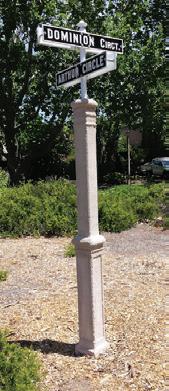
In 2019 the Forrest Residents Group received an ACT Heritage Grant for the restoration of eight heritage street signs in Forrest and two in Griffith. Roads ACT also contributed to the project by matching the heritage grant. After delays from bushfires/smoke, Covid 19 restrictions and more recently wet weather plus stringent safety requirements, the restoration work is now complete with all signs professionally restored and with volunteer letter plate painting. Of particular significance is that this covered all street signs bar one
between Canberra Ave and Melbourne Ave on Dominion Circuit resulting in a great continuous presentation of original street furniture over almost 1.5km. This grant complements work under a previous grant for Kingston/ Barton and 2020 grants for signs in Yarralumla and Ainslie.
The ISCCC is participating actively in the ACT Government’s welcome review of the Territory’s planning system announced by the Planning Minister, Mick Gentleman MLA, late last year. We agree with the comments recently made by Chief Planner, Mr Ben Ponton, that the current rules-based system is producing suboptimal outcomes, with developments approved in isolation, and not necessarily taking into account broader Government objectives such as those relating to housing, transport and climate change. Clearly, much inappropriate development is occurring which is totally out of context with the surrounding neighbourhood. The ISCCC hopes that the outcome of the review will be a much more contemporary planning system that represents community values.
WHILE the October ACT election returned a new version of the Labor/ Greens coalition, this result was not because it was respected.
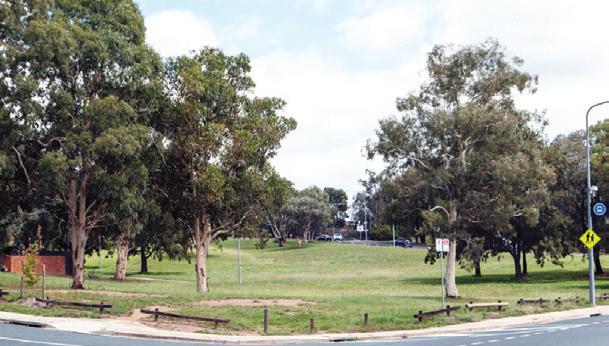
The government’s spin continued unchallenged after the election. Chris Steel, the Minister for Something, continued with his illogical proposal that it was necessary for part of a green space next to Cooleman Court to be bulldozed for a car park. The residents call this cherished green space Coolo Park.
Chris Steel’s bureaucrats were so convinced he would not budge, they issued a tender for the work before the DA was approved. Last year the then-local Greens member, Caroline Le Couteur, was vocal in supporting the residents to not have another green space bulldozed by her own government. An interesting twist!
It was disclosed that the bureaucrats were being deceptive – again.

According to the community zoning for this green space, no permanent car park was allowed. The car park could only be
At the core of the Coolo Park fiasco is how an unresponsive bureaucracy controls the ACT’s politicians at the expense of common sense, community aspirations and the future of this city in a landscape.
temporary. But it was revealed that the bureaucrats planned for the minister to get this changed once the temporary car park was in place. Transparency is a thing of the past within this government.
The Weston Creek Community Council produced statistics to show that, with a little bit of an adjustment of the allocations of the car spaces around the shopping centre, the number of spaces could be increased to equal those that Chris Steel’s car park was to offer. This research was ignored.
Residents were experiencing an intransience whereby the government’s bureaucracy is used to getting its way and nothing was going to change decisions that the minister had agreed to – no matter how silly the proposal was. And the Minister for Something continued to obey his bureaucrats.
As for being a local member and looking after voters, the Coolo Park episode made it clear that listening to noisy locals remains a low priority
for Chris Steel. His priorities are to be loyal to the Barr government and his party and to follow advice, no matter how silly, of his well-entrenched bureaucracy.
Many residents in other suburbs identified with what was happening as green spaces and trees continue to disappear across Canberra thanks to the negative attitude towards green infrastructure that dominates decisions from within the government bureaucracies.
However, while Chris Steel followed the flawed bureaucratic advice and ignored the logic of his own constituents, he failed to notice what was really going on under his nose. The people were getting organised – and a couple of the local members were paying attention and were willing to step up.
Caroline Le Couteur, as the former Greens member for Murrumbidgee, deserves credit for backing the residents and keeping her own government on notice that this was not going to go away and that all the usual spin, fibs and tricks were not working.
After October, the newly elected ACT Greens member (now a minister),
Emma Davidson, built on Caroline’s momentum to take the challenge up to her own government including challenging her fellow minister, Chris Steel. Both are ministers and share the electorate of Murrumbidgee. Voters will never know the details of what pressure she applied. Did she threaten to cross the floor? If so, how did leader Shane react to that? Did someone, maybe Emma, point out to Chris Steel that he was looking and sounding even more out-of-touch than normal?
The issue here is not only the reality that many ACT politicians once elected become disconnected with residents. The equally serious issue at the core of the Coolo Park fiasco is how an unresponsive bureaucracy controls the ACT’s politicians at the expense of common sense, community
aspirations and the future of this city in a landscape.
This is about governance. The new Labor/Greens government needs to address the perception that governance as practised within the ACT government has become corrupted. The stumbling block to improved governance and transparency remains the refusal by the ACT’s Planning Directorate to discuss governance as part of the review of its own planning system. Yes, Minister, governance needs to be discussed as a top priority – otherwise residential involvement is a waste of time!
Paul Costigan is an independent commentator and consultant on the visual arts, photography, urban design, environmental issues and everyday matters.

IT’S worth looking back at Canberra’s growth over the past decade and asking the question: have the Labor/Greens government’s land-release policies created an underclass of Canberrans who have no choice but to live in a flat, unit or apartment?
In November, the “Domain House Price Report” showed that the gap between median house prices and median unit prices was 83 per cent. The median house price in the ACT is $817,810, the median unit price $447,143 – which is a gap of $370,667.
This compares to 37 per cent in 2011. In March that year, the median house price was $566,709 compared to a median unit price of $413,929.
Between September, 2011, and September, 2020, median house prices in Canberra grew by an annual average of 4.34 per cent, while median unit prices only grew by around 1 per cent. If we extrapolate these growth rates out for a further 10 years, median house prices would be $1.25 million and unit prices would be $493,924 – a 153 per cent difference!
So why has the gap grown so much?
It’s primarily a result of the Labor/Greens government’s land-release policies. For almost a decade the government has strangled the supply of land for standalone housing in favour of units and apartments. It’s all a part of the Labor/Greens’ dream that 70 per cent of new dwellings must be urban infill. As such, demand for houses is outpacing the supply of houses, forcing prices up.
But life is a long journey and Canberrans are diverse. Many people aspire to have children, and almost all of us have been raised to believe there is a dignity in aspiring to actually owning your own home (ie a house). One hundred per cent of the “Winton Report” respondents who were “pre-children” wanted their next home to be a separate dwelling.
With such a material gap between unit and house prices, the well-worn path of buying a unit and then upgrading to a house after a few years off the back of some capital growth, no longer appears to be an option for an increasing number of people in Canberra.
Will the ACT’s land-release policies mean that in years to come kids in the school playground will talk about people being “housos” or “toweries”? “Housos” ironically once being a derogatory term for someone living in public housing could become a status marker in Canberra.
For almost a decade the government has strangled the supply of land for standalone housing in favour of units and apartments. It’s all a part of the Labor/Greens’ dream that 70 per cent of new dwellings must be urban infill.
The motivation for the current land release policy is to minimise Canberra’s urban footprint. Hard to argue with saving the environment, but it’s also hard to argue that the ACT is land constrained like, say, Hong Kong or Manhattan. And, it’s also easy to arrive at the conclusion that these policies were designed to maximise land-sale profits for the government at the expense of struggling first-home buyers. The environmental argument loses some steam when you consider how many aspirational families are commuting much longer distances into our city after being forced to purchase their standalone homes in Googong, Jerrabomberra, Murrumbateman and Bungendore.
The ACT government’s own study, the “Winton Report’’ in 2015, showed that more than 90 per cent of people wanted the next dwelling they live in to be a “separate” dwelling. Apartments are great when you’re in your twenties and might not yet have a family. Apartments are also great if you are older and have no dependents.
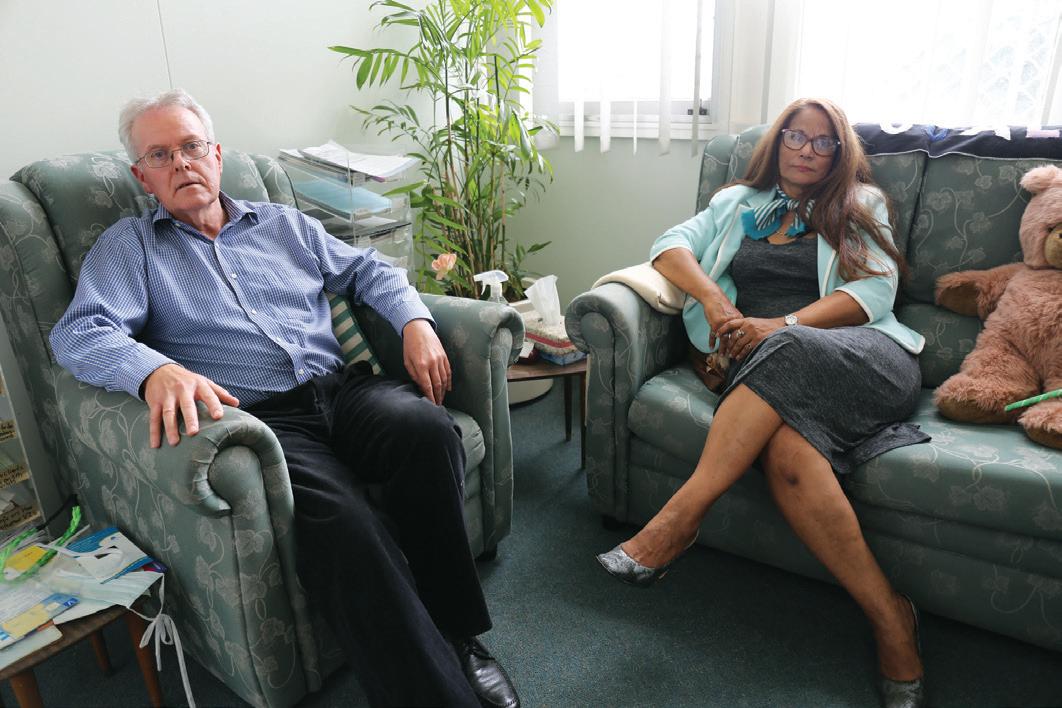
Increasing homelessness and increasing demand for affordable rentals in the ACT is a sign that something isn’t right, particularly when Melbourne and Sydney are seeing the reverse trend.
Why compound the indignity of not being able to afford the rent on a house by forcing people into apartments as well. Or even worse into homelessness.
One potential solution would be for the government to allow genuine urban infill common in every major city in Australia – that is, separately titled “semi-detached” or “dual-occupancy” properties.
From a preference standpoint, a “semi” is arguably no different from a house. Allowing it to occur on a selection of Mr Fluffy blocks in recent years has shown it is viable.
There are more than 70,000 residential blocks in the ACT larger than 700sqm. This creates boundless opportunity to address the undersupply problem of detached or equivalent housing.
Separately titled, dual-occupancy properties would not increase the urban footprint and, crucially, the market will decide how much development occurs.
Those struggling to get on the home-ownership merry-go-round have a right to be displeased with Labor and the Greens. We are at a genuine crossroads as a city and here’s a potential path that would lead to much better housing outcomes for many more Canberrans. We don’t want to end up with the chronic homelessness problems of somewhere such as San Francisco.
Mark Parton, a Liberal MLA for Brindabella, is the opposition housing spokesman.
By Belinda STRAHORN
CANBERRA’S longest-existing victim support service that “runs on the smell of an oily rag” fears without any government funding it may close its doors.
The ACT’s Victims of Crime Assistance League (VOCAL) in Narrabundah is also crying out for volunteers amid a need for its services.
The organisation’s former coordinator Marie-noelle Cure, 68, is still the driving force behind the organisation, but has not been paid a cent since 2011 when the service’s government funding was scrapped.
Cure, a pensioner and the organisation’s only counsellor, said she needs more staff, reliable volunteers and funding to pay the bills.
“Every year we cry out for government assistance but they [ACT government] are hell-bent on not supporting us,” Cure said.
“We just want to help people because there is a need for our service.”
From the families of people murdered, to burgled business owners and rape victims, VOCAL has looked after victims of crime in Canberra since its creation 33 years ago, offering practical support to victims to deal with trauma and the onerous processes of court.

The group formed in 1988, in the living room of Bob and Rita Cameron’s Weston Creek home, not long after the couple’s 16-year-old son Grant was punched and kicked to death at the Duffy Primary School fete in 1987.
The emotional shock that envel-
oped Rita and Bob – a federal police constable – was shared by many other victims of crime in Canberra who had nowhere to go.
“And so VOCAL was born,” Cure said.
In the early days, VOCAL became a lobbying force to change laws and draw the attention of politicians and the judiciary to the rights of victims, Cure said.
“Offenders were getting all the legal support and help they needed and victims were treated as criminals in the legal system,” she said.
Moving to its Narrabundah headquarters in 1992, the service at its peak had a client list of 500, but in 2011 it lost a major contract to provide victim support services in the ACT.
The contract was given to a government agency, Victim Support ACT (VSACT), in an open-tender process that began when VOCAL applied to increase its funding past a threshold of $200,000.
The loss of funding significantly impacted the not-for-profit organisation, and Cure believes VOCAL was squeezed out of the victimsupport sector intentionally.
“Once the government service started, their aim was to become a one-stop shop and to be the only service in town and to do away with what they call a duplication of services,” said Cure.
Victim Support ACT now sits under the ACT Human Rights Commission.
The ACT Victims of Crime commissioner, Heidi Yates, said the agency has helped 2159 victims of crime and 513 new clients in 2019-2020.
“The number of people VSACT has assisted has increased every year for the past four years,” Ms Yates said.
Cure is at pains to point out that VOCAL is not looking to compete against the government-run agency, but insists there is still a largely unmet “need” for a community based victim support service.
She said that despite the lack of financial assistance from the government, people are clearly still keen on using her organisation, with about 100 clients a year walking through the door.
Cure’s greatest hope is that a mutually beneficial partnership can be established where referrals to VOCAL are part of the solution to meeting demand for these services.
“The government offers a few hours of counselling, ta-ta goodbye, it doesn’t work. Our model of service is that we stay open and we see you whenever you need it, for as long as you need it, for the rest of your life.”
Bryan Harper, 66, is the chairperson of VOCAL and said: “We’d need around $200,000 a year to employ staff, pay the bills and stay afloat.
“We are running on the smell of an oily rag at the moment, apart from the odd donation, we are just hanging on.”
A Justice and Community Safety directorate spokesperson said the ACT government is “committed” to continuing to work in “partnership” with community agencies to support and improve services for victims of crime.
“Each year, the ACT conducts an annual community consultation process which allows individuals and organisations to give feedback on gaps in government funding,” the spokesperson said.
Prospective volunteers should visit vocalact.webs.com
By Petrea King, CEO & Founder, Quest for Life Foundation
Repercussions from traumatic experiences often don’t surface until weeks, months or years after the event. It often surprises or confuses people as they struggle to understand why their brain and body continue to react, given that the trauma has long passed. Some people never make the connection between their emotional distress and the trauma that created it.
For most people, shock lasts for 6 – 8 weeks after a trauma as we take on the enormity of what happened. It is enough to physically get through the experience. We don’t process our emotions at the time. We may feel isolated, irritable, anxious or angry months – or years – after the trauma. These feelings are often difficult for people to articulate. Anger and irritability are often a cover for sadness or hurt. Anger feels more powerful than admitting to sadness or a feeling of not coping.
However, anger and irritability can consume us and cause relationship breakdowns. Hurting people who love and support us by our actions or words is common for people living with Post-Traumatic Stress (PTS) injuries.
Around 12% of Australians will experience the longterm impact of trauma in their lifetime.
Symptoms include upsetting memories, flashbacks, irritability, persistently feeling negative, angry outbursts, feeling guilty or ashamed, difficulty sleeping, nightmares and feeling overly alert, anxious or emotionally numb. Many people with PTS ‘act out’ with reckless or self-destructive behaviour.
Post-traumatic stress occurs when people have been through a traumatic event which threatened their life or safety, or they’ve experienced long-term exposure to trauma. It may be a car accident, natural disaster, abuse, war, violence or other traumatic event.
Refugees, abuse survivors and people in professions like the military, firefighters, paramedics, emergency workers, police officers and psychologists are particularly vulnerable.
PTS is not about how tough you are. PTS is a trauma to the most primitive part of the brain and nervous system: the fear, memory and sensory areas. It has nothing to do with strength of character. It’s literally a physical trauma to the brain, just like a serious injury to the body.
Symptoms can manifest slowly and often people can’t quite put their finger on what’s different. We may notice ourselves, or someone we love, withdrawing from social occasions or isolating themselves, perhaps we/they become more anxious or irritable or we/they lose interest in once loved activities.
You are not your brain; you have a brain, and like every other part of your body, your brain is able to heal. We can implement strategies, skills and healthy lifestyle habits that encourage brain and nervous system recovery.
Research on therapies and activities that assist recovery from trauma are all activities that focus the brain in the present moment. When the brain is focused and fully engaged in the present, the brain builds connections in the neo-cortex, our higher functioning brain.
These evidence-based activities all have focused attention at their core. Therapies include yoga, breathing techniques, physical exercise, painting, relaxation, meditation and various animal therapies.
Post-traumatic growth is possible. When we actively engage with managing our brain and body more effectively, healing is accelerated. The company of other people who experience PTS can also be helpful as they truly understand the impact that trauma can have on our lives.

IT’S always easy to put politicians down as lazy or inept. Inept is a matter of judgement. However, the evidence does not often support the lazy.
Both questions should be grist for the mill at election time. Comparisons with the workloads of other jurisdictions certainly does raise questions.
In a letter to the editor in the February 25 edition of “CityNews”, Colin Lyons pointed out “while each jurisdiction uses slightly different nomenclature, the sitting calendar for the lower houses is as follows for 2021: NSW, 51 days; Victoria, 45 days; SA, 51 days; Tasmania, 47 days; WA, 40 days and the ACT, 35 days plus 10 for Estimates”.
Mr Lyons then posed a really interesting question about whether or not this provides “adequate opportunity for the various oppositions, the media and the public to assess performance and hold governments to account?”
The sitting days for this year are in marked contrast with the early days of the Legislative Assembly. The average number of sitting days in the first and second Assemblies, when Rosemary Follett was Chief Minister, was around 50 days. The most recent “Annual Report of the ACT Legislative Assembly” provides evidence of a constant decline.
This reduction in sitting days might lead some to argue that MLAs are getting lazier and lazier.
Eliminating election years from the assessment, the third and fourth Assemblies, under the stewardship of Chief Minister Kate Carnell, dropped to around 40 sitting days per year. The fifth and sixth Assemblies, under Jon Stanhope as Chief Minister, maintained a similar average. However, the seventh Assembly increased somewhat under Jon Stanhope and later Katy Gallagher. With the exception of one year, the eighth and ninth Assemblies significantly reduced the number of sitting days with the Chief Ministership transferring from Katy Gallagher to Andrew Barr.
In the last two Assemblies the number of MLAs increased dramatically from 17 to 25. One would have thought that this would have meant more minds working on ways to improve the lives of the people of the ACT. And there were also more ministers. Instead, it seems they have reduced the number of days that they have to work!!

out by four ministers in the early days of the Assembly. Appointing nine may have been politically convenient in order to include so many of the Greens in government without any disadvantage to incumbent Labor ministers. However, it begs the question regarding how much work is being done by each minister. My own experience, both on the cross-bench and in the cabinet, suggests to me that there have not been too many lazy politicians in the ACT Assembly.
The average number of sitting days in the first and second Assemblies, when Rosemary Follett was Chief Minister, was around 50 days. The most recent ‘Annual Report of the ACT Legislative Assembly’ provides evidence of a constant decline.
I have disagreed vigorously with many – but have recognised how hard they work to get on top of their responsibilities at the same time as looking after constituents. However, there is such a thing as “busy work”. This is when people work hard but achieve very little.
The fundamental question posed in his letter to the editor by Colin Lyons remains. The reason for the Legislative Assembly to sit often enough, is to allow appropriate scrutiny of the government.
He correctly points out the role of the Estimates Committees that are crucial to accountability. However, discussion on legislation and matters of importance to the general public remain a key feature of debates in the chamber.

During the first three Assemblies, and through part of the fourth Assembly, there were just four ministers. Five ministers became the standard during the fourth Assembly and those that followed. And then the numbers in the Assembly increased exponentially. In the ninth Assembly there were seven ministers. Surely these ministers now have additional time to review their own legislation, to ensure that it is doing what it was designed to do when it was enacted and to consider improvements!
The tenth Assembly, with (as I count them) 34 sitting days proposed, now has nine ministers to do the same work that was carried
Mr Lyons also compared the ACT to the federal government and national governments around the world. The ACT does not compare well. But perhaps our focus ought to be on local government. This may have provided a better insight as the ACT Assembly responsibilities include both state and local functions.
Michael Moore is a former member of the ACT Legislative Assembly and an independent minister for health. He has been a political columnist with “CityNews” since 2006.

‘We take an holistic approach to treatments, focusing on hair, body and mind.’
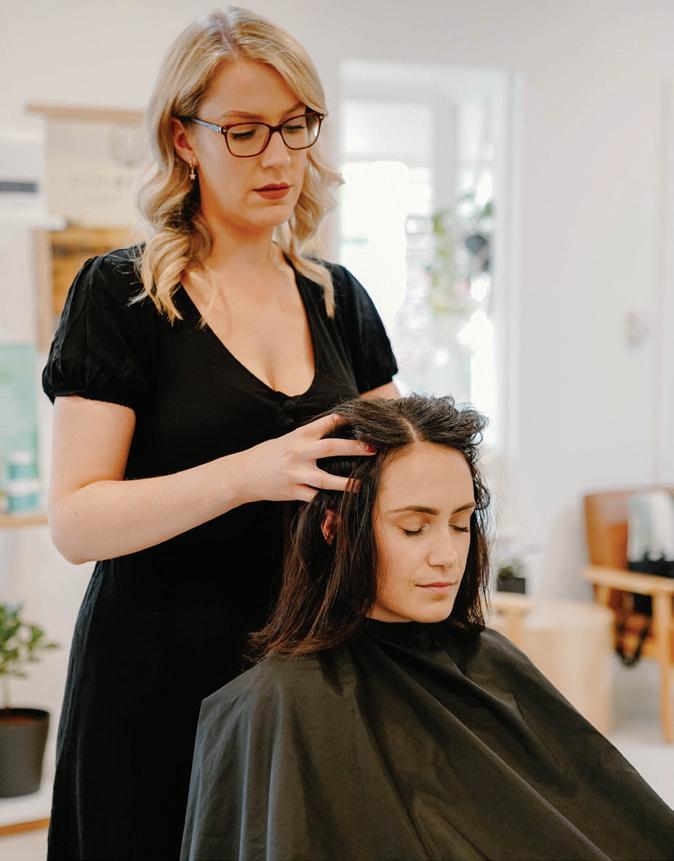
NOT seen anywhere else in Canberra, the talented and friendly team at Pura Holistic Hair Studio offer two exclusive treatments that target hair concerns such as hair loss, says director Blair Lewis.
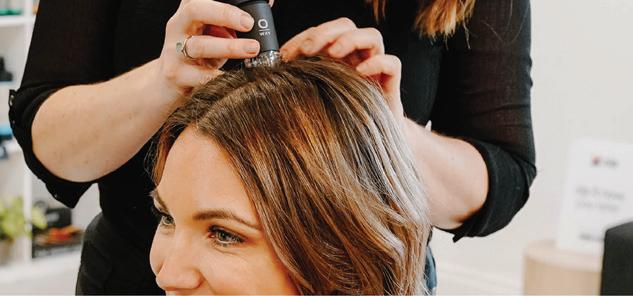
“With our tricho scalp therapy, we look at your hair and scalp under a microscope and create a treatment plan to target concerns such as dandruff, excess sebum, scalp irrita tion or sensitivity, dermatitis, and hair loss,” says Blair, who has more than 20 years’ experience in the industry.
“We also have a specially designed hair rebuilding program, where we use infrared light to help regenerate cells.”
The studio, a combination of Blair’s passions for beauty, nutrition and medicine, also offers services such as hair cutting, styling, colouring and extensions, she says.
“Pura Holistic Hair Studio [also] takes an holistic approach to treatments, focusing on the total connection of hair, body and mind,” she says.
“We’re an environmentally-friendly business, with a range of entirely organic products to give back to the people and the planet.”
The studio also gives back through its partnership with the “One Tree Planted” organisation.
The partnership sees Blair donate $1 from every client, which goes towards planting a tree.
Pura Holistic Hair Studio, shop 3, 39 O’Hanlon Place, Nicholls. Call 6242 9192 or visit puraholistichairstudio.com.au



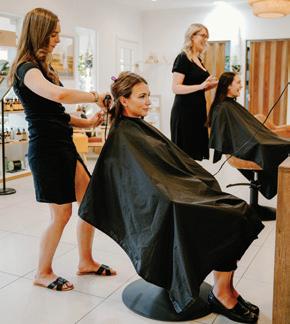
Our Holistic Hair Studio is a place...

Where Nature meets the Holistic approach to Hair, Body, Mind and Spirit. Where the from the inside out and outside in approach meets strong underlying Naturopathic Principles.
Where Trichology and Scalp Therapy meets Nature’s finest Biodynamic and Organic ingredients. Where Sustainabilty meets Luxury.
Where Pampering meets Healing.
Where Nature meets Nurture. Where Passion meets Purpose. This is Pura. Organic. Plant-Based. Sustainable. Beautiful.

NORTHBOURNE Avenue would have to be a top contender for being one of the most unsightly main city entrances in the world as the tall, dried-out “native grasses” alongside the Stage 1 rail tracks look like out-ofcontrol weeds.
It is embarrassing when visitors ask why the median strip is so unkempt, dishevelled and neglected. It’s also very sad and annoying as the Stage 1 planners had landscape experts with a once-in-alifetime opportunity to design a worldclass gateway that all Australians could be proud of.
No matter how hard the ACT government tries to spin it and put lipstick on the proverbial pig, the prospect of having the Stage 2 route transiting the parliamentary and Lodge precincts would be a blight on this very important focal point of Canberra’s landscape.
However, if the NCA’s decision-makers happen to approve this route, my plea is please comply with the Authority’s vision, that states Canberra is “A national capital which symbolises Australia’s heritage, values and aspirations, is internationally recognised and worthy of pride by Australians”, and do everything possible to have aesthetically-pleasing landscaping alongside the Civic/Woden route.
In the meantime, I recommend the

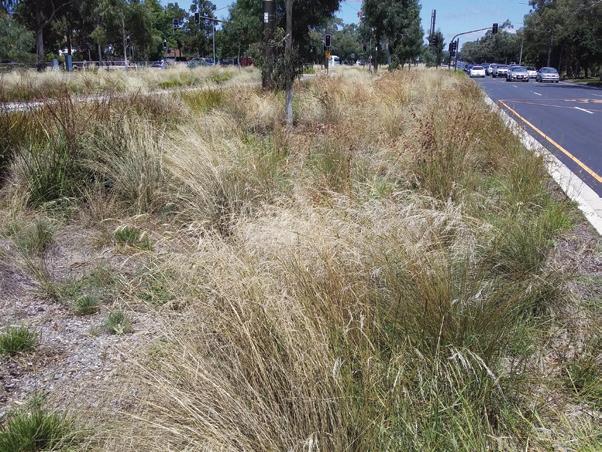
eventually replaced with low-maintenance, drought-resistant plants that are attractive when in bloom.
Peter Sherman, Aranda
IN the 1970s, I had the privilege to spend many shifts as a policeman on the beat at the Woden Town Centre.
The centre was a genuine hub of human activity, six days a week.
Friday nights and Saturday mornings
were the big trading and community times. the centre’s management every couple of months or so.
Woden Square was busy at lunch times. I remember local member Kep Enderby speaking at a large lunch rally for the 1975 federal election with me – rubber truncheon, pistol, radio and white hat –comprising the security.
The bus interchange thronged at peak travel times, which brings me to the main point of my letter: those pesky schoolgirls (from St Trinian’s?) would gather on the bus station roof and look down into the
yard at the rear of the old Woden Police Station, during morning parade and drilling of recruits.
We were thus trained in the terror of facing the taunts of the public. Hence, we were ready for anything, including election-crowd security.
Are any of those girls still in Canberra? They are probably all now retired (as am I) and could offer to help train today’s AFP recruits, raw Woden style.
Christopher Ryan, Watson
MICHAEL Moore, in his column “Wet-lettuce Budget brings weird times” (CN February 18) offers half-hearted praise for the Barr government’s efforts in taming the ACT’s emissions.
This has been done by investing in domestic rooftop solar power and $20 million a year over the next five years in a “big battery” similar to the Tesla battery at the heart of SA’s Hornsdale Power Reserve phase I.
This is all very commendable, but it comes at the expense of this city’s “gardening”. For example, my street, in supposedly wealthy Deakin, is a mess.
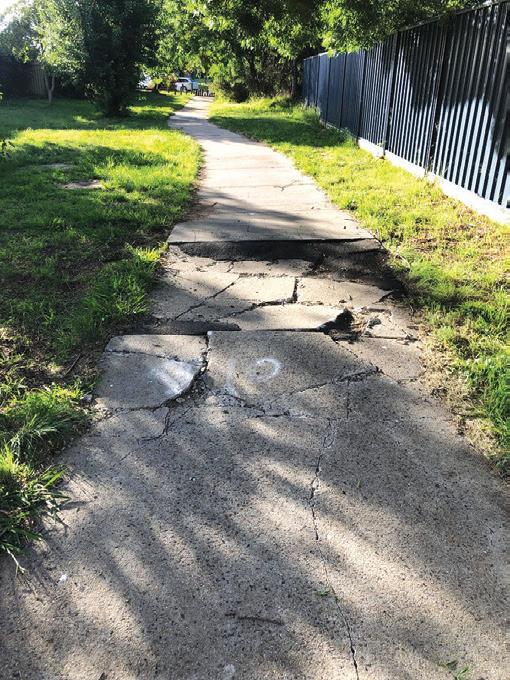
Every day I see grass and weeds up to a metre or so tall; dead, dying and bisected (by ActewAGL) trees; rutted and potholed roads; broken concrete kerbs, and cracked or disjointed concrete footpaths. I hate to think of the impressions this untidy
I MUST be getting something wrong. I thought the media usually publish their news on their own website. Some also provide links to it from places such as Facebook. Customers can also find the news items through Google or Bing etcetera.


If the media company wants online revenue from its news it charges a subscription, like “The Canberra Times”, “The New York Times”, “The Sydney Morning Herald” etcetera.
Why would the Australian government want Google, Facebook or Bing to pay for connecting a customer to a media company’s own website? Isn’t this the same as using a street directory to find a restaurant and then expecting the street-directory company to pay the restaurant in addition to the customer?
Chris Emery, via email
ATTEMPTS to industrialise, standardise and exploit one-off minor domestic trade or labour works are apparently leading to spiralling higher prices and less protection for consumers.
Colourful ads proliferate, for individual tax file number-carrying “tradies” to carry out minor, mainly domestic works.
Quotes are often prepared location-unseen, as if site conditions are universal. They’re accompanied by copious lists of virtually identical small-print conditions, stiff with inappropriate legalese.
Multiple quotes for the same job show only tiny variations in price. Many quotes are heavily conditional, and “unforeseen” circumstances often attract extra costs, out of proportion with the work item.
Inordinate deposits are demanded. Specifications are scant and the meaningless term “industry standard” is bandied about.
Hourly or quantitative rates are often used instead of lump-sum quotes, leaving consumers open to budget blowouts.
Final accounts are often issued before work is complete. No defects liability periods, or retention funds, are offered or available.
ugliness would leave with visitors to the nation’s capital. This simply isn’t good enough, Mr Barr.
Douglas Mackenzie, Deakin
Giving fogeys bad name
REALLY, Cedric and Gerdina? Really? You’re living in dread and fear” (“Scared for the kids”, letters, CN February 11)? You paint a picture of the wild west in school zones, of speeding drivers putting lives at risk. You seem to extrapolate your local experience across the whole of Canberra urging “a blitz”. Methinks you’ve overreacted.
As an “old fogey” myself, I travel through a number of school zones daily, including at school peak hours and it’s my observation that we’re a compliant, law-abiding bunch driving well within limits.
There’s little evidence to me that dangerous driving is an issue here. Speed monitoring vans are a regular sight around my area and there’s typically a “lollypop” person assisting kids cross the road. This adds to awareness and safety.
I might be wrong, but I’d like to see the official stats on bookings across Canberra school zones. I’m more concerned that traffic planners don’t seem to trust us to be able to turn right at minor intersections without holding us up awaiting an arrow. Don’t give us old fogeys a bad name. We’ll be shaking our fists raging at the clouds if left to ourselves.
A. Kusta, Deakin
Apparently, this “industry” is largely being run and controlled by firms of accountants, bookkeepers, and lawyers. Consumers beware.
Jack Kershaw, Kambah
IF MLAs are sincere about clawing their way out of our tram-wreck Budget deficit, you need to look no further than travel.
Current MLA conditions provide for: domestic flights less than four hours – economy class; domestic flights of four hours or more – business class and for international flights – business class.
All domestic air travel should be economy class, irrespective of distance/destination. The days of luxury are over people, tighten your belts.
John Lawrence via email
IN the “Seven Days” column (CN February 18), author Ian Meikle states that former Labor MLA Deepak-Raj Gupta “…tracked down Walter Burley Griffin’s 1937 grave in … Lucknow, India.”
Although it may not have been intentional, that statement implies that Mr Gupta was the first to locate Griffin’s “lost” grave. This is not so.
Several years before, Canberra citizen, public servant and author of several books on India, the late Graeme Westlake, located Griffin’s then-unmarked grave in 1987. In response, calls were made to have Griffin’s remains reinterred at Canberra. Fortunately, the initiative was apparently never fully pursued. Instead, more appropriately, it led to the permanent marking of his Indian grave.
Barry Smith, Page

THE time has come to take back Australia.
After 233 years of battering by invaders attacking the First Australians followed by mindless “developers” from all quarters – joined only by their gospel of greed – our great big continent has had enough.
Today its glorious, unique fauna and flora are fighting a losing battle to survive.
Yes, the whole planet is hurtling towards a climate crisis, but Australia will suffer more than most. And at just such a time we are governed by a bunch of denialists and a timid, visionless Opposition. It doesn’t get much more troubling than that.
Tough words, I know. But there’s been a conjunction of events that have thrown the whole sorry mess into focus lately. It started with a radio interview I did with a US network on my book, “Castaway”, which deals in part with the attempted genocide of Queensland’s Aboriginal people. I relived the horror of it in the telling.
What of the animal terrorists we’ve imported, bred in their millions and loosed as feral cats upon the native wildlife? What of the foxes, the cane toads, the wild pigs, the donkeys, horses and camels that ravage the land and its unique and fascinating inhabitants?
Then came Sam Neill’s TV rendition of Cook’s voyage up the east coast with the racist Joseph Banks; and in quick succession Simon Plowright’s gorgeous, heart-warming doco “Quoll Farm”; then “Australia Remastered” with Aaron Pedersen in the far outback; Tim Flannery on the fate of our koalas; and, finally, the mess that is now Kakadu National Park revealed by “Four Corners”. Each one hit like a blow to the solar plexus. Together they sent the senses reeling.
But even in the light of day, it really is that bad. Sure, we have a lot to be pleased about: for such a mixed bunch we all get along fairly well; a lot of good people are helping the less fortunate; the roads are okay and the bridges don’t fall down.
But I fear we’ve lost sight of the wonderful Australia we inherited; and we still haven’t even begun to
give restitution for the appalling crimes visited upon the First Australians, let alone close the yawning gap between their standard of living and us whitefellas.
But it’s our treatment of the native animals that really hit home in those programs; and our blind refusal to lift a national finger to redress the carnage. The Morrisons and Duttons of the world go into fits of wrath at the very idea of allowing a Sri Lankan family out of solitary detention on Christmas Island back to little Biloela, where they’re loved and wanted. They say they fear the return of the “boat people” because there are terrorists among them. Honestly. How many “terrorists” have arrived by leaky boat to do their dreadful deeds? Damned if I can think of any. But what of the animal terrorists we’ve imported, bred in their millions and loosed as feral cats upon the native wildlife? What of the foxes, the cane toads, the wild pigs, the donkeys, horses and camels that ravage the land and its unique and

A koala climbs a tree… “Australia’s glorious, unique fauna and flora are fighting a losing battle to survive,” says Robert Macklin.
fascinating inhabitants?
If ever there was a project that could provide a massive opportunity for leadership from our First Australians – backed by all the authority and funding necessary – to research, plan and execute remedial action for however long it took, surely that one is crying out. And if it requires a special seat in the federal cabinet – or a “Voice” via the “Uluru Statement” – then so be it.
The greed gang has had it their way for two centuries; maybe it’s time for the custodians of 65 millennia to be given a go to get some balance back into the Australian story. Maybe it will even light a spark for real action on climate change itself… or is that asking too much?
robert@robertmacklin.com
MENTAL health practitioner and advocate Regina Leary is the guest speaker at the Friends of Ireland’s ecumenical service to celebrate St Patrick at the Australian Centre for Christianity and Culture, 15 Blackall Street, Barton, from noon on Saturday, March 13. Irish pipes and music will form part of the service. More from 6288 6729.
THE Younger Women’s Cancer Support Group will be launched at a fun family day featuring a petting zoo, rides, big slide, sausage sizzle and raffle at St James Anglican Church, 40 Beaurepaire Crescent, Holt, 11am-5pm on Saturday, March 13. More information at ywcsg. eventgroovefundraising.com
Craft and remnant sale
ST Ninian’s Uniting Church, Lyneham, is hosting a sale of hand-made craft items as well as remnants including materials, yarns, haberdashery and more, 10am2pm, Saturday, March 13. There will be demonstrations on how to make woven cloth coasters or Hoshi Stars. Kits available.
The Yarralumla craft destash market, selling craft materials – fabric, wool, papercraft, buttons, embellishments, ribbons, craft magazines, stamps – will be held at the Yarralumla Uniting Church Centre, Denman Street, 10am-1pm, on Saturday, March 20. Gold coin entry.











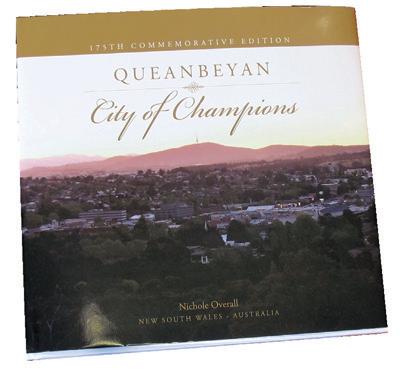



LOCATED south of Canberra’s city centre, the inner south is one of the oldest parts of the ACT. Today, its age and historic charm has found its way into the hearts of residents and businesses alike, with many businesses passionate about the inner south suburbs they work in. Here are some of them…
MARIA Selleck wants to raise the bar in the real estate industry, offering a personalised service that always puts clients first and foremost, she says.
ence, Maria has been running Maria Selleck Properties in Manuka for more than 10 years.
are always comfortable through going above and beyond for them,” says the 2011 Business Woman of the Year, whose business has won the Real Estate Institute ACT (REIA) Small Residential Agency Award of the Year six times, and the national REIA title in 2013.
detail that achieves results.”
stop-shop for any real estate needs, Maria says.
market including styling, project management for repairs and maintenance, garden makeovers, to high-quality marketing and photography,” she says.
stylist and photographer readily available and we can organise to have a property placed on the market within a week to two weeks.
management department, taking away the stress of owning an investment property.”



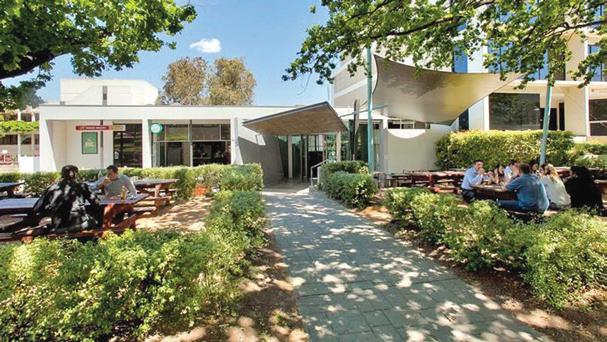
THE Canberra Club, a community venue, has proudly been supporting servicemen and women for years, says general manager
Located in Barton and featuring a bistro, two bars, a beer garden, pictured, and function spaces, Marija says that people can feel good about enjoying a club experience and supporting their local service people.
“We’re formally known as the Canberra Services Club, and the venue hosts and looks after people in Defence, police, ambulance, and many other services that protect the
“It’s also the home of the War Widows ACT, an organisation that looks after those who
have lost a partner defending our country.”
For those interested in hosting functions, Marija says the club offers packages for food and drinks, which are completely flexible to guest numbers and event types.
And, she says there’s always events and deals on throughout the week for those wanting to drop in.
“We’ve got $12 rump steak nights on Mondays, two for one pizzas and trivia on Thursdays, live music on Fridays and much more,” says Marija.
“It’s Barton’s hidden gem.”
The Canberra Club, 51 Blackall Street, Barton. Call 6162 0503 or visit canberraclub.com.au



WITH winter sport seasons starting soon, Manuka Woden
Physiotherapy and Sports Injuries Clinic principal Greg Nash is urging players not to wait until an injury happens before getting treatment.
Greg is backed by 35 years’ experience working in musculoskeletal physiotherapy, sports injuries and occupational health and safety, and says there’s not enough preventative mentality out there.
When assessing players he looks out for muscle weakness, restrictions in range of motion and hypermobility and says that people with pre-existing injuries from last season often think they’re okay until they’re on the field again.
“Physiotherapists are well placed to identify potential risks and problems like that because we see the results when they don’t get those problems fixed,” he says.
“If necessary, we can strap them or provide them with supportive braces.”
Greg splits his time between the Manuka and Woden clinics, and says the Woden location, opposite Westfield, is wheelchair accessible and is positioned near the bus interchange, for people who don’t drive.

As for their Manuka clinic, Greg says it will reopen in the next few weeks, now positioned on the ground floor on Bougainville Street and with wheelchair accessibility and convenient off-street parking, which is free to clients.
Manuka Woden Physiotherapy and Sports Injuries Clinic. Visit manukawodenphysio.com.au
WITH books from local authors, Kingston’s new independent bookseller, The Book Cow, has intriguing reads that reflect the area, says owner Peter Arnaudo.
The Book Cow opened in the “revitalised” Kingston precinct late last year, where new coffee shops and restaurants open all the time, Peter says.
“[Many customers] browse around then pick a book and go out to Green Square or the Eyre Street Markets and actually sit there in the sun and enjoy it,” he says.
By being independent, it allows Peter to connect with what locals really want to read and reflect their needs in store, he says.
“But we can still order from all major publishers,” he says.
As for the current bestsellers, Peter says there’s no going past Canberra author Maureen Cashman’s “The Roland Medals” which is flying off the shelves.
Other popular reads include “Phosphorescence” by Julia Baird and “The Dictionary of Lost Words” by Pip Williams. They can even do specialty orders for schools, aged care facilities and childcare groups looking for certain books, Peter says.
The Book Cow, 47 Jardine Street, Kingston. Call 5100 2730 or visit bookcow.com.au






•
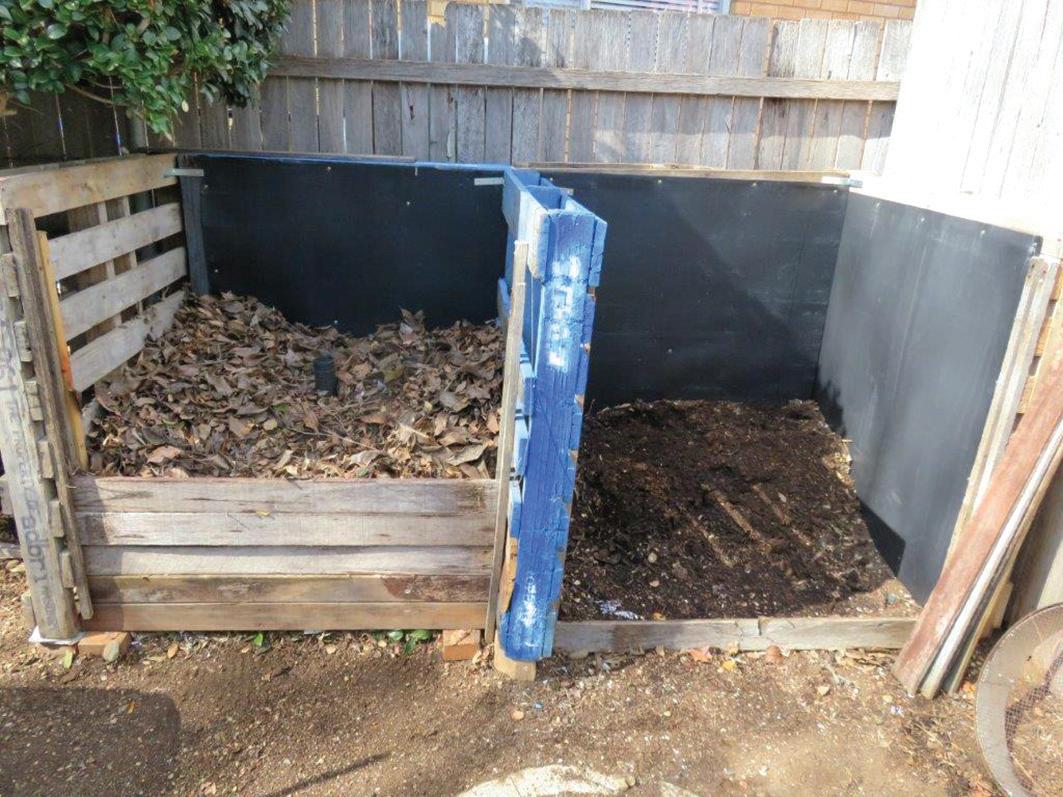
may not have the usual magnificent display of
Thinking ahead to when they do fall, what can be done with them? Burning leaves is not allowed, for obvious reasons. Likewise, City Services requests that people don’t rake the leaves into street gutters as they can end up clogging storm-water drains. Street sweepers will be flat out clearing these as it is, thanks to Canberra’s many deciduous street trees, particularly in older suburbs. I also see large plastic bags full of leaves placed on the nature strips, as if they are going to magically disappear.
Fallen leaves are often considered annoying and messy; however for most gardeners, they’re an absolute windfall.
The compost heap is the first port of call. Many deciduous trees have large leaves that take a while to break down. I shred them with the mower, then spread the shredded leaves directly onto the garden as a perfect mulch,

pallets with two bins, and when one is full, I start filling the next. Many gardens don’t have space for a set-up like this, but a simple compost heap can be created with a couple of metres of chicken wire. Form into a circle about a metre across and hold in place with a couple of tomato stakes. For any compost, add a good handful of garden lime to each barrowload of leaves. As per the Boy Scouts’ motto, “be prepared” before the leaves drop.
WHEN it comes to bulbs, the first to flower will be daffodils and jonquils, so plant towards the middle or end of March. Then tulips, which particularly like the cold, can be planted. It’s often suggested to place tulip bulbs in the fridge crisper, not the freezer, until the first frosts arrive. This is not absolutely necessary; simply hold off planting tulip bulbs until there have been a few good frosts. The last are the Dutch iris, which will flower in the middle to the end of October and are always the last to flower during Floriade. These are bulbs, not to be confused with tuberous iris, which can be planted as late as May. The flowering period for all bulbs will depend on the season. I suspect with the fairly continuous rainfall this summer, this pattern will continue

well into the autumn.
MANY perennials like euphorbia have now finished flowering and need to be dead-headed. It’s very important to wear gloves, preferably rubber, as the sap of this particular plant can cause severe skin irritation. One person reported that even though he wore gloves, he had an itchy eye and rubbed it, causing severe eye problems. Hyacinth bulbs can also cause skin irritations, so gloves on with these as well,
A QUICK reminder: the Horticultural Society’s spectacular Autumn Flower Show will be held this weekend on Saturday, March 7, from 11.30am to 5pm and Sunday, March 8, from 11am to 3.15pm at the Wesley Church Centre, National Circuit, Forrest.




By Helen MUSA

“FOLK – it’s a big, beautiful word and for me, it’s the sound of the stories of the room,” Katie Noonan says.
“I consider myself just a storyteller,” Noonan tells me at the Mitchell offices of the National Folk Festival, where she’s taking over the reins as artistic director.
“For years I’ve been writing stories, and I consider my band Elixir, which I formed in 1997, to be a folk band.”
Some storyteller.

The daughter of an opera singer and trained at Queensland Conservatorium, Noonan is one of our most famous singers. With five Aria awards, the 2019 Australian Women in Music Creative Leadership award and the APRA AMCOS State Arts Luminary Award under her belt, she’s ranged over jazz, opera, symphonic music and pop/rock for over two decades.
She’s collaborated with Tim Finn, Don Walker, Josh Pyke, poet Tom Shapcott, classical guitarist Karin Schaupp, the Brodsky Quartet, with whom she sang at the Canberra International Music Festival in 2016 and Michael Leunig – “a folk philosopher”, she says.
Katie Noonan… “I’m fiercely proud of Australian music. I want to remove the cultural cringe across the arts… we really are world-class leaders and it’s time we believe we are.”
“But I’m not into genres,” she says. “Journalists love to turn music into genres, but while my first love was classical, Vivaldi and Bach, I’ve done lots of pop and rock.”
Noonan admits she came to folk late, but suspects that’s simply a matter of definition, saying, “If you look at the music of Tim Buckley, David Crosbie and James Taylor, it’s a fine line between pop and folk”.
In fact, it somewhat amuses her that “the hackles go up” between pop and folk lovers, and yet Dylan went electric very early, and
who’s to say an electric guitar isn’t folk?
Over her 25-year career, two of her biggest influences have been English folk singer-songwriter Nick Drake, and Joni Mitchell, of whom she says, “they are poets”.
Once, while mixing a record near Mitchell’s home in LA, Noonan hung around at the deli hoping to catch sight of her. No such luck, and sadly, Joni’s never played a public show in Australia.
Some people were surprised at the National Folk Festival’s recent announce -
ment that Noonan would head up the big Easter event at EPIC for two years, but in fact she’s a seasoned operator who was music director of the opening and closing ceremonies for the 2018 Commonwealth Games and recently finished a four-year stint as artistic director of the Queensland Music Festival, a huge state-wide event staged in 49 different locations, including Aurukun and Cunnamulla.
“One thing that was great about that is that although the Queensland Music Festival was founded in Labor times, it is a bipartisan construct… allowing me to set up a festival that believes music is about community, a welcoming place,” she says.
“Now I’m coming to a place where I can dream,” she says of her new appointment.
“I’ve been talking about a new concept of festival with Helen [Helen Roben, the general manager of the National Folk Festival].
“I’m fiercely proud of Australian music. I want to remove the cultural cringe across the arts… we really are world-class leaders and it’s time we believe we are.”
Before deciding to join the Folk Festival, Noonan asked herself a few “true and honest” questions – “could it be all-Australian? Could it be in Canberra? Could it be a First Nations event? Could there be more women in it? Just asking the questions, not answering them.”
When it comes to women in music, she often thinks of Joni Mitchell, who had to give up her baby. But then again, as she and
Roben have noticed, the Folk Festival always seems to have an abundance of mothers and children – a good thing. Nonetheless, she and Roben are determined to reduce any imbalance.
Noonan’s contacts are second to none. Robyn Holmes from the National Library supervised her research for her work, “Love-Song-Circus”, based on the National Museum of Australia’s exhibition of convict love tokens, while Roland Peelman, the director of the Canberra International Music Festival, trained her in Benjamin Britten’s “Les Illuminations”, performed with the Sydney Dance Company and musicians from the Sydney Symphony Orchestra.
Noonan will not, like her predecessors, live in Canberra. She lives with her musician husband Isaac Hurren and their two sons on the Sunshine Coast, but dashes around the country on a whirlwind round of singing engagements, so will visit us from her home each month.
She and Roben are determined to broaden the Folk Festival’s footprint by attracting the many diverse Canberrans who have not yet been to the Easter event and to take more action on the question of First Nations musicians.
“I think we can do better there,” Noonan says.
Noonan will present her first festival in 2022, after covid forced the cancellation of the 2020 and 2021 festivals.






By Richard CALVER

THE poet Ogden Nash once said: “Candy is dandy but liquor is quicker.” I mulled on this phrase as I sat on a verandah at a party sipping a beer (I’d driven there and set myself a parrot limit for the night – two can).
I watched a woman drinking non-vintage Yellowtail prosecco after I had assisted with removal of the black plastic top (on the wine, come on! ). And I knew that sparkling wine was supposed to be the drink that made you intoxicated faster, something to do with the carbon dioxide in the bubbles. But I knew not the science. Here is what I discovered.
I started by checking a book I had borrowed from the library on food matches with sparkling wine: “Paired: Champagne and

I knew that sparkling wine was supposed to be the drink that
made you intoxicated faster. But I knew not the science. Here is what I discovered...
Sparkling Wine”. There at page 115 in large print is the question I had pondered and then the answer in straightforward terms:
“Does sparkling wine make you drunk more quickly than still wine?
“Yes! Studies have concluded that drinking sparkling wine of the same alcohol level as a still wine will create a significantly higher blood alcohol level after a shorter period of time due to the CO2 accelerating the speed of the alcohol’s journey through the body.”
Hmmm, I thought – the book quotes a 2001 study by a Dr Fran Ribout, but the statement doesn’t answer the fundamental question posed by Prof Julius Sumner Miller, the US physics guru and TV presenter: why is it so? Plus, I later read a number of pieces that discredited the 2001 study.

ERINDALE THEATRE 4-20 MARCH 2021 philo.org.au/tickets or 6257 1950

Restorations - Repairs - Remakes - Re-Setting Ring Re-sizing - 48hr Service Custom Design - for something Special Pearl and Bead Re-Threading and Knotting
A Family Business: 55 years experience Southlands Shopping Centre – Mawson (about 50 metres South of the Post Office) 6286 1499
Your Precious ‘Old’ Jewellery - well it used to be... now maybe... It’s just old - and a bit worn out, or costs too much to fix... probably never be worn again... You keep the memories - perhaps, we could buy the goods?

Key is what is known as the absorption rate. Alcohol absorption and its elimination from the body vary considerably amongst individuals, and are subject to influences from a variety of factors, including how full your belly is.
In 2007 Roberts and Robinson published a scholarly article measuring the effects of alcohol concentration and beverage mixer type on the rate of alcohol absorption. Twenty-one subjects (12 male, nine female) consumed a solution containing alcohol, on three separate occasions.
The three solutions were neat vodka (37.5 vol%); vodka mixed with still water (18.75 vol%) and for current purpose the one that most closely emulates sparkling wine, vodka mixed with carbonated water (18.75 vol%).
The alcohol was drunk in a five-minute period following an overnight fast (eliminating one important variable for absorption: how much you have eaten) and breath alcohol concentrations were measured over a fourhour period using a breathalyser. Amazingly, 20/21 subjects absorbed the dilute alcohol at a faster rate than the concentrated alcohol.
The difference between the absorption rates was found to be significant. In particular, the use of a carbonated mixer had varying effects on the alcohol-absorption rate. Fourteen of the 21 subjects absorbed the alcohol with the carbonated mixer at a faster rate, with seven subjects showing either no change or a decrease in rate.
Why that occurred was to remain a mystery because I wasn’t going to pay the $US39.95 to download the complete study – that’s the cost of a pretty good bottle of wine. But I found a 2013 article by a Ms Doucleff where the author had obviously paid for a complete copy of the study and, after confirming that the Ribout study was flawed, she commented:
“Adding the gaseous mixer bumped up the initial rate of alcohol absorption into the blood by about 50 per cent – on average. But this rate varied wildly among the volunteers. Three of the 21 volunteers adsorbed the bubbly cocktail more slowly than the flat one, and for four subjects, the carbonation made no difference at all.”
The theory is that carbonation increases the initial rate of alcohol absorption on average because it assists the permeability of the small intestine into which alcohol is absorbed, and assists the circulation of the blood.
But like other things that affect how quickly people absorb alcohol, it is not a universal truth: so, sip your sparkling wine and enjoy. Maybe you will be affected more quickly than if you drank still wine, maybe not.
“After the first glass, you see things as you wish they were. After the second, you see things as they are not. Finally, you see things as they really are, and that is the most horrible thing in the world.”
— Oscar Wilde, on absinthe
By Wendy JOHNSON
A BIRTHDAY in hospitality after coping with bushfires and covid is cause for celebration, so pop-up bar
The Pop Inn planned a party to toast turning four.

Owner Kimberley Ohayon counts her blessings that she maintained a core team of faithful staff and spent her downtime taking The Pop Inn to the next level.
“We did some serious soul searching, unsure how long we would be closed,” says Kimberley.
Like many in hospitality, The Pop Inn went digital, launching an online shop and delivering wine during shutdown. Now the team is re-energised and back.
Devotion to working with local suppliers remains, with The Pop

The combined meat and cheese board… features a juniper berry salami and traditionalstyle Italian hot coppa, artisan crackers, raisins and nuts.
Photo supplied
Inn sourcing meats from Balzanelli Smallgoods, a family-owned business that has been manufacturing since 1979. The Pop Inn also works with Mart Deli, Fyshwick Markets, to source quality cheeses. Local and regional wines are on the menu, as is a gin from award-winning Canberra Distillery.



The party weekend kicked off on a hot, sunny afternoon which motivated us to try the refreshing, blood-orange gin (no preservatives, additives or artificial flavours). It was divine.
Newbies on the wine list include a 2019 Rouge Clair from Canberra District’s Sholto Wines, a blend of Cabernet Sauvignon, Malbec, Petit Verdot and berries. Also new is the 2019 Maya and Max chardonnay, a crisp wine from Ross Hill Wines in Orange ($14 glass/$56 bottle).
“To make the list more accessible, we’ve incorporated wines from regions people might not get to as often, like Rutherglen and Beechworth,” says Kimberley.
The Pop Inn takes its food as seriously as it does its drink.
Cheese boards are available ($23).
The Tarago River Cheese Company’s Shadows of Blue is a decadent, double-cream blue cheese that’s super soft and creamy. We found the buttery Crémeux D’Argental equally
indulgent. This lush, silky-soft cheese has a white mould rind. We adored the Queso Al Romero, a sheep’s milk cheese rubbed with a rosemary rind.
The combined meat and cheese board ($33) featured a juniper berry salami and traditional-style Italian hot coppa. Both boards come with artisan crackers, raisins and nuts. Although still young, The Pop Inn has made many long-lasting memories.
“Babies we met when we first opened are now four-year-olds running about,” says Kimberley.
“We’ve developed a strong community vibe and people who met at The Pop Inn have formed great friendships.”
Other changes include more consistent live music. And Kimberley is sussing out new locations, aside from established ones like Haig Park, The Carillon, Queen Elizabeth Terrace and Bowen Park.
thepopinn.com
By Helen Musa
FOR Lakespeare & Co, it’s the fourth year of staging works by the Bard of Avon outdoors and free for all to enjoy.
But this year, as the company recovers from the impact of COVID-19, its al-fresco venture will be somewhat curtailed and will take the form of “Songs & Sonnets in the Park”, performed for one night only at Glebe Park.
Executive director and co-founder Taimus Werner-Gibbings is experiencing a mixture of excitement and disappointment. He’s a total Shakespeare tragic and it excites him to think how many people have an awareness of the Bard 400 years or so after his death. He tells me he’d love to do “Henry V” outdoors.

“Shakespearean phrases are in our day-to-day language and the whole point is to make that free and accessible to people in Canberra,” he says.
“We’re trying to get [people] to understand and appreciate Shakespeare… kids might be a bit bored when they read it off the page at school, but watching it free outdoors is different.”
Werner-Gibbings hasn’t personally trod the boards since performing in “Much Ado
About Nothing” in 2018.
“It’s a long time since I’ve done any form of practical performance – aside from the political arena”, he says, a reference to his candidature for Labor in Brindabella at the 2020 ACT election – but he wouldn’t mind. If not for the pre-Christmas covid glitch

in Sydney, the company would have put on “Measure for Measure” in outdoor venues this year, he explains, but just before Christmas as the rehearsal schedule was in place and a production planned for late February, two cast members and the director, Chris Stollery, found themselves
Then there was the sudden departure of co-founder Lexi Sekuless, who was offered a plum job as a chief adviser to federal Arts
“She took it and so she should have,”
“We decided we had to defer the production and instead we reimagined our ‘Songs
In a format tried out at Typica Cafe in December, four performers and a grand piano will perform selections from songs by Stephen Sondheim and originals from composer Jay Cameron, “peppered”, they say, with sonnets from Shakespeare.
And just as Peter Garrett occasionally appeared with Midnight Oil when he was in politics, Sekuless will still appear, alongside David Pearson, Katerina Smalley and composer/pianist Cameron.
It’s a way of staying alive and in the public eye, but the plan is to go ahead with “Measure for Measure” in the future. Werner-Gibbings pooh-poohs any scepticism about the choice of Shakespeare’s darkest and sleaziest problem play in a family-friendly atmosphere.
“We can’t just keep doing the three or four best-known comedies. It may be hard to stage but we have to try it,” he says philosophically.
The coming show, a bit shorter than usual, plays with the synergy between Sondheim and Shakespeare.
“They’re both masters of specificity with language… They both paint evocative, relatable and extraordinary pictures with the words they choose,” he says.
He hasn’t heard Cameron’s original music as yet, but given the composer’s track record creating the original score to Lakespeare’s “Rockspeare Richard III” last year, he’s looking forward to it.
“Songs & Sonnets in the Park”, Glebe Park, Civic, 6pm-8pm, Saturday March 20. Free, but bookings essential at lakespeare.eventbrite.com.au
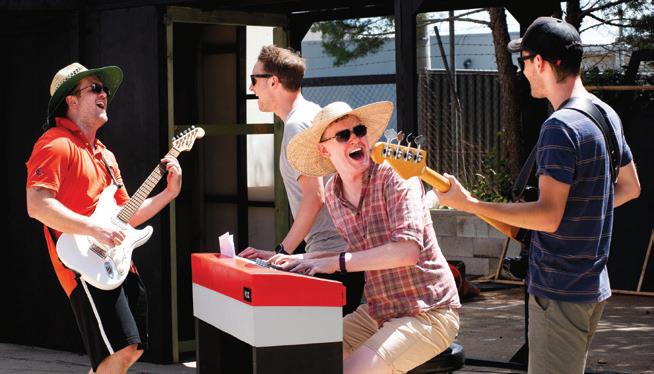
By Helen Musa
CANBERRA Philharmonic is about to stage the Broadway show “Jersey Boys” in a new production by Jim McMullen, with Madelyn White as choreographer and brilliant young pianist Caleb Campbell as musical director. At Erindale Theatre, Wanniassa, until March 20. Book at philo.sales. ticketsearch.com or 6257 1950.

CANBERRA Women In Music is a new three-day festival with a line-up of 11 bands, across three venues showcasing the music, event management and technical skills of women in Canberra, with all proceeds going to charity. Talents include women’s grunge band Matriarch, Kirrah Amosa, Lucy Sugerman and Sophie Edwards. March 12 at Kambri ANU, March 13 at the Polish Club and March 14 at Sideway, all details at facebook.com/ cwimfestival
CANBERRA Sinfonia’s opening concert this year is Aaron Copland’s complete score for “Appalachian Spring” and the world premiere of “Rainfall of Diamonds” by in-demand
13. Book at eventbrite.com.au
THE Griffyn Ensemble will return to the stage with “Songs From a Stolen Senate”, sharing the stories of seven First Nation Australians. Following the online streamed version, the Griffyns have commissioned work from three more First Nation artists, including Ngunnawal custodian Richie Allan and hip-hop artist Jimblah. At the Belconnen Arts Centre theatre, 2pm and 7pm, Saturday, March 13. Book at belcoarts.sales.ticketsearch.com
“ICONS and Contemporary Art” is an exhibition by Belgrade-born artist/iconographer Michael Galovic showing a rare collection of traditional icons, contemporary religious art, replicas of Renaissance art, a selected body of work on Uluru and work from the last 30 years on the theme of Icarus. At the chapel of the Australian Centre for Christianity & Culture, 15 Blackall Street, Barton, March 12-21.
QUEANBEYAN Players kick off for the year with all-time favourite “The Sound of Music” with a top local cast performing familyfriendly hits such as “My Favourite Things”, “Sixteen Going on Seventeen” and “Climb Every Mountain”. At The Q, Queanbeyan, March 12-21. Book at theq.net.au or 6285 6290.
AKKORDEON player Anton Wurzer will perform a program of his own compositions, including samba, jazz, modern vogue tango and several waltzes. Wesley Music Centre, Forrest, 12.40pm, Wednesday, March 10.
By Dougal MACDONALD

THE title of this English-language remake of the 2014 Danish film “Stille hjerte” is something of an enigma. Both versions were written by Christian Torpe, adapting a story by Bille August who directed the first version.
Lily (Susan Sarandon) knows that amyotrophic lateral sclerosis is going to turn her into a veggie before very long. No fun in that. No reason to postpone the inevitable if that’s all that she can look forward to.
So her family gathers in the house in which they grew up to be with her before the end.
“Blackbird” has a top quality cast of eight. Sam Neill plays Lily’s husband Paul. Kate Winslet plays her elder daughter Jennifer, mother of Jonathan (Anson Boon) who aspires to become an actor. Rainn Wilson plays her somewhat dominated husband Michael. Mia Wasikowska plays younger daughter Anna, mother of androgynous daughter Chris (Bex Taylor-Klaus). And Lindsay Duncan plays Lily’s best friend Liz. The story unfolds through dialogue rather than movement (although Roger Michell’s direction delivers meticulous
real-life home which served as a sort of unofficial clubhouse for the shoot.
Some folk might consider its plot to lack substance. Some folk (probably the same individuals) are very likely to be younger than Lily.
I’m not going to spoil your anticipation of “Blackbird” by telling you details of its denouement. It’s a six-tissue movie intelligently delivering emotional power with subtlety, surprise and occasional humour. I wonder whether it might get a nomination in any of several categories in the forthcoming Oscars.
At all cinemas
OATRAM FINANCE are the Transport and Earthmoving Finance Specialists
Providing finance and leasing for equipment in the construction, mining and farming industry as well as services for the public on all motor vehicles.
For professional service and decades of experience, call Andrew Barmin on 6297 8588 or 0418 624 243
distributors, although that seems very unlikely, on February 25, the plots of one Chinese movie and one American movie beginning their Australian seasons on the same day dealt in some form with one or other of them – or both.
“Endgame”, a Chinese re-make of “Luck-Key”, a Korean movie made in 2016, is a thriller reminiscent of Hollywood thrillers from the middle of last century.
The plot is simple enough: a struggling actor and a professional assassin swap bodies. The actor finds himself awash with money and the good life. The assassin
comes home to a squalid apartment and soon finds himself with a bit part in a crowd sequence in a local movie production.
Screening “Endgame” outside China must have followed a courageous decision. Subtitles have overcome the language difficulty. And the action and dialogue occasionally venture beyond the thriller standard – for example, the form and content of one character’s speech style compares Cantonese and Mandarin vocabularies in much the same way as, for example, characters in an Australian film might differentiate along class lines. There’s no political content to speak of.
But non-Chinese viewers might find it a tad difficult to keep track of who’s doing what and how in which circumstances.
At Dendy
“Boss Level” (MA)
SO, what happens in this Hollywood sci-fi time shift actioner? The IMDb gives it short shrift in a single sentence: “A retired special forces officer is trapped in a never ending time loop on the day of his death.”
And lists the main elements of the plot – “dying repeatedly | end of the world | one against many | time loop | based on video
game.” And “Gone today, here tomorrow”. To which I add, boring. The same old same old day in the life of Roy (Frank Grillo) who spends it wishing he could escape the cycle.
So did I. Director Joe Carnahan tries to inject sparkle into a screenplay by Chris and Eddie Borey by spreading titles across the screen telling the audience that this is the so-many-th day of Roy’s torment. Yes, it would have been tormenting to die every day only to wake up the next day and repeat the whole sad experience.
The only way Roy is going to escape is to go through a Hollywood-style machine run by his girlfriend Jemma (Naomi Watts). But first he has to deal with his former Special Forces boss Col. Ventor (Mel Gibson). I sat numb and dumb-founded waiting for that happy event.
There is an audience for movies like this. I have a standard response whenever people tell me they envy me for seeing so many movies: “Yes, but I see a lot of bad ones.”
After completion of production in August, 2019, “Boss Level” didn’t open in America until a week after its Australian season began. We can only conjecture about possible reasons for the delay.
At all cinemas
By Nick OVERALL


METEORITES best be trembling in their boots, Gerard Butler is taking them on in Amazon Prime’s latest blockbuster “Greenland”.
Estranged husband and wife brought back together through doomsday therapy? Check. Annoying child whose unrealistic negligence causes most of the plot’s complications? Check. Big budget special effects? Check.
It’s as cliche as they come, but knowing that can still make for a good time. It delivers on its promise of watching a family try to outrun comets devastating the earth, and that’s pretty much all I asked for.
If a two-hour burst of entertaining distraction from the real world sounds like what’s needed, “Greenland” is a go.
IF staying down on the ground is of more interest though, the British television series “It’s a Sin” (streaming on Stan) has been generating quite the attention for the handling of its intense and important subject matter.
It takes audiences to the ‘80s, and follows three 18-year-olds recently moved out of home and their struggle with a virus the world was not yet ready to talk about: the AIDS epidemic.
An interesting structure sees the entire decade spread out across five episodes, offering viewers an insight into how perspective and conversation evolved throughout the crisis.
NETFLIX has a new film out that may get history buffs excited called “The Dig”. It’s 1939, the world’s on the brink of war, and a team of archaeologists are uncovering one of the most famous medieval graves ever to be discovered in Europe: Sutton Hoo. Uncovered at the excavation site are treasures of unimaginable value from as far back as the sixth and seventh centuries.
Perhaps unsurprisingly, it’s based on a book of the same name, and uses the actual historical figures involved in the excavation to tell its tale. There’s certainly been more than a little creative liberty taken so as to add

that human drama to the mix. It’s good drama though, and it’s drama that never pulls the focus away from the unique sliver of history at the centre of the plot.
THERE’S another film streaming on Netflix catching attention called “Malcolm and Marie”, a manic and moody movie that was shot entirely during the peak of covid lockdowns.
It’s a fascinating feat when one considers just how minimal the production was due to the covid restrictions. Only 12 people were ever allowed on set at any one time, the entire cast and crew had to quarantine before, during and after production and sanitation and temperature checks were enforced daily.
The film’s only two actors, Zendaya and John David Washington, had to do their own make-up and costumes, as the crew did not have the room for such personnel on set.
Washington’s character is a filmmaker teetering on the edge of stardom, Zendaya’s an actress recovering from a drug addiction.
The story is confined to a single night in a single house, where a vociferous war of words between two incredibly sharp people reveals the story of their relationship in real time, all shot in a stunning black-and-white style. Lengthy monologues about the relationship between filmmakers and critics among other esoteric waffle means it certainly won’t be for everyone.
Its confined production nonetheless makes for a fascinating example of what’s possible in the medium with some dedicated writing and a few talented people. From the B-grade disaster flick end of the spectrum to the minimalist and pretentious opposite, it’s all certainly a showcase of the diversity of what’s out there to stream.
By Joanne Madeline Moore
ARIES (Mar 21 – Apr 20)

Are you confused about which path to follow in the future? Pay close attention to your nightly dreams. They are full of creative ideas and symbolic wisdom that can lead you in the right direction. Aries painters, artists, writers, musicians, photographers and performers will feel particularly inspired this week, as you tune into the magical muse within. And some Rams could unexpectedly bump into a lover from the past. But do you really want to travel down that rocky road again?
TAURUS (Apr 21 – May 21)
Do you secretly long to change something in your life, but it never seems to be the ‘right’ time? Stop being a stubborn Bull, digging your hooves in, and making tired old excuses! This week’s New Moon encourages you to be more fluid and flexible as you go with the flow and take each day as it comes. Your motto for the moment is from birthday great, singer-songwriter James Taylor: “The secret of life is enjoying the passage of time.” Sunday’s stars favour creativity and compassion.
GEMINI (May 22 – June 21)
This week your quicksilver energy is firing on all cylinders and you’re keen to communicate and educate. The Sun, New Moon, Venus and Neptune also set the stage for a creative career renaissance. (But your tendency to over-talk and over-share could get you into trouble – especially if you spread gossip.) When it comes to a close relationship, you may feel as if you’re going backwards. Compromise and forgiveness will set you on the road to a satisfying long-term solution.
CANCER (June 22 – July 23)
With four planets activating your dreams and visions zone, it’s time to set humungous goals and have ambitious aspirations. So stop procrastinating and instead, ask yourself an important question: “Do I need to tweak my dreams to make them a more honest reflection of the real me?” Believe in yourself, be authentic and reach for the stars! Saturday’s New Moon is in creative Pisces, so it’s the perfect week to revitalise your outer appearance and re-galvanise your inner dreams.
LEO (July 24 – Aug 23)
This week the Sun (your patron planet) links up with mystical Neptune, and the New Moon’s in gentle Pisces. So slow down and calm down Cats! Tap into your imaginative, intuitive, spiritual side. Dream a special dream that will propel you into a magical future. Aim to surround yourself with family and friends who support and encourage your aspirations. So your motto is from birthday great, singer and actress Liza Minnelli: “Don’t listen to anyone who doesn’t know how to dream.”
VIRGO (Aug 24 – Sept 23)
With the Sun, New Moon, Venus and Neptune all visiting your relationship zone, the more you focus on the needs of loved ones (and the more you collaborate) the happier everyone will be. Mars is powering through your career zone, so there is the potential for proactive Virgos to do very well. But don’t spoil the potential for professional success by being unusually impatient. Attached Virgo – a romantic revamp is likely, as you discover new ways to reboot a tired relationship.
LIBRA (Sept 24 – Oct 23)
Your ruler Venus links up with Neptune, so you’ll be at your flirtatious best as you charm the cynics and dazzle the doubters. If you are attached, it’s time to rejuvenate the relationship with some good old-fashioned romance. Singles – this week you could meet your soul mate while you’re doing routine daily chores … like grocery shopping or walking the dog. But watch your luxury-loving Libran urge to splurge doesn’t spin out of control via a spontaneous spending spree.
SCORPIO (Oct 24 – Nov 22)
With planetary emphasis in your self-expression zone, you’ll feel more inspired than usual. Use the power of your imagination to solve problems and soar into higher realms of creativity. Your motto for the moment is from birthday great Albert Einstein: “Logic will get you from A to B. Imagination will take you everywhere.” Love and friendship are favoured on the weekend, when the New Moon encourages you to organise a peer group party or a romantic rendezvous.
SAGITTARIUS (Nov 23 – Dec 21)
Family matters and domestic DIY projects are highlighted, as the Sun, New Moon, Venus and Neptune navigate their way through your home zone. Can you figure out a problem that has loved ones stymied? They’re expecting you to come up with the goods so get creative! With Venus visiting your home zone, love and family are linked. You’ll also find the more time, effort and enthusiasm you put into education, communication and social media, the more successful you’ll be.
CAPRICORN (Dec 22 – Jan 20)
This week’s stars are good for social media connections and inter-personal relations as you talk, text, tweet and post up a storm. But is your romantic relationship stuck in a time-warp where it’s been difficult to move forward? The weekend New Moon brings a shift in perspective, as you view your lover in a promising new light. Sick and tired of being single? Your Prince or Princess is waiting in the wings, but you may have to kiss a few frogs before you finally find them!
AQUARIUS (Jan 21 – Feb 19)
Jupiter blesses a personal project with one proviso… your heart must be in it. If you’re just going through the motions, then it will affect the quality of your work. Saturday’s New Moon stimulates your cash zone. Letting finances take their own course seems tempting but you need to keep up to speed with money matters. If you increase your financial literacy then it will pay off handsomely further down the track, as you replace short-term whims with long-term strategies.
PISCES (Feb 20 – Mar 20)
Perceptive Pisceans have an uncanny sixth sense and you’ll be using it in spades this week as the Sun, New Moon, Venus and Neptune all meander through your sign. You’ll feel increasingly creative, compassionate and/or spiritually inclined. So it’s the perfect time to break out the paint brushes, dance in the moonlight, help someone in need or explore a new spiritual practice. The weekend Venus/Neptune hook-up highlights love, romance and healing at Planet Pisces.
Copyright Joanne Madeline Moore 2021

Tyler called into the office to see how he should keep phone records for his business saying: "It should be easy, shouldn’t it?”
Actually, it's harder than he might have first thought. This is what I told him: "The Australian Taxation Office (ATO) recently issued guidelines, which I will explain.
"If you don't have records, your claim is limited to $50 a year to cover both phone and internet.”
2 Which musical direction suggests “in rapid tempo” ? (7)
3 Which singer performs alone? (7)
4 Name a renowned item of bush tucker. (6)
Which
(4)
13 What are the deep, wide trenches that surround castles? (5)
16 What is the maximum sum by which a bet may be raised at any one time? (5)
19 Name Dorothy’s dog, in Wizard of Oz. (4)
21 When one alters something drastically, one does what to it? (6)
22 Name Kipling’s tiger. (4,4)
23 What is a scarf worn round the neck? (6)
24 Which piece of furniture is used for holding clothes? (8)
25 What is morbid enjoyment from inflicting pain? (6)
5 Name the cart used for carrying condemned persons to the guillotine during the French Revolution. (7)
6 The breastbone is also known as the what? (7)
7 Which bituminous substance is used for covering roads? (7)
13 What do children call milk-producing bovines? (3,4)
14 Which mathematical art uses letters and symbols? (7)
15 Name those who are employed to tend furnaces. (7)
17 Hibernia is the Latin or literary name for which country? (7)
18 What are Native Americans known as? (7)
20 What are snow leopards called? (6)
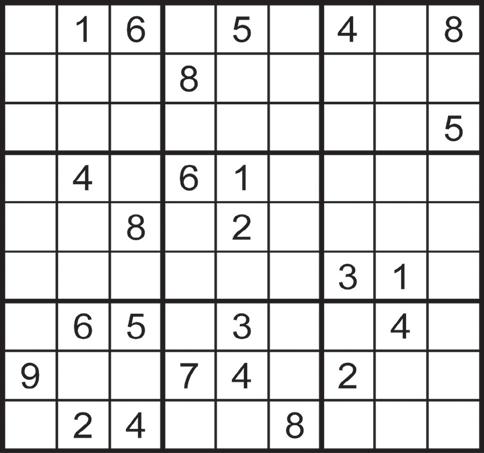
“The ATO says you need to keep records for a four-week period. The percentage of business use that this achieves can then be extrapolated over the year. You also need to take account of the fact that you will also have four weeks or more off for holidays. "The easiest way to keep phone records is if your phone company provides a monthly list of all your calls. I get that every month for both my landline and my mobile service automatically. However, I am conscious of large phone companies that don't provide this routinely. "Many of my clients have been unable to obtain a listing. It is only with a listing of your calls that we can calculate a percentage.
"The ATO suggests that if you don't get a listing, you could keep a manual record of all your calls, but that's quite messy. They also say you could use the number of minutes spent on business calls, but that's hard to calculate without a listing.
Tyler was gobsmacked, saying he had no idea it could be this complicated.
"It doesn't stop there, Tyler, " I said. "It can be even more complex if your phone bill bundles phone and data.
"The next question is how is data usage claimed? You need to take account of how many people actually use the data connection. They all need to keep data-usage records as well. So all data usage needs to be logged and you claim your percentage. The important point is that you have to be able to prove your claim."
Tyler said: “But, Gail, phone and data are bundled together, so how can I separate out the data?”
I told him that the ATO recommended that claimants find out how much the phone cost on its own and the same for the data.
"You can then apply that ratio to the total bill," I said.
"So now you know what percentage of the total is for the phone and how much for the data. It can be easier to have one company providing data and another company providing the phone. It is much easier to work out the actual costs that way if your usage percentage is high. If your business-use percentage is low, it's not worth the additional expense.
"But, as you rightly say, it's complex and it can be time consuming keeping the records. You also have to use the same percentage that was applied to phone use to the phone itself.
"If your employer reimburses you any of your phone costs this will reduce your claim.
"Just one last point, if you're claiming 80-cents an hour for working at home, you can't claim your phone costs anyway.”
Tyrone left, grateful for the advice, saying: "I hadn't realised what was involved in keeping phone records."
If you need guidance on keeping phone records contact the friendly team at Gail Freeman & Co Pty Ltd on 6295 2844.
Disclaimer
This column contains general advice, please do not rely on it. If you require specific advice on this topic please contact Gail Freeman or your professional adviser.