JANUARY 28, 2021
PAUL COSTIGAN: Tricky NCA fails the people of Canberra
ROBERT MACKLIN: Suddenly it’s 1970 again… but without the beer
JACK KERSHAW: Time to look for a better tram route to Woden

JANUARY 28, 2021
PAUL COSTIGAN: Tricky NCA fails the people of Canberra
ROBERT MACKLIN: Suddenly it’s 1970 again… but without the beer
JACK KERSHAW: Time to look for a better tram route to Woden
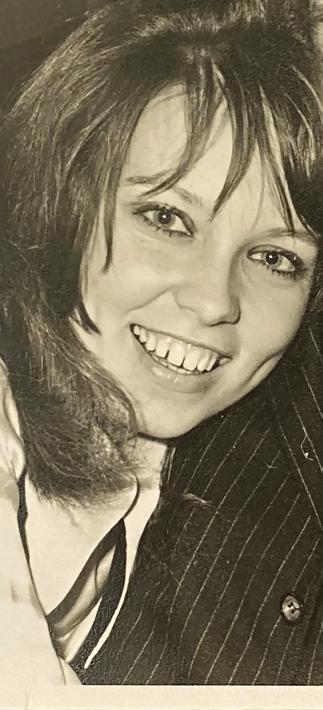
After 50 years, Keren Rowland’s 1971 murder ranks as one of Canberra’s oldest, unsolved crimes, but the police haven’t given up, reports NICHOLE OVERALL
“Who
will benefit from your Will?”
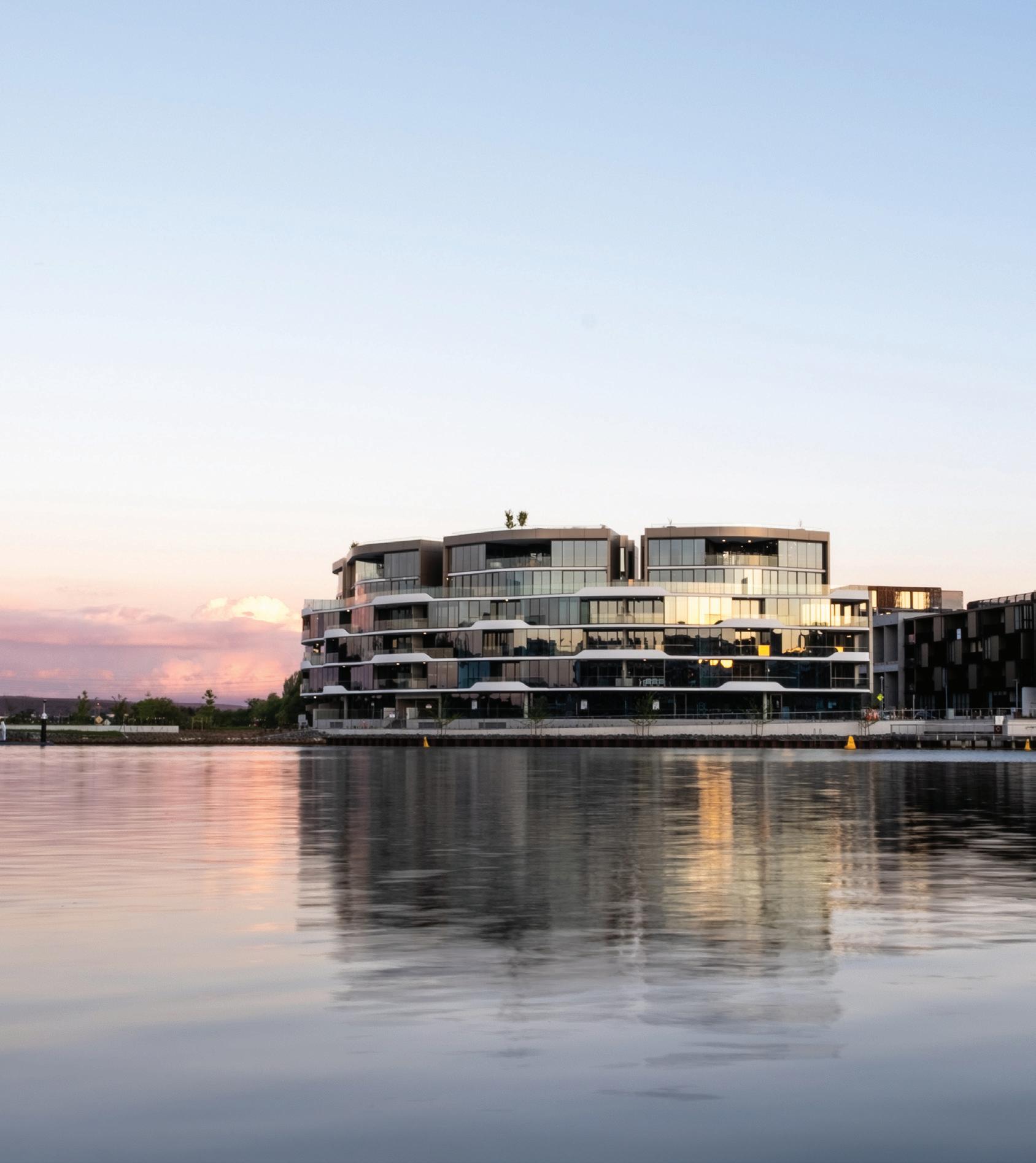

There aren’t many opportunities to own a waterfront property with lakeside views. Keggins is proud to release the last few jewels in the Kingston Foreshore crown. An exclusive collection of 12 premium, completed waterfront apartments are now available. THESE

By Kathryn VUKOVLJAK
DEBILITATING migraine

attacks forced Victoria Williamson to give up sport, socialising and almost made her quit her studies.
Victoria, 23, originally from Melbourne, is now studying medicine at ANU and says she wants to support others living with the “invisible” condition.
Along with fellow “migraine warrior” Tammy Naughton, Victoria will run Migraine Australia’s new Canberra Migraine Warriors support group, with online support and monthly meetings. The first, at Ricardo’s Cafe, Jamison Plaza, Belconnen, is at 1pm on Saturday, January 30.
“We want to support people living with migraine and bring awareness to the condition and how severe and life-altering it can be,” Victoria says.
She says the support group is about connecting with a group of people who “get it”, in a stigma-free space.
“Migraine is this unseen thing, and a lifelong challenge I’ve found hard to deal with,” she says.
“The triggers sound small when you try to explain them and I felt like people wouldn’t really believe me – at one point, if I even saw or heard other people chewing, it could set off a migraine, and no one seemed to understand that.
“People say to me, ‘I get migraines, too’, but they have no idea what the attacks can be like. Even my GP was dismissive, telling me it was just a sinus headache.”
Migraine Australia founder Raphaella Kathryn Crosby says research has found that 94 per cent of people living with migraine felt they had been stigmatised and their condition belittled as “just a headache”.
The biggest source of stigma was doctors, then family and colleagues, many of whom don’t believe the severity of symptoms or think the person is making it up for sympathy to get out of work or to get drugs.
Victoria has lived with migraine for as long as she can remember and says that while she was in year 12 the attacks became triggered by exercise.
“That was hard for me as I was very active and loved netball,” she says.
“I’d get a migraine during the game, but the attacks got progressively worse, until I’d get one every
time I did any exercise more intensive than walking. I had to give up netball entirely.”
Victoria went from playing eight times a week to zero, which affected her social life and led to her gaining weight, she says.
“I felt isolated and no one seemed to understand or take it seriously,” she says.
“An attack could last for days. I could go to sleep with one and when I woke up it would still be there. It was getting so bad I was considering dropping out of study, which was devastating.”
Ms Crosby says that although breakthrough new medications that prevent migraine attacks are becoming available, they’re not being listed on the PBS, so most people can’t access them.
“This is despite these medications being recommended by the independent Pharmaceutical Benefits Advisory Committee (PBAC) many months ago, and despite [Health Minister] Greg Hunt’s repeated claims that they would list everything the PBAC recommended,” she says.
Victoria says she’d been getting a migraine attack five times a week, and was eventually diagnosed with chronic migraine by a neurologist who was shocked she’d been living with the severe condition for so
long. Since the diagnosis, she’s been trialling different medications.
“I have found medication that helps. As I was concerned that the stress of moving to Canberra to study might trigger a migraine attack, I’m having to pay a lot for medication so I can manage things,” she says.
Victoria says the biggest mis conception is that migraine and headache are synonymous.
“It can be stabbing pain behind the eyes and the back of the head, plus nausea, vomiting and light sensitivity. But some people don’t get a headache at all and experience an aura or weird visual patterns,” she says.
As well as the support groups, Migraine Australia is encouraging a shift in language to help reduce stigma, such as not calling a head ache a migraine, or using the word “migraine” in casual conversation.
“And, drop the ‘s’! There’s no such thing as migraines,” says Ms Crosby.
“That implies it comes and goes, and while the way migraine affects people can change from day to day, it’s always there.”
More at migraine.org.au. Join Canberra Migraine Warriors at facebook.com/groups/migrainecanberra say to me, ‘I get migraines, too’, but they have no idea what the attacks can be like.”

Since 1993: Volume 27, Number 4
Arts & Entertainment 23-25
Canberra Matters 11
Cinema & Streaming 24
Crossword 26
Garden 27
Horoscopes 26
Letters 15
Mummy 16
News 5-17
Seven Days 6
Yesterdays 14
Managing Director: James Anderson, 0404 077605, james@citynews.com.au
Director: Kate Meikle, kate@citynews.com.au
Senior advertising account executives: David Cusack, 0435 380656
Tracey Avery, 0477 939999
Advertising account executives:
Damien Klemke, 0439 139001
Karen Davis, 0427 410442
Editor: Ian Meikle, editor@citynews.com.au
Digital news editor: Danielle Nohra, danielle@citynews.com.au
Journalists: Andrew Mathieson, andrew@citynews.com.au
Nick Overall, nick@citynews.com.au
Cover: Keren Rowland in 1971. Story Page 14.
Highly
Belinda Strahorn, belinda@citynews.com.au; Nathan Schmidt, nathan@citynews.com.au
Kathryn Vukovljak, kathryn@citynews.com.au
Arts editor: Helen Musa, 0400 043764, helen@citynews.com.au
Production manager: Janet Ewen
Proof reader: Glenda Anderson

Please





fully sharp focus with damning incarceration figures listed in the latest Productivity Commission’s report on government services.
The ACT has hit a five-year high for incarcerated indigenous children and teenagers having spent 1877 nights in custody through 2019-20 in Canberra compared to 1073
The 74.9 per cent surge over last year is the highest number in the territory since 2014-15.
Winnunga Nimmityjah Aboriginal Health and Community Services chief executive Julie was reported to be “exasperated” at
why indigenous youth have been locked up at 18 times the rate of non-indigenous youth.
The figures continue to cast a shadow on the ACT government’s self-assumed posture as progressives.
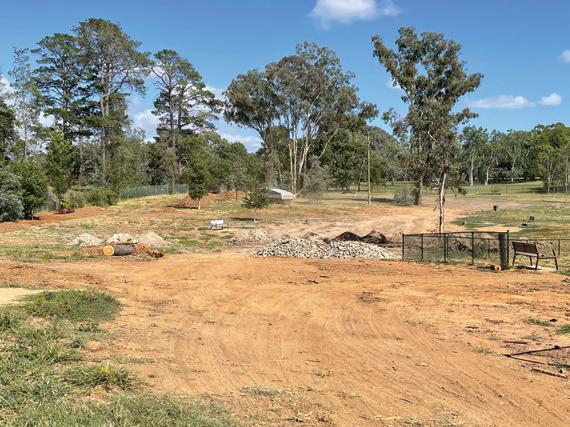
“THE popular Yarralumla dog park has been closed because ‘a number of trees’ were deemed unsafe. A number? Looks like a logging company has been through,” writes former Assembly Speaker, novelist and Yarralumla local Greg Cornwall
He has a point. I scooted around to the erstwhile shady dog park, which was closed for months while a hard-surface car park was built only to be closed for months more for park improvement, to confirm the trees are indeed gone.
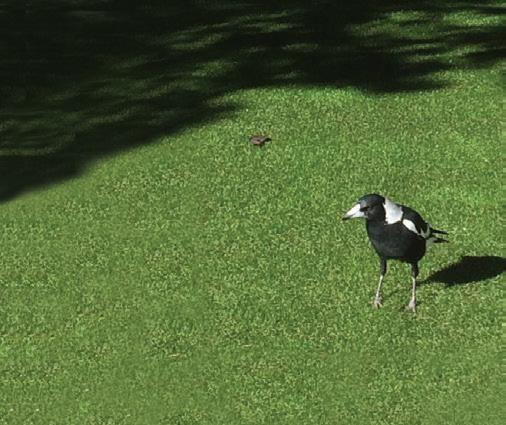
As the photo confirms, progress appears painfully slow and the landscape forlornly bare.
“Doesn’t the ACT government realise dogs need trees,” says Greg. “When can our canine friends next lift a leg there?”
Ian Meikle is the “CityNews” editor and can be heard weekly on 2CC’s “CityNews Sunday Roast” news program, 9am to noon.



BORDEAUX CONSTRUCTION & MANAGEMENT PTY LTD

Total Design Consultancy and Project Management
• Home • Office • Extensions • Renovation • Granny flats • Sun room addition
• Build your new dream home • Commercial premises • Retail
BORDEAUX BATHROOMS
• Designed with you with your budget in mind • High standard of workmanship
• High quality finish • Completed on time, every time
BORDEAUX KITCHENS (Associated with Capital Cabinetmaking)
Specialise in custom-built design and joinery • Kitchens
• Vanity and laundry units • Commercial Joinery
• Shop/office • Home office • Experienced
tradesmen and full trade co-ordination available
Showroom Hours: Mon-Fri: 9.00am to 4.00pm, Sat: 9.00am to 12pm, or by appointment









By Danielle NOHRA

“OBSESSED” Goulburn life coach Jaemin Frazer has spent a decade researching how people can overcome insecurity, and found that it takes seven practices.
The “very secure” 41-year-old (he lives by what he teaches) describes these in “Unhindered: The Seven Essential Practices for Overcoming Insecurity”, a book he is offering for free.
Calling himself “the insecurity guy”, Jaemin’s whole life has been getting better at having conversations with people to find where their insecurity problems exist.
“I am desperate to facilitate lasting change and genuine transformation and insecurity is underneath the dysfunction every time,” he says.
“When I dive deep it’s always these limiting beliefs and they’re always self-limiting beliefs.”
The dad of two teenagers (a boy, 14, and girl, 16) decided to solely focus on insecurity more than two years ago.
His move into coaching about 10 years ago saw Jaemin have to overcome insecurity himself. The former
school captain (both primary and high school), “goody two-shoes” had always been a leader.
He had a 10-year career as a church pastor before becoming a school chap lain, all the while building on lifecoaching skills along the way.
“I was unaware that I was insecure and it really showed up when I went to write my first book,” he says.
“I decided that I was going to be a coach because it was so compelling and exciting even though no one in my world thought it was a good idea.
“Then, when I went to write my first book, I wrote the first chapter in one night and then I shut the lid of my lap top and all that passionate energy and excitement turned into fear and dread.
“Writing is particularly difficult for me. I don’t think I have a natural affin ity for writing.”
Jaemin found himself standing on top of a “mountain of insecurity” and he decided not to run away from it.
“My life’s work has not been to work out a solution but to deconstruct a so lution,” he says.
“Plenty of people have already worked out how to not be insecure and my job was to notice what they did differently than everyone else and in every case seven practices showed up, whether they were aware of it or not.
“All I’ve done is made that explicit, put it in one place, explain it as clearly

sights to start your day”, which came out in December.
Jaemin describes it as the same kind of content as “Unhindered” but it’s broken up into smaller, easier to digest pieces.
Now, still living in Goulburn on a 20 acre farm with horses and cows, five minutes from the town centre, Jaemin, a passionate runner, drummer, reader, cyclist and golfer, is working on his fifth book, “Leverage: How to change the people you love”.
“People go ‘hang on a minute, you’re not supposed to change the people you love’ but you have to,” he says.
“Sure, you’re not supposed to make them something they’re not, but you are supposed to change each other in other ways and bring out the best in
So Jaemin says he’ll keep working on that book, but in the meantime is living life exactly how he wants to.
“I’m where I want to be, living the life that I want, with the people that I want, in the relationships that I want, doing the work that I want,” he says.
But his ultimate goal?
“In 50 years my goal is for insecurity to be something we don’t even think about because it’s so natural and easy to fix,” he says.
“Unhindered”, free (except for shipping costs), via unhinderedbook.com
BRADDON Dental Surgery is offering a series of “charity days” throughout the year, where the entire takings of the day will be donated to local and overseas charities, says owner and principal dentist Dr Loc Lam.
On the “charity days”, Dr Lam and her team will donate all payments to a charity for dental work performed on the day. Dr Lam says patients are encouraged to book in on a day that supports a charity that’s important to them, and if they don’t need to see a dentist at that time, they can make a donation instead. New patients are welcome too, she says.
There will be four charity events: the first, on Saturday, February 6 will donate funds to Karinya House, a local not-for-profit provid ing shelter, stability and support for women who are pregnant or have new babies, and may be at risk of violence or homelessness.
On Saturday, May 15, funds raised will go to support Companion House, a community-based organisation that works with those who’ve sought safety in Australia from persecution, torture and war-related trauma; and on Saturday, July 10, they will donate to the Sanjiwani Australia, a charity

and bridges, implants, teeth whitening, on-site x-ray, cosmetic veneers, root canal, sleep apnoea and emergency services.
travel, I wanted to provide help closer to home,” she says.
“The charities we’ve decided to support
“I come from a refugee background, and feel fortunate to have been able to study in Australia at Queensland University,
graduating in 1986, so I’ve always wanted to give back,” she says.
“There are so many people who need help and doing charity work gives me a sense that I’m doing something useful.”
Dr Lam’s connection to Nepal came following a holiday there in 2013, when she saw a need for healthcare services in the more remote areas of the country, and began working with an Australian couple who had set up a dental clinic there.
She now volunteers at Sanjiwani Public Health Mission Nepal, based in Ghandruk, a village in the Annapurna region of Nepal, and along with her husband, John Guilfoyle, supports the clinic in the remote region.
“All our regular patients know about my charity work overseas, and often ask about my trips and the kind of work I’ve been doing,” she says.
“Offering charity work in our own dental surgery, with our patients getting to be a part of it, is a way for me to carry on supporting others.”
A donation link has already been set up for clients of Braddon Dental Surgery to donate to Karinya House. This link will remain active until the end of February.
Braddon Dental, 3/18 Lonsdale Street, Braddon. Call 6257 3072, visit braddondental.com.au or donate to Karinya House via karinyahouse.secure.force.com/secure/donate

february 6

bit.ly/BraddonDental-Karinya may 15 companionhouse.org.au/make-a-donation july 10
• Don’t need a dentist at the moment? You are welcome to donate directly to one of these charities via their web link
• 100% of proceeds on these days will be donated by Braddon Dental to these local & overseas charities
sanjiwani.net.au/make-a-donation
november 27 check braddondental.com.au closer to the date CHARITY TO BE CONFIRMED Sanjiwani Public Health Mission Nepal
To book your appointment on these dates call 6257 3072

THIS year’s Australia Day Order of Australia honours list recognises 845 “inspirational” Australians, according to Governor-General David Hurley.
Of the list, 210 – almost 37 per cent – are women, following a 12-month push by the governor-general for more female nominations.
The youngest recipient is 24 years old, the oldest is 101, with three other recipients aged 100, and 34 aged over 90. Here is a list of local recipients:
OFFICER (AO) IN THE GENERAL DIVISION
Mr Malcolm John HAZELL AM , for distinguished service to the Crown, and through a range of advisory and consultancy roles with government and business.
MEMBER (AM) IN THE GENERAL DIVISION
Prof Emily BANKS, Acton, for significant service to medical research and education.
Mr Stephen James BYRON, for significant service to the aviation infrastructure sector, and to tourism.
Dr Paul CRAFT, Deakin, for significant service to medicine, to oncology and to professional organisations.
Dr Gregory John FEALY, Curtin, for significant service to tertiary education and to Australia-Indonesia relations.
Dr Jillian Anne GUTHRIE , Turner, for
significant service to indigenous health and to justice reinvestment policy.
Mrs Genevieve Mary JACOBS significant service to broadcast media and to the community.

Col. William James KELLY (retired), Fadden, for significant service to pharmacy through a range of roles.
Mrs Sotiria LIANGIS OAM , O’Malley, for significant service to the community through philanthropic support initiatives.
Dr Paul William ROCHE , Isabella Plains, for significant service to epidemiology and to the international community of Nepal.
Mr Allan Ernest WILLIAMS, Forrest, for significant service to business tourism and to the community.
MEDAL (OAM) IN THE GENERAL DIVISION
Mrs Coralie Pearl AMOS , Scullin, for service to the community through a range of roles.
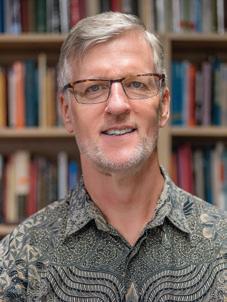
Ms Tanya BARDEN, for service to business and to the community.
Mr Douglas James BROWN, Florey, for service to veterans and their families.
Mr Calvin Thomas BRUTON, Gungahlin, for service to basketball as a player and coach.
Ms Brenda Mary DE BES, for service to youth through Scouts.
Mr Christopher DIENER , for service to people with a disability and to youth through Scouts.
Mr John Robert EVANS, Gordon, for service to bushwalking and to the community.
Emeritus Prof John Philips HARDY, Deakin, for service to tertiary education, particularly to the humanities.
Mr Abdul Rahman HASHIM , Flynn, for service to the multicultural community of the ACT.
Mrs Wanda HORKY, Dunlop, for service to the Polish community in Australia.
Mrs Suzanne Margaret McINNES, Karabar, for service to the community of Queanbeyan.
The late Mrs Ismini (Pitsa) PARRETT, formerly of Barton, for service to community health through exercise therapy and aquatic rehabilitation.
Mr Duncan Grant TAYLOR , Griffith, for service to youth.
Mr George Roger WAINWRIGHT, Narrabundah, for service to veterans.
Mr Anthony WOOD, Queanbeyan, for service to rugby league and to the community.
Dr Richard Symons BLEWETT, Royalla, for outstanding public service through advancing the use of geophysical data to attract investment in Australia’s minerals industry.
Ms Caroline Ann EDWARDS, O’Connor, for outstanding public service to the development and implementation of health and social policy, and leading the government’s health response to COVID-19.
Dr Marion Joy HEALY, Theodore, for outstanding public service to policy and regulatory practice including in the areas of food, chemicals and plant biosecurity.
Ms Rachel Joy HENRY, Chapman, for outstanding public service to the development and implementation of the National Consumer Protection Framework for Online Wagering.
Dr Doug MARMION, Giralang, for outstanding public service through the strengthening of indigenous language infrastructure.
Ms Lisa SCHOFIELD, Chifley, for outstanding public service to the delivery of the treaty establishing maritime boundaries between Australia and Timor-Leste.
Mr Andrew Shaw TODD, Isaacs, for outstanding public service through the development and implementation of Australian government policy on consular matters, and the response to offshore crises.
Mr Paul David WAY, Farrer, for outstanding public service through the development of programs which support current, and transitioning, Australian Defence Force members and their families.
Ms Jennifer Elizabeth WILKINSON, Barton, for outstanding public service in the development of fiscal policy, particularly in the formulation of the Australian government’s economic response to COVID-19.
Mr Mark HUXLEY, Latham, for outstanding public service to education in the ACT.
Ms Anita PERKINS, Campbell, for outstanding public service to strategic communications and community engagement in the ACT.
Ms Narelle Joy RIVERS, Gungahlin, for outstanding public service through improved outcomes for Aboriginal and Torres Strait Islander people in the ACT.
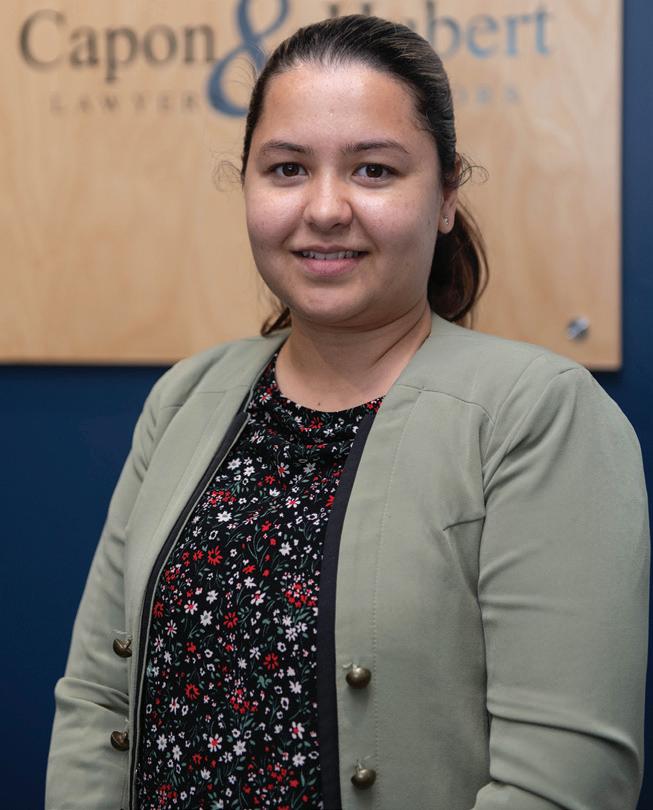

THERE’S a new level of frustration within Canberra’s community groups with how the ACT government conducts itself on planning and development.
The ACT Planning Directorate has perfected its processes to keep residents disenfranchised from having a realistic say in planning. The directorate and the cabal of ministers it hides behind, have strengthened its disingenuous façade of consulting so much so that it now consistently makes ad hoc ill-informed and selfserving decisions with impunity.
To add to these frustrations, is the reality that alongside the ACT government is the parallel universe of the National Capital Authority (NCA).
This federal agency has picked up on the practices of the ACT’s Planning Directorate in not being open about issues and being tricky in dealing with people who live in Canberra. Both now serve some remote greater good and no longer act as if they had responsibilities towards the people who live here.

It is rare to hear praise for the management of the NCA. The perception is that it performs badly. Some see it as fairly useless, others more forgiving while being upset with the developer-focused decisions it makes.
Among those who take an interest in the governance of Canberra, there is a consensus about how badly the NCA operates. It was not always so. It is rare to hear praise for the management of the NCA. The perception is that it performs badly. Some see it as fairly useless, others more forgiving while being upset with the developerfocused decisions it makes.
The NCA has an advocacy role.
Yet most Canberrans have little idea why the NCA exists and what it does –besides occasionally being horrible.
This federal agency manages infrastructure assets, those deemed to be in possession of the Commonwealth, it oversees planning in areas of Canberra that require federal oversite and conducts promotions for Canberra as the national capital.
On asset management and advocacy, on a good day (and they are rare) it scores somewhere around average at best. Have a look at the state of the former Lobby restaurant opposite old
Parliament House, observe the years of neglect in Commonwealth Park, the unhinged enthusiasm for having a seaplane land on the lake, the trashing of West Basin’s parklands, trees and biodiversity to allow for an apartment suburb, and the conclusion has to be that something is dreadfully wrong within the management and board of the NCA.
If anyone wanted to find out how decisions are made by the NCA, good luck with that! The agency has done its best to hide such processes. Its online meeting minutes are a joke. The minimum amount of information is provided to the extent that they take the form of brief notes on some of the items discussed. All details, the interesting stuff, has been removed. The NCA board operates in secret, doing whatever it does and – gauging by what we can see are the outcomes –that’s not much.
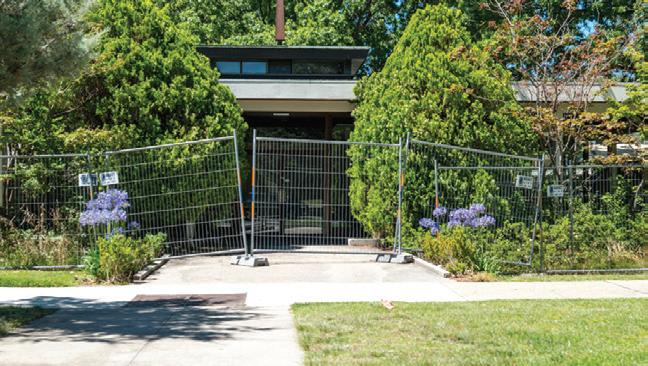
green infrastructure issues. Check out West Basin with the bulldozing of hundreds of trees and the destruction of biodiversity – that is what such wishy-washy glossy words deliver. Look at the trees in front of the National Library – not good. Looking for shade in the National Library car park? There are heaps of trees, but they remain in a seriously neglected and desiccated condition.
seaplane land on the lake, the general response was a muted shrug given we now expect the NCA executive to be easily amused by new toys. It would be great if the people of Canberra had a friendly federal agency that looked after the national interest and worked with residents and others to achieve this. One that did no harm. That’s one for the wish list for 2021.

I had a look at the latest draft of the NCA’s tree management policy that was supposed to be completed last year. It contains the same feel-good generalisations that we have come to expect from the ACT government on
The only polite rating to be delivered to the NCA board on heritage, green infrastructure and general planning issues has to be a fail!
When the media was full of the NCA’s enthusiasm for having a

Paul Costigan is an independent commentator and consultant on the visual arts, photography, urban design, environmental issues and everyday matters.





Canberra architect JACK KERSHAW says sending light rail over Commonwealth Bridge would sell Australia short, but he has another route in mind.
AUSTRALIA would sell itself short with the current troubled, expensive, destructive, disruptive, dangerous, and intrusive, Civic to Capital Hill section of the proposed Civic to Woden tram line.
It uses Commonwealth Avenue (one side of the National Triangle), to connect City Hill to Capital Hill. However, the approval processes, even for the risky section from Civic to Commonwealth Park have not been completed by the Commonwealth.
The whole Civic to Capital Hill section needs to be re-cast because it has the following glaring, mostly visual/ environmental, but also important technical, safety, and financial, shortcomings:
• It’s destructive of our unique Parliamentary Triangle (including from inevitable and inappropriate, unbalanced and view-destroying “land value capture” property development).
• It’s destructive of Commonwealth Avenue Bridge (including ruining its handsome bifurcation, that also matches Kings Avenue Bridge).
• It’s destructive of the important National Triangle symmetry.
• It’s very destructive of cultural land-
scapes, especially on and around Commonwealth Avenue South.
• It’s destructive of the City Hill pre cinct (including the loss of important engineering heritage infrastructure items, and protected natural species and biodiversity – the natural items were recently and belatedly referred to the Commonwealth Department of the Environment, with no decisions to date).
• Its protracted construction will be difficult and outlandish, especially at grade-separated London Circuit South and at State Circle, and be in credibly expensive and disruptive to traffic flows, with a dangerously and inconveniently located stop at City Hill South (that does not even appear to serve Commonwealth Park).

orthodoxy”, an approach rarely seen in the designs of Walter Burley Griffin. Briefly, the alternative route would:
• It has been deemed to need expensive in-ground power supply infrastructure from Civic to Capital Hill and, indeed, to the far western end of Adelaide Avenue.
There is a more visually inspiring and inclusive alternative route, with less disruption, reduced cost and potentially increased operational revenue. And clearly, there’s time to examine the alternative in the usual way.
The alternative would be a unique



• Take in Edinburgh Avenue, with New Acton, (very close to and connected by an existing pedestrian bridge to Acton Foreshore, and thence to Commonwealth Park),
• Then connect as directly as possible to Liversidge Street in and serving the ANU,
• Carry on over the existing land bridge that crosses Parkes Way,
• Extend down to the isthmus of Acton Peninsula,
peninsula, (it is important that the route avoids the verdant historical northern shore; and not spring from the tip of the peninsula, thus preserving its unique landform),
• Extend on to an elegant new curving sail-boat-friendly bridge (for trams, bikes, and pedestrians only) redolent of Griffin’s missing third central crossing (the new bridge being the subject of a properly constituted international design competition),
• Connect via say, a “shared zone”, to a better and sunnier (than cold, south-facing, narrow-gutted Acton



Foreshore) public precinct at Lennox Gardens North/Flynn Place, the land inside the little used clover-leaf section of Flynn Drive, all near but respectfully separated from existing recreational areas and memorial gardens; preferably expanded through lake reclamation so as to match the Bowen Place foreshore line in symmetrically placed East Basin, Travel along Flynn Drive, with perhaps some appropriate land value capture development near the rear of Albert Hall and the Hyatt Hotel, and on currently cleared land opposite Lotus Bay; then on past the Chinese Embassy and other embassies nearby, and on to State Circle, And continue to Woden as currently planned.
The alternative route would receive more usage (notably at normally quieter off-peak times), because it is more inclusive for commuters, students, people gathering, relaxing, exercising or picnicking, as well as visitors to the national capital, by taking in the ANU, important Acton Peninsula, and the new Lennox Gardens North/ Flynn Place precinct; and while still including the key tram stop at the junction of State Circle and Kings Avenue, providing access to Parliament House North, the Parliamentary Zone and Barton.
Jack Kershaw FRAIA (retired).


ON New Year’s Day, after a splendid dinner with the extended family, we headed home along Adelaide Avenue. Suddenly, we were propelled back 50 years in time – there were so few cars on that beautiful smooth road that it was 1970 once again.
That was when Canberra’s “rush hour” was 10 minutes around 8.30am and 20 from 4.53pm to 5.13pm. And the most dangerous time, we joked, was mid-morning when ladies of a certain age went shopping in their Morris Majors.
It wasn’t exactly the same. Instead of the bellyful of beer that used to be de rigueur for the typical Canberra male, I’d had no more than two glasses of a delicious Murrumbateman white. But it powerfully evoked the days when we lived as though it really was bush week in the bush capital and we had Sunday afternoon parties bottling big reds from the Barossa.
That was the time when, in Jack Waterford’s memorable observation, “Canberrans believed it was their inalienable
Whatever the future holds, our wondrous capital city, rich with character, learning and politesse, is undoubtedly the place to be.
right to park within 50 metres of their destination, for free”. And we did.
By the ‘70s my wife Wendy and I were practically old Canberra hands. We had arrived in the early ‘60s – she from Temora via Sydney teacher’s college and the mandatory trip to London’s Earl’s Court; me from Queensland, Melbourne and “The Age” bureau in Old Parliament House.
We’d bought our first home in Pearce – then the outskirts – rarely locked up when leaving and on Friday evenings found it rather exotic to stroll down to the local Vietnamese. Over the years, the owners’ children topped their classes and went on to uni. Their father had been on the staff of the Vietnamese Prime Minister and in 1967 the same fate befell me when my new boss, John McEwen took over after Harold Holt plunged into the Victorian surf never to return.
Sir John retired in 1971 and, after an interlude with the Asian Development Bank in the Philippines with
our two baby boys, we returned in 1975. By then I’d begun my writing career with a coming-of-age novel, “The Queenslander”. So we bought a little place on the south coast where two more novels arrived.
But it was a struggle, so in the ‘80s we came home; Wendy returned to teaching and after a disastrous flirtation with the video production business, I combined reporting on “The Canberra Times” with books exploring our hidden history. That was when I discovered the true joys of living and working in Canberra.
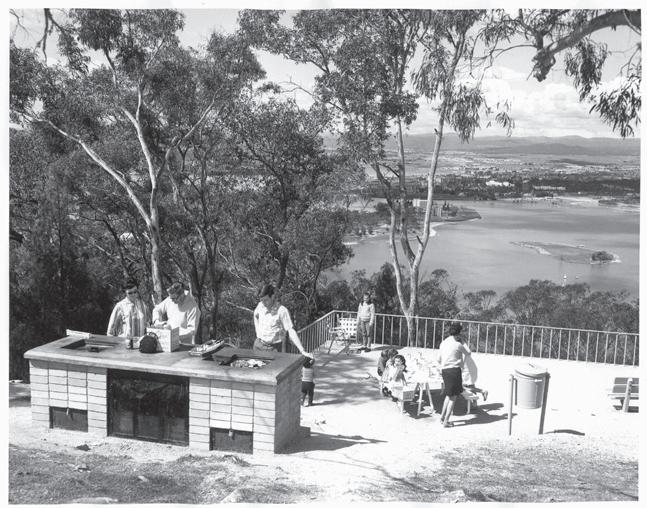
My journalism included a weekly heritage page where I discovered the pre-settlement period with historian Lyell Gillespie, then the formative days of the capital through the magnificent Mildenhall photographs and the National Archives. Together they brought the city and its environs alive for me and our growing family. I cherished the privilege it afforded us all to live among it.
Then, as arts editor and restaurant reviewer, a whole new dimension opened through the plays and great exhibitions mounted by Betty Churcher at

Set amongst landscaped grounds, Adria Care is a warm and welcoming community of people from all around the world. We pride ourselves on cultural diversity and celebration, and offer a wide range of activities to cater for all interests. We provide care for Croatian and all other nationalities.
Adria Care fosters individuality and independence, providing support and assistance to enable residents to live in a comfortable and secure environment. Adria Care in Stirling offers residential care for 42 residents, incorporating 2 respite rooms, and Special Care. The village also contains 36 independent living villas. All villas have 2 bedrooms, a courtyard and a garden, and residents enjoy a peaceful and welcoming community lifestyle.
Our aim is to provide a caring, safe, home-like atmosphere, reflecting your rights to dignity, respect, privacy, safety and the best quality of life.
Contact our friendly staff today to arrange a personal tour.
ing cuisine throughout the city. And all the while the books piled up via the extraordinary research treasures of the National Library.
By then we’d long lived down that nasty scoff from the Duke of Edinburgh that we were “a city without a soul”. As a columnist, I covered the “bringing them home” gathering to honour the Vietnam Vets and helped organise the 2000 People’s Walk for Reconciliation across Commonwealth Bridge.
The city grew like Topsy, both up and out, especially the northern side that in earlier times ended for us southerners at the ANU… or maybe Kaleen on freezing Saturday soccer mornings.
Then came the 2003 fires when night arrived at 3pm, power failed
barbecue; and last year the blazing catastrophe that almost engulfed us, followed by the virus. And though they hurt like hell they brought in their train a wonderful sense of community, one with a generosity that flowered in the darkest days to get us through that damnable year. I wish we could say that we’re over the worst, but it doesn’t feel that way. The coming vaccines will at least give us some breathing space before the next climate crisis. However, one thing’s for sure – whatever the future holds, our wondrous capital city, rich with character, learning and politesse, is undoubtedly the place to be.
robert@robertmacklin.com


WHAT unfolded along a dark Canberra road on the evening of February 26, 1971, ranks as one of the capital’s oldest unsolved crimes.
As the 50th anniversary approaches, interest and activity in the fate of 20-year-old Keren Rowland, then past the first trimester of her pregnancy, has been reignited.
According to Sgt Adam Rhynehart, leading the current re-examination of the perplexing case, it’s such engagement that can make a difference, even after so long.
“I think if one thing hasn’t changed between 1971 and today it is the investigation’s reliance on the public,” he says during our almost two-hour interview at the Winchester Police Centre, Belconnen.
“They needed the information 50 years ago from the public about what they might have seen or heard and the same thing exists today.”
At first glance, it seems that what befell Keren might have been merely a moment of chance, prefaced by a series of apparent
coincidences, unfolding in less than the blink of an eye.
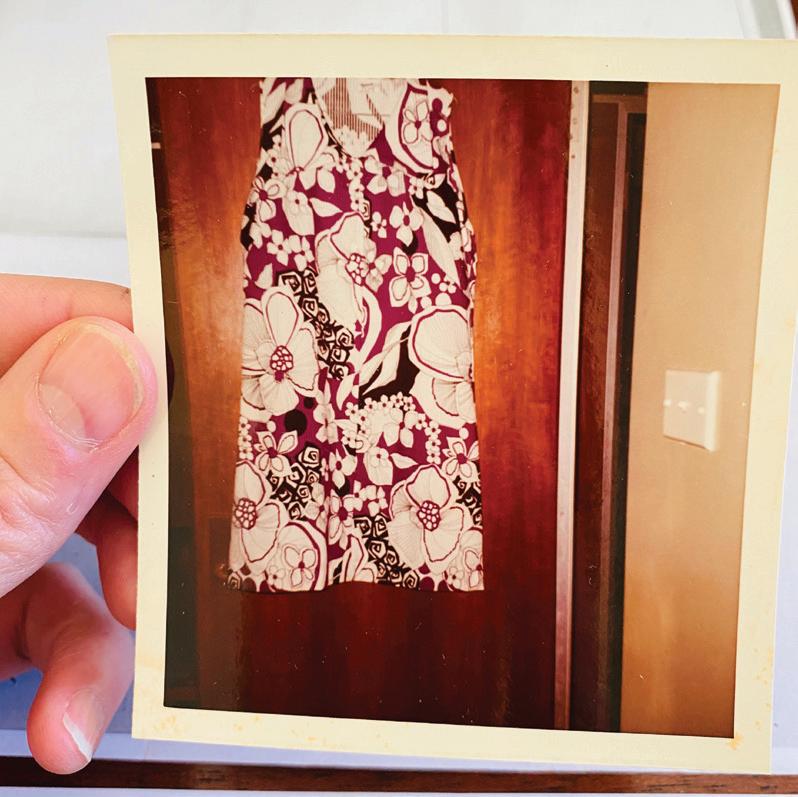
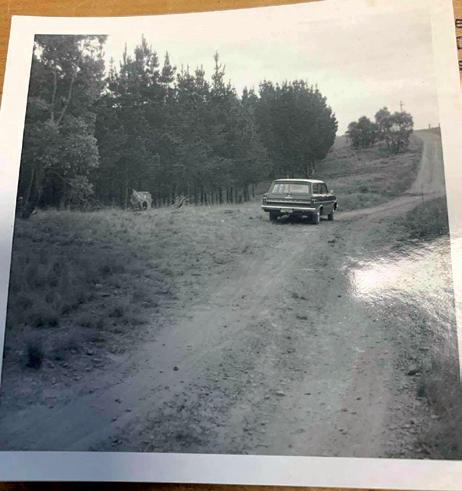
Around 9.30pm on that Friday night, half a century ago, along Parkes Way where it shoulders Lake Burley Griffin, a slim silhouette was seen walking towards the glow of Civic. Locked and left behind was the white Mini Minor Keren was driving, out of fuel.
Having meant to be meeting up with her younger sister and some friends, Keren’s subsequent disappearance could not be accounted for, her whereabouts unable to be ascertained.
Of the few elements known with certainty: a second vehicle in the vicinity and that what came next irrevocably altered a then still relatively innocent capital.
Weeks stretched into months; widespread searches and an exhausting investigation involving multiple witnesses, a lengthy list of potential suspects and hundreds of pieces of documented evidence produced no breakthroughs.
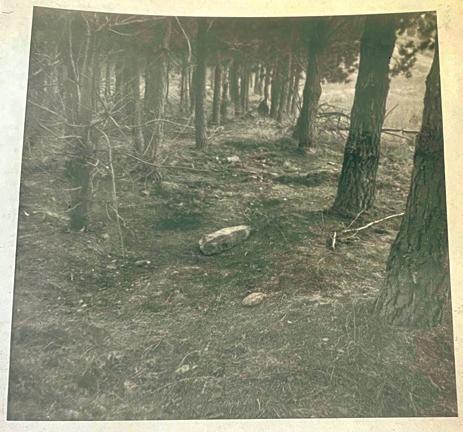
Then, on May 13, Keren’s near skeletal remains were stumbled across in the isolated though not overly distant Fairbairn Pine Plantation between the Canberra Airport and
Queanbeyan. It’s a lonely, eerie place to be on a bright morning let alone where you might spend your final moments in the dark, terrified for your own
Safety First: We never compromise on safety.
Up Front Affordable Pricing: Tailored solutions to your needs
Professional: Clean, tidy, respectful technicians.
Excellence Guarantee: Polite & friendly customer service.
Reliable: On time, all the time.
Qualified: Qualified & experienced.
We call ourselves electricians, but we are so much more, handling a wide variety of jobs, tasks each and every day!


also how Keren died and who may have been responsible.
While police – and long-suffering family members – have never given up on the chance of a definitive outcome, fresh approaches are bringing to light potential leads and the hope there may yet be a resolution.
Keren’s is among those in a review of unsolved homicides and long-term missing persons in Canberra.
“We spent a considerable amount of time searching the National Archives, forensics, exhibit offices, looking to get as much information about the job as possible,” says Det Rhynehart.
“That’s not to detract from what the investigators did [in the 1970s], they did a great job. In fact there’s far more material in the investigation than I realised and they were very, very committed… and it shows with the amount of work we have recovered.”
My own previous articles from September about Keren and other local women who have disappeared without trace or been found murdered have also produced encouraging community interaction.
So too, the resulting podcast, “Capital Crime Files”, launched on December 9, 2020 – the date that marked
of those directly involved and impacted. This includes Keren’s younger brother, Steve, who had never before spoken publicly on a tragedy most of us could never begin to fathom.
As to the benefit of such initiatives, Det Rhynehart’s response is positive: “In the short time that we’ve been reviewing this investigation… I’ve spoken to people saying: ‘Well, I’ve heard the podcast and I’ve spoken to Nichole’. “They’re aware of the podcast and they’re aware that Keren’s investigation is still running, that we’re still looking for information that could help us.
“If it helps generate a bit of information that might assist us get some answers, then I’m very happy for it.”
It’s inevitably an ongoing challenge – memories fade, people die and in Keren Rowland’s case, the limited amount of physical evidence collected is currently unable to be located.
Det Rhynehart acknowledges the difficulties.
“I think sometimes we don’t know exactly what we are looking for or what exists, so we might be searching for a long time for something that might have either disappeared or been destroyed
ing all previously sourced information as well as following up what may be new angles, they continue to call for public assistance.
“We are relying on someone that saw something or heard something or that final bit of the jigsaw that we just don’t have,” says Det Rhynehart.
“I really implore the public if they know something or they think they know something, to contact us.
“So hopefully for Steve and his family, the public and the judicial system, we might be able to get some answers for what actually happened to Keren.”
* The “Capital Crime Files” podcast provides an in-depth look at Keren Rowland’s case, including more on the interview with Det Rhynehart. It’s at capitalcrimesfiles.com.au and also accessible in written form.
* Anyone with information, should contact Crime Stoppers or directly to me at capitalcrimefiles@gmail.com
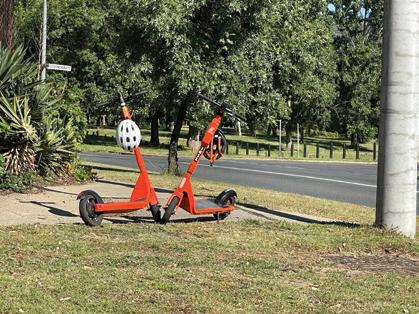
I AM reluctant to criticise the e-scooter concept because I know that if I was much younger I’d be on one like a shot. We see many of them here in Hackett and I do have some concerns.
The admissions to emergency rooms are obviously a worry. As well, most of the riders I see are not wearing a helmet, many regularly exceed the speed limit on footpaths and sometimes carry two riders. I’ve twice seen children, well under the age limit, riding them in the company of scooter-riding parents.
Our police resources are always stretched thin and they have enough on their hands already without spending lots of time apprehending illegal scooter users. E-scooter riders must take seriously their personal responsibility to ride safely.
Steve Ellis, Hackett
PAUL Costigan’s column (“Canberra Matters”, CN January 21) regarding the planning morass that is bogging down the nation’s capital is 100 per cent on the money.
Why indeed is this city continuing to be blighted by the boards of three so-called planning agencies consisting of who-knowswho from who-knows-where? Do they live here or, worse still, do they have “connections” with the spate of developers who seem to be spearheading the building explosion?
why are there so many pathetic decisions being made about the expansion of the suburban landscape and the disastrous architectural infill.
How sensible is architect Jack Kershaw’s comment about the relocation of the Canberra Racing Club into new, and presumably more spacious, surroundings at Majura thereby making use of the current location for the Lyneham urban village. Seems like a win/win situation for all concerned – punters have a new “Ascot” facility and the tram usage will presumably benefit from the urban village habitation in the long run.
Jack has also come up with several other well-thought-out alternatives to the current urban infill and tram-route aberrations, not to mention the disastrously cramped West Basin high-rise/South Bank notion.
If Chief Minister Barr had any sense, he would have made use of Jack’s talents long ago and put him on his urban-planning advisory staff.
Patricia Watson, Red HIll
I ALWAYS enjoy reading Paul Costigan’s articles in “CityNews” including his latest, “The stacked boards that are killing off Canberra” (CN January 21).
What he doesn’t mention is the stacked boards on some of our other authorities and tribunals, particularly the so called Independent Remuneration Tribunal.
This tribunal comprises three members, none of whom you could say are representatives of the ordinary community. All of them held high executive positions in government and never, to my knowledge, has the tribunal included executives from the Salvation Army, Vinnies, Rotary, etcetera. Its decisions not only apply to the remuneration of the Chief Minister and all our MLAs, but also judges, magistrates, executives of the ACT public service, members of other tribunals and commissions and part-time public officers to name a few.
And to say it is “independent” is rather a furphy as the tribunal’s own remuneration is determined by the Chief Minister.
Rarely, if ever, does the tribunal not award a pay rise and rarely, if ever, does that pay rise match those of the community or the various cost-of-living indexes.
It is high time that this tribunal was examined to see if it is truly “independent” and properly represents the community’s view of remuneration being paid to our political masters.
Ric Hingee, Duffy
I was simply amazed at the story about Hannah Mouncey as a footballer (“Transgender footballer fights off online abuse”, citynews. com.au, January 19), who just happened to be transgender. I just felt it needed a comment.
I could not believe anyone would launch into an attack on anyone like she has suffered. Social media enables this sort of thing. I do the occasional letter to the editor and I might criticise, but I think it’s at least respectful, issue focused and not personal.
You don’t have to be overly sensitive to think how you’d feel if subjected to personal attacks. I’d be pretty unhappy about it. It’s not hard to be fair, it’s not hard to be tolerant and it’s not hard to understand that if you were in Hannah’s shoes this would be the last thing she would need. It’s not hard to think what being critical does in this situation, either – which is nothing helpful at all.
I hope her chosen sporting codes are accommodating, but it’s not a good look so far. Sports like to imagine they are many things –how about being fair, decent, thoughtful and tolerant? It would be nice if others in other walks of life were the same, too.
Martin Gordon, Dunlop
OUR fearless editor, Ian Meikle, opens his soul to reveal to “CityNews” the misused and overused words that he loathes. These
include functionality (what’s wrong with practicability?), helmed (instead of lead), dove (instead of dived), unprecedented, and pivot (or “spin”, instead of change (“Seven Days”, CN December 24).
My pet hates include the now-universal preposition across (how about in, around, or throughout?), impact – what’s wrong with effect (noun), affect (verb) or result (either)?
Then there’s the growing tendency, particularly in the capital city tabloids, including “The Canberra Times”, to omit or delete the conjunction “that” after transitive verbs that are followed by a noun or a subjective clause. I have seen many examples where the missing word makes the sentence, or even the whole paragraph, nonsensical. Perhaps I’m old fashioned, but I learnt “proper” English throughout my 19 years of school and university education, and my 40-year professional career.
Dr Douglas Mackenzie, Deakin
WOW, our public servants work hard: the lights are on all night every night at ABS House and at Home Affairs’ offices in Belconnen.
Government, time to increase the efficiency dividend. Don’t allow this waste to continue.
Herman van de Brug, Belconnen

AS back-to-school beckons, “Mummy” columnist KATE MEIKLE has compiled a cheat sheet for new kindergarten parents.
STRANGELY, 2020 flew past very quickly for us and somehow, in a blink of an eye, we got to the end of the year with our son’s first year of school behind him.
Kindy is a big step up and school life is fast paced. It will ask a lot of your child and you. As a “veteran” kindy mum here are some of the things that I learnt that big first year: Stay on top of the notes
I felt a bit out of control at first trying to keep up with the schedule –library days, reader days, free-dress days or special performances. Notes can seem never ending.
Mummy tip: As soon as you get a note, action it right away before you forget and the next note comes back home, screwed up in the bottom of a bag. Same goes for party RSVPs. Get one of those wall calendars your mum used to have (on a notice board, next to the phone and the teledex) when you were growing up. It’s daggy but useful.
The dreaded lunch box I struggled to get into the rhythm of them. Smarties pack them the night before (or even freeze some sandwiches), but not me. My son, being a creature of habit, eats the same food for lunch, so that makes it easy. Don’t pressure yourself to create a
gourmet lunch box. The internet has way too many perfect mums showcas ing their home-made savoury muffins and balanced bento boxes. Don’t get sucked in. Just do your best.
Mummy tip: Buy lunch boxes now; they’re hard to find once the year starts. There is no such thing as the ultimate lunch box, so don’t spend a lot of money trying to find it. While shopping, buy two school hats. Your kid will lose the first by week two, then it will turn up by week six. Trust me, they need two hats.
Big little kids
Kindy’s a big leap in independence. It came as a surprise to us that our son hadn’t been given the opportunity to fill up his drink bottle, it’s something we always did for him.
Mummy tip: Teach your kids how to do it, how to cool themselves down after running around the playground at lunch, how to put on sunscreen properly. Those sort of personal-care things that parents automatically take on for kids need to transition to their responsibility.
Mini ‘Karens’ Kids tend to love rules and school has a load of them. Kindy kids will become very self righteous (yes, good old-fashioned dobbers), as they learn how the school works. This will also come home with them. They

and plans being changed. Your child will become a dobber, they will want to speak to the manager, like little “Karens” when their sense of right and wrong is challenged.
Mummy tip: There’s no point in saying “be cool” or trying to change them. Be grateful that school has positively influenced them, even though they will be the dobbiest little humans on the planet! Party politics
Birthday parties can get political! Kindy kids appear to not really care



luck.
Mummy tip: Go on, be the parent who invites your kindy kid’s new friends to your house for a play. Have a cuppa with their parents and you might just make a friend, too. The play date was a sanity saviour for us last year – it’s free, entertaining and suitable for all weather conditions. With a bit of luck, the play date will be reciprocated and your child can go and mess up the other family’s house.
Don’t be sad, be proud
so’s” party, but us parents might have a different feeling. This can create some whispers and tension. I hope someone can clarify for me some of the rules such as do you have to invite every kid that invited your kid to their party? Is telling another kid “you are invited to my party” an official invitation? Ahhh, I give up.
As the queen of “happy tears” in my family, my kids love to tell everyone that “mummy cried happy tears on Christmas Day, two times!” I get it, you will probably stifle a sniffle when waving your kindy kid off on the first day. But try not to feel sad, just focus on the exciting new phase ahead. When that happened to me, I felt an overwhelming feeling of pride. Pride that he is a big-hearted boy, ready for the next big step in his life and education. Pride that we made it this far! Good luck, fellow parents, on this amazing journey.


By Nathan SCHMIDT

STARTING school is a big transition for the whole family and there are things parents can do to make sure the early days of schooling aren’t anxiety generating, says education professor Dr Deborah Pino-Pasternak.
“There is something around the motion of preparation, but I wouldn’t like families to think there are these big things they should be doing to put some children at a certain advan tage,” says the associate professor of education at the University of Canberra.
For families it can be beneficial to plan out the new daily routine, including rehearsing the walk to school. But it’s not a one-size-fits-all, says Dr Pino-Pasternak.
One of her biggest tips is just communication.
Talking to children and creating an environ ment where they feel safe to talk about their feelings, including any nervousness they might feel, is important, says Dr Pino-Pasternak. But, it’s not just children that parents should be communicating with.
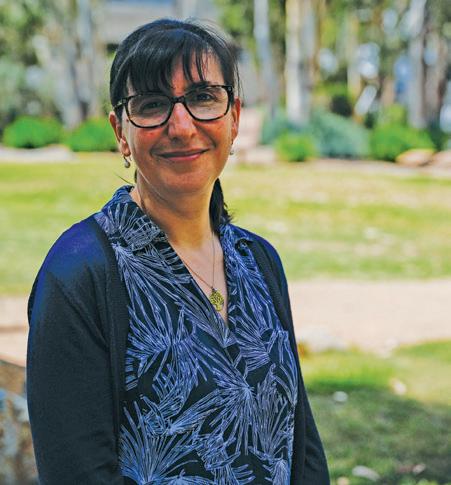
Dr Deborah Pino-Pasternak, associate professor of the faculty of education at University of Canberra.
a few months before they finally find their own space.”
“The thing we tend to forget is if we establish a positive relationship with the educators of our children, they are an amazing source of knowledge and support,” she says.
“And, for children knowing that their parents trust their teachers and see them as experts and people with authority gives them a sense of safety that they’ve been left in a place with figures that are trusted by their family members.”
For children struggling to make friends, Dr Pino-Pasternak recommends a strategy that involves problem solving children’s social skills.
“Sometimes we fail to think of things we can teach,” she says. “We tend to attribute [issues of socialising] to personality; my child is withdrawn, my child is shy or my child is an extrovert, as if it was a trait. As opposed to thinking there are things we can do to help children.”
Children who are struggling on the playground should be encouraged to ask a teacher for help finding someone to play with and to not be dismayed if they are rejected, Dr PinoPasternak says.
If a parent sees their child is constantly talking about two or three people, they should introduce themselves during pick up/drop off and exchange phone numbers with other par-
Dr Pino-Pasternak says it’s likely this year will continue to be disruptive for educators, children and, of course, parents. But, it shouldn’t be something to be afraid of, she says.
“It seems almost impossible sometimes when you’re overwhelmed and stressed but trying to think what my child is actually learning from this is things like the power of community and solidarity,” she says.
“They’re learning about responsible decision making and how to be a socially responsible citizen through all these health-related practices. This is good learning if we are able, as much as we can, to frame it in that positive light.”
Parents should foster a safe and relaxed environment at home and understand that academic education amid these disruptions is not everything.
“I would put the academic side of learning during these difficult times as my second priority,” Dr Pino-Pasternak says.
“If [children] are not in a position where they are ready to learn, that has an impact not only on their cognition but in their social behaviours.
“If we can invest in helping children understand where they are behaviourally and emotionally, then we learn to understand what the signs are that they are not coping.
“That’s where the heaviest investment from families should be at this stage.”
Rallimax has the latest wheel and rim straightening lathe, enabling us to successfully realign most damaged


AFTER the hard year that was, now is the perfect time to make changes for a healthier and more productive you in 2021. Whether it’s getting active, addressing injuries, or relaxing with a treatment, “CityNews” speaks with experts about how to kick-start the new year right.
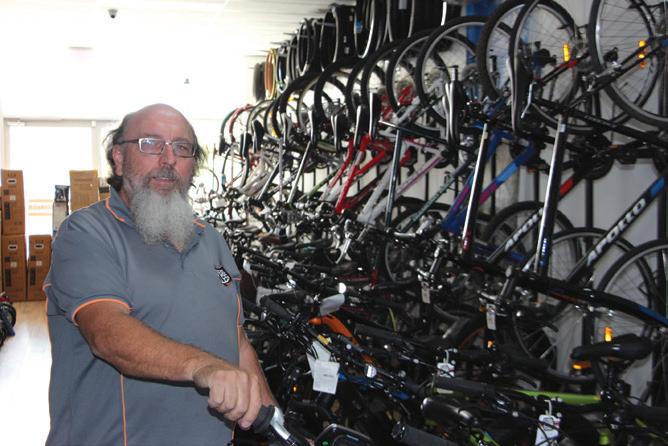
“BIKING, skating or scooting is a fun way to get more active heading into the new year, and Cookies Cycles has all the products and equipment customers need to get started,” says owner David Cook.
“It’s the perfect way to get some exercise going into the new year.
“Whether it’s pedal, balance or electric bikes, skateboards or scooters for riders young or old, we stock a wide and diverse range of leading brands for commuting and recreation.”
Located in Franklin, David established Cookies Cycles more than five years ago, wanting to start a shop that catered to families.
“As a father of teenage kids (at the time) I really saw the importance of opening a place that was dedicated to families, especially for people who want to get into riding but aren’t sure where to start,” he says.
With 35 years’ experience in the industry, David says customers can shop with confidence knowing they’re getting what’s right for them, no matter their level of riding experience.
“Cookies Cycles also has a fully-equipped workshop where we do repairs and stock parts and accessories for all of our products,” he says.
Cookies Cycles, 227 Flemington Road, Franklin. Call 6242 0338, email shop@cookiescycles.com. au or visit cookiescycles.com.au
ARTHRITIS ACT’s team of expert allied health professionals are now helping seniors and people with disability gain or maintain their driving licence, says CEO Rebecca Davey.
Through Arthritis ACT’s new driver assess ments program, Rebecca says it’s the first time people can get an assessment through a private organisation.
“Customers just need to call up and book in with a referral from their GP and we’ll give them a full evaluation.”
It’s just one of many services the team offers.
“When it comes to managing chronic pain, illnesses and disabilities, Arthritis ACT focuses on the whole person – mind and body – in order to get vital outcomes,” says Rebecca.
“We offer physiotherapy, exercise physiol ogy, disability support, meal planning and more. There is no pain that is too little or too big for us to help you with, no matter your age or condition.”
They also have specially designed exercise programs to cater to each individual personally.
This includes the “My Exercise Program” which Rebecca says focuses on the individual’s needs.
“We recognise that exercise isn’t one-sizefits-all, and that people all have different
requirements,” she says.
“We all need help with tackling problem areas, but everyone has their own goals and health needs.”
Arthritis ACT, Building 18, 170 Haydon Drive, Bruce. Call 1800 011041, email info@arthritisact. org.au or visit arthritisact.org.au






We are now undertaking Driver Assessments for older drivers and those who need an assessment to either gain or maintain their licence

Physiotherapy – including the GLAD program for knee and hip osteoarthritis, sports injury prevention and rehabilitation, and pain condition support.
Exercise Physiology – Individual exercise prescriptions, small group classes to increase strength and improve rehabilitation, strength and balance classes, hydrotherapy support.
Occupational Therapy – access reports for NDIS and Disability Support Pensions, home modifications, equipment prescriptions.
Dietetics – meal planning, weight management support, food intolerance support.


THE best way to look after, or improve, people’s mobility as they age is to stay active, say Dr Phil Aubin and Dr Nicholas Tsai of Orthopaedics ACT.
Both doctors recommend seeking advice on an appropriate exercise program or “return to activity” rehabilitation.
“Remaining fit and active has a strong link with longevity, and you’ll feel better, too,” they say.
“All joints benefit from moderate daily movement, whether the exercises are land-based or in water.”
All the doctors at Orthopaedics ACT work closely with allied health professionals and can refer patients on to obtain the best outcomes.
“Our surgeons, doctors and nurses deal with mobility-limiting conditions on a daily basis,” they say.
“We are here to treat these issues and enable patients to return to pain-free movement.”
Orthopaedics ACT also has a visiting pain management specialist to assist their patients.
“For any conditions affecting mobility, such as osteoarthritis, we recommend seeking medical advice,” say the doctors.
“Walking aids are also important for pain relief if there is arthritis in the lower limbs.
“Here at Orthopaedics ACT, our goal is always to improve the condition and help patients to return to an active lifestyle as soon as possible.”
Orthopaedics ACT, Woden Specialist Medical Centre, Level 2, 90 Corinna Street, Woden. Call 6221 9320 or visit orthoact.com.au
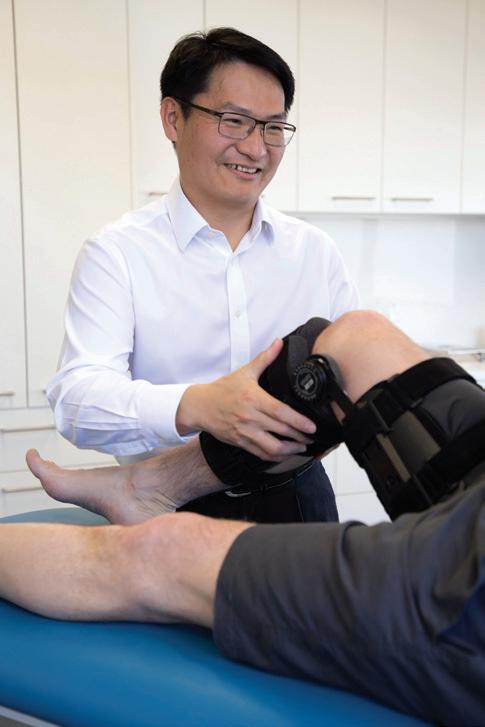



THE Manuka location of Manuka Woden Physiotherapy and Sports Injuries Clinic is about to reopen in a better, more accessible spot, says principal Greg Nash.
Still positioned on Bougainville Street, Greg says the clinic, now on the ground floor, will open in early March making it wheelchair accessible with convenient off-street parking, which is free to clients.
Greg splits his time between the Manuka and Woden clinics, saying the Woden loca tion, opposite Westfield, is also wheelchair accessible and is positioned near the bus interchange, for people who don’t drive.
Backed with 35 years’ experience working in musculoskeletal physiotherapy, sports injuries and occupational health and safety, Greg says an important role the physiotherapist has is creating realistic goals.
“We spend a lot of our time educating people about their injuries,” he says.
“Perhaps when they’re with the GP they don’t have time to do that sort of thing [but] in a treatment session [here] they have more time to ask questions and learn how to better manage their injury.”
When people come to Manuka Woden Physiotherapy and Sports Injuries Clinic, Greg says they treat the person not the condition.
“[We’re] focused on the patient’s preferred outcome. We’re always aiming
to restore the injured person, whether it’s an athlete or an injured worker, to before-injury condition,” he says.
Manuka Woden Physiotherapy and Sports Injuries Clinic, 16 Bougainville Street, Manuka, call 6295 6896, and 48 Corinna Street, Woden, call 6281 1382 or visit manukawodenphysio.com.au

•
•
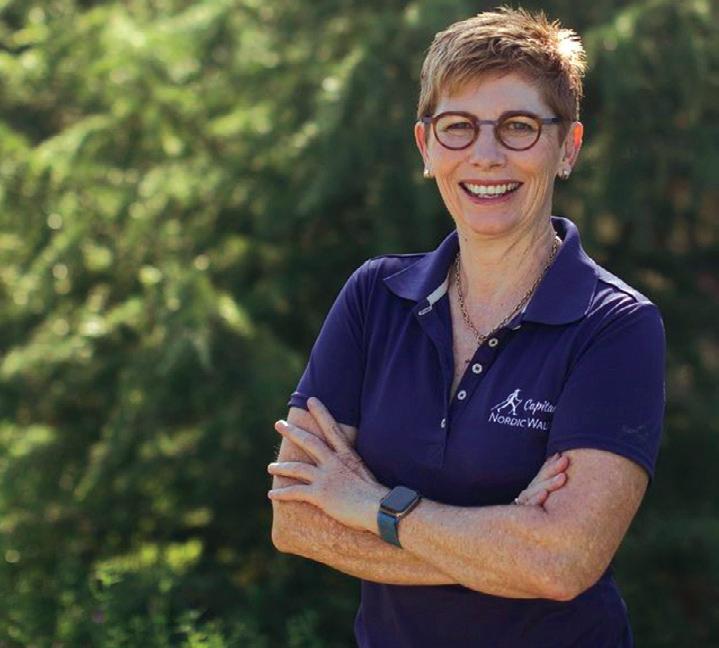
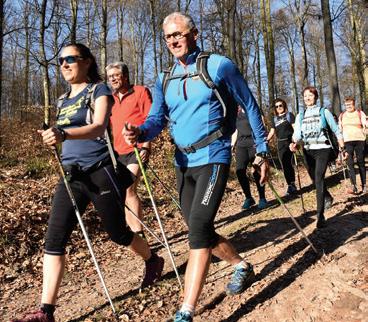
Using the correct technique, which is similar to cross country skiing, Nordic Walking poles are planted behind the user to propel them along using the power of the upper body (back, arms and core) as well as the legs, Kristen says.
“[Nordic Walking] uses over 90 per cent of muscles, making it easy to work hard with low impact on the body,” she says.
“Because of the low impact, it’s a great way for those with injury, arthritis, Parkinson’s, joint pain or other limiting physical conditions to exercise.”
As a Nordic walker of 10 years herself, Kristen also runs programs teaching the technique, saying: “We help people get started and then finesse Nordic Walking so that they can get the exercise they need in a comfortable way.”
Capital Nordic Walking. Call 0499 993215, email hello@capitalnordicwalking.com.au or visit capitalnordicwalking.com.au
OVER the past year studies show cultural stresses and loneliness are at a peak, says H2O MEDI SPA owner Lauren Scifleet who has specifically-designed treatments to release and relax these negative emotions.
“Stress has a very negative impact on the body, and at H2O MEDI SPA we’ve created an ‘all about you’ experience that helps get rid of the stress that can be so debilitating,” she says.
Located in the heart of the “prestigious” Kingston Foreshore, Lauren, backed with 17 years’ experience in the beauty industry, established H2O MEDI SPA eight years ago.
With her knowledge, Lauren and her team have created “performance murad facials”, which she says are completely customised to each individual’s needs, and are one of their most popular services.
Based on the work of “the father of modern wellness”, Dr Howard Murad, Lauren says the treatment awakens the body and stimulates the lymphatic system, a network which helps rid the body of toxins.
H2O MEDI SPA also offers other treatments such as body massages, manicures, pedicures, waxing, tanning and other treatments that are designed to give guests some well-deserved “me time”.
H2O MEDI SPA, Shop 68, 71 Giles Street, Kingston. Call 6295 7072, email info@ h2ospa.com.au or visit h2ospa.com.au
“HEALTHY SKIN IS A REFLECTION OF OVERALL WELLNESS” – DR
HOWARD MURAD

A powerful antioxidant rich yet gentle facial that dissolves tired cells to restore, balance and revitalises the skin. With a splash of hydrating serum infused with rose quartz to calm any cultural stress inflammation.
Continue your “me time” with a FREE take home skin care pack by Murad Skincare.





By Danielle NOHRA
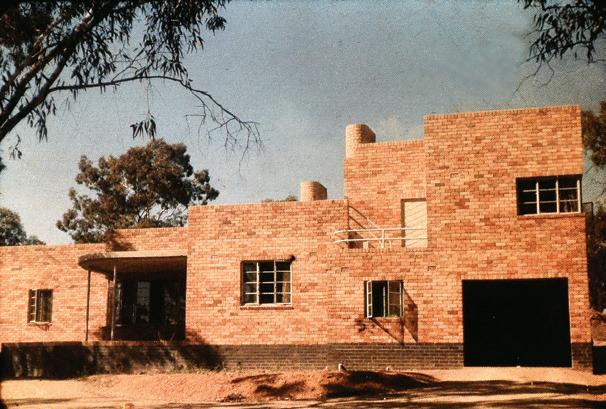
THE house at 43 Melbourne Avenue, Forrest, is regarded (by the Australian Institute of Architects) as one of Canberra’s best examples of inter-war functionalist architecture.
And Peter Freeman agrees.
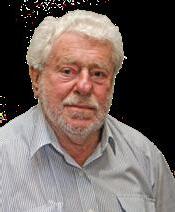
The former Canberra architect and author recently finished writing the book “Thoroughly Modern: Moir + Sutherland Architects”, which details the life and stories of architects Malcolm Moir, the man behind 43 Melbourne Avenue, and his second wife Heather Sutherland.
While Peter, 78, of Moruya, suggests 43 Melbourne Avenue is the best of the remnant-style buildings in Canberra, he can’t look past Tregear House, a “remarkable” building that Malcolm designed in 1939 in Forrest.
Demolished in 1993, Peter says it was an extraordinary building with low brick and concrete – “very dynamic”.
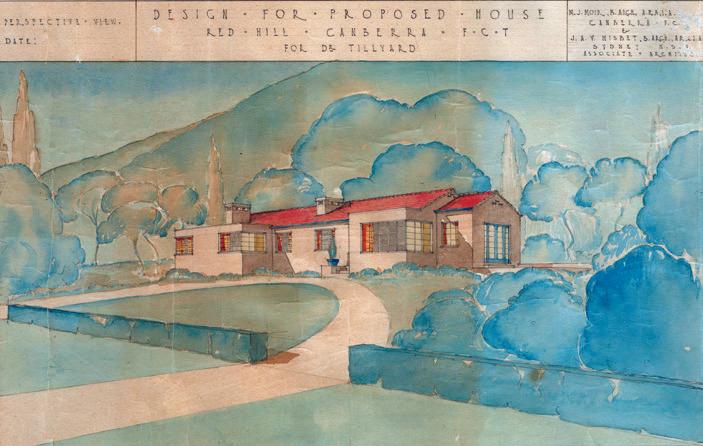
A notable building by Heather was a house in Red Hill, known as “The Spinny” – it’s since been demolished, Peter says.
“The other one that she did, which has stayed intact, and was done with

Malcolm’s help and other colleagues was called the Sutherland Apartments in Canberra Avenue, and that was designed primarily by Heather,” he says.
A lot of Heather and Malcolm’s designs have since been demolished, and there was a time when Peter’s book – or the information in it – was at risk of being lost, too.
If it wasn’t for Angus (Malcolm and Heather’s only child), one of his mates and a ute, all the sketches and documentation of Malcolm and Heather’s work would have ended up in the tip.
It was 1974, Malcolm had died a few years earlier and Heather was killed in a “tragic crash” in 1953 when a truck, coming from the Canberra Brickworks, hit her car on Adelaide Avenue.
Still around, Angus stayed working at the family practice even though a Melbourne-based firm had taken over.
“Angus heard that the new own ers were going to move all those ‘odd drawings and stuff’ and put them in the tip,” Peter says.
“So Angus and his mate got a ute, filled the back of it with all these draw ings and took them to the National Library.”
The documents turned out to be Peter’s starting base for the book, but says it took him and wife Tanny more than a year to catalogue everything.


It became the foundation for the book, which will be published in March. “Thoroughly Modern: Moir + Sutherland Architects” tells the story of two architects who were part of a group of people taking on a modernist approach to architecture.
“Malcolm and his partner in life and practice, Heather, were at the forefront of this push as designers of a singularly coherent collection of residential and commercial buildings, spread throughout the fledgling city,” Peter says.
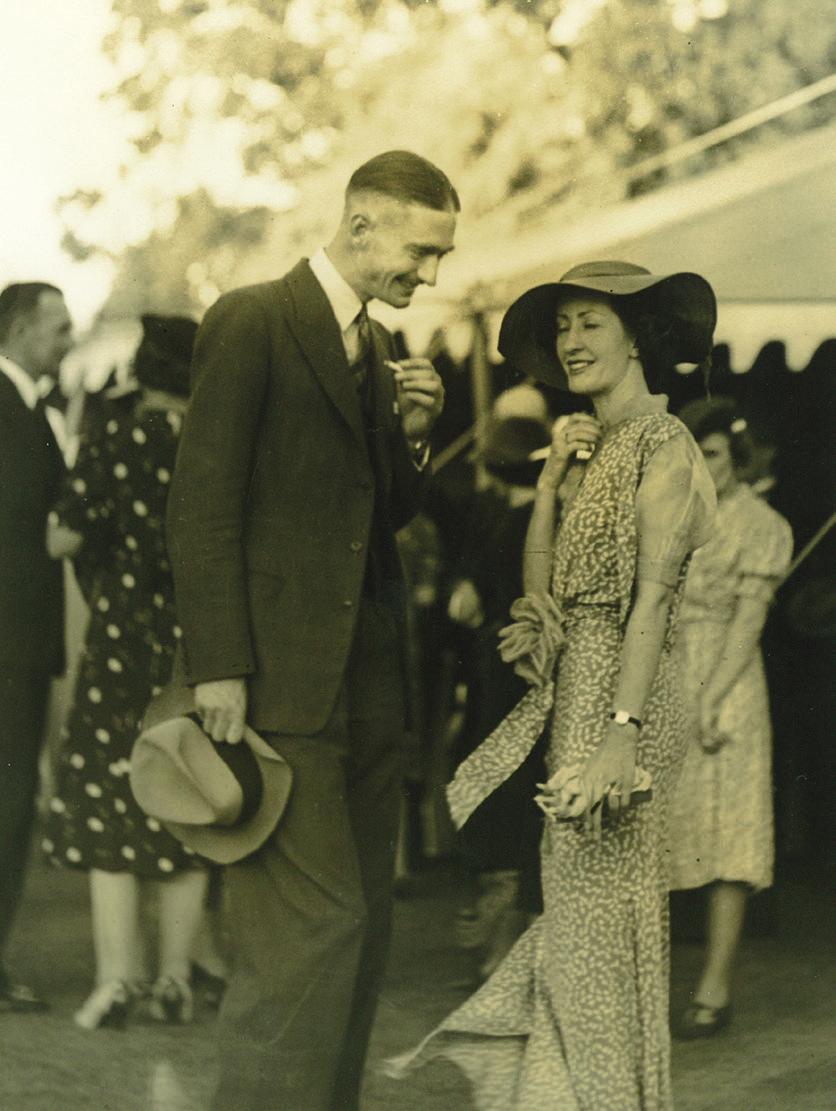
of Malcolm and Heather’s architecture, some of the earliest examples of modernism built in Australia.
The book also reveals some historic quirks, such as the time Malcolm and Heather met Marion Mahony Griffin –
Following the death of husband Walter Burley Griffin in 1937, Marion returned to Canberra at a time when it was beginning to develop from the plans that she and Walter had designed for it more than two decades earlier, Peter says.
“There were only two buildings she found noteworthy,” he says.
“[Marion decided to go and look at 43 Melbourne Avenue] and was standing in the garden and Malcolm and Heather both came out and said: ‘Can we help you?’
“Marion said: ‘Yes, you can. I don’t know who designed this house, but I have to say that this house and the Civic Theatre, these are the buildings that Walter would have liked and they’re the only two buildings that he would have liked’.”
Pre-order “Thoroughly Modern: Moir + Sutherland Architects” ($75) via uropublications.com

By Helen MUSA

EVER so quietly last year, after finishing the first year of a masters in music at the Peabody Institute of Johns Hopkins University in Baltimore, conductor Leonard Weiss slipped back into Canberra.
“It didn’t seem the right decision to take on a second year with all the social distancing and online studies, so I took the advice of an old colleague and came back here,” he says.
It was obviously a fruitful year in Baltimore until COVID-19 struck and everything went online. He took up masterclass opportunities with maestros such as faculty members and conductors with the Baltimore Symphony Orchestra, the São Paulo State Symphony Orchestra and the Vienna Radio Symphony Orchestra, including conductor Marin Alsop and music directors Gianandrea Noseda, Antony Walker and Evans Mirageas.
Sad to leave, maybe, although his plan is to resume his studies in Baltimore in 2022.
Weiss has also had to defer his Churchill Fellowship for a year, as no one is likely to be
travelling much in 2021.
But he hasn’t been letting the grass grow under his feet and describes the rest of his 2020 as “a wonderful year, during which I’ve been making a lot of plans, getting myself in touch with the professional orchestra scene, both on the platform and as an observer, and getting some serious plans going for the Canberra Sinfonia”, which he co-founded after it languished last year except for a pre-Christmas performance at Wesley.
“There are so many musical and technical lessons I’ve been able to put into practice, and this time is giving me a chance to get a program of work with orchestras.”
There are irons in the fire with the Queensland Symphony Orchestra and Melbourne Symphony Orchestra.
Unexpectedly, he has found that covid has made it just that little bit easier, because all the orchestras in Australia have been doing it hard, so are keen to support new talent.
“I’ve got my study accolades under my belt, and everybody has been so respectful of what I’ve done,” he says.
As for Sinfonia, he says: “It’s better for us to be ambitious… Last year we had to cancel all but one concert, so we decided we should be focusing on chamber repertoire instead of large works and we know we can excel in pieces written for a smaller number of people. It’s a new way of approaching things.”

orchestras “resorted” to chamber repertoire when the going got rough, then went straight back to Mozart and Beethoven, but he’s chosen a different path.
Weiss noticed that a lot of the bigger
“I thought we needed to seek out masterpieces on a smaller scale, so we’ll kick off on March 13 with Aaron Copland’s

‘Appalachian Spring’, an exquisite piece and a most excellent piece of storytelling, written for 13 people,” he says.
The parts have been shipped from the US because there were none in Australia.
But he also wanted a world premiere, so has commissioned Chloe Sinclair, a Sinfonia
alumnus based in Sydney, to create a longer form piece around movement and stillness, to contrast with the chaotic spirit of the
A high point of the year for Weiss will be the planned collaboration in July with the Lisa Clark Dance Studio on Elena KatsChernin’s ballet “The Little Green Road to Fairyland”. She originally wrote it for 10 musicians, but revised it in 2019 for five – perfect – and she’s up for any needed changes.
His dancer friends from his musical theatre experiences in Canberra put him in touch with Clark, who agreed to come on board, choreograph and provide the costumes.
It will be a new experience for Weiss to learn how to conduct ballet, where the dancers dominate, and as his old alma mater Canberra Grammar School has a suitable venue in the Tim Murray Theatre, he’s approached them with fingers crossed.
The Sinfonia, which will also perform a concerto gala with cellist Julia Janiszewski, inaugural Kingsland Fellow with the CSO, and saxophonist Jaime Grech from the RMC Band, collaborates with Luminescence Chamber Singers and Children’s Choir and plays Richter’s “Vivaldi Recomposed” with concertmaster Helena Popovic as soloist.
“I’m very thankful that I came home,” Weiss says, in understatement.
The full program for Canberra Sinfonia will soon be posted at canberrasinfonia.com

“Only the Animals” (MA)
THE foundation of every narrative film is the screenplay.
French director Dominik Moll co-operated with Giles Marchand in writing “Only the Animals”.
Which of them devised which moment became irrelevant once the result of their collaboration reached the screen.
Is what they contrived with “Only the Animals” worth watching? You bet it is.
Why do I have the gall to predict your reaction?
Because time, place, motive and behaviour in this economically-populated drama of adultery, murder, criminality and mystery fit together with tantalising precision that begins with a Sierra Leone farmer riding his bike to market carrying a goat on his back and ends with a high-country French farmer foiled but not the loser in an on-line scam explained in delicate detail.
Is it great cinema?
How do you assess greatness? Some movies get it in the moment of their conception in the writer’s mind. Some movies create it in the director and the cast’s realisation of putting it on the screen. Some have messages that we can’t ignore. Or can’t

accept.
Others have the benefit of collective serendipity. We love movies for their variety and their challenges to our intelligence. And our spirits.
Michel (Denis Ménochet) and Alice (Laure Calamy) run a farm. The film gradually explains their connections with fellow farmer Joseph (Damien Bonnard), Evelyne (Valeria Bruni Tedeschi), whose second home is in the area, young waitress Marion (Nadia
Tereszkiewicz) and Armand (Guy Roger “Bibisse” N’Drin), who lives half a world away in Africa.
“Only the Animals” is a thriller, a murder mystery, an emotional roller-coaster of love, betrayal, emotional and physical brutality, passion, adultery, truth, lies, coincidence and implausible credibility. I enjoyed it.
At Palace Electric



“Penguin Bloom” (PG)
AS an example of high cinematic creative values, some people may consider Glendyn Ivin’s filming of a story about how a magpie pointed a crippled young mother’s course toward emotional resurrection to be a bit ordinary. But that’s not its point.
After falling from a rooftop in a Thai resort hotel, exceptionally-fit, sport-loving Samantha Bloom (played by Naomi Watts) will never walk again.
So how does that relate to penguins?
The eldest of her three small sons rescued an injured young magpie and named it Penguin. In time, it became the family’s pet. It grew up. It flew away.
It probably never understood its crucial contribution to not only Samantha’s emotional salvage while it was a member of the family in its Sydney home but also her eventually becoming a medal-winning athlete in a sport that can be performed sitting down – kayaking.
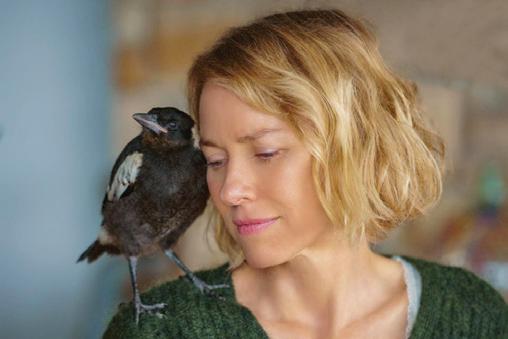
Sam’s professional photographer husband Cameron (Andrew Lincoln) and the boys learned how to run the house. Mother Jan (Jacki Weaver) and sister Megan (Gia Carides) would visit her regularly. But it was Gaye Hatfield (Rachel House) who runs a kayak-hire business on Pittwater (I think – that’s where it looks like) who guided Sam’s self esteem to recovery and restoration.
The magpie (I think I counted in the end titles for seven different birds named as playing Penguin) is co-operative and kinda cute.
Conclusions? Cinematic values – competent but not up there with the greats. Human values – powerful without being overpowering.
We might well see “Penguin Bloom” among the nominees when the time for peergroup awards next comes around. Its ability to polarise audience response is powerful, one way or the other.
The performances are adequate. The locations are proudly Australian (except for brief sequences visiting the holiday accident in Thailand). The narrative is matterof-fact.
At all cinemas
DISNEY Plus takes the streaming headlines by storm this week with “WandaVision”, a television return to the Marvel Cinematic Universe with a fresh new twist.
Gotta give it to Marvel – after 23 films that make up its ever-expanding, billion-dollar brand one might think a bit of fatigue would set in.
However, “WandaVision” takes a bold new creative step forward. Featuring two of the more minor heroes of “The Avengers” – Vision, a halfman half-machine, and Scarlet Witch, a woman with telekinesis – the show was always going to have to do a bit more work to pull audiences in.
It’s done just that. Rather than a big, action, set piece we’re instead transported back to ‘50s suburbia, where the two heroes live as a couple trying to hide their powers from the local neighbourhood.
In a brilliantly inspired twist, the show takes on the style and quirks of a ‘50s sitcom – black and white, campy humour and charmingly drawn animations come together to make a wonderful homage to a completely different era of television.
Of course, nothing is quite as it seems. Strange events start disrupting the quaint reality of the couple. Random colour returning to objects in their monochromatic world makes the characters, and us as the audience, start asking questions about how this surreal reality fits into the rest of the Marvel Universe.
It’s an intriguing premise, and the growing mystery that starts to pull the style of the show closer and closer to a more modern craft of filmmaking through a brilliant use of visual effects has me hooked.
A common question though, especially with just how much plot now exists in the Universe, is can I watch this new show and enjoy it if I haven’t

watched all the other films?
In this example, absolutely.
For those who have dabbled in the other films there are subtle nods and references that satisfyingly add to the mystery of it all, but I wouldn’t say they’re necessary to enjoy what’s on offer here.
JUST as January marks the start of this new blockbuster, it also represents the end of another of streaming’s biggest shows.
SBS On Demand has in the last week started streaming the final season of “Vikings”, which ended its six-season run at the end of last year.
“Vikings” stormed its way on to the streaming scene in 2013 channelling as much “Game of Thrones” energy as it could: violence, sex and a whole bunch of politics firmly in tow.
It follows the exploits of Ragnar Lothbrok, a legendary Viking from old Norse poetry.
The show doesn’t claim to depict the history of Vikings and their culture with 100 per cent accuracy. There’s quite a departure from the realworld history for the sake of that thing we call entertainment.
The phenom -
enon of a hit show having a pop culture flow-on effect is something that’s regularly seen across the streaming world.
There’s a good chance Netflix subscribers have seen “The Queen’s Gambit”, a ratings record breaker about a young genius chess player named Beth Harmon who takes on the male-dominated world of the game.
Three weeks after the series had premiered it was reported that chess sets internationally went flying off shelves faster than they had done in years. That’s not to mention chess-strategy books, which some reports said sold up to 600 per cent more than usual because of the show’s influence.
Seems like “Vikings” has done for Vikings and Norse mythology what “The Queen’s Gambit” has done for chess.
While on Norse mythology, I also have to mention “American Gods” that just started streaming its third season on Amazon Prime.
Based on the best-selling 2001 novel by Neil Gaiman, it’s a fascinating blend of fantasy, mythology, drama and crime served up in the scenery of a contorted US.
It’s hard to say much more about “American Gods”, other than it’s definitely for lovers of headspinning plots full of layers and complexities. That, or you could just continue to watch the daily news coming out of the US.
More of Nick Overall on Twitter @nick_overall

By Helen Musa
“THEY’VE employed me to start some fires and bring the theatre into its next life,” incoming artistic director and programming manager at Queanbeyan Performing Arts Centre, Jordan Best says as she settles into her new job.
When we meet, Best, who took up her position just before Christmas, has been ratting around among the 12 years of assorted posters and programs, many of them signed, from The Q’s 12 years of memories. In between learning the ropes of “a huge job”, she’s been hell-bent on making the pristine Q foyer look like a real theatre by pasting the posters up wherever she can.
It makes a fascinating read as you can now view, on the walls, the extraordinary eclecticism of her predecessor, Stephen Pike, whose choices of everything from “Hair” to “The Complete Works of Shakespeare” are there for all to see.
Best has nothing but praise for Pike.
“Stephen’s been a part of my career for the last 19 years,” she says.
Looking over the postcards he’s received has proved to her “what a dramatic impact he has had on the theatre in our region… he was supportive of
people both local and all over Australia and he’s built an extraordinary theatre”.
As Best arranges her office upstairs in The Q, she’s full of optimism.
“I believe in people having a good time,” she says, outlining the relationship that’s been established with comedian Chris Ryan, who did the season launch late last year. That’s part of a regular comedy program to be called “Q the Laughs!” usually in the adjacent Bicentennial Hall, now refurbished as a comfortable entertainment space.
While the directorship of The Q was considered a plum job by the theatre crowd, it has one drawback – she doesn’t get to create her own program until a year on, since everything’s already been set up for 2021.
Happily, though, there are a few gaps this year, and she’s learning how to fill them.
“I’m interested in getting people here who might not normally come to the theatre, so I am keen to fill up comedy, music, storytelling and, yes, there will be surprises,” she says.
Best is operating on a tight budget, with a brief to bring more people through the doors, but she has a plan.
“The Q has the opportunity of bringing in small independent productions people may not be aware of, so that instead of the Sydney Theatre or Mel
of but we think you should, maybe like the Old Fitz Theatre in Woolloomooloo,” she says.
“I’m also really interested in local Queanbeyan artists.
“It’s risky to program in big produc tions, so my dream for 2022 is that it can be full of local talent, where we can hear not necessarily from famous people, but from interesting people.”
As if she didn’t have enough on her plate, Best is also directing Hilary Bell’s Aussie murder story “Wolf Lullaby” for Echo Theatre.
That’s the first coming up at The Q, with a February 17 opening following Eddie Daniels’ tribute to Roy Orbison and Gene Pitney, and Darren Coggan’s popular tribute to Cat Stevens.
It’s been quite a learning curve and her budget doesn’t extend to having what they call “covid cover” for actors who are sick and can’t come to work. But it’s exciting to be back into theatre, she says.
As a veteran stage director, Best rejects the idea that you can’t direct both a theatre and a play in its season.
“Combining administration with directing is what I’ve been doing for the last 17 years, as well as parenting and working in hospitality,” she says.
“I wouldn’t count me out.”
Visit theq.net.au for details of the 2021
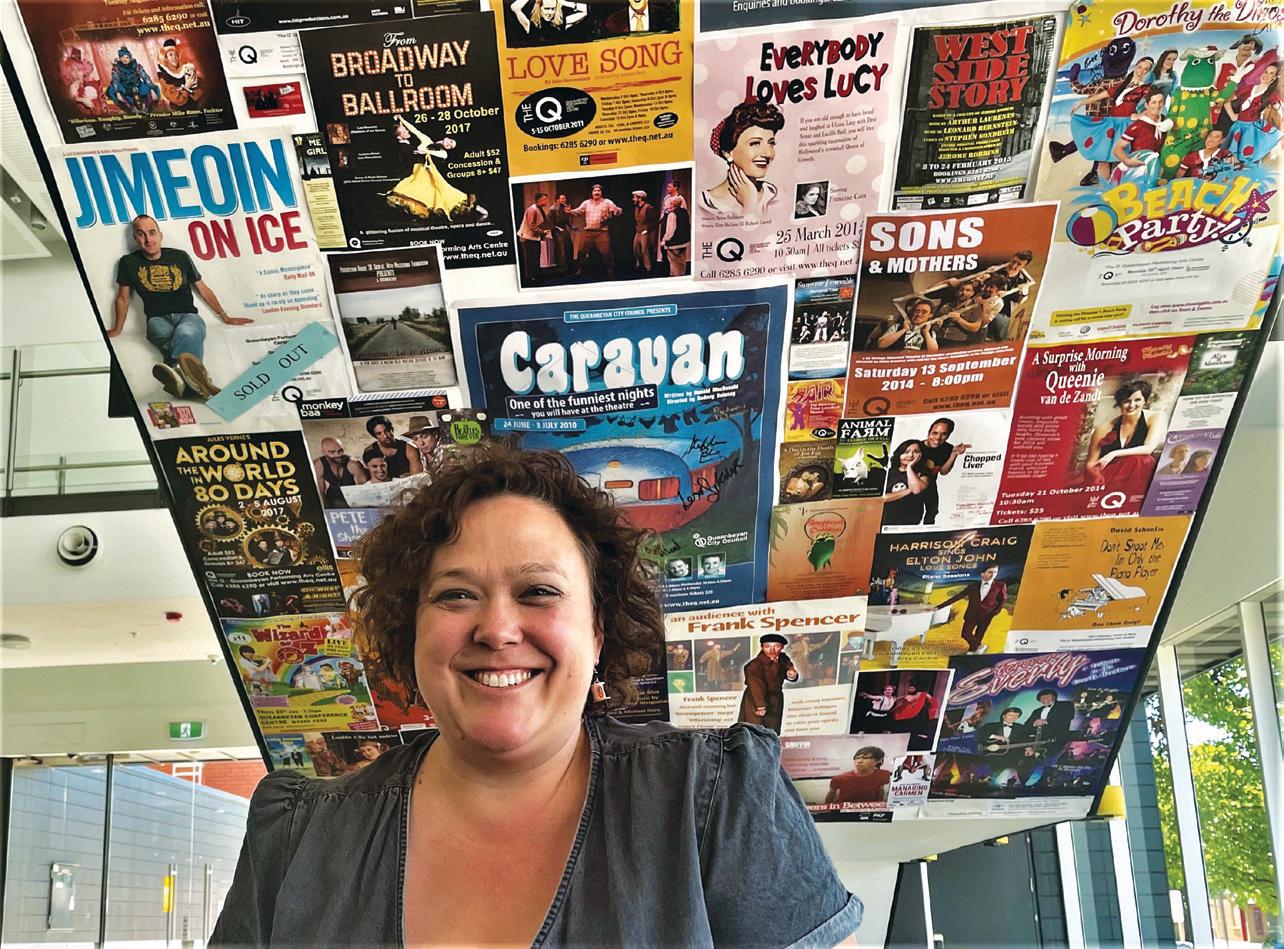
By Helen Musa
PATRICIA
Piccinini’s “Skywhalepapa” is a monu mental hot-air balloon sculpture, a new companion/ partner to Skywhale. The new “Skywhale family” will be launched near the NGA and take flight over Canberra three times, then will float across the skies of Australia. In celebration, the gallery will hold “Super Sunday” from 11am and 3pm on February 7, a free interactive program for the whole family. “Skywhales: Every Heart Sings” Canberra flights, 5.30am, February 6, March 8 and April 3. Free. Book via knowmyname.nga.gov.au
AFTER a year of uncertainty, the students of Warehouse Circus are finding triumph in their 30th anniversary show “Interrobang”, a summation of their skills acquired over the years. An interrobang, we hear, is a combination question and exclamation mark, a mixture of awed bemusement and excitement, and it looks like this – – which they say sums up circus nicely. The theatre, Belconnen Arts Centre from January 30-February 6. Book at belcoarts.com.au/interrobang
THE Morrison Government has announced that it will support 30 arts tours across Australia during 2021, providing a major boost to artists and audiences, particularly in remote and regional communities. The Government will invest more than $3.6 million through the latest rounds of two touring programs, Playing Australia: Regional Performing Arts Touring Fund and the Contemporary Music Touring Program. One of the largest grant recipients is the Bangarra Dance Theatre Company, which received almost $500,000 in funding. FOLK Dance Canberra is holding beginner world dance classes, where participants can travel the world of exotic music and dance from the safety of Canberra. Suitable for all ages, the classes provide physical and social well-being through dance and no partner is necessary. Evening and day classes on Wednesday nights and Thursday mornings, start from February 3 at 114 Maitland Street, Hackett. Inquiries to 6286 6401.

for more than 14 years but has moved to their private studio on Captains Flat Road. It’s open by appointment to gallery@bilk.com.au until the next exhibition.
THE Lime Flamingo Collective, artists Lesley Andersen, Jenny Blake, Jodie Cunningham, Sarah Earle, Roger Hancock, Gillian Jackson, Diane McWhirter, Angella Price and Jo Walters, are holding their first group exhibition, “‘OutsideIn | InsideOut” in West Gallery, Belconnen Arts Centre, 6pm on February 5 to March 21. The exhibition includes a small body of work from each artist including drawing, painting, printmaking, textiles, digital printing and sculpture.


WE UPHOLSTER COMMERCIAL & RESIDENTIAL FURNITURE
- RE-UPHOLSTERY & REPAIRS
- FABRIC PROTECTION
- WALL UPHOLSTERY
- CHAIRS
- OTTOMANS
- SOFAS
- BED HEADS

BESPOKE MANUFACTURING SERVICE
TWINSTITCHUPHOLSTERY.COM.AU


twinstitch.upholstery Like us on Facebook Call or email us today! 0422 073 665 61813511 toni@twinstitchupholstery.com.au
Would you like to watch those old family videos once again, or listen to your favourite records on CD?
SLIDES TO DVD NOW AVAILABLE PRICE ON APPLICATION
We can take your vinyl records or cassette tapes and put them onto CD and we transfer VHS tapes onto DVD.



Cooleman Court, Weston Creek | 6293 4677 | songland.com.au


By Joanne Madeline Moore
ARIES (Mar 21 – Apr 20)
With five planets transiting through your freedom zone, restless Rams are born to be wild as you kick up your heels/hooves. You’ve also got a lot of extra responsibilities, as friends or group members look to you for leadership and inspiration. With Mercury in retrograde mode (until February 21) pursuing your goals and dreams won’t be a direct journey. There will be plenty of frustrating twists and turns along the way! So plenty of patience is required over the next three weeks.
TAURUS (Apr 21 – May 21)
Retrograde Mercury is activating your career zone, so be very clear when you’re communicating with bosses, colleagues, clients and/or customers. What you say and what they hear may be two different things. Keep them up to date with what you are doing, otherwise misunderstandings are likely. If you’re applying for a job, make sure you do all the research required before your interview. Winging it is not recommended… this week the devil is definitely in the detail.
GEMINI (May 22 – June 21)
Mercury (your power planet) is currently in retrograde mode. So – over the next three weeks – you need to back-up all your computer files; allow plenty of time to get to appointments and catch flights; check and then double-check everything; and be incredibly adaptable. Plus maintain a sense of humour! Mercury retrograde is a suitable time to do just about anything with an RE in front of it – revise, rehearse, reboot, research, revisit, retract, refund, rethink, reschedule and redo.
CANCER (June 22 – July 23)
Secrets, mysteries and misinformation abound this week Crabs, as Mercury reverses through your trust zone. So avoid fake news and be very careful about who you place your trust in. You’re also keen to show loved ones how much you really care. Avoid being too over-protective though. All relationships need room to breathe and there’s a big difference between loving and smothering. Be inspired by birthday great, writer Charles Dickens: “A loving heart is the truest wisdom.”
LEO (July 24 – Aug 23)
Expect some communication chaos over the coming week, as Mercury reverses through your relationship zone (until February 21). It’s a time when unresolved issues may be dredged up all over again. On the weekend, a platonic relationship or a professional partnership could veer off in an unpredictable direction. When it comes to your career, don’t throw the baby out with the bathwater! Try to get the balance right between keeping what works and exploring exciting new options.
VIRGO (Aug 24 – Sept 23)
With five planets highlighting your health and wellbeing zone, strive to be the fittest and most vibrant Virgo you can be. No lame excuses or empty promises. Get your body moving ASAP! Reinvention is the name of the game, as retrograde Mercury urges you to reboot your daily routine with discipline and determination. The best way to handle stress levels is with relaxing indoor pursuits (like meditation or yoga) and vigorous outdoor activities (like running, cycling or hiking).
LIBRA (Sept 24 – Oct 23)
Over the next three weeks, retrograde Mercury shakes up and reboots your peer group zone. So you could bump into an old friend or a lover from the past could boomerang back into your world! Whatever happens, do your best to surround yourself with authentic friends who help you in hard times, encourage your talents and support your dreams. As birthday great Bob Marley reminds us: “True friends are like stars; you can only recognise them when it’s dark around you.”
SCORPIO (Oct 24 – Nov 22)
With communication planet Mercury now in retrograde mode (until February 21) do your best to keep the conversation flowing with relatives, friends and colleagues. Venus also shifts into your domestic zone (from Tuesday until February 25). So it’s the perfect time to patch up a rocky relationship with a frazzled family member, as you hold out the olive branch of peace. As music legend (and birthday great) Bob Marley sang: “Overcome the devils with a thing called love.”
SAGITTARIUS (Nov 23 – Dec 21)
When it comes to a relative, neighbour or colleague, hold onto your seat and prepare for a roller-coaster ride. The planets inspire you to contribute your talents to a worthy cause within your local community. Then satisfying connections and positive friendships will follow. But with Mercury reversing through your social networking zone (for the next three weeks) double-check all online comments before you post. It will be very easy to send the wrong message to the wrong person!
CAPRICORN (Dec 22 – Jan 20)
Mercury (planet of communication and commerce) is reversing through your money zone. So avoid signing contracts and buying big ticket items (like a computer, car or home) until after February 21. In the meantime, look for creative ways to recycle resources and boost cash flow. Plus be extra careful how you pass on information. If you make assumptions or give vague instructions, then you’ll be misunderstood. Patience, clarity and confidence will really take you places.
AQUARIUS (Jan 21 – Feb 19)
Now is the time to trade-in your old equipment

With Mercury now reversing through your sign (until February 21) you’re apt to make some hasty half-baked decisions this week Aquarius. Don’t worry too much if you make a messy mistake though. Irish writer (and birthday great) James Joyce reminds us: “Mistakes are the portals of discovery” as we live and learn through the choices that we make. On the weekend, you may struggle to break free from the constraints of a restrictive relationship with a partner, friend or work colleague.
PISCES (Feb 20 – Mar 20)
Things won’t go according to plan as Mercury is in retrograde mode over the next three weeks. Try to be extra observant and patient, as you look for crucial information that is hidden beneath the surface. Then you’ll understand current complexities better, and the path ahead will be much clearer. Solitude is soul food for you at the moment. So perceptive Pisceans will put aside some special ‘me time’ as you meditate, contemplate, ruminate, slow down, calm down and re-calibrate.
Copyright Joanne Madeline Moore 2021
to be the fastest four-legged animal? (7)
1 Name a unit of sound intensity. (7)
2 By definition, a carpophagous animal eats what? (5)
3 Which officials of ancient times performed clerical duties? (7)
4 What is an immediate involuntary response, evoked by a given stimulus? (6)
5 Which brilliant planet has no satellites? (5)
6 What is the nickname for the Canberra NRL team? (7)
7 How many incisor teeth does a normal human being have? (5)
13 Name the part of a spacecraft that is detachable. (7)
15 What is the former name of the capital of Myanmar? (7)
16 What is an alternative term for German measles? (7)
17 Name something savoury added to a meal, such as chutney, or the like. (6)
18 Name a member of an Indian people, dominant in Central Mexico at the time of the Spanish invasion. (5)
19 To drink to one’s health, is to do what? (5)
20 Which blood-sucking mitelike insects bury their barbed snouts into the skins of animals? (5)
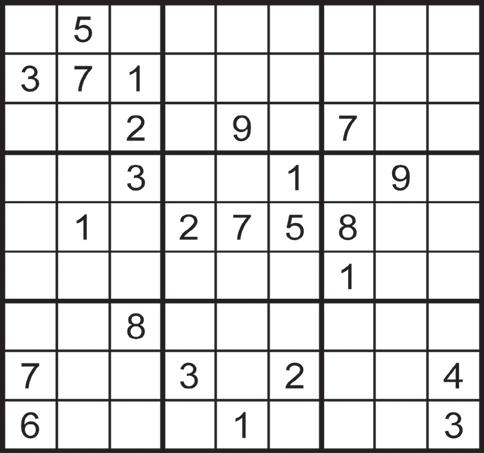
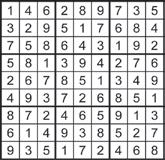


TAKING a friend from Yass out to lunch at the delightful slab hut cafe The Rollonin at Bowning I was pleased to see several varieties of the old-world cottage plant hollyhock, Alcea Rosea.
When we bought a property in Yass for our nursery, the main house, “Aberlour”, was built by a Scottish settler in 1919. In our first summer, the front of the house was a sea of hollyhocks. In today’s gardens it appears to be rarely grown. And yet it has a place in most gardens with large flowers on tall, stately stems up to two-metres tall. Hollyhocks have a long and fascinating history of which its origins are lost in the depths of time. They grow from Europe to the Far East in Japan and China where since the 9th century they were a symbol of passing time.
Helped by Peter Valder’s excellent book “The Garden Plants of China”, I have discovered that, as a perennial or biennial, it has been a favourite cottage plant for at least 500 years. In China its flowers and seeds are used in medicines and the bark can be used to make


textiles. In Kyoto, the Hollyhocks Festival is one of Japan’s three most important floral annual festivals.
ECHINACEA flowers are a feature of our garden at present. Commonly referred to as coneflowers, due to the shape of the centre of the flower, echinacea are of the daisy family related to sunflowers. They are herbaceous perennials generally with pink flowers; although with modern breeding yellow and white flowers are appearing. I prefer the traditional pink as they are when growing in their home environment on the dry prairies of the north-western areas of the US. This gives a clue to their drought hardiness. Growing up to 150mm tall they self-seed readily lying dormant after the flowers dry until the following season.
WITH the perfect growing conditions I have been mowing the lawn at least once a week. This is providing an over-abundance of lawn clippings, of which it is easy to continue to dump on the compost heap. However, this can lead to a soggy and mildew mess that will not rot down. So it’s important to mix other, coarser material in with the clippings.
AUTHOR Angie Thomas, a horticulturist of
more than 23 years, in conjunction with Yates, has produced the perfect gardening book for today’s climate, “Top 50 Edible Plants for Pots and How Not to Kill Them!” (Harper Collins, rrp $35).

With the ever decreasing size of gardens and the rapid increase of balcony gardens, this book could not have arrived at a better time. Starting with the most common plants grown in pots such as herbs, it moves on to more serious veggies such as potatoes, carrots and cabbages. Then through to growing a full range of fruit trees in pots. Profusely illustrated throughout, it covers all aspects such as pots and potting mixes. I’m giving it five stars.
AS I well know, one of the most rewarding occupations is horticulture. With proper training, the opportunities that open up range from setting up a business (such as garden maintenance) through to garden design.
Then wider opportunities present themselves from parks management to horticultural research. The great plus is the outdoor life of healthy fresh air. The Canberra Institute of Technology offers a wide range of courses with world-class facilities at its Bruce campus and the details are at: cit.edu.au/horticulture