NOSTALGIA / BIG BIRTHDAY LOOMS FOR THE POOL FULL
E-scooters open the way for concrete mixers?
IAN MEIKLE

Keep away, but for all the right reasons
PAUL COSTIGAN


Giving wine a future, a bottle at a time
RICHARD CALVER



E-scooters open the way for concrete mixers?
IAN MEIKLE
Keep away, but for all the right reasons
PAUL COSTIGAN
Giving wine a future, a bottle at a time
RICHARD CALVER

1 Bedrooms from $311,000
2 Bedrooms from $427,000
3 Bedrooms from $1,280,000


By Belinda STRAHORN

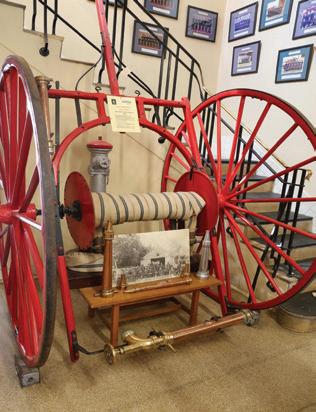
BRASS helmets used by Canberra’s first firefighters; a 1913 Hotchkiss vintage fire engine, lovingly restored; an original fire alarm system with bells for all the buildings in Canberra and a hand-drawn fire cart used in Queanbeyan in 1893...
These artifacts are among the thousands of pieces of firefighting memorabilia housed at the Canberra Fire Museum, in the old Forrest fire station. Retired firefighter and ACT Fire Brigade Historical Society volunteer Ron Hourigan says the collection of fire paraphernalia offers a rare glimpse into the early days of firefighting in the nation’s capital and is definitely “worth a look”.
“This is the history of Canberra because the fire brigade was in Canberra right from the very beginning,” says Mr Hourigan.
“We are a little biased, but we think this is the best collection of fire memorabilia there is.”
For many volunteer organisations, 2020 has been a challenging year and
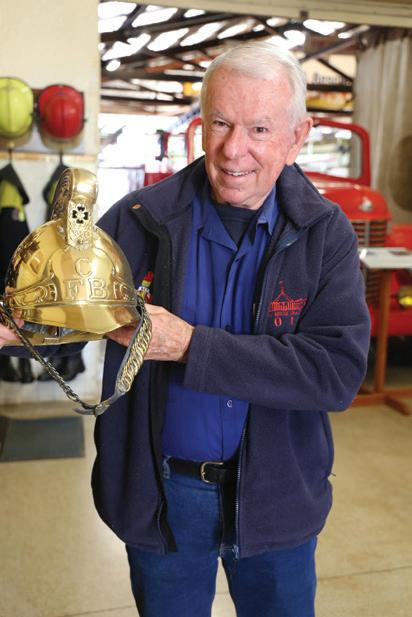
“We’ve been shut for around nine months, so it’s great to welcome visitors back again,” says Mr Hourigan.
The ACT Fire Brigade Historical Society was formed in 1979 to collate and display the history of fire services provided to the ACT community since 1913.
The museum was a working station until 1983, but has been home to a collection of vintage fire trucks, ladders, uniforms, brass helmets, bells and other historic equipment, including breathing apparatus and resuscitation gear, since the early 1990s.
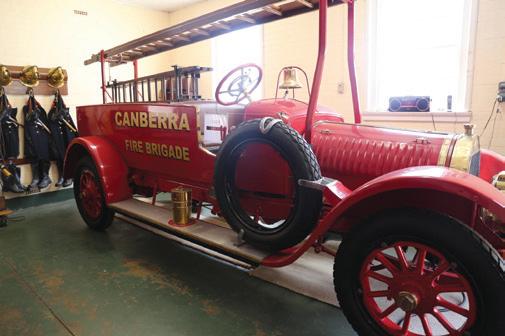
The collection features 10 vehicles, dating between 1913 to 1974, each one painstakingly restored by volunteers, including a horse-drawn cart, the brigade’s first vehicle used in 1913, the year Canberra was named.
Two vehicles are currently under restoration, another 12 are in storage waiting to be brought back to life.
The 1913 Hotchkiss looks as good as new after being restored. It’s im-


portant because it was the first type of motorised fire truck to be used in Canberra.
“It’s impressive because it’s got wooden-spoke wheels, the headlights run on gas, it had to be crank-started and the firies stood on the running board when it turned out,” Mr Hourigan says.
“Unfortunately, we don’t know where the original one that was used in Canberra is, this one is from Melbourne, but someone from old Canberra would know where it is and we’d love to find that out.”
Mr Hourigan says visitors are often “surprised” by how much memorabilia is on display here.
“We’d really love people to come
and take a look… it’s important we preserve the past,” says Mr Hourigan.
And with the fire season in full swing, Mr Hourigan has a timely reminder for Canberrans.
“Check your gutters, check your house, now is the time to get prepared and have a plan, discuss it with your kids and make sure they know what to do in an emergency,” says Mr Hourigan.
“Last year there were 350 house fires in Canberra, that’s nearly one a day, so it’s important to be prepared.”
The Canberra Fire Museum, 4 Empire Circuit, Forrest, open every Saturday, 10am-3pm, entry is via a gold-coin donation.
Managing Director: James Anderson, 0404 077605, james@citynews.com.au
Director: Kate Meikle, kate@citynews.com.au
Senior advertising account executives: David Cusack, 0435 380656
Tracey Avery, 0477 939999
Advertising account executives: Damien Klemke, 0439 139001
Editor: Ian Meikle, editor@citynews.com.au
Digital news editor: Danielle Nohra, danielle@citynews.com.au
Journalists: Andrew Mathieson, andrew@citynews.com.au
Nick Overall, nick@citynews.com.au
Belinda Strahorn, belinda@citynews.com.au; Nathan Schmidt, nathan@citynews.com.au
Kathryn Vukovljak, kathryn@citynews.com.au
Arts editor: Helen Musa, 0400 043764, helen@citynews.com.au
Production manager: Janet Ewen
Proof reader: Glenda Anderson







By Belinda STRAHORN

FORGET the pub or the post office. The heart of a town in the sweltering heat of summer is its outdoor swimming pool.
While most pools run at a loss and are financial burdens on cashstrapped councils, residents see them as iconic assets, considered vital to the life of many communities.
The pool in Queanbeyan is no exception.
Built almost 60 years ago, when life was spent under the trees, with liberal coatings of coconut oil, flirting and fun.
Gone are the diving boards, the slippery dip and the trampolines, but the memories are still alive.
“It was our summer home,” longtime Queanbeyan resident and history buff Phill Hawke says.
“Many of us grew up at the pool arriving early and having to be home by sunset.”
There were impromptu games of water polo, cricket and diving competitions.
And no signs saying “No”.
“The ‘poolies’ wore their little, metal, season pass stitched or safety pinned on to the Speedos… you could
come and go as you liked,” he recalls.
Before the pool was built, there was the river.
“There were swim holes known as White Rocks, Cascades, Conny Rocks and the weir to Queen’s Bridge,” Hawke says.
“You could jump off the weir and you could hide under the weir overflow.”
But river swimming was dangerous and drownings were common.
In 1901, Terry Marr, 14 years-old, of Macquoid Street, had a lucky escape when he was swept through the flood gates of the weir.
Others were not so fortunate.
John “Bennie” Gale, the eldest son of John Gale – the father of Canberra – and his wife Loanna, drowned in the river in January 1877, aged 14.
“Then in 1928, nine-year-old Edith Warren was seen playing in the water on a shallow bank near the old mill, her body was later discovered in a deep hole downstream,” Hawke says.
The push for the pool really took off when, in 1949, Margaret Donoghue, Queanbeyan’s first woman to hold civic office, witnessed a drowning of a 13-year old girl.
“After that, things really got rolling,” Hawke says.
Council approved the pool, to be built on Moore Park between Campbell and Crawford Streets, and designed by Robert G. Warren featuring “sausage shaped’’ domes which still make an
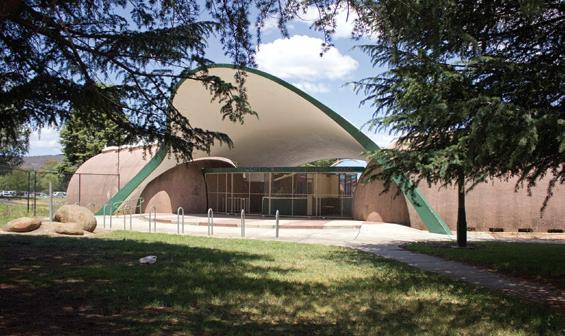
“Warren was really interested in shell concrete domes and incorporated the design in some of the projects he tendered for, such as a circular domed chapel for St Philip’s at O’Connor, it was never built but received plenty of attention,” says Hawke.
Local community groups chipped in with funding, the Queanbeyan Rotary Club’s annual floral festival raised 16,000 pounds, a state government grant of 10,000 pounds and a Commonwealth Bank loan of 53,990 pounds helped pay for the construction.
More than 3789 swimming enthusiasts rushed through the new turnstiles on the October 1961 long weekend.
First in the water was Allan Fraser MP, who held the federal seat of EdenMonaro from 1943 to 1966.
The pool’s official opening took place on Armistice Day, November 11, 1961.
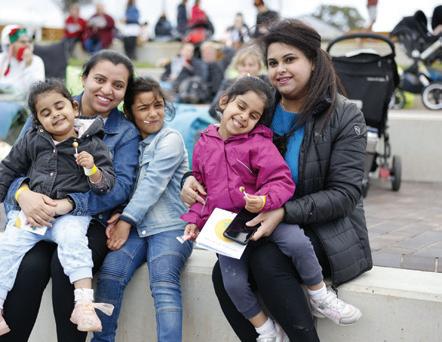
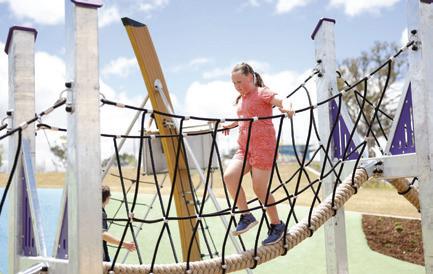
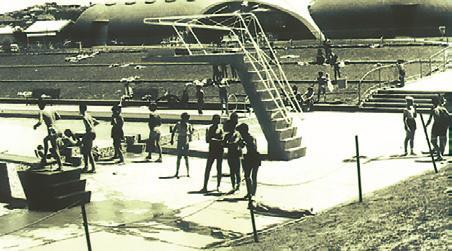
“Many of us grew up at the pool arriving early and having to be home by sunset,” Phill Hawke.
“From then on, the kids from the area would congregate at the pool every day and all the weekend,” recalls Hawke.
“It was always a battle for firsts, first in for the season, first to be suspended, first to get a season ticket.
“One person who was always first was Manuel Pappas, he would swim underwater from one end of the pool to the other, if anyone matched him, he would go further.”
Like many in the 1960s, Margaret Wallace “lived” at the pool.
“At night, it was freezing,” Wallace says.
“My sister and I used to wear jumpers because we did not have wetsuits and wool was the only thing that could keep us warm.
“I remember mum saying: ‘Why don’t you just take your beds up there and sleep there’.”
Queanbeyan has probably produced more sporting stars per capita than any other city in the nation with superstars on the footy field, cricket pitch, tennis court and in the pool.
Former secretary of the Department of Defence, diplomat and Queanbeyan swimming club champion Dr Allan Hawke won the NSW “iron man” title in 1965, the first time a country competitor had won the event.
“Notable swimmers from Queanbeyan include Doug Cocking, a competitive swimmer at country, state and national level before going on to represent Australia in water polo,” says Phill Hawke.
“And, of course, Angie Kennedy won a silver medal at the 1996 Atlanta Olympics as a member of the Australian women’s medley relay team.”
The Queanbeyan pool celebrates its 60th birthday in 2021.



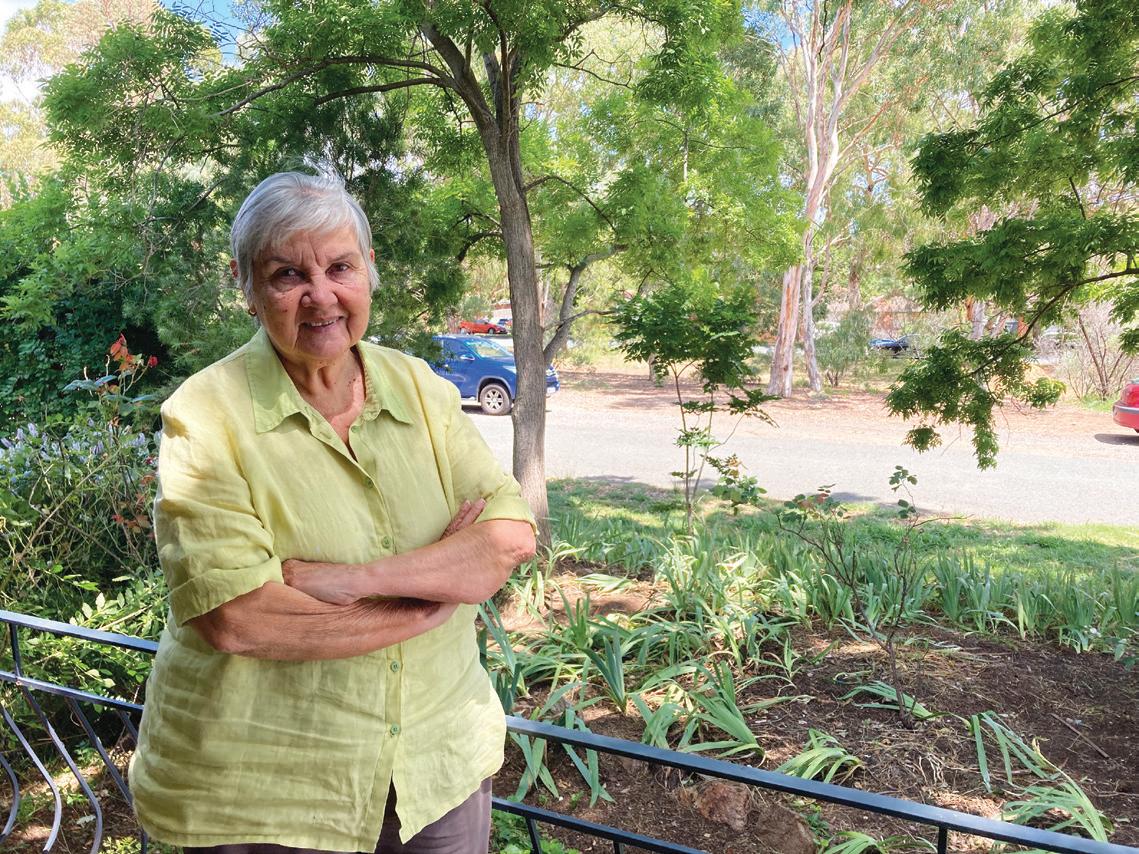
Gentle and polite, ACT Senior Australian of the Year Pat Anderson tells reporter ANDREW MATHIESON the gift indigenous people are giving to Australia…
CAUTIOUSLY standing on a podium of the United Nations, the eyes of the room all drawn towards Pat Anderson, was an audacious introduction to stand up for your people on the world stage. The internationally recognised advocate for Aboriginal health and human rights who rose up from the humblest of beginnings still remembers the weight of expectations of her words in Geneva some three decades on.
“All I am thinking is ‘I am a long way from Darwin, let alone a long way from Parap camp’,” Pat says, reflecting on her childhood at the time.
Parap was a suburb on the pointy end of Darwin where values were locked into a different time even for the day.
Almost indignant at the surrounds of the Territory’s colonial post-war period, parents Gus and Molly Anderson only knew one way out of the huddled masses of the Parap camp, a collection of surplus army tents pegged down and sheltered away for Aboriginal and “mixed” families.
“It was a tight, intolerant, closed community, but nevertheless it was a safe place for us to grow up,” Pat recalls.
“That’s where my parents instilled
in us a really strong sense of justice and what was right and wrong.
“They also encouraged us to be brave, to stand up and say what you needed to say.”
It also came with a reminder as the site of the Darwin Rebellion a war gen eration earlier where the culmination of unrest in the Australian Workers’ Union against the Commonwealth, concerning political representation, unemployment, taxation, industrial disputes and the White Australia poli cy, came to a head.
That had shaped the mindset of un ionist Gus and stirred up a downtrod den people that rivalled the Eureka Stockade.
The echoes of an unrepresented people deprived of a vote, let alone a say in their lives, still resonates to wards making change.
“I thought much of the same thing where I’ve spent my life of trying to make change, trying to educate, try ing to convince, trying to coax, trying to cajole the wider community to our cause,” Pat says.
“We are a sovereign people, an an cient people, we have knowledge and we are of value.”
Those nerves in Geneva between
Safety First: We never compromise on safety.
Up Front Affordable Pricing: Tailored solutions to your needs
Professional: Clean, tidy, respectful technicians.
Excellence Guarantee: Polite & friendly customer service.
Reliable: On time, all the time.
Qualified: Qualified & experienced.
We call ourselves electricians, but we are so much more, handling a wide variety of jobs, tasks each and every day!






TWO weeks into 2021 and thoughts go back to early last year when the pandemic struck and Canberra went into lockdown – not as tough as the later Victoria episode, but it was an experience that possibly changed some habits.
There were many lessons. Shopping local and supporting local businesses was a practice taken up by many. New takeaways were explored and discoveries made.
Having an Indian takeaway is always a desired option, so several new places were tried out. The best turned out to be Yogis Kitchen Indian Restaurant in Barton. The spices are mild unless you ask for different. When we call in we order a couple more dishes than required with the extras heading for the freezer. Their naans are delicious. They freeze easily if you wrap them singly.

That’s another change about having takeaways. When practicable, I now buy extra serves (for another day) so that I have to make less visits. Safer – fewer risks.
In the bakery – it is three customers at a time. Something like that should stay forever. So much easier to get served and much safer not to be crowded in.
Our favourite local Vietnamese has to be the Vietnamese House Restaurant – tucked away in the eastern end of the Dickson shops beside Hudson’s Café (I could say opposite the National Bank, but it has just closed). Its Singapore noodles and Shantung chicken are often in our takeaway bags – with extras again for the freezer. There are many other favourites. Always friendly service.
My real find for 2020 has to be the Bakehouse at Ainslie shops. The couple who run it took over in early 2020 and what a difference! If you like a good croissant – this is the place to go. But we warned, they need to be consumed on the day not long after they enter your shopping bag. I suspect everything in the cases with the croissants needs to be consumed soon after purchase. Whereas the temptations to the left, being the small tarts and other dangerous temptations, could last longer once home (depending on how tempting they are for others).
The other wonder is their smallish baguettes (not the larger, sourdough ones). Warm a little when you get them home (for me that’s 25 seconds in the microwave), a little olive oil, some mustard, camembert (best one being from Aldi), some greens, ground pepper – and you have one hell of a heavenly meal. One of their medium-size baguettes easily feeds the two of us.
One common theme around the above is that such outlets continue with safe practices. In the bakery – it is three customers at a time. Something like that should stay forever. So much easier to get served and much safer not to be crowded in.
The same goes for places such as doctors’ surgeries. Ours now has far fewer seats and has worked the appointments so that the reception is no longer crowded. You only have to look at the statistics on how many people did not get the annual flu injection in 2020 and it is clear that we have been taking too much for granted when it comes to gathering in smallish places such as surgeries and cafes.
There were two occasions in the last few years when at well-attended

public talks (crowded on one occasion) I was aware that others were coughing. At one particular National Library talk, it was more than a cough – it was deep and dangerous. Both times, I soon came down with a serious flu or whatever it was. On both occasions, it took months to recover.
Will lessons be learnt and will we keep this practice of social distancing in public areas? I hope so. The question is how to educate people and businesses that it is not okay to gather when you suspect you have
something lurking. To finish on food. Canberrans are lucky when it comes to choices on foods to take away. There are so many and they are easy to get to wherever they are in Canberra. Supporting local businesses is definitely the way to go. Maybe it is time for another visit to the Bakehouse.
Paul Costigan is an independent commentator and consultant on the visual arts, photography, urban design, environmental issues and everyday matters.


•
•
•
•
•
•
•
•




Physiotherapy – including the
sports injury
and
and pain condition
Exercise Physiology – Individual exercise prescriptions, small group classes to increase strength and improve rehabilitation, strength and balance classes, hydrotherapy support.
Occupational Therapy – access reports for NDIS and Disability Support Pensions, home modifications, equipment prescriptions.
Dietetics – meal planning, weight management support, food intolerance support.


STEM and to stay there. There’s too many barriers,” she says.
“The first conference I ever went to [in 1996], there were probably about 3000 people. It was for astronomy and instrumentation, and there were six
“I counted them and I remember finding that very peculiar and thinking that this has to change.”
From ages six or seven, Anna says there’s plenty of statistics that show there’s no difference between gender
“But then things start to matter,”
“Things like, well who’s around you, who do you look up to?
“If you come from a community like where I was, where it’s very poor, you’ve got to work so much harder to get to what you want to do.
“The path isn’t easy and so any little knock along the way is going to stop people continuing. It’s important to see role models out there that children can look up to. That’s where I want to be.
“If that whole community, like in my case, is largely white men in their 70s then it’s not very inspiring.”
Anna doesn’t only hope to be a role model – that’s the first step, she wants to be a leader who is non-biased and doesn’t turn a blind eye to situations that are unfair.
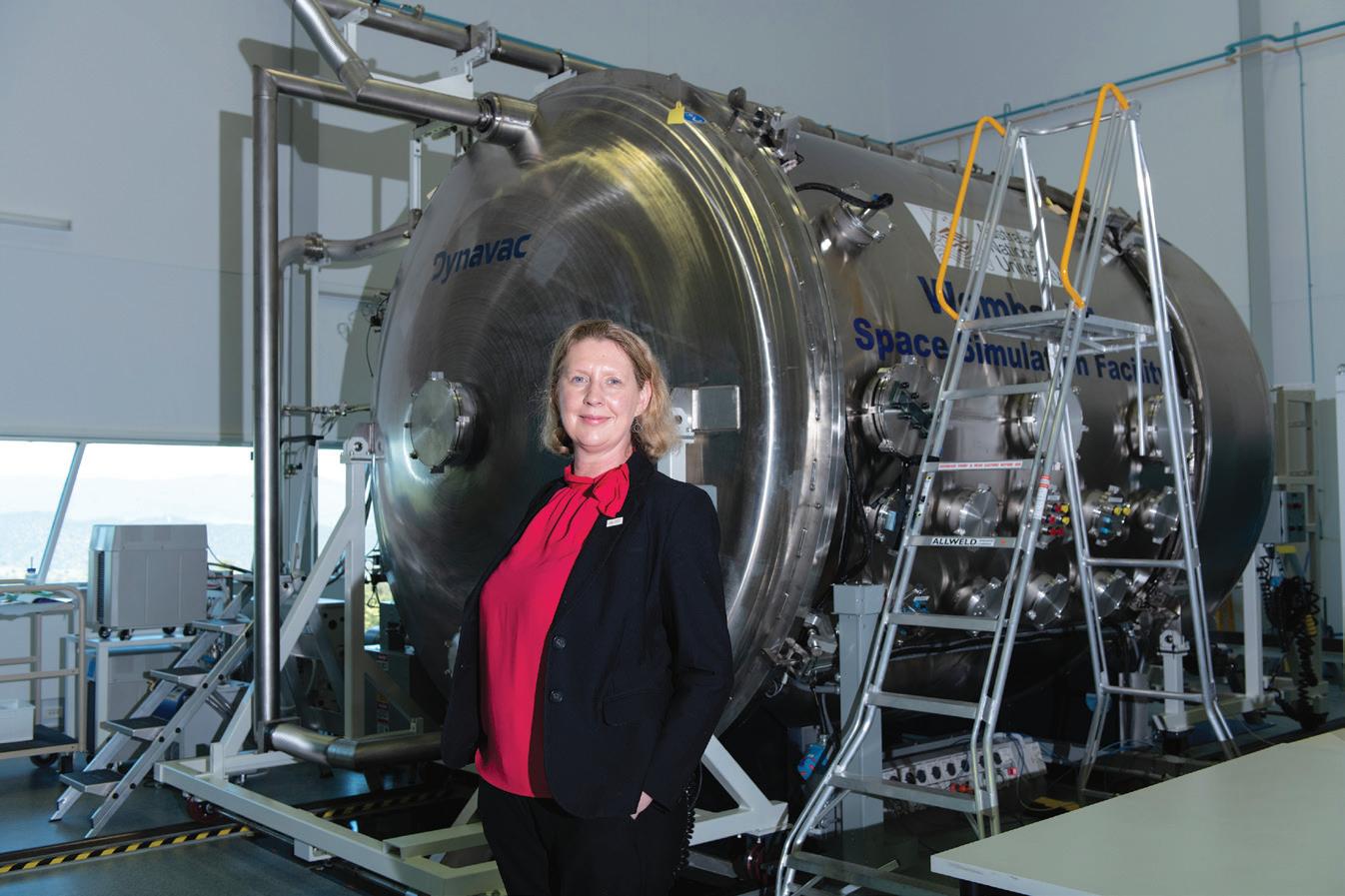
As part of that, diversity was front of mind when she was chosen to head InSpace, an initiative that co-invests research, innovation and collaboration to supercharge Australia’s space
science, when she was invited to be part of the Space Expert Reference Group
There was no space agency in Australia at the time, so her role as part of the group was to advise the government on where it should invest. When
ANU but no one knew anyone else,” she says.
Anna got that community together and now InSpace is the front door to the university’s space capability.
“As part of InSpace, we’ll be investing $23 million of the university’s


Space has ANU’s answer to each of the national priority areas such as robotics, navigation and debris monitoring.
And as for the importance of InSpace, or space in general, Anna says: “If you switched off all the aspects that are in space today, we would just stop. “We
“We already greatly depend on space without really knowing it.”
Now a leader in the industry, she is passionate about creating a work environment that’s inclusive of women.
“Being a woman from a traditional area, [I know] it’s hard to get into
“With InSpace, I was starting with a blank sheet,” she says.
“My aim was to get gender diversity of above 30 per cent, at least, in the whole organisation and the goal was 50 per cent, and I’m up at something like 75 per cent.”




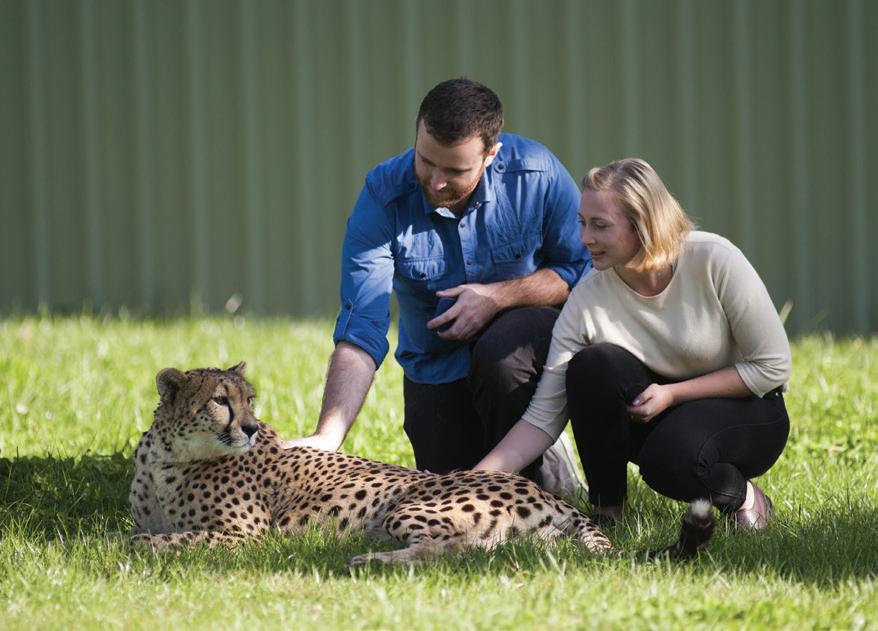
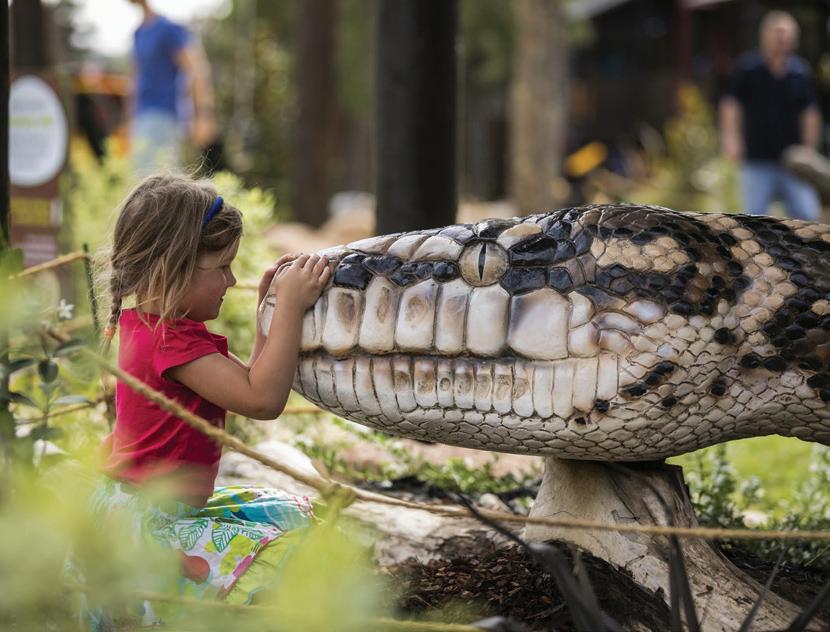
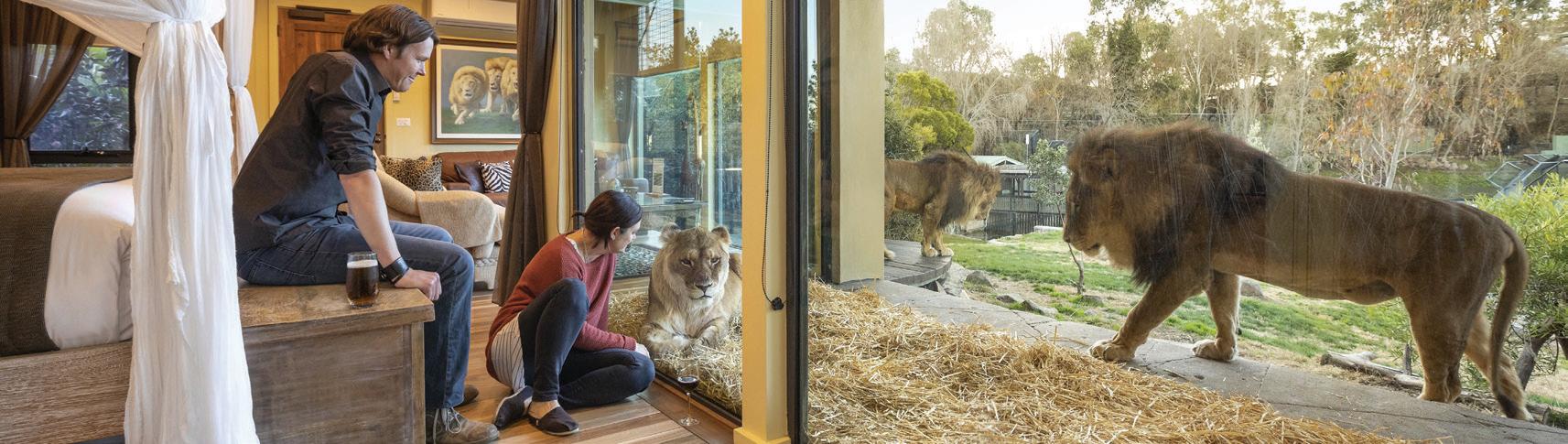
Canberra’s National Zoo and Aquarium features a combined aquarium, metropolitan zoo and easily walked open range section, as well as amazing up-close and personal animal encounters and tours.
Explore the recently opened Adventureland, a truly unique playground featuring a total of 55 activities including various sized fibreglass animal sculptures for children aged 2-12 to explore and play on.
You can also experience the unforgettable with an overnight stay at the internationally recognised Jamala Wildlife Lodge. There is truly something for everyone at the National Zoo and Aquarium!




I’M quite taken by the idea of these electric scooters, though daunted to discover there are about 1500 of them littering, a la shopping trolleys, the inner north, south, centre, lake and Belconnen.
And I’m startled by the news that since their September launch, more than 60 people have been injured by e-scooter incidents so seriously they needed to be treated at an emergency department.
It’s summer and the certain prospect is that, no matter the warnings, these numbers will increase.
But back to the idea of e-scooters; no pollution, renewable energy, easy to use, fun to ride, highly accessible... I’m not sure it gets conceptually much better and one can see why our self-proclaimed “progressive” local government trills at the very mention of e-scooters. They are emblematic of our hip, little city. In fact the government was emboldened in early September by the con -

venient results of its own “YourSay” survey, affirming that 89 per cent of respondents supported the use of e-scooters on Canberra bicycle lanes and 75 per cent said they supported them on footpaths.
These are remarkable figures of support given most of us had probably never seen an e-scooter. But they were slightly cooked with the Road Safety Minister Shane Rattenbury saying that about 670 people contributed to the community survey and they included parents, public-transport users, pedestrians, cyclists and people who have used these devices in other jurisdictions.
I might have been suckered into supporting the concept, though I’m not sure I’d have been among the 47 per cent of respondents who thought it would be okay for people under 16 to be riding them.
Despite only 36 per cent of respondents supporting a maximum speed of 25km/h, that’s what we got for riding an e-scooter on a shared path or bike path, but reduced to 15km/h for footpaths and down to 10km/h when using a crossing.
So it’s September and we’re good to go, the scooters arrive, but it took only until October for Canberra’s top road-safety cop Marcus Boorman to start warning that “idiots on e-scooters” would be fined.
He firmly reminded us that e-scooters had a maximum speed of 15km/h on a footpath,
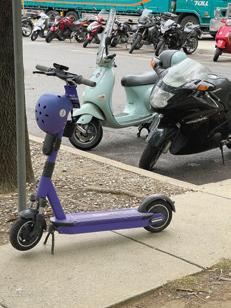
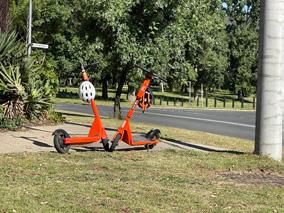
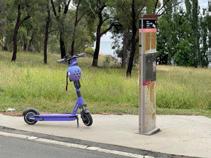
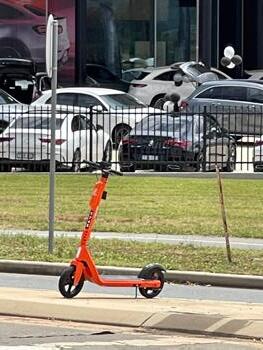
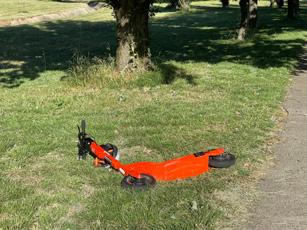
I started noticing e-scooters lying and standing about the place, and began taking photos. Some seemed deliberately posed so, for amusement, I put Beatle song titles to them.
and people weren’t allowed to use them under the influence of alcohol or drugs.
“If anyone thinks they can get on these things and undertake risky behaviour and be an idiot, there will be consequences,” he said.
Clearly, no-one was listening to the inspector because by December citynews.com.au is reporting that there’s one e-scooter incident every two days that sends someone to hospital.
My colleague Andrew Mathieson reported that since the September launch, more than 60 people have been so seriously injured by e-scooter incidents they needed to be treated at an emergency department.
While data from Canberra Health Services highlighted the dangers of e-scooters, anecdotal evidence suggests that some of the incidents involved alcohol. No surprises then to discover police having to waste valuable time breathalysing some of the people

admitted to the emergency departments of Canberra’s two hospitals.
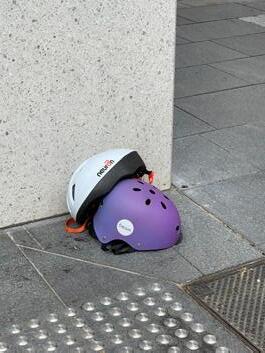
By December, the redoubtable Insp Boorman was again rattling the enforcement sabre:
“If we see you doing the wrong thing, you can be fined, and the fine is $153 for each offence.
“Riders must wear a helmet when using the scooters; we are seeing too many persons being admitted to hospital with injuries from crashing the e-scooters.”
Never mind the human carnage, the political benevolence towards how escooters are allowed to be left pretty well anywhere – upright, flat on the ground, in grass on footpaths, wherever they like really – is striking. Compare that to the punitive outrage launched against discarded shopping trolleys.
I’m surprised the police lost-and-found storeroom isn’t full of them from being handed
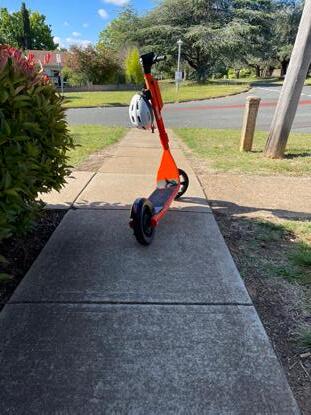
in by conscientious members of the commu nity. Who knew their owners were at liberty to just leave them lying around the streets? I wonder where the inevitable writ will land – the ACT government or the scooter hirer – when someone trips over one in the dark on a suburban footpath.
Though just maybe the ACT government is on to something truly innovative here: the idea of allowing hiring companies the convenience of leaving their machinery wherever they like.
Concrete mixers on every street corner, I say!
PS: If you’d wondered, e-scooters are $1 to unlock and cost 38 cents a minute to ride.
Ian Meikle is the editor of “CityNews” and can be heard weekly on 2CC’s “CityNews Sunday Roast”, 9am-noon.



By Helen MUSA

FOLLOWING in the perplexing new tradition of naming festivals with enigmatic titles full of personal pronouns, like Where You Are, I am Me and You Are Here, Kambri at ANU is hosting a summer-long festival of art called Here I Am.
The subtitle, Art by Great Women, reveals the focus of the event, billed as “a new festival celebrating women creatives” intended to bolster creative women and hold their work up to acclaim.
If that sounds rather like the mission of the National Gallery of Australia’s summer blockbuster, Know My Name: Australian Women Artists 1900 to Now, that’s no accident, as Kambri has partnered with the NGA in an initiative which Bill Dimas, co-founder of aMBUSH Gallery, hopes will become a regular event on the Kambri calendar.
There are free public events across the Kambri precinct, with free parking on weekends, outdoor public art and gallery exhibitions, live art and music, talks and film screenings.
But primarily Here I Am: Art by Great Women is a showcase for more than 30 contemporary women artists showing street art, fine art, photography, illustration, digital, sculpture and film.
Hitting the eyes first outdoors are large-scale

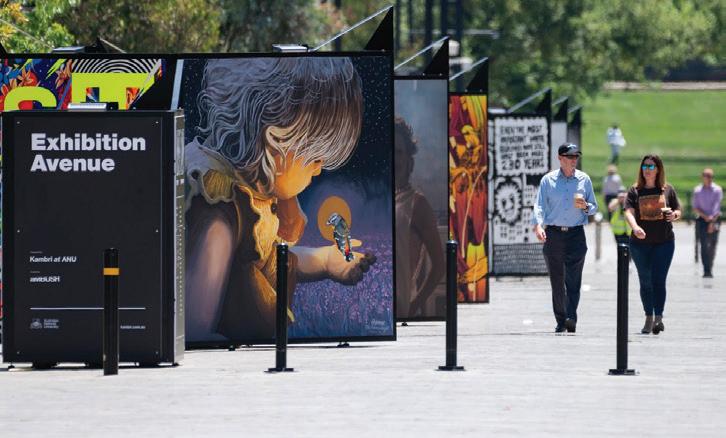

works displayed by 24 artists on six large cubes along Exhibition Avenue, (which leads to University Avenue) viewable 24 hours, seven days a week until February 12.
One such is “She/Her” by Gemma O’Brien, a large two-panel painting of the artist’s chosen pronouns, a way, she explains, of showing openness and respect, and disrupting gender assumptions.
Indoors, aMBUSH Gallery Kambri, who has curated the art component of the festival, will also display works by female painters, illustrators, photographers, digital artists, object designers, and sculptors.
The central Kambri Lawn is home for the duration to female artists creating new work, while throughout the second half of January, Kirrah Amosa, Kim Yang, The Differs Band, singer-songwriter MCKY and Lucy Sugerman will prove that Canberra girls rock in Kambri’s free Music on The Greens.

Dance workshops with Kulture Break.
The Kambri Film Fest runs through January into early February, with two free screenings a day in the Kambri Cinema across three weekends of films starring heroines and films directed and written by women.
On January 30, Lakespeare & Co will stage a preview performance and interactive rehearsal of Shakespeare’s “Measure for Measure”, presenting a contrary view of Shakespeare’s grim and arguable misogynistic text by highlighting “bold female leaders in this black comedy by the Bard”.
Here I Am: Art by Great Women, Kambri, at the ANU, until February 28.





By Helen Musa
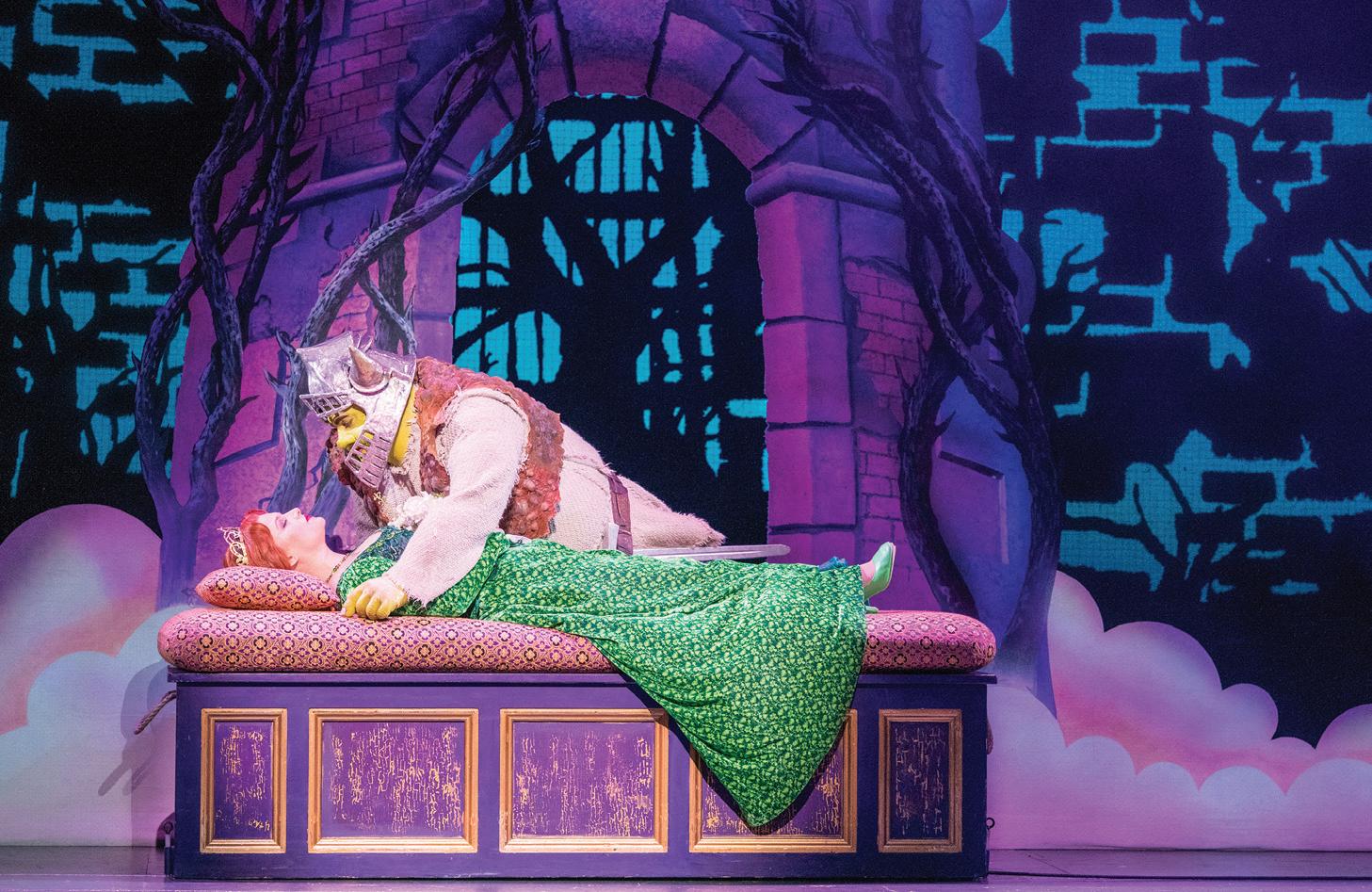
THE Canberra Theatre’s latest coup – the Broadway staging of “Shrek”, coming February – is the first Canberra gambit by Australia’s top producer of musicals, John Frost, since 1991.
It was then that he brought “Jerry’s Girls”.
Frost is impressed with the Canberra Theatre‘s new director, Alex Budd, saying: “He’s got such an entrepreneurial flair,” and expects to do more business with him.
Frost and I had first met in the early 1990s, when he told me of his plans to stage the Lucy Simon musical “The Secret Garden” but needed to undertake serious market research to find out if people would be interested. They were.
By coincidence, this year he was due to co-produce a revival of the same musical with Opera Australia, but it was not to be and he’s guessing it might be a couple more years before they can get it up.
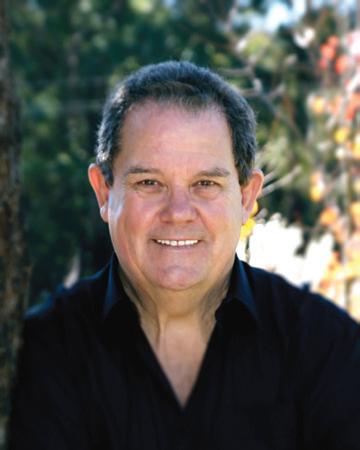
It’s been quite a trajectory for the stagestruck Adelaide boy who talked his way into a job as a dresser on JC Williamson’s tour of “Mame” at the age of 16 and hasn’t looked back.
He’d already staged many musicals in Australia when his big break came with “The King and I” which gave him a Tony Award on Broadway in 1996, then in 2003 he won another Tony for co-producing the original production of “Hairspray”.
but makes about four trips a year to the US, impossible this year, of course – “it’s been quite nice really,” he says.
To him, the highlight of recent years has been his relationship with Opera Australia,




getting Julie Andrews to come and direct the original 1956 version of ‘My Fair Lady’ in 2017 –that was fantastic, I enjoyed that immensely.” It was then that Frost met Alex Budd, at the time Opera Australia’s touring manager
was only a week away from rehearsals, so Frost’s year has been one of refunding tickets and, of course, letting go of performers –“That was pretty rough,” he says. Frost plans to attend opening night of
WATCH IT! / streaming and stuff
End,” Frost says.
“Shrek The Musical”, Canberra Theatre, from February 14. Book at canberratheatrecentre.com.au
AN all-time favourite holiday tradition of my brother and I was to subject our parents to the antics of Kevin McCallister in the Christmas classic “Home Alone”.
Mariah Carey’s “All I Want for Christmas Is You” wasn’t even being played to death in every shopping centre or café before we’d have our “Home Alone” DVD getting a workout through to well after New Year had come and gone.
In 2020, the film has earned a home in the Disney Plus’ streaming catalogue, the platform positioning itself as the one-stop family stream ing shop. That’s certainly now more than ever with its streaming the newest Pixar animation offering, “Soul”.

Originally intended for a cinematic run that was once again pushed to streaming because of covid, the film is sure to be a big hit with families enjoying some time off.
It’s about a middle-school music teacher who dreams of becoming a professional jazz musician, however an untimely accident results in the man’s soul losing connection with his body sending him on a mystical journey so that he can rejoin the two.
In what has become the usual affair for Pixar films, early reviews of “Soul” have seen it showered in praise and recognised as one of Pixar’s most original and fantastical premises in quite some time. Sounds pretty out there.
As Netflix moves into the new year, it too has plenty of stuff to keep viewers locked in.
David Attenborough in space? Netflix continues to expand its variety of content with a new four part “nature” documentary series
“Soul”... early reviews have seen it showered in praise.
which has had more than a bit of attention for its unusual twist. In this one, the “nature” it covers isn’t actually what’s found here on Earth, but what might be found on another planet.
The wonders of modern science and computergenerated graphics come together to form a series about life that could live in extra-terrestrial worlds where the gravity, climate, geography or any other cosmic oddity is different to that of Earth.
It’s called “Alien Worlds”, and although the planets and the flora and fauna they possess are “fictional”, don’t take it all to be a work of science fiction or fantasy.
The work that went into imagining these strange and surreal environments is all grounded in the research based here on our home planet, exploring how different conditions may lead different creatures to inhabit these strange lands. It makes for quite the educational viewing, not to mention an eye-popping one.
Back down on Earth, Netflix has dropped another doco, but this one might have an age barrier to it – “Nicolas Cage’s History of Swear Words” is educational viewing about the origin of and subsequent use of all kinds of colourful language throughout history.
Whoever came up with the idea for Nicolas Cage to host such a show deserves a pay rise.
This is only the start though. Warner Bros is releasing its entire catalogue of films on streaming and Disney Plus is getting the ball rolling on its endless “Marvel” and “Star Wars” content. Twenty, that’s right, 20 new TV shows or films across both those universes have been announced. Many will aim to give hours of back story to even the most minor of side characters in these stories, and people can’t get enough of it. Netflix, Binge, Amazon and all the rest are going to have to fight that extra bit harder with new blockbuster content to keep up with it all – 2021 is set to be the biggest year of streaming media yet.
More of Nick Overall on Twitter @nick_overall






By Helen Musa
THERE’S no rest for the wicked, satirists Shortis and Simpson report as they embark on writing and rehearsing for two nights at the appropriately-named Contentious Character Winery in Wamboin. The shows will be a mixture of their “Going Viral” material, seen recently at the Artists’ Shed, with brand-new songs. The show, “Raise a Glass and Ruffle Some Feathers”, runs at 810 Norton Rd, Wamboin, January 22-23, days after Biden’s inauguration, so yet again, they say, “the ink will be drying on the page”. Bookings at contentiouscharacter.com.au
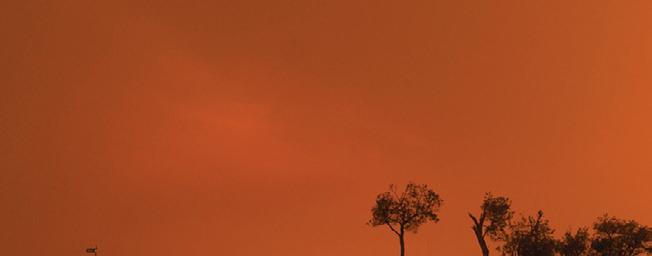
PHOTOGRAPHER Ruth Maddison was caught up in the fires at Eden and her series of photographs during this period forms the exhibition “When No Birds Sing”, at the Arthur Boyd property, Bundanon. Alongside that, “Spark A Reaction” features posters by Wendy Murray and local workshop participants, commissioned by Bundanon. In “Imprint”, the Gamilaraay/ Wailwan/Biripi artist, r e a, shows work from her residency at Bundanon. All three exhibitions will be on view at Bundanon, Bundanon Rd, Illaroo, NSW, until February 28.
CRAFT ACT’s figures are in and it turns out that the three-week DESIGN Canberra festival figures are cause for quiet celebration. Since the festival closed on November 29, the data shows that an impressive 84,731 people were involved, a 25 per cent decrease on last year’s record attendance to be sure, but a gratifying outcome in light of social distancing, border closures and venue limits during ACT Health Stage 3.2 restrictions. And yes, DESIGN Canberra will run again this year from November 8-28.
THE Brindabella Painters, six members of the Artists Society of Canberra – Annette Rennie, Sue Crommie, Sue Rabbidge, Trish Dillon, Irena Zarebski and Louise Emmett – will be exhibiting

The only window company that offers every powdercoat colour at a standard price!

coastal, landscape, still lifes, florals and abstract works in the Magpie Room at Dirty Jane’s, 80 Collie Street, Fyshwick, from January 15 to February 15, all welcome.
THE Nature Conservancy has announced the opening of its sixth biennial Nature Writing Prize. The prize of $7,500 will be awarded to the author of an essay between 3,000 and 5,000 words which explores the relationship and interaction with some aspect of the Australian landscape. The winning entry will also be published in “Griffith Review” online. Judges are literary critic Geordie Williamson and Tara June Winch. Submissions natureaustralia.org.au/nwp will close at 5pm on February 19.

By Richard CALVER

I’M sitting in the Triton Lounge of the Hellenic Club in Woden having a glass of wine with my mate Tom.
We are each drinking a 2017 St Hallett Garden of Eden shiraz, $8.50 a glass for members. It’s a quaffer; dry Barossa shiraz with a hint of bitterness that might reflect how it’s been stored or that my taste buds have become jaded from the strong coffee I had about 20 minutes before. It’s good enough stimulus to launch a quick fire of groaner jokes before we solve the problems of the world.
I tell him that I am prepared to lend him the magazine “Osteopath Monthly”, as I have back issues. He retorts with: “What did the grape do when he got stepped on? He let out a little wine”.
And we then get down to a discussion on the journey of the wine industry in 2020.
“Well, Tom, it’s been bad. Fires and smoke taint meant that the local vintners didn’t make a 2020 vintage,” I say.
“The smoke was horrendous, it can’t become part of our terroir, and then we were slapped with



COVID-19 that changed the pattern of demand.
“At work I read a report by Infrastructure Australia that said during the pandemic online shopping grew five to six times the level of annual growth in 2019. Everything is online with the most repeated phrase of this year being ‘you’re on mute’.”
“Yes, mate, and now China has shut the door, with those bloody tariffs,” Tom says.
“There could be some good out of it though, with some of that good-quality stuff coming on to the local market and reducing the price for us.”
“Adam Smith would be proud of you, Tom,” I say before we move to a discussion of various friends’ ailments and injuries.
Later I find that it would appear Tom’s hope won’t become reality.
John Durie, of “The Australian”, did an analysis of Treasury Wine Estates’ 2019 shipments to China. He found that the firm shipped 660,000 cases of top-quality wine to China worth about $168 million.
But in all for Treasury Wine Estates there were 2.6 million cases shipped worth a total of $190 million. It is easy to work out that this means that there are around two million cases of lowerquality wine that need to find a market. Ouch.
I subsequently discuss these figures with Tom. He indicates that according to a Wine Australia source, total shipments to China for 2019 were
around 15.8 million cases for a value of $1.28 billion, so that each bottle exported came in at just under $A7 wholesale.
China has imposed tariffs of up to 200 per cent on Australian wine with allegations that our wine has been dumped on the Chinese market and that some exporters have sold wine for below the cost of production. This has been hotly denied by Australian producers.
I get a publication called “Daily Wine News” (no relation to “Osteopath Monthly”, as it’s real!) and there is some good news and camaraderie amidst the gloom.
In the December 11 issue it was reported that Naked Wines will set up a $5 million Rescue Fund to help support Australian independent winemakers who are going to take the hardest hit from China’s wine tariff decisions.
That’s certainly not the end of the fight back: Tom sent me an invitation to join an on-line group (there we go again!) that has the sole aim of supporting Australian wine growers. It already has nearly 35,000 members.
We should also all use this as an opportunity to commit to purchasing and consuming Australian product. It seems that next time Tom and I get together, we should buy a bottle of Australian wine, not just two glasses.










WITH more-than-usual rain and warm days, plants have exploded into growth.
Been away and returned to chaos? Possibly plants have grown larger than ever before, and some are in flower in completely the wrong season. My own garden is certainly experiencing this. Readers may assume I keep my garden immaculately. Not a weed to be seen and all the shrubs immaculately pruned? Far from the truth, this year!
A couple of examples of plants out of control. The blue flowering Ajuga “Jungle Beauty” tends to spread very easily with runners, particularly after flowering. Normally this isn’t a problem, I simply pull out the runners to keep it within bounds. This year it caught me off guard. It’s like an invading army smothering all in its wake; covering dianthus and thyme.

I also have another invasion of what I call a wild viola, with large green leaves and no flowers. This one is relatively easy to pull out, but once again it started to

Michaelmas daisies, along with chrysanthemum and salvia, traditionally flower in autumn, getting the “Chelsea Chop” about now. This is when fast-growing perennials are cut back by at least 50-75 per cent to slow growth and encourage more flowers.
In the UK, this chopping back takes place in spring, at the time of the Chelsea Flower Show.
All these plants have tripled in size in the last few weeks and are coming into flower. Even so, I’m still recommending giving them the chop now, and again in February. Don’t worry, they’ll still flower in autumn.
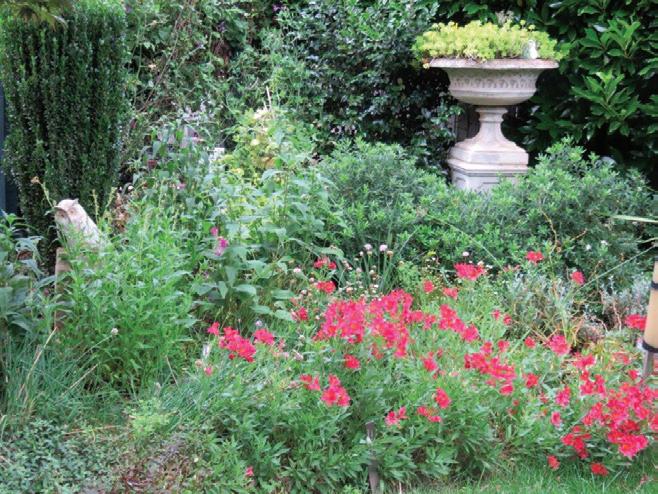
To demonstrate my unruly garden this year, I’ve included a photo (above) in which the disarray from excessive growth can be seen.
At the foreground is the brilliant Alstroemeria “Princess Zsa Zsa”.
This started from one small plant, given to me by Anthony Tesselaar of the Dandenong Nursery, to see if it would grow in the extremes of the Canberra climate. It certainly did and is a real winner. In autumn, I pull pieces up and plant in other bare spots.
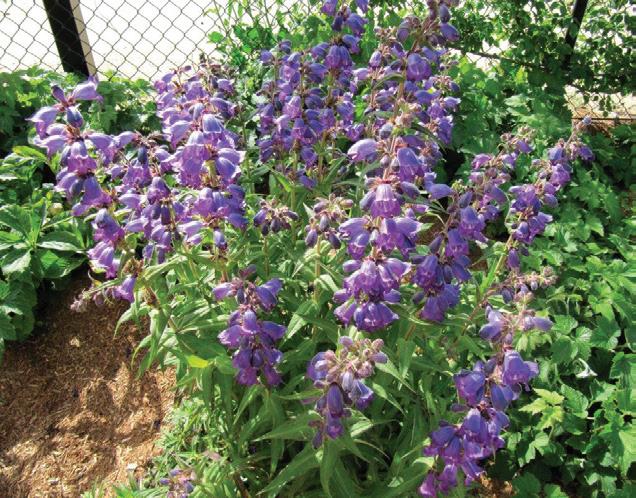
Behind these is the Penstemon “Bell Tower Purple” and Echinacea or coneflower, about
to burst into flower and will continue to do so all summer. The latter is well-known for its medicinal properties. Hidden underneath is a group of chives about to be given the chop to go into the freezer.
Still in the same bed is a group of Armeria with a select variety known as Dreameria “Sweet Dreams”. This has clusters of pink pom-pom flowers, almost identical to chive flowers. I’ve grown these next to each other for continuity.
As a backdrop to all these perennials are two Daphne Eternal Fragrance in “Spring Pink”. These have finally finished flowering after a continuous show since winter. I’ll reduce their growth by one third to keep them fairly compact; at the same time encouraging more branching and flowers next winter/spring.
Another name that could be applied to pruning is “stimulation”, to promote more vigorous growth. These daphne are of the Italian variety, with considerably smaller leaves than the Chinese Daphne odora, and are thus capable of tolerating the hot weather.
My “cannot do without” gardener Dave has cut back my three white flowering Camellia sasanqua, which should have been progressively pruned after flowering each year for the last few years. Now more than three metres tall, Dave reduced them by 1.5m.
Prune wisteria now, too, which has finished flowering. Cut back all the wispy branches to about three leaf joints from the main branches.

twinstitch.upholstery