Heartache in letting go of little people

KATE MEIKLE Planning
PAUL COSTIGAN

The big question when plants get confused CEDRIC BRYANT






Martha Graham

Heartache in letting go of little people
KATE MEIKLE Planning
The big question when plants get confused CEDRIC BRYANT
By Danielle NOHRA

HOSPITAL admissions for skin cancer in the ACT have increased by 300 per cent in the past five years, according to new data.
The Medibank Group says that in the 2015 financial year there were almost 150 admissions for skin cancer treatment, compared with more than 600 in the last financial year.
While the data doesn’t say what’s causing the increase, Medibank sug gests it could be a result of greater awareness.
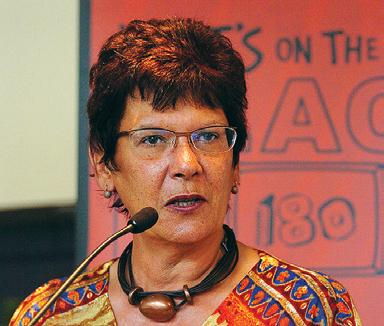
But ANU epidemiologist Prof Robyn Lucas, who has a research focus on vitamin D and skin cancer, says there could be a whole lot of things going on.
Ageing population, awareness, a lack of dermatologists and an increase in available, more aggressive, hospital treatments could all be reasons why there’s been an increase in hospital admissions for skin-cancer treatment, she says.
perhaps more aggressive treatment,” Robyn says.
– only melanomas are, says Robyn.
started in the early 1980s, so generally in Australia, Robyn says there’s a decrease in skin-cancer incidence for the generations that were born from then on.
“Hopefully, as time goes on and those people get older, we won’t see the high skin cancer incidences in those younger populations,” she says.
“That said, when Cancer Australia does their annual sun-exposure survey and they phone people up and say how many times did you get sunburnt on the weekend, we’re not actually seeing great improvement.”
In younger people, Robyn says it’s not really front of mind for teenagers and people in their early twenties.
“There’s a whole lot of social drivers [and] it’s really hard to change behaviours,” she says.
portant to risk, Robyn says.
“Nobody really understands why that childhood adolescent sun exposure seems to be so important for both melanoma and for basal cell carcinoma,” she says.
“Then the other form of nonmelanoma skin cancer, squamous cell carcinoma, seems to be more related to the total of the sun exposure you have over your life.”
For protection against skin cancer Robyn recommends following Cancer Council advice and keeping an eye on the UV index.
“When the UV index is three or higher, you should start to use sun protection and as it gets higher you have to be more rigorous about sun protection,” she says.
Nationally, the data shows that the hospital admissions are mostly – 78 per cent of them – people 60 or older.
“This [data] is about people who have gone to a hospital so it’s partly around changing treatment for it to
“In the past, you might have gone to your GP and they’ve frozen it off and it comes back and they freeze it off again. Now, they’re being a bit more aggressive about the treatment for it.”
Another difficult issue with skin cancer research is that the most common skin cancers, basal cell carcinoma and squamous cell carcinoma, aren’t recorded on cancer registries
Since 1993: Volume 27, Number 1
Arts & Entertainment 15-17
Arts in the City 17
Canberra Matters 7
Cover story 10
Garden 19
Mummy 14
News 3-14
Streaming 17
“So they don’t have very good data,” she says.
“Five years ago, GPs were just burning them off and they’re not really reporting them as being skin cancers, they’re not even diagnosed. Our data from five years ago is not nearly as good as our data from now.”
There’s also been a change in attitudes towards sun protection following a sun-protection program, which
Managing Director: James Anderson, 0404 077605, james@citynews.com.au
The Gadfly 9 Cover: For the Parliament House bees, the hives have it. Photo by Holly Treadaway. Story Page 10.
Ph 02 6189 0777 Fax 02 6189 0778
9b/189 Flemington Rd, Mitchell 2911
Richard is based in our Canberra office and his practice areas include:
Workplace Injuries
Wills, Estates & Probate
Conveyancing
General & Commercial Litigation
Please phone us for an appointment

Director: Kate Meikle, kate@citynews.com.au
Senior advertising account executives: David Cusack, 0435 380656
Tracey Avery, 0477 939999
Advertising account executives: Damien Klemke, 0439 139001
Editor: Ian Meikle, editor@citynews.com.au
Digital news editor: Danielle Nohra, danielle@citynews.com.au
Journalists:
Andrew Mathieson, andrew@citynews.com.au
Nick Overall, nick@citynews.com.au
Belinda Strahorn, belinda@citynews.com.au; Nathan Schmidt, nathan@citynews.com.au
Kathryn Vukovljak, kathryn@citynews.com.au
Arts editor: Helen Musa, 0400 043764, helen@citynews.com.au
Production manager: Janet Ewen
Proof reader: Glenda Anderson

“I talked to a group of teenagers at a school in Perth a few years ago and talked about sun protection and they knew it all, but when it came to going to the beach they wanted to be on the beach without sun protection.
“The sunscreen was a bit of a pain because it got all mixed up with the sand and they had to keep reapplying it so there was this disconnect between the risks that you take now.”
However, for melanoma and the most common type of skin cancer, basal cell carcinoma, childhood sun exposure or childhood adolescent sun exposure seems to be particularly im-
“When the UV index is say four, you might just pop a hat on and be in the shade. Once the UV index is more than 11, which is extreme, you would be wanting to limit your time in the sun and also use everything, so the whole slip, slop, slap, seek (shade) and slide.
“There is a direct relationship between how high the UV index is and how fast you will burn.”
But don’t base sun protection on how hot it is, Robyn warns, saying: “It gets to midday and people go ‘it’s not really very hot, I’ll be okay’ but it’s not heat you have to worry about, it’s the UV index.”


By Belinda STRAHORN

QUEANBEYAN police had to wipe back tears after being delivered 20 handwritten letters of thanks from some of their youngest fans.
In light of the COVID-19 pandemic, years 3 and 4 students at Googong Anglican School spent much of last term learning about essential workers and the crucial role they play – particularly in times of crisis.
The students were mainly excited about the work of police officers and teacher Will Colebatch decided it was an opportunity to give back.
“When the kids got back to the classroom after lockdown, we were reflecting on how hard it was for all of us,” Mr Colebatch says.
“Some of the kids enjoyed being at home and others found it difficult, so we were thinking about other parts of the community and how they were coping. We thought it would be nice if we wrote letters of support to the police.”
Armed with Textas and paper, the children put pen to paper writing messages of appreciation and drawing pictures of themselves alongside their
superheroes in uniform.
Students thanked officers for “keep ing us safe”, “catching bad guys” and “helping kids if they get lost in the shops”.
“The kids shared stories about be ing in lockdown, what hobbies they en joy, and included colourful drawings,” says Mr Colebatch.
The 20 letters were bundled up and delivered, much to the delight of the officers at Queanbeyan Police Station.
Snr Const Walter Scharner says the gesture was extremely positive and heartfelt and couldn’t have come at a better time.
“When the letters were handed over, it brought tears to the eyes of some of my colleagues,” says Walter.
“To receive a handwritten, heartfelt letter from a kid saying how much they appreciate what we are doing, was really touching.”
Amid bushfires, smoke and corona virus, 2020 has been a difficult year.
“I’ve just spent seven weeks away from my family helping to patrol the border down south, it’s a sacrifice so receiving a letter was a huge pick me up,” he says.
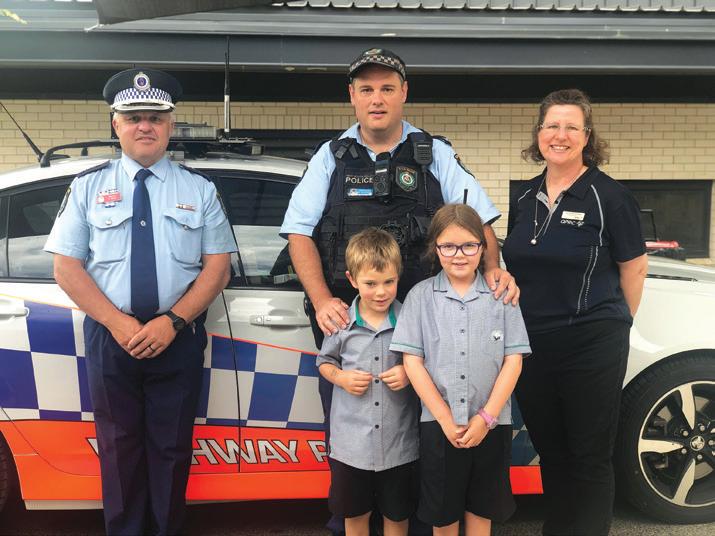
the kids receive a letter back,” says Insp Keith Price, officer in charge of Queanbeyan police.
instrumental in building connections.
AUSTRALIAN adults have lost the equivalent of $338 billion in life satisfaction due to COVID-19, according to analysis from the ANU Centre for Social Research and Methods.
The research examined the financial value of declining wellbeing among adults between March and November.
Study co-author Prof Nicholas Biddle said the decline in wellbeing during the height of the pandemic and associated lockdowns was “a massive hit to happiness, experienced by Australians from all walks of life”.
“Our analysis, which examined the experiences of more than 3000 people, found that each person lost the equivalent of $17,000 due to declining wellbeing or life satisfaction,” he said.
“Put another way, that drop in life satisfaction was worth $423 in lost income per week.”
“It was just a little bit of cheer in what’s been a year of doom and gloom for many.”
Many of the students never expected to ever hear back from the officers they sent letters to. But, to their surprise, the responses were hand delivered to
“The officers have really got involved writing back to the kids, some sent drawings or put little toys in the letters.
“It’s been a difficult year, most of our troops have been down to the border two or three times, if not more, so the letters have really helped to know



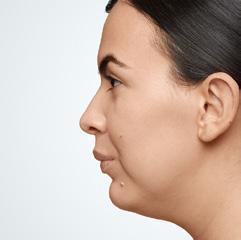

“It’s all about breaking down barriers and getting kids used to talking to police so they are not scared to approach police if they ever need help,” he says.
“The whole experience has been a huge morale booster.”
And a lesson that has proved that the simplest of gestures can really brighten someone’s day.
The study’s findings show since the end of November life satisfaction and wellbeing has improved – reaching the same levels as before the 2019/20 bushfires and start of the coronavirus pandemic.
Co-author, Professor Matthew Gray, said: “Our analysis shows between March and November the average household lost a total of $4726 in income. That’s a total loss of $46.7 billion for Australian households over the COVID-19 recession.”
World's #1 Fat Freezing technology
Over 7 million treatments performed worldwide
Results in up to 8 weeks
Non- invasive, little to no down time








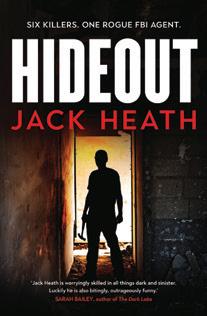
That’s something I really wanted to explore with this series,” he said.
“I wanted to ask the question; at what point should we look in the mirror?”
Jack moved from Sydney to Canberra in the late ‘80s and loves to live and write here.
“I find Canberra a great place for everything,” he said.
“There’s a diversity of different people here, you get a great cultural mix from different backgrounds and different industries, and it’s of a size that makes it all still feel like a community.”
Now Jack has made his home in Charnwood with his wife and two children, aged six and one.
“It’s a balancing act to write full time and support a family, but it’s a privilege I never take for granted,” he said.
“Being able to write during the day while the kids are at school is great, but when they come home I get to switch off my ‘cannibal noir writer brain’ and I get to just be ‘Jack the Dad’.”
“I get to spend my time doing this job I love, and then I get to spend my time with the people I love.”
Jack’s not slowing down moving, either. With another Timothy Blake book lined up for next Christmas and two comedy books also set to release within the next 12 months, we can certainly expect to see much more of him.





WHEN it comes to the ACT government and planning and development, 2020 was not a year to be celebrated. Things got horrible with Mick Gentleman as Planning Minister and, given he continues in this portfolio, things are not likely to improve.
However, it is time to be jolly – or at least look to the positives and who would be nice in 2021. That means attention must turn away from the government’s Grinch Incorporated, those fellow planning travellers are possibly sitting down popping corks on what a good year they had spoiling people’s lives and wreaking havoc on the city.
So what could be good in 2021? This will be the year that the ACT Labor/ Greens coalition will prove its value to the city’s future as the bush capital. Soon we may learn what the Greens mean by Building A Better Normal –their platform for the October election.

Eyebrows were raised when the Chief Minister created the ACT Minister for the Environment and Heritage to be taken
If the ACT Greens are to build that better normal, then the Planning Directorate will have to be forced to change and to do something about addressing the long list of heritage and the environment issues that matter to Canberrans.
up by one of the new Greens MPs, Rebecca Vassarotti. The heritage portfolio had previously been with the Planning Minister and we all know what that meant. Things went backwards.
The combination of heritage and environment could be a strong platform from which to take an interest in planning and development as well as the enhancing of the urban forests, parks, greenery, biodiversity – and the celebration and protection of the city’s heritage as the city modernises.
This means that the Minister for Heritage and Environment will have to do something about the ad hoc approach that has become the norm for the Planning Directorate.
This directorate has become expert at spin to cover up the meaningless, complex mess that pretends to be a planning regime.
If the ACT Greens are to build that


better normal, then the Planning Directorate will have to be forced to change and to do something about addressing the long list of heritage and the environment issues that matter to Canberrans. The minister needs to stop them producing glossy planning statements, doing silly planning refreshes and endlessly talking about strategies.
If the above key performance indicator was not enough, the same Greens minister has carriage of Homelessness and Housing Services. Given the heavy lifting done by the volunteer sector with assistance to homeless people, and the increasing presence of people sleeping rough around shopping centres and in parks, this matter should be a priority to be addressed at least before next winter.
The volunteers of Safe Shelter ACT provide some overnight shelter for homeless men during winter, with numbers increasing each year. And the homeless women? Safe Shelter’s annual report for the next year will
provide an indicator of whether the new minister has taken her job seriously.
On another front, given that housing services is within this same minister’s portfolio, and given she is minister for the environment and heritage, we can hope that she will use her new position to put a stop to the madness of converting community lands and facilities (for example, Ainslie’s Bill Pye Park) for social housing. Social housing needs to be integrated into the suburbs. Not separated out.
The other big challenge for this new minister will be to carry on the work commenced by Gordon Ramsay to increase the performance of developers in keeping to the building



regulations as well as to implement some real environmental codes for all constructions and landscape works.
This new portfolio could deliver for the city, for residents and for the many who supported what the bush capital stood for before the barbarians were allowed inside the city gates.
The New Year clock is ticking for Rebecca Vassarotti and the ACT Greens. Let’s wish the new minister well for 2021 and look forward to significant changes.
Paul Costigan is an independent commentator and consultant on the visual arts, photography, urban design, environmental issues and everyday matters.

By Belinda STRAHORN
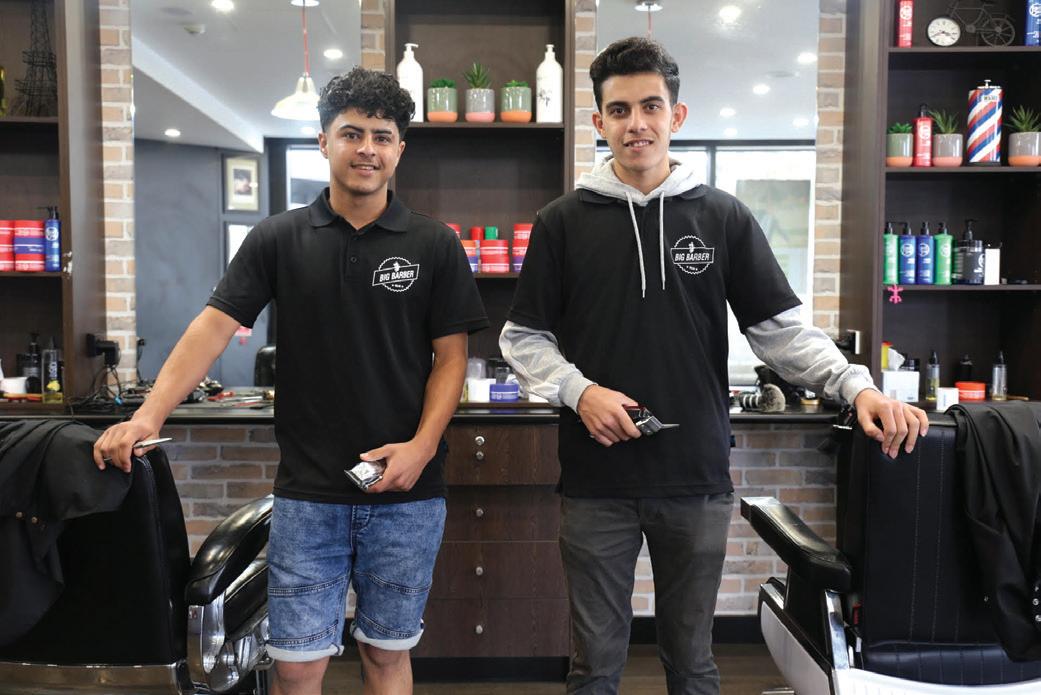
TWO years ago brothers Mohamad and Ali Alrajab arrived in Australia with their parents and seven siblings aboard a plane.
Given everything the family had endured fleeing the war in Syria that had ripped their world apart, grateful is an understatement when it comes to describing how they felt.
The brothers finally felt “safe” and had a home they would grow to adopt as their own, a home in Canberra that would help them escape the horrors of the past.
“Every night in Syria we would go to bed feeling scared,” says Mohamad, now 19 years old.
“The nights were the worst because of all the sounds, you can’t sleep, especially with all the kids in my family and all the crying… it was hard, very hard.”
When war broke out in Syria in 2011, Mohamad, who had dreamed of becoming a soccer player, was just 10 years old.
“We couldn’t go to school, eve ryone was scared and some peo ple had disappeared,” he says.
“We would have one day a week of electricity that’s it, we had to heat our water on the fire to make food and then to shower.”
Three years later in 2014, his family fled, after the brutal crack down of ISIS on their village of al-Mashi, in Northern Syria.
“It was so bad,” Mohamad says.
“We could see the helicopters, they would hit places, we saw fires, we saw people get killed.
“Then ISIS started coming so we left, we were very lucky to leave because they took chil dren, so if we stayed there we would have gone with them.”
The family’s journey took them from Syria to Lebanon and then finally to Australia where they were granted asylum under a refugee program.
“It was a 16-hour bus journey from Syria to Lebanon,” Mo hamad says.
“We stayed in Lebanon for four-and-a-half-years, I didn’t go to school, I would go to work with my dad in a supermarket packing shelves, working 10hour days, seven days a week.
“We were lucky to move to Mohamad says his family were help us but we had to wait until 2018 to leave, that was a happy day.”

The family settled in Canberra on June 22, 2018 – a date etched in Mohamad’s mind.
“When we arrived in Canberra we stayed at a hotel in Kingston for two weeks, then we were moved into our house in Macquarie, the Red Cross helped us and Centrelink,” he says.
At first things were tough.
“Everything was completely different, the weather, the language, the food, even sleeping at night,” Mohamad says.
around for Mohamad when he started school at Dickson Col lege and began to work part time at the local barber shop,
the weekends and during the holidays and I said why not,” he says.
“When I first started I didn’t know how to hold the scissors or clippers so I’d just clean the shop and welcome customers. I came every day after school, then I started doing simple hair cuts like a number one all over, then a number two and now I can cut a beard and do everything.”
Today the budding barber, avid reader and soon-to-be CIT student studying IT and cyber security, says life in Canberra has offered opportunities and friendships he’s thankful for.

“We love it here, we feel
“We love Canberra, the peo ple are kind, we have had a lot
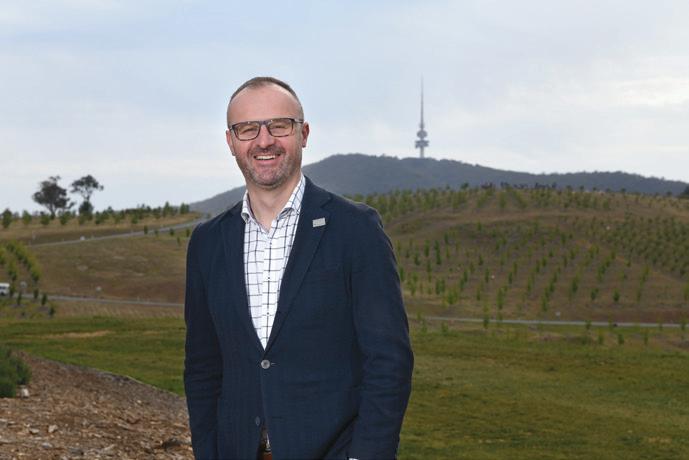
This summer, Chief Minister Andrew Barr will be...
• Getting out on the lake with some paddle boarding, kayaking and by booking a “GoBoat” for a three-hour cruise to better explore the lake.
• Going on a craft beer trail for a few afternoons, which will be spent enjoying the latest BentSpoke and Capital Brewing Co offerings.
• Heading to Manuka Pool. No Canberra summer is complete without some time at the historic Manuka Pool.
of support and a lot of help, especially from Dickson College and my teacher Ros Phillips from the refugee bridging program who helped me prepare
But, Mohamad admits, the situation has not always been easy for his family, particularly for his sister who has a
“My sister can’t hear, she has problems talking and pronouncing words,” Mohamad
“She had a lot of operations in Syria and Lebanon that didn’t work, but since coming here she’s had more operations and she’s much better… she can read and say lots of words and she goes to school.
“My parents don’t speak English, it’s been hard for them, they don’t work, my mum looks after the kids, my dad sometimes goes to study at CIT learning English, it’s not been easy for them.”
Mohamad’s younger brother, Ali, 17, a keen Raiders’ supporter and Madrid football fan, is following in his brother’s footsteps working part time at the barber shop and will complete his studies at Dickson College next year.
“We are happy here, there was no future for us in Syria, we would be gone with the fighting or have disappeared,” Ali says.
“If you are 13 or 14 years old they take you away to fight and they teach you how to fire the guns.”
The brothers agree that seeking asylum from persecution and being able to call a new country home is an invaluable “gift”.
“Syria is still special to me because I was born there but my future is here,” Mohamad
credible… Australia has given

• Going on lake runs and walks. I plan to chalk up at least 100 kilometres of lakeside runs and walks.
• Experiencing some foodie fun. I’ll be sure to try out the many new restaurants, bars and coffee houses that have opened up across the city.
WHEN the history of an eventual conciliation between Black and White Australia is written (or sung and danced), 2020 will provide some fascinating markers on that long, winding track.
First up will no doubt be the achievement of Pat Turner, the wonderful Gudanji-Arrernte woman who demanded the federal government seal off the outback Aboriginal communities from all potential COVID-19 carriers, thus preventing the deaths of hundreds if not thousands of our First Nations people.
Born in Alice Springs in 1952, Pat’s father died in a work accident when she was 11, but her mother – and great uncle Charles Perkins – saw that she received a good education in Adelaide.
She joined the APS and trained as a welfare officer; came to Canberra in 1978 where she rose through the ranks to become a deputy secretary of PM&C then CEO of the Aboriginal and Torres Strait Islander Commission.
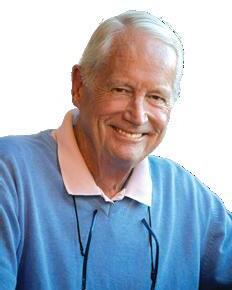
She’s now the convenor of all the Aboriginal and Torres Strait Islander
‘Advance Australia Fair’ still has its own detractors. As one cartoonist put it, the Aboriginal version would have arrived much earlier if only we’d been able to translate ‘girt’.
peak bodies and all Australia owes her a mighty debt.
Next there’s the nerve-tingling rendition of the National Anthem in the Eora language by the 16-year-old Wiradjuri lass Olivia Fox at the Rugby Union Test Match against the Argentinians.
It came as a total shock made even more moving as the Wallabies themselves – including some burly imports from the South Seas – were word perfect as they sang along.
That it came from the conservative rugby community made it all the more affecting. But like so many of the rough patches on that long and windy road, it was not without its critics.
The Eora (Dharug) language of Sydney and the immediate hinterland is only one of a great many Aboriginal languages including Wiradjuri’s own where a serious revival is taking place emanating from the Wagga Wagga education system.
Moreover, “Advance Australia Fair” still has its own detractors. As one
cartoonist put it, the Aboriginal version would have arrived much earlier if only we’d been able to translate “girt”.
Finally came the launch earlier this month of a new book, “Songlines – The Power and the Promise”, by Margo Neale and Lynne Kelly, at the National Museum of Australia.
Margo is an Aboriginal woman of the Kulin/Gumbayngirr nations who, like so many of her generation, was “protected” by her mother and grandmother from any real knowledge of her ancestry. Trained as a teacher, she embarked on her journey of personal discovery when, with husband Bruce, she taught in Aboriginal communities of the NT.
Since then her career has skyrocketed in the National Museum of Australia where she worked with founding director Dawn Casey to develop its First Nations Gallery and has since curated a series of top-flight exhibitions from Emily Kngwarreye paintings to the magnificent “Seven Sisters Songline”. Lynne Kelly is a polymath specialising in oral memory and mnemonics, and together they celebrate the concept


debt.
of songlines carrying the vast accumulated knowledge of Aboriginal “dreamings” throughout the country. Already the book has been short-listed in the Victorian Premier’s Literary Awards. It is the first of a series that will develop the concept to include “Design” by Alison Page and Paul Memmott and “Country” by Bill Gammage and Bruce Pascoe. All three markers say much about the power and promise of the way ahead, especially in light of the results of whitefella obsessions with boundless “growth” and profligate “development” on that long, winding track.
robert@robertmacklin.com
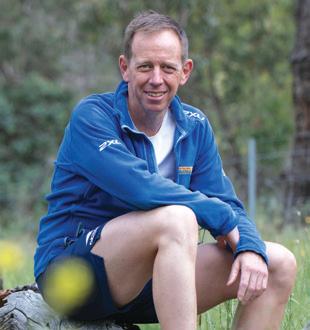
This summer, ACT Greens leader SHANE RATTENBURY is looking forward to…
• Heading down to the holiday home at South Durras, where I can spend some time on the beach and bushwalking in the Murramarang National Park.
• Going for runs in Canberra’s nature parks.
• After quite a hectic and long 2020, I am looking forward to spending time with my family and friends.
• My garden is in need of some love and care so I am anticipating some time getting the yard in shape.
• Lastly, I am looking forward to heading to the National Portrait Gallery to see the “Pub Rock” exhibition that is currently running. Seeing photos of live performances by some of Australia’s rock legends will bring back strong memories of the times spent at Jimmy Barnes and The Angels gigs.


By Danielle NOHRA
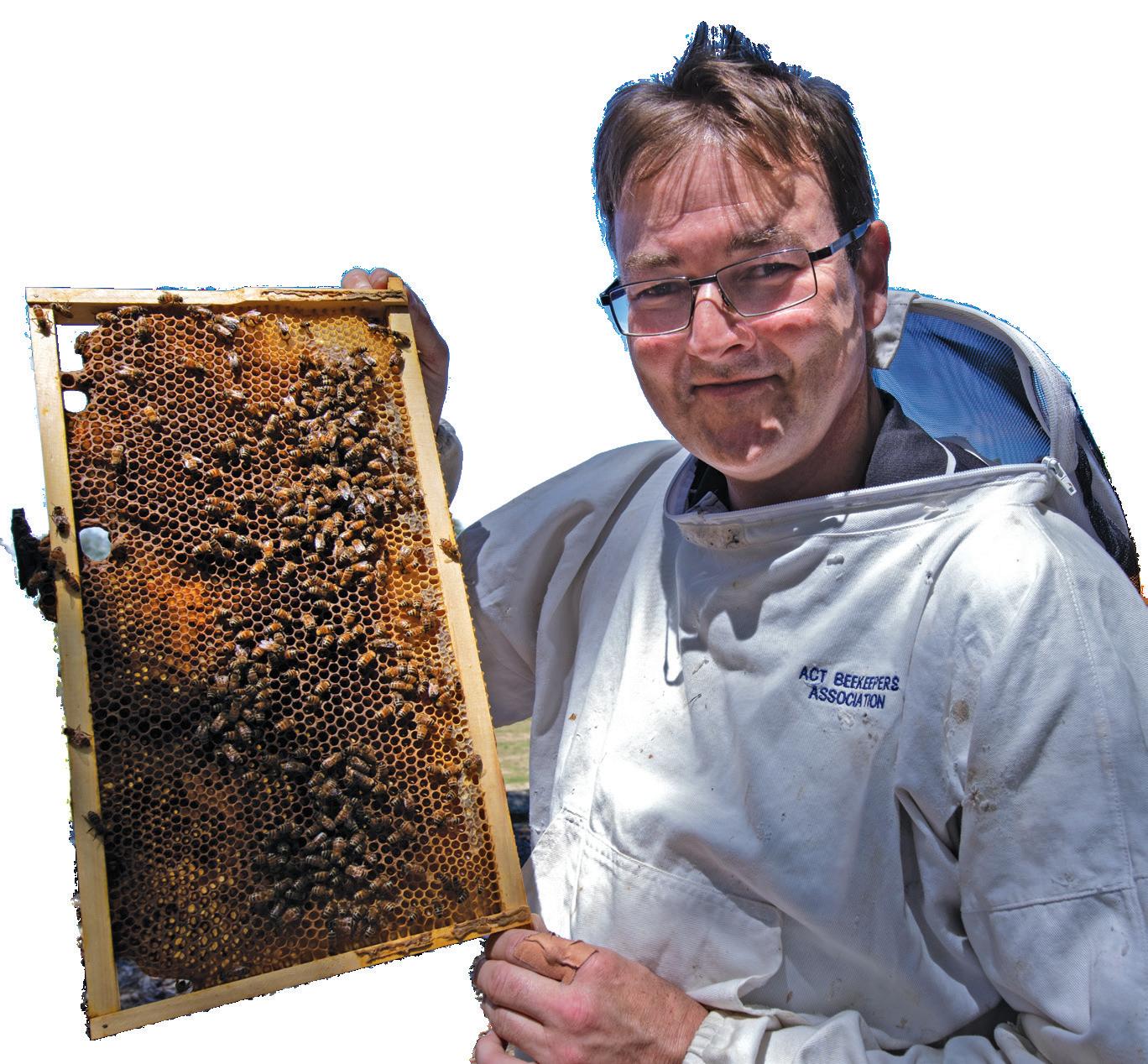
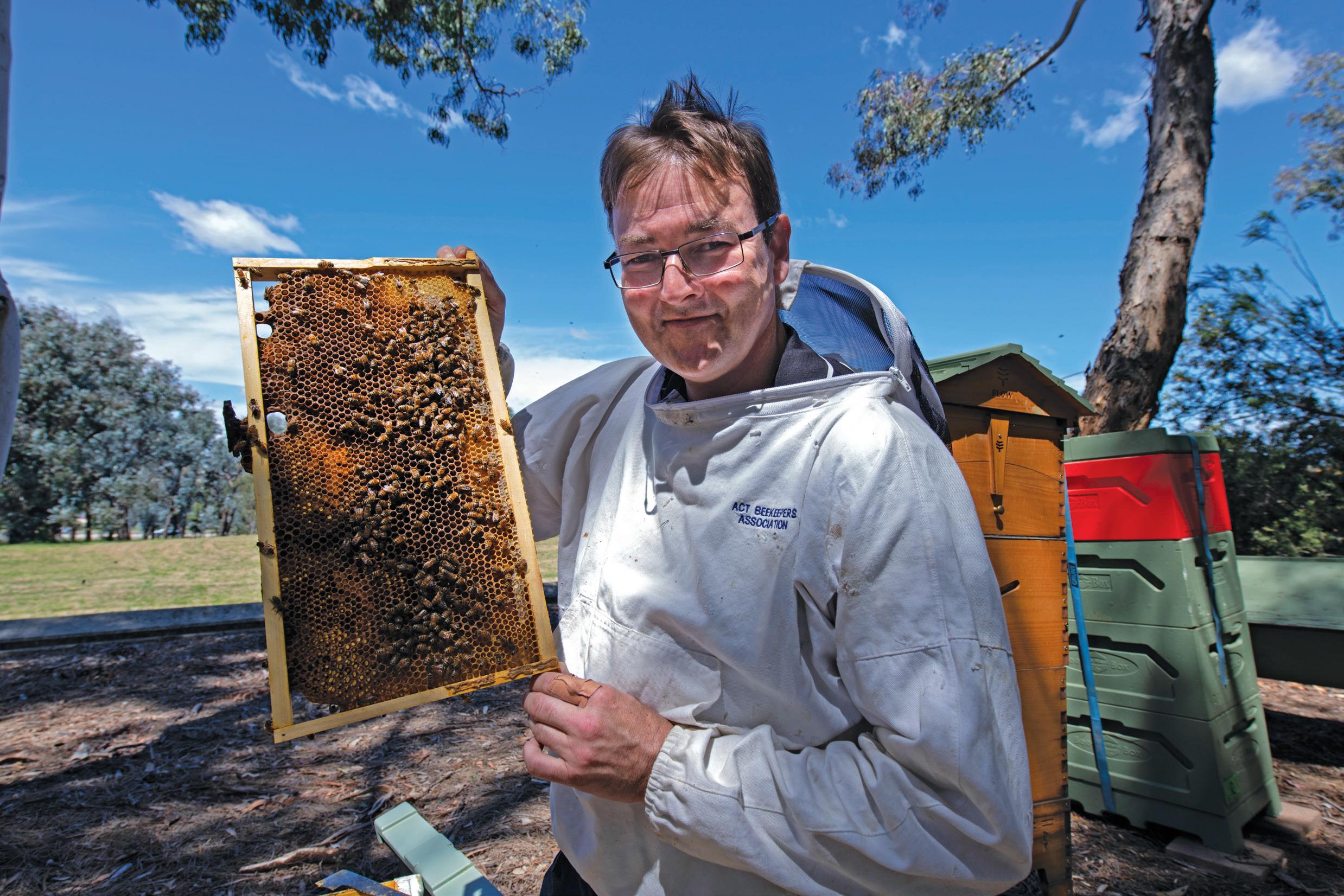
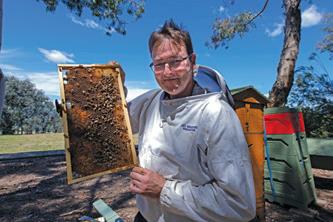
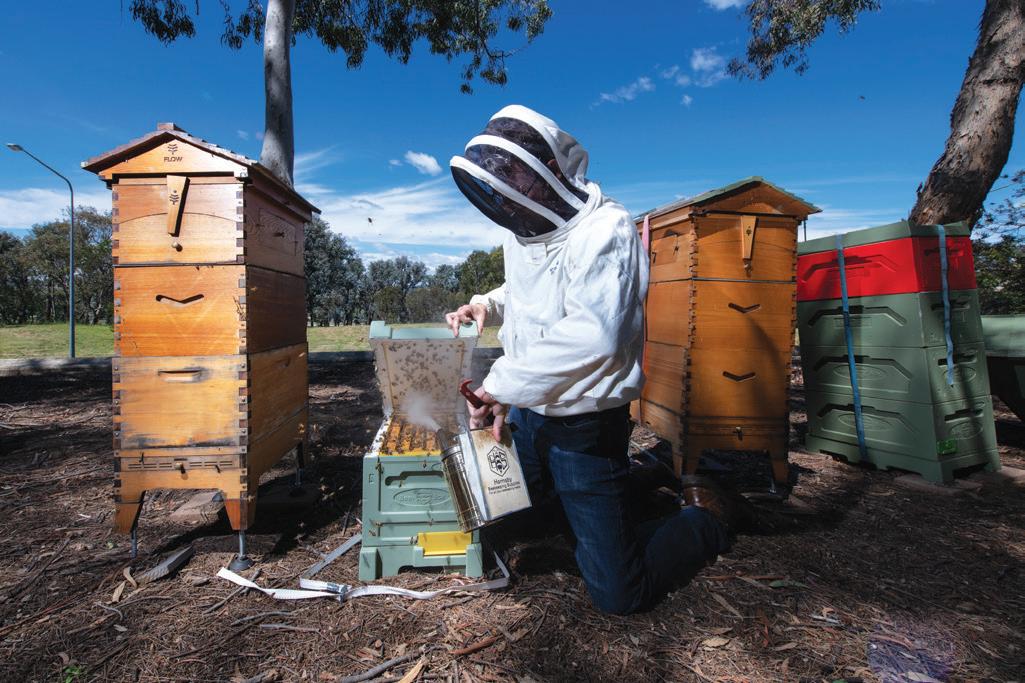
PARLIAMENT House’s voluntary head beekeeper Cormac Farrell has become quite attached to the parliament bees, and at times says they become quite attached to him!
He manages two native beehives and six honeybee hives as part of his role at Parliament House (and many more around the ACT), but, with growing interest in hobby backyard beekeep ing, the 46-year-old environmental specialist urges people to think about keeping native Australian bees.
He worries about endangered native bee species, with some, such as the Metallic Green Carpenter Bee, at risk of being lost.
“When you lose the bee, you can sometimes lose all the plants that they were pollinating, because the plants were reliant on it in order to breed, if you lose the bee, then the plant will also be lost.”
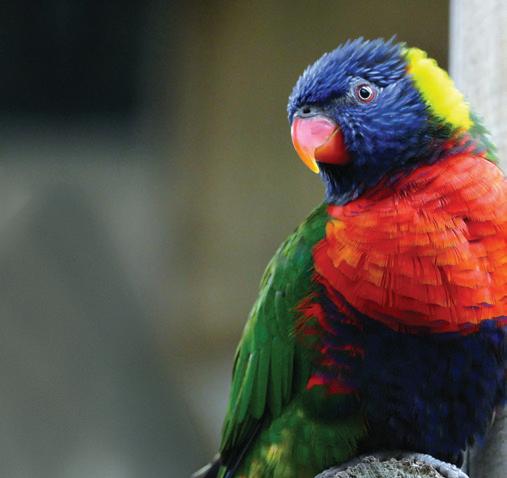
There are about 2000 species of native bees in Australia, with 30 just in Canberra, says Cormac, of Evatt.
The native bees at Parliament House are not actually ACT locals, though.
Home to the Gold Coast, these stingless bees called Tetragonula carbonaria, which are also known as sugarbag bees and occasionally bush bees, have been part of a trial here.
“[They’re] not endangered in Australia, but they are experiencing declines in some parts of their home ranges,” Cormac says.
“What Parliament House has been doing is trialling how well they migrate.”
They’re not adapted to handle the

Cormac Farrell… “When you lose the bee, you can sometimes lose all the plants that they were pollinating.”
Photo: Holly Treadaway
picking up the pollen and delivering it as a specialised package exactly to the other flower. It’s much more efficient and much more effective.
“That’s why pollination is the main value of bees in Australia, not honey.”
The honey isn’t even really for humans, says Cormac, who explains that the bees consume the honey to stay alive – “we only take the surplus”.
Last year, for example, there wasn’t a surplus of honey in the Parliament hives because the smoke-affected bees needed all the honey to survive.
“The smoke affected them quite badly by killing the foragers. They would go out into the smoke but wouldn’t come back, so they were losing their workforce at quite a high rate,” he says.
“The colonies can make more workers but they chew through their honey resource doing that. So we didn’t take any honey off them.”
Usually Cormac would get about 20-30 kilograms of surplus honey from the European honeybees, and a lot less from the native bees – about half a kilo to one kilo a year.
temperatures of more than 42C can be fatal for these native bees, too, he says.
The colonies are kept happy in custom-built “Hive Havens”, heavilyinsulated beehives, one located in a staff courtyard, the other in a courtyard where dignitaries and VIPs are entertained and, after three years, Cormac can say the trial has been a success.
Cormac got the role of head beekeeper as part of a joint venture between the Department of Parliamentary Services and an engineering firm called Aurecon, where he used to work.
“I was in charge of the office hives [at Aurecon] and we needed to move them,” he says.
“We were moving buildings and the new building didn’t have any safe roof


ture Society, the beekeeping club at ANU, also needed to move their hives.
“We were casting around and Parliament had just released a report on biosecurity in the beekeeping industry so we thought they might be interested. We talked to them, they were interested, and away we went.
“I was the head beekeeper of the source hives, so by virtue, I became the head beekeeper for Parliament, which, to this day has been a wonderful and strange side project.”
Cormac’s day job now is as an environmental specialist and bushfire protection specialist at Umwelt, so beekeeping is a bit of fun outside of what can be a stressful, high-pressure career.
His passion for bees started with a
local Canberra “hills”.
“Botany is my main discipline and that’s always been a main interest of mine,” he says.
“My original passion for bees was mostly, not around honeybees, it was around native bees and their role as pollinators.”
For humans, Cormac says pollinating is really important, especially when it comes to hayfever, which is from weak pollinated plants.
“Because [plants are] throwing their pollen into the air to try and make its way to another plant, they have to throw huge amounts of pollen into the air, which is where your hay fever comes from most of the time,” he says.
“When it’s bee pollinated, the bee is

Cormac describes the Tetragonula carbonaria’s honey as tasting “tangy”, like honey mixed with passionfruit pulp.
“What’s unique about them is their honey is antibacterial and was used by indigneous people as a topical antibiotic or to heal wounds,” he says.
“Even though they produce a very small amount they were really important in indigenous culture because they were the first large scale societies to have access to antibiotics.
“The first settlers often commented on how the indigneous people seemed to be able to heal injuries that would have killed the Europeans. They would see the scars and they would go: ‘How did that person survive that?’ And it’s because they had antibiotics.”


By Belinda STRAHORN
TAPPING into the community goodwill demonstrated during the pandemic, the ACT’s new State Emergency Service boss wants more young Canberrans to join the volunteer organisation.
Anthony Draheim, 51, who succeeds Georgeina Whelan as the ACT’s new SES chief officer, says the organisation is always looking for new volunteers.
“We saw such strong community spirit during covid and the fires at the start of the year, and so my advice to anyone thinking about joining is… do it,” says Mr Draheim.
“Volunteering is one thing that Australians do really well.
“It doesn’t matter what organisation it is, I don’t think Australia would be able to operate without its volunteers.”
Mr Draheim, who has been with the ESA since January as director of training co-ordination and management, says the 380-member team could do with more volunteers, particularly young people.
“We’ve got a large percentage of older members and that’s natural with volunteer service organisations anywhere in the country,” he says.
“Young people tend to come on board and then leave to have a family or go to a job, they do tend to come back, but later in life when things aren’t so busy.”
No previous experience is required to join, Mr Draheim says, the only prerequisite needed is – heart.
“Volunteering makes you feel good,” he says.
“Anyone can come and join us, not everyone has to be on a roof putting on a tarp, there are lots of different roles people can do.
“Serving is embedded into our DNA as Australians, it’s what makes us better people, a better community and a better country.”
Like so many SES volunteers, Mr Draheim’s decision to join the organisation seven years ago, was motivated by a strong sense of helping others.
“I grew up one of five kids into a family where volunteering was just something you did, it was all about giving back to the community,” he says.
“That was an era where you leant over the back fence and got to know your neighbour… we’ve lost a bit of that in this country and
The ACT’s new SES chief officer Anthony Draheim… “Anyone can come and join us, not everyone has to be on a roof putting on a tarp.”
It’s been a challenging year, but ACT electoral commissioner DAMIAN CANTWELL plans to enjoy the summer by…

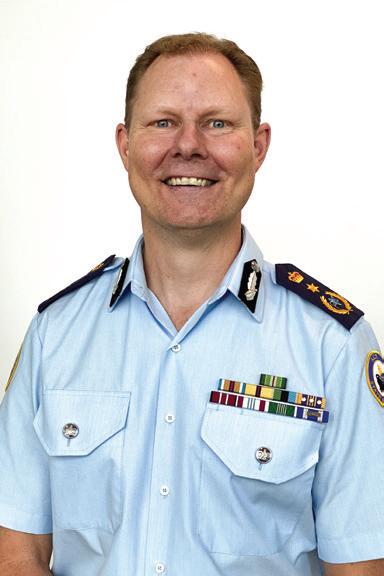
• Practice falling off my moun tain bike at the Stromlo Forest Park bike park.
• Practice falling off my motorbike at the Brindabel las (to confirm my falling-off skills that I learnt while mountain biking).
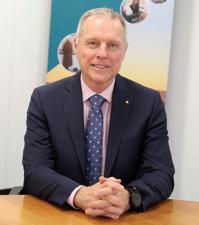
• Enjoy hiking in the hills and local touring with my soulmate wife.
• Reflect on a challenging but enriching year.
• Give to others in realisation of what life is really about.
although covid has brought some of that back,bours and our community and volunteering is a
With more than 30 years’ experience in the Army, Mr Draheim is well prepared for his new role, having commanded and managed Defence logistics and supported humanitarian aid and military disaster responses in Australia and overseas in Iraq, Afghanistan and Kuwait.
“I worked a lot in strategic logistics and in that role I had the opportunity, although usu ally in tragic circumstances, to provide support and planning for international and domestic hu manitarian relief and disaster aid, some of those events include during the Queensland floods in 2011 and after the Fiji cyclones in 2016.”
Given the La Nina weather event, which is forecast to bring more wet weather to the east coast, Mr Draheim says Canberra is likely to experience an increased risk of storms.
With that in mind, “now” is the time for Can berrans to talk to their family about what they would do in an emergency.
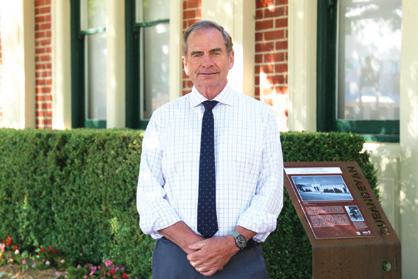
THERE’S still work to be done for QueanbeyanPalerang Regional Council mayor TIM OVERALL over the summer, with a bit of downtime…
“The problem is we get little or no notice that these weather events are coming, so you need to enact a survival plan now if you don’t have one,” says Mr Draheim.
“If you haven’t got a survival plan, download one from the website, and be prepared for any event.
Survival plans can be downloaded from the ESA website at esa.act.gov.au



with the loss of a family member or found themselves in one of our nursing homes.
• Relaxation at home with the family, cricket… and more cricket.
• Possibly a break at and around Burrill Lake, Conjola and Moruya… watch out fish!














By Belinda STRAHORN
ACHIEVING a high standard of performance in local government doesn’t come easy.
So when Queanbeyan Palerang Regional Council (QPRC) won the AR Bluett Memorial Award – at the NSW annual Local Government Conference – it was a big moment for the city’s gov ernance journey.
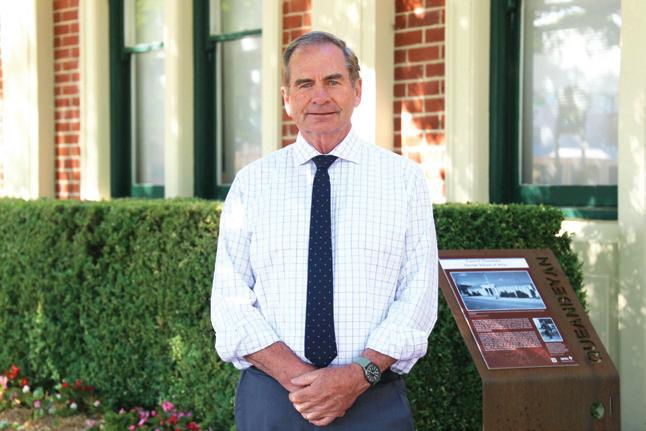
Mayor Tim Overall says the coun cil’s innovative approach to managing council business, is an example of how teamwork and dedication can trans form a city.
“This award is very significant within the local-government sector and very significant for our staff because it’s a recognition of teamwork from the bottom to the top, and the way that council has delivered so many infrastructure projects through a very difficult time,” he says.
cess of the merger, it’s about doing more and delivering more with the same amount of resources,” Mr Overall says.
“When we set out on the merger journey we did not want to embark on a transition, we wanted to transform into a brand new organisation from the
“It’s been a success; I say that because the community is essentially the judge of that, and the feedback I get from the community is very positive.
“Of the 20 mergers across the state, I believe we have been the most success -
Along the journey, council has had its fair share of challenges over the delivery of some of its infrastructure
Public opinion was divided over the 4.6-kilometre Ellerton Drive Extension (EDE), which was completed this year at a cost of $86 million, jointly funded by the council, the NSW and federal governments.
people and 5319 square kilometres of land, has delivered on many new projects in 2019-2020 including the $30 million Old Cooma Road duplication, the $41 million Nerriga Road upgrade and the commissioning of a new water recycling plant at Googong.
The council has also committed to a $130 million Queanbeyan sewage treatment plant and a $74 million civic and cultural precinct project, with construction expected to start on the precinct in 2021.
“Currently, council staff are housed across 11 buildings around town. This project will bring them all together and include the library and community spaces within the new building, as well as a government agency with 100 new jobs,” says Mr Overall.
“We’ve had a roll out of significant infrastructure projects this year. It’s been a year of transformation across our local government area, all in the midst of drought, bushfires, flood and covid.”
QUEANBEYAN is home to two of the best parks in the world after picking up prestigious international Green Flag awards.
Queanbeyan Park and Queen Elizabeth II Park retained their Green Flag status for a second consecutive year, making them two of just nine parks across the country to win the international award.
Mayor of Queanbeyan Palerang Regional Council, Tim Overall, says it’s a boost for the council’s dedicated landscapes team, who have worked tirelessly through a difficult year.
“Throughout this challenging year, our parks and green spaces have played an important role in maintaining the health and wellbeing of our community,” Mr Overall says.
Named after Albert Robert Bluett, who helped write the Local Government ACT of 1919, the prize has been awarded every year since 1945 to the “most progressive” council in NSW.
But Mr Overall says the council’s progressive credentials have been gained through some “challenging” years.
In 2016 the NSW government forced Palerang and Queanbeyan councils to merge.
Despite some community opposition to the amalgamation, Mr Overall says the merger is now seen as a “success” and has saved the combined councils a lot of money.
“We’ve achieved merger savings of about $13 million over the next 10 years, but that is not the major aspect of suc-
But, Mr Overall says, the council’s resilience in overcoming hurdles is a reflection of its dedicated staff.
“It’s been a challenging period, the whole four-year transformaton into a new council and, of course, this year with covid, droughts and floods; but behind the scenes of creating a new organisation, there are a lot of hardworking people.”
The council, responsible for 59,959

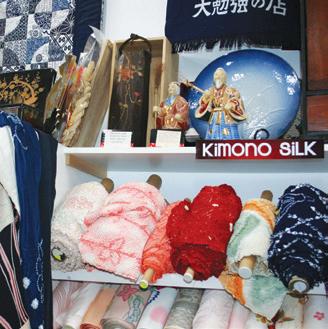
Some of our fabrics are over 100 years old and are hand spun and dyed cotton through to more modern silks, wools, synthetics and yukata cottons.
Imported Japanese kimono, obi and hoari
Large range of new cotton yukata kimono
Unique sewing and craft kits starting from $5 and a range of sashiko samplers and threads.
Japanese antiques and curios
Modern Japanese ceramics
2/60 Dundas Court, Phillip
Wed-Fri 10am-4pm, Sat 9am-5pm and Sunday 11am-3pm
Phone: 61621417 or 0413450625 www.kimoy

FOR USE IN THE SHOP

This year the AR Bluett Awards Trust received an all-time high 20 applications for this year’s awards, says Mr Overall.
QPRC was named the metropolitan/ regional winner and Bellingen Shire Council was named as the rural category winner.
“The award has been a real boost for our staff and our community,” Mr Overall says.
“They have been a reassuring constant in our lives, acting as emergency assembly points, safe zones, and temporary refuges for stranded travellers or people displaced by fires.
“They have been places where the community could come together to meet, support one another, exercise, or relax and recover.”
Set up in 1996, the Green Flag Award recognises and rewards green spaces in England and Wales, and since then has been introduced to many countries throughout the world.








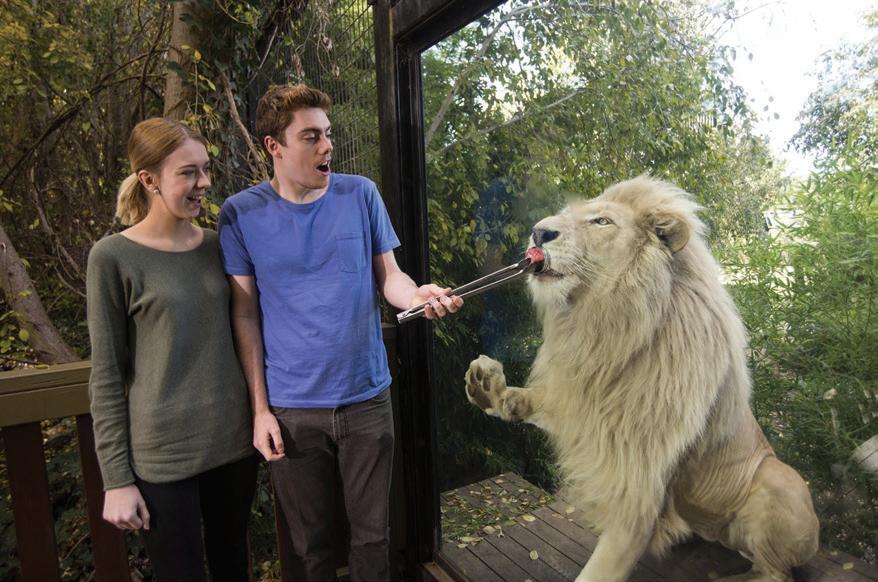

Canberra’s National Zoo and Aquarium features a combined aquarium, metropolitan zoo and easily walked open range section, as well as amazing up-close and personal animal encounters and tours.
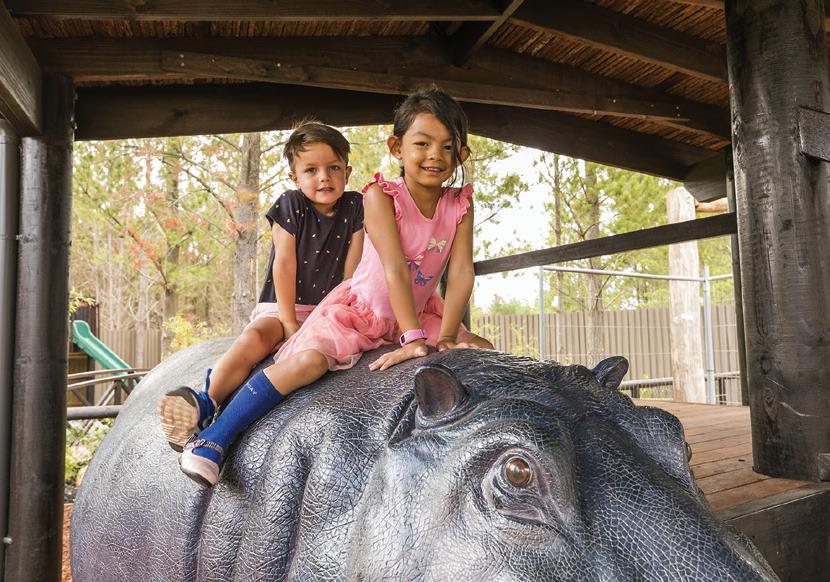
Explore the incredible Adventureland, a truly unique playground featuring a total of 55 activities including various sized fibreglass animal sculptures for children aged 2-12 to explore and play on.
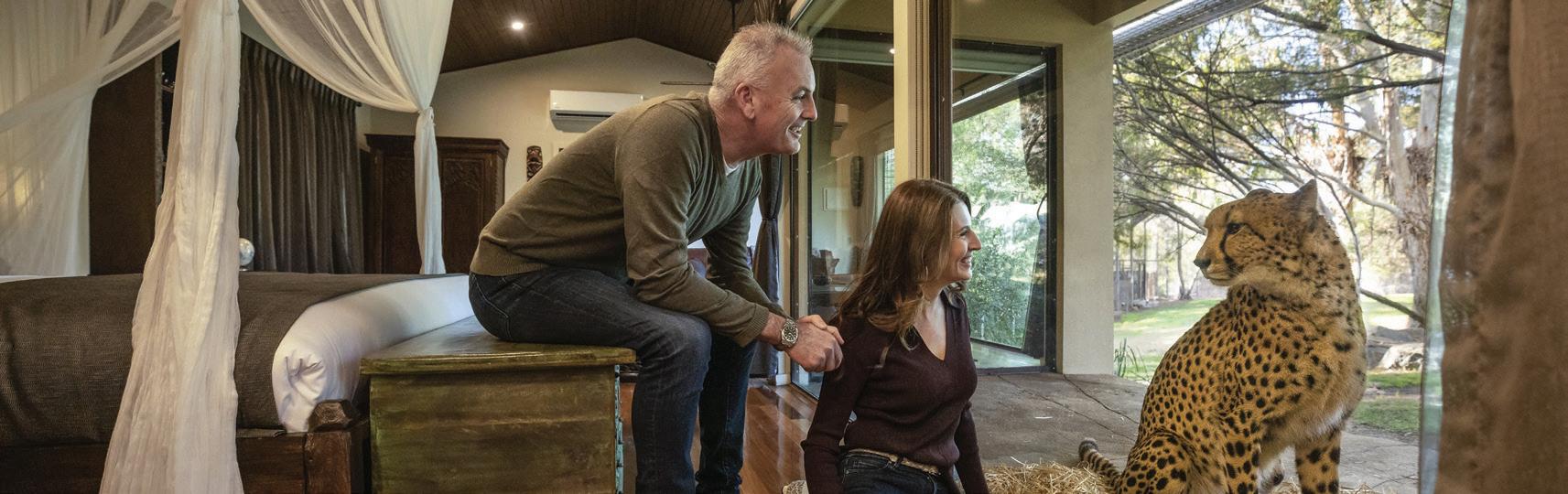
You can also experience the unforgettable with an overnight stay at the internationally recognised Jamala Wildlife Lodge. There is truly something for everyone at the National Zoo and Aquarium!




AS Elsa sang in Disney’s Frozen movie “Let It Go”, the longer I’m a parent, the more the journey of parenthood I am finding involves one long series of little “let it gos”.
And as much as it is rewarding, it is also heartbreaking to let go of our little ones, step by step as they grow in their independence from us.
“Our children are not our own”, as my dad said in his speech at my wedding.
“They are only loaned to us for a little while.”
These words ring bittersweetly true as I nostalgically swipe through photos of the kids on my phone at night after they have gone to bed (yes, I am one of those tragic mums who sometimes can’t wait for the children to go to bed, but then spend my time looking at photos of them!). I honestly can’t believe how little they were.
The let-gos have seen so many little milestones along the way, celebrated happily for the most part.
The freedom of having older children and being out of the
baby zone is a huge moment of letting go. Letting go of equip ment, nap time, baby routines, baby proofing and all the things that go with having a little one in the house.
The glorious moment when both kids are finally out of nap pies and you no longer need to cart around “disaster bags” of clothes, wipes, and provision for every contingency and accident that might occur, is incredibly liberating.
I have just realised this year has been the year that the pram has not been used at all, either!
Being a “no-pram” family after six years is a big let go.
But it isn’t just the “stuff” that we let go. It’s those little rituals that become part of your family life, until suddenly they don’t need to be done anymore.
When did we suddenly stop having to wipe bottoms? When was the last time we had to sing “Twinkle, Twinkle Little Star” as part of the bedtime routine?
When will be the last time our kids hold our hands to cross the road? When will be the last time they cuddle in bed with us in the mornings?
Some of these let gos will be hard to bear! It is the sweet heartbreak of being a parent.
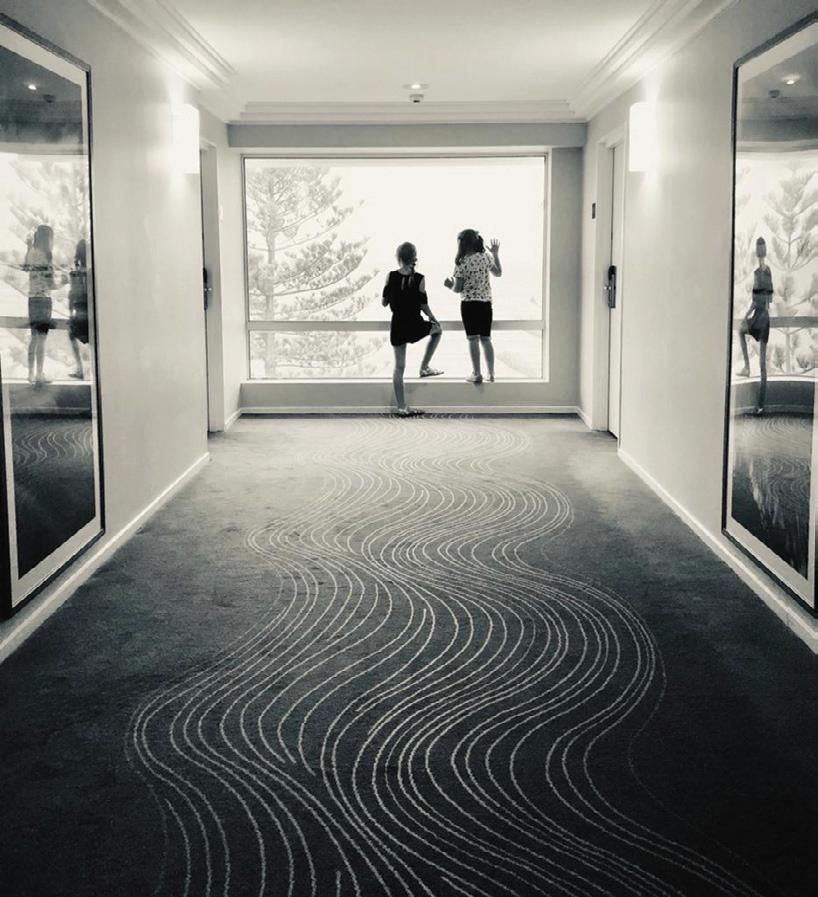
The freedom of having older children and being out of the baby zone is a huge moment of letting go.
Photo: Dylan Meikle
face singing at his preschool Christmas concert only a year before is amazing. Reading for the first time is a leap that has brought independence, a huge expansion in his knowledge of how to navigate different social situations and friendship groups. He’s also become more of a lanky, long-legged boy and lost his baby face with two huge adult front teeth.
Walking him into the school yard at the beginning of the year and watching the children line up then walk into their classrooms was a thrill. He used to want me to stay for support.
Now, he’s a “drop off” student, literally running to make it to the front of the line every morning. He loves it! He now has his own life outside of me.

+

like the little queen that she is, she orders a ride in our arms from us each night.
We, like the dupes we are, dutifully comply. Trust me, with her, it’s just not worth the fight sometimes.
But the other day, as she was hitching a ride down the hall and I was struggling to carry her, I had the dawning revelation
little ones: “Wow, you’ve grown so much!” and after catching up with friends in Sydney recently after a long time between visits it feels that is the one thing we all remarked about each other’s kids.
It’s inevitable and obvious but so very hard to comprehend at the same time, when you see the incredible development that happens to our kids playing out in front of our adoring eyes.
I don’t know all of his friends or know all their parents the way I did in preschool, I don’t know a lot of what he does each day at school. I now have to trust that he can handle things himself. Eeek. What a big let go! When we hosted his birthday party last month, we offered parents the “drop-and-run” option if they felt comfortable. Happily, each parent accepted the offer; the gift of some time to themselves rather than standing around and watching as we normally would have. It was interesting to see their faces of a little bit of guilty pleasure mixed with a bit of trepidation when they headed off. Their kids? They were absolutely fine, no looking back as they joined their friends and started playing party games.

half and
The difference between my son, having finished his first year of kindergarten during a year we will never forget, and the image of his cute little
Maybe some of the parents felt a let-go moment when they left their kids, maybe they sighed a little sigh of relief, or maybe they spent the time sitting in their cars, looking at their kids’ photos on their
MY SUMMER with my beautiful parents.
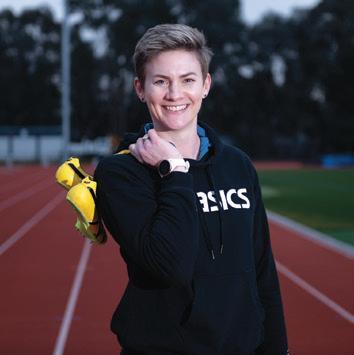
Two-time Olympian sprinter and Australia’s fastest 100m runner, MELISSA BREEN, now in retirement, plans to spend her summer…
• Having Saturday afternoon barbecues with my fiance Matt in our new backyard.
• Midweek walks around Lake Tuggeranong
• Enjoying lazy Sunday morning breakfasts with my friends.
• Walking our new golden retriever puppy, Leo, with Matt.
• Taking each day as it comes, enjoying the sunshine and life in the slower lane for now!

By Helen Musa
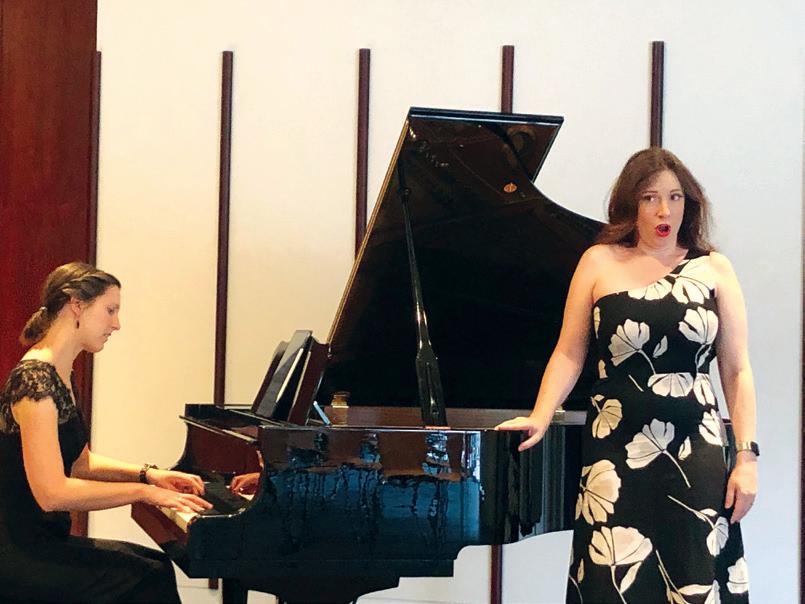
IT’S been more like a merry-goround than an operatic gala for baritone Peter Coleman-Wright since he joined the fledgling National Opera company as artistic director in Canberra early this year.
First, armed with a $50,000 bequest from the John Drabble Fund to be directed towards the development of new singers, he set about gauging the quality of singing in Canberra, a search aided by the fact that his wife, the soprano Cheryl Barker, was teaching voice at the ANU.
Then in February there was a “snazzy” gala launch at the National Portrait Gallery, where it was announced that “La Rondine”, Puccini’s answer to “The Merry Widow”, would be the company’s first production at Llewellyn Hall in December with Canberraraised soprano Lorina Gore in the lead role. Kate Gaul would direct and Stephen Mould would conduct.
tells me by phone from Sydney, things are back on track.
Then we heard the venue had been changed to the more stage-friendly Playhouse, which had meant Gaul and Mould were no longer available.
Next big news was that veteran Opera Australia director, Gale Edwards, would replace Gaul and that Canberra theatre artist
“I’d come on to the Canberra opera scene at the end of 2019, full of optimism that I could create a company suitable for launching young opera artists in Canberra, but with covid, everything came crashing down and now we have to be really careful,” he says.
“It’s a really positive and exciting journey ahead, but it’s baby steps now in a safe,
in ancient Rome, he describes as “a relatively static piece, but a vehicle for gorgeous singing” and, he believes, a “safe” choice, since Mozart, like Puccini, is loved by audiences.
Clemenza di Tito” and “La Rondine” will run in April and October.
Styling himself as “blunt”, Coleman-Wright says he’s noticed that not all theatre companies are fastidious about social distancing, but he will be. Luckily, by the time they get to perform the Mozart and certainly the Puccini, regulations will allow them to run at 75 per cent capacity and possibly more.
The first opera, “La Clemenza di Tito”, set

So far so good on the gorgeous singing front. Apart from the dazzling leads in “La Rondine”, Henry Choo and Gore, he’s enticed ANU alumnae Catherine Carby and Eleanor Greenwood back to Canberra from international careers to sing the roles of Sesto and Annio in “La Clemenza”.
Edwards stays on board as director and Toby Cole will remain with the company as chorus master.
“He’s an integral part of it all,” Coleman-
Wright says. “Toby sat in auditions for us and played a very important role and Cheryl will start rehearsing the principals, too.
“We can’t come up with the big, full-on productions at the moment, so what we want to do is to emphasise really incredible singing.”
This time round there will be no set, but much-awarded Canberra-raised lighting star Mark Dyson will transform Llewellyn Hall into a place of magic.
Added to the mix will be costume designs. To that end, he has engaged the sensational design of Fiona Victoria Hopkins, who recently won a Canberra Critics’ Circle award for her Lakespeare designs.
Coleman-Wright describes Hopkins as “that gorgeous costume designer”, saying: “She is imaginative, she listens and she does her homework… I’m going to enjoy working with her immensely”.
He has nothing but good to say of the people he’s come in contact with so far, “all lovely people”, he says, adding, “Canberra is full of talent”.
“I want to start encouraging people to come to Canberra… it’s the national capital and when I think of all European cities, even small ones, they have opera companies. We must encourage this art form here,” he says.
“Just imagine an opera house in Canberra.”
“La Clemenza di Tito”, Llewellyn Hall, April 10, 13, 15, 17. “La Rondine”, Llewellyn Hall, October 21, 23, 25. Book at nationalopera.org.au



By Helen Musa
THROUGH a clever hook-up between ACT Historic Places and the territory’s oldest artists’ organisation, the 1927 Artists Society of Canberra, works by six artists from ASOC are on show in an online exhibition, “Creating Lanyon”.
Initially the idea was for the show to run live in June, but it has taken until very recently for the exhibition of paintings, prints and drawings to be posted online.
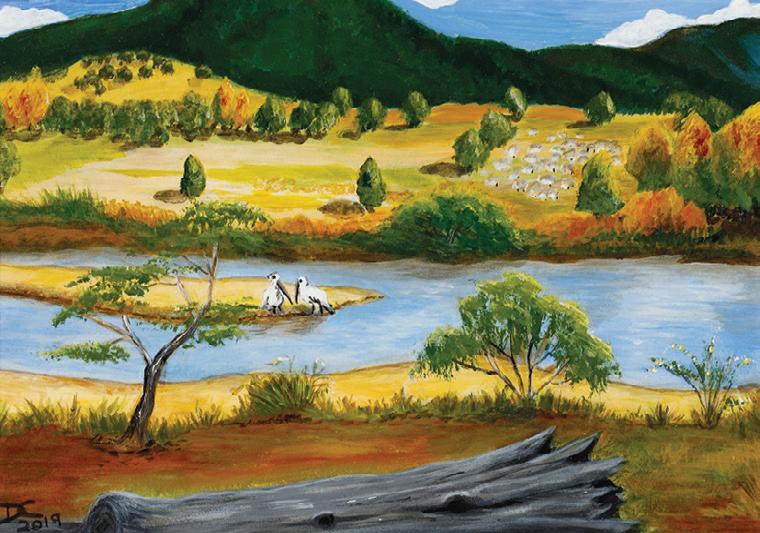
In the autumn and summer of 2019, even as fires licked at the edges of Canberra, artists Deanna Copeland, Angharad Dean, Vickie Hingston-Jones, Annette Rennie, Linda Tawagi and Judi Power Thomson undertook a visual arts residency at the old Nolan Gallery in the Lanyon precinct.
From the point of view of Historic Places, the idea was to explore the gardens and grounds of Lanyon Homestead, responding to the landscape, its built history and stories through visual art.
The project was the brainchild of former ASOC president Hingston-Jones, a volunteer guide at Lanyon who had noticed that the former Nolan Gallery had been in disuse since the collection was removed to the Canberra Museum and Gallery after the 2003 bushfires.
Hingston-Jones used her connections at Lanyon to persuade them that it would be the perfect location for artists to work and commune with natural surroundings.
“It was wonderful, with lots of little spaces, you could look out and see the gum trees – it was a fabulous place to work,” one of the artists, Judi Power Thomson, reports.
“I just walked around with my canvas and drew on it, she says.
“Some of us did paint en plein air [outside], but chiefly we took a few photos, did some sketches and then worked in that studio place.”

The artists, all Canberrans, didn’t live there but the space was given to them for their painting and they took turns, coming in for about two weeks at a time.
As the exhibition shows, each artist had a different slant on Lanyon.
Vickie Hingston-Jones, for instance, who adopted a more abstract approach, has described her work as “a record of the rhythm of my days and the world around me… A theme of transience runs through my work, recording what will never be seen again”.
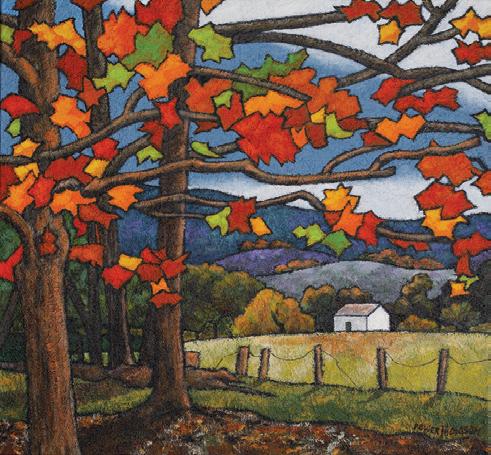
Annette Rennie said she had been attracted to the warm, dry colours of the landscape, adding: “I painted at Lanyon in winter when the light and the colours were cool and subdued”.
Linda Tawagi was particularly struck by “the myriad of shapes, shadows and textures within that landscape… tree shapes, some resembling sculptures, long shadows in the afternoon and the look and feel of the textures of the bark on trees”.
Dee Copeland, secretary of ASOC and also a guide for ACT Historic Places, painted her “Beyond the Gate” series “En Plein Air”.
“Whilst I painted beneath stately elms, oaks, birches and plane trees birds sang, the sun shone and the Murrumbidgee River flowed,” she said.
Angharad Dean has made printmaking her passion.
“I love the physical act of moving the ink on the plate and the ability to change each print to have its own special character,” Dean said. As well, working at Lanyon in the heat and dust and with the threat of approaching fires, opened her eyes to the isolation of living at a homestead.
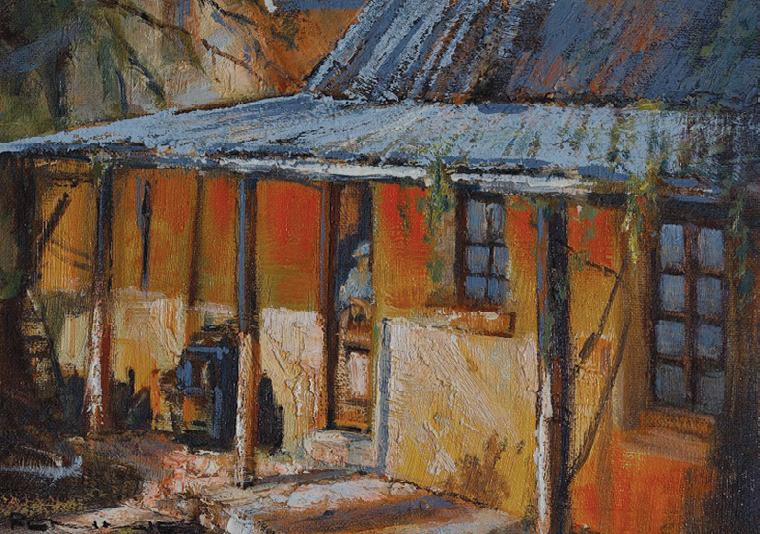
Judi Power Thomson chose differing viewpoints of the homestead to create interest, as well as the convict huts, the courtyard, the
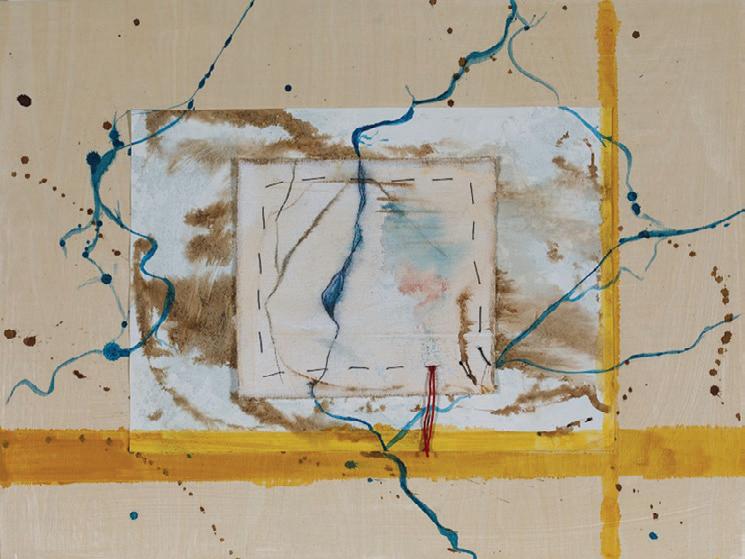
gardens, the view of the Murrumbidgee from the café and an old gum tree on the property.
“To help capture the feeling of the 1850s, I prepared a textured surface on which to work, reminiscent of the stone buildings and stucco rendering of that period. This was done with a modelling compound and a palette knife scraped on the canvas… I feel the rough texture sits well with the stone, rock and granite of the homestead,” she said.
According to Power Thomson, ASOC has now received an email saying ACT Historic Places won’t be continuing the arts residency.
“I don’t know why – the building is just sitting there, empty,” she said.
“Creating Lanyon”, Artists Society of Canberra Artists in Residence 2019, may be viewed at historicplaces.com. au/exhibitions/creating-Lanyon







If you have a USB port, Songland can transfer your CDs onto a supplied USB stick
ONLY $3 PER CD!

By Helen MUSA

Cooleman Court, Weston Creek | 6293 4677 | songland.com.au
Now is the time to trade-in your old equipment OPEN 7 DAYS

Turntables, Streamers, Amplifiers & Speakers from vintage to new and LP Records in store. CANBERRA’S OLDEST SPECIALIST HI-FI SHOP – SINCE 1968
Phone 6282 1333 www.duratone.com.au
Cnr of Botany Street & Altree Court, Phillip


Stay in touch with the names making news on Sundays from 9am as 2CC and “CityNews” present Canberra’s only local weekend news and current affairs program.
It’s a revolving panel show that brings to the microphone great “CityNews” commentators and 2CC personalities. Be part of the conversation call 6255 1206 between 9am and noon

CANBERRA Theatre won’t be having a season launch for 2021 but here’s a strong hint of one show. Bell Shakespeare has announced that “One Man In His Time: John Bell and Shakespeare” will be coming to Canberra Theatre Centre on April 15. Referencing the “all the world’s a stage” speech from “As You Like It” (“one man in his time plays many parts”), this solo show puts the work of Bell, now 80, on full show. Tickets are now on sale at canberratheatrecentre.com.au or 6275 2700.
THE National Gallery of Australia is not far behind Bell in urging art lovers to save the date and book for “Botticelli to Van Gogh: Masterpieces from the National Gallery, London”, coming exclusively to Canberra from March 5 to June 14. Spanning 450 years, it will have 60 paintings by some of Europe’s most revered artists, including Titian, Rembrandt, Vermeer, Velázquez, Goya, Turner, Renoir, Cézanne and Gauguin and comprises the largest group of works to travel outside the UK in the history of the London gallery. Book via premier.ticketek.com.au
QL2 Dance’s annual “On Course” program for dancers studying at a tertiary level around Aus-

Lara Dorling, Liam Berg, Maddy Bowman, Natsuko Yonezawa, Otto Kosok, Patricia Hayes-Cavanagh and Ruby Ballantyne. Free to view here ql2.org.au/news-1
PADMA Menon has announced that her dance contemplation intensive in January will focus on a practice that is the very soul of ancient contemplation, “Yagna”, the ancient dance ritual of fire. First time participants in her Moving Archetypes courses must be available for a pre-intensive discussion via Zoom or in person in the studio on Thursday, January 21 from 5.30-6.30pm. Details will be given on booking at movingarchetypes.com.au
BUDDING Theatre is well known for its themed holiday programs encouraging creativity, confidence and practical skills and always ending with a performance for family and friends. Program themes have included “DC Vs Marvel”, “Harry Potter Parody”, comedy and musicals, and many more. Book here buddingtheatre.com
WHILE in Sydney, a visit to the Art Gallery of NSW for its major summer show, “Streeton”, is de rigueur. With more than 150 paintings, drawings and watercolours from public and private collections, it’s an in-depth exploration of the artist’s brilliant evocations of light, land and sea over six decades. The exhibition continues until February 14.
“MANK” is a new film about Herman J Mankiewicz, the screenwriter of what’s widely regarded by many as the greatest film of all time, “Citizen Kane”.
The story of a media mogul gone mad with power, “Citizen Kane” is firmly cemented in not only the Cinema Hall of Fame but popular culture generally as Orson Welles, who directed and starred in the film, became a legend.
Even as a young lad with no knowledge of Welles or his star character, I had some semblance of an idea of what “Citizen Kane” might be about thanks to the countless honours, references and parodies of the film that have continued to ripple through the entertainment landscape.
I particularly remember one episode of “The Simpsons”, with all of its clever little 2D animation attempting to replicate many shots from the iconic film. Years later, when I chose to study “Citizen Kane” at uni, my mind immediately made the connection and it did make me chuckle.
However, less known (and the topic of Netflix’s new film) is the story of the man who penned the now-famed script and the struggles he came up against doing so.
Of particular controversy, and what “Mank” dives into, is the way the “Citizen Kane” script came to closely resemble the life of William Randolph Hearst, a news and media goliath who, for a time, created and controlled the largest newspaper and magazine business in the world.
Hearst’s wealth would go on to allow him to buy a castle named, go figure, Hearst Castle that overlooks the Pacific Ocean. In the film, Kane goes mad in the halls of his own acquired abode of opulence.
Predictably, Hearst hated the idea of a movie trying to paint him in even the faintest bad light and so he used his army of media resources to get the film banned.
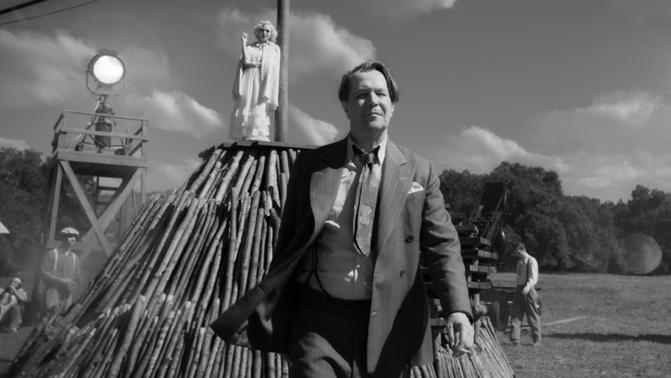
That didn’t happen, but Hearst was still able to greatly damage Welles and his career. Hearst hadn’t even seen it, either.
All of this is captured in “Mank”, filmed in striking black and white to conjure up the imagery and tone of “Citizen Kane”, which was released in 1941. It’s pulled together by a fantastic lead performance from Gary Oldman as the screenwriter himself.
Watching “Mank” and revisiting “Citizen Kane” becomes all the more interesting in light of the continued heated argument we see unfolding around Rupert Murdoch, and particularly the opposition he’s been up against believing his power and influence is stretching a bit too far.
It’s also directed by famed film maker David Fincher who has given audiences crime cult classics such as “Fight Club” and “Seven”, as well as his more recent adaptation of Gillian Flynn’s best-selling thriller, “Gone Girl”.
The one worth revisiting is “Zodiac” (on Foxtel Group’s Binge), about a serial killer at large in San Francisco between 1968 and 1969, who to this day remains uncaught.
I highlight it after news in the last few weeks of an Australian mathematician actually helping with cracking one of the codes that the “Zodiac Killer” infamously sent to the “San Francisco Chronicle” newspaper at the height of his criminal behaviour.
Known as the 340 Cipher, the code, according to the team who broke it reads, “I hope you are having lots of fun trying to catch me”. As if the film wasn’t creepy enough as it is, sheesh.
More of Nick Overall on Twitter @nick_overall



Home gardeners, commercial horticulturists and farmers are eternal optimists.
I was in England just after the Great Storm in 1987, which caused massive destruction running into billions of pounds. More than 15 million mature trees came down in about half an hour; many of them historic and hundreds of years old, from Kew Gardens and home gardens alike. And yet, much like our past year, people do overcome these disasters. Farmers sowed crops in anticipation of rain. Home gardeners cleared or pruned hail-damaged trees and shrubs and tried to restore order. So it is with optimism that we face the new year.
It was the best spring for years and is continuing so into summer with regular rainfall. With the unseasonable weather, many plants were seriously confused. I had numerous inquiries regarding plants flowering out

of season. Dahlias and salvias, which flower in autumn, were in full flower over a month ago in early December! No, I can’t account for these events. The big question is, will they flower again at the appointed time in autumn? I don’t have an answer.
I still recommend planting trees and shrubs in autumn, particularly in new suburbs, where there’s no shade. Consider also the variety of plants, particularly trees such as Japanese maples with their delicate leaves and structure. Now and the next couple of months can be very hot, with equally hot winds. It can be very expensive to see those new plants die not long after planting.
A FEW suggestions of small trees for small gardens. Lagerstroemia indica, or crepe myrtle grows very well, and are now used as street trees in Queanbeyan – Canberra, take a hint!
The large range of cultivars has flowers ranging from purple, mauve, pink and white. These flower in late summer and autumn, and are renowned for the shedding bark of cinnamon colours in winter. Depending on the variety they
range from one metre for dwarf varieties, ideal for pots on a sunny balcony, with some varieties growing up to three metres.
The crabapple Malus “Gorgeous” is perfect for crabapple jelly, my favourite. With pink blossoms in spring followed by large red fruit in autumn, this grows to about two to three metres.
Another crab, Malus Cinzam “Cinderella”, is a natural dwarf cultivar grafted onto a short standard, with a mass of white blossoms in spring.
Growing to about 2.5 metres with a very narrow spread of just 1.5 metres. Syringa or lilacs, of which there is a large number of varieties and colours, are famous for their fragrance.
Depending on the variety, they grow from the dwarf varieties of 1.5 metres tall to three metres for the taller varieties.
Equally there is a large number of Prunus or ornamental plum, which grows from two metres up to six metres.
So make sure you check the size when you buy. A couple for the smaller garden include Prunus “Versicolour” with several colours of pale and dark and white blossoms on the one tree in spring.
Prunus Snofozam “Snow Fountains’’, a grafted weeping cherry on a standard, grows two metres high with a 2.5-metre spread. Most grafted weeping cherries are far too large for most gardens – I’ve seen one 10 metres across!




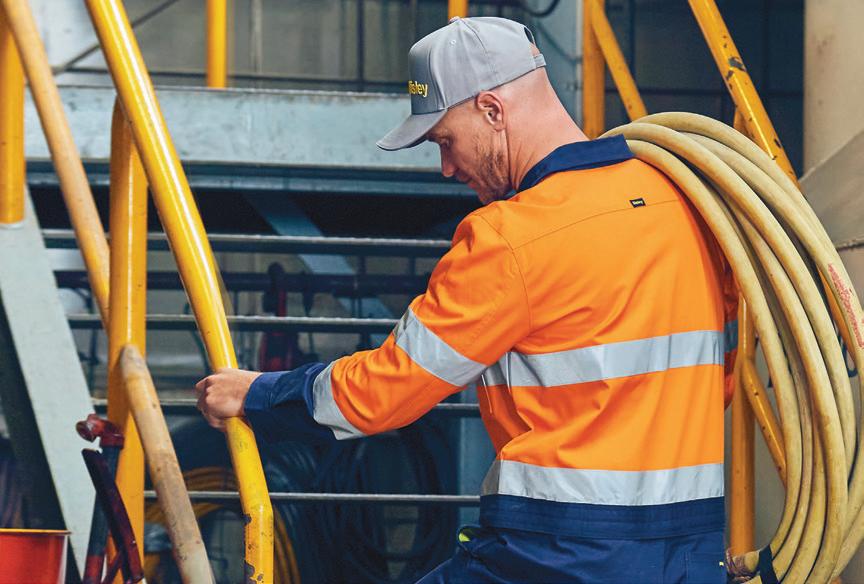
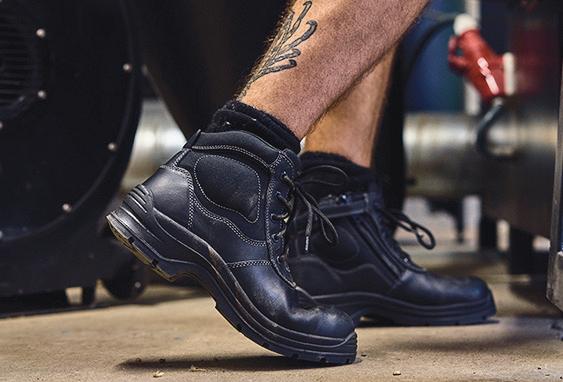
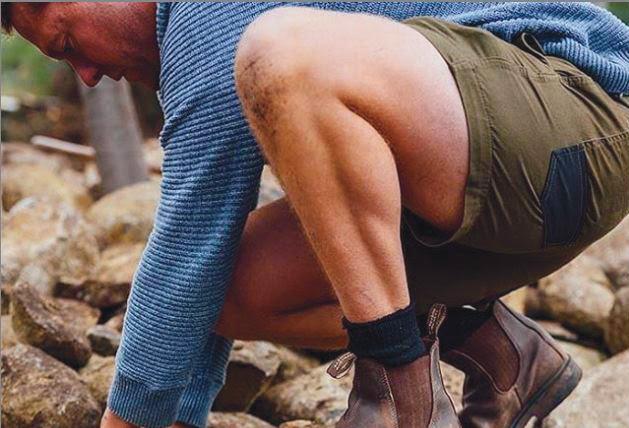
Seears Workwear carry a large range of workwear for all trades, work boots, safety equipment, hi visibility clothing, camping and outdoor equipment. Seears also fit out companies and businesses for work uniforms, including embroidery services. We stock a full range of harnesses, first aid kits and protective gear
Stockists of King Gee, Yakka, Bisley, Superior Safety, Leatherman, R.M Williams, Diadora, Steel Blue, Blundstone, CAT, Buckaroo, Esky, Rockport, Norsewear and Akubra.
Seears specialise in the sale of working gear. Steel Blue work boots. Blundstone Work Boots, CAT Boots.